One Uncle Sam mystery solved

It seemed that there were multiple Uncle Sams remembered by different cousins.  Judy remembers one who was the life of the party at family gatherings and known for eating flowers.  Bonnie C. remembers one who drove her to the airport in Florida when she visited her father there.  Denny remembers one who lived in Arizona and wore a white cowboy hat.  And then there was the Uncle Sam who visited my grandparents every Friday night and never left New York City, lived alone, and was a cab driver.  I’ve often wondered whether Uncle Sam had multiple lives and personalities or whether there were just a number of a different people named Sam Brotman.

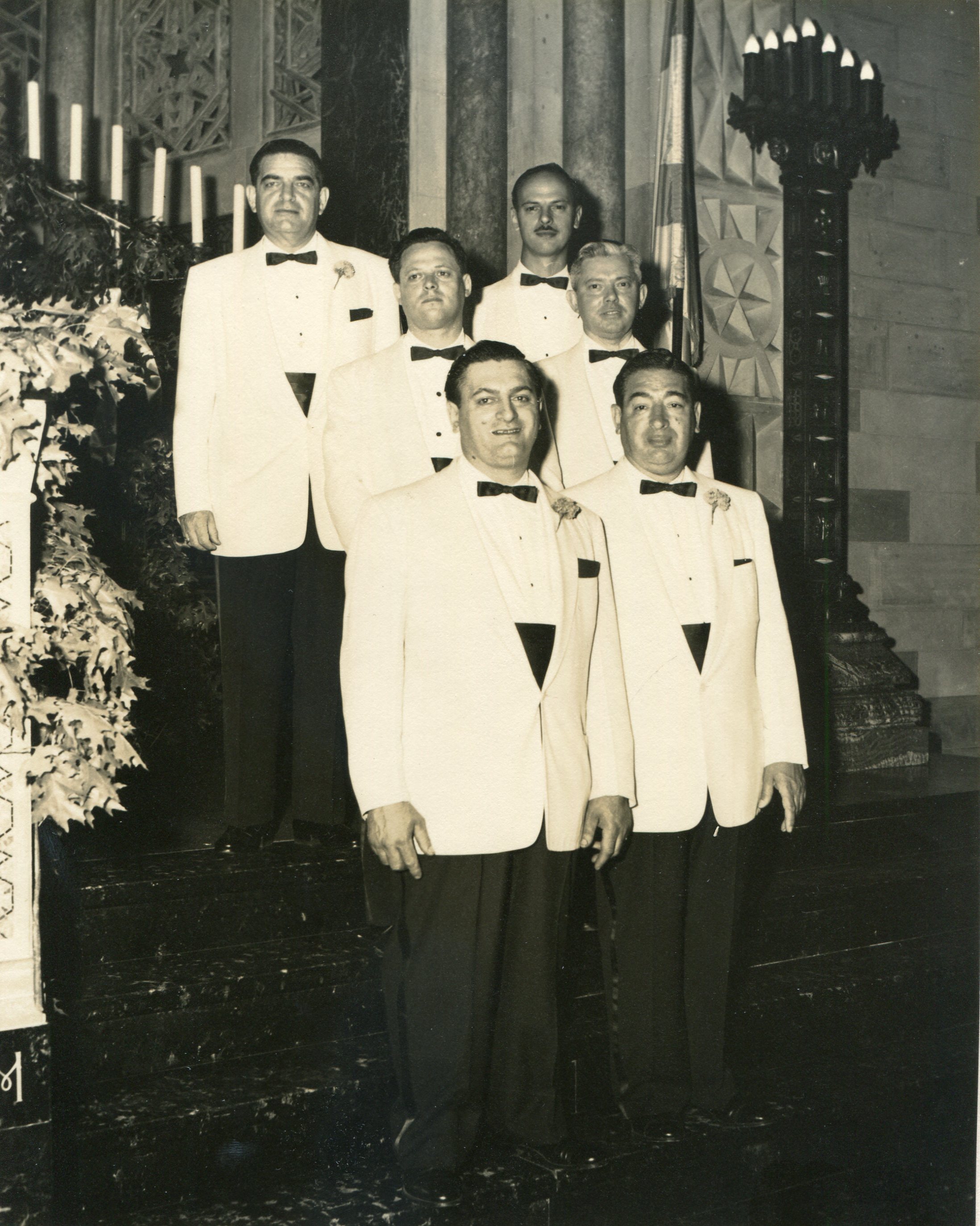
Well, we have now resolved at least one of those mysteries.  Below is a photo from Rosalind Haber’s wedding in 1956 (with more to follow in a subsequent post[1]) showing some of the groomsmen from the wedding.  I asked Judy who these men were, and she identified them as her father Charles Haber’s brothers Jack, Sol, and Abe, another Haber, and Charles’ nephew Jack Simon. Mixed in with all those Habers standing to the right in the middle row with the silver hair and those distinctive Brotman cheeks is none other than the Sam Brotman who Judy remembers from family events!

Image

I showed the photo to my parents, and they confirmed that that is the same Sam Brotman who lived in the Bronx and visited my grandparents every Friday night, bringing a strawberry shortcake every single time.

Here’s a photo of Sam with my grandmother and my aunt Elaine; you can see that it is the same face.

Image

So how could the same person be perceived so differently? My parents remember Sam as a quiet, shy loner who rarely spoke at family dinners.  Judy remembers him as funny and outgoing.  Could he have just been quiet in the context of my grandparents’ home and himself when he was with the Habers? He must have been quite close to Renee and Charles to have been made a groomsman at their daughter’s wedding.  Perhaps they brought out the best in him.

Now if we could only figure out who those OTHER two Sams were….


[1] Thanks to Naomi Ratner and Ron White for sending me these photos!

Mt Zion and Mt Hebron

[This is the second part of my post about the weekend in New York. If you haven’t read the post about the Lower East Side, that is Part One. This is Part Two.]

Before I write about my trip to Mt Zion and Mt Hebron cemeteries, let me tell you that I have never been someone who understood why people go to cemeteries, and it always seemed a little creepy to me. I don’t believe in an afterlife, and it seemed to me that you could remember those who had died without standing over the place where their bodies were buried.

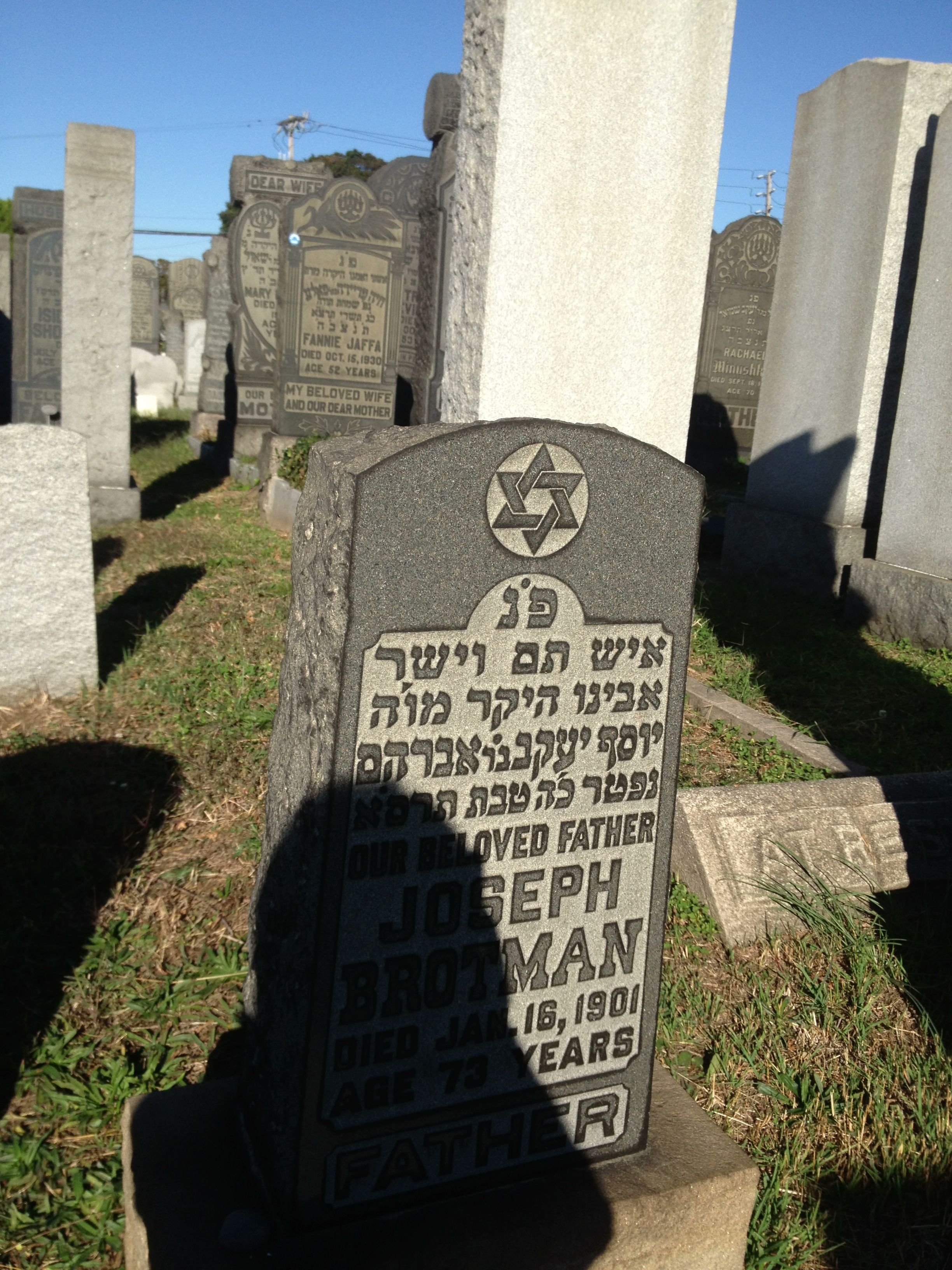
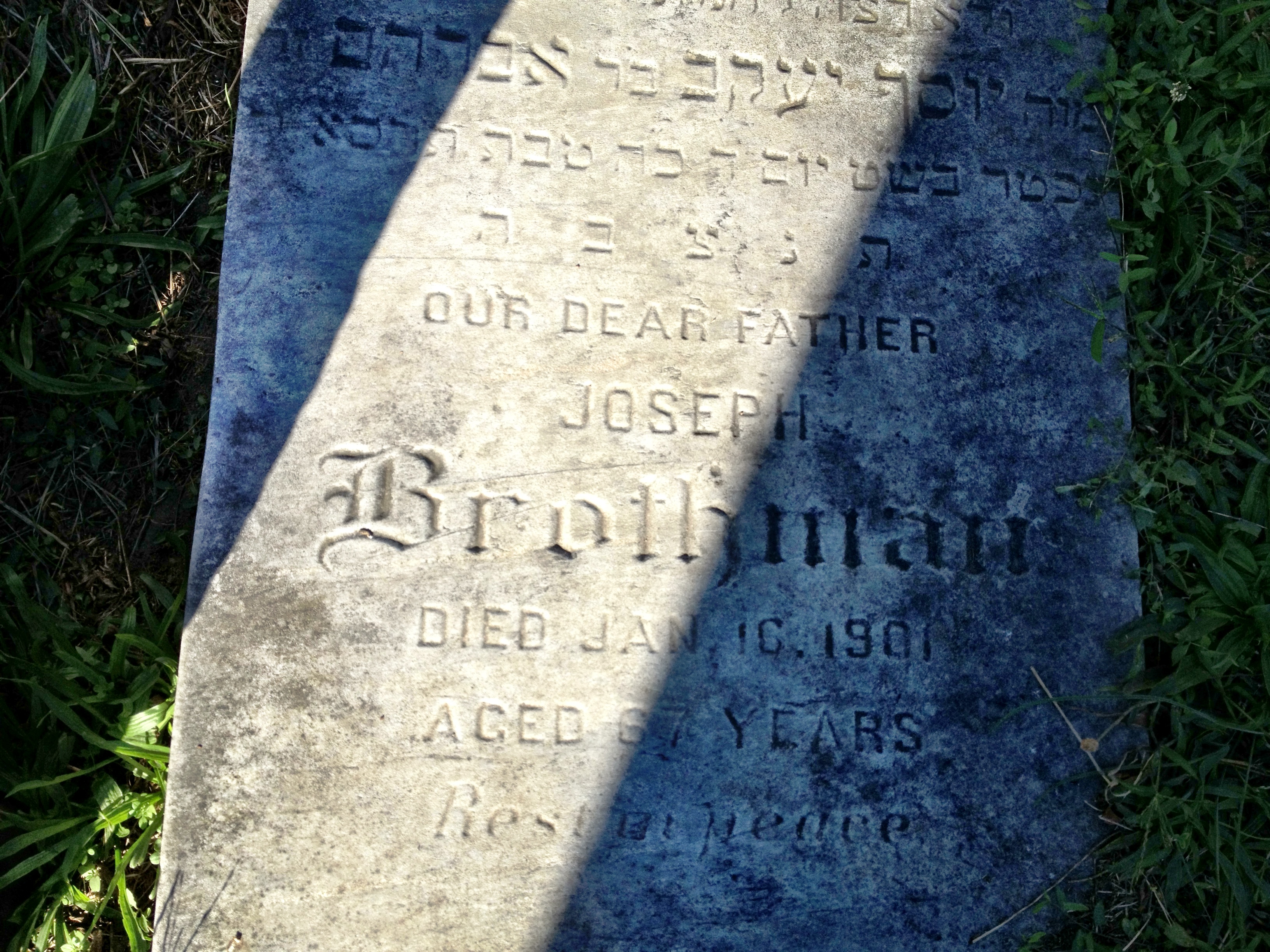
I initially saw a cemetery trip this time as a way of doing more research. Then when I realized that Joseph was not buried near any of his children or his wife, I felt badly. It was likely no one had been there for a hundred years. Did that matter? Joseph didn’t know, so why did I care? I am not sure, but somehow I felt compelled to pay him honor. In fact, once I received the photos of the headstone and footstone from Charlie Katz, I no longer needed to go for research. I was going for some emotional reason that was mysterious even to me. The trip to Mt Hebron, which is only ten minutes away from Mt Zion, then seemed like an obvious addition to the trip to Mt Zion.

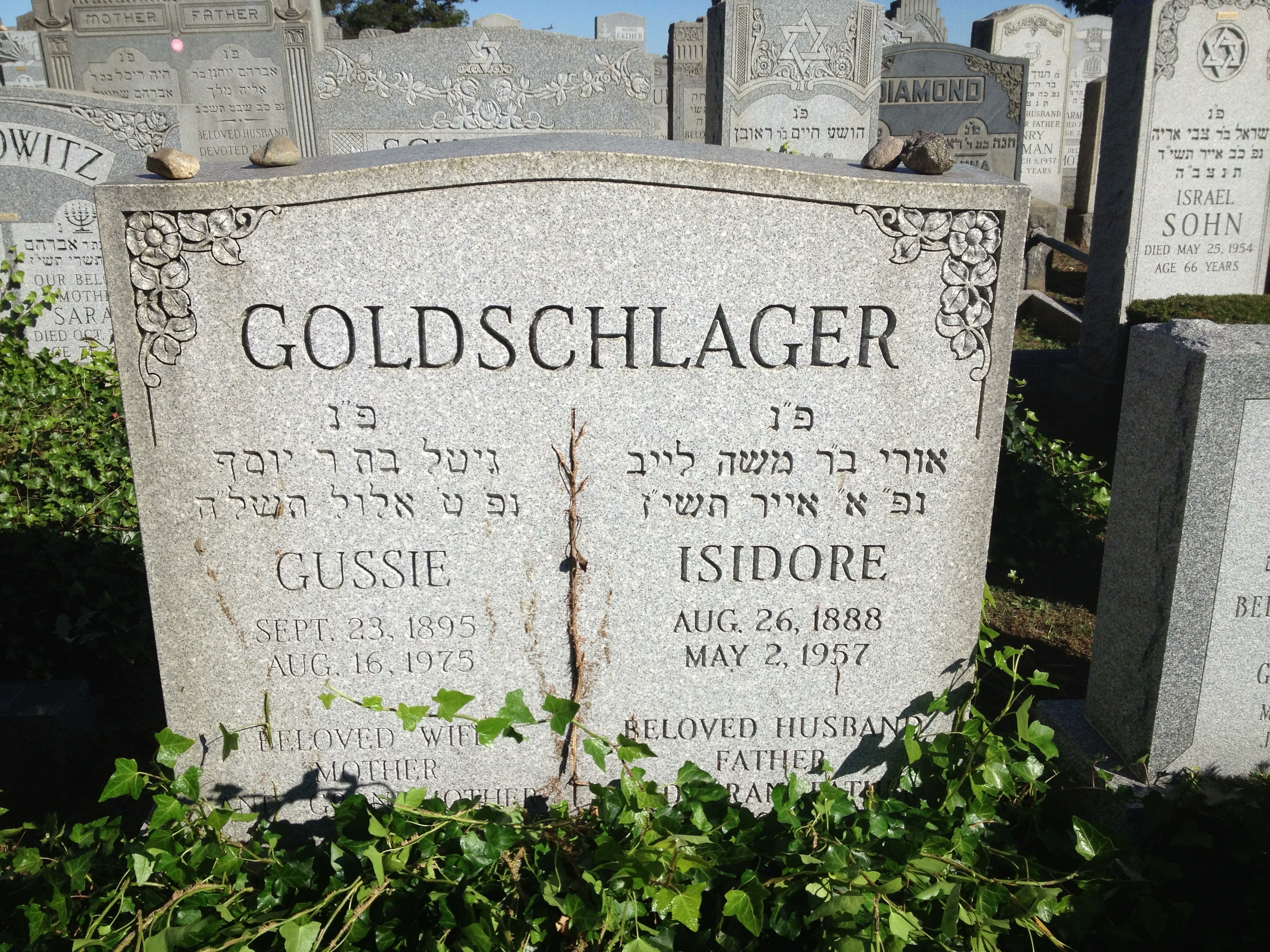
So off we went on Sunday morning, first to Mt Zion. It is one of the oldest Jewish cemeteries in New York City, and the graves are very close together with almost no open land left. I knew from Charlie Katz that it would be hard to find Joseph’s gravesite. The stones are so close together that it is very difficult to walk between and around them, and without Charlie’s directions, we might never have found it. But then suddenly we spotted it.

Image

Image

I stood there, not really knowing what to do or to think. I thought of his life, thanked him silently for bringing his family here, tried to imagine what he looked like. Did he have red hair? No idea. Then I left on the headstone one of the beach rocks I had collected the prior weekend. I had decided to bring a piece of something I loved to leave at the graves, and the beach is the place that always makes me the happiest. I left feeling that I had at least done something to honor his memory.

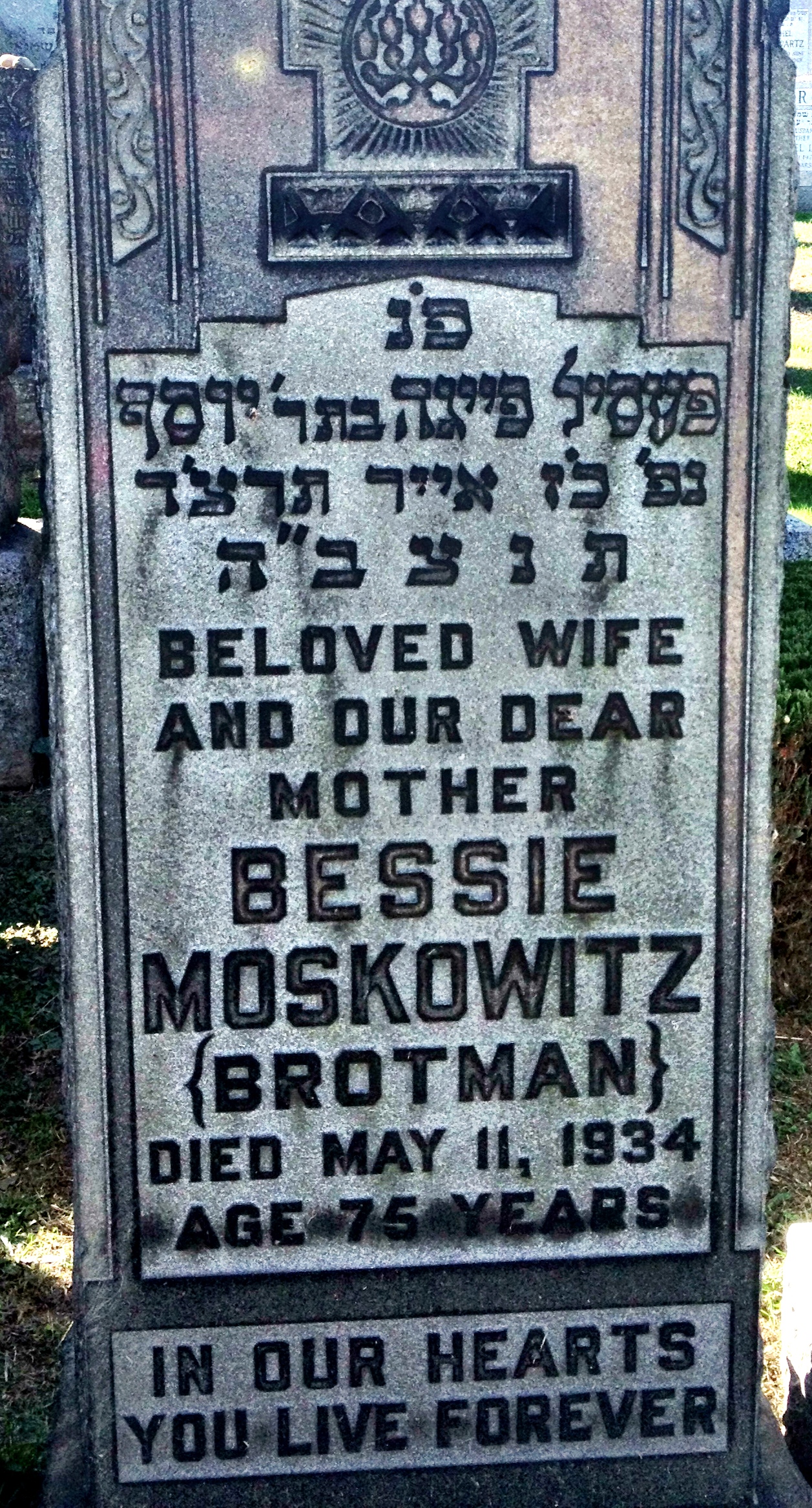
Then we went on to Mt Hebron, a much larger and much less crowded cemetery. The section where Bessie is buried is across the road from the section where my grandparents and Sam are buried. [What I didn’t know then is that Frieda is also buried there, but that’s a story for another post.] I saw Philip’s headstone right away, but did not realize that Bessie’s was right behind it, as you can see in the photo below.
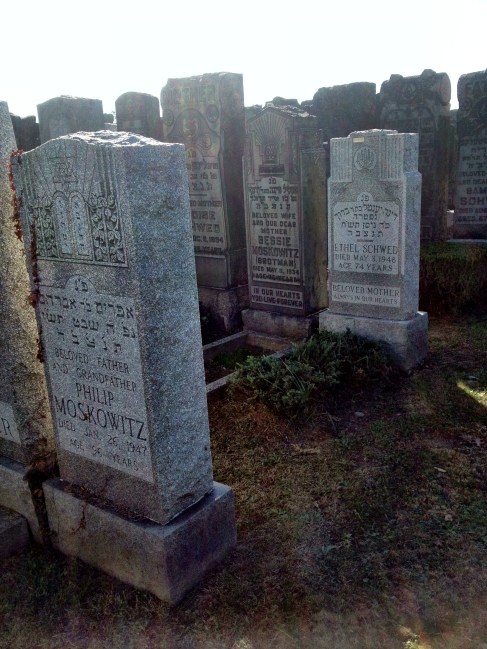
Image

It took some counting and looking, but finally Harvey spotted it. I felt the same way standing at Bessie’s grave—grateful and wistful. I found myself drawn to her name—both in Hebrew and in English—and rubbed my hand over the name Bessie, saying, “That’s my name.” I also was very touched to see that the Brotman name was included on her headstone, not just Moskowitz.

Image

I left one of my beach rocks there as well and then walked across the street to the other section.

In that section I first saw Sam Brotman’s headstone. I never met Sam, and I really felt badly about that, given that he lived until I was 22 years old. I left a beach rock on his stone, saying, “I am sorry I never met you.”

Image

In the row behind Sam’s grave I found my grandparents’ grave. The headstone was covered with ivy, which looked pretty but made reading the inscriptions impossible. I gently tore away the ivy so I could see the stones.

Image

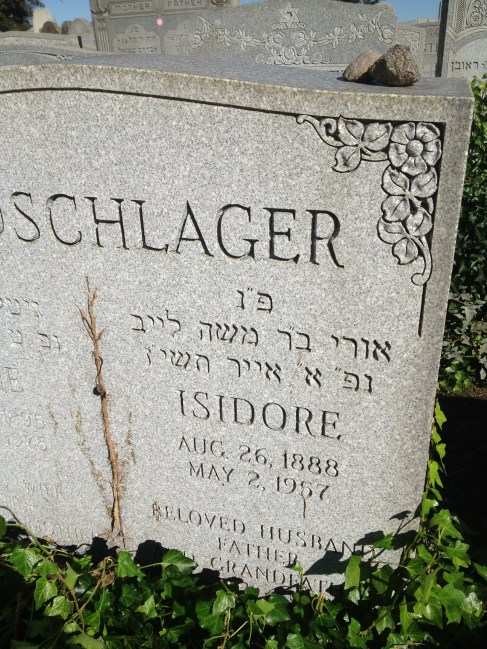
My grandfather died when I was almost five, so I have only the vaguest memories of him, but have heard lots of stories about him—how funny he was, how smart he was (he knew several languages), and how opinionated. He walked across Romania to escape oppression and poverty. I wish I had had a chance to know him better. There was a rock left on his headstone when we arrived. Who could have been there? I don’t think it could have been anyone recently, but perhaps it had been there for many years. I placed mine next to it and rubbed his name.
Image

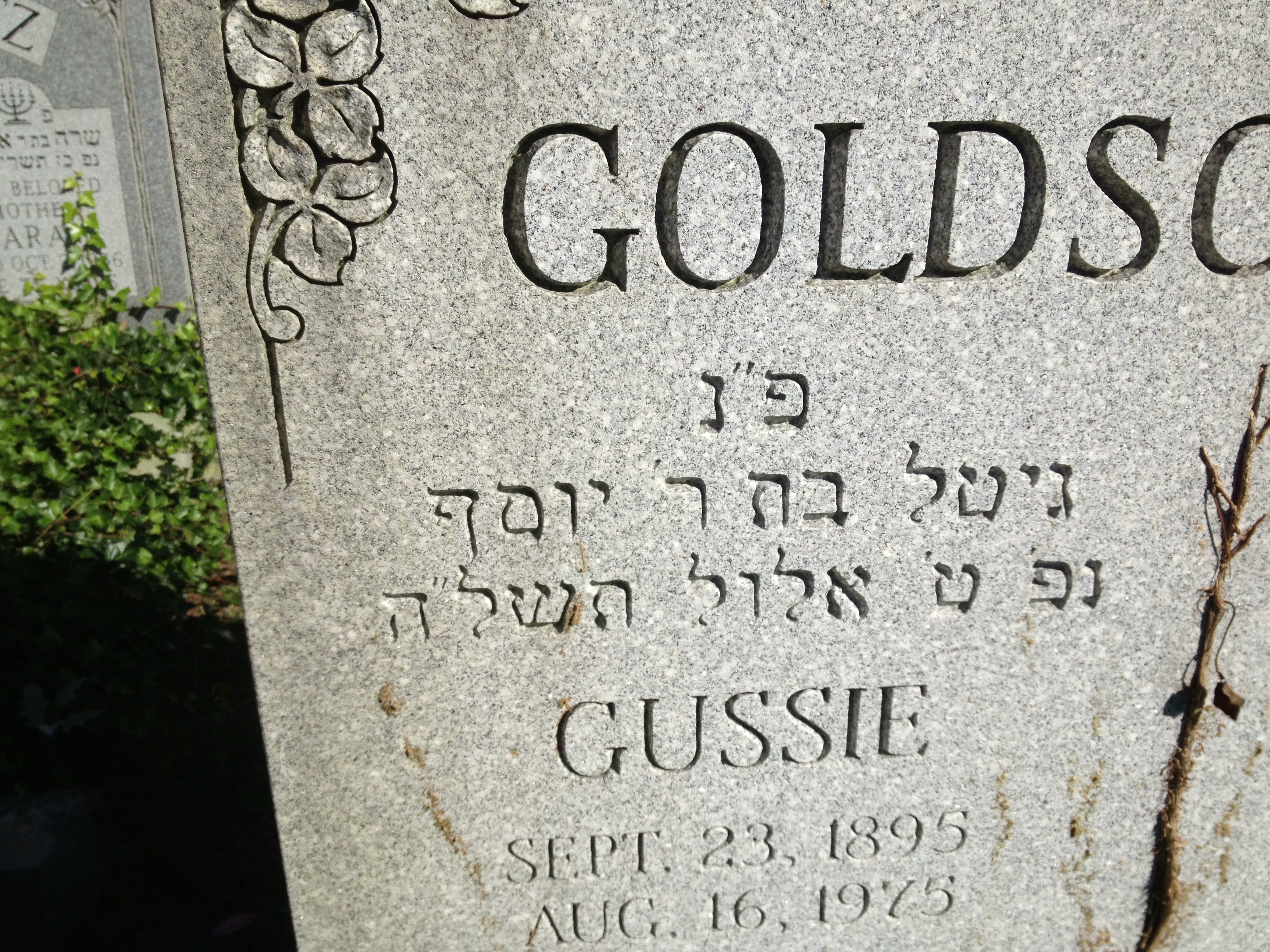
Seeing my grandmother’s headstone was the most difficult for me. She lived until I was 23, and when I was a little girl I loved her very much. She was fun and loving with her grandchildren, despite having had a difficult and often sad life. I have thought of her so many times while doing this research and learning what her life was like, but standing there, thinking of her, I suddenly was overcome with emotion and found myself sobbing, thinking of her and her life and the memories I have of her. As I did with Bessie and Isadore, I found myself rubbing my hand over her name, Gussie, feeling some unexpected emotion in doing so. I left my beach rock, specially selected for her, and wished I had asked her more questions while I could have.

Image
Apparently, I was wrong. Going to the cemetery can bring you closer to those who are gone.

The Lower East Side

The Lower East Side

I just returned from a wonderful weekend in NYC.  Although seeing my grandson Nate (and his parents and his great-grandparents) was the best part of the weekend, I also had an opportunity to do two things I’ve wanted to do for a while: go to the Lower East Side and see where the Brotmans lived in the early 1900s and go to the cemeteries where my great-grandparents and grandparents are buried.  I am going to divide those two experiences into two posts rather than one.  This one will be about the trip to the Lower East Side.

On Saturday morning Harvey and I left our hotel down near Wall Street and walked north through the financial district and Chinatown, under the Brooklyn, Manhattan and Williamsburg bridges, to the Lower East Side. As we crossed streets like Grand, Henry, and Delancey, I tried to imagine what that neighborhood would have been like on a Shabbat morning a century ago.  Now it is a mix of various ethnic groups, but I was surprised to see a number of Orthodox and ultra-Orthodox men dressed for shul, walking past us.  I hadn’t expected to see any sign of a Jewish community surviving there.  As we passed two men dressed in Satmar garb (big furry hats, long black coats, beards and payes), I wondered, “Did Joseph dress anything like that? Were they at all observant? Did they go to shul? Or were they completely non-religious once they got to the US?’  I know that my grandmother had a kosher kitchen at first, but gave that up by the time I knew her.  She was not at all religious, and I know that my grandfather was also not at all religious.  What about your grandparents? Do you know how observant any of them were?

We crossed under the Williamsburg Bridge and then down Broome Street to where it intersected Ridge Street.  Joseph and Bessie lived at 81 Ridge Street in 1900; it is where they lived with Max, Hyman, Tilly, Gussie, Frieda and Sam.   It is also where Joseph died in 1901.  The picture below shows the corner of Broome and Ridge:

Image

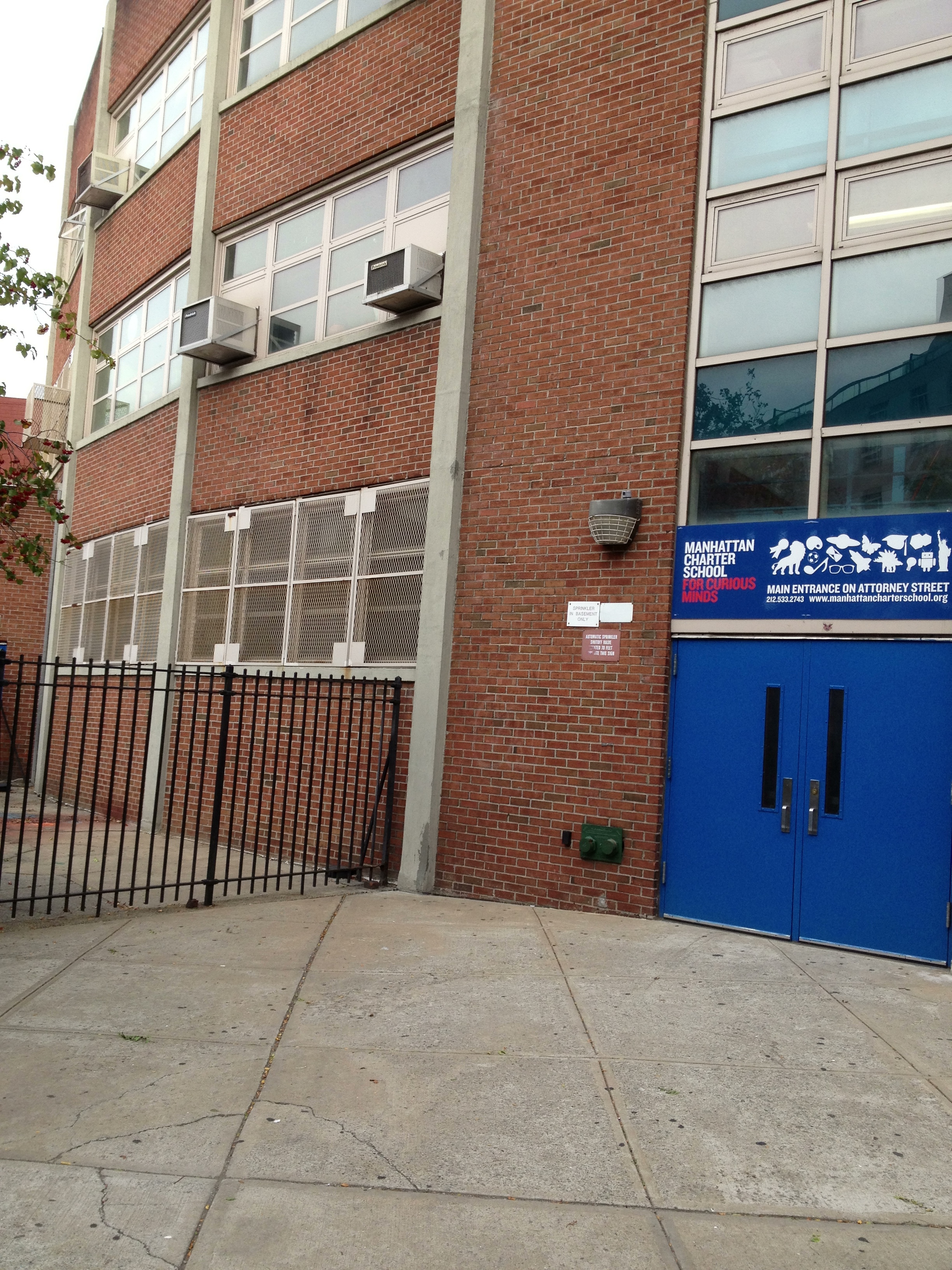
We walked down Ridge to where 81 once stood.  There is now a school there, as you can see :Image

Although I was sad that there was no longer a tenement building there, I thought that having a school there was the best possible alternative.  Education helped our predecessors and all of us get to where we are today, so replacing what was probably a run-down tenement building with a modern new school seems appropriate.

Across the street at 80 Ridge is a newer building also, so obviously the original buildings are all gone.

Image

I took these pictures at the corner of Ridge and Rivington where there was an older building.  Perhaps that was more like the one where our family lived.

ImageImage

As we walked up and down the street, I tried to imagine my grandmother being a little girl, living there.  I thought of her being just five years old when her father died, and how awful that must have been for them all.  And I thought of poor baby Samuel who was four months old and would never know his father.  It must have been a sad and very hard time for them all.

New York City is a remarkable place.  The layers of history are all there, and you can feel them as you walk from neighborhood to neighborhood.  Ridge Street is a nice street with clean and newer apartment buildings.  You wouldn’t know today that it once was a crowded street with tenements filled with new immigrants, speaking Yiddish, and struggling to survive in what was supposed to be a place with streets lined with gold.  As we walked past Asian and Latino residents who themselves are likely immigrants or the children of immigrants, I realized how that experience continues to make New York the rich, fascinating and challenging city that it is.  I may have left the New York area long ago, but it still calls out to me as my home.  I am sure the same is true for many of you, whether you are living in Ohio, Virginia, South Carolina, California, Georgia, Connecticut, Massachusetts—or New Jersey or Long Island.

Isn’t it also interesting how some of the fifth generation children have returned to New York City themselves?