
Relying on the assumption that Julius Adler was in fact the brother of Louis and Sigmund Adler and was born Joseph Adler, I will now continue to tell the story of his life from 1920 to 1940. We know that in 1920 Julius was living in Leavenworth, Kansas, with his older brother Louis, that he was a widower, and that he had three young children, Roland, Chrystal, and Irene. We also know that he was a baker.
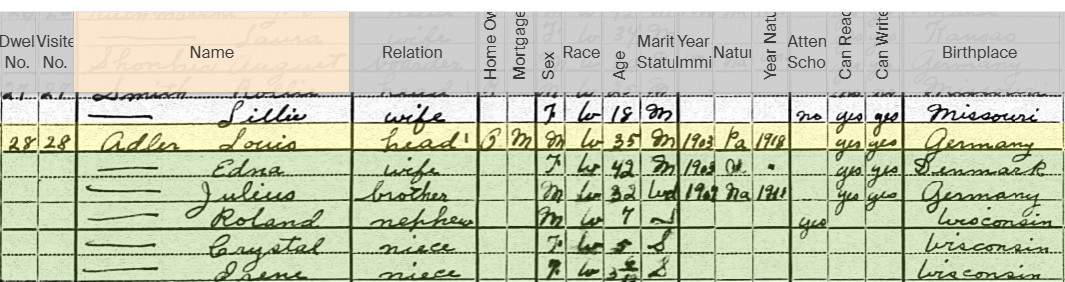
Louis Adler 1920 US census, Year: 1920; Census Place: Leavenworth Ward 6, Leavenworth, Kansas; Roll: T625_537; Page: 2A; Enumeration District: 109,
Ancestry.com. 1920 United States Federal Census
On June 26, 1920, not long after the enumeration of the 1920 census, Julius married his second wife, Minnie Hankins, in Kansas City, Missouri. Minnie was a Missouri native, born on June 18, 1897, to Charles Love Hankins and Martha Meirhaftz.1
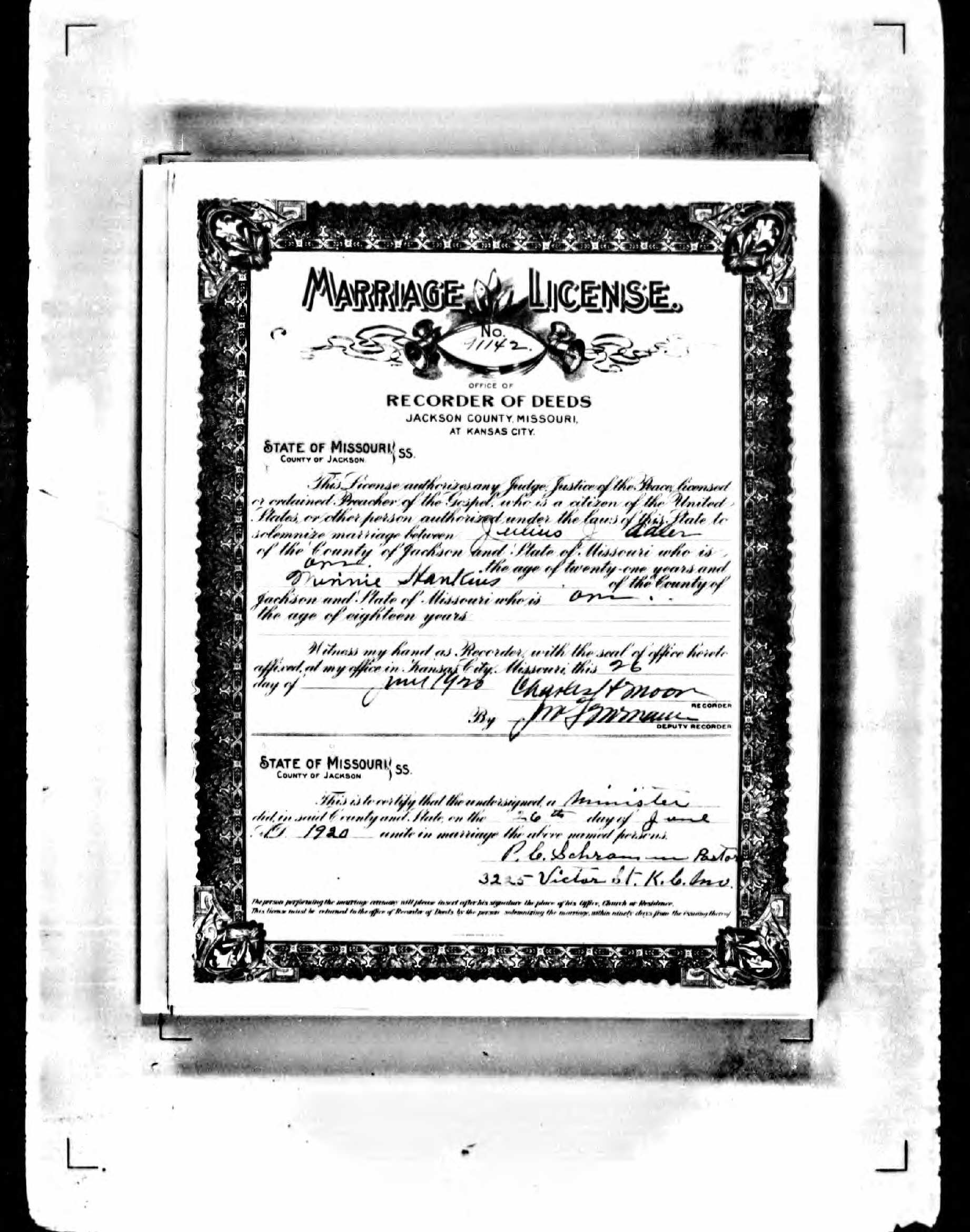
Julius Adler and Minnie Hankin marriage record, Missouri State Archives; Jefferson City, MO, USA; Missouri Marriage Records [Microfilm], Year or Year Range: 1920, Ancestry.com. Missouri, U.S., Marriage Records, 1805-2002
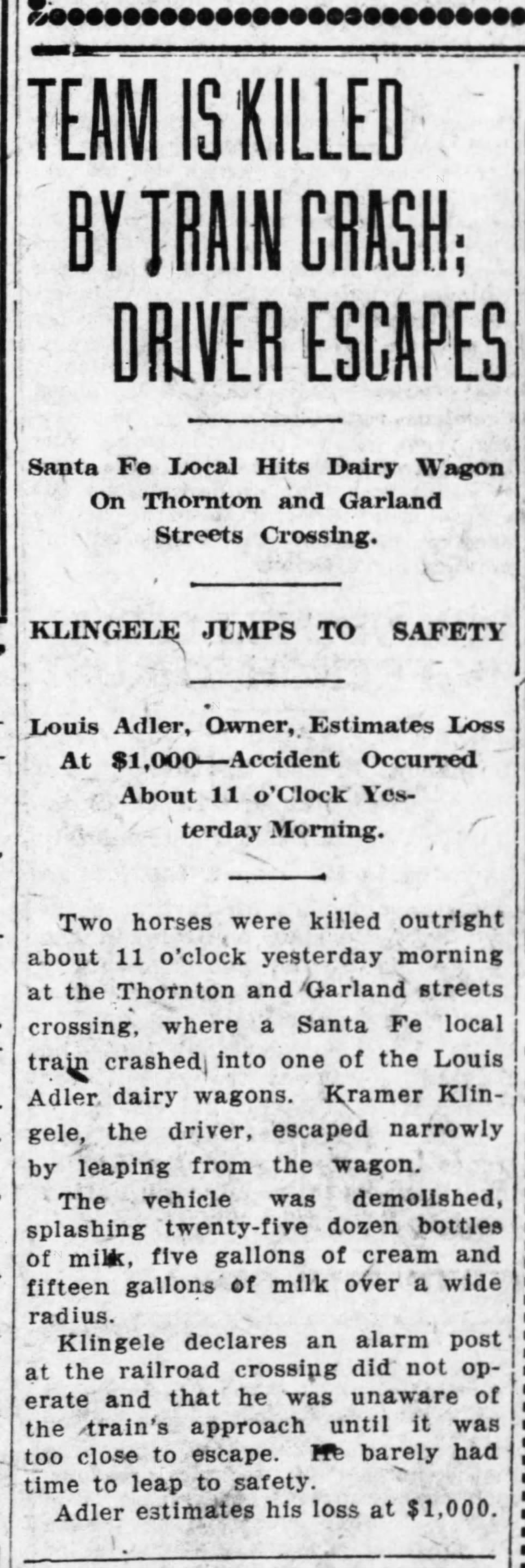
Unfortunately, Julius got into some trouble when he was involved in a physical altercation with his employer on December 19, 1921. Guy Moll, the owner of the bakery where Julius was employed, got into an argument with Julius when Julius refused to clean out the mixer. Julius picked up a “stove lifter” or poker and threatened Moll, who then punched Julius in the mouth, knocking out two teeth.5 Julius, at the suggestion, if not urging, of his litigious brother Louis, sued Moll for $10,000, even though Moll had apologized and offered to pay his dentist bill. The case went to the jury, which rendered a verdict in Julius’ favor, but for only $285, not $10,000. One news story about the case mentioned that Louis had just won a case against the railroad, as discussed here, so perhaps Louis saw an opportunity for his brother also to win a large judgment.
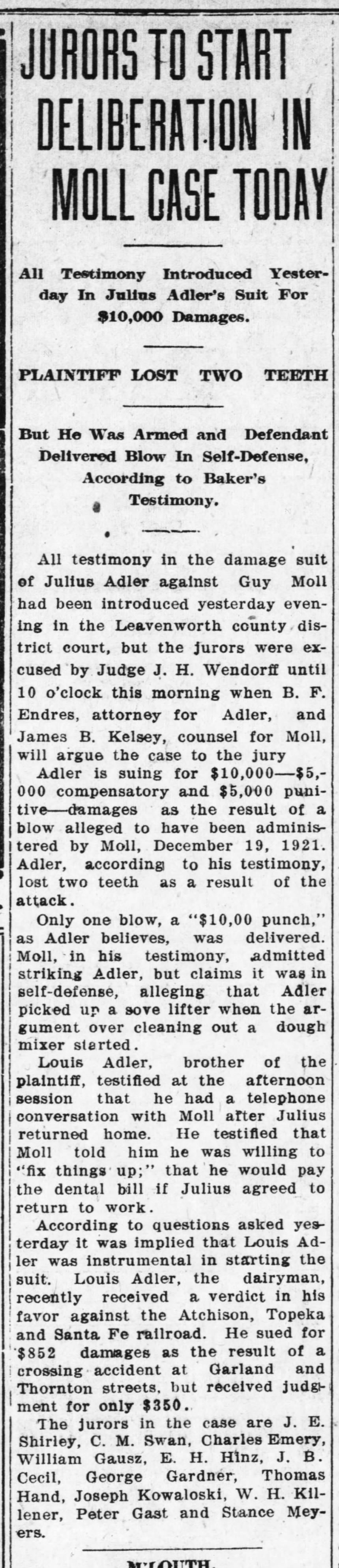
“Jurors to Start Deliberations in Moll Case Today,” The Leavenworth (KS) Times, February 18, 1922, p. 10
This dispute may explain why Julius and Minnie’s next child Warren was born in 1924 in Girard, Kansas, 146 miles from Leavenworth. Julius may have decided (or been forced to decide) to relocate since I assume Moll no longer employed him. The family was still living in Girard in 1925 when the Kansas census for that year was enumerated, and Julius was still working as a baker.6
In 1927 Julius and Minnie were listed in the Topeka, Kansas, city directory, and Julius was again working in a bakery.7 But he ran a “situation wanted” ad that year seeking a bakery job “preferably in a small town.”

Kansas City (MO) Star, October 5, 1927, p. 22
In 1930, Julius, Minnie, and the six children (the three Julius had had with his first wife Edith and the three he’d had with Minnie) were living in Chapman, Kansas, and Julius was continuing to work as a baker. His oldest son Roland was a deliveryman for a dairy.8 At first I thought Roland might have been working for his uncle Louis, but since Chapman is 133 miles from Leavenworth where Louis lived, that seems not to be possible.
Obviously Julius was moving from place to place for all those years—from Wisconsin to Minnesota and then to several different places in Kansas. He was not involved in as many legal disputes as his brother Louis, but he seemed to have a different kind of restlessness.
Two of Julius’ children married in the 1930s. His oldest child Roland Adler took out a license to marry Verna Pataky in Edwardsville, Illinois, in November 1933.9 Verna was the daughter of Andrew Pataky and Theresa Kaldi and was born in Illinois on September 12, 1910.10 I don’t have a marriage record for Roland and Verna, but in 1940 they were living in St. Louis, Missouri, where Roland was working as a baker, just like his father Julius.11 Roland and Verna would have one child together.
Roland’s younger sister Irene also married in the 1930s. She and John Robert Kohring were married on September 17, 1936 at Emmaus Lutheran Church in St. Louis, Missouri.12 John was born in St. Louis on March 13, 1914,13 and was the son of John Henry Kohring and Evelyn Kercheval.14 In 1940 Irene and John were living in St. Louis, John was working as a chauffeur for a private family and Irene was a waitress in a cafeteria.15 They did not and would not have any children.
Chrystal, the middle child of Julius and his first wife Edith, did not marry during the 1930s, nor could I locate her on the 1940 census or find any records or articles revealing where she was at that time or any time from 1930 and 1940. She would reappear, however, in later records.
As for Julius Adler and his second wife Minnie Hankins, the 1940 census lists them in different locations. Minnie was living in St. Louis with their three younger children, Milton, Marjorie, and Warren, all now teenagers. Milton listed his occupation as “new worker,” and Marjorie gave hers as a factory worker in a paper factory.

Minnie Adler and family 1940 US census, Year: 1940; Census Place: St Louis, St Louis City, Missouri; Roll: m-t0627-02195; Page: 8B; Enumeration District: 96-355, Ancestry.com. 1940 United States Federal Census
On the other hand, Julius was enumerated back in Leavenworth County, Kansas, the census report indicating that Julius was a caretaker of a farm and country grocery at that location, earning his rent by taking care of the farm. Since his brother Louis was also in Leavenworth County in 1940 and listed his occupation as “farmer,” I wonder whether Julius was working with Louis or even living and working on Louis’ farm.16
Although they were enumerated in different places that were 281 miles apart, both Julius and Minnie listed their marital status as married. Yet both census records, enumerated in different states by different enumerators, have the same strange mark over the M for marital status.
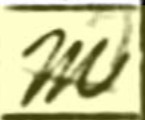
Minnie Adler marital status 1940 census
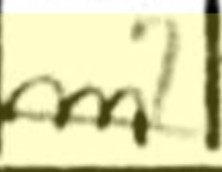
Julius Adler marital status 1940 census
Is that a D for divorced? An S for separated? It looked more like a seven or a two or a Z to me. I googled “1940 census marital status marks” and learned, lo and behold, that M 7 meant that the person was married but did not have their spouse living with them.
I thought perhaps Julius and Minnie were living separately because of economic reasons; perhaps Julius could not find work as a baker during the Depression. Or maybe Minnie was just tired of moving from place to place as Julius looked for work as a baker.
To be continued in the next post.
- Minnie Jewel Hankins Adler death certificate, Missouri Office of the Secretary of State; Jefferson City, MO, USA; Missouri Death Certificates, 1910-1971, Ancestry.com. Missouri, U.S., Death Certificates, 1910-1971; Minnie Hankins, 1900 US census, Year: 1900; Census Place: Shoal Creek, Barry, Missouri; Roll: 838; Page: 11; Enumeration District: 0015, Ancestry.com. 1900 United States Federal Census; Charles L Hankins, Age 24, Birth Date abt 1871, Marriage Date 23 Mar 1895, Marriage Place Barry, Missouri, USA, Spouse Martha Meirhaftz, Missouri State Archives; Jefferson City, MO, USA; Missouri Marriage Records [Microfilm], Ancestry.com. Missouri, U.S., Marriage Records, 1805-2002 ↩
-
Milton Theodore Adler, World War II draft registration, National Archives at St. Louis; St. Louis, Missouri; Wwii Draft Registration Cards For Missouri, 10/16/1940-03/31/1947; Record Group: Records of the Selective Service System, 147; Box: 2,
Ancestry.com. U.S., World War II Draft Cards Young Men, 1940-1947 ↩ -
Alice Marjorie Adler, Birth Date 26 Aug 1922, Birth Place Missouri, USA, Missouri State Archives; Jefferson City, MO, USA; Birth Index, 1920-1999; Ancestry.com. Missouri, U.S., Birth Registers, 1847-2003; Ancestry.com. U.S., Marjorie Alice Adler
[Marjorie A Williamson], [Marjorie Ocamb], Gender Female Race White, Birth Date 26 Aug 1922, Birth Place Kansas City, Missouri, Death Date 5 Dec 1995, Father
Julius J Adler, Mother, Minnie J Hankins, SSN 496187036, Social Security Applications and Claims Index, 1936-2007 ↩ - Warren Fred Adler, Gender Male Race White, Birth Date 31 Mar 1924, Birth Place Girard, Kansas, Death Date 17 Jan 1994, Father Julius J Adler, Mother Minnie J Hankins, SSN 500186534, Death Certificate Number 721 Kutis 772300, Ancestry.com. U.S., Social Security Applications and Claims Index, 1936-2007 ↩
- “Moll Shows Adler Had Stove Lifter When He Was Hit,” Leavenworth Times, February 17, 1922, p. 1. ↩
- Julius Adler and family, 1925 Kansas census, Kansas State Historical Society; Topeka, Kansas; 1925 Kansas Territory Census; Roll: KS1925_32; Line: 16, Description Township or Location: Girard, Ancestry.com. Kansas, U.S., State Census Collection, 1855-1925 ↩
- Julius Adler, Gender Male, Residence Year 1927, Residence Place Topeka, Kansas, USA, Occupation Baker, Spouse Minnie Adler, Publication Title Topeka, Kansas, City Directory, 1927, Ancestry.com. U.S., City Directories, 1822-1995 ↩
-
Julius Adler and family, 1930 US census, Year: 1930; Census Place: Chapman, Dickinson, Kansas; Page: 6A; Enumeration District: 0032; FHL microfilm: 2340435,
Ancestry.com. 1930 United States Federal Census ↩ - The Edwardsville (Il) Intelligencer, November 25, 1933, p. 5. ↩
-
Verna Adler, Social Security Number 488-10-9705, Birth Date 12 Sep 1910
Issue year Before 1951, Issue State Missouri, Last Residence 33931, Fort Myers Beach, Lee, Florida, USA, Last Benefit 33931, Fort Myers Beach, Lee, Florida, USA
Death Date Oct 1979, Social Security Administration; Washington D.C., USA; Social Security Death Index, Master File, Ancestry.com. U.S., Social Security Death Index, 1935-2014; Verna Pataky, 1920 US census, Year: 1920; Census Place: Granite Ward 5, Madison, Illinois; Roll: T625_390; Page: 4B; Enumeration District: 84, Ancestry.com. 1920 United States Federal Census ↩ - Roland Adler, 1940 US census, Year: 1940; Census Place: St Louis, St Louis City, Missouri; Roll: m-t0627-02205; Page: 6A; Enumeration District: 96-579, Ancestry.com. 1940 United States Federal Census ↩
- Marriage record of Irene Adler and John Henry Kohring, Concordia Historical Institute; St Louis, MO, USA; Lutheran Church Records, Missouri Synod, U.S., Lutheran Church records, 1851-1973 ↩
-
John R Kohring, Gender Male, Birth Date 13 Mar 1914, Death Date 23 Jul 2000
Claim Date 16 Dec 1975, SSN 500189141, Ancestry.com. U.S., Social Security Applications and Claims Index, 1936-2007; John Kohring, World War II draft card, National Archives at St. Louis; St. Louis, Missouri; Wwii Draft Registration Cards For Missouri, 10/16/1940-03/31/1947; Record Group: Records of the Selective Service System, 147; Box: 182, Ancestry.com. U.S., World War II Draft Cards Young Men, 1940-1947 ↩ - John H. Kohring and family, 1920 US census, Year: 1920; Census Place: St Louis Ward 20, St Louis (Independent City), Missouri; Roll: T625_957; Page: 13A; Enumeration District: 393,Ancestry.com. 1920 United States Federal Census; John H. Kohring and Evelyn Kercheval marriage record, Missouri State Archives; Jefferson City, MO, USA; Missouri Marriage Records [Microfilm], Ancestry.com. Missouri, U.S., Marriage Records, 1805-2002 ↩
- John R. Kohring and family 1940 US census, Year: 1940; Census Place: St Louis, St Louis City, Missouri; Roll: m-t0627-02195; Page: 2B; Enumeration District: 96-350, Ancestry.com. 1940 United States Federal Census ↩
-
Julius Adler, 1940 US census, Year: 1940; Census Place: Delaware, Leavenworth, Kansas; Roll: m-t0627-01240; Page: 3A; Enumeration District: 52-2A,
Ancestry.com. 1940 United States Federal Census ↩




 Brotmanblog: A Family Journey