Passover wishes and thoughts


Passover Seder Plate

Passover Seder Plate (Photo credit: Wikipedia)


As we approach the first night of Passover on Monday evening, I am feeling a bit overwhelmed, as I usually am this time of year.  There is the cleaning, shopping, cooking, and all the other details that go into preparing the house for Passover and for the seder.  I am also feeling torn because there are so many things I want to do in connection with my research and the blog.  I have lots of photos to scan and post, both from my Brotman relatives and my Rosenzweig relatives, stories that need to be written, documents to request, people to contact.  But I do not have time.  So while the kugel is baking and before I start turning over the dishes and pots and pans for the holiday, I thought I’d take a few minutes to ponder what Passover means to me this year.


Passover was once my favorite holiday of the year.  I loved the seder because as a child, it was my only formal exposure to Jewish history and Jewish rituals.  I grew up in a secular home.  We did not belong to a synagogue, I did not go to Hebrew school, and there were no bar or bat mitzvahs celebrated in our family when we were children.  It was just fine with me, but I was also very curious about what it meant to be Jewish.  Passover gave me a taste of what being Jewish meant and could mean.  My Uncle Phil, my Aunt Elaine’s husband, had grown up in a traditional Jewish home, and although he was not terribly religious either, he wanted to have a seder.


So every year we had a seder, first only at my aunt’s house, and then my mother started doing a second seder at our house.  My uncle, the only one who knew Hebrew, would chant all the blessings and sing all the songs, and the rest we would read in English from the Haggadah for the American Family (not Maxwell House).  I was enchanted—I loved the music, the stories and all the rituals. I looked forward to it every year.


As an adult, I began my own exploration of what it means to be Jewish.  I married a man from a traditional family, and he wanted to keep the traditions and rituals that were part of his childhood.  I also wanted to learn more and do more.  I took classes, I read, I got involved with the synagogue, and over time the Jewish holidays and rituals and prayers and services became second nature to me and provided me with meaning and comfort and joy.

Passover has become just one small part of my Jewish life and identity now, and over time, it has lost its magic.  It no longer is my favorite holiday of the year.  The matzoh gives me indigestion, the chore of changing the dishes and pots and pans has become tiresome, and the seder is so familiar that it no longer feels fresh and new and exciting.


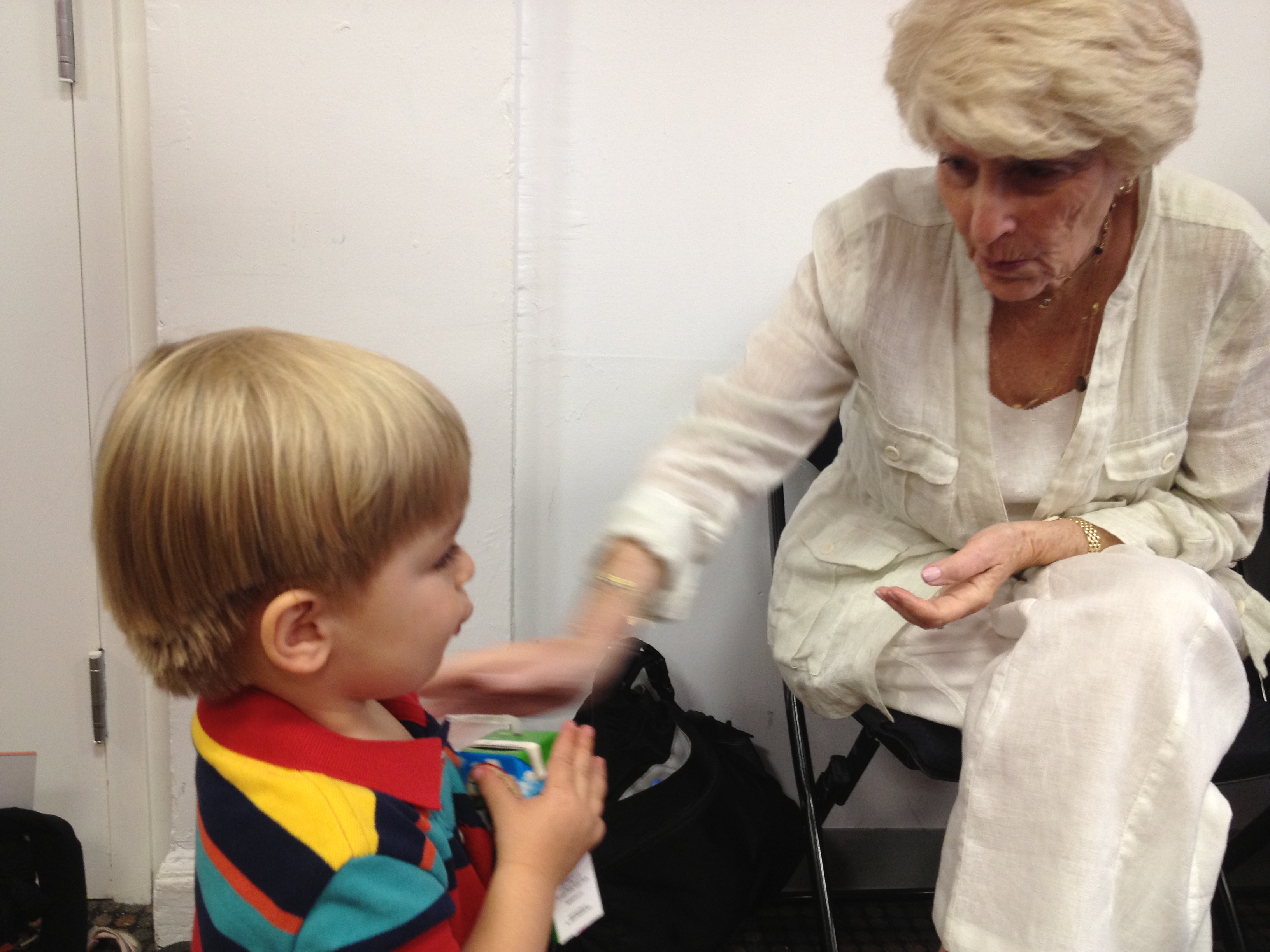
If I look at it through my grandson’s eyes, I can feel some of that old excitement, but he is still too young to ask questions or to understand the stories.  He just likes the songs and looking for the afikomen and being with his family, which is more than enough for now.  This picture, one of my favorite pictures ever, captures some of that feeling.  From generation to generation, traditions are being preserved.

L'dor v'dor  Harvey and Nate

L’dor v’dor Harvey and Nate


But this Passover I will try to take the time to think about things a little differently.  I will think not just about Moses and the Israelites crossing the Red Sea and going from slavery to freedom.  I will think about all my maternal ancestors who made their own Exodus by leaving poverty and oppression and prejudice and war in Romania and Galicia to come to the place where they hoped to find streets lined with gold.


I will think of my grandfather Isadore, the first Goldschlager to come, leading the way for his father, his mother, his sister and his brother.  I will think of how he traveled under his brother David’s name to escape from the army and come to America.


I will think of his aunt, Zusi Rosenzweig, who met him at the boat at Ellis Island.  I will think of his uncle Gustave Rosenzweig, who was the first Rosenzweig to come to the United States back in about 1888, with his wife Gussie and infant daughter Lillie, a man who stood up for his extended family on several occasions. And I will think of his aunt Tillie Rosenzweig Strolowitz, who came to the US with her husband and her children, who lost her husband shortly after they arrived in the US.  I will remember how she took in my grandfather and his sister Betty when their father, Moritz, died, and their own mother and brother David had not yet arrived.


And I will think about my great-grandfather Joseph Brotman, who came here alone in about 1888 from Galicia, whose sons Abraham and David from his first marriage came next, and whose son Max as just a ten year old boy may have traveled to America all alone.  I will think of Bessie, my great-grandmother for whom I am named, who brought two small children, Hyman and Tillie, on that same trip a few years later, and who had three more children with Joseph between 1891 when she arrived and 1901, when Joseph died.  The first of those three children was my grandmother Gussie Brotman, who married my grandfather Isadore Goldschlager after he spotted her on Pacific Street while visiting his Rosenzweig cousins who lived there as well.


All of these brave people, like the Israelites in Egypt before them, pulled up their stakes, left their homes behind, carrying only what they could carry, to seek a better life.  I don’t know how religious any of them were or whether they saw themselves as brave, as crossing a Red Sea of their own.  But when I sit and listen to the blessings and the traditional Passover songs this year, I will focus on my grandson and see in him all the courage and determination his ancestors had to have so that he could be here, free to live as he wants to live and able to ask us, “Ma Nish Ta Na Ha Leila Ha Zeh?” Why is this night different?


Why is this night different from all other nights? It isn’t because we are free; it’s because on Passover we remember what it was like not to be free and to be grateful for the gifts of those who enabled us to be free.

Happy Passover to all, and thank you to all my  Brotman, Goldschlager and Rosenzweig relatives for making this such an exciting journey for me.


Enhanced by Zemanta

Finding the Ruby Slippers and Getting Back Home to Where It Started: The Brotmans

[for my aunt, Elaine Goldschlager Lehrbaum, 1917-1995]

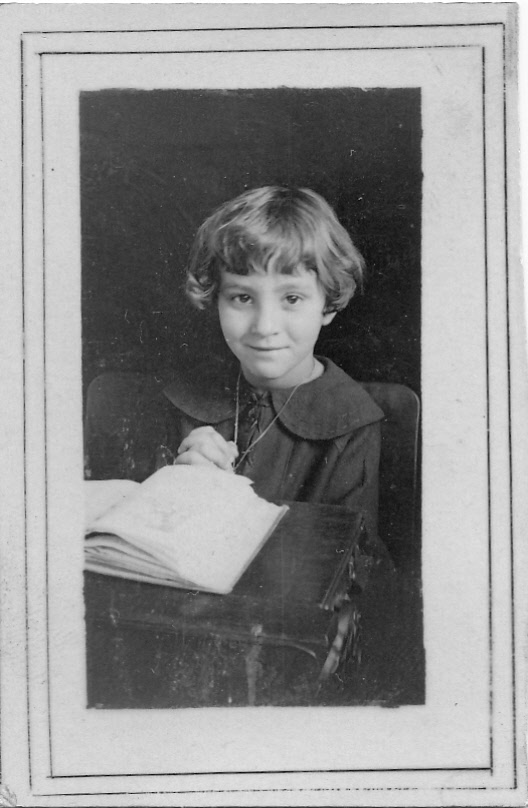
Elaine 1933

Elaine 1933

Many of you who are more recent followers of the Brotmanblog may wonder why the blog is called the Brotmanblog.  In the past several months I have barely mentioned the name Brotman because I have been focused on searching for my grandfather’s family, the Goldschlagers and Rosenzweigs.  But if you go back to the beginning of the blog, you will see that my original search focused on my grandmother’s family, the Brotmans.  That’s where I started my genealogy adventures.  It made sense.  My grandmother Gussie Brotman Goldschlager, my mother’s mother, was the grandparent I knew best, the only grandparent I knew as an adult.  She was the only grandparent my husband ever met, though she died a year before we were married.  It was only natural that I would start my journey trying to learn as much as I could about her and her siblings and her parents.  Once I had found as much as I could find about the Brotmans, I then moved on to my grandfather’s family.  The next chapter will be my father’s family.  But it all started with the Brotmans.

Why do I bring that up now? Because this weekend I will finally get to meet a number of the Brotman cousins I only learned about through doing this research.  There will be over thirty of us gathering in NYC to meet and eat and to visit the Lower East Side, where our grandparents and great-grandparents (and for some, great-great grandparents or parents) lived in New York.  We will walk to 81/85 Ridge Street where the Brotmans first lived, now a public school, once a tenement building, and then we will tour the Tenement Museum to learn more about what life was like for all of them.

If you have not read any of my posts about the Brotmans, I have provided links here and below to some that will capture the essence of their lives.  Even if you once did read them, you may want to re-read them if you are joining us this weekend and want to remember some of the details and themes I wrote about months ago.  The Brotman story is the classic Jewish American immigration story, a story of poverty and heartbreak as a family moved from Galicia to NYC in the late 1880s to a story of assimilation and success as the future generations built businesses, moved beyond the Lower East Side, became professionals, and moved to the suburbs after World War II.  My Brotman great-grandparents were hard-working realists who did what they needed to do to survive.

Although I was able to piece together a fair amount about their lives through census reports and other documents and through some stories my mother remembered about her grandparents, aunts, uncles and mother, at first there was no one else besides my mother and my brother to whom I could turn for information.  My cousins shared stories about their grandparents, but they also knew little about the early lives of their grandparents and had no one left to ask either.  So mostly I relied on documentation to learn what I could.  I was able to put together a fairly complete history of the Brotman family in America and decided to move on to my grandfather’s family.

Then, like a gift of manna from heaven, about a month ago my cousin Jody sent me some notes that her husband Joel had taken from a conversation he’d had with my Aunt Elaine years ago about her family.  I’ve referred to one part of those notes before—the story of how my grandmother Gussie met my grandfather Isadore on Pacific Street in Brooklyn, where my grandmother was living and where my grandfather’s cousins the Rosenzweigs were living in 1915.  In the next day or two I’d like to share a few more tidbits from Aunt Elaine, via Joel’s notes.

But before I do, I want to point out that these notes are incredibly accurate.  Although the conversation Joel had with my aunt must have taken place in the early 1980s, my aunt’s memory for details was astonishing.  For example, she refers to the fact that Hyman’s son Emanuel worked for Kislack Realty.  I checked with Manny’s children, and they confirmed that in fact  Manny was President of J.I.Kislak Mortgage Corporation in Newark, NJ., which was a subsidiary of J.I.Kislak, Inc., a large residential and commercial Realtor based in Jersey City.kislack realty Also, my aunt knew that David Brotman worked in the coat industry, that Max was in the cigar business, and that Abraham worked for a deli in Coney Island.

All of these are facts that are backed up by my research.Brotman brothers trades

On the Goldschlager side as well, my aunt’s facts are corroborated by the information I found in my research.  David Goldschlager lived in Scranton, PA, for some time and was in the hat business.  Betty married a man in the dry goods business and moved to Arizona. goldschlager siblings I point out how accurate this information is to demonstrate how remarkable my aunt’s memory was and also so that you will trust the other statements she made and their accuracy when I report on those in upcoming posts.

In some ways finding these notes was frustrating.  If I had found them last summer, much of the time I spent trying to figure out who Max was or whether Abraham was related to us or whether there were any other children would have been unnecessary.  My aunt knew it all, and it is in these notes.

But as Glinda the Good Witch tells Dorothy at the end of The Wizard of Oz (the movie) when she reveals to Dorothy that the ruby slippers could take her home and the Scarecrow asks  why Glinda had not told Dorothy that from the beginning:

Glinda : Because she wouldn’t have believed me. She had to learn it for herself.
Tin Man: What have you learned, Dorothy?
Dorothy: Well, I – I think that it – that it wasn’t enough just to want to see Uncle Henry and Auntie Em. And that it’s that – if I ever go looking for my heart’s desire again, I won’t look any further than my own backyard, because if it isn’t there, I never really lost it to begin with. Is that right?
Glinda: That’s all it is!

And then when the Tin Man, Lion and Scarecrow all say that they should have helped Dorothy figure it out, Glinda replies:

She had to find it out for herself.

And so I did as well.  If I had started with Aunt Elaine’s notes, I never would have worked as hard to learn how to research and find these things for myself.  I would never have felt the amazing sense of satisfaction I’ve gotten from putting pieces together and from finding cousins who could help me put those pieces together.

Having my aunt confirm through these notes what I have learned and what I have done is a real gift. She was someone I adored and miss dearly.  It’s like having her here with me again, hearing her say, “You see, Amy Kugel, I always knew you could do anything you wanted.  And I knew some day you would want to know more about your history, your family.”  But, as Glinda told Dorothy, she knew I had to find it out for myself.


Elaine 1926

Elaine 1926

Elaine Gussie Florence 1933

Elaine Gussie Florence 1933

Elaine high school graduation

Elaine high school graduation

Elaine and Phil 1941

Elaine and Phil 1941

Sam with Gussie and Elaine 1945

Sam with Gussie and Elaine 1945

Elaine and Jeff 1949

Elaine and Jeff 1949

Elaine Jeff and Amy 1953

Aunt Elaine with Jeff and me

Phil and Elaine

Phil and Elaine

Enhanced by Zemanta

Great-grandparents

Ron, Joe and Sadie Rosenzweig’s grandson, sent me these wonderful photographs of Joe and Sadie with their great-grandson Bradley as a newborn in 1982 and then as a toddler in 1982.

Joe and Sadie Rosenzweig in 1982 with Bradley Marc, their great grandson

Joe and Sadie Rosenzweig in 1982 with Bradley Marc, their great grandson

1983

1983

These photos reminded me of some pictures I have of my parents with their great-grandson Nate.  As magical as it is to be a grandparent, I can only imagine what it must be like to be a great-grandparent—to see yet another generation, your grandchild’s child, enter the world and become a person.

My father with Nate June 2010

My father with Nate June 2010

My mother with Nate 2012

My mother with Nate 2012

Today it is not all that rare for people to live to see great-grandchildren.  What a contrast to the experience of those who were born in the late 19th and early 20th century.  My great-grandfather Joseph Brotman lived to see just one grandchild’s birth, Ethel Brotman, Abraham’s daughter. My great-grandfather Moritz Goldschlager died before any of his grandchildren were born.  My great-grandmothers were much more fortunate; they both lived long enough to see the births of all their grandchildren, but none of their great-grandchildren.

We are so much luckier today.  Every minute I spend with my grandson Nate is a joyful, magical moment for which I am so grateful. When I see these pictures of children with their great-grandparents, it makes me realize how lucky those children are and how lucky those great-grandparents are to be able to have those moments together.

Rose Fischer Schoenfeld

Rose Fischer Schoenfeld

In loving memory of Rose Fischer Schoenfeld, who passed away last night at the age of ninety-eight.  She was my son-in-law Brian’s beloved grandmother and Nate’s adoring great-grandmother.  She was blessed to live to see  and know many great-grandchildren, including Aaron, Ben and Nate.  May her memory be a blessing.

David Rosenzweig and The Reality of Infant Mortality

In the course of researching Abraham Rosenzweig’s life, I discovered a tenth child born to Gustave and Gussie Rosenzweig.  On the 1910 census there were nine children, all but one born in New York City between 1888 and 1904.  (Lillian, the first child, was born in Romania around 1884.) There were four boys, Abraham, Jacob/Jack, Harry and Joseph, and five girls, Lillian, Sarah, Rebecca, Lizzie and Rachel.  The NYC birth index covers those years, so I started my research of Abraham by looking for a birth record.  I had several records indicating that he was born sometime around 1890, but I could not (and still have not) found a record for Abraham’s birth.

Gustave Rosenzweig and family 1900 census

Gustave Rosenzweig and family 1900 census

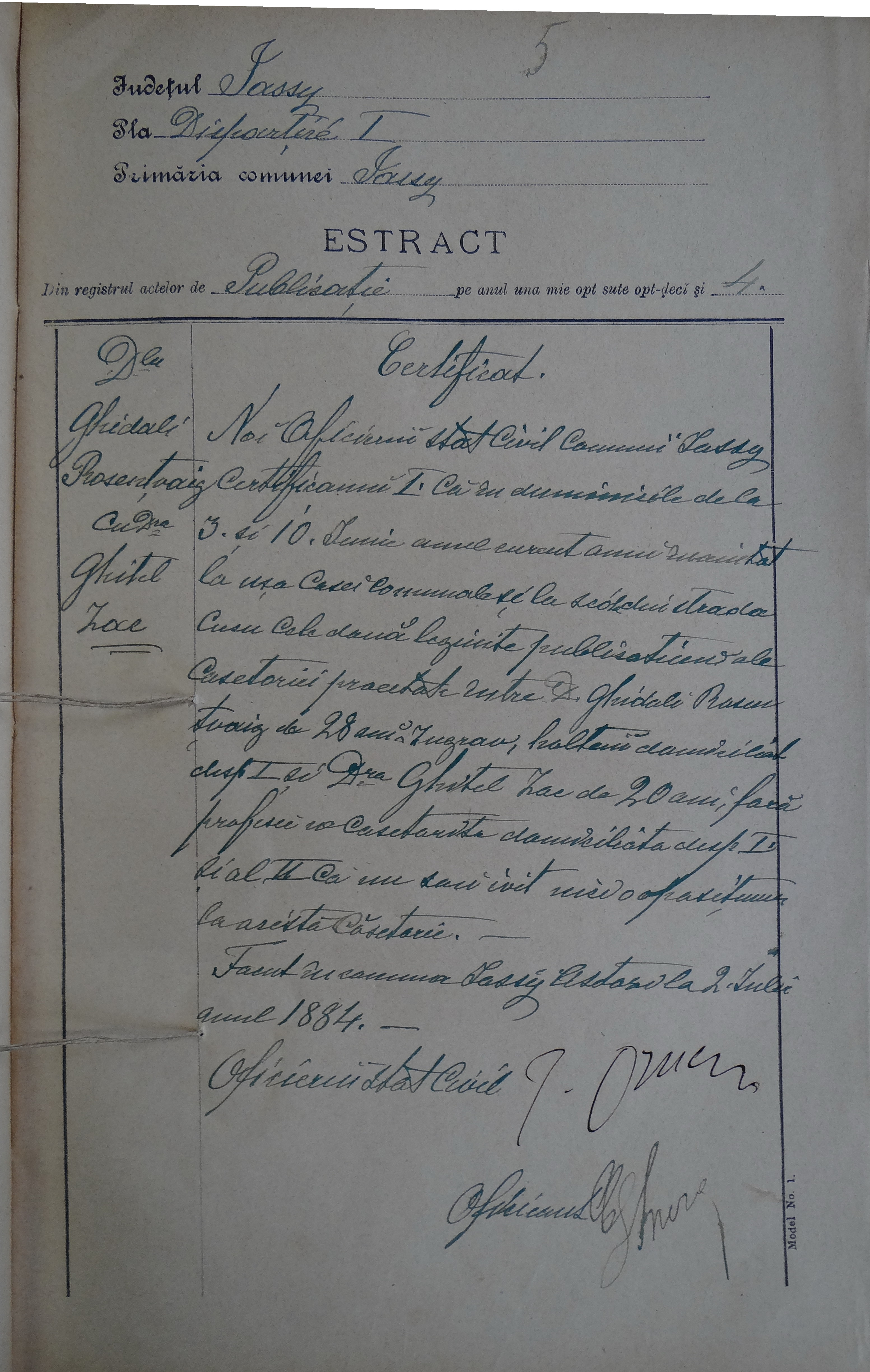
I expanded my search to look for any Rosenzweig born around 1890-1892, using FamilySearch as my tool as it allows for liberal use of wild card searching and, unlike ancestry.com or other sites, reveals the names of the parents in the search results.  I still did not see any Abrahams or Abes, but in scanning the results, I noticed a child named David who was born to Gadaly and Ghitel Saak Rosentveig.  Before receiving the Romanian records for Gustave and Gussie I might not have recognized that these were their Yiddish names: Ghidale Rosentvaig and Ghitla Zacu on their marriage records from Romania.Ghidale Rosentzveig with Ghitil Zacu_Marriage Record_1884_5  I knew that this could not be a coincidence, that this baby had to be their son, born September 5, 1891.  Since I still have not found Abraham on the birth index, I cannot be sure whether David was born before or after Abraham.  What I did realize was that David must have been named for my great-great-grandfather, David Rosentvaig, who had been alive in 1884 when Gustave married Gussie in Iasi but who must have died sometime before the birth of this new David.

But where was the new David in 1900, only nine years later? Since he was not listed on the 1900 census, I assumed the worst, as I have gotten accustomed to doing, and checked the death index.  Sure enough a one year child named David Rosenzweig had died on December 25, 1892.  Although I have not yet seen the death certificate for this child, I have to assume that this was Gustave and Gussie’s son David.  My great-great-grandfather’s namesake had died before his second birthday.

I have expressed in an earlier post my thoughts and feelings about the impact the deaths of babies and children must have had on their parents and their siblings.  The numbers are staggering.  On the 1900 census Gussie Rosenzweig reported that she had had thirteen children, only eight of whom were then living (Rachel was not yet born).  In 1910, she reported eighteen births and only nine living children.  Had she had five more infants die between 1900 and 1910? My great-grandmother Bessie Brotman reported in 1900 that she had given birth to nine children, only four of whom were living (Sam was not yet born).  We also know that Hyman Mintz died within a month of birth and Max Coopersmith within a day of birth.

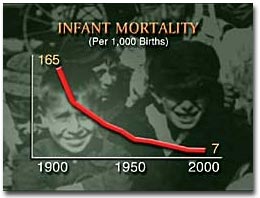
These infant deaths were not at all unusual for that time period.  According to a PBS website for a program called The First Measured Century, “[p]rior to 1900, infant mortality rates of two and three hundred [per one thousand births] obtained throughout the world. The infant mortality rate would fluctuate sharply according to the weather, the harvest, war, and epidemic disease. In severe times, a majority of infants would die within one year. In good times, perhaps two hundred per thousand would die. So great was the pre-modern loss of children’s lives that anthropologists claim to have found groups that [did] not name children until they have survived a year.”

This same source reports that most of these deaths were caused by poor infant nutrition, disease and poor sanitary conditions.  In the early 20th century substantial efforts were made to deal with these causes of infant and other deaths.  “Central heating meant that infants were no longer exposed to icy drafts for hours. Clean drinking water eliminated a common path of infection. More food meant healthier infants and mothers. Better hygiene eliminated another path of infection. Cheaper clothing meant better clothing on infants. More babies were born in hospitals, which were suddenly being cleaned up as the infectious nature of dirt became clear. Later in the century, antibiotics and vaccinations join the battle.”  The infant mortality rate began to decline, and today it is well under ten deaths per thousand within the first year of life in the United States.

Infant mortality

But what impact did this high death rate for babies have on their parents?  There have been many books written by sociologists, social historians and psychologists on the history of society’s view and treatment of children.  According to this research, until the 18th century, children were not valued highly by parents, perhaps in part because of the high infant mortality rate.  The likelihood of losing a child was so great that it made it difficult for parents to become too attached.  In Europe often parents did not even attend the funerals of their children and even wealthy parents had their children buried as paupers. See, e.g., Viviana A. Rotman Zelizer, Pricing the Priceless Child: The Changing Social Value of Children (1994); Linda A. Pollock, Forgotten Children: Parent-Child Relations from 1500 to 1900 (1984). Both authors also observe that the attitude towards children changed during the 18th and 19th centuries as people began to be more concerned about their children’s growth and development and families started to become more child-oriented and affectionate.  This change in attitudes contributed to the increased efforts to reduce infant mortality.

It’s so difficult for me to imagine that these parents were indifferent or unaffected by the deaths of so many of their babies.  I know I live in another era, an era when parenting has become not just a part of life, but in some ways an obsession. I plead guilty to being a helicopter parent, to being probably too involved in my children’s lives as they were growing up.   We live in a time of thousands of books on parenting, dealing with every issue imaginable.  There are experts to help you before a baby is born and experts to help you deal with every imaginable childrearing issue that can arise after they are born: doulas, lactation consultants, sleep consultants, life coaches, tutors, college admissions consultants, and probably some I don’t even know about.    So many of us center our lives on our children.  Losing a child is often said to be the worst thing anyone can experience.

Could it really have been so different back then? Were children really seen as disposable and replaceable? Is that why people had so many children—in order to ensure that at least some would survive to adulthood?  Or was it simply the absence of effective birth control, not the desire for so many children, that led to these huge families?  Did those huge families make it easier to accept the loss of so many babies? Were even those who survived devalued and distanced as a defense mechanism against their possible death?  It seems unlikely they were as doted upon and cherished as children of today, given both the cultural attitudes and the economic and environmental conditions of the time.

Maybe that made those children stronger and more self-reliant, less indulged and less entitled.  But it also had to have left its scars.  Maybe it is why so many of them did not want to talk about their families, their childhoods, their feelings.

Enhanced by Zemanta

Keep it or Throw it Away? Why we save things

I tend to be a saver.  Not an out-of-control packrat, but a saver.  I save books, photographs, letters, papers, cards, report cards, etc.  I also saved almost all the clothes that my children wore as babies and toddlers, regardless of the condition.  I just couldn’t part with the memory of each of them being so little.  The clothes were tangible evidence, more so than photographs, that they were once tiny babies.

When my grandson was born, I went down to the basement to see if any of the baby clothes I’d saved were usable.  For the most part, they weren’t.  Things were stained, stretched out, out of style—not what you’d put on a new baby.  So I had to decide what to do.  Throw them away? Put them back in the boxes?  I weeded through them, saving the ones that triggered particular memories: the purple corduroy outfit that both girls wore when they were toddlers, the Snoopy outfit that my older daughter wore almost every day when her sister was born and we were both too tired to fight with her about what to wear; sweaters my mother had knit, a few special party dresses.  The ones that were badly stained and not wearable I threw away.  All the rest I put back in the boxes anyway, not having the heart to throw them away just yet.

Now I am glad that I did keep some of these things.  One of the pictures Jody sent me a couple of weeks ago was this picture:

booties

Imagine—these booties are almost 100 years old.  My aunt Elaine was born in 1917, my uncle Maurice in 1919.  Someone saved these and pinned a label to them to identify them for posterity as the booties of Elaine and Maurice.  There were not a lot of material objects passed on from my grandparents, but here is one that says so much.  They, too, cherished their babies, wanted to preserve the memories of them as tiny babies, and held on to something tangible to keep those memories alive.  And it worked—I now can imagine those babies and my grandparents as new parents, probably as overwhelmed, exhausted and delirious as all new parents, but also in love with those babies.

So I guess I won’t be getting rid of the baby clothes yet.  Maybe some time in the 2080s, a great-grandchild will find a box with a sweater, a Snoopy outfit, a purple corduroy jacket, and imagine the children who once wore them.

Enhanced by Zemanta

Crowd Sourced Genealogy

In yesterday’s New York Times, A.J. Jacobs wrote a mostly facetious article about the phenomenon of crowd sourced genealogy, “Are You My Cousin?”  Crowd sourced genealogy refers to the practice used by some people doing family research where on websites like Geni a researcher can link his or her tree with other trees once a

Image representing Geni as depicted in CrunchBase

Image by None via CrunchBase

common relative is found.  As Jacobs points out, many experienced genealogists have expressed concern about this practice because the trees that are being connected may not be well-researched or accurate.  As a result, people end up incorporating those mistakes into their own trees, and then those mistakes can be repeated over and over again as new people begin linking to these inaccurate trees.

Although ancestry.com is not set up like Geni to promote the idea of one World Family Tree, their site also allows researchers to view other family trees which list people with the same names and dates as those on their own tree.  When I first started using ancestry.com, I relied on this tool to add names to my family tree on my father’s side.  I soon, however, realized that it was a dangerous practice.  I thought I had found some English cousins because we shared a relative named Boomer Cohen.  I contacted them and was very excited—only to be very disappointed and embarrassed when I learned that their Boomer Cohen was not the same as my Boomer Cohen.  Who would have thought there were two women with that name?

I’ve run into other problems with relying on the family trees I find on ancestry.com.  Often trees were created without any documentation, so I can’t double-check to be sure they are accurate.  When I was researching Harry Coopersmith, my great-aunt Frieda’s husband, I found Harry on a tree with parents who did not match the parents I had found after research and with documentation.  It had Harry’s children correctly and his birth and death dates, but the wrong parents.  I contacted the tree owner, Harry’s grandson, and asked him about it because I assumed he was right and I was wrong.  But it turned out he had linked to someone else’s tree with a different Harry Coopersmith and assumed it was his grandfather.  He was very happy (and probably embarrassed) when I was able to provide him with the correct information and the documents to back it up.

As a result, I am very skeptical of sites like Geni and the whole notion of crowd sourced genealogy.  Not that I have stopped looking at those other trees on ancestry—I always do, and I have found many helpful people by doing so.  For example, I found Becky Schwartz Goldschlager’s nephew Jon by finding his family tree on ancestry.  But I have learned to use these trees very carefully.  In fact, when I return to researching my father’s family lines, I will need to go back and pare some limbs from those trees unless and until I can find documentation to back them up.

Jacobs also expressed skepticism, but seems to be overall in favor of crowd sourced genealogy.  As I said, his article is mostly facetious, pointing out the ridiculously long and convoluted paths that connected him to Albert Einstein and Gwynneth Paltrow, among others.  Although the idea of finding hundreds of celebrities and famous people to whom I have some very attenuated connection is somewhat intriguing, it’s not what I am after by engaging in genealogy research.  I want to know more about my real ancestors — who they were, where they lived, and how they lived.  I don’t need to know my great-great-uncle’s wife’s brother’s daughter’s husband’s cousin’s mother’s stepfather was Abraham Lincoln.  What good would that do me?

English: Abraham Lincoln, the sixteenth Presid...

English: Abraham Lincoln, the sixteenth President of the United States. Latviešu: Abrahams Linkolns, sešpadsmitais ASV prezidents. Српски / Srpski: Абрахам Линколн, шеснаести председник Сједињених Америчких Држава. (Photo credit: Wikipedia)

Enhanced by Zemanta

Pete Seeger

Video

Pete Seeger, American folk singer

Pete Seeger, American folk singer (Photo credit: Wikipedia)

I woke this morning to the very sad news that my lifelong hero, Pete Seeger, had died at age 94.  Others will write more complete obituaries, but I wanted to write about my lifelong relationship with Pete.

It started with my very first album as a small child.  It’s the one depicted below with Pete singing one of my favorite childhood songs.

So my relationship with Pete started before I could even read.  His songs were the soundtrack to my early childhood.

When I was a little older, I found my parents’ copy of The Weavers album from their Carnegie Hall concert and listened to it over and over.  Here’s one of my favorites from when I was probably eight or nine years old:

As an adolescent, Pete was there to be my conscience.  First, during the Civil Rights movement, we all sang “We Shall Overcome” at camp in 1963.

And, of course, “If I Had a Hammer:”

And then in 1965 I got to see Pete in Concert at Carnegie Hall as part of an anti-war concert.

Sing In For Peace 1965

Sing In For Peace 1965

It was my first Carnegie Hall concert, my first anti-war concert (I was 13), and an unforgettable experience seeing not only Pete Seeger but all the other great folk singers of the day.  I am so grateful that my parents took me with them to experience this.  I will never forget it.  I saw Pete in concert a number of times after that, usually with Arlo Guthrie, but that first time was so magical.

Pete wrote and sang many anti-war songs, but my favorite will always and forever be this one:

I sang this all through my teenage years and after.  I sang it to my children when they were little, trying to instill in them Pete’s message—that war is cruel and pointless and that only love and peace will sustain and save us.

I could post many more, but these are the ones that resonate for me today and every day.

Thank you, Pete Seeger, for always doing the right thing and for being the conscience for all of us.

Pete Seeger, Pamela Means, Magpie; Clearwater ...

Pete Seeger, Pamela Means, Magpie; Clearwater Festival 2008; Croton on Hudson NY; June 22, 2008 (Photo credit: Wikipedia)

Enhanced by Zemanta

Memories

As I wrote earlier, my cousin Jody sent me some new pictures yesterday—pictures I had never seen before.  These are pictures taken in the 1940s, except for one that was taken in 1953.  Here are the first three.

First, a picture of my grandparents, my uncle Maurice and my aunt Lynn, and my aunt Elaine.  My Uncle Phil probably took this picture because he is not in the picture, plus he was always the one taking family pictures, thank goodness.  Jody, his daughter, has taken over that role in our generation.

gussie elaine  lynn maurice and isadore

Next is a picture of my grandparents, apparently taken the same day.  You can tell how short he is, since my grandmother was only about 5’2 herself.

Isadore and Gussie
Isadore and Gussie

Here’s a picture of my grandmother Gussie alone—notice those remarkable Brotman cheekbones.

Gussie

The next two are very special to me.  First, this is my grandmother Gussie with my cousin Jeff, Jody’s brother.  She is obviously proud of her first grandchild. She was never much of a smiler, but you can tell (well, I can tell) that she is happy in this picture.  This picture was probably taken in 1946 or 1947, as Jeff was born in April, 1946.

Jeff and Gussie c. 1946

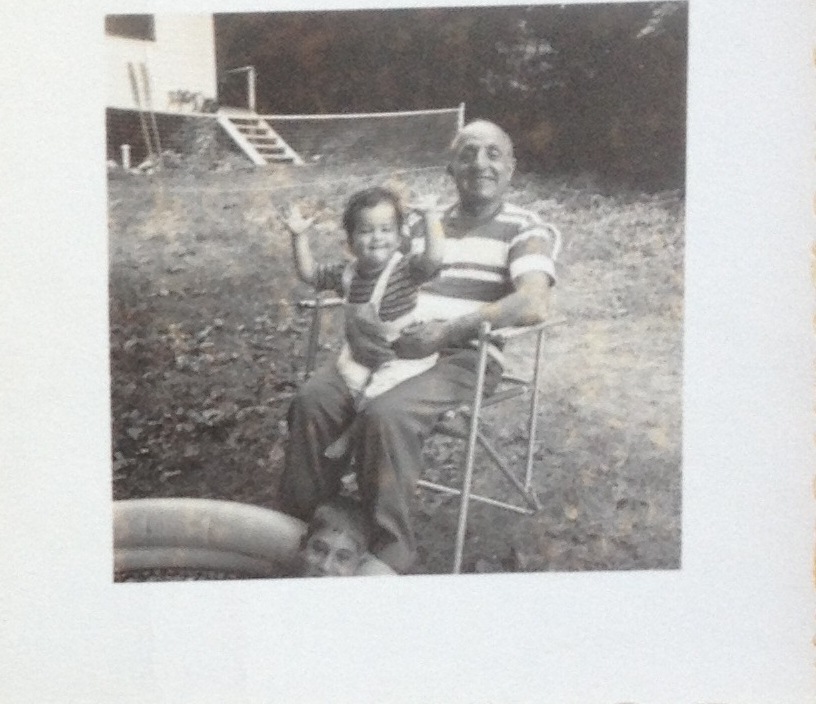
Finally, my favorite, a picture of my grandfather holding me on his lap with Jeff lying in the kiddy pool at his feet.  This is my favorite for two reasons.  First, it shows how much I loved my grandpa and vice versa.  As I’ve said before, he died before I was five, and I only have vague, non-specific memories.  Pictures like this one reinforce my emotional sense memory that my grandfather and I loved each other.

Jeff, Amy and Grandpa 1953

Also, these last two pictures are special because they bring back memories of my cousin Jeff.  It’s ten years ago yesterday that we lost Jeffrey, and it still seems unbelievable that he is gone.  He was my first crush (after my father, of course), my role model, the one who teased us, the one who helped at every birthday party because he was the oldest cousin, the one who tolerated having seven younger cousins and a sister all chasing him around.  He taught many of us to swim, to ski, to dive. He was always making us laugh; he was always fun.  We all adored him, and despite the fact that we probably drove him crazy, we all knew he loved us.  We miss you, Jeff.

Enhanced by Zemanta

Pessel bat Yosef

We decided to go to synagogue for Shabbat services this morning, and for the first time in a very long time, I had an aliyah.  When the gabbai asked me for my Hebrew name to insert in the blessing, I said “Pessel bat Yosef.”  I had not used my Hebrew name in any public way since I started doing all the genealogy research, and beforehand it had not meant anything too layered for me.  It was just my Hebrew name. 

The “Pessel” I knew was for my great-grandmother Bessie, but I knew almost nothing about her.

Bessie

Bessie

The “Yosef” was manufactured by the rabbi who married us back in 1976.  He had asked me for my father’s Hebrew name for the ketubah, and I didn’t know what it was.  When I asked my father (whose  English name is John), he said he had never had one.  He’d not had a bar mitzvah, but had been confirmed in a Reform congregation which did not use Hebrew names.  So the rabbi picked Yosef, figuring it was at least a name that started with a similar letter to John.  That was fine with me.  For a while I thought I’d switch to Yohanatan, figuring it was closer to John, but then I thought I should stick with what was on the ketubah (and easier to say).

So when I told the gabbai this morning that my name was Pessel bat Yosef, I felt a real connection to Bessie Brot Brotman, my great-grandmother, and I had a revelation.  I didn’t know it in 1976 when I was married; I hadn’t even known it when I last had an aliyah several years ago.  But now I know that Pessel bat Yosef was Bessie’s Hebrew name as well.  Her father’s name was Joseph.  So that rabbi in 1976 did not realize it, but he had in fact given me the same Hebrew name as my great-grandmother.  When I realized that for the first time this morning, it gave me the chills.

Bessie headstone enhanced

Now that I know so much more about Bessie and her life, I feel particularly honored and moved to share her name. I am proud to be called Pessel bat Yosef, carrying her name and her memory into the present day and into the future.

Enhanced by Zemanta

Looking back on the first six months: Seven lessons learned by doing genealogy

As my semester has drawn to an end, as the year draws to an end, I want to take some time to reflect on what I have learned in the last six months or so since I began this project in earnest and what I still want to learn and to accomplish as we start a new year.

So first, what have I learned?

1.  I’ve learned that I had two great-uncles whom I’d never known about.  For at least two months of my research, I was sure that Joseph and Bessie had only had five children: Hyman, Tillie, Gussie, Frieda and Sam.  When I kept running into a Max Brotman married to Sophie with children named Rosalie and Renee, I just figured Hyman had changed his name to Max.  My mother didn’t know about her cousins Joseph, Saul and Manny, but she had met Rosalie and Renee, and I was sure they were Hyman’s daughters.  My mother knew that Hyman’s wife’s name was Sophie.  So instead of looking harder, I just assumed Max was Hyman and that the other Hyman Brotman married to a Sophie was not my relative.  Only when I was able to find Max’s granddaughter Judy and Hyman’s grandson Bruce did I learn that Max and Hyman were BOTH my great-uncles, that both had married women named Sophie, and that Rosalie and Renee were the daughters of Max, not Hyman.  That was a HUGE turning point for me and a big lesson.  Lesson learned? Don’t trust memory alone, and don’t assume that documents are wrong just because family memories conflict with those documents.

Herman and Sophie with sons 1920

Herman and Sophie with sons 1920

2. The second new great-uncle was Abraham, and finding him was also somewhat of a lucky break.  I ran across many Brotmans in my research, but most I assumed were not our relatives because I could not find any document linking them to our relatives and because no one in our family had ever heard of them.  I can’t even remember all the details, but I recall that it was my brother Ira who found Abraham’s naturalization papers—I think (I am sure he will remember and correct me if I am wrong) it was in the course of looking into the Brotmanville Brotmans.  When I saw Max’s name on those papers, I did not assume it was the same Max.  (There were many Max Brotmans living in NYC at that time.)  Once I checked the address for the Max on Abraham’s card against the address I had for Max on the census form from that same time period, I knew it was in fact “our” Max.  That led me on the search that brought me to Abraham’s headstone and death certificate, indicating that his father was also Joseph Jacob Brotman.  Lesson learned? Don’t dismiss any clue.  You never know where one document may lead you, even if in a direction you never expected.

Naturalization of Abraham Brotman Max as Witness

Naturalization of Abraham Brotman
Max as Witness

3.  Contrary to Lesson #1 and Lesson #2, I have also learned that often you cannot trust documents.  Documents lie.  People lie.  People give bad information, and bureaucrats transcribe information inaccurately.  People who transcribe handwritten documents for indexing purposes make errors.  In particular, our relatives were entirely inconsistent when it came to birth dates and birth places.  I now know why one relative found it so easy to lie about her age.  It was family tradition.  So lesson #3: Don’t assume that because it is written on some “official document” that it is reliable in any way.

Sam's Birth Certificate Joseph was NOT 42!

Sam’s Birth Certificate
Joseph was NOT 46!

4. One of my most rewarding accomplishments was finding out what happened to Frieda Brotman. Now we know who she married and how she died and even the name of her infant son Max, who only lived one day.    We even know what happened to her husband Harry Coopersmith after she died.  I never thought I’d be able to track down her story.  That experience is what will keep me going as I continue to look for the answers to more questions.  Lesson #4: Do not give up.  Do not give up. Do NOT give up!

Frieda Brotman Coopersmith death certificate

5. There are more helpful and supportive people in the world than there are mean or evil people.  I know we hear all the time about all the evil in the world, and there is far too much of it.  And even if not evil, there are also many people who are rude, incompetent and unhelpful.  We all know that.  But we often forget that there are also many, many more people who are kind, helpful and competent.  In my six months of doing this research, I have gotten help from many strangers—government employees who patiently helped me find a document, FHL volunteers who helped me track down a document request I had made, JewishGen and GesherGalicia members and other genealogists who have gone far out of their way to teach me how to find documents and how to connect with other researchers, who have photographed gravestones and given me directions to gravestones, who have translated documents for me, who have helped me find a clue when I was sure I had hit a brick wall.  I cannot tell you how much these people have touched me and changed my views on human nature.

I want to express special thanks and deep appreciation to Renee Steinig, who contacted me many months ago in response to my cry for help on GesherGalicia and who has truly been my teacher and is now my friend as I have gone from being a total newbie to a fairly competent novice with her guidance. She is the one who found the obituary of Renee that led to me finding Judy.  She is the one who suggested I post an inquiry on a bulletin board that led me to Bruce.  When I look back, in fact, I know it was Renee who got me to where I am today.  Thank you, Renee, for everything.

Lesson #5: If you ask for help, there will be generous and kind people who will reach out and help you.  Don’t do this alone.

6. I have also learned that I have many second cousins and second cousins once and twice removed—people I would never have discovered if I had not started down this path.  This has been probably the biggest gift of all from doing this research.  What a wonderful and interesting group of people I have gotten to know—by email, by phone, by pictures and stories.  When I look at the pictures and see the distinctive Brotman cheekbones shared by so many of you and your parents and your children, it gives me such a great sense of connection.  This may be the best lesson I’ve learned: everyone is looking for connections, everyone is looking to find their place in time and in the world.  I am so glad to have made these connections with so many of you, people who never even knew my name until this fall but whom I now consider not just cousins, but friends.

7. Finally, and in some ways the point of this whole adventure, I have really learned more than I ever could have hoped about my great-grandparents and their children and how they lived in the United States.  Joseph and Bessie were nothing but names to me six months ago; now they are flesh and blood people, my flesh and blood.  Their drive and courage is an inspiration to me, as it must have been to their own children.  After all, Abraham, Hyman and Tillie all named a son for their father Joseph, and perhaps some of the great-grandchildren were named for him as well.  I was so blessed to have been named for Bessie, as were some of you.  Bessie and Joseph—they are the real heroes of this story.  That’s the real lesson.

Joseph's headstone

Joseph’s headstone

Bessie Brotman

Bessie Brotman

Next post: Looking forward to the next six months