How Genealogy Research Works:  Solomon Monroe Cohen as A Sample Case

English: City seal of Detroit, Michigan.

English: City seal of Detroit, Michigan. (Photo credit: Wikipedia)

I’ve had remarkable luck tracking most of the descendants of Moses Cohen, Jr., even with the women who are usually so much harder to track because of the change in their names when they marry.   But when it came to the youngest son of Moses, Jr., and Henrietta Cohen, Solomon Monroe Cohen, I hit a few obstacles.  There are a few things that remain unresolved, but I’ve made a lot of progress.  I thought this would be a good example of just how much luck, persistence, and serendipity it takes to find records about a family member.

As reported in an earlier post, as of 1910, Solomon had married Estelle Spater of Detroit and settled in that city, working as the manager of a mail order business.  They had had two sons, Ralph born in 1907 and Theodore born in 1910.  Theodore had died in 1912 of complications from cerebral palsy.

In 1911 according to a Detroit city directory, Solomon was the general manager of Peoples Outfitting Company, where he was still employed in 1917 according to his World War I draft registration; he described his position as manager of the advertising staff and married to “Stella S. Cohen.”

Sol M Cohen World War I draft registration

Sol M Cohen World War I draft registration

The 1920 census has him living with Estelle and Ralph, working at a furniture business.  So far my research was moving along easily, just using ancestry.com to find the census report and the Detroit directories.
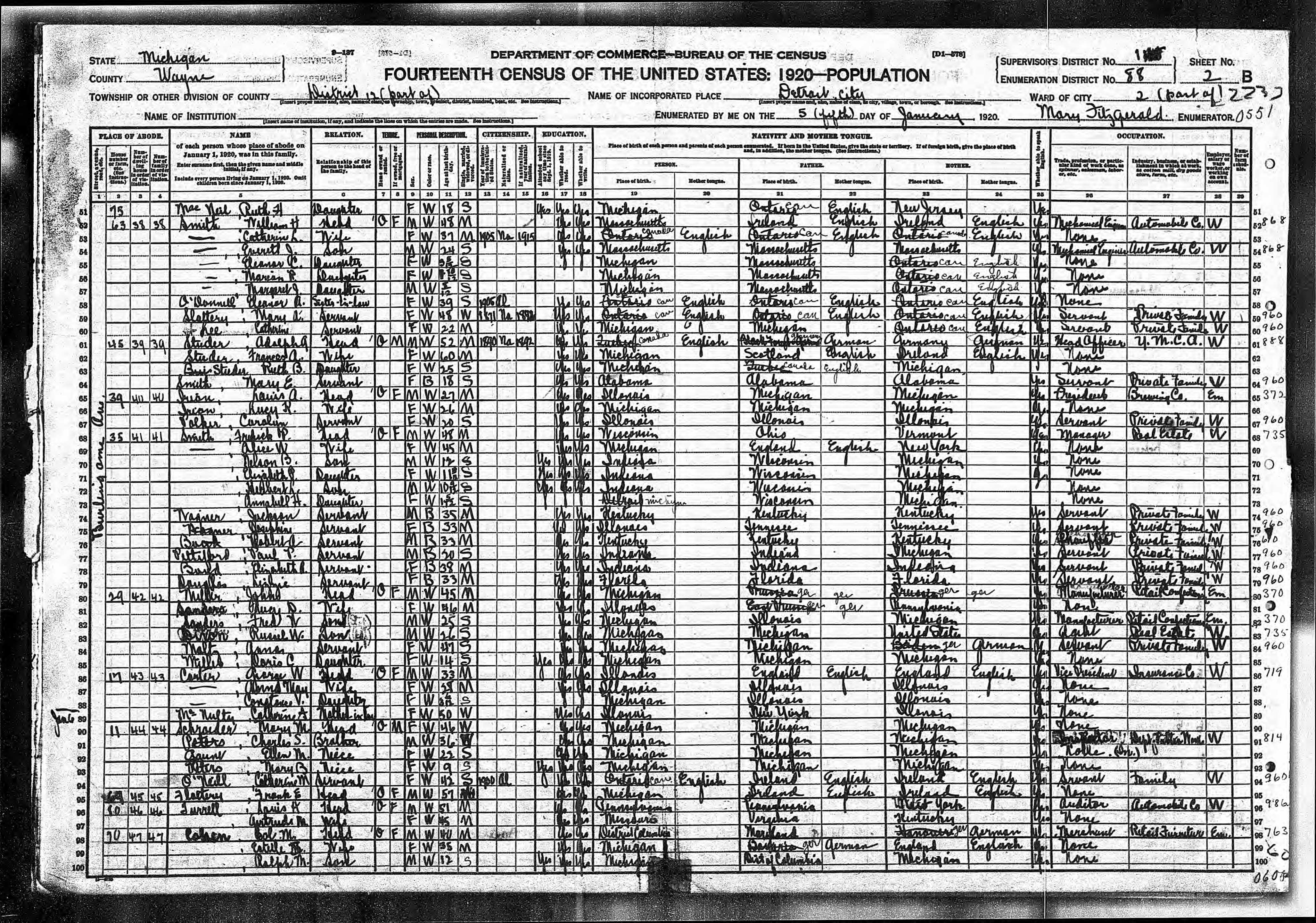
Solomon Cohen and family 1920 census

Solomon Cohen and family 1920 census

Then things got more complicated.  I could not (and still cannot find) Solomon or Estelle or Ralph on the 1930 census despite using wildcard search techniques, different databases, with and without date restrictions for births, with and without geographic restrictions.

I decided to focus my search on Ralph, figuring that there might be more recent records. I lucked out and found a marriage license application on familysearch.org  for a Ralph Cole to marry Lois Hollander in 1938, and it was indexed with Ralph’s parents’ names, Sol M. Cole and Estelle Spater.
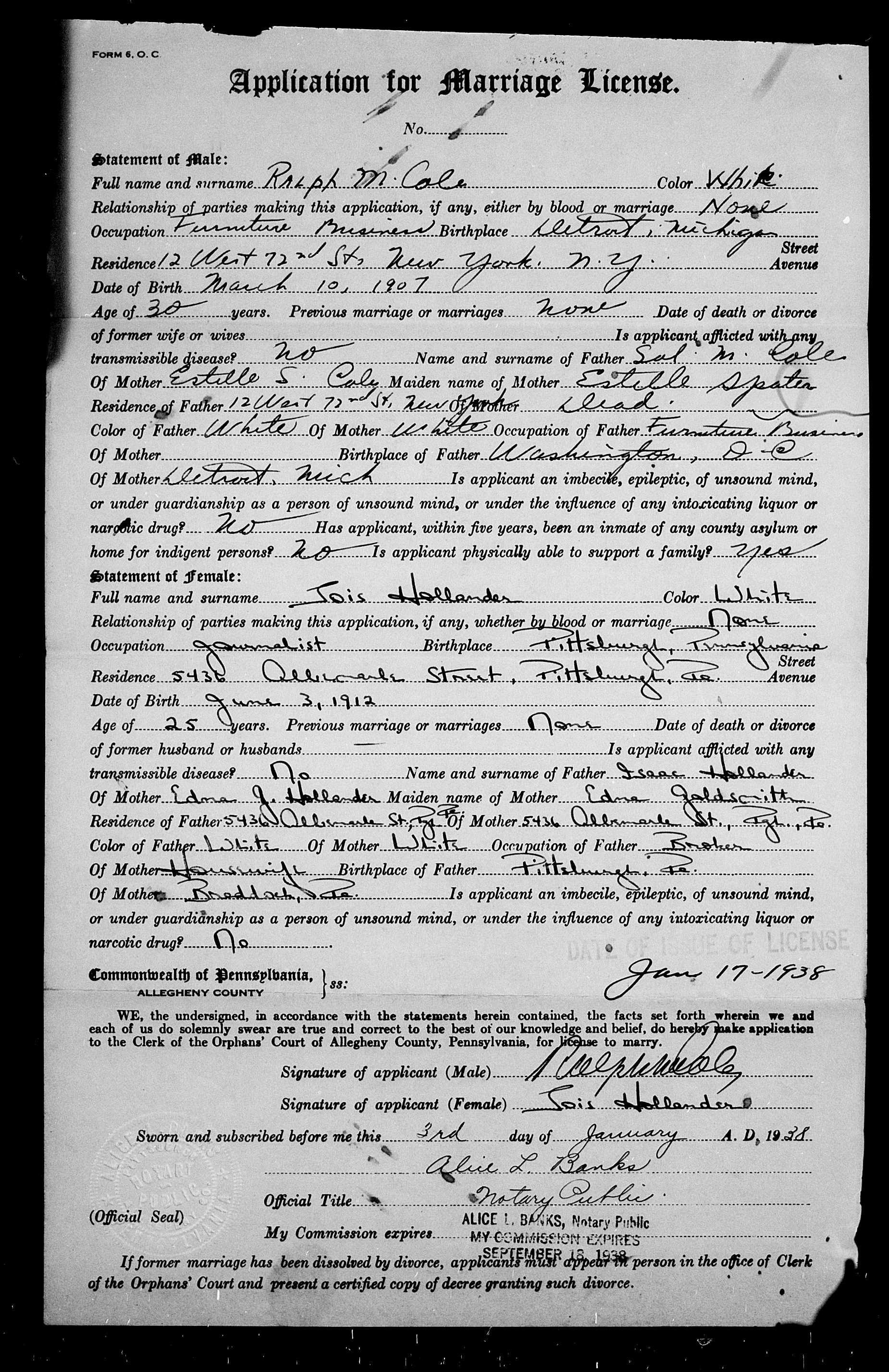
Ralph Cole and Lois Hollander marriage license

Ralph Cole and Lois Hollander marriage license

It also indicated that Ralph was born in Detroit in 1907 and that he was in the furniture business, so I knew I had the correct Ralph.  From that application I learned that Sol had changed his name from Cohen to Cole, as had Ralph.  I also learned that Estelle had already died by the time of the application, January 3, 1938.  Finally, I learned that Sol was then living in New York City, not Detroit.  By finding just that one document, I’d gained a lot more information about the family.

Armed with all this new information, I went back and searched again for Solomon and Estelle and Ralph in 1930, but again I could not find any of them.  But as I was searching, I decided to broaden the search beyond the US on the long shot that perhaps they had left the country in 1930.  I did not find them, but on familysearch.org I found a Robert Cole, born in Detroit, Michigan in 1917, whose parents were Solomon Monroe Cole and Estelle Spater.   I actually found four documents for him, all Brazilian immigration documents for different years for his business travel.  Here are two:
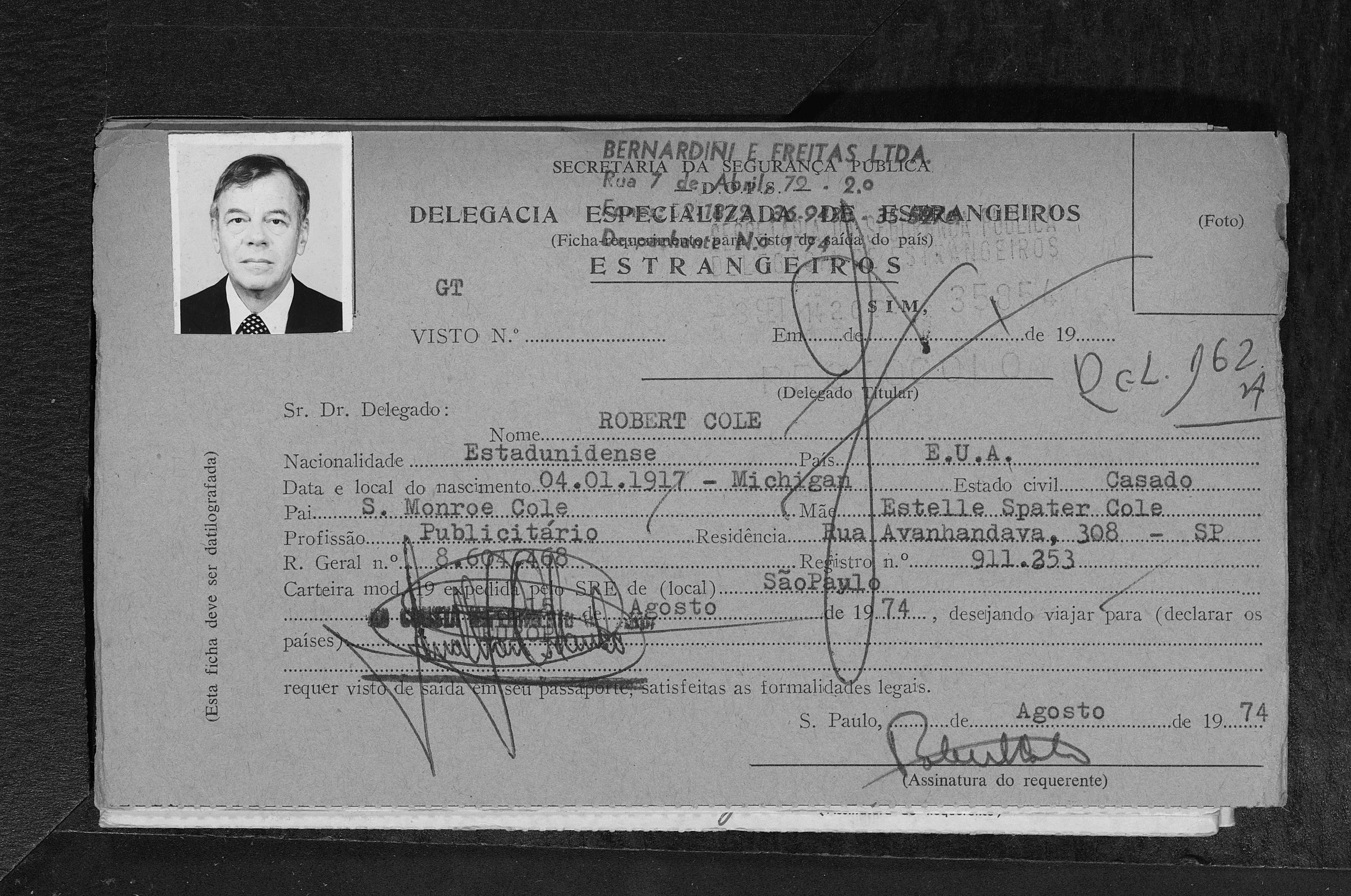
Robert Cole Brazilian immigration documents

Robert Cole Brazilian immigration documents

Robert Cole second immigration

I went back to the 1920 census again to see if I had missed a child named Robert in the household of Solomon and Estelle, but he was not there.  Just Ralph.  I checked the next page; no Robert Cole.  If he was born in 1917, where was he? I could not find him with or without his family in 1930 nor could I find him on the 1940 census, again using many different possible locations and variations on his name.  I even searched for all Roberts born in Detroit in 1917, but came up empty.

Then two days ago I went back once again to the 1920 census and decided to look at each page in the enumeration district where Sol, Estelle and Ralph Cohen were listed.  They were listed at the very bottom of page 4; Robert was not on page 5.  But this time I went on to page 6, and there he was at the top of that page, listed as part of the Newcombe household, but the name and age were Robert Cohen, three years old.  Obviously the census reporter had skipped a page and put Robert two pages after the rest of his family and then the indexer had treated him as the son of the family at the bottom of page 5, instead of the Cohen family on page 4.   I can’t tell you how much time I spent on that wild goose chase caused by one simple mistake in the census.

By using the city directory database on ancestry.com, I found all four members of the now-Cole family living in Columbus, Ohio, at the same address in a 1935 directory for that city. I’d been searching for them in Detroit and was surprised when they turned up in Columbus instead. I never would have thought to look at Columbus, Ohio, without some reason to think they had moved there.  Ralph was listed as a salesman; he would have been 28; Robert was listed as a student; he would have been eighteen.  Sol was listed as a manager, his spouse listed as Stella.
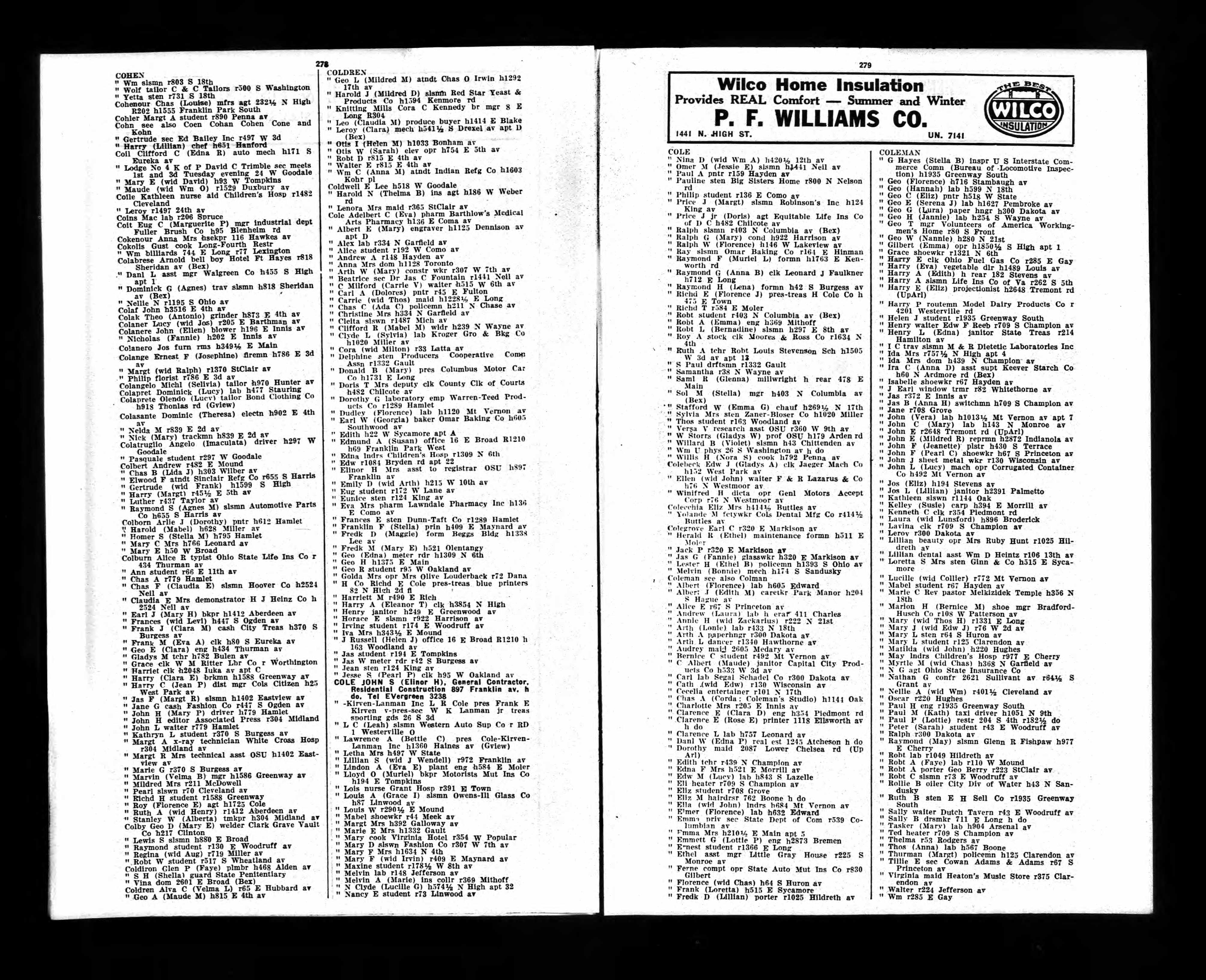
Coles on the 1935 Columbus, Ohio directory

Coles on the 1935 Columbus, Ohio directory

But were they still in Detroit in 1930? Or were they already in Columbus by then?  When had they left Detroit? I found Robert Cole on the Social Security Death Index and saw that he had died in Jupiter, Florida, so I searched for and found his obituary.  According to Robert’s obituary, he attended Grosse Point Academy outside Detroit before attending Brown University.  Since he probably graduated from high school in 1934 or 1935, the family probably had not been in Columbus for very long as of the time of that directory.  Also, I had found several yearbook entries for Ralph Cole at the University of Michigan and knew that he had graduated in 1928, so I assumed that the Coles were still residents of Michigan during that time period.

1928 University of Michigan yearbook Ancestry.com. U.S. School Yearbooks [database on-line]. Provo, UT, USA: Ancestry.com Operations, Inc., 2010.

1928 University of Michigan yearbook
Ancestry.com. U.S. School Yearbooks [database on-line]. Provo, UT, USA: Ancestry.com Operations, Inc., 2010.

Then yesterday I decided once more to try the 1930 census, figuring that if I could find an address where they had lived in Detroit close to 1930, it would turn up.  I had already searched for Sol Cohen and Sol Cole in Detroit directories between 1920 and 1935 and had had no luck.  So this time I figured I’d search for any Cole in Detroit in the city directory database.  I found that there were in fact Detroit directories in the ancestry.com database for the years 1930 and 1931.  Since no Sol Cole or Cohen had come up when I searched those, I searched for any Cole, found the directory pages that included anyone named Cole, downloaded those pages for 1930 and 1931, zoomed in, and sure enough Sol was in both.  Ancestry.com must have used an optical character reader to create the index of those directories, and looking at the indices for those two reveals the inadequacy of that method.  It’s mostly gibberish.  Obviously the small typeface and blurry image is too much of a challenge for an OCR.

Anyway, I was now very excited because I had evidence that Sol was still in Detroit in 1930 and 1931, and I had his address and his place of employment.  He was the vice president and general manager of Weil and Company.  Further research revealed that Weil and Company was a home furnishing store, selling furniture and home appliances.

Now armed with the home address for Sol, 5440 Cass Avenue in Detroit, I turned to stevemorse.org to find the right enumeration district in the 1930 census for that address in Detroit. I found the right district, I even found the right pages with the listing of residents at that address.  It was the Belcrest Hotel, a large residential hotel that catered to wealthy residents,  according to Wikipedia.  There were many residents, but not one was named Sol Cole or Sol Cohen.  The closest were Max and Sadie Cohn.  So where were the Coles?  I’ve concluded that they either moved there after the census was taken in 1930 or that for some reason they just were missed by the census taker.

"BelcrestDetroit" by Andrew Jameson - Own work. Licensed under Creative Commons Attribution-Share Alike 3.0 via Wikimedia Commons - http://commons.wikimedia.org/wiki/File:BelcrestDetroit.jpg#mediaviewer/File:BelcrestDetroit.jpg

“BelcrestDetroit” by Andrew Jameson – Own work. Licensed under Creative Commons Attribution-Share Alike 3.0 via Wikimedia Commons – http://commons.wikimedia.org/wiki/File:BelcrestDetroit.jpg#mediaviewer/File:BelcrestDetroit.jpg


So as of 1931 the family was still in Detroit, but by 1935 they were in Columbus.  Perhaps the family moved to Columbus in the 1930s for economic reasons.  It was the Depression, and Sol may have had to move to earn a living.  Maybe Weil and Company went out of business or Sol lost favor with its owner, Mrs. M.C. Weil. Or maybe they sent him to Columbus to expand the business. I noticed that many members of Estelle’s Detroit family—her Spater brothers—also left their home town before 1940.  Maybe things were particularly bad in Detroit.

Knowing that Sol was living in New York City in 1938, as seen on Ralph’s marriage license application, I was able to locate a death record for him in New York City on June 11, 1938, only six months after the date on that application.  I have not found a death record for Estelle, but I know she died between 1935 and January, 1938.  I have ordered Sol’s death certificate so perhaps that will tell me where he, and possibly Estelle, are buried.

I have not found Robert on the 1940 census, but Ralph did show up on the 1940 census, living in Indianapolis with his wife Lois and working as the head buyer in a department store.

Ralph and Lois Cole 1940 US cens

According to his obituary in the July 22, 1998 issue of the Indianapolis Jewish Post, he worked for 32 years for William H. Block and Company and retired in 1971.  He then was active as a volunteer for several organizations in the Indianapolis community as well as assistant business manager of Indianapolis Business Development Board for ten years after retiring.  His wife Lois died in April 14, 1997; according to her obituary in the April 23, 1997 issue of the Indianapolis Jewish Post, she had graduated from Wellesley College and had worked as a journalist for four years and had also been active in many community organizations.  Ralph Cole died the following year on July 17, 1998 at age 91. Ralph and Lois had two children.

Robert Cole died ten years later on February 28, 2008. He also was 91. He had retired to Jupiter, Florida.   His obituary in the Palm Beach Post of March 4, 2008, reported that he had been Executive Vice President at McCann Erickson, the global advertising agency, where he worked for 28 years and been in charge of Latin American operations.  After he retired, he volunteered for the International Executive Services Corp.  Robert also had two children.

I am left with just a few more questions.

  1. Why did the Cole family move to Columbus in the 1930s?
  1. Why was Solomon in New York City in 1938, as stated on Ralph’s marriage application? How long had he lived there?
  1. When did Estelle die, and where are Sol and Estelle buried?

Fortunately, I am in touch with a couple of Sol and Estelle’s descendants and am hoping that perhaps together we can find the answers to those remaining questions.

As you can see, it took a lot of false starts, dead ends, jumps and turns, and a lot of different sources to learn the story of Solomon Monroe Cohen/Cole and his family.  That’s what makes this both so much fun and so challenging.

Skyline along the Detroit International Riverfront

Skyline along the Detroit International Riverfront (Photo credit: Wikipedia)

A Photo Essay: The Strolowitz Adler Family, Joe Louis, and The Resilience of the Human Spirit

It’s been a long time since I’ve written about the Strolowitz Adler line in my family tree since I have been focused on my father’s Cohen line, but I have now completed my research on one other member of the Strolowitz Adler family so am taking a short break from the Cohens in order to report on that research.

Tillie Rosenzweig Strolowitz Adler was my great-grandmother Ghitla Rosenzweig Goldschlager’s sister.  Tillie was the aunt who provided a home for my grandfather Isadore Goldschlager and his sister Betty when their father died in 1909.  Tillie had been recently widowed herself after her husband Jacob had died shortly after arriving in NYC from Iasi.  Tillie also outlived two of her sons, Pincus and Isidor, both of whom had died from serious illnesses as young adults.  Her other five children lived to adulthood, but many of them also faced some personal struggles and in some cases tragic deaths.  Only Leah, the youngest child, seemed to lead a long and happy life with a long and happy marriage to Ben Schwartz.

The only one of Tillie’s children I had not yet written about was Rebecca, the fifth child born in 1892 in Iasi.  She was fifteen when she immigrated to the US with her parents and younger brother and sister in December, 1907, and in 1910 and 1915 she was working in a sweatshop as a dressmaker.

I am very fortunate to have this beautiful photograph of Rebecca Strolowitz Adler.  All the photos included in this post were provided by  members of the extended family.

Ray Adler

Rebecca Strolowitz/Ray Adler (undated)

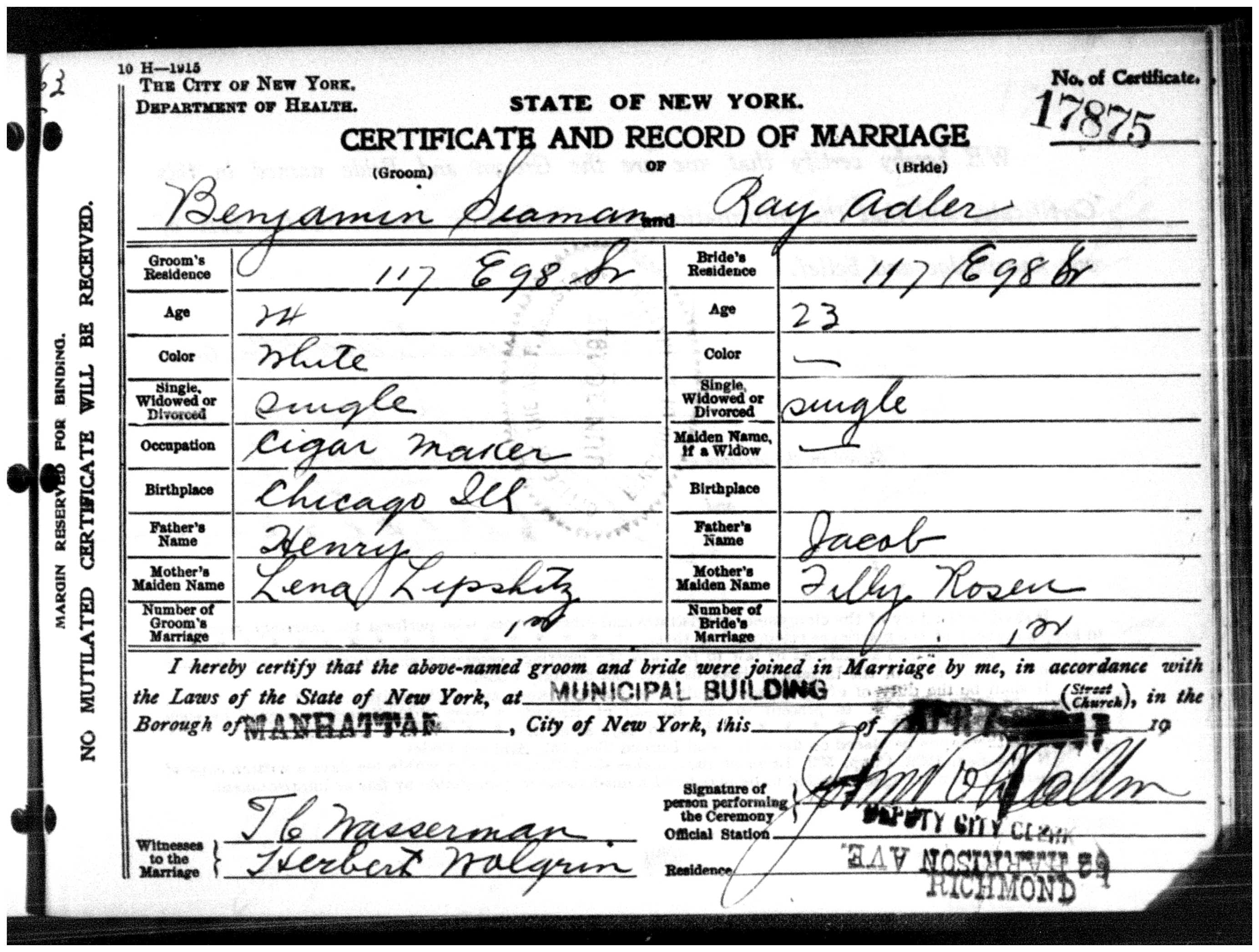
On April 7, 1917, Rebecca, now using the name Ray, married Ben Seamon.

Ray Adler and Ben Seamon marriage certificate

Ray Adler and Ben Seamon marriage certificate

Ben was born in Chicago in 1893.  He enlisted in the US Army in November, 1917, and served during World War I until he was honorably discharged in January, 1919.  Ray and Ben’s first child Jerome was born in June 1919, and as of 1920, Ben was working as a foreman in a dressmaking shop (perhaps this is where he had met Ray?).  By 1925, Ray and Ben had two sons, Jerome born in 1919, and Paul, born in December, 1920, and the family had moved to the Bronx.  Ben was now working as a chauffeur.  Their third son, Harold, was born in October, 1924, and Ben and Ray’s youngest child Thelma was born in 1926.

By 1930, however, Ray was living with her children in the home of her brother David Adler along with his wife Bertha and their daughter Tessie in Manhattan.  Ben, on the other hand, was living in the Bronx with his mother and his brothers Samuel and Mannie Seamon.

Mannie Seamon ran a gym where he trained boxers, and according to the 1930 census, both Manny and Ben were working as managers at the gym at that time.  According to Mannie’s obituary in the NYTimes dated March 26, 1983, in 1937, Mannie was hired as the assistant to the trainer for Joe Louis, the world heavyweight boxing champion from 1937 until 1949, and in 1942 when that trainer died, Mannie became Joe Louis’ trainer, working in that position until 1951.

Manny Seamon and Joe Louis

Manny Seamon and Joe Louis

Mannie also had trained many other boxers, including Benny Leonard, the World Lightweight Boxing Champion.  According to Ben Seamon’s obituary in the July 25, 1971 NY Times, Ben also had been a boxer and a boxing trainer.

During the Depression, Ray became a patient at the Central Islip State Hospital.  I was not able to find any records for Ray after 1942. Her two youngest children, Thelma and Harold, were admitted to the Hebrew Orphan Asylum (HOA) in Manhattan on June 28, 1935.  Thelma resided there from ages 9 through 15.   Harold was discharged to return to live with his father on February 25, 1940;   Ben was then working as an announcer for boxing and wrestling bouts.  Thelma was discharged from the HOA on July 20, 1941, two months before the HOA closed in Sept. 1941.

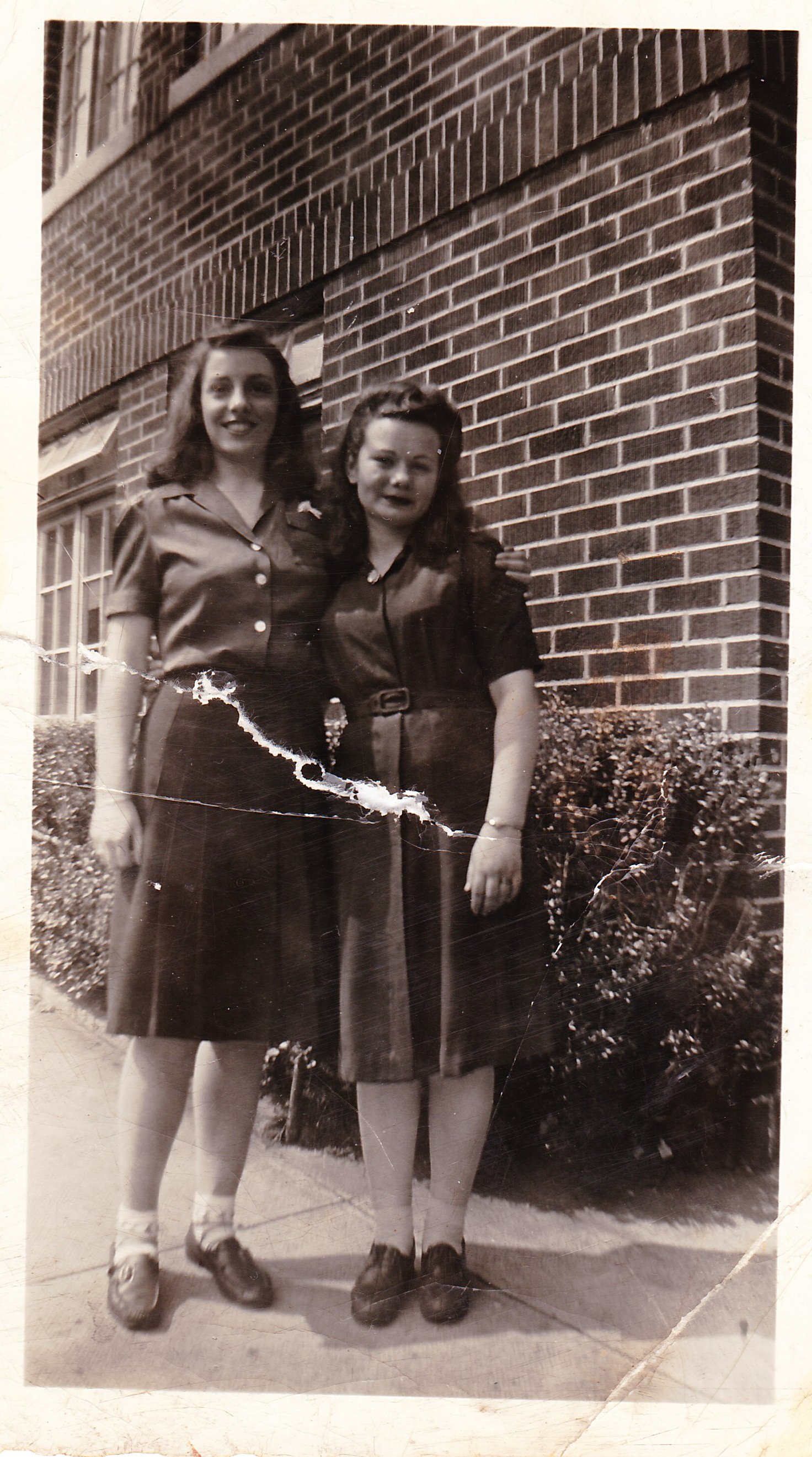
Thelma Seamon visited by her cousin Teddy Schwartz

Teddy Schwartz, daughter of Leah Adler Schwartz, visiting her cousin Thelma Seamon around 1944

But it all seemed to work out well for Thelma.  While at the orphanage, she met her future husband, Nathan Letnick, who was also a resident there.  Thelma graduated from high school in 1942.

Thelma Graduation photo 1946

Thelma Seamon graduation photograph 1942

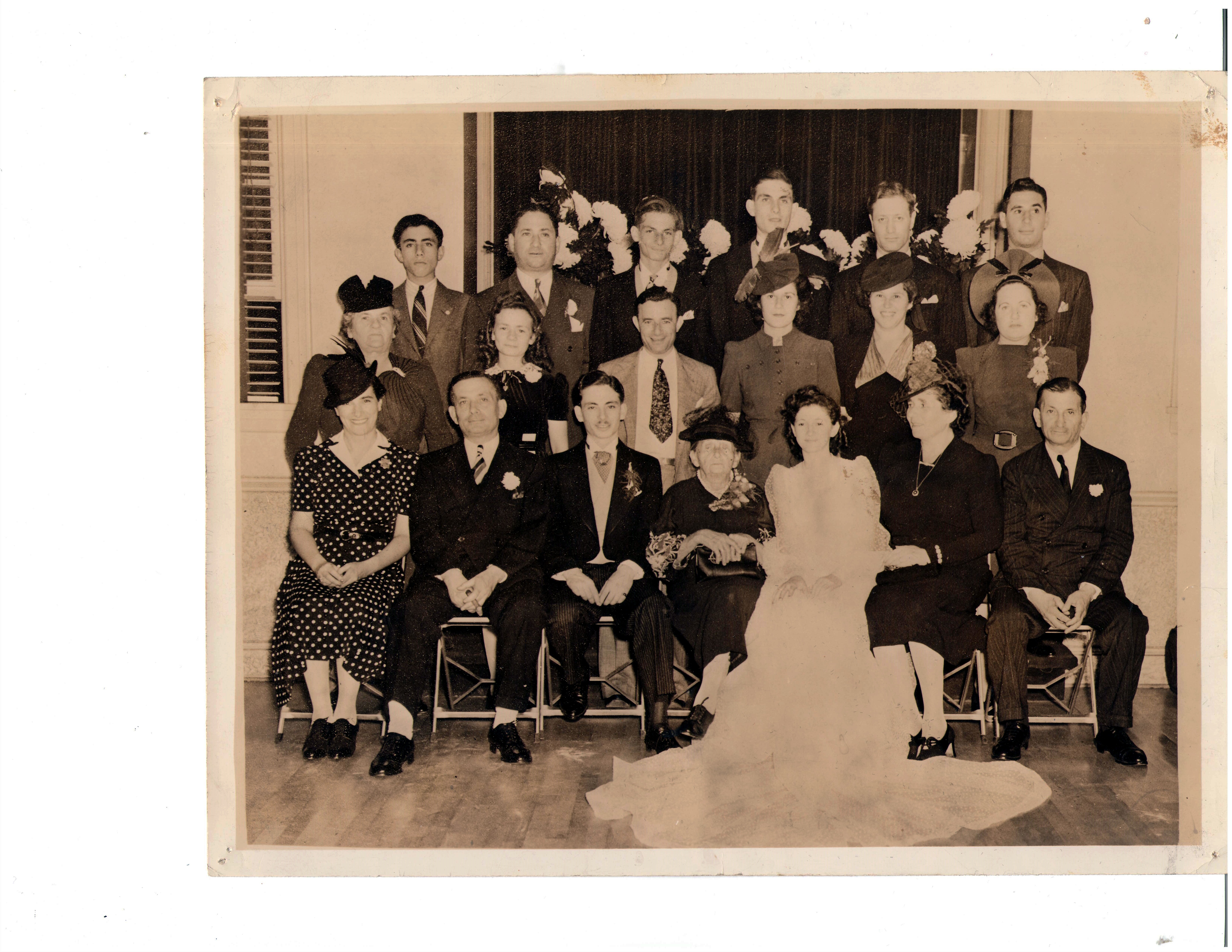
Jerome Seamon married Lillian Wolf on September 22, 1940:

Wedding of Jerome Seamon and Lillian Wolf September 22, 1940

Wedding of Jerome Seamon and Lillian Wolf September 22, 1940

Pictured here are Mannie Seamon (top row, second from left), Harry Seamon (right of Mannie), Paul Seamon (right of Harry).  Thelma is second from the left in the middle row.  In the front row, Ben Seamon is second from the left, then the groom Jerome Seamon, Ben’s mother, and the bride Lillian Wolf Seamon.  The others are relatives and cousins from the Seamon side of the family.

All three of Ben and Ray’s sons and their son-in-law Nathan served overseas during World War II, and Paul received a Purple Heart for his service.  Thelma worked at Western Electric in Manhattan during World War II.

Thelma working at Western Electric during World War II

Thelma working at Western Electric during World War II

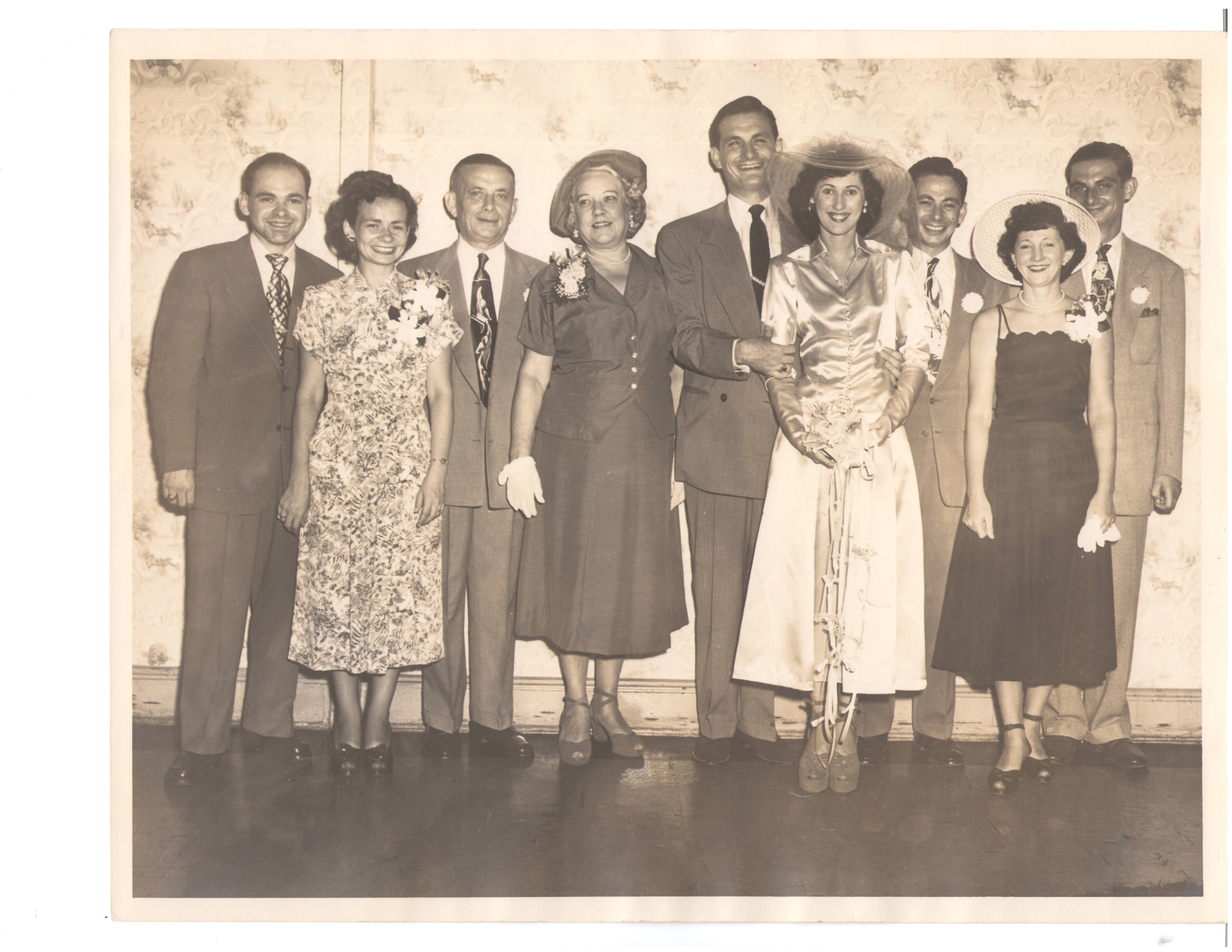
Nathan Letnick and Thelma Seamon were married after the war on November 10, 1946.  Here is their wedding photograph with the extended family.

Nathan Letnick and Thelma Seamon's wedding 1946

Nathan Letnick and Thelma Seamon’s wedding 1946

Among those pictured above are the following people, most of whom are referred to in this post:

Back row, far left: Paul Seamon;  Middle row, far left: Jerry Seamon; Front row: Lillian Wolf Seamon (Jerry’s wife); Ben Seamon’s sister, Ida; Nathan Letnick; Thelma Seamon Letnick; Ben Seamon; Ben’s sister Bertha.

Nathan graduated from NYU with degrees in business, thanks to the GI Bill. The four Seamon children, Jerome, Paul, Harold, and Thelma,  eventually moved to Long Island after the war, where all except Harold married and raised families.

Here is a photograph from the wedding of Paul Seamon and Marilyn Tobetsky on August 6, 1949, showing all of Ray and Ben’s children and their spouses as well as Ben:

Wedding of Paul Seamon and Marilyn Tobetsky 1949

Wedding of Paul Seamon and Marilyn Tobetsky 1949

From left to right:  Nathan Letnick, Thelma Seamon Letnick, Ben Seamon, Mae, Paul Seamon, Marilyn Seamon, Jerome Seamon, Lillian Seamon,  and Harold Seamon

As for Ben, I found  a World War II draft registration dated 1942 that indicates that he was employed by the Town Pump in Tullahoma, Tennessee, but was residing with Jerome in the Bronx.  Ben moved to Florida sometime after 1952 and worked at a dog racing track now known as the Mardi Gras Casino.  He died in July, 1971, and is buried at Long Island National Cemetery.

After retirement Nat and Thelma moved to Florida.  They were still married in 2000 when tragically Thelma was killed by an elderly driver who had Alzheimer’s.  Nat died six years later.  Thelma’s daughter told me that one of Thelma’s passions was knitting:  “All her adult life, everyone knew my mother to be knitting something for everyone and anyone having a baby.”

Finally, a more recently dated photograph of Thelma and her brother Paul in 2000.

Thelma & Paul April 8, 2000

The story of Tillie Strolowitz Adler and her children is a story filled with lots of  heartbreak and  hardship but ultimately survival.  They all came as immigrants from Romania to New York City and sought happiness and success, which did not come easily to them.  Although they may have struggled, the generations who followed them found a home here in the US, served their country, and ultimately not only survived but thrived.  These photographs reflect the resilience of the human spirit better than I can ever capture it in words.

Florence and Grace Cohen:  The Baltimore Sisters

Baltimore City Hall

Baltimore City Hall (Photo credit: Wikipedia)

Florence and Grace Cohen were the sixth and seventh of the nine children of Moses, Jr. and Henrietta Cohen.  They were born just a year and a half apart, Florence in February, 1876, and Grace in September, 1877.  They spent their entire lives living close to each other and following many parallel paths.

Florence married Harry Panitz, a salesman from Baltimore, in October, 1898, and Grace married William Katz, German born but living in Baltimore when they married in January, 1901.  Florence moved to Baltimore after marrying Harry, and they had one child who died before she was a year old, Helen, and a second child, Aline, born in 1902.  Grace and William also moved to Baltimore soon after marrying, and their first child Hilda was born there on December 10, 1901.  On the 1910 census the two sisters and their families were living about six miles apart in Baltimore.  Harry was a traveling clothing salesman, and William was the manager of a furniture business.

In 1920, Harry was now the owner of his own clothing manufacturing business. Aline was eighteen. William was now in the jewelry business with his father’s extended family, S. N. Katz Jewelers.  (The business grew to many stores over the years and is still in existence today.)

S.N. Katz Jewelry advertisement 1921

S.N. Katz Jewelry advertisement 1921

He and Grace now had three children, Hilda (19), Morton (12), and Zerlina (6).   The two families had both moved from where they’d lived in 1910 and were now just over a mile apart.  I would imagine that the families were quite close, and that Hilda and Aline, being so close in age, might also have been close cousins.

Between 1920 and 1930, both Hilda and Aline would get married. Aline Panitz married Fred Katzner, a Baltimore native, on October 22, 1922, and Hilda Katz married Alfred Himmerich, a Baltimore native as well,  around 1929.  Both newlywed couples settled in Baltimore.  Fred Katzner was the vice president and secretary of Stadium Underwear Company.  Alfred Himmerich was the proprietor of an oil business.

By 1930 the two Cohen sisters, Florence and Grace, had moved even closer together.  Both families were living in the same apartment building, 2601 Madison Avenue, as were Aline and Fred Katzner.  Hilda and Alfred Himmerich, meanwhile, were less than a mile away at 2202 Park Avenue.  Morton Katz, now 22, was still living at home and working at the Katz family jewelry business with his father and uncles, while Harry Panitz was still in the clothing business. Zerlina was only sixteen and living at home.  So all but one of the immediate family members of the two Cohen sisters were living in one apartment building, and the other, Hilda, was only minutes away.

2601 Madison Avenue, Baltimore

2601 Madison Avenue, Baltimore

In the next two decades, much would change.  Although Aline and Fred Katzner did not have any children, Hilda and Alfred Himmerich had two children born in the 1930s.  Grace Cohen Katz died on November 17, 1939, and her sister Florence Cohen Panitz died six years later on October 23, 1945.  Once again, their lives paralleled, both dying before their husbands; Harry Panitz died on July 5, 1949, and William Katz died in May, 1963.

Aline Panitz Katzner and her sister-in-law Anna Katzner Robinson

Aline Panitz Katzner and her sister-in-law Anna Katzner Robinson Courtesy of Ellen Leopold, Anna’s granddaughter

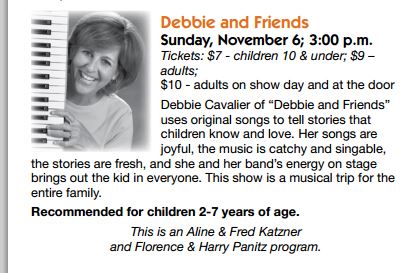
Aline Panitz Katzner became a widow at a young age when her husband Fred died on February 17, 1950.  Aline traveled a great deal after Fred’s death—to Scotland, Italy, Puerto Rico, and other places, and she never remarried.  She died October 27, 1982.  There is a fund created in the names of Aline, her husband and her parents used to support various types of programming, Jewish and other, in the Baltimore area.  If you Google “Aline & Fred Katzner and Florence & Harry Panitz program,” you will see the numerous programs supported by this fund.

Ad from the Baltimore JCC Program Guide Fall 2011

Ad from the Baltimore JCC Program Guide Fall 2011

As for the children of Grace and William Katz, in addition to the family of Hilda and Alfred Himmelrich and their children and many grandchildren, Morton Katz married Hannah Needle sometime before 1937, and in 1940 he was working as a salesman, perhaps still in the family jewelry business.  He and his wife Hannah had three children.  Morton died in 1974, and Hannah died in 2009, according to the Social Security Death Index.  Zerlina Katz married I. Morris Harris, who was in the wire and cable business in 1956.  I am not sure where or when Zerlina married Morris, but they lived in southern California from at least 1956 until their deaths, Morris in 1980 and Zerlina in 1995.

Remarkably, although some family members did move away from the Baltimore area, most including many of the great-grandchildren of Grace Cohen Katz and Florence Cohen Panitz, stayed in Baltimore.  The two Cohen sisters, born close in time, both married Baltimore businessmen, both moved to Baltimore to live, had daughters close in age, and lived near each other all their lives.  They both died before reaching seventy, they both predeceased their husbands.[1] Their children all stayed in Baltimore as well. Their daughters both married Baltimore businessmen. Looking at it from the perspective of how we live our lives in 2014 where family members rarely live in the same state let alone the same city, it all seems quite remarkable.

Baltimore, Maryland Skyline from the Inner Harbor

Baltimore, Maryland Skyline from the Inner Harbor (Photo credit: Wikipedia)


[1] Interestingly, they are not buried at the same cemetery.  Harry and Florence Panitz are buried at the Baltimore Hebrew Friendship cemetery where the extended Panitz family is buried, and Grace and William Katz are buried at Oheb Shalom cemetery where the extended Katz family is buried.  The two cemeteries are only two miles apart, so even in death the family is fairly close together.

My Cousin, the Musical Star

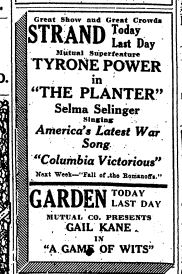
ad dec 1 1917 for selma selingerWhen I spoke with my cousin Ellen Kleinfeld last week, she asked me whether I knew that there had been an opera singer in the family.  I said that I had not yet run across any family members who were opera singers.  She thought the cousin’s name was Sylvia, but wasn’t sure.  I told her that I would keep researching and would let her know if I found anyone that might fit that description.  I was skeptical of the claim that we had a singing star in the family, knowing how family myths can grow beyond the basic facts, but I figured I’d keep my eyes open for anyone who might be this musical “Sylvia.”

Well, it did not take long to find her, and it was not because I was looking for her specifically.  The fourth child of Moses, Jr. and Henrietta Cohen after Augusta, Myer, and Jacob was Fannie Cohen.  As written earlier, Fannie married Alfred Selinger, the assumed relative of Julius Selinger, who had married her older sister Augusta.  Fannie and Alfred had one child, a daughter Selma.  Selma was the mysterious singer my cousin Ellen had heard about as Sylvia.

Selma, who was born in 1894, was already performing as a singer at a Fourth of July celebration in Washington, DC, by 1905, when she was only eleven years old, and she is mentioned as a singer in numerous articles in the Washington area newspapers over the next 20 years.[1]

On September 14, 1912, Selma married William Danforth, who was an actor who worked under the stage name Billy L. Wilson, according to his passport application.  Three years later they had a daughter Mildred, but the marriage did not last.  An article from the Eau Claire (Wisconsin) Leader on April 10, 1917, told of a trip that Billy L. Wilson was making to Australia with his vaudeville partner, Joe F. Willard.  The article said that Billy and Joe had been on B.F. Keith‘s vaudeville circuit in the eastern and southern parts of the US.  (This is the same B.F. Keith who had married Ethel Chase, the sister-in-law of Ruth Cohen Chase, Selma’s first cousin, in 1913, six months before he died.  Ethel Chase later married Ruth and Selma’s other cousin, Jerome Selinger.  Perhaps Selma met Billy also through Ruth’s connection to B.F. Keith, or maybe Billy introduced Ethel to B.F. Keith.)

Apparently being on the road was not good for the marriage between Selma and Billy, and by 1920, they were divorced. She and Mildred were living with her parents, Fannie and Alfred. Alfred was working as a tailor, and Selma gave her occupation as a stenographer for a concert business. Throughout this time, however, Selma had continued to perform.[2]  I could only find one photograph of Selma, however, despite all the news coverage, and it is not a very clear photo.

Selma Selinger New York Times 1919

Selma Selinger New York Times 1919

On June 6, 1920, Selma sang at an event where a young man named Earl I. Klein was also performing and at later events he performed as her accompanist.[3]  Earl also had been a musician since an early age, performing as a pianist and a violinist at numerous events since 1907, when he was thirteen.  He had attended the Columbia Conservatory of Music.[4] What may have started as a professional relationship turned romantic, and on July 15, 1921, Selma married Earl Klein, and the two continued to perform together for some time thereafter.  Selma also sang on some radio broadcasts in the early 1920s.

Unfortunately, I could not find any coverage of Selma and Earl’s careers after 1922. By 1930, however, it seemed that both may have ended their musical careers.  On the 1930 census, Earl’s occupation is listed as the manager of a taxi company, and Selma has no occupation listed.  In 1940, Earl was selling insurance, and Selma again had no occupation listed. Selma’s parents, Fannie and Alfred Selinger, were living with them, as was Selma’s daughter Mildred.  (Fannie and Alfred must have also had a place in St. Petersburg, Florida, as they are listed in the city directories for that city in 1924 and 1934.)

Selma lost her mother, Fannie Cohen Selinger, on August 21, 1940, and her father Alfred Selinger died seven years later on October 11, 1947.   Her husband Earl died of a heart attack on June 9, 1957.  Earl was buried in Washington Hebrew Cemetery where Selma’s parents Fannie and Alfred are buried as well as her grandparents Moses, Jr. and Henrietta Cohen.

Selinger FannieSelinger AlfreadEarl Kline

(Photos courtesy of Ira Todd Cohen and Jane and Scott Cohen)

Sometime thereafter Selma remarried a man named Theodore C. Lewis.  Selma died on January 2, 1973, in Silver Spring, MarylandThe Washington Post published the obituary below, describing some of the highlights of her musical career.

The Washington Post, Times Herald (1959-1973) [Washington, D.C] 03 Jan 1973:

The Washington Post, Times Herald (1959-1973) [Washington, D.C] 03 Jan 1973:

Interestingly, Selma was not buried where her long time husband Earl is buried, and I still have not found where she is buried, though I am checking with the cemetery where her third husband is buried, Fort Lincoln.

UPDATE:  I just got confirmation that Selma is buried next to her third husband, Theodore Lewis, at Fort Lincoln cemetery.  Poor Earl–buried with the Cohen family, his in-laws, while his wife is buried elsewhere.

Selma’s daughter Mildred married a musician, Maurice or Maury Hall.  They lived in Las Vegas and then in North Hollywood, California.

Thus, one family “myth” has been validated.  Although Selma did not sing in a traditional opera setting, she was a professional soprano who sang both popular and classical musical works.  In the days before radio and recordings were widespread, hiring musicians for entertainment was much more common.  I can visualize these society gatherings and charitable and patriotic events where my cousin Selma sang to the delight of her audience, sometimes accompanied by her husband Earl.

I leave you with two links to click on to hear two songs that Selma sang (not, however, sung by her in these recordings). Although Selma sang everything from “Madame Butterfly” to Handel’s Oratorio “Judas Maccabeas”  to Kol Nidre at these performances,  I particularly enjoyed searching for these two songs that were popular during World War I, as they reminded me of a time many, many years ago I sat  with my father and a family friend as they discussed World War I songs.  I was probably about thirteen and could not for the life of me figure out why these two men were talking about (and singing) songs written before they were born.  As Mel Brooks said in The 2000 Year Old Man, we mock the things we are to be.

Cover of "The 2000 Year Old Man"

Cover of The 2000 Year Old Man

Roses of Picardy

Keep the Home Fires Burning

[1] For example, for some early performances,  see The Washington Evening Star, July 3, 1905, p. 3; “Dr. Simon Guest of Honor, Washington Evening Star, June 2, 1908, p. 9; “Eastern Star Entertainments,” April 15, 1909, Washington Evening Star, p. 15; Washington Evening Star, May 9, 1909, p. 65; “Have Lively Debate,” Washington Evening Star, April 6, 1910, p. 2; “Casino,”  Washington Evening Star, April 9, 1913.

[2] See “Jewish Women Hear their New Protégé,” Washington Evening Star, January 13, 1916, p. 24 (as Selma Selinger Danforth); “Grotto Will Entertain,”  Washington Evening Star, January 13, 1916, p. 24; “Arab Patrol Host to 1,500 Guests,” Washington Evening Star, April 29, 1916, p. 9; Washington Evening Star, December 9, 1917, p. 54 (‘…Miss Selma Selinger sang several patriotic solos which were so well received that she had to respond with several encores.”); “Liberty Loan Boosted at Patriotic Rally,” Washington Evening Star, April 7, 1918, p. 20.1  This is just a sampling; there were also mentions in the Washington Herald and the Washington Post.

[3] See Washington Evening Star, June 6, 1920, p. 53; “Florida Society,” Washington Evening Star, January 9, 1921, p. 25; Washington Evening Star, November 5, 1922, p. 63.

[4] Washington Evening Star, July 5, 1908, p. 26. Also, numerous other articles about Earl Klein’s performances can be found by searching genealogybank.com for Earl Klein in the District of Columbia.

Robin Williams 1951-2014

Robin Williams took my breath away.


Cover of "Mrs. Doubtfire [Blu-ray]"

Over and over again.  He took my breath away by making me laugh so hard. His words and quips and expressions came so fast and furious that I am not sure how he could breathe.  I couldn’t.  Whether it was in Mrs. Doubtfire or Good Morning Vietnam or in Moscow on the Hudson or in Aladdin or in an interview on television, once he started his monologue, there was just no stopping.  No time to catch your breath.


He took my breath by shocking me with the depth of his heart in many serious acting roles.  His eyes, both twinkly and sad at the same time, could pierce my heart.  He could convey empathy and compassion in a way that felt truly genuine, and after reading about all the time he spent with children in need, I know it not only felt genuine, it was genuine.  Whether it was in Dead Poet’s Society or Mrs. Doubtfire or Good Will Hunting or Patch Adams or Awakenings, Robin could leave me breathless with his ability to create compassionate relationships on screen.  His heart was as big as this picture from Aladdin suggests.


He took my breath away with his intelligence.  His banter, his monologues that seemed spontaneous, were not only incredibly funny, they were incredibly clever and insightful.  You had to listen to every word (which was almost impossible) in order to appreciate all the word play, all the segues from one idea to another, all his incise descriptions of what was right and what was wrong with the world.  In Good Morning Vietnam he conveyed the insanity of war brilliantly while also making us laugh.  After listening to him being interviewed by anyone on television, my reaction was always, “That man is utterly brilliant.  He can express and connect ideas so quickly and so creatively.”  He took my breath away.


Cover of "Moscow on the Hudson"

Cover of Moscow on the Hudson


Good Morning, Vietnam

Good Morning, Vietnam (Photo credit: Wikipedia)

Robin Williams was my contemporary.  He grew up in my times, he lived through the times I’ve lived through.  His life was far different from mine, of course—the celebrity, the success, the drugs and alcohol, the multiple marriages, and the awful depression he battled were not things I’ve experienced; but his view of the world was one to which I could definitely relate.


Many years ago when our children were still too young to know who he was—before Mrs. Doubtfire and Aladdin made them fall in love with him—we passed him walking on Madison Avenue in New York, wearing his trademark black shirt and a beret.  He was walking with his young son and his second wife so it must have been in the late 1980s, and he seemed both happy and harried.  Maybe that is how all celebrities feel, but maybe for some it becomes far too difficult.  The image has stayed with me all these years.


So yesterday afternoon when my daughter looked up from her iPad and said, with shock and denial in her voice, “Robin Williams died,” I once again lost my breath.  I had to stop what I was doing and focus on this awful, awful news.  My other daughter contacted me not long after, saying she was beside herself.  We were all just heartbroken.


My daughter send me this link this morning about Robin and the devastation of depression.


He took his own breath away this time.  And with it, he once again took mine.


Jacob G. Cohen, Almost State Treasurer, and his descendants: A Sad Ending and a Loose End

The third child of Moses, Jr., and his wife Henrietta was Jacob G. Cohen.  As I wrote previously, Jacob had married Ida Siegel in 1894 and had moved to New York City, where he first worked as a bookkeeper. Just this week I received a copy of their marriage certificate.

Jacob G. Cohen and Ida Siegel marriage certificate

Jacob G. Cohen and Ida Siegel marriage certificate


1894 14 Apr Cohen-Segel marriage cert#4384  pg2  007586923_00397

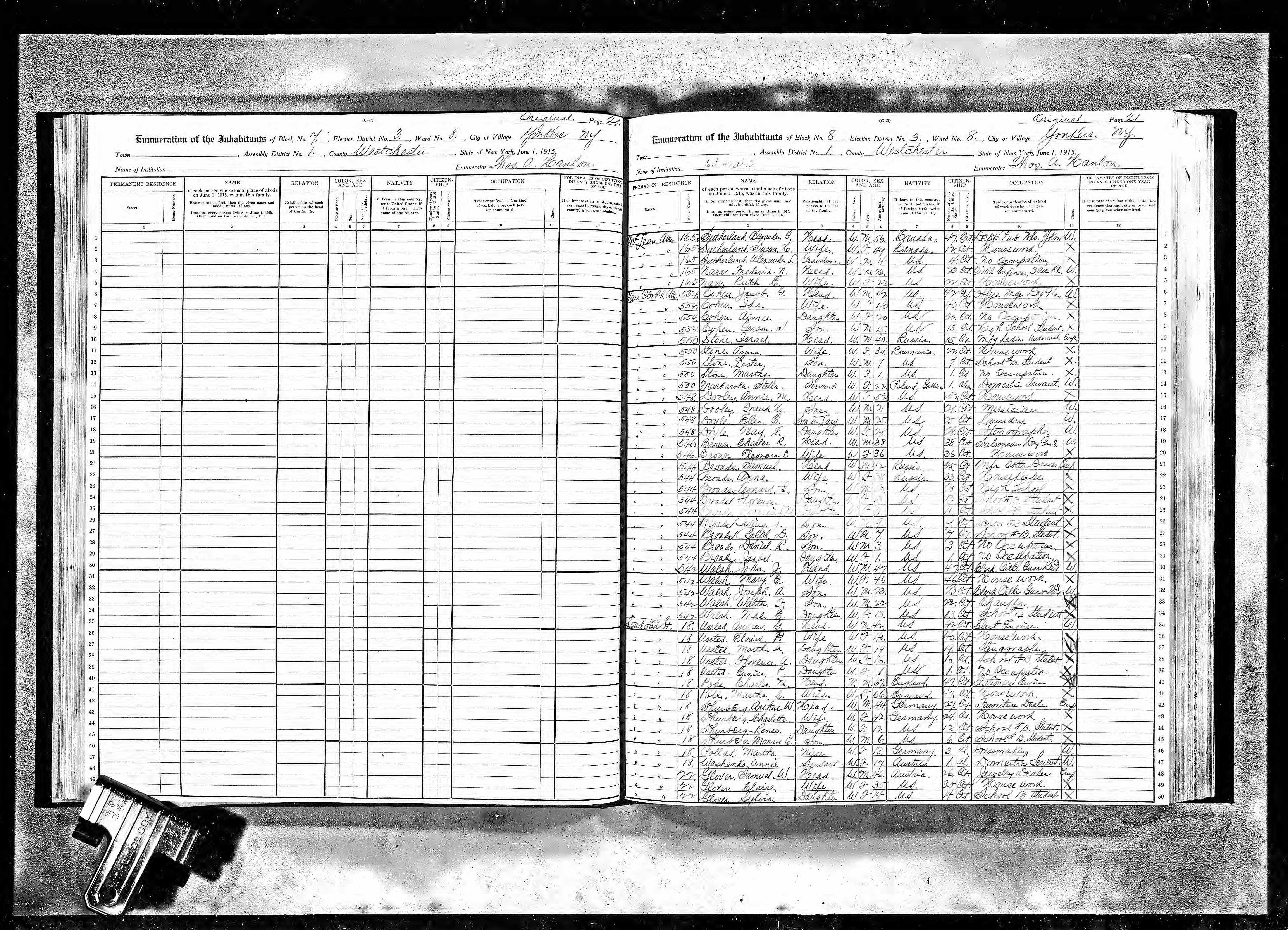
Jacob and Ida had two children, Aimee and Gerson, and by 1910 had moved to Yonkers, New York, where Jacob worked as the manager of a dry goods store, according to the 1910 census.  In 1912, Jacob and Ida traveled overseas, and in 1915 Jacob’s occupation was an office manager for a business that is not legible to me.  Maybe someone else can decipher it?  Ida’s obituary said he was the treasurer of a department store at some point, so perhaps this says department store?

UPDATE:  Thank you to Gil Weeder!  He read it as Dry Goods, and now that I look at it, I think that’s right, and it makes sense!

Jacob and Ida Cohen and family 1915 NY census

Jacob and Ida Cohen and family 1915 NY census

On February 12, 1917, their daughter Aimee married Lester Wronker, who was working in the leather goods industry.  Aimee and Lester had a son, Robert, who was born in April, 1919.  In 1920, the family was living in Manhattan.

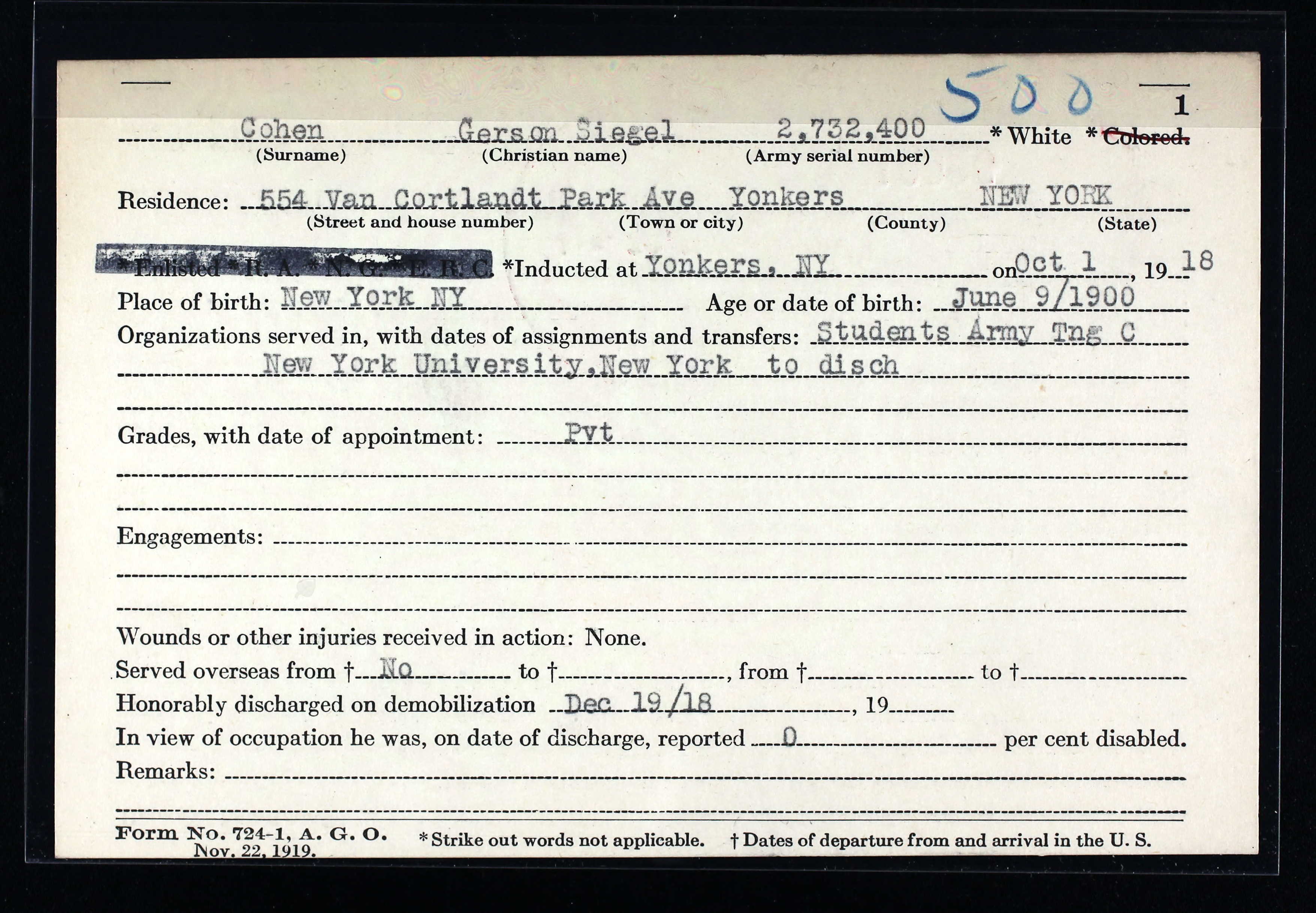
Ida and Jacob’s son Gerson was a student at New York University at the time he registered for the draft in 1917.  He was inducted into the US Army on October 1, 1918, and was discharged on December 19, 1918, without ever serving overseas.  He was part of the NYU student training corps.

Gerson Siegel Cohen military record

Gerson Siegel Cohen military record

In 1918, Jacob G. Cohen ran as a Democrat for New York State Treasurer on the same ticket as Alfred E. Smith.  Although Smith won the governor’s seat, Jacob was defeated in the general election, losing to the Republican candidate, James L.Wells, 839,777 votes to 1,028,752 votes.   Although Smith and the Democratic candidate for Lieutenant Governor, Harry C. Walker, were victorious, all the other Democratic candidates on the slate were defeated by the Republican candidates.


Alfred E. Smith, Governor of New York

Al Smith served four terms as governor of New York State and in 1928 became the first Catholic nominated by a major party as a candidate for President of the United States.  He was soundly defeated by Herbert Hoover.  But imagine if Jacob had won and served as NYS treasurer with Al Smith—and imagine if Smith had won in 1928—my cousin Jacob G. Cohen might have become the US Treasury Secretary.  If he had won the election for New York State Treasurer, he would have been one of the first Jews to hold statewide office in New York.

Instead, Jacob returned to civilian life as a businessman.  In 1920, Jacob and Ida were living in Chicago as lodgers in what appears to have been a very large boarding house or hotel. Jacob was working as the manager of a department store.  Did he leave New York to escape after losing the election? In 1925 Jacob and Ida were back in New York, living in Manhattan, and Jacob was working as an insurance agent.  Their daughter Aimee and her husband Lester and their son Robert were now living in Yonkers, and Lester was working in the silk industry.  I was not able to locate Gerson on the 1920 US census or the 1925 New York State census.

Jacob died on February 13, 1930, according to a death notice in the New York Times.Jacob Cole death notice

(Obituary No. 5, February 15, 1930, New York Times, p. 17)

For a long time I could not find any records for Jacob or Ida after 1925, but then by searching for “Wronker” in the New York Times archives, I was able to find this death notice for Jacob, which revealed why I had not been able to find them: they had changed their surname from Cohen to Cole sometime between 1925 and 1930.

Gerson had also changed his last name to Cole and also his first name to Gary.  (Even searching for him under Gary Cole has not provided me with any information about his whereabouts between 1918 and 1930 or after 1930.)  After Jacob died, Ida moved in with Aimee and her family in Yonkers, where Lester continued to work as a sales manager in the silk industry.

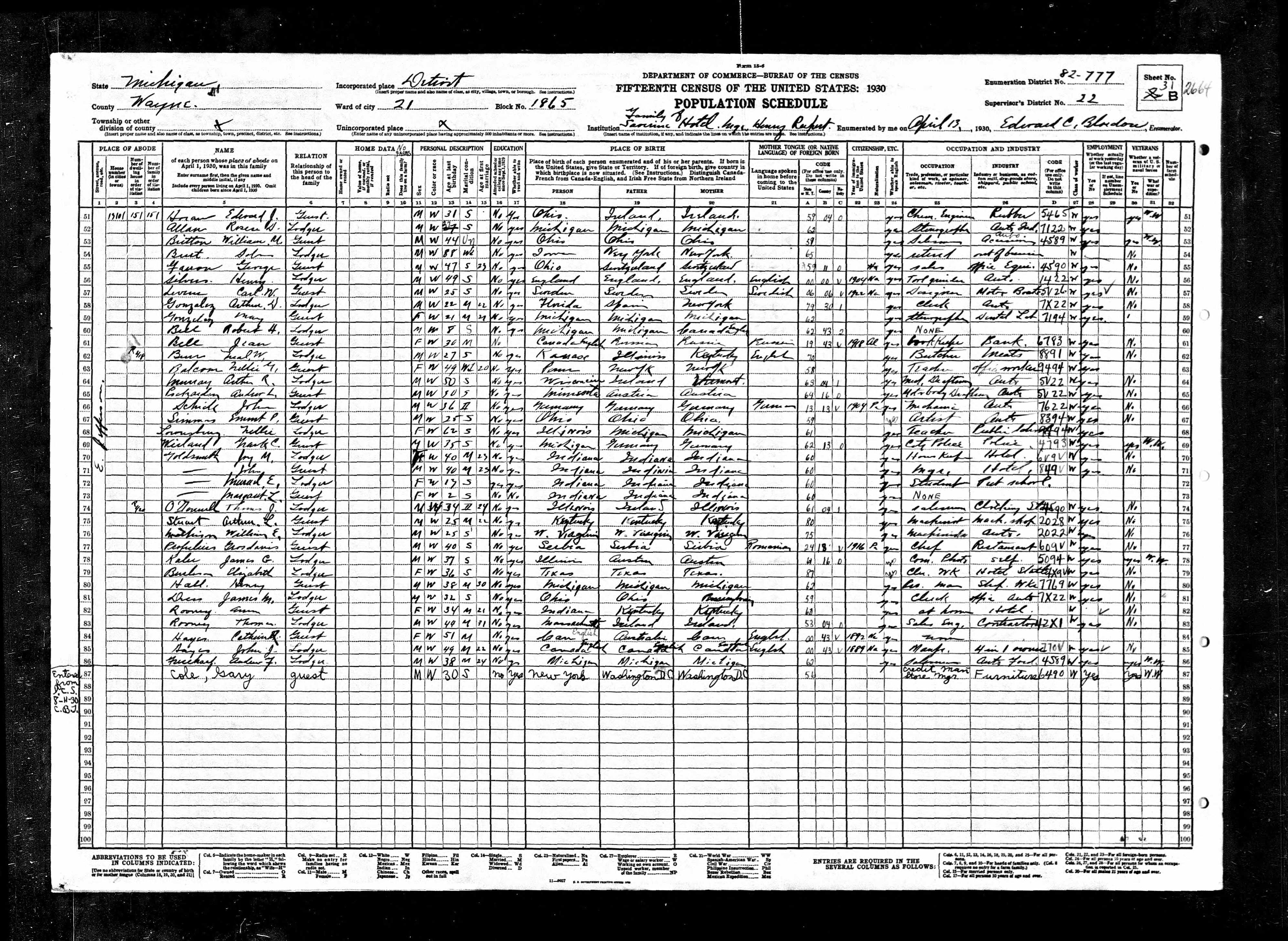
Gerson, now Gary Cole, finally reappeared in 1930 in Detroit as a credit manager for a furniture business.  I believe this is the same Gary Cole/Gerson Cohen based on his age (30), birth place (New York), and birth places of his parents (Washington, DC.)  He was living in what seems to be a hotel as a guest.

Gary Cole 1930 census

Gary Cole 1930 census

In 1940, Ida was still living with Aimee and Lester in Yonkers.  Lester was now an executive in the silk business, according to the 1940 census.

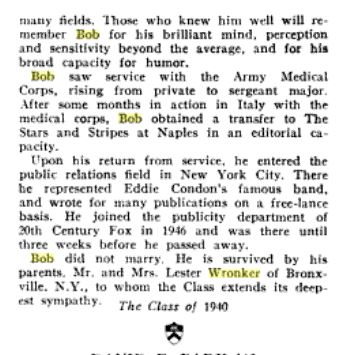
Robert, now 20, was a student at Princeton, although he was still listed as living in his parents’ residence on the 1940 census.  (Although the Princeton yearbook lists his address as being in the village of Tuckahoe, the census considered that same address to be in Yonkers.)  According to several editions of the Princeton yearbook, Bric a Brac, found in the ancestry.com database, Robert played the oboe in the university band, was on the editorial staff of the Princeton Tiger, was a member of the Princeton Liberal Club and a member of the Nassau Literary Review (“the oldest undergraduate literary review in the country”), and was on the executive committee of the Princeton Anti-War Society in 1939, presumably a group arguing against the United States’ entry into World War II.  Robert graduated from Princeton in 1940.   The photo below is of Robert as an associate editor of the Nassau Literary Review.

Robert Wronker Ancestry.com. U.S. School Yearbooks [database on-line]. Provo, UT, USA: Ancestry.com Operations, Inc., 2010. Original data: Various school yearbooks from across the United States.

Robert Wronker Ancestry.com. U.S. School Yearbooks [database on-line]. Provo, UT, USA: Ancestry.com Operations, Inc., 2010. Original data: Various school yearbooks from across the United States.

Despite his anti-war feelings, Robert enlisted in the military on March 18, 1941, listing his occupation as an “author, editor, reporter,” not surprising given his activities at Princeton.

During the war, Robert served in the medical corps in Italy and then became an editor of the Mail Call column in Stars and Stripes, while stationed in Naples, Italy.  After the war he wrote several short pieces for the New York Times, and in 1955 he was working as a feature writer for the publicity department of 20th Century Fox.

After that he, like his uncle Gary Cole, disappeared.  I could not find anything, which was surprising given the unusual name and his interest in writing and journalism. I wondered: Did he also change his name? Did he die?  He is not listed under Robert Wronker on the SSDI or anywhere else. Once again, I was left with a loose end, a brick wall.

So I called on my mentor Renee Steinig once again for some direction, and damn, she found him so fast I was blown away.  She was able to find a death notice for Robert in the New York Times as well as a death notice in the Princeton alumni magazine that I had not found.  Robert had died on August 20, 1956, after a long illness.  He was only 37 years old.

Here is what the Princeton Alumni Weekly wrote about him:


robert wronker death notice princeton alumni weekly vol 57 pt 1

Wronker princeton death notice pt 2

(Princeton Alumni Weekly, Volume 57 (1956) )

What a waste.  Such a young and bright and talented person taken so young.  His mother Aimee died only three years later in January, 1959, when she was 64 years old.  His father Lester lived until October 1976, having survived both his wife and their only child.

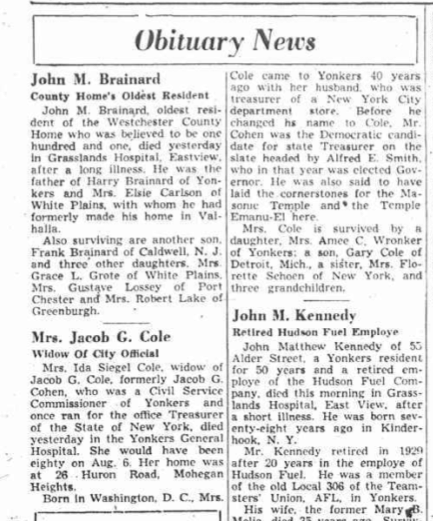
Renee also helped me find this obituary of Ida Cole, who died July 25, 1949.

Ida Cole obituary Yonkers Herald Stateman July 26, 1949. p.  2

Ida Cole obituary Yonkers Herald Stateman July 26, 1949. p. 2

Since Ida was survived by three grandchildren and Aimee only had one child, Robert, Gary must have had two children.  I will continue to try and find Gary Cole/Gerson Siegel Cohen in hopes that the line of Jacob G. Cohen/Cole and his wife Ida did not end with the untimely death of their grandson Robert Wronker.

When I think about all the “what ifs” with Jacob and with his descendants, I feel very wistful about how this line might have ended.


Did Eleanor Selinger Marry an English Cousin? And Did She Remember Her American Roots?

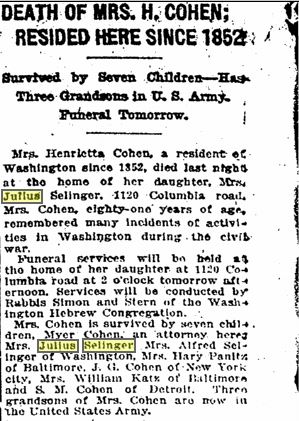
In my post about the children of Julius and Augusta Selinger, I wrote about the marriage of their daughter Eleanor to an Englishman, Henry Abbot.  Henry Abbot was the son of Hyams Auerbach (some members of the family changed the name to Abbot at some point) and Helen (or Ellen or Helena) Selinger.  I had wondered whether there was any familial connection between Helen Selinger and Eleanor’s father, Julius Selinger.  Both were born in Germany, and they were three years apart in age:  Helen was born in 1850, Julius in 1853.

As I wrote then, I was in touch with one of Henry and Eleanor Abbot’s relatives on the Abbot side, Henry’s great-niece, Valentine Ann Abbot Collinson, and was hoping that she would be able to provide some clues to determine whether the two different Selingers were related.  Over the last several days I received a number of documents about Helen Selinger and her family from Val that could help answer that question, including this photograph. Val believes that the woman seated in the center of the photograph is Eleanor Selinger Abbot with her husband Henry seated to her right.  The others are other members of the Abbot/Auerbach family.

Eleanor Selinger Abbot and Abbot family-page-001

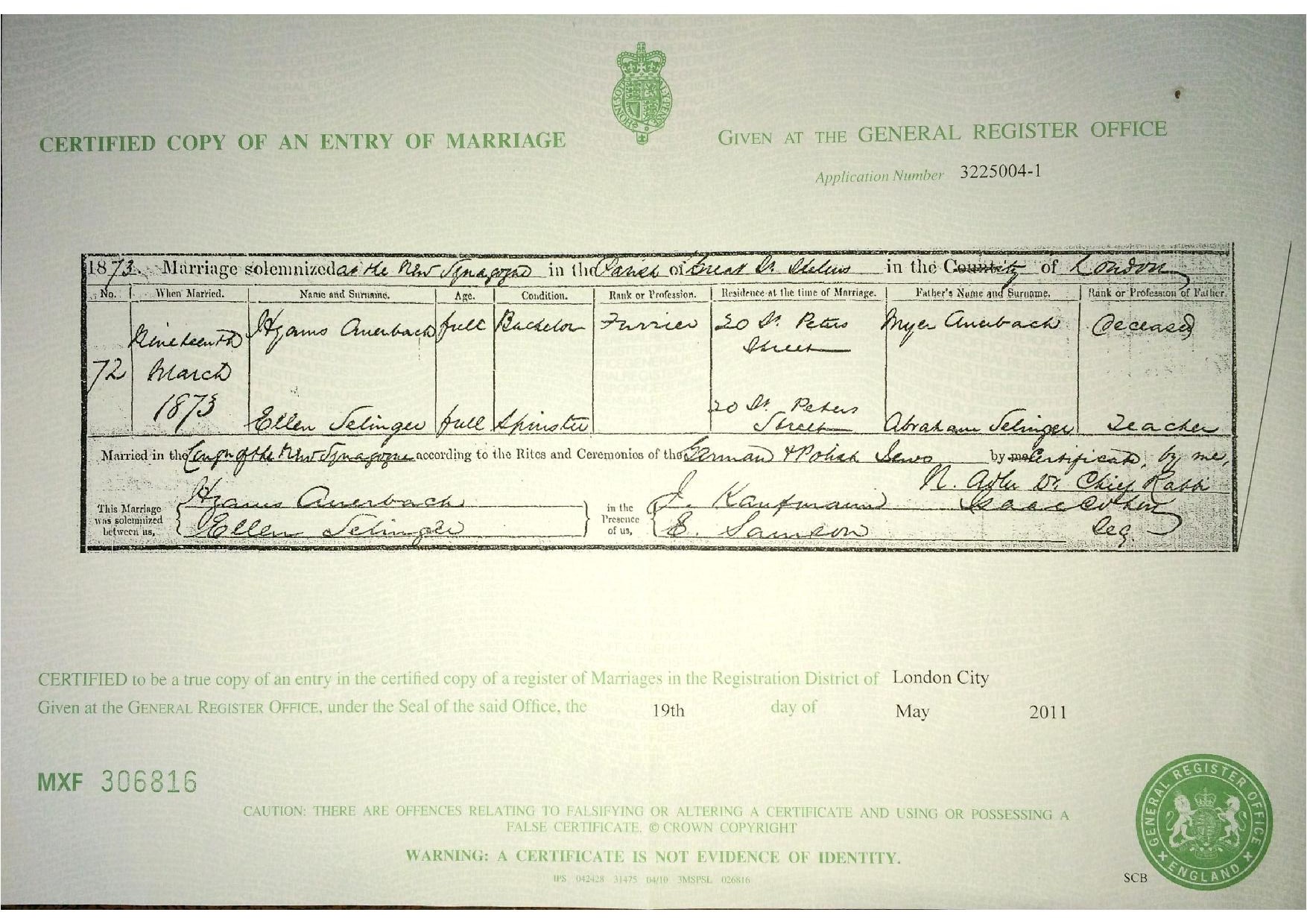
The oldest document is the English marriage certificate of Hyams Auerbach and Ellen Selinger, dated March 19, 1873.  According to the certificate, Hyams was a furrier whose father was deceased, and Ellen was the daughter of Abraham Selinger, a teacher.


Hyams Auerbach and Ellen Selinger marriage certificate

Hyams Auerbach and Ellen Selinger marriage certificate


Since Julius Selinger’s passport application indicated that his father’s name was Sigmund, I knew that Julius and Ellen/Helena did not have the same father.    But could they still be cousins? I do not know Alfred or Frederick Selinger’s fathers’ names, so it still seemed possible that there was some familial connection among the various Selingers.

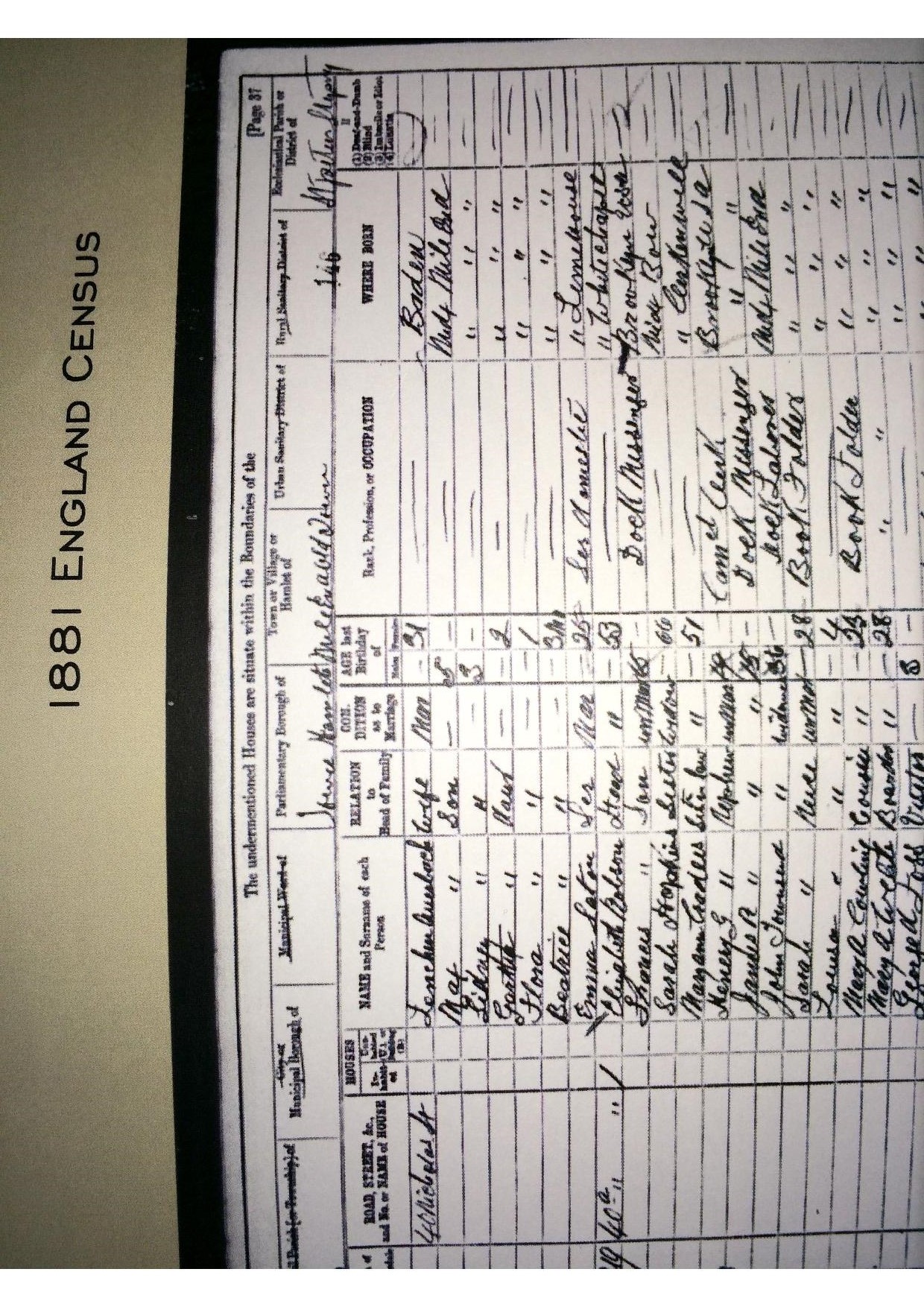
The next document was the 1881 English census for the Auerbach family.


Hyams Auerbach and family 1881 English census

Hyams Auerbach and family 1881 English census


This is definitely the right family; the page preceding this one includes as its last entry Hyams Auerbach, the furrier.  His wife’s name was given as Lenchen, which is the German equivalent of Helen.  Her place of birth was reported to be Baden.  This was the second clue that there might not be any familial relationship between Helen Selinger and Julius Selinger.  Julius and Frederick Selinger were both from Hurben in the region of Bavaria, not from Baden, an entirely separate region of what became united Germany in the late 19th century, although perhaps no more than a few hours away.  I then checked JewishGen.org and found that Selinger was not an uncommon name for Jews in Germany, especially if other spelling variations were included.  This makes it harder to assume any family connection between the DC Selingers and Helen Selinger.


I do have the names of two other members of Helen’s family; in addition to her father Abraham, her mother’s name was Gali.  She died in 1899, and her son, Helen’s brother, Sidney Selinger, was with her at her death.  If I can find a way to research the family in Baden, I might find a possible link to the Hurben Selingers, though it seems unlikely.

Perhaps the most intriguing document that I received from Val was an account of the distribution of the estate of Eleanor Selinger Abbot.  Eleanor died in 1979, and her will was probated on January 23, 1980.  The executor’s report on the distribution of the estate listed seven named beneficiaries, including two whose names were familiar:  Marjorie Christian and Ellen Kleinfeld.

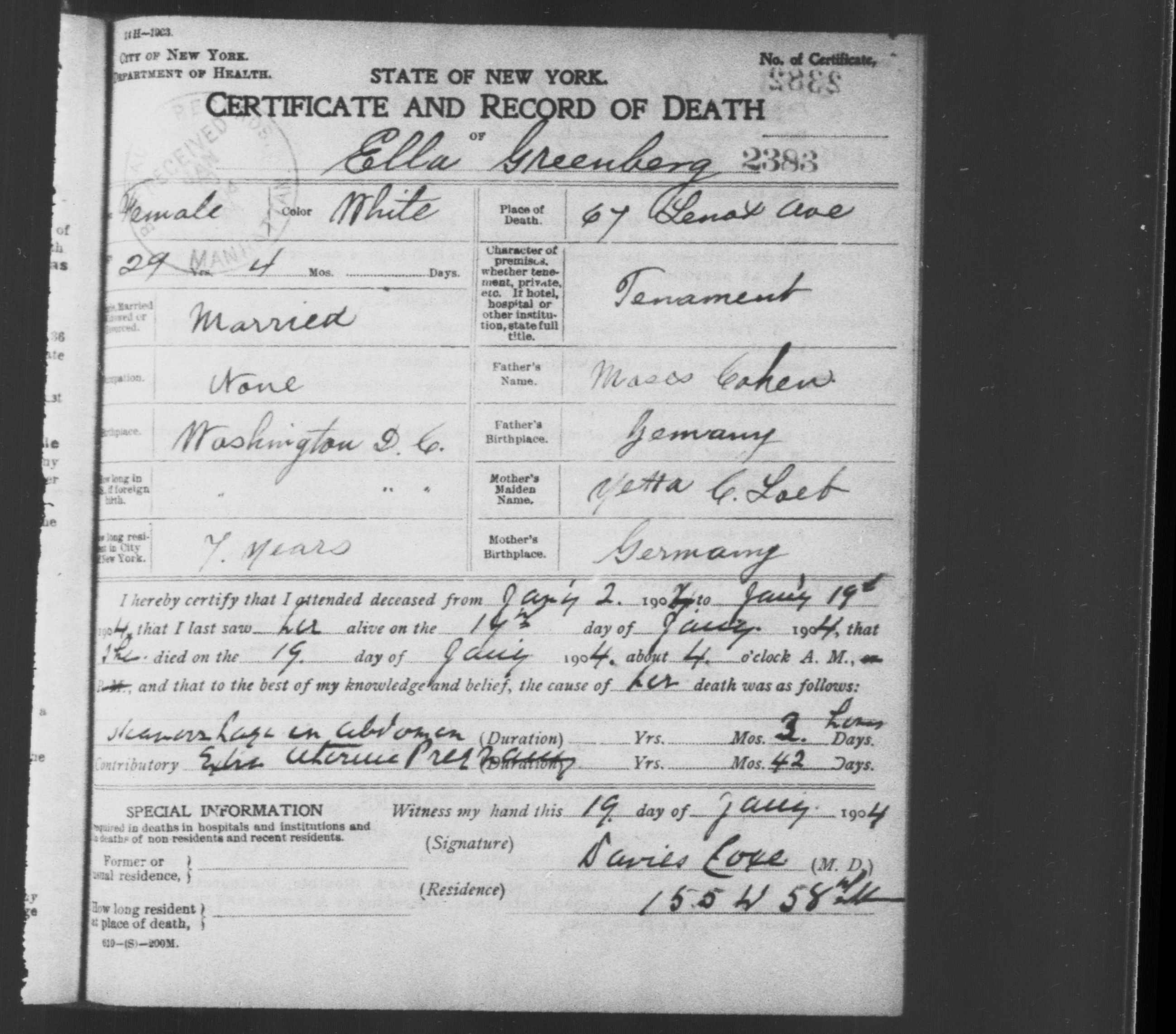
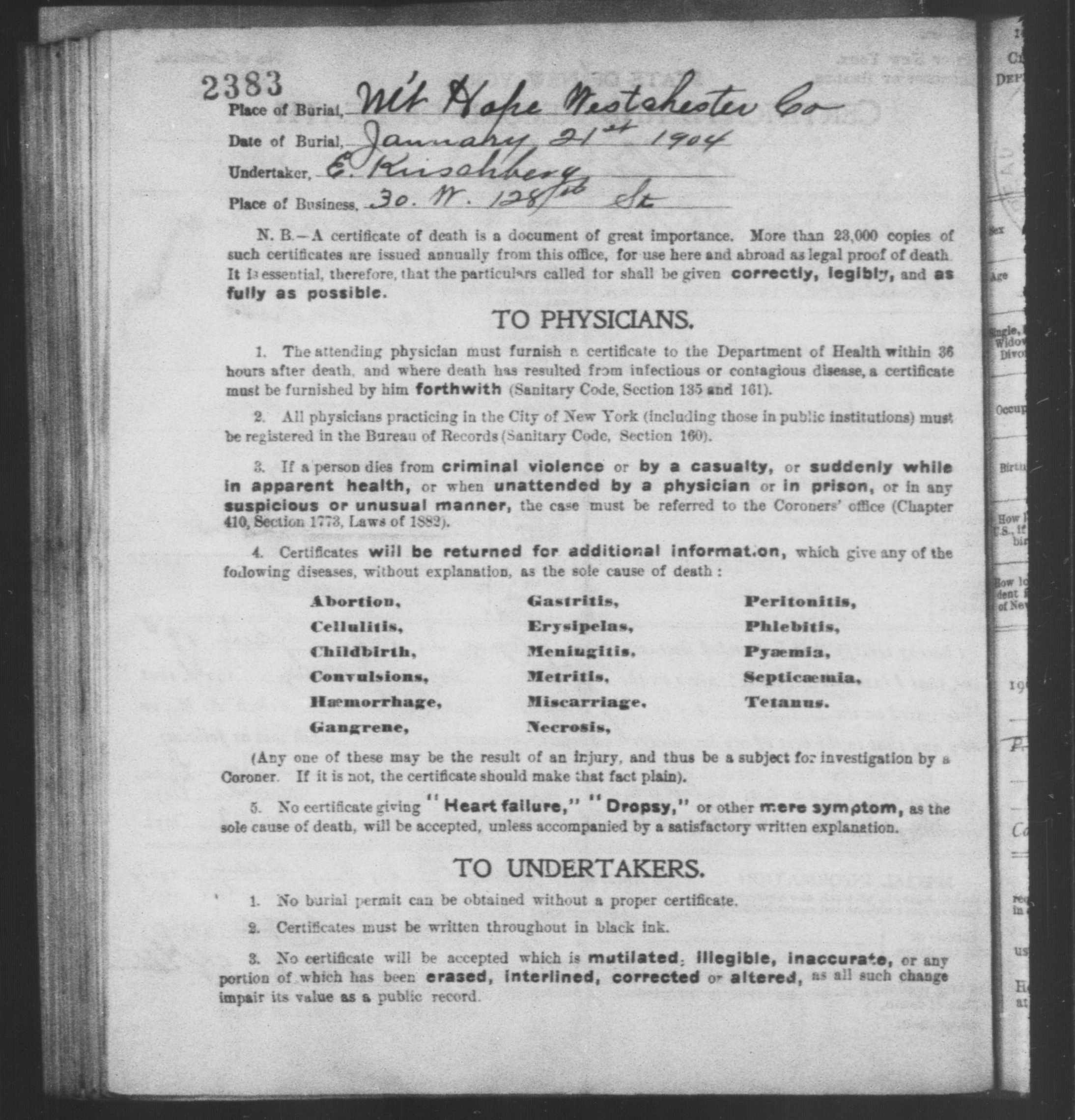
Who were Marjorie Christian and Ellen Kleinfeld?  They were born Marjorie and Ellen Rosenstock, daughters of Felix Rosenstock and Marjorie Greenberg.  Marjorie Greenberg was the daughter of Jacob Greenberg and Ella Cohen.  Ella Cohen was the daughter of Moses, Jr., and Henrietta Cohen.  She died at age 29, leaving behind her eight year old daughter Marjorie and her husband Jacob.  (Ellen Rosenstock Kleinfield was named in memory of her grandmother Ella.)  I have just received Ella’s death certificate, and it says that she died from an abdominal hemorrhage caused by an “extra uterus pregnancy,” which is what we would now call an ectopic pregnancy.  How tragic it must have been for Marjorie and her father Jacob to lose Ella in such an awful way.


Ella Cohen Greenberg death certificate 1904

Ella Cohen Greenberg death certificate 1904


1904 19 Jan Ella greenberg death cert#2383  pg2  004006272_00860

As I wrote earlier, Jacob remarried a few years after Ella died and had a son Theodore with his new wife Hattie.  Since Jacob lived in New York, I had wondered whether he and Marjorie had maintained much contact with Ella’s family after Ella died. Well, Eleanor’s will would certainly indicate that there was a continuing relationship.  Eleanor, who never had children of her own, left part of her estate to her Aunt Ella’s granddaughters.  Her first cousin Marjorie Greenberg Rosenstock had died in 1964, but obviously despite living in England since 1926, Eleanor had enough of a relationship with her American family and in particular with her cousin Marjorie Greenberg to leave part of her estate to Marjorie’s daughters.

Marjorie Rosenstock Christian died on July 18, 2013.  According to her obituary as published on July 24, 2013 in the Washington Post, she graduated Phi Beta Kappa in math and chemistry from Hunter College and then earned her Master’s degree in chemistry from the University of Maryland. (See more at: http://search.ancestry.com/search/obit/viewbody.aspx?db=web-obituary&pid=219473182&kw=Rosenstock+Christian+Marjorie&cpp=2013%5c07%5c26%5ccp_12269788.html&bhr=http%3a%2f%2fwww.legacy.com%2fobituaries%2fwashingtonpost%2fobituary.aspx%3fn%3dmarjorie-christian%26pid%3d166008840#sthash.E4eCxeTg.dpuf .)  She was married to Jack Christian, who died in 2011, and had three children.

I was very fortunate to speak with her sister Ellen Rosenstock Kleinfeld, my fourth cousin, who told me that she remembers Eleanor Selinger Abbot well and that Eleanor had visited with her family many times  over the years, including one trip to Long Island during a hurricane after Ellen was married and had children.   Unfortunately, I did not learn any more about how Eleanor met Henry or whether the various Selingers were related.  Ellen was married to Herman Kleinfeld and had two children.

Thus, from one thread in one family I found a link to another part of the family, tying together the lives of Ella Cohen and her descendants with the life of her niece Eleanor, the daughter of Augusta Cohen Selinger.   Eleanor may not have married a cousin, but she kept her ties to her American cousins.  She also brought the Cohen family back to its prior home in London.


Myer and Helen Wolf Cohen and their Children: The American Dream

Myer Cohen, Sr., was the second child of Moses, Jr. and Henrietta Cohen.  As described earlier, he was a lawyer, perhaps the first in the extended Cohen family.  He had married Helen Wolf, daughter of the esteemed Simon Wolf, and they had five children between the years 1891 and 1907.  In 1910, all five children were still living at home, and Myer was engaged in the general practice of law.

As reported earlier, their daughter Marjorie died in 1920 as a young woman.  According to the town clerk in Saranac Lake where Marjorie died in 1920, she died from tuberculosis; the clerk also confirmed that there were several hospitals in the area where TB patients went for treatment.

In 1921, Myer, Sr., was written up in Who’s Who in the Nation’s Capital (Consolidated Publishing Company, 1921) as follows:

Who's Who in the Nation's Capital (1921) found on Google Books

Who’s Who in the Nation’s Capital (1921) found on Google Books

Myer died in 1930, and Helen died in 1949.  They are buried at the Washington Hebrew Congregation cemetery.

Myer Cohen, Sr. headstone

Myer Cohen, Sr. headstone


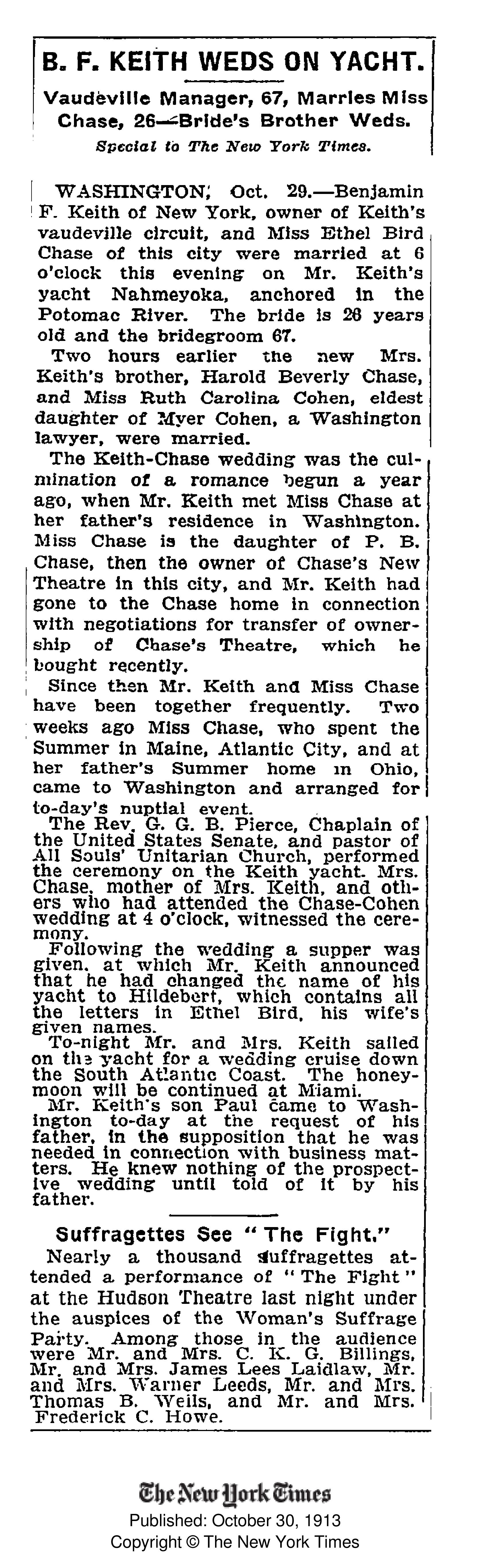
Ruth, their oldest daughter, married Harold B. Chase, the son of Plimpton B. Chase and Anna Bird of Ohio, on October 29, 1913.  Ruth and Harold were the couple who traveled with Harold’s recently widowed sister Ethel Chase Keith to England and probably also introduced her to Ruth’s cousin Jerome Selinger, whom she later married. In following up on my research of Ruth and Harold, I found this New York Times article about their wedding and that of Ethel Chase and B.F. Keith:

BF Keith wedding-page-001


I wonder how Harold and Ruth felt about B.F. Keith and Ethel Chase stealing their thunder on their wedding day!

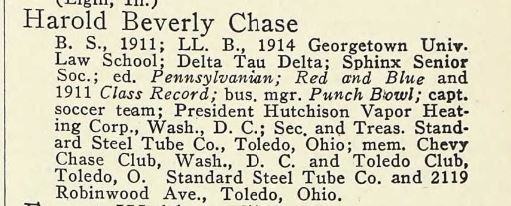
Harold had graduated from the University of Pennsylvania in 1911 and from Georgetown Law School in 1914, bringing another lawyer into Myer’s family, although it does not appear that Harold ever practiced law. ( See Abraham J. Baughman, Robert Franklin Bartlett, History of Morrow County, Ohio: A Narrative Account of Its Historical Progress, Its People, and Its Principal Interests, Volume 2 (1911) (Google eBook), p. 744)

Harold B Chase U Penn alumni directory 1917

Harold B Chase U Penn alumni directory 1917 Ancestry.com. U.S., School Catalogs, 1765-1935 [database on-line]. Provo, UT, USA: Ancestry.com Operations, Inc., 2012. Original data: Educational Institutions. American Antiquarian Society, Worcester, Massachusetts

In December 1915, Ruth and Harold had a daughter, Ann Beverly Chase.  In 1917 they were living in Toledo, Ohio, where Harold was then secretary and treasurer of Standard Steel Tube Company, a company owned in part by Harold’s father, who had acquired it in 1915.

In January, 1919, their three year old daughter Ann died of meningitis while the family was visiting Harold’s parents in St. Augustine, Florida, according to an obituary published in the St. Augustine Record of January 31, 1919.

Although the family was still living in Ohio in 1920, when their son Harold, Jr., was born, by 1922 Harold and Ruth had moved to Worcester, Massachusetts, where they were to live for the rest of their lives.  Harold was the owner and president of Chase Motor Cars, a car dealership, for many years, and both Harold and Ruth seem to have been quite active in a number of community organizations and clubs, according to various newspaper reports and documents.  Harold wrote an autobiography entitled Auto-biography: Recollections of a Pioneer Motorist, 1896 to 1911 (Pageant Press, 1955); unfortunately, it seems to be out of print and not available.

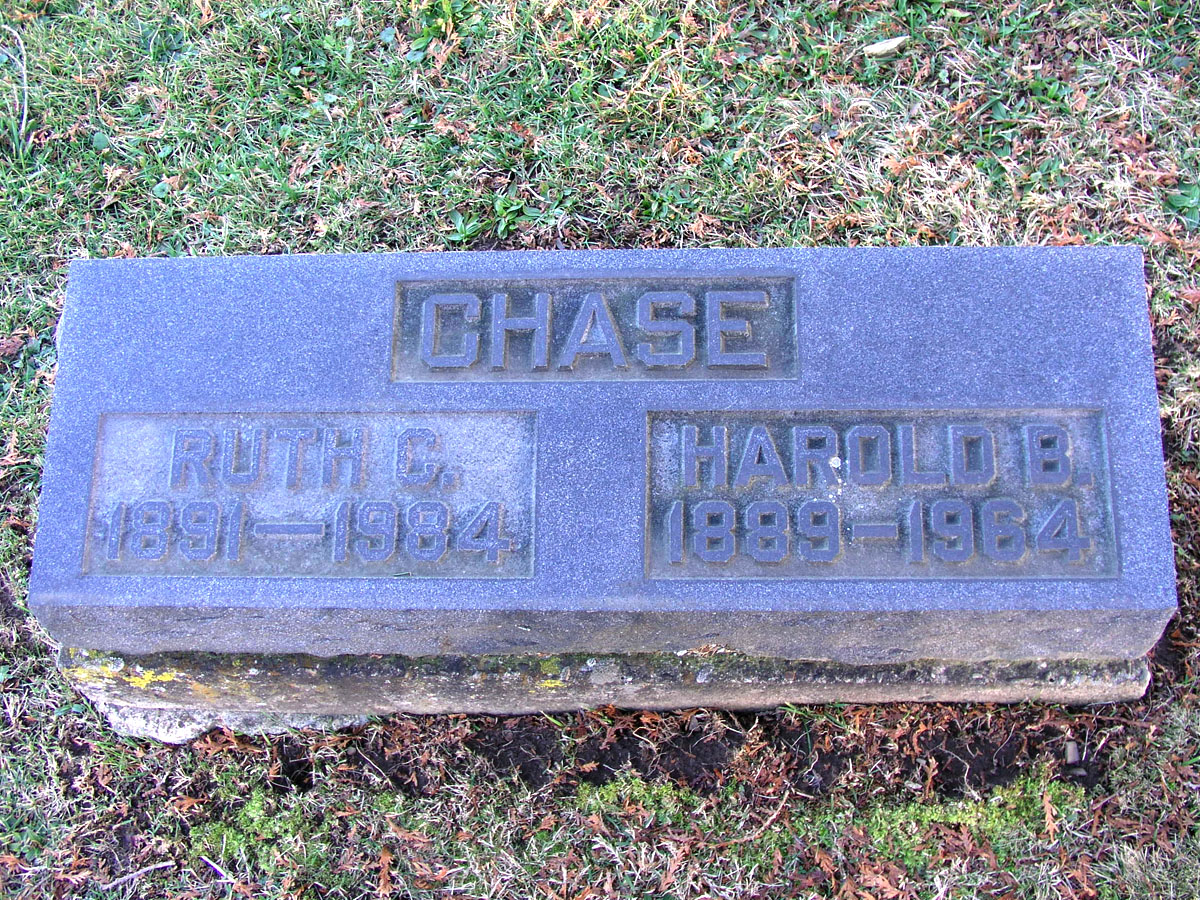
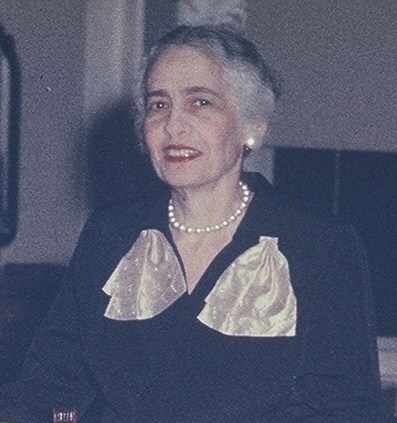
Harold, Sr., died in January, 1964, and Ruth, the daughter of Myer, Sr. and Helen Cohen, died in October, 1984. Ruth returned to the Washington area after Harold died.   Despite living for so many years in Worcester, both Harold and Ruth were buried in Ohio at Bloomfield Cemetery with their little daughter, Ann, as well as many members of Harold’s extended family.

Their son Harold, Jr., served in the US Air Force for many years in Colorado Springs, Colorado and then lived in Alexandria, Virginia; he died in 2006 and is buried at Arlington National Cemetery.

Myer and Helen’s second child, Edith, married Alexander Ceal Robeson on December 27, 1919.  Alexander, who was known as Zanny according to family members, was a lawyer in a general practice in Washington, DC, like his father-in-law Myer, according to the 1930 census and several city directories.  He was a 1916 graduate of George Washington Law School.  Edith and Zanny had one child, a son, Alexander C. Robeson, Jr., who was born April 13, 1923.  Zanny died July 26, 1972, in Washington, DC., and Edith died at age 90 in September, 1983.  Their son, who was intellectually challenged, lived as an adult in Innisfree Village in Crozet, Virginia, for some time; when Edith died, the family asked that donations be made to that institution in her memory.  Alexander, Jr., died December 15, 1996. His death notice said he was a retired weaver.    (Richmond Times-Dispatch (VA) – Wednesday, December 4, 1996)

Edith Cohen Robeson death notice 1983 Ancestry.com. Historical Newspapers, Birth, Marriage, & Death Announcements, 1851-2003 [database on-line]. Provo, UT, USA: Ancestry.com Operations Inc, 2006.

Edith Cohen Robeson death notice 1983 Ancestry.com. Historical Newspapers, Birth, Marriage, & Death Announcements, 1851-2003 [database on-line]. Provo, UT, USA: Ancestry.com Operations Inc, 2006.


Edith Cohen Robeson courtesy of Jane and Scott Cohen

Edith Cohen Robeson, photo courtesy of Jane and Scott Cohen

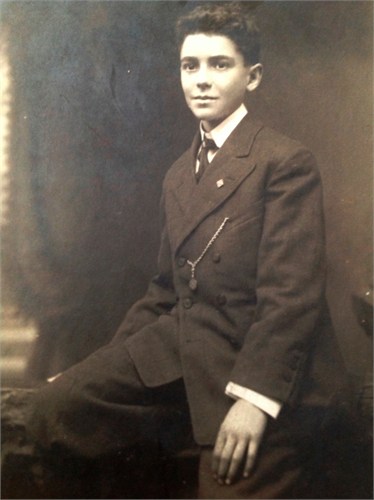
Roger Stahel Cohen was the fourth child and first son of Myer and Helen Cohen.

Roger Stahel Cohen as a young man, photo courtesy of Jane and Scott Cohen

Roger Stahel Cohen as a young man, photo courtesy of Jane and Scott Cohen

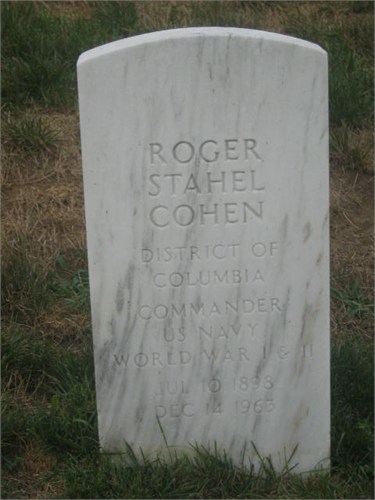
Unlike his father and brothers-in-law, he did not become a lawyer but instead became a doctor.  Roger went to Princeton University, graduating in 1919. The family said that he also served in World War I, but I have been unable to find a military record.  Since he was born in 1898, was already at age 19 at Princeton when the US entered the war in 1917, and was still at Princeton to graduate at age 21 in 1919, I had assumed he had been in school throughout the war. His tombstone in Arlington National Cemetery says that he served in World War I and World War II, achieving the rank of Commander (the family indicated the tombstone is incorrect and he achieved the rank of lieutenant commander), so somehow Roger must have taken time off from Princeton to serve and still manage to graduate when he was only 21 years old.

Roger Stahel Cohen headstone

Roger was living at home with his parents in 1920 and working as a law clerk, according to the 1920 census, but then went to George Washington University for medical school, graduating in 1924, according to his family.  After graduating from medical school, Roger married Lee Lenthal Towers on December 17, 1924. In 1926, he was a junior medical officer at St. Elizabeth’s Hospital, according to the Washington city directory for that year. The family has a graduation certificate for Roger Sr. from the University of Vienna showing that he studied there from October 3, 1927 to September 29, 1928.  According to family sources, Roger, Sr., said he studied under Sigmund Freud at the University of Vienna. By 1930 he was back in Washington, practicing psychiatry at Johns Hopkins Hospital in Baltimore, according to the 1930 census.

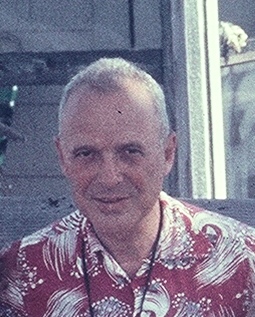
Meanwhile, Roger and Lee were also having children.  They had four children born between 1925 and 1931, and after a time in Baltimore, returned to the Washington, DC, area, where they settled and raised their family.  Roger was stationed for some time in San Francisco with the Navy during World War II, and the family has a 1959 letter from Dwight D. Eisenhower, appointing him to serve on the Board of Veterans Appeals. The family also told me that Roger and the family enjoyed vacationing in Point Lookout, Maryland, and at 13th Lake in upstate New York.  He loved photography and his grandchildren and combined the two loves, taking many pictures of his grandchildren.  Sadly, Roger died of a brain tumor on December 14, 1963, when he was only 65 years old.  His widow Lee continued to live in the DC area until she died in May, 1980.

Roger Stahel Cohen, Sr., photo courtesy of Jane and Scott Cohen

Roger Stahel Cohen, Sr., photo courtesy of Jane and Scott Cohen

Lee Towers Cohen  photo courtesy of Jane and Scott Cohen

Lee Towers Cohen
photo courtesy of Jane and Scott Cohen

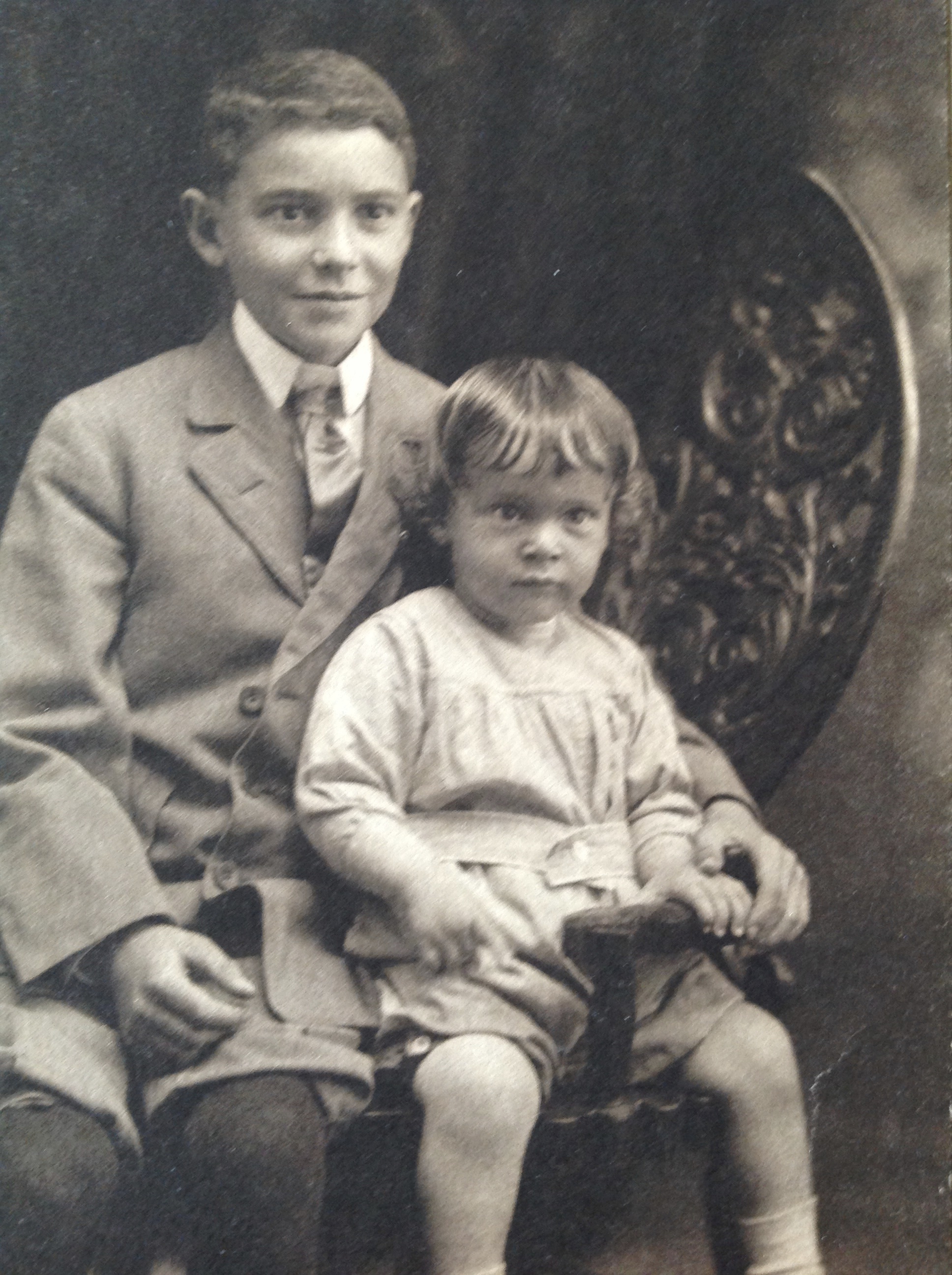
The youngest child of Myer and Helen Cohen was Myer Cohen, Jr., born in 1907, almost ten years after Roger, the sibling closest to him in age.

Roger and Myer, Jr., c. 1909, photo courtesy of Jane and Scott Cohen

Roger and Myer, Jr., c. 1909, photo courtesy of Jane and Scott Cohen

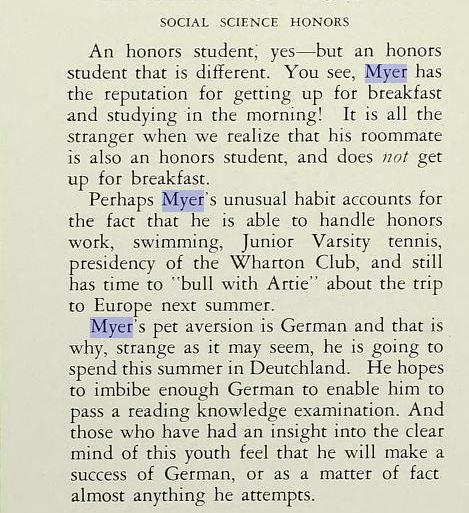
Myer, Jr., was still living at home in 1920 and in 1930. Myer went to Swarthmore College, where he was an honors student, a member of the Wharton Club, the Philosophy Club,  and the Men’s Debate Club as well as on the staff of the yearbook, the Halcyon.  This is how he was described in that yearbook:

Myer Cohen Jr 1929 Halcyon yearbook

1929 Swarthmore College yearbook The Halcyon https://archive.org/stream/halcyon1929unse#page/84

1929 Swarthmore College yearbook The Halcyon
https://archive.org/stream/halcyon1929unse#page/84

After college, Myer made trips across the Atlantic in 1928, 1929, and 1930.  In 1932, he again traveled overseas, giving his residence as New Haven, Connecticut, where he was a graduate student at Yale.  I would think that these trips were related to his graduate work. Myer’s study of German must have been useful in his graduate studies. Myer received his Ph.D. from Yale in 1935 based on his dissertation, “Austria: An International Problem.”  I tried to locate a copy of it online, but could not find it.  It would be interesting to know what Myer’s thoughts were on what was happening in Europe at the time.

On August 21, 1933, Myer, Jr., married Elizabeth Elson, who was Russian born, but had immigrated to the United States in 1906 when she was two years old and had settled with her family in Chicago. Myer and Elizabeth were married in Chicago, and according to the 1940 census, in 1935 Myer and Elizabeth were residing in New Haven. After receiving his degree, Myer and Elizabeth relocated to San Francisco, where their two children were born, one born in 1937, the other in 1938.    According to the 1940 census, Myer was working as a private school teacher in San Francisco.

Although I cannot locate any military records for Myer, after World War II he definitely had a change of careers.  In 1945 he made the first of many trips to England; his residence was now Silver Spring, MD.  In 1946 he made at least two trips, one in June and one in October.  According to the airline manifest for the June trip, Myer was working for the UN BRA headquarters in Washington as the director of repatriation and (I think) relief division.

Ancestry.com. New York, Passenger Lists, 1820-1957 [database on-line]. Provo, UT, USA: Ancestry.com Operations, Inc., 2010. Original data: Passenger Lists of Vessels Arriving at New York, New York, 1820-1897. Microfilm Publication M237,

Ancestry.com. New York, Passenger Lists, 1820-1957 [database on-line]. Provo, UT, USA: Ancestry.com Operations, Inc., 2010.
Original data: Passenger Lists of Vessels Arriving at New York, New York, 1820-1897. Microfilm Publication M237,

Although I could not find an explanation for UN BRA, I found that acronym in several places with reference to the UNRRA, the United Nations  Relief  and Rehabilitation Administration, an organization involved in providing relief to refugees in Europe after the war.  I assume that Myer’s work was related to this endeavor.  The October trip in 1946 was on a flight from Berlin to Frankfurt to New York, and Myer’s address was now Chevy Chase, Maryland, and he was flying on a military permit.  Once again, his German studies must have come in handy.

In 1950, Myer again traveled to Europe, and the manifest for his flight from Zurich to New York has his address as “c/o I.R.O. Washington, DC,” and states that he was an O.I.R. director.   He was traveling with two other people involved with the same agency.  I could not find one definitive meaning for O.I.R or I.R.O, but given Myer’s work in 1946, this might be Office of International Relief and International Relief or Relations Organization.  I need to check further.  A later trip with Elizabeth to Europe in 1954 also lists their residence as Washington, DC.

Eventually, Myer rose to a fairly high level post within the United Nations. In 1962 he was the Director of Operations for the UN Special Fund, a fund created in 1958 by the UN General Assembly “in order to enlarge the scope of the UN programme of technical assistance in certain basic fields.”

UNDP Approves $1.5 Million Agreement to Expand Training Activities at International Institute of Seismology in Japan

UNDP Approves $1.5 Million Agreement to Expand Training Activities at International Institute of Seismology in Japan Ambassador Senjin Tsuruoka, Permanent Representative of Japan, is seen signing the agreement. At left is Mr. Myer Cohen, UNDP Assistant Administrator and Director of the Operations and Planning Bureau. At right is Mr. Tadayuki Monoyama, Second Secretary, Mission of Japan to the UN 27 March 1969 United Nations, New York http://www.unmultimedia.org/photo/detail.jsp?id=124/124433&key=89&query=undp&so=0&sf=date

In 1969 Myer, Jr., was the Assistant Administrator and Director of Operations and Planning for the UNDP, the United Nations Development Programme, an agency involved in assisting developing nations.

Special Fund to Aid in Land and Water Surveys in Northern Rhodesia

Special Fund to Aid in Land and Water Surveys in Northern Rhodesia An agreement laying down conditions for the surveying of the land and water resources of the Kafue River Basin in Northern Rhodesia was signed this morning at United Nations Headquarters by representatives of the UN Special Fund and the United Kingdom Government on behalf of the Federation of Rhodesia and Nyasaland. Signing the agreement are Mr. Paul G. Hoffman (left), Managing Director of the Special Fund, and Sir Patrick Dean, Permanent Representative of the United Kingdom to the United Nations. Looking on are (1eft to right) Mr. Roberto M. Heurtematte, Associate Managing Director of the Special Fund; Mr. Myer Cohen, Director of Operations, Special Fund; and Sri Ram Vasudev, Special Fund project officer. 23 February 1962 http://www.unmultimedia.org/photo/detail.jsp?id=167/167583&key=73&query=acess%20water&so=0&sf=date

Myer, Jr., and Elizabeth ultimately retired to Newtown, Pennsylvania, where Myer died on January 8, 2003, at the age of 95, and Elizabeth died on July 25, 2004.  She was a hundred years old.

Myer, Sr., and Helen Wolf Cohen must have been very proud of their children.  Although the family suffered some heartbreaks with the deaths of Marjorie and little Ann Chase and the challenges presented to Alexander Robeson, Jr., overall it was a family that prospered.  There were several lawyers and a psychiatrist in the family as well as a Ph.D and  UN official.  The family moved around a bit, but overall stayed close to their roots in the Washington, DC, area.  The family seems to have moved away from the strong Jewish involvement of Helen’s father Simon Wolf and Myer, Sr.’s father Moses Cohen, Jr., as they moved into mainstream America and achieved success in fields that seem quite distant from the family’s beginnings as peddlers and merchants and pawnbrokers.  In just two generations, the family had gone from struggling Jewish immigrants to full-fledged participants in the American dream.


The Children of Augusta Cohen and Julius Selinger


Julius and Augusta Cohen Selinger passport photos 1922

Julius and Augusta Cohen Selinger passport photos 1922

Moses, Jr., and Henrietta’s daughter Augusta celebrated her 25th wedding anniversary with her husband Julius Selinger in 1909, as described in my earlier post.  Their children were all still living at home as of 1910, but the next two decades would see them all finding their own independent paths.  Julius continued to work as a jeweler in his store, Selinger’s, and in 1922, he and Augusta along with their daughter Eleanor traveled to Germany, the British Isles, and France, apparently for health reasons, according to Julius’ passport application.  That application contains photographs of both Augusta and Julius, shown above.

Sydney, their oldest son, had become an optician as early as 1906 when he was 21 years old.  Although he was still living at home in 1910, on September 3, 1917 he married a woman named Grace Bloch.  Although I have not yet found an official marriage record,  I know from other records that Grace, Sydney’s wife, was born November 20, 1895 or 1896 in Danville, Pennsylvania, and I found this newspaper announcement of  the marriage of Sidney Selinger of Washington, DC, and a Ruth Bloch, daughter of Samuel Bloch,  in Danville, Pennsylvania.

Sydney and Grace Selinger marriage announcement 1917

Sydney and Grace Selinger marriage announcement 1917

(Sunday, September 9, 1917, Evening Star (Washington (DC), DC)   Page: 27)

I am not sure why the paper gave her name as Ruth, as every census report shows that Samuel Bloch’s daughter was named Grace.  But since they also spelled Sydney’s name incorrectly, I assume it was just an error.

Sydney and Grace did not have children, and they lived in Washington, DC, at least until 1940.  They both seemed to be working in the retail jewelry business in 1940, and even in 1930 Sydney listed his occupation as in the jewelry business, no longer as an optician, presumably in the family jewelry store, Selinger’s.  By 1956 Sydney and Grace had moved to Hollywood, Florida, where they lived for the rest of their lives.  Sydney died in May, 1967, and Grace three years later in May, 1970.

Selinger ad

Harry, the second son of Augusta and Julius Selinger, was in the Selinger’s jewelry business from at least 1910 when he was 22 until at least 1935, the date of the last record I have for him.  Harry claimed an exemption from the draft for unspecified physical reasons in 1917 and was still single at that time.  He married Mary Jessop on August 22, 1924, when he was 36; it appears that he and Mary did not have children either as there were none listed as living with them on the 1930 census when Mary was 43, six years older than Harry.  I could find no record of either Mary or Harry after 1935.

Both of the next two sons, Jerome and Maurice, became doctors.  I believe these may have been the first descendants of Hart Levy and Rachel Cohen to become doctors.  Both also served in World War I, as depicted in this picture of Jerome and Maurice in the Washington Evening Star in 1919.

Selinger brothers 1919 WW 1

(Sunday, January 5, 1919,Evening Star (Washington (DC), DC), Page: 62 )

Jerome served overseas from August 7, 1917 until March 1, 1919, serving as a doctor in a mobile hospital unit overseas.  Maurice also was already a doctor when he registered for the draft in 1917 and thus also must have served in a medical role during the war.  He graduated from Georgetown Medical School in 1915. (Wednesday, June 16, 1915, Evening Star (Washington (DC), DC)   Page: 11)

Jerome married a widow named Ethel Chase Keith in 1921. Ethel was born Ethel Bird Chase in Mt. Vernon, Ohio, on November 7, 1886, the daughter of Plimpton Beverly Chase and Anna Bird and a descendant of one of the oldest families in central Ohio. (Their home, the Beverly Mansion, is now used as an event venue.)

Ethel was a 1910 graduate of Bryn Mawr College. (Register of Alumnae and Former Students By Bryn Mawr College, Bryn Mawr, 1922, p. 28)      She had married Benjamin Franklin Keith in Washington, DC, on October 19, 1913, when she was 26, and he was 67.  Benjamin F. Keith was a widower, and he died the following year on March 26, 1914, just six months after marrying the much-younger Ethel Bird Chase.   Mr. Keith was a well-known entertainer and theater owner in Boston; the B.F. Keith Opera House was named in his memory (now just known as the Boston Opera House).

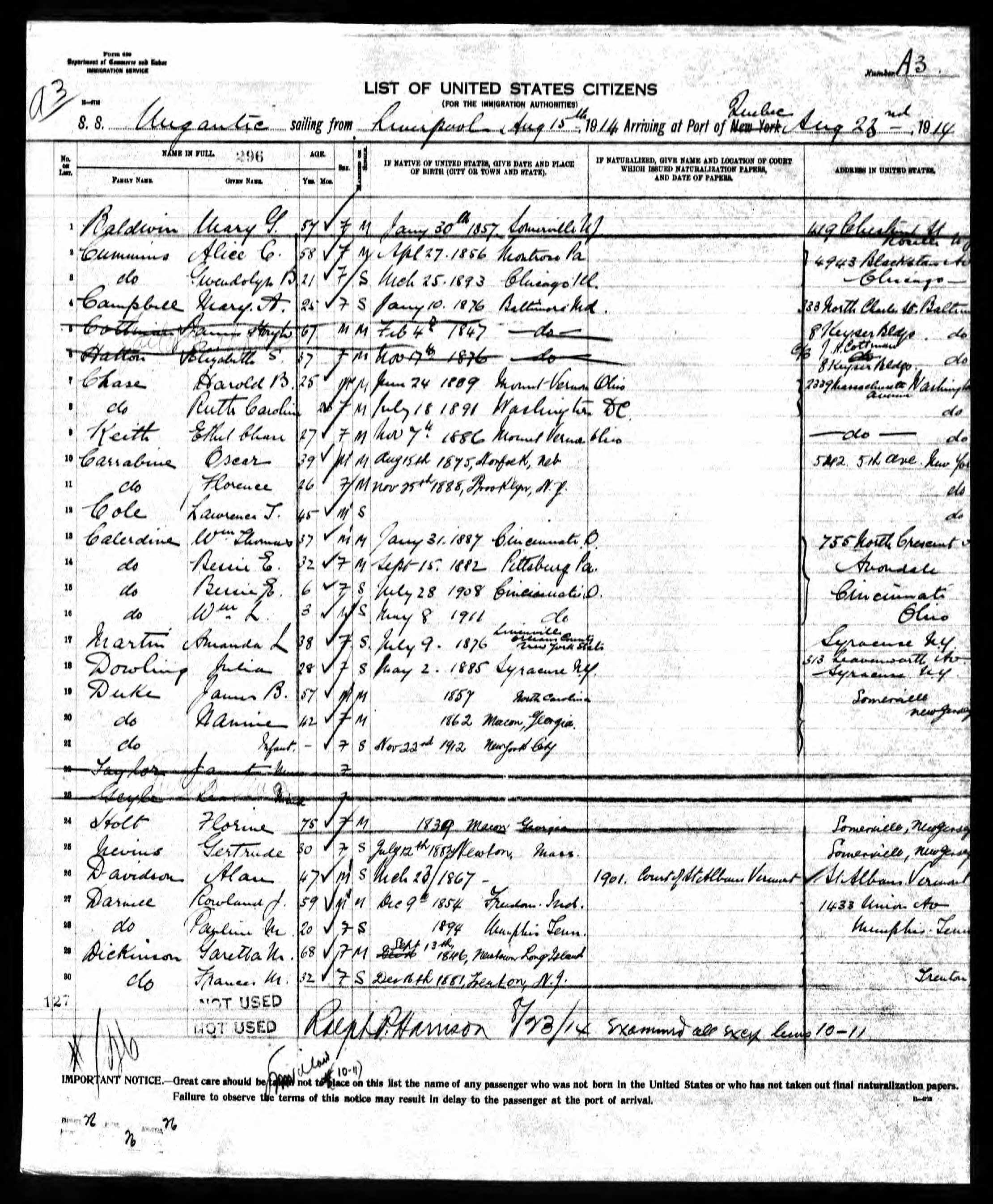
So how did Jerome meet Ethel, I wondered.  I found a passenger manifest dated August 23, 1914, just over five months after Keith’s death, listing Ethel Chase Keith as a passenger on a ship sailing from Liverpool, England, to Quebec, Canada.  At first I thought she was traveling alone, but then I noticed that the entries above hers were for a Harold B. Chase, born in Mt. Vernon, Ohio, obviously Ethel’s brother, and Harold’s wife Ruth Caroline Chase.

Ship manifest dated August 23, 1914 for the Megantic from Liverpool to Quebec

Ship manifest dated August 23, 1914 for the Megantic from Liverpool to Quebec

The names seemed familiar, so I checked my family tree, and sure enough, Myer Cohen, Sr., Jerome’s uncle, had a daughter Ruth who married a man named Harold Chase just about a year before in October 29, 1913, the same month that Ethel had married Benjamin F. Keith.  So Ethel must have either known Jerome already, as he was Ruth’s first cousin, or she was introduced to him by her brother and sister-in-law.  It appears that Ethel was living with Ruth and Harold at that time as well as traveling with them.  Unlike the case with  her first husband who was more than forty years older than she, this time Ethel married a man three years her junior.

Jerome and Ethel had two daughters, born in 1923 and 1928.  They lived in Huntington on Long Island, NY, then in Manhattan, and then in Fairfield County in Connecticut.  They were active in various charitable activities, and for some time Jerome was the health director for the town of New Canaan, Connecticut.  Jerome and Ethel did a great deal of traveling, according to the numerous passenger manifests.  According to Wikipedia, Ethel died in 1971.  Jerome lived until April, 1984, and was 94 when he died.

His younger brother and fellow doctor Maurice returned to Washington DC after World War I where he practiced medicine (a general practice, according to the 1930 census).  He was living with his parents and sister in 1920 and practicing medicine.  He married a woman named Mildred ( I have not yet located a marriage record for Maurice and Mildred).  Mildred was born December 23, 1899, in Easton, Pennsylvania, according to one ship manifest.  On the 1930 census they reported that they had been married for five years, so I am assuming they were married in 1925 or so.

Maurice Selinger and family 1930 census

Maurice Selinger and family 1930 census

They had two sons, one born in 1926 and the other in 1934.  In 1940, Maurice was still in a private medical practice, and in addition to his wife Mildred and their two sons, his father Julius was living with them.  Julius was now a widower, as Augusta had died in 1936 at age seventy.  Although I cannot find a death record for Julius, he was 87 in 1940, so I imagine that he died sometime in the next decade.  Maurice died on August 26, 1965, and was buried at Arlington National Cemetery.  His wife Mildred died March 27, 1981, and is buried beside him.

The youngest child and only daughter of Augusta and Julius was Eleanor.  Eleanor was still living at home in 1920, working as a bookkeeper at the jewelry store.  During the decade from 1910 to 1920, her comings and goings were recorded regularly in the Washington Evening Star—whether it was visiting her cousin Aimee Cohen in Baltimore or friends or other relatives, there were numerous society tidbits about her visits.  In 1922, she went with her parents to Europe, including England.  In 1924 she was still living at home and working as a bookkeeper.  In 1925 she traveled alone to England, and then I lost all evidence of her on ancestry.com.

Washington Star, January 16, 1916

Washington Star, January 16, 1916

I finally found a marriage record for her in familysearch.org; she married Henry Mortimer Abbot on March 25, 1926.  But then I could not find her as Eleanor Abbot.  A little more digging, and I finally realized that she and Henry were living in London.  Their marriage record said he was born in England, and the passenger manifest dated April 14, 1926, showed Eleanor and Henry Abbot traveling to England.  But then the 1928 directory for Washington, DC, listed Eleanor Abbot as residing in Washington without any listing for Henry.  I thought perhaps she had divorced Henry or perhaps he had died, but then there were many trips by Eleanor alone almost every other year through the 1920s and 1930s between England and the US.  I was quite perplexed.

Fortunately, I was able to find another family tree on ancestry.com which listed both Henry Abbot and Eleanor Selinger.  What was particularly interesting to me was that this tree revealed that Henry Abbot was originally Henry Auerbach, son of Hyams Auerbach and Helen Selinger.  Another Selinger? Helen Selinger was born in 1850 in Germany, according to that tree, making her a contemporary of Julius and Frederick Selinger, who were also born in Germany in the 1850s.  Could Helen be Julius’ sister or cousin? Had she arranged for her son to meet and marry Eleanor, his cousin? I don’t know the answer to those questions just yet, but I have a lead that may help me find out.

I contacted the owner of the Auerbach tree, and she wrote back to me telling me that Henry Auerbach/Abbot was her great-uncle, her father’s brother, and that she had visited Eleanor and Henry many times at their home in London and that they never had children.  She said that her father’s family, the Auerbach/Abbot family, was in the fur business and made many trips back and forth to the United States for business.  I asked her for more information about Henry and Eleanor and am awaiting her response.  Henry died in 1965, and Eleanor died in 1979.

Thus, the five children of Augusta Cohen and Julius Selinger all thrived as adults and seem to have had comfortable lives.  Three of their four sons stayed in Washington, DC, although Sydney eventually retired to Florida.  Two sons ended up in the family jewelry business, Sydney and Harry.  Two sons ended up as doctors, one in Washington and the other in New York and then Connecticut, and their daughter, a bookkeeper, ended up marrying an Englishman and moving to London.  Of the five children, only the two sons who were doctors had children, two each, so that Augusta and Julius had four grandchildren.  Two of their children, Jerome and Eleanor,  seem to have met their spouses through a family connection. Their parents, an immigrant and the daughter of an immigrant, must have been very proud of their children and their accomplishments.


Three Losses for the Family of Moses, Jr., and Henrietta Cohen 1918-1920

The years between 1910 and 1918 saw three major losses for the children of Moses, Jr. and Henrietta Cohen.  First, on March 20, 1918, Henrietta Loeb Cohen, Moses, Jr.,’s widow, died.  The Washington Evening Star ran this obituary:

Henrietta Loeb Cohen obituary March 21, 1918

Henrietta Loeb Cohen obituary March 21, 1918

(Thursday, March 21, 1918, Evening Star (Washington (DC), DC)   Page: 4)

It’s interesting that the obituary mentions only seven of Henrietta’s eight children, neglecting to mention Mabel.  Once again, there was an error in the number of children, as in Moses Jr.’s obituary, but this time it is more obvious who was omitted, the youngest child, the one with Down’s syndrome.  Was this something that was kept a secret, or was it just another error by the newspaper?

It certainly does not seem that Henrietta had forgotten her daughter Mabel.  She made a special provision for her in her will, ensuring that Mabel would be taken care of for the rest of her life:

Will of Henrietta Loeb Cohen

Will of Henrietta Loeb Cohen

(Tuesday, March 26, 1918 Paper: Evening Star (Washington (DC), DC) Page: 19) [Note the error in the headline—she was Mrs. Moses Cohen, not Mrs. Myer Cohen.]

Sadly, Mabel did not survive her mother for very long.  She died on September 25, 1918, just six months after her mother.  Mabel was only 35 years old.  Like her mother, she was buried in the Washington Hebrew Congregation cemetery.

The family suffered another terrible loss when Marjorie Cohen, the daughter of Myer Cohen, Sr., died on July 6, 1920, when she was only 23 years old.  I have not yet found a record or document that explains her death.

Although these losses must have been very painful for the family of Moses, Jr., and Henrietta, in many other ways those years were good to the family.  They did not lose one member to World War I, although three of Henrietta’s grandsons served in that war.  Three of the grandsons became doctors.  In the next series of posts, I will focus on each of the children and their offspring and the lives they lived, starting with the children of Augusta Cohen and her husband Julius Selinger, the jeweler.


Moses Cohen, Jr. and Henrietta Loeb Cohen headstone

Moses Cohen, Jr. and Henrietta Loeb Cohen headstone Photo courtesy of Ira Todd Cohen