Happy Father’s Day

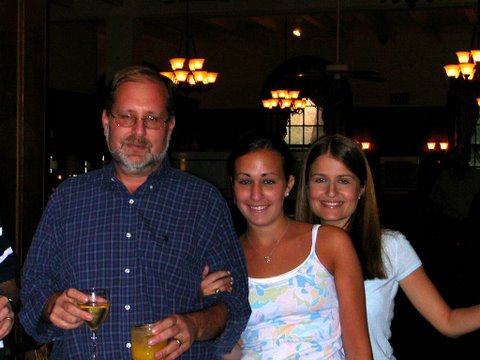
My Father and Harvey June 2012

Without actual family memories, whether orally passed down or written in letters or diaries or memoirs, one thing that I cannot find through my research alone is any real sense of the personalities of the people I am researching.  I can draw inferences at best, but usually not even that.  So I cannot tell what kind of relationships these ancestors had with their children, their spouses, their parents, their siblings.  I can try and put myself in their shoes, but what do I really know about what it was like to raise children a hundred or more years ago?

So when I think about the men in these families, I have no clue what kind of fathers they were.  Were they at all engaged in the lives of their children? Did they have any role in child raising or child care? Certainly Hart Levy Cohen brought his children into his business as a general dealer, and Jacob brought his children into the pawnbroker business.  But beyond that business relationship, all I can do is speculate about what kind of fathers these men were.

In my own life, I did not know my paternal grandfather at all since he died six years before I was born; my maternal grandfather died before I turned five, and although I have some sense memory of him, there are no specific stories or memories I can describe.  I know that my mother and her siblings loved him dearly and that he was a smart, funny and strong-willed man who had the courage to walk out of Romania as a teenager and the determination and strength to come to the US alone and make a life for himself and his family.  And that he was an incredible tease.  But I didn’t know him long enough to think of him as a model for what a father should be.
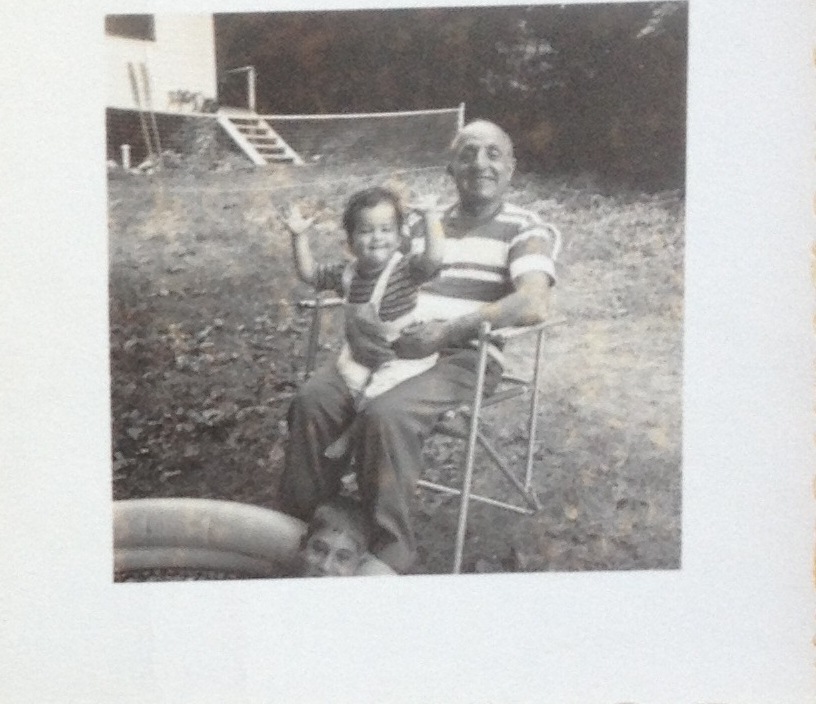
Jeff, Amy and Grandpa 1953

Jeff, Amy and Grandpa 1953

My idea therefore of what a father is and should be was first defined by my own father. My father is a highly intelligent, sensitive, creative and loving person whose top priority has always been our family.  He was way ahead of time in the 1950s and 1960s as a father who was actively involved in parenting.  Because for most of my childhood and all of my adolescence he worked as an architect either in our house or in his studio attached to our house, he was much more available and accessible than most of the fathers of my friends at that time.  When my mother started working out of the home when I was in junior high school, it was my father who greeted me when I got home from school and sat with me while I had my milk and cookies.  He was and still is always interested in the details of my life.
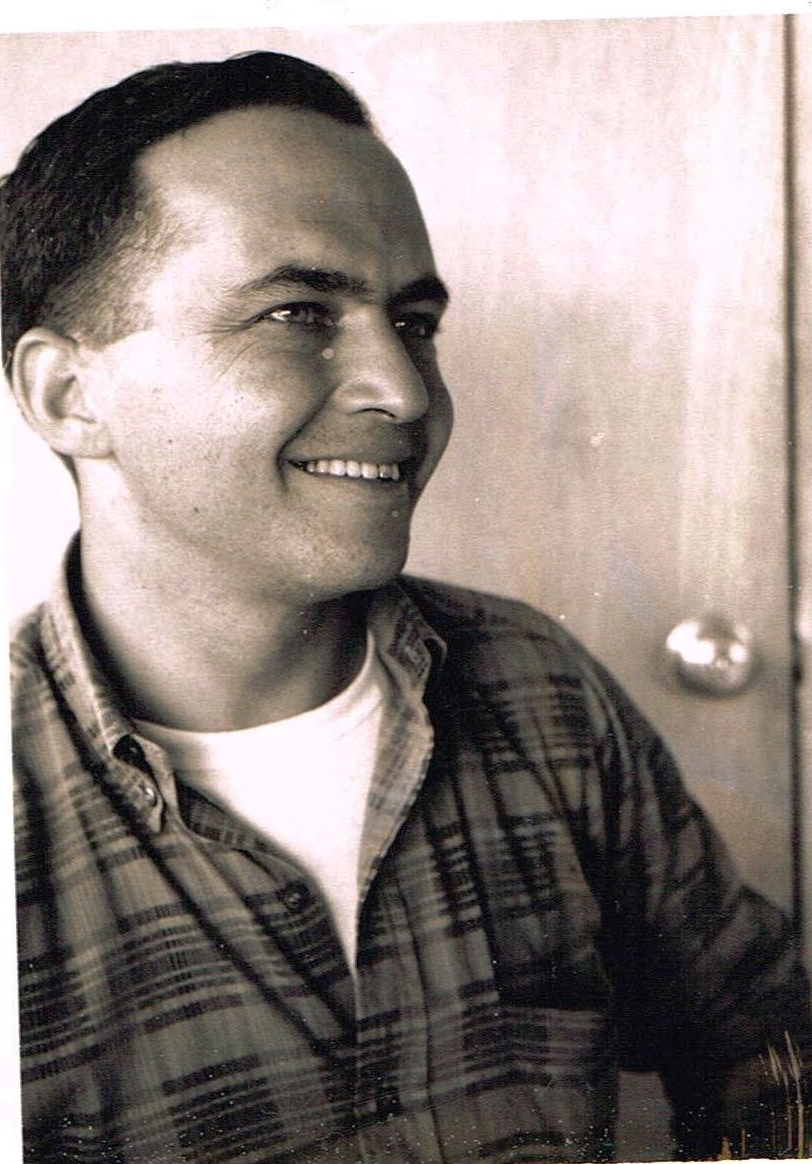
My father  about 1965

My father about 1965

He was also way ahead of his time in believing that girls as well as boys should fulfill their full academic potential.  When I did not want to take physics in high school, he told me I was selling myself short and that physics was something I would regret not learning.  I didn’t listen, and although I don’t regret taking the extra history course I took instead, he was right that it probably was more important to understand physics than I thought it would be when I was sixteen.  Throughout high school, college, law school, and my career, my father along with my mother have always supported and encouraged me to learn, to work hard, and to find courses and work that would give me joy and satisfaction, and they still do.  They also taught me to put family first.

The second significant father in my life is my husband Harvey. It was in many ways appropriate that my wedding day in 1976 was also Father’s Day because the man I married that day is truly the most devoted father of our children I ever could have imagined.  He also has always put his family first, ahead of his career or anything else.  He was and is my full partner in all parenting responsibilities, diaper to diaper, scraped knee to scraped knee, broken heart to broken heart.  My girls knew to call Daddy, not Mommy, in the middle of the night because he was the one who had the patience to cope with upset stomachs or bad dreams at 2 am.  He will drive any distance, pay any price, spend any amount of time, in order to help his children or me.  Our happiness is the key to his own happiness.

Harvey and our daughters 1984

Harvey and our daughters 1984

1985

1985

2003

2003

Finally, I’d like to recognize one more father who is a big part of my life, my son-in-law.  He is an incredibly devoted father to my two grandsons, including the new baby just over a week old. His face lights up with joy whenever he looks at his two sons.  His love for them is so apparent.  I know that he will be a wonderful role model for Nate and for Remy so that someday they also will be devoted and loving fathers, following in the footsteps of their father, their grandfather, and their great-grandfather.

Brian, Nate and Remy

June 2014

Happy Father’s Day to the three of them and to all the other wonderful fathers out there!

By the way, did you notice that all three have beards?


David Rosenzweig and The Reality of Infant Mortality

In the course of researching Abraham Rosenzweig’s life, I discovered a tenth child born to Gustave and Gussie Rosenzweig.  On the 1910 census there were nine children, all but one born in New York City between 1888 and 1904.  (Lillian, the first child, was born in Romania around 1884.) There were four boys, Abraham, Jacob/Jack, Harry and Joseph, and five girls, Lillian, Sarah, Rebecca, Lizzie and Rachel.  The NYC birth index covers those years, so I started my research of Abraham by looking for a birth record.  I had several records indicating that he was born sometime around 1890, but I could not (and still have not) found a record for Abraham’s birth.

Gustave Rosenzweig and family 1900 census

Gustave Rosenzweig and family 1900 census

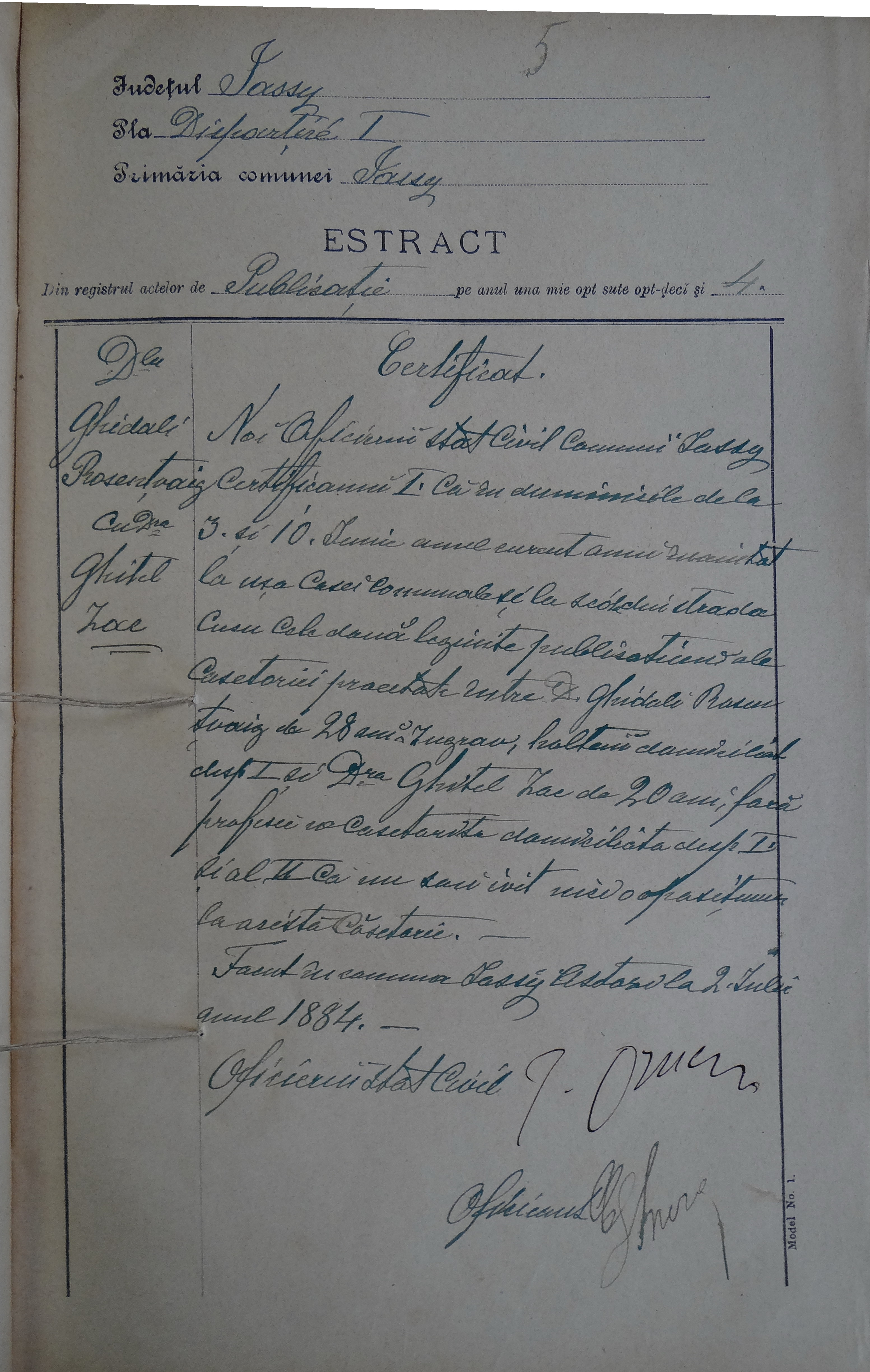
I expanded my search to look for any Rosenzweig born around 1890-1892, using FamilySearch as my tool as it allows for liberal use of wild card searching and, unlike ancestry.com or other sites, reveals the names of the parents in the search results.  I still did not see any Abrahams or Abes, but in scanning the results, I noticed a child named David who was born to Gadaly and Ghitel Saak Rosentveig.  Before receiving the Romanian records for Gustave and Gussie I might not have recognized that these were their Yiddish names: Ghidale Rosentvaig and Ghitla Zacu on their marriage records from Romania.Ghidale Rosentzveig with Ghitil Zacu_Marriage Record_1884_5  I knew that this could not be a coincidence, that this baby had to be their son, born September 5, 1891.  Since I still have not found Abraham on the birth index, I cannot be sure whether David was born before or after Abraham.  What I did realize was that David must have been named for my great-great-grandfather, David Rosentvaig, who had been alive in 1884 when Gustave married Gussie in Iasi but who must have died sometime before the birth of this new David.

But where was the new David in 1900, only nine years later? Since he was not listed on the 1900 census, I assumed the worst, as I have gotten accustomed to doing, and checked the death index.  Sure enough a one year child named David Rosenzweig had died on December 25, 1892.  Although I have not yet seen the death certificate for this child, I have to assume that this was Gustave and Gussie’s son David.  My great-great-grandfather’s namesake had died before his second birthday.

I have expressed in an earlier post my thoughts and feelings about the impact the deaths of babies and children must have had on their parents and their siblings.  The numbers are staggering.  On the 1900 census Gussie Rosenzweig reported that she had had thirteen children, only eight of whom were then living (Rachel was not yet born).  In 1910, she reported eighteen births and only nine living children.  Had she had five more infants die between 1900 and 1910? My great-grandmother Bessie Brotman reported in 1900 that she had given birth to nine children, only four of whom were living (Sam was not yet born).  We also know that Hyman Mintz died within a month of birth and Max Coopersmith within a day of birth.

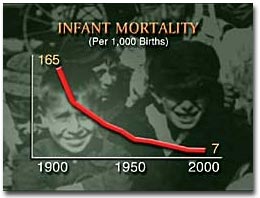
These infant deaths were not at all unusual for that time period.  According to a PBS website for a program called The First Measured Century, “[p]rior to 1900, infant mortality rates of two and three hundred [per one thousand births] obtained throughout the world. The infant mortality rate would fluctuate sharply according to the weather, the harvest, war, and epidemic disease. In severe times, a majority of infants would die within one year. In good times, perhaps two hundred per thousand would die. So great was the pre-modern loss of children’s lives that anthropologists claim to have found groups that [did] not name children until they have survived a year.”

This same source reports that most of these deaths were caused by poor infant nutrition, disease and poor sanitary conditions.  In the early 20th century substantial efforts were made to deal with these causes of infant and other deaths.  “Central heating meant that infants were no longer exposed to icy drafts for hours. Clean drinking water eliminated a common path of infection. More food meant healthier infants and mothers. Better hygiene eliminated another path of infection. Cheaper clothing meant better clothing on infants. More babies were born in hospitals, which were suddenly being cleaned up as the infectious nature of dirt became clear. Later in the century, antibiotics and vaccinations join the battle.”  The infant mortality rate began to decline, and today it is well under ten deaths per thousand within the first year of life in the United States.

Infant mortality

But what impact did this high death rate for babies have on their parents?  There have been many books written by sociologists, social historians and psychologists on the history of society’s view and treatment of children.  According to this research, until the 18th century, children were not valued highly by parents, perhaps in part because of the high infant mortality rate.  The likelihood of losing a child was so great that it made it difficult for parents to become too attached.  In Europe often parents did not even attend the funerals of their children and even wealthy parents had their children buried as paupers. See, e.g., Viviana A. Rotman Zelizer, Pricing the Priceless Child: The Changing Social Value of Children (1994); Linda A. Pollock, Forgotten Children: Parent-Child Relations from 1500 to 1900 (1984). Both authors also observe that the attitude towards children changed during the 18th and 19th centuries as people began to be more concerned about their children’s growth and development and families started to become more child-oriented and affectionate.  This change in attitudes contributed to the increased efforts to reduce infant mortality.

It’s so difficult for me to imagine that these parents were indifferent or unaffected by the deaths of so many of their babies.  I know I live in another era, an era when parenting has become not just a part of life, but in some ways an obsession. I plead guilty to being a helicopter parent, to being probably too involved in my children’s lives as they were growing up.   We live in a time of thousands of books on parenting, dealing with every issue imaginable.  There are experts to help you before a baby is born and experts to help you deal with every imaginable childrearing issue that can arise after they are born: doulas, lactation consultants, sleep consultants, life coaches, tutors, college admissions consultants, and probably some I don’t even know about.    So many of us center our lives on our children.  Losing a child is often said to be the worst thing anyone can experience.

Could it really have been so different back then? Were children really seen as disposable and replaceable? Is that why people had so many children—in order to ensure that at least some would survive to adulthood?  Or was it simply the absence of effective birth control, not the desire for so many children, that led to these huge families?  Did those huge families make it easier to accept the loss of so many babies? Were even those who survived devalued and distanced as a defense mechanism against their possible death?  It seems unlikely they were as doted upon and cherished as children of today, given both the cultural attitudes and the economic and environmental conditions of the time.

Maybe that made those children stronger and more self-reliant, less indulged and less entitled.  But it also had to have left its scars.  Maybe it is why so many of them did not want to talk about their families, their childhoods, their feelings.

Enhanced by Zemanta