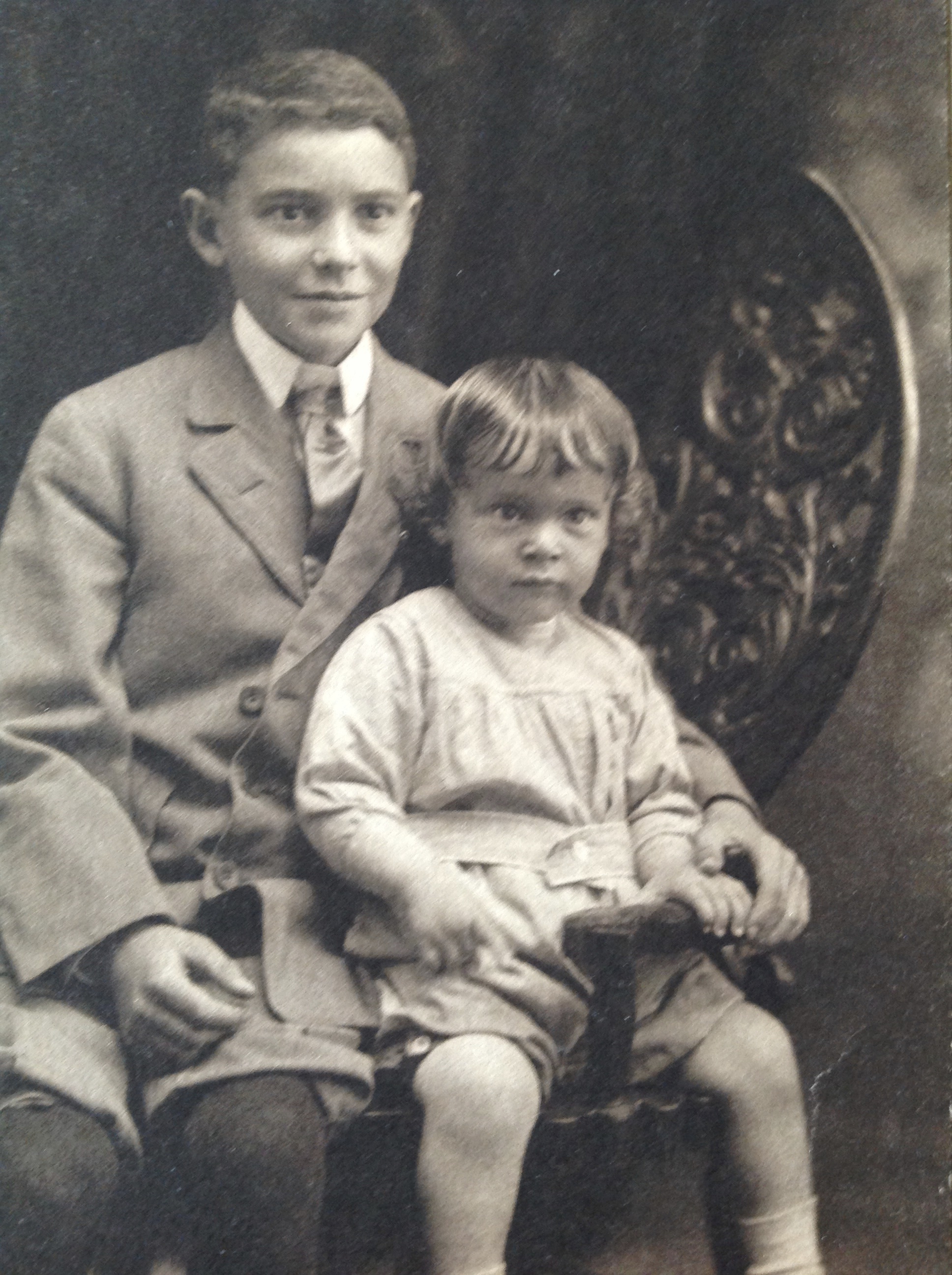
Jacob G. Cohen, Almost State Treasurer, and his descendants: A Sad Ending and a Loose End

The third child of Moses, Jr., and his wife Henrietta was Jacob G. Cohen.  As I wrote previously, Jacob had married Ida Siegel in 1894 and had moved to New York City, where he first worked as a bookkeeper. Just this week I received a copy of their marriage certificate.

Jacob G. Cohen and Ida Siegel marriage certificate

Jacob G. Cohen and Ida Siegel marriage certificate


1894 14 Apr Cohen-Segel marriage cert#4384  pg2  007586923_00397

Jacob and Ida had two children, Aimee and Gerson, and by 1910 had moved to Yonkers, New York, where Jacob worked as the manager of a dry goods store, according to the 1910 census.  In 1912, Jacob and Ida traveled overseas, and in 1915 Jacob’s occupation was an office manager for a business that is not legible to me.  Maybe someone else can decipher it?  Ida’s obituary said he was the treasurer of a department store at some point, so perhaps this says department store?

UPDATE:  Thank you to Gil Weeder!  He read it as Dry Goods, and now that I look at it, I think that’s right, and it makes sense!
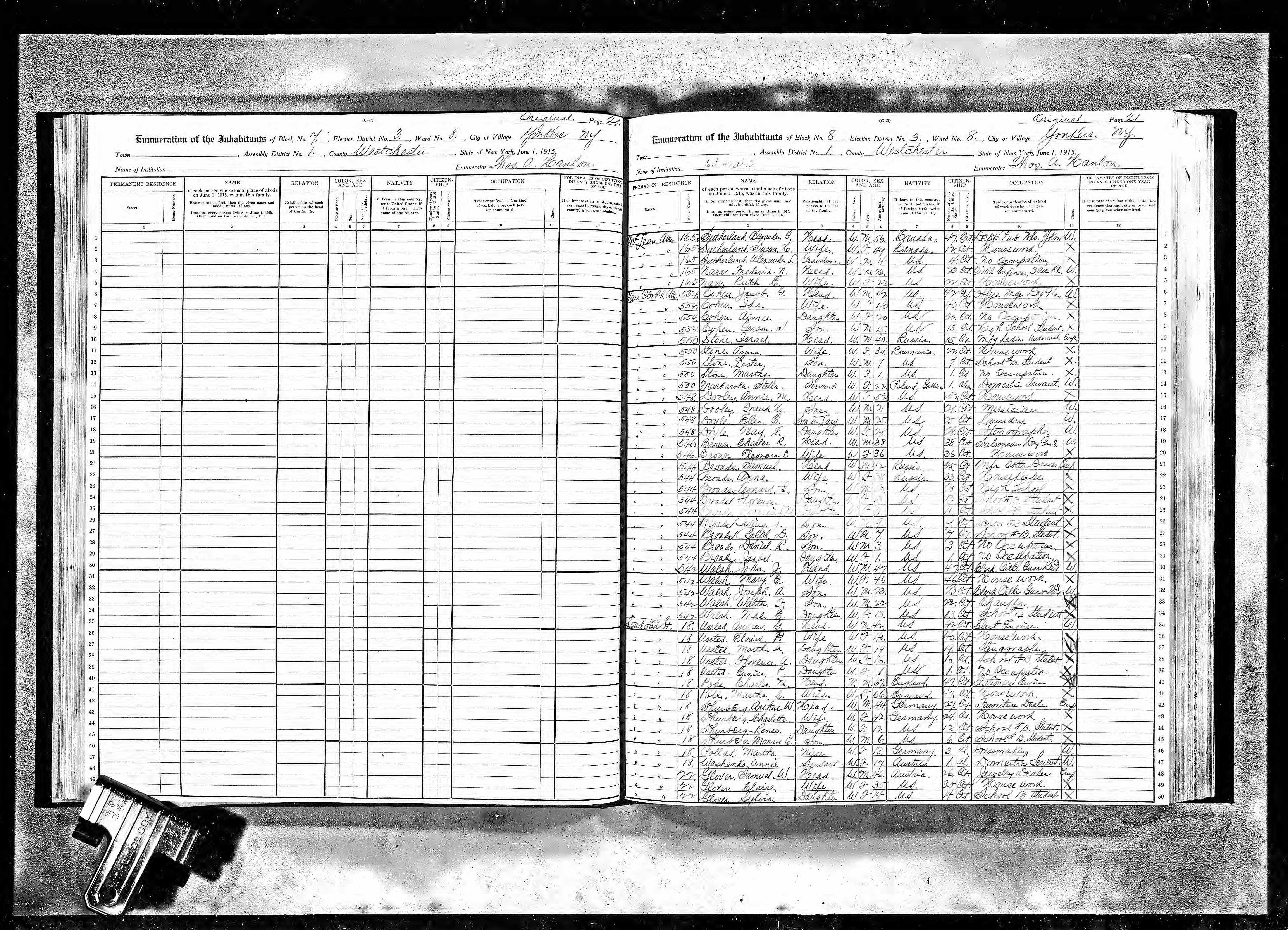
Jacob and Ida Cohen and family 1915 NY census

Jacob and Ida Cohen and family 1915 NY census

On February 12, 1917, their daughter Aimee married Lester Wronker, who was working in the leather goods industry.  Aimee and Lester had a son, Robert, who was born in April, 1919.  In 1920, the family was living in Manhattan.

Ida and Jacob’s son Gerson was a student at New York University at the time he registered for the draft in 1917.  He was inducted into the US Army on October 1, 1918, and was discharged on December 19, 1918, without ever serving overseas.  He was part of the NYU student training corps.
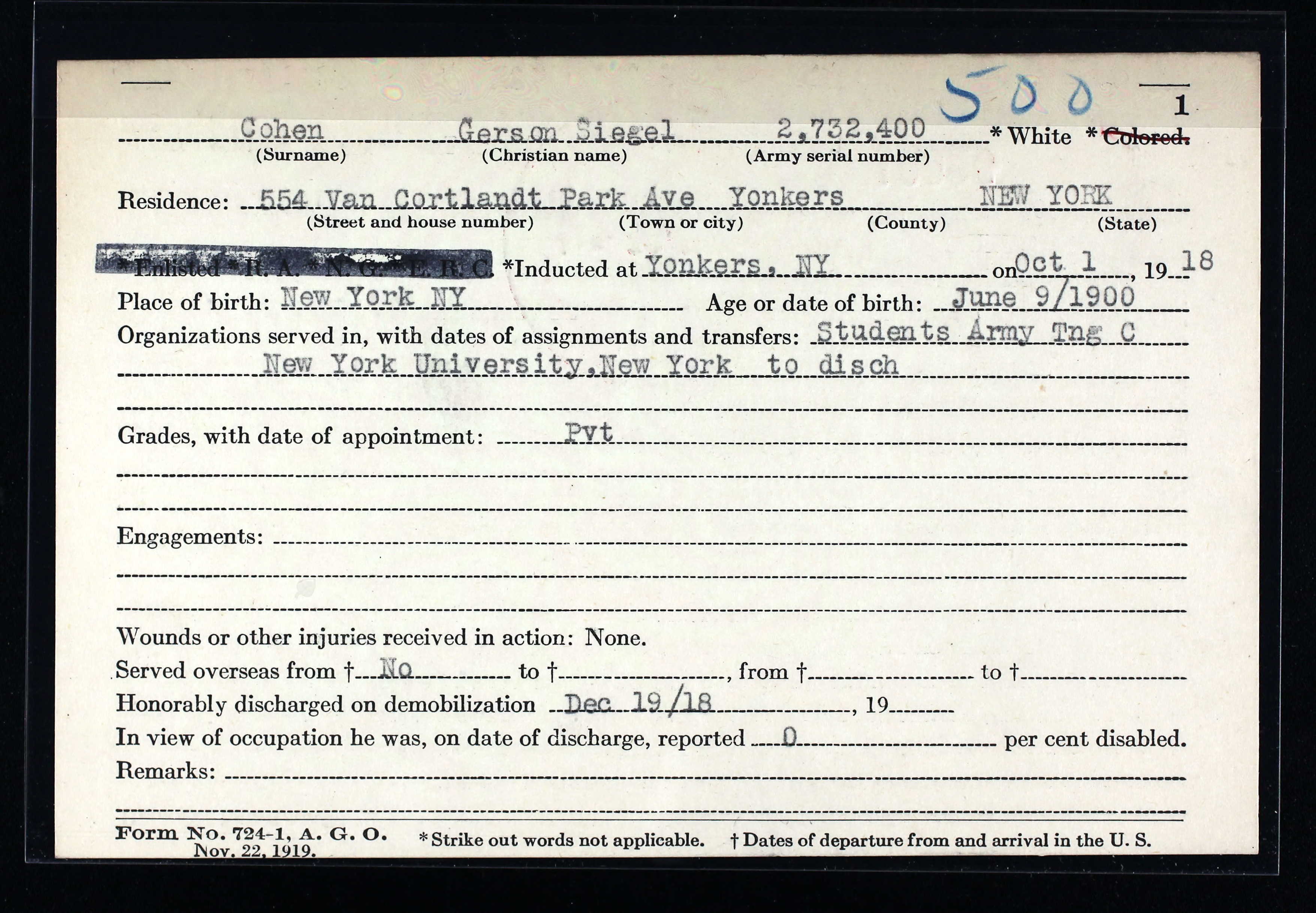
Gerson Siegel Cohen military record

Gerson Siegel Cohen military record

In 1918, Jacob G. Cohen ran as a Democrat for New York State Treasurer on the same ticket as Alfred E. Smith.  Although Smith won the governor’s seat, Jacob was defeated in the general election, losing to the Republican candidate, James L.Wells, 839,777 votes to 1,028,752 votes.   Although Smith and the Democratic candidate for Lieutenant Governor, Harry C. Walker, were victorious, all the other Democratic candidates on the slate were defeated by the Republican candidates.


Alfred E. Smith, Governor of New York

Al Smith served four terms as governor of New York State and in 1928 became the first Catholic nominated by a major party as a candidate for President of the United States.  He was soundly defeated by Herbert Hoover.  But imagine if Jacob had won and served as NYS treasurer with Al Smith—and imagine if Smith had won in 1928—my cousin Jacob G. Cohen might have become the US Treasury Secretary.  If he had won the election for New York State Treasurer, he would have been one of the first Jews to hold statewide office in New York.

Instead, Jacob returned to civilian life as a businessman.  In 1920, Jacob and Ida were living in Chicago as lodgers in what appears to have been a very large boarding house or hotel. Jacob was working as the manager of a department store.  Did he leave New York to escape after losing the election? In 1925 Jacob and Ida were back in New York, living in Manhattan, and Jacob was working as an insurance agent.  Their daughter Aimee and her husband Lester and their son Robert were now living in Yonkers, and Lester was working in the silk industry.  I was not able to locate Gerson on the 1920 US census or the 1925 New York State census.

Jacob died on February 13, 1930, according to a death notice in the New York Times.Jacob Cole death notice

(Obituary No. 5, February 15, 1930, New York Times, p. 17)

For a long time I could not find any records for Jacob or Ida after 1925, but then by searching for “Wronker” in the New York Times archives, I was able to find this death notice for Jacob, which revealed why I had not been able to find them: they had changed their surname from Cohen to Cole sometime between 1925 and 1930.

Gerson had also changed his last name to Cole and also his first name to Gary.  (Even searching for him under Gary Cole has not provided me with any information about his whereabouts between 1918 and 1930 or after 1930.)  After Jacob died, Ida moved in with Aimee and her family in Yonkers, where Lester continued to work as a sales manager in the silk industry.

Gerson, now Gary Cole, finally reappeared in 1930 in Detroit as a credit manager for a furniture business.  I believe this is the same Gary Cole/Gerson Cohen based on his age (30), birth place (New York), and birth places of his parents (Washington, DC.)  He was living in what seems to be a hotel as a guest.
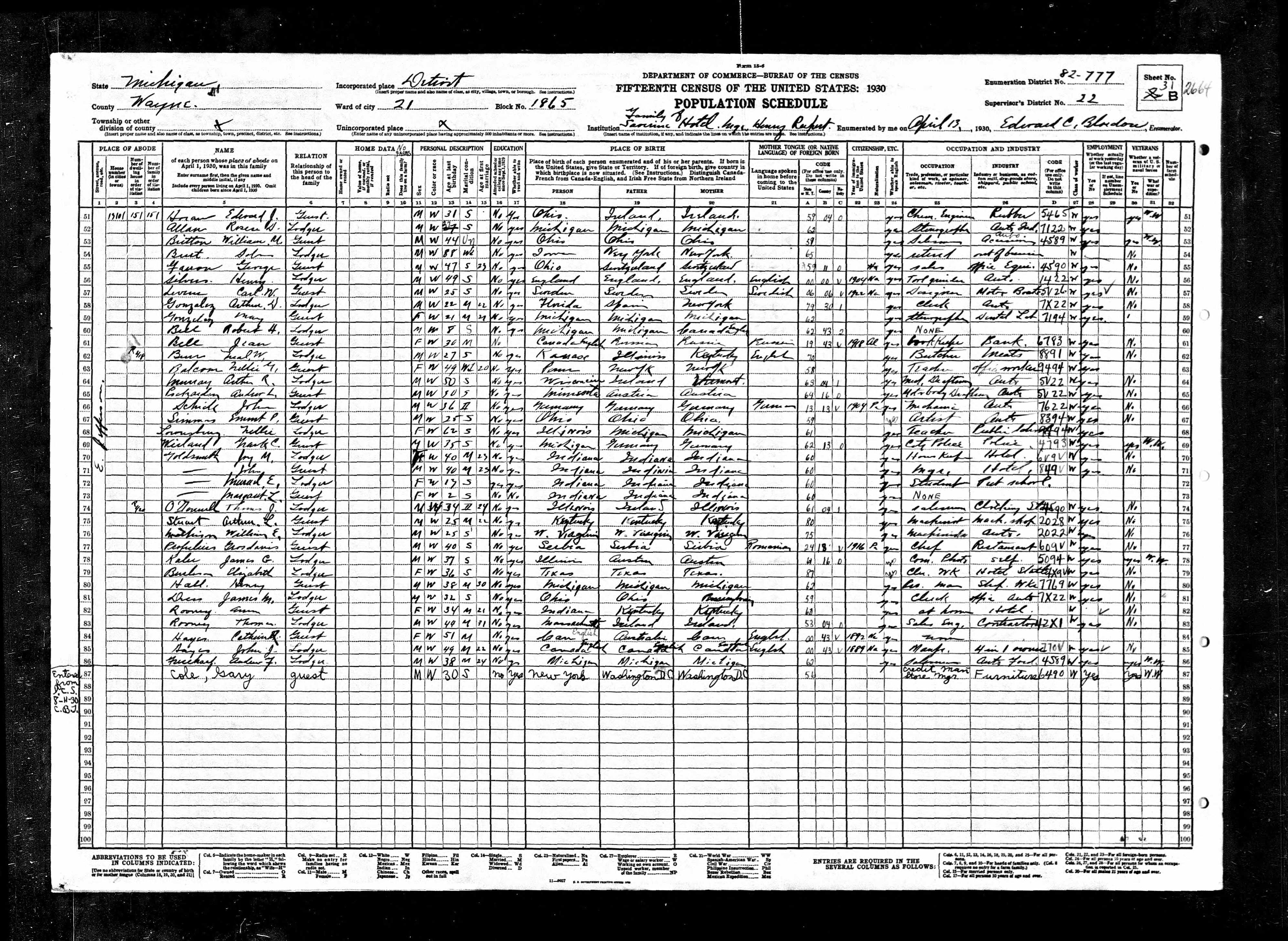
Gary Cole 1930 census

Gary Cole 1930 census

In 1940, Ida was still living with Aimee and Lester in Yonkers.  Lester was now an executive in the silk business, according to the 1940 census.

Robert, now 20, was a student at Princeton, although he was still listed as living in his parents’ residence on the 1940 census.  (Although the Princeton yearbook lists his address as being in the village of Tuckahoe, the census considered that same address to be in Yonkers.)  According to several editions of the Princeton yearbook, Bric a Brac, found in the ancestry.com database, Robert played the oboe in the university band, was on the editorial staff of the Princeton Tiger, was a member of the Princeton Liberal Club and a member of the Nassau Literary Review (“the oldest undergraduate literary review in the country”), and was on the executive committee of the Princeton Anti-War Society in 1939, presumably a group arguing against the United States’ entry into World War II.  Robert graduated from Princeton in 1940.   The photo below is of Robert as an associate editor of the Nassau Literary Review.

Robert Wronker Ancestry.com. U.S. School Yearbooks [database on-line]. Provo, UT, USA: Ancestry.com Operations, Inc., 2010. Original data: Various school yearbooks from across the United States.

Robert Wronker Ancestry.com. U.S. School Yearbooks [database on-line]. Provo, UT, USA: Ancestry.com Operations, Inc., 2010. Original data: Various school yearbooks from across the United States.

Despite his anti-war feelings, Robert enlisted in the military on March 18, 1941, listing his occupation as an “author, editor, reporter,” not surprising given his activities at Princeton.

During the war, Robert served in the medical corps in Italy and then became an editor of the Mail Call column in Stars and Stripes, while stationed in Naples, Italy.  After the war he wrote several short pieces for the New York Times, and in 1955 he was working as a feature writer for the publicity department of 20th Century Fox.

After that he, like his uncle Gary Cole, disappeared.  I could not find anything, which was surprising given the unusual name and his interest in writing and journalism. I wondered: Did he also change his name? Did he die?  He is not listed under Robert Wronker on the SSDI or anywhere else. Once again, I was left with a loose end, a brick wall.

So I called on my mentor Renee Steinig once again for some direction, and damn, she found him so fast I was blown away.  She was able to find a death notice for Robert in the New York Times as well as a death notice in the Princeton alumni magazine that I had not found.  Robert had died on August 20, 1956, after a long illness.  He was only 37 years old.

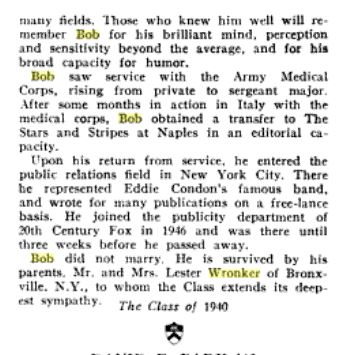
Here is what the Princeton Alumni Weekly wrote about him:


robert wronker death notice princeton alumni weekly vol 57 pt 1

Wronker princeton death notice pt 2

(Princeton Alumni Weekly, Volume 57 (1956) )

What a waste.  Such a young and bright and talented person taken so young.  His mother Aimee died only three years later in January, 1959, when she was 64 years old.  His father Lester lived until October 1976, having survived both his wife and their only child.

Renee also helped me find this obituary of Ida Cole, who died July 25, 1949.
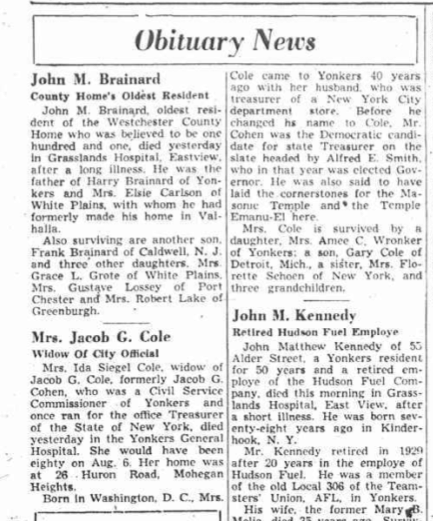
Ida Cole obituary Yonkers Herald Stateman July 26, 1949. p.  2

Ida Cole obituary Yonkers Herald Stateman July 26, 1949. p. 2

Since Ida was survived by three grandchildren and Aimee only had one child, Robert, Gary must have had two children.  I will continue to try and find Gary Cole/Gerson Siegel Cohen in hopes that the line of Jacob G. Cohen/Cole and his wife Ida did not end with the untimely death of their grandson Robert Wronker.

When I think about all the “what ifs” with Jacob and with his descendants, I feel very wistful about how this line might have ended.


Myer and Helen Wolf Cohen and their Children: The American Dream

Myer Cohen, Sr., was the second child of Moses, Jr. and Henrietta Cohen.  As described earlier, he was a lawyer, perhaps the first in the extended Cohen family.  He had married Helen Wolf, daughter of the esteemed Simon Wolf, and they had five children between the years 1891 and 1907.  In 1910, all five children were still living at home, and Myer was engaged in the general practice of law.

As reported earlier, their daughter Marjorie died in 1920 as a young woman.  According to the town clerk in Saranac Lake where Marjorie died in 1920, she died from tuberculosis; the clerk also confirmed that there were several hospitals in the area where TB patients went for treatment.

In 1921, Myer, Sr., was written up in Who’s Who in the Nation’s Capital (Consolidated Publishing Company, 1921) as follows:

Who's Who in the Nation's Capital (1921) found on Google Books

Who’s Who in the Nation’s Capital (1921) found on Google Books

Myer died in 1930, and Helen died in 1949.  They are buried at the Washington Hebrew Congregation cemetery.

Myer Cohen, Sr. headstone

Myer Cohen, Sr. headstone


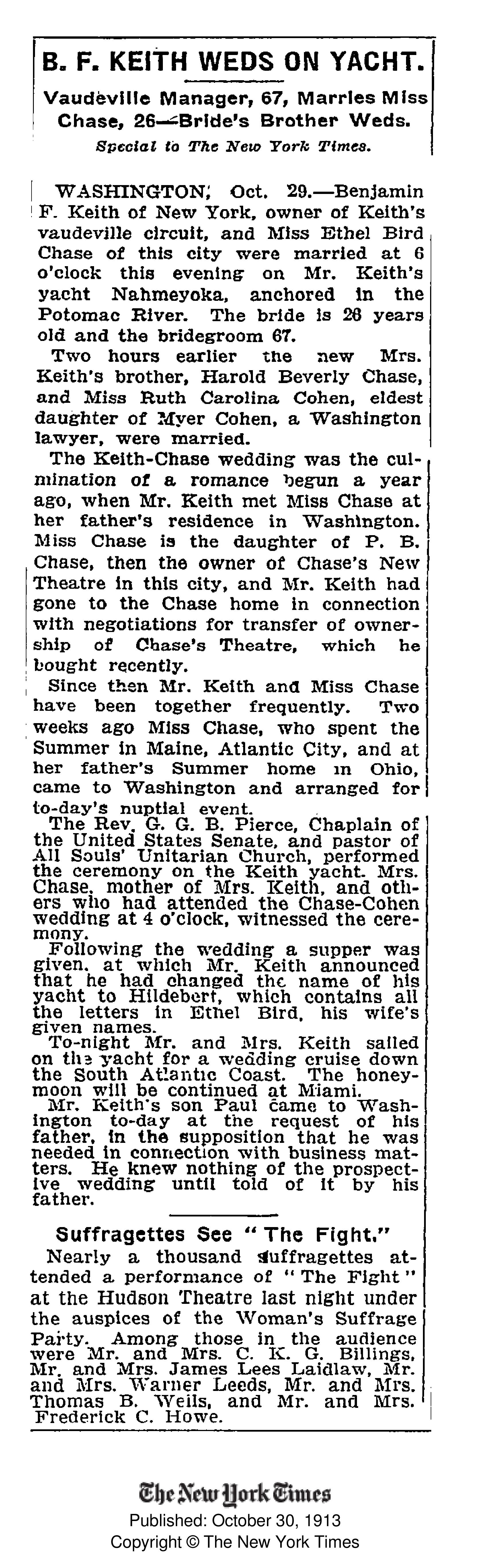
Ruth, their oldest daughter, married Harold B. Chase, the son of Plimpton B. Chase and Anna Bird of Ohio, on October 29, 1913.  Ruth and Harold were the couple who traveled with Harold’s recently widowed sister Ethel Chase Keith to England and probably also introduced her to Ruth’s cousin Jerome Selinger, whom she later married. In following up on my research of Ruth and Harold, I found this New York Times article about their wedding and that of Ethel Chase and B.F. Keith:

BF Keith wedding-page-001


I wonder how Harold and Ruth felt about B.F. Keith and Ethel Chase stealing their thunder on their wedding day!

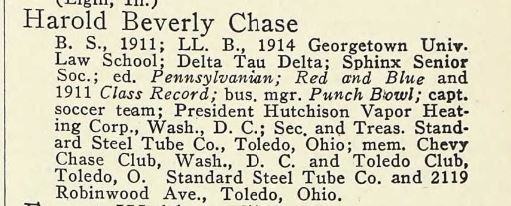
Harold had graduated from the University of Pennsylvania in 1911 and from Georgetown Law School in 1914, bringing another lawyer into Myer’s family, although it does not appear that Harold ever practiced law. ( See Abraham J. Baughman, Robert Franklin Bartlett, History of Morrow County, Ohio: A Narrative Account of Its Historical Progress, Its People, and Its Principal Interests, Volume 2 (1911) (Google eBook), p. 744)

Harold B Chase U Penn alumni directory 1917

Harold B Chase U Penn alumni directory 1917 Ancestry.com. U.S., School Catalogs, 1765-1935 [database on-line]. Provo, UT, USA: Ancestry.com Operations, Inc., 2012. Original data: Educational Institutions. American Antiquarian Society, Worcester, Massachusetts

In December 1915, Ruth and Harold had a daughter, Ann Beverly Chase.  In 1917 they were living in Toledo, Ohio, where Harold was then secretary and treasurer of Standard Steel Tube Company, a company owned in part by Harold’s father, who had acquired it in 1915.

In January, 1919, their three year old daughter Ann died of meningitis while the family was visiting Harold’s parents in St. Augustine, Florida, according to an obituary published in the St. Augustine Record of January 31, 1919.

Although the family was still living in Ohio in 1920, when their son Harold, Jr., was born, by 1922 Harold and Ruth had moved to Worcester, Massachusetts, where they were to live for the rest of their lives.  Harold was the owner and president of Chase Motor Cars, a car dealership, for many years, and both Harold and Ruth seem to have been quite active in a number of community organizations and clubs, according to various newspaper reports and documents.  Harold wrote an autobiography entitled Auto-biography: Recollections of a Pioneer Motorist, 1896 to 1911 (Pageant Press, 1955); unfortunately, it seems to be out of print and not available.

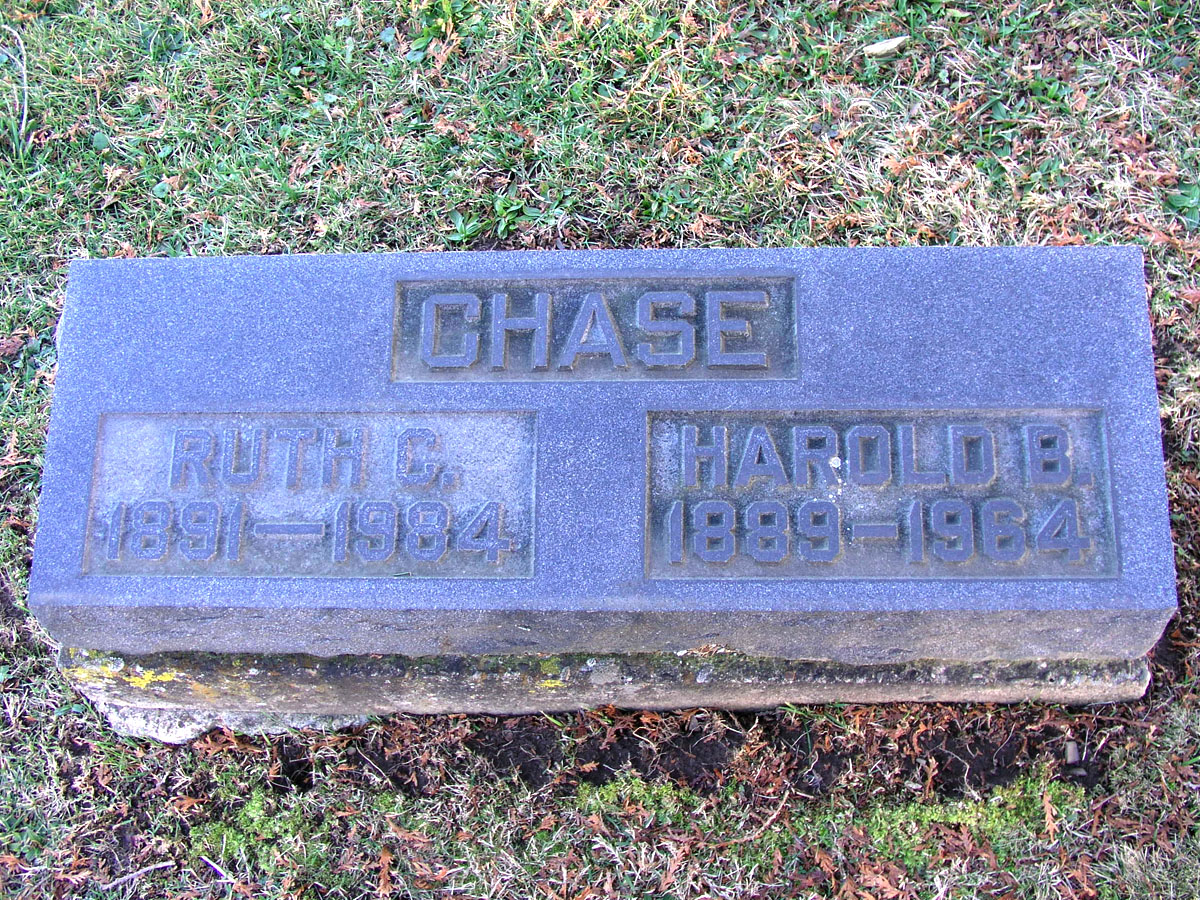
Harold, Sr., died in January, 1964, and Ruth, the daughter of Myer, Sr. and Helen Cohen, died in October, 1984. Ruth returned to the Washington area after Harold died.   Despite living for so many years in Worcester, both Harold and Ruth were buried in Ohio at Bloomfield Cemetery with their little daughter, Ann, as well as many members of Harold’s extended family.

Their son Harold, Jr., served in the US Air Force for many years in Colorado Springs, Colorado and then lived in Alexandria, Virginia; he died in 2006 and is buried at Arlington National Cemetery.

Myer and Helen’s second child, Edith, married Alexander Ceal Robeson on December 27, 1919.  Alexander, who was known as Zanny according to family members, was a lawyer in a general practice in Washington, DC, like his father-in-law Myer, according to the 1930 census and several city directories.  He was a 1916 graduate of George Washington Law School.  Edith and Zanny had one child, a son, Alexander C. Robeson, Jr., who was born April 13, 1923.  Zanny died July 26, 1972, in Washington, DC., and Edith died at age 90 in September, 1983.  Their son, who was intellectually challenged, lived as an adult in Innisfree Village in Crozet, Virginia, for some time; when Edith died, the family asked that donations be made to that institution in her memory.  Alexander, Jr., died December 15, 1996. His death notice said he was a retired weaver.    (Richmond Times-Dispatch (VA) – Wednesday, December 4, 1996)

Edith Cohen Robeson death notice 1983 Ancestry.com. Historical Newspapers, Birth, Marriage, & Death Announcements, 1851-2003 [database on-line]. Provo, UT, USA: Ancestry.com Operations Inc, 2006.

Edith Cohen Robeson death notice 1983 Ancestry.com. Historical Newspapers, Birth, Marriage, & Death Announcements, 1851-2003 [database on-line]. Provo, UT, USA: Ancestry.com Operations Inc, 2006.


Edith Cohen Robeson courtesy of Jane and Scott Cohen

Edith Cohen Robeson, photo courtesy of Jane and Scott Cohen

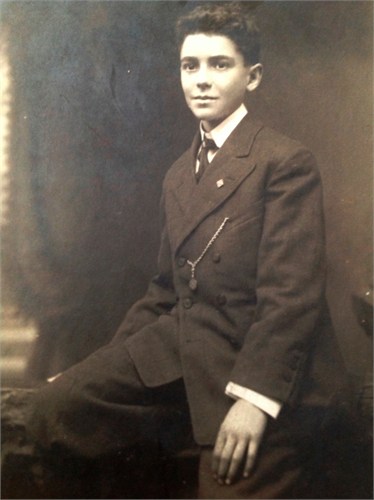
Roger Stahel Cohen was the fourth child and first son of Myer and Helen Cohen.

Roger Stahel Cohen as a young man, photo courtesy of Jane and Scott Cohen

Roger Stahel Cohen as a young man, photo courtesy of Jane and Scott Cohen

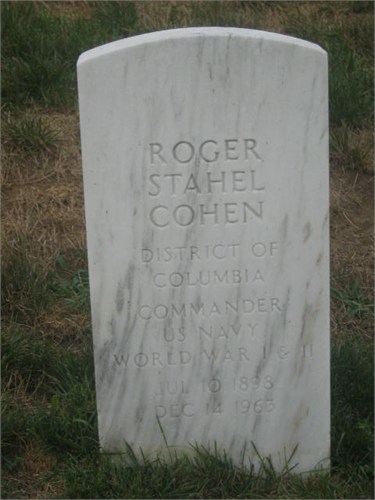
Unlike his father and brothers-in-law, he did not become a lawyer but instead became a doctor.  Roger went to Princeton University, graduating in 1919. The family said that he also served in World War I, but I have been unable to find a military record.  Since he was born in 1898, was already at age 19 at Princeton when the US entered the war in 1917, and was still at Princeton to graduate at age 21 in 1919, I had assumed he had been in school throughout the war. His tombstone in Arlington National Cemetery says that he served in World War I and World War II, achieving the rank of Commander (the family indicated the tombstone is incorrect and he achieved the rank of lieutenant commander), so somehow Roger must have taken time off from Princeton to serve and still manage to graduate when he was only 21 years old.

Roger Stahel Cohen headstone

Roger was living at home with his parents in 1920 and working as a law clerk, according to the 1920 census, but then went to George Washington University for medical school, graduating in 1924, according to his family.  After graduating from medical school, Roger married Lee Lenthal Towers on December 17, 1924. In 1926, he was a junior medical officer at St. Elizabeth’s Hospital, according to the Washington city directory for that year. The family has a graduation certificate for Roger Sr. from the University of Vienna showing that he studied there from October 3, 1927 to September 29, 1928.  According to family sources, Roger, Sr., said he studied under Sigmund Freud at the University of Vienna. By 1930 he was back in Washington, practicing psychiatry at Johns Hopkins Hospital in Baltimore, according to the 1930 census.

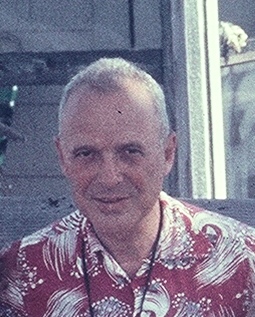
Meanwhile, Roger and Lee were also having children.  They had four children born between 1925 and 1931, and after a time in Baltimore, returned to the Washington, DC, area, where they settled and raised their family.  Roger was stationed for some time in San Francisco with the Navy during World War II, and the family has a 1959 letter from Dwight D. Eisenhower, appointing him to serve on the Board of Veterans Appeals. The family also told me that Roger and the family enjoyed vacationing in Point Lookout, Maryland, and at 13th Lake in upstate New York.  He loved photography and his grandchildren and combined the two loves, taking many pictures of his grandchildren.  Sadly, Roger died of a brain tumor on December 14, 1963, when he was only 65 years old.  His widow Lee continued to live in the DC area until she died in May, 1980.

Roger Stahel Cohen, Sr., photo courtesy of Jane and Scott Cohen

Roger Stahel Cohen, Sr., photo courtesy of Jane and Scott Cohen

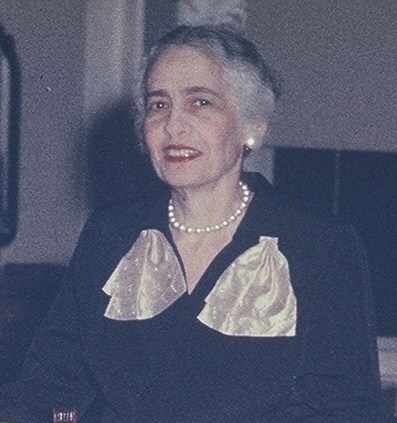
Lee Towers Cohen  photo courtesy of Jane and Scott Cohen

Lee Towers Cohen
photo courtesy of Jane and Scott Cohen

The youngest child of Myer and Helen Cohen was Myer Cohen, Jr., born in 1907, almost ten years after Roger, the sibling closest to him in age.

Roger and Myer, Jr., c. 1909, photo courtesy of Jane and Scott Cohen

Roger and Myer, Jr., c. 1909, photo courtesy of Jane and Scott Cohen

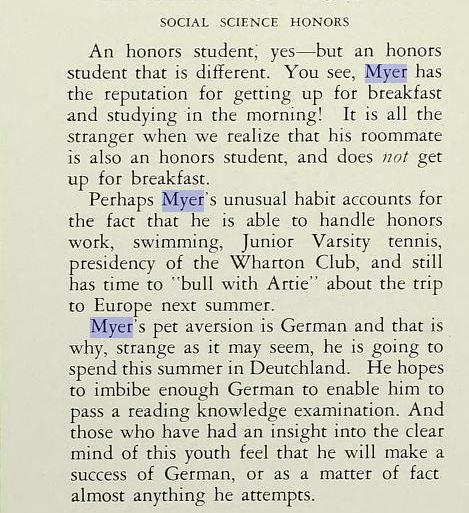
Myer, Jr., was still living at home in 1920 and in 1930. Myer went to Swarthmore College, where he was an honors student, a member of the Wharton Club, the Philosophy Club,  and the Men’s Debate Club as well as on the staff of the yearbook, the Halcyon.  This is how he was described in that yearbook:

Myer Cohen Jr 1929 Halcyon yearbook

1929 Swarthmore College yearbook The Halcyon https://archive.org/stream/halcyon1929unse#page/84

1929 Swarthmore College yearbook The Halcyon
https://archive.org/stream/halcyon1929unse#page/84

After college, Myer made trips across the Atlantic in 1928, 1929, and 1930.  In 1932, he again traveled overseas, giving his residence as New Haven, Connecticut, where he was a graduate student at Yale.  I would think that these trips were related to his graduate work. Myer’s study of German must have been useful in his graduate studies. Myer received his Ph.D. from Yale in 1935 based on his dissertation, “Austria: An International Problem.”  I tried to locate a copy of it online, but could not find it.  It would be interesting to know what Myer’s thoughts were on what was happening in Europe at the time.

On August 21, 1933, Myer, Jr., married Elizabeth Elson, who was Russian born, but had immigrated to the United States in 1906 when she was two years old and had settled with her family in Chicago. Myer and Elizabeth were married in Chicago, and according to the 1940 census, in 1935 Myer and Elizabeth were residing in New Haven. After receiving his degree, Myer and Elizabeth relocated to San Francisco, where their two children were born, one born in 1937, the other in 1938.    According to the 1940 census, Myer was working as a private school teacher in San Francisco.

Although I cannot locate any military records for Myer, after World War II he definitely had a change of careers.  In 1945 he made the first of many trips to England; his residence was now Silver Spring, MD.  In 1946 he made at least two trips, one in June and one in October.  According to the airline manifest for the June trip, Myer was working for the UN BRA headquarters in Washington as the director of repatriation and (I think) relief division.

Ancestry.com. New York, Passenger Lists, 1820-1957 [database on-line]. Provo, UT, USA: Ancestry.com Operations, Inc., 2010. Original data: Passenger Lists of Vessels Arriving at New York, New York, 1820-1897. Microfilm Publication M237,

Ancestry.com. New York, Passenger Lists, 1820-1957 [database on-line]. Provo, UT, USA: Ancestry.com Operations, Inc., 2010.
Original data: Passenger Lists of Vessels Arriving at New York, New York, 1820-1897. Microfilm Publication M237,

Although I could not find an explanation for UN BRA, I found that acronym in several places with reference to the UNRRA, the United Nations  Relief  and Rehabilitation Administration, an organization involved in providing relief to refugees in Europe after the war.  I assume that Myer’s work was related to this endeavor.  The October trip in 1946 was on a flight from Berlin to Frankfurt to New York, and Myer’s address was now Chevy Chase, Maryland, and he was flying on a military permit.  Once again, his German studies must have come in handy.

In 1950, Myer again traveled to Europe, and the manifest for his flight from Zurich to New York has his address as “c/o I.R.O. Washington, DC,” and states that he was an O.I.R. director.   He was traveling with two other people involved with the same agency.  I could not find one definitive meaning for O.I.R or I.R.O, but given Myer’s work in 1946, this might be Office of International Relief and International Relief or Relations Organization.  I need to check further.  A later trip with Elizabeth to Europe in 1954 also lists their residence as Washington, DC.

Eventually, Myer rose to a fairly high level post within the United Nations. In 1962 he was the Director of Operations for the UN Special Fund, a fund created in 1958 by the UN General Assembly “in order to enlarge the scope of the UN programme of technical assistance in certain basic fields.”

UNDP Approves $1.5 Million Agreement to Expand Training Activities at International Institute of Seismology in Japan

UNDP Approves $1.5 Million Agreement to Expand Training Activities at International Institute of Seismology in Japan Ambassador Senjin Tsuruoka, Permanent Representative of Japan, is seen signing the agreement. At left is Mr. Myer Cohen, UNDP Assistant Administrator and Director of the Operations and Planning Bureau. At right is Mr. Tadayuki Monoyama, Second Secretary, Mission of Japan to the UN 27 March 1969 United Nations, New York http://www.unmultimedia.org/photo/detail.jsp?id=124/124433&key=89&query=undp&so=0&sf=date

In 1969 Myer, Jr., was the Assistant Administrator and Director of Operations and Planning for the UNDP, the United Nations Development Programme, an agency involved in assisting developing nations.

Special Fund to Aid in Land and Water Surveys in Northern Rhodesia

Special Fund to Aid in Land and Water Surveys in Northern Rhodesia An agreement laying down conditions for the surveying of the land and water resources of the Kafue River Basin in Northern Rhodesia was signed this morning at United Nations Headquarters by representatives of the UN Special Fund and the United Kingdom Government on behalf of the Federation of Rhodesia and Nyasaland. Signing the agreement are Mr. Paul G. Hoffman (left), Managing Director of the Special Fund, and Sir Patrick Dean, Permanent Representative of the United Kingdom to the United Nations. Looking on are (1eft to right) Mr. Roberto M. Heurtematte, Associate Managing Director of the Special Fund; Mr. Myer Cohen, Director of Operations, Special Fund; and Sri Ram Vasudev, Special Fund project officer. 23 February 1962 http://www.unmultimedia.org/photo/detail.jsp?id=167/167583&key=73&query=acess%20water&so=0&sf=date

Myer, Jr., and Elizabeth ultimately retired to Newtown, Pennsylvania, where Myer died on January 8, 2003, at the age of 95, and Elizabeth died on July 25, 2004.  She was a hundred years old.

Myer, Sr., and Helen Wolf Cohen must have been very proud of their children.  Although the family suffered some heartbreaks with the deaths of Marjorie and little Ann Chase and the challenges presented to Alexander Robeson, Jr., overall it was a family that prospered.  There were several lawyers and a psychiatrist in the family as well as a Ph.D and  UN official.  The family moved around a bit, but overall stayed close to their roots in the Washington, DC, area.  The family seems to have moved away from the strong Jewish involvement of Helen’s father Simon Wolf and Myer, Sr.’s father Moses Cohen, Jr., as they moved into mainstream America and achieved success in fields that seem quite distant from the family’s beginnings as peddlers and merchants and pawnbrokers.  In just two generations, the family had gone from struggling Jewish immigrants to full-fledged participants in the American dream.