Moritz Werner And Family, Part III: After The War

After the war Max Werner, now 25 years old, married Klara Reiss on January 5, 1947, in London, England.1 Klara (known by the family as Klari) was born in Vienna, Austria, on September 27, 1920, to Ida Spergel and Salomon Reiss. According to his granddaughter Joyce:2

Salomon Reiss had made a fortune in Vienna and was a well-known multi-millionaire. After the Anschluss (March 1938) [he] was arrested at the seder table [and] stripped of his Austrian wealth, and the family managed to escape to Prague (not at the time under German control and where my grandfather owned assets).

Klara’s brothers were able to immigrate to Palestine, but Klara didn’t want to leave her parents so stayed with them in Prague. But as things became more dire, she was able to obtain a visa to go to England, as seen on her exit visa from Prague shown below. As Joyce noted, Klara left Prague “quite late in August 1939. Her entry Visa in Dover is stamped 30st August. The curtain came down [two days later started on September 1, 1939, when Germany invaded Poland and World War II started.]”
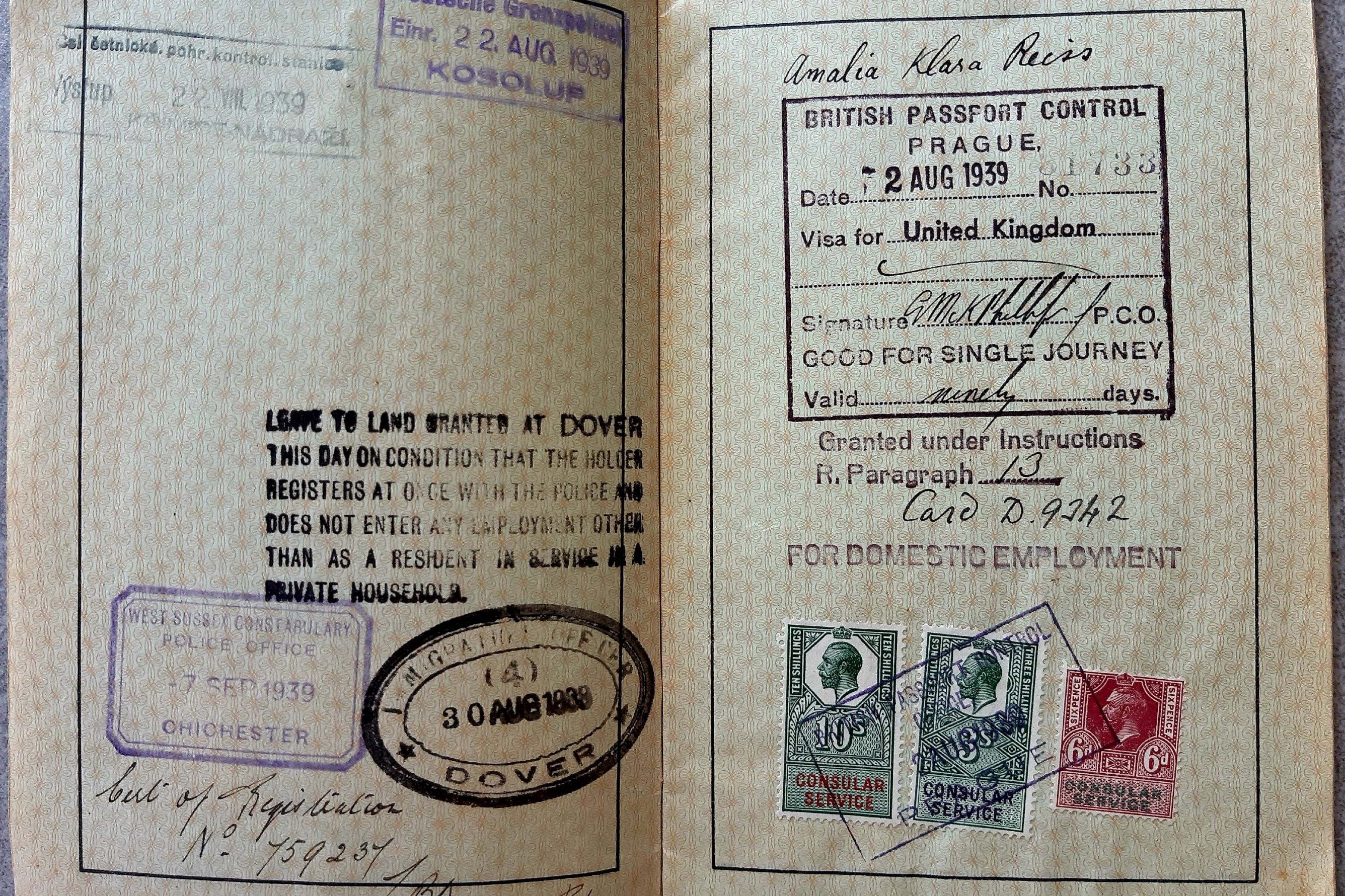
Klara Reiss 1939 visa for travel to England

Klara’s parents were, however, stuck in Prague once the war started and unable to escape. They were eventually deported to Theriesenstadt and then from there on one of the last transports from Theriesenstadt to Auschwitz, where they were murdered.3

Klara met Max Werner eight years later in England. As Joyce tells the story,

Our parents met at a friend of Moritz and Jenny on a Shabbat afternoon in 1946. The couple were cousins of Klari’s father and, apparently, when [Max] got home, he told his parents he had met the girl he was going to marry. He was two years younger than Klari, involved with Klari’s cousin, and Klari told him to go away. Repeatedly. My father did not take no for an answer and pursued her relentlessly. She gave in and went on a date with him. The rest is history.

Judith provided these additional insights:

My mother liked my Dad when they met but felt that as a sophisticated dress designer she was way too old for the very young looking Max. She had a career path that she had worked very hard to carve out for herself and was in line to go to Paris for her firm.  She wasn’t interested in marriage at that point in her life especially after learning what happened to her parents. I believe her long range plan was to join her brothers in Israel. When however my Dad persisted, she relented…. They were married 6 months later on 5th January, 1947.

Joyce and Judith shared these photographs of their parents Max and Klara:

Max and Klara Werner Courtesy of the family
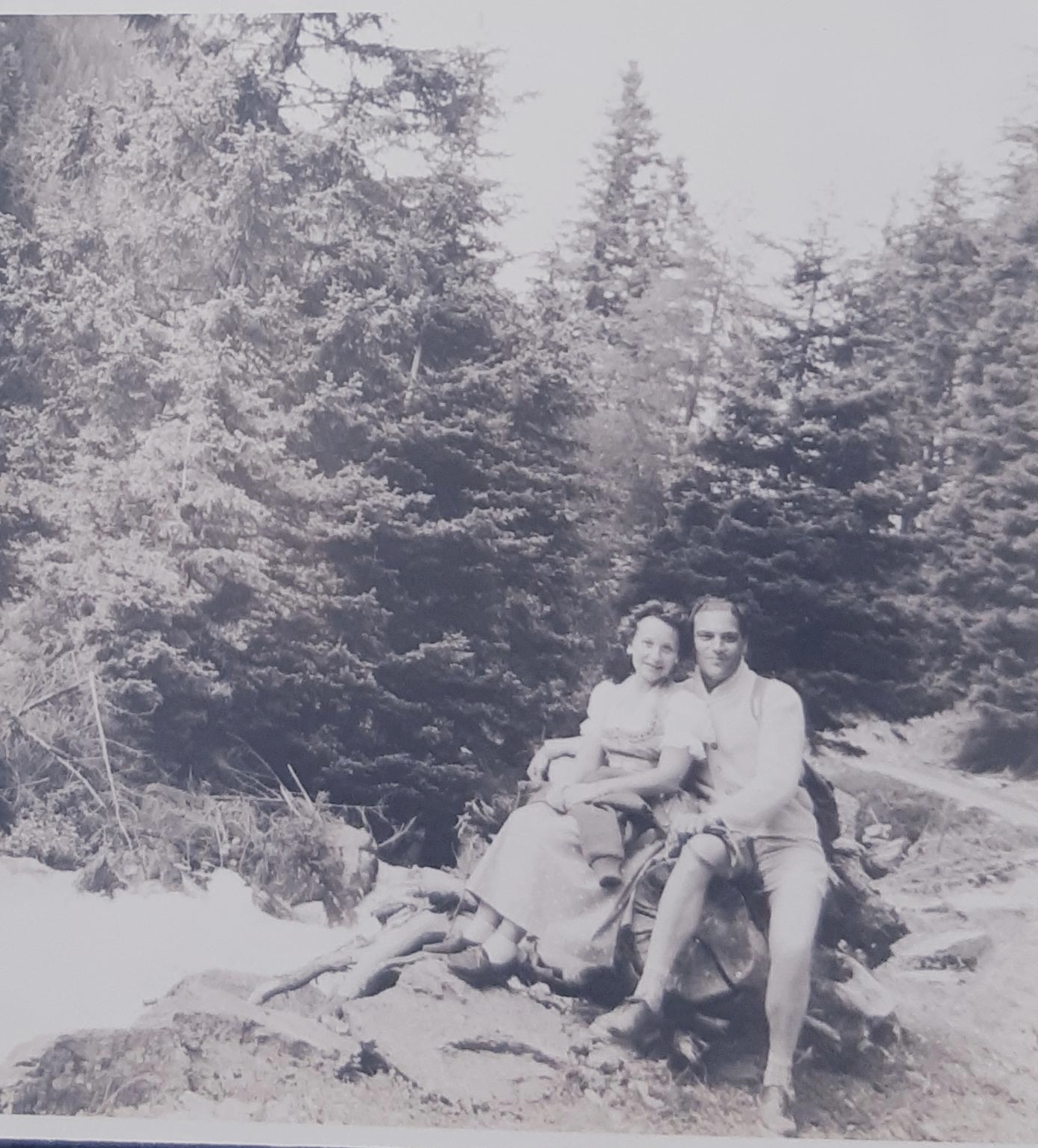
Max and Klara Werner Courtesy of the family

At the time of his marriage, Max was working for his father Moritz in the Benlo company in London. In 1949, Moritz was able to buy back LS Brinkmann from the man who purchased it. As his son Max told the story (and as I previously shared here),

A Catholic named Rhode from Kassel, who produced goods for the armaments industry, had bought L.S. Brinkmann. After the war, when Rhode was terminally ill, he developed feelings of remorse and tracked down my father Moritz in England. Mr. Rhode asked for a visit and my father and he made a contract, i.e. my father bought the company back – that was at a time when there was no official reparation! In 1949 the takeover was perfected. …

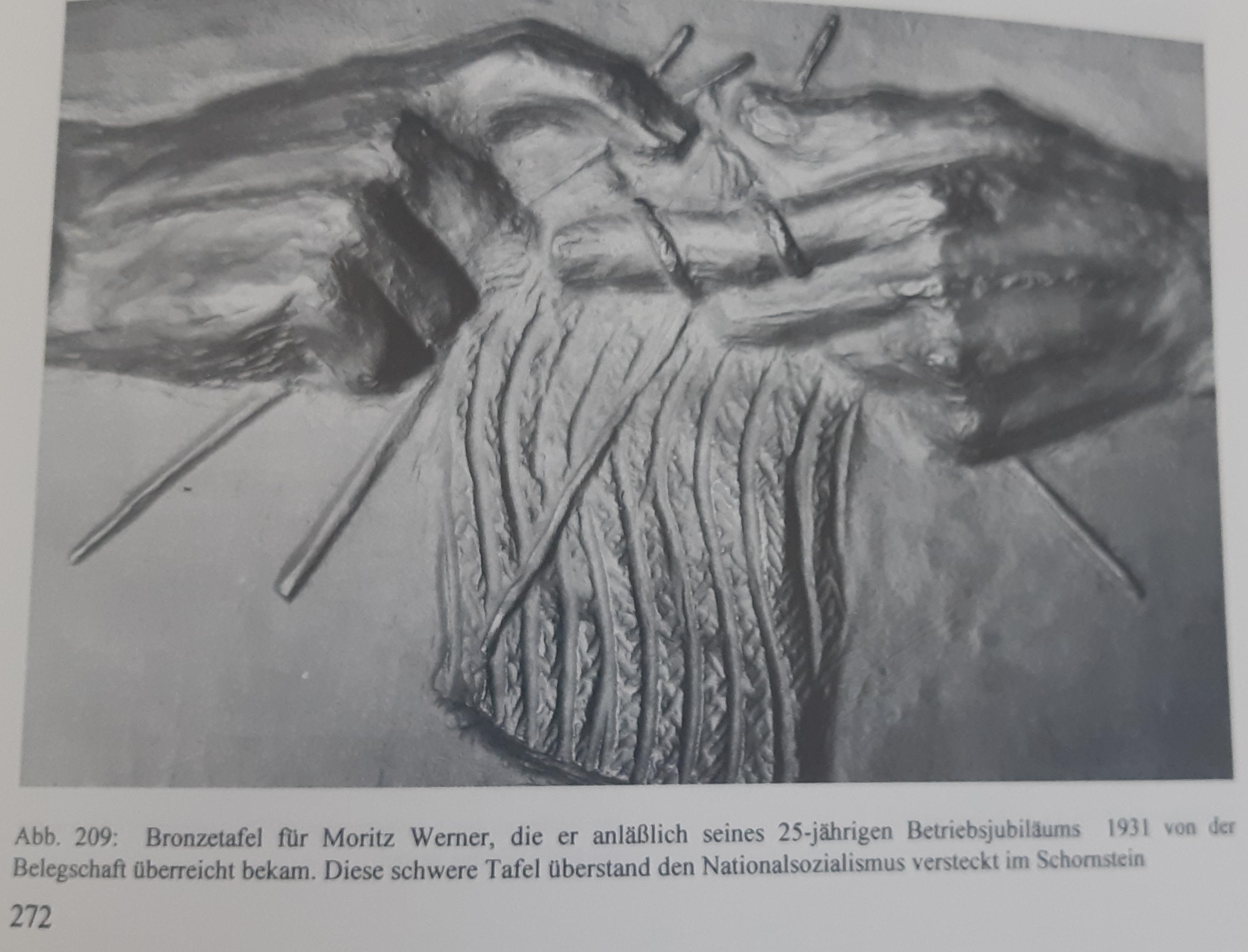
When my father had celebrated his 25th anniversary with the company in 1931, the staff had donated a bronze plate with a dedication and two knitting hands for him. During the forced sale [1939] the plate suddenly disappeared.

In 1949, when my father was sitting in his office again for the first time, there was a knock at the door and a small delegation of employees came in… They struggled to carry a box containing this bronze plate. Before taking over the company, these employees had fastened the plate in the chimney with strong wires and thus hidden it.

Joyce and Judith shared this photograph of the plaque that had been given to honor Moritz in 1931 and then hidden by his employees to keep it safe from the Nazis.
Moritz and Jenny did not remain in Germany, but Moritz did continue to oversee LS Brinkmann from England. He gave a large share of the business to his sister Elsa Werner Loewenthal, wife of Julius Loewenthal, whom I wrote about here.

Meanwhile, according to Judith, there were problems within the partnership of Benlo; contrary to an informal agreement between Moritz and his partner, the partner brought a new partner into the business, and together they took over control of the business and away from Moritz. Eventually, the two other partners drove Moritz out of the business and moved his son Max from company headquarters in London to a sales job, which he found to be unsatisfying and a dead end position.

Here is a photograph of Max and Klara in the early 1950s:

Max and Klara Werner c. 1953 Courtesy of the family

Thus, in 1953, Max decided to move to Germany and take over LS Brinkmann after his father Moritz retired. By that time, both Judith and Joyce were born, and Judith was already in school. Max, Klara, and Joyce went to Eschwege, and Judith stayed behind with her grandparents Moritz and Jenny in England to continue her schooling. Under Max’s leadership, LS Brinkmann once again became a highly successful knitware company.

But after a relatively short time, Klara and Joyce returned to England as Klara was not happy living in Eschwege, where there was no longer a Jewish community after the Holocaust. Max would come to England periodically, usually for Jewish holidays, and Klara and their daughters would spend the summers in Eschwege.

Joyce and Judith have wonderful memories of spending summers in Eschwege. Judith wrote:

Part of the perks of working for LSB was reduced rental flats on the factory property. It was great fun for us children of the workers. Every afternoon and early evening when the workday was over we would gather in the courtyard and play all kinds of games, including hide and seek and different ball games.

Judith shared this photograph of the LS Brinkmann grounds along with this description:

On the far left are the worker residences including ours. Bottom right is the green house. The larger tree in front of the white knitting operation was a delicious pear tree under which our pet dog Cracky was buried. The other greenery were apple, pear, plum, and cherry (not seen) trees. We had all kinds of berries that I used to spend many hours picking and eating. In the distance is the very picturesque town of Eschwege.
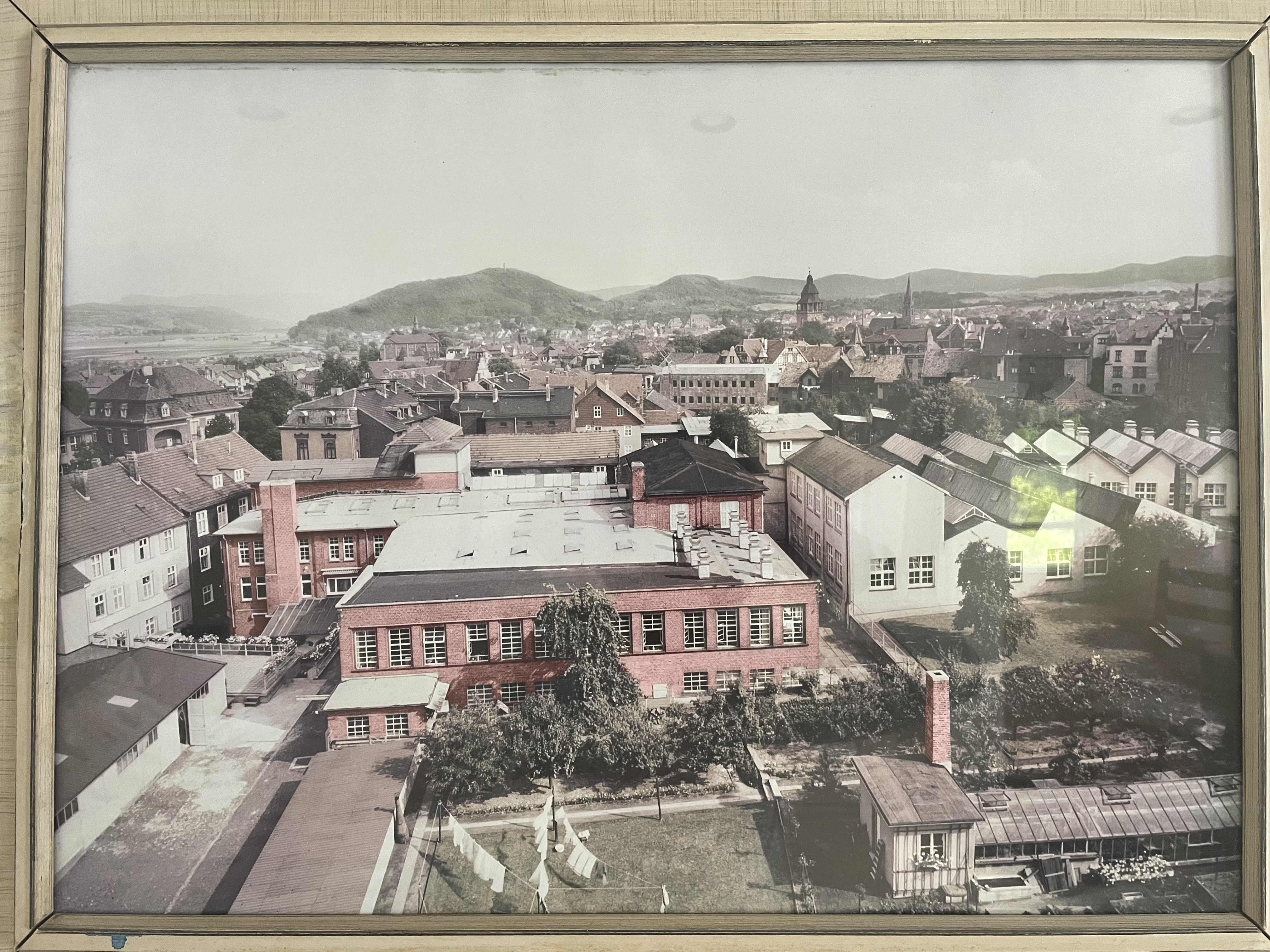
LS Brinkmann factory grounds Courtesy of the family

Joyce added this memory:

I also remember those holidays as a time of freedom. We played with local children as Judy said and were left largely to our own devices. Judy and some of the older kids would take me along to the local swimming pool or they Iet me trail along and join in with whatever they did. My own age group was a group of dare-devil boys. In the foreground (front left side) [of the photograph] is a grey roof above the dustbins [trash cans] with a drop of about 6 to 7 feet to the rear exit road below. All the boys and I used to play a ‘chicken’ type game jumping off with as much bravado as possible.

By 1958, Moritz Werner’s health had declined, and he and Jenny decided to leave England for a better climate and move to Lugano, Switzerland. He died eight years later in 1966 at the age of 78. This photograph of Moritz was taken at the celebration of the 100th anniversary of LS Brinkmann’s founding in 1965.
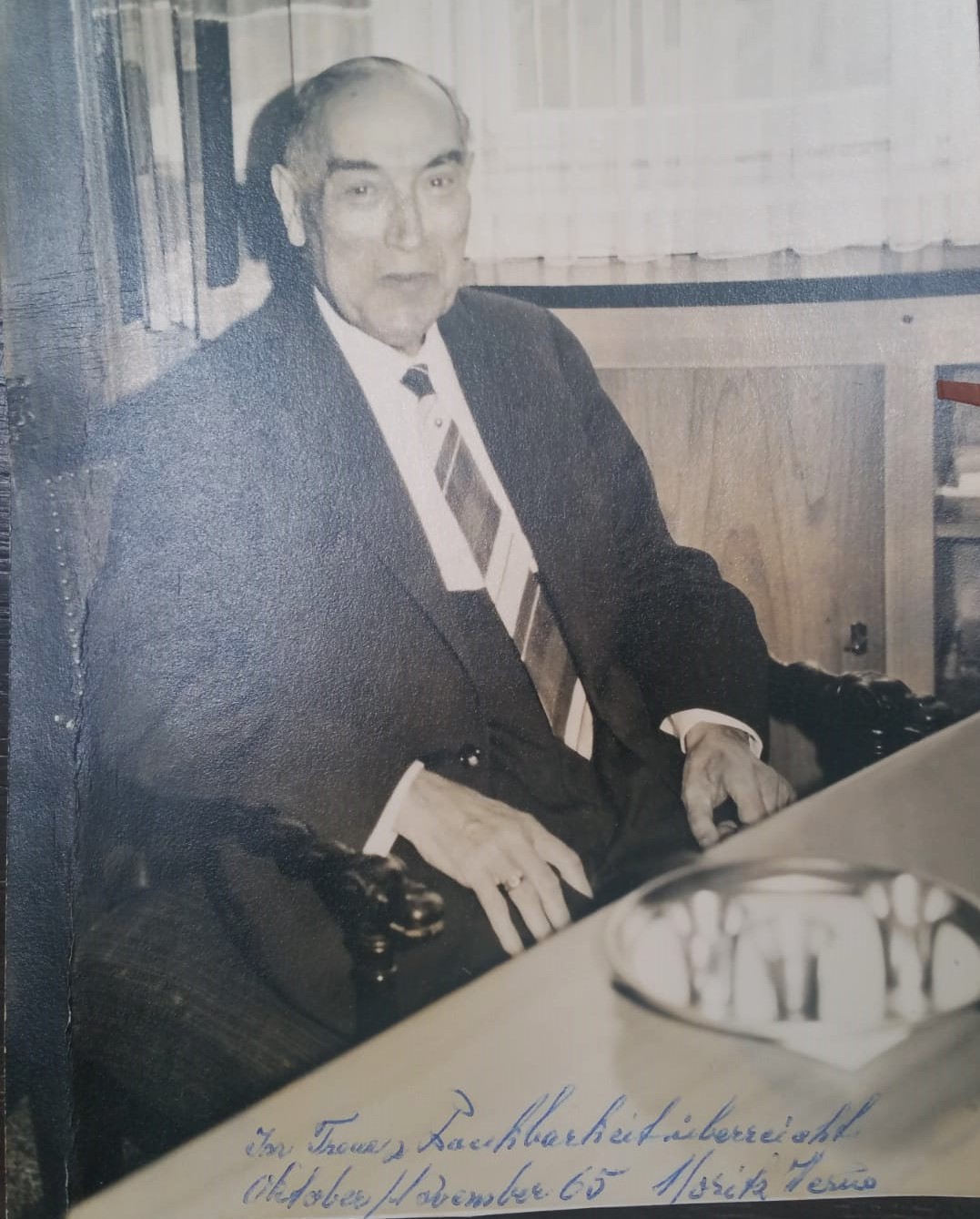
Moritz Werner 1965 Courtesy of the family

Jenny kept the apartment in Lugano and remained there, although she spent the first year after Moritz’s death living with Klara and the girls in London. Eventually, when she could no longer live alone, she moved to an assisted living facility in Zurich, where she died in November 1987 at the age of 93. Here is a beautiful photograph of Jenny:

Jenny Kahn Werner Courtesy of the family

Max Werner eventually retired from LS Brinkmann and returned to England. Judith shared this memory with me:

My father had a fantasy of living in Devon, England on the coast. He had fallen in love with the Devon and Cornwall coastline when he was a very young man. So when he was about 55 [about 1977], he sold [the home in] London and bought a house in Devon. He proceeded to knock most of it down and rebuilt it to his own specifications. This home was on the top of the hill that he owned overlooking the channel. On this hill he had an area for a pool and a rock garden. And when we swam in this pool, you could overlook this beautiful seaway.

Max Werner and his wife Klara died within eight months of each other. Klara died at age 90 in April 2011 in Devon, England, and Max died in December of that year, also in Devon, England. He was 89.4

I am so deeply grateful to Judith and Joyce for sharing their family’s stories and photographs. The story of their grandparents and parents is one of persistence and strength despite being subjected to harassment, theft of their business, and loss of their home and their homeland. Somehow they rebuilt their lives and their business and found ways to survive both before, during, and after World War II.


  1.  Max H Werner, Registration Date: Jan 1947, Registration Quarter: Jan-Feb-Mar, Registration District: Hendon, Inferred County: Middlesex, Spouse: Amalia K Reiss, Volume Number: 5f, Page Number: 529General Register Office; United Kingdom; Volume: 5f; Page: 529, Ancestry.com. England & Wales, Civil Registration Marriage Index, 1916-2005 
  2. As with the two prior posts, most of the information in this post came from a series of emails exchanged among Max and Klara’s daughters Judith, and Joyce and myself during May and June, 2022. 
  3. https://yvng.yadvashem.org/nameDetails.html?language=en&itemId=4788092&ind=1; https://yvng.yadvashem.org/nameDetails.html?language=en&itemId=4783626&ind=1 
  4. These dates came from Max and Klara’s daughters Joyce and Judith. 

Moritz Werner and Family, Part II: From Comfort to Escape 1922-1945

When Max Werner II was born on September 5, 1922, in Eschwege, Germany, to Moritz Werner and Jenny Kahn, his paternal grandparents Max Werner I and Helene Katzenstein had both passed away. His father Moritz was one of the owners of the LS Brinkmann Knitwear Company, and the family was living a very comfortable life.

Max’s daughter Joyce described her father as “an indulged only child from a wealthy local family.” Her sister Judith noted that their father “was an only child, and he was a very solitary child. His main companions were the chauffeur Petach and his dog.”1

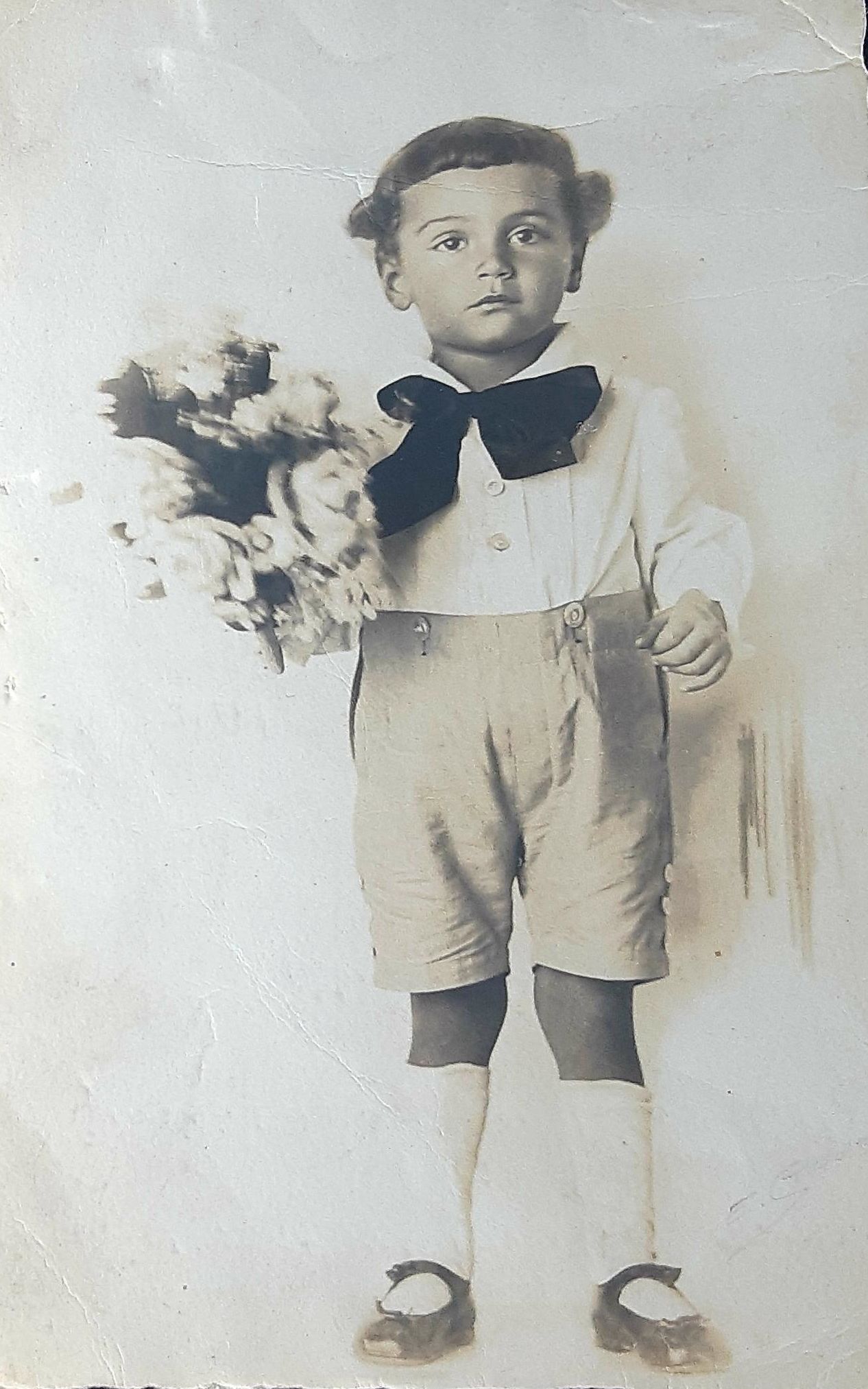
Here are some photos of Max as a child including two with the dog, two in the garden of the family’s home in Eschwege, and one with his nurse or nanny.

Max Werner with nurse Courtesy of the family

Max Werner Courtesy of the family

Max Werner in the garden of his family home in Eschwege Courtesy of the family

Max Werner in the garden of his family home in Eschwege Courtesy of the family

Max and his dog Courtesy of the family

Max Werner c. 1934

But everything changed with the rise of the Nazis. Joyce and Judith both shared what they knew about the way life changed for their father and grandparents. Judith wrote, “Things became more and more difficult at school for my father, but he never complained to his parents. Except one day the kids from his school surrounded him with knives, and my father was seen fending them off with his leather satchel by friends of my grandparents.”

Joyce shared additional details about that incident:

Our father, a tall, strong pre-teen, was having terrible trouble at school. Not only did he face taunting and attacks from boys in the Hitler Youth, but teachers also joined in the Jew baiting. I recall that he told me on one occasion that another Jewish boy (small and reedy) had been beaten up by some classmates and the child made the mistake of telling the teacher. The teacher got out his strap and announced to the class, ‘Now I will show you how you should beat a Jew.’ Our father in general held his own well and was known to be strong and aggressive, and classmates generally steered clear of him. However, the incident Judy described was a final straw – especially as during the ensuing fray which took place on the school stairwell after class, he picked up the lead troublemaker and hurled him down a few stairs causing a broken nose. At home, he couldn’t hide the marks of the fight, confessed all and was sent that same night to Zurich to his Aunt Rosa [Werner] Wormser [sister of their grandfather Moritz Werner].

Max spent four or five years living away from his parents in Zurich. Although he was generally happy and became very close to his cousin Julius Wormser during those years, Joyce described the deeper impact these experiences had on Max:

The experience was formative for him. Although he had many good memories of his life in Zurich, he was separated from his home, parents, and his former life. I think the main lesson he learned was ‘fight back’. Sadly (in my opinion) he also learned that, in reality, ‘might is right’. I believe it was this which affected his personality. Used to getting his own way as an adored (and unexpected) child, seeing the brutality of life in Germany and the fact that bullies get what they want and the weak suffer, he made a decision there and then. It shaped him as a person who was determined and uncompromising. He was logical and intelligent, but when he was crossed or disagreed with someone, he could be very aggressive – both verbally and physically.

Meanwhile, Max’s parents Moritz and Jenny were still in Eschwege, Germany. Judith wrote that:

My grandfather was generous with everybody and was always ready to help those in need whether Jewish or not. He and my grandmother for many years helped to support and educate a young boy whose father had died and whose mother needed assistance. In the 1930s, my grandfather … was helping members of the family and others leave Germany but he himself did not believe that Nazism would survive in Germany. My grandmother, on the other hand, was ready in 1933 and packed. But they did put a lot of money into antiques and Old Master pictures. They were aware that they were not allowed to take much money but were allowed to take personal possessions.

Joyce also described the way their grandparents differed in their reactions to the rise of Hitler:

Our grandmother Jenny was alert to the danger Hitler posed from the very start. She believed his rhetoric and said that if he came to power, he would enact every threat against the Jews he had scapegoated for Germany’s ills. Our grandfather Moritz, like so many, believed such things would never happen in the ‘fatherland’ for which he had fought at great personal cost and for which his brother had given his life.  Consequently, she quietly prepared for emigration by investing in ‘movable assets’ e.g. art and antiques.

Here’s a photo of their grandmother, Jenny:

Under Hitler’s Aryanization program, Moritz was forced to sell LS Brinkmann in 1938, as I wrote about here. According to Judith, shortly before World War II started in September 1939,

The Bishop of the area came to my grandpa and told him it was time for him to leave. That it was too dangerous for him to stay. … So after that my grandfather went to the area comandante in Kassel in order to get a pass to exit the country. This person happened to be somebody who had served in the first World War under my grandfather in the cavalry. So this gentleman gave my grandfather a bit of a problem, and my grandfather, who had the use of a stick, banged it on the man’s desk and gave him a thorough dressing down. He got his pass. Then my grandparents took the chauffeur driven car up to either Hamburg or Bremen and took a ship to England.

Max soon thereafter joined his parents in England and attended school and then Leeds University, where he studied engineering. Moritz and Jenny were able to sell some of the art and antiques they took with them from Germany not only to support themselves, but to invest in a new company in England. Joyce wrote:

My grandfather – with extraordinary energy and determination in my opinion – found a couple of partners and started a new company ‘Benlows’ selling cigarette lighters. It became so successful that after the war it became a public company floated on the Stock Exchange.

Thus, Moritz, Jenny, and Max were able to escape from Nazi Germany and survive the Holocaust. But not without enduring a forced sale of their successful business, harassment and violence, displacement from their home in Eschwege, and a long separation of Max from his parents. As Joyce wrote, this had a lasting impact on Max and presumably also on Moritz and Jenny.

In the next post, Joyce and Judith will share the story of what happened to the family after World War II ended in 1945.


  1. Again as in the last post, the quotes, photos, stories, and information from Joyce and Judith came from a series of emails we all exchanged during May and June, 2022.  I am so grateful for all their help and generosity. 

Moritz Werner and Family Revisited, Part I

I will return to the Blumenfeld saga soon, but first I want to share another chapter in my Goldschmidt family history. In early May I received a comment on my blog from a woman named Joyce who turned out to be my fifth cousin on the Goldschmidt branch of my family tree. Since finding my blog, Joyce and her sister Judith have both been in touch and have been incredibly generous in sharing the stories and many photographs of their branch of the Goldschmidt family tree.1

Joyce and Judith and I are all descended from Jacob Falcke Goldschmidt and Eva Seligmann, our mutual four-times great-grandparents. Joyce and Judith are descended from their son Meyer Goldschmidt, and I am descended from their son Seligmann Goldschmidt. This chart shows our relationship to each other with my line of descent to my father John Cohen on the left and Judith and Joyce’s line of descent to their father Max Werner on the right.

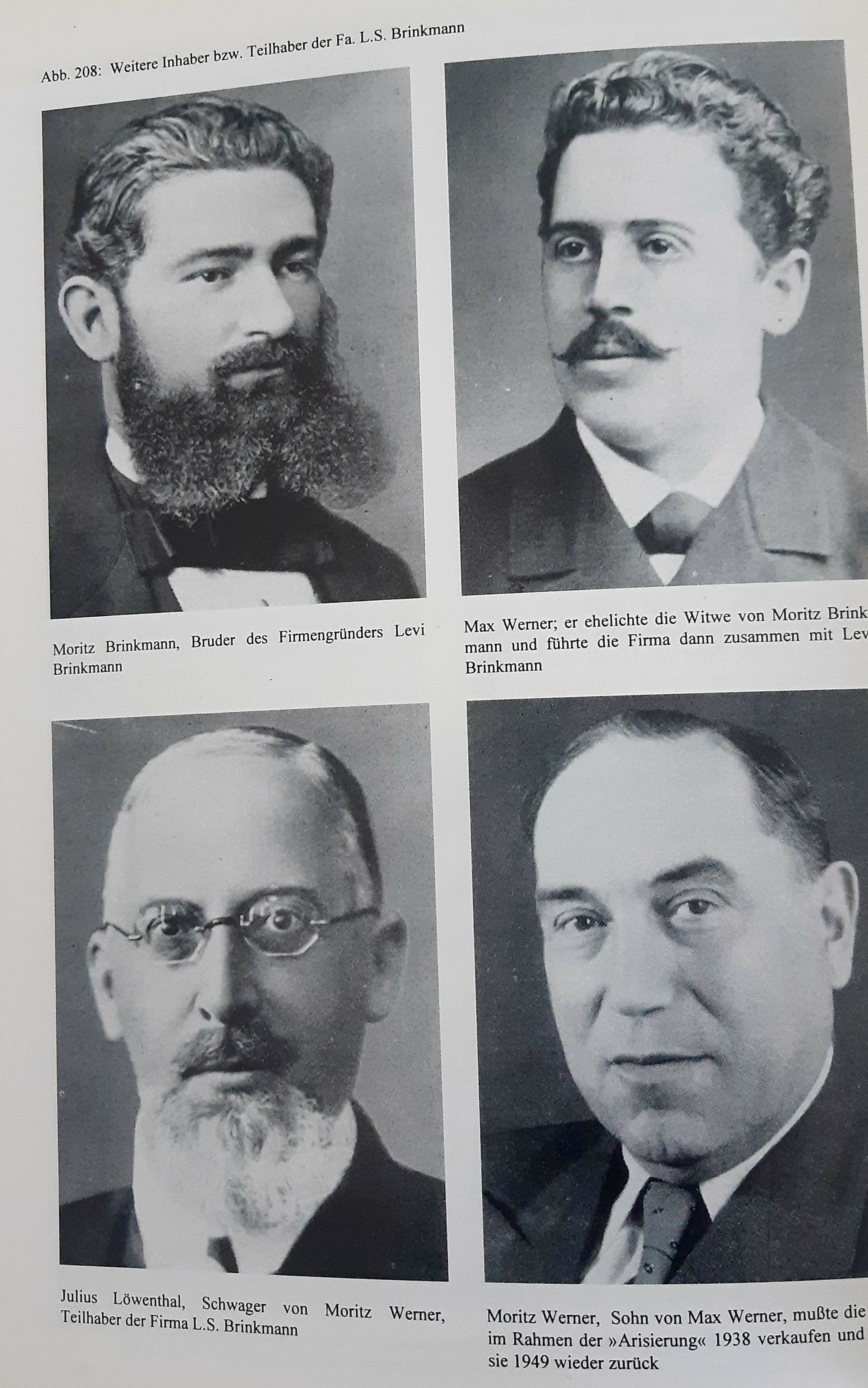
I was particularly pleased to hear from Joyce and Judith because I had, as the title of this post reveals, many unanswered questions about their grandfather Moritz Werner and his family. To recap what I did know, as you can see in greater detail and with citations and images in my earlier posts, Helene Katzenstein, the daughter of Amalie Goldschmidt, had first married Moritz Brinkmann, son of Susskind Brinkmann, who had founded the successful knitwear company LS Brinkmann. Moritz and his brother Levi Brinkmann were also partners in LS Brinkmann. (Levi Brinkmann was married to Lina Stern, daughter of Sarah Goldschmidt, Amalie Goldschmidt’s sister, so Levi and Moritz married two women who were first cousins.)

Joyce and Judith shared these photographs of Susskind Brinkmann, Levi Brinkmann, and Moritz Brinkmann.

Susskind Brinkmann Courtesy of the family

Levi Brinkmann Courtesy of the family

Moritz Brinkmann Courtesy of the family

Sadly, Moritz Brinkmann died just six years after marrying Helene on September 8, 1878, at the age of thirty-two. Three years later on February 7, 1881, Helene married Max Werner, who was also partner in LS Brinkmann.

Helene and Max had five children, and Joyce and Judith’s grandfather Moritz, born in 1888, was their fourth child and first son and was named, according to the family, in honor of Helene’s first husband Moritz Brinkmann. I find that an incredibly generous and loving gesture on the part of Max Werner—to have his own son named in memory of his wife’s first husband. But obviously Max had also worked with Moritz Brinkmann and thus had his own relationship with him.

Mortiz Brinkmann and Max Werner, the two husbands of Helene Katzenstein  Courtesy of the family

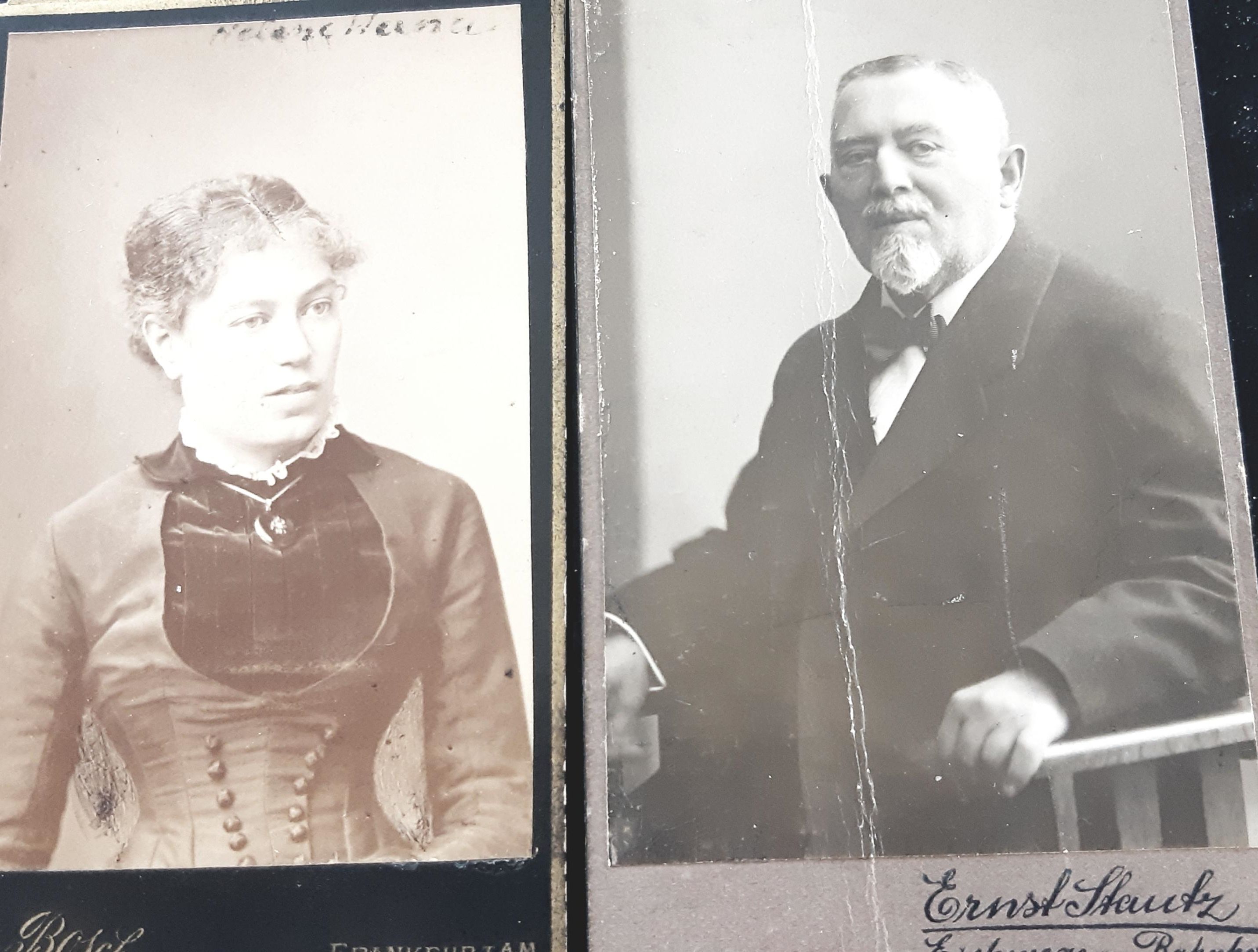
Helene Katzenstein Werner died on December 31, 1912, when she was 58. Here are a few photographs of Max and Helene Katzenstein Brinkmann Werner, courtesy of their great-granddaughters.

Max Werner Courtesy of the family

Helene Katzenstein Werner Courtesy of the family

Max and Helene Werner Courtesy of the family

Max and Helene Werner Courtesy of the family

Max and Helene Werner Courtesy of the family

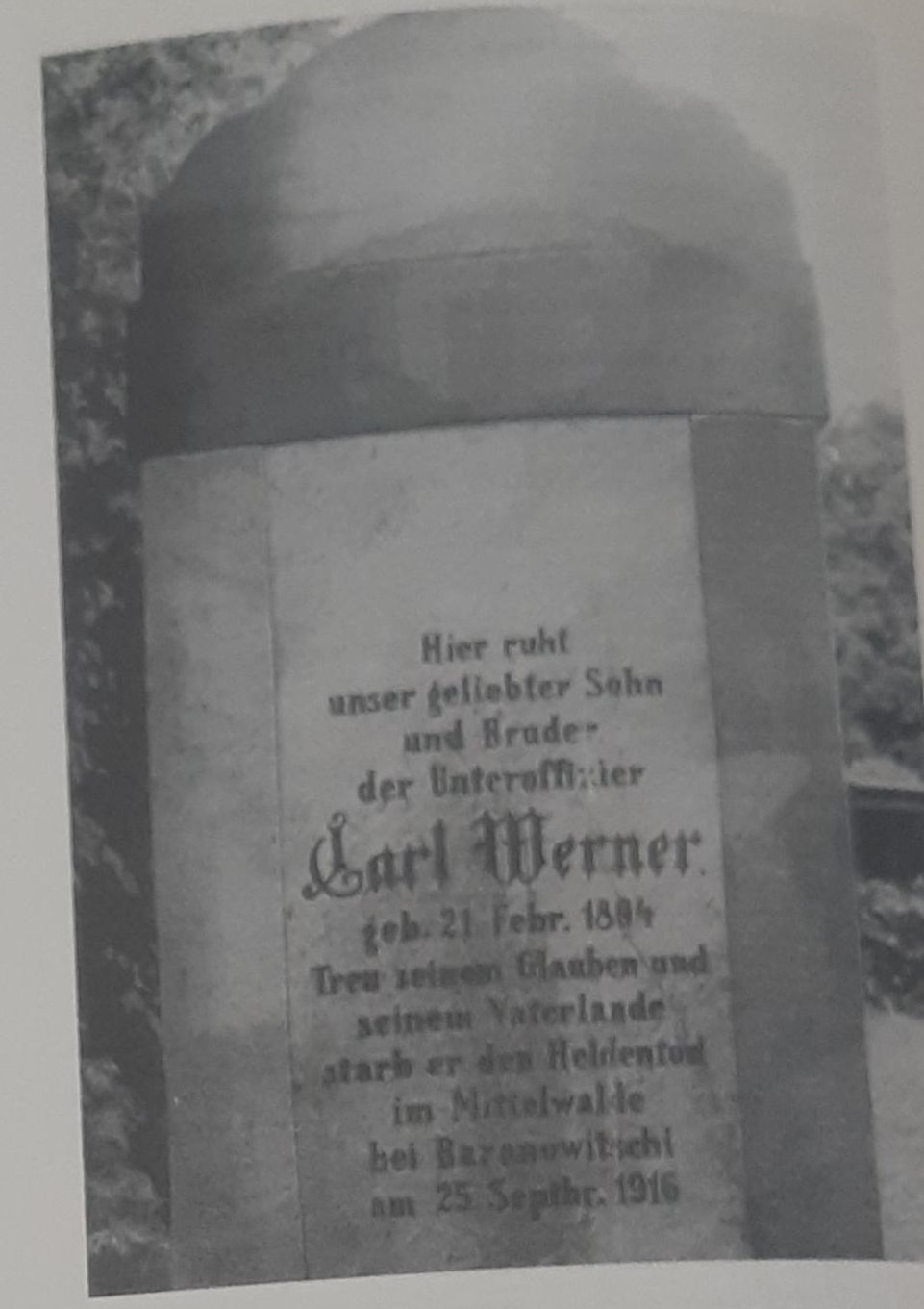
Helene and Max’s youngest child and second son Karl was killed on September 25, 1916, fighting for Germany in World War I, as I wrote about in greater detail here. Joyce and Judith shared this wonderful photograph of Karl in uniform (far right) with his parents Max and Helene and one of his sisters sitting in a carriage.

Karl Werner, far right. Max and Helene Werner in rear seat. Driver and a Werner daughter in front. Courtesy of the family

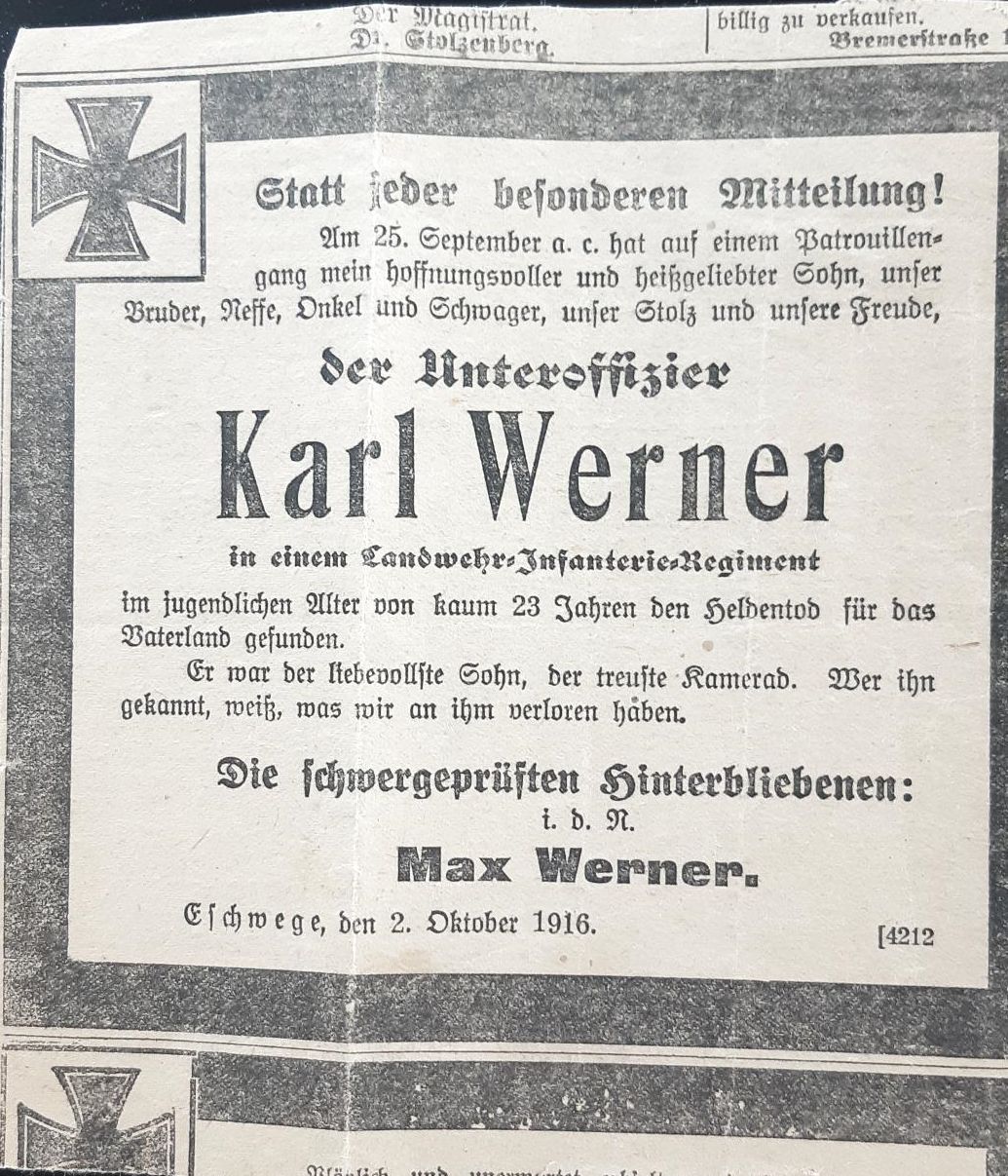
They also sent me these photographs of Karl’s gravestone and the memorial notice published in his memory by his parents.

Joyce translated the memorial notice as follows:

On 25th September our hopeful and beloved son, our brother, nephew, uncle and in-law, our pride and joy, went on patrol.

Underofficer

Karl Werner

Of the defence and infantry regiment


At the young age of barely 23 years died a hero’s death for his fatherland.

He was a son full of life, a faithful comrade. Those who knew him know what we have lost.

His sorely tried and bereft

(father)

Max Werner

Reading that conveys so painfully even after 106 years what the family lost and how heartbroken they were by this loss.

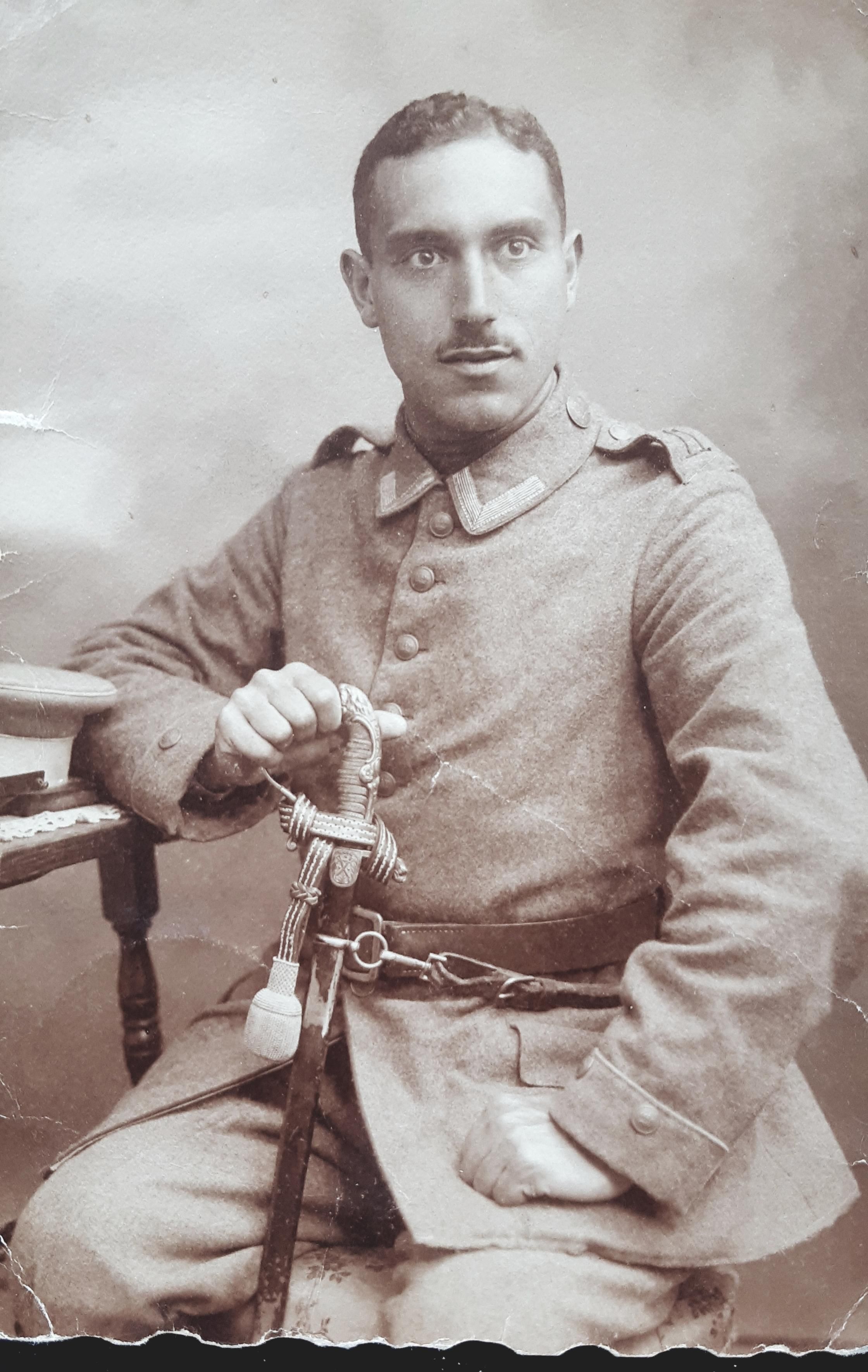
What I did not know before Joyce contacted me was that Max and Helene’s only other son, Moritz, also served in the German army during World War I, and he suffered grievous injuries during his service. Joyce was not certain about how he was injured, but he suffered a crushed hip perhaps from being run over by a tank or the wheels of a gun carriage while serving in France. He was physically impaired for the rest of his life, relying on crutches and later a wheelchair to get around.

Here are some photographs of Moritz before his injury and then afterwards.

Moritz Werner in World War I uniform Courtesy of the family

Moritz Werner in World War I uniform Courtesy of the family

Moritz Werner in World War I uniform Courtesy of the family

Moritz Werner in World War I uniform Courtesy of the family

Moritz Werner after suffering injuries in World War I Courtesy of the family

But before he was sent off to fight for Germany, Moritz had met a young woman named Jenny Kahn and fallen deeply in love. As Moritz’s granddaughters Joyce and Judith tell the story, Jenny’s father Moses Kahn arranged for Jenny to meet eligible men, but warned her not to make any commitments until after the war, fearing that the man she chose would be severely injured during the war. He allowed her to meet Moritz Werner since he came from a respectable Orthodox family and was a friend of Jenny’s brother.

Well, according to Joyce and Judith, Jenny and Moritz fell in love at first sight. She was taken by his good looks and his piercing dark eyes, and when he proposed that very afternoon, she accepted, ignoring her father’s request that she hold off making any commitments until after the war.

And then Moritz went off to war, and as Moses Kahn had feared, suffered a devastating injury. He wrote to Jenny from the field hospital, releasing her from their engagement and telling her to keep the ring and find someone else. According to Joyce, Jenny’s response was something like, “The engagement is off when I say it’s off!”

And so they were married on August 19, 1918. Joyce and Judith shared a photograph of their wedding. You can see that Moritz has a cane in his hands. According to his granddaughters, he had to be carried to the chuppah.

Wedding of Moritz Werner and Jenny Kahn 1918 Courtesy of the family

Four years later on September 5, 1922, Jenny gave birth to their only child, Max Werner, named for his grandfather Max Werner, who had died on October 2, 1919, a year after his son’s wedding. Here is a photo of Jenny, one of Max, and one of the entire family.

Jenny Kahn Werner Courtesy of the family

Max Werner c. 1926  Courtesy of the family

Moritz, Jenny, and Max Werner c. 1928

Of course, the world would change for this family like so many in the 1930s. I wrote a bit about that in my earlier post, but there were many questions I could not answer that Joyce and Judith have now answered. More on that and more photos in my next post.


  1. All references to the stories shared by Joyce and Judith came in several emails exchanged during May and June 2022.