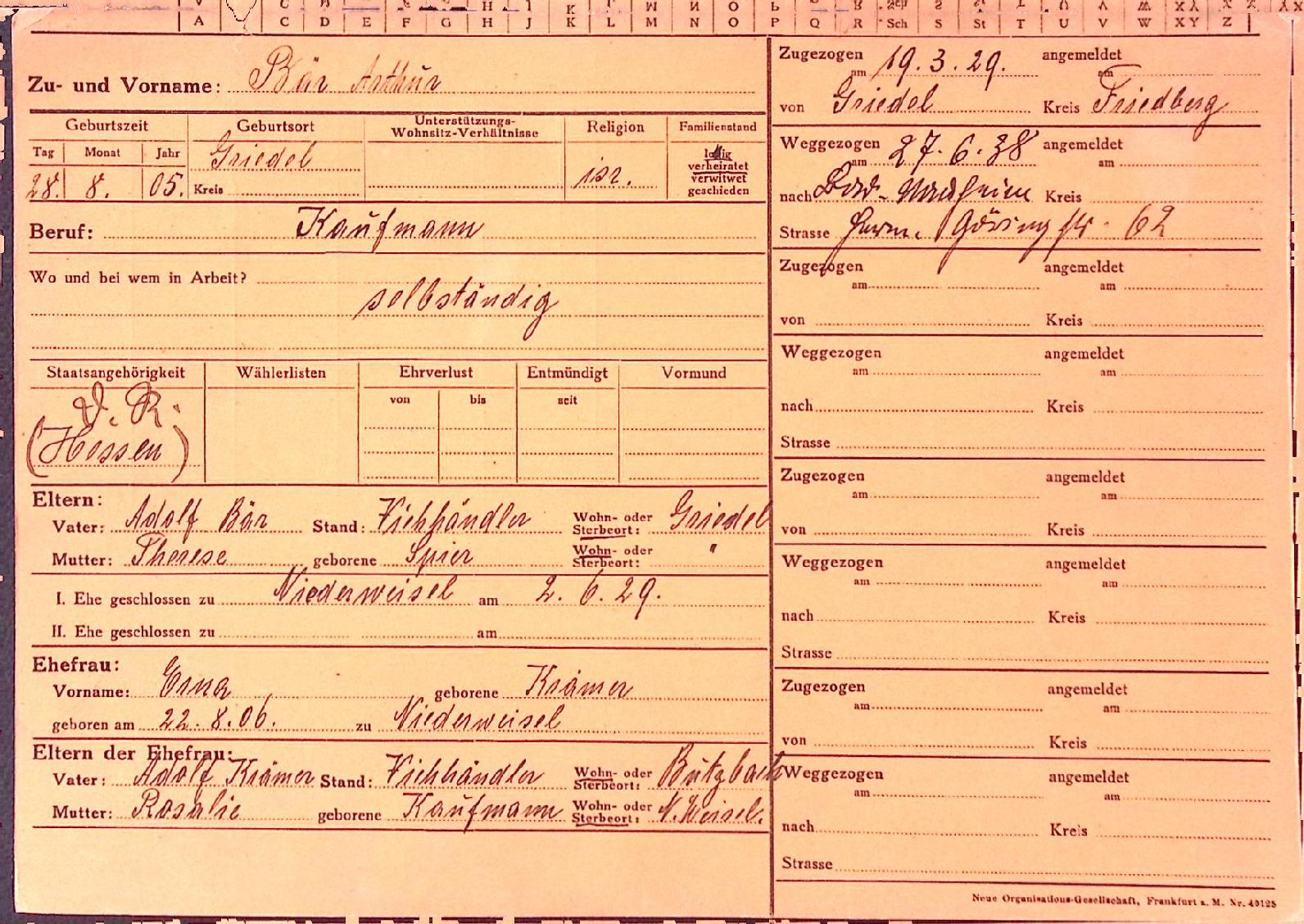
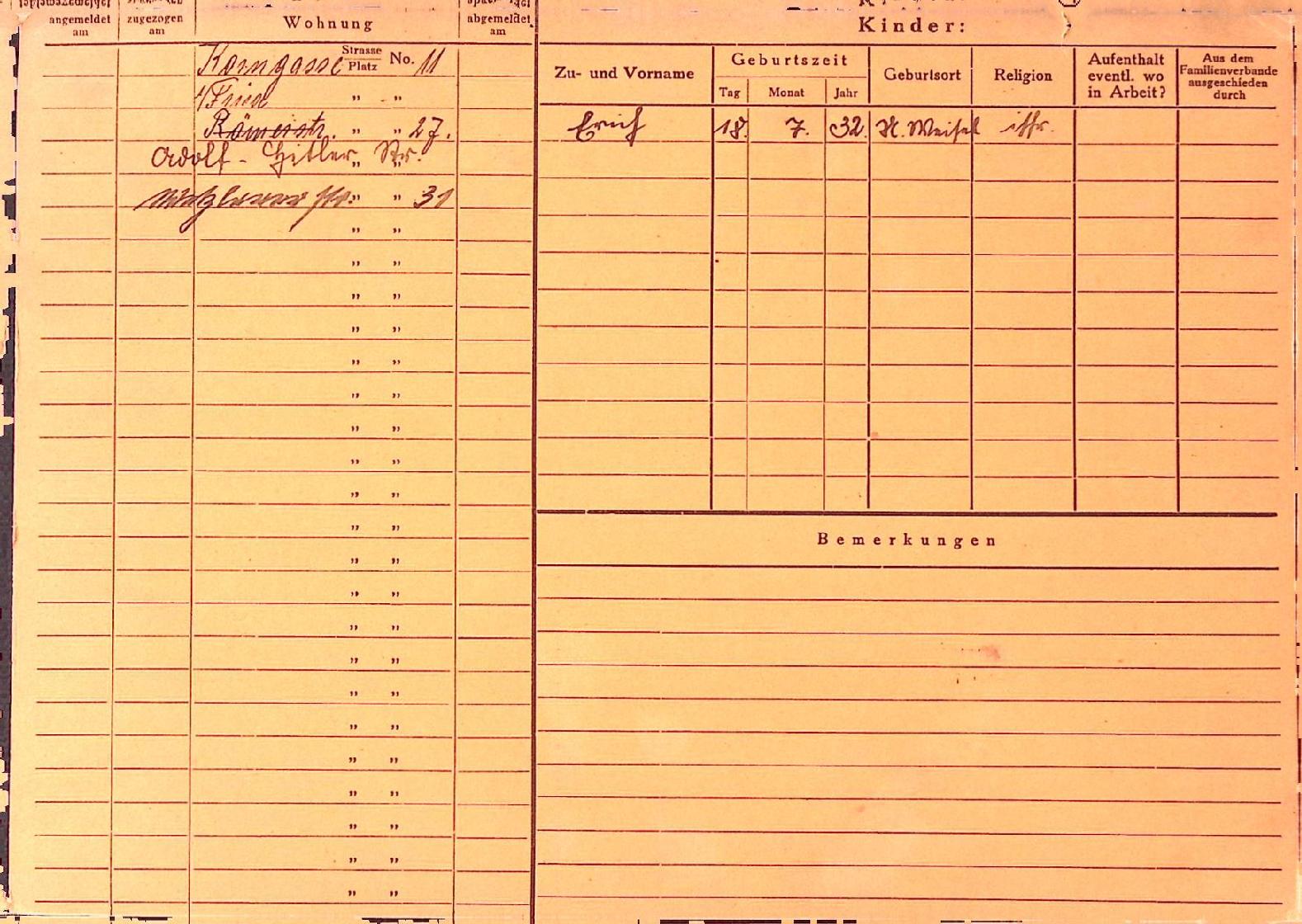
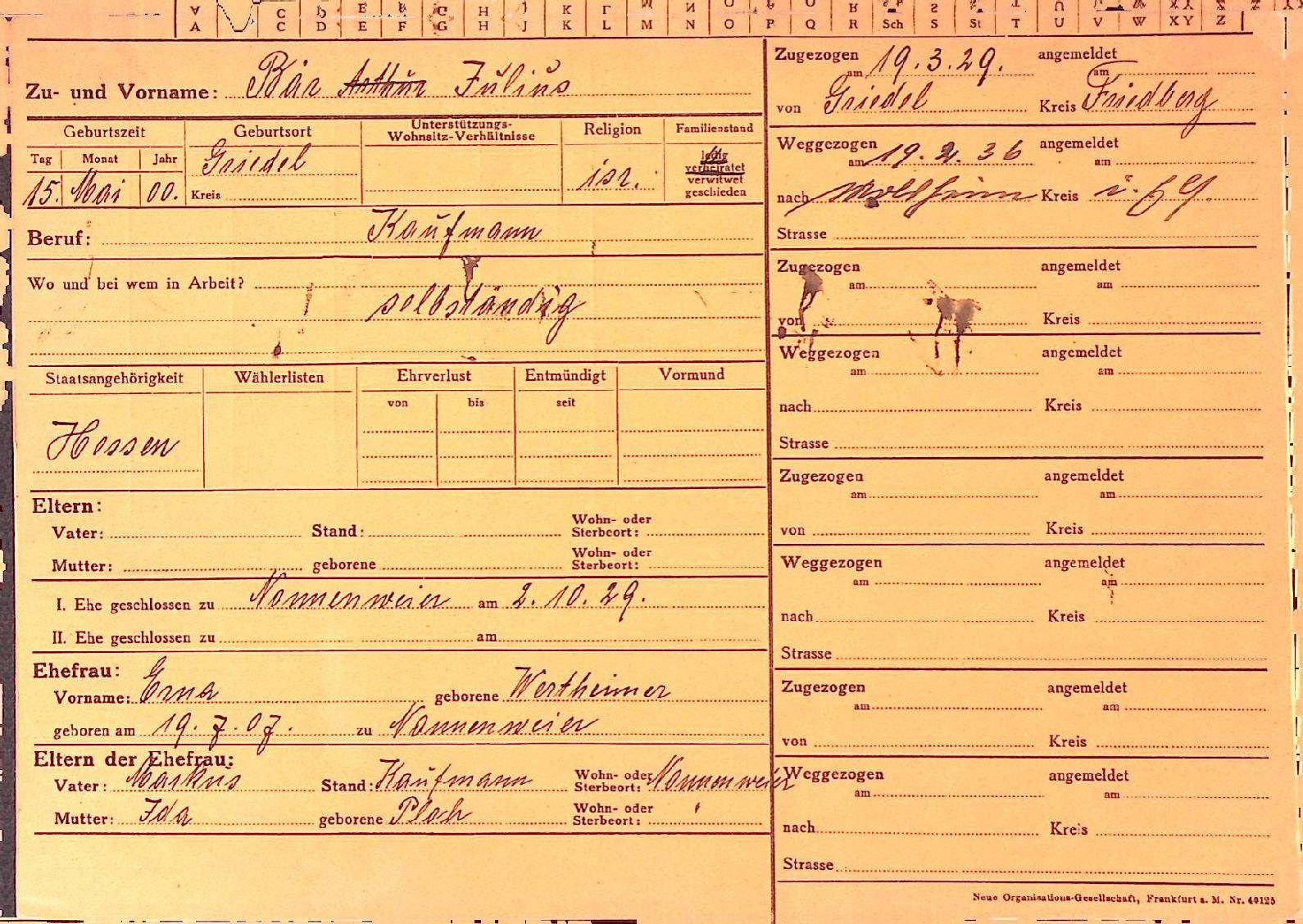
The “Case” Against Julius Baer: A Page out of Kafka’s The Trial

It’s been several weeks since I last posted about my Baer cousins, the children of Therese Spier and Eisenmann Adolf Baer and great-great-grandchildren of Sprintz Blumenfeld, the sister of my three-times great-grandmother, Breine Blumenfeld. I had an incredible couple of weeks with my own children and grandchildren and a chance to re-energize myself for more genealogy research. Discussing my latest novel, The Women Before Us, with my daughter has made me realize once again how important it is to preserve the stories and memories of our ancestors.

And so now I will return to the story of Julius Baer, the youngest child of Therese Spier Baer, and his experiences during the Nazi era.


In my last post I confessed that I had gotten myself into a deep hole by confusing my cousins Julius and Arthur Baer with two unrelated men with the same names and concluding that both of my cousins had been arrested after Kristallnacht in 1938 and sent to Buchenwald concentration camp. But thanks to Bryan Knobloch, who shared with me pages from Hanno Muller’s book Familienbuch Butzbach Band V: Judenfamilien in Butzbach und seinen Stadtteilen (Family Book Butzbach Volume 5: Jewish Families in Butzbach and its Districts), I discovered that mistake and learned that my Julius Baer was not even in Germany in 1938.

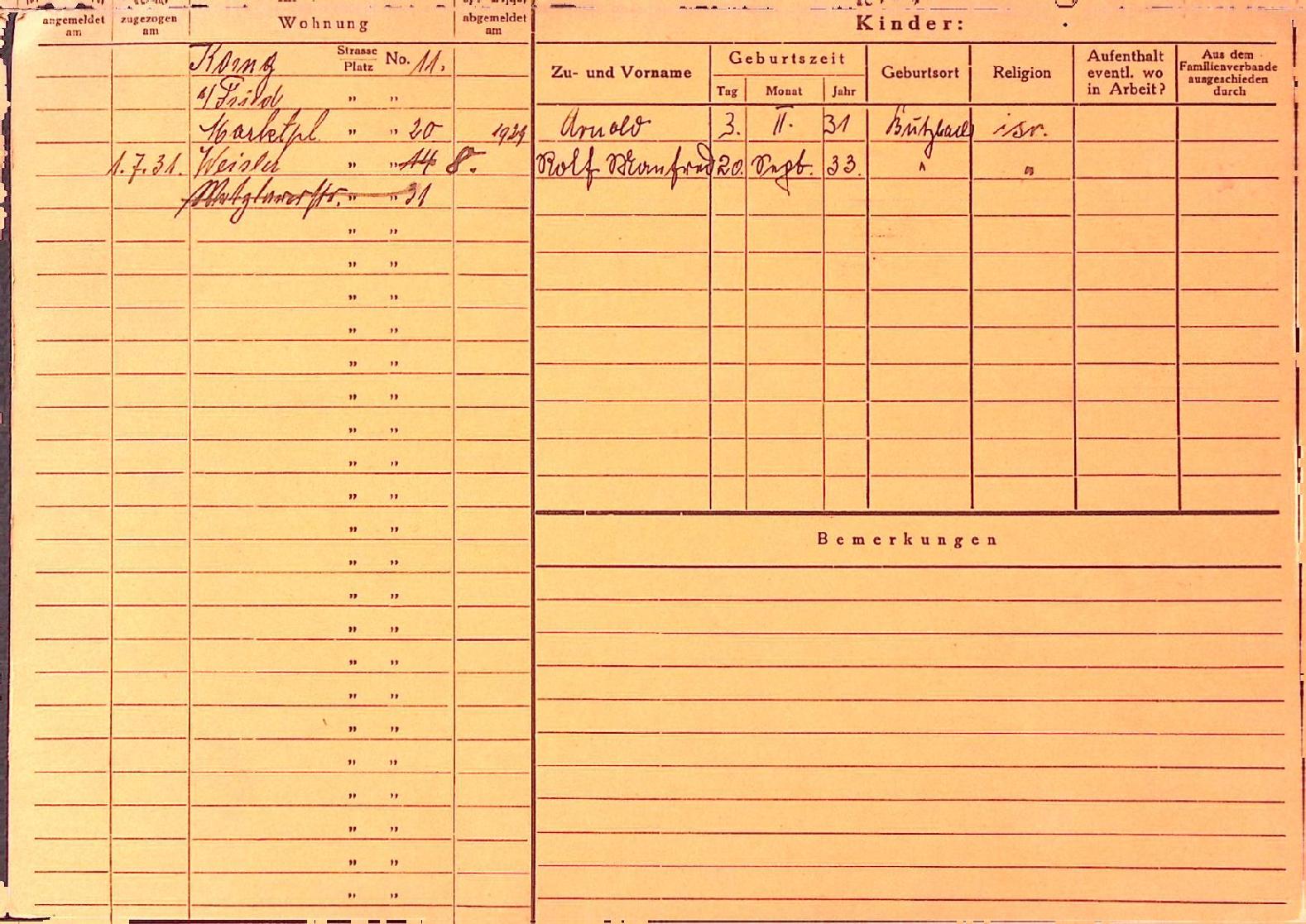
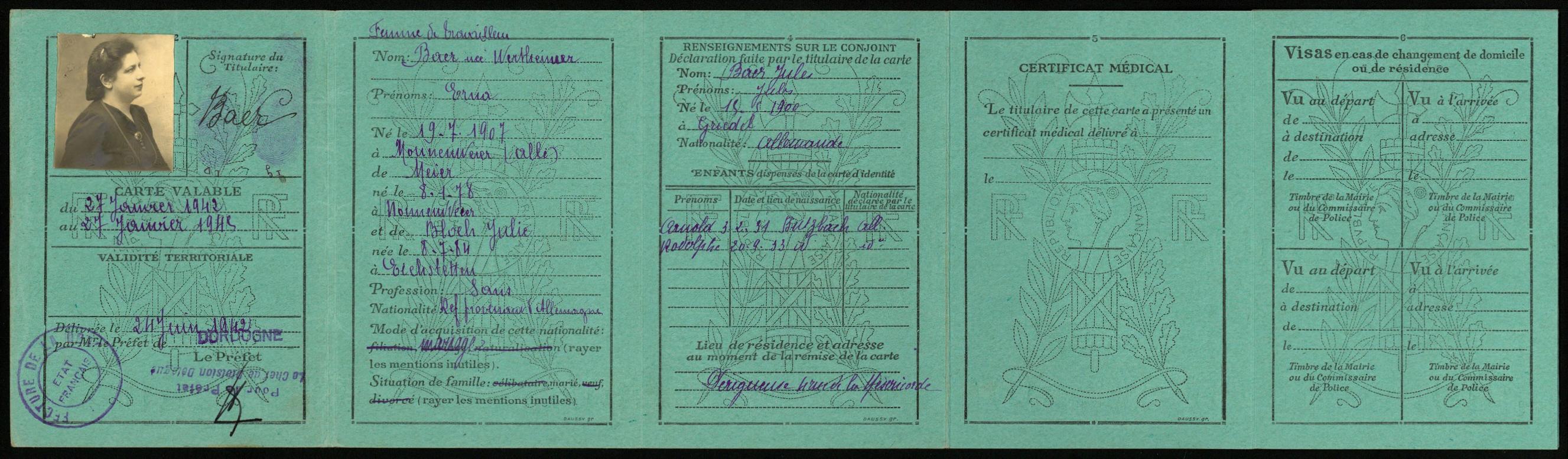
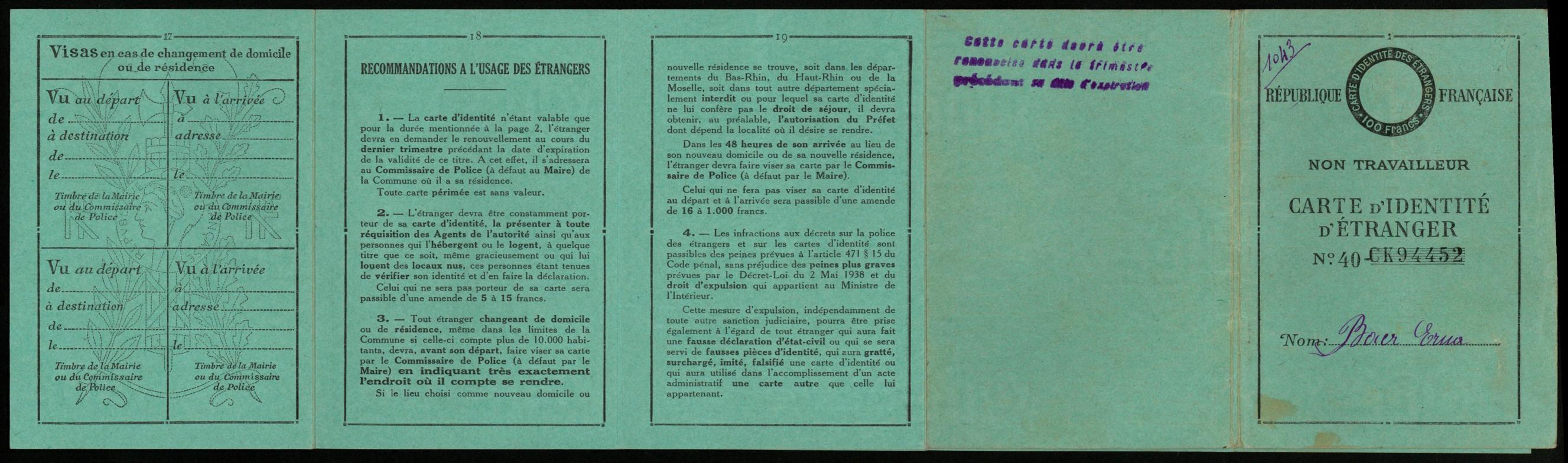
Muller’s note on Julius Baer indicated that he had owned a ready-made clothing store in Butzbach, Germany, and that he was “said to have been a communist and was brought to the Osthofen concentration camp near Worms in February 1933 together with Josef Oppenheimer.”  The note further reported that Julius and his family had left Germany for France in 1936, then fled to Switzerland in 1942, returning to France after World War II ended.

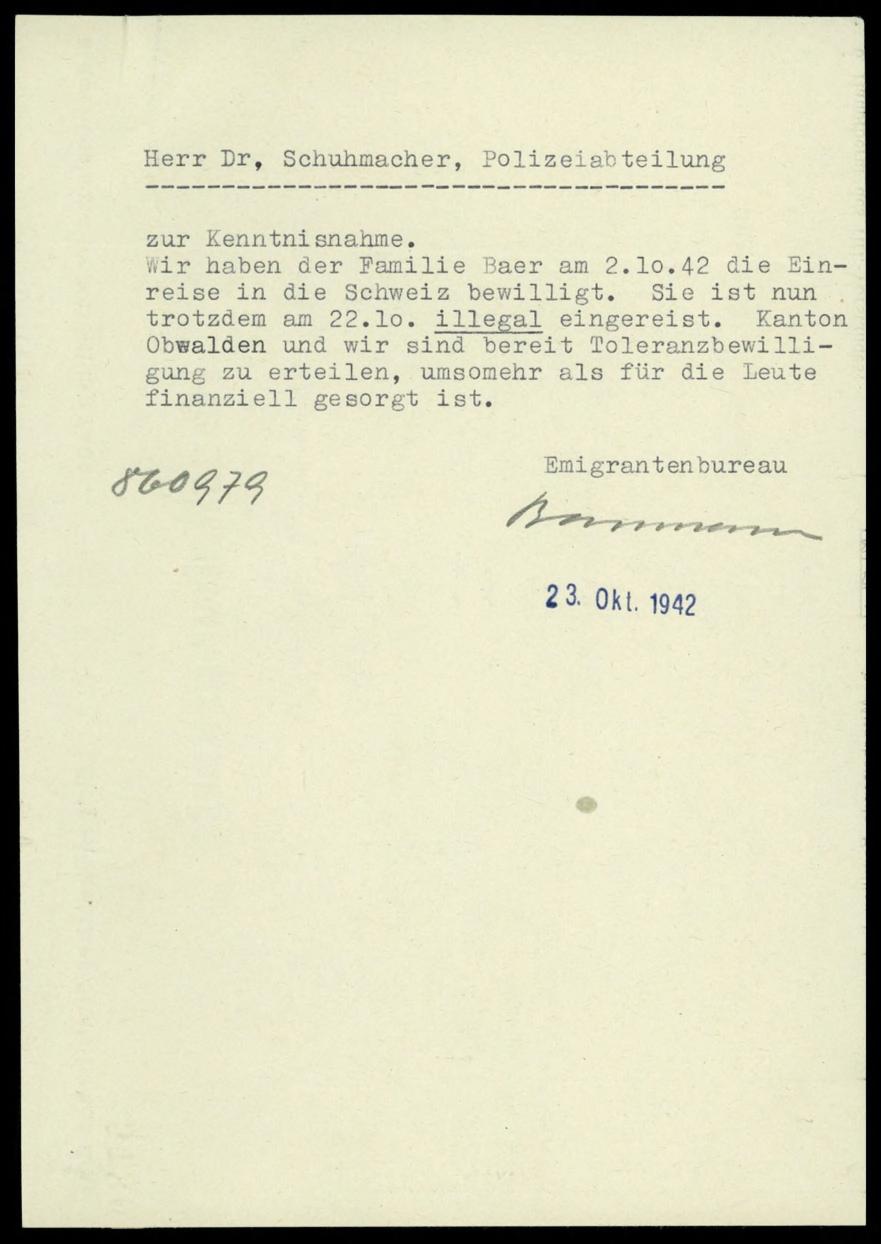
Having made one mistake, I wanted to be sure I was more careful before relying on Muller’s report, and so I wrote to the Hesse Archives in Darmstadt for documentation of Julius’ arrest and imprisonment in Osthofen and to Switzerland for documentation of his time there during the war. I also wrote to France for information about Julius’ life in France and asked a cousin in France for further help in that country. I’ve received the documents from Darmstadt and from Switzerland and will now report on some of the German documents.1

The documents from Germany are, of course, in German, so I used claude.ai to translate them. Since most of them were typed, not handwritten, the translations are likely accurate. Rather than post the entire text and images, I will summarize the important points and quote and include the appropriate images of the documents where appropriate.

I immediately noticed two errors in the Muller note about Julius Baer and his arrest and imprisonment. First, it took place in 1934, not 1933, and second, he was arrested with a man named Julius Ehrlich, not Joseph Oppenheimer, as named in the Muller note. Both Julius Ehrlich and Julius Baer were charged with making disparaging remarks about the SA leader Ernst Roehm on January 5, 1934, in Ehrlich’s shoe store. SA is the abbreviation used to refer to the Sturmabteilung, or Stormtroopers, the Nazi’s paramilitary force.

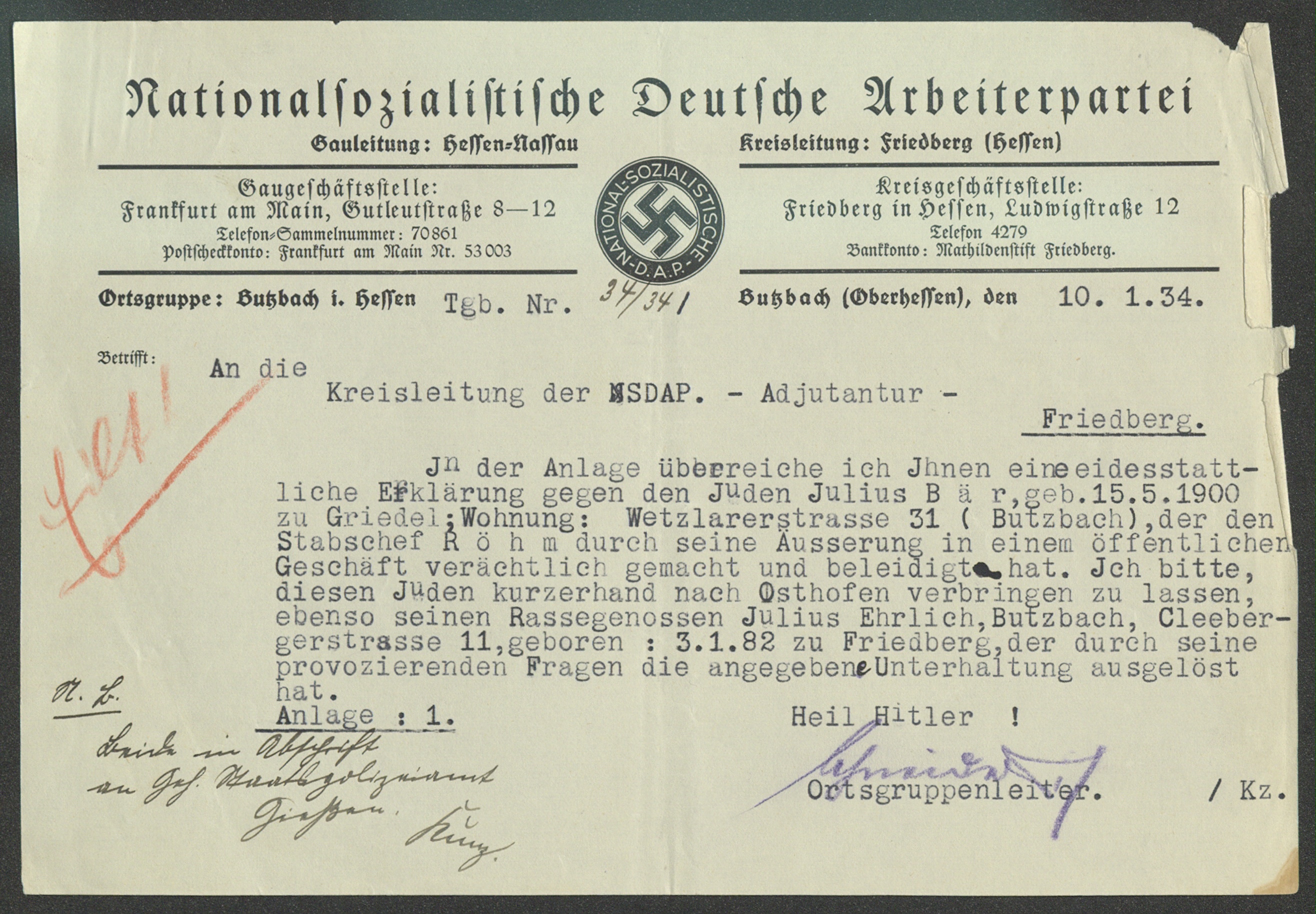
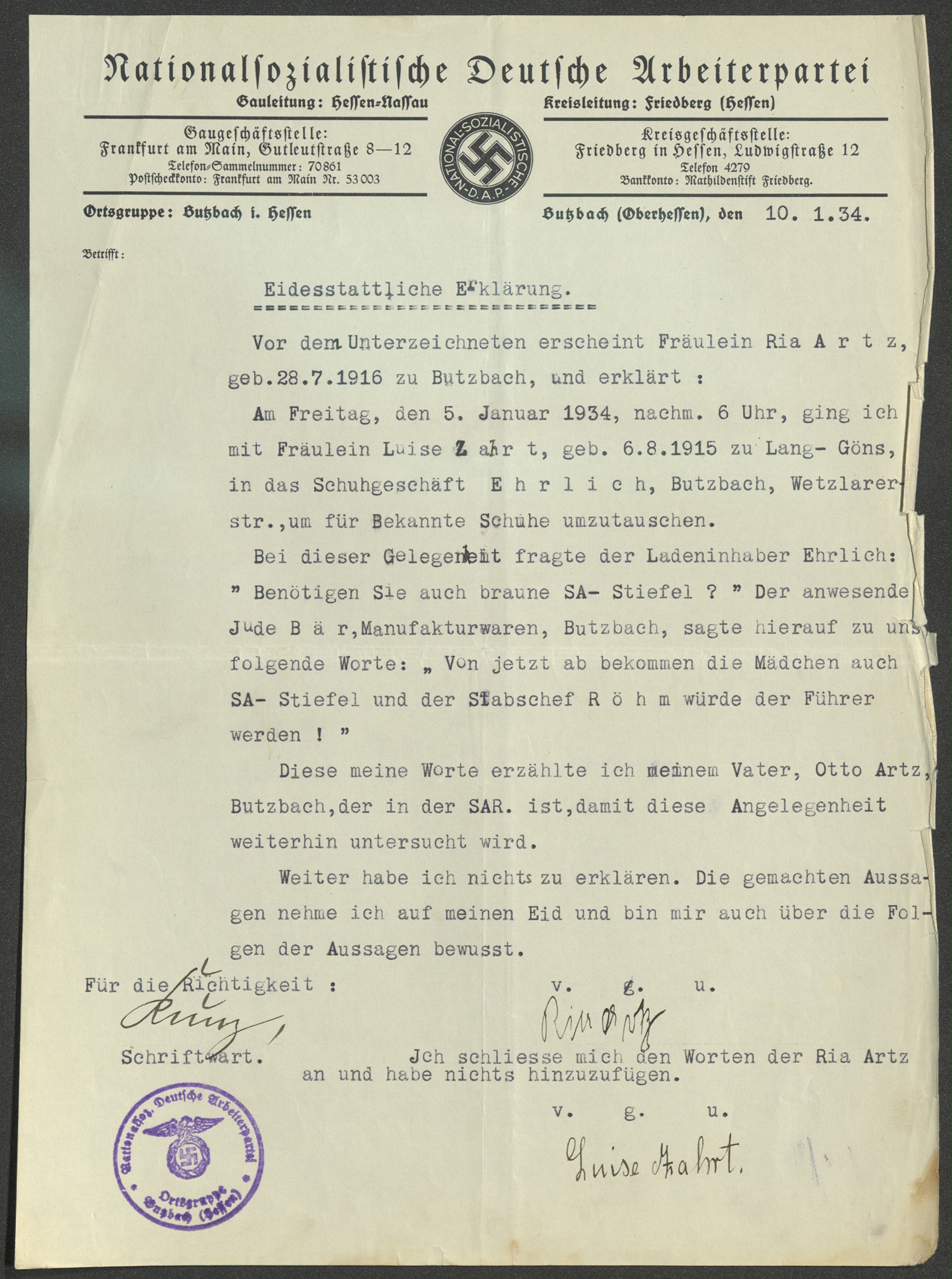
Two women, Luisa Zahrt and Ria Artz, were in the shop at the time and reported Ehrlich and Baer to the local Nazi government, which then issued the following order on January 10, 1934:2

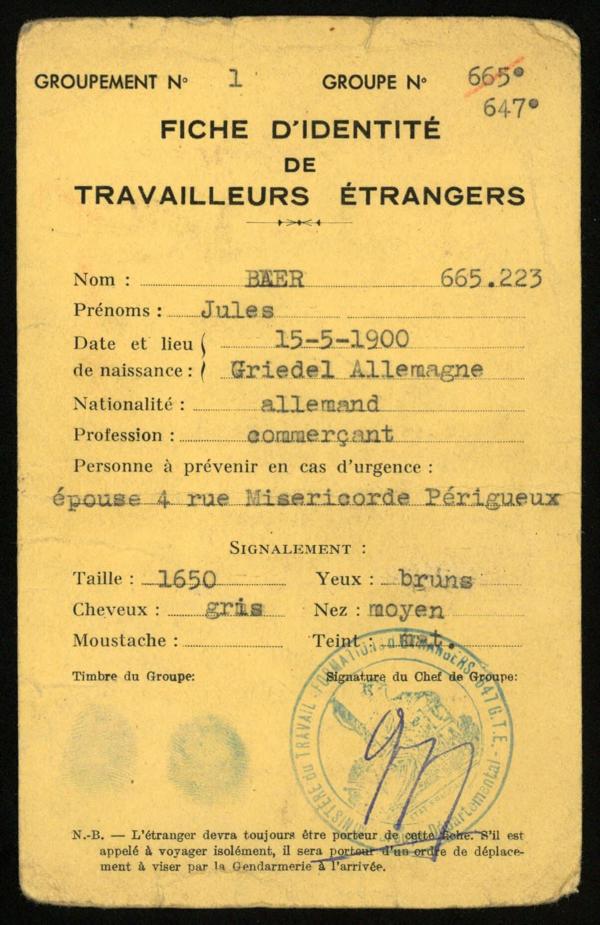
Enclosed I am sending you a sworn statement against the Jew Julius Bär, born 5/15/1900 in Griedel; residence: Wetzlarerstrasse 31 (Butzbach), who disparaged and insulted Chief of Staff Röhm through his remarks in a public shop. I request that this Jew be sent to Osthofen without delay, along with his racial fellow Julius Ehrlich, Butzbach, Cleebergerstrasse 11, born January 3, 1882 in Friedberg, who provoked the conversation in question through his provocative questions.

According to Ria Artz’s sworn statement:3

On Friday, January 5, 1934, after 6 pm, I went with Miss Luise Zahrt, born 8/6/1915 in Lang-Göns, into the Ehrlich shoe shop, Butzbach, Wetzlarerstrasse, to exchange shoes for acquaintances.

On this occasion the shop owner Ehrlich asked: “Do you also need brown SA boots?” The Jew Bär, [of the] textile trade, Butzbach, who was present, then said the following words to us: “From now on the girls will get SA boots too, and Chief of Staff Röhm will become the Führer!”

Hessisches Staatsarchiv Darmstadt, Bestand G 15, Nr. Q 149 (Schutzhaftsache Julius Ehrlich, Butzbach, und Julius Baer, Griedel, 1934), p. 7

(Interestingly, Roehm was perceived as a rival and a threat by Hitler and was killed on Hitler’s orders on July 1, 1934, just six months after these charges were filed.)

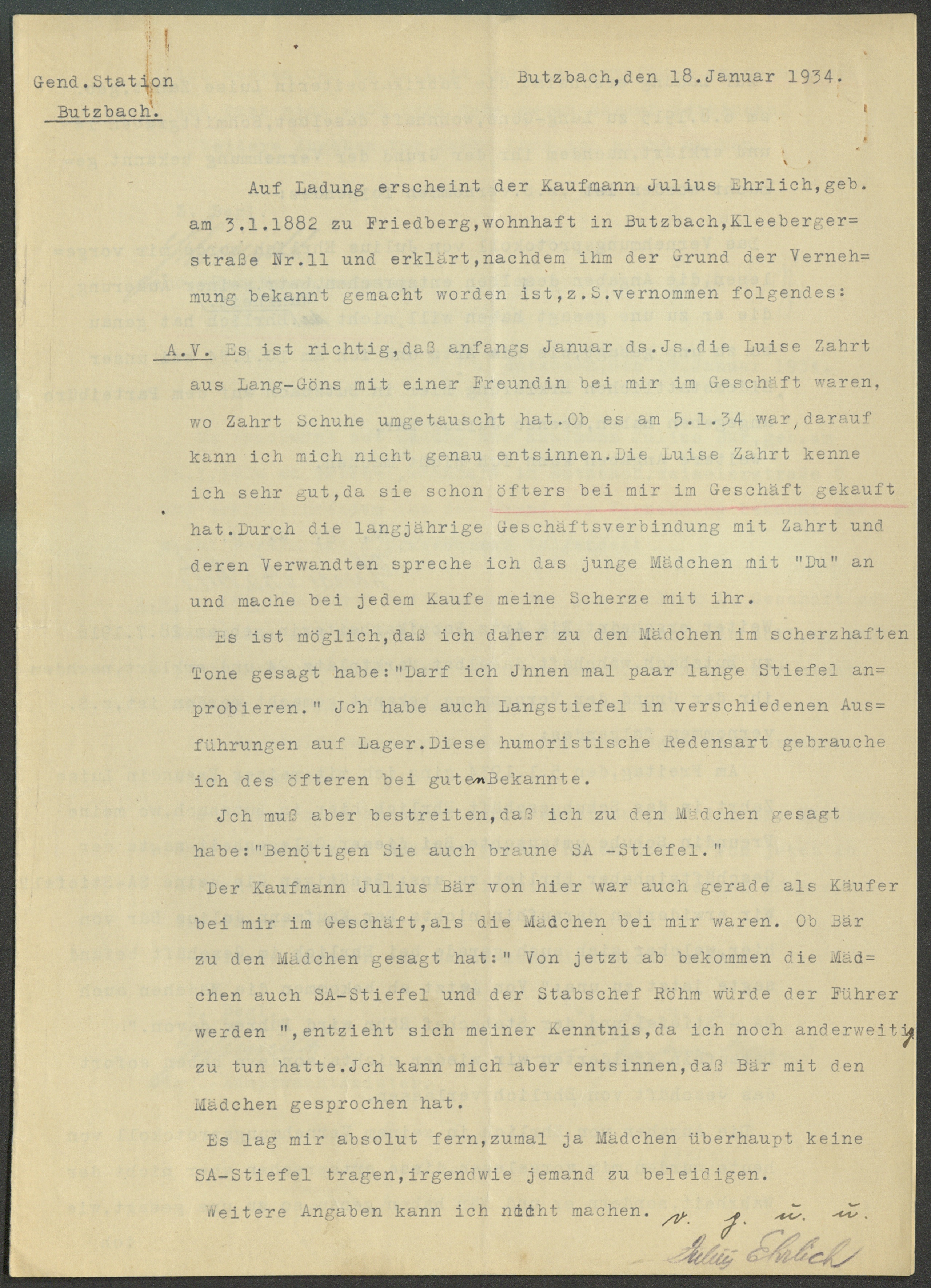
It was those alleged words by Ehrlich and Baer that led to their arrest and interrogation; both denied much of Ria Artz’s story. On January 18, 1934, on being questioned by the police, Julius Ehrlich gave the following sworn statement:4

It is correct that in early January of this year, Luise Zahrt from Lang-Göns was in my shop with a female friend. Zahrt exchanged shoes there. I cannot recall precisely whether it was on 5.1.34. I know Luise Zahrt very well, as she has bought from my shop on several occasions before. Owing to the long-standing business connection with Zahrt and her relatives, I address the young woman informally (“Du”) and make jokes with her whenever she makes a purchase.

It is possible that I therefore said to the girls, jokingly: “May I try some long boots on you?” I also stock long boots in various styles. I use this humorous turn of phrase often with good acquaintances.

However, I must dispute that I said to the girls: “Do you also need brown SA boots?”

The merchant Julius Bär of this town happened also to be in my shop as a customer while the girls were there. Whether Bär said to the girls: “From now on the girls will get SA boots too, and Chief of Staff Röhm will become the Führer,” is not within my knowledge, as I was occupied elsewhere at the time. However, I can recall that Bär did speak with the girls.

It was absolutely far from my intention to insult anyone in any way, especially since girls do not wear SA boots at all.

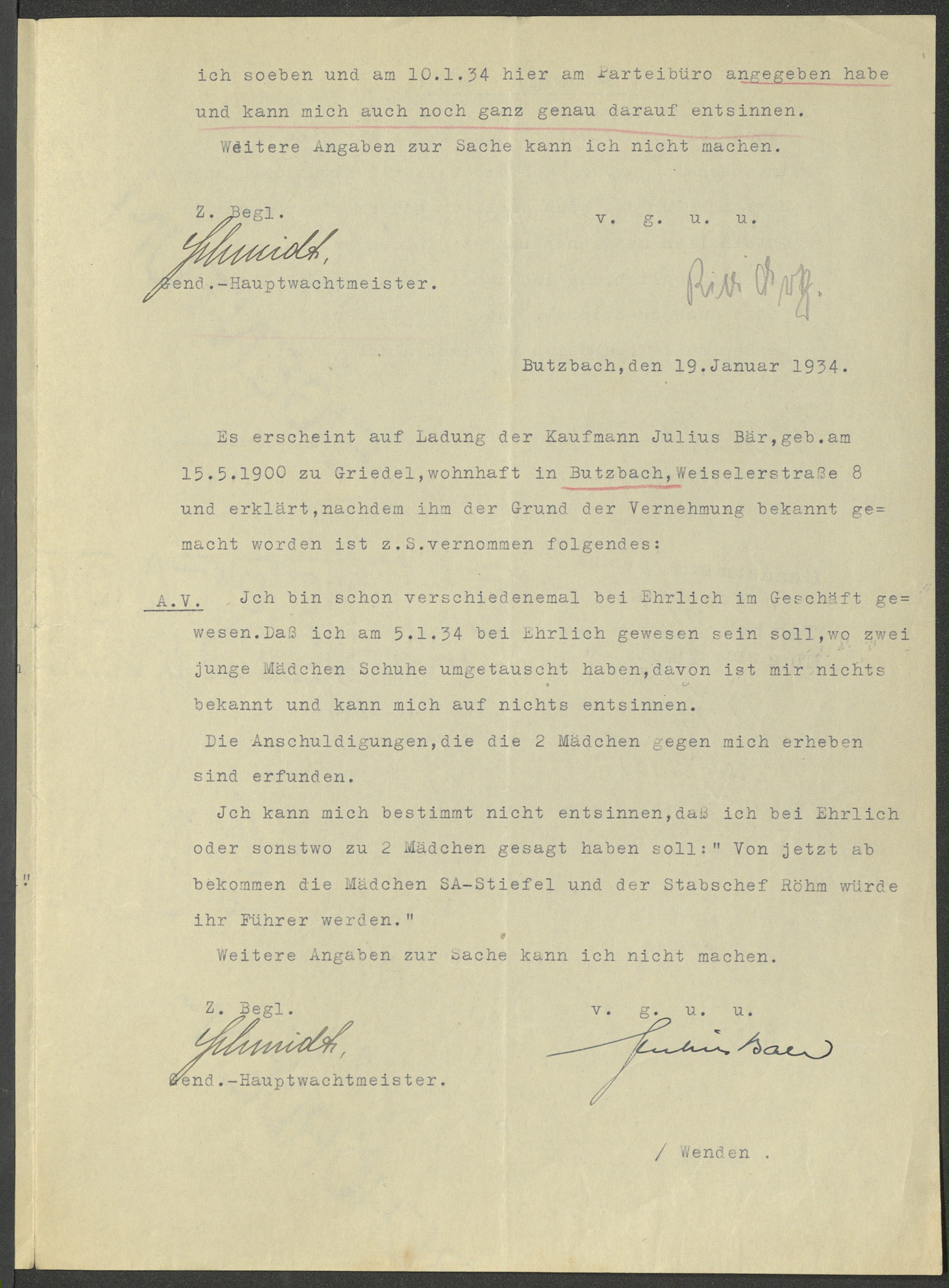
Julius Baer initially gave the following statement on January 19, 1934:5

I have been in Ehrlich’s shop several times before. That I am supposed to have been at Ehrlich’s on 5.1.34, when two young women were exchanging shoes, is not known to me and I cannot recall anything of the sort.

The accusations that the two girls raise against me are invented.

I definitely cannot recall having said to two girls, at Ehrlich’s or anywhere else: “From now on the girls will get SA boots, and Chief of Staff Röhm will become their leader.”

I can give no further information on the matter.

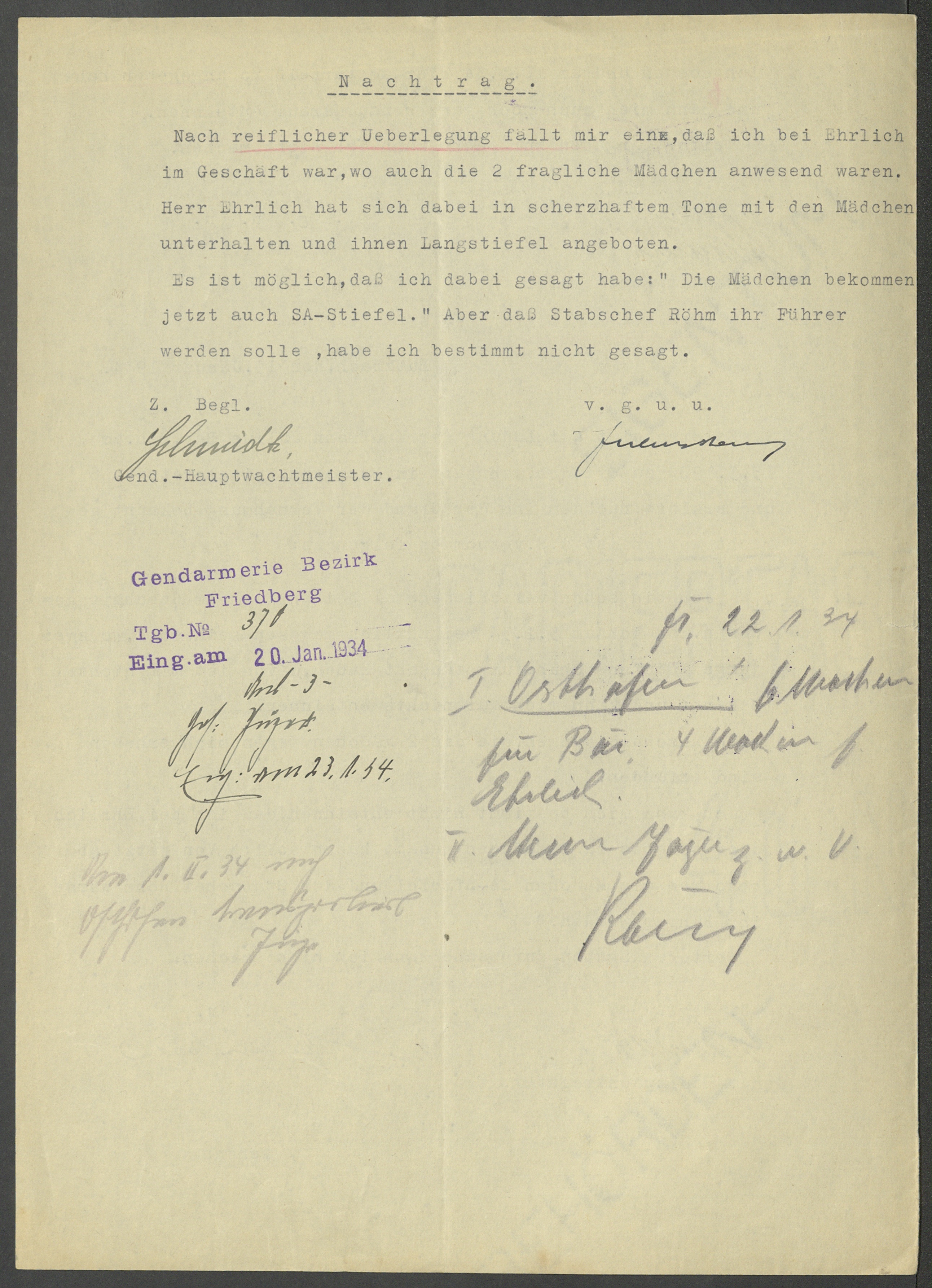
But Julius then amended his statement, saying,6

After careful reflection, it occurs to me that I was in Ehrlich’s shop, where the two girls in question were also present. Mr. Ehrlich, on that occasion, spoke jokingly with the girls and offered them long boots. It is possible that I said, on that occasion: “The girls are getting SA boots now too.” But that Chief of Staff Röhm was to become their leader — that I definitely did not say.

I have to admit that Julius undermined his credibility by his recanting of his initial denial of being in the store, but nevertheless, the question remains, even if Ehrlich and Baer said exactly what the two women claimed, what was the crime? Joking about the SA’s boots? Its leader? Apparently so.

On January 22, 1934, Ehrlich was sentenced to four weeks and Julius Baer to six weeks of “protective custody” in the Osthofen prison camp and were transported there on February 1, 1934.7

Julius Baer’s lawyer petitioned for early release of Julius. He introduced a number of witness statements in support of his client’s release: a letter from a doctor attesting to the poor health of Julius’ mother, Therese Spier Baer, who was suffering from angina pectoris; a statement from the mayor of Griedel attesting to the service of Julius’ father guarding prisoners of war during World War I despite being beyond draft age; a statement from the mayor of Butzbach as to Julius Baer’s good standing in that town; a statement from Julius’ brother Meier listing his service for Germany during World War I, including being wounded at the Battle of Verdun on August 10, 1918; and a statement from the mayor of Griedel about Julius’ own service for Germany during World War I. In exchange for 150 Reichmarks to be donated to the Butzbach Winter Relief Fund, the authorities agreed to release Julius Baer after four weeks in custody on March 1, 1934, the same day that the four-week term of Julius Ehrlich expired.8

So for allegedly making a joke about the SA and its leader, my cousin Julius Baer was sent to a prison camp for a month. Imagine his own fear, imagine how terrified his wife and child must have been. This is how a fascist government operates; it uses fear and force to intimidate its citizens so that they cannot even make jokes about that government without fear of imprisonment. It turns other citizens into informers who rat out their fellow citizens. It makes all of us suspicious of each other and frightened to speak up against those who are persecuted.

The next post will discuss what happened to Julius Baer and his family after he was released from Osthofen on March 1, 1934.


  1. Hessisches Staatsarchiv Darmstadt, Bestand G 15, Nr. Q 149 (Schutzhaftsache Julius Ehrlich, Butzbach, und Julius Baer, Griedel, 1934). There are 28 pages of documents in this folder. I will refer to the relevant pages below. 
  2. Hessisches Staatsarchiv Darmstadt, Bestand G 15, Nr. Q 149 (Schutzhaftsache Julius Ehrlich, Butzbach, und Julius Baer, Griedel, 1934), document 3 
  3. Ibid., p. 7 
  4. Ibid., p. 25 
  5. Ibid., p. 27 
  6. Ibid., p. 28 
  7. Ibid., p. 28 
  8. Hessisches Staatsarchiv Darmstadt, Bestand G 15, Nr. Q 149 (Schutzhaftsache Julius Ehrlich, Butzbach, und Julius Baer, Griedel, 1934)(multiple pages in the file) 

When I Assume, I Make An Ass Out of ME!

As we saw in the last post, the four daughters and one of the sons of Therese Spier Baer escaped from Germany before Kristallnacht and ended up in the United States. Klara was in Baltimore as was Paula while Jenny and Selma were living in New York. Their brother Meyer/Manfred settled in Baltimore. Another son, Arthur Baer, escaped with his family to England.

But I realized after publishing my last post that I had made an error in my research about Arthur Baer and that he had never spent time in Buchenwald. I have updated my last post to correct this error, and I’ll write more about Arthur Baer’s actual story in a later post. I only realized I’d made that error when I discovered I’d made a similar error in researching Arthur’s brother Julius. In researching both Julius and Arthur, I made stupid assumptions that led me down a deep rabbit hole that led me nowhere for quite a while.

According to records in the Arolsen Archives, a man named Julius Baer was arrested during June 1938 as part of a mass arrest of Jewish men to force their emigration from Germany. The record revealed that he was released from Sachsenhausen concentration camp on July 16, 1938.1 There was no birthdate or birthplace on those records, and I made the fatal novice genealogist error of assuming that this was my Julius Baer. That assumption was unfortunately reinforced when I saw that that a Julius Baer also was sent to Buchenwald and released on the same day as an Arthur Baer.2 I assumed—incorrectly—that the two brothers had been released together after some pressure from their relatives. After all, their names were listed one after the other on one of  the Arolsen documents (along with many other names).

But then I hit a dead end on Julius. I knew only that at some point my Julius Baer ended up in France because he died there in 1981.3 But I didn’t know when or how he got to France or anything about his life there during or after World War II.

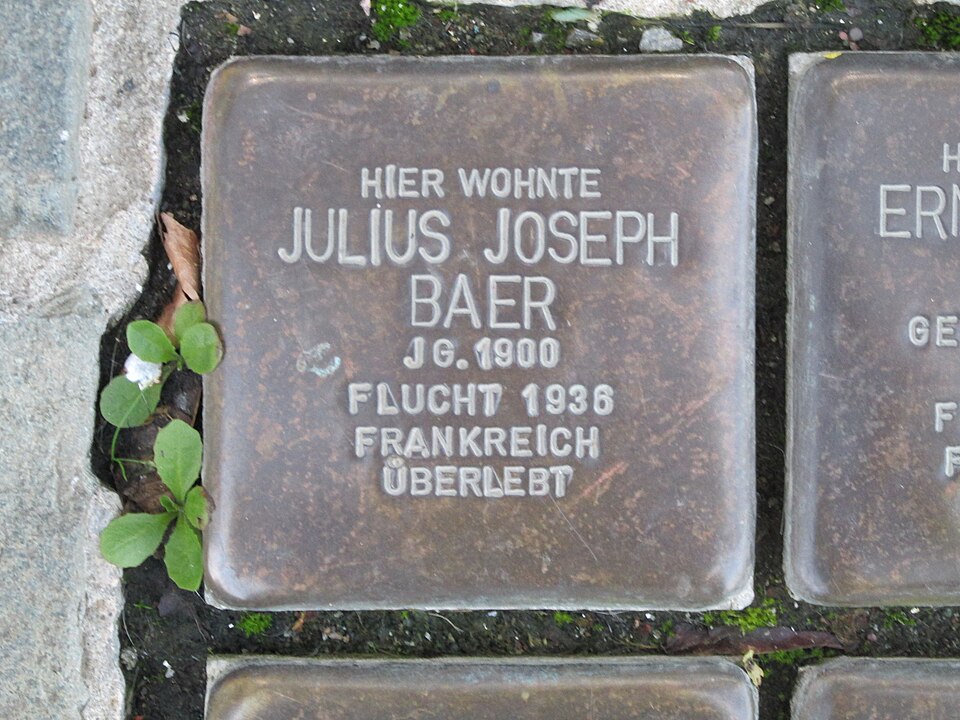
When I found that there were Stolpersteine laid for Julius and his wife and sons in Butzbach, Germany, that report that the family fled to France in 1936, I was confused. How could Julius have been in France in 1936 if he was arrested in Germany and sent to concentration camps in 1938? I dismissed it as an error on the Stolperstein and shrugged.

Stolperstein in Butzbach, Germany, for Julius Baer, GeorgDerReisende@Vicuna, CC BY-SA 4.0 <https://creativecommons.org/licenses/by-sa/4.0&gt;, via Wikimedia Commons

But it turns out that I was the one who’d made errors. And I learned that when Bryan Knobloch, another genealogist, sent me scans of pages from Hanno Muller’s book about the Jews of Butzbach.4 Bryan had seen my first post about the Baer family and commented on my blog about Muller’s book and its content related to the Baer family. I wrote to him and asked if he would scan the relevant pages, and he graciously did so.

On page 50 there was this entry about Julius a/k/a Jules Baer [as translated by Google]:

  1. Baer, Julius
    171 | 15.05.1900 | 03.11.1929 | France
    He was born in Griedel, was a merchant (in 1927 he founded a ready-made clothing store together with his brother Arthur Bär; see Chap. 9.3.2: 1926) in Butzbach, Marktplatz 20 and Weiselerstraße 14, and was a marriage witness in 1929 for Arthur Bär; V: Adolf Bär in Griedel. He is said to have been a communist and was brought to the Osthofen concentration camp near Worms in February 1933 together with Josef Oppenheimer [105] (WOLF, 1988 p. 45). His textile business had to close in 1934 as a result of the boycott of Jewish businesses (WOLF, 1988 p. 47). The wife was born in Nonnenweier in Baden, and the marriage took place there too. The family moved to Molsheim in Alsace on February 19, 1936 (HELLRIEGEL, 1968 p. 45). From there they fled to Southern France in 1940 and in early October 1942 to Switzerland (WOLF, 1988 p. 51). After the end of the war, they returned to Molsheim in Alsace, where both died in 1981 (according to Arnold BAER: Mein Vater Julius Baer, Jerusalem 2005, in: Stadtarchiv Butzbach Judaica Familie “Bär”).
    oo Wertheimer, Erna | 19.07.1907 | France

That paragraph tells a far different story about Julius. It indicates that the Stolperstein was correct—Julius did flee to France in 1936. And it also reports that once World War II started, they fled to Switzerland, returning to France after the war ended.

It was also Muller’s book that alerted me to the fact that Arthur Baer had not spent time in Buchenwald. As with Julius, I had incorrectly assumed that records for an Arthur Baer in the Arolsen Archives were for my cousin because the two names—Julius and Arthur—were listed together on one of the documents.

But how could I verify the information in Muller’s book? I requested the original files from Germany regarding Julius’ arrest in 1933 and from Switzerland regarding his time there; I also have asked another researcher to help me find information about his life in France, including possible descendants. In my next post I will report on what I learned from the German documents I’ve received and what really happened to Julius Baer and his family.


I will be taking a break from blogging until after Labor Day to enjoy the next two weeks with my children and grandchildren. Enjoy the last days of summer, everyone! And this might be a great time to read The Women Before Us!  It’s available on Amazon here in paperback, ebook, and audiobook formats.


  1. Name Julius Baer, Nationality H., Record Type Register, Departure Date 16 Jul 1938, Prisoner Type A. S. R., Prisoner Number 5268, Reference Number 00115100112, Arolsen Archives; Bad Arolsen, Germany; Group 1 Camp Lists, Reference Number: 00115100112, Ancestry.com. Arolsen Concentration Camp Lists, 1939-1944. 
  2. Julius Baer, Religion Jude, Record Type Register, Departure Date 28 Dez 1938 (28 Dec 1938), Prisoner Type Schutzhaft, Prisoner Number 20699, Reference Number 00116100004, Arolsen Archives; Bad Arolsen, Germany; Group 1 Camp Lists, Reference Number: 00116100004, Ancestry.com. Arolsen Concentration Camp Lists, 1939-1944 
  3. Find a Grave, database and images (https://www.findagrave.com/memorial/283584356/jules-baer: accessed 14 Aug 2026), memorial page for Jules Baer (1900–26 Jul 1981), Find a Grave Memorial ID 283584356, citing Cimetière Israélite de Rosenwiller, Rosenwiller, Département du Bas-Rhin, Alsace, France; Maintained by Laura (contributor 48852786). 
  4. Hanno Muller, Familienbuch Butzbach Band V: Judenfamilien in Butzbach und seinen Stadtteilen (Family Book Butzbach Volume 5: Jewish Families in Butzbach and its Districts). 

The Baer Sisters and Two Brothers Leave Germany

Therese Spier Baer, the first child of Samuel Spier, died on July 26, 1935, in Griedel, Germany, at the age of 64, leaving behind all eight of her children and all of her grandchildren. By that time the Nazis had come to power. What was the fate of those eight children and all of their children?

Even before Therese died, her youngest daughter Klara and her husband Hermann Fuld and their two-year-old daughter Helga had left Germany. They arrived in New York on March 22, 1934. On the passenger manifest for their ship, which sailed from Hamburg, they listed their destination as Jackson Heights in Queens, New York, where Hermann’s brother Max Fuld was living. Max had arrived in the US in 1926, long before the Nazi era.1

Klara Baer Fuld and family, passenver manifest, “New York City, New York, United States records,” images, FamilySearch (https://www.familysearch.org/ark:/61903/3:1:33S7-95ZY-W4W?view=explore : Jul 30, 2026), image 161 of 847; United States. National Archives and Records Administration. Image Group Number: 004870034

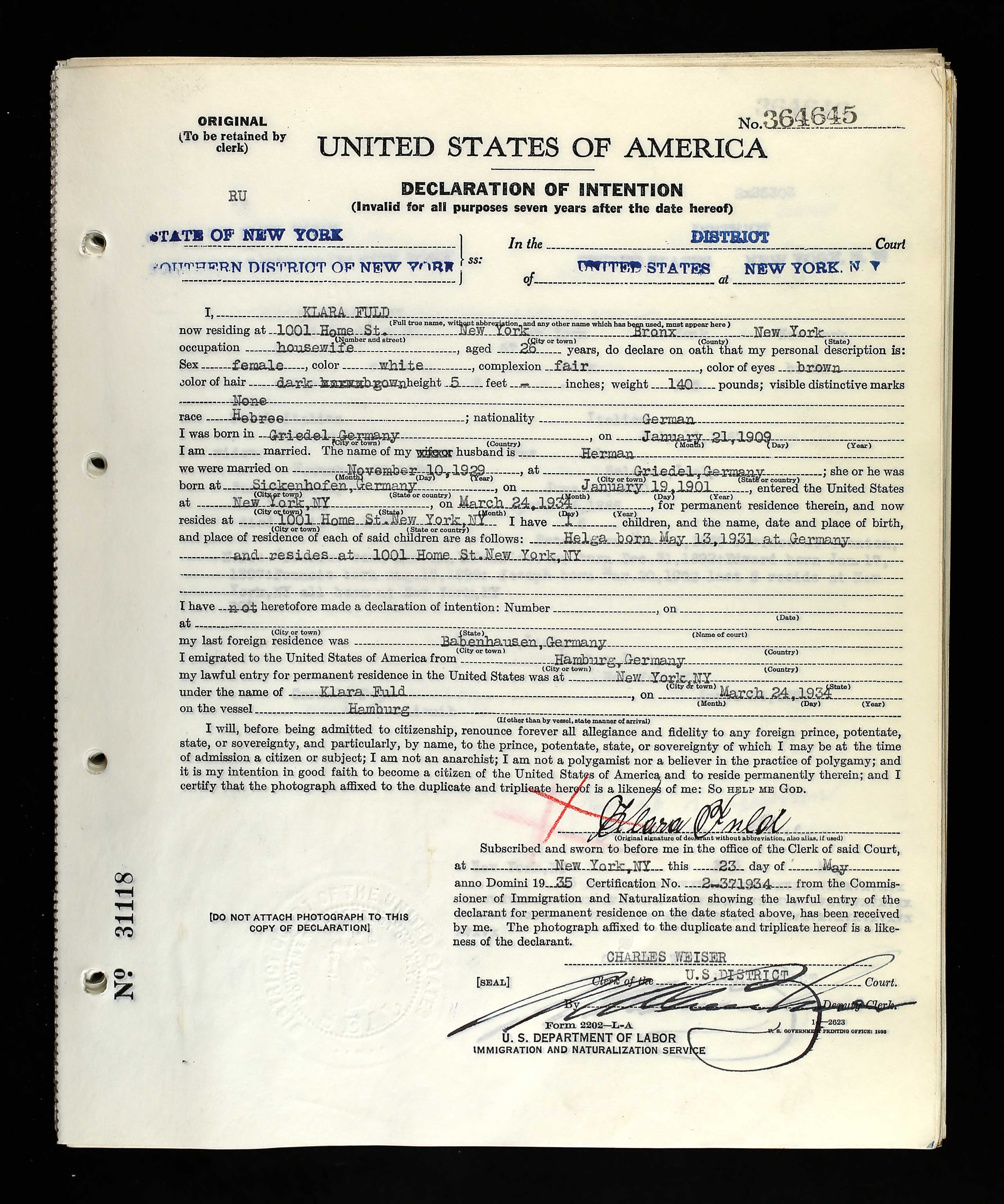
When Klara filed her declaration of intention to become a US citizen on May 23, 1935, the family was living in the Bronx.

Klara Baer Fuld declaration of intention, The National Archives at Philadelphia; Philadelphia, PA; NAI Title: Declarations of Intention For Citizenship, 1/19/1842 – 10/29/1959; NAI Number: 4713410; Record Group Title: Records of District Courts of the United States, 1685-2009; Record Group Number: 21, Description: (Roll 486) Declarations of Intention For Citizenship, 1842-1959 (No 364301-365300), Ancestry.com. New York, U.S., State and Federal Naturalization Records, 1794-1943

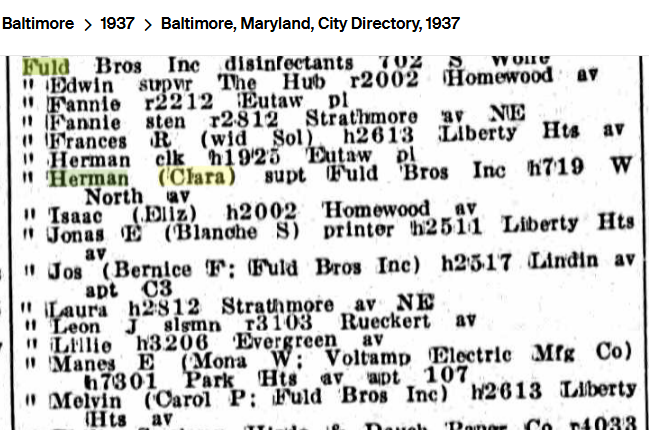
However, by 1937 Herman and Clara (as spelled in the 1937 Baltimore directory) were living in Baltimore; Herman was associated with a disinfectant business called Fuld Brothers Inc. There were two other men listed in that directory, Joseph Fuld and Melvin Fuld, who also listed Fuld Brothers as their business. I assumed they were his relatives and that the business was why he and Clara moved to Baltimore.

Herman Fuld, Maryland, City Directory, 1937, Ancestry.com. U.S., City Directories, 1822-1995

So I researched Joseph and Melvin Fuld and found that they were the sons of Solomon Fuld from Sickenhofen, the same town where Hermann Fuld was born. I then researched Solomon Fuld and found that he was the brother of Lazarus Fuld, Hermann’s father. So Melvin and Joseph Fuld were first cousins of Hermann. Interestingly, Solomon had come to the US back in 1894 and his sons were American born.2

By the time  Klara and Herman moved to Baltimore in about 1937, some of Klara’s siblings had also arrived in the US, but all after their mother Therese had died. Jenny Baer and her husband Julius Goldschmidt and their seven-year-old daughter Lore arrived in New York on July 31, 1936, along with Julius’ mother Lina, a widow. They listed Atlantic City as their final destination on the manifest, but on January 25, 1937, when Julius filed his declaration of intention, they were living in the Bronx. Julius, who had listed his occupation on the manifest as a merchant, now listed his occupation as a mechanic.3

Julius Goldschmidt and family, passenger manifest, The National Archives in Washington, DC; Washington, DC, USA; Passenger and Crew Lists of Vessels Arriving at New York, New York, 1897-1957; Microfilm Serial or NAID: T715; RG Title: Records of the Immigration and Naturalization Service, 1787-2004; RG: 85, Ship or Roll Number: Hansa, Ancestry.com. New York, U.S., Arriving Passenger and Crew Lists (including Castle Garden and Ellis Island), 1820-1957

Selma Baer and his husband Julius Siegmann were the next to arrive. They and their three sons, Heinz (later Henry), Adolph (later Edward), and Erich (later Eric) arrived in New York on October 7, 1937. They listed Julius Goldschmidt, Jenny’s husband, as the person they were going to and their destination as the Bronx. Julius Siegmann listed his occupation as a cattle dealer, but clearly there was no opportunity to pursue that in the Bronx!

Selma Baer Siegmann and family, passenger manifest, The National Archives in Washington, DC; Washington, DC, USA; Passenger and Crew Lists of Vessels Arriving at New York, New York, 1897-1957; Microfilm Serial or NAID: T715; RG Title: Records of the Immigration and Naturalization Service, 1787-2004; RG: 85, Ship or Roll Number: Gerolstein, Ancestry.com. New York, U.S., Arriving Passenger and Crew Lists (including Castle Garden and Ellis Island), 1820-1957

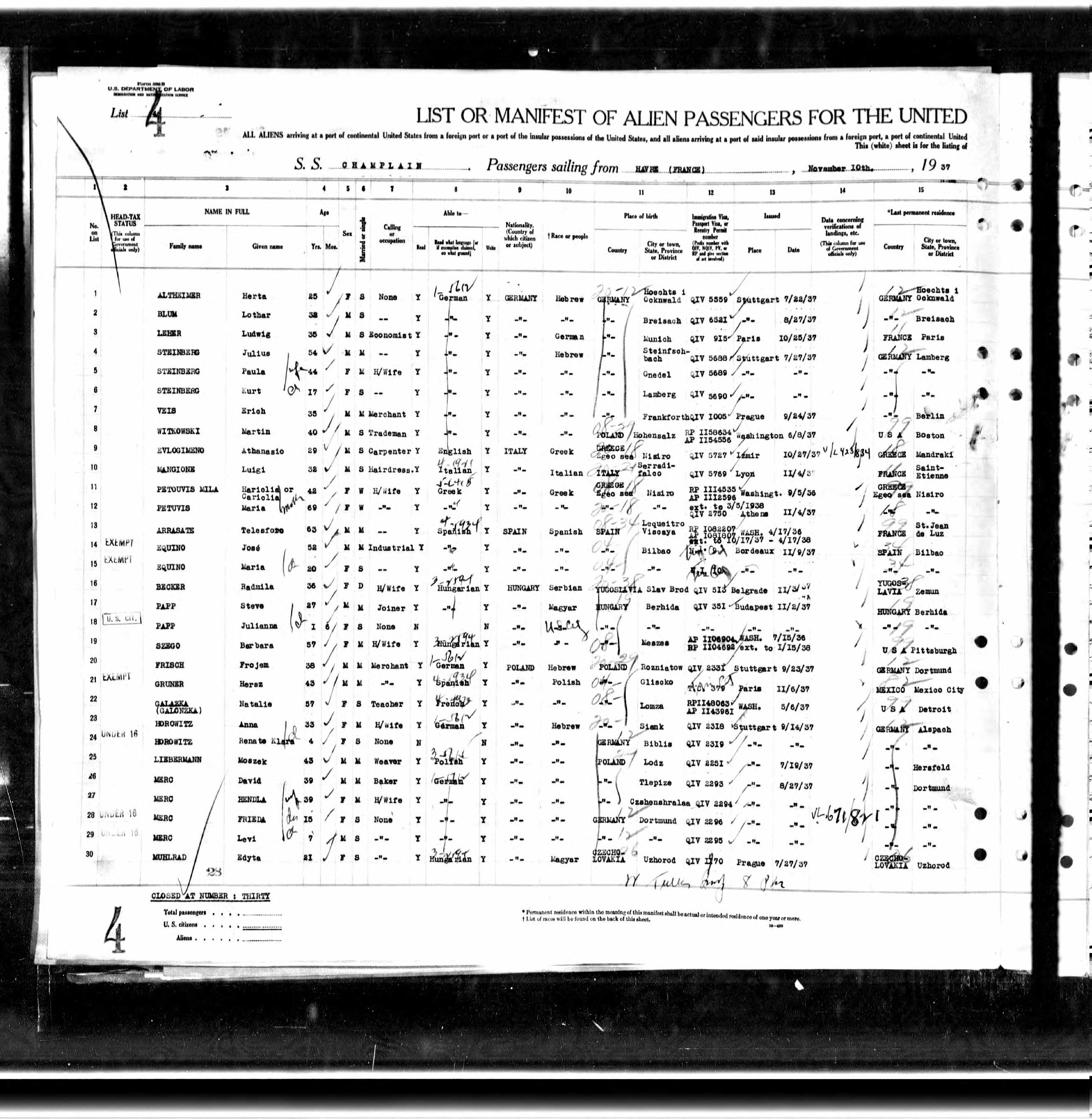
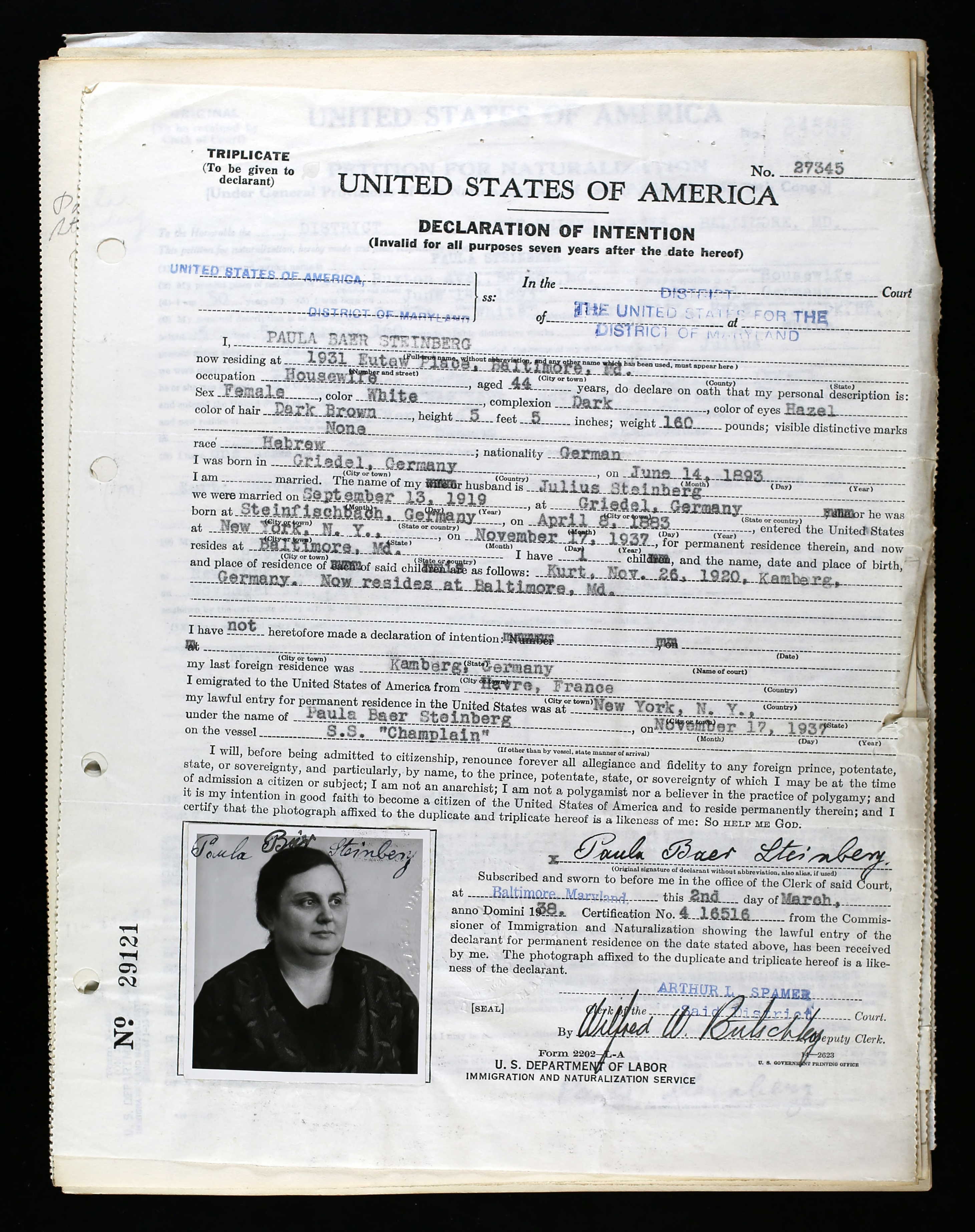
Just a month later the next Baer sibling arrived, Paula, along with her husband Julius Steinberg and their teenage son Kurt. They arrived in New York on November 11, 1937, indicating that they were going to Paula’s sister Clara in Baltimore.

Paula Baer Steinberg and family, passenger manifest, The National Archives in Washington, DC; Washington, DC, USA; Passenger and Crew Lists of Vessels Arriving at New York, New York, 1897-1957; Microfilm Serial or NAID: T715; RG Title: Records of the Immigration and Naturalization Service, 1787-2004; RG: 85, Ship or Roll Number: Champlain, Ancestry.com. New York, U.S., Arriving Passenger and Crew Lists (including Castle Garden and Ellis Island), 1820-1957

When Paula filed her declaration of intention on March 2, 1938, they were in fact living in Baltimore.

Paula Baer Steinberg declaration of intention, The National Archives at Philadelphia; Philadelphia, Pa; Petitions For Naturalization, 1903-1972; NAI Number: 654310; Record Group Title: Records of District Courts of the United States, 1685-2009; Record Group Number: 21
Petitions 24451-24750, Ancestry.com. Maryland, U.S., Federal Naturalization Records, 1795-1931

Thus, the four sisters—Klara, Jenny, Selma, and Paula—-were all safely in the US and out of Europe before their four brothers. Were the women more able to see the writing on the wall and willing to leave Germany behind or did they marry men who had that foresight?

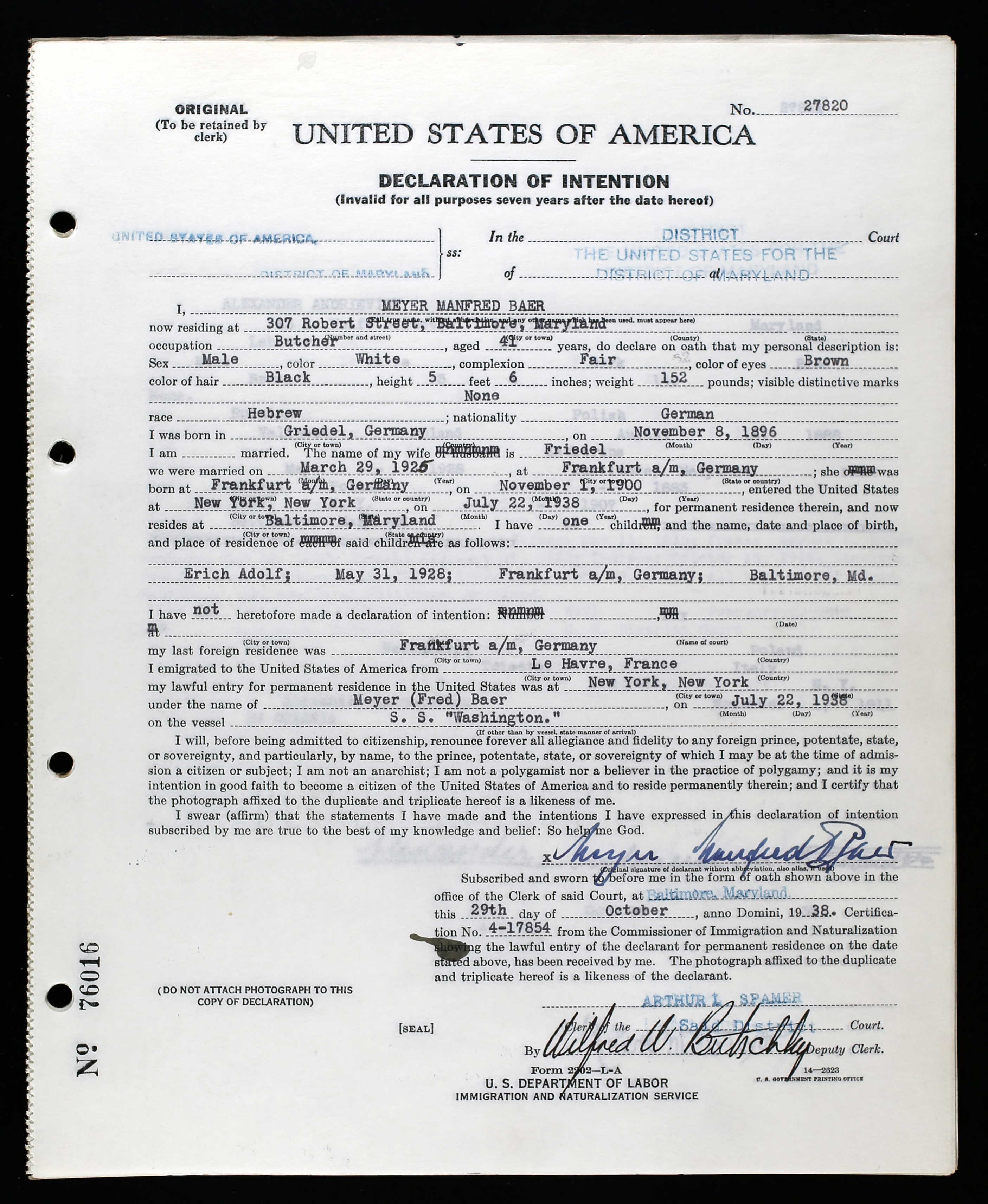
The oldest brother Meyer Manfred Baer, his wife Friedel, and their son Erich arrived in New York on July 22, 1938, just a few months after Paula. Meyer listed his occupation as a butcher on the manifest.

Meyer Manfred Baer and family, passenger manifest, The National Archives in Washington, DC; Washington, DC, USA; Passenger and Crew Lists of Vessels Arriving at New York, New York, 1897-1957; Microfilm Serial or NAID: T715; RG Title: Records of the Immigration and Naturalization Service, 1787-2004; RG: 85, Ship or Roll Number: Washington, Ancestry.com. New York, U.S., Arriving Passenger and Crew Lists (including Castle Garden and Ellis Island), 1820-1957

Although the manifest did not indicate their destination, the family ended up in Baltimore like Klara and Paula, as seen on Meyer’s declaration of intention dated October 29, 1938. He was still working as a butcher.

Meyer Manfred Baer declaration of intention, The National Archives at Philadelphia; Philadelphia, Pa; Declarations of Intention For Citizenship, 1911-1967; NAI Number: 573394; Record Group Title: Records of District Courts of the United States, 1685-2009; Record Group Number: 21, Description: Declarations 27401-28200, Ancestry.com. Maryland, U.S., Federal Naturalization Records, 1795-1931

Arthur Baer’s story is not quite as straightforward. In the aftermath of Kristallnacht in November 1938, he was arrested and sent to Buchenwald concentration camp; he was released on December 28, 1938, and like the others arrested after Kristallnacht, he left Germany soon after being released.4

UPDATE: I have now realized that this was a different man named Arthur Baer. My cousin Arthur Baer was not sent to Buchenwald! In fact, as we will see in a subsequent post, he left Griedel before Kristallnacht and was living in Bad Nauheim. More on that to come. The paragraphs below, however, are accurate. Arthur and his family did escape to England.

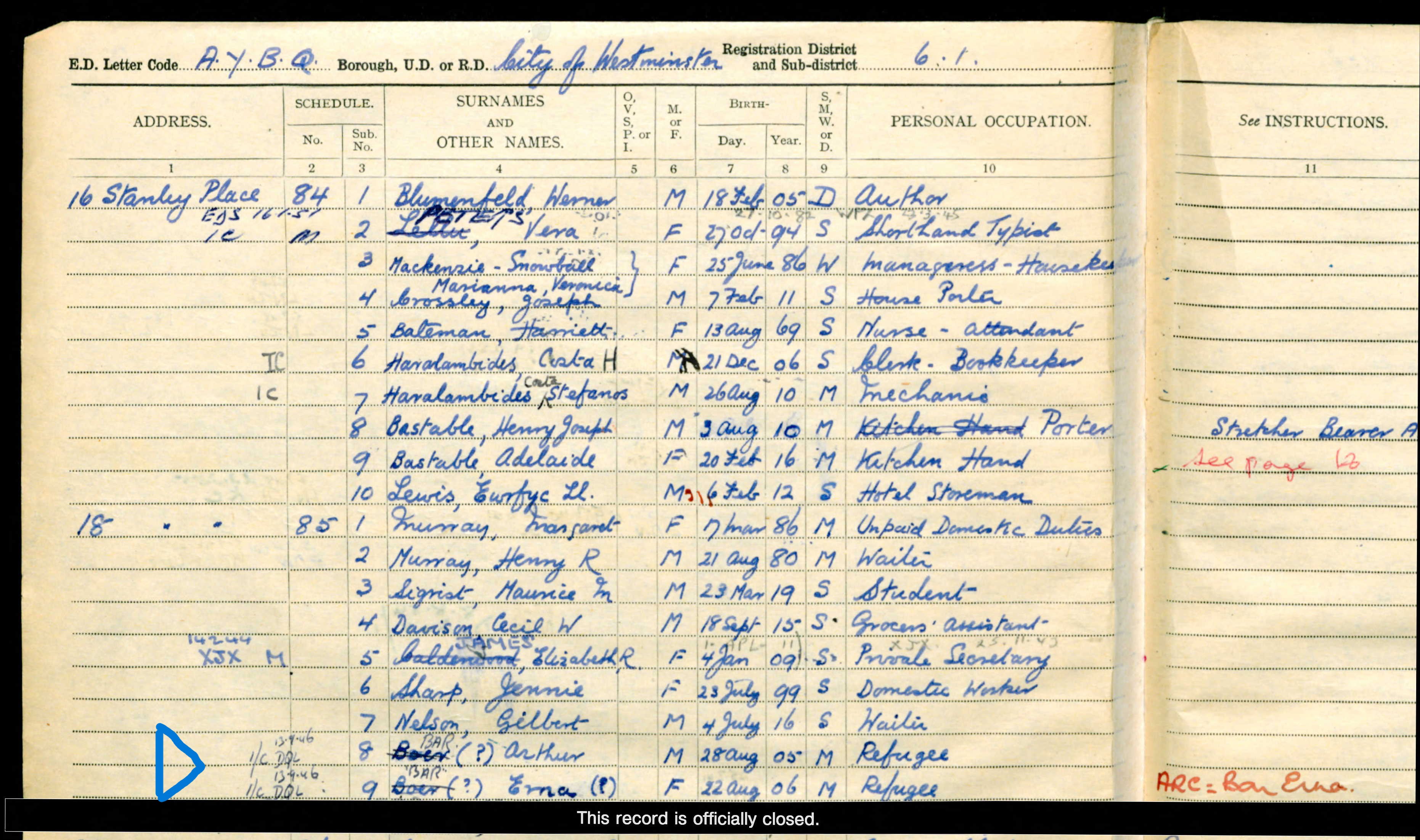
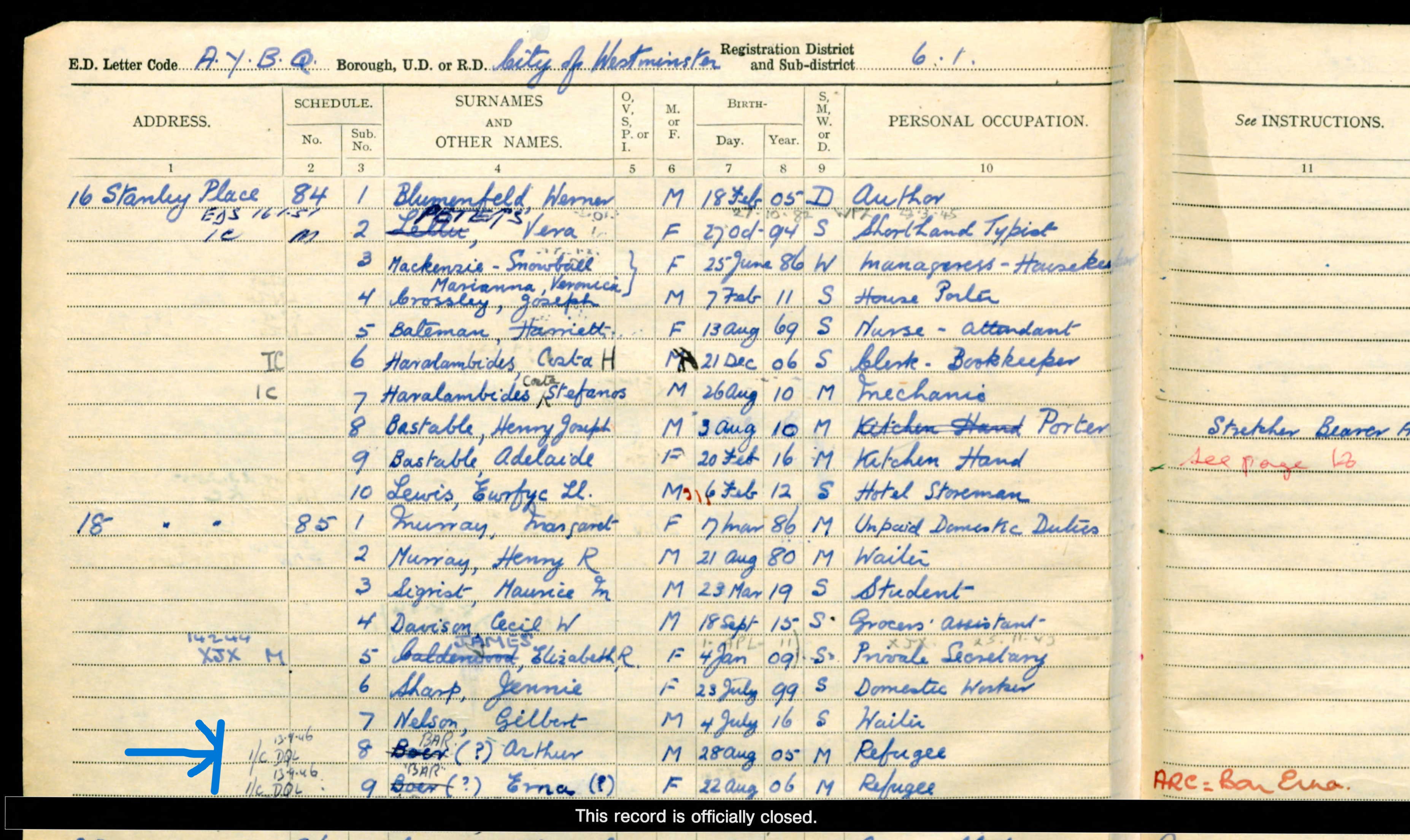
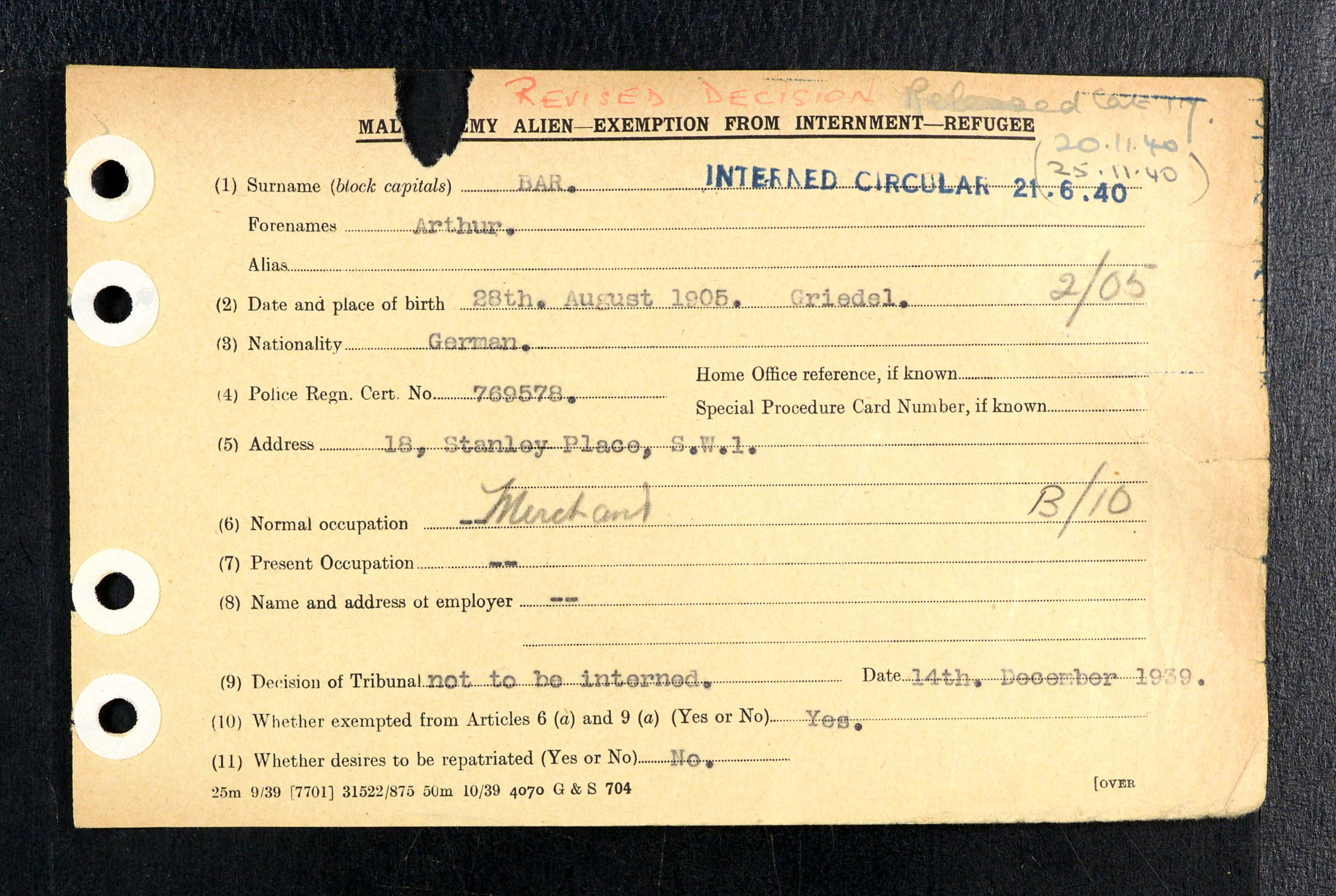
Arthur and his wife Erna and their son Erich escaped to England, where they appear living in London on the 1939 England and Wales Register which identified Arthur and Erna as refugees. Arthur was temporarily interned in England as an alien enemy but was released on November 25, 1940. As we will see, Arthur and his family eventually came to the United States.

Arthur Baer 1939 England and Wales Register, The National Archives; Kew, London, England; 1939 Register; Reference: RG 101/625D, Enumeration District: AYBQ, Ancestry.com. 1939 England and Wales Register

Arthur Baer UK World War II Alien Internees, 1939-1945, The National Archives; Kew, London, England; HO 396 WW2 Internees (Aliens) Index Cards 1939-1947; Reference Number: HO 396/166, Piece Number Description: 166: German Internees Released In UK 1939-1942: Ba-Berg, Ancestry.com. UK, World War II Alien Internees, 1939-1945

The remainingg two siblings, Eugen and Julius, have much more complicated stories that will follow in the posts to come, but as we can see, Paula, Jenny, Selma, Clara, Meyer, and Arthur were safely out of Germany before 1940.


  1. Max Fuld, Petition for Naturalization, The National Archives in Washington, DC; Washington, DC; NAI Title: Index to Petitions For Naturalizations Filed in Federal, State, and Local Courts in New York City, 1792-1906; NAI Number: 5700802; Record Group Title: Records of District Courts of the United States, 1685-2009; Record Group Number: Rg 21, Ancestry.com. New York, U.S., State and Federal Naturalization Records, 1794-1943 
  2. Sol Fuld, Gender Male, Race White, Birth Date 4 Jan 1875, Birth Place Sickenhofen, Federal Republic of Germany, Father Joseph Field Mother Bertha Simon, SSN 212091919, Ancestry.com. U.S., Social Security Applications and Claims Index, 1936-2007; Solomon Fuld and family, 1910 US census, Year: 1910; Census Place: Baltimore Ward 15, Baltimore (Independent City), Maryland; Roll: T624_558; Page: 2b; Enumeration District: 0255; FHL microfilm: 1374571, Ancestry.com. 1910 United States Federal Census 
  3. Julius Goldschmidt, declaration of intention, The National Archives in Washington, DC; Washington, DC; NAI Title: Index to Petitions for Naturalizations Filed in Federal, State, and Local Courts in New York City, 1792-1906; NAI Number: 5700802; Record Group Title: Records of District Courts of the United States, 1685-2009; Record Group Number: 21, Description: Petitions For Naturalization From Us District Court For the Southern District of New York, 1897-1944, Ancestry.com. New York, U.S., State and Federal Naturalization Records, 1794-1943 
  4. Arthur Baer, Religion Jude, Record Type Register, Departure Date 28 Dez 1938 (28 Dec 1938), Prisoner Type Schutzhaft, Prisoner Number 22955, Reference Number 00116100004, Arolsen Archives; Bad Arolsen, Germany; Group 1 Camp Lists, Ancestry.com. Arolsen Concentration Camp Lists, 1939-1944 

Meier Rothschild, Part VI: Anna Rothschild Hamberg

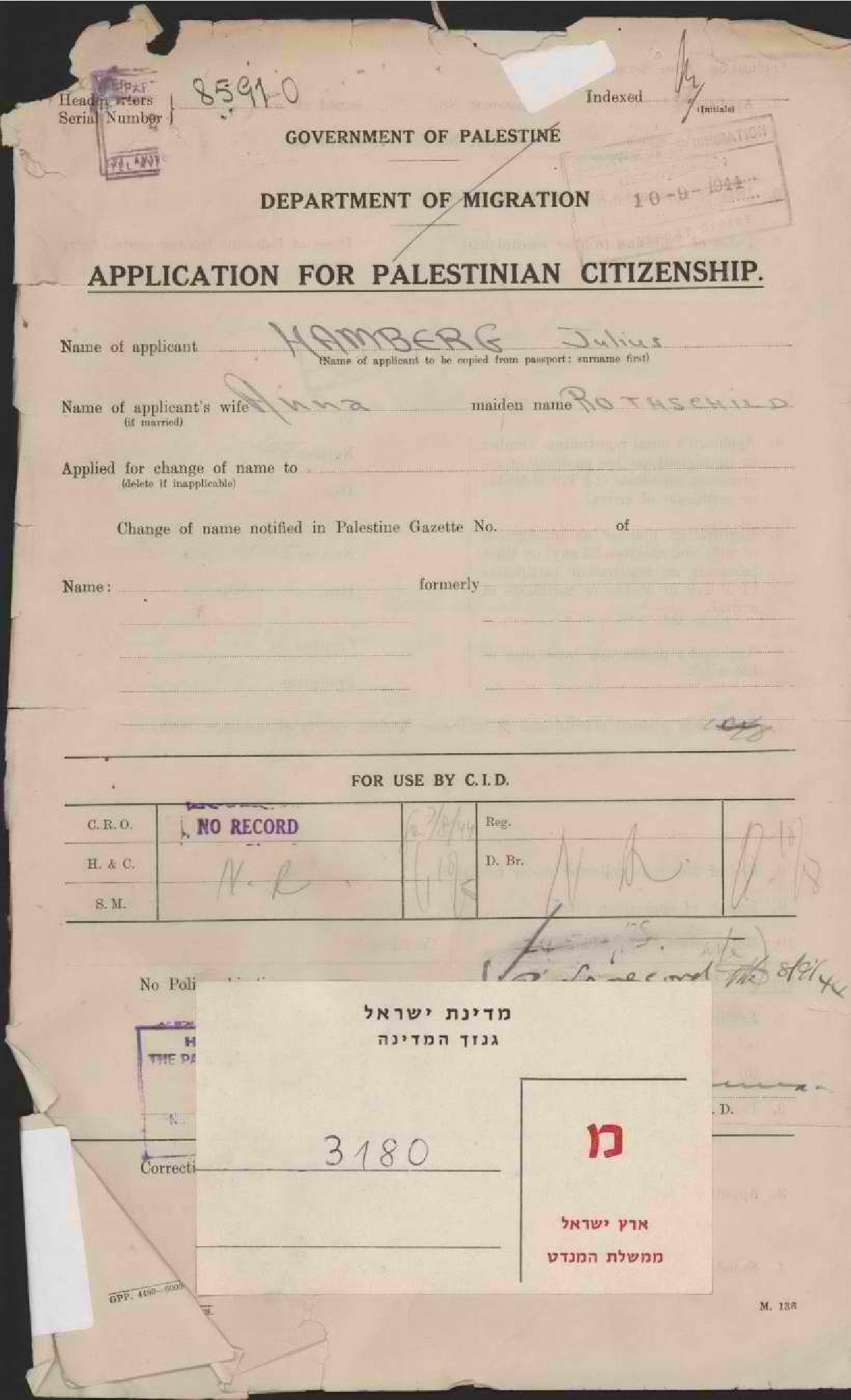
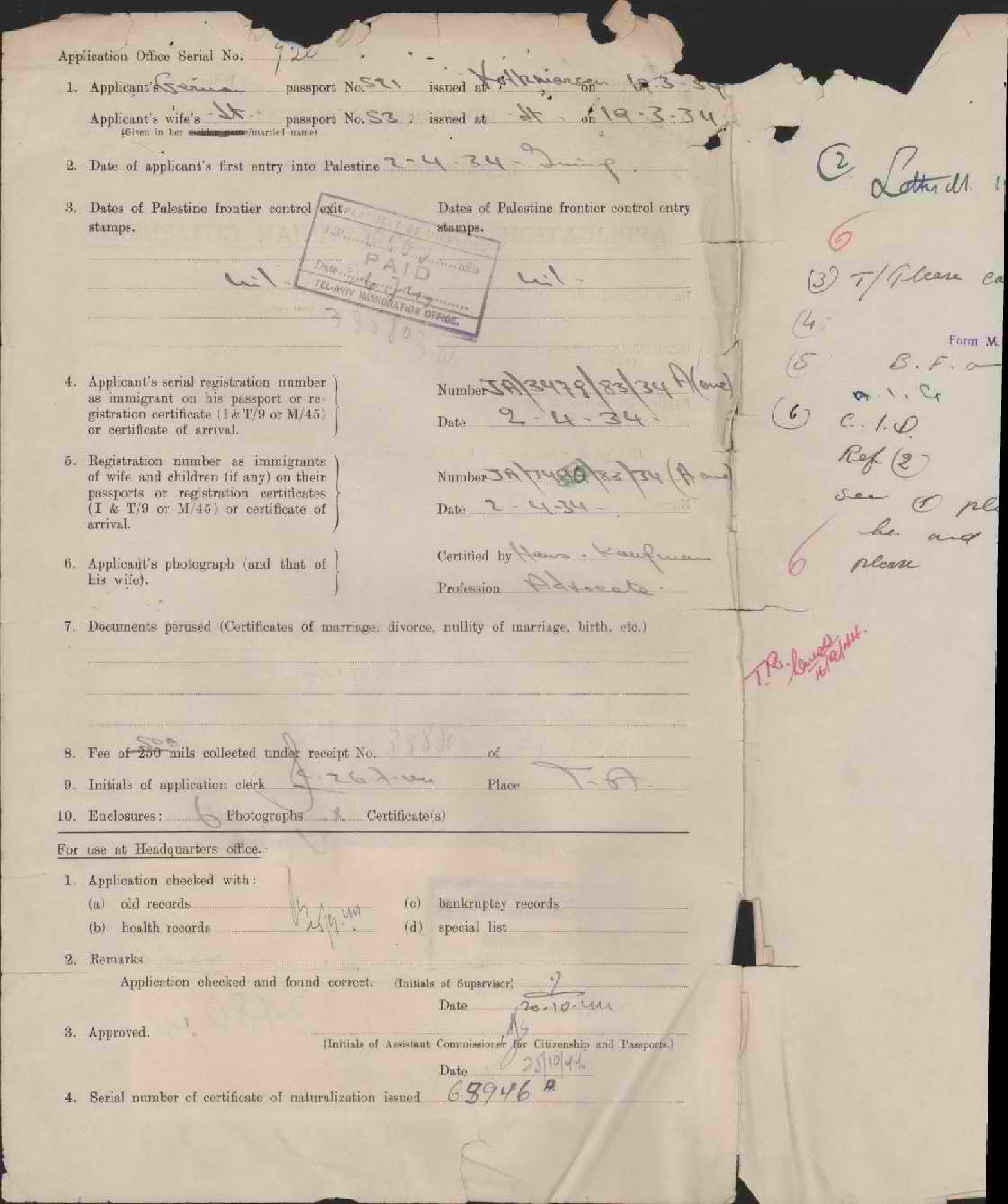
The youngest child of Meier Rothschild and Bertha Lorge was their daughter Anna. And unlike with her older siblings, I was able to learn where she and her family were in the 1930s and 1940s. I found the Palestine immigration files for Anna, her husband (and my cousin) Julius Hamberg, and for two of their three children, Alice and Ernst, on the Israel State Archives website. They all had immigrated from Germany to Palestine in 1934 when Alice was twelve, Hans Leo was eleven, and Ernst was eight. Here are two pages from Julius Hamberg’s application that show their date of immigration.

Julius Hamberg, Palestine immigration file found at the Israel State Archives, https://www.archives.gov.il/

Among the interesting things I learned from these immigration files is that Julius listed his occupation as a “commission agent,” meaning most likely a broker who handled commercial sales for sellers and buyers, Alice was a children’s nurse, and Ernst was an agricultural laborer.

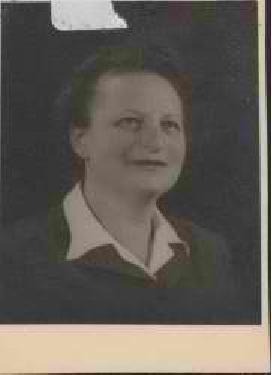
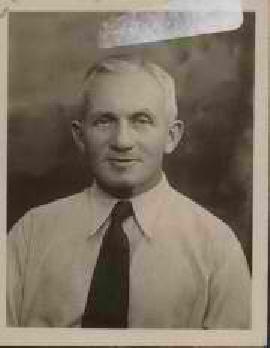
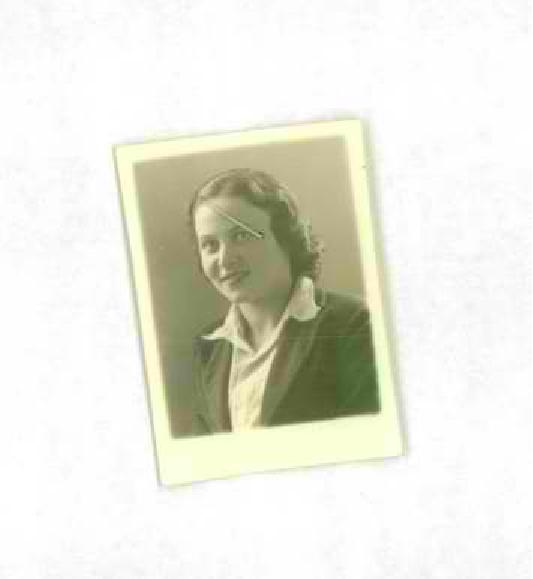
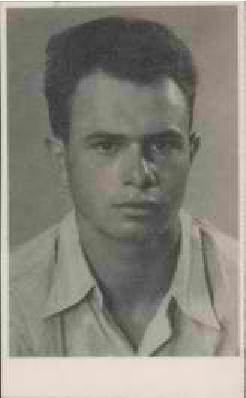
Here are the photos of them from their immigration files:

Anna Rothschild Hamberg, found at https://www.archives.gov.il/

Julius Hamberg, found at https://www.archives.gov.il/

Alice Hamberg, found at https://www.archives.gov.il/

Ernst Hamberg, found at https://www.archives.gov.il/

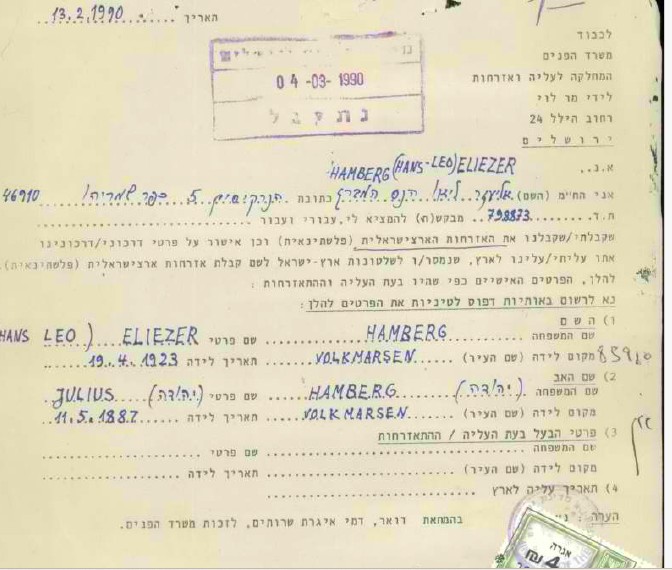
I was not able to find a Palestine naturalization file for Hans Leo Eliezer Hamberg, but he was mentioned in his father Julius’ file when Hans later sought immigration to Israel in 1990 under the Law of Return and had to establish his Jewish identity to qualify. Although I cannot find him elsewhere, I assume Hans Leo Eliezer must have come to Palestine in 1934 with his parents since he was just a young boy; he perhaps left Palestine/Israel at some point and then wanted to return in 1990.

Hans Leo (Eliezer) Hamberg mentioned in Julius Hamberg’s immigration file, found at https://www.archives.gov.il/

As an aside, the fact that Anna Rothschild Hamberg and her family arrived in Palestine in 1934 helps to understand how Helene/Hana Rothschild, Berthold’s daughter, was more able to come to Palestine in 1937 without her sister or her father (her mother had died). She had an aunt, her father’s sister, living there so did have family already established in the country.

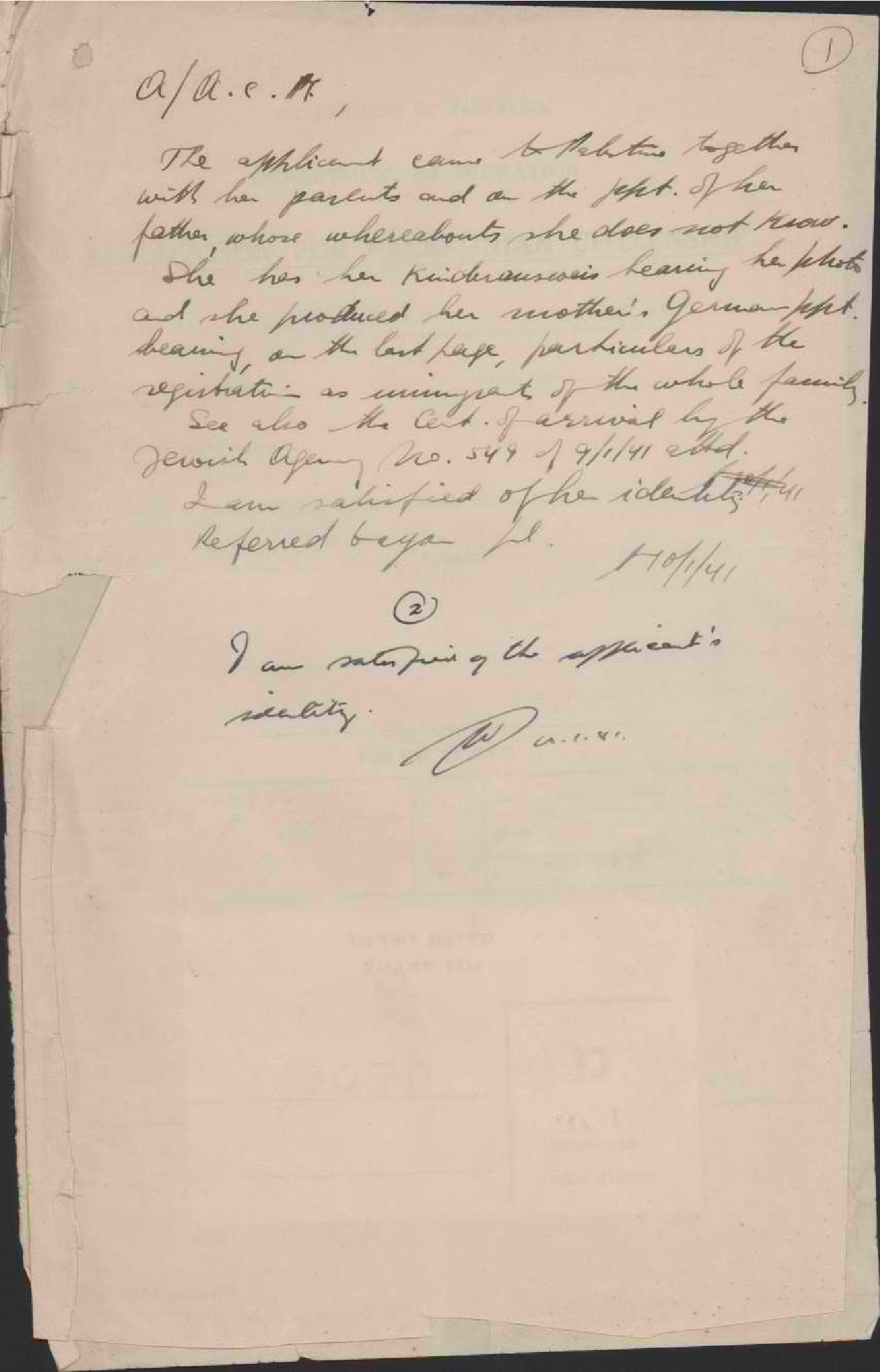
Returning to the family of Anna Rothschild Hamberg, a letter in her daughter Alice’s file from when she was applying for naturalization in 1941 includes the sentence: “The applicant came to Palestine together with her parents and on the ppt [passport] of her father, whose whereabouts she does not know.” Alice was nineteen at that time, and her family had been in Palestine since 1934. Where could Julius have gone? Or is the writer of the letter referring to her father’s passport and its whereabouts? I think that seems more likely, but the sentence is certainly poorly drafted.

Letter in Alice Hamberg’s Palestinian immigration file, 1941, found at https://www.archives.gov.il/

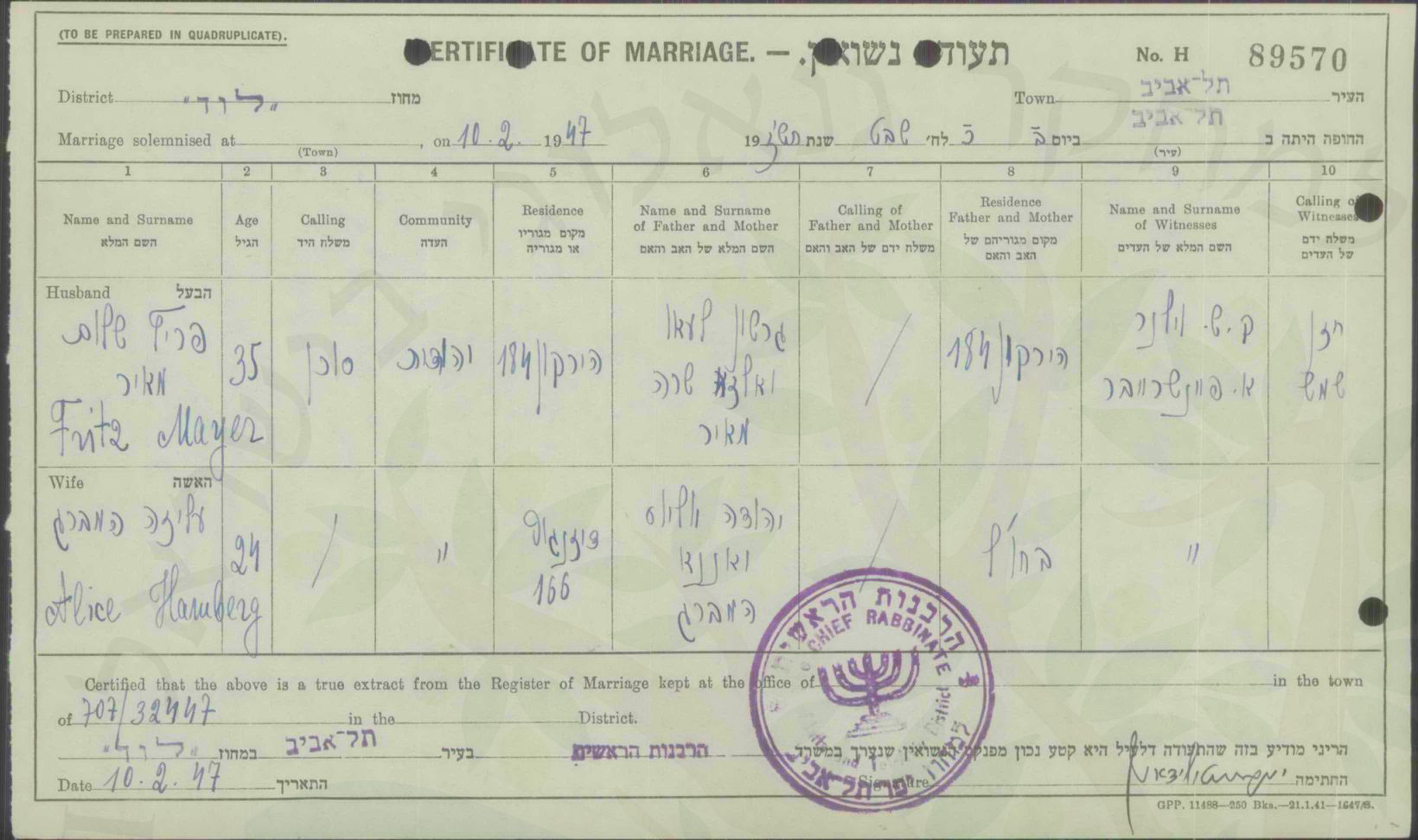
On IGRA I found the marriage record of Alice Hamberg to Fritz Shalom Mayer on February 10, 1947, in Tel Aviv, Israel. Fritz was 35 at the time, Alice was 24. Fritz was the son of Gerson Leo and Alza Sara Mayer, according to the marriage record.

Alice Hamberg and Fritz Shalom Mayer marriage record, found at https://genealogy.org.il/AID/

At this point I have not found any further records for Anna, Julius, or any of their children. Perhaps a descendant will find me and fill in the gaps.


This brings me to the end (for now) of my attempt to learn about the children of Meier Rothschild and Bertha Lorge. There is so much I still don’t know. What I do know is that all five of their children and all of their grandchildren survived the Holocaust, except Berthold’s ex-wife Sarah, who died in a sanatorium in Germany.

Berthold himself ended up in South Africa where he died in 1964, and his daughter Adelheid survived the concentration camp at Celle/Bergen Belsen and ended up in Israel after the war. His daughter Helene/Hana escaped to Palestine in 1937.

Theodor Rothschild and his wife Bettina ended up in Monaco, and their daughter Doris died in France. I don’t have further records for their daughter Ellen.

As for Gertrud Rothschild Neuhahn and her husband Gustav and daughter Ruth, I know they were in Tel Aviv for some time, but Ruth and her children ended up in Mexico later on.

Siegfried and his wife Gisela are buried in Israel, their son Zeev died in British Columbia, and their son Gunther Michael lived in the United States.

Finally, Anna Rothschild Hamberg and her husband and children immigrated to what was then Palestine in 1934.

So Meier and Bertha’s children and grandchildren were not killed by the Nazis, but they ended up spread to all corners of the earth: Israel, France, Monaco, Mexico, Canada, South Africa, and the United States. They may have survived the Holocaust, but their family was torn apart forever. They also were therefore all victims of the Holocaust.


With this final chapter in story of the children of Gelle Blumenfeld and Simon Rothschild, I have also closed the chapter on Gelle’s father Moses, the first of the six children of my four-times great-grandparents Abraham Blumenfeld and Geitel Katz. I started this particular chapter of the Blumenfeld family over four years ago, and now I can finally move on to the second child of Abraham and Geitel, their daughter Sprintz.


Meier Rothschild, Part V: Siegfried Friedrich Rothschild

After several weeks focused on updates on Berthold Rothschild and other topics, I now will return to the other children of Meier Rothschild and Bertha Lorge. As with the three oldest children of Meier Rothschild and Bertha Lorge, Berthold, Theodor, and Gertrud, I struggled to learn more about what happened to their fourth child Siegfried Friedrich Rothschild and his family during and after the Holocaust.

I have no actual records or even indices of records that show where Siegfried and his wife Gisela Katz and sons were in the 1930s or 1940s, but multiple factors indicate that they went to Palestine/Israel. First, there are some entries on the IGRA website for a Zigfried Rotschild, and that could be Siegfried, but I cannot be certain. Secondly, one of Siegfried’s sons used the name Zeev Rotem; and that may indicate that the family was at least for some time in Israel because Zeev is a common Israeli name and  Rotem is a Hebrew term for the tamarisk plant found in Israel. I doubt that Zeev was born with that name in Germany, but rather that it is a name he adopted in Israel. But these are just circumstantial bits of evidence, nothing definitive.

But my assumption that the family went to Israel at some point is also reinforced by the grave memorials I found on the Gravez site for both Siegfried and Gisela. Siegfried died on September 14, 1972, and Gisela died on December 26, 1998. They are both buried in the same cemetery in Tel Aviv, Israel. Does that mean they lived in Israel or that they had spent the war years in what was then Palestine? No. Many are buried in Israel who did not live there. But all these clues together support an assumption that Siegfried and Gisela and their sons lived for some time in Israel.

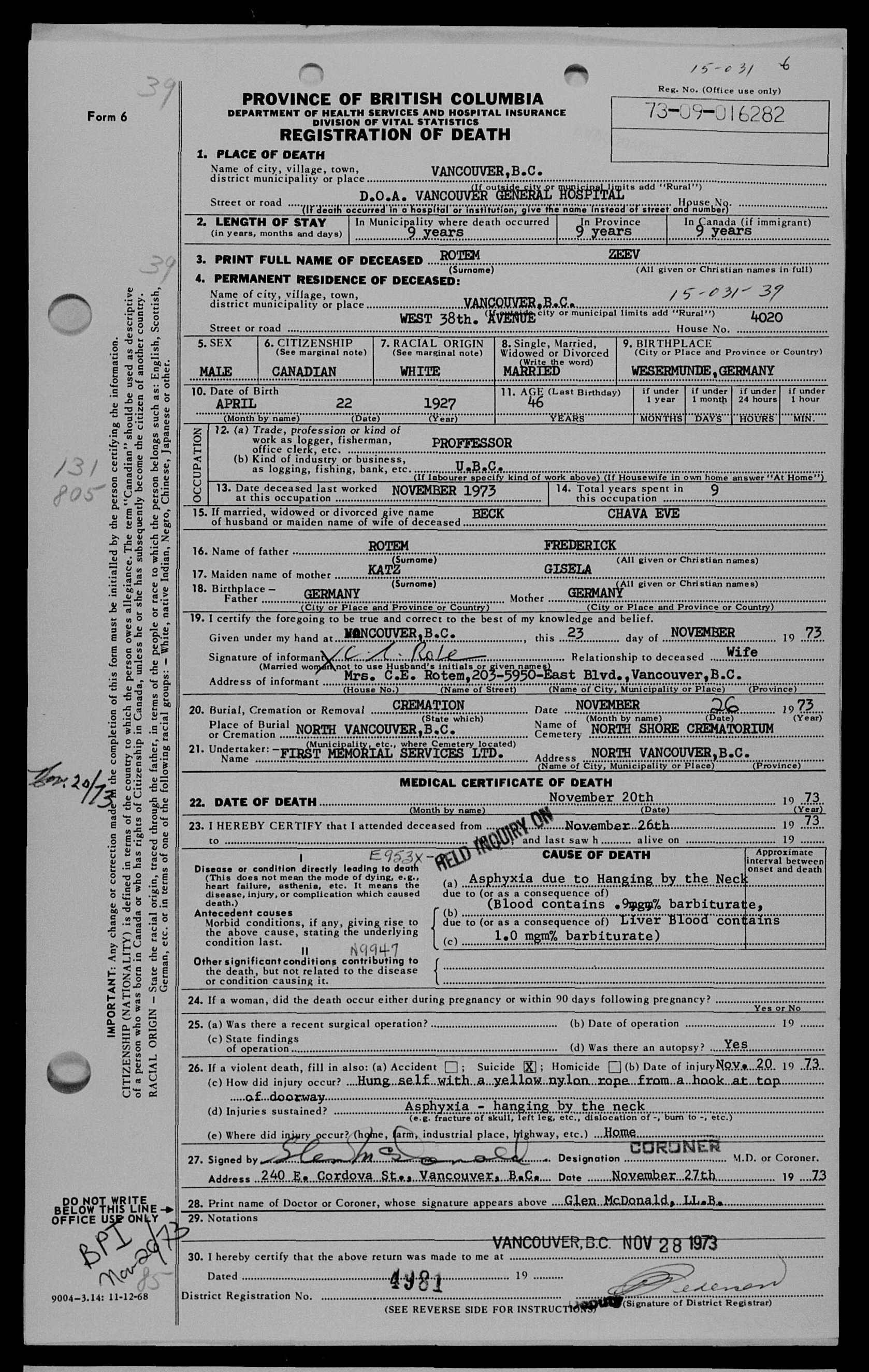
Their son Zeev may have spent time in Israel, but according to this death record, he had been a professor at the University of British Columbia in Canada for nine years when he died at the age of 46 on November 20, 1973, in Vancouver, Canada. He was survived by his wife and children. He had been a professor in the mechanical engineering department, according to a death notice located online.

Zeev Rotem death certificate, Zeev Rotem, Birth Circa 1927, Death Nov 20 1973, Vancouver, British Columbia, Age at death 46, Registration # 1973-09-016282, BCA microfilm # B13328
GSU microfilm # 2050141, Canada, British Columbia deaths, MyHeritage at https://www.myheritage.com/research/record-20459-596398-/zeev-rotem-in-canada-british-columbia-deaths?indId=externalindividual-b78e16dee8e36e46fe53394e9101649b&trn=partner_Geni&trp=logged_out_matches_module

As you can see, this record ties Zeev Rotem to Gisela Katz, his mother, and to “Frederick Rotem.” Siegfried’s middle name was Friedrich, and my guess is that this is how the informant remembered Zeev’s father’s name.

UPDATE: Thanks to Mark Goldsmith who sent me a link to the obituary for Zeev’s widow Chava Eve Rotem, I am able to fill in a few gaps in this blog. According to her obituary, she and Zeev were married in Palestine in 1947. Eve was born in Berlin on January 15, 1928, and escaped to Palestine when she was five. She trained as a doctor in Switzerland and then returned to Palestine where in 1948 she and Zeev volunteered to help resettle refugees from Nazi Germany. After completing her medical studies in 1949, she and Zeev went to England where their two children were born. They returned to Israel in 1960, but then moved to the US and ultimately to British Columbia, where she and her children continued to live after Zeev’s death in 1973. Chava died on August 15, 2020, after a very distinguished career as a cardiologist in Vancouver, British Columbia. She was survived by her children and grandchildren. (Another obituary here has some differences, but the essence is the same.)

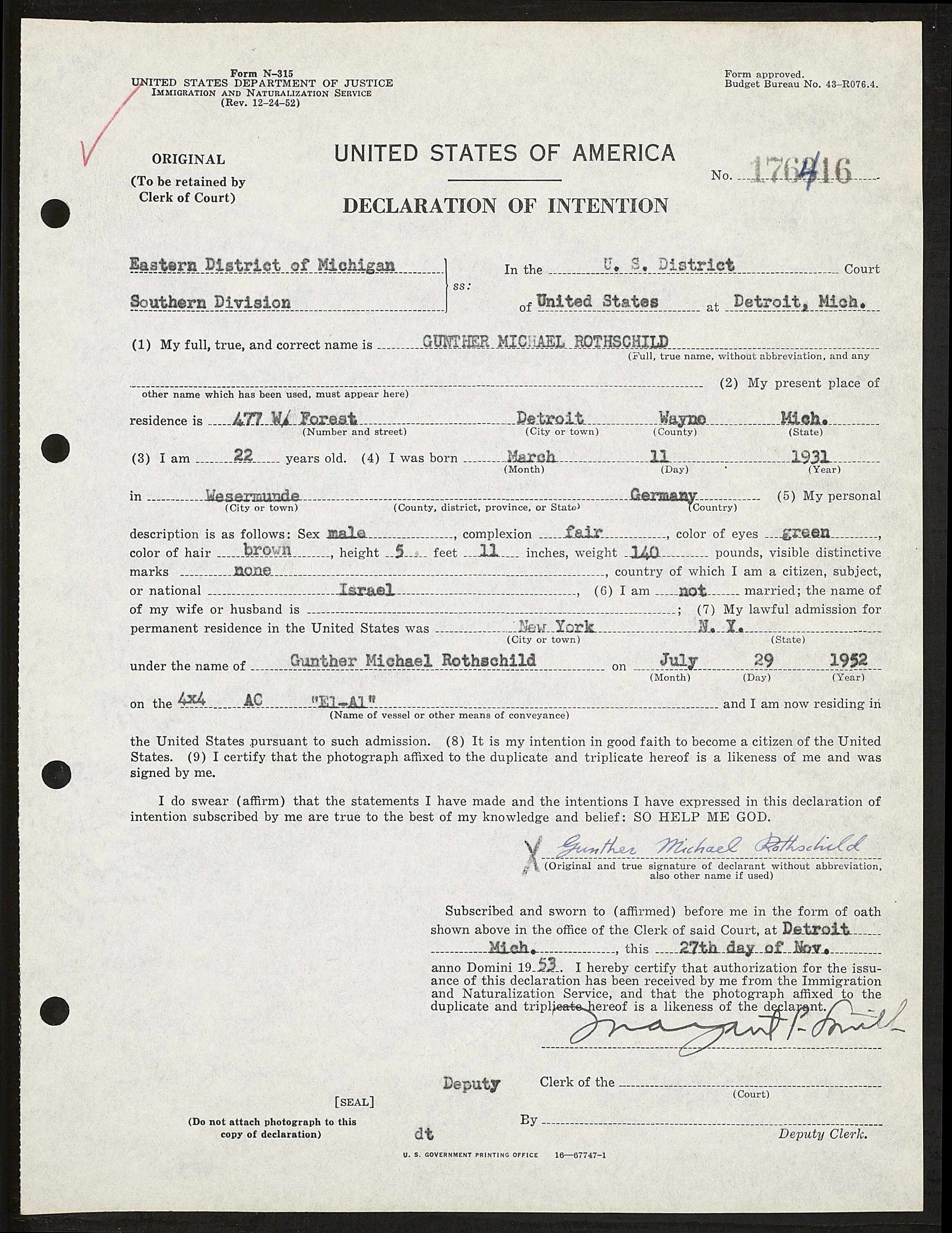
As for Gunther Michael Rothschild, Zeev’s younger brother and the youngest grandchild of Meier Rothschild and Bertha Lorge, a search on FamilySearch turned up some very helpful documents. First, I found his Declaration of Intention to become a US citizen. That document revealed that Gunther Michael Rothschild was living in Detroit, Michigan, when he filed the declaration on November 27, 1953. It also revealed that he had arrived in the US on July 29, 1952. Finally, it reported that Gunther was a citizen of Israel, proof that he had been living in Israel and more evidence suggesting that the other members of his family had as well.

Gunther Michael Rothschild dec of intent, “Michigan, Naturalization Records, 1837-1997”, FamilySearch (https://www.familysearch.org/ark:/61903/1:1:CLHY-RRPZ : Thu Apr 10 18:17:38 UTC 2025), Entry for Gunther Michael Rothschild, 27 Nov 1953.

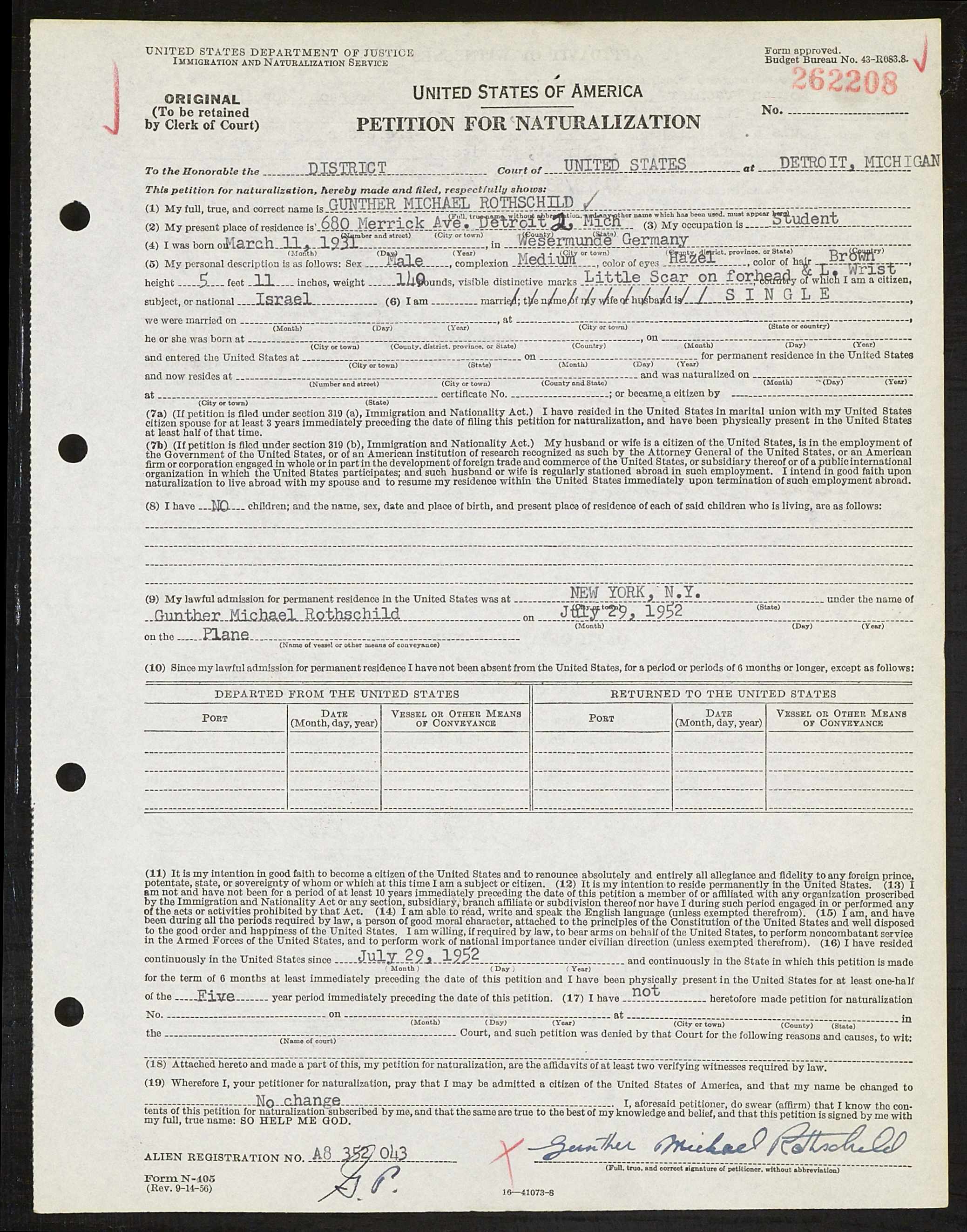
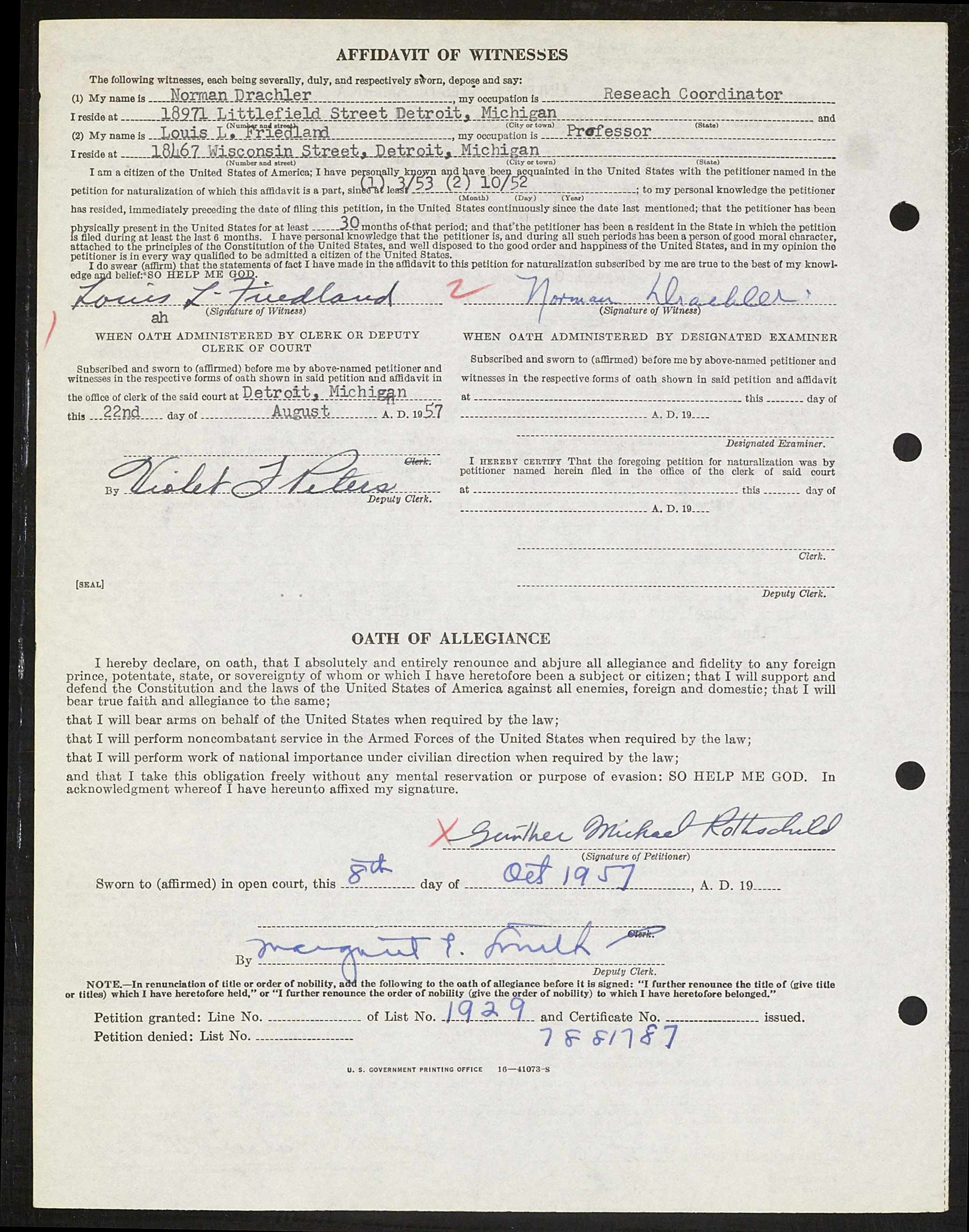
I had no idea why Gunther Michael would have been living in Detroit until I found his petition for naturalization on FamilySearch. Gunther Michael Rothschild became a US citizen on August 22, 1957.On his petition he again stated he was a citizen of Israel and that he was living in Detroit but added that he was a student. Most helpful were the names of the witnesses who supported the petition, in particular a man named Louis L. Friedland who identified himself as a professor.

“Michigan, Naturalization Records, 1837-1997”, FamilySearch (https://www.familysearch.org/ark:/61903/1:1:CV38-FWZM : Thu Apr 10 14:56:55 UTC 2025), Entry for Gunther Michael Rothschild.

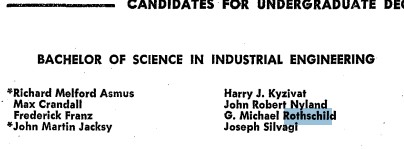
I googled “Louis L. Friedland” and learned that he had been a professor at Wayne State University in Detroit. Further googling uncovered a commencement program from Wayne State in 1958 that listed G. Michael Rothschild as a candidate for a bachelor’s of science degree in industrial engineering.

A passenger manifest from August 1958 lists Michael Rothschild, as he seemed to be known in the US, as a passenger coming from the US, his permanent residence, going to England for two weeks. His occupation was a student. A few months later in December 1958 he is listed on a passenger manifest card as a US citizen residing in Detroit, Michigan. I found several records showing him traveling between the US and England during the 1950s and 1960s as well.1

Some records from Ancestry’s “Public Records” Index list Gunther living in various places in the US over many years including into the 2000s.2 I could not find, however, any news articles or other records revealing more about him. I don’t know whether Gunther Michael Rothschild ever married or had children. According to the Social Security Applications and Claim Index entry for Gunther Michael Rothschild, he died on October 10, 2007.3 Entries on FamilySearch and Geni indicate he was buried in Tel Aviv, but I cannot find his grave on Gravez or anywhere else. So perhaps he was living in the US, perhaps at some point he’d returned to Israel. I sent a message to the manager of his profile on MyHeritage, and perhaps I will learn more.

Piecing this all together, it seems safe to assume that at some point the family of Siegfried Friedrich Rothschild lived in Israel, but their son Zeev spent years in Canada and their son Gunther Michael spent many years in the US. If and when I learn more, I will update the blog.


Coming soon! Ten days until the release of The Women Before Us on Amazon! You can pre-order the Kindle version now and both paperback and Kindle versions will be released on June 20.


  1.  Michael Rothschild, Arrival Age 27, Birth Date 11 Mar 1931, Port of Departure New York, New York, USA, Arrival Date 2 Aug 1958, Port of Arrival Southampton, England, Ports of Voyage New York and Galway, Ship Name Ryndam, Shipping Line Escombe, McGrath and Company Ltd, Official Number 7767/20, The National Archives in Washington, DC; London, England, UK; Board of Trade: Commercial and Statistical Department and Successors: Inwards Passenger Lists; Class: Bt26; Piece: 1410; Item: 74, Ancestry.com. UK and Ireland, Incoming Passenger Lists, 1878-1960. There are several passenger cards for him leaving from the US in Ancestry. 
  2. E.g., Michael M Rothschild, [G Michael Rothschild], [Gunther M Rothschild], [Michael G Rothschild], Birth Date Mar 1931, Residence Date 2002-2020, Residence Shokan, New York, USA, Postal Code 12481, Second Residence Date 2001-2012, Second Residence Norwich, Connecticut, USA, Second Postal Code 06360, Third Residence Date 2002-2012, Third Address Po Box 403, Third Residence Shokan, New York, USA, Third Postal Code 12481, Ancestry.com. U.S., Index to Public Records, 1994-2019 
  3. Michael Rothschild, [Gunther Michael Rothschild], [G Rothschild], Gender Male
    Race White, Birth Date 11 Mar 1931, Birth Place Werezmunde, Federal Republic of Germany, Death Date 10 Oct 2007, Father Sigfried F Rothschild, Mother Giseca Katz
    SSN 078284849, Notes Aug 1952: Name Listed As Michael Rothschild; Nov 1952: Name Listed As Gunther Michael Rothschild; 21 Jun 2005: Name Listed As G Michael Rothschild; 22 Dec 2007: Name Listed As G M Rothschild, Ancestry.com. U.S., Social Security Applications and Claims Index, 1936-2007 

Adelheid Rothschild: How She Survived the Holocaust

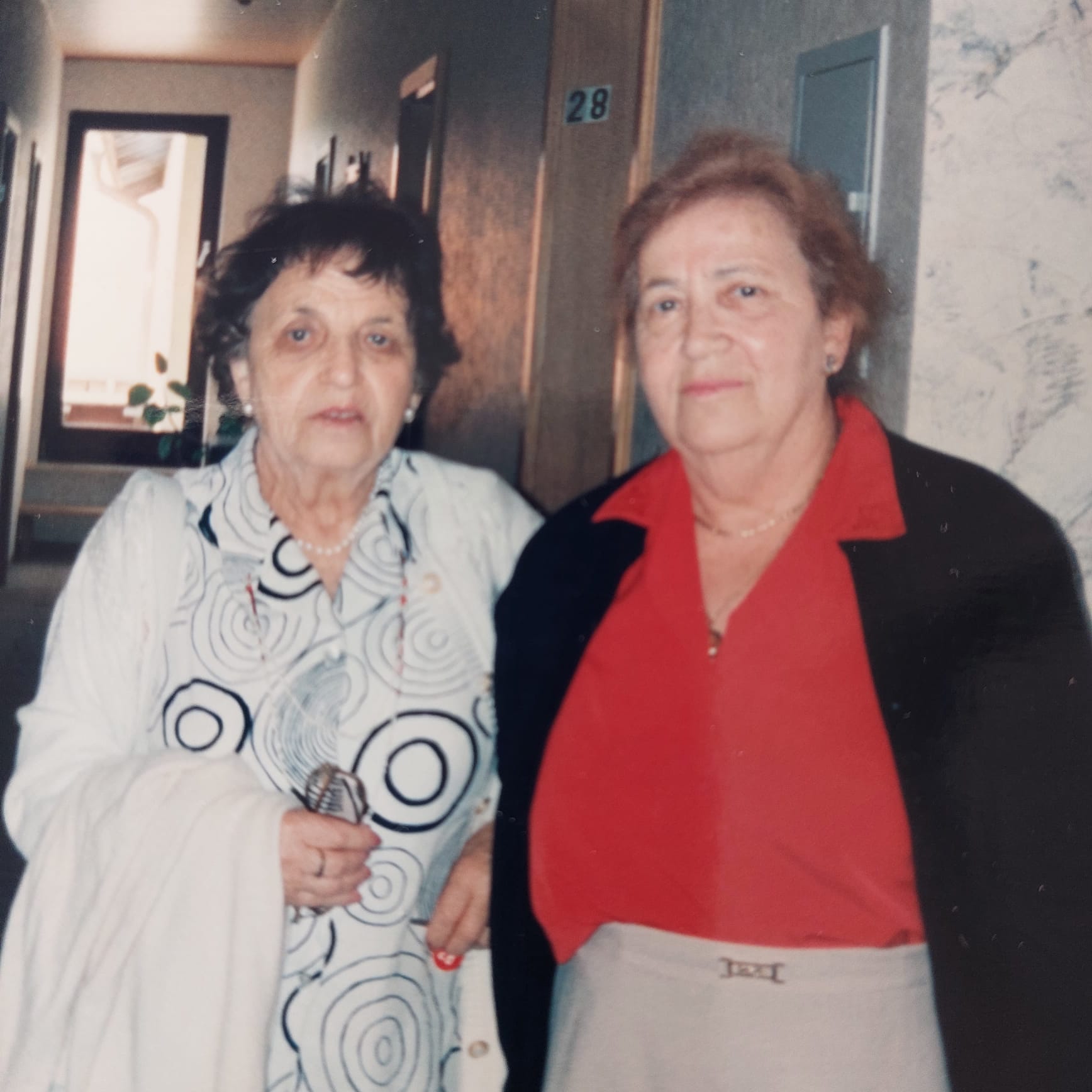
My cousin Adelheid Rothschild survived the Holocaust, as did her father Berthold and sister Helene/Hana, as we have seen,  but unlike her father and sister, Adelheid spent time in a concentration camp. She was deported from Amsterdam to the concentration camp at Bergen Belsen. She survived the war and at some point immigrated to Palestine/Israel, where she lived near her sister for the rest of her life. Her nephew Meir has shared a number of photos of Adi (as she was known in Israel) and his mother Hana, two of which I already shared. Here’s one more:

Helene/Hana and Adelheid/Adi in Germany, 1998.
Courtesy of the family

But one of the many questions that remained was when did Adi leave Germany for Amsterdam? Her father left for South Africa in 1936 when she was just sixteen, and her sister left for Palestine in 1937 around the same time that their mother Selma/Sarah Adler died. Adi was the last remaining member of that family to be left in Germany if she was still there after her sister left and mother died.

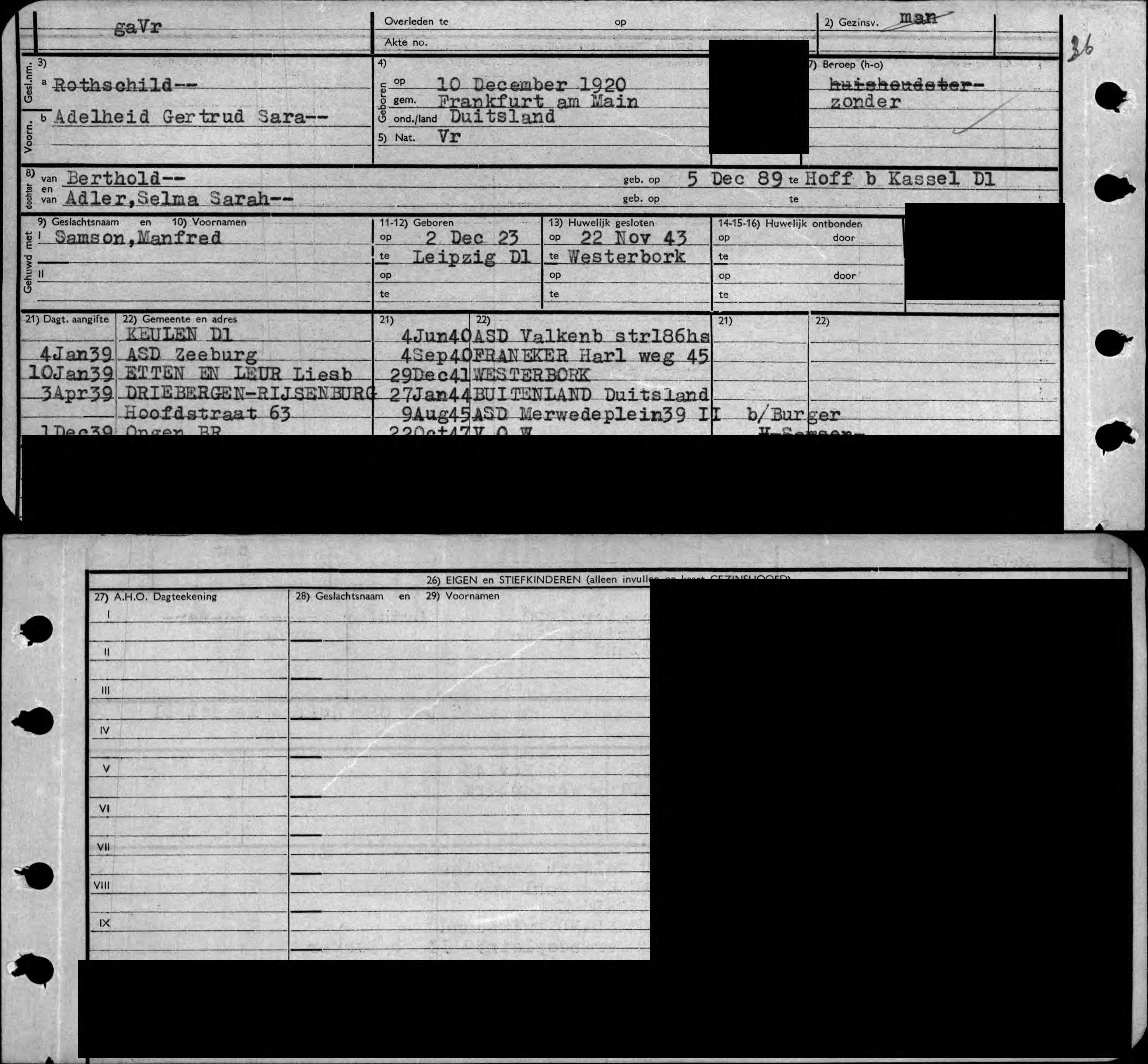
It took me quite some doing, but I believe I finally have some answers. I found in the Amsterdam Archives the following resident registration card for Adi.

Adelheid Rothschild Samson registration card from the Amsterdam Archives, found at https://archief.amsterdam/archief/30238/691

The card contains the following information, including pertinent information about Adi’s whereabouts in the Netherlands. Note that it starts with Adelheid being single and then was updated to show her marriage information. The card contains the following information:

Surname: Rothschild. First names: Adelheid Gertrud Sara

Born10 December 1920, Frankfurt am Main, Germany–Female

Father: Berthold, born 5 Dec 1889 in Hoff b. Kassel, Germany

Mother: Adler, Selma Sarah

Occupation: Housewife/without 

Married to: Samson, Manfred,  born 2 December 1923, Leipzig, Germany

Married on: 22 November 1943

Place of marriage: Westerbork

Address History 

| Date | Municipality | Address |

| 4 Jan 1939 | Cologne, Germany | (arrival from abroad) |

| 4 Jan 1939 | Amsterdam – Zeeburg | |

| 10 Jan 1939 | Etten en Leur, Liesberg | Hoofdstraat 63 |

| 3 Apr 1939 | Driebergen-Rijsenburg | |

| 1 Dec 1939 | Ommen, BB | |

| 4 Jun 1940 | Amsterdam | Valkenburgerstraat 186hs |

| 4 Sep 1940 | Franeker | Harlingerweg 45 |

| 29 Dec 1941 | Westerbork | |

| 27 Jan 1944 | Abroad – Germany | 

| 9 Aug 1945 | Amsterdam | Merwedeplein 39 II |

| 22 Oct 1947 | Amsterdam | VOW |


Of particular interest to me was the date of Adelheid’s arrival in the Netherlands: January 4, 1939, from Cologne, Germany. She was then not yet nineteen years old and had been without any immediate family member in Germany for almost two years.

Adelheid then lived in various towns in the Netherlands between January 4, 1939, and December 1941 when she was sent to Westerbork, the location where the Nazis sent the Jews they rounded up while awaiting transport to the concentration camps. It was there that Adelheid met and married Manfred Samson, a marriage of convenience, according to Meir.

I was curious about what advantages that marriage afforded Adelheid and/or Manfred, so I decided to dig a little deeper. What I learned was that people held at Westerbork learned that it was better to be deported to Bergen Belsen, which was not a death camp, than to Auschwitz or another death camp. One article described the purpose of the Bergen Belsen camp:

In late 1942, Hitler and SS chief Heinrich Himmler agreed to make a camp for the purpose of setting aside Jewish families as hostages, with specific instructions that they be given healthy living conditions, so that they could be used at an unspecified later to be traded as hostages for Germans civilians living in allied and allied-occupied countries, for foreign currency, or for much-needed supplies. For this purpose, Jewish people were to be chosen under categories such as those who had special influential connections in foreign countries; those who were themselves of some importance in foreign countries; those who already had so-called ‘Palestine certificates’ giving them the right to emigrate to Palestine; those who already had authorized travel visas to allied countries; those who had ‘hostage value’ via political or economic means, or who were leading Jewish functionaries….Despite the name, the camp was still a part of the Nazi concentration camp system. Belsen was unique in the Nazi camp system in a number of ways, however. From the very start it was a camp intended for families, with a large number of children and teenagers. As a rule, entire families rather than single persons were not [sic??]sent to Belsen, even if only one person in family fulfilled the above criteria for ‘hostage value’.

Thus, perhaps Manfred and Adelheid married because they wanted to go to Bergen Belsen, a safer camp, and only one of them qualified as having “hostage value.” I was curious what a Palestine certificate was and how one obtained one and learned that they were issued by the Jewish Agency in Palestine to give those living under Nazi control permission to escape to Palestine. But only those who had a family member living already in Palestine were eligible to obtain one of these certificates. Remember that Adelheid’s sister Helene (Hana) had already immigrated to Palestine in 1937, so Adelheid was eligible to apply for a Palestine certificate. Perhaps Manfred was not, so Adelheid married him to save him from being sent to Auschwitz. Although they later divorced, Adelheid likely saved his life.

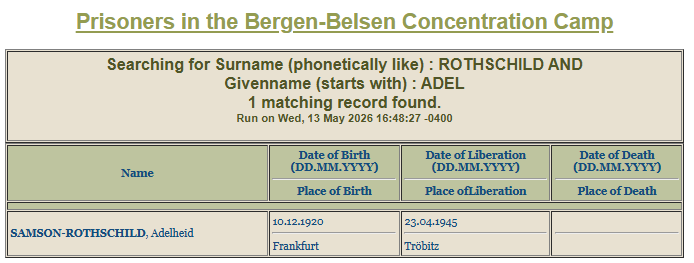
The chronology then continues, showing that in January 1944, Adelheid was deported. From other documents we learned that she and Manfred ended up in the Bergen-Belsen concentration camp. According to a record I located at JewishGen.com, Adelheid Rothschild and her husband Manfred Samson were liberated at Tröbitz on April 23, 1945, just a week after the war in Europe ended.

I looked up Tröbitz and learned that that was where “the Lost Train” ended up as described in an article at the Yad Vashem website:

Between 6-10 April 1945, days before the liberation of the Bergen-Belsen concentration camp in Germany, three trains were sent from the camp with some 7,000 Jews on board, bound for the Terezin ghetto.  The first train was liberated by the Allies.  The second train reached Terezin on 21 April, and the third, later known as “The Lost Train”, never reached its destination.  After a journey of approximately two weeks, the train was stopped on a destroyed bridge on the Elster River, and on 23 April, it was liberated by the Red Army on the outskirts of the German village of Tröbitz.

The article then tells the story of Betje Andriesse, and her children Bram, Tett and Mirjam, passengers on that train presumably along with Adelaide Rothschild Samson. Betje’s husband Hermann died in February 1945 from starvation and illness at Bergen Belsen (as did Anne Frank). Like Adelaide and Manfred, the Andriesse family had been sent from Amsterdam to Westerbork and then to Bergen-Belsen around the same time. Perhaps they all knew each other. And they likely were all on the same Lost Train. According to an article on JewishGen, there were initially 2500 people on that train, which was supposed to be going to Theriesenstadt, but never made it there.

The Yad Vashem article continued, “For two interminable weeks, the train zigzagged between bombed tracks and destroyed bridges, and on 23 April, it was liberated by the Red Army on the outskirts of the German village of Tröbitz.  Survivors of the journey were given lodging in the village.” But over 600 of the people on that train died during that trip or afterwards in Tröbitz—from disease and malnutrition. Fortunately, Adelheid and Manfred were among those who survived.

In June 1945, the survivors were brought to the Netherlands, and if you look at the chronology on Adelheid’s registration card, you will see that she is registered again as a resident of Amsterdam in August 1945.

The last entry on the card says that on October 22, 1947, she was “VOW,” which stands for “Vertrokken Onbekend Waarheen,” which translates to “Departed to Unknown Destination.” Although I cannot be sure until the Israel State Archives reopen after the war, I am going to guess that that’s when Adelheid and Manfred left Amsterdam for what was then Palestine, soon to be Israel.

It’s remarkable to me to think of all Adelheid survived. I know her marriage to Manfred Samson did not, but somehow together the two of them survived the terrors of Bergen Belsen and the Lost Train and both ended up living the rest of their lives in Israel.

Berthold Rothschild: More Answers, More Questions

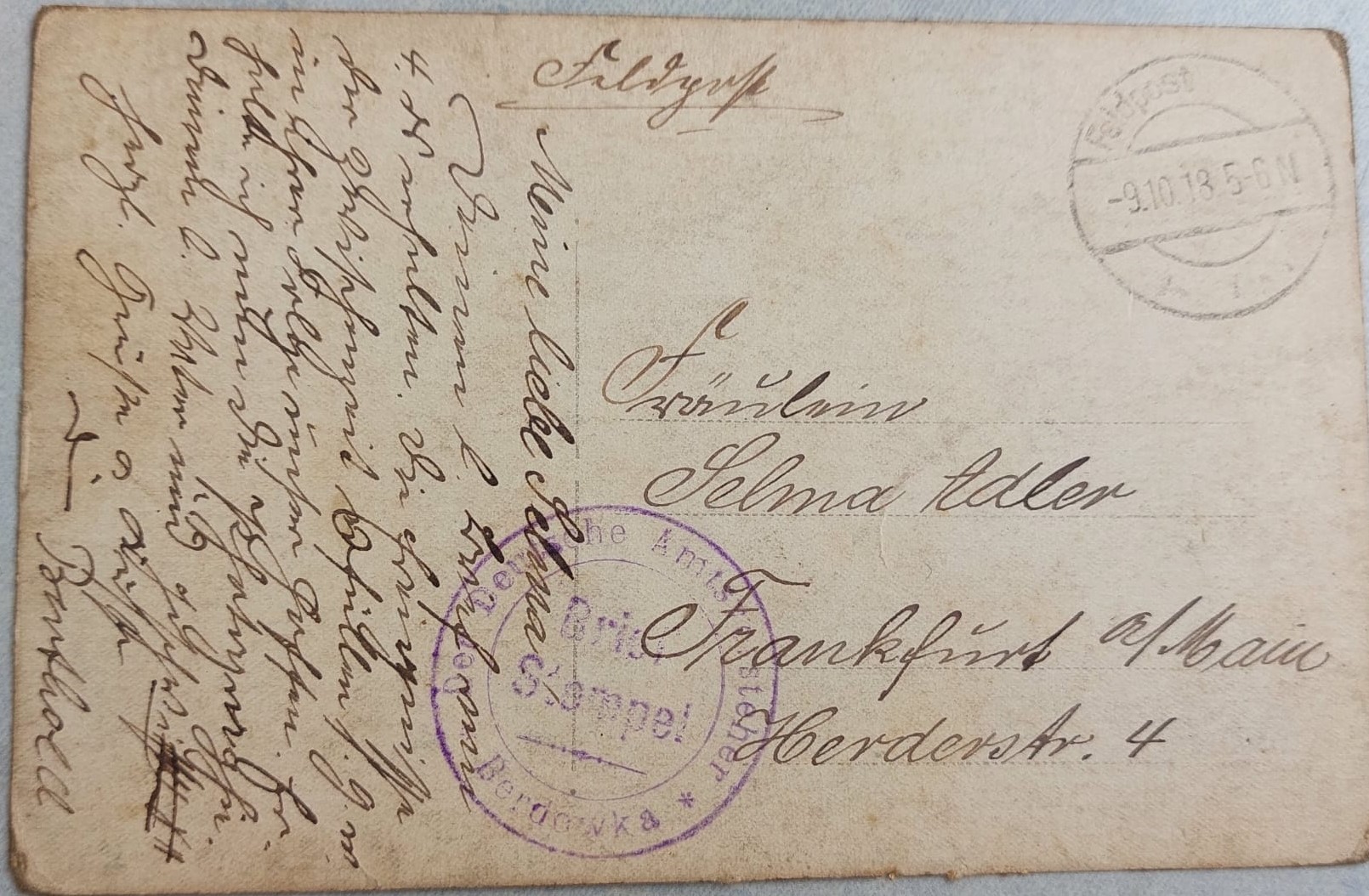
As I mentioned in my prior post, I received some additional documents and photographs from my cousin Meir, grandson of Berthold Rothschild and Selma/Sarah Adler. Last time I shared a postcard from 1918 that Berthold wrote to Selma from his post in World War I just a month before the war ended.

Here is a second postcard, as translated by MyHeritage:

Postcard from Berthold Rothschild to Selma Adler, 1918
Courtesy of the family

It translates as:

My dear Selma! Received your dear letter of the 4th inst. Since we are in the final period, etc. I have only the hope, expectation and request, [sending] my heartfelt greetings and kisses Your Berthold

It is dated October 8, 1918, and like the other postcard, was sent from Berdowka in what is now Belarus. Obviously Berthold could see that the end of the war was nearing.

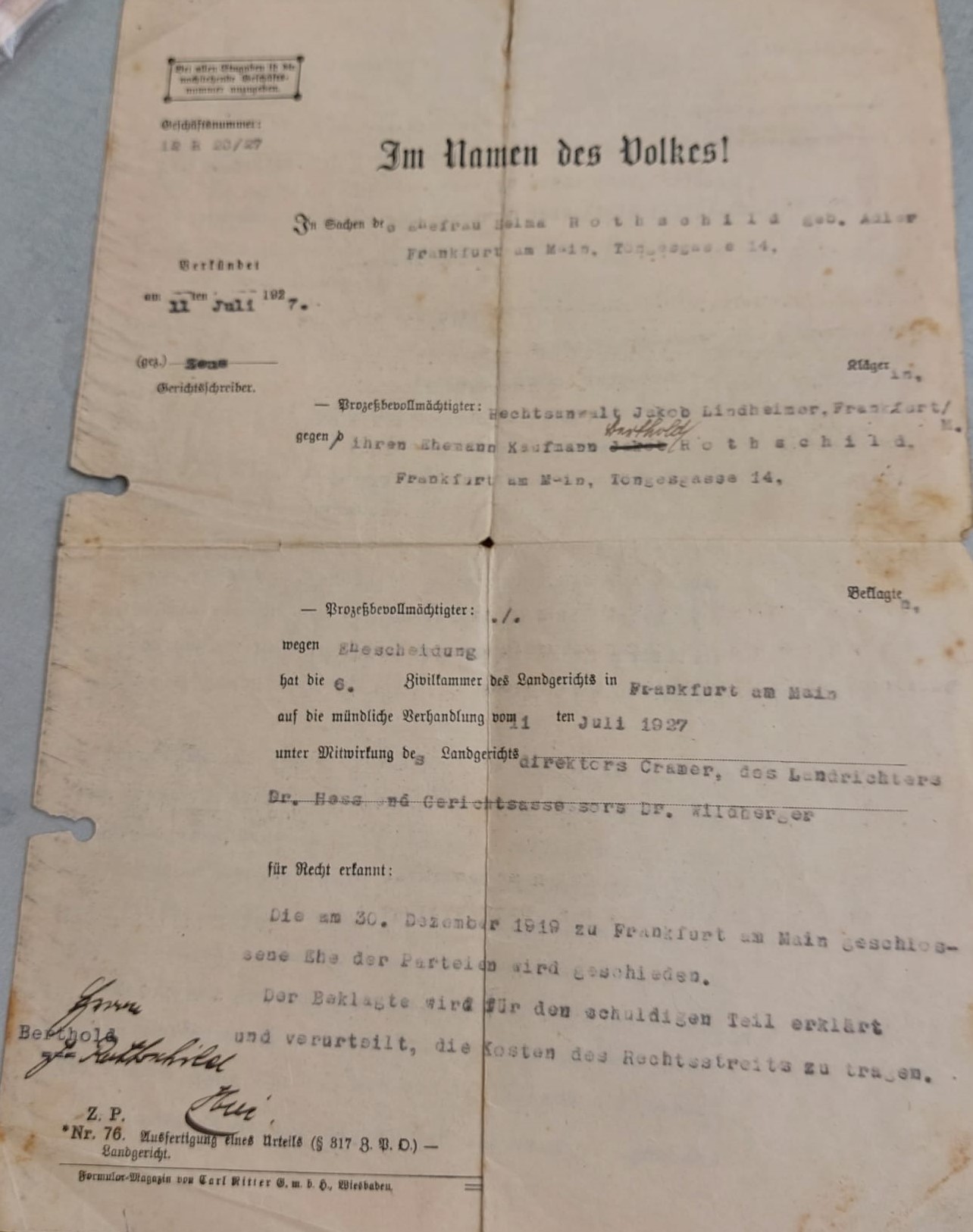
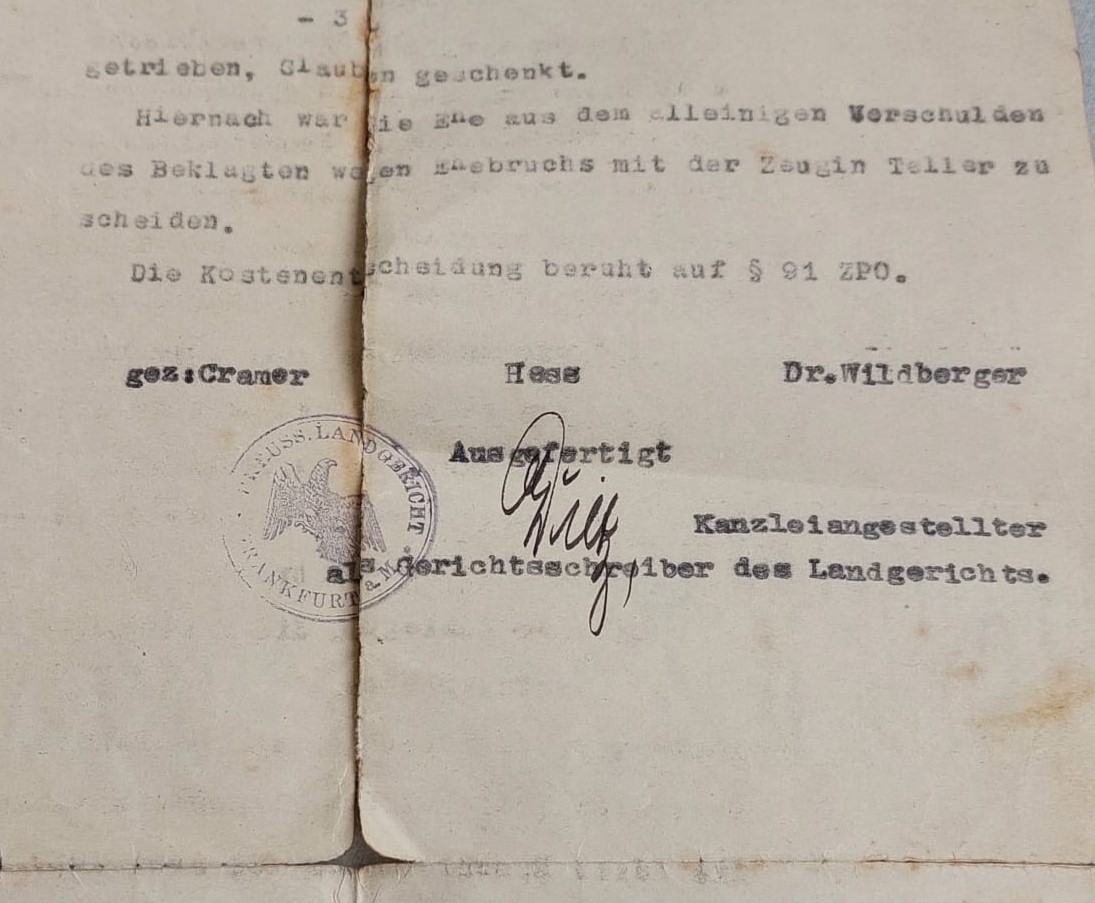
Berthold and Selma married on December 30, 1919, and had two daughters, Adelheid (Adi) in 1920 and Helene (Hana) in 1922. Then they divorced in 1927. Meir had their divorce papers, which show that Selma sued for divorce based on adultery.

Divorce papers of Berthold and Selma (Adler) Rothschild
Courtesy of the family

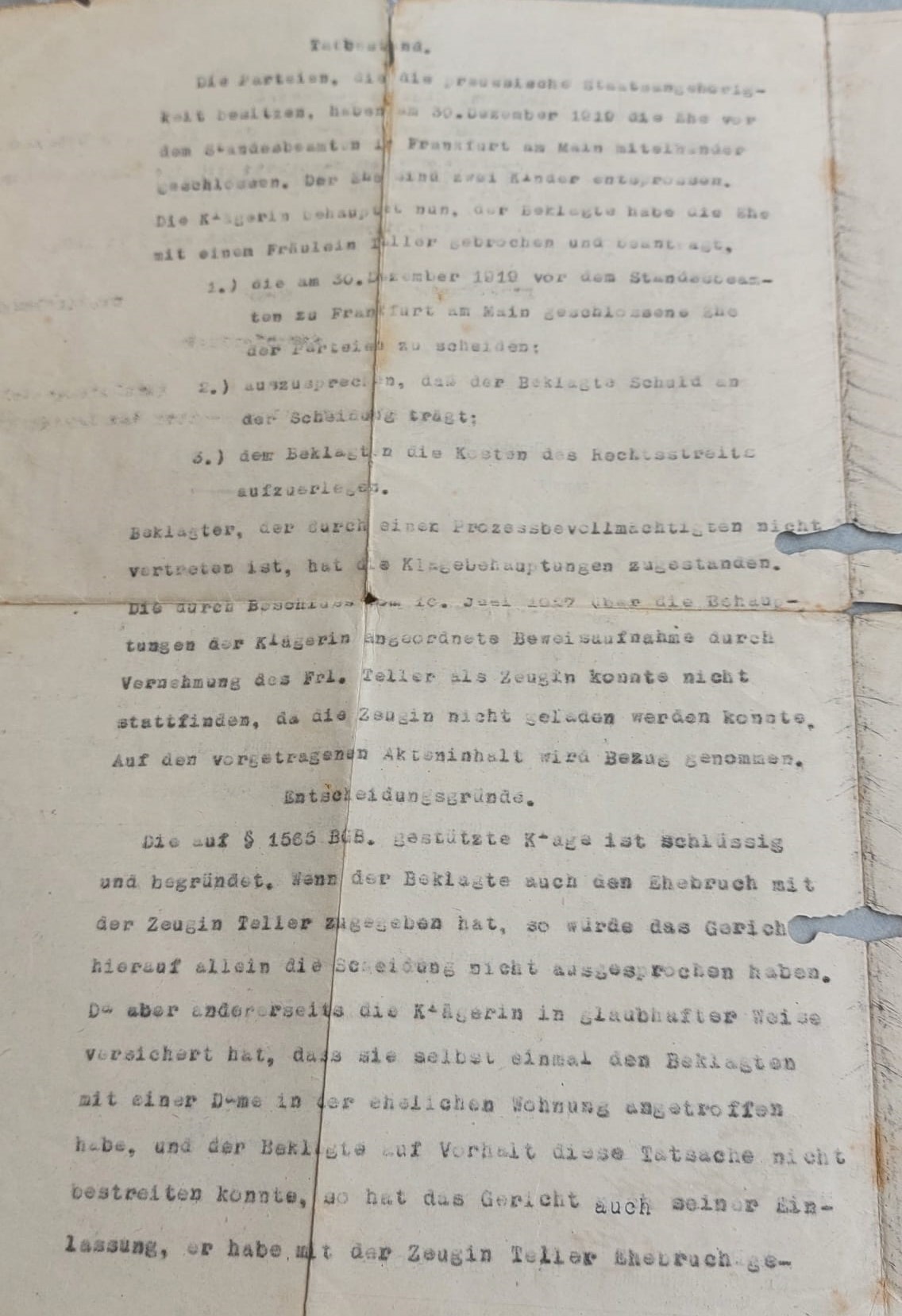
This time I used Transkribus, a platform Cathy Meder-Dempsey recommended, and Claude as backup to produce a translation. Since this was typed or printed text, not handwriting, I assume it is reliable and accurate. I have deleted some of the language and names for clarity and brevity:

In the matter of the housewife [and] Mrs. Rothschild  [Address] Frankfurt am Main, Tongesgasse, Pronounced on: July 11, 1927, Plaintiff, against her husband, the merchant Rothschild, Frankfurt am Main, Tongesgasse 14, Defendant, regarding divorce.

The 6th Civil Chamber of the Regional Court in Frankfurt am Main, based on the oral hearing held on July 1, 1927 with the participation of Regional Court Director Cramer, Regional Judge, Dr. Hess, and Court Assessor Dr. Wildberger, has ruled as follows:

The marriage between the parties, concluded on December 30, 1919, in Frankfurt am Main, is hereby dissolved by divorce. The Defendant is declared to be the guilty party and is ordered to bear the costs of the legal proceedings.

The parties, who hold Prussian citizenship, entered into marriage with one another on December 30, 1919, before the Registrar in Frankfurt am Main. Two children were born of this marriage. The Plaintiff now alleges that the Defendant has committed adultery with a certain Miss Teller and moves:

1.) for the dissolution of the marriage entered into by the parties on December 30, 1919, before the Registrar in Frankfurt am Main;

2.) for a declaration that the Defendant bears the fault for the divorce;

3.) for the costs of the legal proceedings to be imposed upon the Defendant.

The Defendant, who is not represented by legal counsel, has admitted the allegations set forth in the complaint.

The taking of evidence regarding the Plaintiff’s allegations—ordered by a resolution dated July 10, 1927, to be conducted through the examination of Miss Teller as a witness—could not take place, as the witness could not be served with a summons.

Reference is made to the contents of the case file as presented.

Grounds for the Decision:

The action, based on § 1565 of the Civil Code (BGB), is well-founded and substantiated. Even though the defendant has admitted to adultery with the witness Teller, the court would not have pronounced the divorce on that basis alone. However, since the plaintiff has credibly asserted that she herself once found the defendant with a lady in the marital home, and the defendant could not deny this fact when confronted with it, the court has also taken into account his admission that he committed adultery with the witness Teller. Accordingly, the marriage was to be dissolved on the sole fault of the defendant on account of adultery with the witness Teller.

Selma died just ten years later. I don’t know when or why Selma was admitted to the sanatorium, but I know that she died there in 1937. Her younger daughter Helene emigrated from Germany to Palestine that same year. The older daughter Adelheid also left Germany and ended up in Amsterdam and eventually at Bergen Belsen. More on her experiences in my next post.

Berthold also survived the Holocaust and ended up in South Africa, where he died in 1964. But I had been left with many questions about his experiences: For example, when did he leave Germany? Was he in the concentration camps or did he escape from Germany in time? When did he get to South Africa, and why did he go there, not Palestine like his daughter Helene?

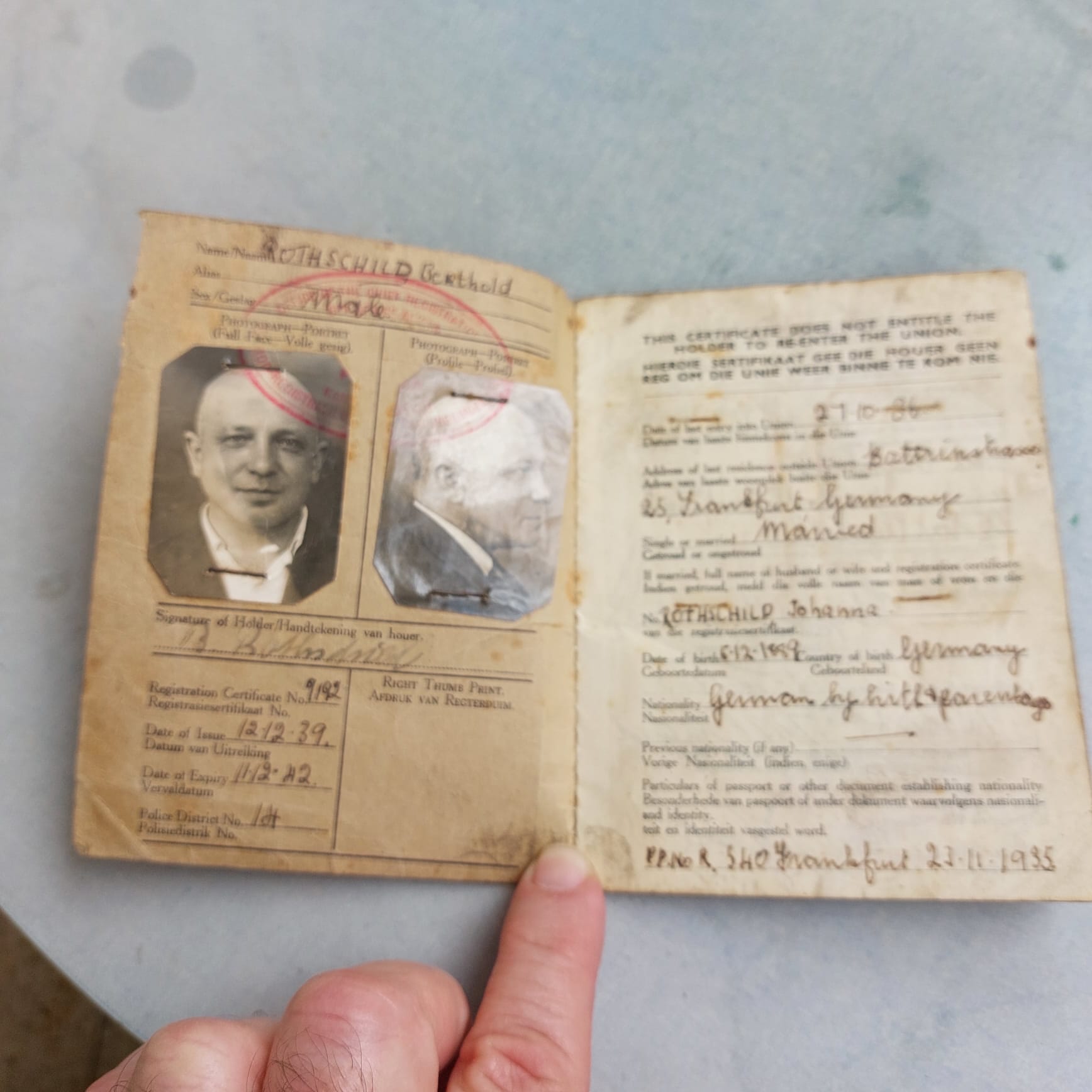
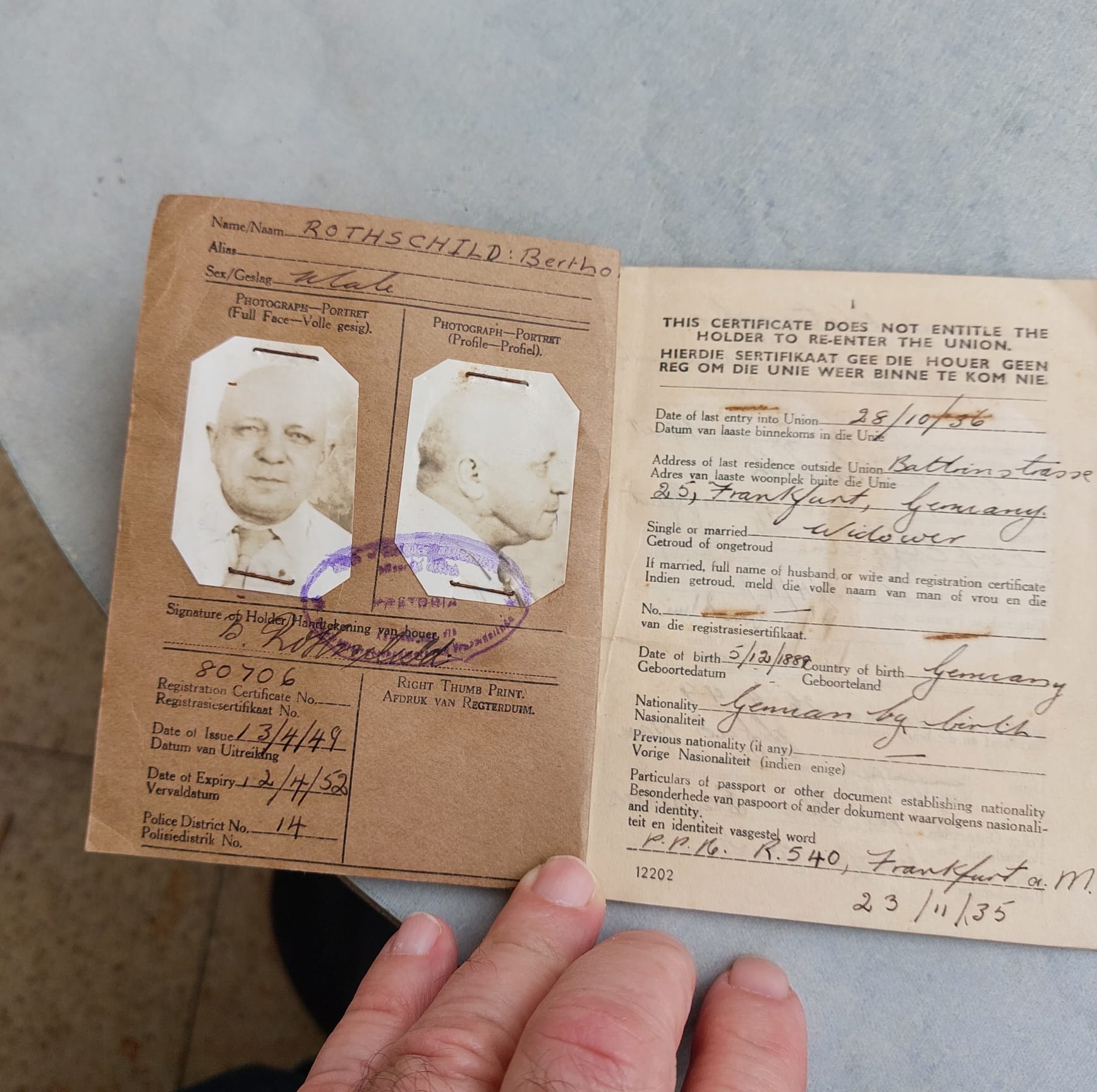
Well, in the second batch of documents that Meir sent were two documents that are South Africa residency registrations for Berthold, one for 1939-1942, the other for 1949-1952.

Berthold Rothschild South Africa residency document 1939
Courtesy of the family

Berthold Rothschild South Africa residency document 1949

If you look closely, you can see that they both indicate that Berthold last entered South Africa (and perhaps first entered South Africa) on October 28, 1936. In 1936, his daughter Helene was still in Germany and only fourteen. As we will see, Adelheid also was still in Germany in 1936 and would have been just sixteen. Who was caring for them? Meir believes that their aunts Gertrud and Anna, Berthold’s younger sisters, were taking care of them.

The first South Africa residency registration card reports that Berthold was married, and the later one says he was a widower. But in 1939 when he presumably filled out the earlier form, Selma had already died, and they had been divorced in 1927. That made me wonder whether Berthold had remarried sometime after 1927 and before 1939.

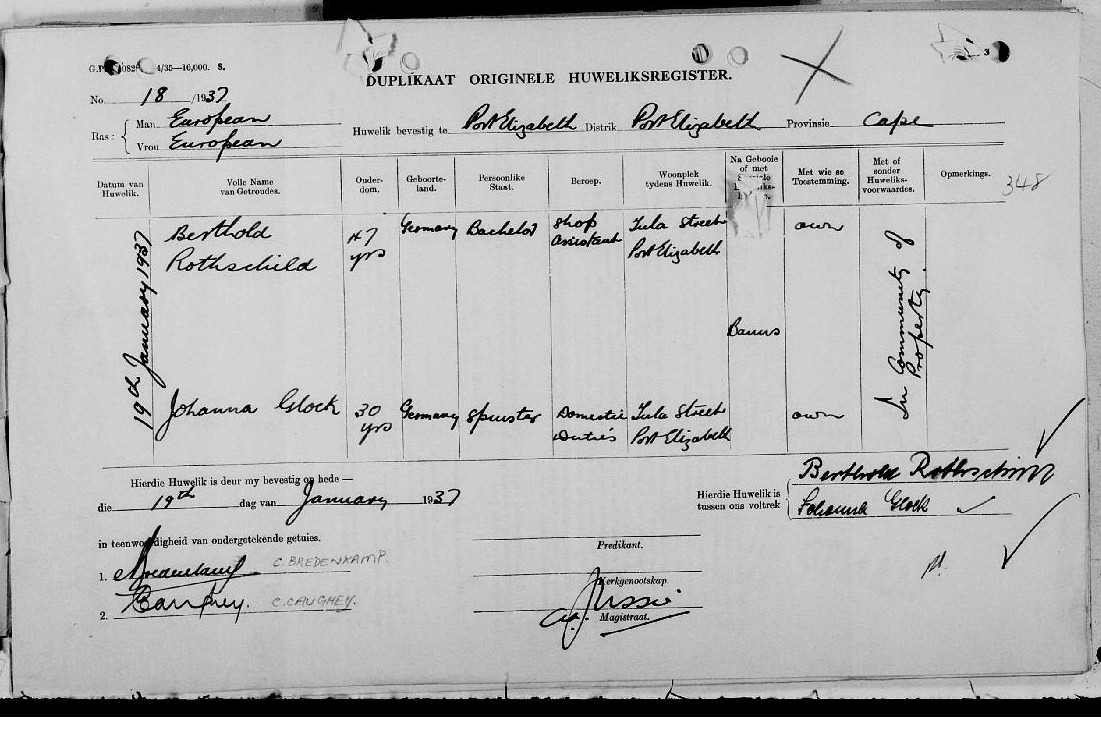
I couldn’t find a second marriage record for Berthold in Germany, but when I decided to try looking for one in South Africa, I found this:

Marriage record of Berthold Rothschild and Johanna Glock, Murraysburg, Murraysburg, Cape Province, South Africa records,” images, FamilySearch (https://www.familysearch.org/ark:/61903/3:1:3Q9M-CS27-N3D2-3?view=explore : May 13, 2026), image 50 of 978; . Image Group Number: 008163773

Berthold married Johanna Glock in Port Elizabeth, South Africa, on January 19, 1937. She was 30 years old, born in Germany, and a “spinster.” Berthold’s age is listed as 47, but he would have been only 41, so perhaps the person filling out the form either misunderstood or wrote a “one” that looks like a seven. His occupation is given as a shop assistant, and he is listed as a bachelor, even though he’d been married before. Despite those inconsistencies, I am quite comfortable assuming that this is the same Berthold Rothschild although I cannot say so with absolutely certainty. How many Berthold Rothschilds could have been living in Port Elizabeth, the same location where Berthold was living at the time he died in 1964?

Berthold Rothschild death certificate, “South Africa, Civil Death Registration, 1953-1967”, FamilySearch (https://www.familysearch.org/ark:/61903/1:1:6Z3Z-F3SN : Wed Jan 15 15:31:44 UTC 2025), Entry for Berthold Rothschild, 17 May 1964.

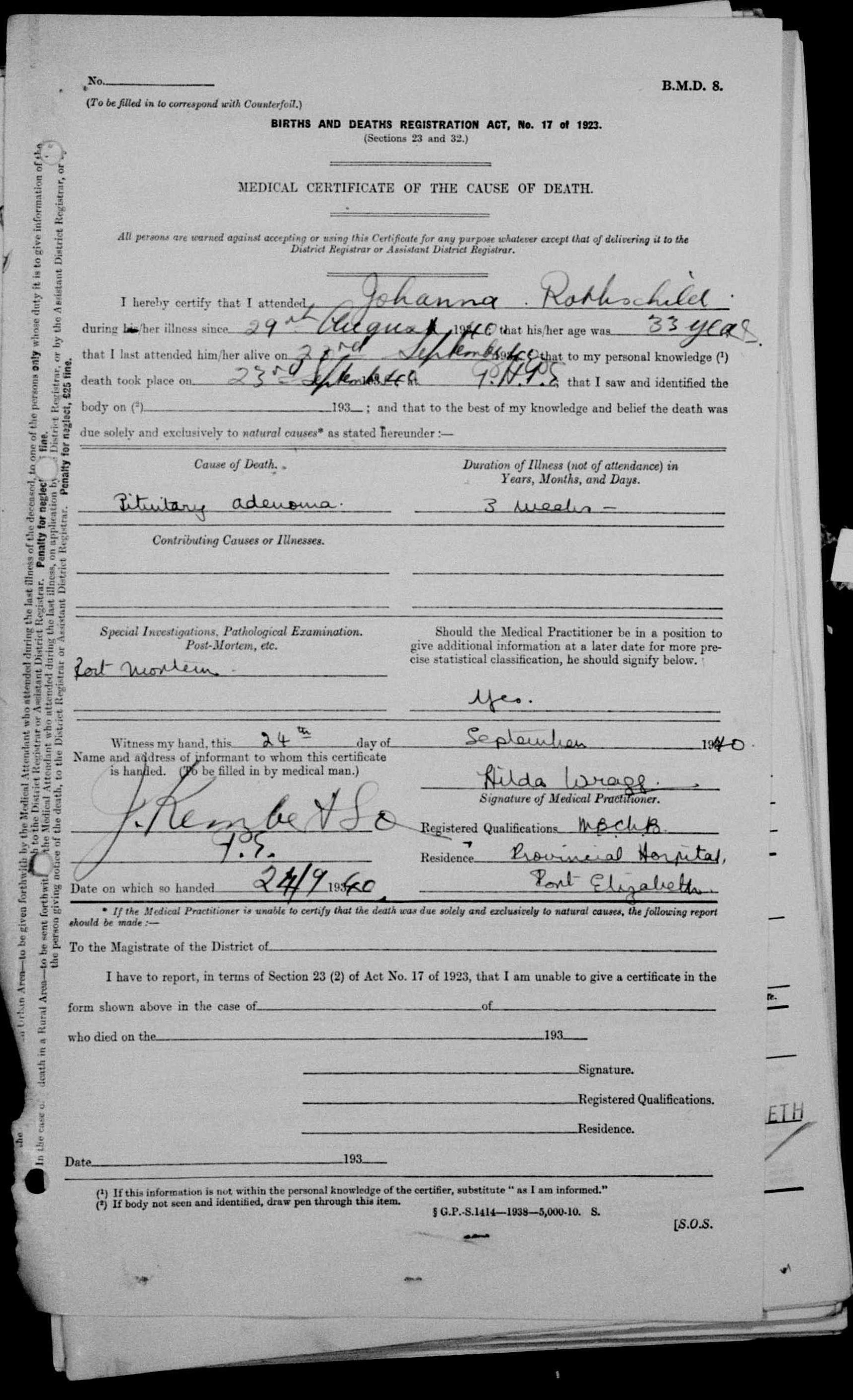
Sadly, Johanna died just three years after marrying Berthold. She was only 33 and died from a pituitary adenoma.

Johanna Glock Rothschild, death record, “South Africa, Cape Province, Civil Records, 1840-1972”, FamilySearch (https://www.familysearch.org/ark:/61903/1:1:Q2QM-4WD8 : Sat Mar 09 04:43:23 UTC 2024), Entry for Johanna Rothschild, 23 Sep 1940.

That explains why Berthold was listed as married in 1939, but a widower in 1942. I am still trying to learn more about Johanna and also about the rest of Berthold’s life, but for now I have at least answers to some of my questions. I know when he was born, where he served in World War I, when he married Selma Adler and why she divorced him, when he left for South Africa, when he married Johanna Glock, and when and where he died. Most of the holes have been filled, thanks in large part to his grandson Meir.

My next post will answer some questions about Berthold’s daughter Adelheid, questions for which neither Meir nor I had originally had answers.

ANOTHER UPDATE: Gertrud Rothschild Neuhahn and Family

Today I am sharing another update, this time with additional information about Gertrud Neuhahn Rothschild, whose family I wrote about just three weeks ago. I had many questions left even after I wrote that post, including how this family survived the Holocaust.

My cousin and fellow family history researcher Richard Bloomfield left a comment on that blog post, saying, “Did you know that Gustav was first missing and then a POW in WWI? He belonged to the Infanterie-Regiment Nr. 83 – 9. Kompanie according to the records published on August 31, 1916. His return was recorded on May 14, 1918. From the German lists of ‘Losses.’ ”

As always, Richard is a superb researcher, and I am blessed to have his support. Richard sent me the two records he’d found. Although I had written in the blog post that Gustav had served in World War I, I had not researched his service details. I went back to Ancestry and located citations for the two lists that Richard sent me. The first document, dated August 31, 1916, reported that Gustav (misindexed as “Reuhahn”) had been previously reported missing but was now in captivity:

Gustav Neuhahn, Residence Year 1914, Residence Country Deutschland (Germany), List Date 31 Aug 1916, List Number 1131, Volume 1916_XVIII, Ancestry.com. Germany, World War I Casualty Lists, 1914-1919, Original data: Deutsche Verlustlisten 1914 bis 1919. Berlin, Deutschland: Deutsche Dienststelle (WASt).

A second record, dated May 14, 1918, reported that Gustav had been released from captivity:

Name Gustav Neuhahn, Residence Year 1914, Residence Country Deutschland (Germany)
List Date 14 Mai 1918 (14 May 1918), List Number 1894, Volume 1918_XVI, Casualty List: Verlust-Liste Nr 1894 (14 Mai 1918), Ancestry.com. Germany, World War I Casualty Lists, 1914-1919 [database on-line]. Lehi, UT, USA: Ancestry.com Operations, Inc., 2011.
Original data:Deutsche Verlustlisten 1914 bis 1919. Berlin, Deutschland: Deutsche Dienststelle (WASt).

He then returned to Germany, and as I wrote in my prior post, he married Gertrud Rothschild on May 16, 1919, in Hoof, almost exactly a year after his release. They had two daughters, Ruth on March 18, 1920, and Ursula (later known as Tirza) on March 9, 1921, according to what Richard found on MyHeritage in the “Jewish Holocaust Memorials and Jewish Residents of Germany 1933-1945” database. I searched for actual birth records for Ruth and Ursula/Tirza in the Hesse online archives, but the birth records available there do not extend as recently as the 1920s.

The family lived in Grebenstein at least until 1924, as seen in a page about Grebenstein from the Alemannia Judaica that Richard shared with me.  That page mentions Gustav Neuhahn as one of the leaders of the Grebenstein Jewish community in 1924 when there were 53 Jewish residents out of a population of almost 2500 people.

What I still don’t know is what Gustav and Gertrud and their daughters did after Hitler came to power. As I wrote in that prior post, I know all four survived the Holocaust and ended up in Palestine/Israel since they were all registered as voters in Tel Aviv as early as 1944. But I don’t know when they left Germany.

In the JewishGen Online Worldwide Burial Registry, Richard found a listing for a Tirza Rosenbaum, born Tirza Neuhahn, born in 1921. Thus, it appears that Tirza may have married someone named Rosenbaum, presumably sometime after 1944 when she was still listed as Neuhahn with her parents in the Tel Aviv voter registry. But I cannot find a marriage record for her on the IGRA website.

When I saw that Tirza was buried in the Menuha Nehona Alternative Cemetery in Kefar Sava, Petach Tikva, Central District, Israel, I searched for another Rosenbaum buried in that cemetery to see if I could find her husband. I found a Manfred Rosenbaum, born in 1924 who died in 2023, buried in that same cemetery. But was that Tirza’s husband?

A man with that same name, Manfred Rosenbaum, who was born in Berlin in May 15, 1924, was interviewed by the Shoah Foundation in 1997 in Tel Aviv,1 and his wife is identified on that site as Tirza Rosenbaum, but I cannot access the actual interview to verify that that is my relative, Tirza/Ursula Neuhahn. Ancestry’s data for that interview, however, lists Tirza’s birth date as March 9, 1921, the same date that was listed on MyHeritage for my relative, as seen above.2

However, it also lists Tirza’s death date as January 8, 1990,3 not in 2012, as listed in the JOWBR. Since these sources—the MyHeritage database, the JOWBR, the table of contents to the Shoah interview, Ancestry’s index to the interview, and BillionGraves—are not primary sources, I cannot say with any certainty whether Tirza Neuhahn married this Manfred Rosenbaum, but it seems a possibility. I also cannot say with any certainty when she died.

Richard also found Gertrud (Gerta) in the JOWBR, showing that she died on December 28, 1973.

Gertrud Rothschild Neuhahn burial record

Once I saw where Gertrud (Gerta) was buried, Kiryat Shaul cemetery in Tel Aviv, I searched for Gustav there, using the Hebrew version of the name Neuhahn, נויהן, and found Gustav’s gravestone on the Gravez.com website. He died on May 18, 1960, when he was 74.

With Richard’s help, I now know a great deal more about Gertrud Rothschild Neuhahn and her family.  I am still hoping to learn more, including more about when they immigrated to Israel and more about their daughters Ruth and Tirza and their families. I will continue to update the blog as I learn more.

Thank you, Richard!


  1. Manfred Rosenbaum, Gender Male, Birth Date 15 May 1924, Birth Place Berlin, Germany, Interview Date 4 Mar 1997, Interview Place Givatayim, Tel Aviv, Israel, Relationship Self (Head), Role Interviewee, USC Shoah Foundation; Los Angeles, CA, USA; Visual History Archive: the Holocaust, Free Access: USC Shoah Foundation, Holocaust – Jewish Survivor Interviews, Original data: Visual History Archive: The Holocaust. Los Angeles, CA, USA: USC Shoah Foundation. Also, see https://vha.usc.edu/testimony/28600?mm=bio for the Shoah Foundation page for Manfred Rosenbaum. 
  2. Name Tirza Rosenbaum, Gender Female, Birth Date 9 Mar 1921, Birth Place Germany, Death Date 8 Jan 1990, Relationship Wife, Role Relative of Interviewee,
    Survivor No, USC Shoah Foundation; Los Angeles, CA, USA; Visual History Archive: the Holocaust, Free Access: USC Shoah Foundation, Holocaust – Jewish Survivor Interviews, Original data: Visual History Archive: The Holocaust. Los Angeles, CA, USA: USC Shoah Foundation. 
  3. Ibid. 

UPDATE! Berthold Rothschild and His Family

On March 11, 2026, just a little over a month ago, I wrote about the family of Berthold Rothschild and his family, including his wife Sarah Adler and their daughter Adelheid. As I wrote in that blog post, I did not know very much about how Berthold survived the Holocaust but knew he ended up in South Africa. I also knew that Adelheid had been in Amsterdam and sent to Bergen-Belsen with her husband Manfred Samson and that they both survived and possibly ended up in Israel after the war. But there were definite holes in my story, and I hoped a family member would find me and help fill in those holes.

Then, lo and behold, last week I heard from Meir, a grandson of Berthold Rothschild, who coincidentally was researching his family and looking to learn what had happened to his grandmother Sarah at just about the same time that I posted about his grandparents.

From Meir I learned that Berthold and Sarah had had a second daughter, Helene, Meir’s mother. Helene (who later became Hana in Israel) was born on March 30, 1922, in Frankfurt. In 1937 at the age of just fifteen she immigrated alone to what was then Palestine. On the Israel Genealogy Research Association website I located a document showing that Helene registered with the German consulate in Palestine in 1938, where she indicated that she intended to stay there indefinitely and that her German passport had expired. Here are those documents, the passport provided by Meir and the consulate registration from IGRA:

Helena Rothschild’s German passport
Courtesy of the family


Helene Rothschild registration form for the German Consulate in Jerusalem, 1938, found at IGRA, https://genealogy.org.il/AID/index.php

Helene Rothschild registration form for the German Consulate in Jerusalem, 1938, found at IGRA, https://genealogy.org.il/AID/index.php

In Israel she met and married Benjamin Kestenbaum, who later changed his surname to Armon in Israel. He was born in Berlin on July 28, 1918, and also immigrated to Palestine in 1937. He and Hana met while they were both working on Kibbutz Ein HaNetziv in the early 1940s. After marrying, they moved to Jerusalem where they had three children, including Meir, all born in Jerusalem. Meir’s father Benjamin died on February 20, 2000, and his mother Hana died on November 23, 2023, at the age of 101.1

Meir could not answer some of my questions about his grandfather Berthold—how he survived the Holocaust, when or why he ended up in South Africa, or whether he ever remarried. He did recall that Berthold came to Israel in the late 1950s with a South African woman and operated a photography studio in Jerusalem, but after a year or so they returned to South Africa.2

As for Meir’s aunt Adelheid (or Adi, as she was known in Israel), Meir wrote that her marriage to Manfred Samson was a marriage of convenience so that they could get a certificate to go to Bergen-Belsen. I am still trying to learn more about what that means. In any event they did not stay married after the war, but both did end up in Israel. There Adi married Asher Zarkover, another survivor, in 1948. They had two sons and divorced in 1960. Adi died in 2013 at the age of 93.3

Finally, Meir shared a photograph of his grandfather Berthold and his mother Hana.

Helena (Hana) Rothschild and her father Berthold Rothschild, undated. Courtesy of the family

I am so delighted that Meir reached out to me, and we are still exchanging emails, so if I learn more, I will update again.


  1. Email correspondence with Meir Armon, April 2026. Also, I found Benjamin’s burial record on JewishGen at https://www.jewishgen.org/databases/notglue_s2.php?rec=J_ISRAEL_bg1089704  In addition, I found a record on the IGRA website that shows the legal name chance from Helene Kestenbaum to Hana Armon dated 1953. 
  2. Email correspondence with Meir Armon, April 2026. 
  3. Ibid. 

Meier Rothschild’s Daughter Gertrud Rothschild Neuhahn and Her Family: How and Where Did They Survive the Holocaust?

Finally, after a few weeks without a post, I return to the children of Meier Rothschild and Bertha Lorge. Meier was the youngest child of Gelle Blumenfeld and my second cousin, three times removed. I am up to his third child, Gertrud.

As with her brothers Berthold and Theodor, I have also struggled to find reliable information about the third child of Meier Rothschild and Bertha Lorge, their daughter Gertrud Rothschild, her husband Gustav Neuhahn, and their daughter Ruth.

I found Gertrud on a passenger manifest card dated January 22, 1962, for a flight to Houston from Mexico City. On that card her residence is given as Tel Aviv, Israel. I could not find a comparable card for Gustav or their children.

Gertrud Rothschild Neuhahn passenger manifest card, The National Archives At Washington, D.C.; Washington, D.C.; Series Title: Passenger and Crew Manifests of Airplanes Arriving At Houston, Texas; ARC Number: A3982; Record Group Title: Records of the Immigration and Naturalization Service, 1787-2004; Record Group Number: 85, NARA Roll Number: 50, Ancestry.com. Texas, U.S., Arriving and Departing Passenger and Crew Lists, 1893-1963

I searched for them all in Israel and found this interesting document in the Israel Genealogical Research Association (IGRA) website:

This is a list of packages sent from Israel to people in Europe who were Holocaust survivors; the program was organized by the American Jewish Joint Distribution Committee. One of those sending packages in 1945 was “Neuhahn-Rothschild,” presumably Gertrud, and the intended recipient was Theodor Rothschild, her brother, in Monte Carlo, Monaco. That reaffirms the fact that Theodor was in Monaco and also establishes that Gertrud was in Tel Aviv in 1945, but not anything more.

A search on the IGRA site for Ruth Neuhahn revealed more evidence of the Neuhahn family in Palestine in 1944. A list of registered voters in 1944 shows Ruth, her parents, and a previously undiscovered sister Tirza living in Tel Aviv.

Neuhahn family on 1944 Voters Registration list found at IGRA, https://genealogy.org.il/AID/

This translates as:

Yosef Neuhahn, son of Zelig

Gertrud Neuhahn, daughter of Shlomo

Ruth Neuhahn, daughter of Yosef

Tirza Neuhahn, daughter of Yosef

That matches what I know about Gustav; his father was Selig Neuhahn. Gustav’s Hebrew name must have been Yosef. I was confused by Gertrud’s name since her father was Meier, but perhaps he used Shlomo as his Hebrew name. And I have no prior record for a daughter named Tirza or by any other name. Unfortunately, I cannot find any later record for Tirza Neuhahn.

I did, however, locate a marriage record for Ruth Neuhahn on the IGRA website:

Marriage of Ruth Neuhahn to Moritz Neumann, found at IGRA, https://genealogy.org.il/AID/

The record shows that Ruth Neuhahn, daughter of Yosef and Gertrud Neuhahn, age 22, married Moritz Neumann, son of Shimon and Chaya Neumann, age 35, on  February 2, 1945, in Tel Aviv. Both resided in Petah Tikva, Moritz was a clerk, and Ruth a typist.

On Ancestry I located some passenger manifest cards for Ruth and two women with the same surname and addresses who I presume are her daughters. For example, here is a passenger card for Ruth Neumann in June 1959, stating that her nationality was Israeli, but her residence was in Mexico. She was traveling and staying in San Antonio, Texas. She also traveled in Miami in 1960 and in 1962,1 reporting the same facts. Her residence in Mexico may explain why her mother Gertrud had been flying from Mexico to San Antonio in 1962, as seen above.

Ruth Neumann passenger manifest card 1959, The National Archives At Washington, D.C.; Washington, D.C.; Series Title: Passenger Manifests of Airplanes Arriving At San Antonio, Texas; ARC Number: A3524; Record Group Title: Records of the Immigration and Naturalization Service, 1787-2004; Record Group Number: 85, NARA Roll Number: 28, Ancestry.com. Texas, U.S., Arriving and Departing Passenger and Crew Lists, 1893-1963

Thus, in 1962 Ruth was still living in Mexico, still an Israeli citizen, and now visiting Miami, Florida. As for her husband Moritz, one tree on Ancestry shows that he died in Mexico City in 2003 and that Ruth died there as well. I have written to the owner of that tree and am hoping that she can share more information about Gertrud, Gustav, and Ruth, and their family.

If I can get more information about Gertrud and her family, I will update the blog. But for now this is the best I can do. The good news is that it appears that all of Gertrud’s family all survived the Holocaust.


  1.  Name Ruth Neumann, Nationality Israeli, Arrival Age 40, Birth Date 18 Mar 1920
    Birth Place Kassel, Germany, Record Type Arrival Arrival Date 2 May 1960, Arrival Place Miami, Florida, USA, Flight Number 150, Airline Guest Aerovias Mexico, The National Archives in Washington, DC; Washington, DC, USA; Series Title: Passenger and Crew Manifests of Airplanes Arriving At Miami, Florida.; NAI Number: A3995; Record Group Title: Records of the Immigration and Naturalization Service, 1787-2004; Record Group Number: 85, Ancestry.com. Florida, U.S., Arriving and Departing Passenger and Crew Lists, 1898-1963; Ruth Neumann, Nationality Israeli, Arrival Age 42, Birth Date 18 Mar 1920, Birth Place Germany, Record Type Arrival, Arrival Date 19 May 1962, Arrival Place Miami, Florida, USA, Flight Number 100, Airline Gam, The National Archives in Washington, DC; Washington, DC, USA; Series Title: Passenger and Crew Manifests of Airplanes Arriving At Miami, Florida.; NAI Number: A3995; Record Group Title: Records of the Immigration and Naturalization Service, 1787-2004; Record Group Number: 85, Ancestry.com. Florida, U.S., Arriving and Departing Passenger and Crew Lists, 1898-1963