My Grandson’s Bar Mitzvah

This past weekend I had the overwhelming pleasure of watching my grandson Nate become a bar mitzvah. His utter joy in participating as an adult in a Jewish service—reading the prayers, the Torah, and the haftorah—was infectious. He didn’t just do this to fulfill his parents’ expectations or to please his grandparents; he did it with a full heart. His smiles, the vibrato in his voice, the way his body swayed to the music and the prayers all revealed just how much this all meant to him.

Although I could do little more than marvel and smile and cry a bit while I shared these moments in real time, in the aftermath as I processed it more deeply, I thought of all of Nate’s ancestors going back hundreds of years—all those for whom Jewish practice had been an anchor of safety and meaning in times of oppression, poverty, dislocation, and isolation.

Nate was carrying forward that thread of meaning, that connection to history and to community. He lives in a world where antisemitism still exists and where culture wars make identity even more fraught with danger, but also a world where he has more choices than his ancestors did. And he has chosen to embrace their traditions and carry them forward into the next generation not in a strictly traditional way, but in his own way, investing them with what is meaningful to him. I am both proud of him and excited for him as he now ventures forth into adulthood.

Watching Nate and being moved by his joyful adoption of these traditions and rituals has reminded me of my purpose in doing this research and in writing this blog: to honor and remember all those who came before me and to keep that history alive so that future generations will also honor and remember them and the traditions and rituals they followed.

Nate wearing the tallit that belonged to his great-grandfather Nathan, for whom he is named. Standing behind him is his grandfather Harvey, Nathan’s son.


My Cousin Ben’s Bar Mitzvah

I was privileged last weekend to experience something I never would have been able to share if I hadn’t started on this genealogy journey over four years ago.  If you’ve been reading this blog for a while (or even just know its title), then you know that the first family I researched was that of my maternal grandmother, Gussie Brotman.  From my mother and my aunt, I knew some of the names of my grandmother’s siblings—Hymie, Tillie, Frieda, and Sam. And eventually I found three of her half-siblings as well—Abraham, David, and Max.

Gussie Brotman

Gussie Brotman, my grandmother

But my mother had long ago lost touch with her cousins, the children of her mother’s siblings, and had no idea in many cases of their names, let alone their whereabouts.  So I set out to find them, and as I’ve described elsewhere, the first two long lost cousins I located just about four years ago were my second cousin Judy, granddaughter of Max Brotman, and my second cousin Bruce, grandson of Hymie (Herman) Brotman. From Judy and Bruce, I learned so much about the family and also was able to find all my other Brotman second cousins.

Max Brotman

Max Brotman, my great-uncle

Hyman Brotman

Hyman Brotman, my great-uncle

A little over three years ago, some of the grandchildren of Hyman Brotman and some of my grandmother’s grandchildren met in New York City and had a wonderful reunion—or more accurately for some of us—a first meeting.  It remains one of the most rewarding and exciting experiences I’ve had since starting to research my family history.  And thanks to the miracle of email and Facebook, I’ve managed to stay in touch as best I can with many of these new second cousins.

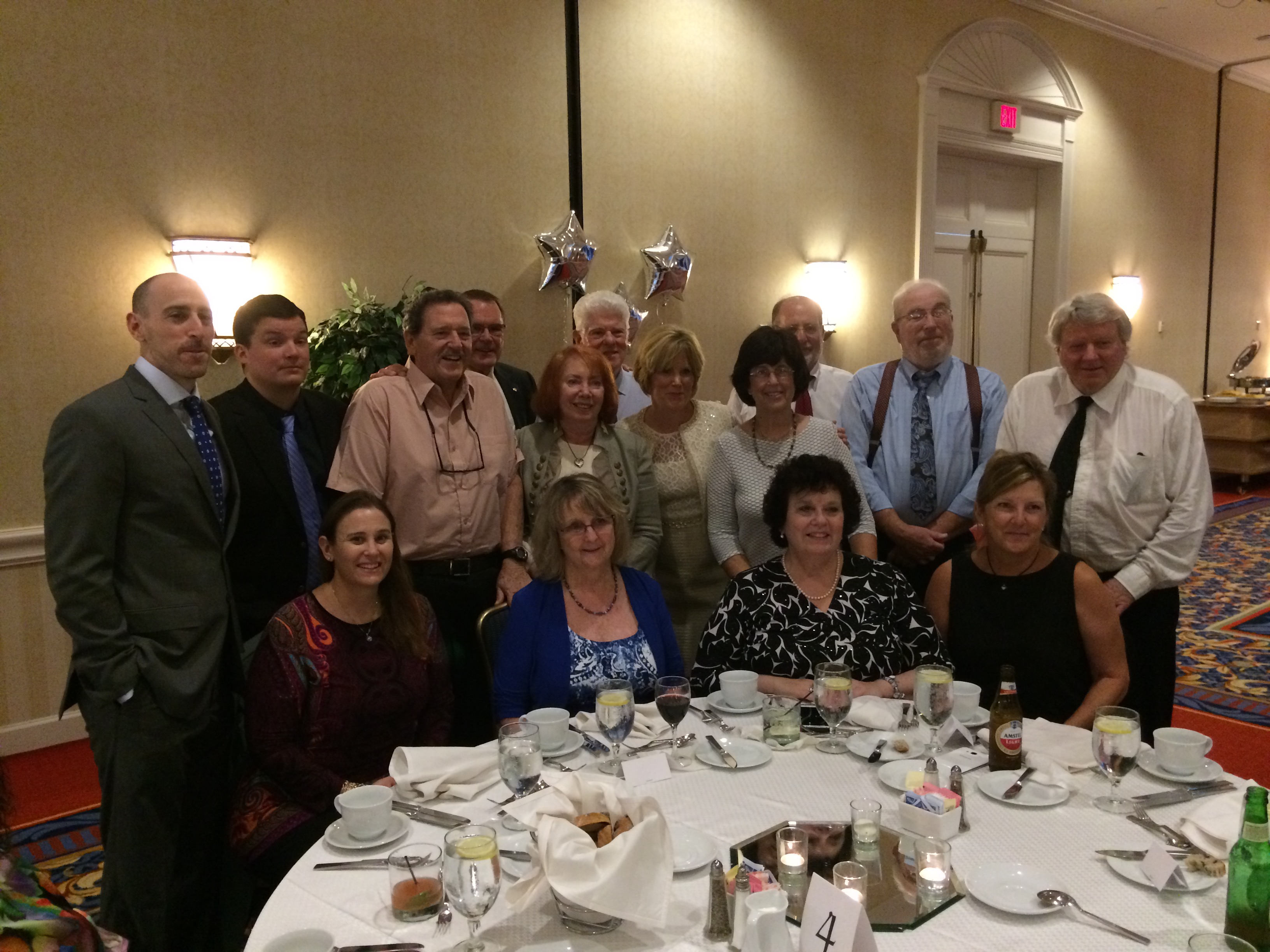
Celebrating Ben's bar mitzvah---the Brotman cousins, all descendants of Joseph Brotman and Bessie Brod

Celebrating Ben’s bar mitzvah—some of the Brotman cousins, all descendants of Joseph Brotman and Bessie Brod, and their spouses

So I was thrilled and honored to be invited to the bar mitzvah of my cousin Benjamin—my second cousin, once removed.  As I sat in the sanctuary of his family’s friendly congregation, I marveled at the fact that I was sitting in this place with many of my second cousins, sharing in a Jewish tradition that dates back long before the time when our great-grandparents lived in Galicia.  What would our great-grandparents Joseph Brotman and Bessie Brod have thought about this whole thing?

Bessie Brotman

Bessie Brotman, Ben’s great-great-grandmother

As Ben led us through the prayer that includes the phrase L’dor v’dor, from one generation to another, I got goosebumps. I realized that our great-grandparents could have sat in that sanctuary and felt very comfortable, hearing prayers that would have been just as familiar to them as they are to me and as they are now to Ben.  Would our great-grandparents have ever expected that over 120 years after they came to the United States their great-great-grandchildren would still be learning these ancient prayers, reading from the Torah, and chanting the Haftorah?

Surely they would have been amazed to see that sharing in this experience in the synagogue that morning were not just other Jewish people, but people of all different  faiths and backgrounds, all learning from the wonderful rabbi about Jewish practices and values. Everyone was welcome, and everyone there wanted to be there.

Joseph and Bessie would likely smile to think that they had made the right decision coming to the US, despite all their travails, because today in 2016 not only do their ancient traditions survive, they also can be practiced openly in creative, inclusive ways without fear of persecution.

L’dor v’dor.  The family and the traditions continue.  Mazel tov, Ben!

(I just realized this is my 500th post on Brotmanblog—how appropriate!)