Finding Max Blumenfeld and His Family: A Postscript

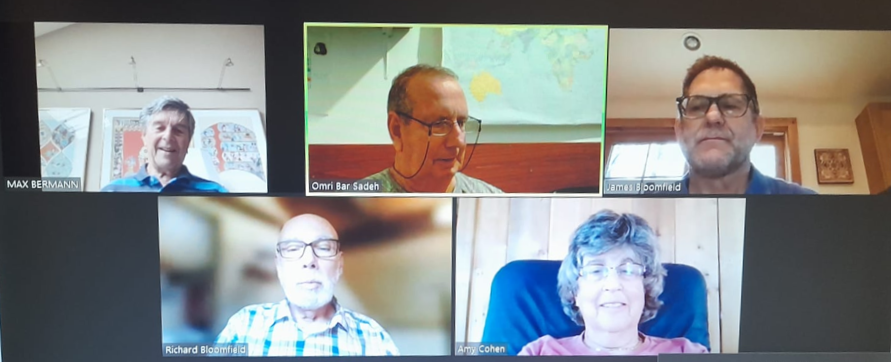
Yesterday I Zoomed with four of my Blumenfeld cousins—Richard, whose been my research partner for quite a while now, his first cousin Jim, who is also a wonderful genealogy researcher, and the two surviving grandchildren of Max Blumenfeld, Max and Omri. We spanned three continents—Omri in Israel, Richard in Switzerland, and Max, Jim, and I in New England. We chatted for an hour, but could have gone on much longer and hope to continue the conversation another time.

During our conversation, we uncovered the answer to a question we still had been unable to answer despite all our research: when did Anna Grunwald Blumenfeld, Max Blumenfeld’s widow and Omri and Max’s grandmother, leave Italy and immigrate to Israel/Palestine? The records that Richard had obtained from Merano said she’d left in 1939, but Max had pointed out that that wasn’t possible since he and his sister were cared for by their grandmother Anna during World War II while their mother Edith worked with the Italian Resistance. Their father Josef had immigrated to the United States on November 1939.

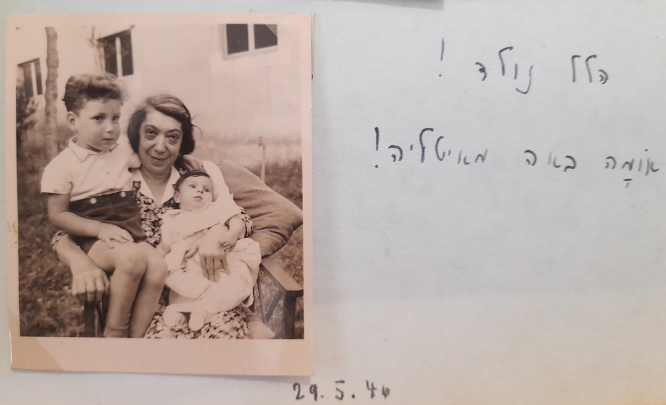
For our Zoom, Omri had prepared a wonderful slide show of family photographs, some of which I’ve already shared on this blog, and some that were new to me. Among those photographs was one that helped to answer the question of when Anna arrived in Palestine. The photograph shows Anna in Palestine with two of her grandsons, Omri’s brothers Gideon and Hillel. Anna was holding Hillel, who was just a very small baby, and the photo was inscribed in Hebrew with the words, “Hillel is born! Oma [Anna] arrives! 29 May 1946.” So now we knew that Anna had only recently arrived in Palestine in May of 1946.

Here is another photo taken the same day showing Anna with Gideon and Hillel and their parents Fritz and Dora.

But then how do we explain the records that said Anna had left Merano in 1939? Well, Max had the answer to that question. Max explained that Anna and her daughter Edith and the two grandchildren, Max and his sister Margherita, all left Merano in 1939 and moved to Milan. Max has no memories of life in Merano since he was only a toddler when the family moved. But that would explain why the Merano records report that Anna left that place in 1939.

Max and his family stayed in Milan for several years, and then when Italy adopted laws persecuting the Jews in about 1942, his mother Edith was able to use her connections to obtain permission to leave Milan and move to the countryside outside of Milan.  The family remained there for the duration of the war, hiding the fact that they were Jews. They spoke Italian (although they all could also speak German) so that they could pass as Italian, and Max and his sister went to church on Sundays. In fact, Max and Margherita were not aware of the fact that they were Jewish and also didn’t know that their father was still alive—all to prevent the children from accidentally revealing the fact that they were Jews.

After the war, Edith took her children to America so they could all be reunited with Josef, and Anna went to Palestine to be with her son Fritz and his family, as depicted in the photograph above.

We spoke of many other interesting things during our Zoom, and there were many stories and many moments of laughter interspersed. It was truly a delightful hour and one I will always cherish and remember.

Thank you to Omri, Max, Richard, and Jim—all of whom are my fifth cousins, four people I never would have known if not for doing genealogy research.

And that, dear readers, is the magic of genealogy.

Finding Max Blumenfeld, Part III: Finding His Grandsons

Although my cousin Richard and I had learned that Max Blumenfeld died in Merano, Italy, in 1936, we still didn’t know where and when his wife Anna died. We had some hints, but nothing definite. Her son Fritz’s marriage record in 1940 seemed to suggest she was still living in Italy. But her daughter Edith’s failure to list her mother on the 1946 ship manifest as her nearest relative in Italy, the place Edith had last resided, seemed to indicate that either Anna had died by then or had left Italy.

We were hoping that one of Max and Anna’s grandchildren might know the answers, and so I turned to locating those grandchildren. We knew that Max and Anna’s daughter Edith had two children with her husband Joseph Bermann, so I started to search for them. They all appear together on the 1950 US census, living in New York City. Joseph was practicing medicine, and Edith was working as a secretary for a general export business. Their two children Margherita (spelled Margaret on the census) and Max were 14 and 12.1 As of 1958, Edith and Joseph were still living in New York City.
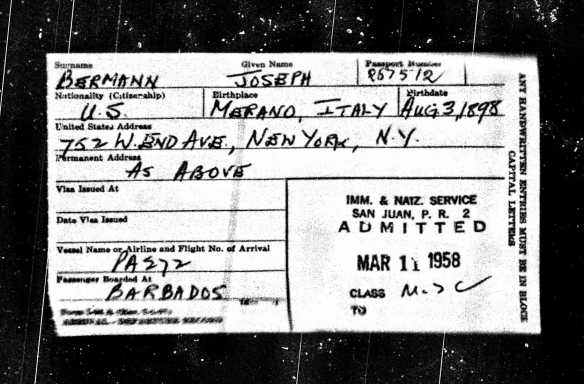
Joseph Bermann, passenger manifest, The National Archives At Washington, D.C.; Washington, D.C.; Series Title: Passenger Manifests of Airplanes Arriving At San Juan, Puerto Rico; NAI Number: A3534; Record Group Title: Records of the Immigration and Naturalization Service, 1787-2004; Record Group Number: 85, Ancestry.com. Puerto Rico, U.S, Arriving Passenger and Crew Lists, 1901-1962

According to FindAGrave, Joseph died on May 1, 1966; he was 68.2 Edith died two years later on August 12, 1968. She was only 61.3 They were both buried in Westchester Hills Cemetery in Hastings-on-Hudson, New York. They were survived by their two children. Their daughter Margherita died on August 21, 2008;4 she was 72. Max, however, was as best I could tell, still living.

After using Google and other online tools, I finally located what I assumed was Max Bermann’s Facebook page. I noticed that he had a Facebook friend named Omri Bar Sadeh. You may recall that Hermann Blumenfeld, Max Blumenfeld’s older brother, had a son Hans who had changed his name to Hanan Bar Sadeh after immigrating to Israel/Palestine. I used the Google Translate tool and learned that “sadeh” means a cultivated field. So Bar Sadeh means son of a cultivated field. Since Blumenfeld translated from German as field of flowers, it made sense that Hanan had adopted a name that meant he was the son of a cultivated field, or a field of flowers, or a “Blumenfeld.”

So when I saw that Max Bermann had a Facebook friend with the surname Bar Sadeh, I assumed that this other person must be a descendant of Edith’s first cousin, Hanan Bar Sadeh. But David Lesser had reported that Hanan had no children, so I was not certain. Was it just a coincidence that Edith’s son Max had a friend with that surname? Or was this Facebook friend one of his cousins?

On Omri Bar Sadeh’s Facebook page, there was a video in Hebrew. I could not understand it, but I could translate the comment that had been included with the post, and it indicated that the video was about Omri Bar Sadeh’s brother Gideon Bar Sadeh. When I googled that name, I found this page:

Bar-Sadeh, Gideon

Son of Moses HaKohen and Devorah. He was born in Ein Harod on June 16, 1942, and completed his twelfth grade at the Kibbutz Ha-Meuchad School there. He had a penchant for drawing and found talent in his paintings. He would decorate his notebooks and make handsome posters and posters. He was quiet and humble in his ways. Was an animal breeder and loved them. Was drafted into the Israel Defense Forces in October 1960. On October 18, 1962, he fell in the line of duty and was brought to eternal rest in Ein Harod.

I knew that Edith Blumenfeld Bermann had listed her brother Fritz on her ship manifest in 1946 indicating that he was residing in “En Charod,” Palestine. Could Gideon have been Fritz’s son, I wondered? Fritz had married a woman named Devorah so that fit the puzzle. But then why did it say Gideon’s father was named Moses?

Then I remembered seeing on the IGRA website that in 1942 Fritz Blumenfeld, residing in En Harod, had been identified as “Moshe (Fritz) Blumenfeld, son of Max.” And given that Max’s father’s name had been Moses, it made sense that Fritz’s Hebrew name was Moshe and that he was named for his grandfather and adopted that name as his primary name in Israel.

Record located on the Israel Genealogy Research Association website at https://genealogy.org.il/AID/

With that additional insight, I realized that I had found the family of Fritz Moshe Blumenfeld and that Fritz, like his cousin Hanan, had changed his surname from Blumenfeld to Bar Sadeh for the same reasons. Just to be sure, I asked David Lesser if he would watch the video posted on Facebook about Gideon, and he confirmed that the video says that Gideon’s parents were Fritz and Devorah.

I sent messages to both of the surviving grandsons of Max and Anna (Grunwald) Blumenfeld, hoping that I would eventually learn what happened to Anna and the rest of the story of their family. Much to my delight, I heard from both of them.

Max Bermann, Edith’s son, was born in Merano, Italy, where his father Giuseppe (later Joseph) Bermann was born. That’s where the family was living (along with Anna) after Joseph left for the US in 1939. Although the family was originally supposed to follow once Joseph was settled, the war intervened, and they could not leave Italy. Max was just a toddler at the time. His grandmother Anna became the primary caregiver for his sister and him because their mother Edith was often away. Max later learned from his sister that Edith was acting as a courier for the partisans during the war.

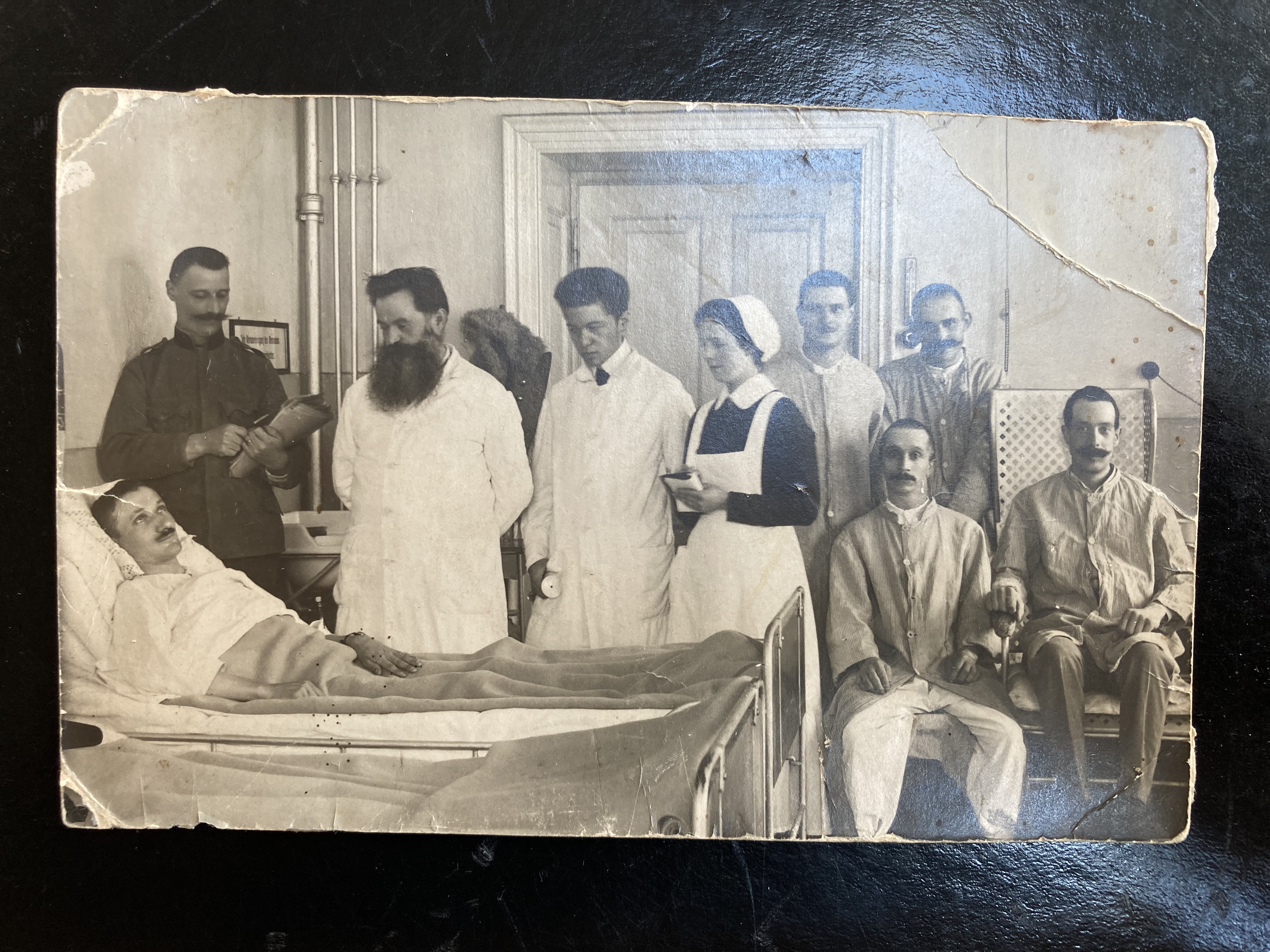
Max shared with me this photograph of Merano, where he and his father were born, as well as this photograph of his father and his father’s father, Max Bermann, both of whom were doctors at the Waldpark Sanitorium in Merano. The elder Max Bermann is the man with the long black beard and his son Joseph/Giuseppe Bermann, the younger doctor in the white coat, is standing next to him.

Dr Max Bermann and his son Dr Joseph Bermann in Waldpark Sanitorium, Merano, Italy. Courtesy of the family

When the war ended, Edith brought her children to the US, but Anna went to live with her son Fritz and his family in Ein Harod in Palestine. Neither Omri nor Max knew exactly when Anna immigrated, but as I was doing some of the final edits for this post, Richard emailed me with new information he’d found online—a database of information about the Jews of Merano.

There was an entry for Anna Grunwald Blumenfeld that reported that “Anna Grünwald-Blumenfeld came from Berlin and lived in Merano since 23.4.1936. On 22.8.1938 she was recorded in the census of “Jews” living in Italy by the fascist authorities as permanently resident in Merano. On 13.2.1939 her file received the note: “di razza ebraica”. On 1.4.1939 she fled to an unknown place, according to the registration office of the municipality of Merano. Later, April 1939 is given as the date of the flight abroad.”5 Thus, it would appear from this record that Anna left Merano for Palestine in April, 1939.

But as noted by Max and by my reader Teresa, this cannot be accurate. Max knows that his grandmother did not leave in 1939 because she cared for him during the war years. It appears more likely that these Merano records are inaccurate and that Anna was in Italy at least until the end of the war.

Now that I knew that Anna had survived the war and had immigrated to Palestine, I searched again on the Israel Genealogical Research Association website and found this record:

Anna Grunwald Blumenfeld died on September 7, 1946, in Ein Harod; she was only 61 years old. She had survived the move from Germany to Italy, the loss of her husband Max in 1936, World War II, and then a move from Italy to Palestine. She was survived by her daughter Edith and her family and her son Fritz and his family.

Anna and Max Blumenfeld’s grandson Max Bermann shared these lovely photographs of his family. First, some photographs of Anna and Max:

Anna Grunwald Blumenfeld Courtesy of the family
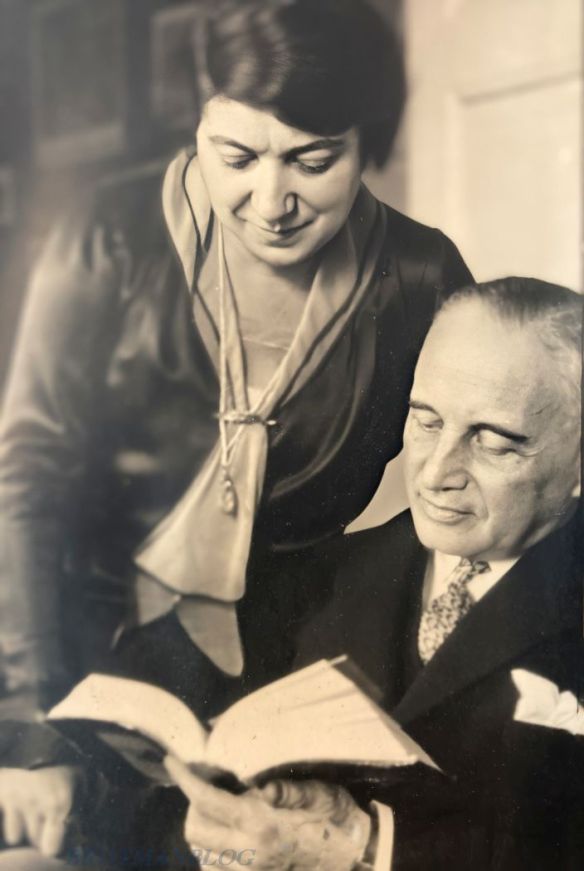
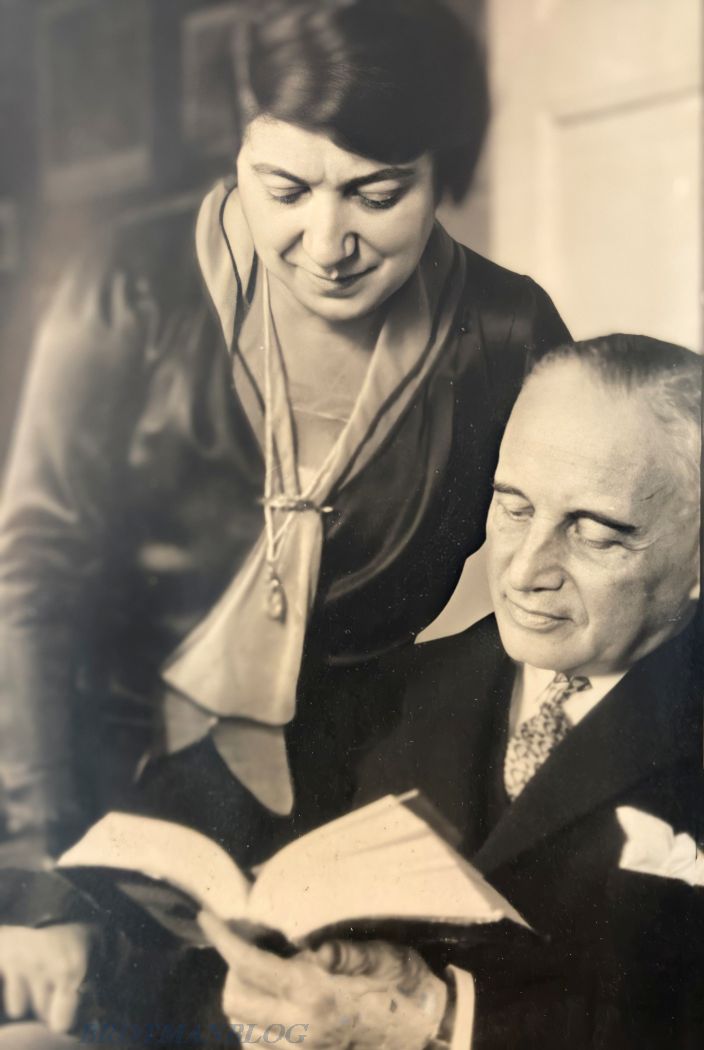
Anna Grunwald Blumenfeld and Max Blumenfeld Courtesy of the family

Max Blumenfeld Courtesy of the family

This photograph is of Max and Anna’s children Fritz and Edith as well as, on the right, Fritz’s wife Dora Salpeter Blumenfeld.

Fritz Blumenfeld, Edith Blumenfeld Bermann, and Dora Salpeter Blumenfeld Courtesy of the family

And this final photograph from Max shows him and his sister Margherita with a soldier they met when they visited Palestine (now Israel) with their mother after the war.

Margherita and Max Bermann in Italy shortly after the end of World War II with a soldier from Palestine. Courtesy of the family

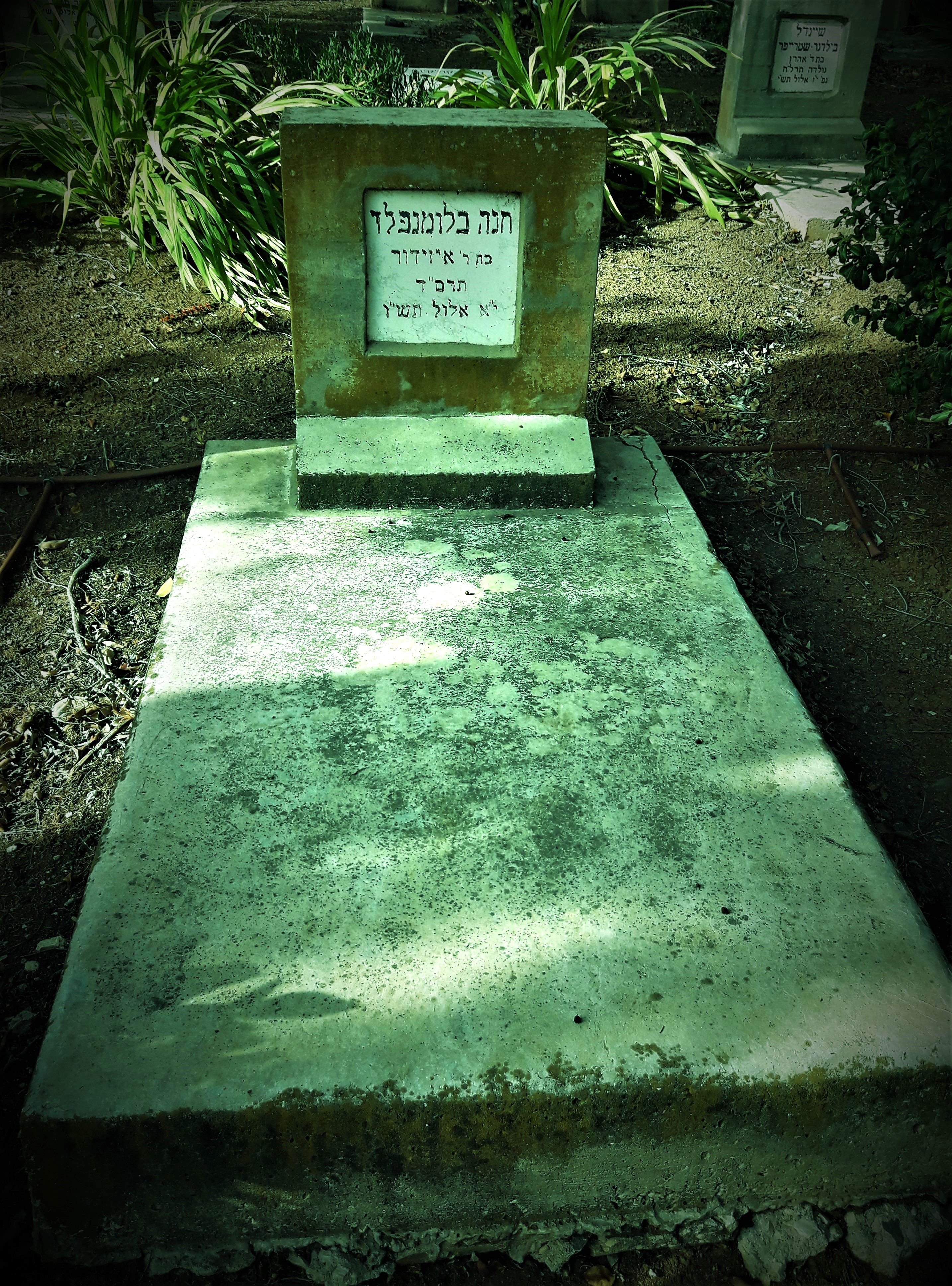
Omri also shared some photographs, including this one of his grandmother Anna’s gravestone.

Anna Blumenfeld, Ein Harod Photo courtesy of Omri Bar Sadeh

In addition, he shared photographs of the gravestones of his parents Fritz (Moshe) and Dora/Devorah and his two brothers Gideon and Hillel.

Gideon, as we saw, died fighting for Israel on October 18, 1962.

Gideon Bar Sadeh, Ein Harod Photo courtesy of Omri Bar Sadeh

Omri’s father Fritz Moshe Blumenfeld Bar Sadeh died December 12, 1977 in Ein Harod; he was 67. Devorah Salpeter Blumenfeld Bar Sadeh, outlived her husband by almost 23 years and died at 92 on November 27, 2000, in Ein Harod.

Dora and Fritz Bar Sadeh, Ein Harod Photo courtesy of Omri Bar Sadeh

Fritz and Devorah’s middle child, their son Hillel, died from cancer on December 30, 1996, in Ein Harod. He was only 50 and left behind a wife and four children.

Hillel Bar Sadeh, Ein Harod Photo courtesy of Omri Bar Sadeh

I am so grateful to my fifth cousins Max and Omri for sharing their family’s stories and their own stories and their photographs with me and allowing me to share them with you. I now have answers to all the questions I had when I first started searching for what happened to Max Blumenfeld after he married Anna Grunwald in 1906, thanks to the incredible help of Richard Bloomfield, David Lesser, Max Bermann, and Omri Bar Sadeh.

  1. Joseph Bermann family, 1950 US census, United States of America, Bureau of the Census; Washington, D.C.; Seventeenth Census of the United States, 1950; Record Group: Records of the Bureau of the Census, 1790-2007; Record Group Number: 29; Residence Date: 1950; Home in 1950: New York, New York, New York; Roll: 5665; Sheet Number: 72; Enumeration District: 31-675, Ancestry.com. 1950 United States Federal Census 
  2. Find a Grave, database and images (https://www.findagrave.com/memorial/173690239/joseph-bermann : accessed 18 May 2022), memorial page for Joseph Bermann (unknown–1 May 1966), Find a Grave Memorial ID 173690239, citing Westchester Hills Cemetery, Hastings-on-Hudson, Westchester County, New York, USA ; Maintained by BKGeni (contributor 46895980) . 
  3. Find a Grave, database and images (https://www.findagrave.com/memorial/173690238/edith-bermann : accessed 18 May 2022), memorial page for Edith Bermann (unknown–12 Aug 1968), Find a Grave Memorial ID 173690238, citing Westchester Hills Cemetery, Hastings-on-Hudson, Westchester County, New York, USA ; Maintained by BKGeni (contributor 46895980) . 
  4.  Margherita M. Bermann, Social Security Number: 085-30-0023, Birth Date: 22 Aug 1935, Issue Year: 1954-1956, Issue State: New York, Last Residence: 12550, Newburgh, Orange, New York, Death Date: 21 Aug 2008, Social Security Administration; Washington D.C., USA; Social Security Death Index, Master File, Ancestry.com. U.S., Social Security Death Index, 1935-2014 
  5.  There were also entries for Max and for their two children Fritz and Edith. Max’s entry confirmed that he died on March 7, 1936 and is buried in the Jewish cemetery in Merano. Edith’s entry reported that she had “married Josef Bermann on January 30, 1935. After a stay in London in the spring of 1935, she lived in Merano from April 8, 1935. On August 22, 1938, Edith Bermann was included in the census of “Jews” living in Italy by the fascist authorities. On February 13, 1939, her file received the note: “di razza ebraica”. Edith Bermann, who stayed in Milan again and again, fled to Milan.” Fritz’s entry in the Merano Jewish database reported that he “had lived in Merano since October 3, 1936, where his sister was married to the doctor Josef Bermann. On August 22, 1938, Fritz Blumenfeld was recorded by the fascist authorities as permanently residing in Merano in the census of “Jews” living in Italy. According to the registration office of the municipality of Merano, Fritz Blumenfeld fled to Palestine on May 15, 1939.” 
The Search for Max Blumenfeld, Part II: Finding His Daughter Edith

There were several questions that remained unanswered even after Richard and I learned that Max Blumenfeld had died in Merano, Italy, on May 8, 1936. What happened to his wife Anna Grunwald Blumenfeld after he died? Did Max and Anna have any children other than their son Fritz? And are there living descendants of Max and Anna? With continued research, Richard and I, along with additional help from David Lesser from Tracing the Tribe, were able to find some answers to these questions.

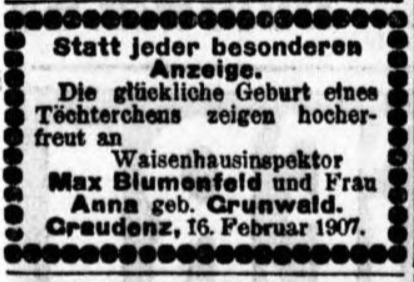
First, Richard saw on MyHeritage that Max and Anna did have another child, a daughter Edith. According to that page, Edith was born on February 16, 1907, in Graudenz, Germany. There was even a birth announcement attached to her profile on this MyHeritage page. 

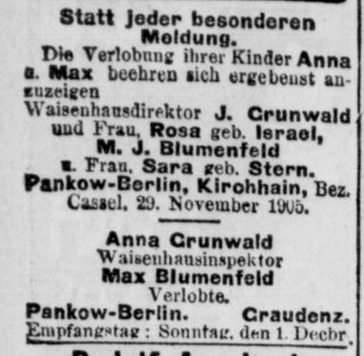
That tree on MyHeritage also had an announcement for Max and Anna’s engagement in 1905.1

Now that we knew there was a daughter born to Max and Anna, I started to look for information about Edith. Although I could not locate a birth record, based on the dates given on MyHeritage and the birth announcement, I was able to narrow down the search. I also knew from the MyHeritage profile that Edith was reportedly married to a doctor named Joseph Berman and had two children.

With that information to get my research started, I soon located numerous documents that appeared to be related to Edith Blumenfeld, daughter of Max and Anna. Putting together what I’d found in chronological order, Edith at 22 sailed from Hamburg to Antwerp on August 9, 1929. I assume that this was a pleasure trip, not an immigration move.

Edith Blumenfeld, 1929 passenger manifest, Staatsarchiv Hamburg; Hamburg, Deutschland; Hamburger Passagierlisten; Volume: 373-7 I, VIII A 1 Band 370; Page: 1843; Microfilm No.: K_1977, Month: Band 370 (Aug 1929 – Sep 1929), Staatsarchiv Hamburg. Hamburg Passenger Lists, 1850-1934

According to the England & Wales, Civil Registration Marriage Index, 1916-2005 index on Ancestry, Edith married Giuseppe Bermann in the first quarter of 1935 in England. Richard, however, found a wedding announcement in the February 13, 1935 issue of the Alpenzeitung that indicates that they married on February 3, 1935, in Berlin. We are not sure whether there were two weddings or whether there is some other explanation for the inconsistency.2

Edith next turned up as Edith Bermann on a ship manifest sailing with her two children from Naples, Italy, to New York, arriving on February 20, 1946. She reported her last residence had been Naples, Italy. How did I know this was the right Edith? Because she named her brother Fritz Blumenfeld living in “En Charod, Palestine” as the person she left behind and her husband Joseph Bermann as the person she was going to in New York, where he was residing at 752 West End Avenue. In addition, she was 39 years old in 1946, meaning she was born in about 1907, and her birth place was given as “Grundzias” in Poland. Since Graudenz was located in a region that was given to Poland after the war, these additional facts convinced me that this was Edith Blumenfeld.

Edith Berman and children, 1946 ship manifest, Year: 1946; Arrival: New York, New York, USA; Microfilm Serial: T715, 1897-1957; Line: 1; Page Number: 34, Ship or Roll Number: Gripsholm, Ancestry.com. New York, U.S., Arriving Passenger and Crew Lists (including Castle Garden and Ellis Island), 1820-1957

The manifest form asked for the name and address of the “nearest relative or friend in country whence alien came, or if none there, then in country of which alien is a citizen or subject.” The fact that Edith gave the name of her brother Fritz who was living in Palestine at that time raised a few questions for me. If Edith was last living in Milan, Italy, why would she name a relative living in Palestine?

Second page of manifest seen above.

To me that suggested that her mother Anna was no longer living in Italy or Edith would have named her, given that Edith’s last residence was Italy. Whether or not Anna was deceased or living elsewhere is not known. Secondly, Edith listed her nationality as Italian on the manifest, not as a “citizen or subject of Palestine,” yet she listed Fritz in Palestine, who was neither in the place she last lived or in the place where she was a citizen. Did the authorities simply allow her to list Fritz because he was the only relative or friend she could name even though he was not in Italy? I don’t know.

Since Joseph apparently had arrived in New York before his wife Edith and their two children, I looked and located a ship manifest for his immigration to the US. I found him on a manifest for a ship sailing from Genoa, Italy, to New York, arriving on November 17, 1939, five and a half years before Edith and the children arrived and a month and a half after World War II started. He sailed as Giuseppe Bermann and gave his birthplace and last residence as Merano, Italy, and his occupation as “medical.” Interestingly, his passport had been issued in September, 1939, from Jerusalem. Although I searched both the Israel State Archives and the IGRA website, I could not find any record establishing that Joseph or Edith ever was in Palestine before 1946.

Giuseppe Bermann, ship manifest, Year: 1939; Arrival: New York, New York, USA; Microfilm Serial: T715, 1897-1957; Line: 1; Page Number: 63, Ship or Roll Number: Saturnia, Ancestry.com. New York, U.S., Arriving Passenger and Crew Lists (including Castle Garden and Ellis Island), 1820-1957

Joseph settled in New York City, and in 1940 he filed a Declaration of Intention to become a US citizen, listing his family back in Italy and noting that they were now living in Milan. From this document I also learned that Joseph and Edith were married in London, England, on January 31, 1935, as also confirmed by the entry in the England & Wales, Civil Registration Marriage Index, 1916-2005 on Ancestry.3 I wonder when they arrived and for how long they lived in England.

Joseph Bermann, Declaration of Intention, he National Archives at Philadelphia; Philadelphia, Pennsylvania; NAI Title: Declarations of Intention for Citizenship, 1/19/1842 – 10/29/1959; NAI Number: 4713410; Record Group Title: Records of District Courts of the United States, 1685-2009; Record Group Number: 21, Description: (Roll 579) Declarations of Intention for Citizenship, 1842-1959 (No 453801-454600), Ancestry.com. New York, U.S., State and Federal Naturalization Records, 1794-1943

In 1942, Joseph registered for the World War II draft. He was living at 121 West 77th Street and practicing medicine. He listed his mother Caroline Ullmann Bermann as his contact person.

Joseph Bermann, World War II draft registration, National Archives at St. Louis; St. Louis, Missouri; WWII Draft Registration Cards for New York City, 10/16/1940 – 03/31/1947; Record Group: Records of the Selective Service System, 147, Ancestry.com. U.S., World War II Draft Cards Young Men, 1940-1947

And then finally in February, 1946, he was reunited with his family. Joseph had left Edith and two very young children in Italy in November, 1939, probably assuming they would be able to follow him in the reasonably foreseeable future. Instead, the war intervened, and they were separated for five and a half years. Joseph missed all those years when his children were young, and Edith had to raise them alone for all that time. It must have been a joyous reunion when Edith and the children finally arrived in February, 1946.

Of course, there were more questions. How did Edith and the children stay safe during the war? Italy was after all an ally of Germany in World War II. The US Holocaust Museum has this information on its website about the fate of Jews in Italy during World War II.

Despite its alliance with Germany, the Fascist regime responded equivocally to German demands first to concentrate and then to deport Jews residing in Italian occupation zones in Yugoslavia, Greece, and France to killing centers in the German-occupied Poland. Italian military authorities generally refused to participate in mass murder of Jews or to permit deportations from Italy or Italian-occupied territory; and the Fascist leadership was both unable and unwilling to force the issue.

Italian-occupied areas were therefore relatively safe for Jews. Between 1941 and 1943, thousands of Jews escaped from German-occupied territory to the Italian-occupied zones of France, Greece, and Yugoslavia. The Italian authorities even evacuated some 4,000 Jewish refugees to the Italian mainland. Incarcerated in southern Italy, these Jewish refugees survived the war.

But that situation changed for the worse after there was a vote of no-confidence in Mussolini after many military defeats in North Africa, and the Italian king, Victor Emmanuel III, removed Mussolini as prime minister and named Pietro Badoglio to replace him. Badoglio negotiated a secret surrender to the Allies on September 8, 1943. At that point Germany took action.

The Germans, who had grown suspicious of Italian intentions, quickly occupied northern and central Italy. ….The German occupation of Italy radically altered the situation for the remaining 43,000 Italian Jews living in the northern half of the country. The Germans quickly established an SS and police apparatus, in part to deport the Italian Jews to Auschwitz-Birkenau.

In October and November 1943, German authorities rounded up Jews in Rome, Milan, Genoa, Florence, Trieste, and other major cities in northern Italy. ….In general, these operations had limited success, due in part to advance warning given to the Jews by Italian authorities and the Vatican, and in part to the unwillingness of many non-Jewish Italians…to participate in or facilitate the roundups.

Germany ended up deporting almost 9000 Jews to the concentration camps, and over a thousand survived. All in all, 40,000 Jews in Italy survived the Holocaust. Was Anna Grunwald Blumenfeld one of them? I still didn’t know.

But her two children survived, Fritz in Palestine, which soon became Israel, and Edith in the US. More on them and their children in my next post. And the answers to my questions about Anna.

Stay tuned.


  1. That announcement confused me since it says Anna’s parents were J. Grunwald and Rosa Israel, and I had from her birth record that their names were Isidor Grunwald and Nanny Braun. But Richard found a passage in Inge Lassel’s book about the Jewish orphanage in Pankow, Berlin, that explained the discrepancy; it revealed that Isidor’s first wife Nanny had died in 1903 and that he had then married Rosa Israel. Inge Lammel, Das Jüdische Waisenhaus in Pankow (2001), p. 24. 
  2.  General Register Office; United Kingdom; Volume: 1a; Page: 861, Ancestry.com. England & Wales, Civil Registration Marriage Index, 1916-2005. 
  3. Giuseppe Bermann, Registration Date: Jan 1935, Registration Quarter: Jan-Feb-Mar, Registration District: Westminster, Inferred County: Middlesex, Spouse: Edith N Blumenfeld, Volume Number: 1a, Page Number: 861, General Register Office; United Kingdom; Volume: 1a; Page: 861, Ancestry.com. England & Wales, Civil Registration Marriage Index, 1916-2005 

The Search for Max Blumenfeld: It Took A Village, Part I

The search for what happened to Max Blumenfeld, son of Moses IIB, was not an easy one. It was a lesson in persistence and in the value of working with other researchers. My cousin Richard Bloomfield contributed a great deal to the research of the life of Max Blumenfeld as did David Lesser, my new research friend from Tracing the Tribe.

Finding Max’s birth and marriage records was easy. As I’ve already written, he was born in Kirchhain on June 13, 1880, and married Johanna Grunwald in Berlin on March 16, 1906.

But finding out what happened next was not as easy. Did they have children? Did Max and Johanna survive the Holocaust? Neither was listed in Yad Vashem, so I felt hopeful that they did. But I couldn’t find them anywhere else either. There were no records in the Arolsen Archives. There were no US immigration records or other records placing them in the US. There were no Palestinian immigration records for them either. Where else could they have gone? Did they die before the Nazi era? If so, I couldn’t find any German death records.

When I looked at other trees on Ancestry and at Geni and MyHeritage, there were similar holes in the information for Max and Johanna—-there was nothing after their marriage in 1906. I only found one tree that had more information, and fortunately for me, it was the tree of my fifth cousin and fellow researcher Richard Bloomfield. According to Richard’s tree, Max had emigrated to Italy in 1933 and died there, Johanna had died in Israel sometime after 1947, and they had a son named Fritz who died in about 1977 in Israel.

I contacted Richard to ask where he’d gotten the information, and he said he’d gotten the information from someone else’s tree. So he and I began to see if we could verify any of that information.

Richard noted that on Max’s marriage record his occupation was given as “Waisenhausinspektor” or orphanage inspector and that he was living in Graudenz at the time of his marriage. But since Max and Johanna were married in Berlin, Richard had a hunch that Max had become the Waisenhausdirektor for the Jewish orphanage in Berlin and decided to search old Berlin directories. He found Max listed as the Waisenhausdirektor in those directories for a number of years, including 1934, 1935, and 1936. Thus, we knew that Max had not immigrated to Italy in 1933, but was still in Berlin at least until the 1936 directory was compiled.1

Max Blumenfeld, Title: Amtliches Fernsprechbuch für Berlin und Umgegend, 1936, Ancestry.com. German Phone Directories, 1915-1981

On a very recent trip to Berlin, Richard took and shared these photos of the building where the Judische Waisenhaus once stood.

Judische Waisenhause building in Berlin. Photo courtesy of Richard Bloomfield

Photo courtesy of Richard Bloomfield

Richard and I then started to see if we could find any evidence of Fritz Blumenfeld, the supposed son of Max and Johanna. Richard located a record on the IGRA website that indicated that a Fritz Blumenfeld, son of Max, born in 1910,was registered as a voter in Palestine in 1939 and living in En Harod.

Found at the Israel Genealogy Research Association website at https://genealogy.org.il/AID/index.php

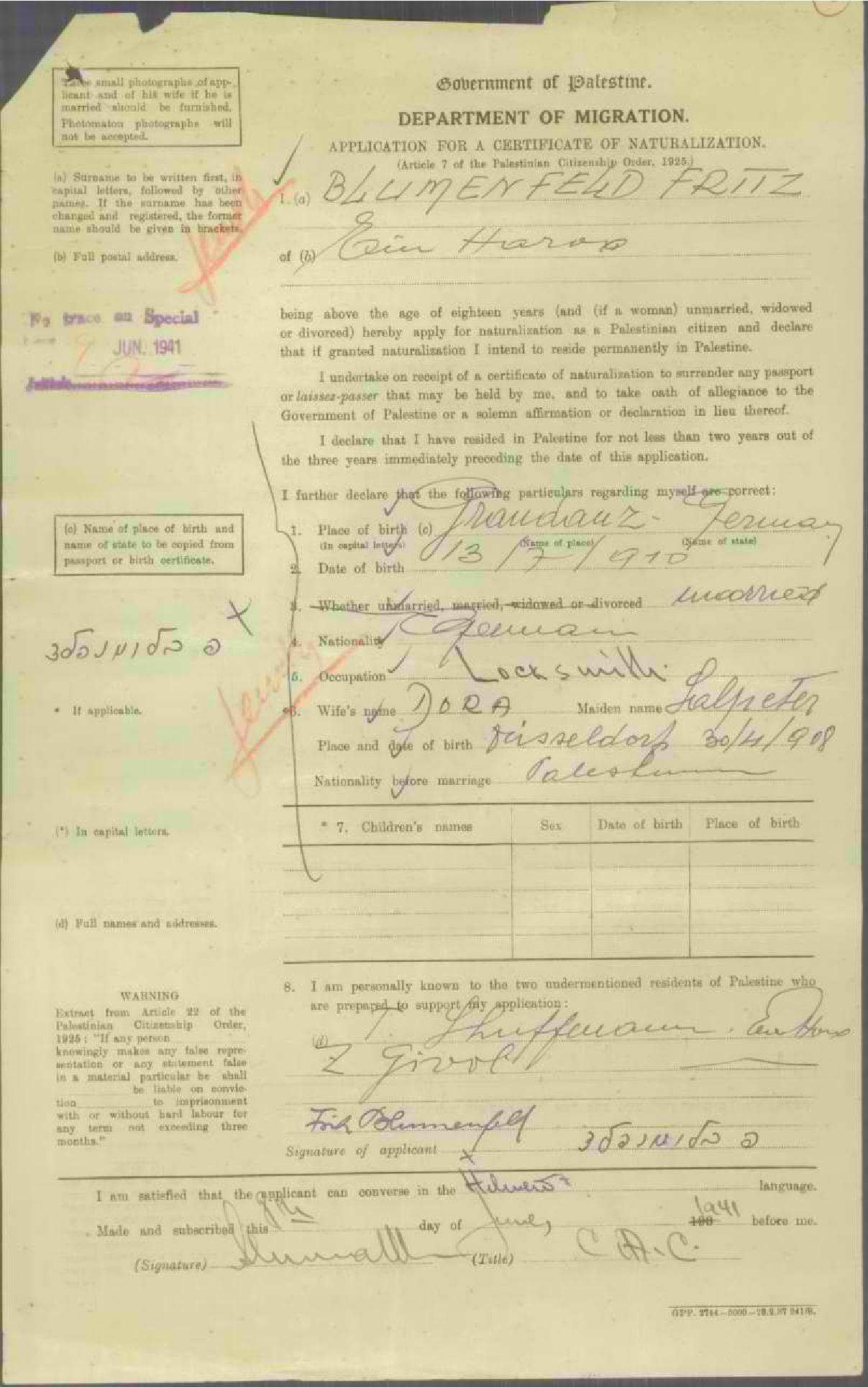
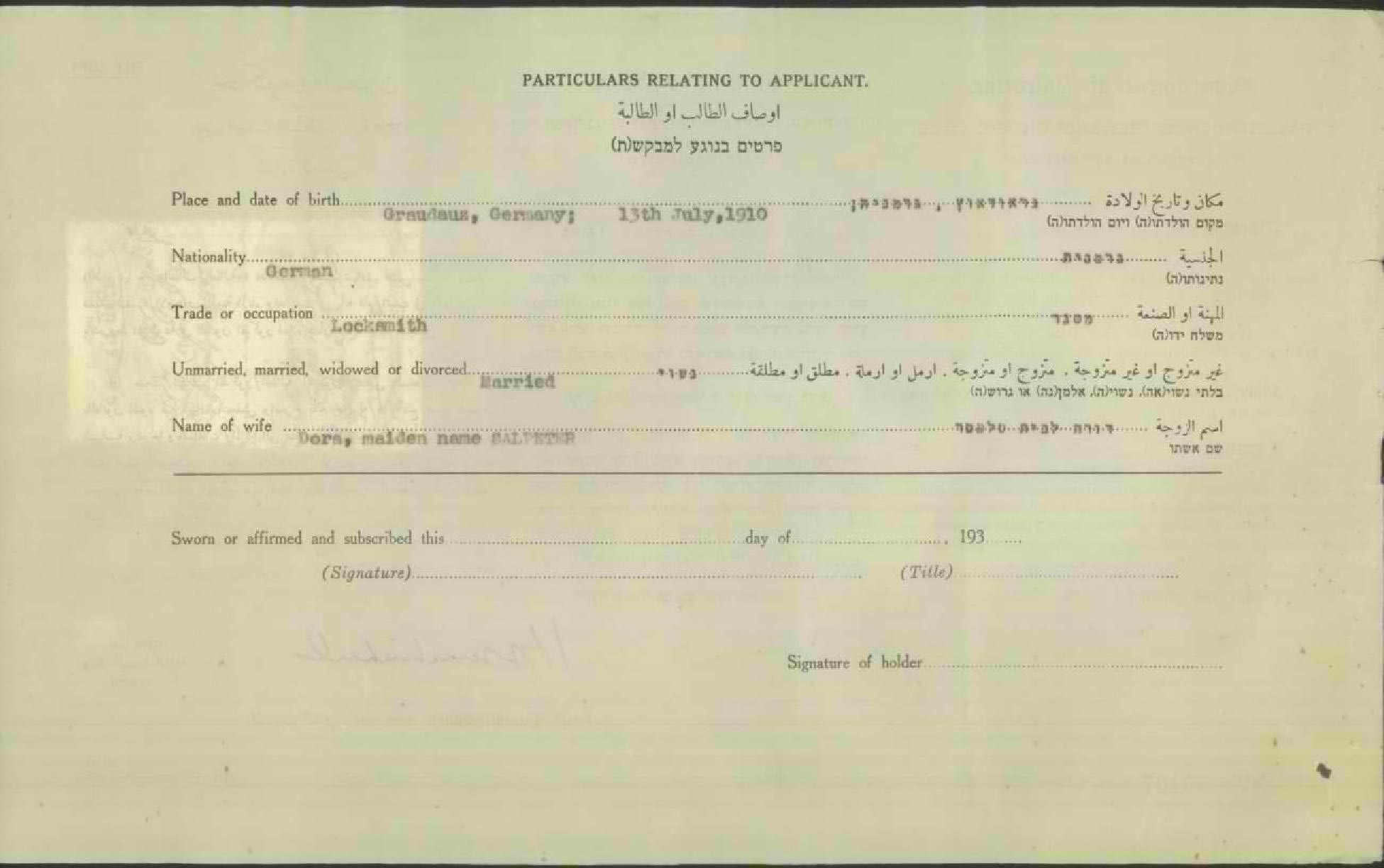
Then I located a Fritz Blumenfeld who had Palestine immigration papers at the Israel Archives website. Fritz was born in Graudenz, Germany, on July 13, 1910, the same town where Max had been living when he married Johanna in 1906. He was married to Dora Salpeter and working as a locksmith. He had first entered Palestine on June 28, 1937.

Fritz Blumenfeld and Dora Salpeter immigration file found at Israel State Archives at https://www.archives.gov.il/en/

Richard found directories for Graudenz that listed Max as a teacher there in 1905, as a teacher and orphanage inspector in 1907, and as the Waisenhausinspektor there in 1909, 1911, and 1913. Thus, Max and Johanna were living in Graudenz when Fritz Blumenfeld was born. This certainly seemed to be their son.2

And then I found the record that definitely tied Fritz to Max and Johanna. Returning to the IGRA website, I located Fritz Blumenfeld’s marriage record. Fritz married Devorah on August 15, 1940, in Israel, and his marriage record indicated that he was a locksmith, which was consistent with his Palestinian citizenship application. On those Palestinian immigration papers, I learned that Devorah’s name was originally Dora Salpeter.

Most importantly, Fritz’s parents were listed as Max and Hanna, confirming for me that this was the son of Max Blumenfeld and (Jo)hanna Grunwald. Since it appears that Johanna was better known as Hanna or Anna, I will use the name Anna to refer to her going forward.

That marriage record gave me two other critical pieces of information. It said the groom’s parents lived in Italy—although it took help from Tracing the Tribe for me to learn that the Hebrew I was reading as Atelah was in fact Italia in Hebrew. The marriage record also indicated that Anna was at home, but Max was deceased. Thus, we now knew that Max had died sometime before Fritz married on August 15, 1940, and presumably had died in Italy.

Fritz Blumenfeld marriage record, found at the Israel Genealogy Research Association website at https://genealogy.org.il/AID/

I didn’t think we would get any further than that since I had no idea how to research deaths in Italy. But once again Richard came to the rescue. He found two more sources. One was a German book, Das Jüdische Waisenhaus in Pankow (2001) by Inge Lammel, about the Jewish orphanage in Berlin where Max had been the Waisenhausdirektor. Lammel’s book included this passage, as translated by Richard:3

When Isidor Grunwald [Johanna’s father] died in February 1925, his son-in-law, Max Blumenfeld, took over the directorship of the house. Martin Davidsohn [long-time teacher at the Second Jewish Orphanage] says that he brought a more liberal spirit into the educational process, democratic structures, such as an opportunity to utter grievances and a trainees’ adjudicatory council elected by secret ballot, which gave the trainees more self-confidence.

Richard paraphrased the information about Isidor Grunwald that he found in the book:4

Max’s father-in-law had been an officer in the army and carried the army’s manner of doing things over into his work at the orphanage. He patrolled the large dormitory hall carrying his ring of large keys to enforce discipline. He had the boys line up each night in front of his apartment in the house according to height, shook their hands and wished them good night. In addition to physical education, he had the boys do drills led by a drill sergeant and sometimes accompanied by flute and drum music

Here is a photo from the book showing Max standing with some of the children and staff at the orphanage in about 1933; he is the man in the dark suit in the foreground.

From Inge Lammel, Das Jüdische Waisenhaus in Pankow, 2001

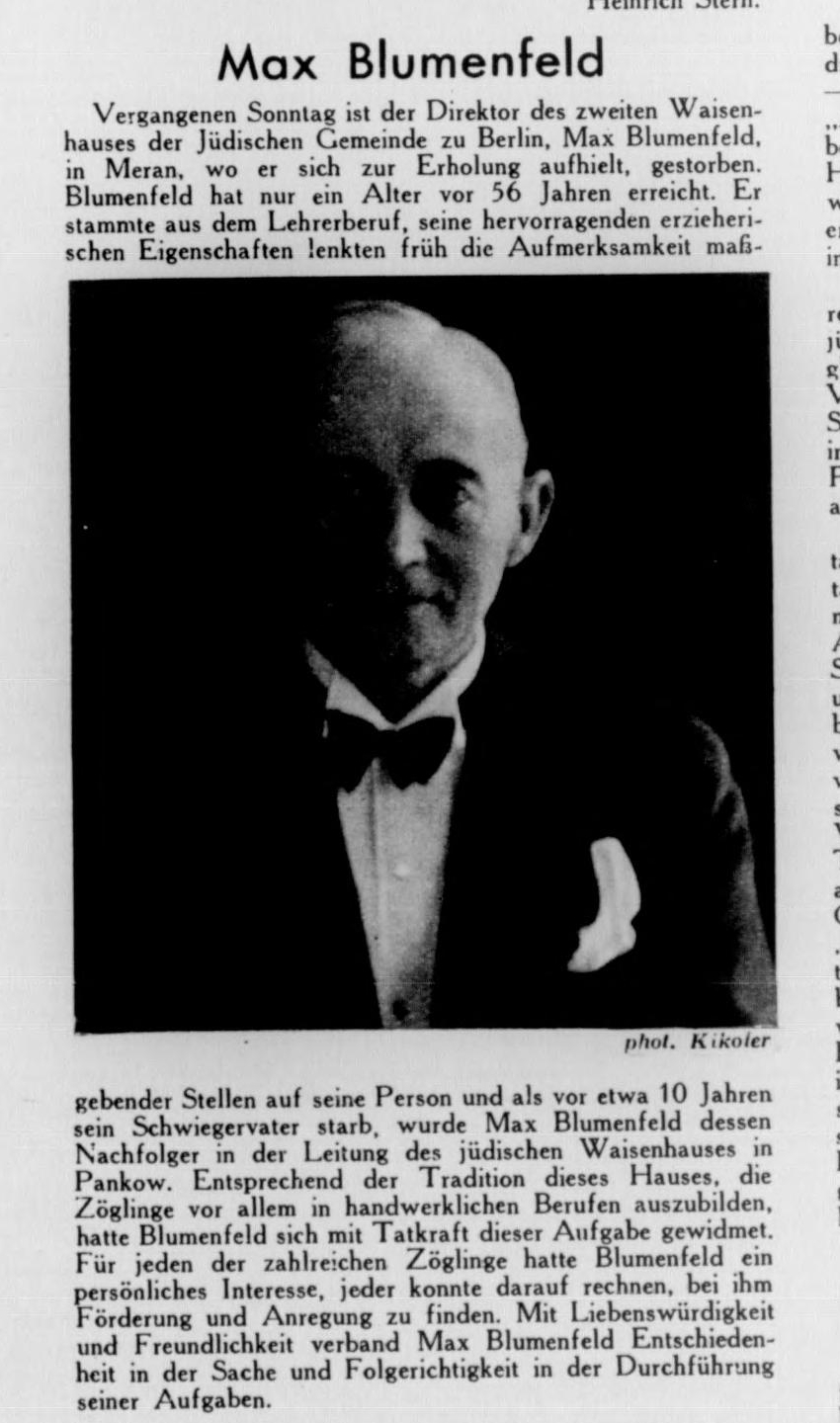
In addition to obtaining a copy of this book, Richard also located Max’s obituary, which not only provided us with the date and place of Max’s death (March 8, 1936, in Merano, Italy), but also more information about his life:

“Max Blumenfeld,” Gemeindeblatt der Jüdischen Gemeinde zu Berlin, March 15, 1936, page 7

Richard translated the obituary as follows:5

Last Sunday the director of the Second Orphanage of the Jewish Congregation in Berlin, Max Blumenfeld, died in Merano [Italy] where he was taking time for rest and recreation. Blumenfeld died young at the age of 56. He was originally a teacher whose excellent teaching abilities drew the attention of leading personalities, and when his father-in-law [Isidor Grunwald] died about ten years ago, Max Blumenfeld became his successor as director of the Jewish Orphanage in Pankow. Blumenfeld dedicated himself to the traditional task of the institution of training its students as craftsmen. Blumenfeld demonstrated a personal interest in each of the youth in his care, each of them could recon with his support and encouragement. He combined with kindness and friendliness decisiveness and consistence in the execution of his task.

These two documents discovered by Richard Bloomfield have given us a much fuller picture of our cousin Max Blumenfeld. He certainly left his mark and obviously was a kind and generous person.

Unfortunately, the obituary did not include information about his survivors. Was Fritz their only child? Did Johanna stay in Italy, as their son Fritz’s 1940 marriage certificate suggests? Did she return to Berlin? Immigrate to Palestine?

Well, the story of Max Blumenfeld doesn’t end here nor does the story of the collaboration it took to find the rest of that story.

More to come.


  1. Amtliches Fernsprechbuch für Berlin und Umgebun, 1934, 1935, 1936.  Ancestry.com. The one depicted I found on Ancestry for 1935. 
  2. I have tried to recreate Richard’s search through the Graudenz directories. He sent me to the GenWiki website section for directories, and although I found the Graudenz directories, I still need more lessons in how to search through those directories to find Max. 
  3. Inge Lammel, Das Jüdische Waisenhaus in Pankow (2001), p. 50. 
  4. Ibid, p. 48, as paraphrased by Richard Bloomfield, attachment to email May 1, 2022. 
  5. “Max Blumenfeld,” Gemeindeblatt der Jüdischen Gemeinde zu Berlin, March 15, 1936, page 7.