
Getting to know Hal Katz and his family and learning the stories about Clara Rothschild and Moritz Katz and their children and grandchildren has been a real highlight of the past few months. Now I turn to Clara’s two younger sisters, the seventh and eighth children of Gerson Rothschild and Fanny Kugelmann of those who survived to adulthood. And unfortunately there is no joy in telling their stories.
Rosa Rothschild, who was born on May 16, 1893, in Zimmersrode, married Meijer Franken sometime before April 23, 1936, when their son Gerson was born in Almelo, Netherlands. I don’t know whether Rosa married Meijer in the Netherlands or Germany because I cannot find a marriage record in either country.1 Meijer was Dutch, born in Haaksbergen, Netherlands, on March 16, 1873, making him twenty years older than Rosa. His parents were Levij Franken and Antje Goedhardt.2 Meijer had been previously married; his first wife Jeanette Herzog, died in Almela, Netherlands, on November 12, 1923.3
Presumably Rosa married Meijer sometime after November 12, 1923, when his first wife died, and before April 23, 1936, when Gerson was born in Almelo, Netherlands. I don’t know whether Rosa met Meijer before moving to the Netherlands or moved there to escape Hitler and met Meijer thereafter. I think it’s reasonable to assume she moved first sometime after 1933 when Hitler came to power and then met and married Meijer. Her mother Frommet “Fanny” Kugelmann Rothschild also moved to Almelo, Netherlands, either with Rosa or afterwards, and was living with Rosa, Meijer, and and her grandson Gerson, named for Rosa’s father and Fanny’s husband, Gerson Rothschild.4 Hal Katz told me that she came to his bar mitzvah in late 1937, but that she was already living in the Netherlands at that time.
Unfortunately, the move to the Netherlands did not protect Rosa, her mother, her husband, or her son from the scourge of the Nazis. On April 9, 1943, they were sent to the Herzogenbusch concentration camp near Vught in the Netherlands, and then on May 8, they were sent to Westerbork where they were then sent to Sobibor, where they were murdered by the Nazis: all four of them, 86 year old Fanny, 70 year old Meijer, 49 year old Rosa, and seven year old Gerson.

Arolsen Archives, DocID: 402367 (FROMMET ROTSCHILD KUGELMANN)
DeepLink: https://collections.arolsen-archives.org/de/document/402367
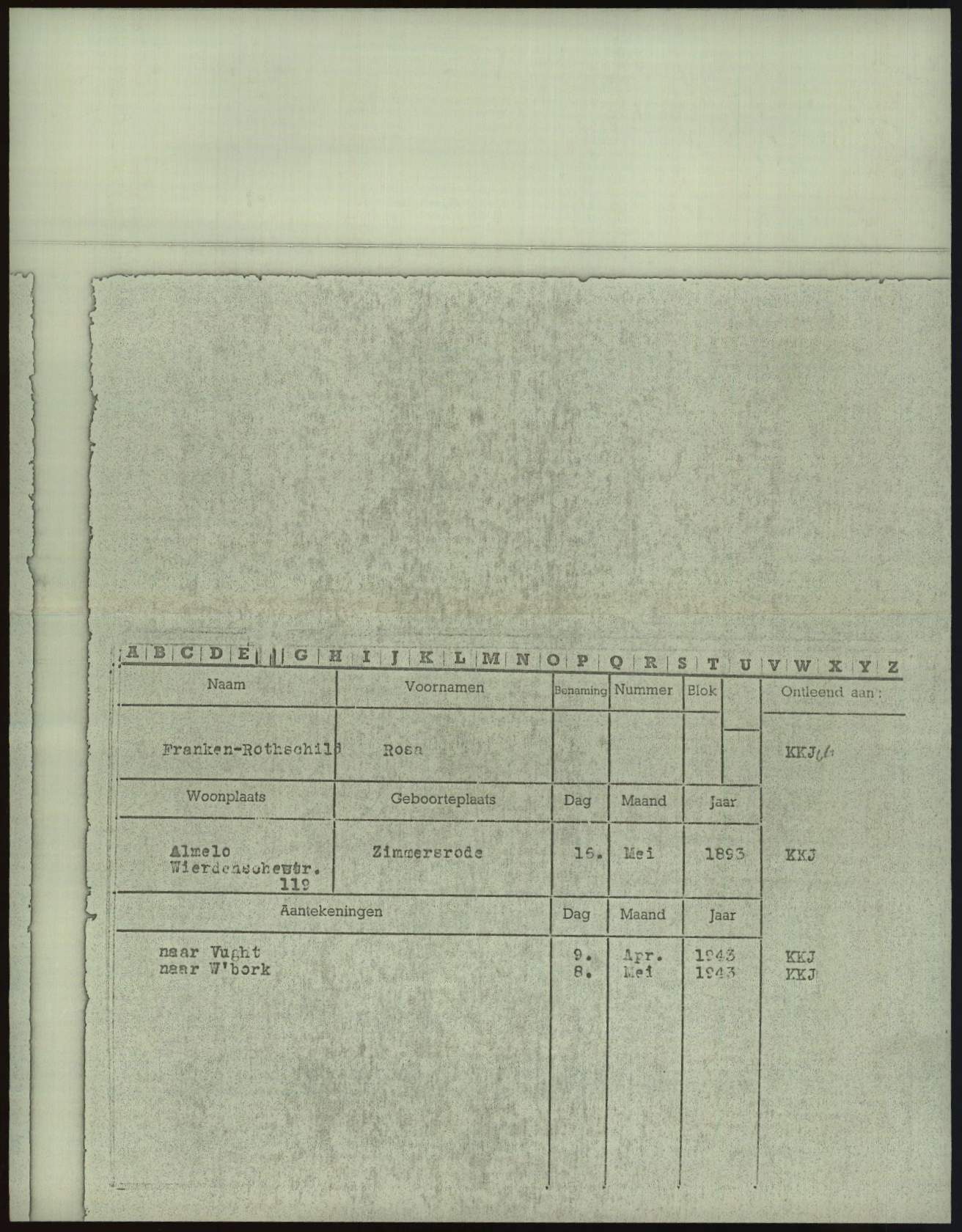
Arolsen Archives, DocID: 355979 (ROSA FRANKEN ROTHSCHILD)
DeepLink: https://collections.arolsen-archives.org/de/document/355979

Arolsen Archives, DocID: 355969 (MEIJER FRANKEN)
DeepLink: https://collections.arolsen-archives.org/en/document/355969
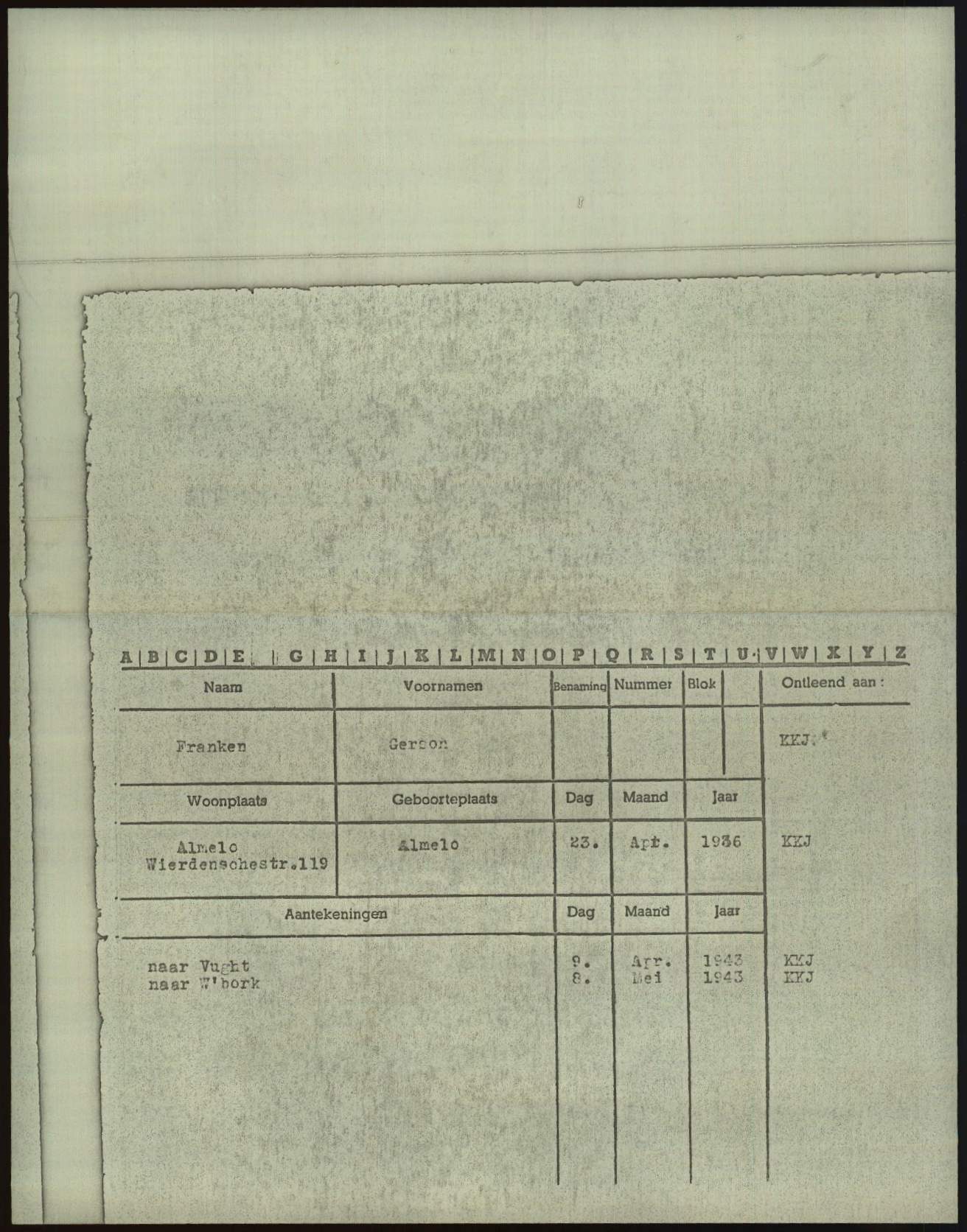
Arolsen Archives, DocID: 355947 (GERSON FRANKEN)
DeepLink: https://collections.arolsen-archives.org/en/document/355947
Here are the official Dutch death records for Rosa and her family, showing they were killed at Sobibor :

Rosa Rothschild Franken death record, BS Death Heritage institution Collection Overijssel Institution place Zwolle Collection region Overijssel Archive 0123 Registration number 16645 Sourcenumber 14 Registration date 09-01-1950 Document place Almelo Collection Civil Registry in Overijssel Book
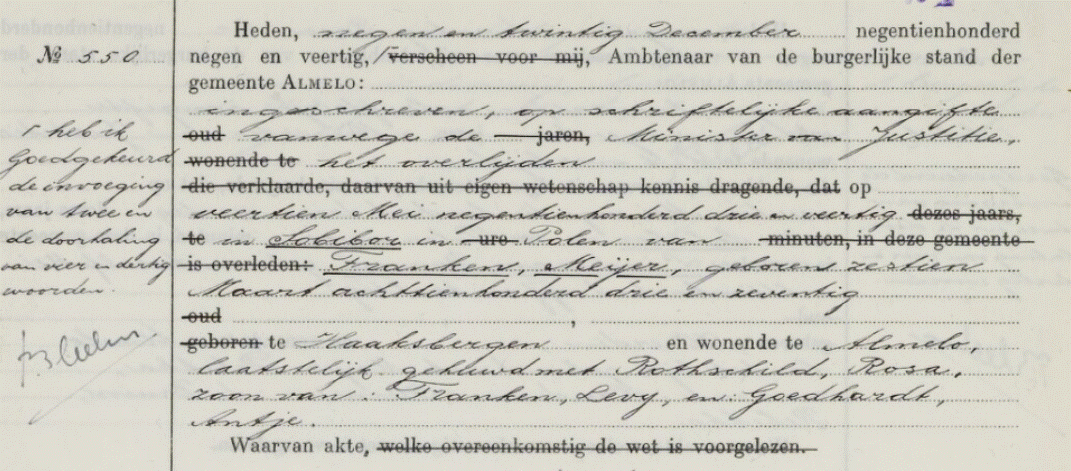
Meijer Franken death record, Collection Overijssel location Zwolle in Zwolle (Netherlands), Civil registration deaths Burgerlijke Stand in Overijssel, Almelo, archive 0123, inventory number 16644, 29-12-1949, Register van overlijden, Almelo, record number 550
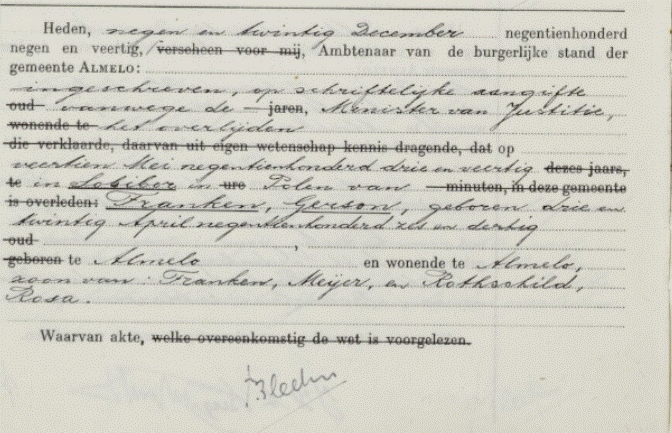
Gerson Franken death record, Collection Overijssel location Zwolle in Zwolle (Netherlands), Civil registration deaths Burgerlijke Stand in Overijssel, Almelo, archive 0123, inventory number 16644, 29-12-1949, Register van overlijden, Almelo, record number 549

Frommet Kugelmann Rothschild death record, Register of deaths, Almelo (Overijssel Collection, Zwolle location), Death Frommet Kugelmann, 14-05-1943, Type of deed :
death certificate, Date of deed: 09-01-1950 Location of deed: Almelo, born in Wohra (D); date of birth 11-09-1857, Access number : 0123 Civil Registry in Overijssel Inventory number :
16645 File number : 12
Rosa’s sister Amalie, the youngest of Fanny and Gerson Rothschild’s children, met a similar fate. Amalie, who was born on April 26, 1901, married Jakob Stiefel, who was born January 19, 1893, in Ziegenhain, Germany, and was the son of Michel Stiefel and Emilie Bachrach. As with Rosa Rothschild and Meijer Franken, I don’t have a marriage record for Amalie and Jakob, but according to Holocaust records, they had two children, Eva, born April 3, 1937, in Fritzlar, Germany, and Gerhard, born April 26, 1938, in Kassel, Germany. The family was living in Kassel at that time.
Amalie, Jakob, Eva, and Gerhard were among those who were sent from Kassel on December 9, 1941, to the Riga ghetto. Remember that Amalie’s older sisters Katchen, Auguste, and Jenny were also deported to the Riga ghetto on that same transport. In any event, they all ended up in Riga. In 1942, Jakob died in the Kaiserwald camp near Riga. On November 2, 1943, Amalie and her two young children, six year old Eva and five year old Gerhard were sent from Riga to Auschwitz, where they were murdered. Another family of Rothschild cousins was destroyed by the Nazis.
Thus, of the eight children of Gerson Rothschild and Fanny Kugelmann who had survived to adulthood, five of them were murdered by the Nazis: Katchen, Auguste, Jenny, Rosa, and Amalie, as well as their mother Fanny and almost all of their children. Only Siegmund, Max, and Clara and their families escaped in time, as well as Auguste’s son Bruno Feldheim. That is just one family’s saga, but it was multiplied millions of times over for all the other families who were torn apart and destroyed by the hatred of the Nazis and those who supported them.
What gives me hope after learning all this tragic information about the family of Gerson Rothschild is the incredible strength I’ve seen in the descendants of Siegmund and Clara, those who are here today because their parents or grandparents were able to escape in time. Those descendants are all examples of how good can conquer over evil and love can overcome hatred.
- I could not locate a marriage record for Rosa and Meijer in either the Dutch archives at WieWasWie or in the various Hessen archives for Zimmersrode or Waltersbrueck, Germany, where Rosa was presumably living before relocating to the Netherlands. But Rosa and Meijer are listed as Gerson’s parents on his Dutch death record and as each other’s partner on each of their Dutch death records. See images below. ↩
-
Meijer Franken, Birth Date 16 mrt. 1873 (16 Mar 1873), Birth Place Haaksbergen
Father Levij Franken, Mother Antje Goedhardt, Collectie Overijssel; The Hague, Netherlands; Burgerlijke stand. Ancestry.com. Netherlands, Birth Index, 1784-1923 ↩ -
Jeannette Hertog, Age 52, Birth Date abt 1871, Birth Place Meerssen
Death Date 12 nov. 1923 (12 Nov 1923), Death Place Almelo, Father Alexander Hertog, Mother Carolina Anschil, Historisch Centrum Overijssel (HCO); Den Haag, Nederland; Burgerlijke stand (overlijdensakten), Ancestry.com. Netherlands, Death Index, 1796-1973 ↩ - A document in the Arolsen Archives for Fanny shows that her residence before deported to a concentration camp was Wierdensestr. 119 in Almelo, Netherlands. A similar document in the Arolsen Archives for Rosa shows her living at the same address. See Arolsen Archives, DocID: 402367 (FROMMET ROTSCHILD KUGELMANN) at https://collections.arolsen-archives.org/de/document/402367 and DocID: 355979 (ROSA FRANKEN ROTHSCHILD), at https://collections.arolsen-archives.org/de/document/355979 ↩
 Brotmanblog: A Family Journey
When I think of the dutiful people, sitting behind a typewriter or a desk, carefully entering the identifying information of millions of individuals whom their government intends to murder or has just murdered, I don’t know what to do with the layer of ice that envelopes my soul. That they also kept and proudly protected those records through the conclusion of a terribly destructive period of history is beyond my understanding.
LikeLiked by 2 people
I know exactly what you mean. The only indication that they even had any idea that what they were doing was wrong was the way they tried to destroy parts of Auschwitz when they knew the Allied Forces were coming to liberate the camp.
LikeLiked by 1 person
Such a shameful period of history. We humans just can’t seem to stop “othering” and villainizing people. Not to mention how we treat the rest of life on earth.
LikeLiked by 2 people
Sigh. All too true.
LikeLiked by 1 person
You know what struck me Amy when reading this, and I am not sure if this is the first time I have thought this. It’s a miracle that records with their names and stories were even written down. We were so hated so inconsequential why even make mark of us as ‘being’ Not sure if I expressed my entire thought on this correctly but I hope you gleamed what I was trying to say. May their memories be a blessing
LikeLiked by 1 person
I do know what you mean. But I think the Germans just couldn’t help themselves. They are masters of record keeping. That’s why I can find all those birth, marriage, and death records! So when it came to the Holocaust, I guess in their minds they were compiling a data set of their accomplishments—getting rid of all the Jews. Only when they saw that they were going to lose the war did they decide to, for example, destroy parts of the gas chambers at Auschwitz.
On the other hand, there were many people killed in the firing squads and riots in the cities whose names were not kept by the Nazis. For example, all those Rothschilds who were deported to Riga and died there—we have no actual record of how or when they died.
LikeLiked by 1 person
It feels like they cataloged the Germans they killed in their killing machines, but not the people who were just shot dead in Eastern Europe. The bigotry against non-Germans is hard to grasp, but it certainly existed. In the Jewish cemetery in Eschwege in 1990 one of the returned Jewish residents of the town launched into a rant about the graves of the “Polack” Jews who were buried there after the end of WW2, when there was a displaced persons camp in town. It was another stunning moment.
LikeLiked by 1 person
I don’t know whether that was because of bias or because they hadn’t yet finalized their killing processes in those early years in Poland. Once the Eastern European Jews were also deported to camps like Auschwitz, they were “catalogued” the same as German Jews. But certainly there has always been prejudices even among and between Jews. My grandmother wasn’t good enough for my grandfather (according to his mother) because he was Romanian and she was a Galitzianer.
LikeLike
A chilling read indeed…families destroyed because of a megalomaniac’s personal beliefs.
LikeLiked by 1 person
Sadly, it was not just Hitler. He alone could not have murdered six million. It took the assistance and complicity of millions of other people in Germany and elsewhere—including many who just stood by and let it happen.
LikeLike
Pingback: Malchen Rothschild Rosenblatt, Part II: Who Shall Live and Who Shall Die | Brotmanblog: A Family Journey