
Happy Fourth of July!
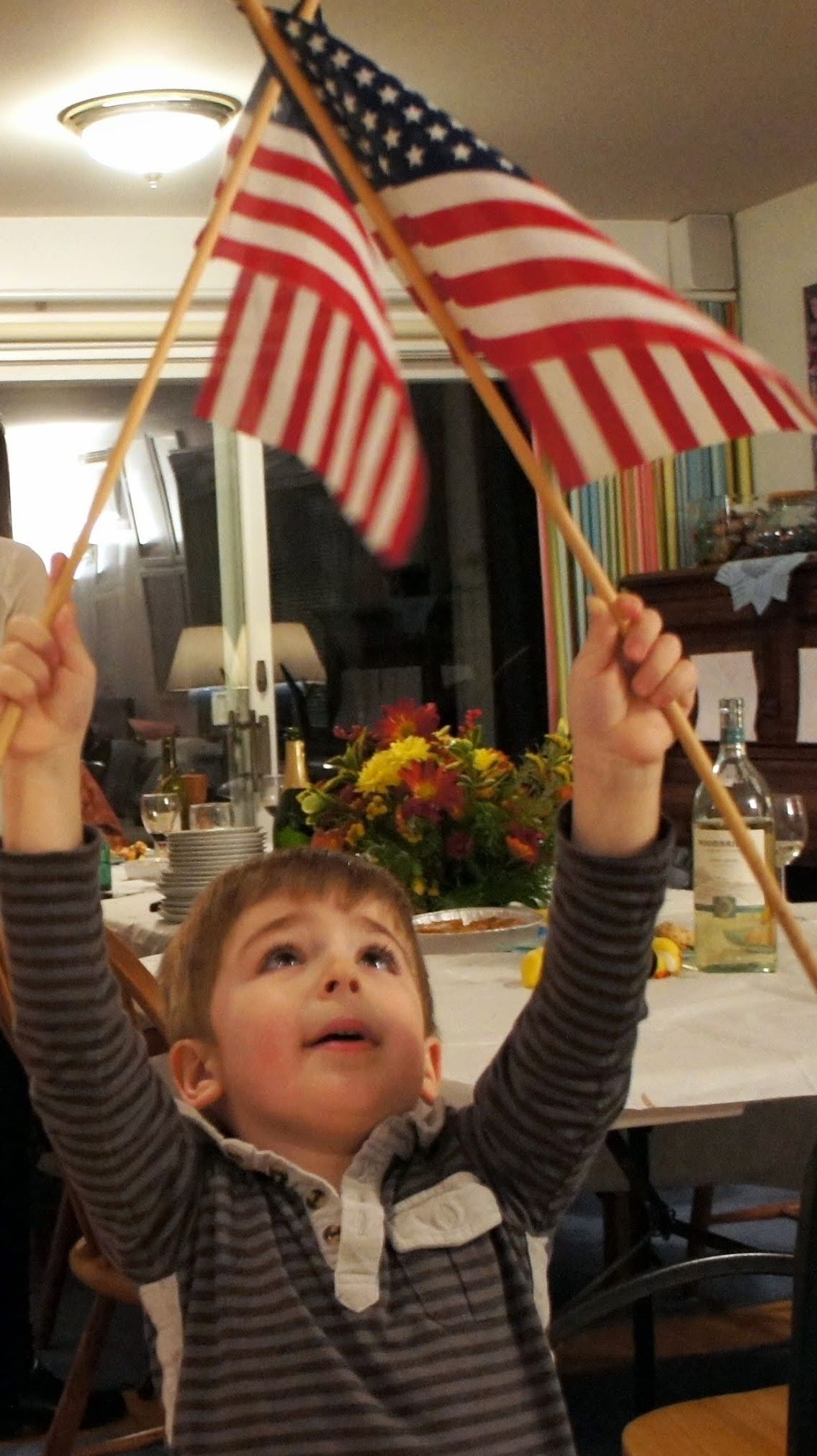
I remember when I was growing up how much I enjoyed celebrating the Fourth of July. The fireworks, wearing red, white, and blue, ice cream that was red, white, and blue, celebrations at camp, singing patriotic songs. Parades and flags. It was all so innocent. I was so innocent. In 2026 as we celebrate the 250th anniversary of the signing of the Declaration of Independence, I am no longer innocent, and the holiday is tinged with nostalgia, sadness, and gratitude.
People ask, “Are you proud to be an American?” But to me that’s the wrong question. It’s not about pride; it’s about gratitude.
I am grateful that 250 years ago some very wise and courageous people decided that it was worth risking their lives to free themselves from the tyranny of King George III. When they wrote, “All men are created equal,” it did not reflect the reality of our society, but it was a message to the king that he, like the rest of us, was a mere mortal and not a superior being entitled to deprive others of their rights. Those brave people saw a vision that was radical and frightening—and they put their lives and the lives of their neighbors and families on the line to stand up for that vision. So I am grateful to them all—-Jefferson, Adams, Hamilton, Hancock, Washington, and all those who stood with them.
And I am grateful personally to all my ancestors who also were wise and courageous enough to recognize the potential America held for them and left their homes in Europe to find a better life with more freedom, less antisemitism, more opportunities. All my novels were inspired in part by those brave immigrant ancestors of mine. In Pacific Street, it’s the story of my fifteen year old grandfather who walked out of Romania to escape oppression and pogroms. In Santa Fe Love Song, it’s the story of my great-great-grandfather who came as a teenager to America and traveled the Santa Fe Trail to find economic freedom and opportunity. In Simon’s Secret, Simon came to America as the place to start over after being imprisoned for years in Germany. And in The Women Before Us, there are the stories of my great-great-grandparents Hava and Gerson and my three-times great-grandparents Joshua and Jette, all of whom left everything they knew and all their relatives to come to this country when it was still fairly new in the 1840s and 1850s so that they could create better lives for themselves and their children.
I am thus deeply grateful to and proud of those who created this country back 250 years ago and deeply grateful to and proud of my ancestors who came here to reap its benefits. I am grateful that this country exists, and I have faith that it will return to its founding principles and provide sanctuary and hope for all people looking for a better life.


Same to you all!
Get Outlook for iOShttps://aka.ms/o0ukef
LikeLiked by 1 person
Thanks, Gerry. I hope you are well.
LikeLike
Happy 4th!!!
LikeLike
Thanks! You, too!
LikeLike
Thanks, Amy. Your words in your post are inspirational and hopeful. I feel the same. Happy 4th! Best, Carl
>
LikeLiked by 1 person
Thanks, Carl. You, of course, are even closer to knowing the immigrant experience. Thinking of your dad as I write this.
LikeLike
Well said, Amy. I, too, am grateful to belong to a country founded on lofty ideals (despite all the unlofty realities then, now, and in between). We, as a people have also done a lot of good in the world.
LikeLiked by 1 person
Yep. We are as a country as we are as human beings—a mix of wonderful and terrible. But we all need to keep striving for the best.
LikeLiked by 1 person
Brilliant, Amy. Yes, gratitude is the question. I am so grateful. For all this country’s flaws which we are constantly highlighting, I am still grateful to be an American.
LikeLiked by 1 person
Thanks, Luanne. Yes, it may be a mess, especially now, but there is still so much here to appreciate and for which to be grateful.
LikeLiked by 1 person
Exactly.
LikeLiked by 1 person
Hi Amy, I just stumbled across your research into our family history. Solomon Schwartz is my great grandfather, Arnold Schwartz is my grandfather and Stephen is my father – Jon is my uncle. I’m curious if you know when our name was changed from Svarti to Schwartz as well as the derivation of the surname Svarti – which appears Scandinavian in nature. Thanks! – Dave Schwartz
LikeLiked by 1 person
Hi David, your uncle Jon has the relevant documents, including those that spelled the name Svarti. I do not know the origin of that spelling, but the family was definitely not Scandinavian! They were Romanian. Did you see this blog post? https://brotmanblog.com/2014/01/24/the-schwartz-family-updates-documents-and-pictures/
LikeLike
Thanks Amy! Yeah, that’s the post that I was referring to in my initial comment. It’s great! The odd thing is that while there is deep history for us in Romania, the name Svarti itself has Norse and Scandinavian derivation. It’s most certainly not a Romanian name. Rather, it has its roots in Viking and Scandinavian culture.
LikeLiked by 2 people
Fascinating! I’ve no idea how they came up with this spelling, but I have to believe it came from the German originally, just as Goldschlager did.
LikeLike
Here’s some more info. And it is related to German as it’s the root for the German Swarz – also meaning dark, black. I’m just more curious when we switched it from Svarti to Swarz and then of course Schwartz. Hope all is well with you and the family!
“The surname Svarti has its roots in Scandinavian heritage, particularly within the Nordic countries. The name is believed to derive from the Old Norse word svart, meaning black or dark, which may have originally referred to physical characteristics, such as hair color or complexion, or to geographical features like dark landscapes or forests. The surname likely emerged during the Viking Age, around the 8th to 11th centuries, when surnames began to be adopted more formally. Over time, individuals bearing the name Svarti may have taken on various occupations, including farming, fishing, or craftsmanship, reflecting the agrarian and maritime lifestyles prevalent in these regions. Culturally, the surname Svarti may exhibit variations in spelling and pronunciation across different Scandinavian languages, such as Swedish, Norwegian, and Danish. In some instances, it may appear as Svart or Svartis, with slight phonetic differences influenced by local dialects. The name’s spread can be attributed to migration patterns, particularly during the periods of exploration and settlement in the North Atlantic, as well as through trade routes connecting various Nordic communities. In some regions, the name may carry additional meanings or connotations, often tied to local folklore or historical narratives. Notable figures associated with the surname Svartis are less documented in mainstream historical records, but the name may be linked to various local leaders or artisans within Scandinavian communities. The influence of such individuals, particularly in the context of regional governance or craftsmanship, could have contributed to the surname’s recognition and reputation. As with many surnames of Nordic origin, Svarti reflects a rich tapestry of cultural identity, historical significance, and the enduring legacy of the Viking Age and its descendants.”
LikeLiked by 1 person
Thanks, David. That’s all so interesting! And I wonder whether the German term came from the Nordic countries or vice versa. But to answer your question, all I know is that when Louise and the children came to the US in 1904 to join Solomon, the name on the manifest was Schwarz. They spelled it that way for a while and then switched to Schwartz. I will look to see if I can find a ship manifest for Solomon. Since I am only related through my great-uncle’s marriage to Becky, I have not deeply researched the rest of the family.
LikeLike