This is NOT a test even if it looks and sounds like one!

As promised, here is a chart to illustrate one possible way that my mother Florence, Elaine and Frieda are all connected.

New PDF Chart showing relationships of Moses Joseph Bessie et al-page-001


There are a LOT of unknowns and assumptions here.

First, we are assuming that Joseph Brotman and Bessie Brot were first cousins, as family lore says.  If so, then one of Joseph’s parents was a sibling to one of Bessie’s parents.  On this chart, I am assuming that Joseph’s father Abraham was a sibling to Bessie’s mother Gittel Brot because I don’t think Abraham would have named a son Joseph if he had a living brother named Joseph.

Second, we are assuming based on DNA results that Joseph Brotman and Moses Brotman were brothers, making their children first cousins and their grandchildren, here Florence and Elaine, second cousins.  The DNA results seem to support that assumption.

Third, we are assuming that Florence and Frieda are also second cousins based on the DNA results, meaning that Gussie Brotman and Sabina Brod were first cousins, meaning that one of Gussie’s parents and one of Sabina’s parents were siblings.  Here, I am making the assumption that Bessie Brot, Gussie’s mother, was the sister of Sabina’s mother, but it could be that Bessie was Sabina’s father’s sister.  I don’t know whether Brod was a name Sabina got from her mother or her father because in Galicia in those times, the state often treated Jewish children as illegitimate if their parents had only a Jewish marriage ceremony and thus assigned the mother’s name to the children instead of the father’s.  So either is possible here.

So what does this all mean? Well, hold on because this is where it gets a bit slippery. Taking the above chart as true (which is still very speculative), it means that Elaine, Florence, and Frieda are all third cousins since they all have the same great-great-grandparents, i.e., whoever were the parents of Abraham Brotman and Gittel Brot.  (I don’t know whether Brotman and Brot were two versions of the same name or two completely different names in the family; both exist as surnames so they could be as unrelated as someone named Rosen is to someone named Rosenberg, for example.)

BUT Elaine and Florence are also second cousins (as well as third cousins) since they are the children of first cousins (Louis and Gussie) and the grandchildren of siblings (Moses and Joseph Brotman).  AND the same is true for Florence and Frieda: they are second cousins because they are the children of first cousins (Gussie and Sabina) and the grandchildren of siblings (Bessie and the parent of Sabina).

Cousin_tree

So my mother is a second cousin to both Elaine and Frieda (since her grandparents were first cousins), BUT Elaine and Frieda are not second cousins, only third cousins.  Their grandparents (Moses Brotman and Sabina’s parent) were not first cousins, just second cousins.

That is consistent with the DNA results which showed my mother as a second cousin to Elaine and also to Frieda but showed Elaine and Frieda as likely third to fifth cousins.

I have no idea whether that is a help or not.  In fact, I think I am more confused now than before.  Please tell me if that makes no sense.  Ask me questions.  Test my thinking.  Please.

And a big THANK YOU to my new cousin Phyllis for helping me sort through all of this!

Brotman Update! The Trials and Tribulations of DNA Testing

Animation of the structure of a section of DNA...

Animation of the structure of a section of DNA. The bases lie horizontally between the two spiraling strands. (Photo credit: Wikipedia)


I am now delving into a part of genealogy research that is the hardest thing I’ve yet done in this project: DNA testing.  I am not and never was a science or math person.  My head starts spinning when I see too many numbers and/or scientific terms.  Reading about DNA results is like reading Russian or Chinese for me.  The words are not at all familiar, and the numbers have no meaning in the world in which I am used to operating.  Terms like SNP, centimorgan, autosomal, and others I can’t even keep in my head at all mean little or nothing to me, even after reading several articles and websites defining the terms.

I say all this by way of disclaimer.  Everything I am writing about today is foreign to me, and I am still trying to get help to be able to comprehend these test results more fully and to figure out what I can learn from them.

Having said all that, here’s the story.  Those who have followed this blog for a long time know that one of my brick walls was trying to find out whether my Brotman great-grandparents, Joseph and Bessie, were related to the Brotmans who settled in southern New Jersey in the 1890s and founded the town that is called Brotmanville.  My Aunt Elaine had told my cousin Jody and her husband Joel that Joseph had had a brother who moved to New Jersey where the town was named after him. Through my research and contacts with members of the Brotmanville Brotman family, I learned that Moses Brotman, a contemporary of Joseph Brotman, also had a father named Abraham and also was from Galicia, as was Joseph.  The Brotmanville Brotmans believed that Moses was from Przemyl, which is about 100 miles from Tarnobrzeg.  But none of us had any documentation of the family in Galicia or anything more than anecdotal evidence of a connection or birthplace.

brotmanville

My aunt’s story about Brotmanville

So last spring I decided to try DNA testing to see if I could break through this brick wall.  My first thought was to do a Y-DNA test on a male descendant of Moses and a male descendant of Joseph.  It had to be a father-son-grandson-great-grandson connection to get a reliable Y chain as Y DNA is only passed from fathers to sons.  I found one great-grandson of Moses Brotman who qualified and also asked one of my second cousins who was a direct male descendant of Joseph. We had the tests done by Family Tree DNA or FTDNA.  It took about three months for both test results to return, and it showed that my Moses descendant Larry and my Joseph descendant Bruce shared 34 of 37 markers on their Y-DNA.

English: A DNA microarray. Français : Une puce...

English: A DNA microarray. Français : Une puce à ADN. (Photo credit: Wikipedia)

I had no clue what that meant.  According to a woman who works for FTDNA, it meant that there is a high likelihood of “some genetic connection,” especially since the two lines share the same surname, Brotman. By “some genetic connection,” she meant that at some point in time the NY Brotmans had a common ancestor with the Brotmanville Brotmans.  It might have been as recently as Abraham Brotman, the father of Joseph and perhaps the father of Moses, or it might have been centuries ago.  The fact that Bruce and Larry have 34 out of 37 markers that were identical indicates that there is some family tie—but those three different markers suggest that there were mutations.  Those mutations might have occurred between Bruce and his father or his father and his grandfather or even earlier.  Or they might have been on Larry’s side.  There was no way to know from the Y DNA results alone.

So my contact at FTDNA suggested that the next step would be to try a different DNA test called an autosomal DNA test, which is better at predicting the degree of connection—i.e., would better tell us whether Joseph and Moses were brothers, both sons of the same Abraham Brotman.  My contact at FTDNA said that if we could get two of the grandchildren of Joseph and Moses to take the autosomal test, it would tell us if they are likely second cousins.

As I understand it (and remember the disclaimer above), autosomal DNA is DNA we inherit from both of our parents.  We got an X from our mothers and either a Y or an X from our fathers to determine our sex.  The other 22 pairs of chromosomes are also made up of genetic material we get from both parents, and those 22 pairs are our autosomal DNA.  But it is not obvious which half of each pair came from which parent.  This is where I start getting that deer in headlights look and feel.

But what I’ve been told and what I’ve read indicates that autosomal DNA testing is quite useful in figuring out the degree of relationship between two people.  So I asked Elaine, Moses’ granddaughter, and my mother, Joseph’s granddaughter, if they would take the autosomal DNA test through FTDNA, called the Family Finder test.  If the test showed that they were second cousins, we would have fairly strong evidence that their grandfathers, Moses and Joseph, were brothers.  My mother and Elaine agreed to take the test, and once again we waited for results.

English: The structure of DNA showing with det...

English: The structure of DNA showing with detail showing the structure of the four bases, adenine, cytosine, guanine and thymine, and the location of the major and minor groove. (Photo credit: Wikipedia)

Those results came in about a week ago.  First, I got Elaine’s results, and then a few days later, I received my mother’s results.  And they matched!  FTDNA predicts their relationship to be second cousins!  Of course, this is not definitive proof.  DNA testing is just a prediction, but at this degree of closeness, it is considered quite strong evidence, especially with the anecdotal evidence behind it, that is, the shared surnames, the shared father’s name, my aunt’s story, etc.  Elaine and my mother share 334 centimorgans.  That seems to suggest close cousins.

And then there was more.  Although Elaine and my mother were each other’s closest matches, my mother had a second very close match to a woman named Frieda.  She shared 292 centimorgans with Frieda, and Frieda was another predicted second cousin.  But Elaine was not a close match to Frieda, although she was listed as a possible third to fifth cousin.  So who was this Frieda?  The FTDNA page listed Brod as one of her ancestral names and one of her ancestral towns as Radomysl nad Sanem, which is about 20 miles from Tarnobrzeg, where I believe Joseph and Bessie lived.

I emailed the person in charge of Frieda’s results, her niece Phyllis, and we have now started trying to figure out how Frieda is related to my mother.  Since Frieda is listed as a likely second cousin, she could have shared a great-grandparent with my mother.  But since Frieda is not as close a match to Elaine, they did not share a great-grandparent. That could mean that Frieda and my mother are both the great-granddaughters of  the parents of Bessie Brot/Brotman whereas my mother and Elaine are both the great-granddaughters of  the parents of Joseph Brotman and Moses Brotman.

And since Bessie was Joseph’s first cousin, that could explain why Elaine is a more distant cousin than my mother is to Frieda but still related to both.  Elaine is not directly descended from Bessie’s line, but is directly descended from Moses Brotman, who would also have been Bessie’s first cousin if Moses and my great-grandfather Joseph were brothers.  Elaine would have some of the same genetic material as Frieda as a third cousin, but not as much as she has with my mother, her presumed second cousin.

Screenshot (24)

A screenshot of the chromosome browser showing where on my mother’s chromosomes Elaine and Frieda match her DNA

Have I lost you yet?  I am trying to create a chart and will post it once I am sure I have it right.

This was incredible news for me.  First, finding the connection between Elaine and my mother was corroborating evidence of our tie to the Brotmanville Brotmans.  Second, finding Frieda gives me an opening to find out more about Bessie and Joseph and where they lived.

But I am once again at a stumbling block.  Phyllis knows only that her great-grandmother, Frieda’s grandmother, was named Sabina Brod and was from Radomysl nad Sanem.  She does not know anything more about Sabina’s family—who her parents were or who her siblings were.  Sabina moved to Germany with her husband in the early 20th century and died there in the 1930s.  As far as Phyllis knew, Sabina had no relatives who were in the US.  Neither Phyllis nor I have found any definite records of our Brod or Brodman or Brotman relatives in Galicia.

So for now all we have is the DNA results.   And I am struggling to understand them and to learn more from them.  And it is a struggle for me.  If there is anyone out there reading this who is comfortable with this type of data, I’d love an advisor who can assist me.

But for now it feels like I have found another opening into the mystery of my Brotman ancestors.  I feel one step closer to knowing where they lived and who their families were.

English: DNA replication or DNA synthesis is t...

English: DNA replication or DNA synthesis is the process of copying a double-stranded DNA molecule. This process is paramount to all life as we know it. (Photo credit: Wikipedia)


Looking back:  The Cohen Family from Amsterdam to England to Philadelphia and Washington and beyond


Amsterdam coat of arms

Two months ago I wrote a summary of my perspective on the descendants of Jacob and Sarah Jacobs Cohen and their thirteen children, including my great-grandfather Emanuel Cohen.  I wrote about the way they managed to create a large network of pawnshops that provided support for the generations to come.  Many of the Philadelphia Cohens stayed in the pawnshop business into the 20th century.  The generation that followed, those born in the 20th century, began to move away from the pawn business and from Philadelphia.  Descendants began to go to college and to become professionals.  Today the great-great-grandchildren of Jacob and Sarah live all over the country and are engaged in many, many different fields.  Few of us today can imagine living with twelve siblings over a pawnshop in South Philadelphia.  We can’t fathom the idea of losing child after child to diseases that are now controlled by vaccinations and medicine.  We take for granted the relative luxurious conditions in which we live today.

File:Flag of Philadelphia, Pennsylvania.svg

Philadelphia flag


The story of the Cohen family in Washington is much the same in some ways, different in other ways.  Jacob’s brother Moses and his wife Adeline also started out as immigrants in the pawnshop business , first in Baltimore and then Washington.  But unlike Jacob who lived to see his children become adults, Moses Cohen died at age 40 when his younger children were still under ten years old.  Adeline was left to raise those young children on her own as she had likely raised her first born son, Moses Himmel Cohen, on her own until she married Moses Cohen, Sr.  When I look at what those children accomplished and what their children then accomplished, I am in awe of what Adeline was able to do.   For me, the story of the DC Cohens is primarily the story of Adeline Himmel Cohen for it was she, not Moses, who raised the five children who thrived here in the US.  She somehow instilled in those children a drive to overcome the loss of their father, to take risks, to get an education, and to make a living.

Her son Moses, Jr., an immigrant himself, had nine children; his son, Myer, became a lawyer.  To me it is quite remarkable that a first generation American, the son of a Jewish immigrant, was able to go to law school in the late 19th century.  Myer himself went on to raise a large family, including two sons who became doctors and one who became a high ranking official at the United Nations in its early years after World War II.  Moses, Jr.’s other children also lived comfortable lives, working in their own businesses and raising families.  These were first generation Americans who truly worked to find the American dream.

Adeline and Moses, Sr.’s other three children who survived to adulthood, Hart, JM, and Rachel Cohen, all took a big risk and moved, for varying periods of time, to Sioux City, Iowa.  Even their mother Adeline lived out on the prairie for some years.  JM stayed out west, eventually moving to Kansas City; he was able to send his two daughters to college, again something that struck me as remarkable for those times.  His grandchildren were very successful professionally.  Hart, who lost a son to an awful accident, had a more challenging life.  His sister Rachel also had some heartbreak—losing one young child and a granddaughter Adelyn, but she had two grandsons who both appear to have been successful.

Three of the DC Cohen women married three Selinger brothers or cousins.  Their children included doctors, a popular singer, and a daughter who returned to England several generations after her ancestors had left.  The family tree gets quite convoluted when I try to sort out how their descendants are related, both as Cohens and as Selingers.

There were a number of heart-breaking stories to tell about the lives of some of these people, but overall like the Philadelphia Cohens, these were people who endured and survived and generally succeeded in having a good life, at least as far as I can tell.  The DC Cohens, like the Philadelphia Cohens, have descendants living all over the United States and elsewhere and are working in many professions and careers of all types.

flag of Washington, DC

Looking back now at the story of all the Cohens,  all the descendants of Hart Levy Cohen and Rachel Jacobs, I feel immense respect for my great-great-great grandparents.  They left Amsterdam for England, presumably for better economic opportunities than Amsterdam offered at that time.  In England Hart established himself as a merchant, but perhaps being a Dutch Jew in London was not easy, and so all five of Hart and Rachel’s children came to the US, Lewis, Moses, Jacob, Elizabeth, and Jonas, again presumably for even better opportunities than London had offered them.  Eventually Hart himself came to the US, uprooting himself for a second time to cross the Atlantic as a man already in his seventies so that he could be with his children and his grandchildren.  Rachel unfortunately did not survive to make that last move.

Flag of the City of London.svg

The flag of the City of London

Arriving in the US by 1850 in that early wave of Jewish immigration gave my Cohen ancestors a leg up over the Jewish immigrants who arrived thirty to sixty years later, like my Brotman, Goldschlager, and Rosenzweig ancestors.  Of course, the Cohens had the advantage of already speaking English, unlike my Yiddish speaking relatives on my mother’s side.  They also had the advantage of arriving at a time when there wre fewer overall immigrants, Jewish immigrants in particular and thus faced less general hostility than the masses of Jewish, Italian, and other immigrants who arrived in the 1890s and early 20th century.  Also, my Cohen relatives may not have been wealthy when they arrived, but Hart and his children already had experience as merchants and were able to establish their own businesses fairly quickly.  Thus, by the time my mother’s ancestors started arriving and settling in the Lower East Side of NYC or in East Harlem, working in sweatshops and struggling to make ends meet, my father’s ancestors were solidly in the middle and upper classes in Philadelphia, Washington, Sioux City, Kansas City, Detroit, and Baltimore.

When I look at these stories together, I see the story of Jewish immigration in America.  I see a first wave of Jews, speaking English, looking American, and living comfortably, facing a second wave who spoke Yiddish, looked old-fashioned, and lived in poverty.  No wonder there was some tension between the two groups.  No wonder they established different synagogues, different communities, different traditions.

A recent study suggests that all Ashkenazi Jews were descended from a small group of about 350 ancestors.  We all must share some DNA to some extent.  We are really all one family.  But we have always divided ourselves and defined our subgroups differently—Orthodox, Conservative, Reform; Galitizianer or Litvak; Sephardic or Ashkenazi; Israeli or American; so on and so forth.  We really cannot afford to do that in today’s world; we never really could.  Today very few of us make distinctions based on whether our ancestors came in 1850 or 1900 because we are all a mix of both and because we have blurred the economic and cultural distinctions that once were so obvious.  But we still have a long way to go to eradicate the divisions among us and to overcome the prejudices that continue to exist regarding those who are different, whether Jewish or non-Jewish.


Remy Brandon Fischer, Shalev Ezra ben Dov Baer Yaakov v Rivke Gittel

Remy

Remy

Yesterday just before 4 pm, our family grew again with the birth of our grandson Remy.  He weighed 8 pounds and is 19.5 inches long, and he is beautiful.  His big brother Nate whispered in his ear, “You are going to be my best friend,” bringing us all to tears.  It was a magical, wonderful, perfect day.

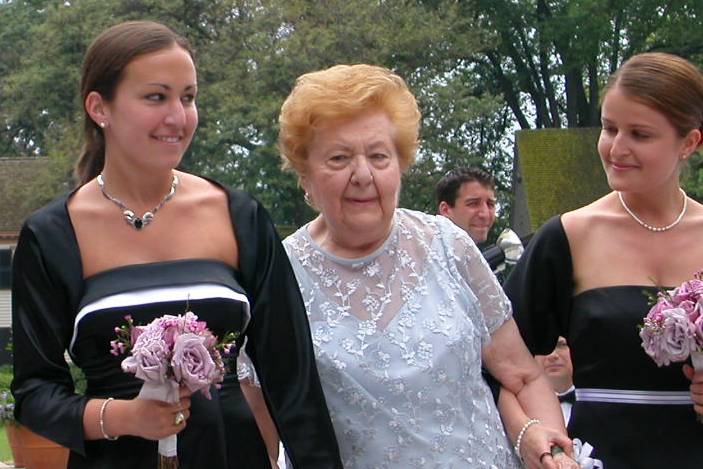
Remy is named for five remarkable women from all sides of his family.  Remy is for Rose, his paternal great-grandmother who passed away just a few months ago.  Brandon is for Bea, his other paternal great-grandmother who lived to be 101 years old.  Here they both are, together at Remy’s parents’ wedding in 2006.  They were both strong, independent women, both widowed far too young, but both women who not only survived, but found continuing  joy and fulfillment in their long lives.  I was honored to get to know them both.

Bea and Rose

Bea and Rose

Remy’s Hebrew name is in honor of three women from his mother’s side.  Shalev is for my mother-in-law Sara, Remy’s maternal great-grandmother, who also lived a long life.  She was the matriarch of her family and a strong, sweet, loving and incredibly funny woman who was adored by all her grandchildren, her nieces, nephews, and, of course, her sons and her daughters-in-law.  She raised two truly wonderful men, one of whom I was fortunate enough to marry.


Sara with Maddy and Rebecca

Sara with Maddy and Rebecca

Ezra is for my two aunts.  My father’s sister Eva, who despite contracting MS as a young woman, lived a long and productive life, working until retirement age for the city of Philadelphia, where she was born and lived almost her whole life.  She was another strong and independent woman who had an incredibly large and yet close circle of friends. (Picture to come once I get back to my scanner.)

Ezra is also for my Aunt Elaine, my mother’s sister, our family’s matriarch, who was yet another incredibly strong and loving and smart and funny woman, our family historian.  As my mother remarked this past weekend, we cannot tell a story about her that does not make us laugh and smile.  She, too, was adored by all.

Phil and Elaine

Phil and Elaine

Remy, you have an incredible foundation to start your young life.  May you be blessed to have the strength, the heart, the independence, and the sense of humor that all five of these women had to help get you through what we hope will be a long, healthy and very happy life.


Enhanced by Zemanta

Assessment time

It’s time for my periodic review of what I have learned and where I am going in my research.  I keep a Word document with lists of things I need to do, but sometimes I need to step back and see the whole picture, then step forward and see the details.

English: Forest trees Part of the forest which...

English: Forest trees Part of the forest which is a bit more mature than some of the other parts along the path here. (Photo credit: Wikipedia)

On the Brotman side, I think I am in fairly good shape.  I have found descendants of all but one of Joseph and Bessie Brotman’s children, although I am not in touch with all of the descendants.  The only missing link is Sophie Brotman; I’ve had absolutely no luck finding any records for her.  I don’t know when she arrived, whether she married and, if so, who she married, where she lived, where she died.  And sadly, I don’t think I ever will.  There is no one left alive to ask about Sophie; none of the descendants I’ve spoken with know anything about her.  Perhaps one of Abraham’s descendants might know something, so I will contact Paula, the one Abraham descendant I’ve been in touch with, and see if she has ever heard of an aunt named Sophie.

Bessie

Bessie

The big research area remaining for me on the Brotman side is finding out whether we are related to any other Brotmans, in particular the Brotmans who settled in Brotmanville.  I am in touch with a few of Moses Brotman’s descendants, and one is a genealogist, so we plan to collaborate and see whether we can find the connection between our families.  If we can, that may also lead me to other clues about where in Galicia Joseph and Bessie lived and to clues about other family members.

Moses Brotman

Moses Brotman—Joseph’s brother?

On the Goldschlager branch, I think I am also in fairly good shape.  I have found the descendants of Moritz, my great-grandfather, and of Betty and David Goldschlager, my grandfather’s siblings, and I know about the lives of Betty and David and their children.  I’d love to go back and research Moritz Goldschlager’s family, but since his parents died when he was a young child, there does not seem to be too much more I can learn.  My Romanian researcher did not find anything more related to my Goldschlager relatives, so I may have reached the brick wall with respect to that line.

Moritz Goldschlager

Moritz Goldschlager

On the other hand, the Rosenzweig branch, my great-grandmother Ghitla’s family, still has a number of unanswered questions.  I have been able to learn a great deal about most of the children of David and Esther Rosenzweig, my great-great-grandparents, but Zusi Rosenzweig remains a mystery.  Her descendants were not responsive to my inquiries, so I may have to find another way to get closure on Zusi and her son Nathan and her husband Harry Mintz.  I’ve had better luck with Tillie Rosenzweig Strolowitz Adler and her children and grandchildren and have been in touch with two of her great-grandchildren.  There are still some loose ends there, but for the most part I have been able to find a fair amount about the children of Tillie and Jankel and even about their grandchildren and great-grandchildren.

Ghitla Rosenzweig Goldschlager

Ghitla Rosenzweig Goldschlager

As for the family of Gustave and Gussie Rosenzweig, I still have some open questions, mostly about the daughters Lillie, Lizzie and Ray.  This week I spoke with one of Sarah’s granddaughters, and I am hoping that she will also be able to help me find out more about her grandmother’s sisters, but as of right now, I have not been able to find any of the descendants of Lillie, Lizzie or Ray.

So that’s where I am in this journey to find my mother’s family.  I feel as though I am seeing the light at the end of the tunnel, though there is still plenty of tunnel to get through.

Tunnel

What do I do now besides continue to search for answers to the remaining questions?  I have a number of thoughts.

For one, I want to continue to build the relationships I’ve made with all my new cousins on both sides of my mother’s family—the Brotmans and the Goldschlager/Rosenzweigs.  Having found them, I don’t want to lose them again.  Facebook and email make this so much easier, but it will still take effort.  I also want to see if I can organize a meeting for the Rosenzweig/Goldschlager cousins like we had for the Brotmans earlier this month.

I also want to pull all my research together into a format that will make it more easily accessible.  I’d like to tell the story of the Brotmans, Goldschlagers and Rosenzweigs as a chronological story so that someone can pick it up and get the whole story without having to jump from blog post to blog post, searching for the next discovery.  That is a larger project, and I don’t even know how to start it, but that is what I see as my ultimate goal—to write the book that tells the stories so that our descendants will have it and know who their ancestors were.

And then there is the next huge research task: my father’s side.  That will be a very different research experience.  His family has been in this country for about fifty years longer than my mother’s family.  They came from Germany and from England.  They settled and lived in other places: Philadelphia, western Pennsylvania, New Jersey, New Mexico, among other places.  There will be a lot more American and European records available, which will make the task both easier and harder.  I’ve already traced one of my father’s lines back to the 1750s or so in Amsterdam, a full century earlier than I’ve been able to trace any of my mother’s relatives.  I look forward to this research with some trepidation because of the size of the task ahead.  But I am also excited by the idea that I have more discoveries, more stories, more understanding of my family and of myself ahead of me.


Enhanced by Zemanta

Hyman and Sophie Brotman’s Sons: A Family Album


Sophie and Hyman Brotman

Sophie and Hyman Brotman

One of the benefits of getting to meet six of my Brotman second cousins was that I was able to obtain a lot more photographs of my Brotman relatives.  All six of the living grandchildren of Sophie and Hyman Brotman, my grandmother’s older brother, were able to attend our “reunion”—the three children of Saul and Vicky Brotman and the three children of Manny and Freda Brotman.  Sadly, the two daughters of Joseph Brotman, Hyman and Sophie’s oldest son, have passed away.  But I now have a good collection of pictures of Hyman, Sophie, their three sons, and their grandchildren.

Hyman Brotman was born in Galicia and arrived with  his mother, my great-grandmother Bessie,  and his sister Tillie in 1891 when he was about eight years old.  He lived on Ridge Street with his family until he married Sophie Weiss on March 12, 1904.  Hyman and Sophie had three sons.  Joseph Jacob was born on February 4, 1905, and was named for Hyman’s father, my great-grandfather Joseph Jacob Brotman.  Their second son, Saul, was born on April 27, 1907, and their third son Emanuel or Manny was born on May 9, 1910.

Hyman worked at various occupations, including as a chauffeur and in the sweatshops of NYC, but in the early 1920s he and his family moved to Hoboken, NJ, where he opened a liquor store.  My mother has childhood memories of visiting her uncle and aunt in Hoboken, though by that time the three boys were all grown, and sadly she has no memories of her cousins.

Hyman, Bruce and Sophie in the Hoboken liquor store

Bruce, Hyman and Sophie in the Hoboken liquor store


As their children reported, all three Brotman brothers were very close and very athletic.  They were all excellent swimmers and loved competing against each other, always arguing over who was the fastest.

Saul Sophie Joe and Manny

Saul Sophie Joe and Manny

Joe married Perle Gorlin on May 1, 1935, and they lived in Queens where Joe was employed as a salesman for Abbott Laboratories, according to the 1940 census. Joe was a pharmacist in New York, but later moved to Florida where he became involved in commercial real estate.

Joe and Perle Brotman 1940 census

Joe and Perle Brotman 1940 census

Joe and Perle had two daughters, Barbara, born in 1939 and probably named for Bessie, who had died just five years earlier, and Merle or Miki, born in 1941.  Here are some photos of Joe and Perle and other family members:
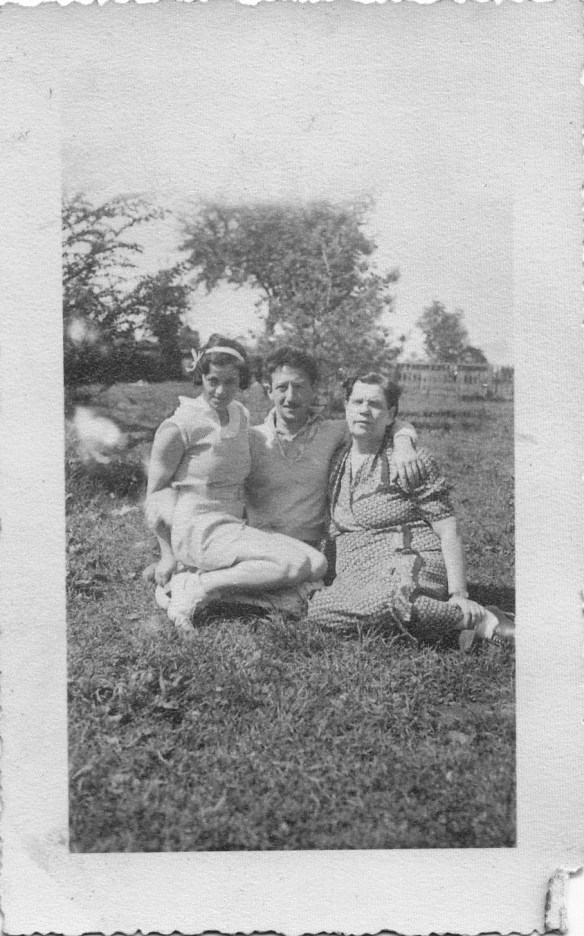
Perle, Joe and Sophie Brotman

Perle, Joe and Sophie Brotman


Hyman (second from left) and Joe (far right) and two unknown men

Hyman (second from left) and Joe (far right) and two unknown men

Joe and Saul Brotman

Joe and Saul Brotman

From Front Center, Clockwise: Joel, Herman, Sophie, Joe, Perle, Manny, Freda, Denny, Saul , and Vicky Brotman

From Front Center, Clockwise: Joel, Herman, Sophie, Joe, Perle, Manny, Freda, Denny, Saul , and Vicky Brotman

Saul Brotman was an excellent athlete, especially in swimming and handball.  He graduated from Hoboken High School and started college at the New Jersey College of Pharmacy in 1926; he then transferred to and graduated from Panzer College, which has since merged with Montclair State University in New Jersey.  He later got a master’s from Rutgers University.

1932 Panzer College yearbook

1932 Panzer College yearbook

Saul at Panzer College

Saul at Panzer College

Saul

Saul

Saul

Saul

In a comment posted in response to an earlier blog post, Bruce wrote the following about how his parents Saul and Vicky met:

In Manhattan Beach (Brooklyn) there was a beach club, Manhatten Private. It had pools, handball courts, tennis and other sports. My parents were playing handball, my parents were both fine athletes, but not with each other. The ball from my mom’s court was accidently hit toward my dad’s court some distance away. My mom called to my dad saying “ball please”. Dad picked it up and threw it to mom. He then turned to his cousin, with whom he was playing and said “I’m going to marry that girl”. That was about 1940 or 41 I guess. He asked her out several times but she refused. On December 7 1941 my cousin Mel was born. Somehow my father found out and went to the hospital. (Mel was mom’s older brother Al’s first child). Mom asked dad what he was doing there – he said that he thought she might need some help, noting that Pearl Harbor had just been attacked. She apparently knew at that moment that she loved him. The rest is history.”

Vicky Horowitz Brotman

Vicky Horowitz Brotman

Saul and Vicky were married in 1942.

Saul served in the US Army during World War II and won a handball championship while serving in the army. After the war, he became a teacher in New Jersey, where he coached many state championship teams.  After 32 years as a teacher,  he left teaching after being assaulted by the parent of one of his students.  Saul then became the pension director for a union.

Saul in the army

Saul in the army

Saul and Vicky 1940s

Saul and Vicky 1940s

Saul and Vicky had three sons, Bruce, Ronald and Lester.

les bruce ron

Les, Bruce and Ron

Bruce, Ron and Les Brotman

Bruce, Ron and Les Brotman

Saul, Bruce and Vicky at Bruce's bar mtizvah

Saul, Bruce and Vicky at Bruce’s bar mtizvah

Saul remained a great athlete all his life.  In fact, Bruce told me that when Saul was in his seventies, Bruce challenged him to a game of handball, thinking that he could easily beat his father. Instead, Saul soundly defeated his much younger son;  he won four straight games, with Bruce unable to score a single point in any of the four games.

Saul and Bruce

Saul and Bruce

Saul and Vicky

Saul and Vicky

Manny, the youngest of Hyman and Sophie’s sons, was also an excellent athlete like his older brothers.

Manny (far left) at camp in 1925

Manny (far left) at camp in 1925

manny 1926

Manny November 1928

Manny November 1928


Like his brother Saul, he began college at the New Jersey College of Pharmacy, but he transferred to the University of Iowa, from which he graduated.

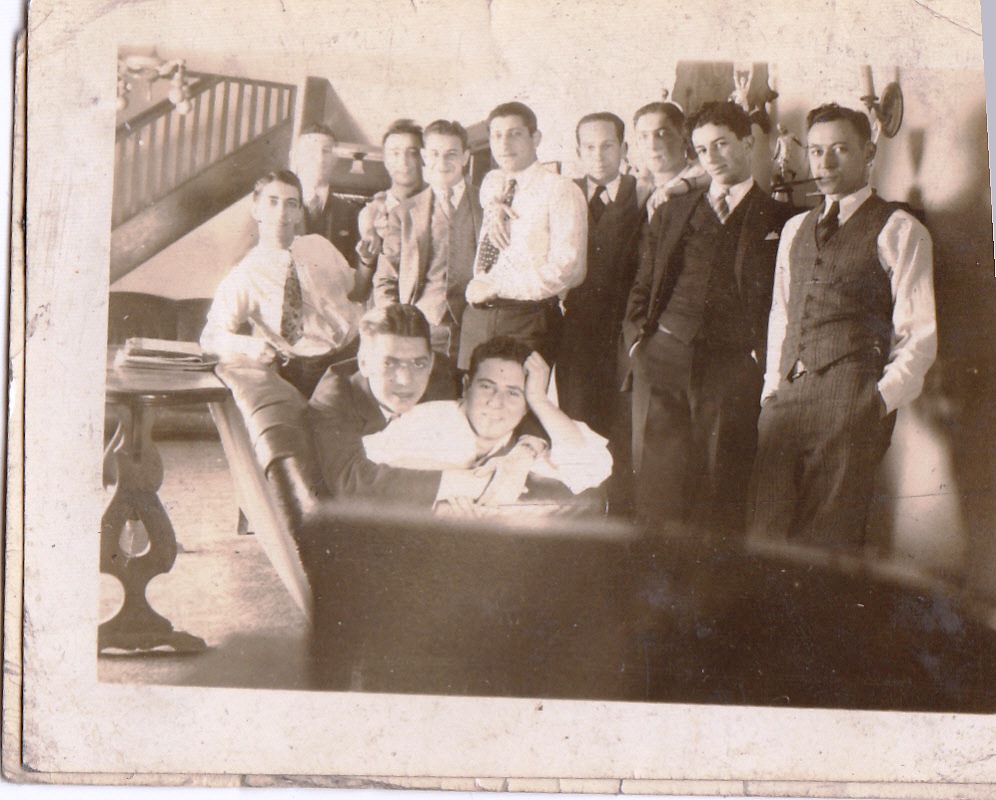
Manny with his fraternity brothers at U Iowa

Manny with his fraternity brothers at U Iowa

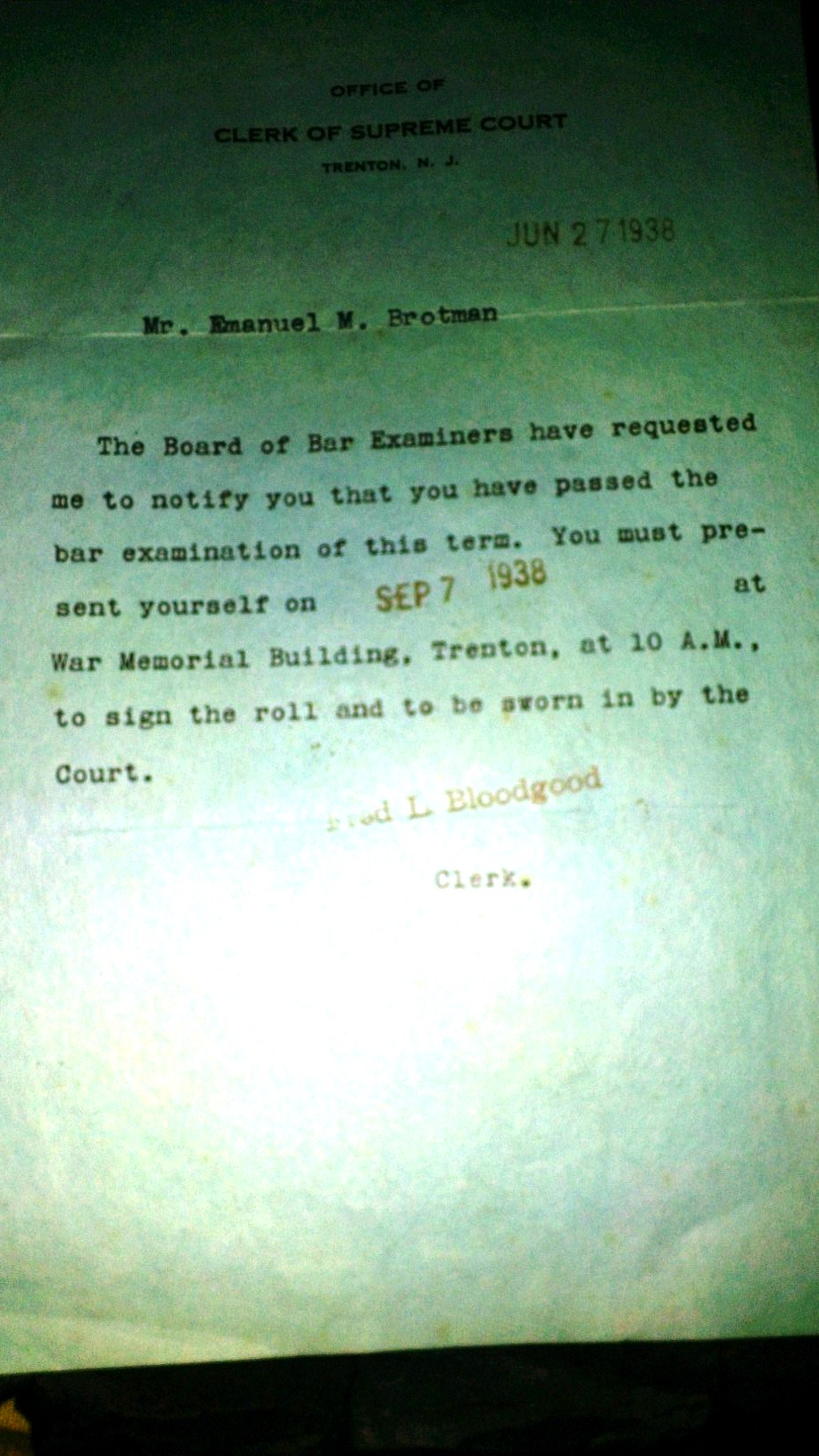
He also graduated from John Marshall Law School (New Jersey), which was later taken over by Seton Hall University. Manny became a member of the New Jersey bar in 1938.

Letter informing Manny that he has passed the New Jersey bar exam

Letter informing Manny that he has passed the New Jersey bar exam

Manny married Freda Feinman on December 22,  1940.

Freda and Manny's wedding invitation 194?

Freda and Manny’s wedding invitation 1940

Manny and Freda 1940s

Manny and Freda 1940s

Manny enlisted in the US Army in 1944 during World War II.
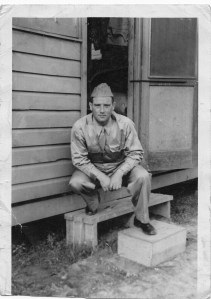
Manny Brotman

Manny Brotman

Manny practiced law for some time, but then joined J.I. Kislak Mortgage Corporation, a subsidiary of J.I. Kislak, Inc.  J.I.Kislak, Inc. was a residential and commercial Realtor, originally based in Hoboken and then in Jersey City, and Kislak Mortgage was primarily a residential mortgage banking company, one of the largest in NJ at the time, based in Newark.  He was president and then chairman of Kislak Mortgage for many years, was president of the Mortgage Bankers Association of NJ, and a long-time board member and two-term Treasurer of the Mortgage Bankers Association of America, where he received the Distinguished Service award. Kislak Realty, a commercial mortgage firm, where he became the president.  He was often quoted as an expert on veteran’s housing and housing in general in various newspaper articles.  Here is one example of an article that ran in several newspapers across the country:  Lebanon_Daily_News_July_10__1971_Lebanon__PA_Manny_Brotman

Manny and Freda had three children: Joel, Denny and Bonnie.  Here are some pictures of Manny and his family:

Manny, Joel and Freda

Manny, Joel and Freda

Denny, Bonnie and Freda

Denny, Bonnie and Freda

The Feinman and Brotman families June 16, 1932

The Feinman and Brotman families June 16, 1937

From left to right: Aron Feinman, Hyman Brotman, Mary Feinman, Sophie Brotman, Manny Brotman, Sam Feinman, Freda Feinman, Saul Brotman (according to the back of this photograph)


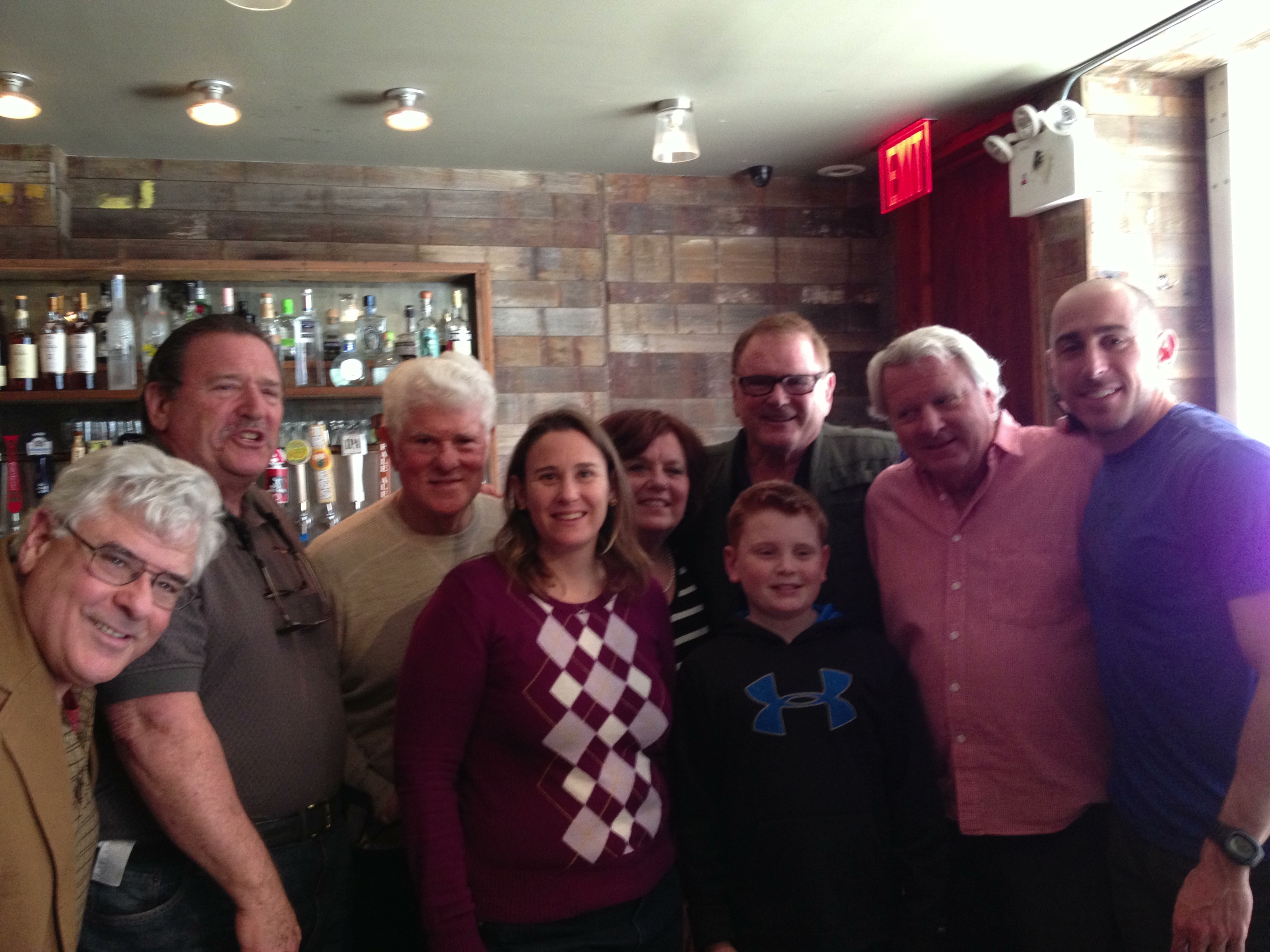
I did not know Hyman or Sophie or any of their sons, but I was very fortunate to meet six members of the next generation, my second cousins Bruce, Ron, Les, Joel, Denny, and Bonnie.  They all made the effort to come to New York City, some from as far away as Florida and Ohio.  I really enjoyed meeting and talking to each one of them and getting a chance to meet some of their children, four of whom also showed up during the course of the weekend.

What a wonderful tribute to their grandparents and parents that these cousins and their children cared enough about the extended family, including some second cousins they’d never met,  to make such a united effort to come to New York so that we could all be together.


Saul and Manny's descendants

Six of Hyman and Sophie’s grandchildren and three of their great-grandchildren



Enhanced by Zemanta

Gifts from Doing Genealogy: My Wonderful Cousins

Ten of Joseph and Bessie's great-grandchildren on the Lower East Side

Ten of Joseph and Bessie’s great-grandchildren on the Lower East Side

Lower East Side tenement

Lower East Side tenement (Photo credit: Salim Virji)

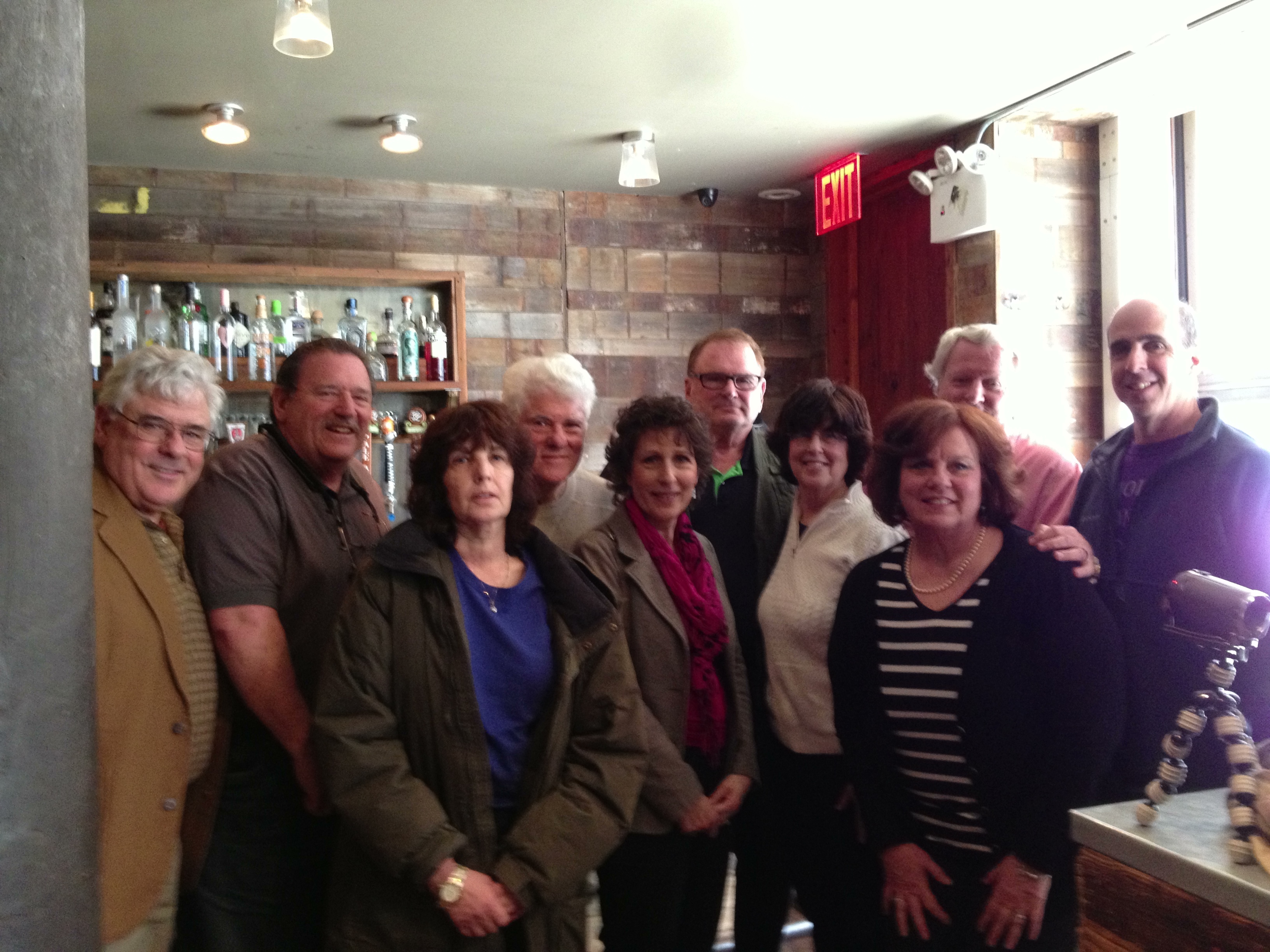
After much planning and anticipation, ten of Joseph and Bessie Brotman’s great-grandchildren, four of their great-great-grandchildren and one great-great-greatgrandchild as well as a number of spouses spent the weekend, talking, eating, laughing and connecting and reconnecting in NYC.  Some of us had known each other all our lives, some had never met at all, and some had not seen each other in many years.  We represented two of Joseph and Bessie’s children, Hyman and Gussie. Although a few people could not make it for various reasons, there were several others who wanted to join us but were unable to do so, including one of Max’s granddaughters and one of hisgreat- granddaughters and one of Abraham’s granddaughters.  We had a wonderful tour of the Tenement Museum and several of us walked along Ridge Street between Rivington and Delancey where our ancestors lived between about 1891 and 1907.

Sign outside Lower East Side Tenement Museum

Sign outside Lower East Side Tenement Museum (Photo credit: Wikipedia)

It was everything I had hoped it would be and more so.  We shared stories about our lives and about our grandparents and parents.  We shared photographs.  We got to know and learned about our children and grandchildren.  We came from as far away as Cleveland and Florida and Massachusetts.   Some lived closer by in New Jersey or even in NYC itself.    There were lots of photos taken. Included here are just a representative few to illustrate the excitement and love that was shared.

Saul and Manny's descendants

Saul and Manny’s descendants

cousins

cousins

photo 4 photo 3

I cannot speak for everyone, but for me it was magical.  A year ago I did not even know I had second cousins.  Through the course of doing family research, I had found all these new wonderful people, people I would have chosen as friends even if they were not my relatives.  We may live far apart, we may have known each other only for a short time, but I know that for me I felt a deep connection.  No, it’s not the same as growing up with a first cousin who shared grandparents and holidays and vacations, but it is nevertheless a real connection.  We all came from the same place, we all are here because Joseph and Bessie decided to leave Galicia and come to America.  We all started somewhere on Ridge Street where our grandparents learned to speak English and the skills that were necessary to rise above the poverty.

Ridge and Broome St

Lower East Side

Lower East Side (Photo credit: InSapphoWeTrust)

I am so grateful for all who were able to make it and all who helped make this dream come true.   I hope that those who were unable to join us will be able to do so another time.  And now I am inspired to starting planning the first Goldschlager-Rosenzweig reunion and then the second Brotman reunion.  These things take time and effort, and I was lucky to have lots of help  with the planning, but I encourage any of my fellow family researchers to reach out and make your family tree more than a two-dimensional document or digital record.  Find a way to meet your cousins and make them a part of your life.


UPDATE: For more photos, click here.

Enhanced by Zemanta

More Manna from Heaven: Of Bessie, Joseph, Max and the Brotmanville Brotmans

As I wrote yesterday, the notes of the conversation with my Aunt Elaine about the family history are remarkably accurate.  Although much of what was in there I had learned either from my mother or brother or cousins or from my own research, there were a few stories in the notes, a few comments, that revealed something I had not known for sure before.  Keeping in mind the overall accuracy of the information that my aunt gave to Joel, it is very interesting to think about this additional information.

For example, there are some details about Bessie and Joseph that were revealing.  According to the notes, Bessie and Joseph were first cousins.first cousins  Although family lore did say that Joseph and Bessie were cousins, I did not realize that they were first cousins. Since both Joseph and Bessie had the surname Brotman or Brot, it seems that their fathers must have been brothers. What’s odd about this is that it means that Joseph’s father Abraham had a brother who was also apparently named Joseph, if the records are accurate.  It seems unlikely, given Jewish naming patterns, that Abraham would have named his son the same name as his brother, unless the brother had died.  Since Bessie was younger than Joseph (her husband), that is not possible.  The other possibility is that Bessie’s father and Joseph were both named for the same ancestor.  And, of course, the final possibility is that the records that indicated that Bessie’s father’s name was Joseph were incorrect.

Joel’s notes also indicate that after Joseph’s first wife died, leaving him with four children, “they decided” that Bessie should marry Joseph to help with the children.they decided  The notes don’t indicate who made the decision, but it probably was not Bessie. It’s sad to think of my great-grandmother being put in that situation, and it certainly takes the idea of any romance out of the equation.  But Joseph and Bessie went on to have five children of their own, so I’d like to assume that although it may have started as an arranged marriage for the convenience of Joseph, that love grew with time and the shared experiences and children that Joseph and Bessie had.  Call me a romantic.  I know that I am.

After Joseph himself died in 1901, the notes report that Bessie did laundry work to make money to support herself and her children, including Sam, who was just an infant, Frieda, Gussie, Tillie, and Hyman.  Tillie and Hyman were working in sweatshops, so Gussie, my not-yet-seven year old grandmother, stayed home to take care of Frieda and Sam.  Not long after, out of desperation, Bessie married “the shoemaker Moskowitz,” who my aunt reported to be very stingy.  He had five children of his own. moskowitz

I assume that my aunt’s source for these stories was my grandmother, who obviously resented Philip Moskowitz and chose to live with her sister Tillie in Brooklyn instead of staying with her mother and Sam and Frieda when Bessie remarried, so I know I have to consider the source.  My great-grandmother Bessie lived with Philip for many years, more years than she lived with Joseph, and she was buried near him, not Joseph, when she died. Bessie and Philip Moskowitz headstones As with her marriage to Joseph, her relationship with Philip may have started out of need and convenience, but it also must have developed into something more.  Or at least I hope it did.

Bessie Brotman

Bessie Brotman

Of course, it is also possible that the source of this information was Bessie herself.  Bessie did not die until 1934, when my aunt was seventeen years old.  Knowing my aunt’s interest in the family history, I assume that she must have talked to her grandmother Bessie herself as she grew up, so perhaps the stories are not just my grandmother’s version of the facts, but Bessie’s version as well.

One other comment from these notes is a rather sweet one that I hope Max Brotman‘s grandchildren and great-grandchildren will appreciate:
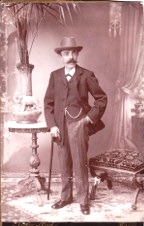
max mason


Obviously, Max, who was probably the most successful businessman of the Brotman children, was also a very generous man.  He provided food to my mother’s family during the Depression.  Here is a great-uncle I’d never even heard of, someone my mother was too young then to remember, who helped out my grandmother and her family in a time of need.  Thank you, Max.

Max Brotman

Max Brotman


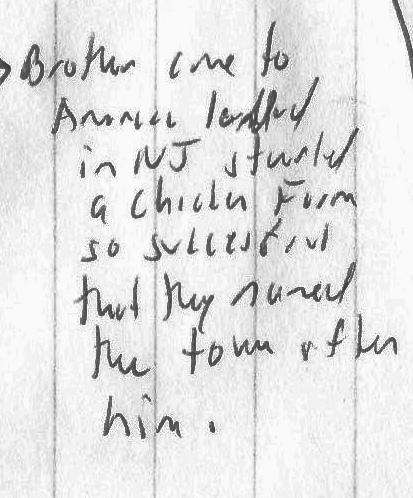
The final tidbit from the notes from Joel’s conversation with my aunt is this one:brotmanville


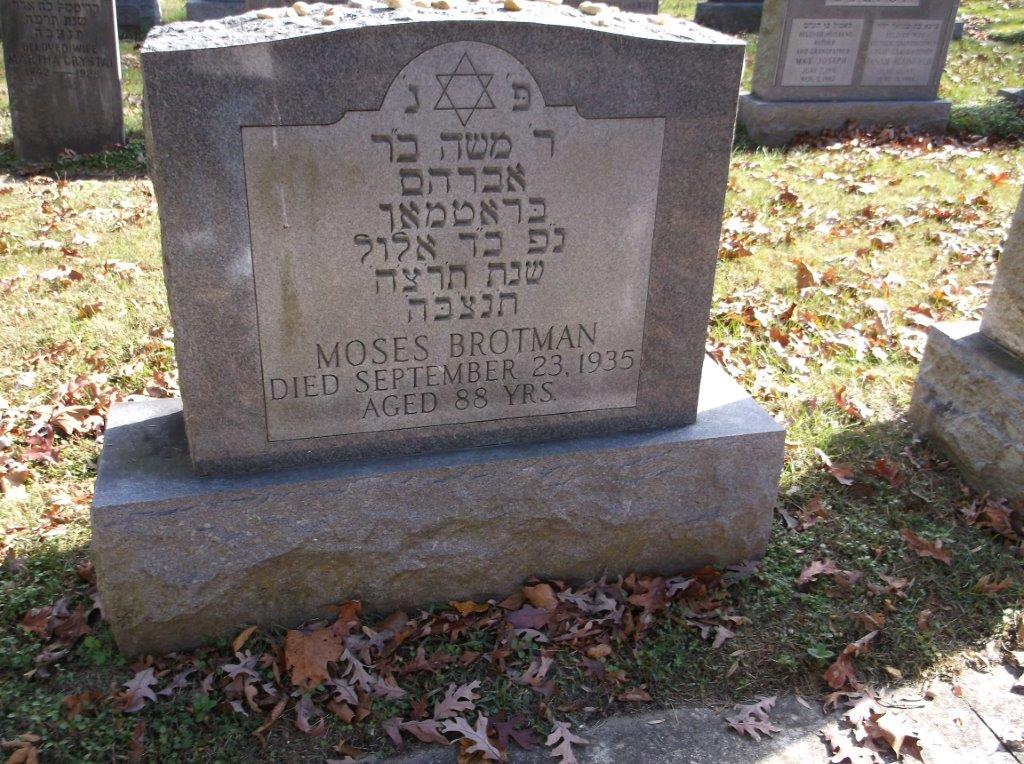
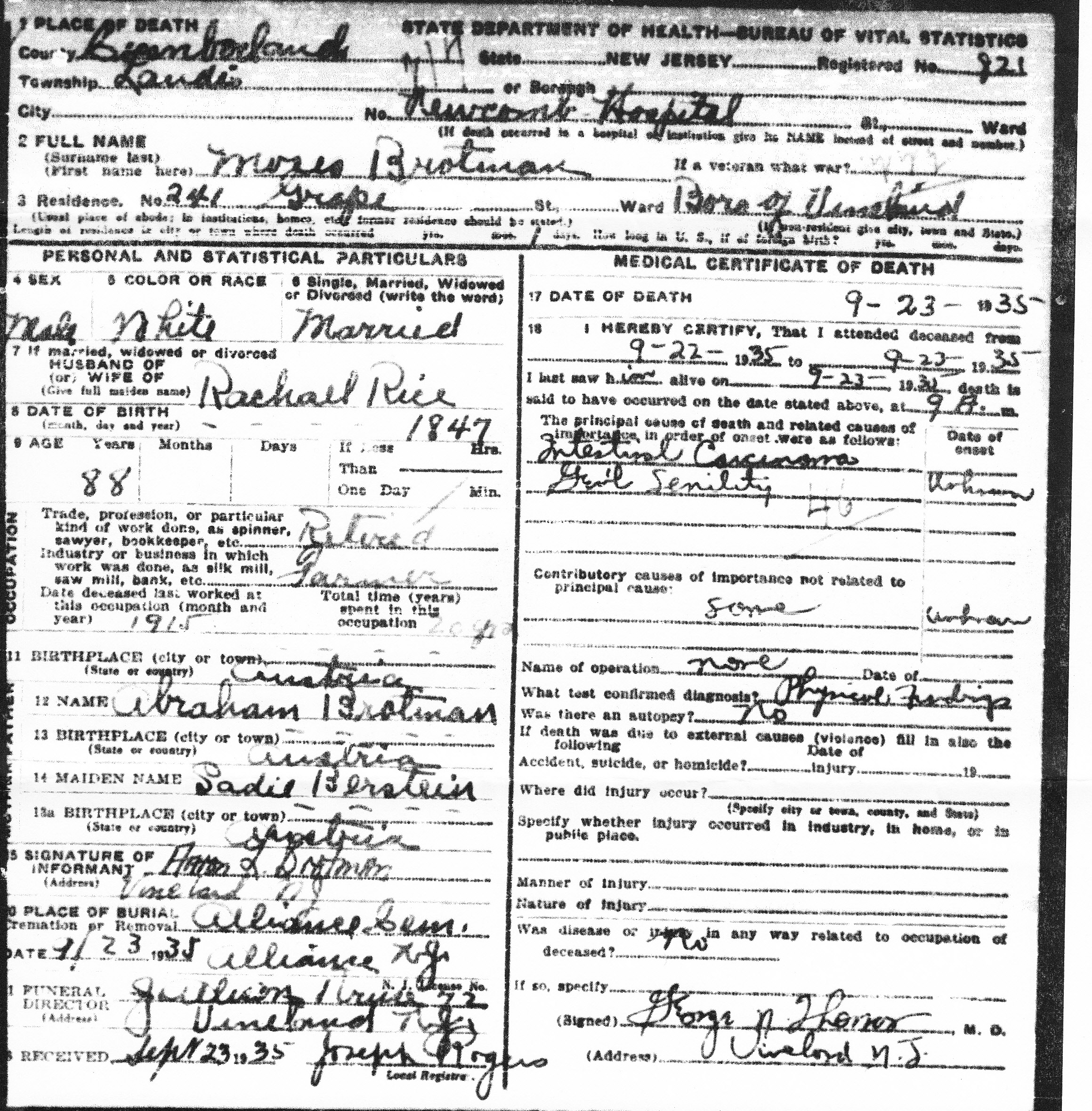
In case you cannot read that, it says, “Brother came to America landed in NJ started a chicken farm. So successful that they named the town after him.”  The quote points back to Joseph.  This is obviously a reference to Brotmanville.  Although it is not entirely accurate—Brotmanville was named for Abraham Brotman, who started a manufacturing business to employ the residents whose farms were failing, not for Abraham’s father Moses, who had the chicken farm—the note nevertheless provides support for the claim that we are in fact related to the Brotmanville Brotmans.  As you may recall, Moses Brotman also had a father named Abraham, as revealed by his headstone and death certificate.Moses Brotman headstone Moses Brotman death certificate_0001_NEW


He was born in 1847 in Galicia, making him a contemporary of Joseph, my great-grandfather.  I cannot rely on these notes alone to assert with any certainty that Moses and Joseph were brothers, but given the overall accuracy of what my aunt told Joel, it is enough evidence for me to start once again to try and find a connection.  If we can find that connection and also learn where Moses Brotman lived in Galicia, it will help to answer a number of lingering questions.

Moses BrotmanHe certainly has the Brotman cheekbones.  Could this be what Joseph looked like also?


Enhanced by Zemanta

Finding the Ruby Slippers and Getting Back Home to Where It Started: The Brotmans

[for my aunt, Elaine Goldschlager Lehrbaum, 1917-1995]

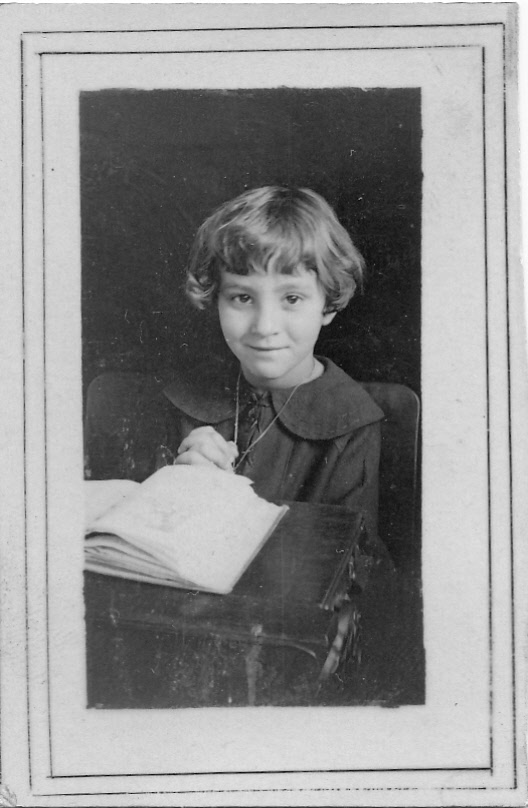
Elaine 1933

Elaine 1933

Many of you who are more recent followers of the Brotmanblog may wonder why the blog is called the Brotmanblog.  In the past several months I have barely mentioned the name Brotman because I have been focused on searching for my grandfather’s family, the Goldschlagers and Rosenzweigs.  But if you go back to the beginning of the blog, you will see that my original search focused on my grandmother’s family, the Brotmans.  That’s where I started my genealogy adventures.  It made sense.  My grandmother Gussie Brotman Goldschlager, my mother’s mother, was the grandparent I knew best, the only grandparent I knew as an adult.  She was the only grandparent my husband ever met, though she died a year before we were married.  It was only natural that I would start my journey trying to learn as much as I could about her and her siblings and her parents.  Once I had found as much as I could find about the Brotmans, I then moved on to my grandfather’s family.  The next chapter will be my father’s family.  But it all started with the Brotmans.

Why do I bring that up now? Because this weekend I will finally get to meet a number of the Brotman cousins I only learned about through doing this research.  There will be over thirty of us gathering in NYC to meet and eat and to visit the Lower East Side, where our grandparents and great-grandparents (and for some, great-great grandparents or parents) lived in New York.  We will walk to 81/85 Ridge Street where the Brotmans first lived, now a public school, once a tenement building, and then we will tour the Tenement Museum to learn more about what life was like for all of them.

If you have not read any of my posts about the Brotmans, I have provided links here and below to some that will capture the essence of their lives.  Even if you once did read them, you may want to re-read them if you are joining us this weekend and want to remember some of the details and themes I wrote about months ago.  The Brotman story is the classic Jewish American immigration story, a story of poverty and heartbreak as a family moved from Galicia to NYC in the late 1880s to a story of assimilation and success as the future generations built businesses, moved beyond the Lower East Side, became professionals, and moved to the suburbs after World War II.  My Brotman great-grandparents were hard-working realists who did what they needed to do to survive.

Although I was able to piece together a fair amount about their lives through census reports and other documents and through some stories my mother remembered about her grandparents, aunts, uncles and mother, at first there was no one else besides my mother and my brother to whom I could turn for information.  My cousins shared stories about their grandparents, but they also knew little about the early lives of their grandparents and had no one left to ask either.  So mostly I relied on documentation to learn what I could.  I was able to put together a fairly complete history of the Brotman family in America and decided to move on to my grandfather’s family.

Then, like a gift of manna from heaven, about a month ago my cousin Jody sent me some notes that her husband Joel had taken from a conversation he’d had with my Aunt Elaine years ago about her family.  I’ve referred to one part of those notes before—the story of how my grandmother Gussie met my grandfather Isadore on Pacific Street in Brooklyn, where my grandmother was living and where my grandfather’s cousins the Rosenzweigs were living in 1915.  In the next day or two I’d like to share a few more tidbits from Aunt Elaine, via Joel’s notes.

But before I do, I want to point out that these notes are incredibly accurate.  Although the conversation Joel had with my aunt must have taken place in the early 1980s, my aunt’s memory for details was astonishing.  For example, she refers to the fact that Hyman’s son Emanuel worked for Kislack Realty.  I checked with Manny’s children, and they confirmed that in fact  Manny was President of J.I.Kislak Mortgage Corporation in Newark, NJ., which was a subsidiary of J.I.Kislak, Inc., a large residential and commercial Realtor based in Jersey City.kislack realty Also, my aunt knew that David Brotman worked in the coat industry, that Max was in the cigar business, and that Abraham worked for a deli in Coney Island.

All of these are facts that are backed up by my research.Brotman brothers trades

On the Goldschlager side as well, my aunt’s facts are corroborated by the information I found in my research.  David Goldschlager lived in Scranton, PA, for some time and was in the hat business.  Betty married a man in the dry goods business and moved to Arizona. goldschlager siblings I point out how accurate this information is to demonstrate how remarkable my aunt’s memory was and also so that you will trust the other statements she made and their accuracy when I report on those in upcoming posts.

In some ways finding these notes was frustrating.  If I had found them last summer, much of the time I spent trying to figure out who Max was or whether Abraham was related to us or whether there were any other children would have been unnecessary.  My aunt knew it all, and it is in these notes.

But as Glinda the Good Witch tells Dorothy at the end of The Wizard of Oz (the movie) when she reveals to Dorothy that the ruby slippers could take her home and the Scarecrow asks  why Glinda had not told Dorothy that from the beginning:

Glinda : Because she wouldn’t have believed me. She had to learn it for herself.
Tin Man: What have you learned, Dorothy?
Dorothy: Well, I – I think that it – that it wasn’t enough just to want to see Uncle Henry and Auntie Em. And that it’s that – if I ever go looking for my heart’s desire again, I won’t look any further than my own backyard, because if it isn’t there, I never really lost it to begin with. Is that right?
Glinda: That’s all it is!

And then when the Tin Man, Lion and Scarecrow all say that they should have helped Dorothy figure it out, Glinda replies:

She had to find it out for herself.

And so I did as well.  If I had started with Aunt Elaine’s notes, I never would have worked as hard to learn how to research and find these things for myself.  I would never have felt the amazing sense of satisfaction I’ve gotten from putting pieces together and from finding cousins who could help me put those pieces together.

Having my aunt confirm through these notes what I have learned and what I have done is a real gift. She was someone I adored and miss dearly.  It’s like having her here with me again, hearing her say, “You see, Amy Kugel, I always knew you could do anything you wanted.  And I knew some day you would want to know more about your history, your family.”  But, as Glinda told Dorothy, she knew I had to find it out for myself.


Elaine 1926

Elaine 1926

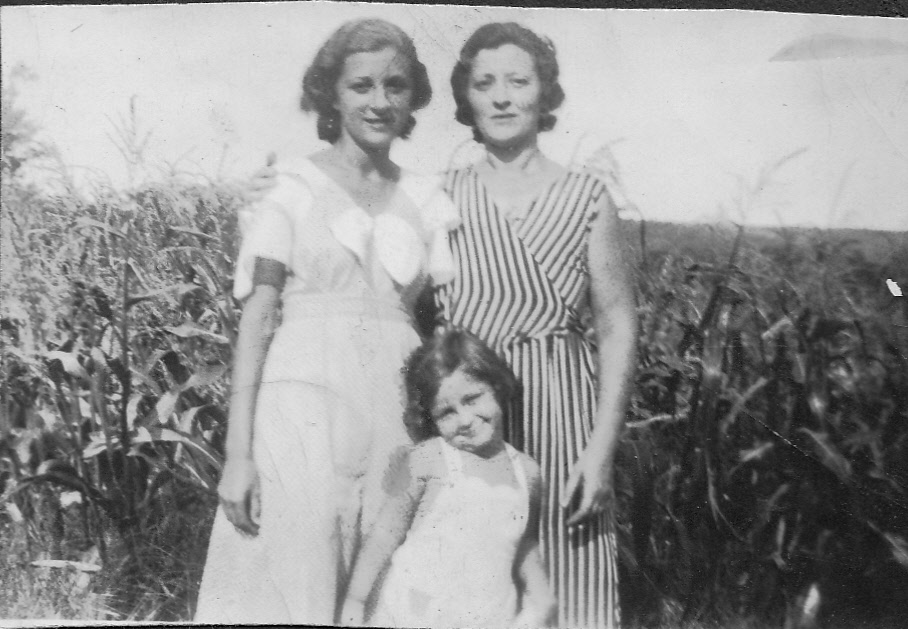
Elaine Gussie Florence 1933

Elaine Gussie Florence 1933

Elaine high school graduation

Elaine high school graduation

Elaine and Phil 1941

Elaine and Phil 1941

Sam with Gussie and Elaine 1945

Sam with Gussie and Elaine 1945

Elaine and Jeff 1949

Elaine and Jeff 1949

Elaine Jeff and Amy 1953

Aunt Elaine with Jeff and me

Phil and Elaine

Phil and Elaine

Enhanced by Zemanta

Turn, Turn, Turn: A New Brotman-Goldschlager-Rosenzweig Has Arrived!

Michael Paul Lammlin

Michael Paul Lammlin

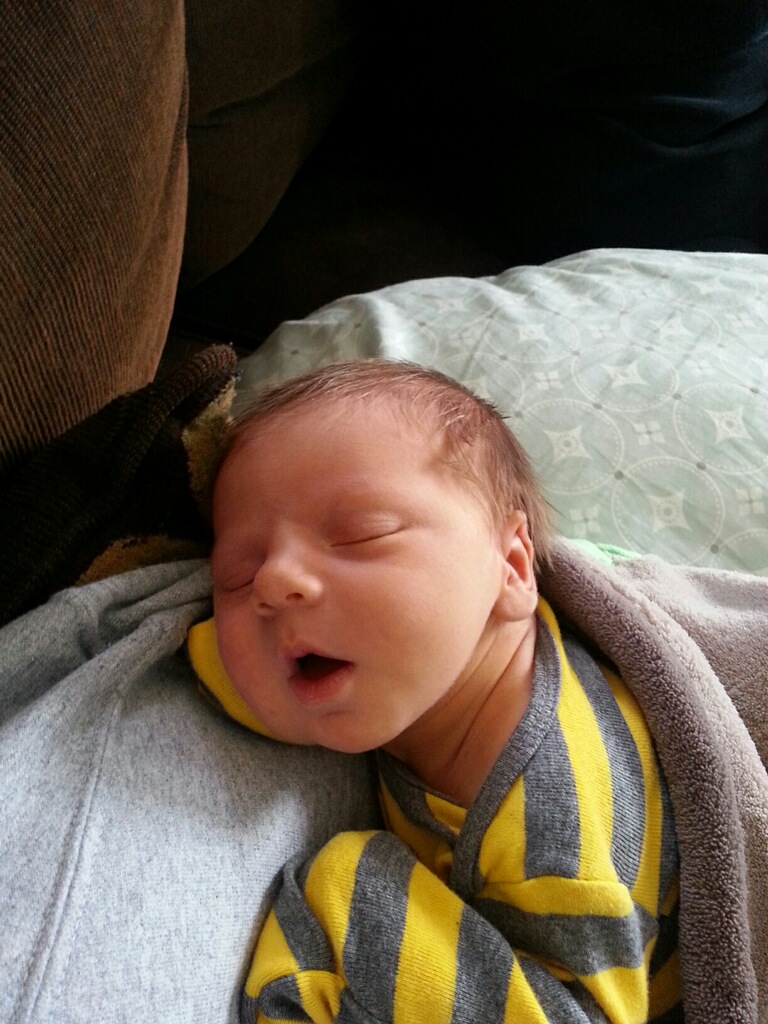
Life does in fact turn, turn, turn.  One day you are sad about someone who passed away, and the next you are rejoicing in the birth of a new baby.  I am delighted to announce the birth of Michael Paul Lammlin, brother of Joshua Lammlin, son of David and Marissa Lammlin. Michael is the grandson of Beth and Steven Robin. Beth is my first cousin.

Michael was born on March 13, 2014, at 5:34 pm, weighing 8 lbs., 1 oz., 19 1/2 inches long.  And he carries on the Brotman tradition of red hair!  (His father David also has red hair, so we cannot take all the credit.)

Michael was named for his great-grandfather, Maurice Goldschlager, my uncle, my mother’s brother.  He joins a number of other cousins named for my uncle, who was adored by us all.

On his maternal side, Michael is the great-grandson of Maurice and Lynn Goldschlager and the great-great-grandson of Isadore Goldschlager and Gussie Brotman.  Going even further back, Michael is the great-great-great grandson of Moritz Goldschlager and Ghitla Rosenzweig Goldschlager and the great- great-great-grandson of Joseph and Bessie Brotman.  He is thus related to all my cousins who are the descendants of David and Esther Rosenzweig, Ira and Beila Goldschlager, Abraham and Yetta Brotman, or Joseph and Gittel Broat Brotman, his great- great-great-great grandparents.

Mazel tov to Marissa, David and Josh, to Beth and Steven, and to all of us! The family continues to grow.

Enhanced by Zemanta