Ernst Nusbaum and Family in the 1880s: Years of Growth and Movement

There is one more line of the Nusbaum clan to complete, that of John’s younger brother Ernst.  Since it’s been two months since I last wrote about Ernst and his family, I thought I would first summarize what he and his family were doing in 1880 and where they had been before then.  Then we can bring Ernst and his family up to the 20th century.  Today I will discuss the 1880s.  I’ve included a series of Google Maps to show how much this family moved around in the 1880s.

Ernst is the Nusbaum sibling who may have lived in Philadelphia first and never lived anywhere else after settling there by 1851 when his first child Arthur was born.  Ernst was married to Clarissa Arnold, and in the 1850s he was a clothing merchant in Philadelphia with his firm,  Nusbaum, Arnold, and Nirdlinger.  Between 1851 and 1861, he and Clarissa had six children: Arthur, Myer, Fanny, Edgar, Henrietta, and Frank.  During the 1860s, Ernst continued to work in the clothing business with Nusbaum, Arnold, and Nirdlinger, and his children continued to grow.

The next decade presented serious financial challenges for Ernst and his family.  His company declared bankruptcy in 1870, and for much of the decade I could not find a listing that showed what Ernst was doing for a living.  Meanwhile, his oldest children were entering the workforce and getting married.  Between 1876 and 1879, Arthur married Henrietta Hilbronner, Fannie married Jacob Hano, Myer married Rosalie Aub, and Edgar married Viola Barritt.  Several grandchildren were born as well.  By 1880, only Henrietta and Frank, the two youngest children, were still living at home.

In 1880, Ernst was 64 and working as a cloak manufacturer, according to the 1880 census.  Until 1884, he and Clarissa continued to live in the same home where they had lived for many years and raised their children at 2105 Green Street.  In 1884 they were now listed as living at 2028 Mt. Vernon Street where they would remain throughout the decade.  Ernst was also continuing to work in the cloaks business throughout these years.

After his brother John died in 1889, Ernst was the only Nusbaum sibling left in the United States.  He and Clarissa continued to live in the same home, and he continued to work in the cloaks business into the 1890s when he was in his seventies.

As for the children of Ernst and Clarissa in the 1880s, their oldest child Arthur and his wife Henrietta had four children between 1877 and 1895: Florence (1877), Sidney (1879), Horace (1885), and Stella (1889).  In 1880 Arthur, Clarissa, and the two oldest children were living with Henrietta’s parents at 938 North 7th Street, and Arthur was working as a clothing cutter, presumably for his father-in-law, who was a clothing manufacturer.  In 1883 and 1884, Arthur is listed as a tailor, still living at his in-laws residence at 938 North 7th Street.  In 1885, he is listed at 1338 Franklin Avenue as he is in 1887, working as a salesman, and in 1888 he is living at 1814 Franklin with no occupation specified.  In 1890 they had moved again, now living at 1732 Gratz Street, and Arthur was working as a cutter.

Myer, the second child of Ernst and Clarissa, and his wife Rosalie Aub had two children, Corinne (1878) and Jacob (1879).  In 1880 Myer was working as a bookkeeper for a clothing company.  The family was living at 979 North 7th Street.  In 1885 his residence as listed as 1825 North 8th Street; Myer continued to work as a bookkeeper.  But in the 1889 and 1890 directories his residence is again 979 North 7th Street, as it was also in 1891.  In each, his occupation is bookkeeping.

Fanny, the third child, and her husband Jacob Hano had six children between 1877 and 1891: Louis (1877), Ernest (1880), Samuel (1883), Myer (1885), Alfred (1890), and Clarence (1891).  Six boys.  Wow.  Although I am no longer surprised to see a Jewish child named for someone living, the fact that Fanny gave a son not only the same name as her father while he was still alive (his middle name was even Nusbaum), but also gave another son the same name as her brother did surprise me.

Fanny and Jacob had been living in Youngstown, Ohio, in 1880, where Jacob had declared bankruptcy in 1878, but Jacob was working once again as a clothier in 1880 in Youngstown.  By 1884, however, Fanny and Jacob and their children had moved back to Philadelphia to 1823 Poplar Street, and Jacob was working as a salesman.  By 1889, however, the Hano family had relocated again, this time to New York City, where Jacob was a book dealer.  The family was living at 967 Park Avenue in Manhattan in 1889.  Fanny and Jacob never again returned to live in the Philadelphia area, but stayed in greater New York.

Although Edgar Nusbaum and his wife Viola Barritt had not been living together according to the 1880 census, they had a daughter named Selena, born in 1881.  On the 1881 Philadelphia directory, Edgar is still listed at his parents’ residence at 2105 Green Street, working as a salesman, but by 1882 he had moved out to 1331 Girard Avenue and was working as a clerk. A year later he is listed as a bookkeeper living at 1922 Van Pelt, in 1884 as a clerk living at 1318 South Broad Street, and he is missing from the 1885 and 1887 directories.  Edgar reappears in 1888, living at yet another address (2029 North 11th Street), where they finally seemed to settle down for a number of years.

(I cannot imagine moving as often as these people seemed to move.  I’ve lived in only two places in the last 30 years and in only five places total my whole adult life (and only three places as a child).  These people seemed to move every year or so.  I guess they had less “stuff” so moving was easier.)

Henrietta, the fifth of the children of Ernst and Clarissa, married Frank Newhouse in 1883 in Philadelphia.  Frank was from Philadelphia, one of eleven children, and in 1860 when he was six years old, his household included a governess and three domestic servants as well as the nine children then alive and two adults.  His father Joseph Newhouse, a German native, gave his occupation as “gentleman” on the 1860 census.  He had real estate worth $40,000 as well as personal property also worth $40,000.

Frank and Henrietta (Nusbaum) Newhouse were living at 2028 Mt. Vernon Street in 1884, the same address where Henrietta’s parents were living at that time.  Frank and Henrietta would live with Ernst and Clarissa at that address for many years.  Although Frank’s occupation was given as salesman in some of the directories and as late as 1889, in 1890 he is listed as part of the firm of Rice and Newhouse, tailors. Since all the other entries said he was a salesman, I thought the 1890 listing seems anomalous and perhaps wrong. But I checked the 1892 directory, and it still has Frank working at Rice and Newhouse and still identifies the business as tailoring.  Frank and Henrietta did not have any children.

Finally, the youngest of Ernst and Clarissa’s children was Frank Nusbaum, born in 1861. He’d been living at home in 1880, working as a clerk, and was still living with his parents in 1884 and 1885.  By 1885 his occupation had changed to bookkeeper. He married Dolly Hills in Philadelphia in 1887 when he was 26.  Unfortunately, I have not been able to find out anything about Dolly’s background.  The closest match was a Dollie Hill living on a farm in Pennsvylania with her family in 1870, but I could not find that Dollie on a later record.  Frank and Dolly had one child, Loraine, born in 1889. Frank and Dolly lived at 2017 Vine Street in 1888 and 1889.  Frank was at first working as a clerk and then as a salesman.

Here is one last map showing where each member of the family was living in the late 1880s (other than Fanny,  who was in New York):

Thus, the 1880s were a fruitful time for the family of Ernst and Clarissa (Arnold) Nusbaum.  Their children were all married, and there were a number of grandchildren born.  All but one of their children were living in Philadelphia, and most of the men were involved in the clothing trade, either as manufacturers, tailors, or salesmen.  After the hardships of the 1870s, life must have seemed pretty good for Ernst, Clarissa, and their children.  Unfortunately, the 1890s would not be as easy a decade.


Death Certificates: Answering Some Unanswered Questions

Over the last few weeks I have received a number of death certificates, most for people about whom I have written, so I will also post them as updates to the relevant posts.  But I also wanted to post about them separately for those who might never go back to those original posts.

Three of these were for relatively young men whose deaths puzzled me.  Why had they died so young?  E.g., Simon L.B. Cohen.  He was only 36 when he died on October 24, 1934, after serving valiantly in World War I.  He was my first cousin, twice removed, the first cousin of my grandfather John Nusbaum Cohen.  Simon had faced the horrors of war, been awarded a Distinguished Service Cross by General Pershing for his service, and had been reported killed in action when he was in fact still alive.  He came home and married, but then died only five years after he married.  I had wondered what might have caused such a young man to die after surviving everything he did during the war.

His death certificate reported that his cause of death was glomerulonephritis, chronic myocarditis, and arterial hypertension.  Glomerulonephritis is a form of kidney disease, sometimes triggered by an infection like strep or some other underlying disease.  Overall, it would appear that Simon was just not a healthy 36 year old.  But that’s not the whole story.  The death certificate also described Simon as an “unemployed disabled veteran.”  Although I do not know in what way he was disabled, obviously Simon paid a huge price for what he endured while serving in the military.

Death certificates_0004_NEW

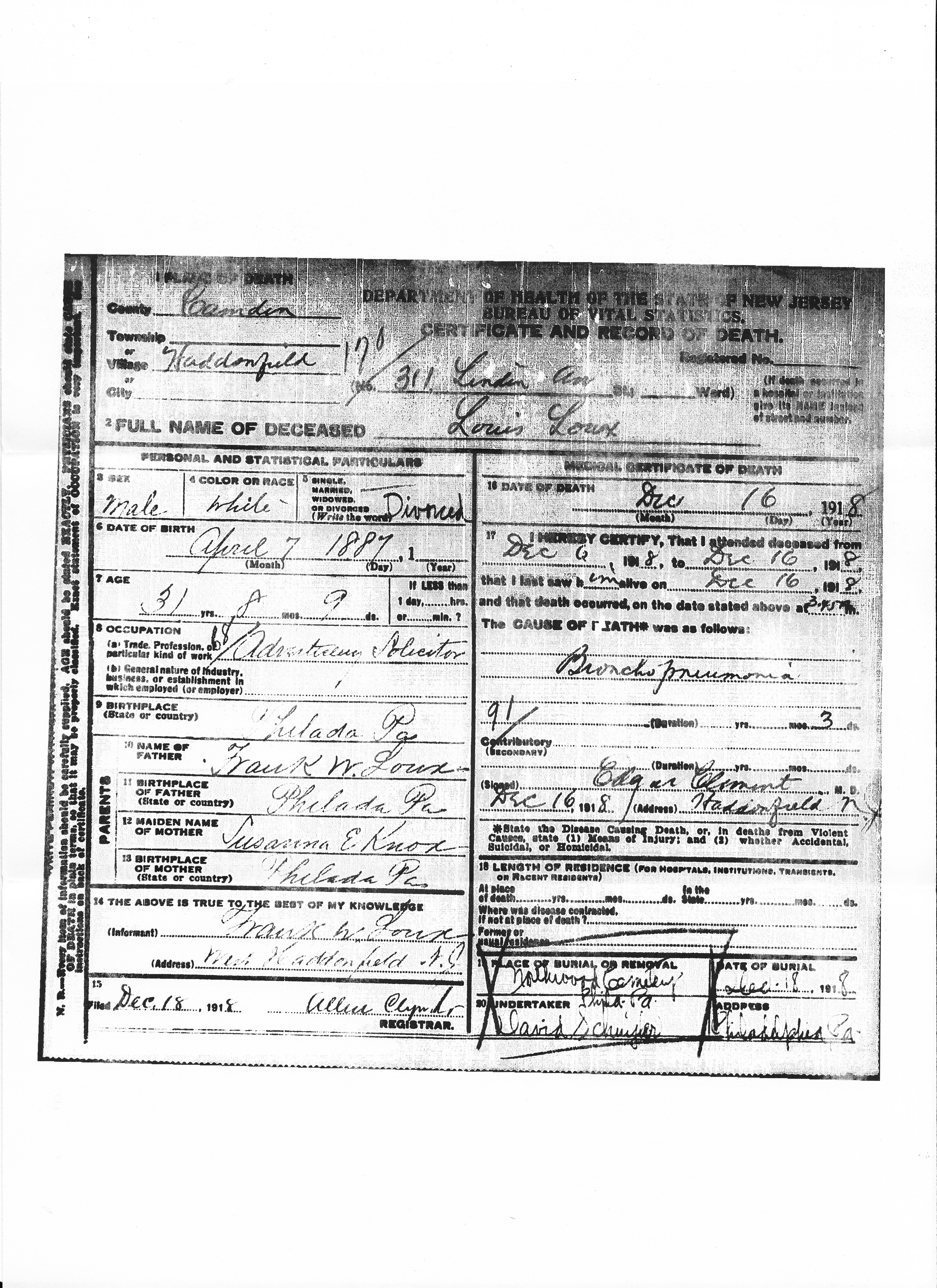
The second young man whose death puzzled me was Louis Loux.  Louis was the husband of Nellie Simon, daughter of Eliza Wiler and Leman Simon.  Louis was thirteen years younger than Nellie.  They had a daughter Florrie, born in 1910, who died from burns caused by matches.  She was only eight years old when she died in September, 1918.  Then her father Louis died just three months later on December 15, 1918.  He was only 36 years old.  I had wondered whether there was some connection between these two terrible deaths.  I knew from the 1920 census that Nellie and Louis had divorced, but I did not and still do not know whether that was before or after their daughter died.  From the death certificate for Louis, I learned that he died from broncho pneumonia. So it would seem that it was perhaps just a terrible sequence of events and that Louis’ death was not in any directly related to the death of his daughter.

Death certificates_0003_NEW

The next death I had wondered about was that of Mervin Simon, the great-grandson of Mathilde Nusbaum and Isaac Dinkelspiel.  He was only 42 years old when he died on August 27, 1942.  He was the son of Leon Simon, who was the son of Moses Simon and Paulina Dinkelspiel.  Mervin died almost a year to do the day after his father Leon.  According to his death certificate, he also died from broncho pneumonia.  Like Simon Cohen, he had no occupation listed on his death certificate.  Even on the 1940 census, neither Mervin nor his brother William had an occupation listed.

Mervyn Simon death certificate

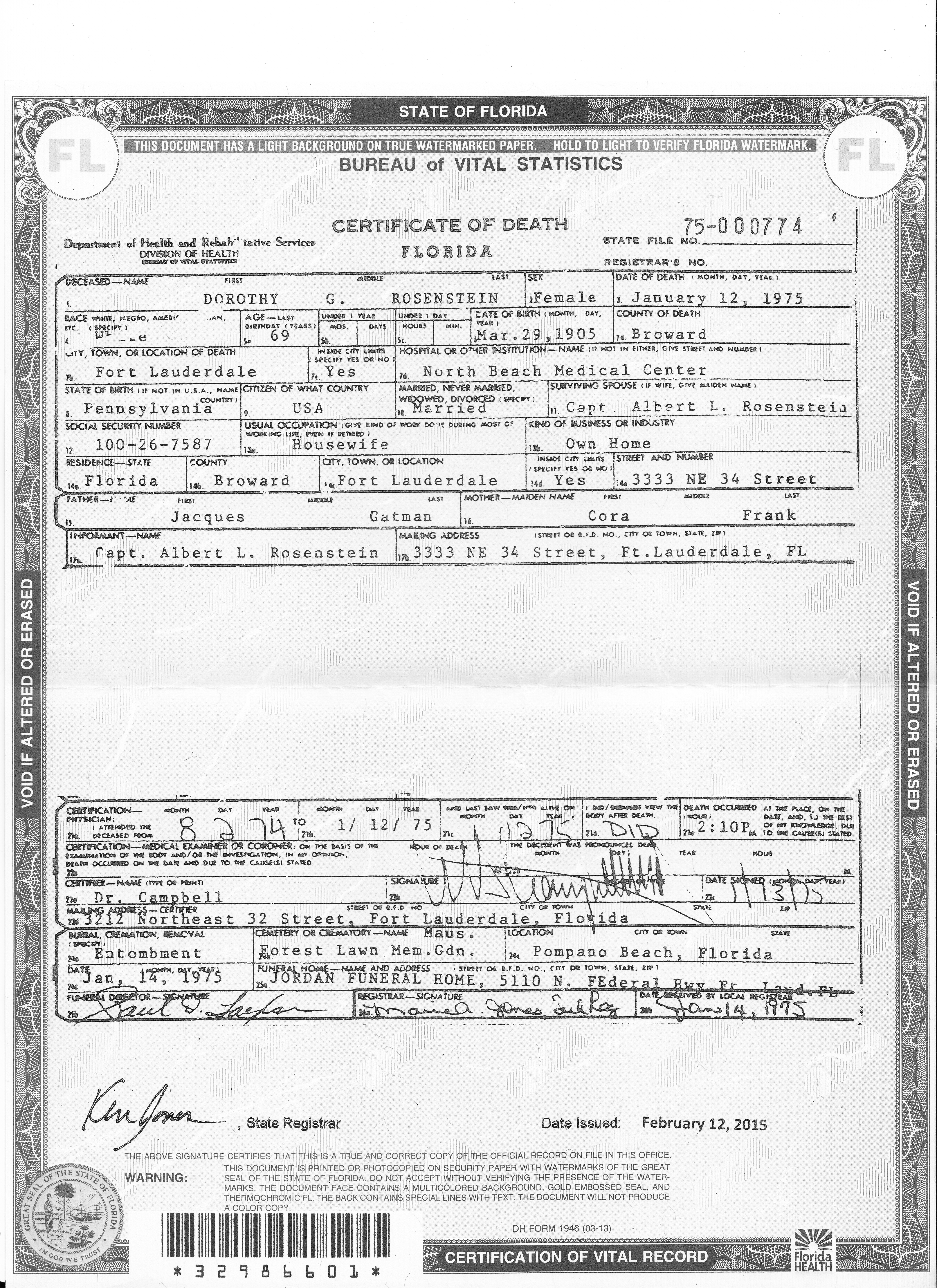
The last death certificate I received in the last few weeks was for Dorothy Gattman Rosenstein.  Dorothy was the daughter of Cora Frank from her first marriage to Jacques Gattman.  Cora was the daughter of Francis Nusbaum and Henry Frank and the granddaughter of Leopold Nusbaum.  Cora’s husband Jacques had died when Dorothy was just a young child, and Cora had remarried and moved to Dayton, Ohio, with her new husband Joseph Lehman and her daughter Dorothy.  I had had a very hard time tracking down what happened to both Cora and Dorothy, and only with the help from a number of kind people had I learned that Dorothy had married Albert Rosenstein from Lancaster, Pennsylvania.  But I wanted the death certificate to corroborate all the other less official evidence I had that this was in fact the same Dorothy Gattman, daughter of Jacques Gattman and Cora Frank.  Her death certificate confirmed that.

Death certificates_0001

Thus, all of these certificates helped put closure on some lingering questions that had bothered me.

Some Stories from Santa Fe

While I have been researching the Dreyfuss clan and all their heartaches, a few other items have come up in my research that are worth blogging about before I move on to the last line of the Nusbaum clan (and more heartache).  I have a number of exciting discoveries relating to my Seligman relatives, some new cousins, some new stories, and some DNA work to write about.  Today I want to share two stories that my cousin Pete, the grandson of Arthur Seligman and great-grandnephew of Simon Nusbaum, shared with me from the website to which he contributes, Voces de Santa Fe.

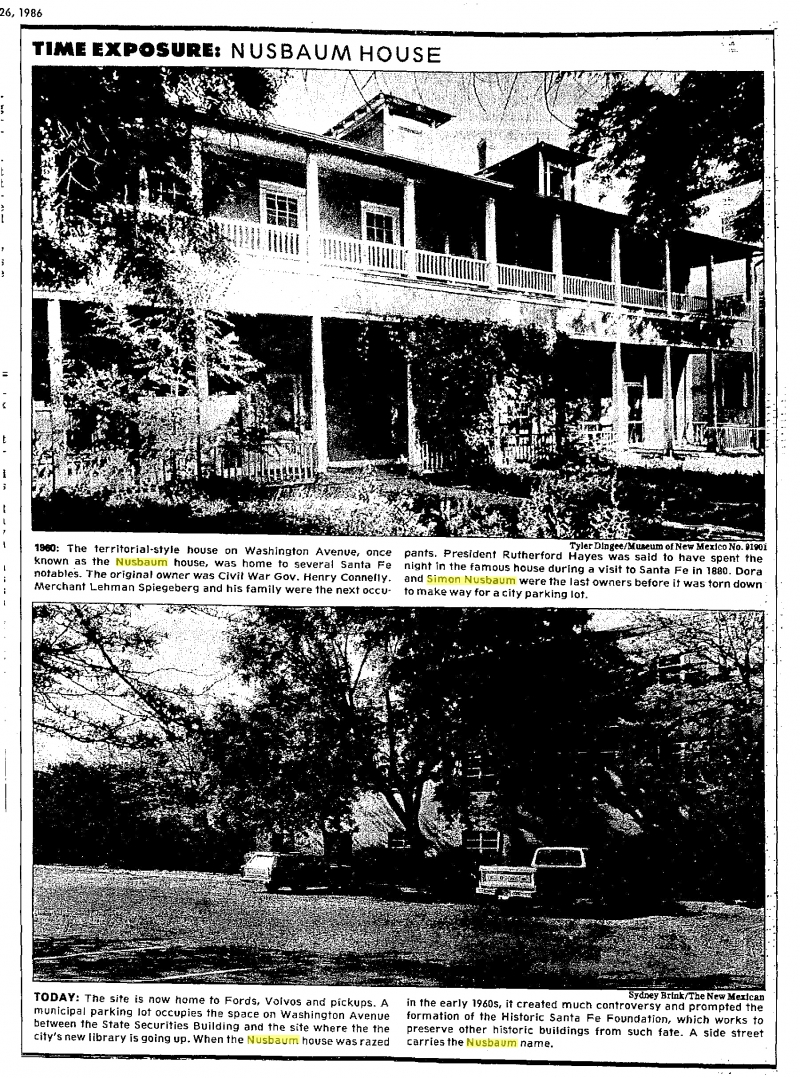
The first is a story about Simon Nusbaum, the son of John Nusbaum and brother of Frances Nusbaum, our mutual ancestors.  Simon was my great-great-granduncle, the one who settled in Santa Fe after years in Peoria, and who became the postmaster there and the deputy treasurer of the New Mexico territory.  Pete’s story is about Simon and the house that he owned and its history.

Santa Fe New Mexican May 26, 1986

Santa Fe New Mexican May 26, 1986

See also Voces de Santa fe here.

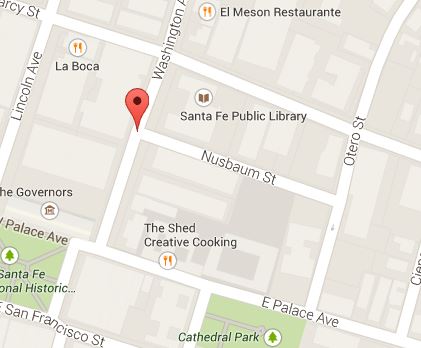
It’s very sad to me that the house no longer exists, but I am happy to report that Nusbaum Street does still exist.  One more thing to add to my travel plans: a walk down Nusbaum Street.

Pete’s second story is about his grandfather Arthur Seligman, my great-granduncle.  When Arthur was the governor of New Mexico, the elevator that goes into the depths of Carlsbad Caverns National Park was completed, and the governor was referred to as the “father of the elevator.”  Arthur’s story tells the story behind this remarkable engineering accomplishment and our ancestor’s role in implementing it.

Here is a photograph from Pete’s personal collection of the day that the elevator was officially opened.  Governor Seligman is in the front row wearing a black coat and a bow tie. To his right is his wife, Mrs. Franc E. Seligman; to his left is his step-daughter, Richie Seligman (Mrs. John March); Harold Albright, Director of the NPS; Wilbur Lyman, Secretary of Interior; and US Senator, Bronson Cutting.

Courtesy of Arthur "Pete" Scott

Courtesy of Arthur “Pete” Scott

The link below will take you to the whole article that Pete wrote about this event and the elevator.

carlsbad_caverns_park_1932

Carlsbad Caverns National Park

Carlsbad Caverns National Park (Photo credit: Wikipedia)

Thank you, Pete, for sharing these pictures and stories with me and with my readers.


The First Chapter: The Dreyfuss Family

Yeah, I know.  My last post said it was the FINAL chapter of the Dreyfuss family.  How could this one be the first?

Way back on November 18, 2014, I wrote, “More on the Dreyfuss family in a later post.”  Then I proceeded to write about the Nusbaum family and the Dreyfuss family together.  Since two Dreyfuss sisters (Jeanette and Mathilde) had married two Nusbaum brothers (John and Maxwell), it just made sense to follow the stories of the three Dreyfuss sisters (Jeanette, Mathilde and Caroline) along with the stories of the Nusbaum siblings.  But what I never got back to doing was what I had promised back on November 18.  I never got back to the beginning of the Dreyfuss story as I moved forward from the 1840s in America through to the 20th century.  So although my last post was called the “Final Chapter” of the Dreyfuss family, I need to go back and write the first chapter before I can complete the story (as far as I currently know it).

So I need to step backwards in time—both in my time and in the times of the Dreyfuss family before 1840.  Back in the fall when I was researching the family of John Nusbaum, I had a wonderful resource in the family bible owned by my father.  My father had photocopied several pages of handwritten entries for births, deaths, and marriages from the bible , and most of those entries related to the Nusbaum family.  From studying the page for marriages, I learned that John Nusbaum, my three-times great-grandfather, had married Jeanette Dreyfus (as it was spelled there).  And that was the first time I knew the birth name of my three-times great-grandmother.  On the page for births, the second entry after the one for John Nusbaum was one for Jeanette Nusbaum, giving her birth date and her place of birth.  It took me a while to figure out what it said because of the handwriting, but eventually I was able to decipher it and learned that Jeanette was born in “Hechingen in Wurttemberg, Prussia,” as it is inscribed in the bible.

But there was no other Dreyfus(s) on any of the pages in the bible, and I was at that point in time focused on the Nusbaum line.  It wasn’t until weeks later that I realized that the bible’s death entry for Mathilde Pollock was not an entry for a sister of John Nusbaum, but an entry for a sister of Jeanette Dreyfuss (who happened to marry a brother of John Nusbaum) and that the entry for Caroline Wiler was also not a sister of John Nusbaum but another Dreyfuss sister. The big clue was finding 65 year old Mary Dreyfuss  on the 1850 census living with Caroline and Moses Wiler: a head-slapping moment when it occurred to me that it was Jeanette who was keeping the family bible and that, of course, she would record her sisters as well as her husband’s siblings in the family bible.

And then in mid-November I went on JewishGen’s Family Finder page and found Ralph Baer, who was also researching the Dreyfuss family from Hechingen.  I have mentioned Ralph before in the context of the Nusbaum/Dreyfuss family and his generous help with research and translation, but what I had forgotten to write about in my telling of the story of the Nusbaum/Dreyfuss family in the US was what Ralph had helped me learn about my Dreyfuss roots in Hechingen, Germany.

Hechingen, Germany

Hechingen, Germany (Photo credit: Wikipedia)

First, a little about Hechingen.  Today it is in the German state of Baden-Wurttemburg, located about 56 miles north of the Swiss border in southern Germany.  It is about 40 miles from Stuttgart, the state capital.  Although inhabited long before, the city was founded as the capital city of the Counts of Hohenzollern in 1255.  It remained during the Middle Ages a provincial and agricultural community.  During the 16th century, it became a center for art, architecture and music.  Even after the Reformation, it remained a largely Catholic community.  Throughout its pre-19th century history, Hechingen was subjected to many sieges and attacks by other German states as well as by Sweden.

de: Burg Hohenzollern bei Hechingen, Baden-Wür...

de: Burg Hohenzollern bei Hechingen, Baden-Württemberg, Deutschland en:Castle Hohenzollern near Hechingen, Germany (Photo credit: Wikipedia)

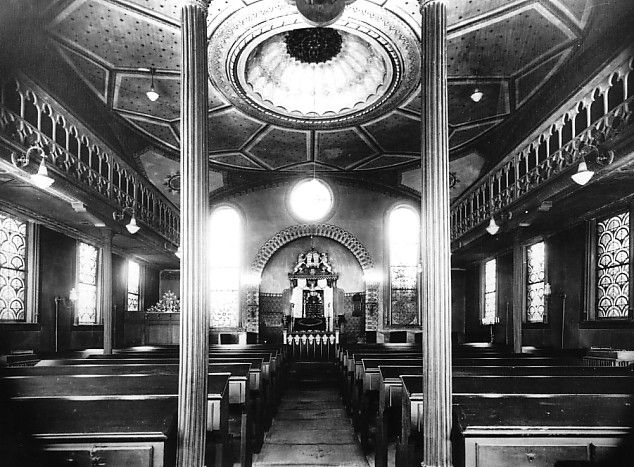
According to the Jewish Virtual Library, “There was a small Jewish settlement in Hechingen in the early 16th century, and a house was bought for use as a synagogue by the community of 10 families in 1546. In 1592 the burghers refused to conduct any commercial or financial transactions with Jews, who therefore left the town. There is no trace of Jewish settlement in the town during the next century. In 1701 Prince Frederick William I gave letters of protection lasting 10 years to six Jewish families in the neighboring villages; soon there were Jews living in the city as well. By 1737 there were 30 households, and a synagogue was built in 1761 which existed until 1870.”

The Jewish community blossomed in Hechingen in the late 18th and early 19th century through the efforts of a woman named Chaile Raphael Kaulla.  Her father was a successful entrepreneur and banker, and he provided Chaile with a good education.   She even learned German, not something girls were usually taught in those times.   When her father died, Chaile, being much older than her oldest brother, took over her father’s business; she managed the business very successfully while also raising six children.  Her husband, a Talmudic scholar, did not work.  Chaile and her brother Jacob developed a very good relationship with the authorities in Hechingen and became the leaders of the Jewish community there.  Here is more about Chaile from the Jewish Women’s Archive:

Chaile developed an aristocratic lifestyle, owning an elegant house and a horse-drawn carriage, but she continued to live according to Jewish law. She never forgot the mitzvot and cared for the Jewish community together with her brother, using her connections to the prince. The Kaulla family had their own private synagogue and rabbi. Both sister and brother gave generously to the Jewish as well as to the Christian poor and founded a hostel for needy and migrating Jews in Hechingen. In 1803, they donated a Bet Midrash, a Talmud school, with three rabbinical scholars whom they supported, together with their students and an important library.


The 19th century was a time of economic and industrial growth for the town of Hechingen and for its Jewish residents.  Wikipedia states that “By 1850, Hechingen had started to industrialize, primarily with Jewish enterprises. By 1871 the city had become one of the most important economic centres in the region, with textiles and machine shops among the major industries.”  According to the Jewish Virtual Library, the Jewish community in Hechingen was “prosperous and owned most of the local industries.” The Jewish population reached 809 people in 1842, which was about a quarter of the total population of the town.  This was also around the time that my three-times great-grandmother Jeanette and her sisters and mother would have left, which might seem strange, given how favorable the conditions there seemed to have been.

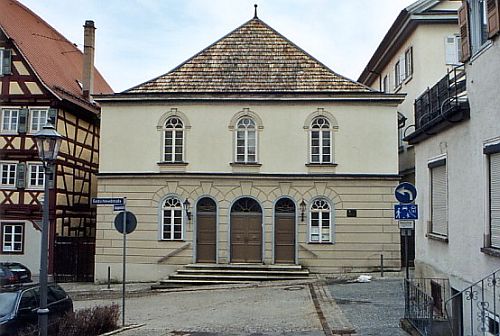
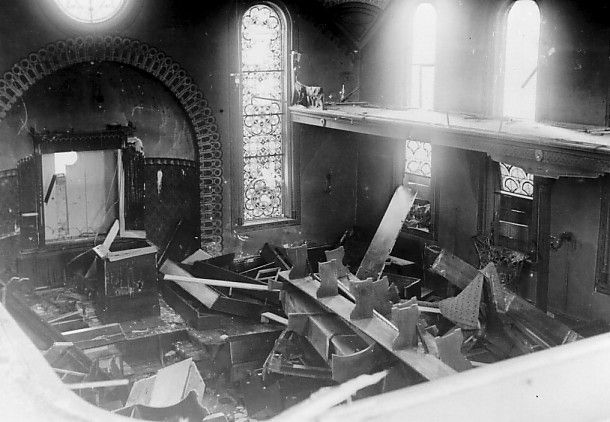
The Alemannia-Judaica, however, reports that there were some anti-Semitic “disturbances” in the 1840s, and the Dreyfuss sisters were not the only ones to leave.  By 1880, the Jewish population had dropped to 340; by the 1930s it had dropped to only 101.  Like so many other Europeans, Jews and non-Jews, the lure of opportunities elsewhere must have been irresistible.  The Dreyfuss sisters were wise to leave Hechingen because it was no more immune to the destruction and genocide of the Nazis than any other place during the Holocaust.  The synagogue was heavily damaged on Kristallnacht in November, 1938, and most of the Jewish men were sent to Dachau.  In the aftermath, 53 Jews emigrated successfully; the remaining 32 Jewish residents of Hechingen were sent to concentration camps where all but one were murdered by the Nazis.

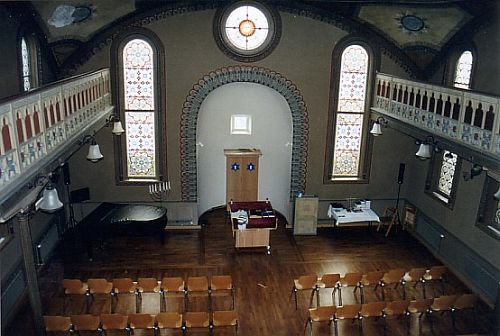
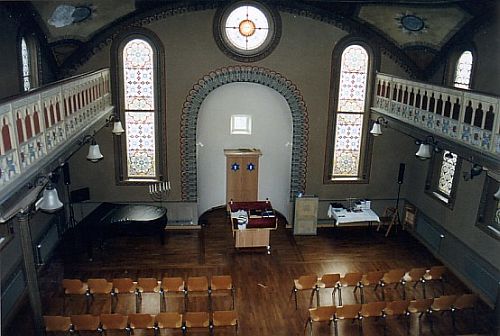
According to another source, “In 1991, the synagogue building was rebuilt as a cultural center, housing an exhibition on Hechingen’s Jewish history. A new Jewish community was founded in Hechingen in 2003.”  More pictures can be found here.


Where did my ancestors fit into this story of Hechingen? I was very, very lucky to find Ralph Baer on the JewishGen Family Finder because Ralph had already done extensive research on all the Hechingen Dreyfuss families years before I stumbled onto the name in the old family bible.  Even though he had not been able to find a connection between his Dreyfuss ancestors and mine, he had included my line in his tree when he’d done his research years ago.  Thus, my first email from Ralph in response to my inquiry as to his Hechingen Dreyfuss family included the following names:

A)3. Samuel (Sanwil) DREYFUß (ZELLER) 25 May 1776 Hechingen – 3 July 1859
Hechingen, married about 1805 to Miriam (Marianna) Samson BERNHEIM 17 May
1787 – 1841

A)31. Jeanette DREYFUß 20 May 1817 Hechingen, married to … NUßBAUM

A)32. Moses DREYFUß 10 February 1819 Hechingen

A)33. Goldel (Golde, Auguste) DREYFUß 16 October 1822 Hechingen,
married to … WEILER

A)34. Mathilde (Magdalena) DREYFUß 30 March 1825 Hechingen, married
to … POLLAK

A)35. Samson DREYFUß about 1827 Hechingen

A)36. Auguste DREYFUß about 1829 Hechingen[1]

There were my 3x-great-grandparents right at line 31, and there at line 33 was Caroline (born Golde) “Weiler” and at line 34 Mathilde “Pollak.”  I knew immediately that Ralph had found the three Dreyfuss sisters listed in my family bible.  Not only did the names line up, but so did the birth dates.  Thus, I now also knew that Jeanette, Caroline, and Mathilde were the daughters of Samuel Dreyfuss Zeller (later documents, as I found, indicated he had changed his surname to Zeller) and Miriam (Marianna) Samson Bernheim, that is, the Mary Dreyfuss I had found on the 1850 census living with her daughter Caroline in Pennsylvania.  (The death date of 1841 given for Miriam Ralph and I later discovered was not correct. I have not, however, found a death record for Miriam, though with two grandchildren named Miriam, one (Miriam Nusbaum, daughter of John Nusbaum and Jeanette Dreyfuss) in 1858, and one in 1859 (Miriam Pollock, daughter of Mathilde Dreyfuss and Moses Pollock, it would appear that Miriam died before 1858.)  In addition, I now had evidence of three other siblings: Moses, Samson, and Auguste.

But, of course, I wanted to see the actual records where Ralph had long ago found my relatives while researching his own.  With his patient assistance, I was able to locate a number of records relating to my Dreyfuss ancestors.  Fortunately, many of the Jewish vital records from the Baden-Wurttemburg region are digitized and available on line, and Ralph walked me step by step through the process of researching those archives and then helped me translate what I had found.  Once again, I struggled with the German script, but with Ralph’s help, I was able to find a number of relevant records.

I am now including the links to them here with a transcription of what is on each record so that I have a record later when I once again have trouble reading the script.  If you are interested in seeing the underlying documents, just click on the links.  The JPG versions were too blurry to read, so I am only posting links to the PDF versions, with two exceptions that were more legible.

Dreyfuss births (1)  Birth Registry for Hechingen 1800-1905

Line 132 Moses Dreyfuss                             Father Samuel                  Mother Miriam geb Bernheim

Line 186 Golde (Augusta) Dreyfuss           Father Samuel                 Mother Miriam geb Bernheim

Line 223 Mathilde Dreyfuss                                                 SAME


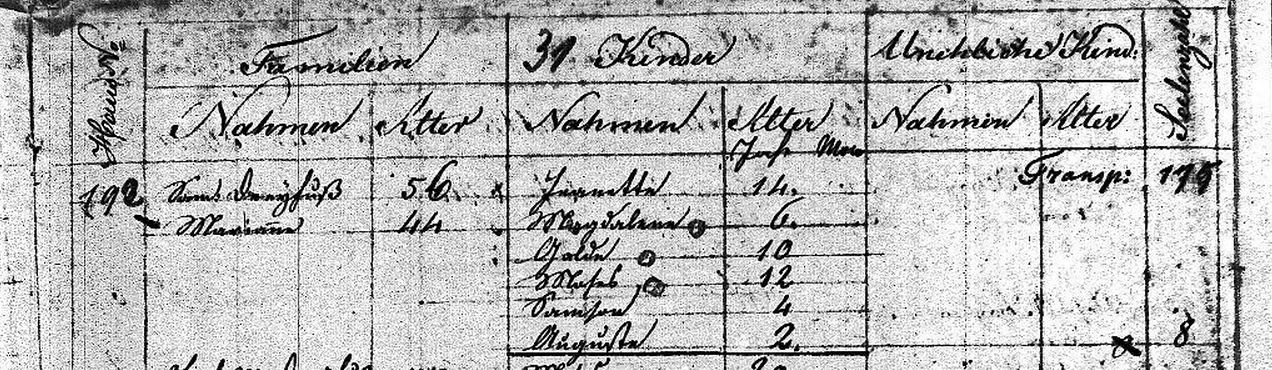
Dreyfuss Family on Archives film 240 bild 31  (Census 1831)

Dreyfuss family on archives film 240 film 31

#192 Samuel Dreyfuss 56 and Marianna 44. Six children: Jeanette 14, Magdalena 6, Golde 10, Moses 12, Samson 4, and Auguste 2.


Golde Auguste Caroline Dreyfuss birth record

First line:    October 16, 1822      Golde (Augusta)         Samuel Dreyfuss               Miriam geb Bernheim


Mathilde Dreyfuss birth record

Sixth line:  March 30 1825          Mathilde                       Samuel Dreyfuss                  Miriam geb Bernheim


Meier Dreyfuss brother of Samuel  Death Record

Parents               Samson Dreyfuss and Jeanette


Moses Dreyfuss birth record

Seventh line:  February 10, 1819    Moses Dreyfuss          Samuel Dreyfuss               Miriam geb Bernheim


Moses Zeller ne Dreyfuss death record Hechingen

Son of Samuel Zeller and Marie geb Bernheimer


Samuel Dreyfuss and family on Hechingen Family Records

Ralph helped me decipher this; otherwise, it would have meant nothing to me:  The name DREYFUSS is underlined with Samuel next to it. Below Samuel is written Zeller.  Below that it says Eltern (parents) Samson, and below that Jeanette(Scheile). To the right is geb. (born) and below that get. (married). The birth date for Samuel is on the right 1776 25 Mai. Between that is written “63 alt geworden” (became 63 years old, his age at the time of the compilation). For marriage it says angebl. (apparently) 1805 with also something in Hebrew. Samuel’s wife is on the right: Miriam, daughter of Samson Bern…and Golde. It also mentions a sister name Sussen right below that. The birth date for Miriam is listed as 17 Merz (March) 1787.  On the bottom are the children. The first one on the left is r Jeanette. In parentheses after her name is NUSSBAUM and below that 20 years old. To the left it states ca. 1817 20 Mai. Also listed are Moses, Mathilde Madel (Pollak), and Auguste (Golde) Weiler with birthdates.  (This was obviously compiled after 1851 since all three sisters are married and Mathilde is already married to Moses Pollock, whom she did not marry until after Maxwell Nusbaum died in 1851.)

Samuel Dreyfuss death record bild 143  (second on page)


Samuel Zeller death p 1 Samuel Zeller death p 2

Bottom of both pages: Samuel Zeller  Hechingen      Samson Dreyfuss and Jeanette    Alterschwaeche (old age)


There are some missing records.  I do not have a separate birth record for Jeanette.  Nor can I find a death record for her mother, my 4x-great-grandmother Miriam Bernheim.  I cannot find any records for the two youngest of the siblings, Samson and Auguste.  I also do not understand why there are two children with the name Auguste.  Perhaps one was a child of a family member who died? There is also a huge gap between the recorded marriage date for Samuel Dreyfuss and Miriam Bernheim of 1806 and the birth date of their oldest child, Jeanette, in 1817.  Did Samuel and Miriam have other children who died, or is their marriage date incorrect?  Samuel would have been 41 in 1817, Miriam would have been 30.  Both Samuel and Miriam had fathers named Samson.  Were both alive in 1819 when Moses was born? If not, it seems odd that their first son would not have been named Samson, unless there had been an earlier born son named Samson who had died.

I don’t know the answers to these questions, but I have answers to so many more questions than I ever expected, thanks to Ralph.  I know the names of my 4x-great-grandparents, Samuel Dreyfuss Zeller and Miriam Bernheim, and the names of my 5x-great-grandparents, Samson and Jeanette Dreyfuss and Samson and Golde Bernheim.  I have the names of the three other siblings of my 3-x great-grandmother Jeanette: Moses, Samson, and Auguste.  And I am not yet done looking for more about my Dreyfuss ancestors and now, my Bernheim ancestors as well.

Once again, I am deeply grateful to Ralph Baer.  Without him, none of this would have been possible.


[1] Together Ralph and I filled in many of the blanks here, enabling both of us to have a more complete record.

Thank you, Dayton, Ohio, Lancaster, Pennsylvania, Annapolis, Maryland, and TTT on Facebook

Dayton-ohio-skyline

Dayton-ohio-skyline (Photo credit: Wikipedia)

In my post about the descendants of Leopold Nusbaum, one of the unanswered questions was what happened to Cora Frank Lehman and her daughter Dorothy Gattman after Cora’s second husband Joseph Lehman died in 1959.  I could not find any answers—until I looked to Dayton, Ohio, for help.

First, some background: Cora Frank was the third child of Francis Nusbaum Frank, the only child of Leopold Nusbaum to survive to adulthood.  Cora had married Jacques Gattman in Philadelphia in 1903 and had had one child, Dorothy, in 1905.  Then in 1906, Jacques died at age 31 from a stroke.  Cora had married her second husband, Joseph Lehman of Dayton, Ohio, in 1913, and then moved with him to Dayton.  Dorothy grew up and went to high school in Dayton, but I had no luck finding any record for her after 1925, when she was listed in the Dayton, Ohio, directory as a student.

Cora and Joseph were still living in Dayton at the time of the 1930 census and the 1940 census and were listed in Dayton directories in the 1950s.

I was able to find Joseph Lehman’s death in 1959 on the Ohio Deaths database on ancestry.com, but I could not find his burial place.  I was also unable to find any record for Cora after the 1959 Dayton directory.  I thought she must have left Dayton after Joseph died, but I had no idea where she went.  She was not in the Pennsylvania database for death certificates, which runs through 1963, nor was she in the Ohio Deaths database, which runs until 2007.  I thus thought she had left Ohio and either lived past 1963 in Pennsylvania, where she’d been born and raised, or gone wherever her daughter Dorothy had gone.

But where had Dorothy gone?  Since I had no marriage record for her, I had no surname.  I tried searching every way I could to find her, but had no luck.

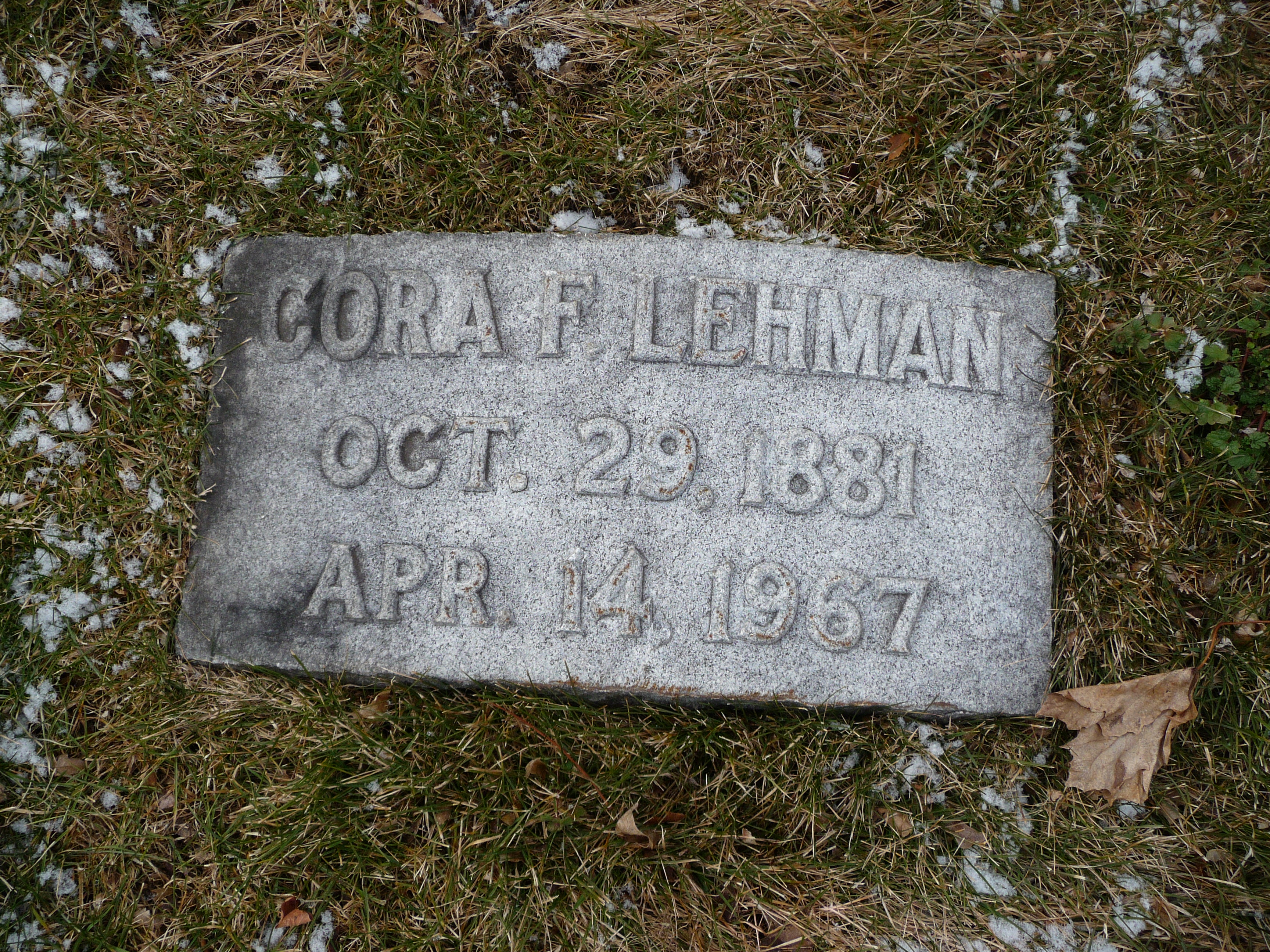
That’s when I decided to look for assistance in Dayton.  I contacted the Jewish Genealogical Society of Dayton for some information, and two women there, Marcia and Molly, co-presidents of the society, helped me locate where Joseph and Cora were buried—in the cemetery for Temple Israel in Dayton, one of three Jewish cemeteries in Dayton.  Molly also found in the cemetery records Cora’s date of death—April 14, 1967.  But unfortunately they were not able to find an obituary or any other document that revealed where Cora died or what happened to her daughter Dorothy.

But Molly gave me one other piece of invaluable advice.  She suggested I contact Ellen at Temple Israel.   I emailed Ellen, and she emailed me back first with information about where Joseph and Cora were buried in the cemetery and, most importantly, Cora’s address when she died in 1967: the Beaux Arts Hotel in New York City.  I was so excited and immediately tried locating Cora and Dorothy in New York City.  But I had no luck since I still didn’t know Dorothy’s surname.

But while I was having no luck, Ellen had continued to search, and forty minutes after her first email, I received an email saying that she had found Cora Lehman’s obituary:

Cora Frank Gattman Lehman obituary

Cora Frank Gattman Lehman obituary


And there it was:  Mrs. Albert Rosenstein! That had to be Dorothy. And now I knew that at least in 1967, she was living in New York City at the Beaux Art Hotel at 310 East 44th Street.

Now that I had Dorothy’s married name, I was able to find Dorothy and Albert Rosenstein on the 1930 census.  This was clearly the right Dorothy—right age (27), right birthplace (Pennsylvania), and right birthplaces for her parents (Pennsylvania and Mississippi). Dorothy and Albert were living in Lancaster, Pennsylvania, and further research revealed that Albert was born and raised in Lancaster, had graduated from the US Naval Academy at Annapolis, and was in the art wares business.


Embed from Getty Images

Ellen at Temple Israel in Dayton was also able to find this photograph of Dorothy’s confirmation class.  We could not figure out from the list of names on the back which one is Dorothy.  If anyone has any clue as to whether this list is in any order that would help identify Dorothy, please let me know.

1919 Confirmation Class of Temple Israel, Dayton, Ohio, courtesy of Temple Israel

1919 Confirmation Class of Temple Israel, Dayton, Ohio, courtesy of Temple Israel

Dorothy Gattman class names-page-001

But I was not yet done.  I didn’t know whether Albert and Dorothy had had any children.  I had to find them on the 1940 census.  Once again I hit a roadblock.  I could not find them.  Although I found entries for them in the Lancaster directories up through 1939, there was no 1940 directory on line, and they did not appear in the 1941 directory.  Where had they gone?

Using the address listed in both the 1930 US census and the 1939 Lancaster directory, 71 Spencer Street, Lancaster, Pennsylvania, I searched for that address on the 1940 census.  There were Rosensteins living at that address, but not Albert and Dorothy.  Instead, Albert’s parents Morris and Sara Rosenstein were living at 71 Spencer Street.  Where were Albert and Dorothy? Why were his parents living in the house that Albert and Dorothy had owned in 1930 and lived in just a year earlier? Morris and Sara had lived at a different address in 1930.

Although I found an Albert Rosenstein living at 162 West 56th Street in the 1940 New York City telephone book, there was no Albert Rosenstein living at that address in the 1940 US census report.  I did find one Albert Rosenstein in New York City on the 1940 census, but he was single, born in New York, about four years younger than my Albert would have been in 1940, and a dress salesman.  On the other hand, he was living at 162 West 55th Street, just one digit off from the address where an Albert Rosenstein was listed in the 1940 telephone book.  So…was this a different Albert Rosenstein from my Albert Rosenstein?  I think so, but then where were my Albert and Dorothy Rosenstein in 1940?  I still am not 100% sure.

I was, however, able to find death records for both Dorothy and Albert.  Dorothy died on January 12, 1975, and Albert died on June 25, 1979.  They are buried at Forest Lawn Gardens Memorial Park in Pompano Beach, Florida.  I was able to locate a photograph of their headstone on FindAGrave:


I had no idea who Phyllis Rosenstein was.  She was eleven years younger than Albert, five years younger than Dorothy, so clearly not their child.  There was no sister named Phyllis living with Albert’s parents in 1920 or 1930, so I did not think she was his sister.  His only brother, Louis, was married to a woman named Blanche.  So who could Phyllis have been?

With the help of the Tracing the Tribe group on Facebook, I learned that Phyllis was Albert’s second wife.  He married her on February 10, 1976, when he was 77 years old.  I have to say that I am not sure Dorothy would be so thrilled having Albert’s second wife buried with them under the same headstone, but maybe I am just old fashioned.

I called the cemetery to see if perhaps they had any obituaries or other relevant records, but they did not.  Thus, there were still some loose ends here. Where were Dorothy and Albert between 1939 and 1975? Did they have any children?

The Tracing the Tribe group on Facebook again provided me with some great assistance.   One of the TTT members found a 2014 bulletin from Congregation Shaarei Shomayim in Lancaster which listed Dorothy G. Rosenstein and Albert Rosenstein on its January yahrzeit list. (A yahrzeit is the anniversary of a death on the Jewish calendar when relatives light a candle and say kaddish in memory of the deceased.)  I checked a Jewish calendar, and while Dorothy’s yahrzeit could fall in January, Albert’s would not.  I emailed the synagogue, and another helpful person, Martha, responded telling me that both Albert and Dorothy had yarhzeit plaques there (though the January yahrzeit was for Albert’s uncle with the same name, there was a separate one of my Albert).  Martha, however, had no record indicating who had paid for those plaques  or whether there were any children or other descendants of Albert and Dorothy.

I still did not know if Albert and Dorothy had had children, though it now seemed unlikely.  Then the TTT group helped me again.  Since Albert was a 1922 graduate of the Naval Academy, I had thought perhaps he’d been sent overseas in 1940.  Although the US had not entered World War II as of 1940, I did find a military record indicating that Albert had been activated in 1932 and was discharged in 1959.  At the suggestion of a TTT member, I wrote to the US Naval Academy Alumni Association to see if they had any records.  Last night I received an email from the US Naval Academy Alumni Association, Memorial Affairs representative which included two items: the obituary for Captain Albert Rosenstein and his photograph and biography from the yearbook from 1922, the year he graduated from the Academy.

US Naval Academy alumni magazine Shipmate, October 1979

US Naval Academy alumni magazine Shipmate, October 1979

It does seem that my hunch was correct—that Albert was serving in the Navy during World War II and thereafter for many years.  I am now searching for more information about his military record.  And the obituary also answered one more question.  It does not appear that he and Dorothy had any children, or at least none who survived him.

It’s amazing to me how much I was eventually able to learn about Dorothy and Albert when just a week ago I thought I never would find out anything about her. I would never have gotten this far without the generous assistance of those three women in Dayton, Ohio: Ellen, Molly, and Marcia.  Thank you all very much!  And thank you as well to Timothy from the USNA Alumni Association, Martha from Congregation Shaarei Shomayim, and to my many wonderful colleagues at the Tracing the Tribe Facebook group.  Once again—it took a village.

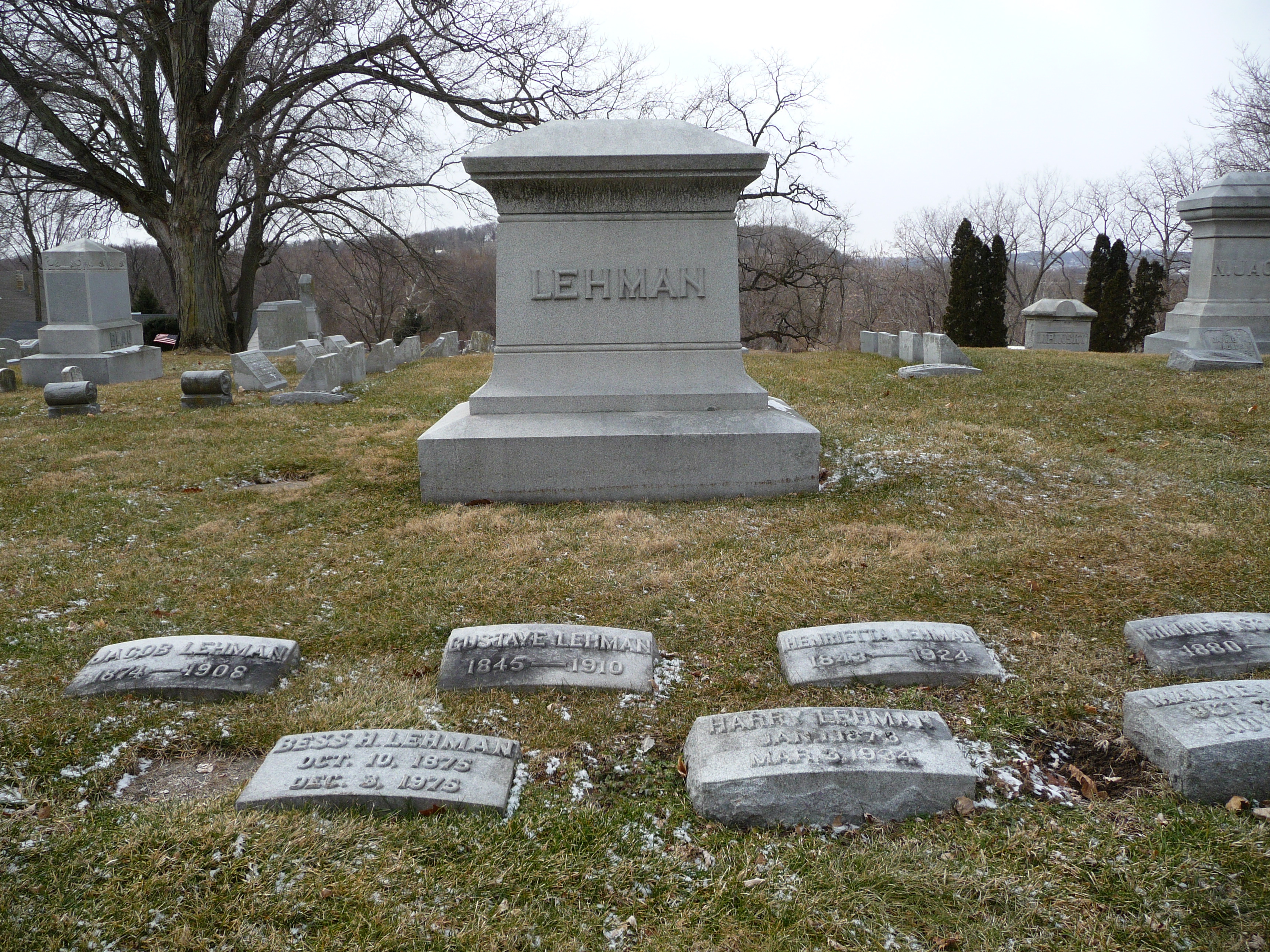
Ellen from Temple Israel in Dayton also sent me these photos of the headstones of Joseph and Cora Frank Lehman.

Cora Frank Lehman headstone Joseph Lehman headstone lehman headstone

UPDATE:  Here are the death certificates for Dorothy and Albert.  Dorothy’s confirms that she was in fact the daughter of Cora Frank.

Death certificates_0001

Death certificates_0002

The Grandchildren of John and Jeanette Nusbaum: First Cousins, Four Times Removed

When I last wrote about the direct descendants of my three-times great-grandparents, John and Jeanette (Dreyfuss) Nusbaum, I left off saying that I would return to their surviving grandchildren in a later post.  Having already written about the children of their daughter Frances Nusbaum Seligman, Eva, James, and Arthur, there were four other grandchildren to discuss: the two children of Gustavus and Miriam Nusbaum Josephs, Florence and Jean, and the two children of Simon and Dora Rutledge Nusbaum, Nellie Rogers and John Bernard Nusbaum.  I was hoping that I’d be able to find answers to some remaining questions before posting, but I’ve run into a few tough ones.

Florence Joseph’s story is still incomplete as I hit a brick wall around 1925, but I will share what I do know.  Florence married Louis Siegel in 1903 when she was 23 years old.  Louis, the son of Abraham Siegel and Minnie Rosenthal, was born in Philadelphia on January 11, 1870, making him ten years older than Florence.  In 1910, Florence and Louis were living in New York City, and Louis was working as a traveling salesman, selling athletic goods.

Sometime thereafter, Louis must have become ill.  He died on September 30, 1915, at the State Hospital for the Insane in Norristown, Pennsylvania.  According to his death certificate, he had been ill for three years and had been hospitalized since November 19, 1913.  His cause of death was general paralysis of the insane or paresis.  He was only 43 years old.

Although I only have one document to support this, it appears that in 1913, Florence and Louis had had a child, a daughter Marion.  On the 1920 census, Florence Siegel was living with her father Gustavus Josephs and her brother Jean Josephs, both of whom were working at a mill as manufacturers, presumably of fabrics, as discussed in an earlier post.  Included in the household was a seven year old girl named Marion Siegel.  Although she is described as the daughter of the head of household, it seems apparent that Marion was Florence’s daughter, given her age and her surname.

Gustavus Josephs 1920 census

When her father Gustavus died in May 1924, Florence continued to live in the home at 2020 North Park Avenue; she is listed as a dressmaker in the 1925 Philadelphia directory residing at that address.  Unfortunately, that is the last document I have for Florence.  I cannot find a marriage record or a death record for her, nor can I find any definitive document for her daughter Marion.

There were two other Marion Siegels in the Philadelphia area, but after tracing them both, I had to accept that neither was the right Marion.  One, Marion Siegele, even had a mother named Florence, but that Florence was married to Harry Siegele and that Marion was born in 1918.  The second Marion Siegel seemed more likely, but I was able to find her parents and brother, and they were again not Florence and Louis Siegel.  Maybe my Marion died outside of Pennsylvania before 1930 (she would have been about 17 years old at the time of the census), maybe her mother remarried and Marion took the new husband’s surname.  But I have searched for every Florence and Marion living together as mother and daughter on the 1930 census, and I’ve come up empty.

In searching for Florence and Marion Siegel, however, I did find this obituary of Gustavus Josephs that reveals more about his military service in the Civil War as a musician:

Philadelphia Inquirer May 25, 1924 p. 18

Philadelphia Inquirer May 25, 1924 p. 18

Although I did hit some roadblocks researching Florence, I had better luck with her brother Jean.  Jean was much younger than his sister Florence.  He was born in 1893 and presumably named for his recently deceased grandfather, John Nusbaum.  In fact, Jean’s middle initial is N, perhaps for Nusbaum.  As noted above, Jean worked with his father Gustavus as a mill owner and listed himself as a self-employed manufacturer on his World War I draft registration in 1917.  He married Ruth Breidenbach on March 4, 1920.  Ruth was the daughter of Lazarus and Sophia Breidenback, and her father was an engraver in Philadelphia.  Ruth was born on March 11, 1900, in Pennsylvania.

By 1930, Ruth and Jean had two children, Janet and Jean, Jr.  Jean was still a manufacturer, and the census report for 1930 is more specific as to what he was manufacturing: draperies.  The family was living at 1531 Lindley Avenue in Philadelphia.  The following year Jean and Ruth had a third child, Jay.

In 1940, Jean and Ruth were still living at 1531 Lindley with their three children, and Jean’s occupation was recorded as general manager, textile manufacturer.  Less than a year later, on February 4, 1941, Jean Josephs died from an intestinal obstruction and peritonitis.  He was 47 years old, and his children were still living at home.  Jean’s widow Ruth was 40 years old

Ruth remarried in 1946.  Just six years later, Ruth was widowed once again when her second husband died from heart failure at age 47 on October 3, 1952.  By that time her children were grown.

As for the two children of Simon and Dora Nusbaum, Nellie Rogers Nusbaum was Dora’s daughter from her first marriage.  In about 1921, Nellie married Ellis B. Healy, who owned the Santa Fe Book and Stationery Company.  Nellie’s life was cut short on May 9, 1932, when she died giving birth to her daughter.

simon nusbaum daughter obit

The Santa Fe New Mexican, May 9, 1932

In 1940, Nellie’s widower Ellis and her young daughter were living in Santa Fe with a servant and a lodger.  Ellis listed his occupation as an office supply merchant.  By 1942, Ellis must have remarried as he is listed as “Healy EB (Mildred)” in the 1942 Santa Fe directory, indicating that he had a wife named Mildred.  He still owned the Santa Fe Book and Stationery Company.  He and Mildred were still listed together in 1960.

Although Nellie was not the biological child of Simon Nusbaum, and I do not know whether he ever adopted her legally as she was still listed as his stepdaughter on the 1920 census, she must have adopted his name since her name on her headstone is Nellie Nusbaum Healy.  She is buried at Fairview Cemetery in Santa Fe.

Simon and Dora’s other child, John Bernard Nusbaum, was only sixteen when his father died in 1921.   In 1930, he married Esther Maltby.  They settled in Albuquerque, New Mexico, where John was the vice-president of the Albuquerque Stationery Company.   John was listed as the manager of the stationery store in 1940 and continued to be associated with the company at least as late as 1954.  John and Esther had two daughters.  John died on July 25, 1976, in Albuquerque, but is buried at Fairview Cemetery in Santa Fe where both of his parents are buried.  His wife Esther died in 2002 and is buried there as well.  I have tried contacting some of their descendants, but have not had any responses.

So I am going to focus on finding a descendant of these four cousins of mine in order to fill in some of the gaps and tie up those loose ends.


There Were No Survivors: A Tragic Ending to a Family with Plenty of Tragedy

Some families seem to suffer more misfortune than others.  This is one of those families.  It is the story of the family of Mathilde Dreyfuss, sister of my three-times great-grandmother Jeanette, and her family.  Her first husband was  John Nusbaum’s brother Maxwell Nusbaum, making this particular line related to me both on my Dreyfuss side and my Nusbaum side.  That is, Mathilde and Maxwell’s children are my double first cousins, four times removed.

As I have written, Maxwell Nusbaum and Mathilde Dreyfuss had two children, a daughter Flora born in 1848 and a son Albert born in 1851.  Less than seven months after Albert’s birth, Maxwell died in the 1851 Great Fire in San Francisco.  By 1856 Mathilde had married Moses Pollock, with whom she had three more children, Emanuel, Miriam, and Rosia.  The family lived in Harrisburg for many years, but by 1866 had relocated to Philadelphia.

In the 1870s, the Pollocks were living in Philadelphia where Moses was a dry goods merchant.  Their youngest child Rosia died in 1871 when she was just five months old.

Rosie Pollock daughter of Moses and Mathilde death cert 1871

Pennsylvania, Philadelphia City Death Certificates, 1803-1915,” index and images, FamilySearch (https://familysearch.org/pal:/MM9.1.1/JK3P-DBS : accessed 22 January 2015), Rosie Pollock, 26 Feb 1871; citing 1075, Philadelphia City Archives and Historical Society of Pennsylvania, Philadelphia; FHL microfilm 2,020,735.

Mathilde’s daughter Flora had married Samuel Simon, one of the three brothers to marry into the Nusbaum/Dreyfuss clan, and they had two children in the 1870s, Meyer (mostly likely named for his grandfather Maxwell) and Minnie.  By 1880, Flora and Samuel had moved to Elkton, Maryland, where Samuel was running a hotel.  Meanwhile, Moses and Mathilde (Dreyfuss Nusbaum) Pollock were still in Philadelphia, and the other surviving children—Albert Nusbaum and Emanuel and Miriam Pollock—were still living at home with them, according to the 1880 census. Moses was in the cloak business, Albert was in the liquor trade, and Emanuel was in the dry goods business.  Moses’ line of trade seemed to change to trimmings or finishings during the 1880s and 1890s with various directories listing his businesses as plaiting, laces, embroidery, school bags, and accordion pleating.

Mathilde’s family was struck by tragedy again on September 1, 1885, when Miriam Pollock, just 26 years old, died from consumption or tuberculosis.  Mathilde had lost her first husband to a fire, her daughter Rosia at five months, and then her daughter Miriam at 26.  Sometimes life is just not fair.

miriam pollock death cert FHL 2070682

“Pennsylvania, Philadelphia City Death Certificates, 1803-1915,” index and images, FamilySearch (https://familysearch.org/pal:/MM9.1.1/JFSV-LHQ : accessed 22 January 2015), Miriam Pollock, 01 Sep 1885; citing , Philadelphia City Archives and Historical Society of Pennsylvania, Philadelphia; FHL microfilm 2,070,682.


Then Moses Pollock died on December 5, 1894 of encephalomalacia, defined in Wikipedia as “localized softening of the brain substance, due to hemorrhage or inflammation.”  Like so many other family members, he was buried at Mt. Sinai cemetery in Philadelphia.  He was 69 years old.

Moses Pollock death cert

“Pennsylvania, Philadelphia City Death Certificates, 1803-1915,” index and images, FamilySearch (https://familysearch.org/pal:/MM9.1.1/JKS4-32N : accessed 22 January 2015), Moses Pollock, 05 Dec 1894; citing cn 11116, Philadelphia City Archives and Historical Society of Pennsylvania, Philadelphia; FHL microfilm 1,872,200.

Both Albert Nusbaum and Emanuel Pollock had continued to live with their parents throughout the 1880s and 1890s, and in 1900, they and their mother were still living together at the same address, 934 North Eighth Street.  Mathilde, now widowed twice in addition to losing two children, was working outside the house as a manufacturer of bags—presumably, the school bags listed as one of the items Moses was selling on the last directory entry before his death.  Albert was still a liquor salesman, and Emanuel was selling bicycles.  In addition, Meyer Simon, Flora’s son and Mathilde’s grandson, now 30 years old, was also living with them and was working with his grandmother in the bag manufacturing business as a manager.

Mathilde’s daughter Flora Nusbaum and her husband Samuel Simon, meanwhile, had left Elkton, Maryland, and moved to Baltimore by 1885.  Samuel was in the liquor business, as was his brother Moses, who was married to Paulina Dinkelspiel, Flora’s first cousin.[2]  My hunch is that they were business together.

In 1900, Samuel was still in the liquor business in Baltimore, but his brother Moses had died the year before.  Samuel and Flora still had their daughter Minnie living at home with them, but their son Meyer, as noted above, was living in Philadelphia with his grandmother and uncles Albert and Emanuel and managing the bag manufacturing business.

Although Meyer Simon was listed as single on the 1900 census, the 1910 census reported him as married for 12 years. I figured that this must have been a mistake, especially since he was still living at his grandmother’s address even in the 1901 directory.  It seemed he could not have been married for 12 years in 1910.

But then I found something strange.  After some further research and review, I found in the Pennsylvania, Marriages 1709-1940 data base on familysearch.org a marriage between Meyer Simon and Tillie Perry on September 18, 1897, in Allegheny, Pennsylvania. Meyer’s wife’s name on the 1910 census was Matilda, so I knew this was the correct marriage.  Matilda or Tillie Perry was the daughter of William and Matilda Perry; she was born in Philadelphia in 1876 and baptized in the Episcopal church in 1878. But if Meyer and Matilda were married in 1897, why was Meyer listed as single on the 1900 census, and where was Matilda?[3]

I found Matilda Perry on the 1900 census living with her parents in Philadelphia, and that census report stated that she was married and had been married for three years, which is consistent with the marriage record I found on familysearch. Had Meyer and Matilda married and then lived separately for at least three years?  It seems strange, but perhaps they could not yet afford a place of their own. Or perhaps they were temporarily separated.  Or perhaps the religious differences had made it difficult for those families to support the marriage.    After all, Meyer listed his marital status as single.  I suppose it is also possible that he had kept the marriage a secret from his family.  After all, they were married in Allegheny, not in Philadelphia or in Baltimore where their families lived. Allegheny was a city across the river from Pittsburgh that merged with Pittsburgh in 1907.   It would have been therefore over 300 miles from Philadelphia and about 250 miles from Baltimore.

Thus, as of 1900, Mathilde Dreyfuss Nusbaum Pollock was a widow, living in Philadelphia with her two sons, Albert and Emanuel.  Her daughter Flora was living with her husband Samuel Simon in Baltimore with their daughter Minnie, and their son Meyer was married, but not yet living with his wife Matilda.

The decade that followed must have been a very painful one.  First, on March 21, 1904, Mathilde Pollock died.  She was 79 years old.  The death certificate says she died of old age, which shows you how perspectives on aging and longevity have changed.  It also says that she died from “senile pneumonia,” a term for which I could find no easily understood definition for my non-medical brain to grasp, but which I gather is a form of pneumonia that affects the elderly.  (Feel free to provide a more scientifically accurate definition.)  The death certificate also says that Mathilde had ascites, another term not easily defined but which Wikipedia defines as “gastroenterological term for an accumulation of fluid in the peritoneal cavity.”   Don’t even get me started on trying to understand where the peritoneal cavity is, but from what I read, ascites seems to have something to do with liver disease, often cirrhosis.

Mathilde Pollock death cert

Mathilde’s death was followed three years later by the death of her son Emanuel Pollock on February 16, 1907.  He was only fifty years old and died of tuberculosis.  Three years after that his half-brother Albert Nusbaum died on August 28, 1910 from apoplexy brought on by arteriosclerosis.  He was 59 years old.  Mathilde and both of her sons were buried at Mt. Sinai cemetery.

That left only Flora Nusbaum Simon as the surviving child of Mathilde Dreyfuss Nusbaum Pollock.  She had lost both of her parents and all four of her siblings.  She was also the only child who had children of her own as none of her siblings ever married or had children. Flora and Samuel appear to have relocated from Baltimore to Philadelphia by 1905, the year after her mother died, as Samuel appears in the Philadelphia directory living at 2225 North 13th Street, the same address where the family is listed in the 1910 and 1920 census reports.

Flora’s brother Albert had been living with them at that address in April when the 1910 census was taken, just four months before he died.  Neither Samuel nor Albert nor anyone else in the household was employed at that time, yet they still had a servant living in the home.  Minnie, Flora and Samuel’s daughter, was 27 and single, living with her parents and uncle.  It feels like it must have been a very sad time for the family.

Flora and Samuel’s son Meyer and his wife Matilda were living about two miles away at 2200 Susquehanna Avenue in 1910.  Meyer was a clothing salesman.  There were two boarders living with them, but no children. When Meyer registered for the World War I draft in 1917, he and Matilda were living at 3904 North Marshall Street, two and a half miles north of his parents and his sister.  Meyer was employed as a clothing salesman for Harry C. Kahn and Son, according to his draft registration.

On February 18, 1919, Flora Nusbaum Simon suffered yet another loss when her husband Samuel Simon died from a cerebral hemorrhage at age 79.  She and her daughter Minnie were living together in 1920 at their home at 2225 North 13th Street.  Flora herself died almost four years to the day after her husband Samuel on February 20, 1923.  She was 74 years old and died from chronic interstitial nephritis.  She had outlived all of her siblings by over 13 years.  She, like all the rest of them, was buried at Mt. Sinai cemetery with her husband Samuel.

Ancestry.com. Pennsylvania, Death Certificates, 1906-1963 [database on-line]. Provo, UT, USA: Ancestry.com Operations, Inc., 2014.

Ancestry.com. Pennsylvania, Death Certificates, 1906-1963 [database on-line]. Provo, UT, USA: Ancestry.com Operations, Inc., 2014.

After her mother Flora died, Minnie Simon lived with her brother Meyer and his wife Matilda in the house on North 13th Street where Flora had died, number 2336, across the street from where they had lived for many years at 2225.  Meyer was employed as a clothing salesman, and his niece Matilda (a fifth Matilda in his life) was also living with them.  Meyer lost his sister Minnie six years later when she died from liver cancer on December 14, 1936; she was 63 years old.

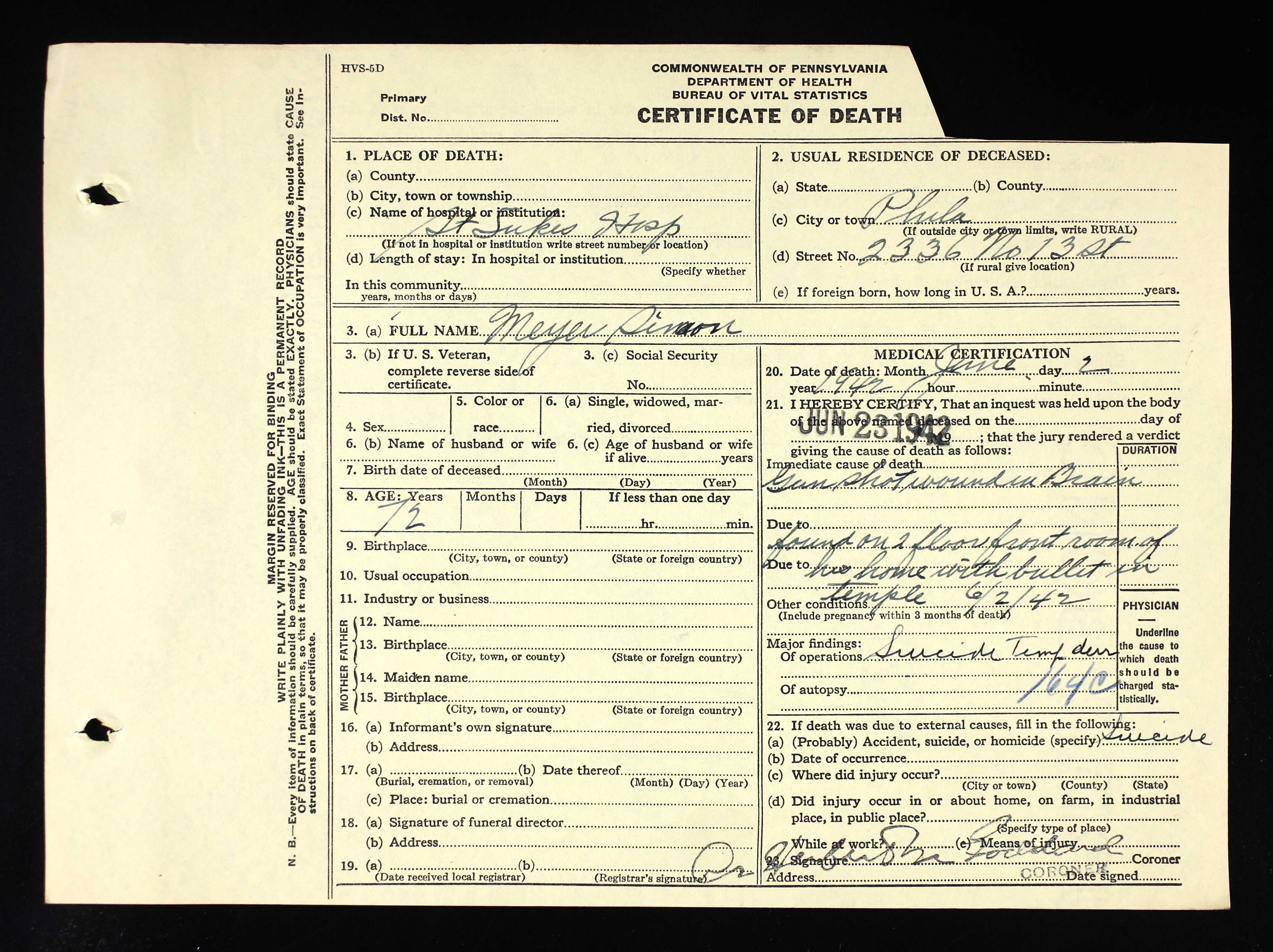
Meyer was the only member of his family left.  He had no siblings, no nieces or nephews on his side.  It must have been just too much for him when his wife Matilda then died on April 27, 1940, at age 63 from cerebral thrombosis and chronic nephritis.  Two years later on June 2, 1942, Meyer took his own life.  He was found on the second floor of his home at 2336 North 13th Street with a gunshot wound to his head.  He had no survivors.  Although Meyer was buried with his family at Mt. Sinai, he was not buried with his wife Matilda.  She was buried at a non-denominational cemetery instead (Northwood); because she was not Jewish, she could not be buried at Mt. Sinai.  How sad.

meyer simon death cert pre inquest

Ancestry.com. Pennsylvania, Death Certificates, 1906-1963 [database on-line]. Provo, UT, USA: Ancestry.com Operations, Inc., 2014.

Meyer Simon death cert coroner's inquest

Ancestry.com. Pennsylvania, Death Certificates, 1906-1963 [database on-line]. Provo, UT, USA: Ancestry.com Operations, Inc., 2014.

This story fills me with such sadness.  How lonely Meyer must have been.  He’d lost his grandparents, his parents, his aunts and uncles, his sister, and his wife.  And there were no children or nieces or nephews left to comfort him. Certainly there were other Nusbaum cousins nearby in Philadelphia, but it must not have been enough.

From the start of the story of the life of Meyer’s grandmother Mathilde Dreyfuss, this family suffered such tragedy: Maxwell’s death in the Great Fire of San Francisco and two daughters who died young.  Of Mathilde’s four children who grew to adulthood, only Flora married and had children, and there were no grandchildren to carry on the family line after Flora and Samuel Simon and their two children Meyer and Minnie died.   There are no living descendants of Mathilde Dreyfuss or Maxwell Nusbaum.  No one likely remembers their names.  Except now they have been found and can be remembered for the tough lives they lived and for the courage and hope they must have had when they arrived in Pennsylvania in the middle of the 1800s.


[1] Isaac died without any children in 1870, so unfortunately that was the end of that sibling’s line.

[2] Flora’s father Maxwell Nusbaum was the brother of Paulina Dinkelspiel’s mother, Mathilde Nusbaum Dinkelspiel.

[3] Poor Meyer had at least four Mathilde/Matildas in his life: his mother, his wife, his mother-in-law, and one of his aunts.  And today I don’t know one woman named Mathilde or Matilda or Tillie.

Update: The Coroner’s Report

Two weeks ago, I wrote about the curious death of Adolphus Nusbaum, my great-great-granduncle, son of John and Jeanette (Dreyfuss) Nusbaum.  He died on February 8, 1902, on a train from Washington, DC, about 20 miles outside of Chicago, according to the family bible.  Although I found this record from Illinois regarding the transfer of his body to Philadelphia, I could not find the follow-up to the coroner’s inquest, and so I was left wondering what had happened to Adolphus.

adolph nusbaum

“Pennsylvania, Philadelphia City Death Certificates, 1803-1915,” index and images, FamilySearch (https://familysearch.org/pal:/MM9.3.1/TH-266-11810-171514-28?cc=1320976 : accessed 19 Sep 2014), 004047863 > image 92 of 701; citing Department of Records.


My imagination went a little wild, speculating about conspiracy and murder with his wife Fanny and brother Julius running off together to Canada.  After all, I couldn’t find either Fanny or Julius on the 1910 census, and when they surfaced in 1920, they were living together as boarders in a home in Philadelphia.

But the reality was much more mundane.  With the assistance of my friend Laurel, I was able to find the results of the coroner’s inquest.  Laurel helped me figure out that the inquest would have taken place in Chicago where the body would have been delivered before it was then transported back to Philadelphia for burial. (I had been mistakenly looking in Philadelphia records.)  I then searched the Cook County index of coroner’s reports and found the one for Adolphus (listed as Adolph Nussbaum).  I ordered a copy, which arrived right before the weekend.

Adolph Nusbaum coroner's report

The report confirms that Adolphus died on the train on February 8, 1902, while en route from Washington to Chicago when the train was near Valparaiso, Indiana, which is 52 miles from Chicago.  The coroner’s inquest concluded that he died from pleurisy with effusion.  There was nothing in the report that indicated anything suspicious about the death.

The report also lists the witnesses who testified at the inquest, including Fanny Nusbaum (Fannie Nussbaum here) of Peoria, Illinois.  Although she might have testified for other reasons, it would seem likely that she testified as a witness to the death itself, meaning she was with Adolphus on the train.  The last witness, Joseph Springer, was the physician in the coroner’s office.  I don’t know who David Yondorf was; the report (cut off on the scanned copy above) states that he lived in the Lakota Hotel in Chicago and was a clothing merchant.  My guess is that he was a passenger on the train when Adolph died.

One other update about the children of John and Jeanette:  I wrote that Julius had died of dilation of the heart superinduced by acute indigestion.  My medical expert thinks that what this most likely meant is that Julius complained of acute indigestion but was really having a heart attack, leading to the heart failure that led to his death.  I was relieved to know that indigestion does not cause heart failure.


Children Losing Parents: The Family of Leopold Nusbaum

I’ve written quite a bit about how terrible it makes me feel when I read about parents losing their children.  The number of babies and young children who died from disease or accidents before the mid-20th century is appalling.  But in the story of the family of Leopold Nusbaum, I saw a different type of tragedy recur a number of times: young children losing a parent.  That pattern began with Leopold Nusbaum’s own daughter. Leopold Nusbaum had died in 1866, predeceased by his four year old son Adolph and survived by his widow Rosa and daughter Francis. Francis was only sixteen when her father died.

Francis had married Henry Frank in 1870, and in 1880 they were living with her mother Rosa and their three children, Leopold (named for his grandfather), Senie and Cora, in Lewistown, Pennsylvania, where Henry was a merchant.  Their fourth child David Henry Frank was born in April 1884.  By 1884 the family had returned to Philadelphia, where Henry was in the cloak manufacturing business with a firm called E. Rubel and Company.  The family was residing at 1234 Marshall Street.  Rosa Nusbaum, Francis’ mother, died February 16, 1887, in Philadelphia.

By 1889 Henry was with a new firm, Patterson, Frank, and Company, still manufacturing cloaks.  By 1894 he had his own firm, H.N. Frank & Co., and the family had relocated to 1633 Franklin Avenue.  The children were now growing up: Leopold was 23, Senie was 18, Cora was 17, and David just ten years old.  By 1899 they had relocated again to 2351 Park Avenue, and Leopold was now a salesman in his father’s business.

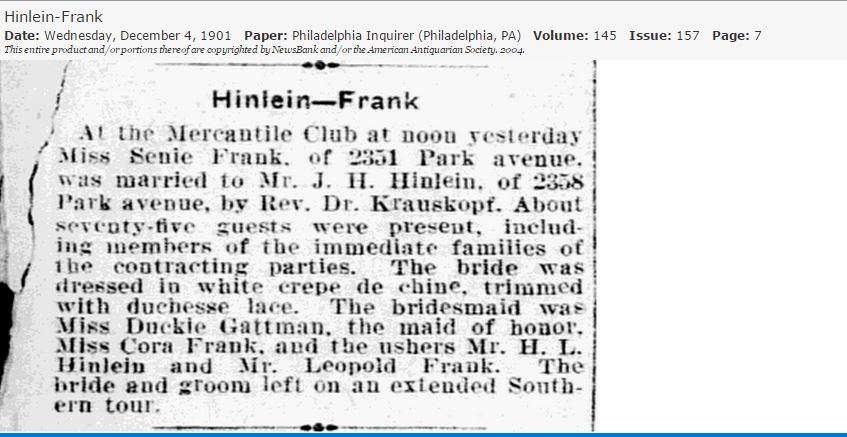
The 20th century saw the children of Francis Nusbaum and Henry Frank beginning to move on as adults.  In 1901, Senie married Joseph H. Hinlein.
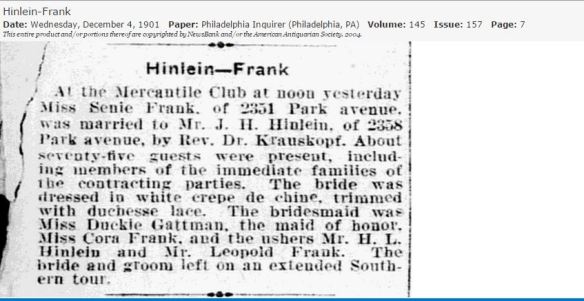
Senie Frank marriage announcement

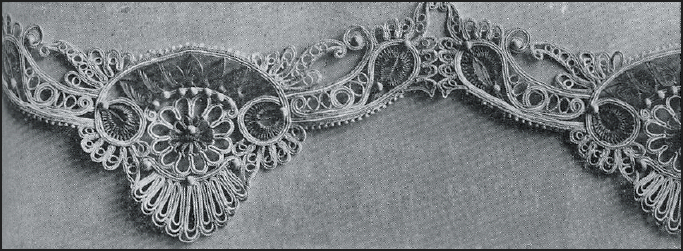
Joseph Hinlein was a widower; his wife Clara Falk Hinlein had died at age 29 from an aneurysm in June, 1900, leaving Joseph with three young children: Florette, Stanley, and Milton.  When Senie Frank married Joseph Hinlein, she thus had an instant family.[1]  Joseph Hinlein was a manufacturer.  In 1900 the census merely says he was a manufacturer, but in 1910 it says braids and in 1920 ladies’ trimmings.  I assume the braids were decorative trimmings for women’s clothing.

There are some very strange things about the census records for Joseph and his children.  For one thing, Joseph’s birthplace varies widely from census to census: Germany (1900), Pennsylvania (1910), Wisconsin (1920 and 1930), and Ohio (1940).  His passport application in 1946 lists Prairie du Chien, Wisconsin as his place of birth as does a ship manifest from 1928 for a trip he took with Senie.   Was this evidence of the unreliability of the census reports or of Joseph himself?  A little more digging, and I found Joseph on the 1870 census when he was just a baby, living with his parents in Prairie du Chien, Wisconsin.  That census indicated that Joseph and his parents were born in Bavaria.   Did Joseph forget where he was born in 1920 and thereafter? Or was he lying to be more American? Or perhaps the census taker in 1870 was mistaken or misunderstood where the baby in the home was born.

But there are other strange things about the Hinlein family and the census.  Although Milton is consistently reported as born in September 1895, Stanley is reported as born in 1893 on the 1900 census, but on every document after that his birth year is generally about 1900.  When I found his World War I draft registration, I thought—Aha! That will have his birthdate.  But it was blank except for his name.

Registration State: Pennsylvania; Registration County: Philadelphia; Roll: 1907759; Draft Board: 36

Registration State: Pennsylvania; Registration County: Philadelphia; Roll: 1907759; Draft Board: 36

And Florette’s age is also mysterious.  On the 1900 census it says she was born in December 1898 and only a year old.  But in 1910 she is seventeen years old, meaning a birth year of 1892 or 1893.  Every other census is consistent with the earlier birth year, and her Social Security death index entry and her headstone say she was born in 1892.  Plus she married in 1913; it seems more likely that she was 21 than 15 when she married.  When I examined the 1900 census more closely, although it clearly says December 1898, the “1” for her age could easily have been a “9.”  Maybe the census taker changed the birth year when he thought that she was one, not nine, years old.

Florette Hinlein 1900 census

Florette Hinlein 1900 census

During the 1910s, the three Hinlein children were moving out on their own.  As mentioned above, Florette married in 1913; her husband Jerome Lehman was from New Jersey, and Florette and Jerome settled in Newark, New Jersey where Jerome, a graduate of Princeton, was working in his father’s food business in 1917, according to his World War I draft registration.  Jerome and Florette had one child, a daughter who was born in 1915.[2]  By 1920 they were living in West Orange, New Jersey, and Jerome was now the vice-president of the grocery business.

Florette’s brother Stanley graduated from Princeton University in 1922 (when he was either 22 or 29, depending on which birth year is correct) and also married Beatrice Silverman in Philadelphia that year.  Stanley followed his father Joseph into the braid manufacturing business.  He and Beatrice settled in the Philadelphia area and had a daughter in 1925.

The third Hinlein child was Milton.  He married Reta Greenwald in 1919.  They also settled in Philadelphia.  I need help deciphering Milton’s occupation on the 1920 census.  I think it says “—- trimmings,” so I assume he also like his brother went into his father’s business.  Milton and Reta would have three children in the 1920s.

Milton Hinlein 1920 census

Milton Hinlein 1920 census

Senie’s younger sister Cora Frank had married just two years after Senie.  She married Jacques Jacob Gattman in Philadelphia in 1903.  Jacques was born in 1875 in Mississipppi where his father, a native New Yorker, was a banker.  By 1894, however, the family had relocated to Philadelphia, as Jacques’ father is listed in the Philadelphia directory for that year as a malt merchant.  On the 1900 census, Jacques is living with his parents and working as a salesman.

After marrying in 1903, Cora and Jacques settled in Philadelphia and had a daughter Dorothy in 1905.  Then at age 31, Jacques died from cerebral apoplexy or a stroke on January 19, 1906.  Cora was a 29 year old widow with a baby less than a year old. Her daughter Dorothy, like her Hinlein stepcousins, lost a parent at a very young age.  Cora and Dorothy moved back into Henry and Francis Nusbaum Frank’s home at 2351 Park Avenue, where Cora is listed as residing in the 1908 and 1909 directories as well as on the 1910 census.

Cora remarried in 1913.  Her second husband was Joseph Gustav Lehman.  I immediately thought that there had to be some connection between Joseph Lehman and Jerome Lehman, who married Florette Hinlein, Cora’s stepniece, that same year.  I have yet to find that connection, however. As noted above, Jerome Lehman was born in New Jersey in 1896, and his father Leser Lehman was also born in New Jersey.  Joseph Lehman, on the other hand, was born in Ohio in 1876, and his father Gustav was born in Germany in about 1845. Could there be a connection? Of course.  But I have yet to find it.

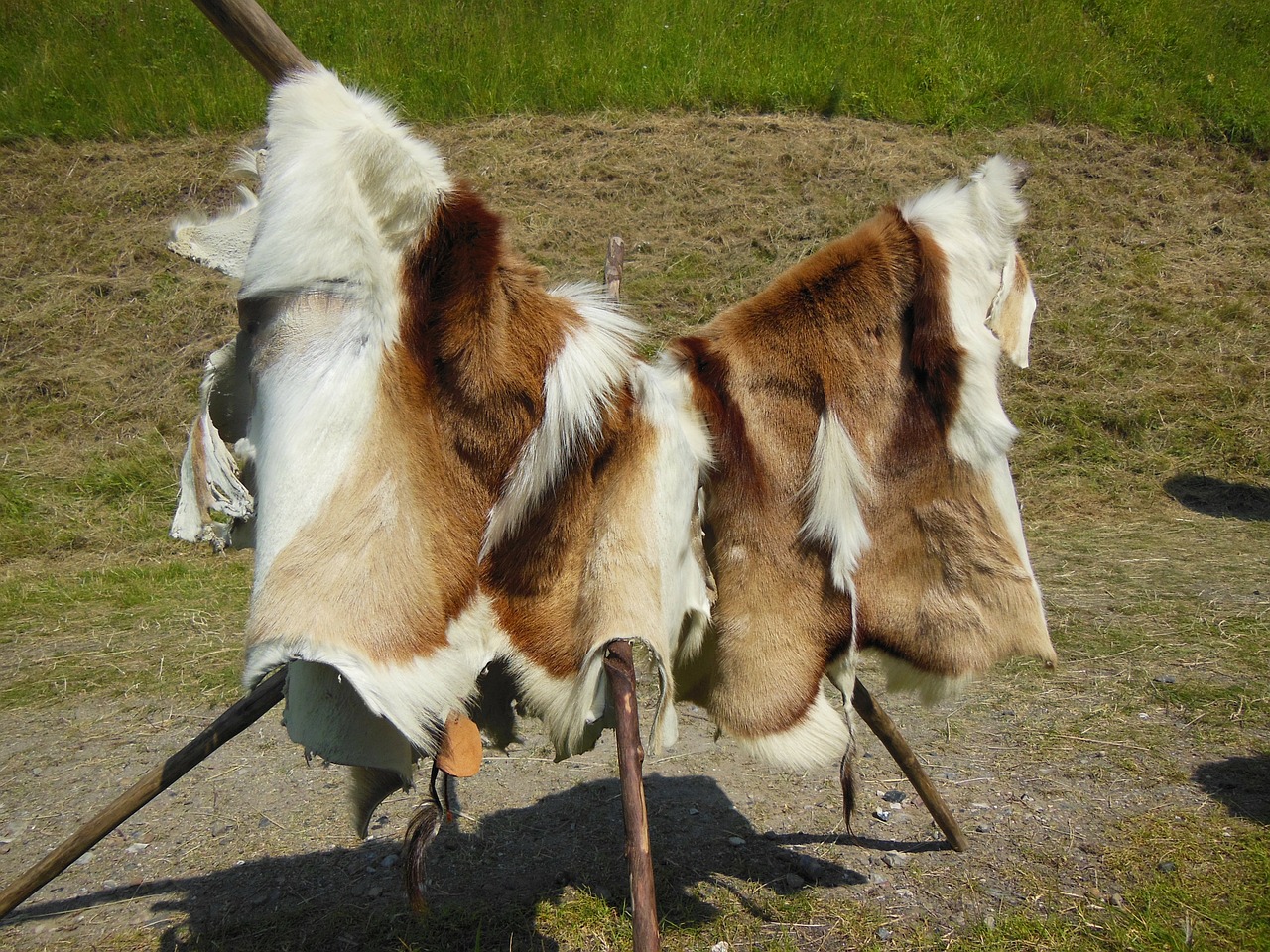
Joseph Lehman was 37 when he married Cora; she was 36.  They settled with Cora’s daughter Dorothy in Dayton, Ohio, where Joseph had lived his whole life.  His father Gustav was a dealer in hides, and in 1900 Joseph was working as a bookkeeper.  By 1910 his father had died, and Joseph and his brother Jacob had taken over the hides business.  After marrying Cora in 1913, Joseph became the secretary of the Hewitt Soap Company, according to his World War I draft registration in 1917.  The 1920 census lists his occupation as secretary of a steel company.   The transition from hides to steel is a telling one, revealing the shifts in the US economy by 1920.

Cattle hides

Cattle hides


Dorothy, now a teenager, was living with Joseph and Cora.  Unfortunately, I have been unable to locate Dorothy after 1926 when she was listed as Dorothy Gattmann and as a student in the Dayton city directory.  I cannot find her as Dorothy Lehman or Dorothy Gattmann.  I assume that she married and changed her name, but I don’t know where she lived or who she married.

David Frank, the youngest of the children of Henry and Francis Nusbaum Frank, also was married by 1910.  He married Rhea Heilbron, who was from Reading, Pennsylvania.  They had been married a year at the time of the 1910 census and were living in Philadelphia.  David was working as an inspector in a suit factory.  By 1920 they had relocated to New York City where David was now working as a wholesale merchant in “waists” or women’s clothing.  David and Rhea did not have any children.

The last of the Frank children to marry was the oldest, Leopold Frank.  In 1910 when he was 38 he was living at home and working with his father in the clothing business.  On his passport application dated April 25, 1914, he described himself as single and residing in Philadelphia and a cloak and suit manufacturer.  I cannot locate him on the 1920 census (perhaps he was overseas), but on a June, 1921, ship manifest he is listed as residing at 601 West 115th Street in New York City.  Then, in 1925, Leopold shows up on the NY State census, living with his brother David and sister-in-law Rhea and married to a woman named Nellie.  David and Leopold were both working as dress salesman.  For a long time I could not figure out when Leopold had married Nellie or anything about her life before 1925.

But then I looked over everything again and found some clues.  Also living with David, Rhea, Leopold and Nellie Frank in 1925 was a nineteen year old young man named Raphael Austrian, identified as the nephew of the head of household, that is, David’s nephew.  At first glance I had assumed that this was Rhea’s sibling’s child since the last name, Austrian, did not match any of David’s siblings.  But when I later searched for some history for Nellie on familysearch.org, looking for a woman born around 1885 in Hungary, the first name on the search results list was a Nellie Austrian from the 1905 NY State census.  I almost dismissed this listing because it said Nellie was married.  But when I looked back again at the 1925 NY census and saw Raphael Austrian again, it clicked.  Nellie Austrian was the woman now married to Leopold Frank, and she had a son Raphael who was the nephew of David Frank, the head of household listed in the 1925 census.

David and Rhea Frank's household on the 1925 NYS census

David and Rhea Frank’s household on the 1925 NYS census

So I went back to research Nellie as Nellie Austrian.  On the 1905 census, I found that Nellie was married to an American-born publisher named Julian Austrian.  Further searching for Julian Austrian (thank goodness for some unusual names) revealed that he was born in Reading, Pennsylvania in 1876. In 1900, he was still single and living in Reading.   I was then able to find him and Nellie and Raphael on the 1910 census living in New York City and also on the 1915 NYS census.  Julian’s World War I draft registration reported his occupation as editor and publisher of the F. Stallknecht Publishing Company, and googling that name revealed that they were engaged in the business of trade publications, for example, for the fur trade.

But on October 31, 1919, Julian died of heart failure back home in Berks County, Pennsylvania.  He was just 42 years old.  Once again, there was a young widow, and once again, there was a young child who lost a parent.  Like Francis Nusbaum who lost her father Leopold when she was 16, like the Hinlein children who lost their mother Clara when they were younger than ten years old, like Dorothy Gattman who lost her father Jacques before she could even know him, young Raphael Austrian lost his father when he was only fifteen years old.

In 1920, a year after Julian Austrian died, Raphael and his mother Nellie were living in New York City with a woman named “Diona” Wolkenstein, listed as Nellie’s sister, and from that census entry I finally learned what Nellie’s birth name was, Wolkenstein.  Nellie herself was now listed as a publisher.

I then searched the NYC marriage records for a bride named Nellie Austrian and found one entry for September 30, 1922.  Although the groom’s name was not included in the index, this obviously had to be Nellie’s marriage to Leopold Frank.  Even after marrying Leopold Frank on September 30, 1922, she continued to use the name Nellie Austrian in her listings in the New York City directory as a publisher.  Looking back again at the 1925 census, I now realized that David and Rhea Frank not only had Leopold and Nellie and Raphael living with them; Nellie’s sister “Diona” (indexed as “Siona” here, but more likely “Ilona”) Wolkerstein was also living in the household.

By 1925, all four of the children of Francis Nusbaum and Henry Frank were thus finally on their own.  Senie was living in Philadelphia with her husband Joseph Hinlein, and her three stepchildren were all married and out of the house.  Cora and her husband Joseph Lehman were living in Dayton, Ohio, and her daughter Dorothy was a student.  David Frank and his brother Leopold Frank and their wives were living in New York City where David and Leopold were apparently working together in the dress business.

Their father, Henry Frank, died June 18, 1925, of heart disease.  He is buried at Mt. Sinai cemetery.

Ancestry.com. Pennsylvania, Death Certificates, 1906-1963 [database on-line]. Provo, UT, USA: Ancestry.com Operations, Inc., 2014.

Ancestry.com. Pennsylvania, Death Certificates, 1906-1963 [database on-line]. Provo, UT, USA: Ancestry.com Operations, Inc., 2014.

The 1930s and after

By 1930 Francis Nusbaum Frank, now a widow, had moved in with her daughter Senie and son-in-law Joseph Hinlein in Cheltenham, outside of Philadelphia.  Her daughter Cora and her husband were still in Dayton, Ohio, and Joseph was now in the airplane parts business (maybe the same as the 1920 company, but I cannot tell).  The 1933 directory lists him as the treasurer of the United Aircraft Company, as does the 1936 directory.  Cora’s daughter Dorothy Gattman was no longer living with her mother and stepfather.

As of 1930, David and Rhea Frank were still living in New York City, and David was still in the women’s clothing business. In 1930 Leopold Frank and his wife Nellie were also still in New York; Nellie was still a publisher, and Leopold, like his brother David, was still selling women’s clothing.

In November, 1935, David Frank died at age 53; he was residing in Philadelphia at the time and is buried at Mt. Sinai cemetery.  I’ve been unable to locate a death certificate for him or an obituary, but according to two family trees on ancestry, he died in Atlantic City.  Rhea Frank returned to her home town of Reading, Pennsylvania,[3] where she died seven years later in October, 1941; she was also 53.  They are buried together at Mt. Sinai.

After losing her youngest child David in 1935, Francis Nusbaum Frank died on September 13, 1938, of a stroke.  She was 86 years old.  Like the other family members, she was buried with her husband Henry at Mt. Sinai.

Ancestry.com. Pennsylvania, Death Certificates, 1906-1963 [database on-line]. Provo, UT, USA: Ancestry.com Operations, Inc., 2014.

Ancestry.com. Pennsylvania, Death Certificates, 1906-1963 [database on-line]. Provo, UT, USA: Ancestry.com Operations, Inc., 2014.

In 1940, Senie and Joseph Hinlein were living with their son Stanley Hinlein and his family in Cheltenham.  Joseph Hinlein died in 1950 at 81, and Senie died the following year on May 22, 1951.  She was 74 and died of heart disease.  She and Joseph are buried at Mt. Sinai cemetery in Philadelphia.  Their three children all lived long lives; Florette died in 1993 at 100 years old.  Stanley died in 1983 at 90, and Milton died in 1982 at 87.

Cora and Joseph Lehman were still in Dayton in 1940, and Joseph was the treasurer of an aircraft company.  The last record I have for them is a record of Joseph’s death on June 14, 1959.  Cora was still alive at that point, but I have no further record for her or for her daughter Dorothy Gattman.

Leopold Frank and his wife Nellie seem to have disappeared after 1930.  I cannot find either of them on the 1940 census.  I know that Nellie’s son Raphael was married and living on Long Island in 1940, but I cannot find a trace of his mother or stepfather.

Looking back at the family line that began with Leopold and Rosa Nusbaum, I see a family with a lot of tragedies.  Leopold and Rosa lost their young son Adolph when he was just a little boy.  Their daughter Francis had four children.  The oldest three all had either children or stepchildren who had lost a parent when those children were still quite young.  Both Leopold and Senie married people who had lost a young spouse, and Cora suffered the loss of her first husband at a very young age. (David had no children.)  By 1940, there were no biological descendants of Leopold and Rosa living other than Dorothy Gattman, who I cannot locate.  The family lines of the Hinlein children, who were raised in large part by Senie Frank and whose children undoubtedly saw her as their grandmother, did continue on, and I am hoping to find some of those descendants to fill in some of the gaps left in this story.


[1] Senie and Joseph did not have any biological children together.

[2] Since I have not yet been able to get permission from living descendants, for privacy reasons I am not disclosing the names of those born in or after 1915.

[3] Since Rhea Heilbron, David’s wife, was also from Reading, Pennsylvania, I wonder whether she was friendly with the Austrian family and thus introduced Nellie to Leopold after Julian died.

 

Does Anybody Really Care about a Fifth Cousin?  Are Collateral Lines Relevant?

y Sg647112c (Own work) [CC BY-SA 3.0 (http://creativecommons.org/licenses/by-sa/3.0)], via Wikimedia Commons

y Sg647112c (Own work) [CC BY-SA 3.0 (http://creativecommons.org/licenses/by-sa/3.0)%5D, via Wikimedia Commons

I have been spending many hours recently researching the children, grandchildren and other descendants of the siblings of my three-times great-grandparents.  Sometimes I find myself thinking, “Why am I researching these people?  They are my third cousins twice removed or my fifth cousins or my second cousins four times removed…or whatever.”  Although I’ve had moments of wondering this before, it’s been especially true for the Nusbaum clan, who for the most part flew under the radar and did not have lots of juicy or interesting stories to tell—they were mostly law abiding merchants; they lived their lives quietly and out of the public eye.  They were not politicians or inventors or criminals or performers.  They did not change history.  Sometimes when I learn that a particular relative had no children, I am relieved.  One more line has been completed.

So why do this?  Does anybody really care about such distant relatives? Do I even care? Is it just my general compulsive need for a sense of completion? For being thorough? Or is there something pushing me forward, person by person, line by line?

Some of it is definitely my neurotic need to finish things.  Until recently I would finish any book I started even if I hated it.  Then finally I realized, “Hey, I hate this book.  I do not need to finish it.”  It was tough, but I started realizing no one was grading me if I put the book away.  And it is not just books.  When we moved into our new home five years ago, I stayed up past 3 am just to put away every last dish, fork, pot, and coffee mug in the kitchen.  Craziness.

But I do think that something else impels me to keep researching and writing about all these distant cousins.  First, it gives me the big picture about the lives of my ancestors.  I start to see trends and patterns.  For example, I would not have seen how important the liquor trade became in the family and the country if I had not followed all those Simon and Nusbaum relatives who started selling liquor in the 1870s.  I would not have understood how important the peddler trade was to early German Jewish immigrants if I did not study all the Nusbaum siblings. I would not have sensed the broad impact of the 1870s depression by studying just my direct ancestors.   And as I move into the 20th century, I would perhaps not have seen how suddenly education became a much bigger factor in the lives of these families as both sons and daughters started getting a college education.

So in order to appreciate the larger society in which our ancestors lived, it is important to research not just your direct line but those collateral to it.  But there is more there.  Because I could do all that research and not blog about these people.  I am no fool; I know that it doesn’t make for sexy reading to follow the life of someone who was born, grew up, sold hats, got married, had children, and died.  So why even bother posting on the blog about that ordinary person? Partly because we all live ordinary lives.  Most people are never in the paper for anything “interesting.” Most of us are not politicians or entertainers or criminals.  Most of us are born, grow up, go to work, have families, and die.  Don’t we matter? Won’t our grandchildren want to be able to tell their grandchildren something about their ancestors?  I hope so.

By Citynoise (Own work) [CC BY-SA 4.0 (http://creativecommons.org/licenses/by-sa/4.0)], via Wikimedia Commons

By Citynoise (Own work) [CC BY-SA 4.0 (http://creativecommons.org/licenses/by-sa/4.0)%5D, via Wikimedia Commons

And then there is this other thing.  It hasn’t happened a lot, but it’s happened to me enough that I know it can happen.  Someone googles their great-grandfather’s name, say Simon Nusbaum, for example.  They land on my blog, and they learn something about their great-grandfather that they never knew—for example, that he was Jewish or that he was the son of a once successful merchant in Philadelphia. And they leave a comment on the blog, and I now have a new cousin with whom I share a family history and some smidgeon of DNA.

Isn’t that worth it?  Right now I am searching for the living descendants of my three-times great-grandparents and their many siblings, and I have found a number of them.  They are mostly my fifth cousins with a few fourth cousins mixed in.  Some I have already emailed, others I will today.  I have not heard back from those I emailed, as is often the case.  Maybe they think I am a crazy person.  Maybe they have no interest today.  But maybe in a month or a year they will wonder about their ancestors and find my blog or find me.

And even if just one of them responds to me, it is worth it.  Maybe they will have a picture of John Nusbaum and Jeanette Dreyfuss or one of their children.  Even if they don’t, I will have helped them learn about their family’s history, and that will make all of this worthwhile.