

Amsterdam coat of arms
Two months ago I wrote a summary of my perspective on the descendants of Jacob and Sarah Jacobs Cohen and their thirteen children, including my great-grandfather Emanuel Cohen. I wrote about the way they managed to create a large network of pawnshops that provided support for the generations to come. Many of the Philadelphia Cohens stayed in the pawnshop business into the 20th century. The generation that followed, those born in the 20th century, began to move away from the pawn business and from Philadelphia. Descendants began to go to college and to become professionals. Today the great-great-grandchildren of Jacob and Sarah live all over the country and are engaged in many, many different fields. Few of us today can imagine living with twelve siblings over a pawnshop in South Philadelphia. We can’t fathom the idea of losing child after child to diseases that are now controlled by vaccinations and medicine. We take for granted the relative luxurious conditions in which we live today.

Philadelphia flag
The story of the Cohen family in Washington is much the same in some ways, different in other ways. Jacob’s brother Moses and his wife Adeline also started out as immigrants in the pawnshop business , first in Baltimore and then Washington. But unlike Jacob who lived to see his children become adults, Moses Cohen died at age 40 when his younger children were still under ten years old. Adeline was left to raise those young children on her own as she had likely raised her first born son, Moses Himmel Cohen, on her own until she married Moses Cohen, Sr. When I look at what those children accomplished and what their children then accomplished, I am in awe of what Adeline was able to do. For me, the story of the DC Cohens is primarily the story of Adeline Himmel Cohen for it was she, not Moses, who raised the five children who thrived here in the US. She somehow instilled in those children a drive to overcome the loss of their father, to take risks, to get an education, and to make a living.
Her son Moses, Jr., an immigrant himself, had nine children; his son, Myer, became a lawyer. To me it is quite remarkable that a first generation American, the son of a Jewish immigrant, was able to go to law school in the late 19th century. Myer himself went on to raise a large family, including two sons who became doctors and one who became a high ranking official at the United Nations in its early years after World War II. Moses, Jr.’s other children also lived comfortable lives, working in their own businesses and raising families. These were first generation Americans who truly worked to find the American dream.
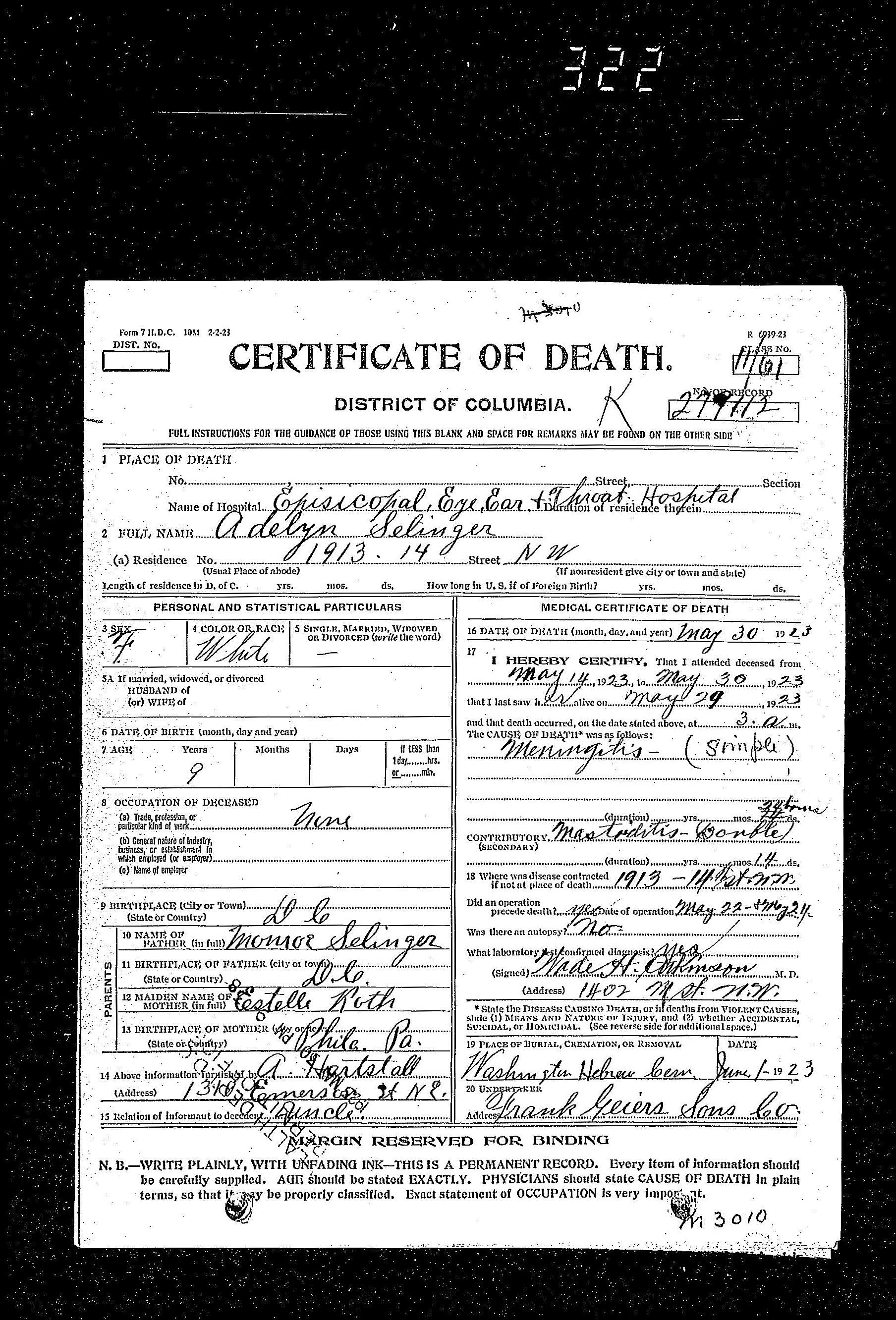
Adeline and Moses, Sr.’s other three children who survived to adulthood, Hart, JM, and Rachel Cohen, all took a big risk and moved, for varying periods of time, to Sioux City, Iowa. Even their mother Adeline lived out on the prairie for some years. JM stayed out west, eventually moving to Kansas City; he was able to send his two daughters to college, again something that struck me as remarkable for those times. His grandchildren were very successful professionally. Hart, who lost a son to an awful accident, had a more challenging life. His sister Rachel also had some heartbreak—losing one young child and a granddaughter Adelyn, but she had two grandsons who both appear to have been successful.
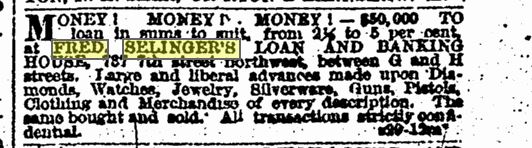
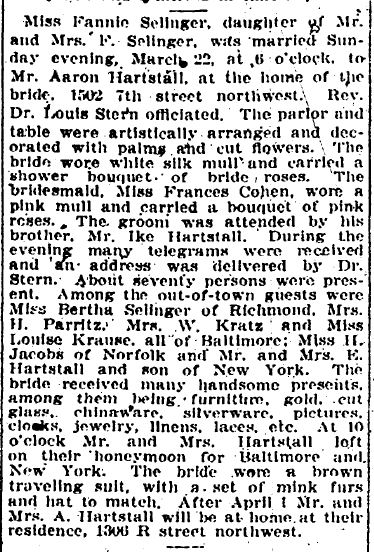
Three of the DC Cohen women married three Selinger brothers or cousins. Their children included doctors, a popular singer, and a daughter who returned to England several generations after her ancestors had left. The family tree gets quite convoluted when I try to sort out how their descendants are related, both as Cohens and as Selingers.
There were a number of heart-breaking stories to tell about the lives of some of these people, but overall like the Philadelphia Cohens, these were people who endured and survived and generally succeeded in having a good life, at least as far as I can tell. The DC Cohens, like the Philadelphia Cohens, have descendants living all over the United States and elsewhere and are working in many professions and careers of all types.

flag of Washington, DC
Looking back now at the story of all the Cohens, all the descendants of Hart Levy Cohen and Rachel Jacobs, I feel immense respect for my great-great-great grandparents. They left Amsterdam for England, presumably for better economic opportunities than Amsterdam offered at that time. In England Hart established himself as a merchant, but perhaps being a Dutch Jew in London was not easy, and so all five of Hart and Rachel’s children came to the US, Lewis, Moses, Jacob, Elizabeth, and Jonas, again presumably for even better opportunities than London had offered them. Eventually Hart himself came to the US, uprooting himself for a second time to cross the Atlantic as a man already in his seventies so that he could be with his children and his grandchildren. Rachel unfortunately did not survive to make that last move.

The flag of the City of London
Arriving in the US by 1850 in that early wave of Jewish immigration gave my Cohen ancestors a leg up over the Jewish immigrants who arrived thirty to sixty years later, like my Brotman, Goldschlager, and Rosenzweig ancestors. Of course, the Cohens had the advantage of already speaking English, unlike my Yiddish speaking relatives on my mother’s side. They also had the advantage of arriving at a time when there wre fewer overall immigrants, Jewish immigrants in particular and thus faced less general hostility than the masses of Jewish, Italian, and other immigrants who arrived in the 1890s and early 20th century. Also, my Cohen relatives may not have been wealthy when they arrived, but Hart and his children already had experience as merchants and were able to establish their own businesses fairly quickly. Thus, by the time my mother’s ancestors started arriving and settling in the Lower East Side of NYC or in East Harlem, working in sweatshops and struggling to make ends meet, my father’s ancestors were solidly in the middle and upper classes in Philadelphia, Washington, Sioux City, Kansas City, Detroit, and Baltimore.
When I look at these stories together, I see the story of Jewish immigration in America. I see a first wave of Jews, speaking English, looking American, and living comfortably, facing a second wave who spoke Yiddish, looked old-fashioned, and lived in poverty. No wonder there was some tension between the two groups. No wonder they established different synagogues, different communities, different traditions.
A recent study suggests that all Ashkenazi Jews were descended from a small group of about 350 ancestors. We all must share some DNA to some extent. We are really all one family. But we have always divided ourselves and defined our subgroups differently—Orthodox, Conservative, Reform; Galitizianer or Litvak; Sephardic or Ashkenazi; Israeli or American; so on and so forth. We really cannot afford to do that in today’s world; we never really could. Today very few of us make distinctions based on whether our ancestors came in 1850 or 1900 because we are all a mix of both and because we have blurred the economic and cultural distinctions that once were so obvious. But we still have a long way to go to eradicate the divisions among us and to overcome the prejudices that continue to exist regarding those who are different, whether Jewish or non-Jewish.










![Ancestry.com. Historical Newspapers, Birth, Marriage, & Death Announcements, 1851-2003 [database on-line]. Provo, UT, USA: Ancestry.com Operations Inc, 2006.](https://brotmanblog.com/wp-content/uploads/2014/08/frances-cohen-death-notice.jpg)
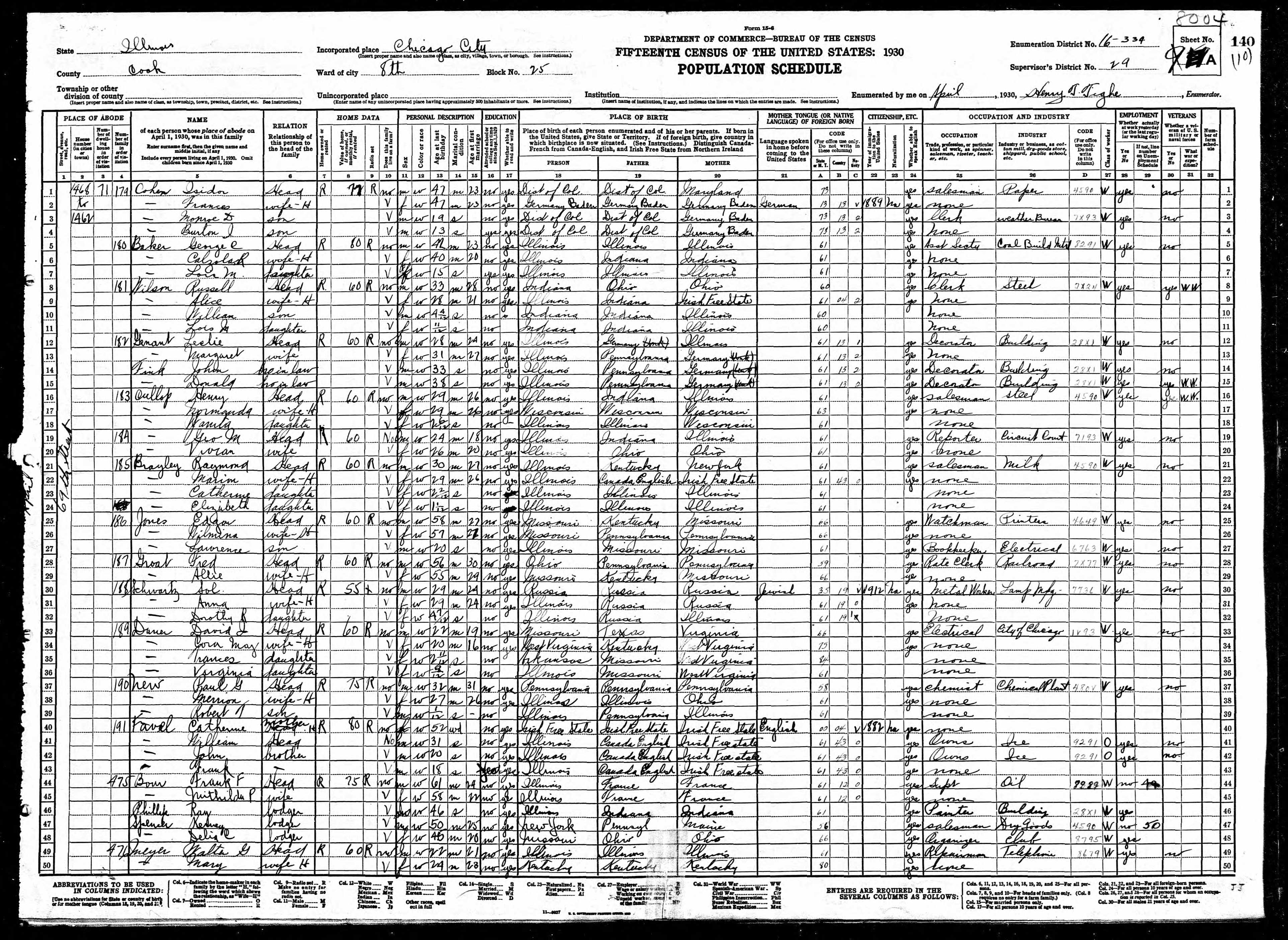


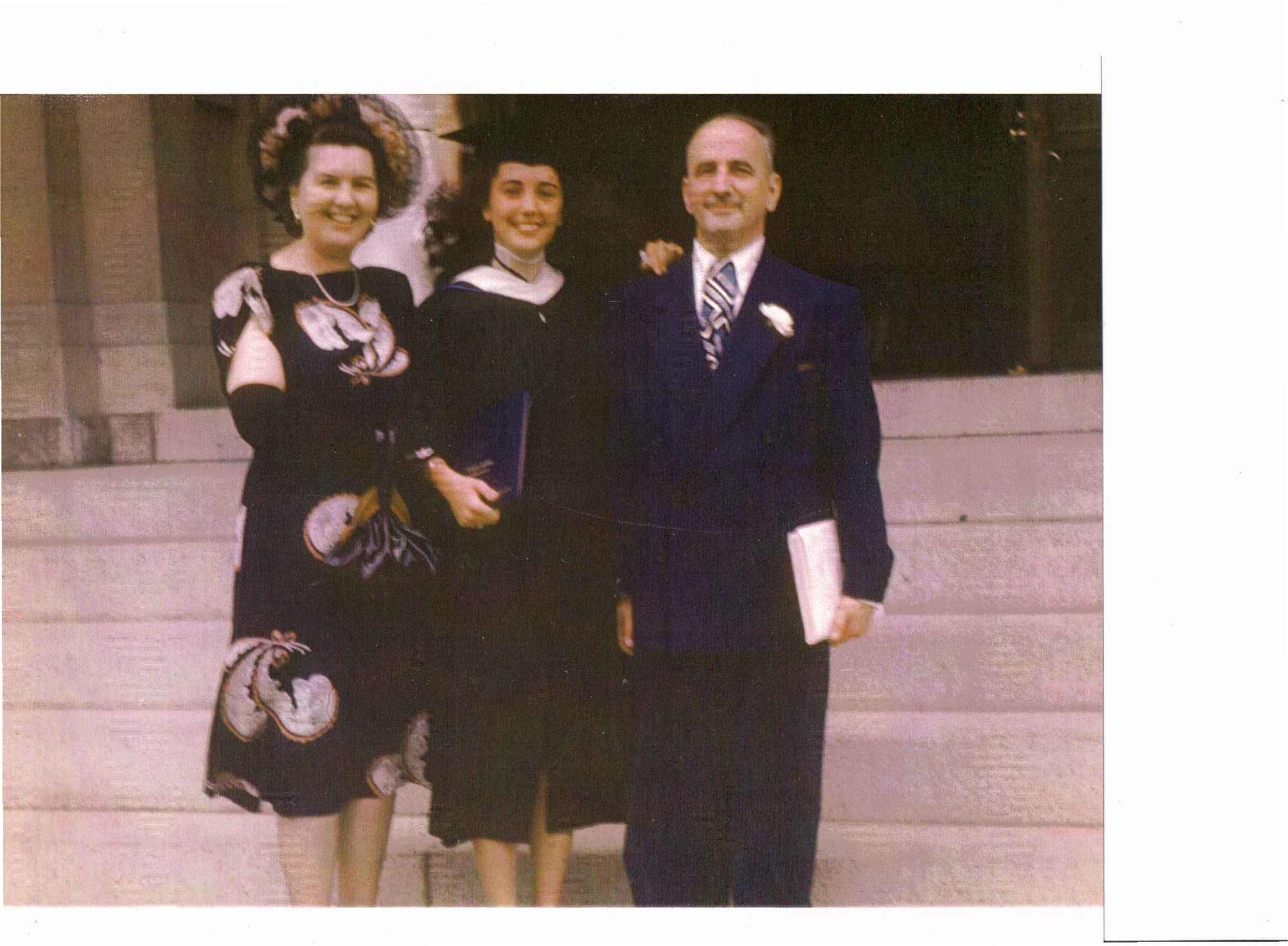


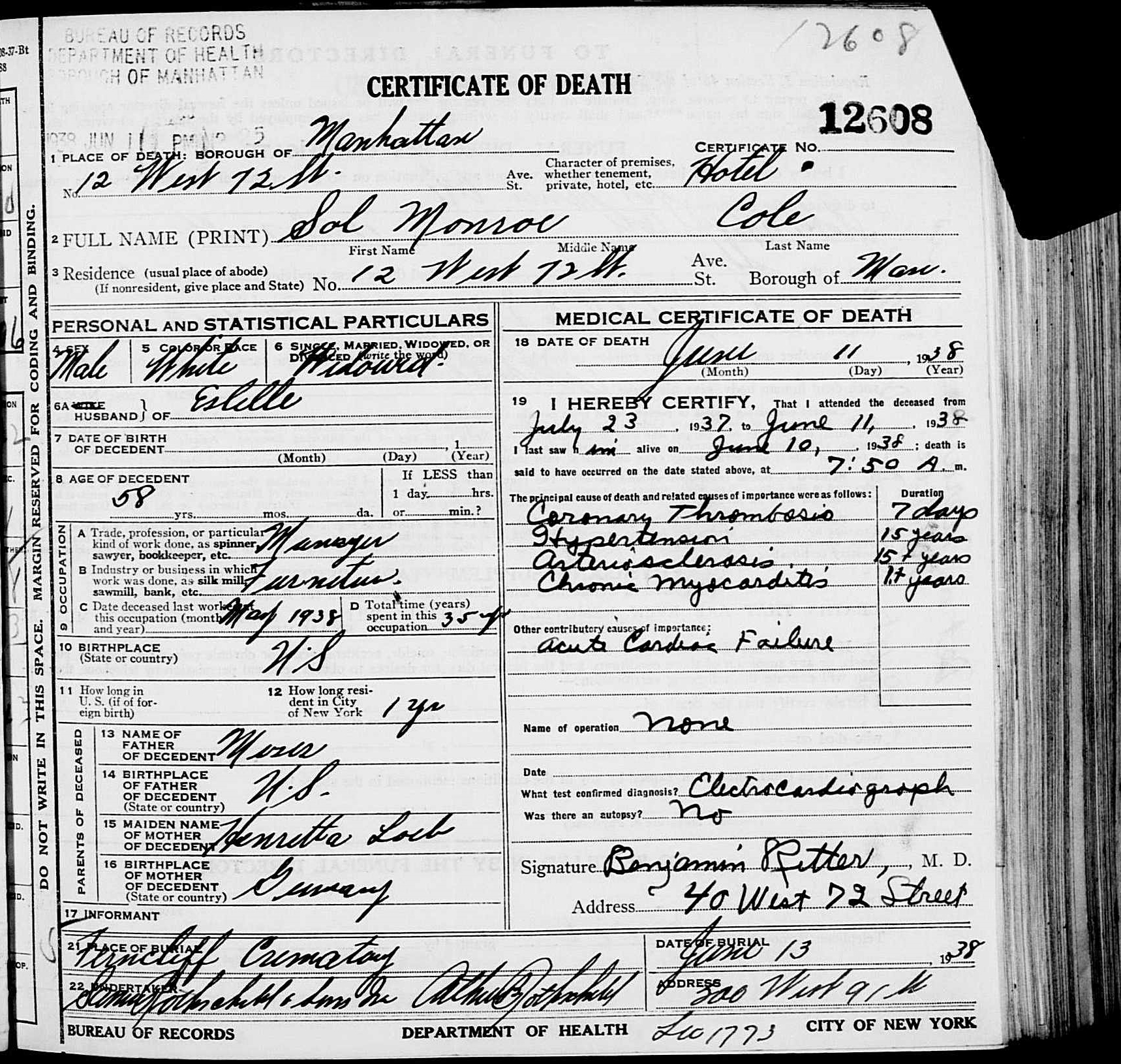


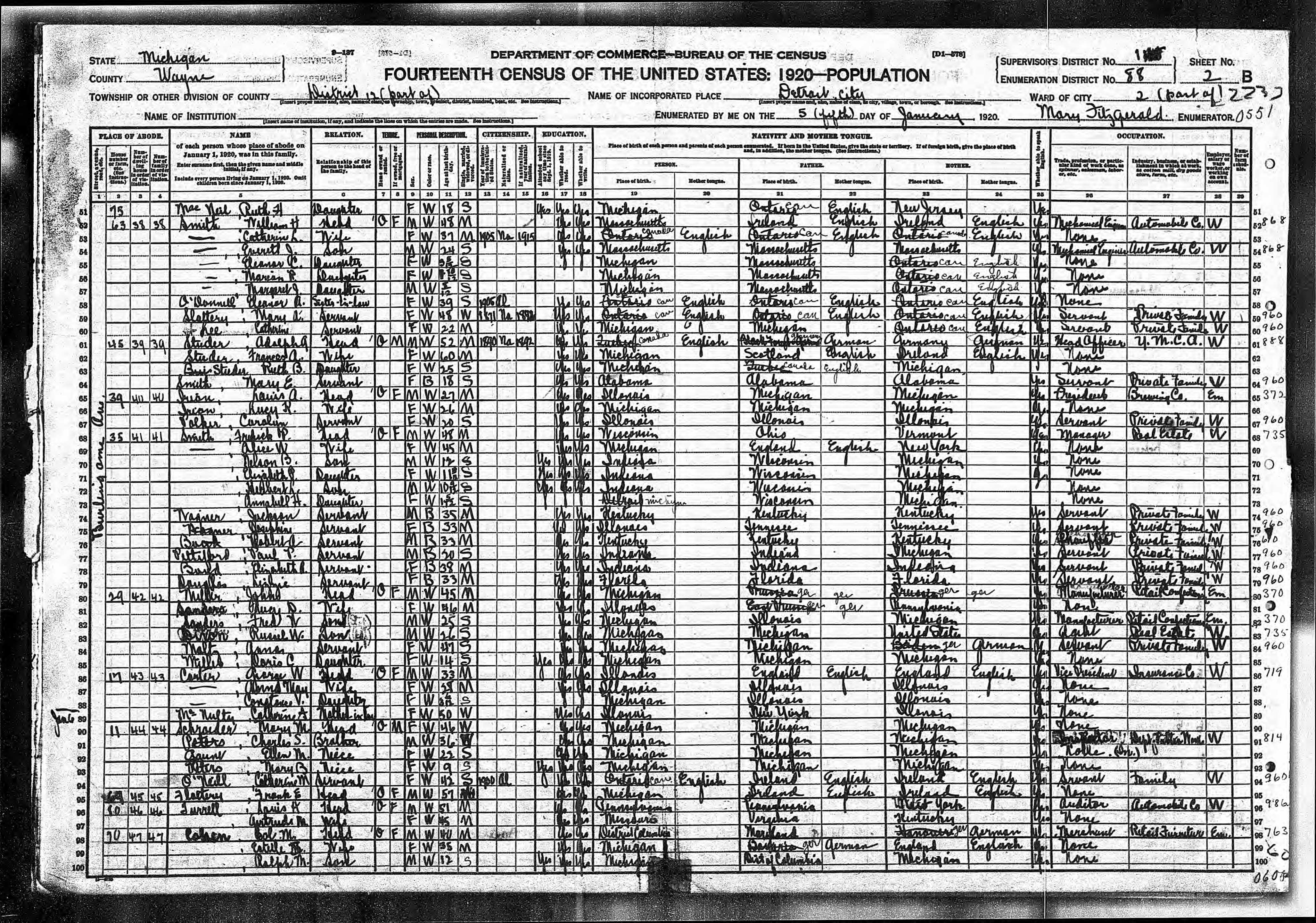
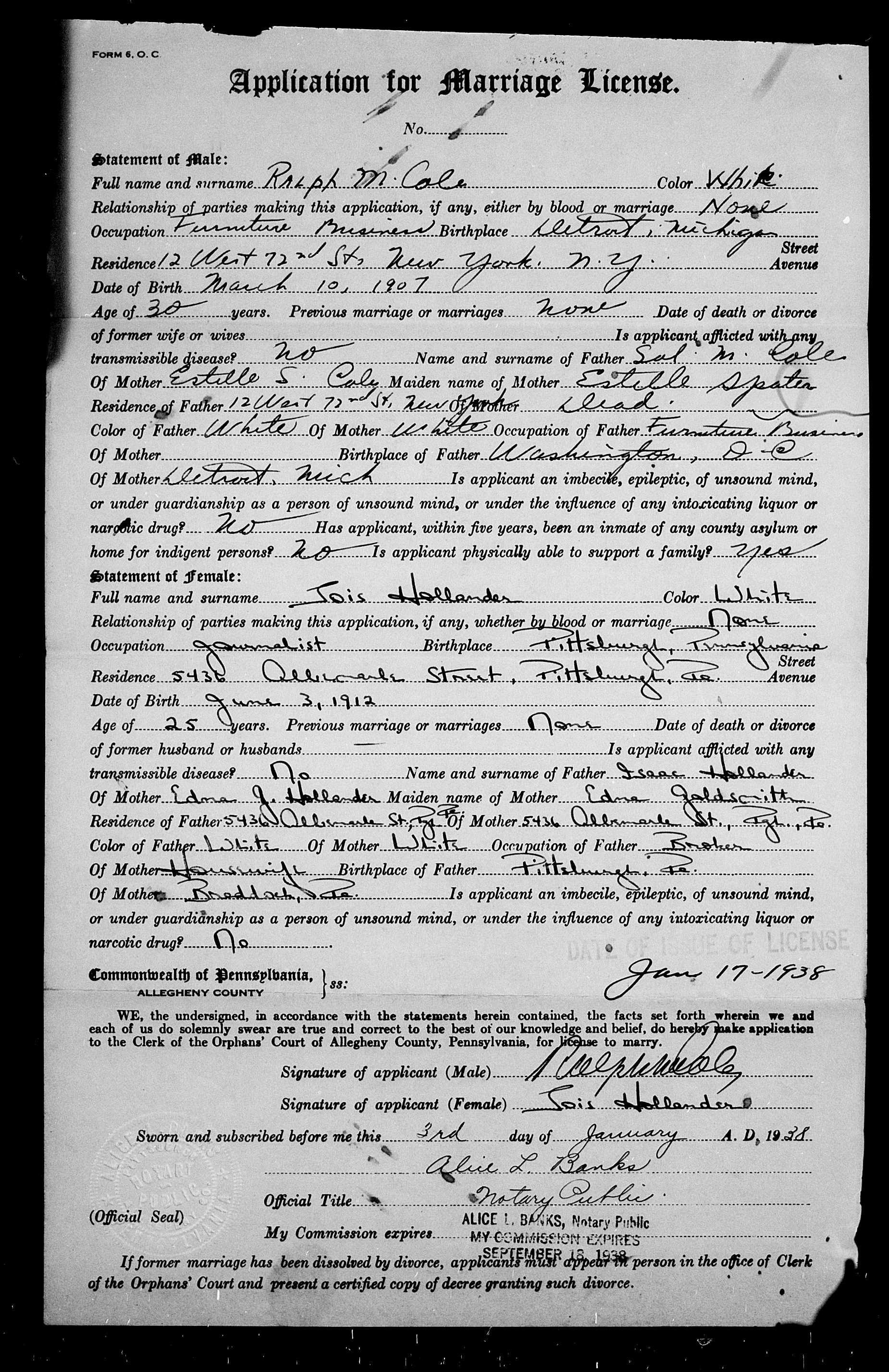
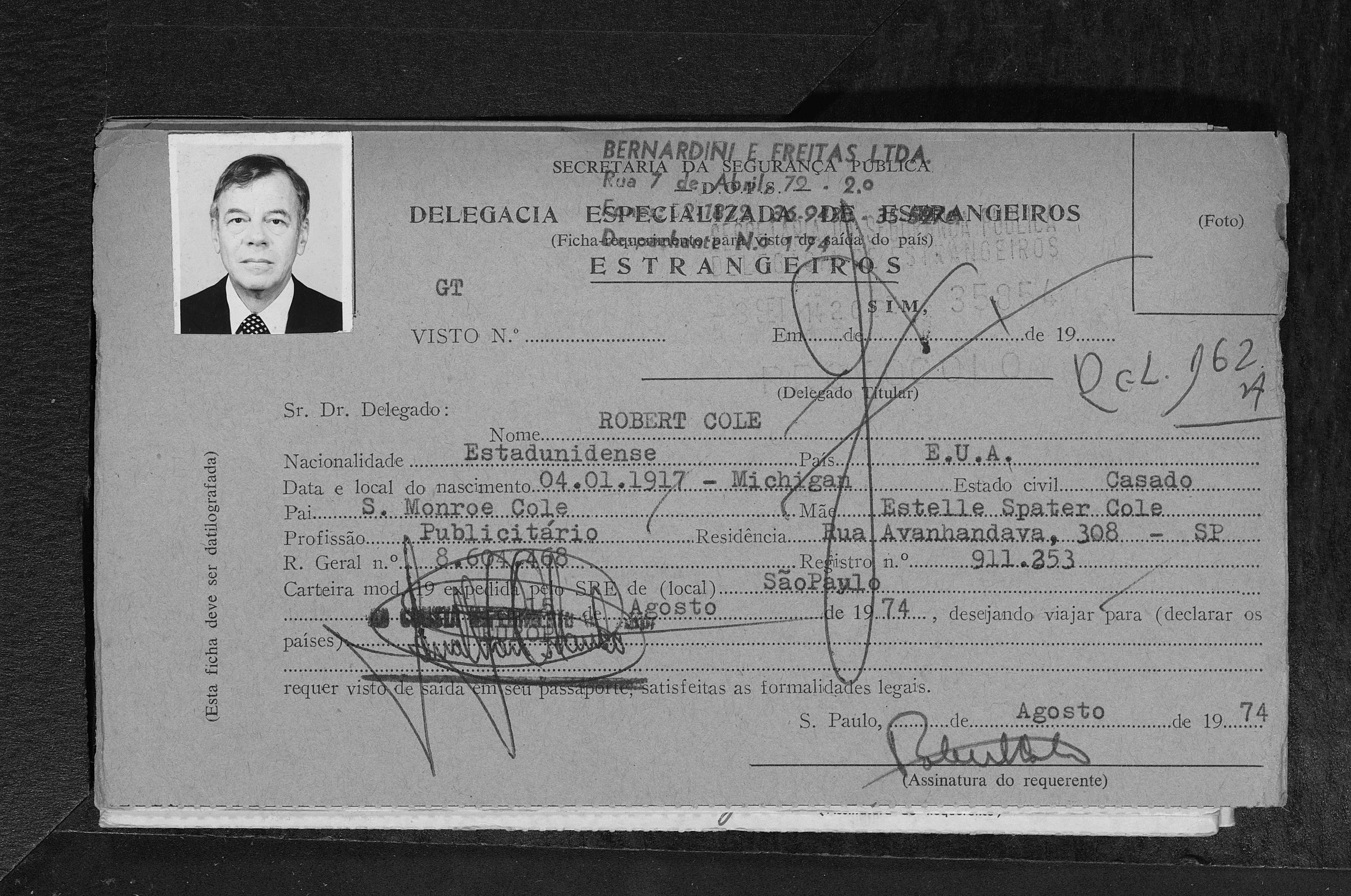

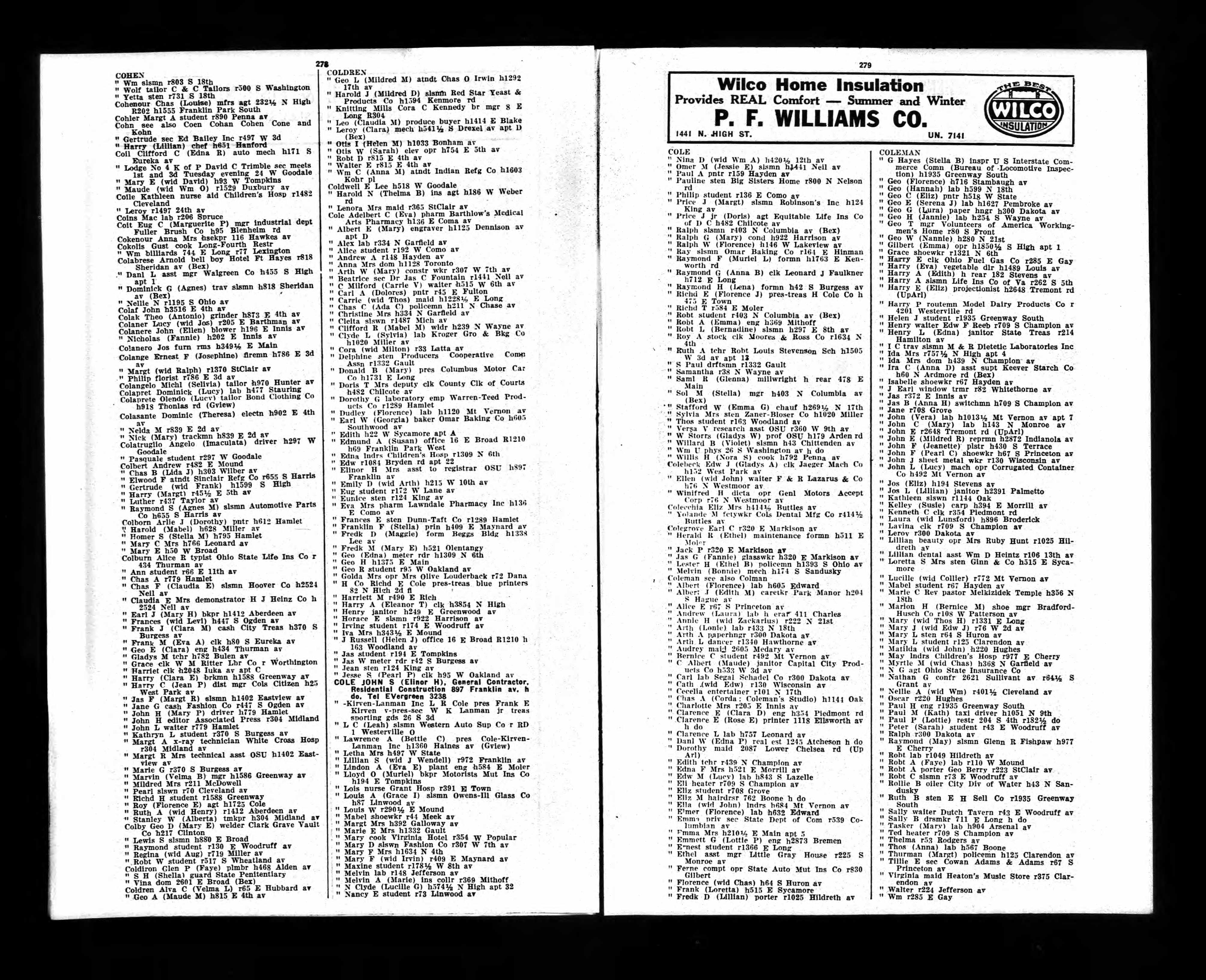
![1928 University of Michigan yearbook Ancestry.com. U.S. School Yearbooks [database on-line]. Provo, UT, USA: Ancestry.com Operations, Inc., 2010.](https://brotmanblog.com/wp-content/uploads/2014/08/ralph-cole-yearbook-pic-cropped.jpg)



 Brotmanblog: A Family Journey


