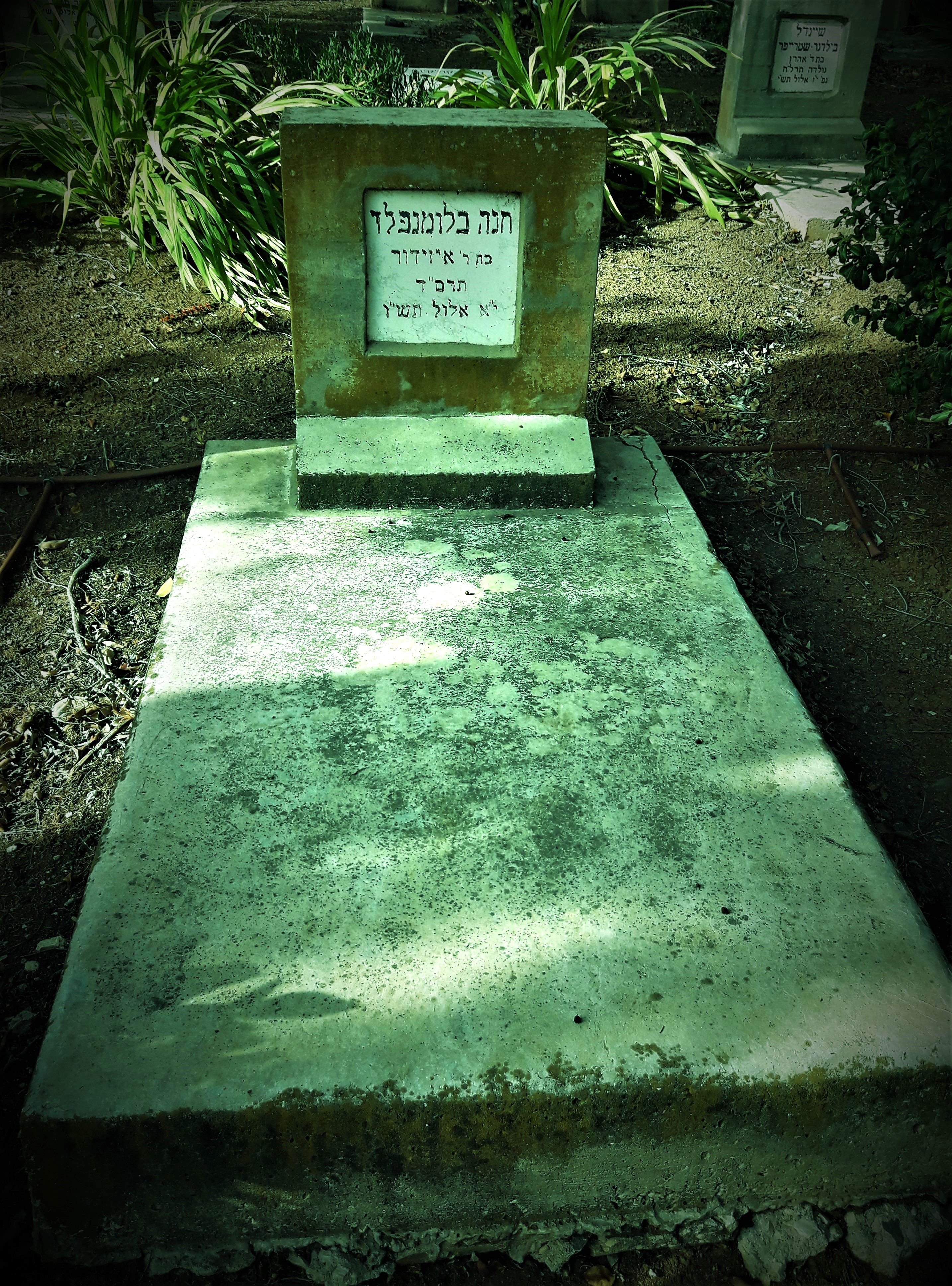
Cousin Meetings: Richard and Max Meet in Merano, Max and I Meet on Cape Cod

One of the greatest gifts I’ve received through my genealogy research is connecting with and getting to know new cousins. Some are as close as second cousins, some as distant as fifth or even sixth cousins. But none of that seems to matter once we have connected.

Sometimes these connections are only through email. Sometimes they are by phone. And sometimes I have been able to connect with cousins and get to see their faces and get to know them through Zoom. There are cousins from all over the US and the world with whom I have emailed, phoned, and/or zoomed—some as far away as Israel, Germany, France, Switzerland, England, and Australia, some as close as right here in Massachusetts.

I’ve been especially blessed when I’ve gotten to meet and spend time with a cousin in person. And that has happened far more times than I’d ever, ever have predicted. I have had meals with cousins in all kinds of places—in western Massachusetts where I once lived and on Cape Cod where I now live, in Florida and in New York City, in Boston and in Philadelphia, and even overseas—in Germany and in London. Each time it has been a truly joyful experience. Even though we had never met before and even though our connection may go back several generations to an ancestor we never knew, there was still something magical about meeting a cousin.

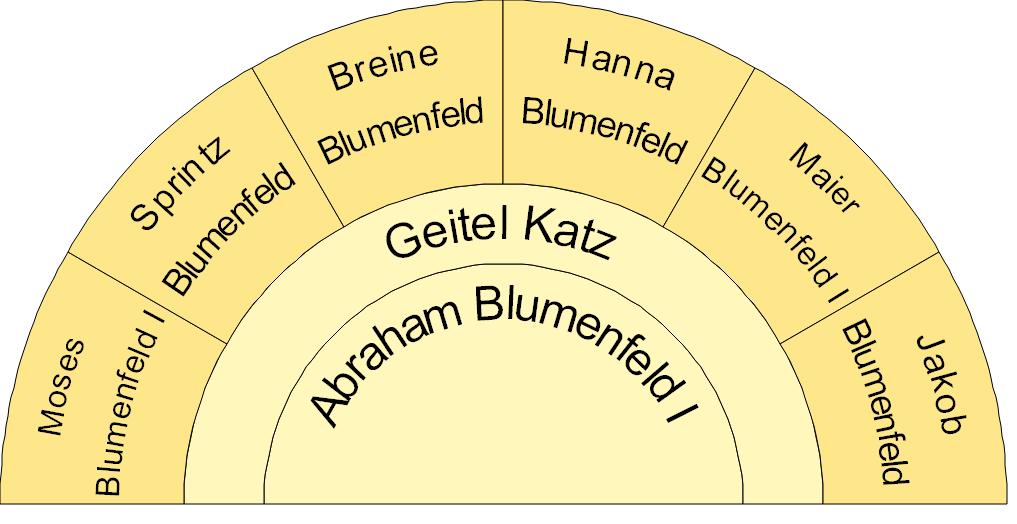
So I was somewhat envious but also thrilled when I learned that two cousins I’d found through my research and then connected to each other—Richard Bloomfield and Max Bermann—were able to meet in Merano, Italy, this past spring. Richard is my fifth cousin through his 3x-great-grandfather Jakob Blumenfeld, a younger brother of my 3x-great-grandmother Breine Blumenfeld; Max is also my fifth cousin, but through his 3x-great-grandfather Moses Blumenfeld, an older brother of Breine Blumenfeld, my 3x-great-grandmother. And Richard and Max are fifth cousins to each other; we are all the 4x-great-grandchildren of Abraham and Geitel (Katz) Blumenfeld.
Although I had zoomed and emailed with Max and Richard many times, I had never met either of them—until last Thursday, that is, when my husband and I had dinner with Max and his wife Glenna here on Cape Cod. Again, it was a magical and joyful experience. The warmth and connection were authentic and immediate, and we found so much to talk about in the three hours we sat at Fin, an amazing restaurant in Dennis. When we looked around at 10 pm, we realized we were the only ones left in the restaurant; the staff were all sitting around the bar politely not disturbing us, but obviously waiting for us to leave. After repeated promises to get together again, we all hugged goodbye, leaving as not just cousins but four new friends.

At dinner Max and Glenna told us about their trip in May, 2024, to Merano and meeting Richard and his wife Irma there. Why, you might ask, did they meet in Merano, Italy, a town not far from the Austrian border when Richard lives in Switzerland and Max in Massachusetts?

Well, that requires some background about Max’s life. I’ve shared Max’s story before on the blog, and I hope you will go back to the earlier blog posts for more details and photographs as well as for my sources for the information below. Also, Richard wrote a comprehensive biography of Max’s family.

But here is a very brief overview of why Max was visiting Merano:

Max’s mother was Edith Blumenfeld, daughter of Max Blumenfeld and Anna Grunwald. She married Joseph Bermann, Max’s father, in 1935.1 Joseph was born in Merano, Italy, where his father Max Bermann was a doctor and the director of the Waldpark Sanitarium. Joseph also became a doctor and worked there as well. After marrying, Edith and Joseph settled in Merano.

My cousin Max, grandson of both Max Blumenfeld and Max Bermann and named for both, was born in Merano a few years after his parents’ marriage. His father Joseph left Merano for the US in 1939 to escape from the Nazi and Fascist persecution and the impending war, intending to send for Edith, Max, and Max’s older sister Margherita once he was settled. But World Was II intervened, and Edith and the children could not get out of Europe.

They soon left Merano for Milan and then for the countryside of Italy where they hid their Jewish identity while Edith worked for the resistance as a courier. Once the war ended, Edith brought the children to the US, and they were reunited with Joseph. The story of how Edith kept herself, her mother, and her children safe during the war is a remarkable one and is described here on my blog and in Richard’s biography of Max’s family.

Max had never been back to Merano, his birthplace, after immigrating to the US in 1946, and he and his wife Glenna decided to visit there this year. The visit was motivated in part to see a painting of Max’s paternal grandfather, Max Bermann, a painting that Joseph Bermann had brought with him to the US in 1939 and that had been in Max’s parents’ home in New York City. It had then hung in Max and Glenna’s home for many years. Because he wanted to be sure that the painting was preserved in a safe and appropriate place in perpetuity, Max decided to donate the painting to the Jewish Museum in Merano, his birthplace and his father’s family home for many years. After shipping the painting there last year, Max and Glenna wanted to see it in its new home in Merano.

Meanwhile, Richard, born and raised in the United States, lives near St. Gallen, Switzerland, and thus about five hours from Merano. Richard had helped to connect Max with the Merano Jewish Museum, and when Richard learned that Max and Glenna were coming to Merano, he asked whether he and his wife Irma could meet them there. Max and Glenna were delighted.

Richard has generously shared with me some of the photographs of their meeting and an essay he wrote about the experience. I will quote parts of what he wrote rather than trying to paraphrase it.2 I am also going to include some of his photographs.


Last Sunday we [Richard and Irma, his wife] stood on the balcony of our hotel room in Meran and looked across the Passer River at the Hotel Meraner Hof where Max and Glenna were going to be staying. It had been just two and a half weeks since Max had written me that he and Glenna were going to travel to Meran. Max had donated a painting of his grandfather [Max Bermann] to the Jewish Museum in Meran and wanted to have the experience of seeing it on display. When I asked Max if he would mind if Irma and I came to meet them there, Max wrote that he found that touching. Although we are 5th cousins, i.e. relatives, and had had email and Zoom contact, we didn’t want to intrude on Max’s first trip back to his place of birth since leaving it at age 2.

Our first live encounter took place when we waved to each other from our balcony to their terrasse. Shortly thereafter, we greeted each other with big hugs, sat down for a drink and exchanged the special, personal gifts we had brought for each other. We were joined by Sabine Mayr, researcher and co-worker at the Jewish Museum, and the museum’s director Joachim Innerhofer. Joachim and Sabine welcomed us like VIPs: Max, the long-lost son; I, the person who had connected Max with the museum in Meran and provided them with lots of information from my family research; Glenna and Irma as though they were long lost members of the Jewish community in Meran.

Remembering the adage that the way to the heart is through the stomach, we headed off to a restaurant for dinner. Unfortunately, Joachim had an appointment and couldn’t join us. Maybe we should have had an empty chair at the table for Amy, the person who had done the matchmaking between Max and me (and lots of other cousins!).

Richard, Sabina Mayr, Irma, Glenna, and Max

Monday morning we visited the synagogue and museum just behind Max and Glenna’s hotel. The first synagogue in Tirol was dedicated on 27 March 1901 and the interior has survived in its original form. When the Nazis removed the pews to use the room as a horse stall, the people of Meran saved them and returned them after the war. The very attractive Jewish Museum of Meran is located in the same building.

The sanctuary pictured below is warm – comfy – and inviting. Even with just seven rows of pews on the main floor, there is more than enough room for the 50 members of the community. Here is where Max’s family had worshipped. Today services with a rabbi are only held on holidays.
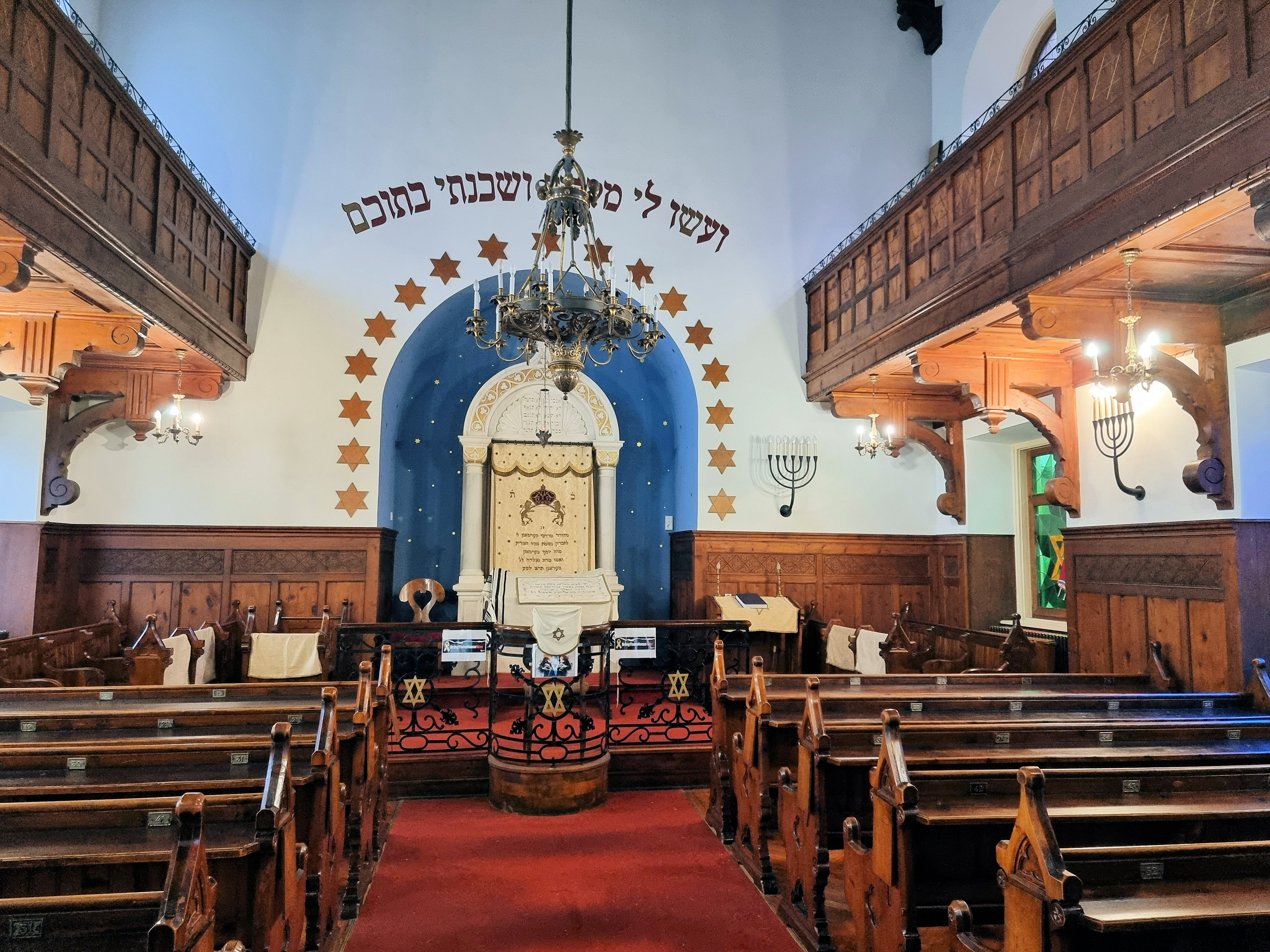
Merano synagogue

Irma, Richard, Max, and Glenna standing in front of the ark in the Merano synagogue
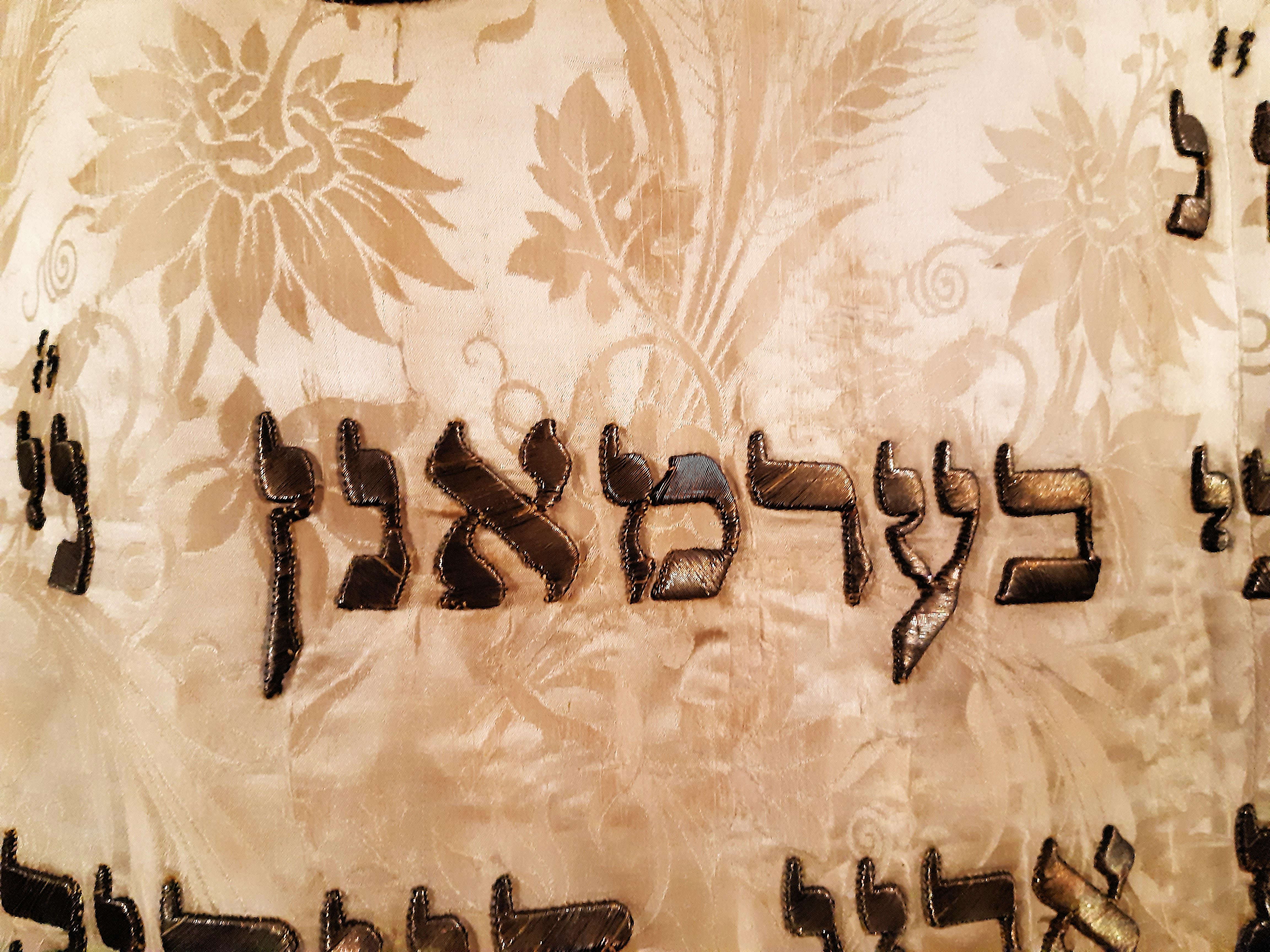
The name Bermann is embroidered into the parochet or curtain that covers the ark

At long last we descended the steps to the museum under the sanctuary. Just around the corner to the right of the entrance Max found his grandfather Max [Bermann]! …
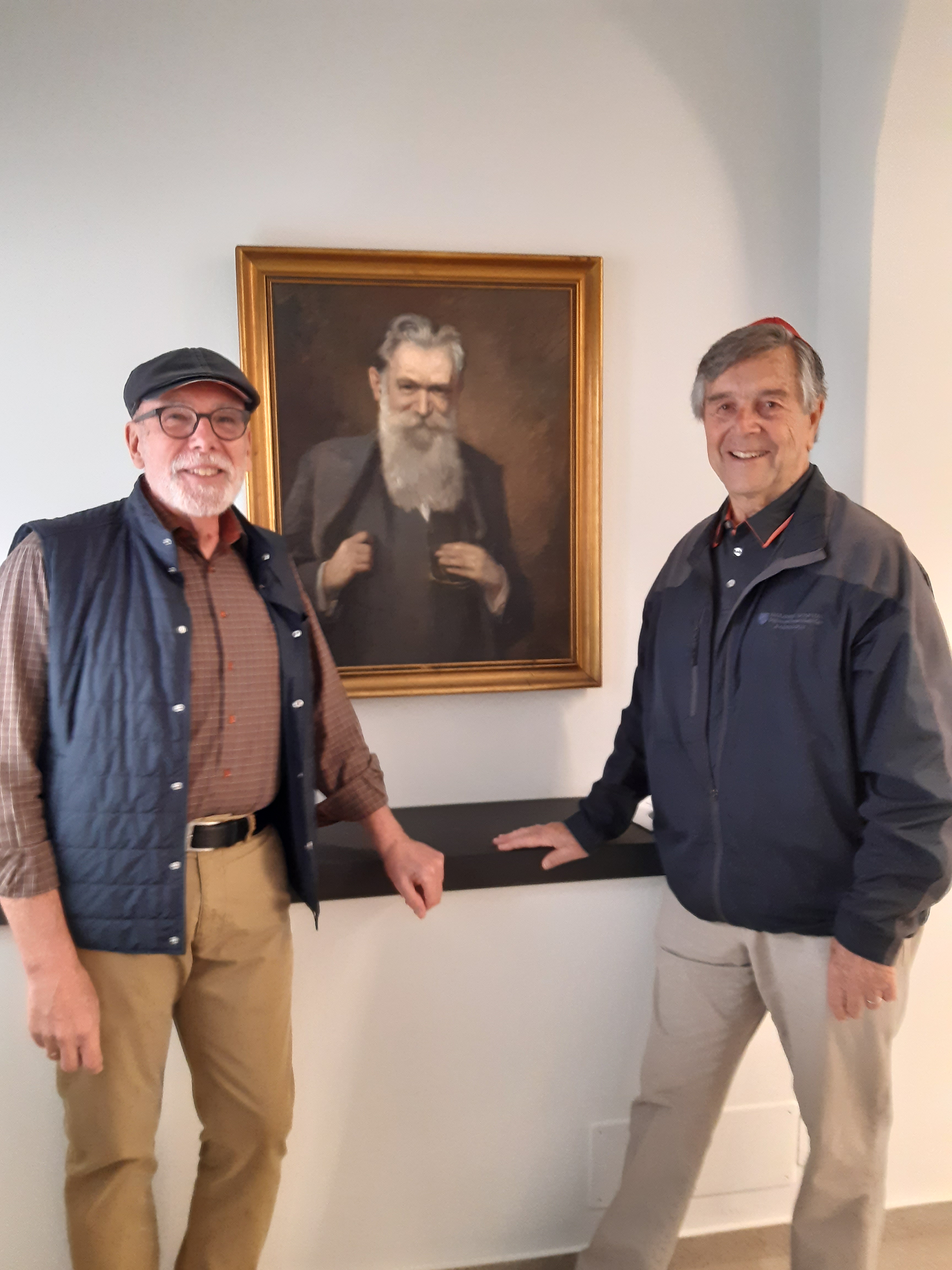
Richard and Max standing in front of the portrait of Max’s paternal grandfather, also named Max Bermann

 This picture of [Max’s relatives’] wedding in 1926 hangs on the other side of the room to the right of [his grandfather] Max’s portrait. When Max saw it, he ex-claimed: “Look, there’s my father!” (1) (1898-1966). Joachim pointed to the right edge of the photo where Max’s grandfather with a long white beard is pictured (2) (1865-1933). “And there’s my grandmother next to him” (3) (1870-1958)….

A rather long and wet walk took us to the Waldpark Sanatorium where Max was born and lived for two years: In 1907, [his grandfather] Doctor Max Bermann acquired the Villa Paulista from John Stoddard and founded the Waldpark Sanatorium, which he ran as a specialist in internal medicine. In the early 1930s, two buildings were added, and in the following years the main building was renovated and enlarged. Claiming that the owners were indebted, the buildings and the large park surrounding them were sold at auction in 1941. (Source: Jewish Meran Walking Tour, Jewish Museum of Meran)

Although Max was only two when he left Meran in 1940, he thinks he remembers a white fence surrounding the Waldpark. Indeed, the fence is still white!

Max’s birthplace in Merano

On Tuesday it did not rain, and the sun eventually came out. A chair lift carried us up to a place above Meran where we had a good view of the city and the surrounding countryside….

….

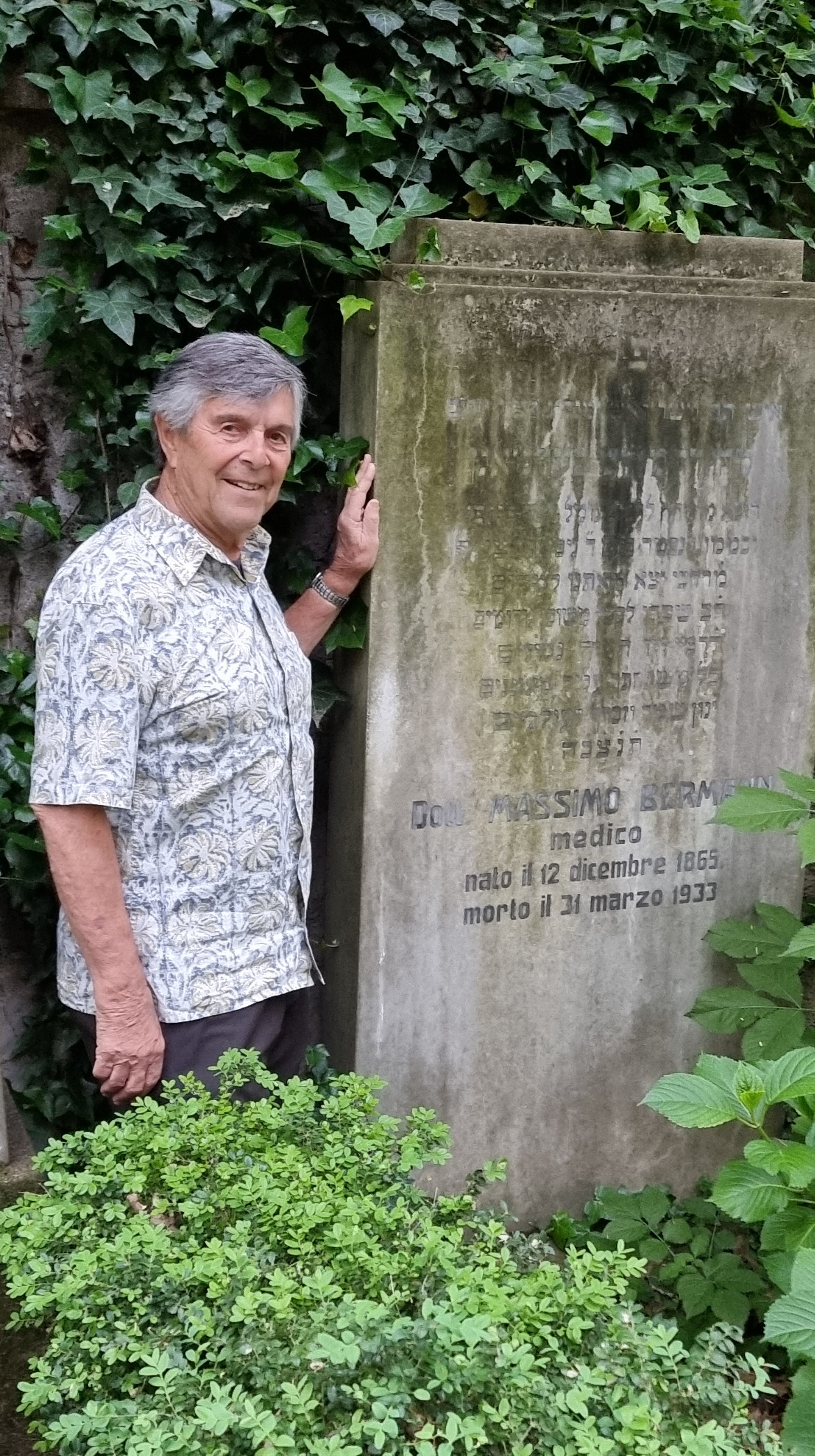
Before dinner we wanted to visit the New (1908!) Jewish Cemetery where members of the Bermann family are buried. After a stop at the memorial for the victims of the Shoah… we went to visit the graves of Max’s grandfathers, Max Bermann and Max Blumenfeld….

Max is standing next to Grandfather Bermann’s headstone, and both of us touched together the gravestone of our common relative Max Blumenfeld (1880-1936). The common roots that Max and I have that we have talked and written about became something living here in the cemetery.”
—————————–

I am so glad that Richard and Max were able to meet and share this moving experience together. It makes me appreciate how fortunate I have been to find so many cousins and to help them find each other.

And now I also have had the special opportunity to spend time with my cousin Max and his wife Glenna and to feel those common roots. His life and mine had such different beginnings—his as a small child hiding from persecution in Italy, mine as a middle class American child growing up in suburban New York after the war, never worrying about antisemitism.

But here we are so many decades later, both living in Massachusetts less than ninety miles apart. In so many ways our lives have taken similar paths despite those very different beginnings, and we have far more in common than those different beginnings would have predicted.

I am so lucky and so grateful for all the gifts that genealogy has brought to my life, especially all my amazing cousins like Richard and Max!


  1. I have seen records that spell his name Joseph, others that spell it Josef. For consistency purposes I have used the American spelling Joseph since he was born Giuseppe and kept that name until he immigrated to the US in 1939. 
  2. Merano was once under Austrian control, but after World War I it became part of Italy. The town uses both the German-Austrian spelling Meran, which Richard uses, and the Italian spelling Merano, which I use. Both are equally acceptable. 

Finding Max Blumenfeld and His Family: A Postscript

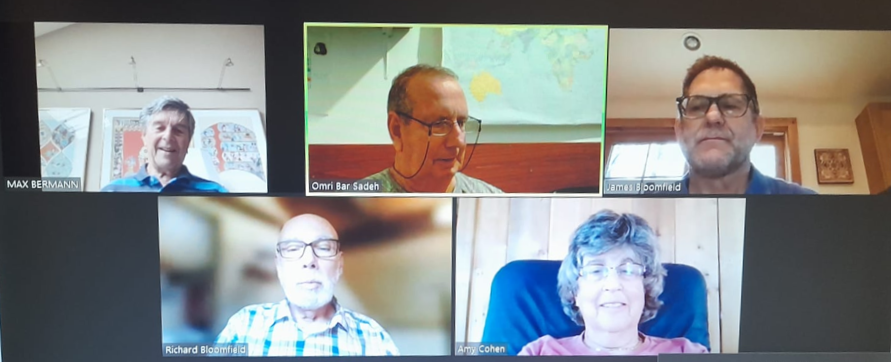
Yesterday I Zoomed with four of my Blumenfeld cousins—Richard, whose been my research partner for quite a while now, his first cousin Jim, who is also a wonderful genealogy researcher, and the two surviving grandchildren of Max Blumenfeld, Max and Omri. We spanned three continents—Omri in Israel, Richard in Switzerland, and Max, Jim, and I in New England. We chatted for an hour, but could have gone on much longer and hope to continue the conversation another time.

During our conversation, we uncovered the answer to a question we still had been unable to answer despite all our research: when did Anna Grunwald Blumenfeld, Max Blumenfeld’s widow and Omri and Max’s grandmother, leave Italy and immigrate to Israel/Palestine? The records that Richard had obtained from Merano said she’d left in 1939, but Max had pointed out that that wasn’t possible since he and his sister were cared for by their grandmother Anna during World War II while their mother Edith worked with the Italian Resistance. Their father Josef had immigrated to the United States on November 1939.

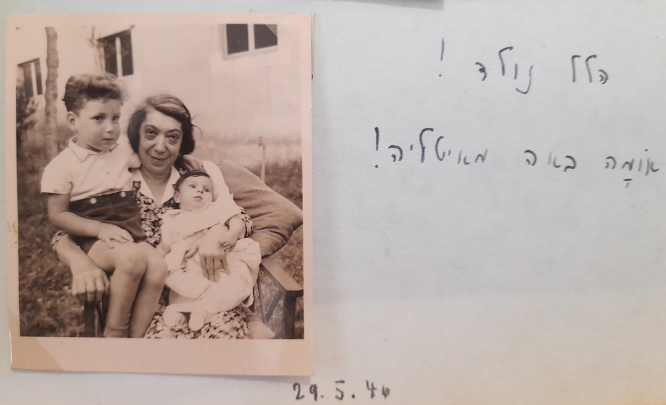
For our Zoom, Omri had prepared a wonderful slide show of family photographs, some of which I’ve already shared on this blog, and some that were new to me. Among those photographs was one that helped to answer the question of when Anna arrived in Palestine. The photograph shows Anna in Palestine with two of her grandsons, Omri’s brothers Gideon and Hillel. Anna was holding Hillel, who was just a very small baby, and the photo was inscribed in Hebrew with the words, “Hillel is born! Oma [Anna] arrives! 29 May 1946.” So now we knew that Anna had only recently arrived in Palestine in May of 1946.

Here is another photo taken the same day showing Anna with Gideon and Hillel and their parents Fritz and Dora.

But then how do we explain the records that said Anna had left Merano in 1939? Well, Max had the answer to that question. Max explained that Anna and her daughter Edith and the two grandchildren, Max and his sister Margherita, all left Merano in 1939 and moved to Milan. Max has no memories of life in Merano since he was only a toddler when the family moved. But that would explain why the Merano records report that Anna left that place in 1939.

Max and his family stayed in Milan for several years, and then when Italy adopted laws persecuting the Jews in about 1942, his mother Edith was able to use her connections to obtain permission to leave Milan and move to the countryside outside of Milan.  The family remained there for the duration of the war, hiding the fact that they were Jews. They spoke Italian (although they all could also speak German) so that they could pass as Italian, and Max and his sister went to church on Sundays. In fact, Max and Margherita were not aware of the fact that they were Jewish and also didn’t know that their father was still alive—all to prevent the children from accidentally revealing the fact that they were Jews.

After the war, Edith took her children to America so they could all be reunited with Josef, and Anna went to Palestine to be with her son Fritz and his family, as depicted in the photograph above.

We spoke of many other interesting things during our Zoom, and there were many stories and many moments of laughter interspersed. It was truly a delightful hour and one I will always cherish and remember.

Thank you to Omri, Max, Richard, and Jim—all of whom are my fifth cousins, four people I never would have known if not for doing genealogy research.

And that, dear readers, is the magic of genealogy.

Finding Max Blumenfeld, Part III: Finding His Grandsons

Although my cousin Richard and I had learned that Max Blumenfeld died in Merano, Italy, in 1936, we still didn’t know where and when his wife Anna died. We had some hints, but nothing definite. Her son Fritz’s marriage record in 1940 seemed to suggest she was still living in Italy. But her daughter Edith’s failure to list her mother on the 1946 ship manifest as her nearest relative in Italy, the place Edith had last resided, seemed to indicate that either Anna had died by then or had left Italy.

We were hoping that one of Max and Anna’s grandchildren might know the answers, and so I turned to locating those grandchildren. We knew that Max and Anna’s daughter Edith had two children with her husband Joseph Bermann, so I started to search for them. They all appear together on the 1950 US census, living in New York City. Joseph was practicing medicine, and Edith was working as a secretary for a general export business. Their two children Margherita (spelled Margaret on the census) and Max were 14 and 12.1 As of 1958, Edith and Joseph were still living in New York City.

Joseph Bermann, passenger manifest, The National Archives At Washington, D.C.; Washington, D.C.; Series Title: Passenger Manifests of Airplanes Arriving At San Juan, Puerto Rico; NAI Number: A3534; Record Group Title: Records of the Immigration and Naturalization Service, 1787-2004; Record Group Number: 85, Ancestry.com. Puerto Rico, U.S, Arriving Passenger and Crew Lists, 1901-1962

According to FindAGrave, Joseph died on May 1, 1966; he was 68.2 Edith died two years later on August 12, 1968. She was only 61.3 They were both buried in Westchester Hills Cemetery in Hastings-on-Hudson, New York. They were survived by their two children. Their daughter Margherita died on August 21, 2008;4 she was 72. Max, however, was as best I could tell, still living.

After using Google and other online tools, I finally located what I assumed was Max Bermann’s Facebook page. I noticed that he had a Facebook friend named Omri Bar Sadeh. You may recall that Hermann Blumenfeld, Max Blumenfeld’s older brother, had a son Hans who had changed his name to Hanan Bar Sadeh after immigrating to Israel/Palestine. I used the Google Translate tool and learned that “sadeh” means a cultivated field. So Bar Sadeh means son of a cultivated field. Since Blumenfeld translated from German as field of flowers, it made sense that Hanan had adopted a name that meant he was the son of a cultivated field, or a field of flowers, or a “Blumenfeld.”

So when I saw that Max Bermann had a Facebook friend with the surname Bar Sadeh, I assumed that this other person must be a descendant of Edith’s first cousin, Hanan Bar Sadeh. But David Lesser had reported that Hanan had no children, so I was not certain. Was it just a coincidence that Edith’s son Max had a friend with that surname? Or was this Facebook friend one of his cousins?

On Omri Bar Sadeh’s Facebook page, there was a video in Hebrew. I could not understand it, but I could translate the comment that had been included with the post, and it indicated that the video was about Omri Bar Sadeh’s brother Gideon Bar Sadeh. When I googled that name, I found this page:

Bar-Sadeh, Gideon

Son of Moses HaKohen and Devorah. He was born in Ein Harod on June 16, 1942, and completed his twelfth grade at the Kibbutz Ha-Meuchad School there. He had a penchant for drawing and found talent in his paintings. He would decorate his notebooks and make handsome posters and posters. He was quiet and humble in his ways. Was an animal breeder and loved them. Was drafted into the Israel Defense Forces in October 1960. On October 18, 1962, he fell in the line of duty and was brought to eternal rest in Ein Harod.

I knew that Edith Blumenfeld Bermann had listed her brother Fritz on her ship manifest in 1946 indicating that he was residing in “En Charod,” Palestine. Could Gideon have been Fritz’s son, I wondered? Fritz had married a woman named Devorah so that fit the puzzle. But then why did it say Gideon’s father was named Moses?

Then I remembered seeing on the IGRA website that in 1942 Fritz Blumenfeld, residing in En Harod, had been identified as “Moshe (Fritz) Blumenfeld, son of Max.” And given that Max’s father’s name had been Moses, it made sense that Fritz’s Hebrew name was Moshe and that he was named for his grandfather and adopted that name as his primary name in Israel.

Record located on the Israel Genealogy Research Association website at https://genealogy.org.il/AID/

With that additional insight, I realized that I had found the family of Fritz Moshe Blumenfeld and that Fritz, like his cousin Hanan, had changed his surname from Blumenfeld to Bar Sadeh for the same reasons. Just to be sure, I asked David Lesser if he would watch the video posted on Facebook about Gideon, and he confirmed that the video says that Gideon’s parents were Fritz and Devorah.

I sent messages to both of the surviving grandsons of Max and Anna (Grunwald) Blumenfeld, hoping that I would eventually learn what happened to Anna and the rest of the story of their family. Much to my delight, I heard from both of them.

Max Bermann, Edith’s son, was born in Merano, Italy, where his father Giuseppe (later Joseph) Bermann was born. That’s where the family was living (along with Anna) after Joseph left for the US in 1939. Although the family was originally supposed to follow once Joseph was settled, the war intervened, and they could not leave Italy. Max was just a toddler at the time. His grandmother Anna became the primary caregiver for his sister and him because their mother Edith was often away. Max later learned from his sister that Edith was acting as a courier for the partisans during the war.

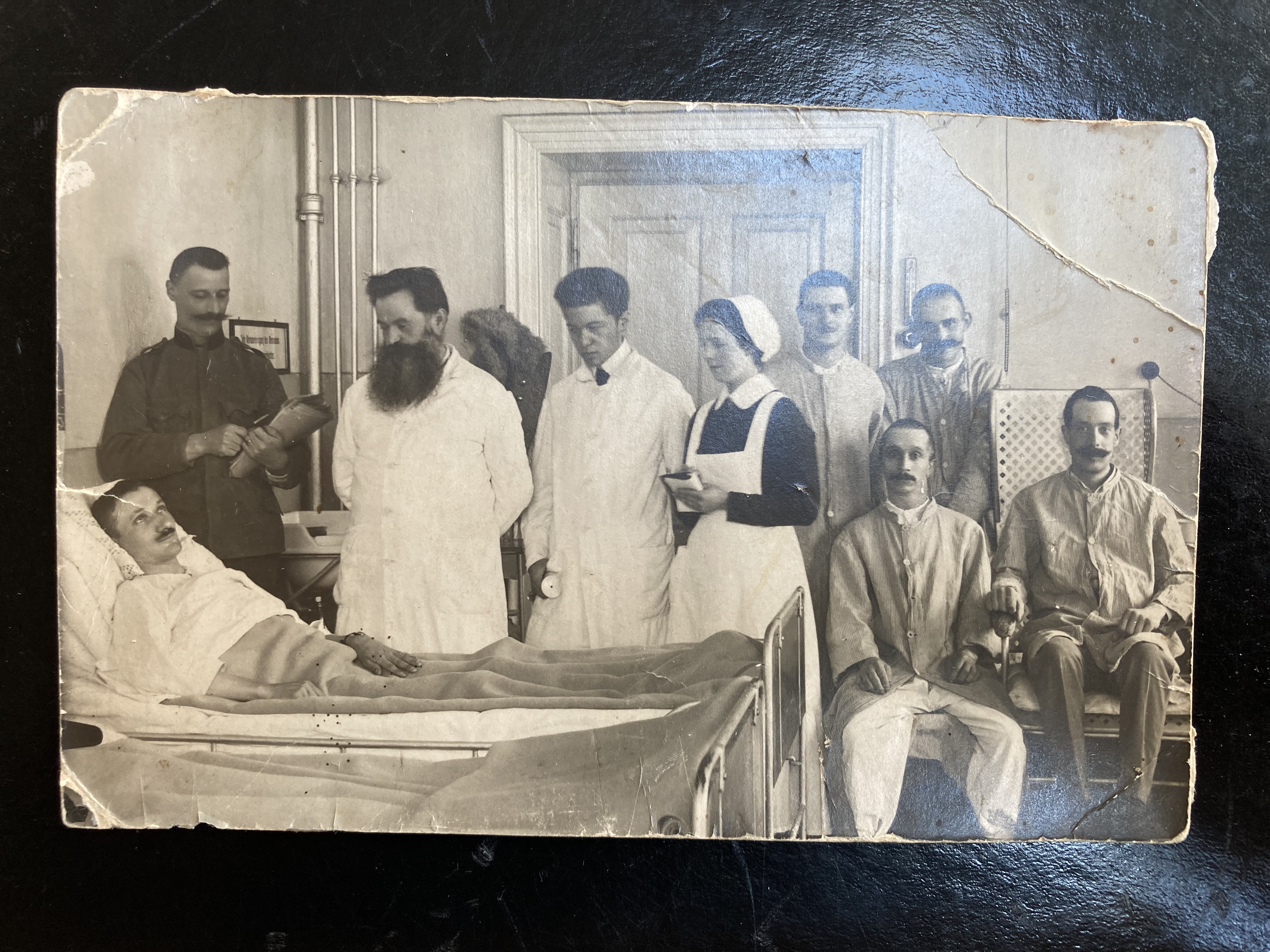
Max shared with me this photograph of Merano, where he and his father were born, as well as this photograph of his father and his father’s father, Max Bermann, both of whom were doctors at the Waldpark Sanitorium in Merano. The elder Max Bermann is the man with the long black beard and his son Joseph/Giuseppe Bermann, the younger doctor in the white coat, is standing next to him.

Dr Max Bermann and his son Dr Joseph Bermann in Waldpark Sanitorium, Merano, Italy. Courtesy of the family

When the war ended, Edith brought her children to the US, but Anna went to live with her son Fritz and his family in Ein Harod in Palestine. Neither Omri nor Max knew exactly when Anna immigrated, but as I was doing some of the final edits for this post, Richard emailed me with new information he’d found online—a database of information about the Jews of Merano.

There was an entry for Anna Grunwald Blumenfeld that reported that “Anna Grünwald-Blumenfeld came from Berlin and lived in Merano since 23.4.1936. On 22.8.1938 she was recorded in the census of “Jews” living in Italy by the fascist authorities as permanently resident in Merano. On 13.2.1939 her file received the note: “di razza ebraica”. On 1.4.1939 she fled to an unknown place, according to the registration office of the municipality of Merano. Later, April 1939 is given as the date of the flight abroad.”5 Thus, it would appear from this record that Anna left Merano for Palestine in April, 1939.

But as noted by Max and by my reader Teresa, this cannot be accurate. Max knows that his grandmother did not leave in 1939 because she cared for him during the war years. It appears more likely that these Merano records are inaccurate and that Anna was in Italy at least until the end of the war.

Now that I knew that Anna had survived the war and had immigrated to Palestine, I searched again on the Israel Genealogical Research Association website and found this record:

Anna Grunwald Blumenfeld died on September 7, 1946, in Ein Harod; she was only 61 years old. She had survived the move from Germany to Italy, the loss of her husband Max in 1936, World War II, and then a move from Italy to Palestine. She was survived by her daughter Edith and her family and her son Fritz and his family.

Anna and Max Blumenfeld’s grandson Max Bermann shared these lovely photographs of his family. First, some photographs of Anna and Max:

Anna Grunwald Blumenfeld Courtesy of the family

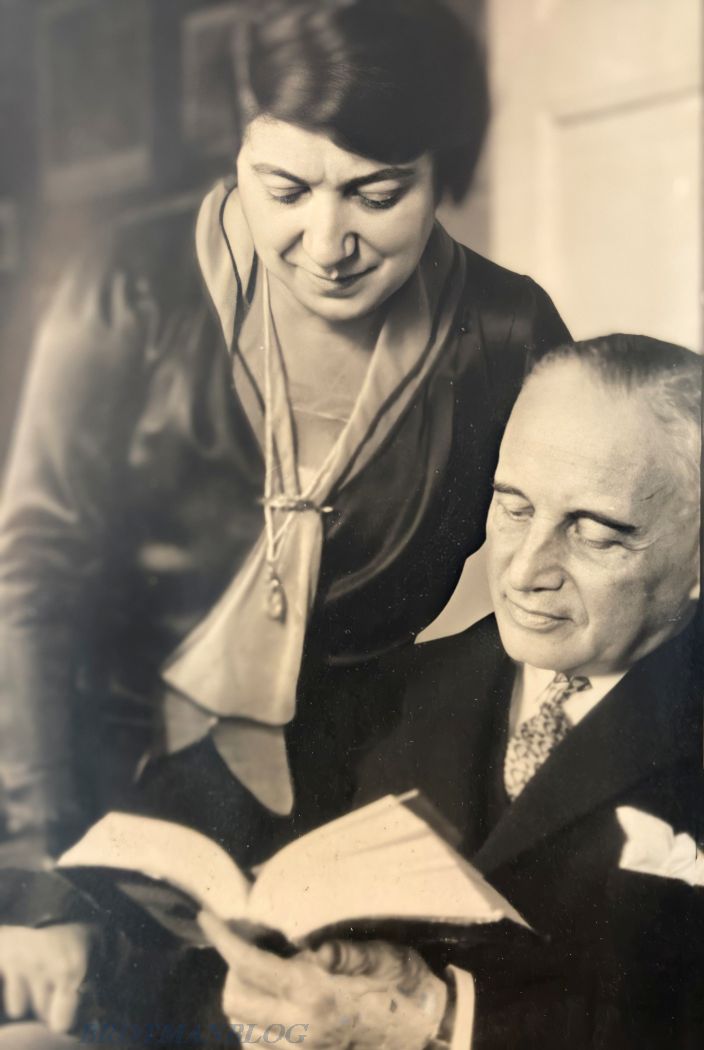
Anna Grunwald Blumenfeld and Max Blumenfeld Courtesy of the family

Max Blumenfeld Courtesy of the family

This photograph is of Max and Anna’s children Fritz and Edith as well as, on the right, Fritz’s wife Dora Salpeter Blumenfeld.

Fritz Blumenfeld, Edith Blumenfeld Bermann, and Dora Salpeter Blumenfeld Courtesy of the family

And this final photograph from Max shows him and his sister Margherita with a soldier they met when they visited Palestine (now Israel) with their mother after the war.

Margherita and Max Bermann in Italy shortly after the end of World War II with a soldier from Palestine. Courtesy of the family

Omri also shared some photographs, including this one of his grandmother Anna’s gravestone.

Anna Blumenfeld, Ein Harod Photo courtesy of Omri Bar Sadeh

In addition, he shared photographs of the gravestones of his parents Fritz (Moshe) and Dora/Devorah and his two brothers Gideon and Hillel.

Gideon, as we saw, died fighting for Israel on October 18, 1962.

Gideon Bar Sadeh, Ein Harod Photo courtesy of Omri Bar Sadeh

Omri’s father Fritz Moshe Blumenfeld Bar Sadeh died December 12, 1977 in Ein Harod; he was 67. Devorah Salpeter Blumenfeld Bar Sadeh, outlived her husband by almost 23 years and died at 92 on November 27, 2000, in Ein Harod.

Dora and Fritz Bar Sadeh, Ein Harod Photo courtesy of Omri Bar Sadeh

Fritz and Devorah’s middle child, their son Hillel, died from cancer on December 30, 1996, in Ein Harod. He was only 50 and left behind a wife and four children.

Hillel Bar Sadeh, Ein Harod Photo courtesy of Omri Bar Sadeh

I am so grateful to my fifth cousins Max and Omri for sharing their family’s stories and their own stories and their photographs with me and allowing me to share them with you. I now have answers to all the questions I had when I first started searching for what happened to Max Blumenfeld after he married Anna Grunwald in 1906, thanks to the incredible help of Richard Bloomfield, David Lesser, Max Bermann, and Omri Bar Sadeh.


  1. Joseph Bermann family, 1950 US census, United States of America, Bureau of the Census; Washington, D.C.; Seventeenth Census of the United States, 1950; Record Group: Records of the Bureau of the Census, 1790-2007; Record Group Number: 29; Residence Date: 1950; Home in 1950: New York, New York, New York; Roll: 5665; Sheet Number: 72; Enumeration District: 31-675, Ancestry.com. 1950 United States Federal Census 
  2. Find a Grave, database and images (https://www.findagrave.com/memorial/173690239/joseph-bermann : accessed 18 May 2022), memorial page for Joseph Bermann (unknown–1 May 1966), Find a Grave Memorial ID 173690239, citing Westchester Hills Cemetery, Hastings-on-Hudson, Westchester County, New York, USA ; Maintained by BKGeni (contributor 46895980) . 
  3. Find a Grave, database and images (https://www.findagrave.com/memorial/173690238/edith-bermann : accessed 18 May 2022), memorial page for Edith Bermann (unknown–12 Aug 1968), Find a Grave Memorial ID 173690238, citing Westchester Hills Cemetery, Hastings-on-Hudson, Westchester County, New York, USA ; Maintained by BKGeni (contributor 46895980) . 
  4.  Margherita M. Bermann, Social Security Number: 085-30-0023, Birth Date: 22 Aug 1935, Issue Year: 1954-1956, Issue State: New York, Last Residence: 12550, Newburgh, Orange, New York, Death Date: 21 Aug 2008, Social Security Administration; Washington D.C., USA; Social Security Death Index, Master File, Ancestry.com. U.S., Social Security Death Index, 1935-2014 
  5.  There were also entries for Max and for their two children Fritz and Edith. Max’s entry confirmed that he died on March 7, 1936 and is buried in the Jewish cemetery in Merano. Edith’s entry reported that she had “married Josef Bermann on January 30, 1935. After a stay in London in the spring of 1935, she lived in Merano from April 8, 1935. On August 22, 1938, Edith Bermann was included in the census of “Jews” living in Italy by the fascist authorities. On February 13, 1939, her file received the note: “di razza ebraica”. Edith Bermann, who stayed in Milan again and again, fled to Milan.” Fritz’s entry in the Merano Jewish database reported that he “had lived in Merano since October 3, 1936, where his sister was married to the doctor Josef Bermann. On August 22, 1938, Fritz Blumenfeld was recorded by the fascist authorities as permanently residing in Merano in the census of “Jews” living in Italy. According to the registration office of the municipality of Merano, Fritz Blumenfeld fled to Palestine on May 15, 1939.” 

The Search for Max Blumenfeld, Part II: Finding His Daughter Edith

There were several questions that remained unanswered even after Richard and I learned that Max Blumenfeld had died in Merano, Italy, on May 8, 1936. What happened to his wife Anna Grunwald Blumenfeld after he died? Did Max and Anna have any children other than their son Fritz? And are there living descendants of Max and Anna? With continued research, Richard and I, along with additional help from David Lesser from Tracing the Tribe, were able to find some answers to these questions.

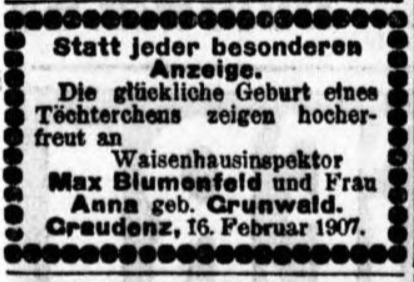
First, Richard saw on MyHeritage that Max and Anna did have another child, a daughter Edith. According to that page, Edith was born on February 16, 1907, in Graudenz, Germany. There was even a birth announcement attached to her profile on this MyHeritage page. 

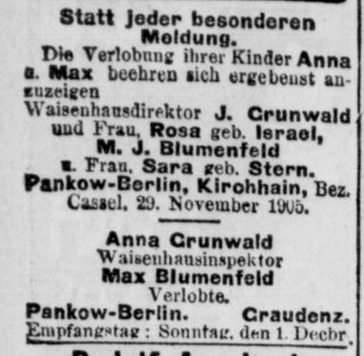
That tree on MyHeritage also had an announcement for Max and Anna’s engagement in 1905.1

Now that we knew there was a daughter born to Max and Anna, I started to look for information about Edith. Although I could not locate a birth record, based on the dates given on MyHeritage and the birth announcement, I was able to narrow down the search. I also knew from the MyHeritage profile that Edith was reportedly married to a doctor named Joseph Berman and had two children.

With that information to get my research started, I soon located numerous documents that appeared to be related to Edith Blumenfeld, daughter of Max and Anna. Putting together what I’d found in chronological order, Edith at 22 sailed from Hamburg to Antwerp on August 9, 1929. I assume that this was a pleasure trip, not an immigration move.

Edith Blumenfeld, 1929 passenger manifest, Staatsarchiv Hamburg; Hamburg, Deutschland; Hamburger Passagierlisten; Volume: 373-7 I, VIII A 1 Band 370; Page: 1843; Microfilm No.: K_1977, Month: Band 370 (Aug 1929 – Sep 1929), Staatsarchiv Hamburg. Hamburg Passenger Lists, 1850-1934

According to the England & Wales, Civil Registration Marriage Index, 1916-2005 index on Ancestry, Edith married Giuseppe Bermann in the first quarter of 1935 in England. Richard, however, found a wedding announcement in the February 13, 1935 issue of the Alpenzeitung that indicates that they married on February 3, 1935, in Berlin. We are not sure whether there were two weddings or whether there is some other explanation for the inconsistency.2

Edith next turned up as Edith Bermann on a ship manifest sailing with her two children from Naples, Italy, to New York, arriving on February 20, 1946. She reported her last residence had been Naples, Italy. How did I know this was the right Edith? Because she named her brother Fritz Blumenfeld living in “En Charod, Palestine” as the person she left behind and her husband Joseph Bermann as the person she was going to in New York, where he was residing at 752 West End Avenue. In addition, she was 39 years old in 1946, meaning she was born in about 1907, and her birth place was given as “Grundzias” in Poland. Since Graudenz was located in a region that was given to Poland after the war, these additional facts convinced me that this was Edith Blumenfeld.

Edith Berman and children, 1946 ship manifest, Year: 1946; Arrival: New York, New York, USA; Microfilm Serial: T715, 1897-1957; Line: 1; Page Number: 34, Ship or Roll Number: Gripsholm, Ancestry.com. New York, U.S., Arriving Passenger and Crew Lists (including Castle Garden and Ellis Island), 1820-1957

The manifest form asked for the name and address of the “nearest relative or friend in country whence alien came, or if none there, then in country of which alien is a citizen or subject.” The fact that Edith gave the name of her brother Fritz who was living in Palestine at that time raised a few questions for me. If Edith was last living in Milan, Italy, why would she name a relative living in Palestine?

Second page of manifest seen above.

To me that suggested that her mother Anna was no longer living in Italy or Edith would have named her, given that Edith’s last residence was Italy. Whether or not Anna was deceased or living elsewhere is not known. Secondly, Edith listed her nationality as Italian on the manifest, not as a “citizen or subject of Palestine,” yet she listed Fritz in Palestine, who was neither in the place she last lived or in the place where she was a citizen. Did the authorities simply allow her to list Fritz because he was the only relative or friend she could name even though he was not in Italy? I don’t know.

Since Joseph apparently had arrived in New York before his wife Edith and their two children, I looked and located a ship manifest for his immigration to the US. I found him on a manifest for a ship sailing from Genoa, Italy, to New York, arriving on November 17, 1939, five and a half years before Edith and the children arrived and a month and a half after World War II started. He sailed as Giuseppe Bermann and gave his birthplace and last residence as Merano, Italy, and his occupation as “medical.” Interestingly, his passport had been issued in September, 1939, from Jerusalem. Although I searched both the Israel State Archives and the IGRA website, I could not find any record establishing that Joseph or Edith ever was in Palestine before 1946.

Giuseppe Bermann, ship manifest, Year: 1939; Arrival: New York, New York, USA; Microfilm Serial: T715, 1897-1957; Line: 1; Page Number: 63, Ship or Roll Number: Saturnia, Ancestry.com. New York, U.S., Arriving Passenger and Crew Lists (including Castle Garden and Ellis Island), 1820-1957

Joseph settled in New York City, and in 1940 he filed a Declaration of Intention to become a US citizen, listing his family back in Italy and noting that they were now living in Milan. From this document I also learned that Joseph and Edith were married in London, England, on January 31, 1935, as also confirmed by the entry in the England & Wales, Civil Registration Marriage Index, 1916-2005 on Ancestry.3 I wonder when they arrived and for how long they lived in England.

Joseph Bermann, Declaration of Intention, he National Archives at Philadelphia; Philadelphia, Pennsylvania; NAI Title: Declarations of Intention for Citizenship, 1/19/1842 – 10/29/1959; NAI Number: 4713410; Record Group Title: Records of District Courts of the United States, 1685-2009; Record Group Number: 21, Description: (Roll 579) Declarations of Intention for Citizenship, 1842-1959 (No 453801-454600), Ancestry.com. New York, U.S., State and Federal Naturalization Records, 1794-1943

In 1942, Joseph registered for the World War II draft. He was living at 121 West 77th Street and practicing medicine. He listed his mother Caroline Ullmann Bermann as his contact person.

Joseph Bermann, World War II draft registration, National Archives at St. Louis; St. Louis, Missouri; WWII Draft Registration Cards for New York City, 10/16/1940 – 03/31/1947; Record Group: Records of the Selective Service System, 147, Ancestry.com. U.S., World War II Draft Cards Young Men, 1940-1947

And then finally in February, 1946, he was reunited with his family. Joseph had left Edith and two very young children in Italy in November, 1939, probably assuming they would be able to follow him in the reasonably foreseeable future. Instead, the war intervened, and they were separated for five and a half years. Joseph missed all those years when his children were young, and Edith had to raise them alone for all that time. It must have been a joyous reunion when Edith and the children finally arrived in February, 1946.

Of course, there were more questions. How did Edith and the children stay safe during the war? Italy was after all an ally of Germany in World War II. The US Holocaust Museum has this information on its website about the fate of Jews in Italy during World War II.

Despite its alliance with Germany, the Fascist regime responded equivocally to German demands first to concentrate and then to deport Jews residing in Italian occupation zones in Yugoslavia, Greece, and France to killing centers in the German-occupied Poland. Italian military authorities generally refused to participate in mass murder of Jews or to permit deportations from Italy or Italian-occupied territory; and the Fascist leadership was both unable and unwilling to force the issue.

Italian-occupied areas were therefore relatively safe for Jews. Between 1941 and 1943, thousands of Jews escaped from German-occupied territory to the Italian-occupied zones of France, Greece, and Yugoslavia. The Italian authorities even evacuated some 4,000 Jewish refugees to the Italian mainland. Incarcerated in southern Italy, these Jewish refugees survived the war.

But that situation changed for the worse after there was a vote of no-confidence in Mussolini after many military defeats in North Africa, and the Italian king, Victor Emmanuel III, removed Mussolini as prime minister and named Pietro Badoglio to replace him. Badoglio negotiated a secret surrender to the Allies on September 8, 1943. At that point Germany took action.

The Germans, who had grown suspicious of Italian intentions, quickly occupied northern and central Italy. ….The German occupation of Italy radically altered the situation for the remaining 43,000 Italian Jews living in the northern half of the country. The Germans quickly established an SS and police apparatus, in part to deport the Italian Jews to Auschwitz-Birkenau.

In October and November 1943, German authorities rounded up Jews in Rome, Milan, Genoa, Florence, Trieste, and other major cities in northern Italy. ….In general, these operations had limited success, due in part to advance warning given to the Jews by Italian authorities and the Vatican, and in part to the unwillingness of many non-Jewish Italians…to participate in or facilitate the roundups.

Germany ended up deporting almost 9000 Jews to the concentration camps, and over a thousand survived. All in all, 40,000 Jews in Italy survived the Holocaust. Was Anna Grunwald Blumenfeld one of them? I still didn’t know.

But her two children survived, Fritz in Palestine, which soon became Israel, and Edith in the US. More on them and their children in my next post. And the answers to my questions about Anna.

Stay tuned.


  1. That announcement confused me since it says Anna’s parents were J. Grunwald and Rosa Israel, and I had from her birth record that their names were Isidor Grunwald and Nanny Braun. But Richard found a passage in Inge Lassel’s book about the Jewish orphanage in Pankow, Berlin, that explained the discrepancy; it revealed that Isidor’s first wife Nanny had died in 1903 and that he had then married Rosa Israel. Inge Lammel, Das Jüdische Waisenhaus in Pankow (2001), p. 24. 
  2.  General Register Office; United Kingdom; Volume: 1a; Page: 861, Ancestry.com. England & Wales, Civil Registration Marriage Index, 1916-2005. 
  3. Giuseppe Bermann, Registration Date: Jan 1935, Registration Quarter: Jan-Feb-Mar, Registration District: Westminster, Inferred County: Middlesex, Spouse: Edith N Blumenfeld, Volume Number: 1a, Page Number: 861, General Register Office; United Kingdom; Volume: 1a; Page: 861, Ancestry.com. England & Wales, Civil Registration Marriage Index, 1916-2005