
One of the greatest gifts I’ve received through my genealogy research is connecting with and getting to know new cousins. Some are as close as second cousins, some as distant as fifth or even sixth cousins. But none of that seems to matter once we have connected.
Sometimes these connections are only through email. Sometimes they are by phone. And sometimes I have been able to connect with cousins and get to see their faces and get to know them through Zoom. There are cousins from all over the US and the world with whom I have emailed, phoned, and/or zoomed—some as far away as Israel, Germany, France, Switzerland, England, and Australia, some as close as right here in Massachusetts.
I’ve been especially blessed when I’ve gotten to meet and spend time with a cousin in person. And that has happened far more times than I’d ever, ever have predicted. I have had meals with cousins in all kinds of places—in western Massachusetts where I once lived and on Cape Cod where I now live, in Florida and in New York City, in Boston and in Philadelphia, and even overseas—in Germany and in London. Each time it has been a truly joyful experience. Even though we had never met before and even though our connection may go back several generations to an ancestor we never knew, there was still something magical about meeting a cousin.
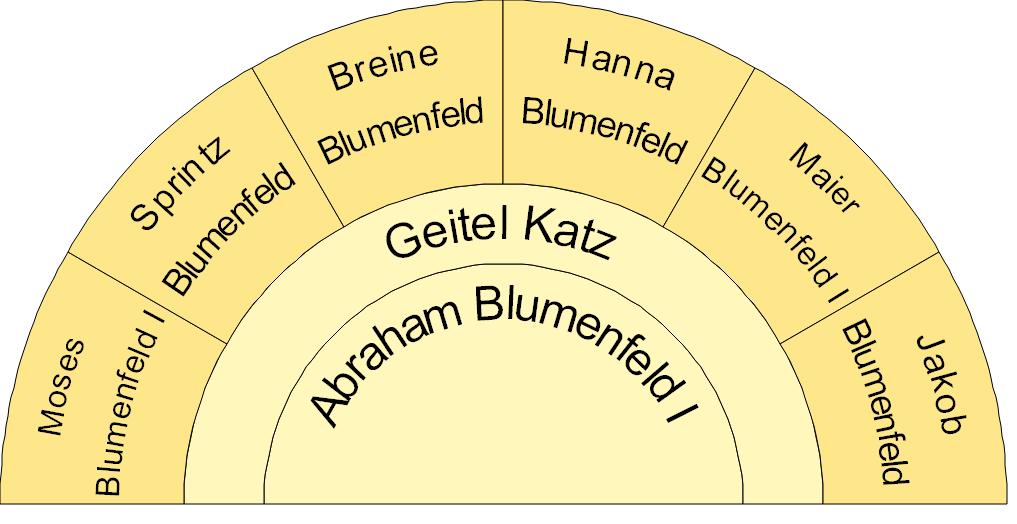
So I was somewhat envious but also thrilled when I learned that two cousins I’d found through my research and then connected to each other—Richard Bloomfield and Max Bermann—were able to meet in Merano, Italy, this past spring. Richard is my fifth cousin through his 3x-great-grandfather Jakob Blumenfeld, a younger brother of my 3x-great-grandmother Breine Blumenfeld; Max is also my fifth cousin, but through his 3x-great-grandfather Moses Blumenfeld, an older brother of Breine Blumenfeld, my 3x-great-grandmother. And Richard and Max are fifth cousins to each other; we are all the 4x-great-grandchildren of Abraham and Geitel (Katz) Blumenfeld.
Although I had zoomed and emailed with Max and Richard many times, I had never met either of them—until last Thursday, that is, when my husband and I had dinner with Max and his wife Glenna here on Cape Cod. Again, it was a magical and joyful experience. The warmth and connection were authentic and immediate, and we found so much to talk about in the three hours we sat at Fin, an amazing restaurant in Dennis. When we looked around at 10 pm, we realized we were the only ones left in the restaurant; the staff were all sitting around the bar politely not disturbing us, but obviously waiting for us to leave. After repeated promises to get together again, we all hugged goodbye, leaving as not just cousins but four new friends.
At dinner Max and Glenna told us about their trip in May, 2024, to Merano and meeting Richard and his wife Irma there. Why, you might ask, did they meet in Merano, Italy, a town not far from the Austrian border when Richard lives in Switzerland and Max in Massachusetts?
Well, that requires some background about Max’s life. I’ve shared Max’s story before on the blog, and I hope you will go back to the earlier blog posts for more details and photographs as well as for my sources for the information below. Also, Richard wrote a comprehensive biography of Max’s family.
But here is a very brief overview of why Max was visiting Merano:
Max’s mother was Edith Blumenfeld, daughter of Max Blumenfeld and Anna Grunwald. She married Joseph Bermann, Max’s father, in 1935.1 Joseph was born in Merano, Italy, where his father Max Bermann was a doctor and the director of the Waldpark Sanitarium. Joseph also became a doctor and worked there as well. After marrying, Edith and Joseph settled in Merano.
My cousin Max, grandson of both Max Blumenfeld and Max Bermann and named for both, was born in Merano a few years after his parents’ marriage. His father Joseph left Merano for the US in 1939 to escape from the Nazi and Fascist persecution and the impending war, intending to send for Edith, Max, and Max’s older sister Margherita once he was settled. But World Was II intervened, and Edith and the children could not get out of Europe.
They soon left Merano for Milan and then for the countryside of Italy where they hid their Jewish identity while Edith worked for the resistance as a courier. Once the war ended, Edith brought the children to the US, and they were reunited with Joseph. The story of how Edith kept herself, her mother, and her children safe during the war is a remarkable one and is described here on my blog and in Richard’s biography of Max’s family.
Max had never been back to Merano, his birthplace, after immigrating to the US in 1946, and he and his wife Glenna decided to visit there this year. The visit was motivated in part to see a painting of Max’s paternal grandfather, Max Bermann, a painting that Joseph Bermann had brought with him to the US in 1939 and that had been in Max’s parents’ home in New York City. It had then hung in Max and Glenna’s home for many years. Because he wanted to be sure that the painting was preserved in a safe and appropriate place in perpetuity, Max decided to donate the painting to the Jewish Museum in Merano, his birthplace and his father’s family home for many years. After shipping the painting there last year, Max and Glenna wanted to see it in its new home in Merano.
Meanwhile, Richard, born and raised in the United States, lives near St. Gallen, Switzerland, and thus about five hours from Merano. Richard had helped to connect Max with the Merano Jewish Museum, and when Richard learned that Max and Glenna were coming to Merano, he asked whether he and his wife Irma could meet them there. Max and Glenna were delighted.
Richard has generously shared with me some of the photographs of their meeting and an essay he wrote about the experience. I will quote parts of what he wrote rather than trying to paraphrase it.2 I am also going to include some of his photographs.
“Last Sunday we [Richard and Irma, his wife] stood on the balcony of our hotel room in Meran and looked across the Passer River at the Hotel Meraner Hof where Max and Glenna were going to be staying. It had been just two and a half weeks since Max had written me that he and Glenna were going to travel to Meran. Max had donated a painting of his grandfather [Max Bermann] to the Jewish Museum in Meran and wanted to have the experience of seeing it on display. When I asked Max if he would mind if Irma and I came to meet them there, Max wrote that he found that touching. Although we are 5th cousins, i.e. relatives, and had had email and Zoom contact, we didn’t want to intrude on Max’s first trip back to his place of birth since leaving it at age 2.
Our first live encounter took place when we waved to each other from our balcony to their terrasse. Shortly thereafter, we greeted each other with big hugs, sat down for a drink and exchanged the special, personal gifts we had brought for each other. We were joined by Sabine Mayr, researcher and co-worker at the Jewish Museum, and the museum’s director Joachim Innerhofer. Joachim and Sabine welcomed us like VIPs: Max, the long-lost son; I, the person who had connected Max with the museum in Meran and provided them with lots of information from my family research; Glenna and Irma as though they were long lost members of the Jewish community in Meran.
Remembering the adage that the way to the heart is through the stomach, we headed off to a restaurant for dinner. Unfortunately, Joachim had an appointment and couldn’t join us. Maybe we should have had an empty chair at the table for Amy, the person who had done the matchmaking between Max and me (and lots of other cousins!).

Richard, Sabina Mayr, Irma, Glenna, and Max
Monday morning we visited the synagogue and museum just behind Max and Glenna’s hotel. The first synagogue in Tirol was dedicated on 27 March 1901 and the interior has survived in its original form. When the Nazis removed the pews to use the room as a horse stall, the people of Meran saved them and returned them after the war. The very attractive Jewish Museum of Meran is located in the same building.
The sanctuary pictured below is warm – comfy – and inviting. Even with just seven rows of pews on the main floor, there is more than enough room for the 50 members of the community. Here is where Max’s family had worshipped. Today services with a rabbi are only held on holidays.
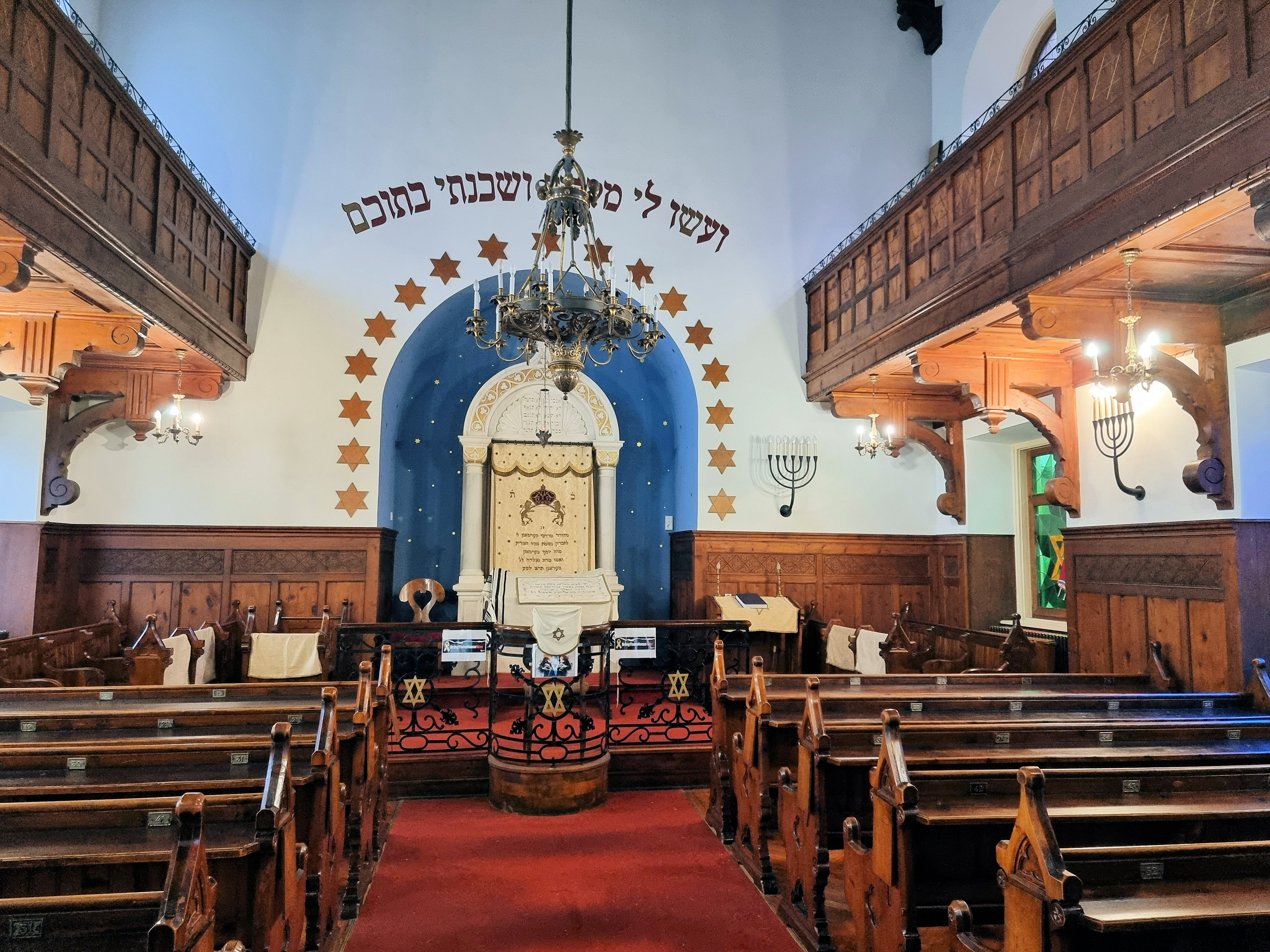
Merano synagogue

Irma, Richard, Max, and Glenna standing in front of the ark in the Merano synagogue
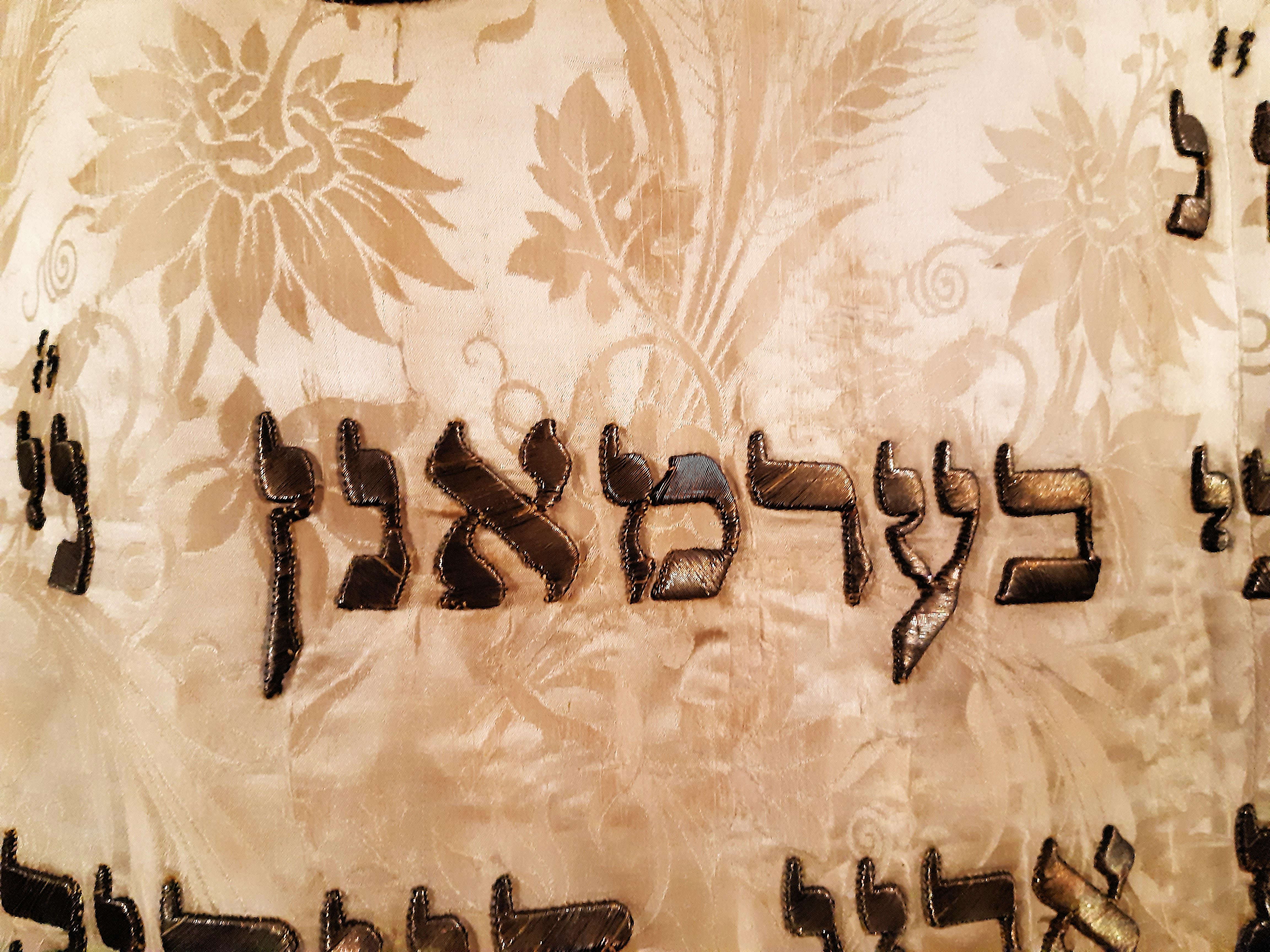
The name Bermann is embroidered into the parochet or curtain that covers the ark
At long last we descended the steps to the museum under the sanctuary. Just around the corner to the right of the entrance Max found his grandfather Max [Bermann]! …
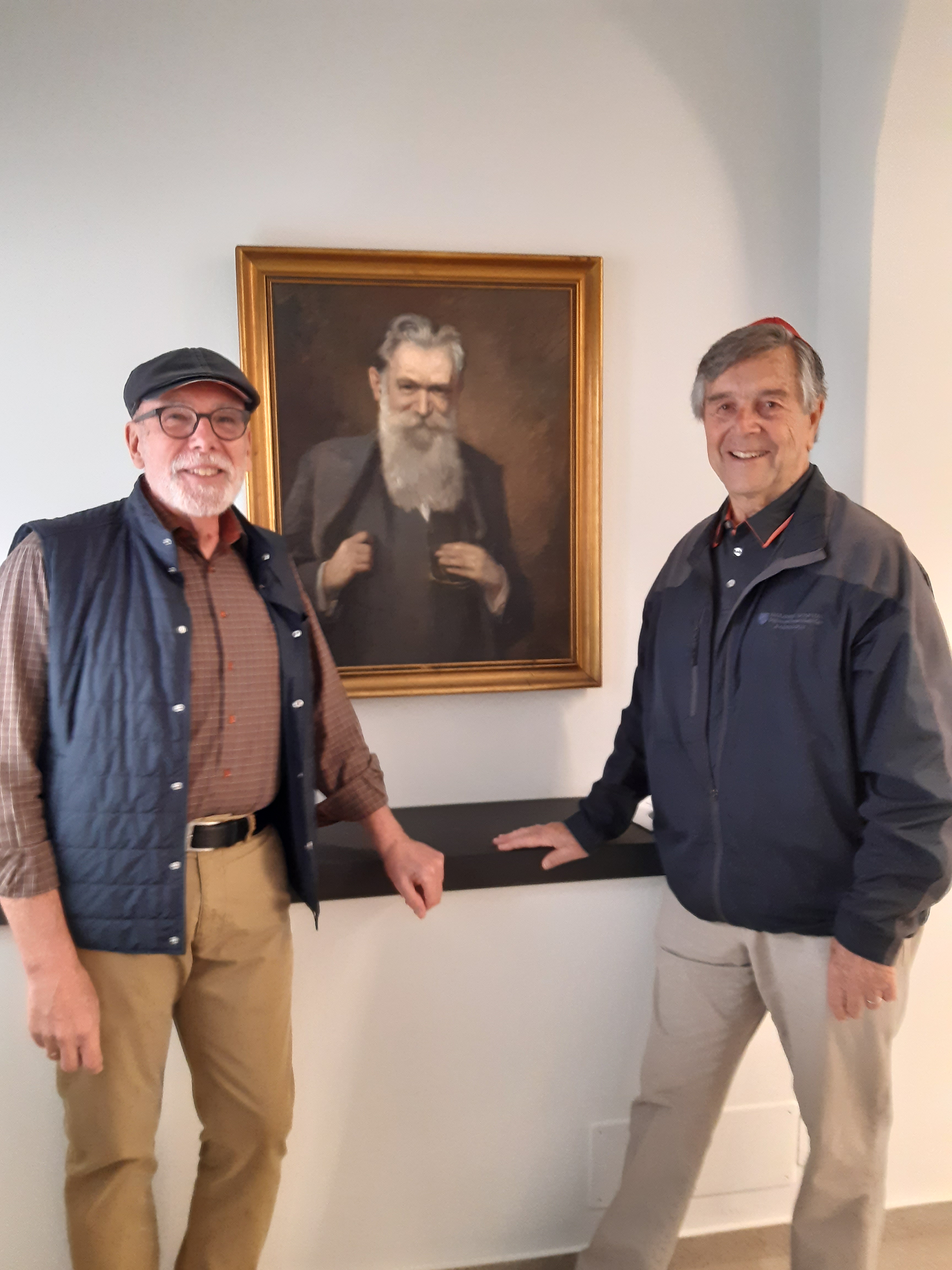
Richard and Max standing in front of the portrait of Max’s paternal grandfather, also named Max Bermann
This picture of [Max’s relatives’] wedding in 1926 hangs on the other side of the room to the right of [his grandfather] Max’s portrait. When Max saw it, he ex-claimed: “Look, there’s my father!” (1) (1898-1966). Joachim pointed to the right edge of the photo where Max’s grandfather with a long white beard is pictured (2) (1865-1933). “And there’s my grandmother next to him” (3) (1870-1958)….
…
A rather long and wet walk took us to the Waldpark Sanatorium where Max was born and lived for two years: In 1907, [his grandfather] Doctor Max Bermann acquired the Villa Paulista from John Stoddard and founded the Waldpark Sanatorium, which he ran as a specialist in internal medicine. In the early 1930s, two buildings were added, and in the following years the main building was renovated and enlarged. Claiming that the owners were indebted, the buildings and the large park surrounding them were sold at auction in 1941. (Source: Jewish Meran Walking Tour, Jewish Museum of Meran)
Although Max was only two when he left Meran in 1940, he thinks he remembers a white fence surrounding the Waldpark. Indeed, the fence is still white!

Max’s birthplace in Merano

…
On Tuesday it did not rain, and the sun eventually came out. A chair lift carried us up to a place above Meran where we had a good view of the city and the surrounding countryside….

….
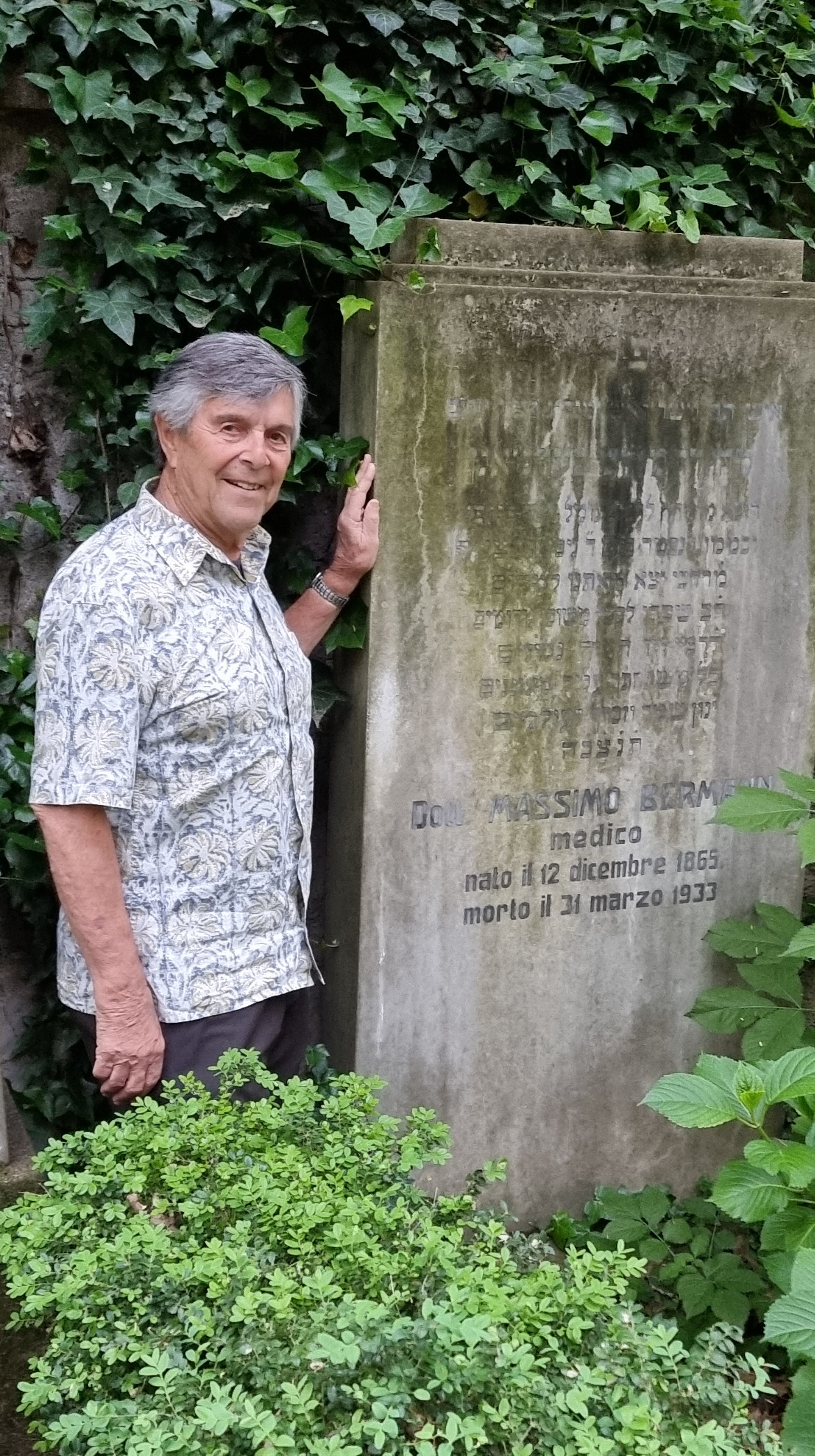
Before dinner we wanted to visit the New (1908!) Jewish Cemetery where members of the Bermann family are buried. After a stop at the memorial for the victims of the Shoah… we went to visit the graves of Max’s grandfathers, Max Bermann and Max Blumenfeld….

Max is standing next to Grandfather Bermann’s headstone, and both of us touched together the gravestone of our common relative Max Blumenfeld (1880-1936). The common roots that Max and I have that we have talked and written about became something living here in the cemetery.”

—————————–
I am so glad that Richard and Max were able to meet and share this moving experience together. It makes me appreciate how fortunate I have been to find so many cousins and to help them find each other.
And now I also have had the special opportunity to spend time with my cousin Max and his wife Glenna and to feel those common roots. His life and mine had such different beginnings—his as a small child hiding from persecution in Italy, mine as a middle class American child growing up in suburban New York after the war, never worrying about antisemitism.
But here we are so many decades later, both living in Massachusetts less than ninety miles apart. In so many ways our lives have taken similar paths despite those very different beginnings, and we have far more in common than those different beginnings would have predicted.
I am so lucky and so grateful for all the gifts that genealogy has brought to my life, especially all my amazing cousins like Richard and Max!
- I have seen records that spell his name Joseph, others that spell it Josef. For consistency purposes I have used the American spelling Joseph since he was born Giuseppe and kept that name until he immigrated to the US in 1939. ↩
- Merano was once under Austrian control, but after World War I it became part of Italy. The town uses both the German-Austrian spelling Meran, which Richard uses, and the Italian spelling Merano, which I use. Both are equally acceptable. ↩
 Brotmanblog: A Family Journey