Passover 2024: Our Seder

Why was this seder different from all other seders?

There were so many reasons, starting with the fact that it took place at our daughter and son-in-law’s home in Brooklyn. And it was a much smaller crowd than we usually have. It was just the seven of us—our older daughter and her husband and their two children, our younger daughter, my husband, and myself. The other relatives and friends who usually attend were not able to join us this year.

It was a beautiful seder. My daughter took special care to create a festive seder table. My son-in-law made delicious and allergen-safe charoset. We brought in food from our favorite kosher restaurant. We all felt at home and comfortable, and there were lots of laughs and stories and good food and wine and even some tears. We used our usual Haggadahs and the silly stuffed toys to represent the plagues, and, of course, there were wine and grape juice spills on the white tablecloth, afikomen hidden and found, and macaroons and candy fruit slices to end the meal.

Because we were in a new place with a smaller group, we had a chance to have a different experience and a new perspective on the holiday. The fact that I wasn’t hosting meant more opportunities for me to reflect and observe than I usually have when I am worried about getting everything ready and coordinating when to heat and cook all the food. And I think all of us were reminded that the holiday carries its beauty and its meaning wherever you are and with all who are there—be it seven or seventy.

Of course, the events in the Middle East and here in America also put the holiday in a very different context this year, and there were times that the words in the Haggadah resonated in new ways and with greater power. What struck me most powerfully was how the Haggadah is both universal and particularistic in its messages. The central message is certainly specific to Jews in most ways—the story of our liberation from slavery and oppression to freedom. But within that message is also the more universalistic message that all people deserve to be free from slavery and oppression. We are told not to oppress the stranger because we know what it is like to be a stranger. We are told to welcome all who are hungry to our table—not just Jews, but anyone who is hungry.

The part of the seder this year that moved me the most, however, was the story of the ten plagues. We read this section every single year, but I had never actually focused on what it says. It’s not just to remember that God sent ten plagues to convince Pharoah to free the Jewish slaves—blood, frogs, lice, flies, murrain, boils, locusts, darkness, and the slaying of the first born. The Haggadah instructs us to diminish the wine in our cups as we recite each of these plagues so that we diminish our own joy as we remember the pain inflicted upon the Egyptians.

Lawrence Alma-Tadema, CC BY-SA 2.5 <https://creativecommons.org/licenses/by-sa/2.5&gt;, via Wikimedia Commons

In other words, we are supposed to empathize with the Egyptians. I cannot help but see the parallels to what is happening now in Gaza. As Jews we are reminded that even those who oppress us deserve our sympathy when they suffer pain. To be a good Jew, a good person, means to feel not just our own pain but also the pain of others.

Our seder table this year in Brooklyn also reflected these particularistic and universal lessons of the Haggadah. We had all the traditional symbols—the shankbone, the egg, the charoset, the moror, the parsley for dipping in salt water, the matzah, Elijah’s Cup—the symbols of suffering and of liberation. But we also had some non-traditional symbols.

Two we have incorporated for years now to reflect the central role that women have played and continue to play in Jewish history and life: Miriam’s Cup and an orange. Miriam’s Cup reminds us that women played a role in our liberation from Egypt. And the orange comes from a story about something that was said when the liberal Jewish movements were considering changes that would give women the same rights as men to stand on the bimah and read Torah. Apparently, one opponent of those changes stated, “A woman belongs on the bimah like an orange belongs on the seder plate.” So now we have an orange on our seder plate every year because, yes, women belong on the bimah and in all aspects of Jewish practice.

But this year we added two new symbols to the seder table: olives, at the suggestion of our children’s rabbi in Brooklyn, to express our desire for peace with the Palestinians, and, at the suggestion of my younger grandchild, soy sauce to reflect that there are other cultures in the world in addition to ours.
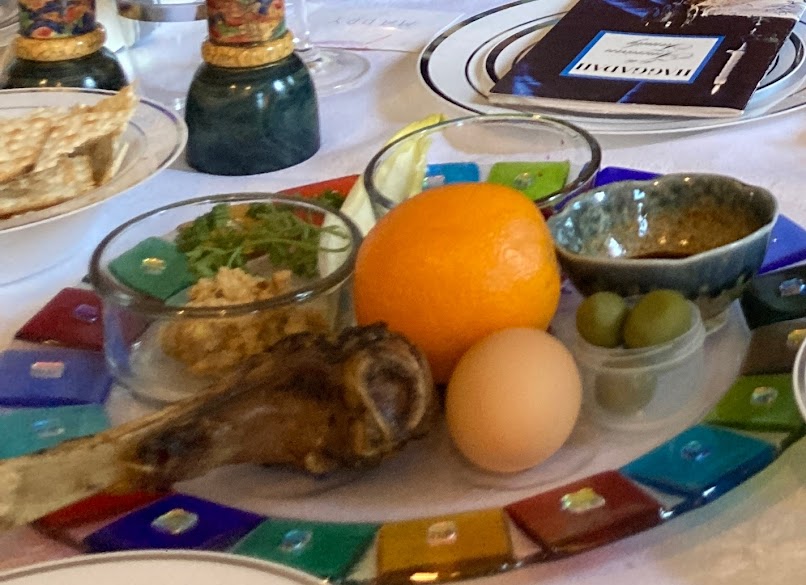
Our seder might not fit with everyone’s traditions or values, but it most certainly reflected ours. It was beautiful, powerful, moving, and memorable.


 

Levi Rothschild and His Family: Only Six of Nine Children Survived Childhood

Because I have no records other than those already mentioned for the two other sons of Seligmann Rothschild (Leopold and Hugo), I am moving on to the next child of Gelle Blumenfeld and Simon Rothschild, their son Levi.

Levi was born on August 23, 1846, in Walterbrueck, Germany.

Levi Rothschild birth record, Arcinsys Archives of Hesse, HHStAW Fonds 365 No 893, p. 18

Although I cannot find a marriage record, I can infer from various records related to his children and his wife that he married Clara (sometimes spelled Klara) Jacob. Clara was born on December 1, 1850, in Breitbarten, Germany, to Meir Jacob and Frommet Handel.

Clara Jacob birth record, Arcinsys Archives of Hessen, Geburtsregister der Juden von Breitenbach am Herzberg 1838-1906 (HHStAW Abt. 365 Nr. 85)AutorHessisches Hauptstaatsarchiv, WiesbadenErscheinungsjahr1838-1906

Levi and Clara must have married by early 1874 because their first child Sigmund Rothschild was born on December 19, 1874, in Borken, Germany. Although I do not have a birth record for Sigmund, his birthdate appears on his marriage record.1

For Levi and Clara’s second child, Betti, I was able to locate a birth record. She was born in Borken on September 14, 1876.

Betti Rothschild birth record, Hessisches Hauptstaatsarchiv; Wiesbaden, Deutschland; Bestand: 920; Laufende Nummer: 788, Year Range: 1876, Ancestry.com. Hesse, Germany, Births, 1851-1901

Their third child Moses (or Moritz) was born on February 12, 1879, in Borken.

Moses Moritz Rothschild birth record, LAGIS Hessen Archives, Standesamt Borken (Hessen) Geburtsnebenregister 1879 (HStAMR Best. 920 Nr. 791)AputorHessisches Staatsarchiv MarburgErscheinungsortBorken (Hessen)Erscheinungsjahr1879, p. 13

Hirsch, their fourth child, was born on April 9, 1881, in Borken.

Hirsch Rothschild birth record, Hessisches Hauptstaatsarchiv; Wiesbaden, Deutschland; Bestand: 920; Laufende Nummer: 793, Year Range: 1881, Ancestry.com. Hesse, Germany, Births, 1851-1901

Their fifth child and second daughter Thekla was born on January 29, 1886, in Borken.

Thekla Rothschild birth record, Hessisches Hauptstaatsarchiv; Wiesbaden, Deutschland; Bestand: 920; Laufende Nummer: 798, Year Range: 1886, Ancestry.com. Hesse, Germany, Births, 1851-1901

She was followed by another daughter, Genni, born May 11, 1888, in Borken. Unfortunately, Genni died before her first birthday on January 28, 1889, in Borken.

Genni Rothschild birth record, Hessisches Hauptstaatsarchiv; Wiesbaden, Deutschland; Bestand: 920; Laufende Nummer: 800, Year Range: 1888, Ancestry.com. Hesse, Germany, Births, 1851-1901

Genni Rothschild death record, Hessisches Hauptstaatsarchiv; Wiesbaden, Deutschland; Personenstandsregister Sterberegister; Bestand: 878; Laufende Nummer: 920, Year Range: 1889, 
Ancestry.com. Hesse, Germany, Deaths, 1851-1958

A seventh child was born on December 12, 1889, in Borken. Thank you to Cathy Meder-Dempsey for translating the side note for me; it states that “on the 12th of December of this year, a female child was born at 1 o’clock in the afternoon and that this child was lost at birth.” I am not sure whether this means the baby was stillborn or died shortly after birth.

unnamed female child of Levi and Clara Rothschild, Hessisches Hauptstaatsarchiv; Wiesbaden, Deutschland; Personenstandsregister Sterberegister; Bestand: 878; Laufende Nummer: 920
Year Range: 1889, Ancestry.com. Hesse, Germany, Deaths, 1851-1958

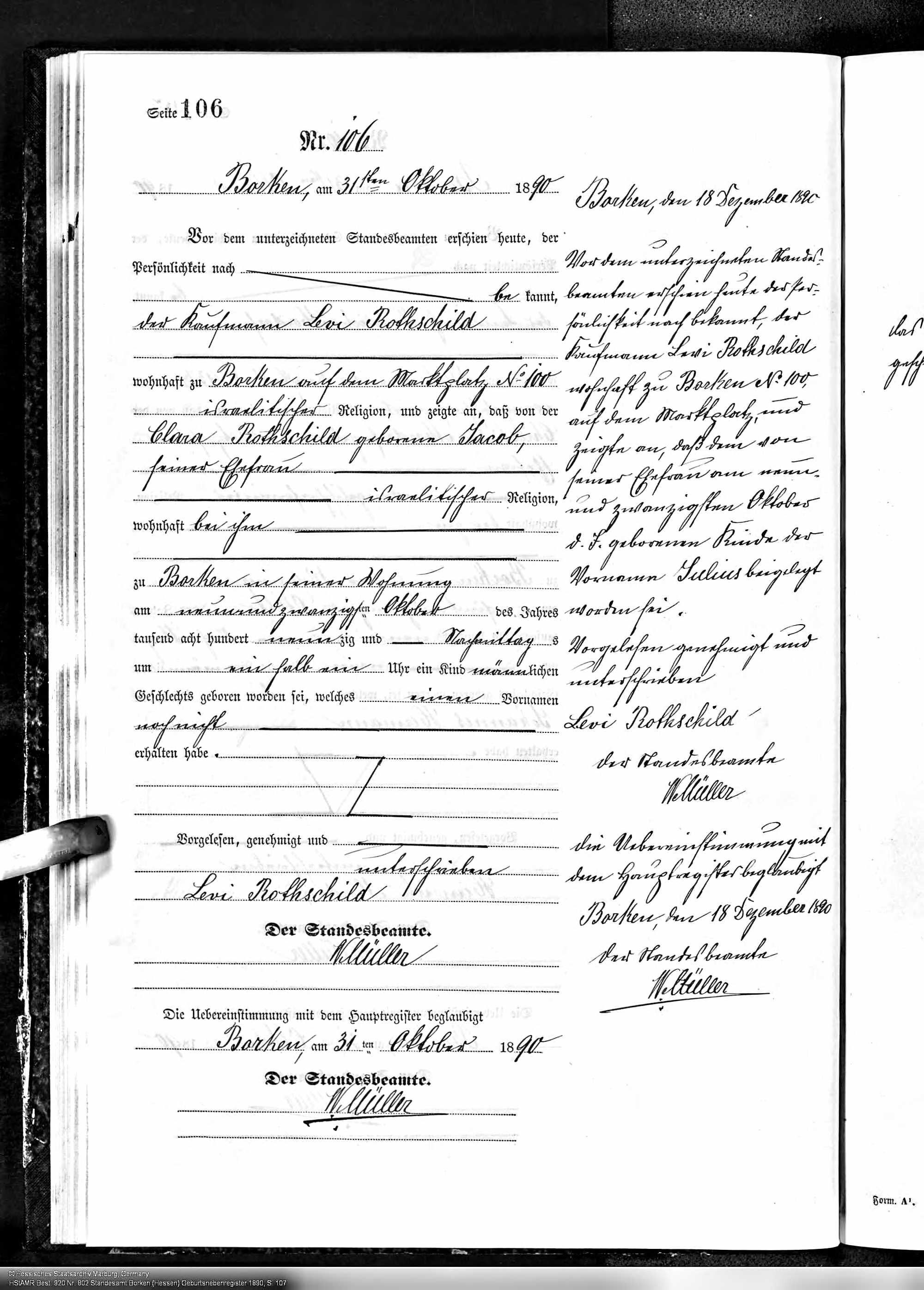
Julius, their eighth child, was born in Borken on October 29, 1890, but did not make it to his second birthday. He died March 5, 1892, in Borken.

Julius Rothschild birth record, Hessisches Hauptstaatsarchiv; Wiesbaden, Deutschland; Bestand: 920; Laufende Nummer: 802, Year Range: 1890, Ancestry.com. Hesse, Germany, Births, 1851-1901

Julius Rothschild death record, Hessisches Hauptstaatsarchiv; Wiesbaden, Deutschland; Personenstandsregister Sterberegister; Bestand: 881; Laufende Nummer: 920, Year Range: 1892
Ancestry.com. Hesse, Germany, Deaths, 1851-1958

And finally, Levi and Klara’s last child Frieda was born on May 31, 1893, in Borken.

Frieda Rothschild birth record, Hessisches Hauptstaatsarchiv; Wiesbaden, Deutschland; Bestand: 920; Laufende Nummer: 805, Year Range: 1893, Ancestry.com. Hesse, Germany, Births, 1851-1901

Thus, of the nine children to whom Clara gave birth, only six survived past childhood. And given the five-year gap between Hirsch and Thekla, I wonder whether there were other pregnancies that did not result in a live birth.

The stories of the six who survived will continue in my next post.


  1. See marriage record for Sigmund Rothschild at Arcinsys Archives of Hessen, HHStAW Fonds 365 No 766, p. 101. 

Irma and Hilde: The Power of Love

In my last post, I shared the story of my cousin Erwin Rothschild and his wife Irma Simon. As we saw, Erwin died from typhoid fever at Bergen-Belsen, but Irma survived. Erwin had done everything he could to keep Irma, her sister Hilde, and Hilde’s husband Simon Eisenmann alive, but in the end only Hilde and Irma survived. They were two young widows in their thirties as the war drew to a close in Europe.

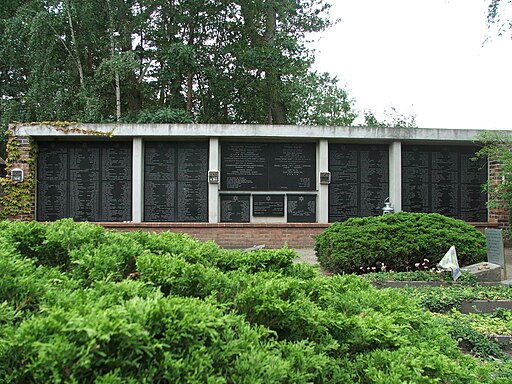
As recounted by Irma in her moving testimony for the Shoah Foundation,1 in the spring of 1945 Irma and Hilde and about 2200 other prisoners at Bergen-Belsen were put on cattle trains by the Nazis with nothing to eat but one turnip each and taken on a long and twisting trip through Germany. When they saw the planes of the Allies flying overhead, they hung white shirts out the window, trying to save themselves from being bombed. As the train neared Frankfurt an der Oder near the Polish border, the Nazi guards abandoned the train, and the Russians came to liberate the people on the train on April 23, 1945. The Russians told the prisoners that they should go to a nearby village called Trobitz, which had been emptied of its residents and would be safe for the survivors.2

They had to walk to the village, but Hilde, who weighed only 70 pounds, was too weak to walk. So Irma and another woman found a wheelbarrow and pushed Hilde to the village. They settled into the village where there was shelter and food. One man died from eating too much food too quickly. Many others—about 600 people—died while living in Trobitz. But Irma and Hilde survived.

Memorial listing the names of those from the Lost Train who died in Trobitz, LutzBruno, Public domain, via Wikimedia Commons

The people living in Trobitz were taken later by the Allies to Leipzig for a week and then they were allowed to go “home.” Irma and Hilde went back to the southern part of the Netherlands, where Hilde, a Dutch citizen by marriage, lived in a cloister and Irma was interned in a school. They could not return to Amsterdam because northern Holland had not yet been liberated. Once the war ended, the sisters moved to Amsterdam and then immigrated to the US in 1947 with the help of their brother Julius, who lived in Philadelphia. They traveled on the Queen Elizabeth and were able to get kosher food on the ship. Irma and Hilde settled in Washington Heights in New York, and Irma continued her career as a kindergarten teacher.

Both Irma and Hilde remarried in the 1950s, Irma to Nathan Haas, and Hilde to Nathan Meyer, both also German Jewish survivors of the Holocaust. Neither had children. They lived in adjoining apartments in Washington Heights. In 1967 the two couples moved to one house together in Englewood, New Jersey. They all became active in the Orthodox Jewish community there. Their second husbands both died in the 1970s, but Irma and Hilde continued to live together for the rest of their lives.

As reported by Joseph Berger in The New York Times on December 29, 2004,3 Irma and Hilde decided when they were 97 and 94, respectively, that they wanted to live the rest of their lives in Israel in a home for senior citizens in Jerusalem called Beit Barth. Berger described their special relationship and recounted their long lives together during and after the Holocaust:

The two sisters were inseparable….[He then described much of what I’ve reported earlier about their lives during the Holocaust.]

They came to the United States together and lived with their second husbands in adjoining apartment buildings in Washington Heights. … As if that were not close enough, they moved in 1967 into a single suburban ranch house in Englewood, N.J., which they continued to share after their husbands died.

Until yesterday. That was when Irma Haas, 97, and Hilde Meyer, 94, set off from Kennedy International Airport for Israel to spend the remainder of their lives in the same residence for the elderly in Jerusalem.

… With canes across their laps, they sat next to each other in wheelchairs as El Al security hurriedly examined their passports and put them through the requisite grilling about who had packed their bags and whether they had received any gifts. Much of the time, Hilde, looking frightened, clutched Irma’s left arm with her right hand.

“She cannot let go of me,” Irma said, mentioning their wartime terror. “She is afraid she would be brought somewhere and I would not come.”

…Both sisters are slight of build and wear gray shaytls, or wigs. Irma is hardier, Hilde more easily rattled. They were born in Londorf, a town in Hessen, a German state where their family’s roots stretch back hundreds of years. …Irma promised her mother that she would always take care of the more delicate Hilde….

Judy Marcus, their second cousin, who accompanied them on the flight, said the two sisters seemed to have eluded the arrows of sibling rivalry. “They were never jealous of each other,” she said. “They were always happy whatever the other one had.”

About two years ago, Hilde was briefly hospitalized and pleaded that Irma remain at her side. Mrs. Marcus said she told a hospital official: “They are Holocaust survivors. They can’t be separated.”

“They made a special dispensation to allow Irma to sleep in Hilde’s room,” Mrs. Marcus recalled. “But Irma would not have left anyway, even if it meant sitting up in a chair all night.”

Only death separated these two amazing sisters. Hilde died first on May 8, 2005;4 she was 94 and had been in Israel for only five months. Irma Simon Rothschild Haas, who had done so much to care for her younger sister and whose strength got them through the camps, liberation, and immigration to the US, died on April 17, 2009, just six months before she would have turned 102.5 She had outlived her parents, all her siblings, and two husbands. Neither Irma nor Hilde had had children, so there are no direct descendants to remember these two remarkable women. But I will forever, and I hope that you will also.

I wish I had some photos of Irma and Hilde I could share. All I found is this one small photo from the New York Times in 2004 when they moved to Israel. But If you haven’t already, please watch Irma’s Shoah Foundation testimony—if for no other reason than to see Irma with Hilde together near the end of that testimony. I guarantee it will both bring you to tears and lift you up with joy. The power of their love was immeasurable.


  1. Haas, Irma. Interview 32295. Interview by Miriam Horowitz. Visual History Archive, USC Shoah Foundation, 04 August 1997. https://vha.usc.edu/testimony/32295. Accessed 18 Jan 2024. Almost all of the information in this post came from Irma’s testimony, except where noted. 
  2. You can read more about the “lost train” from Bergen-Belsen to Trobitz here, here, and here. 
  3. Joseph Berger, “A Bond the Holocaust and Time Couldn’t Break,” The New York Times, December 29, 2004, page B1. See also “Holocaust Survivors from Englewood Begin Their New Lives in Jerusalem,” The Hackensack Record, December 31, 2004, p. A5. 
  4. Hilde Meyer, Gender Female, Birth Date 30 Sep 1910, Death Date 8 May 2005,
    Claim Date 13 Jul 1972, SSN 081242610, Ancestry.com. U.S., Social Security Applications and Claims Index, 1936-2007 
  5. Find a Grave, database and images (https://www.findagrave.com/memorial/254917717/irma-haas: accessed 18 January 2024), memorial page for Irma Simon Haas (9 Oct 1907–17 Apr 2009), Find a Grave Memorial ID 254917717, citing Har HaMenuchot Cemetery, Jerusalem, Jerusalem District, Israel; Maintained by DTWer (contributor 47953179).