Today I have the great pleasure of sharing my virtual interview with author Helen Joyce. She has recently published a family history novel titled Good for A Single Journey, a moving and beautifully written telling of her maternal family’s story. Joyce’s great-grandparents were living in a small town in what was then Galicia in Eastern Europe in the early 20th century when oppression and poverty forced them to relocate to Vienna, where they hoped to have greater freedom and economic security. And they did find great success there. But like so many Jewish families, they eventually suffered from the horrors of the Holocaust. Although many, including Joyce’s mother, survived, many others were murdered, and all suffered from persecution and financial loss. And those who survived were once again forced to relocate and start all over in a new country.
Joyce has combined what she learned from her mother and other relatives with historical research to create a fascinating and illuminating look at the history of this era and its effect on one Jewish family. The book is a mix of fact and fiction, some parts totally created from her imagination and other parts entirely based on fact. The book reads like a novel. She has created wonderful three-dimensional characters, each with distinctive and memorable personalities and stories. I highly recommend this book to anyone interested in history and in Jewish history in particular. It is appropriate for young adults as well as adults and available for purchase on Amazon and Barnes & Noble here.

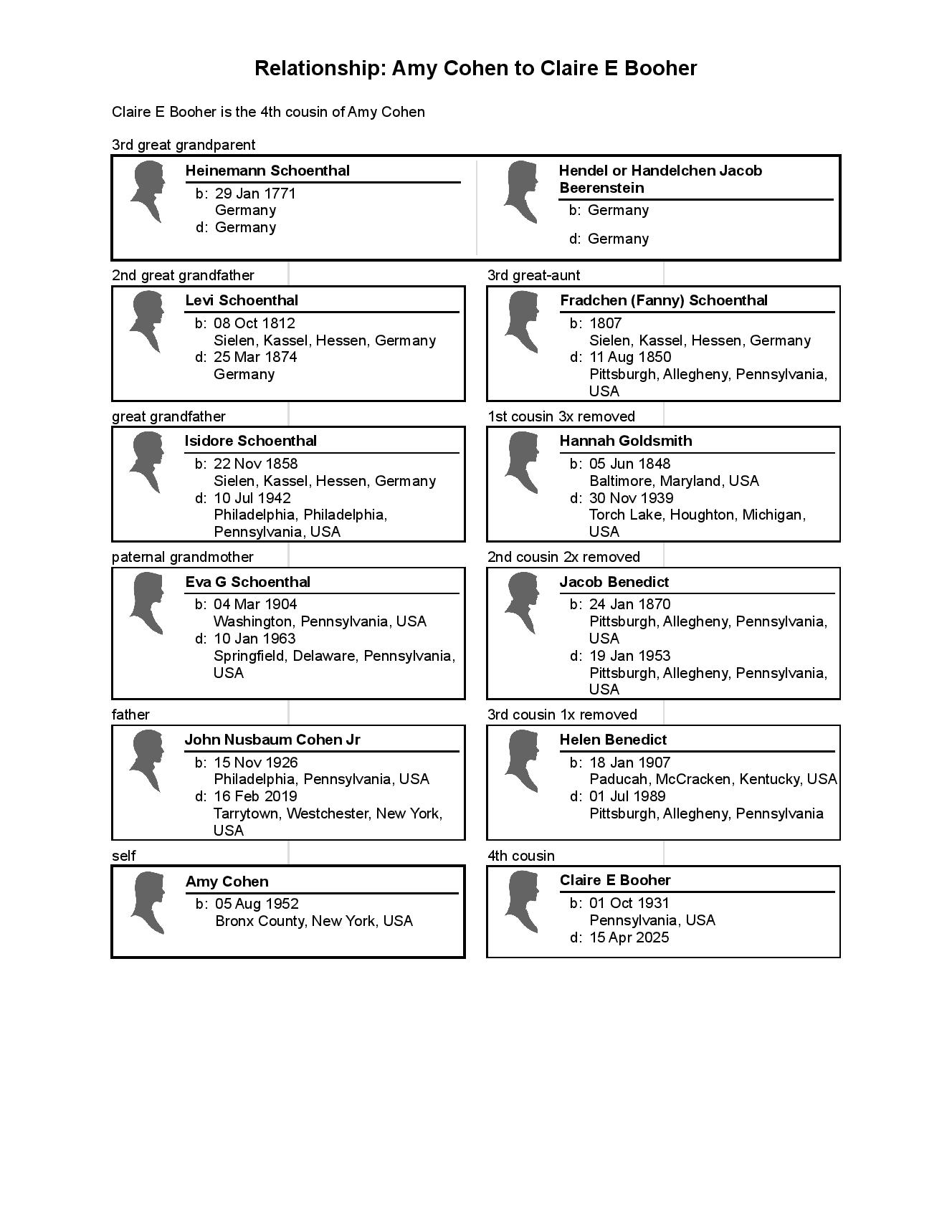
Good for a Single Journey has received a finalist’s award in the 2023 Next Generation Indie Book Awards and has also received a highly favorable review from Neville Teller in the June 12, 2023, issue of The Jerusalem Report. You can also learn more about Helen Joyce and her book at her website found here. And in the interest of full disclosure, I should reveal that she is my fifth cousin on her paternal side; we are both descended from Jacob Falcke Goldschmidt and Eva Seligmann, our mutual four-times great-grandparents.
And now, let me introduce you to Helen Joyce and her wonderful book, Good for a Single Journey..
Thank you so much for agreeing to do this interview with me and to share more about your book, Good for a Single Journey. Have you ever written a book or other fiction/non-fiction before?
No! I have written the odd article, contributed a chapter to two each of two academic books, and edited a community magazine which often entailed tightening the contributions of others. Otherwise, no formal writing experience.
So what made you decide to write this book at this time?
Old age! I always wanted to write an account of my mother’s life and never found the right time. Work, kids, and life in general always interfered. That and the self-defeating belief that the project was beyond me; that I was deluding myself if I thought I could write an account/memoir/novel of the type I imagined would do justice to her story. Finally, the reality of the fact that I was not getting any younger and triggered by taking our youngest granddaughter on a trip to Vienna where we visited my mother’s birthplace proved to be the catalyst for getting to work.

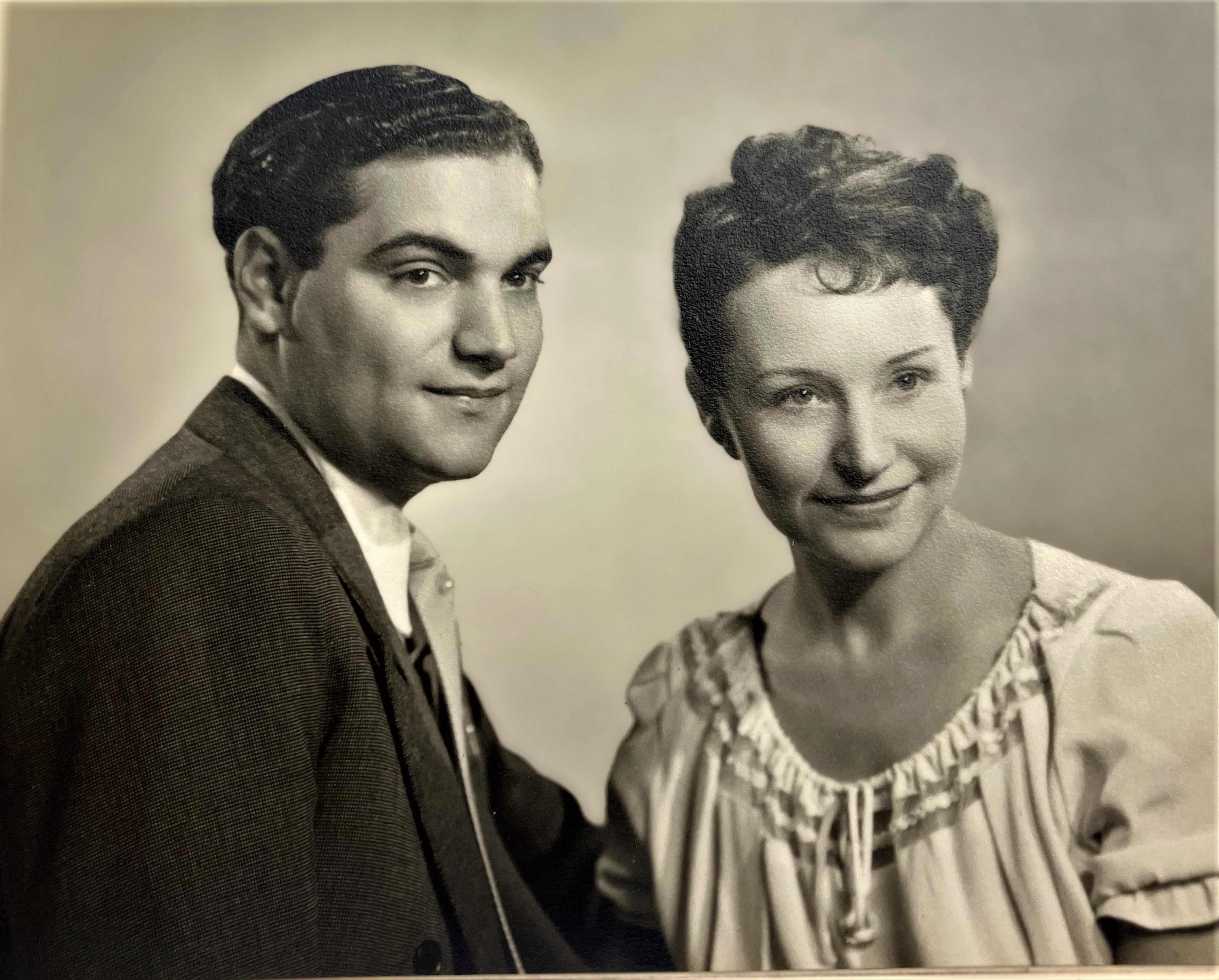
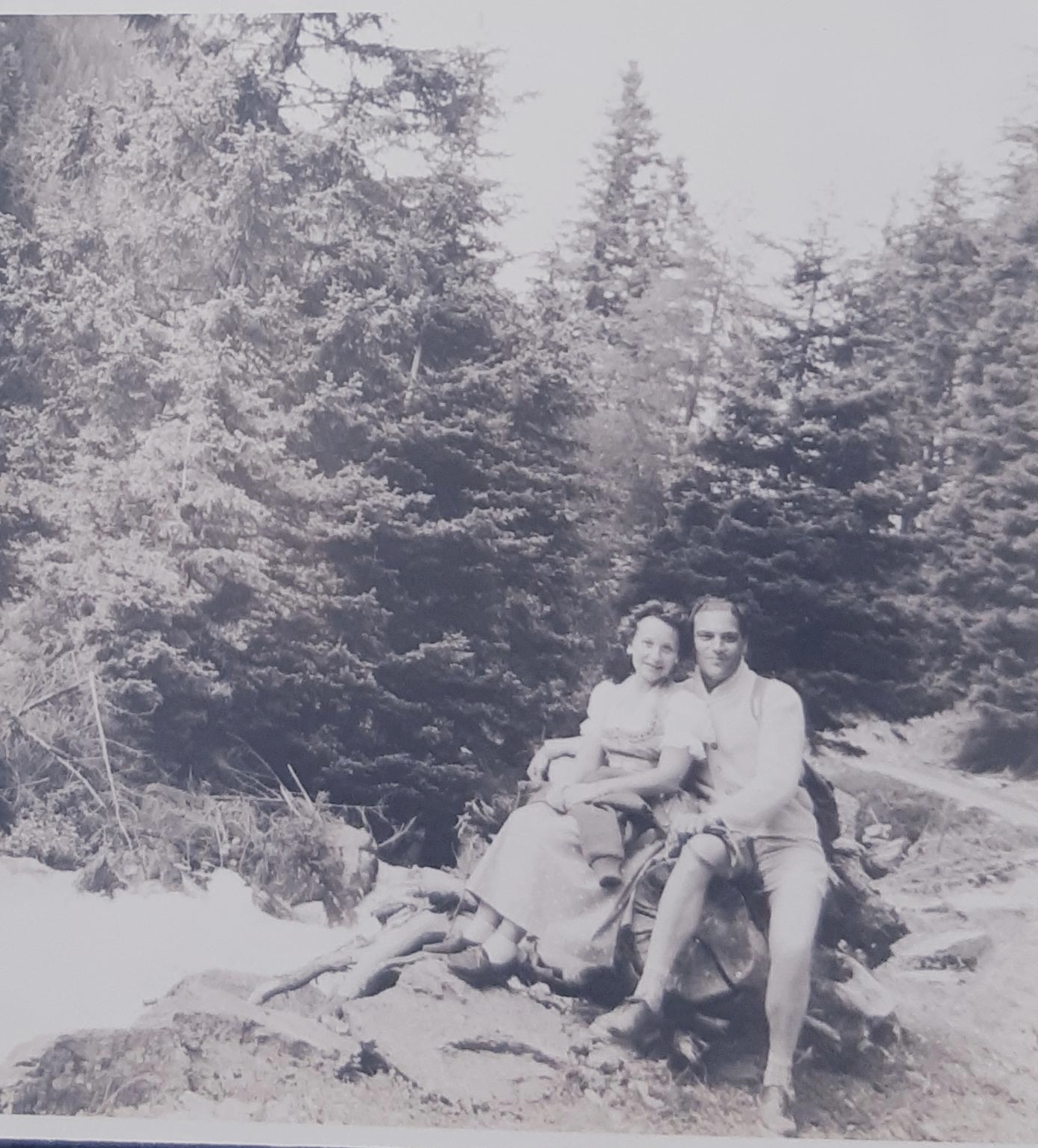
The author’s parents Max and Klari. Courtesy of Helen Joyce
I really enjoyed reading the book, and it reads like fiction. But I know that the book is based on the real lives of your parents, grandparents, and great-grandparents as well as many aunts, uncles, and cousins. How much of the book is fictionalized and how much is non-fiction?
It would take a long time to unravel fact from fiction but basically, I knew the ‘bare bones’ of the stories of all the characters. In the case of the two brothers, Chiel and Beresh, I knew very little indeed beyond the fact that they made Aliyah to pre-State Israel long around WWI. Therefore, I invented their adventures. I gave them experiences and put them in situations which were factually correct and allowed some of the history of the early Yishuv to come to light. I knew a little about Peppi, my grandmother’s sister, and of course the story of Suzanne became legendary!
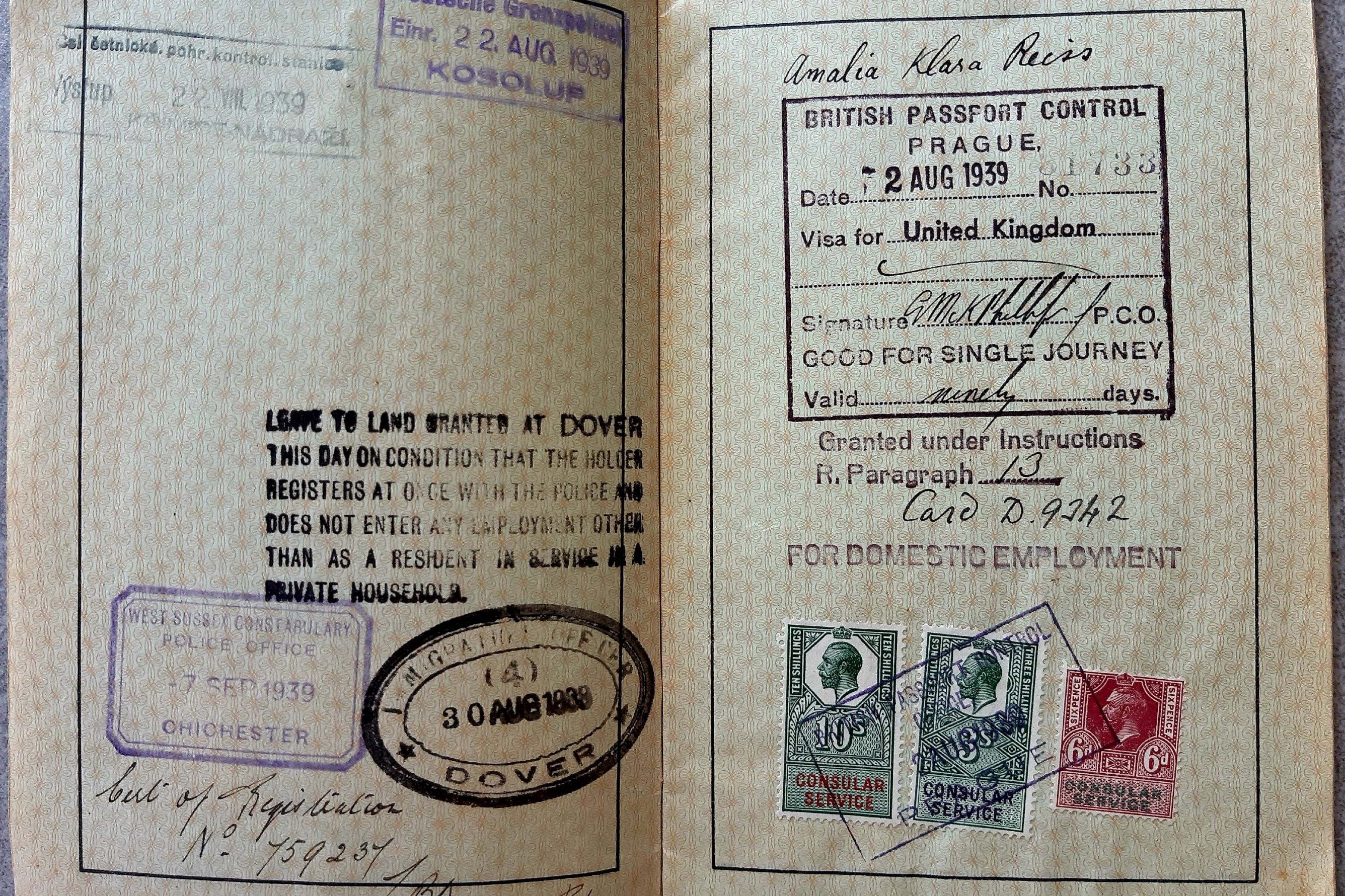
Zissel, my other great-uncle, was a closed book to me until I unlocked the memoir of his son Yitzchak. That gave me the details of not only his travels across Europe and today’s Ukraine before reaching the shores of British mandate Palestine, but also revealed the entire saga of his grandparents’ (my great grandparents’) flight from Rozwadów to Ukraine and onwards to Siberia. I knew a great deal about my grandparents from my mother’s tales and, again through her, background details about day-to-day life in Vienna and the market town of Rozwadów, which she visited frequently on trips to her grandparents. The rags to riches story of my grandfather is true. Accounts of the flight from Vienna, the period in Prague, my mother’s experiences in London are also from my mother’s various shared memories.
My independent sources of research (apart from the internet and the cousin’s memoir which I mentioned) were my mother’s diaries and a stash of family letters collated and self-printed by my late uncle which charted the agony of desperation and fear as various members of the family tried to help and find ways to get those still trapped in Europe out. Obviously the most fictionalized accounts are those of the imagined conversations and emotions displayed by the various characters. The best I could do was to try and imagine I was them and put myself in their place at that time. What would I feel? How would I react?

The author’s grandmother Ida. Courtesy of Helen Joyce

The author’s grandfather Salomon Courtesy of Helen Joyce
How did you decide where to create fictional elements versus non-fiction?
Honestly, I don’t know! It just sort of flowed seamlessly. I wove elements of drama and fiction around the basic facts I knew. For example, I needed to get the two brothers from Vienna to Palestine during WWI. How would they have gone? What might they have done? WWI was raging so I thought it would be interesting to place them into an Austro-Hungarian unit which ended up in Palestine. When I started researching that possibility, I learned a great deal about the involvement of Jewish soldiers in the army, the unit I put them in was a real one (as was the officer which commanded it). The facts surrounding Aaron Aaronsohn, NILI, and their role in helping the British defeat the Ottomans in
Palestine and how these contributed to the fact of the Balfour Declaration was too good an opportunity to miss including. So, I did! Throughout the book I also wanted to give the lie to the myth that Jews were passive, never fought in armies and were pale scholars led to slaughter like sheep. Jews fought bravely (on all sides) in every theatre of war.
How did you research the parts of the book that are fact-based?
I read several books on WWI, biographies about Aaron Aaronsohn and NILI as well as books about the history of the Middle East. My mother’s cousin’s memoir was also very helpful. The internet is also a phenomenal resource. What was the weather like in Gallipoli in November 1915 – click. What train routes were available on the Chemins de fer Orientaux during WWI – click! What date was Rosh Hashanah in 1914 – click. All there in your hand-held mobile phone!
Your book begins with your great-grandparents leaving Rozwadów. Why did you decide to begin there?
The book begins with a train journey, the journey of my great grandparents fleeing their hometown in Galicia. I decided to start with that train ride as it gave me the opportunity to introduce all the main characters as well as a major theme of the book. Migration and journeys. The entire book is about the journey of individuals, families, and the Jewish people. Trains feature quite prominently. That opening train ride. Greetings and goodbyes at train stations. The brothers’ train ride to war and onwards to Palestine. The train ride carrying my great grandparents and their youngest son to Siberia. The train ride my mother took to Scotland to meet her brother serving in the Jewish Brigade of the British army and of course the final horrific train rides to the death camps.

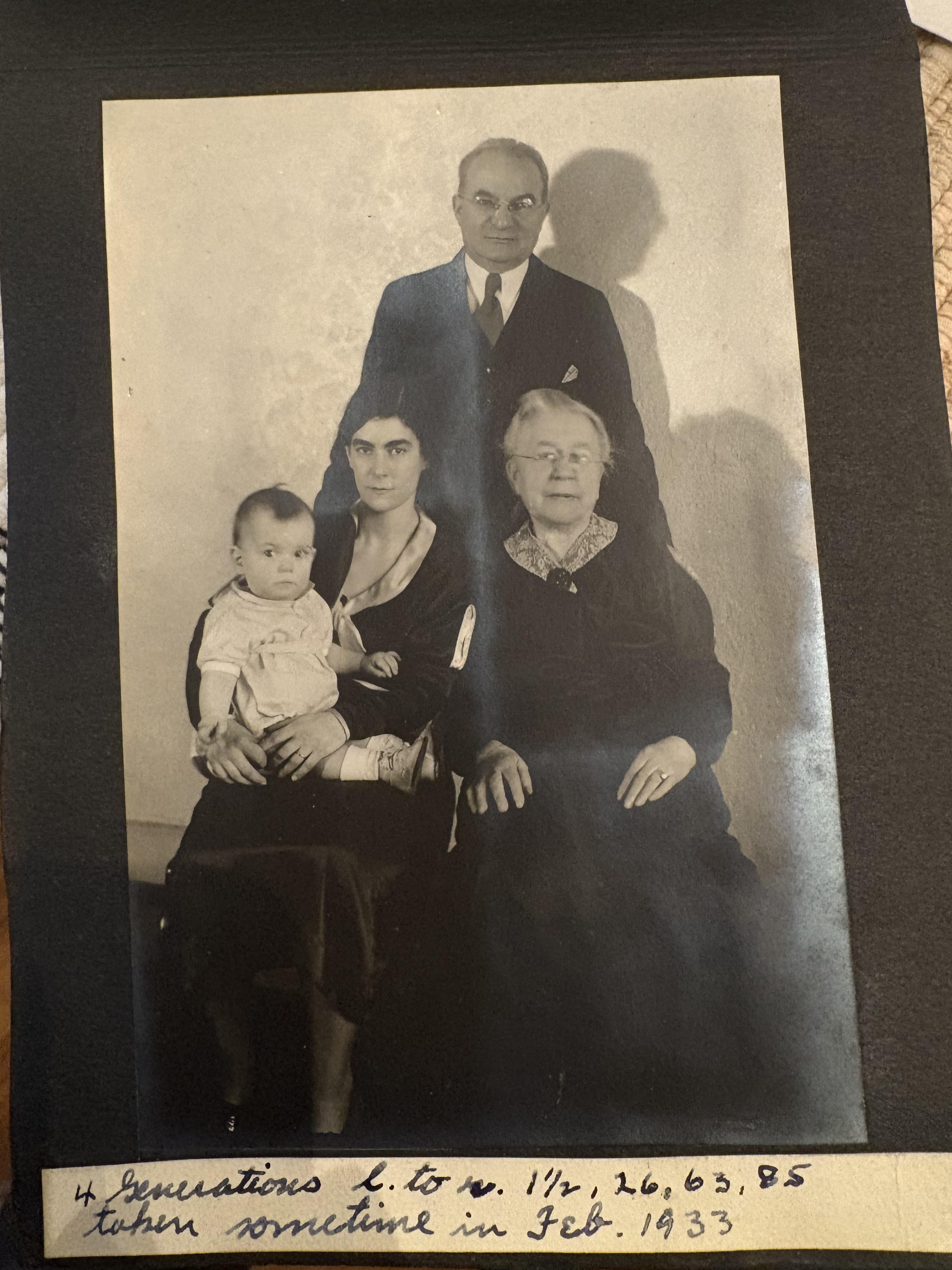
The author’s great-grandfather Shmaryahu Courtesy of Helen Joyce

The author’s great-grandmother Pessya Courtesy of Helen Joyce
You include some living people and some recently deceased people in the book. How did you approach the issues of privacy with respect to those people? Were there things you had to change or avoid to protect the interests of your family?
Yes, absolutely. A lot was excluded! However, in discussion with as many of my cousins as I could track down, I realized they were quite happy for me to give details of their stories. I offered each of them drafts so they could check they were happy with what I had written. However, as nearly all the family descendants live in Israel, many of them do not read in English. That said, they were quite happy to know I had written some account and did not mind if it was fictionalized. The Israeli branch is very easy going! I gave my sister an early draft and she enjoyed the first half but did have some comments and suggestions about the second half of the book. I have tried to accommodate her feelings on this but, ultimately, we agreed that the book was a fictionalized novel.
Your family endured many of the challenges and horrors faced by many Jewish families in the 20th century: immigration to new countries (several times), World War I, and Nazi persecution and the Holocaust. What impact do you think that history has had on you and the other living descendants of your great-grandparents?
It’s hard to speak about this in general. The impact is surely quite different for each family and on each individual. For me, knowing what previous generations lived and died for made me want to cling to a Jewish lifestyle replete with the traditions that Hitler tried so hard to erase. I didn’t want to give Hitler any kind of posthumous victory and so I have tried to raise a Jewishly faithful family. Beyond that? I guess a sense of the importance of justice and the need to respect equality of all people regardless of gender, race, or religion.
You ultimately decided to leave England and make Aliyah to Israel. What in your family history contributed to that decision? Have you made connections to the cousins who were refugees to Israel during the Nazi era?
Many factors contributed to that decision. My husband comes from a very ‘English’ Jewish family but his mother, eldest of ten, was the only child left in the UK after the creation of the State of Israel. The rest were all pioneers in Israel (although two had died before that was possible). So, he already has a huge network of family here. Our son made Aliyah twenty years ago and was raising his children here and of course we wanted to be close to them. We have a daughter with special needs and she made Aliyah with us – we couldn’t contemplate leaving her behind and she is so very happy here with excellent care. Our youngest child followed us five years ago and so, to our delight, all our children and grandchildren are here. Yes, I have contact with some of my many cousins, but they are numerous and spread out so we do not meet that often although I do meet my first cousins more frequently.
Your book has many themes and covers many topics: different ways to practice Judaism, antisemitism, Zionism, mental health, marriage, parental love, and so on. Was there a specific point or theme that mattered most to you?
They all mattered and, in a way, I suppose several of them nestle into each other like a set of Russian matryoshka dolls! Parental love leads to stability and contributes to the type of marriage partnership one is likely to create as does a strong sense of community and belonging. Antisemitism and Zionism also have a kind of Yin and Yang partnership! If I had to choose one (you didn’t ask me that!) maybe I would say resilience and survival!
Who did you see as the audience for your book? Your own family and descendants? Young adults? Jewish readers? The entire universe of adult readers?
The entire universe! My family and their descendants were not really the target audience. Had they been, the book would have been far more factual and memoir-based. I hoped it would appeal to young adults and prove educational and am being told that teenagers are totally gripped by the story – which, given the amount of history in it – is great! However, I would dearly love the non-Jewish world to gain insight about a Jewish way of life, the history of persecution and the holocaust but also the historical underpinnings of the State of Israel under international law which was brought about together with the dismantling of previous empires. If Israel is to be accused of being a ‘colonialist enterprise’ then equally so is Syria, Lebanon, Jordan, Saudi Arabia and Iraq. Not to mention the many ‘new’ European countries created in the wake of WWI. Without understanding the impact of WWI, nothing about the modern world makes sense (including current events in Ukraine!)
This book focused on your maternal family. Do you plan to write a book about your paternal side?
Yes! And your blog will be a fantastic resource for me!!! However, marketing this book is taking up a lot of time at the moment. I have been invited to take part in Jewish Book Week School Events for schools around the UK which is fantastic. Events can be online so I can do them from here. This is really part of my dream – to bring the reality of the Jewish experience to a wider audience.

The author, Helen Joyce. Courtesy of Helen Joyce
Thank you again for taking the time to answer my questions, and I look forward to reading your next book and hope that my research will be helpful to you! Best of luck in your marketing efforts—your book deserves a wide and large audience.


















 Brotmanblog: A Family Journey