Rachel “Ray” Rosenzweig: Can anyone remember anything else?

I have had amazing luck in finding out something about the lives of all but one of Gustave and Gussie’s children.  I have even been able to connect with descendants of many of them.  There are still holes and unfinished stories for Lillie and Lizzie and Sarah, but I’ve at least been able to trace them through some part of their adult lives.  The only child I have had no luck finding after she left the family home is Rachel or Ray, the youngest child.
I know Ray was born in 1904 and that through 1930 she was living with her mother in Brooklyn, but I have found nothing that reveals what happened to her after her mother died.  I have not been able to find her on the 1940 census, on the NYC marriage index, or on the Social Security Death Index.  I don’t know whether she had any descendants.  I need some assistance.

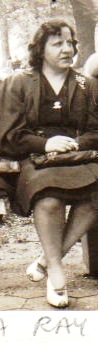
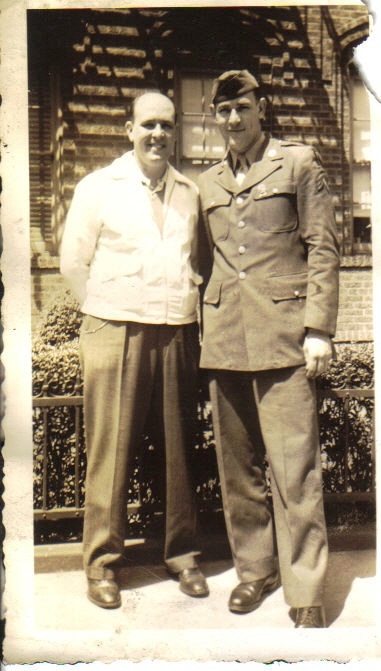
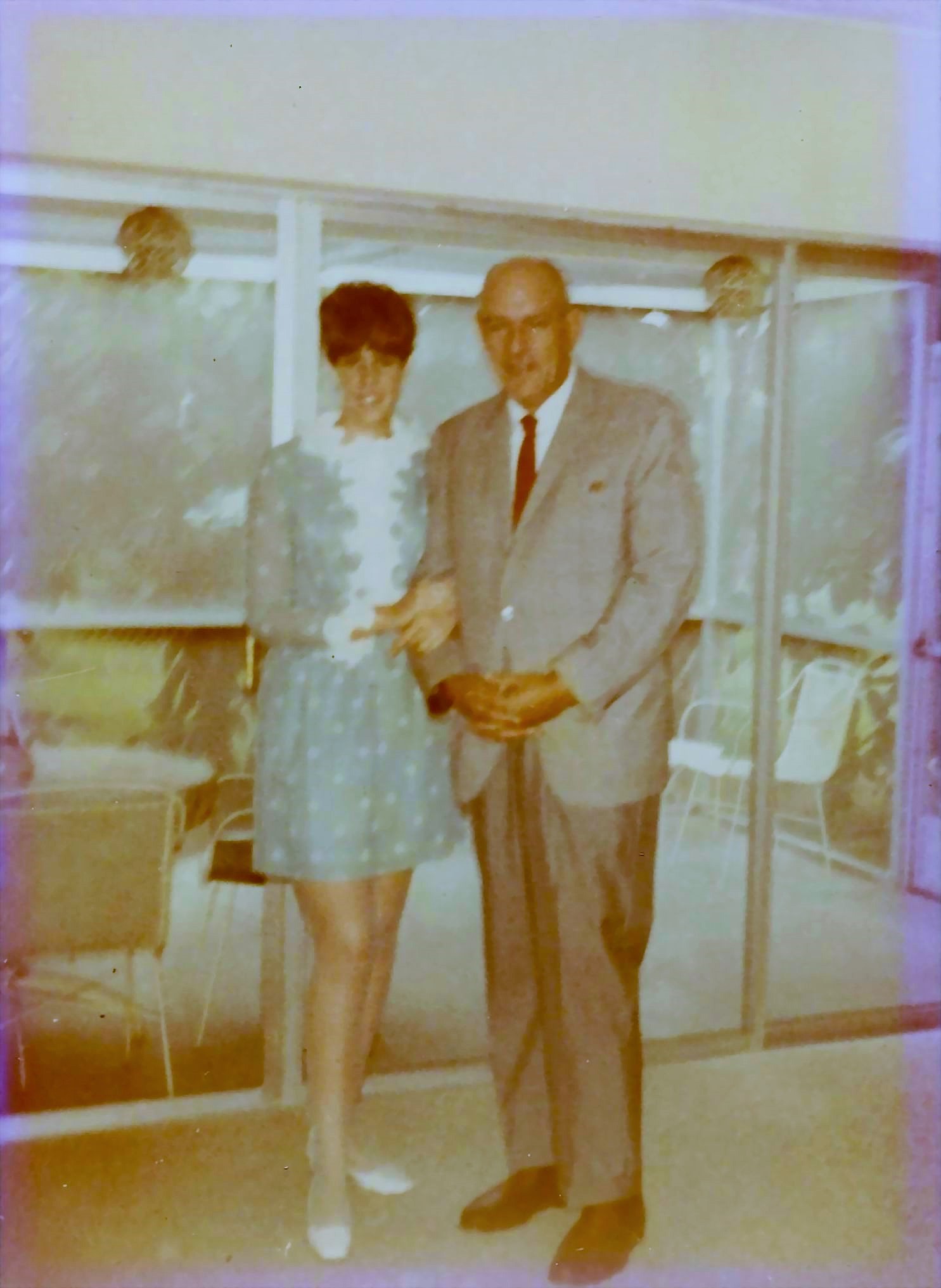
A number of Gussie and Gustave’s descendants remember Ray, and I have been able to obtain these two photographs of Ray from the 1940s.  I know she must have lived at least into the late 1960s since so many of her great-nieces and great-nephews have memories of her.  One remembers that she moved to Florida at some point and thinks she married, but cannot remember her husband’s name.  Another remembers that she lived in New Jersey and married someone with an Italian surname.

Now I am asking to look carefully at these two photos and see if they spark any specific memories—an occupation, a husband, a child, a residence, a date of death—anything that might help me find out more about the youngest child of Gustave and Gussie.

Ray

Ray

Ray 1

Enhanced by Zemanta

The Legacy of Rebecca Rosenzweig: Her Son, Irwin Elkins

Iriwin Elkins 1960

Iriwin Elkins 1960

I recently connected with Richard Elkins, the grandson of Rebecca Rosenzweig Elkin.  Rebecca died in 1921 at age 27, when her son Irving was less than two years old.  Irving grew up to be Irwin Elkins, who married Muriel, with whom he had two sons, Michael and Richard.  Richard was kind enough to share with me some stories about Irwin’s life.  With his permission, I am including some of what he shared with me in his own words.

First, some background.  Rebecca Rosenzweig, my grandfather’s first cousin and the daughter of Gustave and Gussie Rosenzweig, married Frank Elkin in 1914.  Her son Irving was born in 1919.  After Rebecca died in 1921, Frank married Frances Reiner in 1922 and moved to Boston. Frank and Frances had a son named Stanley, who was born in 1925.  In 1930 Frank was back in Brooklyn with Frances and the boys, but sometime thereafter they returned to the Boston area, where they settled permanently.  I had assumed that Irving had stayed with Frank and his new wife during the 1920s, but Richard informed me otherwise.

“When Rebecca Rosenzweig passed away in 1921, Irwin Elkin moved into the home of Gustave and Gussie Rosenzweig, where he resided for eight years until 1929.  Irving adored his Grandma Rosenzweig, and Grandma Rosenzweig adored my Dad. My Dad thought of Gussie as his mother. My Dad said Gussie was a fabulous cook.   My Dad never spoke about Gustave.”

Perhaps the reason that Irwin never spoke about Gustave was that by 1921, Gustave and Gussie were divorced or at least no longer living together.  If Irwin’s years with his grandmother were from 1921 to 1929, he was living with just Gussie, Ray, and Lizzie.

One of Irwin’s favorite stories about his years living with his grandmother was this one, according to Richard:  “There was a large family gathering at Gustave and Gussie’s home, and Gussie discovered that she did not have enough food to feed the entire clan.  Gussie pulled my Dad aside and told him to tell all the other children that when Gussie asked who wanted chicken for dinner, all the children were to say, ”No, thank you,” because they were not hungry.  That way there would be enough food for the adults. When everyone sat down at the table, Gussie asked who wants chicken for dinner?  All the children dutifully said no thank they were not hungry and were excused from the table.  After the dinner was served and completed, Gussie then announced, ‘Any child who did not eat my chicken dinner will get no dessert!’ “

Richard also shared this story about his uncle, Jack Rosenzweig: “The only other story I recall about my Dad growing up in the Rosenzweig household is someone my Dad referred to as Uncle Jack who had a wild sense of humor.  Jack worked behind the counter in the post office.  One day my Dad walked into the post office to see Jack and Jack told my Dad he went to Yankee Stadium and met with legend Babe Ruth.  Jack then tossed to my Dad a baseball with Babe Ruth’s autograph on it.  There was just one problem.  The autograph was written in purple indelible ink that was the same color ink that Jack used to address packages for postal customers.”

Irwin’s time with the Rosenzweig family ended in 1929.  Richard wrote: “In 1929 Irwin was told to pack up his belongings. Frank arrived from Boston, picked up Irwin, and they went back to Boston on the train. My Dad was aware that Frank had remarried and had met Frances (Fan) Reiner. What my Dad did not know, until he arrived at his new home, is that he had a kid brother named Stanley who was six years younger than he was. That fact had been withheld from him while Irwin was living in the Rosenzweig household.”

I asked Richard if he knew why Frank and Frances had moved to Boston rather than stay in NYC.  He wrote:

“Although Francis Fan Reiner was born in New Jersey, her extended family lived in Boston. … The second move back to Boston occurred because Frank changed professions. He met a couple who were twenty years younger than he was named Joseph Cohen and his wife Rene Cohen.  They opened up a business called Debonair Frocks located on Kneeland Street that was in the high rent fashion district in Boston.  Frank was the salesman who traveled throughout New England.”

Richard also told me that his father graduated from Boston English High School and was accepted into the MIT School of Engineering.  He could not afford the $600 per year tuition and instead went to Northeastern University, which had awarded him a football and baseball scholarship and the opportunity to work on a paid co-op job.  According to Richard, “Frank and Fanny Elkins were very unhappy that Irwin wanted to study engineering in college. They believed it was a useless profession. They would invite family and friends over to convince my Dad that the future was in clothing, not engineering.  People need things to wear, they don’t need mechanical engineers.”

Irwin soon proved them wrong.  Richard wrote:

“When World War II broke out with the bombing of Pearl Harbor, my Dad had just graduated Northeastern and tried to enlist as a fighter pilot.  He was rejected for two reasons.  He stood 6’4 and weighed 200 pounds which made him too large to fly.  He also had his degree in mechanical and aeronautical engineering that made him too valuable to serve in the armed forces. My Dad was assigned to be a civilian contractor working for Bethlehem Steel at the Fore River Ship Yard in Quincy, Massachusetts.  His responsibility was to oversee the construction of light cruisers and destroyers, take them to sea on shakedown cruises, and sign off on their seaworthiness before turning over the ships to the War Department.

“It was my Dad’s crew of engineers at the Fore River Shipyard who perfected the “Davit” that was first invented in 1928.  It’s the device that holds a ship’s lifeboats in place that would lower the lifeboat by hand cranking the boat down into the water.  My Dad was the lead engineer who re-designed the Davit into a fully automated self-contained hydraulic system that would first lower the two arms holding the lifeboat from their vertical position – while keeping the lifeboat level – into a horizontal position for boarding. The Davit hydraulics would then resume lowering the lifeboat into a fully locked horizontal position at which point a second set of hydraulics would automatically lower the lifeboat while maintaining its level stability even if the weight distribution in the boat was not balanced. The end result was an automated steady descent onto the water regardless of the surf conditions or high winds. 

“If you want to see first-hand the engineering legacy of Irwin “Tiny” Elkins, then take a vacation cruise on a Princess, Carnival, Disney, or Royal Caribbean ship.  Look closely at the hydraulics on the Davit’s holding up the lifeboats. Nothing has changed in the past seventy years. The survivors of cruise ship disasters like the Concordia in Italy can thank the Rosenzweig family genes for that innovated engineering solution.”

Irwin Elkins with Piper Cub 1958

Irwin Elkins with Piper Cub 1958

Richard also shared these recollections of his father:

“My Dad was physically a large man and a wonderful athlete.  Growing up we skied together, played tennis, and golfed.  In a batting cage he could outdo me with little effort.   Whenever anyone asked my Dad why such a large person like him was called “Tiny,” his standard response was “I was an incubator baby, and the nurse in charge turned the heat up too high.”  Whenever he was asked why he did not have a middle name, his standard response was, “My parents were so poor they could not afford one for me.” Whenever someone asked him why he was so tall, his standard response was “So if I cut off my legs, will it make you feel any better?” In his business dealings he often told his customers, “It will be done my way and don’t worry about it. If I’m wrong, I’ll deal with it after I’m dead.” If someone did something that my Dad considered to be stupid, my Dad would point to his head and say “That’s using your toukis.”

Finally, I asked Richard whether his father ever reconnected with the Rosenzweig family.  He shared this story:

“In 1969 a woman and her son walk into my Dad’s office in Brattleboro.  When my Dad asks if he can help her, she introduces her son named Steven Rosenthal who will be a student at Windham College in nearby Putney. My Dad replies, why is that of interest to me? She informs my Dad that her name is Rebecca Kurtz Rosenthal. She was named after my Dad’s mother Rebecca Rosenzweig. Her mother was Sarah Rosenzweig, the sister of Rebecca Rosenzweig.  To say that my Dad was completely stunned at this unannounced visit is an understatement.”

Irwin Elkins reunited with his cousins Rebecca Kurtz and Ben Kurtz and others in Florida 1992

Irwin Elkins reunited with his cousins Rebecca Kurtz and Ben Kurtz and others in Florida 1992

The following year Richard himself met the Rosenzweig family:

“In 1970 at a family reunion in Long Island, New York, at the home of Rebecca Kurtz Rosenthal and her husband Sam Rosenthal, I arrived with my parents.  Other than Rebecca and her husband Sam, none of the Rosenzweig family knew that my Dad would be attending the reunion.  When we walked into the backyard Rebecca introduced my Dad to all of her family.  I distinctly remember a flood of tears because the entire Rosenzweig clan had not seen Irwin in over forty years.”

“Rebecca’s and Sam’s son, Steven, introduced me to a woman he called “My Great Aunt Lizzie.” She must have been Lizzie Rosenzweig. She knew the name of the cemetery where Rebecca was buried. When my Dad asked her what his mother died from, Lizzie replied that she succumbed to a flu pandemic in 1921 that devastated NYC. Lizzie also informed my Dad that he had two older brothers named Milton and David who also died from the same pandemic that took his mother’s life. “

“When the emotions settled down several hours later, Lizzie told my Dad a comical story about when Frank showed up at the Rosenzweig household to court Rebecca, Lizzie’s parents would lock all the other sisters into their parent’s bedroom.  However, they were allowed to put their ear to the door and listen.”

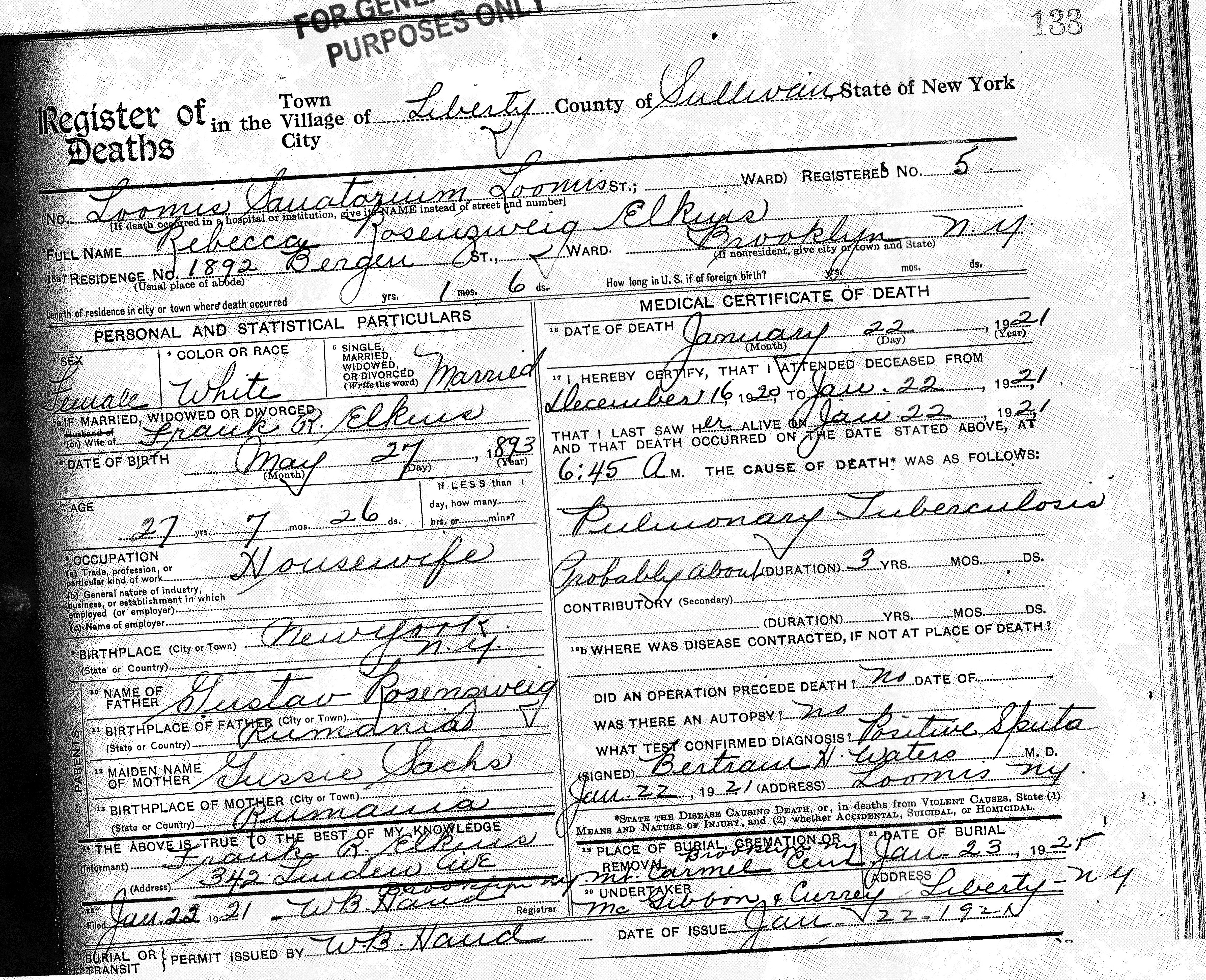
Rebecca’s death certificate indicates that Rebecca in fact died from tuberculosis at a sanitarium in Liberty, New York, where she had been a patient for a little over a month before her death. rebecca elkin death certificate I also found the death certificates for Rebecca and Frank’s two other sons.  The first born was Milton, born on December 14, 1914, just nine months after Rebecca and Frank were married.  He died just five months later on May 16, 1915.  It seems he had been sick for two months, in other words, since he was really just an infant.

Milton Elkin death certificate

Milton Elkin death certificate

The second child was Daniel (not David).  He was born October 31, 1916, and died December 16, 1917, when he was just over a year old, from broncho pneumonia.

Daniel Elkin death certificate

Daniel Elkin death certificate

Although the family lore was that Rebecca and the two boys died during the flu pandemic of 1921, that appears not to be true.  It would appear instead that Milton died over a year before Daniel was even born, and that Daniel died two years before Irving was born and four years before Rebecca died.  Maybe the family remembered it differently because it was just too painful to imagine Rebecca and Frank losing one child after another and then Frank losing Rebecca when Irving was not yet two years old.  It is too painful to imagine.

I am deeply appreciative of Richard’s willingness to share his family stories.  They preserve not only the memory of his grandmother Rebecca, who never saw her son grow up; they also preserve the memory of that son, Richard’s father, Irwin Elkins, who despite losing his mother at such a young age, grew up to be a man with a great sense of humor, a wonderful father, a successful businessperson, and an inspired engineer.  The resilience of the human spirit is remarkable.


Enhanced by Zemanta

Max and Irving: The Sons of Abraham Rosenzweig

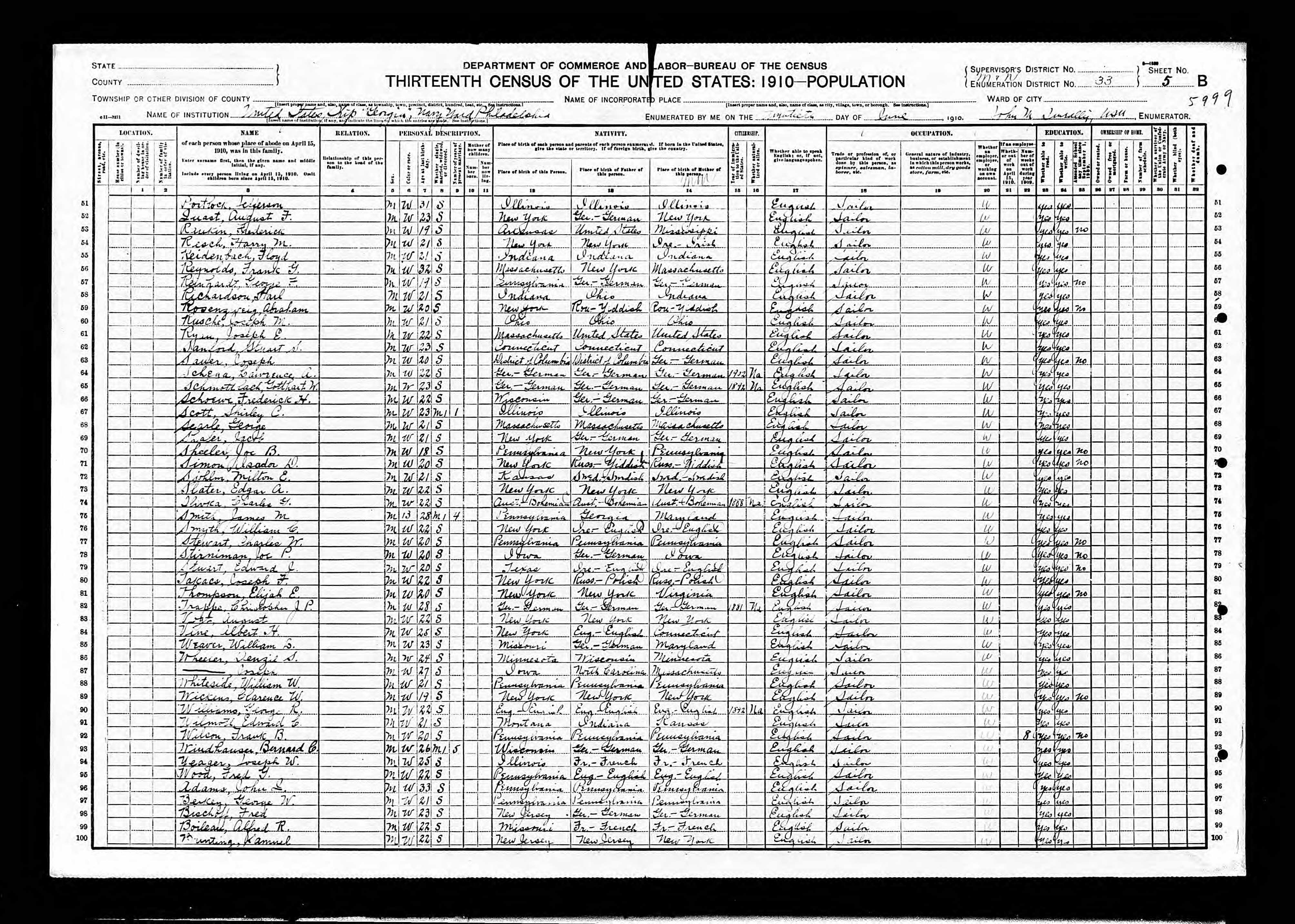
Abraham Rosenzweig was the oldest son of Gustave and Gussie Rosenzweig and my grandfather Isadore’s first cousin.  He was born in New York City on February 12, 1889, apparently the first of their children born in the US.  He served in the Navy before and during World War I, and he worked for a bakery after the war and thereafter.

Although I do not have any documentation for Abraham’s marriage, it seems that he probably married in Pennsylvania.  Rebecca Fagles, his wife, was born in Pennsylvania, and Abraham was stationed on the USS Georgia in Philadelphia in 1910.

Abraham Rosenzweig 1910 census US Navy

I assume that that was when and where they met and that they married around 1915 because although Abraham was living with his family and single as of the 1915 census, his first son Maxwell was born April 2, 1916.  Abraham and Rebecca’s second son Irving was born April 26, 1919, and in 1920, they were all living in Brooklyn, according to the 1920 US census.

UPDATE: I was able to find the marriage of Reba Fagles and Abraham Rosenzweig in 1915 on the Philadelphia marriage index.  I am assuming that that is the record for Abraham and Rebecca.

Abraham Rosenzweig and family 1920 census

Abraham Rosenzweig and family 1920 census

Abraham and Rebecca, known as Abe and Beck, lived in Brooklyn for the rest of their lives, where they raised their two sons, Max and Irving.  Max married Sylvia Herrick and had two sons, Joseph and Gerald.

Max and Sylvia Ross

Max and Sylvia Ross

Irving married Irene Rubenstein/Robbins and had two daughters, Jane and Arlene.  Gerry remembers his grandparents very well since he grew up in Brooklyn where they lived.  He remembers that his grandmother Beck served untoasted English muffins and used memorial candle holders as glasses.  Gerry named his two children for his grandparents, his son for Abe and his daughter for Beck.  Abe died in 1961, and Beck died in 1970.

Abe, Sylvia, Ray (Abe's sister) and Beck

Abe, Sylvia, Ray (Abe’s sister) and Beck

Here are some photographs of Max and Irving and one with their aunt Ray, an aunt I’ve otherwise been unable to locate.

Max and Irving Rosenzweig/Ross

Max and Irving Rosenzweig/Ross

Max and Irving with their aunt Ray

Max and Irving with their aunt Ray

I was able to get some background information about the lives of Max and Irving from Gerry and Arlene.

Max and Sylvia settled in Brooklyn, where Max first was in the egg and poultry business and then in the business of reconditioning steel drums for storing oil.  At some time after World War II while doing business with the army, Max changed his last name from Rosenzweig to Ross, believing that he would have more success with a name that was not obviously Jewish.  Sometime thereafter Irving also changed his last name to Ross for similar reasons and also because their mother Beck did not like the idea of the two brothers having different last names.

Arlene told me that her father Irving had met her mother Irene when her uncle Max went to Sylvia’s house while they were dating and brought his younger brother Irving with him.  One of Sylvia’s friends was there and arranged for Irving to meet her younger sister Irene.  For Irving, it was love at first sight, but not for Irene.  For a year, Irving pursued her.  Irene had joined the Navy, one of the first ten women to become a WAVE, and Irving, himself in the US Army, placed an ad in the Stars and Stripes to find her and to get her attention.  Eventually, Irene agreed to date him and fell in love with him as well.

They were married in 1945, and according to Arlene, to his dying day, her father would do anything to make Irene happy.  Irving and Irene  Irene and Irving lived at 41 Kew Gardens Road, Queens, and their two daughters were born at Kew Gardens General Hospital.  Irving owned a share in a successful hardware business.

In 1957, Irving and Irene and their daughters went to visit Irene’s parents, who had moved to the Miami, FL, area.  Irene was so taken with life in South Florida that within days after returning to Brooklyn, Irving sold his share in the hardware business and bought three tickets to Miami for Irene and his daughters, coming down a few months later himself once his business matters were resolved.  He was, as Arlene said, determined to make Irene as happy as possible.

Within five years, Irving, a man who never graduated from high school, had obtained a license to sell insurance and had established a very successful insurance brokerage business.  He was able to provide his family with a large, custom-built house and a comfortable lifestyle.  Irving and Irene remained in the Miami area thereafter and only occasionally would they return to the New York area.

Sadly, their lives would be marked by tragedy.  In 1968, Irving was admitted to Baptist Hospital in Miami for congestive heart failure.  While he was being admitted, Irene and Arlene went to get something to eat, and while driving down North Kendall Drive, where Baptist Hospital is still located, they were hit head-on by a minibus going northbound on U.S. 1, South Dixie Highway.  The minivan had defective brakes and  had skidded across the median.  Both Irene and Arlene suffered severe injuries, and Arlene underwent numerous surgeries and was laid up for a substantial time after the accident.  For some period of time all three members of the family shared one hospital room.

Arlene and Irving Ross August1968

Arlene and Irving Ross August1968

Not long after the accident, Irving was diagnosed with inoperable cancer and died at age 51 on August 5, 1970.  Irene was only 49 when he died.  She had to go to work to support herself and her children and became a purchasing agent at Florida International University, where she worked for many years.  She died January 16, 2009, at age 88.

Irene Ross in 2006

Irene Ross in 2006

Arlene Ross

Arlene Ross

Max also died at a prematurely young age.  His wife Sylvia had a number of medical problems, and while accompanying her for treatment at Massachusetts General Hospital in November, 1975, Max had an aneurysm and died.  He was only 59 years old. Sylvia lived more than twenty years after Max died.

Sylvia Ross

Sylvia Ross

The two sons of Abraham and Rebecca, Max and Irving, thus had many parallels in their lives.  Both were big strong men over six feet tall, both had changed their name to Ross, both had had two children and long marriages to women to whom they were devoted, and both had died before they were sixty years old. Gerry said he speaks to his father daily and has every day since he died in 1975; Arlene also spoke adoringly of her father.  I could tell in speaking with both Gerry and Arlene that each of them loved their fathers dearly and want their memories preserved.   I hope this blog will help to do that.

Enhanced by Zemanta

Sometimes You Win, Sometimes You Lose

I have had some incredible luck  following my hunches when ordering vital records about people who I think are my family members—finding Frieda Brotman’s death certificate and marriage certificates, for example, or finding Susie Mintz and Gustave Rosenzweig and Tillie Strolowitz and their relatives.  But lest anyone think that all my hunches have worked out, I want to give you three recent examples where I just guessed wrong.

The first example involves Gussie Rosenzweig, Gustave’s wife.  Recently I was able to obtain her death certificate and saw that her son Jack had listed her as a widow with a husband named Ben.  I was very puzzled by this as Gussie had not been listed as living with any man in the most recent census reports before she died.  Had she married sometime in the 1920s or 1930s and been widowed in between census reports?  I did a search and found only one Gussie Rosenzweig who had married a man named Benjamin.  I ordered that certificate, and this is what I received:

Rosenzweig - Rosenberg Marriage page 1

Clearly, this is not the right Gussie.  This Gussie was only 27 in 1934, whereas our Gussie would have been in her 70s; this Gussie had different parents who had come from Hungary.  So I still have no idea whether there ever was a Ben who married Gussie after she and Gustave split up.  Strike one.

The next bad guess involved a search for the other children of Gussie and Gustave who did not survive infancy.  I had seen on Rebecca’s birth certificate in 1893 that Gussie and Gustave had had five children, four living at Rebecca’s birth.  Somehow I miscounted and thought there was a missing child, although now when I go back and re-read my blog post, it seems pretty obvious that I had found all four living children (Lillie, Sarah, Abraham, and Rebecca) and the one deceased child (David).  But I thought I had found another—Samuel Rosenzweig—and sent for that death certificate.  Not surprisingly, he was not the child of Gustave and Gussie, as you can see below.  Strike two.

Rosenzweig, Samuel Death

The last example of my bad hunches involved a man named Paskel Rosenzweig who came from Iasi in 1900.  I thought that he might be another Rosenzweig sibling and decided to research his life in the US.  I was able to determine that he had changed his name to Charles and ordered a death certificate, hoping it would show that he was the sibling of Gustave, Tillie, Ghitla and Zusi, but as you can see below, he was not.  Strike three.

Rosenzweig, Charles Death page 1

Perhaps he was a cousin, but it would require some further digging into Romanian documents to see if Charles’ father was related to my great-great grandfather David Rosenzweig.  For now I will accept that my hunch is unproven, if not yet proven wrong.

There are other examples of times I made a bad guess.  Fortunately for the most part these bad guesses are not costly, as the documents usually came for free from the Family History Library.  But even so, every time I open a document, either electronically or in hard copy, my heart is beating, hoping it will provide an important clue or confirm a hunch.  When it does not, it is very disappointing.  Inevitable—what are the odds I will always find the right person?—but nevertheless, disappointing.


Enhanced by Zemanta

Gifts from Doing Genealogy: My Wonderful Cousins

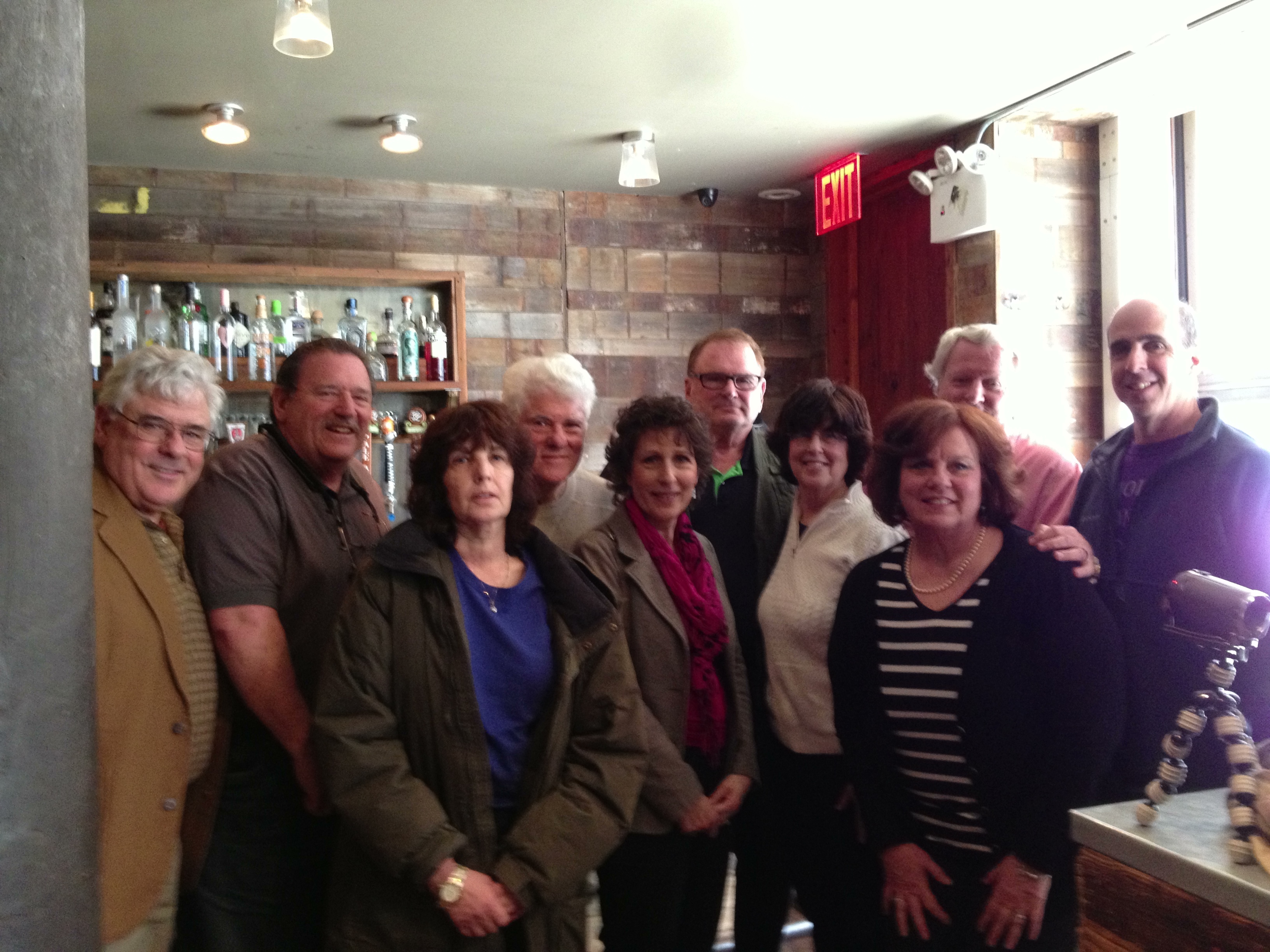
Ten of Joseph and Bessie's great-grandchildren on the Lower East Side

Ten of Joseph and Bessie’s great-grandchildren on the Lower East Side

Lower East Side tenement

Lower East Side tenement (Photo credit: Salim Virji)

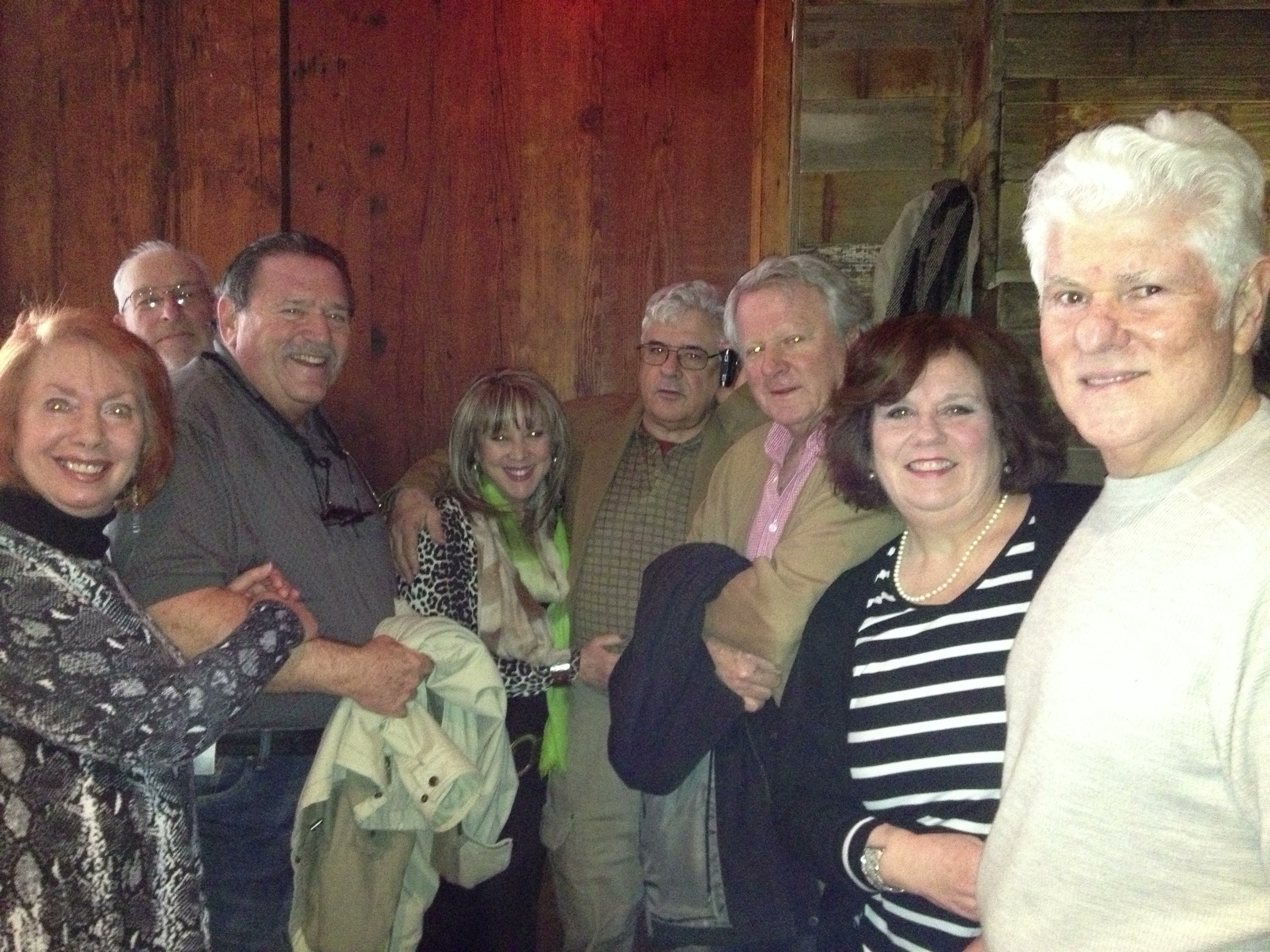
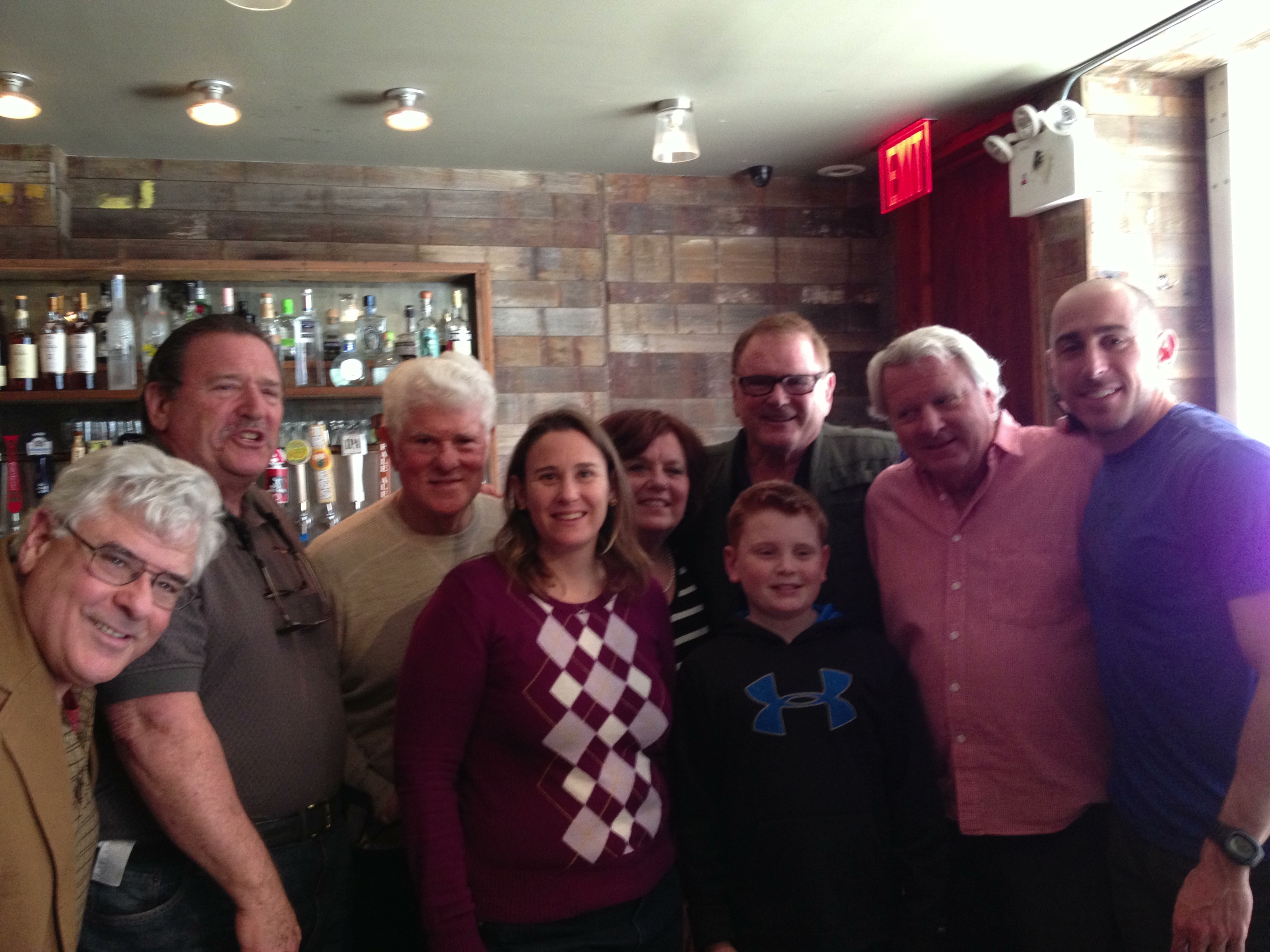
After much planning and anticipation, ten of Joseph and Bessie Brotman’s great-grandchildren, four of their great-great-grandchildren and one great-great-greatgrandchild as well as a number of spouses spent the weekend, talking, eating, laughing and connecting and reconnecting in NYC.  Some of us had known each other all our lives, some had never met at all, and some had not seen each other in many years.  We represented two of Joseph and Bessie’s children, Hyman and Gussie. Although a few people could not make it for various reasons, there were several others who wanted to join us but were unable to do so, including one of Max’s granddaughters and one of hisgreat- granddaughters and one of Abraham’s granddaughters.  We had a wonderful tour of the Tenement Museum and several of us walked along Ridge Street between Rivington and Delancey where our ancestors lived between about 1891 and 1907.

Sign outside Lower East Side Tenement Museum

Sign outside Lower East Side Tenement Museum (Photo credit: Wikipedia)

It was everything I had hoped it would be and more so.  We shared stories about our lives and about our grandparents and parents.  We shared photographs.  We got to know and learned about our children and grandchildren.  We came from as far away as Cleveland and Florida and Massachusetts.   Some lived closer by in New Jersey or even in NYC itself.    There were lots of photos taken. Included here are just a representative few to illustrate the excitement and love that was shared.

Saul and Manny's descendants

Saul and Manny’s descendants

cousins

cousins

photo 4 photo 3

I cannot speak for everyone, but for me it was magical.  A year ago I did not even know I had second cousins.  Through the course of doing family research, I had found all these new wonderful people, people I would have chosen as friends even if they were not my relatives.  We may live far apart, we may have known each other only for a short time, but I know that for me I felt a deep connection.  No, it’s not the same as growing up with a first cousin who shared grandparents and holidays and vacations, but it is nevertheless a real connection.  We all came from the same place, we all are here because Joseph and Bessie decided to leave Galicia and come to America.  We all started somewhere on Ridge Street where our grandparents learned to speak English and the skills that were necessary to rise above the poverty.

Ridge and Broome St

Lower East Side

Lower East Side (Photo credit: InSapphoWeTrust)

I am so grateful for all who were able to make it and all who helped make this dream come true.   I hope that those who were unable to join us will be able to do so another time.  And now I am inspired to starting planning the first Goldschlager-Rosenzweig reunion and then the second Brotman reunion.  These things take time and effort, and I was lucky to have lots of help  with the planning, but I encourage any of my fellow family researchers to reach out and make your family tree more than a two-dimensional document or digital record.  Find a way to meet your cousins and make them a part of your life.


UPDATE: For more photos, click here.

Enhanced by Zemanta

A Romanian Surprise

I am in NYC for the weekend and looking forward to meeting my Brotman cousins.  Pictures and stories to follow.

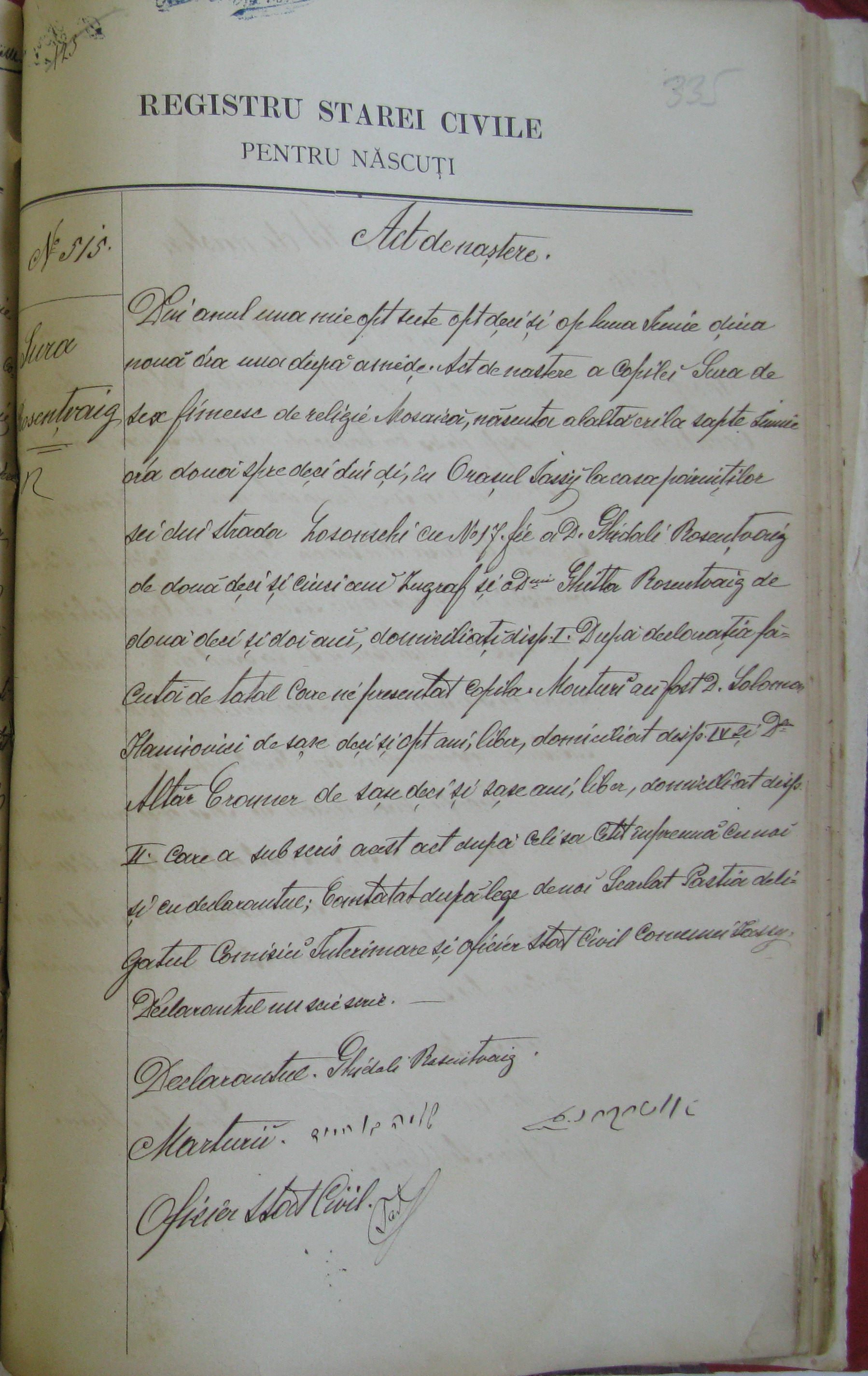
But first, a little Romanian surprise.  I received a few more documents from my Romanian researcher, Marius Chelcu.  One in particular surprised me.  It is a birth record for Sura Rosentvaig, born June 7, 1888, daughter of Ghidale and Ghitla Rosentvaig, of Iasi, Romania.

Sura Rosentvaig birth record

Sura Rosentvaig birth record

Sura Rosentzvaig_Birth record_1888 translation-page-001


The first surprise was that Gustave and Gussie were still living in Iasi as of June, 1888. According to his naturalization papers, Gustave arrived in the US on April 12, 1887.

naturalization petition gustave rosenzweig

naturalization petition gustave rosenzweig

Before 1906, the government did not require strict proof of arrival, and obviously Gustave fudged it a bit.  But when did he actually arrive? I still have not found a ship manifest for him or Gussie or the children, but this will narrow down the dates of my search by assuming they left Romania after June 7, 1888, and arrived before February 12, 1889, when I believe Abraham was born.

One inconsistency here is that according to earlier Romanian records, Gustave was born in 1856 and Gussie in 1864.Ghidale Rosentzveig_Birth record_1856-page-001

translation of marriage record

translation of marriage record

On Sura’s birth record dated 1888, it says Gustave was 25, making his birth year 1863, and Gussie was 22, making her birth year 1866.  I guess it just goes to show that Romanian records are no more reliable than American records.   Gustave and Gussie’s birth records, however, were created at the time of their marriage, not at their birth, whereas Sura’s was created at the time of her birth so presumably is more reliable in terms of her birthdate.

The second surprise is that Sarah, their second daughter, was born in Iasi, not in New York City.  Every census indicates that she was in fact born in New York.  This explains why I could not find a NYC birth record for Sarah, but why is she listed on the census as US-born? Lillie is listed (with one exception) as born in Romania.  Why not Sarah?

Rosenzweig children 1900 census

Rosenzweig children 1900 census

Gustave Rosenzweig family on the 1905 NYS census

Gustave Rosenzweig family on the 1905 NYS census

Rosenzweig family 1910

Rosenzweig family 1910

Kurtz family 1920

Kurtz family 1920

kurtz family 1930

kurtz family 1930

Sam and Sarah Kurtz 1940 census

Sam and Sarah Kurtz 1940 census

I am still searching for Sarah’s descendants and know their names, but have not yet been able to contact them.  I wonder if they know she was born in Romania, not in the US.

Have a good weekend, everyone!


Enhanced by Zemanta

A Small Chink in the Wall

Just last week I wrote that I was putting aside for now my attempt to track Lizzie and Ray Rosenzweig, the two youngest children of Gustave and Gussie Rosenzweig.  I had hit a brick wall and figured I’d never find them.  So I moved on, determined not to keep hitting my head against the wall.

And then I got some clues.  First, Joseph’s grandson sent me a photograph of Lizzie, labeled Lizzie Horowitz.

Lizzie Horowitz

Lizzie Horowitzl


He said that her married name had just come back to him.  Then in an email exchange with one of Rebecca Rosenzweig’s grandsons, he mentioned that he knew that his father Irwin had reconnected with Lizzie in Florida.  Two clues, and I was off and running, back to ancestry, PeopleFinders, Family Search, etc.

I did not find much, but I did find one 1930 census for a Betty Horowitz whose parents had both been born in Romania.  One of my other cousins had mentioned that Lizzie had also been called Betty.

Horowitz Family 1930

Horowitz Family 1930

She lived in Brooklyn, was married to Julius Horowitz, and had a three year old daughter named Mary Lyn.  I asked my third cousins whether either of those names rang any bells, and one wrote that the names Julius and Marilyn did seem familiar and that she remembered a cousin Marilyn who had moved to Florida.

I located Lizzie, sometimes called Betty, and Julius on the 1925 and 1940 census reports as well.  They had a second daughter born around 1931 named Harriet.

Now I am in the process of trying to find Marilyn and Harriet or their descendants.  I have not yet found a death record for either Lizzie or Julius, but I think I have the birth dates for Marilyn and Harriet from the NYC birth index.  Searching by those birth dates, unfortunately, had not helped much.  There are many women with those first names born on those dates.  I’ve had better luck with Marilyn, and if I limit the search to Florida, I can eliminate a few more.  But now what?

Now it’s a game of trying to contact family members of those Marilyns who remain and hope that one of them is the daughter of Lizzie Rosenzweig and Julius Horowitz.   To be continued…I hope.  Thanks to my newly found third cousins, there is hope.

English: A crack in the wall, Newbridge on Usk...

English: A crack in the wall, Newbridge on Usk This crack is in the east parapet of the road bridge at Newbridge on Usk. (Photo credit: Wikipedia)

Enhanced by Zemanta

More Manna from Heaven: Of Bessie, Joseph, Max and the Brotmanville Brotmans

As I wrote yesterday, the notes of the conversation with my Aunt Elaine about the family history are remarkably accurate.  Although much of what was in there I had learned either from my mother or brother or cousins or from my own research, there were a few stories in the notes, a few comments, that revealed something I had not known for sure before.  Keeping in mind the overall accuracy of the information that my aunt gave to Joel, it is very interesting to think about this additional information.

For example, there are some details about Bessie and Joseph that were revealing.  According to the notes, Bessie and Joseph were first cousins.first cousins  Although family lore did say that Joseph and Bessie were cousins, I did not realize that they were first cousins. Since both Joseph and Bessie had the surname Brotman or Brot, it seems that their fathers must have been brothers. What’s odd about this is that it means that Joseph’s father Abraham had a brother who was also apparently named Joseph, if the records are accurate.  It seems unlikely, given Jewish naming patterns, that Abraham would have named his son the same name as his brother, unless the brother had died.  Since Bessie was younger than Joseph (her husband), that is not possible.  The other possibility is that Bessie’s father and Joseph were both named for the same ancestor.  And, of course, the final possibility is that the records that indicated that Bessie’s father’s name was Joseph were incorrect.

Joel’s notes also indicate that after Joseph’s first wife died, leaving him with four children, “they decided” that Bessie should marry Joseph to help with the children.they decided  The notes don’t indicate who made the decision, but it probably was not Bessie. It’s sad to think of my great-grandmother being put in that situation, and it certainly takes the idea of any romance out of the equation.  But Joseph and Bessie went on to have five children of their own, so I’d like to assume that although it may have started as an arranged marriage for the convenience of Joseph, that love grew with time and the shared experiences and children that Joseph and Bessie had.  Call me a romantic.  I know that I am.

After Joseph himself died in 1901, the notes report that Bessie did laundry work to make money to support herself and her children, including Sam, who was just an infant, Frieda, Gussie, Tillie, and Hyman.  Tillie and Hyman were working in sweatshops, so Gussie, my not-yet-seven year old grandmother, stayed home to take care of Frieda and Sam.  Not long after, out of desperation, Bessie married “the shoemaker Moskowitz,” who my aunt reported to be very stingy.  He had five children of his own. moskowitz

I assume that my aunt’s source for these stories was my grandmother, who obviously resented Philip Moskowitz and chose to live with her sister Tillie in Brooklyn instead of staying with her mother and Sam and Frieda when Bessie remarried, so I know I have to consider the source.  My great-grandmother Bessie lived with Philip for many years, more years than she lived with Joseph, and she was buried near him, not Joseph, when she died. Bessie and Philip Moskowitz headstones As with her marriage to Joseph, her relationship with Philip may have started out of need and convenience, but it also must have developed into something more.  Or at least I hope it did.

Bessie Brotman

Bessie Brotman

Of course, it is also possible that the source of this information was Bessie herself.  Bessie did not die until 1934, when my aunt was seventeen years old.  Knowing my aunt’s interest in the family history, I assume that she must have talked to her grandmother Bessie herself as she grew up, so perhaps the stories are not just my grandmother’s version of the facts, but Bessie’s version as well.

One other comment from these notes is a rather sweet one that I hope Max Brotman‘s grandchildren and great-grandchildren will appreciate:

max mason


Obviously, Max, who was probably the most successful businessman of the Brotman children, was also a very generous man.  He provided food to my mother’s family during the Depression.  Here is a great-uncle I’d never even heard of, someone my mother was too young then to remember, who helped out my grandmother and her family in a time of need.  Thank you, Max.

Max Brotman

Max Brotman


The final tidbit from the notes from Joel’s conversation with my aunt is this one:brotmanville


In case you cannot read that, it says, “Brother came to America landed in NJ started a chicken farm. So successful that they named the town after him.”  The quote points back to Joseph.  This is obviously a reference to Brotmanville.  Although it is not entirely accurate—Brotmanville was named for Abraham Brotman, who started a manufacturing business to employ the residents whose farms were failing, not for Abraham’s father Moses, who had the chicken farm—the note nevertheless provides support for the claim that we are in fact related to the Brotmanville Brotmans.  As you may recall, Moses Brotman also had a father named Abraham, as revealed by his headstone and death certificate.Moses Brotman headstone Moses Brotman death certificate_0001_NEW


He was born in 1847 in Galicia, making him a contemporary of Joseph, my great-grandfather.  I cannot rely on these notes alone to assert with any certainty that Moses and Joseph were brothers, but given the overall accuracy of what my aunt told Joel, it is enough evidence for me to start once again to try and find a connection.  If we can find that connection and also learn where Moses Brotman lived in Galicia, it will help to answer a number of lingering questions.

Moses BrotmanHe certainly has the Brotman cheekbones.  Could this be what Joseph looked like also?


Enhanced by Zemanta

Mystery solved, Questions Answered!  The Internet Is Magical


Internet

Internet (Photo credit: Wikipedia)

The internet is magical.  I’ve hit a lot of brick walls lately, but I’ve also found some goldmines. Recently I’ve been able to find a number of my third cousins—grandchildren of my grandfather’s first cousins.  I had already located Joe Rosenzweig’s grandchildren and one of Rebecca Rosenzweig’s grandchildren, and now I have located one of Abraham Rosenzweig’s grandchildren, Gerry.

I’ve also located other third cousins previously,  Tillie’s great-granddaughter Jean and her family, and many second cousins: David Goldschlager’s grandson Richard and Betty Goldschlager Feuerstein’s grandchildren Barry, Karyn, Robyn and Gayle.  It’s all quite remarkable.

Gerry and I had a wonderful conversation this morning, sharing information and family stories.  Gerry did tell me that the mystery photo with the Yiddish inscriptions was not a picture of his grandmother Rebecca and her grandsons.  He does not know who the people in the photograph are, but he is certain it is not his grandmother.  Also, since Irving had two daughters and no sons, the reference to “Yitzhak’s son” must be to a different Irving.

I can only imagine what our grandparents would think.  Would Isadore and David and Betty and Leah and her siblings and Abraham and Joe and Rebecca be amazed that we all found each other, or would they have assumed that family members would always have stayed in touch? Certainly they could never have envisioned that someday there would be technology that allows us all to communicate instantly and freely across the oceans and time zones, to send photographs to each other over a digital network, to find personal records and documents that help lead us to one another.  After all, many of us could not have envisioned any of this ourselves just 25 years ago.  Like I said, the internet is magical.  Thank goodness we have it.


Emptiness: The Magic Trick, magician & assista...

Emptiness: The Magic Trick, magician & assistant, top hat and cape, painted panels, magic box, red, black, blue, white, painting, Seatac Airport, Seattle, Washington, USA (Photo credit: Wonderlane)


Enhanced by Zemanta

My Grandfather’s Cousin Rebecca: Another Life Cut Short

About ten days ago I posted about my search for Rebecca Rosenzweig, my grandfather’s first cousin and daughter of Gustave and Gussie Rosenzweig.  I had certain hunches about who she married and what happened to her, but was awaiting documentation to confirm those hunches.

The first document provided evidence of Rebecca’s birth on May 27, 1893.

Rebecca Rosenzweig birth certificate 1893

Rebecca Rosenzweig birth certificate 1893

It’s interesting that in 1893 Gustave was still using Ghedale as his first name and Gussie was still using Ghitel, as in Romania; they were spelling the surname Rosentveig.  Gustave was already a painter, and they were living at what seems to be 34i 74th Street in Manhattan. (It was actually 341 East 74th Street, according to a city directory published the following year.)

One mystery raised by the birth certificate is that it reports that Gussie had already had five children, four of whom were then living.  According to my research, in 1893, Gussie had four living children, Lillie, Sarah, Abraham, and Rebecca, and one child who had died, David (1891-1892).  Who could the other child be?  Lillie was probably born in 1885, Sarah probably in 1887, Abraham probably  in 1889, David in 1891.  Was there another child who was born between 1885 and 1893 who was living in 1893 but who died before the 1900 census? A quick search of the NYC death index for children with surnames that sound like Rosenzweig who were born between 1885 and 1893 and who died between 1893 and 1900 turned up a horrifying number of young children who died in that period with surnames similar to Rosenzweig: 366.  My guess is that one of those 366 children was a child of Gustave and Gussie, just adding to the list of children they lost.  I will have to sift through them and search for the death certificates to see if I can figure out which ones might be my lost cousin.

One hunch I’d expressed in my last post was that Rebecca had married a man named Frank Elkin in 1914, based on the fact that there was only one Rebecca Rosenzweig in the NYC marriage index for the appropriate time period.  I was also sure that this was correct because she and Frank ended up living on the same streets as Rebecca’s family on both the 1915 and 1920 census reports. I also wondered whether Rebecca was the one who introduced my grandfather, her cousin, to my grandmother, her neighbor on Pacific Street.   My hunch that this was the right Rebecca was confirmed when I received the marriage certificate.

Rebecca and Frank Elkin marriage certificate

Rebecca and Frank Elkin marriage certificate

This is obviously the correct Rebecca, as seen by her parents’ names on the certificate.  Rebecca was living at 1166 Nostrand Avenue, the same address Gustave gave in 1913 when his son Harry died.  Perhaps this means that Gustave and Gussie were still living together in 1914 when Rebecca married Frank.

Having confirmed that I had the correct Rebecca, I now knew that the information on the 1920 census reporting that Rebecca’s parents were from Minsk, Russia, was incorrect, just another example of how unreliable census information can be.

Elkin Family 1920 census

Elkin Family 1920 census

More importantly, I was also now able to trace what happened to Rebecca.  I had not been able to find her on the 1930 census, but I had found a Frank Elkin, living with his parents Louis and Ida and siblings in Brooklyn, along with a woman named Fannie, listed as the daughter-in-law of Louis, and two children, Irwin and Stanley, listed as Louis’ grandsons.

Frank Elkin with his parents 1930 census

Frank Elkin with his parents 1930 census

From the marriage certificate, I now know that the Frank who married Rebecca was the son of Louis and Ida Elkin, so this was clearly the same Frank.  But where was Rebecca? Who was Fannie? And who were Stanley and Irwin?

I could not find a death certificate for Rebecca, but I was able to find a headstone through Jewishdata.com and findagrave.com.  I knew now that Rebecca died on January 22, 1921, just two years after her son Irving was born in 1919 (as per the 1920 census). She was only 27 years old.

Rebecca Elkin's headstone

Rebecca Elkin’s headstone

Having confirmed that Frank Elkin was in fact Rebecca’s husband, I wanted to figure out who Fannie and Stanley were—were they his second wife and child or the wife and child of one of his brothers, Edward or Matthew? I looked back at the 1920 census and found Frank’s parents Louis and Ida and his siblings.  His brothers were both single and living at home.

Louis Elkin and family 1920 census

Louis Elkin and family 1920 census

I then searched the NYC marriage index for Edward and Matthew Elkin and saw that both were married after 1930.  Thus, I inferred that Fannie was indeed married to Frank as of 1930.  But I could not find a marriage record in NYC for them.

I searched forward to the 1940 census and was able to find a Frank and Frances Elkins with two sons, Irving and Stanley, living in Boston.

Frank Elkin and family 1940 census

Frank Elkin and family 1940 census

Could this be just coincidence? The sons were the right ages—Irving was 20, Stanley was 14.  Frances could certainly be the same as Fannie.  The name was Elkins, not Elkin, but the 1920 census for Frank’s parents also had the surname as Elkins, not Elkin.  But what were they doing in Boston? I thought perhaps Frances had been born in Boston, but the census said that she was born in New Jersey.  (It also says that Frank was born in Massachusetts, but that has to be an error.) It reports that Irving was born in New York and Stanley in Boston.

Then I searched for records of Frank Elkin or Elkins in the Boston area, and I found on the Massachusetts marriage index a listing for a Frank Elkins and Frances Reiner, married in 1922, the year after Rebecca had died.  Perhaps Frank had left NYC to start anew after losing Rebecca? Where had he met Frances? Stanley was born in Massachusetts, so they must have been living there in 1925 when he was born (which also explains why Frank is not found on the 1925 NYS census).  But then they moved back to Brooklyn as of 1930, yet were back in Boston by 1940.

According to his 1942 draft registration for World War II, Frank owned a dressmaking business in Boston.

Frank Elkins World War II draft registration

Frank Elkins World War II draft registration

His Mason’s membership card dated 1945 confirms that he was still living in the Boston area (Newton) as of that date.

Mason Membership card

Mason Membership card

I was fortunate to be able to find one of Frank’s grandchildren, who told me that Frank had been a scrapper or bare-handed boxer when he was a young man.  According to family legend, Frank had boxed with his brother, a champion boxer in the Navy himself, over who would get to date Rebecca Rosenzweig.  Frank won that fight and not only dated Rebecca; he married her.  Frank’s grandson also told me that Frank never forgot his first wife although he also loved Frances very deeply.  Apparently Frank and Frances did a wonderful job raising Irwin and Stanley, as they were never thought of as half-brothers, but as brothers.  Frank also must have been a terrific grandfather, as his grandson said he still thinks of him often.

Frank Elkins and two of his grandchildren

Frank Elkins and two of his grandchildren

It appears that the Elkins family ultimately developed strong New England roots.  Irwin, Rebecca’s son, my second cousin once removed, ultimately settled in Brattleboro, Vermont, where he and his wife Muriel were the co-owners of Brattleboro Kiln Drying and Milling Company, which they sold after they retired. They were both devoted to the Brattleboro community and made significant contributions to its growth over the 50 years they lived there, according to Frank’s grandson.   He also told me that Irwin had been able to connect with some of Rebecca’s relatives in Florida late in his life.  Irwin died in 1996 in Boynton Beach, Florida, and is buried along with his wife Muriel in Brattleboro, Vermont.

Irwin and Muriel Elkins

Irwin and Muriel Elkins

Stanley, Irwin’s half-brother, became an influential American history scholar who died only last year.  According to his obituary, Stanley Elkins “graduated from Boston English High School and enlisted in the U.S. Army in 1943, where he served in the 362nd Infantry Regiment in Italy. After the war, Stanley attended Harvard University on the G.I. Bill and married Dorothy Adele Lamken in 1947. He graduated from Harvard in 1949 and received a master’s and a doctorate in American history from Columbia University, where he studied with historian Richard Hofstadter. …  In 1959, Stanley’s doctoral dissertation, “Slavery: A Problem in American Institutional and Intellectual Life”, was published by the University of Chicago Press. His book received widespread attention from scholars, politicians, and students, and is considered a seminal work on the subject of slavery in the United States. Stanley was hired by Smith College in 1960, became the Sydenham Clark Parsons Professor of History in 1969, and continued his career there until his retirement in 1993.”

Stanley Elkins

Stanley Elkins

When I had first seen the name Stanley Elkins on the 1930 census, I had immediately wondered whether this was the same Stanley Elkins whose book on slavery I had read in my American history course on the Civil War during college.  The obituary confirmed for me that it was the same Stanley when it identified Stanley as “the son of Frank and Frances (Reiner) Elkins.”  Discovering that gave me the chills.  Stanley Elkins died only six months ago and lived not far away from me.  He was not a blood relative, but nevertheless he was someone whose work I had read and admired, and he was connected to me through family.

The last bit of research I need to complete regarding Rebecca relates to one of the other questions raised in my original blog post about her life: the child who was born before Frank’s World War I draft registration in 1917 but who died before the 1920 census, Daniel Elkin.  I am still awaiting the death certificate for Daniel Elkin, and in the course of my subsequent research I have learned that a second child also had been born and died before 1920, Milton, so I need to order that death certificate as well.  I also am looking for Rebecca’s death certificate to find out what cut her life short at 27.

Once I obtain those documents, I will have learned a great deal about the short life of Rebecca Rosenzweig Elkin, my first cousin twice removed, my grandfather Isadore’s first cousin, and perhaps the cousin who introduced him to my grandmother.  In her 27 years Rebecca experienced not only the loss of several siblings, but also the loss of two young sons.  She never got to see Irwin, the one son who survived, grow up.  I hope that by recording her life, the grandchildren and great-grandchildren she never knew will get to know a little more about her and her family.

Enhanced by Zemanta