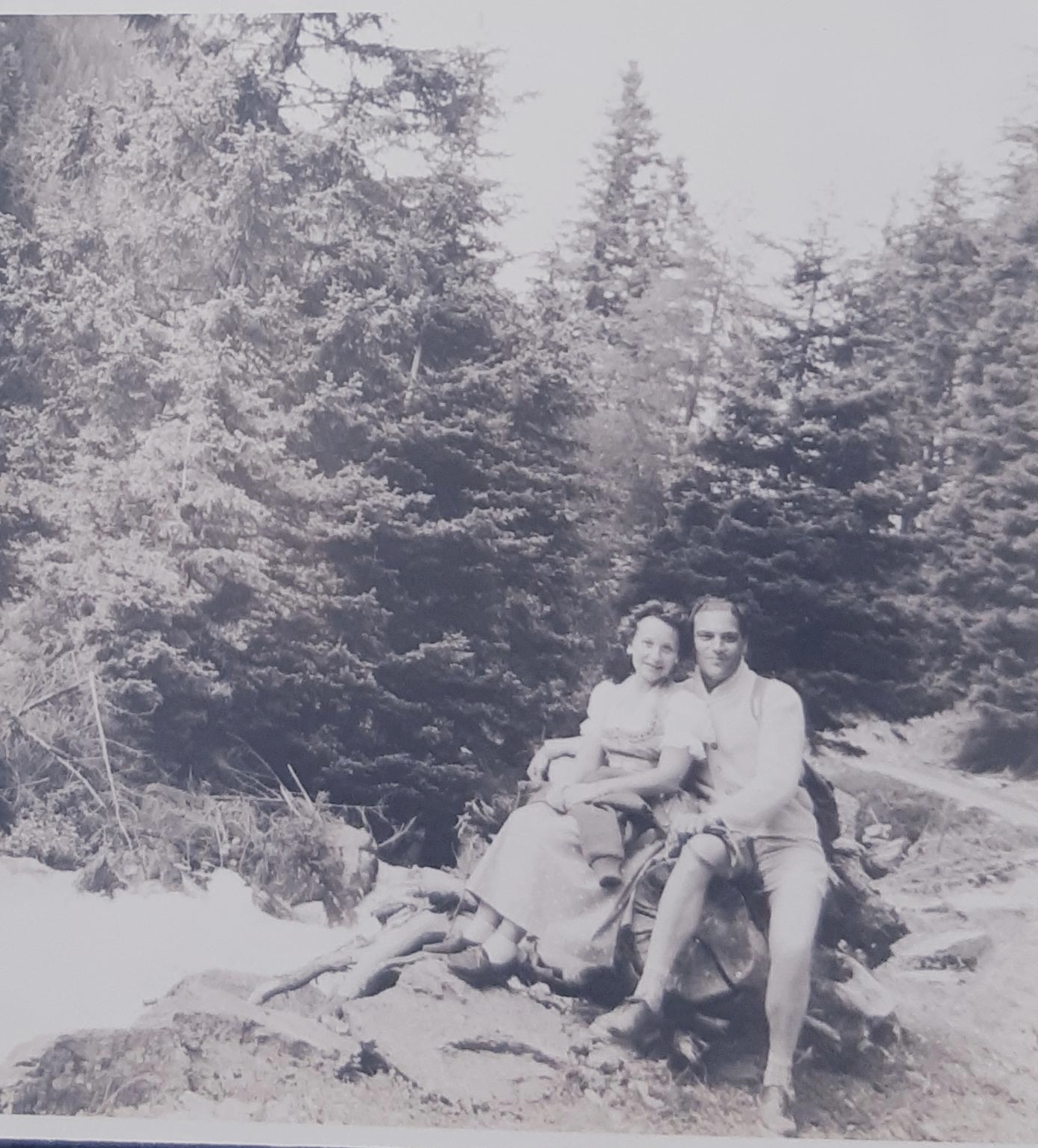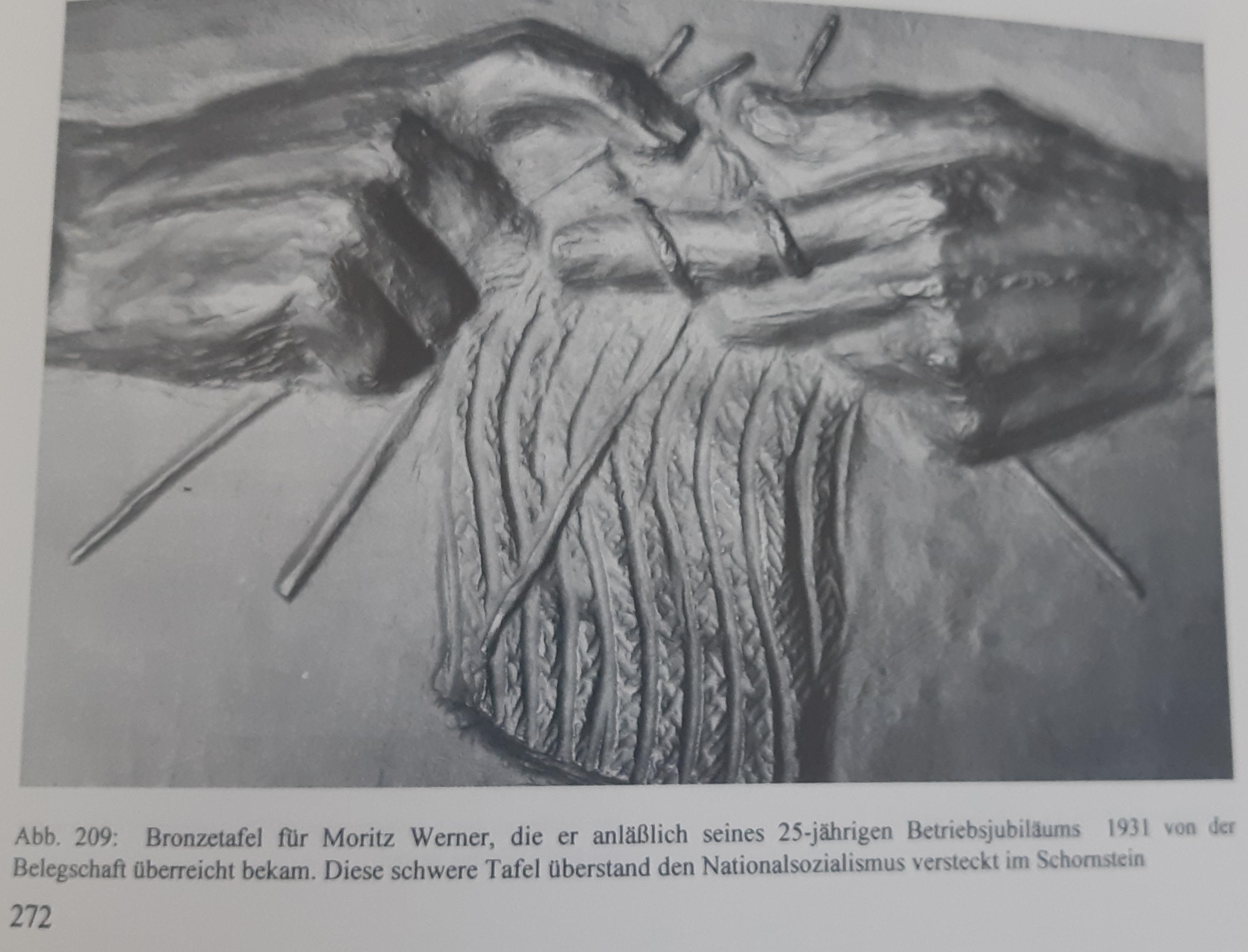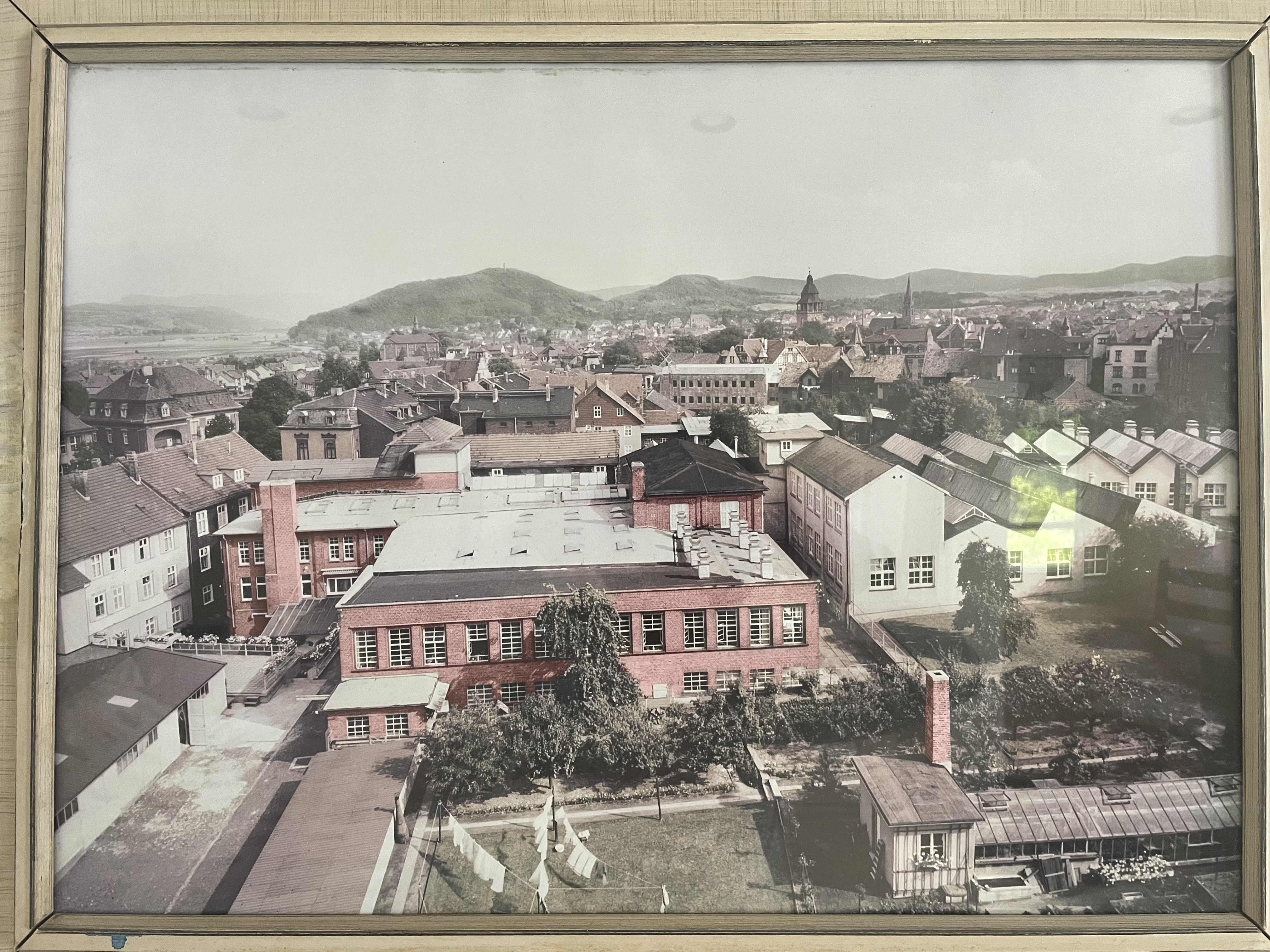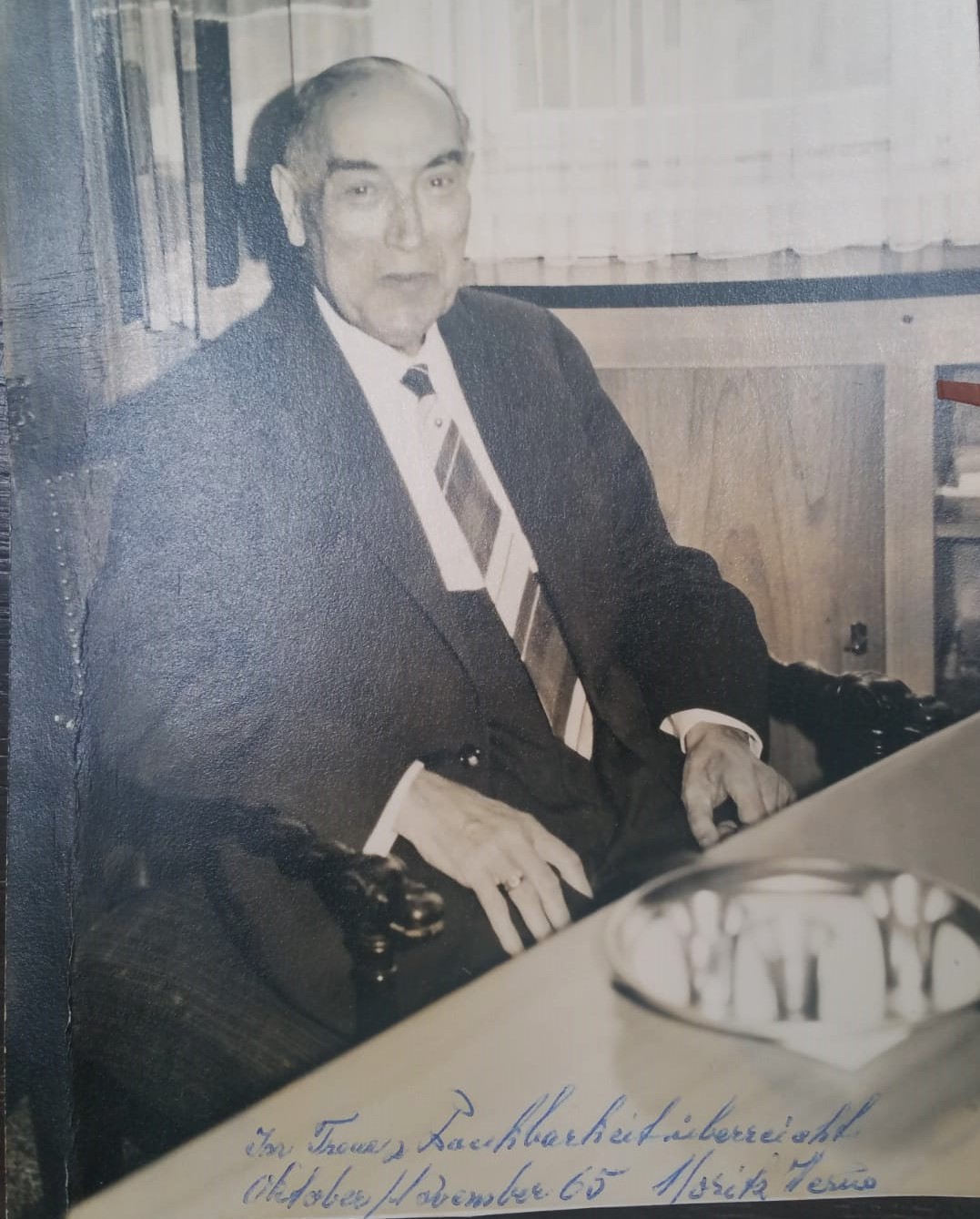
Moritz Werner and Family Revisited, Part I

I will return to the Blumenfeld saga soon, but first I want to share another chapter in my Goldschmidt family history. In early May I received a comment on my blog from a woman named Joyce who turned out to be my fifth cousin on the Goldschmidt branch of my family tree. Since finding my blog, Joyce and her sister Judith have both been in touch and have been incredibly generous in sharing the stories and many photographs of their branch of the Goldschmidt family tree.1

Joyce and Judith and I are all descended from Jacob Falcke Goldschmidt and Eva Seligmann, our mutual four-times great-grandparents. Joyce and Judith are descended from their son Meyer Goldschmidt, and I am descended from their son Seligmann Goldschmidt. This chart shows our relationship to each other with my line of descent to my father John Cohen on the left and Judith and Joyce’s line of descent to their father Max Werner on the right.

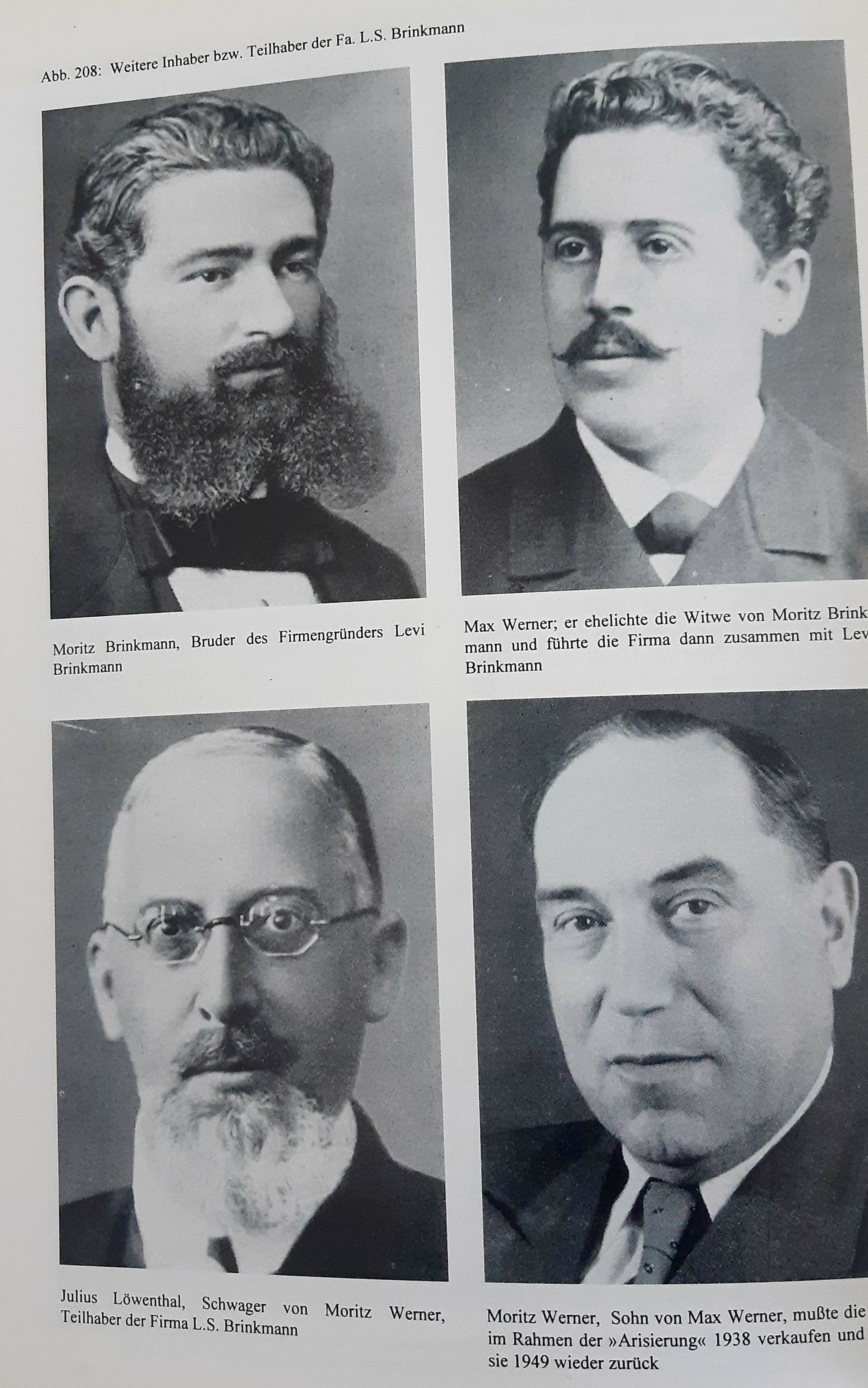
I was particularly pleased to hear from Joyce and Judith because I had, as the title of this post reveals, many unanswered questions about their grandfather Moritz Werner and his family. To recap what I did know, as you can see in greater detail and with citations and images in my earlier posts, Helene Katzenstein, the daughter of Amalie Goldschmidt, had first married Moritz Brinkmann, son of Susskind Brinkmann, who had founded the successful knitwear company LS Brinkmann. Moritz and his brother Levi Brinkmann were also partners in LS Brinkmann. (Levi Brinkmann was married to Lina Stern, daughter of Sarah Goldschmidt, Amalie Goldschmidt’s sister, so Levi and Moritz married two women who were first cousins.)

Joyce and Judith shared these photographs of Susskind Brinkmann, Levi Brinkmann, and Moritz Brinkmann.

Susskind Brinkmann Courtesy of the family

Levi Brinkmann Courtesy of the family

Moritz Brinkmann Courtesy of the family

Sadly, Moritz Brinkmann died just six years after marrying Helene on September 8, 1878, at the age of thirty-two. Three years later on February 7, 1881, Helene married Max Werner, who was also partner in LS Brinkmann.

Helene and Max had five children, and Joyce and Judith’s grandfather Moritz, born in 1888, was their fourth child and first son and was named, according to the family, in honor of Helene’s first husband Moritz Brinkmann. I find that an incredibly generous and loving gesture on the part of Max Werner—to have his own son named in memory of his wife’s first husband. But obviously Max had also worked with Moritz Brinkmann and thus had his own relationship with him.

Mortiz Brinkmann and Max Werner, the two husbands of Helene Katzenstein  Courtesy of the family

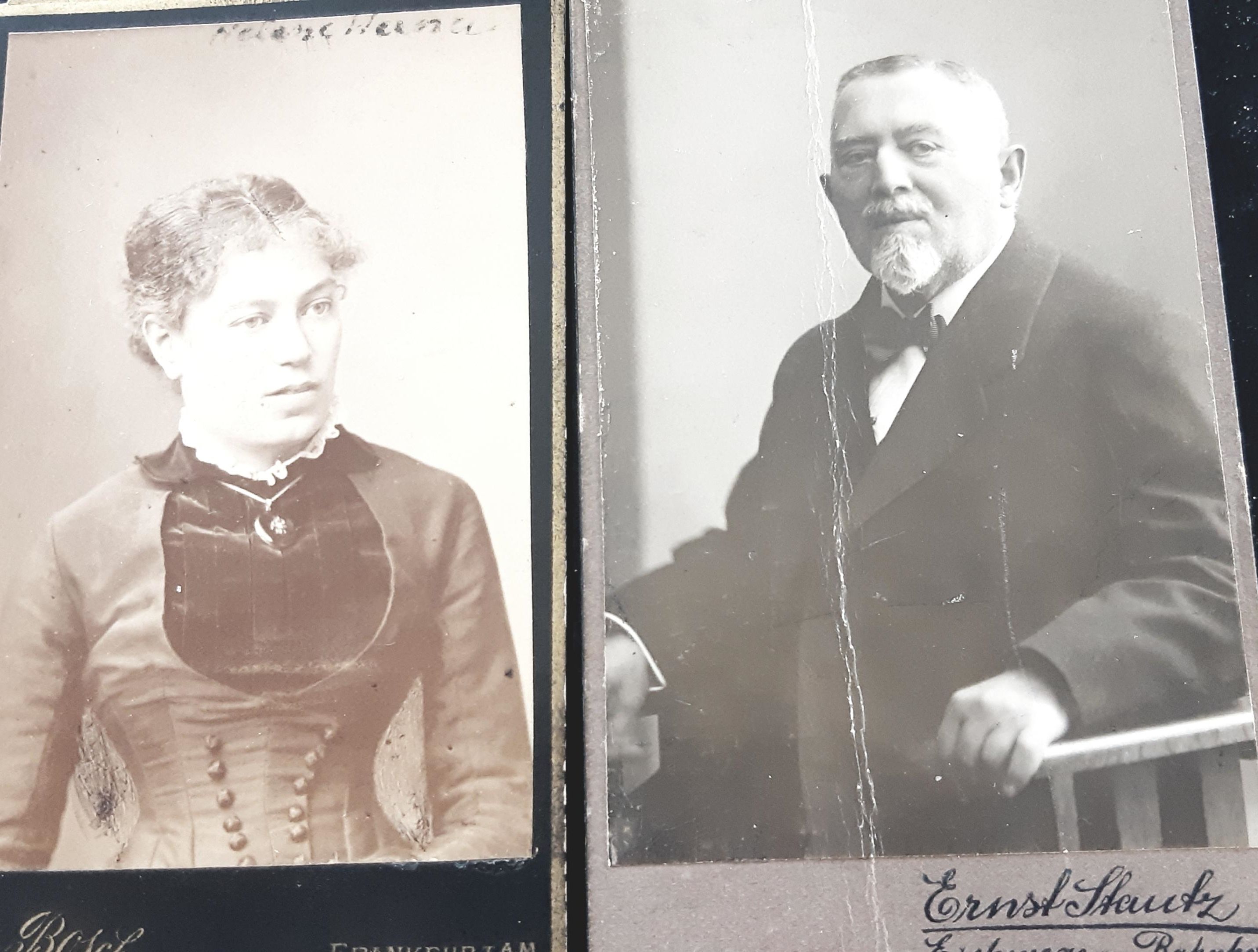
Helene Katzenstein Werner died on December 31, 1912, when she was 58. Here are a few photographs of Max and Helene Katzenstein Brinkmann Werner, courtesy of their great-granddaughters.

Max Werner Courtesy of the family

Helene Katzenstein Werner Courtesy of the family

Max and Helene Werner Courtesy of the family

Max and Helene Werner Courtesy of the family

Max and Helene Werner Courtesy of the family

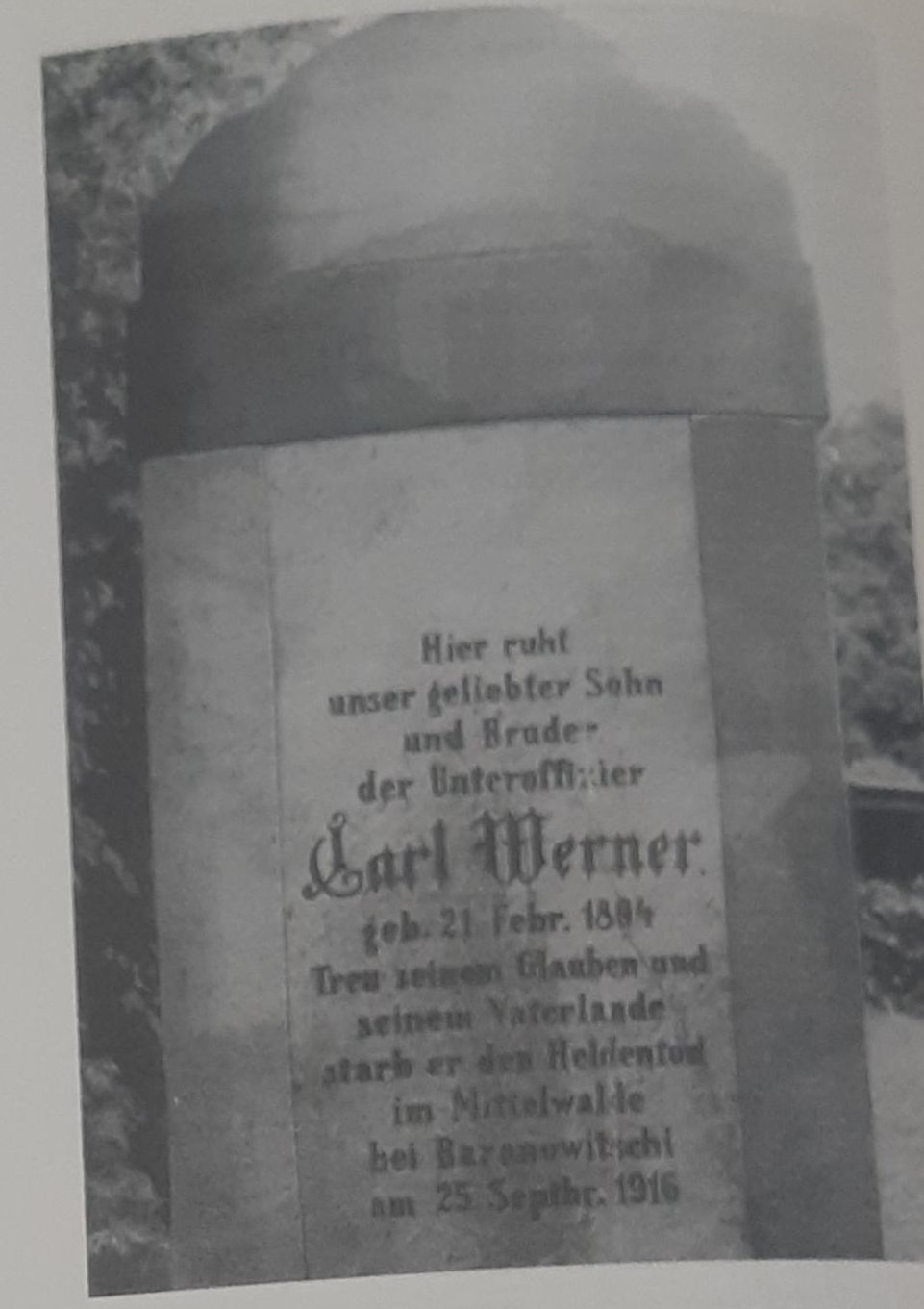
Helene and Max’s youngest child and second son Karl was killed on September 25, 1916, fighting for Germany in World War I, as I wrote about in greater detail here. Joyce and Judith shared this wonderful photograph of Karl in uniform (far right) with his parents Max and Helene and one of his sisters sitting in a carriage.

Karl Werner, far right. Max and Helene Werner in rear seat. Driver and a Werner daughter in front. Courtesy of the family

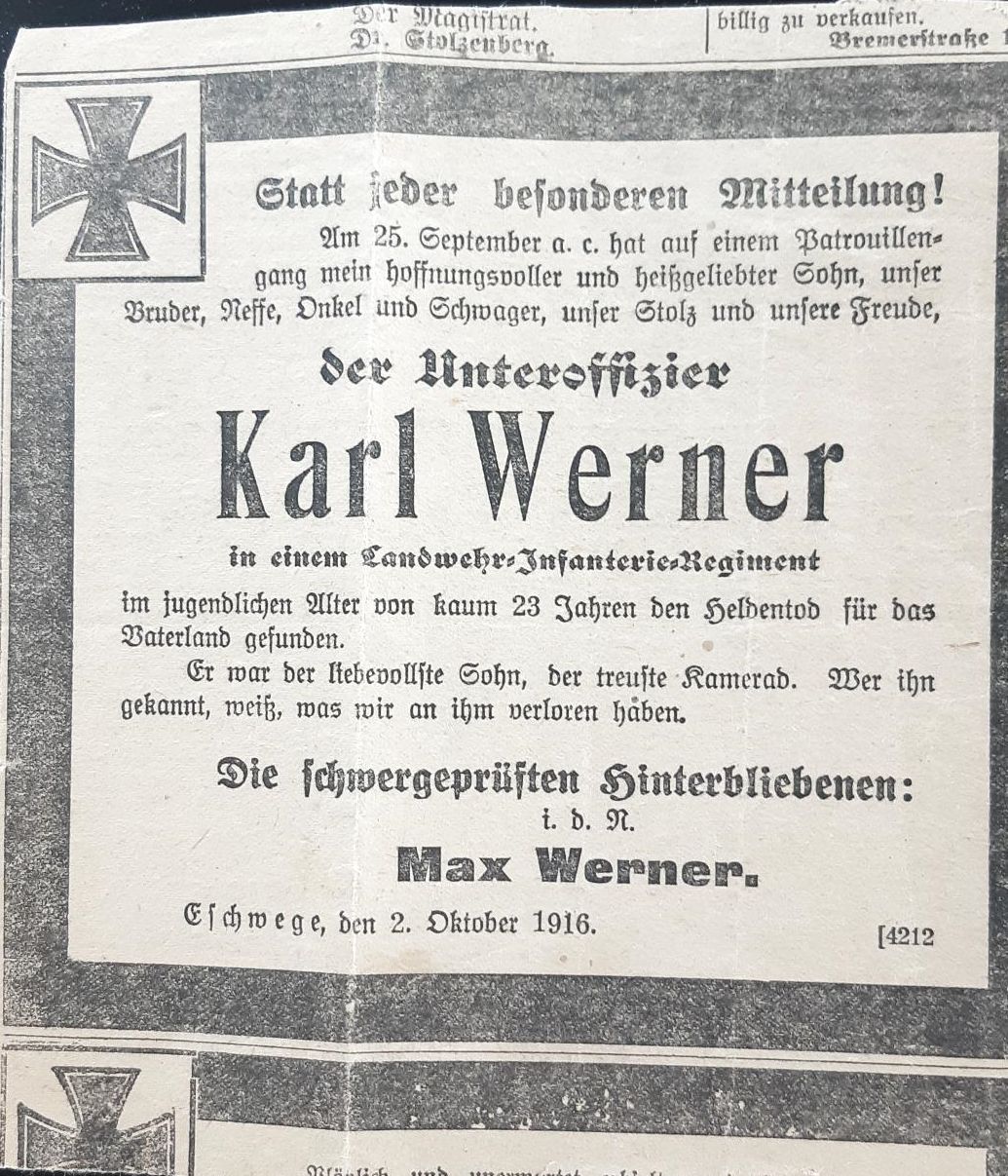
They also sent me these photographs of Karl’s gravestone and the memorial notice published in his memory by his parents.

Joyce translated the memorial notice as follows:

On 25th September our hopeful and beloved son, our brother, nephew, uncle and in-law, our pride and joy, went on patrol.

Underofficer

Karl Werner

Of the defence and infantry regiment


At the young age of barely 23 years died a hero’s death for his fatherland.

He was a son full of life, a faithful comrade. Those who knew him know what we have lost.

His sorely tried and bereft

(father)

Max Werner

Reading that conveys so painfully even after 106 years what the family lost and how heartbroken they were by this loss.

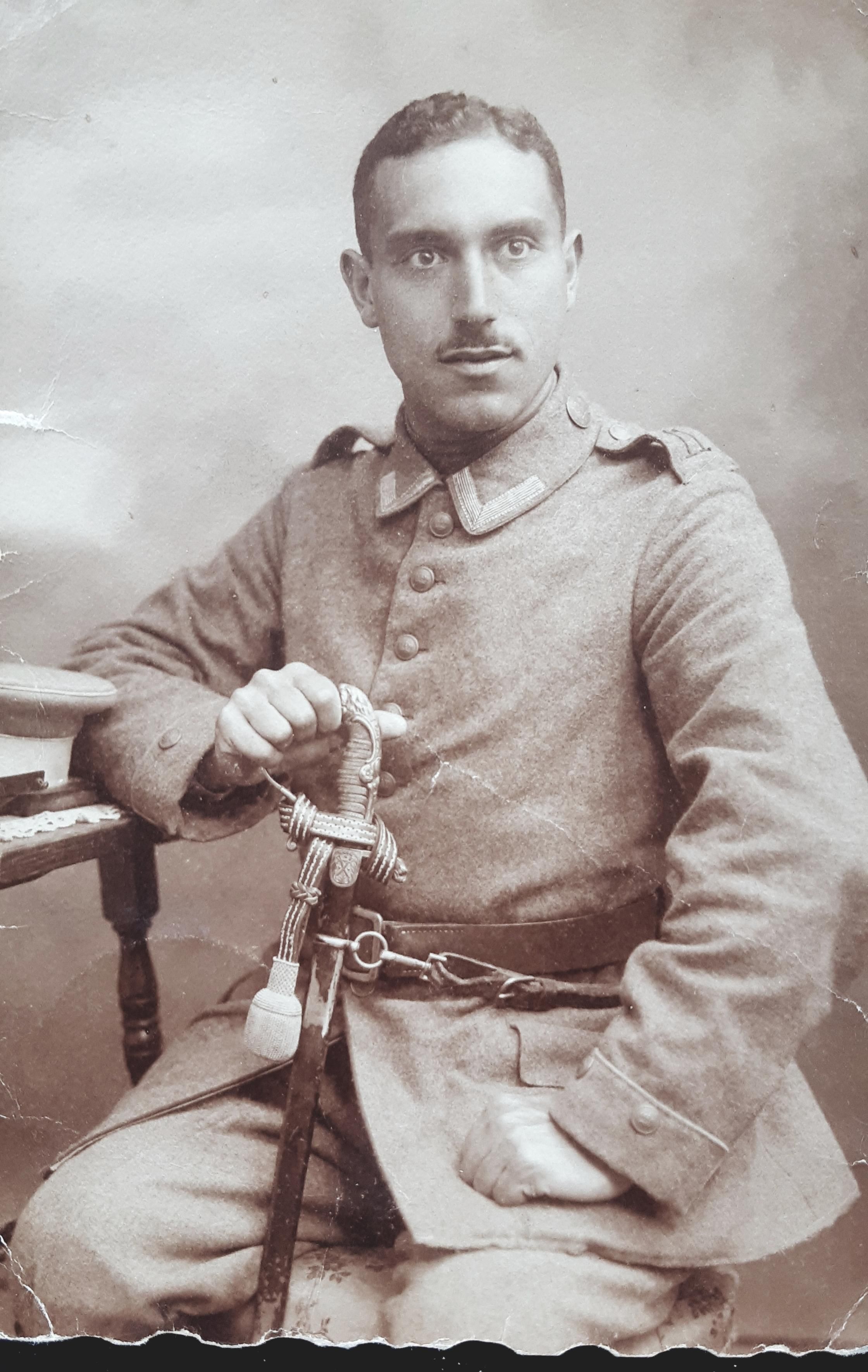
What I did not know before Joyce contacted me was that Max and Helene’s only other son, Moritz, also served in the German army during World War I, and he suffered grievous injuries during his service. Joyce was not certain about how he was injured, but he suffered a crushed hip perhaps from being run over by a tank or the wheels of a gun carriage while serving in France. He was physically impaired for the rest of his life, relying on crutches and later a wheelchair to get around.

Here are some photographs of Moritz before his injury and then afterwards.

Moritz Werner in World War I uniform Courtesy of the family

Moritz Werner in World War I uniform Courtesy of the family

Moritz Werner in World War I uniform Courtesy of the family

Moritz Werner in World War I uniform Courtesy of the family

Moritz Werner after suffering injuries in World War I Courtesy of the family

But before he was sent off to fight for Germany, Moritz had met a young woman named Jenny Kahn and fallen deeply in love. As Moritz’s granddaughters Joyce and Judith tell the story, Jenny’s father Moses Kahn arranged for Jenny to meet eligible men, but warned her not to make any commitments until after the war, fearing that the man she chose would be severely injured during the war. He allowed her to meet Moritz Werner since he came from a respectable Orthodox family and was a friend of Jenny’s brother.

Well, according to Joyce and Judith, Jenny and Moritz fell in love at first sight. She was taken by his good looks and his piercing dark eyes, and when he proposed that very afternoon, she accepted, ignoring her father’s request that she hold off making any commitments until after the war.

And then Moritz went off to war, and as Moses Kahn had feared, suffered a devastating injury. He wrote to Jenny from the field hospital, releasing her from their engagement and telling her to keep the ring and find someone else. According to Joyce, Jenny’s response was something like, “The engagement is off when I say it’s off!”

And so they were married on August 19, 1918. Joyce and Judith shared a photograph of their wedding. You can see that Moritz has a cane in his hands. According to his granddaughters, he had to be carried to the chuppah.

Wedding of Moritz Werner and Jenny Kahn 1918 Courtesy of the family

Four years later on September 5, 1922, Jenny gave birth to their only child, Max Werner, named for his grandfather Max Werner, who had died on October 2, 1919, a year after his son’s wedding. Here is a photo of Jenny, one of Max, and one of the entire family.

Jenny Kahn Werner Courtesy of the family

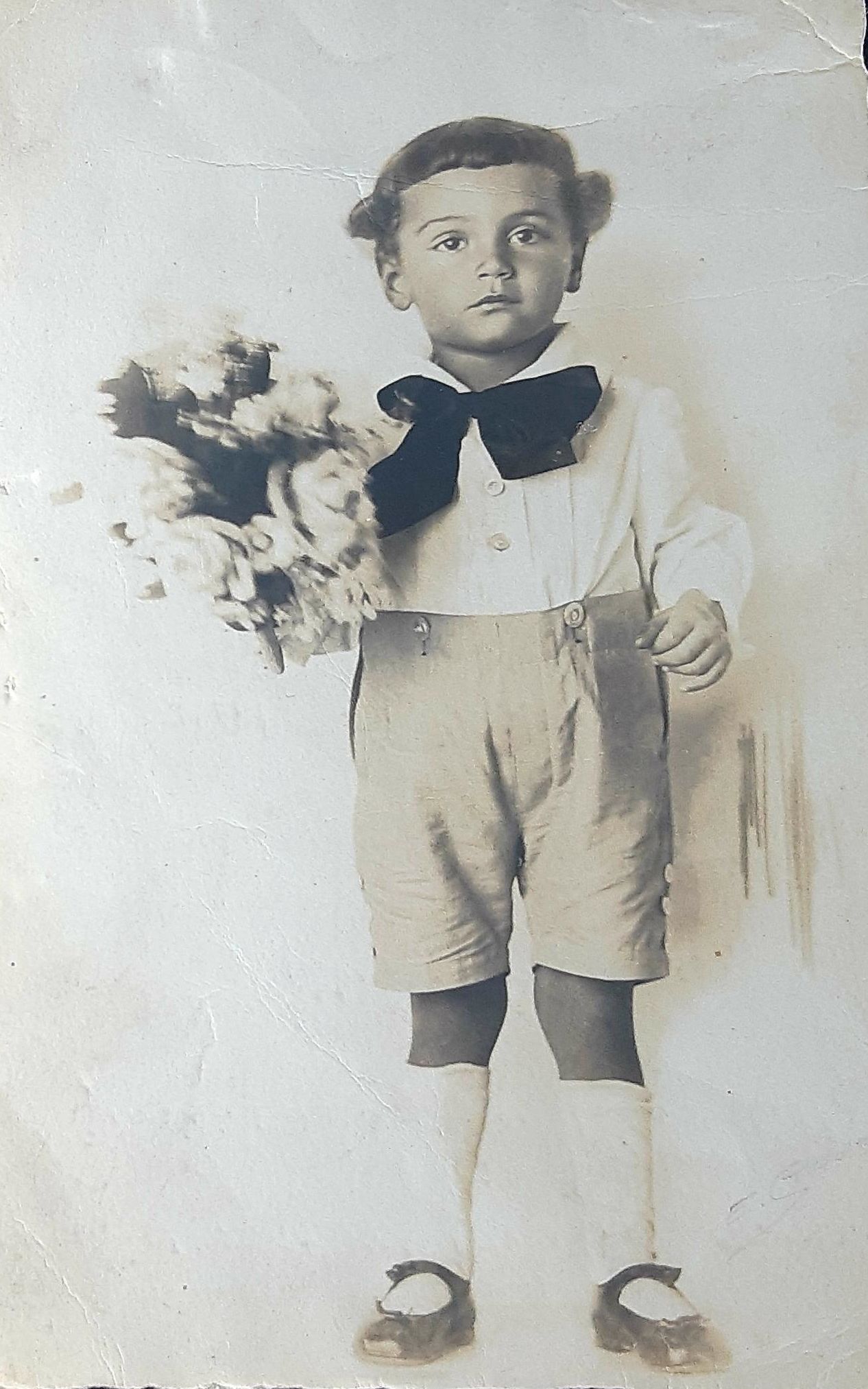
Max Werner c. 1926  Courtesy of the family

Moritz, Jenny, and Max Werner c. 1928

Of course, the world would change for this family like so many in the 1930s. I wrote a bit about that in my earlier post, but there were many questions I could not answer that Joyce and Judith have now answered. More on that and more photos in my next post.


  1. All references to the stories shared by Joyce and Judith came in several emails exchanged during May and June 2022. 

Finding Max Blumenfeld and His Family: A Postscript

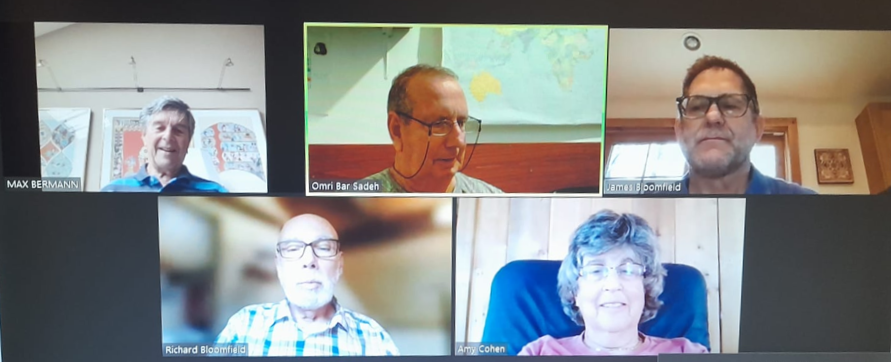
Yesterday I Zoomed with four of my Blumenfeld cousins—Richard, whose been my research partner for quite a while now, his first cousin Jim, who is also a wonderful genealogy researcher, and the two surviving grandchildren of Max Blumenfeld, Max and Omri. We spanned three continents—Omri in Israel, Richard in Switzerland, and Max, Jim, and I in New England. We chatted for an hour, but could have gone on much longer and hope to continue the conversation another time.

During our conversation, we uncovered the answer to a question we still had been unable to answer despite all our research: when did Anna Grunwald Blumenfeld, Max Blumenfeld’s widow and Omri and Max’s grandmother, leave Italy and immigrate to Israel/Palestine? The records that Richard had obtained from Merano said she’d left in 1939, but Max had pointed out that that wasn’t possible since he and his sister were cared for by their grandmother Anna during World War II while their mother Edith worked with the Italian Resistance. Their father Josef had immigrated to the United States on November 1939.

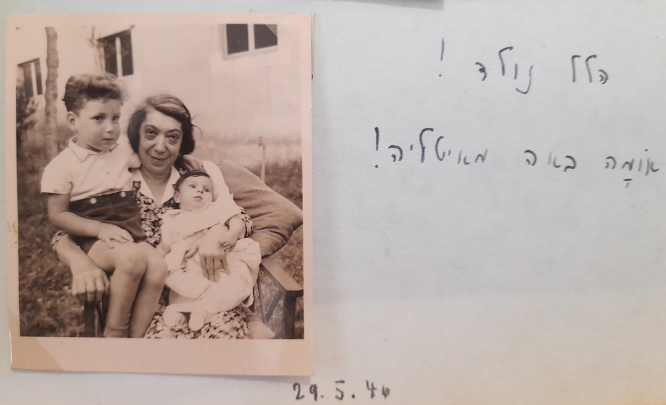
For our Zoom, Omri had prepared a wonderful slide show of family photographs, some of which I’ve already shared on this blog, and some that were new to me. Among those photographs was one that helped to answer the question of when Anna arrived in Palestine. The photograph shows Anna in Palestine with two of her grandsons, Omri’s brothers Gideon and Hillel. Anna was holding Hillel, who was just a very small baby, and the photo was inscribed in Hebrew with the words, “Hillel is born! Oma [Anna] arrives! 29 May 1946.” So now we knew that Anna had only recently arrived in Palestine in May of 1946.

Here is another photo taken the same day showing Anna with Gideon and Hillel and their parents Fritz and Dora.

But then how do we explain the records that said Anna had left Merano in 1939? Well, Max had the answer to that question. Max explained that Anna and her daughter Edith and the two grandchildren, Max and his sister Margherita, all left Merano in 1939 and moved to Milan. Max has no memories of life in Merano since he was only a toddler when the family moved. But that would explain why the Merano records report that Anna left that place in 1939.

Max and his family stayed in Milan for several years, and then when Italy adopted laws persecuting the Jews in about 1942, his mother Edith was able to use her connections to obtain permission to leave Milan and move to the countryside outside of Milan.  The family remained there for the duration of the war, hiding the fact that they were Jews. They spoke Italian (although they all could also speak German) so that they could pass as Italian, and Max and his sister went to church on Sundays. In fact, Max and Margherita were not aware of the fact that they were Jewish and also didn’t know that their father was still alive—all to prevent the children from accidentally revealing the fact that they were Jews.

After the war, Edith took her children to America so they could all be reunited with Josef, and Anna went to Palestine to be with her son Fritz and his family, as depicted in the photograph above.

We spoke of many other interesting things during our Zoom, and there were many stories and many moments of laughter interspersed. It was truly a delightful hour and one I will always cherish and remember.

Thank you to Omri, Max, Richard, and Jim—all of whom are my fifth cousins, four people I never would have known if not for doing genealogy research.

And that, dear readers, is the magic of genealogy.

Finding Max Blumenfeld, Part III: Finding His Grandsons

Although my cousin Richard and I had learned that Max Blumenfeld died in Merano, Italy, in 1936, we still didn’t know where and when his wife Anna died. We had some hints, but nothing definite. Her son Fritz’s marriage record in 1940 seemed to suggest she was still living in Italy. But her daughter Edith’s failure to list her mother on the 1946 ship manifest as her nearest relative in Italy, the place Edith had last resided, seemed to indicate that either Anna had died by then or had left Italy.

We were hoping that one of Max and Anna’s grandchildren might know the answers, and so I turned to locating those grandchildren. We knew that Max and Anna’s daughter Edith had two children with her husband Joseph Bermann, so I started to search for them. They all appear together on the 1950 US census, living in New York City. Joseph was practicing medicine, and Edith was working as a secretary for a general export business. Their two children Margherita (spelled Margaret on the census) and Max were 14 and 12.1 As of 1958, Edith and Joseph were still living in New York City.

Joseph Bermann, passenger manifest, The National Archives At Washington, D.C.; Washington, D.C.; Series Title: Passenger Manifests of Airplanes Arriving At San Juan, Puerto Rico; NAI Number: A3534; Record Group Title: Records of the Immigration and Naturalization Service, 1787-2004; Record Group Number: 85, Ancestry.com. Puerto Rico, U.S, Arriving Passenger and Crew Lists, 1901-1962

According to FindAGrave, Joseph died on May 1, 1966; he was 68.2 Edith died two years later on August 12, 1968. She was only 61.3 They were both buried in Westchester Hills Cemetery in Hastings-on-Hudson, New York. They were survived by their two children. Their daughter Margherita died on August 21, 2008;4 she was 72. Max, however, was as best I could tell, still living.

After using Google and other online tools, I finally located what I assumed was Max Bermann’s Facebook page. I noticed that he had a Facebook friend named Omri Bar Sadeh. You may recall that Hermann Blumenfeld, Max Blumenfeld’s older brother, had a son Hans who had changed his name to Hanan Bar Sadeh after immigrating to Israel/Palestine. I used the Google Translate tool and learned that “sadeh” means a cultivated field. So Bar Sadeh means son of a cultivated field. Since Blumenfeld translated from German as field of flowers, it made sense that Hanan had adopted a name that meant he was the son of a cultivated field, or a field of flowers, or a “Blumenfeld.”

So when I saw that Max Bermann had a Facebook friend with the surname Bar Sadeh, I assumed that this other person must be a descendant of Edith’s first cousin, Hanan Bar Sadeh. But David Lesser had reported that Hanan had no children, so I was not certain. Was it just a coincidence that Edith’s son Max had a friend with that surname? Or was this Facebook friend one of his cousins?

On Omri Bar Sadeh’s Facebook page, there was a video in Hebrew. I could not understand it, but I could translate the comment that had been included with the post, and it indicated that the video was about Omri Bar Sadeh’s brother Gideon Bar Sadeh. When I googled that name, I found this page:

Bar-Sadeh, Gideon

Son of Moses HaKohen and Devorah. He was born in Ein Harod on June 16, 1942, and completed his twelfth grade at the Kibbutz Ha-Meuchad School there. He had a penchant for drawing and found talent in his paintings. He would decorate his notebooks and make handsome posters and posters. He was quiet and humble in his ways. Was an animal breeder and loved them. Was drafted into the Israel Defense Forces in October 1960. On October 18, 1962, he fell in the line of duty and was brought to eternal rest in Ein Harod.

I knew that Edith Blumenfeld Bermann had listed her brother Fritz on her ship manifest in 1946 indicating that he was residing in “En Charod,” Palestine. Could Gideon have been Fritz’s son, I wondered? Fritz had married a woman named Devorah so that fit the puzzle. But then why did it say Gideon’s father was named Moses?

Then I remembered seeing on the IGRA website that in 1942 Fritz Blumenfeld, residing in En Harod, had been identified as “Moshe (Fritz) Blumenfeld, son of Max.” And given that Max’s father’s name had been Moses, it made sense that Fritz’s Hebrew name was Moshe and that he was named for his grandfather and adopted that name as his primary name in Israel.

Record located on the Israel Genealogy Research Association website at https://genealogy.org.il/AID/

With that additional insight, I realized that I had found the family of Fritz Moshe Blumenfeld and that Fritz, like his cousin Hanan, had changed his surname from Blumenfeld to Bar Sadeh for the same reasons. Just to be sure, I asked David Lesser if he would watch the video posted on Facebook about Gideon, and he confirmed that the video says that Gideon’s parents were Fritz and Devorah.

I sent messages to both of the surviving grandsons of Max and Anna (Grunwald) Blumenfeld, hoping that I would eventually learn what happened to Anna and the rest of the story of their family. Much to my delight, I heard from both of them.

Max Bermann, Edith’s son, was born in Merano, Italy, where his father Giuseppe (later Joseph) Bermann was born. That’s where the family was living (along with Anna) after Joseph left for the US in 1939. Although the family was originally supposed to follow once Joseph was settled, the war intervened, and they could not leave Italy. Max was just a toddler at the time. His grandmother Anna became the primary caregiver for his sister and him because their mother Edith was often away. Max later learned from his sister that Edith was acting as a courier for the partisans during the war.

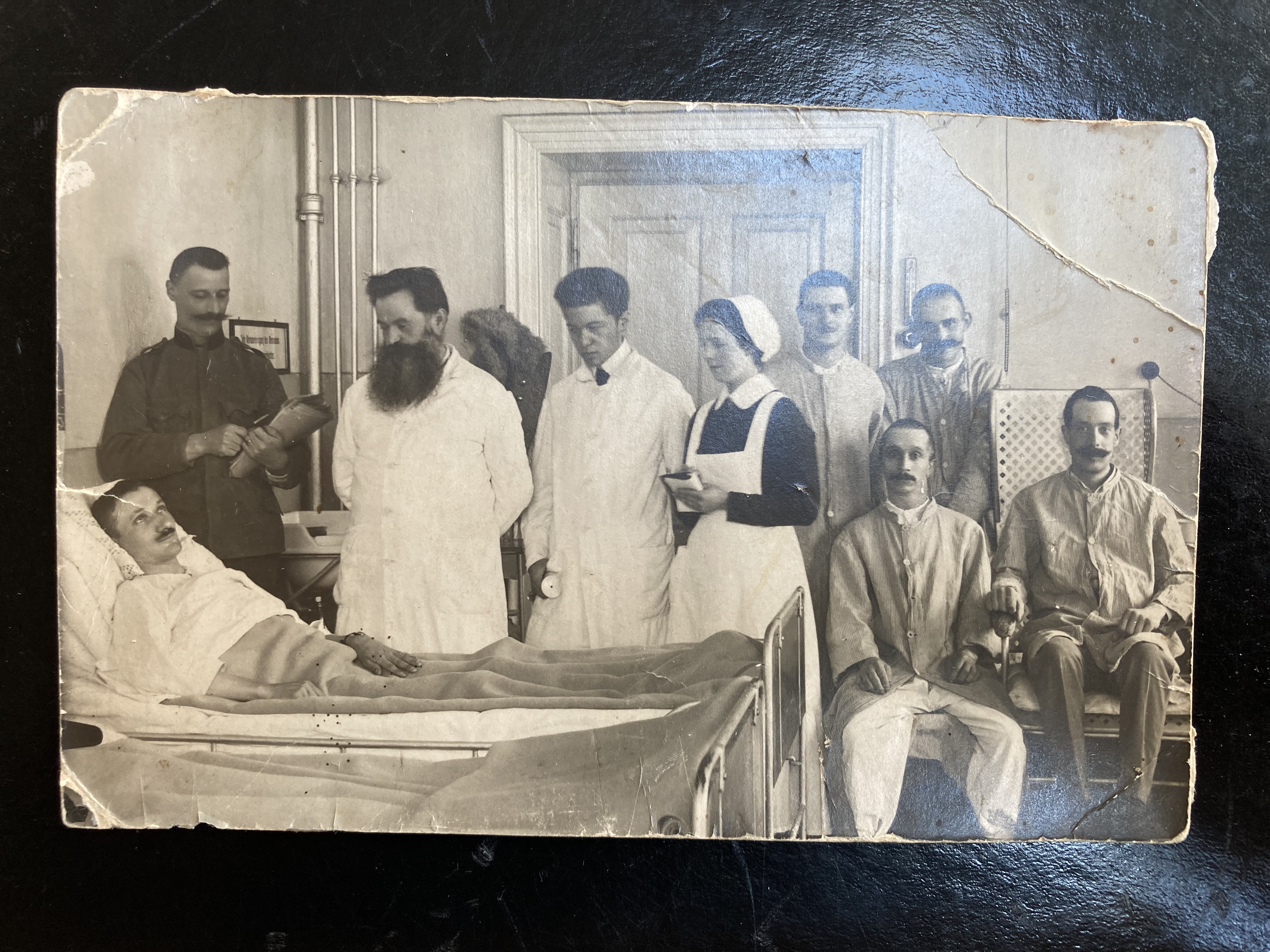
Max shared with me this photograph of Merano, where he and his father were born, as well as this photograph of his father and his father’s father, Max Bermann, both of whom were doctors at the Waldpark Sanitorium in Merano. The elder Max Bermann is the man with the long black beard and his son Joseph/Giuseppe Bermann, the younger doctor in the white coat, is standing next to him.

Dr Max Bermann and his son Dr Joseph Bermann in Waldpark Sanitorium, Merano, Italy. Courtesy of the family

When the war ended, Edith brought her children to the US, but Anna went to live with her son Fritz and his family in Ein Harod in Palestine. Neither Omri nor Max knew exactly when Anna immigrated, but as I was doing some of the final edits for this post, Richard emailed me with new information he’d found online—a database of information about the Jews of Merano.

There was an entry for Anna Grunwald Blumenfeld that reported that “Anna Grünwald-Blumenfeld came from Berlin and lived in Merano since 23.4.1936. On 22.8.1938 she was recorded in the census of “Jews” living in Italy by the fascist authorities as permanently resident in Merano. On 13.2.1939 her file received the note: “di razza ebraica”. On 1.4.1939 she fled to an unknown place, according to the registration office of the municipality of Merano. Later, April 1939 is given as the date of the flight abroad.”5 Thus, it would appear from this record that Anna left Merano for Palestine in April, 1939.

But as noted by Max and by my reader Teresa, this cannot be accurate. Max knows that his grandmother did not leave in 1939 because she cared for him during the war years. It appears more likely that these Merano records are inaccurate and that Anna was in Italy at least until the end of the war.

Now that I knew that Anna had survived the war and had immigrated to Palestine, I searched again on the Israel Genealogical Research Association website and found this record:

Anna Grunwald Blumenfeld died on September 7, 1946, in Ein Harod; she was only 61 years old. She had survived the move from Germany to Italy, the loss of her husband Max in 1936, World War II, and then a move from Italy to Palestine. She was survived by her daughter Edith and her family and her son Fritz and his family.

Anna and Max Blumenfeld’s grandson Max Bermann shared these lovely photographs of his family. First, some photographs of Anna and Max:

Anna Grunwald Blumenfeld Courtesy of the family

Anna Grunwald Blumenfeld and Max Blumenfeld Courtesy of the family

Max Blumenfeld Courtesy of the family

This photograph is of Max and Anna’s children Fritz and Edith as well as, on the right, Fritz’s wife Dora Salpeter Blumenfeld.

Fritz Blumenfeld, Edith Blumenfeld Bermann, and Dora Salpeter Blumenfeld Courtesy of the family

And this final photograph from Max shows him and his sister Margherita with a soldier they met when they visited Palestine (now Israel) with their mother after the war.

Margherita and Max Bermann in Italy shortly after the end of World War II with a soldier from Palestine. Courtesy of the family

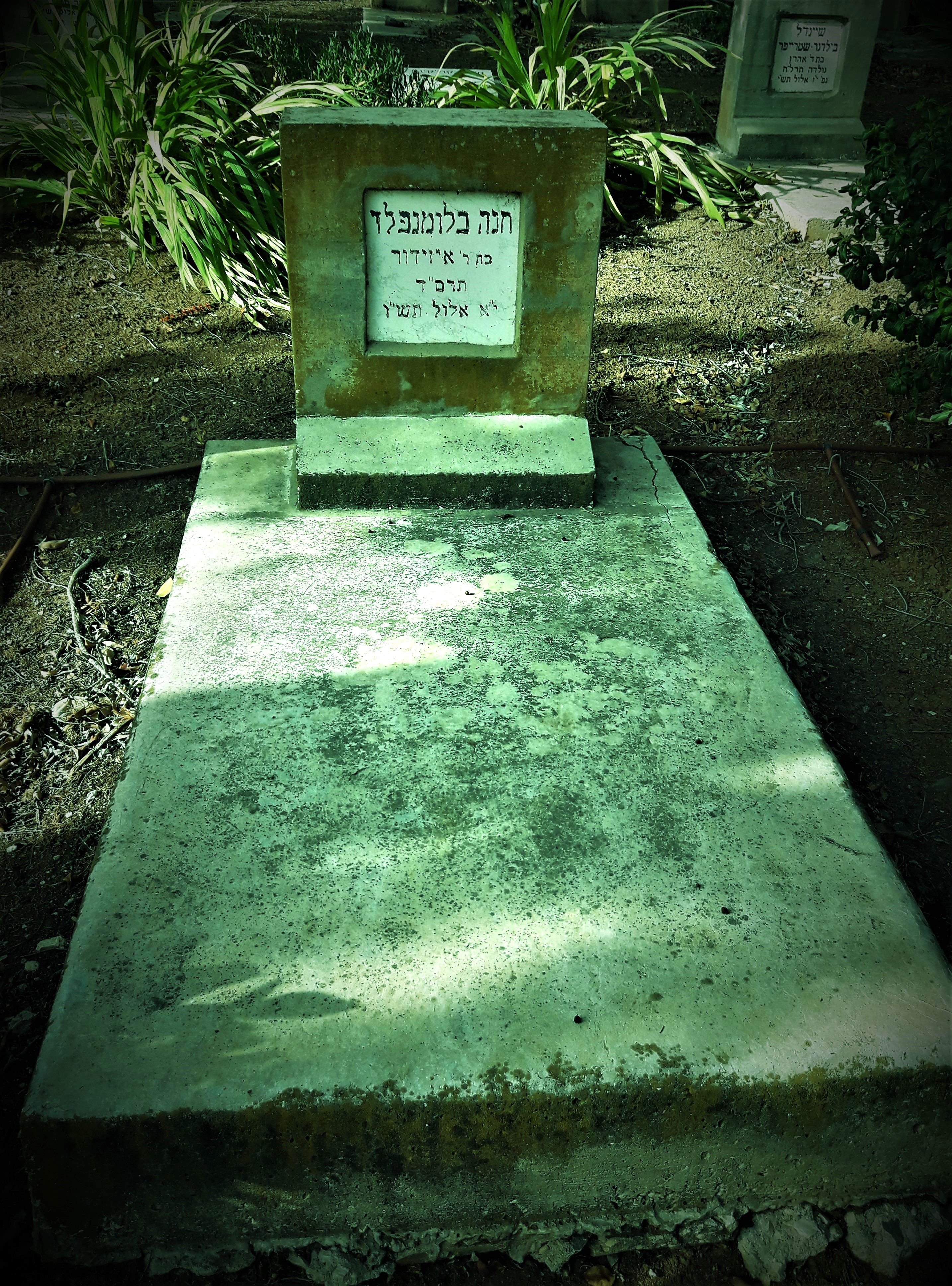
Omri also shared some photographs, including this one of his grandmother Anna’s gravestone.

Anna Blumenfeld, Ein Harod Photo courtesy of Omri Bar Sadeh

In addition, he shared photographs of the gravestones of his parents Fritz (Moshe) and Dora/Devorah and his two brothers Gideon and Hillel.

Gideon, as we saw, died fighting for Israel on October 18, 1962.

Gideon Bar Sadeh, Ein Harod Photo courtesy of Omri Bar Sadeh

Omri’s father Fritz Moshe Blumenfeld Bar Sadeh died December 12, 1977 in Ein Harod; he was 67. Devorah Salpeter Blumenfeld Bar Sadeh, outlived her husband by almost 23 years and died at 92 on November 27, 2000, in Ein Harod.

Dora and Fritz Bar Sadeh, Ein Harod Photo courtesy of Omri Bar Sadeh

Fritz and Devorah’s middle child, their son Hillel, died from cancer on December 30, 1996, in Ein Harod. He was only 50 and left behind a wife and four children.

Hillel Bar Sadeh, Ein Harod Photo courtesy of Omri Bar Sadeh

I am so grateful to my fifth cousins Max and Omri for sharing their family’s stories and their own stories and their photographs with me and allowing me to share them with you. I now have answers to all the questions I had when I first started searching for what happened to Max Blumenfeld after he married Anna Grunwald in 1906, thanks to the incredible help of Richard Bloomfield, David Lesser, Max Bermann, and Omri Bar Sadeh.


  1. Joseph Bermann family, 1950 US census, United States of America, Bureau of the Census; Washington, D.C.; Seventeenth Census of the United States, 1950; Record Group: Records of the Bureau of the Census, 1790-2007; Record Group Number: 29; Residence Date: 1950; Home in 1950: New York, New York, New York; Roll: 5665; Sheet Number: 72; Enumeration District: 31-675, Ancestry.com. 1950 United States Federal Census 
  2. Find a Grave, database and images (https://www.findagrave.com/memorial/173690239/joseph-bermann : accessed 18 May 2022), memorial page for Joseph Bermann (unknown–1 May 1966), Find a Grave Memorial ID 173690239, citing Westchester Hills Cemetery, Hastings-on-Hudson, Westchester County, New York, USA ; Maintained by BKGeni (contributor 46895980) . 
  3. Find a Grave, database and images (https://www.findagrave.com/memorial/173690238/edith-bermann : accessed 18 May 2022), memorial page for Edith Bermann (unknown–12 Aug 1968), Find a Grave Memorial ID 173690238, citing Westchester Hills Cemetery, Hastings-on-Hudson, Westchester County, New York, USA ; Maintained by BKGeni (contributor 46895980) . 
  4.  Margherita M. Bermann, Social Security Number: 085-30-0023, Birth Date: 22 Aug 1935, Issue Year: 1954-1956, Issue State: New York, Last Residence: 12550, Newburgh, Orange, New York, Death Date: 21 Aug 2008, Social Security Administration; Washington D.C., USA; Social Security Death Index, Master File, Ancestry.com. U.S., Social Security Death Index, 1935-2014 
  5.  There were also entries for Max and for their two children Fritz and Edith. Max’s entry confirmed that he died on March 7, 1936 and is buried in the Jewish cemetery in Merano. Edith’s entry reported that she had “married Josef Bermann on January 30, 1935. After a stay in London in the spring of 1935, she lived in Merano from April 8, 1935. On August 22, 1938, Edith Bermann was included in the census of “Jews” living in Italy by the fascist authorities. On February 13, 1939, her file received the note: “di razza ebraica”. Edith Bermann, who stayed in Milan again and again, fled to Milan.” Fritz’s entry in the Merano Jewish database reported that he “had lived in Merano since October 3, 1936, where his sister was married to the doctor Josef Bermann. On August 22, 1938, Fritz Blumenfeld was recorded by the fascist authorities as permanently residing in Merano in the census of “Jews” living in Italy. According to the registration office of the municipality of Merano, Fritz Blumenfeld fled to Palestine on May 15, 1939.” 

The Search for Max Blumenfeld: It Took A Village, Part I

The search for what happened to Max Blumenfeld, son of Moses IIB, was not an easy one. It was a lesson in persistence and in the value of working with other researchers. My cousin Richard Bloomfield contributed a great deal to the research of the life of Max Blumenfeld as did David Lesser, my new research friend from Tracing the Tribe.

Finding Max’s birth and marriage records was easy. As I’ve already written, he was born in Kirchhain on June 13, 1880, and married Johanna Grunwald in Berlin on March 16, 1906.

But finding out what happened next was not as easy. Did they have children? Did Max and Johanna survive the Holocaust? Neither was listed in Yad Vashem, so I felt hopeful that they did. But I couldn’t find them anywhere else either. There were no records in the Arolsen Archives. There were no US immigration records or other records placing them in the US. There were no Palestinian immigration records for them either. Where else could they have gone? Did they die before the Nazi era? If so, I couldn’t find any German death records.

When I looked at other trees on Ancestry and at Geni and MyHeritage, there were similar holes in the information for Max and Johanna—-there was nothing after their marriage in 1906. I only found one tree that had more information, and fortunately for me, it was the tree of my fifth cousin and fellow researcher Richard Bloomfield. According to Richard’s tree, Max had emigrated to Italy in 1933 and died there, Johanna had died in Israel sometime after 1947, and they had a son named Fritz who died in about 1977 in Israel.

I contacted Richard to ask where he’d gotten the information, and he said he’d gotten the information from someone else’s tree. So he and I began to see if we could verify any of that information.

Richard noted that on Max’s marriage record his occupation was given as “Waisenhausinspektor” or orphanage inspector and that he was living in Graudenz at the time of his marriage. But since Max and Johanna were married in Berlin, Richard had a hunch that Max had become the Waisenhausdirektor for the Jewish orphanage in Berlin and decided to search old Berlin directories. He found Max listed as the Waisenhausdirektor in those directories for a number of years, including 1934, 1935, and 1936. Thus, we knew that Max had not immigrated to Italy in 1933, but was still in Berlin at least until the 1936 directory was compiled.1

Max Blumenfeld, Title: Amtliches Fernsprechbuch für Berlin und Umgegend, 1936, Ancestry.com. German Phone Directories, 1915-1981

On a very recent trip to Berlin, Richard took and shared these photos of the building where the Judische Waisenhaus once stood.

Judische Waisenhause building in Berlin. Photo courtesy of Richard Bloomfield

Photo courtesy of Richard Bloomfield

Richard and I then started to see if we could find any evidence of Fritz Blumenfeld, the supposed son of Max and Johanna. Richard located a record on the IGRA website that indicated that a Fritz Blumenfeld, son of Max, born in 1910,was registered as a voter in Palestine in 1939 and living in En Harod.

Found at the Israel Genealogy Research Association website at https://genealogy.org.il/AID/index.php

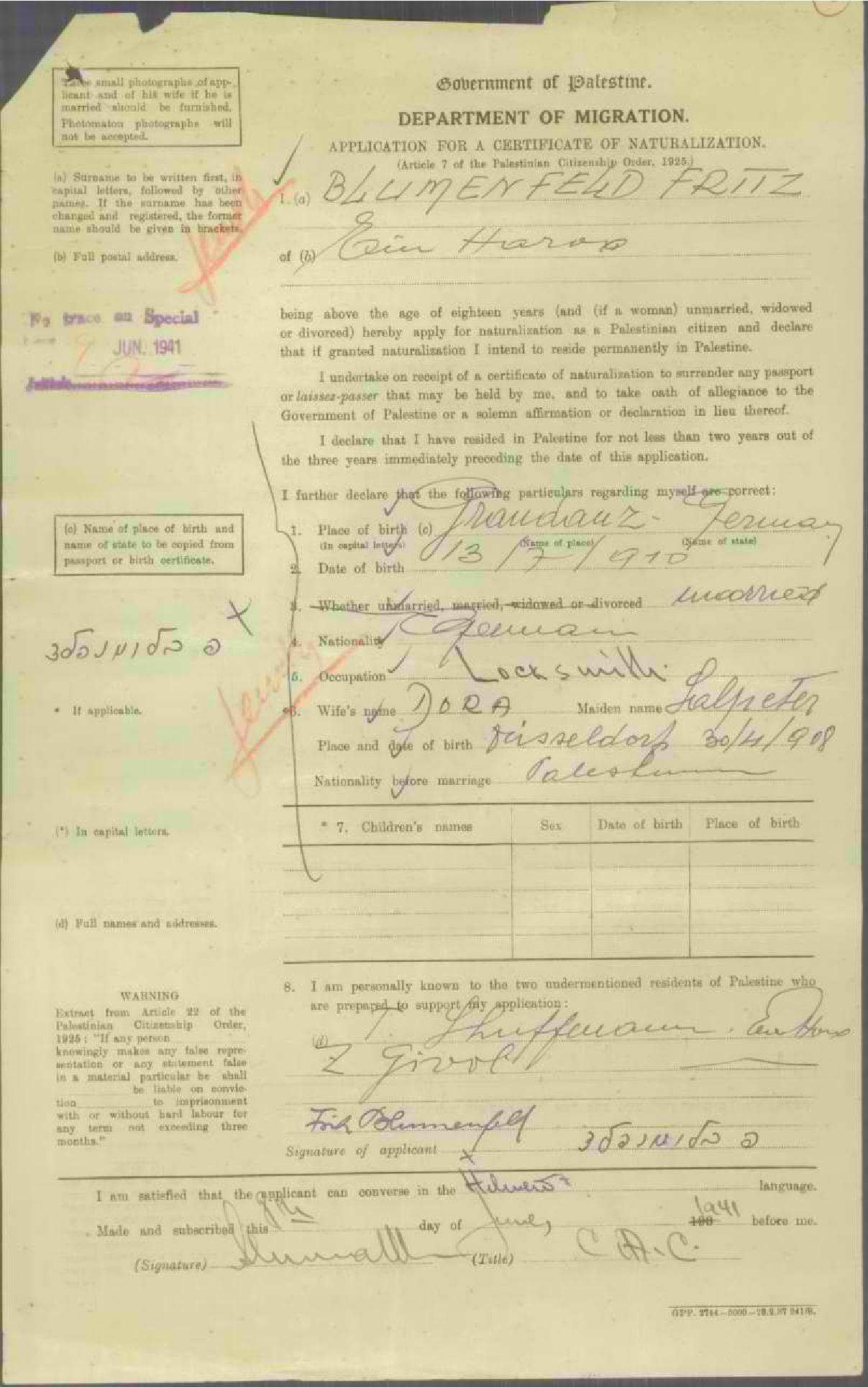
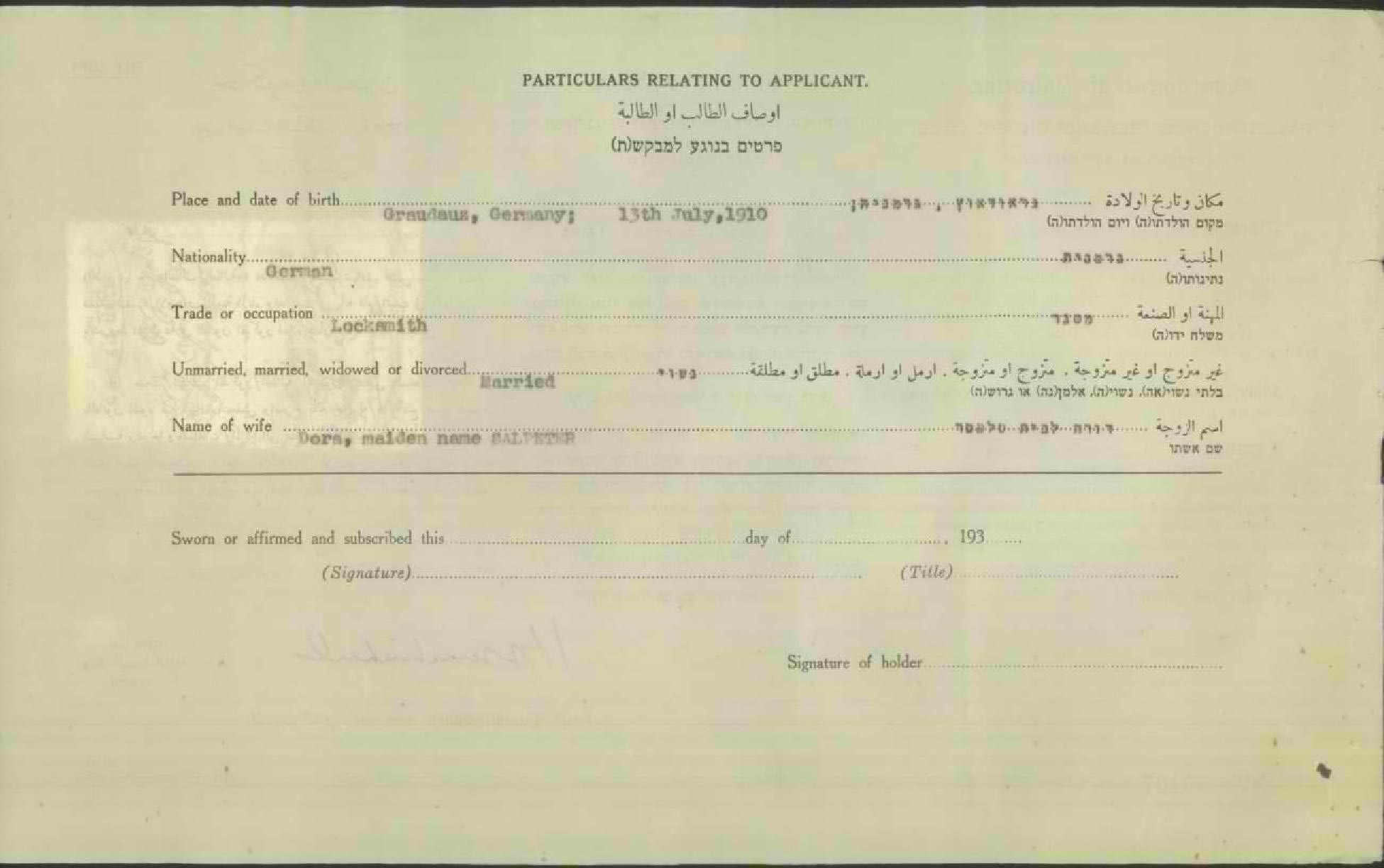
Then I located a Fritz Blumenfeld who had Palestine immigration papers at the Israel Archives website. Fritz was born in Graudenz, Germany, on July 13, 1910, the same town where Max had been living when he married Johanna in 1906. He was married to Dora Salpeter and working as a locksmith. He had first entered Palestine on June 28, 1937.

Fritz Blumenfeld and Dora Salpeter immigration file found at Israel State Archives at https://www.archives.gov.il/en/

Richard found directories for Graudenz that listed Max as a teacher there in 1905, as a teacher and orphanage inspector in 1907, and as the Waisenhausinspektor there in 1909, 1911, and 1913. Thus, Max and Johanna were living in Graudenz when Fritz Blumenfeld was born. This certainly seemed to be their son.2

And then I found the record that definitely tied Fritz to Max and Johanna. Returning to the IGRA website, I located Fritz Blumenfeld’s marriage record. Fritz married Devorah on August 15, 1940, in Israel, and his marriage record indicated that he was a locksmith, which was consistent with his Palestinian citizenship application. On those Palestinian immigration papers, I learned that Devorah’s name was originally Dora Salpeter.

Most importantly, Fritz’s parents were listed as Max and Hanna, confirming for me that this was the son of Max Blumenfeld and (Jo)hanna Grunwald. Since it appears that Johanna was better known as Hanna or Anna, I will use the name Anna to refer to her going forward.

That marriage record gave me two other critical pieces of information. It said the groom’s parents lived in Italy—although it took help from Tracing the Tribe for me to learn that the Hebrew I was reading as Atelah was in fact Italia in Hebrew. The marriage record also indicated that Anna was at home, but Max was deceased. Thus, we now knew that Max had died sometime before Fritz married on August 15, 1940, and presumably had died in Italy.

Fritz Blumenfeld marriage record, found at the Israel Genealogy Research Association website at https://genealogy.org.il/AID/

I didn’t think we would get any further than that since I had no idea how to research deaths in Italy. But once again Richard came to the rescue. He found two more sources. One was a German book, Das Jüdische Waisenhaus in Pankow (2001) by Inge Lammel, about the Jewish orphanage in Berlin where Max had been the Waisenhausdirektor. Lammel’s book included this passage, as translated by Richard:3

When Isidor Grunwald [Johanna’s father] died in February 1925, his son-in-law, Max Blumenfeld, took over the directorship of the house. Martin Davidsohn [long-time teacher at the Second Jewish Orphanage] says that he brought a more liberal spirit into the educational process, democratic structures, such as an opportunity to utter grievances and a trainees’ adjudicatory council elected by secret ballot, which gave the trainees more self-confidence.

Richard paraphrased the information about Isidor Grunwald that he found in the book:4

Max’s father-in-law had been an officer in the army and carried the army’s manner of doing things over into his work at the orphanage. He patrolled the large dormitory hall carrying his ring of large keys to enforce discipline. He had the boys line up each night in front of his apartment in the house according to height, shook their hands and wished them good night. In addition to physical education, he had the boys do drills led by a drill sergeant and sometimes accompanied by flute and drum music

Here is a photo from the book showing Max standing with some of the children and staff at the orphanage in about 1933; he is the man in the dark suit in the foreground.

From Inge Lammel, Das Jüdische Waisenhaus in Pankow, 2001

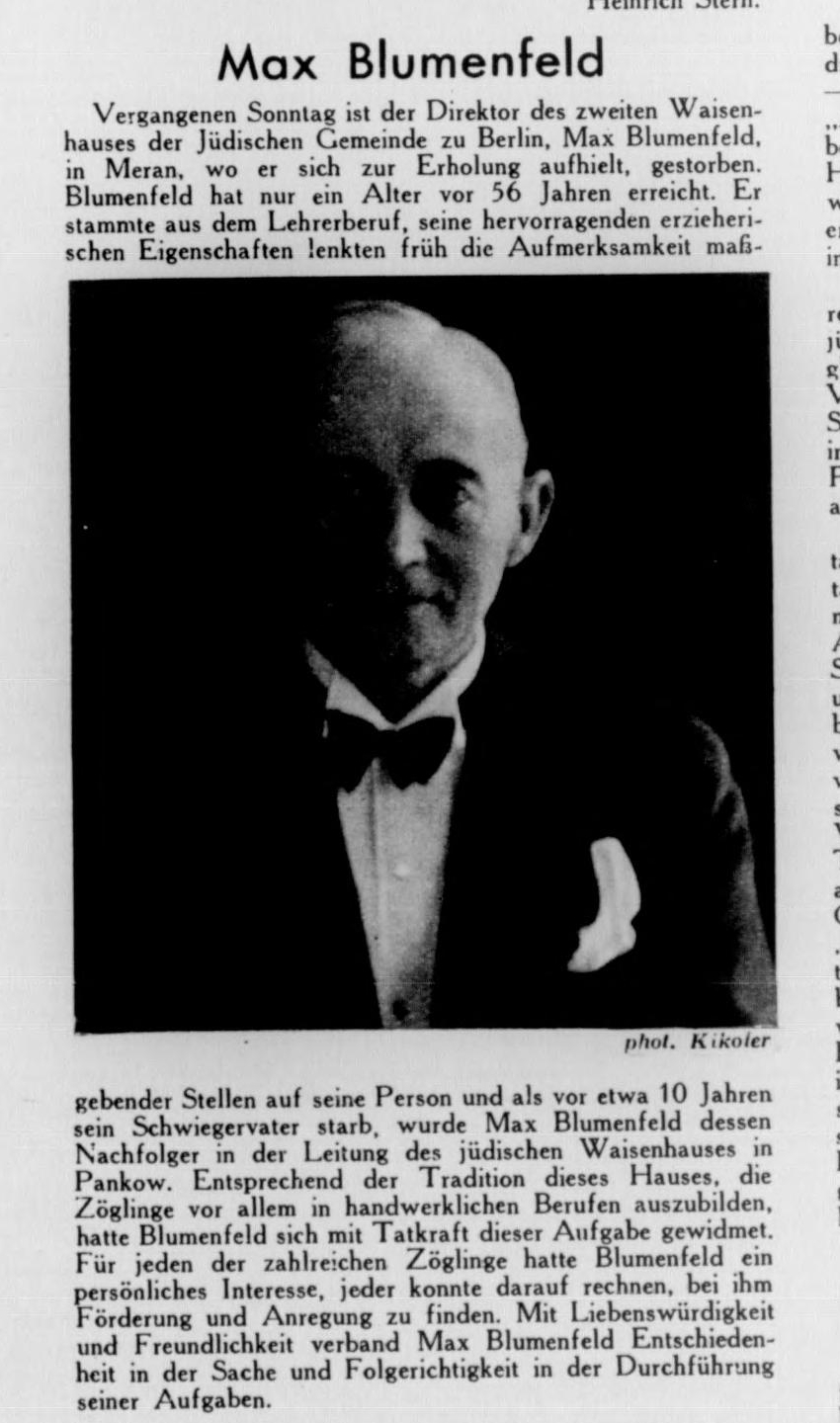
In addition to obtaining a copy of this book, Richard also located Max’s obituary, which not only provided us with the date and place of Max’s death (March 8, 1936, in Merano, Italy), but also more information about his life:

“Max Blumenfeld,” Gemeindeblatt der Jüdischen Gemeinde zu Berlin, March 15, 1936, page 7

Richard translated the obituary as follows:5

Last Sunday the director of the Second Orphanage of the Jewish Congregation in Berlin, Max Blumenfeld, died in Merano [Italy] where he was taking time for rest and recreation. Blumenfeld died young at the age of 56. He was originally a teacher whose excellent teaching abilities drew the attention of leading personalities, and when his father-in-law [Isidor Grunwald] died about ten years ago, Max Blumenfeld became his successor as director of the Jewish Orphanage in Pankow. Blumenfeld dedicated himself to the traditional task of the institution of training its students as craftsmen. Blumenfeld demonstrated a personal interest in each of the youth in his care, each of them could recon with his support and encouragement. He combined with kindness and friendliness decisiveness and consistence in the execution of his task.

These two documents discovered by Richard Bloomfield have given us a much fuller picture of our cousin Max Blumenfeld. He certainly left his mark and obviously was a kind and generous person.

Unfortunately, the obituary did not include information about his survivors. Was Fritz their only child? Did Johanna stay in Italy, as their son Fritz’s 1940 marriage certificate suggests? Did she return to Berlin? Immigrate to Palestine?

Well, the story of Max Blumenfeld doesn’t end here nor does the story of the collaboration it took to find the rest of that story.

More to come.


  1. Amtliches Fernsprechbuch für Berlin und Umgebun, 1934, 1935, 1936.  Ancestry.com. The one depicted I found on Ancestry for 1935. 
  2. I have tried to recreate Richard’s search through the Graudenz directories. He sent me to the GenWiki website section for directories, and although I found the Graudenz directories, I still need more lessons in how to search through those directories to find Max. 
  3. Inge Lammel, Das Jüdische Waisenhaus in Pankow (2001), p. 50. 
  4. Ibid, p. 48, as paraphrased by Richard Bloomfield, attachment to email May 1, 2022. 
  5. “Max Blumenfeld,” Gemeindeblatt der Jüdischen Gemeinde zu Berlin, March 15, 1936, page 7. 

Salomon Blumenfeld: An Entire Blumenfeld Family Who Survived the Holocaust

Moses IIB’s third child Salomon Blumenfeld and his wife Malchen Levi and their three daughters all left Germany in time and avoided being killed by the Nazis and thus were much more fortunate than Salomon’s siblings, Hermann, Bertha, and Clementine, and their families.

In fact, Salomon’s middle daughter Hilde left Germany even before Hitler came to power. In May 1929, when she was only seventeen, Hilde sailed from Hamburg to New York, listing an uncle, her mother’s brother Salli Levi, as the person she was going to and her occupation as a clerk.

Hilde Blumenfeld 1929 ship manifest, Year: 1929; Arrival: New York, New York, USA; Microfilm Serial: T715, 1897-1957; Line: 2; Page Number: 42, Ancestry.com. New York, U.S., Arriving Passenger and Crew Lists (including Castle Garden and Ellis Island), 1820-1957

When she filed a declaration of intention to become a US citizen on June 2, 1931, she was living in New York City and listed her occupation as a German-English stenographer.

HIlde Blumenfeld Declaration of Intention, The National Archives at Philadelphia; Philadelphia, Pennsylvania; NAI Title: Declarations of Intention for Citizenship, 1/19/1842 – 10/29/1959; NAI Number: 4713410; Record Group Title: Records of District Courts of the United States, 1685-2009; Record Group Number: 21, Ancestry.com. New York, U.S., State and Federal Naturalization Records, 1794-1943

But Hilde apparently never became a US citizen and did not remain in the US. Sometime before March 1934, she married Ludwig Felix Meinrath, and together they immigrated to Brazil. Ludwig was born in Cologne, Germany, in 1902, and immigrated with his parents Leopold and Anni and siblings to Antwerp, Belgium sometime before 1916.1 I don’t know whether they stayed in Belgium or where and when Ludwig and Hilde were married. But in 1934 they left for Brazil where they remained. They had at least one child, who was born in the 1930s.

Ludwig and Hilde Meinrath 1934 ship to Rio de Janeiro, Staatsarchiv Hamburg; Hamburg, Deutschland; Hamburger Passagierlisten; Volume: 373-7 I, VIII A 1 Band 424; Page: 385; Microfilm No.: K_2003, Staatsarchiv Hamburg. Hamburg Passenger Lists, 1850-1934

Hilde’s parents Salomon and Amalie/Malchen followed her to Brazil several years later. They arrived on March 29, 1939. Salomon listed his occupation as “comerciante” or merchant.

Salomon Blumenfeld, Digital GS Number: 004909061, Ancestry.com. Rio de Janeiro, Brazil, Immigration Cards, 1900-1965

Amalie Blumenfeld, Digital GS Number: 004913595, Ancestry.com. Rio de Janeiro, Brazil, Immigration Cards, 1900-1965

Meanwhile, Hilde’s older sister Gretel had married David Katz on January 24, 1930, in Kirchhain; David was the son of Mendel Katz and Jettchen Levi and was born in Nenterhausen, Germany, on February 11, 1897.

Marriage record of Gretel Blumenfeld and David Katz, Hessisches Hauptstaatsarchiv; Wiesbaden, Deutschland; Bestand: 915; Laufende Nummer: 5058, Year Range: 1930, Ancestry.com. Hesse, Germany, Marriages, 1849-1930

This remarkable photograph, which had a long caption labeling all those in it, was found on several Ancestry trees as well as on Geni. It was taken at Gretel and David’s wedding and shows many members of the two families. Of particular interest to my research, the middle row shows Salomon Blumenfeld on the far left next to David’s mother Jettchen, then the bride Gretel and groom David, then Gretel’s mother Amalie and at far right David’s father Mendel. In the bottom row, Salomon and Amalie’s daughter Jenny is seated second from the left, and Lilli Abraham, Salomon’s niece, is seated fourth from the left.2

Wedding of Gretel Blumenfeld and David Katz Source: Unknown

Gretel and David had one child born in 1931. They all immigrated to the US on August 18, 1939. David listed his occupation as teacher.

Katz family, ship manifest, Year: 1939; Arrival: New York, New York, USA; Microfilm Serial: T715, 1897-1957; Line: 1; Page Number: 19, Ship or Roll Number: Hamburg, Ancestry.com. New York, U.S., Arriving Passenger and Crew Lists (including Castle Garden and Ellis Island), 1820-1957

In 1940 they were living in New York City with several lodgers, and David was working as a schoolteacher.3

In August 1946, Gretel’s parents Salomon and Amalie sailed from Brazil to New York, Salomon arriving on August 14 and Amalie on August 29. Salomon’s entry on his manifest indicates that he was going to his daughter Gretel in New York and that he intended to stay permanently. It also indicated that he needed cataract surgery and had other medical issues.4 Amalie’s manifest similarly reported that she was going to Gretel, intended to stay permanently, and had a medical issue.5

Many trees report that the other daughter of Salomon and Amalie, Jenny, married Siegmund Rudolf Warburg on July 25, 1933, and that Siegmund was born in Berlin on May 26, 1896, to Otto Warburg and Bertha Cohen. But something doesn’t add up.

I found the birth record for Siegmund.

Siegmund Warburg birth record, Landesarchiv Berlin; Berlin, Deutschland; Personenstandsregister Geburtsregister; Laufendenummer: 95, Ancestry.com. Berlin, Germany, Births, 1874-1908

But I also found (after some searching because Ancestry had them indexed to the wrong image) a Siegmund Warburg with a different wife, Ilse, and two children, Gabriel and Thomas, sailing from Hamburg to New York on August 31, 1933. Was this a different Siegmund Warburg, also born in 1896 (37 years old) and having last lived in Berlin? Entirely possible.

Warburg family, ship manifest, Month: Band 417 (Aug 1933), Staatsarchiv Hamburg. Hamburg Passenger Lists, 1850-1934

Yet I cannot find any record attaching Jenny Blumenfeld to a man named Siegmund Warburg. The only references I could find (other than the unsourced trees) was a Shoah Foundation interview with Jenny’s sister Hilde that lists a “Geny Varbuk” as her sister.6 I requested access to the interview, hoping this would answer my questions, but alas, it was in Portuguese, and I can’t understand it. I am hoping I can get a transcript and translate it, but I don’t know if that exists. Also, Richard Bloomfield found Jenny’s gravestone on Billiongraves, and it has her name (in Hebrew) as Jenny Warburg.

Jenny Warburg, Yekhi’am cemetery, Akko, Israel, found at Billiongraves.com at https://billiongraves.com/grave/%D7%92%D7%A0%D7%99-%D7%95%D7%A8%D7%91%D7%95%D7%A8%D7%92/22732522

But when I searched on Billiongraves at that same cemetery, I could not find anyone named Siegmund Warburg. That, of course, doesn’t mean anything since Billiongraves doesn’t include everyone, but it also doesn’t help connect Jenny to Siegmund.

Perhaps Jenny was Siegmund’s second wife, but then she didn’t marry him in July 1933. Or maybe she married someone else named Siegmund Warburg and not the one married to Ilse. I don’t know, and I am still searching for answers. Maybe someone who knows Portuguese will listen to the Shoah Foundation testimony and hear Jenny’s sister talk about Jenny’s marriage and fill me in.

UPDATE: Thanks to Richard Bloomfield, I now have one piece of evidence that ties Jenny Blumenfeld to Siegmund Warburg. Richard found on the Israel Genealogy Research Association (IGRA) website a recently uploaded list of Haifa voters from 1950 that has Jenny Warburg and Siegmund Warburg listed together (see lines 168 and 169); we believe these are the right people because their birth years match what we have from other records. Although it isn’t truly enough to prove their relationship, it is certainly another piece in the puzzle supporting the conclusion that Jenny ended up in Israel and was married to Siegmund Warburg.

In any event, Salomon Blumenfeld’s entire family escaped Germany in time and were not killed by the Nazis, unlike Salomon’s siblings Hermann, Bertha, and Clementine.

The story of the remaining child of Moses Blumenfeld IIB, Max, was harder to uncover and will be discussed in my next series of posts.


  1. Louis Felix Meinrath, Birth Date: 1902, Birth Place: Keulen, Immigration Date: 1901-1915, Immigration Place: Antwerpen, Belgium, File Number: 119901, Page: 438
    FHL Film Number: 2234442, Ancestry.com. Belgium, Antwerp Police Immigration Index, 1840-1930 
  2. The photograph may have first appeared on Geni on the profile of David Katz. I have written to the manager of that profile to ask for the photo’s source, but have not heard back. 
  3. Katz family, 1940 US census, Year: 1940; Census Place: New York, New York, New York; Roll: m-t0627-02675; Page: 1A; Enumeration District: 31-2085, Ancestry.com. 1940 United States Federal Census 
  4. “New York, New York Passenger and Crew Lists, 1909, 1925-1957,” database with images, FamilySearch (https://familysearch.org/ark:/61903/3:1:3QSQ-G94V-SWMS?cc=1923888&wc=MFK4-H6D%3A1030138201 : 2 October 2015), 7158 – vol 15390-15391, Aug 14, 1946 > image 1317 of 1489; citing NARA microfilm publication T715 (Washington, D.C.: National Archives and Records Administration, n.d.). 
  5. Malchen Blumenfeld, ship manifest, Year: 1946; Arrival: New York, New York, USA; Microfilm Serial: T715, 1897-1957; Line: 12; Page Number: 63, Ancestry.com. New York, U.S., Arriving Passenger and Crew Lists (including Castle Garden and Ellis Island), 1820-1957 
  6. Interview with Hilde Meinrath, USC Shoah Foundation; Los Angeles, California; Visual History Archive: The Holocaust, Free Access: USC Shoah Foundation, Holocaust – Jewish Survivor Interviews 

Clementine Blumenfeld Abraham’s Family: Her Sons Escaped; She, Her Husband, Daughter, Son-in-Law, and Grandson Did Not

I have returned from my break, and unfortunately, I have another sad post to publish about my third cousin, twice removed, Clementine Blumenfeld Abraham. Clementine was the youngest child of Moses Blumenfeld IIB, and like her siblings Hermann and Bertha, she and much of her family were killed in the Holocaust.

Clementine’s daughter Lilli married Leon Gerstenhaber sometime before June 23, 1937, when their son David was born in Metz, France.1 Leon was also born in Metz, France; he was born to Simon Gerstenhaber and Dinah Beiser on November 31, 1901.2

Martin Abraham, Clementine’s older son, traveled from Germany to France in 1932, perhaps to visit his sister Lilli, and then in the spring of 1936, he immigrated to Palestine. The documents below including his German passport are from his Palestinian immigration file found at the Israel State Archives. Martin married Corinne Bloch, who was born in Trimbach, France, on May 13, 1912. She immigrated to Palestine in 1938, and they had one child together born in the 1940s.


Martin’s brother Walter also immigrated to Palestine, arriving just a couple of months after Martin on July 24, 1936, as seen in these documents from the Israel State Archives.

Unfortunately, Clementine, her husband Richard Abraham, their daughter Lilli, and her husband Leon and their son David did not follow Martin and Walter to Palestine. They were all killed at Auschwitz. Richard was deported from the Drancy concentration camp to Auschwitz on Transport 40 on November 4, 1942. Clementine was also deported from the Drancy Camp to Auschwitz on Transport 62 on November 20, 1943. Lilli and her family were also sent from the Drancy concentration camp in France to Auschwitz on January 20, 1944 on Transport 66.

Clementine Blumenfeld Abraham, Page of Testimony at Yad Vashem found at https://yvng.yadvashem.org/nameDetails.html?language=en&itemId=612790&ind=2

Richard Abraham Page of Testimony at Yad Vashem, found at https://yvng.yadvashem.org/nameDetails.html?language=en&itemId=612794&ind=2

Lilli Abraham Gerstenhaber Page of Testimony at Yad Vashem, https://yvng.yadvashem.org/nameDetails.html?language=en&itemId=1949660&ind=2

Leon Gerstenhaber Page of Testimony at Yad Vashem, found at https://yvng.yadvashem.org/nameDetails.html?language=en&itemId=13857240&ind=1

David Gerstenhaber, Page of Testimony at Yad Vashem, found at https://yvng.yadvashem.org/nameDetails.html?language=en&itemId=1390876&ind=2

Thus, three of Moses IIB’s five surviving children—Hermann, Bertha, and Clementine—and most of their children and grandchildren were killed by the Nazis. I am totally drained by telling their stories and reading these Pages of Testimony. I am also so grateful that Israel exists to provide a sanctuary for those who escaped.

The remaining two children of Moses IIB and Sara Blumenfeld, Salomon and Max, were more fortunate than their other siblings.


  1. See Page of Testimony for David Gerstenhaber filed by Hilde Schattner at Yad Vashem, found at https://yvng.yadvashem.org/nameDetails.html?language=en&itemId=1390876&ind=2 
  2. See Page of Testimony for Leon Gerstenhaber filed by nephew Michael Gerstenhaber at Yad Vashem, found at https://yvng.yadvashem.org/nameDetails.html?language=en&itemId=13857240&ind=1 

Bertha Blumenfeld Fernich: Another Family Destroyed in the Holocaust

Another tragic story. There are times I can barely bring myself to write about what happened to so many of my relatives. Bertha Blumenfeld Fernich was my third cousin, twice removed.

Bertha, the second child of Moses IIB and Sara Blumenfeld, was born in 1876 and married Ludwig Fernich in 1900, as we saw. They had two daughters, Jenny, born in 1904, and Else, born in 1905. Jenny had married Julius Asser in 1926, and they had two children, Kurt and Lissy, born in 1926 and 1927, respectively.

It appears that Bertha’s husband Ludwig died sometime before January 18, 1939 since he is not included in the marginal note on their marriage record made on that date, which reported that Bertha had had Sara added to her name to identify her asJewish as required by Nazi law. My assumption is that Ludwig must have died or the note would have indicated that Israel had been added to his name. But I’ve been unable to locate an actual death record for Ludwig.

Marriage record of Bertha Blumenfeld and Ludwig Fernich, Hessisches Hauptstaatsarchiv; Wiesbaden, Deutschland; Bestand: 915; Laufende Nummer: 5028
Description
Year Range: 1900
Ancestry.com. Hesse, Germany, Marriages, 1849-1930

Bertha, her daughter Jenny, son-in-law Julius Asser, and grandchildren Kurt and Lissy Asser were all deported to the Warsaw Ghetto in 1942 and were killed during Holocaust. Kurt and Lissy were young teenagers. Although I cannot fathom how a human being kills another human being for no reason, I find it especially hard to imagine how anyone kills innocent children who haven’t even had a chance to live life.

Bertha Blumenfeld Fernich Page of Testimony at Yad Vashem, found at https://yvng.yadvashem.org/nameDetails.html?language=en&itemId=3579289&ind=1

Jenny Fernich Asser, Page of Testimony at Yad Vashem, found at https://yvng.yadvashem.org/nameDetails.html?language=en&itemId=1882529&ind=2

Julius Asser, Page of Testimony at Yad Vashem, found at https://yvng.yadvashem.org/nameDetails.html?language=en&itemId=1853283&ind=1

Kurt Asser Page of Testimony at Yad Vashem found at https://yvng.yadvashem.org/nameDetails.html?language=en&itemId=1853448&ind=1

Lissy Asser Page of Testimony at Yad Vashem, found at https://yvng.yadvashem.org/nameDetails.html?language=en&itemId=1797444&ind=1

But Bertha’s younger daughter Else and her husband Josef Hauswirth did escape in time. Else had married Josef on August 19, 1932, in Dortmund, Germany, where Josef was born on January 8, 1904. They immigrated to the US on June 24, 1937, and settled in New York City,1 where in 1940 they were living at 153 West 80th Street and both were working as operators in the fur trade; Else was now using the name Ellen.2 On his World War II draft registration, Josef indicated that he was self-employed, so apparently this was their own fur business. And I was lucky to find Josef and Ellen on the 1950 census, my first real research use of the 1950 census! They were still living in New York City, and Josef was the owner of a fur business.

Josef Hauswirth, World War II draft registration, National Archives at St. Louis; St. Louis, Missouri; WWII Draft Registration Cards for New York City, 10/16/1940 – 03/31/1947; Record Group: Records of the Selective Service System, 147, Ancestry.com. U.S., World War II Draft Cards Young Men, 1940-1947

By 1958 Ellen and Josef Hauswirth were registered to vote in Los Angeles, California.3 They both died in California, Joseph on April 16, 1987,4 Ellen on March 12, 1998.5 As far as I can tell, Josef and Ellen did not have children as none was living with them in either 1940 or 1950 or when they immigrated. Did they choose not to have children because of the Holocaust? We will never know.

Thus, Bertha Blumenfeld Fernwich has no living descendants today. Most of her family was murdered by the Nazis, and her only surviving child Else/Ellen had no children.


I will be taking a much needed break from blogging next week. I will be back on May 17.


  1. Else Fernich Hauswirth Petition for Naturalization, The National Archives and Records Administration; Washington, D.C.; Petitions for Naturalization from the U.S. District Court for the Southern District of New York, 1897-1944; Series: M1972; Roll: 1440, Archive Roll Descriptions: (Roll 1440) Petition No· 430413 – Petition No· 430800,
    Ancestry.com. New York, U.S., Naturalization Records, 1882-1944 
  2. Ellen and Josef Hauswirth, 1940 US Census, Year: 1940; Census Place: New York, New York, New York; Roll: m-t0627-02636; Page: 12B; Enumeration District: 31-559, Ancestry.com. 1940 United States Federal Census 
  3. Josef Hauswirth, Residence Date: 1958, Street Address: 6052 Willouchby Ave, Residence Place: Los Angeles, California, USA, Party Affiliation: Democrat, California State Library; Sacramento, California; Great Register of Voters, 1900-1968, Ancestry.com. California, U.S., Voter Registrations, 1900-1968 
  4. Josef Hauswirth, Social Security #: 123039073, Gender: Male, Birth Date: 8 Jan 1904, Birth Place: Other Country, Death Date: 16 Apr 1987, Death Place: Los Angeles
    Mother’s Maiden Name: Kempler, Place: Los Angeles; Date: 16 Apr 1987; Social Security: 123039073, Ancestry.com. California, U.S., Death Index, 1940-1997 
  5.  Ellen F. Hauswirth, Social Security Number: 119-09-1530, Birth Date: 9 Dec 1905
    Issue Year: Before 1951, Issue State: New York, Last Residence: 90048, Los Angeles, Los Angeles, California, USA, Death Date: 12 Mar 1998, Social Security Administration; Washington D.C., USA; Social Security Death Index, Master File, Ancestry.com. U.S., Social Security Death Index, 1935-2014 

Does Hermann Blumenfeld Have Any Living Descendants?

Before I move on to Bertha Blumenfeld and her family, I have an update to my last post. One of my loyal readers, my dear friend Laurel, wanted to know whether either of the two children of Hermann and Helma (Lillienstein) Blumenfeld, Hilde Nomi and Hanan/Hans, had children. Were there living descendants of Hermann and Helma and their two children? My first response was I don’t know, and I’ve no idea how to find out.

But I mentioned this question to David Lesser, the Tracing the Tribe member who so generously helped me find the information about Hanan’s second marriage, and he once again offered to help. He contacted someone in Israel who provided him with some information.

Hanan did not have children, according to the research done by David’s contact. Hilde Nomi, however, did have a child with her husband Isaac Schattner. I was delighted to hear that and hope to be able to contact him.

David then went a few steps further and researched Hilde’s husband, Isaac Schattner, who was a well-known and well-regarded professor of geography at Hebrew University in Jerusalem. According to Wikipedia (as translated by Google Translate):

Yitzhak Shatner studied geography and history at the University of Vienna , received his doctorate in 1925 and worked there at the Geographical Institute. At the same time he devoted himself to Zionist activity and prepared for immigration to Eretz Israel….

In 1936 , Yitzhak Shatner immigrated to Eretz Israel. His first professional steps in the Land of Israel included part-time mapping work in the Department of Geology at the Hebrew University, as well as advising the Jewish Agency on land-settlement relations.….In 1947 he was responsible for the collection of maps and aerial photographs of the Haganah in Jerusalem, and after the establishment of the state he served in the decipherment unit of the IDF.

In 1949, Shatner joined the faculty of the Department of Geography at the Hebrew University, founded by his colleague David Amiran . The establishment of the department is considered a turning point in the development of geography as an academic discipline in Israel and the beginning of rapid change in study and research…..

During the late fifties and early sixties , Shatner taught physical geography at the Hebrew University, during which time he authored the first Hebrew textbook in geomorphology. Some see the education of generations of Israeli geomorphologists as the main scientific legacy of Yitzhak Shatner, who continued to guide students and colleagues even after his retirement in 1968 and encouraged them to follow the paths of revolutions that changed the face of geomorphology.

Isaac Schattner found athttps://he.wikipedia.org/wiki/%D7%99%D7%A6%D7%97%D7%A7_%D7%A9%D7%98%D7%A0%D7%A8

David also found several newspaper notices about Hilde and Isaac’s deaths and about the bar mitzvah of their son as well as information about some of Isaac’s family members.

Thus, I now can answer Laurel’s question, thank to the generous assistance of David Lesser. There is at least one living descendant of Hermann and Helma Blumenfeld. Thank you so much, David!


In Honor of Yom HaShoah and Yom HaAtzmaut: Hermann Blumenfeld and His Family

After Moses IIB and Sara (Stern) Blumenfeld died, Moses in 1911, Sara in 1928, they had five surviving children and eleven grandchildren.

Hermann and his wife Helma had two children: Hilde Nomi and Hans. Bertha and her husband Ludwig Fernich had two children: Jenny and Else. Salomon and his wife Malchen or known more often as Amalie had three: Gretel, Jenny, and Hilde. Clementine and her husband Richard Abraham had three: Lilli, Martin, and Walter.  Max and his wife Johanna Gruenwald had one child, a son Fritz.

Of those twenty-one family members, only about half are known to have survived the Holocaust. In addition, some of the great-grandchildren of Moses IIB and Sara were also killed in the Holocaust. This post will tell the story of Hermann Blumenfeld, the oldest child of Moses IIB and Sara. It is an appropriate post for today, just a day after Yom HaShoah, Holocaust Remembrance Day, and just six days before Yom HaAtzmaut, Israel Independence Day, because although Hermann and his wife Helma were murdered in the Holocaust, their two children survived by escaping to what was then Palestine, but what became the independent state of Israel in 1948.

Hermann Blumenfeld and his wife Helma were deported from Frankfurt to the Litzmannstadt Ghetto in Lodz, Poland, on October 19, 1941, and were killed sometime thereafter.

Hermann Blumenfeld, Page of Testimony at Yad Vashem by his daughter Hilde, found at https://yvng.yadvashem.org/nameDetails.html?language=en&itemId=1899981&ind=1

Helma Lillienstein Blumenfeld Page of Testimony at Yad Vashem by her daughter Hilde, found at https://yvng.yadvashem.org/nameDetails.html?language=en&itemId=1899975&ind=1

Fortunately, their two children both left Germany earlier and eventually immigrated to what was then Palestine.

Hilde Nomi left Germany for Oslo, Norway, on August 19, 1933, and then entered Palestine on April 22, 1936. She applied for citizenship there on May 23, 1938, when she was living near Haifa and working as a teacher. She became a Palestinian citizen on June 21, 1938. You can see her full immigration file at Blumenfeld Hilda _ מחלקת ההגירה – ממשלת ארץ ישראל – בקשות לאזרחות _ ארכיון המדינה

Hilde Blumenfeld, Palestine Immigration file found at the Israel State Archives at https://www.archives.gov.il/en/

She remained in Palestine, later Israel, and married Isaac Schattner in Jerusalem on February 17, 1942.

Marriage record of Hilde Blumenfeld and Isaac Schattner, found at the Israel Genealogy Research Association at https://genealogy.org.il/AID/

Hilde Nomi died on February 1, 2012.

Her brother Hans arrived in Palestine on July 1, 1935, when he was seventeen. He applied for Palestinian citizenship on September 13, 1938, and was granted citizenship on October 16, 1938. He was working as a laborer at that time and living in Jerusalem. His full immigration file can be seen here: Blumenfeld Hans _ מחלקת ההגירה – ממשלת ארץ ישראל – בקשות לאזרחות _ ארכיון המדינה

Hans Blumenfeld Palestine immigration file found at the Israel State Archives at https://www.archives.gov.il/en/

Hans remained in Palestine, later Israel, and married Ruth Herman in Jerusalem on August 8, 1941. His marriage record confirmed my earlier assumption that he was in fact the son of Hermann and Helma Blumenfeld.

Marriage record of Hans Blumenfeld and Ruth Herman, found at the Israel Genealogy Research Association at https://genealogy.org.il/AID/

In 1947, Hans changed his first name to Hanan.

IGRA website found at https://genealogy.org.il/AID/

At some later point Hanan changed his surname to Bar Sadeh. He and his first wife Ruth were divorced, and in November 1954, he married Esther Asch, daughter of Hillel and Fredericka Asch. I am indebted to David Lesser of Tracing the Tribe who translated the headstone and then went even further and found the wedding announcement for Hanan and Esther on p. 3 of the November 22, 1954, issue of Hatzofe (the Observer), an the Israeli newspaper.  David translated the announcement as follows: “Hanan Bar-Sadeh (Blumenfeld) son of Herman, Divorcee, Germany Tel-Aviv to Esther Ash Daughter of Hillel, Single, Germany Tel-Aviv.”

According to their gravestone, Esther was born May 29, 1925, and died on June 25, 2006. Hans died on September 1, 2004.

Hanan Bar-Sadeh gravestone found at GRAVEZ at https://gravez.me/en/deceased/9A0712A0-3749-4251-A557-E8EDAA465AF2

Thus, because they were able to escape to what was then Palestine and is today Israel, the children of Hermann Blumenfeld and Helma Lillienstein survived the Holocaust. Unfortunately, Hermann and Helma did not.

Nor did Bertha Blumenfeld Fernich and most of her family, as we will see next.

Introducing Moses Blumenfeld IIB and His Family

The fourth child of Isaak Blumenfeld (and the third with his second wife Gelle Straus) was named Moses Blumenfeld, and he is labeled Moses Blumenfeld IIB on my tree to distinguish him from his grandfather Moses I, his first cousin Moses IIA, and all the others on the Blumenfeld tree with that name who were born after he was.

Moses IIB was born on May 2, 1847, in Momberg, Germany.

Birth record of Moses Blumenfeld II, Geburtsregister der Juden von Neustadt 1824-1884 (HHStAW Abt. 365 Nr. 628)AutorHessisches Hauptstaatsarchiv, WiesbadenErscheinungsjahr1824-1884, p. 16

He married Sara Stern sometime before 1874. She was born in Stadtallendorf, Germany, on May 7, 1852, to Isaak Stern and Schenche Stern.

Birth record for Sara Stern, Geburtsregister der Juden von Allendorf (Stadtallendorf) 1850-1891 (HHStAW Abt. 365 Nr. 29)

I don’t have a marriage record for Moses IIB and Sara, but unsourced trees list their marriage date and place as November 26, 1873, in Allendorf.

Moses IIB and Sara had seven children, five of whom lived to adulthood. First born was their son Hermann, born October 16, 1874, in Kirchhain:

Hermann Blumenfeld birth record, Hessisches Hauptstaatsarchiv; Wiesbaden, Deutschland; Bestand: 915; Laufende Nummer: 4975, Year Range: 1874, Ancestry.com. Hesse, Germany, Births, 1851-1901

Then came Bertha, born March 16, 1876, in Kirchhain:

Bertha Blumenfeld birth record, Hessisches Hauptstaatsarchiv; Wiesbaden, Deutschland; Bestand: 915; Laufende Nummer: 4977, Year Range: 1876, Ancestry.com. Hesse, Germany, Births, 1851-1901

Salomon was their third child, born May 30, 1878, in Kirchhain:

Salomon Blumenfeld birth record, Hessisches Hauptstaatsarchiv; Wiesbaden, Deutschland; Bestand: 915; Laufende Nummer: 4979, Year Range: 1878, Ancestry.com. Hesse, Germany, Births, 1851-1901

The fourth child was Max, born June 13, 1880, in Kirchhain:

Max Blumenfeld birth record, Hessisches Hauptstaatsarchiv; Wiesbaden, Deutschland; Bestand: 915; Laufende Nummer: 4981, Year Range: 1880, Ancestry.com. Hesse, Germany, Births, 1851-1901

Meda Blumenfeld, born June 29, 1883, in Kirchhain, died when she was only five years old on October 2, 1888, in Kirchhain.

Meda Blumenfeld birth record, Hessisches Hauptstaatsarchiv; Wiesbaden, Deutschland; Bestand: 915; Laufende Nummer: 4984, Year Range: 1883, Ancestry.com. Hesse, Germany, Births, 1851-1901

Meda Blumenfeld death record, Personenstandsregister Sterberegister; Bestand: 915; Laufende Nummer: 5073, Year Range: 1888, Ancestry.com. Hesse, Germany, Deaths, 1851-1958

Next came Clementine and Rosa, twins, born on June 20, 1886, in Kirchhain.

Clementine Blumenfeld birth record, Hessisches Hauptstaatsarchiv; Wiesbaden, Deutschland; Bestand: 915; Laufende Nummer: 4987, Year Range: 1886, 
Ancestry.com. Hesse, Germany, Births, 1851-1901

Rosa Blumenfeld birth record, Hessisches Hauptstaatsarchiv; Wiesbaden, Deutschland; Bestand: 915; Laufende Nummer: 4987, Year Range: 1886, Ancestry.com. Hesse, Germany, Births, 1851-1901

Sadly, little Rosa Blumenfeld only lived eight months. She died on February 9, 1887, in Kirchhain.

Rosa Blumenfeld death record, Personenstandsregister Sterberegister; Bestand: 915; Laufende Nummer: 5072, Year Range: 1887, Ancestry.com. Hesse, Germany, Deaths, 1851-1958

Thus, of the seven children to whom Sara gave birth, five survived to adulthood: Hermann, Bertha, Salomon, Max, and Clementine.

The first to marry was the oldest daughter, Bertha. She married Ludwig Fernich on November 12, 1900, in Kirchhain. Ludwig, the son of Heinrich Fernich and Esther Kaufmann, was born on December 11, 1875, in Klotten, Germany.

Bertha Blumenfeld and Ludwig Fernich marriage record, Hessisches Hauptstaatsarchiv; Wiesbaden, Deutschland; Bestand: 915; Laufende Nummer: 5028, Year Range: 1900, Ancestry.com. Hesse, Germany, Marriages, 1849-1930

Bertha and Ludwig had two daughters. Jenny was born in Klotten on March 10, 1904,1 and Else was born the following year in Klotten on December 9, 1905.2

The next to marry of the children of Moses IIB and Sara Blumenfeld was their third child, Salomon. He married Malchen Levi in Wehrda, Germany, on August 23, 1905. Malchen was born to Selig Levi and Franzika Bacharach in Rhina, Germany, on July 28, 1881.

Marriage record of Salomon Blumenfeld and Malchen Levi, Hessisches Hauptstaatsarchiv; Wiesbaden, Deutschland; Bestand: 907; Laufende Nummer: 6927,  Range: 1905, Ancestry.com. Hesse, Germany, Marriages, 1849-1930

Salomon and Malchen had three daughters. Gretel was born in Kirchhain on July 1, 1906.3 Jenny was born June 23, 1907, in Kirchain.4 And Hilde was born June 9, 1911, in Kirchhain.5

Max, Moses IIB and Sara’s fourth child, married Johanna Grunwald, daughter of Isidor Grunwald and Nanny Braun, in Pankow, Germany. Johanna was born in Leobschuetz, Germany, on November 29, 1884.

Max Blumenfeld and Johanna Grunwald marriage record, Landesarchiv Berlin; Berlin, Deutschland; Personenstandsregister Heiratsregister; Laufendenummer: 65, Register Year or Type: 1906 (Erstregister), Ancestry.com. Berlin, Germany, Marriages, 1874-1936

Max and Johanna had one child, a son Fritz, born July 13, 1910, in Graudenz, Germany, where Max had been living at the time of his marriage to Johanna.[^6]

Hermann, the first born of Moses IIB and Sara’s children, married Helma Lillienstein on November 15, 1908, in Usingen, Germany. She was born in Usingen on January 5, 1887, to Sigmund Lillienstein and Emma Stern. Hermann’s occupation at that time was a “Landmesser” or land surveyor.

Hermann Blumenfeld and Helma Lillienstein marriage record, Hessisches Hauptstaatsarchiv; Wiesbaden, Deutschland; Bestand: 908; Laufende Nummer: 4998 Description Year Range: 1908, Ancestry.com. Hesse, Germany, Marriages, 1849-1930

Hermann and Helma had a daughter Hilde Nomi Blumenfeld, born in Hanau, Germany, on September 21, 1909. Although I have no birth record for Hilde, I know that she was the daughter of Hermann and Helma from her Pages of Testimony filed on their behalf with Yad Vashem. Her birth date appears on her Palestine immigration papers, her gravestone, and a ship manifest.6 (Hermann’s daughter Hilde will be distinguished from her first cousin, Salomon’s daughter Hilde, by using her middle name Nomi when I refer to her.

There is also circumstantial evidence that Hermann and Helma had a son named Hans Blumenfeld born on July 3, 1918. First, several trees on Ancestry, MyHeritage, and Geni list Hans as their son, but without any sources. Not good enough for me. I knew that Hilde ended up in Israel, so I searched for a Hans Blumenfeld who also immigrated to Israel and found one, who was born in Frankfurt on July 3, 1918.7 Again, not enough to tie him to Hilde or to Hermann and Helma. I searched for other records or sources and found a gravestone for a Chanan bar Sadeh born on July 3, 1918, whose father’s name was Herman. Still not very much to conclude that Hans became Chanan bar Sadeh and that he was the son of Hermann Blumenfeld, but perhaps enough to leave him on the family tree while I looked for more.

The youngest of the children of Moses IIB and Sara to survive childhood, their daughter Clementine, married Richard Abraham on November 8, 1909, in Kirchhain. Richard was born in Bruttig, Germany, on September 29, 1876, to David Abraham and Gettchen Meyer.

Marriage record of Clementine Blumenfeld and Richard Abraham, Hessisches Hauptstaatsarchiv; Wiesbaden, Deutschland; Bestand: 915; Laufende Nummer: 5037, Year Range: 1909, Ancestry.com. Hesse, Germany, Marriages, 1849-1930

Clementine and Richard had three children. Lilli was born September 4, 1910,8 Martin on January 30, 1912,9 and Walter on April 30, 1913,10 all three in Bruttig.

Sadly, Moses Blumenfeld IIB did not live to see the births of all his grandchildren. He died on September 17, 1911, in Kirchhain, at the age of 64.

Moses Blumenfeld IIB death record, Personenstandsregister Sterberegister; Bestand: 915; Laufende Nummer: 5096, Year Range: 1911, Ancestry.com. Hesse, Germany, Deaths, 1851-1958

Moses IIB was survived by his wife Sara and five of his children as well as his grandchildren.

His widow Sara was fortunate to live long enough to see the births of not only all of her grandchildren, but also two of her great-grandchildren. Her granddaughter Jenny Fernich, daughter of Bertha Blumenfeld Fernich, married Julius Asser in Kirchhain on October 8, 1926. He was born on May 20, 1905, in Gottingen.

Jenny Fernich and Julius Asser marriage record, Hessisches Hauptstaatsarchiv; Wiesbaden, Deutschland; Bestand: 915; Laufende Nummer: 5054, Year Range: 1926. Ancestry.com. Hesse, Germany, Marriages, 1849-1930

Jenny and Julius had two children, Kurt, born May 13, 1926, and Lissy, born September 25, 1927, both in Gottingen. These dates come from the Gedenbuch Memorial Book of the Victims of the Persecution of Jews under the National Socialist Tyranny in Germany 1933 – 1945, but I’ve seen no actual records. I am a bit skeptical as to whether these dates are correct since it would mean that Kurt was born six months before his parents married, but for now I have no record to support or contradict the Gedenbuch information.

In any event, if these dates are correct, Sara Stern Blumenfeld lived to see these two great-grandchildren come into the world. She died on November 29, 1928, in Kirchhain at the age of 76.

Sara Stern Blumenfeld death record, Personenstandsregister Sterberegister; Bestand: 915; Laufende Nummer: 5113, Year Range: 1928, Ancestry.com. Hesse, Germany, Deaths, 1851-1958

She was survived not only by those two great-grandchildren, but also by her five surviving children, Hermann, Bertha, Salomon, Max, and Clementine, and her eleven grandchildren.

Unfortunately, as with so many of my Blumenfeld relatives and as suggested by some of the sources referred to above, very few of those descendants would survive the Holocaust.


  1. Jenny Fernich, Gender: weiblich (Female), Age: 22, Birth Date: 10. Mrz 1904 (10 Mar 1904), Marriage Date: 8. Okt 1926 (8 Oct 1926), Marriage Place: Kirchhain, Hessen (Hesse), Deutschland (Germany), Civil Registration Office: Kirchhain
    Spouse: Julius Asser, Hessisches Hauptstaatsarchiv; Wiesbaden, Deutschland; Bestand: 915; Laufende Nummer: 5054, Ancestry.com. Hesse, Germany, Marriages, 1849-1930 
  2. Else Fernich Hauswirth, Record Type: Petition, Birth Date: 9 Dec 1905
    Birth Place: Clotten, Germany, Arrival Date: 24 Jun 1937,Arrival Place: New York, New York, Petition Place: New York, USA, Spouse: Josef, Petition Number: 430681, National Archives and Records Administration; Washington, DC; NAI Title: Index to Petitions for Naturalizations Filed in Federal, State, and Local Courts in New York City, 1792-1906; NAI Number: 5700802; Record Group Title: Records of District Courts of the United States, 1685-2009; Record Group Number: RG 21, Ancestry.com. New York, U.S., State and Federal Naturalization Records, 1794-1943 
  3. Gretel Blumenfeld, Gender: weiblich (Female), Age: 23, Birth Date: 1. Jul 1906 (1 Jul 1906), Marriage Date: 24. Jan 1930 (24 Jan 1930), Marriage Place: Kirchhain, Hessen (Hesse), Deutschland (Germany), Civil Registration Office: Kirchhain, Spouse:
    David Katz, Hessisches Hauptstaatsarchiv; Wiesbaden, Deutschland; Bestand: 915; Laufende Nummer: 5058, Ancestry.com. Hesse, Germany, Marriages, 1849-1930 
  4. USC Shoah Foundation; Los Angeles, California; Visual History Archive: The Holocaust, Free Access: USC Shoah Foundation, Holocaust – Jewish Survivor Interviews. Alfred Schneider, Die jüd. Familien im ehemaligen Kreise Kirchhain, p. 79. 
  5. Hilde Blumenfeld, Gender: Female, Declaration Age: 19, Record Type: Declaration
    Birth Date: 9 Jun 1911, Birth Place: Kirchhain Germany, Arrival Date: 21 May 1929
    Arrival Place: New York, New York, USA, Declaration Date: 2 Jun 1931, Declaration Place: New York, Court: U.S. District Court for the Southern District of New York
    Declaration Number: 315685, Box Number: 183, The National Archives at Philadelphia; Philadelphia, Pennsylvania; NAI Title: Declarations of Intention for Citizenship, 1/19/1842 – 10/29/1959; NAI Number: 4713410; Record Group Title: Records of District Courts of the United States, 1685-2009; Record Group Number: 21, Ancestry.com. New York, U.S., State and Federal Naturalization Records, 1794-1943. Hilde had a first cousin also named Hilde, the daughter of Hermann Blumenfeld. I will distinguish the two by using the other Hilde’s middle name Nomi when I refer to her. 
  6. Staatsarchiv Hamburg; Hamburg, Deutschland; Hamburger Passagierlisten; Volume: 373-7 I, VIII A 1 Band 417; Page: 2053; Microfilm No.: K_2000, Staatsarchiv Hamburg. Hamburg Passenger Lists, 1850-1934. Her Palestinian immigration papers were found at the Israel Archives. Blumenfeld Hilda _ מחלקת ההגירה – ממשלת ארץ ישראל – בקשות לאזרחות _ ארכיון המדינה 
  7. Found at the Israel Archives by searching for Hans Blumenfeld. Blumenfeld Hans _ מחלקת ההגירה – ממשלת ארץ ישראל – בקשות לאזרחות _ ארכיון המדינה 
  8. Lilli Gerstenhaber, [Lilli Abraham], Gender: Female, Birth Date: 4 Sep 1910, Birth Place: Bruttig, Germany, Birth Place-Modern Name: Bruttig, Death Date: 25 Jan 1944
    Death Place: Poland, Auschwitz, Ancestry.com. France, Jewish Deaths During Deportation, 1941-1948 
  9. Palestinian immigration file found at MARTIN ABRAHAM _ מחלקת ההגירה- ממשלת ארץ ישראל _ ארכיון המדינה immigration file 
  10. Palestinian immigration file found at Abraham Walter _ מחלקת ההגירה – ממשלת ארץ ישראל – בקשות לאזרחות _ ארכיון המדינה immig file