Don’t Wait to Make Those Calls: My Cousin Betty

This is a post I started back in May before my trip to Colorado and Santa Fe.  I had planned to finish it when I got back, but was distracted and put it aside.  Now I must finish it.  Unfortunately, it no longer has the happy ending it originally had.

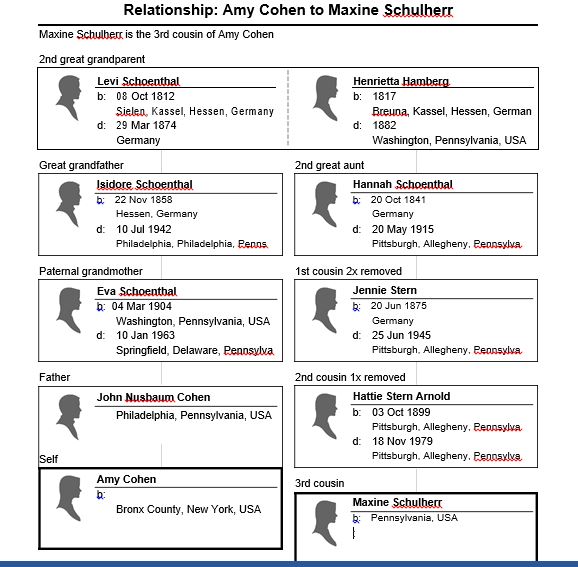
As I wrote a few months ago, my newly found third cousin Maxine Schulherr Stein, the great-granddaughter of Hannah Schoenthal Stern (my great-grandfather Isidor Schoenthal’s sister), had lost touch with her second cousins Betty and Elaine, also great-granddaughters of Hannah Schoenthal Stern.

relationship of Maxine Schulherr to Betty Oestreicher

Betty and Elaine’s grandmother Sarah Stern and her husband Gustav Oestreicher had had three children: Sidney, born in 1891; Francis (known as Frank), born in 1893; and Helen, born in 1895.  They’d all lived in the Pittsburgh area at first, but as Sarah and Gustav’s children became adults, they’d eventually left the Pittsburgh area.

Helen had moved to California by 1935 where she and her husband Aaron Siegel and their daughter Betty lived in Los Angeles.  Frank also was living in Los Angeles by 1942.  It was Sidney Oestreicher and his family whom Maxine knew best. She knew that Sidney was married to Esther Siff, and they had had three children: Gerald, Florence Betty (known as Betty), and Elaine.

But Sidney Oestreicher also had left the Pittsburgh area when he moved to New York in the 1940s.  The family had left their youngest child Elaine behind with Maxine’s family so that she could finish the school year in Pittsburgh, according to Maxine.

By the 1950s, all of the members of Sidney Oestreicher’s family had moved to California to be closer to the other members of the family.  Given the distance and the limited modes of communication back then, the family members back in Pittsburgh eventually lost touch with the California branch of the family.   When I spoke with Maxine, she asked me to help her locate the cousins she’d known as a child.

Hattie Martin Maxine Alan Henrietta Stein Alan's mother

Hattie Arnold Schulherr, Martin Schulherr, Maxine Schulherr Stein, Alan Stein, Henrietta Stein

I knew from my own research that Gerald Oestreicher (who, like his father Sidney and his uncle Frank, changed his surname to Striker) had married Faye Krakower and had had two children.  Gerald died in 2014 and Faye in 2015.   But finding Gerald’s sisters Betty and Elaine had proven to be more difficult, as is generally the case with women.

Fortunately, I found one very important clue that helped me find both Betty and Elaine for Maxine (and for me).

Betty Oestreicher engagement announcement

I thus knew that Betty had married a man named Julius H. Jacob.  And from various other records for Julius, I knew that they had lived in the NYC area for some time and that they, like the other Oestreichers/Strikers, had eventually moved to California.  But I had not been able to find their current residence.

Newly motivated by Maxine’s request, I looked again at the engagement announcement and saw that Julius was described as the brother of Mr. and Mrs. Jacob Spear.  Who was that? I inferred that Julius was the brother of Mrs. Spear, not Mr. Spear, given the different surnames, and decided to see what I could find about the Spears.  I found Jacob Spear and his wife Else (presumably born with the surname Jacob) on the 1940 census, but more importantly, I found them both on several family trees on Ancestry.

Although I am generally skeptical of Ancestry trees, one of those trees belonged to a genealogy researcher whose work I trust: Jennifer Spier-Stern.  I contacted Jennifer, and after we exchanged more information and verified the connection between Julius Jacob and Elsie Jacob, Jennifer was able to put me in touch with the son of Jacob Spear and Else Jacob, John.  John is the nephew therefore of Julius Jacob, husband of my cousin Betty Oestreicher.  Not only did John know the whereabouts of his aunt Betty—he had contact information for her son Ron.  And he pointed out that the upcoming weekend would be her 97th birthday.  Now that gave me the chills!

I emailed Ron, and we exchanged several emails.  And Ron gave me the phone numbers for both his mother Betty and his aunt Elaine, who is also still living in California.  In May I had the great pleasure of speaking to two more of my third cousins, Betty Oestreicher Jacob and Elaine Oestreicher Wallace. The following information came from a combination of my conversations with Betty and Elaine and the emails and conversations I had with my cousin Ron.

Betty was remarkably lucid for a 97 year old woman, and she was delighted to answer my questions and reminisce about her family and her life.  Elaine also was warm and excited to share her stories with me.  I had hoped that one of them would have stories about their grandmother, Sarah Stern, who was the first child of Hannah Schoenthal and who had come without her family to the US when she was nineteen years old.  Unfortunately, as was so often the case, both Betty and Elaine said that their grandmother Sarah did not speak about her childhood or about the move to the United States.

I did learn, however, from Betty that Sarah met her future husband, Gustav Oestreicher, when he was staying at the boarding house in Pittsburgh run by her mother, Hannah Schoenthal, my great-grandfather’s oldest sibling.

Betty also told me that her grandmother Sarah suffered from migraines, and after they married, Gustav and she moved to Atlantic City because he thought it would be better for her health.  Sarah also converted to Christian Science, and although Betty and her family remained Jewish, Betty would often accompany her grandmother Sarah to church when she visited her in Atlantic City.

Ron shared with me a particular memory his mother Betty shared with him:

“Once, Sarah and Gustav purchased 300 ice cream cones for children at an orphanage/home for crippled children, and my mother and uncle (Jerry) got to ride along in the truck to deliver them.  Apparently, my mother was the apple of Gustav’s eye.”

I also asked Betty how her father Sidney met her mother Esther Siff, who lived in Chicago.  Betty explained that her father was a traveling salesman, working for a ladies’ lingerie company called Adelson’s.  While traveling to Chicago for work, he attended a dance where he met Esther Siff.  Sidney and Esther lived in Chicago for the early years of their marriage, and their first two children, Gerald and Betty, were born there.  By 1930, however, the family had moved back to Pittsburgh, where their youngest child Elaine was born.

betty-oestreicher-jacob-1940s-ft-devens

Betty Oestreicher Jacob. 1940s Courtesy of Ron Jacob

Betty said that her immediate family moved to New York in the 1940s for her father’s job.  She had married Julius Jacob by that time, and after spending some time in Massachusetts where Julius was stationed at Fort Devens during the war, they ended up moving to New York where Julius worked for Spear & Company.  In 1954 or so, they returned to Pittsburgh, where Julius continued to work for Spear & Company, but the company was not doing well at that point.

In 1956, the family moved to Los Angeles where Julius took a job with Broadway Department Stores.  Betty’s brother Gerald was already living there at that time as was her aunt Helen and uncle Frank.  Sidney and Esther soon followed their children to Los Angeles. Elaine arrived a few years later after her divorce from her first husband, Jerry Kruger. Sadly, Esther Siff Oestreicher/Striker died on her 68th birthday, March 11, 1961.

Thus, by the 1960s, all the members of the Oestreicher family were living in the Los Angeles area: the three children of Sarah Stern and Gustav Oestreicher, Sidney, Frank, and Helen, and all of their children, including Sidney’s three children, Gerald, Betty, and Elaine.

Ron shared with me his memories of his great-uncle Frank and his grandfather Sidney:

“My Uncle Frank, who I adored, was a lifelong bachelor.  He was also quite the world traveler and I was always fascinated to hear of the places he had been.  Spending a fair amount of time traveling by ship, he became quite an accomplished dancer and tennis table player.  (I believe he had trophies for both.)  When we got a ping pong table, he had fun annihilating me.  To be fair, my grandfather, Sidney, taught me how to play gin rummy (for points) and he also had the grandest smile every time he beat me.  Both men were true gentlemen, and they were loving, caring men and enjoyed spending time with us kids.  My grandfather died when he was 94 and my uncle died when he was 96.” 

Ron also sent me this picture of Faye Krakower Striker, his uncle Gerald’s wife:

faye-krakower-striker-professional-photo


Faye had quite an interesting life as a singer before marrying Gerald in 1946.  The following is an excerpt from the eulogy given at her funeral in 2015.

JPG Eulogy of Faye Striker

Even with all this information, I realized when I got off the phone with Betty that I still had more questions about her childhood and adolescence in Pittsburgh.  Did she know the other Schoenthal cousins? What was life like? Were they active in the Jewish community? There were many more things I wanted to discuss with her.

I had planned to call Betty and Elaine again after those initial conversations. But then I left for our trip to Colorado and New Mexico, and when I returned, I was distracted by a number of other matters, and I failed to follow up.

I recently learned that Betty’s health deteriorated while I was away, and sadly she passed away on July 19, 2016.  She had had a good long life with very few health issues, according to her son Ron.  And although I know that anyone who lives 97 years has had a remarkable journey, I am kicking myself for not making that second call.  Betty had been so excited to share her memories with me, and there were so many more questions to ask and stories to hear.

Life is unpredictable, and we can’t assume anything or take anything for granted.

May my cousin Betty rest in peace, and may her family find comfort in all their memories.


The Legacy of Flora Baer Adler

I am back after two weeks with family members—first, a wonderful week with our grandson Nate and then a week with the extended family.  We had gorgeous weather, lots of laughs, and too much good food.  But now things are quiet, and I am returning to finish the story of the children of Amalia Hamberg.

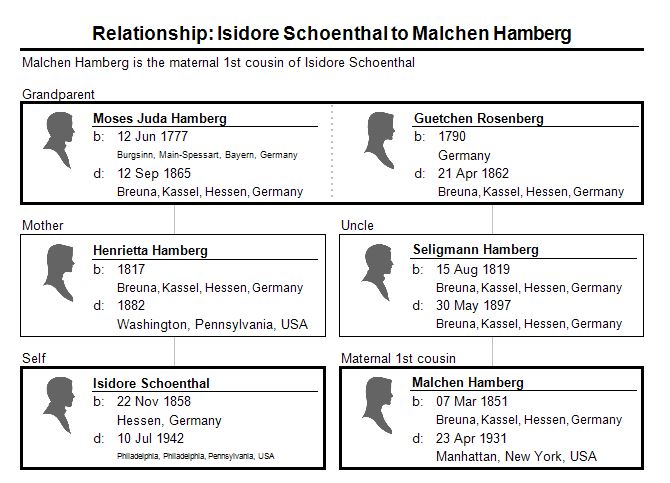
It’s been a long break since I last posted, so I thought it would be helpful to clarify where I was when I left off. I had been discussing the many children of Amalia/Mlalchen Hamberg, who was a first cousin of my great-grandfather Isidore Schoenthal through his mother Henriette Hamberg.

corrected relationship isidore schoenthal to malchen hamberg

I have already discussed six of Amalia’s nine children, including Maurice, Hattie, Josephine, Amanda, Alfred and Tilda.  That leaves three more: Elsie, Lawrence, and the subject of this post, Flora.

Although Hattie Baer died at a young age as did her brother Alfred, most of the other siblings lived long lives.  As we saw in the earlier posts, Amanda lived late into her 90th year, and Josephine lived to 97. Their sister Elsie also lived to 97, and Tilda was within a few months of her 90th birthday.

Unfortunately, their sister Flora did not live as long a life.  As I wrote here, Flora  married Julius Adler, an engineer who had worked for the Philadelphia highway department, supervising the construction of the Benjamin Franklin Bridge.  They had three children between 1917 and 1920, Stanley, Jerrold, and Amy.  Thanks to one of the grandchildren of Flora and Julius, I now have some photographs of the family.

Wedding photograph of Flora Baer and Julius Adler, March 15, 1915 Courtesy of the Adler family

Wedding photograph of Flora Baer and Julius Adler, March 15, 1915
Courtesy of the Adler family

Flora Baer Adler and one of her children

Flora Baer Adler and one of her children


In 1940, all three children were still living at home with their parents in Philadelphia.  Julius listed his occupation as an independent civil engineer.  Their son Stanley was working as a chemical engineer for a chemical company, and their daughter Amy was a social services worker at a hospital.  Jerrold had no occupation listed; perhaps he was still in school.

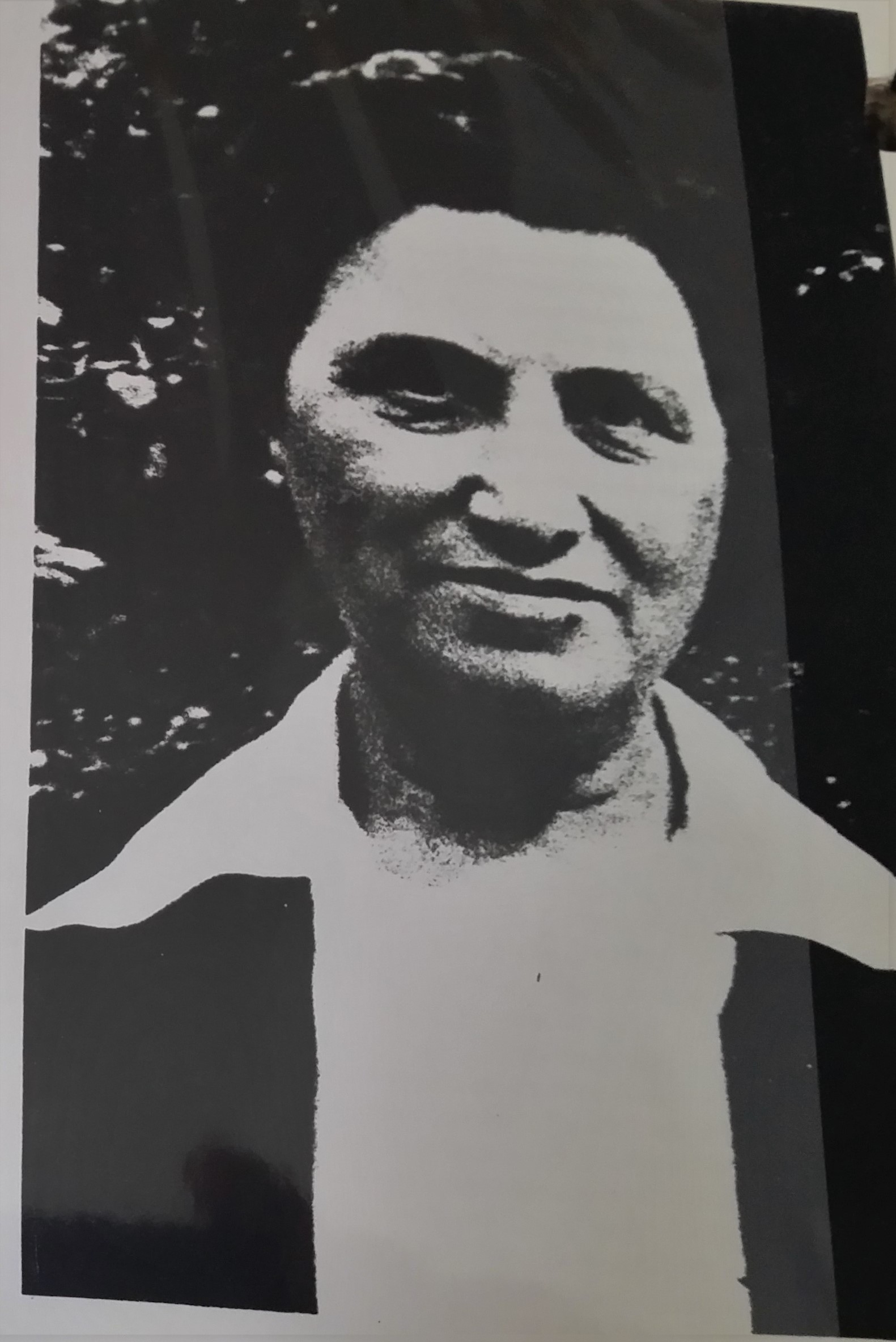
Flora Baer Adler 1943

Flora Baer Adler 1943, courtesy of the Adler family


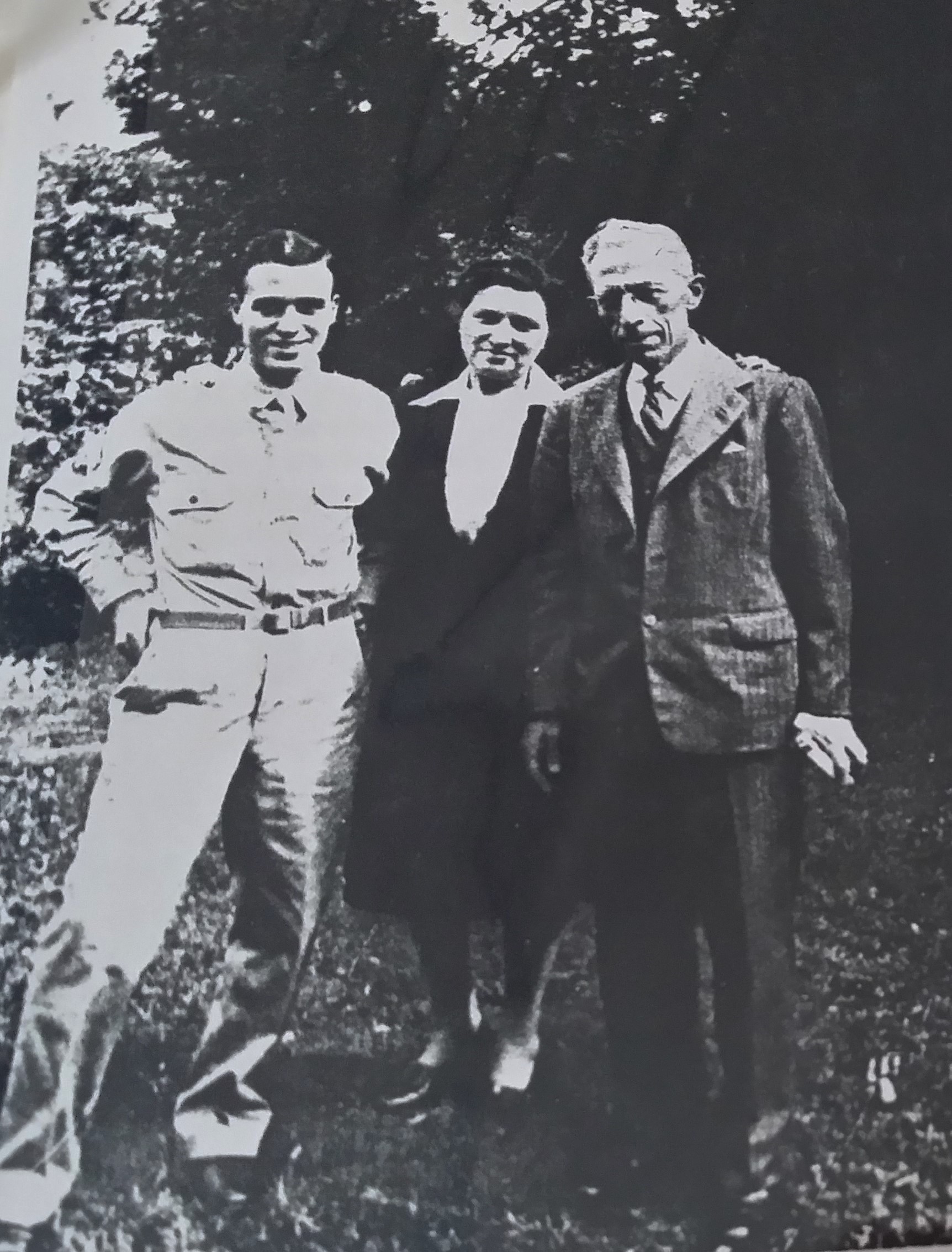
Jerrold Adler, Flora Baer Adler, and Julius Adler 1943 Courtesy of the Adler family

Jerrold Adler, Flora Baer Adler, and Julius Adler
1943
Courtesy of the Adler family

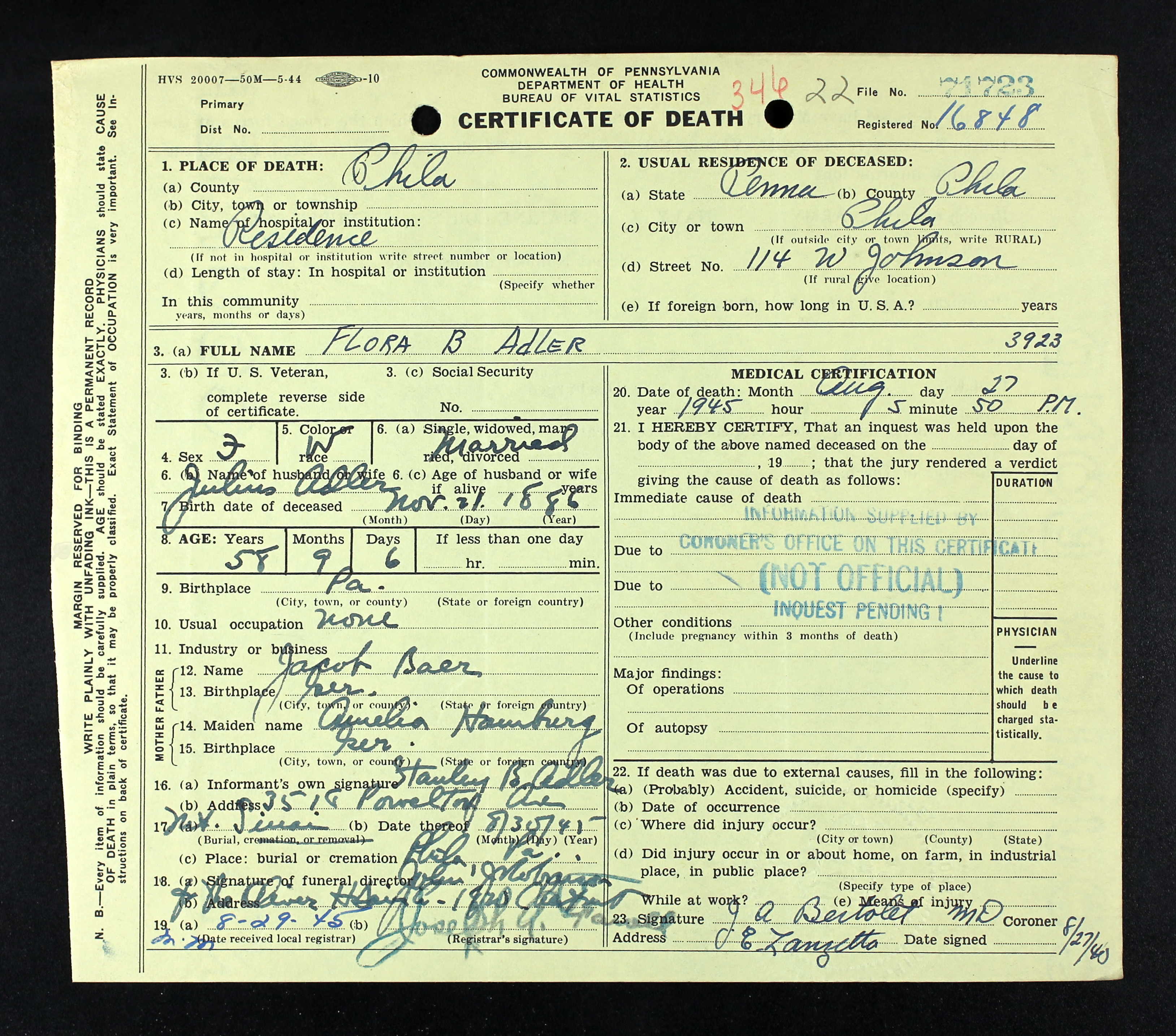
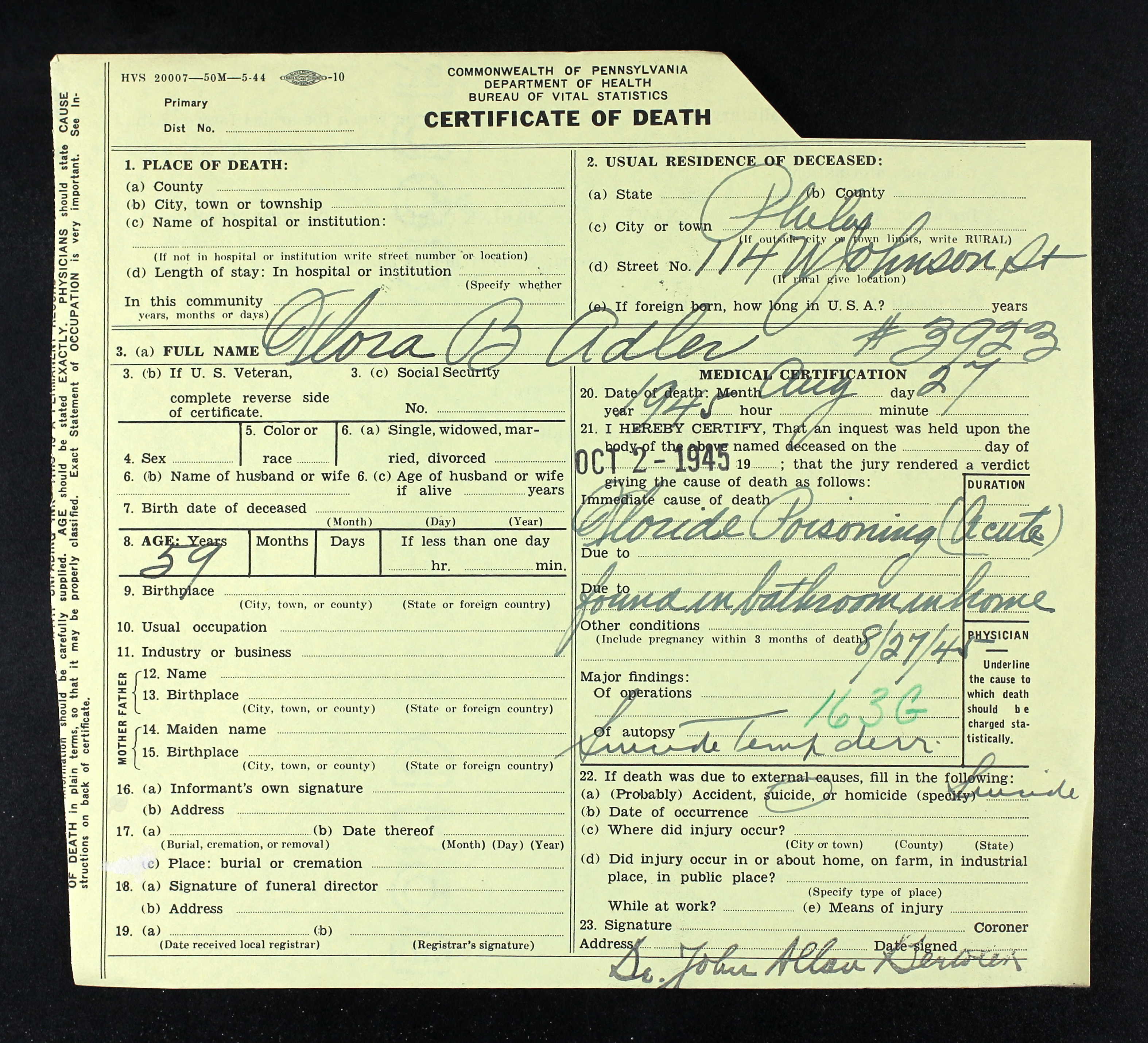
Then tragedy struck.  On August 27, 1945, my cousin Flora died from fluoride poisoning; her death was ruled a suicide by the coroner.

FLora Baer death certificate preliminary

FLora Baer death certificate with coroner result

Ancestry.com. Pennsylvania, Death Certificates, 1906-1963 [database on-line]. Provo, UT, USA: Ancestry.com Operations, Inc., 2014. Original data: Pennsylvania (State). Death certificates, 1906–1963. Series 11.90 (1,905 cartons). Records of the Pennsylvania Department of Health, Record Group 11. Pennsylvania Historical and Museum Commission, Harrisburg, Pennsylvania.

Julius and the three children somehow recovered from this tragedy.  Julius married his second wife Katinka Dannenburg Olsho in 1971 when he was 84 years old.

Julius Adler, 1977 Courtesy of the Adler family

Julius Adler, 1977
Courtesy of the Adler family

When he died in 1993 at the age of 106, the Philadelphia Inquirer published a wonderful tribute to him:

… [Julius Adler] was an erudite man who could quote long passages from Kipling, recite Latin and Greek verse, and speak authoritatively on any of his varied interests, which included growing roses and playing bridge, according to his family.

“This man was unique, just an extraordinary human being,” said Mr. Adler’s son-in-law, Leonard Malamut. “In everything he did, he was top-notch. And he was a man of great dignity. He grew up at a time when decency and ethics and morality were the guiding principles of how one lived.”

Mr. Adler was born in Memphis, Tenn., and moved to Philadelphia as a child. He was a graduate of Central High School’s 109th class in 1904 and a 1908 graduate of the School of Engineering at the University of Pennsylvania, which he attended on an academic scholarship. His family believes he was the oldest living graduate from Central and Penn.

Mr. Adler’s supervision of the Ben Franklin Bridge paving took place when he was deputy chief of the city’s highway department, his son-in-law said. The bridge, when it was built, was called the Delaware River Bridge.  He also supervised the repaving of Broad Street after the construction of the Broad Street Subway.

Mr. Adler taught at the University of Pennsylvania and the University of Washington. He was a member of the Engineers Club of Philadelphia, the American Society of Civil Engineering and the American Society for Testing Materials.

For 70 years, he was a member of Congregation Rodeph Shalom.

Mr. Adler was, as well, a devoted fan of the Phillies. “He could tell you players’ ERAs and batting averages with great accuracy until he was 100,” Malamut said. “I regret that he died in the season the Phillies are having such a great season – that he had to die before the season was over.”

Stanley, Amy, Julius, and Jerrold Adler 1960 Courtesy of the Adler family

Stanley, Amy, Julius, and Jerrold Adler 1960
Courtesy of the Adler family

Julius and Flora’s three children also all lived productive lives.  Their daughter Amy died in 2003 of a heart attack; she was 83.  According to her obituary:

She served as a hospital volunteer when she was a teenager and later studied X-ray technology and electrocardiography.  In 1942, she met Dr. Leonard Malamut when she was working at Jewish Hospital, now Albert Einstein Medical Center. The couple married in 1944.

Dr. Malamut opened a practice near Albert Einstein Medical Center in Olney after serving several years in the Army during World War II. Mrs. Malamut joined him in the office. She managed the practice, keeping the books and helping with electrocardiograms, blood work and other tests.  She enjoyed attending concerts and the theater with Dr. Malamut.

Amy’s older brother Stanley died on April 21, 2006; he was 89 years old.  According to his obituary, like his father, he was an engineer who had graduated from the University of Pennsylvania.  The obituary reported:

During World War II, Stan was an aircraft inspector for the United States Navy. …. He was active in Reform Judaism, scouting, and the American Institute of Chemical Engineers. He wrote many technical papers. His interests included amateur radio, bridge, calculus, gardening, classical music, and a more cooperative world.

Stanley Baer Adler Fold3_Page_1_Selective_Service_Registration_Cards_World_War_II_Multiple_Registrations

Stanley Baer Adler
Fold3_Page_1_Selective_Service_Registration_Cards_World_War_II_Multiple_Registrations

The last surviving child of Flora Baer and Julius Adler was Jerrold, who died on March 5, 2008, when he was, like his brother Stanley, 89 years old.   He had attended the University of Pennsylvania and had served in the army during World War II.

Jerrold Adler draft registration Fold3_Page_1_Selective_Service_Registration_Cards_World_War_II_Multiple_Registrations

Jerrold Adler draft registration
Fold3_Page_1_Selective_Service_Registration_Cards_World_War_II_Multiple_Registrations

Jerrold Adler, courtesy of the Adler family

Jerrold Adler, courtesy of the Adler family

He had married Doris Elaine Getz on October 6, 1946.

Wedding of Jerrold Adler and Doris Getz, October 6, 1946

Wedding of Jerrold Adler and Doris Getz, October 6, 1946

Although Flora’s life ended tragically, she left behind the legacy of three successful children.  Their lives enriched the country that Flora’s mother Amalia had moved to as a young woman back in the 19th century.  They served in our armed forces during World War II and contributed to society through their chosen careers.  Like so many of us, the grandchildren of immigrants, they justified the risks their grandparents took when immigrating to the United States.


The Screenwriter and the Real Estate Mogul

This is the story of two boys who lost their mother before they were even four years old and who, despite that tragedy, grew up to be very successful.

As I wrote here, my cousin Hattie Baer died at age 33 in 1910.  Hattie and her husband Meyer Herman had had two sons, Justin Baer Herman and Richard B. Herman; Justin was three when his mother died, and Richard was just a few months old.  Five years later in 1915, Hattie’s sister Amanda married her brother-in-law Meyer when those boys were still only eight and five years old, respectively.

Meyer was in the clothing business.  In fact, according to one cemetery record, he worked for the Snellenburg Clothing Company, a clothing manufacturing company and a department store in Philadelphia.

Meyer Herman and Hattie and Amanda burial

Historical Society of Pennsylvania; Philadelphia, Pennsylvania; Collection Name: Historic Pennsylvania Church and Town Records

In one of those “small world moments,” I realized that Meyer Herman was working for a company that was owned by the family of another of my relatives: Carrie Snellenburg, who married my great-great-uncle Joseph Cohen, my great-grandfather Emanuel Cohen’s older brother.  The twisted family tree creaks one more time.

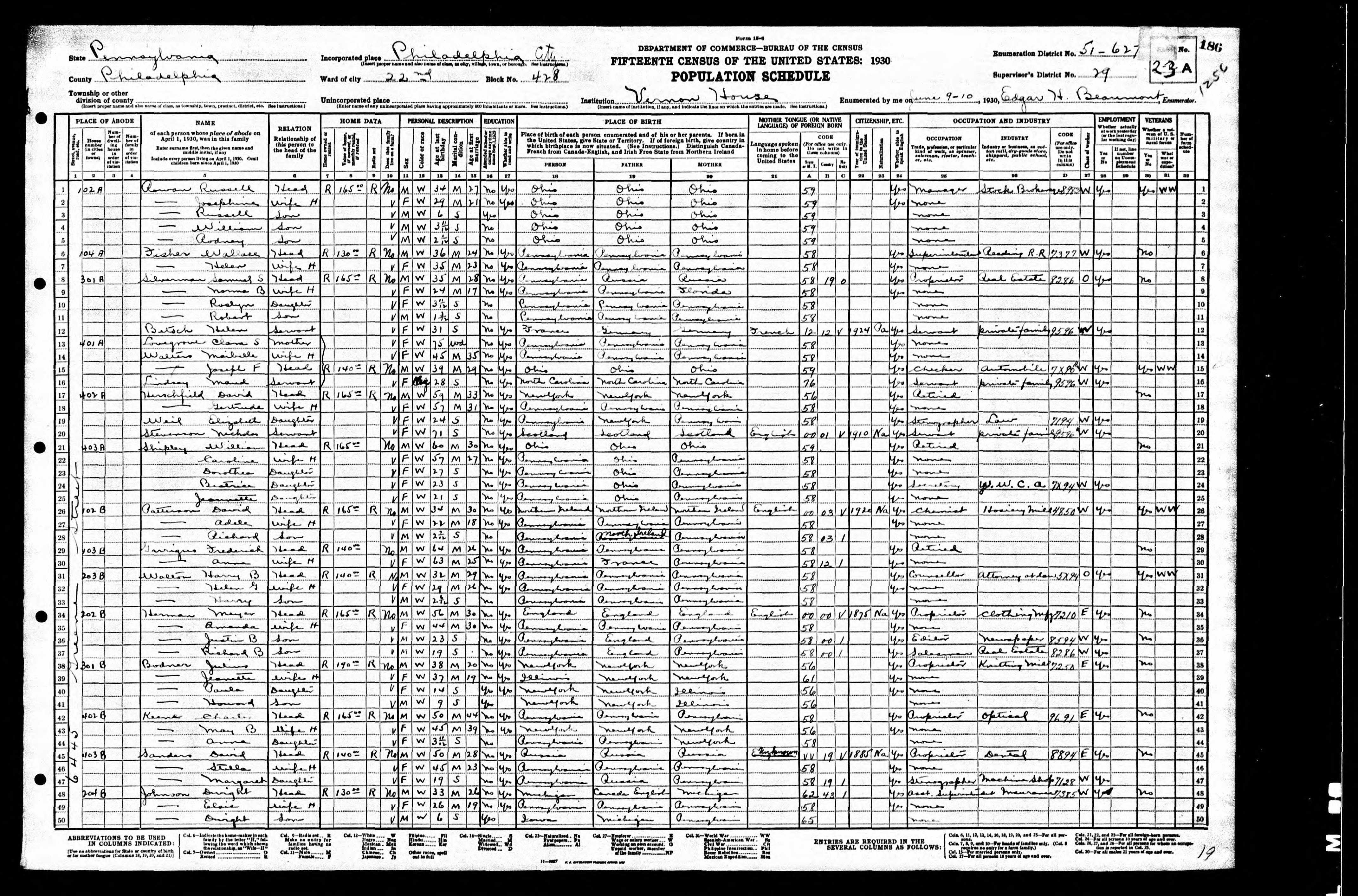
By 1930 both of the sons of Meyer Herman and Hattie Baer (nephews and stepsons of Amanda Baer) were working, Justin as a newspaper editor, Richard as a real estate salesman.  Meyer, Amanda, Justin, and Richard were all still living together in Philadelphia.  Justin was 23, Richard 19 at the time of the 1930 census.

Meyer and Amanda Herman and sons 1930 census Year: 1930; Census Place: Philadelphia, Philadelphia, Pennsylvania; Roll: 2104; Page: 23A; Enumeration District: 0627; Image: 902.0; FHL microfilm: 2341838

Meyer and Amanda Herman and sons 1930 census
Year: 1930; Census Place: Philadelphia, Philadelphia, Pennsylvania; Roll: 2104; Page: 23A; Enumeration District: 0627; Image: 902.0; FHL microfilm: 2341838

Ten years later Meyer and Amanda were still living in Philadelphia, and Meyer was still working as a clothing salesman.  He was 69 years old, Amanda was 58.  Justin and Richard were no longer living with them.  Both had already established themselves in their chosen careers.

After graduating from the Pennsylvania Academy of Fine Art, Justin had become a successful writer, cartoonist, and screenwriter. He wrote for The Philadelphia Record as a reporter and also established a magazine, The Town Crier, during the early 1930s.  He then moved to New York by 1935, where he was a contributor of poems, short stories, and cartoons to The New Yorker magazine.  During that decade he also starting writing screenplays for short films.  Between 1934 and 1940, he wrote nineteen screenplays for short films, working for Paramount Pictures.  “Justin B. Herman Dead at 76; Writer and Producer of Films,” The New York Times, December 10, 1983.    As of 1940, he was single and still living in New York City.

Pennsylvania Academy of the Fine Arts, 118-124...

Pennsylvania Academy of the Fine Arts, 118-124 North Broad Street, Philadelphia, PA 19102, built 1872-75, Frank Furness, architect, William A. Armstrong, builder, National Historic Landmark, 1975. Museum of the Pennsylvania Academy, the oldest art institution in the United States. (Photo credit: Wikipedia)

Meanwhile, his younger brother Richard was also doing quite well during the 1930s.  According to his obituary, Richard “got an early start in the business. He convinced his family and teachers that he was bright, and in elementary school, he was permitted to skip two grades. He entered high school when he was 12, and at 17 was working in real estate for the Lionel Friedman Co. In 1933, at age 23, he founded his own real estate firm. Concentrating on major properties, he built Richard B. Herman & Co. into one of the largest real estate firms in Philadelphia. His forte was real estate investment and management.”  “RICHARD B. HERMAN, 71, REAL ESTATE, CIVIC LEADER,” The Philadelphia Inquirer, June 27, 1982, GenealogyBank.com (http://www.genealogybank.com/doc/obituaries/obit/0FBAE8CA0B3A0215-0FBAE8CA0B3A0215 : accessed 5 July 2016).

As of the 1940 census, Richard had married Marion Cohn, and they were living in Philadelphia.  Their son was born later that year.

On August 25, 1941, Meyer Herman died from coronary thrombosis at age 70.  He had survived the loss of his first wife, Hattie Baer, at a very young age and raised two very young sons in the aftermath of her death before marrying Hattie’s sister Amanda five years later.  He must have been very proud of those two sons.

Meyer Herman death certificate Ancestry.com. Pennsylvania, Death Certificates, 1906-1963 [database on-line]. Provo, UT, USA: Ancestry.com Operations, Inc., 2014. Original data: Pennsylvania (State). Death certificates, 1906–1963. Series 11.90 (1,905 cartons). Records of the Pennsylvania Department of Health, Record Group 11. Pennsylvania Historical and Museum Commission, Harrisburg, Pennsylvania.

Meyer Herman death certificate
Ancestry.com. Pennsylvania, Death Certificates, 1906-1963 [database on-line]. Provo, UT, USA: Ancestry.com Operations, Inc., 2014.
Original data: Pennsylvania (State). Death certificates, 1906–1963. Series 11.90 (1,905 cartons). Records of the Pennsylvania Department of Health, Record Group 11. Pennsylvania Historical and Museum Commission, Harrisburg, Pennsylvania.

During the 1940s Justin Baer Herman married Alma Baer (as far as I can tell, the fact that her surname was Baer was coincidental; she does not appear to have been related to Jacob Baer’s family).  They would have two daughters.  Justin continued to be a successful screenwriter for Paramount.  Two of the films he wrote were nominated for Academy Awards in the category of Best Short Subject.  According to the Imdb database, he was credited as the writer on 61 films between 1934 and 1955 and as director on 49 of those films, producer on forty.  His obituary claimed even higher numbers: “Mr. Herman produced 118 short subjects in 35 years of film making. Three of them were nominated for Academy Awards – ”Life Line to Hong Kong,” ”Roller Derby” and ”Three Kisses.” “Justin B. Herman Dead at 76; Writer and Producer of Films,” The New York Times, December 10, 1983.

Richard also continued to have success in his career.  His obituary reports that:

One of the original developers of Penn Center, he played a major role in the revitalization of Center City. He helped build, and his firm operated, many of the buildings added to the city’s skyline since 1950. …  Working in Penn Center, he was responsible for much of its growth through such transactions as the sale for Penn Central of the 16th and Market Street sites on which stand such buildings as the Central Penn National Building.   He was also responsible for the sale of the Suburban Station Building to the late Matthew H. McCloskey Jr., and the construction of the IBM Building.  When major buildings were placed on the market, he usually was involved – he handled the sale of the Curtis Building, for example. [As of 1971, his company]  was responsible for the operation and leasing of more than 30 major office buildings containing 4.5 million square feet of space.

In fact, Richard’s real estate development firm was responsible for building the huge apartment building, The Philadelphian, where my aunt Eva Cohen lived for many years.

"Philadelphia to Have Largest Apartment, Camden Courier Post, Saturday, May 6, 1961, p. 2

“Philadelphia to Have Largest Apartment, Camden Courier Post, Saturday, May 6, 1961, p. 2

The Philadelphian

The Philadelphian

Unfortunately, Richard suffered a tragedy in his personal life.  On February 28, 1953, his nine year old daughter Barbara died from acute cardiac dilatation.

Barbara Herman death certificate Ancestry.com. Pennsylvania, Death Certificates, 1906-1963 [database on-line]. Provo, UT, USA: Ancestry.com Operations, Inc., 2014. Original data: Pennsylvania (State). Death certificates, 1906–1963. Series 11.90 (1,905 cartons). Records of the Pennsylvania Department of Health, Record Group 11. Pennsylvania Historical and Museum Commission, Harrisburg, Pennsylvania.

Barbara Herman death certificate
Ancestry.com. Pennsylvania, Death Certificates, 1906-1963 [database on-line]. Provo, UT, USA: Ancestry.com Operations, Inc., 2014.
Original data: Pennsylvania (State). Death certificates, 1906–1963. Series 11.90 (1,905 cartons). Records of the Pennsylvania Department of Health, Record Group 11. Pennsylvania Historical and Museum Commission, Harrisburg, Pennsylvania.

 UPDATE: Luanne, a fellow genealogy blogger, asked what I knew about Barbara’s cause of death, so I asked my brother/medical consultant.   He said, “something like viral myocarditis that resulted in cardiogenic shock…would be the most likely diagnosis in a 9 year old.  Acute cardiac dilatation isn’t really a diagnosis, it’s a finding or a descriptive term.[It means an acutely enlarged heart.] Rapid onset cardiogenic shock can also be caused by an MI, valve dysfunction, wall rupture and dysrhythmias, but these would be pretty unusual in a 9 year old. It is also possible she had septic shock which, in the end, caused her heart to dilate (enlarge) and fail.”  For those (like me) who need a definition of cardiogenic shock, MedlinePlus says, “Cardiogenic shock is when the heart has been damaged so much that it is unable to supply enough blood to the organs of the body.”

Justin and Richard’s aunt and stepmother Amanda Baer died on July 28, 1969; she was 89 years old.  She was buried in Mt Sinai cemetery in the same lot as her husband, Meyer Herman, and her sister, Hattie Baer, Meyer’s first wife. Meyer was buried between his two wives, the two Baer sisters.

Meyer Herman and Hattie and Amanda burial

Mt Sinai cemetery record of burials of Amanda Baer Herman, Meyer Herman, and Hattie Baer Herman

Like Meyer, Amanda must have been very proud of her two nephews, Justin and Richard, whom she had helped raise perhaps even before she had married their father in 1915.

Richard Herman died on June 25, 1982.  He was only 72 years old.  I have already quoted extensively from his Philadelphia Inquirer obituary, but want to add these additional insights into who he was beyond a highly successful real estate developer:

He was involved in a wide range of activities. … He was vice president and a member of the board of the Medical College of Pennsylvania, a member of the board of trustees of the Eastern Pennsylvania Psychiatric Institute, a former chairman of the Easter Seal drive, and served on the board of the Athenaeum of Philadelphia. 

Mr. Herman was a member of the prestigious Committee of 70, and a director of the Philadelphia Museum School of Art and the Franklin Institute. He was former chairman of the nonsectarian National Jewish Hospital in Denver and of divisions of United Fund and United Way drives.   He was active in the Rittenhouse Astronomical Society, the Pennsylvania Historical Society, and the Philadelphia Art Alliance.

Mr. Herman was the only man to head both the Society of American Magicians and the International Brotherhood of Magicians simultaneously.

He was a member of the Citizens Council on City Planning and the Germantown Historical Society.

He was a man with an endless curiosity and an I.Q. high enough to make him eligible for membership in Mensa, an organization for the very intelligent. He taught himself art, sculpture and music. He learned to play the organ on his own. He had his own observatory.

His art was displayed in his home and his office, accompanying his collections of such things as pipes. He also collected instruments related to astrology and medicine, children’s toys and signs.

Richard B. Herman ad

His brother Justin died just one year later on December 3, 1983.  He was 76 years old and died of emphysema.  “Justin B. Herman Dead at 76; Writer and Producer of Films,” The New York Times, December 10, 1983.

These two men who lost their mother before either was four years old certainly left their mark in their respective fields, one an Oscar nominated screenwriter, the other a highly successful real estate developer and civic leader.

The Family of Amalia Hamberg Baer, the Administratrix

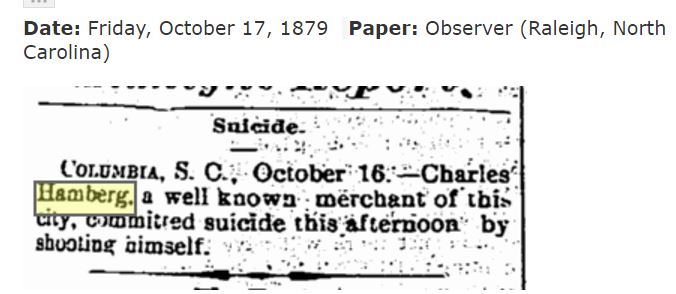
Back in May, I wrote about the sad saga of Charles Hamberg and his son Samuel Hamberg.  Charles, my great-grandfather Isidore Schoenthal’s first cousin, had lost two wives—one was murdered, one died quite young.  He had then committed suicide, leaving his nine year old son Samuel an orphan.  Charles’ estate was administered by another cousin, Amalia Hamberg Baer, who at the time was living in western Pennsylvania where my great-grandfather and many other Hamberg relatives were then living.

In fact, Amalia (born Malchen) was a first cousin to Isidore Schoenthal, my great-grandfather:

corrected relationship isidore schoenthal to malchen hamberg


She had come to the US from Breuna, Germany, in 1871, and had married Jacob Baer in 1873, according to the 1900 census. (For more on how I linked Amalia Hamberg to Jacob Baer, see my earlier post.)  Jacob was born in the Rhein Pfalz[1] region of Germany in about 1851 and had immigrated to the US in 1867, according to several census records.  From entries in the Pittsburgh city directories, he appears to have settled in the Pittsburgh area.

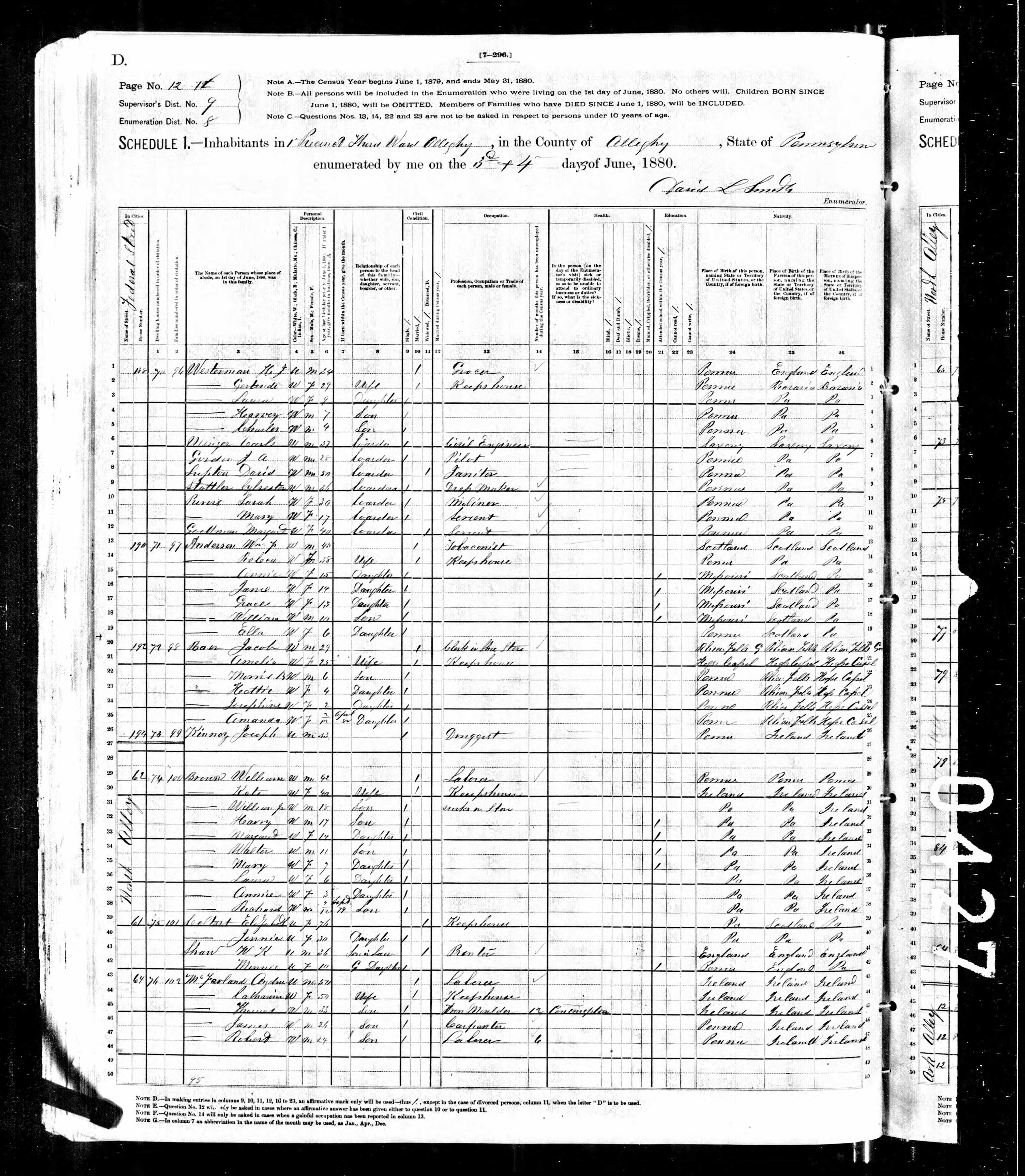
In 1880, Jacob and Amalia were living in Allegheny, Pennsylvania (now part of Pittsburgh), and Jacob was working as a clerk in a shoe store.  They already had four children: Maurice Jay (1874), Hattie (1876), Josephine (1878), Amanda (1880).

Jacob and Amalia Hamberg Baer 1880 US census Year: 1880; Census Place: Allegheny, Allegheny, Pennsylvania; Roll: 1086; Family History Film: 1255086; Page: 198D; Enumeration District: 008; Image: 0402

Jacob and Amalia Hamberg Baer 1880 US census
Year: 1880; Census Place: Allegheny, Allegheny, Pennsylvania; Roll: 1086; Family History Film: 1255086; Page: 198D; Enumeration District: 008; Image: 0402


Between 1880 and 1891, they would have five more children: Flora (1882), Tilda (1884), Elsie Victoria (1886), Alfred (1889), and Lawrence (1891). (The birth years for the daughters as reported in various records are all over the place as they kept making themselves younger as the years went on, so I am relying on the 1880 and 1900 census records when they were still probably young enough not to lie about their ages.)  During those years, Jacob was listed as a salesman in the Pittsburgh city directories.

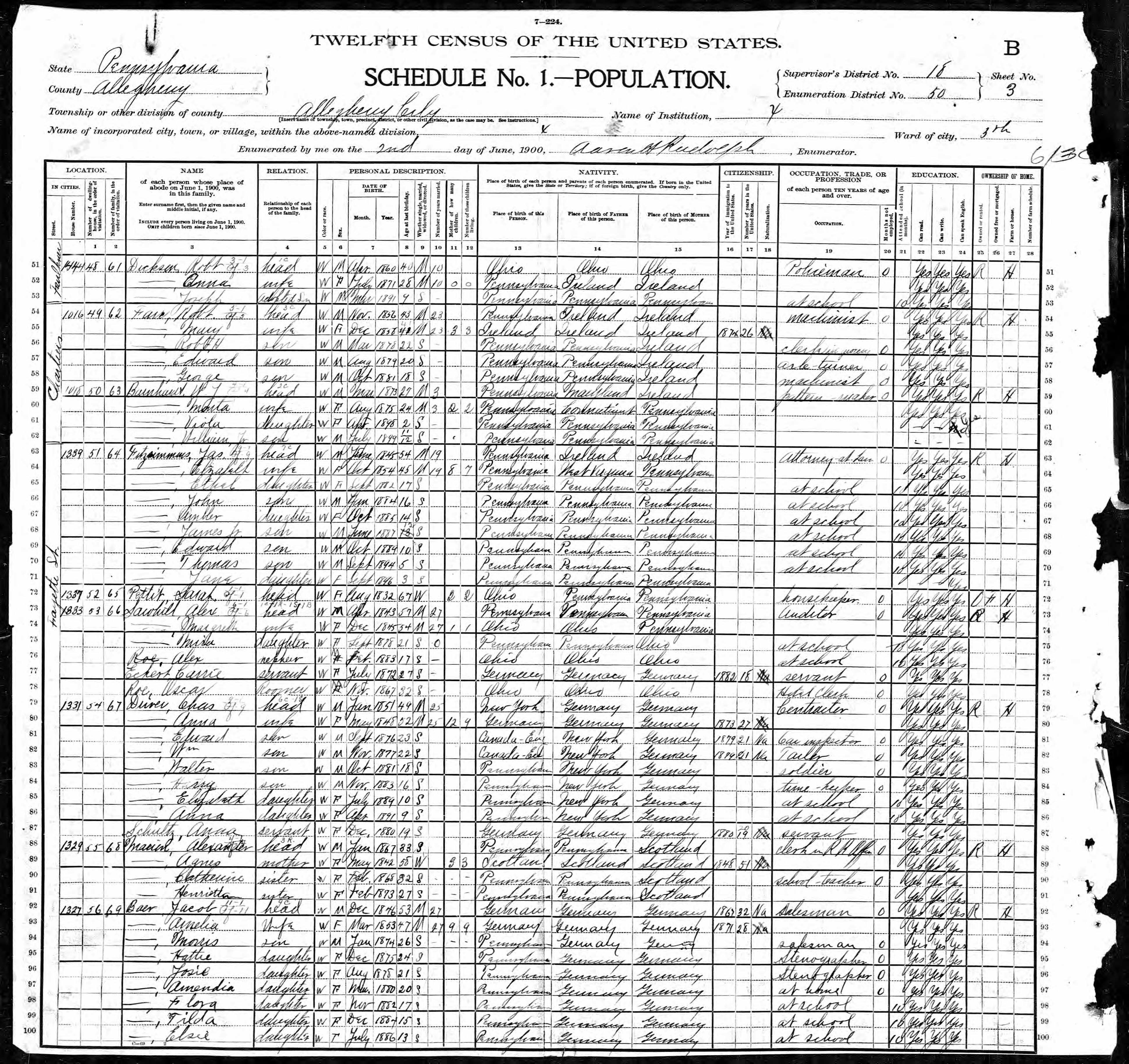
In 1900, Jacob and Amalia were still living in Allegheny with all nine of their children.  Jacob continued to work as a salesman, as did their son Maurice (Morris here, now 26).  Hattie (24) and Josephine (Josie here, now 21) were working as stenographers.  The rest of the children were not employed.

Amalia Baer 1900 census p 1

Jacob and Amalia Hamberg Baer 1900 census Year: 1900; Census Place: Allegheny Ward 5, Allegheny, Pennsylvania; Roll: 1356; Enumeration District: 0050; FHL microfilm: 1241356

Jacob and Amalia Hamberg Baer 1900 census
Year: 1900; Census Place: Allegheny Ward 5, Allegheny, Pennsylvania; Roll: 1356; Enumeration District: 0050; FHL microfilm: 1241356


In the next decade many of the children began to move on to their own lives.  In fact, even before 1900, Maurice, the oldest child, had ventured quite far from Pittsburgh.  As I will write about in a post to follow this one, Maurice moved to Attleboro, Massachusetts,[2] and established a very successful jewelry business in which four of the siblings’ families would be involved, that is, Maurice, Tilda, Elsie, and Lawrence.  This post will focus on the other five siblings—Hattie, Josephine, Flora, Amanda, and Alfred—and their parents, Amalia and Jacob.

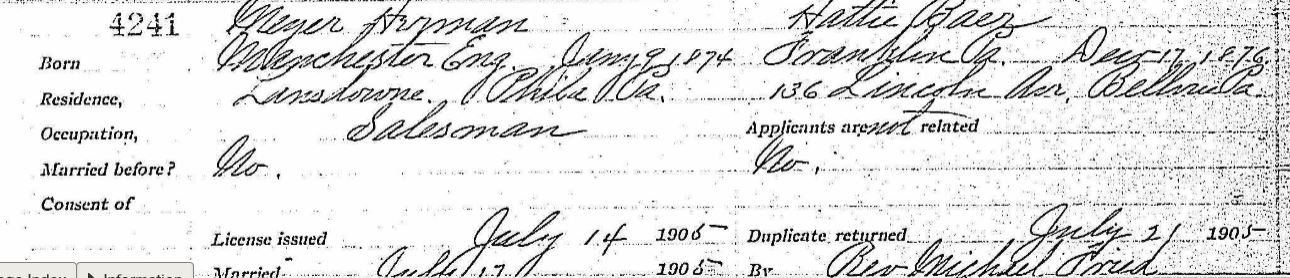
On July 17, 1905, Hattie Baer, the second child who was then 29, married Meyer Herman, a clothing salesman living in Philadelphia who was born in Manchester, England.

Marriage record of Hattie Baer and Meyer Herman Pennsylvania, County Marriages, 1885-1950," database with images, FamilySearch (https://familysearch.org/pal:/MM9.3.1/TH-1951-21130-27078-9?cc=1589502 : accessed 12 May 2016), 004264779 > image 383 of 454; county courthouses, Pennsylvania.

Marriage record of Hattie Baer and Meyer Herman
Pennsylvania, County Marriages, 1885-1950,” database with images, FamilySearch (https://familysearch.org/pal:/MM9.3.1/TH-1951-21130-27078-9?cc=1589502 : accessed 12 May 2016), 004264779 > image 383 of 454; county courthouses, Pennsylvania.

They settled in Philadelphia, where they had two sons, Justin Baer Herman, born in April, 1907, and Richard B. Herman, born in July, 1910.  Then tragically, Hattie died on October 15, 1910, of a perforated bowel and peritonitis.  She was only 33 years old when she died, and she left behind a three year old toddler and a two and a half month old infant son.

Hattie Baer Herman death certificate Ancestry.com. Pennsylvania, Death Certificates, 1906-1963 [database on-line]. Provo, UT, USA: Ancestry.com Operations, Inc., 2014. Original data: Pennsylvania (State). Death certificates, 1906–1963. Series 11.90 (1,905 cartons). Records of the Pennsylvania Department of Health, Record Group 11. Pennsylvania Historical and Museum Commission, Harrisburg, Pennsylvania.

Hattie Baer Herman death certificate
Ancestry.com. Pennsylvania, Death Certificates, 1906-1963 [database on-line]. Provo, UT, USA: Ancestry.com Operations, Inc., 2014.
Original data: Pennsylvania (State). Death certificates, 1906–1963. Series 11.90 (1,905 cartons). Records of the Pennsylvania Department of Health, Record Group 11. Pennsylvania Historical and Museum Commission, Harrisburg, Pennsylvania.

Five years later in 1915, Hattie’s younger sister Amanda married her brother-in-law Meyer Herman in Philadelphia and took on the responsibility for raising her two nephews, Justin and Richard, then just eight and five years old.  In 1920, Meyer was still a clothing salesman, and the family continued to live in Philadelphia.

Meyer and Amanda Baer Herman 1920 census Year: 1920; Census Place: Philadelphia Ward 22, Philadelphia, Pennsylvania; Roll: T625_1623; Page: 8A; Enumeration District: 591; Image: 961

Meyer and Amanda Baer Herman 1920 census
Year: 1920; Census Place: Philadelphia Ward 22, Philadelphia, Pennsylvania; Roll: T625_1623; Page: 8A; Enumeration District: 591; Image: 961

Ten years later in 1930, Meyer had moved from being a salesman to being the owner of a clothing manufacturing business.  The two sons were also working; Justin, now 23, was a newspaper editor, and Richard, now 19, was selling real estate.  Both were still living at home with Meyer and Amanda in Philadelphia.

Herman and Amanda Baer Herman 1930 census Year: 1930; Census Place: Philadelphia, Philadelphia, Pennsylvania; Roll: 2104; Page: 23A; Enumeration District: 0627; Image: 902.0; FHL microfilm: 2341838

Herman and Amanda Baer Herman 1930 census
Year: 1930; Census Place: Philadelphia, Philadelphia, Pennsylvania; Roll: 2104; Page: 23A; Enumeration District: 0627; Image: 902.0; FHL microfilm: 2341838

Meanwhile, the third child of Amalia and Jacob Baer, Josephine, had married Morris Alon Green on January 2, 1906.  Morris was a Pittsburgh native, born there on February 17, 1875, the son of Abraham Green, an immigrant from Holland, and Jeanette Bloomberg, born in Germany.  In 1900, Morris was living with his parents in Pittsburgh and working as a bookkeeper.

Marriage record of Morris Green and Josephine Baer Pennsylvania, County Marriages, 1885-1950," database with images, FamilySearch (https://familysearch.org/pal:/MM9.3.1/TH-1942-20622-18713-16?cc=1589502 : accessed 10 June 2016), 004811570 > image 334 of 449; county courthouses, Pennsylvania.

Marriage record of Morris Green and Josephine Baer
Pennsylvania, County Marriages, 1885-1950,” database with images, FamilySearch (https://familysearch.org/pal:/MM9.3.1/TH-1942-20622-18713-16?cc=1589502 : accessed 10 June 2016), 004811570 > image 334 of 449; county courthouses, Pennsylvania.

Josephine and Morris settled in Pittsburgh where their son Alan Baer Green was born on October 30, 1906.  In 1910, the Greens were living in Pittsburgh as boarders in the household of another family, and Morris was working as a claims agent.

Morris and Josephine Baer Green on 1910 census Year: 1910; Census Place: Pittsburgh Ward 8, Allegheny, Pennsylvania; Roll: T624_1301; Page: 2A; Enumeration District: 0379; FHL microfilm: 1375314

Morris and Josephine Baer Green on 1910 census
Year: 1910; Census Place: Pittsburgh Ward 8, Allegheny, Pennsylvania; Roll: T624_1301; Page: 2A; Enumeration District: 0379; FHL microfilm: 1375314

The next several years must have been successful ones for Morris because by 1918, he was the general agent and executive of the Crucible Steel Company and by 1920 he and Josephine and their son Alan were living in their own (rented) home with a nurse and servant residing with them.

Morris A Green, World War I draft registration Registration State: Pennsylvania; Registration County: Allegheny; Roll: 1909239; Draft Board: 11

Morris A Green, World War I draft registration
Registration State: Pennsylvania; Registration County: Allegheny; Roll: 1909239; Draft Board: 11

By 1925, Josephine and Morris had left western Pennsylvania for New York City, where they were living at the Hotel Alexander at 150 West 103rd Street.  Their son Alan is not listed as living with them; perhaps he was away at college as he would have been nineteen at that time.  In 1930, Alan was living with his parents in Manhattan, working in advertising.  His father Morris listed his occupation/industry as “financial.”

Morris and Josephine Baer Green and Alan Baer Green, 1930 census Year: 1930; Census Place: Manhattan, New York, New York; Roll: 1556; Page: 19A; Enumeration District: 0443; Image: 762.0; FHL microfilm: 2341291

Morris and Josephine Baer Green and Alan Baer Green, 1930 census
Year: 1930; Census Place: Manhattan, New York, New York; Roll: 1556; Page: 19A; Enumeration District: 0443; Image: 762.0; FHL microfilm: 2341291

The fifth child of Amalia and Jacob was Flora.  In 1907, she is listed in the Pittsburgh city directory as a teacher, residing in Bellevue, a town near Pittsburgh. In 1910, when she was 28 (although listed as 24 on the 1910 census), she was still single and living with her parents and not employed outside the home.

Jacob and Amalia Schoenthal Baer and family 1910 census Year: 1910; Census Place: Pittsburgh Ward 14, Allegheny, Pennsylvania; Roll: T624_1304; Page: 6B; Enumeration District: 0468; FHL microfilm: 1375317

Jacob and Amalia Schoenthal Baer and family 1910 census
Year: 1910; Census Place: Pittsburgh Ward 14, Allegheny, Pennsylvania; Roll: T624_1304; Page: 6B; Enumeration District: 0468; FHL microfilm: 1375317


In 1915, she married Julius Adler.  Julius was the son of Simon Adler, a German immigrant who in 1880 was living in Memphis, Tennessee, working in a shoe store.  Julius’ mother Elizabeth was a native of Missouri; she married Simon in 1881, and they had four children born in Memphis between 1882 and 1887, when their youngest son Julius was born.  By 1900, the family had relocated to Philadelphia.

According to his obituary, Julius graduated from the University of Pennsylvania with a degree in engineering in 1908.  In 1910, he was teaching at the University of Washington in Seattle.  But by 1915 he had returned to Philadelphia, where he married Flora Baer.  In 1917, they were living in Harrisburg, Pennsylvania, where Julius was working as a civil engineer for the state highway department.  They would have three children, Stanley, Jerrold, and Amy, born between 1917 and 1920.

Julius Adler, World War I draft registration Registration State: Pennsylvania; Registration County: Dauphin; Roll: 1893237; Draft Board: 3

Julius Adler, World War I draft registration
Registration State: Pennsylvania; Registration County: Dauphin; Roll: 1893237; Draft Board: 3

In 1920, the family had returned to Philadelphia, where Julius was now employed as a technical engineer for an oil company.  According to his obituary, during the 1920s, Julius was working as the deputy chief of the Philadelphia highway department and was involved in supervising the construction of the Benjamin Franklin Bridge, the bridge that spans the Delaware River connecting Philadelphia to Camden, New Jersey (originally called the Delaware River Bridge).  In 1930, Julius and Flora and their two sons continued to live in Philadelphia, Julius working as a civil engineer.

Benjamin Franklin Bridge linking Camden, NJ wi...

Benjamin Franklin Bridge linking Camden, NJ with Philadelphia, PA – Taken from the 22nd floor of Waterfront Square (Photo credit: Wikipedia)

Alfred, the second youngest child of Amalia and Jacob, was the only other child not involved with the Attleboro jewelry business.  In 1900, he was living with his family in Pittsburgh, but he is not listed with them in 1910, when he would have been 21 years old.  There is an Alfred H. Baer listed in the 1907 Pittsburgh directory, working as a clerk, but I am not sure that that is the same person.  According to his registration for the draft in World War I, Alfred was living in a sanitarium and “mentally incapacitated for work of any kind.”

Alfred Baer ww1 draft reg

Alfred Baer, World War I draft registration Registration State: Pennsylvania; Registration County: Philadelphia; Roll: 1907636; Draft Board: 17

Five years later, at age 34, Alfred died on December 13, 1923.  He was buried where his sister Hattie was buried and where later his parents, his sister Flora, and his brother Maurice would be buried at Mt. Sinai cemetery in Philadelphia. I was unable to locate a death certificate, so I do not know the cause of death.  According to his burial record, he was residing in Stamford, Connecticut, at the time of his death.

Thus, by 1930, Amalia (Hamberg) and Jacob Baer had lost two of their children, Hattie and Alfred. Their other children were doing quite well.  Amanda and Flora had moved to Philadelphia with their husbands and children, and Josephine was living in New York City with her husband and son.  The other four children were also living away from Pittsburgh, as we will see in the next post.

Even Jacob and Amalia had left Pittsburgh by that time.  In fact, sometime between 1918 and 1922, they had moved to Atlantic City.  In 1922, they were listed in the Atlantic City directory, living at The Amsterdam in Atlantic City.  The following year on March 27, 1923, their children honored their parents on the occasion of their 50th wedding anniversary with a dinner at the Esplanade Hotel in New York City.

Jacob and Amalia Baer anniversary party


In 1930 Jacob and Amalia, now 83 and 79 (although the 1930 census says 77), were living at 250 West 103rd Street in New York City, with Jacob listed as the head of household for what appears to be a small hotel; there are 28 guests listed as living with them.  Their daughter Josephine was living not too far away at 666 West End Avenue.

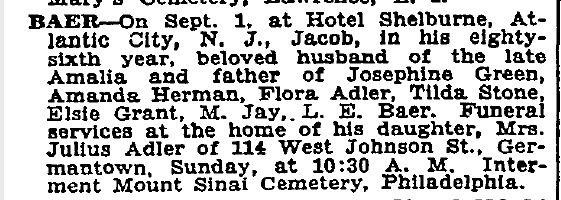
Amalia Baer, born Malchen Hamberg in Breuna, Germany, died on April 23, 1931, in New York City.  She was 80 years old.  She was buried in Mt. Sinai cemetery in Philadelphia where the two children who predeceased her, Hattie and Alfred, were buried.  A year later her husband Jacob died on September 1, 1932.  He was 85 years old, and he was buried with his wife and children in Mt. Sinai cemetery.  His death notice ran in the September 3, 1932 issue of The New York Times:

NY Times, September 3, 1932

NY Times, September 3, 1932

In my next post, I will write about the four children of Amalia and Jacob who were involved in the jewelry business in Attleboro, Massachusetts.  Then in a subsequent post I will report on what later happened to the children and the grandchildren of Jacob and Amalia (Hamberg) Baer.


[1] Thank you to Michael Palmer and Cathy Meder-Dempsey of the German Genealogy group on Facebook for helping me decipher Jacob’s birthplace.

[2] I am not sure why Maurice is listed as living in Pittsburgh on the 1900 census as several reports indicate he had established the business in Attleboro before then.  Perhaps he was still traveling back and forth between Pennsylvania and Massachusetts at that time.

From Orphan to Pharmacist and Then?

In two recent posts I shared the sad story of Charles Hamberg and his life in Columbia, South Carolina, which ended with his suicide in 1879.  His son Samuel was only eleven when his father died.  Samuel’s mother Lena had died two years earlier.  Charles’ cousin Amalia Hamberg administered his estate, and then somehow Charles’ son Samuel came to live in western Pennsylvania where he was adopted by his second cousin, my great-grandfather’s brother, Henry Schoenthal.

Henry Schoenthal and family 1880 census Year: 1880; Census Place: Washington, Washington, Pennsylvania; Roll: 1202; Family History Film: 1255202; Page: 596A; Enumeration District: 271

Henry Schoenthal and family 1880 census
Year: 1880; Census Place: Washington, Washington, Pennsylvania; Roll: 1202; Family History Film: 1255202; Page: 596A; Enumeration District: 271


In 1886 when Samuel was then eighteen years old, he was working as a clerk at 5 East Beau Street in Washington and living at the corner of Beau and Lincoln in that town, according to the 1886 directory for Washington, Pennsylvania.  According to that same source, my great-grandfather Isidore Schoenthal, who had arrived in Washington in 1881, was living at 203 East Beau Street that same year; looking at Google Maps, I see that 203 East Beau Street is located at the corner of Lincoln and Beau.

[Thanks to Lara of Lara’s Jewnealogy, I now know how to use Google Maps more effectively.  See her great post here.]

Thus, Samuel Hamberg was probably living with my great-grandfather.  I imagine that they lived and maybe even worked together, my great-grandfather watching over his younger second cousin.  Perhaps Samuel helped my great-grandfather learn English and adjust to American ways.

By 1889, Samuel, now 21 years old, had moved to Philadelphia.  He is listed in the directory for that year as Samuel T. Hamberg, a manager, residing at “134 E. Orthodox, FKD.”  FKD stands for Frankford, a neighborhood in northeast Philadelphia about six miles from the center of the city.  I wondered what had taken him there.

It took me a very long time to find out, but when I finally decided, after exhausting traditional genealogy sources, to Google “Samuel T. Hamberg” as a last ditch effort to learn more, I found these two entries in Google Books:

P.W. Bedford, Pharmaceutical Record and Weekly Market Review, Volume 10, April 21, 1890, p. 163, found here (list of graduates of the Philadelphia College of Pharmacy).

26th Annual Report of the Alumni Association of the Philadelphia College of Pharmacy (1890), found here.

Class of 1890, Philadelphia College of Pharmacy Alumni Association Report, p. 194

Class of 1890, Philadelphia College of Pharmacy
Alumni Association Report, p. 194

Samuel T. Hamberg, the boy who had lost both his parents before his twelfth birthday, had graduated from the four-year program at the Philadelphia College of Pharmacy in 1890 when he was 22 years old. The Philadelphia College of Pharmacy was the first pharmacy school in the United States and still exists today.

Not only had Samuel graduated from this prestigious institution, but a further search into both of the above sources revealed that his middle name was Tilden,[1] that he had written his thesis on nitroglycerin, that he had played the guitar to open the commencement exercises as part of a musical ensemble (perhaps his musical adoptive brother Lionel Schoenthal with whom he’d lived in Washington had given him music lessons), and that he had been selected to be the Class Poet.  The poem he read at the school’s commencement exercises in 1890 is filled with references to professors and specific memories of the school years, but this particular verse seemed a more personal statement:

Sorrows and losses may be borne,

Be baffled and dismayed,

Feel the sharp pang of many a thorn

By our own follies made.

But hope and effort may improve

And help us to thankful be,

It surely did in this case

It helped us—in a degree.

(Samuel Tilden Hamberg, 1890, as published in the Alumni Report, cited above, p.124.)

Samuel Tilden Hamberg certainly had suffered sorrows and losses, though not by his “own follies made.”  But it seems with the love of his family in Washington, Pennsylvania, he had in fact borne those sorrows and losses and succeeded in coming through them as a grateful and successful young man.

Philadelphia College of Pharmacy See page for author [CC BY 4.0 (http://creativecommons.org/licenses/by/4.0)], via Wikimedia Commons

Philadelphia College of Pharmacy
See page for author [CC BY 4.0 (http://creativecommons.org/licenses/by/4.0)%5D, via Wikimedia Commons

Samuel stayed on in Philadelphia after graduating. In the 1892 directory for Philadelphia, Samuel T. Hamberg is listed as a clerk, living now at 6933 Hagerman Avenue.  Two years later in 1894 he lists his occupation as druggist, living at 824 Somerset.  In 1895 and 1896 there are numerous advertisements listing Samuel T. Hamberg as a pharmacist in the Philadelphia Inquirer.

Samuel T. Hamberg married Jane E. Tracey on November 20, 1898, at the Zion Episcopal Church in Philadelphia.  At the time they married, Samuel had been residing in Camden, New Jersey, according to the marriage record.  His wife had been living in Philadelphia where she was born in December, 1869.  Jane, or Jennie as she was generally identified on most records, was the daughter of Edwin Tracey (often spelled Tracy) and Jane Irwin.  Edwin was a Philadelphia native and a shoemaker according to the 1880 census; his wife Jane was born in Ireland.  Jennie was the seventh of nine children.

Marriage record of Samuel Hamberg and Jane Tracey November 20, 1898, Zion Protestant Episcopal Church, Philadelphia Historical Society of Pennsylvania; Philadelphia, Pennsylvania; Collection Name: Historic Pennsylvania Church and Town Records; Reel: 978

Marriage record of Samuel Hamberg and Jane Tracey November 20, 1898, Zion Protestant Episcopal Church, Philadelphia
Historical Society of Pennsylvania; Philadelphia, Pennsylvania; Collection Name: Historic Pennsylvania Church and Town Records; Reel: 978


In 1900, Samuel and Jennie were living in Philadelphia in the household of Jennie’s brother Albert Tracy along with Jennie’s mother Jane and her three sisters.  Samuel was working as a hospital supplies salesman.  I know this is the correct Samuel Hamberg because his birth place is given as South Carolina, his father’s as Germany, his mother’s as South Carolina.  (I found it interesting that Samuel reported the birth places of his birth parents, Charles and Lena, not those of his adoptive parents.)

Samuel Hamberg 1900 census Year: 1900; Census Place: Philadelphia Ward 29, Philadelphia, Pennsylvania; Roll: 1472; Page: 12A; Enumeration District: 0748; FHL microfilm: 1241472

Samuel Hamberg 1900 census
Year: 1900; Census Place: Philadelphia Ward 29, Philadelphia, Pennsylvania; Roll: 1472; Page: 12A; Enumeration District: 0748; FHL microfilm: 1241472


On September 4, 1900, Samuel and Jennie had their first child, a son named Charles, presumably named for Samuel’s father Charles.

The family must have soon thereafter moved to Camden, New Jersey, for Samuel is listed as a salesman in the 1901 Camden directory.  Samuel and Jennie are also listed in the 1902 and 1903 Camden directories at 3010 Westfield Street; Samuel is still listed as a salesman.  A second child was born that year, Frances D. Hamberg, born in January, 1903, in New Jersey.  Samuel and Jennie were still living at the same address in 1904 and in 1905.

Then things start getting a little confusing.  In 1906 Samuel T. Hamberg is listed in the Philadelphia directory as a salesman residing at 27 North 60th Street in that city.  There is no listing for him in the Camden directory for that year.  But the following year Samuel is listed as a salesman in the Camden directory, residing at 126 Dudley Street.  Then in 1908, the listing is only in Jennie’s name—Jennie Hamberg at 126 Dudley Street.

Meanwhile in October 1907, a third child had been born to Samuel and Jennie—Edwin F. Hamberg.  Had Samuel and Jennie separated in 1906, reconciled and had a third child in 1907, and then separated again in 1908? Jennie is again listed alone at 126 Dudley in Camden in 1909, this time with an occupation, dressmaker.

But where was Samuel in 1908 and 1909? He is not listed in the Camden directory.  There are two Samuel Hambergs listed in Philadelphia in 1909, but they are father and son and listed as pawnbrokers, so neither of them seems to be the right Samuel.  There are no Samuel Hambergs listed in the directories for those years for Pittsburgh or Washington, Pennsylvania, or Baltimore.

In 1910, Samuel reappears on the 1910 census in Baltimore, Maryland, living as a boarder and working as a pharmacist in a drugstore.  I know this is my Samuel because he is Samuel T. Hamberg, born in South Carolina, father born in Germany, mother in South Carolina.  But why is he in Baltimore?  He is still listing himself as married, so maybe he went to Baltimore to find work.   Since he had been working as a salesman while living in Camden, maybe he wanted to return to being a regular pharmacist.

Samuel Hamberg 1910 census Year: 1910; Census Place: Baltimore Ward 4, Baltimore (Independent City), Maryland; Roll: T624_553; Page: 3B; Enumeration District: 0036; FHL microfilm: 1374566

Samuel Hamberg 1910 census Line 85
Year: 1910; Census Place: Baltimore Ward 4, Baltimore (Independent City), Maryland; Roll: T624_553; Page: 3B; Enumeration District: 0036; FHL microfilm: 1374566

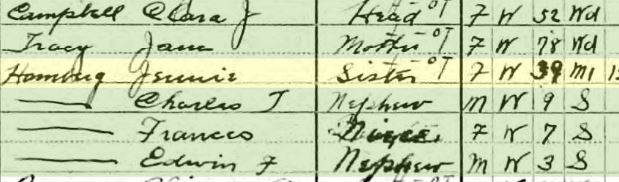
Jennie and the three children were still living at 126 Dudley in Camden in 1910.  According to the census, they were living with Jennie’s sister Clara Campbell and her mother Jane Tracy.  Like Samuel, Jennie still reported herself as married.  Although Jennie reported no occupation on the 1910 census, the 1910 and 1911 Camden directories list her as a dressmaker.

Jennie Hamberg and children 1910 census Year: 1910; Census Place: Camden Ward 12, Camden, New Jersey; Roll: T624_874; Page: 13A; Enumeration District: 0080; FHL microfilm: 1374887

Jennie Hamberg and children 1910 census
Year: 1910; Census Place: Camden Ward 12, Camden, New Jersey; Roll: T624_874; Page: 13A; Enumeration District: 0080; FHL microfilm: 1374887


Samuel is listed in the 1911 Baltimore directory, but then he again disappears.  I couldn’t find him in any newspaper article or any directory after 1911 during the decade of the 1910s.

Jennie, however, continued to be listed in the Camden directories from 1910 through 1916.  In 1915, she and her children are listed on the New Jersey census, once again living with her sister Clara and her mother Jane; Samuel is not part of their household.

Jennie Tracey Hamberg died from heart disease on March 4, 1917.  She was only 47 years old, and she left behind three children.  Charles was not yet sixteen, Frances not yet fourteen, and Edwin not yet ten years old.  Like their father Samuel, they lost their mother at a young age.

Jennie Tracey Hamberg death certificate

Jennie Hamberg burial record Fernwood Cemetery, Yeardon, PA Historical Society of Pennsylvania; Philadelphia, Pennsylvania; Collection Name: Historic Pennsylvania Church and Town Records

Jennie Hamberg burial record
Fernwood Cemetery, Yeardon, PA
Historical Society of Pennsylvania; Philadelphia, Pennsylvania; Collection Name: Historic Pennsylvania Church and Town Records

So where was their father? I could not find him on the 1920 census or anywhere during the 1920s until I searched for “Samuel T. Hamberg” in Google.  And along with the links noted above relating to his education as a pharmacist, I found several links indicating that in 1920 Samuel was in Pittsburgh working for the state of Pennsylvania as a temporary investigator doing fair price work.  Even knowing this additional information, I could not locate Samuel on the 1920 census or in any directory in the 1920s.

Samuel Hamberg investigator 1920

Herman P. Miller, Snull’s Legislative Handbook and Manual of the State of Pennsylvania, 1920, p. 144, found here.

But Samuel T. Hamberg does reappear on the 1930 census.  He is listed as Sam T. Hamberg, 62 years old (the correct age), married at age 30 (the correct age), widowed (Jennie was dead), born in South Carolina, father born in Germany, mother in South Carolina (all correct).  Clearly this is the right person.  He was now living in Philadelphia, working as a novelty salesman, and living with his “sister” Cecelia Link. What had happened to his pharmacy career? His work as a state investigator? And who was Cecelia Link?

Samuel Hamberg 1930 census Year: 1930; Census Place: Philadelphia, Philadelphia, Pennsylvania; Roll: 2125; Page: 14A; Enumeration District: 0777; Image: 969.0; FHL microfilm: 2341859

Samuel Hamberg 1930 census
Year: 1930; Census Place: Philadelphia, Philadelphia, Pennsylvania; Roll: 2125; Page: 14A; Enumeration District: 0777; Image: 969.0; FHL microfilm: 2341859

Samuel did not have any sisters except for his adoptive sister Hilda Schoenthal, the daughter of Henry Schoenthal.  Cecelia was twenty years younger than Samuel, according to the 1930 census, born in Pennsylvania, single, and working as a telephone operator.  Cecelia answered the enumerator’s questions as indicated by the H on the line where her name is. Who was she, and why was she living with Samuel?

I found a Celia Link living with her mother and two sisters (and a brother-in-law) in Pittsburgh on the 1920 census.  Celia was forty years old, single, and working as a telephone operator.  It seemed like an unlikely coincidence that there were two women with just about the same name, both born in Pennsylvania, and both working as telephone operators.  (Remember that Samuel was living in Pittsburgh in 1920.)

So I looked for more about this Celia Link.  The 1916 Pittsburgh directory had her listed as Cecelia Link working as a telephone operator, so now we had the exact same name.  The 1910 census has her again as Celia, living with her parents, working as a telephone operator, and 33 years old.  Going back yet another ten years, the 1900 census lists her as Cecilia, age 22, with a birth date of March 1878, and no occupation.

Then I found her death certificate.  Cecelia Link died of chronic myocarditis on May 6, 1934, at “abt age 48,” according to her sister, the informant.  Assuming that Cecelia was 22 in 1900, she would have been 56 in 1934.  Even in 1920, she reported to be 40, making her 54 in 1934.  She was therefore only about ten years younger than Samuel, not twenty.  Note also that she was born in Washington, Pennsylvania.

Cecilia Link death certificate Ancestry.com. Pennsylvania, Death Certificates, 1906-1963 [database on-line]. Provo, UT, USA: Ancestry.com Operations, Inc., 2014. Original data: Pennsylvania (State). Death certificates, 1906–1963. Series 11.90 (1,905 cartons). Records of the Pennsylvania Department of Health, Record Group 11. Pennsylvania Historical and Museum Commission, Harrisburg, Pennsylvania.

Cecilia Link death certificate
Ancestry.com. Pennsylvania, Death Certificates, 1906-1963 [database on-line]. Provo, UT, USA: Ancestry.com Operations, Inc., 2014.
Original data: Pennsylvania (State). Death certificates, 1906–1963. Series 11.90 (1,905 cartons). Records of the Pennsylvania Department of Health, Record Group 11. Pennsylvania Historical and Museum Commission, Harrisburg, Pennsylvania.

I assume that Samuel met Cecelia when he was working in Pittsburgh as an investigator. And that they were more than “brother and sister.”  I think Cecelia lied both about her age and her relationship to Charles.

But Cecelia died in 1934 back in Pittsburgh.  What happened to Samuel before and after her death? And where were his children?

More questions to answer.


[1] There is no earlier indication that Samuel’s middle name was Tilden.  Did he adopt this middle name himself? In 1868 when Samuel Hamberg was born in Columbia, South Carolina, Samuel Tilden was probably not a nationally known figure.  He was from New York State and a supporter of the Union during the Civil War.  After the war he was active in reforming the Democratic party.  Would Charles Hamberg have known of him and named his son for him? Unlikely.

But Samuel Tilden was the Democratic party’s nominee in the 1876 Presidential election; the results of the election were disputed when several states turned into multiple sets of return.  The Presidency was determined by a partisan commission established by Congress, and Tilden lost to Rutherford B. Hayes, even though he had won the popular vote.  I think it is more likely that Samuel Hamberg adopted Tilden’s name as his middle name sometime as a young adult after Tilden was more of a household name.  Tilden died in 1886, and the first use I’ve seen of the middle initial T by Samuel Hamberg was while he was in pharmacy school in the late 1880s.  For more on Samuel Tilden, see here and here and here.

The Mysterious Administratrix

As I wrote last week, Samuel Hamberg, my great-grandfather’s second cousin, was orphaned in 1879 in Columbia, South Carolina, when his father Charles committed suicide two years after Samuel’s mother Lena had died at age 28.  But how did Samuel end up in Pennsylvania? Looking for the answer to that question led to another mystery and, I think, more answers.

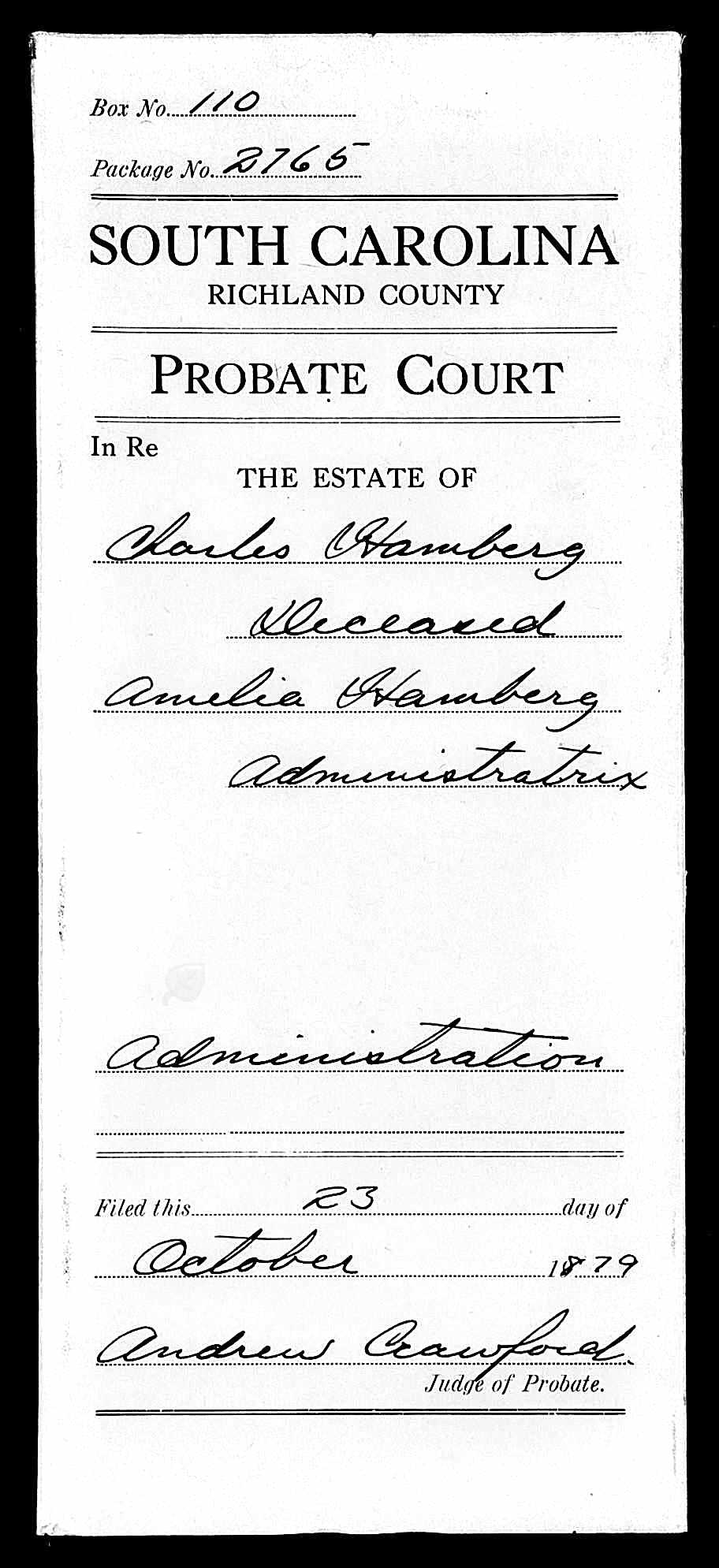
Charles Hamberg died without a will, leaving behind personal property consisting primarily of furniture and household items valued at that time at $487.71; today that would be equivalent to approximately $11,600.  The administratrix of his estate was someone named Amelia (or Amalia or Amalie[1] ) Hamberg.

Richland County, South Carolina Miscellaneous Estate Records, 1799-1955; Author: South Carolina. County Court (Richland County); Probate Place: Richland, South Carolina

Richland County, South Carolina Miscellaneous Estate Records, 1799-1955; Author: South Carolina. County Court (Richland County); Probate Place: Richland, South Carolina


Now who was she?  For a long time I assumed she was yet a third wife, someone Charles married after Mary, who’d been murdered, and Lena, mother of Samuel.  Lena had died in 1877, leaving Charles with their nine year old son.  I figured he had quickly married again, finding a mother for Samuel.  But I could not find one record for an Amalia or Amelia or Amalie Hamberg anywhere in South Carolina before or after Charles’ death. I couldn’t even find someone with just that first name who seemed a likely candidate.  I was working in circles, getting frustrated.

Then I searched for anyone named Amelia or Amalia or Amalie Hamberg anywhere in the US, and I found one Amalia Hamberg on a death record for her daughter Hattie Baer Herman, who had died in Philadelphia in 1910.  Hattie’s father was Jacob Baer.  Both parents were born in Germany, according to the death certificate.


Death certificate of Hattie Baer, daughter of Amalia Hamberg Ancestry.com. Pennsylvania, Death Certificates, 1906-1963 [database on-line]. Provo, UT, USA: Ancestry.com Operations, Inc., 2014. Original data: Pennsylvania (State). Death certificates, 1906–1963. Series 11.90 (1,905 cartons). Records of the Pennsylvania Department of Health, Record Group 11. Pennsylvania Historical and Museum Commission, Harrisburg, Pennsylvania.

Death certificate of Hattie Baer, daughter of Amalia Hamberg
Ancestry.com. Pennsylvania, Death Certificates, 1906-1963 [database on-line]. Provo, UT, USA: Ancestry.com Operations, Inc., 2014.
Original data: Pennsylvania (State). Death certificates, 1906–1963. Series 11.90 (1,905 cartons). Records of the Pennsylvania Department of Health, Record Group 11. Pennsylvania Historical and Museum Commission, Harrisburg, Pennsylvania.

Then it occurred to me: what if Amalia was not Charles Hamberg’s wife, but a sister or a cousin? If Charles died unmarried and intestate, some other family member might have been appointed to administer his estate.

So I looked back at the Hamberg family tree, and I saw that there was a Malchen Hamberg on the tree.  Malchen was the daughter of Seligmann Hamberg and granddaughter of Moses Hamberg.  She was my great-grandfather’s first cousin.

corrected relationship isidore schoenthal to malchen hamberg


Malchen was born March 7, 1851, in Breuna, and according to the family report posted on the site maintained by Hans-Peter Klein, she had emigrated from Germany.  She certainly looked like a possible candidate for the Amalia Hamberg who had been appointed to administer Charles Hamberg’s estate.  She was, like my great-grandfather, a first cousin, once removed, of Charles Hamberg.

corrected chart charles hamberg to malchen hambeg


So I had found yet another Hamberg cousin who had immigrated to the US.  Further research revealed that Amalia had immigrated in 1871, arriving in Baltimore.

Amalie Hamberg passenger ship manifest for the USS Baltimore, arriving September 4, 1871, Baltimore, MD Maryland, Baltimore Passenger Lists, 1820-1948," database with images, FamilySearch (https://familysearch.org/ark:/61903/1:1:QK6L-H1ZK : accessed 2 May 2016), Amalie Hamberg, ; citing Immigration, Baltimore, Baltimore, Maryland, United States, NARA microfilm publications M255, M596, and T844 (Washington, D.C.: National Archives and Records Administration, n.d.); FHL film 417,401.

Amalie Hamberg passenger ship manifest for the USS Baltimore, arriving September 4, 1871, Baltimore, MD  Line 388
Maryland, Baltimore Passenger Lists, 1820-1948,” database with images, FamilySearch (https://familysearch.org/ark:/61903/1:1:QK6L-H1ZK : accessed 2 May 2016), Amalie Hamberg, ; citing Immigration, Baltimore, Baltimore, Maryland, United States, NARA microfilm publications M255, M596, and T844 (Washington, D.C.: National Archives and Records Administration, n.d.); FHL film 417,401.

According to the 1900 census, Amalia married Jacob Baer in 1873.  Reviewing the birth records of their children indicated that Amalia and Jacob lived in Pittsburgh for many years where they had nine children born between 1874 and 1891.  (More on Amalia and her family in a later post.)  The fact that Amalia ended up in Pittsburgh where her Schoenthal cousins were living further corroborated my assumption that she was in fact Malchen Hamberg of Breuna.

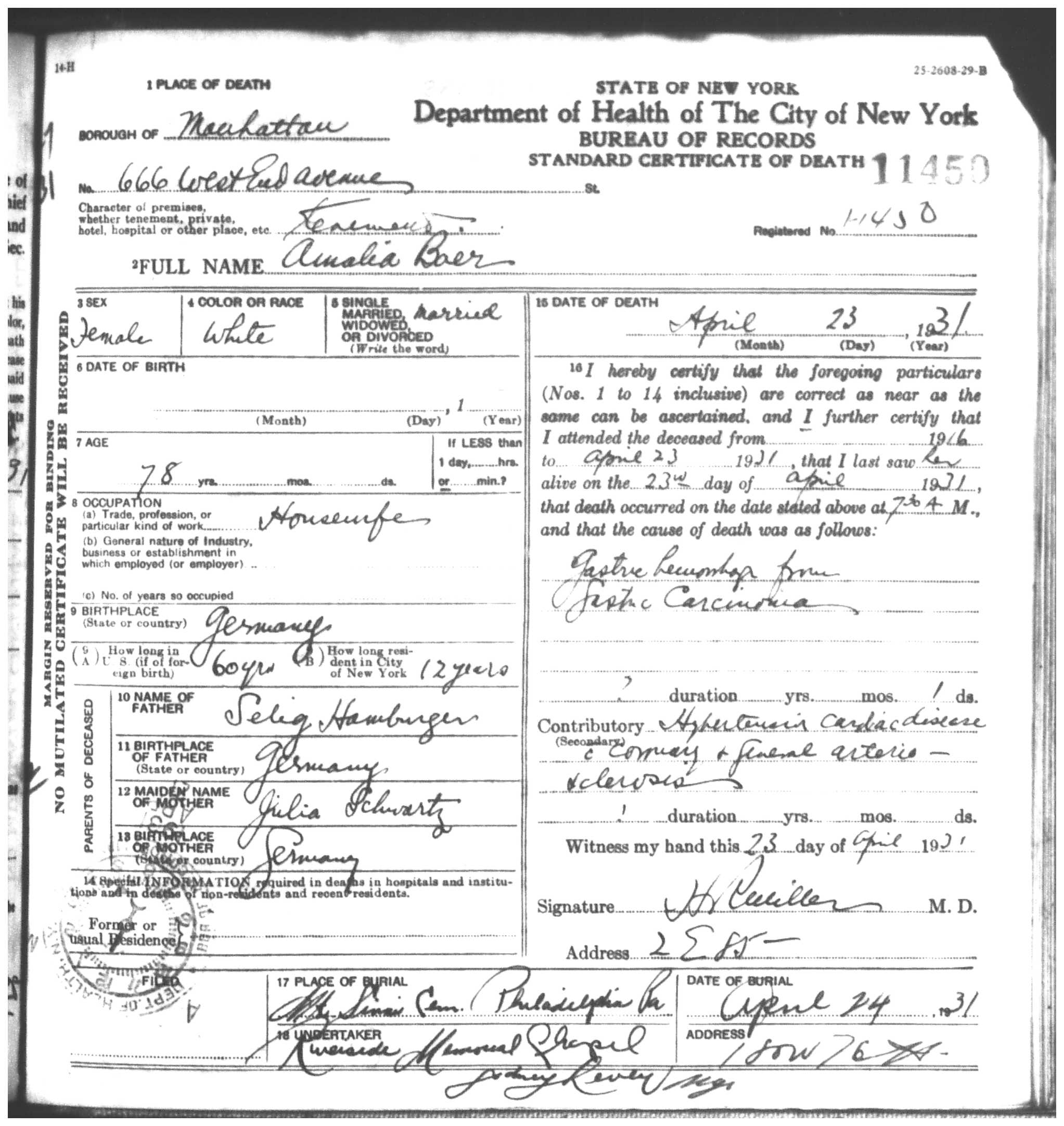
And then the icing on the cake: I received the death certificate for Amalia Baer.   Amalia Baer died on April 23, 1931, in New York City.  Her father’s name was Selig Hamburger.

Baer, Amalia death page 1

Baer, Amalia death page 2


Okay, it not precisely right.  Malchen’s father was Seligmann Hamberg.  So the informant cut off a syllable from the first name and added one to the surname.  I still think Amalia was Malchen.

The mother’s name was even further off—Julia Schwartz instead of Jette Gans.  But death certificates are often filled with mistakes, and it’s not surprising that the informant did not have completely accurate information about the parents of a 78 year old woman, parents that the informant had likely never met.

The certificate also stated that Amalia had been in the US for 60 years; Amalia Hamberg had arrived in 1871, sixty years before 1931, the year Amalia Baer died.

So I am 99% sure that Malchen Hamberg, granddaughter of my three-times great-grandfather Moses Hamberg, was Amalia Hamberg, wife of Jacob Baer, administratrix of Charles Hamberg’s estate.

Only one thing seemed strange.  If Amalia married Jacob Baer in 1873, why was she using the name Hamberg in 1879 when she was appointed to administer Charles’ estate? I don’t know.  Hence, that lingering one percent of doubt.

There are also other questions.  Why wasn’t Charles’ brother Moses made the administrator of his estate? He was the closest relative.  Why Amalia, his cousin and a woman, instead?

Well, I cannot find the Moses Hamberg from Breuna who immigrated in 1846 as a seventeen year old shoemaker on any subsequent record.  Having searched every census from 1850 forward using wild cards, misspellings, and several databases, I have hit that proverbial brick wall. I can find other men named Moses Hamberg, but none that fit the other criteria for being the correct person.  Either the age is off, the birth place is wrong, or the family members and structure are different.

Maybe Moses changed his name so drastically that it is undiscoverable.  Maybe he died and his death is not recorded anywhere I can find.  Maybe he returned to Germany or went to some third place.  I don’t know.  But I can’t find him.  That may explain why Amalia, not Moses, administered Charles Hamberg’s estate.

But there are other questions.  By 1879 Amalia had several young children of her own to care for.  Did she travel to South Carolina to deal with Samuel and with the estate?  Or was it all handled locally by Walter. S. Monteith, the Columbia attorney representing Amalia, according to the estate papers?

And how did Samuel get from Columbia, South Carolina, to Washington, Pennsylvania? Did Amalia go to get him? Or Henry? Or some other family member? Or did he take a train by himself? These are all questions for which I have no answers.

As for what happened to Samuel after he came to Pennsylvania—well, that’s a story for yet another post.


[1] The spelling varies according to the record; later records seem to consistently use Amalia so I will adopt that in this post.

The Tragic Story of Charles Hamberg: Gun Violence in South Carolina

Last week I wrote about Samuel Hamberg, the twelve year old boy who appeared in the household of my great-great-uncle Henry Schoenthal in 1880 as his adopted son.  As I described in that post, I had determined that Samuel was the son of Charles Hamberg of Columbia, South Carolina; he appeared on the 1870 census living in Charles Hamberg’s household along with a woman named Tenah Hamberg and a servant also with the first name Tenah.

Through my research, I concluded that Charles Hamberg was in fact born Baruch Hamberg, the son of the first Samuel Hamberg, my great-great-grandmother Henriette Hamberg Schoenthal’s uncle, her father’s younger brother.

Relationship of Henrietta Hamberg and Charles Hamberg

Baruch had left Breuna, Germany, in 1852, with his first cousin Abraham, who died in Savannah, George, in 1854.  Baruch, I postulated, became Charles and had married a woman named Mary E. Hanchey in New Hanover, North Carolina, in March, 1853.

Charles Hamberg and Mary Hanchey marriage record 1853 Ancestry.com. North Carolina, Marriage Records, 1741-2011 [database on-line]. Provo, UT, USA: Ancestry.com Operations, Inc., 2015. Original data: North Carolina County Registers of Deeds. Microfilm. Record Group 048. North Carolina State Archives, Raleigh, NC.

Charles Hamberg and Mary Hanchey marriage record 1853
Ancestry.com. North Carolina, Marriage Records, 1741-2011 [database on-line]. Provo, UT, USA: Ancestry.com Operations, Inc., 2015.
Original data: North Carolina County Registers of Deeds. Microfilm. Record Group 048. North Carolina State Archives, Raleigh, NC.

But why did Samuel end up with my great-great-uncle Henry in Washington, Pennsylvania, in 1880? What had happened to his father? His mother? And who was his mother? Was it Mary Hanchey, the woman Charles married in 1853 and with whom he was living in 1860? Or was it “Tenah,” the woman he was living with in 1870?

First, I focused on Mary, the first wife.  Searching on Ancestry, I found this entry:

Record of Deaths in Columbia South Carolina page 80 [p.80] Mrs. Mary A. Hamberg , wife of Charles Hamberg died in Col’a So. Ca. Novr 18, 1866, having been shot [page 166] by a man, Toland A. Bass, a few days previous.

Unfortunately, the database had no further information about this terrible incident, but I was determined to learn more about Mary’s death.  Was it accidental? A murder? What happened to Toland Bass?

After much searching, I found this article from the November 20, 1866 issue of The Daily Phoenix, the Columbia, South Carolina, daily paper (p. 2):

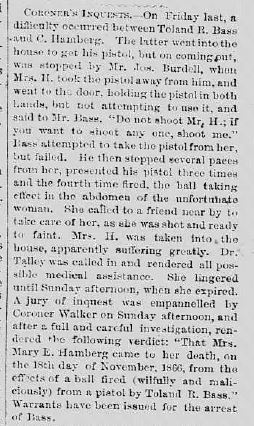
Daily Phoenix article 11 20 1866 p 2


Coroner’s Inquests.—On Friday last, a difficulty occurred between Toland R. Bass and C. Hamberg.  The latter went into the house to get his pistol, but on coming out, was stopped by Mr. Jos. Burdell, when Mrs. H. took the pistol away from him and went to the door, holding the pistol in both hands, but not attempting to use it, and said to Mr. Bass, “Do not shoot Mr. H.; if you want to shoot any one, shoot me.”  Bass attempted to take the pistol from her, but failed.  He then stepped several paces from her, presented his pistol three times and the fourth time fired, the ball taking effect in the abdomen of the unfortunate woman. 

She called to a friend near by to take care of her, as she was shot and ready to faint.  Mrs. H. was taken into the house apparently suffering greatly.  Dr. Talley was called in and rendered all possible medical assistance.  She lingered until Sunday afternoon, when she expired.  A jury of inquest was empannelled by Coroner Walker on Sunday afternoon, and after a full and careful investigation, rendered the following verdict: “That Mrs. Mary E. Hamberg came to her death, on the 18th of November, 1866, from the effects of a ball fired (willfully and maliciously) from a pistol by Toland R. Bass.” Warrants have been issued for the arrest of Bass.

Who was Toland Bass, and why did he kill Mary Hanchey Hamberg? Why did Mary suggest that he should shoot her, not her husband?

The only thing I could find about Mr. Bass was that he served as a private in the Confederate Army during the Civil War in Company H of the South Carolina Cavalry Regiment.


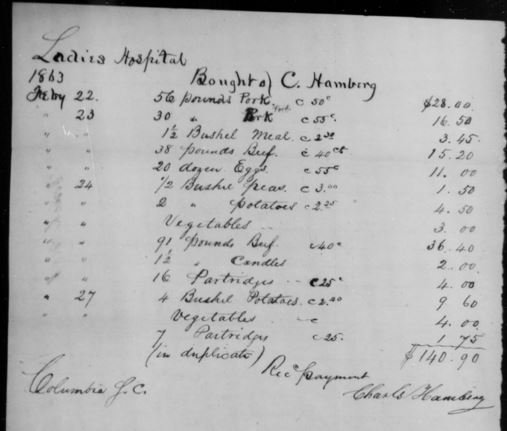
Charles Hamberg, on the other hand, appears to have been a private citizen in Columbia, South Carolina, during the Civil War, selling provisions to the Ladies Hospital.  Here is an example of an invoice he submitted:

Page 15 Confederate Citizens File - Fold3 https://www.fold3.com/image/31347220?xid=1945

Page 15 Confederate Citizens File – Fold3
https://www.fold3.com/image/31347220?xid=1945


I don’t know what might have precipitated this altercation between Bass and the Hambergs; all I can do is speculate.  Columbia, South Carolina, had suffered much damage during the Civil War.  The Union Army occupied the city during the last months of the war in 1865.  As described in Wikipedia:

On February 17, 1865, Columbia surrendered to Sherman, and Wade Hampton’s Confederate cavalry retreated from the city. Union forces were overwhelmed by throngs of liberated Federal prisoners and emancipated slaves. Many soldiers took advantage of ample supplies of liquor in the city and began to drink. Fires began in the city, and high winds spread the flames across a wide area. Most of the central city was destroyed, and municipal fire companies found it difficult to operate in conjunction with the invading army, many of whom were also fighting the fire. The burning of Columbia has engendered controversy ever since, with some claiming the fires were accidental, a deliberate act of vengeance, or perhaps set by retreating Confederate soldiers who lit cotton bales while leaving town. On that same day, the Confederates evacuated Charleston. On February 18, Sherman’s forces destroyed virtually anything of military value in Columbia, including railroad depots, warehouses, arsenals, and machine shops.

English: The Burning of Columbia, South Caroli...

English: The Burning of Columbia, South Carolina, February 17, 1865 (Photo credit: Wikipedia)

You can read more about the Columbia fires here and here.  In the aftermath of the war and during Reconstruction, places like Columbia struggled to rebuild their economy and their infrastructure.  There was widespread poverty.  Perhaps Toland Bass was an embittered Southern veteran; perhaps he resented Charles Hamberg as a merchant who not only didn’t serve in the war but made money during it.  Or maybe it is something much more personal that created the animosity that led to the gruesome murder of Mary Hanchey Hamberg. I don’t know.

After the murder, Toland Bass ran off to avoid arrest, and the governor of South Carolina, James L. Orr, issued a proclamation offering an award of $200 for his arrest and delivery to South Carolina for trial. Charles Hamberg offered a separate award of $500 for his arrest. (Thank you to Ann Meddin Hellman of the Jewish Historical Society of South Carolina for helping me locate some of these articles

Proclamation about Mary Hamberg's murder

Thursday, November 29, 1866 Paper: (Charleston, South Carolina)


Bass eluded arrest for four months until he was finally found and arrested in New York in March, 1867.

Arrest of Toland Bass


I could not find any record of a trial or any other proceeding involving Bass, but I did find this news item announcing his death from cholera on July 15, 1867.

Death of Toland R Bass


Meanwhile, Charles Hamberg had moved on.  Thanks to my blogging friend Cathy Meder-Dempsey, I know that Charles married Lena Goodman on April 6, 1867, in Charleston, South Carolina.

I believe that Lena was incorrectly entered as “Tenah” on the 1870 census and that she was the mother of Samuel Hamberg, the boy later adopted by Henry Schoenthal.  Although I do not have an exact birthdate for Samuel, the 1900 census reported that he was born in February 1868, that is, about eleven months after the marriage of Charles Hamberg and Lena Goodman.

Even after remarrying, Charles seemed to have troubles in Columbia.  In September, 1869, he was involved in another rather unpleasant altercation:

Charles Hamberg assault

There was also a dispute at his store:

CHarles Hamberg unruly customer

Charles also charged a police officer with inappropriate conduct (public drunkenness) and engaged in a citizen’s arrest.  He seemed to have a tendency to get involved in conflicts.

In the 1870s, Charles advertised his wood and coal business regularly in the Columbia newspaper, The Daily Phoenix.

Charles Hamberg coal


He also participated in a Purim celebration in Columbia, dressing up as Jocko the Ape.  (Purim is a Jewish holiday where children and adults dress up in costumes and celebrate the triumph of the Jews over the evildoer Haman who sought to kill the Jews in ancient Persia.)

The Daily Phoenix, March 26, 1872, p. 2

The Daily Phoenix, March 26, 1872, p. 2


So whatever his troubles, Charles seemed to be living a somewhat ordinary life in Columbia.

So what happened that caused little Samuel to be adopted by Henry Schoenthal? Tragically, both of Samuel’s parents died before 1880.  His mother Lena died in 1877 and is buried in the cemetery of the Columbia Hebrew Benevolent Society.  She was only 28 years old.  I’ve been unable to locate a death certificate or obituary yet, but will continue to look.  (I contacted the cemetery, but they did not have any further information.)

chbs1HambergLena

Headstone for Lena Hamberg at the Hebrew Benevolent Society cemetery in Columbia, SC http://jhssc.org/hebrew-benevolent-society-cemetery/


Two years later on October 16, 1879, Charles Hamberg ended his own life, apparently due to financial difficulties, although I would venture that having had one wife murdered and a second dying at a very young age might also have given him sufficient reason for some desperation.  His suicide made the papers even beyond Columbia.

Charles Hamberg suicide Charles Hamberg suicide 3 Charles Hamberg suicide 2


Can you imagine today identifying someone by their religious background for no apparently relevant reason?

Charles is also buried in the Columbia Hebrew Benevolent Society cemetery, next to Lena.

Charles Hamberg headstone

Headstone of Charles Hamberg at Hebrew Benevolent Society cemetery in Columbia, SC http://jhssc.org/hebrew-benevolent-society-cemetery/

What a hard life Charles Hamberg had once coming to the US.  He lost his cousin Abraham in 1854, his wife Mary was murdered in 1866, his second wife Lena died in 1877, and he suffered financial problems and took his own life in 1879.   I imagine that that was not the life he dreamed of when he left Breuna, Germany, in 1852.  For him the American dream did not come to be.

His son Samuel was just eleven years old and had lost his mother and his father.   He ended up in Pennsylvania with Henry Schoenthal, his second cousin.  How did he end up there?  That leads to the next mystery.

The Adopted Son: Who Was He?

As I move closer to closure on the family of Levi Schoenthal and Henriette Hamberg, my great-great-grandparents[1], I want to ask for your help regarding a mystery involving a boy I believe was part of Henriette’s family, the Hambergs. I need to know if my thinking about him makes sense.

His name was Samuel Hamberg (spelled Hamburg here), and in 1880 he was twelve years old and living in Washington, Pennsylvania, as the adopted son of my great-great-uncle Henry Schoenthal and Helene Lilienfeld.

Henry Schoenthal and family 1880 census Year: 1880; Census Place: Washington, Washington, Pennsylvania; Roll: 1202; Family History Film: 1255202; Page: 596A; Enumeration District: 271

Henry Schoenthal and family 1880 census
Year: 1880; Census Place: Washington, Washington, Pennsylvania; Roll: 1202; Family History Film: 1255202; Page: 596A; Enumeration District: 271


Who was he? Was he part of my great-great-grandmother’s family?  According to the 1880 census, Samuel was born in 1868 in South Carolina.  Henry Schoenthal, the first of Henriette Hamberg’s children to emigrate from Germany, hadn’t arrived until 1866, two years before Samuel was born.  Henry settled in Pennsylvania.  How would a boy born in a state so far away two years after Henry arrived  in the US have ended up with Henry unless there was a family connection?  The surname Hamberg couldn’t just be a coincidence, could it?

His first name also seemed unlikely to be a coincidence.  Henriette’s father was Moses Hamberg, my three-times great-grandfather.  Moses had a younger brother named Samuel, my four-times great-uncle. Young Samuel could have been named for him.  The name similarities added to my hunch that this Samuel Hamberg was in some way related to my great-great-grandmother and the other Hambergs from Breuna.  I had to figure this one out.

I was able to locate a two year old boy named Samuel Hamberg on the 1870 census living in Columbia, South Carolina, in the household of a Charles Hamberg, age 46, and a Tenah Hamberg, age 21.  Given the birth place, name, and age of the boy, I felt it quite likely that this was the same boy who ten years later was living with Henry Schoenthal in Pennsylvania.  Unfortunately, the 1870 census did not include information describing the relationships among those in a household, but I assumed that Charles and Tenah were the father and mother of little Samuel.  If so, who were they?

Charles Hamberg household 1870 US census Year: 1870; Census Place: Columbia, Richland, South Carolina; Roll: M593_1507; Page: 140B; Image: 287; Family History Library Film: 553006

Charles Hamberg household 1870 US census
Year: 1870; Census Place: Columbia, Richland, South Carolina; Roll: M593_1507; Page: 140B; Image: 287; Family History Library Film: 553006

According to the 1870 census, Charles was born in Prussia 46 (or is it a 40?) years earlier or in 1824 or so. (Breuna was within the boundaries of Prussia from 1866 until the German Federation was created in 1871.)  Charles was working as a “ret gro” merchant, which I interpret to mean a retail grocery merchant. Tenah was born in South Carolina as was Samuel.

I was able to trace Charles back ten more years to the 1860 census, where he was also living in Columbia, South Carolina, but married not to Tenah but a woman named Mary.  According to the 1860 census, Charles was then 28, so born in 1832; according to this census, he was born in Germany and working as a merchant.  Mary was a North Carolina native and 27 years old.

Charles Hamberg and household 1860 US census Year: 1860; Census Place: Columbia, Richland, South Carolina; Roll: M653_1227; Page: 26; Image: 57; Family History Library Film: 805227

Charles Hamberg and household 1860 US census
Year: 1860; Census Place: Columbia, Richland, South Carolina; Roll: M653_1227; Page: 26; Image: 57; Family History Library Film: 805227

I then discovered a marriage record for Charles Hamberg and Mary Hanchey reporting their marriage in 1853 in New Hanover, North Carolina.

Charles Hamberg and Mary Hanchey marriage record 1853 Ancestry.com. North Carolina, Marriage Records, 1741-2011 [database on-line]. Provo, UT, USA: Ancestry.com Operations, Inc., 2015. Original data: North Carolina County Registers of Deeds. Microfilm. Record Group 048. North Carolina State Archives, Raleigh, NC.

Charles Hamberg and Mary Hanchey marriage record 1853
Ancestry.com. North Carolina, Marriage Records, 1741-2011 [database on-line]. Provo, UT, USA: Ancestry.com Operations, Inc., 2015.
Original data: North Carolina County Registers of Deeds. Microfilm. Record Group 048. North Carolina State Archives, Raleigh, NC.

But that was the earliest record I could find for Charles Hamberg.  And I still didn’t know whether he was related to the Hambergs of Breuna, my great-great-grandmother’s family.

Fortunately for me, others, including the noted genealogist Hans-Peter Klein, had already done extensive research of the Hamberg family tree. You can find it here.[2]  There was no Charles Hamberg listed in the records in Breuna.  But there were other men in the family with the surname Hamberg who would have been about the same age as Charles Hamberg.  I had to find out whether any of them came to the United States and perhaps changed his name to Charles.

Moses Hamberg, my 3x-great-grandfather, had five sons:

Juda, who died in Breuna in 1863;

Seligmann, who died in Breuna in 1897;

Salomon, who married and had several children in the 1850s in Breuna (no death record has been located;

Marcus, who died in Breuna in 1846;

And finally, Abraham, born in Breuna in 1828 and for whom there was no marriage or death record in Breuna.

Of Moses Hamberg’s five sons, the only one who might have emigrated by 1853 was Abraham.

As for the sons of Samuel Hamberg, brother of Moses, there were three sons:

another Juda, who died in Breuna in 1863;

Baruch, born in 1824 and for whom there was no marriage or death record;

And Moses, born in 1829 and for whom there was also no marriage or death record in Breuna.

So it was possible that Baruch and/or Moses had emigrated.

The three Hamberg men from Breuna who could have immigrated to the US by 1853 were thus Abraham, Baruch, and Moses: no one named Charles.  All three of those Hamberg men were close in age to the Charles Hamberg in Columbia, South Carolina.  All were born between 1824 and 1829.  But had any of them actually immigrated to the United States? I decided to search for them on ship manifests and other US records and found that all three did in fact leave Germany for the United States before 1853.

Moses Hamberg arrived in New York from Breuna in August, 1846, when he was seventeen, according to the ship manifest.  This is clearly Moses, the son of Samuel Hamberg, who was born in 1829 and thus would have been 17 in 1846.  Moses was a shoemaker, according to the manifest.

Year: 1846; Arrival: New York, New York; Microfilm Serial: M237, 1820-1897; Microfilm Roll: Roll 063; Line: 1; List Number: 680

Year: 1846; Arrival: New York, New York; Microfilm Serial: M237, 1820-1897; Microfilm Roll: Roll 063; Line: 1; List Number: 680

Baruch and his first cousin Abraham arrived in New York together in September 1852.  According to the ship manifest, they were coming from Breuna, and both were 24 years old, meaning they were born in about 1828.  My great-great-grandmother’s brother Abraham was born in 1828; according to Breuna records, Baruch was born in 1824.

Despite the disparity in the ages between the Baruch on the manifest and the Baruch born in Breuna, I believe that the two men on this manifest were in fact Abraham Hamberg, son of Moses Hamberg, and Baruch Hamberg, son of Samuel Hamberg.  The ship manifest reports that their destination in the US was “Sevanna,” which I assume meant Savannah, Georgia.

Year: 1852; Arrival: New York, New York; Microfilm Serial: M237, 1820-1897; Microfilm Roll: Roll 119; Line: 1; List Number: 1321

Year: 1852; Arrival: New York, New York; Microfilm Serial: M237, 1820-1897; Microfilm Roll: Roll 119; Line: 1; List Number: 1321


So did any of these three young men become Charles Hamberg of Columbia, South Carolina?  And if so, which one? Since Abraham and Baruch were headed to a city in the South whereas Moses indicated that New York was his intended destination, my inclination was to focus on Abraham and Baruch as the ones more likely to have become Charles Hamberg.[3]

Searching for further records for Abraham Hamberg led me to the sad discovery that he died not too long after arriving in the US.  He died in Savannah, Georgia, his intended destination, on August 26, 1854, of yellow fever and was buried in that city.  He was my great-great-grandmother Henriette’s younger brother.  He was only 26 years old.

Abraham Hamberg death record 1854 Ancestry.com. Savannah, Georgia, Select Board of Health and Health Department Records, 1824-1864, 1887-1896 [database on-line]. Provo, UT, USA: Ancestry.com Operations, Inc., 2014. This collection was indexed by Ancestry World Archives Project contributors. Original data: City of Savannah, Georgia. Savannah, Georgia, Select Board of Health and Health Department Records, 1822–1864, 1887–1896. Subseries 5600HE-050 and 5600HA-010. Microfilm, 27 reels. City of Savannah, Research Library & Municipal Archives, Savannah, Georgia

Abraham Hamberg death record 1854
Ancestry.com. Savannah, Georgia, Select Board of Health and Health Department Records, 1824-1864, 1887-1896 [database on-line]. Provo, UT, USA: Ancestry.com Operations, Inc., 2014. This collection was indexed by Ancestry World Archives Project contributors.
Original data: City of Savannah, Georgia. Savannah, Georgia, Select Board of Health and Health Department Records, 1822–1864, 1887–1896. Subseries 5600HE-050 and 5600HA-010. Microfilm, 27 reels. City of Savannah, Research Library & Municipal Archives, Savannah, Georgia

Abraham Hamberg burial record Ancestry.com. Savannah, Georgia, Cemetery and Burial Records, 1852-1939 [database on-line]. Provo, UT, USA: Ancestry.com Operations, Inc., 2012. Original data: Savannah Georgia Cemetery and Burial Records. Savannah, Georgia: Research Library & Municipal Archives City of Savannah, Georgia.

Abraham Hamberg burial record
Ancestry.com. Savannah, Georgia, Cemetery and Burial Records, 1852-1939 [database on-line]. Provo, UT, USA: Ancestry.com Operations, Inc., 2012.
Original data: Savannah Georgia Cemetery and Burial Records. Savannah, Georgia: Research Library & Municipal Archives City of Savannah, Georgia.

So what then happened to his cousin Baruch Hamberg? Had he made it to Savannah?

My guess is that somewhere along the way from New York to Savannah, Baruch and Abraham stopped in New Hanover, North Carolina, where Baruch met and married his first wife Mary Hanchey in 1853.  And by then, he had dropped the Hebrew name Baruch and adopted the much more American name Charles.  In fact, his full name was Charles B. Hamberg.  Perhaps that B was for Baruch.

What else supports this conclusion that Baruch Hamberg became Charles Hamberg? Recall that Baruch Hamberg was the son of Samuel Hamberg of Breuna.  And what did Charles Hamberg name his son born in 1868? Samuel.

If I am right, then Charles/Baruch Hamberg was Henriette Hamberg Schoenthal’s first cousin; their fathers Samuel and Moses were brothers.  Charles’ son Samuel was therefore a second cousin to Henriette’s son Henry Schoenthal, the man who had adopted him by 1880.

So does my analysis make sense?  Did Baruch Hamberg become Charles Hamberg?

And if so, why was his son Samuel living with and adopted by Henry Schoenthal in 1880? That question will be addressed in a later post.


[1] And while I wait to talk with my third cousin Betty, who is also their great-great-granddaughter.

[2] I wrote a little bit about the Hambergs of Breuna, Germany here when I described the remarkable story of how I learned that my fifth cousin Rob and I shared not only some DNA,  but had lived at one point just a few miles from each other, and, even more remarkably, were both close friends with the same couple.  We had a lovely dinner back in December hosted by Rob and his wife Ann where all of us—our mutual friends included—had a great evening.  I remain amazed by what a small world it is.   Rob and I are both the four-times great-grandchildren of Jeudah ben Moses, the father of Moses Hamberg and Samuel Hamberg.  Rob is descended from Samuel; I am descended from Moses.

[3] I will follow up on Moses Hamberg in a later post.

Another Delightful Conversation: My Cousin Maxine

I love it when a cousin finds me.  Usually I am the one searching for them, hoping they will be interested and open to sharing their family histories with me.  So when a cousin finds my blog, it is a delightful experience—I know they are interested, and there is none of the awkwardness of trying to explain who I am and that I am not a scammer trying to get money from them or steal their identity.

I’ve had that great pleasure again recently when my third cousin Maxine found my blog and left a comment about her connection to me and her family.  Maxine is the daughter of Hattie Arnold and Martin Schulherr, about whom I wrote here.  Maxine’s grandparents were Jennie Stern and Max Arnold, and her great-grandmother was Hannah Schoenthal Stern.  Hannah was my great-grandfather Isidore Schoenthal’s older sister.  Thus, Maxine and I are both the great-great-granddaughters of Levi Schoenthal and Henriette Hamberg.  We are third cousins.

Relationship Amy to Maxine Schulherr


Maxine was born and raised in the Pittsburgh area and has lived there all her life.  We had a wonderful phone conversation and have exchanged many emails since.  Maxine knew many of the cousins about whom I’ve written, including Lee and Meyer Schoenthal, Erna and Werner Haas, and the members of the extended Oestreicher family.  She was able to bring to life many of these people, who thus far had been mostly names and dates and occupations to me.

Her grandmother Jennie lived with Maxine and her parents for a number of years, and Maxine even shared a room with her grandmother during that time.  She knew her well, and so I was hoping that Maxine would have stories about Jennie’s youth.  Jennie came to the United States from Germany in the 1880s with her mother Hannah when she was thirteen years old, and I was interested in hearing any stories about Jennie’s life in Germany or about her experiences as a teenager settling in western Pennsylvania.  But as with so many immigrants, Jennie did not talk about the past.  Maxine said she never heard her grandmother talk about Germany or about her early days in the US.

But she did have some old photographs of Jennie with two other women whom we both assume are Jennie’s two sisters, Sarah (on the left) and Edith (on the right). (All photos in this post are courtesy of my cousin Maxine.)

jennie-stern-arnold-and-her-sisters-1

Jennie Stern Arnold, center, and perhaps Sarah Stern Ostreicher on the left and Edith Stern Good on the right

jennie-stern-arnold-and-sisters-2

Stern sisters


Maxine then told me about her grandmother Jennie’s life as an adult in Pennsylvania.  Jennie married Max Arnold, who had originally owned a dairy called Sweet Home Dairy. (Maxine was named for her grandfather Max.)  It was the first dairy to deliver milk to homes in the Pittsburgh area, according to Maxine.  Max had to close the dairy when he had trouble hiring reliable men to come and milk his cows, and he then went into the meat business, as I wrote about here.   Max eventually he retired and his son Sylvan ran the business when Maxine was a child.  Max, Jr., helped his brother Sylvan doing deliveries, but after having several accidents he moved on to other endeavors.

Sylvan closed the meat market when he enlisted in the army during World War II.  He would not have been drafted, given his age, but according to Maxine, Sylvan was looking to get away as his marriage was failing.  He and his first wife Ada divorced, and Sylvan remarried while in the service and stationed in Arkansas.  Based on Maxine’s information, I found a marriage record for Sylvan Arnold and Gladys Evans dated June 20, 1945, in Saline, Arkansas.  He and his second wife Gladys later moved to California, and the family in Pittsburgh never met her.

Here is a photo of Jennie and Max with their first child, Jerome, who was born in 1897.

jennie-stern-and-max-arnold-with-jerome-c-1897-edited

Jennie Stern Arnold, Jerome Arnold, and Max Arnold, Sr. c. 1897


Jennie and Max had five children, and Maxine had this wonderful picture that she believes is of those five:

hattie-arnold-unknown-jerome-max-bernice-and-sylvan-arnold

Children of Jennie Stern Arnold: Hattie, unknown, top; Jerome, possibly Max, Jr., and Bernice, center row; and Sylvan, foreground at bottom, c. 1913

Maxine’s mother Hattie is the girl in the light dress on top next to an unknown girl.  Her uncle Jerome is on the left and her aunt Bernice on the right in the middle row, and her uncle Sylvan is the boy on the ground in the front.

The little boy on the swing might be Max, Junior, but the age seems off, so I’m not sure. Since Jerome looks to be no more than sixteen here, I think this photo is probably dated no later than 1913.  In 1913, Jerome was 16, Hattie 14, Bernice 12, and Sylvan 10, and that does seem to line up with what I think are the maximum ages of the children in the photograph. I actually think they look even younger than those ages.  What do you all think? Are the children older than that?

So if the photo was taken in 1913, Max, Jr. would have been two years old.  Does the little boy on the swing look to be only two years old?  I think he looks at least three or four.  What you think?

From Maxine, I also learned more about the lives of Maxine’s mother Hattie and Hattie’s four siblings. Hattie was very proud to be one of the first women to learn to drive in Pittsburgh.  She was sixteen, and her father brought home a car that he couldn’t drive, but somehow Hattie and her brother Jerome learned to drive it.

Hattie’s sister Bernice was married twice, first to Julius Averback, whom she later divorced.  Maxine was very fond of Julius and recalled that he had taken her to the circus where he bought her a pet chameleon. Maxine told me, “The circus sold chameleons in little boxes with a string around their necks and a  safety pin at the end of the string so you could pin it on your clothes!!”  Even though he was divorced from Bernice at the time, Julius sent Maxine eighteen roses for her eighteenth birthday. Bernice’s second husband was Abe Sultanov.  Bernice did not have children with either husband.

All three of Hattie’s brothers worked in the meat business initially, but Max, Jr. later branched out into the movie theater business, living in Morgantown, West Virginia for some time before returning to the Pittsburgh area where he owned another theater in Verona and then worked in the furniture business after his brother-in-law Abe, Bernice’s second husband, made some connections for him (Abe was a manufacturer’s representative for a line of furniture).  Later on, Max, Jr. owned a drive-in theater in the Pittsburgh area known as the Maple Drive-In.

According to Maxine, her grandmother Jennie as well as Jennie’s older sister Sarah Stern Oestreicher converted to Christian Science at some point in their adult lives. Maxine recalled going to church services with her grandmother.  But Martin and Hattie remained Jewish, and Maxine was confirmed at Rodef Shalom synagogue in 1944, the same synagogue where her mother had been confirmed about thirty years earlier.

Maxine was married to Alan Stein in August, 1948.  She generously shared with me these pictures from her wedding day:


Hattie Martin Maxine Alan Henrietta Stein Alan's mother

Hattie Arnold Schulherr, Martin Schulherr, Maxine Schulherr Stein, Alan Stein, Henrietta Stein (Alan’s mother)

hattie-max-and-bernice

Hattie Arnold Schulherr, Max Arnold, Jr., and Bernice Arnold Averbach Sultanov

Hattie Martin Ceil RIchard Lou Ann daughter of Jerome and ELlen, Maxine, Max. Bernice and Ellen

Hattie Arnold Schulherr, Martin Schulherr, Richard Arnold (son of Max, Jr.), Cecilia Lefkowitz Arnold, Lou Ann Arnold (daughter of Jerome Arnold), Maxine Schulherr Stein, Max Arnold, Jr., Bernice Arnold Averbach Sultanov, and Ellen Schwabrow Arnold

In addition to her grandparents, parents, and aunts and uncles, Maxine also knew our mutual cousins Lee and Meyer Schoenthal quite well, and she was able to answer one of my lingering questions about Lee.  When I wrote about Lee’s draft registration for World War II, I’d been puzzled by the person he’d named as the one who would always know his address, a woman named Mary Reinbold.

Lee Schoenthal World War II draft registration The National Archives at St. Louis; St. Louis, Missouri; World War II draft cards (Fourth Registration) for the State of Pennsylvania; State Headquarters: Pennsylvania; Microfilm Series: M1951; Microfilm Roll: 278

Lee Schoenthal World War II draft registration
The National Archives at St. Louis; St. Louis, Missouri; World War II draft cards (Fourth Registration) for the State of Pennsylvania; State Headquarters: Pennsylvania; Microfilm Series: M1951; Microfilm Roll: 278


Maxine shared with me that Mary Reinbold was Lee’s girlfriend for many years.  They were together a long time but never married because Mary was Catholic and Lee was Jewish.  Maxine recalled that Lee and Mary regularly came to her parents’ home for Sunday dinners.  She remembers them both very fondly.  She said Lee was a successful tailor who sold made-to-order men’s suits; her father Martin owned suits he purchased from Lee.  Lee’s shop was in the basement of building on E. Beau Street in Washington, Pennsylvania.

He must have done quite well, as Maxine told me, “Lee always drove a Lasalle car which in it’s day was in the Cadillac or more expensive class.  And he belonged to a club in  Washington, called the “Arms Club” although he never went hunting.  It was a bar, some tables, slot machines, a dance floor, and other games of chance.” Maxine said that Lee always brought her mother candy that he won at the club.   Her father Martin was also a member of the club, and Maxine visited there as well.  She told me, “I liked to pull the handle on the slot machine and watch the coins come out!!  And Daddy would stand beside me and hand me the quarters.  (I never had to spend my allowance, which then was probably one dollar a week.)”  I just love the images that this anecdote evokes.

Here are some photographs Maxine shared of Lee, Meyer, Mary, her mother Hattie, and herself as a twelve year old, taken in about 1940.

lee-schoenthal-c-1940s

Lee Schoenthal, c. 1940

mary-reinbold-and-lee-schoenthal

Mary Reinbold and Lee Schoenthal, c. 1940

mary-reinbold-meyer-schoenthal-hattie-arnold-schulherr-maxine-schulherr-stein

Mary Reinbold, Meyer Schoenthal, Hattie Arnold Schulherr, and Maxine Schulherr, c. 1940

It’s just wonderful to be able to see the faces that go with the names.

Maxine also remembers Lee and Meyer’s sister Erna Haas and her son Werner, but does not remember Lee and Meyer’s other sister, Johanna, the one who survived the Gurs internment camp in France and came to the US with her husband in 1947.  Since Johanna outlived Lee and Meyer and also lived in Pittsburgh, I was surprised that Maxine had no recollection of meeting her nor any awareness of this fourth sibling.  Perhaps Johanna’s suffering during the war had made her less able to interact with the extended family.

Maxine also knew members of the Oestreicher family, that is, the family of Sarah Stern and Gustav Oestreicher.  Sarah was her grandmother Jennie’s older sister, as discussed here and here.  Maxine knew Sarah’s son Sidney and his children, Gerald, Betty, and Elaine very well.  She said that Elaine had lived with her family for a while in the 1940s when Sidney and his wife Esther moved to New York and Elaine wanted to finish the school year in Pittsburgh.  But Maxine didn’t know what had happened to Elaine or the rest of the family after that and was curious to learn more about her long-lost second cousins.

I told her I would see what else I could find as I also had not yet been able to learn much about the Oestreicher family after about 1940.  With a few clues from Maxine, I was able to find those long-lost Oestreicher cousins.  I will report on what I’ve learned in a later post after I’ve had a chance to speak with my other third cousins, Betty and Elaine.


The Final Chapter for Jakob Schoenthal and His Descendants

As of 1947, the four surviving children and two grandchildren of Jakob Schoenthal and Charlotte Lilienfeld were all settled in western Pennsylvania, living close to each other, Johanna and Erna in Pittsburgh and Lee and Meyer nearby in Washington, Pennsylvania.  Johanna and Erna had survived the Holocaust, as had Erna’s son Werner Haas and the son of their sister Henriette, Helmut Levi.

The next two decades were, however, not kind to the children of Jakob Schoenthal and Charlotte Lilienfeld.  First, on February 7, 1956, Johanna’s husband Heinrich Stern died at age 79; he’d been suffering from arteriosclerosis for years, according to his death certificate, and had been residing in the Jewish Home for the Aged in Pittsburgh.  His doctor had been caring for him since 1953, so Heinrich must have been in poor health for much of his time in the US.


Heinrich Stern death certificate Ancestry.com. Pennsylvania, Death Certificates, 1906-1963 [database on-line]. Provo, UT, USA: Ancestry.com Operations, Inc., 2014. Original data: Pennsylvania (State). Death certificates, 1906–1963. Series 11.90 (1,905 cartons). Records of the Pennsylvania Department of Health, Record Group 11. Pennsylvania Historical and Museum Commission, Harrisburg, Pennsylvania.

Heinrich Stern death certificate
Ancestry.com. Pennsylvania, Death Certificates, 1906-1963 [database on-line]. Provo, UT, USA: Ancestry.com Operations, Inc., 2014.
Original data: Pennsylvania (State). Death certificates, 1906–1963. Series 11.90 (1,905 cartons). Records of the Pennsylvania Department of Health, Record Group 11. Pennsylvania Historical and Museum Commission, Harrisburg, Pennsylvania.

Then the following year, the oldest sibling, Lee Schoenthal, died at age 75 on May 11, 1957.  He also suffered from arteriosclerosis and died from congestive heart failure.  His doctor had been caring for him since 1949, according to the death certificate.  Lee appears to have been the backbone of the family, the one who employed and housed his younger brother Meyer for some years and who also helped his two younger sisters Johanna and Erna as well as his nephew Helmut Levi come to and settle in the US.


Lee Schoenthal death certificate Ancestry.com. Pennsylvania, Death Certificates, 1906-1963 [database on-line]. Provo, UT, USA: Ancestry.com Operations, Inc., 2014. Original data: Pennsylvania (State). Death certificates, 1906–1963. Series 11.90 (1,905 cartons). Records of the Pennsylvania Department of Health, Record Group 11. Pennsylvania Historical and Museum Commission, Harrisburg, Pennsylvania.

Lee Schoenthal death certificate
Ancestry.com. Pennsylvania, Death Certificates, 1906-1963 [database on-line]. Provo, UT, USA: Ancestry.com Operations, Inc., 2014.
Original data: Pennsylvania (State). Death certificates, 1906–1963. Series 11.90 (1,905 cartons). Records of the Pennsylvania Department of Health, Record Group 11. Pennsylvania Historical and Museum Commission, Harrisburg, Pennsylvania.

It was almost three years later that Meyer himself died.  He was 76 years old, and the principal cause of death was a coronary occlusion.  But looking more closely at the death certificate revealed information that might have explained why Meyer had not appeared in any city directories after 1931 and why his sisters and nephew all listed only Lee as the person they knew in the US and not Meyer. It also explains why Lee had not listed Meyer on his World War II draft registration as the person who would always know his address.


Meyer N Schoenthal death certificate Ancestry.com. Pennsylvania, Death Certificates, 1906-1963 [database on-line]. Provo, UT, USA: Ancestry.com Operations, Inc., 2014. Original data: Pennsylvania (State). Death certificates, 1906–1963. Series 11.90 (1,905 cartons). Records of the Pennsylvania Department of Health, Record Group 11. Pennsylvania Historical and Museum Commission, Harrisburg, Pennsylvania.

Meyer N Schoenthal death certificate
Ancestry.com. Pennsylvania, Death Certificates, 1906-1963 [database on-line]. Provo, UT, USA: Ancestry.com Operations, Inc., 2014.
Original data: Pennsylvania (State). Death certificates, 1906–1963. Series 11.90 (1,905 cartons). Records of the Pennsylvania Department of Health, Record Group 11. Pennsylvania Historical and Museum Commission, Harrisburg, Pennsylvania.

Meyer suffered from manic depression (more commonly referred to as bipolar disorder today), which the doctor described as a contributing factor in his death.  Meyer had been living at Torrance State Hospital in Westmoreland, Pennsylvania, for over two and a half years at the time of his death on January 10, 1960.  In other words, he had been hospitalized shortly after his brother Lee’s death in May 1957.  Lee must have been caring for him up to that point.

Lee and Meyer were buried next to each other in Beth Israel cemetery in Washington, Pennsylvania.


The family’s heartbreak continued two years later when young Werner Haas died from Laennec’s cirrhosis of the liver, a form of cirrhosis associated with alcoholism.  According to the death certificate, he had been suffering for months and died after 48 hours in a hepatic coma.  He was only 36 years old.


Werner Haas death certificate Ancestry.com. Pennsylvania, Death Certificates, 1906-1963 [database on-line]. Provo, UT, USA: Ancestry.com Operations, Inc., 2014. Original data: Pennsylvania (State). Death certificates, 1906–1963. Series 11.90 (1,905 cartons). Records of the Pennsylvania Department of Health, Record Group 11. Pennsylvania Historical and Museum Commission, Harrisburg, Pennsylvania.

Werner Haas death certificate
Ancestry.com. Pennsylvania, Death Certificates, 1906-1963 [database on-line]. Provo, UT, USA: Ancestry.com Operations, Inc., 2014.
Original data: Pennsylvania (State). Death certificates, 1906–1963. Series 11.90 (1,905 cartons). Records of the Pennsylvania Department of Health, Record Group 11. Pennsylvania Historical and Museum Commission, Harrisburg, Pennsylvania.

His life had not been an easy one.  He had lost his father before he was five years old, and he had been uprooted from his home in Darmstadt, Germany, and brought to the US.  Then he had served in the US Navy as a fireman, a skilled technician, during World War II.  After the war he had been briefly married to Lillian Angeloff; at the time of his death he was married to Margaret Rusnack, who was more than ten years older than Werner and had a son from a prior marriage.  He had worked as a salesman before and after the war, but in 1950 he had changed occupations and was a driver.  In 1952 he was a construction worker, and then in 1958 and 1959 he was again a driver.  After that he does not appear in the Pittsburgh directories.

It’s hard to imagine what those years between 1953 and 1962 must have been like for the two remaining siblings.  Johanna lost a husband, two brothers, and a nephew, and Erna also lost her brothers, her brother-in-law, and her son.

Erna then lost her remaining sibling, Johanna, on February 23, 1967.  The only close relative who was left was her nephew Helmut Levi (who by that time was named Henry Lyons).  Henry and his wife Pauline continued to live at the same address in Rego Park, New York, until Henry’s death on December 18, 1986.  He was only 67 years old when he died.


Aufbau February 13, 1987 p. 41

Aufbau, February 13, 1987 p. 41


Erna Schoenthal Haas, the youngest child of Jakob and Charlotte, had outlived her parents, her husband, her siblings, her nieces and nephews, and even her son.  Despite all the terrible losses she had suffered including being widowed at a very young age, escaping from Nazi Germany, and losing her only child, she had persevered and even maintained a positive outlook, as this June 14, 1984 article from the Jewish Chronicle of Pittsburgh reveals:


Jewish Chronicle of Pittsburgh, June 14, 1984, p. 23 ewish+Chronicle+Vol.+23+No.+18 Formed+by+the+union+of:+Jewish+criterion+;++and:+American+Jewish+outlook. http://doi.library.cmu.edu/10.1184/pmc/CHR/CHR_1984_023_018_06141984

Jewish Chronicle of Pittsburgh, June 14, 1984, p. 23
Jewish+Chronicle+Vol.+23+No.+18
Formed+by+the+union+of:+Jewish+criterion+;++and:+American+Jewish+outlook.
http://doi.library.cmu.edu/10.1184/pmc/CHR/CHR_1984_023_018_06141984


Notice that Erna only mentioned one brother, presumably Lee, and also explained how her family knew Daniel-Henry Kahnweiler, the renowned art dealer and collector.

Erna died on January 17, 1989, the only sibling to make it to eighty years old, let alone ninety.  She is buried not where her brothers or her sister or even her son is buried, but at Chesed Shel Emeth cemetery near Pittsburgh.

Writing about the lives of Jakob Schoenthal and his children provided a stark contrast to the experience I had writing about Simon Schoenthal and his children.  These two brothers, born just a year apart, had such different lives and legacies. Both died too young and also just a year apart, Jakob in 1903, Simon in 1904. But although Simon and his wife Rose had suffered heartbreak when their daughter Ida died at a young age, overall their lives and their legacy were happy ones.  Simon’s nine surviving children almost all lived very long and happy lives filled with adventures, long marriages, children, and close relationships with each other.


The nine surviving children of Simon and Rose (Mansbach) Schoenthal Photo courtesy of the family of Hettie Schoenthal Stein

The nine surviving children of Simon and Rose (Mansbach) Schoenthal
Photo courtesy of the family of Hettie Schoenthal Stein


Jakob’s five children, on the other hand, were not so fortunate.  Henriette was killed in the Holocaust along with her husband.  Johanna was deported from her home to a camp in France and then somehow survived, probably hiding in France.  As far as I know, Johanna never had children.   Lee Schoenthal and Meyer Schoenthal never married or had children, and Meyer spent some part of his life struggling with mental illness.

I know of  only two grandchildren of Jakob and Charlotte Schoenthal.  Erna had one son, Werner, who died from liver disease, presumably caused by alcoholism, when he was only 36.  Henriette had a son Helmut, who married but had no children. Thus, neither of Jakob’s two grandsons had children.  There are no descendants to carry on that particular family’s line.

I can’t help but wonder how things might have turned out differently for Jakob and Charlotte and their children if they, like their siblings, had chosen to come to the US instead of staying in Germany.