Thoughts While Driving from Denver to Santa Fe:  A Northeasterner’s View of the Southwest

Before this trip, I’d never been to Colorado or New Mexico before.  I’d never seen the Rocky Mountains, and although I had been to Arizona, it was almost 20 years ago, and I didn’t get the same perspective that I had this time.  This time I found myself truly marveling at the landscape, the mountains, the desert, the overall expanse of land that exists in so much of the United States.

After all, I am a Northeasterner: born in the Bronx, raised in the suburbs of NYC, and a resident of New England since I was eighteen years old.  I’ve never lived in the country; I’ve never lived more than 90 miles from a major metropolitan area.  I now live a few miles from Springfield, Masschusetts, and about 25 miles from Hartford, Connecticut.  Although Springfield and Hartford aren’t huge cities, they are densely populated urban areas without much open space.

It’s true that from our home we can drive thirty minutes or less and be in fairly rural places—farms are nearby, and the mountains of Vermont and New Hampshire are just two hours away.  But even in those places, you don’t see miles and miles of empty road surrounded by undeveloped land with barely a sign or gas station or store to be seen.

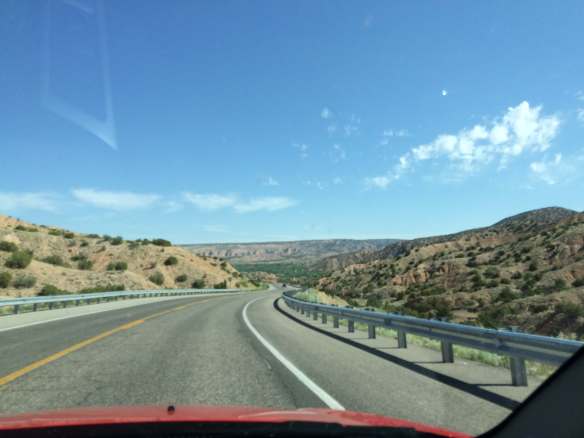
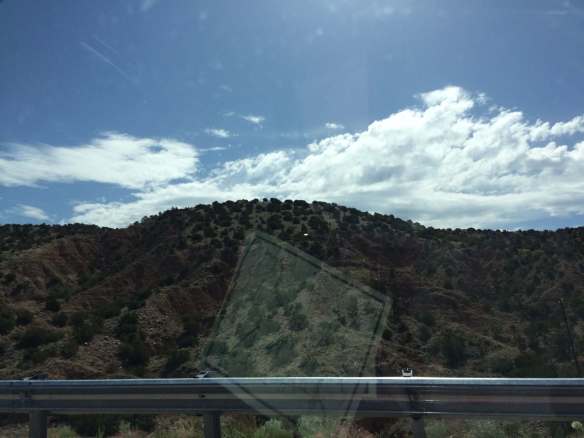
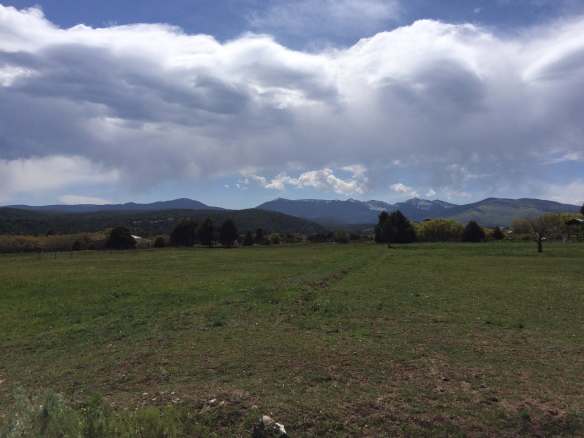
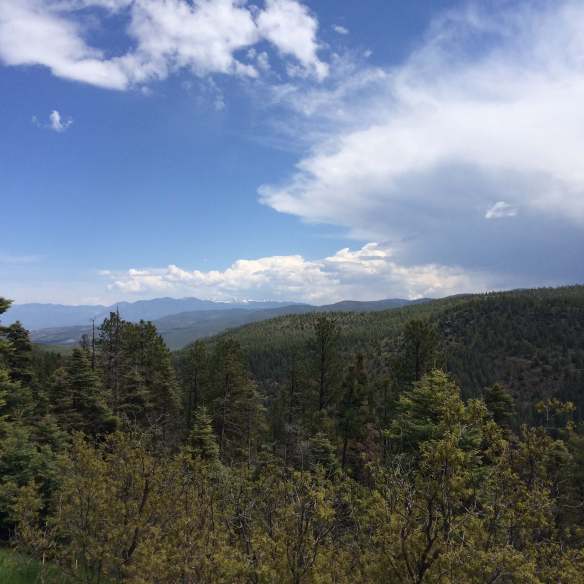
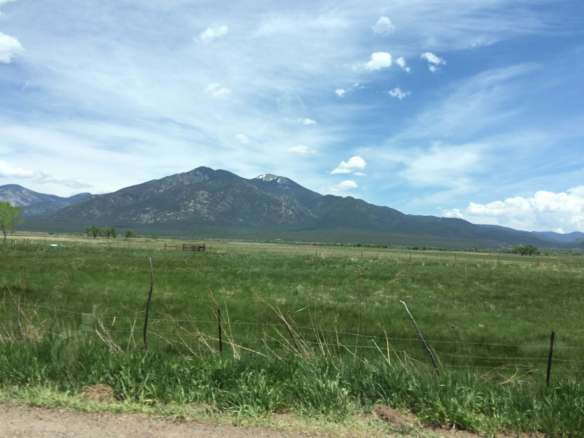
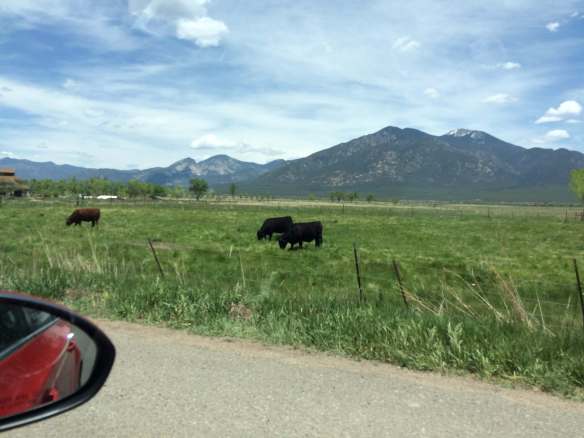
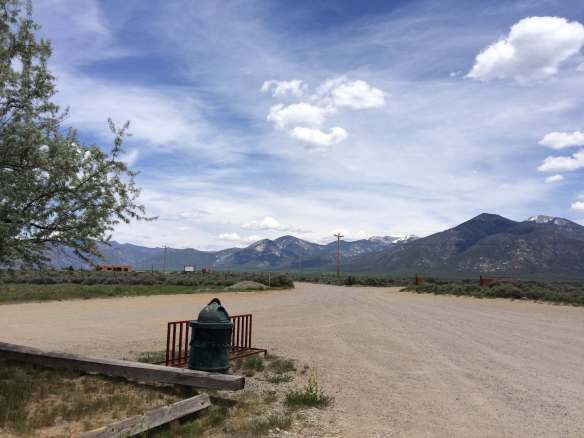
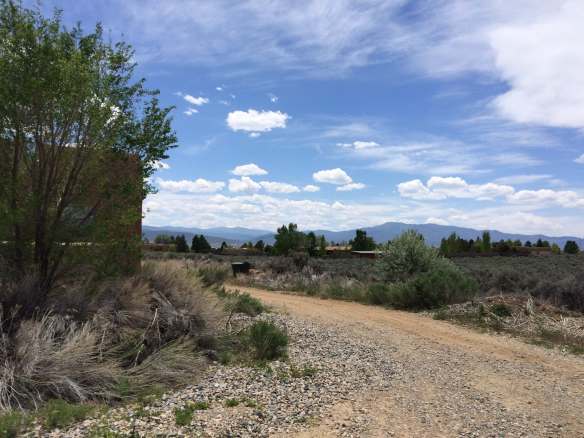
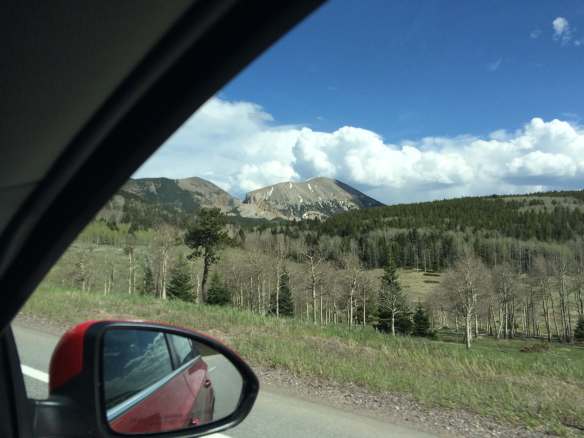
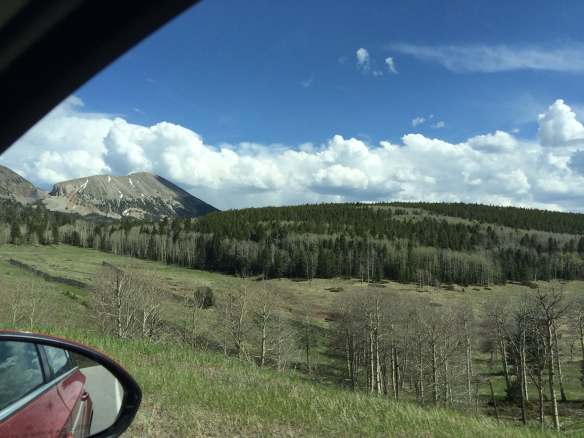
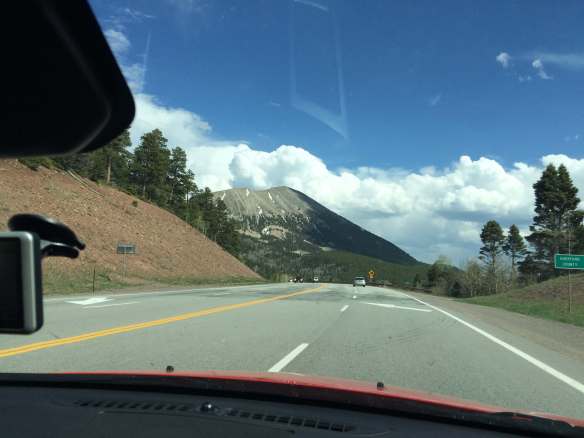
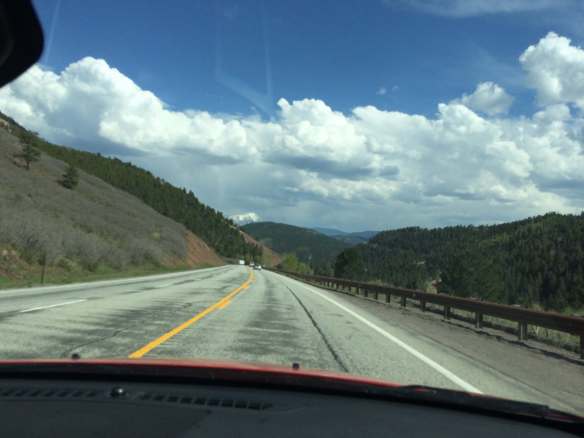
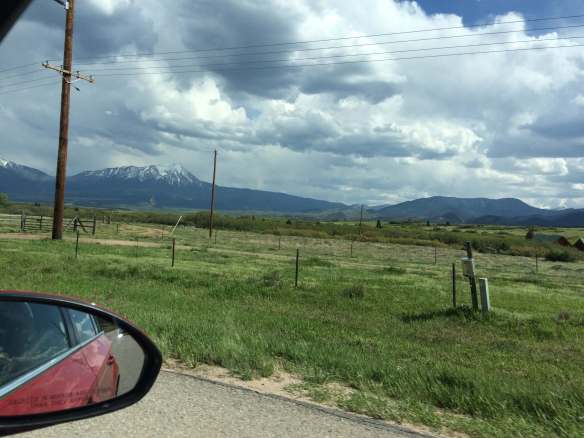
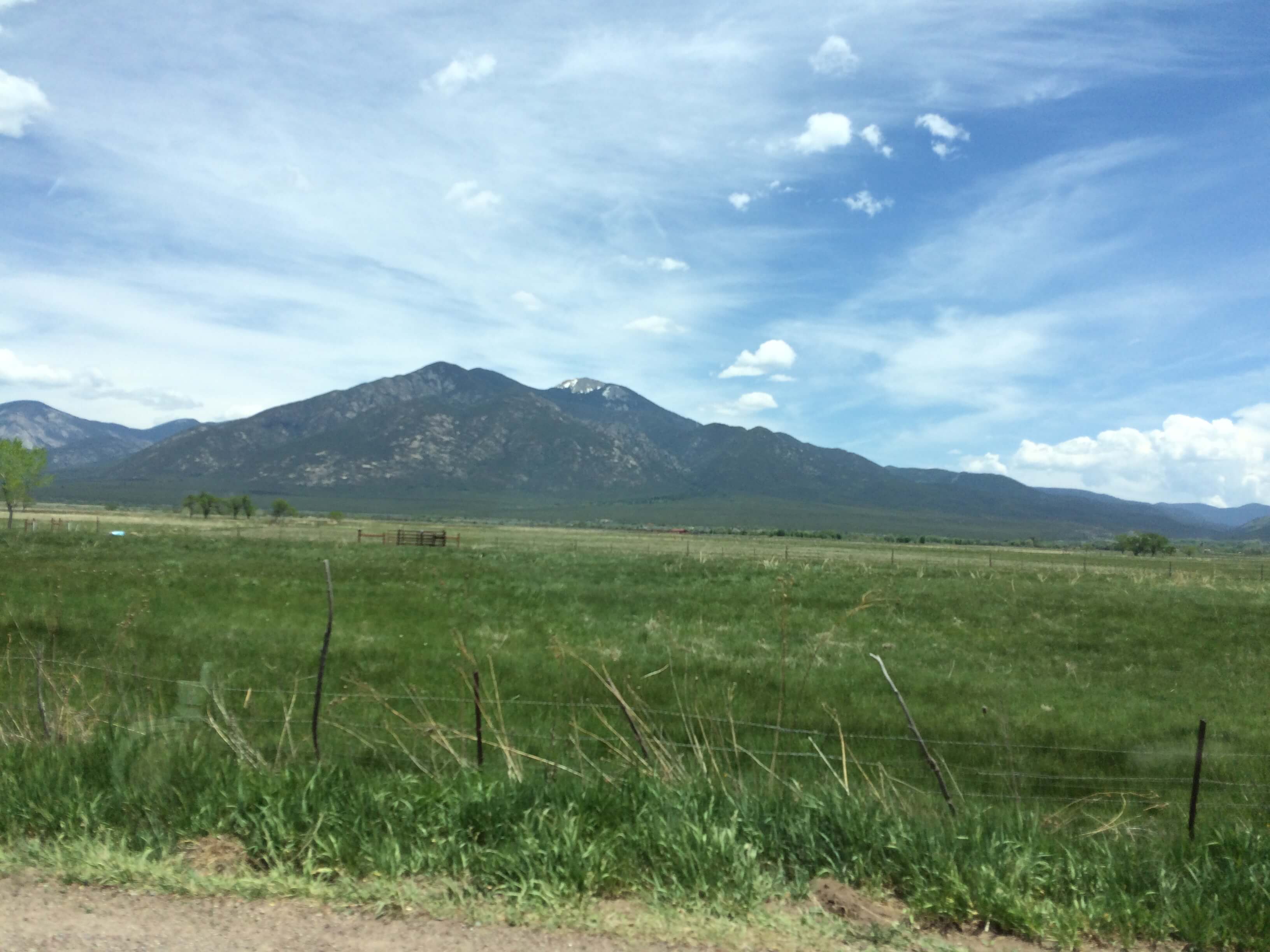
So driving through Colorado and especially New Mexico was eye-opening for me.  We took I-25 south from Denver and headed to New Mexico.  Here we were on an interstate highway, the speed limit 75 miles an hour, and within a short distance from Denver, we began to see mountains.  I snapped photo after photo as we sped by, trying to capture the Rocky Mountains from the car.

20160524_183949615_iOS 20160524_190740985_iOS

20160524_203849284_iOS 20160524_213717579_iOS


Fortunately, we decided not to take I-25 all the way to Santa Fe, but stopped overnight in Raton, New Mexico, the first town over the state line from Colorado, about three hours south of Denver.  It was not a scenic place.  We stayed in a Best Western right off the highway, and the highest rated restaurant in town on TripAdvisor and Yelp was the place right in the Best Western.  It was not good.  But it was edible.   There was no nightlife in Raton, so we rose early to get started on the rest of our journey.

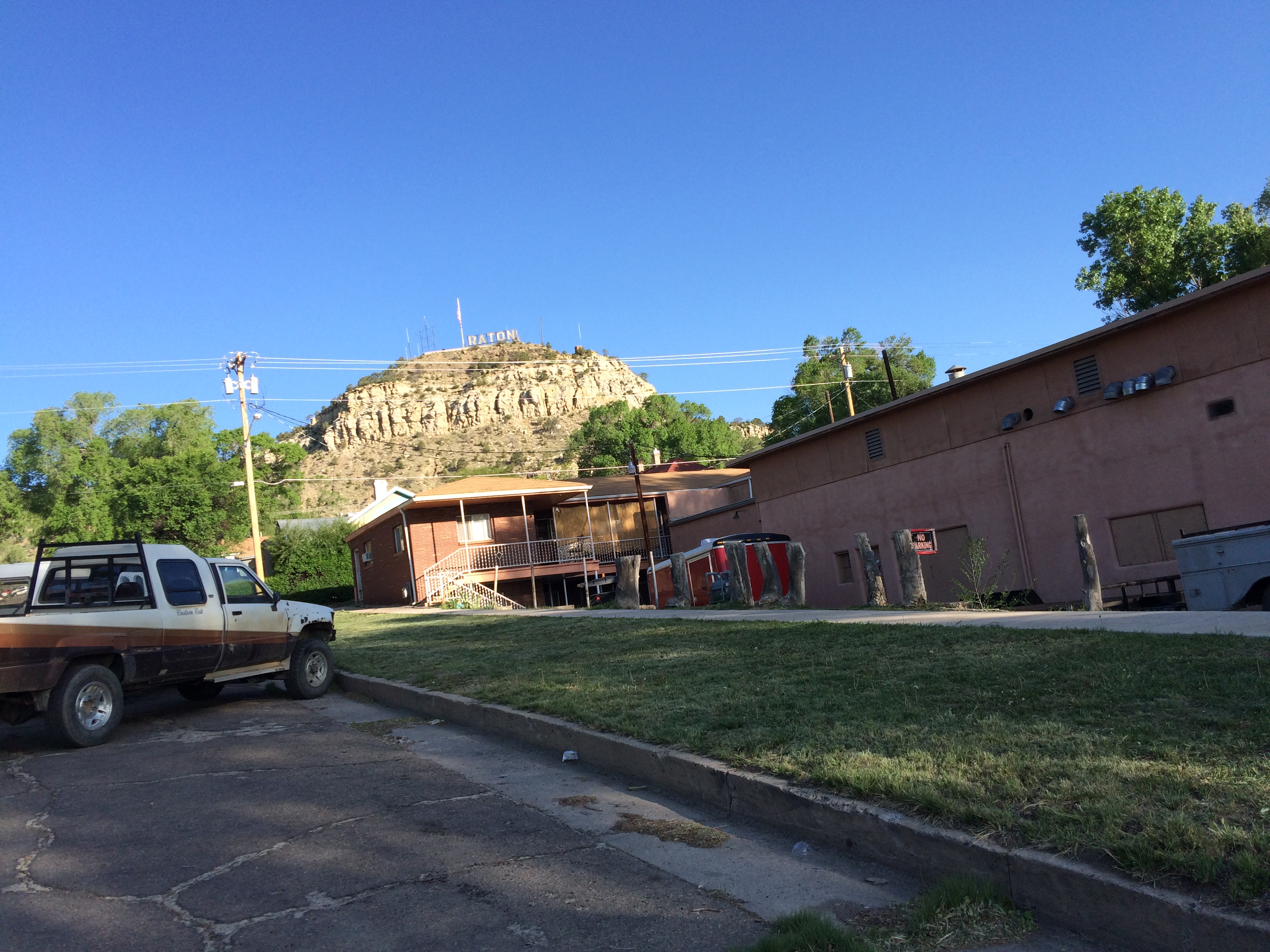
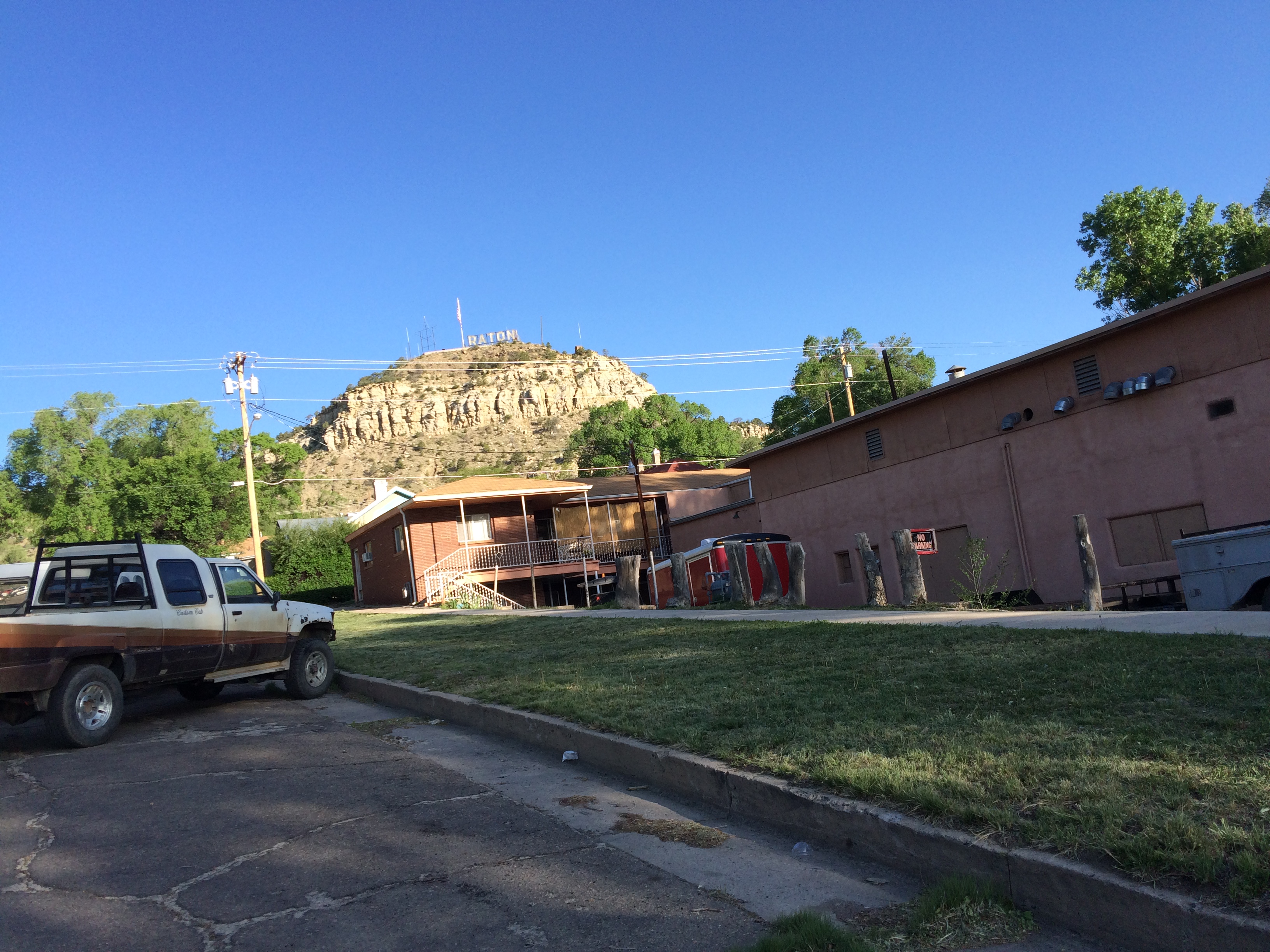
Before we left Raton, however, I’d spotted a brochure for “Historic Raton” in the motel lobby and asked the person at the front desk how to get there.  She very pleasantly gave me directions, though I have to think she wondered why I wanted to see the town.  The town consisted of two parallel streets of buildings (with two or three cross streets) about maybe a quarter mile long.  And almost all the buildings were empty, boarded up, out of business.  It was depressing.

Raton

Raton

downtown raton

Downtown Raton

But it was important for us to see.  This was a town that had once been an important mining town, according to the brochure.  Even more recently those stores and building must have been occupied.  What did the people who lived in Raton now do for work, besides work at the Best Western and the few fast food places near the highway?  Is this why so many people in this country feel so disenfranchised, so angry? Sure, there is poverty in all kinds of places all over the country.  Springfield itself has a large population of people who are unemployed or underemployed, living in desperate conditions.  But a whole town of almost all empty buildings? What must it be like to live in such a place?

We left Raton with a sense of gratitude for all that we have and with a sense of embarrassment that we generally take so much for granted.

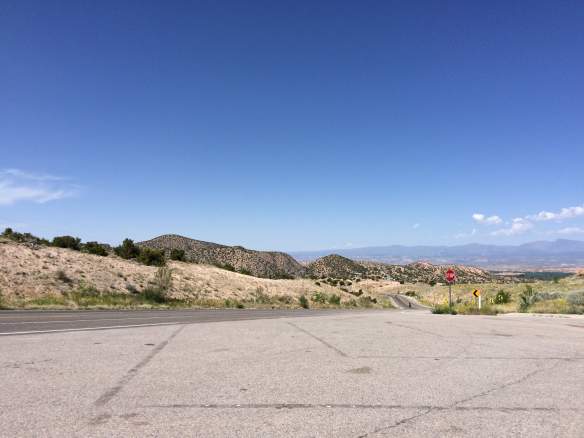
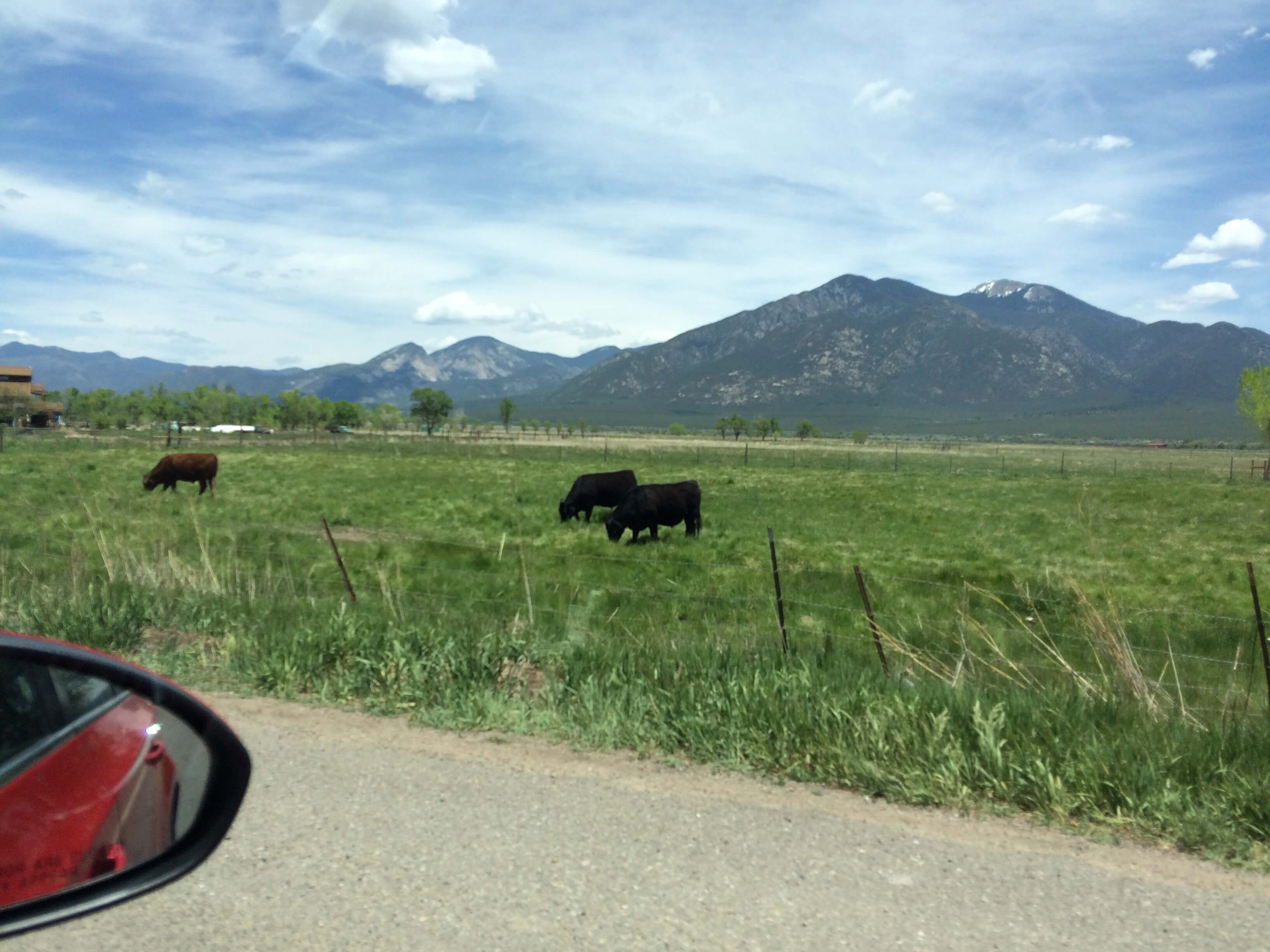
And then we ventured on towards Santa Fe.  This time we took Route 64, a two-lane road running southwest into New Mexico.  For the first forty miles or so, the road ran straight and flat through miles and miles of ranch land.  The endless fields of dry beige and green grass, speckled here and there with cattle, were mesmerizing.  We both just kept saying, “This is incredible! Look at how much land there is.”  I wish my little iPhone camera could capture the scope of open land we saw.  There were mountains in the distance, but overall the land was flat and wide as far as we could see.

20160525_133838331_iOS 20160525_134745252_iOS 20160525_140635804_iOS 20160525_141154474_iOS

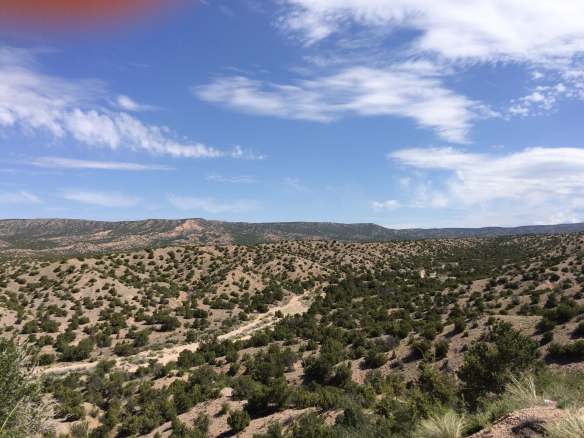
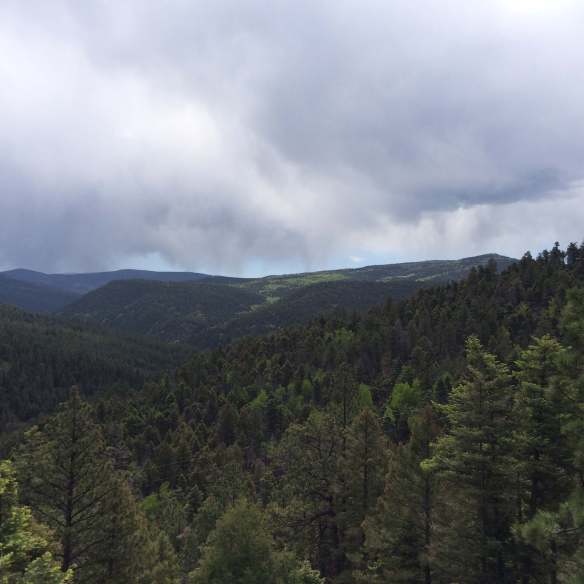
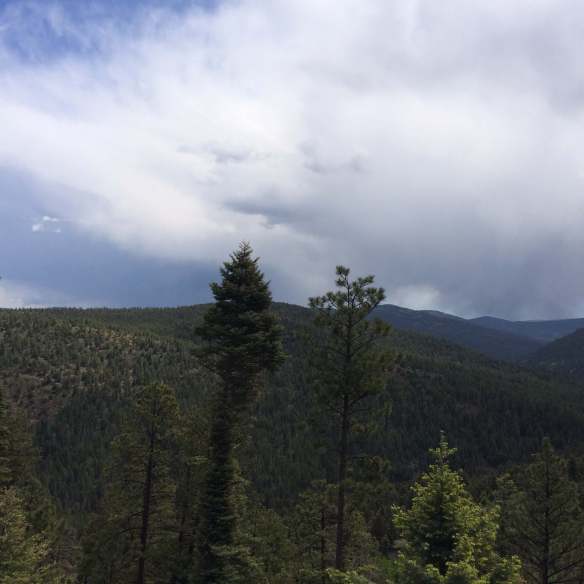
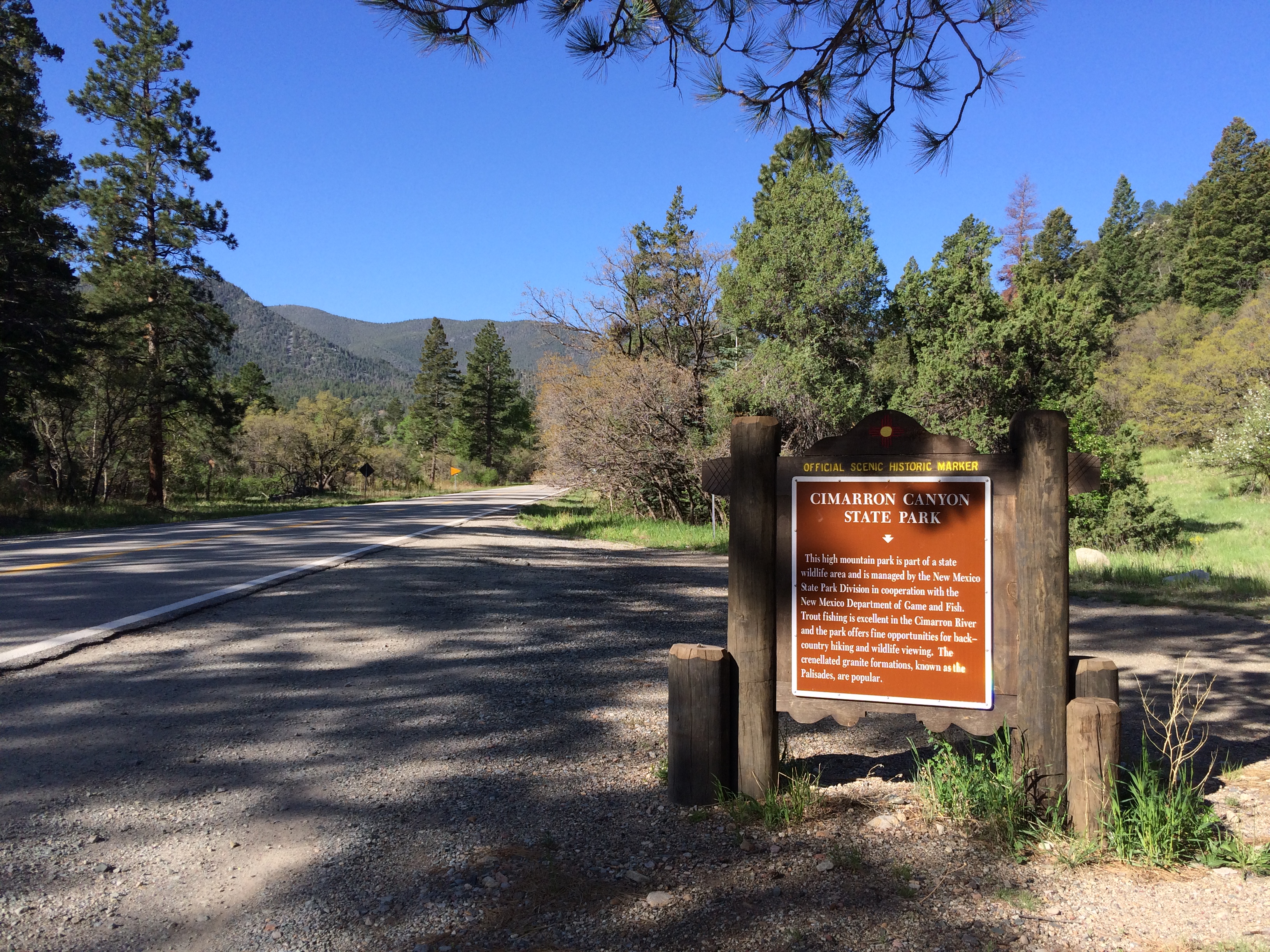
Then we entered the Cimarron Canyon area, and the terrain suddenly changed.  We were surrounded on both sides by walls of tall evergreen trees and then incredible stone formations above and in front of us as we followed the winding roads up and down and up and down the terrain.  It was like going from a huge empty room into a tiny dark hallway that twisted and turned so that you couldn’t see where it would end.  And it was gorgeous.  It was truly gorgeous.

Entering Cimarron Canyon

Entering Cimarron Canyon

20160525_142704356_iOS 20160525_143101662_iOS 20160525_143124185_iOS

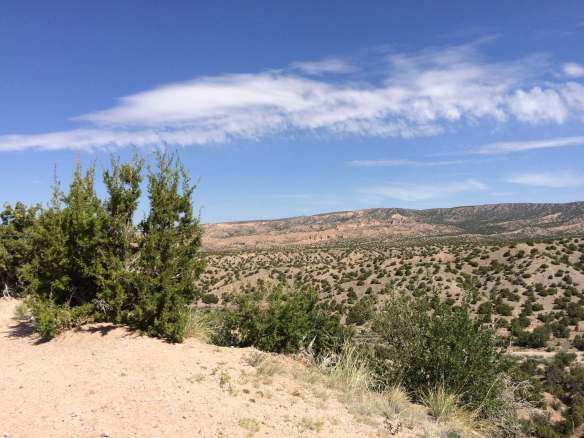
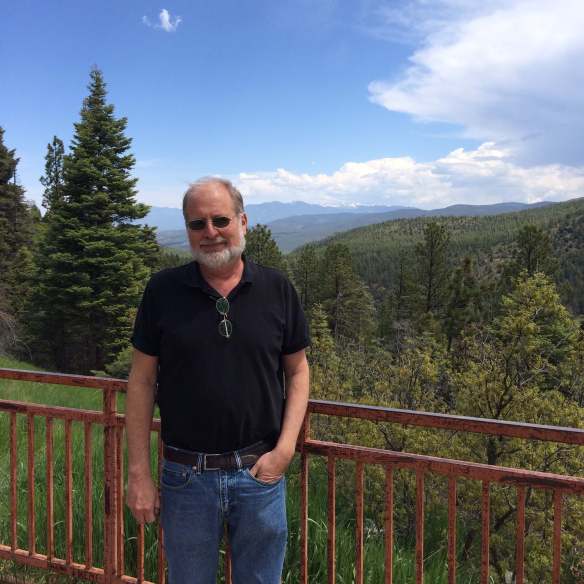
And then it got better.  We passed through the canyon and emerged at the top of hill overlooking the Eagle Nest area with a large blue lake below us to the left and the mountains shadowing us to our right.  In just over sixty miles we had seen three very different types of terrain.  And barely a town or even many cars.  Who owned all those ranches? Who worked on them? Where did they live? We didn’t know.

20160525_144336328_iOS 20160525_144339466_iOS 20160525_144344554_iOS 20160525_144506423_iOS 20160525_144644707_iOS 20160525_144708507_iOS

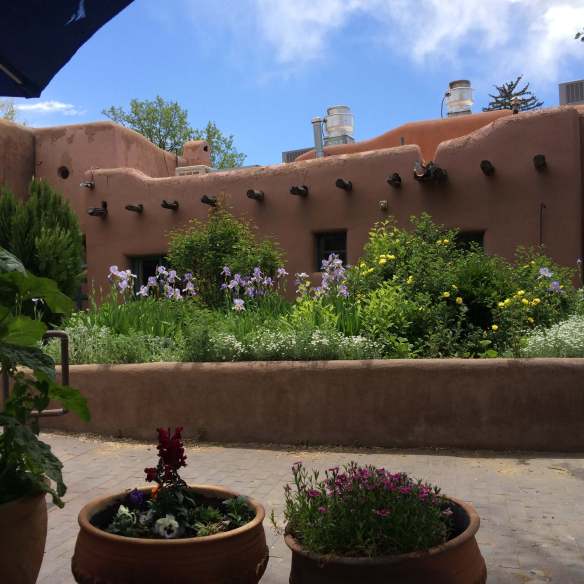
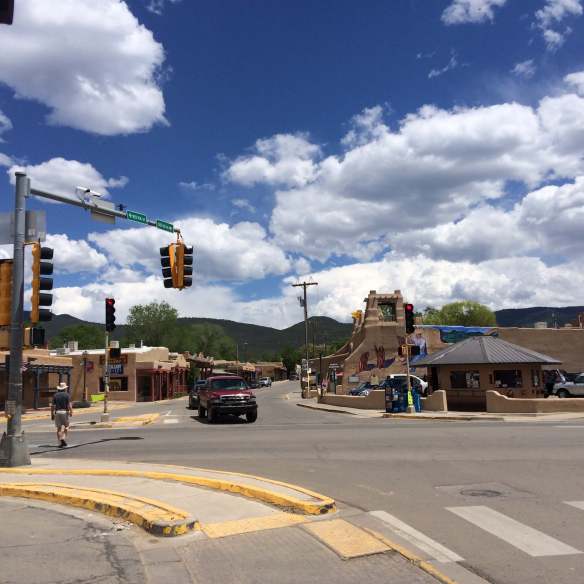
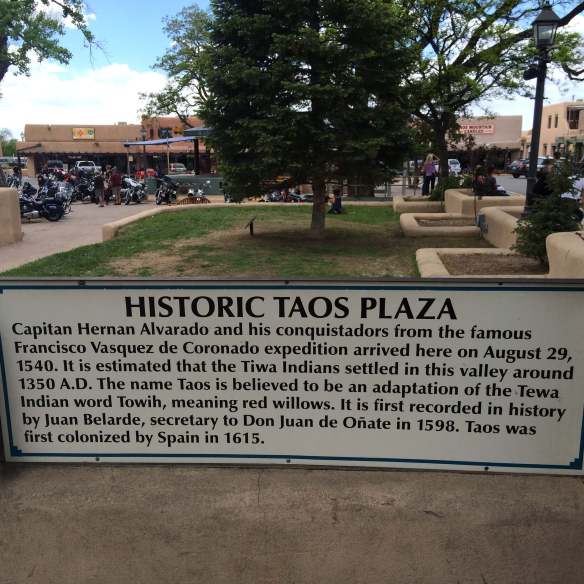
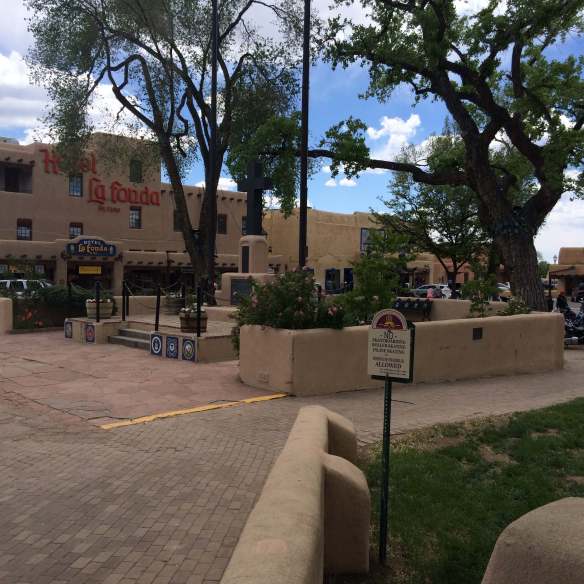
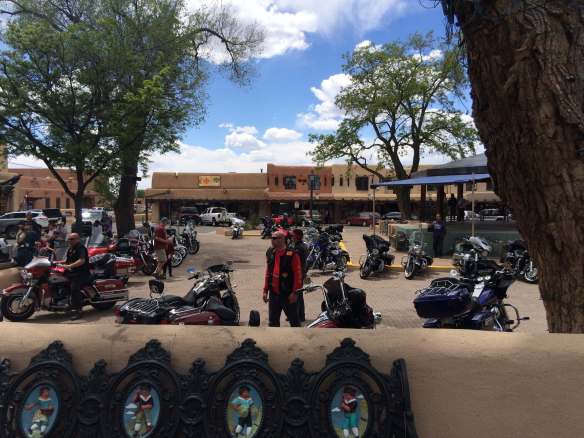
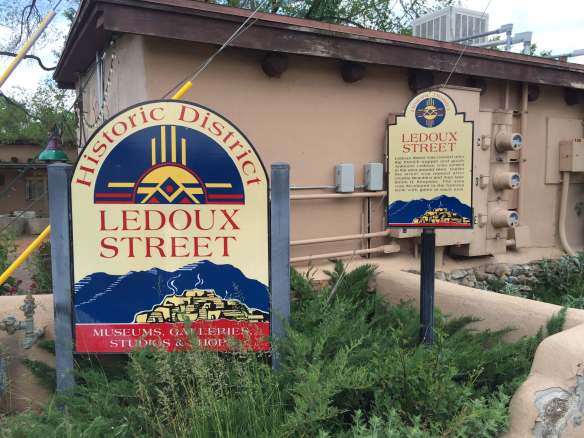
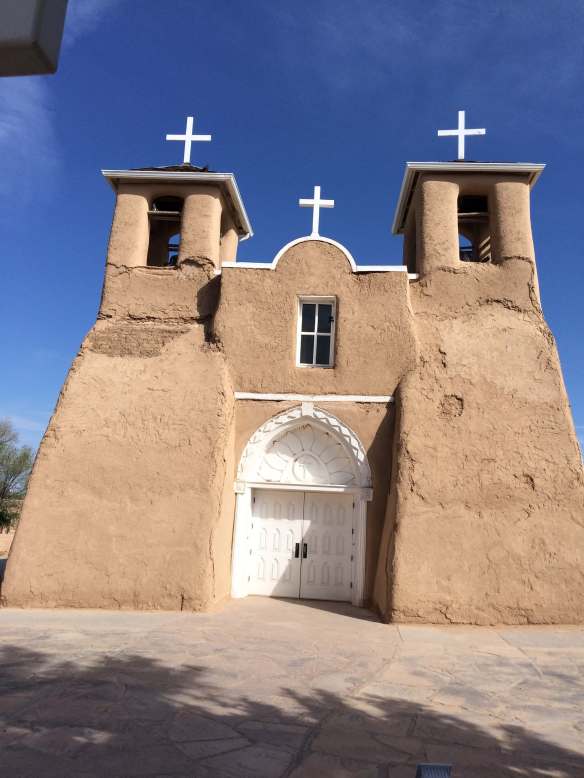
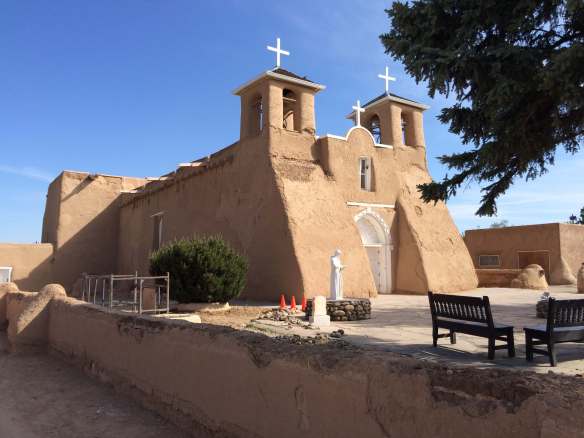
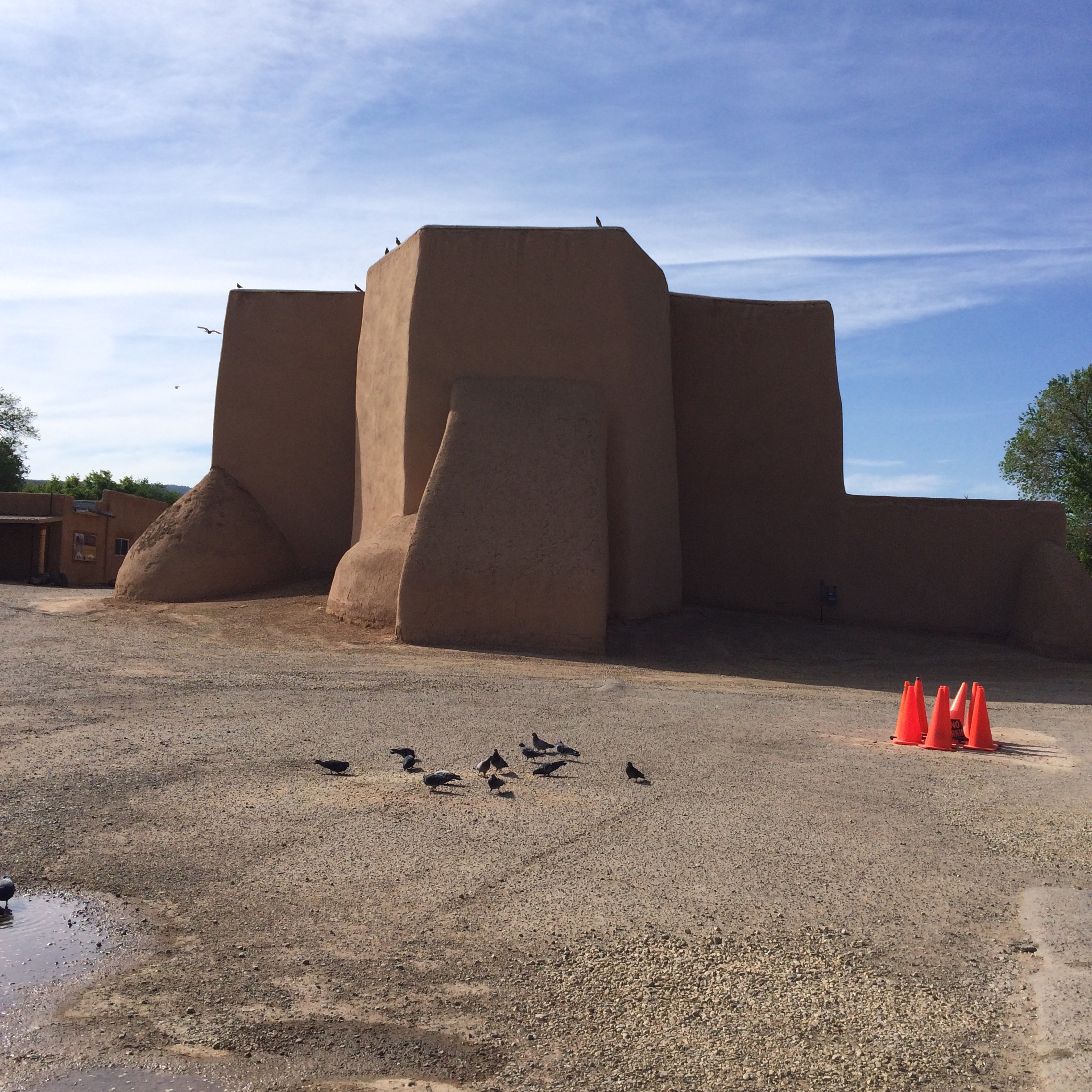
From Eagle Nest we drove another thirty miles to Taos, passing through more open land and more mountain roads.  We stopped briefly in Taos to stretch our legs, but we knew we were coming back there after our stay in Santa Fe, so we did not take the time to look around.

Quick stop in Taos

Quick stop in Taos

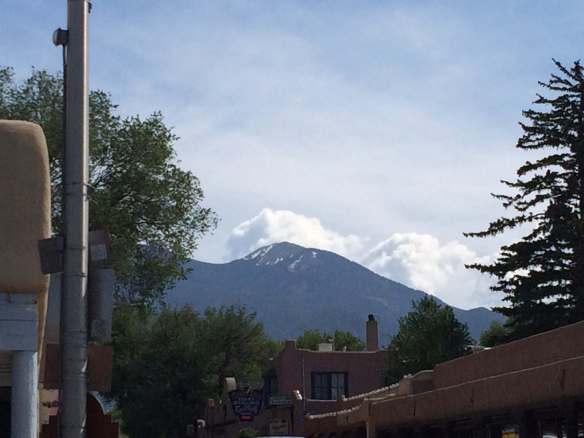
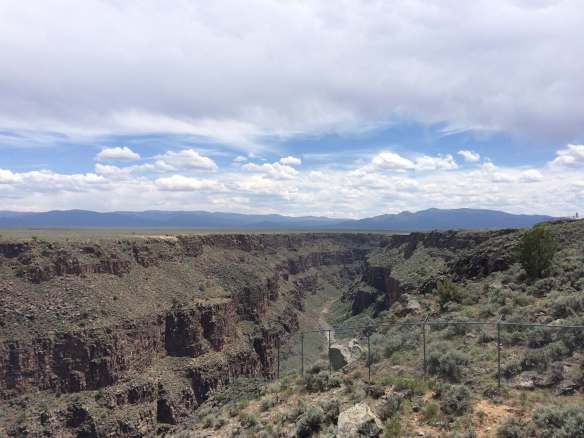
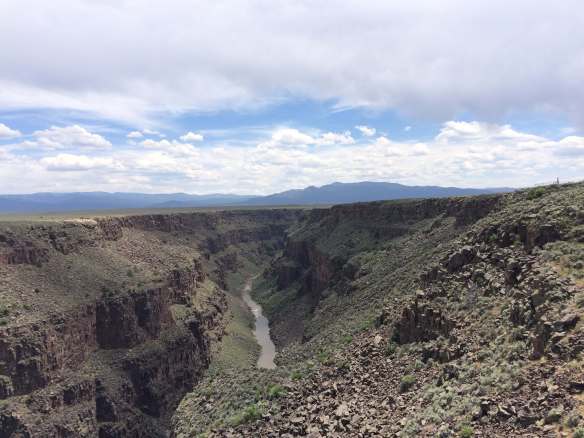
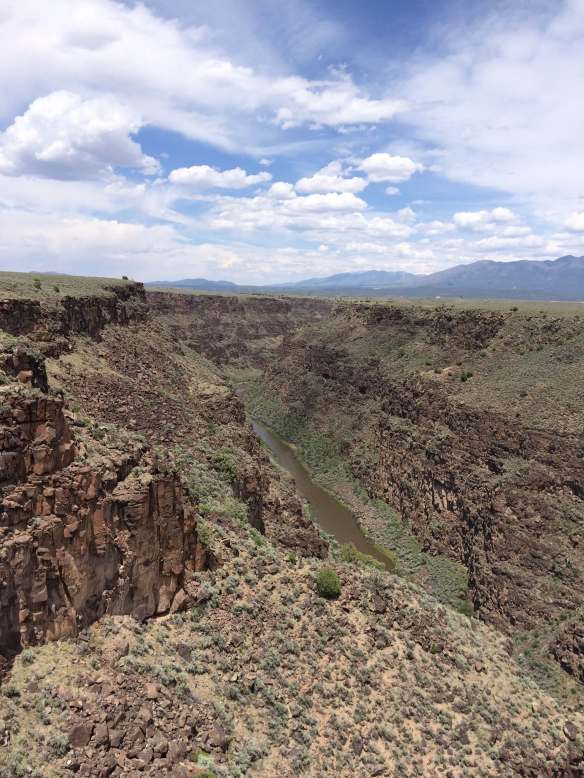
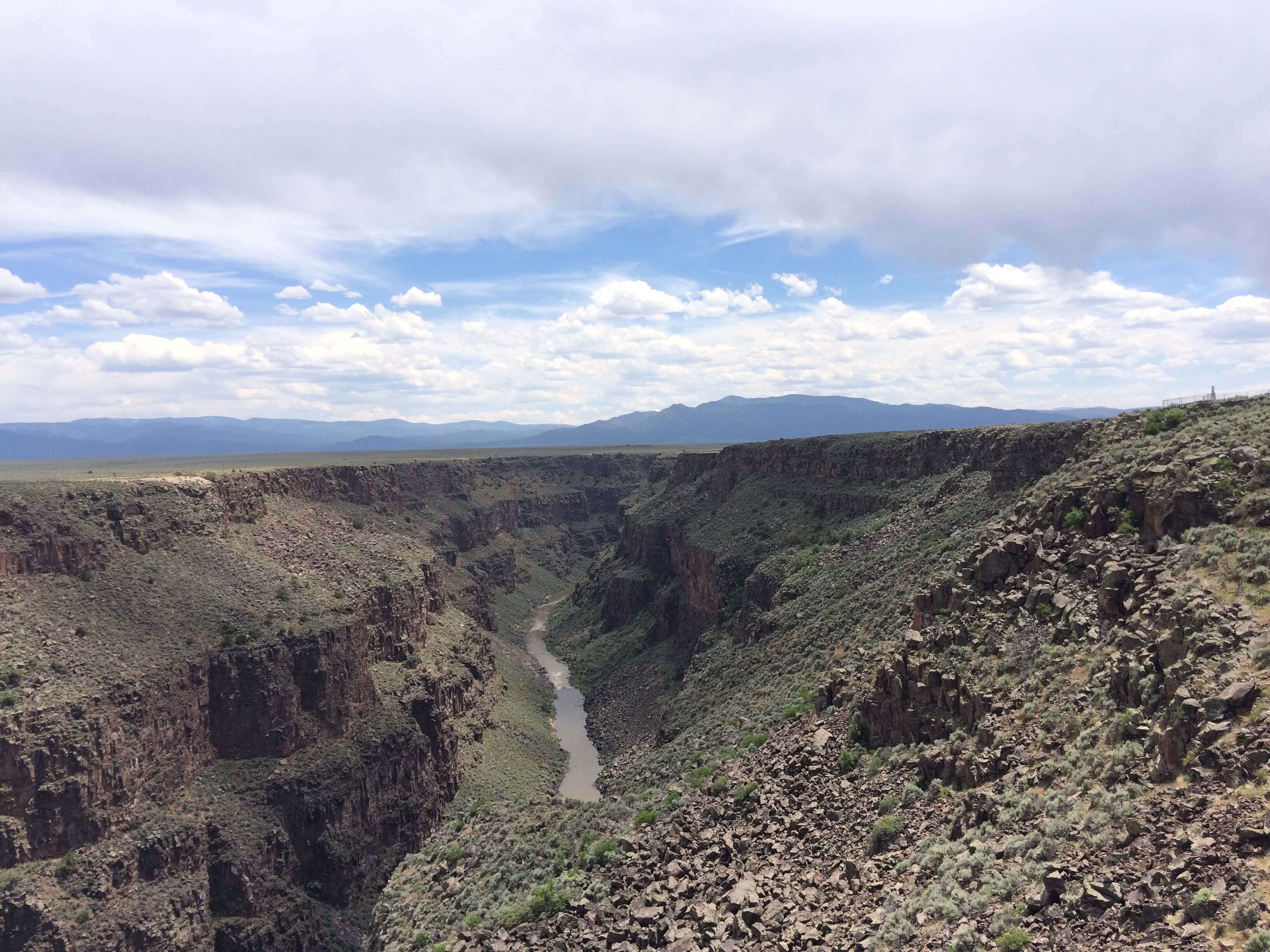
After following Route 64 for about 100 miles (and for just over two hours), we picked up Route 68 in Taos to take the “low road” or “river road” to Santa Fe.  The first portion of Route 68 was awe-inspiring as we looked down at the Rio Grande and climbed high and twisted roads over the mountains and back down again.  In front of us and to our left we could see the white snow-covered peaks of the mountains while to our right we could see the deep gorge that the Rio Grande had carved into the land around it.

20160525_172606142_iOS 20160525_173012800_iOS 20160525_173018888_iOS 20160525_173044128_iOS 20160525_175017231_iOS 20160525_175022403_iOS

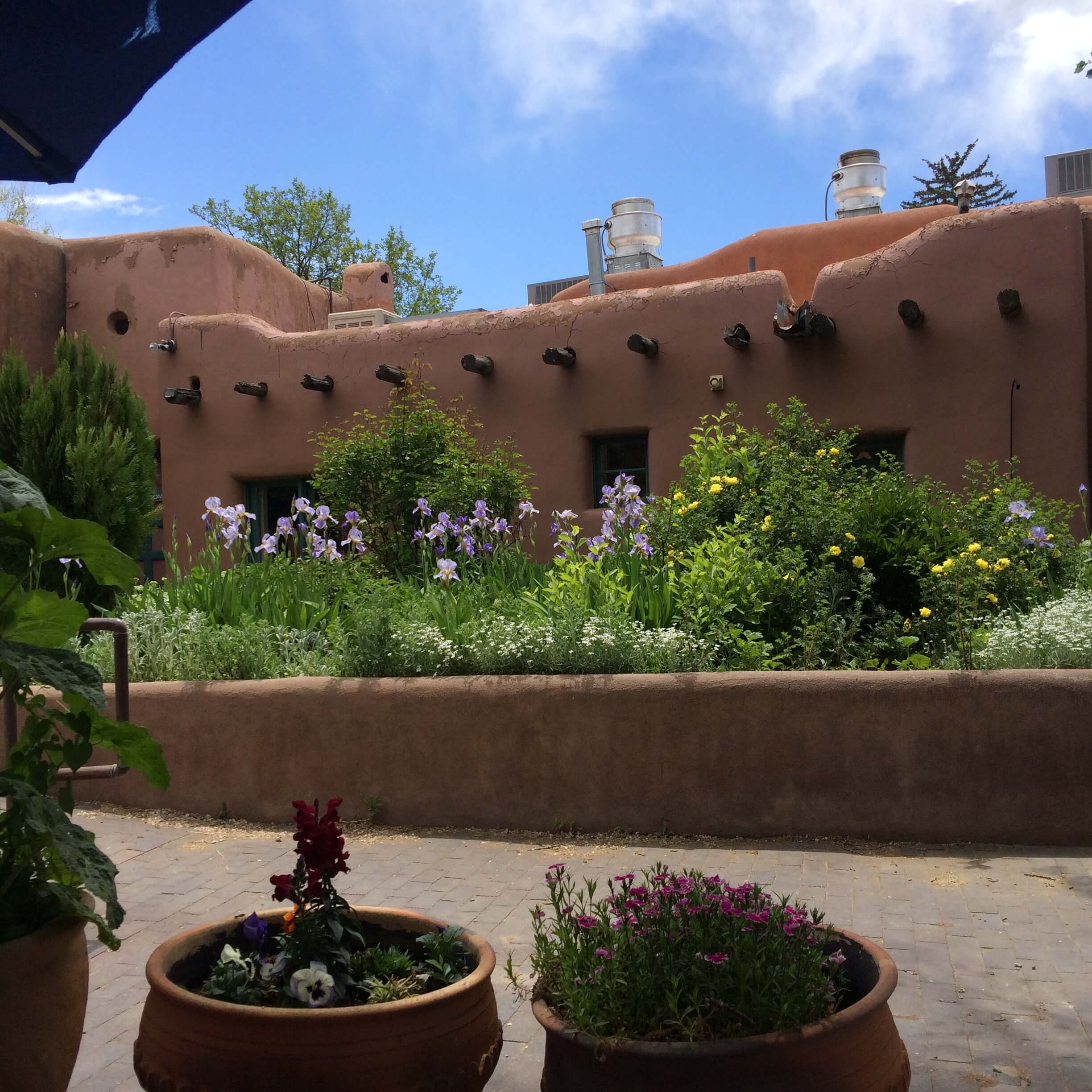
Finally, after passing through the rather non-scenic section of Route 68 near Espinola, we arrived in Santa Fe by lunch time.  And there we settled for the next four days, having now seen both how beautiful and inspirational our country can be and also how sad and empty it can be.


Coming Back Soon

As our vacation winds down, I am looking backwards at all I’ve seen and done and looking forward to writing about it.  Here’s a sneak preview of our adventures in Colorado and New Mexico.

First, I spent four days with three of my best friends in the world.  We met our freshman year in college and spent four years living in the same dorms, talking, laughing, debating, consoling, sharing, and confiding in each other.  Although it was hard to get together in the years we were all raising families, in the last ten years or so we have gotten together every couple of years.  We got together this time in Boulder, Colorado, where one of my friends now lives.  It was my first time in the Rockies, and we hiked and walked all over Boulder, ate great food, and enjoyed good company and beautiful views.  And as if not one day had passed since we graduated over 40 years ago, we talked and laughed and debated and consoled and shared and confided in each other.

20160520_170549732_iOS

20160521_183012098_iOS


20160519_222807641_iOS


Then I met up with my husband at the Denver airport, and we began our travels together.  We spent about 24 hours in Denver, and in that time we explored downtown Denver and then explored my genealogical roots in the city where my paternal grandmother spent much of her childhood. More on that to come.

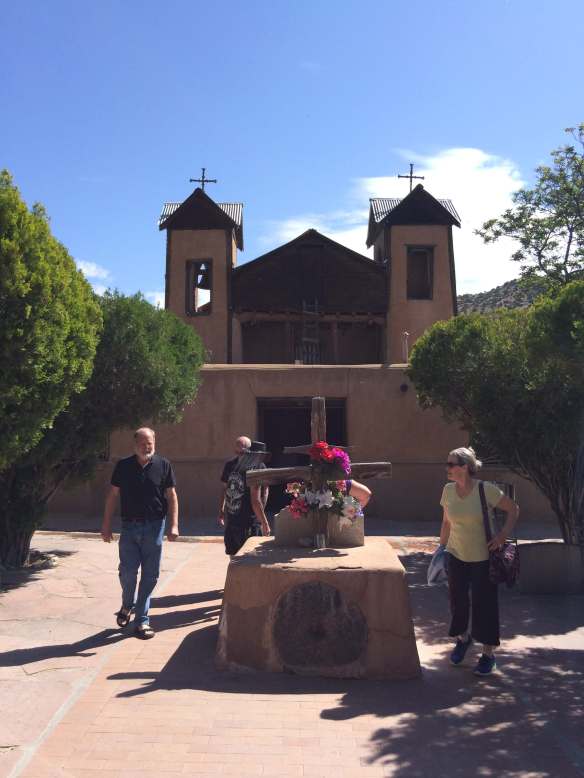
20160524_152548004_iOS

20160524_151205779_iOS

From Denver we drove all the way to Santa Fe, New Mexico, stopping in Raton, New Mexico, for a night, and arriving in Santa Fe the next day by lunch time.  I had lots of thoughts during that drive as we observed a part of the United States I’d never seen before, some of it incredibly beautiful and awe-inspiring and other parts that made me appreciate the struggles that so many Americans experience day to day.  More on that to come as well.

Raton

Raton

20160525_143124185_iOS

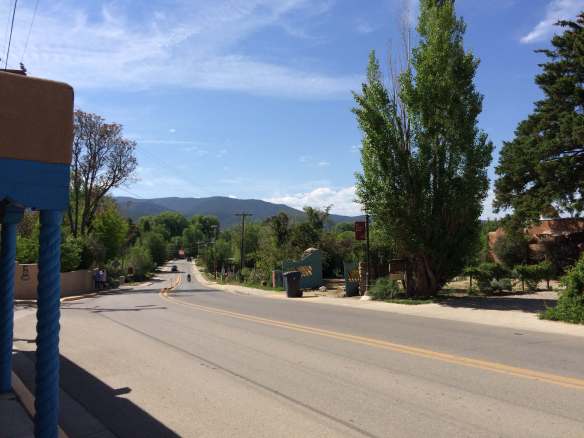
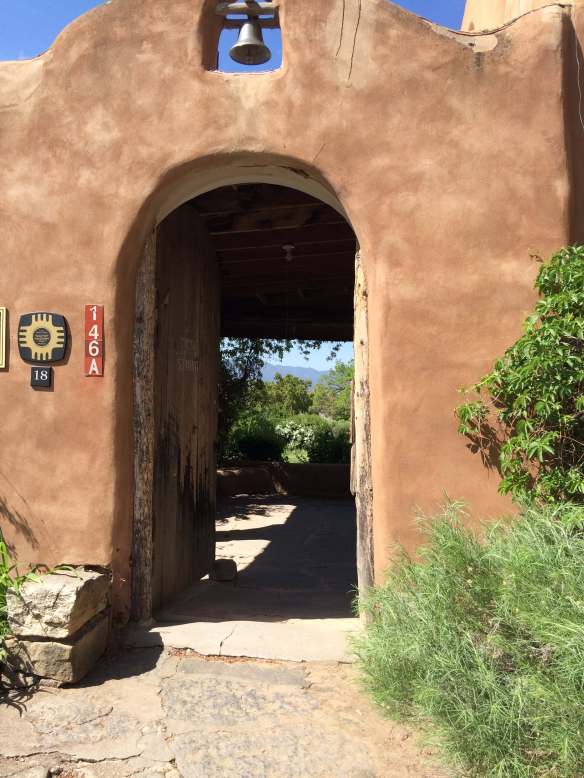
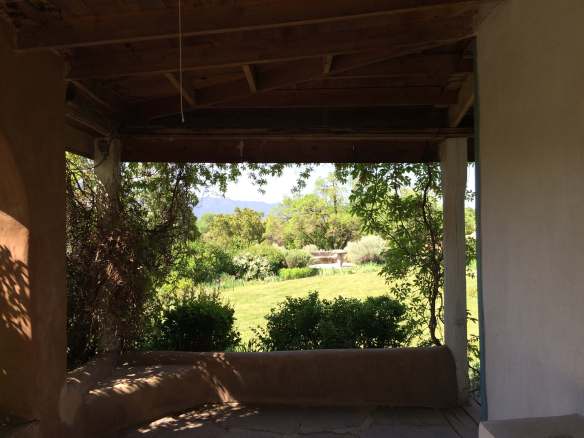
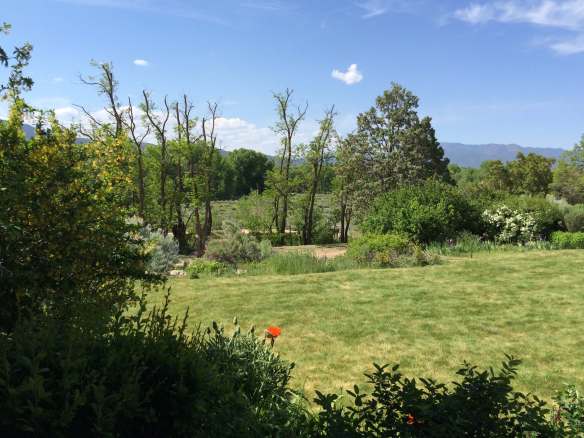
And then we got to Santa Fe, the main destination of our trip.  Santa Fe is a city with an incredibly long and rich history, including my Seligman family’s own personal history there, about which I’ve written extensively.  Being in this place that had been the home of my great-great-grandfather and his family—and where they had contributed so much to its commercial and political development—-was very moving and exciting.  And then there is the art, the glorious landscapes, the architecture.

20160526_151032795_iOS

20160527_164958541_iOS

20160527_200612447_iOS

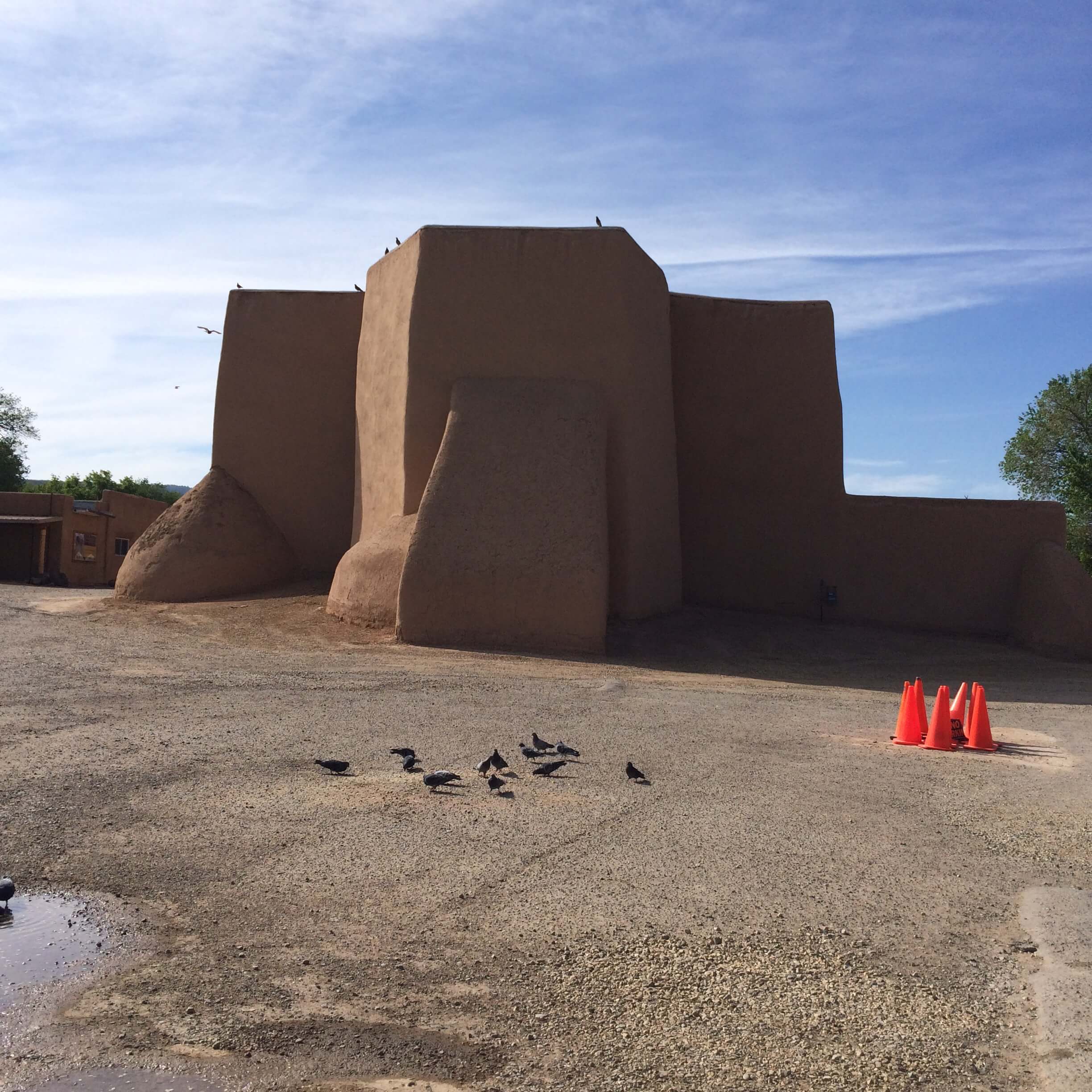
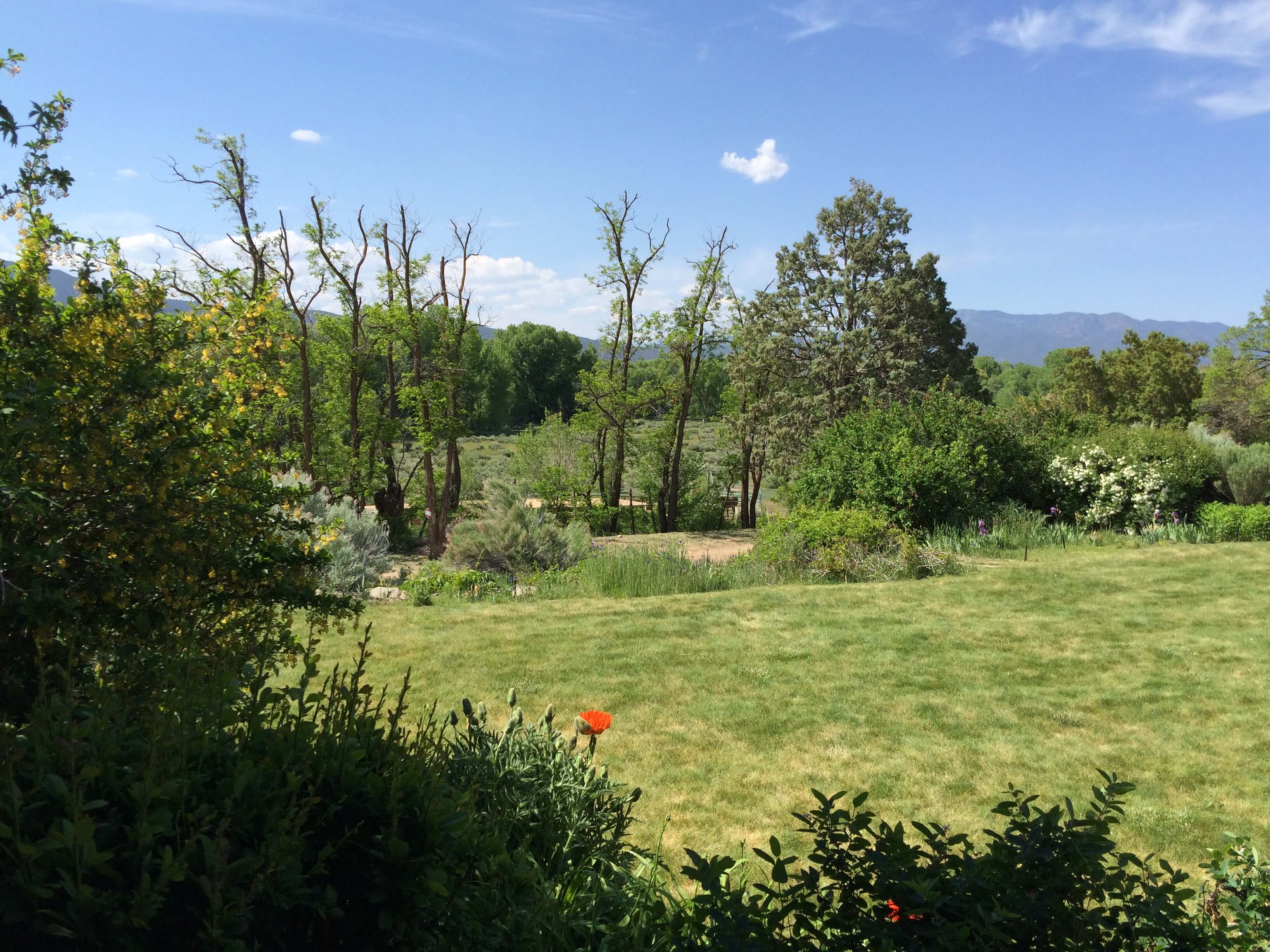
The last leg of our trip took us to Taos where I again was inspired to think about the history of this country as well as its amazing landscapes and vistas.  It’s no wonder that so many artists were inspired by the scenery and the light and the skies over New Mexico.

20160530_150420390_iOS

20160530_155656274_iOS

I will be writing about the trip in the days that follow, and then I will return to the story of my family.  I have much to do after all these days away from research and from blogging.  I have missed the work and my family, my cats, and my friends, but as always, it’s good to get a break, some new perspectives, and a chance to reflect on all the wonders that life brings.

Yom Hashoah—Holocaust Remembrance Day

Today is Yom Hashoah, Holocaust Remembrance Day, a day to remember all those who were killed during the Holocaust.

As a result of my genealogy work, I have learned in the last few years that there were many members of my extended family who were victims of the Nazis.  I had always assumed that all my relatives had left Europe before Hitler came to power—long before he came to power.  So learning about the many members of the Seligmann family who were killed and then more recently about the many members of the Schoenthal and Hamberg families who were killed has been very painful.

The Holocaust touched us all, whether we know it or not, whether we are Jewish or not. Our world lost millions of people.  As each generation learns how cruel and inhumane other people can be, there is once again a loss of innocence.  I dread the day when my grandsons also have to learn this horrible truth.

English: A lit Yom Hashoah candle in a dark ro...

English: A lit Yom Hashoah candle in a dark room on Yom Hashoah (Photo credit: Wikipedia)

Last spring I visited the camps at Terezin and Auschwitz.  I carried with me a list of the names of my relatives who had died at each of the camps so that I could honor their memories.

That list has grown since last spring.  One of the most recent names I’ve had to add to the list of those who died at Auschwitz was Liesel Mosbach Lion, granddaughter of Rosalie Schoenthal Heymann, my great-grandfather’s sister.  Liesel was my father’s second cousin.

I recently posted about Liesel and her family and what happened to them.  Most of what I knew came from the memoir written by Liesel’s husband Ernst Georg Lion, The Fountain at the Crossroads.  I was so moved by his book that I have decided to see whether there is a way to get it published in a format where it will be accessible to more people.  I am now in touch with Ernst’s son Tom.  He sent me photographs of Ernst and his family, including my cousin Liesel.  With his permission, I am posting a few of them here to honor their memory this Yom Hashoah.

The first three are of Ernst’s parents, Leo and Bertha (Weinberg) Lion.  Bertha died from the stress caused by the Nazi treatment of Jews during the 1930s.  Leo was killed in one of the camps.

Ernst Lion parents 1 Ernst Lion father

Ernst Lion parents 2

This is the last photograph taken of Leo Lion before he was arrested and sent to a concentration camp.

Ernst Lion father 2

On the left below is my cousin Liesel Mosbach Lion; she was killed at Auschwitz.  On the right is the wedding picture of Liesel and Ernst, December 18, 1939.

Liesel, her sister Grete, both of her parents, Helene Heymann Mosbach and Julius Mosbach, and her aunt Hilda Heymann were all killed during the Holocaust. Her grandfather Willy Heymann was arrested and taken to Dachau and died soon after being released.

They were all my cousins.

Liesel Mosbach Lion alone and in wedding picture with Ernst

These are various photographs of Ernst from childhood through the war years and afterwards in the US.  His story of suffering and survival is unforgettable.

pictures of Ernst Lion

We live in a time when once again hatred and fear permeate our world and demagogues are seeking power.  We must be vigilant and remember what happened then.  We must do all we can to ensure that genocide does not occur again anywhere.

We must never forget.  Never again.

Passover 2016: The Exodus

In many ways Jewish history is about one exodus after another.  The Jewish story begins when God tells Abra(ha)m, “Lech Lecha,”  or “Go, Go out.”  He instructs him to leave his father’s land and go to a new land where his children would be as numerous as the stars.

There are many journeys throughout the Bible—Noah’s journey, Jacob’s journey, Joseph’s journey, and, of course, the exodus from Egypt led by Moses, which is recalled and re-enacted every year on Passover.

This Friday evening we will once again remember and re-enact that journey.  We will read the story of the Exodus.  We will drink wine, recline like free people, and eat matza to remember that our ancestors had no time to wait for the dough to rise before exiting from Egypt.  We will eat the bitter herbs to remember the bitterness of slavery, and we will eat the charoset—a mixture of apples, nuts, and wine—to embrace the sweetness of freedom from slavery.

English: Passover Seder Table, Jewish holidays...

English: Passover Seder Table, Jewish holidays עברית: שולחן הסדר, Original Image Name:סדר פסח, Location:חיפה (Photo credit: Wikipedia)


But that exodus was not the last journey our people took to freedom.  Over the centuries Jews kept moving from one land to another, either having been expelled or deciding on their own to seek freedom from oppression, violence, and hatred.  They moved to Babylonia, to Spain, to eastern Europe, to Germany, to places all over the globe, including eventually to the Americas.

I have spent much of the year since last Passover studying the journeys of my paternal relatives from Sielen, Germany—my father’s maternal grandfather’s family, the Schoenthals.  Although I still have a few more stories to share about my Schoenthal cousins, now that I have written about all the children of Levi Schoenthal and Henriette Hamberg, I want to spend this Passover looking back over the story of this particular family.

Levi and Henriette Schoenthal had ten children who survived to adulthood, all born in Sielen, Germany.  Of those ten, eight settled permanently in the US, and all but one of those eight started their lives in America in western Pennsylvania—either in Pittsburgh or the town thirty miles away, known as Little Washington.  Henry, the oldest son, arrived first in 1866, and by 1881, eight of the siblings were living in the US.  Henry over the years was a book seller and a china dealer, but underneath was a deeply religious and well-educated man.

His youngest brother was my great-grandfather Isidore, who arrived in 1881, also settled in Washington, and also worked as a china dealer.

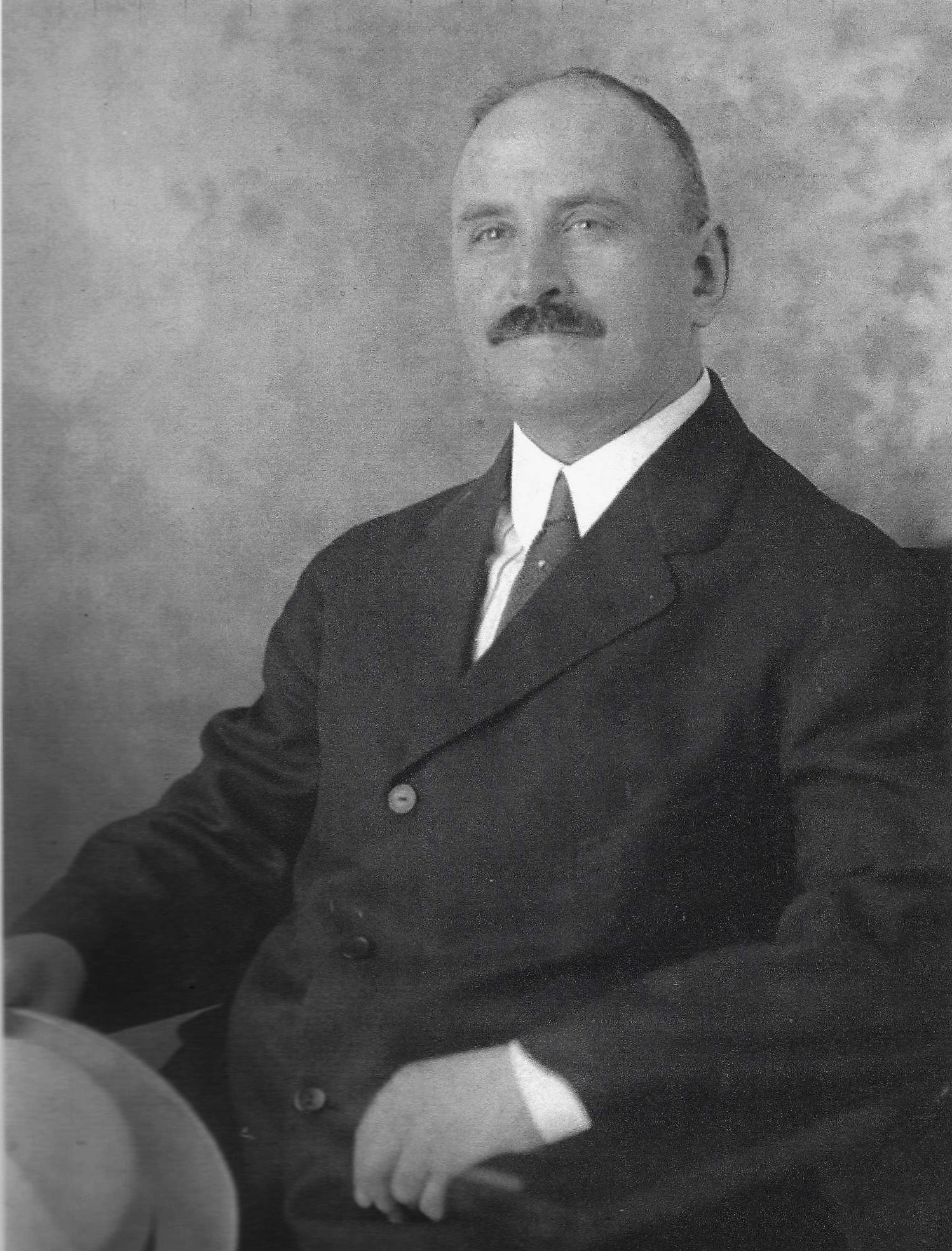
Isidore Schoenthal

Isidore Schoenthal

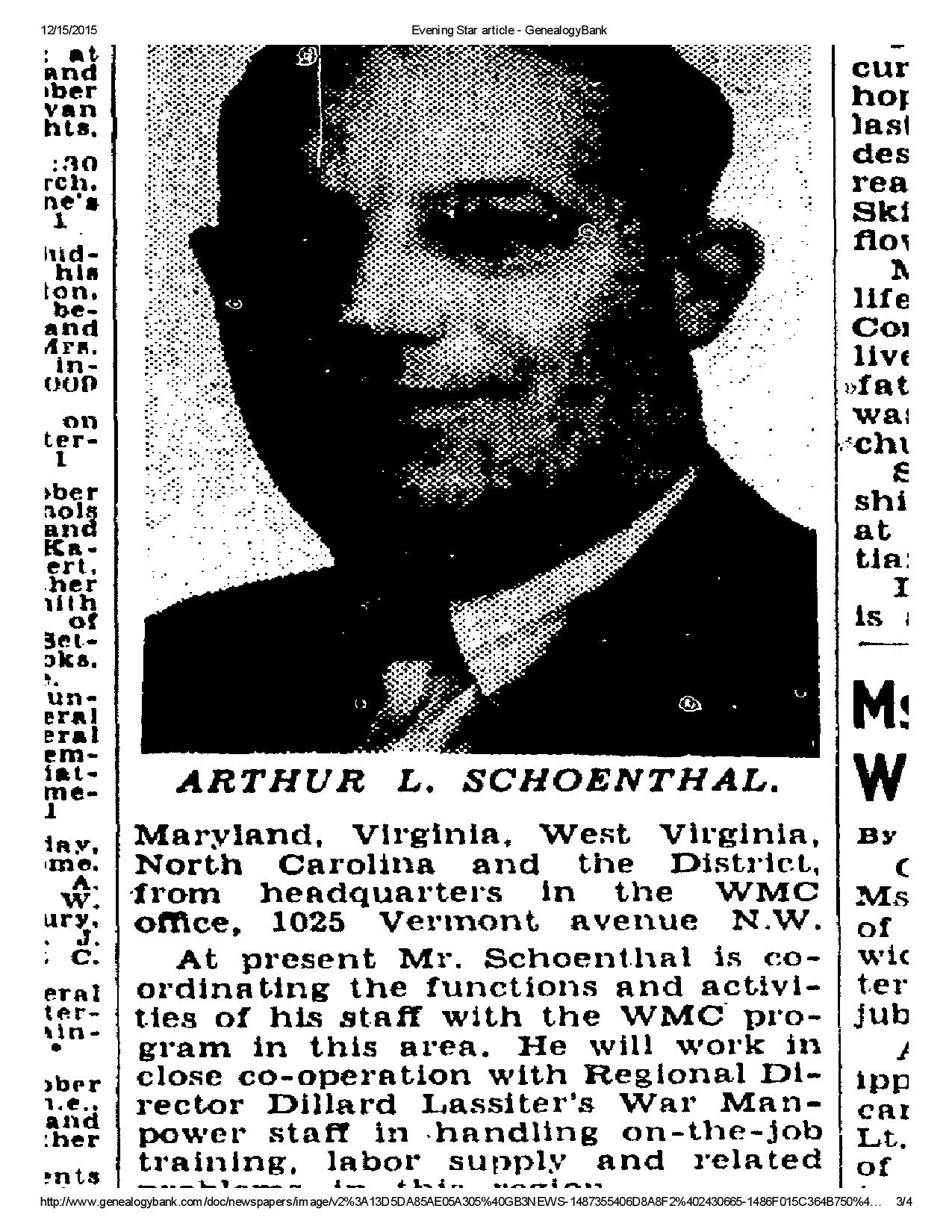
In between Henry and Isidore were four other brothers in the US plus two sisters.  Over the years almost all of them prospered.  Some moved away from western Pennsylvania.  Simon ended up in Atlantic City, where he and his wife raised nine children, many of whom ended up in the hotel business there; Felix and his wife and two daughters ended up in Boston, where he became successful in the typewriter repair business. Julius lived in Washington, DC, worked as a shoemaker and had four children.  Nathan lived in many different places.  And even Isidore and Henry eventually left Pennsylvania, Isidore for Colorado and Henry for New York.  The two sisters, Hannah and Amalie, stayed in Pittsburgh for most of their lives.  Both were married and had children.

Felix and Margaret Schoenthal from 1919 passport application, National Archives and Records Administration (NARA); Washington D.C.; NARA Series: Passport Applications, January 2, 1906 - March 31, 1925; Roll #: 728; Volume #: Roll 0728 - Certificates: 70500-70749, 19 Mar 1919-20 Mar 1919

Felix and Margaret Schoenthal from 1919 passport application,
National Archives and Records Administration (NARA); Washington D.C.; NARA Series: Passport Applications, January 2, 1906 – March 31, 1925; Roll #: 728; Volume #: Roll 0728 – Certificates: 70500-70749, 19 Mar 1919-20 Mar 1919


Simon Schoenthal, my great-great-uncle

Simon Schoenthal, my great-great-uncle


The next generations wandered even further afield, although many ended up not too far from where their parents had originally settled.  My grandmother, who was born in Washington, PA, and grew up in Denver, spent her whole adult life in Philadelphia and New Jersey.

My Grandma Eva

My Grandmother Eva Schoenthal Cohen

Martin Schoenthal, Gertrude Sch., Hettie Sch Blanche Walter

Walter Schoenthal, Gertrude Schoenthal, Hettie Schoenthal, Blanche Stein and Walter Stein in Arizona


Arthur Schoenthal promoted 1942-page-003


Washington Evening Star, September 14, 1928, p. 9

Washington Evening Star, September 14, 1928, p. 9


Washington Star, December 2, 1928 p. 64

Washington Star, December 2, 1928 p. 64

Washington Evening Star, February 18, 1963, p. 24

Washington Evening Star, February 18, 1963, p. 24


Overall, the Schoenthals in the US prospered; most were successful business owners.  Most of these people appeared to have full and happy lives, although there were some who struggled.  Today there are numerous living descendants of those eight siblings, myself included.

On the other hand, the two siblings who stayed in Germany did not have as happy a legacy.  Jakob died young, and his daughter Henriette was killed in the Holocaust.  His four other children survived and, like their aunts and uncles, ended up in western Pennsylvania. Lee, Meyer, and Erna came before the war.  But Johanna was deported to a camp in Gurs, France, during the war and did not come until 1947.   From these five children, there were just two grandchildren: Helmut Levi, son of Henriette and Julius Levi, and Werner Haas, Erna’s son.  Both grandsons made it to the US before World War II.  Neither had children, however, so there are no living descendants of Jakob Schoenthal and his wife Charlotte Lilienthal.

Jewish Chronicle of Pittsburgh, June 14, 1984, p. 23 ewish+Chronicle+Vol.+23+No.+18 Formed+by+the+union+of:+Jewish+criterion+;++and:+American+Jewish+outlook. http://doi.library.cmu.edu/10.1184/pmc/CHR/CHR_1984_023_018_06141984

Jewish Chronicle of Pittsburgh, June 14, 1984, p. 23
ewish+Chronicle+Vol.+23+No.+18
Formed+by+the+union+of:+Jewish+criterion+;++and:+American+Jewish+outlook.
http://doi.library.cmu.edu/10.1184/pmc/CHR/CHR_1984_023_018_06141984


And finally Rosalie, the youngest child of Levi and Henriette, after living in the US for a few years made the fateful decision to return to Germany to marry Willy Heymann.  They had six children.  Four survived the Holocaust.  The three sons, Lionel, Max, and Walter, settled in Chicago before the war, where Lionel became a well-regarded photographer.   One daughter, Johanna, who was widowed at a young age, followed her stepdaughter Else Mosbach to Sao Paulo, Brazil, to escape the Nazis.

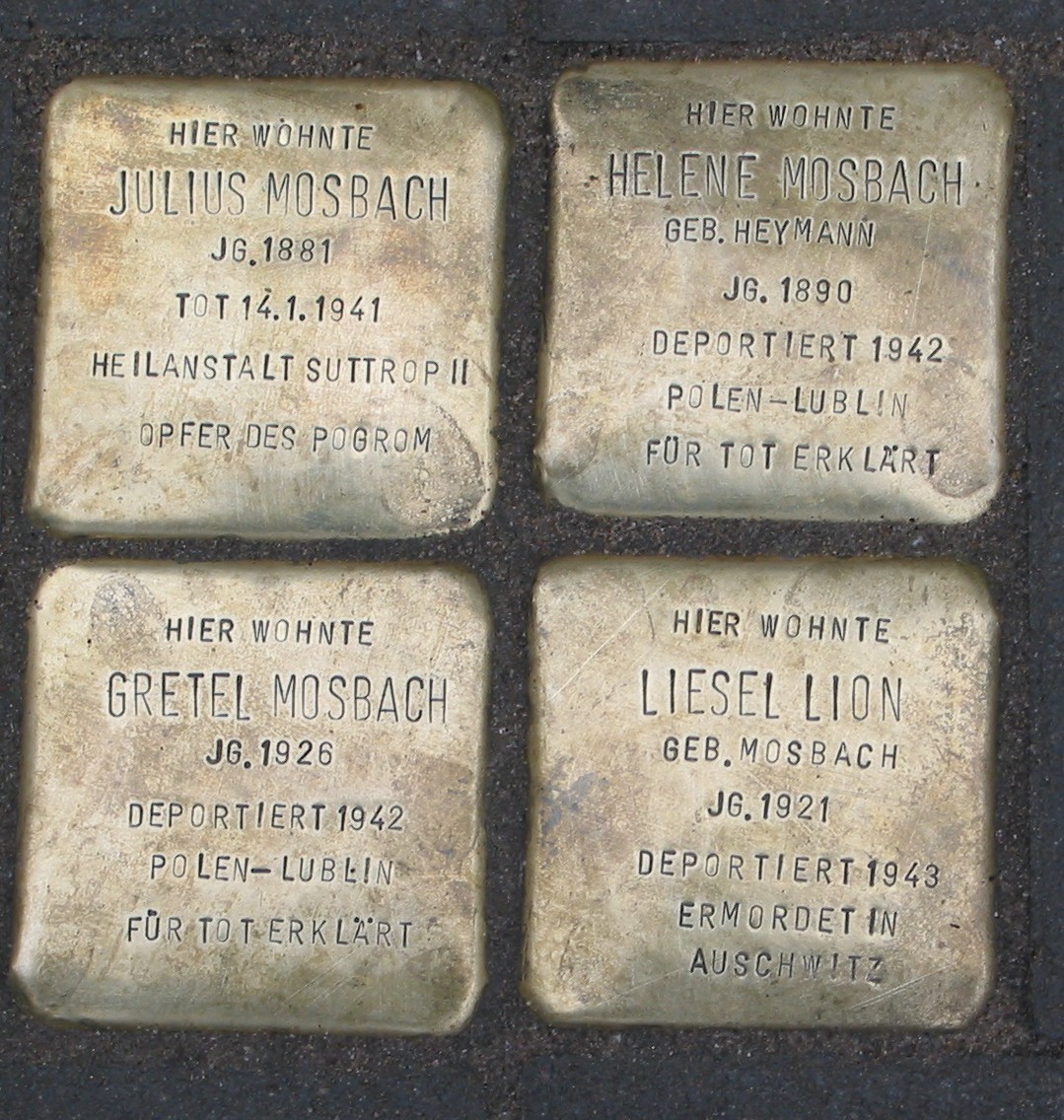
The other two daughters, Helene and Hilda, were murdered in the Holocaust as were Helene’s two daughters, Liesel and Grete.  From Rosalie’s six children, only one grandchild survived, the son of Max Heymann.  I am still hoping to find him.

Stolperstein for Julius Mosbach and family

The Schoenthal story illustrates how one fateful decision can alter the future irrevocably. One decision to take a chance and leave what you know—to listen to the call of Lech Lecha, to venture out to a new land—can make all the difference.  By taking a chance that the sweet charoset of that new land would outweigh the bitterness of leaving a land they knew, my great-grandfather and seven of his siblings changed their own fates and those of their descendants.

What if Jakob and Rosalie had left Germany when their siblings did?

And what if the other eight siblings had never left at all?  This story would have a very different ending.

In fact, it never would have been written.


My Great-grandparents: Thank You

When I started doing genealogy research about four years ago, I only had seen pictures of two of my eight great-grandparents:  Isidore Schoenthal and Hilda Katzenstein, parents of my paternal grandmother Eva Schoenthal Cohen.

Hilda Katzenstein Schoenthal

Hilda Katzenstein Schoenthal

Isidore Schoenthal

Isidore Schoenthal


I had no idea what any of my other six great-grandparents looked like.  Over time I have been very fortunate to find cousins who had pictures of four of those other six.  For example, I now have pictures of Moritz Goldschlager and Ghitla Rosenzweig, parents of my maternal grandfather Isadore Goldschlager.

Ghitla Rosenzweig Goldschlager

Ghitla Rosenzweig Goldschlager

Moritz Goldschlager

Moritz Goldschlager


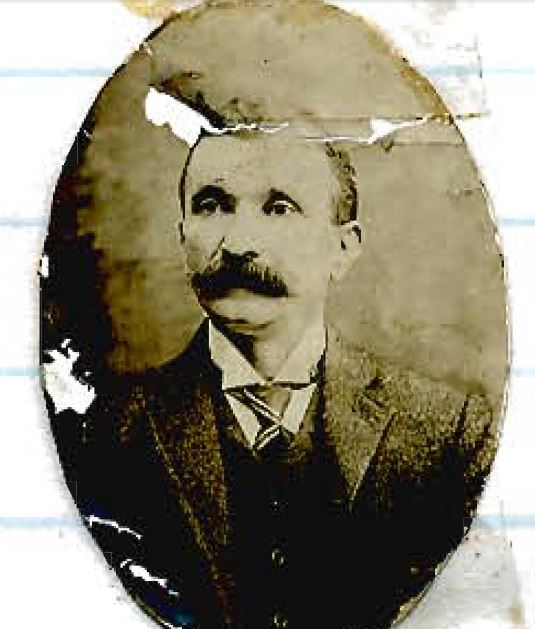
Another cousin had pictures of my great-grandmother Eva Seligman, but I did not have a photograph of my great-grandfather, Emanuel Cohen.  Until now.  One of the photos in my Aunt Eva’s suitcase was a photograph of Emanuel Cohen. I was so excited to be able to see his face.  It’s amazing how a photograph can bring to life someone you’ve never seen.

So I now have pictures of Eva Seligman and Emanuel Cohen, parents of my paternal grandfather, John N. Cohen, Sr.

Eva Seligman Cohen

Eva Seligman Cohen

Emanuel Cohen

Emanuel Cohen

That leaves me missing only one photograph in the collection of photographs of my great-grandparents.  I am fortunate to have a picture of my great-grandmother, Bessie—the person for whom I named.  But I do not have a picture of Joseph Brotman, my great-grandfather.  The Brotmans remain the most elusive of my ancestral families, and they were the ones who started me on this search and to the blog.  How I would love to know what Joseph looked like, but none of my cousins has a photograph, and somehow it seems very unlikely that any will turn up.  But here is my great-grandmother Bessie Brod/Brot/Brotman, the mother of my maternal grandmother Gussie Brotman Goldschlager.

Bessie Brotman

Bessie Brotman

When I scan through these photographs and think of my eight great-grandparents, I feel somehow comforted and inspired.  It makes me feel good to know that they are remembered and that their stories are being told, at least as well as I can tell them.  Five of the eight were born in Europe and immigrated here to make a better lives for themselves and for their children and those who followed. They came from Sielen, Germany, from Iasi, Romania, and from Tarnobrzeg, Poland.  The other three were the children of immigrants from Gau-Algesheim and Jesberg, Germany and from London, England; they benefited from the risks taken by their parents, my great-great-grandparents, but they each took risks of their own.  In America, my great-grandparents lived in Washington (Pennsylvania), Philadelphia, New York, Denver, and Santa Fe.  Each in his or her own way was a pioneer.  Each one is an inspiration to me.

On this week of Thanksgiving, I am grateful to them for all they did and proud to be their great-granddaughter.


A Prayer for Peace


Embed from Getty Images

For all the people in Paris and everywhere else in the world, this is the prayer for peace as translated in Siddur sim Shalom, the Conservative Judaism prayerbook:

May we see the day when war and bloodshed cease
when a great peace will embrace the whole world

Then nation shall not threaten nation
and humankind will not again know war.

For all who live on earth shall realize
we have not come into being to hate or destroy
We have come into being
to praise, to labour and to love.

Compassionate God, bless all the leaders of all nations
with the power of compassion.
Fulfill the promise conveyed in Scripture:
“I will bring peace to the land,
and you shall lie down and no one shall terrify you.
I will rid the land of vicious beasts
and it shall not be ravaged by war.”

Let love and justice flow like a mighty stream.

Let peace fill the earth as the waters fill the sea.

And let us say: Amen

Peace and love

Peace and love (Photo credit: Wikipedia)

It’s My Blogiversary! Time to Reflect

It was two years ago tomorrow that I posted my first blog post.  It is also the 120th anniversary of my grandmother Gussie Brotman Goldschlager’s birth tomorrow.  And tonight is the beginning of Yom Kippur, the Jewish Day of Atonement and a long fast day for those who observe.  That’s a lot to process in one day!


Embed from Getty Images

It’s hard to believe I’ve been doing the blog for two years (although I really started doing genealogy about two years before that).  In some ways it feels much longer because it has become such a big part of my daily life—-doing the research, thinking about it, pulling my notes together, writing up the posts, editing them, adding photos and documents, responding to comments and questions, and reading the blogs of so many other wonderful people.  The blog has provided me with so many more benefits than I had imagined back in September 2013 when my cousin Judy got me started by setting up the template on WordPress.  Not only has it helped me organize my thoughts and record my research, it has made me focus on not just collecting names and dates on a family tree but on the larger questions: who were these people and what were their lives like? Where did they live, and what were those places like? What historical and economic conditions affected their lives? What legacy did they pass down to their descendants, and how has that affected the person I am today?

The blog also has been a magnet that has allowed others to find me.  Every time I get a comment from someone who just happened to find the blog while searching for their family history, I am amazed by what the internet can do. Imagine if my cousin Wolfgang had not found my blog?  I would not know even half of what I now know about the Seligmann family.

jeff gussie amy 1955 abt

My grandmother was born 120 years ago, and she died just over forty years ago.  She was the only grandparent I knew very well, and I loved her very much.  She had a hard and sad childhood, which scarred her in many ways for life, but with her grandchildren she was loving and funny and affectionate.  We probably brought out the best in her.  As I continue to write my novel about her life and that of my grandfather, I hope I am doing her justice and honoring her memory while also capturing the sad underside to her life.

Amy Gussie and Isadore

And as for Yom Kippur, it’s a day for me to contemplate the year gone by and the mistakes I’ve made along the way.  Although I try my best to respect and honor all my relatives, living and dead, when writing the blog, I always worry that someone will be offended or upset by something I have written.  If so, please accept my apologies.

Also, I hope I have expressed my appreciation to all those who have helped me with my research, and I hesitate to make a list for fear of forgetting someone who helped me months ago and whose name might slip through my ever-worsening memory (getting older does really stink).  But let me try to remember as best I can and thank some of those who have provided me with so much research support in the past year:

my wondeful cousins Lotte Furst, Wolfgang Seligmann, Bob Cohn, Steven Seligman, Suzanne and Stephen Michel, Pete Scott, Phyllis Rosner, and Angelika Oppenheimer,  all of whom have provided me with photographs, stories, and insights into our extended family in the past year (as well as all those who helped the year before);

my amazing contacts in Germany who helped me find and understand documents and other resources: Dorothee Lottman-Kaeseler, Matthias Steinke, Helmut Schmahl, Beate Goetz, Gerd Braun, as well as Ralph Baer here in the US;

my DNA tutors, Julie Mulroy, Svetlana Hensmann, and Leah Larkin;  the many people in the Tracing the Tribe and the German Genealogy groups on Facebook, and the members of the GerSig listserv on JewishGen. Also, thank you to my friend Rene Reich-Grafe for answering my endless questions about Germany, its history, culture, and geography.

To all of you, if I have not expressed my gratitude before sufficiently, I apologize.  You’ve really made this journey so much more meaningful and so much more interesting.

Finally, to my family, friends, fellow bloggers, and other readers, thank you for being there.  I would do what I am doing even if no one was paying attention, but it is so much better knowing that others are interested in these stories about people who really were strangers to us all.

For all of you who are observing Yom Kippur, may it be an easy fast and a meaningful and thoughtful day.


Embed from Getty Images


Shana Tova—A Good Year to All


Embed from Getty Images

Once again I find myself in the midst of the early September craziness after a long, relaxing summer: several family birthdays and anniversaries, school starting (well, not for me anymore, but for my husband), and preparation for the Jewish holidays.  In my spare time, I am trying to put together the pieces of my Schoenthal research slowly but surely.  But for the next week or so, I won’t have much time to write anything coherent about my research, so I will be taking a short break.

That seems appropriate as this is the time of year when I am supposed to be contemplating the year past and making decisions about the year to come.  It’s a time to be thoughtful and thankful.  A time of making amends and making resolutions.

So I wish all who celebrate a wonderful holiday with time for your families and your thoughts.  And for everyone, I wish a new year filled with gratitude, happiness, good health, and love.  And for the world, I will hope for peace and for a way to protect and shelter all those people all over the world who have been uprooted and seen their lives and families destroyed by war, poverty, and hatred.  Today is the 14th anniversary of the day that showed us all what hatred can do. May we finally learn from it.

WTC memorial lights

WTC memorial lights (Photo credit: Wikipedia)

May it be a year when somehow people everywhere find a way to accept differences and respect and honor the humanity of each other.

Shana tova.  A good year to all.


Embed from Getty Images

Old Friends: Braided Forever

My mother has often spoken about how sad she was when her family decided to move from Brooklyn to the Bronx when she was about twelve years old.  There were many reasons she was upset.  For one, she had to leave her dog Sparky behind.  That broke her heart, and she still can’t talk about it without getting emotional.

Sparky 1934


But also she had to leave her best friend Beatty behind. Beatty lived in the same four-family house at 1010 Rutland Road in Brooklyn; she lived right down the hall from my mother.  They had been close friends all through childhood, and although they tried to stay in touch after my mother moved, back in the 1940s that was not at all easy.  Phone calls were expensive, and the trip from Brooklyn to Parkchester in the Bronx was a long one, especially for two young girls.  So over time, they lost touch.

Beatty and my mother c. 1940

Beatty and my mother c. 1940

Not too long ago my mother asked me if I could find Beatty.  She knew her first and last name from when she’d last seen her over 70 years earlier, but she had no idea where she was living or whom she might have married.  I tried to find her, but with so little information I had no luck.  If Beatty had married, it was after the last year of the publicly available NYC marriage index (1937).  The only information I could find related to her siblings, who had passed away.

So you can imagine how excited I was to receive a message on the blog last week from Beatty herself.  She was looking for my mother after seeing her pictures and childhood name on the blog.  I contacted Beatty, and I called my mother.  And I gave them each other’s contact information, and now they are reconnected after over 70 years.  I get the chills (and a warm feeling) whenever I think about it.

One of the stories my mother shared with me was about Passover at Beatty’s house.  Her father led the seder in a very serious way, and as many of us know, a traditional seder can get quite long and quite boring, especially for young children.  To keep themselves from misbehaving and talking, my mother and Beatty would braid the fringes on the beautiful tablecloth that adorned the seder table.  When my mother shared this memory with Beatty, she said that she also had shared that story with her children.

The tablecloth still exists, and even more remarkable, the braids made by my mother and her best friend Beatty are still there as well.  Here is the photograph to prove it.

Beatty's tablecloth

Beatty’s tablecloth

tablecloth with braids 2

My mother was once my Girl Scout troop leader, and one of the songs we sang had the lyrics, “Make new friends, but keep the old.  One is silver, and the other gold.”  My mother and Beatty certainly know the truth of that message.

Introducing Chloe and Zoe—New Leaves on the Pet Family Tree

Chloe and Zoe 8 21 2015

As many of you know, we lost two pets in the last twelve months.  First, we unexpectedly lost our sweet cat Luna, who died without warning last September.  Then in June we had to put down our fifteen year old dog Cassie.   I knew we would eventually get a new cat, but I really wasn’t ready until after we lost Cassie as well.  So for my birthday, all I really wanted was a kitten.  Um, I mean kittens.

We were very lucky to find an amazing animal shelter in Provincetown called CASAS.  It’s a no-kill shelter where the cats have free run of a house, no cages.  It’s run by volunteers and supported by donations.  It’s the only shelter I’ve been to where I did not leave in tears, worrying about all the cats and dogs left behind.

We first saw our new kittens the first week in August and decided we would adopt one.  Then a few days later, we decided we should get two.  We had to wait until today for them to be ready to go home.  These poor kittens were orphaned at four weeks old when their mother was killed by a car and were bottle-fed by the shelter volunteers.  They are as sweet as they are pretty.

So without further ado…

Here is Chloe.

Chloe in focus 8 21 2015

Here is Zoe.

Zoe 8 21 2015

Here they are on my lap.

zoe chin up

And here’s big brother Smokey checking them out  while they slept.

smokey checking them out

And here are a few more  as they check out their new surroundings.

After they both tried to eat the crystal-type kitty litter, we had to use newspaper until we could get some traditional litter.

After they both tried to eat the crystal-type kitty litter, we had to use newspaper until we could get some traditional litter.

Chloe says not bad testing the quality of the accommodations

We are so excited to have our new babies join our family!