Berlin and Paris

Perhaps you noticed that it’s been two weeks since I last posted? I am slowly catching up  with things including some of the blogs I follow, but we just got home Monday night after 12 days away in Berlin and Paris.

We were motivated to visit Berlin because our daughter Maddy was going there to run her tenth marathon! And her fifth of the six “major” marathons: Boston, New York, London, Chicago, and now Berlin. How could we miss this?

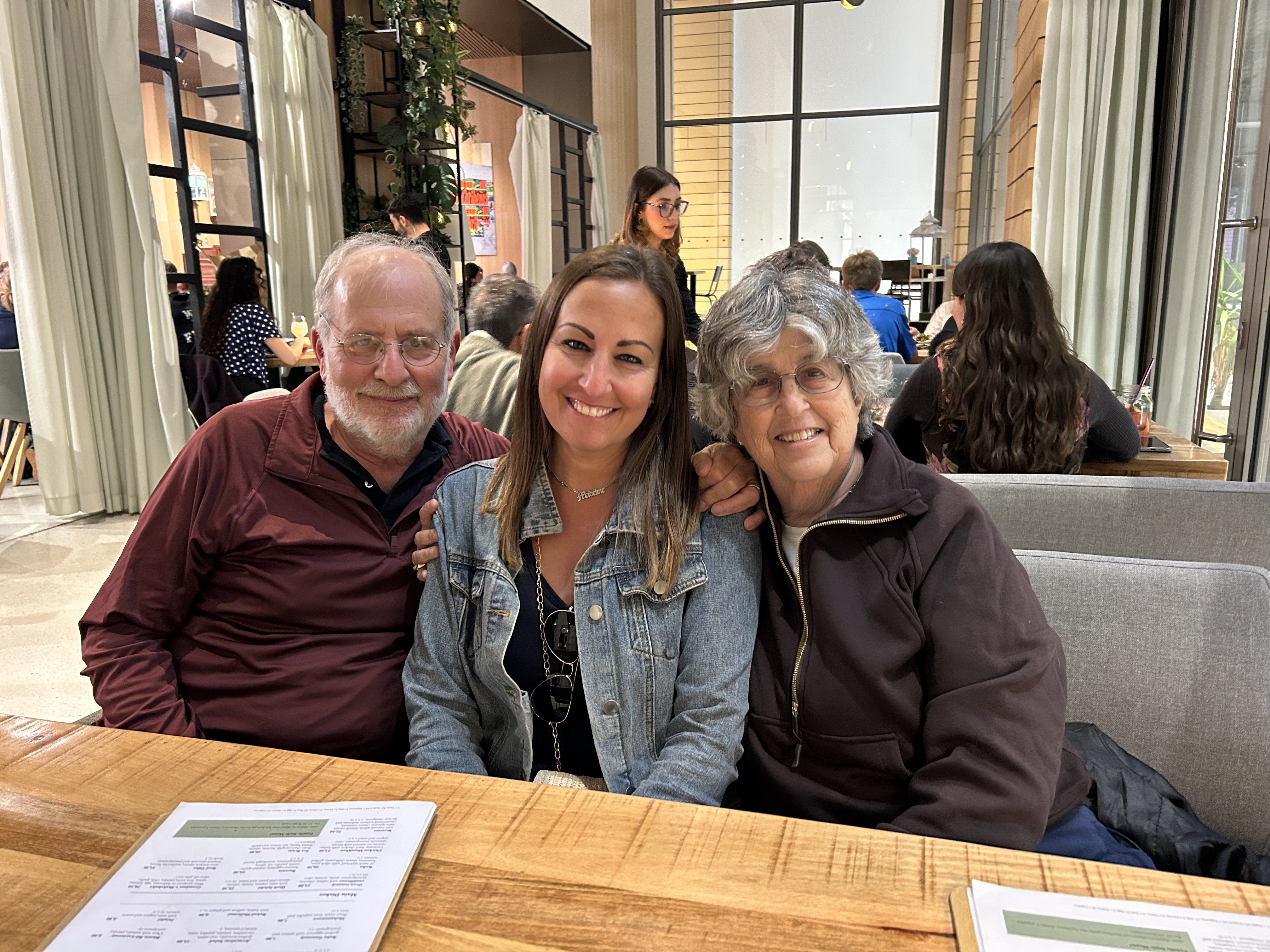
We arrived in Berlin two days before the marathon in the late afternoon and went to dinner with Maddy and her friend and running buddy Jaime.
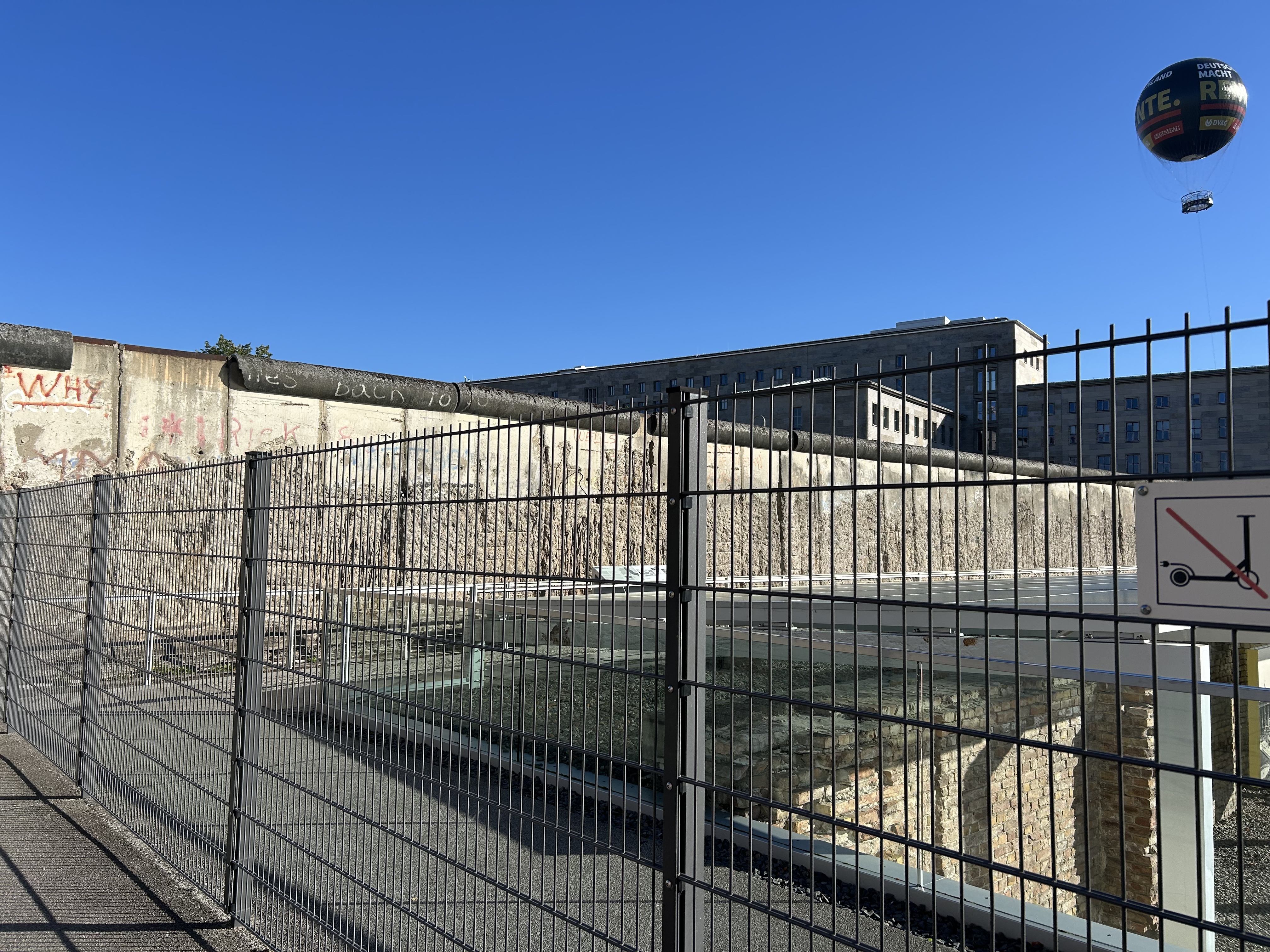
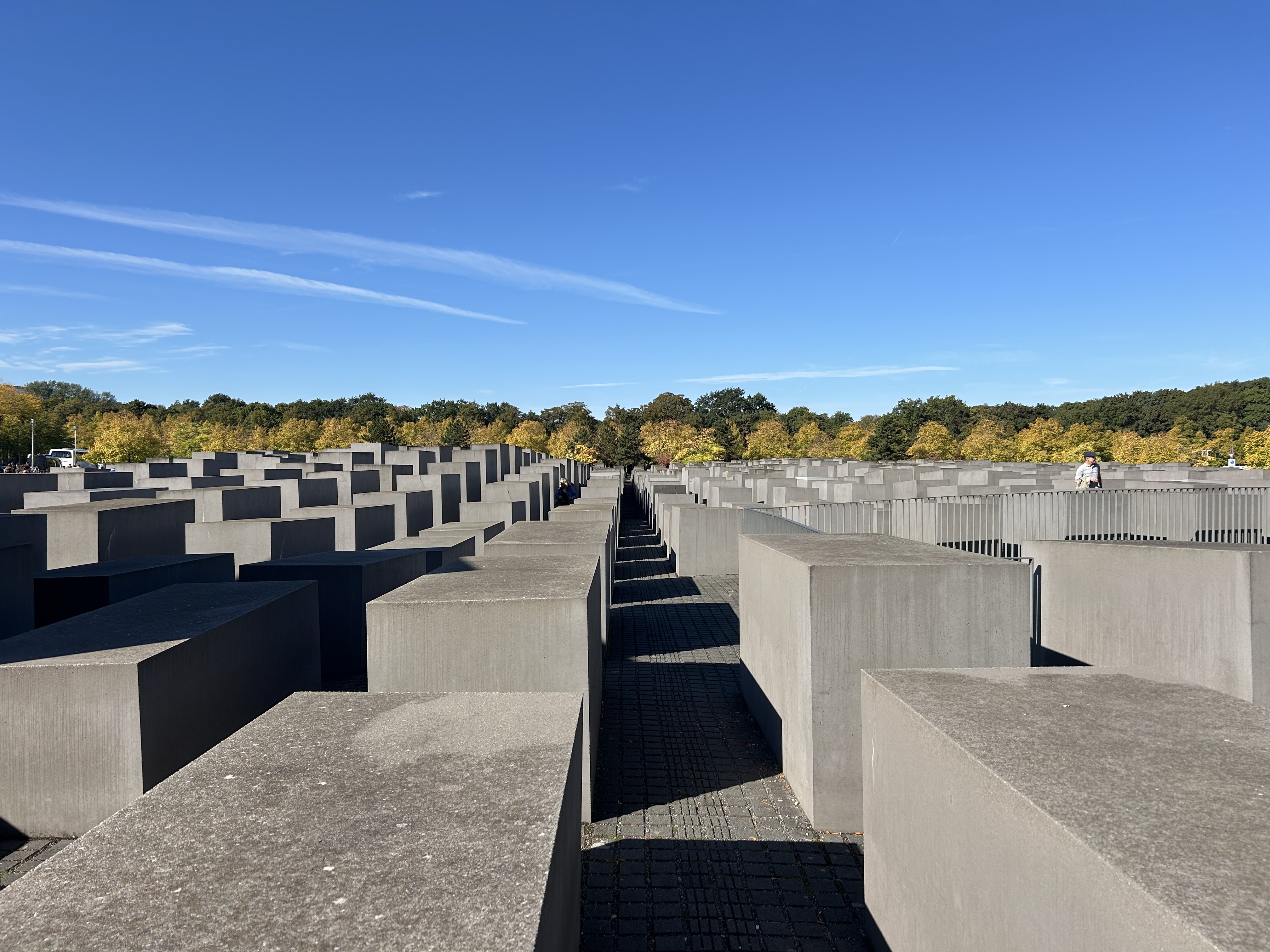
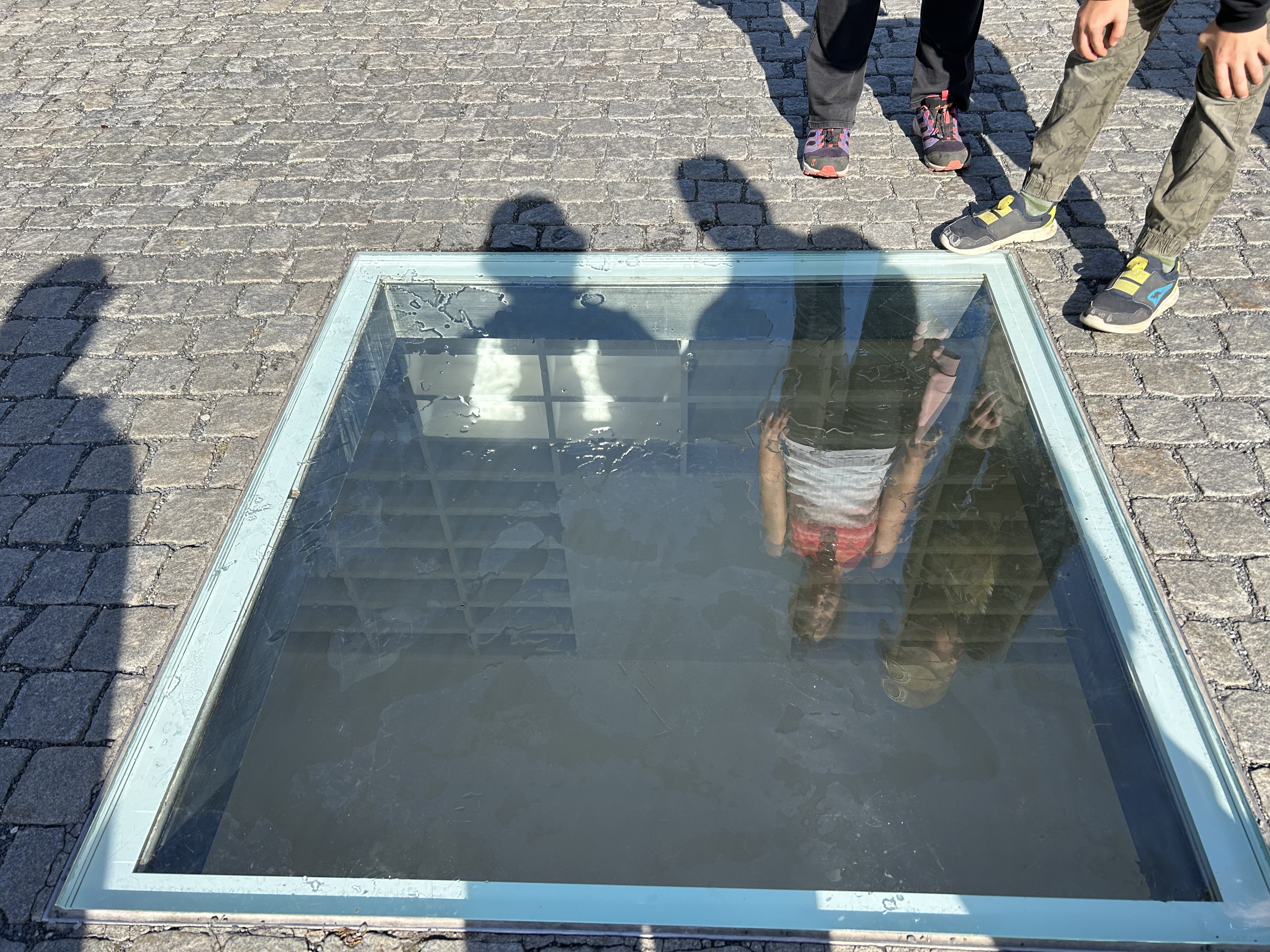
The following morning Maddy and Jaime went off to do a “shake out” run—a 5K to warm them up for Sunday’s big event. Harvey and I went on a history tour of Berlin with Seth of WithLocals. We saw most of the major buildings and monuments as well as the Anhalter Bahnhof where thousands of Berlin Jews were sent for deportation, remnants of the Wall, Checkpoint Charlie, the chilling and imposing Memorial to the Murdered Jews of Europe, the memorial at the site where Nazis burned thousands of books, and other historic sites. Seth did a great job of blending pre-war and post-war Berlin.
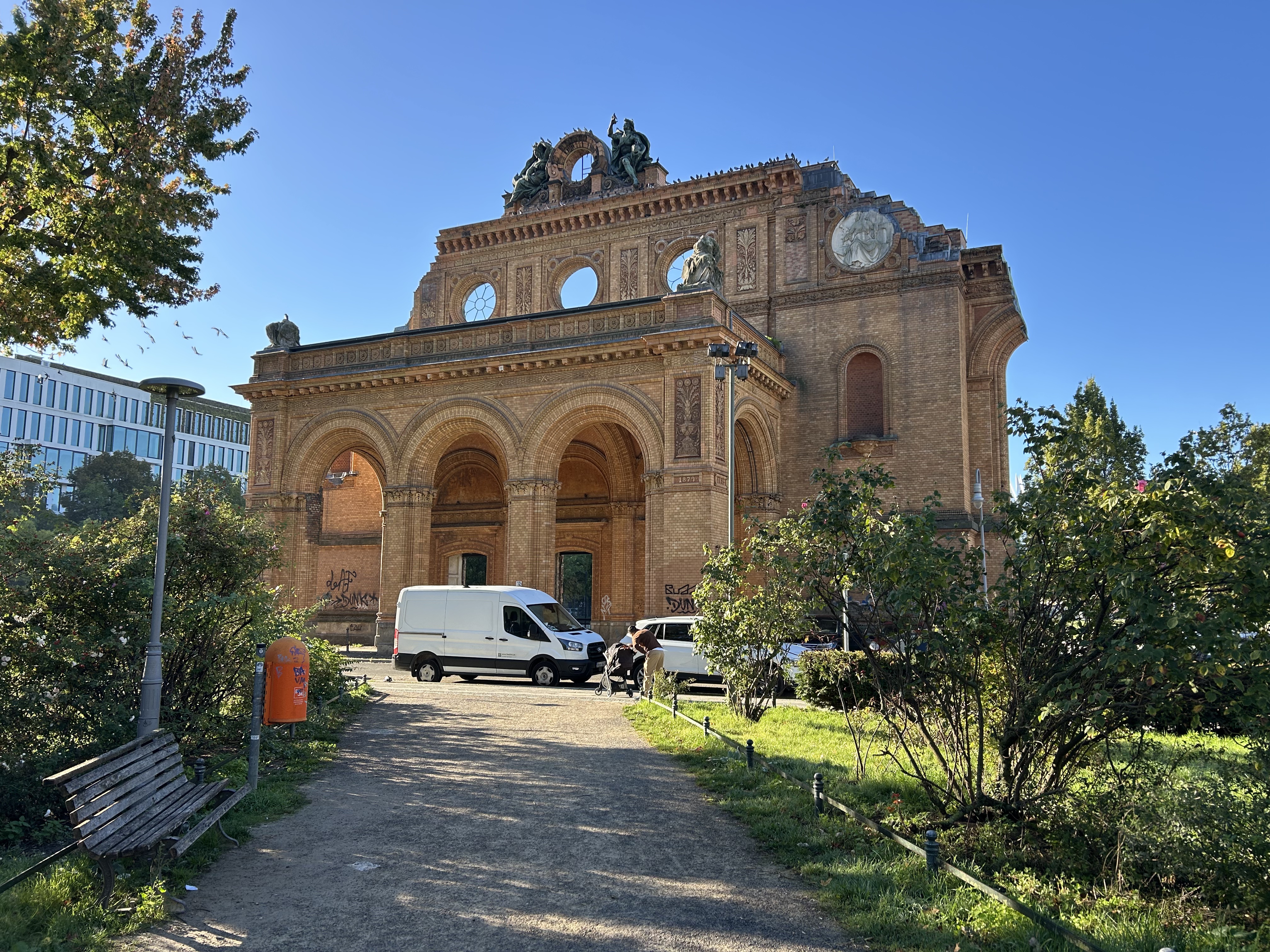
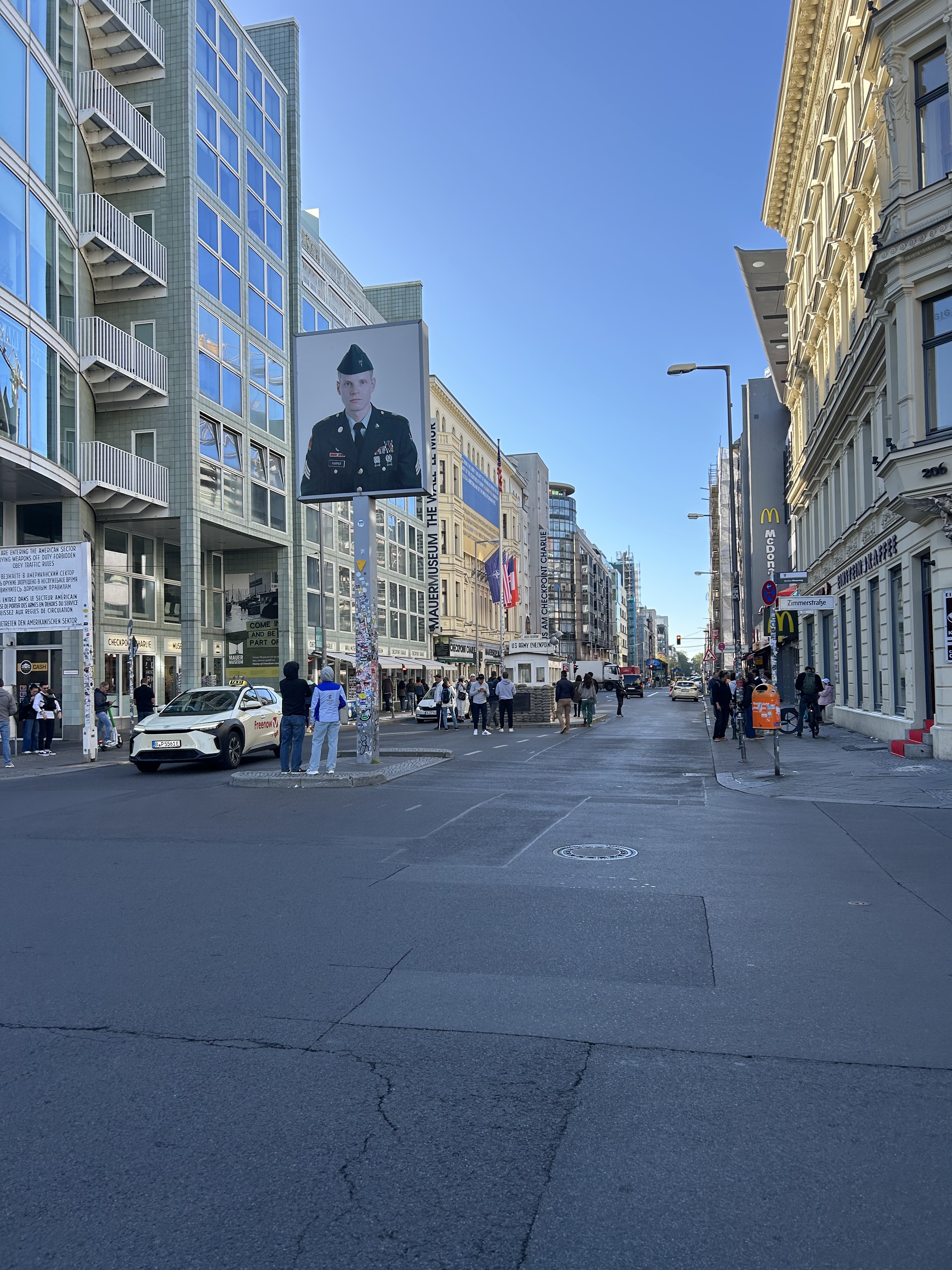
Berlin Wall
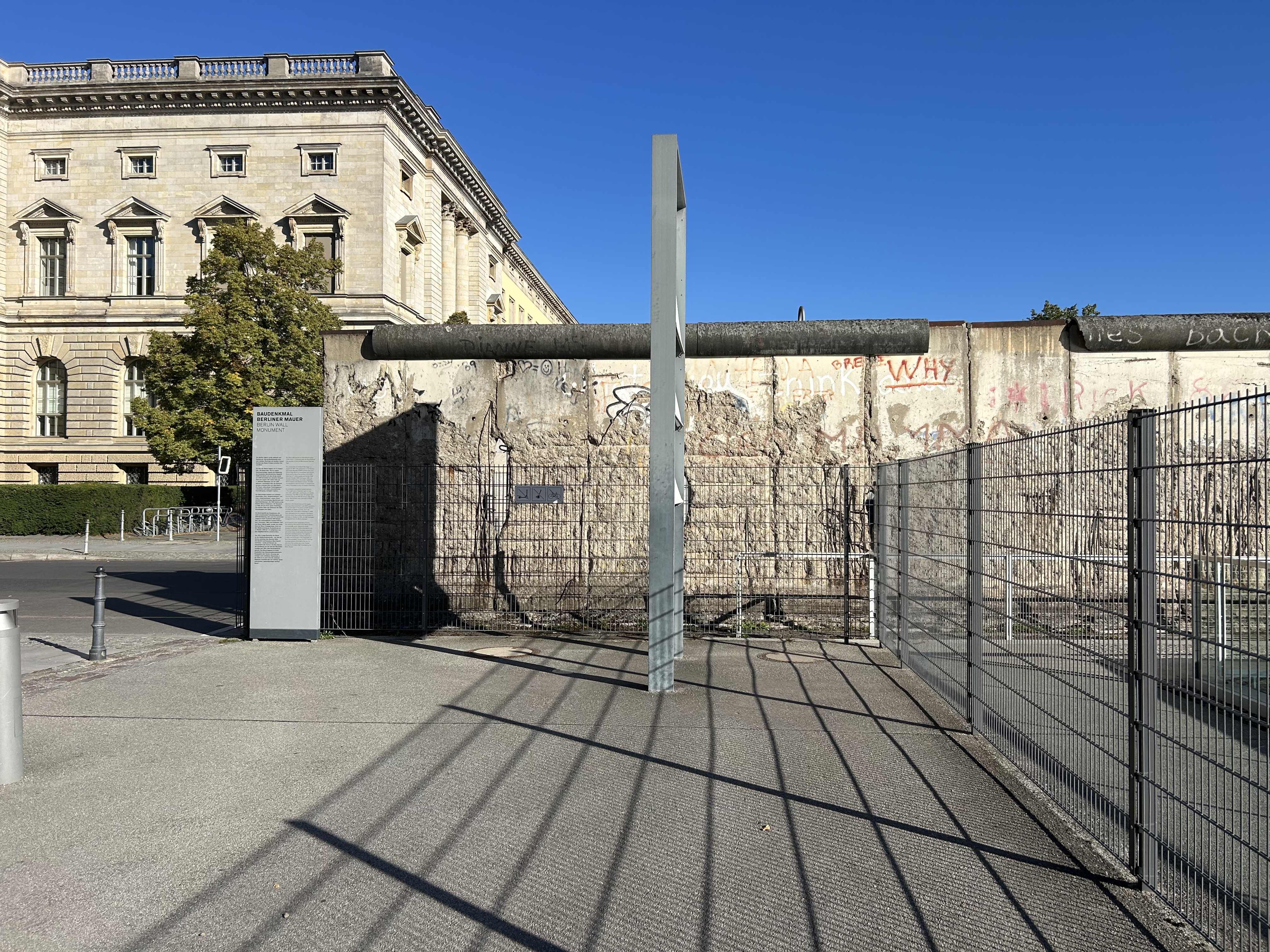
Memorial to the Murdered Jews of Europe
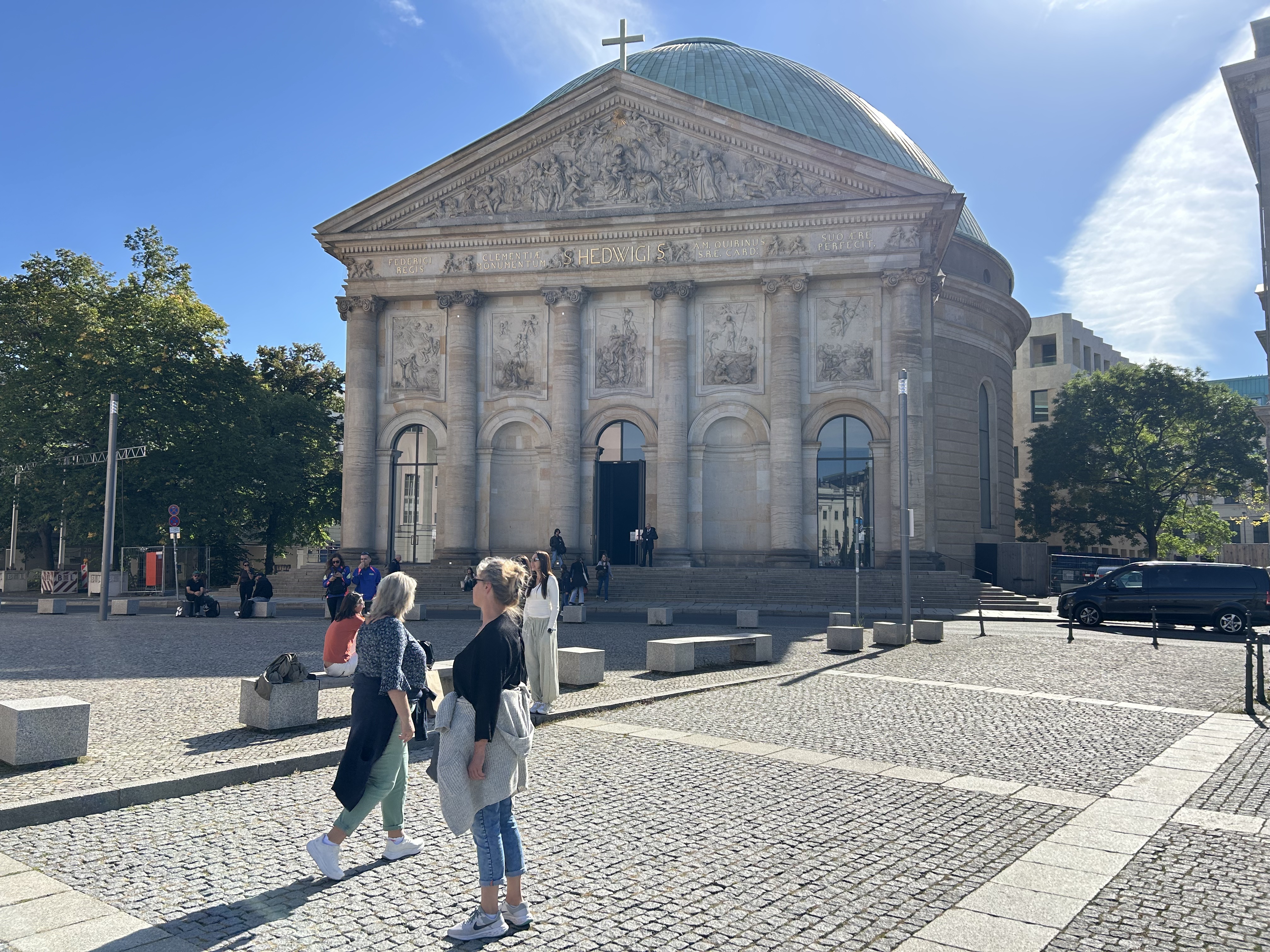
Plaza where Nazis burned books
Then in the afternoon we did a self-guided walk through what was once Berlin’s Jewish neighborhood. There are only a few signs left that Jews one lived there. Stolpersteine throughout the quarter marking where Jews once lived, a gorgeous synagogue that is now just a museum, and a Jewish cemetery that was vandalized by the Nazis with just a few headstones remaining.
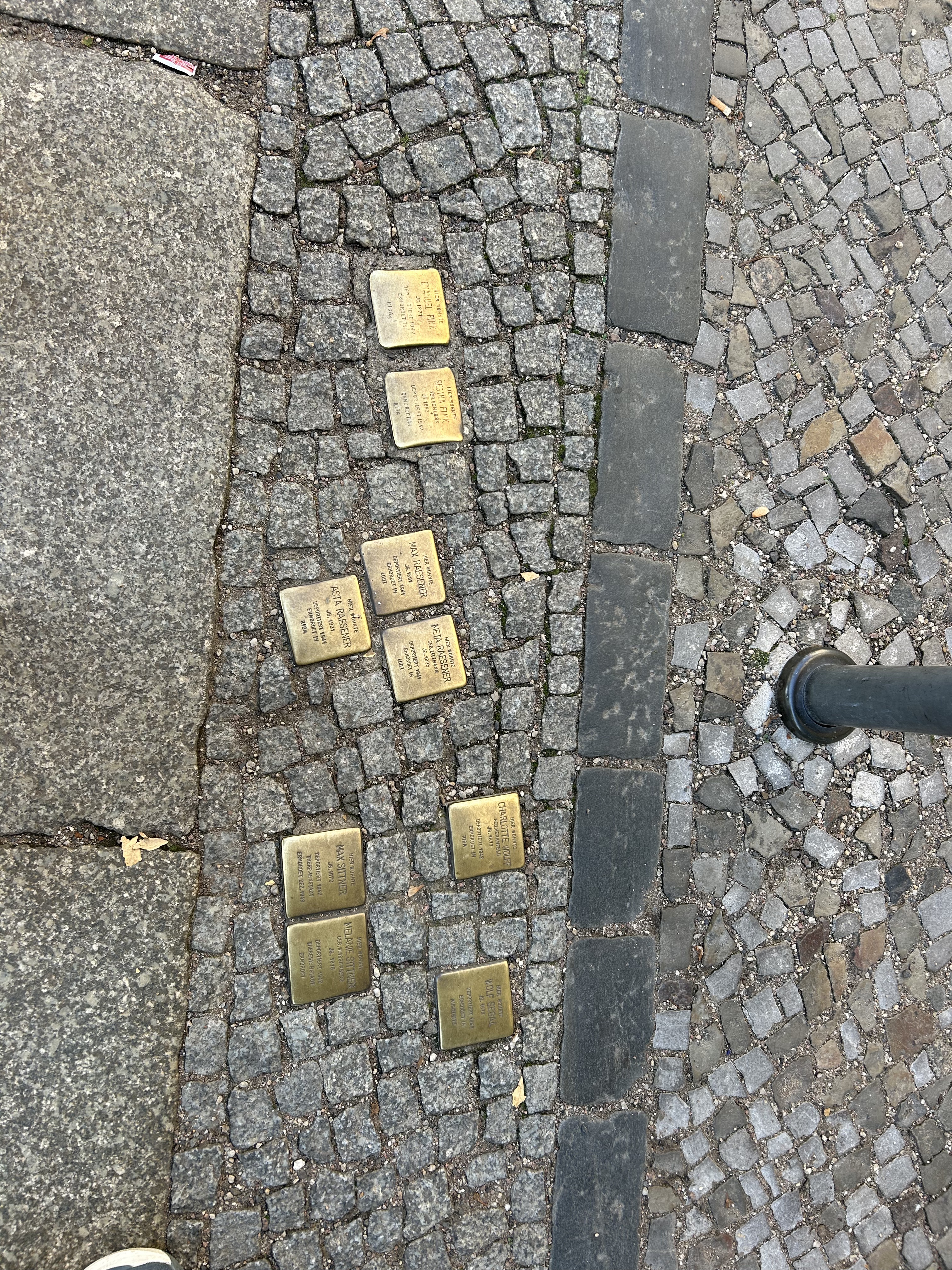
Stolpersteine in the former Jewish Quarter of Berlin
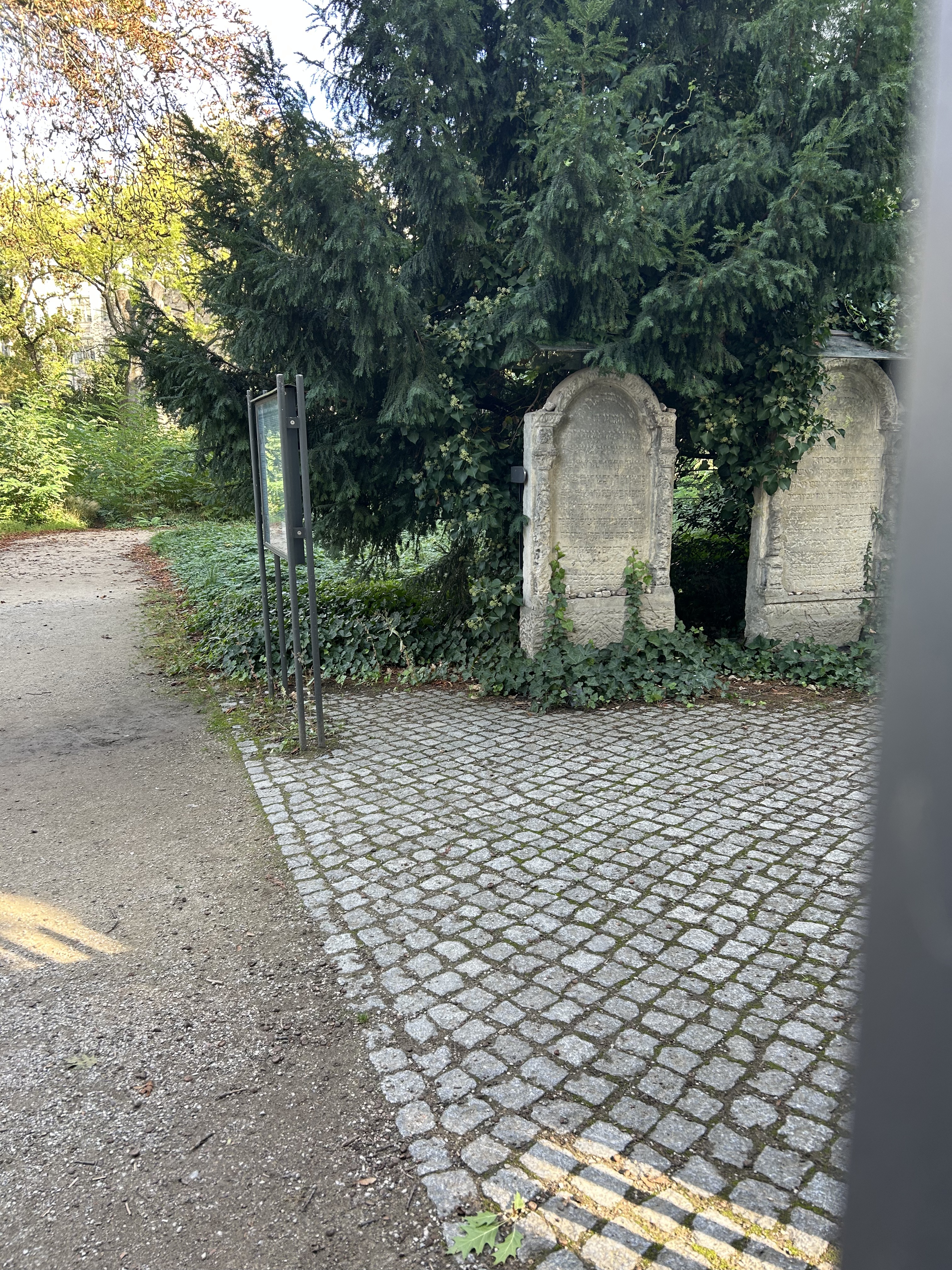
A few remaining headstones at the former Jewish cemetery in Berlin
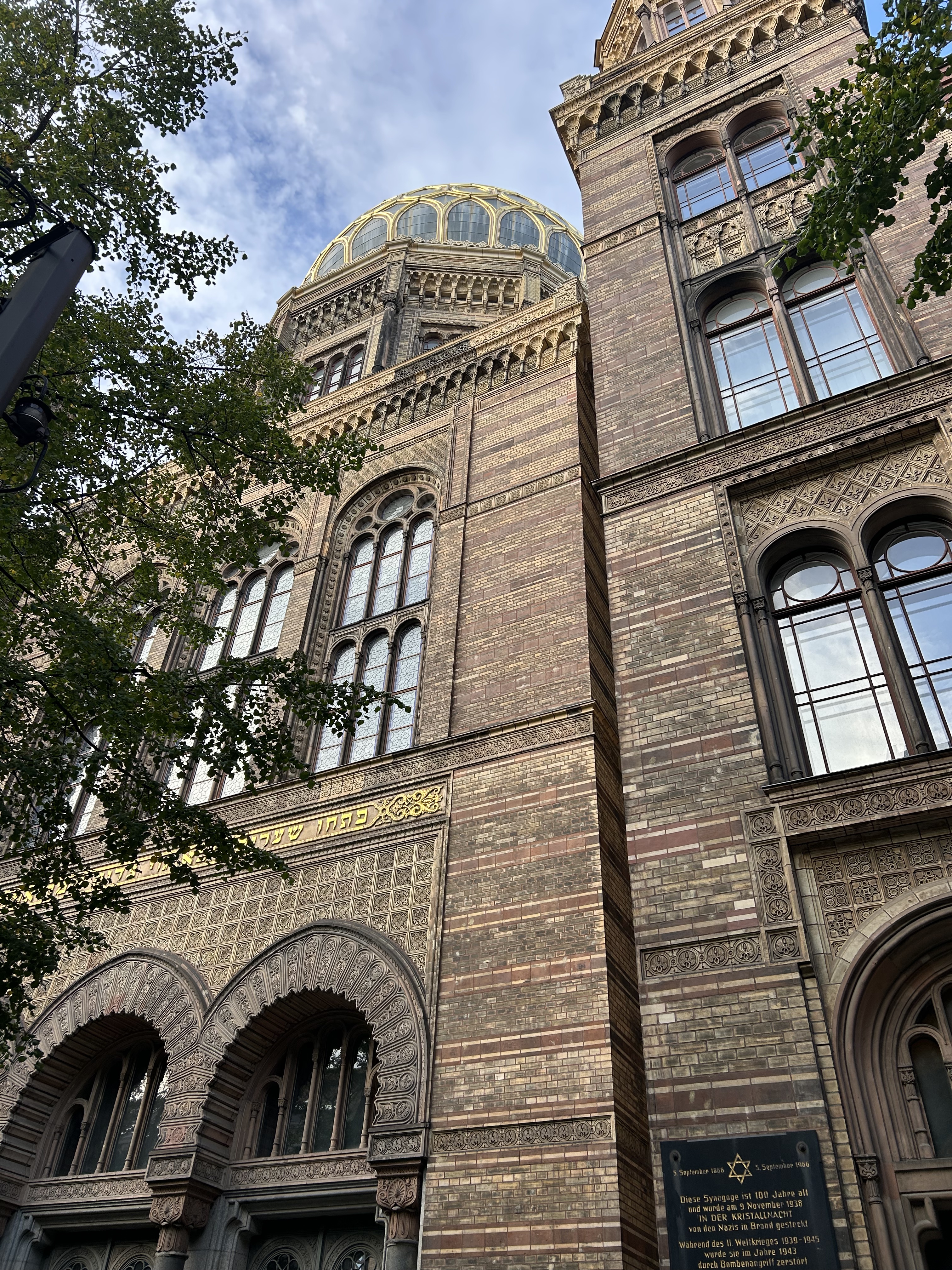
Former Jewish synagogue, now a museum

Berlin’s past is darkened by so much ugliness and yet it is a beautiful city. The cognitive dissonance of that was striking: a beautiful building scarred with bullet holes, broken sculptures, and buildings with facades that were all that survived the war. It was hard to feel much joy as the ugly history of the city kept surfacing over and over.

Sunday was marathon day, and we crossed Berlin to catch Maddy and Jaime at the 13K marker (but somehow missed seeing Jaime), and then we crossed back to get to the 38K marker to catch Maddy (but not Jaime) approaching the last 4K of the race. They both finished and were thrilled to have completed another marathon.
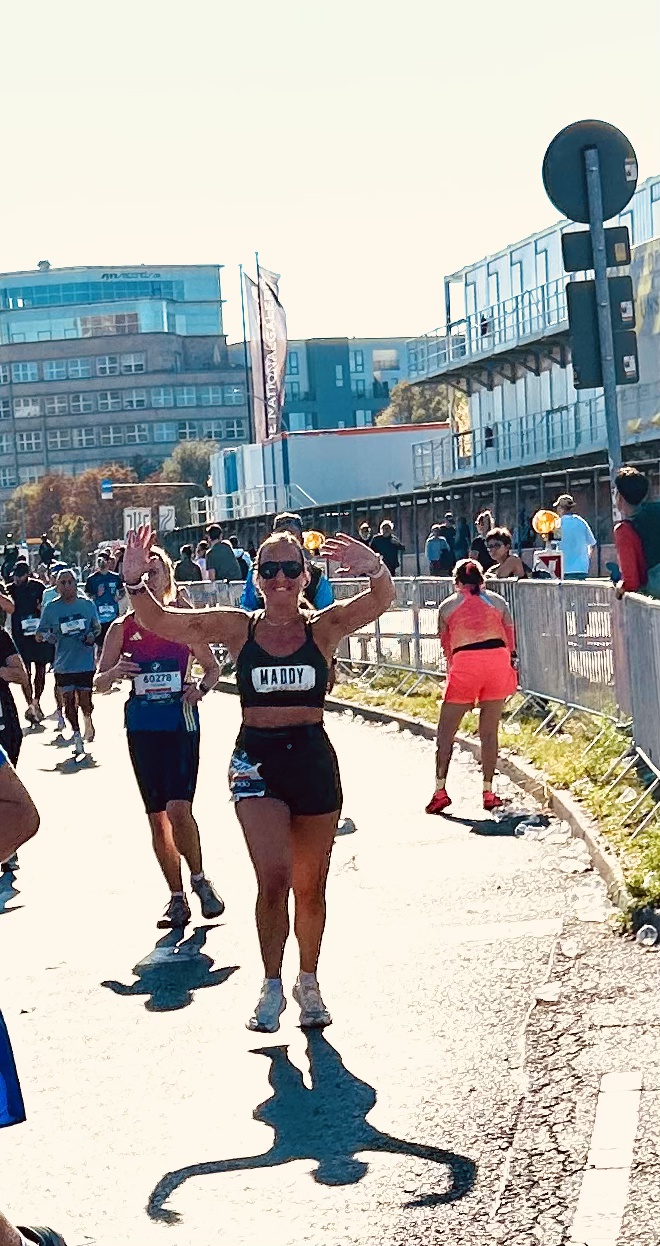
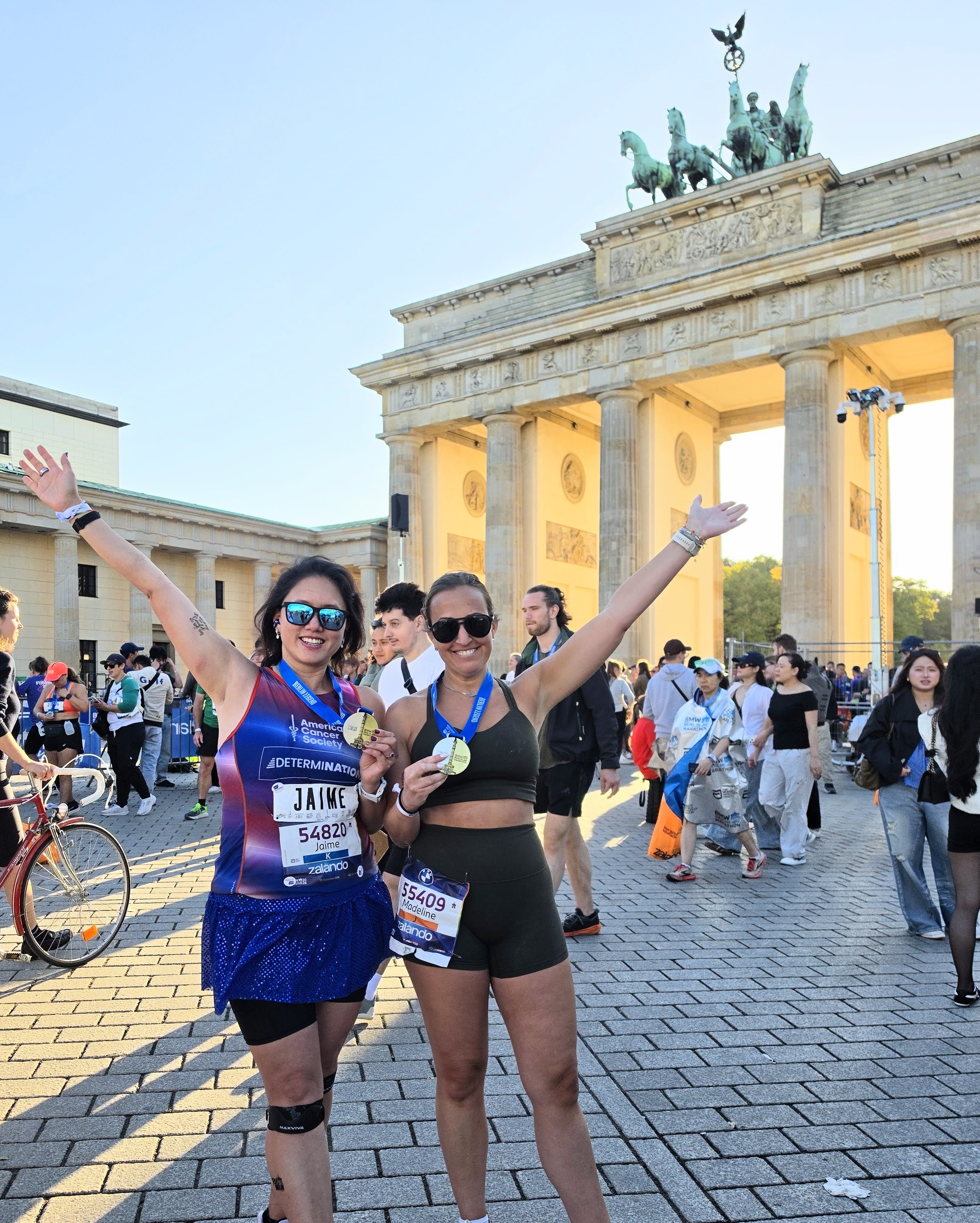
Maddy and Jaime after finishing! At the Brandenburg Gate

We celebrated that night not only with Maddy and Jaime, but also with my cousin Wolfgang Seligmann and his daughter (also my cousin) Milena. This was our third time getting together—first in Germany in 2017, then in Boston in 2022, and now in Berlin in 2026. We had a delightful time with them, and even though we’ve only met those three times, it was as if we’d always known each other. Family is family. We spent more time with Wolfgang and Milena over the next two days.

Unfortunately Monday morning I woke up with a fever and felt awful so I stayed back at the hotel and rested. By that evening I felt well enough to join everyone for dinner, and on Tuesday I was feeling mostly okay. Maddy and Jaime left that morning for Lisbon, and we met up with Wolfgang and Milena at the Berlin Jewish Museum, which is a wonderful museum that both explains many Jewish practices and customs while also telling the tragic story of the Jews of Germany over the centuries. The security surrounding the museum was both haunting and reassuring. What a sad world we live in.

After one more dinner on Tuesday evening, we said a sad farewell to Wolfgang and Milena and packed up for our train ride to Paris the next morning.

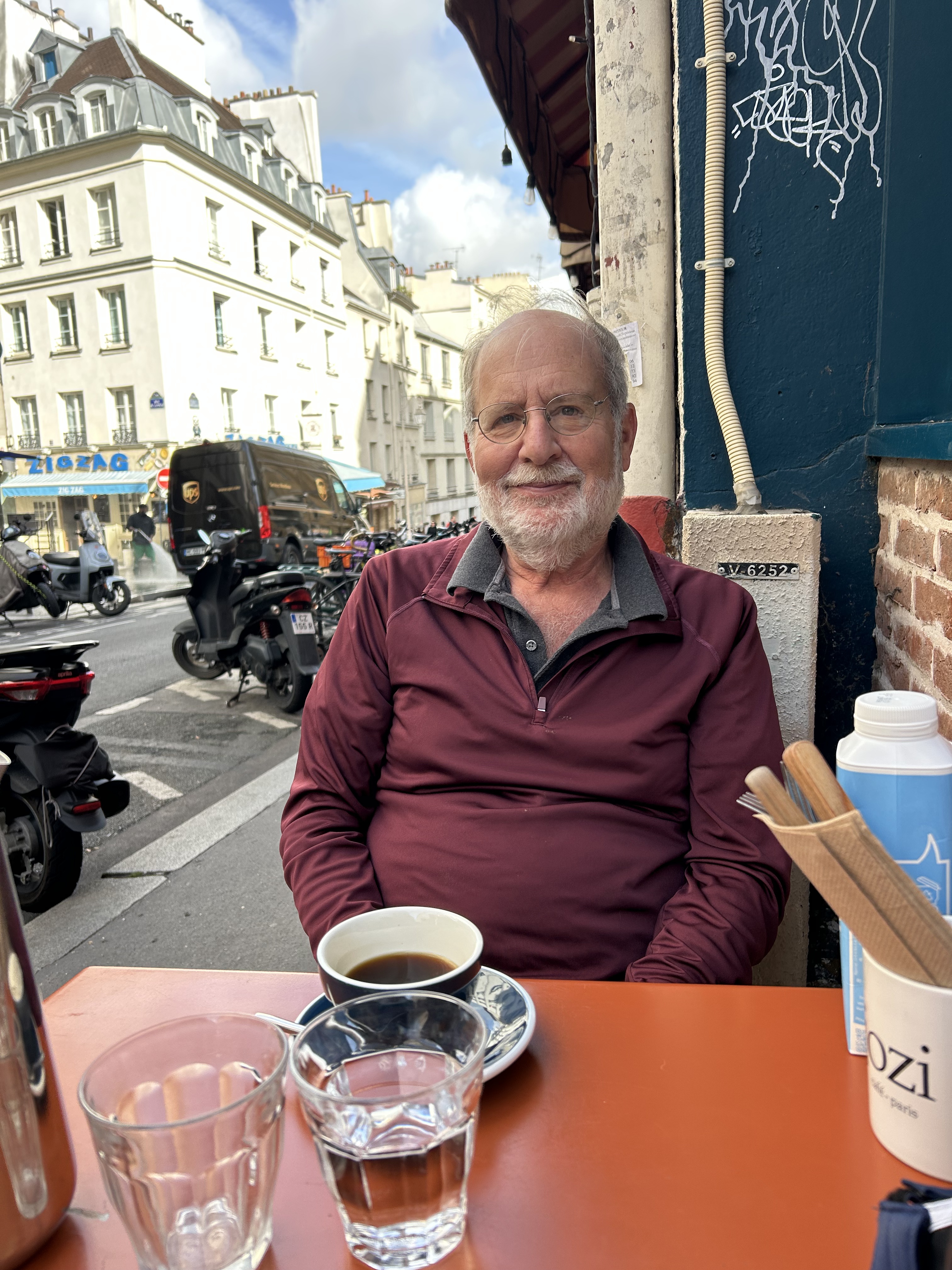
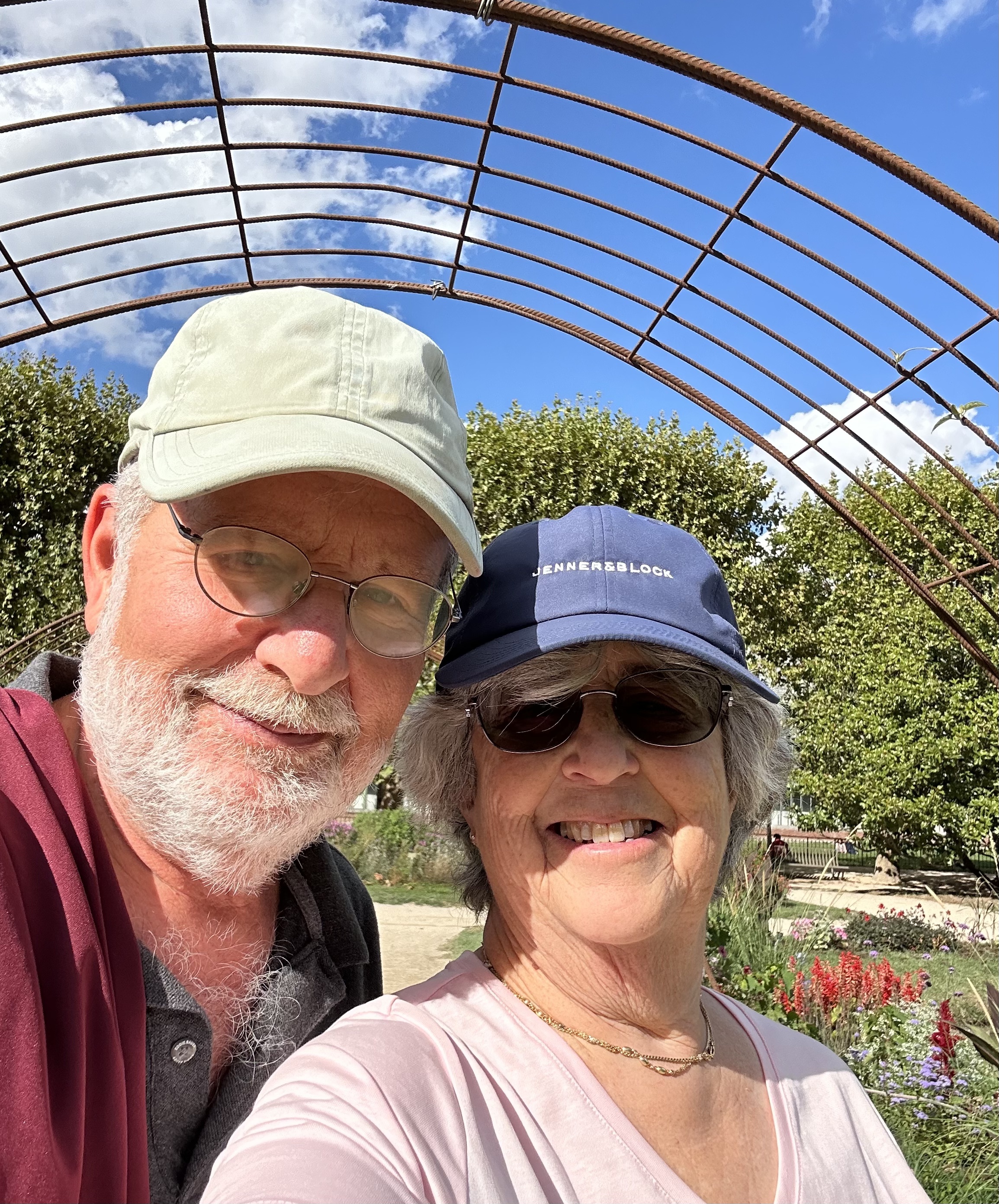
Paris was a time just for us, to honor our 50th anniversary and to recall our last visit to Paris in 1978 when we had no money and stayed in a little pension that charged as much for the two of us to take a shower as the cost of the room. Now we were coming to see the city with fresh (and older eyes). It is a magnificent city, and I now better understand why people find it so enchanting. The architecture is really astounding.
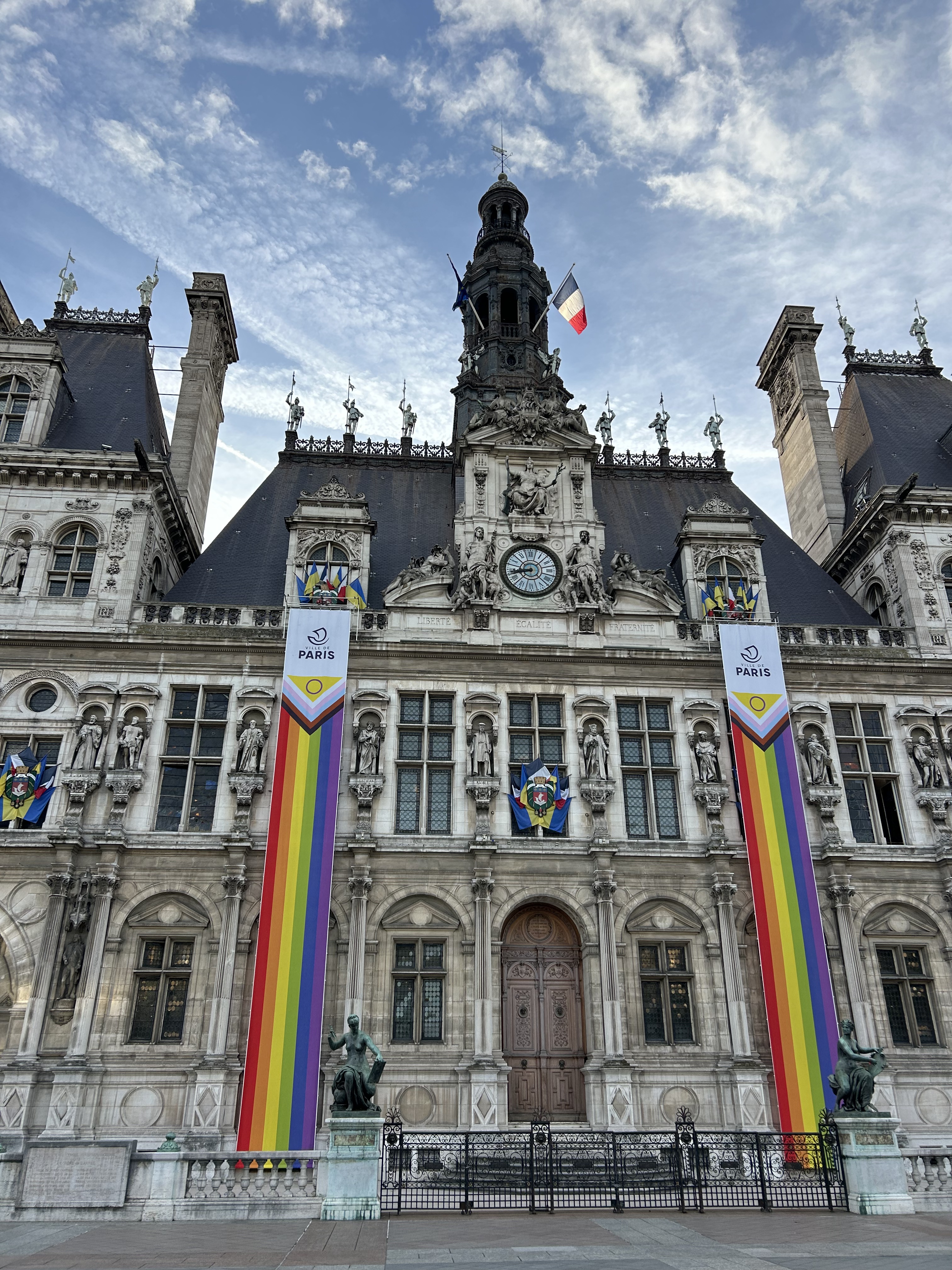
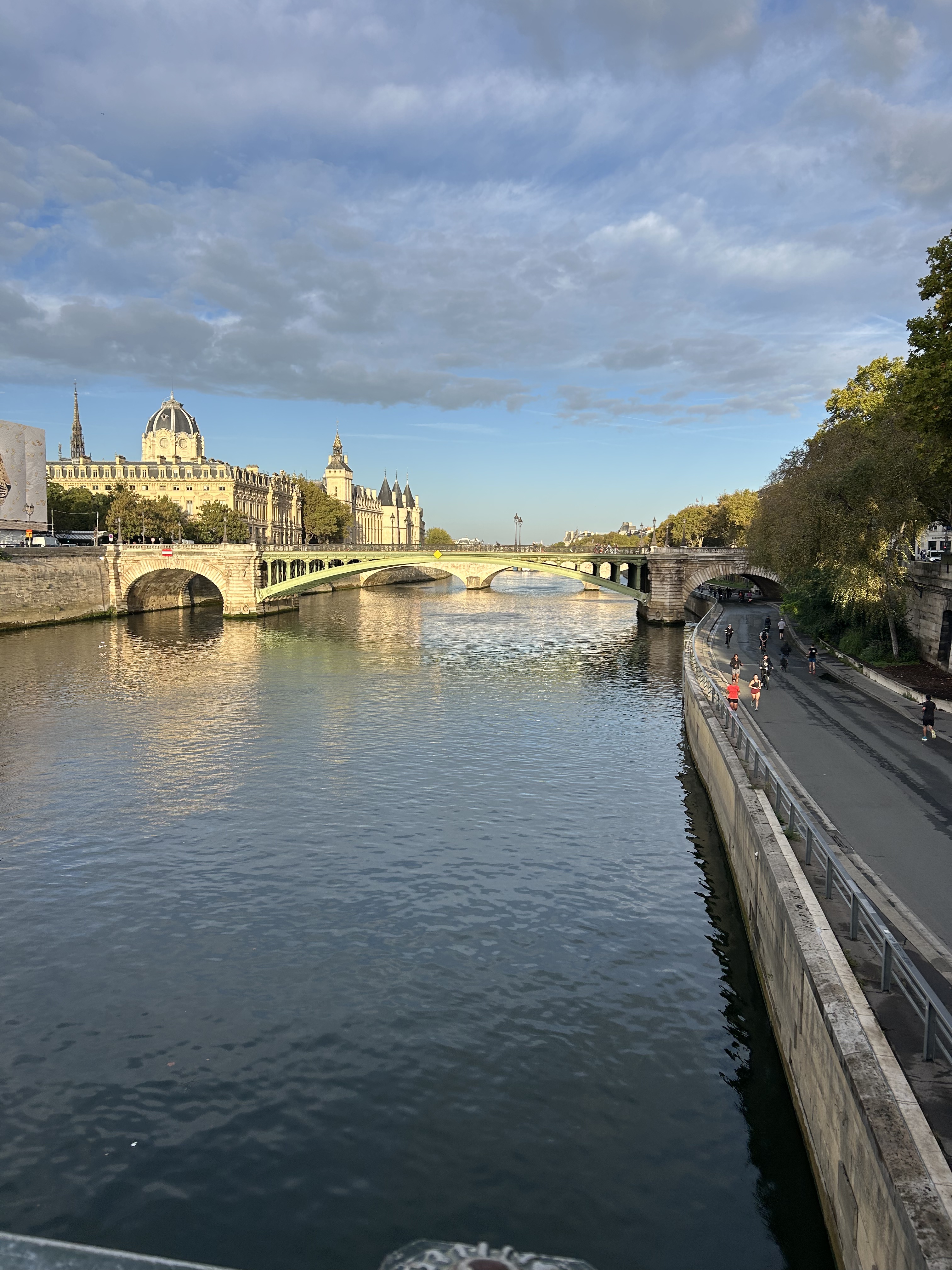
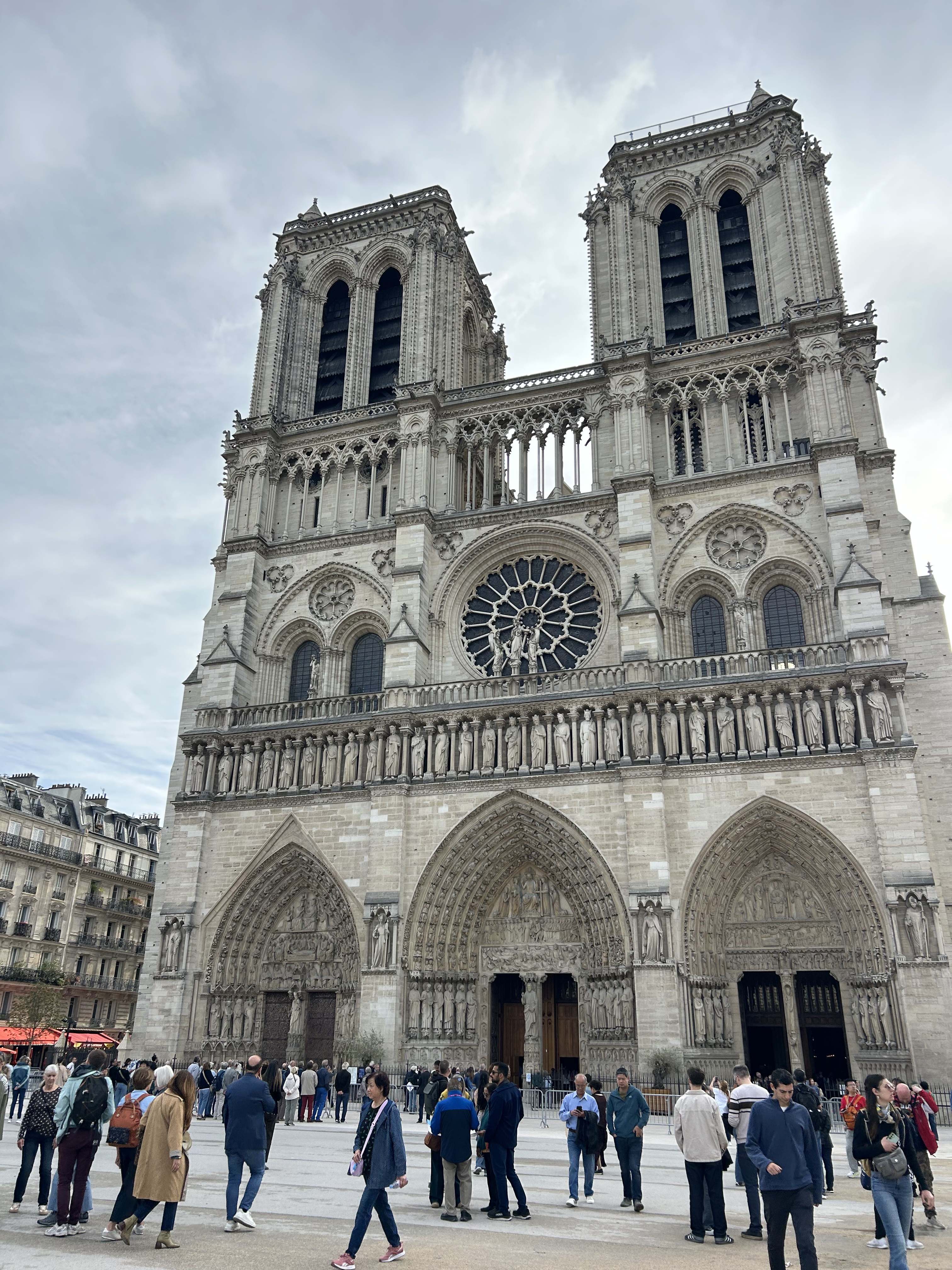
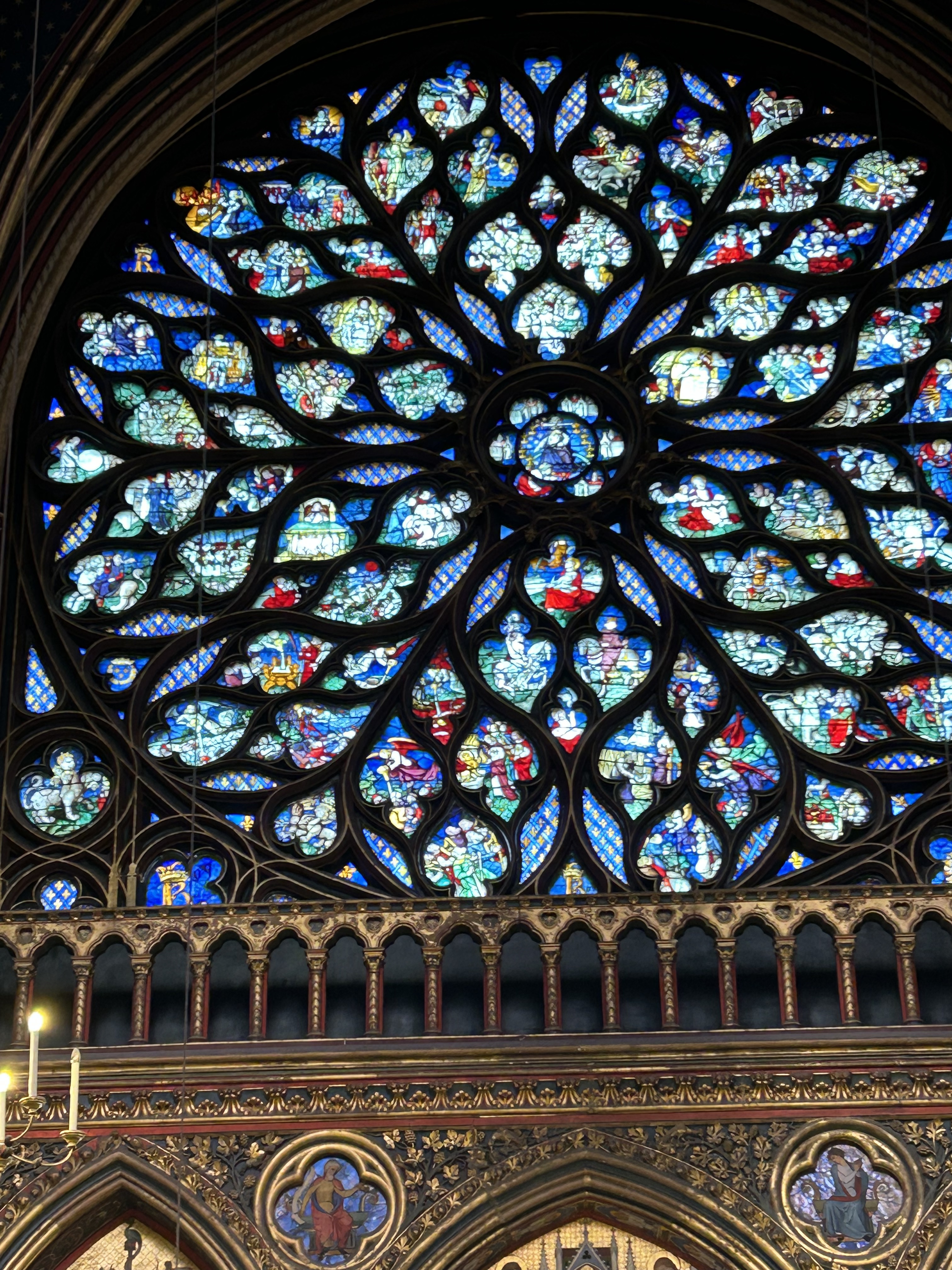
We stayed in a small hotel in the Marais district, which was a perfect location. On Thursday we walked across the bridge to the Ile de la Cite and saw Sainte Chappelle and Notre Dame. I didn’t realize that seeing the upper chapel of the Sainte Chappelle required going up and down a rather dark and steep spiral staircase. Going up wasn’t too bad, but going down I needed Harvey in front of me so that I didn’t look straight down. In any event it was worth that challenge as the stained glass windows are gorgeous.
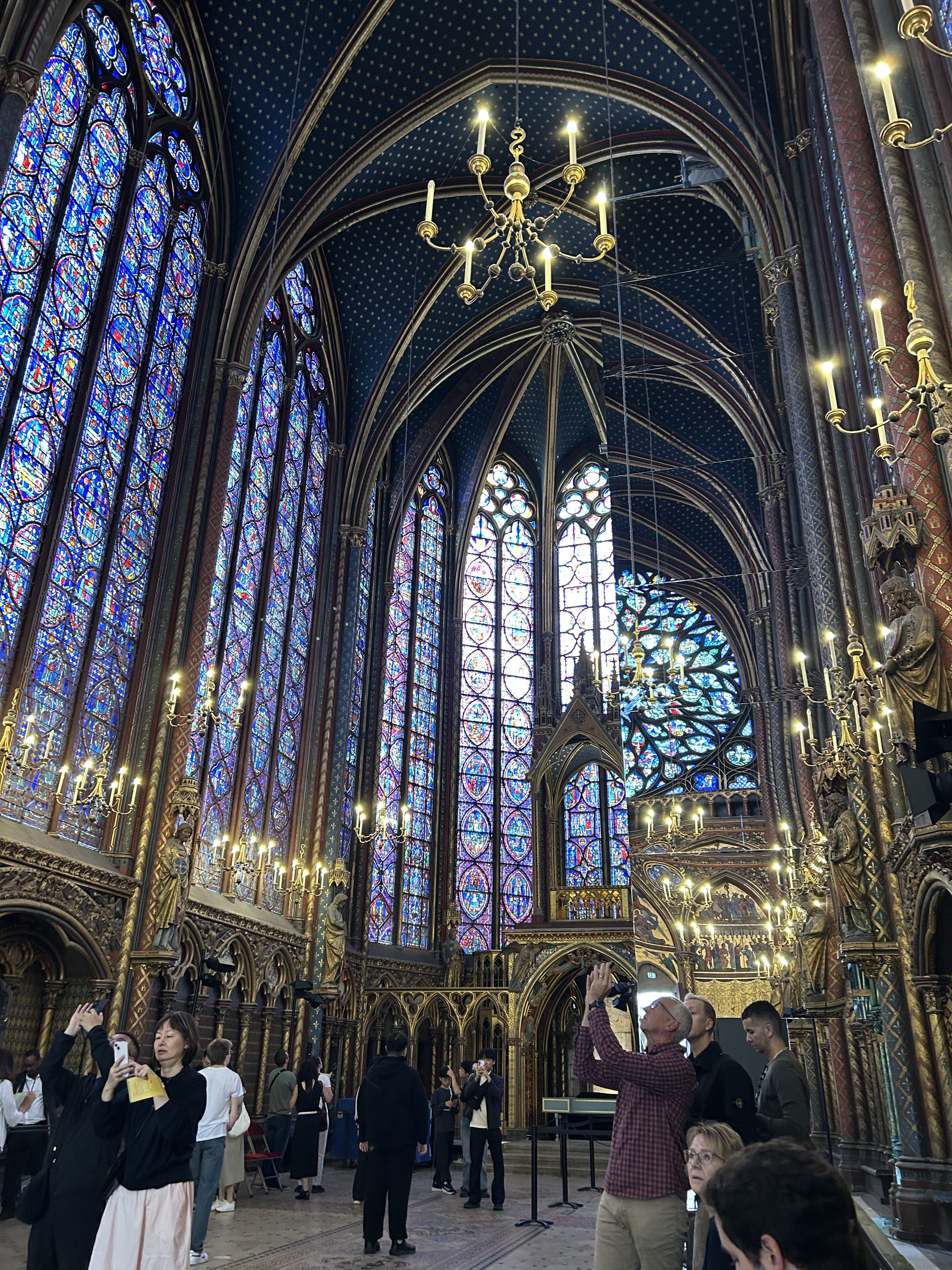
Sainte Chappelle
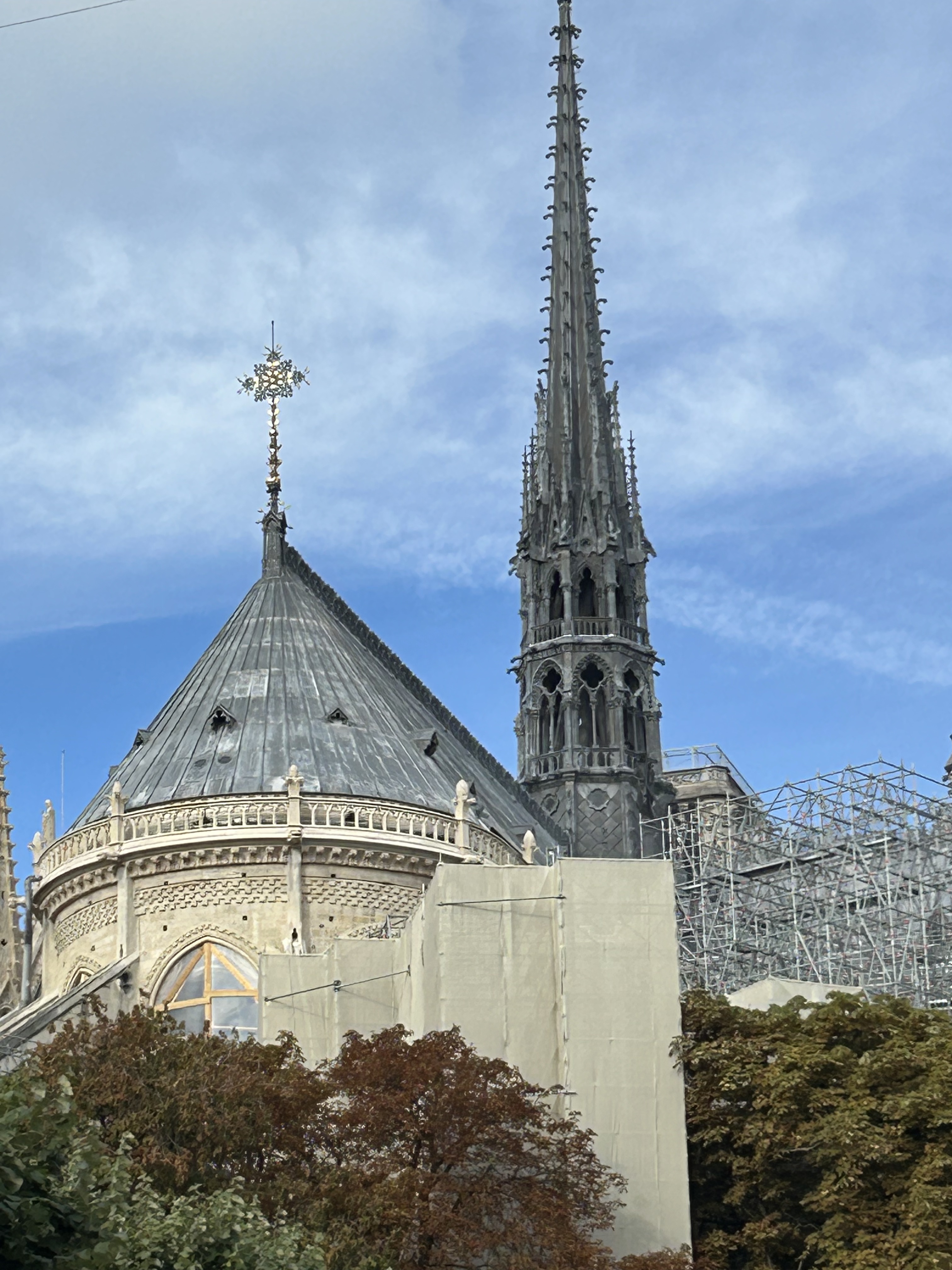
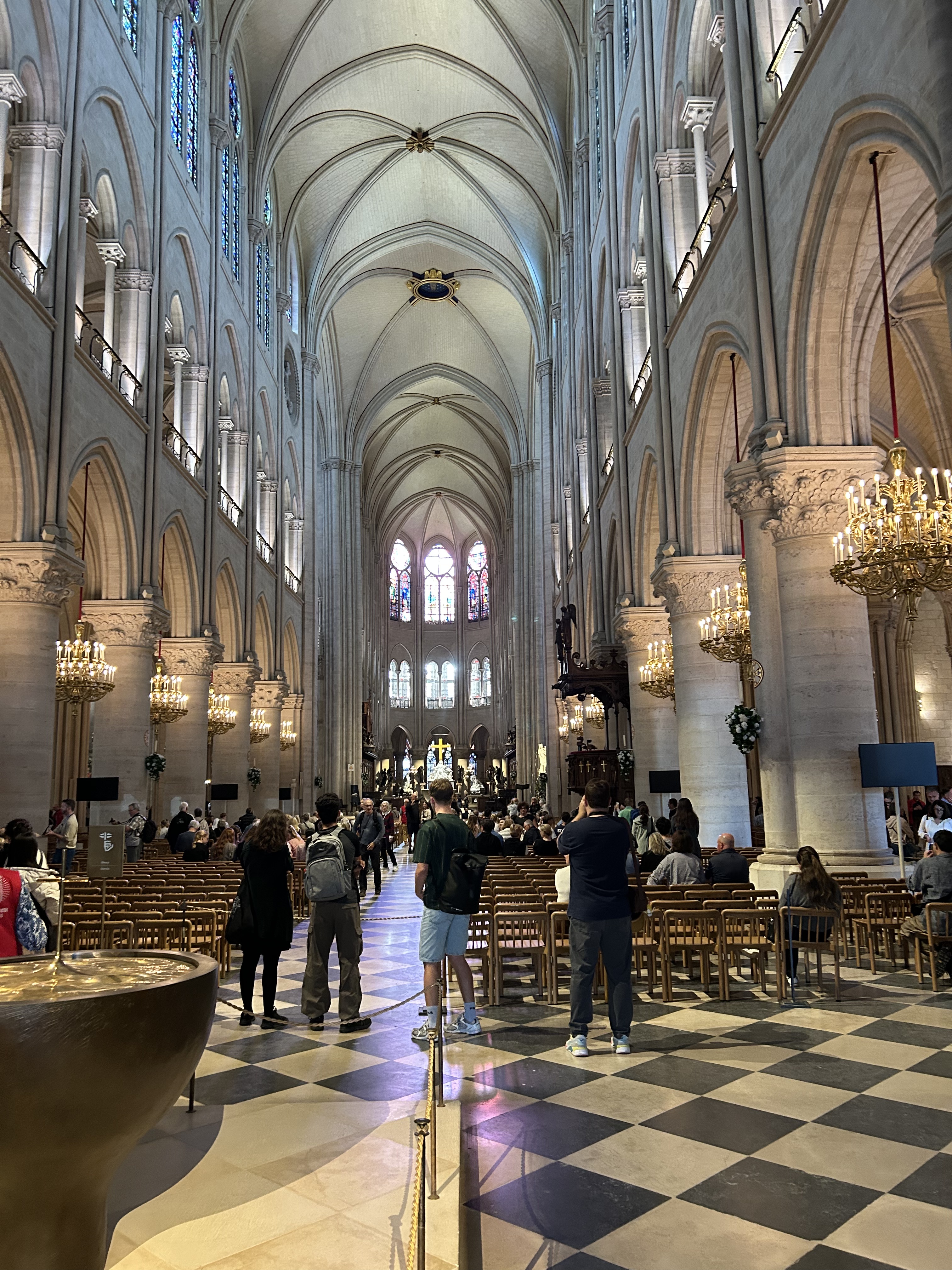
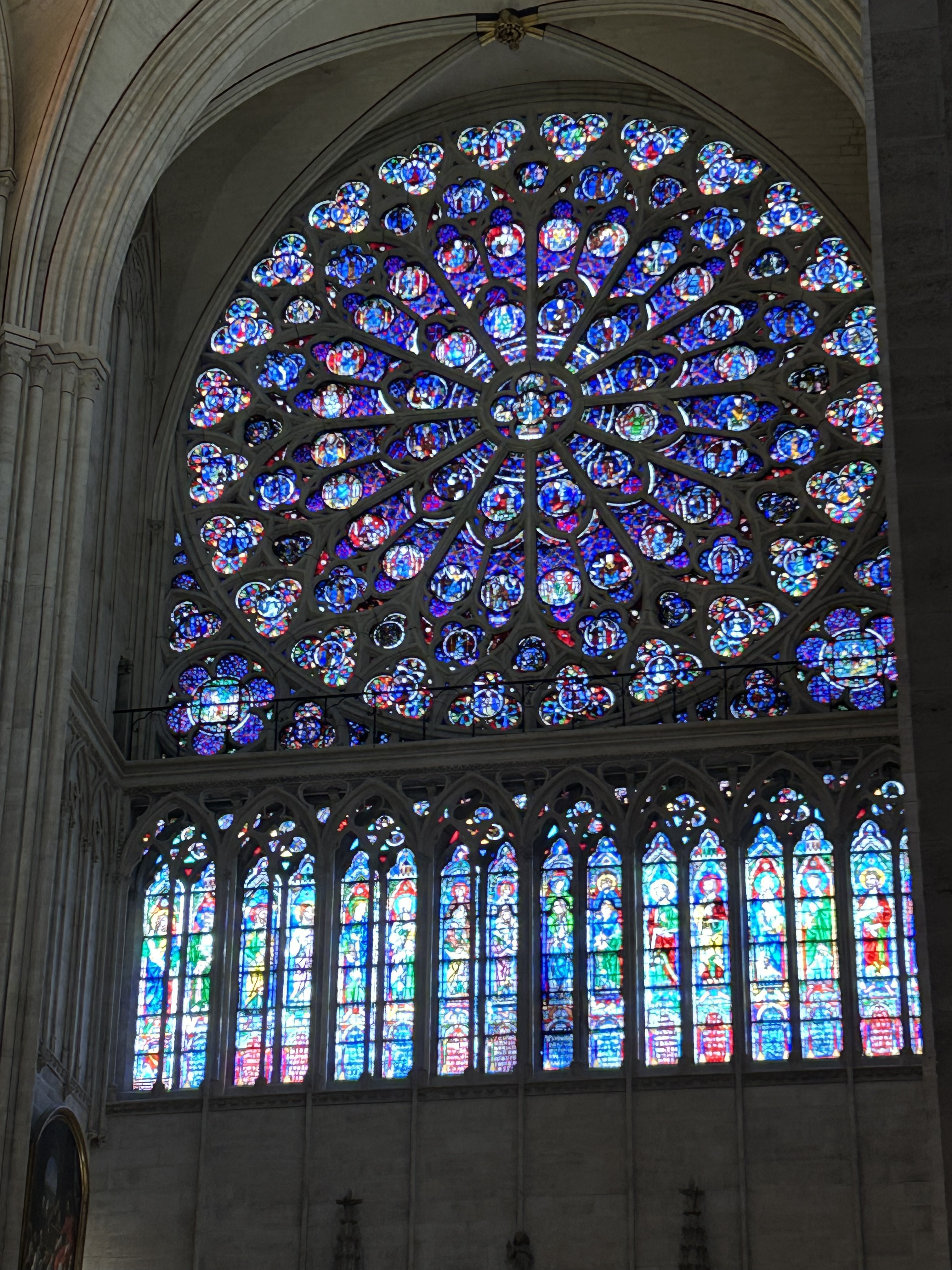
Notre Dame was equally beautiful, and knowing that just seven years ago it was severely damaged by fire made it even more magical.
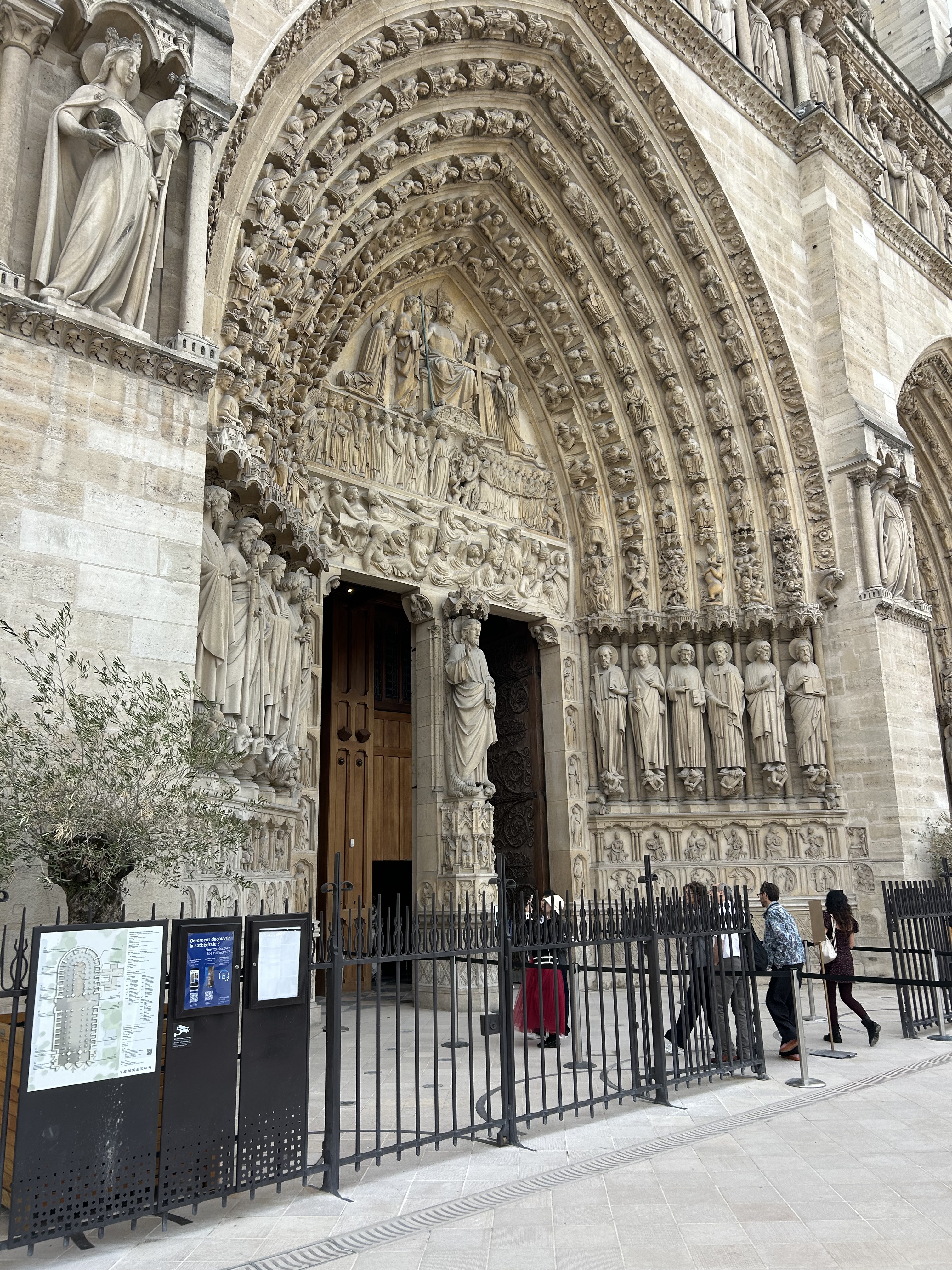
Notre Dame Cathedral
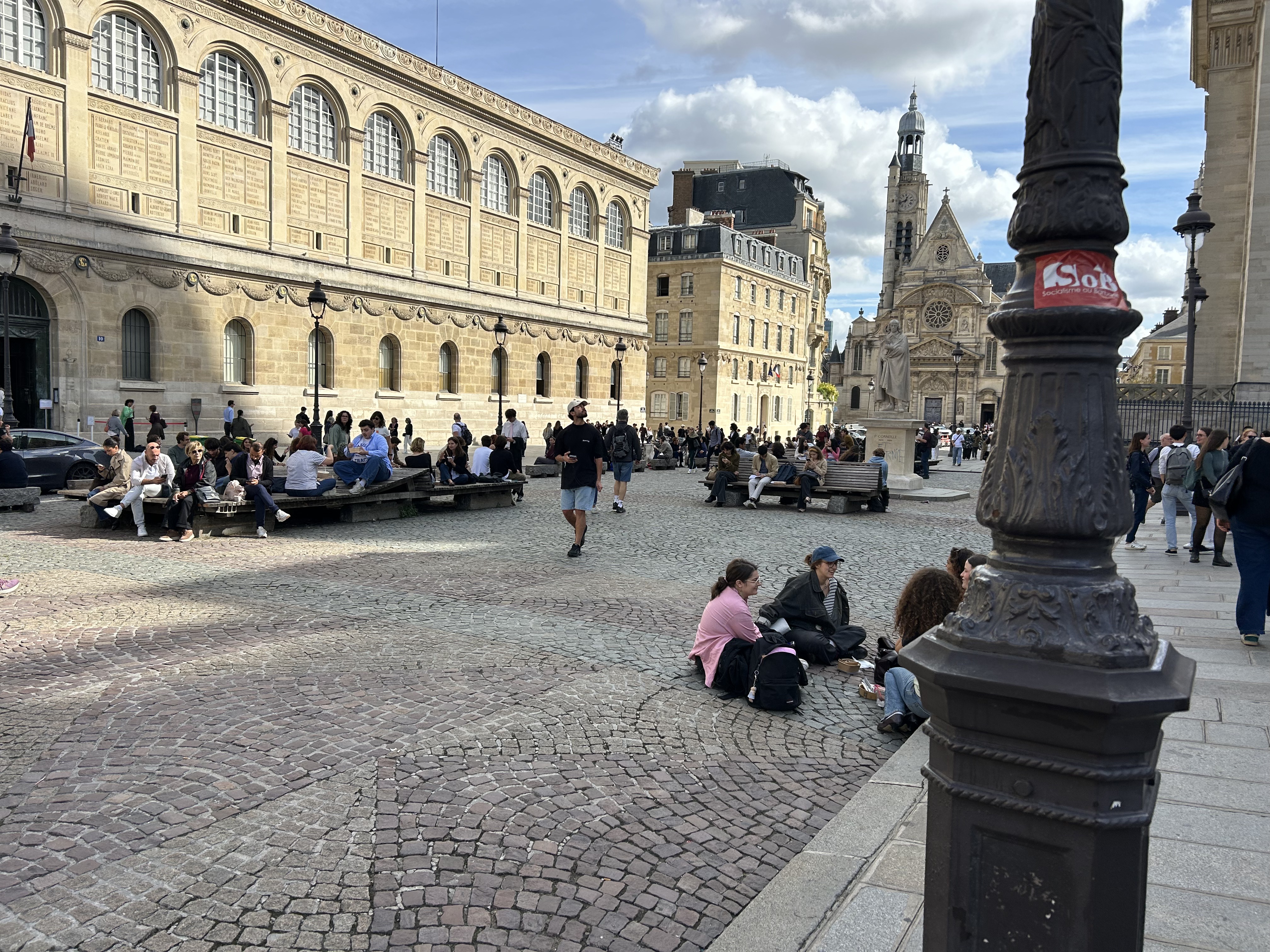
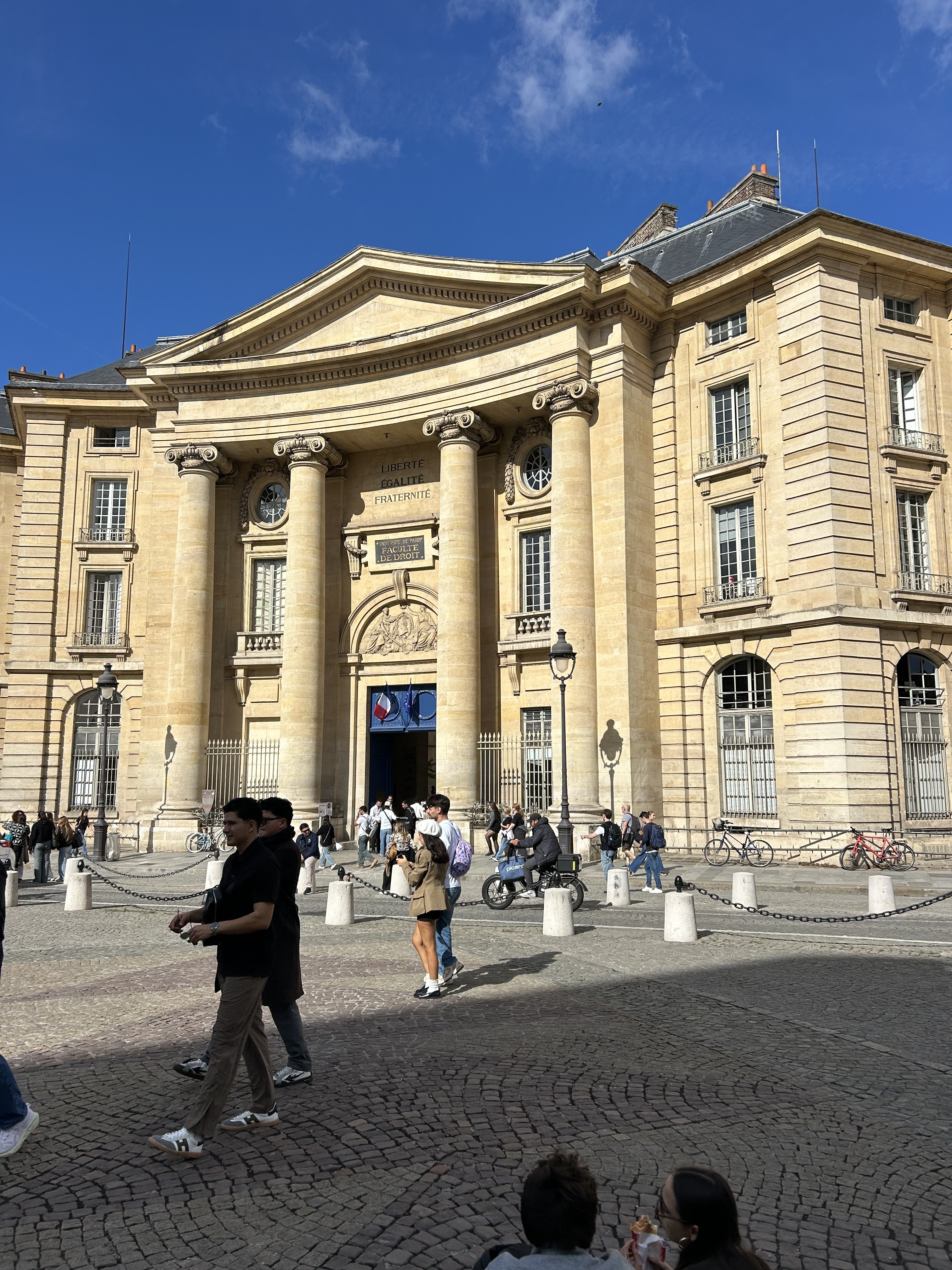
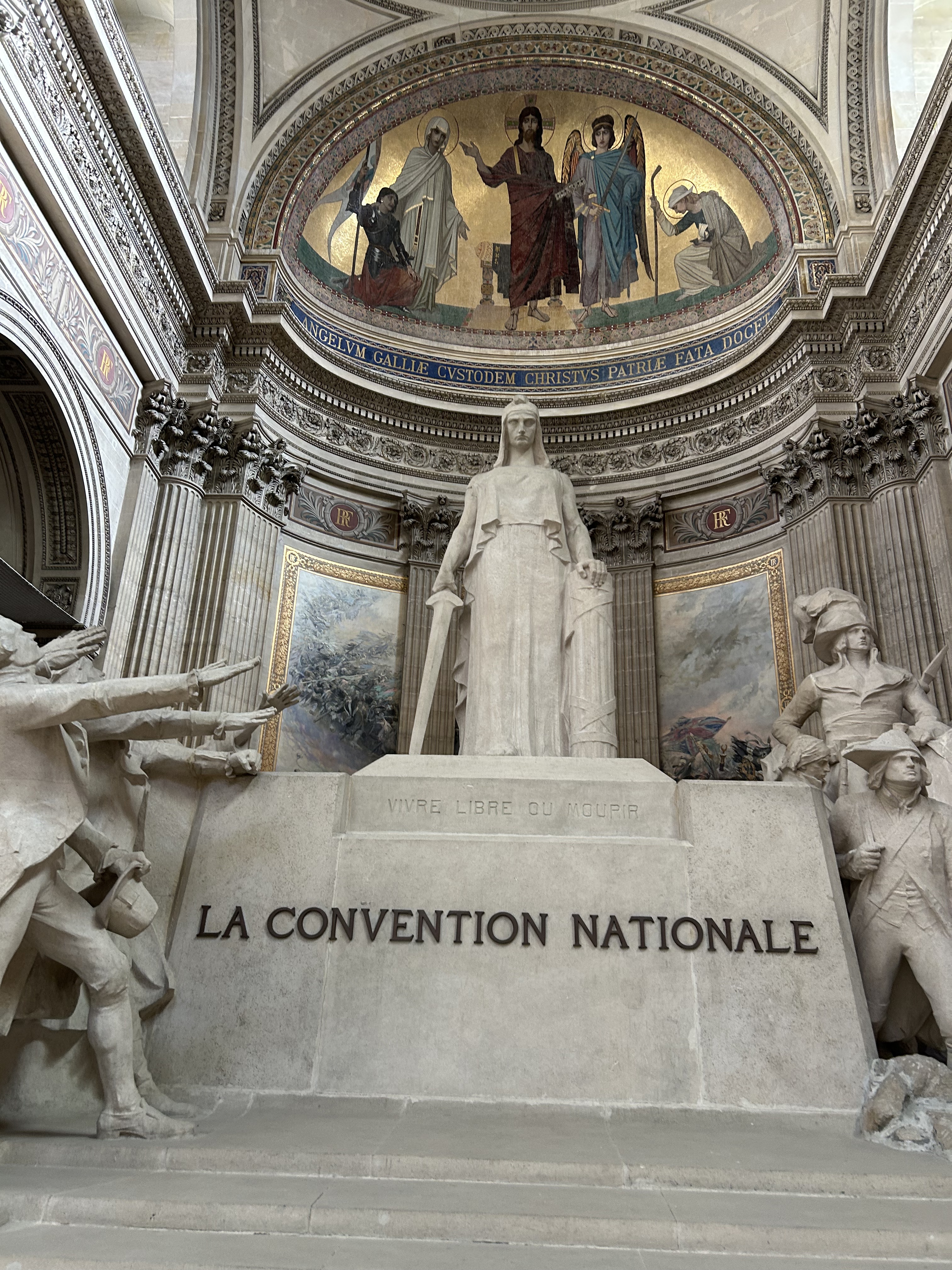
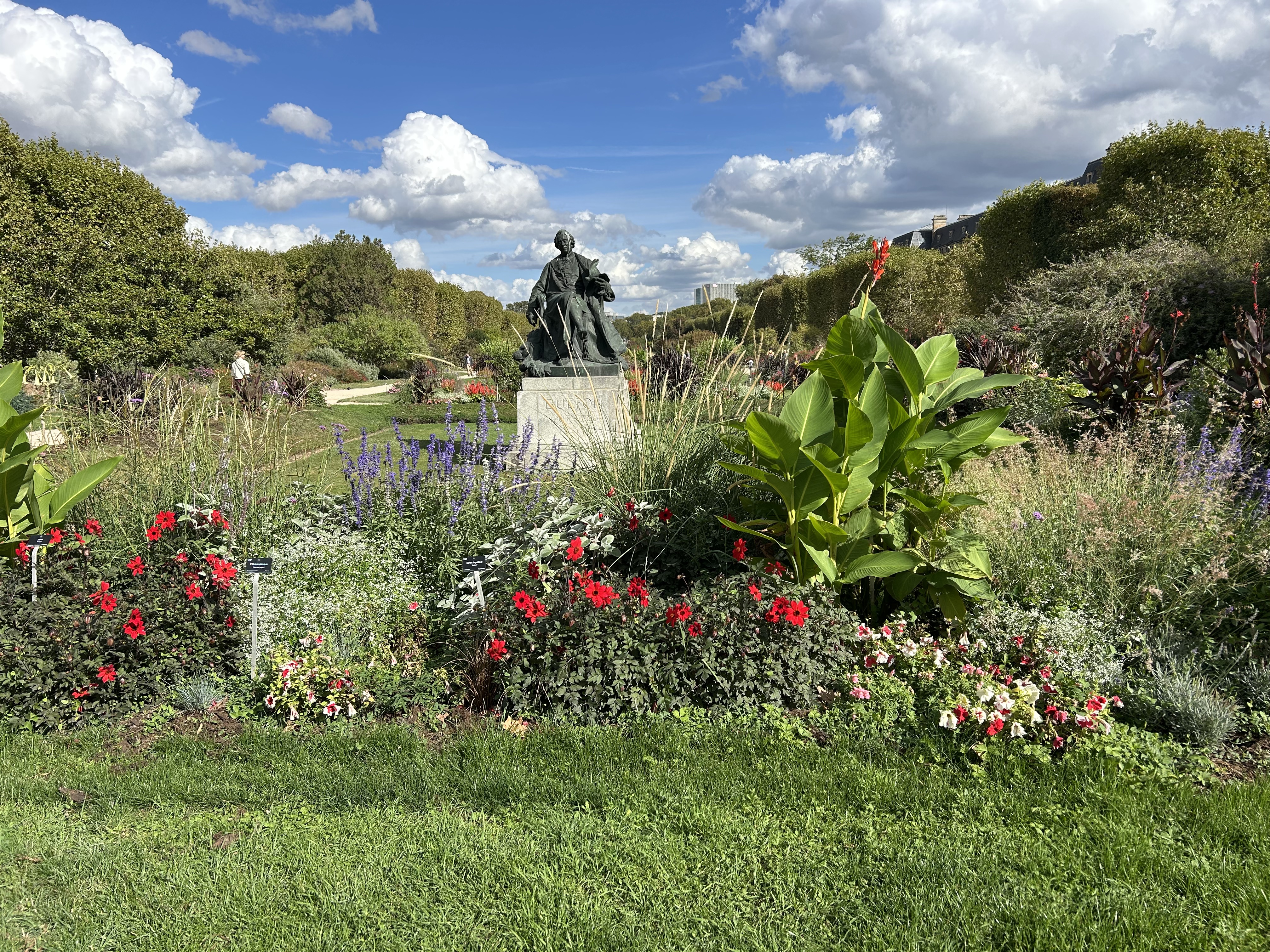
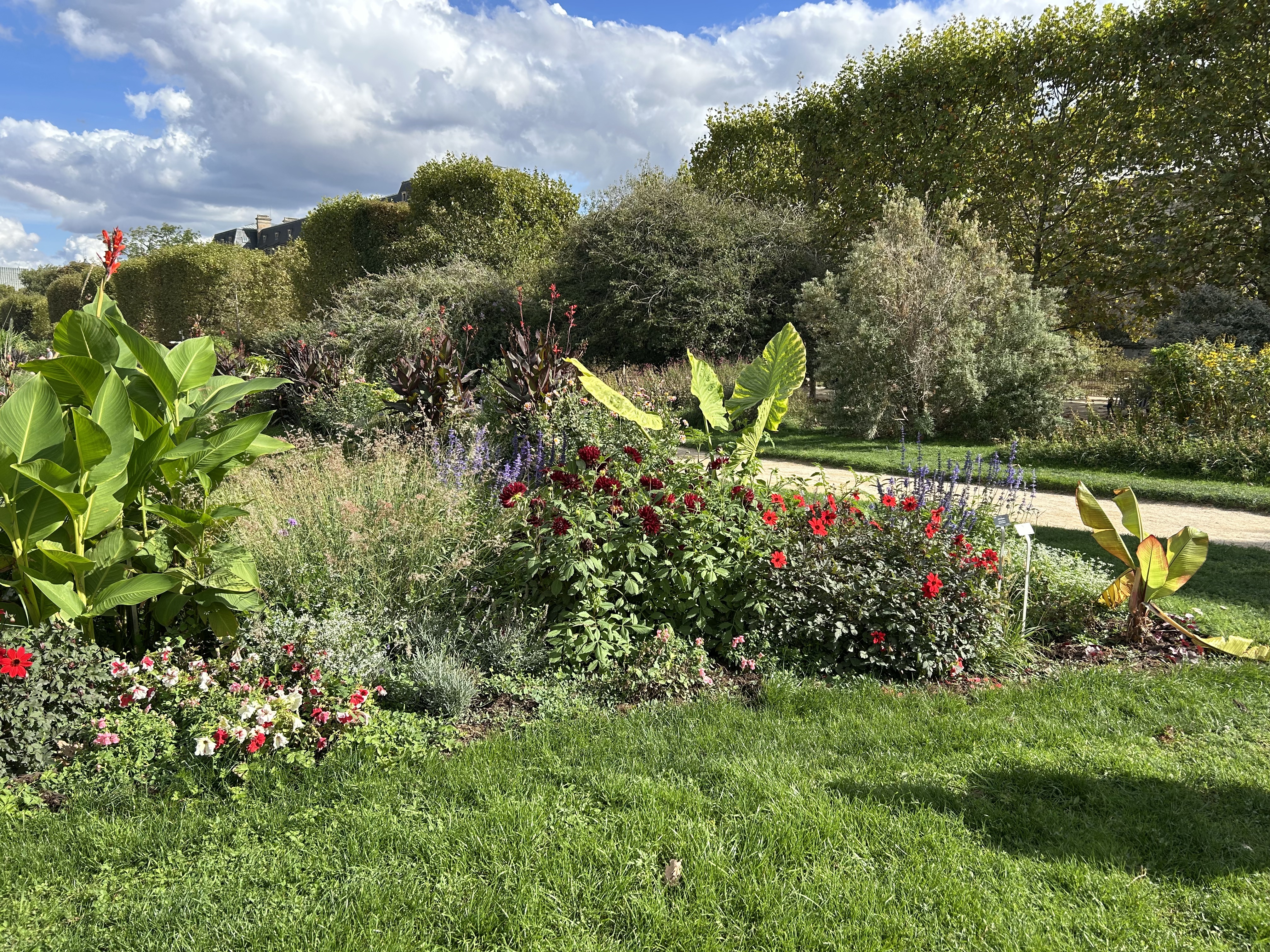
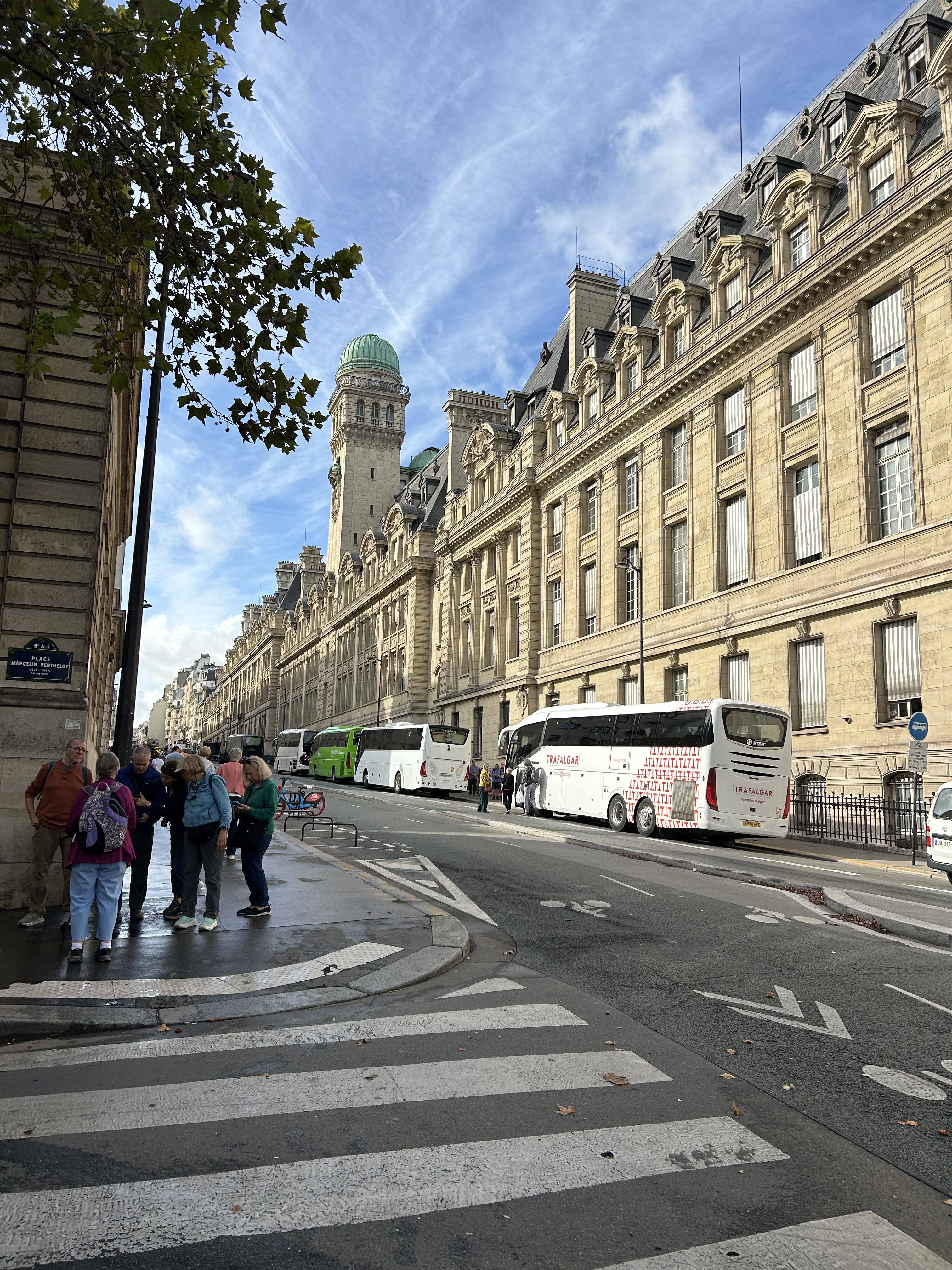
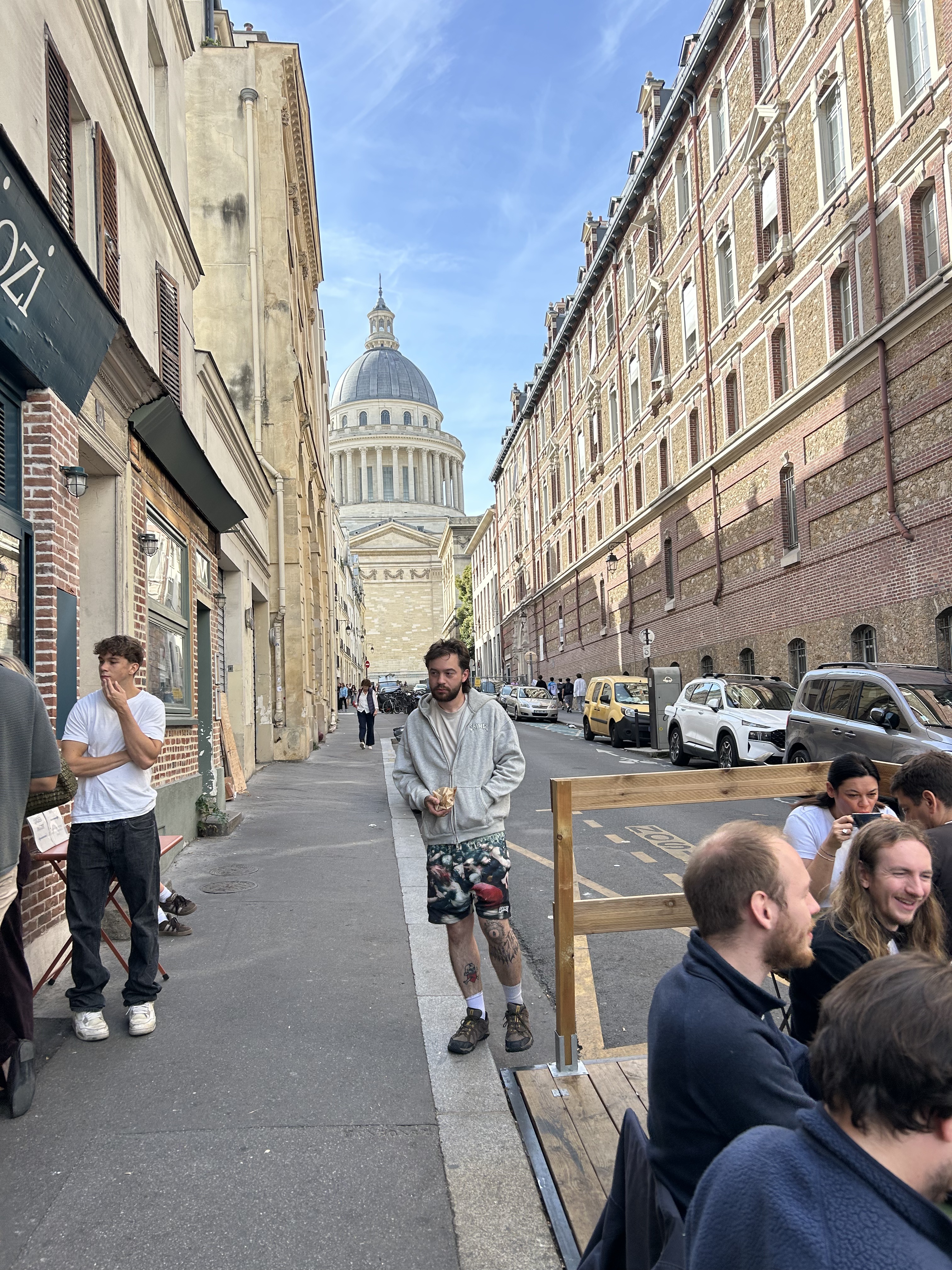
In the afternoon we just wandered around the Latin Quarter, walking the winding streets, stopping for lunch near the Pantheon and the Sorbonne. It was fun to see all the students hanging around like students do everywhere. We stopped to relax in the Luxembourg Gardens nearby.
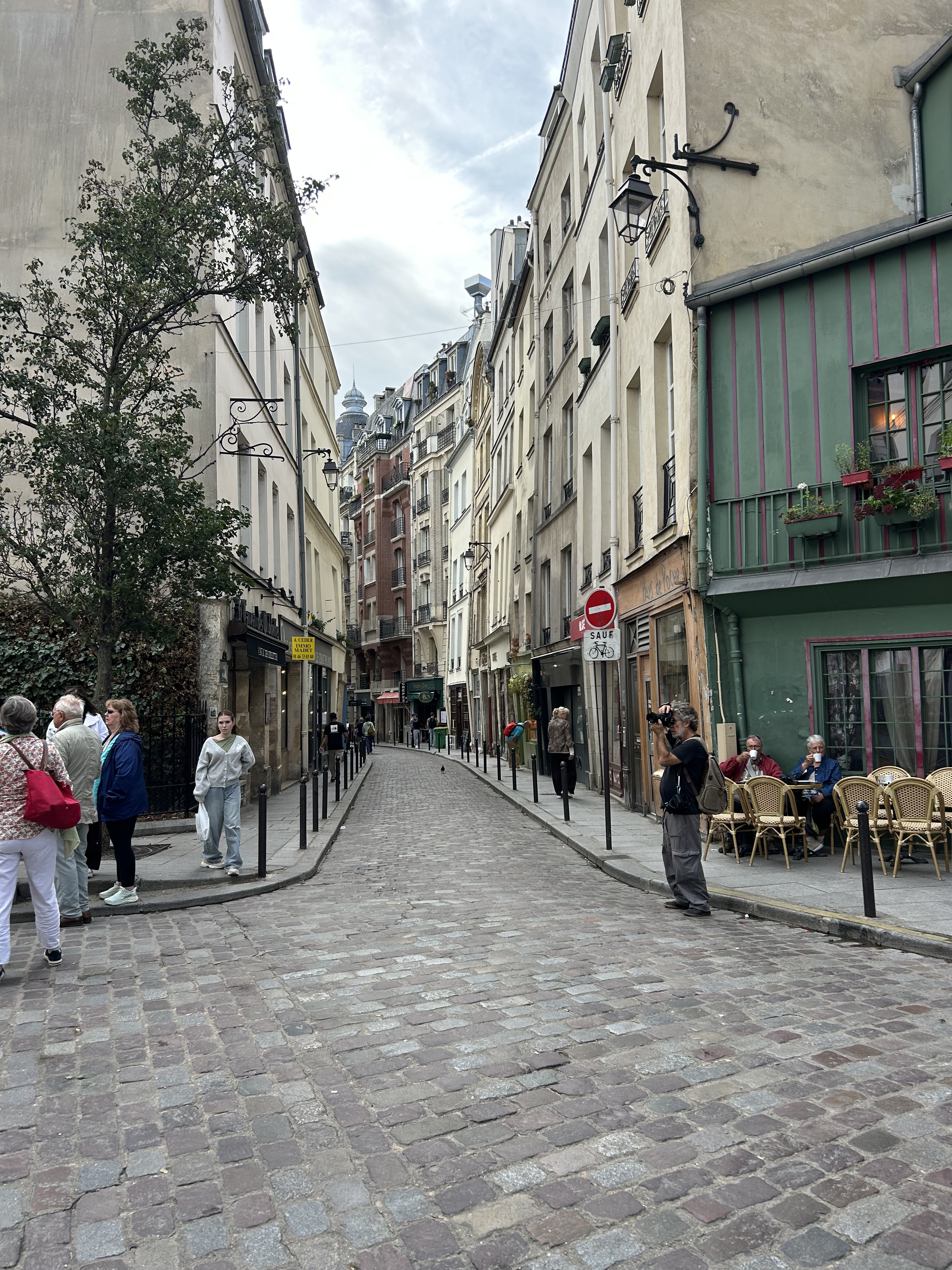
The Latin Quarter and the Pantheon
 

The next morning we met up with Emma, the tour guide for Sight Seekers Paris, who was going to be teaching us about the history of the Jews in France and Paris and the Marais district where most of them lived at one time. She did an incredible job of telling the three thousand year history of oppression, exile, return, success, and then deportations during the Nazi era. We stopped for lunch at a kosher restaurant, which was great, and at a “secret” synagogue that still operates where we were invited to sit in their sukkah. I highly recommend this tour if you come to Paris.
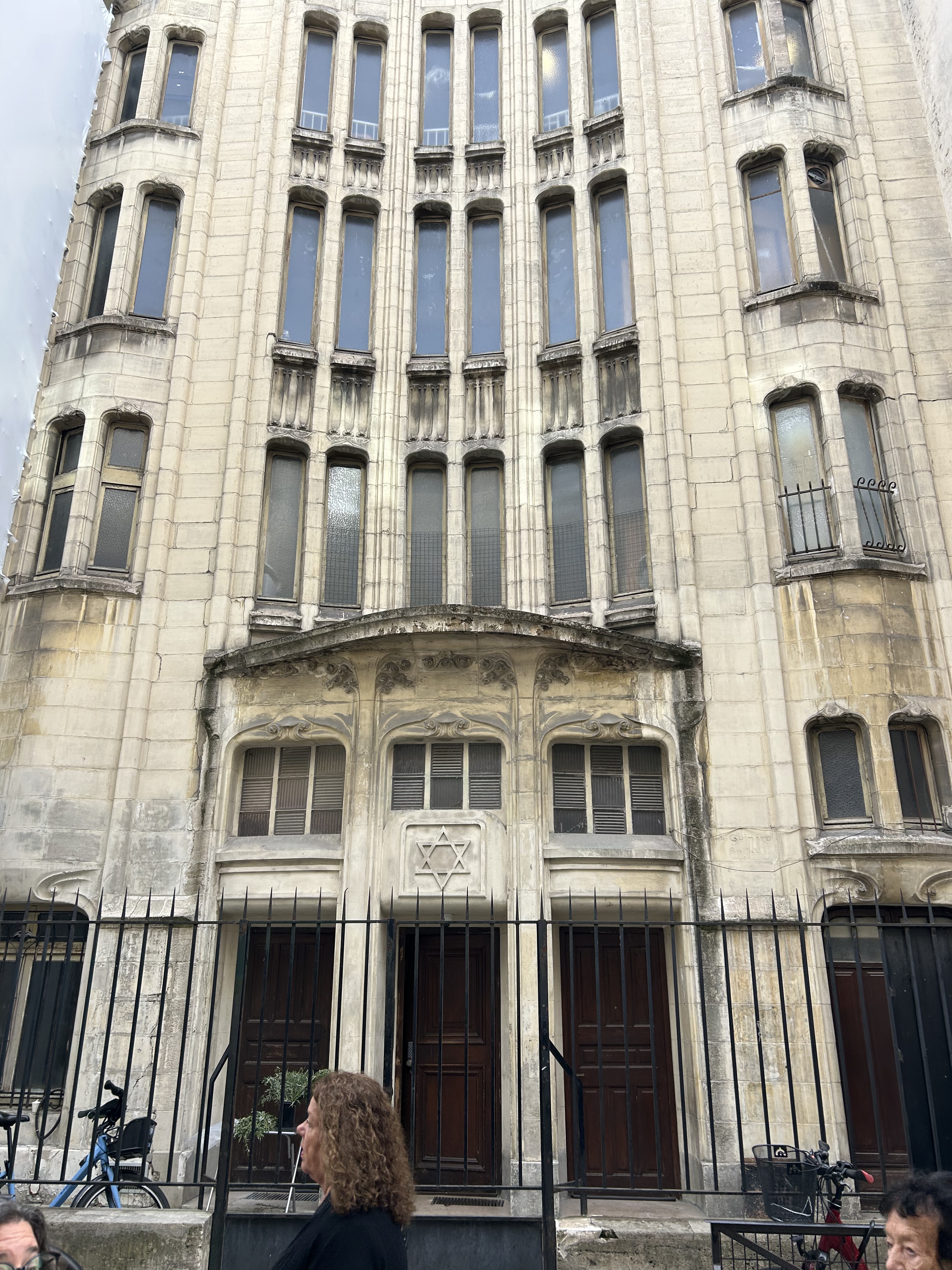
Synagogue still in operation today by Chabad
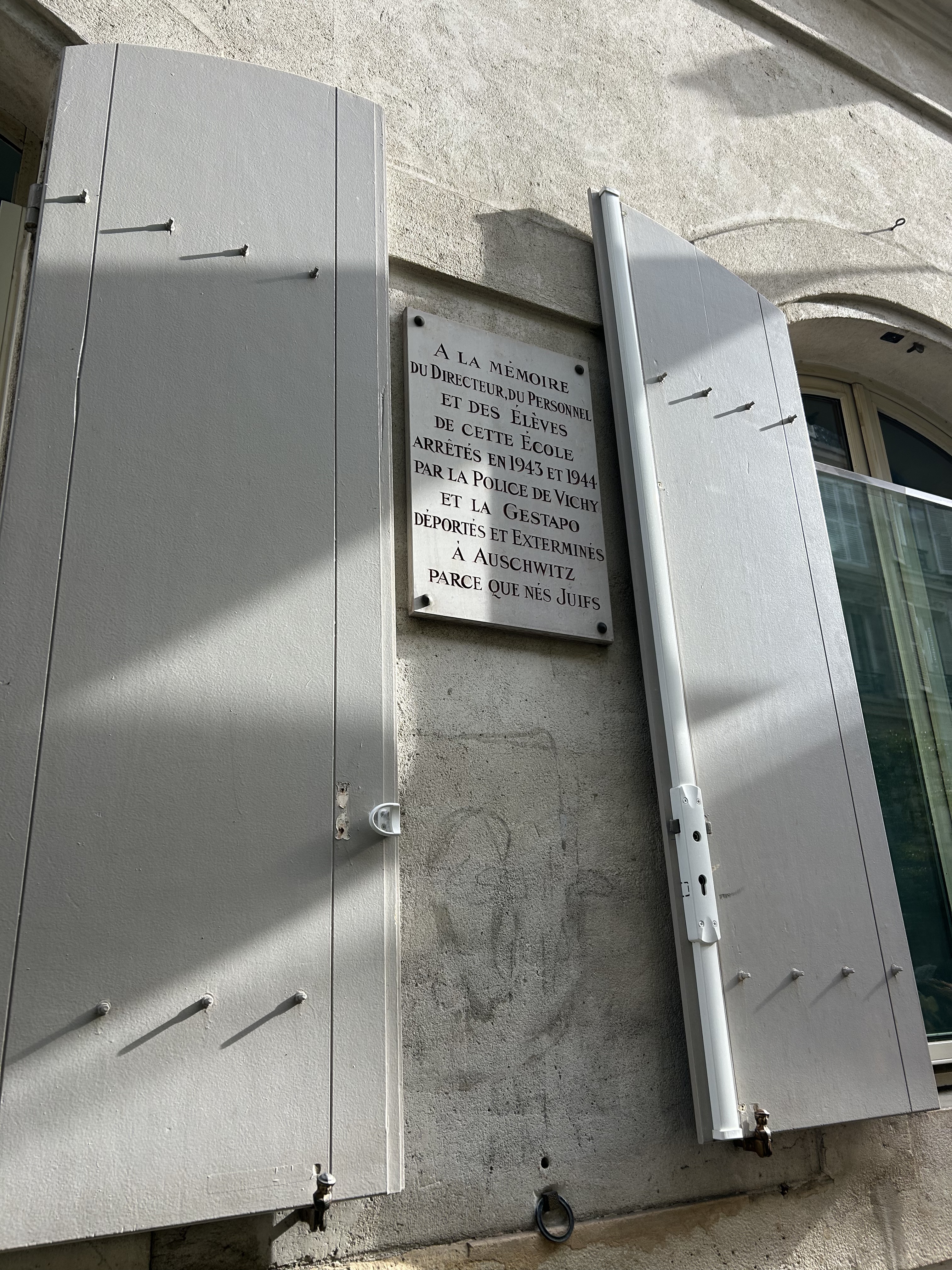
A plaque memorializing the Jewish children who were killed by the Nazis
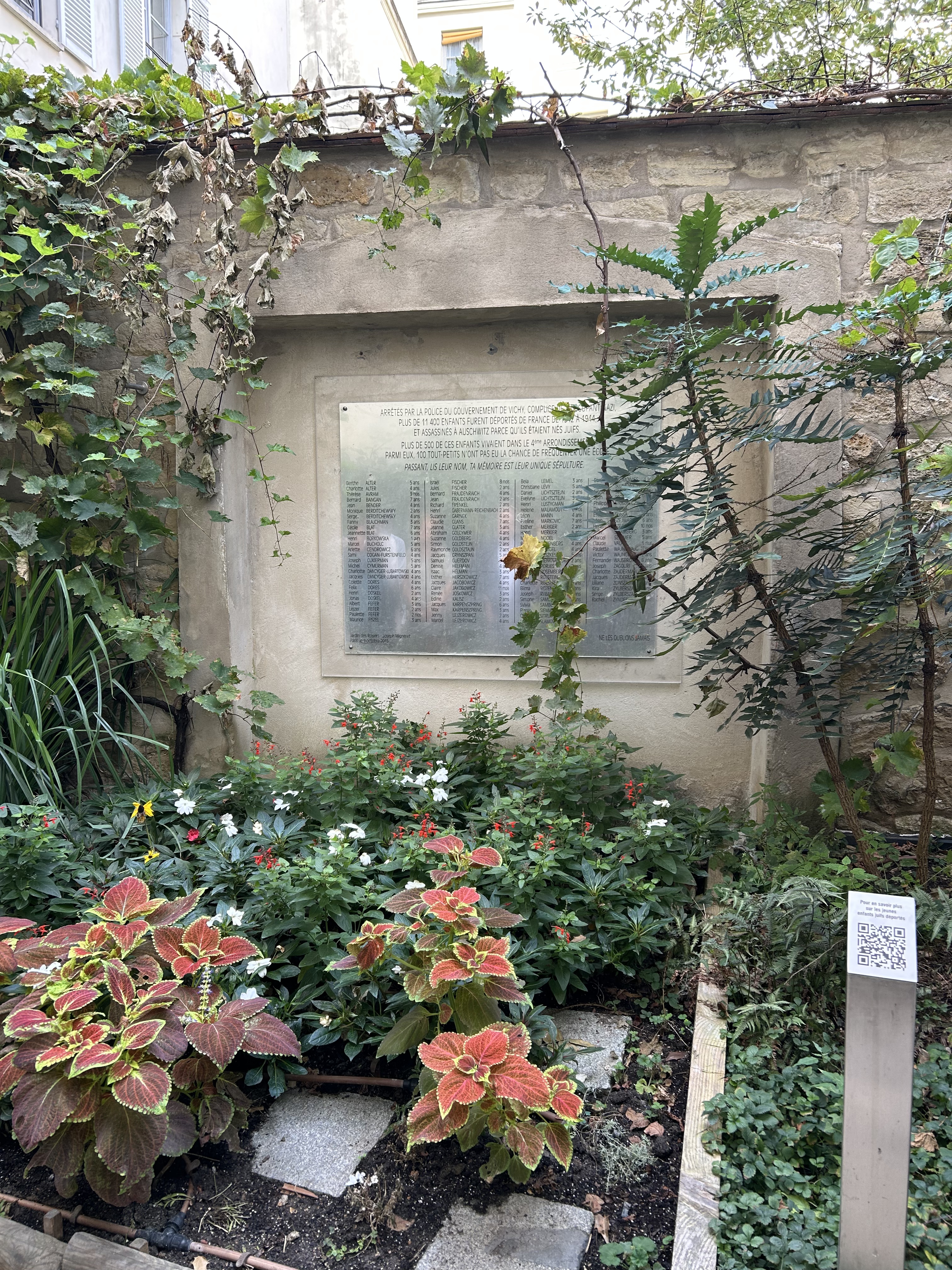
The memorial garden for those children
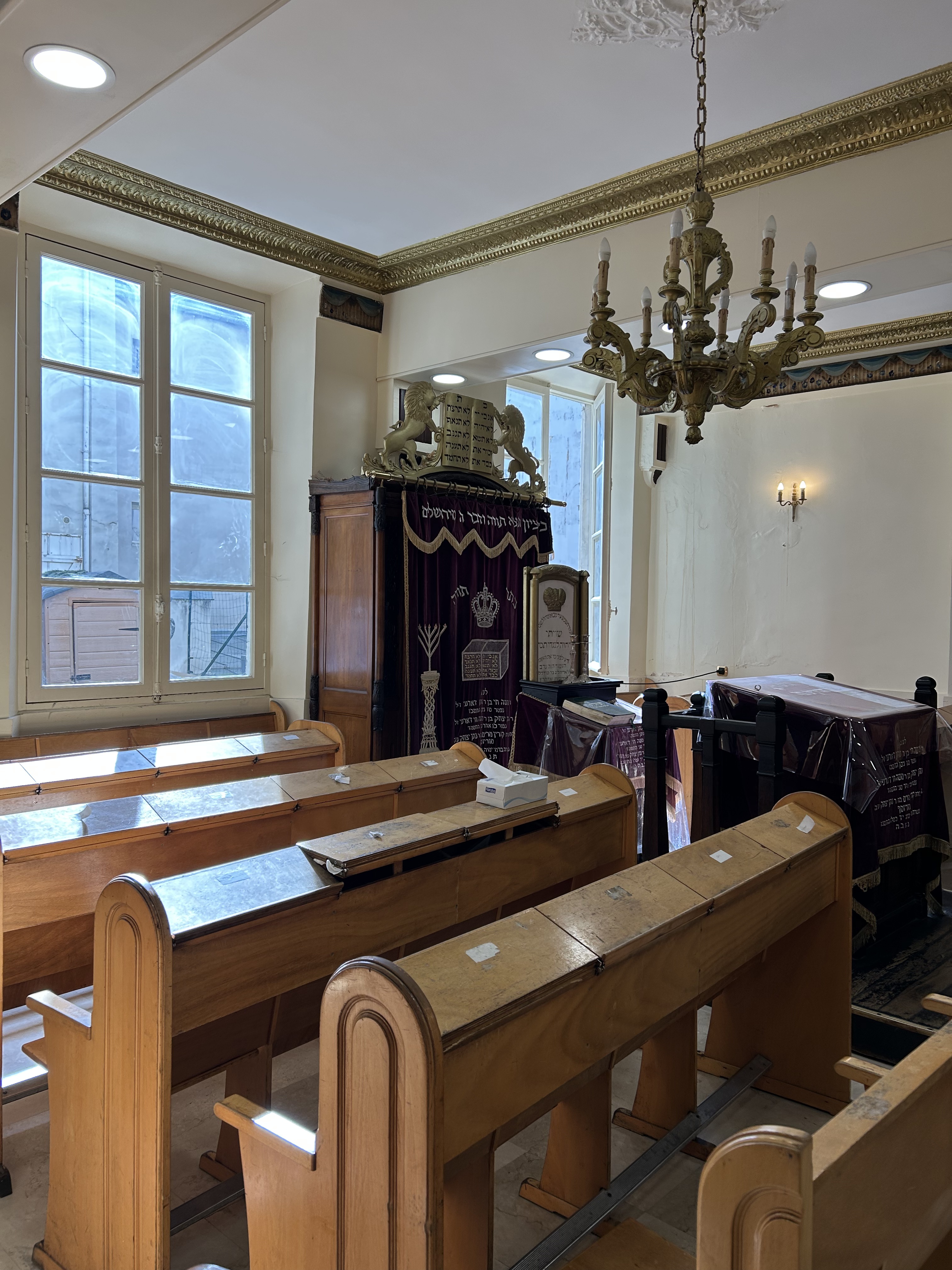
Inside the hidden synagogue. From the outside there are no indications that it is a synagogue. We all shook the lulav and etrog inside their sukkah.
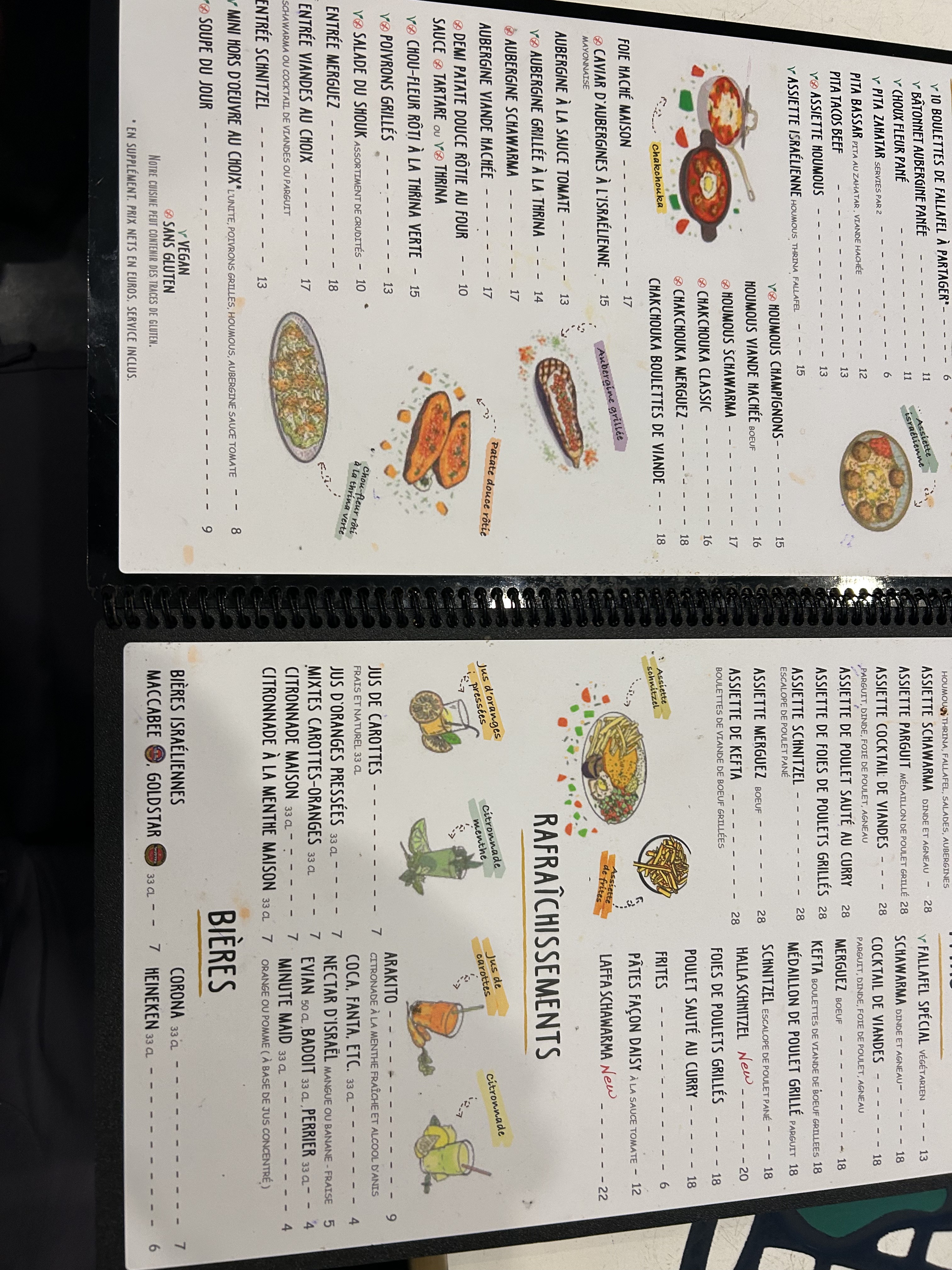
Lunch menu at L’As du Falafel, a kosher restaurant where we ate lunch
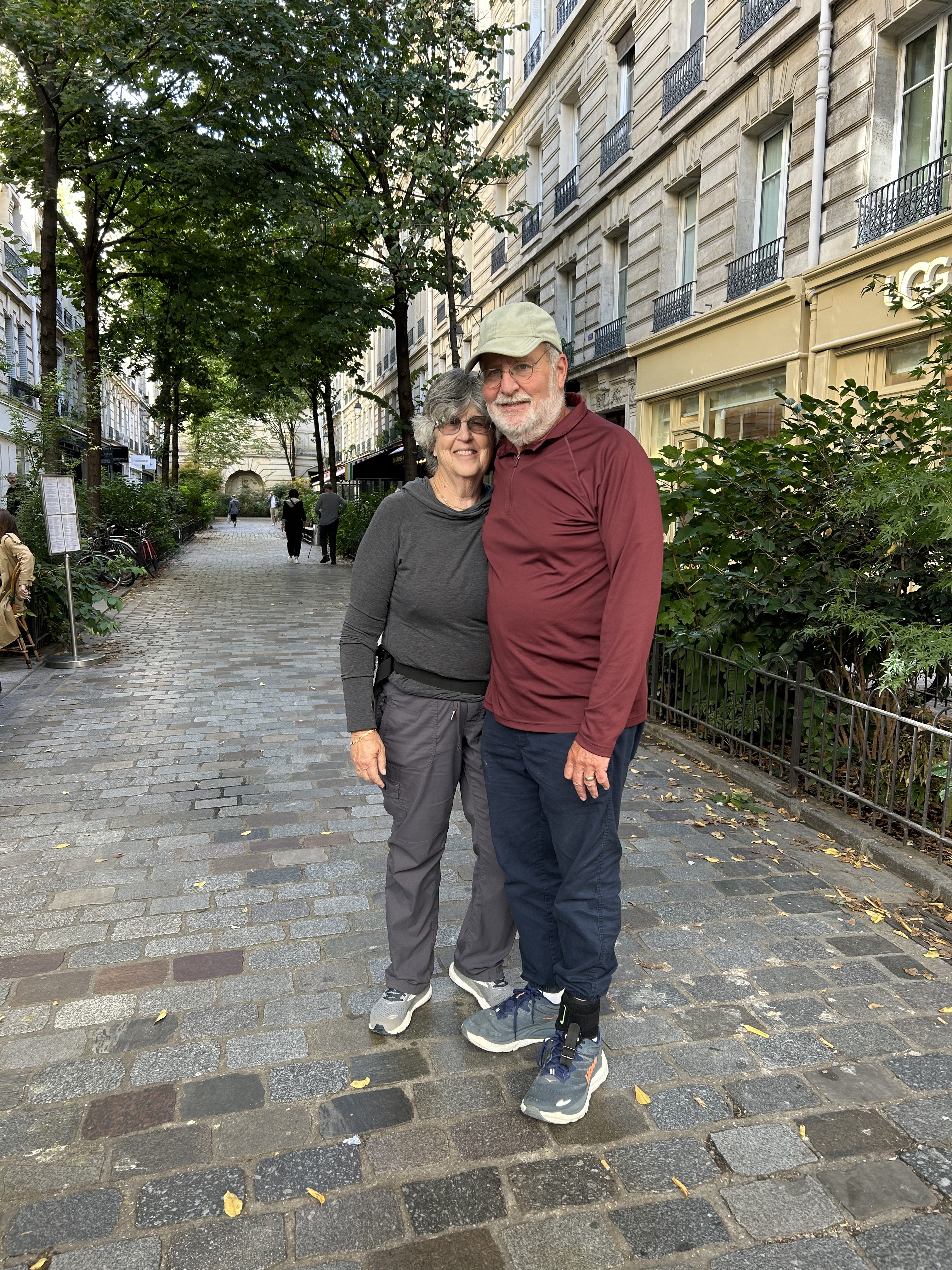
On the tour…
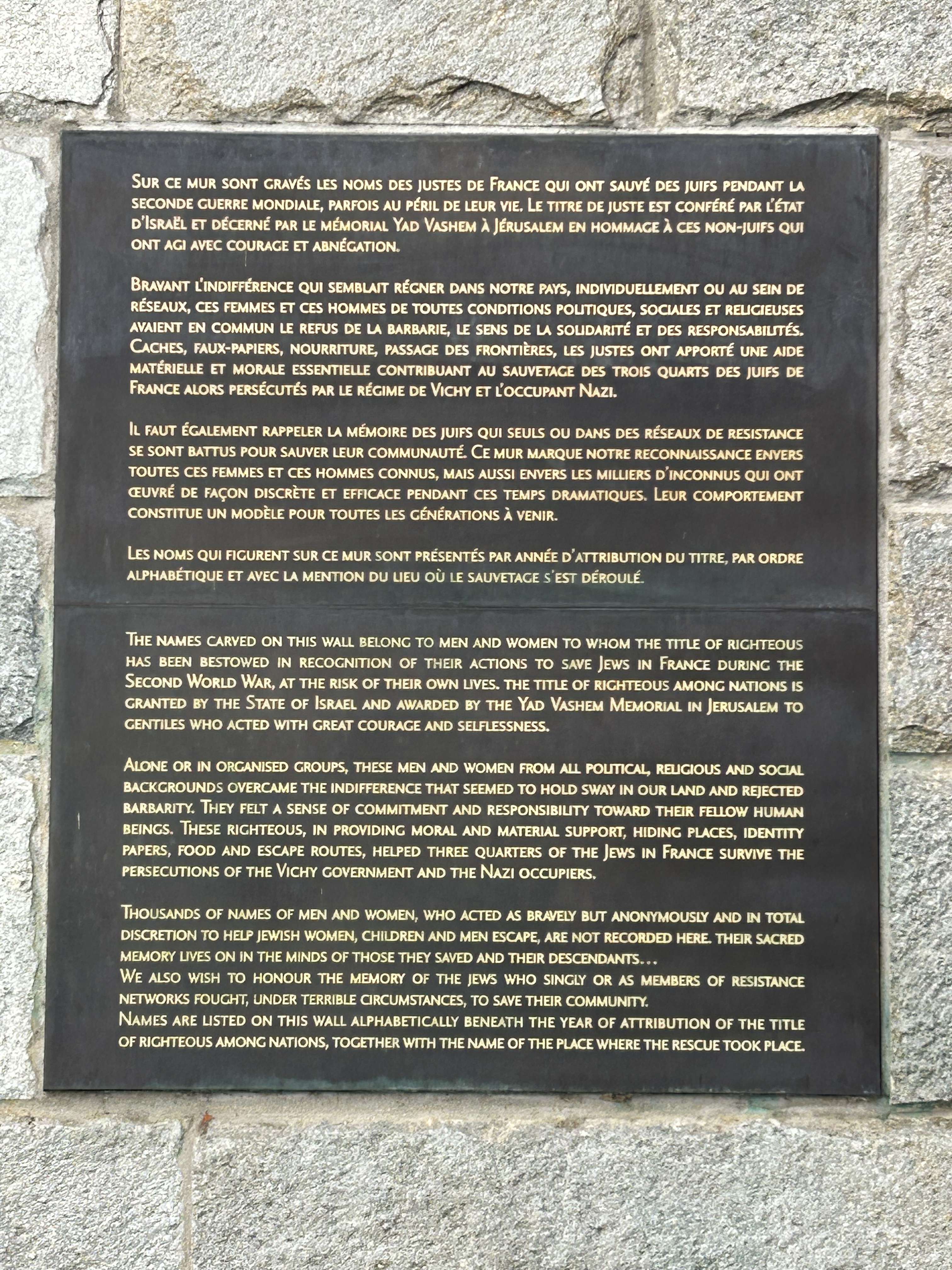
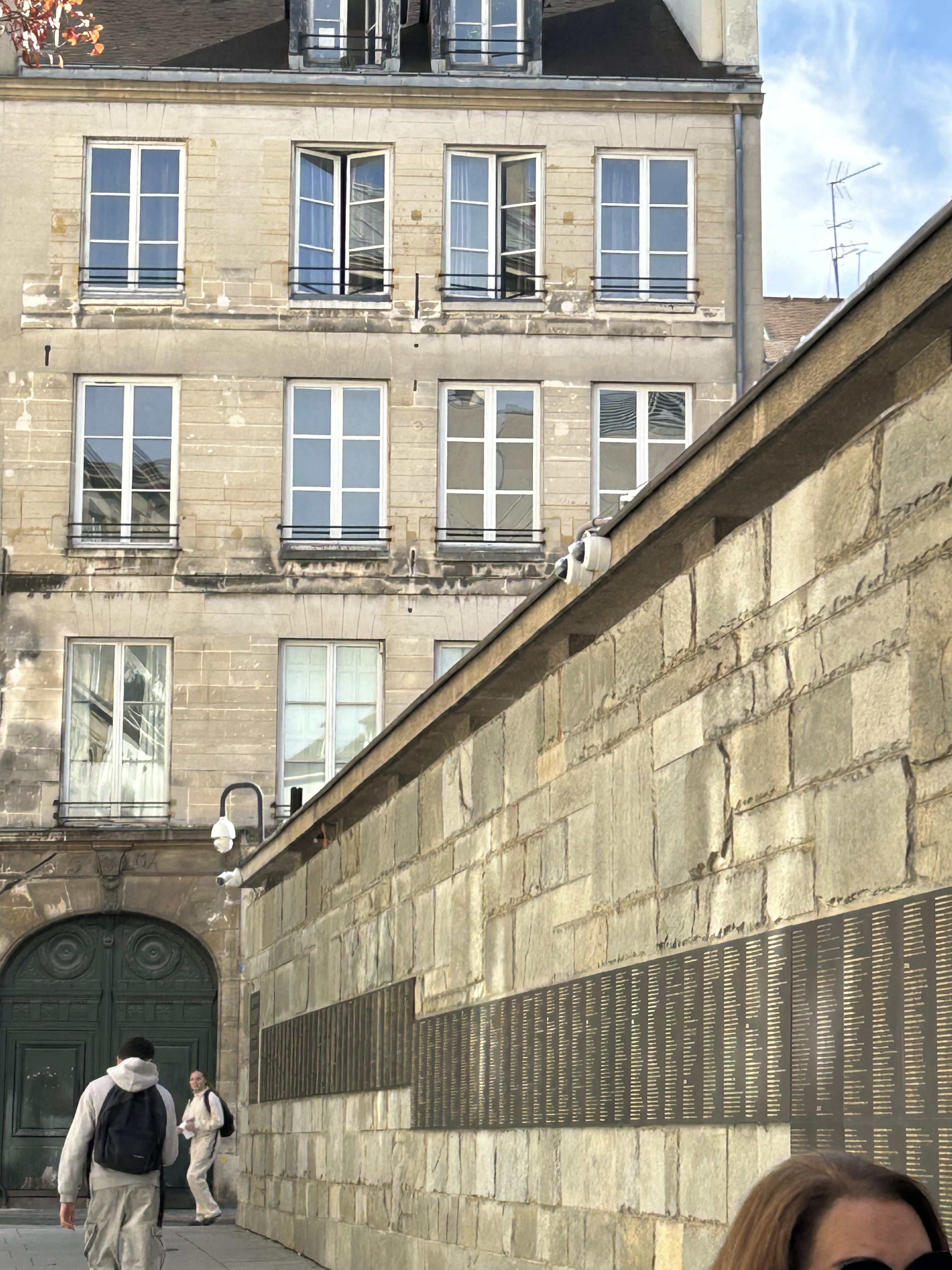
Memorial wall outside the Shoah Museum that lists the names of all those righteous gentiles who hid Jewish people to protect them from the Nazis
That afternoon we went to the Picasso Museum and then collapsed with exhaustion before dinner. All those days of being on the move, walking over 12,000 steps at least, and absorbing new information was beginning to wear me down, as was my lingering cold.

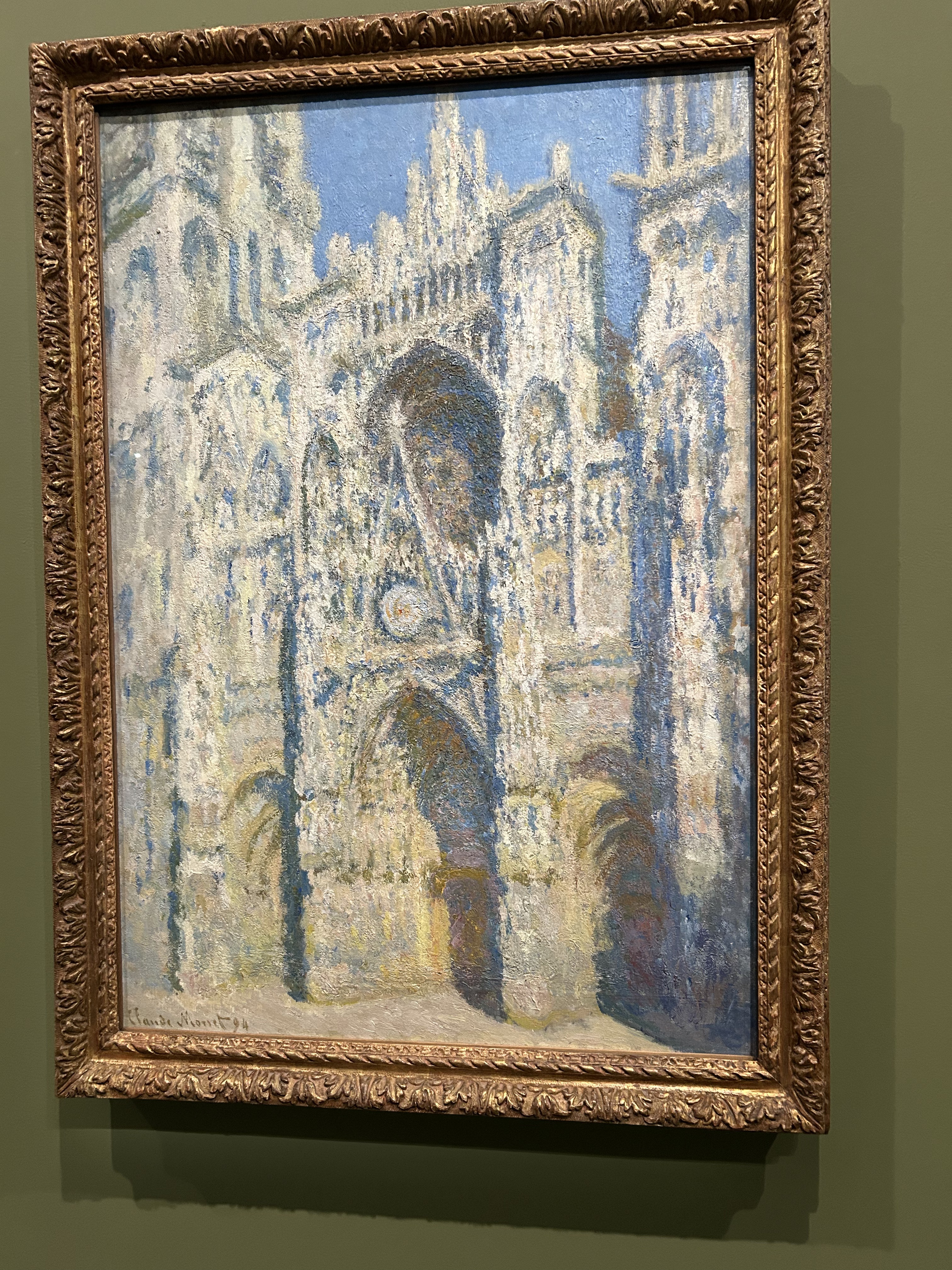
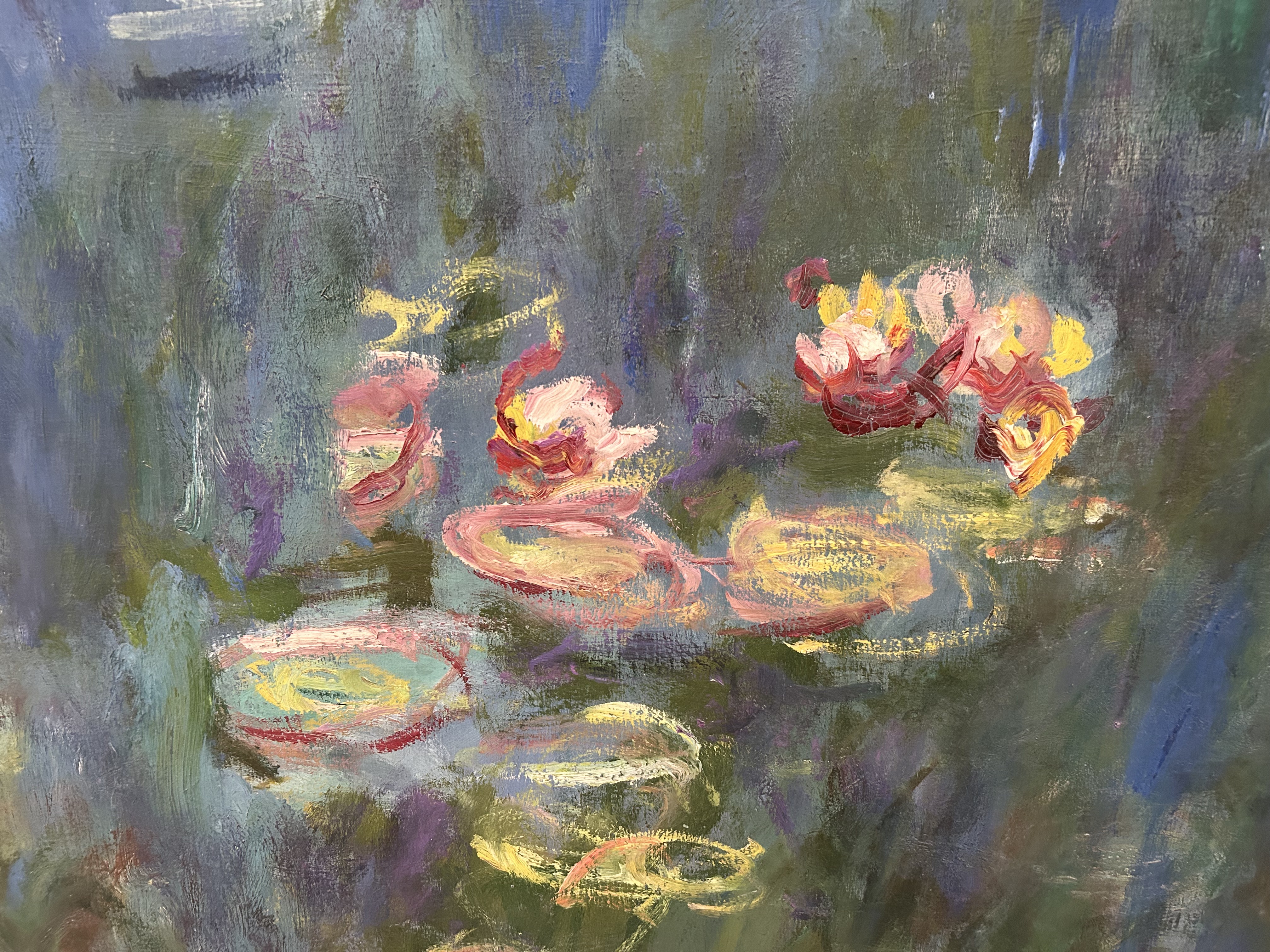
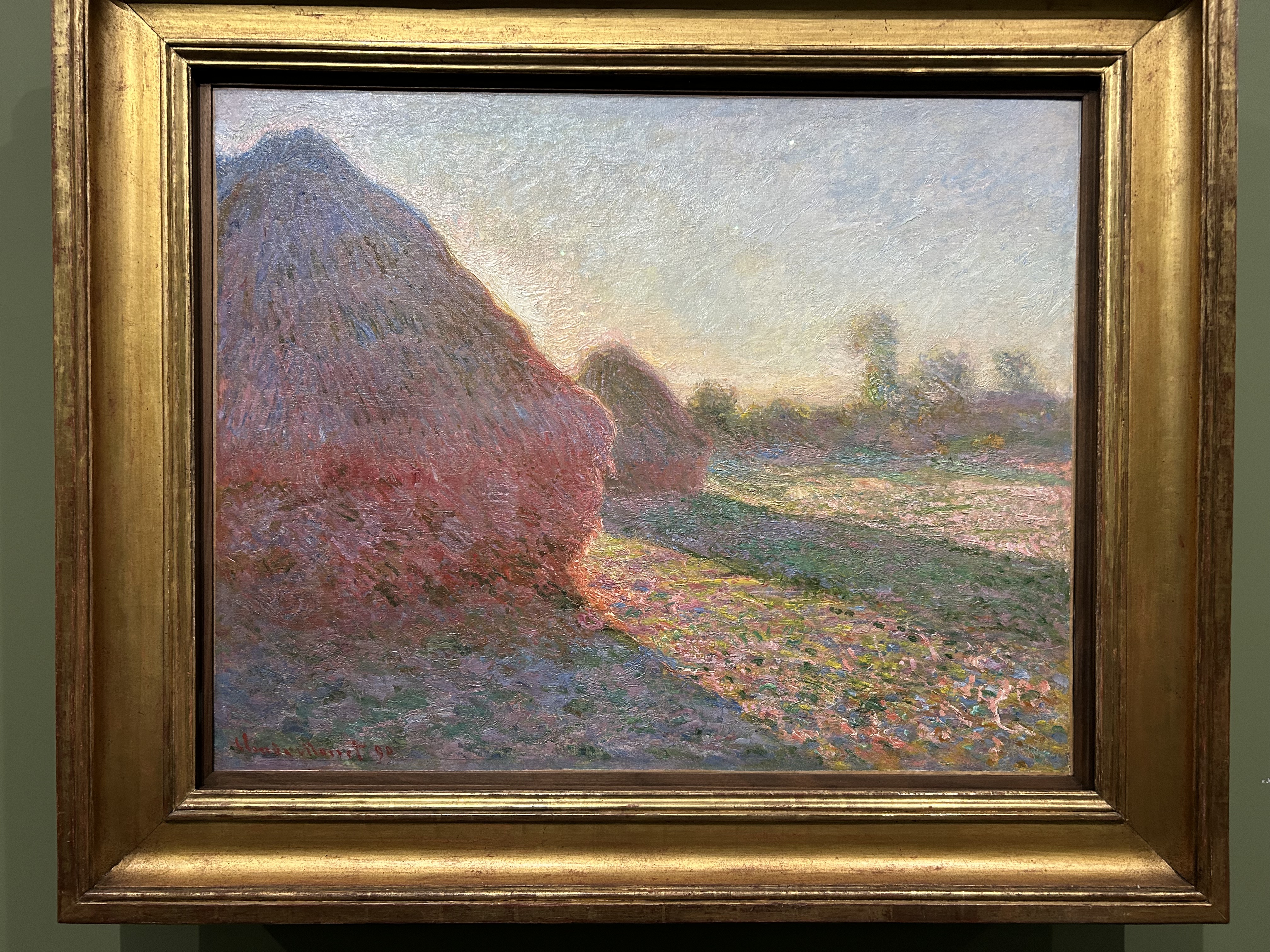
But onward we went. Saturday we went to two art museums, the Orsay and the Orangerie. Both had spectacular collections of impressionist art—lots of Monet and Van Gogh, Gaugin, Seurat, etc.
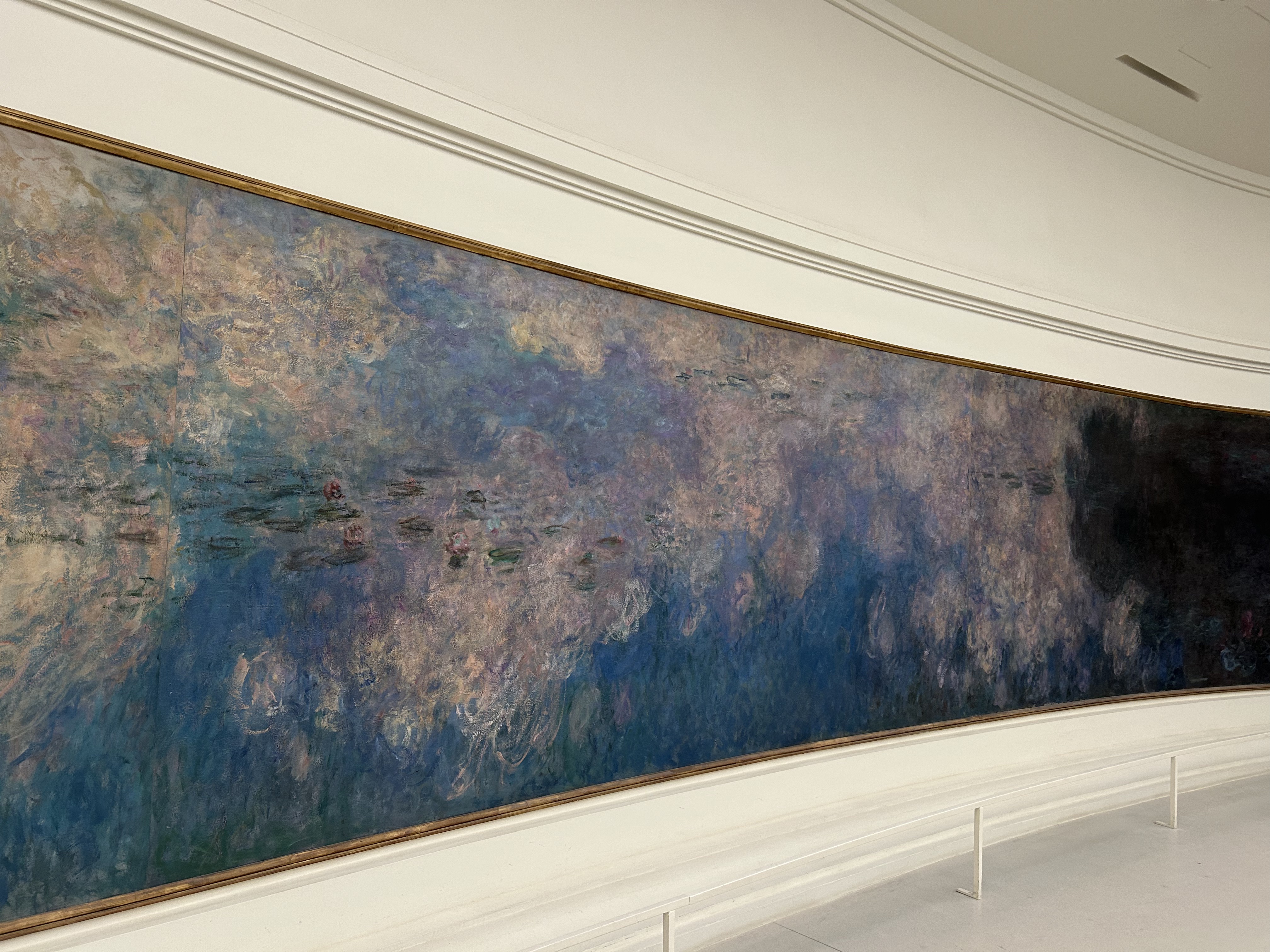
Works of Monet at the Musee L’Orangerie
Heading back to our hotel we ran into an incredible traffic jam, and it took over an hour to get there. When we realized that traffic was from a huge Pride parade, we felt better about being stuck in traffic. I could not believe how many people were marching in the parade.
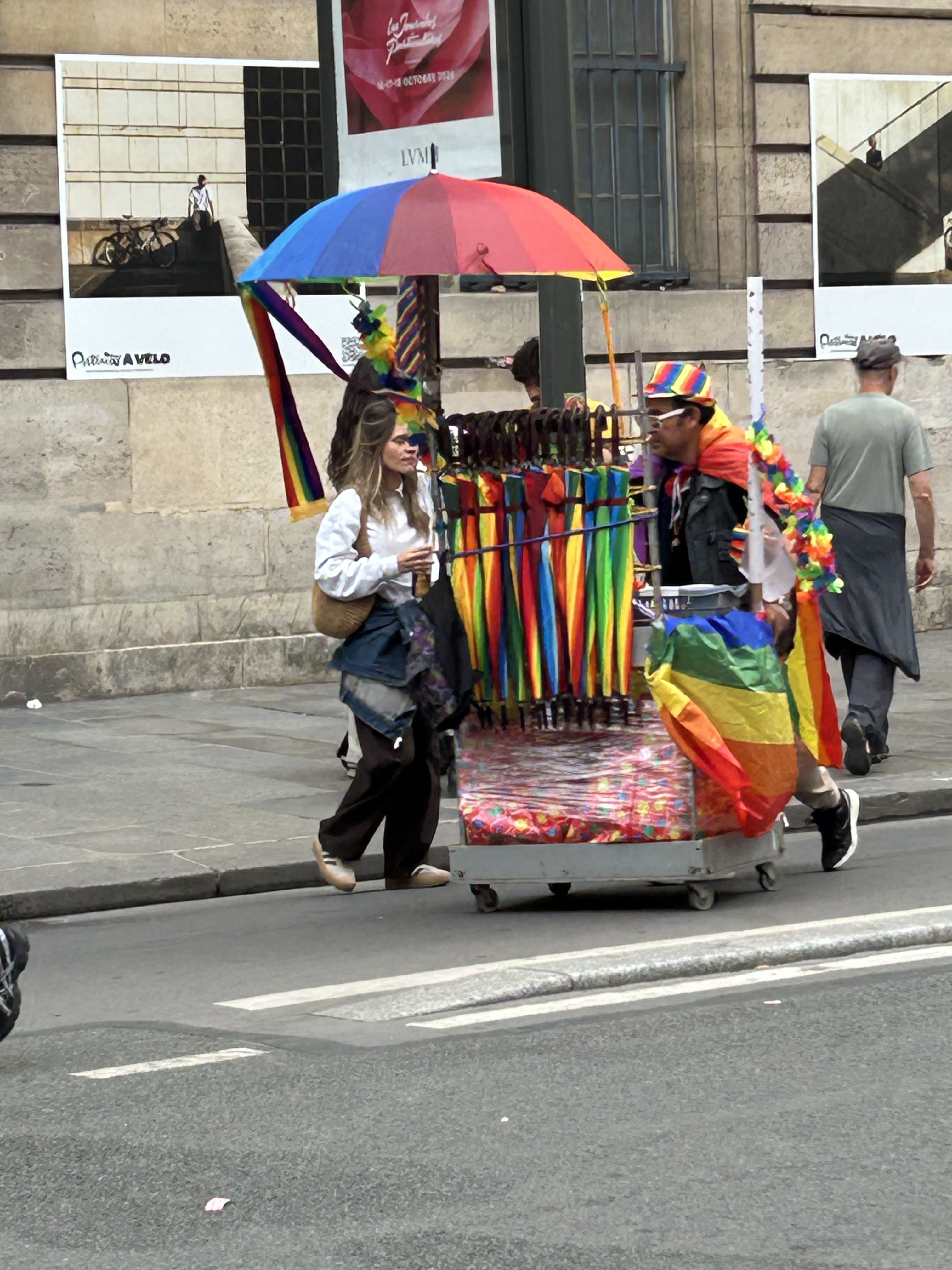
Pride Parade
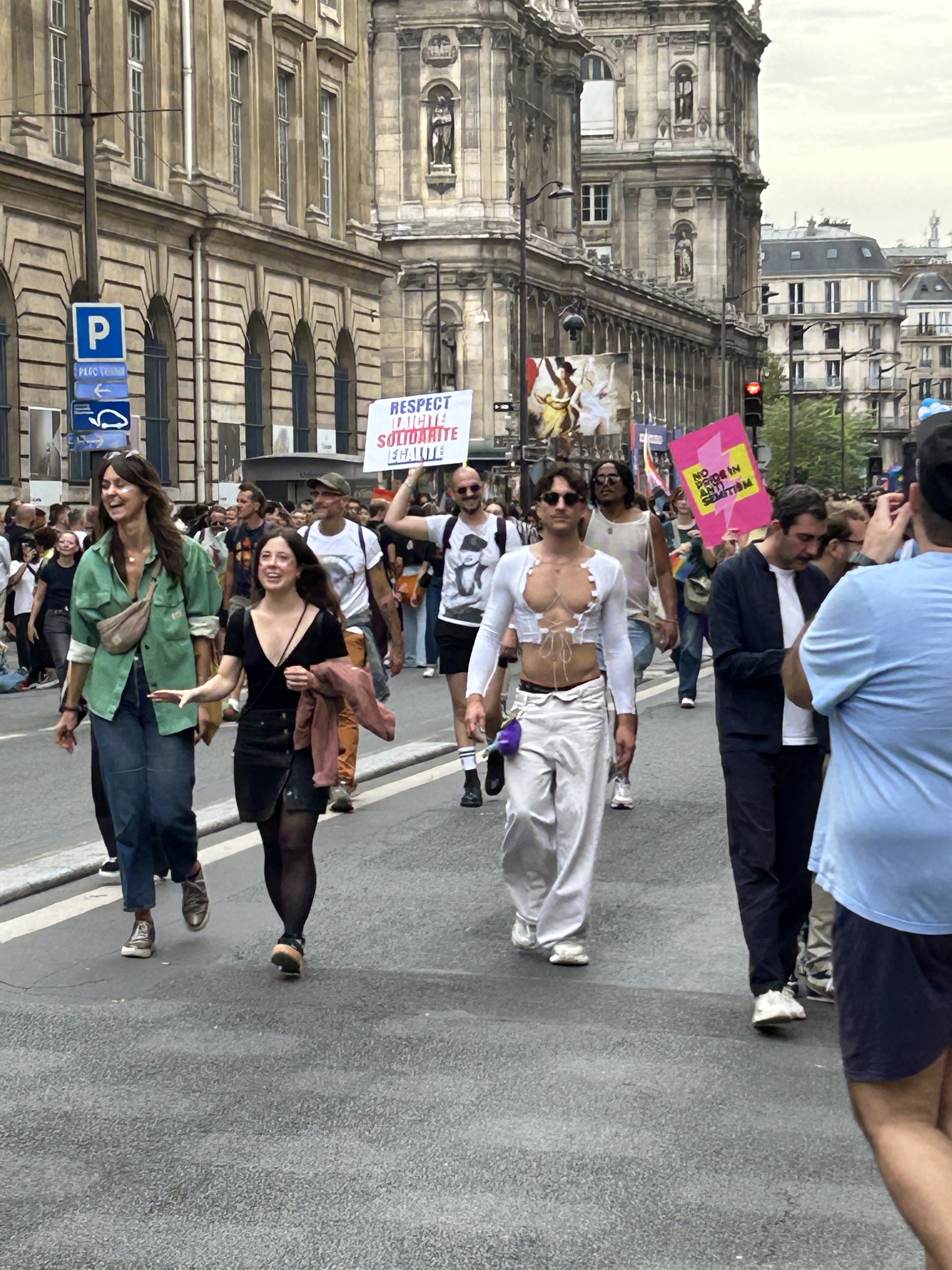
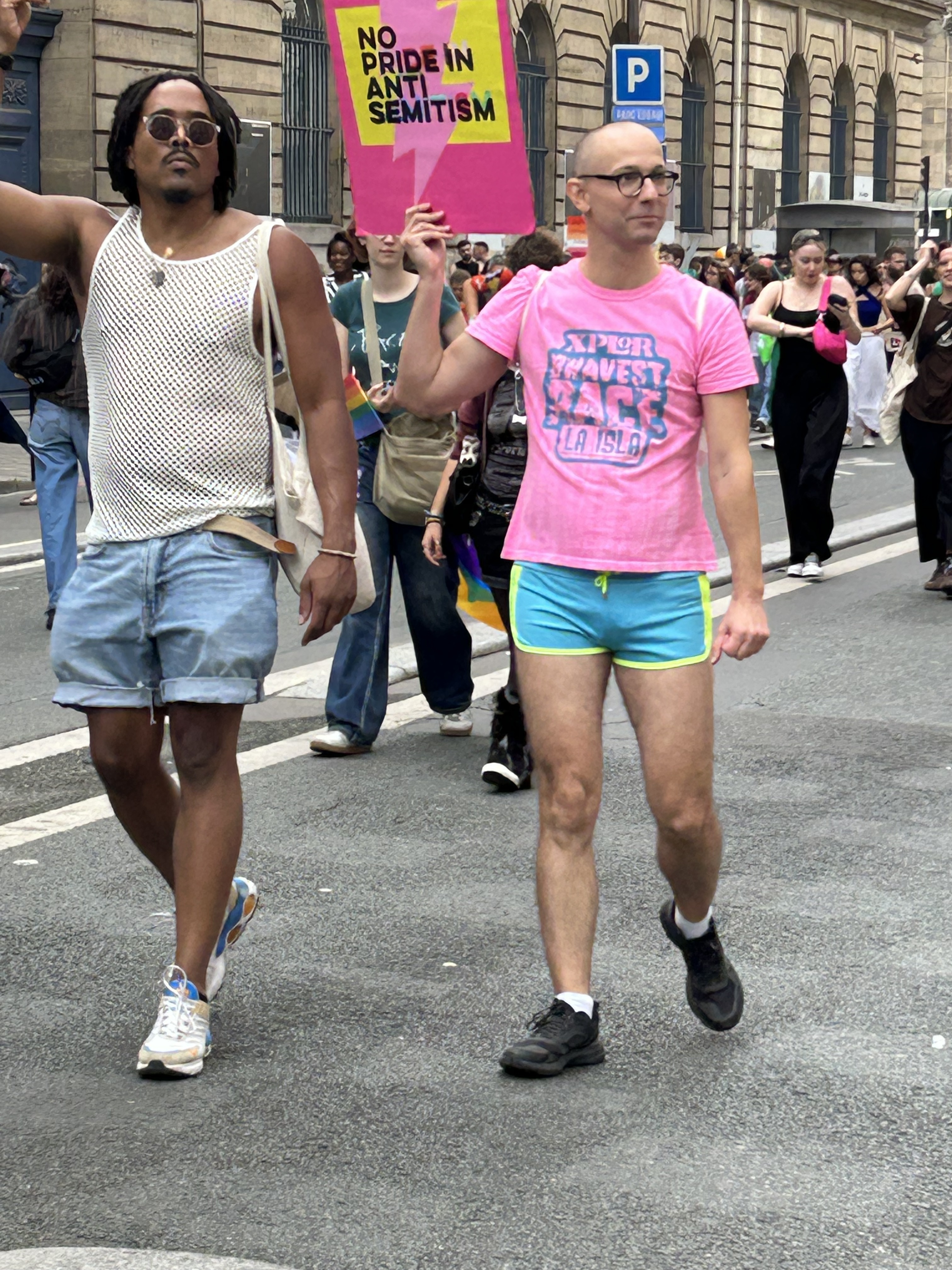
Unfortunately the traffic situation meant we cancelled our dinner near the Eiffel Tower and instead we had a wonderful Italian dinner in the Marais near our hotel.

Sunday, our last day, was a more relaxed day. After a tour of the Palais Garnier or the French opera house, we wandered into the covered arcades of shops and picked up some little gifts to take home for our family.
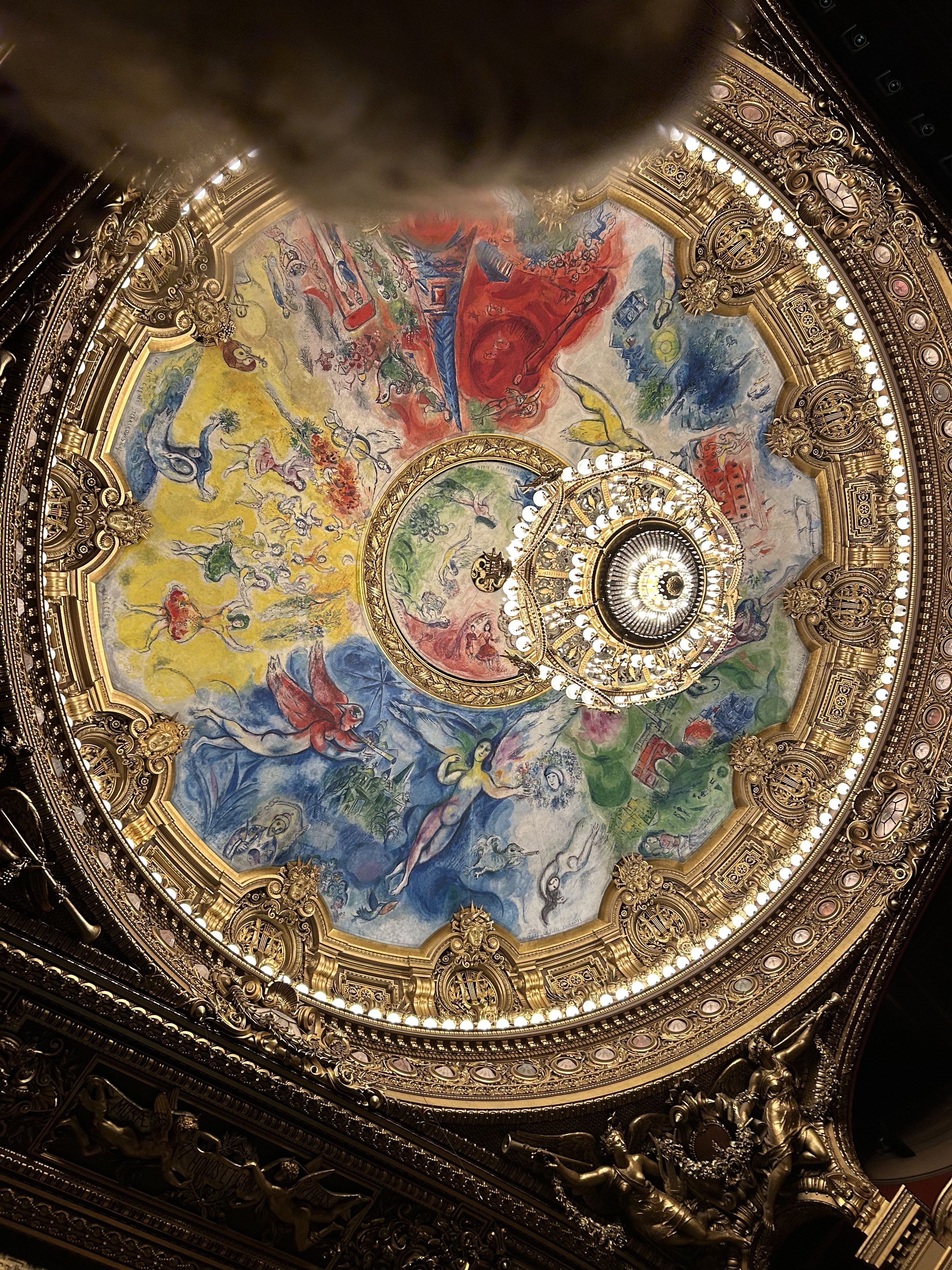
Chagall ceiling in the Paris opera house
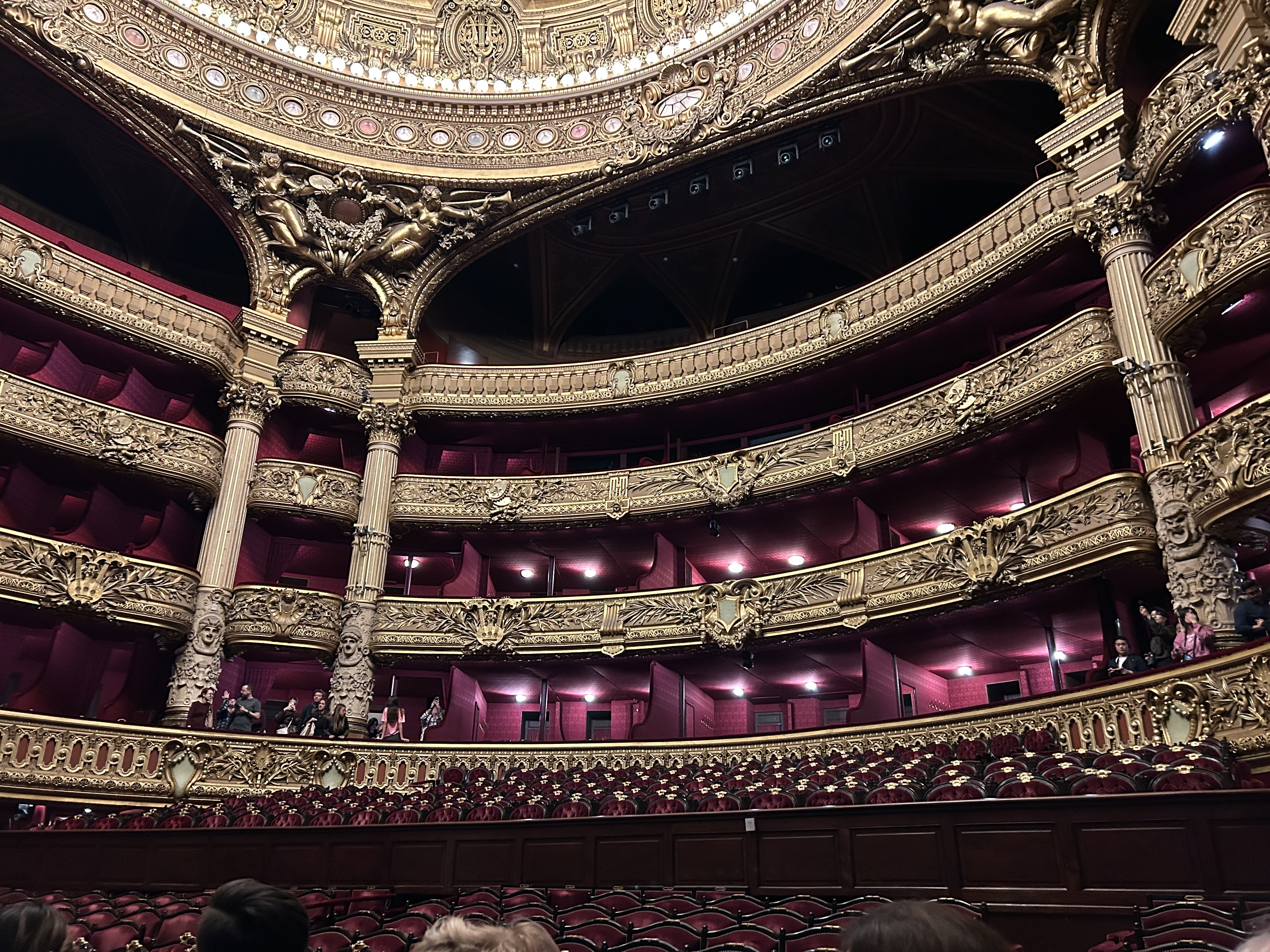
The opera auditorium
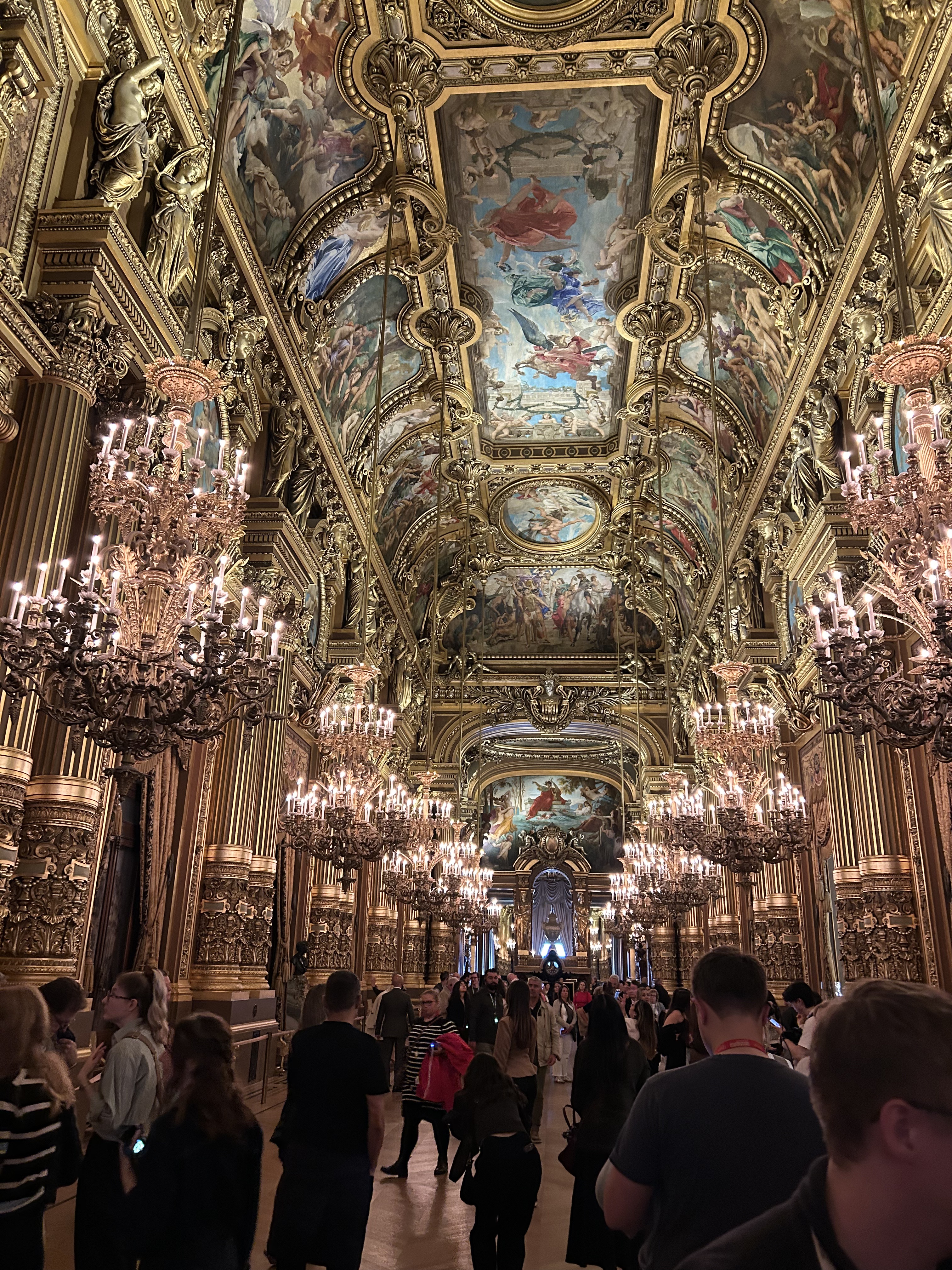
Reception Hall in the Paris Opera House, aka Palais Garnier
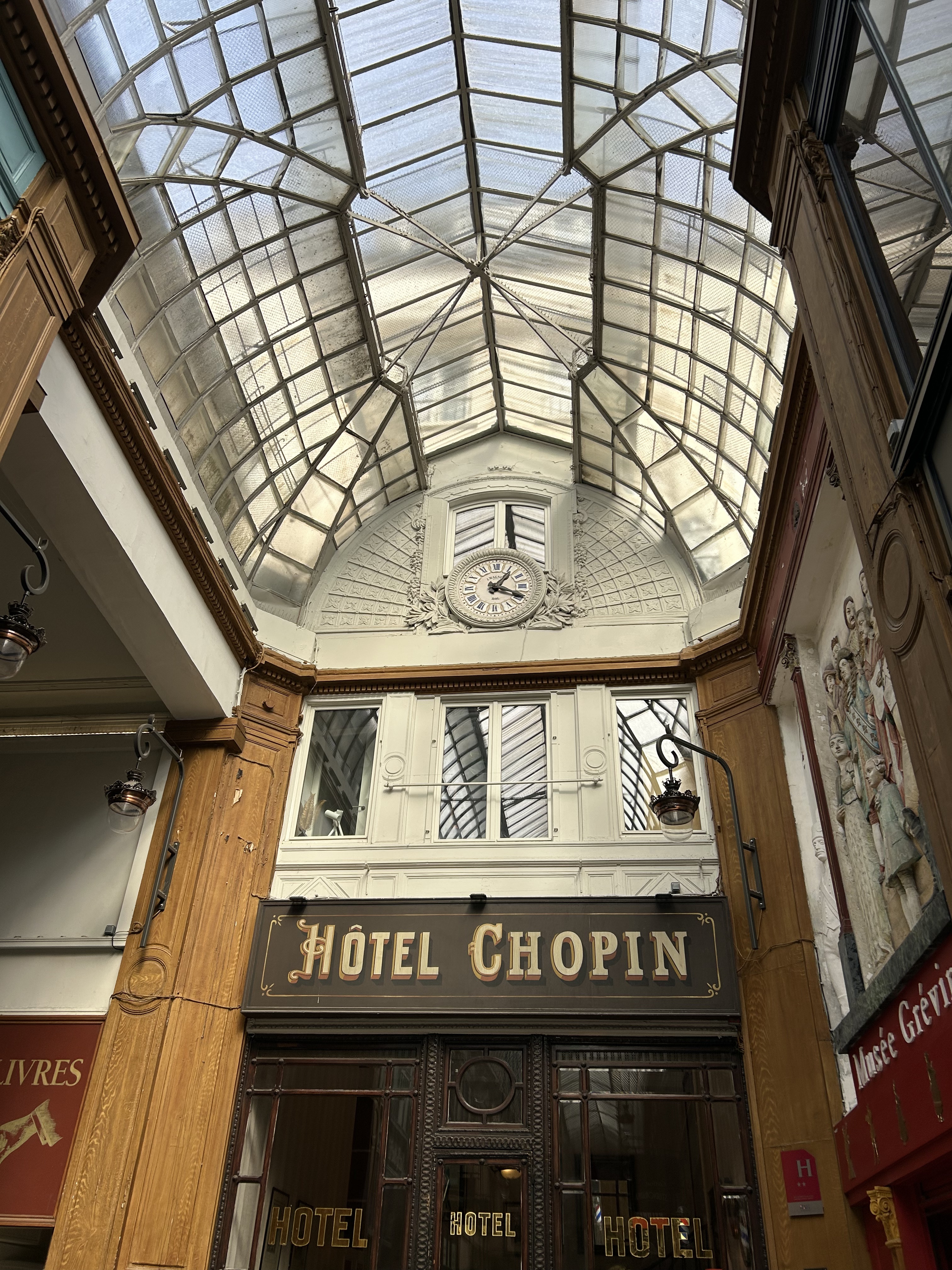
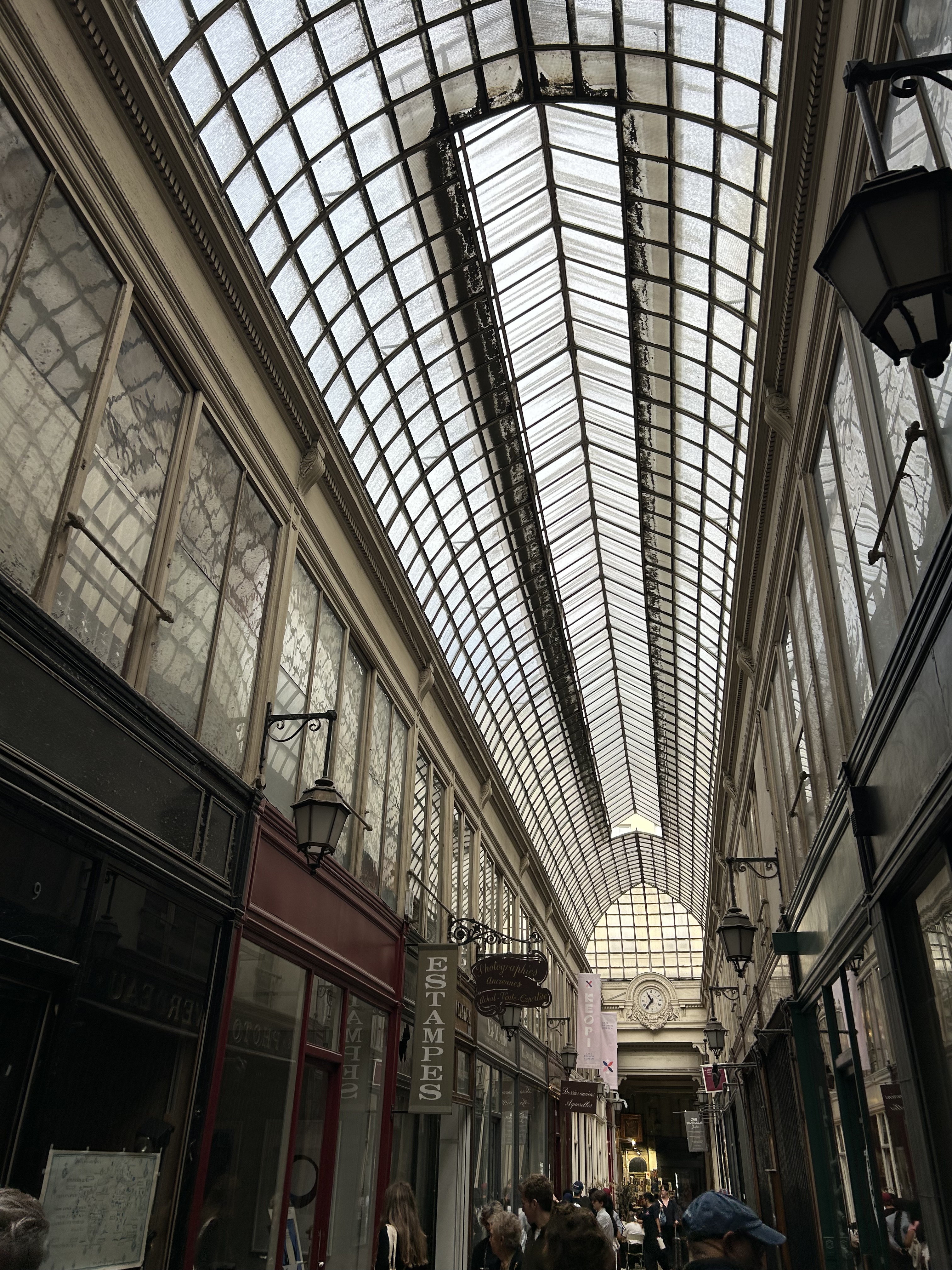
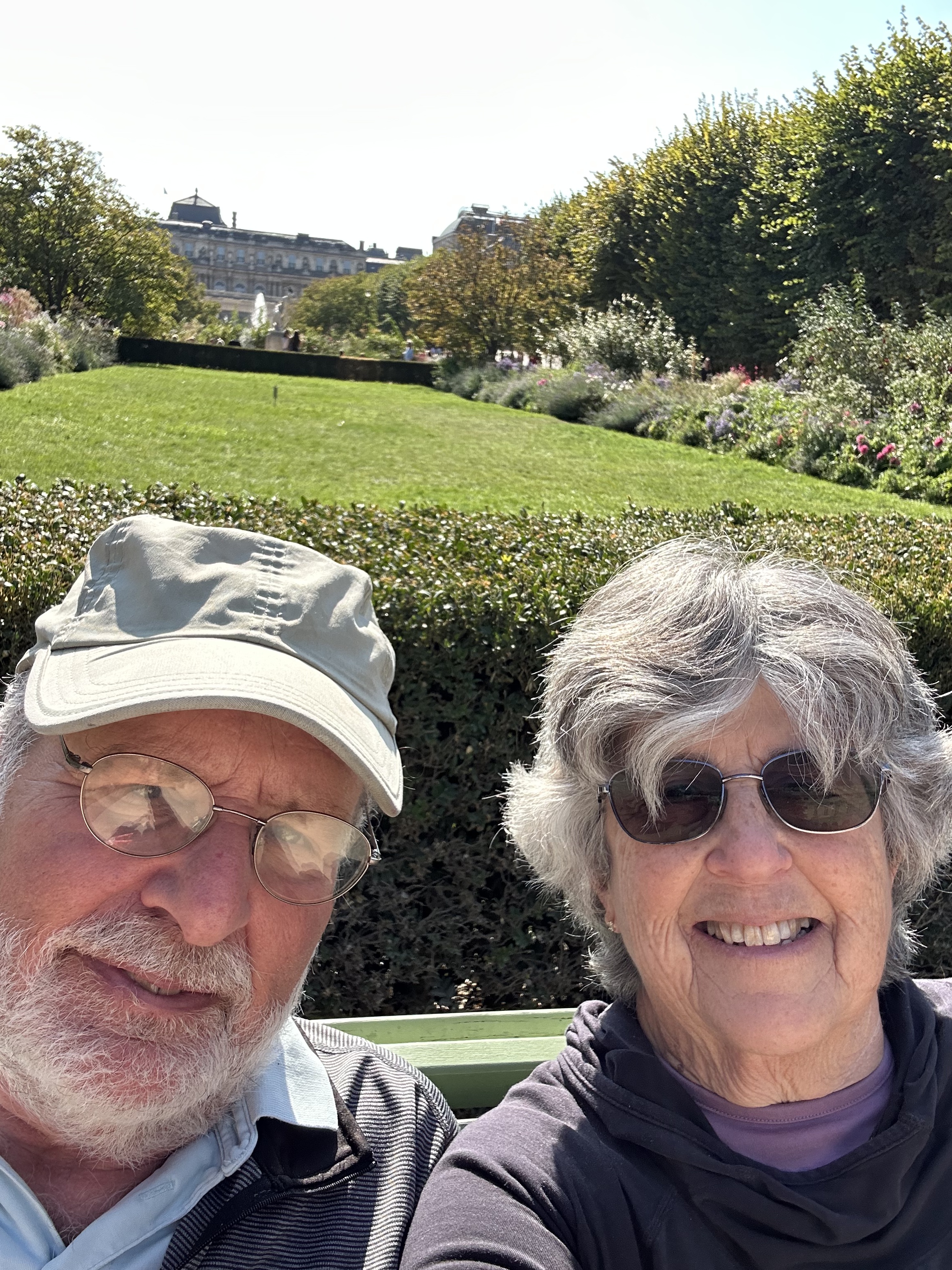
Resting in the Jardin de Palais Royal before heading back to our hotel.

We arrived home on Monday late afternoon, and now we are recovering from jetlag and colds. But looking back, we saw so much—maybe too much?—and had a truly wonderful time. We are still processing it all and have tons more photos than I am sharing here, but this will give you a taste of what our trip was like! We are so grateful to Maddy and Jaime for inspiring us and to Wolfgang and Milena for traveling all the way from Undenheim in southwestern Germany to be with us. It was a trip we will cherish for years to come!

Danke, Berlin, and merci, Paris.

Helene Goldschmidt Tedesco and Her Family: Hiding from the Nazis in France

When Selig Goldschmidt died on January 13, 1896, he was survived by his six children and eighteen grandchildren. In his will, he had wished them happiness and love and hoped they would live good lives, following the faith and practices of Judaism and giving back to their communities.

For the first thirty years of the twentieth century, his hopes for his children were largely fulfilled. Then everything changed. In the next series of posts I will look at each of the children of Selig and Clementine (Fuld) Goldschmidt and their lives in the 20th century, starting with their oldest child, Helene Goldschmidt Tedesco.

As we saw, Helene Goldschmidt, the oldest child of Selig Goldschmidt and Clementine Fuld, married Leon Tedesco on June 9, 1876, in Frankfurt.  I was very fortunate to find and connect with Helene’s great-great-grandson Lionel, and he has generously shared with me many wonderful photographs as well as the story of his family including information about his 3x-great-grandfather, Leon’s father, Giacomo (Jacob) Tedesco.

Leon’s father Giacomo Tedesco was born in Venice, Italy, on August 27, 1799, and in 1833 he married Therese Cerf, a Parisian, and started a small art supplies store in Paris.  Giacomo provided art supplies to artists in exchange for some of their art work. From that collection, he created what grew to be the famous and extremely successful Tedesco Freres gallery. Giacomo was also a very committed Jew who helped build a modern mikvah in Paris, contributed to the development of a synagogue, founded the first kosher butcher shop in Paris, and served as a mohel.

After Giacomo died in 1870, his sons Leon and Arthur took over the business of the gallery. Leon became a close friend of the artist Jean-Baptiste-Camille Corot, the famous French landscape painter and printmaker who was considered “the leading painter of the Barbizon school of France in the mid-nineteenth century.” The National Gallery in Washington, DC, has several works that came from the Tedesco Freres collection, including this work of Corot:

Jean-Baptiste-Camille Corot, Madame Stumpf and Her Daughter, 1872. Courtesy of the National Gallery

Helene and Leon’s son Giacomo was born in Paris on July 28, 1879, and was obviously named for his recently deceased grandfather. Giacomo, the grandson, married Henriette Lang on February 9, 1901, in Paris; she was the daughter of Louis Lang and Louise Blum and was born in Paris on January 31, 1882.1 Giacomo worked with his family in the art gallery. He and Henriette had two daughters, Irene, born December 23, 1902, and Odette, born July 16, 1907.2

Here is an absolutely gorgeous photograph of young Odette with her mother Henriette:

Odette and Henriette Lang Tedesco
Courtesy of the Family

This wonderful photograph is of Leon Tedesco, his granddaughter Odette, her mother Henriette Lang Tedesco, and her grandmother, Helene Goldschmidt Tedesco.

Front: Leon Tedesco, Odette Tedesco, Helene Goldschmidt Tedesco. Rear: Henriette Lang Tedesco. Courtesy of the family

Helene and Leon’s son Giacomo served in the French armed forces during World War I. It must have been strange to be on the opposite side of the war from his Goldschmidt family living in Frankfurt.

Giacomo Tedesco during World War I
Courtesy of the family

Odette married Mathieu Charles Weil on October 24, 1929. Mathieu was born in Strasbourg, France, on August 21, 1894, to Isidore Weil and Jeanne Levy.3 Lionel shared this beautiful photograph from their wedding day:

Odette Tedesco and Mathieu Weil on their wedding day
Courtesy of the family

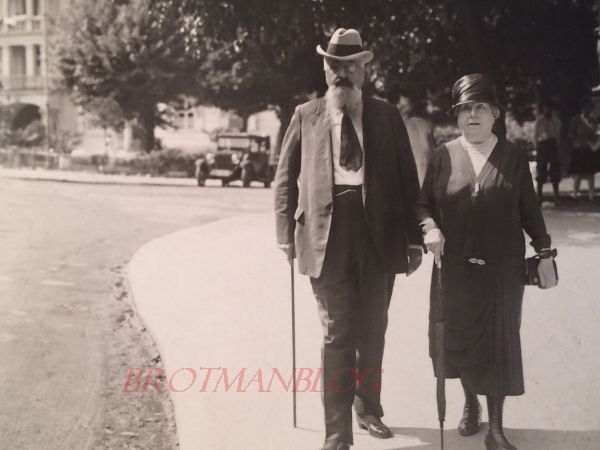
Leon Tedesco died on August 7, 1932, at the age of 79.4 Lionel described his great-great-grandfather as “a strong and handsome man who looked like the King of Belgium.” This photograph of Leon with Helene certainly reflects Lionel’s description:

Leon was survived by his wife Helene, his son Giacomo, his two granddaughters and his great-granddaughter. All of them then had to face the Nazi era.

According to Lionel, the Tedesco family left Paris after the invasion of France by the Nazis in 1940. The family lost everything they had—which was substantial as Leon Tedesco’s art business had been extremely successful. Not only did they lose the business, they also lost most of the valuable art and antiques they’d owned.

Helene Goldschmidt Tedesco died in Marseille, France, on August 21, 1942; she was 84 years old. Her  granddaughter Irene Tedesco died on November 12, 1942, in Oberhoffen, France, in the Alsace region. Lionel had no information regarding Irene’s cause of death, except to say that she had apparently had some health challenges since birth.5

The rest of the family survived the Holocaust and the war years by being safely hidden.  Nadine, Lionel’s mother, still remembers that between the age of 9 and 14, after fleeing from Paris, she lived and went to school in many locations in southern France: Annet, Bordeaux, Arcachon, Salles, Sariac, Cassis, Marseille, Grenoble, Villars de Lans, and Autran. Most of the time she lived with her parents and her grandmother Henriette. Her grandfather Giacomo was hiding elsewhere in France. During the war, Nadine used two different names to hide her identity as a Jewish girl: Nicole Varnier and Mady Mercier.

Mathieu Weil joined the resistance movement and is depicted in this photograph with others who were fighting against the Nazis:

Mathieu Weil, third from right, as part of the French Resistance Courtesy of the family

At one point the family was hiding in the Vercors region with a woman named Charlotte Bayle, who had known the Tedesco family for six generations. When Mathieu Weil, Odette’s husband, was very ill with typhoid, the Gestapo came to Charlotte’s door looking for him. Charlotte lied and said he had left three days ago when in fact he was lying in bed in the next room. The whole family left immediately. Lionel credits Charlotte Bayle with saving the lives of his mother, grandparents, and great-grandmother. Here is a photograph of Charlotte Bayle with Odette Tedesco Weil:

Charlotte Bayle and Odette Tedesco Weil
Courtesy of the family

After the war the family returned to Paris and began to rebuild their lives. Giacomo Tedesco died in Paris on June 29, 1950; he was seventy years old. Giacomo’s wife Henriette Lang Tedesco died on March 3, 1961, in Paris.6

Although Lionel did not know his great-grandparents Giacomo and Henriette, he knew his grandmother Odette very well. He described her as a very fine and elegant woman. He also said that although the family had been very religious before the war, their level of observance faded in the aftermath of the war. But their commitment to Judaism always remained strong and central to their lives. Odette died on July 16, 1987;7 she was predeceased by her husband Mathieu Weil on August 20, 1972.8 Both died in Paris.

Odette Tedesco Weil
Courtesy of the Family

Thank you so much to my fifth cousin Lionel and his mother Nadine for sharing these wonderful photographs and the story of his family.


  1. Giacomo Jacob Tedesco, Marriage Bann Date: 9 févr. 1902 (9 Feb 1902)
    Father’s Name: Léon Tedesco, Mother’s Name: Hélène Goldschmidt, Spouse’s Name: Henriette Lang, Ancestry.com. Paris, France & Vicinity Marriage Banns, 1860-1902 ↩
  2.  Odette Tedesco, Gender: femme (Female), Death Age: 80, Birth Date: 16 juil. 1907 (16 Jul 1907), Birth Place: Paris-16e-Arrondissement, Paris, Death Date: 16 juil. 1987 (16 Jul 1987), Death Place: Paris-16E-Arrondissement, Paris, France, Certificate Number: 1005, Institut National de la Statistique et des Etudes Economiques (Insee); Paris, France; Fichier des personnes décédées; Roll #: deces-1987.txt, Ancestry.com. Web: France, Death Records, 1970-2018. Irene’s birth date came from the work of David Baron and Roger Cibella. ↩
  3. Mathieu Charles Weil, Gender: homme (Male), Death Age: 77, Birth Date: 21 août 1894 (21 Aug 1894), Birth Place: Strasbourg, Bas-Rhin, Death Date: 20 août 1972 (20 Aug 1972), Death Place: Paris-16E-Arrondissement, Paris, France
    Certificate Number: 1230, Institut National de la Statistique et des Etudes Economiques (Insee); Paris, France; Fichier des personnes décédées; Roll #: deces-1972.txt, Ancestry.com. Web: France, Death Records, 1970-2018 ↩
  4. Name: Leon Tedesco, Death Date: 7 Aug 1932, Death Place: Paris, France
    Probate Date: 8 Jun 1933, Probate Registry: London, England, Ancestry.com. England & Wales, National Probate Calendar (Index of Wills and Administrations), 1858-1995 ↩
  5. These dates come from the work of David Baron and Roger Cibella and are also seen on the Geni profiles for Helene and Irene. ↩
  6. These dates come from Baron and Cibella and also from Geni. ↩
  7. Odette Tedesco, Gender: femme (Female), Death Age: 80, Birth Date: 16 juil. 1907 (16 Jul 1907), Birth Place: Paris-16e-Arrondissement, Paris, Death Date: 16 juil. 1987 (16 Jul 1987), Death Place: Paris-16E-Arrondissement, Paris, France, Certificate Number: 1005, Institut National de la Statistique et des Etudes Economiques (Insee); Paris, France; Fichier des personnes décédées; Roll #: deces-1987.txt, Ancestry.com. Web: France, Death Records, 1970-2018 ↩
  8. Mathieu Charles Weil, Gender: homme (Male), Death Age: 77, Birth Date: 21 août 1894 (21 Aug 1894), Birth Place: Strasbourg, Bas-Rhin, Death Date: 20 août 1972 (20 Aug 1972), Death Place: Paris-16E-Arrondissement, Paris, France
    Certificate Number: 1230, Institut National de la Statistique et des Etudes Economiques (Insee); Paris, France; Fichier des personnes décédées; Roll #: deces-1972.txt, Ancestry.com. Web: France, Death Records, 1970-2018 ↩

A Prayer for Peace


Embed from Getty Images

For all the people in Paris and everywhere else in the world, this is the prayer for peace as translated in Siddur sim Shalom, the Conservative Judaism prayerbook:

May we see the day when war and bloodshed cease
when a great peace will embrace the whole world

Then nation shall not threaten nation
and humankind will not again know war.

For all who live on earth shall realize
we have not come into being to hate or destroy
We have come into being
to praise, to labour and to love.

Compassionate God, bless all the leaders of all nations
with the power of compassion.
Fulfill the promise conveyed in Scripture:
“I will bring peace to the land,
and you shall lie down and no one shall terrify you.
I will rid the land of vicious beasts
and it shall not be ravaged by war.”

Let love and justice flow like a mighty stream.

Let peace fill the earth as the waters fill the sea.

And let us say: Amen

Peace and love

Peace and love (Photo credit: Wikipedia)