A Small Chink in the Wall

Just last week I wrote that I was putting aside for now my attempt to track Lizzie and Ray Rosenzweig, the two youngest children of Gustave and Gussie Rosenzweig.  I had hit a brick wall and figured I’d never find them.  So I moved on, determined not to keep hitting my head against the wall.

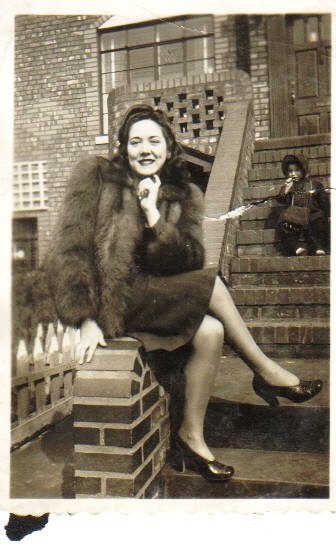
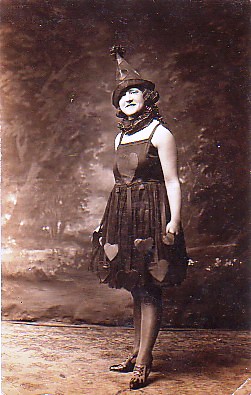
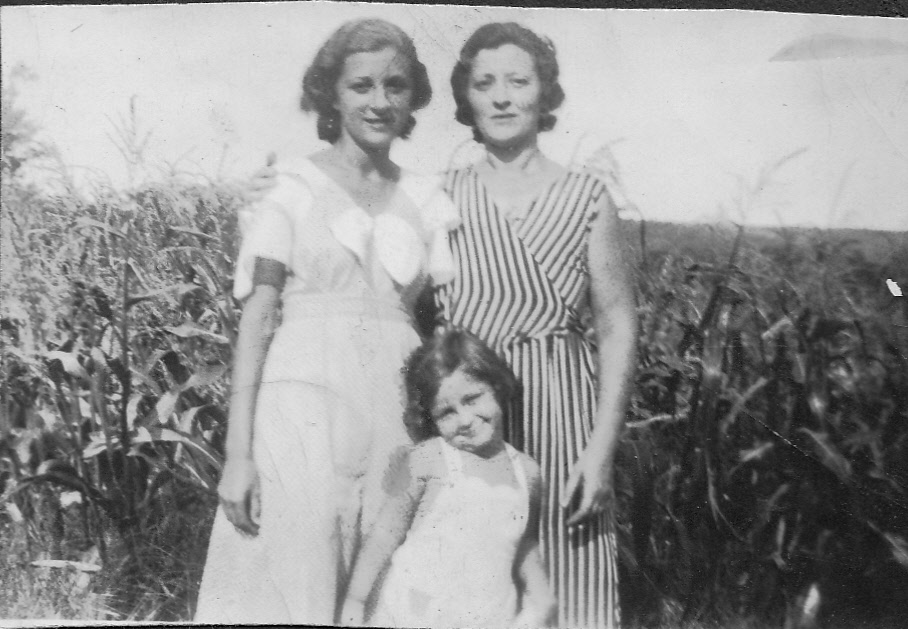
And then I got some clues.  First, Joseph’s grandson sent me a photograph of Lizzie, labeled Lizzie Horowitz.

Lizzie Horowitz

Lizzie Horowitzl


He said that her married name had just come back to him.  Then in an email exchange with one of Rebecca Rosenzweig’s grandsons, he mentioned that he knew that his father Irwin had reconnected with Lizzie in Florida.  Two clues, and I was off and running, back to ancestry, PeopleFinders, Family Search, etc.

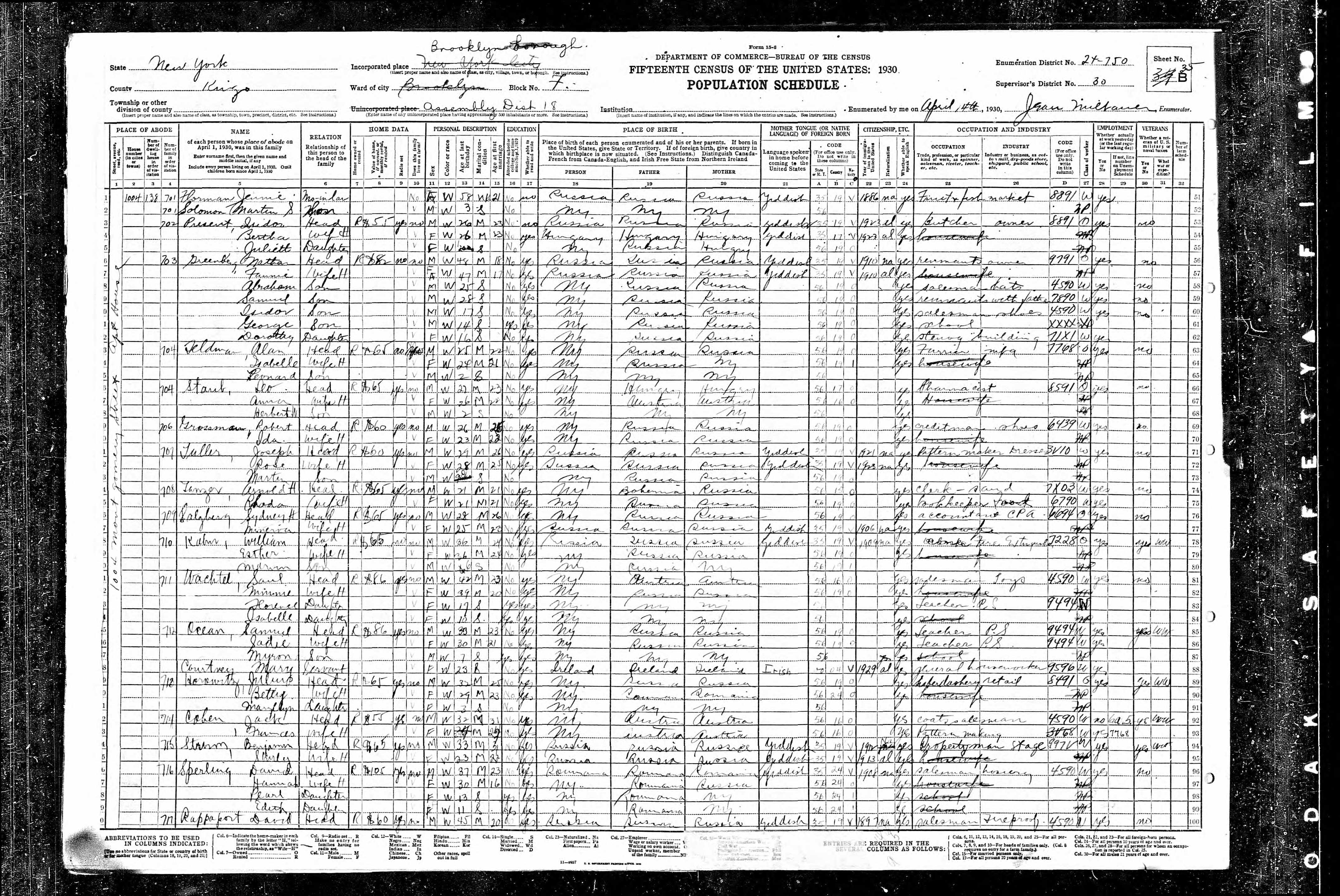
I did not find much, but I did find one 1930 census for a Betty Horowitz whose parents had both been born in Romania.  One of my other cousins had mentioned that Lizzie had also been called Betty.

Horowitz Family 1930

Horowitz Family 1930

She lived in Brooklyn, was married to Julius Horowitz, and had a three year old daughter named Mary Lyn.  I asked my third cousins whether either of those names rang any bells, and one wrote that the names Julius and Marilyn did seem familiar and that she remembered a cousin Marilyn who had moved to Florida.

I located Lizzie, sometimes called Betty, and Julius on the 1925 and 1940 census reports as well.  They had a second daughter born around 1931 named Harriet.

Now I am in the process of trying to find Marilyn and Harriet or their descendants.  I have not yet found a death record for either Lizzie or Julius, but I think I have the birth dates for Marilyn and Harriet from the NYC birth index.  Searching by those birth dates, unfortunately, had not helped much.  There are many women with those first names born on those dates.  I’ve had better luck with Marilyn, and if I limit the search to Florida, I can eliminate a few more.  But now what?

Now it’s a game of trying to contact family members of those Marilyns who remain and hope that one of them is the daughter of Lizzie Rosenzweig and Julius Horowitz.   To be continued…I hope.  Thanks to my newly found third cousins, there is hope.

English: A crack in the wall, Newbridge on Usk...

English: A crack in the wall, Newbridge on Usk This crack is in the east parapet of the road bridge at Newbridge on Usk. (Photo credit: Wikipedia)

Enhanced by Zemanta

More Manna from Heaven: Of Bessie, Joseph, Max and the Brotmanville Brotmans

As I wrote yesterday, the notes of the conversation with my Aunt Elaine about the family history are remarkably accurate.  Although much of what was in there I had learned either from my mother or brother or cousins or from my own research, there were a few stories in the notes, a few comments, that revealed something I had not known for sure before.  Keeping in mind the overall accuracy of the information that my aunt gave to Joel, it is very interesting to think about this additional information.

For example, there are some details about Bessie and Joseph that were revealing.  According to the notes, Bessie and Joseph were first cousins.first cousins  Although family lore did say that Joseph and Bessie were cousins, I did not realize that they were first cousins. Since both Joseph and Bessie had the surname Brotman or Brot, it seems that their fathers must have been brothers. What’s odd about this is that it means that Joseph’s father Abraham had a brother who was also apparently named Joseph, if the records are accurate.  It seems unlikely, given Jewish naming patterns, that Abraham would have named his son the same name as his brother, unless the brother had died.  Since Bessie was younger than Joseph (her husband), that is not possible.  The other possibility is that Bessie’s father and Joseph were both named for the same ancestor.  And, of course, the final possibility is that the records that indicated that Bessie’s father’s name was Joseph were incorrect.

Joel’s notes also indicate that after Joseph’s first wife died, leaving him with four children, “they decided” that Bessie should marry Joseph to help with the children.they decided  The notes don’t indicate who made the decision, but it probably was not Bessie. It’s sad to think of my great-grandmother being put in that situation, and it certainly takes the idea of any romance out of the equation.  But Joseph and Bessie went on to have five children of their own, so I’d like to assume that although it may have started as an arranged marriage for the convenience of Joseph, that love grew with time and the shared experiences and children that Joseph and Bessie had.  Call me a romantic.  I know that I am.

After Joseph himself died in 1901, the notes report that Bessie did laundry work to make money to support herself and her children, including Sam, who was just an infant, Frieda, Gussie, Tillie, and Hyman.  Tillie and Hyman were working in sweatshops, so Gussie, my not-yet-seven year old grandmother, stayed home to take care of Frieda and Sam.  Not long after, out of desperation, Bessie married “the shoemaker Moskowitz,” who my aunt reported to be very stingy.  He had five children of his own. moskowitz

I assume that my aunt’s source for these stories was my grandmother, who obviously resented Philip Moskowitz and chose to live with her sister Tillie in Brooklyn instead of staying with her mother and Sam and Frieda when Bessie remarried, so I know I have to consider the source.  My great-grandmother Bessie lived with Philip for many years, more years than she lived with Joseph, and she was buried near him, not Joseph, when she died. Bessie and Philip Moskowitz headstones As with her marriage to Joseph, her relationship with Philip may have started out of need and convenience, but it also must have developed into something more.  Or at least I hope it did.

Bessie Brotman

Bessie Brotman

Of course, it is also possible that the source of this information was Bessie herself.  Bessie did not die until 1934, when my aunt was seventeen years old.  Knowing my aunt’s interest in the family history, I assume that she must have talked to her grandmother Bessie herself as she grew up, so perhaps the stories are not just my grandmother’s version of the facts, but Bessie’s version as well.

One other comment from these notes is a rather sweet one that I hope Max Brotman‘s grandchildren and great-grandchildren will appreciate:

max mason


Obviously, Max, who was probably the most successful businessman of the Brotman children, was also a very generous man.  He provided food to my mother’s family during the Depression.  Here is a great-uncle I’d never even heard of, someone my mother was too young then to remember, who helped out my grandmother and her family in a time of need.  Thank you, Max.

Max Brotman

Max Brotman


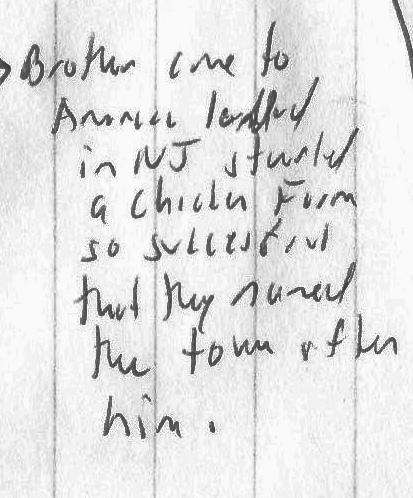
The final tidbit from the notes from Joel’s conversation with my aunt is this one:brotmanville


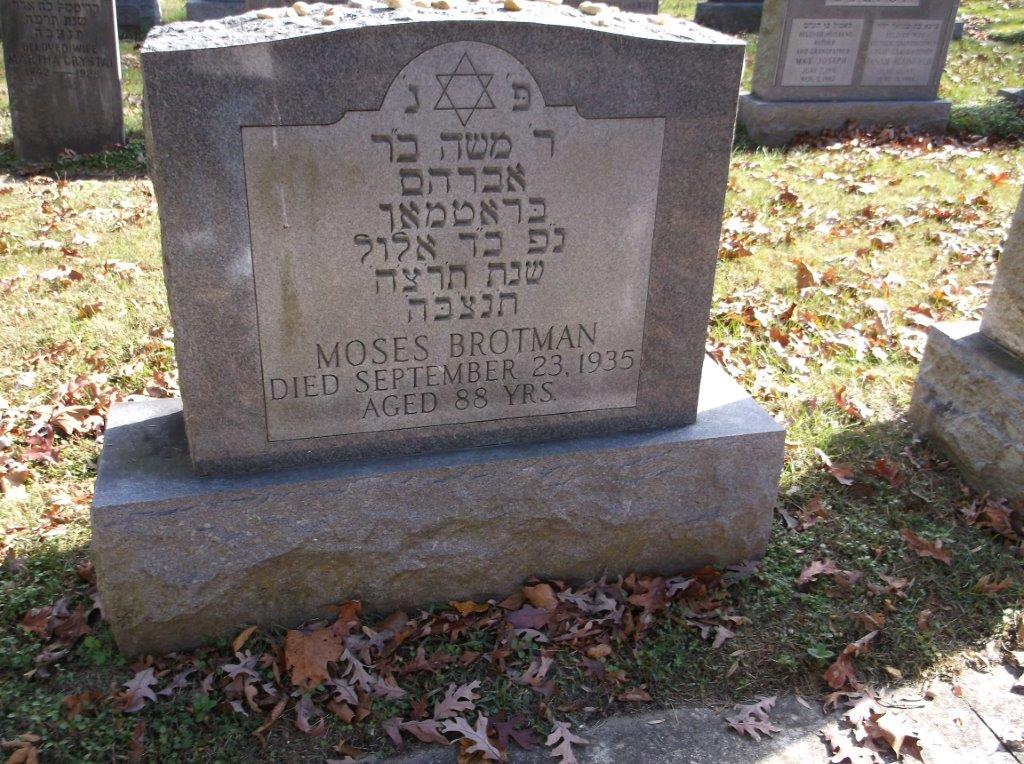
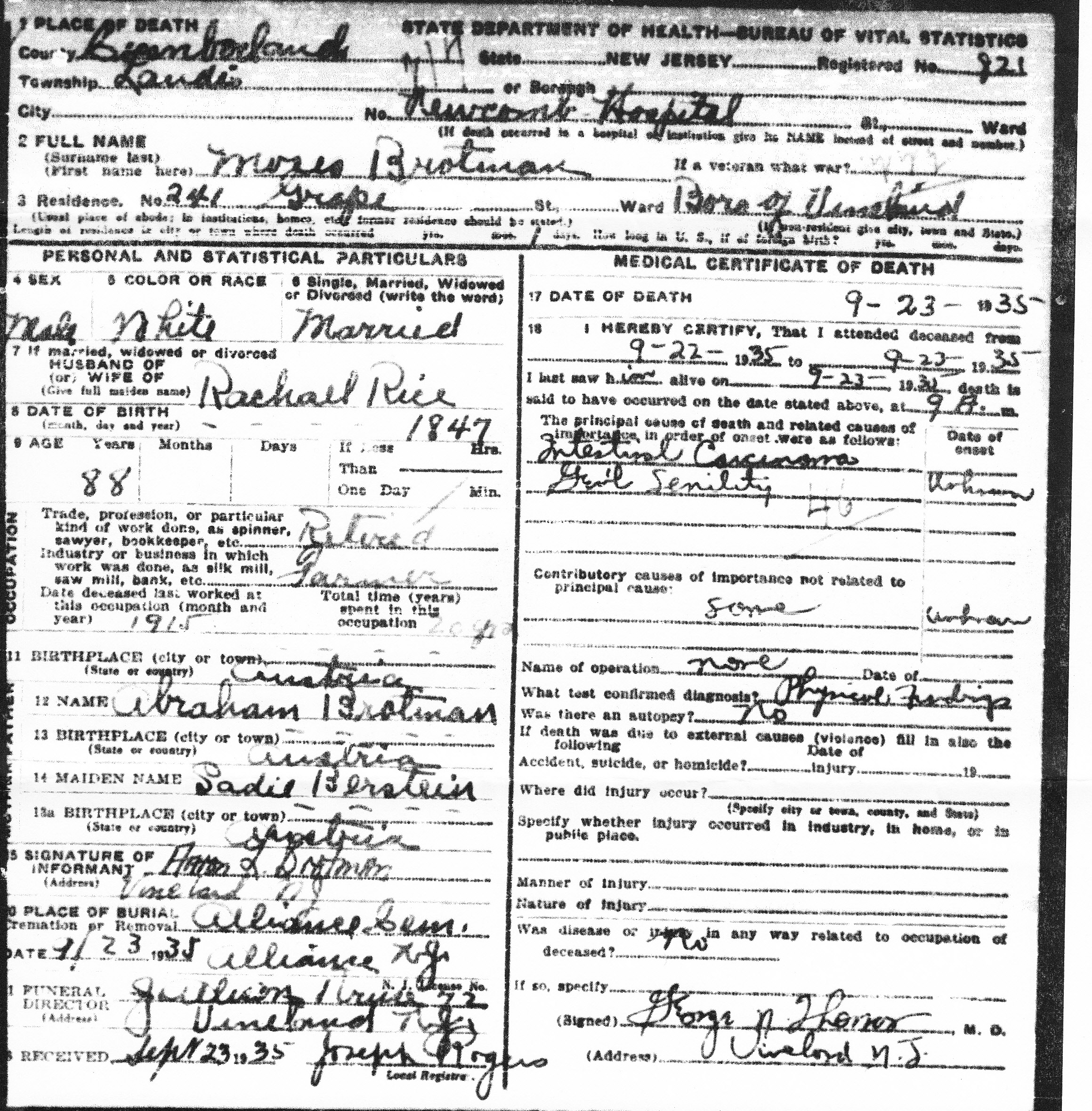
In case you cannot read that, it says, “Brother came to America landed in NJ started a chicken farm. So successful that they named the town after him.”  The quote points back to Joseph.  This is obviously a reference to Brotmanville.  Although it is not entirely accurate—Brotmanville was named for Abraham Brotman, who started a manufacturing business to employ the residents whose farms were failing, not for Abraham’s father Moses, who had the chicken farm—the note nevertheless provides support for the claim that we are in fact related to the Brotmanville Brotmans.  As you may recall, Moses Brotman also had a father named Abraham, as revealed by his headstone and death certificate.Moses Brotman headstone Moses Brotman death certificate_0001_NEW


He was born in 1847 in Galicia, making him a contemporary of Joseph, my great-grandfather.  I cannot rely on these notes alone to assert with any certainty that Moses and Joseph were brothers, but given the overall accuracy of what my aunt told Joel, it is enough evidence for me to start once again to try and find a connection.  If we can find that connection and also learn where Moses Brotman lived in Galicia, it will help to answer a number of lingering questions.

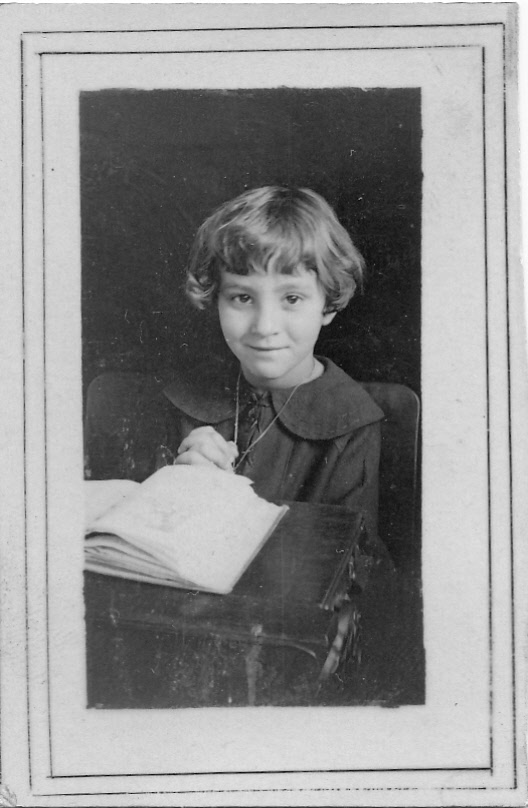
Moses BrotmanHe certainly has the Brotman cheekbones.  Could this be what Joseph looked like also?


Enhanced by Zemanta

Finding the Ruby Slippers and Getting Back Home to Where It Started: The Brotmans

[for my aunt, Elaine Goldschlager Lehrbaum, 1917-1995]

Elaine 1933

Elaine 1933

Many of you who are more recent followers of the Brotmanblog may wonder why the blog is called the Brotmanblog.  In the past several months I have barely mentioned the name Brotman because I have been focused on searching for my grandfather’s family, the Goldschlagers and Rosenzweigs.  But if you go back to the beginning of the blog, you will see that my original search focused on my grandmother’s family, the Brotmans.  That’s where I started my genealogy adventures.  It made sense.  My grandmother Gussie Brotman Goldschlager, my mother’s mother, was the grandparent I knew best, the only grandparent I knew as an adult.  She was the only grandparent my husband ever met, though she died a year before we were married.  It was only natural that I would start my journey trying to learn as much as I could about her and her siblings and her parents.  Once I had found as much as I could find about the Brotmans, I then moved on to my grandfather’s family.  The next chapter will be my father’s family.  But it all started with the Brotmans.

Why do I bring that up now? Because this weekend I will finally get to meet a number of the Brotman cousins I only learned about through doing this research.  There will be over thirty of us gathering in NYC to meet and eat and to visit the Lower East Side, where our grandparents and great-grandparents (and for some, great-great grandparents or parents) lived in New York.  We will walk to 81/85 Ridge Street where the Brotmans first lived, now a public school, once a tenement building, and then we will tour the Tenement Museum to learn more about what life was like for all of them.

If you have not read any of my posts about the Brotmans, I have provided links here and below to some that will capture the essence of their lives.  Even if you once did read them, you may want to re-read them if you are joining us this weekend and want to remember some of the details and themes I wrote about months ago.  The Brotman story is the classic Jewish American immigration story, a story of poverty and heartbreak as a family moved from Galicia to NYC in the late 1880s to a story of assimilation and success as the future generations built businesses, moved beyond the Lower East Side, became professionals, and moved to the suburbs after World War II.  My Brotman great-grandparents were hard-working realists who did what they needed to do to survive.

Although I was able to piece together a fair amount about their lives through census reports and other documents and through some stories my mother remembered about her grandparents, aunts, uncles and mother, at first there was no one else besides my mother and my brother to whom I could turn for information.  My cousins shared stories about their grandparents, but they also knew little about the early lives of their grandparents and had no one left to ask either.  So mostly I relied on documentation to learn what I could.  I was able to put together a fairly complete history of the Brotman family in America and decided to move on to my grandfather’s family.

Then, like a gift of manna from heaven, about a month ago my cousin Jody sent me some notes that her husband Joel had taken from a conversation he’d had with my Aunt Elaine years ago about her family.  I’ve referred to one part of those notes before—the story of how my grandmother Gussie met my grandfather Isadore on Pacific Street in Brooklyn, where my grandmother was living and where my grandfather’s cousins the Rosenzweigs were living in 1915.  In the next day or two I’d like to share a few more tidbits from Aunt Elaine, via Joel’s notes.

But before I do, I want to point out that these notes are incredibly accurate.  Although the conversation Joel had with my aunt must have taken place in the early 1980s, my aunt’s memory for details was astonishing.  For example, she refers to the fact that Hyman’s son Emanuel worked for Kislack Realty.  I checked with Manny’s children, and they confirmed that in fact  Manny was President of J.I.Kislak Mortgage Corporation in Newark, NJ., which was a subsidiary of J.I.Kislak, Inc., a large residential and commercial Realtor based in Jersey City.kislack realty Also, my aunt knew that David Brotman worked in the coat industry, that Max was in the cigar business, and that Abraham worked for a deli in Coney Island.

All of these are facts that are backed up by my research.Brotman brothers trades

On the Goldschlager side as well, my aunt’s facts are corroborated by the information I found in my research.  David Goldschlager lived in Scranton, PA, for some time and was in the hat business.  Betty married a man in the dry goods business and moved to Arizona. goldschlager siblings I point out how accurate this information is to demonstrate how remarkable my aunt’s memory was and also so that you will trust the other statements she made and their accuracy when I report on those in upcoming posts.

In some ways finding these notes was frustrating.  If I had found them last summer, much of the time I spent trying to figure out who Max was or whether Abraham was related to us or whether there were any other children would have been unnecessary.  My aunt knew it all, and it is in these notes.

But as Glinda the Good Witch tells Dorothy at the end of The Wizard of Oz (the movie) when she reveals to Dorothy that the ruby slippers could take her home and the Scarecrow asks  why Glinda had not told Dorothy that from the beginning:

Glinda : Because she wouldn’t have believed me. She had to learn it for herself.
Tin Man: What have you learned, Dorothy?
Dorothy: Well, I – I think that it – that it wasn’t enough just to want to see Uncle Henry and Auntie Em. And that it’s that – if I ever go looking for my heart’s desire again, I won’t look any further than my own backyard, because if it isn’t there, I never really lost it to begin with. Is that right?
Glinda: That’s all it is!

And then when the Tin Man, Lion and Scarecrow all say that they should have helped Dorothy figure it out, Glinda replies:

She had to find it out for herself.

And so I did as well.  If I had started with Aunt Elaine’s notes, I never would have worked as hard to learn how to research and find these things for myself.  I would never have felt the amazing sense of satisfaction I’ve gotten from putting pieces together and from finding cousins who could help me put those pieces together.

Having my aunt confirm through these notes what I have learned and what I have done is a real gift. She was someone I adored and miss dearly.  It’s like having her here with me again, hearing her say, “You see, Amy Kugel, I always knew you could do anything you wanted.  And I knew some day you would want to know more about your history, your family.”  But, as Glinda told Dorothy, she knew I had to find it out for myself.


Elaine 1926

Elaine 1926

Elaine Gussie Florence 1933

Elaine Gussie Florence 1933

Elaine high school graduation

Elaine high school graduation

Elaine and Phil 1941

Elaine and Phil 1941

Sam with Gussie and Elaine 1945

Sam with Gussie and Elaine 1945

Elaine and Jeff 1949

Elaine and Jeff 1949

Elaine Jeff and Amy 1953

Aunt Elaine with Jeff and me

Phil and Elaine

Phil and Elaine

Enhanced by Zemanta

Family Photo Album: Joe and Sadie Rosenzweig

I love photographs.  Even blurry black and white snapshots can capture and reveal moments and feelings in ways that words never can.  Thanks to the efforts and care of Joe and Sadie’s grandchildren, I can now put faces to the cold hard data that I had found about their grandparents and their mothers.  I will also add some of these to the posts I’ve already written, but I thought I would also post them here so that they can be seen all in one place also.

The first one is a favorite of mine because for the first time I can see the faces of three of the Rosenzweig brothers, Abraham, Joseph and Jack (in that order from left to right).  It’s remarkable how strong the family resemblance is.  Gerry, Abraham’s grandson, said that this photo was taken at a Mason’s Lodge, date unknown.  I don’t know very much about the Masons, but it seems that all three Rosenzweig brothers were members as was Frank Elkins.  I guess I should learn more about this organization.

Abraham Joseph and John (Jack) Rosenzweig

Abraham Joseph and John (Jack) Rosenzweig

The rest of the pictures I will try to place in chronological order.  First is a picture of Joe as a young man.

Joe Rosenzweig

Joe Rosenzweig

He looks so handsome and so well-dressed.  I wonder what the occasion was for this photo.  Was it a wedding picture? Perhaps one of the grandchildren can tell us.

The next image is not actually a photograph, but a page from a Dallas, TX, telephone directory from 1934.  One of the grandchildren had mentioned to me that Joe and Sadie lived in Texas for a while during the Depression.  I had previously seen this directory come up on a search, but had no idea why Joe and Sadie from Brooklyn would be in Texas, so dismissed it as a different couple.  Obviously, this is the same Joe and Sadie Rosenzweig.  I would love to know what Russian-born Sadie and Brooklyn-born Joe thought of Dallas.  They must really have been fish out of water.

Dallas Phone Directory 1934

Dallas Phone Directory 1934

The next image is a photo, but from a page from the 1942 Tilden High School yearbook.  The photo is of Mildred Rosenzweig, Joe and Sadie’s younger daughter.  It’s a lovely photo, but what is really poignant here is the text beside her picture.  Mildred was active in many school organizations, including Arista, the NYC Honor Society.  She saw herself becoming a vocalist.  And the quote reads in part, “Some day we’ll say…’we knew her when.’” Knowing that Mildred died less than ten years later, leaving behind her young husband and toddler son, makes that comment particularly bittersweet.

Tilden High School 1942 Mildred Rosenzweig

Tilden High School 1942 Mildred Rosenzweig

Here is a photo from around the same era of Sadie with their older daughter, Irene.  Irene is dressed in her uniform.  She was a member of the United States Cadet Nurse Corps, as you can see from the card below.

Sadie and Irene Rosenzweig

Sadie and Irene Rosenzweig

Irene Rosenzweig Nursing Corps

Irene Rosenzweig Nursing Corps

In 1947, Mildred Rosenzweig married Seymour Sundick.  Here is their wedding picture as well as a picture of Joe taken at the wedding.  Obviously he had a very good time at the wedding!

mildred rosenzweig and seymour sundick

Mildred Rosenzweig and Seymour Sundick 1947

Joe Rosenzweig at Mildred's wedding 1947


Here’s is another picture of Mildred from around the same period, looking very happy.

Mildred

Mildred

And finally here are a few pictures from some later years.  First, another picture of Sadie with her daughter Irene.  And then finally a picture of Joe and a picture of Sadie with Ron, their grandson, Mildred’s son.

Sadie and Irene

Sadie and Irene

Joe Sadie and Ron

Joe Sadie and Ron

I never met any of these people (though I do hope to meet Ron someday soon), but looking at these pictures helps me to understand why Joe and Sadie were so well loved by their entire family.

Enhanced by Zemanta

Mystery solved, Questions Answered!  The Internet Is Magical


Internet

Internet (Photo credit: Wikipedia)

The internet is magical.  I’ve hit a lot of brick walls lately, but I’ve also found some goldmines. Recently I’ve been able to find a number of my third cousins—grandchildren of my grandfather’s first cousins.  I had already located Joe Rosenzweig’s grandchildren and one of Rebecca Rosenzweig’s grandchildren, and now I have located one of Abraham Rosenzweig’s grandchildren, Gerry.

I’ve also located other third cousins previously,  Tillie’s great-granddaughter Jean and her family, and many second cousins: David Goldschlager’s grandson Richard and Betty Goldschlager Feuerstein’s grandchildren Barry, Karyn, Robyn and Gayle.  It’s all quite remarkable.

Gerry and I had a wonderful conversation this morning, sharing information and family stories.  Gerry did tell me that the mystery photo with the Yiddish inscriptions was not a picture of his grandmother Rebecca and her grandsons.  He does not know who the people in the photograph are, but he is certain it is not his grandmother.  Also, since Irving had two daughters and no sons, the reference to “Yitzhak’s son” must be to a different Irving.

I can only imagine what our grandparents would think.  Would Isadore and David and Betty and Leah and her siblings and Abraham and Joe and Rebecca be amazed that we all found each other, or would they have assumed that family members would always have stayed in touch? Certainly they could never have envisioned that someday there would be technology that allows us all to communicate instantly and freely across the oceans and time zones, to send photographs to each other over a digital network, to find personal records and documents that help lead us to one another.  After all, many of us could not have envisioned any of this ourselves just 25 years ago.  Like I said, the internet is magical.  Thank goodness we have it.


Emptiness: The Magic Trick, magician & assista...

Emptiness: The Magic Trick, magician & assistant, top hat and cape, painted panels, magic box, red, black, blue, white, painting, Seatac Airport, Seattle, Washington, USA (Photo credit: Wonderlane)


Enhanced by Zemanta

One Mystery (Sort of) Solved and Another Started

About a week ago I posted several mystery photos-–pictures that included people I could not identify, including this one:

possibly Rebecca Rosenzweig with Max and Irving

What I did not know was that on the back of this photo were two inscriptions in Yiddish, depicted below:

yiddish on back of photo 2 yiddish on back of photo

I tried to decipher it, but had no luck (especially since I don’t know Yiddish and have trouble reading Hebrew cursive!).  I sent it to a friend who knows Yiddish, and he was able to translate much of it, but could not decipher the names.

I then sent it to a service provided by the Jewishgen.org website called Viewmate.  You can post text or even photos and ask others to help translate or identify the subjects in the photograph.  Within a few hours, I received a response from a volunteer named Sara.  She told me that the inscriptions translated to read,

“”By my right hand is Yitzhak’s son.” “By my left hand is Chaimke’s son.”

Joseph’s granddaughter Ariela believed that the picture was of Abraham’s wife Rebecca with her two grandsons, and that is consistent with the translation of the inscriptions.  Abraham and Rebecca had two sons, Max H. and Irving.  My guess is that “Chaimke,” a nickname for Chaim, is Max H., the H presumably for Hyman or Harry or some other H name standing in for Chaim; “Yitzhak” likely refers to Irving.

But what are the names of the two grandsons in the photograph? That I still do not know.  I am now searching for the children of Max and Irving so that I can fully solve the mystery of who is in the photo.

One door opens as another closes…

Enhanced by Zemanta

My Grandfather’s Cousin Rebecca: Another Life Cut Short

About ten days ago I posted about my search for Rebecca Rosenzweig, my grandfather’s first cousin and daughter of Gustave and Gussie Rosenzweig.  I had certain hunches about who she married and what happened to her, but was awaiting documentation to confirm those hunches.

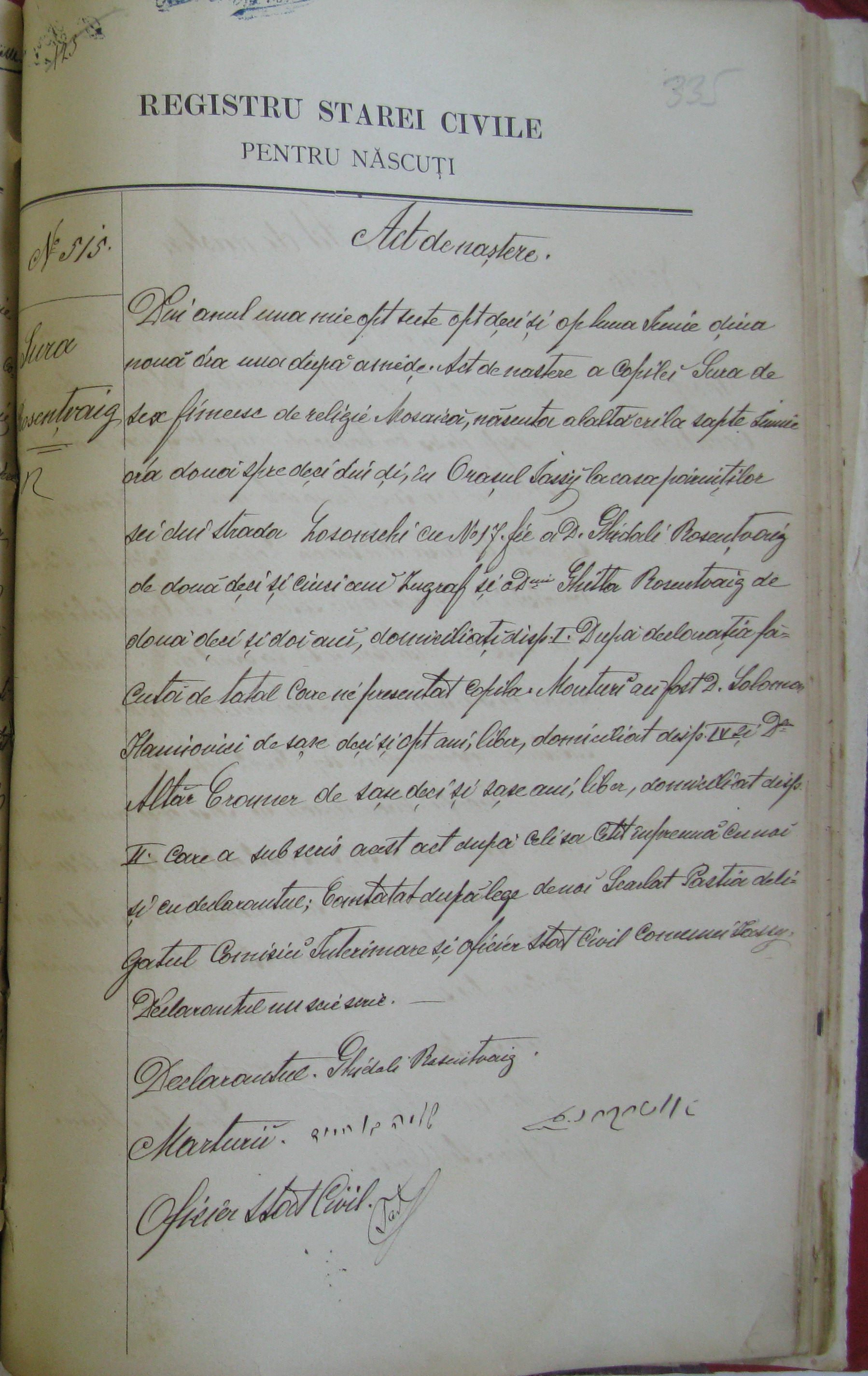
The first document provided evidence of Rebecca’s birth on May 27, 1893.

Rebecca Rosenzweig birth certificate 1893

Rebecca Rosenzweig birth certificate 1893

It’s interesting that in 1893 Gustave was still using Ghedale as his first name and Gussie was still using Ghitel, as in Romania; they were spelling the surname Rosentveig.  Gustave was already a painter, and they were living at what seems to be 34i 74th Street in Manhattan. (It was actually 341 East 74th Street, according to a city directory published the following year.)

One mystery raised by the birth certificate is that it reports that Gussie had already had five children, four of whom were then living.  According to my research, in 1893, Gussie had four living children, Lillie, Sarah, Abraham, and Rebecca, and one child who had died, David (1891-1892).  Who could the other child be?  Lillie was probably born in 1885, Sarah probably in 1887, Abraham probably  in 1889, David in 1891.  Was there another child who was born between 1885 and 1893 who was living in 1893 but who died before the 1900 census? A quick search of the NYC death index for children with surnames that sound like Rosenzweig who were born between 1885 and 1893 and who died between 1893 and 1900 turned up a horrifying number of young children who died in that period with surnames similar to Rosenzweig: 366.  My guess is that one of those 366 children was a child of Gustave and Gussie, just adding to the list of children they lost.  I will have to sift through them and search for the death certificates to see if I can figure out which ones might be my lost cousin.

One hunch I’d expressed in my last post was that Rebecca had married a man named Frank Elkin in 1914, based on the fact that there was only one Rebecca Rosenzweig in the NYC marriage index for the appropriate time period.  I was also sure that this was correct because she and Frank ended up living on the same streets as Rebecca’s family on both the 1915 and 1920 census reports. I also wondered whether Rebecca was the one who introduced my grandfather, her cousin, to my grandmother, her neighbor on Pacific Street.   My hunch that this was the right Rebecca was confirmed when I received the marriage certificate.

Rebecca and Frank Elkin marriage certificate

Rebecca and Frank Elkin marriage certificate

This is obviously the correct Rebecca, as seen by her parents’ names on the certificate.  Rebecca was living at 1166 Nostrand Avenue, the same address Gustave gave in 1913 when his son Harry died.  Perhaps this means that Gustave and Gussie were still living together in 1914 when Rebecca married Frank.

Having confirmed that I had the correct Rebecca, I now knew that the information on the 1920 census reporting that Rebecca’s parents were from Minsk, Russia, was incorrect, just another example of how unreliable census information can be.

Elkin Family 1920 census

Elkin Family 1920 census

More importantly, I was also now able to trace what happened to Rebecca.  I had not been able to find her on the 1930 census, but I had found a Frank Elkin, living with his parents Louis and Ida and siblings in Brooklyn, along with a woman named Fannie, listed as the daughter-in-law of Louis, and two children, Irwin and Stanley, listed as Louis’ grandsons.

Frank Elkin with his parents 1930 census

Frank Elkin with his parents 1930 census

From the marriage certificate, I now know that the Frank who married Rebecca was the son of Louis and Ida Elkin, so this was clearly the same Frank.  But where was Rebecca? Who was Fannie? And who were Stanley and Irwin?

I could not find a death certificate for Rebecca, but I was able to find a headstone through Jewishdata.com and findagrave.com.  I knew now that Rebecca died on January 22, 1921, just two years after her son Irving was born in 1919 (as per the 1920 census). She was only 27 years old.

Rebecca Elkin's headstone

Rebecca Elkin’s headstone

Having confirmed that Frank Elkin was in fact Rebecca’s husband, I wanted to figure out who Fannie and Stanley were—were they his second wife and child or the wife and child of one of his brothers, Edward or Matthew? I looked back at the 1920 census and found Frank’s parents Louis and Ida and his siblings.  His brothers were both single and living at home.

Louis Elkin and family 1920 census

Louis Elkin and family 1920 census

I then searched the NYC marriage index for Edward and Matthew Elkin and saw that both were married after 1930.  Thus, I inferred that Fannie was indeed married to Frank as of 1930.  But I could not find a marriage record in NYC for them.

I searched forward to the 1940 census and was able to find a Frank and Frances Elkins with two sons, Irving and Stanley, living in Boston.

Frank Elkin and family 1940 census

Frank Elkin and family 1940 census

Could this be just coincidence? The sons were the right ages—Irving was 20, Stanley was 14.  Frances could certainly be the same as Fannie.  The name was Elkins, not Elkin, but the 1920 census for Frank’s parents also had the surname as Elkins, not Elkin.  But what were they doing in Boston? I thought perhaps Frances had been born in Boston, but the census said that she was born in New Jersey.  (It also says that Frank was born in Massachusetts, but that has to be an error.) It reports that Irving was born in New York and Stanley in Boston.

Then I searched for records of Frank Elkin or Elkins in the Boston area, and I found on the Massachusetts marriage index a listing for a Frank Elkins and Frances Reiner, married in 1922, the year after Rebecca had died.  Perhaps Frank had left NYC to start anew after losing Rebecca? Where had he met Frances? Stanley was born in Massachusetts, so they must have been living there in 1925 when he was born (which also explains why Frank is not found on the 1925 NYS census).  But then they moved back to Brooklyn as of 1930, yet were back in Boston by 1940.

According to his 1942 draft registration for World War II, Frank owned a dressmaking business in Boston.

Frank Elkins World War II draft registration

Frank Elkins World War II draft registration

His Mason’s membership card dated 1945 confirms that he was still living in the Boston area (Newton) as of that date.

Mason Membership card

Mason Membership card

I was fortunate to be able to find one of Frank’s grandchildren, who told me that Frank had been a scrapper or bare-handed boxer when he was a young man.  According to family legend, Frank had boxed with his brother, a champion boxer in the Navy himself, over who would get to date Rebecca Rosenzweig.  Frank won that fight and not only dated Rebecca; he married her.  Frank’s grandson also told me that Frank never forgot his first wife although he also loved Frances very deeply.  Apparently Frank and Frances did a wonderful job raising Irwin and Stanley, as they were never thought of as half-brothers, but as brothers.  Frank also must have been a terrific grandfather, as his grandson said he still thinks of him often.

Frank Elkins and two of his grandchildren

Frank Elkins and two of his grandchildren

It appears that the Elkins family ultimately developed strong New England roots.  Irwin, Rebecca’s son, my second cousin once removed, ultimately settled in Brattleboro, Vermont, where he and his wife Muriel were the co-owners of Brattleboro Kiln Drying and Milling Company, which they sold after they retired. They were both devoted to the Brattleboro community and made significant contributions to its growth over the 50 years they lived there, according to Frank’s grandson.   He also told me that Irwin had been able to connect with some of Rebecca’s relatives in Florida late in his life.  Irwin died in 1996 in Boynton Beach, Florida, and is buried along with his wife Muriel in Brattleboro, Vermont.

Irwin and Muriel Elkins

Irwin and Muriel Elkins

Stanley, Irwin’s half-brother, became an influential American history scholar who died only last year.  According to his obituary, Stanley Elkins “graduated from Boston English High School and enlisted in the U.S. Army in 1943, where he served in the 362nd Infantry Regiment in Italy. After the war, Stanley attended Harvard University on the G.I. Bill and married Dorothy Adele Lamken in 1947. He graduated from Harvard in 1949 and received a master’s and a doctorate in American history from Columbia University, where he studied with historian Richard Hofstadter. …  In 1959, Stanley’s doctoral dissertation, “Slavery: A Problem in American Institutional and Intellectual Life”, was published by the University of Chicago Press. His book received widespread attention from scholars, politicians, and students, and is considered a seminal work on the subject of slavery in the United States. Stanley was hired by Smith College in 1960, became the Sydenham Clark Parsons Professor of History in 1969, and continued his career there until his retirement in 1993.”

Stanley Elkins

Stanley Elkins

When I had first seen the name Stanley Elkins on the 1930 census, I had immediately wondered whether this was the same Stanley Elkins whose book on slavery I had read in my American history course on the Civil War during college.  The obituary confirmed for me that it was the same Stanley when it identified Stanley as “the son of Frank and Frances (Reiner) Elkins.”  Discovering that gave me the chills.  Stanley Elkins died only six months ago and lived not far away from me.  He was not a blood relative, but nevertheless he was someone whose work I had read and admired, and he was connected to me through family.

The last bit of research I need to complete regarding Rebecca relates to one of the other questions raised in my original blog post about her life: the child who was born before Frank’s World War I draft registration in 1917 but who died before the 1920 census, Daniel Elkin.  I am still awaiting the death certificate for Daniel Elkin, and in the course of my subsequent research I have learned that a second child also had been born and died before 1920, Milton, so I need to order that death certificate as well.  I also am looking for Rebecca’s death certificate to find out what cut her life short at 27.

Once I obtain those documents, I will have learned a great deal about the short life of Rebecca Rosenzweig Elkin, my first cousin twice removed, my grandfather Isadore’s first cousin, and perhaps the cousin who introduced him to my grandmother.  In her 27 years Rebecca experienced not only the loss of several siblings, but also the loss of two young sons.  She never got to see Irwin, the one son who survived, grow up.  I hope that by recording her life, the grandchildren and great-grandchildren she never knew will get to know a little more about her and her family.

Enhanced by Zemanta

Women are VERY Difficult: Part III, Lizzie and Rachel

As I continue to look for my grandfather’s female first cousins, I have hit some more dead ends.  I hit a wall with Lillie after 1910.  With Sarah I got as far as 1940, and I still can track her children to learn more.  I have made lots of progress tracing the life of Rebecca Rosenzweig, but I am putting off reporting on my findings until I get some more confirmation.  But with Lizzie and Rachel, I’ve had almost no luck at all.   I have not been able to find anything that reveals if they got married and, if so, what their married names were.  With Lizzie, the trail runs out in 1920; with Rachel I can get no further than 1930.

Here is what I know about Lizzie.  She was born in February or March of 1900; I have not found a birth certificate, but her age on the 1900 census was three months, and the census was taken on June 7, 1900.

Gustave Rosenzweig and family 1900 census

Gustave Rosenzweig and family 1900 census

Perhaps no certificate was ever recorded for her, for none shows up in the NYC birth index.  She was living with her family in 1900, 1905, 1910, 1915, and in 1920.  In 1915 she was in high school, and in 1920 she was an operator in a shop that made underwear.

Gustave Rosenzweig family on the 1905 NYS census

Gustave Rosenzweig family on the 1905 NYS census

Gustave Rosenzweig and family 1910 census

Gustave Rosenzweig and family 1910 census

Rosenzweigs 1915

Rosenzweigs 1915

Rosenzweigs 1920 census

Rosenzweigs 1920 census

After that, she disappears.  She is not living with either her father or mother in 1925 or thereafter, nor is she living with any of her siblings.  I assume that she got married and changed her name, but I cannot find any record of a marriage in NYC or on Long Island.  Perhaps she was married elsewhere, but I have no idea where to start.

I thought I had a great clue from Gustave’s death certificate, which was signed by a daughter whose first name started with L, but as I posted the other day, the signature is hard to read and led me nowhere.  I even used the address on the death certificate, 59 Oak Street in Brooklyn, and searched the 1940 census for that address, but no one with her name was living at that address in 1940, which was four years before the date of her father’s death certificate.

Thus, I have nowhere else to turn, and for now I’ve hit a wall and have to stop hitting my head against it.  It hurts to give up, but as I learned in doing the research for the Brotman side, sometimes you have to stop and hope a new clue will appear.

I also know very little about Rachel. I do not have her birth certificate, but from the census reports it seems she was probably born in either 1902 or 1903. I cannot find a birth record for a Ray or Rachel Rosenzweig, however, in either of those years. There is one for 1900, but that is too early, and one in 1904, but that appears to be too late.  On the 1905 census report, her age was four, meaning that she was born in 1901, just a year after Lizzie; however,  in 1910 she was reported as being 7, making her birth year either 1902 or 1903.  In 1915, Rachel was reported to be 12, making her birth year again 1902 or 1903.  In 1920, she was seventeen, and although the entry is not very legible, it looks like she was working in a mail order business.  In 1925 she was 22 and employed as a stenographer, and in 1930 she was reported to be 28 and working as a typist in a mail order business.  Perhaps she was working at the same place from 1920 through 1930.  In 1925 and 1930 she was living alone with her mother and was single.

Gussie Rosenzweig 1925 NYS census

Gussie Rosenzweig 1925 NYS census

Gussie Rosenzweig 1930 census

Gussie Rosenzweig 1930 census

Like Lizzie, Rachel then disappears.  Her mother died in 1935.  Rachel either had to be living alone or married at the time of the 1940 census, but as with Lizzie, I cannot find a marriage record nor can I find her on the 1940 census living alone.  As with Lizzie, I have nowhere else to turn right now and so have to put this aside and hope some new clue shows up.

This is particularly frustrating since I know that they both lived long enough that Joe’s grandchildren remember them both, but none of them remembers any husbands or children or last names  Perhaps at some point a document or photograph or letter will show up that opens the door to finding out more about Gustave and Gussie’s two youngest children, Lizzie and Ray.

A brick wall

A brick wall (Photo credit: Wikipedia)


Enhanced by Zemanta

More Mysteries: Can you help with handwriting analysis?

When I order a death certificate, I am hoping it will help me put some matters to rest (OK, pun intended), give me some closure, provide some answers.  More often than not, however, these so-called vital records raise more ghosts and mysteries than answers.

Two cases in point: the death certificates of Gustave Rosenzweig and his first wife Gussie Rosenzweig, the parents of my grandfather’s first cousins Abraham, Jack, Joe, Lillie, Sarah, Rebecca, Lizzie, and Rachel, among others.

First, let’s look at Gustave’s death certificate.  It confirms a number of things that make me certain that this is the right Gustave. He was born in Romania.  At the time of his death, he was married to Selma and living at 49 Wadsworth Avenue in Manhattan.  He died on October 16, 1944; his birth date is given as October 7, 1859, which is not exactly the date provided by his Romanian birth record of June 10, 1856, but close enough.  He was a retired painter, which is consistent with his occupation both in Romania and in New York.  The only clear mistake here is that although it has his father’s name correct (David), it has his mother’s name as Leah, instead of Esther.  Again, I’ve seen worse mistakes on death certificates, so I am comfortable dismissing that error.  Overall, this is a fairly reliable record of Gustave’s life and death.

Gustave Rosenzweig death certificate 1944

Gustave Rosenzweig death certificate 1944

Gustav Rosenzweig death cert 1

But here’s where it opens a new door and a mystery.  Here’s where I need some help.  At the bottom of the certificate is the signature of Gustave’s daughter as the informant, and I cannot read the last name.  The first initial appears to be an L, meaning this could be either Lillie or Lizzie.  But what is the surname?  Dorsie? Dorne? Dorme? Dorsue?  If I could decipher this, it might help me find either Lillie or Lizzie, both of whom I’ve had trouble tracking down.  If anyone can help me read this writing, I’d much appreciate it.  Remember you can click on the image below to enlarge it.

mystery signature

Now to Gussie Rosenzweig’s death certificate.  Again, the information here makes me certain that this is the correct Gussie, the mother of my grandfather’s first cousins and Gustave’s first wife.  Gussie was born in Romania to Isadore Sachs (Itzic Zacu) and Muriel Klein (Mirel), which is consistent with her birth record and marriage record from Romania.  She was residing at 2112 Dean Street in Brooklyn at the time of her death on December 23, 1935.  She was reported to be 75 years old at her death, giving her a birth year of 1860, close to the 1864 given on her Romanian birth record.  It looks like Gussie must have died a fairly gruesome death, having been hospitalized since November 5, 1935, suffering from gangrene of her foot, caused by diabetes.  Her son John hired the undertaker, as indicated on the reverse of the death certificate.

Gussie Rosenzweig Death certificate 1935

Gussie Rosenzweig Death certificate 1935

Rosenzweig, Gussie Death page 1

So what is the mystery here? Gussie is identified as widowed, and her husband’s name is…Benjamin? Who could Benjamin be? Had Gussie had remarried after she and Gustave divorced? (They are not living together on any census after 1910.)  In 1915 the children were living with Gussie.  (I have yet to find Gustave on the 1915 NYS census.)

Rosenzweigs 1915

Rosenzweigs 1915

The 1920 census is confusing; I have two pages for Gustave—one as a painter living in Manhattan as a boarder in East Harlem, one in Brooklyn with the Rosenzweig children.  I have to believe that the Brooklyn Gustave is really Gussie, as she is listed as unemployed and divorced.

Gustave Rosenzweig in Manhattan 1920

Gustave Rosenzweig in Manhattan 1920

Rosenzweigs 1920 census

Rosenzweigs 1920 census


The 1925 census shows her living with “Rose,” who I assume by the age (22) is Ray/Rachel.  The NYS census does not indicate her marital status, but there is no Benjamin living with them.

Gussie Rosenzweig 1925 NYS census

Gussie Rosenzweig 1925 NYS census

The 1930 census has her again living with Ray, but lists her marital status as married.  Again, there is no husband, no Benjamin living with her.

Gussie Rosenzweig 1930 census

Gussie Rosenzweig 1930 census

I checked the NYC marriage index for any brides named Gussie Rosenzweig who married between 1915 and 1935 and found three.  One did marry a man named Ben Rosenberg on January 27, 1935, less than a year before our Gussie died.  Could she have gotten married at that point? If so, why wouldn’t she have changed her name to Rosenberg?  Or did John, her son, not want her listed as divorced so he made up a husband who predeceased her?  I will order the marriage certificate for Ben Rosenberg and Gussie Rosenzweig, but somehow I doubt that that is the same Gussie Rosenzweig.  Stranger things have happened, of course.

And here’s the final mystery.  Both Gustave and Gussie are buried at Mt Zion Cemetery, not in the same section, but nevertheless in the same cemetery.  Neither Selma, Gustave’s widow at the time of his death, nor Benjamin, the alleged widower of Gussie at the time of her death, is buried there.  Gustave and Gussie’s son Harry who died as a teenager in 1913 is buried there, however, so perhaps in death Harry brought his parents back together.


Enhanced by Zemanta

I’m Ba-a-a-ck! With an Update on Lillian Rosenzweig

After a week away in the beautiful Florida Keys where we were able to put the miserable New England winter weather behind us and enjoy the outdoors, kayaking, swimming, walking, and seeing wildlife including dolphins and alligators, I am back in New England with the miserable winter temperatures outside, but happy knowing that spring is at least here on the calendar if not in the weather quite yet.  It has to get above freezing soon, doesn’t it?

While I was away I received a number of documents, mostly confirming the hunches I’d had about Lillian and Rebecca Rosenzweig.  Today I will focus on Lillian.  About ten days ago I posted what I knew and thought I knew about Lillian.  I believed that she had married Toscano Bartolini in July, 1901, had had a son William born in March, 1902, and then lost her husband in 1904.  All of those facts are now confirmed by the marriage certificate, William’s birth certificate, and Toscano’s death certificate, all of which I received late last week.

First, as you can see from the marriage certificate, Lillian and Toscano were married by an alderman, not a rabbi, on July 6, 1901. This is clearly the right Lillian Rosenzweig, as her parents’ names are Gustav and Gussie nee Sagg.  According to the certificate, Lillian was then eighteen years old, which would have made her birth date 1883—a year before her parents married.  Lillian must have lied about her age in order to get married without parental consent.  I have speculated elsewhere that she was likely born in 1885 since her parents were married in June, 1884.  Also, Lillian’s address is given as 320 East 9th Street—not in Brooklyn where her parents were living.  She must have moved out before she married Toscano, who was living on Sullivan Street at that time.  These inferences are consistent with the family story that Lillie’s marriage to someone who was not Jewish led to disapproval and perhaps some estrangement from her family.

Bartolini Rosenzweig marriage certificate

Bartolini Rosenzweig marriage certificate

From William’s birth certificate, another inference seems possible.  William was born on March 9, 1902, just eight months after Lillie and Toscano had married.  Perhaps Lillie was already pregnant at the time of the wedding, although I am not sure she would have known that at the time since she would have been just one month pregnant.  It is, of course, entirely possible that William was a month premature. William was born at home—177 Houston Street in NYC.  Interestingly, Lillie’s age is now reported as seventeen—a year younger than she had reported on her marriage certificate a year earlier.  If she was in fact seventeen in March, 1902, her birth year would have been 1885, as I suspected.  It also means she was only sixteen when she married Toscano.

William Bartolini birth certificate

William Bartolini birth certificate

The other interesting fact gathered from this certificate is that Lillie had already had a child before William’s birth, but that that child was no longer living.  When could she have had that child?  Her marriage certificate reported that her marriage to Toscano was her first marriage.  Had she had a child with him before they married? Had she had an out-of-wedlock child with someone else? Had that child really died or had she given that child up for adoption and simply reported it as if he had died?  I have no idea and no idea how to try and figure that out. (It’s also sad that on the 1910 census when Lillie was back living with her parents, she is listed as single and having no children.)

The third document in this trilogy is Toscano’s death certificate.  Toscano died on April 27, 1904, from chronic nephritis, kidney disease, at age 27.  He’d been working as a bartender and died at 69 Carmine Street in NYC.  He had only been in the US for five years, had been married for less than three years, and left behind his 19 year old wife and 2 year old son.  I don’t know what causes chronic nephritis, although it looks like uremia is given as a contributing cause of death.   But I’ve never heard of someone dying at age 27 from that today.

Toscano Bartolini death certificate

Toscano Bartolini death certificate

The rest of the story, as reported earlier, shows a family in disarray.  Lillie and William moved back to Brooklyn and were living with Gustave and Gussie and the family in 1905, indicating at least a temporary reconnection.  In 1906, however, William was living at the Brooklyn Hebrew Orphanage.  Although it appeared that he was released back to his mother for some time, by 1910 William was living at St. John’s Home in Brooklyn and in 1915 at the NY Catholic Protectory.  Lillian, who was living with her parents in 1910 without William, then disappears from the records.

I still have not found either William or Lillian after that.  I don’t know what happened to either of them.  Joseph’s grandchildren told me that at some point Lillie was back in touch with her siblings, but no one knows anything more specific than that.  I will keep looking for some new clue, but for now I’ve hit the proverbial brick wall with Lillie and William Bartolini.

What I do know is an incredibly sad story of a young woman, emigrating with her family from Romania when she was only a young child, having two children before she was eighteen years old, losing one apparently to death and another to institutional care, losing a young husband after just a few years of marriage, and losing the support of her family as well for at least some period of time.  It’s a story to contrast with the story of Leah Strolowitz Adler, the daughter of Tillie Rosenzweig and Jacob Srulovici, who also came to the US as young girl but found the American dream.

The story of Lillie Rosenzweig raises so many questions: how did she, a young Jewish immigrant living in Brooklyn, meet and get involved with a young Italian immigrant who was living in the Lower East Side, not Brooklyn? Who was the father of her first child, and what happened to that child? What happened to William after he left the Catholic Protectory? Did he have any contact with his mother or her family? And what happened to Lillie after 1910? Did she remarry and regain custody of William? Did she also die at a tragically young age? These loose ends make me crazy—I want some endings to the story, but I may have to accept that I may never know what happened.

Enhanced by Zemanta