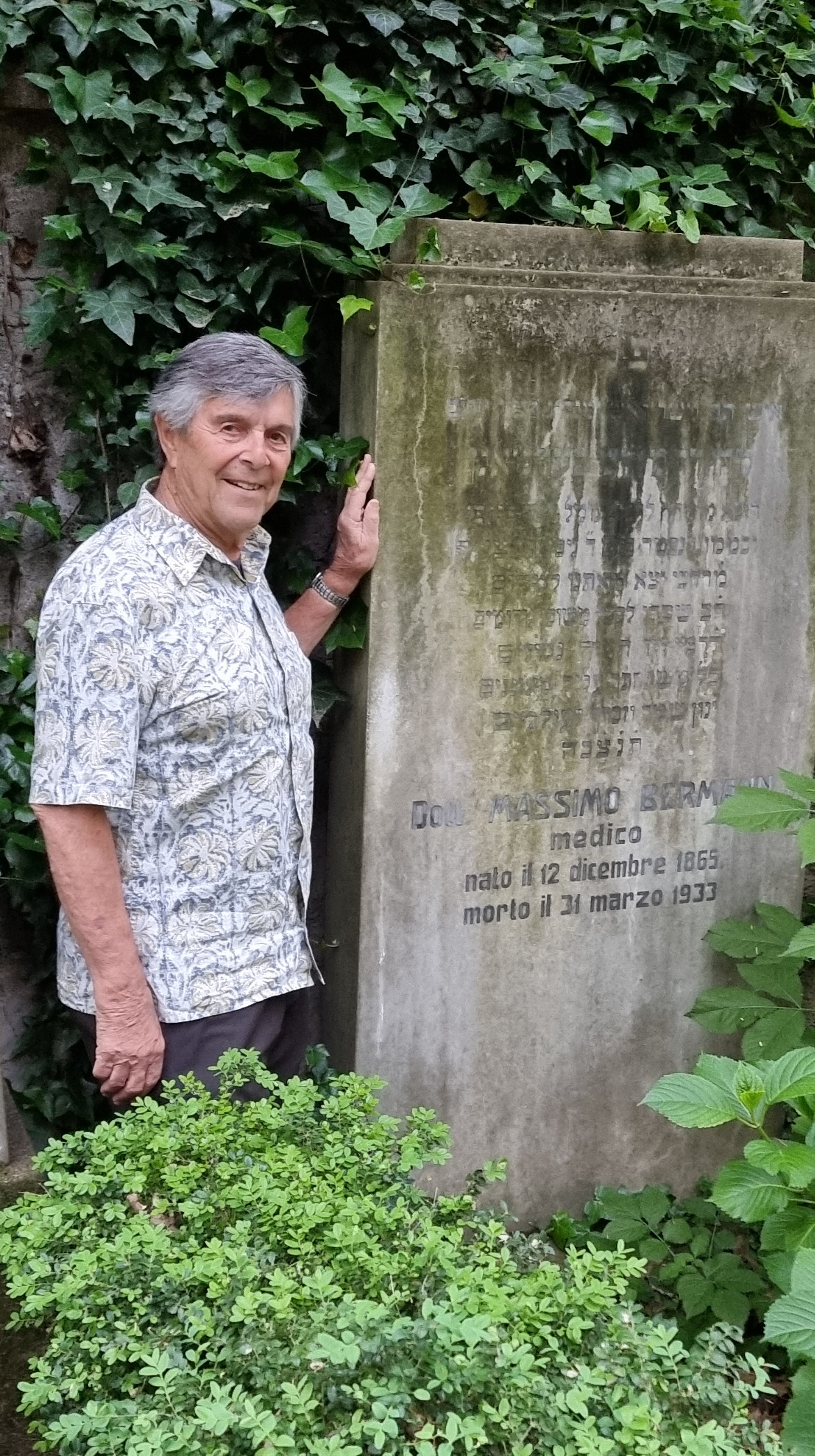
John Nusbaum Album: Four Photographs With Names, But Who Were They?

Returning once more to the Nusbaum Album, out of the more than one hundred CDVs in the album, only six had names on them. We saw two in my last post, and this post will discuss the other four that had names on them. Two had the name Gardiner on them:

The one of the man says Hellis & Sons at the bottom; on the reverse it repeats Hellis & Sons and lists all their branches, all in England. The one of the woman was taken by J. Telling Photographers in Bridgend, which is a town in Wales. Ava volunteered that she believed these were taken in the 1880s, the one of the man in the later part of the decade, the one of the woman in the early 1880s. She thought the man appeared to be in his early 20s, meaning he was born sometime in the late 1860s.

Since I had only one Gardiner family on my tree, I was pretty certain who those people might be. Bernard Seligman’s son Arthur, my great-grandmother Eva Seligman’s younger brother, had a son Otis Perry Seligman. Otis married a woman named Doris Gardiner, who was born in Nantymoel, Wales on February 17, 1901. Nantymoel is a village in the county of Bridgend. Doris Gardiner’s parents were George Gardiner, born in about 1864 in Wales, and Mary Ann Wilcox, born in 1866 in Wales.  It certainly appears that these two photographs were of Doris Gardiner’s parents George and Mary Ann.

These photographs appear on a very late page in the album on the reverse side of that page so probably were added after the album was otherwise filled. That makes sense since Doris Gardiner didn’t marry Otis Seligman until July 23, 1921, in Cleveland, Ohio, where Doris and her parents had settled after immigrating to the United States in 1914. Doris may have added these two photographs once she joined the family.

Doris and Otis were the parents of Arthur Seligman II, later known as Arthur “Pete” Scott, my second cousin, once removed. Pete was, as long-time readers may recall, a tremendous help to me when I was researching the Sante Fe branch of the family. His sister Joan Seligman Diamond was the grandmother of my cousin Jhette and a prior owner of the Nusbaum Album.  It certainly makes sense that Doris’ parents George and Mary Ann, grandparents to Pete and Joan, great-great-grandparents of Jhette, would be in this album.

The other two photographs with names on them are not related to me nor, as far as I can tell, anyone else in the family. The first, however, is of a fairly well-known person, Louis Sulzbacher. The back of this photograph has the following words written on it: “Compliments of Louis Sulzbacher, Las Vegas Feb 1878, Mrs. N. Seligman, S.F.”

Louis Sulzbacher

Louis Sulzbach

Louis Sulzbacher was, like Bernard Seligman, a German Jewish immigrant to the United States. The Encyclopedia of Oklahoma History and Culture includes this information about Sulzbacher:

An attorney and a judge of the United States Court for the Indian Territory, Louis M. Sulzbacher was born on May 10, 1842, in Kirchheimbolanden, Bavaria. Coming to the United States in 1859 as a young adult, he settled in New Mexico Territory, read law, was admitted to the bar, and opened a law office in Las Vegas. He remained in the Land of Enchantment for some two decades. In 1869 he married Paulina Flersheim in Kansas City, Missouri. In 1898, during the Spanish-American War, he served with Theodore Roosevelt’s Rough Riders.

In 1900 Pres. William McKinley appointed Sulzbacher to the newly created Supreme Court in the recently formed Territory of Puerto Rico. He served until his appointment to the [Oklahoma] Indian Territory bench. In 1904 Congress created four additional judgeships for the United States Court for the Indian Territory. Pres. Theodore Roosevelt appointed Sulzbacher as judge for the Western District [of Oklahoma].

He served until his appointment to the Indian Territory bench. Leaving the bench at Oklahoma 1907 statehood, Sulzbacher resided in Kansas City for a few years. He then moved to New York City, where he died in Manhattan on January 17, 1915, and was buried in Kansas City.

I have no idea what the connection was to the Seligman family in Santa Fe. I am not even sure who “Mrs. N. Seligman” could be, living in Santa Fe in 1878. Frances was living there at that time, but her initial would be F, not N, or if she were being referred to by her husband Bernard’s name, as women did back then, it would be B. Maybe it says Mn., not Mrs., but even then—I have no idea who that would be. I am going to assume that the N was a mistake and that Sulzbacher gave his CDV to Frances Nusbaum Seligman. Ah, maybe the N was for Nusbaum!

Finally, the only other photograph in the album that has a name written on it is this one:

The back reads as follows: “I am sorry you are not at home—will be in the city in about ten days when I hope to meet you. Yours, S. B. Axtell.”

The photograph is of a woman taken by Keely’s located at 5th and Coates Street in Philadelphia. This is the same photographer who Ava found at that location in Philadelphia directories in the 1850s and 1860s. I am in no position to judge the specific date by the clothing, but assuming this photograph was taken in the Civil War era, just who could S.B. Axtell be?

I found only two people with that surname and a first name that started with S—Samuel Axtell and his wife Sarah Leighty Axtell. Although they were married in 1854 in Athens, Ohio, where they thereafter lived,1 both Samuel and Sarah were Pennsylvania natives.2

Whether or not it was Samuel or Sarah Axtell who stopped by to see someone in Philadelphia, presumably John and Jeanette, is impossible for me to know. It’s the best guess I have.

What this photograph did demonstrate, however, along with the one of Louis Sulzbacher is that there are photographs in the album of people who were not part of either the Nusbaum or the Seligman family. As Ava had been telling me all along, people gave these CDVs to friends and family—as mementos, as gifts, as calling cards.

On that note, my next post will be my final post about the Nusbaum Album, and I will make some attempt to identify the people in some of the remaining photographs or at least to address who in the family could have been living in those locations during the second half of the 19th century. Keeping in mind that (1) they could be friends, not family, and (2) they could be of people visiting that location who don’t necessarily live there, I realize that to some extent this is an exercise in futility. But having gotten this far, why not engage in a bit more speculation?


  1. Sarah Ann Leighty, Gender Female, Marriage Date 12 Jan 1854, Marriage Place Athens, Ohio, USA, Spouse Samuel Axtell, Film Number 000311592, Ancestry.com. Ohio, U.S., County Marriage Records, 1774-1993 
  2. Samuel and Sarah Axtell and family, 1870 US census, Year: 1870; Census Place: Athens, Athens, Ohio; Roll: M593_1171; Page: 45B, Ancestry.com. 1870 United States Federal Census 

John Nusbaum Album: Of Babies Who Died Too Soon and Family in Peoria

Having now discussed many of the photographs that were unlabeled in the Nusbaum Album, I am going to turn to the few photographs that were labeled, making the task of identification much easier. There were only a handful that had names on them or other clues as to who was depicted in the photograph, and two of those appear on the very last page of the album and are of two babies who died as children.

First, there is this photograph with the following inscription under the baby’s picture: “Yours Truly Milton Josephs.” The reverse of that photograph shows that this was taken by George H. Rau Photographers of 922 Girard Avenue in Philadelphia.

Milton Josephs

Milton Josephs was born in Philadelphia on December 28, 1878, to Gustavus Josephs and Miriam Nusbaum. Miriam was the daughter of John and Jeanette Nusbaum and a sister of Frances Nusbaum, so she was my three-times-great-aunt. Her son Milton was John and Jeanette’s grandson and Frances’ nephew. Little Milton died before his second birthday on November 17, 1880. Given that he looks about three or four months old in this photograph, I assume it was taken in early 1879.

Right next to the photograph of little Milton in the Nusbaum Album is this photograph. It has the following inscription on its reverse side: “Compliments of STN [?] Dinkelspiel. Eva H. Dinkelspiel. 6 mo 19 days old weighs 23 lbs. How’s that for high[?]?“ The photograph was taken by Thurlow & Smith Photographers of 107 Main Cor. Jefferson, Peoria, Illinois.

Eva Helen Dinkelspiel

Eva Helen Dinkelspiel was the daughter of Adolph Dinkelspiel and Nancy Lyon; her paternal grandmother was Mathilda Nusbaum Dinkelspiel, John Nusbaum’s sister. Eva thus was John’s great-niece. Adolph Dinkelspiel was John’s nephew and a first cousin to Frances Nusbaum.  Eva was born on January 25, 1872, in Peoria, Illinois. That means this photograph, taken when she was six months old and nineteen days old, was taken on July 13, 1872,  seven years before the photograph of Milton Josephs, yet they are placed together in the Nusbaum album. Eva, like Milton, died as a child. She was seven years old when she died from scarlet fever on November 28, 1879, in Peoria.

It obviously was not an accident that these two photographs were placed next to each other in the album. They were not taken at the same time or at the same place and although they are both of Nusbaum family members, they were not from the same nuclear family. They had to be placed here because they were both of children who died young. And they died just about a year apart in time.

What makes the placement of the photograph of Eva Dinkelspiel also surprising is that the other seven photographs taken in Peoria appear in the album much earlier—at about the midpoint of the album. Here are those two pages:

The woman on the lower right of the first of those pages was photographed in Harrisburg, but the other seven—six men and one woman—were photographed in Peoria, by various photographers.   As I was surprised to learn when I first was researching my Nusbaum family, many of them ended up in Peoria. You can read about Peoria and why, when, and how my Nusbaum relatives ended up living there here on my blog. 

John Nusbaum, as noted in that blog post, opened a store in Peoria and is listed in the Peoria directories, but it was his three sons who ran that store during the 1860s and 1870s and who lived in Peoria: Adolphus, Simon and Julius Nusbaum. We’ve already seen that John’s nephew Adolph Dinkelspiel, father of the ill-fated Eva mentioned above, also lived in Peoria during those decades, as did his sister Paulina Dinkelspiel Simon, John’s niece.

Although I do not have Ava’s expertise about individual photographers, I did find most of the photographers who took the photographs of these seven people in Peoria listed in Peoria directories in the 1860s and 1870s; two of those photographers also included on their CDV insignias the words “over Philadelphia store.” The “Philadelphia store” must have referred to John Nusbaum’s store in Peoria, which was located at Main and Adams, the same location as those two photographers. It seems obvious that the Nusbaum brothers knew these photographers and vice versa.

I believe that the seven people in these photographs are probably Nusbaum relatives. These three seem to resemble each other the most.

They also seem to look a bit like the man in the photos who might be John Nusbaum.

I am willing to speculate that they were John and Jeanette’s sons, Frances’ brothers, Adolphus, Simon, and Julius. That thought, however speculative it may be, makes me happy.

Nusbaum Album: Frances Nusbaum Seligman Redux

Before I turn to the photographs that I analyzed on my own (with a few tips from Ava along the way), I want to return to my great-great-grandmother Frances Nusbaum Seligman and my attempts to find her in the album–the album that once belonged to her and has her name on it. Some of this is a review of this post, but with some additional thoughts and images added.

There were several photos in the album that might be Frances based on her birthdate and the date Ava concluded that a photograph might have been taken. For example, on the very first page there is this photograph, which Ava dated as taken in about 1863 when Frances would have been 18; Ava thought the young woman was about 20-22 years old, so just a bit older than Frances would have been. The fact that it appears on the very first page of the album added weight to the possibility that it is Frances.

On the seventh page of the album is this photograph, which Ava also dated as taken in about 1863. Ava thought this woman could be about 25, so slightly older than the one on the first page, but still possibly Frances although Ava ultimately didn’t think so.

Philadelphia c 1863 born abt 1838 maybe Eliza Wiler

Then there is the photograph much later in the album that has an inscription on the back that says it is “Miss Nusbaum” and that it is Joan’s great-grandmother. Ava dated this photograph also in the 1863 time period and thought the woman was a teenager between fifteen and eighteen, placing her birth year very close to Frances’ birth year of 1845. But because this was so late in the album, Ava was skeptical about the inscription.

I added another photograph to this mix just recently. This one was taken in about 1870, and Ava thought the woman in this photograph was about twenty years old, so born in about 1850.

Philadelphia 1869 born about 1848

There was also the fuzzy still from a video of a portrait supposedly of Frances Nusbaum Seligman from Arthur Seligman’s house in Santa Fe.

Finally, there is one image I haven’t shared before and that Ava had not previously evaluated. It is not a CDV and it was not inserted into one of the openings in the album, but was just loose inside the album. It is an image of a portrait that sadly was not labeled.

I wondered whether this was a portrait of Frances, but Ava said that this was painted in the late 1840s, early 1850s so could not be Frances. But it possibly could be Frances’ mother, Jeanette Dreyfuss Nusbaum, my three-times great-grandmother.

I then put together a collage of all six faces to compare them better:

One thing I noticed right away was that five of the women had similar lips—all but the one labeled D. Her lips were more heart-shaped. The other five had similar mouths. E seemed to have eyes that tilted down whereas all the others had eyes that went straight across. A and B are the portraits, A perhaps of Jeanette, B supposedly Frances. The more I looked at the two remaining images—C and F—the more alike they looked to me.

I ran them through two online face comparison websites, and both said that C and F were the same person. None of the others, however, matched C, F, or any of the others as the same person or even close. I asked Ava if she thought C and F were the same person, and her AI programs also found a match.

But Ava had reasons to doubt whether C and F were the same person. She pointed out that C, taken in 1863 or so, looks older than F, taken in 1870 or so. How could C have gotten younger looking seven years later?

Also, F is in a photograph with a young man who one might assume was her husband. She is wearing a wedding ring, and Frances was married in 1865. But the man in the photograph with F is not Frances Nusbaum’s husband, Bernard. Maybe it’s one of her brothers. But from the photograph one would think the man and woman are a couple.

So…bottom line? I still cannot be sure whether any of these women were Frances.

I have sent scans of the six photographs that were taken in Santa Fe to the New Mexico Jewish Historical Society and to the New Mexico History Museum, both in Santa Fe, hoping that perhaps they have somewhere a photograph of Frances. So far I have not heard back that they do. But I will keep hoping that I can someday figure out which woman in the album is my great-great-grandmother Frances Nusbaum Seligman.

Nusbaum Album: Are These My Seligmann Relatives from Germany?

With more realistic expectations but nevertheless high hopes, I awaited Ava’s final work on the Nusbaum Album, some of the photographs from Germany. Although there were some photographs from Stuttgart, Berlin, and Wiesbaden, since I did not know of any relatives living in those places in the mid to late 19th century, I focused on the photographs taken in Bingen and Mainz. Although my closest Seligmann relatives lived in the small town of Gau-Algesheim, both Bingen and Mainz were relatively close by and the closest cities to Gau-Algesheim, and many relatives eventually moved there. It seemed most likely that that my Seligmann relatives would have gone to one of those two cities to be photographed.

I selected three photographs from Mainz, all taken by the same photographer, Carl Hertel, and two from Bingen, both taken by J.B. Hilsdorf. These were all on the back of the first four pages at the beginning of the album whereas other photographs from Germany including from Mainz and Bingen were much later in the album. I hoped that meant the ones earlier in the album were more likely closer relatives.

The first Mainz photograph was dated by Ava as taken between 1873 and 1874; she noted that in 1874, Hertel became a court photographer. She wrote, “Generally, when a photographer was appointed as a court photographer that information would appear on the mounting card in the imprint and after the photographer’s name with the letters HOF. Since there is no indication of this appointment, I am placing the date of the photograph before 1874.”1 In addition, another photograph of Hertel’s found elsewhere with the same imprint was dated 1873.

Ava estimated the age of the man as mid to late 70s based on the lines on his face and the style of his tie. That meant the man was born in about 1800-1804. Ava speculated that this could be my three-times great-grandfather Moritz Seligmann, who was born in 1800. And this time I was able to confirm that speculation because I belatedly remembered that I have an actual photograph of Moritz that I had obtained from a cousin years back:

Moritz Seligmann

So bingo! We had a positive identification!

Moving on to the next two Mainz photos, Ava concluded that they also were taken between 1873 and 1874 based on the information she’d already found about Hertel. The first one she believed to be of a man who was in his thirties, perhaps 35, so born in about 1838-1839. The younger man on that same page appeared to her to be eighteen so born in about 1855. Since these photographs were all taken by the same photographer at about the same time, I thought that perhaps these two younger men were sons of Moritz Seligmann, that is, brothers of Bernard, my great-great-grandfather. In addition, they appeared on the second page of Germany photographs right after the photograph of Moritz, who appeared on the first page of the Germany photographs in the album.

Looking at the family tree, I found two possibilities. The older “son” could be Hieronymous Seligmann, born in 1839. The younger “son” could be Moritz’s youngest child, Jakob Seligmann, born in 1853. I was excited at the thought that perhaps I finally had found some relatives I could identify in the album.

I shared my analysis with Ava. She was skeptical that the younger man was Jakob Seligmann because she had identified Jakob in a photograph from a different set of photographs that she had worked on during an earlier project, and she did not see any similarities or enough to believe that the blonde teenager photographed in Mainz was the same person identified as Onkle Jakob in the later photograph.

We went back and forth with me trying my lawyerly best to persuade her that the blonde man could have grown up to be the dark haired Oncle Jakob. But in the end I failed to do so. I have to defer to Ava. She’s the expert, and I am a biased viewer hoping to see what I want to see. But if this was not Jakob Seligmann, who was it? I don’t know. Maybe a nephew or a cousin. Maybe not anyone in the family at all.

Knowing now that the Hertel photographs were likely taken before 1874 as Ava concluded, I looked on my own at the other three Hertel photographs taken in Mainz that appear later in the album:


Who are these three women? I don’t know since I have no photographs to use for comparison. Two of them look too young to be Bernard Seligman’s sisters Mathilde and Pauline, who were born in 1845 and 1847, respectively, and certainly too young to be his half-sister Caroline born in 1833, if the photographs were taken around 1873 as Ava concluded about the other Hertel photographs. And they are too old looking to be the children of any of Bernard’s siblings. So sadly they also will remain unidentified.

The next photograph I asked Ava to analyze is on the same page as the two blonde men except this photograph was taken in Bingen, not Mainz, by J.B. Hilsdorf, who was in business in Bingen from 1861 to 1891, according to Ava’s research. When I believed that the other two men on that page were Hieronymous and Jakob, I speculated that this third man could be their brother August, the only other son of Moritz Seligmann who survived beyond 1853 and was living in Germany.

Based on the size of this particular photograph, Ava dated it in the mid-1860s. She thought the man was between 30 and 35 so born between 1827 and 1834.2 August Seligmann was born in 1841 so too young to be the man in this photograph. In addition, Ava compared this photograph to one I have of August and found them to be dissimilar. It didn’t take as much to persuade me this time.

August Seligmann

That left one last photograph for Ava to analyze, the second photograph from Bingen that I had selected.

It also was taken by J.B. Hilsdorf, and for the same reasons Ava dated it in the mid-1860s. She estimated the woman’s age to be in her late 40s, early 50s, giving her a birth year range of 1812 to 1817. Based on the age and other photographs I have of my three-times great-grandmother Babette Schoenfeld Seligmann, Ava thought there was a good possibility that this photograph was also Babette. Here are the other photographs of Babette that Ava used for comparison.

Ava did an incredible job of researching the photographers and the photographs they’ve taken to come up with reliable time frames for when the album photographs were likely taken. But it is only possible to go so far with identification without known photographs of the people in your family to use for comparison. You can narrow down the possibilities and eliminate those who clearly do not fit within the parameters of the dates, but you can never be 100% confident of the specific identity of the person in the photograph based just on dates and locations. I wish I had more photographs that Ava could have used to make facial comparisons, but I don’t. I have to accept that I may never know who most of these people were.

Fortunately, there were a handful of photographs in the Nusbaum Album that were labeled and that I could on my own identify and place in my family tree. More on those in my next few posts.


  1. Ava Cohn, Analysis of Nusbaum Album #4, March 17, 2024 
  2. Ava Cohn, Analysis of Nusbaum Album #5, April 3 ,2024

Nusbaum Album: Santa Fe Photographs

I decided to move on from the Philadelphia photographs in the Nusbaum Album even though there were still many more of them in the album because it seemed to be unlikely that I would ever identify anyone.  I asked Ava to focus next on the six photographs taken in Sante Fe, hoping that they would more clearly be of my Santa Fe relatives.

Of those six, three were of young children, two were of adult men, and one was of a couple. My hope was that the couple would be Frances Nusbaum and Bernard Seligman, my great-great-grandparents, the children would be their children, and the two men would be other Seligmans or Nusbaums.


Once again there were no tax stamps on these photographs, so Ava concluded that they were taken either before August, 1864, or after August, 1866. Since Bernard and Frances didn’t move to Santa Fe until after 1868, I was hoping that the photographs fell into that later period. These photos also appear more than halfway into the album so were perhaps later than those 1863 to 1870 Philadelphia photographs Ava had already analyzed.

The three photographs of children were all taken by the same photographer, H.T. Hiester. Ava’s research of Hiester revealed that “Henry T. Hiester came to Santa Fe from Texas in the summer of 1871 at the request of Dr. Enos Andrews. Hiester was active in Santa Fe from 1871-1878. He had a studio in West Side Plaza from 1871-1874 and one on Main Street from September, 1874 to March, 1875.”1

Although Ava believed that two of these photographs were taken at the same studio given that they have the same set, back drop, and chair, she concluded that they were not taken at the same time. She opined that they were both of the same child, possibly James Seligman, Bernard and Frances’ older son who was born in 1868 in Philadelphia. She thought the photo on the upper right could be James at three or four and the photo on the lower right James at six or seven.

The baby in the first photograph cannot be James Seligman since he was born in 1868 in Philadelphia before the family moved to Santa Fe. Thus, that baby has to be Arthur Seligman—if it is of one of the children of Bernard and Frances Seligman—as he was the only child of theirs born in Santa Fe, and he was in fact born in 1871, the year that Ava dated the photograph. Perhaps one of the other photographs is of James or perhaps is Arthur as he grew older.

I can see by looking at the coloring on the reverse of these three photos that they might have been taken years apart as they have faded in different ways. (It’s hard to see in the scan below, but they were slightly different shades.) But nevertheless, I can’t imagine why Frances and Bernard would have three photographs of one of their three living children and none of the other two—including my great-grandmother Eva Seligman Cohen, their oldest child. I was so disappointed that there was no photograph of her.

Moving on to the two men photographed in Santa Fe, the one on the same page as the three children (or the three photographs of the one child) was taken by a different Santa Fe photographer, Dr. Enos Andrews (1833-1910). Ava wrote that Andrews had a photography studio in Santa Fe from the end of the 1860s until the early 1870s. Based on her analysis of Santa Fe directory and census listings for Enos Andrews and other factors, Ava concluded this photograph was taken sometime between 1866 and 1871. Since she estimated that the man was about fifty years old, that would mean he was born between 1816 and 1821.2

But who was he? Although the birth year might led me to believe it was John Nusbaum, who was born in 1818, Ava pointed out that in the late 1860s, John (as well as Frances and Bernard until at least 1868) was living in Philadelphia. But it was possible that John went to Santa Fe and had his photograph taken there. After comparing this photograph with the one we thought could be John Nusbaum on the first page, Ava and I both thought it could be the same man and both could be my three-times great-grandfather John Nusbaum.

What about the other photograph of a man taken in Santa Fe on the following page? That photo was taken by Nicholas Brown, who once partnered with Enos Andrews. Ava provided the following background on Nicholas Brown and his son William Henry Brown, who took the photograph of the couple on the same page.

Nicholas Brown (born 1830) was the father of William Henry Brown. Nicholas was active in Santa Fe in 1864-1865. In August of 1866, Nicholas announced the opening of a studio with his son, William. Between 1866 and 1867, William was in partnership with his father in Santa Fe and they advertised the studio as N. Brown & Son and N. Brown E Hijo (1860s in Mexico). At the end of 1870, William was in Mexico. At the beginning of 1871, Nicholas re-opened his studio in Santa Fe but this time it was located on West Side Plaza. Because there is no address on [the reverse of the Nicholas Brown photograph of the bearded man], I am placing this image before 1871.3

Ava dated this photograph as 1866-1867 and estimated the man’s age as 45 to 50, meaning he was born between 1816 and 1822.

I could speculate that maybe this is Bernard’s brother Sigmund Seligman, who lived in Santa Fe from at least 1860 until his death in 1874. Sigmund was born in 1829, so later than the 1816-1821 time frame Ava posited. Could this man be younger than fifty? Could he be in his forties? The beard does make it hard to tell. But it’s possible. So could this be Sigmund? Maybe. Maybe not. I have no idea. Maybe he was a friend of Bernard’s, not his brother. I have no way to know.

Finally, the last photograph from Santa Fe is the one of the couple taken by Nicholas Brown’s son, William Henry Brown. Ava dated this photograph far later than the one taken by Nicholas Brown because William was a partner in his father’s studio in Santa Fe from 1866-1867. By 1870, he was in Mexico. Then he returned to Santa Fe between 1880 and 1884 where he was a partner with George C. Bennett in a photographer studio on West Side Plaza. After 1884 William Henry Brown was no longer living or working in Santa Fe. Based on these facts, Ava dated this photograph at about 1882-1883.4

Ava thought that both the man and the woman were somewhere between 25 and 30 years old, meaning they were born between roughly 1852 and 1858, making them too young to be Bernard and Frances, who were born in 1838 and 1845, respectively. Thus, I have no idea who they are.

The fact that I could not identify the people in these Santa Fe photographs was disappointing. Ava reminded me again about the nature of CDVs—literally, “cartes de visite” or visiting cards. People gave them away, for example, when they came for a visit. And maybe they were taken while visiting and not in their hometown. That meant even those taken in Santa Fe or Philadelphia or elsewhere could be of people who didn’t live in those places. That meant the universe of people who might be in these photographs was anyone who lived during this time period. No wonder we couldn’t identify anyone with any degree of certainty without known photos of them.

The last portion of Ava’s work on this project was devoted to trying to identify the people in some of the photographs taken in Bingen and Mainz, Germany.


  1. Ava Cohn, Analysis of Nusbaum Album #3, January 24, 2024 
  2. See Note 1, supra. 
  3. See Note 1, supra. 
  4. See Note 1, supra. 

John Nusbaum Album: More Philadelphia People—Family, Friends, or Who Knows?

Having experienced some disappointment with the first batch of Philadelphia photographs from the Nusbaum album, I brainstormed with Ava about how to select the next group. In selecting the next group, I went through the album page by page, starting with the front of the second page. I looked for those that showed full body shots so that Ava would have more clothing to work with in dating the photographs. I also decided that since the photographs tended to be grouped on each page by photographer, I would select one from each page taken by a particular photographer in the hope that there would be some connection between the person I’d selected and the others whose photographs had been taken by that photographer and placed on the same page.

The second page in the album had one photograph taken in Philadelphia:

Since this photograph was taken by Robert Keely, the same photographer who took three of the photographs on the first page, I already knew the background and possible dating of this photograph to be around 1863-1864 (see my prior posts). Ava found additional evidence here in the fringed chair, which was introduced in 1864. She estimated that the little girl was about six years old so born in 1858.1 I theorized that she could be Miriam Nusbaum, John and Jeanette’s second daughter, who was born in 1858. She would have been my three-times great-aunt, Frances Nusbaum’s little sister. Can I be positive? No, since I have no known photograph of Miriam. But given the dating and the location and its placement on the second page of photographs, I think it’s likely.

I then turned to this page in the album. All the photographs on this page were taken by the same photographer, Edward P. Hipple of 820 Arch Street, Philadelphia. Three are head shots and one is a full body photograph of a man.

I asked Ava to analyze the photograph in the upper right.

Ava dated this photograph as taken in about 1863. She wrote, “Hipple operated a studio at 820 Arch Street from 1862 to 1866. In 1865, he opened a second studio in Norristown. Since only the Philadelphia studio is on the reverse of this photo, it is assumed that this is prior to the Norristown studio being added. The lack of a tax revenue stamp places the date before 1864.”  Ava also estimated that the woman in that photograph was about 25 years old, giving her a birthdate of about 1838.2

That conclusion sent me back to my family tree to see if I could find a woman born in about 1838 who was living in Philadelphia in 1863. The choices were limited. My great-great-grandmother Frances was born in 1845 and was living in Philadelphia in 1863, but Ava did not believe the photograph was of Frances, if we assume that the woman on the first page of the album was Frances. But we can’t be 100% certain. Ava tried AI, and it showed a high degree of similarity to the woman in the clip of the video of the portrait of Frances.

The only other family member who could have fit those criteria was Eliza Wiler, the daughter of Caroline Dreyfuss, Jeanette’s sister, and Moses Wiler. Eliza was born in 1842 in Harrisburg, but by 1863 she was married and living in Philadelphia. Eliza had one younger brother Simon (1843) and two younger sisters, Fanny (1846) and Clara (1850). Ava suggested that the four photographs on this page could be a father and his children. Perhaps then this is Moses Wiler at the bottom left with his son Simon and two of his daughters, Eliza and either Fanny or Clara. Maybe. But maybe not.

Turning to the next two pages, there are eight photographs all taken by another Philadelphia photographer, Frederick Gutekunst at 704 & 706 Arch Street, Philadelphia. Here are those two pages:

Ava had this to say about Gutekunst:

Gutekunst had a very prestigious studio in Philadelphia. He has been described as “America’s Most Famous Civil War Era Photographer.” Gutekunst photographed many famous people including Gen. Ulysses Grant, Major General George McClennan, Gen. Philip Sheridan, Walt Whitman, Henry W. Longfellow, Abraham Lincoln as well as other Civil War era celebrities and ordinary Union soldiers both before and around the time of the Battle of Gettysburg. He also photographed images from the Gettysburg battlefield itself.3

Who were these people photographed by this famous photographer? I asked Ava to focus on the woman in the upper left of the first page of Guntekunst photos since it was a full body shot with lots of clothing to help with dating the photo.

Ava thought that the woman was in her late 20s, 28-30, and that the photograph was taken between 1862 and 1864, meaning the woman was likely born in the early 1830s. Ava added these notes to her analysis:4

The woman in this photograph is wearing a ring, though it is on the wrong finger to be a wedding ring. Her hair and dress are also from this same time period.  The dark velvet applique trim on her skirt appears to have been added to an already made dress.  While there is no direct evidence that this has any meaning at all, it could be interpreted, given the time period, that this trim was added as a sign of mourning.

From the following page, I also selected a woman in a full body shot, the one at the lower right.

Ava thought this photograph was also taken between 1862 and 1864 and that this woman was a bit older than the one in a similar dress on the prior page. Comparing their clothing, Ava wrote, “Their dresses are similar, though this woman’s dress has Pamela sleeves which were fashionable at the time. The ruffles on her skirt have no added velvet trim.”5 If this woman was in her early thirties, she would have been born between about 1827 and 1830 or so.

I was at a total loss. There just weren’t any people on my family tree born in the late 1820s, early 1830s who were living in Philadelphia in the early 1860s. John and his siblings were too old; their children were too young. Jeanette Dreyfuss had two sisters born in the 1820s, Caroline in 1822 and Mathilde in 1825, and Mathilde was a widow after her first husband Maxwell died in 1851. But by 1862 she was remarried and presumably not wearing mourning clothes. As for all the other people on those two pages, I have no clues. They all look like adults in the 20s and 30s to me so also born in the 1830s and maybe 1840s, but who they could be is a mystery. Maybe family members, maybe not.

There were two more Philadelphia photographs I asked Ava to analyze, both on this page, the next one in the album:

I asked her to look at the little girl in the upper right and the couple on the lower left. Both were taken by yet another Philadelphia photography studio, Gihon & Jones, John L. Gihon and Alfred T. Jones, at 812 Arch Street, Philadelphia. Ava’s research found that Gihon and Jones were only in partnership at 812 Arch Street for one year, 1869-1870. She also concluded that the girl’s dress was from 1870. Since she thought the girl was between ten and twelve years old, she posited that she was born between 1857 and 1860.5

That means that this could be another photograph of Frances Nusbaum’s sister Miriam, who was born in 1858 and living in Philadelphia in 1870. Comparing this photograph to the one on an earlier page that also was possibly Miriam, I can see some similarity. Or it could be Lottie Nusbaum, the youngest child of John Nusbaum and Jeanette Dreyfuss and Frances’ youngest sibling. Lottie was born in 1863, however, so would have only been seven in 1870. Or…this could be any number of cousins or friends of the family.

1864 born about 1858 Philadelphia could be Miriam Nusbaum

As for the couple in the bottom left, Ava thought the man was around 21, the woman a bit younger, and that the photograph was taken in the year that Gihon and Jones were partners, 1869. That meant the man and woman were born around 1848-1850 or so. Ava ruled out that this was Bernard Seligman and Frances Nusbaum. That left numerous possibilities—too numerous to list and too speculative to list. Could be family, could be friends. We have no way of knowing.

At this point I decided to turn to the photographs from Sante Fe and stop trying to identify anyone in the Philadelphia photographs. There were only six taken in Santa Fe, and there were far fewer relatives who lived in Santa Fe during the mid-19th century. I figured these would be far easier to identify. I wish that were so.


  1. This and other information I received from Ava came from her second report on the album.  Ava Cohn, Analysis of Nusbaum Album #2, December 22, 2023. 
  2. See note 1, supra. 
  3. See Note 1, supra. 
  4. See Note 1, supra. 
  5. See Note 1, supra. 

John Nusbaum Album: Will the real Frances Nusbaum please identify herself?

As I wrote in my last post, I learned from Ava’s information and analysis of the photograph that might be John Nusbaum that without a photograph that was labeled “John Nusbaum” to use for comparison, there was no way to know for sure who that man really was.

Turning to the two photographs of women on the first page, I had hoped that the woman at the bottom of the page would be Frances Nusbaum. Let’s look at Ava’s analysis of this photograph:

It was taken by Keely, the Philadelphia photographer who took the photographs of the two men on this page, and, according to Ava, likely in the same time frame (if not at the same time) as those first two photographs, i.e., 1863 to 1864. Ava estimated that the young woman in the photograph would be 20-22 years old, meaning she was born in the early 1840s.1 Frances Nusbaum was born in 1845. She had no older sister, only older brothers. So this could be Frances.

But I have no other photograph of Frances, just a very blurry still from a video taken of a portrait made when she was much older. Ava didn’t find enough similarity between that blurry image and this photograph to conclude with certainty that this was Frances. Maybe it was, maybe it wasn’t. The placement on the first page adds weight to the conclusion that this could be Frances, but there is no certainty.

I was further confused about whether this could be Frances when I asked Ava to analyze a different Keely photograph later in the project but worth discussing now. That photograph appears much later in the album, close to the end of the album. But it had a specific inscription on it, one of the very few in the album that did.

The inscription reads “Miss Nusbaum” in one handwriting, and then in a separate hand someone wrote, “Joan’s Great-great-grandmother.” The reference to Joan is almost definitely Joan Seligman, the granddaughter of Arthur Seligman and one of the last people to own the album, according to her granddaughter Jhette. Joan was the great-granddaughter of Frances Nusbaum. Her great-great grandmother with a Nusbaum surname would have been Jeanette Dreyfuss Nusbaum. Could this be either Frances or Jeanette?

Since this was a Keely photograph with no tax stamp, Ava dated it as either before August 1864 or after August 1866; based on the clothing and furniture, she narrowed it down to the earlier period, roughly 1861-1863. She also estimated that the woman in the photograph was a teenager between fifteen and eighteen years old, meaning a birth date between 1843 and 1848.

That meant it could not be Jeanette, who would have been much older than that by 1861, but it could be Frances, who was born in 1845. That seemed the logical answer to me, given the inscription on the back. The misidentification of her as Joan’s great-great-grandmother rather than her great-grandmother seemed minor.

But Ava was skeptical. She did not see a similarity to the woman she thought was Frances on the first page in the album. And she did not see a similarity to the woman in the blurred image from a video of a portrait supposedly of Frances. And she thought it unlikely that if Frances owned the album that her photograph would appear so late in the album.

But what if someone moved the photographs around? What if the photograph on that first page is not Frances? In my mind, the inscription carries more weight than the location in the album, but it’s also possible that the inscription is wrong. Maybe it was a different Miss Nusbaum. Maybe it wasn’t Joan’s ancestor. I don’t know.

Finally, the remaining photograph on the first page, the one I’d hoped was Jeanette Dreyfuss, my three-times great-grandmother, turned out to be the most confusing one of all to identify. It is the very first photograph in the album; it should be of someone very important, you would think. I sure was hoping so.

This photograph was not taken by Keely, who took all the other photographs on the first page, and it was not taken in Philadelphia, but in Harrisburg, Pennsylvania. My three-times great-grandparents John and Jeanette (Dreyfuss) Nusbaum had lived in Harrisburg from about 1843 until about 1858. Frances Nusbaum, my great-great-grandmother, was born in Harrisburg in 1845. But by 1860 and thereafter, John and Jeanette and their children were living in Philadelphia. Thus, if this photograph was taken when my Nusbaum ancestors were living in Harrisburg, it had to be taken before 1860.

But Ava concluded that this photograph was taken after 1866. The photographer who took this photograph was Christian S. Roshon, located at “No. 424 (Old No. 110) Market Street Harrisburg, Penna.” By tracing the succession of photographers who worked at this location, Ava found that Roshon succeeded a photographer named Robert S. Henderson, who came after David C. Burnite.  Burnite (Burnite and Weldon’s) had been at 110 Market between 1864 and 1866, and Henderson was there with a photographer named Rogers from 1865-1866. That meant that Roshon didn’t occupy that address until 1866 or later, meaning that the first photograph in the album was taken after 1866. My Nusbaum ancestors were in Philadelphia by then, not in Harrisburg.

Since Ava estimated that the woman in the photograph was in her early 20s (20-22), she could not be Jeanette, who would have been far older than that by 1866. She might be Frances, who was 21 in 1866, but since Frances was no longer living in Harrisburg and was married to Bernard by 1866, that seemed unlikely.

So who could this young woman who holds the first spot in the album be? I searched my tree for a relative born in about 1845 who would have been living in Harrisburg in 1866. I could only find two women who came close to fitting into those parameters: Paulina and Sophia Dinkelspiel, daughters of Mathilde Nusbaum (John’s sister) and Isaac Dinkelspiel. Paulina was born in Germany in 1840, and Sophia was also born in Germany in 1849. Both were living in Harrisburg in the late 1860s. They were first cousins to Frances Nusbaum and John Nusbaum’s nieces.

Could that photograph be of Paulina or Sophia? Sure. But is the photo of either one of them? I have no idea. And if it is one of Frances’ cousins/John’s nieces, why would she be the first one in the album? It really doesn’t make much sense to me, but I also can’t disagree with Ava’s expert analysis of the dates of the photograph or the age of its subject.

Also, it’s important to remember that these CDVs could have been taken when someone was visiting from another town. Maybe Frances or someone else went to Harrisburg to visit her cousins and had her photograph taken while there. Of course, once you factor in that possibility, the photographer’s location becomes a less defining factor for identifying who was who in any of the photographs.

I decided to try a different approach with the next set of photographs.


  1. The references to Ava’s analysis in this post all come from her first report, Ava Cohn, Analysis of Nusbaum Album #1, December 16, 2023 

Nusbaum Album: Is this John Nusbaum? Is that Bernard Seligman?

After retaining Ava Cohn’s services to help me with the album of photos (“the Nusbaum album”) I’d obtained from an antique dealer in Santa Fe and selecting, with Ava’s advice, where to begin, I waited anxiously to see what Ava could tell me about the album and the first four photos we’d decided to start with, the ones on the very first page:

First page in the Nusbaum album

I had been staring at these over and over while waiting to hear back from Ava. Could the two on top be my three-times great-grandparents Jeanette Dreyfuss and John Nusbaum? Could the two on the bottom be my great-great-grandparents Bernard Seligman and Frances Nusbaum? I was hoping so. Wouldn’t that be a logical assumption to make?

But alas, I quickly learned that hopes and assumptions are not a reliable method for identifying photographs.

Ava started her analysis by providing some background on the album itself. She wrote, “The album was manufactured and sold by Henry Altemus Company of Philadelphia. Altemus and Company first published photographic albums in 1862 and remained in business until 1936….The album is one of Altemus’ larger albums, holding four cartes de visite (CDV) photographs per page.  The photographs are CDVs measuring 2 3/8” x 4.”1

One thing that Ava explained is that cartes de visite, as their name suggests, were used as calling cards. When someone visited, they would leave their photograph as a memento of that visit. That meant that, unlike a modern photograph album where most of the photographs are likely to be of family members and close friends, this album could include photographs of anyone who stopped in to visit the Nusbaums and the Seligmans.

Ava shared this poem that illustrates how CDVs were used:

Ashford, Brothers & Co, Album Filler Poem, c. 1865

Ava’s report continued with some observations about the photographs and some of the issues involved in analyzing them, including the fact that most of the photographs in the album show only heads or heads and shoulders of their subjects. Because Ava did not have the ability to see other details of what they were wearing, it would be more challenging to provide exact dating of the photographs.

Nevertheless, Ava was able to reach several conclusions about the dates when the photographs on the first page were taken. She concluded that the three from Philadelphia were taken in the Civil War era, but not between August, 1864, and August, 1866. As she explained, “Tax stamps were issued by Union states and were required to be placed on the backs of photographs from August, 1864 to August, 1866 to raise money for the war effort.”2 Since these photographs did not have tax stamps on them, they had to have been taken either before August, 1864, or after August, 1866.

With that time period in mind, Ava then focused on the specific photographers who took these first four photographs. Three of the photographs on the first page of the album were taken by Robert N. Keely; his address, as indicated on the back of these three photographs, was “N.W. cor. Fifth & Coates Sts., Philadelphia.” Ava found Keely listed in Philadelphia directories at that address or at nearby addresses throughout the 1850s and 1860s and into the 1870s.

Knowing that these three photographs were taken during that era, Ava then focused on the three individual photographs on that first page that were taken by Keely. First, she looked at this one:

Based on her estimate of his age (50 years old) and the possible dating of the photograph between 1863 and 1864, Ava concluded that the man in the photograph was likely born around 1813-1814. John Nusbaum, my three-times great-grandfather was born on November 26, 1814, according to the family bible. Ava and I speculated that the man in the photograph could be John Nusbaum, given those dates and given the placement of the photograph on the first page.

I was excited by this analysis, but also realized that nothing could be certain. Without another photograph of John, we had no truly definitive way of being sure this was in fact John Nusbaum. That was an important first lesson I learned from Ava’s work on the album.

Another photo taken by Keely that appears on the first page of the album is this one:

Philadelphia c 1863, born about 25 years, could be Bernard or a Nusbaum son

I had hoped this was Bernard Seligman. But Ava was not convinced. She dated this photograph in that same 1863-1864 time frame and found that the man was 20-25 years old, meaning the man was born roughly between 1838 and 1844; Bernard was born in 1837 so within some reasonable margin of error of that estimate. But Bernard and Frances didn’t marry until 1865. Would they have had their photographs taken before they were married?

Possibly, but there was another obstacle. When I shared the photographs I do have of Bernard as a young man and as an older man as well as the blurry still from a video taken of his supposed portrait, I could see similarities, but Ava was certain that the man in the album was not Bernard.


Bernard Seligman

So who was he? Maybe one of John and Jeanette’s sons? Adolphus was born in 1842, Simon in 1843, and Julius in 1848. It could be any one of them, but I have no photographs of any of them. So who knows… It would make sense that John and Jeanette would have put one of their sons on the first page, but I can’t be certain.

What about the two women on that first page? Were they Jeanette Dreyfuss Nusbaum and Frances Nusbaum Seligman? That will be discussed in the next post.


  1. Ava Cohn, Analysis of Nusbaum Album #1, December 16, 2023 
  2. See note 1, supra. 

The Nusbaum Album: An Introduction

Some of you may recall that last fall I received a call from an antique dealer in Santa Fe who had in her shop a photograph album with the names John Nusbaum and Frances Nusbaum engraved on the front and rear covers, respectively. I immediately knew that this album had belonged to my three-times great-grandfather John Nusbaum and his daughter Frances, my great-great-grandmother. Frances had married my great-great-grandfather Bernard Seligman and moved from Philadelphia to Sante Fe, where they raised their children, as I told in my family history novel, Santa Fe Love Song.

I agreed to purchase the album and when it arrived, I marveled at the collection of almost two hundred photographs of people I hoped were my relatives—or at least I hoped that some of them would be. But except for a handful of those photographs, there were no labels or names to identify the people in them. Almost all, however, had a photographers’ stamp that indicated where they were taken.

The largest group of photographs (43) were taken in Philadelphia, where John Nusbaum had settled after immigrating from Schopfloch, Germany, in about 1840. He had initially been a peddler traveling throughout Pennsylvania, but eventually settled in Philadelphia and established a dry goods store there. He married Jeanette Dreyfuss, another German immigrant, and had six children, my great-grandmother Frances being the third child and oldest daughter. Thus, I assumed many of the Philadelphia photographs were of John and his family as well as of other family members and friends. But who was who? I had no idea.

Not surprisingly, the next largest group of photographs were taken in Germany, including some taken in Mainz and some in Bingen, the two larger cities closest to Gau-Algesheim where Bernard Seligman and his siblings were born and raised. There were also photographs taken in other German cities, such as Stuttgart, Berlin, and Wiesbaden.

There were eight photographs taken in Santa Fe, where Frances Nusbaum had moved with her husband Bernard and their three older children in about 1870. Their youngest child Arthur Seligman was born in Santa Fe, but my great-grandmother Eva Seligman was born in 1866 in Philadelphia.

Three photographs were taken in Harrisburg, Pennsylvania, and several were taken in Lewistown, Pennsylvania, two locations where John and Jeanette’s siblings lived in Pennsylvania, so I assumed that those photographs were likely of those Nusbaum/Dreyfuss cousins. The remaining photographs were taken in other places such as New York City; Montgomery, Alabama; Wheeling, West Virginia; Peoria, Illinois; and St. Louis, Missouri.

Each page in the album has four slots for photographs. On the first four pages of the album, there are two photos, back-to-back, in each slot so that you cannot see the reverse of the photos without pulling them out of the slots. Then starting on the fifth page in the album, there are only four photos on each page, and the reverse of those photos shows through on the back of the slot on the back of the page.

What it took me a long time to realize is that all the photos squeezed into the back of those on the first four pages are photographs from Germany. I think that these photographs from Germany may have been added once all the other slots were filled. They likely belonged to Bernard Seligman and were added after he married Frances. I will get to these photographs in a later post, but my reason for mentioning this here is to indicate that I think that aside from those German photos, the others were probably placed by John, Jeanette, or Frances Nusbaum.

The photographs appear to be somewhat grouped together by the location where the photographs were taken and by photographer. The photographs seem to follow roughly this geographical order: Pennsylvania, including many from Philadelphia, but also Harrisburg and Lewistown; then two pages from Peoria, Illinois; then three pages of Santa Fe photographs; then some from New York City and other places; and then photographs from Germany (plus the ones on the reverse of the first few pages). There are also some that appear in random places within the album, but overall this is how the album is arranged.

Since I only had names on a handful of photographs and since I had no idea when the photographs were taken, I decided to retain the expert services of Ava Cohn, aka Sherlock Cohn, the Photo Genealogist. Long time readers of my blog know that I have had great success hiring Ava in the past to help me identify people in old photographs.

With the financial support of my brother and my cousins Marcia and Terry, I asked Ava to help me with this new project. I also agreed to sell the album after Ava and I were done with it to my cousin Jhette for the price I paid to the antique dealer; that way I had more money to hire Ava. Although I was sad to think that I would not be able to keep the album, I knew that Jhette, another descendant of Bernard Seligman and Frances Nusbaum, would take good care of it.

Because of the large number of photographs and my limited resources, I had to limit the scope of Ava’s work. I asked her only to date the photographs and to estimate the ages of the people in them. I was not asking her to do any identification of the people. I was hoping that with those two bits of dating information, I’d be able to deduce who the people were in the photographs—or at least narrow down the possibilities—by studying my family tree.

I also had to limit her work to about 20-25 of the almost two hundred photographs in the album. I decided to focus on those taken in Philadelphia, Santa Fe, Mainz, and Bingen because I knew that those would most likely be of my direct ancestors. As noted above, I figured that the Harrisburg, Peoria, and Lewistown photographs were of Nusbaum/Dreyfuss cousins. I had no idea who in the family (if anyone) lived in Berlin, Stuttgart, or Wiesbaden, Germany, or for that matter in St. Louis, Wheeling, or Montgomery. I knew of one branch that lived in New York, but not direct ancestors.

But because there were so many photographs taken in Philadelphia, I had to find some way to narrow down Ava’s work so that she could have the best chance of identifying the people in the photographs I chose. Based on her suggestions, we started with the photographs on the first page, figuring that those would most likely be the closest relatives if not the owners of the album; three of those were taken by the same photographer in Philadelphia. The fourth and the very first photograph in the album was taken in Harrisburg. There were two men and two women. In my wildest dreams, I was hoping that they were of John and Jeanette and Frances and Bernard.

Here are those first four photographs:

In my next two posts I will share what I learned from Ava about these four photographs and how I decided to choose the remaining 15-20 photographs for her to analyze. This will be a multipart series of posts devoted to the Nusbaum album.


Levi Rothschild’s Daughters Thekla Rothschild Weinberg and Frieda Rothschild Phillipsohn: One Survived, One Did Not

This is the story of the last two children of Levi Rothschild and Clara Jacob who lived to adulthood, their daughters Thekla and Frieda. Both have heartbreaking stories though Thekla survived and Frieda did not.

The fifth child of Levi and Clara, their daughter Thekla, married Manuel Edward Weinberg on August 19, 1907, in Borken. Manuel was born in Lichenroth, Germany, to Lazarus Weinberg and Karoline Oppenheimer on October 11, 1880.

Thekla Rothschild and Manuel Weinberg marriage record, Hessisches Hauptstaatsarchiv; Wiesbaden, Deutschland; Bestand: 920; Laufende Nummer: 843, Ancestry.com. Hesse, Germany, Marriages, 1849-1930

Thekla and Manuel had a son Hans Herbert Weinberg born in Frankfurt, Germany, on November 2, 1908.1

After Kristallnacht in November 1938, Manuel Weinberg was imprisoned at Buchenwald for a short time,2 and that may have motivated the family to leave Germany. By 1940 if not before, the family had left Germany for France, and according to Yad Vashem, Thekla’s husband Manuel was deported in 1940 to the internment camp near Toulouse, France known as the Recebedou camp.3

According to one website, the camp of Recebedou was created in July 1940 to receive refugees and those who had been evacuated. It was turned into a hospital camp in February 1941. But conditions in the camp deteriorated over time due to the lack of adequate medical care and a shortage of food. By late 1941, there were 739 interns, many of whom were over 60 and ill; 118 of them died in the winter of 1941-1942. Manuel Weinberg was one of those who died; he died on March 4, 1942.4

I don’t know for certain whether Thekla or their son Herbert, as he came to be known, were also interned at Recebedou because there are no documents I can find that indicate that they were. However, I do know that they must have been in France because Herbert and his wife, Edith Seckbach, had a daughter Yvonne born in Toulouse, France sometime in 1943.5  I could not find a marriage record for Herbert and Edith, but according to other records, Edith was born in Wiesbaden, Germany, in about 1918. 6

Wherever they were in France, somehow Thekla, Herbert, Edith, and their baby daughter survived. A document on Ancestry’s collection of Munich, Vienna and Barcelona Jewish Displaced Persons and Refugee Cards, 1943-1959 (JDC) indicates that as of November 1942, Thekla, Herbert, Edith, and Yvonne were in Vigo, Spain, which is almost seven hundred miles from Toulouse, France. How they got there in the midst of the war is a story I do not know.

Ancestry.com. Munich, Vienna and Barcelona Jewish Displaced Persons and Refugee Cards, 1943-1959 (JDC)

From Vigo they went to Madrid as of December 26, 1943. The Refugee Card lists two people as the “parents,” which I assume really means sponsors in this situation. One was Walter Hirschmann, Thekla’s nephew, the son of her sister Betti Rothschild Hirschmann.7 The other, Jacob Bleibtreu, was a banker and later a governor of the New York Stock Exchange who had immigrated to the US from Germany as a young man in 1909. He also was on the Greater New York Army and Navy Committee of the Jewish Welfare Board. Perhaps he knew Walter from the banking and broker business and agreed to help rescue his aunt and other family members.8

On March 23, 1944, Thekla, Herbert, Edith, and Yvonne all arrived in Philadelphia after sailing from Lisbon, Portugal. The ship manifest shows that they all had last been residing in Madrid, Spain, and were heading to Montreal, Canada under the sponsorship of the Joint Distribution Committee. Herbert reported that he was a chemist by occupation.

Thekla Weinberg and family passenger manifest, The National Archives at Washington, D.C.; Washington, D.C.; Series Title: Passenger Lists of Vessels Arriving at Philadelphia, Pennsylvania; NAI Number: 4492386; Record Group Title: Records of the Immigration and Naturalization Service, 1787-2004; Record Group Number: 85; Series: T840; Roll: 177, Ancestry.com. Pennsylvania, U.S., Arriving Passenger and Crew Lists, 1798-1962

Herbert’s wife Edith must not have lived very long after their voyage from Portugal to Philadelphia because on September 8, 1946, Herbert married his second wife, Anna or Anya Grodzky, in Hochelaga, Quebec, Canada. Anna was born in Russia on June 18, 1910, and was a beautician. Herbert is listed as a widower on their marriage record and as a chemist by trade.

Hans Herbert Weinberg marriage to Anna Grodsky, Marriage Sep 8 1946 Westmount, Québec, Canada, Groom Herbert Hans Weinberg, Groom’s birth 1908 Germany, Bride Anna Goodsky, Certificate number upd46-128967, Quebec Marriage Returns, 1926-1997, found at https://www.myheritage.com/research/record-10723-1831907/herbert-hans-weinberg-and-anna-goodsky-in-quebec-marriage-returns

The family all settled in Montreal, where Thekla died on March 11, 1962, at the age of 76.9 Herbert lost his second wife Anna on July 9, 1976.10 He died February 12, 2001, at the age of 92, and was survived by his third wife Sally Lazoff Bailen.11

I have not found any further information about Herbert’s daughter Yvonne despite searching everywhere I could and receiving help from members of Tracing the Tribe. I don’t know whether she died, married, or moved from Canada and changed her name. There just is no trace of her after a mention in her stepmother Anna’s obituary in 1976. She is not mentioned in her father’s obituary in 2001.12

Although Thekla Rothschild Weinberg survived the Holocaust, she lost her husband, her homeland, and, as we will now see, her sister Frieda to the Holocaust.

Frieda was born May 31, 1993, in Borken, Germany.  As we saw, she first married Leonard Marxsohn and was widowed and then married Paul Phillipsohn, with whom she had a daughter Hannelore, born December 3, 1926.

Unfortunately, I have no happy ending for Frieda, Paul, or Hannelore. On June 11, 1942, they were all deported to Theriesenstadt. None of them survived. According to Yad Vashem, Paul died on December 20, 1942. I have no exact dates for Frieda or Hannelore, only that they also died in about 1942.13

Thus ends the story of Levi Rothschild’s family. Although most of them survived the Holocaust and made it to the US, Israel, or Canada, they were scattered across the globe, and their lives were all forever changed. The family members who were killed must have left holes in their hearts forever.


  1. Hans Herbert Kaufmann Weinberg, Gender männlich (Male), Record Type Inventory, Birth Date 02 Nov 1908 (2 Nov 1908), Birth Place Frankfurt am Main,
    Last Residence Frankfurt am Main, Residence Place Frankfurt am Main, Father
    Edmund Weinberg, Mother Thekla Weinberg, Spouse Edith Seckbach, Notes Inventories of personal estates of foreigners and especially German Jews
    Reference Number 02010101 oS, Document ID 70370883, Arolsen Archives, Digital Archive; Bad Arolsen, Germany; Lists of Persecutees 2.1.1.1, Ancestry.com. Free Access: Europe, Registration of Foreigners and German Persecutees, 1939-1947 
  2. Arolsen Archives, 1 Incarceration Documents / 1.1 Camps and Ghettos / 1.1.5 Buchenwald Concentration Camp / 1.1.5.3 Individual Documents male Buchenwald / Individual Files (male) – Concentration Camp Buchenwald / Files with names from SYS and further sub-structure / Files with names from WECK /, Personal file of WEINBERG, EMANEL, born on 11-Oct-1880, Reference Code, 01010503 002.042.476, Number of documents, 1, found at https://collections.arolsen-archives.org/en/document/7388346 
  3. Yad Vashem entries for Manuel Weinberg, found at  https://collections.yadvashem.org/en/names/13545516 and at https://collections.yadvashem.org/en/names/3229127 
  4. See Note 3, supra. 
  5. Yvonne Miriam Weinberg, passenger manifest, The National Archives at Washington, D.C.; Washington, D.C.; Series Title: Passenger Lists of Vessels Arriving at Philadelphia, Pennsylvania; NAI Number: 4492386; Record Group Title: Records of the Immigration and Naturalization Service, 1787-2004; Record Group Number: 85; Series: T840; Roll: 177, Ancestry.com. Pennsylvania, U.S., Arriving Passenger and Crew Lists, 1798-1962 
  6. Edith Weinberg, passenger manifest, The National Archives at Washington, D.C.; Washington, D.C.; Series Title: Passenger Lists of Vessels Arriving at Philadelphia, Pennsylvania; NAI Number: 4492386; Record Group Title: Records of the Immigration and Naturalization Service, 1787-2004; Record Group Number: 85; Series: T840; Roll: 177, Ancestry.com. Pennsylvania, U.S., Arriving Passenger and Crew Lists, 1798-1962. See also Edith Weinberg geb. Seckbach, Arolsen Archives, Digital Archive; Bad Arolsen, Germany; Lists of Persecutees 2.1.1.1, Description Reference Code: 02010101 oS,
    Ancestry.com. Free Access: Europe, Registration of Foreigners and German Persecutees, 1939-1947 
  7. It was Walter’s name on this card that led me to discover that he was the child of Betti and Emanuel Hirschmann. 
  8. “Jacob Bleibtreu, Former Governor of New York Stock Exchange, 90,” The New York Times, December 6, 1976. 
  9. Thekla Weinberg death notice, The Montreal Star, Montreal, Quebec, Canada, Mon, Mar 12, 1962, Page 16. 
  10. Anna (Anya) Weinberg death notice, The Montreal Star, Montreal, Quebec, Canada, Sat, Jul 10, 1976, Page 10. 
  11. Marriage of Herbert Weinberg to Sally Lazoff, Nov 15 1980, Côte St Luc, Québec, Canada, Groom Herbert Weinberg, Groom’s birth Nov 5 1908, Germany, Groom’s age 72, Bride Sally Lazoff, Bride’s birth Aug 15 1917, Québec, Canada, Bride’s age 63, Groom’s father Manuel Weinberg, Groom’s father’s birth Germany, Groom’s mother Thekla Rothschild, Groom’s mother’s birth Germany, Bride’s father Gedaliah Lazoff
    Bride’s father’s birth Russia, Bride’s mother Telia Brasgold, Bride’s mother’s birth Russia
    Certificate number upd80-141452, Quebec Marriage Returns, 1926-1997, found at https://www.myheritage.com/research/record-10723-2419633/herbert-weinberg-and-sally-lazoff-in-quebec-marriage-returns. Herbert Weinberg death notice, The Gazette
    Montreal, Quebec, Canada, Mon, Feb 12, 2001, Page 35. 
  12. Anna (Anya) Weinberg death notice, The Montreal Star, Montreal, Quebec, Canada, Sat, Jul 10, 1976, Page 10. Herbert Weinberg death notice, The Gazette, Montreal, Quebec, Canada, Mon, Feb 12, 2001, Page 35. 
  13. See Yad Vashem entries at https://collections.yadvashem.org/en/names/11607287 for Frieda, https://collections.yadvashem.org/en/names/14969310 for Paul, and https://collections.yadvashem.org/en/names/11607287 for Hannelore.