Zooming with My Cousin Julio Rosenblatt in Uruguay

Since it’s been a while since I wrote about the Blumenfeld clan, let me recap where I was. I was writing about the family of Malchen Rothschild, the ninth child of Gelle Blumenfeld and Simon Rothschild. Malchen and her husband Daniel Rosenblatt had seven children, one of whom died as a child (Betti) and one, Julius, who died in 1920 as a thirty-six year old newlywed whose wife Julie Rosenblatt had just recently given birth to their son, Manfred or Friedel/Fredi (hereinafter “Fredi.”)

Thus, when Hitler came to power in 1933, there were five living children of Malchen and Daniel: their daughters Julchen, Jette, and Auguste, and their sons Felix and Siegmund. Also living was their daughter-in-law Julie and their grandson Manfred/Fredi.

But as we saw, the three daughters were all killed by the Nazis as were some of their family members. Fortunately their two sons and their daughter-in-law Julie survived as did two of the children of Auguste. And that is where we will now pick up.

As I wrote in my last post about this family, I was able to find a descendant of Julius and Julie Rosenblatt, their grandson Julio, named for his grandfather Julius. I finally had a chance to zoom with Julio on September 10, and he was able to fill me on on the story of the surviving branches of Malchen and Daniel’s family.1

As noted above, Julio’s father Fredi was born just three months before his father Julius Rosenblatt died in December 1920. I asked Julio how his grandmother Julie Rosenblatt (wife and first cousin of Julius) coped with raising a baby without her husband. Julio told me that after Julius died, his grandmother moved from Zimmersrode where they’d been living back to Beisefoerth where her father and two of her brothers were still living. Julie and Fredi lived with them and, as Julio said, she not only raised her son but also took care of her father and brothers.

Here is a photograph taken in about 1931 of Fredi and some of his cousins in Beisefoerth. Fredi is the boy in the front, “driving” the motorcycle. The motorcycle belonged to his uncle Ferdinand Rosenblatt, his mother’s brother.

Lothar Rosenblatt, Claire Rosenblatt, Doris Rosenblatt and Fredi Rosenblatt on the motorcycle of Ferdinand Rosenblatt at Beiseförth in about 1931, 1932. Courtesy of Julio Rosenblatt

Once Hitler came to power, the family experienced antisemitism. When Fredi was fourteen or fifteen years old, boys threw rocks and apples at him. After Kristallnacht, Julie knew it was time to leave Germany.

This is a photograph of Fredi taken in Beisefoerth in 1938 the day before he left Germany.

Fredi Rosenblatt c. 1938 Courtesy of Julio Rosenblatt

Julio explained how his grandmother Julie and father Fredi ended up in Uruguay. Julie’s brother Ferdinand Rosenblatt had a sister-in-law, his wife Flori’s sister, who owned a well-known cafe in Frankfurt called Cafe Falk. The Uruguay Consul General Florencio Rivas was a regular customer at the cafe, and after the Nuremberg Laws were enacted, he offered to help the family get visas to immigrate to Uruguay.

Florencio Rivas not only helped the Rosenblatt family; he helped hundreds of German Jews survive the Holocaust. As The New York Times reported:2

While serving as consul general in Germany, Rivas harbored more than 150 Jews on embassy grounds during Kristallnacht in 1938, when Nazi-inspired mobs attacked synagogues and Jews. He then issued them all passports and visas ensuring passage to Uruguay.

Ferdinand Rosenblatt and his wife and son were the first Rosenblatts to leave Germany and go to Uruguay. Fredi left in 1938, and after Kristallnacht in November 1938, Julio’s grandmother Julie Rosenblatt joined them in Montevideo, Uruguay.

This photograph is of Ferdinand Rosenblatt and his wife Flori Goldschmidt. In the middle is their niece, Martha Rosenblatt.

Ferdinand Rosenblatt, Martha Rosenblatt, and Flory Goldschmidt. Courtesy of Julio Rosenblatt

I asked Julio about the family’s transition from Germany to Uruguay, and he told me that Uruguay has always been a very open and accepting country to immigrants. As The New York Times commented:3

Unlike Argentina and many other Latin American countries, Uruguay has been a liberal, secular democracy for much of its history. It became a republic in 1830 and has remained one, with the exception of right-wing dictatorships in the periods of 1932-38 and 1973-85. It separated church and state in 1917. And by 1890, it had enacted a ”policy of the open door,” encouraging immigration by issuing visas free of charge and even providing a hostel for new arrivals.

Julio said that his grandmother quickly found work as a maid in Montevideo and that his father Fredi worked making tapestries to cover furniture. They were welcomed and did not encounter any antisemitism. Julio clearly loves his country and feels deeply grateful that Uruguay took in his grandmother, father, and other relatives and gave them a place to be safe and to prosper.

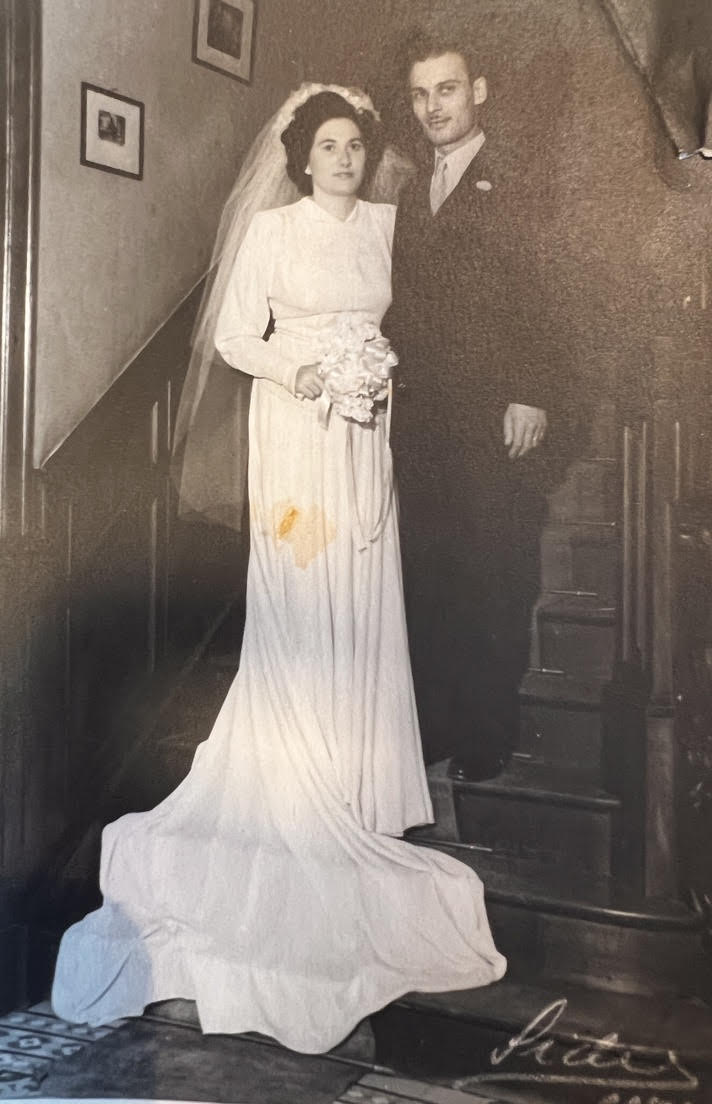
Fredi Rosenblatt married Erika Katz in 1949 in Uruguay. Here they are on their wedding day:

Erika Katz and Friedel Rosenblatt on their wedding day in 1949. Courtesy of Julio Rosenblatt

Erika Katz and Fredi Rosenblatt on their wedding day in 1949. Courtesy of Julio Rosenblatt

wedding of Fredi Rosenblatt and Erika Katz 1949. Courtesy of Julio Rosenblatt

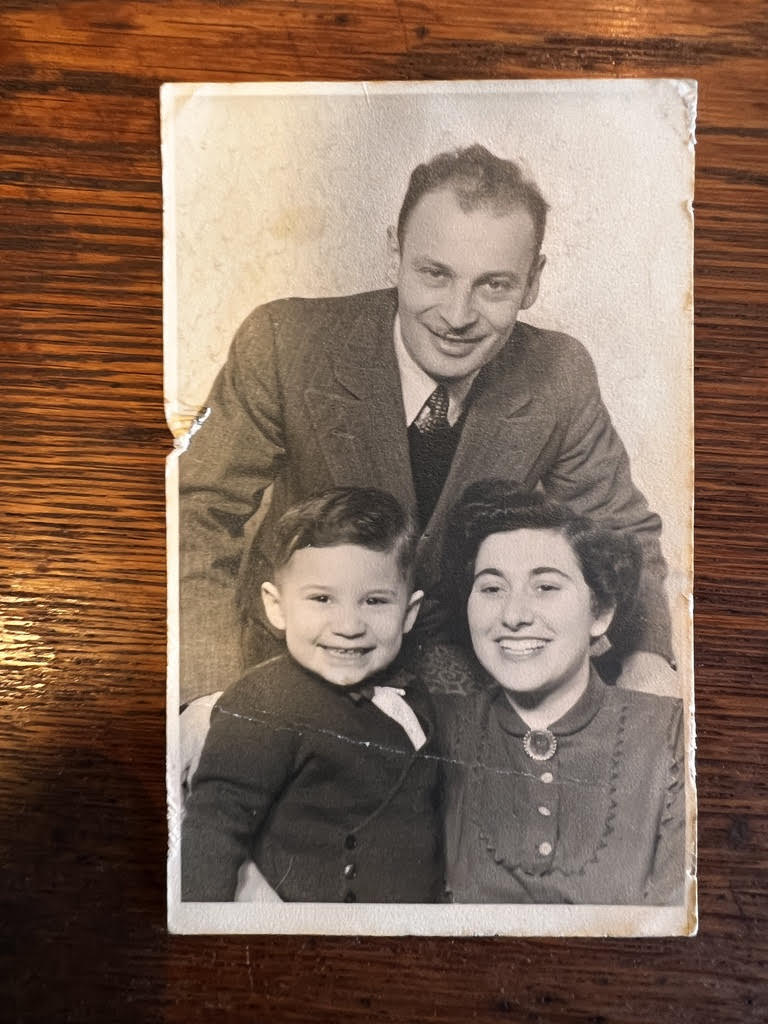
Julio was the only child of Fredi Rosenblatt and Erika Katz. Here is a photo of him with his parents, taken in 1954.

Fredi Rosenblatt, top; Julio Rosenblatt and Erika Katz, bottom. Courtesy of Julio Rosenblatt

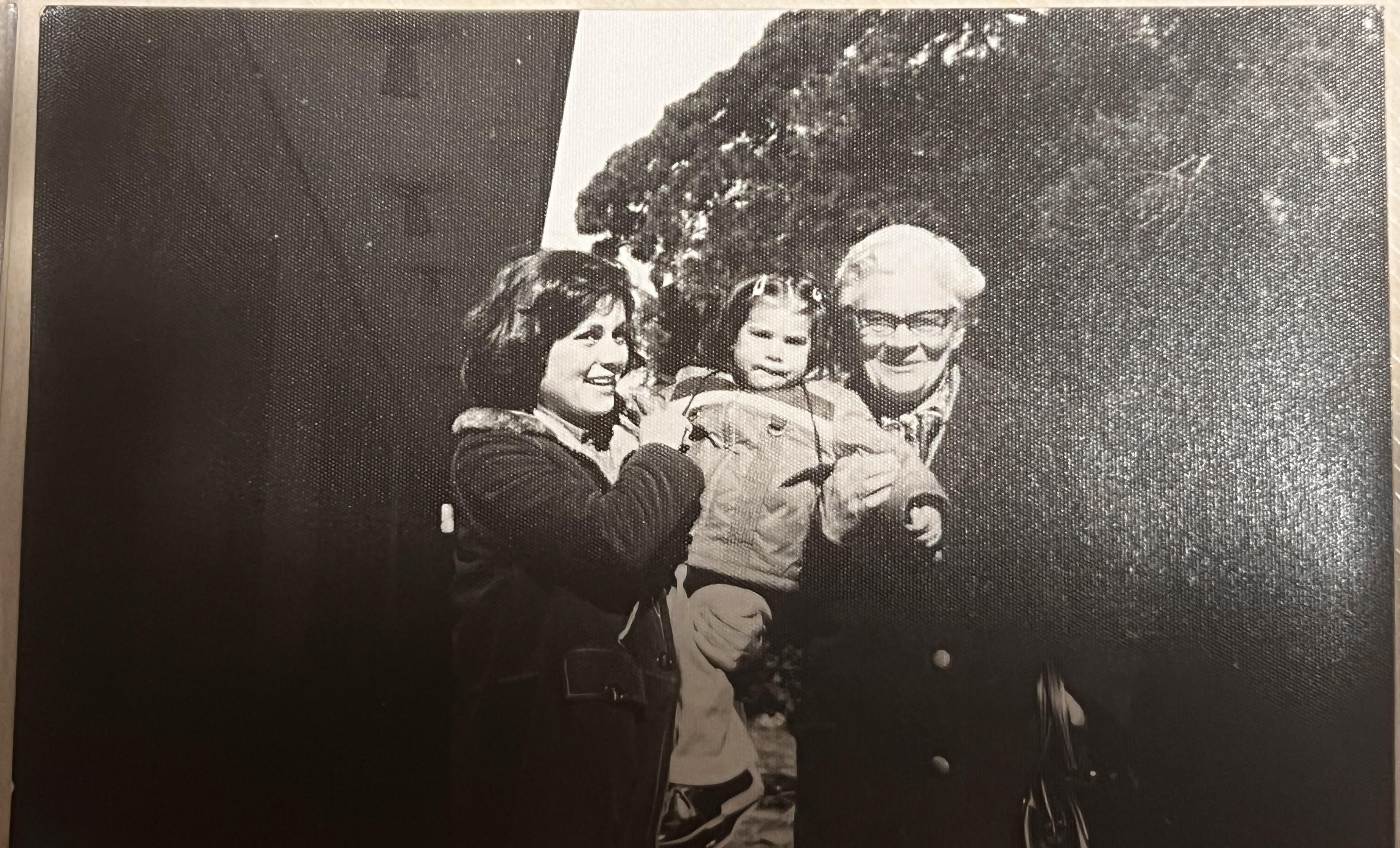
Julio is married to Ana Bogacz, and they have two children. This photograph is of Ana with her daughter Beatriz and Julio’s grandmother, Julie Rosenblatt Rosenblatt.

Ana Bogacz, Beatriz Rosenblatt, and Julie Rosenblatt Rosenblatt, in 1976. Courtesy of Julio Rosenblatt

Julio and Ana have two children. One lives in Uruguay and and the other in England. They also have three grandchildren, one in Uruguay and two in England. So Julius Rosenblatt, who died when his son Fredi was just a baby, and his wife, Julie Rosenblatt, have living great-grandchildren living across the world because Julie Rosenblatt Rosenblatt was smart enough and strong enough and lucky enough to leave Germany when she did.

Thank you to my cousin Julio for sharing his stories and these amazing photographs of his family. I am so glad we connected!


  1. The information about Julie Rosenblatt and her family in this post almost all came from her grandson Julio Rosenblatt during a Zoom on September 10, 2025. 
  2. Samuel Freedman, “A Treasure Hunt for Lost Memories,” The New York Times, August 16, 2003, p. A 15. 
  3. Ibid. 

Malchen Rothschild Rosenblatt, Part III: How I Found Her Great-Grandson Julio

Although the three daughters of Malchen Rothschild and Daniel Rosenblatt were all murdered in the Holocaust, their two surviving sons Felix and Siegmund were able to escape Nazi Germany as was their daughter-in-law Julchen Rosenblatt Rosenblatt, the widow of their son Juda/Julius.

I did not have a great deal of information about Felix or Siegmund because they escaped to Argentina, and I have limited resources for research there. I could not find them or their children on the CEMLA website for ships going to Argentina. All I had were burial records for some of them from the Jewish Online Worldwide Burial Registry (JOWBR) at JewishGen.org.

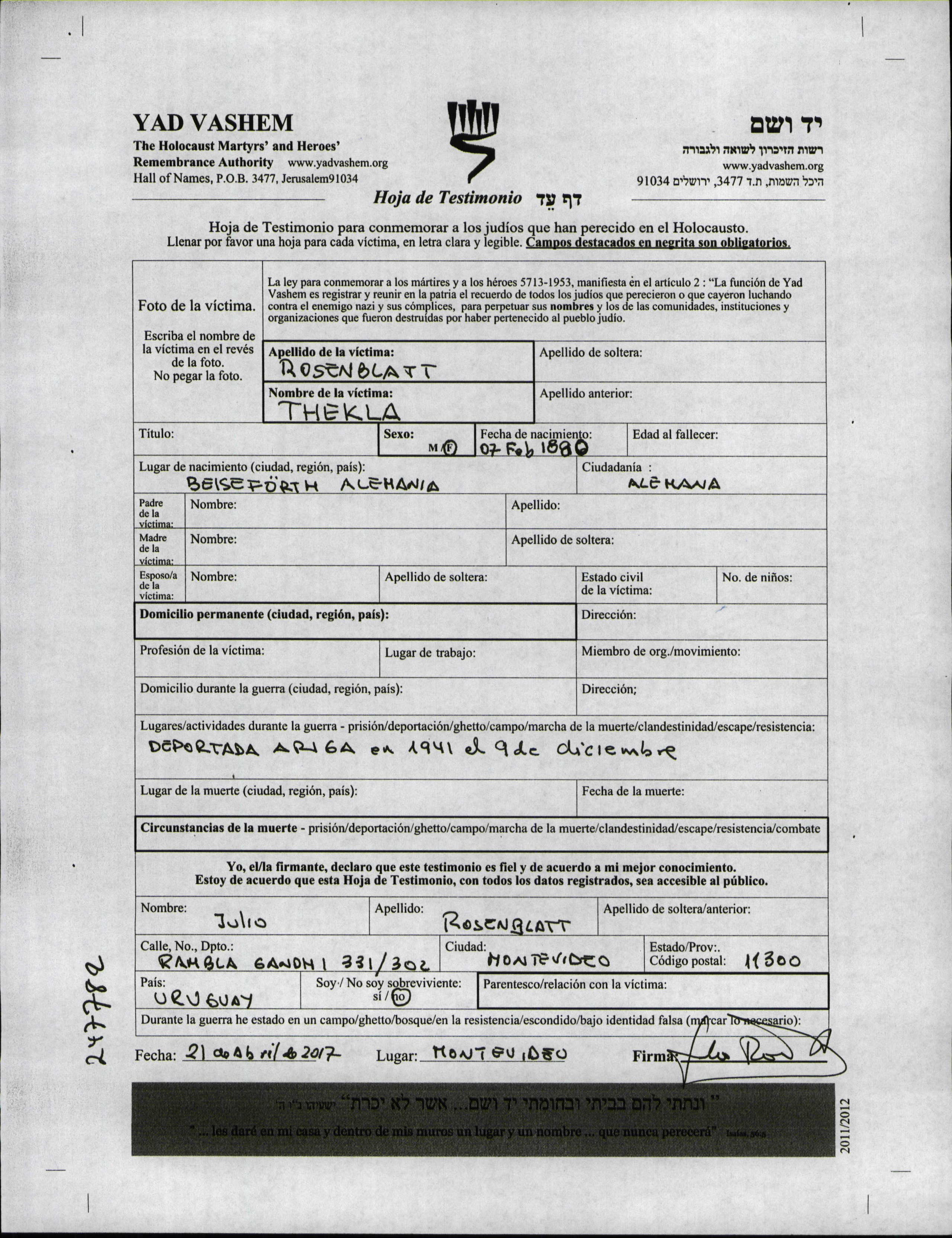
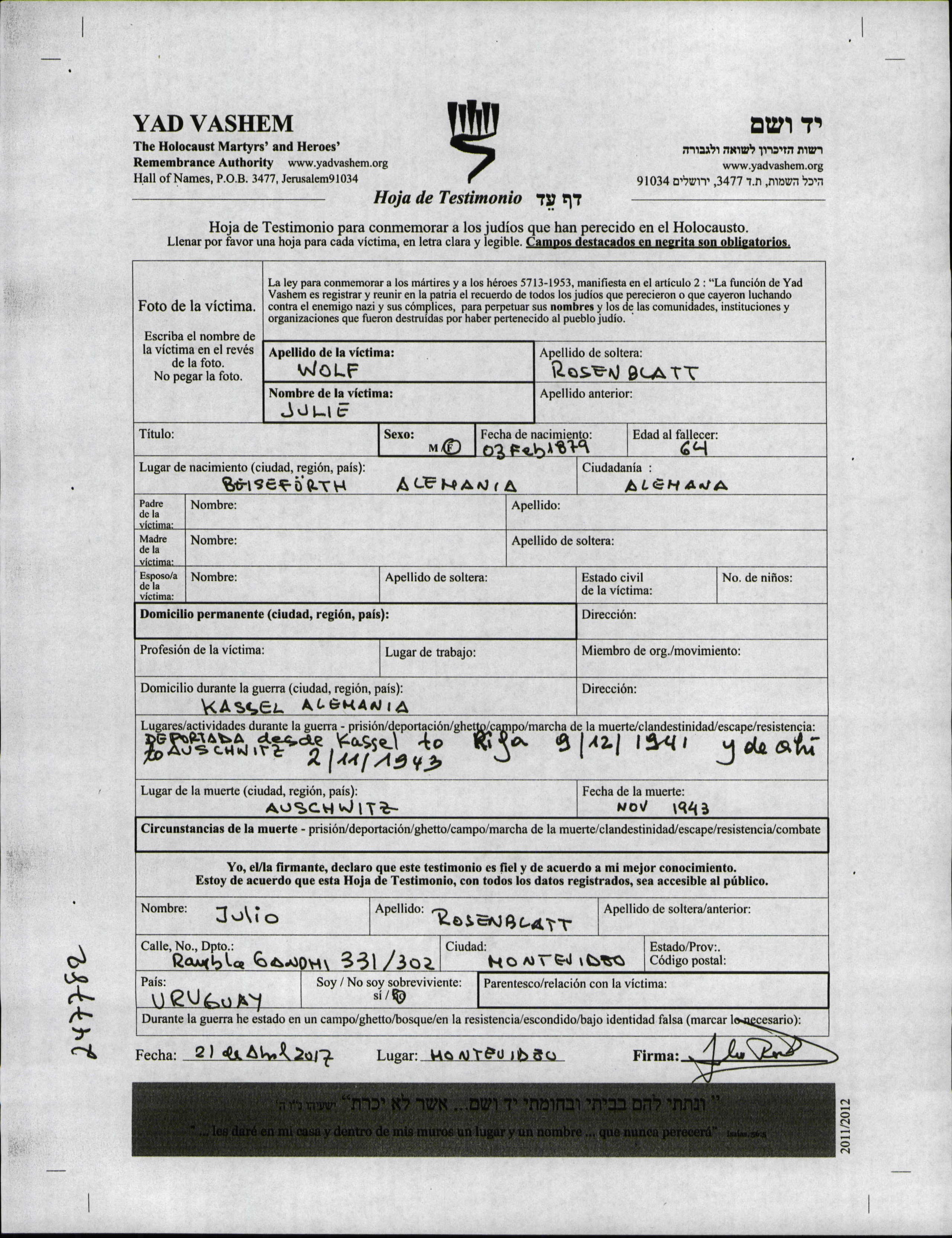
But some of the bricks in this wall crumbled a bit. In looking at the Pages of Testimony for Thekla Rosenblatt and Julie Rosenblatt Wolf, I noticed that both were filed by someone named Julio Rosenblatt. No relationships were given by the submitter, and I had no one in my tree with that name. Julio submitted the pages fairly recently–in 2017–and he lived in Montevideo, Uruguay.

Thekla Rosenblatt page of testimony, found at https://collections.yadvashem.org/en/names/13324460

Julchen Rosenblatt Wolf page of testimony, found at https://collections.yadvashem.org/en/names/13324463

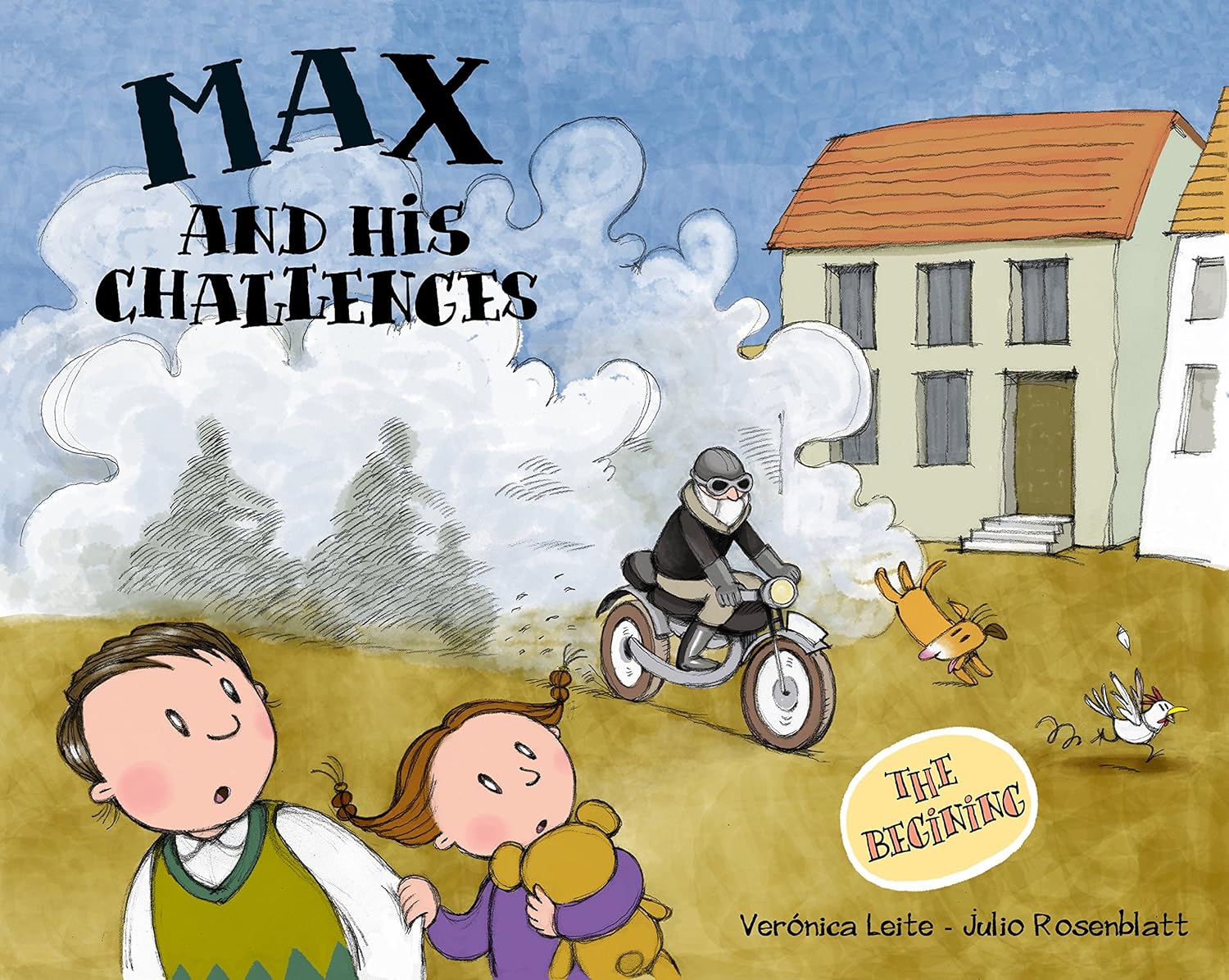
So I googled his name and found two links that helped me figure out who he is and how is he related to the other Rosenblatts and to me. The first page I found was an interview with Julio Rosenblatt of Uruguay that revealed that Julio is the author of several children’s books in the “Max y sus desafíos” series (translated either as Max and His Questions or Max and His Challenges). The books tell the story of Julio’s family in Nazi Germany. “Max” is Julio’s middle name, and he was named in memory of his grandmother’s brother Max. But who was his grandmother? The interview did not reveal.

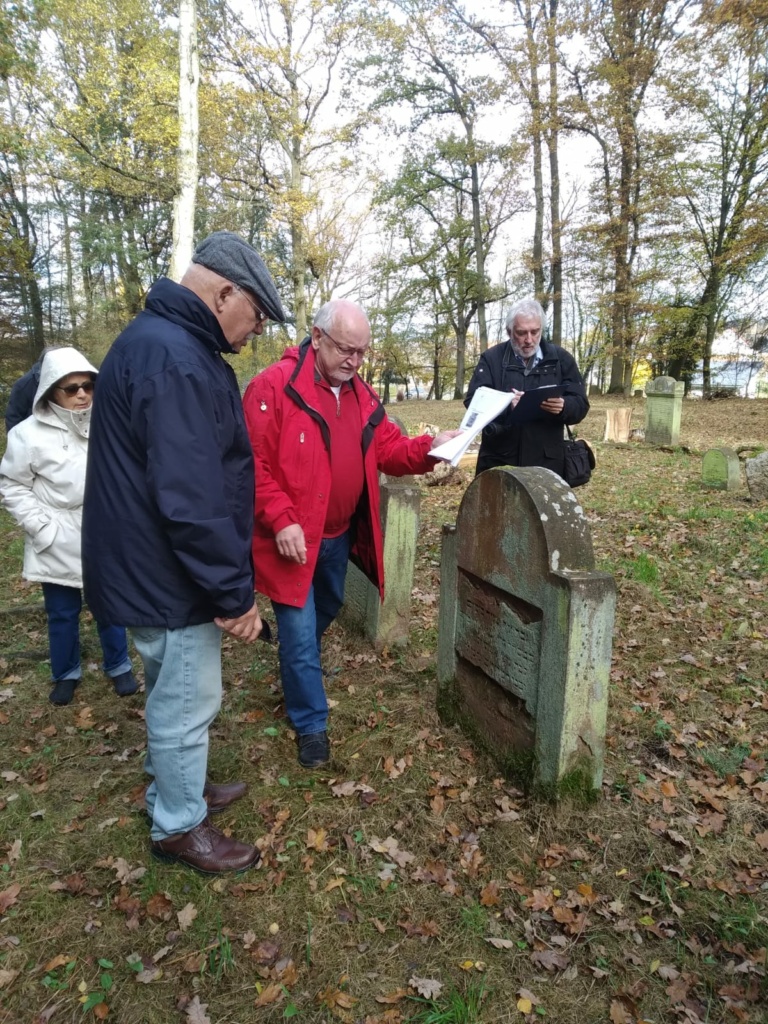
So I kept digging. And then I found the second website about Julio Rosenblatt, Judische Leben in Beisefoerth, or Jewish Life in Beisefoerth, which was the town where Daniel Rosenblatt was born and where the first two of Daniel and Malchen’s children were born. Seeing that confirmed that I was on the right track. The website had a detailed telling of Julio’s trip to Beisefoerth and his search for his family history there. And from that page I learned Julio’s ancestry and how he is related to me. The page describes his trip to the Jewish cemetery in Haarhausen with Hans Peter Klein, the same man who took me there in 2017. This is what they saw there (see photo accompanying quote below):

Five generations of Julio Rosenblatt’s ancestors from Zimmersrode and Waltersbrück are buried there; the oldest grave of his four-times [sic] great-grandfather, Simon Rothschild from Waltersbrück, dates back to 1811. Julio and his wife Ana were particularly touched by the grave of his grandfather Julius Rosenblatt, who died in 1920 at the age of just 36 and just a few months after the birth of Fredi Rosenblatt, Julio’s father.

Now I know exactly who Julio is. He is my fifth cousin, the four-times great-grandson of Abraham Blumenfeld I and Geitel Katz, my four-times great-grandparents. His father was the baby born to Julius Rosenblatt and Julie Rosenblatt, Manfred; his great-grandmother was Malchen Rothschild Rosenblatt, his great-great-grandmother was Gelle Blumenfeld Rothschild, his great-great-great-grandfather was Moses Blumenfeld I, the older brother of my great-great-great-grandmother Breune Blumenfeld Katzenstein.

Julio’s paternal grandmother was Julie Rosenblatt, the widow and first cousin of Julius Rosenblatt. And Julie had a brother Max Rosenblatt who was killed in the Holocaust and became the name of the character in Julio’s books. But Julie survived and immigrated to Uruguay with her son Manfred (or Fredi), and Julio was born there.

I have gotten in touch with Julio and learned more about the Rosenblatts who survived the Holocaust in South America. Once again connecting with a cousin has allowed me the privilege of better understanding and appreciating my family history.

On top of that, a cousin of Sigmund Rosenblatt’s family, Ellie, found me through the blog, and she has been updating me on that branch of the family.


To be continued in September. My family will be visiting for the next two weeks, so I will see you after Labor Day!


Malchen Rothschild Rosenblatt, Part II: Who Shall Live and Who Shall Die

Of the five children of Malchen Rothschild and Daniel Rosenblatt who were still living when Hitler came to power in 1933, only two survived, the two sons Felix and Siegmund. Their three daughters—Julchen/Julie, Jette/Thekla, and Auguste–were all murdered by the Nazis.

Julchen/Julie and her husband Max Wolf were first deported from Kassel to the Riga ghetto on the December 9, 1941, transport that had deported so many other Rothschild family members. Julie and Max were then deported from Riga to Auschwitz on November 2, 1943, where they were murdered. Since their only child Edgar had died as a toddler, they had no direct descendants.

Julie Rosenblatt Wolf page of testimony, found at https://collections.yadvashem.org/en/names/13324463

Jette/Thekla Rosenblatt was also on the December 9, 1941, transport to Riga, where she did not survive. Since she had never married or had children, she also had no direct descendants.

Thekla Rosenblatt page of testimony, found at https://collections.yadvashem.org/en/names/13324460

Auguste’s husband Samuel Roth died on February 15, 1935, in Breitenbach. He was 52 years old.1 Auguste unfortunately had to face Nazi persecution without him. She was deported to the Sobibor death camp on June 1, 1942, and killed there two days later on June 3, 1942.

As for the four children of Auguste and Samuel, I only have the following information:

Irma Roth married Alfred Moses on December 19, 1934, in Berlin.

Irma Roth and Alfred Moses marriage record, Landesarchiv Berlin; Berlin, Deutschland; Personenstandsregister Heiratsregister, Register Year or Type: 1934 (Erstregister). Ancestry.com. Berlin, Germany, Marriages, 1874-1940

I found Alfred listed on the CEMLA website, immigrating to Argentina on December 30, 1939. I could not find a listing for Irma, but I assume she immigrated there as well since they are both buried together at the Cementerio Comunitario de Berazategui in Buenos Aires, Argentina. Alfred(o) died on March 28, 1980, and Irma died on May 30, 1999. I do not know whether they ever had children.

Alfred Moses CEMLA listing, at https://cemla.com/buscador/

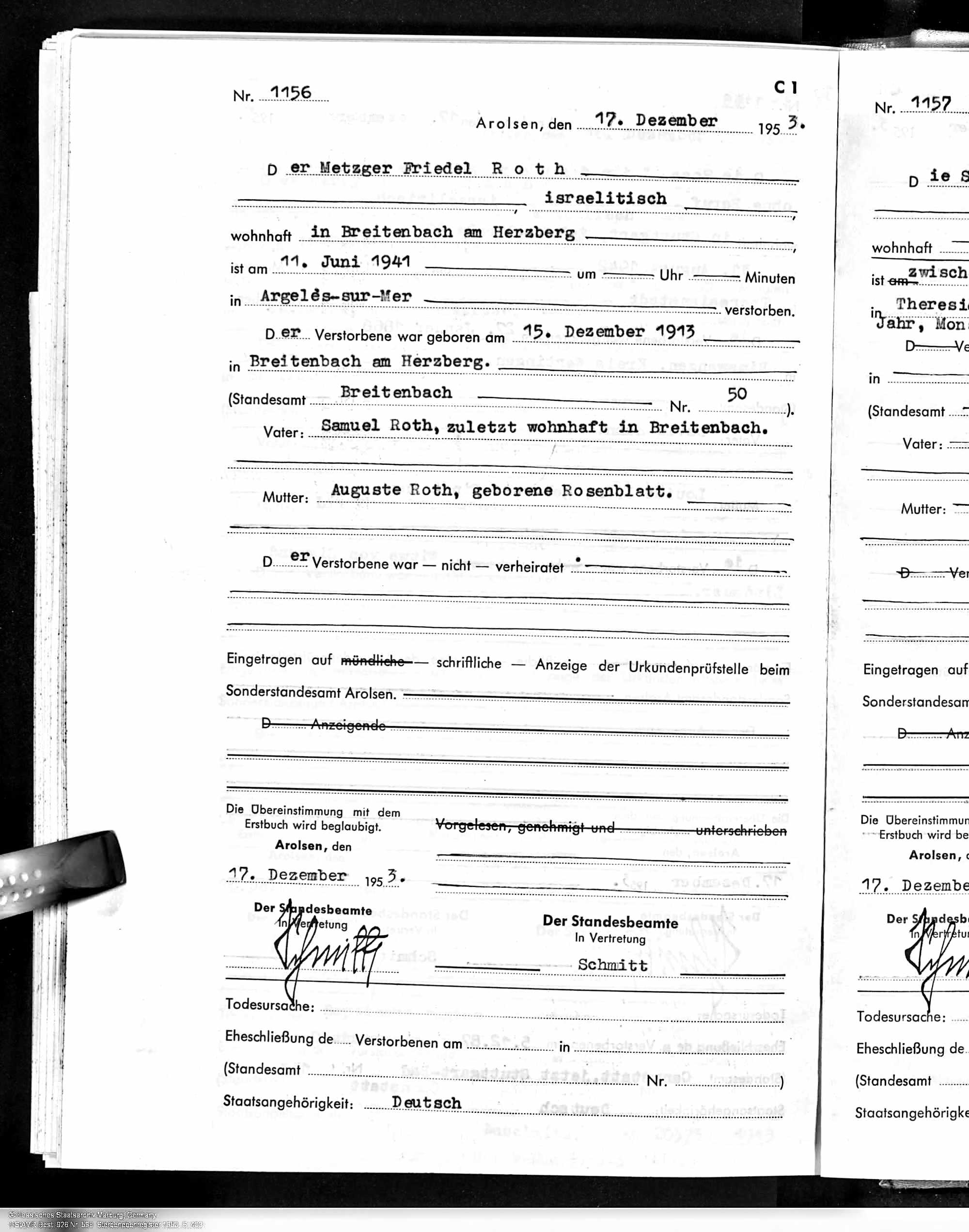
Irma’s sister Friedel never married as far as I can tell. She was living in Luxembourg during World War II and was deported from there to the concentration camp at Argeles-sur-Mer in France. The camp at Argeles-sur-Mer was built by the French in 1939 to house refugees from the Spanish Civil War, and conditions were horrific. “The lack of lodging structures, as well as unsafe water supply and food scarcity, added to the exiled people’s poor health conditions caused the spreading of several diseases that, in turn, led to a dramatic increase in mortality among refugees.” Then during World War II, the camp was used to imprison Jews, gypsies, and other targets of Nazi persecution. Friedel Roth died as a prisoner there on June 11, 1941.

Friedel Roth death record, Hessisches Hauptstaatsarchiv; Wiesbaden, Deutschland; Personenstandsregister Sterberegister; Signatur: 598; Laufende Nummer: 926, Year Range: 1953, Ancestry.com. Hesse, Germany, Deaths, 1851-1958

Lothar Roth, the third child of Auguste Rosenblatt and Samuel Roth, also appears to have never married. The only record I could locate for him was a burial record in Buenos Aires, Argentina, indicating that he died there on July 27, 1992. I could not locate any birth or immigration or marriage record for him.

Auguste and Samuel’s youngest child Gretl was also murdered by the Nazis. I could not find any record of marriage for Gretl. She was deported from Berlin to Auschwitz on March 1, 1943, and was murdered there.

Thus, the three daughters of Malchen Rothschild and Daniel Rosenblatt and some of their children were victims of the Nazi killing machines.

But the two sons of Malchen and Daniel fared better than their sisters. For a long time I was up against a brick wall trying to find more about Felix and Siegmund Rosenblatt. I knew that they had gone to Argentina, but aside from burial records, I could learn nothing more.

And then I looked at the name of the submitter on the Pages of Testimony above for Julie and Thekla Rosenblatt: Julio Rosenblatt of Montevideo, Uruguay. I googled his name, and the bricks on that brick wall began to crumble.


  1. Samuel Roth death record, LAGIS Hessen Archives, TitelStandesamt Breitenbach am Herzberg Sterbenebenregister 1935 (HStAMR Best. 907 Nr. 927)AutorHessisches Staatsarchiv MarburgErscheinungsortBreitenbach am HerzbergErscheinungsjahr1935, p 6, found at https://dfg-viewer.de/show?id=9&tx_dlf%5Bid%5D=https%3A%2F%2Fdigitalisate-he.arcinsys.de%2Fhstam%2F907%2F927.xml&tx_dlf%5Bpage%5D=6 

Rosa and Amalie Rothschild, Gerson and Fanny’s Youngest Daughters

Getting to know Hal Katz and his family and learning the stories about Clara Rothschild and Moritz Katz and their children and grandchildren has been a real highlight of the past few months. Now I turn to Clara’s two younger sisters, the seventh and eighth children of Gerson Rothschild and Fanny Kugelmann of those who survived to adulthood. And unfortunately there is no joy in telling their stories.

Rosa Rothschild, who was born on May 16, 1893, in Zimmersrode, married Meijer Franken sometime before April 23, 1936, when their son Gerson was born in Almelo, Netherlands. I don’t know whether Rosa married Meijer in the Netherlands or Germany because I cannot find a marriage record in either country.1 Meijer was Dutch, born in Haaksbergen, Netherlands, on March 16, 1873, making him twenty years older than Rosa. His parents were Levij Franken and Antje Goedhardt.2 Meijer had been previously married; his first wife Jeanette Herzog, died in Almela, Netherlands, on November 12, 1923.3

Presumably Rosa married Meijer sometime after November 12, 1923, when his first wife died, and before April 23, 1936, when Gerson was born in Almelo, Netherlands. I don’t know whether Rosa met Meijer before moving to the Netherlands or moved there to escape Hitler and met Meijer thereafter. I think it’s reasonable to assume she moved first sometime after 1933 when Hitler came to power and then met and married Meijer. Her mother Frommet “Fanny” Kugelmann Rothschild also moved to Almelo, Netherlands, either with Rosa or afterwards, and was living with Rosa, Meijer, and and her grandson Gerson, named for Rosa’s father and Fanny’s husband, Gerson Rothschild.4 Hal Katz told me that she came to his bar mitzvah in late 1937, but that she was already living in the Netherlands at that time.

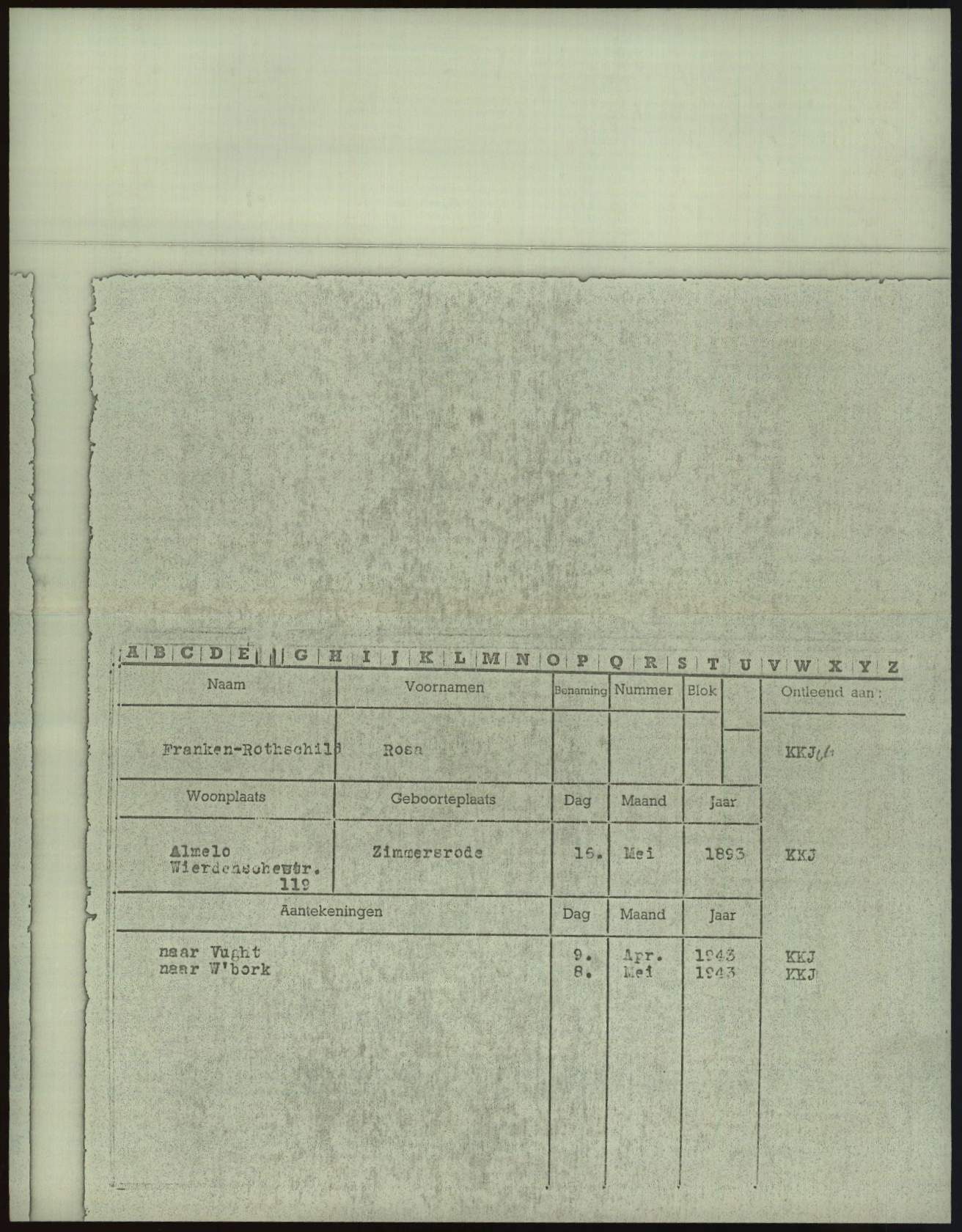
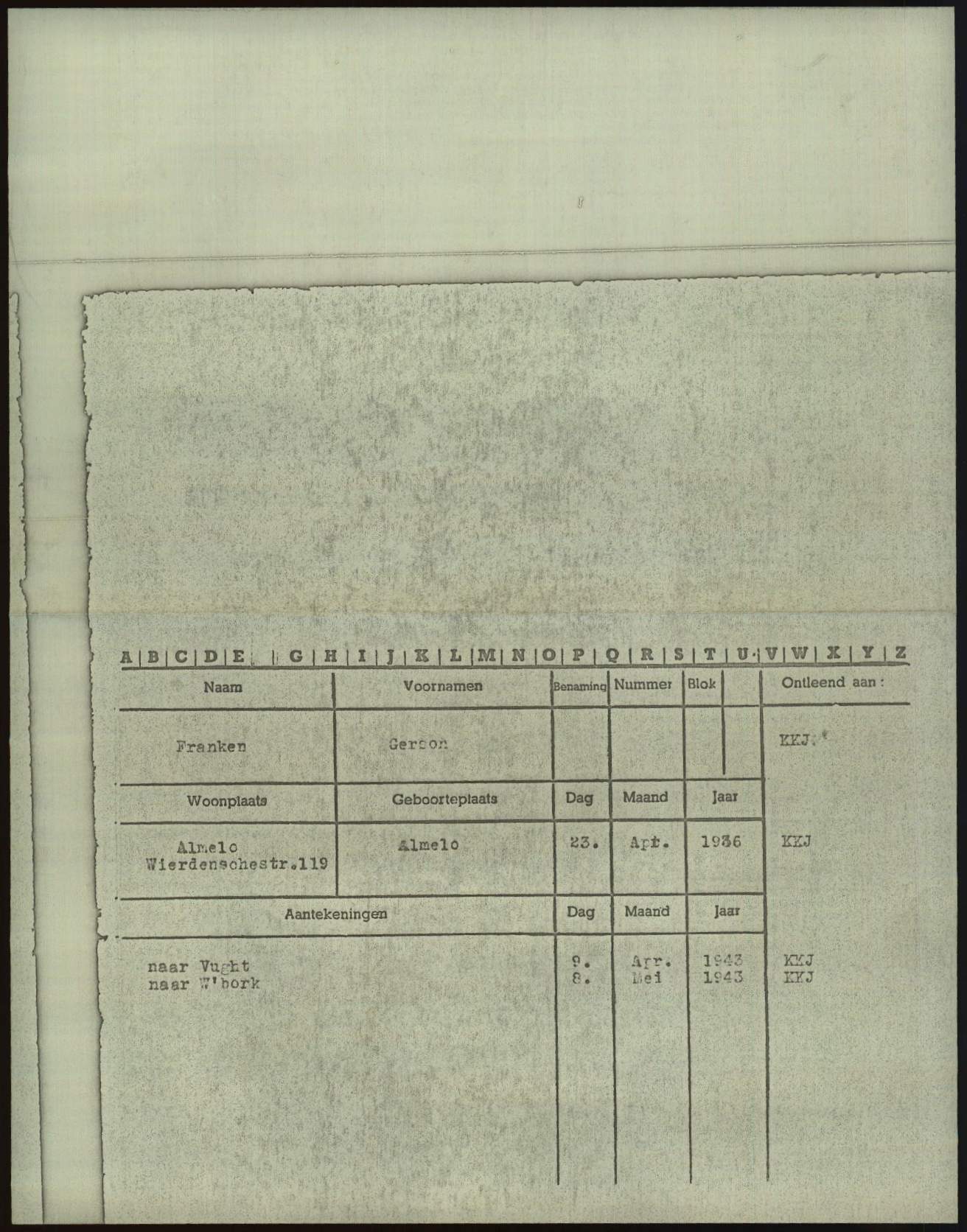
Unfortunately, the move to the Netherlands did not protect Rosa, her mother, her husband, or her son from the scourge of the Nazis. On April 9, 1943, they were sent to the Herzogenbusch concentration camp near Vught in the Netherlands, and then on May 8, they were sent to Westerbork where they were then sent to Sobibor, where they were murdered by the Nazis: all four of them, 86 year old Fanny, 70 year old Meijer, 49 year old Rosa, and seven year old Gerson.

Arolsen Archives, DocID: 402367 (FROMMET ROTSCHILD KUGELMANN)
DeepLink: https://collections.arolsen-archives.org/de/document/402367

Arolsen Archives, DocID: 355979 (ROSA FRANKEN ROTHSCHILD)
DeepLink: https://collections.arolsen-archives.org/de/document/355979

Arolsen Archives, DocID: 355969 (MEIJER FRANKEN)
DeepLink: https://collections.arolsen-archives.org/en/document/355969

Arolsen Archives, DocID: 355947 (GERSON FRANKEN)
DeepLink: https://collections.arolsen-archives.org/en/document/355947

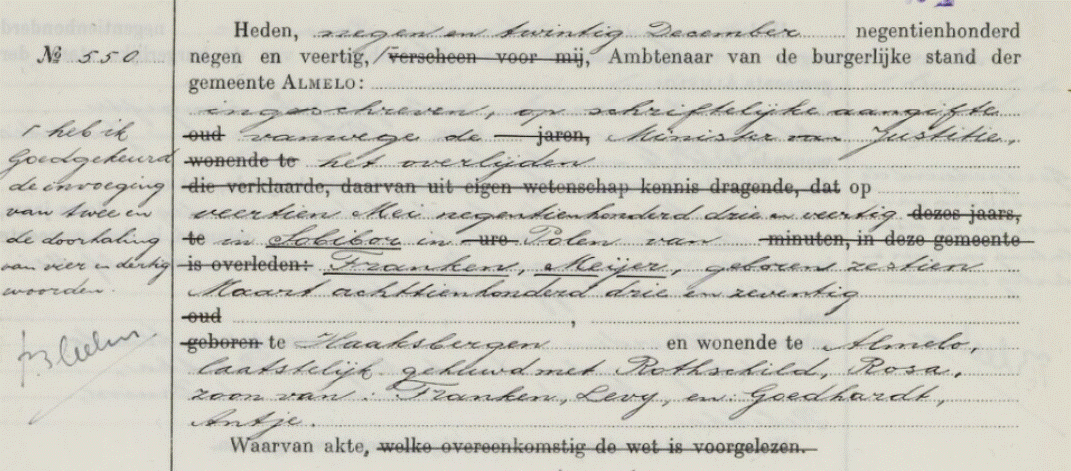
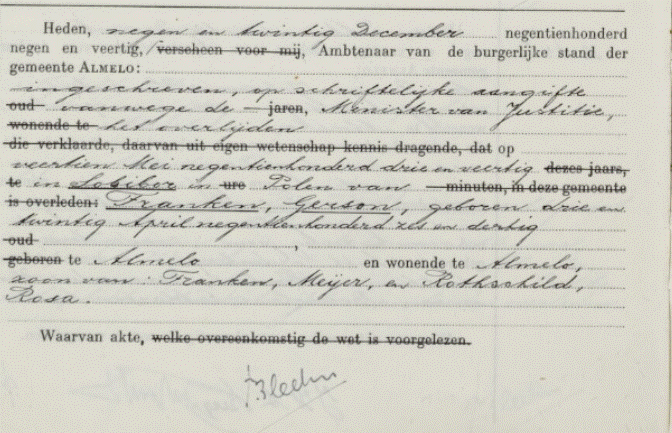
Here are the official Dutch death records for Rosa and her family, showing they were killed at Sobibor :

Rosa Rothschild Franken death record, BS Death Heritage institution Collection Overijssel Institution place Zwolle Collection region Overijssel Archive 0123 Registration number 16645 Sourcenumber 14 Registration date 09-01-1950 Document place Almelo Collection Civil Registry in Overijssel Book

Meijer Franken death record, Collection Overijssel location Zwolle in Zwolle (Netherlands), Civil registration deaths Burgerlijke Stand in Overijssel, Almelo, archive 0123, inventory number 16644, 29-12-1949, Register van overlijden, Almelo, record number 550

Gerson Franken death record, Collection Overijssel location Zwolle in Zwolle (Netherlands), Civil registration deaths Burgerlijke Stand in Overijssel, Almelo, archive 0123, inventory number 16644, 29-12-1949, Register van overlijden, Almelo, record number 549

Frommet Kugelmann Rothschild death record, Register of deaths, Almelo (Overijssel Collection, Zwolle location), Death Frommet Kugelmann, 14-05-1943, Type of deed :
death certificate, Date of deed: 09-01-1950 Location of deed: Almelo, born in Wohra (D); date of birth 11-09-1857, Access number : 0123 Civil Registry in Overijssel Inventory number :
16645 File number : 12

Rosa’s sister Amalie, the youngest of Fanny and Gerson Rothschild’s children, met a similar fate. Amalie, who was born on April 26, 1901, married Jakob Stiefel, who was born January 19, 1893, in Ziegenhain, Germany, and was the son of Michel Stiefel and Emilie Bachrach. As with Rosa Rothschild and Meijer Franken, I don’t have a marriage record for Amalie and Jakob, but according to Holocaust records, they had two children, Eva, born April 3, 1937, in Fritzlar, Germany, and Gerhard, born April 26, 1938, in Kassel, Germany. The family was living in Kassel at that time.

Amalie, Jakob, Eva, and Gerhard were among those who were sent from Kassel on December 9, 1941, to the Riga ghetto. Remember that Amalie’s older sisters Katchen, Auguste, and Jenny were also deported to the Riga ghetto on that same transport. In any event, they all ended up in Riga. In 1942, Jakob died in the Kaiserwald camp near Riga. On November 2, 1943, Amalie and her two young children, six year old Eva and five year old Gerhard were sent from Riga to Auschwitz, where they were murdered. Another family of Rothschild cousins was destroyed by the Nazis.

Thus, of the eight children of Gerson Rothschild and Fanny Kugelmann who had survived to adulthood, five of them were murdered by the Nazis: Katchen, Auguste, Jenny, Rosa, and Amalie, as well as their mother Fanny and almost all of their children. Only Siegmund, Max, and Clara and their families escaped in time, as well as Auguste’s son Bruno Feldheim. That is just one family’s saga, but it was multiplied millions of times over for all the other families who were torn apart and destroyed by the hatred of the Nazis and those who supported them.

What gives me hope after learning all this tragic information about the family of Gerson Rothschild is the incredible strength I’ve seen in the descendants of Siegmund and Clara, those who are here today because their parents or grandparents were able to escape in time. Those descendants are all examples of how good can conquer over evil and love can overcome hatred.


  1. I could not locate a marriage record for Rosa and Meijer in either the Dutch archives at WieWasWie or in the various Hessen archives for Zimmersrode or Waltersbrueck, Germany, where Rosa was presumably living before relocating to the Netherlands. But Rosa and Meijer are listed as Gerson’s parents on his Dutch death record and as each other’s partner on each of their Dutch death records. See images below. 
  2. Meijer Franken, Birth Date 16 mrt. 1873 (16 Mar 1873), Birth Place Haaksbergen
    Father Levij Franken, Mother Antje Goedhardt, Collectie Overijssel; The Hague, Netherlands; Burgerlijke stand. Ancestry.com. Netherlands, Birth Index, 1784-1923 
  3. Jeannette Hertog, Age 52, Birth Date abt 1871, Birth Place Meerssen
    Death Date 12 nov. 1923 (12 Nov 1923), Death Place Almelo, Father Alexander Hertog, Mother Carolina Anschil, Historisch Centrum Overijssel (HCO); Den Haag, Nederland; Burgerlijke stand (overlijdensakten), Ancestry.com. Netherlands, Death Index, 1796-1973 
  4. A document in the Arolsen Archives for Fanny shows that her residence before deported to a concentration camp was Wierdensestr. 119 in Almelo, Netherlands. A similar document in the Arolsen Archives for Rosa shows her living at the same address. See Arolsen Archives, DocID: 402367 (FROMMET ROTSCHILD KUGELMANN) at https://collections.arolsen-archives.org/de/document/402367 and DocID: 355979 (ROSA FRANKEN ROTHSCHILD), at https://collections.arolsen-archives.org/de/document/355979 

Clara Rothschild Katz, Part III: Her Sons at War for America

Once again proving how valuable immigrants have been to this country, Clara Rothschild Katz’s two sons, Otto and Helmut (Harold or Hal) both did outstanding service for their new country against their old country during World War II. These memories of their service during the war were collected by Otto’s daughter and Hal’s niece, Judy Katz, and she generously shared them with me. All of the details below came from Judy’s interviews with her father Otto in 2001 and 2016 and with her uncle Hal in 2019 or from my Zoom calls with Hal and his family this year.

Otto did basic training in Vancouver, Washington, and went overseas in January 1944. He was in training in England until June 1944. Otto told Judy in his 2016 interview that he was first stationed in Bournemouth, England, and then was sent to Plymouth, where they took landing craft to Normandy, landing there two or three days after D-Day (or June 8-9, 1944). Otto described walking through the water to get to the beach, holding onto a rope that extended from the landing craft to the beach and holding his weapon overhead. One soldier in the group took his pants off; the rest got their wool pants wet and were extremely uncomfortable until their pants dried. Then they walked fifteen miles from the beach where they were loaded onto trucks and taken into France towards the front with Germany where they dug foxholes to sleep in. During that summer the Allied troops made substantial progress in moving the German army east out of France and into Germany.

In his 2019 interview with Judy, Hal reported that his brother Otto was in the Quartermaster Corps in the Third Army in France and Germany, commanded by General George Patton. Otto was in a unit stationed near General Patton’s headquarters as the troops battled into France and thus was near the center of the army’s advance through France into Germany. According to several sources, the quartermaster corps was generally in charge of procuring and delivering supplies for the combat units, including food, clothing, fuel, ammunition, and general supplies. They also planned for transportation and handle other logistical matters. And they could often be in danger during combat, serving alongside their fellow soldiers in providing those goods and services to them.

Otto reported that he saw little fire as they moved through France. By the fall of 1944, they were stationed for several months about fifty miles from Metz, France, and by early January, 1945, his division had advanced into Metz, which is about fifty miles from the German border.

They were in Metz until the spring, and Otto reported that the captain of their unit was Jewish and allowed the Jewish soldiers to stay for Passover in Metz. By that time (March 28, 1945) the rest of the unit had begun moving into Germany. They were all reunited in early April in Eisenach, Germany, which was close to the Nazi camp in Buchenwald.1 Otto told Judy in 2001 that the Jewish captain of their unit sent the known antisemites in the unit to Buchenwald, now liberated, to see the results of Nazi persecution, and the soldiers who visited came back very upset by what they had seen. Unfortunately, that did not erase their underlying antisemitism, according to Otto.

Otto’s unit stayed in Eisenach for two weeks. When the war ended on May 8, 1945, he was then stationed near Nuremberg. He was camped in Furth, near Zirndorf, where he and Hal were reunited for a brief visit. This photograph was taken during that visit in July, 1945.

Otto and Hal Katz, July 1945, in Zirndorf, Germany. Courtesy of the family

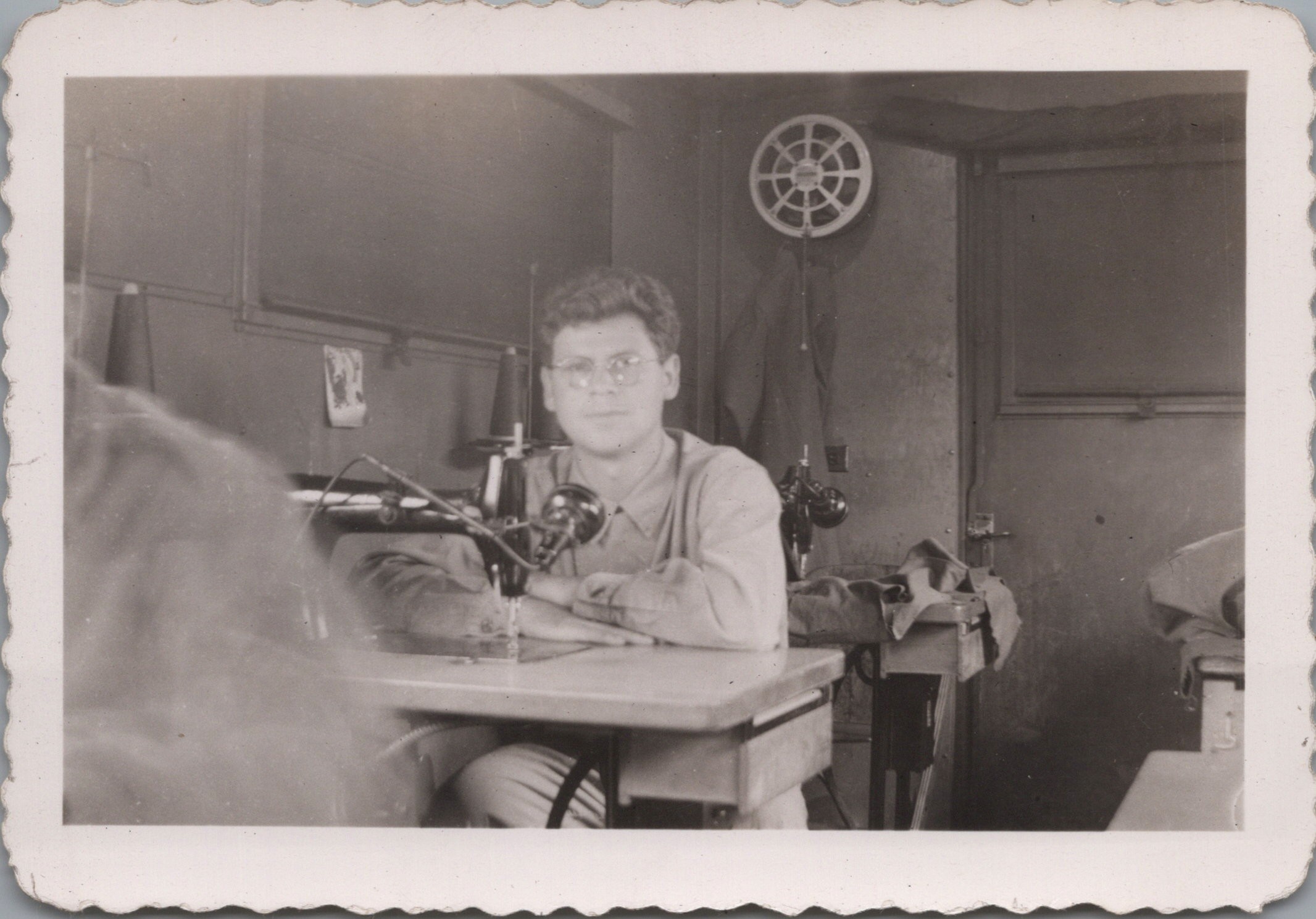
Otto worked from March 1945 until August 1945 as a sewing machine operator, making snow suits and repairing army clothing. He was then transferred to Reims in France, and then Marseilles, where he waited to be sent to fight in the Pacific Theater. Fortunately, the war ended before he could be sent to the Pacific, and he was transferred to a suburb outside of Antwerp, where from August 1945 until November 1945, he was an inspector in a dry cleaning plant and was able to see Ruth and Jonas Tiefenbrunner. He returned home sometime after that and was discharged from the army on January 19, 1946.

Otto Katz at his sewing machine. Courtesy of the family

Here is a map showing Otto’s path from Normandy to Metz to Eisenach to Zirndorf to Reims to Marseilles and finally to Antwerp.


Meanwhile, Hal also was stationed overseas during the war. He provided Judy with many details about his training and his service during her interview with him in 2019. He was drafted in September 1943 and reported for duty in New York, bringing nothing with him except some underwear and toilet articles. He told Judy that he “wasn’t smart enough to be nervous.” He was not yet nineteen years old at the time.

He was taken by train to Fort Dix in New Jersey and then to Camp Landing in Jacksonville, Florida, for basic training where he learned how to march in formation and how to handle an M1 rifle. He claimed he was terrible at shooting because he couldn’t see the target (Hal wore and wears glasses). He became a low speed radio operator and rifleman. While in Florida he applied for and became a US citizen.

Here is Hal with his rifle:

Hal Katz during World War II. Courtesy of the family

From Florida he was sent to Newport News, Virginia, and after one night there he boarded a Liberty ship with five hundred other GIs. The ship was not built for passengers, and the bunks were stacked four to five high in the cargo hold. They sailed to Naples, Italy—a trip that took 28 days. They were sent to a “Repo Depot,” a replacement depot where the newly arrived soldiers were used to replace those who had been wounded, killed, or captured. He spent two to three weeks there, waiting for assignments and marking time. They lived in tents and slept on cots, ten people to a tent.

Hal became a radio operator in the 88th Division, 351st Regiment, Second Battalion, Company B, in the Fifth Army in Italy. By that time Italy had surrendered to the Allies and had joined them in the war against Germany. The Allies were at the time of Hal’s service trying to drive the Germans out of Italy. His division was assigned to areas in Italy between Naples and Rome, and it was mostly quiet for the sixteen months he was there. In the spring of 1945, his regiment would move forward a couple of miles a day, occasionally having contact with the Germany army, and “sometimes people were shot.”

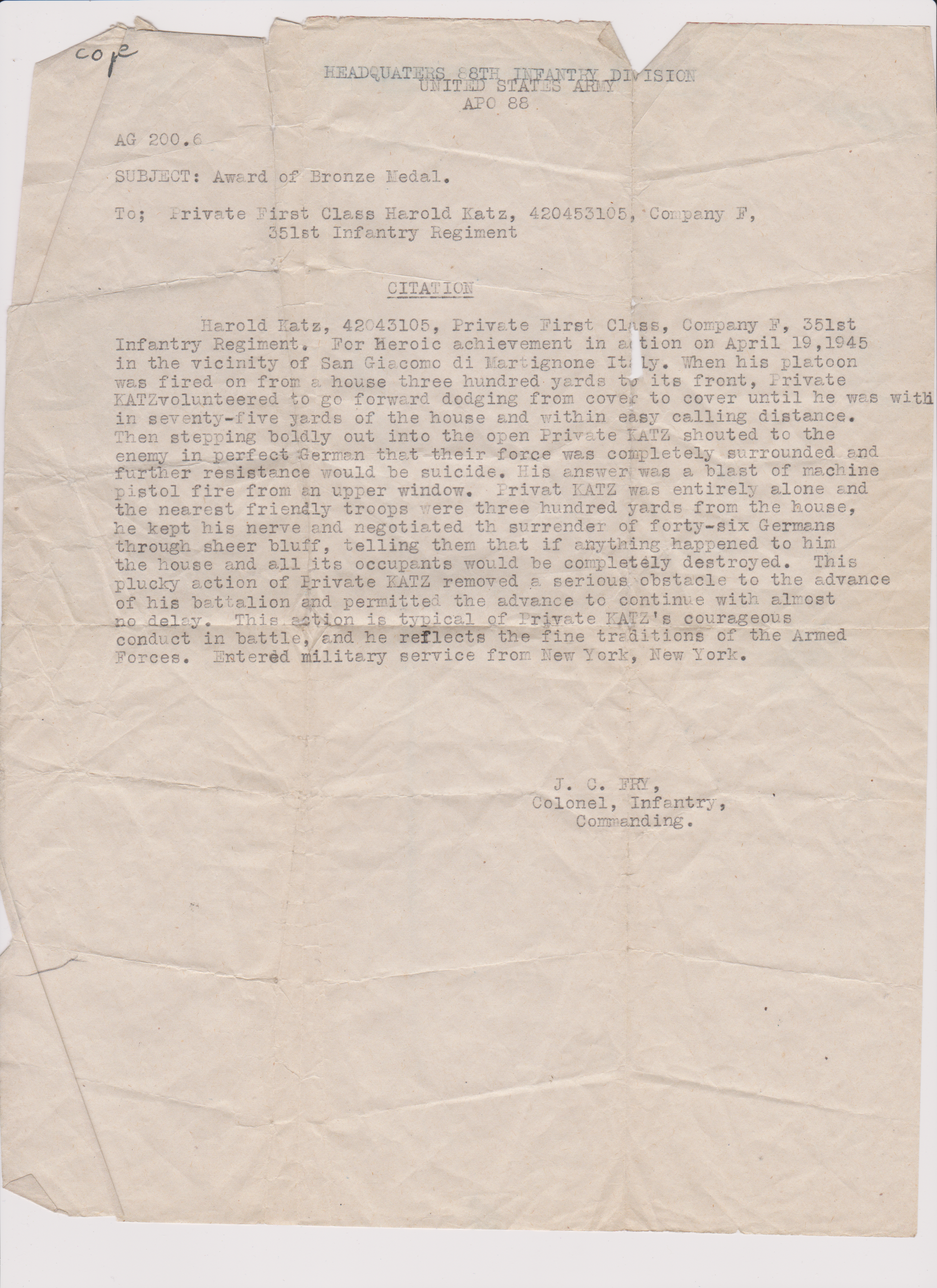
It was during this time that Hal did something extraordinary for which he received a Bronze Medal, an experience he did not even discuss in his interview with Judy and was reluctant to discuss with me. I will transcribe the citation given when he received medal.

Bronze Star citation for Hal Katz

Headquarters 88th Infantry Division

United States Army

APO 88

SUBJECT: Award of Bronze Medal

To: Private First Class Harold Katz, 42043105, Company F, 351st Infantry Regiment

CITATION

Harold Katz, 42043105, Private First Class, Company F, 351st Infantry Regiment. For heroic achievement in action on April 19, 1945 in the vicinity of San Giacomo di Martignone Italy. When his platoon was fired on from a house three hundred yard to its front, Private KATZ volunteered to go forward dodging from cover to cover until he was within seventy-five yard of the house and within easy calling distance. Then stepping boldly out into the open Private KATZ shouted to the enemy in perfect German that their force was completely surrounded and further resistance would be suicide. His answer was a blast of machine pistol fire from an upper window. Private KATZ was entirely alone and the nearest friendly troops were three hundred yards from the house, he kept his nerve and negotiated the surrender of forty-six Germans through sheer bluff, telling them that if anything happened to him the house and all its occupants would be completely destroyed. This plucky action of Private KATZ removed a serious obstacle to the advance of his battalion and permitted the advance to continue with almost no delay. This action is typical of Private KATZ’s courageous conduct in battle, and he reflects the fine traditions of the Armed Forces. Entered military service from New York, New York.

J.C. FRY, Colonel, Infantry, Commanding

Imagine the scene. A house of Germans shooting at a company of American soldiers. Of the three hundred American GIs there, Hal Katz, all of 5’3 1/2” according to his draft registration, is the one to run up close to the house and yell, in German, that they were surrounded and had to surrender. And the Germans believed him and surrendered to him. I find it hard to imagine how he had the guts to do this.

Hal came home from Europe six months later in early September 1945 and was assigned to Fort Dix and then to Fort Wadsworth on Staten Island. He was able to sleep at home and report to duty at Fort Wadsworth during the day. He was finally discharged from the army on October 31, 1945. He had just turned 21.

As you can probably infer from these summaries of their interviews with Judy, both Otto and Hal spoke very modestly about their service during the war. Both of them played down the dangers they faced and the violence they must have seen. When I asked Hal on Zoom about his medal, he dismissed his heroic act as being just a stupid act by a very young man.

My cousins Otto Katz and Harold “Hal” Katz are two of the many men of the Greatest Generation who helped us defeat the Nazis: two young Jewish men, immigrants from Germany, who fought against Hitler and defended their new homeland here in the United States. We should all be eternally grateful to them.

Otto Katz and Hal Katz. Courtesy of the family


  1. Eisenach was heavily bombed by the Allies during World War II and was taken over by the Americans in April 1945 near the end of the war. It then was taken over by the Soviets and became part of East Germany. See website at https://www.germansights.com/eisenach/#:~:text=Eisenach%20was%20bombed%20heavily%20at,miles%20away%20from%20the%20town). 

Clara Rothschild Katz, Part I: Living in and Escaping from Germany

Doing family history research is a labor of love. I have said that many times over the almost fifteen years that I’ve been engaged in this work. Being able to honor the memories of those I never knew but who are somehow related to me is a joy and a privilege. Connecting with and getting to know so many living “long-lost” cousins has given me great joy.

Researching the family of Clara Rothschild and Moritz Katz has led me to a really special opportunity for such joy—-the opportunity to talk to their son Hal Katz, my one-hundred-year-old fourth cousin, once removed. Imagine having lived through an entire century and seeing all the horrors and all the miracles since 1924—the Holocaust, World War II, the creation of the state of Israel, the Cold War, the social activism and unrest of the 1960s and the 1970s, the Vietnam War, all the civil rights movements, the election of the first African-American president, the COVID pandemic, and the introduction of so many scientific inventions good and bad—-the atomic bomb, television, cell phones, the internet, and now AI. It’s mind-boggling how much the world has changed in the last hundred years.

Hal Katz has lived through it all, starting as a small boy in Germany, living in a small town, escaping from Germany in 1938 shortly after his bar mitzvah, settling in New York City as a young teenager, fighting for the US in World War II, building a lifelong career with General Electric, marrying and having children, and now still living on his own, playing bridge, and talking to me on Zoom as if it were the most natural thing in the world. Over the course of three Zoom calls, I have been blessed to talk to Hal as well as his daughter, his nieces, his nephew, and another Rothschild cousin, all of whom are my cousins.

And so now as I turn to the story of the sixth of Gerson and Fanny’s children who lived to adulthood, their daughter Clara Rothschild, I feel so fortunate that I was able to hear her story and the stories of her family from her son Helmut Harold “Hal” Katz. Unless otherwise indicated, the information in this post came from Zoom calls or emails with Hal and members of the family or from interviews with Hal or Hal’s brother Otto done by Otto’s daughter Judy, Hal’s niece.1

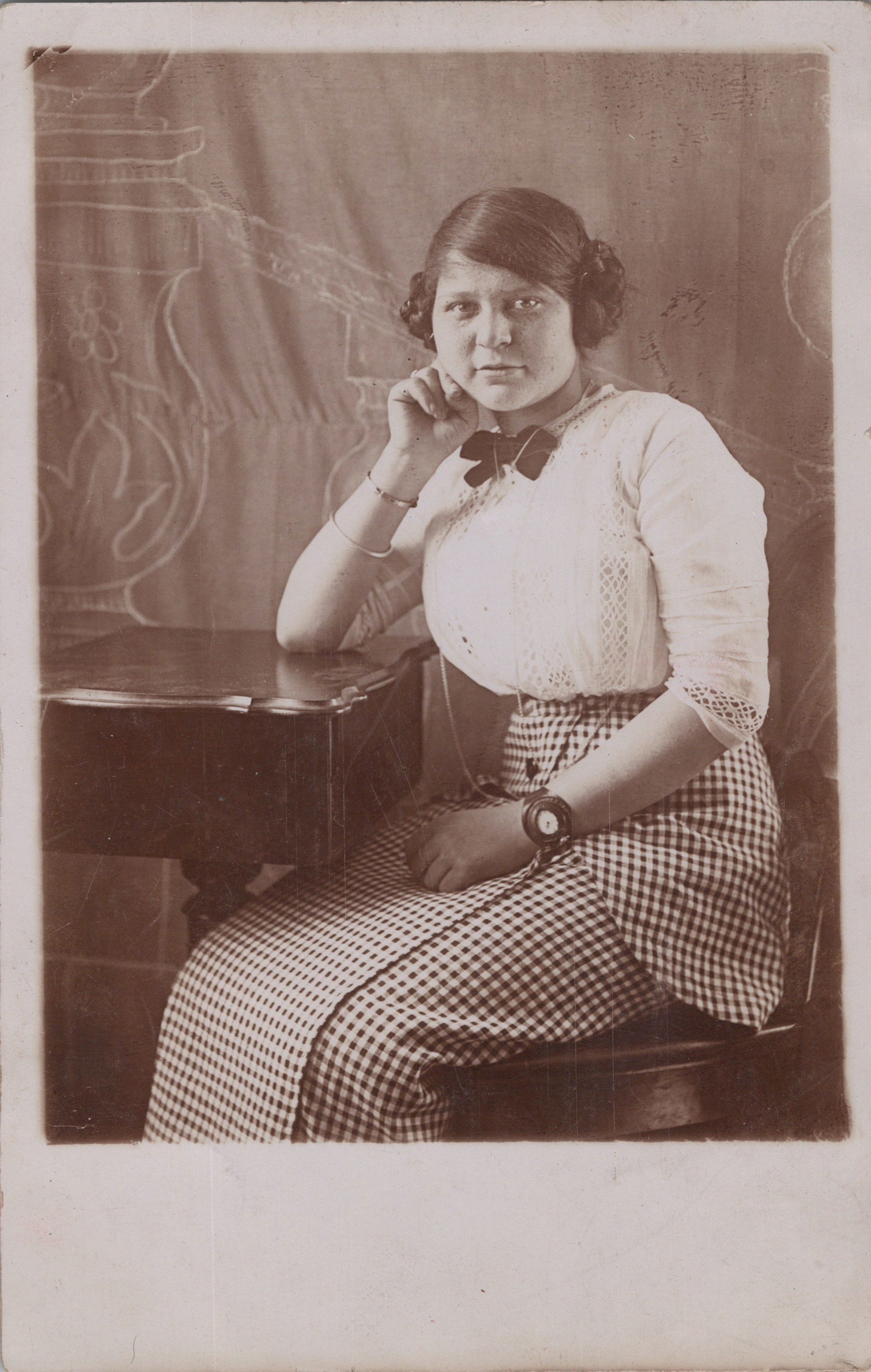
As we saw, Clara Rothschild was born on July 15, 1891, in Waltersbrueck, Germany.  According to Hal, this photograph of Clara was probably taken when she was nineteen and working as an apprentice bookkeeper in a dry goods store.

Clara Rothschild c. 1910
Courtesy of the family

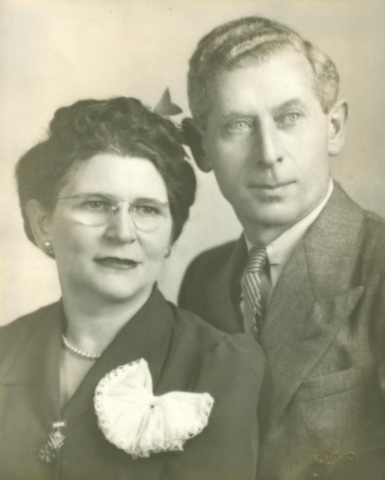
On November 1, 1921, she married Moritz Katz, who was born in Neuenhain, Germany, on November 4, 1894. Here is a photograph of Moritz taken in 1912 when he was eighteen, a photograph of Clara in the 1920s, and an undated one of Clara and Moritz taken years later.

Moritz Katz in 1912. Courtesy of the family.

Clara Rothschild in the 1920s. Courtesy of the family.

Clara Rothschild and Moritz Katz undated
Courtesy of the family

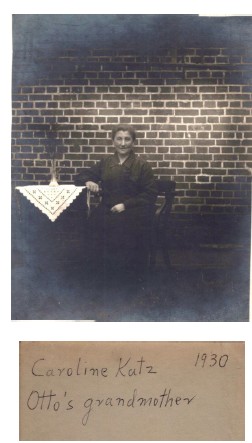
Clara and Moritz had three children, Otto, born in 1922, Helmut (Hal) born in 1924, and Ilse, born in 1928. Hal told me that until he was six years old, he and his family lived with his paternal grandmother, Caroline Rosenblatt Katz, in Neuenhain. His paternal grandfather Jacob Katz had died many years before in 1899. Neuenhain was a very small village, about two hundred people. Hal’s parents and grandmother ran a grocery business out of their home selling produce grown on their farm. This is a photograph of Hal’s paternal grandmother Caroline in 1930 in Neuenhain.

Caroline Katz 1930. Courtesy of the family

Hal said that they were the only Jewish family in the village, and he never understood how his father had become so knowledgeable about Judaism and Hebrew since there was no Hebrew school in Neuenhain. The closest synagogue was within walking distance, but it was a challenge finding the ten men to make a minyan. His father was able to lead services and even acted as the kosher butcher on the side.

Here is a beautiful photograph of Hal with his older brother Otto taken when they lived in Neuenhain. Hal looks no more than two years old, so this photograph was probably taken in about 1925-1926.

Otto and Helmut Katz, c. 1925-1926. Courtesy of the family

I asked Hal what he remembered about his maternal grandfather Gerson Rothschild, and he told me that he was in the coal business. He also said that the first funeral he ever went to was Gerson’s funeral in 1930 when Hal would have been six years old.

When Hal was six, the family moved to a larger town, Borken, which was about six miles from Neuenhain and had a population of about two thousand people and more of a Jewish community than Neuenhain. There his father Moritz had a business selling the raw materials needed to make clothing. Hal compared it to being a peddler. From the way Hal spoke, it sounds like those early years of his life were happy and secure. He had many cousins from his Rothschild side—-all the children of his mother’s siblings—who were living in other towns in the Hessen region. He also had many relatives from his Katz side.

This is a photograph of the three Katz siblings taken in Borken in 1934. It was probably Ilse’s first day of school since she is holding a cone filled with candy traditionally given to children in Germany on their first day of school.

Otto, Ilse, and Hal Katz 1934 in Borken. Courtesy of the family

Of course, everything changed after Hitler came to power. In an interview Judy did with her father Otto, he reported that once the Nazis came to power, the children had to change schools as they were no longer allowed to go to school with Christians, so they went to a Jewish school. In addition, the family was forced to sell their land and their business and lived on the money from those sales until that money ran out.

In 1937 when he was fifteen, Otto left school and was doing an apprenticeship in a retail clothing store in Wolfhagen, a town about 40 miles north of Borken. Apparently this was a common practice—-to send a teenage boy to live with another Jewish family and learn a trade. In an interview with his daughter Judy,  Otto said that the store had so little business that he spent his days gardening. One day Otto was riding his bike in Wolfhagen and a group of Hitler Youths tried to take his bike from him; Otto hit them with the bike pump and escaped. When Otto told the man with whom he was apprenticing what had happened, that man contacted Moritz.

Moritz went to Wolfhagen and took Otto to Kassel to stay with relatives for six months. Fortunately, Moritz had had the foresight to see what was happening with the Nazis, and this gave him the extra incentive to work on getting them out of the country. He was able to get the necessary papers to leave Germany with the help of the Hebrew Immigration Aid Society and a sponsor named Albert Decker. First, Moritz left with Otto and went to Hamburg where the two of them were able to board a ship and travel to America. Leaving Clara, Hal, and Ilse behind was very difficult because none of them knew when they would see each other again.

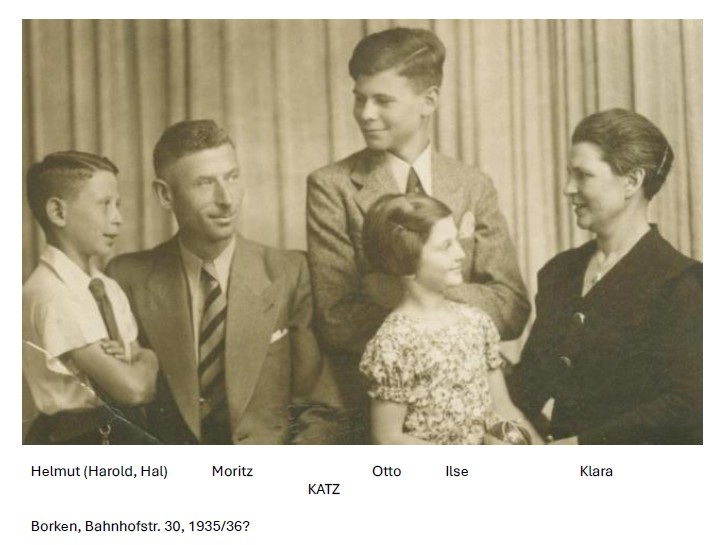
Hal believes this family photograph was taken not too long before Moritz and Otto left Borken for the US.

Katz family in Borken, maybe 1936. Courtesy of the family

Moritz and Otto arrived in New York on August 27, 1937.2

Fortunately, Clara was able to leave with Hal and Ilse eight months later, just a few months after Hal celebrated his bar mitzvah in Borken without his father or brother. In an interview Judy did with Hal in 2023, Hal told her that Clara and the children were living with a family from Borken, the Blums, until April 8,1938 when they left to go to the US. First, they took a train to Antwerp, where they stayed with the Tiefenbrunners at the orphanage they were running. (See earlier blog post here.) Then they boarded a freighter, a slower moving form of transport that was crowded with mostly Jewish people escaping Hitler. This photograph was taken before they boarded the ship to leave Germany on April 11, 1938.

Clara, Ilse, and Hal (on the right side of the photo) on the day they left Germany for the US in 1938. Courtesy of the family

They arrived in New York after an uncomfortable eleven day journey on April 21, 1938.3

Thanks to Moritz’s foresight, he and Clara and their children were now safely out of Germany, and they were the first ones in the extended Rothschild family to get out—-before Siegmund and before Max, Clara’s brothers.

And as we have already seen, most of the rest of the family did not escape in time. Hal said that his parents did all they could to get other family members out, but unfortunately as we have seen and as we will see, those efforts did not succeed. Hal said that they eventually lost contact with those still in Germany. When I asked why those who remained—-e.g., Clara’s sisters Katchen, Auguste, Jenny, Rosa and Amalie—-hadn’t also tried to get out of Europe when Moritz and Clara did, Hal said he thought they all just believed it would all blow over and that they would be safe.

But Clara, Moritz, Otto, Hal, and Ilse were now in New York, starting over in a new country.

More on that to come in my next post.


  1. Zoom calls with Hal Katz and family, May and June 2025. Interviews with Hal and Otto over the years by Judy Katz. 
  2. Moritz Katz, ship manifest, Departure Port Hamburg, Germany, Arrival Date 27 Aug 1937, Arrival Port New York, New York, USA, Ship Name Hansa  The National Archives in Washington, DC; Washington, DC, USA; Passenger and Crew Lists of Vessels Arriving at New York, New York, 1897-1957; Microfilm Serial or NAID: T715; RG Title: Records of the Immigration and Naturalization Service, 1787-2004; RG: 85, Ancestry.com. New York, U.S., Arriving Passenger and Crew Lists (including Castle Garden and Ellis Island), 1820-1957 
  3. Clara Katz ship manifest, Place of Origin Germany, Departure Port Antwerp, Belgium, Arrival Date 21 Apr 1938, Arrival Port New York, New York, USA
    Ship Name Gerolstein, The National Archives in Washington, DC; Washington, DC, USA; Passenger and Crew Lists of Vessels Arriving at New York, New York, 1897-1957; Microfilm Serial or NAID: T715; RG Title: Records of the Immigration and Naturalization Service, 1787-2004; RG: 85, Ancestry.com. New York, U.S., Arriving Passenger and Crew Lists (including Castle Garden and Ellis Island), 1820-1957 

Yom Hashoah 2025

Before I started researching my family history back in 2010, I believed that I had no relatives who were killed in the Holocaust. Since then I have learned that there are so many of my cousins who were killed by the Nazis that I have lost count—babies, children, teenagers, mothers and fathers, brothers and sisters, grandparents, the frail and the elderly—innocent people who were put to death for no reason other than their Jewish identity.

Here we are 80 years after the Holocaust and we are still seeing people being despised and targeted because of their identities. There is still widespread antisemitism, but also widespread racism and islamophobia. We seem to have learned nothing.

On Yom Hashoah let’s work for and hope for the end of all kinds of intolerance and hatred.

Two Updates: Why Didn’t Mathilde Rothschild Leave Germany With Her Family? And How did Albert Alexander Meet His Wife?

Before I continue the stories of the children of Gerson Rothschild and Fanny Kugelmann, I have three updates to earlier posts that I’d like to share. All three are possible because other researchers and family members found this blog and contacted me. These are true gifts from the genealogy village. I am so grateful.

Some of you may recall that back in May 2024, I wrote about my relative Hirsch “Harry” Rothschild and his three children, all of whom escaped from Nazi Germany to the United States before World War II started. But unfortunately Harry’s wife Mathilde did not escape with her family and was ultimately murdered by the Nazis.

In my blog post about this family I wondered why Mathilde had not come with Harry and her children when they left Germany. Was she ill, I speculated? I had no answers.

Now I have more information about the family of Harry Rothschild. A man named Fredo Behrens recently contacted me after seeing my blog post. He lives in Oldenburg, Germany, and as he told me in his email, he worked for the “Nordwestdeutsches Museum für Industriekultur” in Delmenhorst for several years 25 years ago, where his area of responsibility was museum education, exhibitions and a regional “Topography of the Nazi Era.” He also is on the board of the “Friends and Supporters of the Jewish Community of Delmenhorst,” and heads the Delmenhorst City History Working Group. More specifically, he has done research into the history of the Jewish people of Delmenhorst, including the Rothschild family.1

Fredo told me about a monograph by Dr. Enno Meyer from 1985 entitled “Die Geschichte der Delmenhorster Juden 1695-1945”, or the History of the Jews of Delmenhorst 1695-1945. Dr. Meyer was the head of “Gesellschaft für christlich-jüdische Zusammenarbeit” (Society for Christian-Jewish Cooperation) for at least 30 years, according to Fredo. Fredo sent me both a copy of Dr. Meyer’s monograph (in German) and also a copy of an article that Fredo himself wrote about the Jews of Delmenhorst that excerpts parts of Meyer’s monograph and adds to it.2 I was able to use DeepL to translate Fredo’s work and learn more about the Rothschild family’s life in Delmenhorst.

According to the works of Meyer and Behrens, Dr. Harry Rothschild came to Delmenhorst from Hesse in 1914 and was the first Jewish doctor to practice in that town. By 1925, he was one of the top two taxpayers in the town. Harry was not active in the organized Jewish community, however, until after the Nazis came to power.3 According to Fredo’s research, the growing antisemitism in the early 1930s prompted Harry to become more involved. By 1933 he was chairman of the local Zionist organization and on the Jewish community board.

When the Nuremberg Laws were adopted and Jews were no longer allowed to employ Aryans, Harry and his Aryan cleaning woman petitioned the mayor for permission to continue their employment relationship, but their petition was rejected.4

Fredo kindly shared with me this photograph showing the street where the Rothschild family lived in Delmenhorst in 1930. The arrow points to where Harry Rothschild practiced medicine and lived before he left Germany in 1939.

Rothschild house and office in Delmenhorst, 1930, courtesy of Fredo Behrens: Jüdisches Leben in der Langen Straße nach 1933. In: Die Lange Straße in Delmenhorst : Biographie einer alten Straße ; Begleitveröffentlichung zur Ausstellung in den Museen der Stadt Delmenhorst auf der Nordwolle vom 24.6. – 2.9.2001. Hg. vom Stadtmuseum Delmenhorst. Isensee, Oldenburg 2001, p. 60

Then on October 10, 1937, Harry and a number of other Jewish residents of Delmenhorst were arrested by the Gestapo without warning or warrants. According to the observations of a fellow prisoner who became Harry’s cellmate, Harry was particularly humiliated by this experience and was called a “dirty stinking Jew” by one of the Gestapo agents. Harry and his cellmate were in solitary confinement, and Harry remained in prison until the spring of 1938. Harry’s condition had deteriorated greatly during his imprisonment.5

On November 10, 1938 in the aftermath of Kristallnacht, Harry was again arrested and was one of fourteen Jewish men who were arrested and sent to the concentration camp at Sachsenhausen.6

By that time all three of Harry and Mathilde’s children had left Germany for the United States. Harry left in the spring of 1939 and went to Cuba, and he was finally able to join his children in the US in December 1939.

But as we know, Mathilde did not come with him, and she was eventually deported to Minsk and died there. Dr. Meyer shed some light on this in his monograph, also quoted in Fredo Behren’s work. On page 85 of his history of the Delmenhorst Jews, Enno Meyer wrote that Mathilde had stayed behind to try and sell the family house; then when the war started in September 1939, she was trapped in Germany and could not leave.7

If only Mathilde had left with Harry and had not tried to sell the family’s home, this family’s story would have had a much happier ending. There may be more to this story that we will never know, but if this account is accurate, it shows how one decision affected an entire family’s fate during the Holocaust.

I want to thank Fredo Behrens again for providing me with the information and the photograph used in this post and for the work he does to preserve the Jewish history of Delmenhorst.


The second update came from two newly found cousins—my fifth cousin Charles Alexander and his daughter Kate. They also found me through my blog. Charles is the grandson of Theresa Rothschild Alexander, and I wrote about that family here. Check out the update there and learn how Charles’ parents, Albert Alexander and Mary Jane Deiches, actually met. My original speculation proved to be incorrect.

Also, I’ve added to that post a photo Charles gave me from his father’s yearbook. I am also adding it here since I could not place it properly in the original post.


Finally, the third update will have to wait until next week.


  1. Email from Fredo Behrens, March 25, 2025. 
  2. Fredo Behrens, “Jüdisches Leben in der Langen Straße nach 1933. In: Die Lange Straße in Delmenhorst : Biographie einer alten Straße; Begleitveröffentlichung zur Ausstellung in den Museen der Stadt Delmenhorst auf der Nordwolle vom 24.6. – 2.9.2001. Hg. vom Stadtmuseum Delmenhorst. Isensee, Oldenburg 2001. 
  3. Enno Meyer, “Die Geschichte der Delmenhorster Juden 1695-1945,” (1985), pp. 48, 55, 60, as cited in Behrens,  Note 2, supra. 
  4. Behrens, Note 2, supra, citing a letter dated November 14, 1936, response from the mayor dated December 3, 1936. Exhibition “Delmenhorst in National Socialism.   based on a letter dated September 24, 1955, affidavit from Wilhelm Schroers for Dr. Rothschild. Exhibition “Delmenhorst under National Socialism.” 
  5. Letter dated September 24, 1955, affidavit from Wilhelm Schroers for Dr. Rothschild. Exhibition “Delmenhorst under National Socialism.” as quoted in Behrens, Note 2, supra. 
  6. Behrens, Note 2, supra. 
  7. Enno Meyer, “Die Geschichte der Delmenhorster Juden 1695-1945,” (1985), p. 85, as cited in Behrens, Note 2, supra. 

The Devastating Effects of Terrorism

Today I am honored and moved to share an essay written by my fourth cousin, once removed, Miki Katzenstein Dror. Miki is the daughter of Arie Katzenstein1, an Israeli who was killed by terrorists on February 10, 1970, at the Munich airport while he was traveling with his father Heinz on business.

As I wrote here and here, Arie sacrificed his own life by throwing his body on a grenade, thus saving the lives of many others, including his father, who had fled to Israel from Nazi Germany in the 1930s. Miki and her two siblings were just young children at the time. Because of this horrible act of terror, they grew up without their beloved and courageous father.

Arye Katzenstein Courtesy of his family

As Miki wrote almost a year a half ago, the city of Munich decided to create a memorial to honor the memory of her father Arie and the others who were injured and terrorized on that day in 1970. On February 10, 2025, Miki and her siblings and other family members traveled to Munich to participate in the dedication of that memorial.

This video, in Hebrew but with English subtitles, includes interviews with Miki and her siblings and more information about Arie Katzenstein’s tragic murder. This video in German shows what the memorial looks like and also some images from the ceremony itself, including images of Miki and her brother and sister speaking at the ceremony. It also has some historic footage from coverage of the attack in 1970. Richard Bloomfield has provided me with this translation of the text of the second video.

55 years ago, members of a Palestinian terrorist organization tried to hijack an El Al Israeli airline plane. The victims and the heroes of the attack were commemorated today at the former tower.

Three golden clocks symbolize the times of the three detonations on February 10, 1970. They are located in front of the tower of the former airport in Munich-Riem. The artist Alicja Kwade created the work of art. At today’s inauguration of the memorial, Arie Katzenstein’s three children commemorated their father, who, through his courage, saved the lives of others exactly 55 years ago by throwing himself on a hand grenade. Palestinian terrorists had attacked the passengers during a stopover in Munich, killing the German-Israeli Katzenstein and injuring others. The captain of the aircraft also put up a courageous fight. The extent of the terrorist act had been clearly underestimated, said the mayor of Munich.

[The mayor] “However, I also find it shameful that it has taken half a century for us to finally publicly commemorate the terrible attack here in Munich on February 10, 1970. For this, I apologize. I am glad that we have finally found a worthy way to commemorate it.”

Brainlab, which is now located at the former tower, the city and the family worked closely together.

[Arie’s son] “It will remind people who come here of what happened. And it will make them think.”

A memorial plaque and a website [https://munich1970.de/en/] provide information about the attack. This is to keep the memory of the victims and heroes of Munich-Riem alive.

Here’s a photograph of the memorial:

I asked Miki if she would share with me and my readers her thoughts and feelings about the dedication and the memorial itself. This is what she wrote:

Finally, after fifty-five years, our heroic father was commemorated at the site of his murder in Munich, Germany.

On the afternoon of February 10, 1970, EL AL Flight 435 landed in Munich on its way to London. While waiting for the connecting flight, a squad of three terrorists attacked the passengers by firing pistols and throwing hand grenades.

Our father, the late Arie Katzenstein, who flew with his late father Heinz, for business, threw himself at one of the hand grenades that were thrown at the passengers, thus saving many others, but was killed on the spot.

At his death, he left behind a young widow and three small children between the ages of three months and six years: Miki Dror, Tami Meirovich and Ofer Katzenstein.

About a decade after his death, our mother received a letter from the President of Israel at the time, the late Yitzhak Navon, in which he wrote, among other things, that the State of Israel would cherish the memory of our father among its other heroes. Unfortunately, this promise was never kept, despite our many inquiries on the subject.

On the other hand, about five years ago, representatives of the Munich municipality contacted us, following a request from our German friends. They announced that the municipality intended to commemorate our father at the site of the attack – the old airport in Munich–Riem. As the Germans are using a newer airport these days, the old one is used as a big convention center and a high-tech park. From that moment on, a long process of conversations, meetings and discussions began between us and the Munich municipality regarding the manner of commemoration. At an early point, the high-tech company Brainlab joined the effort. Its offices are currently located in the area where the attack took place.

The company expressed its most generous consent to the existence of the memorial site on its premises and funded a work of art by the famous internationally acclaimed artist Alicja Kwade, to be displayed there.

On February 10, 2025, exactly fifty-five years after the murder of our father, the inauguration ceremony was held in the presence of the President of the Bavarian Parliament, Mrs. Ilse Aigner, the Mayor of Munich, Mr. Dieter Reiter, Founder of Brainlab, Mr. Stefan Viltsmeier, the Consul General of Israel in Munich, Ms. Talia Lador, the artist Alicja Kwade, family members of our Germans friends, other families of the victims and many, many more.

From left to right: Ms. Talia Lador, Consul of Israel to Munich; Mrs. Ilse Aigner, President of Bavarian Parliament; Ofer Katzenstein; Tami Katzenstein; Mr. Dieter Reiter, Mayor of Munich; Miki Katzenstein Dror;  and Mr. Stefan Viltsmeier, founder of Brainlab

During the ceremony, the German dignitaries gave moving speeches, and we, his three children, spoke about our father, his absence, and the long journey that had brought us to this day. In addition, we thanked the German government and their ambassador in Israel for their support in the struggle for the release of the Israeli hostages from Gaza and asked that they not give up until the last of the abductees was brought home.

The Katzenstein family attending the memorial dedication in Munich, February 10, 2025

The singing of opera singers Hagar Sharvit and Noa Beinart and pianist Amiel Bushkevich did not leave a dry eye.

We arrived to the ceremony with a full family lineup, including all of our father’s grandchildren, but unfortunately our mother Bilha, who passed away not long ago, did not get to attend this exciting event. At the end of the ceremony, we read Kaddish, and laid flowers, an Israeli flag, and a scarf of the Hapoel Haifa soccer team – which our father loved so much.

Ofer Katzenstein saying Kaddish at the memorial site for his father Arie Katzenstein

For us, this is a moment of partial closure and unparalleled excitement. After so many years of action, our father’s sacrifice is finally officially recognized.

Now, we have a place where we can come to with our families, relate to, and remember. We couldn’t have asked for more.

We would like to take this opportunity to thank everyone who has helped us over the past few years to get to know our father better, to speak about him and to spread his heroic deeds.

And finally, I’m writing this post on the day that Hamas, the terror organization, released the bodies of Kfir and Ariel Bibas, two babies who were taken to Gaza as hostages more than a year ago. So sad that after 55 years it seems as if nothing has changed, and terror still strike Jews, in Israel and in the world.

When I received the email from Miki sharing this essay, I also was struck by the fact, as Miki observed, that this was the same day that the bodies of the two Bibas children were returned to Israel—two beautiful, innocent babies who were murdered by Hamas after they and their parents were kidnapped by Hamas on October 7, 2023. After first sending the wrong remains, Hamas later released the actual remains of their mother, Shiri Bibas. Their father Yarden Bibas survived his capture and confinement and was released back to Israel, but without his wife and children. Like the children of Arie Katzenstein and so many others, Yarden Bibas has had his family destroyed by terrorism.

Terrorism against Jews began centuries ago with the pogroms that chased some of my ancestors out of Europe, continued with the murder of six million Jews, including many of my relatives, during the Holocaust, and tragically continues to this very day with the nightmare of October 7, 2023, and its aftermath.

And it isn’t only Jews who have suffered because of the hatred, violence, and terror inflicted on one group by another. We still are seeing across the globe the bloodshed and tragedy that hatred produces.

How many more children will grow up without a parent? How many more parents will have to mourn their children? Will we ever learn?

May the memory of Arie Katzenstein be for a blessing, as well as the memories of Kfir, Ariel, and Shiri Bibas, and all the other victims of October 7. And may we someday finally learn, to paraphrase Martin Luther King, that only love can drive out hatred, only light can drive out darkness.


  1. Sometimes transliterated from Hebrew as Aryeh or Arye. 

A Brick Wall Tumbles: The Fates of August Felix Katzenstein and Julius Katzenstein, Orphaned Sons of Meier Katzenstein, Part I

Thanks to my friend Aaron Knappstein and my cousin Richard Bloomfield, an old brick wall has recently come down. Over seven years ago I wrote about the tragic story of Meier Katzenstein and his family. You can find all the sources, citations, and details here. But I will briefly outline their story.

Meier, my great-grandmother Hilda Katzenstein Schoenthal’s first cousin, lost his first wife Auguste Wolf in 1876, shortly after she gave birth to their son August Felix Katzenstein. Meier remarried and had two more children with his second wife Bertha Speier:  Julius Katzenstein, born in 1879, and Ida Katzenstein, born in 1880. Both Ida and her mother Bertha died in April 1881, less than a year after Ida’s birth. Meier was left with two young sons, August, who was five years old, and Julius, who was two.

And then Meier himself died three years later in 1884, leaving August and Julius orphaned at eight and five, respectively. I couldn’t imagine what had happened to those two little boys. Who took care of them? What happened to them? This post will follow up on August, and the one to follow will be about his half-brother Julius.

I had been able to find out some of what happened to August as an adult when I initially wrote about him over seven years. He had married his first cousin, once removed, Rosa Bachenheimer in Kirchain, Germany, in 1900 when he was twenty-four years old. August and Rosa had two children, Margarete and Hans-Peter. All four of them were killed by the Nazis during the Holocaust. I knew that much, but there were still some gaping holes in my research. Where had August lived after his father died? Did he have any grandchildren? If so, did they survive the Holocaust?

So I went back now to to double-check my research and see if I could find anything more about August Felix Katzenstein and his family. I am so glad I did.

First, I learned at Yad Vashem that August and Rosa’s daughter Margarete had married Rudolf Loewenstein and had had two children with him: Klaus, born March 16, 1930, in Soest, Germany, and Klara, born June 9, 1932, in Soest, Germany. Unfortunately, Rudolf, Margarete and their two young children were also killed along with their grandparents and uncle during the Holocaust.

Then I found this Stolpersteine biography of August Katzenstein on a website about the history of the community of Essen, revised in 2024 by Mr. and Mrs. Hülskemper-Niemannn. It provides in part, as translated by Google Translate:

August Katzenstein was orphaned at a very early age. He then lived for a long time in the household of the parents of his future wife Rosa Bachenheimer from Kirchhain, whom he married around the turn of the century. The couple had two children: Margarethe (1901, later Loewenstein) and Hans (1905). August Katzenstein moved with his family to Steele in 1908 and took up a position as a teacher in the one-class Jewish elementary school at Isinger Tor.

After 1933, the Katzensteins’ lives changed radically. In 1937, the Gestapo arrested the couple because they were allegedly managing the assets of a dissolved Jewish organization. After a search of their apartment and rigorous interrogation and warnings, the couple were released. Even worse happened to August Katzenstein, who taught at the Jewish elementary school in Essen on Sachsenstrasse after the Jewish elementary school in Steele was closed, during and after the November pogrom. The apartment on Grendtor (then Ruhrstrasse) was destroyed and looted, and he and his disabled son Hans were arrested. While the 62-year-old father was released from police prison after 11 days, Hans was taken to Dachau despite written requests from his parents, from where he was only released after four weeks.

In the autumn of 1941, the deportation of Jews began across the Reich, including in Essen. … Half a year later, Katzenstein and his entire family were deported to Izbica. 

So now I know who had taken care of August after his father died: Rosa’s parents Sussman Bachenheimer and his wife Esther Ruelf, my second cousin, twice removed. I wrote about them here. I also now know that August had become a teacher and lived in Steele, Germany, a suburb of Essen, Germany.

I found additional information about August and his family at Yad Vashem. The website has been updated since I had last researched August Katzenstein, and I found these documents I had not seen before from the Yizkor Book for the Jews of the Essen community who had been killed during the Holocaust. I asked my cousin Richard Bloomfield to translate these pages, and he graciously (and quickly!) agreed to do so.

Richard’s translation provides:

August Katzenstein was a Mensch.

He was a German citizen and of the Jewish faith, whose teachings shaped his life. He was born on September 13, 1876, in Jesberg/Hesse and lived in the Jewish community of Steinheim in Westphalia until 1908, where he held the office of teacher and religious official. With his wife Rosa, née Bachenheimer, he had a daughter Margarete, born in 1901, and a son Jacob (Hans), born in 1905.

August Katzenstein saw his work as a teacher not just as a profession, but as a vocation. In his eyes, the teacher was not only an imparter of knowledge, he was also a leading figure in the Jewish community who had to ensure a harmonious relationship between the community and school life.

Beginning at the age of 20, August Katzenstein decided to represent not only the interests of his community and pupils, but also those of German citizens of the Jewish faith as a whole.

He joined the “Central Association of German Citizens of the Jewish Faith” “Central-Verein deutscher Staatsbürger jüdischen Glaubens”.

Until he moved to Essen in 1908, he was a representative of the C.-V. local group in Steinheim.

After moving to Essen Steele, he taught at the Jewish elementary school there. The importance that Katzenstein attached to the new self-image of Jews as German citizens of the Jewish faith can be seen in his speech on the occasion of the 50th anniversary of the Jewish school, in which he states,

“For 50 years now, the youth of the Jewish community has received their education in the Jewish school to become faithful Israelites and loyal citizens who love their fatherland, in addition to their general education. May the Jewish school continue to work beneficially for God, for the fatherland and for humanity, true to its guiding principles.”

The mission of the independent order “Bnai Brith” founded in the USA, spiritual self-education, the promotion of science and art, help for the persecuted and needy and the defense of Jewish citizens in the event of anti-Semitic attacks led August Katzenstein to join the Glück-Auf-Lodge of “Bnai Brith” in Essen in 1911 and of which he was president until April 1935.

Until his retirement in 1937, he also headed the Jewish relief organization in Essen-Steele. But despite his retirement, he did not neglect the members of the community whose employ he had left.

The ban and immediate dissolution of the “Bnai Brith” order by Himmler’s decree of April 10, 1937, resulted in August Katzenstein’s arrest on April 19, 1937, after his apartment and all the rooms of the Glück-Auf-Loge had already been searched two days earlier.

August Katzenstein then had to endure hours of interrogation under threat of state police measures. He was forced to sign a declaration that he had no further property belonging to the Glück-Auf-Lodge at his disposal and that he was not aware of where further material might be hidden, as documented in the Gestapo protocol of the same day.

During the so-called Reichskristallnacht on November 9, 1938, the Katzenstein family’s home at Ruhrstrasse 24 was also severely damaged. One day later, August Katzenstein and his disabled son were arrested again. They were held in the police prison in Essen until November 19, 1938. After his release, August Katzenstein wrote a letter to the Gestapo asking them to release his son, who had been sent to Dachau concentration camp. His son Jacob (Hans) then returned on December 21, 1938.

However, not only the care of his family, but also the suffering of the community entrusted to him had become his life’s purpose. Even the destruction of the school and synagogue as the center of the community during the November pogrom could not break August Katzenstein’s will to live in the Jewish faith.

In January 1939, August Katzenstein carried out his last community-related activity, officiating at the wedding of a young couple in the wife’s parental home.

On April 22, 1942, August Katzenstein, his wife Rosa, his son Hans, his daughter Margarete, his son-in-law Rudolf Loewenstein and his two grandchildren were deported to Izbica. No trace of them remains.

His strong faith and the willpower born of it made him a lovable, upright person whose care for his Jewish community defined his life.

Contemporary Jewish witnesses describe August Katzenstein as a wonderful person of integrity, very wise, reserved and fully committed to his Judaism. As a teacher, he was not only a person of respect for the children, but “more like a father.” August Katzenstein was a man whose life was simply snuffed out because he was Jewish.

Nikolaus-Gross, Abendgymnasium Essen, Semester 4

I wondered whether August’s “retirement” from teaching was voluntary or forced upon him by the Nazis, and although it’s still not clear, Richard also found this article about August’s retirement published on November 1, 1936, in the Jüdische Schulzeitung [Monthly journal for education, instruction and school policy; official publication of the Reich Association of Jewish Teachers’ Associations], (p.6):

Richard translated the article for me:

On September 30, 1936, after 40 years of beneficial work in the service of Jewish schools and 7 years of work at the local Jewish elementary school in Essen, teacher and preacher August Katzenstein of Essen-Steele, who recently turned 60, retired. With him, one of the best representatives of the older Jewish generation of teachers leaves the teaching profession.

The school held a farewell party in the festively decorated classroom. Principal Isaac paid tribute to the departing teacher’s services to Jewish schools in general and to the Jewish Elementary School in Essen in particular. Principal Buchheim of Dortmund conveyed the wishes of the Association of Israelite Teachers of the Rhineland and Westphalia. Mr. Lieblich spoke as a representative of the Steele Synagogue community.

The children of the class that Mr. Katzenstein taught last, as well as the school choir led by teacher Levisohn, contributed to the ceremony with poems and songs.

Finally, colleague Katzenstein gave a heartfelt thank you.

Obviously, August was a well-loved, well-respected teacher and community leader. His early childhood was quite miserable—losing his mother, then his stepmother and half-sister, then his father—all before he was nine years old. But despite that tragic beginning, he lived a full and productive life, filled with meaning, faith, family, and love. How someone recovers from so much tragedy is amazing to me.

But then the Nazis came to power and destroyed August’s life and his family. I am so glad I went back to see if I could learn more about his life, and I am so grateful to Richard for his translation of the documents from the Essen Yizkor Book and for finding the article about August’s retirement. I found comfort in knowing that despite his tragic beginning and ending, August found fulfillment and meaning in his life.

But what about his younger brother Julius? I had known even less about him when I first researched this family. I couldn’t find anything that revealed what happened to him after his parents died. I couldn’t find a marriage record, a death record, a birth record for any children—-not one thing. Fortunately, he was not listed at Yad Vashem, so presumably had not shared the fate of his brother August. But where had he gone? Who had taken care of this little orphaned boy?

I will report on what I’ve learned about Julius in my next post.