Impressions of Vienna and Some Concluding Thoughts on our Trip

To be honest, Vienna was not originally on our itinerary.  We wanted to go to Prague and Budapest and, of course, Poland, and we felt that given the number of days we could travel that that was already an ambitious itinerary.  But we could not find non-stop flights even out of NYC to any of those places, and we hate layovers, so we decided to fly in and out of Vienna.  It may not make sense to those of you who are regular jetsetters, but getting me on a plane is a big enough accomplishment; making me change planes might send me…flying?

Anyway, we were going to fly in and out of Vienna so we added a day to our trip.  It seemed crazy not to spend at least 24 hours in one of the world’s great cities, even though we knew that 24 hours would not be enough to scratch the surface of what there is to see there.  It would take some intense prioritizing and great organization to pack even a few top sights into our day.

We actually ended up with a day and a half, as our train from Budapest to Vienna arrived around 2:15 pm, and we were able to check into our hotel (Radisson Blu) quickly and be on our way.  The hotel was extremely well-situated for us to see many of the important sites just a short walking distance away.  It’s not the Boscolo, but it is a very clean, contemporary, and small boutique hotel.

Just two blocks down the street was the Hofburg Palace where the Habsurgs lived in Vienna.  An outdoor music festival was going on that day, and there were crowds gathered to listen to the music—young choral groups performing primarily American music.  A bit incongruous—standing in front of an Austrian royal palace, listening to a group singing, “When the Saints Go Marching In.”  Our global world at work.
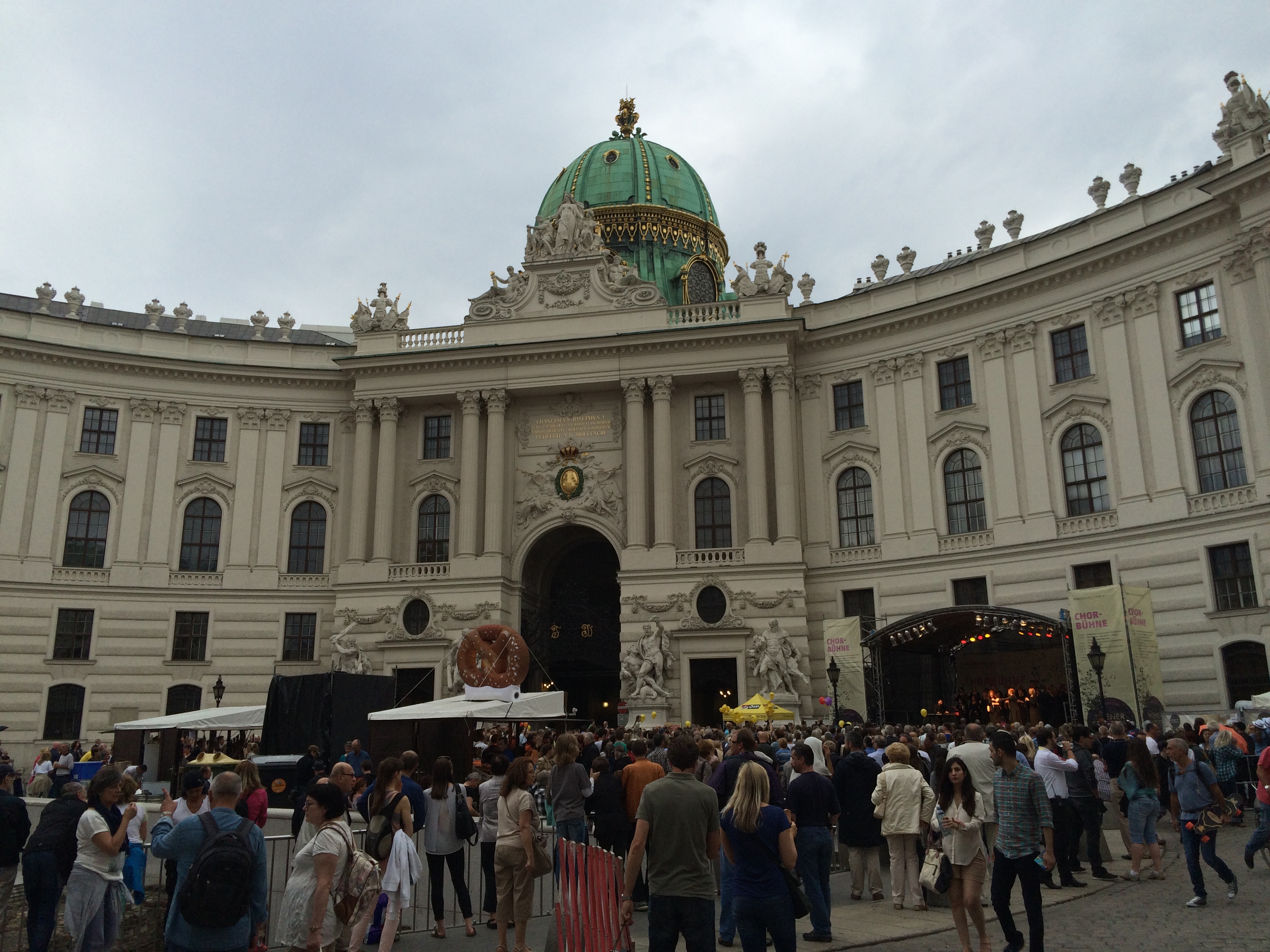
Hofburg Palace

Hofburg Palace

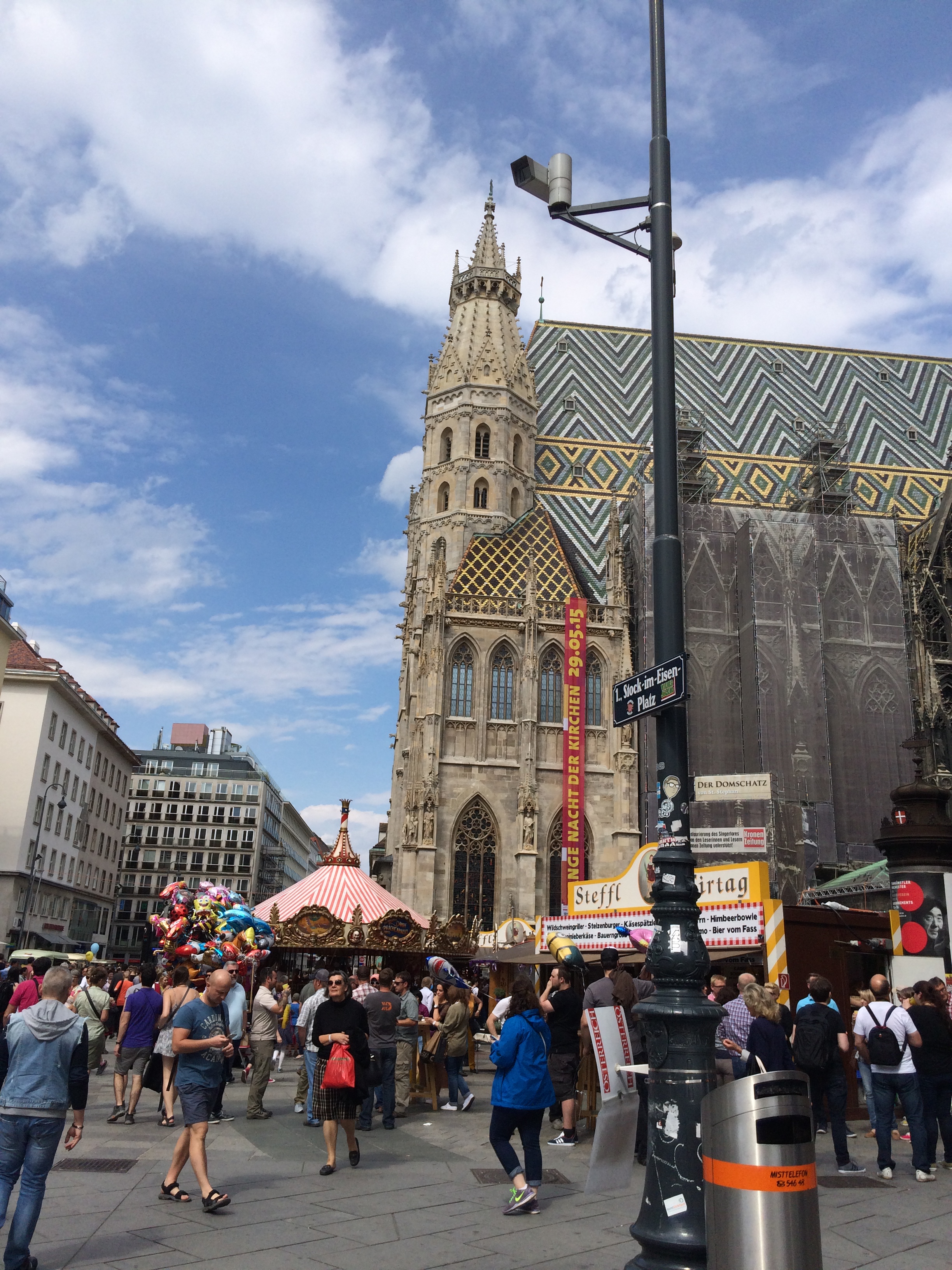
We wandered through the streets, passing many chic stores on Kohlmarket, and reached Graben, where there is a huge square lined with cafes and more fancy shops.  We stopped to see St. Stephen’s Cathedral and the all glass Haus Haus across the street.  Unlike the Hilton in Buda, this modern structure somehow blended in with the older buildings surrounding it.

IMG_2895 IMG_2896 IMG_2897 IMG_2898

We just had to stop and have some Viennese pastry, right?  It’s mandatory, I think. If one must drink beer in Prague, one must eat pastry in Vienna.  It was very much worth the unnecessary calories.  Vienna’s streets were packed with tourists, and there was lots of good people-watching to do from the café.

But we had miles to go in order to see at least some of the city, so off we marched towards the Opera House.  Like the Opera House in Budapest, it was a stately and beautiful building.  We opted not to do the tour inside this time, preferring to use our time to visit one of the art museums.

IMG_2907

It was already late in the afternoon, and we realized that we only had an hour until closing time, so we opted for the smaller Leopold Museum rather than the tremendous Kunsthistorische museum.  We were very glad that we did.  The museum focuses on the works of Gustav Klimt and Oskar Kokoschka as well as that of some of their less well-known contemporaries, and it does a masterful job of teaching about their art, their lives, and the politics and psychology that lie behind their art.  The room dedicated to the influence of Sigmund Freud was particularly well-done; a plaque with a quote from Freud hung near each painting, leaving it to the viewer to see the connection between the words and the art.

IMG_2909

We stayed until the museum closed and then wandered back to our hotel, not even realizing how close it was.  (We had basically walked a full circle from one side of the center of the city to the other and back without realizing it and were essentially behind the Hofburg Palace when we exited the museum quarter.)  We were amazed by how much we had seen in the few short hours since we’d arrived in Vienna.

The next day was jam-packed on my itinerary, but I quickly realized that there was no way we would get to the Schonbrunn Palace, even though I had pre-purchased tickets to go there.  It’s about 20 minutes outside of the city center, and since we were seeing the Hofburg Palace that morning, we decided that if you’ve seen one palace, you’ve seen them all. (Where is Spiro Agnew when you need him?)  Eliminating the Schonbrunn from the agenda loosened up our day considerably.

The Hofburg Palace was worth seeing; it tells the story of Emperor Franz Joseph and his wife Empress Elizabeth, commonly known as Sisi.  In particular, it tells the story of Sisi, who grew up as a young and independent child and married the emperor somewhat reluctantly, knowing that she would lose her freedom by doing so.  Eventually she became very unhappy living such a restricted life, and after one of her children died, she became severely depressed.  Although she contemplated suicide, in the end she was assassinated in Geneva by an Italian anarchist.  Her life story is well-told in the first several rooms in the palace.  After that, you then can see many of the lavish rooms where the emperor and empress lived and entertained in the palace.

After the palace tour, we went to see the performance of the Lipizzaner stallions at the Spanish Riding School.  This was another event that, like the baths in Budapest, several people said we could not miss.  We had standing room tickets, and the place was packed.  Within five minutes of the show starting, I almost left.  The first “act” involved some newer horses, and it was clear that at least one of them was not at all happy performing.  I couldn’t watch as the horse bucked and resisted his trainer’s attempts to control him.  We did stay for the next hour, and although the rest of the show involved more experienced horses, I just couldn’t shake the idea that these animals were being forced to do something they were not intended to do.  The horses are gorgeous, and if you love horses, you will either love this event or you will hate it.  I still am not sure how I feel about it. (We were not allowed to take photos, so I’ve inserted one from the internet.)


Embed from Getty Images

After lunch, I went to see the jewels at the Imperial Treasury while Harvey went to finalize our boarding passes for our flight the next morning.  The jewels were amazing.  I will let the pictures reveal what I saw.

IMG_2917

This opal was the size of a large pear. My Aunt Elaine would have loved it.

IMG_2920 IMG_2922 IMG_2927

The last thing we wanted to do before leaving Vienna was see some evidence of the Jewish world that once existed there.  Vienna had a large and thriving Jewish population before the Holocaust, including many famous artists, writers, musicians, and, of course, Freud.  Yet unlike Prague or Krakow or Budapest, there is almost nothing left in what was once the oldest Jewish section of the city to let you know that there once was a vibrant Jewish community there.  In that place, called Judenplatz, there are two reminders of the Jewish community: a museum which contains the remains of a medieval synagogue and a Holocaust memorial sculpture.  The museum’s exhibit is fascinating.  You can actually walk through the remains and see where the bima was, where the ark was, where the men sat to pray.

As for the Holocaust sculpture, it stands in the center of the square, and it is a large cube placed in the center of a larger platform.  On the sides of the cube are engraved the names of all the concentration and death camps.  I think it is supposed to evoke the sense of being locked inside, given the locked door on the exterior.  What was very disturbing about the memorial was the fact that there were many people sitting on the platform, idly eating ice cream and chatting, seemingly oblivious to the purpose of the sculpture.


The memorial to the 65,000 murdered Austrian J...

The memorial to the 65,000 murdered Austrian Jews in the Holocaust at Judenplatz in Vienna. (Photo credit: Wikipedia)

That perhaps is itself a metaphor for the Austrian attitude towards the Holocaust for many years after the war: denial.  As we learned at the main building of Jewish museum, it was not until fifty years after the war that Austrian officials apologized for their country’s role in the Holocaust.  They refused to acknowledge their complicity with the Nazis in the persecution and eventual murders of their Jewish citizens.  What had been a large and wealthy and intellectual community had been almost entirely wiped out.  Today there is some revival of Jewish life in Vienna, mostly made up of immigrants from the former Soviet Union.

We ended our trip going to the Musikverein, a great music hall in Vienna, where we heard Haydn, Poulenc, and Sibelius.  The sounds were as clear as could be, and the music was just wonderful.
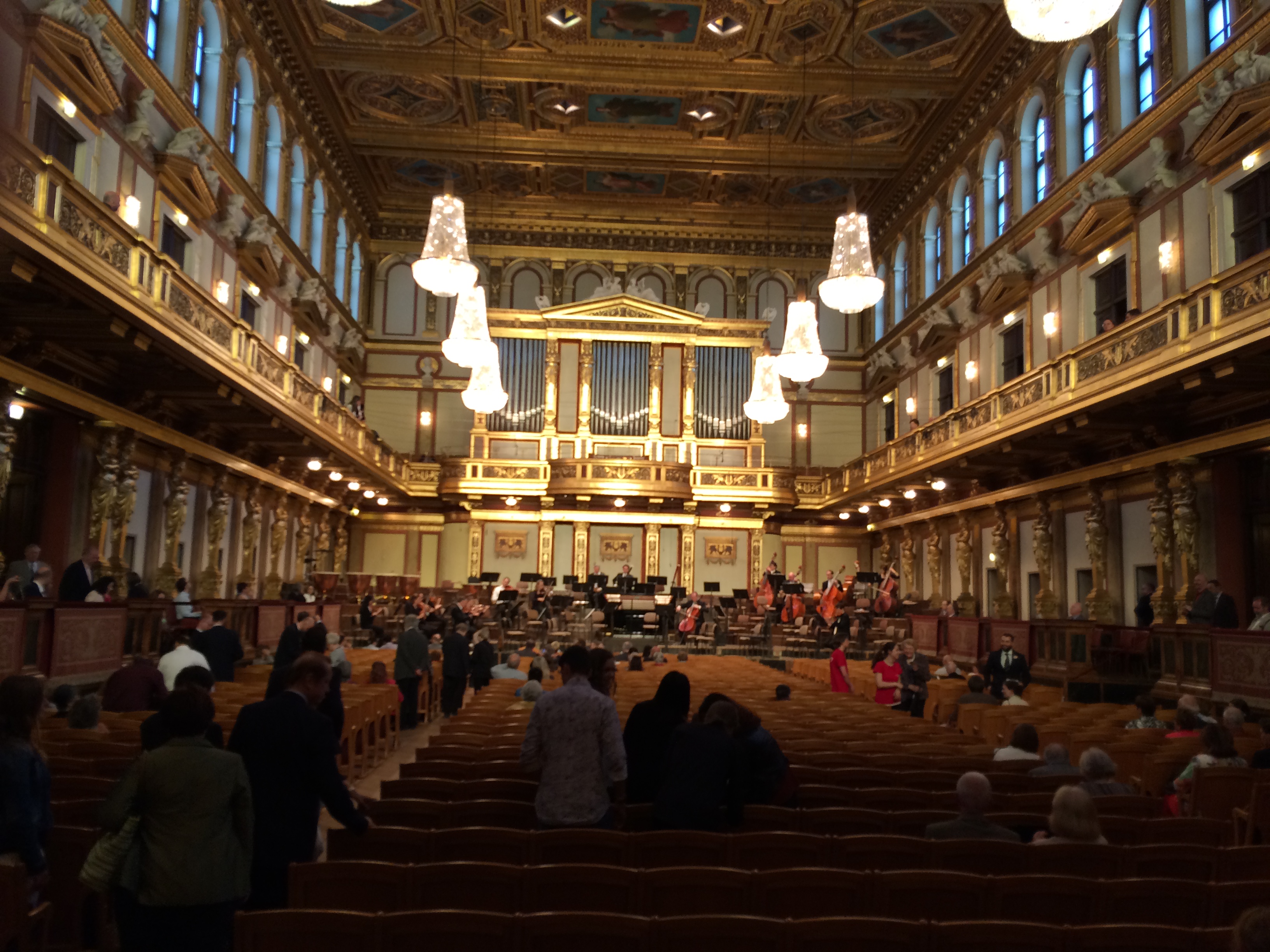
IMG_2935

Musikverein Concert Hall

Although we saw so much of great beauty in Vienna—the buildings, the pastries, the jewels, the art, and the music, our visit to Judenplatz and to the Jewish museums put an overall damper on my feelings for Vienna.  Perhaps I am not being fair; we were there for such a short time, and perhaps a longer visit would have provided me with more perspective.  We had no guides in Vienna, just our handy Rick Steve’s guidebook and TripAdviser. I understand that there are a number of stolpersteins in the Second District where the Jewish community was located right before World War II.  We did not get there nor did we see where the current synagogues are located or talk to anyone familiar with the city and its history as we had in the other cities.  I am sure there is more than what we saw in such a short time—an important lesson to keep in mind in visiting any place.  You can’t see it all in a short visit as a tourist.

****

Thus ends my travelogue of our trip to Central Europe.  Some concluding thoughts:

  1. The best way to learn about the history, values, and people of another country is to go there and walk where they walk. If you do, be sure to find a way to talk to someone who lives in that place.  Guidebooks are great, group tours may be fine—but nothing beats developing a personal relationship with someone who knows that city like you know your home town and your history. Talk to them about their families, their personal history, and you will learn so much more than you ever could from a book or recorded tour.
  2. Take notes, take pictures. Memories vanish very quickly.  In writing this, I had to go back to my books, notes, photographs, and, yes, the internet, to be sure I had the right name for the right place and the right numbers and dates.
  3. Travel the way you want to travel.  I know many people prefer to travel on organized tours or at least with a group of friends.  Call us anti-social, but we have learned that traveling with others means compromising our own priorities.  We don’t get to travel as often as we’d like, and when we do, we want to go where we want to go, eat when and where we want to eat, and see and hear what we want to see and hear.  It’s really not that hard to research and plan your own trip.  Just my opinion, of course.  I fully understand that for other people, traveling with others is more comfortable and more fun.  Like I said, travel the way you want to travel.
  4. There is both incredible beauty in the world and incredible evil. Human beings have created incredibly awe-inspiring buildings, music, and art.  Each place we visited was a testament to man’s ability to create beauty.  Sadly, each place was also a testament to man’s ability to do incredible evil.  We tried always to let the beauty remind us that for the most part, human beings are good.
  5. If you know where your ancestors lived, go there, even if it’s a small town in the middle of nowhere where no traces are left of your ancestors or their community. I understand that some people have too many feelings of anger about the past to do this, but if you don’t feel that way and can go, go there.  You will be forever changed.

Thank you to all who have followed me through this telling of our trip.  I will now return to a focus on genealogy, but I felt a real need to write about this trip for so many reasons, not the least of which is to keep a record for me about what I saw and what I felt.  It is not an experience I ever want to forget.


Another Addition to the Brotman Family Tree: David Brotman and his wife Annie

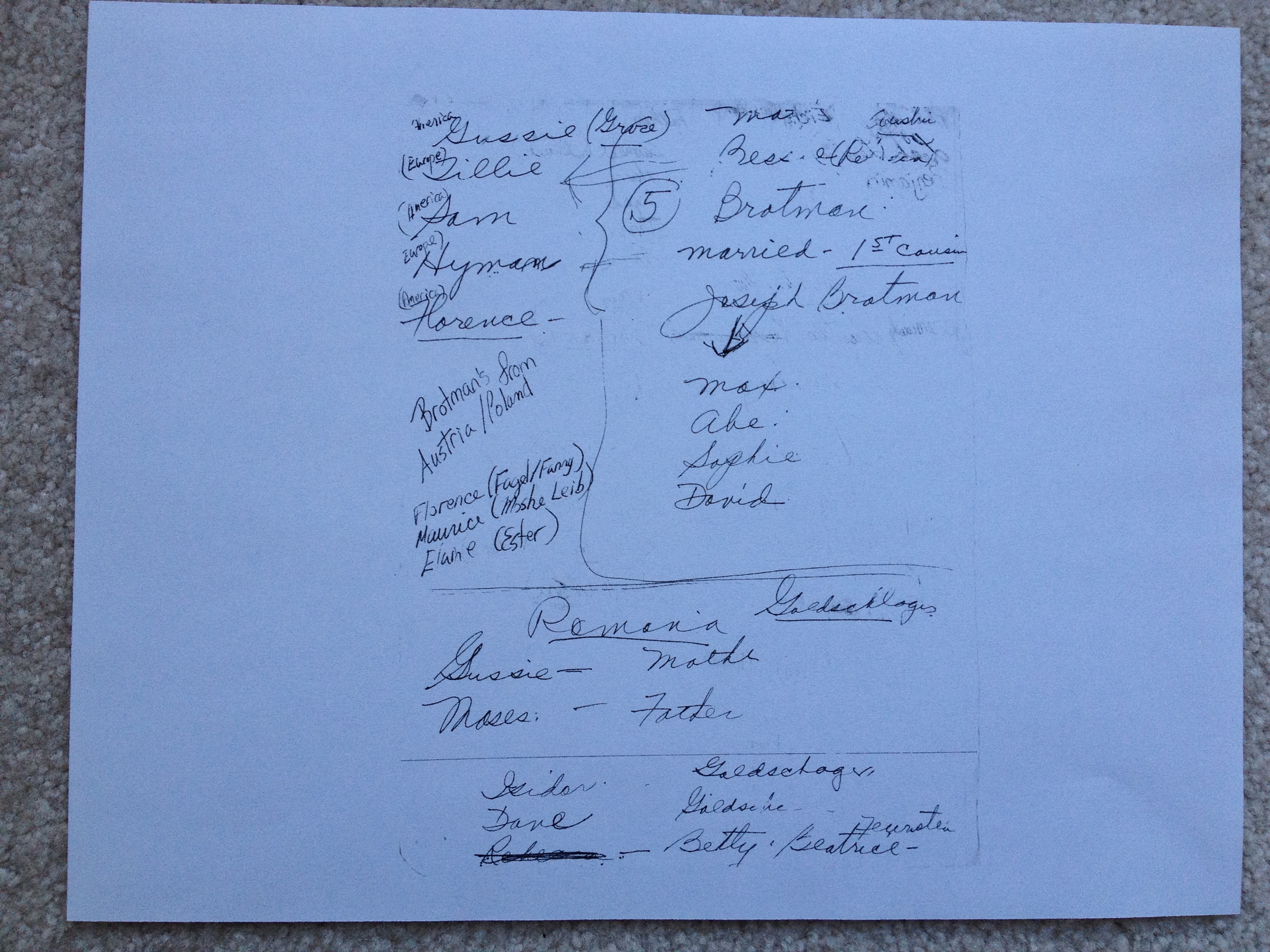
Family Tree drawn by Elaine Goldschlager Lehbraum

Family Tree drawn by Elaine Goldschlager Lehbraum

As you may recall, a couple of weeks ago my cousin Jody made a big discovery: handwritten notes that her mother had made of Joseph Brotman’s children.  It included all the children we already knew about: Bessie’s children Hyman, Tillie, Gussie, Frieda (Florence in her notes) and Sam, as well as the two sons we knew of from Joseph’s first marriage, Abraham and Max.   My brother had recalled that our aunt had said Joseph had had four children from his first marriage, but we did not know the names of the two remaining children, and I had traced every possible Brotman I could find to see if there was a link.  I had hit many dead ends and found nothing that linked these other Brotmans to our family.

My aunt’s notes were a huge discovery because for the first time we had evidence of the names of those two missing children: David and Sophie.  As I wrote when Jody first sent me the tree, I was able to locate a David Brotman from Austria who was a possible match for Joseph’s missing son, but I needed to check further and obtain some documentation in order to be sure.

Well, those documents arrived the other day, and I was so excited to see that on David’s marriage certificate in 1897, he listed his father’s name as Joseph Brotman and his mother’s as Chaye Fortgang.

David Brotman and Annie Salpeter marriage certificate

David Brotman and Annie Salpeter marriage certificate

You may recall that Max had also listed his mother’s name as Chaye on his marriage certificate, so this confirmed that Joseph’s first wife was named Chaye, but now we know her surname as well.

Max Brotman marriage certificate

Max Brotman marriage certificate

In addition, the marriage certificate gave David’s current address as 85 Ridge Street—the same address where Joseph and Bessie were living in 1895 when Gussie was born, according to her birth certificate.

Gussie birth certificate

Gussie birth certificate

This confirmed for me that David was Joseph’s son, Max and Abraham’s full brother, half-brother to Hyman, Tillie, Gussie, Frieda and Sam, and our great-uncle.  I am still in a state of amazement that I was able to find him.  Thank you, Aunt Elaine, for leaving behind this great clue to our family.

Once I had this information confirming the relationship, I located whatever census reports and other records I could find for David and his wife, Annie Salpeter.  I found them on census reports for 1900, 1905, 1910, and 1920.  David was a tailor according to the first three census reports, and he and Annie were living on the Lower East Side until at least 1910. At times Annie’s brother Morris lived with them as well as a cousin Meier, but there were no children listed on any of these census reports.

At the time of his World War I draft registration in 1917, David and Annie had left the Lower East Side and were living at 143 Manhattan Avenue in Brooklyn, which was also their address on the 1920 census report, when David’s occupation was given as a cloak dealer in a “cloak house.”  Annie and David were now 44 years old and still had no children living with them, so I assume that they never had children. So there are no more second cousins to find and probably no pictures of David and Annie.  (But I’ve learned never to say never.)

I’ve yet to find David and Annie on the 1930 or 1940 censuses, but I am still looking.  It seems unlikely that they had left Brooklyn.  I was able to locate a 1946 death certificate for a David Brotman married to Anna living at 10 Sumner Avenue in Brooklyn, and I believe this is the same David, despite the fact that the death certificate has his father’s name as Isaac.  I’ve learned enough to know that death certificates are notoriously unreliable.  I will continue to see if I can find anything about David and Annie after 1920.

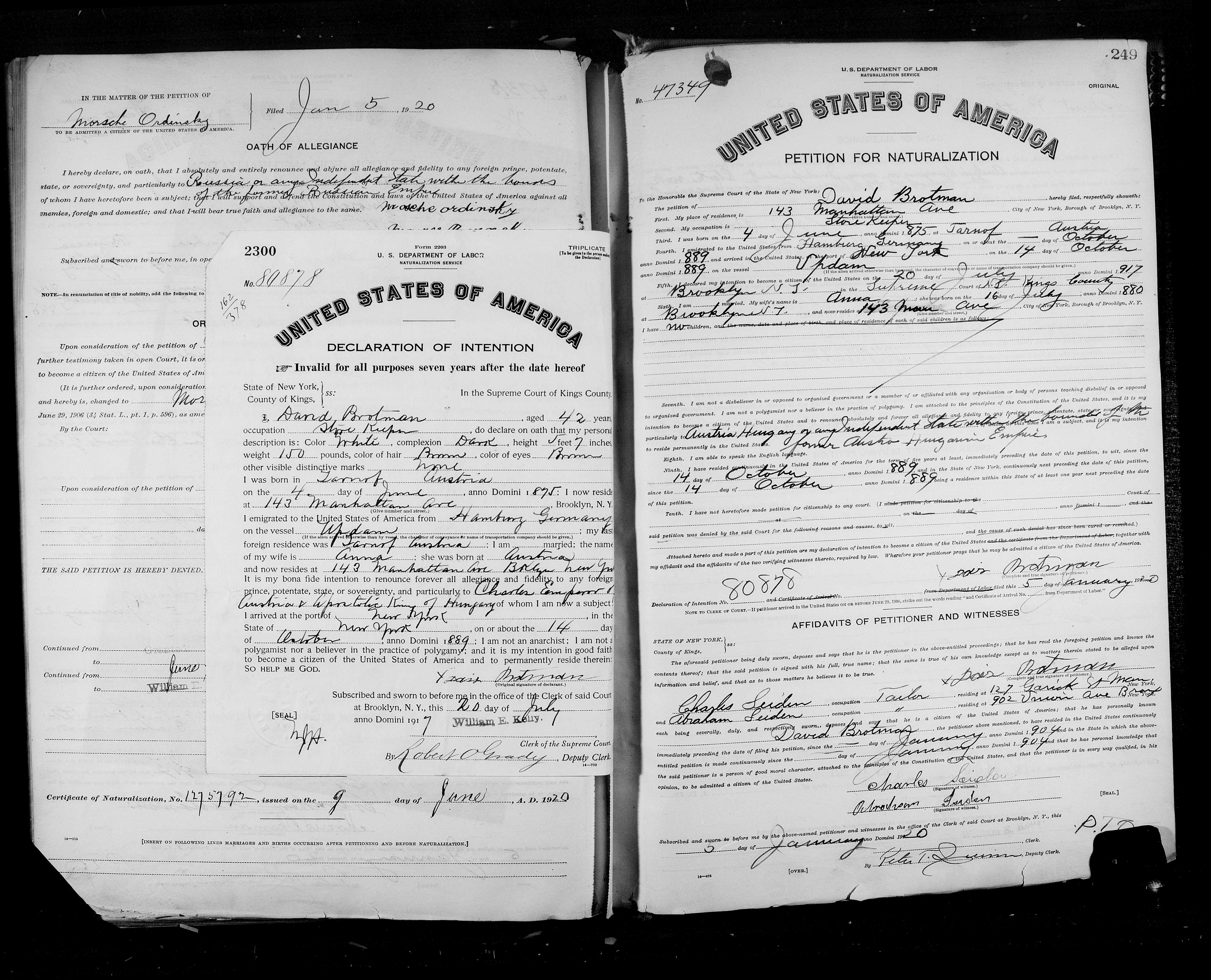
I do have David’s petition for naturalization in 1920, and it indicates that he had arrived in NYC on October 14, 1889, on the “Updam” from Tarnof, Austria.

David Brotman petition for naturalization 1920

David Brotman petition for naturalization 1920

Tarnof could be Tarnow, a city about fifty miles north of Tarnobrzeg/Dzikow and even further from Czchow, the two areas that I have been focusing on as the Brotman hometown based on Hyman’s listing of “Jeekief” and “Giga” on his documents.  But Tarnof could also be Tarnobrzeg, the larger town that is near Dzikow.  So did this new information help our search for our hometown in Galicia or did it just make it more confusing?

That led me to search for the ship manifest for David, now that I knew when he arrived and on what ship.  With some help from Renee, I located a September 4, 1889,  German ship manifest for the Portia, sailing to Rotterdam, listing Dawid Brodmann as a passenger.  I was excited to see that David was traveling with his older brother, Abe Brodmann. I had not previously been able to find Abraham on a ship manifest, so this was another exciting discovery.

David and Abe Brodmann on the Portia 1889

David and Abe Brodmann on the Portia 1889

On the Portia ship manifest, Abe and David are listed as coming from “Grambow, Russland,” not Austria at all, let alone Tarnow, Tarnobrzeg, Dzikow or Czchow.  I would have found this an indication that these were not the right boys, but there is a town right near Tarnobrzeg called Grebow, and according to a 1914 map, Tarnobrzeg was very close to the Russian border. So perhaps our family lived in Grebow? Or maybe that is where Joseph lived with Chaye and then moved to Dzikow when he married Bessie?

On the manifest for the Obdam, sailing from Rotterdam to New York arriving on September 19, 1889, David and Abe are listed as coming from Austria, not Russia, which appears to be correct.

David and Abe Brodman on the Obdam to New York 1889

David and Abe Brodman on the Obdam to New York 1889

There is obviously some confusion and conflict here, but it’s another clue and another place to look for the Brotman home in Galicia. I already have contacted several people researching this area to see if I can uncover more clues.

I have a few more leads to follow to fill in the gaps in David’s life story, and maybe they will even lead me to Sophie, the only remaining child of Joseph to locate.  There is also some potential evidence that will link our family to the Brotmanville Brotmans, but again, I need to do more research before it is worth speculating about that connection.

Enhanced by Zemanta

A World Apart, Part 1: Life in Galicia in the late 19th Century

As I mentioned a few weeks ago, I ordered a book on what life was like in Galicia in the late 19th century.  The book is A World Apart: A Memoir of Jewish Life in Nineteenth Century Galicia by Joseph Margoshes. (The book was written in Yiddish in 1936, but translated into English in 2010 by Rebecca Margolis and Ira Robinson.)  Margoshes was born in 1866 in Lemberg (Lvov/Lviv), which is now part of Ukraine.  According to the introduction to the book, he was born into a family with a “distinguished rabbinical ancestry” and “received a traditional Jewish education in Bible and Talmud, as well as grounding in the German language and European culture.” (p.vii)  As an adult, he spent several years administering agricultural estates in western Galicia, the region where our family most likely lived.  He emigrated to America at the turn of the century and became a well-known writer for the Yiddish press in New York City.

He wrote A World Apart as a memoir not only of his life, but of the culture and world he left behind.  The book is considered to be an important documentation of what life was like in Galicia during that time period.  As Margoshes himself wrote in his forward to the book, “I have lived in a different generation and under completely different circumstances from my own children and many of my friends and acquaintances.  I thus hope that it might interest them to read the memoirs of my past.” (p.3)

Since the author lived in Galicia and left Galicia during the years that Joseph and Bessie, Abraham, Max, Hyman and Tillie lived in and left Galicia, I hope to be able to get a better picture of what their world was like.  I’ve only read the first thirty-five pages or so, but can already report some sense of that world.  What struck me most about the first segment of the book was its portrayal of a diverse Jewish society.  In my mind I had an image of Fiddler on the Roof where everyone was relatively indifferent to secular education and the secular world and completely immersed in Jewish life.  Margoshes immediately breaks down that image.

In fact, Jewish society in Galicia was not unlike Jewish society in Israel or the US today with a wide range of subgroups with varying degrees of religious observance— from the Hasidim to what we might now call Modern Orthodox to very assimilated or what Margoshes refers to as “German” Jews.  By that he does not mean that they were from Germany, but rather that they had abandoned traditional Hasidic garb, wore modern clothes, did not keep kosher, and spoke German more than Yiddish.  Margoshes family itself had representatives across the spectrum.  His father was descended from a long line of scholarly rabbis and considered themselves “maskils” or members of the Haskalah or Enlightenment Movement, which promoted not only Jewish education but also secular education, much as the Modern Orthodox movement does today in the US.  They were deeply observant, but not cut off from the outside world, unlike the Hasidim who lived much more insular lives and were not interested at all in secular education.  On the other hand, Margoshes’ maternal grandfather was a highly educated cloth merchant who traveled to Vienna for business and raised thirteen children, only two of whom were religious.  His sons were all “Germans,” and his daughters were well-educated and read the German classics.

Margoshes’ mother, however, was one of the two children who were religious, although she was well-educated.  Her first marriage ended when her husband began to dress and act “German-style.”  She then married Margoshes’ father, who was himself a maskil —religious, but not Hasidic.  (Interestingly, Margoshes’ father was a widower whose first wife was his niece, an indication of how liberally families allowed marriage among close relatives, as Joseph and Bessie reputedly were.)

After providing this family background, Margoshes describes events surrounding a major rift in the Galician Jewish society.  His father had originally belonged to an association of educated but religious Jews (maskilim) called the Shomer Yisrael Society.  In the late 1860s, however, his father left the Shomer Yisrael Society because it had become far too assimilationist.  For example, the Society submitted a proposal to the Imperial Ministry in Vienna that would restrict who could be a rabbi recognized by the state to those with more “German” tendencies and that would also impose reforms to the education provided in the Jewish schools, such as requiring German language classes and limiting Talmud classes to those twelve or older.  The Ministry was in favor of these proposals, as it favored modernization of the Jewish society.  Margoshes’ father and others were vehemently opposed and aligned themselves with the Hasidim to fight the proposal.  They formed an opposition group called Machzikei Hadas to organize their opposition to the Shomer Yisrael Society.

Margoshes wrote in detail about the long political battle between these two groups and how the maskilim and Hasidim worked together to fight the assimilationist Shomer Yisrael Society.  He also describes the overall status of Jewish society in the Galician world:  “In that era, the leaders of the province of Galicia were adopting a more liberal outlook.  Jews were granted full rights as citizens and they were allowed to vote as well as to be elected to the Galician Landtag and the Austrian Reichsrat.” (p. 18) The battle between the two groups became therefore also a battle for political representation of the Jewish citizens in the secular governments, not just a battle over religious practice and education.

In order for Machzikei Hadas to function as a legitimate association and publish newsletters legally, it had to obtain state permission.  The Shomer Yisrael Society engaged in political maneuvering to prevent this, but ultimately Machzikei Hadas was able to obtain approval and publish a newspaper after some political maneuvering of its own. Their ultimate coup was in 1879 when they were able to elect the Krakow Rabbi, a Hasid, to the Austrian Reichsrat, the first rabbi to be elected to such a position. As Margoshes wrote, “The election of the Krakow Rabbi to the Austrian Reichsrat made a tremendous impression on the entire Jewish world, and Galician Jews anticipated salvation.  It gave them enormous pleasure to see even a single Rabbi achieve the major honor of sitting among so many great personages.” (p. 24)

As I read these pages, it raised several questions and thoughts for me.  First, I was struck by the fact that Jews even then (and before then) fought among themselves over issues of observance versus assimilation, rather than trying to unite against the non-Jewish majority who controlled the laws and the government.  I thought of that old joke about the Jew found after being stranded on a deserted island for several years.  His rescuers noticed he had built two structures and asked him what they were.  His response:  “This one is my shul, and that is the “other” shul.”  We always need some group of other Jews with whom to disagree and debate, don’t we?

Second, I was surprised by the fact that at least at that time, Jews were not necessarily poor or poorly treated by the Austrian people or government.  Perhaps more will be revealed as I read further, or perhaps Margoshes’ family were more elite and comfortable than most others.

Finally, his description of the various segments of the Jewish society made me wonder where on the spectrum our great-grandparents lived.  Were they Hasidic, maskilim, or “German” in the way they lived their lives? Were they educated in worldly matters? Did Joseph wear payes and a streimel or did he dress in modern clothes? My guess is that they were not Hasidic, not even very observant, but only because I know that my grandmother was not religious (though she did have a kosher home), but I really don’t know.  She was born here, and perhaps Joseph and Bessie changed and assimilated once they settled in America.

To be continued, as I continue to read….