My Grandfather’s Notebook: More than Names, Dates, and Addresses

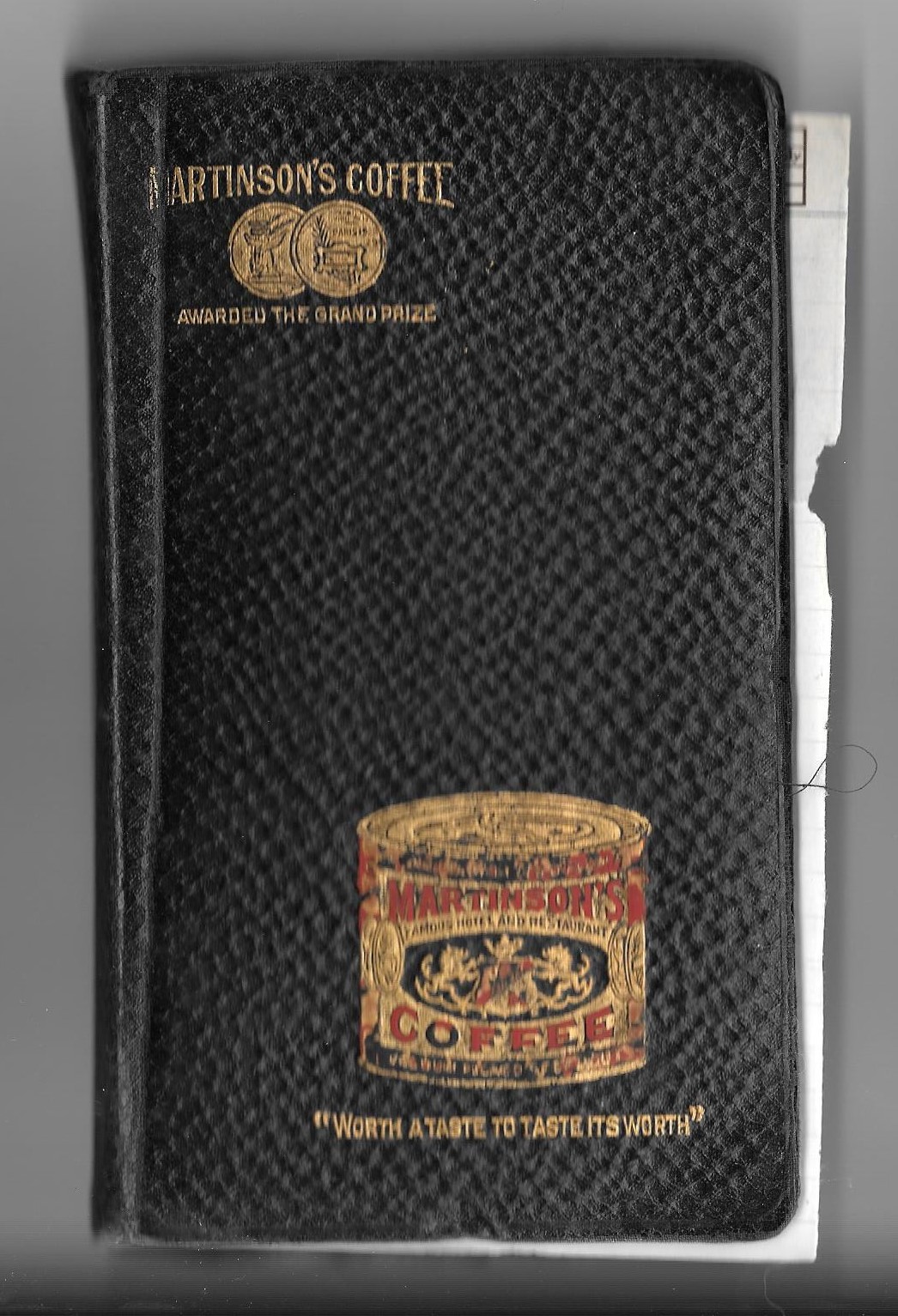
Notebook cover

Among the other treasures that turned up in the shoebox of “old papers” that had belonged to my Aunt Elaine was a Martinson Coffee pocket calendar for the year 1930.  My aunt would have been twelve going on thirteen, my Uncle Maurice ten going on eleven, and my mother not yet born when 1930 began. Here’s a photograph of my grandmother and her three children taken in 1931 when that pocket calendar was still relatively new:


Goldschlagers 1931

Goldschlagers 1931

This calendar, however, had to be around for many years as a place where members of the family scribbled notes of all kinds because even my mother eventually made contributions to it. In fact, the most recent entries seem to have been made by my grandmother in 1965 long after my grandfather had died and all her children had married.

Grandpa notebook 1964 notes by Grandma

I don’t know for sure what “Johen” meant, but I wonder if my grandmother was referring to my father, whose name is John Cohen.

It amazes me that my grandparents kept this little book for so long, and I wonder why it became the repository of so many family notes. I can’t imagine how it stayed around and was used by so many members of the family beginning in 1930 up to 1965.  Today that notebook probably would not have lasted a year (well, it wouldn’t exist since we’d use our smartphones and computer calendars instead.)

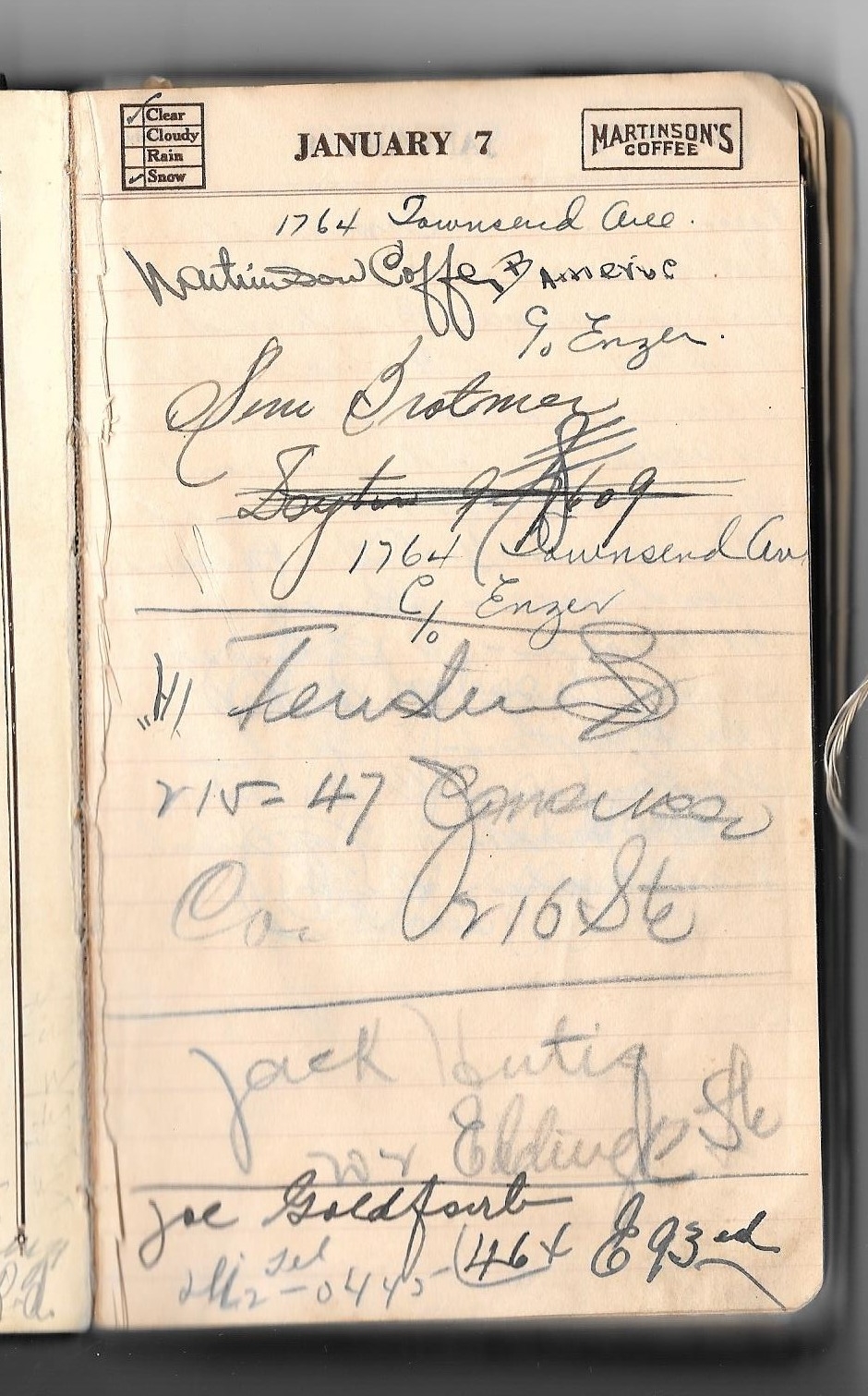
For example, my grandparents used it not only as a calendar but as an address book.  I already posted two of the pages of addresses in an earlier post:
Grandpa Notebook page 1 addresses Joe Goldfarb Grandpa notebook 13 more addresses Joe Goldfarb

Here are a few more:

Grandpa Notebook 4 more addresses Ressler

Leo Ressler was my mother’s first cousin, son of Tillie Brotman Ressler, my grandmother’s sister.  His wife was Mildred Phillips, and the notebook page records both their wedding anniversary and Mildred’s birthday.  Unfortunately there is no year given for the marriage, but Mildred was still single and living with her mother and stepfather in New Haven, Connecticut, on the 1930 census.  She and Leo lived in Hartford during the late 1930s, and so this entry of an address for Bridgeport must have been long after the 1930 date on this calendar. (They were living in Bridgeport as of the 1940 US census.)  Leo and Mildred owned a dress shop in Connecticut for many years before retiring to Florida.  My mother recalls that Mildred was considered high class by my grandparents and that my aunt was invited to come visit them so she could learn some of Mildred’s sophisticated ways.

Leo Ressler

Leo Ressler

(I don’t know who Francis Coen would be— another name to research.)

The next two pages had three addresses for my mother’s uncle, Sam Brotman—my grandmother’s brother.  Apparently he moved around a bit, given all the crossed out addresses the notebook includes for him. (There are two more on the first page, above.) I don’t know very much about Uncle Sam except that he was a cab driver and lived alone all his adult life. Yet all these addresses include a “in care of” reference so perhaps he was living with someone named Weinstein for some period of time and someone named Enzer at other times.

Grandpa Notebook 5 more addresses

Sam Brotman

Sam Brotman

Joe Brotman, the other name on this page, was another of my mother’s first cousins, the son of Hyman Brotman, my grandmother’s brother. I have six different Joseph Brotmans in my family tree, including my great-grandfather, but Hyman’s son is the only one who lived in Queens, where he was living when this address was recorded.

Hyman (second from left) and Joe (far right) and two unknown men

Hyman (second from left) and Joe (far right) and two unknown men

My grandfather also used the calendar to record birthdays for family members.  There are notes on the dates for his birthday as well as that of my grandmother, my aunt, and my mother.  (The pages for June were torn out, so there is none for my uncle.) My mother was born during 1930, and on the appropriate date my grandfather simply wrote, “My daughter’s birthday, Florence, born—-.”

One of my favorite pages (although very hard to read) is the one where my grandfather apparently listed all his favorite pieces of music.  I know that music was one of his passions, one of the few things he remembered fondly about his childhood in Iasi, Romania:

Grandpa notebook music

I can’t make out the names of most of the pieces, but he has works by Beethoven (whose name he wrote with such a flourish on the opposite page), Brahms, Bizet, and Grieg as well as several others.

He also used the notebook as an account book, and there are many pages where he records his paychecks, his Social Security benefits, and Welfare Fund payments.  My grandfather was active in his union, and I assume that the Welfare Fund was administered by the union.  In addition, he kept a record of people they visited or who visited them and other events.

Grandpa notebook money and visits

The notebook also contains a number of notes my grandfather made about his health and various other matters.  For example, on these pages he not only recorded financial information; he interspersed notes about the times my uncle came home to visit during his military service in World War II  with notes about his own operations and hospitalizations.

Grandpa Notebook 6 notes about Maurice in service

Grandpa notebook page 7 more notes about Maurice and hospital

Again, all of these were obviously written long after 1930 and as late as 1951 when he had surgery for polyps.  He died just six years later on May 3, 1957.

But perhaps the most interesting and entertaining parts of the notebook are those contributed by my aunt, my uncle, and my mother.  There are many pages like this one with a list of names and then what looks like grades.  My mother believes that my aunt used the notebook to play school, listing her classmates and even her brother and herself as the students and then “grading” them in different subjects.

Grandpa Notebook 3 aunt elaine playing school

My aunt also liked to practice writing her name and doodling all over the pages (the top one might have been written by my mother or someone else; I am not sure):

GRandpa notebook Aunt Elaine names earlier

Grandpa notebook Aunt Elaine names 1

These pages were obviously written after my aunt was married as she used her married name (Lehrbaum) and included her husband, my Uncle Phil. The second page also includes my uncle’s wife, my Aunt Lynn, and they weren’t married until 1945, several years after Aunt Elaine had married.  I find it fascinating that even after she was married and out of the house, my aunt still somehow found this notebook a place to scribble.

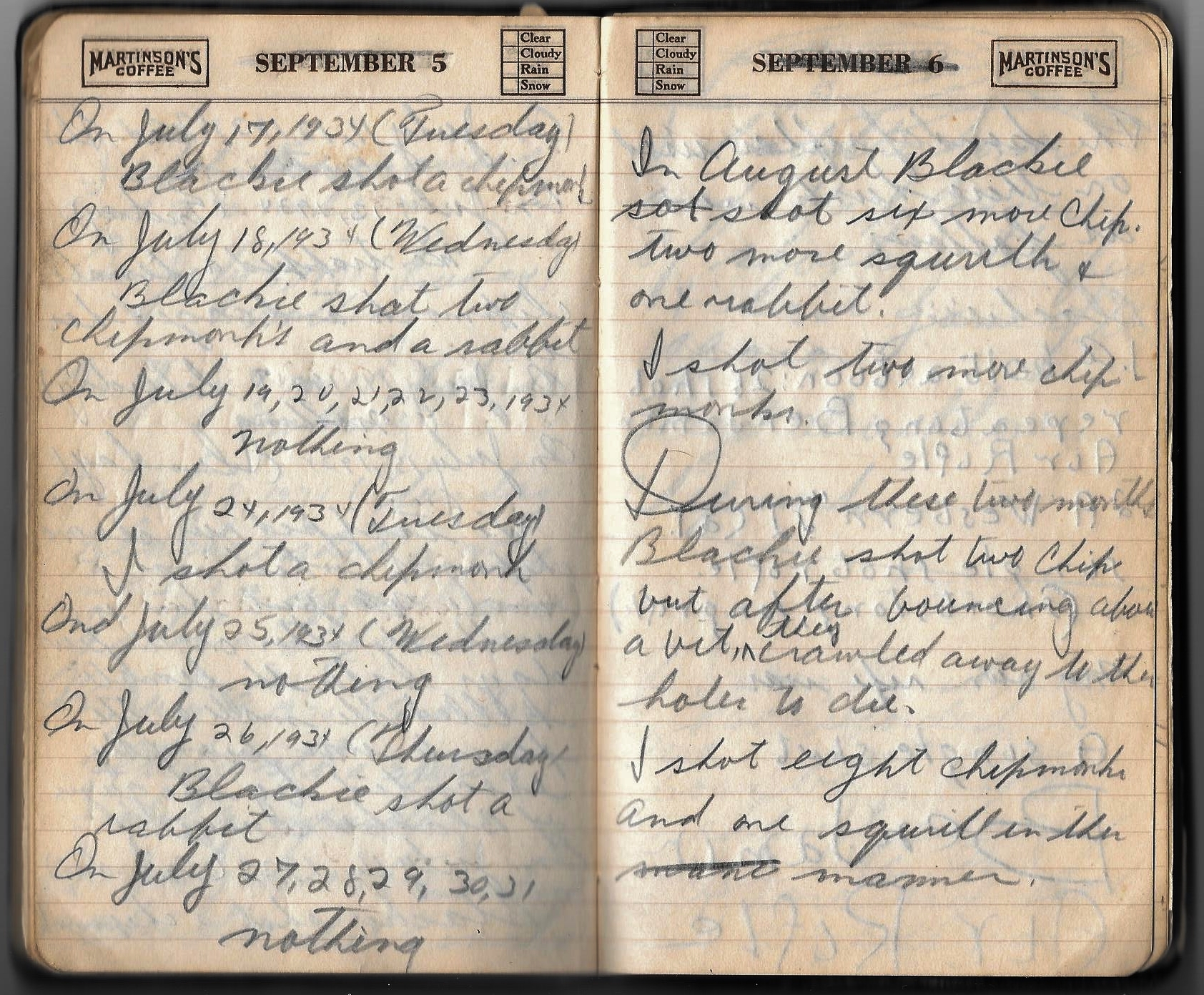
I found the pages my uncle wrote in 1934 about his adventures shooting at chipmunks, squirrels, and rabbits with his friend Blackie both amusing and disturbing.  First, the idea that my uncle was carrying around a real gun at age fifteen is rather horrifying.  Secondly, I always knew my uncle as an animal lover.  He always had a dog (a schnauzer named Schnopsie is the one I remember best), and later on he had several dogs and cats as well as various other animals.  How could he shoot harmless chipmunks, squirrels, and rabbits? But when I asked my cousin Beth about this, she said he always liked to shoot, so she was not surprised.

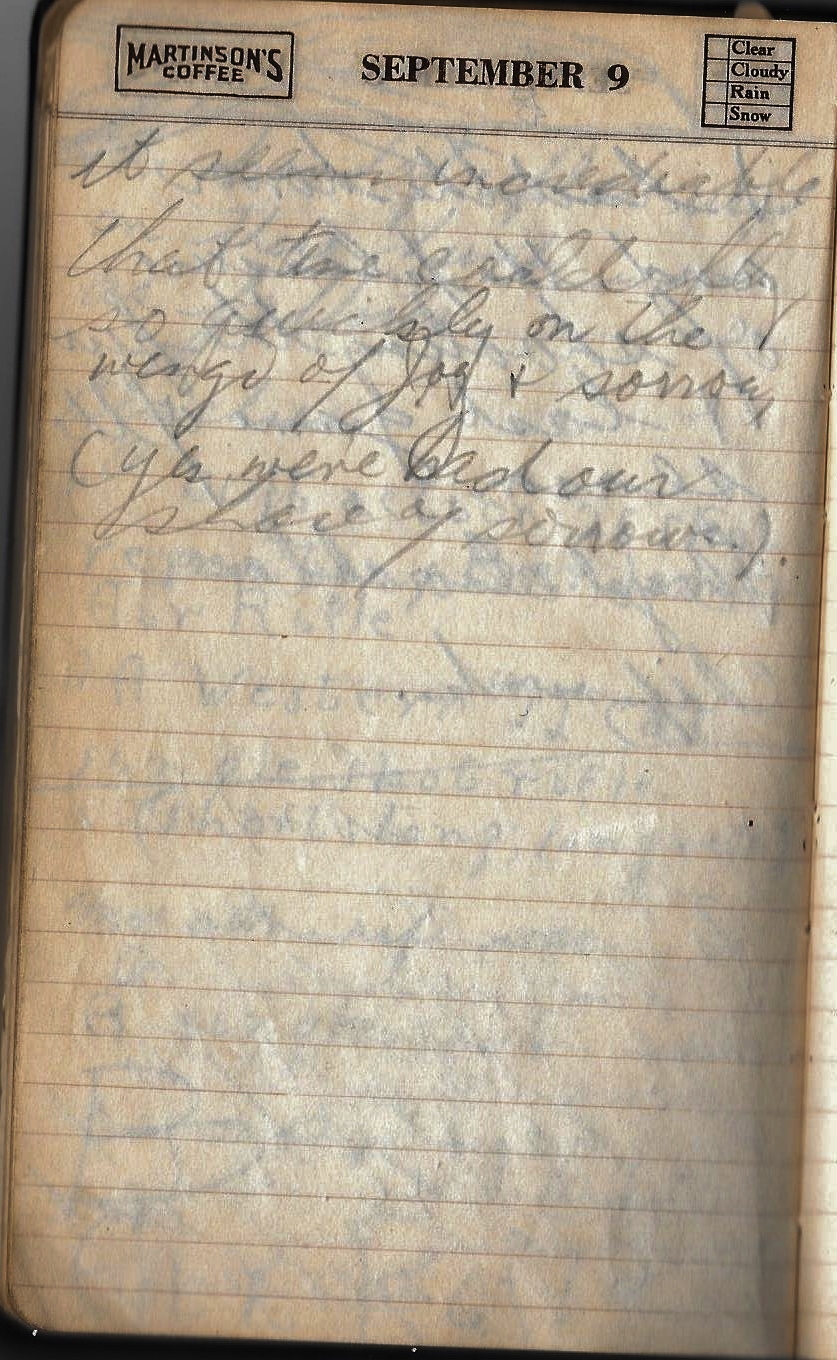
Grandpa notebook 8 maurice hunting notes 1934 Grandpa notebook 9 more hunting Maurice 1934 Grandpa notebook 10 more hunting notes Grandpa notebook 11 hunting notes and final comment in 1939 Grandpa notebook 12 Maurice comment 1939

But it’s amusing also because I can imagine my uncle as a fifteen year old boy having a wild time with his friend Blackie and competing to see who would shoot the most animals that summer.  Below is a photo of my uncle, my aunt, and my mother as well as my grandmother about a year after the summer that my uncle was writing about his hunting adventures.

Goldschlagers 1935

Goldschlagers 1935

I found the note he wrote four and a half years later on February 24, 1939, when he was almost twenty years old particularly touching and revealing:

As I recall it now I have recorded on these last nine pages possibly one of the happiest phases of my life.  As I sit here and look back four and a half years it seems incredible that time could fly by so quickly on the wings of joy and sorrow, (yes, we’ve had our share of sorrows).

What were those sorrows? I don’t know what my uncle was referring to specifically or whether he only meant between 1934 and 1939, but in his lifetime, in 1924 his aunt Frieda had died after childbirth as had her baby; his aunt Tillie had lost her husband Aaron, and his grandmother Bessie had died in May 1934, shortly before he wrote about his hunting adventures.  I also imagine that those Depression years were challenging for my grandparents like they were for so many people.

My uncle also must have liked baseball because he kept a box score from a game in the notebook.  Being a baseball fan, I was determined to figure out not only what teams these were, but what game it was:

Grandpa notebook 15 box score

After studying the names on team listed on top I realized that it was the Detroit Tigers, probably around 1935.  As soon as I saw Greenberg, I knew it had to be Hank Greenberg and thus the Tigers.  After all, how many baseball players have there been named Greenberg?

English: 1934 Goudey baseball card of Henry &q...

English: 1934 Goudey baseball card of Henry “Hank” Greenberg of the Detroit Tigers #62. PD-not-renewed. (Photo credit: Wikipedia)

The team at the bottom took some more digging because my uncle’s spelling was, shall we say creative? But the Deroch was a big clue—I assumed it was Leo Durocher, and once I looked up his career and saw that in 1935 he was playing on the St. Louis Cardinals with a catcher named Bill Delancey, an infielder named Collins and another named Frisch, I knew I had found the right team.

English: 1933 Goudey baseball card of Leo Duro...

English: 1933 Goudey baseball card of Leo Durocher of the Cincinnati Reds #147. PD-not-renewed (Photo credit: Wikipedia)


But the National League Cardinals wouldn’t have been playing the American League Tigers in 1935 unless they were in the World Series (oh, for the days before endless post-season playoffs and in-season interleague play!).  So this couldn’t be 1935 because the Tigers played the Cubs in the 1935 World Series.  After a bit more research, I concluded that this was a game from the 1934 World Series between the St. Louis Cardinals and the Detroit Tigers.

http://www.gettyimages.com/detail/573856419


http://www.gettyimages.com/detail/573867867

Since my uncle recorded the final score of the game he was following (presumably on the radio) as 10-4, it wasn’t hard to find out which game this was from the 1934 World Series: Game 4 on October 6, 1934, at Sportsmen’s Park in St. Louis.  Here is a link to the box score of that game as recorded by the Baseball-Reference website. The Tigers evened the series 2-2 by winning that game and then won Game 5 to go up 3-2 in the Series, but badly lost Games 6 and 7 to lose the Series.  I wonder which team my uncle, a boy from Brooklyn, was rooting for. Perhaps the one with the first Jewish player elected to the Baseball Hall of Fame?

Finally, there are a few short notes from my mother, the baby in the family.  Here she wrote about her big brother teasing her:

My brother is such a pest he calls me all sorts [?] of names for instance fatso, horse, baby and so many and I call him names to.”  I guess my uncle was always a tease—he certainly was as an adult also!

Grandpa notebook 14 Florence comment about Maurice


I wonder how much later she wrote the comment that follows: “When I look at this now I think it silly.  It is childish.”

When she was eleven, she wrote about a favorite teacher, Mrs. Alice Handelsman, who was “just like a mother” to her class, and her boyfriend Myron.  On his birthday in the calendar, she listed a favorite cousin, Sanford (or Sandy), Leo and Mildred Ressler’s son; my mother to this day talks about what a beautiful little boy he was and how kind he was to my grandmother.

Grandpa Notebook 2 Mom note about teacher

Grandpa notebook 16 Florence comment re Sandy Ressler


What a gift this little book from 1930 has turned out to be.  It gives me a snapshot into the childhood of my mother and her siblings and some insights into my grandfather as well.  He was obviously a very careful man when it came to money, recording so painstakingly his income and his expenses. These were the Depression years, and my grandfather worked as a driver for a milk company.   My grandparents were not poverty stricken, but they lived from paycheck to paycheck and for many years lived in a small apartment in Brooklyn and then a one bedroom apartment in Parkchester when my mother was a teenager and her siblings were married and out of the house. My grandfather worked the night shift for the milk company, and my mother would share the bed with my grandmother until my grandfather got home in the morning and she got up for school.  But my mother says she never thought of herself as poor because she always had food and clothing and a roof over her head.

We take so much for granted today with our cars and houses and televisions and computers and smartphones. We throw everything away and litter our landfills with our junk.  Our children and grandchildren have iPads and scooters and bikes and more toys and books than all the children in one tenement building in Brooklyn combined had back in the 1930s.  But my mother and her siblings had their imaginations and their friends and their teachers and their families.  And this one little notebook gives us a peak into how they entertained themselves and how they lived together as a family.  It, like my aunt’s baby book, is a real treasure.


A Brotman, Goldschlager, and Rosenzweig Update: The Baby Book

As you know if you’ve been following this blog for a while, my Aunt Elaine preceded me as the family historian for my maternal side.  Several times notes she made or information she gave to others has led me to more information.  Her information has almost without exception proven to be accurate.  For example, she provided me—indirectly—with the names of my grandmother Gussie Brotman’s half-siblings, Abraham, David, Sophie, and Max.  She provided me with the clue that the Brotmanville Brotmans were our close relatives.  She told me how my grandparents met each other in Brooklyn.

Well, she has done it again.  This time, however, it was not information or notes that she provided, but rather her baby book, which my cousin found in a shoebox of old papers.  It was partially filled out when my aunt was born on October 14, 1917.  Although most of it is blank, the few pages that were filled provide not only further confirmation of relationships about which I was previously aware, but hints at some new ones.

Elaine 1926

Elaine 1926

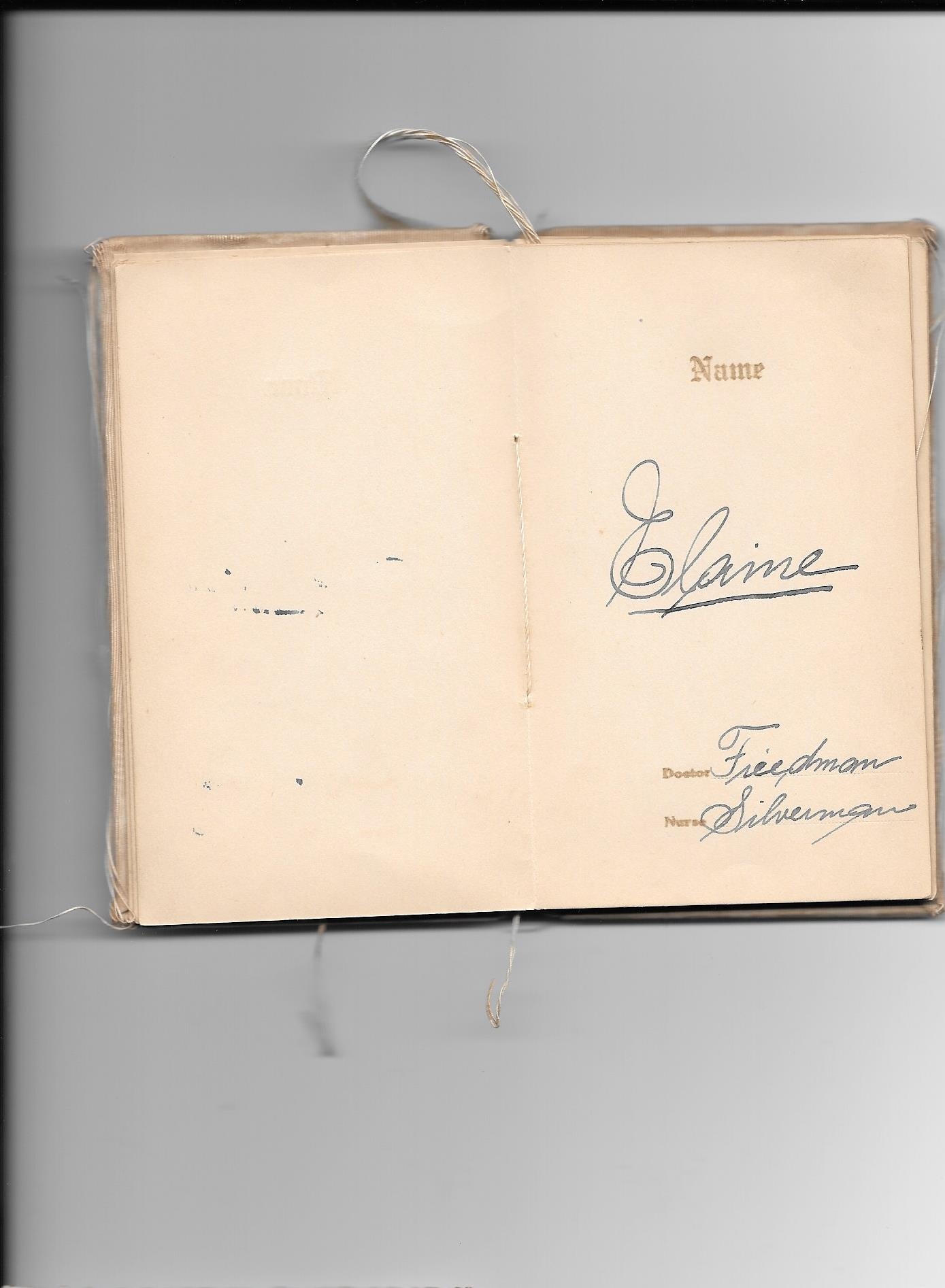
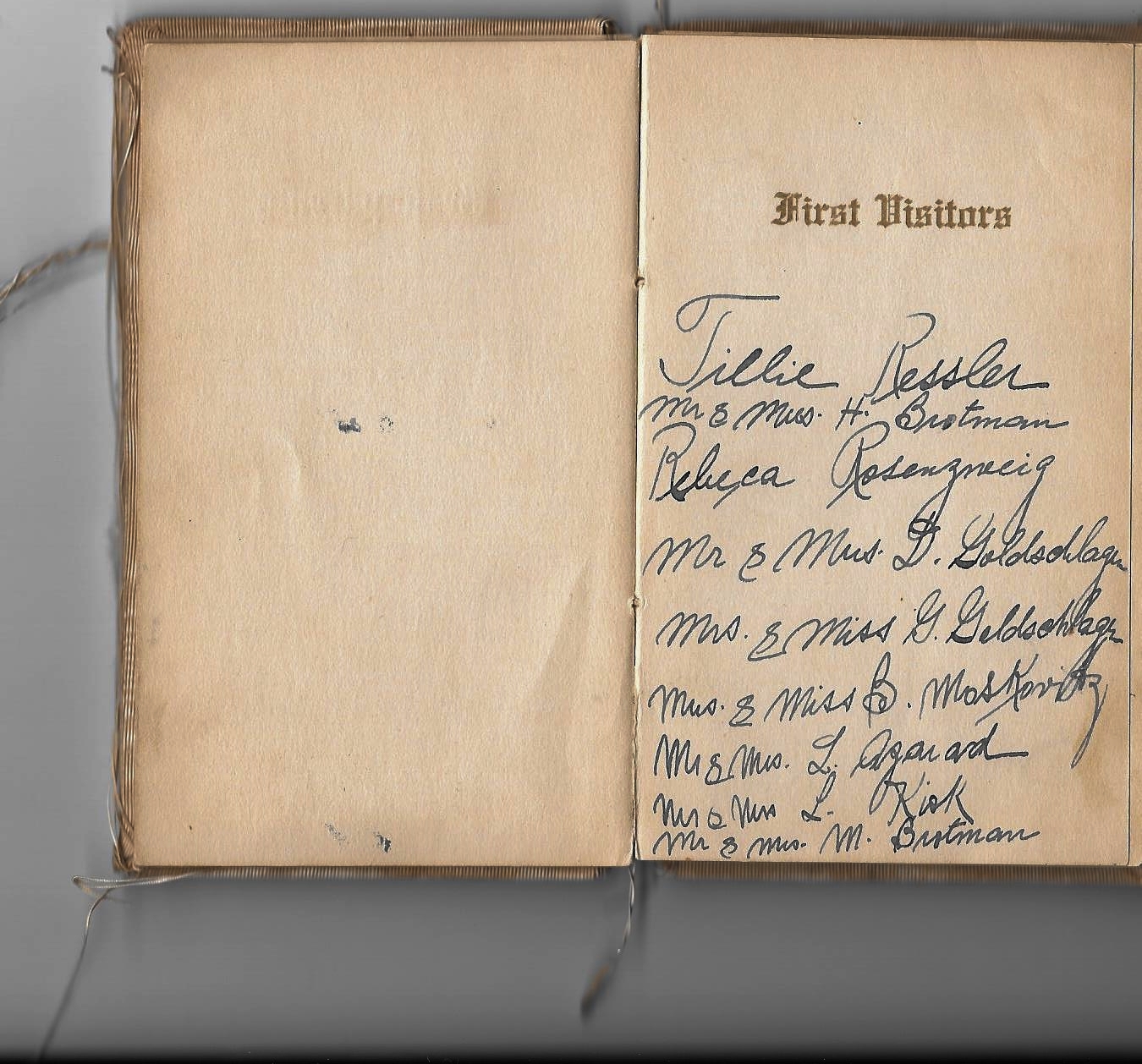
Here are the pages of the book that have been filled in:

Aunt Elaine baby book p 1

This is my grandfather’s beautifully florid handwriting.  His daughter, my aunt, also had fancy handwriting like this.


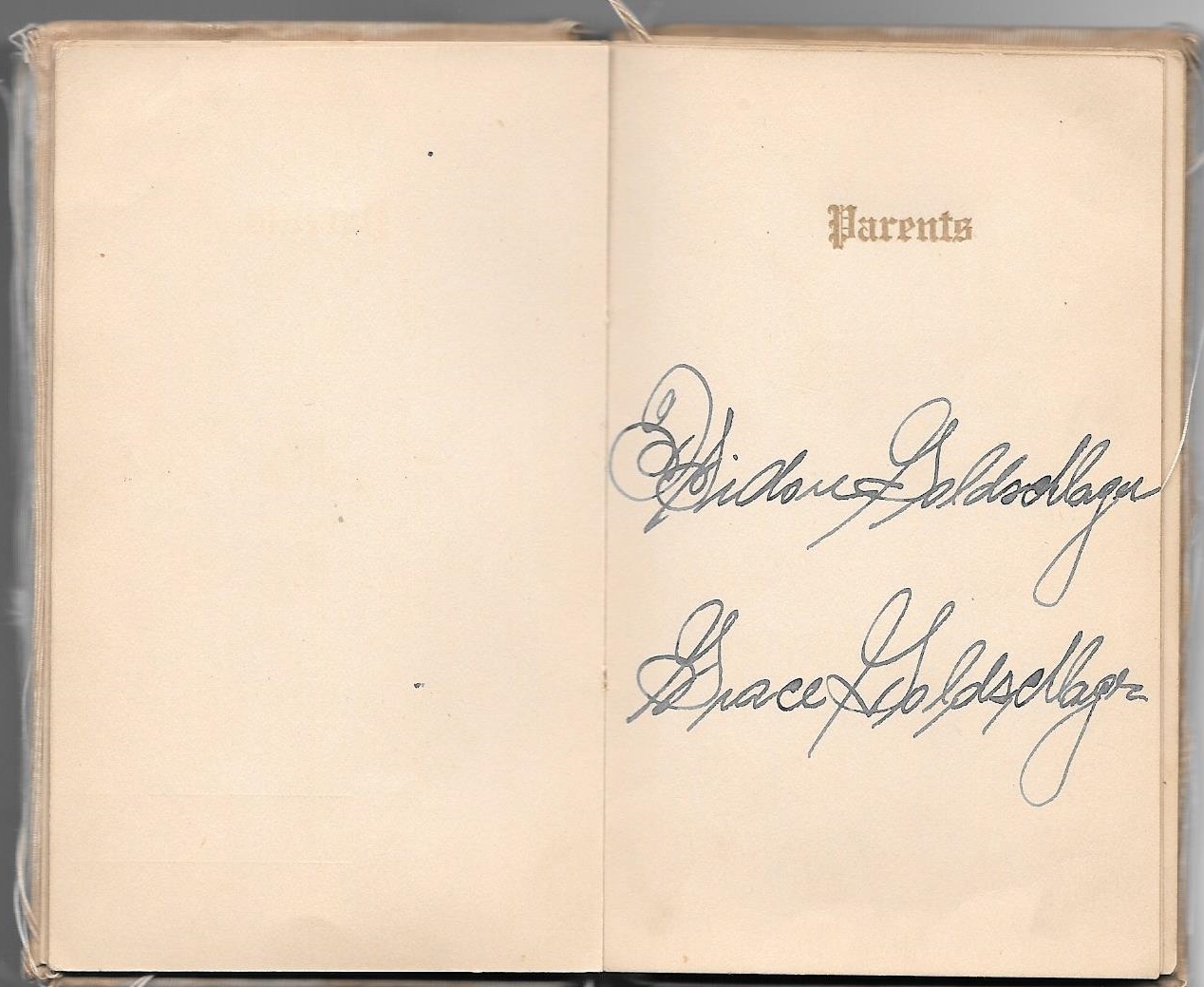
Aunt Elaine baby book p 2

My grandmother was never called Grace, always Gussie.  But family lore is that my grandfather’s family thought Grace was more American.


Aunt Elaine baby book 3

My two maternal great-grandmothers!


Aunt Elaine baby book 4

Who are these people?

Tillie Ressler—my grandmother’s older sister

Mr. and Mrs. H. Brotman—my grandmother’s brother Hymie and his wife Sophie

Rebecca Rosenzweig—my grandfather’s cousin, daughter of his mother’s brother Gustav Rosenzweig

Mr. and Mrs. D. Goldschlager—my grandfather’s brother David and his wife Rebecca

Mrs. and Miss G. Goldschlager—my great-grandmother Ghitla Rosenzweig Goldschlager and her daughter Betty

Mrs. and Miss B. Moskowitz—my great-grandmother Bessie Brotman Moskowitz and her daughter Frieda

The next two are not familiar, but provide new paths to research.  Can anyone help me decipher the names?

UPDATE: The last two must have been friends.  Mr. and Mrs. Leon and Ray Kiok and her mother Mrs. Frances Azeraad.  I found them all living together in Brooklyn, but not near my grandparents. I am not sure where they would have met.  Leon was born in Poland in 1886, and Ray’s parents were born in Spain.

Finally, Mr. and Mrs. M. Brotman: my grandmother’s half-brother Max Brotman and his wife Sophie

On the following page were more names.

Aunt Elaine baby book 5

Miss E. Shapiro and fiancé—not known yet

Sam Brotman—my grandmother’s younger brother

Mrs. A. Peter and son—I do not know

Mr. and Mrs. A. Brotman—-my grandmother’s half-brother Abraham Brotman and his wife Bessie

Mrs. D. Brotman—Annie nee Salpeter, wife of David Brotman, my grandmother’s half-brother

Mr. and Mrs. Julius Goldfarb—more on them below

The next three are not familiar—Mrs. Louis (?) Yassky, Miss Rose Botomick (?), and Mrs. Tsulie (?) Hecht.  As far as I can tell, these were not relatives, but friends.

I just loved seeing all these names.  Names that I have researched and know are my family, but names I’d not seen in something like this, something that makes it clear that these people were all really connected to my grandparents in a personal way.  I know that sounds odd.  These were the siblings, mothers, and cousins.  But since I grew up without hearing many of these names, it still was wonderful to see them all listed as the first visitors to see my aunt as a newborn in 1917.

I also found the list of gifts fascinating.  My grandparents did not have money for silver and silk, but someone was very generous in giving these items to them for their first-born child.

One final page—the inside of the back cover:

Aunt Elaine baby book 6
A. Rosenzweig—-my grandfather’s cousin, Abraham Rosenzweig, Rebecca’s brother.  I have speculated, based again on a story conveyed by notes from my Aunt Elaine, that it was either Abraham or Rebecca or Sarah who was accompanying my grandfather Isadore on Pacific Street in Brooklyn when he first laid eyes on my grandmother and declared he was going to marry her.

Back to Mr. and Mrs. Julius Goldfarb.  I asked my mother who they were because in a second old item—a notebook my grandfather used for various purposes that was also used by all three of his children at one time or another[1]—the name Joe Goldfarb appeared twice.  Who were these Goldfarbs?

Grandpa Notebook page 1 addresses Joe Goldfarb

Grandpa notebook 13 more addresses Joe Goldfarb

(There’s more great stuff on this page—Sam Brotman is my great-uncle Sam, Feuerstein B. is my great-aunt Betty Goldschlager Feuerstein, Leo Ressler is my mother’s first cousin, her Aunt Tillie’s son; Rae Rosenzweig and Lizzie Horowitz are my grandfather’s first cousins, sisters of Abraham and Rebecca. And there is an S. Goldfarb in addition to Joe.)

My mother said all she could remember was that either Julius or his wife was my grandmother Gussie’s first cousin.  I’d never heard the name Goldfarb before, so what did I do? What all genealogy addicts would do.  I immediately started searching.  And the results of that search will be discussed in a later post once I have filled in more gaps in that story.

But for now, I once again can hear my aunt cheering me on, telling me to keep digging and finding the family stories.

elaine and amy 1953

Aunt Elaine and me 1953


[1] I will share more of that notebook in later posts also.

My Great-grandparents: Thank You

When I started doing genealogy research about four years ago, I only had seen pictures of two of my eight great-grandparents:  Isidore Schoenthal and Hilda Katzenstein, parents of my paternal grandmother Eva Schoenthal Cohen.

Hilda Katzenstein Schoenthal

Hilda Katzenstein Schoenthal

Isidore Schoenthal

Isidore Schoenthal


I had no idea what any of my other six great-grandparents looked like.  Over time I have been very fortunate to find cousins who had pictures of four of those other six.  For example, I now have pictures of Moritz Goldschlager and Ghitla Rosenzweig, parents of my maternal grandfather Isadore Goldschlager.

Ghitla Rosenzweig Goldschlager

Ghitla Rosenzweig Goldschlager

Moritz Goldschlager

Moritz Goldschlager


Another cousin had pictures of my great-grandmother Eva Seligman, but I did not have a photograph of my great-grandfather, Emanuel Cohen.  Until now.  One of the photos in my Aunt Eva’s suitcase was a photograph of Emanuel Cohen. I was so excited to be able to see his face.  It’s amazing how a photograph can bring to life someone you’ve never seen.

So I now have pictures of Eva Seligman and Emanuel Cohen, parents of my paternal grandfather, John N. Cohen, Sr.

Eva Seligman Cohen

Eva Seligman Cohen

Emanuel Cohen

Emanuel Cohen

That leaves me missing only one photograph in the collection of photographs of my great-grandparents.  I am fortunate to have a picture of my great-grandmother, Bessie—the person for whom I named.  But I do not have a picture of Joseph Brotman, my great-grandfather.  The Brotmans remain the most elusive of my ancestral families, and they were the ones who started me on this search and to the blog.  How I would love to know what Joseph looked like, but none of my cousins has a photograph, and somehow it seems very unlikely that any will turn up.  But here is my great-grandmother Bessie Brod/Brot/Brotman, the mother of my maternal grandmother Gussie Brotman Goldschlager.

Bessie Brotman

Bessie Brotman

When I scan through these photographs and think of my eight great-grandparents, I feel somehow comforted and inspired.  It makes me feel good to know that they are remembered and that their stories are being told, at least as well as I can tell them.  Five of the eight were born in Europe and immigrated here to make a better lives for themselves and for their children and those who followed. They came from Sielen, Germany, from Iasi, Romania, and from Tarnobrzeg, Poland.  The other three were the children of immigrants from Gau-Algesheim and Jesberg, Germany and from London, England; they benefited from the risks taken by their parents, my great-great-grandparents, but they each took risks of their own.  In America, my great-grandparents lived in Washington (Pennsylvania), Philadelphia, New York, Denver, and Santa Fe.  Each in his or her own way was a pioneer.  Each one is an inspiration to me.

On this week of Thanksgiving, I am grateful to them for all they did and proud to be their great-granddaughter.


My Goldschlager Cousins: New Connections and New Photos

Lately it’s been sort of raining Goldschlagers.  First, I received an email from someone named Jeanne who matched me very distantly on the DNA testing website, but who’d spotted that one of my ancestral names was Goldschlager.  Jeanne had had an aunt named Anne Goldschlager; although her aunt was an aunt by marriage only, not genetically, Jeanne had loved her greatly and wondered whether we might be related since Anne Goldschlager’s family also had ties to Romania.

According to Jeanne, Anne’s father Max had moved to Dresden in the early 20th century where Anne and her sister Sabina were born.  In 1939, Max, his wife, and Sabina left Germany to go to Romania (I assume they thought it would be safer), and they left Anne behind.  She was 15 years old.  Somehow Anne got to England and survived the war, but her sister was killed in one of the concentration camps. Her parents survived the war and emigrated to Israel. Here is Sabina’s Page of Testimony at Yad Vashem, which includes this photograph:

Unfortunately, Anne has no biological descendants, and Jeanne knew nothing more about her family tree, so I don’t think I can get any further back to determine if her Goldschlagers were related to mine.

Then around the same time that I heard from Jeanne, my cousin Jim and his wife Jodi emailed me to say that their son Michael was in Spain for the Model UN and had met a fellow student named Eva Goldschlager.  Michael wanted to know if Eva could be related to our Goldschlagers.  After obtaining Eva’s father’s contact information, he and I have emailed several times.  His Goldschlager family is also from Romania—from the town of Siret, which is a little more than 100 miles from Iasi where my grandfather was born.  We’ve not gotten any further than that so far, but are trying to figure out how to learn more.

And then finally just the other day I received a whole bunch of new photographs from my cousin Richard, who lives in Australia but was in the US visiting his parents.  Richard is my second cousin; his father Murray is the son of David Goldschlager, my grandfather’s younger brother.  Although Murray changed his surname a long time ago, he is nevertheless a Goldschlager.  Here are some of the photographs Richard sent me of his grandparents.

Here are three photographs of David and Becky as young people.

David Goldschlager

David Goldschlager


Rebecca Schwartz

Rebecca Schwartz

Rebecca and David Goldschlager

Rebecca and David Goldschlager

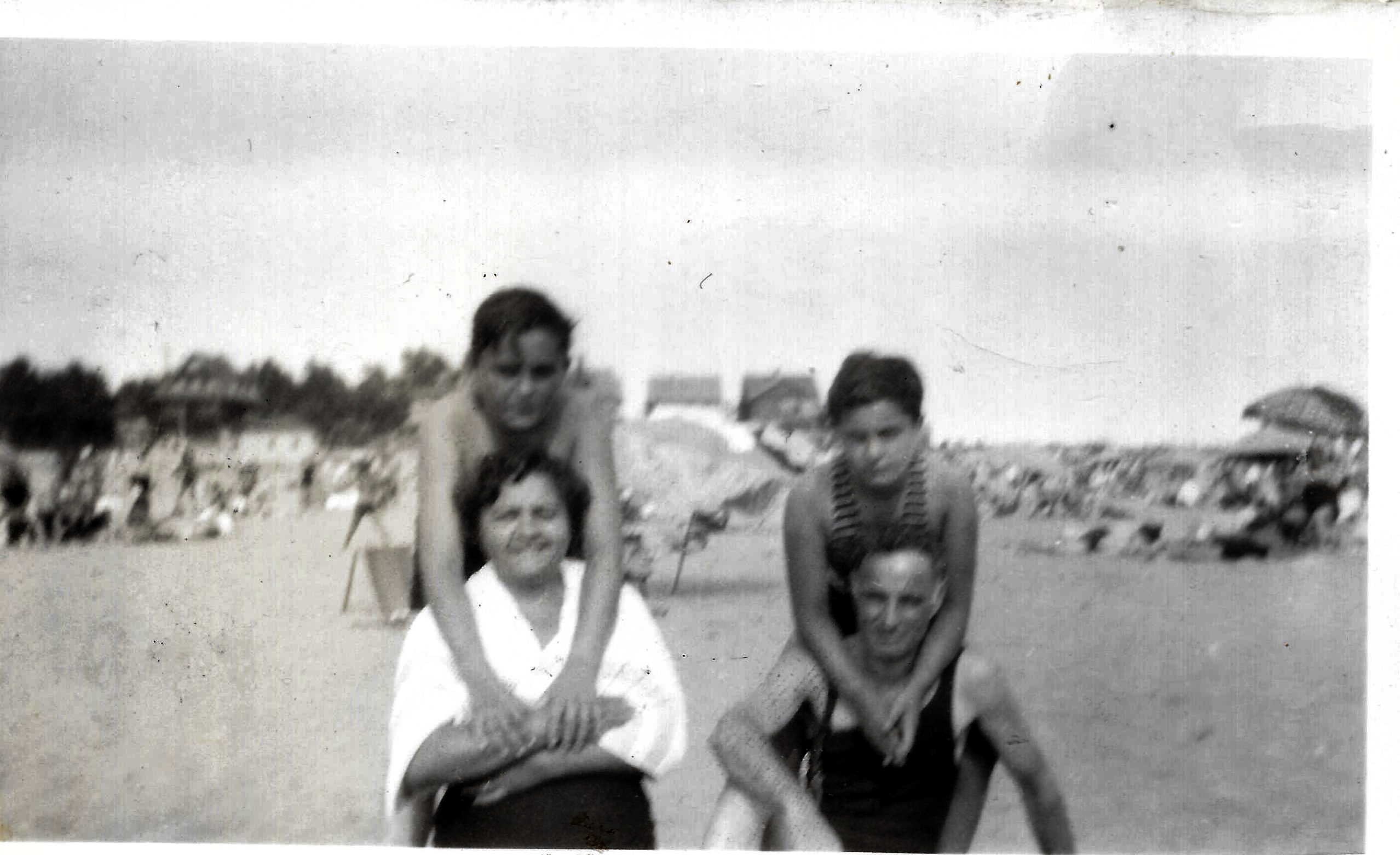
Here they are with their sons Murray and Sidney  at Brighton Beach probably in the 1930s:

David and Murray Goldschlager

David and Murray Goldschlager

David Rebecca Sidney and Murray at Brighton Beach

All four Goldschlagers at Brighton Beach


The others were taken when David and Becky had moved to Arizona where Murray and his wife Edna and their son Richard lived.

Richard Leonard and David Goldschlager

Richard and his grandfather David Goldschlager

Richard with his grandparents at his bar mitzvah

At Richard’s bar mitzvah

David and Becky at Richard's bar mitzvah David and Rebecca Goldschlager


Thank you so much to my cousin Richard who so generously shared these photographs with me.  I am so happy to have more pictures of my grandfather’s brother David and his family.


Thank You, Grandpa, for the Gift of My New Cousins

It was about three years ago that I first started wondering more about my grandfather Isadore Goldschlager.  I knew almost nothing about his life before he came to the US in 1904 from Iasi, Romania.  I didn’t know too much about his life when he got to the US either.  It was my interest in his life in particular that first prompted me to go on ancestry.com and start searching for answers.  I soon hit a wall and gave up, only returning to ancestry a year later and starting my search for my Brotman relatives instead.

Then I returned to my grandfather again, a somewhat more experienced researcher, and this time I had better luck.  In fact, as I have written, I found not only his parents—I found his mother’s siblings Gustav and Tillie and Zusi Rosenzweig, and then I found their children and many of their grandchildren and great-grandchildren.  I was able to piece together a better picture of my grandfather’s extended family and even figured out how he met my grandmother Gussie, who happened to be living down the street from his Rosenzweig cousins in 1915 on Pacific Street in Brooklyn.

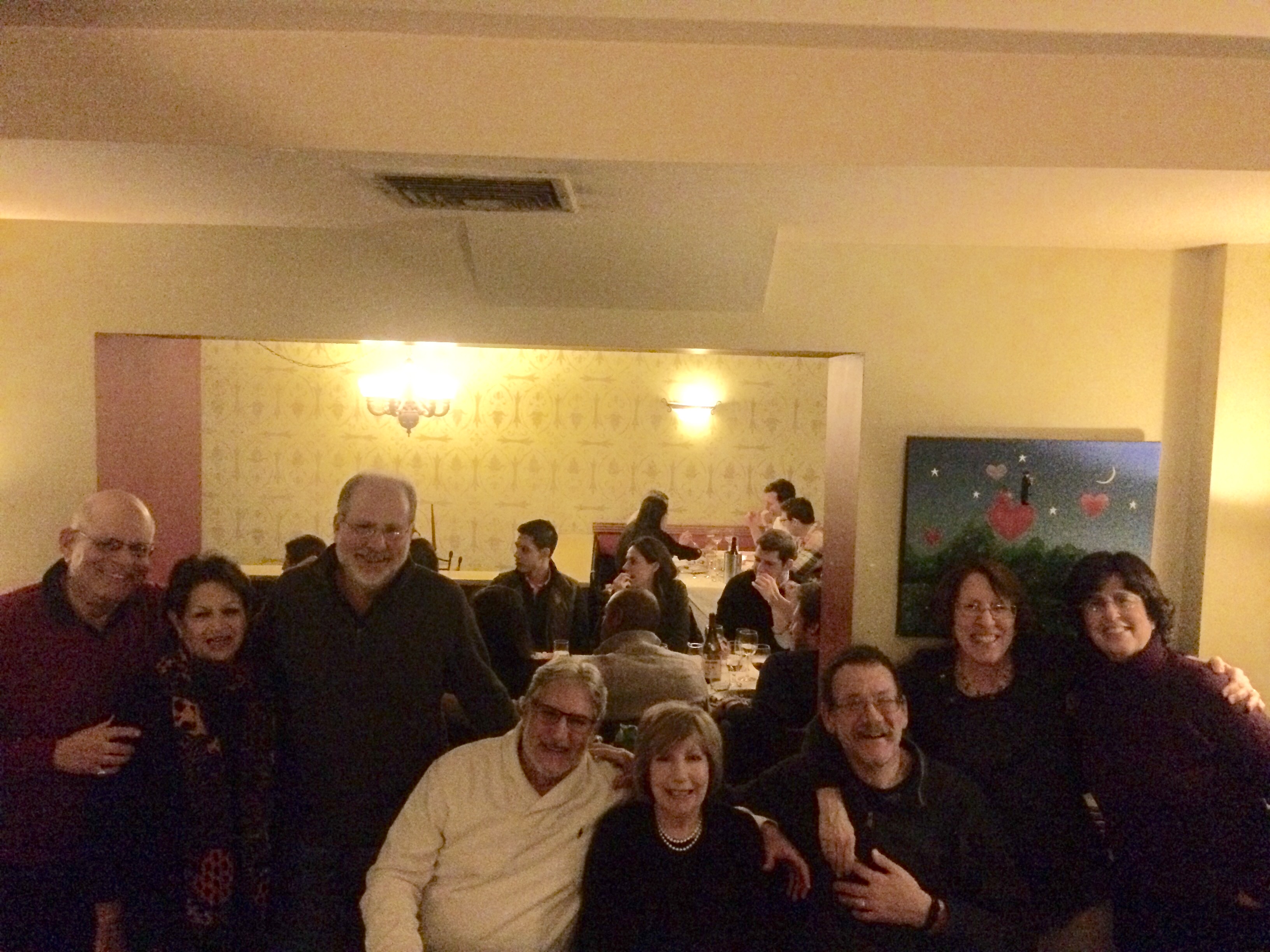
Last night I got to meet some of my Rosenzweig cousins for the very first time.    Four of the great-great-grandchildren of David and Esther Rosenzweig were there—Gerry, Ron, Michael and me.  Gerry, Ron and Michael are all the great-grandsons of Gustave Rosenzweig, the brother of my great-grandmother Ghitla/Gussie Rosenzweig Goldschlager.  Gerry is the grandson of Abraham Rosenzweig, and Michael and Ron are the grandsons of Joe Rosenzweig, the brother of Abraham.

Here is a picture of Abraham, Joe and Jack Rosenzweig:

Abraham Joseph and John (Jack) Rosenzweig

Abraham Joseph and John (Jack) Rosenzweig

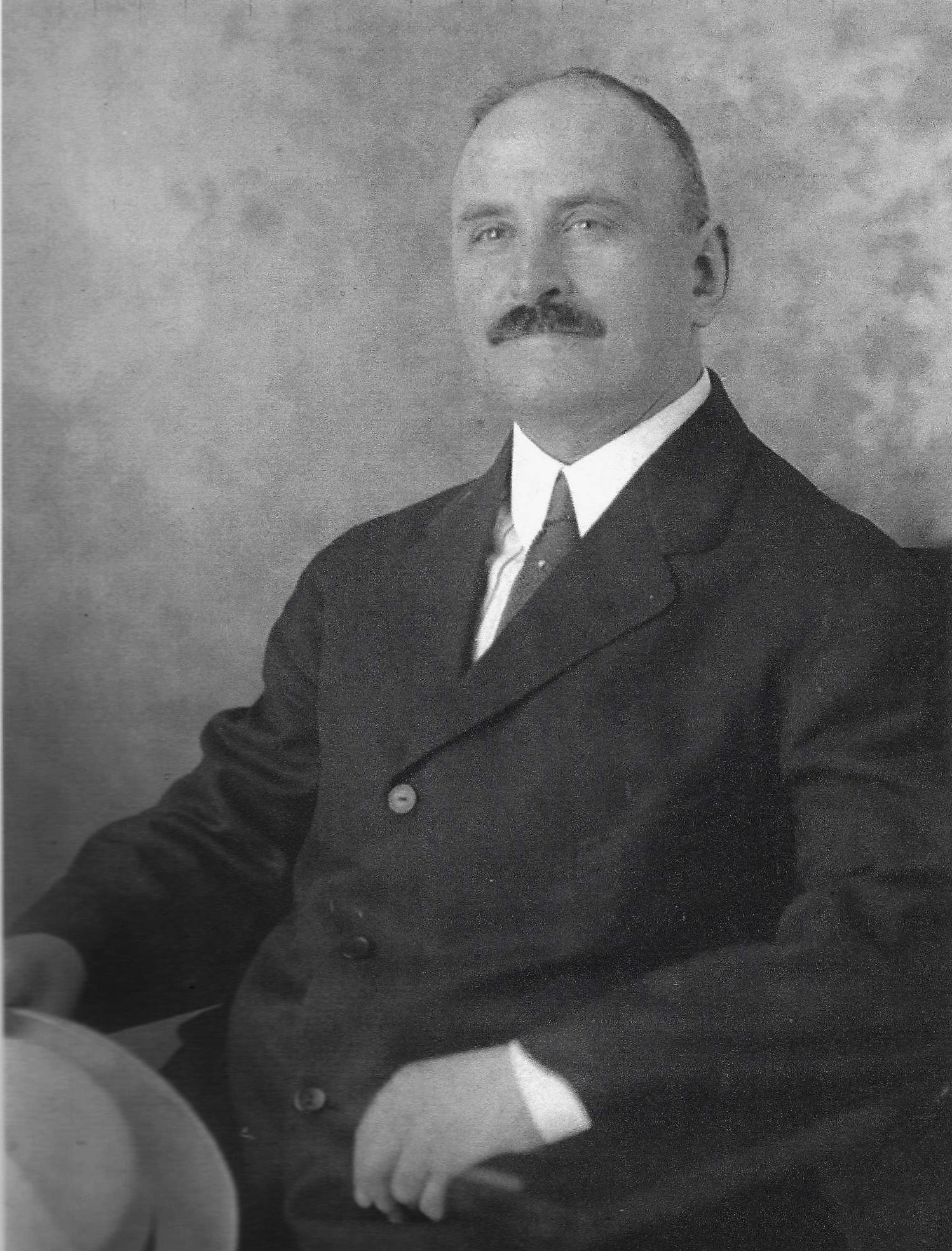
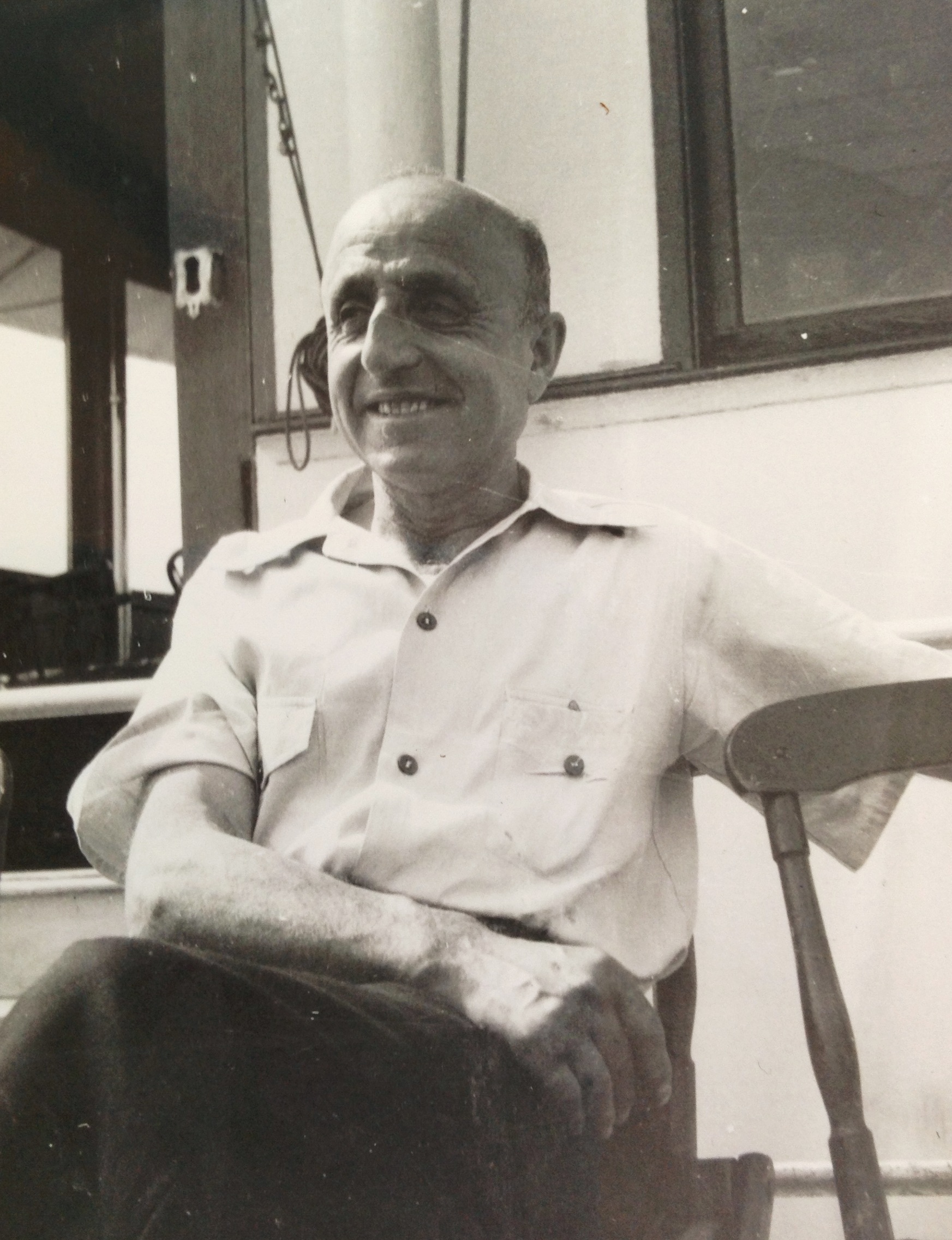
And here is a picture of their first cousin Isadore Goldschlager, my grandfather.

Isadore Goldschlager

Isadore Goldschlager

It was a wonderful evening.  Even though many of us had never, ever met before, we quickly connected and found common bonds—all having grown up in greater New York, all enjoying a good laugh, all loving dogs and our grandchildren (not in that order), and all being unable to digest raw onions.  It was a great time, and even if we never knew each other as children, there was definitely a feeling of family.

Here we all are with our spouses.  Thanks to the lovely newlywed couple who not only put up with our noisy conversations, but also graciously offered to take this picture (on about five different smartphones).

Rosenzweig cousins Jan 24 2014

So keep looking for your cousins—you will never know how much joy you can experience.

Remy Brandon Fischer, Shalev Ezra ben Dov Baer Yaakov v Rivke Gittel

Remy

Remy

Yesterday just before 4 pm, our family grew again with the birth of our grandson Remy.  He weighed 8 pounds and is 19.5 inches long, and he is beautiful.  His big brother Nate whispered in his ear, “You are going to be my best friend,” bringing us all to tears.  It was a magical, wonderful, perfect day.

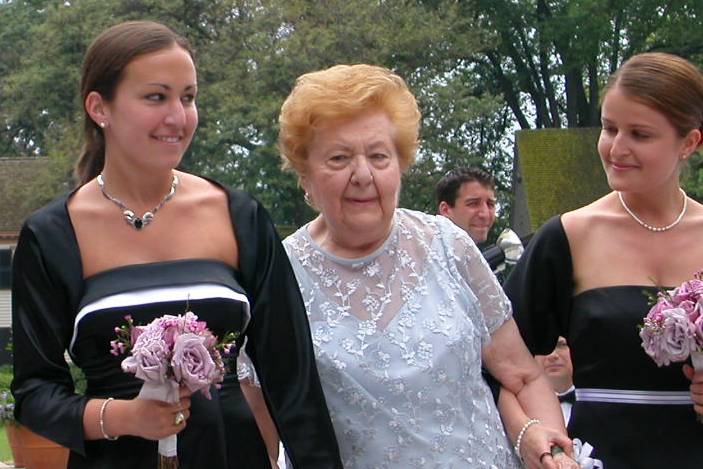
Remy is named for five remarkable women from all sides of his family.  Remy is for Rose, his paternal great-grandmother who passed away just a few months ago.  Brandon is for Bea, his other paternal great-grandmother who lived to be 101 years old.  Here they both are, together at Remy’s parents’ wedding in 2006.  They were both strong, independent women, both widowed far too young, but both women who not only survived, but found continuing  joy and fulfillment in their long lives.  I was honored to get to know them both.

Bea and Rose

Bea and Rose

Remy’s Hebrew name is in honor of three women from his mother’s side.  Shalev is for my mother-in-law Sara, Remy’s maternal great-grandmother, who also lived a long life.  She was the matriarch of her family and a strong, sweet, loving and incredibly funny woman who was adored by all her grandchildren, her nieces, nephews, and, of course, her sons and her daughters-in-law.  She raised two truly wonderful men, one of whom I was fortunate enough to marry.


Sara with Maddy and Rebecca

Sara with Maddy and Rebecca

Ezra is for my two aunts.  My father’s sister Eva, who despite contracting MS as a young woman, lived a long and productive life, working until retirement age for the city of Philadelphia, where she was born and lived almost her whole life.  She was another strong and independent woman who had an incredibly large and yet close circle of friends. (Picture to come once I get back to my scanner.)

Ezra is also for my Aunt Elaine, my mother’s sister, our family’s matriarch, who was yet another incredibly strong and loving and smart and funny woman, our family historian.  As my mother remarked this past weekend, we cannot tell a story about her that does not make us laugh and smile.  She, too, was adored by all.

Phil and Elaine

Phil and Elaine

Remy, you have an incredible foundation to start your young life.  May you be blessed to have the strength, the heart, the independence, and the sense of humor that all five of these women had to help get you through what we hope will be a long, healthy and very happy life.


Enhanced by Zemanta

The Fusgeyers, Part IV: Romania Today

St_Andrew_Str_no_26_0002

Where my grandfather was born in 1888 in Iasi, Romania

As noted in my last post, the population of Jews in Romania has declined precipitously over the last one hundred years as a result of emigration before World War I and thereafter and also as a result of the murder of about 300,000 of them during the Holocaust.  From a peak of 800,000 after World I, there are now just a few thousand Jews living in Romania today. What is it like in Romania today, and, more specifically, what is it like to be a Jew living in Romania today? What  legacy is there in Romania from the once substantial Jewish community, and what do current residents know or remember of the Jewish communities and of the Fusgeyer movement that led many of those Jewish residents out of Romania?  Beyond the cold, hard statistical facts, what is left of Jewish Romania?

I have consulted only two sources of information to answer these questions, so my views are based on limited information and possibly inaccurate.  But those two sources left somewhat different impressions, so perhaps the truth lies somewhere in between.  Jill Culiner’s book, Finding Home, paints a rather gray and dismal picture of life in Romania in general and specifically of the Jewish legacy there.  Stuart Tower, author of The Wayfarers, has a more positive impression of Romania today and of its people as seen in the photographs he took first in the 1980s and then in 2005 and also from what he shared with me by email.  Culiner and Tower visited different cities and towns for the most part, but there was some overlap; both visited Barlad and Sinaia within a few years of each other.  Both ultimately paint a picture of a country that once had many thriving Jewish communities but that now has virtually no Jewish communities and few residents who remember the communities that once were there.

Tower based his book around the town of Barlad; it is where the three Americans, grandfather, father and son, go to learn about their ancestral roots and meet the rabbi there who tells them the story of the Barlad Fusgeyers.  Tower’s story is fictional, and he told me that he’d never actually met a rabbi in Barlad, but both Culiner’s book and Tower’s book talk about a very small Jewish community continuing to exist in that city and the beautiful synagogue that still stands there.  In Tower’s novel, the rabbi describes a community of thirty people who still keep kosher and observe shabbat, but who have trouble forming a regular minyan.  The elderly rabbi’s children have all moved away, and he knows that he will be the last rabbi in Barlad (spelled Birlad in the novel).

Culiner started her Romanian travels in Adjud, where she got off the train and began her Fusgeyer-inspired walk.  Her description of Adjud is disheartening:

Here, fields lie flat under a grueling sun, and cars, trucks and buses roar with giddy impunity over pot-holed, uneven main roads.  Under thirsty-looking trees outside the station, lining the street are unlovely lean-tos, modern bars and patios. All claim to be discos, all pump loud American music into the hot air.

Culiner, p, 35.

Culiner also said that “there were no buildings left from the pre-Communist era and certainly nothing of beauty.” (Culiner, p. 35)  Her encounters with the local people are no more heart-warming.  No one could tell her where there was a hotel or room to stay in, and she described the people she saw as “exhausted..expressionless, resigned.”  Culiner, p.36.  No one in town remembered  that there ever was a Jewish community there or a synagogue, although there had been a community of about a thousand Jews there in 1900.  The man who showed her where the non-Jewish cemetery was located demanded an exorbitant fee for his troubles.  By the end of this first chapter, I was already feeling rather depressed about her experience and about  life in Romania.

In contrast, here are some of Tower’s photos of the Romanian countryside that left me with a different impression.  Thank you to Stuart Tower for giving me permission to post these:

Recently%2520Updated%25201112 Recently%2520Updated%25201113 Casa Elena in Voronets Fall foliage in the Bicaz Gorge Romania%25202005%2520262 Romania%25202005%2520263 Romania%25202005%2520264

Culiner’s experience at her second stop, Podu Turcului, was not any better.  The townspeople warned her that her plans to walk through Romania were dangerous and that she would be better off visiting more modern cities elsewhere.  There were no Jews left in this town, and no one there remembered there ever being a synagogue, although there was a Jewish cemetery.  Only one man acknowledged that there once was a Jewish community there, a workman who had been curious about the Jews while in school and had learned where the Jewish residents had once lived in town, now just a neighborhood of faceless housing from the Communist era.  This man told Culiner that he had been unable to learn more about the Jewish community in his town because discussing such matters was prohibited during the Communist era.

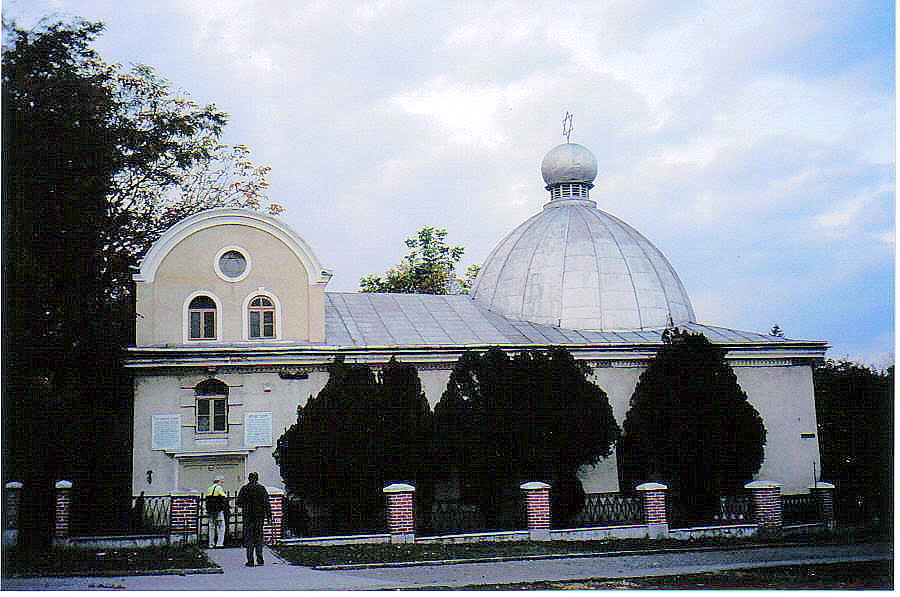
Culiner and her companion next arrived in Barlad, a city of 79,000 people, the city where Tower’s characters stayed and learned about the Fusgeyers and were in awe of the beautiful synagogue.  Culiner is less enthusiastic.  Her first impression of the city is its “potholed, deteriorated sidewalks” and the “[r]are trees [that] gasp out their life in the dense cloud of exhaust fumes, providing little shelter from the pitiless sun.” (Culiner, p. 55) Culiner once again encountered skepticism about her plans and ignorance about the Jewish history of the city.  She was particularly disappointed that in this city where the Fusgeyer movement began, no one seemed to remember anything about them.  Even she, however, was impressed with the synagogue, to an extent:

Despite its rather austere, unassuming exterior, the synagogue is magnificent.  Dating from 1788, the walls and ceilings are decorated with paintings of birds, flowers, leaves and imagined scenes of Jerusalem.  Yet, despite its beauty, there is a strange feeling of loss, the aura of a building struggling to exist in a world that has little place for it.  It has become a relic.

Culiner, p. 58.

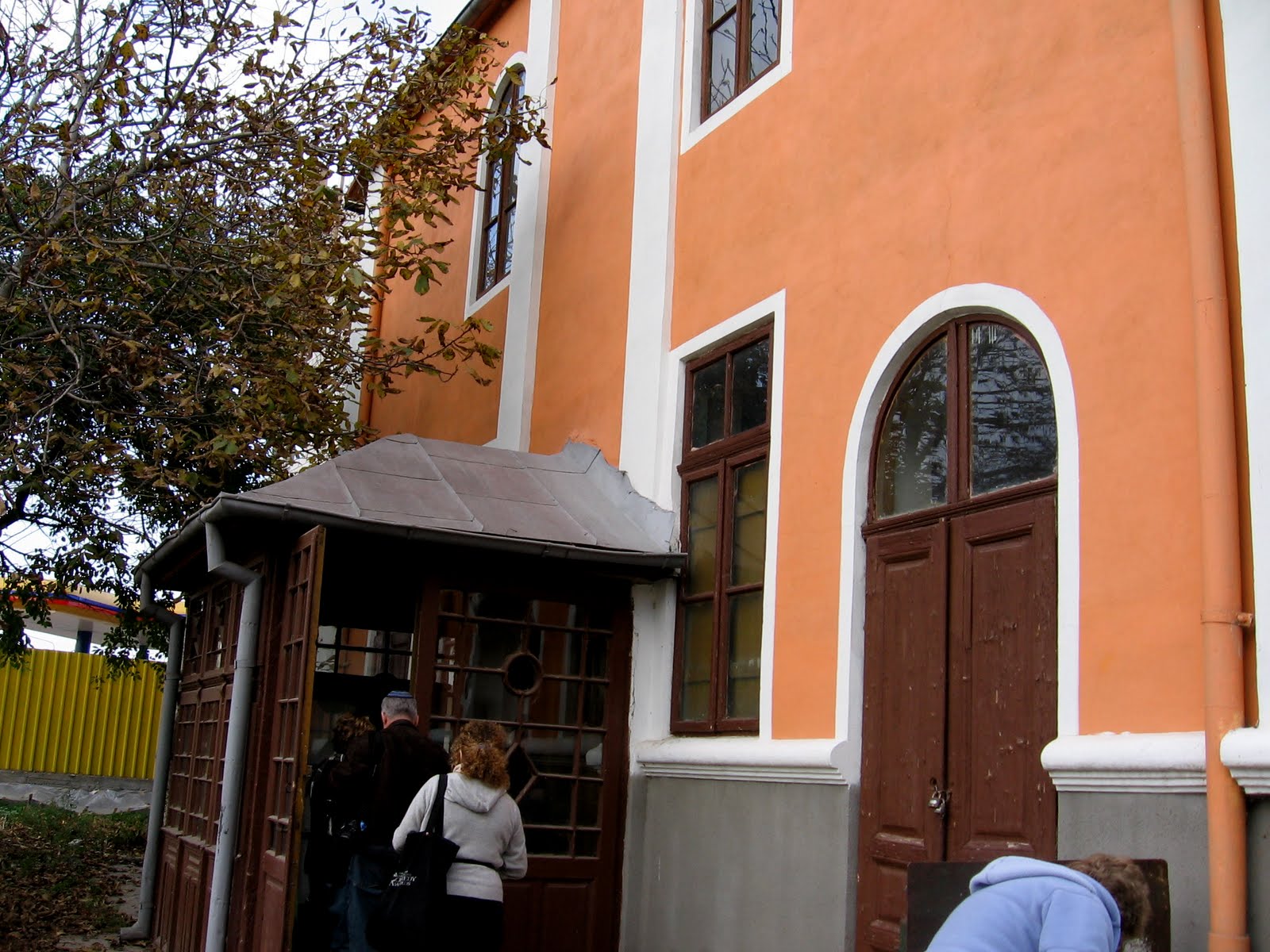
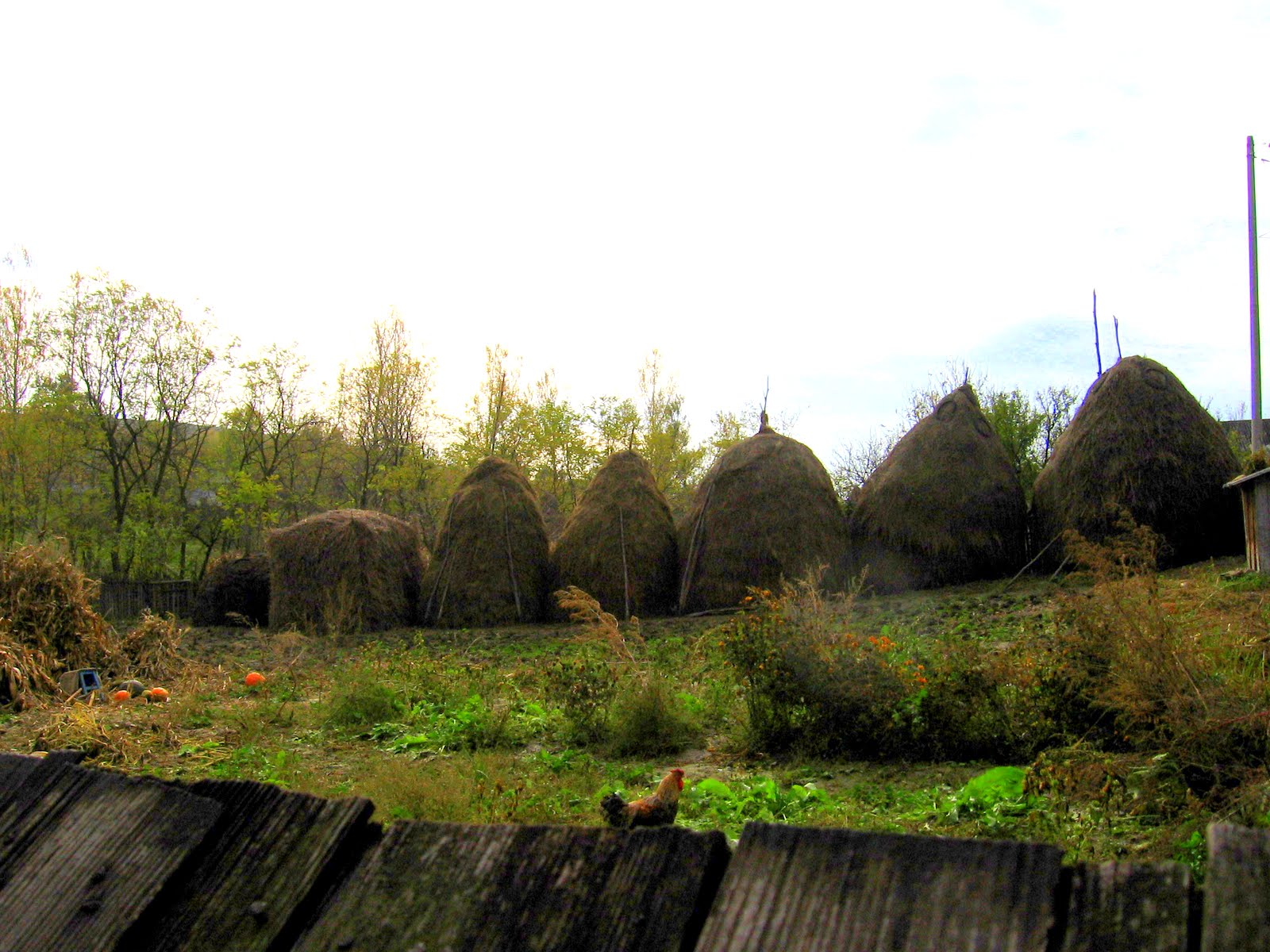
Although Tower also described a dying Jewish community in his novel, there was still some life, some people who cared in Barlad.  Culiner saw the glass as half-empty whereas Tower saw it as half-full.  Here are some pictures of the Barlad synagogue and some other towns visited by Tower that show a far less dismal impression of  in Romania.  All photos courtesy of Stuart Tower.

Synagogue in Barlad courtesy of Stuart Tower

Synagogue in Barlad  Photos courtesy of Stuart Tower

President Alexander Coitru

Stuart Tower reading from The Wayfarers at the Barlad Synagogue

Stuart Tower reading from The Wayfarers at the Barlad Synagogue

birlad shul interior

Romanian countryside

Romanian countryside

Romanian woman

Romanian woman

Romania%25202005%2520090 Romania%25202005%2520175

17th Century wooden synagogue in Piatra Neamts

17th Century wooden synagogue in Piatra Neamts

Piatra Neamts Sinagogaodd haystack, neighboring farm Troop Popa Tarpesht villagers and their War Lord

Culiner’s experiences in the towns and cities she visited after Barlad were not much different from her first three stops: ignorance and indifference to the history of the Jewish communities in those towns, ugly scenery, and disappointment.  She did meet some friendly and helpful people along the way, including some who were Jewish or were descended from Jews, but for the most part she found most Romanians at best ignorant and at worst rude and even hostile.

In Focsani, no one seemed to be able to help her find the synagogue, sending her on a wild goose chase only to find it right near her hotel.   On the other hand, Focsani had a fairly active Jewish community (relatively speaking), as the synagogue regularly drew about twenty people for shabbat services and more on major holidays.  Culiner was bewildered by the fact that the non-Jewish residents did not even know where the synagogue was located despite its central location.

In Kuku, Culiner met a friendly, helpful woman who likely lived in a building that was once the hostel where the Fusgeyers stayed while traveling through that town, but that woman also knew nothing about where the Jewish community had gone or about the Fusgeyers.   In Ramnicu Sarat, Culiner spent time with a woman whose mother was Jewish and who remembered the days of an active and close Jewish community.  The woman told Culiner that the Communists had demolished the synagogue that had once stood in the town.  She also talked about being unable to be openly Jewish during the Communist era.

Similarly, in Buzau she talked to a Jewish man who refused to take her inside the synagogue because he was ashamed of its condition; there were not enough Jews left in the town to make a minyan and not enough money to maintain the building.  This man told her that “the greatest threat is that all will be forgotten.” Culiner, p.122.   In Campina, another Jewish man told her, “The Jews will die out.  We will go to the cemetery.  And no one will replace us.” Culiner, p. 144.

Only in Sinaia did Culiner find anything of beauty in the countryside, but again not without some negative observations. She wrote: “The scenery is a slice out of a romantic painting and Watteau would have delighted in the mossy banks, the majestic spread of trees, although he might have taken artistic liberty, ignored the discarded shoes and packaging stuffed into vegetation, the tattered plastic and ripped shreds of fabric caught on branches in the river.”  Culiner, p. 146.  Tower’s photographs of Sinaia reveal all the beauty without the observations of garbage mentioned by Culiner.

Peles Castle, Sinaia and surrounding countryside

Peles Castle, Sinaia and surrounding countryside

cottage on the grounds Romania%25202005%2520042 Romania%25202005%2520044 October snowfall, near Peles

Before I read Culiner’s book, I had been giving serious thought to an eventual trip to Romania, in particular to Iasi.  After reading her book, I put that thought on the far back burner.  Her book left me with a vision of an ugly country filled with ugly people who hated Jews.  After looking at Tower’s photos and corresponding with him about his travels in Romania, I am reconsidering my decision to put a visit there on the back burner.  Just as I would like to visit Galicia to honor my Brotman family’s past, I would like to visit Iasi—to see where my grandfather was born and spent his first sixteen years, to honor his past and the lives of his family—-the Rosenzweigs and the Goldschlagers.  I have no illusions about what I will find there.  I know not to expect a lively Jewish community or even any Jewish community.  It’s all about walking where they walked and remembering their travails and their courage.  Maybe the scenery is not as idyllic as in some of Tower’s photos.  Maybe the people are not as colorful and friendly as they seem in his photos.  But that, after all, is not the point, is it?

Culiner did not visit Iasi, our ancestral town in Romania, on her trip, but Tower did, and I thought I would end this post by posting his pictures of Iasi and some of its people as well as those taken by my Romanian researcher Marius Chelcu.  Maybe someday I will get to be there in person and walk down St Andrew’s Street where my grandfather was born and pay tribute.

If we don’t, who will? Will we allow the story of the Fusgeyers and of the Jews of Romania to be forgotten for all time? That, in some ways, is the message of both Tower’s book and Culiner’s book: we need to learn and retell the story of our ancestors so that those stories and those people will not be forgotten.


Stuart Tower’s photos of Iasi

1670 Synagogue in Iasi

1670 Synagogue in Iasi

Traian Hotel, Iasi

Hotel

Father of Yiddish Theater

Father of Yiddish Theater, plaque in Iasi

National Theater, Iasi

National Theater, Iasi

Gypsy wagon, near Iasi (Yash) Astoria Hotel, Iasi Yash) Iasi street Recently%2520Updated%25201108 Lady/Man (?) walking toward Yash (Iasi) Gypsy family (Iasi), wanted food and money Iasi (yash) Ladies of Iasi (Yash)


Marius Chelcu’s photos of Iasi:

St_Andrew_Str_no_26_0003 St_Andrew_Str_no_26_0001 Near St Andrew Str_11 Near St Andrew Str_10 Near St Andrew Str_4 Near St Andrew Str_5 Near St Andrew Str_6 Near St Andrew Str_7 Near St Andrew Str_8 Near St Andrew Str_2

Photos taken near St Andrew Street where the Goldschlagers lived

Photos taken near St Andrew Street where the Goldschlagers lived


Enhanced by Zemanta

The Fusgeyers, Part III:  What Came Afterwards

In my last two posts, I wrote about the vast emigration of Jews from Romania between the late nineteenth century and World War I in the face of widespread anti-Semitism and poverty. According to one source, almost thirty percent of Romanian Jews migrated to the United States or Canada between 1871 and 1914; many others migrated to what was then Palestine.[1]  Wikipedia estimates that about 70,000 Jews emigrated from Romania, almost a quarter of the total Romanian Jewish population in that period.

Many of those who left were part of the Fusgeyer movement, groups who walked from their home towns across Romania to escape, often depending on donations raised by entertaining the crowds in towns throughout their route to freedom.  My grandfather was one of these walkers, and so perhaps were his siblings, cousins and other family members, though I’ve not heard any other descendant report that their grandparent walked across Romania.  According to Culiner, there are no statistics on how many people were a part of this movement or how long it lasted.  Groups ranged in size from forty people to 300 people, and in 1903 about 200 to 300 Jews were leaving Romania each week, many on foot. (Culiner, p. 20).

Although Jacob Finkelstein’s report of the experiences of his 1900 Fusgeyer group painted a generally rosy picture of their trek, being welcomed and well-fed in most places they visited, other groups faced greater struggles.  One observer reported that he saw groups where people were famished, in some cases starving, and living in horrible conditions.  He wrote:

One has to imagine 300 people, men, women and children wandering through the cemetery [where they were then living] like famished wolves, burnt by the sun during the day, tormented by mosquitoes in the night, all three hundred of them with bare feet, sick, some moaning, others crying: fever-racked women who are incapable of feeding their young, the children pale and suffering.[2]

Is it any wonder that my grandfather never talked about his life in Romania, other than to mention the music and beautiful horses he remembered? I’ve asked many of my newly-found Rosenzweig and Goldschlager cousins if they knew anything about their ancestors’  lives in the “old country,” and the response I’ve heard over and over is that their grandparent never wanted to talk about those days, but wanted to focus on the present and the future.  Given the conditions they endured both living in Romania and leaving it, why would they want to remember any of it?

Jewish population per county in Greater Romani...

Despite this large-scale emigration of Jews before World War I, there were close to 800,000 Jews remaining in Romania at the end of that war. (This large increase resulted from the addition of Bukovina, Transylvania, and Bessarabia to the territory controlled by Romania in accordance with the terms of the 1919 Paris Peace Conference after World War I.)


the death train from Iaşi

the death train from Iaşi (Photo credit: Wikipedia)

By the end of World War II, that community had been further decimated.  Approximately 300,000 Jews were murdered in the Holocaust between 1941 and 1944 by the Romanian government, the largest number of people killed by any Nazi ally other than Germany itself.  Nevertheless, unlike in many other countries in Europe, the majority of the Jews in Romania survived the war.  Estimates vary, but approximately 300,000 Romanian Jews survived.  Most, however, did not return to or remain very long in Romania. The Communist era resulted in further reduction of the Jewish population with many who had returned emigrating to Israel or the United States or elsewhere. Wikipedia includes this chart of the declining population of Jews in Romania:


Historical population
Year Pop.   ±%  
1866 134,168
1887 300,000 +123.6%
1899 256,588 −14.5%
1930 728,115 +183.8%
1956 146,264 −79.9%
1966 42,888 −70.7%
1977 24,667 −42.5%
1992 8,955 −63.7%
2002 5,785 −35.4%
2011 3,271 −43.5%
Censuses in 1948, 1956, 1966, 1977, 1992, 2002 and 2011 covered Romania’s present-day territory
Source: Demographic history of Romania


These facts are important in order to put into context my next post: what Romania is like today, as seen through Jill Culiner’s eyes in her book Finding Home and through Stuart Tower’s eyes as depicted in his photographs of Romania.


[1] Joseph Kissman, “The Immigration of Romanian Jews Up to 1914,” YIVO Annual of Jewish Social Science (New York 1947-1948), p. 165, as cited in Jill Culiner, Finding Home: In the Footsteps of the Jewish Fusgeyers (Sumach Press 2004), p. 19.


[2] Isaac Astruc, “Israelites de Roumanie,” p. 43, as translated by and quoted by Culiner, p. 23.


Enhanced by Zemanta

The Fusgeyers: Why They Left Romania

Isadore Goldschlager

Isadore Goldschlager

“Grandpa walked out of Romania to escape from the Romanian army.”  That was the one story I knew about my grandfather’s life before he came to the US as a teenager.  I knew a few other snippets about him in general—that he loved music and animals, that he knew multiple languages, that he was a union activist and very left-wing in his political views, that he was a milkman, and that he was a terrible tease and had a great sense of humor.  But the story about him walking out of Romania was the one that always intrigued me the most.  I would ask my mother questions: Did he go alone?  Where did he walk to? How did he get to the United States? But she knew nothing more than that barebones story—that as a teenager, he decided to run away from the army and walked across the country to escape.

When I first started researching my grandfather’s family, I wanted to know more about this story.  Was it just a myth, or was there any factual basis to it?  I did some initial research and learned that there was in fact an entire movement of Jews who left Romania by foot beginning in the early 1900s, around the same time my grandfather left (1904).  These walkers were known as the Fusgeyers or “foot-goers.”  Unfortunately, I could not find many sources of information about this movement.  I found only two books devoted in depth to the topic.   One is a novel called The Wayfarers by Stuart F. Tower; although written as a novel, it was inspired by the author’s actual search to learn about the Fusgeyers.  It tells the story of an American man whose grandfather left Romania by foot.  The grandson, now an adult, takes his own teenage son and his elderly father to Romania to learn more about his grandfather’s escape from Romania.  The author describes long conversations that the lead character had with a rabbi living in Romania who was familiar with the Fusgeyer movement.  Although this book gave me a taste of what the movement was like, I wanted to read something more fact-based and scholarly to understand and know more about the Fusgeyers.[1]

I found that in the second book about the Fusgeyers: Finding Home: In the Footsteps of the Jewish Fusgeyers by Jill Culiner.  This book, a work of non-fiction, is fascinating and heart-breaking.   After reading Jacob Finkelstein’s “Memoir of a Fusgeyer from Romania to America,” an unpublished Yiddish manuscript written around 1942 and held by the New York-based YIVO Institute, Culiner, not herself a descendant of Romanian Jewss, decided to retrace the routes taken by the Fusgeyers as they walked out of Romania.  She actually walked these routes, visiting all the towns and cities along the way, asking current residents what they remembered of the Fusgeyers and of the Jewish communities that existed in those towns before the Holocaust.  What she learned about the past and present in Romania is what makes the book both fascinating and heart-breaking, and in a subsequent post, I will write more about that.  But first, I want to set the scene by describing what I learned from this book and elsewhere about why the Jews left Romania in the early 1900s.

As reported by Culiner and others[2], Jews had likely been living in the two principalities that became Romania, Walachia and Moldavia, since Roman times.   The Jewish population increased significantly in the second half of the 14th century when many Jews from Hungary and Poland immigrated there after being expelled from their home countries. (Wikipedia).  Ironically, Romania eventually became one of the most anti-Semitic of the European countries.  In 1640, the Church Codes of Walachia and Moldavia declared Jews heretics and banned all relationships between Christians and Jews. (Culiner, p. 15). During the 17th and 18th century, there were repeated “blood libel” accusations against Jews—being accused of killing Christian children for their blood— followed by violence and persecution.  (Culiner, p. 15; Wikipedia).

The widespread anti-Semitism really came to a head in the mid-nineteenth century during the movement for Romanian independence and the unification of Walachia and Moldavia into the independent nation of Romania. As the report on Romanian anti-Semitism on file with Yad Vashem reports, after the Crimean War and the defeat of Russia, which had previously controlled Walachia and Moldavia, the European powers (primarily France and Britain) put a great deal of pressure on the leaders of the independence movement in the region to grant Jews full legal status in the new country.  Although the leaders had originally argued for such rights during the uprisings against Russia, the external pressure created a great deal of resentment, and in the end the European powers backed off from insisting on full legal rights for the Jewish residents of the newly-united nation of Romania.  (Yad Vashem report).

The Yad Vashem report continues:  “A real explosion of openly expressed antisemitism occurred as the prospect of achieving national independence became more certain. During discussions of the new Constitution of 1866, Romanian leaders began to portray Jews as a principal obstacle to Romanian independence, prosperity, and culture.”  As finally drafted, Article 7 of the new Constitution for Romania provided that “[t]he status of Romanian citizen is acquired, maintained, and forfeited in accordance with rules established through civil legislation. Only foreign individuals who are of the Christian rite may acquire Romanian citizenship.”  Culiner described this development, saying that “anti-Semitism had now become part of the national identity.” (Culiner, p. 15)

Despite protests and outcry from western European countries, the new country persisted in its anti-Semitic views and practices.  Between 1866 and 1900, a number of laws were enacted restricting the business and other activities of Jewish residents in Romania.  Jews could not become officers in the military, customs officials, journalists, craftsmen or clerks.  Jews could not vote or obtain licenses to sell alcohol.  Jews could not own or cultivate land.  Jews could not own or manage pharmacies.  They could not work in psychiatric institutions or receive care as free patients in hospitals.  Jews could not sell tobacco or soda water or certain baked goods. Fewer than ten percent of Jewish children were allowed to attend public schools, and Jews were prohibited from opening their own schools.  Jews were not allowed to work as peddlers, which was sometimes interpreted to include owning shops.  Jewish homes were randomly destroyed as “unsanitary.”  (Culiner, pp. 16-17)

Culiner wrote:  “Eventually, 20,000 Jews found themselves on the streets of Romania and dying of starvation.  There were many suicides in Iasi, Bacu, and Roman….In 1899 and 1900, harvests were poor and a severe depression gripped the country.  Anti-Semitic decrees were applied with new severity and anti-Jewish speeches were delivered in parliament.  Riots took place in several towns, and…a pogrom broke out in Iasi.”  (Culiner, pp. 17, 19) (See also Wikipedia  and the Yad Vashem report on Anti-Semitism in Romania.)

That pogrom in Iasi was described in the American Jewish Yearbook of 1900: “For several hours there was fighting, merciless blows, pillaging and devastation, all under the paternal eyes of the police authorities and the army, which interfered only to hinder the Jews from defending themselves.”[3]

In 1900, my grandfather was twelve years old.  He lived in Iasi.  He experienced this horrible violence and hatred.  By that time his uncle Gustave and his aunt Zusi had already left for America.  Is it any surprise that this young teenager would have wanted to escape from his homeland and seek refuge someplace else?

Isadore age 27

Isadore age 27

As I will report in a later post, he and thousands of other Jews did leave, many on foot, walking out of Romania to find a better life.  My grandfather followed his uncle and his aunt, who had left in the late 1880s, but he left alone, without his parents or siblings.  His first cousin Srul Srulovici, who became Isador Adler, had left two years before him in 1902, also alone and without his parents and siblings.  My grandfather left in 1904, and by 1910 the rest of his family—his siblings, mother and father and the rest of his Srulovici cousins—had also arrived.  I don’t know the details of how any of them got out or whether they were also Fusgeyers, but they all  followed their two oldest sons and brothers, both to be called Isadore in the United States.

So  my grandfather left Romania on foot, but not only to escape the Romanian army.  He escaped a life of poverty, of hatred, of discrimination.  He was only sixteen, but he was brave enough, smart enough, and strong enough to get out of a place that held no future for him.  He led his family to freedom.  Whatever life brought them in America, and it wasn’t easy, it was better than what they had left behind.


[1] Apparently the novel is being turned into a documentary about the Fusgeyer movement.  See https://www.kickstarter.com/projects/1552736981/the-wayfarers-the-story-of-the-fusgeyers

[2] Wikipedia has a long and detailed article on the history of the Jews in Romania at http://en.wikipedia.org/wiki/History_of_the_Jews_in_Romania.  I also consulted other sources, such as a report on Romanian anti-Semitism filed on the Yad Vashem website at http://www.yadvashem.org/yv/en/about/events/pdf/report/english/1.1_roots_of_romanian_antisemitism.pdf

[3][3] “Romania since the Berlin Treaty,” The American Jewish Yearbook (Philadelphia: The Jewish Publication Society of America, 1900), p. 83, as quoted in Culiner, p, 19.

Enhanced by Zemanta

Assessment time

It’s time for my periodic review of what I have learned and where I am going in my research.  I keep a Word document with lists of things I need to do, but sometimes I need to step back and see the whole picture, then step forward and see the details.

English: Forest trees Part of the forest which...

English: Forest trees Part of the forest which is a bit more mature than some of the other parts along the path here. (Photo credit: Wikipedia)

On the Brotman side, I think I am in fairly good shape.  I have found descendants of all but one of Joseph and Bessie Brotman’s children, although I am not in touch with all of the descendants.  The only missing link is Sophie Brotman; I’ve had absolutely no luck finding any records for her.  I don’t know when she arrived, whether she married and, if so, who she married, where she lived, where she died.  And sadly, I don’t think I ever will.  There is no one left alive to ask about Sophie; none of the descendants I’ve spoken with know anything about her.  Perhaps one of Abraham’s descendants might know something, so I will contact Paula, the one Abraham descendant I’ve been in touch with, and see if she has ever heard of an aunt named Sophie.

Bessie

Bessie

The big research area remaining for me on the Brotman side is finding out whether we are related to any other Brotmans, in particular the Brotmans who settled in Brotmanville.  I am in touch with a few of Moses Brotman’s descendants, and one is a genealogist, so we plan to collaborate and see whether we can find the connection between our families.  If we can, that may also lead me to other clues about where in Galicia Joseph and Bessie lived and to clues about other family members.

Moses Brotman

Moses Brotman—Joseph’s brother?

On the Goldschlager branch, I think I am also in fairly good shape.  I have found the descendants of Moritz, my great-grandfather, and of Betty and David Goldschlager, my grandfather’s siblings, and I know about the lives of Betty and David and their children.  I’d love to go back and research Moritz Goldschlager’s family, but since his parents died when he was a young child, there does not seem to be too much more I can learn.  My Romanian researcher did not find anything more related to my Goldschlager relatives, so I may have reached the brick wall with respect to that line.

Moritz Goldschlager

Moritz Goldschlager

On the other hand, the Rosenzweig branch, my great-grandmother Ghitla’s family, still has a number of unanswered questions.  I have been able to learn a great deal about most of the children of David and Esther Rosenzweig, my great-great-grandparents, but Zusi Rosenzweig remains a mystery.  Her descendants were not responsive to my inquiries, so I may have to find another way to get closure on Zusi and her son Nathan and her husband Harry Mintz.  I’ve had better luck with Tillie Rosenzweig Strolowitz Adler and her children and grandchildren and have been in touch with two of her great-grandchildren.  There are still some loose ends there, but for the most part I have been able to find a fair amount about the children of Tillie and Jankel and even about their grandchildren and great-grandchildren.

Ghitla Rosenzweig Goldschlager

Ghitla Rosenzweig Goldschlager

As for the family of Gustave and Gussie Rosenzweig, I still have some open questions, mostly about the daughters Lillie, Lizzie and Ray.  This week I spoke with one of Sarah’s granddaughters, and I am hoping that she will also be able to help me find out more about her grandmother’s sisters, but as of right now, I have not been able to find any of the descendants of Lillie, Lizzie or Ray.

So that’s where I am in this journey to find my mother’s family.  I feel as though I am seeing the light at the end of the tunnel, though there is still plenty of tunnel to get through.

Tunnel

What do I do now besides continue to search for answers to the remaining questions?  I have a number of thoughts.

For one, I want to continue to build the relationships I’ve made with all my new cousins on both sides of my mother’s family—the Brotmans and the Goldschlager/Rosenzweigs.  Having found them, I don’t want to lose them again.  Facebook and email make this so much easier, but it will still take effort.  I also want to see if I can organize a meeting for the Rosenzweig/Goldschlager cousins like we had for the Brotmans earlier this month.

I also want to pull all my research together into a format that will make it more easily accessible.  I’d like to tell the story of the Brotmans, Goldschlagers and Rosenzweigs as a chronological story so that someone can pick it up and get the whole story without having to jump from blog post to blog post, searching for the next discovery.  That is a larger project, and I don’t even know how to start it, but that is what I see as my ultimate goal—to write the book that tells the stories so that our descendants will have it and know who their ancestors were.

And then there is the next huge research task: my father’s side.  That will be a very different research experience.  His family has been in this country for about fifty years longer than my mother’s family.  They came from Germany and from England.  They settled and lived in other places: Philadelphia, western Pennsylvania, New Jersey, New Mexico, among other places.  There will be a lot more American and European records available, which will make the task both easier and harder.  I’ve already traced one of my father’s lines back to the 1750s or so in Amsterdam, a full century earlier than I’ve been able to trace any of my mother’s relatives.  I look forward to this research with some trepidation because of the size of the task ahead.  But I am also excited by the idea that I have more discoveries, more stories, more understanding of my family and of myself ahead of me.


Enhanced by Zemanta