Hart Cohen and Family Between 1841 and 1851: My Great-Great Grandfather Jacob Cohen

English: Liberty Bell

English: Liberty Bell (Photo credit: Wikipedia)

As reported previously, in 1841 Hart Cohen and his wife Rachel were living with four of their children, Elizabeth, Moses, Jacob and John, on New Goulston Street in the Whitechapel section of London, presumably part of the Chut community and living fairly comfortably with the two older sons working as china dealers.  There was also at least one other son, an older son Lewis, and possibly another younger son, Jonas, although I am now thinking that John was in fact Jonas, but more on that later.  By 1860, only Moses (and John if there was in fact a son named John) was living in England; all the rest were in Philadelphia. I will try to trace in chronological order the major events and moves made by these family members.

In order to get a complete picture of the family and their lives in England, I will need to get copies of the vital records, including their birth certificates and marriage certificates.  I am now trying to learn how to do that.  I have received some extremely helpful tips and information from another of my favorite genealogy bloggers, Alex Cleverley of the blog Root to Tip.  Alex is a very experienced English genealogist, and with the help she has given me, I will now order the records I need.  Unfortunately it appears that there is no fast and easy access to these documents so for now I will have to rely on the 1851 census, a few other secondary sources, and later census reports and infer a number of facts from those documents.  As I receive other documentation, I will report what I find.

I will start with Hart and Rachel’s son Jacob because he is my direct ancestor, my great-great grandfather, and thus the one I have the greatest interest in tracking.  According to the 1841 census, Jacob was 15 that year, giving him a birth year of 1826.
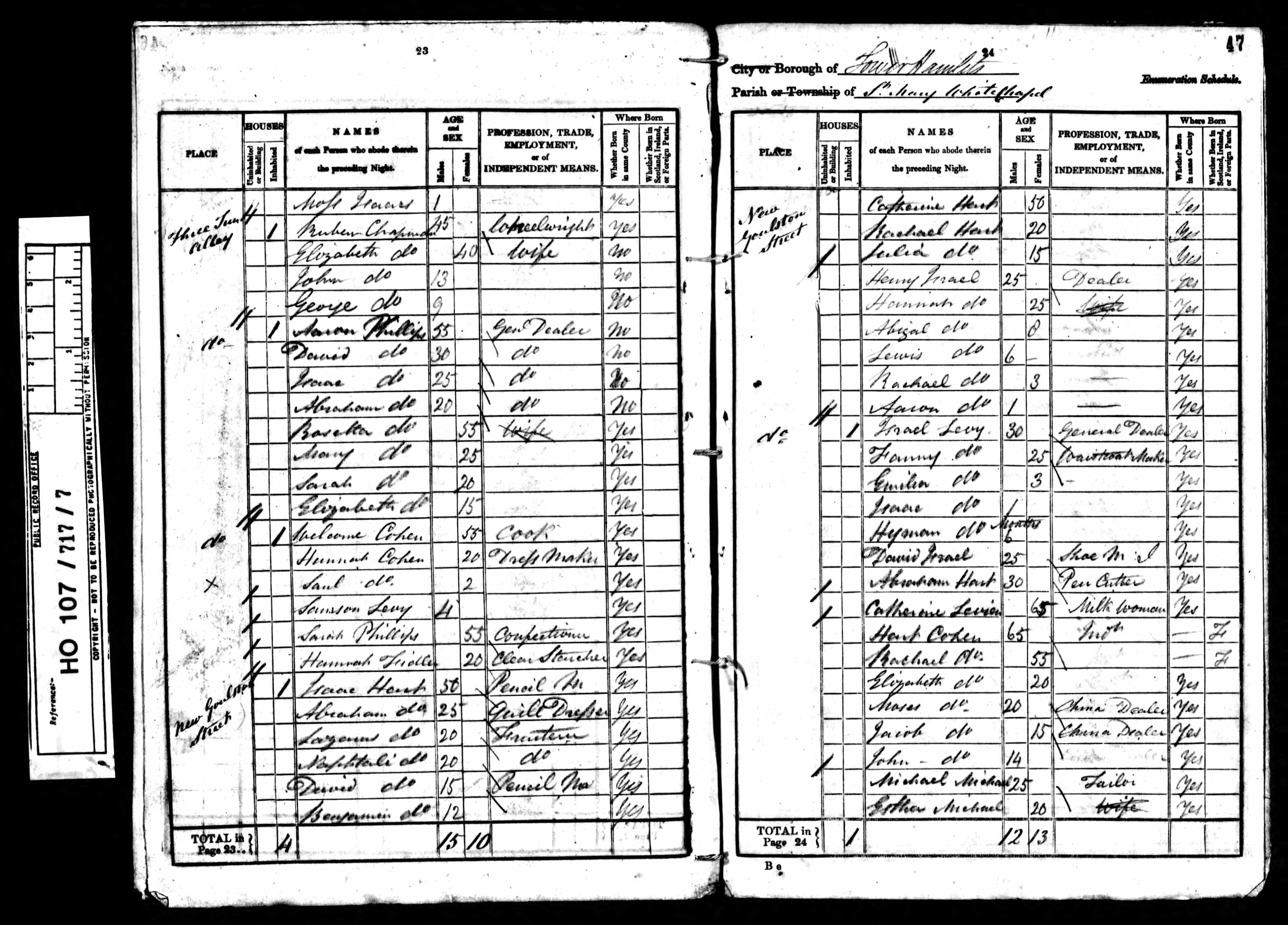
Hart Cohen and family 1841 English census

Hart Cohen and family 1841 English census

This appears, however, to be inaccurate based on later census reports from the United States and from a passenger manifest, all of which indicate a birth year of 1824 or 1825.  That would have made Jacob 16 or 17 in 1841.

This also seems more consistent with the fact that Jacob may have married his wife Rachel Jacobs (possibly a relative of his mother, whose birth name was also Jacobs) on October 24, 1844.  Without an actual marriage certificate I cannot be completely sure, but I found a marriage record on SynagogueScribes for Jacob Cohen, son of Naphtali Hirts HaCohen, to Sarah Jacobs, at the Great Synagogue of London on that date.  The Hebrew name is not identical to what I had earlier found for Hart, Jacob’s father, but it is very close.  I know that Sarah’s maiden name was Jacobs based on the death certificates of two of their children, Isaac and Frances.  Thus, I feel fairly confident that this is in fact their marriage record as transcribed by SynagogueScribes.

COHEN
Forenames Jacob
Hebrew Name Jacob
Event Marriage
Date 1844 [29 Oct]
Occupation
Address
Father
Father’s Hebrew Name Naphtali Hirts HaCohen
Mother’s Family Name
Mother’s Forename
Mother’s Hebrew Name
Spouse JACOBS Sarah

Frances, or Fanny, was Jacob and Sarah’s first child, born around 1847, as inferred from later US census reports.   Within a year of Fanny’s birth, Jacob and Sarah left London and moved to Philadelphia.  On July 7, 1848, Jacob, Sarah and Fanny, an infant, arrived in New York aboard the ship New York Packing.  Jacob’s age was given as 24, consistent with a birth year of 1824, and Sarah was 20, giving her a birth year of 1828.  Jacob’s occupation was given as “General dealer,” as were many other men on the manifest.
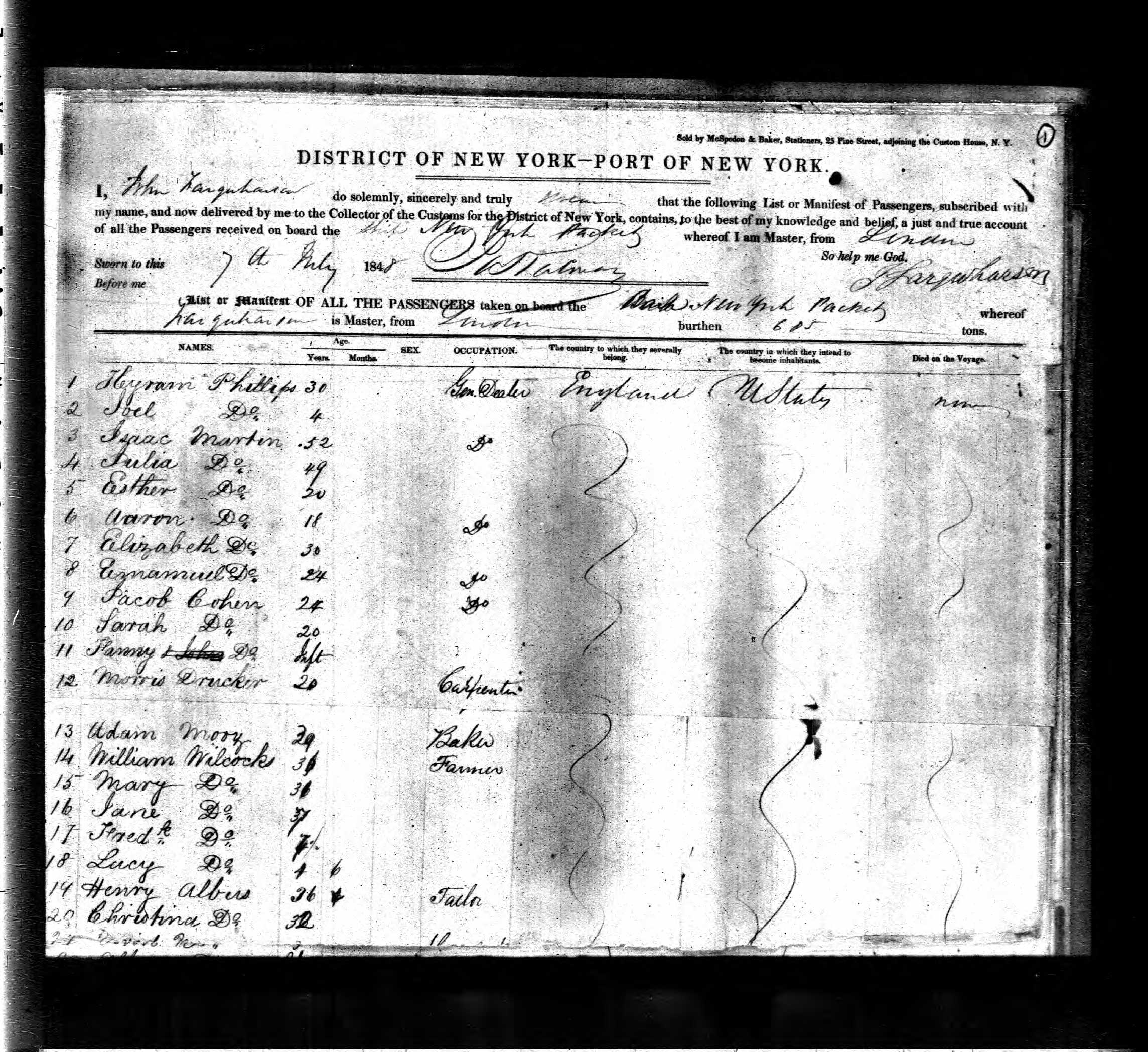
Jacob and Sarah Cohen ship manifest 1848

Jacob and Sarah Cohen ship manifest 1848

Jacob was the first of Hart and Rachel’s children to leave London and move to the US.  His siblings and eventually his father began arriving several years later.  I found this interesting, given that Jacob was not the oldest son, but the fourth child and third son.  Why did he go first?  What drew him away from his family and to America with his young wife and baby?  I also found it revealing about my direct line that both Hart and Jacob were the sons who left their families behind and moved to a foreign country.  As far as I can tell, Hart arrived alone and without his family when he immigrated to England, just as his son Jacob did fifty years later when he left England and moved to the US.  I can’t say I inherited this willingness to take risks and move far from home, having never lived more than four hours from where I was born, but I like the idea that my ancestors were such risk-takers and so independent.

I don’t know whether Jacob and his family stayed very long in New York after arrival, but by 1850, Jacob and Sarah were living in Philadelphia.  It was not easy finding Jacob and Sarah on the 1850 US census.  I tried searching for all Jacob Cohens, Sarah Cohens, Fanny Cohens, and variations on each name and wild card searches on each name, but came up empty for a family that fit my relatives.  Then I decided to search just by first names for a Jacob with a wife named Sarah and a daughter Fanny and found them listed as “Coyle,” not “Cohen,” another instance of a mistaken name on a census report.  I am quite certain that these are my relatives despite the Irish surname because all the other facts fit closely enough—names, ages, places of birth for Jacob, Sarah and Francis.  Jacob’s occupation is described as “Dealer in 2d HG,” which I interpret to mean a dealer in second hand goods.  The only inconsistency is that Francis is listed as male, not female, but later census reports correct that mistake and list her as female.


Jacob Cohen and family 1850 US census

Jacob Cohen and family 1850 US census

By 1850, Jacob and Sarah had two additional children born in Pennsylvania.  Joseph was two years old, so presumably born shortly after Jacob and Sarah had arrived in the US in 1848, meaning Sarah was pregnant when they left England.  Isaac was six months old, so presumably born in January, 1850, since the 1850 census was dated July 25, 1850.

There were also two other men living in the household, both twenty years old: Mordecia (Mordecai?) Coyle (Cohen?) and Alexander Kelly.  Unfortunately, the1850 census did not identify the relationship of each individual to the head of household as later census reports did, so I do not know who these two men were.  Mordecai might very well have been a relative since he shared the same surname with the family.  But how might he have been related? None of Jacob’s siblings were old enough to have had a twenty year old son, and Jacob did not have a younger brother named Mordecai.  Also, the census indicates that Mordecai was born in Pennsylvania, meaning that his parents would have been in the US in 1830.  Perhaps Hart had a brother who had emigrated from Holland or Amsterdam or England that early? Or was Mordecai not even related to Jacob?  I have done some preliminary searching for other records for Mordecai, but so far have not had any success.

Thus, by 1850 my great-great grandfather was settled in Philadelphia, a young man with a young wife and three little children, working as a dealer in second hand goods.  His parents and his siblings were all still back in London, but between 1850 and 1860, that would change, and Jacob’s family both in his household and in Philadelphia would expandd many times over.

My next post will describe what the rest of Hart’s family was doing between 1841 and 1860, by which time most of the Cohens had arrived in Philadelphia.


Enhanced by Zemanta

The Fusgeyers, Part III:  What Came Afterwards

In my last two posts, I wrote about the vast emigration of Jews from Romania between the late nineteenth century and World War I in the face of widespread anti-Semitism and poverty. According to one source, almost thirty percent of Romanian Jews migrated to the United States or Canada between 1871 and 1914; many others migrated to what was then Palestine.[1]  Wikipedia estimates that about 70,000 Jews emigrated from Romania, almost a quarter of the total Romanian Jewish population in that period.

Many of those who left were part of the Fusgeyer movement, groups who walked from their home towns across Romania to escape, often depending on donations raised by entertaining the crowds in towns throughout their route to freedom.  My grandfather was one of these walkers, and so perhaps were his siblings, cousins and other family members, though I’ve not heard any other descendant report that their grandparent walked across Romania.  According to Culiner, there are no statistics on how many people were a part of this movement or how long it lasted.  Groups ranged in size from forty people to 300 people, and in 1903 about 200 to 300 Jews were leaving Romania each week, many on foot. (Culiner, p. 20).

Although Jacob Finkelstein’s report of the experiences of his 1900 Fusgeyer group painted a generally rosy picture of their trek, being welcomed and well-fed in most places they visited, other groups faced greater struggles.  One observer reported that he saw groups where people were famished, in some cases starving, and living in horrible conditions.  He wrote:

One has to imagine 300 people, men, women and children wandering through the cemetery [where they were then living] like famished wolves, burnt by the sun during the day, tormented by mosquitoes in the night, all three hundred of them with bare feet, sick, some moaning, others crying: fever-racked women who are incapable of feeding their young, the children pale and suffering.[2]

Is it any wonder that my grandfather never talked about his life in Romania, other than to mention the music and beautiful horses he remembered? I’ve asked many of my newly-found Rosenzweig and Goldschlager cousins if they knew anything about their ancestors’  lives in the “old country,” and the response I’ve heard over and over is that their grandparent never wanted to talk about those days, but wanted to focus on the present and the future.  Given the conditions they endured both living in Romania and leaving it, why would they want to remember any of it?

Jewish population per county in Greater Romani...

Despite this large-scale emigration of Jews before World War I, there were close to 800,000 Jews remaining in Romania at the end of that war. (This large increase resulted from the addition of Bukovina, Transylvania, and Bessarabia to the territory controlled by Romania in accordance with the terms of the 1919 Paris Peace Conference after World War I.)


the death train from Iaşi

the death train from Iaşi (Photo credit: Wikipedia)

By the end of World War II, that community had been further decimated.  Approximately 300,000 Jews were murdered in the Holocaust between 1941 and 1944 by the Romanian government, the largest number of people killed by any Nazi ally other than Germany itself.  Nevertheless, unlike in many other countries in Europe, the majority of the Jews in Romania survived the war.  Estimates vary, but approximately 300,000 Romanian Jews survived.  Most, however, did not return to or remain very long in Romania. The Communist era resulted in further reduction of the Jewish population with many who had returned emigrating to Israel or the United States or elsewhere. Wikipedia includes this chart of the declining population of Jews in Romania:


Historical population
Year Pop.   ±%  
1866 134,168
1887 300,000 +123.6%
1899 256,588 −14.5%
1930 728,115 +183.8%
1956 146,264 −79.9%
1966 42,888 −70.7%
1977 24,667 −42.5%
1992 8,955 −63.7%
2002 5,785 −35.4%
2011 3,271 −43.5%
Censuses in 1948, 1956, 1966, 1977, 1992, 2002 and 2011 covered Romania’s present-day territory
Source: Demographic history of Romania


These facts are important in order to put into context my next post: what Romania is like today, as seen through Jill Culiner’s eyes in her book Finding Home and through Stuart Tower’s eyes as depicted in his photographs of Romania.


[1] Joseph Kissman, “The Immigration of Romanian Jews Up to 1914,” YIVO Annual of Jewish Social Science (New York 1947-1948), p. 165, as cited in Jill Culiner, Finding Home: In the Footsteps of the Jewish Fusgeyers (Sumach Press 2004), p. 19.


[2] Isaac Astruc, “Israelites de Roumanie,” p. 43, as translated by and quoted by Culiner, p. 23.


Enhanced by Zemanta

The Fusgeyers, Part II: How They Did It

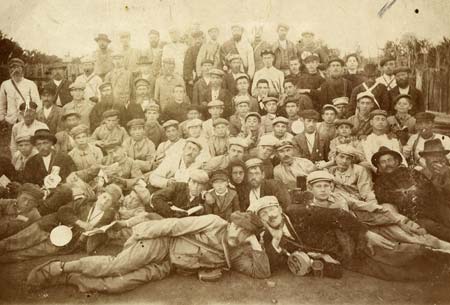
A Group of Fusgeyers from Iasi, c. 1900 http://epyc.yivo.org/content/photos/14_q_RM-RUMANI-4_lg.jpg

Yesterday’s post described some of the reasons that Jews like my grandfather and his relatives decided to leave Romania in the early years of the 20th century: rampant anti-Semitism, poverty, violence, false accusations, and laws depriving Jews of access to education and to most means of earning a living as well as denying them the legal rights of citizens.  Thousands of Jews left Romania between 1900 and 1910, many of them on foot, including my grandfather.  In both The Wayfarers by Stuart Tower and Finding Home by Jill Culiner, there are vivid descriptions of how these people managed to accomplish the task of walking about 1500 miles to cross the border from their homes in eastern Romania to Hungary or Galicia, where many then caught trains that would eventually bring them to the ports where they could sail to the United States.

Both Tower and Culiner relied heavily on the unpublished manuscript written by Jacob Finkelstein around 1942, describing his personal experience as a member of the first group of Fusgeyers.  Finkelstein’s memoir appears to be the most important primary source regarding the Fusgeyers, and Culiner begins most of her chapters with an excerpt from that manuscript.  The first group of Fusgeyers walked out of Romania in 1900, traveling by foot from Barlad to Predeal and crossing into Hungary.  As detailed in both Tower’s and Culiner’s books and as described by Finkelstein, that first group was an outgrowth of a club of young people in Barlad who put on theatrical works to raise money for charitable causes.  Members of the group decided that they could use their talents to raise money to pay for their travels out of Romania.  They raised some initial money through donations and from fees collected from those who wished to join them, and eventually there were seventy-five men and three women who joined the group and left Barlad in April, 1900.

The Gheorghe Rosca Codreanu Lyceum in Barlad (...

Barlad, Romania

Română: Timisul de Jos,Predeal,Brasov,Romania.

Română: Timisul de Jos,Predeal,Brasov,Romania. (Photo credit: Wikipedia)

One person was selected to be the leader of the group, and others were appointed to various roles: treasurer, medical care, scouts, and security.  They had flyers printed to distribute in the towns they planned to visit, and the people of Barlad provided not only financial support, but food and supplies to the group.  The group then walked from town to town across Romania, often being treated very well; in some places people provided them with food, shelter, and generous donations.  The group would stage musical performances to raise money.  Many newspapers publicized the movement, bringing even more donations and larger audiences to greet and support the Fusgeyers.  Moreover, this first group inspired new groups to form and to leave their homes as well.  My grandfather, who loved music and was smart and funny, might very well have been one of the Fusgeyers who left Iasi in 1904.

Sometimes, however, the group met up with hostility.  In Ramnicu Sarat, the police confiscated the passports of that first Barlad group, telling them to keep themselves from being noticed.  The passports were, however, returned once they left the town.  The group was threatened with arrest if they entered the town of Mizil, so they stayed out, sleeping in tents in the rain instead, and they were told to avoid the next town as well, resulting in another night of sleeping in the rain.  There was even trouble within the group; money was wrongfully taken by one of the group representatives.  Overall, however, at least according to Finkelstein, his group’s experience was a huge success—enabling not only that group to escape, but also inspiring thousands of other Romanians to do the same.

I cannot capture or describe all the details of the experiences of the Fusgeyers.  All I have as primary material in Finkelstein’s memoir, but Stuart Tower’s book takes the skeleton of facts provided by Finkelstein and builds from those facts a novelized version of that experience that helps to bring to life the Fusgeyers’ trek through Romania.  He developed characters and storylines that add an extra layer of humanity to this basic story.

The Wayfarers (Paperback) ~ Stuart Tower (Author) Cover Art


When I was doing some additional research about the Fusgeyers yesterday, I happened upon a website that described plans to turn Tower’s novel into a documentary about the Fusgeyers.  I did not realize it at first, but the website was a page on Kickstarter, a crowd-sourced fundraising site that helps people raise funds for private projects—in the arts and otherwise.  The Kickstarter page for The Wayfarers movie had not yet attracted any donors.  I made a small donation and also left a comment for the contact person of the page, Ron Richard, explaining my interest and expressing my concern that there had not yet been any other donations for the project.

I have heard back now both from Ron Richard and from Stuart Tower, the author of The Wayfarers.  Tower sent me some wonderful photographs of Romania from a Fusgeyer tour he ran in 2005, and I am hoping to get permission to post some of those photos here.  If any of you would also like to help Ron Richard and Stuart Tower make this film about the Romanian Fusgeyers, please check out their Kickstarter site at  https://www.kickstarter.com/projects/1552736981/the-wayfarers-the-story-of-the-fusgeyers?ref=live  It may be the best opportunity many of us have to see Romania and to understand better the experiences of our ancestors.

Jill Culiner’s book takes a different approach to exploring the Fusgeyer experience.  After reading Finkelstein’s memoir, she decided to re-enact the walk of the Fusgeyers, also walking from Berlad to Predeal, but not with a large group, just with one companion.   Her experiences doing this provide a chilling post-script to the story of the Jews in Romania, one that I found moving and haunting even re-reading it.  I will post more about her book and her experiences tomorrow.


Enhanced by Zemanta

The Fusgeyers: Why They Left Romania

Isadore Goldschlager

Isadore Goldschlager

“Grandpa walked out of Romania to escape from the Romanian army.”  That was the one story I knew about my grandfather’s life before he came to the US as a teenager.  I knew a few other snippets about him in general—that he loved music and animals, that he knew multiple languages, that he was a union activist and very left-wing in his political views, that he was a milkman, and that he was a terrible tease and had a great sense of humor.  But the story about him walking out of Romania was the one that always intrigued me the most.  I would ask my mother questions: Did he go alone?  Where did he walk to? How did he get to the United States? But she knew nothing more than that barebones story—that as a teenager, he decided to run away from the army and walked across the country to escape.

When I first started researching my grandfather’s family, I wanted to know more about this story.  Was it just a myth, or was there any factual basis to it?  I did some initial research and learned that there was in fact an entire movement of Jews who left Romania by foot beginning in the early 1900s, around the same time my grandfather left (1904).  These walkers were known as the Fusgeyers or “foot-goers.”  Unfortunately, I could not find many sources of information about this movement.  I found only two books devoted in depth to the topic.   One is a novel called The Wayfarers by Stuart F. Tower; although written as a novel, it was inspired by the author’s actual search to learn about the Fusgeyers.  It tells the story of an American man whose grandfather left Romania by foot.  The grandson, now an adult, takes his own teenage son and his elderly father to Romania to learn more about his grandfather’s escape from Romania.  The author describes long conversations that the lead character had with a rabbi living in Romania who was familiar with the Fusgeyer movement.  Although this book gave me a taste of what the movement was like, I wanted to read something more fact-based and scholarly to understand and know more about the Fusgeyers.[1]

I found that in the second book about the Fusgeyers: Finding Home: In the Footsteps of the Jewish Fusgeyers by Jill Culiner.  This book, a work of non-fiction, is fascinating and heart-breaking.   After reading Jacob Finkelstein’s “Memoir of a Fusgeyer from Romania to America,” an unpublished Yiddish manuscript written around 1942 and held by the New York-based YIVO Institute, Culiner, not herself a descendant of Romanian Jewss, decided to retrace the routes taken by the Fusgeyers as they walked out of Romania.  She actually walked these routes, visiting all the towns and cities along the way, asking current residents what they remembered of the Fusgeyers and of the Jewish communities that existed in those towns before the Holocaust.  What she learned about the past and present in Romania is what makes the book both fascinating and heart-breaking, and in a subsequent post, I will write more about that.  But first, I want to set the scene by describing what I learned from this book and elsewhere about why the Jews left Romania in the early 1900s.

As reported by Culiner and others[2], Jews had likely been living in the two principalities that became Romania, Walachia and Moldavia, since Roman times.   The Jewish population increased significantly in the second half of the 14th century when many Jews from Hungary and Poland immigrated there after being expelled from their home countries. (Wikipedia).  Ironically, Romania eventually became one of the most anti-Semitic of the European countries.  In 1640, the Church Codes of Walachia and Moldavia declared Jews heretics and banned all relationships between Christians and Jews. (Culiner, p. 15). During the 17th and 18th century, there were repeated “blood libel” accusations against Jews—being accused of killing Christian children for their blood— followed by violence and persecution.  (Culiner, p. 15; Wikipedia).

The widespread anti-Semitism really came to a head in the mid-nineteenth century during the movement for Romanian independence and the unification of Walachia and Moldavia into the independent nation of Romania. As the report on Romanian anti-Semitism on file with Yad Vashem reports, after the Crimean War and the defeat of Russia, which had previously controlled Walachia and Moldavia, the European powers (primarily France and Britain) put a great deal of pressure on the leaders of the independence movement in the region to grant Jews full legal status in the new country.  Although the leaders had originally argued for such rights during the uprisings against Russia, the external pressure created a great deal of resentment, and in the end the European powers backed off from insisting on full legal rights for the Jewish residents of the newly-united nation of Romania.  (Yad Vashem report).

The Yad Vashem report continues:  “A real explosion of openly expressed antisemitism occurred as the prospect of achieving national independence became more certain. During discussions of the new Constitution of 1866, Romanian leaders began to portray Jews as a principal obstacle to Romanian independence, prosperity, and culture.”  As finally drafted, Article 7 of the new Constitution for Romania provided that “[t]he status of Romanian citizen is acquired, maintained, and forfeited in accordance with rules established through civil legislation. Only foreign individuals who are of the Christian rite may acquire Romanian citizenship.”  Culiner described this development, saying that “anti-Semitism had now become part of the national identity.” (Culiner, p. 15)

Despite protests and outcry from western European countries, the new country persisted in its anti-Semitic views and practices.  Between 1866 and 1900, a number of laws were enacted restricting the business and other activities of Jewish residents in Romania.  Jews could not become officers in the military, customs officials, journalists, craftsmen or clerks.  Jews could not vote or obtain licenses to sell alcohol.  Jews could not own or cultivate land.  Jews could not own or manage pharmacies.  They could not work in psychiatric institutions or receive care as free patients in hospitals.  Jews could not sell tobacco or soda water or certain baked goods. Fewer than ten percent of Jewish children were allowed to attend public schools, and Jews were prohibited from opening their own schools.  Jews were not allowed to work as peddlers, which was sometimes interpreted to include owning shops.  Jewish homes were randomly destroyed as “unsanitary.”  (Culiner, pp. 16-17)

Culiner wrote:  “Eventually, 20,000 Jews found themselves on the streets of Romania and dying of starvation.  There were many suicides in Iasi, Bacu, and Roman….In 1899 and 1900, harvests were poor and a severe depression gripped the country.  Anti-Semitic decrees were applied with new severity and anti-Jewish speeches were delivered in parliament.  Riots took place in several towns, and…a pogrom broke out in Iasi.”  (Culiner, pp. 17, 19) (See also Wikipedia  and the Yad Vashem report on Anti-Semitism in Romania.)

That pogrom in Iasi was described in the American Jewish Yearbook of 1900: “For several hours there was fighting, merciless blows, pillaging and devastation, all under the paternal eyes of the police authorities and the army, which interfered only to hinder the Jews from defending themselves.”[3]

In 1900, my grandfather was twelve years old.  He lived in Iasi.  He experienced this horrible violence and hatred.  By that time his uncle Gustave and his aunt Zusi had already left for America.  Is it any surprise that this young teenager would have wanted to escape from his homeland and seek refuge someplace else?

Isadore age 27

Isadore age 27

As I will report in a later post, he and thousands of other Jews did leave, many on foot, walking out of Romania to find a better life.  My grandfather followed his uncle and his aunt, who had left in the late 1880s, but he left alone, without his parents or siblings.  His first cousin Srul Srulovici, who became Isador Adler, had left two years before him in 1902, also alone and without his parents and siblings.  My grandfather left in 1904, and by 1910 the rest of his family—his siblings, mother and father and the rest of his Srulovici cousins—had also arrived.  I don’t know the details of how any of them got out or whether they were also Fusgeyers, but they all  followed their two oldest sons and brothers, both to be called Isadore in the United States.

So  my grandfather left Romania on foot, but not only to escape the Romanian army.  He escaped a life of poverty, of hatred, of discrimination.  He was only sixteen, but he was brave enough, smart enough, and strong enough to get out of a place that held no future for him.  He led his family to freedom.  Whatever life brought them in America, and it wasn’t easy, it was better than what they had left behind.


[1] Apparently the novel is being turned into a documentary about the Fusgeyer movement.  See https://www.kickstarter.com/projects/1552736981/the-wayfarers-the-story-of-the-fusgeyers

[2] Wikipedia has a long and detailed article on the history of the Jews in Romania at http://en.wikipedia.org/wiki/History_of_the_Jews_in_Romania.  I also consulted other sources, such as a report on Romanian anti-Semitism filed on the Yad Vashem website at http://www.yadvashem.org/yv/en/about/events/pdf/report/english/1.1_roots_of_romanian_antisemitism.pdf

[3][3] “Romania since the Berlin Treaty,” The American Jewish Yearbook (Philadelphia: The Jewish Publication Society of America, 1900), p. 83, as quoted in Culiner, p, 19.

Enhanced by Zemanta

Gratitude

I am sitting in North Truro on the Outer Cape, looking out at the bay and Provincetown.  The Pilgrim Monument stands tall above

English: The Pilgrim Monument in Provincetown,...

English: The Pilgrim Monument in Provincetown, Massachusetts from the north. The Pilgrim Monument Museum can be seen in the foreground. (Photo credit: Wikipedia)

everything else on the horizon, reminding us that this was the place where the Pilgrims first landed before making a permanent settlement in Plymouth, just across the bay.  I have often walked near the steps where those first immigrants first walked on American soil.  I have spent time trying to imagine what it must have looked like back then—before all the roads and houses and cars and tourists were here, when it was just open land, sea, forests, dunes, and the local tribe who lived here first.  How magnificent it must have seemed, how frightening as well.

My own ancestors made their pilgrimages over two centuries later, and their first visions of America must have been far different from those of the Pilgrims—a crowded, dirty city, thousands of people, noisy streets, a jumble of different languages they could not understand.  It must have been magnificent, but in a far different way, and certainly it was just as frightening.

I woke this morning, filled with gratitude. This has been a transitional week for me.  I have not had much time to focus on research, and I am also in a holding pattern, waiting for documents and for some clues from relatives to help me make some breakthroughs.  I’ve been busy with the end of the semester tasks, and I’ve been concerned about a dear friend.  But this morning I am taking a moment to be grateful.  My friend is feeling better. My students left me some wonderful gifts, including a large poster signed by them, wishing me well on my retirement.  My exams are written, and the students are preparing to take them.  And I am in the place I love best with the person I love best, staring at a scene that always brings me comfort and perspective. So I am grateful.

When I think about my life compared to the lives of my ancestors, of those who came to America back in the late 19th, early 20th century, how could I not be grateful? I get to travel to places out of choice, to see those places for pleasure, to experience the beauty in the world for the sake of that experience.  They traveled because they had to—to escape from a difficult place and to attempt to create a better life somewhere else.  I get to live where I want to live.  In all my adult life, I have only lived in five different homes.  One thing that has struck me as I’ve done my research is how often my ancestors moved.  One cousin explained this by saying that every time a landlord raised the rent, the family would move, often not paying any rent due because they had no money.  When I have moved, it has always been out of choice—to a bigger home, for a better job, for a better location—not because I had to move.

My ancestors probably never knew the concept of leisure time.  Life was hard work all the time.  Although my grandparents were able to take some time away in the country during the summers when my mother was a young child, those were short vacations, a brief respite away from the hot city.  I have the luxury now of retiring and choosing every day how I will spend my time:  Will it be yoga or the elliptical at the gym today? Will I take a class or tutor a child?  Will I write my book or research my family? Should I do the NYTimes crossword puzzle or read a book?  I still cannot fully grasp what that will be like on a daily basis, but I am so grateful that I will have that opportunity to figure out how to spend my time.

Often I take all my freedom for granted and forget how lucky I am.  But today, sitting here, looking at the Pilgrim Monument, thinking of those Pilgrims and of my own ancestral pilgrims, I am filled with gratitude for all that those pilgrims and Pilgrims did, for all that I have, and for all the people I love.DSCN0396


Enhanced by Zemanta

Finding the Ruby Slippers and Getting Back Home to Where It Started: The Brotmans

[for my aunt, Elaine Goldschlager Lehrbaum, 1917-1995]

Elaine 1933

Elaine 1933

Many of you who are more recent followers of the Brotmanblog may wonder why the blog is called the Brotmanblog.  In the past several months I have barely mentioned the name Brotman because I have been focused on searching for my grandfather’s family, the Goldschlagers and Rosenzweigs.  But if you go back to the beginning of the blog, you will see that my original search focused on my grandmother’s family, the Brotmans.  That’s where I started my genealogy adventures.  It made sense.  My grandmother Gussie Brotman Goldschlager, my mother’s mother, was the grandparent I knew best, the only grandparent I knew as an adult.  She was the only grandparent my husband ever met, though she died a year before we were married.  It was only natural that I would start my journey trying to learn as much as I could about her and her siblings and her parents.  Once I had found as much as I could find about the Brotmans, I then moved on to my grandfather’s family.  The next chapter will be my father’s family.  But it all started with the Brotmans.

Why do I bring that up now? Because this weekend I will finally get to meet a number of the Brotman cousins I only learned about through doing this research.  There will be over thirty of us gathering in NYC to meet and eat and to visit the Lower East Side, where our grandparents and great-grandparents (and for some, great-great grandparents or parents) lived in New York.  We will walk to 81/85 Ridge Street where the Brotmans first lived, now a public school, once a tenement building, and then we will tour the Tenement Museum to learn more about what life was like for all of them.

If you have not read any of my posts about the Brotmans, I have provided links here and below to some that will capture the essence of their lives.  Even if you once did read them, you may want to re-read them if you are joining us this weekend and want to remember some of the details and themes I wrote about months ago.  The Brotman story is the classic Jewish American immigration story, a story of poverty and heartbreak as a family moved from Galicia to NYC in the late 1880s to a story of assimilation and success as the future generations built businesses, moved beyond the Lower East Side, became professionals, and moved to the suburbs after World War II.  My Brotman great-grandparents were hard-working realists who did what they needed to do to survive.

Although I was able to piece together a fair amount about their lives through census reports and other documents and through some stories my mother remembered about her grandparents, aunts, uncles and mother, at first there was no one else besides my mother and my brother to whom I could turn for information.  My cousins shared stories about their grandparents, but they also knew little about the early lives of their grandparents and had no one left to ask either.  So mostly I relied on documentation to learn what I could.  I was able to put together a fairly complete history of the Brotman family in America and decided to move on to my grandfather’s family.
Then, like a gift of manna from heaven, about a month ago my cousin Jody sent me some notes that her husband Joel had taken from a conversation he’d had with my Aunt Elaine years ago about her family.  I’ve referred to one part of those notes before—the story of how my grandmother Gussie met my grandfather Isadore on Pacific Street in Brooklyn, where my grandmother was living and where my grandfather’s cousins the Rosenzweigs were living in 1915.  In the next day or two I’d like to share a few more tidbits from Aunt Elaine, via Joel’s notes.

But before I do, I want to point out that these notes are incredibly accurate.  Although the conversation Joel had with my aunt must have taken place in the early 1980s, my aunt’s memory for details was astonishing.  For example, she refers to the fact that Hyman’s son Emanuel worked for Kislack Realty.  I checked with Manny’s children, and they confirmed that in fact  Manny was President of J.I.Kislak Mortgage Corporation in Newark, NJ., which was a subsidiary of J.I.Kislak, Inc., a large residential and commercial Realtor based in Jersey City.kislack realty Also, my aunt knew that David Brotman worked in the coat industry, that Max was in the cigar business, and that Abraham worked for a deli in Coney Island.

All of these are facts that are backed up by my research.Brotman brothers trades

On the Goldschlager side as well, my aunt’s facts are corroborated by the information I found in my research.  David Goldschlager lived in Scranton, PA, for some time and was in the hat business.  Betty married a man in the dry goods business and moved to Arizona. goldschlager siblings I point out how accurate this information is to demonstrate how remarkable my aunt’s memory was and also so that you will trust the other statements she made and their accuracy when I report on those in upcoming posts.

In some ways finding these notes was frustrating.  If I had found them last summer, much of the time I spent trying to figure out who Max was or whether Abraham was related to us or whether there were any other children would have been unnecessary.  My aunt knew it all, and it is in these notes.

But as Glinda the Good Witch tells Dorothy at the end of The Wizard of Oz (the movie) when she reveals to Dorothy that the ruby slippers could take her home and the Scarecrow asks  why Glinda had not told Dorothy that from the beginning:

Glinda : Because she wouldn’t have believed me. She had to learn it for herself.
Tin Man: What have you learned, Dorothy?
Dorothy: Well, I – I think that it – that it wasn’t enough just to want to see Uncle Henry and Auntie Em. And that it’s that – if I ever go looking for my heart’s desire again, I won’t look any further than my own backyard, because if it isn’t there, I never really lost it to begin with. Is that right?
Glinda: That’s all it is!

And then when the Tin Man, Lion and Scarecrow all say that they should have helped Dorothy figure it out, Glinda replies:

She had to find it out for herself.

And so I did as well.  If I had started with Aunt Elaine’s notes, I never would have worked as hard to learn how to research and find these things for myself.  I would never have felt the amazing sense of satisfaction I’ve gotten from putting pieces together and from finding cousins who could help me put those pieces together.

Having my aunt confirm through these notes what I have learned and what I have done is a real gift. She was someone I adored and miss dearly.  It’s like having her here with me again, hearing her say, “You see, Amy Kugel, I always knew you could do anything you wanted.  And I knew some day you would want to know more about your history, your family.”  But, as Glinda told Dorothy, she knew I had to find it out for myself.


Elaine 1926

Elaine 1926

Elaine Gussie Florence 1933

Elaine Gussie Florence 1933

Elaine high school graduation

Elaine high school graduation

Elaine and Phil 1941

Elaine and Phil 1941

Sam with Gussie and Elaine 1945

Sam with Gussie and Elaine 1945

Elaine and Jeff 1949

Elaine and Jeff 1949

Elaine Jeff and Amy 1953

Aunt Elaine with Jeff and me

Phil and Elaine

Phil and Elaine

Enhanced by Zemanta

I’m Ba-a-a-ck! With an Update on Lillian Rosenzweig

After a week away in the beautiful Florida Keys where we were able to put the miserable New England winter weather behind us and enjoy the outdoors, kayaking, swimming, walking, and seeing wildlife including dolphins and alligators, I am back in New England with the miserable winter temperatures outside, but happy knowing that spring is at least here on the calendar if not in the weather quite yet.  It has to get above freezing soon, doesn’t it?

While I was away I received a number of documents, mostly confirming the hunches I’d had about Lillian and Rebecca Rosenzweig.  Today I will focus on Lillian.  About ten days ago I posted what I knew and thought I knew about Lillian.  I believed that she had married Toscano Bartolini in July, 1901, had had a son William born in March, 1902, and then lost her husband in 1904.  All of those facts are now confirmed by the marriage certificate, William’s birth certificate, and Toscano’s death certificate, all of which I received late last week.

First, as you can see from the marriage certificate, Lillian and Toscano were married by an alderman, not a rabbi, on July 6, 1901. This is clearly the right Lillian Rosenzweig, as her parents’ names are Gustav and Gussie nee Sagg.  According to the certificate, Lillian was then eighteen years old, which would have made her birth date 1883—a year before her parents married.  Lillian must have lied about her age in order to get married without parental consent.  I have speculated elsewhere that she was likely born in 1885 since her parents were married in June, 1884.  Also, Lillian’s address is given as 320 East 9th Street—not in Brooklyn where her parents were living.  She must have moved out before she married Toscano, who was living on Sullivan Street at that time.  These inferences are consistent with the family story that Lillie’s marriage to someone who was not Jewish led to disapproval and perhaps some estrangement from her family.

Bartolini Rosenzweig marriage certificate

Bartolini Rosenzweig marriage certificate

From William’s birth certificate, another inference seems possible.  William was born on March 9, 1902, just eight months after Lillie and Toscano had married.  Perhaps Lillie was already pregnant at the time of the wedding, although I am not sure she would have known that at the time since she would have been just one month pregnant.  It is, of course, entirely possible that William was a month premature. William was born at home—177 Houston Street in NYC.  Interestingly, Lillie’s age is now reported as seventeen—a year younger than she had reported on her marriage certificate a year earlier.  If she was in fact seventeen in March, 1902, her birth year would have been 1885, as I suspected.  It also means she was only sixteen when she married Toscano.

William Bartolini birth certificate

William Bartolini birth certificate

The other interesting fact gathered from this certificate is that Lillie had already had a child before William’s birth, but that that child was no longer living.  When could she have had that child?  Her marriage certificate reported that her marriage to Toscano was her first marriage.  Had she had a child with him before they married? Had she had an out-of-wedlock child with someone else? Had that child really died or had she given that child up for adoption and simply reported it as if he had died?  I have no idea and no idea how to try and figure that out. (It’s also sad that on the 1910 census when Lillie was back living with her parents, she is listed as single and having no children.)

The third document in this trilogy is Toscano’s death certificate.  Toscano died on April 27, 1904, from chronic nephritis, kidney disease, at age 27.  He’d been working as a bartender and died at 69 Carmine Street in NYC.  He had only been in the US for five years, had been married for less than three years, and left behind his 19 year old wife and 2 year old son.  I don’t know what causes chronic nephritis, although it looks like uremia is given as a contributing cause of death.   But I’ve never heard of someone dying at age 27 from that today.

Toscano Bartolini death certificate

Toscano Bartolini death certificate

The rest of the story, as reported earlier, shows a family in disarray.  Lillie and William moved back to Brooklyn and were living with Gustave and Gussie and the family in 1905, indicating at least a temporary reconnection.  In 1906, however, William was living at the Brooklyn Hebrew Orphanage.  Although it appeared that he was released back to his mother for some time, by 1910 William was living at St. John’s Home in Brooklyn and in 1915 at the NY Catholic Protectory.  Lillian, who was living with her parents in 1910 without William, then disappears from the records.

I still have not found either William or Lillian after that.  I don’t know what happened to either of them.  Joseph’s grandchildren told me that at some point Lillie was back in touch with her siblings, but no one knows anything more specific than that.  I will keep looking for some new clue, but for now I’ve hit the proverbial brick wall with Lillie and William Bartolini.

What I do know is an incredibly sad story of a young woman, emigrating with her family from Romania when she was only a young child, having two children before she was eighteen years old, losing one apparently to death and another to institutional care, losing a young husband after just a few years of marriage, and losing the support of her family as well for at least some period of time.  It’s a story to contrast with the story of Leah Strolowitz Adler, the daughter of Tillie Rosenzweig and Jacob Srulovici, who also came to the US as young girl but found the American dream.

The story of Lillie Rosenzweig raises so many questions: how did she, a young Jewish immigrant living in Brooklyn, meet and get involved with a young Italian immigrant who was living in the Lower East Side, not Brooklyn? Who was the father of her first child, and what happened to that child? What happened to William after he left the Catholic Protectory? Did he have any contact with his mother or her family? And what happened to Lillie after 1910? Did she remarry and regain custody of William? Did she also die at a tragically young age? These loose ends make me crazy—I want some endings to the story, but I may have to accept that I may never know what happened.

Enhanced by Zemanta

It Takes A Village: Mystery Solved!

Immigrant children, Ellis Island, New York.

Immigrant children, Ellis Island, New York. (Photo credit: Wikipedia)

I received a lot of exciting documents today, but I cannot write about them all at once.  I want to write first about the one that resolved a longstanding mystery I had almost despaired of ever solving.

Just to refresh your recollection (or to tell you the story for the first time), my great-great aunt Tillie Strulowitz arrived at Ellis Island with her husband Jankel and three of her seven children, the older four having already emigrated.  They were detained at Ellis Island because of questions about Jankel’s health, and I was able to obtain, with the help of the generous people at JewishGen, the file for the immigration hearing. From that I knew that he had been admitted to the United States and had not been deported or died before arriving in the US, as some of his descendants believed.

But I still could find no evidence of what happened to him after January, 1908, when he was admitted.  He was not on the 1910 census with Tillie and the children. Tillie was listed as a widow, but I could not find a death certificate or a cemetery burial that proved he had died. I began to wonder whether Jankel had abandoned them or been institutionalized or returned to Romania.

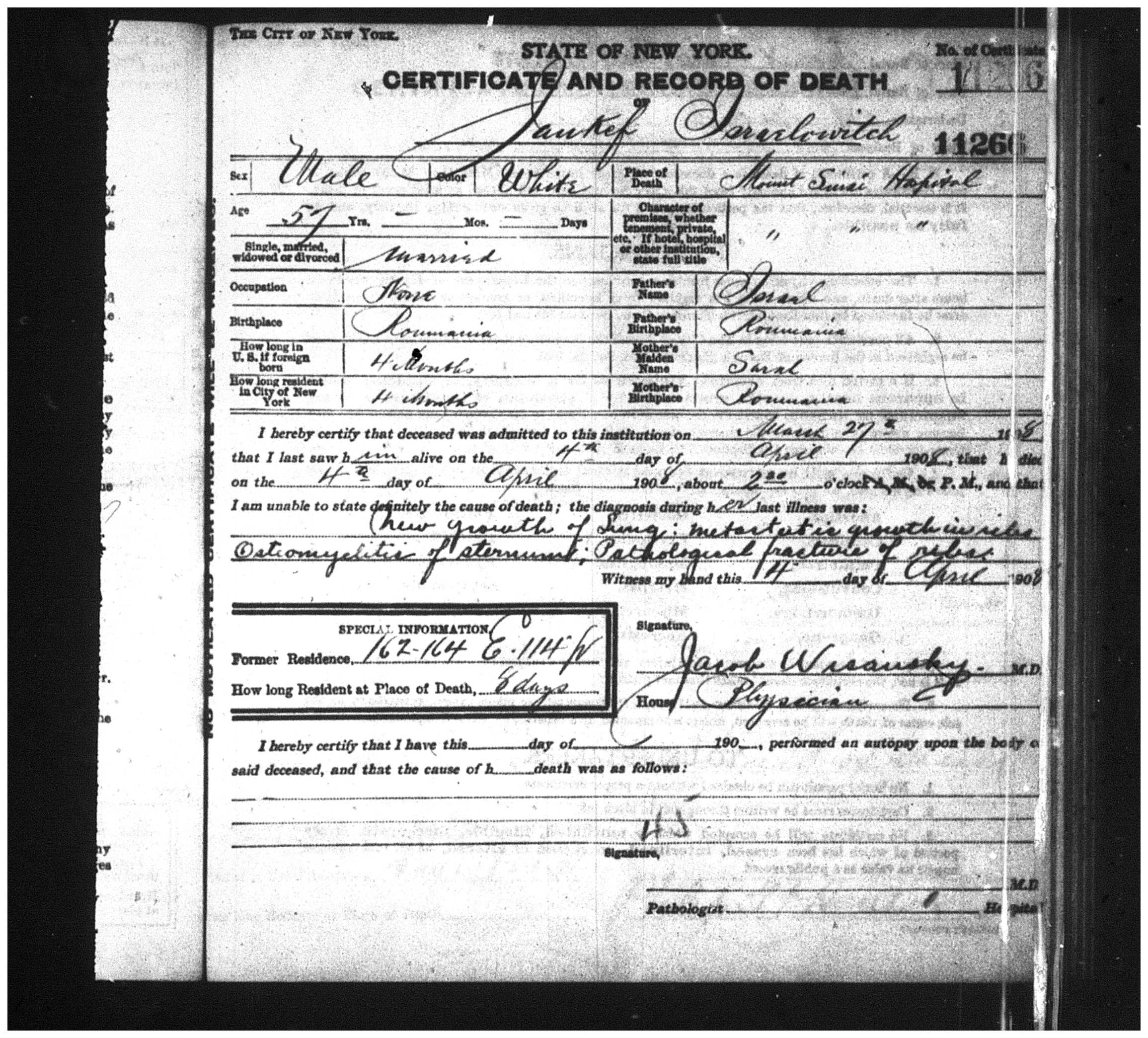
I wrote to the JewishGen discussion group for a second time to ask for help, and I received many very helpful and creative suggestions.  I pursued each one of them, but with no success.  The only one that I had still not been able to put closure on was a suggestion from a man named Barry Chernick who had found a death recorded for a Jankof Israelwitch in April 1908.  Barry hypothesized that this might be Jankel because Israelwitch could be an Americanization of Strulowitz or Srulovici.  Since Srul is Yiddish for Israel, perhaps the family had switched their name after leaving Ellis Island.  It seemed like a long shot, but I figured it was worth a try and wrote away for the death certificate.

Well, today I received the death certificate for Jankof Israelwitch, and I am certain that it is the death certificate for Jankel Srulovici.  My conclusion is based on the following clues: his birth place (Romania), length of time in the US (4 months—he died in April 1908 and arrived in the US at the very end of December 1907), his father’s name (Israel—Jankel’s first born son was named Israel or Srul in Romania), his residence (East Harlem, where his family was living from 1910 and afterwards), and his age (57).

Jankel Srulovici death certificate

Jankel Srulovici death certificate

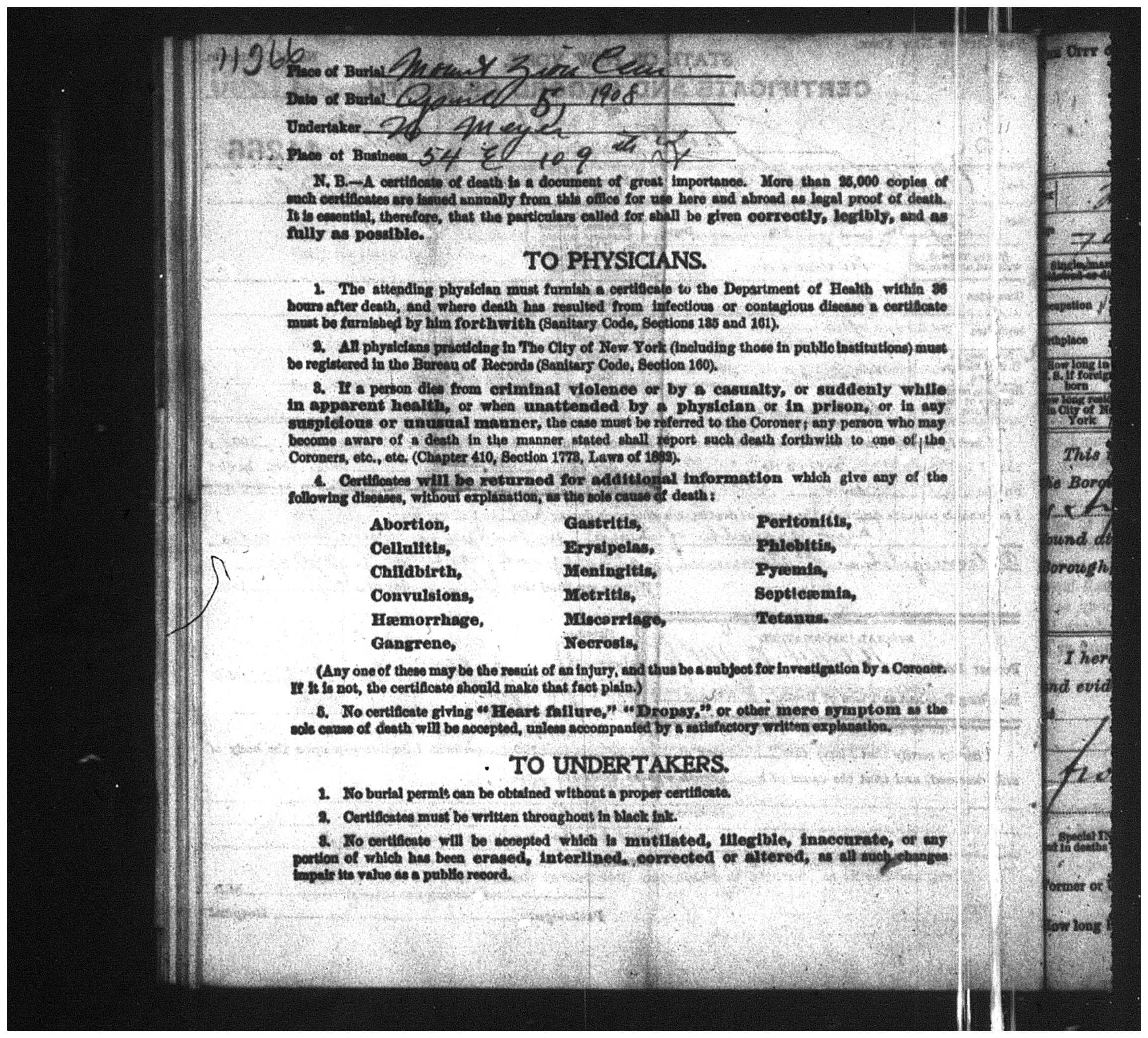
The death certificate also revealed on the reverse side that he was buried at Mt Zion cemetery, so I went to their website and searched for Jankof Israelwitch, and there I was now able to find that he is in fact buried there under that name.  The fact that Tillie and Isidor and Pincus are also buried at Mt Zion (though not in the same sections) is further corroboration that this is the right person.

reverse side

reverse side

And so now, thanks to the assistance of so many people at JewishGen and especially Renee and Barry, I can put closure on the life of Jankel Srulovici.  He did not abandon his family, he was not deported, he was not institutionalized, he did not divorce Tillie.  No, he died what must have been a painful death from a metastatic growth in his ribs.

Like my great-grandfather Moritz, Jankel’s brother-in-law, Jankel died soon after arriving in America.  How awful it must have been for the two sisters, Tillie and Ghitla, to lose their husbands after making the brave and difficult decision to leave home and start anew in this country.  Yet somehow they both continued on, they raised their children, and they made a life for themselves as widows in the United States.  I continue to be amazed by the resilience of the immigrant generation.

Enhanced by Zemanta

David Rosenzweig and The Reality of Infant Mortality

In the course of researching Abraham Rosenzweig’s life, I discovered a tenth child born to Gustave and Gussie Rosenzweig.  On the 1910 census there were nine children, all but one born in New York City between 1888 and 1904.  (Lillian, the first child, was born in Romania around 1884.) There were four boys, Abraham, Jacob/Jack, Harry and Joseph, and five girls, Lillian, Sarah, Rebecca, Lizzie and Rachel.  The NYC birth index covers those years, so I started my research of Abraham by looking for a birth record.  I had several records indicating that he was born sometime around 1890, but I could not (and still have not) found a record for Abraham’s birth.

Gustave Rosenzweig and family 1900 census

Gustave Rosenzweig and family 1900 census

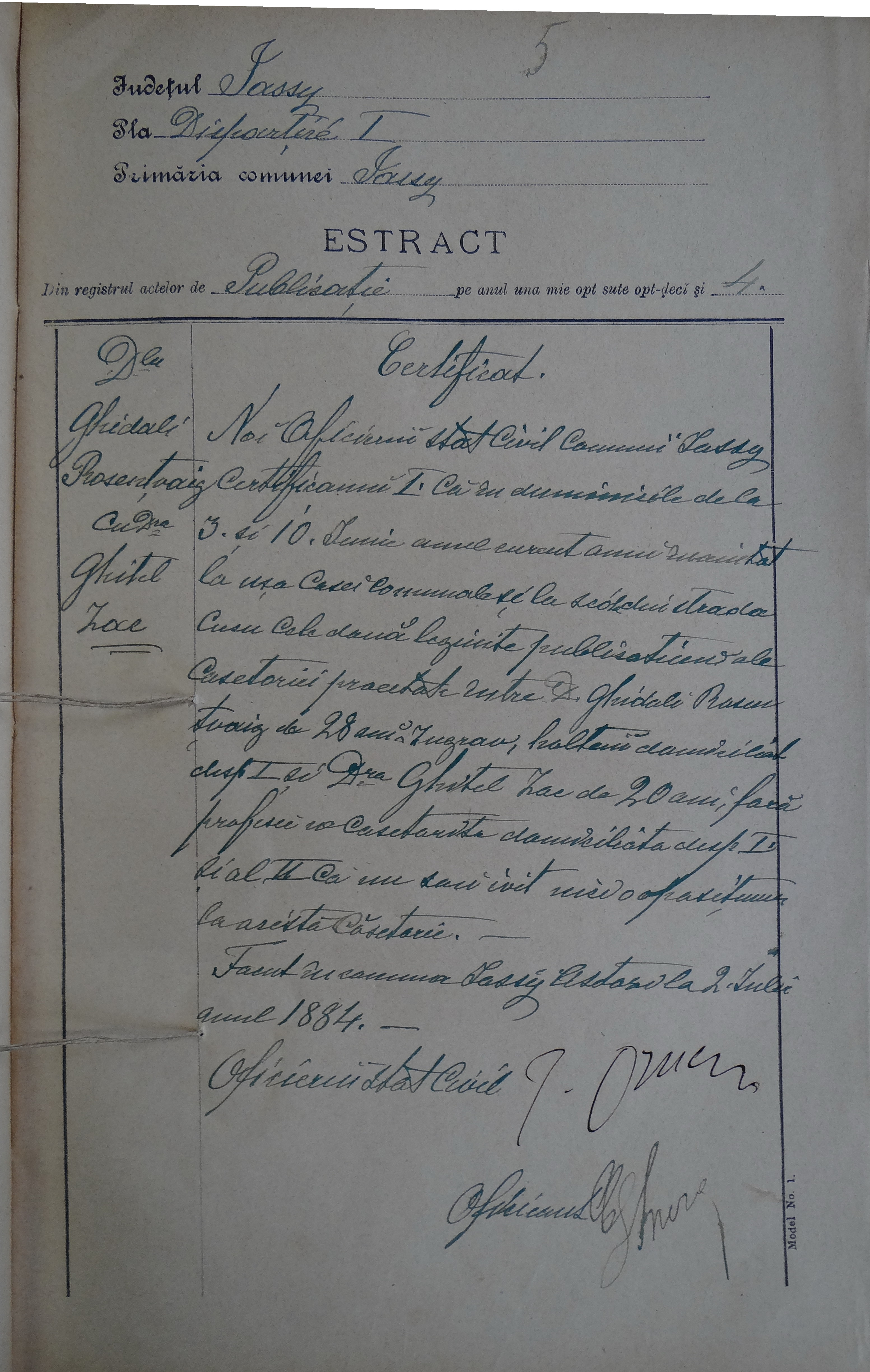
I expanded my search to look for any Rosenzweig born around 1890-1892, using FamilySearch as my tool as it allows for liberal use of wild card searching and, unlike ancestry.com or other sites, reveals the names of the parents in the search results.  I still did not see any Abrahams or Abes, but in scanning the results, I noticed a child named David who was born to Gadaly and Ghitel Saak Rosentveig.  Before receiving the Romanian records for Gustave and Gussie I might not have recognized that these were their Yiddish names: Ghidale Rosentvaig and Ghitla Zacu on their marriage records from Romania.Ghidale Rosentzveig with Ghitil Zacu_Marriage Record_1884_5  I knew that this could not be a coincidence, that this baby had to be their son, born September 5, 1891.  Since I still have not found Abraham on the birth index, I cannot be sure whether David was born before or after Abraham.  What I did realize was that David must have been named for my great-great-grandfather, David Rosentvaig, who had been alive in 1884 when Gustave married Gussie in Iasi but who must have died sometime before the birth of this new David.

But where was the new David in 1900, only nine years later? Since he was not listed on the 1900 census, I assumed the worst, as I have gotten accustomed to doing, and checked the death index.  Sure enough a one year child named David Rosenzweig had died on December 25, 1892.  Although I have not yet seen the death certificate for this child, I have to assume that this was Gustave and Gussie’s son David.  My great-great-grandfather’s namesake had died before his second birthday.

I have expressed in an earlier post my thoughts and feelings about the impact the deaths of babies and children must have had on their parents and their siblings.  The numbers are staggering.  On the 1900 census Gussie Rosenzweig reported that she had had thirteen children, only eight of whom were then living (Rachel was not yet born).  In 1910, she reported eighteen births and only nine living children.  Had she had five more infants die between 1900 and 1910? My great-grandmother Bessie Brotman reported in 1900 that she had given birth to nine children, only four of whom were living (Sam was not yet born).  We also know that Hyman Mintz died within a month of birth and Max Coopersmith within a day of birth.

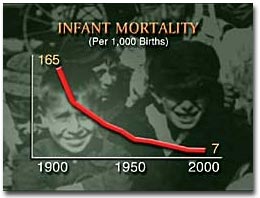
These infant deaths were not at all unusual for that time period.  According to a PBS website for a program called The First Measured Century, “[p]rior to 1900, infant mortality rates of two and three hundred [per one thousand births] obtained throughout the world. The infant mortality rate would fluctuate sharply according to the weather, the harvest, war, and epidemic disease. In severe times, a majority of infants would die within one year. In good times, perhaps two hundred per thousand would die. So great was the pre-modern loss of children’s lives that anthropologists claim to have found groups that [did] not name children until they have survived a year.”

This same source reports that most of these deaths were caused by poor infant nutrition, disease and poor sanitary conditions.  In the early 20th century substantial efforts were made to deal with these causes of infant and other deaths.  “Central heating meant that infants were no longer exposed to icy drafts for hours. Clean drinking water eliminated a common path of infection. More food meant healthier infants and mothers. Better hygiene eliminated another path of infection. Cheaper clothing meant better clothing on infants. More babies were born in hospitals, which were suddenly being cleaned up as the infectious nature of dirt became clear. Later in the century, antibiotics and vaccinations join the battle.”  The infant mortality rate began to decline, and today it is well under ten deaths per thousand within the first year of life in the United States.

Infant mortality

But what impact did this high death rate for babies have on their parents?  There have been many books written by sociologists, social historians and psychologists on the history of society’s view and treatment of children.  According to this research, until the 18th century, children were not valued highly by parents, perhaps in part because of the high infant mortality rate.  The likelihood of losing a child was so great that it made it difficult for parents to become too attached.  In Europe often parents did not even attend the funerals of their children and even wealthy parents had their children buried as paupers. See, e.g., Viviana A. Rotman Zelizer, Pricing the Priceless Child: The Changing Social Value of Children (1994); Linda A. Pollock, Forgotten Children: Parent-Child Relations from 1500 to 1900 (1984). Both authors also observe that the attitude towards children changed during the 18th and 19th centuries as people began to be more concerned about their children’s growth and development and families started to become more child-oriented and affectionate.  This change in attitudes contributed to the increased efforts to reduce infant mortality.

It’s so difficult for me to imagine that these parents were indifferent or unaffected by the deaths of so many of their babies.  I know I live in another era, an era when parenting has become not just a part of life, but in some ways an obsession. I plead guilty to being a helicopter parent, to being probably too involved in my children’s lives as they were growing up.   We live in a time of thousands of books on parenting, dealing with every issue imaginable.  There are experts to help you before a baby is born and experts to help you deal with every imaginable childrearing issue that can arise after they are born: doulas, lactation consultants, sleep consultants, life coaches, tutors, college admissions consultants, and probably some I don’t even know about.    So many of us center our lives on our children.  Losing a child is often said to be the worst thing anyone can experience.

Could it really have been so different back then? Were children really seen as disposable and replaceable? Is that why people had so many children—in order to ensure that at least some would survive to adulthood?  Or was it simply the absence of effective birth control, not the desire for so many children, that led to these huge families?  Did those huge families make it easier to accept the loss of so many babies? Were even those who survived devalued and distanced as a defense mechanism against their possible death?  It seems unlikely they were as doted upon and cherished as children of today, given both the cultural attitudes and the economic and environmental conditions of the time.

Maybe that made those children stronger and more self-reliant, less indulged and less entitled.  But it also had to have left its scars.  Maybe it is why so many of them did not want to talk about their families, their childhoods, their feelings.

Enhanced by Zemanta

Uncle Gustave to the Rescue Again

A key lesson I’ve learned over the months I’ve been doing genealogy work is that it is important to go back and look at documents and information you received over and over again.  Something that seemed unimportant or confusing when first viewed can take on a lot more meaning after you’ve learned more about a family or a person.  So while I am waiting for new documents, I took the opportunity to review some old documents.

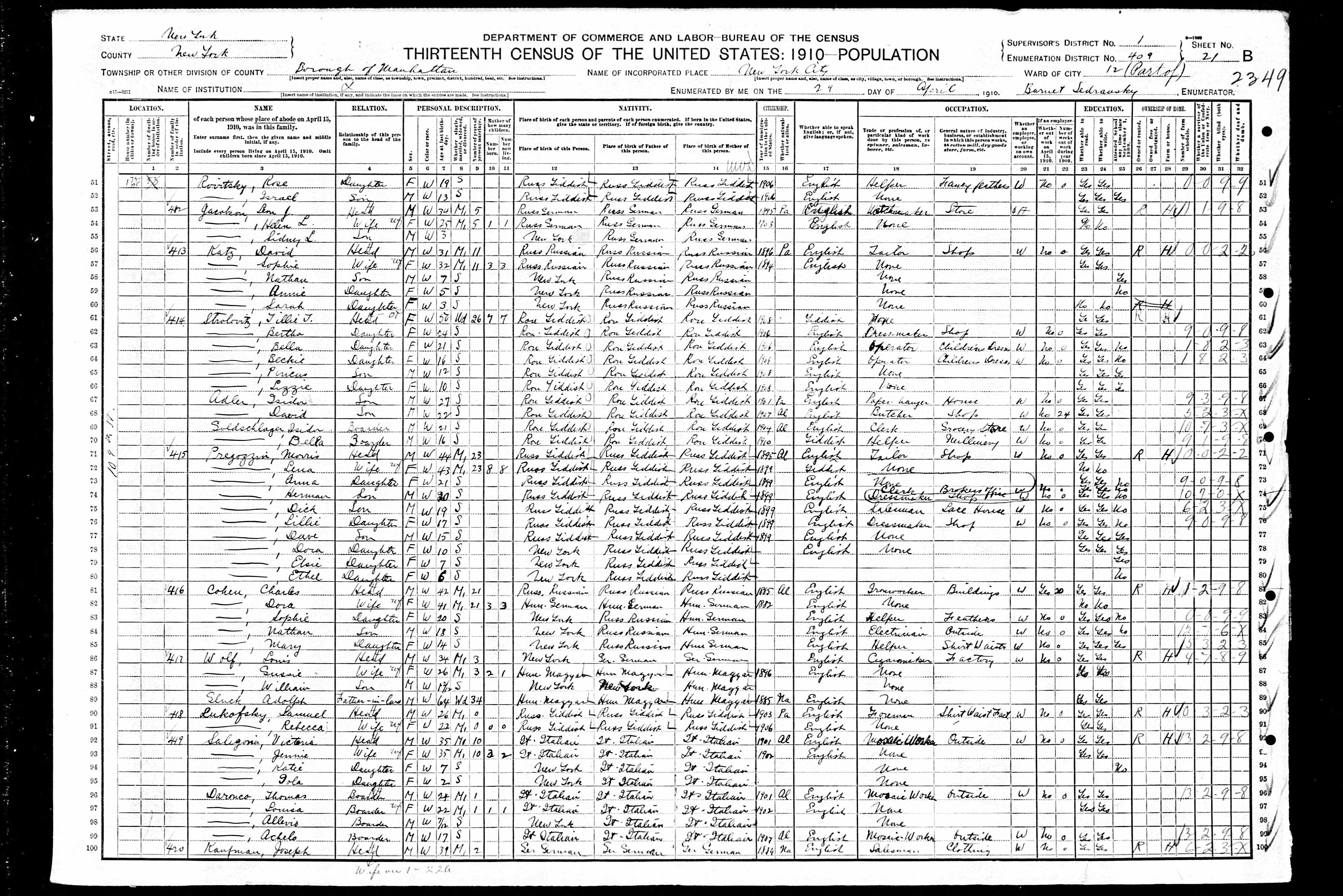
I went back to look at the information I had for Isidor Strolowitz Adler, Tillie and Jankel’s oldest child.  I did this because I noticed (for the first time) that on the 1910 US census that Tillie said that she had been married for 27 years.

The Strolovitz Adler family with Isadore and Betty in 1910

The Strolovitz Adler family with Isadore and Betty in 1910

Since she was a widow, the first time I looked at this it did not seem relevant.  This time I thought there might be a clue here as to when Jankel had died.  Assuming that Isidor was born within a year of marriage, as seemed to be the case in so many of the marriages of that era, if Tillie and Jankel were married the year before Isidore’s birth and were married for a total of 27 years, I might get a better estimate of when he died (or disappeared).

So I turned to Isidor’s information and saw that I had an estimated date of birth of 1883 based on the fact that Isidor was listed as 27 on the 1910 census.  According to his death certificate, he was 31 years, two months at the time of his death on April 23, 1915, giving him a birth date of February, 1884.

Isidor Adler death certificate

Isidor Adler death certificate

Since Bertha, the second child, was born in February, 1885, it certainly is feasible that Isidor had been born twelve months earlier.   Unfortunately, these were the only two documents I had for Isidor since he died so soon after arriving in the US.  I am hoping my Iasi researcher will find his birth record (he has located birth records for two of Isidor’s siblings; more on that in a separate post), but I decided to see if I could find a ship manifest for Isidor.

On my entries for Isidor I had two different arrival dates: 1901 and 1903.  His death certificate in 1915 said he’d been in the US for twelve years, giving me 1903.  The 1910 census said that he had arrived in 1901.  Although the 1910 census indicated that Isidor had petitioned for citizenship, I’ve yet to locate that petition.  And I had no ship manifest.  Although I had found ship manifests for all of his siblings and for his parents, I’d not been able to locate one for Isidor.  I’d searched for Isidor, Isaac, Ira, and Israel and all the variations of his last name, but had not found anything.

But this time I vaguely remembered something: in the records for his father’s hearing at Ellis Island, Isidor had been referred to by another name.  I went back to look at those records and found that Isidor had been identified as Srul.

transcript listing Srulovici children

transcript listing Srulovici children

I had learned from one of my JewishGen contacts that Srul was a Yiddish version of Israel—that Srulowitz means son of Israel.  So Srul had become Israel and then Isidor in the US.  The transcript also said that Srul was 26 in January, 1908, making his birth year 1883.

So I went back to the Ellis Island search engine created by Steve Morse and searched again, using Srul, and lo and behold—there it was.  Strul Strulovici, age 19, had arrived on January 12, 1902, from Jassy, Romania, via Hague on the ship La Gascogne.   That would make his birth year either 1883 or 1882.  So I am no more certain of his birth year and thus no more certain of when his parents had married.  But assuming they were married sometime between 1881 and 1883, that would mean that Tillie became a widow between 1908 and 1910, which is what I already assumed.

Strul Strulovici ship manifest

Strul Strulovici ship manifest

But I did learn something new from the manifest.  Under the column asking who was meeting Strul/Isidor in America was the entry “Uncle.”  I have to believe that this was his mother’s brother, Gustave Rosenzweig, my great-great uncle, the same uncle who stood up for Jankel in 1908 and posted a bond, the same Gustave who acted as a witness at his niece’s wedding.  I can only imagine all the other things that this man did that were not documented for eternity.  This new finding gave me the incentive to go back and learn more about Gustave and his children.

Gustave Rosenzweig

Gustave Rosenzweig

So keep reviewing those documents.  You never know what you will learn a second time or third time or even a fourth time through.

Enhanced by Zemanta