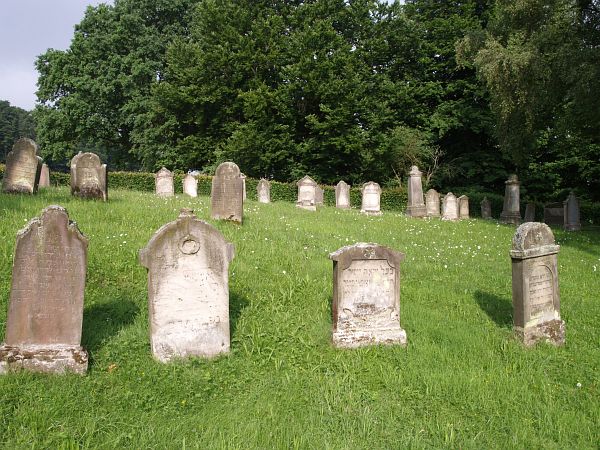
Rosa and Amalie Rothschild, Gerson and Fanny’s Youngest Daughters

Getting to know Hal Katz and his family and learning the stories about Clara Rothschild and Moritz Katz and their children and grandchildren has been a real highlight of the past few months. Now I turn to Clara’s two younger sisters, the seventh and eighth children of Gerson Rothschild and Fanny Kugelmann of those who survived to adulthood. And unfortunately there is no joy in telling their stories.

Rosa Rothschild, who was born on May 16, 1893, in Zimmersrode, married Meijer Franken sometime before April 23, 1936, when their son Gerson was born in Almelo, Netherlands. I don’t know whether Rosa married Meijer in the Netherlands or Germany because I cannot find a marriage record in either country.1 Meijer was Dutch, born in Haaksbergen, Netherlands, on March 16, 1873, making him twenty years older than Rosa. His parents were Levij Franken and Antje Goedhardt.2 Meijer had been previously married; his first wife Jeanette Herzog, died in Almela, Netherlands, on November 12, 1923.3

Presumably Rosa married Meijer sometime after November 12, 1923, when his first wife died, and before April 23, 1936, when Gerson was born in Almelo, Netherlands. I don’t know whether Rosa met Meijer before moving to the Netherlands or moved there to escape Hitler and met Meijer thereafter. I think it’s reasonable to assume she moved first sometime after 1933 when Hitler came to power and then met and married Meijer. Her mother Frommet “Fanny” Kugelmann Rothschild also moved to Almelo, Netherlands, either with Rosa or afterwards, and was living with Rosa, Meijer, and and her grandson Gerson, named for Rosa’s father and Fanny’s husband, Gerson Rothschild.4 Hal Katz told me that she came to his bar mitzvah in late 1937, but that she was already living in the Netherlands at that time.

Unfortunately, the move to the Netherlands did not protect Rosa, her mother, her husband, or her son from the scourge of the Nazis. On April 9, 1943, they were sent to the Herzogenbusch concentration camp near Vught in the Netherlands, and then on May 8, they were sent to Westerbork where they were then sent to Sobibor, where they were murdered by the Nazis: all four of them, 86 year old Fanny, 70 year old Meijer, 49 year old Rosa, and seven year old Gerson.

Arolsen Archives, DocID: 402367 (FROMMET ROTSCHILD KUGELMANN)
DeepLink: https://collections.arolsen-archives.org/de/document/402367
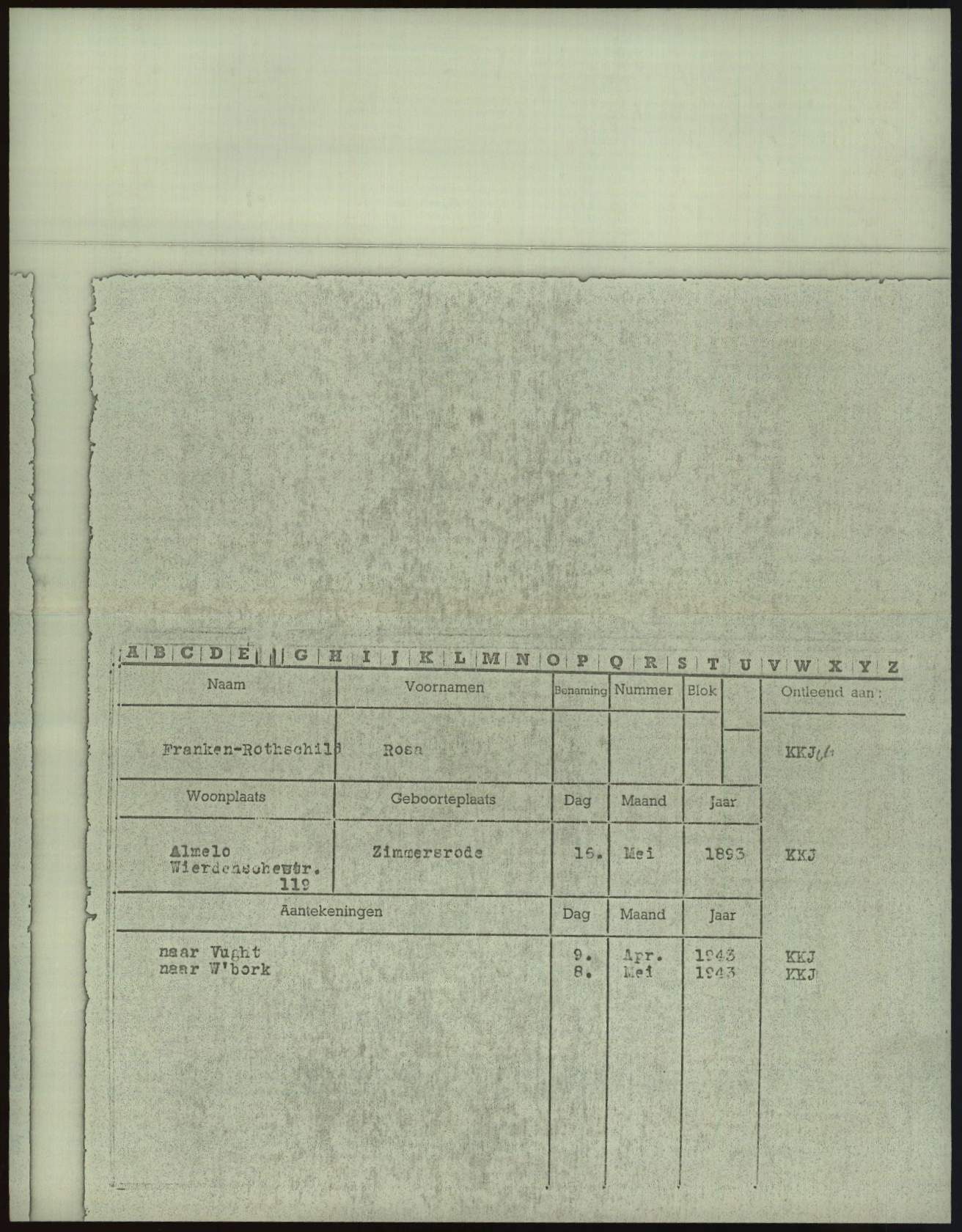
Arolsen Archives, DocID: 355979 (ROSA FRANKEN ROTHSCHILD)
DeepLink: https://collections.arolsen-archives.org/de/document/355979

Arolsen Archives, DocID: 355969 (MEIJER FRANKEN)
DeepLink: https://collections.arolsen-archives.org/en/document/355969
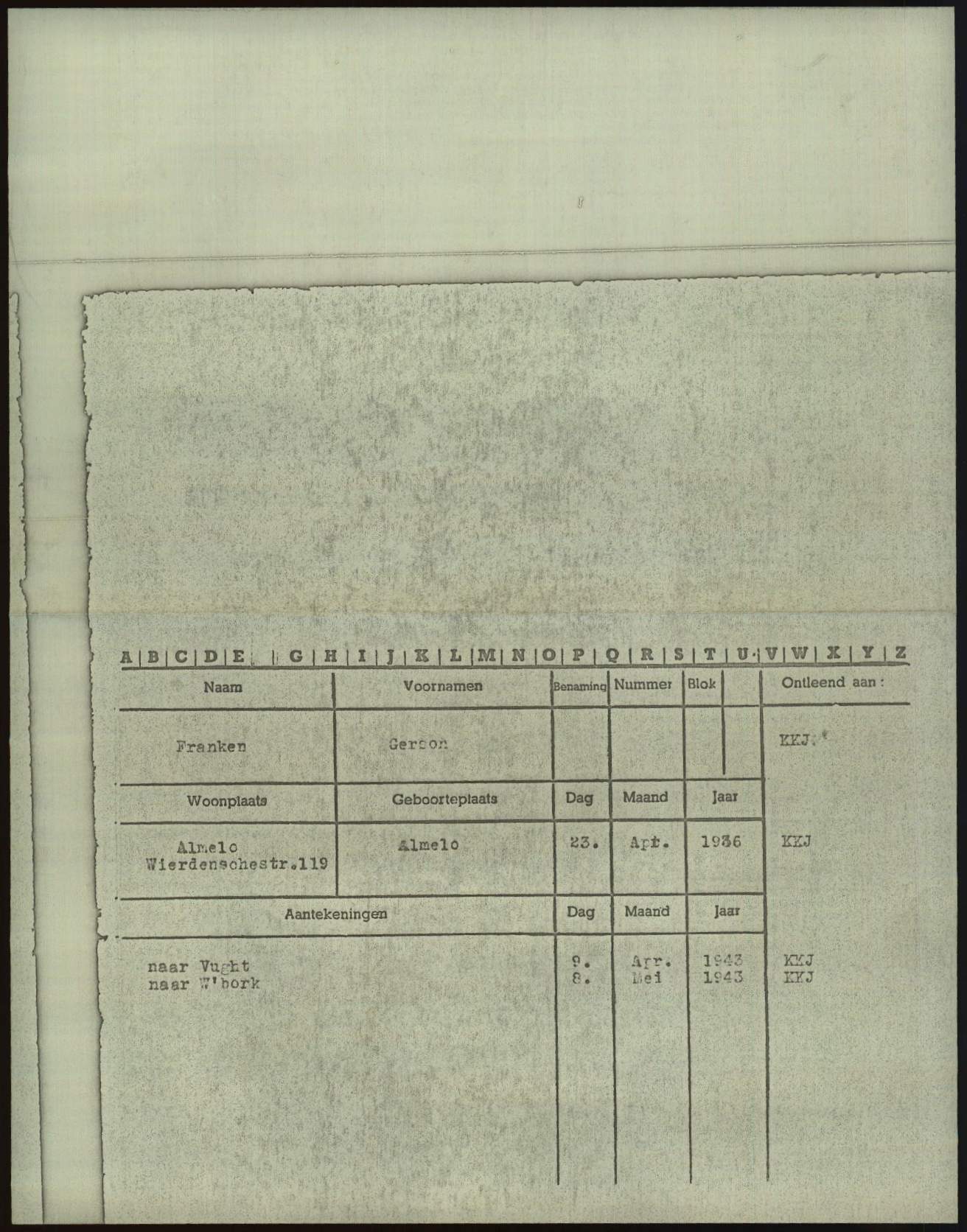
Arolsen Archives, DocID: 355947 (GERSON FRANKEN)
DeepLink: https://collections.arolsen-archives.org/en/document/355947

Here are the official Dutch death records for Rosa and her family, showing they were killed at Sobibor :

Rosa Rothschild Franken death record, BS Death Heritage institution Collection Overijssel Institution place Zwolle Collection region Overijssel Archive 0123 Registration number 16645 Sourcenumber 14 Registration date 09-01-1950 Document place Almelo Collection Civil Registry in Overijssel Book
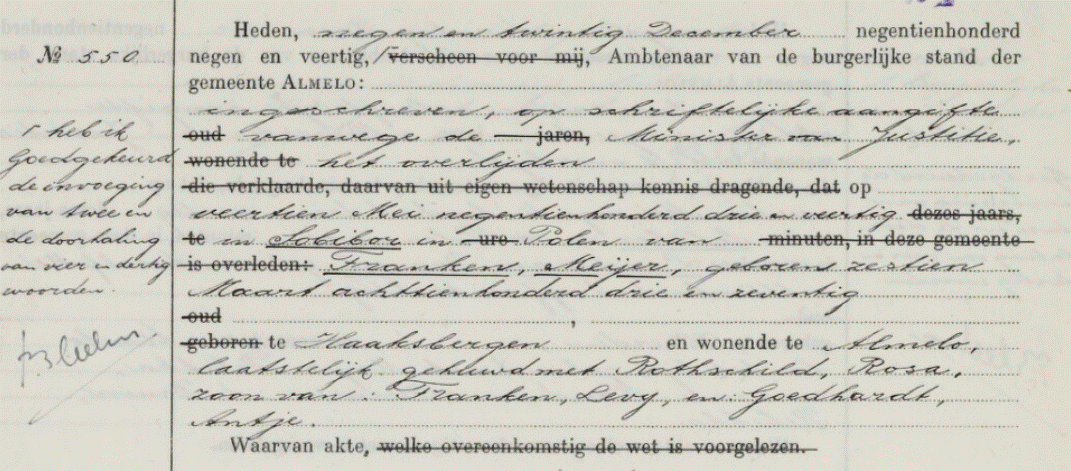
Meijer Franken death record, Collection Overijssel location Zwolle in Zwolle (Netherlands), Civil registration deaths Burgerlijke Stand in Overijssel, Almelo, archive 0123, inventory number 16644, 29-12-1949, Register van overlijden, Almelo, record number 550
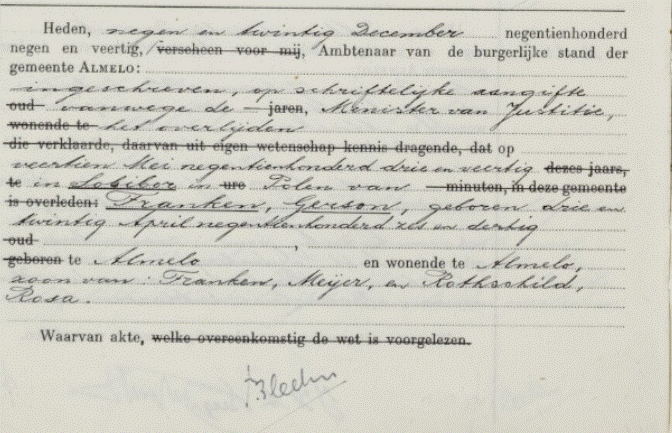
Gerson Franken death record, Collection Overijssel location Zwolle in Zwolle (Netherlands), Civil registration deaths Burgerlijke Stand in Overijssel, Almelo, archive 0123, inventory number 16644, 29-12-1949, Register van overlijden, Almelo, record number 549

Frommet Kugelmann Rothschild death record, Register of deaths, Almelo (Overijssel Collection, Zwolle location), Death Frommet Kugelmann, 14-05-1943, Type of deed :
death certificate, Date of deed: 09-01-1950 Location of deed: Almelo, born in Wohra (D); date of birth 11-09-1857, Access number : 0123 Civil Registry in Overijssel Inventory number :
16645 File number : 12

Rosa’s sister Amalie, the youngest of Fanny and Gerson Rothschild’s children, met a similar fate. Amalie, who was born on April 26, 1901, married Jakob Stiefel, who was born January 19, 1893, in Ziegenhain, Germany, and was the son of Michel Stiefel and Emilie Bachrach. As with Rosa Rothschild and Meijer Franken, I don’t have a marriage record for Amalie and Jakob, but according to Holocaust records, they had two children, Eva, born April 3, 1937, in Fritzlar, Germany, and Gerhard, born April 26, 1938, in Kassel, Germany. The family was living in Kassel at that time.

Amalie, Jakob, Eva, and Gerhard were among those who were sent from Kassel on December 9, 1941, to the Riga ghetto. Remember that Amalie’s older sisters Katchen, Auguste, and Jenny were also deported to the Riga ghetto on that same transport. In any event, they all ended up in Riga. In 1942, Jakob died in the Kaiserwald camp near Riga. On November 2, 1943, Amalie and her two young children, six year old Eva and five year old Gerhard were sent from Riga to Auschwitz, where they were murdered. Another family of Rothschild cousins was destroyed by the Nazis.

Thus, of the eight children of Gerson Rothschild and Fanny Kugelmann who had survived to adulthood, five of them were murdered by the Nazis: Katchen, Auguste, Jenny, Rosa, and Amalie, as well as their mother Fanny and almost all of their children. Only Siegmund, Max, and Clara and their families escaped in time, as well as Auguste’s son Bruno Feldheim. That is just one family’s saga, but it was multiplied millions of times over for all the other families who were torn apart and destroyed by the hatred of the Nazis and those who supported them.

What gives me hope after learning all this tragic information about the family of Gerson Rothschild is the incredible strength I’ve seen in the descendants of Siegmund and Clara, those who are here today because their parents or grandparents were able to escape in time. Those descendants are all examples of how good can conquer over evil and love can overcome hatred.


  1. I could not locate a marriage record for Rosa and Meijer in either the Dutch archives at WieWasWie or in the various Hessen archives for Zimmersrode or Waltersbrueck, Germany, where Rosa was presumably living before relocating to the Netherlands. But Rosa and Meijer are listed as Gerson’s parents on his Dutch death record and as each other’s partner on each of their Dutch death records. See images below. 
  2. Meijer Franken, Birth Date 16 mrt. 1873 (16 Mar 1873), Birth Place Haaksbergen
    Father Levij Franken, Mother Antje Goedhardt, Collectie Overijssel; The Hague, Netherlands; Burgerlijke stand. Ancestry.com. Netherlands, Birth Index, 1784-1923 
  3. Jeannette Hertog, Age 52, Birth Date abt 1871, Birth Place Meerssen
    Death Date 12 nov. 1923 (12 Nov 1923), Death Place Almelo, Father Alexander Hertog, Mother Carolina Anschil, Historisch Centrum Overijssel (HCO); Den Haag, Nederland; Burgerlijke stand (overlijdensakten), Ancestry.com. Netherlands, Death Index, 1796-1973 
  4. A document in the Arolsen Archives for Fanny shows that her residence before deported to a concentration camp was Wierdensestr. 119 in Almelo, Netherlands. A similar document in the Arolsen Archives for Rosa shows her living at the same address. See Arolsen Archives, DocID: 402367 (FROMMET ROTSCHILD KUGELMANN) at https://collections.arolsen-archives.org/de/document/402367 and DocID: 355979 (ROSA FRANKEN ROTHSCHILD), at https://collections.arolsen-archives.org/de/document/355979 

Katchen Rothschild Hirschberg: A Family Destroyed

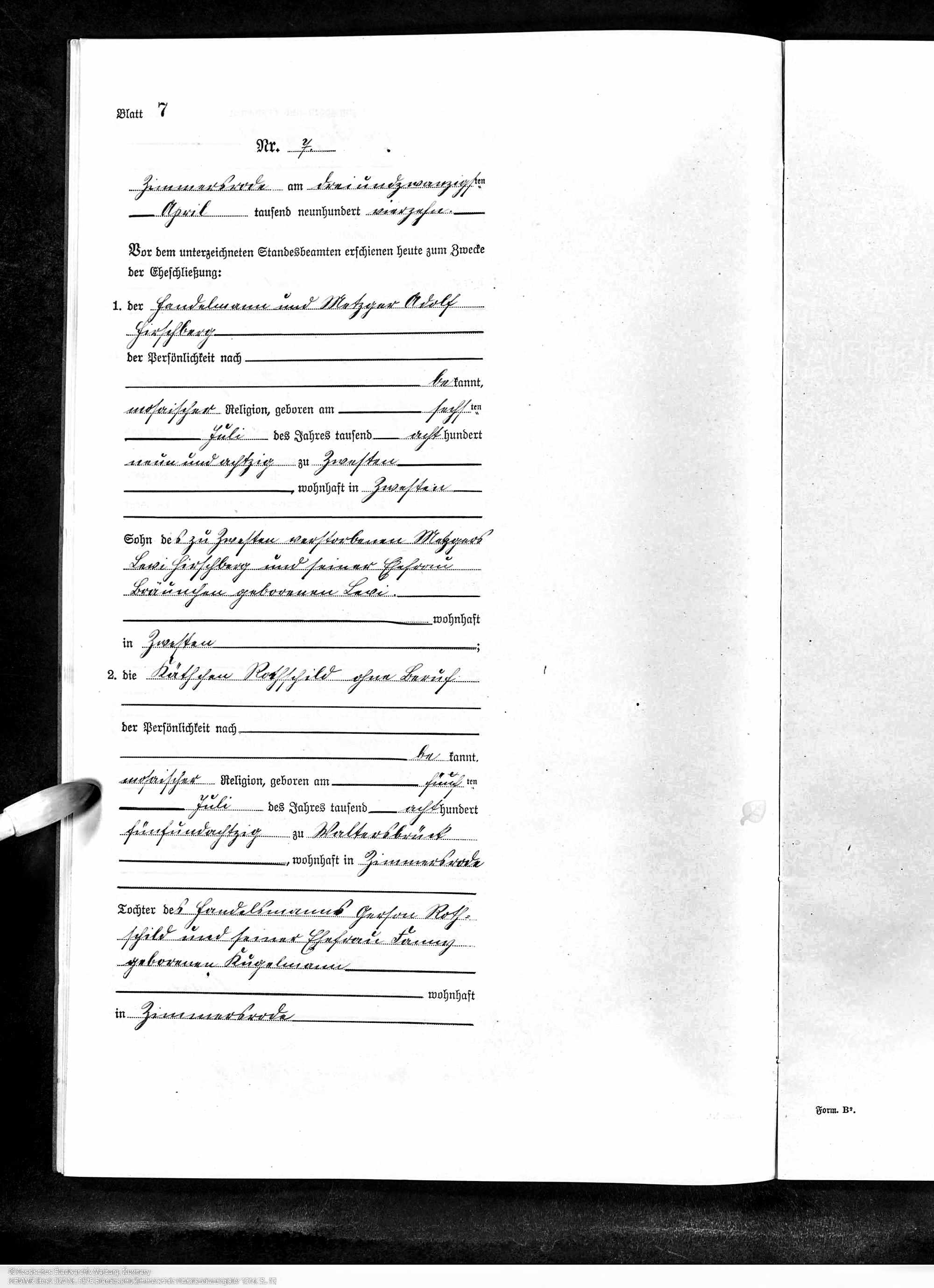
The second oldest child of Gerson Rothschild and Fanny Kugelmann was their daughter Katchen, born in 1885 in Waltersbrueck. As we saw, she married Adolf Hirschberg in 1914, and they had one child, a son Ludwig born in 1920. According to their marriage record, Adolf was a merchant and a butcher. They were living in Kassel, Germany, when Ludwig was born in 1920. Unfortunately, I do not know much more about their lives before the Nazi era. But I know that all three were persecuted and killed during the Holocaust. But the records of where and how they died are in conflict.

Katchen Rothschild and Adolf Hirschberg marriage record, Hessisches Hauptstaatsarchiv; Wiesbaden, Deutschland; Bestand: 920; Laufende Nummer: 9576, Year Range: 1914, Ancestry.com. Hesse, Germany, Marriages, 1849-1930

First, there are records at the Arolsen Archives showing that both Adolf and Ludwig were incarcerated at Buchenwald for some period of time after Kristallnacht in 1938.

Then, according to entries in the Gedenbuch (“Victims of the Persecution of Jews under the National Socialist Tyranny in Germany 1933 – 1945″ prepared by the German Federal Archives) as recorded at Yad Vashem, Katchen, Adolf, and Ludwig Hirschberg were all deported from Kassel on December 9, 1941, to the Riga ghetto in Latvia. As best I can determine from records at Yad Vashem, Katchen died in the Riga ghetto, but no date was given. For Adolf, the Gedenbuch reported that he died there on August 24, 1943.

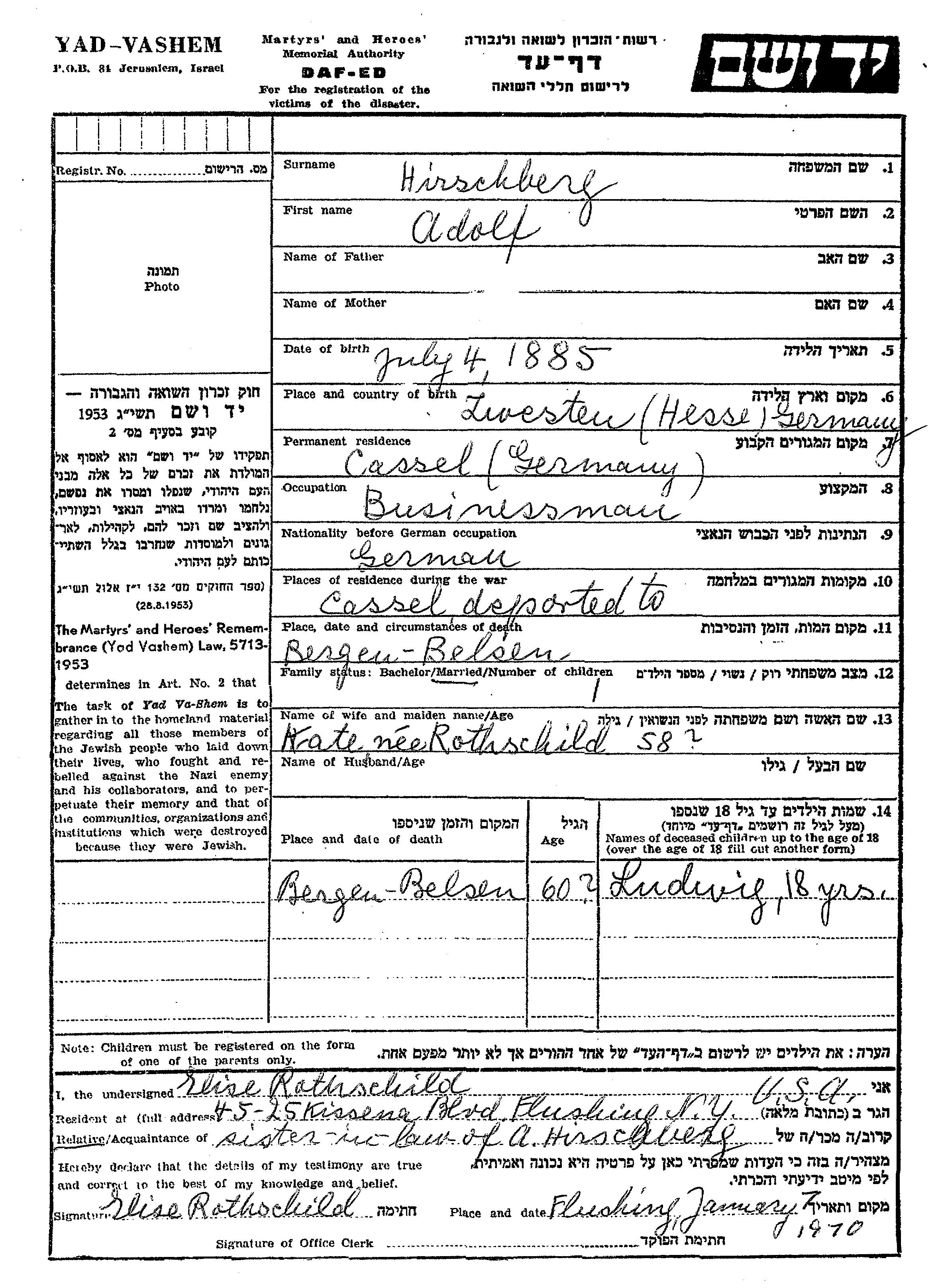
Pages of Testimony were filed at Yad Vashem for Katchen, Adolf, and Ludwig by Katchen’s sister-in-law, Elise Block Rothschild, the wife of Siegmund Rothschild, one of the few siblings to survive the Holocaust. Elise filed many Pages of Testimony for the family members murdered by the Nazis, as we will see. Her Pages of Testimony for Katchen and Adolf state that they died at the Bergen-Belsen concentration camp, but after searching the Arolsen Archives lists of those killed at Bergen-Belsen, I was unable to find either Adolf or Katchen’s name, so I do not know how accurate Elise’s information was. Did they die in Riga, or were they at some point transferred to Bergen-Belsen and killed there? I don’t know.

Adolf Hirschberg Page of Testimony filed at Yad Vashem, found at https://collections.yadvashem.org/en/names/14982438

Katchen Rothschild Hirschberg Page of Testimony filed at Yad Vashem, found at https://collections.yadvashem.org/en/names/645337

As for Ludwig, there is also conflicting information. The Gedenbuch summary at Yad Vashem reports that Ludwig was killed at the Natzweiler-Struthof concentration camp in France on December 24, 1944. A record in the Arolsen Archives also indicates that he died at Natzweiler-Struthof on that date, and there is also a record on Ancestry that seems to confirm that Ludwig was imprisoned at Natzweiler-Struthof during the Holocaust.1 Both records indicate that Ludwig was transferred to Natzweiler-Struthof from the camp in Dautmergen, a town in southwest Germany about 100 miles from Natzweiler-Struthof in France.

Ludwig Hirschberg record at Arolsen Archives, 2 Registration of Foreigners and German Persecutees by Public Institutions, Social Securities and Companies (1939 – 1947) / 2.3 Post-war Evaluations of Various Organizations / 2.3.3 Haut-Commissariat de la République Française en Allemagne / 2.3.3.1 Card file of persecutees in the later French zone and of French persecutees in other areas / Documents without (captured) names and names from A; further sub-structure available /, Reference Code
02030301001.474

But other records on JewishGen and Ancestry2 indicate that Ludwig was at the Stutthof concentration camp in Poland. Those records, however, are confusing because they say “Riga/Stutthof/Natzweiler.” Did they mean Stutthof, or did they mean Struthof/Natzweiler?

But this card from the Arolsen Archives is clearly marked only Stutthof and indicates that Ludwig Hirschberg was incarcerated there.

Ludwig Hirschberg at Stutthof, 1 Incarceration Documents / 1.1 Camps and Ghettos / 1.1.41 Stutthof Concentration Camp / 1.1.41.2 Individual Documents Stutthof / Personal Files – Stutthof Concentration Camp / Files with names from HERZ , Reference Code
01014102 047.243found at https://collections.arolsen-archives.org/en/document/4493200

Could he have been at both camps? Or is one of these records incorrect? After all Struthof and Stutthof could be easily confused. The Page of Testimony filed by Elise Block Rothschild does not resolve this confusion because it only reported that his place of death was unknown.

Ludiwg Hirschberg page of testimony at Yad Vashem, found at https://collections.yadvashem.org/en/names/622945

Only to add to the confusion, the Projekt Judische Leben Frankfurt states that Ludwig was one of the passengers on the St. Louis, the ship that was turned back in 1939 after being refused entry by both Cuba and the United States, and that he was later killed at Auschwitz. I searched the list of St. Louis passengers on file at the US Holocaust Museum and Memorial, however, and did not find Ludwig Hirschberg on that list. Nor does any record at Yad Vashem or on JewishGen or on Ancestry indicate that Ludwig was murdered at Auschwitz.

One might conclude that Ludwig was at Natzweiler-Struthof based on the larger number of records so indicating, but how did he get there from the Riga ghetto? They are more than 1200 miles apart. Not that Riga is close to Stutthof either (469 miles), but still much closer. Also, the JewishGen database devoted to Stutthof includes a description that states, “The Stutthof camp was originally not designed to hold Jews, but, beginning in 1944, substantial numbers (30,000-50,000) of Jews were sent there, primarily from Kovno, Rīga and Auschwitz.” So it would make sense that Ludwig would have been sent from Riga to Stutthof, not to Natzweiler-Struthof.

Unless Ludwig was in fact on the St Louis? Since many of those passengers did end up in France after being turned back by the US and Cuba, that might explain how Ludwig ended up in Natzweiler-Struthof. But if he was on the St Louis in 1939 and then sent to France, how could he have been deported to Riga from Kassel with his parents in 1941? Something didn’t add up.

I was very fortunate to speak with Ludwig’s first cousin Hal Katz on May 8, 2025, and he confirmed that Ludwig was not on the St. Louis. That makes it even less likely that Ludwig ended up in France and thus in Natzweiler-Struthof. My best guess at this point is that Ludwig was sent to Stuffhof along with other prisoners from Riga. My hunch, totally speculative, is that somewhere someone mixed up Struthof and Stutthof and wrote the wrong name on one of Ludwig’s records.

Sadly, in the end, these details do not change the ultimate outcome. Katchen, Adolf, and Ludwig Hirschberg were all murdered by the Nazis during the Holocaust. One family story shared with me in my conversation with Hal Katz and his daughter Sandy and niece Judy is that Ludwig survived in the camp and was shot in cold blood by a guard on the day the camp was to be liberated.

May the names and memories of Katchen, Adolf, and Ludwig be preserved forever.


  1. Name Ludwig Hirschberg, Nationality German Jew, Birth Date 1 Feb 1920
    Transfer Place In Dautmergen, Death Date 24 Dec 1944, Prisoner Number 34908
    Microfilm/Roll/Section A3355/2/4, Alphabetical/Roll/Section A3355/76/GOE-HUA
    Record Number 24120, Irvin Horn, comp. France, Natzweiler-Struthof Concentration Camp Record Book, 1940-1945 
  2. Ludwig Hirschberg, Birth Date 1 Feb 1920, Birth Place Kassel, Residence Kassel, Camp Riga/Stutthof/Natzweiler, Ancestry.com. Poland, German Jews at Stutthof Concentration Camp, 1940-1945. See also the same information at JewishGen found at https://www.jewishgen.org/databases/jgdetail_2.php 

Baruch Blumenfeld’s Daughter Antonie: Life Before the Nazis

Although I have no definitive answer as to when Baruch Blumenfeld left his family in Germany, I do have information about what happened to his two daughters and their children.

As we saw, Baruch and Emma had two daughters: Antonie and Charlotte Jeanette, born in 1872 and 1875, respectively. This post and the three that follow will focus on Antonie and her descendants. I am deeply grateful to Antonie’s great-granddaughter Marsha for sharing her collection of family photos with me so that I can bring Antonie and her family to life.

Antonie married Sussel Siegfried (known as Siegfried) Engelbert in Neustadt, Germany, in 1894, and they had three children: Margot (born 1895), Joseph Julius (known as Julius) (born 1897), and Elfriede (born 1900). Siegfried owned a clothing store in Kassel, shown in this photograph.

Engelbert store, c. 1900, Kassel. Courtesy of the family.

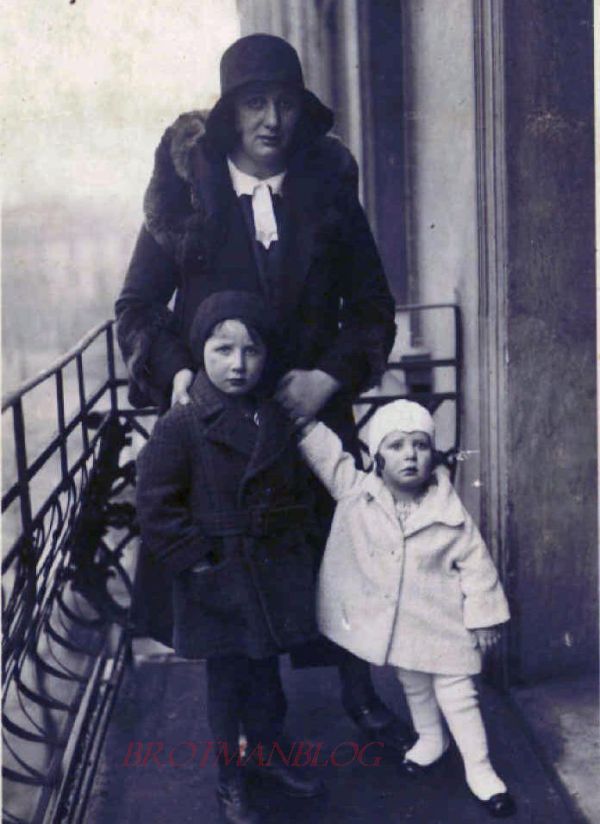
The photograph below is of Antonie and below that are three photographs of her children, one taken in 1911 of Elfriede and Margot and an unknown little girl, the other taken in about 1920 of all three of Antonie and Siegfried Engelbert’s children, and the last a photograph of Julius Engelbert with his parents Antonie and Siegfried.

Antonie Blumenfeld Engelbert undated. Courtesy of the family

Elfriede Engelbert, unknown girl, Margot Engelbert, 1911. Courtesy of the family

Margot, Julius, and Elfriede Engelbert, c. 1920. Courtesy of the family

Julius, Antonie, and Siegfried Engelbert. Courtesy of the family

Margot married Gustav Neuhaus on December 3, 1920. He was born on December 5, 1884, in Bremke, Germany, to Hermann Neuhaus and Bernhardine Neuhaus. He was a cattle dealer in Goettingen, Germany; his grandfather had started the business in 1858.1

Marriage record of Margot Engelbert and Gustav Neuhaus, Hessisches Hauptstaatsarchiv; Wiesbaden, Deutschland; Bestand: 910, Year Range: 1920, Ancestry.com. Hesse, Germany, Marriages, 1849-1930

Margot and Gustav had one child, a daughter Edith, born on March 9, 1922.

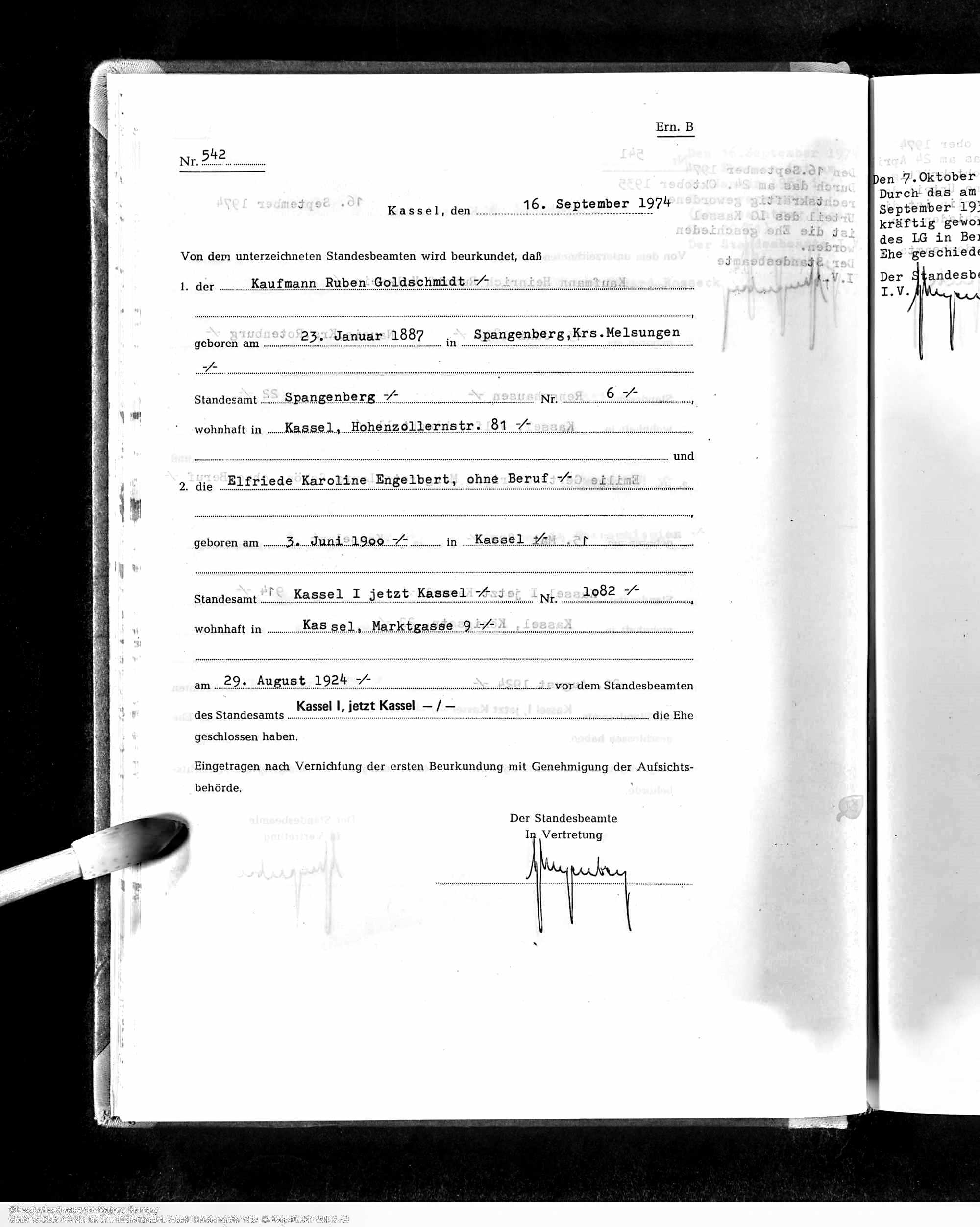
Elfriede Caroline Engelbert married Ruben Rudolf (known as Rudolf) Goldschmidt on August 19, 1924, in Kassel, Germany. Rudolf, the son of Gabriel Goldschmidt and Jettchen Levi, was born in Spangenburg, Germany, on January 23, 1887.2

Marriage record of Elfriede Engelbert and Ruben Goldschmidt, Hessisches Hauptstaatsarchiv; Wiesbaden, Deutschland; Bestand: 910, Year Range: 1924, Ancestry.com. Hesse, Germany, Marriages, 1849-1930

Here is a photograph of Elfriede and Rudolf taken when they were engaged in 1924.

Elfriede Engelbert and Rudolf Goldschmidt, 1924. Courtesy of the family

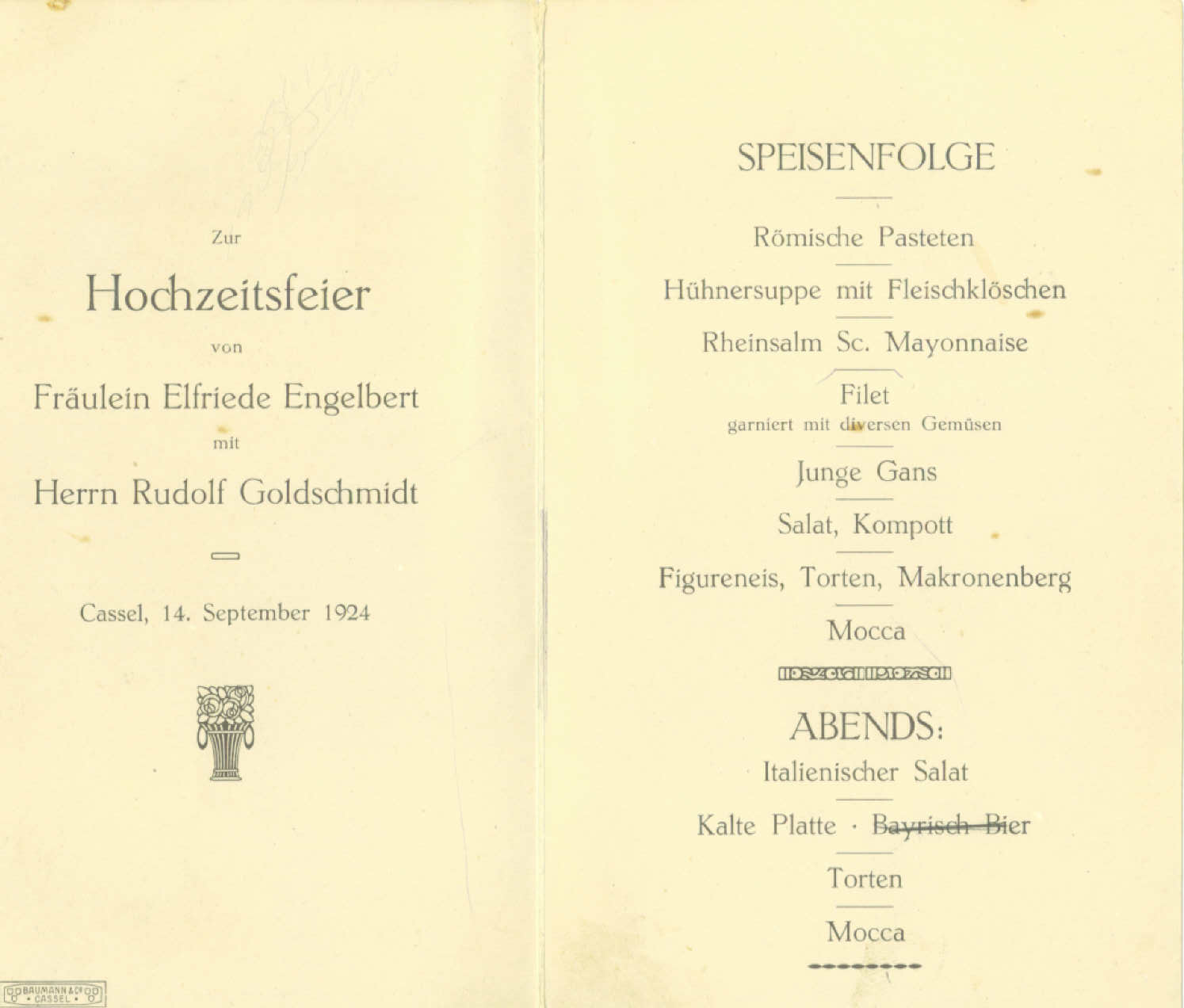
Marsha also shared the menu from Elfriede and Rudolf’s wedding. It must have been quite a lavish celebration.

Elfriede and Rudolf had two children, Gunther, born July 17, 1925,3 and Inge, born April 13, 1929,4 in Kassel where they resided.

Here are some photographs of Gunther and Inge as young children.

Gunther and Elfriede Engelbert Goldschmidt, 1925. Courtesy of the family

Inge and Gunther Goldschmidt, 1931. Courtesy of the family

Inge and Gunther Goldschmidt, c. 1931. Courtesy of the family

Elfriede, Gunther, and Inge Goldschmidt c. 1931. Courtesy of the family

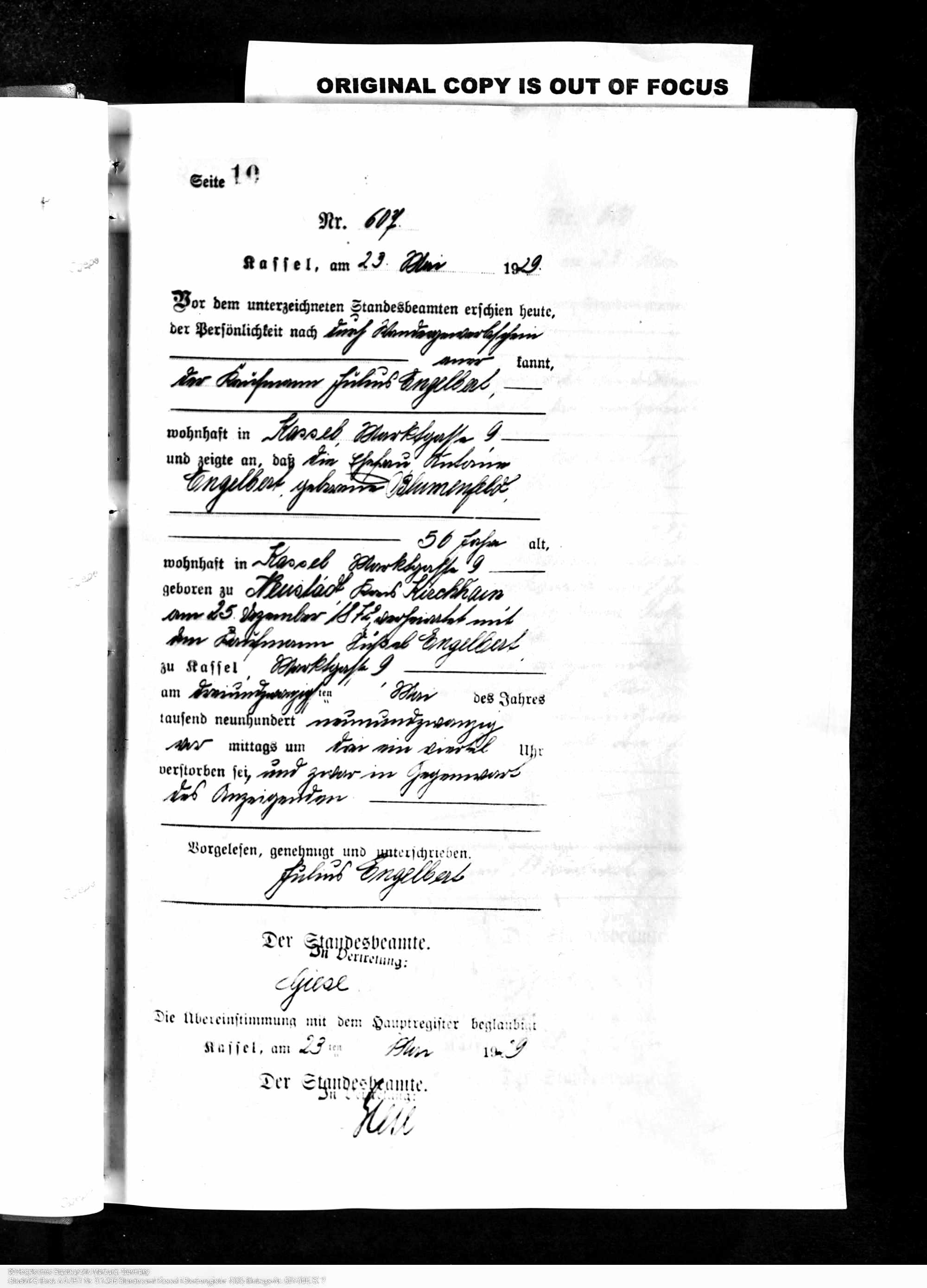
Antonie lived long enough to see her three grandchildren born, but she died on May 23, 1929, a month after Inge’s birth. She was survived by her husband and her children and grandchildren.

Antonie Blumenfeld Engelbert death record, Personenstandsregister Sterberegister; Bestand: 910; Signatur: 5619, Year Range: 1929, Ancestry.com. Hesse, Germany, Deaths, 1851-1958

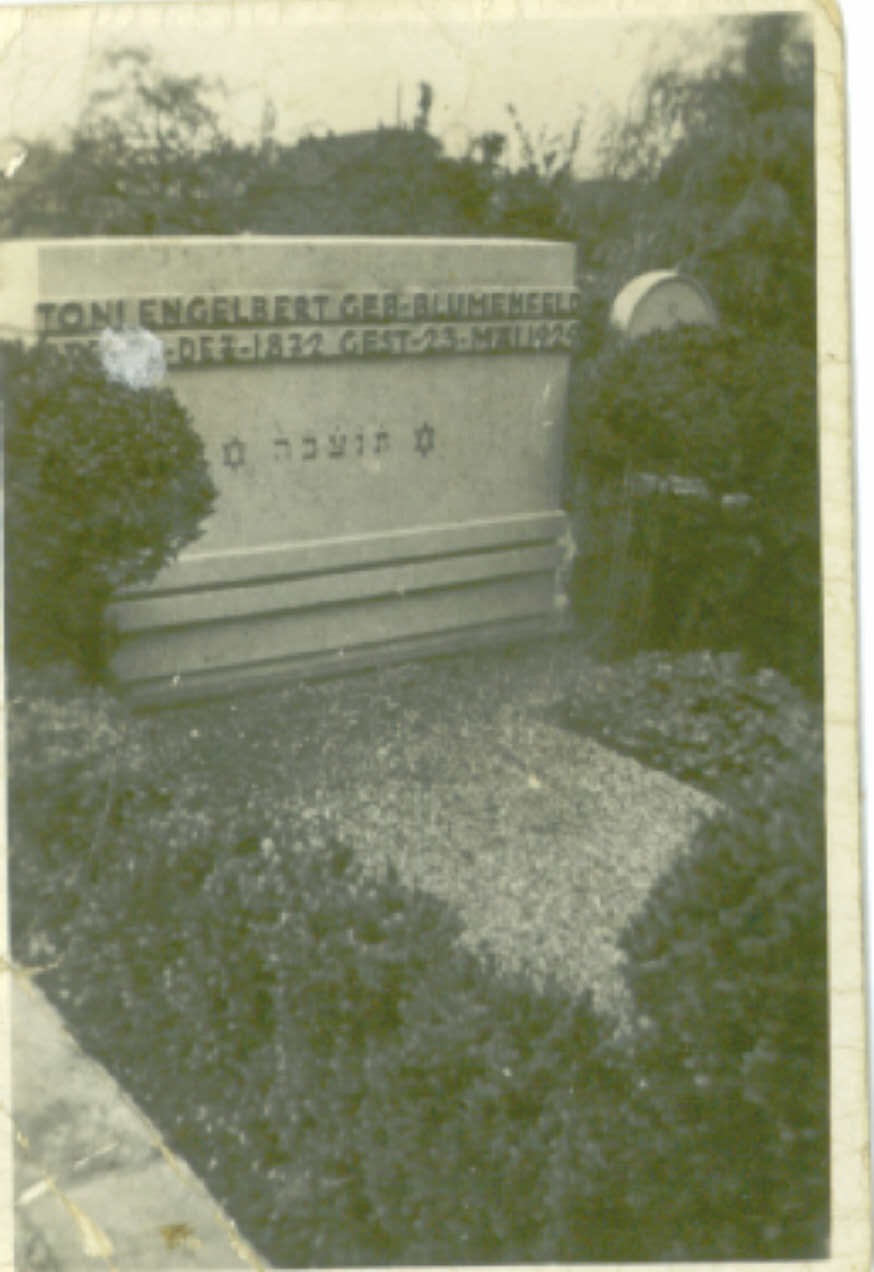
Here is one more photograph of Antonie and Julius and a photograph of Antonie’s headstone.

Siegfried Engelbert and Antonie Blumenfeld Engelbert. Courtesy of the family

Courtesy of the family

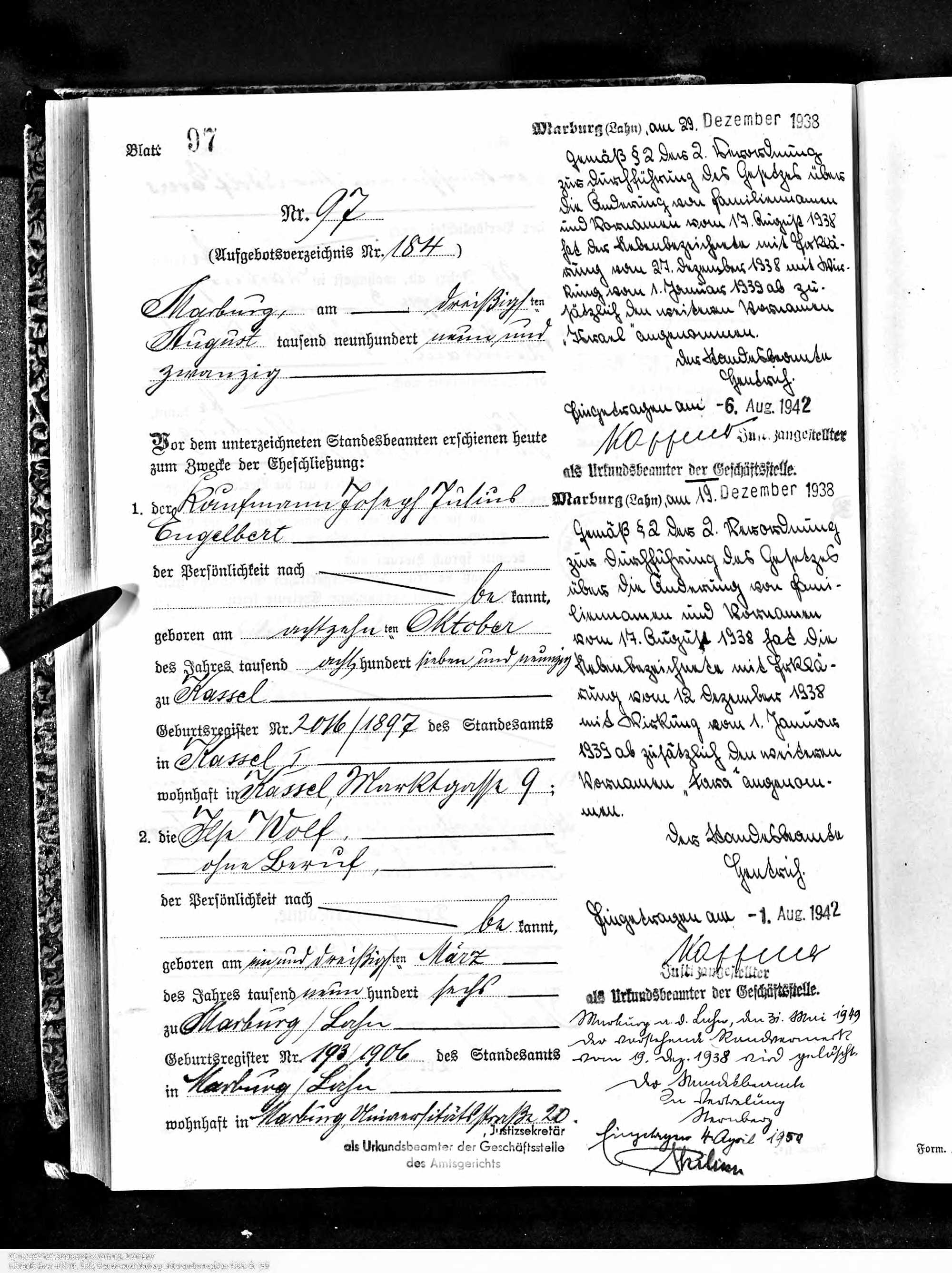
Julius Engelbert married a few months after his mother’s death. On August 29, 1929, he married Ilse Wolf in Marburg, Germany. She was born in Marburg on March 31, 1906. Julius and Ilse had one child, Werner, born in Kassel in 1930.5

Julius Engelbert and Ilse Wolf marriage record, Hessisches Hauptstaatsarchiv; Wiesbaden, Deutschland; Bestand: 915; Laufende Nummer: 5652, Year Range: 1929, Ancestry.com. Hesse, Germany, Marriages, 1849-1930

Two years later Siegfried Engelbert died on July 12, 1932, in Kassel.6 He was 65 and died before the Nazi takeover of Germany the following year.  He and Antonie were spared seeing what would happen to their children.

In this photograph are Elfriede, Rudolf, and Inge with Margot and her daughter Edith taken in 1936.  No one could have predicted what was to happen to them all in the next decade.

Elfriede Engelbert Goldschmidt, Inge Goldschmidt, Rudolf Goldschmidt, Edith Neuhaus, Margot Neuhaus, 1936. Courtesy of the family

To be continued.


  1. Gustav Neuhaus, Yad Vashem entry,  https://yvng.yadvashem.org/nameDetails.html?language=en&itemId=1306229&ind=2 and from the Neuhaus Family Tree on Ancestry found at https://www.ancestry.com/family-tree/person/tree/60044058/person/342252900990/facts. See also Uta Schaefer-Richter and Joerg Klein, Die Juedischen Buerger im Kreis Goettingen 1933-1945: Ein Gedenkbuch (Wallstein Verlag 1992), p.190. 
  2. Arcinsys Archives Hessen, HHStAW Fonds 365 No 782, p. 63. Inge Oppenheimer, Interview 11370. Visual History Archive, USC Shoah Foundation, 1996. Accessed 17 August 2021. 
  3. Gunther Goldschmidt, Social Security #: 488207584, Gender: Male
    Birth Date: 17 Jul 1925, Death Date: 30 Nov 1972, Death Place: San Francisco, Ancestry.com. California, U.S., Death Index, 1940-1997 
  4. Inge Oppenheimer, Interview 11370. Visual History Archive, USC Shoah Foundation, 1996. Accessed 17 August 2021. 
  5. Arolsen Archives, Digital Archive; Bad Arolsen, Germany; Lists of Persecutees 2.1.1.1, Reference Code: 02010101 oS, Ancestry.com. Free Access: Europe, Registration of Foreigners and German Persecutees, 1939-1947; Werner Jack Engelbert, Age: 22, Birth Date: 21 Jul 1930, Issue Date: 29 Jan 1952, State: New York
    Locality, Court: Eastern District of New York, District Court, National Archives and Records Administration (NARA); Washington, D.C.; Index to Naturalization Petitions of the United States District Court for the Eastern District of New York, 1865-1957; Microfilm Serial: M1164; Microfilm Roll: 53, Ancestry.com. U.S., Naturalization Records Indexes, 1794-1995 
  6. LAGIS Hessen Archives, Nr 587, p. 291, Standesamt Kassel I Sterberegister 1932, Eintrags-Nr. 301-600 (StadtAKS Best. A 3.35.1 Nr. 3.1.310) Autor Stadtarchiv Kassel Erscheinungsort Kassel IErscheinungsjahr 1932 

Small World Story: The Hambergs of Breuna

English: Location of Breuna in district Kassel...

English: Location of Breuna in district Kassel, Hesse, Germany Deutsch: Lage von Breuna im Landkreis Kassel, Hessen, Deutschland (Photo credit: Wikipedia)

I am just a bit overwhelmed.  Digging through the archives from Hessen has been quite an adventure.  Not only have I found a great deal of information about the family of my great-grandfather Isidore Schoenthal, but I’ve also been wading through the archives searching for records of my Hamberg ancestors—that is, the family of my great-great-grandmother Henrietta or Jhette Hamberg of Breuna, who married Levi Schoenthal, Isidore’s father.  These German records are amazing.  Unlike my experiences searching for records in Poland for my Brotman ancestors, I am just swamped with information about my German paternal ancestors from Hessen (and I haven’t even begun looking at the records for Isidore’s wife, my great-grandmother Hilda Katzenstein, whose family was also from Hessen).

I am still compiling and editing the Hamberg information, and I am ready to start writing more about what I know about the Schoenthals later this week.  But for now here’s a little bit of what I’ve learned about the Hamberg family.

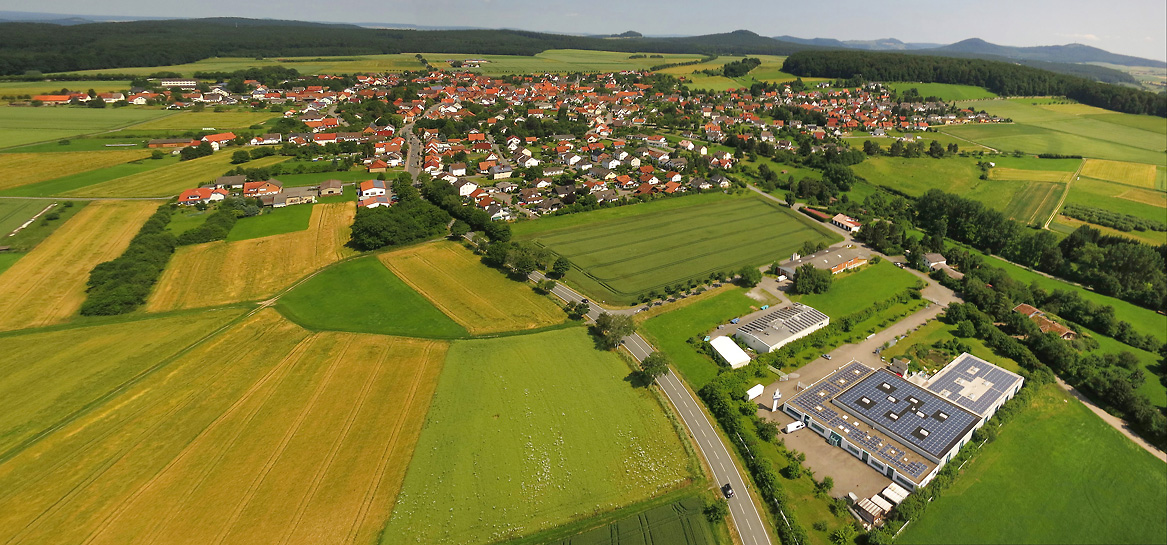
As mentioned, they were from Breuna.  Breuna is another small town in the Kassel district of Hessen, not too far from Sielen (about 26 km), where the Schoenthals lived.  According to the town’s official website, as translated by Google Translate, Breuna is 758 years old.  I could not find much about its history, but according to the town website, it was under the control of various aristocratic families over the centuries.

Today the original small village of Breuna where my ancestors lived is incorporated into a larger town, also called Breuna, consisting of five districts, one of which is the smaller village of Breuna; another is Oberlistingen, where some of my other relatives not yet discussed lived.  The town’s website described the town as an “Arbeiter-Wohnsitz-Gemeinde” or “worker-resident community,” where most people commute to the larger cities for work.

The town’s website also states:

Particularly noteworthy are the natural, wooded, yet convenient position of the municipality. Pure nature with freeway access! The advantages of a rural environment without having to sacrifice the most important social and cultural institutions and the relative proximity to the North Hessian metropolis of Kassel, the beautiful half-timbered towns Hofgeismar, Wolf Hagen, the spa of Bad Arolsen and the East Westphalian town of Warburg.

The website goes on to point out that although once an agriculture-based economy, Breuna no longer is primarily agricultural.  There are only a few full-time farmers, and they focus on pigs, dairy, and grain.

The population of the larger Breuna town today is about 3700 people, with the smaller district of Breuna consisting of about 1500 people.

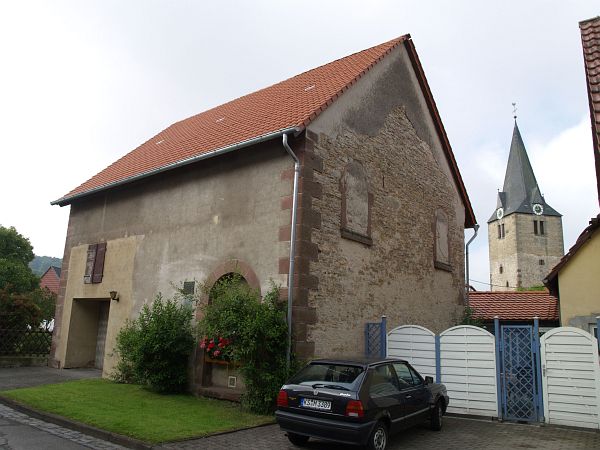
As for Breuna’s Jewish history, the Alemannia-Judaica reports that there were four Jewish families in Breuna in 1744 and 1776.  By 1833, there were 53 Jewish residents, and after that the Jewish population started to decline.  There were 29 in 1871, 40 in 1885, 33 in 1895, 23 in 1905, and 14 in 1910.  The overall population of the town was between 900 and 1000 during these years, so the Jewish population was quite a small percentage of the overall population. Most of the Jews were engaged in horse and cattle trading, and some were farmers.    There was a synagogue, a school, a mikvah, a chevra kadisha (burial society), and a cemetery.  There was still a small Jewish community in Breuna when the Nazis came to power in 1933.  Almost none of those who remained survived the Holocaust.

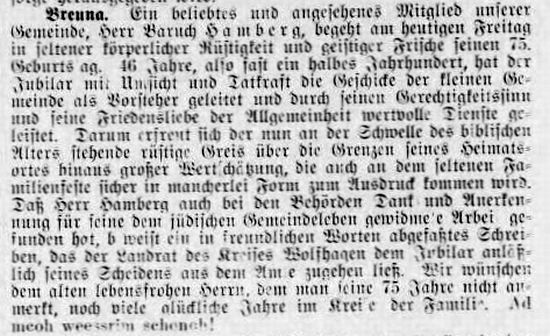
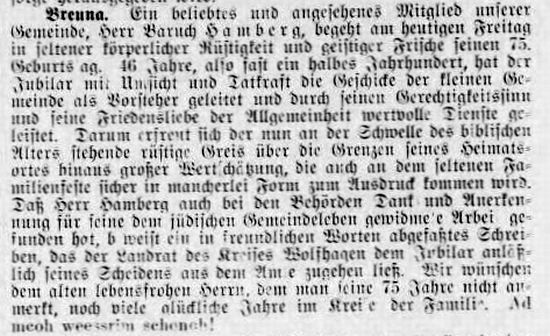
For close to fifty years, the leader of the Jewish community in Breuna was Baruch Hamberg, according to Alemannia-Judaica.  He was my second cousin, three times removed, as described below.   His 75th birthday celebration was written up in one of the local papers in an article describing his prudence and vigor and wishing him many years ahead.

Article about Baruch Hamberg's 75th birthday Jüdischen Wochenzeitung für Kassel, Kurhessen und Waldeck" vom 29. Mai 1931 http://www.alemannia-judaica.de/images/Images%20368/Breuna%20JuedWZKassel%2029051931.jpg

Article about Baruch Hamberg’s 75th birthday
Jüdischen Wochenzeitung für Kassel, Kurhessen und Waldeck” vom 29. Mai 1931
http://www.alemannia-judaica.de/images/Images%20368/Breuna%20JuedWZKassel%2029051931.jpg

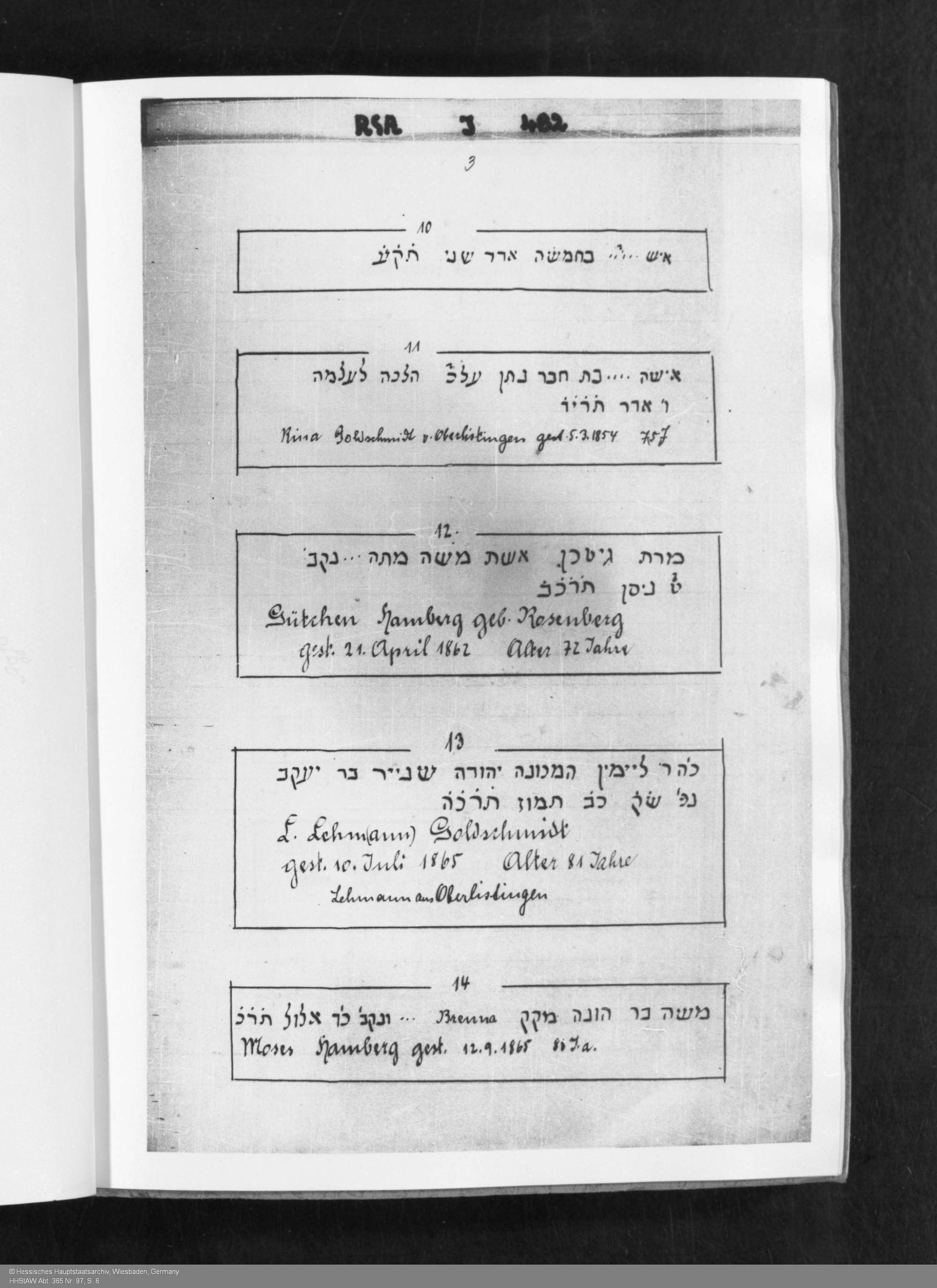
How was Baruch related to me? From my research, I’ve learned that Henrietta Hamberg, my great-great-grandmother who married  Levi Schoenthal, was the daughter of Moses Hamberg and Guetchen Rosenberg.  According to at least one record, Moses was a cattle merchant. Moses and Guetchen had nine children (or at least that is how many I have located so far).  One family tree on Geni says that Moses was born in Burgsinn, Bavaria on June 12, 1777, but I’ve not found any definitive source to corroborate that.  That tree also says that Moses’ father was named Juda and that his mother was Rachel Simon, but I am still looking for corroboration of those facts as well.  One reason I am skeptical is that the Hessen archives have a transcription of Moses’ headstone, which indicates that he was born in 1785 and that his father’s name was Huna, not Juda.  On the other hand, the first son born to Moses and Guetchen was named Juda, and that would suggest that perhaps Moses’ father was named Juda.

UPDATE: I’ve now seen, thanks to Hans-Peter Klein, a birth registry for Moses which gives his father’s name as Juda Moses, his mother’s as Rachel Simon, and his birthdate as 1777.  Looking again at the headstone transcription, I now think it says he was 88 years old when he died, not 80, so 1777 as his birth year is consistent with the headstone.  I still cannot explain why it has his father’s name as Huna.

Headstone for Guetchen Rosenberg Hamberg (12) and Moses HambergHHStAW Abt. 365 Nr. 97, S. 6

Headstone inscription for Guetchen Rosenberg Hamberg (12) and Moses Hamberg HHStAW Abt. 365 Nr. 97, S. 6

The Geni tree also asserts that Moses had a brother named Samuel, and I have found many records for Samuel Hamberg and his family.  According to the death record I found for him, he died on December 11, 1857, at age 80, so he would have been born in 1777.

(UPDATE: the same record that listed Moses’ parents and birth year lists Samuel’s birthdate as July 13, 1780.  I can’t explain the discrepancy between the birth registry and the death record except to say that one is incorrect.)

Samuel married Kreschen Baruch, and they had five children.  Their first-born son was also named Juda, lending further weight to the possibility that Juda was the name of the father of both Moses and Samuel.  As you might imagine, having two men named Juda Hamberg in one small town can be quite confusing when looking at birth, marriage, and death records.

To keep them straight, the Breuna records refer to Moses’ son as Juda I, since he was born first (on October 10, 1812, according to the synagogue registry page for Moses and his sons).  Samuel’s son, Juda II, was born in 1820, according to the synagogue registry page for Samuel and his sons.

Eine Vervielfältigung oder Verwendung dieser Seite in anderen elektronischen oder gedruckten Publikationen und deren Veröffentlichung (auch im Internet) ist nur nach vorheriger Genehmigung durch das Hessische Hauptstaatsarchiv, Mosbacher Straße 55, 65187 Wiesbaden, Germany gestattet.

Synagogue Registry for Moses Hamberg and his sons  HHStAW Abt. 365 Nr. 96, S. 5

Synagogue Registry for Samuel Hamberg and his sons HHStAW Abt. 365 Nr. 96, S. 6

Synagogue Registry for Samuel Hamberg and his sons
HHStAW Abt. 365 Nr. 96, S. 6


Juda I was a horse dealer, and he married a woman named Dina Sauer.  They had five children.  Juda II was a merchant, and he married a woman named Breinchein Goldwein.  They had five children also; one of them was the afore-mentioned Baruch Hamberg who led the Breuna Jewish community for almost half a century.

You might wonder why I am bothering to report all this since neither Juda is a direct ancestor of mine.  Well, it’s some background to the small world story referred to in the title of this post.

Stepping back a bit, when I first started researching the Hambergs, the first place I went was to the Jewish Family Finder on JewishGen.org.  I searched for the surname Hamberg in Breuna to see if anyone else was researching that family, and sure enough, there was someone listed, though he’d not been active for many years.  There was no name disclosed, just a researcher ID number, so I sent a message to that researcher, not expecting a response, given how long it had been since that person had used JewishGen.

Then I saw the Geni page for Moses Hamberg, referred to above, and I sent a message to the Profile Manager on that page.  Little did I know that I had in fact sent two messages to the same person since the Profile Manager on Geni was the same person as the researcher listed on the Family Finder on JewishGen.  That person, a man named Rob, contacted me by email later that day, and we began to exchange information.  We exchanged information about the Hambergs and tried to sort out how we were related. (Rob pointed out that someone had made changes to his Geni information since he’d last looked at it, which is one reason I don’t like Geni—complete strangers can go in and change your tree without leaving any sources or explanations for the change.)  We are still working on that, and it’s somewhat confusing because of the two men named Juda Hamberg discussed above.  Rob and I are either fourth or fifth cousins, depending on whether he is a descendant of Moses Hamberg or Samuel Hamberg.  At the moment I think he is the great-grandson of Baruch Hamberg, the renowned leader of the Breuna Jewish community, and thus a descendant of Samuel.

But in addition to exploring the family history, Rob and I also exchanged current information about ourselves.  I mentioned that I lived in western Massachusetts, and Rob said he lived in eastern Massachusetts.  He mentioned the town where he lived (Arlington), and I responded that I also had once lived in Arlington over thirty years ago.  He then said he also had been living in Arlington that far back, and in fact once we exchanged street addresses, we realized that we had lived less than a mile from each other.

Corner of Park Avenue and Mass Avenue in Arlington By John Phelan (Own work) [CC BY 3.0 (http://creativecommons.org/licenses/by/3.0)], via Wikimedia Commons

Corner of Park Avenue and Mass Avenue in Arlington
By John Phelan (Own work) [CC BY 3.0 (http://creativecommons.org/licenses/by/3.0)%5D, via Wikimedia Commons

I then mentioned that we had very good friends who had also lived for a few years in Arlington, but had since moved to a nearby town, and I mentioned their names.  Rob emailed me back, saying that I had to call him because the coincidences were getting just too crazy.  It turns out that our friends have been close friends with Rob and his family for over twenty years.  We had undoubtedly all been at the same family celebrations for our mutual friends, including their daughter’s wedding just last year.

As Rob and I spoke on the phone, I had goosebumps, and I have them again as I write down this story.  Here was someone I had once lived near and with whom I shared good friends and who I might have even met or at least passed by in town or at a wedding.  But we never knew we were cousins, linked as descendants of the Hambergs of Breuna.  Isn’t it a strange and small world?  I am now looking forward to having a chance to share all these crazy coincidences with Rob and his wife and our mutual friends over dinner sometime in the near future.