Update on Jenny Blumenfeld Warburg from World Jewish Relief, A New (to Me) Research Tool

In my April 25, 2023, post about my cousin Jenny Blumenfeld Warburg, I described how I was able to establish through the anecdotal evidence from several cousins and from records from Israel that Jenny had married Siegmund Warburg in Israel/Palestine sometime between 1940 and 1950, but I had not been able to locate an actual marriage record. I still haven’t. But I have been able to find one more document that may relate to Jenny’s life.

I wrote in that earlier post that “In her [Shoah Foundation] testimony, [Jenny’s sister] Hilde [Blumenfeld Meinrath] said that Jenny left Germany and first went to England, where she met Siegmund Warburg and his family. They did not marry, however, until they were in Palestine/Israel.” I also wrote that I had not been able to find any record for Jenny in England. But now, thanks to the World Jewish Relief organization, I think I have.

First, let me tell you about this organization and how it can be a helpful research tool for anyone searching for information about relatives who escaped Nazi Germany to England in the 1930s and thereafter. According to their literature, World Jewish Relief was “[f]ounded in 1933 as the Central British Fund for German Jewry (CBF) … [and] helped bring around 65,000 Jewish refugees, predominantly from Germany and Austria, to Britain. Once here, [they] provided a welfare system, helping refugees find housing, employment, receive medical care and making sure they had enough money to survive. Through this work, the charity established a trusted relationship with the Home Office and lobbied Parliament to allow them to instigate schemes such as the Kindertransport, which rescued 10,000 children, and The Kitchener Camp, which was a means to bring approximately 4,500 Jewish men into the country, many from concentration camps.”

After the war, the organization continued to provide relief to Jewish survivors, bringing children who had survived the camps to England for care and education and rehabilitation. According to their literature, the charity “continued to help Jewish refugees throughout the twentieth century, including those fleeing Egypt, Iran, Czechoslovakia and Bosnia. From funding flights to finding them accommodation, we always provided a safe place for our global Jewish family.”

The charity changed its name to World Jewish Relief in the 1990s and has continued its mission of providing aid and assistance to people of all backgrounds from all over the world who have “survive[d] the consequences of conflict and disaster, to thrive and rebuild their lives.”

In addition to this important charitable work, the organization also provides research assistance to those like me who are looking for information about their family members who escaped to England as refugees from Nazi Germany. Although its files are not comprehensive, there are registration slips for 65,000 refugees and case files for about 35,000 of those refugees.

For Jenny Blumenfeld, there was not a complete case file, just a registration slip. But it provided me with a few more snippets of information about a woman named Jenny Blumenfeld, who probably was my cousin.

Jenny Blumenfeld registration slip from World Jewish Relief

From this brief document, I learned that a Jenny Blumenfeld arrived in England on May 2, 1934, and left for Palestine in 1935. Of course, this document isn’t necessarily for the same Jenny Blumenfeld. The one entry that gives me pause is that she was last living in Lueneburg, Germany, which is 230 miles from Kirchhain, where my Jenny was born and raised. What would a young single Jewish woman have been doing there in 1934? The card also doesn’t have an exact birth date, just an age, 26. Jenny was born on June 23, 1907, so would have been 26 (almost 27) on May 2, 1934.

I am not sure what the other two dates on the card refer to. There is a notation of “16-2-42” that is crossed out. And then on the reverse it says “Addr[ess?] Unknown rce?. reh? left? 24-5-44.” I don’t know the relevance of those two dates, but I know that Jenny was by that time living in Palestine. I asked Sharon Adler, the volunteer with the World Jewish Relief Archives who sent me the registration card, what she thought the dates meant, and she hypothesized that it might have been times that others were inquiring about Jenny’s whereabouts. But she could not be certain.

It’s too bad that World Jewish Relief does not have a complete file on Jenny so that I could be more certain that this is my cousin Jenny Blumenfeld Warburg. But since Hilde did say that Jenny first went to England before going to Palestine, there is enough here to give me some reason to believe that Jenny left Germany and went to England on May 2, 1934, and then left for Palestine the following year. Maybe these dates will lead to more information. If anyone has any ideas, let me know.

I am grateful to Sharon and the World Jewish Relief organization for their help, and I hope other researchers will also take advantage of this wonderful resource.
 

Blog Update

When I decided I needed a break from screens back in January and stopped blogging for a few weeks, I never anticipated that during that time (and since) I would be contacted by numerous cousins who found me through my blog. It’s been a wonderful time, connecting with all these people and learning more about their families—and mine. I’ve already written about many of these new cousins and their stories, and there are even more stories and family information that I haven’t yet processed enough to write about.

For example, a new cousin found me with information about a whole branch of my Hamberg tree that I didn’t know existed. A Katzenstein cousin found me, and we had a Zoom session with him, his grandmother, his mother, his aunt, his brother, and another cousin. And a Goldschmidt cousin contacted me, but he and I still haven’t found a good time to talk since our schedules aren’t in sync.

All of this has been amazing and rewarding. It also means I’ve stalled on doing much new research into the Blumenfeld family.

And I am still finding that being online for too many hours is not good for me. So my posting schedule may now become less frequent. But I will still be here, just moving more slowly, as I continue to learn about my Blumenfeld family and connect with cousins from all over my family tree.

The Magic of Finding Family Connections: Guest Post by My Cousin Ellen Mandelberg

Just over a year ago, I wrote a post about the family of Moritz Blumenfeld, my second cousin, three times removed, and concluded at the end that none of his five children had had any children and that therefore there were no descendants. But I concluded that post by saying, “there is always the possibility that I just haven’t found those descendants yet.”

Well, a year later I heard from one of those descendants. A woman named Ellen Mandelberg contacted me and told me that she was the granddaughter of Moritz’s Blumenfeld’s daughter Flora Blumenfeld  Vorchheimer. You can imagine my delight. Moritz did have descendants. And Ellen shared with me several stories about Flora. I’ve invited her to tell those stories in her own voice as well as to share some of her photos. So today’s post is by my newly found fifth cousin Ellen.


Through the Google galaxy, and a spur-of-the-moment decision to see if there was anything out there written about my paternal grandmother, Flora Blumenfeld Vorchheimer, I found Amy’s blog earlier this year. I saw that she did not know that Flora had descendants and contacted her to share the good news. I am one of those descendants.

Flora Blumenfeld did have family; by marrying recent immigrant Felix Viktor Vorchheimer in late 1940 and raising his motherless son Umberto (who became Bert in Vineland, NJ, in the 40s), Flora became a wife, mother, constant helpmate on a chicken farm in Vineland, NJ, and, later, a deeply kind and loving grandmother to two little girls, my sister and me.

Flora Blumenfeld Vorchhiemer Courtesy of the family

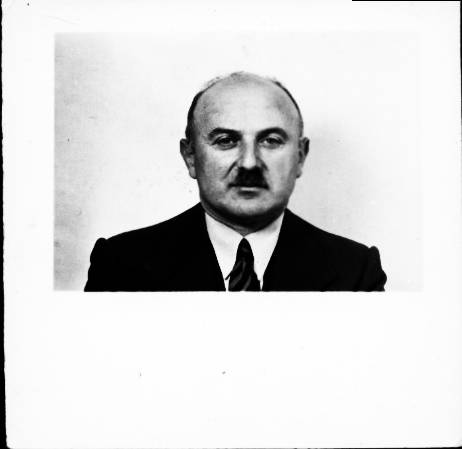
Felix Vorchheimer Courtesy of the family

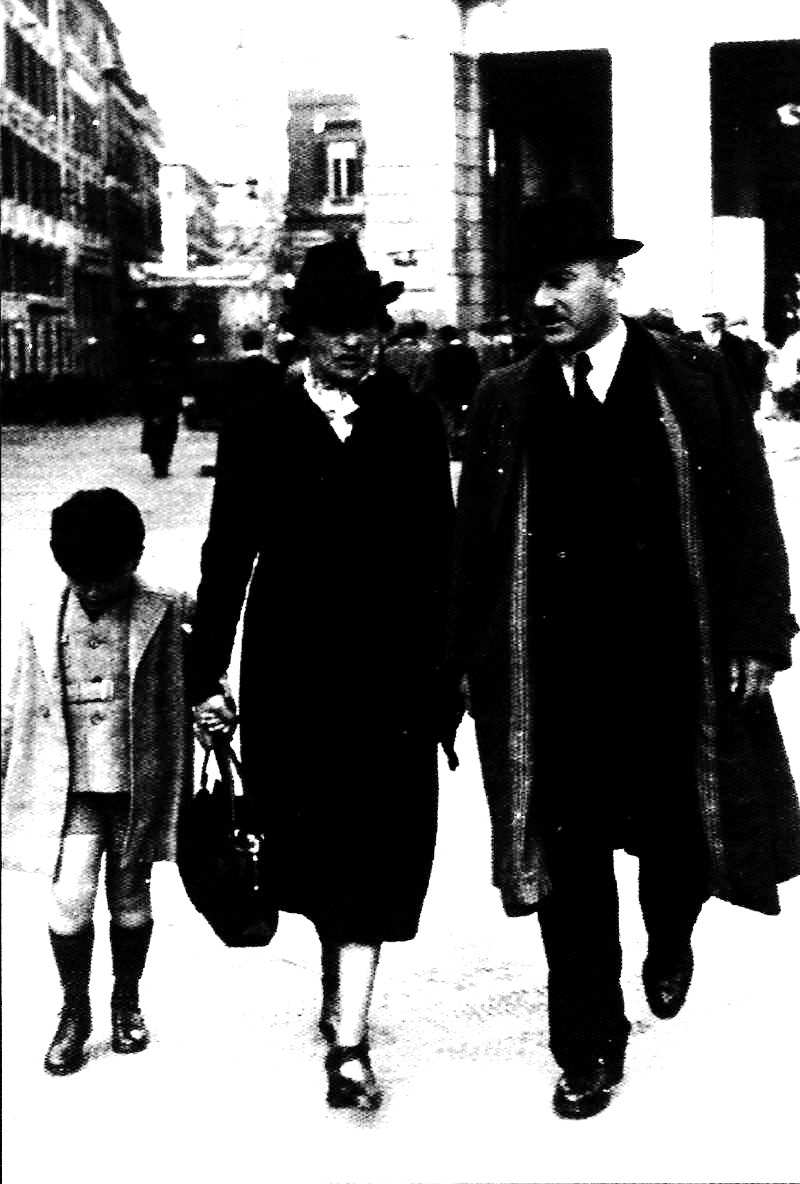
Here is a photograph of young Bert with his father Felix and maternal grandmother before Felix and Bert left for America in 1940; it was the last time he saw her. Flora’s father, Moritz, had suffered early maternal loss, as had Flora, and this must have made her especially sensitive as she raised young Bert. 

Umberto V. on left (age 7); Karolina Schild Kahn, Umberto’s maternal grandmother in middle; Felix V. on right.
Courtesy of the family

Flora became a loving Oma in 1958 and 1960, when Bert and his wife had two daughters, my sister and me.

Flora, Ellen, and Felix Vorchheimer c. 1958
Courtesy of the family

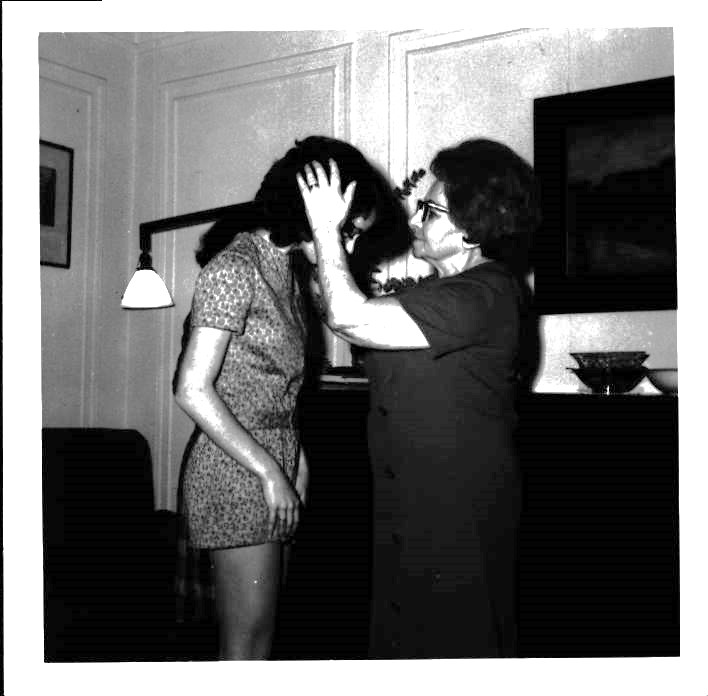
Flora cooked wonderful German-Jewish dishes, kept a candy dish of dark chocolates on the table for all guests, and was observant in a quiet and accepting way. Each time her family came to visit, before they left, she would bless us girls, placing her hands on our heads, whispering quietly in Hebrew a prayer that she never shared in English with us. At 4’10”, she would place her hands on our heads and murmur the blessing, making us feel protected and loved.

Flora blessing Ellen c 1970
Courtesy of the family

After Felix died, at age 69, in 1965, Flora lived with her older sister Gerda in an apartment in Washington Heights until her death in 1974 at age 75. Flora continued to be the epitome of chesed, or lovingkindness. Her memory is always a blessing.

Flora and Felix Vorchheimer in Vineland, New Jersey
Courtesy of the family

Years later, in 1996, a surprising encounter brought connections to my extended Blumenfeld family and much joy into my life. That year, my husband and I, after living in West Hartford, CT, for 14 years, and having belonged to a chavurah, decided we needed to join a synagogue that would provide a Hebrew school for our kids, who were 11 and 7 at that time. We decided to join Congregation Tikvoh Chadoshoh in Bloomfield, CT, which had been founded by German-Jewish refugees.

On Simchat Torah, with the music and everyone swirling about in small circles, I asked an “older” woman to dance; pulling people into the circle is something I’ve always done. The woman hesitated and asked me if I was Israeli.

Something possessed me to blurt out, “No, I’m not Israeli; I’m half-German, and my maiden name is Vorchheimer.”

The woman blurted out, “Vorchheimer, I know that name….I made the shidduch!”

I asked her, “Really? Tell me!”

So she continued, “Well, there was a widower with a little boy who had just come to America, and I matched up my cousin with him! I was at the wedding! In 1940!”

It felt like time stood still, and I said, “Was your cousin’s name Flora Blumenfeld?”

She said, “Well, yes, how do you know?!”

I pointed to my son, then 7, born on 2/4, my father’s birthday, and said, “Look, my son is the same exact age my father was when you last saw him in 1940! And that widower was my Opa Felix. Your cousin was my beloved Oma Flora, whom my daughter is named after!”

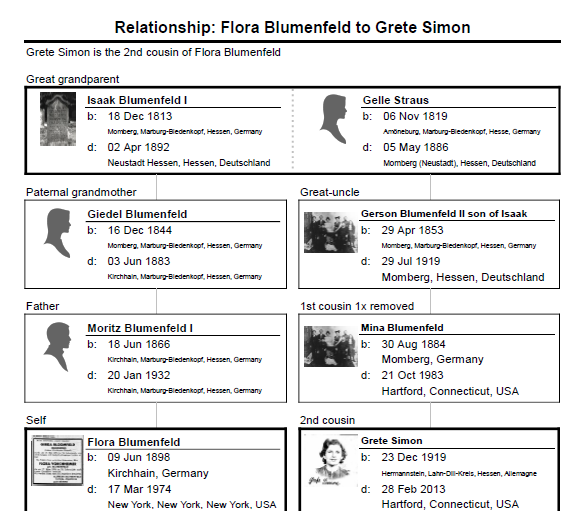
That woman, Grete Simon Spanier, was my grandmother Flora’s second cousin, as I later learned from Amy. They were both great-granddaughters of Isaak Blumenfeld and Gelle Strauss.

It was a remarkable and life-affirming moment. What are the odds? What if I’d just pulled Grete into the circle, and said, no, I’m not Israeli!?

Grete had been lost to my family for 56 years until that moment. Grete told me how Julius Vorchheimer, my grandfather’s brother, part of the Washington Heights community, had asked her if she had a relative who might be a suitable match for his recently-arrived brother Felix, and she’d thought of her cousin Flora.

Grete married Erwin Spanier shortly after attending my grandfather’s wedding to Flora and moved to West Hartford. She lost touch with Flora; Flora was very busy working on a chicken farm and raising a little boy who had been through much loss, and she was married to a man who had also seen too much loss, in both his native Germany and the place he moved to after he fought in WWI for the Germans, Milan, Italy, before emigrating to America in 1940.

The only part of this story I knew all my life was that my grandfather Felix had gotten his older brother Julius out of Dachau in 1934/35, going to the Nazis with some line (and probably money) about “How dare you imprison the brother of an Italian citizen?”

Felix freed his brother in 1934/5; Julius returned the favor by being a matchmaker in 1940. It was that chance Simchat Torah dance that brought Grete back to my family.

It felt like a curtain was pulled back on mystery, allowing me to see the invisible hand of fate in life.

Getting to know Grete and her daughters was an unexpected and wonderful gift. Grete’s memory is always a blessing.


I am so grateful to Ellen for finding me and sharing her story and photographs on my blog. The magic of family connections continues to inspire me to keep searching for all my long lost relatives.