Unknown's avatar

About Amy

I am interested in genealogy and family research, books, movies, cats, dogs, and baseball.

Henry Goldsmith, The Final Chapter: Walter, Florence, and Helen

I conclude the story of Henry Goldsmith and his family in this post with final chapters on the lives of three of his ten children, those who outlived all the others: Walter, Florence, and Helen.

Walter Goldsmith and his wife Ella Rosenberg had suffered two terrible losses early in their marriage. Their first child had lived just a few weeks, and their second, Sarah, had died in 1921 from gastroenteritis when she was four. But Walter and Ella had had three more children after Sarah, as we have seen: Edison (born shortly before Sarah’s death in 1921), Stanley (1922) and Edna (1924). Thus, in 1930 Walter and Ella had three young children, and Walter was practicing dentistry in Pittsburgh.

Walter Goldsmith and family, 1930 US census, Census Place: Pittsburgh, Allegheny, Pennsylvania; Page: 32A; Enumeration District: 0220; FHL microfilm: 2341711
Ancestry.com. 1930 United States Federal Census

The 1930s appear to have been fairly uneventful for Walter and his family, and by 1940, the three children were teenagers, and Walter continued to practice dentistry in Pittsburgh.

Walter Goldsmith and family, 1940 US census, Census Place: Pittsburgh, Allegheny, Pennsylvania; Roll: m-t0627-03662; Page: 17B; Enumeration District: 69-370
Ancestry.com. 1940 United States Federal Census

On October 16, 1942, Edison enlisted in the US Army; he’d been a salesman at Gimbel Brothers when he registered for the draft:

Edison Goldsmith, World War II draft registration, Selective Service Registration Cards, World War II: Multiple Registrations, Content Source: The National Archives, Draft Registration Cards for Pennsylvania, 10/16/1940 – 03/31/1947

Edison served in the Army as a warrant officer and was honorably discharged on January 23, 1946. From March 10, 1945, until August 8, 1945, he served overseas in World War II.1

Edison’s younger brother Stanley registered for the draft, but was not called for military service. He was nineteen at the time and not employed. He does appear in the 1942 University of Pittsburgh yearbook as a member of the photography staff of that publication, so he must have been a student when he registered for the draft. According to my cousin Robin, Stanley had very poor eyesight, yet somehow managed to become a photographer.

Stanley Goldsmith, World War II draft registration, Selective Service Registration Cards, World War II: Multiple Registrations, Content Source: The National Archives, Draft Registration Cards for Pennsylvania, 10/16/1940 – 03/31/1947

As listed in the 1954 and 1955 directories, Stanley and Edison and their sister Edna were all still living with their parents Walter and Ella at 1263 Bellerock Street in Pittsburgh. Edison was the vice-president of Manor Products, a company that manufactured awnings, and Edna was a telephone operator for the M.H. Delrick Company.  Stanley had no occupation listed. Their father Walter continued to be listed as a dentist in all these directories.2

On November 25, 1955, Edna Goldsmith married Arnold Feuerlicht.
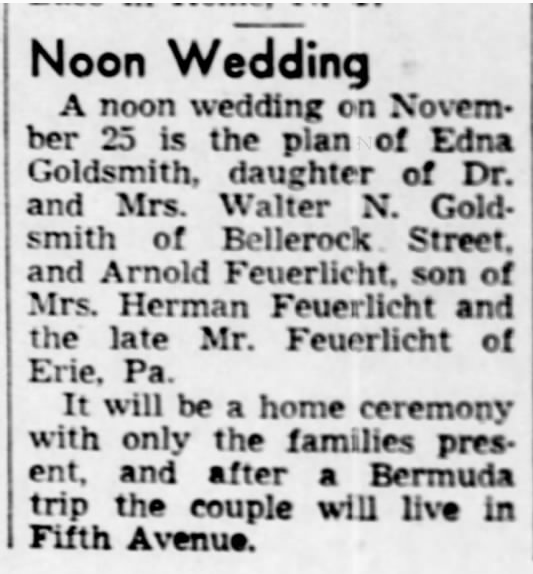
“Noon Wedding,” The Pittsburgh Post-Gazette, November 18, 1955, p. 20.

Arnold was born in Sharon, Pennsylvania, on December 13, 1919,3 to Herman Feuerlicht and Guzella Baum. His father, a Romanian-born immigrant, was a baker. His mother was born in Austria-Hungary. In 1940, the family was living in Erie, Pennsylvania, and Arnold was working as a clerk in a shoe store.4

Arnold is listed in the 1955 Pittsburgh directory as an accountant.5 He and Edna thereafter purchased a new house in Wilkins Township, Pennsylvania, and had two children. After driving cross country on vacation and seeing Los Angeles, they moved In 1968, first living with Florence, and later purchasing a home in 1971, in Beverly Hills, California. Arnold continued to work as an accountant. 6

Four years after her daughter’s wedding, Ella Rosenberg Goldsmith died in Pittsburgh on November 21, 1959 at age 72.7 Her husband Walter survived her for twelve years; he died when he was 89 in August 1971.8

Walter and Ella were survived by their three children. Stanley died on February 24, 1994, in Pittsburgh; he was 71.9 The following year his brother Edison died on November 9, 1995; he was 74.10 Neither had married or had children. Their sister Edna survived them. She died in West Los Angeles, California, on October 19, 2007, at the age of 83. Her husband Arnold died less than two months later on December 5, 2007; he was 87. Edna and Arnold were survived by their children.

With Walter Goldsmith’s death in 1971, only two of Henry Goldsmith’s ten children were still living, his two daughters, Florence and Helen.  Florence died at 91 in Beverly Hills, California, on April 22, 1975.11

That left only Helen, the youngest of Henry Goldsmith’s children. In 1930 she’d been living with her husband Edwin T. Meyer and two sons Edgar and Malcolm in Pittsburgh. Edwin was an optometrist.12

On March 19, 1938 Edgar married Esther Orringer in Weirton, West Virginia.13 Esther was the daughter of Oscar Orringer and Rose Spann and was born on March 5, 1916, in Pittsburgh.14 Her parents were Austrian-born immigrants, and in 1920 her father was in the wholesale grocery business in Pittsburgh.15 A heartfelt thank you to Cathy Meder-Dempsey of Opening Doors in Brick Walls for locating Edgar and Esther’s marriage record.
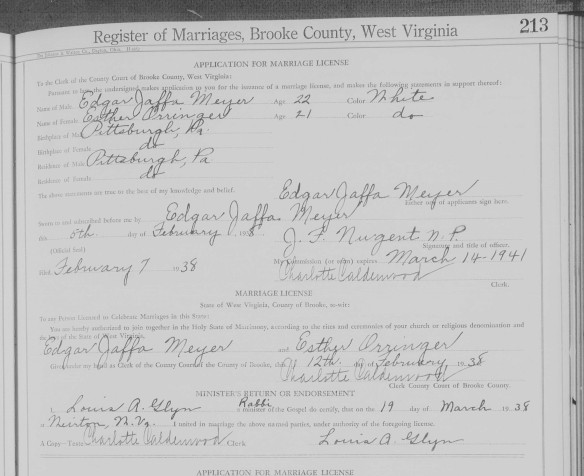
Edgar Meyer and Esther Orringer marrriage record cropped

West Virginia Vital Research Records Project (database and images), West Virginia Division of Culture and History (A collaborative venture between the West Virginia State Archives and the Genealogical Society of Utah to place vital records online via the West Virginia Archives and History Web site accessible at http://www.wvculture.org/vrr), Register of Marriages Brooke County, West Virginia, page 213, top, Marriage License of Edgar Jaffa Meyer and Esther Orringer.(http://www.wvculture.org/vrr/va_view.aspx?Id=12012126&Type=Marriage : accessed 5 July 2019).

Edgar’s brother Malcolm married Carolyn Schnurrer on September 1, 1942, in Pittsburgh. Carolyn was the daughter of Michael Max Schnurrer, an architectural draftsman, and Eva Katz, both of whom were Romanian immigrants. She was born on December 15, 1919, in Pittsburgh, Pennsylvania.16 Carolyn and Malcolm were both graduates of the University of Pittsburgh.

Pennsylvania, County Marriages, 1885-1950,” database with images, FamilySearch (https://familysearch.org/ark:/61903/1:1:VF74-G8X : 18 October 2017), Malcolm G. Meyer and Carolyn Schnurer, 01 Sep 1942; citing Marriage, Pittsburgh, Allegheny, Pennsylvania, United States, various county courts and registers, Pennslyvannia; FHL microfilm 1,992,163.

The Pittsburgh Press, October 3, 1942, p. 18

Malcolm was a lieutenant in the US Army when he and Carolyn married; he was stationed at Camp Lee, Virginia. He served in the Army from May 4, 1942, until March 2, 1946, including two and a half years overseas during World War II. When he returned, he and Carolyn settled in Pittsburgh and had two children together. Like his father Edwin, Malcolm was an optometrist.17

Edgar and Esther also stayed in Pittsburgh for some time. They had one child. When Edgar registered for the World War II draft, he was working for Gulf Research and Development Company and living in Wilkinsburg, Pennsylvania, just outside of Pittsburgh.

Edgar Meyer, World War II draft registration, Draft Registration Cards for Pennsylvania, 10/16/1940 – 03/31/1947, Selective Service Registration Cards, World War II: Multiple Registrations

But Edgar was not destined to stay in western Pennsylvania. In 1950 he is listed in the Buffalo, New York directory as a physicist.18 According to his obituary, he lived in Vienna, Austria from 1968 to 1970, working as a representative of the American Optical Company board of directors. Then he returned to the US and settled in Massachusetts where he was the manager of the medical products division of the American Optical Company from 1970 until 1972.19

During that time his father Edwin died. Edwin was 81 when he passed away on March 19, 1971.20 The family suffered another loss two years later when Malcolm’s wife Carolyn died in May 1973; she was only 53.21  Then just two years later Edgar Meyer died on April 17, 1975, in Pittsburgh, to which he had only recently returned upon retiring.  Edgar was sixty years old. He was survived by his mother Helen, his wife Esther, his brother Malcolm, his daughter, and grandchildren.22

Helen Goldsmith Meyer had lost her husband Edwin, her daughter-in-law Carolyn, and her son Edgar in the space of four years.

Helen herself died in August 1983 in Washington, Pennsylvania.  She was 93 years old.23 Her son Malcolm also lived a long life. He was also 93 when he died on May 1, 2011. He was survived by his children and grandchildren.24

I have just connected with two of Helen’s granddaughters and one of Walter’s granddaughters and hope to have more photographs and personal recollections to add to an update to this post. But for now, I have reached the end of the story of my double cousin Henry Goldsmith, his wife Sarah Jaffa, their ten children and many grandchildren.

And it brings me to the last of Simon Goldsmith’s children, my other double cousin Hannah Goldsmith, Henry’s full sister. Both Henry and Hannah were born in the US shortly after their parents immigrated; both lost their mother when they were just toddlers. Both overcame the odds and lived full and successful lives. Both lived those lives in western Pennsylvania.

Hannah’s story comes next.


  1. Ancestry.com. U.S., World War II Army Enlistment Records, 1938-1946; SSN: 181120537, Ancestry.com. U.S., Department of Veterans Affairs BIRLS Death File, 1850-2010; Ancestry.com. Pennsylvania, Veteran Compensation Application Files, WWII, 1950-1966. 
  2. Title: Pittsburgh, Pennsylvania, City Directory, 1954, 1955, Ancestry.com. U.S. City Directories, 1822-1995 
  3.  Box Title: Fessler, Elwood E – Fiedor, John F (Box 246), Ancestry.com. Pennsylvania, Veteran Compensation Application Files, WWII, 1950-1966 
  4. Herman Feuerlicht and family, 1940 US census, Census Place: Erie, Erie, Pennsylvania; Roll: m-t0627-03650; Page: 7A; Enumeration District: 68-82, Ancestry.com. 1940 United States Federal Census 
  5. Title: Pittsburgh, Pennsylvania, City Directory, 1955, Ancestry.com. U.S. City Directories, 1822-1995 
  6. Publication Title: Beverly Hills, City Directory, 1973, Ancestry.com. U.S. City Directories, 1822-1995 
  7. Ella Goldsmith death certificate, Pennsylvania Historic and Museum Commission; Pennsylvania, USA; Pennsylvania, Death Certificates, 1906-1965; Certificate Number Range: 097051-099750, Ancestry.com. Pennsylvania, Death Certificates, 1906-1966 
  8.  Number: 169-32-7384; Issue State: Pennsylvania; Issue Date: 1956-1958, Ancestry.com. U.S., Social Security Death Index, 1935-2014 
  9. SSN: 201142857, Death Certificate Number: PA 2972985, Ancestry.com. U.S., Social Security Applications and Claims Index, 1936-2007 
  10. SSN: 181120537, Ancestry.com. U.S., Social Security Applications and Claims Index, 1936-2007 
  11. Social Security #: 572443297, Ancestry.com. California, Death Index, 1940-1997 
  12. Edwin T. Meyer and family, 1930 US census, Census Place: Pittsburgh, Allegheny, Pennsylvania; Page: 33A; Enumeration District: 0234; FHL microfilm: 2341713, Ancestry.com. 1930 United States Federal Census 
  13. Marriage Date: 1938, Marriage Place: Brooke, West Virginia, United States, Ancestry.com. West Virginia, Marriages Index, 1785-1971 
  14. SSN: 170013483, Ancestry.com. U.S., Social Security Applications and Claims Index, 1936-2007 
  15. Oscar Orringer and family, 1920 US census, Census Place: Pittsburgh Ward 14, Allegheny, Pennsylvania; Roll: T625_1522; Page: 2A; Enumeration District: 548, Ancestry.com. 1920 United States Federal Census 
  16. Pennsylvania, County Marriages, 1885-1950,” database with images, FamilySearch (https://familysearch.org/ark:/61903/1:1:VF74-G8X : 18 October 2017), Malcolm G. Meyer and Carolyn Schnurer, 01 Sep 1942; citing Marriage, Pittsburgh, Allegheny, Pennsylvania, United States, various county courts and registers, Pennslyvannia; FHL microfilm 1,992,163. Schnurer family, 1940 US census, Census Place: West View, Allegheny, Pennsylvania; Roll: m-t0627-03420; Page: 12B; Enumeration District: 2-593, Ancestry.com. 1940 United States Federal Census 
  17. Ancestry.com. Pennsylvania, Veteran Compensation Application Files, WWII, 1950-1966 
  18. Publication Title: Buffalo, New York, City Directory, 1950, Ancestry.com. U.S. City Directories, 1822-1995 
  19. “Edgar J. Meyer,” The Pittsburgh Press, April 18, 1975, p. 42. 
  20. Number: 172-32-4406; Issue State: Pennsylvania; Issue Date: 1956-1958, Ancestry.com. U.S., Social Security Death Index, 1935-2014; “Dr. E. Meyer, Optometrist,” Pittsburgh Post-Gazette, 20 Mar 1971, p. 13 
  21. SSN: 301016568, Ancestry.com. U.S., Social Security Applications and Claims Index, 1936-2007 
  22. SSN: 169030713, Ancestry.com. U.S., Social Security Applications and Claims Index, 1936-2007; “Edgar J. Meyer,” The Pittsburgh Press, April 18, 1975, p. 42. 
  23. Number: 173-24-7039; Issue State: Pennsylvania; Issue Date: Before 1951, Ancestry.com. U.S., Social Security Death Index, 1935-2014 
  24. Issue State: California; Issue Date: Before 1951, Ancestry.com. U.S., Social Security Death Index, 1935-2014 

Nothing Is Better Than Getting First Hand Information about Relatives from One Who Knew Them Well

I’ve been very fortunate to connect with Henry Goldsmith’s great-grandson Robin, my fourth cousin, and he has generously shared with me some additional insights into the lives of his grandparents Milton and Luba, his parents Norman and Emphia, and other family members. As noted in the footnotes below, a good deal of the anecdotal information in this post came from Robin.

As we saw in my last post, Milton Goldsmith lost his first wife Luba on October 7, 1931. He continued to live with his two sons, Norman, who was, like his parents, a doctor, and Albert, who graduated from the University of Pittsburgh and receive a master’s degree from Harvard. And then on March 17, 1941, Milton married his cousin, Fannie Goldsmith, the great-granddaughter of Simon Goldsmith, who was also Milton’s grandfather. Milton and Fannie remained married for the rest of their lives.

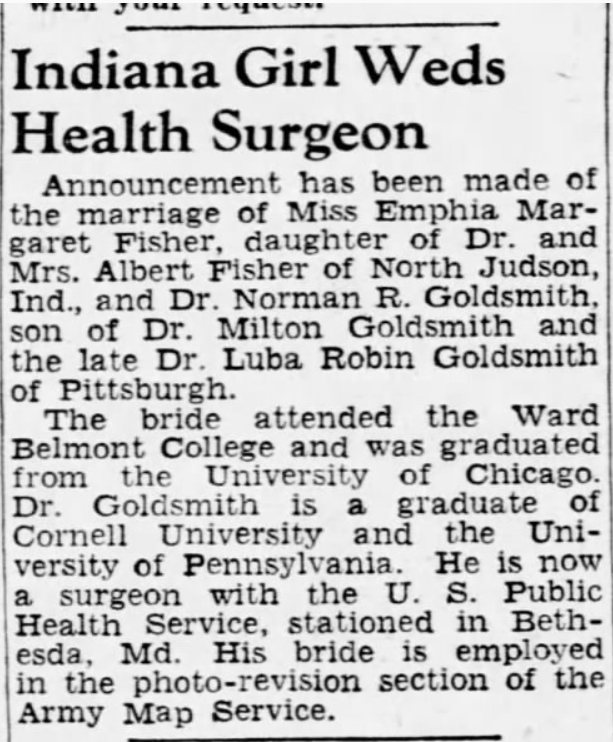
On March 24, 1944, Milton’s son Norman married Emphia Margaret Fisher in Washington, DC.1

“Indiana Girl Weds Health Surgeon,” The Pittsburgh Press, March 29, 1944, p. 18

Emphia was born on April 17, 1910, in North Judson, Indiana.2 Her father Albert Fisher was born in Ohio and was, according to his grandson, a “classic country doctor” in North Judson; Emphia’s mother Noi Collins was born in Indiana and taught in a one-room school. Emphia attended Ward-Belmont College in Nashville, Tennessee, and Purdue University in Lafayette, Indiana, before graduating from the University of Chicago.   In 1940, Emphia was living with her parents and working as a laboratory technician; she later worked as a lab technician in a Chicago hospital.3

During World War II, Emphia moved to Washington, DC and worked as a mapmaker at Fort Meade. At the same time, Norman was serving with the US Public Health Service in DC. They married and moved to Gramercy Park in New York City, where Norman started a dermatology private practice. Emphia returned briefly to North Judson to be with her mother and sister Janet for the birth of her only child, Robin. Robin was born in a Chicago hospital. As recounted by Robin himself, “Two weeks later, long before it was common, Emphia and the baby boy in a basket flew from Chicago to join Norman in New York.” Sadly, Norman had contracted multiple sclerosis, and as he began having greater difficulty walking, the family moved to “the easier-to-get-around” Lancaster, Pennsylvania,  where Norman continued to practice medicine, now in an office on the same floor as the family’s apartment.4

According to Robin, “family members visited Norman and his family fairly frequently in Lancaster. Milton and Fannie visited on their way to annual medical society meetings in Atlantic City and at other times. Albert and Amelia [his wife, see below] and Walter Goldsmith’s children Edison and Edna came quite often. Florence Goldsmith Bernstein and Rae, SR’s widow, each visited at least once. In turn, Emphia and [Robin] visited Pittsburgh probably at least once a year and saw the rest of the relatives there, including seeing Walter for dental services and later for cousin Malcolm Meyer’s (Mac)’s optometry.”

Milton’s younger son Albert remained in Pittsburgh where he was a teacher and also a lecturer on art history at the University of Pittsburgh; he also participated in multiple musical activities, as reported in this profile from 1950:

“Who’s Who in Pittsburgh Music Circles,” The Pittsburgh Press, June 4, 1950, p. 75

Although Albert was not married when this profile was written, sometime not long after its publication, he married Amelia Wheeler, who was born on August 13, 1905,5 making her ten years older than Albert and about 45 when they married. Amelia was born in Pennsylvania and grew up in Pittsburgh, the daughter of George and Amelia Wheeler.6 In 1940, she was living with her widowed mother and siblings and grandparents in Pittsburgh.  Like Albert, she was a public school teacher.7

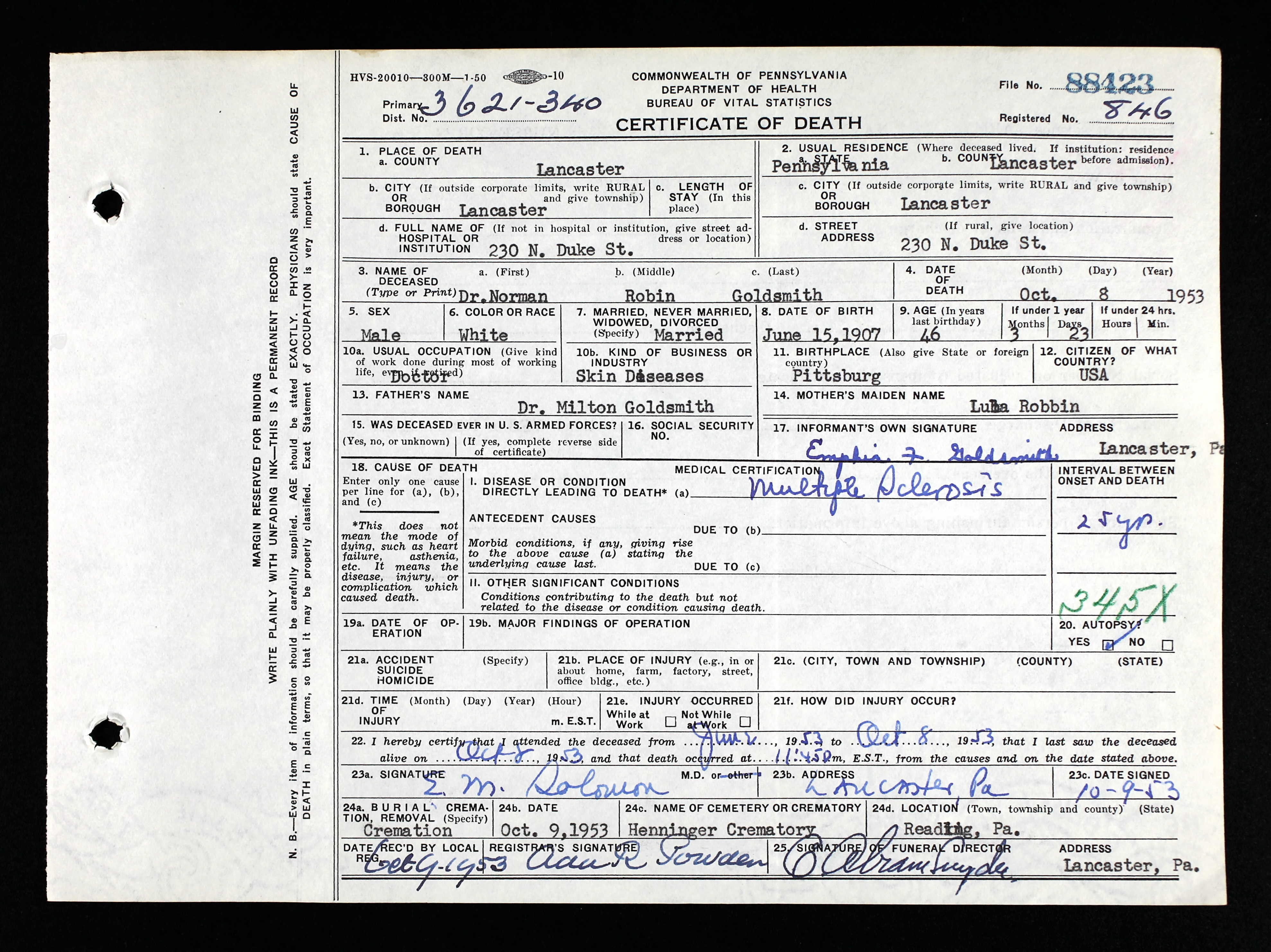
Milton’s older son Norman Goldsmith was not destined to live a long life. He died on October 8, 1953, from multiple sclerosis. He was only 46 years old, and according to his death certificate, he’d been struggling with MS for 25 years or since he was only 21.

Norman Goldsmith death certificate, Pennsylvania Historic and Museum Commission; Pennsylvania, USA; Pennsylvania, Death Certificates, 1906-1965; Certificate Number Range: 086101-088800, Ancestry.com. Pennsylvania, Death Certificates, 1906-1966

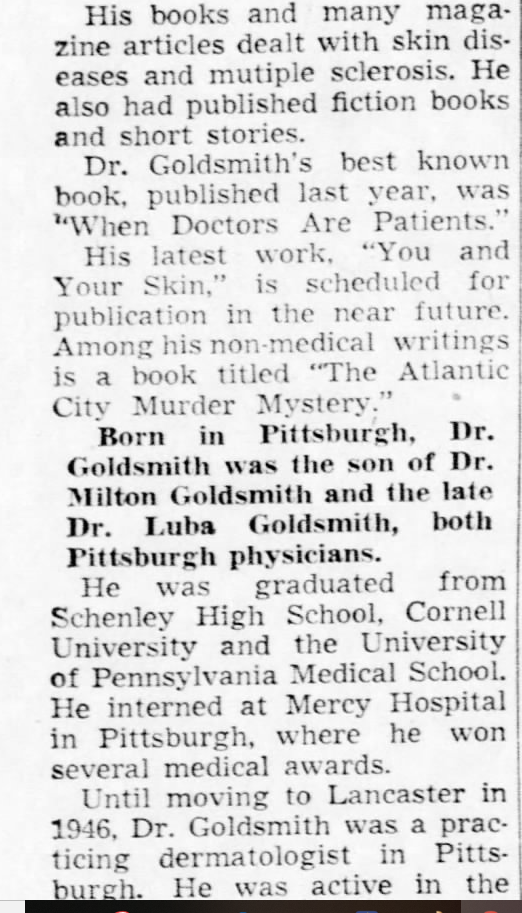
The Pittsburgh Post-Gazette published a wonderful obituary that not only noted Norman’s professional accomplishments as a dermatologist despite being confined to a wheelchair, but also his successful career as a writer. (Recall that Norman had taken a writing course at the University of Pittsburgh with his mother Luba after he’d graduated from Cornell and before starting medical school.) Norman wrote numerous fiction and medical articles, drew a comic strip about Agent X-9, and published two books, The Atlantic City Murder Mystery and You and Your Skin. He was featured in a book, When Doctors Are Patients.

“Dr. Goldsmith, Physician and Author, Dies,” The Pittsburgh Post-Gazette, October 10, 1953, p. 8.

After Norman’s death, his widow Emphia and son Robin continued living in Lancaster, though they moved from their downtown apartment house to a single-family house just outside the city. 8

In 1961, when Robin was in his freshman year of college, Emphia suffered a severe stroke while visiting her family in North Judson, Indiana, where Emphia had been born and raised and where her family lived. Robin wrote, “After years of hospitalization, she was able to move back to her mother’s home and navigate the small town despite her diminished physical and speech capacity.”9

Emphia and her sister attended Robin’s 1971 wedding in Rochester, New Hampshire, as did Albert (who, according to Robin, drove through a snowstorm from Pittsburgh because he was afraid planes would not be flying) and Edwin (Rex) and Helen (Goldsmith) Meyer’s son Edgar and his wife Esther, who had moved back from Vienna to Southboro, Massachusetts.10

Emphia died in Indiana, where she’d been born and raised, in January 1974 when she was 63. She and Norman are both buried in North Judson, Indiana.11

Meanwhile, Milton Goldsmith continued to practice medicine well into his 80s. He died at age 90 on January 10, 1968.10 His obituary appeared in both the Pittsburgh Press and the Pittsburgh Post-Gazette. 11 Both obituaries noted his pioneering work in treating diabetes as one of the first doctors to use insulin. Milton was survived by his wife Fanniey, his son Albert, and his grandson, Robin. As noted in the prior post, Fannie died on July 27, 1975, at the age of 85.

As for Albert, he, like his father Milton, lived a long life. He died at the age of 93 on October 20, 2008.12 His obituary described him as a retired Pittsburgh public school teacher of home-bound children, a teacher of employees-children with special needs at the Children’s Institute, and a teacher of current events at the Vintage Adult Day Care center. Albert’s wife Amelia had predeceased him by almost forty years; she’d died on October 2, 1970.  Albert’s nephew, his brother Norman’s son, was named as his survivor as well as Albert’s first cousin Malcolm Meyer, son of Helen Goldsmith Meyer. 13 More on him in my next post.

Milton Goldsmith, my double cousin, was a very accomplished man—a top scholar in school and a successful doctor who did important work in treating diabetes. His first wife Luba was also very accomplished—the first woman to graduate from the University of Pittsburgh Medical School, she was also a writer and lecturer. Norman Goldsmith followed in his parents’ footsteps and was also a doctor who did important work and published books. Both Luba and Norman died far too young. But Milton remarried and lived a long life with his second wife, his cousin Fannie. And his son Albert, who followed his own path and did not become a doctor, had a long career as a teacher of children with special needs and was also an accomplished musician.

Thank you from the bottom of my heart to my cousin Robin, Milton’s only grandchild, for sharing his stories with me and giving me real insights into Milton and his family.


  1. Film Number: 002319414, Ancestry.com. District of Columbia, Marriage Records, 1810-1953 
  2. Certificate Number: 44190, Roll Number: 021, Agency: Indiana State Dept. of Health, Volume Range: 350 – 354, Ancestry.com. Indiana, Birth Certificates, 1907-1940 
  3. Albert Fisher and family, 1940 US census, Census Place: North Judson, Starke, Indiana; Roll: m-t0627-01095; Page: 10A; Enumeration District: 75-12, Ancestry.com. 1940 United States Federal Census. The other information in this paragraph came from Norman and Emphia’s son Robin. 
  4. Publication Title: Lancaster, Pennsylvania, City Directory, 1946, Ancestry.com. U.S. City Directories, 1822-1995. The other information in this paragraph came from Norman and Emphia’s son Robin. 
  5.  Number: 208-18-3381; Issue State: Pennsylvania; Issue Date: Before 1951, Ancestry.com. U.S., Social Security Death Index, 1935-2014. I could not find a marriage record for Albert and Amelia, but only newspaper items naming her as Mrs. Albert Goldsmith starting in about 1950, so I am estimating that they were married sometime after the June 4, 1950, profile of Albert in the Pittsburgh newspaper. 
  6. George Wheeler and family, 1910 US census, Census Place: Pittsburgh Ward 18, Allegheny, Pennsylvania; Roll: T624_1305; Page: 1B; Enumeration District: 0523; FHL microfilm: 1375318, Ancestry.com. 1910 United States Federal Census 
  7. Amelia Wheeler, 1940 US census, Census Place: Pittsburgh, Allegheny, Pennsylvania; Roll: m-t0627-03667; Page: 62A; Enumeration District: 69-517,
    Ancestry.com. 1940 United States Federal Census 
  8. Lancaster, Pennsylvania, City Directory, 1960, Ancestry.com. U.S. City Directories, 1822-1995. The other information in this paragraph came from Norman and Emphia’s son Robin. 
  9. Information from Robin, Norman and Emphia’s son. 
  10. Estate and Proceedings Indexes, 1788-1971; Author: Allegheny County (Pennsylvania). Register of Wills; Probate Place: Allegheny, Pennsylvania, Notes: Proceedings Index, Vol 091-092, Ancestry.com. Pennsylvania, Wills and Probate Records, 1683-1993; Number: 187-36-9987; Issue State: Pennsylvania; Issue Date: 1962, Ancestry.com. U.S., Social Security Death Index, 1935-2014 
  11. “Rites Slated for Retired Oakland MD,” The Pittsburgh Press, January 11, 1968, p. 14; “Dr. Milton Goldsmith, Pioneer on Diabetes,” The Pittsburgh Post-Gazette, January 11, 1968, p. 26. 
  12.  Issue State: Massachusetts; Issue Date: Before 1951, Ancestry.com. U.S., Social Security Death Index, 1935-2014 
  13. Pittsburgh Post-Gazette, 26 Oct 2008, p. 42 

Henry Goldsmith, Part VIII: Milton Goldsmith’s Second Marriage

While many of the children of Henry Goldsmith moved to Los Angeles in the 1930s, three remained in Pittsburgh, not far from Connellsville where they were all born and raised. The three who stayed behind—Milton, Walter, and Helen—remained in the area for the rest of their lives. This post will focus on Milton.

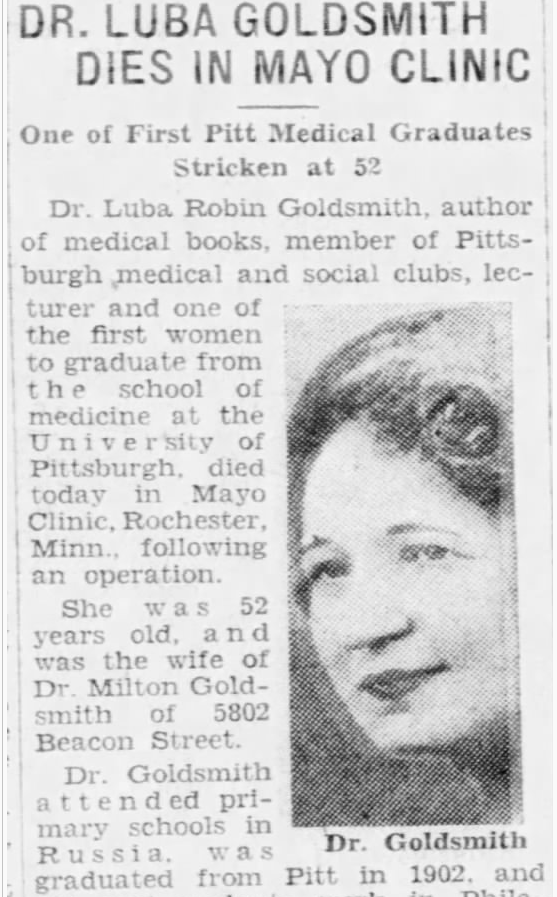
Milton had some sad times in the years after 1930. His wife Luba died on October 7, 1931, at the age of 52.1 According to her obituaries, she had been sick for over a year and died after an operation at the Mayo Clinic in Rochester, Minnesota.  The obituaries not only discussed her medical career and accomplishments but also her literary skills and accomplishments:

“Dr. Luba Goldsmith Dies in Mayo Clinic,” The Pittsburgh Press, October 7, 1931, p. 6

“Dr. Goldsmith Rites,” The Pittsburgh Post-Gazette, October 8, 1931, p. 5

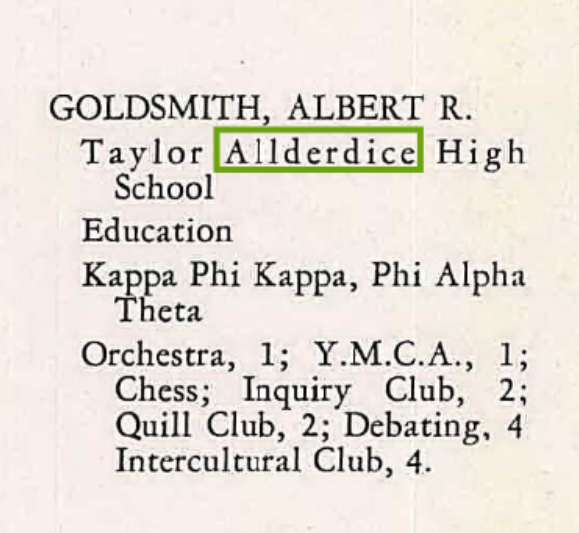
Luba was survived by her husband Milton and sons Norman and Albert. Norman had just graduated from the University of Pennsylvania medical school in June, 1931,2 and his younger brother Albert was only sixteen and still in high school. After graduating from high school, Albert went on to the University of Pittsburgh, from which he graduated in 1936:

School: University of Pittsburgh, School Location: Pittsburgh, Pennsylvania, USAYearbook Title: Owl, “U.S., School Yearbooks, 1880-2012”; Yearbook Title: Owl; Year: 1936, Ancestry.com. U.S., School Yearbooks, 1900-1990

School: University of Pittsburgh, School Location: Pittsburgh, Pennsylvania, USA
Yearbook Title: Owl, “U.S., School Yearbooks, 1880-2012”; Yearbook Title: Owl; Year: 1936, Ancestry.com. U.S., School Yearbooks, 1900-1990

He then received a master’s degree in 1937 from Harvard.3

In 1940, Milton and his two sons were living together in Pittsburgh; Albert had no occupation listed on the census, and Milton and Norman were both practicing medicine.4

Then on March 17, 1941, Milton remarried. I found this in the most indirect way and late in my research. (In fact, I’d already started drafting this post when I found this second marriage.) I was searching for Milton in Pittsburgh directories in the 1940s to see whether he was still practicing medicine, and I noticed that some of the listings in the 1940s listed him with a wife, Fanny—for example, this one in 1949.

Pittsburgh, Pennsylvania, City Directory, 1949, Ancestry.com. U.S. City Directories, 1822-1995

I had not realized that Milton had remarried until I saw those listings, so I searched for information about this second wife, Fanny. I then found this announcement in the March 19, 1941, Pittsburgh Press (p. 25):

When I saw that Fanny’s birth name was Goldsmith and that she was from Philadelphia, I wondered whether she was a member of my extended Goldsmith family. There were many Fanny Goldsmiths on my tree, most born too early to marry Milton, but some were possibilities. Plus there were many other Fannie or Fanny Goldsmiths who were not related to me or to Milton.

Then I found one who died in Pittsburgh in July 1975 on the Social Security Death Index.5  So I turned to the newspaper databases, and I found this death notice for Fannie G. Goldsmith,6 who was indeed Milton’s wife:

The Pittsburgh Post-Gazette, July 28, 1975, p. 24

And when I saw that she had a brother named Lester and a nephew George, things started to click. Fanny Goldsmith Goldsmith was the daughter of George Goldsmith and the granddaughter of my first cousin, four times removed, Jacob Goldsmith, and the great-granddaughter of Simon Goldschmidt. George Goldsmith died suddenly in 1899  from pneumonia when Fanny was only ten, as I wrote about here. By 1900 Jacob and most of his children had moved west, and I had wondered whether George’s children had much of a relationship with the other Goldsmiths, especially after their grandfather Jacob died in 1901.

But apparently there was still some connection, as Milton and Fanny found each other in 1941 when he was 63 and had been a widower for ten years and Fanny was 51 and marrying for the first time. They were half-first cousins, once removed. Fanny was the daughter of Milton’s half-first cousin, George, as this chart indicates:

(The chart, generated by my Family Tree Maker software, fails to show that Henry’s mother was Fradchen Schoenthal, not Eveline Katzenstein, and that thus Henry and Jacob were half-brothers.)

My guess is that the extended family somehow facilitated this connection, but this was not a second marriage where a father was searching for a woman to care for his children. Milton’s sons Norman and Albert were adults themselves in 1941. The fact that  Fanny’s death notice identified Albert as her son suggests that there was a close familial relationship between Fanny and Milton’s children.

So I was happy to discover that Milton had remarried after losing Luba. Meanwhile, his sons were living their own lives. More on them in my next post.


  1. Death County: Olmsted, State File Number: 010312, Certificate Number: 010312,
    Certificate Year: 1931, Record Number: 601288, Ancestry.com. Minnesota, Death Index, 1908-2002. “Dr. Luba Goldsmith Dies After Illness Extending Over Year,” The Connellsville Daily Courier, October 10, 1931, p. 7. 
  2. “Penn Graduates,” The Pittsburgh Post-Gazette, June 18, 1931, p. 6. 
  3. “Who’s Who in Pittsburgh Music Circles,” The Pittsburgh Press, June 4, 1950, p. 75. 
  4. Milton Goldsmith and sons, 1940 US census, Census Place: Pittsburgh, Allegheny, Pennsylvania; Roll: m-t0627-03653; Page: 4B; Enumeration District: 69-84, Ancestry.com. 1940 United States Federal Census 
  5.  Number: 188-36-5720; Issue State: Pennsylvania; Issue Date: 1962, Ancestry.com. U.S., Social Security Death Index, 1935-2014 
  6. As so often happens, some records spell her name Fannie, but most spell it Fanny. 

The Magic of Color

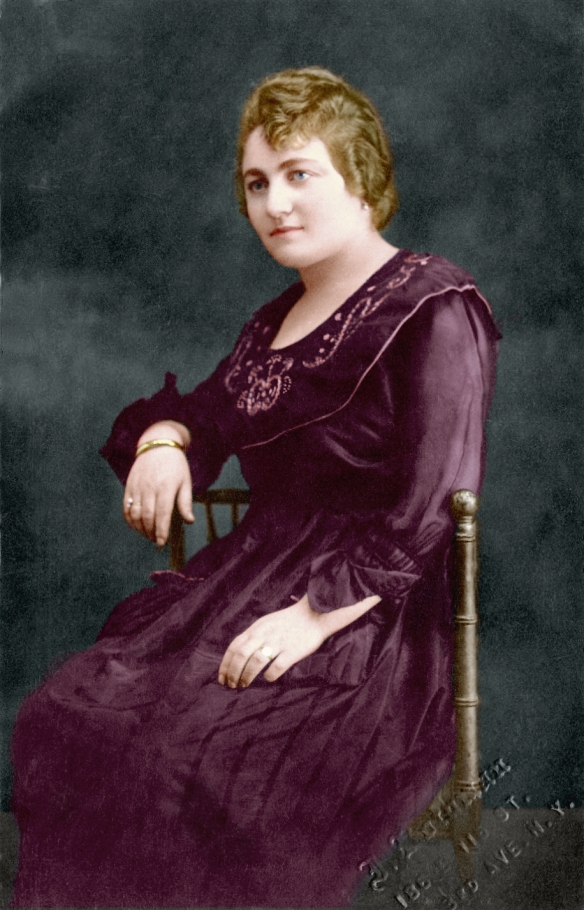
Val Erde of the Colouring the Past blog recently sent out an invitation to bloggers to try her colorization services for free. I’d seen what she did for Luanne of The Family Kalamazoo and so was intrigued by her offer. Under the terms of her invitation, she would select an appropriate black and white photograph, and if I approved of her choice, she would colorize it.

Val selected a wonderful photograph of my great-aunt Betty Goldschlager Feuerstein, my grandfather’s little sister. I asked Betty’s grandchildren if they were comfortable with having the photograph colorized, and those who responded were also intrigued. When I received Val’s finished work and shared it with them, the granddaughters all were thrilled and said that Val had brought their grandmother back to life. Unfortunately I never met Betty, but I also can see what a great job Val did.

Here is the original and Val’s rendition in color:

Betty Goldschlager Feuerstein

betty-goldschlager 1st Draft

Colorized by Val Erde 2019

Pretty remarkable, isn’t it? Val will be available to respond to any questions or comments posted in connection with this post.

Henry Goldsmith, Part VII: The Westward Migration

For many of Henry Goldsmith’s children and grandchildren, the 1930s were years of westward movement. I don’t know what motivated this migration to California. Was it inspired by the ill-fated Jack Goldsmith, who went there in 1932 to study law at the University of Southern California and died in 1933 when he was just 24? Or was it the promise of greater opportunities in the years of the Great Depression? Perhaps that was what had inspired Jack Goldsmith to move to California in the first place. I don’t know.

Jack’s parents SR and Rae Goldsmith were possibly the first of Henry Goldsmith’s children to relocate. By 1935, SR and Rae Goldsmith had moved to Los Angeles. In 1936, SR was practicing law there, and in 1940 he was working as a stockbroker.1

But by 1940 three more of Henry Goldsmith’s eight surviving children were living in Los Angeles as well as two of his grandchildren. In fact, it appears that those two grandchildren may have led the way.  By March 13, 1934, Eleanor Goldsmith, JW’s daughter, and her husband Julian Rosenbaum and their children were living in Los Angeles, as reflected in Julian’s application for veteran’s compensation:

Box Title: Rooney, Andrew – Rosentall, Sam (369), Ancestry.com. Pennsylvania, WWI Veterans Service and Compensation Files, 1917-1919, 1934-1948

Eleanor’s brother J. Edison Goldsmith soon joined her in California. He graduated from medical school in 1935 and then took an internship at Cedars of Lebanon Hospital in Los Angeles:

“Edison Goldsmith Medical Graduate,” The Connellsville Daily Courier, June 13, 1935, p. 2.

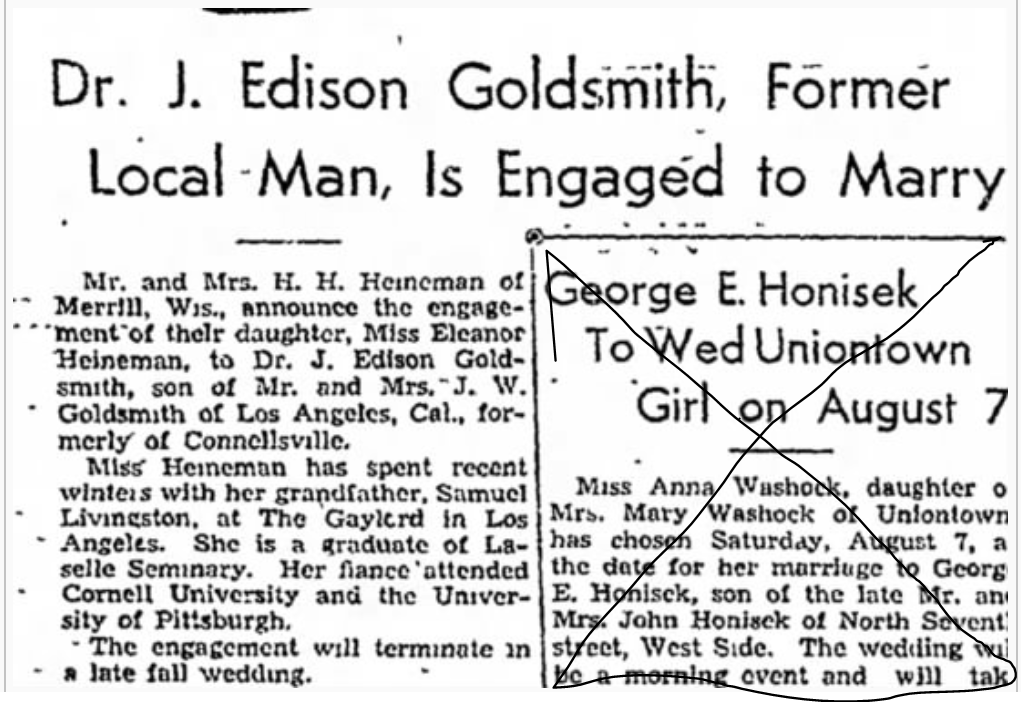
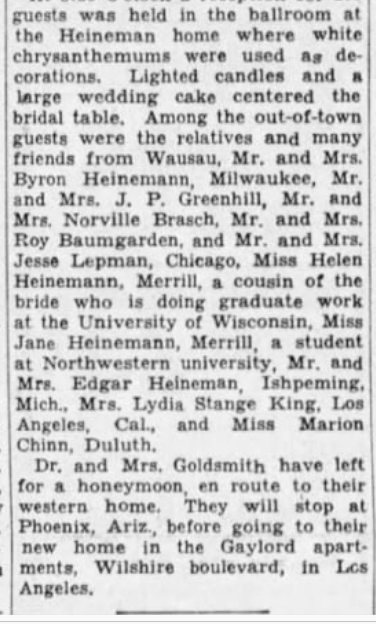
By July 1937, Eleanor and J. Edison’s parents, JW and Jennie Goldsmith, had also relocated to Los Angeles, as revealed in this news article about J. Edison’s engagement to Eleanor Heineman:

“Dr. J. Edison Goldsmith, Former Local Man, Is Engaged to Marry,” The Connellsville Daily Courier, July 24, 1937, p. 2.

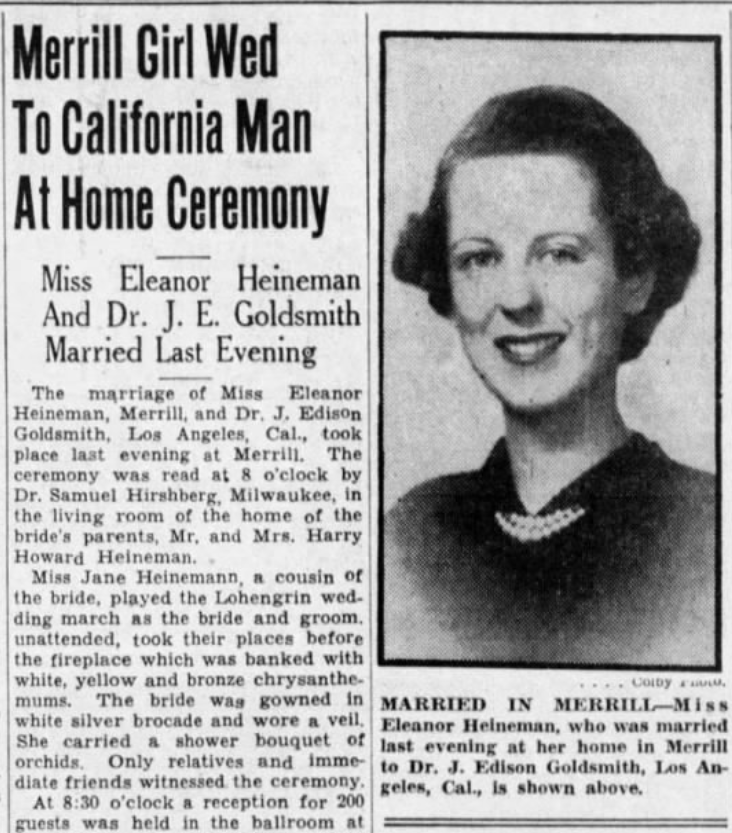
J. Edison must have met his wife Eleanor while she was spending winters with her grandfather in Los Angeles. She was the daughter of Harry H. Heineman and Grace Livingston and was born on March 14, 1912 in Merrill, Wisconsin, where she was raised. Her father was a lumberman there.2 She and J. Edison were married on October 14, 1937, in Merrill, Wisconsin,3 and then settled in Los Angeles. In 1940 they were living with Eleanor’s mother Grace, and J. Edison was practicing medicine.3

“Merrill Girl Wed to California Man At Home Ceremony,” Wausau (WI) Daily Herald, October 15, 1937, p. 7

“Merrill Girl Wed to California Man At Home Ceremony,” Wausau (WI) Daily Herald, October 15, 1937, p. 7

In 1940, J. Edison’s parents JW and Jennie were sharing their household with yet another Goldsmith sibling, JW’s brother and long-time business partner Benjamin. That meant that there were now three Goldsmith brothers living in Los Angeles, SR, JW and Benjamin.

Benjamin and JW Goldsmith, 1940 US census, Census Place: Los Angeles, Los Angeles, California; Roll: m-t0627-00404; Page: 64B; Enumeration District: 60-200
Ancestry.com. 1940 United States Federal Census

And at some point before the 1940 census was taken, the Los Angeles Goldsmith brothers were joined by their sister Florence and her husband Lester Bernstein. Interestingly, Lester was enumerated twice on the 1940 census. On April 10, he was enumerated in Pittsburgh, living as a lodger with his sister-in-law and brother-in-law, Helen and Edwin Meyer; he was working as a real estate salesman. And then on May 1, he was enumerated in Los Angeles, living with Florence and working as a business analyst in the oil industry. Perhaps he’d been waiting for a job to come through before relocating.4

The following year the family lost their oldest sibling when JW Goldsmith died on October 9, 1941, at the age of 69. He was survived by his wife Jennie, his two children Eleanor and J. Edison, and two grandchildren with one yet to come.5

The last of the Goldsmith siblings to relocate to Los Angeles was Oliver, but he did not relocate until after the 1940 census. Oliver’s reasons for moving may have stemmed from the loss of his wife Sally on September 30, 1937, in Reading, Pennsylvania,6 where they had been living since about 1930 and where Oliver was practicing law. Sally died from a fulminating streptococcal infection of the throat and larynx and from septicemia. She was only 47. Oliver stayed in Reading for several more years, and in 1940 he was living alone and practicing law there.7

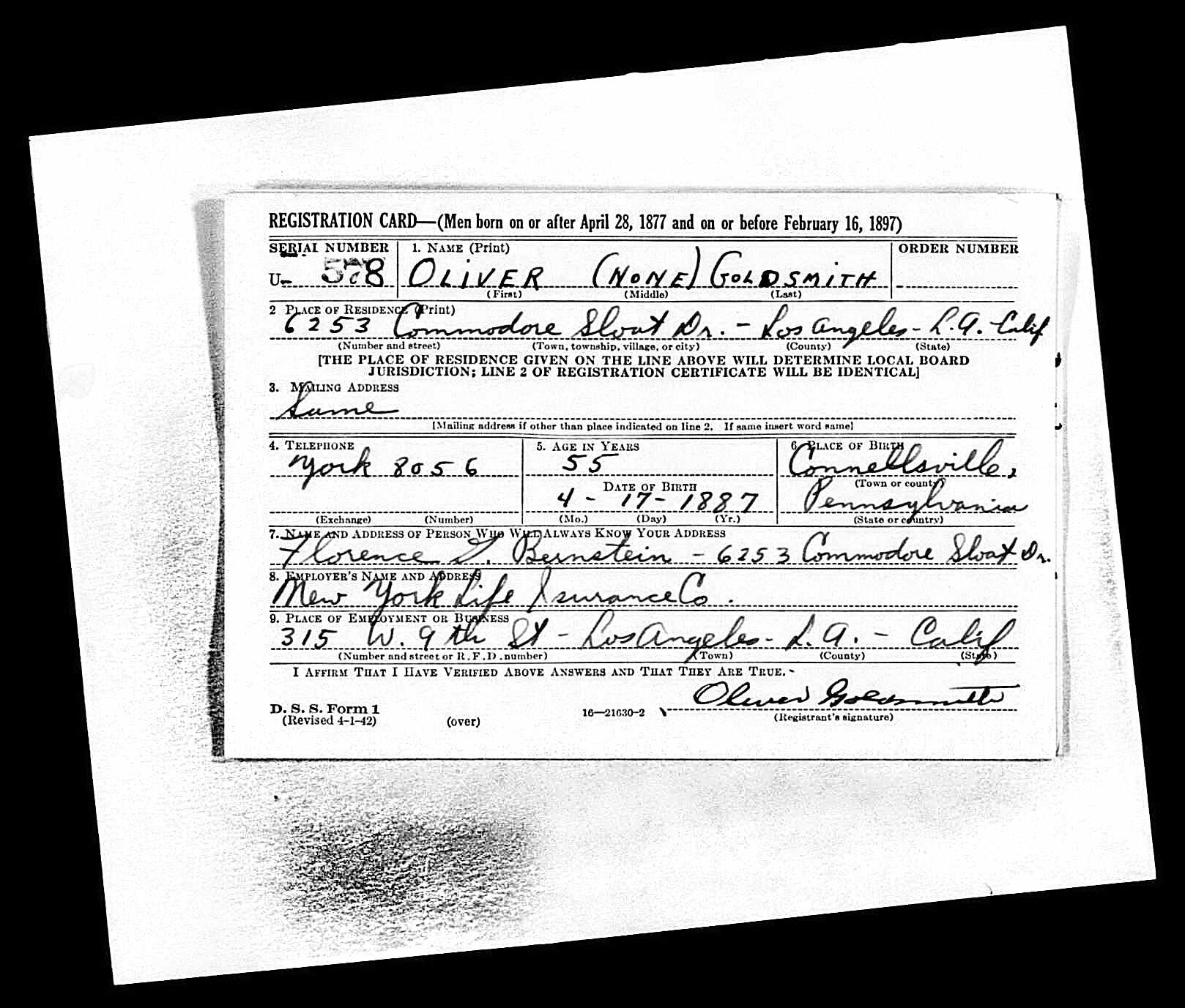
But by 1942 Oliver had followed his other siblings to Los Angeles. When he registered for the World War II draft, he was living with his sister Florence Goldsmith Bernstein and working for New York Life Insurance Company in Los Angeles. There were then only three siblings left in Pennsylvania: Milton, Walter, and Helen.

Oliver Goldsmith, World War II draft registration, The National Archives at St. Louis; St. Louis, Missouri; World War II Draft Cards (4th Registration) for the State of California; Record Group Title: Records of the Selective Service System, 1926-1975; Record Group Number: 147
Ancestry.com. U.S., World War II Draft Registration Cards, 1942

The 1940s brought three more deaths to the family in Los Angeles. JW’s wife Jennie died on September 1, 1945, after suffering a heart attack; she was 72. JW and Jennie were survived by their two children and their grandchildren.8

Then Samuel Reginald “SR” Goldsmith died on June 1, 1948, in Los Angeles; he was 69.9 He was survived by his wife Rae, who died on April 26, 1972, at age 89 in Los Angeles.10 Their son Jack had predeceased them, as we saw.

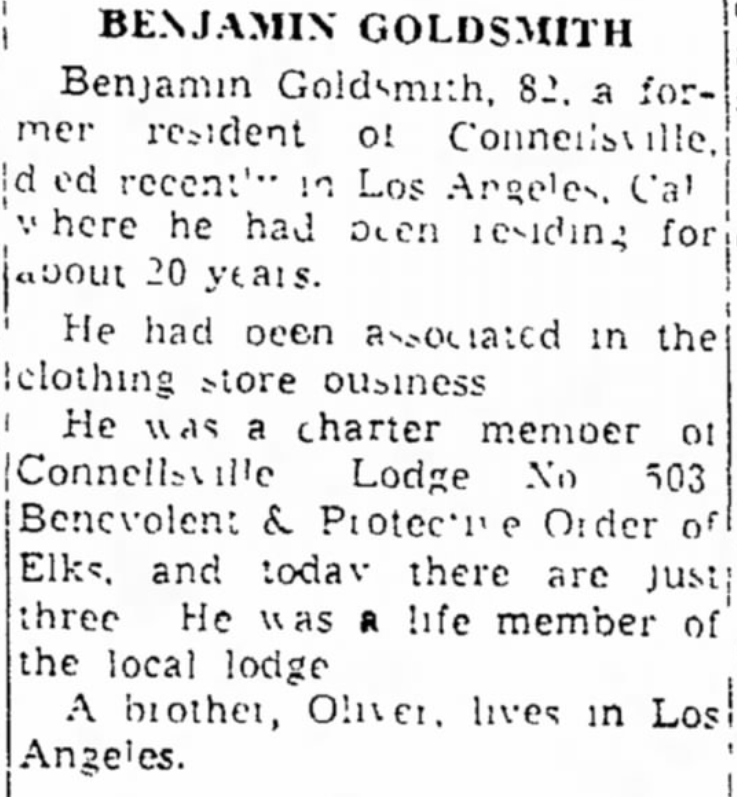
Benjamin Goldsmith was the next to die; he died on September 25, 1955, in Los Angeles. He was 82.11

The Connellsville Daily Courier, October 25, 1955, p. 2

And he was followed three years later by his younger brother Oliver, who died on December 2, 1958.  He was only 71. Oliver had still been living with his sister Florence when he died. Neither Benjamin nor Oliver had children who survived them.12

Thus, by 1959, all four of the Goldsmith brothers who’d moved to Los Angeles had passed away. They were survived by the other four siblings: Florence in Los Angeles, and Milton, Walter, and Helen back in Pittsburgh. It’s interesting that the three siblings who stayed behind in Pennsylvania outlived the four brothers who’d moved west. Perhaps moving to California had been more stressful for the family than they expected.

More on the three who stayed behind—Milton, Walter, and Helen—in my next series of posts.


  1. California State Library; Sacramento, California; Great Register of Voters, 1900-1968, Ancestry.com. California, Voter Registrations, 1900-1968; S.R. and Rae Goldsmith, 1940 US census, Census Place: Beverly Hills, Los Angeles, California; Roll: m-t0627-00221; Page: 6A; Enumeration District: 19-43, Ancestry.com. 1940 United States Federal Census 
  2. Eleanor Heineman, Number: 560-56-6368; Issue State: California; Issue Date: 1957, Ancestry.com. U.S., Social Security Death Index, 1935-2014. The National Archives at Washington, D.C.; Washington, D.C.; Passenger Lists of Vessels Arriving at San Pedro/Wilmington/Los Angeles, California; NAI Number: 4486355; Record Group Title: Records of the Immigration and Naturalization Service, 1787-2004; Record Group Number: 85, Description NARA Roll Number: 058, Ancestry.com. California, Passenger and Crew Lists, 1882-1959. Harry Heineman and family, 1930 US census, Census Place: Merrill, Lincoln, Wisconsin; Page: 2B; Enumeration District: 0008; FHL microfilm: 2342314, Ancestry.com. 1930 United States Federal Census. Grace Livingston birth record, FHL Film Number: 1287900, Ancestry.com. Cook County, Illinois, Birth Certificates Index, 1871-1922. 
  3. Edison and Eleanor Goldsmith, 1940 US census, Census Place: Beverly Hills, Los Angeles, California; Roll: m-t0627-00221; Page: 3B; Enumeration District: 19-40, Ancestry.com. 1940 United States Federal Census 
  4. Lester and Florence Bernstein, 1940 US census, Census Place: Los Angeles, Los Angeles, California; Roll: m-t0627-00405; Page: 9B; Enumeration District: 60-205, Ancestry.com. 1940 United States Federal Census; Lester Bernstein, 1940 US census, Census Place: Pittsburgh, Allegheny, Pennsylvania; Roll: m-t0627-03663; Page: 6B; Enumeration District: 69-388, Ancestry.com. 1940 United States Federal Census 
  5. Ancestry.com. California, Death Index, 1940-1997 
  6.  Certificate Number: 85944, Pennsylvania Historic and Museum Commission; Pennsylvania, USA; Pennsylvania, Death Certificates, 1906-1965; Certificate Number Range: 083001-086000, Ancestry.com. Pennsylvania, Death Certificates, 1906-1966 
  7. Oliver Goldsmith, 1940 US census, Census Place: Reading, Berks, Pennsylvania; Roll: m-t0627-03679; Page: 2B; Enumeration District: 70-35, Ancestry.com. 1940 United States Federal Census 
  8. “Mrs. J.W. Goldsmith,” The Connellsville Daily Courier, September 4, 1945, p. 2; https://www.findagrave.com/memorial/120802115 
  9. Ancestry.com. California, Death Index, 1940-1997 
  10.  Number: 549-66-0941; Issue State: California; Issue Date: 1962, Ancestry.com. U.S., Social Security Death Index, 1935-201 
  11. Ancestry.com. California, Death Index, 1940-1997. 
  12. Ancestry.com. California, Death Index, 1940-1997; “Oliver Goldsmith,” The Connellsville Daily Courier, December 30, 1958, p. 3. 

Henry Goldsmith’s Grandsons: College Men

Before I left for England, I had been writing about Henry Goldsmith, my double cousin, related to me both as a Goldsmith and as a Schoenthal. Henry and his wife Sarah Jaffa had ten children, eight of whom were still living in 1920, all in western Pennsylvania. Sarah died in 1907, and Henry died in 1923. By then, six of their eight surviving children were married, and there were numerous grandchildren.

Two of their sons (JW and Benjamin) were in business together as merchants, one (Milton) was a doctor, one (Walter) a dentist, and two (SR and Oliver) were lawyers. Their two daughters also were quite accomplished, one (Florence) as a musician, the other (Helen) a teacher until she married and had a family. But we saw that after Henry’s death, there’d been some changes in the sons’ careers and that Oliver had moved away and married in Florida.

In the 1920s, not only were Henry Goldsmith’s sons making changes, his grandsons were as well. Three of his grandsons went away to college in the 1920s.

Norman, Milton and Luba Goldsmith’s older son, graduated from Cornell University in 1927.  Here is his photograph (left) from the 1927 Cornell yearbook:

“U.S., School Yearbooks, 1880-2012”; Yearbook Title: Cornellian; Year: 1927
Ancestry.com. U.S., School Yearbooks, 1900-1990

During the summer after his graduation from Cornell, Norman took a writing course with his mother Luba at the University of Pittsburgh, as reported in detail in the July 28, 1927 Pittsburgh Press..  Here is just a short excerpt from the article, which mostly focuses on Luba’s writing interests and background:

“Pitt’s First Co-Ed and Son Studying in Same Class,” The Pittsburgh Press, July 28, 1927, p. 4

Again the doctor looks at literature. Dr. Luba Robin Goldsmith, practicing physician for 21 years, is a student of composition in the University of Pittsburgh summer school. Attending some of her classes is her son, Norman R. Goldsmith, aged 20, a graduate of the 1927 class of Cornell university, who will enter the University of Pennsylvania in the fall. ….

Beside her in Prof. Maulsby’s class in journalism each morning is her son, Norman R. Goldsmith, who, like his two parents will be a medical doctor. He is tall, attractive with his mother’s blue eyes and open countenance.  When questioned as to his correlation of medicine and writing, he said:

“Medicine I want to make my vocation; literature my avocation, if possible. I like to write. I think that’s about all.” He wants to write fiction, chiefly short stories.  He has already written a book, “Liebestraum,” printed privately in a small edition. In the Goldsmith home in Squirrel Hill is Albert, aged 12, whose career has not yet been determined. He is sturdy and athletic, likes music and writes a little.

Norman then began his medical education at the University of Pennsylvania, following in the footsteps of his mother and father, who were both doctors.1

Norman’s cousin, J. Edison, who was one year younger than Norman and the son of JW and Jennie Goldsmith, followed his cousin to Cornell, but completed his undergraduate studies at the University of Pittsburgh. He then went to the Hahnemann Medical School in Philadelphia.2

Finally, the third cousin, Jack Goldsmith, son of SR and Rae Goldsmith, was a year younger than J.Edison. Like his father, Jack went to the University of Michigan, from which he graduated in 1931. He chose law as his profession, following in his father’s footsteps; he attended Harvard Law School for a year and then transferred to the law school at the University of Southern California.3

And then tragedy struck. Jack Tumpson Goldsmith, the only son of SR Goldsmith and his wife Rae, died on March 21, 1933 at the age of 24. Excerpts from the full obituary are transcribed below:

“Funeral Service for Jack Goldsmith Thursday Afternoon,” The Connellsville Daily Courier, March 22, 1933, p. 5.

The funeral service for Jack Tumpson Goldsmith, whose death occurred yesterday morning in New York, will be held at 2:30 o’clock Thursday afternoon at the residence in Wills road. ….

A heart condition, which followed a severe attack of arthritis in December, caused death at 9:50 o’clock Tuesday morning at the apartment of Jack’s aunts, Misses Anne and Martha Tumpson. He was 24 years old.

The young man, a son of Attorney Samuel R. and Rae Tumpson Goldsmith of this city, was completing a law course at the University of Southern California when his illness began. In recent weeks his health failed rapidly, but many friends were unaware of the seriousness of his condition and his death created a profound shock.

Jack Goldsmith was widely known in Connellsville and other places. He made friends readily and was rather widely traveled. He was a brilliant student and made scholastic records at the institutions which he attended. Although equipping himself for the practice of law he was keenly interested in journalism and writing of short stories and poems. He frequently submitted articles to publishers, some of them being accepted.  During a summer vacation, he was employed on the reportorial staff of The Courier.  It being his desire to further acquaint himself with journalistic work through actual experience.

Born on January 28, 1909, in Connellsville, Jack attended the public schools here.  After two years in the Connellsvillle High School he entered Staunton Military Academy, where he was graduated with honors. While there he was a member of the school band and very active in student affairs. He next entered the University of Michigan, where he received his bachelor of arts degree in 1931.

At Michigan he was a member of the editorial staff of the school paper and was able to give wide scope to his desire for journalistic effort. He also became a member of the college gymnasium team, the first ever to represent the university in intercollegiate competition. He was awarded a letter for his success in that department. He was also a member of the Pi Lambda Phi fraternity.

Upon completion of his course there he entered Harvard Law School, spending one year at that place. Then he felt he might like to locate, upon graduation, in California, and in order to better reach a decision he transferred his study of law to the University of Southern California last year.

It was while his parents were on a visit with him during the Christmas holiday that he suffered an acute attack of arthritis.  It was quite severe on December 27. He was taken to the Cedar of Lebanon Hospital at Los Angeles, where he spent three weeks. The illness left him with a heart condition.

On February 22 he journed across the continent by train, going to the apartment of his aunts in New York. There he was confined to his bed for three weeks. His mother was constantly with him and his father spent the major portion of the past three weeks in New York also. Both were at his bedside when death occurred.

One of the best friends Jack Goldsmith had made in Connellsville was Rev. E. H. Stevens, pastor of the First Baptist Church. Despite the great difference in their ages, they would often spend hours together in the discussion of philosophy. With much in common, especially the ideas the younger generation are now confronting, they became very close to one another. Rev. Stevens has been invited by the family to take part in the funeral service.

What a terrible loss to the family and to the community. I was puzzled by the connection between arthritis and a heart condition, but after a little research, I believe that Jack suffered from rheumatoid arthritis, an autoimmune disease, not the arthritis most of us association with joint pain. Rheumatoid arthritis is associated with damage to the heart.

I also was puzzled by the reference to the “college gymnasium team,” but found references to this terminology in some older sources referring to some kind of athletic team, though I am not sure exactly which sport. It might be gymnastics.

Jack Goldsmith is buried in Glendale, California. As we will see in the next post, among his other legacies, Jack may have inspired many in his extended family to leave Pennsylvania for the California dream.


  1. “Get Penn Degrees,” Pittsburgh Post-Gazette, June 18, 1931, p. 6. 
  2. The Connellsville Daily Courier, April 2, 1927, p. 6; The Connellsville Daily Courier, December 22, 1928, p. 6; The Connellsville Daily Courier, June 13, 1965, p. 2. 
  3. “Funeral Service for Jack Goldsmith Thursday Afternoon,” The Connellsville Daily Courier, March 22, 1933, p. 5. 

England, Part V: The Final Day

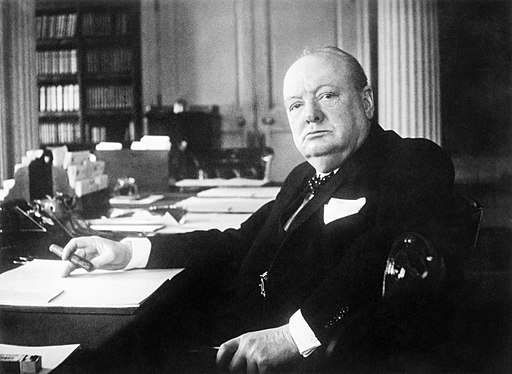
Our last day in England was as action-packed as our first two days in London. We had planned to go to Churchill’s War Rooms. Several friends had recommended it, and after seeing The Darkest Hour, we were both very interested in learning more about Winston Churchill and his role in World War II. We had passed the site the day before and noted the very, very long line of people on the sidewalk and decided that we’d better get there as early as we could.

We showed up at 9:10, knowing that the museum didn’t open until 9:30. There was already a line ahead of us—perhaps about thirty people. What we hadn’t realized was that it would have been possible to buy tickets ahead of time for a set time on the priority line, but now it was too late. As we stood outside waiting, the line behind us grew longer and longer, stretching down the block almost to the corner by the time the doors opened at 9:30. Then we had to wait as the priority ticketholders entered. Every ten minutes or so they would allow in more people, including a few from the regular line.

We finally entered at 10:20, saying to each other, “This had better be worth the wait.” It was. Without question.

We spent two hours underground at the exhibit. The audioguides were excellent, providing clear directions on where to go and lots of information about what we were seeing as well as interviews with some of those who worked in the war rooms with Churchill. It was a fascinating tour. Seeing the spaces that were recreated in the movie and realizing that these men and women had spent days and nights during the long years of the war burrowed beneath the ground, doing intelligence work and collecting information about the war’s progress, made us appreciate even more Churchill’s leadership and commitment to winning the war.

There is one very large gallery devoted to an exhibit about Churchill’s life. For some reason they decided to start with the war years, then the post-war years and his death, and then his early years as a child, a young adult, and a politician. I found that room a bit confusing and overwhelming. Maybe because I am such a linear person and like things to be in chronological order. I most enjoyed hearing some of Churchill’s speeches in his own voice and also seeing pictures of him and his family as a boy and then as a father and husband.

We finally emerged from the dark around noontime and were grateful to see sunlight, although it was a cloudy and gray day. We walked over the Westminster Bridge. Well, we tried to walk. The throngs of people made it as crazy as being in Times Square before theaters open. You could barely move. We were heading to the Tate Modern, which is on the other side of the Thames. When we finally managed to get away from the crowds, it was quite a relief.

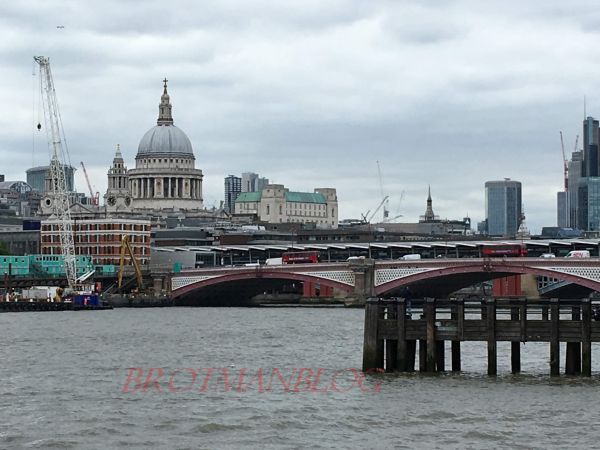
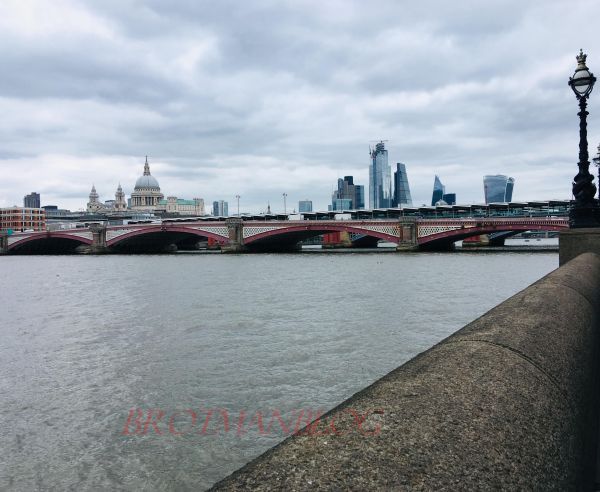
After a quick lunch, we continued our walk to the Tate Modern. We enjoyed the walk along the river with the London skyline in view—we could see St Paul’s Cathedral and all the modern skyscrapers that we had seen the day before, but now from a distance with the river in the foreground.

We finally reached the Tate Modern, and it is an imposing structure. Once a power station, it was converted to a museum and opened in 2000. I can’t say that I found it a terribly inviting building—it still looks more like a power station than a museum, although there are glass additions on top of the old building.

Entering the building felt a bit like entering a huge train station—a very large open hall descending down towards the ticket booth and museum itself.

We went to two of the exhibits, the first being Artist and Society, which focused on how artists use their art to comment on society. Some of those works were very provocative—like the collection of firehoses attached to each other to evoke the hoses used to spray African American protesters during the civil rights movement in the US or a series of photographs showing the demolition of buildings in the name of urban renewal. But some just left me cold, like the one of strange large forms just strewn on the floor.

The second exhibit we saw was more traditional and included works of artists who were more familiar, such as Picasso, Dali, and Rothko. It focused on the artistic process itself. I enjoyed that exhibit more than the first because I tend to be more conventional in my idea of what is art and prefer art that is more about aesthetics than politics.

We wanted to take the elevator up to see the observatory on the tenth floor. But the lines were too long, and we gave up. I think we’d just had enough of crowds for the day.

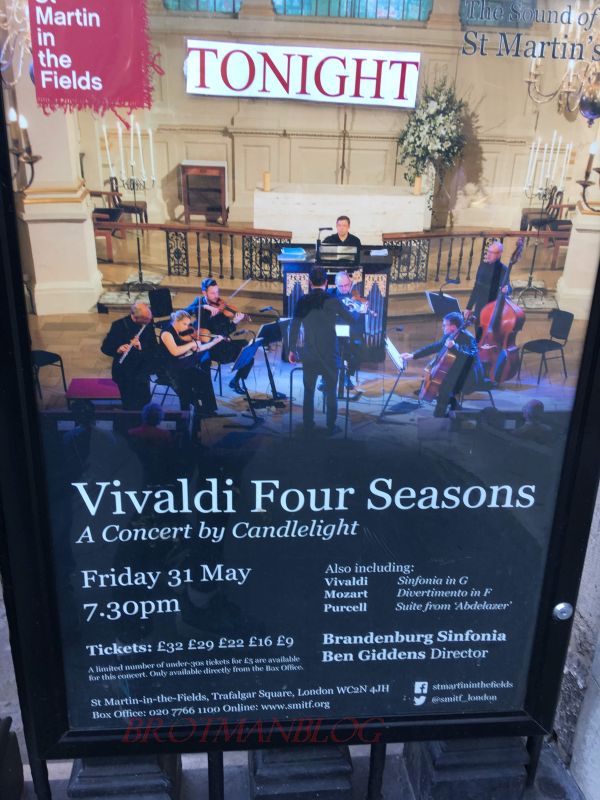
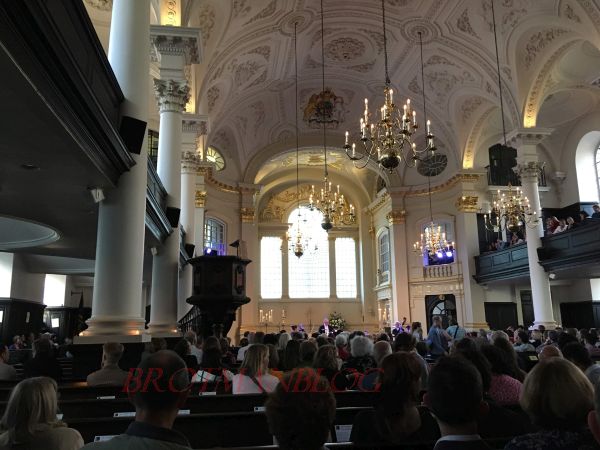
Our last evening in London was much less hectic than the day. We took an Uber to Covent Garden and had a fabulous sushi dinner at Sticks and Sushi. Then we walked from there to St Martin-in-the Fields Church for a concert of Vivaldi, Mozart, and Purcell. The music was soothing and relaxing, and the setting quite beautiful.

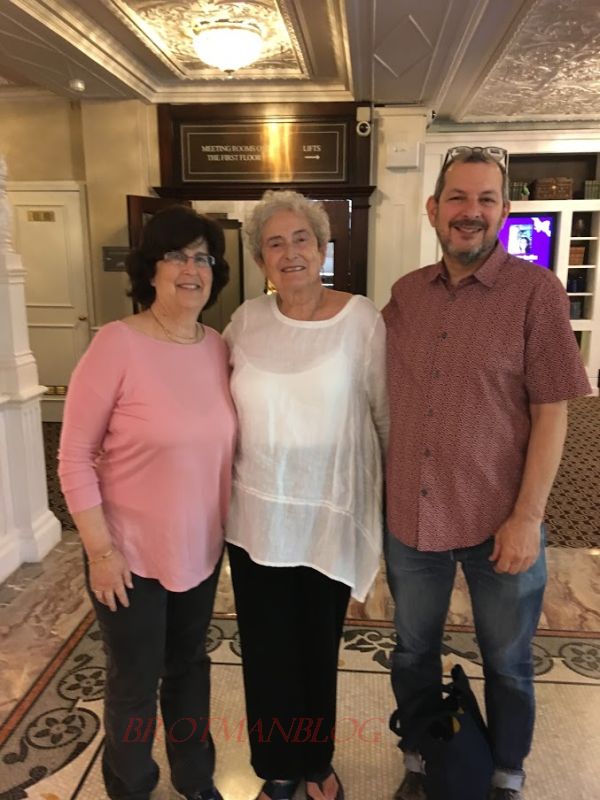
For our last morning in England, we had the wonderful treat of meeting two of my cousins—Annette, my fourth cousin, once removed, and Mark, my fifth cousin. Annette and Mark are related to me through my Seligmann family. We are all descended from Jakob Seligmann and Martha Mayer, my four-times great-grandparents. Mark and Annette descend from Jakob and Martha’s daughter Caroline who married Moses Morreau, and I descend from Jakob and Martha’s son Moritz. We had a delightful time together—sharing family history and our own stories. Mark and I have now continued to share and explore our mutual family history.

And after saying goodbye to my cousins, we packed our bags and headed for Heathrow for the flight back to the US. I was quite sad to leave. It had been a perfect vacation with the right mix of relaxation, exercise, gorgeous views, art and culture, history, and friendly people. I was in no way ready for it to end.

But it did, and now I have found great pleasure in recreating and remembering it all through my blog. I hope you have enjoyed my travelogue as well. Thanks for coming along.

Next—a return to the story of the children of Henry Goldsmith.


England, Part IV: Visiting My Ancestors’ Neighborhood

One of the reasons I wanted to revisit London on this trip to England was that when we first visited London in 1995, I had no idea that I had ancestors who once lived there. I did not start doing family history research until 2012, and sometime thereafter I learned that my three-times great-grandfather Hart Levy Cohen was born in Amsterdam, but had immigrated to England and settled in London by 1799. He married my three-times great-grandmother Rachel Jacobs at the Great Synagogue in London in 1812, and together they had five children born in London, including my great-great-grandfather Jacob Cohen, who was born in 1824. By 1851, however, Hart and all his children had left London and settled in Philadelphia. 1

But from at least 1799 until 1851, I had direct ancestors living in London, and I wanted to know more about where they lived and what their community was like. I’d done some research several years back about the area and about the treatment of Dutch Jews, known as Chuts, so I knew that the neighborhood ranged from poor to middle class in those days and that Dutch Jews like my three-times great-grandparents were often treated as outsiders in the community.2

I was fortunate to find Isabelle Seddons, a historian who does walking tours of London including the former Jewish neighborhoods of Whitechapel and Spitalfields. I knew that the Cohens had lived on New Goulston Street in 1841 and at Number 8, Landers Buildings on Middlesex Street, in 1851, both addresses located in Spitalfields in the Whitechapel district of London. I gave Isabelle the information I had, and we arranged to meet at 2 pm on May 30 at the Whitechapel Gallery in London.

What made the tour even better is that my friend and cousin-by-marriage Shirley and her husband Ron were able to join us. Shirley and I had connected years back when I was trying to sort out the three Selinger brothers who married three of my Cohen relatives and Shirley was trying to learn more about her Selinger ancestors. I was quite excited that we would finally get to meet in person. Shirley kindly brought me a copy of an 1875 map of the neighborhood showing New Goulston and Middlesex Streets.

The four of us on the tour

Shirley and I standing in front of the pub where we and our husbands shared some beers and some stories after the tour

Here’s a current map of the area we visited.


Isabelle started the tour with an overview of the Jewish history of the area. She pointed out that during World War II, the neighborhood was heavily bombed by the Nazis because of the ports that were (and are) located nearby. Thus, many if not most of the original buildings are gone, as can be seen from this photograph and from others.

According to Isabelle, the Whitechapel-Spitalfields area was predominantly Jewish from the 18th century until World War II, when the neighborhood was evacuated because of the bombing. After World War II, the Jews did not return to this area of London, and a new wave of immigrants settled in the area. Today it is primarily a Bengali neighborhood where mosques have replaced synagogues.

This building was originally a church, then later a synagogue, and now a mosque. See https://historicengland.org.uk/listing/the-list/list-entry/1240697

The area was always poor, though some of the Jewish merchants were better off than most of the residents. As Hart Cohen and his sons were china merchants and living on a street that Charles Booth designated on his historic poverty map of London as less poverty stricken than others, I assume they were among those who were somewhat better off. Nevertheless they left London by 1851.

The largest influx of Jews came in the late 19th century from Eastern Europe, long after my Cohen ancestors had emigrated. They came in huge numbers and lived in terrible conditions, and much of what is left in the area that reflects its Jewish past dates from that era of immigration and afterwards, not from the early 19th century when my family lived there.

Isabelle took us to see the archway built in the late 19th century as part of a housing project supported and promoted by the Rothschild family and other wealthy English Jews to provide the poverty-stricken Jews living in the area with decent housing. It was called the Four Percent Industrial Dwellings Company because the investors were promised a four percent return on their investment.  The housing units were destroyed during the war, but the arch remains as a reminder of this early attempt at urban renewal.

One Jewish entrepreneur had what today would seem like an excellent business idea.  He wanted to create an indoor market where various vendors could sell their wares—food, clothing, household goods—all in one covered space. In today’s world where places like Covent Garden Market and Faneuil Hall Marketplace thrive as well as all the shopping malls that exist throughout the US, such an idea would seem to be a no-brainer and an instant success. But in those times people—vendors and shoppers—rejected the idea, and the owner converted his building into a textile factory. Today it houses graduate departments of Glasgow Caledonian University offering advanced degrees in, among many other areas, in International Fashion Marketing and Luxury Brand Marketing.

Most of the Jews made their living in the late nineteenth century as tailors or working at a nearby matchstick factory, and working conditions were terrible. In 1888 the matchstick workers went on strike after organizing themselves at Hanbury Hall, a building originally built as a Huguenot chapel in 1719. The hall became a center for union and radical activity during the late 19th century. Today it operates as a café and venue for social events.

Hanbury Hall

The poverty of the Jewish residents of the area was also reflected in this building, which was built as a soup kitchen for poor Jews, as the engraved inscription indicates, and still operates as a soup kitchen today for the newer poor immigrants in the area.

Soup Kitchen for the Jewish Poor

But there are still some signs that this was once a Jewish neighborhood, such as these old store signs:

And this Star of David at the top of a drainpipe. This is the Christ Church primary school on Brick Lane, one of the major thoroughfares in the area. It was founded in 1708 as a parish school, but when the building on Brick Lane was built in 1874, most of the children in the neighborhood who attended the school were Jewish. According to Isabelle, the Star of David was added to reflect the school’s tolerance and openness to students of all backgrounds.

Christ Church Primary School with Star of David on the drain pipe

We saw another Star of David with what appears to be the scales of justice inside it so perhaps this was once a lawyer’s office.

UPDATE: A member of the Tracing The Tribe group on Facebook provided me with this information about the Star of David below: “The interesting Magen David at 88 Whitehall is not on scales but is actually shown as supported by two lions of Judah wielding sabres. Beneath is a pair of medallions, decorated with Menorahs. It was designed by Arthur Szyk in the mid 1930s. It is a staple of every Jewish London tour and there is actually a more ornate but similar design also by Szyk located inside.”

And we found an old mezuzah painted over a doorway at this house:

The relief sculptures above the windows and door on this building reflect that this was at one time a Jewish bakery:

Once a Jewish bakery

There is also still one active synagogue in the neighborhood, the Sandy’s Row Synagogue. Although the synagogue was not housed in this building until 1867 after my ancestors had left the area, this could be the congregation that my ancestors joined as it was founded by Dutch Jewish immigrants to the area.

But Hart Cohen and Rachel Jacobs were married at the Great Synagogue in 1812, and their son Jacob, my great-great-grandfather, and my great-great-grandmother Sarah Jacobs were also married at the Great Synagogue in 1844. Unfortunately, the Great Synagogue was destroyed by the Nazis and no longer exists though Isabelle did show us where it once stood.

Where the Great Synagogue once stood

I asked Isabelle how a synagogue could survive today in this community, and she explained that there are a number of Orthodox Jews who work in downtown London who come to the synagogue for daily minyans before and after work.

We also heard the story of Jacob Adler, an actor and violinist who played in the Yiddish theater. His former home was marked with a plaque of a violin in the sidewalk. Adler had immigrated to London from Odessa where he had already had a career in theater. After Yiddish theater was banned in Russia in the 1880s, he came to London and within a short time had established his own theatrical club on what was then Prince Street in the Spitalfields neighborhood. His theater was quite popular until a fire broke out and the audience panicked. In the stampede to exit the building, seventeen people were killed. After that Adler lost his audience and so immigrated to the US, where he became a well-known actor on the Yiddish stage in New York.

The last few stops on our tour were of the streets near and where my three-times great-grandparents lived between 1841 and 1851, according to the census records and other records: New Goulston Street and Middlesex Street. The Landers Buildings identified  on Rachel Jacobs’ death certificate in 1851 no longer exist, and Isabelle had no luck finding where they were located or what they were, though we do know they were somewhere on Middlesex Street. Both streets are located in the area where Dutch Jews once lived and where the principal market for the neighborhood was located on Petticoat Lane. As you can see in the photograph below, it still is the setting for an open air market.

Petticoat Lane

These other photographs are my attempts to capture a sense of where my ancestors once lived. I don’t know whether any of these buildings were even there in 1841. But 180 years ago or so, my Cohen ancestors walked, lived, and worked on these streets:

And like so many neighborhoods in cities in the United States, this once poor neighborhood is today being gentrified by young people who want to live close to where they work in downtown London. In many of the photographs you can see the skyscrapers of the financial district looming behind the streets of Whitechapel and Spitalfields. Isabelle told us that this house is now worth four million pounds:

So this neighborhood that was for almost two hundred years a Jewish neighborhood and then a Bengali neighborhood is now becoming a chic place for millennials and others looking to live close to work.

Signs of gentrification

Will they tear down what remains of the evidence that the area was once Jewish? Will the Stars of David and Jewish signs and other reminders disappear as yet another upscale community of coffee shops and expensive restaurants takes over? I hope not, and if so, I am glad I got to see this area before that happens.


  1. My three-times great-grandmother Rachel died in London on January 9, 1851, and Hart and the two children still living with him in England came to the US shortly after her death. I still haven’t found out where she was buried. 
  2. See my earlier blog posts here and here

England, Part III: London and Come from Away

The final three days of our trip to England were spent in London. We’d visited London for a week back in 1995 and had seen most of the major attractions then—the British Museum, Parliament, Buckingham Palace and the changing of the guards, Westminster Abbey, Big Ben, Piccadilly Circus, the Tower of London, Hampstead Heath, and so on. So we decided to focus our three days on some sites we had not seen in 1995.

We stayed at the St Ermin’s Marriott hotel in the Westminster section of London. It is a gracious old hotel built in 1899 that Marriott took over and renovated. It was originally built as residential apartments and later used during World War II as a base for British espionage and intelligence operations. Churchill is said to have frequented its bar when meeting with officials there.

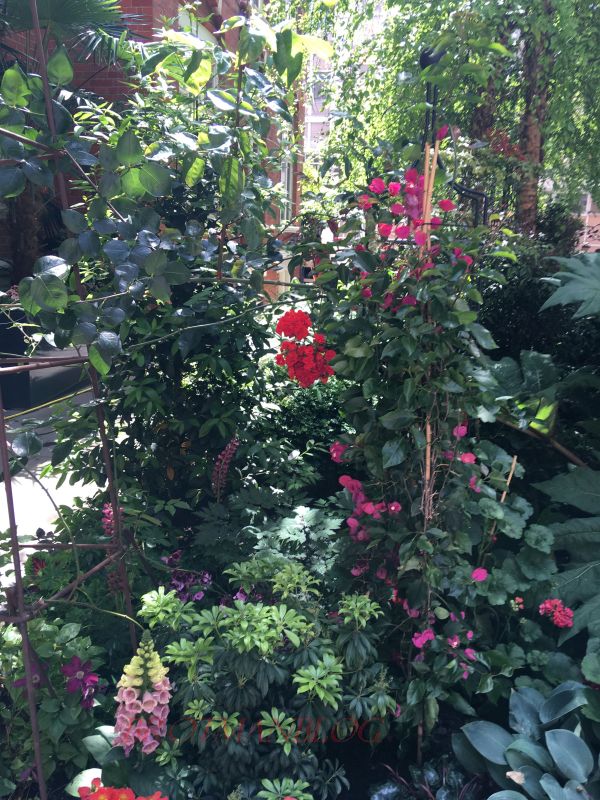
You enter the hotel after passing through a beautiful passageway lined with flowers, and the lobby is also quite magnificent with a white double staircase and reliefs on the ceilings and walls. We took a tiny, narrow elevator to our sixth floor room. The room itself was very small. The bed was perhaps eight inches from the outer wall, and there were no dressers for our clothes or space to tuck away our suitcases. But the room was clean and the bed comfortable, and the staff at the hotel was very friendly and helpful.

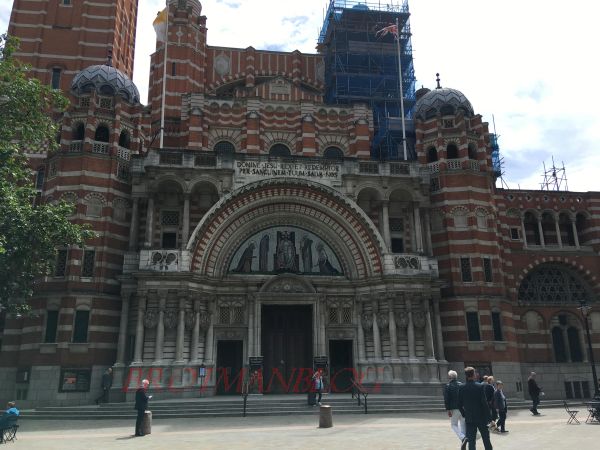
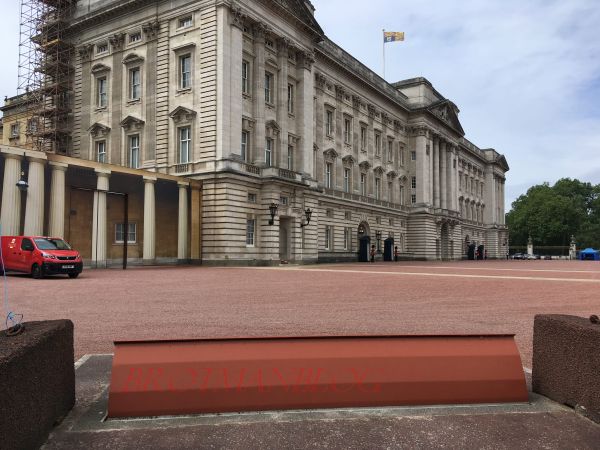
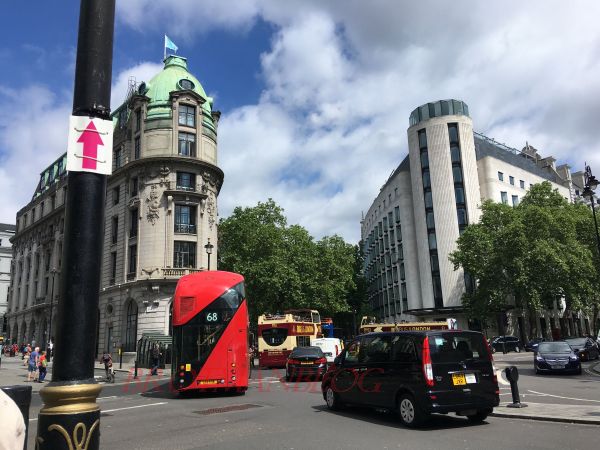
We spent our first day mostly strolling through the neighborhood near the hotel. We stopped at Westminster Cathedral and then passed Buckingham Palace where the queen was apparently hosting a garden party and there was a line of people dressed to the nines waiting to enter the palace grounds. The men were in morning coats and the women in bright dresses with elaborate hats. I wanted to take a picture, but it seemed a bit tacky, so I resisted.

Westminster Cathedral

Buckingham Palace

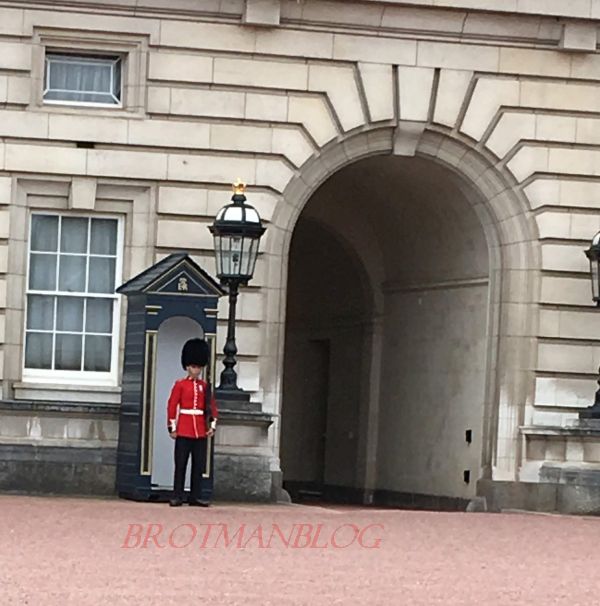
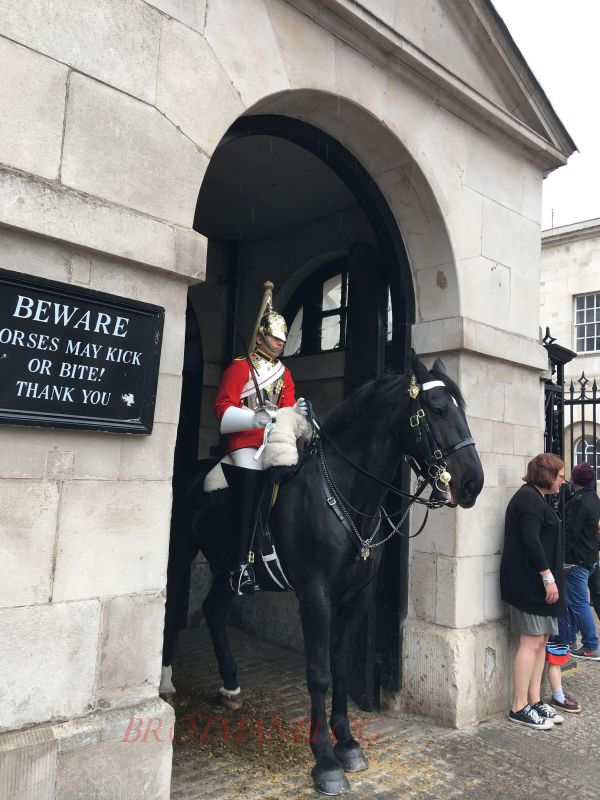
We weren’t sure this guard was real until we saw him move.

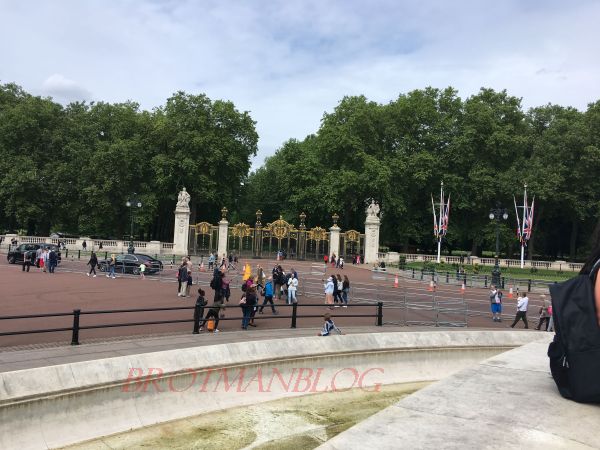
The Mall, the street that runs from Buckingham Palace to Trafalgar Square

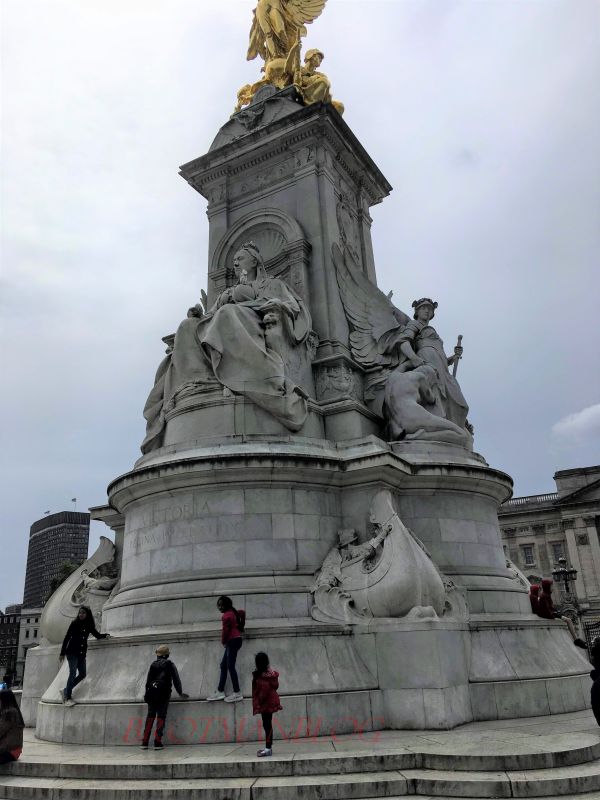
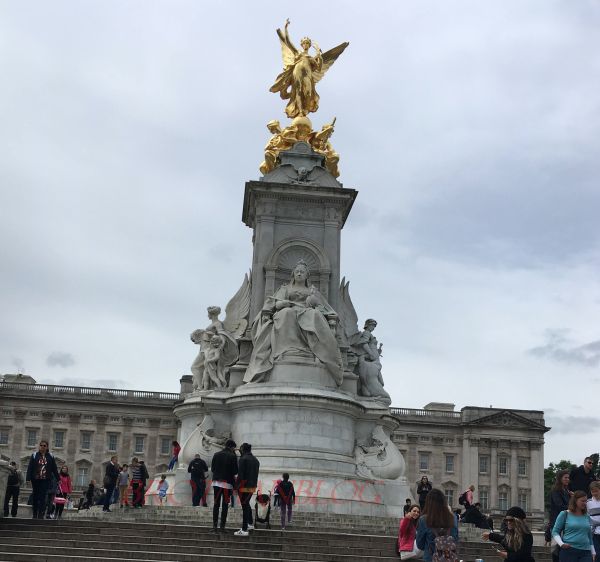
We admired the monument dedicated to Queen Victoria that stands right in front of the palace. I kept hearing the theme song from Victoria as we studied the monument from all angles and read about the significance of the various sculptural features.

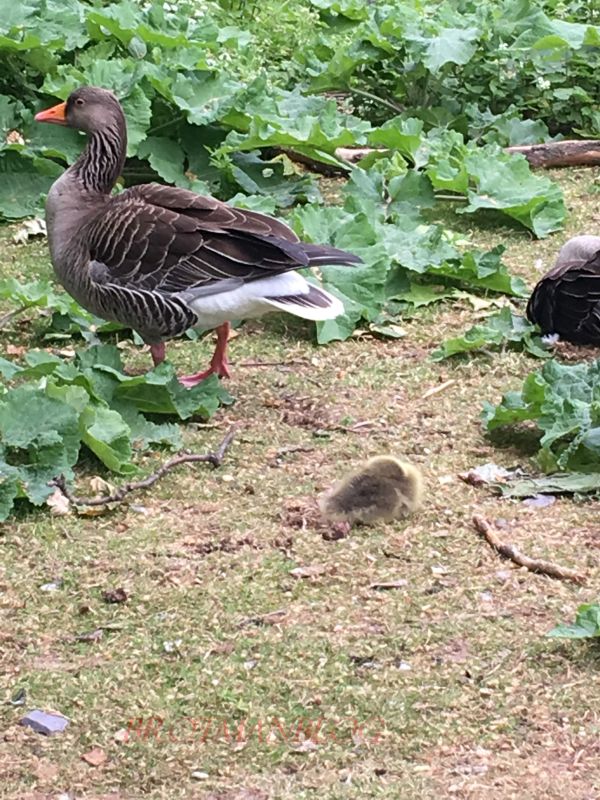
From there we took a lovely walk through St. James Park. The gardens and the birds and ducks and geese and pelicans make it a true oasis in the middle of a city where there are far too many cars, taxis, tourist buses, and people.

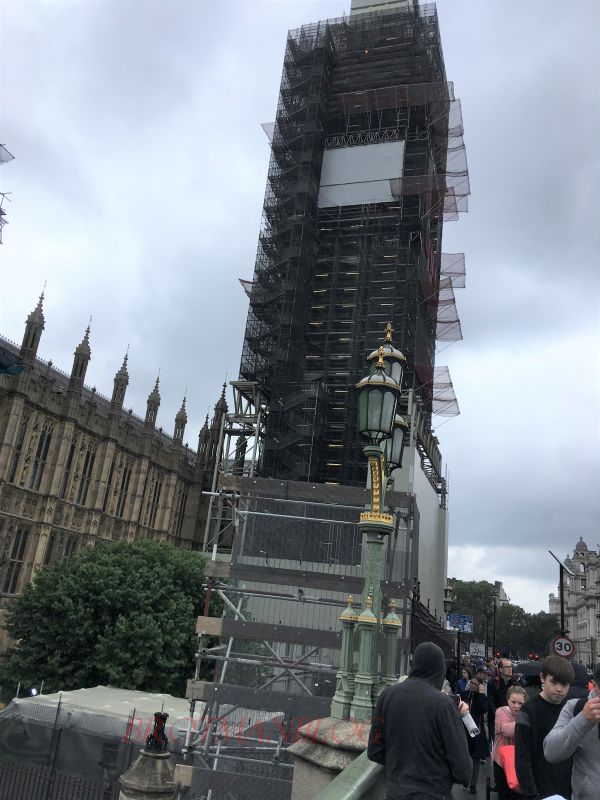
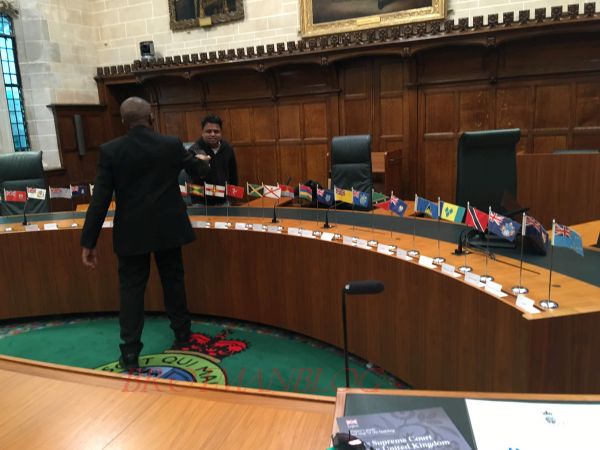
We then walked over towards Westminster Abbey and Big Ben (which is currently being renovated and is wrapped in scaffolding as is much of the Parliament building) and noticed that the Supreme Court was having an educational open house for the public that day. So we spent some time there, looking at the court rooms. No court sessions were being held, so we did not get to see any judges in wigs and robs.

St Margaret’s at Westminster Abbey

The London Eye (and no, we did not ride it)

Harvey at Westminster Bridge with Parliament behind him

Poor Big Ben

Supreme Court library

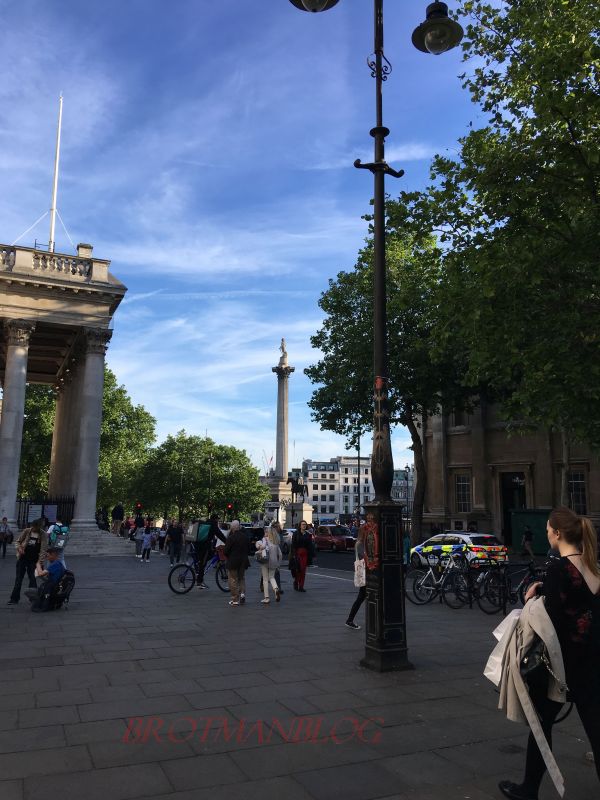
We also passed the Royal Horse Guards and avoided being kicked or bitten by the horses as we made our way to Trafalgar Square and the National Gallery, where we spent an hour or so enjoying the galleries devoted to 19th and 20th century paintings.

By then it was time to head back to the hotel because we had theater tickets that night in the West End. After a short rest, we walked from the hotel to Sartori, a very good Italian restaurant in the West End just a block or so from the theater.

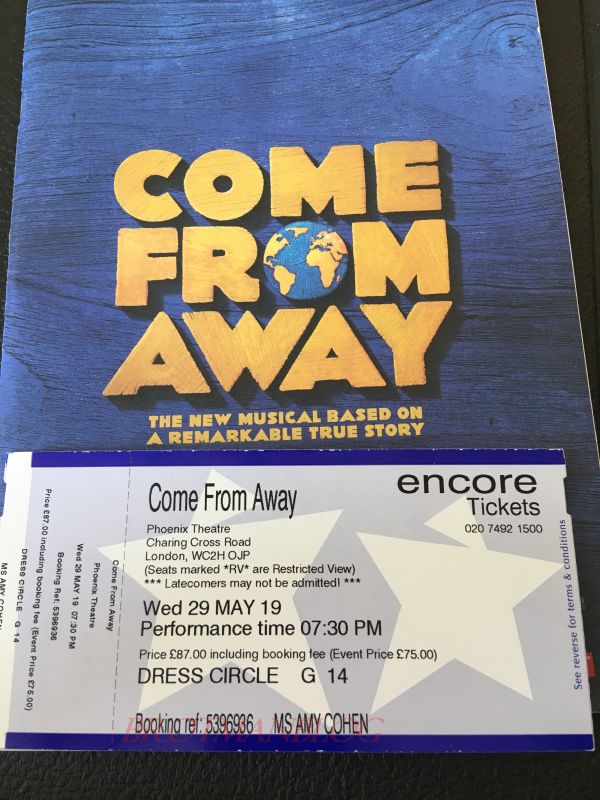
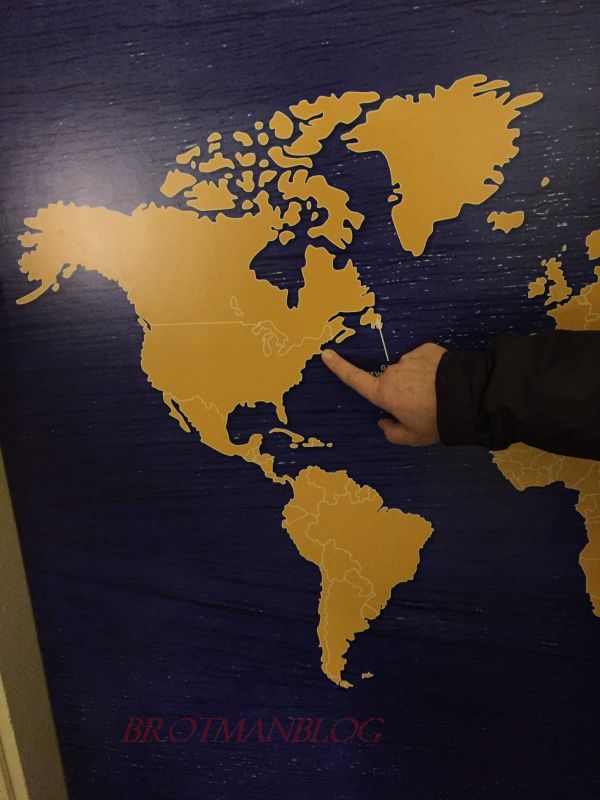
And then we saw what I believe is the best theater I have ever seen. If you haven’t seen Come From Away yet, you are missing a true masterpiece. The music, the staging, the acting are all excellent, and the writing and the story are so moving and effective. I rarely cry at live theater (though often at movies and television) because I am usually too aware that what I am watching is “just” theater and thus I am somewhat emotionally removed from it. But this play grabbed me from the beginning and kept me emotionally engaged throughout. I cried, I laughed, I was there with them all in Gander, Newfoundland. Will the play stand the test of time when those who lived through 9/11 are no longer in the audience? I would think that its universal themes of human decency, kindness, and the need for hope and love will sustain it.

Our second day in London started with a walk from the hotel to Covent Garden, a neighborhood of lots of upscale shops and restaurants and a big market that resembles Fanueil Hall Market in Boston—aisles and aisles of food and stores and restaurants and street performers. And St Paul’s Church (not to be confused with St Paul’s Cathedral discussed below).

St Paul’s Church

Street performers in front of St Paul’s Church, Covent Garden

Our walk continued along the Strand and Fleet Street where the Royal Courts of Justice are located as well as many law firms and publishing companies. The streets were crowded with young men in suits and women dressed in business clothing—presumably many of them lawyers or business people. We went into the court building, but it was lunch hour so no courts were in session. We did pass a number of lawyers sitting with clients, so there were likely hearings scheduled for the afternoon.

Somerset House

Royal Courts of Justice

After a quick lunch, we reached St. Paul’s Cathedral, the Christopher Wren landmark that is still one of the tallest buildings in London.  You can see its dome from many vantage points in the city. When we saw what they were charging to enter the cathedral (twenty pounds each or about $26 each), we opted not to go inside.

St Paul’s in the distance on Fleet Street

Facade of St Paul’s Cathedral

The Dome of St Paul’s

Temple Bar, also designed by Christopher Wren

Here’s a map showing all the places we saw on the first day and a half in London. Our hotel is the circle at the lower left on Caxton Street and St Paul’s is at the upper right.

We decided to take “the Tube” or the Underground the rest of the way to Whitechapel, where we had arranged for a guided walking tour of London’s Whitechapel and Spitalfields neighborhoods, the neighborhood where my Cohen ancestors lived between about 1800 and 1851 before immigrating to the US. More on that in my next post.

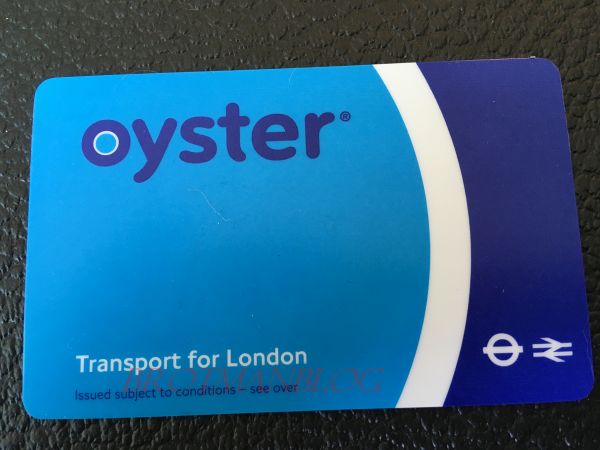
The Oyster Card—London’s public transport pass


England Part II, The Cotswolds and Oxford

The morning we left Cornwall for the Cotswolds was the only really rainy time we had during our entire trip. While packing for the trip, we’d prepared for the worst after hearing how damp and cold England can be this time of year, but we had almost no rain and lots of sunshine during our entire stay. And that one rainy morning was spent traveling to the Cotswolds. (No, we didn’t drive—we decided that would be too stressful, and the train connections were not workable, so we hired a driver to take us.)

We arrived at the Kings Head Inn in Bledington around 1 pm, just in time for lunch.  And the rain stopped. The whole area was just charming.  Bledington is a tiny little hamlet, and, like all over the Cotswolds, all the houses and buildings are made of the same beige-colored stone.  According to Wikipedia, there are about 490 people in the village. The only commercial building we saw was the inn itself.

The Inn described itself as more a pub/restaurant with rooms than a hotel, so we weren’t sure what to expect. But our room was certainly adequate. It was in a separate building across a lovely courtyard from the actual inn. The room was small and somewhat dark, but nevertheless comfortable. And although we were a little concerned about noise—especially from the rooster who spent much of the day strutting around and crowing—we slept well, and the rooster had the decency not to start crowing until about 7 am.

During our first afternoon, we decided to take the “easy” walk suggested on a brochure distributed by the inn.  It was easy in the sense of not being physically challenging, but following the instructions turned out to be quite a challenge. Truly, it was not the fault of the person writing the directions, but rather the person who was interpreting them, i.e., me. Somehow I misread the first step in the directions and ended up walking the trail backwards! But I didn’t realize that until we were nearly done with the two hour walk. It’s not worth explaining how or why, but despite following the steps backwards, we ended up finding our way without any trouble, thinking we were doing the walk in the right direction. I am still mystified by how that could be!

For example, the directions included a step that described going under an archway formed by trees.  I thought this was what they meant.

Only when we passed the actual archway much later and were almost done with the walk did I realize that something was off.

Making it even more embarrassing was the fact that another woman had joined us on the walk, thinking I knew what I was doing. I kept acting like I did, and neither she nor my husband suspected anything. I only confessed to my husband after we were safely back at the inn. (As my good friend Art would say, “Frequently wrong, but never uncertain.”)

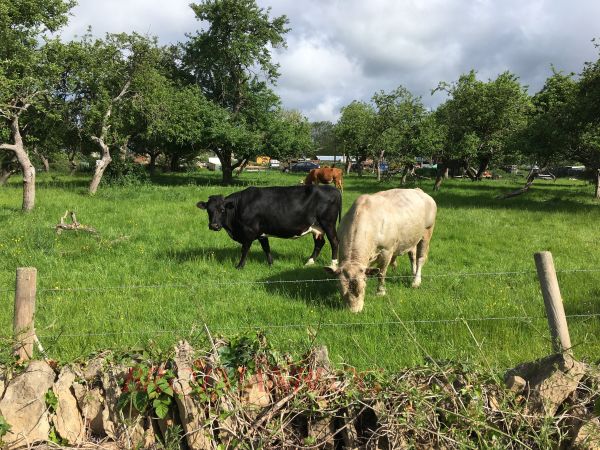
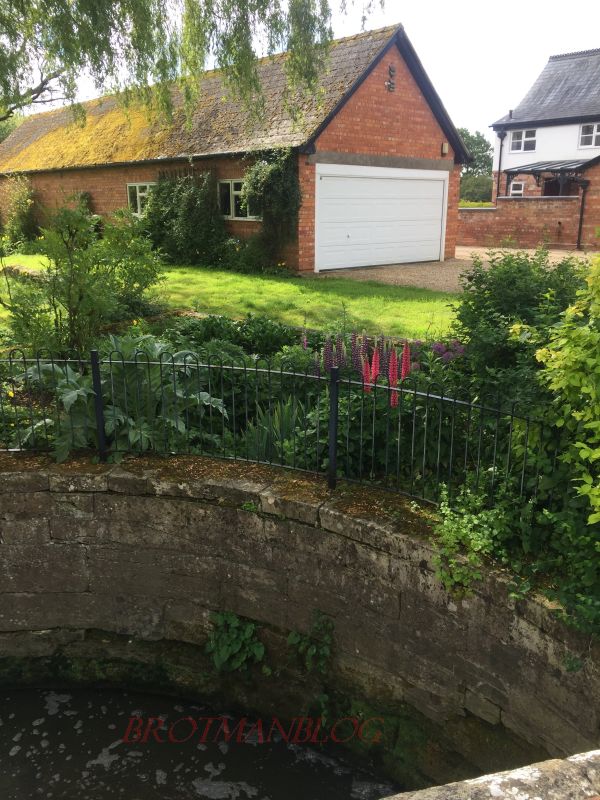
Even though we did it backwards, it was still a scenic and enjoyable walk, passing through fields with cows and sheep, going along a lovely little creek, and walking along an abandoned railroad path.

After dinner at the inn, we took another shorter walk, enjoying the light on the houses and the church from the late-setting sun. That time I knew what I was doing.

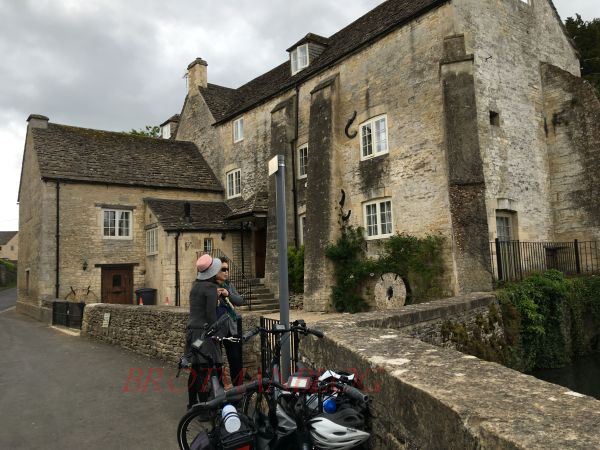
The next morning we were picked up by Peter of Cotswold Electric Bike Tours for our day of bicycling around the Cotswolds. We drove to Burford, which is about eight miles south of Bledington. It is a much larger town than Bledington with lots of shops and a big church, but also all in the same beige-colored stone. We met up with three other people joining us for the day—Carolyn and her adult daughters Meghan and Rachel from Salt Lake City (which, of course, led to a conversation about the Family History Library). After a quick lesson on how to use an electric bike, we were off on our thirty-mile trip around the area.

This was our first time on e-bikes, and we loved them. What a pleasure it was to get that “assist” going up some of the steeper hills. But for the most part the ride was relatively flat (or so it seemed after walking in Cornwall) and extremely scenic. We traveled from Burford to Windrush to Sherborne to Northleach to Bibury to Westwell and back to Burford.

Here are some of the images we captured during our almost seven-hour ride:

Burford

Flowers along the way

Norman doorway in the church in Windrush

Interior of Windrush church with Romanesque and Gothic features

Church graveyard, Windrush

Windrush

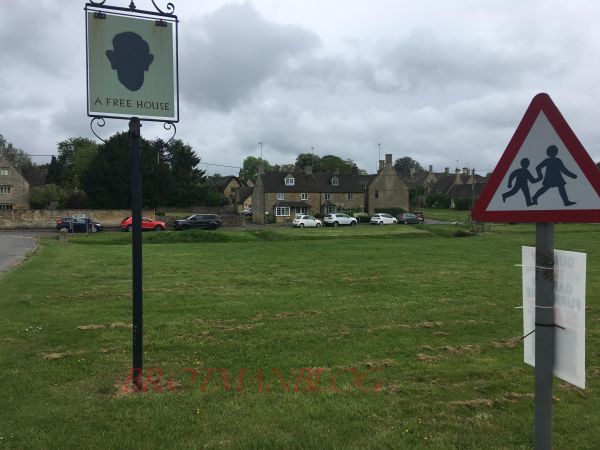
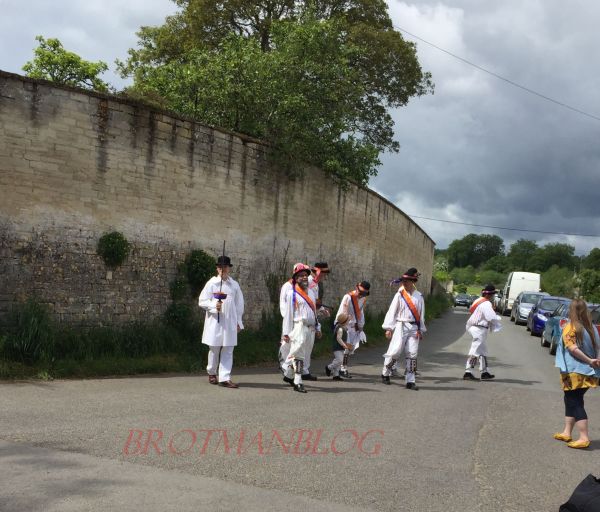
In Sherborne we saw some Morris dancers, a form of English folk dancing dating back to the fifteenth century. We also stopped for a short tea and cake break in Sherborne.  .

We continued on our way, going through Northleach and seeing its beautiful church.

Northleach

We stopped for a late lunch in Bibury, a town once described as the most beautiful in England and thus packed with many tour buses and tourists. It is beautiful, but the crowds and buses and traffic made that harder to appreciate.

Bibury


After lunch we continued on to Westwell before returning to Burford and the end of our tour.

The six of us all had a wonderful time with lots of laughs and good conversation, and Peter also taught us a great deal about English history and the history of the region, pointing out the architectural characteristics of each era as seen in some of the churches we visited. It was a fun and educational day and gave us a good overall view of the Cotswolds.

The next day we decided to take the train to Oxford, which is only half an hour by train from Kingham, the town next to Bledington. We walked the mile to the station, itself a pretty walk.

Cows in someone’s yard. Really.

We arrived in Oxford at 10:30 and signed up for a 1 pm walking tour. We then spent the rest of the morning walking through the city.  The city was filled with young people—university students and teenagers coming to tour the university. Everywhere we went there were large groups of teens touring together. And lots of impressive architecture.

The tower from the old northern wall of the city

We walked to the south end of the city to Christchurch—which is both a college within Oxford University and a church. Some of the scenes in the Harry Potter movies were filmed at Christchurch, we were told. It certainly has the feel and appearance of a proper English school.

Exterior of Christchurch, a college at Oxford


Grounds of Christchurch

Refectory at Christchurch

Refectory

Quadrangle at Christchurch

The church at Christchurch was magnificent, especially the stained glass windows.

At 1, we met up with our guide and a group of fellow tourists—about sixteen in total. Out of that group, we were the only Americans. There were people from Germany, France, Scotland, England, Australia, and India. The guide was very knowledgeable, and the tour focused on Oxford University and its unusual (by US standards anyway) college-university system.

I am still not sure how it all works, but from what we were able to understand, students apply to individual colleges within Oxford and study in tutorials with a tutor and just one or two other students in that college for their three years of undergraduate study. They produce papers each week for the tutors and have exams at the end of their first year and then at the end of their third year. Every college has its own library, church, and faculty, and the students eat and learn and live in their chosen college. But there are also some university-wide courses. I may have this all wrong. I still don’t know whether students have distribution requirements across several fields as in US schools. I also am not sure whether they take only one tutorial at a time or multiple courses in different subjects each semester. So if there are any Oxford experts out there who can explain this all, please let me know.

Our guide showed us many of the different colleges as well as some of the main libraries and other buildings.

House where Shakespeare stayed when he visited Oxford

Jesus College

Old bookstore

Sheldonian Theater

We enjoyed the comment about Bill Clinton

Bridge joining two parts of Hertford College

New College

Merton College

Corpus Christi College

Corpus Christi College

Radcliffe Camera

Bodleian library

Our guide pointed out the students who were finished with their last exam and the wild way they decorated themselves to celebrate the completion of their studies at Oxford.

When the tour ended, we walked a bit more and then made our way back to the train station, back to Kingham, and back to Bledington and the Kings Head Inn.  The following morning we left Bledington for the last stop on our trip to England, London.