
I mentioned in my last blog post that I have recently connected with another cousin, Robin Kravets, the great-granddaughter of Thekla Blumenfeld Gruenbaum. Robin is my fifth cousin, once removed. We are both descendants of Abraham Blumenfeld and Geitel Katz, Robin through their son Moses and me through their daughter Breine.


Robin has generously shared with me a collection of photographs of her family, and I am delighted to be able to share them with you. All the photos in this post are courtesy of my cousin Robin. I am providing a summary of what I posted two years ago about Robin’s direct ancestors to provide context to the photos and to add some additional insights Robin shared with me. The blog posts from 2021 contain more details and my sources.
Salomon Blumenfeld, Robin’s great-great-grandfather, first married Caecilie Erlanger, but she died when she was only 24 years old, leaving behind two very young children: Thekla (Robin’s great-grandmother), not yet two, and Felix, just seven months old. Two years after his first wife Caecilie died, Salomon married Emma Bendheim and had a third child, Moritz, in 1877. And then sometime within the next five or six years, Salomon left Germany for Spain with Emma and Moritz, leaving his first two children, Thekla and Felix, behind. As best I can tell, Thekla and Felix, still both young children, must have been raised by their mother’s family, the Erlangers, in Marburg.
I had wondered whether Salomon or his son from his second marriage, Moritz, had remained in touch with Thekla and Felix. Robin provided this photograph of Moritz with his half-niece Cecilie, Thekla’s daughter, and another unidentified woman, so there is some evidence that at least Moritz had some contact with his half-sister Thekla and her family.
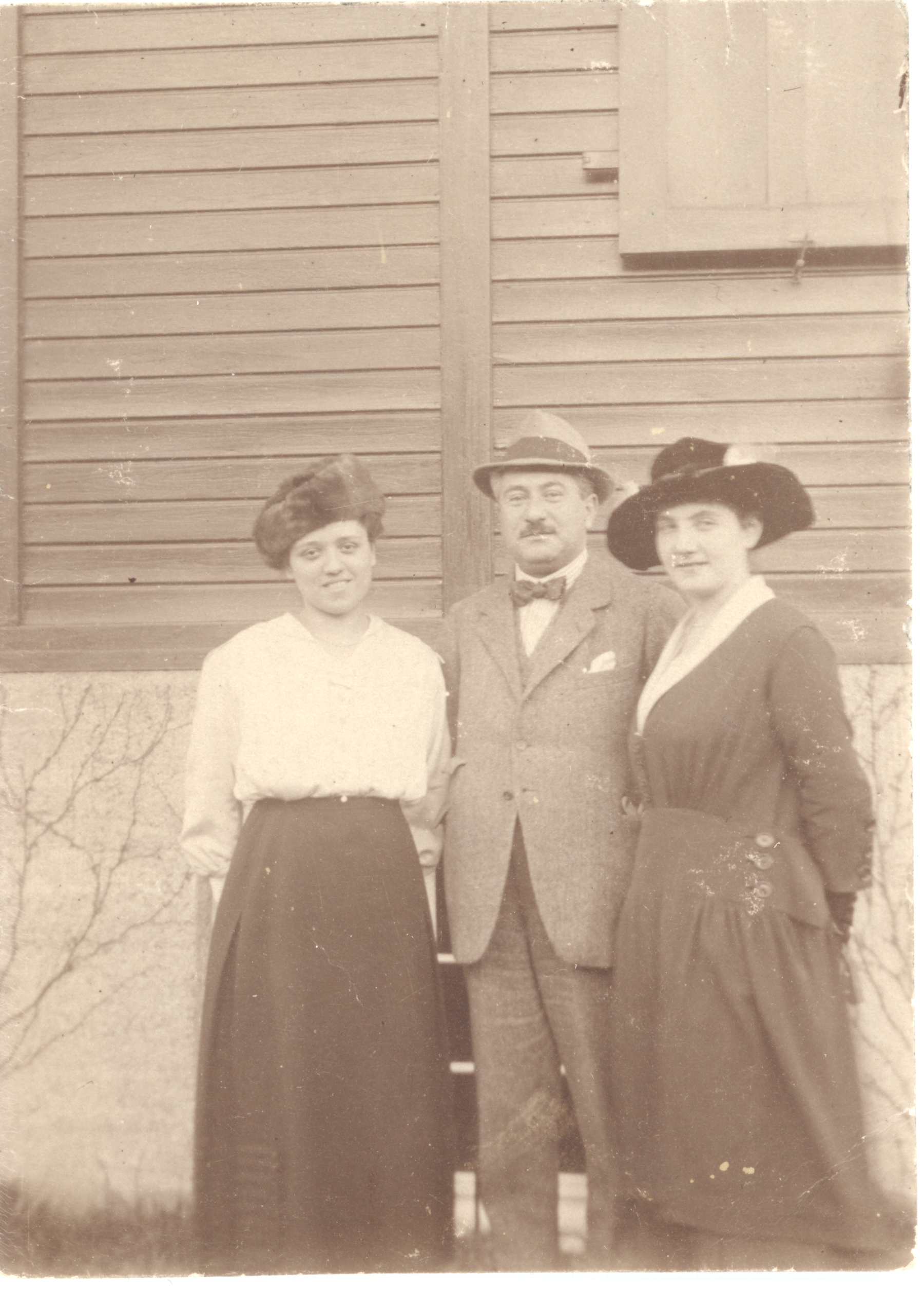
Moritz Blumenfeld and Cecilie Gruenbaum (with unknown woman on the left)
Courtesy of Robin H Kravets
This is the oldest photograph in Robin’s collection. It shows Thekla as an infant with her mother, Caecilie Erlanger Blumenfeld and must have been taken in about 1872 when Thekla was born. Thank you to Ava Cohn, aka Sherlock Cohn, The Photogenealogist, for pointing out the correct dating of this photograph.
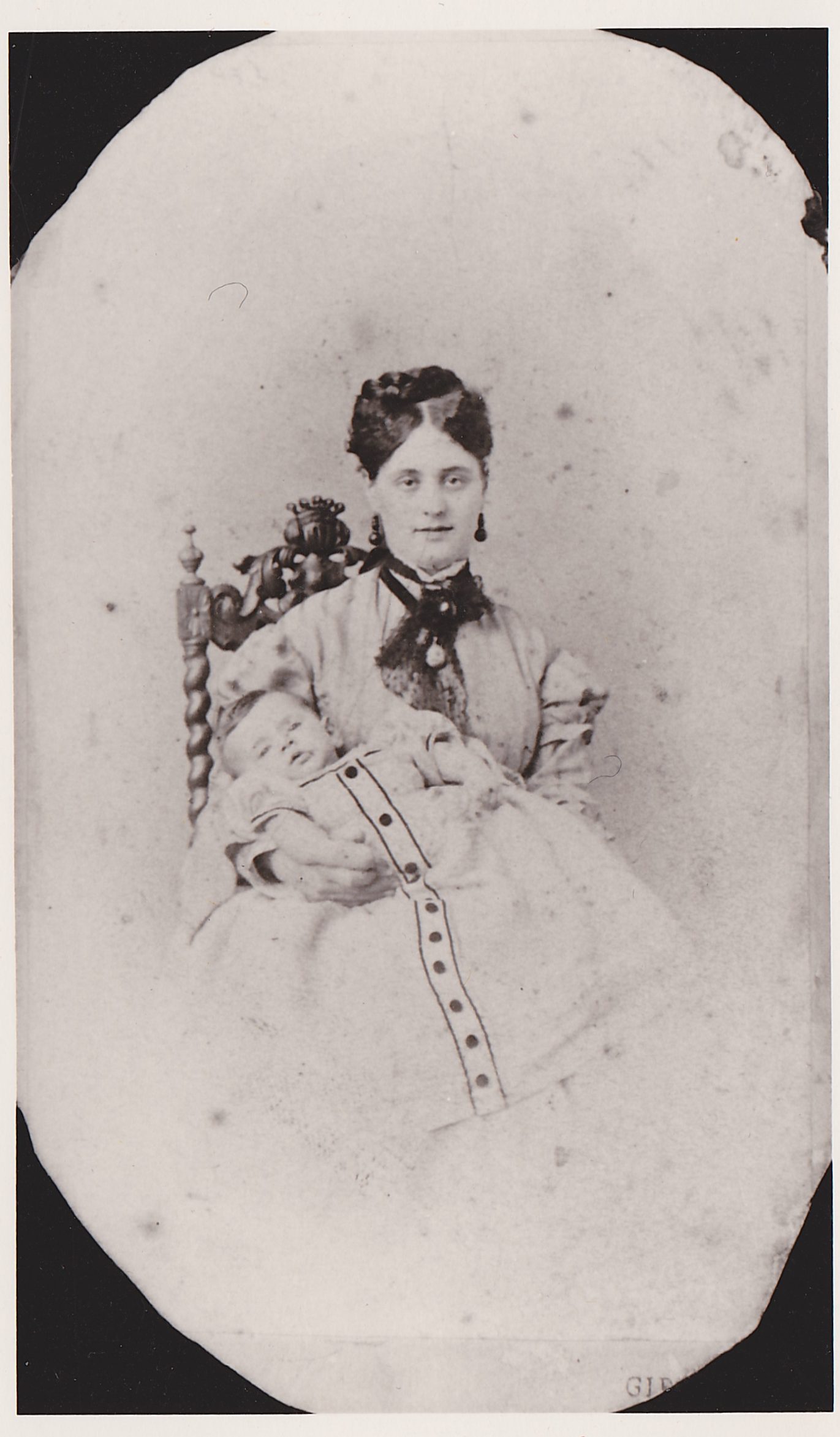
Caecilie Erlanger Blumenfeld with Thekla Blumenfeld, c. 1872 Courtesy of Robin H Kravets
Here are two beautiful photographs of Thekla as a young woman.

Thekla Blumenfeld, courtesy of Robin H Kravets
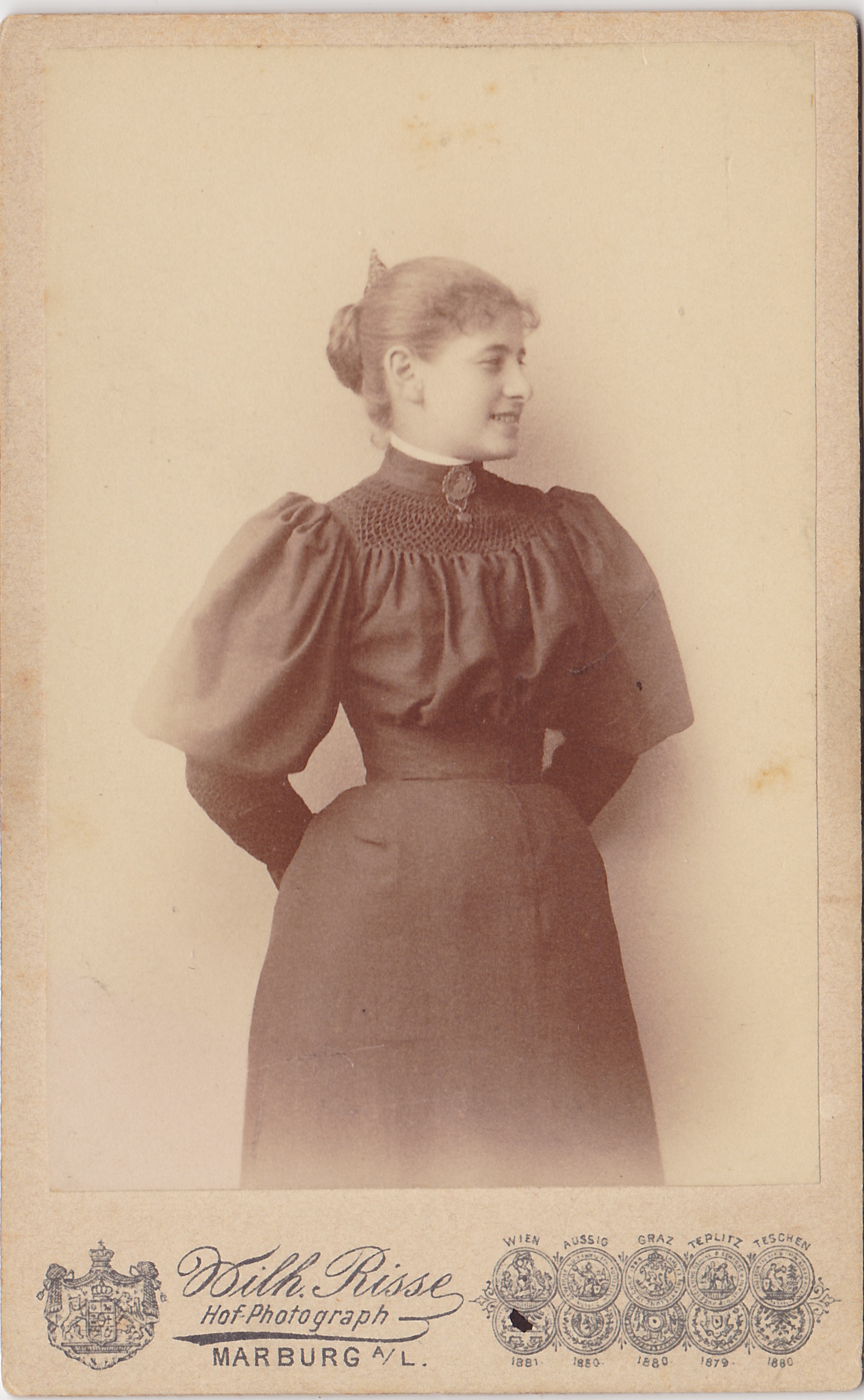
Thekla Blumenfeld, courtesy of Robin H Kravets
Thekla married Max Gruenbaum in 1894. Here is a photograph of them taken in 1895.

Thekla Blumenfeld and Max Gruenbaum 1895
Courtesy of Robin H Kravets
Thekla and Max had four children: Cecilie (1895), Curt (1897), Franz (1899), and Rosemarie, Robin’s grandmother (1912).

Cecilie, Curt, and Franz Gruenbaum c. 1908 Courtesy of Robin H Kravets

Courtesy of Robin H Kravets
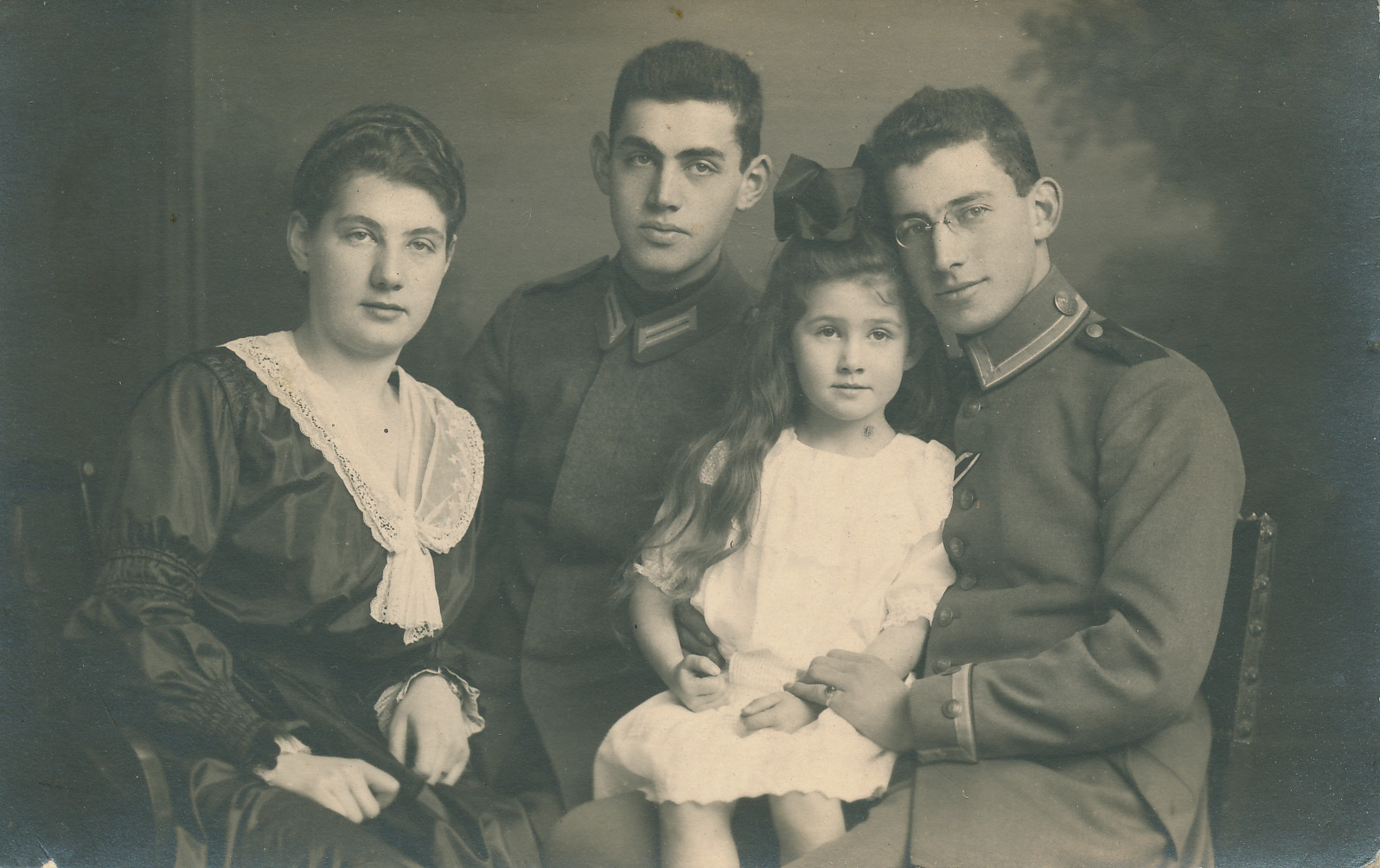
Cecilie, Franz, Rosemarie and Curt Gruenbaum, 1918 Courtesy of Robin H Kravets
Thekla’s brother Felix married Thekla Wertheim in 1902, and they had two sons, Edgar (1903) and Gerhard (1906). Robin had just a few photos of Felix; he appears to be in uniform during World War I in these first two. The caption on the first translates as “to commemorate the first nailing of the Zaitenstock.” I am not sure what that means, but Wikipedia explains (as translated by Google) that zaitenstocke were part of the pipe systems used to carry water into the cities.

Felix Blumenfeld, 1915 Courtesy of Robin H Kravets

detail from photo above

Felix Blumenfeld, 1916
Courtesy of Robin H Kravets

detail from photo above
As I wrote in my earlier posts, both Felix and his sister Thekla lost their spouses at relatively young ages. Thekla’s husband Max Gruenbaum died in 1917, and Felix’s wife Thekla died in 1923.
But even more tragically, both Felix and Thekla were among the six million who were killed in the Holocaust, Felix by suicide in 1942, as detailed here, when he was in despair and had no hope in surviving, and Thekla at Treblinka in 1943.

Felix Blumenfeld
Courtesy of Robin H Kravets
Thekla had refused to leave Germany, and her daughter Cecilie would not leave her mother behind. Robin wrote that “[Cecilie] was very smart and saw the writing on the wall but her mother would not leave. I remember my family talking about them having tickets on a boat somewhere. But the boat was cancelled.”1 Fortunately, Cecilie’s children were safely in England.
But Cecilie and her husband Walter Herzog were sent to the concentration camp in Riga in 1941. Walter did not survive, but against all odds, Cecilie did even after being sent to Stutthof, a camp where the conditions were truly horrible, as I wrote about here. When I asked Robin whether she had any information as to how Cecilie had survived, she wrote that “since she was trained as a nurse during WWI, she used her skills to help people in the camps. I have always believed it gave her a purpose to survive. The story I heard as a child was that when the Allies liberated the camp, she knew she had to get west. She collected a group of people and helped them make their way west. As a nurse, she knew that they needed to be very careful about overeating after being in the camps and made sure they did not die from bloating.”2 As was not uncommon with Holocaust survivors, Cecilie never wanted to talk about her experiences.

Cecilie Gruenbaum Herzog Courtesy of Robin H Kravets
The other children of Thekla Blumenfeld Gruenbaum and Felix Blumenfeld had all managed to escape Germany before it was too late, as I wrote about here. Robin’s grandmother Rosemarie, the youngest of Thekla’s children, had married while still in Germany. In fact, as Robin explained, she had married her husband Ernest Heymann in absentia as Ernest was in England at the time, having gone there on business and then realizing it was not safe to return. I’d never heard of being married in absentia, but apparently Rosemarie’s nephew stood in as a surrogate groom.3
Rosemarie was able to get out of Germany and join Ernest in London where their first child, Robin’s mother, was born. After the war started, Ernest was one of the many Jewish refugees who was sent to an internment camp as a “enemy alien.” He was interned from June 21, 1940, until October 17, 1940.
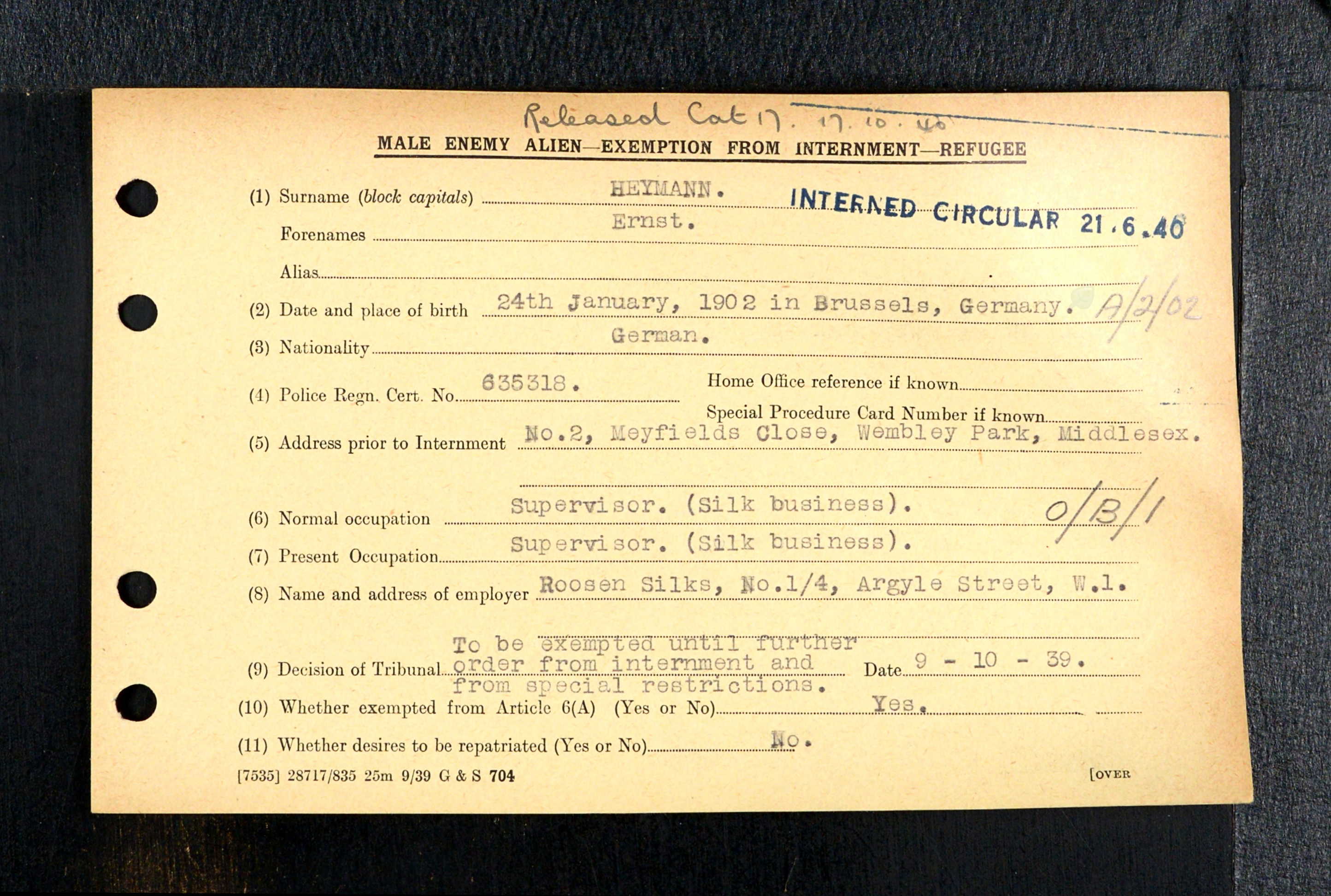
Ernst Heymann, he National Archives; Kew, London, England; HO 396 WW2 Internees (Aliens) Index Cards 1939-1947; Reference Number: Ho 396/178
Piece Number Description: 178: German Internees Released in Uk 1939-1942: Hertzke-Hoj
Ancestry.com. UK, World War II Alien Internees, 1939-1945
After he was released, he and Rosemarie and their daughter immigrated to the US and settled in New York. They had another child in New York after the war.
Rosemarie’s sister Cecilie made it to the US in 1946 and went to live with Rosemarie and her family in New York. The two sisters lived together for the rest of their lives and remained close to their brothers Curt and Franz (later known as Frank), who visited them often from Massachusetts. Cecilie lived to 95, dying in 1990, and Rosemarie to 91, dying in 2004.3
The story of Thekla Blumenfeld Gruenbaum is tragic: motherless as toddler, left behind by her father, widowed at a young age, and then killed by the Nazis. The fact that Thekla’s two daughters Cecilie and Rosemarie lived together and survived into their 90s is quite a tribute to the strength their mother must have had and that they both had.
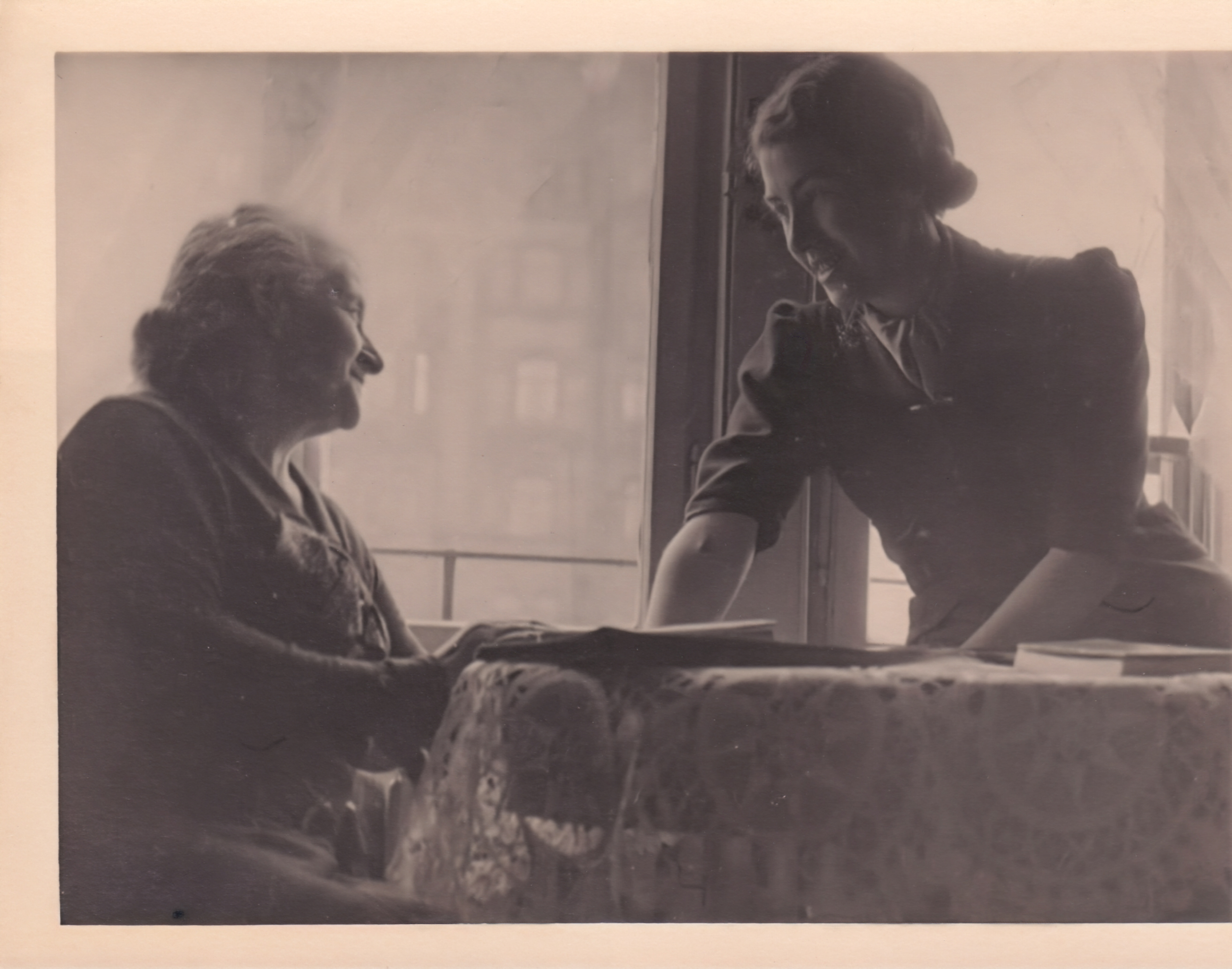
Thekla with her daughter Rosemarie Courtesy of Robin H Kravets

Thekla Blumenfeld Gruenbaum Courtesy of Robin H Kravets

Thekla Blumenfeld Gruenbaum Courtesy of Robin H Kravets





































 Brotmanblog: A Family Journey