Irma and Hilde: The Power of Love

In my last post, I shared the story of my cousin Erwin Rothschild and his wife Irma Simon. As we saw, Erwin died from typhoid fever at Bergen-Belsen, but Irma survived. Erwin had done everything he could to keep Irma, her sister Hilde, and Hilde’s husband Simon Eisenmann alive, but in the end only Hilde and Irma survived. They were two young widows in their thirties as the war drew to a close in Europe.

As recounted by Irma in her moving testimony for the Shoah Foundation,1 in the spring of 1945 Irma and Hilde and about 2200 other prisoners at Bergen-Belsen were put on cattle trains by the Nazis with nothing to eat but one turnip each and taken on a long and twisting trip through Germany. When they saw the planes of the Allies flying overhead, they hung white shirts out the window, trying to save themselves from being bombed. As the train neared Frankfurt an der Oder near the Polish border, the Nazi guards abandoned the train, and the Russians came to liberate the people on the train on April 23, 1945. The Russians told the prisoners that they should go to a nearby village called Trobitz, which had been emptied of its residents and would be safe for the survivors.2

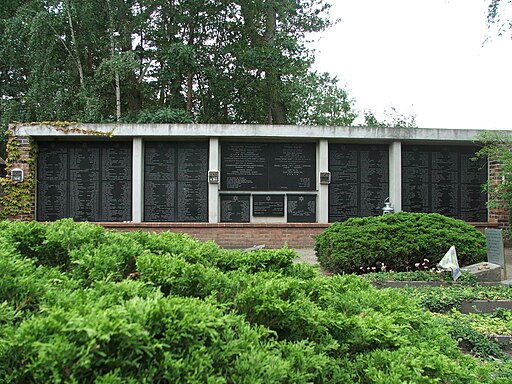
They had to walk to the village, but Hilde, who weighed only 70 pounds, was too weak to walk. So Irma and another woman found a wheelbarrow and pushed Hilde to the village. They settled into the village where there was shelter and food. One man died from eating too much food too quickly. Many others—about 600 people—died while living in Trobitz. But Irma and Hilde survived.

Memorial listing the names of those from the Lost Train who died in Trobitz, LutzBruno, Public domain, via Wikimedia Commons

The people living in Trobitz were taken later by the Allies to Leipzig for a week and then they were allowed to go “home.” Irma and Hilde went back to the southern part of the Netherlands, where Hilde, a Dutch citizen by marriage, lived in a cloister and Irma was interned in a school. They could not return to Amsterdam because northern Holland had not yet been liberated. Once the war ended, the sisters moved to Amsterdam and then immigrated to the US in 1947 with the help of their brother Julius, who lived in Philadelphia. They traveled on the Queen Elizabeth and were able to get kosher food on the ship. Irma and Hilde settled in Washington Heights in New York, and Irma continued her career as a kindergarten teacher.

Both Irma and Hilde remarried in the 1950s, Irma to Nathan Haas, and Hilde to Nathan Meyer, both also German Jewish survivors of the Holocaust. Neither had children. They lived in adjoining apartments in Washington Heights. In 1967 the two couples moved to one house together in Englewood, New Jersey. They all became active in the Orthodox Jewish community there. Their second husbands both died in the 1970s, but Irma and Hilde continued to live together for the rest of their lives.

As reported by Joseph Berger in The New York Times on December 29, 2004,3 Irma and Hilde decided when they were 97 and 94, respectively, that they wanted to live the rest of their lives in Israel in a home for senior citizens in Jerusalem called Beit Barth. Berger described their special relationship and recounted their long lives together during and after the Holocaust:

The two sisters were inseparable….[He then described much of what I’ve reported earlier about their lives during the Holocaust.]

They came to the United States together and lived with their second husbands in adjoining apartment buildings in Washington Heights. … As if that were not close enough, they moved in 1967 into a single suburban ranch house in Englewood, N.J., which they continued to share after their husbands died.

Until yesterday. That was when Irma Haas, 97, and Hilde Meyer, 94, set off from Kennedy International Airport for Israel to spend the remainder of their lives in the same residence for the elderly in Jerusalem.

… With canes across their laps, they sat next to each other in wheelchairs as El Al security hurriedly examined their passports and put them through the requisite grilling about who had packed their bags and whether they had received any gifts. Much of the time, Hilde, looking frightened, clutched Irma’s left arm with her right hand.

“She cannot let go of me,” Irma said, mentioning their wartime terror. “She is afraid she would be brought somewhere and I would not come.”

…Both sisters are slight of build and wear gray shaytls, or wigs. Irma is hardier, Hilde more easily rattled. They were born in Londorf, a town in Hessen, a German state where their family’s roots stretch back hundreds of years. …Irma promised her mother that she would always take care of the more delicate Hilde….

Judy Marcus, their second cousin, who accompanied them on the flight, said the two sisters seemed to have eluded the arrows of sibling rivalry. “They were never jealous of each other,” she said. “They were always happy whatever the other one had.”

About two years ago, Hilde was briefly hospitalized and pleaded that Irma remain at her side. Mrs. Marcus said she told a hospital official: “They are Holocaust survivors. They can’t be separated.”

“They made a special dispensation to allow Irma to sleep in Hilde’s room,” Mrs. Marcus recalled. “But Irma would not have left anyway, even if it meant sitting up in a chair all night.”

Only death separated these two amazing sisters. Hilde died first on May 8, 2005;4 she was 94 and had been in Israel for only five months. Irma Simon Rothschild Haas, who had done so much to care for her younger sister and whose strength got them through the camps, liberation, and immigration to the US, died on April 17, 2009, just six months before she would have turned 102.5 She had outlived her parents, all her siblings, and two husbands. Neither Irma nor Hilde had had children, so there are no direct descendants to remember these two remarkable women. But I will forever, and I hope that you will also.

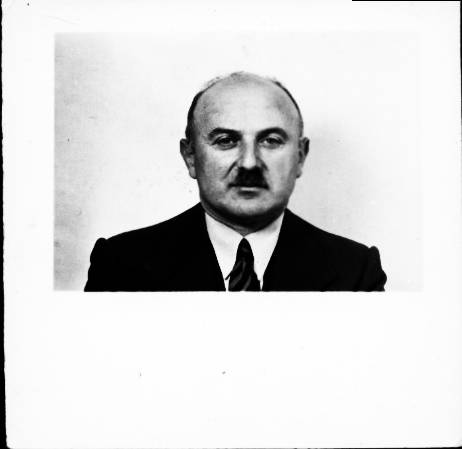
I wish I had some photos of Irma and Hilde I could share. All I found is this one small photo from the New York Times in 2004 when they moved to Israel. But If you haven’t already, please watch Irma’s Shoah Foundation testimony—if for no other reason than to see Irma with Hilde together near the end of that testimony. I guarantee it will both bring you to tears and lift you up with joy. The power of their love was immeasurable.


  1. Haas, Irma. Interview 32295. Interview by Miriam Horowitz. Visual History Archive, USC Shoah Foundation, 04 August 1997. https://vha.usc.edu/testimony/32295. Accessed 18 Jan 2024. Almost all of the information in this post came from Irma’s testimony, except where noted. 
  2. You can read more about the “lost train” from Bergen-Belsen to Trobitz here, here, and here. 
  3. Joseph Berger, “A Bond the Holocaust and Time Couldn’t Break,” The New York Times, December 29, 2004, page B1. See also “Holocaust Survivors from Englewood Begin Their New Lives in Jerusalem,” The Hackensack Record, December 31, 2004, p. A5. 
  4. Hilde Meyer, Gender Female, Birth Date 30 Sep 1910, Death Date 8 May 2005,
    Claim Date 13 Jul 1972, SSN 081242610, Ancestry.com. U.S., Social Security Applications and Claims Index, 1936-2007 
  5. Find a Grave, database and images (https://www.findagrave.com/memorial/254917717/irma-haas: accessed 18 January 2024), memorial page for Irma Simon Haas (9 Oct 1907–17 Apr 2009), Find a Grave Memorial ID 254917717, citing Har HaMenuchot Cemetery, Jerusalem, Jerusalem District, Israel; Maintained by DTWer (contributor 47953179). 

Jacob’s Bible: Lost and Found

I continue to be amazed by the people who find my blog and contact me—whether it’s because they are related to someone I wrote about (and thus to me) or because they knew someone I wrote about or because, as in this case, they have found some artifact that relates to someone I wrote about. That is how Martin Gonzalez found me and told me about Jacob Cohen’s bible.

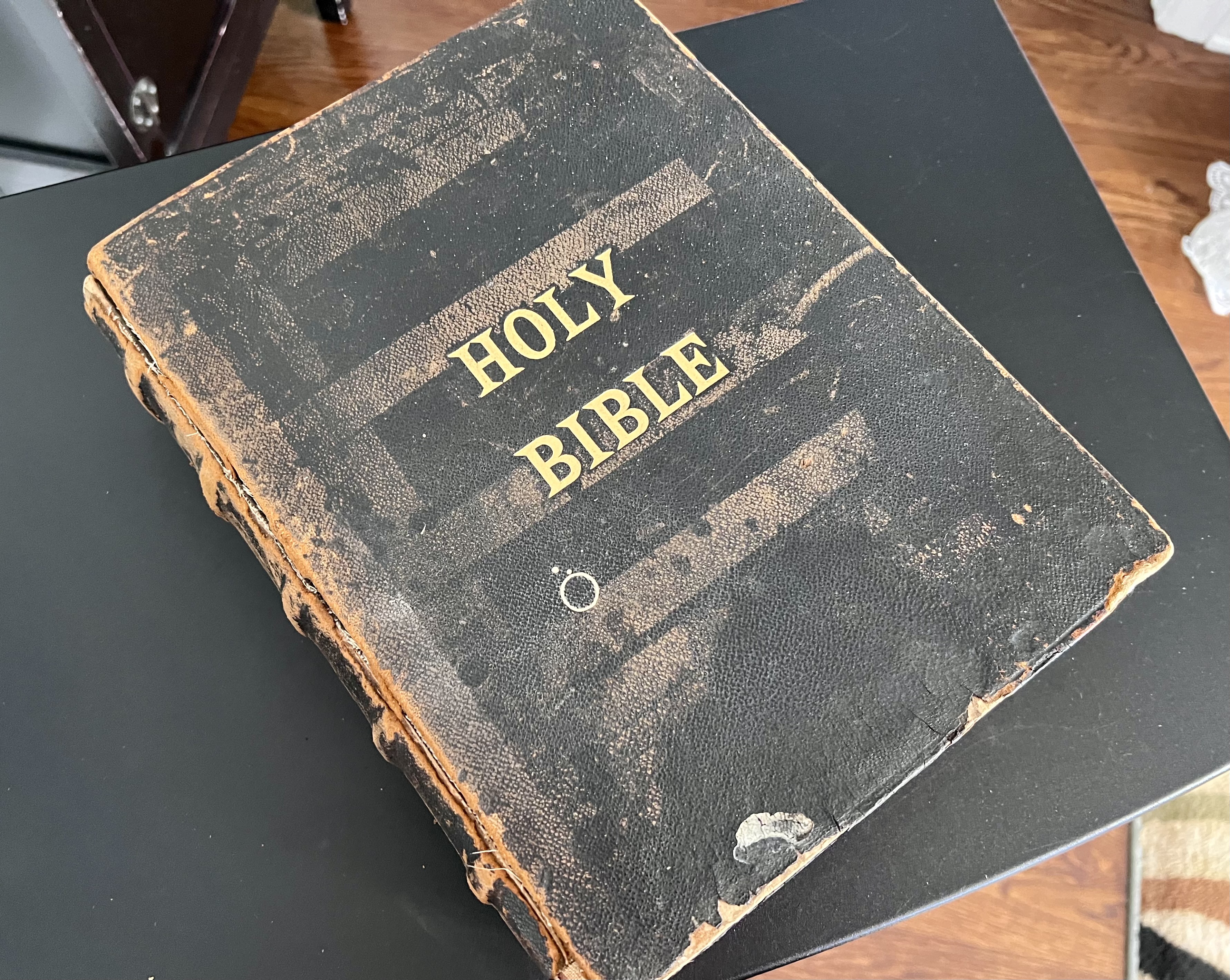
Back in early January 2024, Martin wrote to ask me if I was related to Jacob and Ida Cohen. When I asked him why, he told me that he owned a bible that had their names in it. He sent me a few images of the bible that showed Jacob and Ida’s names.

I did a search of my family tree and realized that the Jacob Cohen who had married Ida Siegel was my second cousin, twice removed, the great-grandson of my three-times great-grandfather, Hart Levy Cohen, and my grandfather John Nusbaum Cohen’s second cousin. You can read what I’ve already written about Jacob and Ida and their family (and find sources) in my earlier posts here and here. I will only include an outline of their lives here.

Jacob was born on March 9, 1870, in Washington, DC, to Moses Cohen and Henrietta Loeb. As a young man, Jacob moved to New York City, where he first worked as a bookkeeper. He married Ida Siegel in 1894, and they had two children: Aimee, born in 1895, and Gerson, born in 1900. You can see those births mentioned on this page from the bible:

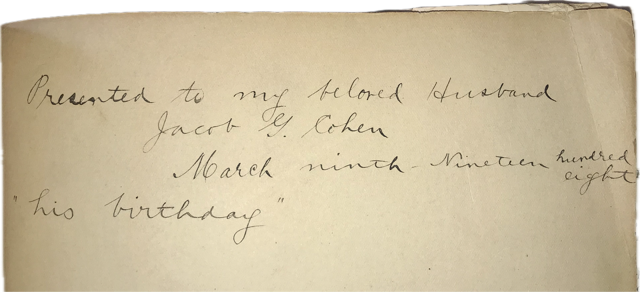
One of the images Martin shared from the bible showed that Ida had given Jacob the bible as a gift on this 38th birthday on March 9, 1908.

So I wrote back to Martin and told him that I was in fact related to Jacob Cohen and asked him how he had ended up with Jacob’s bible. He told me the following story:

Back in 1977, when I was 16 years old and in high school, I worked as a stock boy at Nadeen’s Department Store in the Bronx (NY).  One of my responsibilities was to sweep the floors. One day I came across a dirty old box under one of the clothing racks. I asked my store supervisor (Nathaniel, a devout Christian) about the box and he showed me its contents.

Two things I remembered seeing in the box vividly was a beautiful vintage radio, the kind that operated from glass tubes and an old, dusty Bible. As we spoke, he realized I had never read the Bible. So, he gave it to me as a gift. Nat told me it was previously given to him by our store manager at the time, Jack Katz.

In 1979, I graduated high school and joined the Marine Corps. The Bible stayed at my parents’ apartment while I toured.

After the service, a few years later, I came back home, and the book has been with me ever since. The Bible is in the plastic linen bag my wife came across to protect it and it fits perfectly!

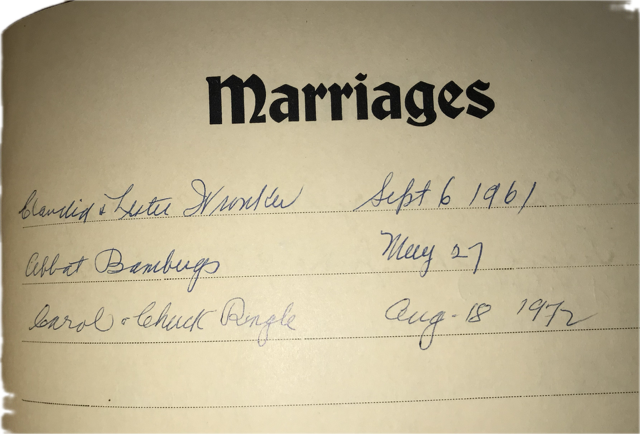
Martin then sent me more images from the bible, including this one with some unfamiliar names.

I set off to try and identify those people and realized that many of them were not in fact blood relatives of Jacob or Ida. But to understand how those names ended up in the bible, you need a little more background about Jacob, Ida, and their children. Again, except where noted, this information and my sources are from the earlier blog posts linked to above.

On February 12, 1917, Jacob and Ida’s daughter Aimee married Lester Wronker.  Aimee and Lester had a son, Robert, who was born in April, 1919.  In 1920, they were living in Manhattan.

In 1925 Jacob and Ida were living in Manhattan, and Jacob was working as an insurance agent.  Their daughter Aimee and her husband Lester and their son Robert were now living in Yonkers. Sometime thereafter, Jacob changed his surname from Cohen to Cole. His son Gerson also changed his name to Gary Cole and was living in 1930 in Detroit as a credit manager for a furniture business.

Jacob died on February 13, 1930.

In 1940, Jacob’s widow Ida was living with Aimee and Lester Wronker in Yonkers. Their son Robert Wronker graduated from Princeton University in 1940. Tragically, Robert died on August 20, 1956, after a long illness.  He was only 37 years old. He had never married or had children. Meanwhile, in Detroit, Jacob’s son Gary Cole had married Wanda Budzinsky in 1941, and they had two sons.

Ida Siegel Cohen/Cole died in 1949. Sadly, neither of her children outlived her by very long. Gary Cole died in 1955 at 55; his sister Aimee Cohen Wronker died in 1959 at 64. Thus, with Aimee’s death, the only direct descendants of Jacob G. Cohen and Ida Siegel who were still living were their two grandsons through their son Gary, and they were just teenagers and living in Detroit.

So what happened to Jacob’s bible after Aimee died in 1959 and Gary, Ida, and Jacob were already deceased? It appears that it was in the hands of Lester Wronker, Aimee’s widower, Jacob’s son-in-law.

Lester remarried in 1961, two years after Aimee’s 1959 death. His second wife was Claudia Langfeld Bamberg,1 a widow herself with one son, Abbot Strouse Bamberg, and two granddaughters, Abbot’s daughters Judith and Carol.2

You can see that someone—Claudia probably—added information about Claudia, her son Abbot, and her two granddaughters Judith and Carol to Jacob’s bible. Notice how the handwriting and the ink is noticeably different from the earlier entries made by Jacob or Ida or Aimee.

So how did the bible end up at Nadeen’s in 1977 where Martin discovered it? No one knows for sure. But after Lester Wronker died in 1976, it appears that Claudia and her son and granddaughters must have gotten rid of the bible, and somehow it ended up in a dirty old box in Nadeen’s women’s clothing store in the Bronx, where Martin Gonzalez discovered it in 1977 and kept it safe for close to fifty years.

Martin contacted me because he wanted to be sure that the bible did not someday once again end up in a dirty box in the backroom of some store or in a landfill. He offered it to me, but I suggested that it would be better to donate it to a library, museum, or archive where it would be kept safe in perpetuity. Martin liked that suggestion and has now sent it to the Jewish Genealogical Society of New York.

Today we hear so much about the ugliness in the world—the hatred, the anger, the polarization. But we also need to remember that there are also wonderful, loving, and generous people in the world who only want to do the right thing. Martin Gonzalez is one of those people. He easily could have done nothing, and Jacob’s bible might once again have been lost. But he took the time to search for someone who might help him preserve it, and fortunately he found my blog. Thank you, Martin, for restoring my faith in people and reminding me to believe that good can prevail over evil and love can prevail over hate. You have done an amazing mitzvah by taking such good care of Jacob’s bible.


  1. Lester Wronker, Gender Male, Marriage Date 6 Sep 1961, Marriage Place New Rochelle, New York, USA, Certificate Number 40700, Records Sharing Certificate Number (Name), Lester Wronker, Claudi L Bamberg, Claudi L Langfeld, New York State Department of Health; Albany, NY, USA; New York State Marriage Index, Ancestry.com. New York State, Marriage Index, 1881-1967 
  2. See “Abbot Bamberg, Former New Rochelle Resident,” The Daily Times (Mamaroneck, NY), May 23, 1990, p. 4. 

The Magic of Old Photos and Modern Technology: Memories of Parkchester

While I am on the subject of old photographs, I wanted to share a heartwarming story that started with one old  photograph.

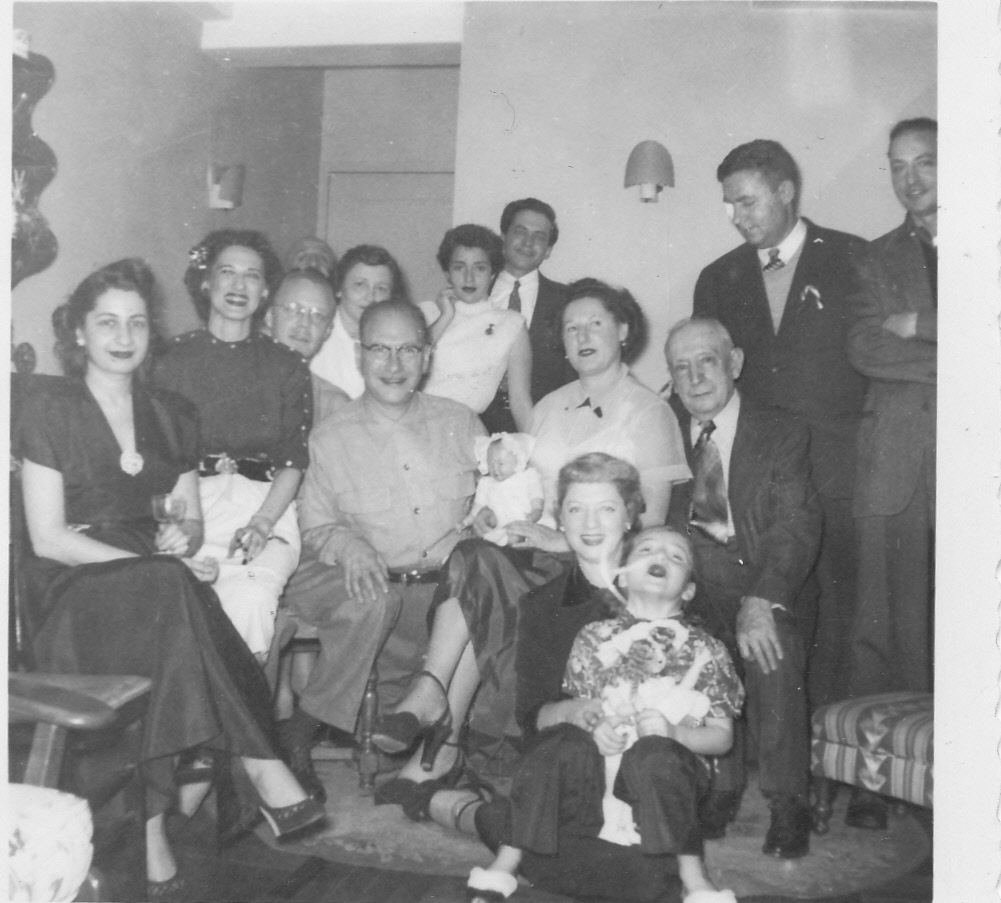
The photo was one I found mixed in with a bunch of old black and white photographs that had been my parents. I could immediately identify my very young parents in the photo. My mother is the woman in the back with the sleeveless white top. Standing behind her, the man in the suit and tie with dark hair is my father. When I looked more closely at the photo, I realized that my grandmother, Gussie Brotman Goldschlager, is standing to the left of my mother (on my mother’s right), and then all the way in the back left corner almost at the door with only his eyes and nose showing is my grandfather, Isadore Goldschlager.

Who are these people??

But I did not recognize one other person in the photo. Who were all those people with my parents and grandparents? I had no one to ask since my grandparents and my parents are no longer living, nor are any of their peers. But I was determined to try and find out. First I distributed the photo by email to all my Goldschlager and Brotman relatives. Did anyone recognize anyone in the photo? No one did. These did not appear to be my relatives.

I then had what turned out to be a brilliant idea. My grandparents and my parents all lived in Parkchester, a community of apartment buildings in the Bronx that was built in the early 1940s. My mother and her parents had moved there when she was about eleven in 1941 or 1942. Then after my parents married in 1951, my parents had an apartment there also. It was my first home. I hypothesized that the photograph might have been taken in Parkchester in the early 1950s. We moved away in 1957, and my parents looked really, really young here—it may have been taken even before I was born in 1952.

I searched to see if there was a Facebook group for people who once lived in Parkchester, and sure enough, there is one. I posted the photograph there, saying that the photograph was probably taken in the early 1950s and asking if anyone recognized anyone in the photograph. I received numerous comments about living in Parkchester in those years, but no one knew anyone in the photo.

Until, that is, a woman named Gail (Lipman) Amsterdam responded and said that her grandparents, her father, and several other people she knew were in the photograph. And even more incredible—she herself was the little girl sitting on the floor in the front of the photograph. I was totally blown away. Gail is sitting on her grandmother’s lap, and her grandfather is sitting behind her. Gail’s father, Sid Lipman, is the man in the center with the glasses. We assume that her mother either took the picture or was in the kitchen when it was taken.

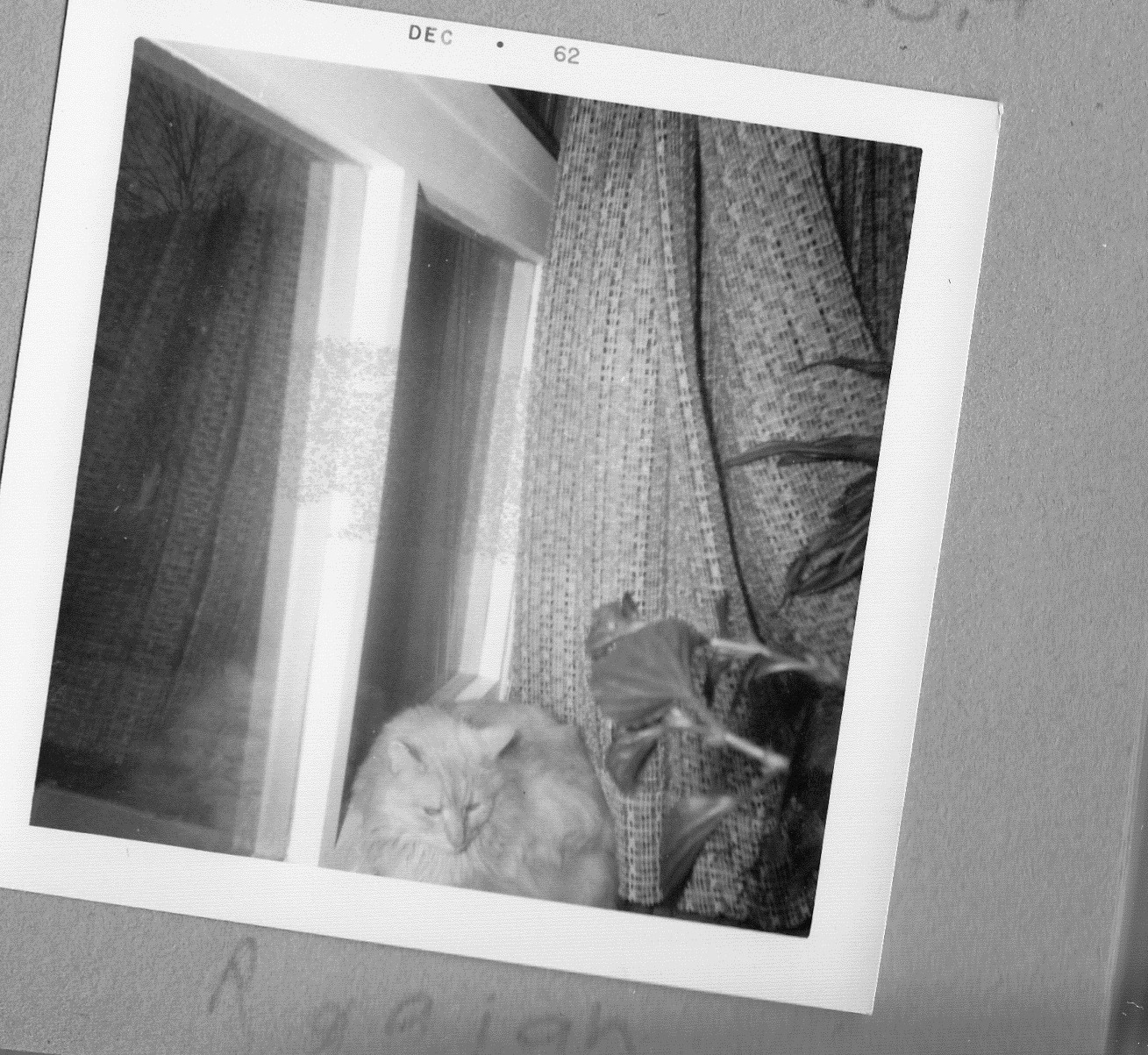
I learned that Gail had lived in the same building and on the same floor as my grandparents when she was a little girl and that she remembers them. She described them as kind and lovely people. And even more amazing—she remembers my grandparents’ cat and described him perfectly! She even remembers that his name was Rajah. She told me that my grandmother used to let her “borrow” Rajah and take him back to her apartment to play with her. I had a serious case of chills and tears as I read the email in which she shared this with me.  Here was someone I never met who remembered my grandparents and Rajah, who eventually became our cat when my grandmother no longer could care for him. It felt magical.

Rajah (cleverly misspelled by me at ten years old!)

Then I asked Gail about the other people in the photograph. She identified everyone else except for one woman. I told her that I was going to try and locate any relatives of those people because they also might enjoy seeing the photo. Gail said that all the people she knew in the photograph were deceased and that as far as she knew there were no living descendants. One couple did have a son, but in researching the family, I learned that that son had died in the last few years and had had no children or spouse who survived him.

As for the other three adults in the photo, one was Gail’s mother’s best friend, Helen Frankenstein Kaiserman (the woman holding Gail’s doll on her lap), and the two men standing on the right in the rear were Helen’s brothers Morris and Jerome Frankenstein. According to Gail, none of those three had children. Helen had been briefly married but was divorced by the time Gail knew her, and Gail believed that Jerome and Morris had never married.

But I was curious to learn more about the three siblings—Morris, Jerome, and Helen. I just couldn’t accept that there were no living relatives in this family. I turned to Ancestry and began to research the family and soon found them on the 1930 and 1940 census along with their parents and two other siblings. Maybe the other siblings had had children who might be interested in the photo?

In the course of doing that research, however, I stumbled upon an Ancestry tree that had Morris, Jerome, and Helen included. That tree was owned by a researcher named Renate Valencia, and I was surprised to see that according to her tree, Morris had married and had had children. Since his widow and children were still living, their names did not show up on the tree, so I decided to send Renate a message through Ancestry to learn more.

I didn’t have to wait long to hear from her. She was very excited to hear about the photograph and knew that her husband Steve, Morris’ son, would be delighted to see a photograph of his father, uncle, and aunt. Gail was surprised and happy to learn that in fact Morris had married and had had children. I connected Gail and Renate to each other, and they have been exchanging memories and asking and answering questions about the people in the photograph.

Renate sent me this link to a documentary about Parkchester, and it brought back many memories of visiting my grandmother there, going to Macy’s, playing in the playgrounds, chasing pigeons near the fountain, and taking the bright red elevator up to my grandmother’s apartment where once upon a time Gail had lived across the hall. Gail and I may have even ridden in that elevator at the same time, not knowing that all these years later we would connect through the magic of the internet and an old photograph.

All of this would never have been possible without the magic of photographs and the tricks of the internet. Without Facebook and Ancestry, I never would have found Gail or Renate. I never would have learned about the people in that photograph. Now I just wish that I could tell my parents and my grandparents this story and learn more about their memories of that evening and of the people in the photograph.

Can you imagine what all those people in the photograph would think if they knew that seventy or so years after that photograph was taken, three strangers would spend time remembering them all and sharing a magical experience like this? I still get the chills and a bit teary when I think about it.

Friederike Blumenfeld Schoen, Part V: Her Family in America After the War

By 1950, the three surviving children of Friederike Blumenfeld and Mannes Schoen, Auguste, Moritz, and Isaak, were all living in the United States. But none of the three lived past the age of 66.

Auguste died in 1951 at the age of 65. Although I don’t have an official death record, I do have a photo of her gravestone from FindAGrave. Also, there is an “Augusta Speyer” listed in the New York, New York Death Index, who died at age 64 on March 24, 1951; this could be Auguste, given that the age and year of death almost match, even if the name is misspelled.1

Find a Grave, database and images (https://www.findagrave.com/memorial/236656909/auguste-speier: accessed 9 September 2023), memorial page for Auguste Schoen Speier (1886–1951), Find a Grave Memorial ID 236656909, citing Cedar Park Cemetery, Paramus, Bergen County, New Jersey, USA; Maintained by dalya d (contributor 46972551).

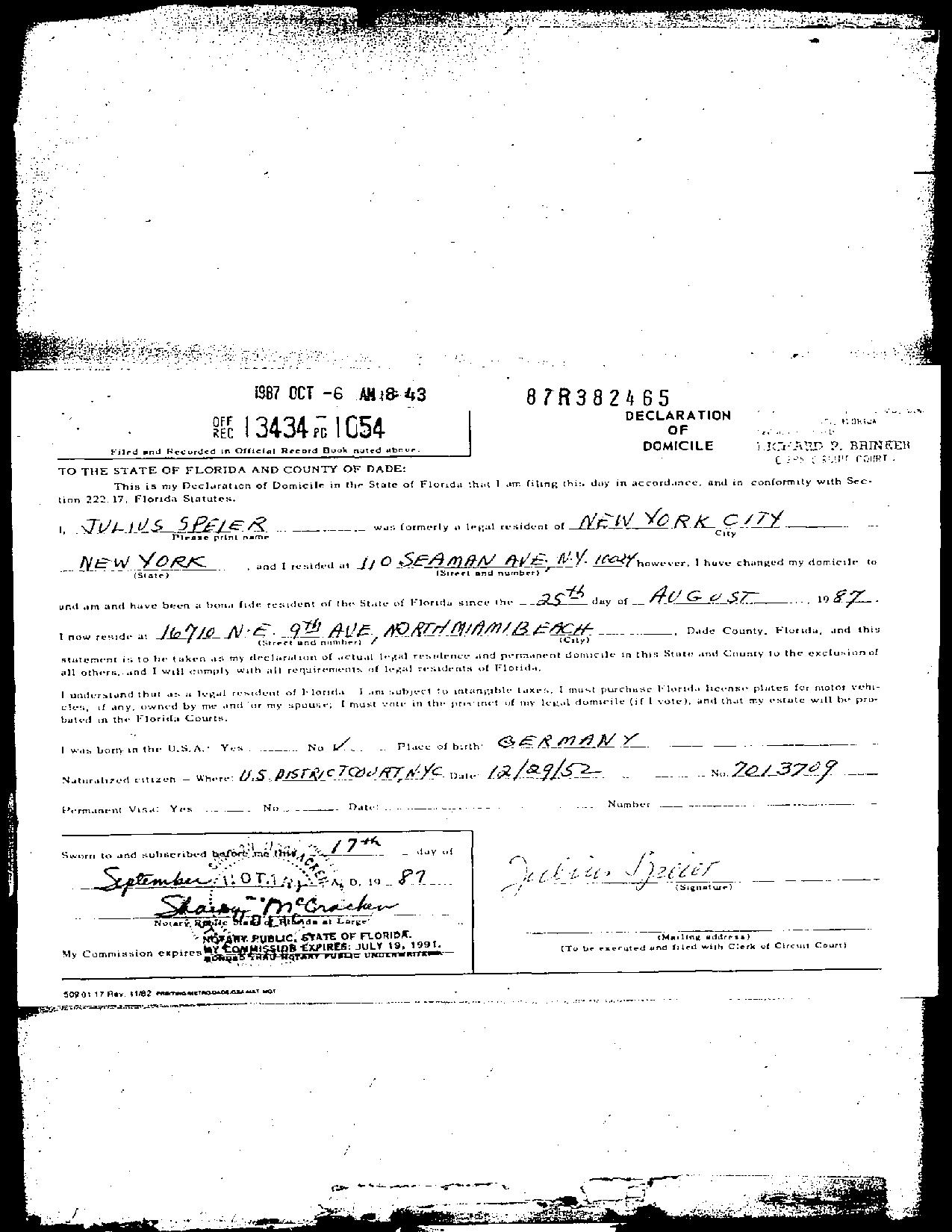
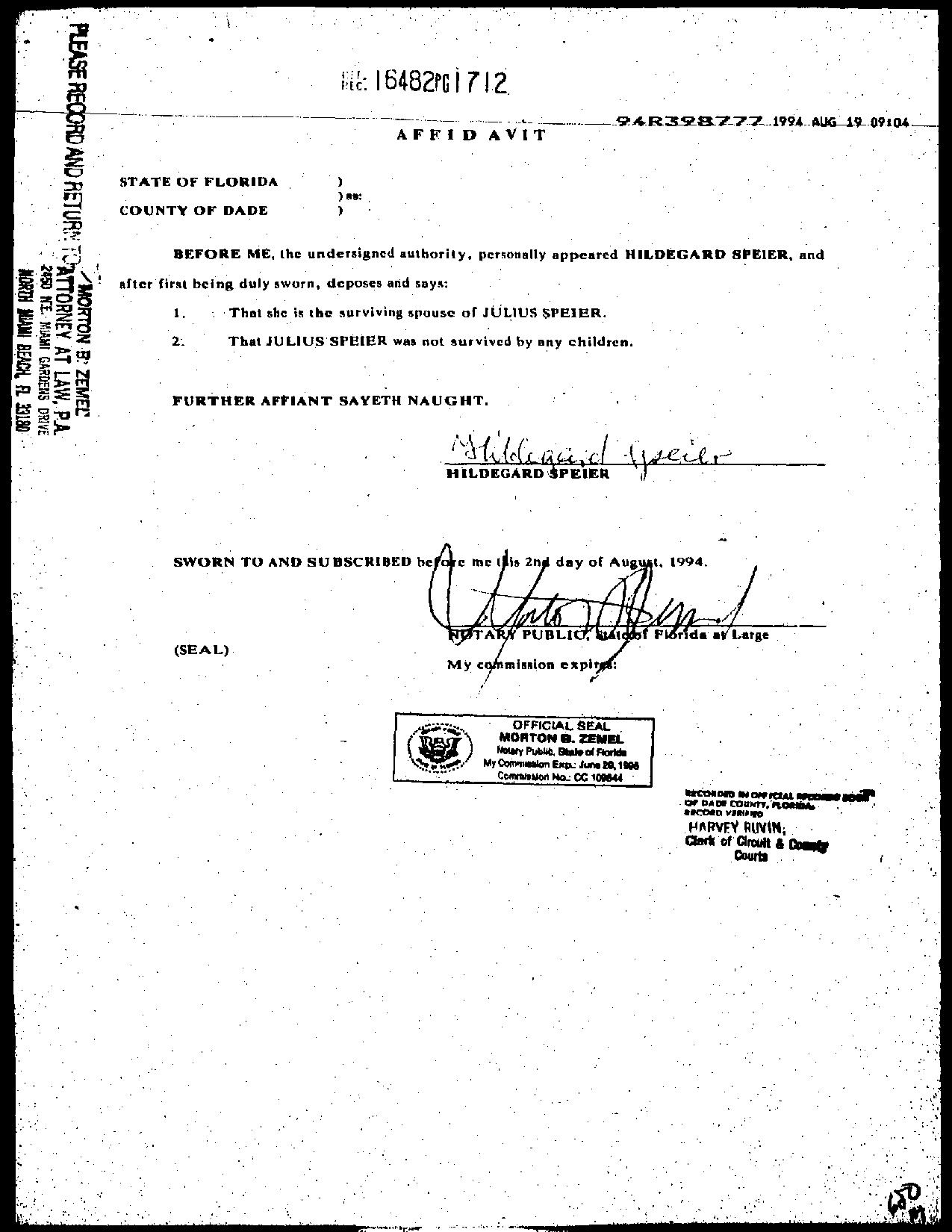
Auguste was survived by her husband Willi Speier, who died in New York City on January 1, 1964, at the age of seventy,2 and by her son Julius and his wife Hildegard. I was unable to find any further information about Julius and Hildegard’s lives once they got to the US. I do not even know whether they had children. All I know is that Julius died in Florida on November 22, 1992,3 when he was seventy, and Hildegard died two years later in Florida in August 1994.4 Aside from a brief death notice for Hildegard in the Miami Herald on August 13, 1994,5 there are no obituaries to provide more information about their lives.

UPDATE: Thank you to the amazing researcher, Barbara Zimmer, on Tracing the Tribe, I now have a bit more information about Julius and Hildegarde. Barbara found documents online in Florida that show that Julius and Hildegard moved from New York City to Miami in 1987 and that they had no children. See the search engine here.  Also, Michael Rosenberg, whose father Walter was a second cousin to Julius, recalled a couple by that name being friends of his family in New York.

As for Auguste’s brother Moritz and his family, I again have relatively little information about their post-war years in the US. As I mentioned in my earlier post, his daughter Alice married Albert Schwarz in 1943, and they had three children and were living in New York City. Alice’s brother Manfred Schoen married in 1951; as his wife is still living, I will not disclose her name or details, and I do not know whether they had children.6 Kurt, the youngest sibling, married Berta Cooper in 1955. They had three children, according to his interview with the US Holocaust Memorial and Museum.7

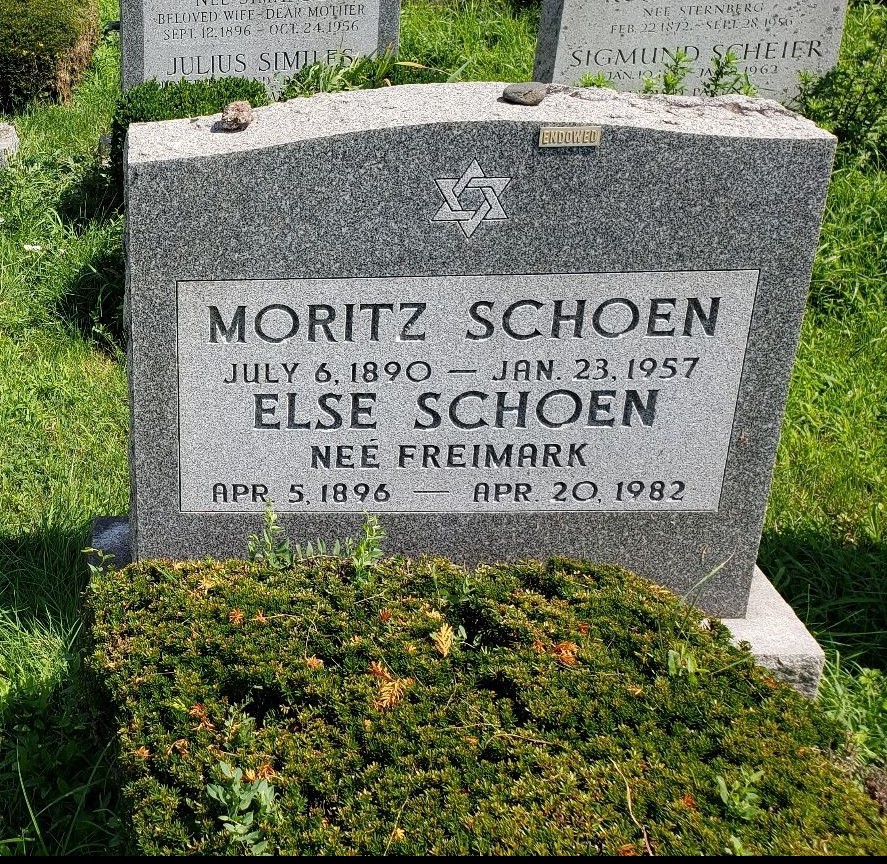
Moritz Schoen died in New York City on January 23, 1957. He was 66 years old.8 He was survived by his wife Else Freimark Schoen, who died April 20, 1982, twenty-five years after her husband.9 She was 86. They were both survived by their three children, Alice, Manfred, and Kurt, and their grandchildren.

Find a Grave, database and images (https://www.findagrave.com/memorial/230090815/else-schoen: accessed 9 September 2023), memorial page for Else Freimark Schoen (1896–1982), Find a Grave Memorial ID 230090815, citing Cedar Park Cemetery, Paramus, Bergen County, New Jersey, USA; Maintained by dalya d (contributor 46972551).

Isaak Schoen, the youngest of the children of Friederike Blumenfeld and Mannes Schoen, also died before he turned 70. He died when he was 66, just like his brother Moritz, on May 21, 1960, in New York City.10 Isaak had never married or had children and was survived by his niece and nephews and their children.

Find a Grave, database and images (https://www.findagrave.com/memorial/247906520/isaac-schoen: accessed 9 September 2023), memorial page for Isaac Schoen (1893–1960), Find a Grave Memorial ID 247906520, citing Beth-El Cemetery, Paramus, Bergen County, New Jersey, USA; Maintained by dalya d (contributor 46972551).

Moritz’s three children lived longer lives than their father or their aunt and uncle. Manfred was seventy-seven when he died in Florida on January 20, 2004.11 Alice lived to 91; she died on June 9, 2015.12 Her husband Albert Schwarz predeceased her; he died on August 5, 2010.13 They were survived by their three children. And Kurt Schoen died just last year on February 24, 2022, at the age of 94. His children survive him as well as his grandchildren. His wife Berta predeceased him on May 26, 2016.14

Thus ends the story of the family of Friederike Blumenfeld and Mannes Schoen. Sadly, their sons Jakob and Isaak have no living descendants, nor does their son Willi, who died as a boy. I don’t know whether their daughter Auguste has any descendants. But I do know that their son Moritz had six grandchildren and that this line continues at least through those grandchildren and their descendants.

And not only does this bring me to the end of Friederike’s story; it also brings me to the end of the long saga of her father Isaak Blumenfeld I, the second child of Moses Blumenfeld I. I started Isaak’s story and those of his ten children on January 25, 2022, over a year and a half ago.

I can now turn to the story of his younger sister Gelle Blumenfeld Rothschild. Like her brother Isaak, she had ten children. I may still be telling her story a year and a half from now. Imagine April 2025—what will the world be like then? I just hope it’s still here and that Jews and Israel are still here also.

In the meantime, I hope everyone has a good Thanksgiving. I am going to try to focus on the many things for which I am grateful and on all the good I see in most people. It will be a challenge, but surrounded by my family, it will be very doable.

See you the week after Thanksgiving!


  1. Augusta Speyer, Age 64, Birth Date abt 1887, Death Date 24 Mar 1951, Death Place Manhattan, New York, New York, USA, Certificate Number 6867, Ancestry.com. New York, New York, U.S., Death Index, 1949-1965. 
  2. Willi Speier, Age 70, Birth Date abt 1894, Death Date 1 Jan 1964, Death Place Manhattan, New York, New York, USA, Certificate Number 12, Ancestry.com. New York, New York, U.S., Death Index, 1949-1965 
  3. Julius Speier, Gender Male, Race White, Birth Date 10 Aug 1922, Birth Place Niederurff K, Federal Republic of Germany, Death Date 22 Nov 1992, Father Willi Speier, Mother Auguste Schoen, SSN 079242442, Ancestry.com. U.S., Social Security Applications and Claims Index, 1936-2007 
  4. Hildegard Speier, [Hildegard Gabriel], Gender Female, Race White, Birth Date 8 Sep 1919, Birth Place Bromberg Pos, Federal Republic of Germany, Death Date Aug 1994, Father Julius Gabriel, Mother Berta Gross, SSN 079242443, Ancestry.com. U.S., Social Security Applications and Claims Index, 1936-2007 
  5. The Miami Herald, Miami, Florida, Sat, Aug 13, 1994, Page 34 
  6. Name Manfred Schoen, Gender Male, Marriage License Date 1951, Marriage License Place Queens, New York City, New York, USA, License Number 5534, New York City Municipal Archives; New York, New York; Borough: Queens, Ancestry.com. New York, New York, U.S., Marriage License Indexes, 1907-2018 
  7. Oral history interview with Kurt L. Schoen, Oral History | Accession Number: 1997.A.0441.512 | RG Number: RG-50.462.0512, United States Holocaust Memorial Museum Collection, Gift of the Gratz College Holocaust Oral History Archive, found at https://collections.ushmm.org/search/catalog/irn566135 
  8. Moritz Schoen, Birth Date 6 Jul 1890, Death Date 23 Jan 1957, Claim Date 26 Jan 1957, SSN 111288575, Ancestry.com. U.S., Social Security Applications and Claims Index, 1936-2007 
  9. Else Schoen, Social Security Number 094-20-5551, Birth Date 5 Apr 1896, Issue year Before 1951, Issue State New York, Last Residence 11372, Flushing, Queens, New York, USA, Death Date Apr 1982, Social Security Administration; Washington D.C., USA; Social Security Death Index, Master File, Ancestry.com. U.S., Social Security Death Index, 1935-2014 
  10. Isaac Schoen, Age 66, Birth Date abt 1894, Death Date 21 May 1960, Death Place Manhattan, New York, New York, USA, Certificate Number 11253, Ancestry.com. New York, New York, U.S., Death Index, 1949-1965 
  11. Manfred Schoen, Social Security Number 118-14-1280, Birth Date 13 Sep 1926
    Issue year Before 1951, Issue State New York, Last Residence 33180, Miami, Miami-Dade, Florida, USA, Death Date 20 Jan 2004, Social Security Administration; Washington D.C., USA; Social Security Death Index, Master File, Ancestry.com. U.S., Social Security Death Index, 1935-2014 
  12. Schwarz Family Tree, Arbeitskreis Judentum im Wasgau, Elisabeth & Otmar Weber, Schillerstraße 10b, 66994 Dahn 
  13.   Albert B. Schwarz, Social Security Number 057-16-8097, Birth Date 22 Oct 1922
    Issue year Before 1951, Issue State New York, Last Residence 11372, Flushing, Queens, New York, Death Date 5 Aug 2010, Social Security Administration; Washington D.C., USA; Social Security Death Index, Master File, Ancestry.com. U.S., Social Security Death Index, 1935-2014 
  14. “Holocaust Survivor Kurt Schoen Dies at 94,” Philadelphia Jewish Exponent, March 10, 2022, found at https://www.jewishexponent.com/holocaust-survivor-kurt-schoen-dies-at-94/  Berta Schoen, obituary, found at https://www.legacy.com/us/obituaries/inquirer/name/berta-schoen-obituary?id=9451473 

Friederike Blumenfeld Schoen, Part III: Her Son Moses Escapes to America

I have been unable to do any new research in these last few weeks since the horrendous massacre in Israel by Hamas on October 7. I just can’t seem to focus on research right now. Fortunately I had several blog posts ready in my queue and will publish those, including this one. Perhaps the best way I can support Israel right now is to educate and remind people about the long history of persecution of Jews and antisemitism so that they best understand why Israel exists and why it must survive.


Although Friederike’s oldest child Jakob died in 1937 and his widow and daughter were killed by the Nazis, her other three surviving children all managed to escape the Nazis.

Friederike’s son Moses, more commonly known as Moritz, wanted to leave Germany quite early. As described by his son Kurt Leopold Schoen in the oral history interview he did with the US Holocaust Memorial and Museum, Moritz had had a successful wholesale and retail shoe business in Kassel, but once the Nazis came to power the business suffered. Non-Jews boycotted the store, and Moritz had to close the business and work as a shoemaker.1

But leaving Germany was difficult. The family needed affidavits from someone in the US to get a visa to enter the country, and the relatives in the US were reluctant to sponsor a family with three young children. Fortunately, Moritz and Else’s fourteen-year-old daughter Alice was given an opportunity to leave when the National Council of the Jewish Women in the US organized a rescue mission that brought many children out of Germany.2 Alice came to the US on May 13, 1938, and was sent to live with a Jewish family in San Antonio, Texas, the Rosenbergs, as seen on the 1940 US census.3

Alice Schoen passenger manifest, The National Archives and Records Administration; Washington, D.C.; Passenger and Crew Lists of Vessels Arriving at and Departing from Ogdensburg, New York, 5/27/1948 – 11/28/1972; Microfilm Serial or NAID: T715, 1897-1957
Ancestry.com. New York, U.S., Arriving Passenger and Crew Lists (including Castle Garden and Ellis Island), 1820-1957

The website for the Holocaust Memorial Museum of San Antonio reported that Abe and Bella Rosenberg “took [Alice] into their lives as if she were a long lost relative. The Rosenberg children, Miriam and Stanley, and a host of aunts, uncles, and cousins who treated her with affection and kindness made her adjustment to a new life easier.” In his oral history interview, Alice’s brother Kurt mentioned that the Rosenbergs were a very nice family, but nevertheless Alice was naturally very homesick.  She did not see her family again until 1940.4

But Alice was able to get help from the Rosenberg family to bring her father Moritz to the US from Germany. As reported on the website for the Holocaust Memorial Museum of San Antonio, they signed affidavits pledging financial support for him.

Once he had an affidavit from the Rosenbergs, Moritz was able to go to the US consulate in Germany and receive a visa. But before he could leave, he was arrested during the Kristallnacht riots in November, 1938. According to his son Kurt, Moritz was not sent to Buchenwald like so many other Jewish men were after Kristallnacht because he already had a visa to leave Germany. He was released within a day or two from police custody in Kassel and prepared to leave for the US.5

Moritz arrived on December 3, 1938, seven months after Alice’s arrival, and settled in New York City. His ship manifest lists his wife Else as the person he was leaving behind in Kassel, Germany, and his sister-in-law Betty Lutz (born Babette Freimark) as the person he was going to in the US. He listed his occupation as a shoemaker.6

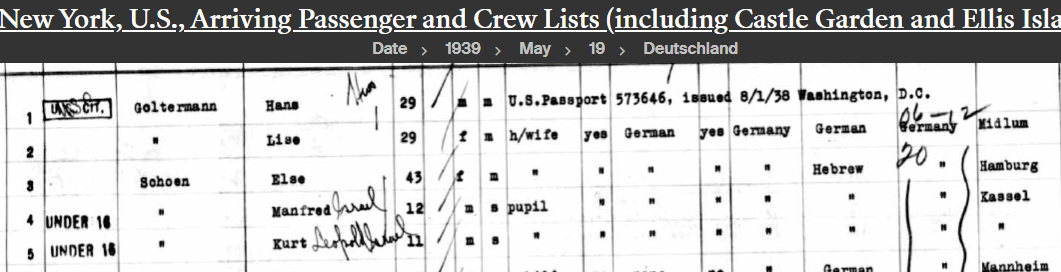
Meanwhile, back in Germany, Else and her two young sons Manfred and Kurt moved to Frankfurt; the boys were sent to a Jewish orphanage and Else moved in with one of her sisters. Kurt described the orphanage as a place where he and his brother were well treated. They went to school and learned English. Finally in April 1939, they were released and reunited with their mother and allowed to leave Germany for the US. Kurt, who was eleven at the time, recalled that the Nazis tore through their luggage and stole everything Else had packed except one small teapot.7

Else arrived in New York with Manfred and Kurt (listed as Kurt Leopold Israel on the manifest) on May 19, 1939.

Else Schoen and children, passenger manifest, The National Archives and Records Administration; Washington, D.C.; Passenger and Crew Lists of Vessels Arriving at and Departing from Ogdensburg, New York, 5/27/1948 – 11/28/1972; Microfilm Serial or NAID: T715, 1897-1957
Ship or Roll Number: Deutschland, Ancestry.com. New York, U.S., Arriving Passenger and Crew Lists (including Castle Garden and Ellis Island), 1820-1957

The family moved into a small apartment riddled with bed bugs; Moritz worked doing shoe repairs and barely made a living. But as Kurt said, they were happy to be out of Germany and safely living in New York. They moved frequently from one apartment to another in order to get the benefit of one or two free months of rent being offered by landlords. Manfred and Kurt started school where they quickly learned English and rose from the lower levels of their grade to the highest within a year.8

Alice was reunited with her parents and brothers sometime in 1940 when the Rosenberg family brought her to New York after taking a trip to Canada to see the Dionne Quintuplets. She married just three years later when she was nineteen, according to her brother Kurt.9 Her husband, Albert Bernhard Schwarz, was born on October 22, 1922, in Busenberg, Germany, to Alfred Lazarus Schwarz and Berta Levy. Like Alice, he was refugee from Germany; he had arrived on August 13, 1938.10 He was the only member of his family to survive. His parents and all his siblings were killed by the Nazis.11

Albert entered the US Army on March 26, 1943, listing his marital status as single.12 He and Alice must have married later that year. According to one biography of Albert, he was assigned to Camp Ritchie in Maryland and trained for military intelligence. As a Ritchie Boy, as they were known, Albert was trained to interrogate German prisoners of war. Starting in October 1944 he was with the 7th Armored Division of the II English Army in France and the northern part of Belgium. On November 5-6, 1944, during the Battle of the Bulge, Albert’s jeep hit a German mine near a bridge over the Meuse River. Albert suffered severe head injuries from which he suffered the rest of his life. He was in a coma for over a month in a English military hospital and remained there until February, 1945. He returned to the US in the spring of 1945, but was hospitalized until July. On Aug. 02, 1945, he was discharged from military service at Camp Edward, Massachusetts.13

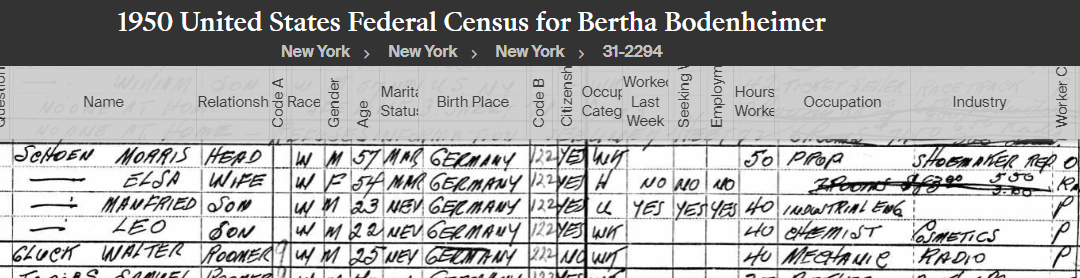
Alice and Albert had three children born after the war. In 1950 they were living in New York City, and Albert was working as a butcher.14 Alice’s parents Moritz and Else Schoen and her brothers Manfred and Kurt (listed as Leo here) were also living in New York City. Moritz now owned his own shoemaking business. Manfred was an industrial engineer, and Leo/Kurt was a chemist in a cosmetics company.

Morris Schoen and family, 1950 US census, National Archives at Washington, DC; Washington, D.C.; Seventeenth Census of the United States, 1950; Year: 1950; Census Place: New York, New York, New York; Roll: 3572; Page: 9; Enumeration District: 31-2294, Ancestry.com. 1950 United States Federal Census

Meanwhile, Moritz’s two remaining siblings had survived the war in Shanghai, China. More on that in my next post.


  1. Many of the personal details in this post came from Kurt Leopold Schoen’s interview with the USHMM. Kurt L. Schoen, July 24, 2004 interview, Accession Number: 1997.A.0441.512 | RG Number: RG-50.462.0512, United States Holocaust Memorial Museum Collection, Gift of the Gratz College Holocaust Oral History Archive, found at https://collections.ushmm.org/search/catalog/irn566135.  Although Kurt is listed as Leopold or Leo on many US records, he used the name Kurt for most of his adult life in the US and will be referred to here as Kurt for that reason. 
  2. See Note 1, supra. 
  3. Alice Schoen, 1940 US Census, Year: 1940; Census Place: San Antonio, Bexar, Texas; Roll: m-t0627-04201; Page: 61A; Enumeration District: 259-6, Ancestry.com. 1940 United States Federal Census 
  4. See Note 1, supra. 
  5. See Note 1, supra. 
  6. Moses Schoen, passenger manifest, The National Archives and Records Administration; Washington, D.C.; Passenger and Crew Lists of Vessels Arriving at and Departing from Ogdensburg, New York, 5/27/1948 – 11/28/1972; Microfilm Serial or NAID: T715, 1897-1957, Ship or Roll Number: Hamburg, Ancestry.com. New York, U.S., Arriving Passenger and Crew Lists (including Castle Garden and Ellis Island), 1820-1957 
  7. See Note 1, supra. 
  8. See Note 1, supra. 
  9. See Note 1, supra. 
  10. Albert Schwarz, Declaration of Intention, The National Archives at Philadelphia; Philadelphia, PA; NAI Title: Declarations of Intention For Citizenship, 1/19/1842 – 10/29/1959; NAI Number: 4713410; Record Group Title: Records of District Courts of the United States, 1685-2009; Record Group Number: 21, Description
    Description: (Roll 610) Declarations of Intention For Citizenship, 1842-1959 (No 481301-482200), Ancestry.com. New York, U.S., State and Federal Naturalization Records, 1794-1943 
  11. Family history of Schwarz family, Arbeitskreis Judentum im Wasgau, Elisabeth & Otmar Weber, Schillerstraße 10b, 66994, found at /https://judentum-im-wasgau.de/images/geschichte/jugemeinden/jufbusenberg/02_schwarz_jakob_hauptstr_49_bu.pdf 
  12. Albert B Schwarz, Race White, Marital Status Single, without dependents (Single)
    Rank Private, Birth Year 1922, Nativity State or Country Danzig or Germany, Citizenship Not Yet a Citizen, Residence New York, New York, Education 2 years of high school
    Civil Occupation Stock clerks, Enlistment Date 26 Mar 1943, Enlistment Place New York City, New York, Service Number 32874464, Branch No branch assignment, Component Selectees (Enlisted Men), National Archives at College Park; College Park, Maryland, USA; Electronic Army Serial Number Merged File, 1938-1946; NAID: 1263923; Record Group Title: Records of the National Archives and Records Administration, 1789-ca. 2007; Record Group: 64; Box Number: 05772; Reel: 241, Ancestry.com. U.S., World War II Army Enlistment Records, 1938-1946 
  13. See Note 11, supra. 
  14. Albert Schwarz and family, 1940 US census, National Archives at Washington, DC; Washington, D.C.; Seventeenth Census of the United States, 1950; Year: 1950; Census Place: New York, New York, New York; Roll: 6203; Page: 6; Enumeration District: 31-1913, Ancestry.com. 1950 United States Federal Census 

Rebecca Blumenfeld Rosenberg’s Daughter-in-Law Bella: An Admirable Woman

Rebecca Blumenfeld and Mendel Rosenberg’s second child was their son Joseph. As we saw, Joseph was born on February 4, 1886, in Rosenthal, Germany, and married Bella Oppenheim on February 21, 1913, in Bad Hersfeld, Germany. Bella was born there on June 8, 1891, to Aron Oppenheim and Hannchen Klebe. Bella’s sister Emma Oppenheim had married Meier Blumenfeld III on April 5, 1905, in Bad Hersfeld. Meier, the son of Giedel Blumenfeld and Gerson Blumenfeld, her first cousin, once removed, was thus Joseph Rosenberg’s first cousin, since their mothers Giedel and Rebecca were sisters.

Joseph and Bella had one child, Kurt, born in Sobernheim, Germany, on April 20, 1914.1 As I wrote in my earlier post, Sobernheim is not in the Hesse region where both Joseph and Bella were born and raised and where they married, but over 160 miles away in the Rhine Palatinate region.

Tragically, as we saw, Joseph, who was a doctor, died on May 4, 1922, at the age of 36, and was buried in Frankfurt, so perhaps he and his family had relocated from Sobernheim. His son Kurt was only eight years old when he lost his father.

Bella remarried a year after losing Joseph. Her second husband was Arthur Marx, born in Kempten, Germany, on August 4, 1890. They married in Frankfurt on June 22, 1923, in Frankfurt, and were living in Frankfurt.

Marriage of Bella Oppenheim Rosenberg to Arthur Marx, Hessisches Hauptstaatsarchiv; Wiesbaden, Deutschland; Bestand: 903, Year Range: 1923, Ancestry.com. Hesse, Germany, Marriages, 1849-1930

Kurt immigrated to the United States on October 16, 1937, when he was 23.2 His mother Bella and stepfather Arthur left Germany for the United States on May 27, 1938, and arrived in New York on June 2, 1938.

Arthur and Bella Marx passenger manifest, Year: 1938; Arrival: New York, New York, USA; Microfilm Serial: T715, 1897-1957; Line: 5; Page Number: 142, Ship or Roll Number: Europa, 
Ancestry.com. New York, U.S., Arriving Passenger and Crew Lists (including Castle Garden and Ellis Island), 1820-1957

Bella Oppenheim Rosenberg Marx then played a pivotal role in saving her niece Ruth Blumenfeld, the daughter of Emma Oppenheim and Meier Blumenfeld III, as I wrote about here. According to Ruth’s grandson Matthew, Bella, Ruth’s aunt, sponsored Ruth’s entry into the United States on March 4, 1940. Ruth was the only member of Emma and Meier’s family to survive the Holocaust. Her parents and her two sisters and their families were murdered by the Nazis. Matthew shared this photograph of Bella with her niece Ruth and Ruth’s husband Leo Friedman.

Bella Oppenheim Marx, Leo Friedman, and Ruth Blumenfeld Friedman. Courtesy of Matthew Steinhart

On the 1940 census, Bella and Arthur were living in Brooklyn, New York, and Arthur was working as a bank clerk and Bella as a practical nurse. They had two boarders living with them in addition to a niece (not Ruth), but not their son Kurt.

Arthur Marx and family 1940 US census, Year: 1940; Census Place: New York, Kings, New York; Roll: m-t0627-02580; Page: 4B; Enumeration District: 24-1310, Ancestry.com. 1940 United States Federal Census

Kurt, like his father Joseph, had become a doctor and was residing at Boulevard Hospital in Queens, New York, at the time of the 1940 census.2 He registered for the draft on October 16, 1940.

Kurt Rosenberg World War II draft registration, National Archives at St. Louis; St. Louis, Missouri; Wwii Draft Registration Cards For New York City, 10/16/1940 – 03/31/1947; Record Group: Records of the Selective Service System, 147, Ancestry.com. U.S., World War II Draft Cards Young Men, 1940-1947

After the war Kurt married Gertrude Stein,3 and in 1950 they were living in Queens and Kurt was practicing medicine.4 Kurt and Gertrude would have three children.

Unfortunately, like his father before him, Kurt died too young. He was 56 years old when he died suddenly on January 28, 1970, at the hospital where he worked as a gynecologist in Queens, New York. He was survived by his wife and children as well as his mother Bella.5

Bella died at the age of 94 on December 22, 1985.6 She had outlived her first husband Joseph Rosenberg and then her second husband Arthur Marx, who died on November 14, 1963, as well her son Kurt.7 She also had outlived her niece Ruth Blumenfeld Friedman, whose life she had helped to save back in 1940. Although she was only related to me by her marriage to my cousin Joseph Rosenberg, I feel a deep respect and a connection to her because of the life she lived and the things she endured along the way.


  1. Kurt Rosenberg, World War II draft registration, National Archives at St. Louis; St. Louis, Missouri; Wwii Draft Registration Cards For New York City, 10/16/1940 – 03/31/1947; Record Group: Records of the Selective Service System, 147, Ancestry.com. U.S., World War II Draft Cards Young Men, 1940-1947 
  2. Kurt Rosenberg, 1940 US census, Year: 1940; Census Place: New York, Queens, New York; Roll: m-t0627-02721; Page: 7A; Enumeration District: 41-105, Ancestry.com. 1940 United States Federal Census 
  3.  New York City Municipal Archives; New York, New York; Borough: Queens, Ancestry.com. New York, New York, U.S., Marriage License Indexes, 1907-2018 
  4. Kurt Rosenberg and family, 1950 US census, United States of America, Bureau of the Census; Washington, D.C.; Seventeenth Census of the United States, 1950; Record Group: Records of the Bureau of the Census, 1790-2007; Record Group Number: 29; Residence Date: 1950; Home in 1950: New York, Queens, New York; Roll: 4301; Sheet Number: 10; Enumeration District: 41-1012, Ancestry.com. 1950 United States Federal Census 
  5. Obituary for Kurt Rosenberg, Daily News, New York, New York, Thu, Jan 29, 1970
    Page 318. Kurt Rosenberg, Gender Male, Birth Date 20 Apr 1914, Death Date Jan 1970
    Claim Date 7 Mar 1970, SSN 072164680, Ancestry.com. U.S., Social Security Applications and Claims Index, 1936-2007 
  6. Bella Marx, Social Security Number 079-22-4508, Birth Date 8 Jun 1891, Issue year Before 1951, Issue State New York, Last Residence 11375, Flushing, Queens, New York, USA, Death Date Dec 1985, Social Security Administration; Washington D.C., USA; Social Security Death Index, Master File, Ancestry.com. U.S., Social Security Death Index, 1935-2014; Find a Grave, database and images (https://www.findagrave.com/memorial/77845632/bella-marx: accessed 29 May 2023), memorial page for Bella Marx (unknown–22 Dec 1985), Find a Grave Memorial ID 77845632, citing Mount Hebron Cemetery, Flushing, Queens County, New York, USA; Maintained by Athanatos (contributor 46907585). 
  7. Arthur Marx, Age 73, Birth Date abt 1890, Death Date 14 Nov 1963, Death Place Queens, New York, New York, USA, Certificate Number 14536, Ancestry.com. New York, New York, U.S., Death Index, 1949-1965 

The Magic of Finding Family Connections: Guest Post by My Cousin Ellen Mandelberg

Just over a year ago, I wrote a post about the family of Moritz Blumenfeld, my second cousin, three times removed, and concluded at the end that none of his five children had had any children and that therefore there were no descendants. But I concluded that post by saying, “there is always the possibility that I just haven’t found those descendants yet.”

Well, a year later I heard from one of those descendants. A woman named Ellen Mandelberg contacted me and told me that she was the granddaughter of Moritz’s Blumenfeld’s daughter Flora Blumenfeld  Vorchheimer. You can imagine my delight. Moritz did have descendants. And Ellen shared with me several stories about Flora. I’ve invited her to tell those stories in her own voice as well as to share some of her photos. So today’s post is by my newly found fifth cousin Ellen.


Through the Google galaxy, and a spur-of-the-moment decision to see if there was anything out there written about my paternal grandmother, Flora Blumenfeld Vorchheimer, I found Amy’s blog earlier this year. I saw that she did not know that Flora had descendants and contacted her to share the good news. I am one of those descendants.

Flora Blumenfeld did have family; by marrying recent immigrant Felix Viktor Vorchheimer in late 1940 and raising his motherless son Umberto (who became Bert in Vineland, NJ, in the 40s), Flora became a wife, mother, constant helpmate on a chicken farm in Vineland, NJ, and, later, a deeply kind and loving grandmother to two little girls, my sister and me.

Flora Blumenfeld Vorchhiemer Courtesy of the family

Felix Vorchheimer Courtesy of the family

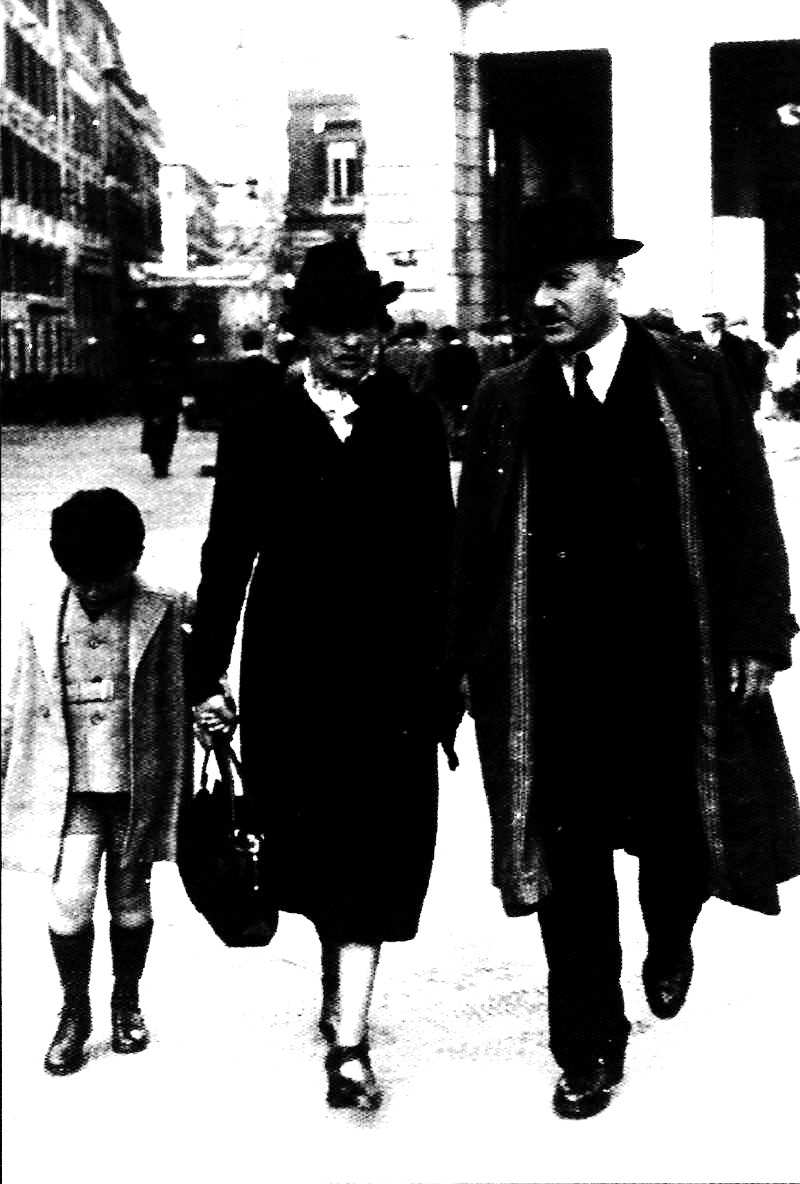
Here is a photograph of young Bert with his father Felix and maternal grandmother before Felix and Bert left for America in 1940; it was the last time he saw her. Flora’s father, Moritz, had suffered early maternal loss, as had Flora, and this must have made her especially sensitive as she raised young Bert. 

Umberto V. on left (age 7); Karolina Schild Kahn, Umberto’s maternal grandmother in middle; Felix V. on right.
Courtesy of the family

Flora became a loving Oma in 1958 and 1960, when Bert and his wife had two daughters, my sister and me.

Flora, Ellen, and Felix Vorchheimer c. 1958
Courtesy of the family

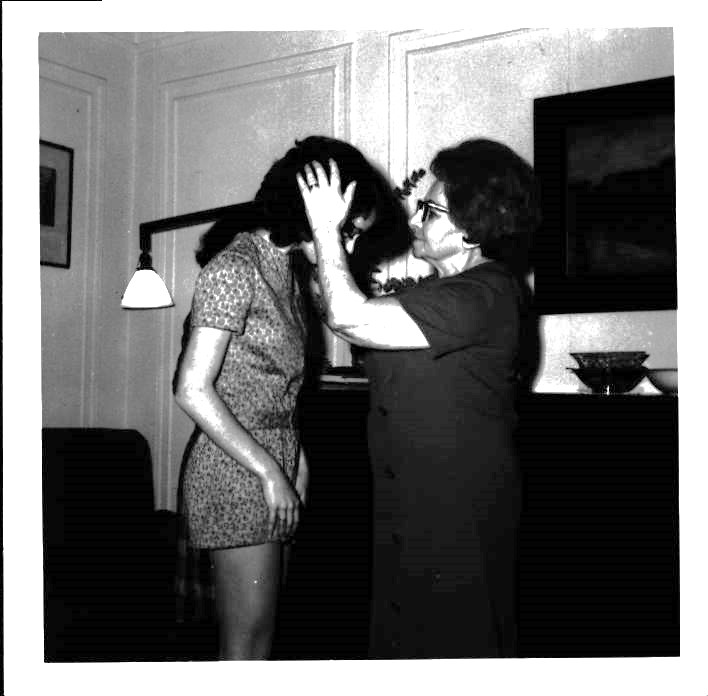
Flora cooked wonderful German-Jewish dishes, kept a candy dish of dark chocolates on the table for all guests, and was observant in a quiet and accepting way. Each time her family came to visit, before they left, she would bless us girls, placing her hands on our heads, whispering quietly in Hebrew a prayer that she never shared in English with us. At 4’10”, she would place her hands on our heads and murmur the blessing, making us feel protected and loved.

Flora blessing Ellen c 1970
Courtesy of the family

After Felix died, at age 69, in 1965, Flora lived with her older sister Gerda in an apartment in Washington Heights until her death in 1974 at age 75. Flora continued to be the epitome of chesed, or lovingkindness. Her memory is always a blessing.

Flora and Felix Vorchheimer in Vineland, New Jersey
Courtesy of the family

Years later, in 1996, a surprising encounter brought connections to my extended Blumenfeld family and much joy into my life. That year, my husband and I, after living in West Hartford, CT, for 14 years, and having belonged to a chavurah, decided we needed to join a synagogue that would provide a Hebrew school for our kids, who were 11 and 7 at that time. We decided to join Congregation Tikvoh Chadoshoh in Bloomfield, CT, which had been founded by German-Jewish refugees.

On Simchat Torah, with the music and everyone swirling about in small circles, I asked an “older” woman to dance; pulling people into the circle is something I’ve always done. The woman hesitated and asked me if I was Israeli.

Something possessed me to blurt out, “No, I’m not Israeli; I’m half-German, and my maiden name is Vorchheimer.”

The woman blurted out, “Vorchheimer, I know that name….I made the shidduch!”

I asked her, “Really? Tell me!”

So she continued, “Well, there was a widower with a little boy who had just come to America, and I matched up my cousin with him! I was at the wedding! In 1940!”

It felt like time stood still, and I said, “Was your cousin’s name Flora Blumenfeld?”

She said, “Well, yes, how do you know?!”

I pointed to my son, then 7, born on 2/4, my father’s birthday, and said, “Look, my son is the same exact age my father was when you last saw him in 1940! And that widower was my Opa Felix. Your cousin was my beloved Oma Flora, whom my daughter is named after!”

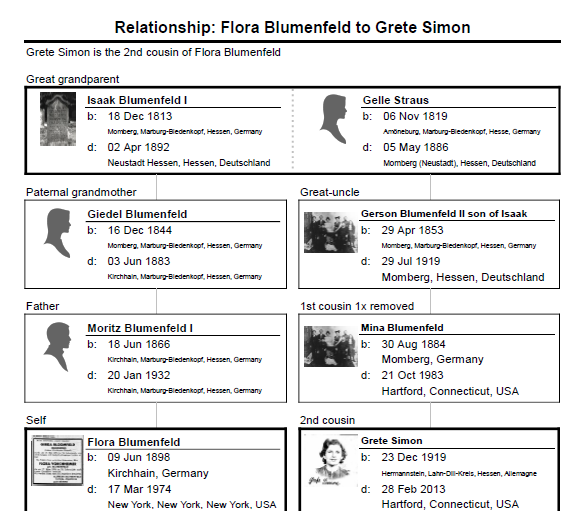
That woman, Grete Simon Spanier, was my grandmother Flora’s second cousin, as I later learned from Amy. They were both great-granddaughters of Isaak Blumenfeld and Gelle Strauss.

It was a remarkable and life-affirming moment. What are the odds? What if I’d just pulled Grete into the circle, and said, no, I’m not Israeli!?

Grete had been lost to my family for 56 years until that moment. Grete told me how Julius Vorchheimer, my grandfather’s brother, part of the Washington Heights community, had asked her if she had a relative who might be a suitable match for his recently-arrived brother Felix, and she’d thought of her cousin Flora.

Grete married Erwin Spanier shortly after attending my grandfather’s wedding to Flora and moved to West Hartford. She lost touch with Flora; Flora was very busy working on a chicken farm and raising a little boy who had been through much loss, and she was married to a man who had also seen too much loss, in both his native Germany and the place he moved to after he fought in WWI for the Germans, Milan, Italy, before emigrating to America in 1940.

The only part of this story I knew all my life was that my grandfather Felix had gotten his older brother Julius out of Dachau in 1934/35, going to the Nazis with some line (and probably money) about “How dare you imprison the brother of an Italian citizen?”

Felix freed his brother in 1934/5; Julius returned the favor by being a matchmaker in 1940. It was that chance Simchat Torah dance that brought Grete back to my family.

It felt like a curtain was pulled back on mystery, allowing me to see the invisible hand of fate in life.

Getting to know Grete and her daughters was an unexpected and wonderful gift. Grete’s memory is always a blessing.


I am so grateful to Ellen for finding me and sharing her story and photographs on my blog. The magic of family connections continues to inspire me to keep searching for all my long lost relatives.


Hilde Blumenfeld Meinrath: A Strong and Determined Woman

Once again, a new cousin found my blog and helped me find information that I could not find through traditional research, this time because the family had ended up in Brazil. Not speaking Portuguese and thus not having easy access to any Brazilian sources, I had hit a brick wall when it came to the family of my cousin, Hilde Blumenfeld Meinrath, whom I wrote about here back on May 31, 2022.

On January 30, 2023, I heard from Ana Gabriela Meinrath, my fifth cousin, once removed, who left the a comment on my blog, telling me that she is the granddaughter of Hilde Blumenfeld Meinrath. Here is a chart showing my father’s connection to Hilde:

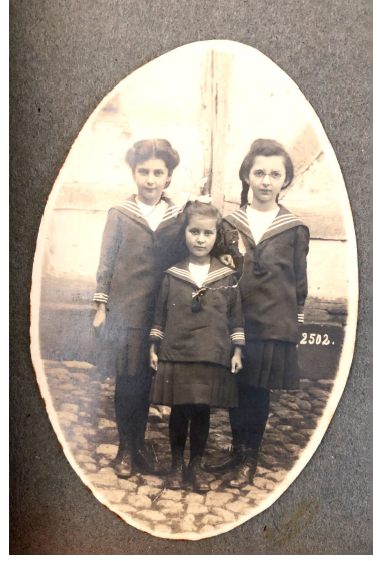
Hilde was the youngest of the three daughters of Salomon Blumenfeld and Malchen Levi: Gretel (born 1906), Jenny (born 1907), and Hilde (born 1911). Gabriela shared this wonderful photograph of the three sisters:

Jenny, Hilde, and Gretel Blumenfeld c. 1917 Courtesy of the family

Gabriela shared some family stories and many photographs and connected me to her uncle Roberto Meinrath, who added more information and stories about Hilde and her family. Roberto then connected me to Michael Katz, grandson of Gretel Blumenfeld Katz. Michael shared this photograph of Salomon and Malchen with all three of their daughters:

Salomon Blumenfeld and family Courtesy of the family

First, a summary of what I knew before Gabriela found me: I knew from my research that Salomon and Malchen and all three of their daughters survived the Holocaust by leaving Germany in time. Hilde, in fact, had left Germany as a seventeen year old in 1929, years before Hitler came to power. Later, she married Ludwig Meinrath, and eventually they immigrated to Brazil. Her parents followed her there, but later immigrated to the US where their second daughter Gretel and her family were living. The third daughter Jenny ended up in Israel.

But I had many questions left unanswered when I published that post on May 31, 2022, including why Hilde had left Germany in 1929 when she was only seventeen, how Hilde had met Ludwig and when they had married, why they had gone to Brazil, and whether Hilde and Ludwig had had more than one child. I also had questions about Hilde’s sister Jenny: had she married Siegmund Warburg, as many trees reported, and did she have children? And I knew few details about Gretel and her family.

Hilde had been interviewed by the Shoah Foundation, but unfortunately it was in Portuguese, and I couldn’t find anyone to translate it.

Most of my unanswered questions have now been answered, and I’ve learned a great deal more about the family from my cousins Roberto, Gabriela, Michael, and Simeon Spier. In addition, I’ve once again been working with my cousin Richard Bloomfield, and he was able to find someone to translate Hilde’s Shoah Foundation interview.

First, let me share the new information I have about Salomon Blumenfeld and his wife Malchen or Amalie Levi and their youngest daughter Hilde Blumenfeld Meinrath.

I learned from Hilde’s Shoah Foundation interview1 (as translated by Manuel Steccanella from Portuguese to German and then translated by Richard Bloomfield from German into English) that her father Salomon had served in the German military and fought for Germany during World War I, serving in France and Belgium, and leaving behind his wife and three young daughters. According to Hilde, when her father returned to Kirchhain from the war, he brought a hundred prisoners with him. Salomon owned a large hotel in Kirchhain, and the prisoners lived in the hotel and worked in Kirchhain. Hilde said that on Sundays, the prisoners butchered small animals and once made her a doublet from the fur to wear in the cold weather. They also shared with her the cookies and other baked goods they received from their families back in France and Belgium.

Gabriela shared this photograph of her great-grandfather’s hotel in Kirchhain:

Salomon Blumenfeld’s hotel in Kirchhain, Germany Courtesy of the family

Hilde reported that although her father was liberal in his Jewish observances, her mother was more orthodox. They would all go to synagogue on shabbat and on holidays, however. On Sundays, the children had religious instruction. But during the week they went to a non-religious school attended by Jews and non-Jews. Hilde would play with the non-Jewish children next door, and she recalled that their family was the only Jewish family on their street.2

After ten years at the local school in Kirchhain, Hilde went to study at the Elisabethschule in Marburg an der Lahn to study to become a librarian. She then worked at the Jewish library in Kassel for a year. At that time (1929), Hilde’s maternal uncle suggested that she come with him to the US to continue her studies.3 Hilde’s son Roberto had an additional insight into Hilde’s reason for going to the US. 4 he wrote that she left home at seventeen because she had socialist political opinions that created conflicts with her religious parents.  Her parents permitted her to go for a year.

Hilde lived with her uncle and his wife in New York for a year, learning English and secretarial skills. But when that year was up, Hilde did not return to Germany. By then she had saved enough money from working while going to school to get her own rented room, and she then got a job doing German-English translation for Siemens-Schuckert in their patent department. (According to Britannica, at that time Siemens was making medical diagnostic and therapeutic equipment, especially X-ray machines and electron microscopes.) She worked there for three years. At night she continued her studies.5

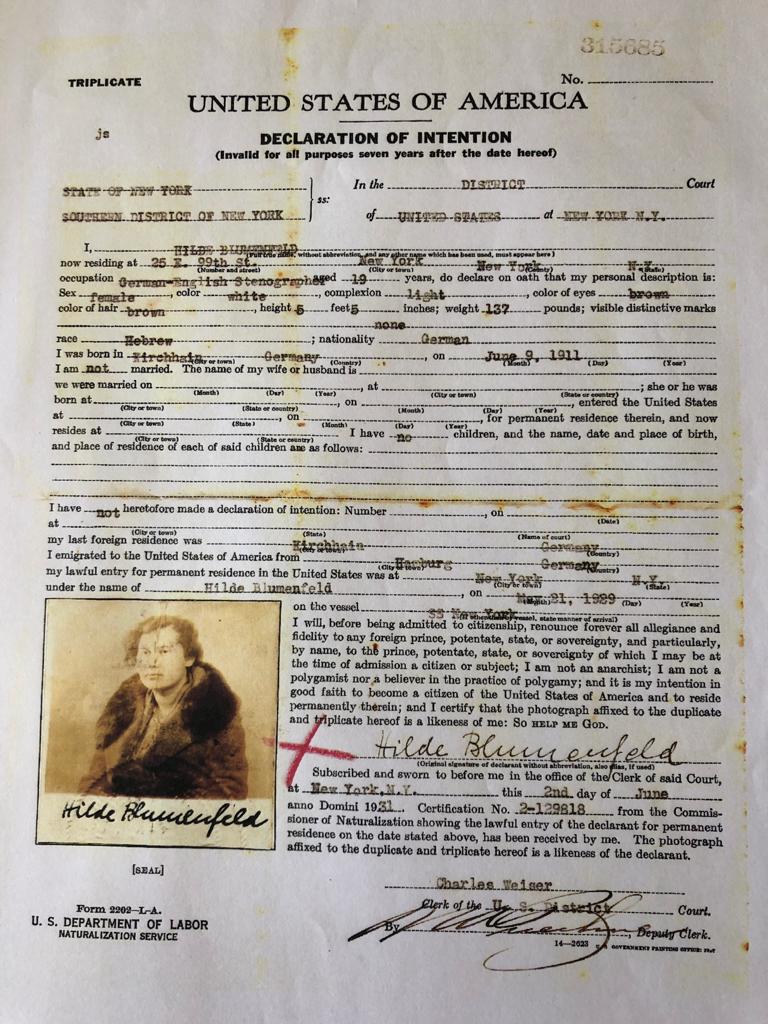
Hilde had serious intentions of staying in the US, as seen in her Declaration of Intention to become a US citizen, filed in 1931.

Hilde Blumenfeld Declaration of Intention. Courtesy of the family

But her life changed when she went back to Germany in 1932 to visit her family; she at first intended to stay for only six months and then return to New York, but then she met her future husband, Ludwig Meinrath, at a Purim ball and decided to stay in Germany longer.6 Here is a photograph of Hilde with Ludwig:

Hilde Blumenfeld and Ludwig Meinrath Courtesy of Richard Bloomfield

Hilde Blumenfeld and Ludwig Meinrath Courtesy of the family

Hilde began working for an American author named William March; Roberto told me that she was helping him with his manuscript for his book Company K. According to the description on Amazon.com, Company K is the “greatest First World War novel to come out of America[.] Company K is the unforgettable account of one US Marine company, from initial training, through to the trenches in France and post-war rehabilitation. Written in 1933 by a decorated Marine hero, this is an unflinching, visceral depiction of the brutal reality of war.”

William March was apparently quite fond of Hilde. Richard Bloomfield found this quote from a letter written by William March to John B. Waterman on February 18, 1933, as quoted in an article about March from the Fall 1977 issue of The Mississippi Quarterly written by R. S. Simmons (warning—it is quite sexist, but typical of its times): 7

[March] had this to say about the German secretary he had engaged: “As a matter of interest for the company’s records, Miss Blumenfeld is quite in the tradition of the Waterman Line not only for beauty but for intelligence.” He added whimsically: “Of course, the latter was merely a happy accident.”

It appeared that Hilde was not planning to leave Germany now that she was married and happily employed. But, of course, everything changed when Hitler came to power. More on that in the post to follow.


  1. The references in this post to the interview of Hilde Meinrath and the information contained therein are from her interview with the Shoah Foundation, March 18, 1998, which is in the archive of the University of Southern California Shoah Foundation Institute for Visual History and Education. For more information: http://dornsife.usc.edu/vhi 
  2. Ibid. 
  3. Ibid. 
  4. All the information in this post attributed to Roberto Meinrath as well as the quotations were shared through emails sent between February 11 and February 16, 2023. 
  5. See Note 1, supra
  6. See Note 1, supra
  7. R.S. Simmons, “William March’s ‘Personal Letter:’ Fact into Fiction,” The Mississippi Quarterly (Fall 1977), p. 625, 629, found at https://www.jstor.org/stable/26474519 

How Eugene Goldsmith Met May Jacobs

Over four and a half years ago, I wrote about Eugene Goldsmith, my great-grandmother Hilda Katzenstein Schoenthal’s first cousin.

Eugene was born in 1859 and had lived with his parents, Meyer Goldschmidt/Goldsmith and Helene Hohenfels, and his brother Maurice all his life, first growing up in Philadelphia and then in New York City. Then in 1913 at the age of 54, he married May Jacobs, who was 41.

One of the questions I had about Eugene was how he met his wife May Jacobs. I wrote then:

In 1913, Eugene married May Jacobs in Philadelphia. He was 54, she was 41. May was the daughter of Michael Jacobs and Alice Arnold, both of whom were born in Pennsylvania. May’s father died when she was just a young child, and she and her three sisters were all living together with their mother in Philadelphia in 1910. I’d love to know how May connected with Eugene, who had by that time been living in New York City for over twenty years.

Well, four and a half years after posting that question, I heard from a cousin of May Jacobs, and she may have found the answer. Lynn Hsu wrote to me on the blog that she was the great-granddaughter of Oscar Arnold, who was a first cousin of May Jacobs. Lynn wrote that Oscar was in the business of manufacturing umbrellas in New York City, and since Eugene and his brother Maurice were in the business of selling umbrellas in New York City, we hypothesized that Eugene knew Oscar from business and that Oscar set up Eugene with his cousin May, who was living in Philadelphia.

But Lynn actually had found several other hints that suggested that there were numerous earlier connections between her Arnold/Jacobs cousins and my Goldsmith cousins. On August 5, 1892, the Philadelphia Jewish Exponent reported that May Jacobs was on the same Atlantic City sailing party as Rose and Florence Goldsmith, the two younger sisters of Eugene Goldsmith. So as early as 1892, some 21 years before Eugene married May, there was a meeting of May Jacobs and Eugene’s sisters Florence and Rose. Whether they had already known each other before the sailing trip isn’t clear, but certainly they did once that trip was over.

Philadelphia Jewish Exponent, August 5, 1892, p. 8

Also, three years before May married Eugene, she attended his mother’s funeral, as reported by the Philadelphia Jewish Exponent on March 4, 1910:

Philadelphia Jewish Exponent, March 4, 1910, p. 14

Why it took Eugene and May until 1913, when he was 54 and she was 41, to decide to get married will remain a mystery. My only hypothesis is that Eugene waited until both his parents had died before “striking out on his own.” His mother died in 1910, his father in 1911. And then Eugene married May in 1913. His brother Maurice never married.

There was one other unexpected bonus connection that I learned about as a result of connecting with Lynn. May Jacobs Goldsmith, the daughter of Alice Arnold Jacobs, was the niece of Clarissa Arnold, Alice’s sister. Clarissa was married to Ernst Nusbaum, younger brother of my three-times great-grandfather John Nusbaum, namesake of my grandfather John Nusbaum Cohen and my father John Nusbaum Cohen, Jr. I wrote about Clarissa and Ernst and their family here and in many other of the posts that follow that one.

So the tree continues to twist! And thanks to Lynn, I now know even more about the Goldsmith/Goldschmidt and Nusbaum families.


Rudolph Meyer: “A Great Man”

Back in late December, a new reader, Candice, left a comment on my blog saying that her grandparents were Rudolph Meyer and Ruth Cohn and that we were related. I love when a new cousin finds my blog and seeks to connect with me.

Candice and I are fifth cousins, once removed, through my Blumenfeld branch. Her grandfather Rudolph was the son of Rebecca Strauss, the grandson of Dusschen Blumenfeld Strauss, the great-grandson of Isaak Blumenfeld I, the great-great-grandson of Moses Blumenfeld I, and the great-great-great-grandson of Abraham Blumenfeld I, my four times great-grandfather. This chart shows Rudolph’s relationship to my father; they were fourth cousins, so Rudolph was my fourth cousin, once removed:

I wrote about Rudolph and his family here, but Candice and her father Albert were able to give me a more complete portrait of Rudolph and his wife Ruth Cohn. I already knew that Rudolph was born in Bonn, Germany, in 1908, and had arrived in the US from Germany in 1937 and settled first in New York City. By 1940 he was living in Albany, New York, and working for Cotrell & Leonard, a manufacturer of graduation caps and gowns.

Rudolph’s son Albert filled in some of the gaps in the story in the obituary he wrote about his father in 1984. Albert wrote in part:

Rudolf Raphael Meyer was born in Bonn, Germany, on March 17, 1908. He was to experience many of the history shaping events which influenced the course of his life and development. As the child of Albert and Rebecca Meyer with his sister Ilse he at the ages through 6-10 went through the trauma of World War I. The war brought hardship to him as did the period following it. The economic chaos of Weimar Germany with its rampant inflation left its mark on him in that no matter how well might do, he felt he never knew if he and his family would have enough just to provide for the basic necessities of life.

As the economic and political situation remained explosive in Germany and with Anti-semitism on the rise, he, his sister, and mother, his father having died, immigrated to the United States. However, life in the new country soon underwent its earthquake also with the coming of the Great Depression and World War II. The Depression only added to his feelings of anxiety regarding economic matters and [he] became a fervent supporter of the new deal with Franklin Delano Roosevelt and then Harry Truman representing the type of leadership he felt a society needed.

During the later years of the 30s he met Ruth Cohn and after a 3 year courtship they were married on August 10, 1941.

Rudolph enlisted in the US Army on September 6, 1943, and successfully petitioned for naturalization three months later in December 1943 from Spartanburg, South Carolina, where he was then stationed. What I did not know was that Rudolph then served overseas in Europe, fighting against the Nazis and the country where he was born.

Candice shared this photograph of her grandfather Rudy (as he was known) in uniform during World War II.

Rudolph Meyer during World War II. Courtesy of the family

Rudy wrote this poem about his outfit in World War II, the Blue Devils. Obviously, he was a proud American soldier out to defeat his former home country.

“Blue Devils,” by Rudolph Meyer c. 1944 (c) Courtesy of the family

What I also had not realized until Candice shared the family story is that Ruth was pregnant when Rudy left for Europe; their son Albert was born while he was abroad, fighting the Nazis. Rudy did not meet his child until after the war was over when Albert was already sixteen months old. Albert addressed this in his 1984 obituary for his father:

[Albert was born] while [Rudolf] was stationed overseas in Italy. The notice of his birth filled him with special joy as can be told by a reading of his letters from the war. As an additional sacrifice he did not get to see his child for another year.

Although the war was difficult and he was certainly not a young man while fighting in both North Africa and Italy for the Allies, his experience in the army gave him great pride. He felt he contributed to the service of his country and had helped to smash the Fascist Beast that had destroyed so many Europeans who could [not] leave and so many of his religious faith.

In fact among the things that gave him pride were his experience as a soldier, his role as a law abiding citizen, a good family provider. His citizenship was marked by regular voting, paying debts, attention by regular public affairs, and occasionally involvement in Democratic Party politics.

Here is a photograph of Albert as a baby taken while his father was away at war:

Albert Meyer Courtesy of the family

Ruth wrote this wonderful tribute to her husband, Rudy, whom she considered a “great man.”

Essay by Ruth Cohn Meyer (c) Courtesy of the family

A Great Man

My choice for the meaning of the word Great would be important. I write of a great man that I knew many years ago. His name was Rudolph Meyer. Now Rudy had a loving wife, and as is the nature of things, she became pregnant—and Rudy and his wife were very happy.

But then came fears of war from a country across the sea—a country from far away which hundreds of people were fleeing for they were afraid of what might now happen at this time. And Rudy and many of his fellow countrymen had found refuge in this country, the good old USA.

Then came the day when their fears for their country were alas confirmed. Atrocities! Tortures—and then War and Holocausts! Rudy immediately went to enlist. But at the recruitment center, he was told that because of his poor eyesight he would have to be rejected. But Rudy insisted—he must fight against the evil ones were who trying to destroy civilization. So—Rudy went to war!

I was sad. I was pregnant—but I knew in my heart that it was for those qualities in him—great devotion to family and country—that I loved him. And though I was sad—I was proud. My Love was a great man.

I waited—I would go to the grocery store. A pound of butter, if you please. Hey, Lady—don’t you know there’s a war on. Ah,yes—there’s a war on over there!

It is 4 years later—the end of the war. Rudy comes home. He holds in his arms a loving wife and 16 mo. old son. A great man has come home to us.

This was obviously a strong and loving marriage that endured for many years after Rudy returned home. This photograph of Ruth and their son Albert was taken after the war.

Albert Meyer and Ruth Cohn Meyer. 1948. Courtesy of the family

As I wrote in my earlier post, Rudy and Ruth moved to the Bronx after the war, and in 1950 they were living in the Bronx, and Rudy was now an accountant for motion pictures distributors. Ruth was an elementary schoolteacher.  Rudy’s mother Rebecca and Ruth’s father Benjamin were also living with Rudy and Ruth and their child, and Benjamin was working as a tailor.

I want to express my gratitude to Candice and her father Albert for sharing these stories and photographs about my cousin Rudolph Meyer, a man who truly lived up to his wife Ruth’s description, a great man.