Cousins Deported to France: The Camp at Gurs

Did you know that during the Holocaust some German Jews were deported not to the camps in the east, but to France? It was a revelation to me.

I left off my last post with a series of questions regarding the fate of my cousin Johanna Schoenthal and her husband Heinrich Stern, both of whom had been living in a hospice in southern France at the end of World War II. Why did they end up in France, and how long had they been there? How had they survived after the Nazis took over France in the spring of 1940? Who was Henry Kahnweiler,  the friend in Paris they named on their 1947 ship manifest when they left France for the US?  Had they had children?

Although I don’t have answers to all those questions, thanks to the United States Holocaust Memorial Museum and the people and sources on JewishGen, I have been able to piece together part of the story of Johanna and Heinrich’s ordeal during World War II.

From the Mannheim Jewish Community database on JewishGen, I learned that Johanna and Heinrich Stern had resided in a town called Karlsruhe before the war.  Karlsruhe is about forty miles from Mannheim.  It is rather distant from Köln, where Johanna was born—almost 200 miles—and from Giessen, where Heinrich was born.  But perhaps more importantly, it is less than twenty miles from the French border.  I don’t know how the Sterns ended up living there or when they had moved there.

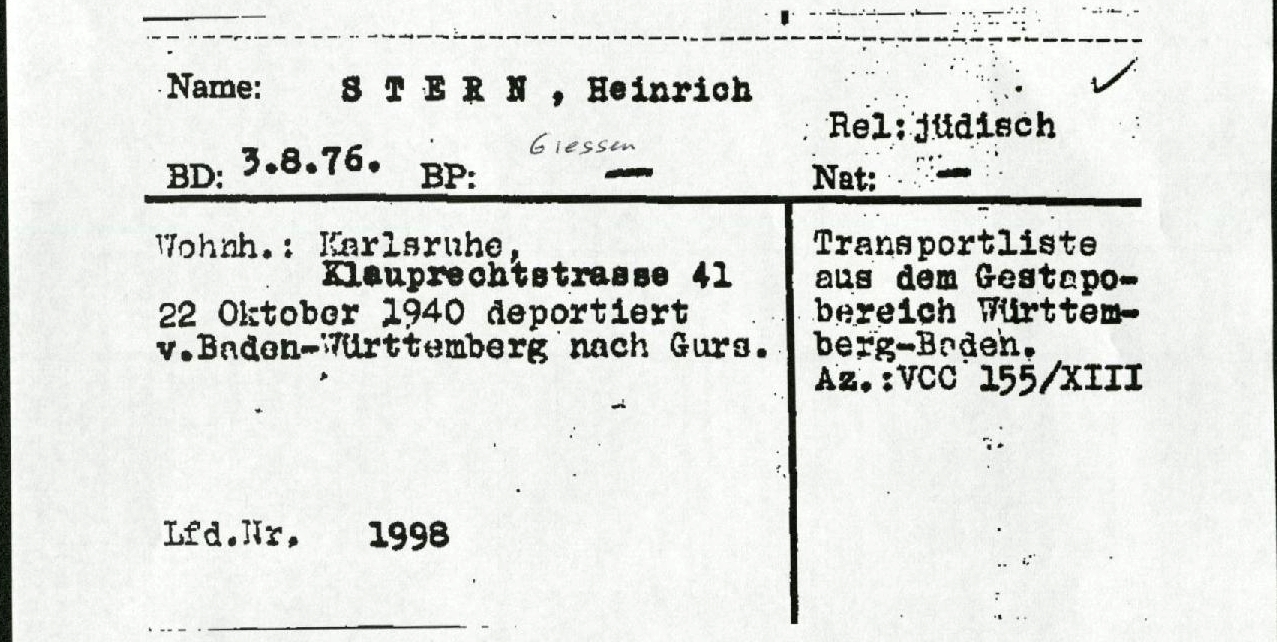
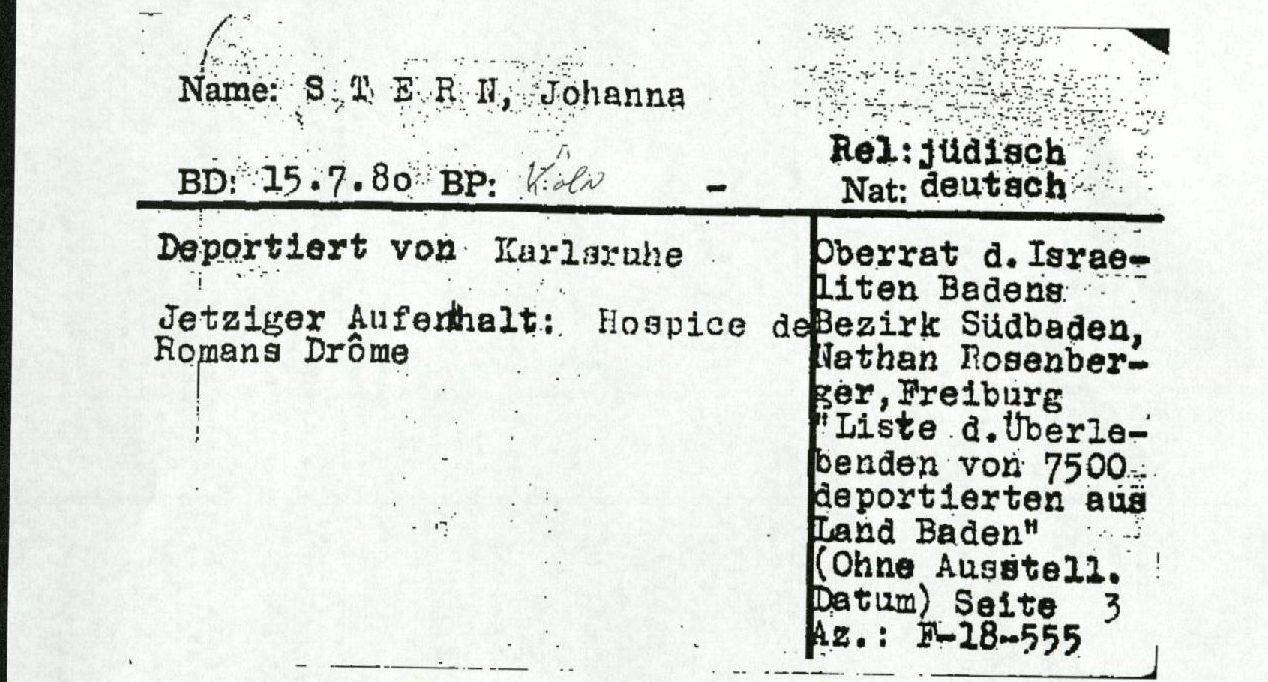
But I do know when they left.  Thanks to Peter Lande at the USHMM, I have learned about a whole new chapter in the history of the Holocaust.  Peter sent me the documents below regarding Johanna and Heinrich Stern:
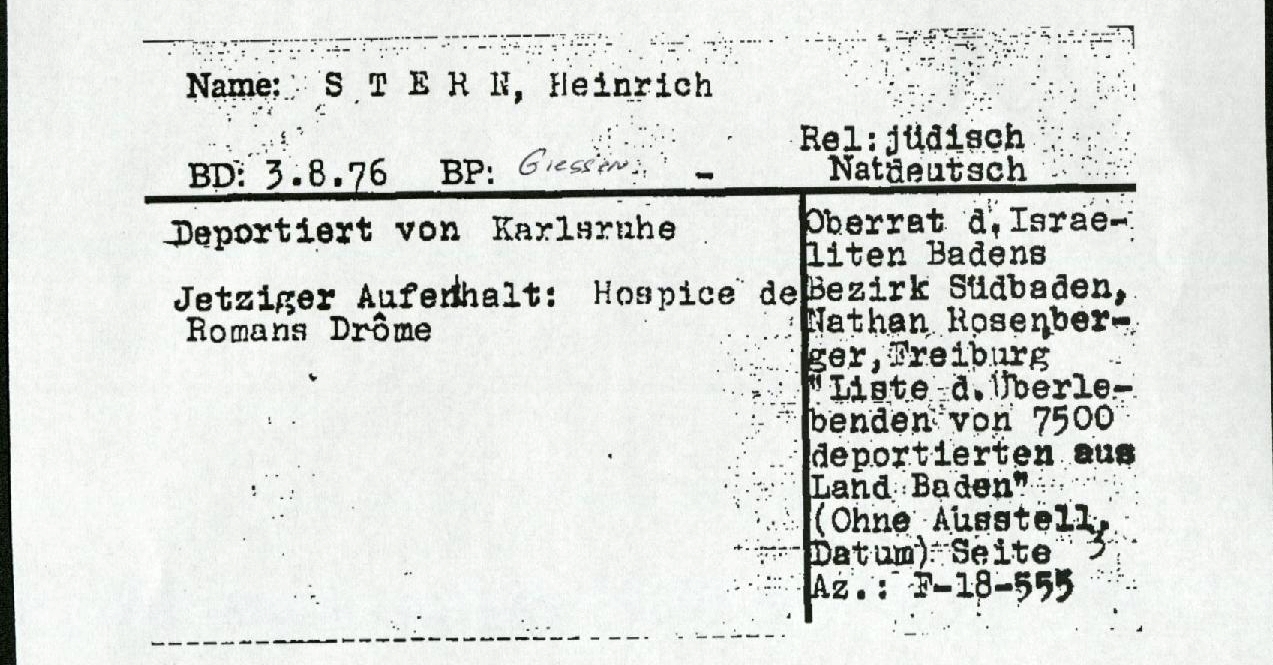
 

Heinrich Stern ITS card page 1Heinrich Stern ITS card page 2


Johanna Stern ITS card


(Translation of first card: Stern, Heinrich, born 3rd August 1876 in Giessen, religion: Jewish, nationality: German – Senior councillor of the Jews in Baden, district South-Baden (source: Nathan Rosenberger, Freiburg: List of survivors of 7.500 deported from the state of Baden), without date, page 3 – ref.-nr. F-18-555 – residence: Karlsruhe, Kleinprechtstr. 41, deported from Karlsruhe at the 22 October 1940 to Gurs in Southern France, current address: Hospice de Romain Drome.

Second card: transport-list from the Gestapo, district Fürstenberg-Baden. ref-nr. VCC 155/XIII.  The third card is the same as the first, except it is for Johanna Stern, born 15th of July, 1880 in Köln. )

These cards were definitely about my cousin Johanna Schoenthal Stern and her husband Heinrich Stern.  The birth dates and places are consistent with the passenger ship manifest and the JewishGen sources I had found, and the place of last residence in Germany and the residence in France are also consistent with those sources and the notice posted by the family in Aufbau in 1946.  These cards told me what had happened to Johanna and Heinrich. They had been deported by the Gestapo from Karlsruhe on October 22, 1940, to a place called Gurs in southern France.

With these clues, I was able to find out more about the fate of the Sterns, not specifically but generally.  In October, 1940, the Nazi officials in charge of the Alsace and Lorraine regions of France as well as the Baden district of Germany decided to deport the Jews from Baden, having already deported those who had been living in Alsace and Lorraine.  This decision, known as the Wagner-Burckel Aktion for the two Nazi officials who planned and implemented it, led to the sudden deportation of approximately 7,500 Jews from the Baden region, including my cousins, the Sterns, who were living in Karlsruhe.  It would be the only deportation of German Jews to the west rather than the east of Germany during the Holocaust.


Railroad tracks to Gurs By Jean Michel Etchecolonea (Own work) [GFDL (http://www.gnu.org/copyleft/fdl.html) or CC BY-SA 3.0], via Wikimedia Commons

Railroad tracks to Gurs
By Jean Michel Etchecolonea (Own work) [GFDL (http://www.gnu.org/copyleft/fdl.html) or CC BY-SA 3.0], via Wikimedia Commons

Manfred Wildmann, a victim of this deportation, provided this chilling account of the deportation itself on his website Our Lives in Europe:

On October 21, 1940, late in the afternoon, my grandfather, as head of the Jewish community, was told to inform all the Jews of Philippsburg that the next day Jews were not allowed to leave their homes.  The next morning the police (it may have been the Gestapo) came to every Jewish house, to inform us that we had one hour to pack after which we would be taken away to an unknown destination.

An hour later, the police came to pick us up to march us to the central square, where a canvas covered truck was waiting for all the 21 Jews of Philippsburg, aged 10 to 80.  The truck took us to Bruchsal, 20 km away which was an assembly point for Jews from the area.  Late that afternoon, we were all marched to the railroad station.  When the train finally came, a passenger train with third class coaches, we were relieved that it was heading south and not north towards Poland.  While we didn’t know any details of what was happening in Poland, we knew that whatever it was, it wasn’t good.  All night long, the train headed south, stopping often to pick up more Jews along the way.  Early in the morning, we crossed the Rhine.  Now we knew that we were in France.

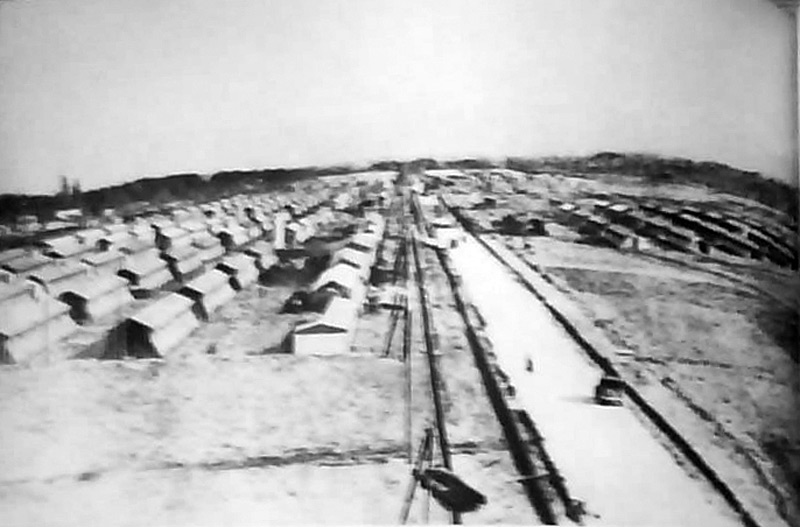
Once in France, the deportees were sent to a French detention camp in Gurs in the Basque region of southern France, near the border with Spain.  Originally built in 1939 by the French to house refugees from the Spanish Civil War, the camp had also been used by the French to detain German Jews as “enemy aliens” in 1940.  After Germany invaded France and the Vichy government was established, the camp came under Vichy control.  When the Jews from Baden arrived on nine trains in October 1940, the Vichy government decided to send them to the camp at Gurs.

According to the USHMM website, “Conditions in the Gurs camp were very primitive. It was overcrowded and there was a constant shortage of water, food, and clothing. During 1940-1941, 800 detainees died of contagious diseases, including typhoid fever and dysentery.”
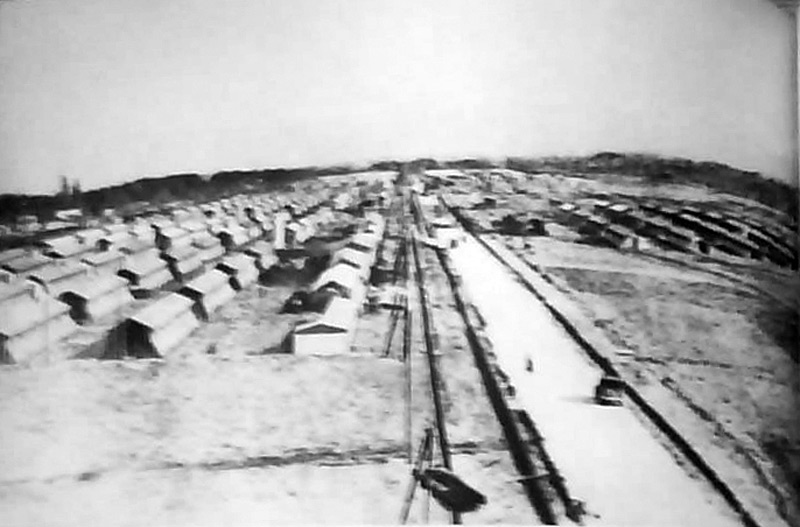
 

Manfred Wildmann provided a more detailed and vivid description:

No vegetation grew in the entire Camp, and the constant rain transformed the ground into a sea of mud into which one could sink knee deep and lose one’s shoes.

The barracks of Gurs were of a special construction, with the lower parts of the walls slanting outwards.  They were constructed of rough wooden planks, covered with tar paper, with a wooden floor and a few small windows covered with plasticized chicken wire.  About eighty people were assigned to each.  The only furniture in the barracks was each person’s rolled up straw bag or mattress, suitcases and one cast iron stove in the center to provide a little heat.  Everybody lived sitting either on these straw bags or suitcases.  This is also how we ate, out of empty tin cans or any other suitable container we could find.

Another family memoir about life at Gurs can be found at The Grey Folder Project website by Toby Sonneman.

In January, 1941, the New York Times reported on conditions at Gurs, noting that there were fifty doctors providing medical treatment to over 7000 people interned in the camp, trying to “reduce an already high and still mounting mortality rate resulting from lack of food and medicine and unhygienic conditions, the physical resistance of most of the refugees already having been worn down through long suffering.”  The Times article stated that there were over 500 children in the camp and about 1200 people over seventy.   People were suffering from malnutrition, bleeding gums, heart problems, dysentery, typhoid, and lice.  There was severe overcrowding and poor heating and ventilation.  Fifteen to twenty-five people were dying every day.  “Misery and Death in French Camps, ” New York Times, January 26. 1941, p. 24.
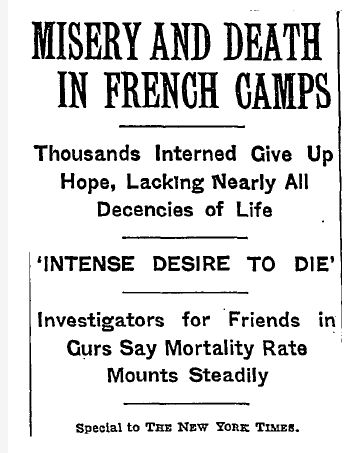
 

New York Times, January 26, 1941, p. 25

New York Times, January 26, 1941, p. 24


What happened to those who survived? According to the USHMM, “1,710 were eventually released, 755 escaped, 1,940 were able to emigrate, and 2,820 men were conscripted into French labor battalions.”  The exact number of those who died of the 7,500 Jews who were deported from Baden is not known, but overall over 1000 people died at Gurs over the course of the war.  Many of those Baden deportees were transferred to other camps and some eventually to Auschwitz.  The USHMM website states, “Between August 6, 1942 and March 3, 1943, Vichy officials turned over 3,907 Jewish prisoners from Gurs to the Germans; the Germans sent the majority of them to the Drancy transit camp outside Paris in northern France. From Drancy, they were deported in six convoys to the extermination camps in occupied Poland, primarily Auschwitz.”


Cemetery for those who died at Gurs By Jean Michel Etchecolonea (Own work) [GFDL (http://www.gnu.org/copyleft/fdl.html) or CC BY-SA 3.0 (http://creativecommons.org/licenses/by-sa/3.0)], via Wikimedia Commons

Cemetery for those who died at Gurs
By Jean Michel Etchecolonea (Own work) [GFDL (http://www.gnu.org/copyleft/fdl.html) or CC BY-SA 3.0 (http://creativecommons.org/licenses/by-sa/3.0)%5D, via Wikimedia Commons

I don’t know how long Johanna and Heinrich were at Gurs or under what circumstances they were able to leave.  Perhaps they were among the 755 who escaped or the 1,710 who were released.  Maybe they were transferred to another camp.  The records that the USHMM had for them end with the cards posted above.

As for Henry Kahnweiler, the man the Sterns named as their contact person in France on the passenger manifest when they left for the US in 1947,  he was the very well-known German-born art dealer, Daniel-Henry Kahnweiler, described by one source “a banker, writer, publisher, and art dealer who became the pioneering champion of Cubism.”  As described by Johanna’s sister, Erna Schoenthal Haas, in the Pittsburgh Jewish Chronicle on June 14, 1989, Kahnweiler was a friend of her brother-in-law, Heinrich Stern, from the days they had both been working at a bank in Germany.  Kahnweiler’s parents had wanted him to be a banker, but instead he’d moved to Paris in 1907, where he soon established himself as a successful art collector and dealer. He became one of the principal dealers in Cubist art and a major dealer in the works of Picasso.

Here is a portrait of Kahnweiler done by the artist Juan Gris:

Deutsch: Juan Gris: Porträt Daniel-Henry Kahnw...

Deutsch: Juan Gris: Porträt Daniel-Henry Kahnweiler, 32,5 x 26 cm, Bleistift auf Papier, Museée National d’Art Moderne, Centre Georges Pompidou, Paris (Photo credit: Wikipedia)


During World War I, France appropriated and sold Kahnweiler’s collection because he was a German national and thus a national of an enemy state.  After spending the war in exile in Switzerland during which time he wrote several important works on Cubism and art history, Kahnweiler returned to Paris in 1920 and started over.  Here is he depicted in 1923 at his gallery in Paris:  standing, Daniel Henry Kahnweiler (r), Juan Gris (c) ; 1st row, Louise Leiris (c).


Embed from Getty Images

But then in the spring of 1940 when the Nazis invaded France, Kahnweiler, like thousands of other Jews living in France, went into hiding in the south of France.  This post describes in detail his ordeal and perhaps reflects the experience of many others including that of Johanna (Schoenthal) and Heinrich Stern.  I don’t know how the Sterns stayed in touch with Kahnweiler during the war, but they obviously knew his Paris address in 1947 when they departed for the US.

I imagine that the Schoenthals in the US—especially Lee, Meyer, and Erna—must have been greatly worried about their sister Johanna and her husband during the war, but by June 14, 1946, they knew that Johanna and Heinrich were alive and where they were living, as is apparent from the notice from the Aufbau regarding the deaths of Henriette and Julius Levi.  That notice indicates that Johanna and Heinrich were then living in a hospital or hospice in a town called Romans in the department of Drome in southeastern France.  I have written to the town of Romans in France to see if they have any information, but so far have not gotten any response.


Aufbau June 14, 1946

Aufbau June 14, 1946

It was almost exactly a year later that Johanna and Heinrich arrived in the US and settled in Pittsburgh.  I can only imagine the joy that the four surviving siblings experienced when they were finally all reunited.  A joy, however, that must have been bittersweet, tempered by the knowledge that their sister Henriette and her husband had not survived and that their sister Johanna and her husband must have suffered greatly in order to survive.

In my next post, I will write about the post-war lives of these four siblings, their spouses, and the two grandsons of Jakob and Charlotte Schoenthal, Werner Haas and Helmut Levi/Henry Lyons.
 

Fighting their Native Country in World War II: Jakob Schoenthal’s Grandsons

As I wrote last time, the two sons of Jakob Schoenthal and Charlotte Lilienfeld had arrived in the US long before Hitler came to power in Germany.  They were working as tailors and living in Washington, Pennsylvania, where their uncles and aunt had lived for many years.  Then Hitler came to power, and their family back home was in danger.

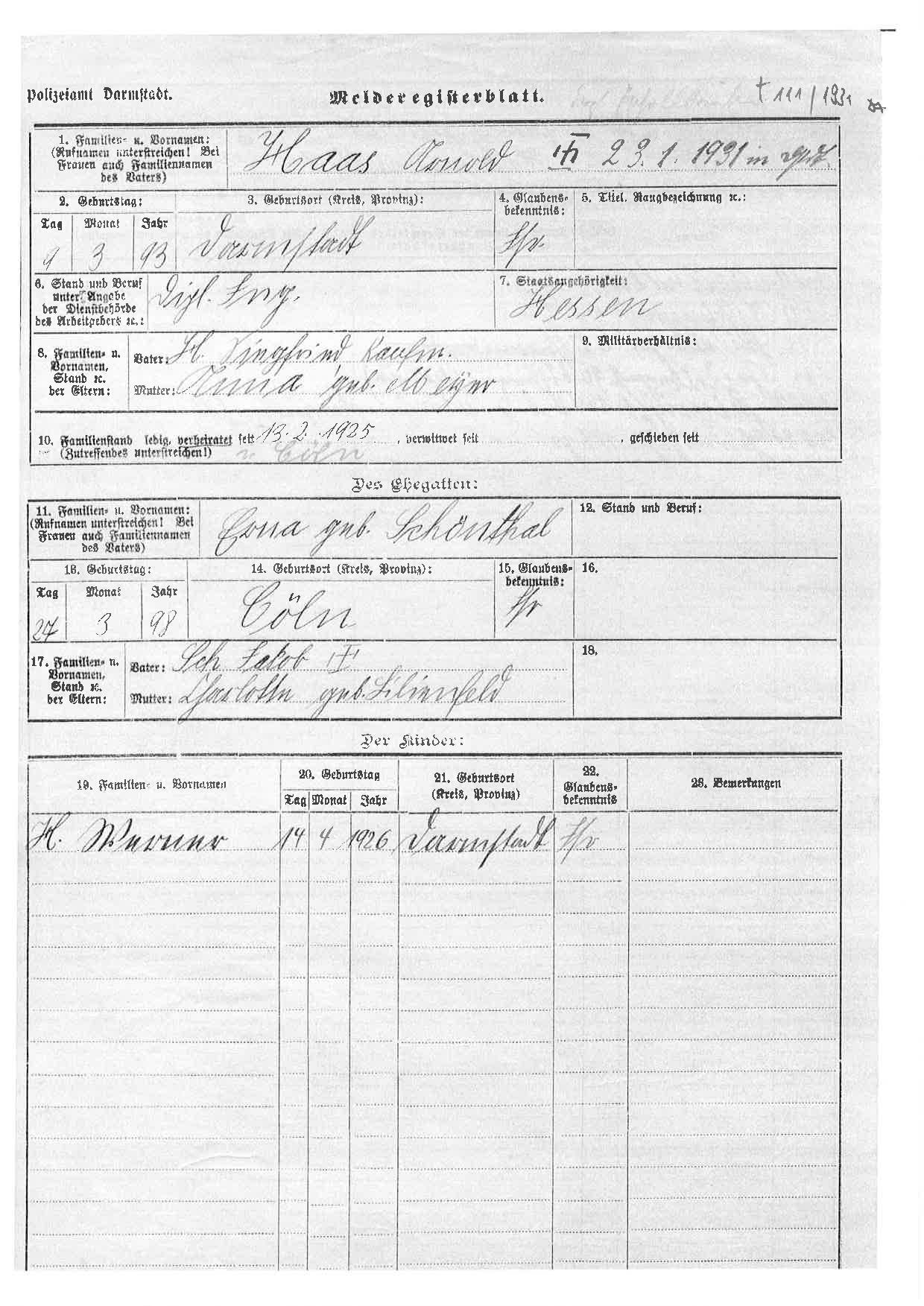
In 1938, Lee and Meyer’s sister Erna arrived from Germany with her son Werner.  I have now learned more about Erna’s husband Arnold Haas.  He was born in Darmstadt, Germany, in 1893, and had served his native country during World War I.  He and Erna Schoenthal had married on February 13, 1925, and their son Werner was born on April 14, 1926.  Then Arnold died at age 38 on January 23, 1931, leaving behind his young widow Erna and his not-yet five year old son Werner.  Fortunately Erna had the good sense to leave Germany in May, 1938, and bring her son and herself to safety in the US.  In 1940, they were living in Pittsburgh.

Darmstadt register for Arnold Haas and family indicating birth, marriage, and death of Haas and birth of son Werner

Darmstadt register for Arnold Haas and family indicating birth, marriage, and death of Arnold Haas and birth of son Werner

Helmut Levi, the son of Julius and Henriette (Schoenthal) Levi, had also arrived by then and was living in New York City.  Both Helmut and Werner soon found themselves fighting their former homeland when the US entered World War II at the end of 1941 after the bombing of Pearl Harbor.

Werner Haas joined the US Navy on March 15, 1944, when he was 18, and served until March 6, 1946.  He spent time at the Naval Air Stations in Norfolk, Virginia, and in Corpus Christi, Texas, before being assigned to the Destroyer Escort USS Wesson in June, 1945.  According to Michael Moskow, who has done extensive research on Jewish military service during World War II, the Wesson had been struck by a kamikazi in April, 1945, two months before Werner was assigned to that vessel.

As seen in the caption on the photo below, the Wesson was “in overhaul” from May to July 1945, so it would seem likely that Werner was working on her repairs when he was first assigned to that ship.  Werner served as a fireman on the destroyer; according to this site about military careers, “The training received as a Fireman or in the related engineering skill specialties is equivalent to that received as an electrician, electrical or power plant/co-generation plant operator or supervisor, diesel mechanic, or electronics repair technician.”  From various military records it appears that Werner was assigned to the Wesson for at least a year and was then assigned to two other naval ships.


English: 26 June 1945: Mare Island Naval Shipy...

English: 26 June 1945: Mare Island Naval Shipyard, San Francisco, Cal. – Forward plan view of USS Wesson (DE 184) at Mare Island. She was in overhaul at the yard from 16 May to 1 July 1945. USS Blessman (APD 48) inboard of Wesson and USS Hazelwood (DD 531) is on the opposite side of the pier. (U.S. Navy photo #DE-184-4842-45) (Photo credit: Wikipedia)


Werner’s older cousin Helmut Levi served in the US Army, enlisting on November 28, 1942.  He served as a private and then a corporal during the course of World War II.   Although I am still looking for more information about Helmut’s service during the war, I was able with the help of Michael Moskow to find this letter that Helmut Levi (presumably the same one) wrote to Yank magazine in September, 1944:


Pvt Helmut Levi letter to Yank magazine, September 29, 1944, p 14

Pvt Helmut Levi letter to Yank magazine, September 29, 1944, p 14, found at http://www.unz.org/Pub/Yank-1944sep29-00014


Not surprisingly, Helmut had strong feelings about the need for Germany (and Japan) to be occupied and supervised carefully after the war.  It appears that he was stationed in Britain in September, 1944, just months after the D-Day invasion and the beginning of the Allies’ advances in France against Germany.  During that time, Helmut’s aunt and uncle, Johanna (Schoenthal) and Heinrich Stern, were living in France, hiding from the Nazis. His parents had already been killed at the Chelmno death camp.

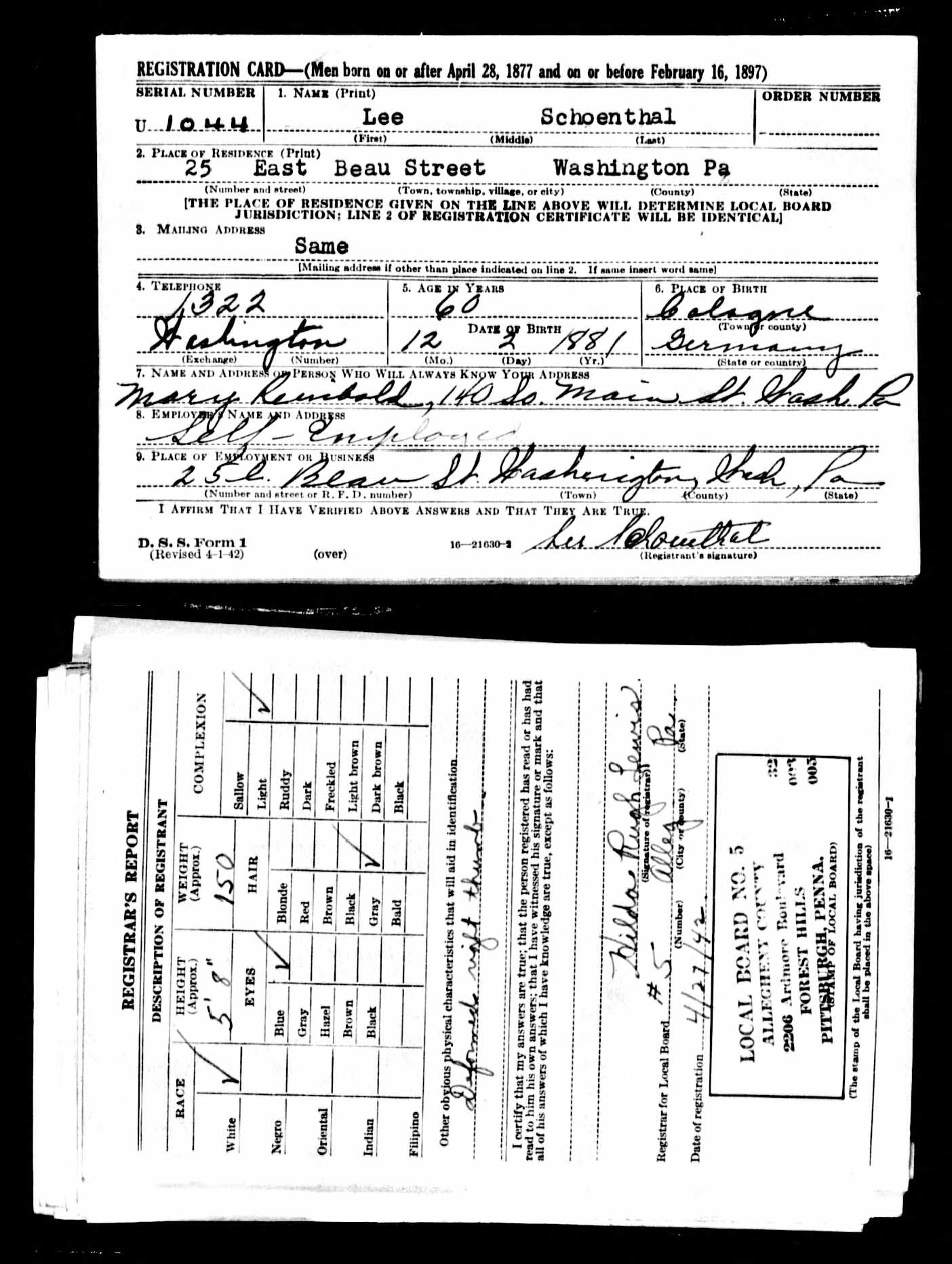
Lee and Meyer both registered for the World War II draft, though being almost in their sixties when the war began, neither served in the military during the war.  Note that Meyer was both working for and living with Lee in April 1942.  (Lee seems to have listed his work address as his residence.)  Although Meyer listed his brother Lee as the person who would always know his address, Lee listed someone named Mary Reinbold, who as listed in the 1940 census, was then a 39 year old single woman living with her father and brothers and working as a telephone operator.


Lee Schoenthal World War II draft registration The National Archives at St. Louis; St. Louis, Missouri; World War II draft cards (Fourth Registration) for the State of Pennsylvania; State Headquarters: Pennsylvania; Microfilm Series: M1951; Microfilm Roll: 278

Lee Schoenthal World War II draft registration
The National Archives at St. Louis; St. Louis, Missouri; World War II draft cards (Fourth Registration) for the State of Pennsylvania; State Headquarters: Pennsylvania; Microfilm Series: M1951; Microfilm Roll: 278


Meyer N Schoenthal World War II draft registration Ancestry.com. U.S., World War II Draft Registration Cards, 1942 [database on-line]. Provo, UT, USA: Ancestry.com Operations, Inc., 2010.

Meyer N Schoenthal World War II draft registration
Ancestry.com. U.S., World War II Draft Registration Cards, 1942 [database on-line]. Provo, UT, USA: Ancestry.com Operations, Inc., 2010.

Why wouldn’t Lee have listed Meyer as his contact just as Meyer had listed him? More on that in a later post.

Once the war ended, the family apparently spent a year trying to learn what had happened to Henriette Schoenthal and Julius Levi.  My heart broke when, with Michael Moskow’s help,  I found this notice in the June 14, 1946 issue of Aufbau, the newspaper published beginning in the 1930s for German Jewish immigrants in the United States:


Aufbau June 14, 1946

Aufbau June 14, 1946 found at http://archive.org/stream/aufbau1219461946germ#page/n475/mode/1up


Translation: After a one year search in Europe, we today know that our beloved parents and siblings, Julius Levi and Henriette Levi (nee Schoenthal) from Cologne have fallen to the Nazi terror …. [followed by the names of their son and their siblings].

By the time Helmut Levi had enlisted in the US Army in November 1942, his parents had already been murdered by the Nazis.  It must have just been unbearable for him to realize that while he had been fighting to defeat Hitler and the Nazis, it had already been too late to save his parents.

This notice also indicates that as of June 14, 1946, Helmut was still in the Army; although I am not sure what “Liaison Sec” refers to, G-2 is military shorthand for military intelligence staff.  It appears that Helmut was doing some kind of intelligence work in Berlin after the war, which makes sense, given his familiarity with Germany and the German language.  Being in Berlin may have also allowed him to search more quickly for what had happened to his parents.

As for Johanna Schoenthal Stern and her husband Heinrich Stern, they arrived in the US in 1947 from France.  As I mentioned in my prior post, Johanna and Heinrich had listed a friend named Henry Kahnweiler of Paris as their contact person in France.  I was curious as to who he was and how Johanna and Heinrich were connected to him.  I wanted to know more about their story—how and when did they go to France? How did they survive the Nazi occupation of France? Had they had children who had not survived the war?

Although I don’t have all the answers, I now have at least some answers to those questions.  I will address those in my next post.


The Children of Jakob Schoenthal and Charlotte Lilienfeld, Part III: Lee and Meyer Come to America

As I wrote in my two last posts, after following a rather convoluted research path, I had discovered that  my great-great-uncle Jakob Schoenthal and his wife Charlotte Lilienfeld had had five children born in Cologne, Germany: Johanna, born in 1880; Lee, born in 1881; Meyer, born in 1883; Henriette, born in 1885; and Erna, born in 1898.[1]   Their father Jakob had died in 1903 when Erna in particular was quite young.  Their mother Charlotte died in 1935.

Four of their five children immigrated to the US: the two sons Lee and Meyer arrived in Washington, Pennsylvania, in the early decades of the twentieth century.  Erna arrived in 1938 with her son Werner; she was a young widow when she arrived. (I am still looking for information about her husband Arnold and hope to have an update soon.) Johanna and her husband Heinrich Stern arrived in 1947, having somehow survived the war and last residing in Lyons, France.

Tragically, Jakob and Charlotte’s remaining child, Henriette, had been murdered by the Nazis along with her husband Julius Levi.  Their son Helmut, however, had left in time.  He came to the US in 1939 and eventually changed his name to Henry Lyons.  He and his wife Pauline nee Schwartz lived for many years in Rego Park, Queens, New York.

Rego Park, Queens, NY By Frank Hindimith [GFDL (http://www.gnu.org/copyleft/fdl.html) or CC-BY-SA-3.0 (http://creativecommons.org/licenses/by-sa/3.0/)], via Wikimedia Commons

Rego Park, Queens, NY
By Frank Hindimith [GFDL (http://www.gnu.org/copyleft/fdl.html) or CC-BY-SA-3.0 (http://creativecommons.org/licenses/by-sa/3.0/)%5D, via Wikimedia Commons

In the next few posts I will address these four children, Lee, Meyer, Erna, and Johanna, as well as the two grandsons Werner and Henry. Who were these people? What were their lives like once they got to the US?  I will discuss Lee and Meyer first and their early years in the US and then their sisters and nephews and what happened to them all during and after World War II.

Lee and Meyer were not the easiest to research.  Not only did I have the problem of distinguishing them from their first cousins with the same names, Lee and Meyer, the sons of Henry Schoenthal, I also had a very difficult time finding them on census reports.   Lee only appears on the 1920 census, Meyer only on the 1930 census.  I have no idea how they evaded so many census enumerators.

Figuring out when each of the brothers arrived was also a puzzle. I can’t find an early passenger manifest for either of them. The 1920 census reports that Lee arrived in the US in 1899, when he would have been eighteen years old, but Lee does not appear on the 1900 census nor does he appear in any of the available Washington, Pennsylvania directories until 1909, when he is listed as a tailor working at 12 East Cherry Avenue in Washington.

In 1911, Lee went back to Germany, presumably to visit his family.  On the ship manifest for that trip (line 26), Lee stated that he had been living at 18 East Cherry Avenue, Washington, Pennsylvania, from 1907 through 1911, but I cannot find him on the 1910 census.


1911 ship manifest for Lee Schoenthal page 1

1911 ship manifest for Lee Schoenthal, line 26 Ancestry.com. New York, Passenger Lists, 1820-1957 [database on-line]. Provo, UT, USA: Ancestry.com Operations, Inc., 2010. Original data: Passenger Lists of Vessels Arriving at New York, New York, 1820-1897. Microfilm Publication M237, 675 rolls. NAI: 6256867. Records of the U.S. Customs Service, Record Group 36. National Archives at Washington, D.C.

1911 ship manifest for Lee Schoenthal, line 26
Ancestry.com. New York, Passenger Lists, 1820-1957 [database on-line]. Provo, UT, USA: Ancestry.com Operations, Inc., 2010.
Original data: Passenger Lists of Vessels Arriving at New York, New York, 1820-1897. Microfilm Publication M237, 675 rolls. NAI: 6256867. Records of the U.S. Customs Service, Record Group 36. National Archives at Washington, D.C.

He does, however, appear in the Washington directories throughout the 1910s beginning in 1911, and he registered for the World War I draft in 1918.  Throughout, Lee was working as a tailor.  My best guess is that he had arrived in the US between 1907 and 1909.


Lee Schoenthal World War I draft registration Ancestry.com. U.S., World War I Draft Registration Cards, 1917-1918 [database on-line]. Provo, UT, USA: Ancestry.com Operations Inc, 2005. Original data: United States, Selective Service System. World War I Selective Service System Draft Registration Cards, 1917-1918. Washington, D.C.: National Archives and Records Administration. M1509, 4,582 rolls. Imaged from Family History Library microfilm.

Lee Schoenthal World War I draft registration
Ancestry.com. U.S., World War I Draft Registration Cards, 1917-1918 [database on-line]. Provo, UT, USA: Ancestry.com Operations Inc, 2005.
Original data: United States, Selective Service System. World War I Selective Service System Draft Registration Cards, 1917-1918. Washington, D.C.: National Archives and Records Administration. M1509, 4,582 rolls. Imaged from Family History Library microfilm.

Meyer, on the other hand, appears in the 1903 and 1905 Washington directories, working as a clerk for Rudolph Hanau and residing at 19 Sherman Avenue, as listed in both directories.  Lee does not appear in either of those directories.  Meyer, like Lee, is not on the 1910 census nor the 1920 census, nor does he appear in the 1909 directory or any other available Washington, Pennsylvania, directory between 1906 and 1928.  According to the 1930 census, the one census which includes Meyer, he arrived in the US in 1923.  But then how explain his listings in 1903 and 1905?  Had he left the US and returned to Germany for all those years, not returning until the 1920s?

I have two ship manifests showing Meyer traveling between Germany and the US, once in 1927 and once in 1929.  The 1927 manifest listing for Meyer states that his occupation was a merchant, that he was 44 years old, born in Koln, and last resided in Washington, Pennsylvania.


Meyer N Schoenthal 1927 ship manifest Year: 1927; Arrival: New York, New York; Microfilm Serial: T715, 1897-1957; Microfilm Roll: Roll 4123; Line: 1; Page Number: 134

Meyer N Schoenthal 1927 ship manifest
Year: 1927; Arrival: New York, New York; Microfilm Serial: T715, 1897-1957; Microfilm Roll: Roll 4123; Line: 1; Page Number: 134


The second page states that his contact in Germany was his brother-in-law, Julius Levi, and that his contact in the US was his cousin, the above-mentioned Rudolph Hanau of 26 Sherman Avenue, Washington, Pennsylvania.


Meyer N Schoenthal 1927 ship manifest, page 2 Year: 1927; Arrival: New York, New York; Microfilm Serial: T715, 1897-1957; Microfilm Roll: Roll 4123; Line: 1; Page Number: 134

Meyer N Schoenthal 1927 ship manifest, page 2
Year: 1927; Arrival: New York, New York; Microfilm Serial: T715, 1897-1957; Microfilm Roll: Roll 4123; Line: 1; Page Number: 134


Of course, when I saw that Rudolph Hanau was Meyer’s cousin, I had to figure out the connection.  After a few hours of looking at Ancestry and the Hessen archives online, I learned that Rudolph’s wife was Johanna Levi, daughter of Moses Levi and Rechel Lilienfeld.  Yep, Lilienfeld.  Rechel Lilienfeld was the sister of Helen and Charlotte Lilienfeld.  Thus, Johanna Levi was Meyer’s first cousin (and also, obviously, a first cousin to Lee, Johanna, Henriette, and Erna Schoenthal).

Her husband Rudolph Hanau was, like my great-grandfather Isidore and his brother Henry, a merchant in the china business in Washington, Pennsylvania. He must have known my great-grandfather well.   Thus, there were a number of other members of the extended family living in Little Washington whom I had not located earlier.

The second page of the 1927 manifest for Meyer’s trip to Germany notes that he had previously been in the US from 1911 through 1927.  This would explain why he is not on the 1910 census, but it doesn’t explain his absence from the 1920 census, unless he had been out of town then also.  It also is inconsistent with the fact that he appears in the 1903 and 1905 directories as well with the information on the 1930 census stating he had arrived in 1923.

The 1929 manifest for Meyer is similar in content to the 1927 manifest, but he now lists his mother Charlotte as his contact in Germany and his brother Lee as his contact in Washington.  Here he claims he had previously been in the US only since 1923, consistent with what he later reported on the 1930 census, but inconsistent with both the directory listings in 1903 and 1905 and the passenger manifest from 1927, just two years earlier.  Could the time periods listed on these manifests report times lived at a very specific address in the US, not time periods in the US generally?

Meyer N Schoenthal 1929 ship manifest page 1

Meyer N Schoenthal 1929 ship manifest page 2

Lee Schoenthal 1929 ship manifest Ancestry.com. New York, Passenger Lists, 1820-1957 [database on-line]. Provo, UT, USA: Ancestry.com Operations, Inc., 2010. Original data: Passenger Lists of Vessels Arriving at New York, New York, 1820-1897. Microfilm Publication M237, 675 rolls. NAI: 6256867. Records of the U.S. Customs Service, Record Group 36. National Archives at Washington, D.C.

Thus, both Lee and Meyer likely arrived in the US in the first decade of the 1900s, but may have spent time back in Germany for various periods.  Lee seems to have been permanently settled in the US by the 1910s, Meyer by the 1920s.

The 1929 directory for Washington, Pennsylvania, lists both Lee and Meyer as tailors, living at different addresses, Lee at 321 Burton Avenue, Meyer at 143 North Avenue, but only about a half mile apart.  As reported on the 1930 census, Meyer was living as a lodger in someone’s home.  In 1931, both Lee and Meyer are again listed as tailors in the directory and both residing at the same addresses provided in 1929.  But for some reason, Lee does not appear on the 1930 census.  (Residing at 321 Burton Avenue on the 1930 census was a couple named Jacob and Ruth Weber, owners of a grocery store; Lee is not listed as living with them.)


1931 Washington PS directory Ancestry.com. U.S. City Directories, 1822-1995 [database on-line]. Provo, UT, USA: Ancestry.com Operations, Inc., 2011.

1931 Washington PS directory
Ancestry.com. U.S. City Directories, 1822-1995 [database on-line]. Provo, UT, USA: Ancestry.com Operations, Inc., 2011.

Lee is listed on several Washington directories in the 1930s, but Meyer is not in any directory after the 1931 issue.  Where was Meyer, and why isn’t he included in the directories after 1931? I was puzzled by his absence.  More on that in a later post.

Thus, by the early 1930s, both Lee and Meyer had been settled in the US for quite some time.  Their sisters were all still living in Germany as was their mother.  That, of course, would all change once Hitler came to power.


[1] The thirteen year gap between Henriette and Erna and the fact that Charlotte would have been 43 in 1898 made me somewhat skeptical of Erna’s birth year, but three sources corroborate that as the correct year, so I have to assume it’s correct. Plus there was a gap of twelve years between my mother and her sibling closest in age, so I know it happens.

Jakob Schoenthal and Charlotte Lilienfeld, Part II: Finding Their Children and Grandchildren

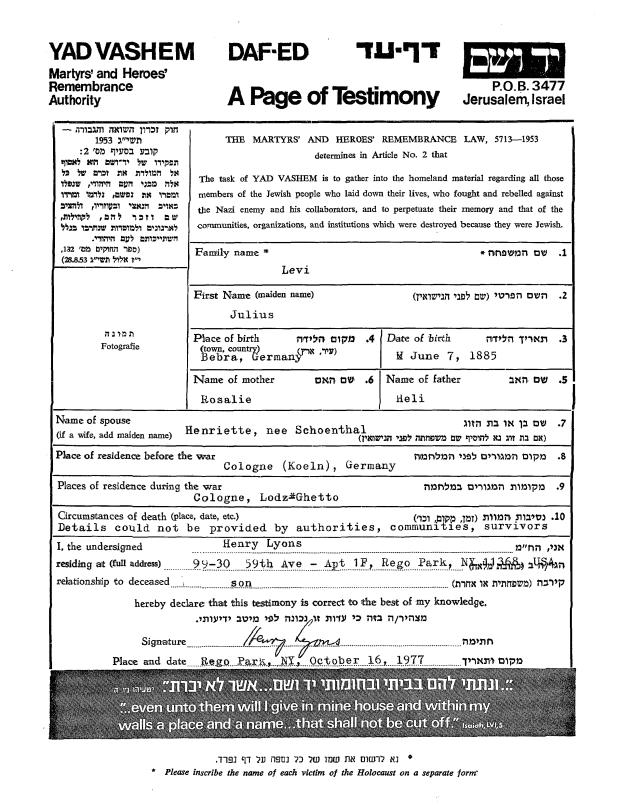
In my last post, I talked about the twisted path I took to find my great-great-uncle Jakob Schoenthal and his wife Charlotte Lilienfeld.  After discovering that their daughter Henriette Schoenthal and her husband Julius Levi had been killed in the Holocaust, I was determined to find out what had happened to Henry Lyons, who was the son of Henriette and Julius Levi and who had filed Pages of Testimony for his parents with Yad Vashem.

I thought that would be easy.  After all, I had a name and a specific address from the Pages of Testimony—99-30 59th Avenue, Rego Park, New York.  And I did almost immediately find a Public Records listing with his name at that address that provided me with his birthdate, October 17, 1919.  But that didn’t tell me much more than what I knew from the Pages of Testimony.

Yad Vashem page of testimony for Henriette Schoenthal Levi


Searching a bit further using the Rego Park address listed on the Pages of Testimony, I found a Pauline Lyons listed at that same address; I assumed that she was Henry’s wife.  Having both names made the search a bit easier since Henry Lyons itself is not exactly a unique name. I was able to use their two names together to find that they are both buried at Calverton National Cemetery and that Henry had died on December 18, 1986, and Pauline on November 30, 2007.  Henry had served in the US military during World War II, beginning his service on November 28, 1942, and thus was entitled to a military burial.  Imagine coming to America as a young man to escape Hitler and then fighting against the country of your birth.

When had he come to the US? Had he and Pauline had children? I wanted to know more.  I assumed Henry had arrived in the US sometime in the mid-to late 1930s.  I also assumed that he had arrived under the surname Levi, not Lyons.  After I wasted a lot of time searching for him under the wrong name, a member of the NYC Genealogy Group found a record for a man named Helmut Levi who had changed his name to Henry Lyons on October 5, 1953, in the city courts in New York.


Helmut Levi change of name to Henry Lyons Ancestry.com. U.S. Naturalization Record Indexes, 1791-1992 (Indexed in World Archives Project) [database on-line]. Provo, UT, USA: Ancestry.com

Helmut Levi change of name to Henry Lyons
Ancestry.com. U.S. Naturalization Record Indexes, 1791-1992 (Indexed in World Archives Project) [database on-line]. Provo, UT, USA: Ancestry.com

Armed with the information about what was probably his original name, I was able to find Helmut Levi on the 1940 census, living as a lodger at 204 West 87th Street in NYC and working as a watchmaker.  I was pretty certain I had found the right person when I saw on the census record that he had been living in Cologne, Germany, in 1935.

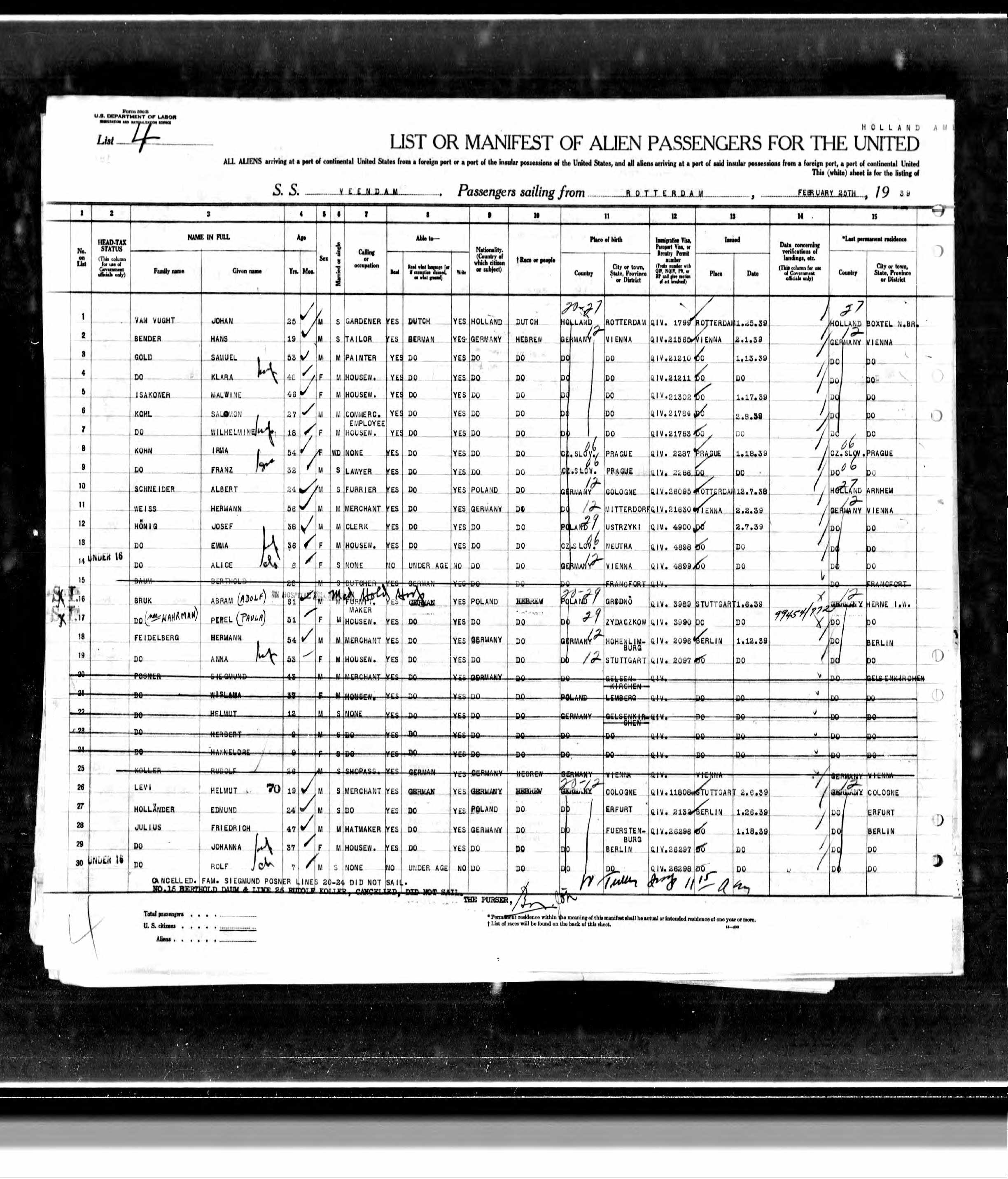
I also then found him on a passenger manifest (see line 26 on each page below):

Helmut Levy ship manifest p 1

Helmut Levi ship manifest Henry Lyons

Year: 1939; Arrival: New York, New York; Microfilm Serial: T715, 1897-1957; Microfilm Roll: Roll 6293; Line: 1; Page Number: 188


Helmut Levi had arrived in NYC on February 25, 1939.  According to the ship manifest, he was a nineteen year old merchant born and last residing in Cologne, leaving behind his father Julius Levi of Breitstrasse in Cologne and going to his uncle Lee Schoenthal of Washington, Pennsylvania.  This was obviously my cousin, the man later known as Henry Lyons.

I also found him on a second passenger manifest dated July 4, 1948, arriving in NYC from Bremerhaven, Germany.  Henry had returned to Germany after the war.  What a devastating trip that must have been.  The photo below shows what his home city of Cologne looked like after Allied bombing during the war.  Henry had not only lost his parents, but the place where he had lived as a child and a teenager.


By U.S. Department of Defense. Department of the Army. Office of the Chief Signal Officer. [2] [Public domain], via Wikimedia Commons

By U.S. Department of Defense. Department of the Army. Office of the Chief Signal Officer. [2] [Public domain], via Wikimedia Commons

From that 1948 passenger manifest (line 10), I saw that Helmut Levi was then living in Washington, Pennsylvania, where his two uncles, Lee and Meyer, were also living, that is, his mother’s brothers, the two sons of Jakob and Charlotte mentioned in my last post.  Like so many Schoenthal relatives before him, Helmut had spent time living in western Pennsylvania.  The ship manifest also indicated that by 1948, Helmut had married, although Pauline is not listed as traveling with him.


Helmut Levi aka Henry Lyons 1948 ship manifest

Helmut Levi 1948 ship manifest Year: 1948; Arrival: New York, New York; Microfilm Serial: T715, 1897-1957; Microfilm Roll: Roll 7624; Line: 10; Page Number: 9


But I still didn’t know whether Helmut/Henry and Pauline had had children or whether there were other family members I might have missed.  I called Calverton National Cemetery, but they had no additional information.  I searched in the newspaper databases for articles or obituaries that might reveal more about Henry and Pauline Lyons.  At first I limited myself to New York papers, but then I realized that that was too narrow, given that he had once lived in western Pennsylvania.  I broadened my search and found this obituary from the January 19, 1989, Pittsburgh Press:


Erna Schoenthal Haas obit 1989


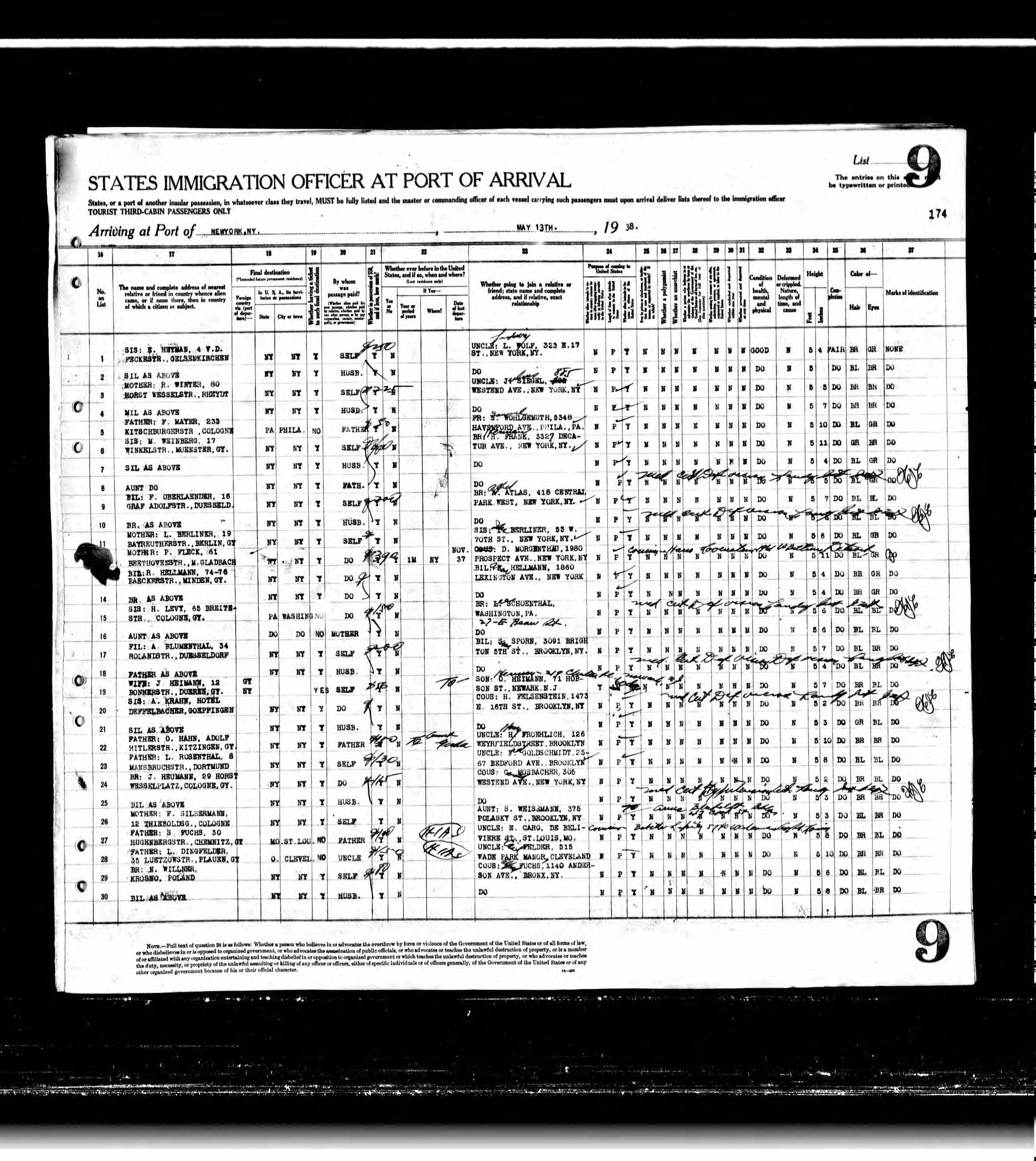
Who was Erna Haas? And was she Henry’s aunt or Pauline’s aunt? And who was Yohana Stern? I had more work to do.  I searched for Erna Haas, an unusual enough name, and was very excited to find this ship manifest (see lines 15 and 16):


Erna Haas ship manifest p 1

Year: 1938; Arrival: New York, New York; Microfilm Serial: T715, 1897-1957; Microfilm Roll: Roll 6152; Line: 1; Page Number: 174


Erna and her twelve year old son Werner had sailed from Hamburg, Germany on May 4, 1938; Erna was a beautician coming from Cologne.  I assumed that therefore her connection would be to Henry, a native of Cologne, not to Pauline, who was American-born.  Turning to the second page of the manifest, my hunch was confirmed (again, see lines 15 and 16):


Erna Haas ship manifest p 2

Year: 1938; Arrival: New York, New York; Microfilm Serial: T715, 1897-1957; Microfilm Roll: Roll 6152; Line: 1; Page Number: 174


Who was the person she named as living in the place she had left? Her sister, H. Levy of Breitstrasse in Cologne—that is, Henriette Schoenthal Levi, who had lived on that street as seen in the Köln directories in my last post. And who was she going to be with in the US? Her brother, Lee Schoenthal in Washington, Pennsylvania.  Erna Haas was another child of Jakob Schoenthal and Charlotte Lilienfeld.  She was also my grandmother’s first cousin.  And the aunt of Henry Lyons.  She was born Erna Schoenthal. I had found a fourth child of Jakob and Charlotte Schoenthal.

In 1940, Erna was listed on the census living with her son Werner in Pittsburgh, Erna working in cosmetics sales, Werner in newspaper sales.  Erna was a widow, so I assume that her husband Arnold had died in Germany, as I have no record of him in the US.  Unfortunately I have not yet found a record for him in Germany either.

But what about Yohana Stern, who had been listed in Erna’s obituary as her sister? I found this obituary for her husband Heinrich while searching for more information about Erna Haas:

Heinrich Stern obit


And then I located a ship manifest for Johanna Stern and Heinrich Stern (lines 3 and 4):


Ship manifest p 1 Johanna Schoenthal and Heinrich Stern


Ship manifest p 2 for Johanna Schoenthal and Heinrich Stern

Year: 1947; Arrival: New York, New York; Microfilm Serial: T715, 1897-1957; Microfilm Roll: Roll 7389; Line: 4; Page Number: 107


They had not arrived in the US until June 10, 1947, when they were 66 and 70 years old.  Notice that Johanna was born in Cologne, presumably around 1880.  How had she and Heinrich survived the Holocaust?  The manifest lists them as “stateless” and notes that they had last resided in “Lyon, France” and that their visas had been issued in “Marseille, France.”

The second page indicates that the person they were leaving behind at their last residence was a friend named Henry Kahnweiler of Paris (more on him in my next post) and the person they were going to see in the US was Johanna’s brother Lee Schoenthal of Washington, Pennsylvania.  Their final destination was Washington, Pennsylvania.  Yohana or Johanna Stern was born Johanna Schoenthal, a fifth child of Jakob and Charlotte Schoenthal. Another of my grandmother’s first cousins.


Thus, Jakob and Charlotte had had five children.  Their two sons Lee and Meyer had emigrated from Germany long before Hitler came to power; they had both settled near their aunt and uncle in Washington, Pennsylvania.    Jakob and Charlotte’s three daughters had stayed behind.  One, Henriette, was murdered by the Nazis with her husband Julius Levi at the Chelmno death camp in 1942, but their son Helmut Levi, aka Henry Lyons, left Germany in 1939 and survived.  Another daughter, Erna, left Germany with her son Werner in 1938.  And finally a third daughter, Johanna, somehow survived the war by going to France, and she and her husband Heinrich Stern came to the US in 1947.

It was a long and twisty road finding these five children, and it was heartbreaking to read of more cousins killed in the Holocaust.  But four of those five children survived and came to the US as did two of Jakob and Charlotte’s grandsons, Henry Lyons and Werner Haas.  More on the lives of these four children and their descendants in my next post.

The Brother Who Stayed Behind: Adventures in Genealogy Research

Born just one year after Simon, the next sibling was Jakob Schoenthal. (I am using the German spelling for two reasons.  First, Jakob stayed in Germany and thus that is how he spelled his name.  Second, it helps to distinguish him from his nephew, Simon’s son Jacob.) Finding Jakob’s story was quite a lesson in genealogy research.  It took some lucky breaks and the help of others, and in the end it led to a story of both tragedy and triumph.


Centro de la ciudad de Koln, Alemania Deutsch:...

Köln Germany, where Jakob Schoenthal lived as an adult (Photo credit: Wikipedia)


First, some background. I’ve already written about eight of the ten children of Levi Schoenthal and Henriette Hamberg, my great-great-grandparents.  They were the eight children who came to America between 1866 and 1881 and settled here permanently, including my great-grandfather Isidore Schoenthal.  All of them lived relatively long and seemingly satisfying lives.  They started in western Pennsylvania, but eventually they and/or their children moved far afield across the United States—to California, Illinois, New Jersey, New York, Massachusetts, and elsewhere.  They thrived in America, and they have many descendants still living in this country.

But there were two siblings who did not end up in America.  One, the youngest child, Rosalie, had in fact immigrated to the US in 1881 with her mother Henriette and her brother Isidore, my great-grandfather.  But Rosalie returned to Germany to marry Willy Heymann in 1884, and that decision was in the end one with devastating consequences for her family.  I will write more about Rosalie in a subsequent post.

The only sibling who never left Germany was the sixth child of Levi and Henriette, Jakob, who was born in Sielen in 1850.  I will always wonder why Jakob stayed when almost all of his siblings had emigrated from Germany by 1874.  Jakob was 24 by then, only a year younger than Simon, who had left in 1867. Why did he stay? I don’t know, but my theory is that Jakob stayed to take care of his mother and youngest siblings. By 1874 when his father Levi died, Jakob was the oldest son still in Germany, and there were still some younger siblings at home, including my great-grandfather.  So perhaps Jakob stayed out of a sense of family obligation. As with his sister Rosalie, that decision to stay had tragic consequences.

On September 1, 1879, Jakob married Charlotte Lilienfeld, the younger half-sister of Helen Lilienfeld, who had married Jakob’s brother Henry in 1872 and moved with him to Washington, Pennsylvania.  Charlotte and Helen were both the daughters of Meyer Lilienfeld of Gudensberg, where Henry Schoenthal had once been a teacher before immigrating to the US.

Marriage record of Jakob Schoenthal and Charlotte Lilienfeld Hessisches Hauptstaatsarchiv, Wiesbaden: Trauregister der Juden von Gudensberg 1825-1900 (HHStAW Abt. 365 Nr. 386) 1825-1900

Marriage record of Jakob Schoenthal and Charlotte Lilienfeld
Hessisches Hauptstaatsarchiv, Wiesbaden: Trauregister der Juden von Gudensberg 1825-1900 (HHStAW Abt. 365 Nr. 386, p.42) 1825-1900


For a long time I could not find much more information about Jakob.  I knew from the 1893 Beers biography of Henry Schoenthal that Jakob had then been living in Cologne, Germany in 1893, but I didn’t know if he and Charlotte had had children or if they had ever left Germany or when they had died.

Then while I was researching Henry Schoenthal and his family, I kept coming across two men living in Washingon, Pennsylvania, with the same names as two of Henry’s sons: Meyer and Lee Schoenthal.  At first I thought they were Henry’s sons, but soon it became clear that there were in fact two Meyers and two Lees.  When I found the death certificates for the Meyer and the Lee who were not the sons of Henry Schoenthal, I saw that their parents were Jakob Schoenthal and Charlotte Lilienfeld.


Lee Schoenthal death certificate Ancestry.com. Pennsylvania, Death Certificates, 1906-1963 [database on-line]. Provo, UT, USA: Ancestry.com Operations, Inc., 2014. Original data: Pennsylvania (State). Death certificates, 1906–1963. Series 11.90 (1,905 cartons). Records of the Pennsylvania Department of Health, Record Group 11. Pennsylvania Historical and Museum Commission, Harrisburg, Pennsylvania.

Lee Schoenthal death certificate
Ancestry.com. Pennsylvania, Death Certificates, 1906-1963 [database on-line]. Provo, UT, USA: Ancestry.com Operations, Inc., 2014.
Original data: Pennsylvania (State). Death certificates, 1906–1963. Series 11.90 (1,905 cartons). Records of the Pennsylvania Department of Health, Record Group 11. Pennsylvania Historical and Museum Commission, Harrisburg, Pennsylvania.

I knew then that Jakob and Charlotte had had at least two sons, both of whom had lived in Washington, Pennsylvania, where their Schoenthal uncles Henry and Isidore as well as their aunt Helen Lilienfeld Schoenthal were living.  And, of course, the identical names made sense.  Both Meyers were named for their maternal grandfather, Meyer Lilienfeld, and both Lees were named for their paternal grandfather, Levi Schoenthal.

And then I was stuck.   What else could I learn about Jakob and Charlotte? I asked in the German Genealogy group on Facebook whether there were records available online for Cologne, or Köln, as it is spelled in German, and I learned that there were in fact archives online with birth, marriage, and death records.  Unfortunately, the archives are divided into geographic areas in and around Köln, and I had no idea where in the city Jakob had lived.  In addition, I had no idea what years to search for births or deaths for his family, and the number of records was too overwhelming to search without some parameters.

But then another member of the Genealogy Group suggested I look in city directories to see if I could narrow down where in Köln Jakob and his family had lived.  I learned that there were city directories online that dated as early as 1797 all the way through to the 1960s.  I started searching year by year, and I eventually found many listings for him, starting with one in 1901 and going as late as 1935, and then he disappeared.  Here are a few examples:


Greven's address book for Cologne subtitle:and environment especially Mühlheim am Rhein and lime Author / Edit .: Ant. Carl Greven Publishing company: Greven's Cologne Address Book Publisher Ant. Carl Greven Vintage: 51 Year: 1905

Greven’s address book for Cologne
Author / Edit .: Ant. Carl Greven
Publishing company: Greven’s Cologne Address Book Publisher Ant. Carl Greven
Vintage: 51
Year: 1905


Grevens Adreßbuch 1915 Cologne and environs

Grevens Adreßbuch 1915 Cologne and environs


Greven's address book for Cologne subtitle:and neighborhood and business directory the circles Cologne-Mülheim country and a. Rh. Publishing company: Greven's Cologne Address Book Publisher Ant. Carl Greven Vintage: 67 Year: 1925

Greven’s address book for Cologne
Publishing company: Greven’s Cologne Address Book Publisher Ant. Carl Greven
Vintage: 67
Year: 1925


So I thought Jakob must have died or moved or emigrated around 1935, but not knowing German had once again proven to be a problem.  I posted the 1935 listing on the German Genealogy Facebook page, and my friend Matthias translated it and pointed out that the listing was not for Jakob, but rather for his widow.  He explained that the abbreviation Ww meant “widow,” and when I went back to look at the earlier directories, I saw that the Ww was included in almost all of the listings I had thought were for Jakob Schoenthal.


Greven's address book of Cologne subtitle:and its environs, as well as the address book of the circles Cologne-country Bensberg, Bergisch Gladbach u. Porz, Volume (→ Second volume ) Publishing company: Greven's Cologne Address Book Publisher Ant. Carl Greven Year: 1935

Greven’s address book of Cologne
Gladbach u. Porz, Volume (→ Second volume )
Publishing company: Greven’s Cologne Address Book Publisher Ant. Carl Greven
Year: 1935


I worked all the way back to 1905, seeing that Ww.  There were no directories on the website for 1902-1904, but in 1901, there was no Ww, so I assumed that meant that Jakob was still alive in 1900.  Thus, it seemed likely that Jakob had died sometime between 1901 and 1905.


Greven's address book for the borough Cologne subtitle:and for the environment especially: Mühlheim am Rhein and lime Author / Edit .: Ant. Carl Greven Publishing company: Greven's Cologne Address Book Publisher Ant. Carl Greven Vintage: 47 Year: 1901

Greven’s address book for the borough Cologne
Author / Edit .: Ant. Carl Greven
Publishing company: Greven’s Cologne Address Book Publisher Ant. Carl Greven
Vintage: 47
Year: 1901


From the address on Breite Strasse in the directories, my friends in the Germany Genealogy group thought that Jakob had lived in the central part of Köln.  Having narrowed down the years and the section of the city where he lived, I now combed through the relevant records until I found a death record for Jakob.  He had died on November 19, 1903.  He was only 53 years old when he died.  He was the first of his siblings to die.


Jakob Schoenthal death certificate Das Digitale Historiche Archiv Koln, Civil registry, civil registry Cologne I, deaths, 1903 1903 Vol 03 p.320

Jakob Schoenthal death certificate
Das Digitale Historiche Archiv Koln, Civil registry, civil registry Cologne I, deaths, 1903 1903 Vol 03 p.320


Since 1935 was the last year Jakob’s widow Charlotte was listed, I assumed that she must have died around 1935.  I wrote to the synagogue in Köln to see if they had information about Jakob and Charlotte, and the secretary there informed me that Jakob and Charlotte were both buried in their cemetery and that Charlotte had died on June 17, 1935.  She also confirmed Jakob’s date of death.  So I now knew when both Jakob and Charlotte had died and where they were buried.

But the 1935 Köln directory listing, along with a number of others, also revealed something else.  Notice that right above Jakob’s widow’s listing it says, “Schonthal & Co, Jul. Levi and Frau Jul. Levi,” and some additional text following, including the same address as that listed for Jakob’s widow.

Greven's address book of Cologne subtitle:and its environs, as well as the address book of the circles Cologne-country Bensberg, Bergisch Gladbach u. Porz, Volume (→ Second volume ) Publishing company: Greven's Cologne Address Book Publisher Ant. Carl Greven Year: 1935

Greven’s address book of Cologne
subtitle: and its environs, as well as the address book of the circles Cologne-country Bensberg, Bergisch Gladbach u. Porz, Volume (→ Second volume )
Publishing company: Greven’s Cologne Address Book Publisher Ant. Carl Greven
Year: 1935

My friends in the German Genealogy group explained that the first listing was for a Julius Levi and his wife, Henny nee Schoenthal.  Obviously Henny was Jakob and Charlotte’s daughter, living at the same address as her parents with her husband Julius Levi.

Julius Levi and Henny nee Schoenthal were listed again in 1936 (without a listing for Charlotte), but after that they disappeared.  By then, of course, Jewish-owned businesses were being restricted or closed by the Nazis.  What had happened to Julius and Henny? Had they left Germany, I hoped? Or had they been killed in the Holocaust?

Greven's address book of the Hanseatic City of Cologne subtitle:the circles Cologne-country, the county town of Bergisch Gladbach and Bensberg communities and Porz, Volume (→ Second volume ) Publishing company: Greven's Cologne Address Book Publisher Ant. Carl Greven Vintage: 78 Year: 1936

Greven’s address book of the Hanseatic City of Cologne
Publishing company: Greven’s Cologne Address Book Publisher Ant. Carl Greven
Vintage: 78
Year: 1936

Unfortunately, a search on Yad Vashem revealed that they were both victims of the Nazi atrocities.

Yad Vashem page of testimony for Henriette Schoenthal Levi Yad Vashem page of testimony for Julius Levi

I learned more details from a researcher in Köln named Barbara Becker, who informed me that Julius and Henriette Levi had been first moved to the ghetto in Köln in 1940 and then were deported to Lodz, Poland, on October 30, 1941.  From there they were sent to the death camp in Chelmno on September 10, 1942, where they were murdered by the Nazis.

Lodz Ghetto Bundesarchiv, Bild 137-051639A / CC-BY-SA 3.0 [CC BY-SA 3.0 de (http://creativecommons.org/licenses/by-sa/3.0/de/deed.en)], via Wikimedia Commons

Lodz Ghetto
Bundesarchiv, Bild 137-051639A / CC-BY-SA 3.0 [CC BY-SA 3.0 de (http://creativecommons.org/licenses/by-sa/3.0/de/deed.en)%5D, via Wikimedia Commons

Chelmno death camp 1942 By SS Unknown [Public domain], via Wikimedia Commons

Chelmno death camp 1942
By SS Unknown [Public domain], via Wikimedia Commons


Two more names to add to the growing list of my relatives who were killed during the Holocaust:  Henriette Schoenthal and her husband Julius Levi.  Henriette was probably named for her grandmother, Jakob’s mother Henriette Hamberg, my great-great-grandmother.   Henriette Schoenthal Levi was my first cousin, twice removed.  She was my grandmother Eva Schoenthal Cohen’s first cousin.

When I looked at the Pages of Testimony filed on behalf of Henriette (Schoenthal) and Julius Levi more closely, I saw that they were filed in 1977 by their son, Henry Lyons.  There was even an address for Henry: 99-30 59th Avenue, Rego Park, New York.  My next step had to be locating Henry Lyons, my father’s second cousin.

To be continued….


Honoring Women: Rose Mansbach Schoenthal

Tomorrow is International Women’s Day, and the month of March is Women’s History Month, according to Congress, and my genealogy blogger Janice Webster Brown of Cow Hampshire blog has encouraged her fellow genealogy bloggers to tell the story of at least one woman this month in honor of that occasion.  Although the theme this year for the national Women’s History Month is women who were active in government or public service, I’ve decided to highlight a woman whose life was more typical of her times, a woman who did not necessarily do anything historic or that would be remembered by anyone other than the members of her own family, but a woman who nevertheless is worth remembering and honoring more broadly.  This post is for all those women who lived lives that did not make headlines but who made their mark in quiet, unheralded ways that made a difference for their families and thus for all of us who followed.

It may not surprise those of you who have been reading my recent posts to know that I have chosen Rose Mansbach Schoenthal, the wife of Simon Schoenthal, my great-great-uncle.  Like most of the women I’ve researched, Rose did not leave behind much in terms of actual records or documents.  She did not have a career outside her home; she did not serve in the military.  There are no news articles reporting on her life.  All I really know about her is when she was born, who she married, where she lived, who her children were, and when she died.  The rest is all conjecture on my part and interpretation and extrapolation from those facts.

Rose Mansbach Schoenthal

Rose Mansbach Schoenthal


Rose was reportedly born in  Gudensberg, Germany, on March 12, 1850, according to her family.  I have not yet been able to find a birth record for her in that town, however, nor do I have any information about her parents.  I did, however, find a passenger manifest for a sixteen-year old girl named Rose Mansbach who immigrated to Pennsylvania from Germany and who listed her occupation as a servant.  That ship, the D.H. Wagen, arrived in New York on September 23, 1867.


Rose Mansbach on the DH Wagen, line 446 Ancestry.com. New York, Passenger Lists, 1820-1957 [database on-line]. Provo, UT, USA: Ancestry.com Operations, Inc., 2010. Original data: Passenger Lists of Vessels Arriving at New York, New York, 1820-1897. Microfilm Publication M237, 675 rolls. NAI: 6256867. Records of the U.S. Customs Service, Record Group 36. National Archives at Washington, D.C. Passenger and Crew Lists of Vessels Arriving at New York, New York, 1897-1957. Microfilm Publication T715, 8892 rolls. NAI: 300346. Records of the Immigration and Naturalization Service; National Archives at Washington, D.C.

Rose Mansbach on the DH Wagen, line 446
Ancestry.com. New York, Passenger Lists, 1820-1957 [database on-line]. Provo, UT, USA: Ancestry.com Operations, Inc., 2010.
Original data: Passenger Lists of Vessels Arriving at New York, New York, 1820-1897. Microfilm Publication M237, 675 rolls. NAI: 6256867. Records of the U.S. Customs Service, Record Group 36. National Archives at Washington, D.C. Passenger and Crew Lists of Vessels Arriving at New York, New York, 1897-1957. Microfilm Publication T715, 8892 rolls. NAI: 300346. Records of the Immigration and Naturalization Service; National Archives at Washington, D.C.

Guess who was also on that ship? Rose’s future husband, Simon Schoenthal, then just seventeen.  Did they know each other before they boarded, or did they meet on the ship?  I don’t know.


Simon Schoenthal and Amalie Schoenthal 1867 ship manifest, lines 230 and 231 Year: 1867; Arrival: New York, New York; Microfilm Serial: M237, 1820-1897; Microfilm Roll: Roll 286; Line: 1; List Number: 1004

Simon Schoenthal and Amalie Schoenthal 1867 ship manifest, lines 230 and 231
Year: 1867; Arrival: New York, New York; Microfilm Serial: M237, 1820-1897; Microfilm Roll: Roll 286; Line: 1; List Number: 1004


Unfortunately, I can’t find Rose Mansbach on the 1870 census nor can I find a record of her marriage to Simon, but the 1900 census reported that they had married in 1872.  That seems correct since their first children, the twins Harry and Ida, were born in 1873.

From there Rose went on to have eight more children—eight more pregnancies, eight more labors and deliveries.  Her last child, Sidney, was born in 1891, eighteen years after her first.  In between Rose had lost her first daughter, the twin Ida, in 1887 when Ida was just thirteen.  The family had moved from Pittsburgh to Philadelphia, and then not long after Sidney was born, they moved again to Atlantic City.

In 1904, Rose lost her husband Simon.  She was only 54 years old, and her children ranged in age at that point from Harry, who was 31, down to Sidney, who was 13.  Somehow she and her children pulled together and survived the death of Simon.


The nine surviving children of Simon and Rose (Mansbach) Schoenthal Photo courtesy of the family of Hettie Schoenthal Stein

The nine surviving children of Simon and Rose (Mansbach) Schoenthal
Photo courtesy of the family of Hettie Schoenthal Stein


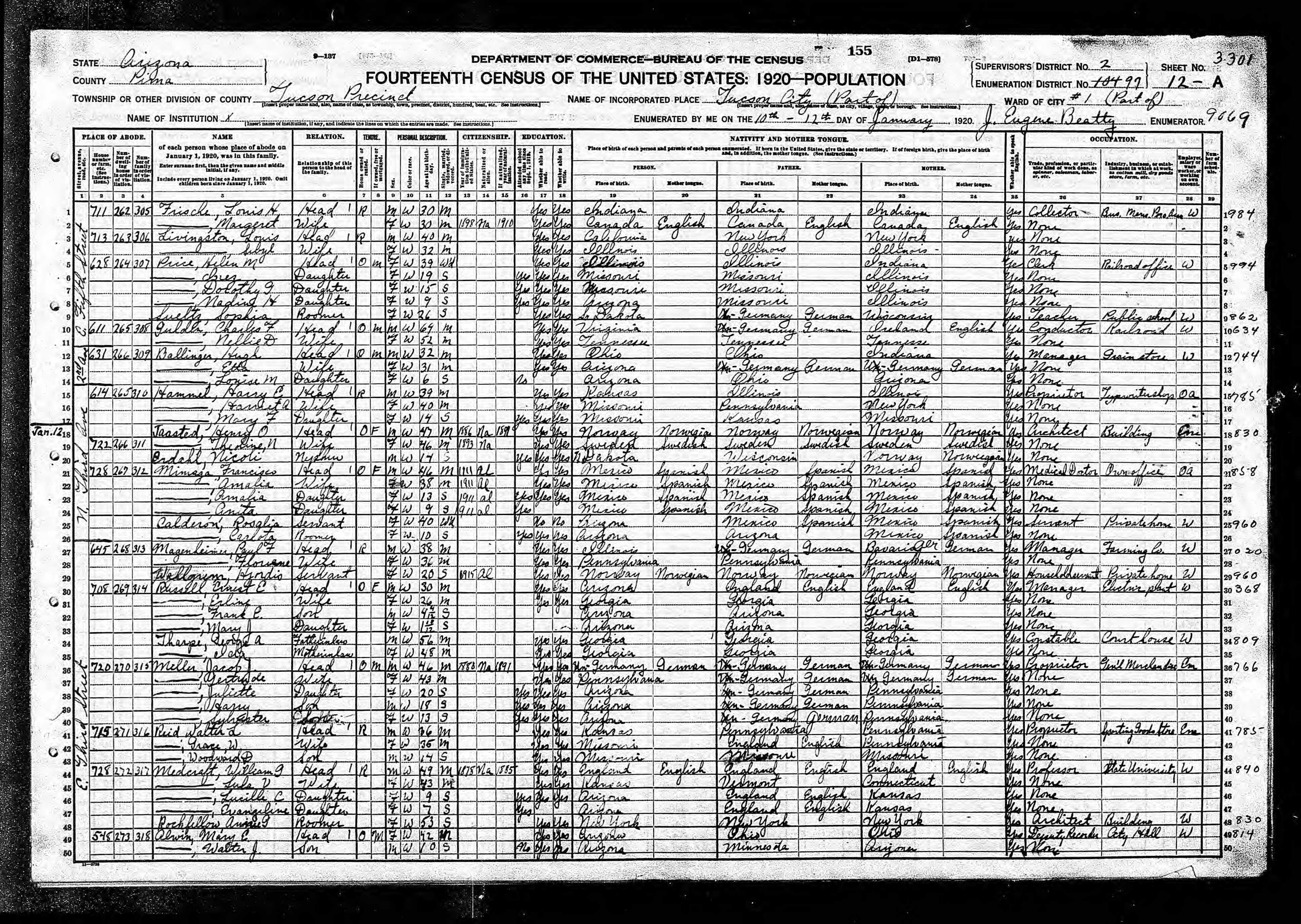
Soon after Simon’s death, her children began to disperse.  In fact, Rose’s daughter Gertrude had already moved to Tucson, Arizona with her husband Jacob Miller before Simon died. Harry had moved not too far away in Philadelphia. A few years later, Martin and Maurice moved to Chicago, and Louis and then Sidney moved to California.  Hettie also left for Arizona, leaving only two of the surviving children, Jacob and Estelle, back in Atlantic City with Rose.  Rose had raised children who were as independent and courageous as she must have been when she boarded that ship when she was just sixteen.

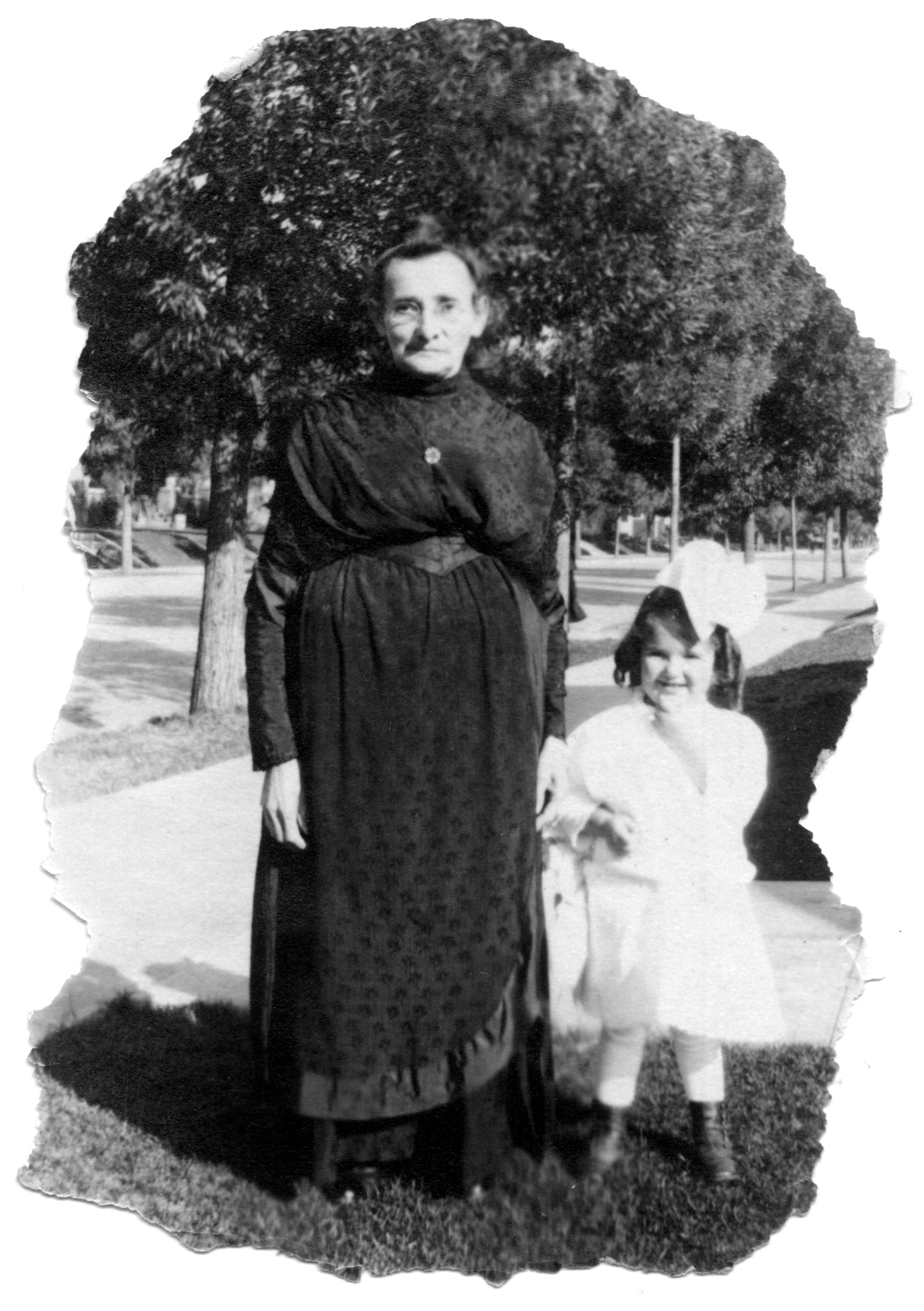
And then Rose herself, already in her 60s, left for Tucson in the mid-1910s along with her daughter Estelle.  I can only imagine what Rose must have felt and experienced in the frontier country of Arizona with the coyotes and rattlesnakes that her daughter Hettie described in her memoirs.  When I look at this photograph of Rose looking so citified and civilized, it is hard to imagine her in the wild west of those times.

Rose Schoenthal -1916

By 1920 Rose and Estelle had returned to Atlantic City, and her other two daughters soon followed them back to the East Coast.  Harry, Martin, and Jacob also ended up living in Atlantic City.  Thus, for the last decade of her life, Rose had all but three of her nine children as well as most of her grandchildren living relatively close by.  Rose must have instilled in her children not only a love for their mother but for each other and for family generally.

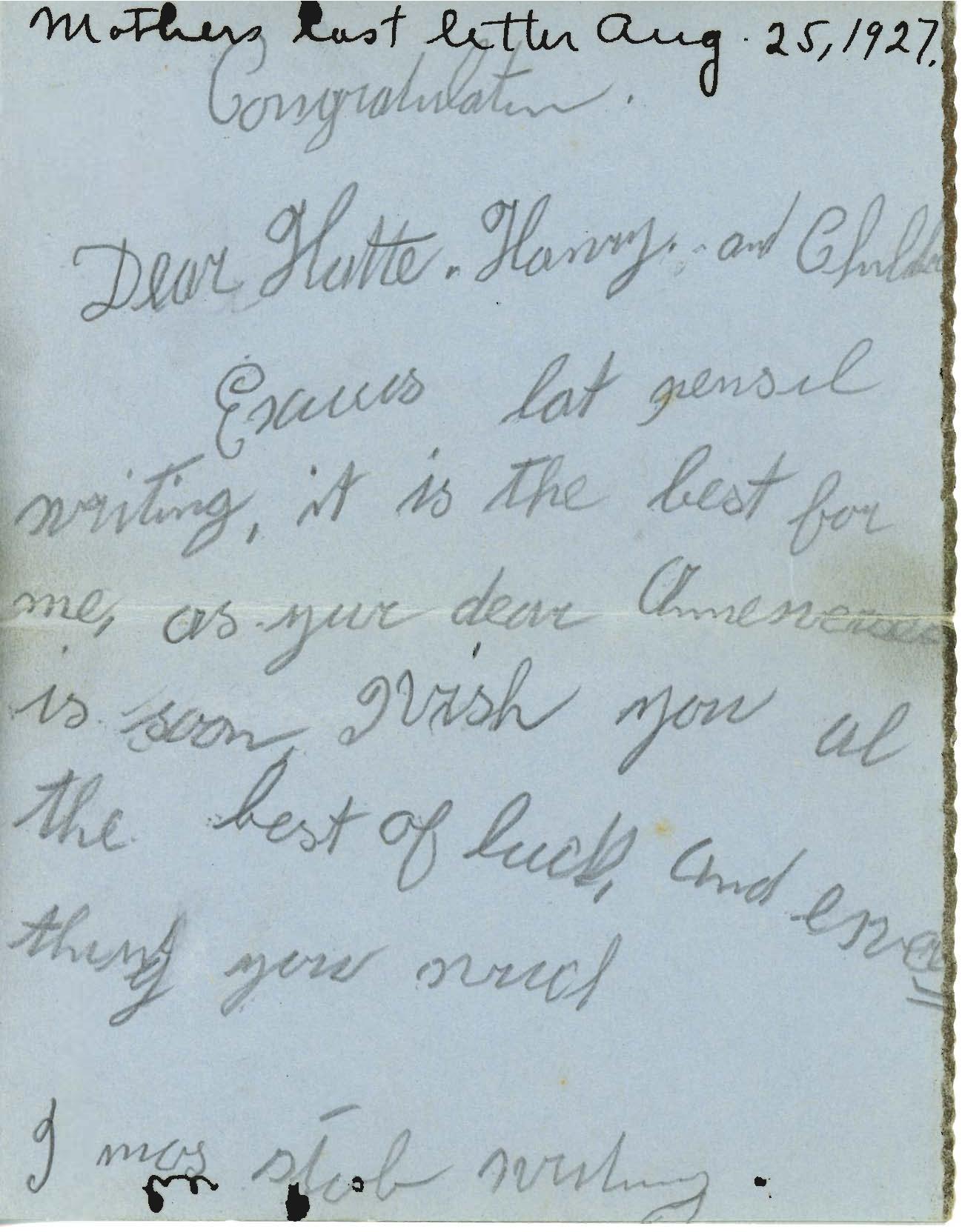
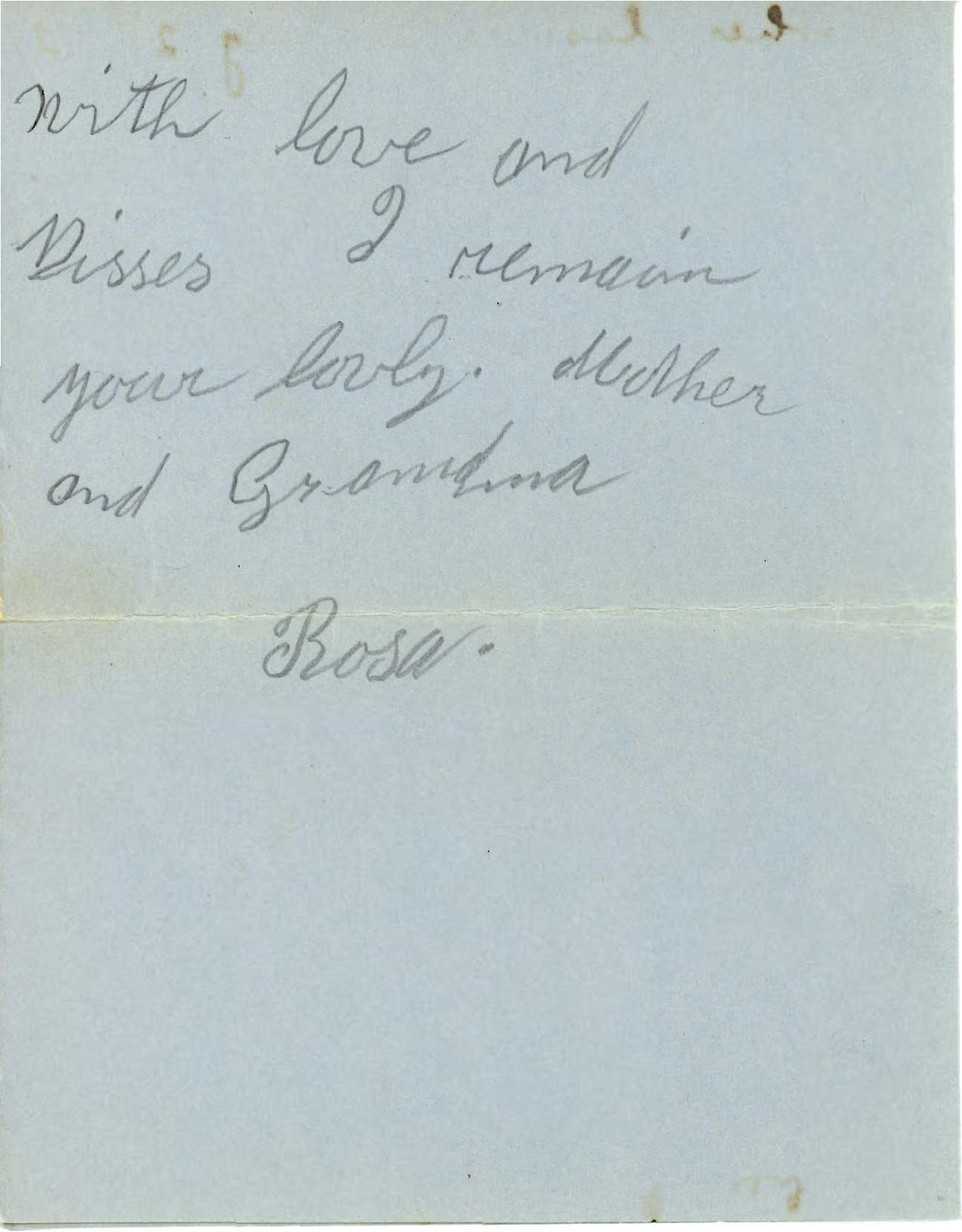
Up until last week, all of this was pure speculation on my part.  Rose had no actual voice—just government records and a few photographs told me what I knew about her.  But then Sharon Lippincott, her great-granddaughter-in-law, found a letter written by Rose to her daughter Hettie on August 25, 1927, on the occasion of Hettie’s eighteenth wedding anniversary.  In just a few short lines, I learned more about Rose than I had from any of those records and census reports I’d found:


Rose Schoenthal s last letter August 24 1927-page-001

Rose Schoenthal s last letter August 24 1927-page-002

Congratulation

Dear Hatte, Hanry and Children
Excuses lat [light?] pensil
writing, it is the best for
me, as yur dear Anneverses [Anniversary]
is soon. I Vish you al
the best of luck, and every
thing you want

I mus stob writing

with love and
kisses  I remain
your lovly. Mother
and Gramdma

Every time I read this letter, my eyes well up with tears.  When she wrote this letter, Rose was 77 years old and had been in the US for most of her life, almost sixty years.  English, however, was still difficult for her.  Yet despite the obstacles she faced writing in English, in these few words she expressed herself so clearly.  “With love and kisses”—not the stereotype I have of German Jewish grandmothers nor the words I would expect from Rose, having seen photographs of her where she appears rather stern.  With these few simple words she expressed so much love and affection for her daughter and son-in-law and grandchildren.


Rose Mansbach Schoenthal courtesy of the family of Hettie Schoenthal Stein

Rose Mansbach Schoenthal
courtesy of the family of Hettie Schoenthal Stein


Rose Mansbach Schoenthal died on May 16, 1929.  She was 79 years old.  Had she done anything notable in her life, anything that would make the history books or even a newspaper? Not really.  But think of what she had done.  She had ventured across the ocean at age 16 by herself.  She had raised ten children, nine to adulthood, all of whom seemed to have stayed close to her and to each other.  She had moved from Germany to Pittsburgh to Philadelphia to Atlantic City to Arizona and back to Atlantic City.  She had persevered even after her husband died, leaving her with three children who were still teenagers.  Rose had created a family, a family she raised and a family she loved.

Rose Schoenthal and her granddaughter Blanche Stein, 1916

Rose Schoenthal and her granddaughter Blanche Stein, 1916

When I think about all that she did do in the quiet, unreported way that most women of those times lived their lives, I know that she deserves to be honored during Women’s History Month even if she never worked outside the home, ran for office, wrote a song or a poem, or carried a weapon in war.

Part II: Hettie Schoenthal, An Indomitable Spirit

In my prior post, we saw how Hettie Schoenthal Stein described the early part of her life in the memoirs she wrote to her grandson Ezra Parvin Lippincott, Jr., in 1973 and 1974.  After a childhood in Atlantic City with her many siblings, she had followed her sister Gertrude to Tucson, Arizona, married Henry Stein, and then moved with him and their two children Walter and Blanche to Ray, Arizona, a mining town over ninety miles from Tucson.

Walter and Blanche Stein, c. 1915 courtesy of their family

Walter and Blanche Stein, c. 1915
courtesy of their family

The FamilySearch.org website provided these insights into what might have attracted Hettie and Henry to Ray, Arizona:

The small town of Ray, Arizona, located in the south central portion of Pinal County, was founded in 1870.  By 1873, prospectors were engaged in silver mining and by 1880 high grade copper ore was being mined in Ray. The original founders were most likely a group of copper miners operating a small mine in this copper rich area. One of the miners, Mr. Bullinger, is said to have named the town Ray, after his daughter, Ray Bullinger. By 1909 The Arizona Hercules Copper Company had purchased the rights to the mine and constructed the town as a company town.  The mining operation in Ray enjoyed a worldwide reputation because of the innovative mining practices employed in the underground mine.

Ray, Arizona copper mine y Palmercokingcoal (Own work) [CC BY-SA 4.0 (http://creativecommons.org/licenses/by-sa/4.0)], via Wikimedia Commons

Ray, Arizona copper mine 1916
y Palmercokingcoal (Own work) [CC BY-SA 4.0 (http://creativecommons.org/licenses/by-sa/4.0)%5D, via Wikimedia Commons

The FamilySearch page also conveys a sense of what life was like in Ray in the early 20th century:

The original town of Ray consisted of one short main street with small businesses on both sides of the street. By 1909 the company had constructed a hospital and there are birth certificates from the hospital that date back to 1910. There was usually a doctor in Ray and the hospital employed at least 3 nurses and a cook according to Census Records. …  The elementary school (Lincoln Elementary) had grades 1 through 8 in eight classrooms. …. Ray High School was a short walk uphill from the elementary school.  ….  Ray didn’t have a newspaper, but people in the small town subscribed to The Arizona Republic, a newspaper in Phoenix. Ray had four churches….

Obviously, Ray was a booming town by the time Hettie and Henry moved there in the mid-1910s or so.

Ray, Arizona 1916 By Palmercokingcoal (Own work) [CC BY-SA 4.0 (http://creativecommons.org/licenses/by-sa/4.0)], via Wikimedia Commons

Ray, Arizona 1916
By Palmercokingcoal (Own work) [CC BY-SA 4.0 (http://creativecommons.org/licenses/by-sa/4.0)%5D, via Wikimedia Commons

Walter, their son, wrote about his own perspective on the town and his family’s life there:

To my knowledge the Steins and Millers were the only Jews living in Ray. My uncle Jake [Jacob Miller, Gertrude Schoenthal’s husband] and his brother, also called Uncle, had a dry goods and shoe store, and a general merchandise and grocery store. The general merchandise had hardware, mining equipment, farm equipment, guns, and shells. My dad ran the bakery and delivery of bread and pastries from a wagon, pulled by a horse (named Tom). One day my dad stopped for lunch at home with the bakery wagon. While he was having lunch, something frightened Tom and he bolted. There were bakery products all over the neighborhood. Tom was caught and calmed. Tom was not hurt.

My cousin (Harry) [Gertrude Schoenthal Miller’s son] used to spend the summer in Ray. He lived in Tucson and went to school there. While in Ray, Harry worked in the store. His job was to solicit orders at the houses in the residential sections of Ray. This was done on horseback.

The big event at the grocery store was uploading one hundred pound bags of flour, sugar, and salt that were skidded into the cellar on a slide. Lots of fun! We kids rode on the bags.

(From “Recollections,” by Walter Stein.)

From this excerpt, I get the impression, consistent with what I wrote about here, that Jacob Miller had moved to Ray, but left his wife Gertrude and family behind, perhaps so that his children could continue to go to school in Tucson.


Ray, Arizona 1916 By Palmercokingcoal (Own work) [CC BY-SA 4.0 (http://creativecommons.org/licenses/by-sa/4.0)], via Wikimedia Commons

Ray, Arizona 1916
By Palmercokingcoal (Own work) [CC BY-SA 4.0 (http://creativecommons.org/licenses/by-sa/4.0)%5D, via Wikimedia Commons


Walter’s description of his boyhood in Ray in many ways sounds idyllic:

I got in the swing of things, with friends I had made. Rode burros, mules, and spent plenty of time in the ball park. The burros ran loose, so you could grab one and jump on his back. If the burro was inclined to go, it was fine. If not, the burro would not move.

The mules were used at the copper mines. My friend Joe Garcia (his father took care of the mules) and I would go to the corral. One of us would bring one of the mules over to the side of the corral. The other one would climb up the side of the corral as the mules were too big for us to get on.

One thing that was standard at every house we lived in in Ray was a chicken coop with two to three dozen chickens and one or two roosters. Of course it does not take too many guesses as to who was assigned the care, feeding, and cleaning of the coop. Also a couple of rabbits and a dog (pedigree unknown).

(From “Recollections,” by Walter Stein.)

Walter Stein, c. 1919 when he was nine years old courtesy of the family

Walter Stein, c. 1919 when he was nine years old
courtesy of the family

Blanche Stein, c. 1920, when she was seven courtesy of the family

Blanche Stein, c. 1920, when she was seven
courtesy of the family

From Walter’s perspective, it was wonderful place to grow up, but their life in Ray had some challenges.  Walter described their two homes in Ray:

Our first house was placed on the side of a hill with one door. The back of the house was against the hill. To reach the house you walked up steps that also took care of other householders on the hill. I cannot remember the location of the outhouse. I do remember to bathe, water was heated on the stove and then poured into a galvanized tub that had been placed on the floor.

We didn’t live there very long. Our next house was in back of the ball park. This house had both front and back doors. Standard out house. No bathroom. After we had lived there a short time, Dad had a bathroom built. Still must use out house. Bathroom contained washstand and tub. In summer to bathe, one ran water into tub, and then waited for the water to cool. The water pipes from the reservoir laid on top of the ground and the sun heated the water too hot to bathe until it cooled.

(From “Recollections,” by Walter Stein.)


Embed from Getty Images

Hettie[1] had less fond memories of their house in Ray:

I will tell you a little about the house. It was up on a hill, just four rooms no bath or toilet. It was terrible. I did not think I could live there, but we did. Your grandfather and a helper built a room and we bought a tub. The pipes had to be on top of the ground. Well, the sun was so hot we had to draw the water and let it stand for hours before bathing.

Hettie leading a donkey

Hettie leading a donkey

The accommodations were not the only challenges.  The wildlife and the weather also provided challenges.  Hettie recalled:

One day I was stung by a wasp and another time a Scorpin this happened in Ray Ariz. We lived up on a hill. We had a few chickens and it was so hot some time when I gathered they were hard boiled and this is (no joke)

Once I remember I came across some eggs in a nest and I took them and put them in the ice box. In those days we had to buy ice. A little later on I opened one egg and found a little chicken so I hurried and put the others back in the nest and a few hatched and I called them my ice box chicks. …

I learned to ride horseback. One day my brother Maurice took me riding. We rode to the Mission that was about ten miles out of town and a big rattle snake got in front of my horse, so my bro. got down from his horse and stoned it to death and had a belt made for me. It was very pretty.

English: Arizona Black Rattlesnake

English: Arizona Black Rattlesnake (Photo credit: Wikipedia)

I found it interesting that Maurice, one of the brothers who lived in Chicago, traveled out to Ray, Arizona, to see his little sister Hettie.  It seems that even though the siblings were quite spread out across the US, they still stayed in touch and even saw each other. Hettie also mentioned that in 1969 she visited her brother who lived in Los Angeles, that is, her younger brother Sidney.  And here is a photograph of her brother Martin with his niece Juliet Miller and nephew Walter Stein, possibly taken in Arizona when he visited from Chicago.


Martin Schoenthal, Juliet Miller Ferrin, and Walter Stein

Martin Schoenthal, Juliet Miller Ferrin, and Walter Stein


Here is Martin with Blanche, Gertrude, Hettie, and Walter.

Martin Schoenthal, Gertrude Sch., Hettie Sch Blanche Walter

Blanche Stein, Martin Schoenthal, Gertude Schoenthal Miller, Hettie Schoenthal Stein, and Walter Stein c. early 1920s


One of the most amusing anecdotes Hettie shared in her memoirs involved the time her son Walter had to have surgery in Phoenix and she rented a room to stay with him while he had post-operative care:

After Walter got out of the Hospital I thought it would be nice if I could get a little apt near the Hospital as he had to go for treatments. Then I could have Blanche with me, so I found one. It had all new linens and silver and looked so nice. Your grandfather [Henry Stein] brought your mother [Blanche] up that weekend and the next day he was walking in the hall and a girl invited him in her apt. Then when he came in he said what kind of place I was in. Well, I was in a fast house. The first day I was there when Walter and I came out of the apt a couple of men smiled at me and I thought it was just because Walter’s head was bandaged. In the west people were very friendly. A lot of people asked me what happened to the boy and wished for a speady recovery. I moved out of there in a hurry.

Poor Hettie—she must have been mortified to realize she had taken her son to a “house of ill repute!”

In either 1923 or 1924 (various sources differ), Hettie, Henry, and their children left Ray, Arizona.[2]  This was also when Gertrude and her family left Arizona to return to Atlantic City, as I wrote about here.  Hettie’s description of their travels is colorful:

Now it is March 24, 1924 we are leaving the west to make our home in Phila. My brother-in-law [Jacob Miller] and your grandfather [Henry Stein] were driving to Phila. I forget what city it was but they put the car in a garage and it caught fire and every body lost there cars.

They had to take the train the rest of the way. When they arrived in Phila, they phoned us. We left the next day and a couple days later we had one stop over for one hour so my sister Gertie, your mother [Blanche] who at that time was about 12 years old and Walter took a walk. We were crossing the street when a car came along and I was run over. It was like in the movies. I was down and before you knew it I was up. All I could say is Thank God I am O.K. one wheel ran over my thigh. This man wanted to take me to the hospital but I said no. I think he gave me a card with his name and address on so in case I had any ill affects from it I should let him know. When we got to Chicago my two brothers [Maurice and Martin] wanted me to go to the hospital but I said I am O.K. I know God was with me.

(Perhaps the photographs of Martin with Gertrude and Hettie, shown above, were taken when the families stopped in Chicago.)

A few things struck me as interesting about this passage.  First, I was impressed by the fact that Gertrude and Hettie traveled alone by train with their children across the country while their husbands waited for them on the East Coast.  Also, once again there is evidence that these widely separated siblings stayed close, as Maurice and Martin, the two brothers in Chicago, urged their younger sister to go to the hospital.  But mostly I was struck by Hettie’s spirit, which seemed as resilient as her body, jumping up after being run over by a car.

Once they reached the East Coast, Gertrude went on to Atlantic City where she and Jacob became involved in the hotel business.  Hettie and Henry settled in Camden, New Jersey, and then in Philadelphia:

My sister husband and your Grand father bought a moving picture house in Camden N.J. we had that for a while then sold it and moved to Holmesburg Pa. that is part of Phila. I was the cashier, your grandfather was the ticket taker and your uncle Walter helped the operator. We all got along nicely.

I had lots of fun. There were three German men who came most every night so one night I said in german do you speak german? Well you should have heard them. I made them understand I only knew a few words but my husband understood better. They told me they came to learn the English language.

Hettie, the daughter of two German immigrants, knew only a few words of German.  In some ways, that is rather remarkable as it indicates how fluent her parents were in English.  But it is also somewhat sad that they did not pass on to their children the language of their native country.

Blanche Stein, high school graduation picture

Blanche Stein, high school graduation picture.  Courtesy of the family

In 1930, Henry was working as a hosiery salesman.  Walter was living with his aunt and uncle, Gertrude and Jacob Miller, and working in their hotel as a bellman.  Blanche was still living at home in Philadelphia, working as a typist.

Blanche Stein and Hettie Schoenthal Stein, 1930, Mayfair, PA courtesy of the family

Blanche Stein and Hettie Schoenthal Stein, 1930, Mayfair, PA
courtesy of the family

By 1940 Blanche and Walter had both married (more on that in my next post), and Hettie and Henry were living in Philadelphia.  Henry was now an office equipment salesman.

Henry Stein Courtesy of the family

Henry Stein
Courtesy of the family

Around this time, Hettie’s nephew Bob Klein, son of her sister Estelle and Leon Klein, came to live with them.

We had a five room apt. My nephew Bob Klein lived with us. I loved to paint so I did all the painting when I got the brush in my hand there was not telling where I would stop. I painted the toilet seat and forgot to put a sign on and Bob sat down you can guess the rest.

During World War II, Hettie volunteered for the Allied Prisoner of War Service.  While doing so, she made connections that led to a home-based business for her:

In Phila I volunteered one day a week for the Allied Prisoner of War Service that was in 1944 we shipped food to the War Zone. We had to show a card before we were admitted. One day one of the ladies asked me what I was to to do after we finish work so I said I am going to go get some yarn to make a wooley dog so they wanted to see them so the next week I took a couple in and they wanted to buy them so I realy got in business. Then your grandfather told one of his customers*, a florist, about my dogs. He wanted to see them, so I took six with me. He liked them so much he bought them and put them in the window. Some sailors came along and bought all six. I no more than got home when the phone rang and it was Mr. Jones. He said the dogs were gone and he would like to have 50 at once. I stayed up all night and took him what I had made the next day.

A salesman from Chicago saw them at the Florist and wanted to know how he could get in touch with me. He came to see me and ordered all I could make I had my sister Estelle and your mother and your grandpa helping and I sent him as many as I could. Then I had others that wanted them for there stores, my business got to big for me. I had to drop it.

Sadly, Henry Stein died on February 16, 1951, from prostate cancer; he was 79 years old.

Henry and Hettie (Schoenthal) Stein, 1951 courtesy of the family

Henry and Hettie (Schoenthal) Stein, 1951
courtesy of the family


After he died, Hettie lived for some time with a friend and for many years on her own in Atlantic City.  She continued to have a very full and active life, as you can see from these photographs.

Hettie Stein, 75th birthday April 24, 1961 courtesy of the family

Hettie Stein, 75th birthday April 24, 1961
courtesy of the family

Hettie Schoenthal Stein, 85th birthday 1971

Hettie Schoenthal Stein, 85th birthday 1971

Even at 88, she was still volunteering for her synagogue’s rummage sale.

Hettie Stein's 90th birthday 1976

Hettie Stein’s 90th birthday 1976 with Blanche and Walter. Courtesy of the family.

When she was 95, Hettie moved in with her daughter Blanche in Medford, New Jersey. When Hettie turned 100, it was written up in the May 8, issue of the Central Record, the local newspaper for Medford, New Jersey:

Hettie Stein Celebrates 100 part one

Hettie Stein Celebrates 100 part two

Reading this interview warmed my heart.  Even at 100, Hettie remained upbeat, gracious, and independent.  Her description of her childhood—“We were one happy family.  We would all do for the other, and we all got along nicely”–is certainly consistent with the photographs, the writings, and the facts I’ve seen and read about Hettie and her siblings.

Hettie survived her much beloved husband Henry by almost 38 years, dying on January 15, 1989, when she was just a few months shy of her 103rd birthday.  She, like so many of her siblings, was blessed with remarkable longevity.


I will close this post with the closing words of Hettie’s 1974 memoir, as they best convey the spirit and personality of this adventurous and upbeat woman:

Well, this all happened in my life time. I did have two men that wanted to marry me and two weeks ago the third one asked me. I was walking on the Boardwalk and a man I met about ten years ago came up to me and said, “Can I walk with you?” So I said yes. I knew his wife. She passed away a year ago. He wanted me to go to his apt for dinner. He had made a lamb stew. I thanked him and said my dinner was waiting for me. We talked for awhile and then he asked me if I would marry him. He has money, two sons, one a Dr., the other a Dentist and he is very good looking. But I am happy as I am.

I must tell you, I was getting some telephone calls from some man or boy. He kept telling me he wanted to come see me and give me some loving and I would hang up. On Sat. morning my son Walter took me shopping and when we came home the phone rang and it was the same person. I said wait, and I will let you talk to my husband. He hung up in a hurry and that was the end of that.

Two day is the 4th of July, 1974. A beautiful day. Your Ma [Blanche] called me. I am so happy she is enjoying life.

Hettie Excerpt 2


[1] All of the quotes by Hettie Schoenthal Stein are from her memoir, “This is My Life,” written in 1973-1974 for her grandson, Ezra Parvin Lippincott, Jr.

[2]  In the 1950s, the company that owned the copper mine in Ray expanded the mining area and moved the residents to a nearby town it built.  Today Ray is a ghost town.

Jews in Arizona: Gertrude Schoenthal Miller and Her Family

As we will see, Harry Schoenthal and his sons were not the only descendants of Simon and Rose (Mansbach) Schoenthal to spend much of their lives in Atlantic City; five of Harry’s siblings also spent most of their lives there.  Harry’s younger sister Gertrude had left Atlantic City for Arizona after she married Jacob J. Miller in 1898, but she returned to Atlantic City, albeit a quarter century later.

Gertrude Schoenthal Miller Courtesy of the family of Hettie Schoenthal Stein

Gertrude Schoenthal Miller
Courtesy of the family of Hettie Schoenthal Stein


As I wrote earlier, Jacob Miller was a German immigrant who had arrived in the US in the 1880s (records are in conflict as to whether it was 1880, 1882, or 1888, but 1882 is supported by three different records so may be the most accurate date). I don’t know how Jacob met Gertrude or where Jacob was living before he married Gertrude, but they must have moved to Arizona not long after they married because Jacob was listed in the Tucson directory in the cigar business in 1899. On the 1900 census, Jacob and Gertrude and their infant daughter Juliet (sometimes spelled Juliette) were living in Pima County, Arizona, where Jacob was a grocer.  (Tucson is in Pima County, so I assume they were living in or near Tucson but the enumeration sheet does not identify the city, only the county.)

Map of Arizona highlighting Pima County

Map of Arizona highlighting Pima County (Photo credit: Wikipedia)


When I looked further down the enumeration sheet where Jacob and Gertrude and Juliet were listed, I noticed that there were two other Millers just a few entries below that of Jacob and Gertrude: Albert Miller and his brother Solomon.  The census record reports that Albert and Solomon were also born in Germany and that Albert was also a grocer (Solomon a store clerk).  A little further research into the backgrounds of Albert and Solomon confirmed my hunch that these were Jacob’s brothers.  Albert had been in Arizona since at least 1896; he had married his wife Fanny Goldbaum in Pima County on January 19, 1896.  Research into Fanny’s background revealed that she had been living in Pima County since at least 1880 when she was just four years old.

Jacob Miller and family and his brothers on 1900 census Year: 1900; Census Place: Precinct 1, Pima, Arizona Territory; Roll: 47; Page: 18B; Enumeration District: 0049; FHL microfilm: 1240047

Jacob Miller and family and his brothers on 1900 census
Year: 1900; Census Place: Precinct 1, Pima, Arizona Territory; Roll: 47; Page: 18B; Enumeration District: 0049; FHL microfilm: 1240047

Based on these observations, my hunch is that Albert, the oldest brother, must have moved out west to Arizona sometime before 1896 and then lured his two younger brothers, Jacob and Solomon, to join him out there.  It reminds me of the story of Bernard Seligman, my great-great-grandfather, who followed his older brother Sigmund to Santa Fe and was then followed by their younger brother Adolf to that city as well.

I am sure that like my Seligmann ancestors, the Miller brothers were among a very small number of Jewish settlers in Arizona during that time.  According to the Arizona Jewish History Museum, there was no synagogue in the entire Arizona Territory until Eva Mansfield purchased land to build one in Tucson in 1900.  The history of the Jewish community of Tucson is also discussed on the Jewish Virtual Library website:

The total Jewish population of Arizona in the 1880s was estimated at about 50 people, so the numbers in Tucson must have been fewer. ….

Almost none of the descendants of the pioneer families are counted among the Jews of Tucson today. Many of the original Jewish settlers fled to other parts of the West or the nation in the late 1880s and 1890s when an economic depression hit the Arizona territory. Moreover, those Jews who had already made money left the community because of the unbearable heat, often over 100 degrees Fahrenheit, which could last sometimes from May through October.

In the early 20th century a number of Jews remained in Tucson as is evidenced by the presence of a Hebrew Ladies’ Benevolent Society and the building in 1910 of the first Jewish temple in Arizona: Temple Emanu-el (Reform).

Until World War II, and even among some of the pioneers, the Jews who arrived in Tucson came because someone in the family needed the dry air for his/her health.

So Jacob and his brothers appear to have settled in Arizona and stayed when many others, Jewish and non-Jewish, had left.  Had they been drawn to the dry air for their health? Or did they see opportunities where others did not?

Stone Street Synagogue, first synagogue in Arizona 1914 Found at http://www.jmaw.org/temple-emanuel-tucson-synagogue/

Stone Street Synagogue, first synagogue in Arizona
1914
Found at http://www.jmaw.org/temple-emanuel-tucson-synagogue/


Jacob and Gertrude had their second child, Harry, in Arizona in 1902.  According to the 1910 census, however, their third son Sylvester was born in 1906 in New Jersey, so perhaps Jacob and Gertrude had returned to the east coast for some time in 1906, but they then had returned to Arizona by 1910.  Jacob was the manager of the liquor department of a wholesale store in Tucson, Arizona, according to the 1910 census record.
Jacob Miller and family 1910 US census Year: 1910; Census Place: Tucson Ward 2, Pima, Arizona; Roll: T624_41; Page: 7A; Enumeration District: 0104; FHL microfilm: 1374054

Jacob Miller and family 1910 US census
Year: 1910; Census Place: Tucson Ward 2, Pima, Arizona; Roll: T624_41; Page: 7A; Enumeration District: 0104; FHL microfilm: 1374054


When he registered for the draft in 1918, Jacob was living in Ray, Pinal County, Arizona, and working for himself as a merchant.  The 1920 census confused me because Jacob is listed twice: one enumeration page dated January 21, 1920, has him living with his brother Albert in Ray, Arizona, where Jacob was again working as a grocery store merchant and Albert as a dry goods store merchant.  Both were still married according to that record.  The other enumeration page from the 1920 census that includes Jacob , dated January 10-12, 1920, has him living in Tucson with Gertrude and his three children and working as the proprietor of a general merchandise store.  Did Jacob move between January 12 and January 21? Or was he living in Ray while his family lived in Tucson? Tucson is 90 miles from Ray, so he was not commuting from home.  Perhaps Jacob and Albert believed that there were better bisiness opportunities for merchants in Ray, but that there families would be better off in Tucson.


Jacob Miller with family 1920 census Year: 1920; Census Place: Tucson Ward 1, Pima, Arizona; Roll: T625_50; Page: 12A; Enumeration District: 97; Image: 876

Jacob Miller with family 1920 census
Year: 1920; Census Place: Tucson Ward 1, Pima, Arizona; Roll: T625_50; Page: 12A; Enumeration District: 97; Image: 876

Jacob Miller 1920 census with brother

Jacob Miller and brother 1920 US census Year: 1920; Census Place: Ray, Pinal, Arizona; Roll: T625_51; Page: 14B; Enumeration District: 114; Image: 389

It does seem that Jacob stayed in Ray for too long.  The 1922 Tucson, Arizona, city directory lists Jacob Miller as a grocer, living with Gertrude; there are also separate listings for their children Juliet and Harry, described as students, living at the same address as their parents. The 1923 directory for Tucson has the same entries.  But the 1924 Tucson directory does not have any of them listed.

Like those who had left Arizona before them, as mentioned above, Jacob and Gertrude left Arizona and returned to the east.  The family must have moved to Atlantic City sometime after 1923 and before 1926, because they appear in the 1926 directory for Atlantic City. The family was residing at 141 St. James Avenue, which was the address for the Hotel Lockhart.  Jacob was working for the Hotel Lockhart as was his son Harry; Sylvester was working at the Rittenhouse Hotel. Gertrude’s mother, Rosa Mansbach Schoenthal, was also living at the Hotel Lockhart that year. The owner of the Hotel Lockhart in 1919-1920 was Mrs. J. Wirtschafter, the mother of Esther Wirtschafter, who was the wife of Harry Schoenthal, Gertrude’s brother.  Thus, Jacob and Gertrude were living in a hotel owned by Harry’s mother-in-law.  And it was at that same address, 141 St. James Avenue, that Harry and Esther Schoenthal had been living in 1920.

Thus, Gertrude’s brother Harry Schoenthal made it easier for his sister to return to Atlantic City by providing job opportunities for  her husband Jacob and her sons Harry and Sylvester as well as providing a place for them all to live at the Hotel Lockhart.

In 1925, Gertrude and Jacob’s daughter Juliet married Arthur Ferrin in Philadelphia.  Arthur was not from Philadelphia or from Atlantic City.  He was born in 1881 in Tucson, Arizona, making him almost twenty years older than Juliet.

Arthur  H. Ferrin 1905 courtesy of the family of Hettie Schoenthal Stein

Arthur H. Ferrin 1905
courtesy of the family of Hettie Schoenthal Stein

He had been previously married to a woman named Jennie Della Owens, with whom he had had a son named Harold in 1915. Jennie had died in 1919.  In 1920, Arthur was listed on the census in Graham, Arizona, married to a woman named Marie, who was only nineteen.  Marie died in San Francisco, California, a year and half later on September 1, 1921, from typhoid fever. She was just 21 years old.  From the death certificate, it appears that she had arrived in California just 14 days earlier.

Marie Jacobson Ferrin death record Ancestry.com. California, San Francisco Area Funeral Home Records, 1895-1985 [database on-line]. Provo, UT, USA: Ancestry.com Operations, Inc., 2010. Original data: San Francisco Area Funeral Home Records, 1895-1985. Microfilm publication, 1129 rolls. Researchity. San Francisco, California.

Marie Jacobson Ferrin death record
Ancestry.com. California, San Francisco Area Funeral Home Records, 1895-1985 [database on-line]. Provo, UT, USA: Ancestry.com Operations, Inc., 2010.
Original data: San Francisco Area Funeral Home Records, 1895-1985. Microfilm publication, 1129 rolls. Researchity. San Francisco, California.

So Juliet’s husband Arthur had been twice widowed when he married her in 1925.  Juliet and Arthur were living in Tucson in 1926, but by March 1929, they had also moved to Atlantic City as their first child, Helene, was born there that month.  On the 1930 census, Juliet, her husband Arthur, his son Harold, and their daughter Helene were living with Juliet’s parents and her brother Harry at 141 St. James Avenue, the address of the Hotel Lockhart. Jacob Miller was now listed as the hotel proprietor; his son Harry was working as a clerk, and his son-in-law Arthur was working as a waiter, both at the hotel.  (Arthur seemed to have shaved several years off his age; he was born in 1881, but later records say 1884, and on the 1930 census, when he should have been listed as 48 or 49, his age is reported as 42.)

Jacob Miller, Arthur Ferrin, and families 1930 US census Year: 1930; Census Place: Atlantic City, Atlantic, New Jersey; Roll: 1308; Page: 16B; Enumeration District: 0017; Image: 744.0; FHL microfilm: 2341043

Jacob Miller, Arthur Ferrin, and families
1930 US census
Year: 1930; Census Place: Atlantic City, Atlantic, New Jersey; Roll: 1308; Page: 16B; Enumeration District: 0017; Image: 744.0; FHL microfilm: 2341043

Thus, by 1930, yet another household of the Simon Schoenthal family was living and working in the Atlantic City hospitality business.

Meanwhile, Gertrude and Jacob’s youngest child Sylvester Miller was a student at the University of Pennsylvania in the late 1920s and became a licensed dentist in Pennsylvania on July 19, 1928.  He married Isabella Lazarus in Philadelphia in 1933.  She was a Philadelphia native, the daughter of Joseph Lazarus and Aimee Frechie.    Joseph was a manufacturer of shirtwaists. Sylvester and Isabella would have two children during the 1930s. Isabella became an artist of some note.  You can see one of her paintings here.

When I saw the name Frechie, I knew it was familiar and checked my tree.  Harry Frechie, also born in Philadelphia about four years after Aimee, had married Minnie Cohen, my great-grandfather Emanuel Cohen’s niece.  Could Harry and Aimee be related? Both had fathers from Antwerp, Belgium, and they both had settled in Philadelphia.  Harry’s father Ephraim was an auctioneer. Aimee’s father Meyer Solomon was a cigar manufacturer.  They were buried in different cemeteries, and I could not find the name of Meyer’s parents to compare to the parents of Ephraim.  I’ve no idea how common a name Frechie is in Belgium, so perhaps it’s just a coincidence.  But if Aimee and Harry were in fact cousins, it would be one more twisted branch of my ever-growing family tree.

Harry Miller also married in the 1930s.  He married Mildred Pimes who was a Washington, DC, native, daughter of Max Pimes, a tailor born in England, and Ray or Rachel Frankfurther, a Virginia native. Harry and Mildred’s first child was born in August 1935 in Atlantic City so presumably they were married sometime in 1934 or before.  They would have a second child a few years later.


http://www.gettyimages.com/detail/81773508


Thus, by 1940, all three of Gertrude (Schoenthal) and Jacob Miller’s children were married, and there were seven grandchildren, five living in the Atlantic City environs and two not too far away in Philadelphia.  According to the 1940 census, Jacob was working at a restaurant; he was 66 years old, and Gertrude was 63. They were living at 4 Bartram Street in Atlantic City.

Both the 1938 and the 1941 Atlantic City directories list their daughter Juliet and her husband Arthur Ferrin living at 4 South Cambridge Street in Ventnor City; Juliet was the vice-president and Arthur was the secretary-treasurer of Atlantic Beverage Company, where his son Harold was also employed. (In the 1941 directory, Harold is listed with his wife Dorothy and residing at a different address.)  The 1940 census is consistent with these listings.

Harry Miller and his family were living in Margate City, another community near Atlantic City, in 1940.  Harry was a partner in a beverage company; the 1941 Atlantic City directory is more specific.  Harry was the president of Atlantic Beverage Company.[1]  The directory identified the company as a beer distributor.

Sylvester Miller was practicing dentistry and living with his family in Philadelphia.

Jacob Miller died on October 18, 1949, from coronary thrombosis and a heart attack; he was 76 years old and was buried at Mt. Sinai cemetery in Philadelphia. (There was a coroner’s inquest and thus two certificates.)

Jacob J. Miller death certificate before inquest Ancestry.com. Pennsylvania, Death Certificates, 1906-1963 [database on-line]. Provo, UT, USA: Ancestry.com Operations, Inc., 2014. Original data: Pennsylvania (State). Death certificates, 1906–1963. Series 11.90 (1,905 cartons). Records of the Pennsylvania Department of Health, Record Group 11. Pennsylvania Historical and Museum Commission, Harrisburg, Pennsylvania.

Jacob J. Miller death certificate before inquest
Ancestry.com. Pennsylvania, Death Certificates, 1906-1963 [database on-line]. Provo, UT, USA: Ancestry.com Operations, Inc., 2014.
Original data: Pennsylvania (State). Death certificates, 1906–1963. Series 11.90 (1,905 cartons). Records of the Pennsylvania Department of Health, Record Group 11. Pennsylvania Historical and Museum Commission, Harrisburg, Pennsylvania.

Jacob J Miller death certificate after inquest Ancestry.com. Pennsylvania, Death Certificates, 1906-1963 [database on-line]. Provo, UT, USA: Ancestry.com Operations, Inc., 2014. Original data: Pennsylvania (State). Death certificates, 1906–1963. Series 11.90 (1,905 cartons). Records of the Pennsylvania Department of Health, Record Group 11. Pennsylvania Historical and Museum Commission, Harrisburg, Pennsylvania.

Jacob J Miller death certificate after inquest
Ancestry.com. Pennsylvania, Death Certificates, 1906-1963 [database on-line]. Provo, UT, USA: Ancestry.com Operations, Inc., 2014.
Original data: Pennsylvania (State). Death certificates, 1906–1963. Series 11.90 (1,905 cartons). Records of the Pennsylvania Department of Health, Record Group 11. Pennsylvania Historical and Museum Commission, Harrisburg, Pennsylvania.

His wife, my first cousin twice removed Gertrude Schoenthal, died almost thirteen years later on January 4, 1962.  She was 86 years old and was buried with Jacob at Mt. Sinai cemetery. (Gertrude must have died outside of Pennsylvania because there is no death certificate for her in the Pennsylvania death certificate database on Ancestry.)

Juliet Miller Ferrin lived to be 102; her husband Arthur Ferrin lived to 104.  I could not find death records for Harry Miller or his wife Mildred, but another genealogy researcher claimed that Harry died in 1983 when he was 81 and that Sylvester Miller, the youngest child, died in 1980 when he was 74.   I am still trying to confirm that information and have tried contacting a couple of presumed descendants, but have not heard back.  Isabelle Lazarus Miller died on May 21, 1996.

I had no luck finding any newspaper articles about Gertrude and Jacob or any of their children.  Maybe I will hear from a descendant and learn stories about Gertrude and her family that will go beyond the facts revealed in the census records, directories, and death certificates.  There must be some good family stories about living in Tucson in the first part of the 20th century and about living in Atlantic City when it was the “World’s Playground.”


[1] I don’t know whether there is any connection between the Atlantic Beverage Company run by Harry Miller and his sister Juliet Ferrin and her husband Arthur Ferrin and the Atlantic Wine and Liquor Company with which Harry Schoenthal, Gertrude’s brother, had been associated in 1900.

Henry Schoenthal: His Final Years and His Legacy

Although I have completed as best I can the stories of five of the children of my great-great-grandparents Levi and Henriette (Hamberg) Schoenthal (Hannah, Amalie, Felix, Julius and Nathan), I still need to complete the stories of Henry, Simon, and, of course, my great-grandfather Isidore.[1]  In addition, there were two siblings living in Germany whose stories I’ve yet to tell, Jakob and Rosalie.  First, I want to return to Henry, the brother who led the way for the others.

As I wrote here, after living for over 40 years in Washington, Pennsylvania, Henry Schoenthal moved with his wife Helen (nee Lilienfeld) to New York City in 1909 to be closer to their son Lionel. Lionel had moved to NYC to work as a china buyer, first working for one enterprise, but eventually working for Gimbels department store.  Lionel was married to Irma (nee Silverman), and they had a daughter Florence, born on March 22, 1905.

In 1910, Henry and Helen’s other son Meyer had married Mary McKinnie, the daughter of a wealthy industrialist from Colorado. Meyer and Mary had met while Mary was a student at a girl’s boarding school, Washington Seminary, in Washington, Pennsylvania.  After marrying, they were living in Los Angeles, and Meyer was working for an investment company.

Hilda Schoenthal, Henry and Helen’s daughter, was working as a stenographer in Washington, DC, in 1911. She was living on the same street as her uncle Julius Schoenthal and cousin Leo Schoenthal, the 900 block of Westminster Avenue.


1911 directory for Washington, DC Ancestry.com. U.S. City Directories, 1822-1995 [database on-line]. Provo, UT, USA: Ancestry.com Operations, Inc., 2011.

1911 directory for Washington, DC
Ancestry.com. U.S. City Directories, 1822-1995 [database on-line]. Provo, UT, USA: Ancestry.com Operations, Inc., 2011.

According to her obituary (see below), Hilda moved to DC to work for a patent attorney.    In 1914, she was working as a bookkeeper for Karl P. McElroy, who appears to have been the patent attorney, as her brother Meyer later worked for him as well, as noted below in his obituary.

1914 directory for Washington, DC Ancestry.com. U.S. City Directories, 1822-1995 [database on-line]. Provo, UT, USA: Ancestry.com Operations, Inc., 2011.

1914 directory for Washington, DC
Ancestry.com. U.S. City Directories, 1822-1995 [database on-line]. Provo, UT, USA: Ancestry.com Operations, Inc., 2011.

In 1915, Henry and Helen were still living with Lionel (called Lee on this census, as he often was in other documents and news articles), Irma, and Florence on Riverside Drive in New York City.  Lee was still working as a buyer, and no one else was employed outside the home.  Lee’s draft registration for World War II shows that in 1918 he was still working for Gimbels, living on Riverside Drive.

Lionel (Lee) Schoenthal World War I draft registration Registration State: New York; Registration County: New York; Roll: 1786675; Draft Board: 141

Lionel (Lee) Schoenthal World War I draft registration
Registration State: New York; Registration County: New York; Roll: 1786675; Draft Board: 141


Thanks to the assistance of the Heinz History Center in Pittsburgh, I was able to obtain a copy of a letter that Henry Schoenthal wrote to his granddaughter Florence in December, 1918, when she was almost fourteen years old:

Henry letter to Florence 1918 1

Henry letter to Florence 1918 2


My darling Florence, I told you yesterday that I was mad at you, but I aint. Beg pardon, I mean I am not. I love you just as much as ever, but I would have been so happy if you had stayed a few days with us.  Of course I will have to send word to President Wilson that you went home and that you could not come to see him.  Maybe after a while when we have a home of our own here you will come and stay with us for quite a while.  We will show you that Washington, for natural beauty, beats any city you saw in the many foreign countries you have visited. Will you write me a little letter? Lovingly yours, Grandpa.

I love the teasing tone of this sweet letter to his granddaughter; it shows yet another facet of this interesting great-great-uncle of mine.  His diaries from his early years in Washington were all very serious, and the speech he gave on a return trip to Washington, PA, in 1912 revealed his spiritual and sentimental side.  Here we get to see some of his sense of humor and the affection he felt for his only grandchild, Florence, who probably like most teenagers was anxious to get home to her friends rather than spend more time with her grandparents.

I was at first a bit confused as to where Henry was living when he wrote this letter.  He refers to the natural beauty of Washington, but it’s not clear whether he is referring to Washington, PA, or Washington, DC.  I concluded, however, that he meant DC because his daughter Hilda was living there and perhaps he and Helen were planning to relocate there.  Also, the reference to seeing President Wilson makes no sense unless he and Helen were in DC.

Not long after the writing of this letter, the Schoenthal family suffered a sad loss. Henry’s son Meyer was living with his wife Mary in Blythe, California, working as a lumber merchant, when he registered for the draft on September 12, 1918.  Just three months later, Mary died on December 24, 1918.  She was only 31 years old.  They had been married for just eight years.  There were no children.


On the 1920 census, Meyer is listed as a widow, living alone, and still working in the lumber business. He had moved from Blythe to Palo Verde, California.

If Henry and Helen Schoenthal did move to DC for a period of time, by 1920 they had returned to NYC and were again living with their son Lee and his family on Riverside Drive, according to the 1920 census record.  Lee was still working as a buyer.  Hilda Schoenthal, their daughter, was still living in Washington DC, but was now working as a law clerk for the patent attorneys, according to the 1920 census.

On October 19, 1921, Meyer L. Schoenthal married for a second time.  His second wife was Caroline S. Holgate (sometimes spelled Carolyn).  By that time Meyer was considered a “prominent lumber dealer” and was president of the Blythe, California, chamber of commerce; his new bride was also “prominent socially” and had been president of the Sunshine Society in Blythe.

Riverside Daily Press article - Meyer Schoenthal 2d marriage 1921-page-001

Riverside Daily Press, October 20, 1921, p. 8


Caroline was also apparently a talented soprano, as I found numerous articles referring to her performances at various social events.  Here’s just one example.

Riverside Daily Press article -Mrs Meyer Schoenthal soprano-page-002

Riverside Daily Press article -Mrs Meyer Schoenthal soprano-page-003

Riverside Daily Press, January 28, 1924, p. 9


Perhaps she also sang at the celebration of the 50th wedding anniversary  of her new in-laws, Henry and Helen Schoenthal, which took place on May 8, 1922, in Atlantic City, New Jersey, although they were not among the guests listed in this news item.

Henry Helen SChoenthal 50th anniversary celebration 1922

Washington DC Evening Star, May 7, 1922, p.31

For that occasion,  Lionel/Lee Schoenthal wrote these very loving lines of verse in honor of his parents:

SchoenthalFamilyScans-page-002

Lionel (Lee) Schoenthal 1922

Lionel (Lee) Schoenthal 1922 passport photograph National Archives and Records Administration (NARA); Washington D.C.; NARA Series: Passport Applications, January 2, 1906 – March 31, 1925; Roll #: 1829; Volume #: Roll 1829 – Certificates: 117226-117599, 09 Feb 1922-10 Feb 1922


(I haven’t transcribed the poem or translated the German lines here, but you can always click and zoom if you want to read it.)

Sadly, three years later, the Schoenthal family lost both Henry and his son Lionel.  Henry died on October 22, 1925, from heart and kidney disease.  He was 82 years old and had lived a good and long life for a man of his generation.  After training as a Jewish teacher and scholar in Germany, he had immigrated from Sielen, Germany, to Washington, Pennsylvania,the first of his siblings to do so .  Later, he had brought his young bride Helen Lilienfeld from Gudensberg, Germany, to Pennsylvania, and they had raised three children together after losing one as a baby.  In Washington, PA, he’d been a successful businessman and respected citizen.  When his son Lionel moved to New York City, Henry and his wife Helen moved there also to be near his son and his only grandchild, Florence.  He had lived there for the last sixteen years of his life, working for some of that time as an insurance salesman, as indicated on his death certificate.  He was buried at Westchester Hills Cemetery in Hastings-on-Hudson, less than fifteen miles from where my parents are living. Perhaps one day I will pay him a visit.

Schoenthal, Henry death page 1


The family must have been in complete shock when Lee Schoenthal died of pneumonia on December 5, 1925,  just six weeks after his father had died; Lee was only 48 years old, and his daughter Florence was only 20 years old when he died.

Schoenthal, Lee death page 1


Here is part of a long and detailed obituary from the December 10, 1925 issue of The Pottery, Glass, and Brass Salesman (p. 153):

SchoenthalFamilyScans-page-003

I will transcribe some of the content:

Lee Schoenthal, supervisor of the china, glassware and allied departments of Gimbel Brothers’ associated stores, passed away at his home in New York City early on Saturday morning, December 5, following an acute illness of two weeks.  [There is then a detailed description of Lee’s poor health, referring to his dedication to his job and overwork as contributing factors to his death.] …

Lee Schoenthal was born in Washington, Pa., April 12, 1877.  His father and mother, who were born in Germany, had come to this country some years before and Henry Schoenthal—Lee’s father—had built up a nice retail business in Washington.  Lee attended the schools of his native town and then his parents, themselves highly cultured, made the effort to give their son a collegiate training, sending him to Washington and Jefferson College, located in Washington.  During his college career he stood well in his classes and was particularly noted for his musical accomplishments, being leader of the college orchestra for several years.  As a matter of fact, it is entirely possible that if he had devoted himself wholeheartedly to music instead of to commerce he might have become a musical celebrity.  …

Some twenty years ago Mr. Schoenthal came to New York to “seek his fortune.” [Then follows a detailed description of Lee’s business career, first with the Siegel-Cooper Company and then with Gimbels.]…

Mr. Schoenthal, for a man of his comparative youth, probably developed more men as successful buyers of china and glassware than anyone else in the country.  He had that rare gift of imparting knowledge and that quality of the really big man of business that he never feared to impart all information he could to those who worked with him.  Modest to a degree, he could not help being conscious of his compelling influence and ability, so the thought never entered his mind that he might be jeopardizing his own position by teaching others all they could absorb from his store of knowledge and wisdom.

[The obituary then describes Lee’s interests outside of work, in particular his love of music, but also art and architecture.] Himself a deeply religious Jew of the modernist type, he could talk more familiarly of the history of the Catholic cathedrals and their adornments than many men of the Christian faith.

[Finally, the obituary described his family life: his happy marriage, his talented daughter, and his devotion to his parents, for whom he had provided a home for many years.]

The obituary thus focused not only on Lee’s distinguished business career, but also on his broad intellectual and cultural interests, his musical talents, and his religious and personal life.  It described him as a “deeply religious Jew of the modernist type” and as a man devoted to his family.  His family must have been very proud of him.

Both deaths were noted in Meyer Schoenthal’s home paper in Riverside, California:

Lionel Schoenthal death re Meyer 1925


Two years later on October 19, 1927, Florence Schoenthal, the grandchild of Henry and Helen Schoenthal and daughter of Lee Schoenthal, married Verner Bickart Callomon in New York City.  Verner Callomon was the son of a German Jewish immigrant, Bernhardt Callomon, who had settled in Pittsburgh and worked for Rodef Shalom synagogue there, the same synagogue to which Henry Schoenthal had once belonged.  Verner was a doctor, and his career was described as follows by the Rauh Jewish Archives at the Heinz History Center in Pittsburgh:

Verner Callomon (1892-1977) graduated with honors from the University of Pennsylvania in 1915 with a degree in medicine. He served as a junior lieutenant in World War I and returned to Pittsburgh to practice internal medicine. He was a pulmonary disease specialist and researcher at Allegheny General Hospital and Montefiore Hospital for nearly 60 years and was the chief of medicine at both institutions at different times during his long career. His research contributed to changes in the treatment of pneumonia. He was known both for his professionalism and for his compassion. In order to visit weather-bound patients, he rowed down Liberty Avenue during the 1936 St. Patrick’s Day flood and secured an Army jeep during the November 1950 snowstorm.

As far as I can tell, Florence and Verner settled in Pittsburgh after they married since that is where Verner is listed in the 1929 directory for Pittsburgh and also were their first child was born in 1929.

(The Rauh website also includes links to several articles about the Callomon family.  Of particular interest to me was the oral history interview with Jane Callomon, one of the children of Florence (Schoenthal) and Verner Callomon, on file at the University of Pittsburgh Library (“Pittsburgh and Beyond: The Experience of the Jewish Community,” National Council of Jewish Women, Pittsburgh Section, Oral History Collection at the University of Pittsburgh).)

In 1927, following her husband’s death, Helen Lilienfeld Schoenthal moved to Washington, DC, from NYC to live with her daughter Hilda.  They were living at 3532 Connecticut Avenue NW in 1927, and Hilda was still working for K.P. McElroy, now as a bookkeeper and notary public.

Meyer Schoenthal continued to prosper in California and was elected a vice-president of the California Association of Commercial Secretaries in 1928 (“Fresno Chosen Next Meeting Place California Commercial Secretaries,” Riverside Daily Press, January 14, 1928, p, 2) ; in 1929 he and his wife Caroline took an eleven-week trip to the East Coast, visiting not only his sister and mother in Washington, DC, but also his birthplace, Washington, PA, and many other locations.

Riverside Daily Press, August 5, 1929, p. 4

Riverside Daily Press, August 5, 1929, p. 4

Riverside Daily Press article - Meyer Schoenthal road trip 1929-page-003

Although Meyer and Caroline were still living in Riverside, California, on April 2, 1930, when the census was taken, by September, 1930, they had moved east permanently:

Riverside Daily Press, September 8, 1930, p. 7

Riverside Daily Press, September 8, 1930, p. 7


Note that Meyer was going to work for the same business that had long employed his sister Hilda, K.P. McElroy.

In 1930, Hilda and her mother were living in the Broadmoor Apartments at 3601 Connecticut Avenue. By 1932, Meyer and his wife had moved in with them, as listed in the 1932 directory for Washington, DC, and he and his wife were still living there with them in 1937.   Both Hilda and Meyer were working for K.P. McElroy, Hilda as his personal secretary, Meyer as the office manager.

Ancestry.com. U.S. City Directories, 1822-1995 [database on-line]. Provo, UT, USA: Ancestry.com Operations, Inc., 2011.

Ancestry.com. U.S. City Directories, 1822-1995 [database on-line]. Provo, UT, USA: Ancestry.com Operations, Inc., 2011.

In April 1930, Florence Schoenthal Callomon appeared in a production of C.B. Fernald’s “The Mask and the Face” at the Y Playhouse in New York City; a noted Shakespearean actor led the cast, B. Iden Payne.  Florence was a woman of many talents, it appears.  She also was an artist who had worked as an advertising illustrator for Gimbels before she married. I cannot find Verner or Florence on the 1930 census in either Pittsburgh or NYC, but regardless of where she was living, I am not sure how she pulled off appearing in this production since she had a one year old child at the time.


On October 10, 1937, the family matriarch Helen Lilienfeld Schoenthal died.  She was almost 89 years old (despite the headline on her obituary, she was one month short of her 90th year).  She was buried with her husband at Westchester Hills Cemetery:

Washington Evening Star, October 11, 1937, p. 12

Washington Evening Star, October 11, 1937, p. 12


Riverside Daily Press, October 18, 1937, p. 3

Riverside Daily Press, October 18, 1937, p. 3

From the second obituary in the Riverside Daily Press, it appears that Meyer and Caroline Schoenthal had by October 1937 moved to their own place at 2700 Rodman Road in DC.

By 1940, Meyer and Caroline were living as lodgers in a home with thirteen other residents at 2700 Quebec Street; Meyer, 56 years old, was still working for the patent firm.  His sister Hilda, now 65, was also still working at the patent firm and still living at 3601 Connecticut Avenue.

Florence Schoenthal Callomon and her husband Verner Callomon were living in Pittsburgh in 1940; Verner was a doctor in private practice.  They now had two children.

Hilda Schoenthal died on June 6, 1962.  She was 87 years old.

Washington Evening Star, June 6, 1962, p. 41

Washington Evening Star, June 6, 1962, p. 41


According to her obituary, sometime after 1940 she had left K.P. McElroy, her longtime employer, to work for Gulf Oil in their patent department.  If times had been different, I have a feeling that Hilda would have become a patent lawyer herself. On the personal side, she seems to have had an active social life with many friends and relatives with whom she traveled and socialized, according to several news items from the society pages of the Washington Evening Star.  Hilda was buried at Westchester Hills Cemetery, where her parents were interred.

Less than a year later, on February  16, 1963, the last remaining child of Henry and Helen Schoenthal,  Meyer Lilienfeld Schoenthal, died.  He was 79.

Washington Evening Star, February 18, 1963, p. 24

Washington Evening Star, February 18, 1963, p. 24


He died from a heart attack; unlike his sister Hilda and his parents, he was buried in Massachusetts, where his wife Carolyn/Caroline was born.  She outlived him by 20 years, dying in January, 1983, when she was 84.

The obituary revealed a few things that I otherwise would not have known about Meyer: that he had helped build a “noted nature trail” in the Southwest and that he was a philatelist (stamp collector).  It is interesting that, like his sister Hilda, he had gone to work at Gulf Oil Corporation after working for many years for K.P. McElroy.

The only surviving descendants of Henry Schoenthal after 1963 were his granddaughter Florence Schoenthal Callomon and her children.  Florence died in 1994 when she was 89 years old.  According to the Rauh Archives, she had been “a member and officer of many Pittsburgh and Pennsylvania organizations, including the Western Pennsylvania Women’s Golf Association, the Women’s Committee of The Carnegie Museum of Art, the Pittsburgh Symphony Association and the Rodef Shalom Sisterhood, among others.” From the oral history interview their daughter Jane referenced above, it is clear that both Florence and Verner were involved in many aspects of the Pittsburgh community.

Thus, Henry and Helen Schoenthal left quite a legacy.  Their three children all were successful in their careers and ventured far beyond little Washington, PA, where they’d been born: Hilda to DC, Lionel/Lee to NYC, and Meyer to California and then to DC.  Things came almost full circle when Florence Schoenthal Callomon, their granddaughter, returned to western Pennsylvania where her German immigrant grandparents had settled and where her father and aunt and uncle had been born and raised.  Pittsburgh is where Florence and her husband Verner raised their children and where those children stayed as even as adults.

I’d imagine that my great-great-uncle Henry would have been very proud of his three children and his granddaughter for all that they accomplished.  Even in 1912 he knew how blessed he had been in his life when he addressed his friends in Washington, PA, and told them:

I gratefully acknowledge that God has been very gracious unto me and that he has blessed me beyond my merits.

I feel very blessed to have been able to learn so much about my great-great-uncle Henry and his family, and I hope someday to be able to connect with his descendants.


[1]   Two of twelve children of Levi Schoenthal and Henriette Hamberg did not survive to adulthood.  Of the other ten, eight immigrated to the United States, including my great-grandfather.  One of the siblings remained in Germany, Jakob, and Rosalie returned to Germany to marry after a few years in the US.

The Mystery of the Philadelphia Lawyer: Part II

In my last post I wrote about the mystery of my cousin Celina Nusbaum, who had been married to Inglis Cameron, with whom she’d had a son Edward James.  Then she became Sally Carnes, married to Donald Carnes, and her son Edward James also took on the surname Carnes. Celina’s granddaughter Tracy had commented on my blog and helped to fill in some details about Celina. But there was more to learn.  Why did Celina change her name and move to Texas? Who was Donald Carnes, and what had happened to Inglis Cameron?

An old friend of the family had shared his memories with Tracy and her brother, and Tracy sent me the notes she had from that conversation.  Since I cannot prove some of the details alleged in those notes, I need to be careful what I write here, but from that conversation, Tracy understood that her grandfather had gotten into some sort of trouble, had changed his name to Donald Carnes, and had moved the family to Texas to start over.  Celina became Sally Carnes, and Edward James became E.J. Carnes. Tracy said that her mother’s maiden name had been Barnes, and she thought that the family combined Cameron with Barnes to create Carnes as their new name.

Why did they choose Texas as a place to move? On Donald Carnes’ death certificate, it says that Donald was born on December 2, 1884, in “Corsicane [sic], Texas.”

Ancestry.com. Texas, Death Certificates, 1903–1982 [database on-line]. Provo, UT, USA: Ancestry.com Operations, Inc., 2013. Original data: Texas Department of State Health Services. Texas Death Certificates, 1903–1982. iArchives, Orem, Utah.

Ancestry.com. Texas, Death Certificates, 1903–1982 [database on-line]. Provo, UT, USA: Ancestry.com Operations, Inc., 2013.
Original data: Texas Department of State Health Services. Texas Death Certificates, 1903–1982. iArchives, Orem, Utah.

I did some more research into the background of Inglis Cameron and learned that his parents had once lived in Corsicana, Navarro County, Texas. The Camerons had first lived in Philadelphia after marrying, but their second child, Charles Cameron, was born in Corsicana, Texas, in Navarro County in 1879, according to his death certificate; that certificate also identified the full names of the Cameron parents—James Cameron and Mary Elizabeth.

Charles Cameron death certificate Ancestry.com. Pennsylvania, Death Certificates, 1906-1963 [database on-line]. Provo, UT, USA: Ancestry.com Operations, Inc., 2014. Original data: Pennsylvania (State). Death certificates, 1906–1963. Series 11.90 (1,905 cartons). Records of the Pennsylvania Department of Health, Record Group 11. Pennsylvania Historical and Museum Commission, Harrisburg, Pennsylvania.

Charles Cameron death certificate
Ancestry.com. Pennsylvania, Death Certificates, 1906-1963 [database on-line]. Provo, UT, USA: Ancestry.com Operations, Inc., 2014.
Original data: Pennsylvania (State). Death certificates, 1906–1963. Series 11.90 (1,905 cartons). Records of the Pennsylvania Department of Health, Record Group 11. Pennsylvania Historical and Museum Commission, Harrisburg, Pennsylvania.

The Cameron family is also listed in Navarro County on the 1880 census.

James Cameron and family 1880 census Year: 1880; Census Place: Navarro, Texas; Roll: 1321; Family History Film: 1255321; Page: 314D; Enumeration District: 127

James Cameron and family 1880 census
Year: 1880; Census Place: Navarro, Texas; Roll: 1321; Family History Film: 1255321; Page: 314D; Enumeration District: 127


The Camerons later returned to Pennsylvania, where Inglis was born on December 2, 1883, according to his World War I draft registration and several census records.

Registration State: Pennsylvania; Registration County: Philadelphia; Roll: 1907636; Draft Board: 17

Registration State: Pennsylvania; Registration County: Philadelphia; Roll: 1907636; Draft Board: 17


So Inglis had family ties to Corsicana, Texas.  It seems clear to me that Inglis Cameron became Donald Carnes and that he changed his birth place to Corsicana where his parents had once lived, perhaps to give himself credible Texas roots.  He also kept his birthday (though not the year) the same.  Although I have no official documentation to prove that he changed his name, the circumstantial evidence certainly points that way.

Donald Carnes’ application for a Social Security number seems to support this conclusion as well.  There is an entry in the Social Security Applications and Claims Index on Ancestry.com that indicates that Donald Carnes filed for a Social Security number in October 1940. The SSACI index lists Donald Carnes’ birth place as Corsicana, Texas, and his birth date as December 6, 1884. It lists his parents’ names as James Carnes and Mary Smith. Inglis Cameron’s parents were James and Mary Cameron—coincidence?  I think not.   I have sent for the actual application, but I doubt it will say he was also once known as Inglis Cameron.

Thus, I am convinced that, as the family friend told Tracy, Inglis Cameron became Donald Carnes, that Celina Nusbaum Glessner Cameron became Sally Carnes, and that Edward James Cameron became Edward James Carnes.  But why? What had happened to cause them to change their names and move to Texas?

I was able to find Inglis E.D. Cameron listed as a lawyer in the Philadelphia directory in 1922 and in 1923.  In 1923, he was listed as part of a firm, Cameron & Carey.  In 1925, he was listed in the NYC directory as an attorney, but in the Philadelphia directory, it only listed his residence.  In the 1930 directory, he is not listed at all. (There are no online Philadelphia directories for the years between 1925 and 1930.)

I needed to find a source for news about Philadelphia during the 1920s and 1930s, but the databases to which I subscribe have no Philadelphia papers dated past 1922.  The only online database that has Philadelphia newspapers dated after 1922 is a wonderful free website known as Fulton History or Old Fulton Postcards.  It is run by one man who has scanned and uploaded millions of pages of old newspapers, including the Philadelphia Inquirer.  It is not always an easy site to use because you have to be very persistent and creative in searching, and my first time through I had not found anything too helpful.  But after receiving Tracy’s comment on the blog, I was motivated to spend more time learning how to search the Fulton site.

What did I learn? Inglis E.D. Cameron had been a member of a law firm in Philadelphia called Cameron & Carey, as indicated in the 1923 Philadelphia directory; his partner was James T. Carey.  In 1922 they represented a company called United Auto Stores, a chain that sold auto parts and accessories. The company was founded by Edward B.P. Carrier, a young man who was the son of a doctor in Philadelphia and who had been a student at the University of Pennsylvania when he left to start the company.  By 1922, the company had over fifty stores in many states, and Edward “Bud” Carrier was only 28.

In February, 1922, Carrier and others involved in the business of United Auto Stores were sued by stockholders for conspiracy to commit stock fraud; they were allegedly lying to purchasers about the value of the company in order to induce them to buy stock and also profiting by using a shell company as the selling agent of the stock.

Edward P. B. "Bud" Carrier, head of Auto Stores Philadelphia Inquirer, February 25, 1922, p. 1

Edward P. B. “Bud” Carrier, head of Auto Stores
Philadelphia Inquirer, February 25, 1922, p. 1

The story was covered in detail by The Philadelphia Inquirer, and in some of the articles there are references either to Inglis Cameron, his partner James T. Carey, or their firm Cameron & Carey as the counsel to United Auto Stores.  See, e.g., “Gigantic Swindle Seen in Collapse of Auto Stores Co.,” Philadelphia Inquirer, February 24, 1922, p. 1, 3 [names Cameron & Carey as counsel and quotes James T. Carey]; “File Court Actions to Save Creditors of Auto Stores Co.,” Philadelphia Inquirer, February 25, 1922, pp. 1, 9; “Gay Parties Marked Spending Orgy of Auto Stores Head,” Philadelphia Inquirer, February 26, 1922, p. 1; “Auto Stores Chief Denies All Charges of Wild Spending,” Philadelphia Inquirer, February 27, 1922, p. 1, 5 [mentions Cameron & Carey as company counsel and Inglis E.D. Cameron specifically as present during questions by reporter]; “Auto Stores Yields Up But $30,” Philadelphia Inquirer, February 28, 1922, p. 2; “Auto Stores Head Called Falsifier,” Philadelphia Inquirer, March 1, 1922, p. 2; “Receivers Named for Auto Stores,” Philadelphia Inquirer, March 2, 1922, p.2; “Hint of US Action Shock to Carrier,” Philadelphia Inquirer, March 4, 1922, p. 2.

By March 7, 1922, United Auto Stores was in permanent receivership, and soon thereafter its assets were sold to Gimbel Brothers.  “Special Referee to Probe Crash of Carrier’s Concerns,” Philadelphia Inquirer, March 7, 1922, pp. 1. 13.

Philadelphia Inquirer, May 14, 1922, p. 14

Philadelphia Inquirer, May 14, 1922, p. 14

The timing of this case unfolding raised some red flags for me.  It was in the spring of 1921 that “thieves” struck Inglis Cameron’s company, Cameo Dress Company, at least three times.  And it was on February  22, 1922, that the newspaper reported that Cameo Dress Company had been damaged by fire.  The first story about the United Auto Stores’ charges appeared in the paper on February 24, 1922, two days later. Could this be just coincidence? Or is there a connection?

In 1925, sixty-four individuals and the corporation itself were indicted on grounds of conspiracy to commit fraud.  Carrier was indicted as well as other officers of the company and a number of individuals who had been involved in the sales of United Auto Stores stock.  Absent, however, from the list of indicted individuals were the names of Inglis E.D. Cameron and James T. Carey.

Auto Stores Indictments 2 10 25 p 2 pt 1

indictments pt 2

Philadelphia Inquirer, February 10, 1925, p. 2

Philadelphia Inquirer, February 10, 1925, p. 2

And then the case disappeared from the papers.  I don’t know what happened with the charges.  Was there a trial? A verdict?  It’s very odd, but so far I have not found answers to those questions. But even before the Auto Stores indictment,  Samuel Safir and Samuel Rosenblatt, two of the first three names listed in the article identifying those who were indicted in the Auto Stores matter, had been charged in another case of stock fraud, this one involving the Altoona Glass Casket Company, a story that made the newspapers throughout the country. E.g., “Glass Casket Co. Promoters Jailed,” Boston Herald, February 2, 1924, p. 4.  Safir and Rosenblatt were ultimately convicted in the casket case.

As for Edward B.P. Carrier, as far as I can tell he was not convicted of any charges.  He married in 1924 and was living on Long Island, New York, in 1930 with his wife and family. He was working as a real estate broker.  In 1942 when he registered for the draft, he was living at the YMCA in Pottstown, Pennsylvania, working for a company called Defense Builders in Pottstown.  He died in Brigantine, New Jersey, in 1957.  Maybe he was just manipulated  by people like Safir and Rosenblatt, who may have been the true masterminds behind the conspiracy.  One other source I read suggested that Carrier himself may have been duped. “United Auto Stores Swindle,” United States Investor, vol. 33, issue 1 (April 1922), pp.749-750 (describing Carrier as a “tool” in the scheme of another).

The notes that Tracy had from the conversation with her father’s old friend suggest that Inglis and his son went to Florida around 1925 to invest in real estate and ended up losing a lot of money, but I have no way of verifying that information.  But Edward James Cameron, Celina’s son and Tracy’s father, would have been only ten years old in 1925.

So what do you think happened between 1925, when Inglis disappeared, and 1940, when he applied for a Social Security card as Donald Carnes?  Was he running from creditors? Was he running from the law?

Or, as I am thinking, was he running from those who were behind the stock fraud conspiracy? Had he been a witness against them, leading to the 1925 indictments?  Had they been trying to intimidate him by subjecting Cameo Dress to theft and fire?  The Federal Witness Protection program did not exist in those days, but perhaps there was some informal way that the government enabled Inglis Cameron and his family to change their names and move from Philadelphia to Houston.

Inglis Cameron, a/k/a Donald Carnes, was killed in a car accident in 1948. He and his wife Sally/Celina were run down by a Houston carpenter named Homer Bertram Poole.  Sally survived.  The driver was indicted for murder by automobile, as described in the following three articles.   I am grateful to Leah, Amanda, and Barb from the Texas Genealogy Network on Facebook for helping to locate these articles about Donald Carnes’ death.

Donald Carnes accident

Sweetwater Reporter, November 7, 1948, p. 3


Houston Post, November 7, 1948

Houston Post, November 7, 1948


Amarillo Daily New, December 14, 1948, p.7

Amarillo Daily New, December 14, 1948, p.7

Was this just a case of drunk driving? Or was it something more intentional? I don’t know.

Celina/Sally Cameron/Carnes died eighteen years later in 1966.   Edward James Cameron/Carnes died in 1984. This mystery remains largely unsolved.

Thanks to Tracy and her sister Ginger, I now have pictures of my cousin Celina Nusbaum, her husband Inglis Cameron, and their son Edward James Cameron—otherwise known as Sally, Donald, and E.J. Carnes.

Sally, Edward James, and Donald Carnes Courtesy of Tracy Carnes

Sally, Edward James, and Donald Carnes
Courtesy of Tracy Carnes and Ginger Carnes

Celina Nusbaum a/k/a Sally Carnes Courtesy of Tracy and Ginger Carnes

Celina Nusbaum a/k/a Sally Carnes
Courtesy of Tracy and Ginger Carnes

I will continue to look for more information.  But for now, I am interested in what you all think.  How would you fit together all these pieces of the puzzle?  Why did the Cameron family leave Philadelphia, change their names, and move to Houston?