Another new relative: Gustave Rosenzweig

As I wrote yesterday, I was excited in reading the case file of Jankel Srulovici to see that the principal witness who came forward to vouch for him at the hearing to determine his admission into the US was a brother-in-law named Gustave Rosenzweig.  Gustave is the fourth child of my great-grandparents David Rosenzweig and Esther Gelberman whom I have been able to locate.   He was my great-grandmother Ghitla’s older brother and also Tillie and Zusi’s brother.  I had already noted his name on Bertha Strolowitz’s marriage certificate in 1915, but now I have some verification that he was in fact a member of the same family.  Not simply because he testified for Jankel and helped post the bond for his admission, but because he described Jankel and Tillie in his testimony as his brother-in-law and sister.

I have now done research to learn more about this man, my great-great uncle, who had $6000 in assets in 1908 and a painting supply business in Brooklyn and who had already impressed me with his character for helping out his family.  From various records, I have learned that Gustave was born in Romania in September, 1861.  He married his first wife, Gussie, in 1882, according to the 1900 census.

Gustave Rosenzweig and family 1900 census

Gustave Rosenzweig and family 1900 census

It is not at all clear exactly when Gustave and Gussie arrived in NYC, and I have not yet found a ship manifest for either of them.  On his naturalization papers in January of 1892, Gustave wrote that he had arrived on April 12, 1887.

naturalization petition gustave rosenzweig

naturalization petition gustave rosenzweig

Some of the census reports indicate that Gussie and Gustave emigrated in 1881, others say 1888. According to the 1900 census, their first child Lilly was born in Romania in 1884, and if Lilly was born in Romania, the later date seems to be more accurate.  On the other hand, the 1905 and 1910 census reports say that Lilly was born in the United States, and, according to the 1905 census, that Gussie and Gustave had been in the US for 22 years, i.e., since 1883.  At any rate, Gustave and Gussie were certainly in the United States by 1888, and thus he was the earliest of the Rosenzweig children to come to America, at least a few years before Zusi, 13 years before his nephew Isidor Strolowitz, 15 years before my grandfather Isadore Goldschlager, and almost 20 years before Tillie, over 20 years before Ghitla.

Gustave Rosenzweig family on the 1905 NYS census

Gustave Rosenzweig family on the 1905 NYS census

The earliest record I have of Gustave in NYC is an 1892 New York City directory listing him as a painter, living on Eldridge Street in the Lower East Side.  His naturalization papers also indicated that he was a painter, as was Jankel Srulovici and his two sons Isidor and David.  It makes me wonder whether Jankel and Gustave had been in business together as painters back in Iasi.  Jankel would have been about ten years older, so perhaps he trained Gustave and brought him into his business.  Gustave might have felt some sense of gratitude to him as well as brotherly love for his sister Tillie, motivating him even more so to help bring Jankel into the country.
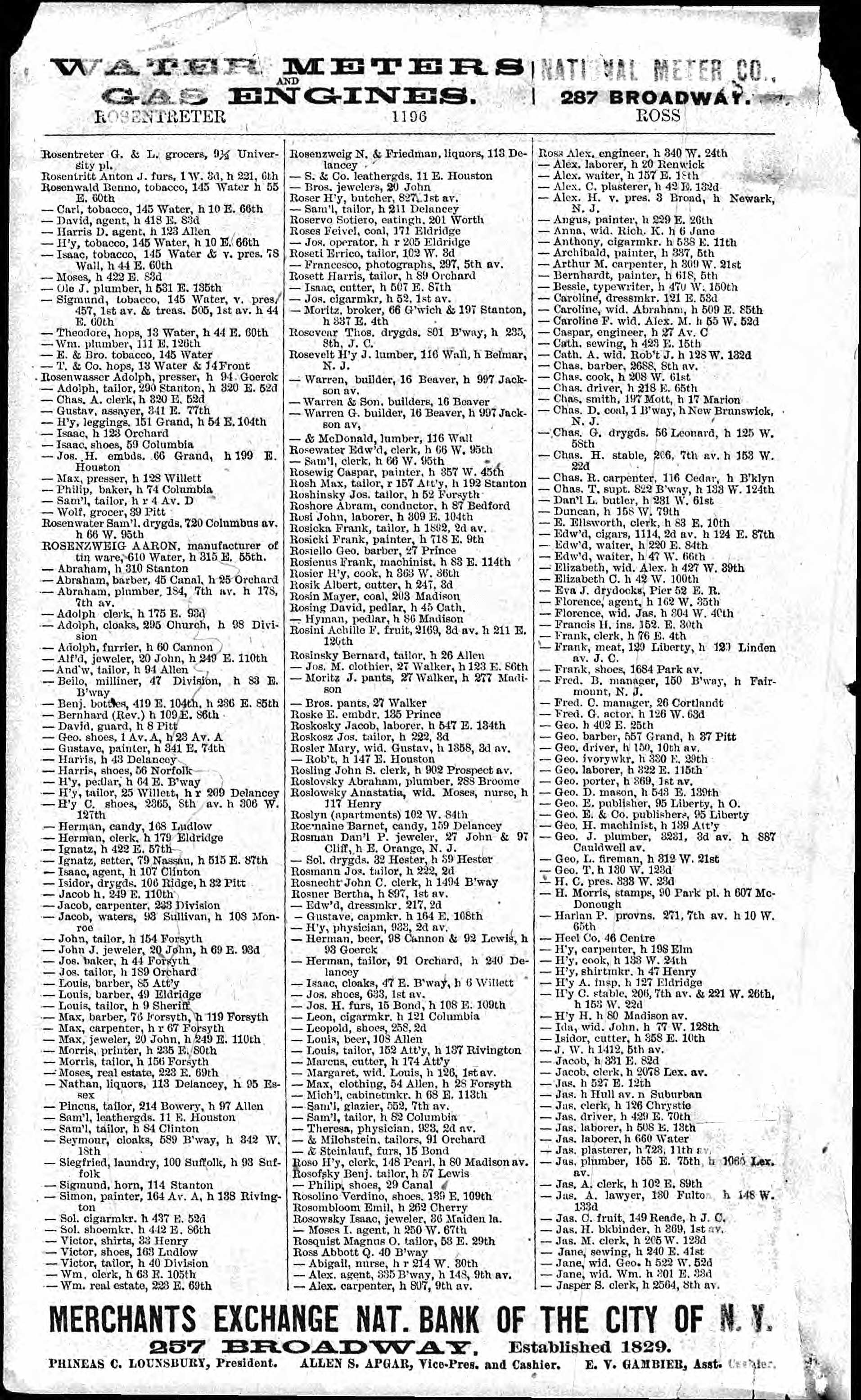
1894 NYC directory

1894 NYC directory

Gussie and Gustave moved several times after 1892—uptown on East 74th Street in 1894, downtown to E. 6th Street in 1900, and to Brooklyn by 1905, where they first lived in Fulton Street and then on Franklin Avenue, where they were living in 1908 at the time of Jankel’s hearing.  Throughout this period of time, Gustav was a painter, eventually owning his own paint supply business, and he and Gussie were having many children: after Lilly came Sarah (1888), Abraham (1890), Rebecca (1894), Jacob (1895), Harry (1897), Joseph (1898), Lizzie (1900) and Rachel (1903).  Apparently there were five others who died, as the 1900 census reports that Gussie had had thirteen children, eight of whom were then living.

It’s mind-boggling on many levels.  First, how did the support and feed all those children and where did they fit them?  And secondly, how did they endure the deaths of five children?  I’ve seen this many times.  In fact, on the 1900 census for Bessie Brotman, my great-grandmother, it reports that she had had nine children, only four of whom where then living.  I cannot imagine how these mothers coped with losing these babies.  Did it make them less able to bond with each newborn, fearing they would not survive, or did it make them cherish each new child even more, knowing how fragile life was and how difficult it was for a child to survive?

In addition, it appears that one of the children who survived infancy, Harry, died as a teenager in 1913.  Perhaps all this did take its toll on the family.  By 1915 it appears that Gustave and Gussie had separated or divorced. Gussie is living alone with the children in 1915; I cannot find Gustav at all on the 1915 census. The census reports for 1920 also had me somewhat confused.  I found Gustave on two reports, one in Brooklyn on Bergen Street, living with the four youngest children, and another in Manhattan on East 110th Street, living as a boarder with another family.  In the Brooklyn census report, Gustave is listed as having no profession; on the Manhattan one it says he was a painter.  And I could not find Gussie anywhere, though the Brooklyn census said that Gustave was divorced.  What I finally concluded was that the Gustave in Brooklyn was really Gussie, despite the fact that it said Gustave and listed him as male.  My guess is that, as was often the case, the census taker was given or heard confusing information and misinterpreted it.   It makes more sense, given the times, that the children would be with their mother and that a woman would not be employed outside the home.  The Manhattan Gustave, the painter, is obviously the actual Gustave Rosenzweig.

Rosenzweigs in Brooklyn 1920

Rosenzweigs in Brooklyn 1920

Gustave Rosenzweig in Manhattan 1920

Gustave Rosenzweig in Manhattan 1920

By 1925 Gustave was remarried to a woman named Selma Nadler.  I was able to find a family tree containing Gustave and Selma which included this photograph, apparently of Selma and Gustave.  Selma had also been previously married and had ten children of her own.

Gustave and Selma Rosenzweig

Gustave and Selma Rosenzweig

Between them, Selma and Gustave had nineteen living children in 1925.  Imagine what that family reunion would look like.  The last record I have for Gustave is the 1930 census.  I have not found him yet on the 1940 census.  I have found two death records for men named Gustave Rosenzweig, one in 1942, the other in 1944.  I have ordered them both to determine whether either one is our Gustave.

Meanwhile, Gussie continued to live with one or more of her children in 1925, 1930 and 1940.  I do not yet have a death record for her either.  I have been able to trace the nine children with varying degrees of success.  Lilly appears to have had a child out of wedlock in 1902 named William who was living with Gustave and Gussie for some time in 1905, but who was placed in an orphanage (father listed as Frank with no surname and deceased) for a short time in 1906. William Rosenzweig at Hebrew Orphanage Then Lilly reappears on the 1910 census living with her parents and without William.  I’ve not yet learned what happened to either Lilly or William.

Similarly, the other four daughters Sarah, Rebecca, Rachel and Lizzie, all became untraceable after they left home since I have no idea what their married names were.  As for the sons, Abraham married and had two daughters, who for similar reasons I cannot find after 1940.  Jacob/Jack also had two daughters, and Joseph I’ve not yet found past 1920.   So at the moment I have not located any current descendants, but I will continue to look to see if I can somehow find out the married names of some of Gustave’s granddaughters.  The NYC marriage index only contains records up to 1937, and these grandchildren would not yet have been married by then; thus, I have no readily available public source to find their married names.  It may take a trip to NYC to see if those records are available in person.  Or perhaps I can find a wedding announcement.

UPDATE: Much of the information in the preceding paragraph has been updated here, here, here, here, here, here, and other posts on the blog on Joseph, Jack, Rebecca and Sarah.

So that is the story of Gustave Rosenzweig as I know it to date: a Romanian born painter who married twice, had nine children, real estate and a painting business, and who came to the rescue of his sister and her family.  It would be wonderful to know what happened once they all settled in America.  Gustave obviously stayed in touch with Tillie and her children, as he was present at Bertha’s wedding.  Did he help out Zusi, his little sister, when her husband died? I had hoped to find her living with him on one of those census reports, but did not.  Did he help out my grandfather when he arrived as a 16 year old boy in NYC in 1904? Did he help out my great-grandmother when she arrived in 1910, a widow without any means of support aside from her children? I certainly wish there was some way of knowing the answers to these questions.  From his conduct at the hearing for Jankel in 1908, I’d like to think that Gustave was there for them all, but we will never know.

Enhanced by Zemanta

The Family Album continued

For those who love old photographs, here are a few more to enjoy.

First, this is a photograph of my two big cousins, Jeff Lehrbaum and Beth Goldschlager.  They are younger here than I would remember them.  (I was probably younger than two when this was taken.)  I don’t know where this was taken, but I love how young and innocent they both look.  Beth and I used to compete for Jeff’s attention; she would point out that she was closer to him in age, but I would respond that I lived closer by and saw him more often.  Here I see how those extra two years gave her a headstart.

Jeff and Beth c. 1954

Jeff and Beth c. 1954

Here is one of Barry and Karyn Kenner with their father Irving.  According to Barry, this was taken when they were visiting their grandmother, Betty Goldschlager Feuerstein, at her home in Levittown, New York.  I love that I get a sneak peak into her home and its furnishings as well as a picture of my newly-found second cousins as children.

Barry, Irving and Karyn Kenner

Barry, Irving and Karyn Kenner

And here’s one of my aunt and uncle, Elaine and Phil Lehrbaum, canoeing somewhere, perhaps on their honeymoon.  My aunt always would talk about how athletic Phil and his family all were, skating, swimming, biking, and, it seems, canoeing.  She would tell funny stories of her attempts to compete with the Lehrbaums —or more accurately, her inability to compete.  I think this photo captures that—she seems to be holding that paddle as if she had no idea of what to do with it and with no intention of using it.

Phil and Elaine Lehrbaum

Phil and Elaine Lehrbaum

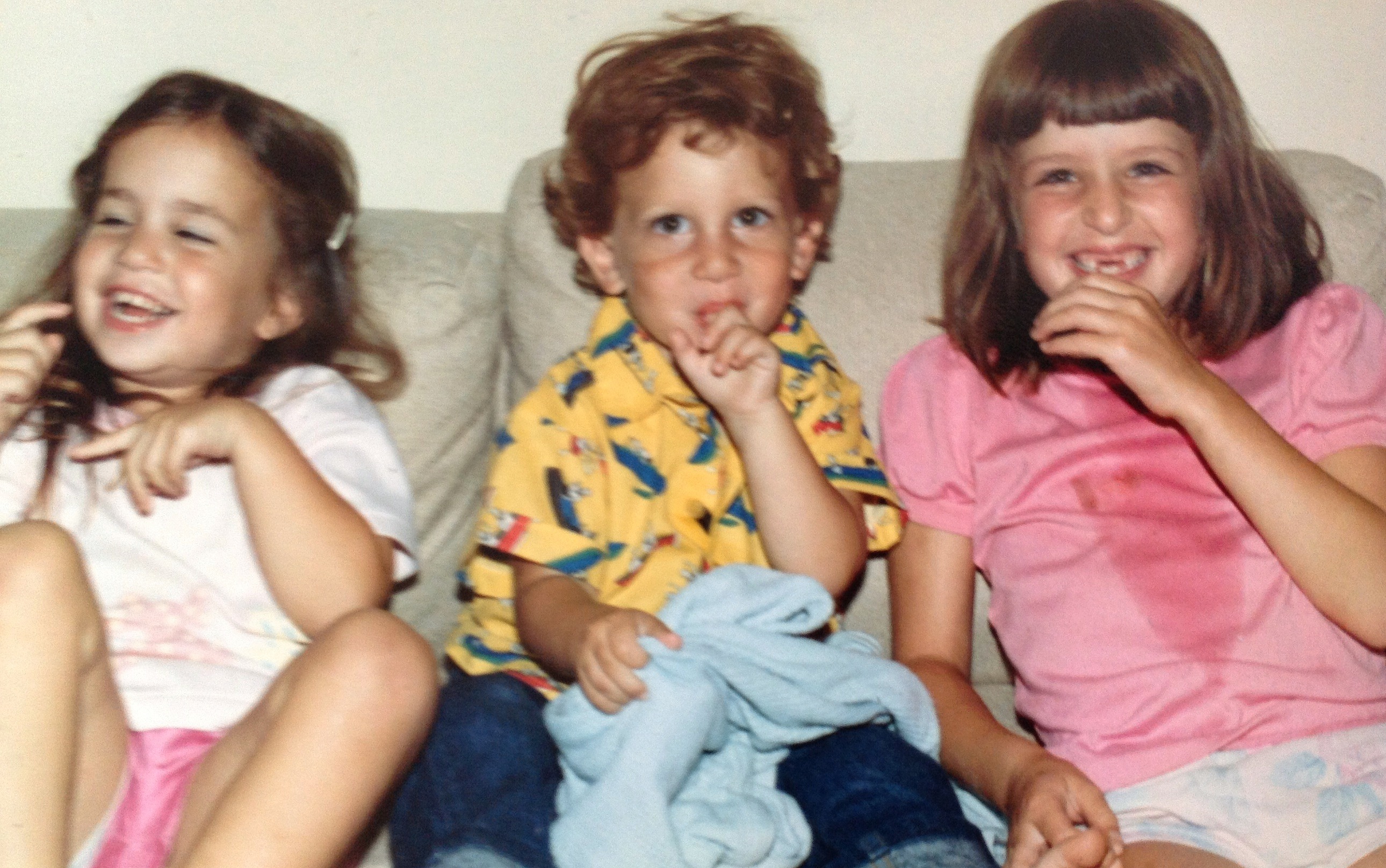
Finally, one that’s of more recent vintage—probably around 1987—of three little cousins, my daughters Maddy and Rebecca surrounding their second cousin, Mark, Jody and Joel’s son.  May they remain connected and always part of each other’s lives.

Maddy, Mark and Rebecca

Maddy, Mark and Rebecca

Thanks to Barry, Jody and Robin for these pictures.

Enhanced by Zemanta

More Family Photos

Another day of “new” old family photos to enjoy.

First, some from the Goldschlager side: Robyn, Estelle Feuerstein Kenner’s daughter, sent me these two wonderful photos of her mother Estelle.

Estelle Feuerstein, Betty's daughter

Estelle Feuerstein, Betty’s daughter

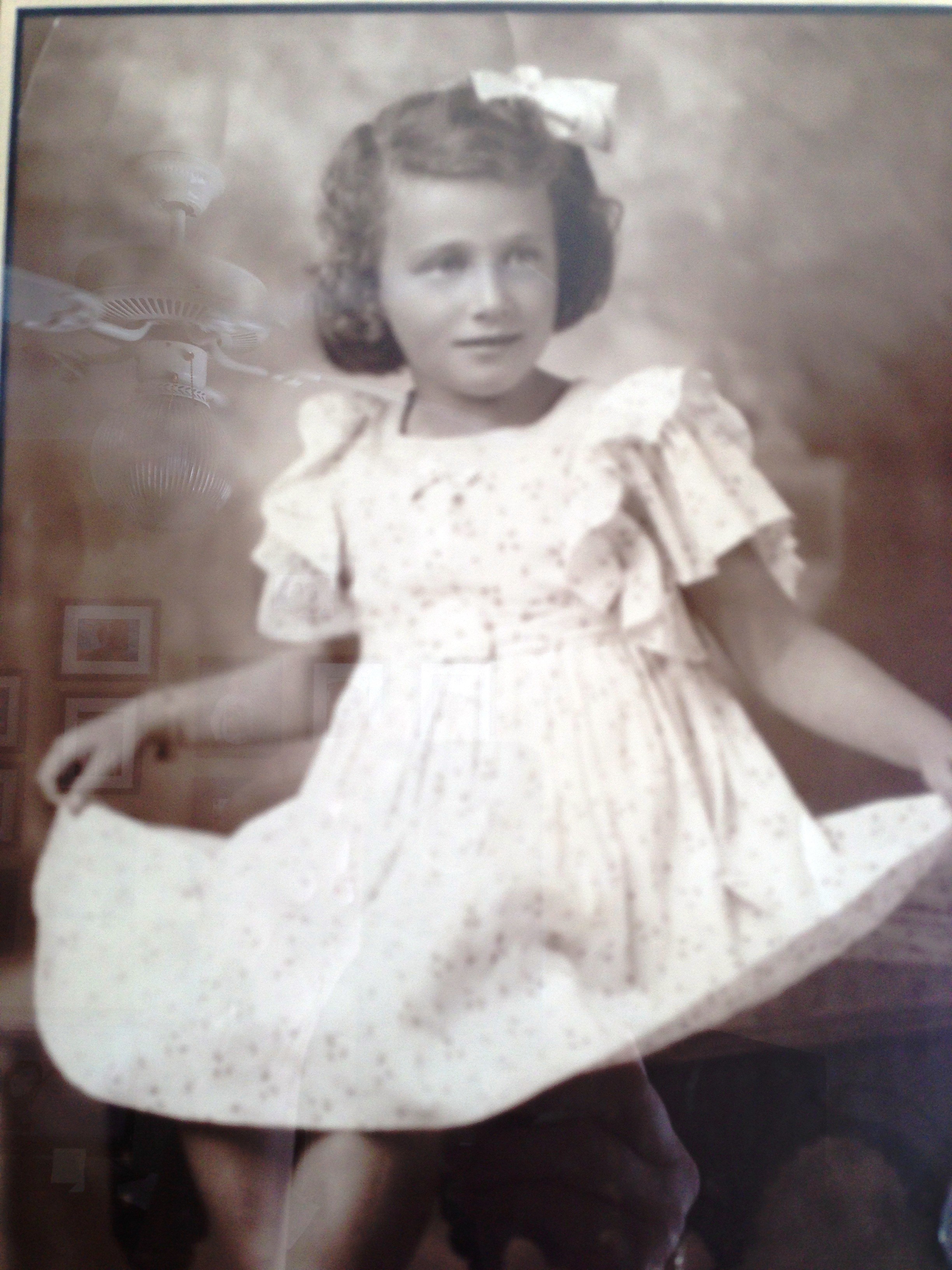
You can see why my grandfather described her as a princess—what an adorable little girl.  Here she is an adult:

Estelle

Estelle

I love the hat! I wonder what the occasion was and what year this was taken. So elegant. I also see something of my mother in her eyes here.

Now one for the Brotman side.  Jody found this picture of Sam Brotman as a young man:

Sam Brotman

Sam Brotman

He looks like a teenager here.  Can you imagine a teenage boy today dressing up like this for a studio photograph?  Well, maybe if it was his bar mitzvah.  Hmm, maybe this IS a bar mitzvah picture.  Why else would my great-grandmother have spent money for a fancy picture of her son?

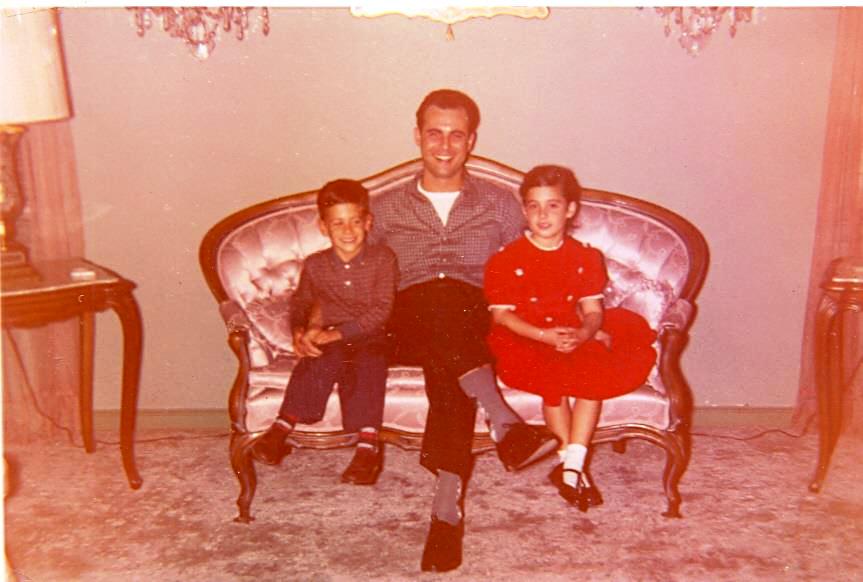
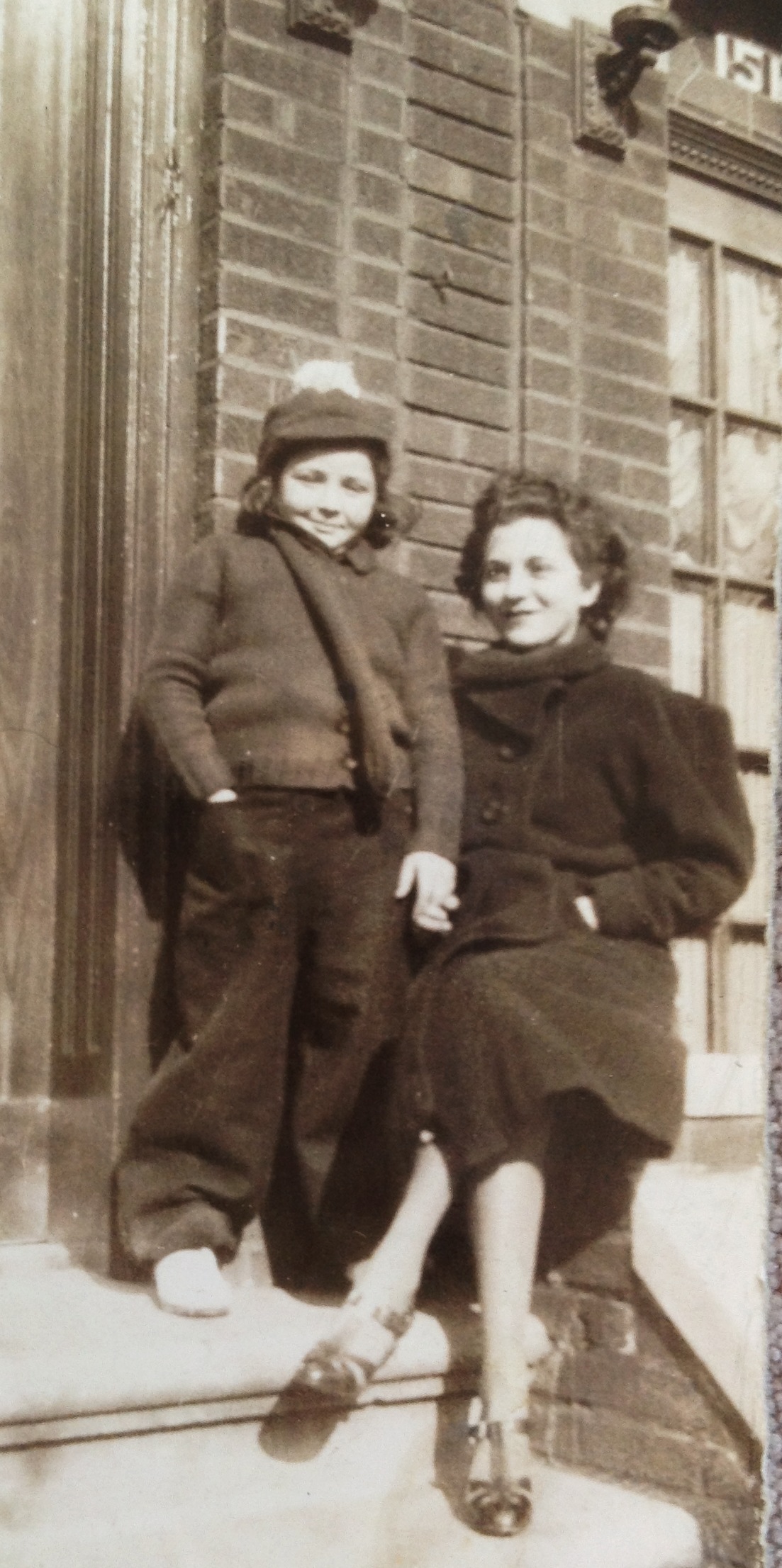
Finally, here is one of two young women who share both Goldschlager and Brotman genes—my mother and her big sister, my Aunt Elaine.  As you can see, they both had a sense of style. I love how they both have the large buttons and a scarf like attachment to their sweater/coat.  And you can’t miss those Bessie Brotman cheekbones!

Florence and Elaine Goldschlager

Florence and Elaine Goldschlager

That’s it for today.  I’d love more photos so if you have any old pictures of your parents or grandparents or aunts and uncles, please scan and send them, and I will share them here with everyone. Thanks!

Family pictures

While I am waiting to receive further documentation for my genealogy research, I thought I would share some more of the photographs that I received from my cousin Robin and also some that my cousin Jody sent me last week.  These are almost all pictures I’d never seen before and that I found very touching.  Today I want to post some new (to me) photographs of my grandparents, Gussie Brotman and Isadore Goldschlager.

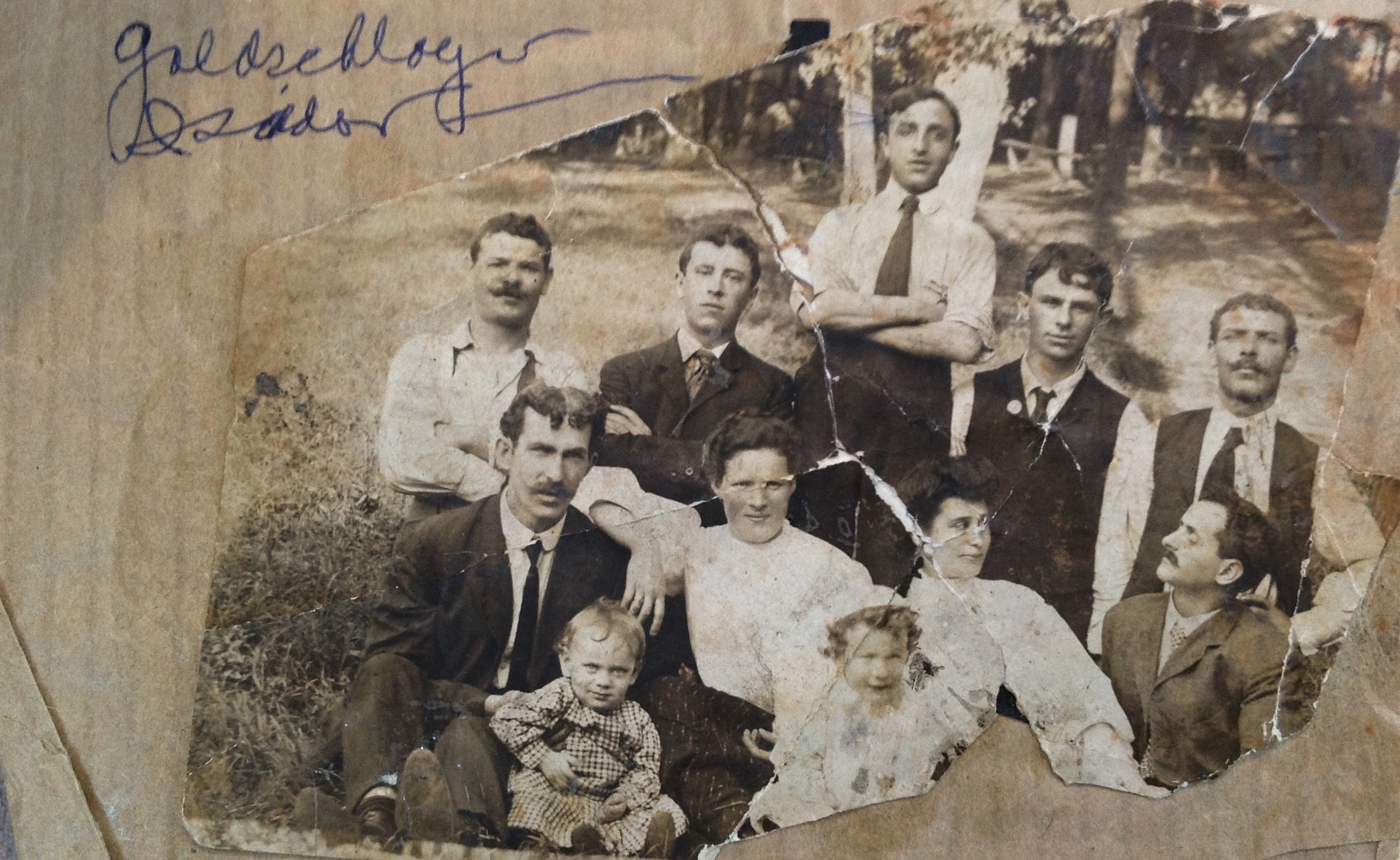
I would love to know more about this photograph.  My grandfather is the young (and short) man standing in the center of the rear row in this picture, but I have no idea who these other young people are or where or when this picture was taken.  Isadore looks like a teenager, but could be in his early 20s, so perhaps this was in Iasi, perhaps in New York City.  Since he was 16 when he came to New York, my guess is that this is in New York City.  But who are these people? Could any of them be his Strolowitz/Adler cousins? Or Nathan Mintz? I don’t see anyone who could be Betty or David.  Maybe these are just his friends.  I wish I knew.

Isadore Goldschlager and unknown others

Isadore Goldschlager and unknown others

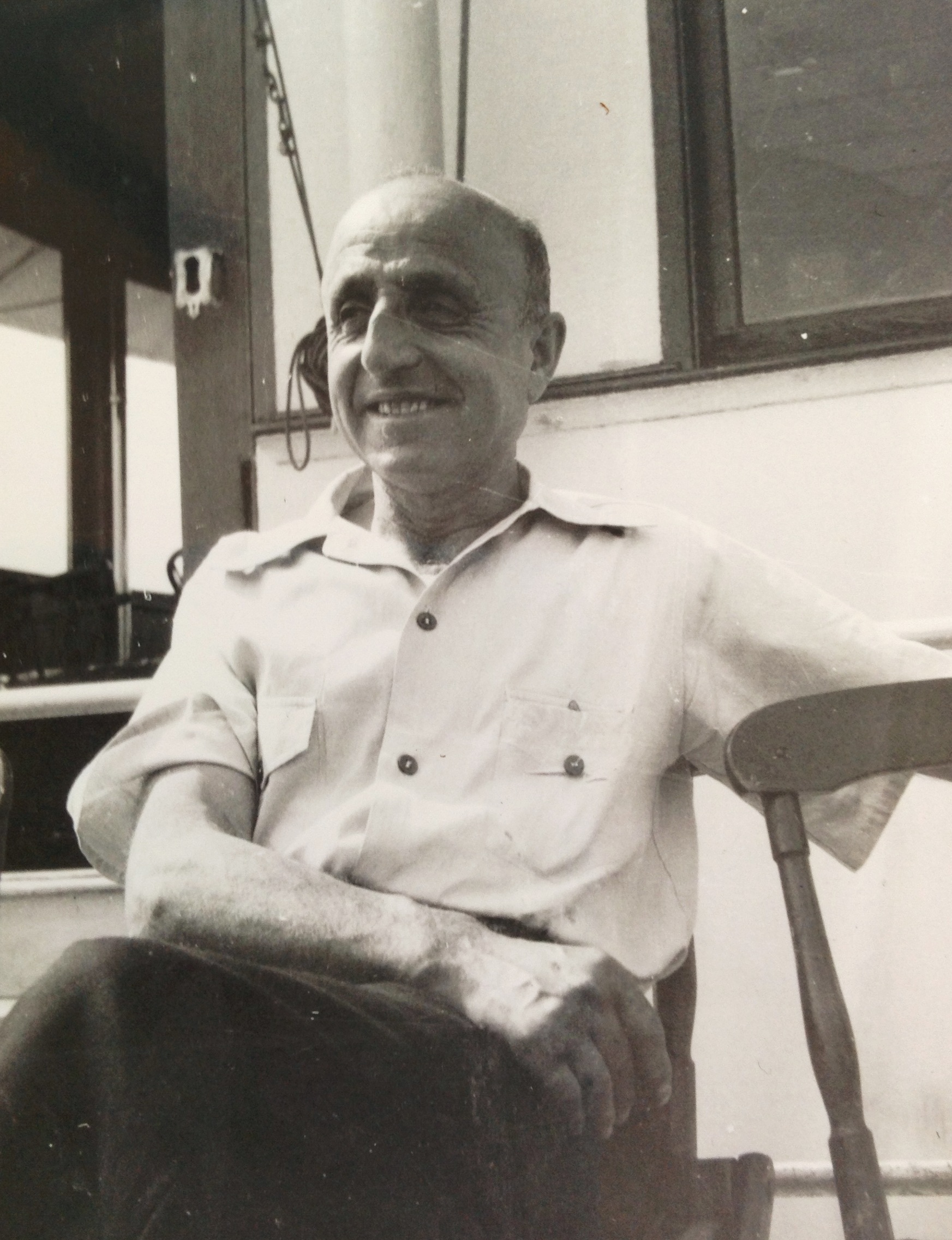
Here are two more of my grandfather, one alone and one with my grandmother:

Isadore

Isadore

Gussie and Isadore

Gussie and Isadore

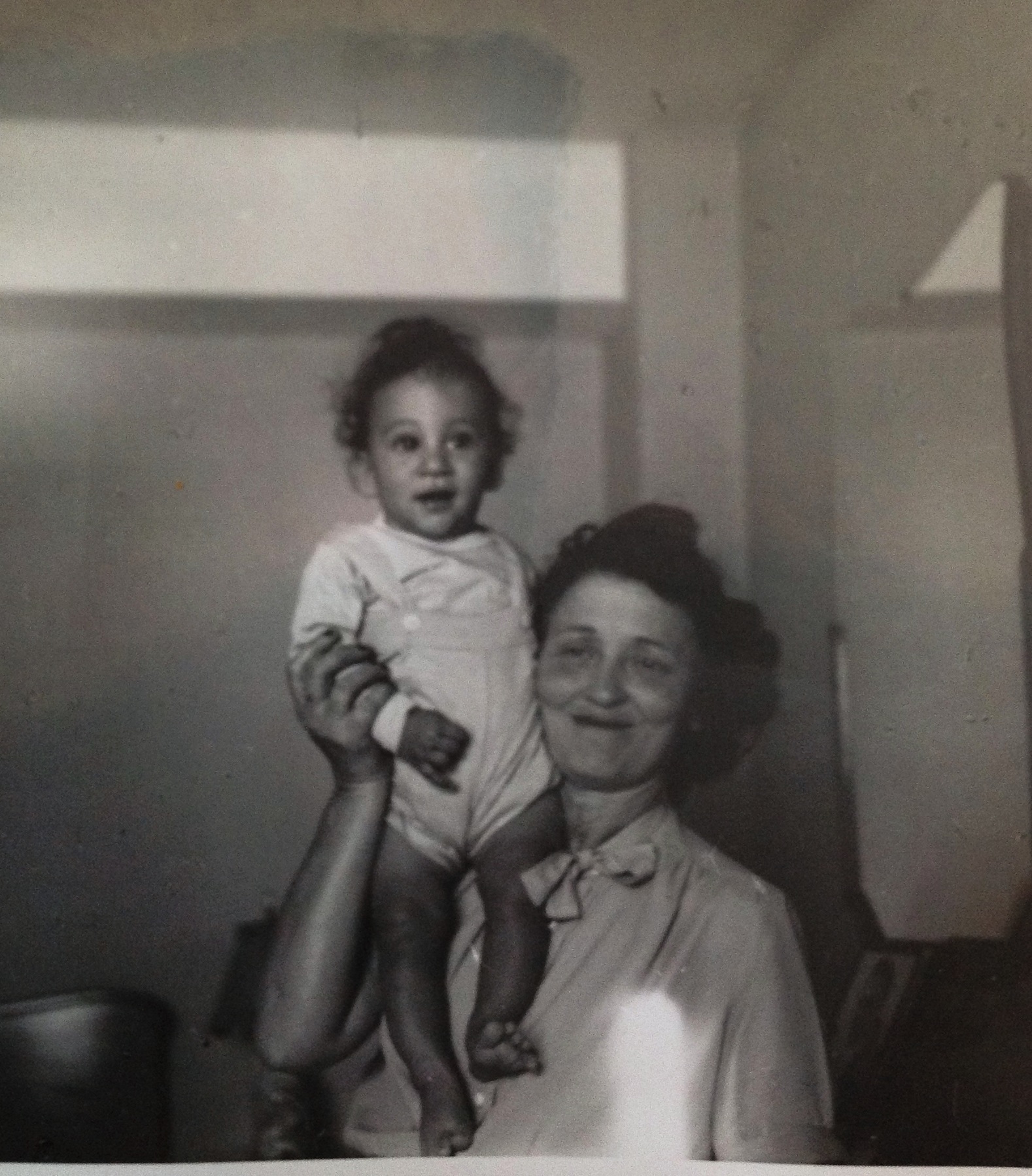
And here are several of my grandmother with her grandchildren.  The first one is of her holding Jeffrey, her first grandchild.  I don’t think I have ever seen a photograph of her looking so happy.

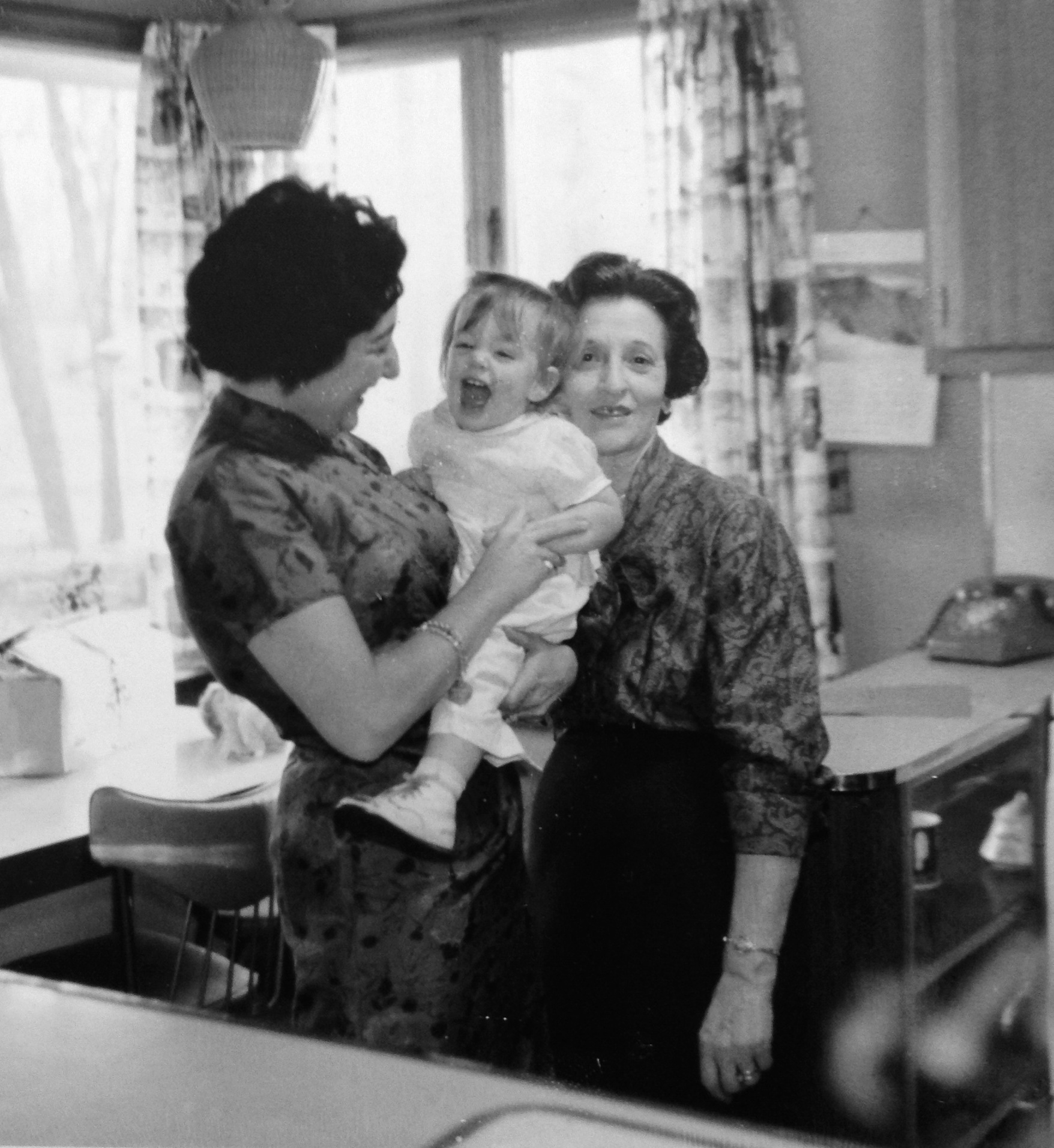
Gussie and Jeff 1946

Gussie and Jeff 1946

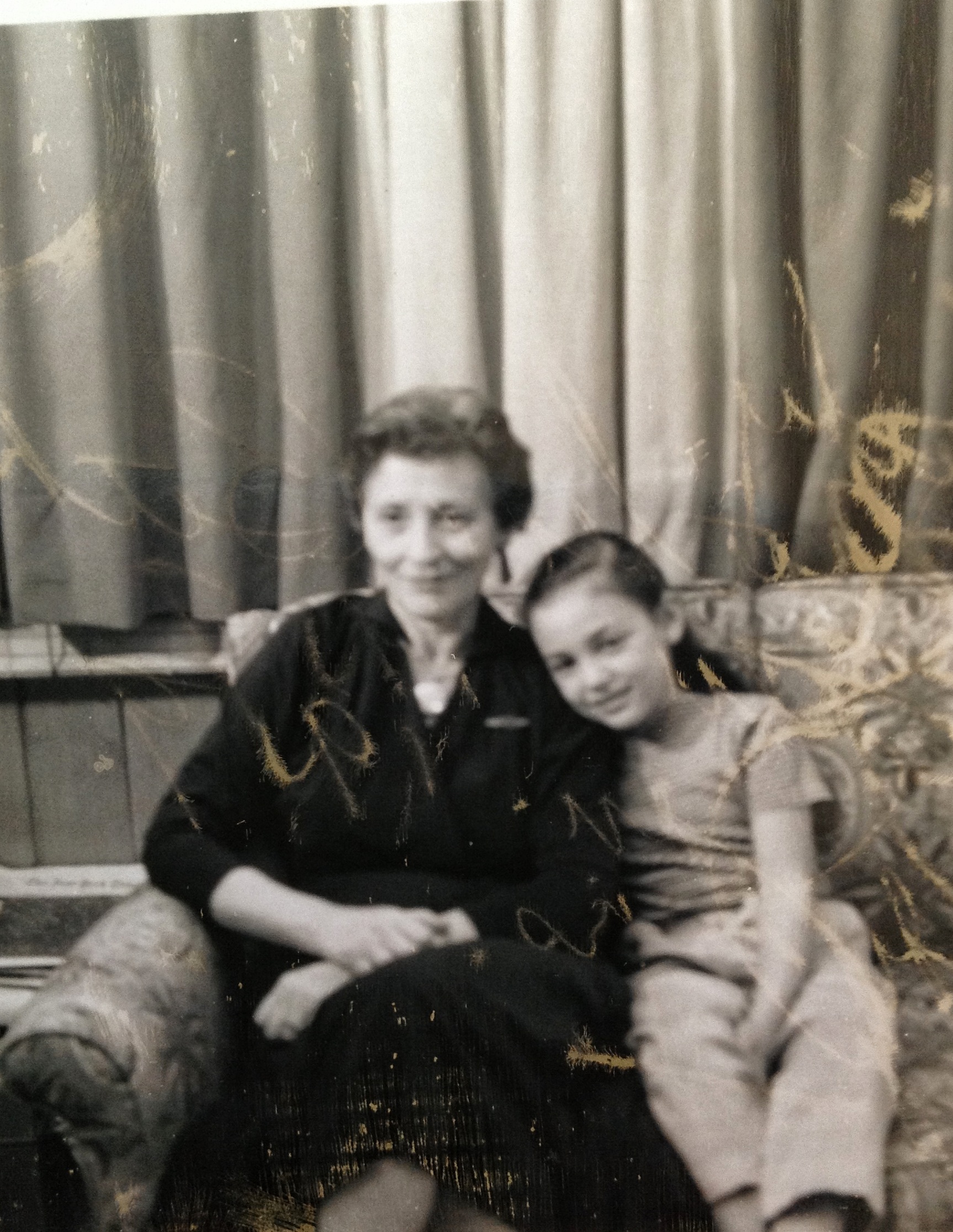
The remaining photographs are pictures of my grandmother with her West Hartford grandchildren:

Gussie and Beth 1954

Gussie and Beth 1954

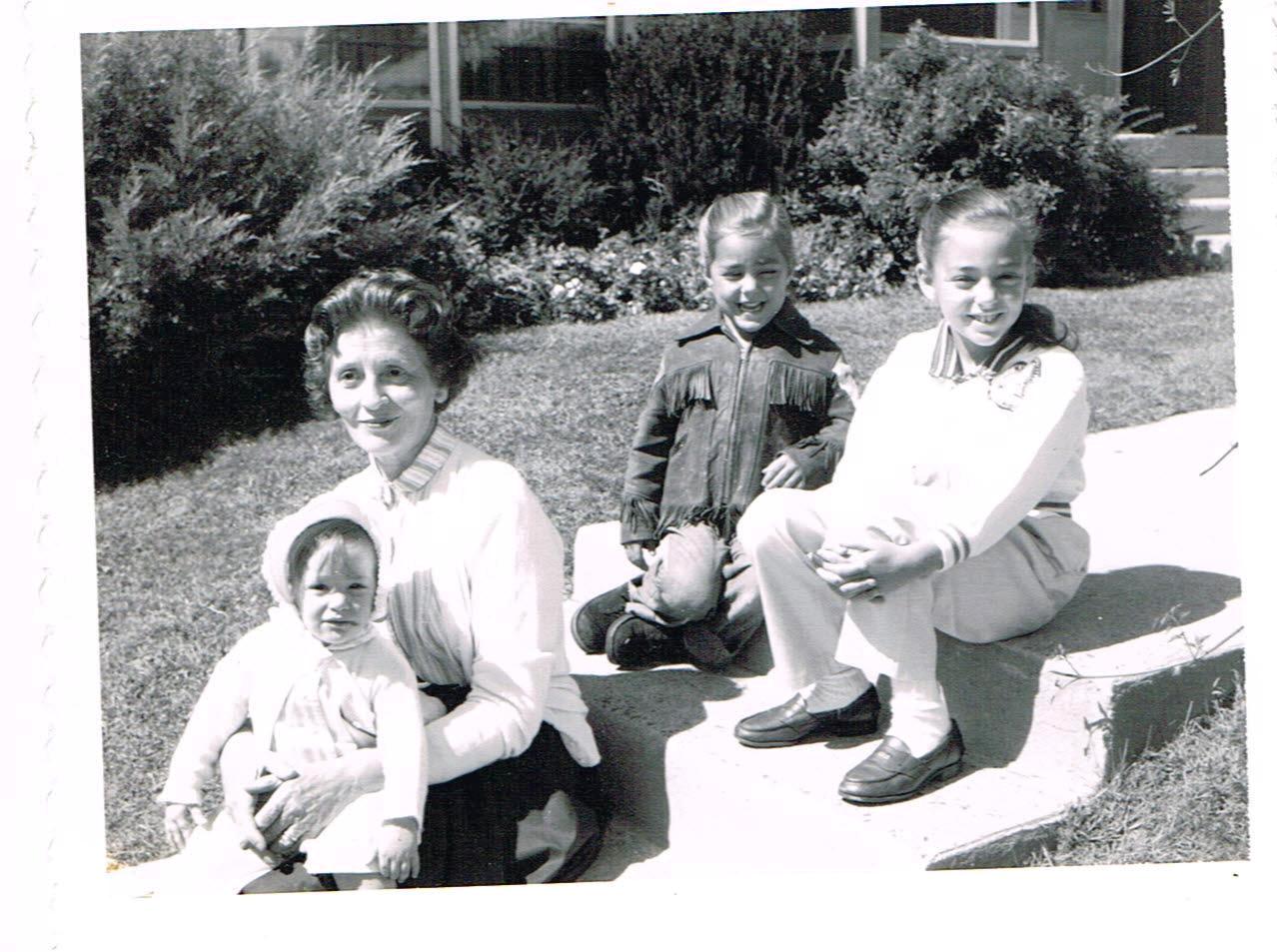
Gussie with Robin Sue and Beth c. 1958

Gussie with Robin Sue and Beth c. 1958

Lynn, Robin and Gussie 1958

Lynn, Robin and Gussie 1958

Gussie and Robin 1958

Gussie and Robin 1958

Thank you to Robin and to Jody for sharing these.  More to come in the days ahead.

And A New Branch for the Goldschlager Tree: The Third Rosenzweig Sister

These last few days have been very exciting ones for me.  Not only did I find persuasive evidence of another member of the Brotman family, I also have persuasive evidence of a new member of the Goldschlager family, a third Rosenzweig sister, Zusia, also called Sonsa, Celie, Susie and Susan.  I am still piecing together her life and need to obtain more documentation to do that, but this is what I know so far.

Ghitla Rosenzweig Goldschlager

Ghitla Rosenzweig Goldschlager

First, some background: Moritz Goldschlager, my great-grandfather, married Ghitla Rosenzweig, daughter of David and Esther Rosenzweig, according to the records found by my researcher in Iasi, Romania.  Ghitla, who was also called Gittel, Gussie and Gisella, emigrated to the United States in 1910 with her son David, following my grandfather Isadore in 1904, her husband Moritz in 1909, and her daughter Betty in 1910.  As described before, her husband died in April, 1910, and her two children, Isadore and Betty, moved in with Tillie Strolowitz, herself a widow, and her seven children.  According to Tillie’s death certificate, her birth name was Tillie Rosenzweig, and her parents were also David and Esther Rosensweig.  Tillie had emigrated with her husband and her three youngest children in 1907, following her older children who had emigrated over the years 1901 through 1907.  I was quite excited when I figured out that Tillie was my grandfather’s aunt and had taken him and Betty in after their father had died.

Then a few weeks ago, I reviewed my grandfather’s ship manifest from 1904 (under his brother David’s name) and noticed again that he was supposed to meet an uncle, Morsche or Moische Mintz, in New York City.  I had not been able to find this uncle before, and I was stymied again when I searched for him.  Then I located a document indicating that my grandfather had been shortly detained at Ellis Island, apparently because his uncle had not been able to meet him.  Instead he was met by an aunt Zusie Mintz, who lived at 110 East 117th Street.  But who was she?

Record of Detained Aliens Isadore listed as David Goldschlager

Record of Detained Aliens
Isadore listed as David Goldschlager meeting Zusie Mintz

By searching the NYC marriage index, I was able to locate a Zusie Rosenzweig married to a Harry Mintz and wondered whether this could be the aunt who met Isadore and whether she was another sister of Ghitla and Tillie.   I ordered a copy of the marriage certificate and also looked for further documentation of Zusie Mintz.  I found one census reference for a Sonsa Mintz, living with cousins Jacob and Rachel Reitman in 1900 as a widow.  If this was the same person as Zusie Mintz, it explained why the uncle had not been available in 1904; he had died.  But was Sonsa also Zusie, and who were the Reitmans?

I looked for Zusie or Sonsa or Susie on the later census reports, but could not find her on any of them.  Had she remarried and changed her name? Had she died?

I then looked for and found a death certificate for a Susie Mintz dated March 11, 1931, and I ordered that as well.  At that point I decided to wait for these two documents to arrive before going on what might be a wild goose chase.  I received those documents two days ago, the same day I received the documents evidencing that David Brotman was my great-uncle.  Could I have struck gold twice in one day?

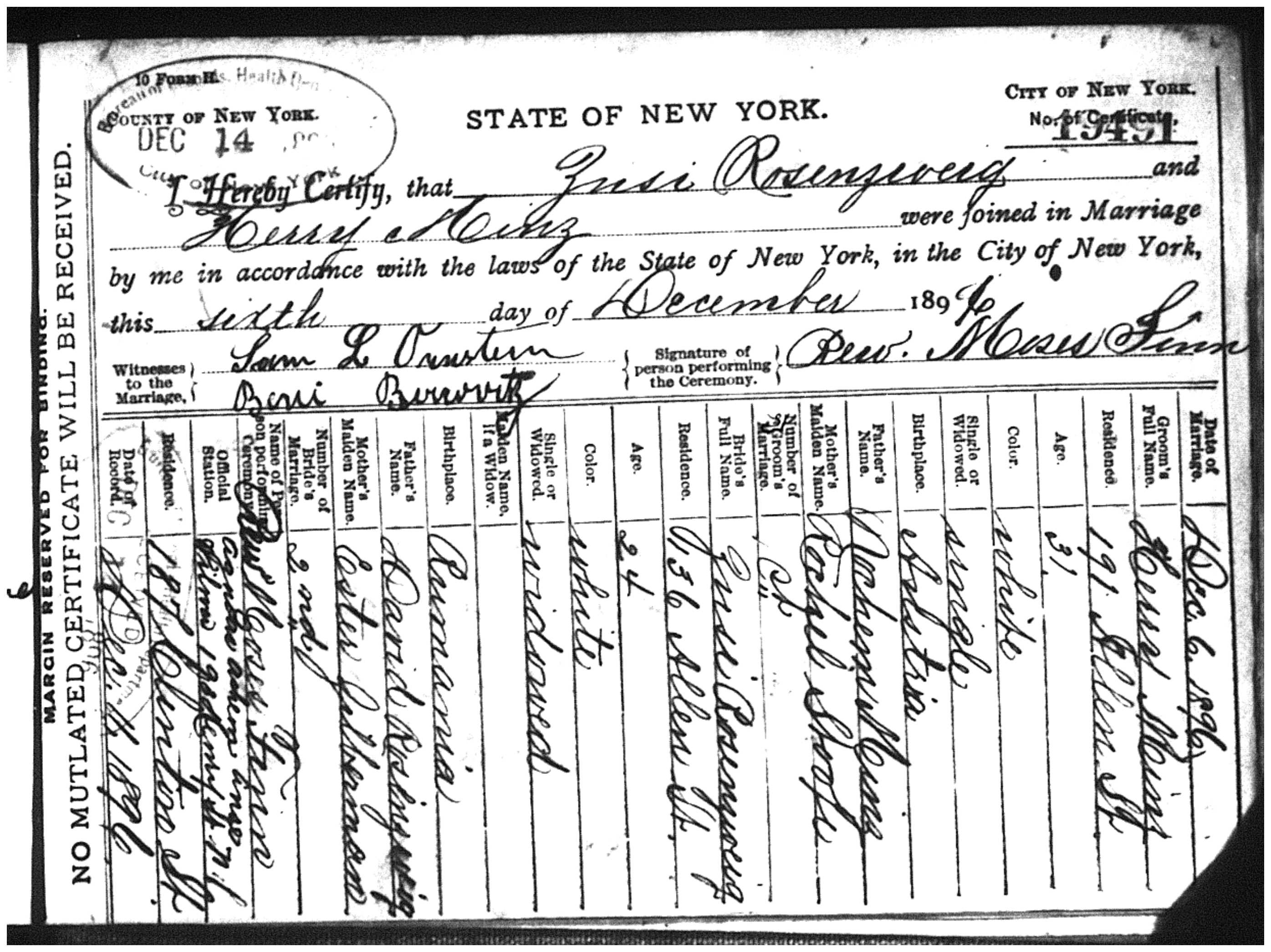
Yes, I could, and I did.  The marriage certificate, dated December 6, 1896, confirmed that the Zusi Rosenzweig who married Harry Mintz was the daughter of David Rosenzweig and Esther Gilberman, revealing for the first time Esther’s birth name.  The certificate confirmed also that Zusi was from Romania.  Zusi had been living at 136 Allen Street, and Harry was living at 191 Allen Street, so presumably they had met in the neighborhood.  Harry was 31 years old, born in Austria, and was marrying for the first time. Zusi was 24 years old, but already a widow.

Zusi Rosenzweig and Harry Mintz marriage certificate

Zusi Rosenzweig and Harry Mintz marriage certificate

Had she married before she left Romania, or since arriving in NYC? Why had she gone back to her birth name, Rosenzweig?  These are questions for which I still do not have answers.

The second document I received, the death certificate for Susie Mintz who died on March 11, 1931, also confirmed that Zusi, now Susie, was the daughter of David and Esther Rosenzweig, born in Romania.  Susie was 54 years old at the time of her death, meaning that she was born in 1877, whereas if she had been 24 in 1896, her birth year would have been 1872.  The death certificate also indicated that she was a widow, and it provided her current address: 523 East 108th Street in the Bronx.

Susie Mintz death certificate

Susie Mintz death certificate

The reverse side of her death certificate contained some surprising information. It revealed that the undertaker had been employed by “Mr. Mintz,” Susie’s son.  Susie had a son? If so, where was he in 1900 when Sonsa was living with Jacob Reitman? Or was that really Susie/Zusi? If Susie had a son, perhaps she had other descendants as well.  But what was her son’s name? When was he born?

reverse of death certificate

reverse of death certificate

Using the address on the death certificate, I worked backwards to see if I could find Susie on the 1930 census, since I assumed she had not moved between the 1930 census and the time of her death in March, 1931.  This took some doing, as you have to scan through all the pages within a specific enumeration district to find the address; there is no index by address.  I finally found her address, and then I found her listing: she was living at the same address, listing herself as  Susan Mintz, 42 years old, a dressmaker, and as married.  Married? She was living with a boarder named Hannah Kassel, an older woman who was a widow.  When I looked at the form more closely, I realized that the M for married also could be a W for widowed.  I think the indexers read it incorrectly, and that Susie was in fact still a widow in 1930, as she was in 1900 and at her death.

Susan Mintz 1930 census

Susan Mintz 1930 census

From the 1930 census, I then went to see if she had been at that address ten years earlier for the 1920 census.  After more scanning and searching, I found her once again at the same address, but now using the name Celie, or at least that is how the census taker recorded it.  She was listed as a widow, a dressmaker, and 42 years old (I guess she did not want to admit being any older ten years later in 1930).  Zusi/Susie/Celie was living alone at that time.

Celie Mintz 1920 census

Celie Mintz 1920 census

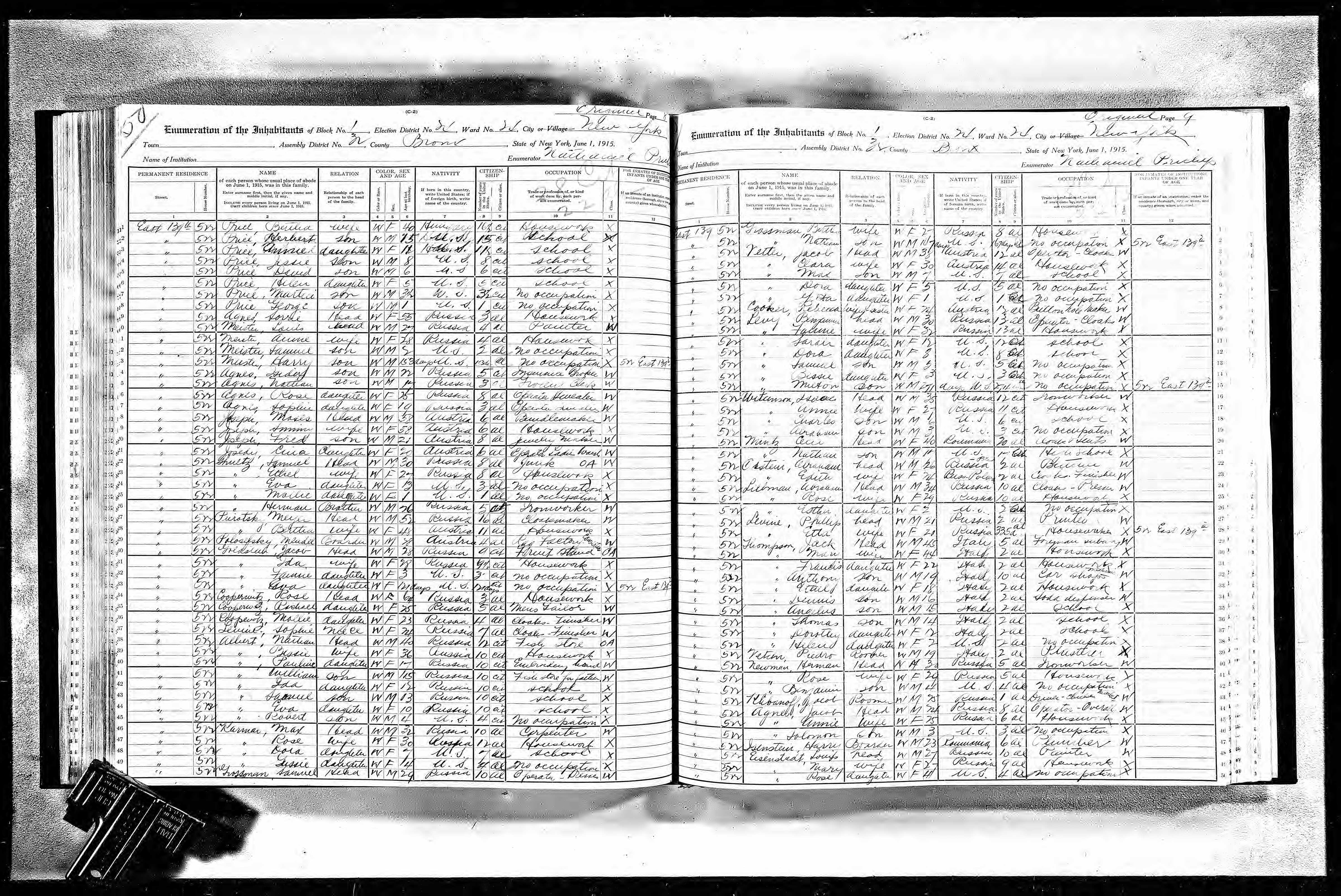
Next came the 1915 New York State census—could I find her again at that address?  I searched for Celie Mintz this time, and without having to scan the census, I found her on the next block at 522 East 139th Street in the Bronx, working at a cloak and suit factory, and living with her son, Nathan.  Her son!  I had found a record for her son.

Celie and Nathan Mintz 1915 NYS census

Celie and Nathan Mintz 1915 NYS census

I could not find either of them on the 1910 census or the 1905 New York State census, at least not yet, but now I had her son’s name and could search for him.

I checked the New York City birth index for a birth certificate for a baby named Nathan Mintz and found one dated December 6, 1897, exactly a year after Harry Mintz had married Zusi Rosenzweig.  This certainly could be the right Nathan, but I now need to obtain that certificate to be sure.

I did find Nathan’s 1917 draft registration for World War I, listing his mother as Cecile Mintz living at 523 East 138th Street in the Bronx, the same address where she was living from 1920 until her death.  Cecile is closer to Zusi and Susie than Celie, and looking at the 1915 census it does look more like Ceci than Celie.  The fact that Nathan’s address in 1917 was the same as that on Susie Mintz’s death certificate confirms that Susie and Cecile and Celie and Susan were all the same woman.

Nathan Mintz draft registration 1917

Nathan Mintz draft registration 1917

I then found a Nathan Mintz who married Gertrude Friedman in 1930. I need to order that certificate as well, but  I suspect that this is the correct Nathan because on the 1940 census, Nathan and Gertrude have an eight year old daughter, born then in 1932, named Susanne.  If this is the right Nathan, it makes perfect sense that he would name his first born child after his mother Susie one year after her death.

Nathan, Gertrude and Susanne Mintz 1940 census

Nathan, Gertrude and Susanne Mintz 1940 census

But there are obviously many unanswered questions.  I can’t find a death certificate for Harry—did he really die, or did he just disappear? Who are Jacob and Rachel Reitman? How, if it all, were they related to Zusi? And where was Nathan living if that was Zusi living with the Reitmans in 1900?  Zusi was the one who met my grandfather at Ellis Island in 1904, but he was living alone in 1905.  Where was Zusi living in 1905? 1910? She was not living with either of her sisters in 1910, so where did she go?   And where was Nathan in those years and between 1917 when he registered for the draft and 1930 when he married Gertrude?

Yes, there are a lot of holes and a lot of questions, but I remain fairly certain that Zusi Rosenzweig Mintz was my great-grandmother’s sister and thus my great-great aunt and that Nathan Mintz was therefore a first cousin to Isadore, David and Betty Goldschlager and to all the Strolowitz children.  Did they know him? And, of course, if Susanne Mintz was Nathan’s daughter, then she would have been my mother’s second cousin.  And if Susanne had children, then they would be my third cousins.

So stay tuned—more to come once I receive more information.

Betty Goldschlager and Her Daughters Frieda and Estelle: FOUND!

Betty Goldschlager

Betty Goldschlager

I have written about my grandfather’s younger sister, my great-aunt Betty, and her experiences arriving in New York City the day after her father had died of tuberculosis.  But until now I knew very little about her life after those early days.  I knew that she had married Isidor Feuerstein, had two daughters Frieda and Estelle, and had moved to Long Island, where Isidor had a dry goods business near Levittown.  Most of that I knew from my mother, who has clear memories of her aunt, uncle and cousins visiting her in Brooklyn when she was growing up.  My mother commented on what an astute businessman Isidor must have been to have opened a business near Levittown when it was a new community.  She also remembered that her two cousins were beautiful young women, described by my grandfather as Romanian princesses.

But that was all I knew.  My mother thought that Betty and her daughters had all moved out west at some point, and she had lost touch with them long ago.  My search for them turned up a few details—a death certificate for Betty from Phoenix, AZ, census reports from 1930 and 1940, but little else.  Then several months ago, I thought I had a hot lead.  I located a great-nephew of Isidor Feuerstein on ancestry.com, and he knew that Frieda had married a man named Abe Albert and even had a wedding picture of her as well as one taken several years after the wedding.  He believed that Frieda had a daughter named Gail, but was not sure.  He knew that Estelle had married a man named Kenner with a first name that started with I, but did not know whether she had had any children.  He did not know whether either Frieda or Estelle was alive or where they might be living.

Feuerstein Family (Betty at far left)

Feuerstein Family (Betty at far left)

With that new information, I started searching again, and although I was able to locate an Estelle Kenner living in Pembroke Pines, FL, I had no way to be sure that this was the same Estelle.  I could find no real evidence of Frieda.  I searched as many different ways and as many different places as I could, but kept hitting that proverbial brick wall.  So I moved on, focused on David, Isadore, the Strolowitz family, the Schwartz family, etc.

Then the other night I mentioned to Renee (my friend and mentor) in an email that I was still searching for my mother’s two first cousins, Frieda and Estelle.  I woke up the next morning, and there in my Inbox was an email from Renee providing me with Estelle’s wedding announcement, her husband’s obituary, and the names of their three children.  So after months and months of finding nothing on my own, Renee in one evening had solved one of my most frustrating searches.  How did she do it? She had access to yet another database that I was not aware of—something called ProQuest available at certain libraries.

So I was off and running, finding the three Kenner children on Facebook and sending each a message about my research.  Within five minutes, Barry Kenner sent me back a message, and we then spent over an hour on the phone, exchanging information and getting to know each other.  He also gave me contact information for Frieda’s daughter Gayle, and I have now had several email exchanges with her as well.  There is still a lot to learn and more photos and documents to share, but I have answers to many of my unanswered questions.  I have also had an email from Barry’s sister Robyn and hope to hear from his other sister Karyn.  I have lots of new names to add to the Goldschlager family tree and am awaiting more photographs and information about my family.

Betty Goldschlager 1969

Betty Goldschlager 1969

First, Frieda and Estelle are both still alive.  Frieda lives in Arizona, and Estelle in Florida.  Both of their husbands ended up in the same fabric importing business as Isidor Feuerstein.  Irving Kenner had taken over the Long Island business, and Abe Albert started his own business in Arizona.  Frieda and Estelle each had three children—two sons and a daughter for Frieda, two daughters and a son for Estelle.  There are also many grandchildren and great-grandchildren descended from Betty and Isidor.

Frieda and Abe Albert at their wedding in 1943

Frieda and Abe Albert at their wedding in 1943

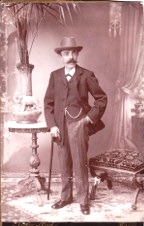
I have already learned a few interesting facts that I did not know before.  Gayle told me that her grandmother was very proud of her father Moritz, who she said was very dapper and a lamplighter for the theater. She said that there was even a story that before he married, he had run away to the circus!  That gave me an entirely new perspective on Moritz and his life.  Remember he is my great-grandfather who was an orphan by age six.  I had wondered whether he had experienced any happiness in his life. I thought he lit street lamps  This little snippet—a daughter’s memory of him as dapper and of being proud of his occupation, of a man who loved the circus and the theater—gave me a whole new insight into who my great-grandfather was.  Even better, she later sent me a photograph of Moritz.  Just the other day I wrote that I would never see a picture of him or know what he looked like.  Never say never!  Here he is:

Moritz Goldschlager

Moritz Goldschlager

I assume this was taken in Iasi, not New York.  I can see why Betty described her father as dapper. His clothing, his watch chain, the stance, the mustache, the furniture behind him—all this gives me a far different impression of the man who was my great-grandfather than I had imagined.  Somehow I saw him as a peddler, a poor immigrant, because that was what he was in New York, but perhaps their life in Iasi was far more comfortable than I had assumed.

Gayle also said that her grandmother talked about having a tall brother whom she referred to as Uncle Gadalia.  I told her that that must have been David, since Isadore was not tall at all.  She also remembered that she had met David’s son Murray and his wife when they came to Phoenix from Tucson for her brother’s bar mitzvah, but that they lost touch after that.

Barry recalled visiting his grandmother on Long Island and her house with the grand entry staircase that they would slide down as children, using her silk pillows as seats.  He described Betty as a sweet and petite woman whom he recalls making them mashed potatoes with chicken fat instead of butter.  It’s amazing how little stories, little memories can bring alive someone whom I never knew.  Barry shared this picture of the Feuerstein family at his parents’ wedding in 1951.

Betty, Irving's mother, Irving's sister-in law, Frieda, Estelle, Irving, Irving's brother, Abe Albert, and Isidor Feuerstein at Estelle and Irving's wedding

Betty, Irving’s mother, Irving’s sister-in law, Frieda, Estelle, Irving, Irving’s brother, Abe Albert, and Isidor Feuerstein at Estelle and Irving’s wedding

Estelle Feuerstein, Betty's daughter

Estelle Feuerstein, Betty’s daughter

Estelle and Irving KennerEstelle and Irving Kenner 1951

The photos on this page are a combination of the few photos I had of

Frieda and Abe Albert at their wedding in 1943

Frieda and Abe Albert at their wedding in 1943

Betty, Isidor and their daughters and some pictures that Barry shared with me through his Facebook page and some that Gayle sent me.  I am excited to see others and to learn more about these newly discovered cousins.

Frieda and Abe

Frieda and Abe

Estelle

Estelle

Estelle's children Barry Robyn and Karyn 1963Estelle’s children Barry Robyn and Karyn 1963

Frieda and her children Robert, Gayle and Richard

Frieda and her children Robert, Gayle and Richard

Barry Kenner's family

Barry Kenner’s family

Enhanced by Zemanta

Happy times

Dune on Cape Cod near Provincetown

Dune on Cape Cod near Provincetown (Photo credit: Wikipedia)

Over the last several days, my posts have been tinged with sadness: my great-grandfather’s Moritz’s life story, the death of Pete Seeger, and the tenth anniversary of the death of my cousin Jeff.  So today, thanks to my first cousin Robin, I want to post pictures of some of the happy days shared by my family.  Robin sent me many wonderful photos, and I will post them all sometime over the next several days or so.

But today I want to post the pictures Robin sent of a family vacation to Cape Cod during the summer of 1962, the first family vacation we shared with my Goldschlager cousins, Beth, Suzie and Robin. I found a few others from my collection from that summer and later summers on the Cape.

That 1962 vacation was special in many ways.  It was the first time that our family went to Cape Cod, a place that has become a place we all love beyond words.  It was, in fact, the first time my immediate family went on vacation for more than just a weekend away.  And it was the first time that we shared a vacation with the Goldschlagers.  My Goldschlager cousins lived in West Hartford, which back then seemed to be a million miles away from where we lived in Westchester.  We would see them for holidays and occasional visits, either in New York or in Connecticut, but this was the first time we were able to spend so much time just being together.

It rained many of the days that we were there, but we did not care.  We were just happy to be together.  We drew, played cards and games, polished beach stones, collected shells, swam when it wasn’t raining, watched television, walked on the beach, and just enjoyed each other’s company.

Julie, Suzie, Ira, Beth, Amy and Robin 1962

Julie, Suzie, Ira, Beth, Amy and Robin 1962

Robin 1962

Robin 1962

My immediate family was staying in a small cottage in Wellfleet in Paine’s Hollow, and my cousins were staying at a motel called Horizons in North Truro.  We spent most of our days at Horizons because it was right on the beach and had an outdoor pool.

My parents at Horizons 1962

My parents at Horizons 1962

Amy and Beth at Horizons

Amy and Beth at Horizons

cousins at our Wellfleet cottage

cousins at our Wellfleet cottage

Although my family went on vacation alone in 1963 to a different part of the Cape, in 1964 all the cousins including Jody and Jeff, our Lehrbaum cousins, were together near Lake Sunapee.  Somewhere I have some photos of that vacation.  We all stayed in little cabins on the lake and spent another week together, collecting rocks, playing with frogs, swimming in the lake, even water-skiing for the bigger and more able cousins.  It was another magical time for us, being all together.

In 1965 and 1966, we returned with the Goldschlagers and the Lehrbaums to Horizons and to Cape Cod.  Here are some photos from those vacations.  They are not great photographs (I was using a Brownie or Instamatic), but at least for me, they capture some happy memories:

Jeff 1965

Jeff 1965

Maurice 1966

Maurice 1966

Horizons

My mother, I think?

Jeffrey Horizons

Jeff

Jody Horizons

Jody

Maurice, Elaine and Lynn and a cousin

Maurice, Elaine, a cousin, and Lynn

Jeff at Horizons 1965 or 1966

Jeff at Horizons 1965 or 1966

For many years after 1966, Horizons was the place my immediate family would return to when staying on the Cape for vacations.  In 1976, my cousin Beth and her husband Steven honeymooned there, and we, also newlyweds, met them there and sat around the pool, sharing our wedding stories and our childhood memories.  We took our children there when they were little, and even my grandson stayed there when he was just two months old.  One of the memories that never fails to make us laugh is of my Aunt Elaine coming into our motel room and standing on the bed to rearrange the drapes.  I don’t remember why she was doing it, but the image can still make me laugh. Although we all have found other places to vacation and no longer stay at Horizons, I think for all of us Horizons Motel remains a place with special memories

Those were some of my happiest days—being with my cousins, finding our common bonds, getting to be together as not just cousins but as friends.  Yes, those days were too few and too short, but they left an indelible mark that even now, some 50 years later, allows me to conjure up those days with a smile on my face.

Cape Cod National Seashore.

Cape Cod National Seashore. (Photo credit: Wikipedia)

Enhanced by Zemanta

Where they lived: East Harlem in the Early 20th Century

One of things that puzzled me when I started looking at the census reports for the Goldschlagers between 1905

English: Looking from 96th Street in the south...

English: Looking from 96th Street in the south, northward along Second Avenue towards Spanish Harlem. (Photo credit: Wikipedia)

and 1915 was where they were living.  I had always assumed that my grandfather, like my Brotman ancestors, had settled in the Lower East Side when he arrived in New York.  I thought that was where all poor Jewish immigrants had settled in the late 19th and early 20th century.  Yet at the time of the 1905 census, my grandfather was living at 2213 Second Avenue, near the intersection with 115th Street, in the neighborhood we know as East Harlem or Spanish Harlem.  He was living by himself (at age 17) in a building with some families with Jewish names but mostly families with Italian names.  What was he doing there? Why was he living up there and not on the Lower East Side?

When Moritz arrived, they remained in East Harlem on 109th Street, and after Moritz died, Betty and Isadore moved in with Tillie on 109th Street.  In 1915, all of the surviving Goldschlagers were still living on 109th Street.  Eventually, Isadore moved to Brooklyn, and David, Betty and their mother moved to the Bronx, until Betty and Gisella moved to Bayshore, Long Island in the 1930s.  But why had they started and stayed in East Harlem?

330 East 109th Street today

Some quick research revealed that East Harlem was a huge Jewish community in the early years of the 20th century, but that that community had disappeared and was for the most part forgotten.  As David W. Dunlap wrote in The New York Times in 2002, “On the map of the Jewish diaspora, Harlem is Atlantis. That it was once the third largest Jewish settlement in the world after the Lower East Side and Warsaw — a vibrant hub of industry, artistry and wealth — is all but forgotten. It is as if Jewish Harlem sank 70 years ago beneath the waves of memory, beyond recall.”  Dunlap then described the many signs that Jews once lived in East Harlem in the churches that were once synagogues.

Former Temple Israel Jewish synagogue, now Mt. Olivet Baptist Church. Detail: Star of David.

Mount Olivet Baptist Church in East Harlem, originally Temple Israel

The neighborhood had been rural until the subway and elevated trains arrived around 1880.  Soon after tenement buildings were constructed, and immigrants moved in, first German and Irish immigrants, then Jewish and Italian immigrants.  According to Wikipedia, there were 90,000 Jews living in East Harlem in 1917; however, the neighborhood was predominantly Italian and came to be known as Italian Harlem or Little Italy.  That is consistent with my study of the names in the 1905 census.

Photograph shows 105th Street between Madison and Park avenues in 1929, with traces of Jewish Harlem, including the Hebrew Home for the Aged in Harlem <i>(left)</i> and the synagogue called Beth Hamridash Hagadol of Harlem.

My mother remembers that her father spoke several languages and was quite fluent in Italian.  He must have learned Italian living in East Harlem in his first ten years in New York.   He was not a religious person and had left Romania at least in part to escape the anti-Semitism there.  Perhaps living in a mixed neighborhood made him feel more American, although obviously there was a well-established Jewish community there as well with many synagogues and other institutions.   Maybe it was cheaper than the Lower East Side, maybe the Lower East Side was already filled beyond overcrowding, or maybe East Harlem was a better neighborhood, not a cheaper neighborhood.  I don’t know what drew my grandfather there or why he stayed.

It’s always good to learn something new.  Now I know not only something new about my family, but also something new about the history of New York City and the Jewish immigrants who settled there.

2287 1st Avenue, East Harlem, New York.

2287 1st Avenue, East Harlem, New York. (Photo credit: Wikipedia)

Enhanced by Zemanta

My Great-Grandfather Moritz (Moses ben Ira) Goldschlager

It’s remarkable to me that before I started doing any of this research, I did not even know my grandfather’s father’s name (or his mother’s name).  I still know very little about his life and nothing about his personality, but I know enough to make me sad that I don’t, and likely never will, know more.

From records that my researcher in Iasi was able to find last summer, I know that my great-grandfather was born Moses Lieb in Iasi, Romania in 1855.  His parents were Ira and Beila Goldschlager.  From the birth record created for his marriage, I know that witnesses testified to his birth and to the fact that his father Ira died in 1859 and that his mother Beila died in 1861.

Moses Leib Goldschlager birth record

Moses Leib Goldschlager birth record

Moses birth record transcribed and translated

Moses birth record transcribed and translated page 1

page 2

page 2

In other words, my great-grandfather was an orphan by age six.  I have no idea who took care of him after that.  Perhaps it was one of the several witnesses on this record, men who were old enough to have been a guardian to him.  I have no idea what his childhood was like or how or why his parents both died when he was so young.

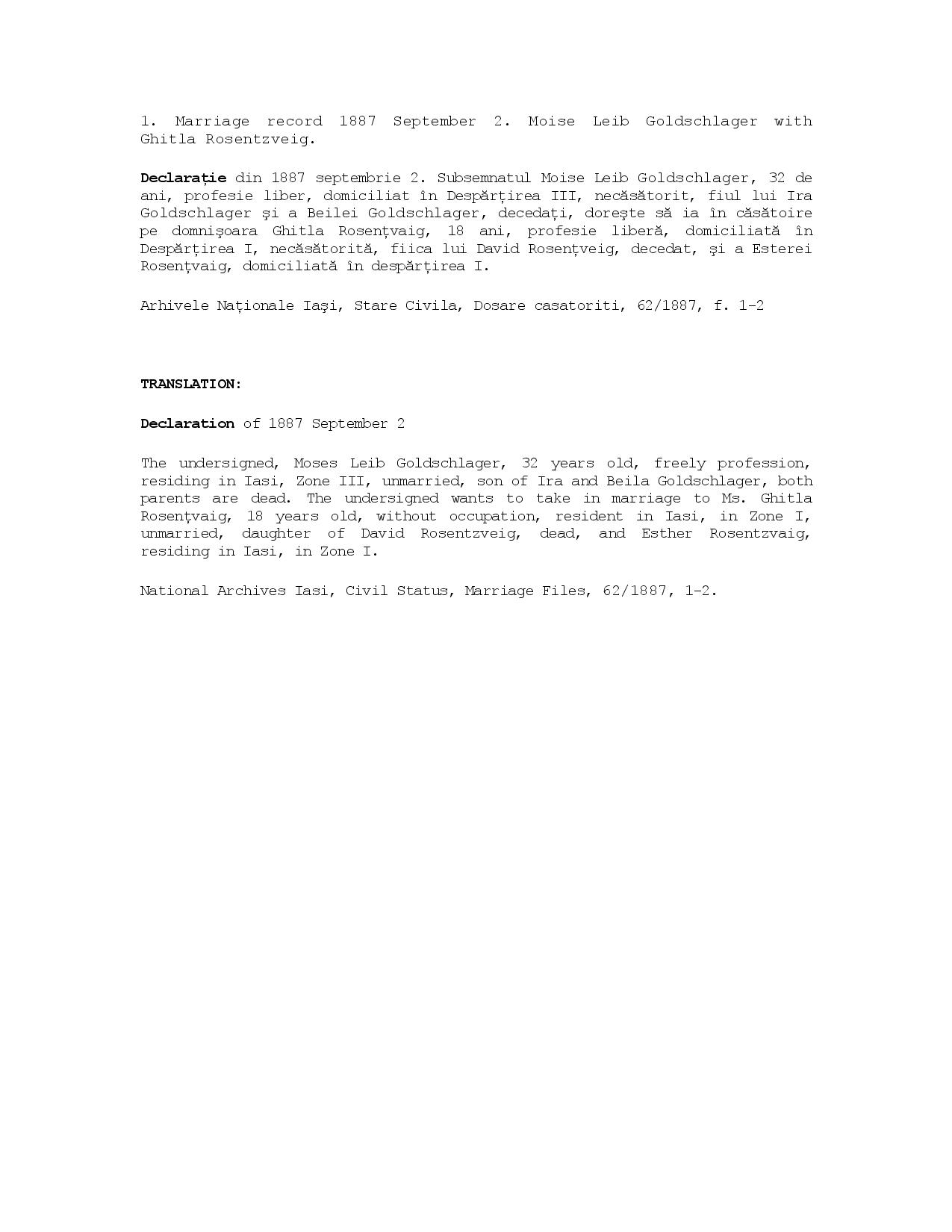
The next event for which I have any record is Moses’ marriage record dated September 2, 1887, when he was 32 years old.  Was this his first marriage? Thirty-two seems old for that generation to be married for the first time, but so far no earlier record has shown up.  Perhaps he was married before; perhaps he even had children in that first marriage.  I don’t know.  I don’t know what he was doing between 1855 and 1887, how he survived, where he lived, how he made a living.  But in 1887 he married my great-grandmother, Ghitla Rosentzweig, eighteen years old according to the marriage record, daughter of David and Esther Rosentzweig.  Her father also had died by the time she was married, but her mother was still alive and living in Iasi.  On the marriage record Moses’ occupation is reported as “freely profession,” as translated by my researcher.  I asked him what this means, and he said he believed it meant self-employed.  Since my great-grandmother is listed as “without occupation,” I assume that Moses had some occupation, but it is not identified.
Moses Leib Goldschlager and Ghitla Rosentzvaig marriage record

Moses Leib Goldschlager and Ghitla Rosentzvaig marriage record

Transcription and translation of marraige record

Transcription and translation of marraige record

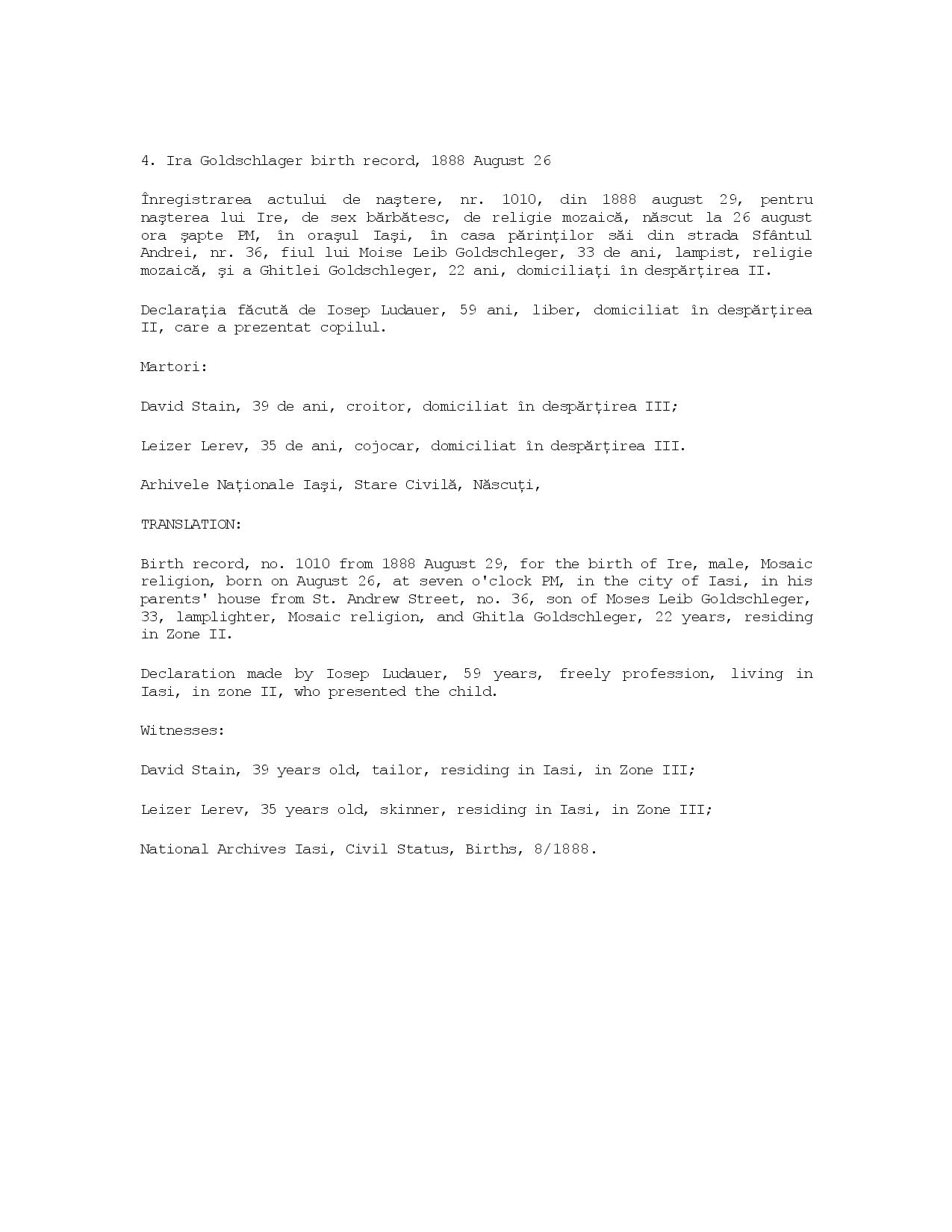
Their first child, my grandfather Isadore, was born in August, 1888, almost a year after Moses and Ghitla were married.  On his birth record, it says that Moses, now 33, was a lamplighter.  I assume this meant that he lit the gas lamps on the public streets.

UPDATE February 2, 2014:  I just learned today that he lit the lamps in the theater!! And that he was a very dapper dresser.  Thank you, Gayle, Betty’s granddaughter, who reported this information to me.

Interestingly, Ghitla is now reported to be 22, not 19.  (I guess Romanian record keepers faced the same inconsistent age reports as American census takers.)  My grandfather’s name is spelled Ire here, obviously named for Moses’ father Ira Goldschlager.

Ira aka Isidor Goldschlager birth record

Ira aka Isidor Goldschlager birth record

transcription and translation

transcription and translation

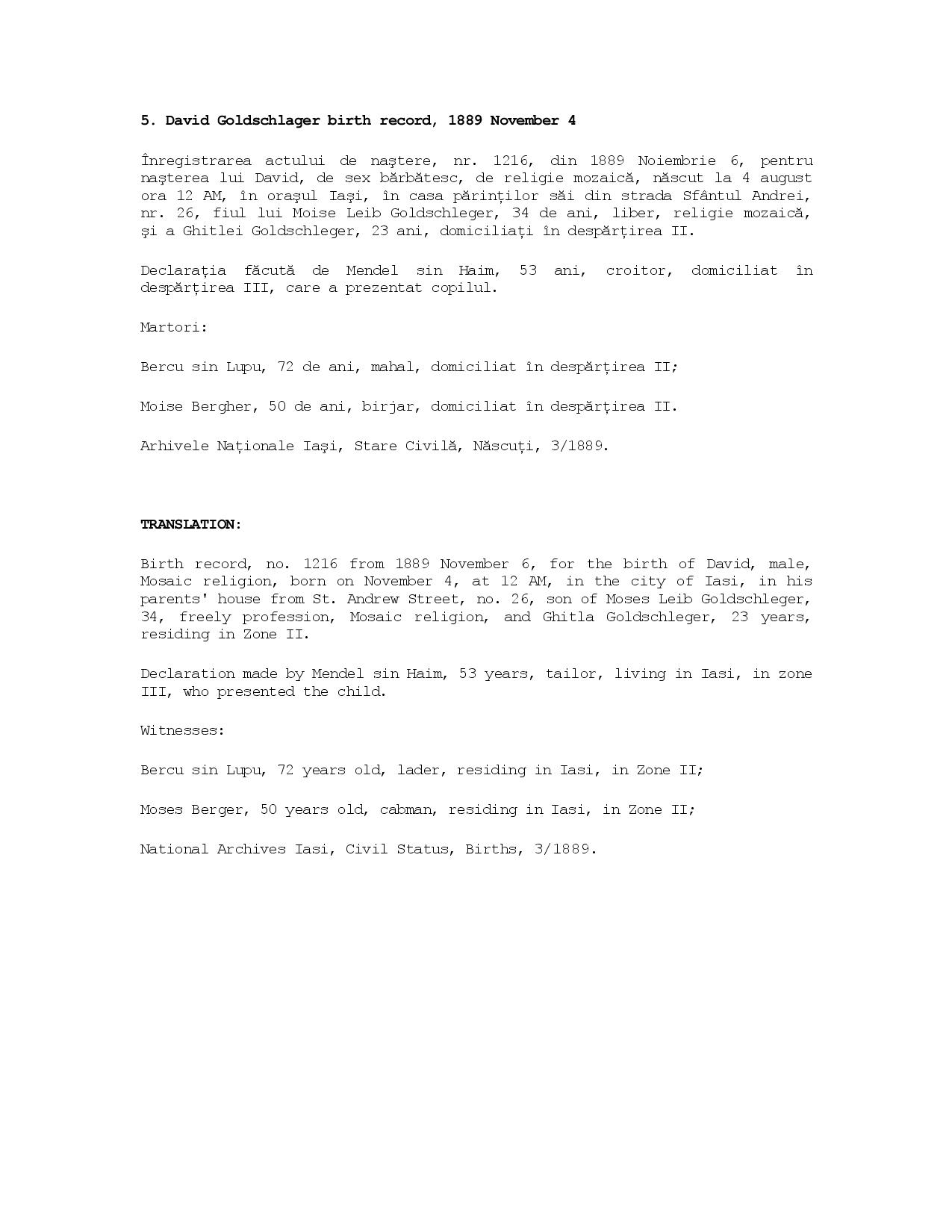
Moses and Ghitla’s second child David was born the following year on November 4, 1889. David was presumably named for Ghitla’s father, David.  Moses’ occupation is once again described as “freely profession,” and he is now 34, Ghitla 23.  The Goldschlager family was residing at the same house as the year before at 26 St. Andrew Street in Iasi, depicted below.

David Goldschlager birth record

David Goldschlager birth record

transcription and translation

transcription and translation

The Goldschlager home at 26 St Andrew Street, Iasi

The Goldschlager home at 26 St Andrew Street, Iasi

St_Andrew_Str_no_26_0001

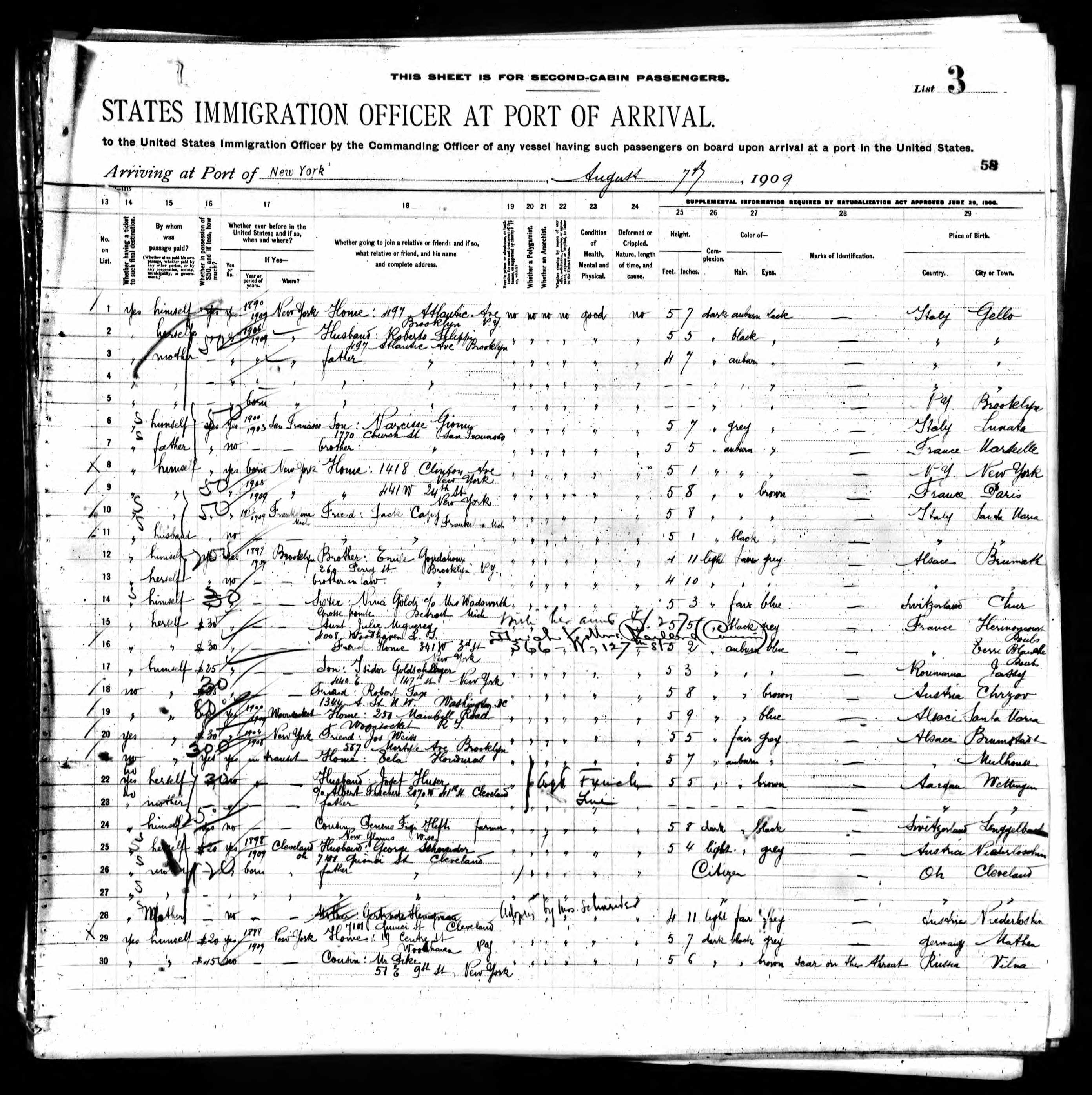
The next record I have for Moses is the ship manifest for when he left Romania and came to the United States.  He sailed from Le Havre on July 31, 1909, to New York.  On the manifest his name is given as Moritz Goldschlager with his occupation listed as a tailor.  It says he was 46 years old, which is about eight years younger than it should be.  It gives his nationality as Roumanian and his “race or people” as Roumanian, but then written over it is “Hebrew.”  Moses/Moritz named his wife Gisella Goldschlager of Jassy as the nearest relative from the country he was leaving and named his son Isidor, my grandfather, of 440 East 147th Street, New York, as the person he was joining at his destination.  The manifest also reveals that Moses was only 5’3” tall and had auburn hair and blue eyes.  That is probably the closest I will ever get to a picture of him.

Ship Manifest of Moritz Goldschlager

Ship Manifest of Moritz Goldschlager

page 2

page 2

UPDATE: I just realized that the 440 East 147th Street must be 110 East 117th Street, as that was the address that my grandfather have given for his aunt Zusia Mintz as the person meeting him when he came to NYC.  Plus 440 East 147th Street is in the Bronx, not Manhattan.

I wonder when he became Moritz, just as I wonder when my grandfather became Isidor (or Isadore; it seemed to change back and forth).  Were these names they used in Romania, or were they adopted to come to America? I assume the former—that Moses and Ira were Hebrew names, Moritz and Isidor secular names, but I don’t know for sure.

Moritz arrived in the United States in August, 1909, and then sadly, the next and last record I have for him is his death certificate, which I just received the other day.  As I’ve written earlier, Moritz died on April 3, 1910, just eight months after he arrived in New York, a day before his daughter Betty arrived, and seven months before his wife and his son David arrived from Romania.  They all arrived apparently without knowing Moritz had died, as they all listed him as the person meeting them at arrival.

I had wondered about his cause of death, and although I know that there is some question about the reliability of death certificates before the professionalization of the medical examiner’s office in the late 1920s, my great-grandfather died in a hospital according to his death certificate, and his death certificate is signed by a medical doctor, not a coroner.  According to the certificate, my great-grandfather died from tuberculosis after being admitted to Harlem Hospital on April 2, 1910.  I wonder how long he had been sick before coming to the hospital.

Moritz Goldschlager death certificate

Moritz Goldschlager death certificate

The certificate also provides some other information and, as often is the case, some misinformation.  It says that Moritz was a peddler, that he was married, and that he was 53 years old, which is closer to the truth than the age listed on the ship manifest.  It says his father’s name was Isidor Goldschlager, which, if true, means that my great-great-grandfather also used Isidor as his secular name and his Hebrew name was Ira.  But the certificate also says that Moritz’s mother’s name was Ghisela and then something that is not legible.  I assume that my grandfather was the informant and that he was confused and gave his mother’s name instead of his father’s mother’s name.

Finally, the death certificate indicates where Moritz and Isadore had been living—173-175 East 109th Street.  According to the 1910 census, this is the same street where Tillie Strolovitz and her seven children were living in 1910, just a few blocks away.  That census is dated April 24, 1910, just 21 days after Moritz had died, 20 days after Betty had arrived.  Isadore and Betty had moved in and were living with their aunt and cousins by that time, obviously taken in by their aunt Tillie shortly after their father’s death.

And that is all I know about Moses ben Ira, Moritz Goldschlager.  He lost his both his parents by the time he was six years old; he married at age 32, had three children, and worked for at least a while as a lamplighter and perhaps as a tailor in Iasi before emigrating in 1909.  He lived for less than a year in New York as a peddler before succumbing to tuberculosis at Harlem Hospital before he ever saw his wife, his younger son, or his daughter again.

Sometimes when I put together these missing links to people I never knew and who no one alive today ever knew, it makes me feel incredibly rewarded and happy.  Sometimes, as with Moritz, it leaves me feeling sad.  What kind of life did he have with so much misery at the beginning and then at the end? I can only hope that in between he found happiness and some comfort with his wife and three children.

Moritz Goldschlager headstone

Moritz Goldschlager headstone

These lost ancestors are part of what motivates me to do this research.  Someone should know that they lived, they suffered, they loved and were loved, and they died.  Moritz had at least two namesakes: Isadore’s son, my uncle Maurice, also named Moses Lieb, and David’s son Murray, also Moses Lieb.  If we count the children who were then named for my uncle Maurice as namesakes of Moritz’s namesake, then there are several more, including my daughter Madeline.  I’d like to think that that adds more meaning to his life—knowing that his name does live on and that his life is now remembered and documented.

Enhanced by Zemanta

The Sisters Rosensweig[1]

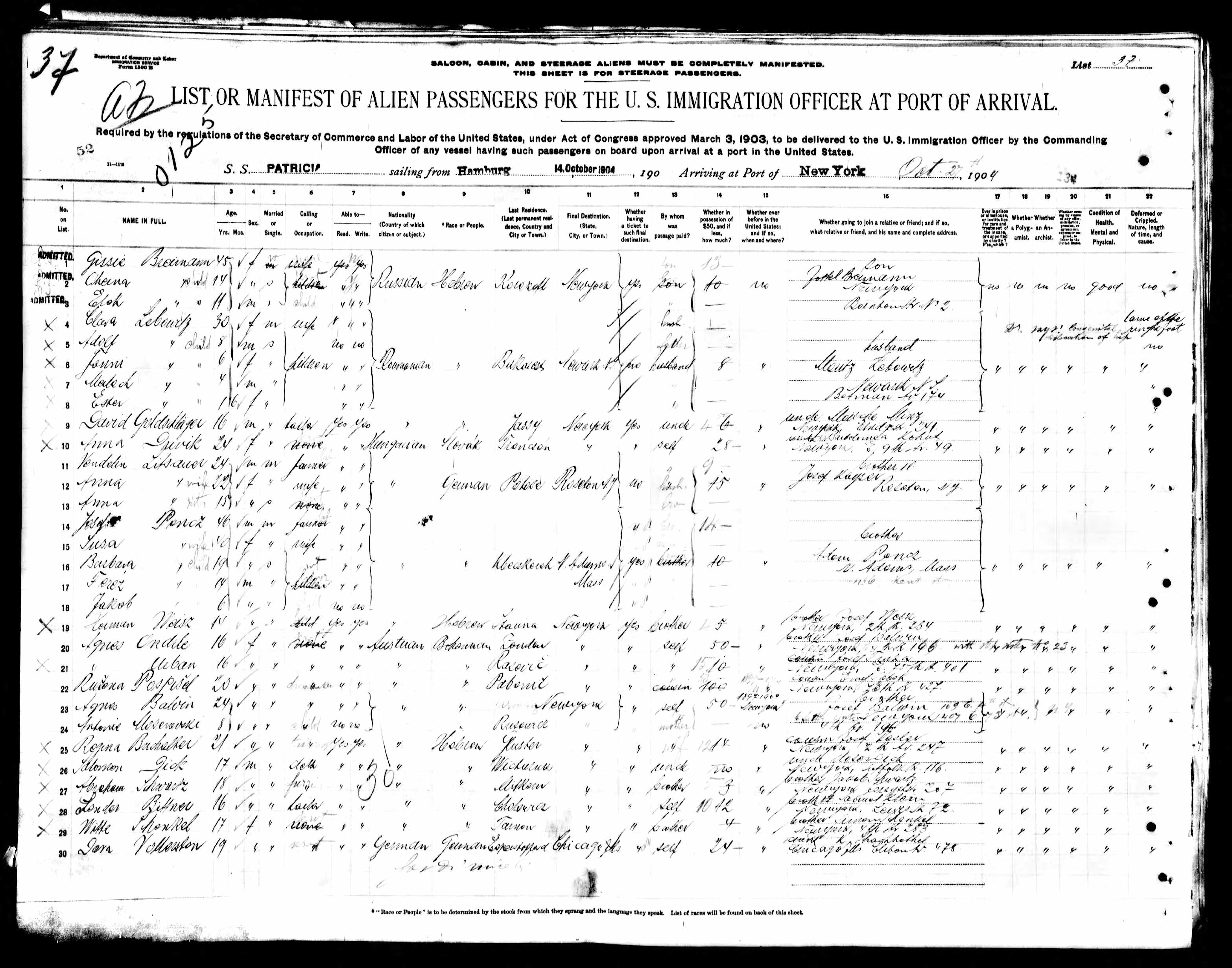
One of the things that confused me about the ship manifest for David Goldschlager, before I knew that it was really my grandfather Isadore on the ship using his brother’s name, was that David did not list his brother Isadore as the person meeting him in New York.  Instead, he listed an uncle whose name appeared to be Morishe (?) Mintz.  I had no idea who this was, and I could not turn up anyone on any document who might have been this mysterious uncle.  Also, if Isadore had arrived first, why wasn’t he meeting his brother David?

Isadore Goldschlager ship manifest (under David's name)

Isadore Goldschlager ship manifest (under David’s name)

Once I established that in fact Isadore was the one who had arrived on the Patricia in October, 1904, I went back to look more closely at the manifest and to search again for Uncle M. Mintz, with no luck.  I did, however, find a separate document that I had not seen before relating to Isadore’s (“David’s”) arrival at Ellis Island, a Record of Detained Aliens, shown below.

Record of Detained Aliens Isadore listed as David Goldschlager

Record of Detained Aliens
Isadore listed as David Goldschlager

I am familiar with this type of document now because I had seen the one issued for Gisella Goldschlager, who had listed her husband Moritz as the person meeting her.  Because her husband had died, she was apparently detained and released to her son Isadore instead.  It appears that the same type of occurrence detained my grandfather.  On the document it says the cause of detention was “to uncle,” and then in the next column for “Disposition,” it says “Aunt Zusie (?)  Mintz, 177 East 111th Street, New York City.”  From this I surmised that something prevented Uncle Mintz from meeting Isadore and that instead his wife Zusie had picked him up instead.
That led to a search for the aunt and uncle.  I could not find any M  Mintz on the 1900 census from Romania who could fit.  I searched the NYC marriage index and also had no luck—until I searched for all men named Mintz who had married between 1880 and 1904.  I checked every one of them to see what their bride’s names were and was excited when I found a bride named Zusia ROSENSWEIG married to a Harry Minz in 1896.  Could this be a third Rosensweig sister?

If so, she would have been the youngest sister, about 14 years younger than Tillie, ten years younger than Ghitla/Gisella.  Why would she have left Romania first and not her older sisters? Her sisters did not arrive until 1907 and 1910, respectively, when they were already married and had children.  But Zusia was still single, and thus more able to pick up and leave earlier, as did her nephew Isadore at age sixteen.

Harry and Zusia were married in 1896, so I looked again on the 1900 census using the name Harry with a wife with a name that could be Zusia.  No luck.  I decided to look just for an S or Z Mintz and found a Sonsa Mintz, a widow, living with Jason and Rachel Reitman and their one year old daughter Clara.  Sonsa was identified as a cousin of the head of household and as a widow.  Assuming that this is the same woman who had married Harry Mintz, it means that her husband died less than four years after they were married.  It obviously would explain why he was unable to meet Isadore/David at the boat in 1904. I have not located a death certificate for Harry, however, nor do I know for sure yet that Sonsa is the same person as Zusia or really the sister of Tillie and Gisella.

Unfortunately, I cannot find a Sonsa, Zusia, Susan, or Susie Mintz in any later census.  I did find a reference for a Susie Mintz who died in the Bronx in 1931 and is buried in New Jersey, but I do not know if this is the same person.  I will order the death certificate to see, but at the moment I have no other records for Sonsa Mintz after 1900.  I assume she may have remarried, but I did not find a marriage record either.

The only other possible record relating to the third Rosensweig sister is a ship manifest listing an eighteen year old girl named Sural Rosensweig from Romania, arriving in New York on September 30, 1890.  The age and name are close enough that it could be the same person, but I cannot know for sure.  (On the 1900 census, Sonsa Rosensweig’s birthdate is April, 1874, and her arrival date is 1891, whereas on the manifest her birth year would have been 1872 and arrival year 1890.)

Although I’ve hit a wall so far with Sonsa and with Harry, her husband, I did look to see if I could figure out how Sonsa was a cousin to the Reitmans.  Was it through Harry? Through Jacob or through his wife Rachel? Although I was able to find a number of records for the Reitmans, up through their great-grandchildren, I have not yet figured out the relationship.  They, like Sonsa, were from Romania, but beyond that, I have no clues.  I have sent an email to one of the great-grandchildren, but it seems quite unlikely that they would know anything about a woman named Sonsa Mintz who lived with their great-grandparents in 1900.

I will have to hope that the 1896 marriage certificate for Harry Mintz and the 1931 death certificate for Susie Mintz have some clues.


[1] With apologies to Wendy Wasserstein.  No connection to her play is intended….

Enhanced by Zemanta