Unknown's avatar

About Amy

I am interested in genealogy and family research, books, movies, cats, dogs, and baseball.

Jacob’s Bible: Lost and Found

I continue to be amazed by the people who find my blog and contact me—whether it’s because they are related to someone I wrote about (and thus to me) or because they knew someone I wrote about or because, as in this case, they have found some artifact that relates to someone I wrote about. That is how Martin Gonzalez found me and told me about Jacob Cohen’s bible.

Back in early January 2024, Martin wrote to ask me if I was related to Jacob and Ida Cohen. When I asked him why, he told me that he owned a bible that had their names in it. He sent me a few images of the bible that showed Jacob and Ida’s names.
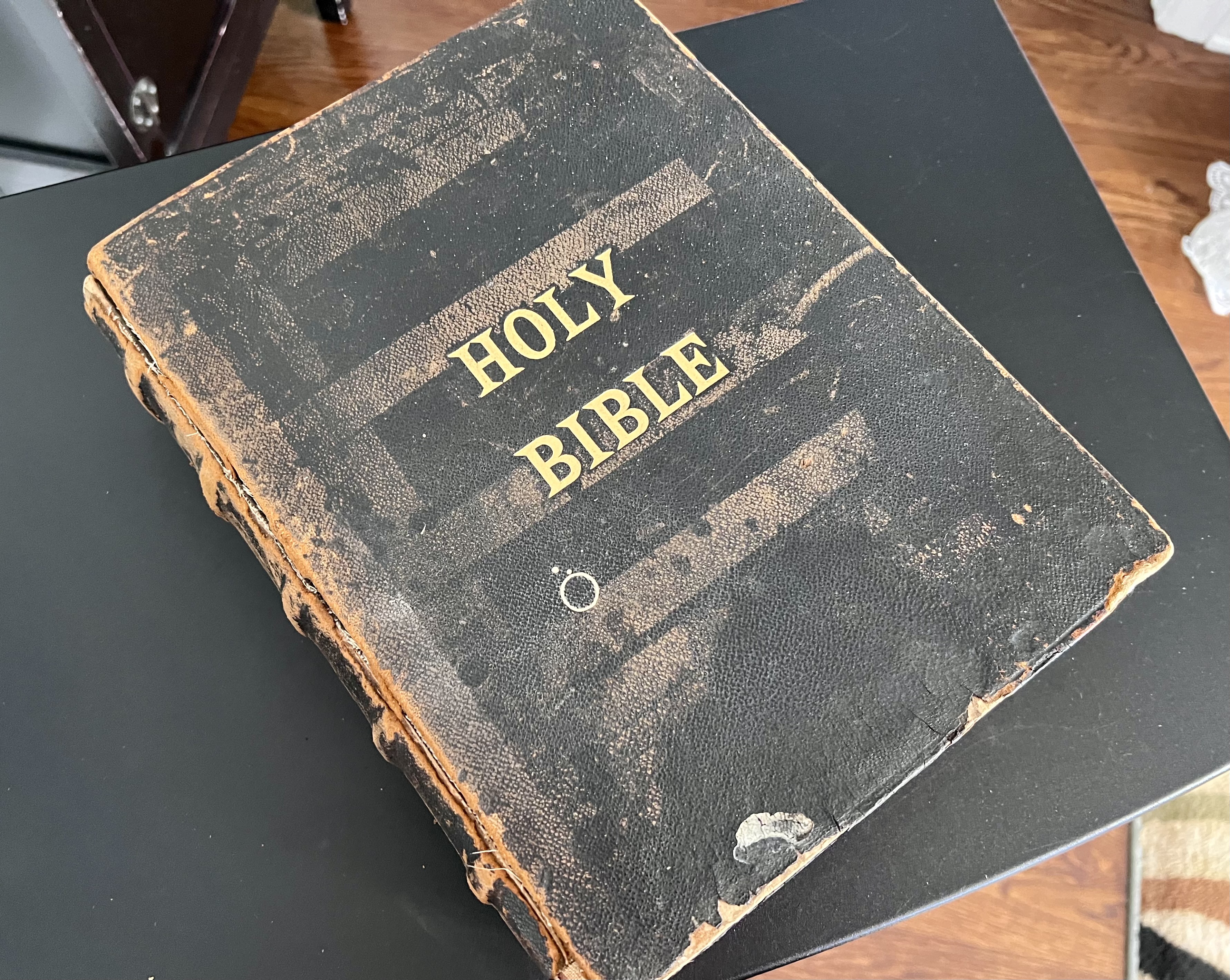
I did a search of my family tree and realized that the Jacob Cohen who had married Ida Siegel was my second cousin, twice removed, the great-grandson of my three-times great-grandfather, Hart Levy Cohen, and my grandfather John Nusbaum Cohen’s second cousin. You can read what I’ve already written about Jacob and Ida and their family (and find sources) in my earlier posts here and here. I will only include an outline of their lives here.

Jacob was born on March 9, 1870, in Washington, DC, to Moses Cohen and Henrietta Loeb. As a young man, Jacob moved to New York City, where he first worked as a bookkeeper. He married Ida Siegel in 1894, and they had two children: Aimee, born in 1895, and Gerson, born in 1900. You can see those births mentioned on this page from the bible:

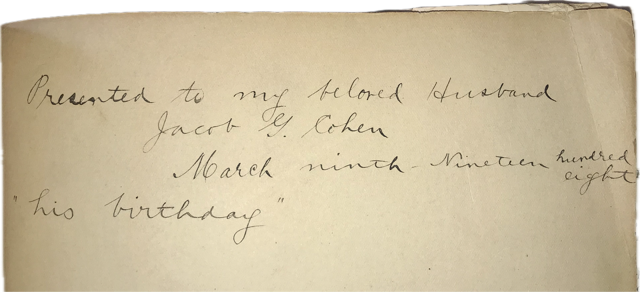
One of the images Martin shared from the bible showed that Ida had given Jacob the bible as a gift on this 38th birthday on March 9, 1908.
So I wrote back to Martin and told him that I was in fact related to Jacob Cohen and asked him how he had ended up with Jacob’s bible. He told me the following story:

Back in 1977, when I was 16 years old and in high school, I worked as a stock boy at Nadeen’s Department Store in the Bronx (NY).  One of my responsibilities was to sweep the floors. One day I came across a dirty old box under one of the clothing racks. I asked my store supervisor (Nathaniel, a devout Christian) about the box and he showed me its contents.

Two things I remembered seeing in the box vividly was a beautiful vintage radio, the kind that operated from glass tubes and an old, dusty Bible. As we spoke, he realized I had never read the Bible. So, he gave it to me as a gift. Nat told me it was previously given to him by our store manager at the time, Jack Katz.

In 1979, I graduated high school and joined the Marine Corps. The Bible stayed at my parents’ apartment while I toured.

After the service, a few years later, I came back home, and the book has been with me ever since. The Bible is in the plastic linen bag my wife came across to protect it and it fits perfectly!

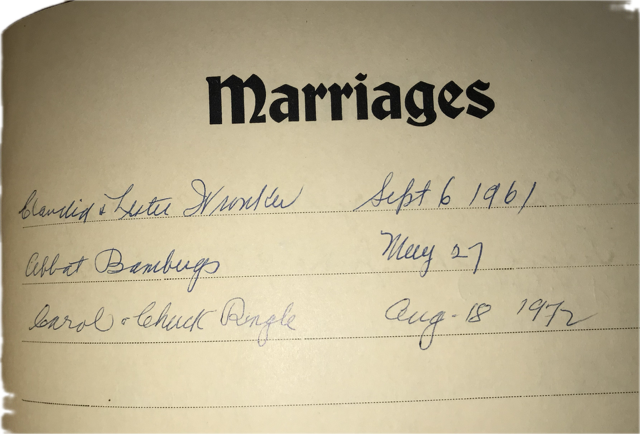
Martin then sent me more images from the bible, including this one with some unfamiliar names.
I set off to try and identify those people and realized that many of them were not in fact blood relatives of Jacob or Ida. But to understand how those names ended up in the bible, you need a little more background about Jacob, Ida, and their children. Again, except where noted, this information and my sources are from the earlier blog posts linked to above.

On February 12, 1917, Jacob and Ida’s daughter Aimee married Lester Wronker.  Aimee and Lester had a son, Robert, who was born in April, 1919.  In 1920, they were living in Manhattan.

In 1925 Jacob and Ida were living in Manhattan, and Jacob was working as an insurance agent.  Their daughter Aimee and her husband Lester and their son Robert were now living in Yonkers. Sometime thereafter, Jacob changed his surname from Cohen to Cole. His son Gerson also changed his name to Gary Cole and was living in 1930 in Detroit as a credit manager for a furniture business.

Jacob died on February 13, 1930.

In 1940, Jacob’s widow Ida was living with Aimee and Lester Wronker in Yonkers. Their son Robert Wronker graduated from Princeton University in 1940. Tragically, Robert died on August 20, 1956, after a long illness.  He was only 37 years old. He had never married or had children. Meanwhile, in Detroit, Jacob’s son Gary Cole had married Wanda Budzinsky in 1941, and they had two sons.

Ida Siegel Cohen/Cole died in 1949. Sadly, neither of her children outlived her by very long. Gary Cole died in 1955 at 55; his sister Aimee Cohen Wronker died in 1959 at 64. Thus, with Aimee’s death, the only direct descendants of Jacob G. Cohen and Ida Siegel who were still living were their two grandsons through their son Gary, and they were just teenagers and living in Detroit.

So what happened to Jacob’s bible after Aimee died in 1959 and Gary, Ida, and Jacob were already deceased? It appears that it was in the hands of Lester Wronker, Aimee’s widower, Jacob’s son-in-law.

Lester remarried in 1961, two years after Aimee’s 1959 death. His second wife was Claudia Langfeld Bamberg,1 a widow herself with one son, Abbot Strouse Bamberg, and two granddaughters, Abbot’s daughters Judith and Carol.2

You can see that someone—Claudia probably—added information about Claudia, her son Abbot, and her two granddaughters Judith and Carol to Jacob’s bible. Notice how the handwriting and the ink is noticeably different from the earlier entries made by Jacob or Ida or Aimee.

So how did the bible end up at Nadeen’s in 1977 where Martin discovered it? No one knows for sure. But after Lester Wronker died in 1976, it appears that Claudia and her son and granddaughters must have gotten rid of the bible, and somehow it ended up in a dirty old box in Nadeen’s women’s clothing store in the Bronx, where Martin Gonzalez discovered it in 1977 and kept it safe for close to fifty years.

Martin contacted me because he wanted to be sure that the bible did not someday once again end up in a dirty box in the backroom of some store or in a landfill. He offered it to me, but I suggested that it would be better to donate it to a library, museum, or archive where it would be kept safe in perpetuity. Martin liked that suggestion and has now sent it to the Jewish Genealogical Society of New York.

Today we hear so much about the ugliness in the world—the hatred, the anger, the polarization. But we also need to remember that there are also wonderful, loving, and generous people in the world who only want to do the right thing. Martin Gonzalez is one of those people. He easily could have done nothing, and Jacob’s bible might once again have been lost. But he took the time to search for someone who might help him preserve it, and fortunately he found my blog. Thank you, Martin, for restoring my faith in people and reminding me to believe that good can prevail over evil and love can prevail over hate. You have done an amazing mitzvah by taking such good care of Jacob’s bible.


  1. Lester Wronker, Gender Male, Marriage Date 6 Sep 1961, Marriage Place New Rochelle, New York, USA, Certificate Number 40700, Records Sharing Certificate Number (Name), Lester Wronker, Claudi L Bamberg, Claudi L Langfeld, New York State Department of Health; Albany, NY, USA; New York State Marriage Index, Ancestry.com. New York State, Marriage Index, 1881-1967 
  2. See “Abbot Bamberg, Former New Rochelle Resident,” The Daily Times (Mamaroneck, NY), May 23, 1990, p. 4. 

Gelle Karoline Blumenfeld Rothschild, Part I: Eleven Children in Eighteen Years

It’s been quite a while since I have written about my Blumenfeld relatives. Other things—photos, a photo album, updates from cousins—have filled my blog. But today I can finally return to the Blumenfeld tree. And it’s time for a new branch of that family.

After a year and a half researching and writing about Isaak Blumenfeld I and his large family, I can now turn my attention to Isaak’s younger sister Gelle (Karoline) Blumenfeld, the third child of my three-times great-uncle Moses Blumenfeld. To give you a sense of where I am in telling the story of my Blumenfeld family, here are two charts.

The first one shows where I am in writing about all the descendants of my earliest known Blumenfeld ancestors, Abraham Katz Blumenfeld and Giedel Katz Blumenfeld, my four-times great-grandparents.

The second one shows where I am in my writing about Moses Blumenfeld I, their oldest child–not quite two thirds done.

Now on to the third and last child of the oldest child of Abraham and Giedel, my first cousin, four times removed, Gelle Karoline Blumenfeld.

Gelle was born in about 1822 in Momberg, Germany.1 She married Simon Rothschild on November 15, 1842, in Neustadt, Germany, when she was twenty years old. Simon was the son of Seligmann Rothschild and Terz Gutheim, and he was born in Waltersbrueck, Germany, in June 1813.2

Marriage of Gelle Blumenfeld and Simon Rothcchild. Arcinsys Archives of Hesse, HHStAW Abt. 365 Nr. 629, S. 6

Gelle and Simon had eleven children together. Although the birth records for the children are listed in the records for the town of Zimmersrode, a larger town close to the very small village of Waltersbrueck, I assume based on later records that the family lived in Waltersbrueck and that the children were actually born there. But their births were registered in Zimmersrode.

First born was Seligmann Rothschild II on September 9, 1843.

Seligmann Rothschild birth record, Arcinsys Hesse Archives, HHStAW Fonds 365 No 893, p. 15

Seligmann was followed by Abraham, born December 22, 1844; sadly, Abraham lived just a few months. He died on February 16, 1845.

Abraham Rothschild birth record, Arcinsys Archives of Hesse, HHStAW Fonds 365 No 893, p. 17

Abraham Rothschild death record, Arcinsys Archives of Hesse, HHStAW Fonds 365 No 896, p. 16

A third son was born on August 23, 1846. His name was Levi.

Levi Rothschild birth record, Arcinsys Archives of Hesse, HHStAW Fonds 365 No 893, p. 18

He was followed by yet another boy, Moses, born August 30, 1848.

Moses Rothschild birth record, Arcinsys Archives of Hesse, HHStAW Fonds 365 No 893, p. 20

Then came Isaak, born January 15, 1850.

Isaak Rothschild birth record, Arcinsys Archives of Hesse, HHStAW Fonds 365 No 893, p.23

Finally, Gelle gave birth to a daughter, Gitel, on January 7, 1852, but Gitel lived just a little over a year, dying on February 11, 1853.

Gitel Rothschild birth record, Arcinsys Archives of Hesse, HHStAW Fonds 365 No 893, p. 24

Gitel Rothschild death record, Arcinsys Archives of Hesse, HHStAW Fonds 365 No 896, p 21

Gelle and Simon’s seventh child was another girl, Beschen, born June 22, 1853. Fortunately, she survived and became the oldest living daughter in the family.

Beschen Rothschild birth record, Arcinsys Archives of Hesse, HHStAW Fonds 365 No 893, p. 25

Another boy followed Beschen. Gerson was born May 1, 1855.

Gerson Rothschild birth record, Arcinsys Archives of Hesse, HHStAW Fonds 365 No 893, p. 27

The ninth child was Malchen, born March 3, 1857.

Malchen Rothschild birth record, Arcinsys Archives of Hesse, HHStAW Fonds 365 No 893, p. 28

Sara, the tenth child, was born on January 6, 1859.3

Sara Rothschild birth record, Arcinsys Archives of Hesse, HHStAW Fonds 365 No 893, p. 30

And finally, Gelle gave birth the eleventh and last time to another son, Meier, born on May 9, 1861.

Meier Rothschild birth record, Arcinsys Archives of Hesse, HHStAW Fonds 365 No 893, p. 32

Gelle was 21 when she gave birth to her first child Seligmann in 1843 and 39 when she gave birth to her last child Meier in 1861. She had been having babies for almost twenty years, sometimes in consecutive years. I am not sure how she did it, especially enduring the loss of two of those children at such young ages while raising all the others.

But fortunately, at least eight of the other nine children lived to adulthood, and I will be telling their stories in the posts to come.


  1. Rothschild, Gelle geborene Blumenfeld (1887) – Haarhausen“, in: Jüdische Grabstätten <https://www.lagis-hessen.de/en/subjects/idrec/sn/juf/id/2291&gt; (Stand: 5.6.2012) 
  2. „Rothschild, Simon (II) (1895) – Haarhausen“, in: Jüdische Grabstätten <https://www.lagis-hessen.de/en/subjects/idrec/sn/juf/id/2213&gt; (Stand: 5.6.2012). 
  3. Although Sara’s marriage record gives her a different birth date (January 3, 1860), I am assuming that this birth record, though difficult to read, is more accurate. See Hessisches Hauptstaatsarchiv; Wiesbaden, Deutschland; Bestand: 920; Laufende Nummer: 8409, Ancestry.com. Hesse, Germany, Marriages, 1849-1930 

The Magic of Old Photos and Modern Technology: Memories of Parkchester

While I am on the subject of old photographs, I wanted to share a heartwarming story that started with one old  photograph.

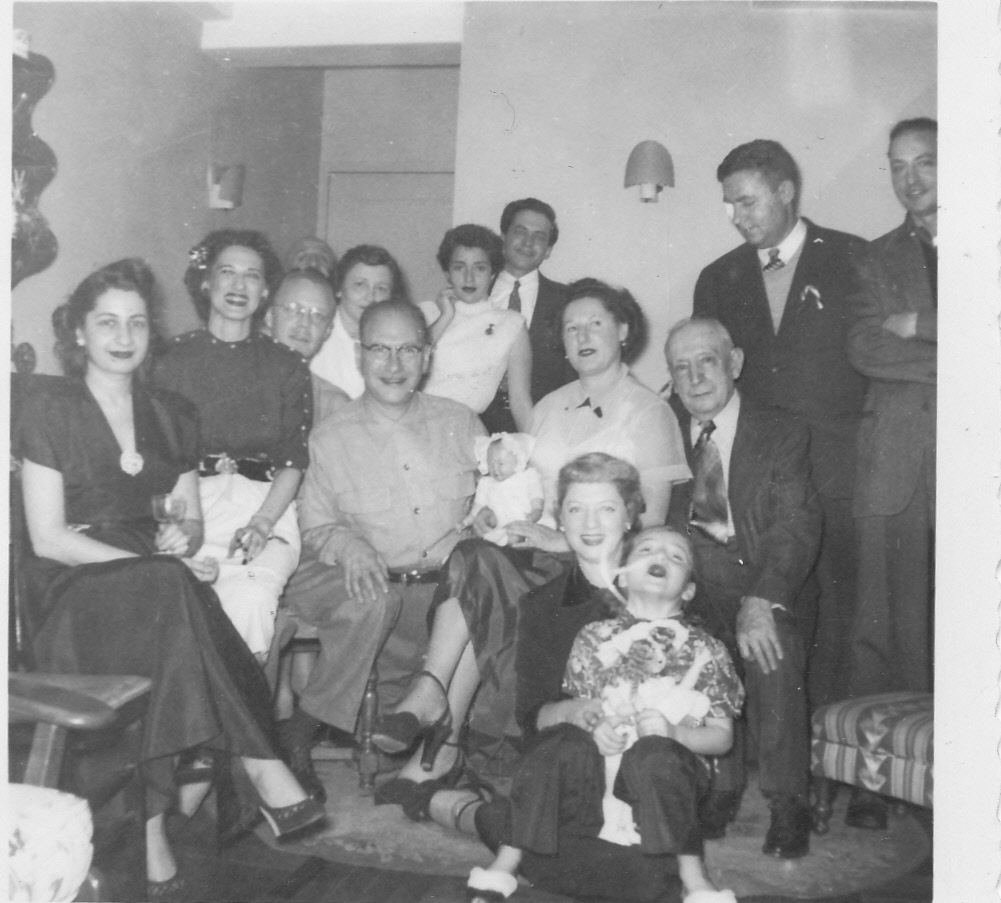
The photo was one I found mixed in with a bunch of old black and white photographs that had been my parents. I could immediately identify my very young parents in the photo. My mother is the woman in the back with the sleeveless white top. Standing behind her, the man in the suit and tie with dark hair is my father. When I looked more closely at the photo, I realized that my grandmother, Gussie Brotman Goldschlager, is standing to the left of my mother (on my mother’s right), and then all the way in the back left corner almost at the door with only his eyes and nose showing is my grandfather, Isadore Goldschlager.

Who are these people??

But I did not recognize one other person in the photo. Who were all those people with my parents and grandparents? I had no one to ask since my grandparents and my parents are no longer living, nor are any of their peers. But I was determined to try and find out. First I distributed the photo by email to all my Goldschlager and Brotman relatives. Did anyone recognize anyone in the photo? No one did. These did not appear to be my relatives.

I then had what turned out to be a brilliant idea. My grandparents and my parents all lived in Parkchester, a community of apartment buildings in the Bronx that was built in the early 1940s. My mother and her parents had moved there when she was about eleven in 1941 or 1942. Then after my parents married in 1951, my parents had an apartment there also. It was my first home. I hypothesized that the photograph might have been taken in Parkchester in the early 1950s. We moved away in 1957, and my parents looked really, really young here—it may have been taken even before I was born in 1952.

I searched to see if there was a Facebook group for people who once lived in Parkchester, and sure enough, there is one. I posted the photograph there, saying that the photograph was probably taken in the early 1950s and asking if anyone recognized anyone in the photograph. I received numerous comments about living in Parkchester in those years, but no one knew anyone in the photo.

Until, that is, a woman named Gail (Lipman) Amsterdam responded and said that her grandparents, her father, and several other people she knew were in the photograph. And even more incredible—she herself was the little girl sitting on the floor in the front of the photograph. I was totally blown away. Gail is sitting on her grandmother’s lap, and her grandfather is sitting behind her. Gail’s father, Sid Lipman, is the man in the center with the glasses. We assume that her mother either took the picture or was in the kitchen when it was taken.

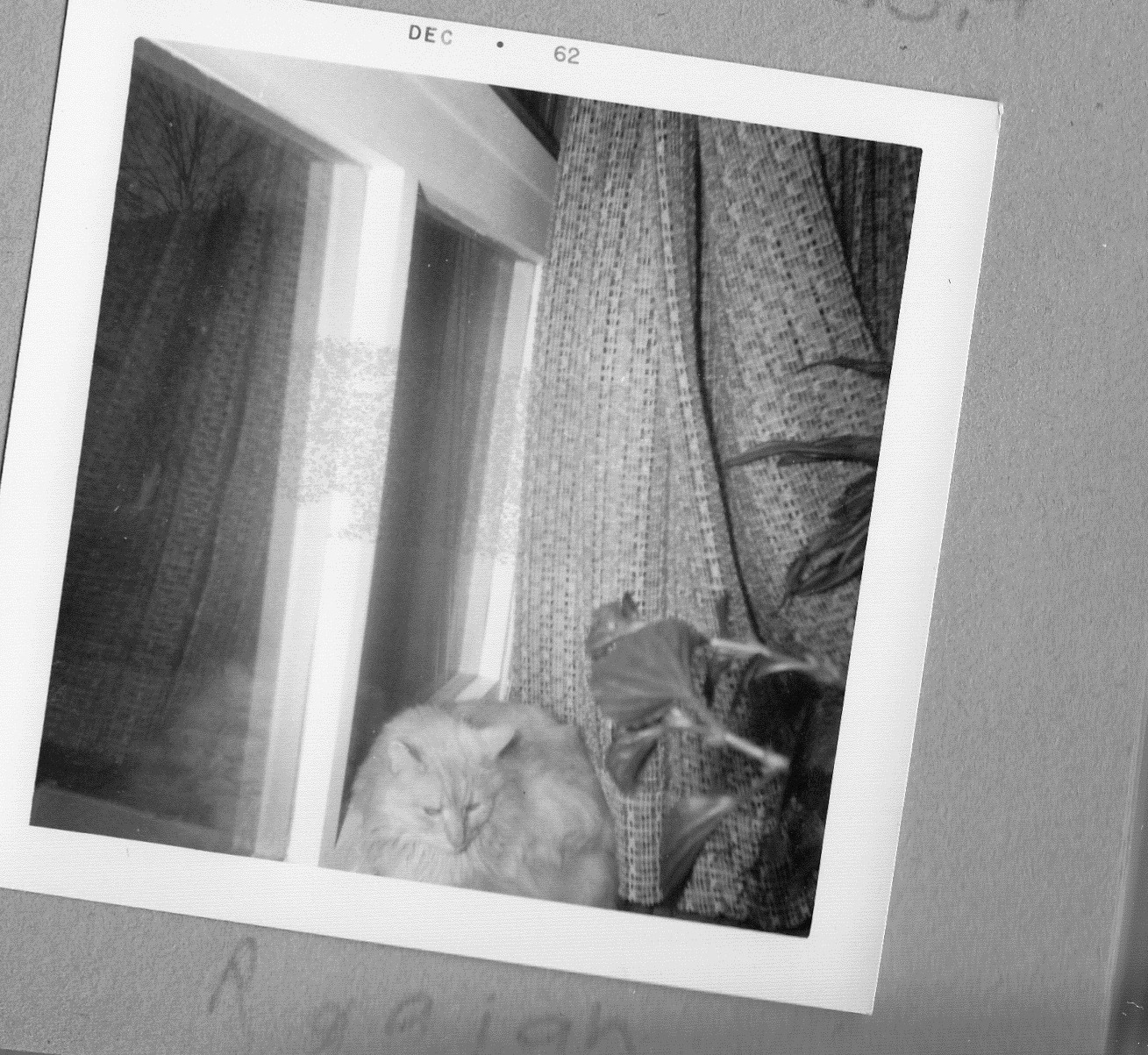
I learned that Gail had lived in the same building and on the same floor as my grandparents when she was a little girl and that she remembers them. She described them as kind and lovely people. And even more amazing—she remembers my grandparents’ cat and described him perfectly! She even remembers that his name was Rajah. She told me that my grandmother used to let her “borrow” Rajah and take him back to her apartment to play with her. I had a serious case of chills and tears as I read the email in which she shared this with me.  Here was someone I never met who remembered my grandparents and Rajah, who eventually became our cat when my grandmother no longer could care for him. It felt magical.

Rajah (cleverly misspelled by me at ten years old!)

Then I asked Gail about the other people in the photograph. She identified everyone else except for one woman. I told her that I was going to try and locate any relatives of those people because they also might enjoy seeing the photo. Gail said that all the people she knew in the photograph were deceased and that as far as she knew there were no living descendants. One couple did have a son, but in researching the family, I learned that that son had died in the last few years and had had no children or spouse who survived him.

As for the other three adults in the photo, one was Gail’s mother’s best friend, Helen Frankenstein Kaiserman (the woman holding Gail’s doll on her lap), and the two men standing on the right in the rear were Helen’s brothers Morris and Jerome Frankenstein. According to Gail, none of those three had children. Helen had been briefly married but was divorced by the time Gail knew her, and Gail believed that Jerome and Morris had never married.

But I was curious to learn more about the three siblings—Morris, Jerome, and Helen. I just couldn’t accept that there were no living relatives in this family. I turned to Ancestry and began to research the family and soon found them on the 1930 and 1940 census along with their parents and two other siblings. Maybe the other siblings had had children who might be interested in the photo?

In the course of doing that research, however, I stumbled upon an Ancestry tree that had Morris, Jerome, and Helen included. That tree was owned by a researcher named Renate Valencia, and I was surprised to see that according to her tree, Morris had married and had had children. Since his widow and children were still living, their names did not show up on the tree, so I decided to send Renate a message through Ancestry to learn more.

I didn’t have to wait long to hear from her. She was very excited to hear about the photograph and knew that her husband Steve, Morris’ son, would be delighted to see a photograph of his father, uncle, and aunt. Gail was surprised and happy to learn that in fact Morris had married and had had children. I connected Gail and Renate to each other, and they have been exchanging memories and asking and answering questions about the people in the photograph.

Renate sent me this link to a documentary about Parkchester, and it brought back many memories of visiting my grandmother there, going to Macy’s, playing in the playgrounds, chasing pigeons near the fountain, and taking the bright red elevator up to my grandmother’s apartment where once upon a time Gail had lived across the hall. Gail and I may have even ridden in that elevator at the same time, not knowing that all these years later we would connect through the magic of the internet and an old photograph.

All of this would never have been possible without the magic of photographs and the tricks of the internet. Without Facebook and Ancestry, I never would have found Gail or Renate. I never would have learned about the people in that photograph. Now I just wish that I could tell my parents and my grandparents this story and learn more about their memories of that evening and of the people in the photograph.

Can you imagine what all those people in the photograph would think if they knew that seventy or so years after that photograph was taken, three strangers would spend time remembering them all and sharing a magical experience like this? I still get the chills and a bit teary when I think about it.

A Dating Correction to One of Yesterday’s Photos: Thank you, Sherlock Cohn!

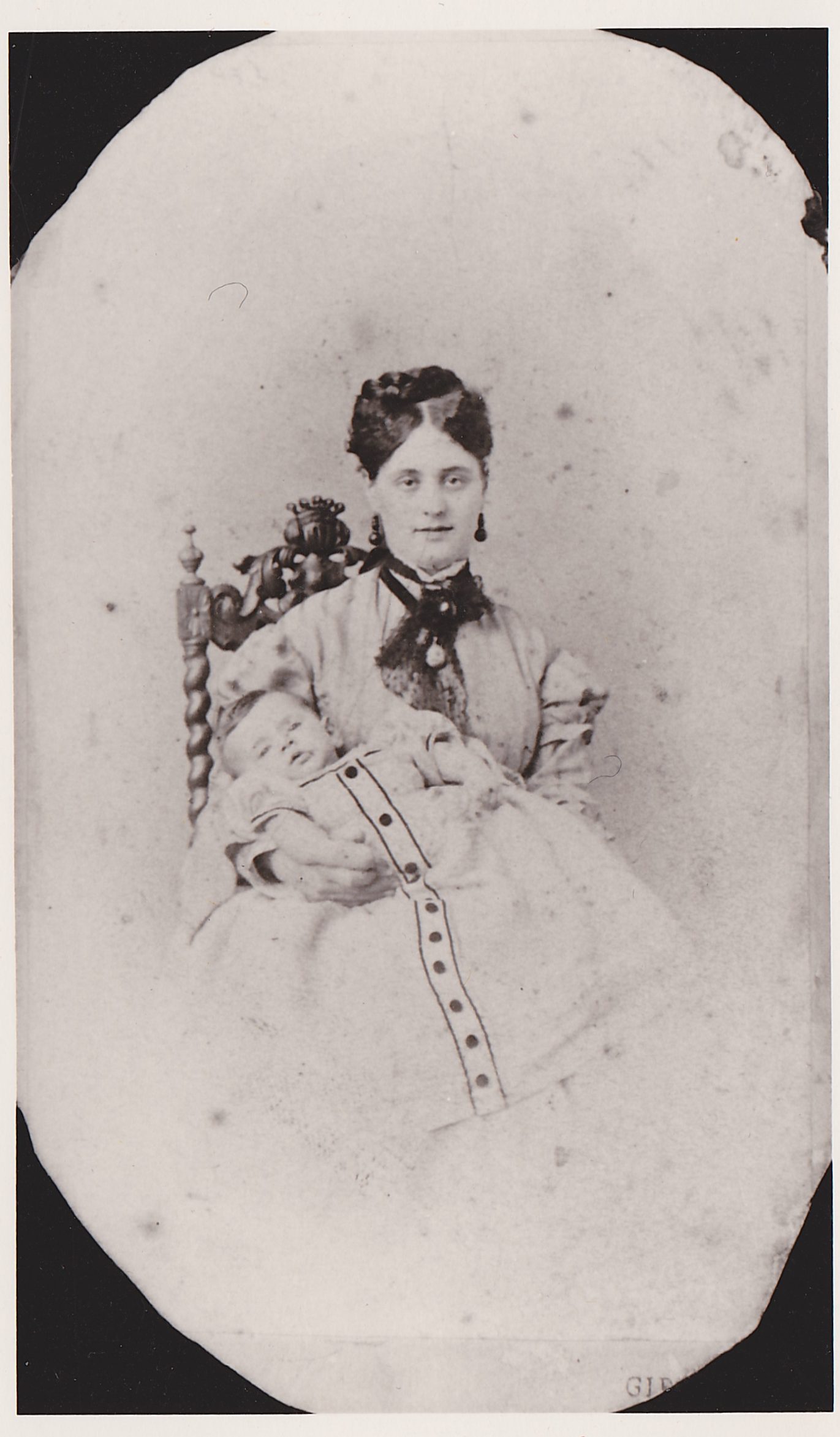
I am deeply grateful to Ava Cohn, aka Sherlock Cohn, the Photo Genealogist, for pointing out a dating error in one of the photographs I posted yesterday. The photo had been labeled in Robin’s collection as Cecilie and Thekla, and I assumed that it was Thekla Blumenfeld Gruenbaum with her infant daughter Cecilie Gruenbaum. Since Cecilie was born in 1895, I labeled the photo with the date 1895.

When was this photograph taken?

But Ava, whose expertise in dating photographs is astounding, noticed that something was off in that date because the clothing worn by the mother in the photo would not have been in fashion in the 1890s. She emailed me and said she thought it was more likely that the photograph was taken in the 1870s.

I went back and looked at the photograph and the information I had on Thekla’s family, and I hypothesized that although the photograph was labeled Thekla and Cecilie, it was of Thekla as an infant with her mother, who was also named Cecilie. That would date the photograph as 1872, not 1895. Ava said that that date made a lot more sense, and when I emailed Robin to ask her for her thoughts, she agreed that it was probably not Thekla as an adult with her daughter, but Thekla as a baby with her mother.

It once again proves that if you want accurate dating and insights into old photographs, don’t rely on the hunches of amateurs. Hire a professional. Ava does amazing work, and I am so grateful that she caught this mistake.

The Legacy of Thekla Blumenfeld Gruenbaum: Family Photos

I mentioned in my last blog post that I have recently connected with another cousin, Robin Kravets, the great-granddaughter of Thekla Blumenfeld Gruenbaum. Robin is my fifth cousin, once removed. We are both descendants of Abraham Blumenfeld and Geitel Katz, Robin through their son Moses and me through their daughter Breine.

Robin has generously shared with me a collection of photographs of her family, and I am delighted to be able to share them with you. All the photos in this post are courtesy of my cousin Robin. I am providing a summary of what I posted two years ago about Robin’s direct ancestors to provide context to the photos and to add some additional insights Robin shared with me. The blog posts from 2021 contain more details and my sources.

Salomon Blumenfeld, Robin’s great-great-grandfather, first married Caecilie Erlanger, but she died when she was only 24 years old, leaving behind two very young children: Thekla (Robin’s great-grandmother), not yet two, and Felix, just seven months old. Two years after his first wife Caecilie died, Salomon married Emma Bendheim and had a third child, Moritz, in 1877. And then sometime within the next five or six years, Salomon left Germany for Spain with Emma and Moritz, leaving his first two children, Thekla and Felix, behind. As best I can tell, Thekla and Felix, still both young children, must have been raised by their mother’s family, the Erlangers, in Marburg.

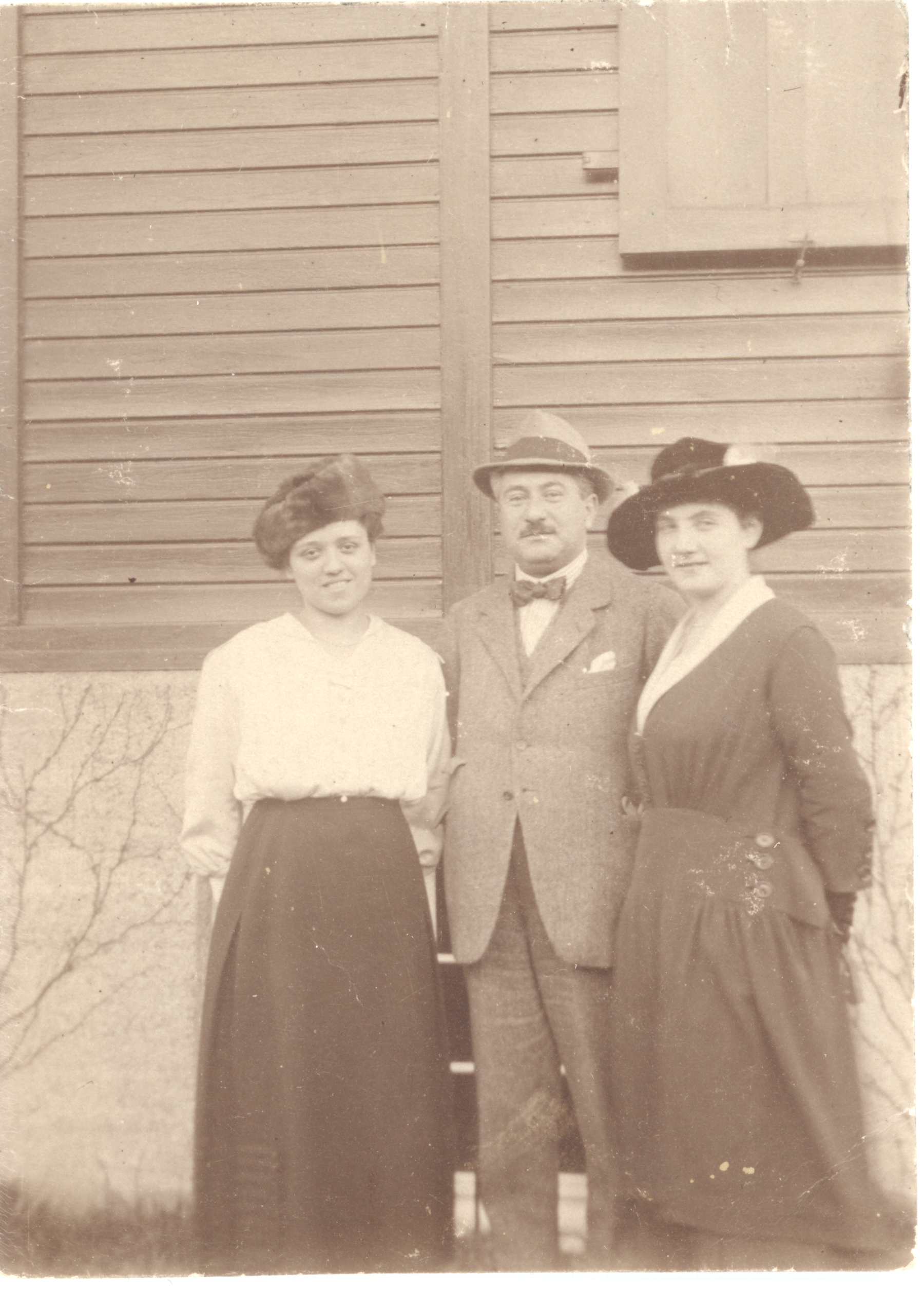
I had wondered whether Salomon or his son from his second marriage, Moritz, had remained in touch with Thekla and Felix. Robin provided this photograph of Moritz with his half-niece Cecilie, Thekla’s daughter, and another unidentified woman, so there is some evidence that at least Moritz had some contact with his half-sister Thekla and her family.

Moritz Blumenfeld and Cecilie Gruenbaum (with unknown woman on the left)
Courtesy of Robin H Kravets

This is the oldest photograph in Robin’s collection. It shows Thekla as an infant with her mother, Caecilie Erlanger Blumenfeld and must have been taken in about 1872 when Thekla was born. Thank you to Ava Cohn, aka Sherlock Cohn, The Photogenealogist, for pointing out the correct dating of this photograph.

Caecilie Erlanger Blumenfeld with Thekla Blumenfeld, c. 1872 Courtesy of Robin H Kravets

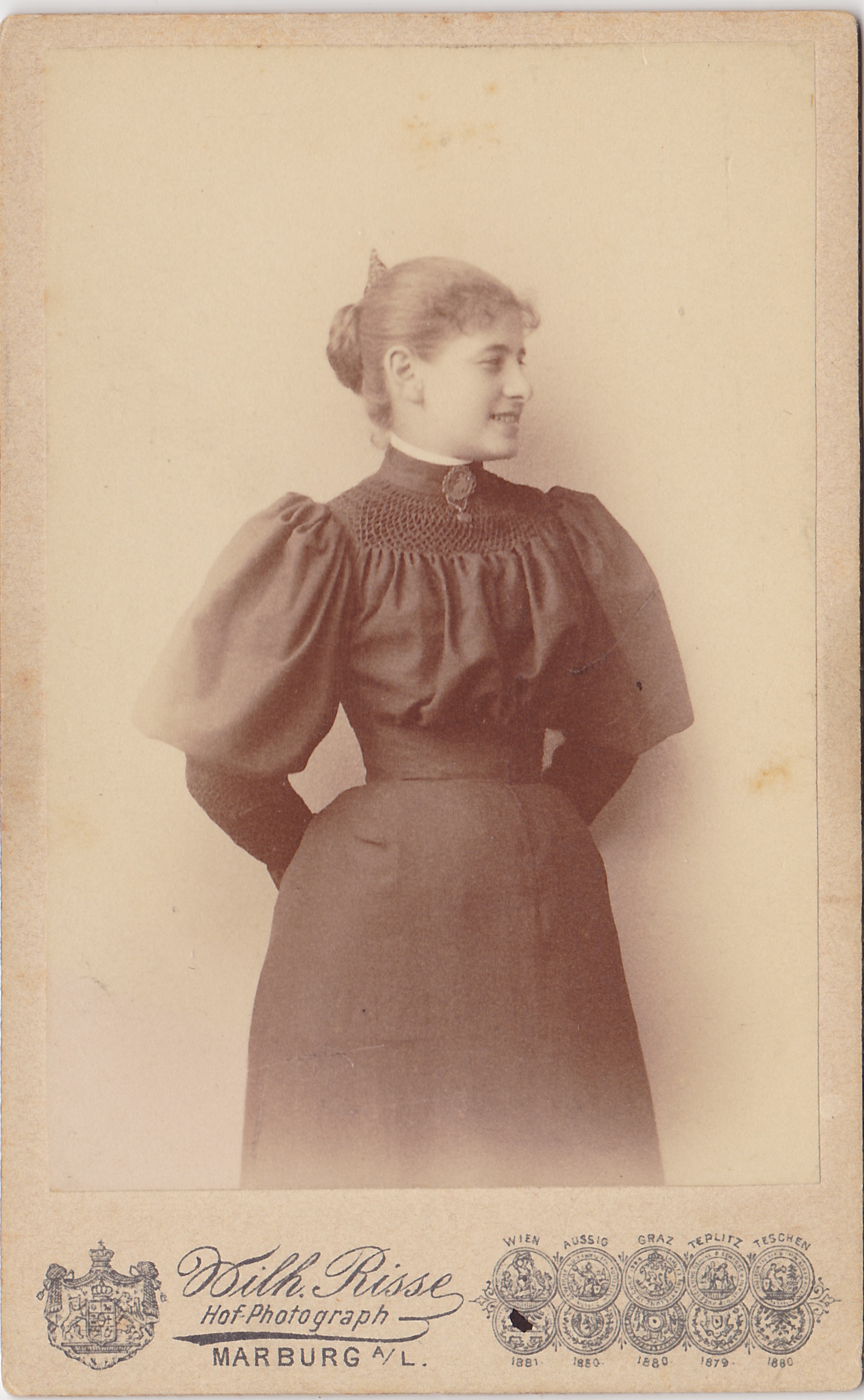
Here are two beautiful photographs of Thekla as a young woman.

Thekla Blumenfeld, courtesy of Robin H Kravets

Thekla Blumenfeld, courtesy of Robin H Kravets

Thekla married Max Gruenbaum in 1894. Here is a photograph of them taken in 1895.

Thekla Blumenfeld and Max Gruenbaum 1895
Courtesy of Robin H Kravets

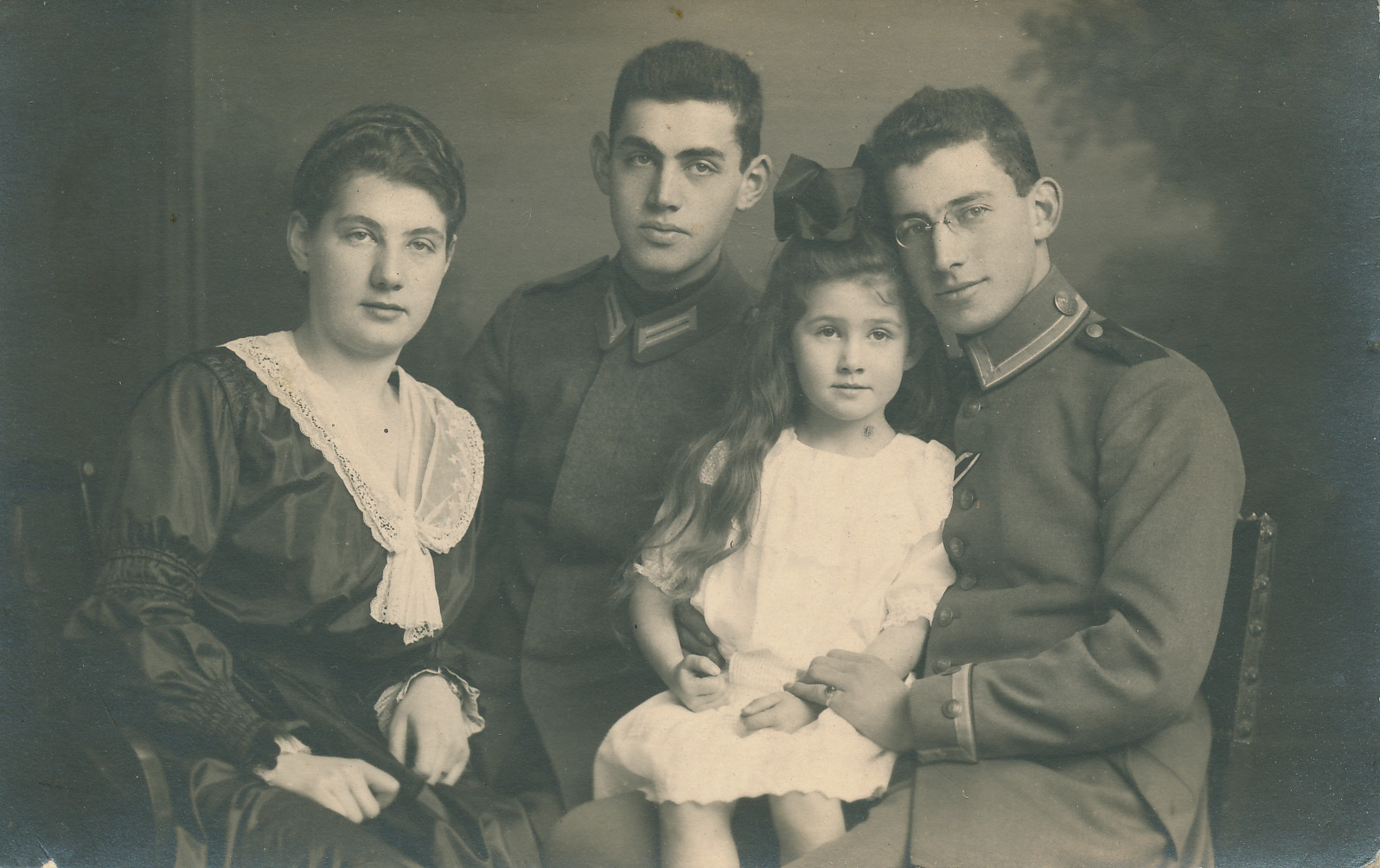
Thekla and Max had four children: Cecilie (1895), Curt (1897), Franz (1899), and Rosemarie, Robin’s grandmother (1912).

Cecilie, Curt, and Franz Gruenbaum c. 1908 Courtesy of Robin H Kravets

Courtesy of Robin H Kravets

Cecilie, Franz, Rosemarie and Curt Gruenbaum, 1918  Courtesy of Robin H Kravets

Thekla’s brother Felix married Thekla Wertheim in 1902, and they had two sons, Edgar (1903) and Gerhard (1906). Robin had just a few photos of Felix; he appears to be in uniform during World War I in these first two. The caption on the first translates as “to commemorate the first nailing of the Zaitenstock.” I am not sure what that means, but Wikipedia explains (as translated by Google) that zaitenstocke were part of the pipe systems used to carry water into the cities.

Felix Blumenfeld, 1915 Courtesy of Robin H Kravets

detail from photo above

Felix Blumenfeld, 1916
Courtesy of Robin H Kravets

detail from photo above

As I wrote in my earlier posts, both Felix and his sister Thekla lost their spouses at relatively young ages. Thekla’s husband Max Gruenbaum died in 1917, and Felix’s wife Thekla died in 1923.

But even more tragically, both Felix and Thekla were among the six million who were killed in the Holocaust, Felix by suicide in 1942, as detailed here, when he was in despair and had no hope in surviving, and Thekla at Treblinka in 1943.

Felix Blumenfeld
Courtesy of Robin H Kravets

Thekla had refused to leave Germany, and her daughter Cecilie would not leave her mother behind. Robin wrote that “[Cecilie] was very smart and saw the writing on the wall but her mother would not leave.  I remember my family talking about them having tickets on a boat somewhere. But the boat was cancelled.”1 Fortunately, Cecilie’s children were safely in England.

But Cecilie and her husband Walter Herzog were sent to the concentration camp in Riga in 1941. Walter did not survive, but against all odds, Cecilie did even after being sent to Stutthof, a camp where the conditions were truly horrible, as I wrote about here. When I asked Robin whether she had any information as to how Cecilie had survived, she wrote that “since she was trained as a nurse during WWI, she used her skills to help people in the camps. I have always believed it gave her a purpose to survive. The story I heard as a child was that when the Allies liberated the camp, she knew she had to get west. She collected a group of people and helped them make their way west. As a nurse, she knew that they needed to be very careful about overeating after being in the camps and made sure they did not die from bloating.”2 As was not uncommon with Holocaust survivors, Cecilie never wanted to talk about her experiences.

Cecilie Gruenbaum Herzog Courtesy of Robin H Kravets

The other children of Thekla Blumenfeld Gruenbaum and Felix Blumenfeld had all managed to escape Germany before it was too late, as I wrote about here. Robin’s grandmother Rosemarie, the youngest of Thekla’s children, had married while still in Germany. In fact, as Robin explained, she had married her husband Ernest Heymann in absentia as Ernest was in England at the time, having gone there on business and then realizing it was not safe to return. I’d never heard of being married in absentia, but apparently Rosemarie’s nephew stood in as a surrogate groom.3

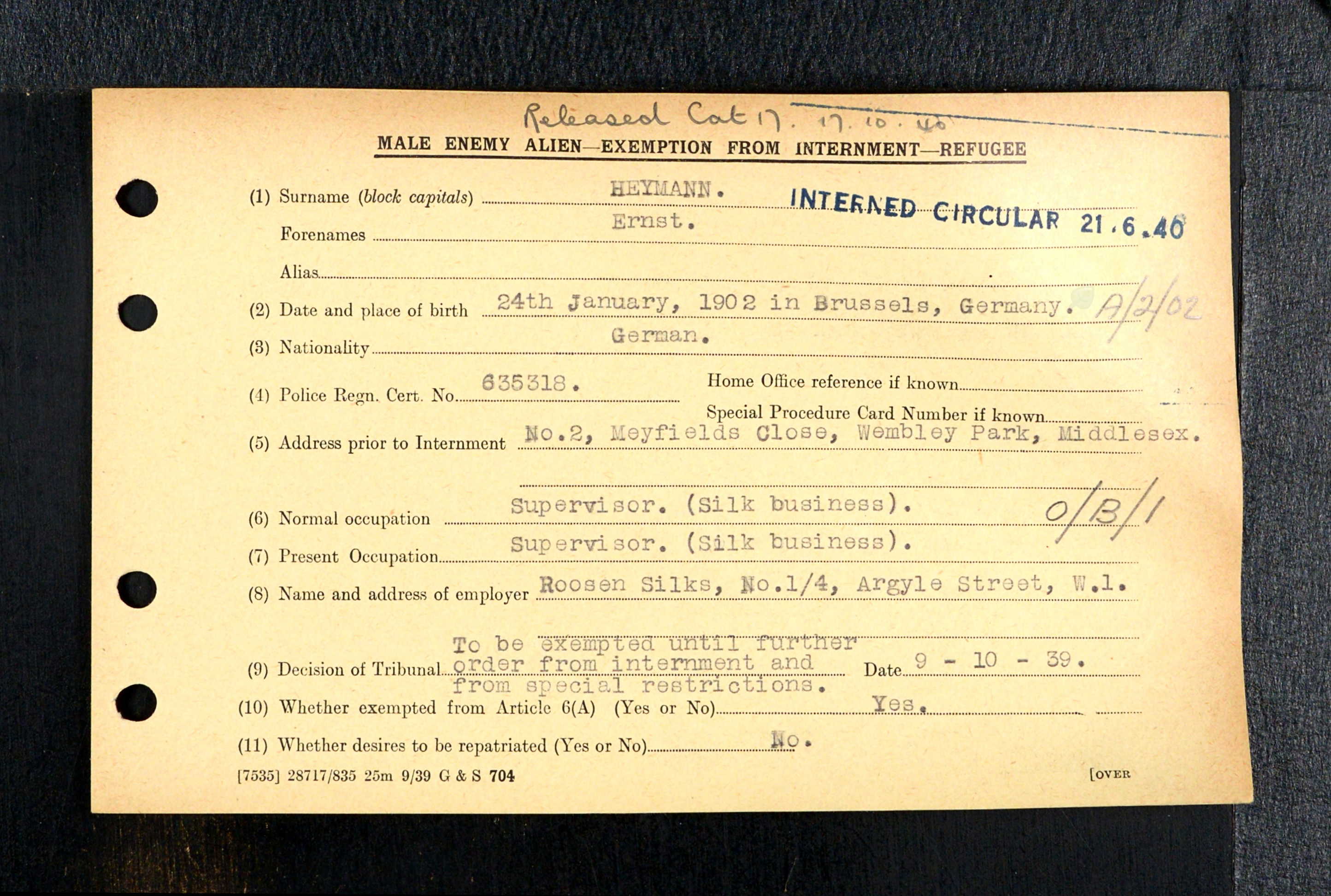
Rosemarie was able to get out of Germany and join Ernest in London where their first child, Robin’s mother, was born. After the war started, Ernest was one of the many Jewish refugees who was sent to an internment camp as a “enemy alien.” He was interned from June 21, 1940, until October 17, 1940.

Ernst Heymann, he National Archives; Kew, London, England; HO 396 WW2 Internees (Aliens) Index Cards 1939-1947; Reference Number: Ho 396/178
Piece Number Description: 178: German Internees Released in Uk 1939-1942: Hertzke-Hoj
Ancestry.com. UK, World War II Alien Internees, 1939-1945

After he was released, he and Rosemarie and their daughter immigrated to the US and settled in New York. They had another child in New York after the war.

Rosemarie’s sister Cecilie made it to the US in 1946 and went to live with Rosemarie and her family in New York. The two sisters lived together for the rest of their lives and remained close to their brothers Curt and Franz (later known as Frank), who visited them often from Massachusetts.  Cecilie lived to 95, dying in 1990, and Rosemarie to 91, dying in 2004.3

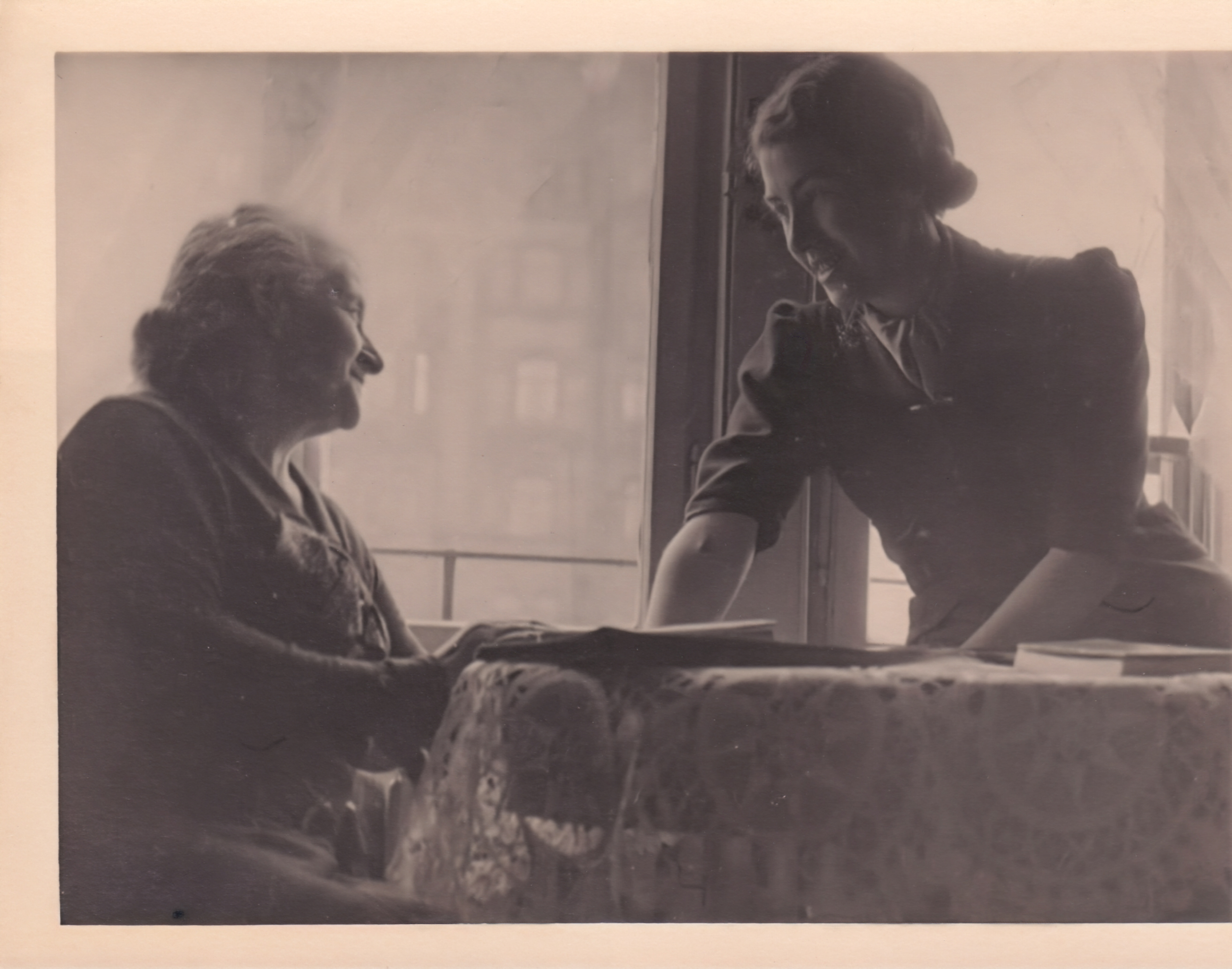
The story of Thekla Blumenfeld Gruenbaum is tragic: motherless as toddler, left behind by her father, widowed at a young age, and then killed by the Nazis. The fact that Thekla’s two daughters Cecilie and Rosemarie lived together and survived into their 90s is quite a tribute to the strength their mother must have had and that they both had.

Thekla with her daughter Rosemarie Courtesy of Robin H Kravets

Thekla Blumenfeld Gruenbaum  Courtesy of Robin H Kravets

Thekla Blumenfeld Gruenbaum  Courtesy of Robin H Kravets


  1. Email from Robin H. Kravets, September 10, 2023. 
  2. Ibid. 
  3. Emails from Robin H. Kravets, September 10, 2023, and October 27, 2023. 

An Exciting New Project in the Works!

Before I move on to the next child of Moses Blumenfeld I, I have two other matters to write about. In my next post I will share some wonderful photographs that my cousin Robin shared with me. Robin, my fifth cousin, once removed, is descended from Abraham Blumenfeld and Geitel Katz through their son Moses I. More details to follow in the next post.

But today’s post is about some other amazing photographs. A couple of months ago I received an email out of the blue from an antiques dealer in Santa Fe named Peggy Gonzalez. Peggy had found me through my blog while looking for a descendant of John Nusbaum, my three times great-grandfather and my father’s namesake. Over thirty years ago at an estate sale, she had acquired a photograph album engraved with the name John Nusbaum on the front. She wanted to know whether I would be interested in buying the album.

At first I was skeptical. There are so many scams out there today. Anyone could have found my blog and made this up. But Peggy sounded honest, and she sent me these scans of the front and back of the album as well as a few representative photos. The back is engraved with “To F. Nusbaum.” My great-great-grandmother was John Nusbaum’s daughter Frances Nusbaum Seligman, and she had lived much of her adult life in Santa Fe with her husband Bernard, my great-great-grandfather. Peggy’s story seemed to be authentic.


I was extremely excited—as you might imagine. I’ve never seen a photograph of John Nusbaum or Frances, and here was a whole album of photos. Almost 200 photos. Thanks to the generosity of some of my Seligman/Nusbaum/Cohen relatives, I arranged to purchase the album. I also got extraordinary help from Mike Lord, our guide in Santa Fe from 2014 and a close friend of my cousin Pete. He acted as the middleman between Peggy and me, retrieving the album and giving Peggy my check and then sending me the album.

The album is now safely in my house, back in the hands of one of John Nusbaum’s descendants. I have retained the services of Ava Cohn, aka Sherlock Cohn, the Photogenealogist, and am now waiting in her queue for her to have time to devote to this project. I’ve scanned the front and back of all the photos. They are all studio photographs—cabinet photos, I think they are called. Small, but very clear. And they all have the names and addresses of the photographers on the reverse side. But only three have any identification of the people in the photograph.

There are photographs that were taken in several cities in Germany as well as all over the US: Philadelphia, New York, Santa Fe, Peoria, Lewistown (PA), and St. Louis. I am hoping that if Ava can provide dates for when they were taken and perhaps the ages of the people, I can then figure out who these people are.

I will wait to share the photos until after I have had the benefits of Ava’s help, but I wanted to share now my excitement about this. Stay tuned for more!


Friederike Blumenfeld Schoen, Part V: Her Family in America After the War

By 1950, the three surviving children of Friederike Blumenfeld and Mannes Schoen, Auguste, Moritz, and Isaak, were all living in the United States. But none of the three lived past the age of 66.

Auguste died in 1951 at the age of 65. Although I don’t have an official death record, I do have a photo of her gravestone from FindAGrave. Also, there is an “Augusta Speyer” listed in the New York, New York Death Index, who died at age 64 on March 24, 1951; this could be Auguste, given that the age and year of death almost match, even if the name is misspelled.1

Find a Grave, database and images (https://www.findagrave.com/memorial/236656909/auguste-speier: accessed 9 September 2023), memorial page for Auguste Schoen Speier (1886–1951), Find a Grave Memorial ID 236656909, citing Cedar Park Cemetery, Paramus, Bergen County, New Jersey, USA; Maintained by dalya d (contributor 46972551).

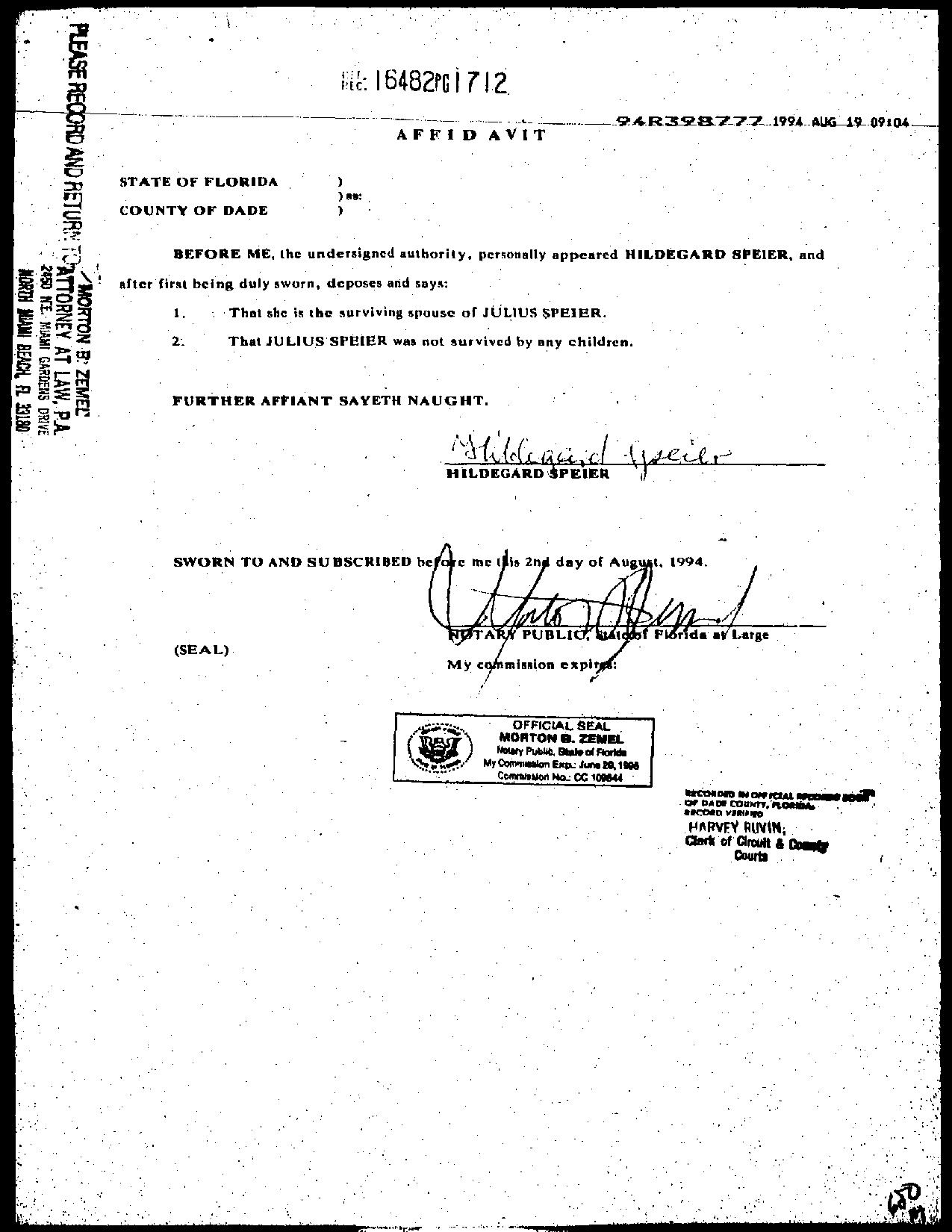
Auguste was survived by her husband Willi Speier, who died in New York City on January 1, 1964, at the age of seventy,2 and by her son Julius and his wife Hildegard. I was unable to find any further information about Julius and Hildegard’s lives once they got to the US. I do not even know whether they had children. All I know is that Julius died in Florida on November 22, 1992,3 when he was seventy, and Hildegard died two years later in Florida in August 1994.4 Aside from a brief death notice for Hildegard in the Miami Herald on August 13, 1994,5 there are no obituaries to provide more information about their lives.

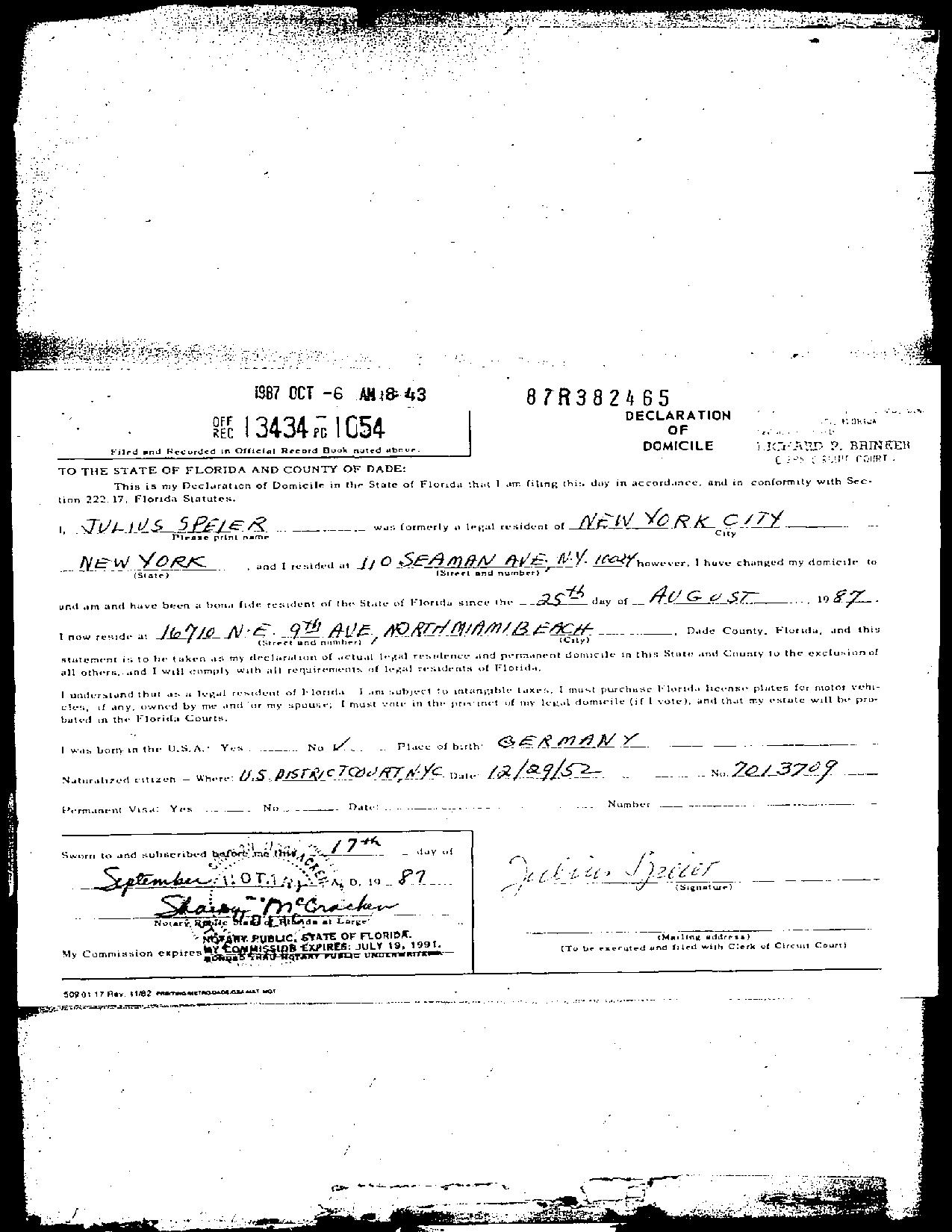
UPDATE: Thank you to the amazing researcher, Barbara Zimmer, on Tracing the Tribe, I now have a bit more information about Julius and Hildegarde. Barbara found documents online in Florida that show that Julius and Hildegard moved from New York City to Miami in 1987 and that they had no children. See the search engine here.  Also, Michael Rosenberg, whose father Walter was a second cousin to Julius, recalled a couple by that name being friends of his family in New York.

As for Auguste’s brother Moritz and his family, I again have relatively little information about their post-war years in the US. As I mentioned in my earlier post, his daughter Alice married Albert Schwarz in 1943, and they had three children and were living in New York City. Alice’s brother Manfred Schoen married in 1951; as his wife is still living, I will not disclose her name or details, and I do not know whether they had children.6 Kurt, the youngest sibling, married Berta Cooper in 1955. They had three children, according to his interview with the US Holocaust Memorial and Museum.7

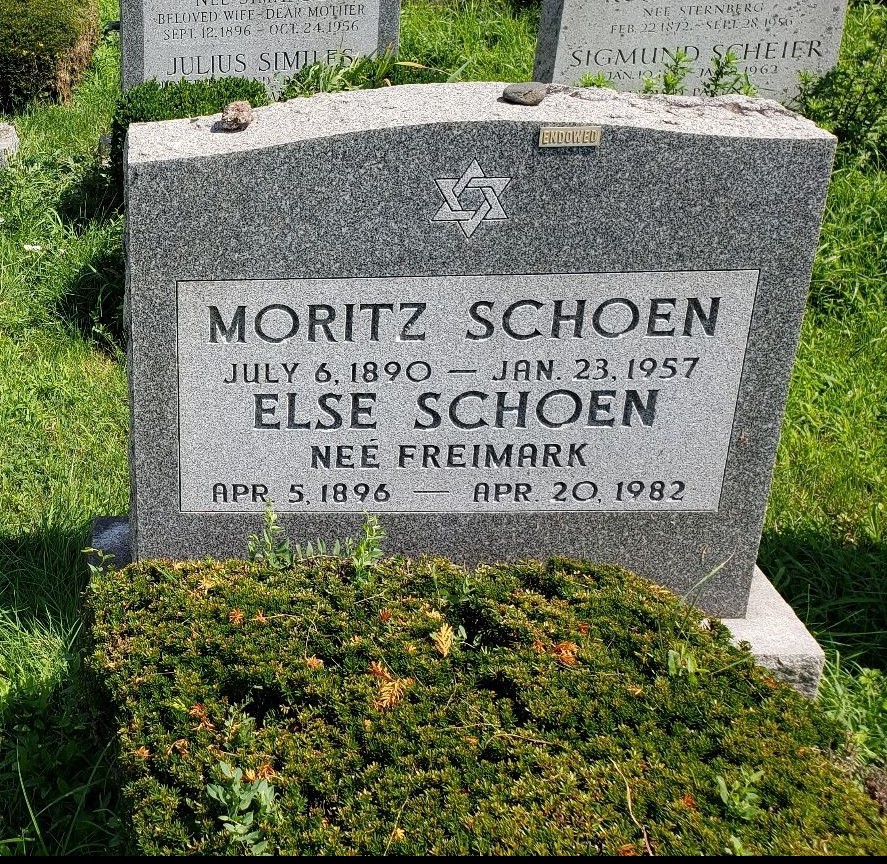
Moritz Schoen died in New York City on January 23, 1957. He was 66 years old.8 He was survived by his wife Else Freimark Schoen, who died April 20, 1982, twenty-five years after her husband.9 She was 86. They were both survived by their three children, Alice, Manfred, and Kurt, and their grandchildren.

Find a Grave, database and images (https://www.findagrave.com/memorial/230090815/else-schoen: accessed 9 September 2023), memorial page for Else Freimark Schoen (1896–1982), Find a Grave Memorial ID 230090815, citing Cedar Park Cemetery, Paramus, Bergen County, New Jersey, USA; Maintained by dalya d (contributor 46972551).

Isaak Schoen, the youngest of the children of Friederike Blumenfeld and Mannes Schoen, also died before he turned 70. He died when he was 66, just like his brother Moritz, on May 21, 1960, in New York City.10 Isaak had never married or had children and was survived by his niece and nephews and their children.

Find a Grave, database and images (https://www.findagrave.com/memorial/247906520/isaac-schoen: accessed 9 September 2023), memorial page for Isaac Schoen (1893–1960), Find a Grave Memorial ID 247906520, citing Beth-El Cemetery, Paramus, Bergen County, New Jersey, USA; Maintained by dalya d (contributor 46972551).

Moritz’s three children lived longer lives than their father or their aunt and uncle. Manfred was seventy-seven when he died in Florida on January 20, 2004.11 Alice lived to 91; she died on June 9, 2015.12 Her husband Albert Schwarz predeceased her; he died on August 5, 2010.13 They were survived by their three children. And Kurt Schoen died just last year on February 24, 2022, at the age of 94. His children survive him as well as his grandchildren. His wife Berta predeceased him on May 26, 2016.14

Thus ends the story of the family of Friederike Blumenfeld and Mannes Schoen. Sadly, their sons Jakob and Isaak have no living descendants, nor does their son Willi, who died as a boy. I don’t know whether their daughter Auguste has any descendants. But I do know that their son Moritz had six grandchildren and that this line continues at least through those grandchildren and their descendants.

And not only does this bring me to the end of Friederike’s story; it also brings me to the end of the long saga of her father Isaak Blumenfeld I, the second child of Moses Blumenfeld I. I started Isaak’s story and those of his ten children on January 25, 2022, over a year and a half ago.

I can now turn to the story of his younger sister Gelle Blumenfeld Rothschild. Like her brother Isaak, she had ten children. I may still be telling her story a year and a half from now. Imagine April 2025—what will the world be like then? I just hope it’s still here and that Jews and Israel are still here also.

In the meantime, I hope everyone has a good Thanksgiving. I am going to try to focus on the many things for which I am grateful and on all the good I see in most people. It will be a challenge, but surrounded by my family, it will be very doable.

See you the week after Thanksgiving!


  1. Augusta Speyer, Age 64, Birth Date abt 1887, Death Date 24 Mar 1951, Death Place Manhattan, New York, New York, USA, Certificate Number 6867, Ancestry.com. New York, New York, U.S., Death Index, 1949-1965. 
  2. Willi Speier, Age 70, Birth Date abt 1894, Death Date 1 Jan 1964, Death Place Manhattan, New York, New York, USA, Certificate Number 12, Ancestry.com. New York, New York, U.S., Death Index, 1949-1965 
  3. Julius Speier, Gender Male, Race White, Birth Date 10 Aug 1922, Birth Place Niederurff K, Federal Republic of Germany, Death Date 22 Nov 1992, Father Willi Speier, Mother Auguste Schoen, SSN 079242442, Ancestry.com. U.S., Social Security Applications and Claims Index, 1936-2007 
  4. Hildegard Speier, [Hildegard Gabriel], Gender Female, Race White, Birth Date 8 Sep 1919, Birth Place Bromberg Pos, Federal Republic of Germany, Death Date Aug 1994, Father Julius Gabriel, Mother Berta Gross, SSN 079242443, Ancestry.com. U.S., Social Security Applications and Claims Index, 1936-2007 
  5. The Miami Herald, Miami, Florida, Sat, Aug 13, 1994, Page 34 
  6. Name Manfred Schoen, Gender Male, Marriage License Date 1951, Marriage License Place Queens, New York City, New York, USA, License Number 5534, New York City Municipal Archives; New York, New York; Borough: Queens, Ancestry.com. New York, New York, U.S., Marriage License Indexes, 1907-2018 
  7. Oral history interview with Kurt L. Schoen, Oral History | Accession Number: 1997.A.0441.512 | RG Number: RG-50.462.0512, United States Holocaust Memorial Museum Collection, Gift of the Gratz College Holocaust Oral History Archive, found at https://collections.ushmm.org/search/catalog/irn566135&#160;
  8. Moritz Schoen, Birth Date 6 Jul 1890, Death Date 23 Jan 1957, Claim Date 26 Jan 1957, SSN 111288575, Ancestry.com. U.S., Social Security Applications and Claims Index, 1936-2007 
  9. Else Schoen, Social Security Number 094-20-5551, Birth Date 5 Apr 1896, Issue year Before 1951, Issue State New York, Last Residence 11372, Flushing, Queens, New York, USA, Death Date Apr 1982, Social Security Administration; Washington D.C., USA; Social Security Death Index, Master File, Ancestry.com. U.S., Social Security Death Index, 1935-2014 
  10. Isaac Schoen, Age 66, Birth Date abt 1894, Death Date 21 May 1960, Death Place Manhattan, New York, New York, USA, Certificate Number 11253, Ancestry.com. New York, New York, U.S., Death Index, 1949-1965 
  11. Manfred Schoen, Social Security Number 118-14-1280, Birth Date 13 Sep 1926
    Issue year Before 1951, Issue State New York, Last Residence 33180, Miami, Miami-Dade, Florida, USA, Death Date 20 Jan 2004, Social Security Administration; Washington D.C., USA; Social Security Death Index, Master File, Ancestry.com. U.S., Social Security Death Index, 1935-2014 
  12. Schwarz Family Tree, Arbeitskreis Judentum im Wasgau, Elisabeth & Otmar Weber, Schillerstraße 10b, 66994 Dahn 
  13.   Albert B. Schwarz, Social Security Number 057-16-8097, Birth Date 22 Oct 1922
    Issue year Before 1951, Issue State New York, Last Residence 11372, Flushing, Queens, New York, Death Date 5 Aug 2010, Social Security Administration; Washington D.C., USA; Social Security Death Index, Master File, Ancestry.com. U.S., Social Security Death Index, 1935-2014 
  14. “Holocaust Survivor Kurt Schoen Dies at 94,” Philadelphia Jewish Exponent, March 10, 2022, found at https://www.jewishexponent.com/holocaust-survivor-kurt-schoen-dies-at-94/  Berta Schoen, obituary, found at https://www.legacy.com/us/obituaries/inquirer/name/berta-schoen-obituary?id=9451473&#160;

Friederike Blumenfeld Schoen, Part IV: Her Children in Shanghai

As we saw, Friederike Blumenfeld Schoen had five children. They all had their lives and destinies changed by the Holocaust. Her oldest child Jakob died in 1937, and his widow and daughter were killed in the Holocaust. Friederike’s second oldest son, Moritz, immigrated with his family to the US in the late 1930s to escape the Nazis.

The other two surviving children of Friederike Blumenfeld Schoen, Auguste and Isaak, ended up in Shanghai, China, during the war. I don’t have any details about how they got to Shanghai or what their lives were like there, but there have been many books1, articles2, and memoirs3 written about the experience of Jewish refugees in Shanghai, and there was even an exhibit about Jewish refugee life in Shanghai in August 2023 in New York City.

I have read some of the articles, but not the books, so I can only briefly touch on the outline of this period in history to give context to what happened to Auguste, her husband Willi, their son Julius, and her brother Isaak, but in the footnotes I have listed sources for those who may want to learn more about the Shanghai Jewish community during the Nazi era.

When I first heard many years ago that Shanghai had been a place that many Jews sought refuge during the Nazi era, I was surprised. I’ve since learned that there was in fact a small Jewish community in Shanghai even before the 1930s, most of whom had fled from Russia after the Russian Revolution in 1917. But it was not until the 1930s that the Jewish population in Shanghai grew to about 20,000 refugees. Why Shanghai? One reason was that unlike most other places in the world including the United States, no visas were required to enter Shanghai until August 1939.4

In 1937, after a fierce battle with the Chinese, the Japanese took control of large sections of Shanghai and created a ghetto in a section called Hongkew, where Jewish refugees lived in poverty-stricken conditions. They were not allowed to leave or enter the ghetto without passes and were often mistreated by the Japanese officials who oversaw the ghetto. The Chinese residents of Shanghai also were persecuted and suffered greatly during this occupation, which lasted until the end of World War II when Japan was defeated and required to leave China.5

Jewish Ghetto Memorial in Shanghai, gruntzooki, CC BY-SA 2.0 <https://creativecommons.org/licenses/by-sa/2.0&gt;, via Wikimedia Commons

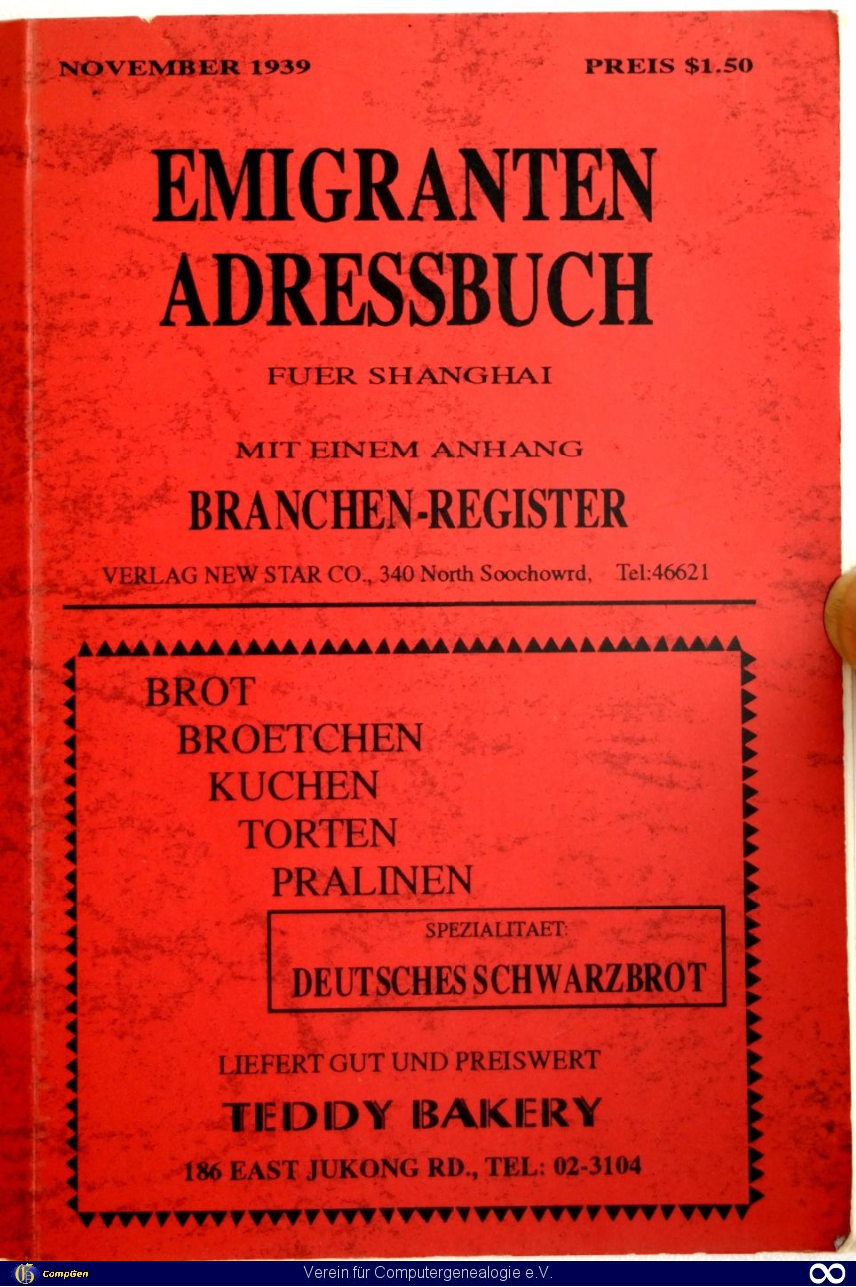
I wish I knew more about the experiences of my relatives Auguste Schoen Speier and her family and her brother Isaak Schoen in Shanghai, but aside from finding their names on various lists and in a 1939 directory for Shanghai located by Richard Bloomfield, I know no details other than that at some point they arrived there from Germany and lived there until after the war.

Auguste, Willi, and Julius Speier and Isaak Schoen are all listed on a 1950 list of Jewish refugees in Shanghai who were helped by the American Jewish Joint Distribution Committee, an organization that continues to exist today for those in need.

I also found them all here in a collection of records of Shanghai refugees made in 1944.

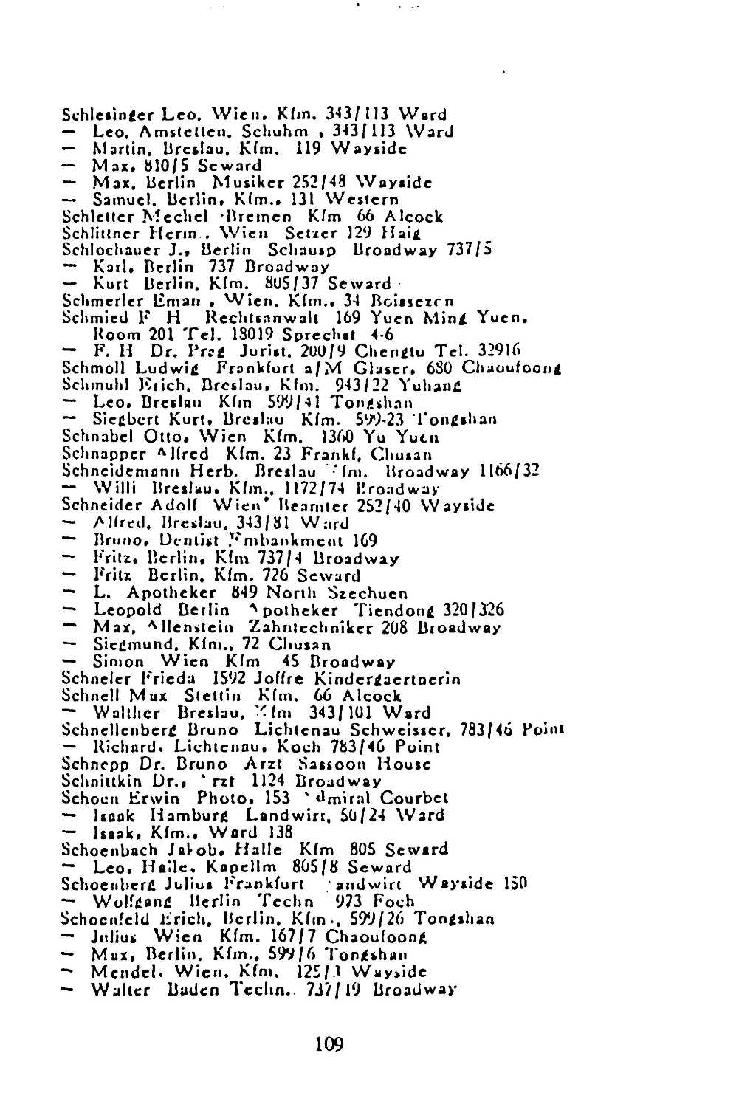
Richard located them in this November 1939 directory of emigrants in Shanghai, so obviously they had immigrated there by November 1939:

But I could not locate them on this list of refugees who had arrived in Shanghai between 1937 and 1944, so perhaps they had arrived before 1937.

In his interview with the US Holocaust Memorial and Museum, Kurt Schoen, Moritz’s son, mentioned that one of his cousins had died from typhoid while living in Shanghai, but I have no record or even a name of that cousin. He or she does not appear on any of the lists cited above. Maybe that cousin had passed away before these lists were compiled. Or maybe Kurt was confused.6

In any event, it is clear that Auguste, Willi, Julius and Isaak all ended up in Shanghai, and then after the war, they all immigrated to the US.

Auguste’s son Julius was the first to make it to the US. He arrived in San Francisco on March 19, 1947, with his wife Hildegarde Gabriel. They had married in Shanghai on December 9, 1945.7 Hildegarde was the daughter of Julius Gabriel and Berta Gross and was born on September 8, 1919, in Bromberg in what was then part of Prussia but is now in Poland.8

On the ship manifest, Julius listed his father Willi as the person he was leaving behind, Hildegarde listed her father Julius. They both listed Moritz Schoen, Auguste’s brother, as the person they were going to in the US and listed their destination as New York City. Julius listed his occupation as a shoemaker, and Hildegarde listed hers as a nurse.

Julius and Hildegarde Speier ship manifest, he National Archives at Washington, D.C.; Washington, D.C.; Passenger Lists of Vessels Arriving At San Francisco, California; NAI Number: 4498993; Record Group Title: Records of the Immigration and Naturalization Service, 1787-2004; Record Group Number: 85, NARA Roll Number: 388, Ancestry.com. California, U.S., Arriving Passenger and Crew Lists, 1882-1959

Julius’ parents Auguste (Schoen) and Willi Speier arrived in San Francisco six months later on September 24, 1947. The ship manifest indicates that they were headed to New York City where their son Julius was residing. Like his son Julius, Willi was a shoemaker or “cobbler,” as listed on the manifest. The person they were leaving behind in Shanghai was Auguste’s brother Isaak.9

Isaak himself arrived just a few months later on December 17, 1947. He also entered the US in San Francisco, indicating that he also was heading to New York City where his brother Moritz was living. He listed his occupation as a salesman.10

Auguste and Willi did end up in New York City, where in 1950 Willi was working as a “platform spotter” in a shoe factory. I don’t know what that means, but I would guess that it means he watched shoes on an assembly line. If anyone has any other ideas, please let me know.11 I’ve been unable to locate their son Julius and his wife Hildegarde on the 1950 census nor can I locate Isaak Schoen on that census.

Thus, three of Friederike Blumenfeld and Mannes Schoen’s children and four of their grandchildren had escaped Nazi Germany and survived World War II. Their lives after 1950 will be discussed in my next post.


  1. See, e.g., Alex Ross, Escape to Shanghai: A Jewish Community in China (1993, Free Press); Gao Bei, Shanghai Sanctuary: Chinese and Japanese Policy Toward European Jewish Refugees During World War II (2016, Oxford University Press); Irene Eber, Wartime Shanghai and the Jewish Refugees From Central Europe: Survival, Co-Existence, and Identity in a Multi-Ethnic City (2012, DeGruyter). 
  2. See, e.g., the articles at the following links:  https://www.smithsonianmag.com/smart-news/how-holocaust-survivors-found-refuge-shanghai-told-through-stories-and-photos-180978235/  and https://www.nbcnews.com/news/asian-america/jewish-wwii-refugees-found-safety-shanghai-are-focus-new-exhibit-rcna96478 and https://encyclopedia.ushmm.org/content/en/article/german-and-austrian-jewish-refugees-in-shanghai and https://www.npr.org/2023/08/06/1192118339/jewish-refugees-shanghai-world-war-ii&#160;
  3. E.g., Ernest Heppner, Shanghai Refuge: A Memoir of the World War II Jewish Ghetto (1995, University of Nebraska Press); Berl Falbaum, ed., Shanghai Remembered…: Stories Of Jews Who Escaped To Shanghai From Nazi Europe (2005, Momentum Books, LLC.); Sigmund Tobias, Strange Haven: A Jew­ish Child­hood in Wartime Shanghai (2009, University of Illinois Press). 
  4. See Note 2, above. 
  5. See Note 2, above. 
  6. Kurt L. Schoen, July 24, 2004 interview,  Accession Number: 1997.A.0441.512 | RG Number: RG-50.462.0512, United States Holocaust Memorial Museum Collection, Gift of the Gratz College Holocaust Oral History Archive, found at https://collections.ushmm.org/search/catalog/irn566135. There was another puzzling thing about Kurt’s interview. He mentioned that his father had one sister (Auguste) and one unmarried brother (Isaak), but did not mention Jakob, his father’s older brother.  Jakob, as we saw, had died in 1937 when Kurt was ten, and his wife and daughter were killed in the Holocaust. Had Kurt never known his uncle Jakob and his family? Had Moritz never mentioned them? Or was it just too painful for Kurt to talk about what had happened to his uncle, aunt, and cousin? 
  7. Marriage notice for Julius Speier and Hildegarde Gabriel, The Jewish Voice in Jüdisches Nachrichtenblatt, 23. November 1945, p. 8 
  8. Hildegard Speier, Gender Female, Race White, Birth Date 8 Sep 1919, Birth Place Bromberg Pos, Federal Republic of Germany, Death Date Aug 1994, Father Julius Gabriel, Mother Berta Gross, SSN 079242443, Ancestry.com. U.S., Social Security Applications and Claims Index, 1936-2007 
  9. Willi and Auguste Speier, ship manifest, The National Archives at Washington, D.C.; Washington, D.C.; Passenger Lists of Vessels Arriving At San Francisco, California; NAI Number: 4498993; Record Group Title: Records of the Immigration and Naturalization Service, 1787-2004; Record Group Number: 85, NARA Roll Number: 392, Ancestry.com. California, U.S., Arriving Passenger and Crew Lists, 1882-1959 
  10. Isaak Schoen ship manifest, The National Archives at Washington, D.C.; Washington, D.C.; Passenger Lists of Vessels Arriving At San Francisco, California; NAI Number: 4498993; Record Group Title: Records of the Immigration and Naturalization Service, 1787-2004; Record Group Number: 85, Ancestry.com. California, U.S., Arriving Passenger and Crew Lists, 1882-1959 
  11.  National Archives at Washington, DC; Washington, D.C.; Seventeenth Census of the United States, 1950; Year: 1950; Census Place: New York, New York, New York; Roll: 4546; Page: 18; Enumeration District: 31-1702, Ancestry.com. 1950 United States Federal Census 

Friederike Blumenfeld Schoen, Part III: Her Son Moses Escapes to America

I have been unable to do any new research in these last few weeks since the horrendous massacre in Israel by Hamas on October 7. I just can’t seem to focus on research right now. Fortunately I had several blog posts ready in my queue and will publish those, including this one. Perhaps the best way I can support Israel right now is to educate and remind people about the long history of persecution of Jews and antisemitism so that they best understand why Israel exists and why it must survive.


Although Friederike’s oldest child Jakob died in 1937 and his widow and daughter were killed by the Nazis, her other three surviving children all managed to escape the Nazis.

Friederike’s son Moses, more commonly known as Moritz, wanted to leave Germany quite early. As described by his son Kurt Leopold Schoen in the oral history interview he did with the US Holocaust Memorial and Museum, Moritz had had a successful wholesale and retail shoe business in Kassel, but once the Nazis came to power the business suffered. Non-Jews boycotted the store, and Moritz had to close the business and work as a shoemaker.1

But leaving Germany was difficult. The family needed affidavits from someone in the US to get a visa to enter the country, and the relatives in the US were reluctant to sponsor a family with three young children. Fortunately, Moritz and Else’s fourteen-year-old daughter Alice was given an opportunity to leave when the National Council of the Jewish Women in the US organized a rescue mission that brought many children out of Germany.2 Alice came to the US on May 13, 1938, and was sent to live with a Jewish family in San Antonio, Texas, the Rosenbergs, as seen on the 1940 US census.3

Alice Schoen passenger manifest, The National Archives and Records Administration; Washington, D.C.; Passenger and Crew Lists of Vessels Arriving at and Departing from Ogdensburg, New York, 5/27/1948 – 11/28/1972; Microfilm Serial or NAID: T715, 1897-1957
Ancestry.com. New York, U.S., Arriving Passenger and Crew Lists (including Castle Garden and Ellis Island), 1820-1957

The website for the Holocaust Memorial Museum of San Antonio reported that Abe and Bella Rosenberg “took [Alice] into their lives as if she were a long lost relative. The Rosenberg children, Miriam and Stanley, and a host of aunts, uncles, and cousins who treated her with affection and kindness made her adjustment to a new life easier.” In his oral history interview, Alice’s brother Kurt mentioned that the Rosenbergs were a very nice family, but nevertheless Alice was naturally very homesick.  She did not see her family again until 1940.4

But Alice was able to get help from the Rosenberg family to bring her father Moritz to the US from Germany. As reported on the website for the Holocaust Memorial Museum of San Antonio, they signed affidavits pledging financial support for him.

Once he had an affidavit from the Rosenbergs, Moritz was able to go to the US consulate in Germany and receive a visa. But before he could leave, he was arrested during the Kristallnacht riots in November, 1938. According to his son Kurt, Moritz was not sent to Buchenwald like so many other Jewish men were after Kristallnacht because he already had a visa to leave Germany. He was released within a day or two from police custody in Kassel and prepared to leave for the US.5

Moritz arrived on December 3, 1938, seven months after Alice’s arrival, and settled in New York City. His ship manifest lists his wife Else as the person he was leaving behind in Kassel, Germany, and his sister-in-law Betty Lutz (born Babette Freimark) as the person he was going to in the US. He listed his occupation as a shoemaker.6

Meanwhile, back in Germany, Else and her two young sons Manfred and Kurt moved to Frankfurt; the boys were sent to a Jewish orphanage and Else moved in with one of her sisters. Kurt described the orphanage as a place where he and his brother were well treated. They went to school and learned English. Finally in April 1939, they were released and reunited with their mother and allowed to leave Germany for the US. Kurt, who was eleven at the time, recalled that the Nazis tore through their luggage and stole everything Else had packed except one small teapot.7

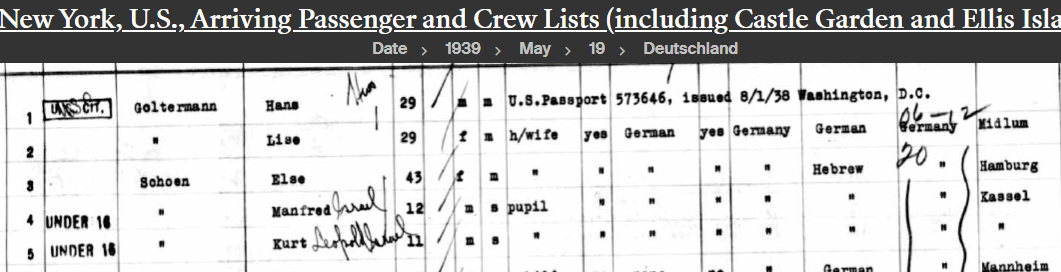
Else arrived in New York with Manfred and Kurt (listed as Kurt Leopold Israel on the manifest) on May 19, 1939.

Else Schoen and children, passenger manifest, The National Archives and Records Administration; Washington, D.C.; Passenger and Crew Lists of Vessels Arriving at and Departing from Ogdensburg, New York, 5/27/1948 – 11/28/1972; Microfilm Serial or NAID: T715, 1897-1957
Ship or Roll Number: Deutschland, Ancestry.com. New York, U.S., Arriving Passenger and Crew Lists (including Castle Garden and Ellis Island), 1820-1957

The family moved into a small apartment riddled with bed bugs; Moritz worked doing shoe repairs and barely made a living. But as Kurt said, they were happy to be out of Germany and safely living in New York. They moved frequently from one apartment to another in order to get the benefit of one or two free months of rent being offered by landlords. Manfred and Kurt started school where they quickly learned English and rose from the lower levels of their grade to the highest within a year.8

Alice was reunited with her parents and brothers sometime in 1940 when the Rosenberg family brought her to New York after taking a trip to Canada to see the Dionne Quintuplets. She married just three years later when she was nineteen, according to her brother Kurt.9 Her husband, Albert Bernhard Schwarz, was born on October 22, 1922, in Busenberg, Germany, to Alfred Lazarus Schwarz and Berta Levy. Like Alice, he was refugee from Germany; he had arrived on August 13, 1938.10 He was the only member of his family to survive. His parents and all his siblings were killed by the Nazis.11

Albert entered the US Army on March 26, 1943, listing his marital status as single.12 He and Alice must have married later that year. According to one biography of Albert, he was assigned to Camp Ritchie in Maryland and trained for military intelligence. As a Ritchie Boy, as they were known, Albert was trained to interrogate German prisoners of war. Starting in October 1944 he was with the 7th Armored Division of the II English Army in France and the northern part of Belgium. On November 5-6, 1944, during the Battle of the Bulge, Albert’s jeep hit a German mine near a bridge over the Meuse River. Albert suffered severe head injuries from which he suffered the rest of his life. He was in a coma for over a month in a English military hospital and remained there until February, 1945. He returned to the US in the spring of 1945, but was hospitalized until July. On Aug. 02, 1945, he was discharged from military service at Camp Edward, Massachusetts.13

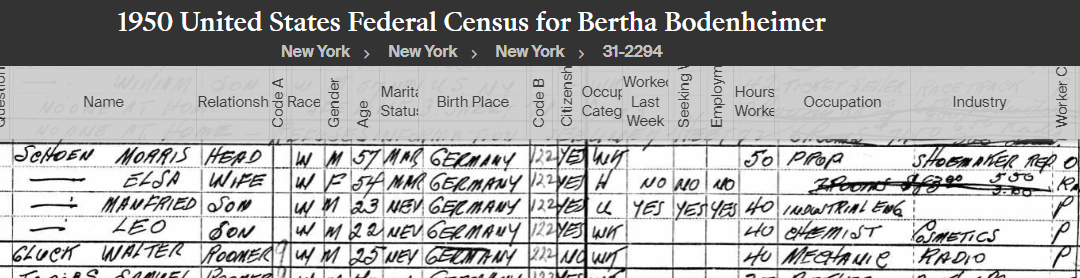
Alice and Albert had three children born after the war. In 1950 they were living in New York City, and Albert was working as a butcher.14 Alice’s parents Moritz and Else Schoen and her brothers Manfred and Kurt (listed as Leo here) were also living in New York City. Moritz now owned his own shoemaking business. Manfred was an industrial engineer, and Leo/Kurt was a chemist in a cosmetics company.

Morris Schoen and family, 1950 US census, National Archives at Washington, DC; Washington, D.C.; Seventeenth Census of the United States, 1950; Year: 1950; Census Place: New York, New York, New York; Roll: 3572; Page: 9; Enumeration District: 31-2294, Ancestry.com. 1950 United States Federal Census

Meanwhile, Moritz’s two remaining siblings had survived the war in Shanghai, China. More on that in my next post.


  1. Many of the personal details in this post came from Kurt Leopold Schoen’s interview with the USHMM. Kurt L. Schoen, July 24, 2004 interview, Accession Number: 1997.A.0441.512 | RG Number: RG-50.462.0512, United States Holocaust Memorial Museum Collection, Gift of the Gratz College Holocaust Oral History Archive, found at https://collections.ushmm.org/search/catalog/irn566135.  Although Kurt is listed as Leopold or Leo on many US records, he used the name Kurt for most of his adult life in the US and will be referred to here as Kurt for that reason. 
  2. See Note 1, supra. 
  3. Alice Schoen, 1940 US Census, Year: 1940; Census Place: San Antonio, Bexar, Texas; Roll: m-t0627-04201; Page: 61A; Enumeration District: 259-6, Ancestry.com. 1940 United States Federal Census 
  4. See Note 1, supra. 
  5. See Note 1, supra. 
  6. Moses Schoen, passenger manifest, The National Archives and Records Administration; Washington, D.C.; Passenger and Crew Lists of Vessels Arriving at and Departing from Ogdensburg, New York, 5/27/1948 – 11/28/1972; Microfilm Serial or NAID: T715, 1897-1957, Ship or Roll Number: Hamburg, Ancestry.com. New York, U.S., Arriving Passenger and Crew Lists (including Castle Garden and Ellis Island), 1820-1957 
  7. See Note 1, supra. 
  8. See Note 1, supra. 
  9. See Note 1, supra. 
  10. Albert Schwarz, Declaration of Intention, The National Archives at Philadelphia; Philadelphia, PA; NAI Title: Declarations of Intention For Citizenship, 1/19/1842 – 10/29/1959; NAI Number: 4713410; Record Group Title: Records of District Courts of the United States, 1685-2009; Record Group Number: 21, Description
    Description: (Roll 610) Declarations of Intention For Citizenship, 1842-1959 (No 481301-482200), Ancestry.com. New York, U.S., State and Federal Naturalization Records, 1794-1943 
  11. Family history of Schwarz family, Arbeitskreis Judentum im Wasgau, Elisabeth & Otmar Weber, Schillerstraße 10b, 66994, found at /https://judentum-im-wasgau.de/images/geschichte/jugemeinden/jufbusenberg/02_schwarz_jakob_hauptstr_49_bu.pdf 
  12. Albert B Schwarz, Race White, Marital Status Single, without dependents (Single)
    Rank Private, Birth Year 1922, Nativity State or Country Danzig or Germany, Citizenship Not Yet a Citizen, Residence New York, New York, Education 2 years of high school
    Civil Occupation Stock clerks, Enlistment Date 26 Mar 1943, Enlistment Place New York City, New York, Service Number 32874464, Branch No branch assignment, Component Selectees (Enlisted Men), National Archives at College Park; College Park, Maryland, USA; Electronic Army Serial Number Merged File, 1938-1946; NAID: 1263923; Record Group Title: Records of the National Archives and Records Administration, 1789-ca. 2007; Record Group: 64; Box Number: 05772; Reel: 241, Ancestry.com. U.S., World War II Army Enlistment Records, 1938-1946 
  13. See Note 11, supra. 
  14. Albert Schwarz and family, 1940 US census, National Archives at Washington, DC; Washington, D.C.; Seventeenth Census of the United States, 1950; Year: 1950; Census Place: New York, New York, New York; Roll: 6203; Page: 6; Enumeration District: 31-1913, Ancestry.com. 1950 United States Federal Census 

For My Cousins in Israel

For all my cousins in Israel and their children and their families and their friends, my heart is with you. I am so blessed to have found you, and I will continue to stay in touch and hope for your safety and for peace. Please know that you are all in my thoughts—Omri, Ravid, Rafi, Joyce, Ester, Ariela, and Miki. And all your families and friends.

I wrote a short essay about Israel three days ago intending to post it here on my blog. But I was hurting too much, and since the blog is public, not private, I decided not to post. I did not want to invite anti-Israel, antisemitic posts by members of the public. Instead I posted on Facebook, limiting my audience to my Facebook friends. Fortunately, the responses I received were all sensitive and supportive from both my Jewish and non-Jewish friends.

I am still hurting too much. But I’ve decided to share this more publicly now. Because it’s important to speak up. Because now that Israel is fighting back, I know that the tide of public opinion will start to shift for many. I am not indifferent to the suffering of the people in Gaza. I understand that many of them are not terrorists. Many are children. But I also know that Israel has over and over again been convinced to walk away and agree to ceasefires only to once again have Hamas fire rockets and engage in terrorism to kill innocent people in Israel.

There is a lot of history here. It didn’t start in 1948 or 1967 or 1973. And it certainly didn’t start with Israel’s current response to the October 7 massacres. I can’t begin to summarize all the times that Israel has tried to find peace with the Palestinians only to find that violence and hatred are all they get in response. Of course, it’s not all Palestinians. It’s the leadership and the extremists who refuse to accept Israel’s right to exist. But it’s the leadership and the extremists who control whether or not there will be peace, and they refuse to take the steps that will bring peace, thus endangering the lives of not only Israelis but also their own people.

I am not a historian, but in the last week I’ve read many different articles outlining that history. For now I will only recommend two articles, one written in 2021 by Michael Oren that details the long history of Gaza and one published this week by David Brooks about more recent attempts to find peace between Israel and the Palestinians.

In that context, here are the words I posted on Facebook earlier this past week.


I can’t get the beautiful faces of the Israeli teens out of my head. My Facebook newsfeed contains one photo after another—of a teen taken hostage by Hamas or worse killed by Hamas. Or of the mother with her two young children. Or the elderly great-grandmother holding her great-grandchild. I can’t stop thinking about them all. And I can’t help but associate those faces with the names and faces of the many relatives I’ve researched who were killed by the Nazis. It’s all mixed up in my head.

I am not one who has been blind to Israel’s faults. I have often criticized the way Palestinians have been treated by Israel; I do not defend the oppression of others. I have been disappointed and angered by the way Netanyahu and the right-wing coalition he panders to have undermined liberal democracy and liberal Judaism in Israel. But those criticisms of Israel don’t mean that I don’t care about the people in and future of Israel just as it doesn’t mean I don’t care about America’s people and America’s future when I criticize it for its racism, the pandering to the white supremacists and the MAGA cult by Republicans, the failure to address poverty, the corporate greed, the gun violence, and so on. You can criticize without hating or being indifferent. You can love without being blind to the faults of those you love.

So right now my heart is with Israel and with its people. We can wonder later about how security failed or why or how this all happened. But no matter whatever criticisms anyone has of Israel, the terrorism of Hamas cannot be considered acceptable or understandable or justifiable. We need to stand together—and by “we” I don’t mean just Jews. I mean everyone. If you are silent or indifferent, you are part of the problem. If you can just scroll past all those beautiful faces and not feel anything, you are part of the problem.

When hatred starts to spread its poison and people remain silent, then we are all responsible for what happens next. Remember the six million. Please do not let it happen again.