Isaak Rosenberg: A Family With No Survivors

The youngest child of Rebecca Blumenfeld and Mendel Rosenberg was their son Isaak. As we saw, Isaak was born in Rosenthal, Germany, on June 15, 1892, and on December 22, 1922, he married Bella Gans, daughter of Jacob Gans and Esther Ehrenreich, in Niederaula, Germany.

Isaak and Bella had one child, a daughter Rita Rosenberg, born on April 29, 1924 in Frankfurt.

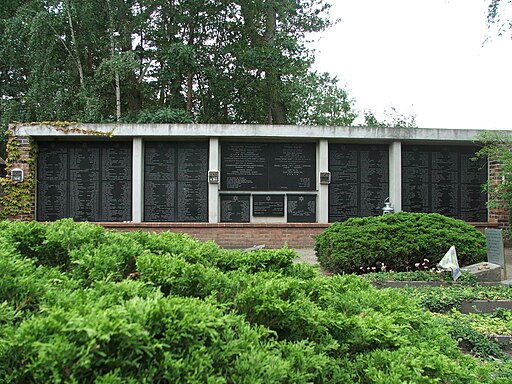
Unfortunately, all of them—Isaak, Bella, and Rita—were murdered by the Nazis. According to Yad Vashem, Isaak was deported from Frankfurt on August 10, 1942, and sent to the concentration camp in Majdanek, Poland, where he was murdered. His wife Bella’s nephew Israel Gans filed this Page of Testimony at Yad Vashem in his memory. The Hebrew written where it says “circumstances of death” merely says “perished in the Holocaust.” (Thank you to Hanna Gafni of Tracing the Tribe on Facebook for translating this line on this Page and the two below.)

The information available regarding the fates of Bella and Rita is far less specific. The Gedenbuch (Memorial Book) only reports that Bella was deported to Poland and killed there; perhaps she was deported on the same date as Isaak and to the same camp, but that isn’t stated. Nor does the Page of Testimony filed at Yad Vashem by Bella’s nephew Israel Gans provide any further details. The line for “Circumstances of Death” translates as “deported to Poland. Her fate is not known. Perished in the Holocaust.”

The information about Rita is even more limited. The Gedenbuch doesn’t even have information about where she was deported to or killed nor does her cousin Israel Gans’ Page of Testimony for her. The Hebrew written where it says “circumstances of death” says “perished in the Holocaust.”


This may be the first time that I have learned of family members who were killed in the Holocaust for whom there are no recorded details of their fates. Did Bella and Rita accompany Isaak to Majdanek? Or was the family separated? The lack of information somehow makes their deaths sting even more. The fact that the Nazis didn’t even document their murders makes it more likely that those deaths would have been somehow swept under the rug. So it is my task here to make sure that their lives and their murders are not forgotten.


That brings me to the end of the story of Rebecca Blumenfeld Rosenberg, the seventh child of Isaak Blumenfeld I and Gelle Strauss. Although Rebecca lost one son, Willi, as a young adult, and her son Isaak and his family were all murdered in the Holocaust, she was survived by seven grandchildren and has descendants still living today in Israel and the United States.

Next I turn to Rebecca’s younger sister, Friederike Blumenfeld, the eighth child of Isaak Blumenfeld I and Gelle Strauss and the last of their children to live to adulthood.

Genealogy Fun: How My Friend and I Discovered We Have Mutual Cousins

One of the first people I ever met who did genealogy research is my friend Amanda Katz Jermyn. I met Amanda through mutual friends over thirty years ago, and we have been members of the same small havurah group for many years now. When Amanda long ago described her genealogy research and the connections and stories she had found, I was amazed. She helped to inspire me to start my own journey.

Amanda and I both have paternal ancestry from Germany, and over the years we’ve wondered whether we would ever find an overlap in our German Jewish ancestry. Well, I finally found one, although it is very attenuated and only by marriage. Nevertheless it was fun to find this connection.1 Here’s the story of my third cousin, twice removed, Moritz Rosenberg, and his wife Berta Blum, Amanda’s third cousin, once removed.

As we saw in my earlier post, Moritz, the third child of Rebecca Blumenfeld and Mendel Rosenberg, was born on September 15, 1887, in Rosenthal, Germany, and married Berta Blum on August 10, 1919, in Frankenau, Germany. Berta was born on September 5, 1896, in Frankenau to Elias Blum and Amalie Katz.

Marriage of Moritz Rosenberg and Berta Blum, Hessisches Hauptstaatsarchiv; Wiesbaden, Deutschland; Signatur: 3254, Year Range: 1919, Ancestry.com. Hesse, Germany, Marriages, 1849-1930

Moritz and Berta had two children, Jacob (later Theodore), born on January 17, 1921,2 and Rebecca (later Ruth), born on January 4, 1925, both in Rosenthal, Germany.3

Moritz and his family were among the very fortunate ones who all were able to escape safely from Nazi Germany. Moritz, Berta, and their 13-year-old daughter Rebecca arrived in New York on September 15, 1938. Moritz listed his occupation as a butcher. Berta’s cousin Herman Blum was listed as the person they knew in the US.4

It took me longer to find out when Jacob arrived in the US because I was searching for him as Jacob, as that is how he was listed on Moritz’s naturalization petition. But the 1940 census has him identified as Theodore (and Rebecca as Ruth),5 and that gave me the necessary clue to find Jacob a/k/a Theodore’s naturalization petition. He arrived in the US as a 16-year-old on May 15, 1937. And on his 1942 petition he used his newly adopted name, Theodore.

Moritz Rosenberg, Declaration of Intention, (Roll 548) Declarations of Intention For Citizenship, 1842-1959 (No 426401-427400), Ancestry.com. New York, U.S., State and Federal Naturalization Records, 1794-1943

Theodore Jack Rosenberg a/k/a Jakob Teo Rosenberg, Declaration of Intention, The National Archives at Philadelphia; Philadelphia, PA; NAI Title: Declarations of Intention For Citizenship, 1/19/1842 – 10/29/1959; NAI Number: 4713410; Record Group Title: Records of District Courts of the United States, 1685-2009; Record Group Number: 21, Description: (Roll 561) Declarations of Intention For Citizenship, 1842-1959 (No 438701-439600), Ancestry.com. New York, U.S., State and Federal Naturalization Records, 1794-1943

The date of his arrival helped me locate Theodore’s ship manifest, where he identified his father as the person he was leaving behind, and his uncle, Herman Blum, as the person he was going to in the US. He is identified as Teo Rosenberg. (See the last line on the image below.)

Teo Rosenberg, ship manifest, The National Archives and Records Administration; Washington, D.C.; Passenger and Crew Lists of Vessels Arriving at and Departing from Ogdensburg, New York, 5/27/1948 – 11/28/1972; Microfilm Serial or NAID: T715, 1897-1957, Ship or Roll Number: Manhattan, Ancestry.com. New York, U.S., Arriving Passenger and Crew Lists (including Castle Garden and Ellis Island), 1820-1957

In 1940, Moritz, Berta, and both of their children were living in New York City. Moritz and Berta were both working as salespeople for a wholesale dress business, and Theodore was a handyman for a venetian blinds company. They also had four lodgers living with them.

Moritz Rosenberg and family, 1940 US Census, Year: 1940; Census Place: New York, New York, New York; Roll: m-t0627-02670; Page: 1A; Enumeration District: 31-1885, Ancestry.com. 1940 United States Federal Census

But while I was searching for information about Theodore/Jacob, I found Moritz and Berta and their children on an Ancestry family tree called the 2020 Jermyn Tree, owned by someone with a memorable name, James Bond. I might have thought that that name was a pseudonym, but fortunately I knew that my friend Amanda had a distant cousin with that name. So seeing the title with her surname and the name of the owner, I assumed there had to be some connection between my relative Moritz Rosenberg and his family and my friend Amanda.

Although Amanda’s name wasn’t revealed on the tree since she is still living, I knew her parents’ names, and they were on the tree. The connection appeared to be through Moritz Rosenberg’s wife Berta Blum, whose mother was Amalie Katz, but I couldn’t quite sort out how Robert Katz, Amanda’s father, was related to Amalie Katz.

I contacted Amanda, and she confirmed the connection and said that Berta Blum was in fact her relative—her third cousin, once removed, through Berta’s mother Amalie Katz and Amanda’s father Robert Katz. Even better, Amanda had been in touch with Moritz and Berta’s daughter Ruth (born Rebecca) and was able to provide me with more information about Ruth and her brother Theodore and their children.

For example, Amanda shared that Ruth had told her that her brother Theodore had enlisted in the US Army in the intelligence division and that the army had him change his surname from Rosenberg to Rogers since he was being sent to Germany. This helped me locate Theodore’s draft registration, which I had had trouble locating when searching for Theodore Rosenberg.

Theodore registered for the draft on February 15, 1942, and was still working for the venetian blinds company at that time. As you can see, he crossed out Rosenberg on his draft registration and inserted Rogers as his surname.

Theodore Rosenberg/Rogers, World War II draft registration, National Archives at St. Louis; St. Louis, Missouri; Wwii Draft Registration Cards For New York City, 10/16/1940 – 03/31/1947; Record Group: Records of the Selective Service System, 147, Ancestry.com. U.S., World War II Draft Cards Young Men, 1940-1947

Ruth Rosenberg married Henry Hammer (born Hammerschlag) after the war; their New York City marriage license is dated June 12, 1945.6 Henry was born on March 29, 1919, in Giessen, Germany.7 In 1950, Ruth and Henry were living in New York City, and Henry was working as a salesman for wholesale dry goods company. Ruth and Henry would have two children.8

Meanwhile, in 1950, Moritz, Berta, and Theodore were living together (along with Berta’s mother Amalie Blum) in New York City. Moritz and Berta now were in the wholesale liquor business together, and Theodore was continuing to sell venetian blinds.

National Archives at Washington, DC; Washington, D.C.; Seventeenth Census of the United States, 1950; Year: 1950; Census Place: New York, New York, New York; Roll: 4547; Page: 3; Enumeration District: 31-1731, Ancestry.com. 1950 United States Federal Census

Theodore didn’t marry until 1960 when he was 39 years old.9 His wife was Sylvia Kapp (originally Kappenmacher), born on February 20, 1938, in Port Elizabeth, South Africa, to Willi Kappenmacher and Erna Wolf. Sylvia and her parents had immigrated to the US on June 8, 1946,10 and were living in New York City in 1950. Theodore and Sylvia had two children born in the 1960s.

Sadly, those children lost their father when they were very young as Theodore died on November 13, 1971, at the age of fifty.11 He was survived not only by his wife and children, but also by both of his parents and his sister Ruth and her family.

Fortunately, Theodore’s father and especially his mother and sister were graced with very long lives. Moritz Rosenberg died on September 22, 1976, five years after his son. He had turned 89 years old just a week before.12

Berta Blum Rosenberg achieved a remarkable distinction—living to 112 years and becoming the oldest living Jewish person in the world at that time, as reported in her obituary in the January 30, 2009, Hackensack (NJ) Record:

Berta Blum Rosenberg obit

The Record Hackensack, New Jersey • Fri, Jan 30, 2009 Page L6

Berta died on January 28, 2009, in New York.13 She was survived by her daughter Ruth and her grandchildren and great-grandchildren.

Her daughter Ruth also lived a long life. She died on March 8, 2021, at the age in 96; her husband Henry Hammer had predeceased her by many years, having passed away on May 17, 1986, at the age of 67.14 Ruth was survived by her children and grandchildren as well as the children and grandchildren of her brother Theodore.

Those children and grandchildren of Ruth and Theodore create a link between my friend Amanda and myself. They are our mutual cousins—the descendants of my cousin, Moritz Rosenberg, and Amanda’s cousin, Berta Blum.

Isn’t genealogy fun?


  1. Amanda also shares some DNA with my husband, but given the different ancestral homes of each of them and the very small amount of DNA shared, it is likely just endogamy. 
  2. Theodore Jack Rosenberg a/k/a Jakob Teo Rosenberg, Declaration of Intention, The National Archives at Philadelphia; Philadelphia, PA; NAI Title: Declarations of Intention For Citizenship, 1/19/1842 – 10/29/1959; NAI Number: 4713410; Record Group Title: Records of District Courts of the United States, 1685-2009; Record Group Number: 21, Description: (Roll 561) Declarations of Intention For Citizenship, 1842-1959 (No 438701-439600), Ancestry.com. New York, U.S., State and Federal Naturalization Records, 1794-1943 
  3. Moritz Rosenberg, Declaration of Intention, (Roll 548) Declarations of Intention For Citizenship, 1842-1959 (No 426401-427400), Ancestry.com. New York, U.S., State and Federal Naturalization Records, 1794-1943 
  4. Ibid. 
  5. Moritz Rosenberg and family, 1940 US Census, Year: 1940; Census Place: New York, New York, New York; Roll: m-t0627-02670; Page: 1A; Enumeration District: 31-1885, Ancestry.com. 1940 United States Federal Census. See image below. 
  6. Ruth R Rosenberg, Gender Female, Marriage License Date 12 Jun 1945
    Marriage License Place Manhattan, New York City, New York, USA, Spouse Henry M Hammer. License Number 14437, New York City Municipal Archives; New York, New York; Borough: Manhattan; Volume Number: 21, Ancestry.com. New York, New York, U.S., Marriage License Indexes, 1907-2018 
  7. Henry Hammerschlag World War II draft registration, National Archives at St. Louis; St. Louis, Missouri; Wwii Draft Registration Cards For New York City, 10/16/1940 – 03/31/1947; Record Group: Records of the Selective Service System, 147, Ancestry.com. U.S., World War II Draft Cards Young Men, 1940-1947 
  8. Henry Hammer and family, 1950 US census, National Archives at Washington, DC; Washington, D.C.; Seventeenth Census of the United States, 1950; Year: 1950; Census Place: New York, New York, New York; Roll: 4377; Page: 19; Enumeration District: 31-2183, Ancestry.com. 1950 United States Federal Census 
  9. Theodore Rogers, Gender Male, Marriage License Date 1960, Marriage License Place Manhattan, New York City, New York, USA, Spouse Sylvia Kapp, License Number 11021, New York City Municipal Archives; New York, New York; Borough: Manhattan, Ancestry.com. New York, New York, U.S., Marriage License Indexes, 1907-2018 
  10. Kappenmacher, ship manifest, The National Archives and Records Administration; Washington, D.C.; Passenger and Crew Lists of Vessels Arriving at and Departing from Ogdensburg, New York, 5/27/1948 – 11/28/1972; Microfilm Serial or NAID: T715, 1897-1957, Ship or Roll Number: Marine Tiger, Ancestry.com. New York, U.S., Arriving Passenger and Crew Lists (including Castle Garden and Ellis Island), 1820-1957.  Erna Kapp, SSACI, Ancestry.com. U.S., Social Security Applications and Claims Index, 1936-2007. 
  11. Theodore Rogers, Birth Date 17 Jan 1921, Death Date 13 Nov 1971, SSN 116105571, Enlistment Branch ARMY, Enlistment Date 3 Mar 1943, Discharge Date 23 Dec 1945, Ancestry.com. U.S., Department of Veterans Affairs BIRLS Death File, 1850-2010 
  12. Moritz Rosenberg, SSDI, Social Security Administration; Washington D.C., USA; Social Security Death Index, Master File, Ancestry.com. U.S., Social Security Death Index, 1935-2014. Headstone at Find a Grave, database and images (https://www.findagrave.com/memorial/36414768/moritz-rosenberg: accessed 07 August 2023), memorial page for Moritz Rosenberg (15 Sep 1887–Sep 1976), Find a Grave Memorial ID 36414768, citing Cedar Park Cemetery, Paramus, Bergen County, New Jersey, USA; Maintained by dalya d (contributor 46972551). 
  13. Berta Rosenberg, SSDI, Social Security Administration; Washington D.C., USA; Social Security Death Index, Master File, Ancestry.com. U.S., Social Security Death Index, 1935-2014 
  14. Henry Hammer, Age 67, Birth Date 29 Mar 1919, Death Date 17 May 1986
    Death Place North Bergen, Hudson, New Jersey, USA, New Jersey State Archives; Trenton, New Jersey; New Jersey, Death Indexes, 1904-2000, Ancestry.com. New Jersey, U.S., Death Index, 1848-1878, 1901-2017 

Rebecca Blumenfeld Rosenberg’s Daughter-in-Law Bella: An Admirable Woman

Rebecca Blumenfeld and Mendel Rosenberg’s second child was their son Joseph. As we saw, Joseph was born on February 4, 1886, in Rosenthal, Germany, and married Bella Oppenheim on February 21, 1913, in Bad Hersfeld, Germany. Bella was born there on June 8, 1891, to Aron Oppenheim and Hannchen Klebe. Bella’s sister Emma Oppenheim had married Meier Blumenfeld III on April 5, 1905, in Bad Hersfeld. Meier, the son of Giedel Blumenfeld and Gerson Blumenfeld, her first cousin, once removed, was thus Joseph Rosenberg’s first cousin, since their mothers Giedel and Rebecca were sisters.

Joseph and Bella had one child, Kurt, born in Sobernheim, Germany, on April 20, 1914.1 As I wrote in my earlier post, Sobernheim is not in the Hesse region where both Joseph and Bella were born and raised and where they married, but over 160 miles away in the Rhine Palatinate region.

Tragically, as we saw, Joseph, who was a doctor, died on May 4, 1922, at the age of 36, and was buried in Frankfurt, so perhaps he and his family had relocated from Sobernheim. His son Kurt was only eight years old when he lost his father.

Bella remarried a year after losing Joseph. Her second husband was Arthur Marx, born in Kempten, Germany, on August 4, 1890. They married in Frankfurt on June 22, 1923, in Frankfurt, and were living in Frankfurt.

Marriage of Bella Oppenheim Rosenberg to Arthur Marx, Hessisches Hauptstaatsarchiv; Wiesbaden, Deutschland; Bestand: 903, Year Range: 1923, Ancestry.com. Hesse, Germany, Marriages, 1849-1930

Kurt immigrated to the United States on October 16, 1937, when he was 23.2 His mother Bella and stepfather Arthur left Germany for the United States on May 27, 1938, and arrived in New York on June 2, 1938.

Arthur and Bella Marx passenger manifest, Year: 1938; Arrival: New York, New York, USA; Microfilm Serial: T715, 1897-1957; Line: 5; Page Number: 142, Ship or Roll Number: Europa, 
Ancestry.com. New York, U.S., Arriving Passenger and Crew Lists (including Castle Garden and Ellis Island), 1820-1957

Bella Oppenheim Rosenberg Marx then played a pivotal role in saving her niece Ruth Blumenfeld, the daughter of Emma Oppenheim and Meier Blumenfeld III, as I wrote about here. According to Ruth’s grandson Matthew, Bella, Ruth’s aunt, sponsored Ruth’s entry into the United States on March 4, 1940. Ruth was the only member of Emma and Meier’s family to survive the Holocaust. Her parents and her two sisters and their families were murdered by the Nazis. Matthew shared this photograph of Bella with her niece Ruth and Ruth’s husband Leo Friedman.

Bella Oppenheim Marx, Leo Friedman, and Ruth Blumenfeld Friedman. Courtesy of Matthew Steinhart

On the 1940 census, Bella and Arthur were living in Brooklyn, New York, and Arthur was working as a bank clerk and Bella as a practical nurse. They had two boarders living with them in addition to a niece (not Ruth), but not their son Kurt.

Arthur Marx and family 1940 US census, Year: 1940; Census Place: New York, Kings, New York; Roll: m-t0627-02580; Page: 4B; Enumeration District: 24-1310, Ancestry.com. 1940 United States Federal Census

Kurt, like his father Joseph, had become a doctor and was residing at Boulevard Hospital in Queens, New York, at the time of the 1940 census.2 He registered for the draft on October 16, 1940.

Kurt Rosenberg World War II draft registration, National Archives at St. Louis; St. Louis, Missouri; Wwii Draft Registration Cards For New York City, 10/16/1940 – 03/31/1947; Record Group: Records of the Selective Service System, 147, Ancestry.com. U.S., World War II Draft Cards Young Men, 1940-1947

After the war Kurt married Gertrude Stein,3 and in 1950 they were living in Queens and Kurt was practicing medicine.4 Kurt and Gertrude would have three children.

Unfortunately, like his father before him, Kurt died too young. He was 56 years old when he died suddenly on January 28, 1970, at the hospital where he worked as a gynecologist in Queens, New York. He was survived by his wife and children as well as his mother Bella.5

Bella died at the age of 94 on December 22, 1985.6 She had outlived her first husband Joseph Rosenberg and then her second husband Arthur Marx, who died on November 14, 1963, as well her son Kurt.7 She also had outlived her niece Ruth Blumenfeld Friedman, whose life she had helped to save back in 1940. Although she was only related to me by her marriage to my cousin Joseph Rosenberg, I feel a deep respect and a connection to her because of the life she lived and the things she endured along the way.


  1. Kurt Rosenberg, World War II draft registration, National Archives at St. Louis; St. Louis, Missouri; Wwii Draft Registration Cards For New York City, 10/16/1940 – 03/31/1947; Record Group: Records of the Selective Service System, 147, Ancestry.com. U.S., World War II Draft Cards Young Men, 1940-1947 
  2. Kurt Rosenberg, 1940 US census, Year: 1940; Census Place: New York, Queens, New York; Roll: m-t0627-02721; Page: 7A; Enumeration District: 41-105, Ancestry.com. 1940 United States Federal Census 
  3.  New York City Municipal Archives; New York, New York; Borough: Queens, Ancestry.com. New York, New York, U.S., Marriage License Indexes, 1907-2018 
  4. Kurt Rosenberg and family, 1950 US census, United States of America, Bureau of the Census; Washington, D.C.; Seventeenth Census of the United States, 1950; Record Group: Records of the Bureau of the Census, 1790-2007; Record Group Number: 29; Residence Date: 1950; Home in 1950: New York, Queens, New York; Roll: 4301; Sheet Number: 10; Enumeration District: 41-1012, Ancestry.com. 1950 United States Federal Census 
  5. Obituary for Kurt Rosenberg, Daily News, New York, New York, Thu, Jan 29, 1970
    Page 318. Kurt Rosenberg, Gender Male, Birth Date 20 Apr 1914, Death Date Jan 1970
    Claim Date 7 Mar 1970, SSN 072164680, Ancestry.com. U.S., Social Security Applications and Claims Index, 1936-2007 
  6. Bella Marx, Social Security Number 079-22-4508, Birth Date 8 Jun 1891, Issue year Before 1951, Issue State New York, Last Residence 11375, Flushing, Queens, New York, USA, Death Date Dec 1985, Social Security Administration; Washington D.C., USA; Social Security Death Index, Master File, Ancestry.com. U.S., Social Security Death Index, 1935-2014; Find a Grave, database and images (https://www.findagrave.com/memorial/77845632/bella-marx: accessed 29 May 2023), memorial page for Bella Marx (unknown–22 Dec 1985), Find a Grave Memorial ID 77845632, citing Mount Hebron Cemetery, Flushing, Queens County, New York, USA; Maintained by Athanatos (contributor 46907585). 
  7. Arthur Marx, Age 73, Birth Date abt 1890, Death Date 14 Nov 1963, Death Place Queens, New York, New York, USA, Certificate Number 14536, Ancestry.com. New York, New York, U.S., Death Index, 1949-1965 

Blanka Rosenberg and Hugo Blumenfeld, Or How I Learned I’d Made An Error

Searching for information about Blanka Rosenberg, the first child born to Rebecca Blumenfeld and Mendel Rosenberg, revealed a mistake and a gap in my earlier research, and I am indebted to my cousin Richard Bloomfield for helping me to correct that mistake and find accurate information about Blanka and her family.

So let me take you down my crooked path. When I started searching for information about Blanka, I easily found her birth and death records on Ancestry.  I knew it was the right death record because the birthdate and birth place matched Blanka, and I could see on that death record that Blanka had married someone named Blumenfeld.

Blanka Rosenberg birth record, LAGIS Hessen Archives, Standesamt Rosenthal Geburtsnebenregister 1882 (HStAMR Best. 922 Nr. 9638)AutorHessisches Staatsarchiv MarburgErscheinungsortRosenthalErscheinungsjahr1882, p. 35

Blanka Rosenberg Blumenfeld death record, Hessisches Hauptstaatsarchiv; Wiesbaden, Deutschland; Personenstandsregister Sterberegister; Bestand: 7389; Laufende Nummer: 923
Year Range: 1932, Ancestry.com. Hesse, Germany, Deaths, 1851-1958

But I could not find a marriage record for Blanka. I noticed that several Ancestry trees had her married to Hugo Blumenfeld—which I couldn’t decipher myself from the death record— but even with his full name, I couldn’t find a marriage record.

I had a Hugo Blumenfeld on my tree; he was the son of Abraham Blumenfeld III and Friedericke Rothschild and the grandson of Isaak Blumenfeld I and his first wife, Frommet Kugelmann. But when I’d researched that Hugo, I had concluded that he never married or had children. I now realized I might have been wrong if those Ancestry trees for Blanka Rosenberg were right.

But since I don’t trust the trees on Ancestry without corroboration with actual records or at least reliable secondary sources, I was reluctant to add Hugo Blumenfeld as Blanka Rosenberg’s husband. I turned to my cousin Richard Bloomfield for help, and he first pointed out that Blanka’s death record revealed that her husband’s name was in fact Hugo. This was another time that my struggles with reading the German script hampered the progress of my research.

So I was now persuaded that Blanka had married a man named Hugo Blumenfeld, but was it the same Hugo whom I had concluded had never married? And where was their marriage record? I had assumed that Blanka would have married in Rosenthal where her family lived since almost all the German Jewish marriages I’d researched took place where the bride’s family lived, but my search through the Hessen archives for Rosenthal did not turn up a marriage record.

Richard, however, located the marriage in the records for the town of Frankenau, which is fifteen miles from Rosenthal. They were married there on July 23, 1907.  And that record confirmed that Blanka was the daughter of Rebecca Blumenfeld and Mendel Rosenberg and that Hugo was the son of Abraham Blumenfeld III and Friedericke Rothschild.

Marriage of Hugo Blumenfeld and Blanka Rosenberg, Arcinsys Hessen Archives, HHStAW Fonds 365 No 175, p. 11

Blanka and Hugo were, of course, therefore related. They were both grandchildren of Isaak Blumenfeld I, but only half-first cousins since Hugo’s father Abraham III was Isaak’s son from his first marriage and Blanka’s mother Rebecca was Isaak’s daughter from his second marriage.

With Richard’s help, I was able to locate three children born to Blanka and Hugo, all born in Frankenau. Julius was born on March 7, 1908. Erwin Jacob was born on May 29, 1911, and Martin was born January 6, 1913 (all found on the same page in the Frankenau birth records).

Birth record of Julius Blumenfeld, Arcinsys Archives of Hessen, HHStAW Fonds 365 No 174, p. 25

Birth record of Erwin Jakob Blumenfeld, Arcinsys Archives of Hessen, HHStAW Fonds 365 No 174

Birth record of Martin Blumenfeld, Arcinsys Archives of Hessen, HHStAW Fonds 365 No 174

Blanka died before any of her sons were married. She was only fifty years old when she died on July 24, 1932, in Witzenhausen, Germany, which is about sixty miles northeast of Frankenau. From the death record (seen above), it appears that she and Hugo were living in Witzenhausen at the time of her death. According to a document Richard located, Hugo was teaching in a Jewish school there.1

Blanka’s middle son Erwin Jakob Rosenberg married Martha Schoendelen on September 21, 1938, in Hannover, Germany. Martha was born on June 17, 1915, in Krefeld, Germany. Erwin and Martha escaped from Nazi Germany and immigrated to the US on April 1, 1940.2

They settled in New York City where, at the time of the 1940 census, Erwin was looking for work as an auto mechanic.3 When he registered for the draft on October 16, 1940, he was working for A.E. Littman.

Irwin Jakob Blumenfeld, World War II draft registration, National Archives at St. Louis; St. Louis, Missouri; Wwii Draft Registration Cards For New York City, 10/16/1940 – 03/31/1947; Record Group: Records of the Selective Service System, 147. Ancestry.com. U.S., World War II Draft Cards Young Men, 1940-1947

Erwin entered the US Army on June 25, 1943, and was stationed at Fort Meade in Maryland, where he petitioned for and was granted naturalization on December 15, 1943.

Erwin Jakob Blumenfeld Naturalization Petition, The National Archives at Philadelphia; Philadelphia, Pa; Petitions For Naturalization, 1903-1972; NAI Number: 654310; Record Group Title: Records of District Courts of the United States, 1685-2009; Record Group Number: 21
Description: Petitions 24751-25075, Ancestry.com. Maryland, U.S., Federal Naturalization Records, 1795-1931

In 1950, Erwin was working as a buyer for a wholesale clothing business, and he and Martha and their daughter were living in New York City.4 Erwin was 63 when he died on August 27, 1974.5 He was survived by his wife Martha, who died on November 6, 2006,6 and their daughter.

Blanka’s two other sons immigrated to Palestine/Israel in the 1930s. Julius arrived on August 23, 1934, and married Ettel Helfgott on March 26, 1940, in Haifa. On his naturalization application, Julius reported that his occupation was a well borer.

Julius Blumenfeld Palestine immigration file from the Israel State Archives, at https://www.archives.gov.il/en/

I don’t have an exact date for Martin’s arrival, but he married Carna Weinberg in Petah Tikvah on December 19, 1939, so must have arrived sometime before then. I have no further information about either Julius or Martin or their families at this point.

UPDATE! I now have some additional information about Julius. See my post here.

Martin Blumenfeld Palestine immigration file from the Israel State Archives, at https://www.archives.gov.il/en/

Although all three of his sons escaped from Nazi Germany in time, Hugo Blumenfeld himself was not as fortunate. He had remarried after Blanka died; his second wife was Frieda Stern, who was born on May 31, 1896, in Zimmersrode, Germany.7 I wrote back on February 8, 1922, that Hugo “was deported from Frankfurt to Theriesenstadt on August 14, 1942, and then to Auschwitz on October 16, 1944, where he was killed.” I did not know then that he was accompanied by his second wife Frieda and that she was also killed at Auschwitz.8 I also did not know that he was survived by three sons, all of whom had escaped from Nazi Germany.

I am so grateful to Richard Bloomfield for helping me not only to find information about our cousin Blanka Rosenberg, but also for helping me find information to correct and complete the story of our cousin Hugo Blumenfeld.


  1. Führer durch die Jüdische Gemeindeverwaltung und Wohlfahrtspflege in Deutschland 1932-1933, p. 180. (Guide to the Jewish Community Administration and Welfare in Germany 1932-1933). 
  2. Erwin Jakob Rosenberg, Declaration of Intention, The National Archives at Philadelphia; Philadelphia, PA; NAI Title: Declarations of Intention For Citizenship, 1/19/1842 – 10/29/1959; NAI Number: 4713410; Record Group Title: Records of District Courts of the United States, 1685-2009; Record Group Number: 21, Description: (Roll 648) Declarations of Intention For Citizenship, 1842-1959 (No 516701-517600), Ancestry.com. New York, U.S., State and Federal Naturalization Records, 1794-1943 
  3. Erwin and Martha Blumenfeld, 1940 US census, Year: 1940; Census Place: New York, New York, New York; Roll: m-t0627-02641; Page: 9A; Enumeration District: 31-763, Ancestry.com. 1940 United States Federal Census 
  4. Erwin Blumenfeld, 1950 US census, United States of America, Bureau of the Census; Washington, D.C.; Seventeenth Census of the United States, 1950; Record Group: Records of the Bureau of the Census, 1790-2007; Record Group Number: 29; Residence Date: 1950; Home in 1950: New York, New York, New York; Roll: 4546; Sheet Number: 15; Enumeration District: 31-1703, Ancestry.com. 1950 United States Federal Census 
  5. Erwin Blumenfeld, Gender Male, Birth Date 29 May 1911, Death Date Aug 1974
    Claim Date 16 Sep 1974, SSN 093169515, Ancestry.com. U.S., Social Security Applications and Claims Index, 1936-2007 
  6. Martha Blumenfeld, Social Security Number 064-18-2853, Birth Date 27 Jun 1915
    Issue year Before 1951, Issue State New York, Last Residence 10034, New York, New York, New York, Death Date 6 Nov 2006, Social Security Administration; Washington D.C., USA; Social Security Death Index, Master File, Ancestry.com. U.S., Social Security Death Index, 1935-2014 
  7. Birth record of Frieda Stern, Hessisches Hauptstaatsarchiv; Wiesbaden, Deutschland; Bestand: 920; Laufende Nummer: 9534, Year Range: 1896, Ancestry.com. Hesse, Germany, Births, 1851-1901 
  8. Entry at Yad Vashem for Frieda Stern Blumenfeld, found at  https://yvng.yadvashem.org/nameDetails.html?language=en&itemId=11476884&ind=1 

Rebecca Blumenfeld Rosenberg and Her Family, Part I

It’s been a really, really long time since I continued the story of the children of my four times great-grandparents Abraham Blumenfeld and Geitel Katz (other than with the updates about those I’d already discussed). I left off with the story of the ten children of the second child (Isaak Blumenfeld I) of the oldest child (Moses Blumenfeld I) of the six children of my four-times great-grandparents.

Here’s a chart showing where I am in reporting on the descendants of Abraham and Geitel. As you can see, I have a long, long way to go.

I am now up to Isaak Blumenfeld’s eighth child, Rebecca Blumenfeld, who was born on August 23, 1856, in Momberg Germany.

LAGIS Hessen Archives, Geburtsregister der Juden von Momberg (Neustadt) 1850-1874 (HHStAW Abt. 365 Nr. 608), p. 4

On August 9, 1881, she married Mendel Rosenberg, son of Jacob Rosenberg and Betti Kaufmann. Mendel was born in Rosenthal, Germany, on May 19, 1854, and was the uncle of Emanuel Rosenberg, who later married Katinka Blumenfeld, Rebecca’s niece (her brother Gerson II’s daughter).

Rebecca Blumenfeld and Mendel Rosenberg marriage record, Hessisches Hauptstaatsarchiv; Wiesbaden, Deutschland; Bestand: 915; Laufende Nummer: 6491, Year Range: 1881, Ancestry.com. Hesse, Germany, Marriages, 1849-1930

Rebecca and Mendel had five children.

Blanka was born in Rosenthal on July 9, 1882.

Blanka Rosenberg birth record, LAGIS Hessen Archives, Standesamt Rosenthal Geburtsnebenregister 1882 (HStAMR Best. 922 Nr. 9638)AutorHessisches Staatsarchiv MarburgErscheinungsortRosenthalErscheinungsjahr1882, p. 35

Joseph was born in Rosenthal on February 4, 1886.

Joseph Rosenberg birth record, LAGIS Hessen Archives, Standesamt Rosenthal Geburtsnebenregister 1886 (HStAMR Best. 922 Nr. 9642)AutorHessisches Staatsarchiv MarburgErscheinungsortRosenthalErscheinungsjahr1886, p. 7

Moritz was born in Rosenthal on September 15, 1887.

Moritz Rosenberg birth record, LAGIS Hessen Archives, Standesamt Rosenthal Geburtsnebenregister 1887 (HStAMR Best. 922 Nr. 9643), p. 40

Willi was born in Rosenthal on April 24, 1889.

Willi Rosenberg birth record, LAGIS Hessen Archives, Standesamt Rosenthal Geburtsnebenregister 1889 (HStAMR Best. 922 Nr. 9645)AutorHessisches Staatsarchiv MarburgErscheinungsortRosenthalErscheinungsjahr1889, p. 17

And finally, Isaak was born in Rosenthal on June 15, 1892.

Isaak Rosenberg birth record, LAGIS Hessen Archives, Standesamt Rosenthal Geburtsnebenregister 1892 (HStAMR Best. 922 Nr. 9648)AutorHessisches Staatsarchiv MarburgErscheinungsortRosenthalErscheinungsjahr1892, p. 32

For now I will just identify the spouses of those children and their marriage dates, and then I will return to their stories in subsequent posts.

Blanka married Hugo Blumenfeld on July 23, 1907, in Frankenau, Germany.

Marriage of Hugo Blumenfeld and Blanka Rosenberg, Arcinsys Hessen Archives, HHStAW Fonds 365 No 175, p. 11

Joseph married Bella Oppenheim on February 21, 1913, in Bad Hersfeld, Germany. They had one child, a son Kurt, born on April 20, 1914, in Sobernheim, Germany,1 a town in the Rhine Palatinate region of Germany about 160-170 miles from Bad Hersfeld and Momberg where Bella and Joseph were born, respectively.

Marriage of Joseph Rosenberg and Bella Oppenheim, Hessisches Hauptstaatsarchiv; Wiesbaden, Deutschland; Bestand: 907, Year Range: 1913, Ancestry.com. Hesse, Germany, Marriages, 1849-1930

Unfortunately, Rebecca and Mendel’s family then had two losses over the next two and a half years. Willi Rosenberg was only 25 when he died on December 31, 1914. I wondered whether he was killed fighting for Germany in World War I, but I’ve found no record indicating that that was the case.

Willi Rosenberg death record, Hessisches Hauptstaatsarchiv; Wiesbaden, Deutschland; Personenstandsregister Sterberegister; Signatur: 9757
Source Information
Ancestry.com. Hesse, Germany, Deaths, 1851-1958

A year and a half later Rebecca Blumenfeld Rosenberg died in Rosenthal on June 6, 1915. She was 58 years old.

Rebecca Blumenfeld death record, Hessisches Hauptstaatsarchiv; Wiesbaden, Deutschland; Personenstandsregister Sterberegister; Signatur: 9757, Year Range: 1915, Ancestry.com. Hesse, Germany, Deaths, 1851-1958

Her son Moritz married Berta Blum on August 10, 1919, in Frankenau.

Marriage of Moritz Rosenberg and Berta Blum, Hessisches Hauptstaatsarchiv; Wiesbaden, Deutschland; Signatur: 3254, Year Range: 1919, Ancestry.com. Hesse, Germany, Marriages, 1849-1930

And then the family suffered another tragic loss when Joseph Rosenberg, the second oldest sibling, died at the age of 36 on May 4, 1922, as seen on his headstone below. Thank you to my cousin Michael Rosenberg for locating this image. According to the headstone, Joseph was a doctor.

Joseph was survived by his wife Bella Oppenheim and their son Kurt. More on their story in a post to come.

Finally, Isaac Rosenberg, the youngest child of Rebecca Blumenfeld and Mendel Rosenberg, married Bella Gans on December 22, 1922, in Niederaula, Germany.

saak Rosenberg marriage to Bella Gans, Hessisches Hauptstaatsarchiv; Wiesbaden, Deutschland; Bestand: 907; Laufende Nummer: 3665, Year Range: 1922, Ancestry.com. Hesse, Germany, Marriages, 1849-1930

When I look at the names of the daughter and the three daughters-in-law of Rebecca and Mendel—Blanka, Bella, Berta, and Bella—I have to wonder how confusing it must have been when they were all together. I can hear my mother-in-law running through the four names repeatedly before reaching the right one! (Click on the image immediately above to see the names of Rebecca’s family more clearly.)

Mendel Rosenberg died on December 22, 1928, in Marburg. He was 74 and was survived by three of his five children and, as we will see, many grandchildren.

Mendel Rosenberg death record, Hessisches Hauptstaatsarchiv; Wiesbaden, Deutschland; Personenstandsregister Sterberegister; Bestand: 5732; Laufende Nummer: 915, Ancestry.com. Hesse, Germany, Deaths, 1851-1958


  1. Kurt Rosenberg, World War II draft registration, National Archives at St. Louis; St. Louis, Missouri; Wwii Draft Registration Cards For New York City, 10/16/1940 – 03/31/1947; Record Group: Records of the Selective Service System, 147, Ancestry.com. U.S., World War II Draft Cards Young Men, 1940-1947 

Update on Jenny Blumenfeld Warburg from World Jewish Relief, A New (to Me) Research Tool

In my April 25, 2023, post about my cousin Jenny Blumenfeld Warburg, I described how I was able to establish through the anecdotal evidence from several cousins and from records from Israel that Jenny had married Siegmund Warburg in Israel/Palestine sometime between 1940 and 1950, but I had not been able to locate an actual marriage record. I still haven’t. But I have been able to find one more document that may relate to Jenny’s life.

I wrote in that earlier post that “In her [Shoah Foundation] testimony, [Jenny’s sister] Hilde [Blumenfeld Meinrath] said that Jenny left Germany and first went to England, where she met Siegmund Warburg and his family. They did not marry, however, until they were in Palestine/Israel.” I also wrote that I had not been able to find any record for Jenny in England. But now, thanks to the World Jewish Relief organization, I think I have.

First, let me tell you about this organization and how it can be a helpful research tool for anyone searching for information about relatives who escaped Nazi Germany to England in the 1930s and thereafter. According to their literature, World Jewish Relief was “[f]ounded in 1933 as the Central British Fund for German Jewry (CBF) … [and] helped bring around 65,000 Jewish refugees, predominantly from Germany and Austria, to Britain. Once here, [they] provided a welfare system, helping refugees find housing, employment, receive medical care and making sure they had enough money to survive. Through this work, the charity established a trusted relationship with the Home Office and lobbied Parliament to allow them to instigate schemes such as the Kindertransport, which rescued 10,000 children, and The Kitchener Camp, which was a means to bring approximately 4,500 Jewish men into the country, many from concentration camps.”

After the war, the organization continued to provide relief to Jewish survivors, bringing children who had survived the camps to England for care and education and rehabilitation. According to their literature, the charity “continued to help Jewish refugees throughout the twentieth century, including those fleeing Egypt, Iran, Czechoslovakia and Bosnia. From funding flights to finding them accommodation, we always provided a safe place for our global Jewish family.”

The charity changed its name to World Jewish Relief in the 1990s and has continued its mission of providing aid and assistance to people of all backgrounds from all over the world who have “survive[d] the consequences of conflict and disaster, to thrive and rebuild their lives.”

In addition to this important charitable work, the organization also provides research assistance to those like me who are looking for information about their family members who escaped to England as refugees from Nazi Germany. Although its files are not comprehensive, there are registration slips for 65,000 refugees and case files for about 35,000 of those refugees.

For Jenny Blumenfeld, there was not a complete case file, just a registration slip. But it provided me with a few more snippets of information about a woman named Jenny Blumenfeld, who probably was my cousin.

Jenny Blumenfeld registration slip from World Jewish Relief

From this brief document, I learned that a Jenny Blumenfeld arrived in England on May 2, 1934, and left for Palestine in 1935. Of course, this document isn’t necessarily for the same Jenny Blumenfeld. The one entry that gives me pause is that she was last living in Lueneburg, Germany, which is 230 miles from Kirchhain, where my Jenny was born and raised. What would a young single Jewish woman have been doing there in 1934? The card also doesn’t have an exact birth date, just an age, 26. Jenny was born on June 23, 1907, so would have been 26 (almost 27) on May 2, 1934.

I am not sure what the other two dates on the card refer to. There is a notation of “16-2-42” that is crossed out. And then on the reverse it says “Addr[ess?] Unknown rce?. reh? left? 24-5-44.” I don’t know the relevance of those two dates, but I know that Jenny was by that time living in Palestine. I asked Sharon Adler, the volunteer with the World Jewish Relief Archives who sent me the registration card, what she thought the dates meant, and she hypothesized that it might have been times that others were inquiring about Jenny’s whereabouts. But she could not be certain.

It’s too bad that World Jewish Relief does not have a complete file on Jenny so that I could be more certain that this is my cousin Jenny Blumenfeld Warburg. But since Hilde did say that Jenny first went to England before going to Palestine, there is enough here to give me some reason to believe that Jenny left Germany and went to England on May 2, 1934, and then left for Palestine the following year. Maybe these dates will lead to more information. If anyone has any ideas, let me know.

I am grateful to Sharon and the World Jewish Relief organization for their help, and I hope other researchers will also take advantage of this wonderful resource.


The Magic of Finding Family Connections: Guest Post by My Cousin Ellen Mandelberg

Just over a year ago, I wrote a post about the family of Moritz Blumenfeld, my second cousin, three times removed, and concluded at the end that none of his five children had had any children and that therefore there were no descendants. But I concluded that post by saying, “there is always the possibility that I just haven’t found those descendants yet.”

Well, a year later I heard from one of those descendants. A woman named Ellen Mandelberg contacted me and told me that she was the granddaughter of Moritz’s Blumenfeld’s daughter Flora Blumenfeld  Vorchheimer. You can imagine my delight. Moritz did have descendants. And Ellen shared with me several stories about Flora. I’ve invited her to tell those stories in her own voice as well as to share some of her photos. So today’s post is by my newly found fifth cousin Ellen.


Through the Google galaxy, and a spur-of-the-moment decision to see if there was anything out there written about my paternal grandmother, Flora Blumenfeld Vorchheimer, I found Amy’s blog earlier this year. I saw that she did not know that Flora had descendants and contacted her to share the good news. I am one of those descendants.

Flora Blumenfeld did have family; by marrying recent immigrant Felix Viktor Vorchheimer in late 1940 and raising his motherless son Umberto (who became Bert in Vineland, NJ, in the 40s), Flora became a wife, mother, constant helpmate on a chicken farm in Vineland, NJ, and, later, a deeply kind and loving grandmother to two little girls, my sister and me.

Flora Blumenfeld Vorchhiemer Courtesy of the family

Felix Vorchheimer Courtesy of the family

Here is a photograph of young Bert with his father Felix and maternal grandmother before Felix and Bert left for America in 1940; it was the last time he saw her. Flora’s father, Moritz, had suffered early maternal loss, as had Flora, and this must have made her especially sensitive as she raised young Bert. 

Umberto V. on left (age 7); Karolina Schild Kahn, Umberto’s maternal grandmother in middle; Felix V. on right.
Courtesy of the family

Flora became a loving Oma in 1958 and 1960, when Bert and his wife had two daughters, my sister and me.

Flora, Ellen, and Felix Vorchheimer c. 1958
Courtesy of the family

Flora cooked wonderful German-Jewish dishes, kept a candy dish of dark chocolates on the table for all guests, and was observant in a quiet and accepting way. Each time her family came to visit, before they left, she would bless us girls, placing her hands on our heads, whispering quietly in Hebrew a prayer that she never shared in English with us. At 4’10”, she would place her hands on our heads and murmur the blessing, making us feel protected and loved.

Flora blessing Ellen c 1970
Courtesy of the family

After Felix died, at age 69, in 1965, Flora lived with her older sister Gerda in an apartment in Washington Heights until her death in 1974 at age 75. Flora continued to be the epitome of chesed, or lovingkindness. Her memory is always a blessing.

Flora and Felix Vorchheimer in Vineland, New Jersey
Courtesy of the family

Years later, in 1996, a surprising encounter brought connections to my extended Blumenfeld family and much joy into my life. That year, my husband and I, after living in West Hartford, CT, for 14 years, and having belonged to a chavurah, decided we needed to join a synagogue that would provide a Hebrew school for our kids, who were 11 and 7 at that time. We decided to join Congregation Tikvoh Chadoshoh in Bloomfield, CT, which had been founded by German-Jewish refugees.

On Simchat Torah, with the music and everyone swirling about in small circles, I asked an “older” woman to dance; pulling people into the circle is something I’ve always done. The woman hesitated and asked me if I was Israeli.

Something possessed me to blurt out, “No, I’m not Israeli; I’m half-German, and my maiden name is Vorchheimer.”

The woman blurted out, “Vorchheimer, I know that name….I made the shidduch!”

I asked her, “Really? Tell me!”

So she continued, “Well, there was a widower with a little boy who had just come to America, and I matched up my cousin with him! I was at the wedding! In 1940!”

It felt like time stood still, and I said, “Was your cousin’s name Flora Blumenfeld?”

She said, “Well, yes, how do you know?!”

I pointed to my son, then 7, born on 2/4, my father’s birthday, and said, “Look, my son is the same exact age my father was when you last saw him in 1940! And that widower was my Opa Felix. Your cousin was my beloved Oma Flora, whom my daughter is named after!”

That woman, Grete Simon Spanier, was my grandmother Flora’s second cousin, as I later learned from Amy. They were both great-granddaughters of Isaak Blumenfeld and Gelle Strauss.

It was a remarkable and life-affirming moment. What are the odds? What if I’d just pulled Grete into the circle, and said, no, I’m not Israeli!?

Grete had been lost to my family for 56 years until that moment. Grete told me how Julius Vorchheimer, my grandfather’s brother, part of the Washington Heights community, had asked her if she had a relative who might be a suitable match for his recently-arrived brother Felix, and she’d thought of her cousin Flora.

Grete married Erwin Spanier shortly after attending my grandfather’s wedding to Flora and moved to West Hartford. She lost touch with Flora; Flora was very busy working on a chicken farm and raising a little boy who had been through much loss, and she was married to a man who had also seen too much loss, in both his native Germany and the place he moved to after he fought in WWI for the Germans, Milan, Italy, before emigrating to America in 1940.

The only part of this story I knew all my life was that my grandfather Felix had gotten his older brother Julius out of Dachau in 1934/35, going to the Nazis with some line (and probably money) about “How dare you imprison the brother of an Italian citizen?”

Felix freed his brother in 1934/5; Julius returned the favor by being a matchmaker in 1940. It was that chance Simchat Torah dance that brought Grete back to my family.

It felt like a curtain was pulled back on mystery, allowing me to see the invisible hand of fate in life.

Getting to know Grete and her daughters was an unexpected and wonderful gift. Grete’s memory is always a blessing.


I am so grateful to Ellen for finding me and sharing her story and photographs on my blog. The magic of family connections continues to inspire me to keep searching for all my long lost relatives.


Did Jenny Blumenfeld marry Siegmund Warburg? A Brick Wall Tumbles

As I wrote in my last post about the family of Salomon Blumenfeld, Roberto Meinrath, my fifth cousin and the younger son of Hilde Blumenfeld Meinrath, left Brazil in 1960 after being selected by his congregation in Rio de Janeiro to spend a year in Israel in a leadership training program. I was hoping that Roberto might be able to provide information to answer questions I had about his mother’s sister Jenny Blumenfeld, who had immigrated to Israel (then Palestine) to escape Nazi Germany.

Back in May 2022, I wrote that many trees on Ancestry and elsewhere “report that … Jenny, married Siegmund Rudolf Warburg on July 25, 1933, and that Siegmund was born in Berlin on May 26, 1896, to Otto Warburg and Bertha Cohen.” I found Siegmund’s birth record, but I could find no record attaching Siegmund and Jenny; I had found “a Siegmund Warburg with a different wife, Ilse, and two children, Gabriel and Thomas, sailing from Hamburg to New York on August 31, 1933.” But was that the same Siegmund who supposedly married Jenny?

Siegmund Warburg birth record, Landesarchiv Berlin; Berlin, Deutschland; Personenstandsregister Geburtsregister; Laufendenummer: 95, Ancestry.com. Berlin, Germany, Births, 1874-1908

Warburg family, ship manifest, Month: Band 417 (Aug 1933), Staatsarchiv Hamburg. Hamburg Passenger Lists, 1850-1934, Staatsarchiv Hamburg; Hamburg, Deutschland; Hamburger Passagierlisten; Volume: 373-7 I, VIII A 1 Band 417; Page: 2211; Microfilm No.: K_2000
Staatsarchiv Hamburg. Hamburg Passenger Lists, 1850-1934, Ancestry.com

My cousin Richard Bloomfield then found what we believe is Jenny’s gravestone on Billiongraves based on the birth date on the stone, and it has her name as Jenny Warburg; Richard also found a 1950 list of registered voters in Haifa, Israel, that listed Jenny Warburg and Siegmund Warburg together. But none of that definitively proved that it was Jenny Blumenfeld who married Siegmund Warburg.

Jenny Warburg, Yekhi’am cemetery, Akko, Israel, found at Billiongraves.com at https://billiongraves.com/grave/%D7%92%D7%A0%D7%99-%D7%95%D7%A8%D7%91%D7%95%D7%A8%D7%92/22732522

So I asked Roberto what he knew about his aunt Jenny, and he was able to provide further evidence that she had married Siegmund Warburg because while living in Israel in 1960, Roberto spent time with his aunt Jenny and her husband Siegmund. Thus, Roberto was able to confirm that in fact that Jenny had married Siegmund. Roberto also said he knew “for sure” that Jenny and Siegmund did not have any children. Roberto also informed me that his grandmother Malchen/Amalie had gone to Israel after Salomon Blumenfeld died and was living at the same kibbutz as Jenny and Siegmund.1

Roberto wasn’t certain, but he thought that Siegmund may have had a son from a prior marriage also living in Israel. I thought that that might explain how Siegmund appeared on a ship manifest in 1933 with a wife named Ilse and two children, traveling to the US. Perhaps he and his family with Ilse had later immigrated to Palestine/Israel.

I decided to search on the Israel Genealogy Research Association website and found several relevant records. In 1938 Siegmund Warburg, son of Otto (so the same Siegmund born in Berlin on May 28, 1896) is listed with Ilse Warburg on the Haifa registered voters list, proving that the Siegmund who was sailing with Ilse and their children to the US in 1933 had immigrated to Palestine/Israel with Ilse by 1938. Then I found Ilse and Sigmund listed together as Haifa registered voters in 1941.2

Voters List Knesset Israel 1938 (פנקס הבוגרים של כנסת ישראל בחיפה 1938), part of the Voters Knesset Israel 1938 (בוגרים של כנסת ישראל 1938) database, system number גל-7408/5, line 42, IGRA number 12178. The original records are from Israel State Archives found at https://genealogy.org.il/AID/

But in 1942 Sigmund is listed without Ilse, and we know from Richard’s research that in 1950 Siegmund and Jenny were listed together as Haifa voters.3

Voters List – Local (רשימת הבוחרים למועצה המקומית), part of the Voters Local Authorities 1942 (בוחרים למועצות המקומיות 1942) database, document number 297, page 8946, IGRA number 32087. The original records are from City Archives – Haifa (ארכיון העיר – חיפה), found at https://genealogy.org.il/AID/

What does all this mean? It means that although I have no marriage record for Jenny Blumenfeld and Siegmund Warburg, one can presume that Siegmund came to Israel/Palestine with his wife Ilse and their children sometime before 1938, eventually divorced Ilse, and married Jenny sometime before 1950. I could not prove it, but I was persuaded that that’s what happened based on the circumstantial evidence.

I decided to post on the Tracing the Tribe group page on Facebook to see if someone knew where I might find a marriage record for Jenny and Siegmund, and I was surprised to receive a comment from my fifth cousin Simeon Spier, whose mother Gisela Spier I wrote about here. Simeon not only knew that Jenny had married Siegmund Warburg—he knew Jenny well as she and his mother Gisela had been very close.

Simeon wrote that Siegmund Warburg’s father Otto Warburg was an important early Zionist as well as a renowned botanist—something that I had not realized while searching for information about Siegmund. I found more information about Otto and his life and career from his obituary here and from other articles here and here.4

Simeon also told me that Siegmund’s marriage to Jenny was his second marriage; it was Jenny’s first marriage. So that corroborated both what Roberto remembered and what I found in my research. Simeon also confirmed that Siegmund had three children from his first marriage.

Simeon shared these two photographs of Jenny with Siegmund.

Jenny Blumenfeld and Siegmund Warburg Courtesy of Simeon Spier

Siegmund Warburg and Jenny Blumenfeld Courtesy of Simeon Spier

Simeon also shared two photographs of Jenny with his own family. The first one shows Jenny with her cousin Gisela Spier Cohen and Gisela’s children Sitta and Simeon in Haifa in 1965.

Sitta Cohen, Gisela Spier Cohen, Jenny Blumenfeld Warburg, Simeon Spier (Cohen) in Haifa, 1965 Courtesy of the family

This one shows Jenny with Simeon and his sisters when they visited her in Israel in 1974.

Jenny Blumenfeld with the children of Gisela Spier Cohen 1974   Courtesy of Simeon Spier

Simeon has fond memories of visiting Jenny in Israel and when she visited them in Toronto. He described her fondly as a “very orderly and proper woman.” He wrote:4

Jenny had a tiny but well-appointed apartment on the Carmel in Haifa. … The small living room was filled with Sigmund’s books and his furniture from Germany.  She used the covered balcony as her dining room.  She was an exquisite cook and she was proud of it!!  In fact, we have a saying in our family: “Jenny, I think I’ll come again.”  Jenny would taste her delicious cooking before serving it and comment: “Jenny, I think I’ll come again!”

You can see Sigmund’s large collection of books in the first photograph above. Unfortunately, we can’t sample Jenny’s cooking. But we can imagine it.

Jenny’s marriage to Siegmund was further confirmed when I connected with her great-nephew Michael Katz, the grandson of Jenny’s sister Gretel. Michael also met Jenny in Israel. So that was a third confirmation of the marriage.

And then, as yet another confirmation, I received the translation of Hilde’s Shoah Foundation testimony by Manuel Steccanella and Richard Bloomfield.5 In her testimony, Hilde said that Jenny left Germany and first went to England, where she met Siegmund Warburg and his family. They did not marry, however, until they were in Palestine/Israel. Hilde also stated that she herself went to Israel sometime after the end of the war and worked at a kibbutz for two months as arranged by Siegmund Warburg’s children.6

I have searched for a record showing that Jenny was in England before immigrating to Palestine/Israel, but so far have not located any. And I am still hoping someday to obtain an actual marriage certificate for Jenny and Siegmund (I’ve written to the kibbutz where they lived in 1960, but have gotten no response yet), but I am now convinced based on the statements of four witnesses, Roberto, Simeon, Michael,  and Hilde, as well as the photographs shared by Simeon that Jenny Blumenfeld was married to Siegmund Warburg, the son of Otto Warburg.

Thank you to my cousins Gabriela, Roberto, Simeon, and Michael for helping to break down this brick wall. Special thanks to Richard Bloomfield and Manuel Steccanella for translating Hilde’s Shoah Foundation testimony.


  1. Email from Roberto Meinrath, February 11, 2023. 
  2. Voters List – Local (רשימת הבוחרים למועצה המקומית), part of the Voters Local Authorities 1941 (בוחרים למועצות המקומיות 1941) database, system number 6/272, page 14, IGRA number 743. The original records are from City Archives – Haifa (ארכיון העיר – חיפה), found at https://genealogy.org.il/AID/ 
  3. Voters’ Ledgers Haifa Municipality 1950 (פנקס הבוחרים לעירית חיפה 1950), part of the Voters Local Authorities 1948-1953 (בוחרים רשויות מקומיות 1953-1948) database, list קלפי 26, page 1, line 169, IGRA number 21461. The original records are from City Archives – Haifa (ארכיון העיר – חיפה), found at https://genealogy.org.il/AID/.  I also found on the IGRA website an index of a record for the 1947 marriage of Hanna Warburg, twenty-one year old daughter of Zigmund Warburg, in Haifa, and one for the marriage of  Gavriel Warburg, son of Ilza and Shimon Warburg, dated February 23, 1949. He was 21 at the time, so born in about 1928. 
  4. Email from Simeon Spier, February 23, 2023. 
  5. The references in this post to the interview of Hilde Meinrath and the information contained therein are from her interview with the Shoah Foundation, March 18, 1998, which is in the archive of the University of Southern California Shoah Foundation Institute for Visual History and Education. For more information: http://dornsife.usc.edu/vhi 
  6. Ibid. 

Hilde Blumenfeld Meinrath, Part II: Leaving Germany and Life in Brazil

As we saw in my prior post, I had learned more about Hilde Blumenfeld Meinrath, thanks to connections made through her granddaughter Gabriela. I learned that after spending four years in New York working as a German-English translator, Hilde decided to return to Germany in 1932 for what was initially supposed to be an extended visit with her family. But then she met and married her husband Ludwig Meinrath and decided to stay longer. She found employment as a translator and secretary for the American author, William March.

But everything began to change after Hitler came to power.

As Hilde reported in her Shoah Foundation interview,  her employer William March was attacked by Nazi youths because he was mistakenly identified as Jewish and ended up in the hospital. He decided to leave Germany and urged Hilde to leave before it was too late; he invited her to come and work for him in New York. .1

Meanwhile, a month after Hitler came to power in April 1933, Hilde’s husband Ludwig, who had  been working as a representative for German companies making ribbons and wool products, lost his job as a sales agent because he was Jewish.. So Hilde and Ludwig agreed it was time to leave Germany.2

But Hilde and Ludwig disagreed about where to go, according to their son Roberto. Hilde wanted to return to New York, but Ludwig feared that he would be unable to make a living there with only a high school education. He had a cousin Helmut in Rio de Janeiro who persuaded him that life was wonderful there, so they went to Brazil in 1934, even though neither of them knew any Portuguese.3

HIlde and Ludwig Meinrath ship manifest, Month: Band 424 (Mär 1934)
Staatsarchiv Hamburg. Hamburg Passenger Lists, 1850-1934

Hilde continued to be a true go-getter. Roberto wrote:

Upon arrival in Rio by ship, and literally one block from the harbor, was Rio’s largest high rise of the day (some 20 stories).  On top of the building was a large advertising poster for US Steel.  My mom walked right into the building to find out whether US Steel would be interested in a German/English secretary, not knowing that at that time Brazilian secretaries were mostly male.  Of course, at that time, Rio was Brazil’s capital and … home to the president of US Steel, who immediately hired her at a salary that was higher than what cousin Helmut was then earning, after a year in Rio.  Anyway, due to my mom’s high salary, my father was able to dedicate his time to learn Portuguese and to become a wholesale textile salesman for several companies.

Hilde and Ludwig’s first child (Gabriela’s father) Pedro John Meinrath was born in 1936; according to Roberto, his mother insisted that Pedro have an American/English middle name, presumably because of her fond memories of living in the United States.

Meanwhile, back in Germany, conditions worsened for Hilde’s parents and her sister Gretel and her family. After Kristallnacht in November, 1938, Salomon Blumenfeld and his son-in-law David Katz were arrested and sent to Buchenwald.4 After they were released, Hilde used her connections and borrowed money to bring her parents to Brazil. Hilde stated in her Shoah Foundation interview that when her parents arrived in Brazil, her father looked emaciated  from his time in Buchenwald, despite the fact that his son-in-law had given Salomon half of his own rations so that Salomon would survive.  5

Hilde’s parents lived with her and her family in Rio for a short time, but according to Hilde, the climate there didn’t agree with them, so she and Ludwig purchased a small house in Petropolis, a city in the mountains north of Rio for her parents, and they moved out of their apartment in Rio and moved to a rented room. When the war in Europe started, Ludwig’s import business suffered, so Hilde had to work full-time to help support the family. Pedro, who was just a four year old at the time, stayed with his grandparents in Petropolis, and Hilde and Ludwig would come on the weekends to be with them all. 6

Here are two photographs that Gabriela shared with me of Pedro with his maternal grandparents Salomon and Malchen Blumenfeld:

Malchen Levi, Pedro Meinrath, and Salomon Blumenfeld c. 1939 Courtesy of the family

Pedro Meinrath with his parents and maternal grandparents c. 1940 Courtesy of the family

Ludwig and Hilde’s second child Roberto came along five years later in 1941—he was, as he wrote, “a surprise baby.” Hilde’s job at the US Embassy ended up being important in saving Roberto’s life.  When Roberto contracted diphtheria when he was three years old, his mother Hilde was able through her job at the American Embassy to obtain life-saving penicillin, which was not otherwise readily available in Brazil at that time because of the war.7

Hilde Blumenfeld Meinrath with her sons c. 1941 Courtesy of the family

Pedro Meinrath, Salomon and Malchen Blumenfeld, Hilde Blumenfeld Meinrath, Roberto Meinrath 1944 in Petropolis Courtesy of the family

According to Roberto, after the war ended in 1945, Ludwig was able to restart his import business, and Hilde and Roberto moved to Petropolis. But Hilde’s parents at that point decided to leave Brazil because there was no kosher food or orthodox synagogue in Petropolis; they went to New York where Hilde’s sister Gretel was living. Hilde and her sons stayed in Petropolis until 1950 when Hilde and Roberto moved back to Rio. Pedro stayed in Petropolis where he went to boarding school until he graduated and went to university.

Malchen and Salomon Blumenfeld USA 1953 Courtesy of the family

Roberto described his life in Rio as an idyllic adventure for a young boy; he sadly described the changes that came to Rio in the 1960s:

I basically grew up as a single child in Rio, right in between Copacabana and Ipanema beaches.  Once or twice a week, I helped fishermen bring in their nets with piles of fish and, as compensation, got a free take home fish.  At that time, Rio had trees everywhere, few cars, cobblestone streets and tramways (which I took every day to school).  With the advent of the car industry in Brazil in the sixties, Rio’s streets were asphalted and widened, trees had to be cut down as most of the buildings had been built without garages and cars had to park on streets and sidewalks.  I miss old Rio, new Rio is sort of a tourist mecca only because of the beaches and the largest city park in the world.

Hilde and Ludwig belonged to a liberal Jewish synagogue in Rio, and Hilde insisted that Roberto attend after school classes in Hebrew and Jewish history. Roberto described an experience that ended up being a turning point in his life:

Because our synagogue was not very large, Rosh Hashanah and Yom Kippur services were held in the headquarters of one of Rio’s great soccer teams… and while watching the team practice during the 1959 Yom Kippur service, I was asked whether I would be interested in representing our congregation in the year-long youth leadership training program in Israel.  I jumped at that, as I sought personal freedom from what I felt to be a fairly strong-willed mom.

Roberto’s trip to Israel in 1960 allowed him to meet and get to know Hilde’s sister Jenny and her husband Sigmund Warburg. And thus he was able to give me information about Jenny and Sigmund and answer the questions I’d been hoping to answer when I wrote the blog post about the three sisters back in May, 2022. More on that in my next post.

But first a photograph that Gabriela shared with me of Hilde and her sons taken at her 100th birthday party in 2011. She died six years later in 2017 at the age of 106. She was truly a remarkable woman.

Pedro Meinrath, Hilde Blumenfeld Meinrath, and Roberto Meinrath 2011 Courtesy of the family


  1. The references in this post to the interview of Hilde Meinrath and the information contained therein are from her interview with the Shoah Foundation, March 18, 1998, which is in the archive of the University of Southern California Shoah Foundation Institute for Visual History and Education. For more information: http://dornsife.usc.edu/vhi  Roberto, Hilde’s son, also told me this story in his emails to me. 
  2. Ibid. 
  3. All the information in this post attributed to Roberto Meinrath as well as the quotations were shared through emails sent between February 11 and February 16, 2023. 
  4. Phone conversation with Michael Katz, March 9, 2023. 
  5. See Note 1, supra. As we will see in a later post, William March helped get Gretel and David Katz out of Germany and into the US. 
  6. See Notes 1 and 3, supra,
  7. See Note 3, supra

Hilde Blumenfeld Meinrath: A Strong and Determined Woman

Once again, a new cousin found my blog and helped me find information that I could not find through traditional research, this time because the family had ended up in Brazil. Not speaking Portuguese and thus not having easy access to any Brazilian sources, I had hit a brick wall when it came to the family of my cousin, Hilde Blumenfeld Meinrath, whom I wrote about here back on May 31, 2022.

On January 30, 2023, I heard from Ana Gabriela Meinrath, my fifth cousin, once removed, who left the a comment on my blog, telling me that she is the granddaughter of Hilde Blumenfeld Meinrath. Here is a chart showing my father’s connection to Hilde:

Hilde was the youngest of the three daughters of Salomon Blumenfeld and Malchen Levi: Gretel (born 1906), Jenny (born 1907), and Hilde (born 1911). Gabriela shared this wonderful photograph of the three sisters:

Jenny, Hilde, and Gretel Blumenfeld c. 1917 Courtesy of the family

Gabriela shared some family stories and many photographs and connected me to her uncle Roberto Meinrath, who added more information and stories about Hilde and her family. Roberto then connected me to Michael Katz, grandson of Gretel Blumenfeld Katz. Michael shared this photograph of Salomon and Malchen with all three of their daughters:

Salomon Blumenfeld and family Courtesy of the family

First, a summary of what I knew before Gabriela found me: I knew from my research that Salomon and Malchen and all three of their daughters survived the Holocaust by leaving Germany in time. Hilde, in fact, had left Germany as a seventeen year old in 1929, years before Hitler came to power. Later, she married Ludwig Meinrath, and eventually they immigrated to Brazil. Her parents followed her there, but later immigrated to the US where their second daughter Gretel and her family were living. The third daughter Jenny ended up in Israel.

But I had many questions left unanswered when I published that post on May 31, 2022, including why Hilde had left Germany in 1929 when she was only seventeen, how Hilde had met Ludwig and when they had married, why they had gone to Brazil, and whether Hilde and Ludwig had had more than one child. I also had questions about Hilde’s sister Jenny: had she married Siegmund Warburg, as many trees reported, and did she have children? And I knew few details about Gretel and her family.

Hilde had been interviewed by the Shoah Foundation, but unfortunately it was in Portuguese, and I couldn’t find anyone to translate it.

Most of my unanswered questions have now been answered, and I’ve learned a great deal more about the family from my cousins Roberto, Gabriela, Michael, and Simeon Spier. In addition, I’ve once again been working with my cousin Richard Bloomfield, and he was able to find someone to translate Hilde’s Shoah Foundation interview.

First, let me share the new information I have about Salomon Blumenfeld and his wife Malchen or Amalie Levi and their youngest daughter Hilde Blumenfeld Meinrath.

I learned from Hilde’s Shoah Foundation interview1 (as translated by Manuel Steccanella from Portuguese to German and then translated by Richard Bloomfield from German into English) that her father Salomon had served in the German military and fought for Germany during World War I, serving in France and Belgium, and leaving behind his wife and three young daughters. According to Hilde, when her father returned to Kirchhain from the war, he brought a hundred prisoners with him. Salomon owned a large hotel in Kirchhain, and the prisoners lived in the hotel and worked in Kirchhain. Hilde said that on Sundays, the prisoners butchered small animals and once made her a doublet from the fur to wear in the cold weather. They also shared with her the cookies and other baked goods they received from their families back in France and Belgium.

Gabriela shared this photograph of her great-grandfather’s hotel in Kirchhain:

Salomon Blumenfeld’s hotel in Kirchhain, Germany Courtesy of the family

Hilde reported that although her father was liberal in his Jewish observances, her mother was more orthodox. They would all go to synagogue on shabbat and on holidays, however. On Sundays, the children had religious instruction. But during the week they went to a non-religious school attended by Jews and non-Jews. Hilde would play with the non-Jewish children next door, and she recalled that their family was the only Jewish family on their street.2

After ten years at the local school in Kirchhain, Hilde went to study at the Elisabethschule in Marburg an der Lahn to study to become a librarian. She then worked at the Jewish library in Kassel for a year. At that time (1929), Hilde’s maternal uncle suggested that she come with him to the US to continue her studies.3 Hilde’s son Roberto had an additional insight into Hilde’s reason for going to the US. 4 he wrote that she left home at seventeen because she had socialist political opinions that created conflicts with her religious parents.  Her parents permitted her to go for a year.

Hilde lived with her uncle and his wife in New York for a year, learning English and secretarial skills. But when that year was up, Hilde did not return to Germany. By then she had saved enough money from working while going to school to get her own rented room, and she then got a job doing German-English translation for Siemens-Schuckert in their patent department. (According to Britannica, at that time Siemens was making medical diagnostic and therapeutic equipment, especially X-ray machines and electron microscopes.) She worked there for three years. At night she continued her studies.5

Hilde had serious intentions of staying in the US, as seen in her Declaration of Intention to become a US citizen, filed in 1931.

Hilde Blumenfeld Declaration of Intention. Courtesy of the family

But her life changed when she went back to Germany in 1932 to visit her family; she at first intended to stay for only six months and then return to New York, but then she met her future husband, Ludwig Meinrath, at a Purim ball and decided to stay in Germany longer.6 Here is a photograph of Hilde with Ludwig:

Hilde Blumenfeld and Ludwig Meinrath Courtesy of Richard Bloomfield

Hilde Blumenfeld and Ludwig Meinrath Courtesy of the family

Hilde began working for an American author named William March; Roberto told me that she was helping him with his manuscript for his book Company K. According to the description on Amazon.com, Company K is the “greatest First World War novel to come out of America[.] Company K is the unforgettable account of one US Marine company, from initial training, through to the trenches in France and post-war rehabilitation. Written in 1933 by a decorated Marine hero, this is an unflinching, visceral depiction of the brutal reality of war.”

William March was apparently quite fond of Hilde. Richard Bloomfield found this quote from a letter written by William March to John B. Waterman on February 18, 1933, as quoted in an article about March from the Fall 1977 issue of The Mississippi Quarterly written by R. S. Simmons (warning—it is quite sexist, but typical of its times): 7

[March] had this to say about the German secretary he had engaged: “As a matter of interest for the company’s records, Miss Blumenfeld is quite in the tradition of the Waterman Line not only for beauty but for intelligence.” He added whimsically: “Of course, the latter was merely a happy accident.”

It appeared that Hilde was not planning to leave Germany now that she was married and happily employed. But, of course, everything changed when Hitler came to power. More on that in the post to follow.


  1. The references in this post to the interview of Hilde Meinrath and the information contained therein are from her interview with the Shoah Foundation, March 18, 1998, which is in the archive of the University of Southern California Shoah Foundation Institute for Visual History and Education. For more information: http://dornsife.usc.edu/vhi 
  2. Ibid. 
  3. Ibid. 
  4. All the information in this post attributed to Roberto Meinrath as well as the quotations were shared through emails sent between February 11 and February 16, 2023. 
  5. See Note 1, supra
  6. See Note 1, supra
  7. R.S. Simmons, “William March’s ‘Personal Letter:’ Fact into Fiction,” The Mississippi Quarterly (Fall 1977), p. 625, 629, found at https://www.jstor.org/stable/26474519