Siegmund Rothschild: Escape from Nazi Germany

It’s been a few weeks since I wrote about the family of Gelle Blumenfeld Rothschild, given the breaks for some updates, Passover, and our trip to England. Today I return to Gelle’s story, specifically the story of her son Gerson Rothschild. In my last post about Gerson, we saw he died in 1930 and was survived by his wife Fanny Kugelmann and eight children.

In my next series of posts, I will write about the eight surviving children of my cousin Gerson Rothschild and his wife Fanny Kugelmann. Only three of those children survived the Holocaust, making this task a very painful one. But I can start with one of those three who survived, the oldest child of Gerson and Fanny, their son Siegmund.

As we saw, Siegmund married Elise Olga Block on December 22, 1919, in Frankfurt, and they had two sons, Ernst, born March 1, 1922, and Werner, born January 12, 1928, both in Frankfurt. There is a wonderful resource about this family on the Projekt Judische Leben Frankfurt am Main website. Based in part on information obtained during a visit to Frankfurt by Werner Rothschild in 2019, the website details the family’s life before, during, and after the Nazi era. Much of the information in this post came from that website.

According to that website, Siegmund Rothschild moved to Frankfurt in 1911 and was known as “a valued historian with good contacts abroad and president of the liberal main synagogue in Frankfurt.”  He taught at Philanthropin, a free Reform Jewish school founded in 1804 in Frankfurt. An article from the Encyclopedia of Jewish History and Culture abstracted here states that the school was “one of the most significant German Jewish Reform projects in the first half of the 19th century.” Siegmund’s wife Elise also taught at Philanthropin on and off between 1913 and 1939.

UPDATE: I learned from Siegmund’s grandson Alex that Siegmund fought for Germany during World War I. Here is a photo of him from that time.
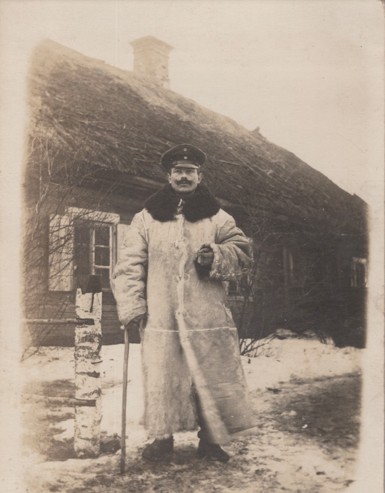
Siegmund Rothschild c. 1915
Courtesy of the family

Siegmund and his family were living a good life in Frankfurt, identifying more as German than Jewish, until Hitler came to power in 1933. Siegmund’s son Werner recalled that one friend joined Hitler Youth and stopped talking to him. Another time while visiting family in Borken, he and his cousins were tormented by Hitler Youth.

Here is the family in January 1938:

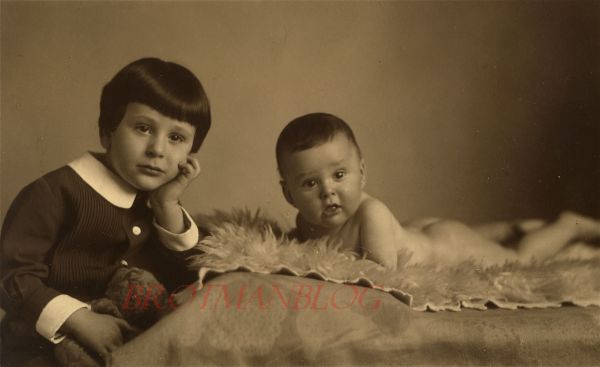
Siegmund, Werner, Ernst, and Elise (Bloch) Rothschild, January 1938.

As for Ernst, the older son, according to the Projekt Judische Leben Frankfurt website, he had always dreamed of being a dentist, but under Nazi persecution he was not allowed to pursue the studies to reach that goal. Instead he ended up working as an apprentice in a leather dressing business after leaving school in 1937. But when that business was Aryanized in 1938, Ernst lost his job.

The family’s situation became even more dire in November 1938 with Kristallnacht.  As reported on the Projekt Judische Leben website, “For Werner… the worst day of his young life was the so-called “Reichskristallnacht.” He saw furniture fly out of the windows and buildings burn. Immediately afterwards, his father was picked up by the Gestapo. They gave [Siegmund] ten minutes to pack his things, then they deported him to Buchenwald. Fortunately, [Ernst] was not at home or he would have been arrested too.” Elise did everything she could to get Siegmund released; he was released in December 1938 with orders to leave Germany quickly.

The Projekt Judische Leben Frankfurt website continued, “Siegmund was a broken man when he came home and it took weeks and intensive care from his wife before he regained his strength. As soon as his health permitted, he traveled to England with his son Ernst, with ten Marks in his pocket. More was not allowed per person. The only contact there was with two of Elise’s brothers who had emigrated from Ratibor in 1935 and opened a dental practice in London.”

Meanwhile, Elise and Werner remained in Frankfurt until Elise arranged in 1939 for Werner to leave Germany as part of the Kindertransport program. Werner took the train alone to Hamburg and was forced to strip naked so that the Gestapo could check to be sure he wasn’t taking anything prohibited with him. In Hamburg he took a ship to England, where he  was placed in a youth hostel.1

Once Elise also was able to escape to England, the family was reunited in London and Werner was able to attend school.   The 1939 England & Wales Register shows Siegmund and Elise living in London.2 But after the war started against Germany in September 1939, Ernst was interned as an enemy alien; Siegmund and Elise, however, were exempted from internship. Werner was just a child.
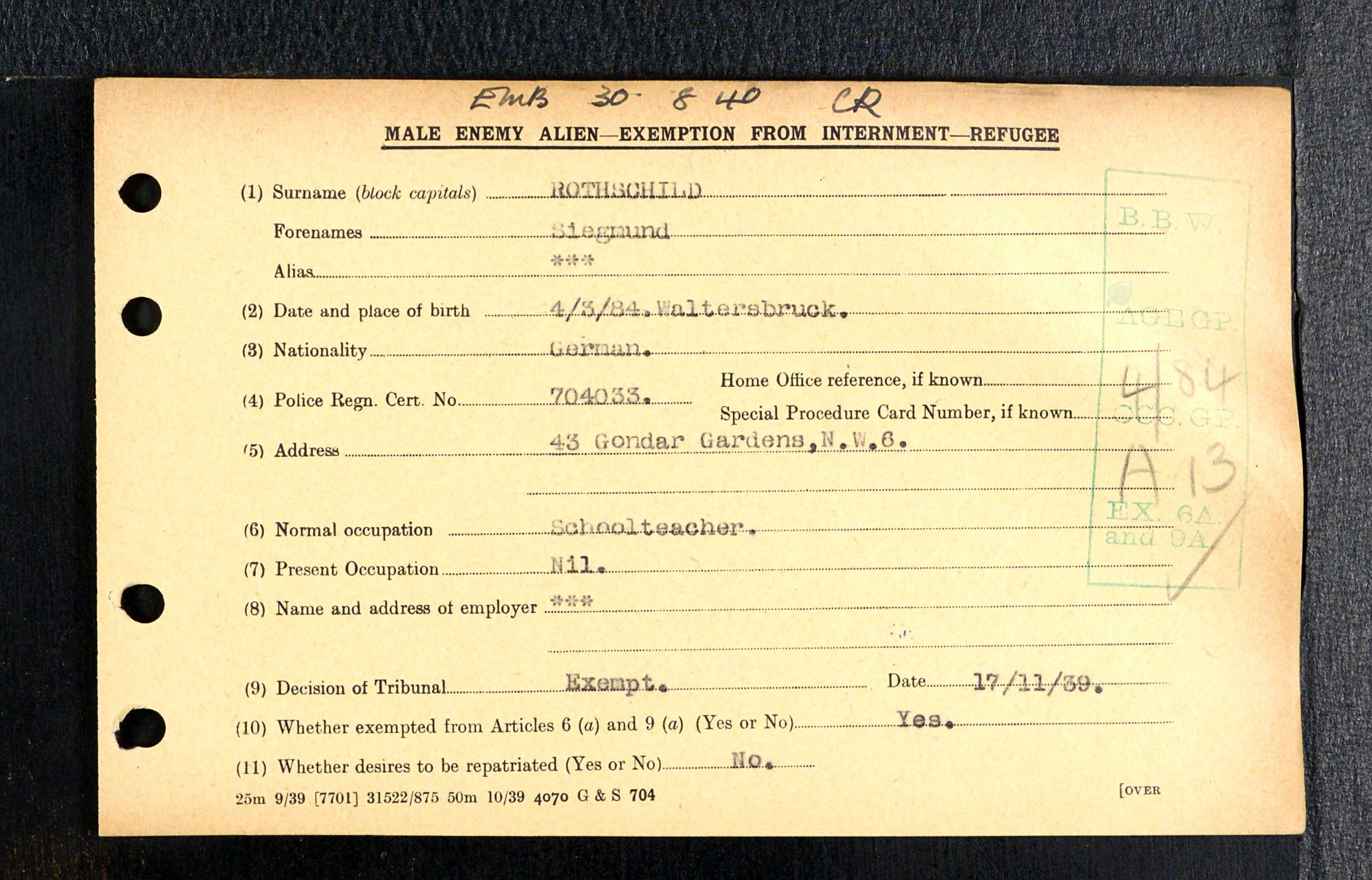
Siegmund Rothschild, The National Archives; Kew, London, England; HO 396 WW2 Internees (Aliens) Index Cards 1939-1947; Reference Number: HO 396/238, Piece Number Description: 238: Dead Index (Wives of Germans Etc) 1941-1947: Rosenber-Schitz, Ancestry.com. UK, World War II Alien Internees, 1939-1945

Elise Rothschild, The National Archives; Kew, London, England; HO 396 WW2 Internees (Aliens) Index Cards 1939-1947; Reference Number: HO 396/238, Piece Number Description: 238: Dead Index (Wives of Germans Etc) 1941-1947: Rosenber-Schitz, Ancestry.com. UK, World War II Alien Internees, 1939-1945

Ernst Rothschild, The National Archives; Kew, London, England; HO 396 WW2 Internees (Aliens) Index Cards 1939-1947; Reference Number: HO 396/193, Ancestry.com. UK, World War II Alien Internees, 1939-1945

Ernst was eventually released, and the family was finally able to immigrate to the United States in the summer of 1940, as we will see. Then they had to start their lives all over again. More on their life in the US in the next post.


  1. Werner Rothschild, Gender Male, Record Type Refugee List, Birth Date 12 Jan 1928, Residence Place Frankfurt, Document Date 22 Mär 1939 (22 Mar 1939)
    Permit Number 3813, United States Holocaust Memorial Museum; Washington, D.C.; Series: Selected Records Relating to Kindertransports; Record Group: RG-59.075; File Number: mh55-704.00000088, Ancestry.com. UK, Selected Records Relating to Kindertransport, 1938-1939 (USHMM) 
  2. Siegmund Rothschild, The National Archives; Kew, London, England; 1939 Register; Reference: RG 101/244E, Description Enumeration District: Akde, Ancestry.com. 1939 England and Wales Register 

Six Days in Merry Old England

We just returned from a wonderful trip to England where our daughter Maddy ran her eighth marathon and her first one outside of the United States. It was, as it always is,  a bit nerve-racking to think of her running 26.2 miles, especially alone and in a foreign country, but as always she came through, despite the unusually warm weather and the unknown city. We were delighted to see her at Mile 6 and then after she finished in St. James Park.

We are so grateful to Maddy for getting us to go to England, our first trip outside the country since COVID (and England was the last place we visited outside the US before COVID in 2019). We kept this tour focused on fun and new adventures, a tour of Notting Hill (and we’d watched the movie this winter together to refresh our memories) and a pub tour of SoHo.

Notting Hill tour:

Ben, our guide, in front of George Orwell’s house in Notting Hill

Banksy art in Notting Hill

Notting Hill—where parts of the Paddington Bear movies were filmed

Alas, Hugh Grant and Julia Roberts were not around…

SoHo pub tour:

Carlos, our guide, and most of the tour group enjoying one last beer

After Maddy left to return to Boston, we traveled north to Liverpool, fulfilling a definite bucket list item for me. I fell in love with the Beatles in February 1964 when I was eleven, and that love has never faded. Seeing where the four young teenagers lived and met and first played together was heartwarming and exciting. Little eleven year old Amy could not believe she played Paul’s piano or stood in the churchyard where Paul and John first met or met Pete Best’s nephew, who gave us a tour of the Casbah where the Beatles (with Pete, not Ringo) first played together as a band.

Mural dedicated to Ringo down the alley from where he grew up

St Peter’s Church where Paul first met John playing with the Quarrymen at a church festival

Did you know there was a real Eleanor Rigby? She is buried in the graveyard at St Peter’s where John was a choirboy and where he first met Paul

John’s childhood home

The kitchen in John’s home

Outside John’s home

Paul’s childhood home

Paul’s backyard and outhouse

Paul’s piano (which I played!) where he and John wrote many of their early songs

George’s childhood home

Alley where George lived

Gate to Strawberry Fields

There are stones with quotations from John’s songs throughout Strawberry Fields

Inside the Casbah on a tour with the nephew of Pete Best, the original drummer for the Beatles

The Casbah stage

If you know the lyrics to Penny Lane, you’ll know what this store is.

Some of you have likely seen some of these photos on Facebook, but I wanted to share these with those blog readers who may not be on Facebook with me.

Special thanks to my cousin Mark Morreau, who met us in Notting Hill and helped us navigate the Underground back to our hotel, and to our tour guides in London and Liverpool, Ben, Carlos, and Dave.

Update on Jenny Blumenfeld Warburg from World Jewish Relief, A New (to Me) Research Tool

In my April 25, 2023, post about my cousin Jenny Blumenfeld Warburg, I described how I was able to establish through the anecdotal evidence from several cousins and from records from Israel that Jenny had married Siegmund Warburg in Israel/Palestine sometime between 1940 and 1950, but I had not been able to locate an actual marriage record. I still haven’t. But I have been able to find one more document that may relate to Jenny’s life.

I wrote in that earlier post that “In her [Shoah Foundation] testimony, [Jenny’s sister] Hilde [Blumenfeld Meinrath] said that Jenny left Germany and first went to England, where she met Siegmund Warburg and his family. They did not marry, however, until they were in Palestine/Israel.” I also wrote that I had not been able to find any record for Jenny in England. But now, thanks to the World Jewish Relief organization, I think I have.

First, let me tell you about this organization and how it can be a helpful research tool for anyone searching for information about relatives who escaped Nazi Germany to England in the 1930s and thereafter. According to their literature, World Jewish Relief was “[f]ounded in 1933 as the Central British Fund for German Jewry (CBF) … [and] helped bring around 65,000 Jewish refugees, predominantly from Germany and Austria, to Britain. Once here, [they] provided a welfare system, helping refugees find housing, employment, receive medical care and making sure they had enough money to survive. Through this work, the charity established a trusted relationship with the Home Office and lobbied Parliament to allow them to instigate schemes such as the Kindertransport, which rescued 10,000 children, and The Kitchener Camp, which was a means to bring approximately 4,500 Jewish men into the country, many from concentration camps.”

After the war, the organization continued to provide relief to Jewish survivors, bringing children who had survived the camps to England for care and education and rehabilitation. According to their literature, the charity “continued to help Jewish refugees throughout the twentieth century, including those fleeing Egypt, Iran, Czechoslovakia and Bosnia. From funding flights to finding them accommodation, we always provided a safe place for our global Jewish family.”

The charity changed its name to World Jewish Relief in the 1990s and has continued its mission of providing aid and assistance to people of all backgrounds from all over the world who have “survive[d] the consequences of conflict and disaster, to thrive and rebuild their lives.”

In addition to this important charitable work, the organization also provides research assistance to those like me who are looking for information about their family members who escaped to England as refugees from Nazi Germany. Although its files are not comprehensive, there are registration slips for 65,000 refugees and case files for about 35,000 of those refugees.

For Jenny Blumenfeld, there was not a complete case file, just a registration slip. But it provided me with a few more snippets of information about a woman named Jenny Blumenfeld, who probably was my cousin.

Jenny Blumenfeld registration slip from World Jewish Relief

From this brief document, I learned that a Jenny Blumenfeld arrived in England on May 2, 1934, and left for Palestine in 1935. Of course, this document isn’t necessarily for the same Jenny Blumenfeld. The one entry that gives me pause is that she was last living in Lueneburg, Germany, which is 230 miles from Kirchhain, where my Jenny was born and raised. What would a young single Jewish woman have been doing there in 1934? The card also doesn’t have an exact birth date, just an age, 26. Jenny was born on June 23, 1907, so would have been 26 (almost 27) on May 2, 1934.

I am not sure what the other two dates on the card refer to. There is a notation of “16-2-42” that is crossed out. And then on the reverse it says “Addr[ess?] Unknown rce?. reh? left? 24-5-44.” I don’t know the relevance of those two dates, but I know that Jenny was by that time living in Palestine. I asked Sharon Adler, the volunteer with the World Jewish Relief Archives who sent me the registration card, what she thought the dates meant, and she hypothesized that it might have been times that others were inquiring about Jenny’s whereabouts. But she could not be certain.

It’s too bad that World Jewish Relief does not have a complete file on Jenny so that I could be more certain that this is my cousin Jenny Blumenfeld Warburg. But since Hilde did say that Jenny first went to England before going to Palestine, there is enough here to give me some reason to believe that Jenny left Germany and went to England on May 2, 1934, and then left for Palestine the following year. Maybe these dates will lead to more information. If anyone has any ideas, let me know.

I am grateful to Sharon and the World Jewish Relief organization for their help, and I hope other researchers will also take advantage of this wonderful resource.


Moritz Werner And Family, Part III: After The War

After the war Max Werner, now 25 years old, married Klara Reiss on January 5, 1947, in London, England.1 Klara (known by the family as Klari) was born in Vienna, Austria, on September 27, 1920, to Ida Spergel and Salomon Reiss. According to his granddaughter Joyce:2

Salomon Reiss had made a fortune in Vienna and was a well-known multi-millionaire. After the Anschluss (March 1938) [he] was arrested at the seder table [and] stripped of his Austrian wealth, and the family managed to escape to Prague (not at the time under German control and where my grandfather owned assets).

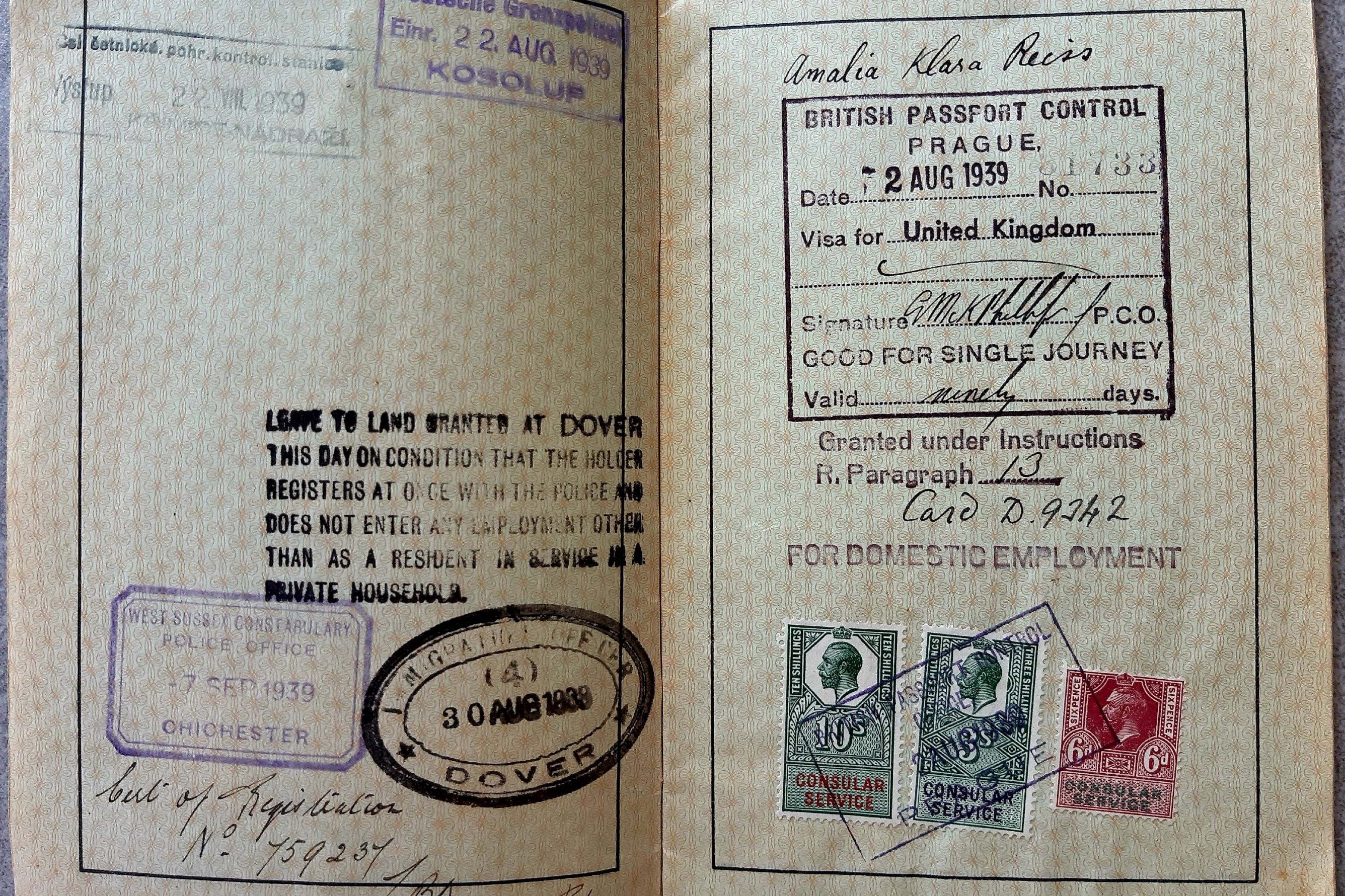
Klara’s brothers were able to immigrate to Palestine, but Klara didn’t want to leave her parents so stayed with them in Prague. But as things became more dire, she was able to obtain a visa to go to England, as seen on her exit visa from Prague shown below. As Joyce noted, Klara left Prague “quite late in August 1939. Her entry Visa in Dover is stamped 30st August. The curtain came down [two days later started on September 1, 1939, when Germany invaded Poland and World War II started.]”

Klara Reiss 1939 visa for travel to England

Klara’s parents were, however, stuck in Prague once the war started and unable to escape. They were eventually deported to Theriesenstadt and then from there on one of the last transports from Theriesenstadt to Auschwitz, where they were murdered.3

Klara met Max Werner eight years later in England. As Joyce tells the story,

Our parents met at a friend of Moritz and Jenny on a Shabbat afternoon in 1946. The couple were cousins of Klari’s father and, apparently, when [Max] got home, he told his parents he had met the girl he was going to marry. He was two years younger than Klari, involved with Klari’s cousin, and Klari told him to go away. Repeatedly. My father did not take no for an answer and pursued her relentlessly. She gave in and went on a date with him. The rest is history.

Judith provided these additional insights:

My mother liked my Dad when they met but felt that as a sophisticated dress designer she was way too old for the very young looking Max. She had a career path that she had worked very hard to carve out for herself and was in line to go to Paris for her firm.  She wasn’t interested in marriage at that point in her life especially after learning what happened to her parents. I believe her long range plan was to join her brothers in Israel. When however my Dad persisted, she relented…. They were married 6 months later on 5th January, 1947.

Joyce and Judith shared these photographs of their parents Max and Klara:

Max and Klara Werner Courtesy of the family

Max and Klara Werner Courtesy of the family

At the time of his marriage, Max was working for his father Moritz in the Benlo company in London. In 1949, Moritz was able to buy back LS Brinkmann from the man who purchased it. As his son Max told the story (and as I previously shared here),

A Catholic named Rhode from Kassel, who produced goods for the armaments industry, had bought L.S. Brinkmann. After the war, when Rhode was terminally ill, he developed feelings of remorse and tracked down my father Moritz in England. Mr. Rhode asked for a visit and my father and he made a contract, i.e. my father bought the company back – that was at a time when there was no official reparation! In 1949 the takeover was perfected. …

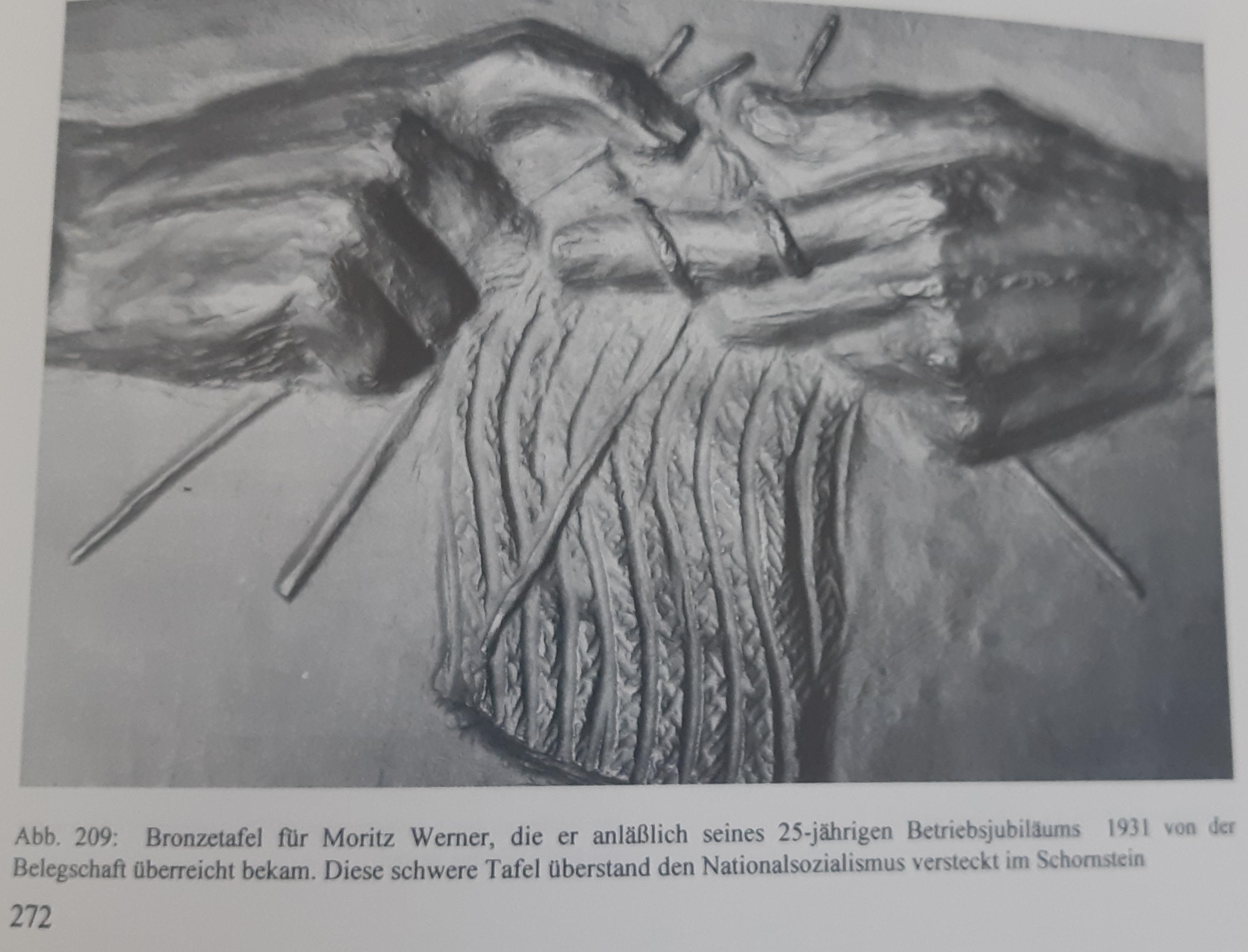
When my father had celebrated his 25th anniversary with the company in 1931, the staff had donated a bronze plate with a dedication and two knitting hands for him. During the forced sale [1939] the plate suddenly disappeared.

In 1949, when my father was sitting in his office again for the first time, there was a knock at the door and a small delegation of employees came in… They struggled to carry a box containing this bronze plate. Before taking over the company, these employees had fastened the plate in the chimney with strong wires and thus hidden it.

Joyce and Judith shared this photograph of the plaque that had been given to honor Moritz in 1931 and then hidden by his employees to keep it safe from the Nazis.

Moritz and Jenny did not remain in Germany, but Moritz did continue to oversee LS Brinkmann from England. He gave a large share of the business to his sister Elsa Werner Loewenthal, wife of Julius Loewenthal, whom I wrote about here.

Meanwhile, according to Judith, there were problems within the partnership of Benlo; contrary to an informal agreement between Moritz and his partner, the partner brought a new partner into the business, and together they took over control of the business and away from Moritz. Eventually, the two other partners drove Moritz out of the business and moved his son Max from company headquarters in London to a sales job, which he found to be unsatisfying and a dead end position.

Here is a photograph of Max and Klara in the early 1950s:

Max and Klara Werner c. 1953 Courtesy of the family

Thus, in 1953, Max decided to move to Germany and take over LS Brinkmann after his father Moritz retired. By that time, both Judith and Joyce were born, and Judith was already in school. Max, Klara, and Joyce went to Eschwege, and Judith stayed behind with her grandparents Moritz and Jenny in England to continue her schooling. Under Max’s leadership, LS Brinkmann once again became a highly successful knitware company.

But after a relatively short time, Klara and Joyce returned to England as Klara was not happy living in Eschwege, where there was no longer a Jewish community after the Holocaust. Max would come to England periodically, usually for Jewish holidays, and Klara and their daughters would spend the summers in Eschwege.

Joyce and Judith have wonderful memories of spending summers in Eschwege. Judith wrote:

Part of the perks of working for LSB was reduced rental flats on the factory property. It was great fun for us children of the workers. Every afternoon and early evening when the workday was over we would gather in the courtyard and play all kinds of games, including hide and seek and different ball games.

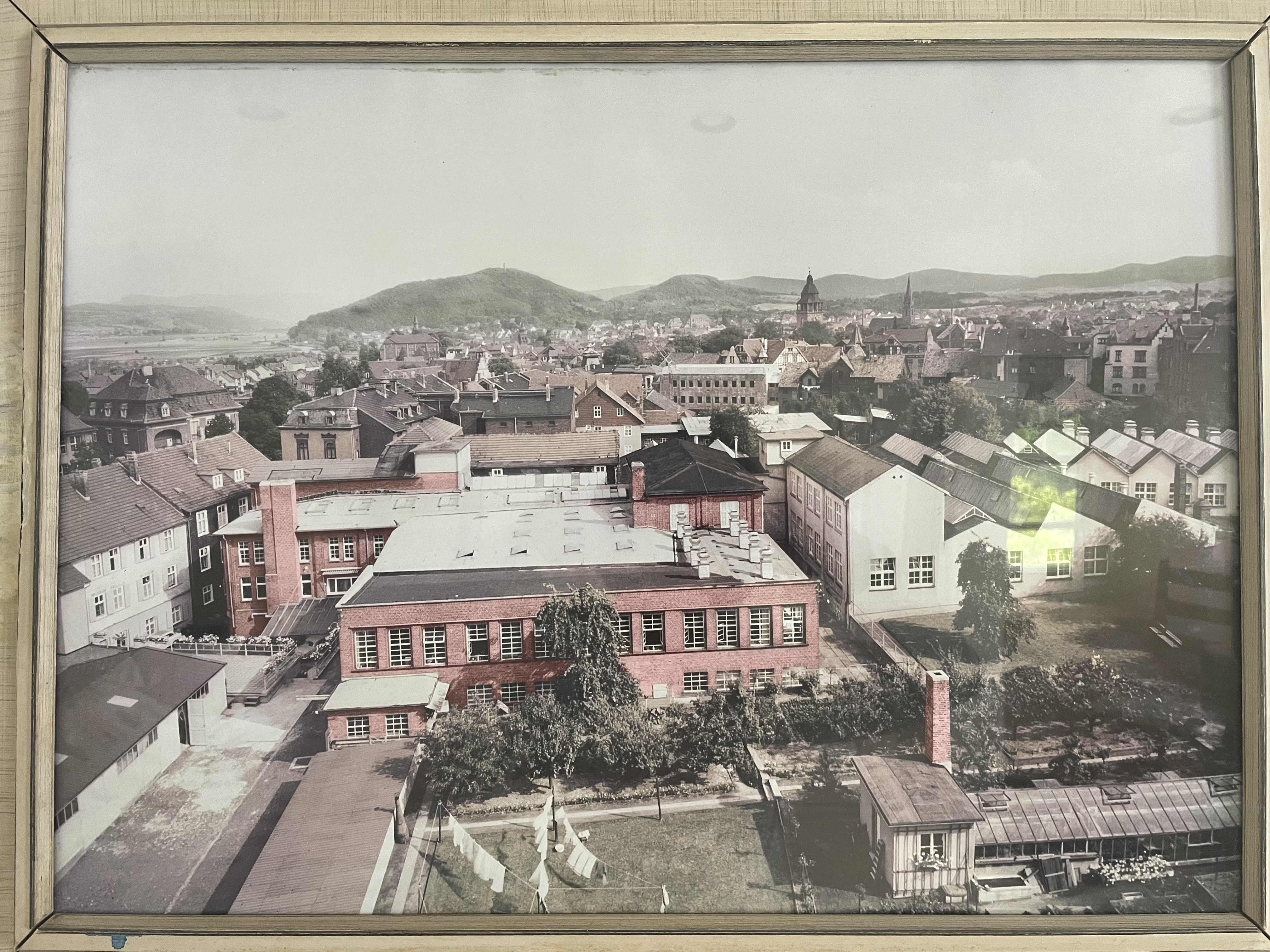
Judith shared this photograph of the LS Brinkmann grounds along with this description:

On the far left are the worker residences including ours. Bottom right is the green house. The larger tree in front of the white knitting operation was a delicious pear tree under which our pet dog Cracky was buried. The other greenery were apple, pear, plum, and cherry (not seen) trees. We had all kinds of berries that I used to spend many hours picking and eating. In the distance is the very picturesque town of Eschwege.

LS Brinkmann factory grounds Courtesy of the family

Joyce added this memory:

I also remember those holidays as a time of freedom. We played with local children as Judy said and were left largely to our own devices. Judy and some of the older kids would take me along to the local swimming pool or they Iet me trail along and join in with whatever they did. My own age group was a group of dare-devil boys. In the foreground (front left side) [of the photograph] is a grey roof above the dustbins [trash cans] with a drop of about 6 to 7 feet to the rear exit road below. All the boys and I used to play a ‘chicken’ type game jumping off with as much bravado as possible.

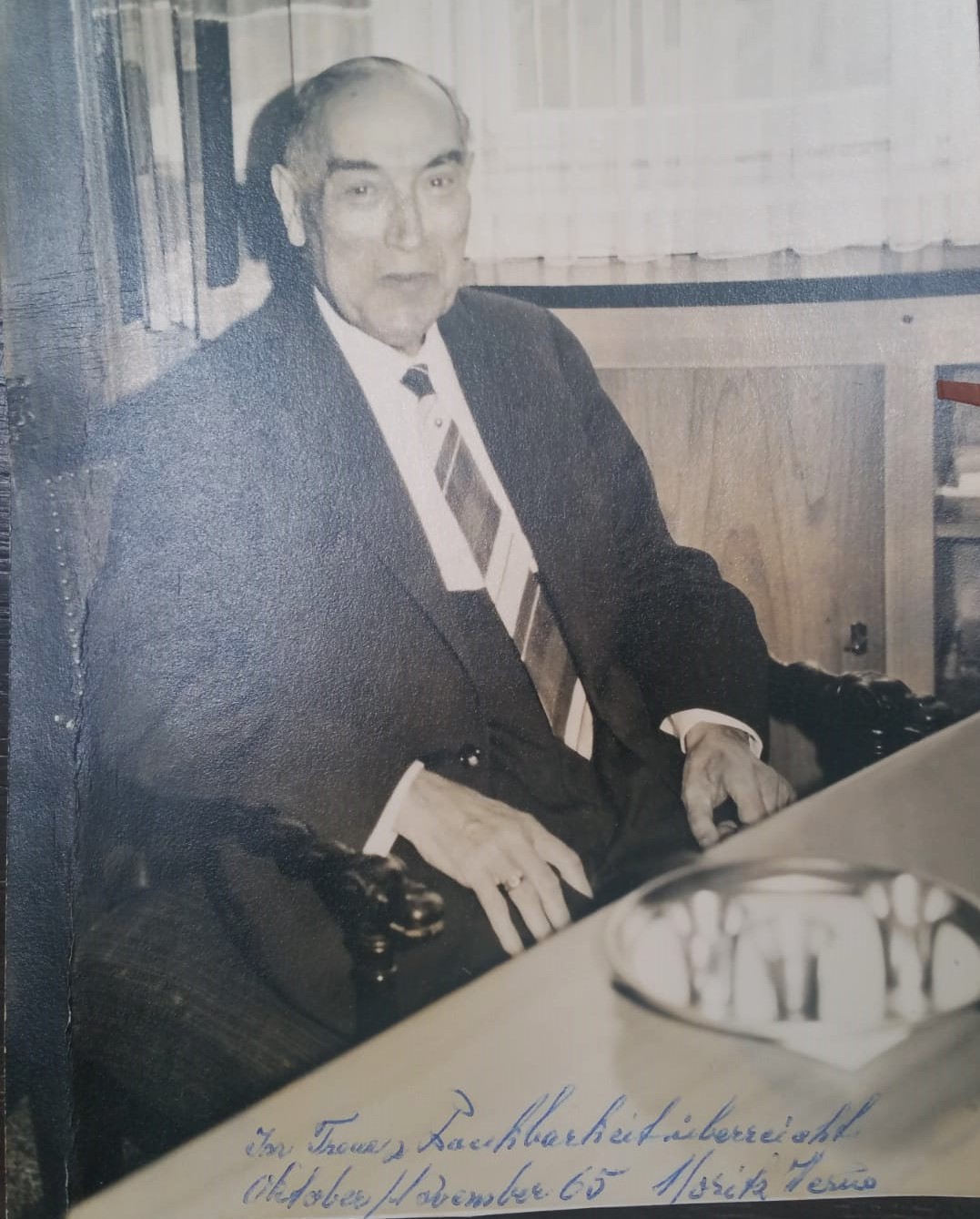
By 1958, Moritz Werner’s health had declined, and he and Jenny decided to leave England for a better climate and move to Lugano, Switzerland. He died eight years later in 1966 at the age of 78. This photograph of Moritz was taken at the celebration of the 100th anniversary of LS Brinkmann’s founding in 1965.

Moritz Werner 1965 Courtesy of the family

Jenny kept the apartment in Lugano and remained there, although she spent the first year after Moritz’s death living with Klara and the girls in London. Eventually, when she could no longer live alone, she moved to an assisted living facility in Zurich, where she died in November 1987 at the age of 93. Here is a beautiful photograph of Jenny:

Jenny Kahn Werner Courtesy of the family

Max Werner eventually retired from LS Brinkmann and returned to England. Judith shared this memory with me:

My father had a fantasy of living in Devon, England on the coast. He had fallen in love with the Devon and Cornwall coastline when he was a very young man. So when he was about 55 [about 1977], he sold [the home in] London and bought a house in Devon. He proceeded to knock most of it down and rebuilt it to his own specifications. This home was on the top of the hill that he owned overlooking the channel. On this hill he had an area for a pool and a rock garden. And when we swam in this pool, you could overlook this beautiful seaway.

Max Werner and his wife Klara died within eight months of each other. Klara died at age 90 in April 2011 in Devon, England, and Max died in December of that year, also in Devon, England. He was 89.4

I am so deeply grateful to Judith and Joyce for sharing their family’s stories and photographs. The story of their grandparents and parents is one of persistence and strength despite being subjected to harassment, theft of their business, and loss of their home and their homeland. Somehow they rebuilt their lives and their business and found ways to survive both before, during, and after World War II.


  1.  Max H Werner, Registration Date: Jan 1947, Registration Quarter: Jan-Feb-Mar, Registration District: Hendon, Inferred County: Middlesex, Spouse: Amalia K Reiss, Volume Number: 5f, Page Number: 529General Register Office; United Kingdom; Volume: 5f; Page: 529, Ancestry.com. England & Wales, Civil Registration Marriage Index, 1916-2005 
  2. As with the two prior posts, most of the information in this post came from a series of emails exchanged among Max and Klara’s daughters Judith, and Joyce and myself during May and June, 2022. 
  3. https://yvng.yadvashem.org/nameDetails.html?language=en&itemId=4788092&ind=1; https://yvng.yadvashem.org/nameDetails.html?language=en&itemId=4783626&ind=1 
  4. These dates came from Max and Klara’s daughters Joyce and Judith. 

Moritz Werner and Family, Part II: From Comfort to Escape 1922-1945

When Max Werner II was born on September 5, 1922, in Eschwege, Germany, to Moritz Werner and Jenny Kahn, his paternal grandparents Max Werner I and Helene Katzenstein had both passed away. His father Moritz was one of the owners of the LS Brinkmann Knitwear Company, and the family was living a very comfortable life.

Max’s daughter Joyce described her father as “an indulged only child from a wealthy local family.” Her sister Judith noted that their father “was an only child, and he was a very solitary child. His main companions were the chauffeur Petach and his dog.”1

Here are some photos of Max as a child including two with the dog, two in the garden of the family’s home in Eschwege, and one with his nurse or nanny.

Max Werner with nurse Courtesy of the family

Max Werner Courtesy of the family

Max Werner in the garden of his family home in Eschwege Courtesy of the family

Max Werner in the garden of his family home in Eschwege Courtesy of the family

Max and his dog Courtesy of the family

Max Werner c. 1934

But everything changed with the rise of the Nazis. Joyce and Judith both shared what they knew about the way life changed for their father and grandparents. Judith wrote, “Things became more and more difficult at school for my father, but he never complained to his parents. Except one day the kids from his school surrounded him with knives, and my father was seen fending them off with his leather satchel by friends of my grandparents.”

Joyce shared additional details about that incident:

Our father, a tall, strong pre-teen, was having terrible trouble at school. Not only did he face taunting and attacks from boys in the Hitler Youth, but teachers also joined in the Jew baiting. I recall that he told me on one occasion that another Jewish boy (small and reedy) had been beaten up by some classmates and the child made the mistake of telling the teacher. The teacher got out his strap and announced to the class, ‘Now I will show you how you should beat a Jew.’ Our father in general held his own well and was known to be strong and aggressive, and classmates generally steered clear of him. However, the incident Judy described was a final straw – especially as during the ensuing fray which took place on the school stairwell after class, he picked up the lead troublemaker and hurled him down a few stairs causing a broken nose. At home, he couldn’t hide the marks of the fight, confessed all and was sent that same night to Zurich to his Aunt Rosa [Werner] Wormser [sister of their grandfather Moritz Werner].

Max spent four or five years living away from his parents in Zurich. Although he was generally happy and became very close to his cousin Julius Wormser during those years, Joyce described the deeper impact these experiences had on Max:

The experience was formative for him. Although he had many good memories of his life in Zurich, he was separated from his home, parents, and his former life. I think the main lesson he learned was ‘fight back’. Sadly (in my opinion) he also learned that, in reality, ‘might is right’. I believe it was this which affected his personality. Used to getting his own way as an adored (and unexpected) child, seeing the brutality of life in Germany and the fact that bullies get what they want and the weak suffer, he made a decision there and then. It shaped him as a person who was determined and uncompromising. He was logical and intelligent, but when he was crossed or disagreed with someone, he could be very aggressive – both verbally and physically.

Meanwhile, Max’s parents Moritz and Jenny were still in Eschwege, Germany. Judith wrote that:

My grandfather was generous with everybody and was always ready to help those in need whether Jewish or not. He and my grandmother for many years helped to support and educate a young boy whose father had died and whose mother needed assistance. In the 1930s, my grandfather … was helping members of the family and others leave Germany but he himself did not believe that Nazism would survive in Germany. My grandmother, on the other hand, was ready in 1933 and packed. But they did put a lot of money into antiques and Old Master pictures. They were aware that they were not allowed to take much money but were allowed to take personal possessions.

Joyce also described the way their grandparents differed in their reactions to the rise of Hitler:

Our grandmother Jenny was alert to the danger Hitler posed from the very start. She believed his rhetoric and said that if he came to power, he would enact every threat against the Jews he had scapegoated for Germany’s ills. Our grandfather Moritz, like so many, believed such things would never happen in the ‘fatherland’ for which he had fought at great personal cost and for which his brother had given his life.  Consequently, she quietly prepared for emigration by investing in ‘movable assets’ e.g. art and antiques.

Here’s a photo of their grandmother, Jenny:

Under Hitler’s Aryanization program, Moritz was forced to sell LS Brinkmann in 1938, as I wrote about here. According to Judith, shortly before World War II started in September 1939,

The Bishop of the area came to my grandpa and told him it was time for him to leave. That it was too dangerous for him to stay. … So after that my grandfather went to the area comandante in Kassel in order to get a pass to exit the country. This person happened to be somebody who had served in the first World War under my grandfather in the cavalry. So this gentleman gave my grandfather a bit of a problem, and my grandfather, who had the use of a stick, banged it on the man’s desk and gave him a thorough dressing down. He got his pass. Then my grandparents took the chauffeur driven car up to either Hamburg or Bremen and took a ship to England.

Max soon thereafter joined his parents in England and attended school and then Leeds University, where he studied engineering. Moritz and Jenny were able to sell some of the art and antiques they took with them from Germany not only to support themselves, but to invest in a new company in England. Joyce wrote:

My grandfather – with extraordinary energy and determination in my opinion – found a couple of partners and started a new company ‘Benlows’ selling cigarette lighters. It became so successful that after the war it became a public company floated on the Stock Exchange.

Thus, Moritz, Jenny, and Max were able to escape from Nazi Germany and survive the Holocaust. But not without enduring a forced sale of their successful business, harassment and violence, displacement from their home in Eschwege, and a long separation of Max from his parents. As Joyce wrote, this had a lasting impact on Max and presumably also on Moritz and Jenny.

In the next post, Joyce and Judith will share the story of what happened to the family after World War II ended in 1945.


  1. Again as in the last post, the quotes, photos, stories, and information from Joyce and Judith came from a series of emails we all exchanged during May and June, 2022.  I am so grateful for all their help and generosity. 

Don’t Believe Everything You Read on Public Records: An Update on Albert Kaufmann

It’s always good to be reminded that “official records” are only as accurate as the person who creates them and the information that person was able to obtain.

Back in December 2021, I wrote about Albert Kaufmann, the son of Hedwig Blumenfeld Kaufmann. He was married first to Dorothy Schimmelfennig in Germany in 1928, but they divorced in 1932. Albert had immigrated to Brazil sometime after his divorce from Dorothy and married a woman named Georgina Correa, who was born in 1921 and almost twenty years younger than Albert. I assume they married sometime in the 1940s, but I have no record. Albert died in Brazil in 1986 at the age of 84.

I did not believe that Albert had had any children in part because I could find no birth records or any other record for a child and also because Albert’s death record reported that he had no children. Thus, I reported originally on my blog that Hedwig had no living descendants since her daughter Anna and her entire family had been killed in the Holocaust and because her son Albert had not had any children.

Brasil, Rio de Janeiro, Registro Civil, 1829-2012,” database with images, FamilySearch (https://familysearch.org/ark:/61903/3:1:S3HY-6QQP-KV?cc=1582573&wc=9GYK-DPJ%3A113334201%2C120190503%2C122537201 : 7 January 2019), Rio de Janeiro 02ª Circunscrição Óbitos 1985, Nov-1987, Jan image 172 of 304; Corregedor Geral da Justicia (Inspector General of Justice Offices), Rio de Janeiro.

But it turns out that Albert’s death record was wrong. And I never would have known except for the good fortune that another Blumenfeld cousin, Gail Levy, found my blog. Gail is the granddaughter of Hedwig Blumenfeld Kaufmann’s brother, Ernst Blumenfeld. Thus, Gail’s father Paul Blumenfeld was Albert Kaufmann’s first cousin. Not only did Gail help me fill out Paul Blumenfeld’s branch of the family tree, she shared with me correspondence she’d had with another cousin, Paul St. George, who was, according to that correspondence, the grandson of Albert Kaufmann and Dorothy Schimmelfennig and thus Gail’s second cousin and my fifth cousin, once removed.

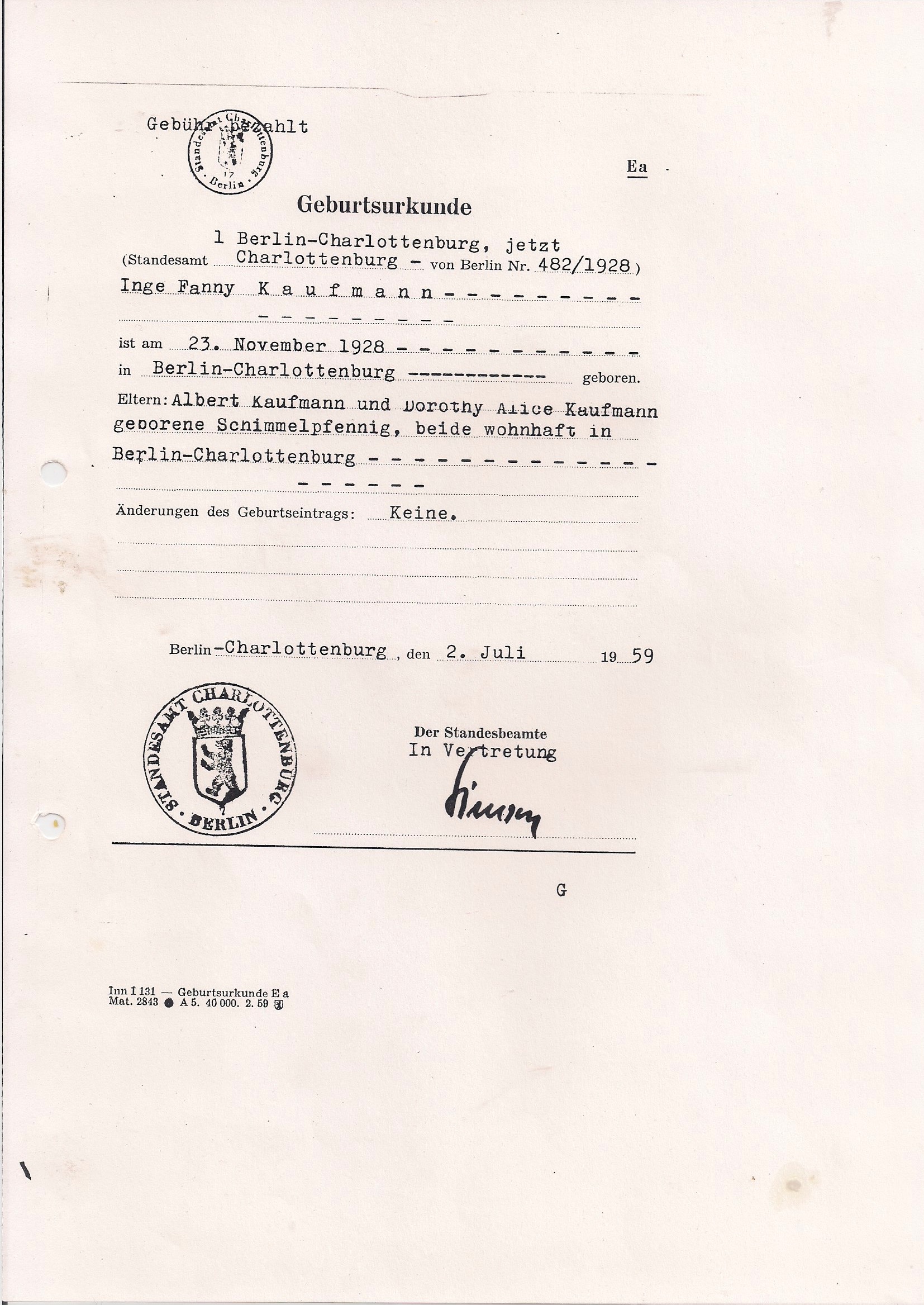
I contacted Paul, and he confirmed what he had told Gail—that his mother Inge Kaufmann was the daughter of Albert and Dorothy—and he shared with me Inge’s birth record from Berlin. She was born on November 23, 1928, nine months after her parents married on February 10, 1928.

Birth record of Inge Kaufmann. Courtesy of Paul St George

Transcribed birth record of Inge Kaufmann. Courtesy of Paul St George

Thus, the Brazil death record was wrong. Albert Kaufmann did have a child and does have living descendants, including my cousin Paul.

I asked Paul what he knew about his grandfather, but he had never met his grandfather and knew little about him. He only has one photograph of his grandfather, and he obtained it from Gail. It’s a 1980 photograph of Albert with his second wife Georgina or Gina with a New Year’s greeting on the reverse:

Albert and Gina Kaufmann. Courtesy of Paul St George

I also asked Paul about his grandmother Dorothy and his mother Inge. I knew from my research that Dorothy Schimmelfennig was born in England, married Albert Kaufmann in 1928, and died on March 31, 1938, in Berlin when she was a month shy of her thirtieth birthday. But I didn’t know the cause of her death. I had also wondered why she would have been in Berlin in 1938, given what was going on in Germany.

Paul told me that his grandmother Dorothy and his mother Inge went to England in 1933 and lived in London. But in 1938 Dorothy returned to Berlin, apparently just a few days before her untimely death on March 31, 1938.1 Paul told me that her death is listed as a suicide in the memorial book for victims of the Holocaust.  Also, the Arolsen Archives include a document that lists Dorothy’s cause of death as from poisoning (“Veronslvergiftug”).

AJDC Berlin Card File (Deportations) Subcollection 1.2.1, ITS Digital Archive, Arolsen Archives.

In addition, Paul told me that Dorothy is listed as a forced suicide in a 2007 book by Anna Fischer, Erzwungener Freitod: Spuren und Zeugnisse in Den Freitod Getriebner Juden der Jahre 1938-1945 in Berlin (translation: Forced Suicide: Traces and Testimonies in The Suicides of Driven Jews of the Years 1938-1945 in Berlin) (2007: Berlin : Text Verlag Edition Berlin).  Yad Vashem lists Dorothy as both murdered and as a suicide. There do not appear to be any more details, but it seems entirely possible that Dorothy felt hopeless and helpless in the face of Nazi persecution and became too despondent to go on with life in a world filled with so much hatred and fear. But as Paul wrote, it remains a mystery.

But what happened to young Inge Kaufmann, just ten years old at the time of her mother’s death in 1938? She was still in England, and Paul shared what happened to her after her mother’s death:2

My mother was looked after in England by a Jewish Charity (Central British Fund for German Jewry (CBF)). Some Jewish people in England could see the problems in Germany as early as 1933. They petitioned the UK government for permission to bring Jews from Germany to England. The UK government agreed but with strict rules. The refugee had to be self-supporting, looked after to a certain standard, and so on.

So this is why my mother did not live with a relative. Many if not most of these refugees did not live with a relative in England. Reasons against included over-crowding, too poor, etc. But a relative (Charlotte Pick) was a sponsor. She paid money to the charity and the charity bought clothes, shoes, etc. for my mum. My mother would have been housed in a series of homes in the Hemel Hempstead area. By housed I mean she had a room and meals. Those who provided the children with a place to live were not there to look after the children they housed. The charity did that. Also, my mother would have attended a normal local authority school near to the digs. The charity (now called World Jewish Relief) sent me her case file and that lists the monies and the check-up visits and so on.

Inge later attended the well-known St. Martin’s School for the Arts where she studied fashion and developed friendships with several people who became well-known artists. Paul, a well-known artist himself, recalls visiting the grand homes of these artists as a child, describing them as “full of clutter and the smell of oil paint and cake.”3

After she graduated, Inge became a costume designer for the theater, where she met Paul’s father, an acrobatic tap dancer born George Alexander Bernard, who adopted his stage name Buster St. George as his legal name. He was born in Manchester, England, to Alexander Bernard and Doris Matz on January 16, 1913. Inge and Buster were married in 1953 and had two sons, Julian and Paul. Paul was born in Norway while the theater group which employed them was on tour for performances of Kiss Me Kate. Inge and Buster divorced in 1957. Inge Kaufmann St. George, my fifth cousin, died on November 9, 2000; she was 71. Buster St. George died on October 10, 1986.4

I am very grateful that I was able to connect with my cousin Paul (via our mutual cousin Gail) and to learn that Hedwig Blumenfeld Kaufmann’s son Albert did have a child, his daughter Inge, and that thus today Hedwig has living descendants, unlike what I believed before finding Gail and thus Paul. This experience was an important lesson in remembering that just because a record records a “fact” does not necessarily make it true.


  1. Email from Paul St George, January 13, 2022. 
  2. Email from Paul St George, January 7, 2022. 
  3. Email from Paul St. George, January 13, 2022. 
  4. Emails from Paul St George, January 7, 13, and 17, 2022. Buster St George
    Registration Date: Jul 1953, Registration Quarter: Jul-Aug-Sep, Registration District: Brighton, Inferred County: Sussex, Spouse: Inge Kaufmann, Volume Number: 5h
    Page Number: 280, General Register Office; United Kingdom; Volume: 5h; Page: 280,
    Ancestry.com. England & Wales, Civil Registration Marriage Index, 1916-2005. Paul St. George Ancestry Family Tree, located at https://www.ancestry.com/family-tree/tree/171856232/family/familyview?cfpid=122230313195&fpid=122231826460&usePUBJs=true 

Another Update from Another Cousin! The Story of Karl Gutmann

Once again, I have been very fortunate because another cousin found my blog and connected with me, sharing information and photographs of members of my ever-growing family tree. This time it was my fifth cousin, once removed, Jennifer, the granddaughter of Karl Gutmann, who has enriched my understanding of my family history. The information in this post, except where otherwise noted, came from my email correspondence with Jennifer, as did all the photographs.

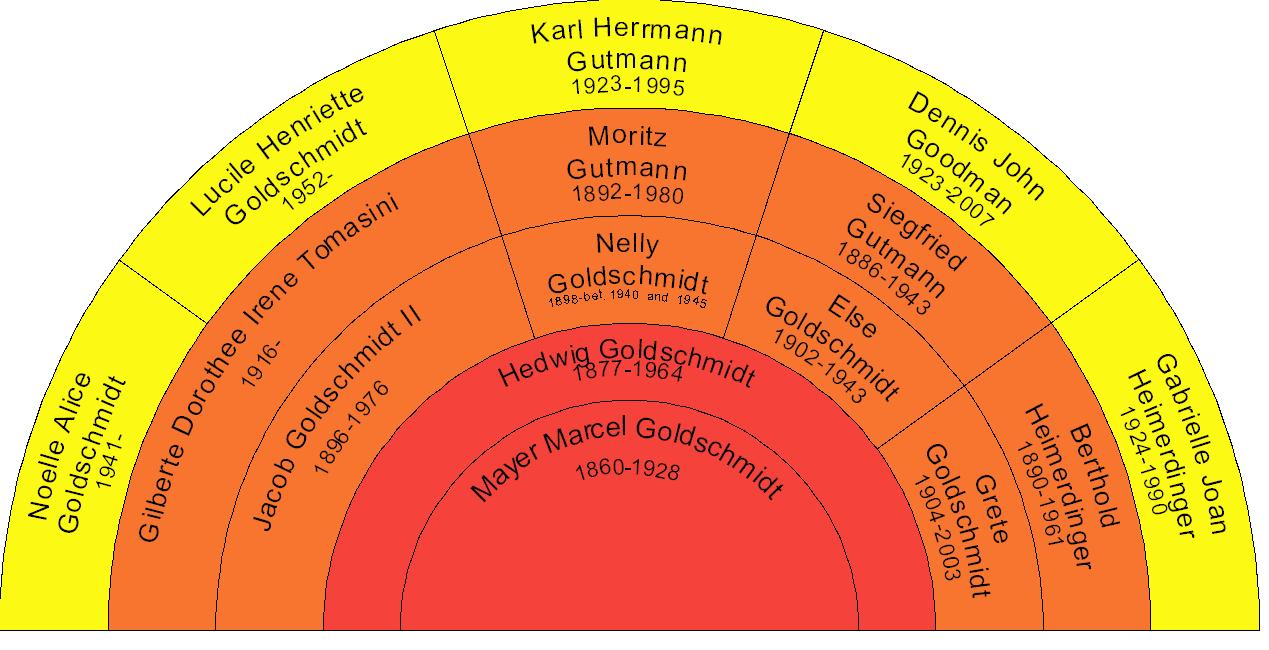
You can read more about Karl and his family here and here, but let me provide a brief overview. Karl, born in 1923, was the only child of Moritz Gutmann and my cousin Nelly Goldschmidt; Nelly was the daughter of Hedwig Goldschmidt and Marcel Goldschmidt who themselves were first cousins, the grandchildren of Meyer Goldschmidt, my four-times great-uncle.

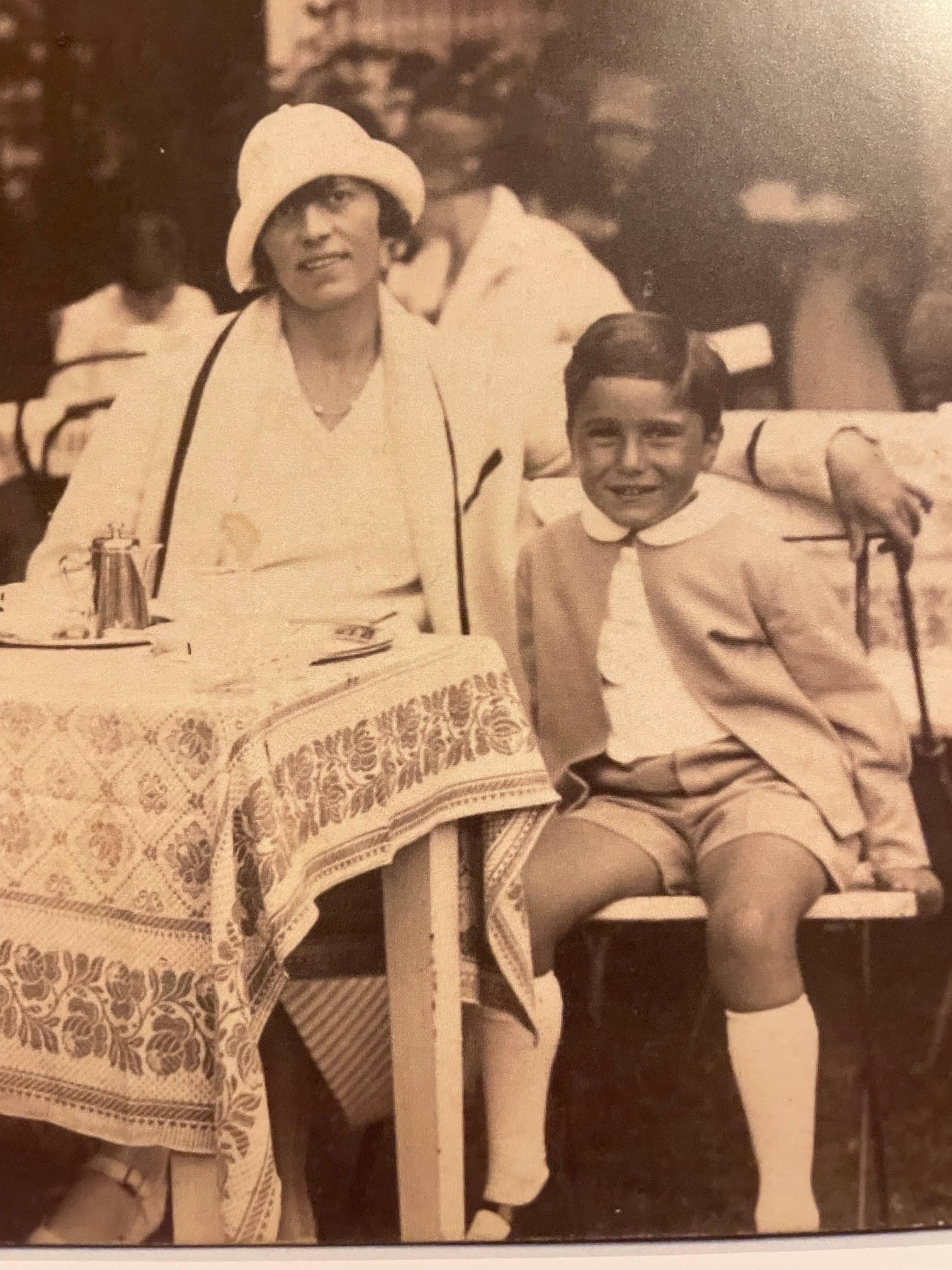
Jennifer shared with me this photograph of her grandfather Karl with his mother Nelly as well as the one that follows of Karl as a young boy.

Nelly Goldschmidt Gutmann and her son Karl Gutmann, c. 1927-1928 Courtesy of the family

Karl Gutmann Courtesy of the family

Nelly’s sister Else was married to Siegfried Gutmann, brother of Moritz Gutmann. Else and Siegfried, like Nelly and Moritz, had only one child, a son named Hermann Gutmann, later known as Dennis Goodman. I wrote about Dennis and his experiences here and here. Thus, Karl and Dennis were first cousins, and according to Jennifer, the two boys were very close growing up in Germany. They were both born in 1923, Dennis in February, Karl in May. They must have been like brothers to each other.

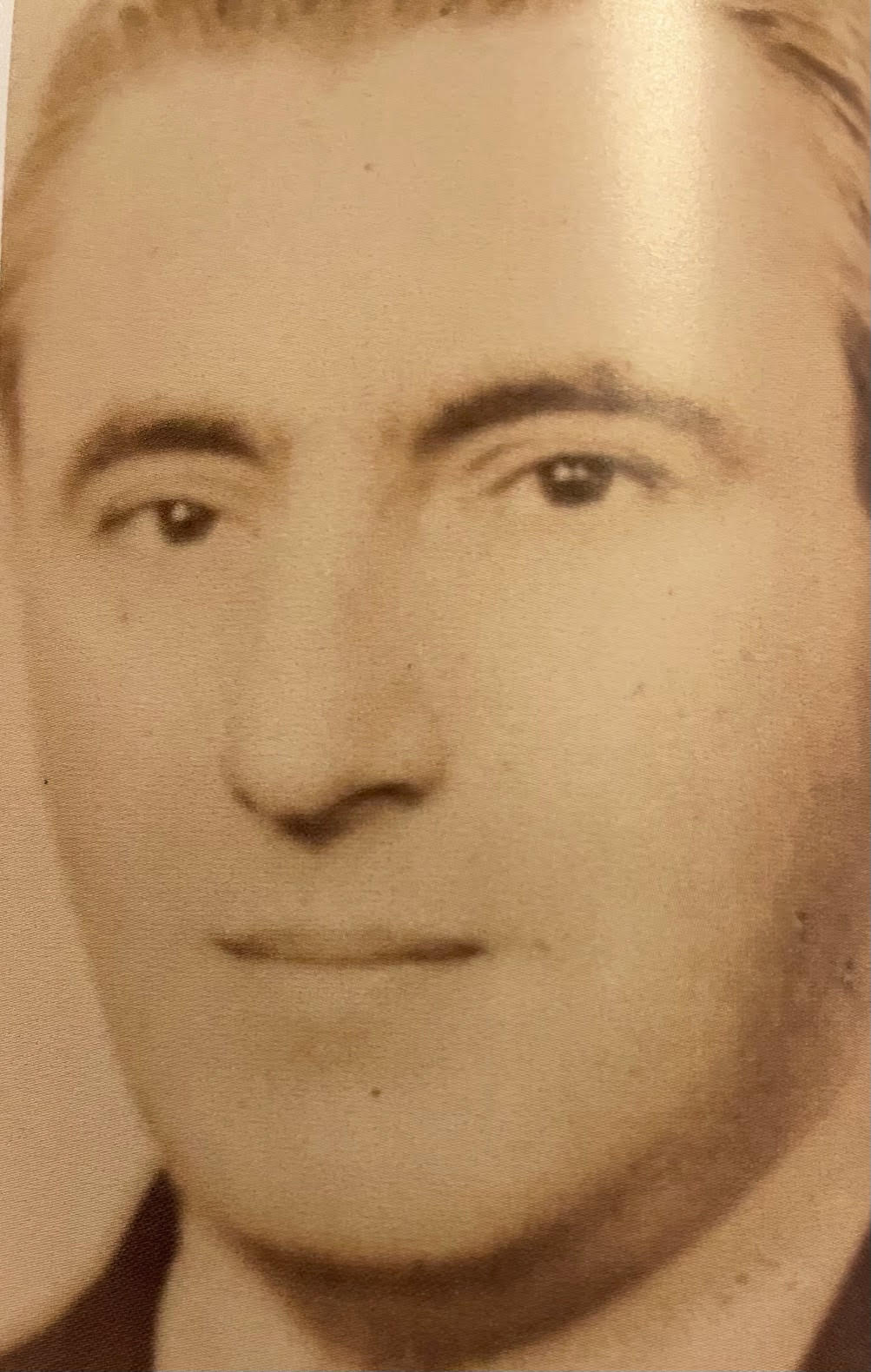
Tragically, Karl and Dennis were separated from each other because of the Nazis. As I wrote in my earlier post, Karl’s father Moritz came to the US in 1936, leaving his wife Nelly and Karl behind. What Jennifer shared with me was that her great-grandmother Nelly had long suffered from mental illness and had been institutionalized for some time before the Holocaust. Moritz, who resented the fact that her family had failed to disclose her mental health issues before they married, filed for divorce once he was in the United States. Jennifer shared this photograph of her great-grandfather Moritz Gutmann, whom she described as a very difficult man.

Moritz Gutmann Courtesy of the family

Meanwhile, Moritz and Nelly’s son Karl was living in Amsterdam as were his grandmother Hedwig Goldschmidt and his aunt Else Goldschmidt and uncle Siegfried Gutmann.  His cousin Hermann (Dennis) was sent in 1936 to England where he attended a Jewish boarding school, and the following year Karl went to the US.

From the apparent age of Karl in this photograph (he appears to be at least thirteen), I would guess that this photograph was taken either in Amsterdam or after he came to the US. I don’t know who the other boy was.

Karl Gutman and friend Courtesy of the family

What I did not know until Jennifer shared it with me was that Karl’s father Moritz traveled to Amsterdam to get his son and bring him back to the US; I now was able to locate Moritz on the same ship as the one that brought Karl to the US. Moritz, however, was sailing in a second class cabin whereas his fourteen-year-old son was sailing third class in a separate cabin (last line on second image below).

Moritz Gutmann, Year: 1937; Arrival: New York, New York, USA; Microfilm Serial: T715, 1897-1957; Line: 1; Page Number: 124,  Statendam, Ancestry.com. New York, U.S., Arriving Passenger and Crew Lists (including Castle Garden and Ellis Island), 1820-1957

Karl Gutmann (last line), Year: 1937; Arrival: New York, New York, USA; Microfilm Serial: T715, 1897-1957; Line: 1; Page Number: 143,  Statendam, Ancestry.com. New York, U.S., Arriving Passenger and Crew Lists (including Castle Garden and Ellis Island), 1820-1957

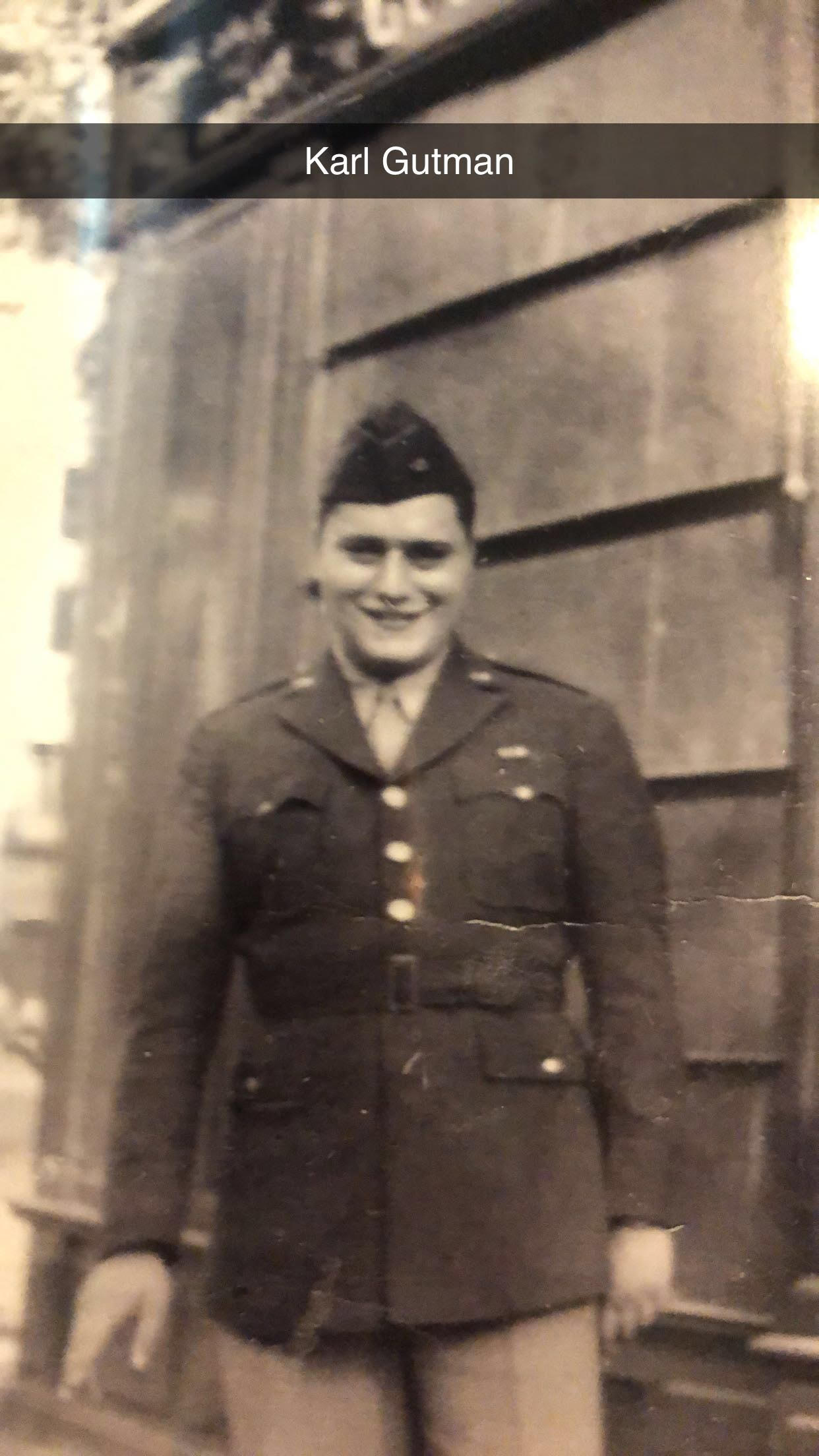
Karl earned money selling newspapers when he first got to the US, but then enlisted in the US Army in 1943. By that time he had joined his father in the art dealing business and brought art work back and forth between Europe and the US during the war. Karl became one of the Ritchie Boys, the elite espionage unit made up of German Jewish refugees who used their knowledge of Germany and German to spy on the Nazis and obtain critical military intelligence for the Allies. Here is Karl in uniform during World War II.

Karl Gutmann, c. 1945 Courtesy of the family

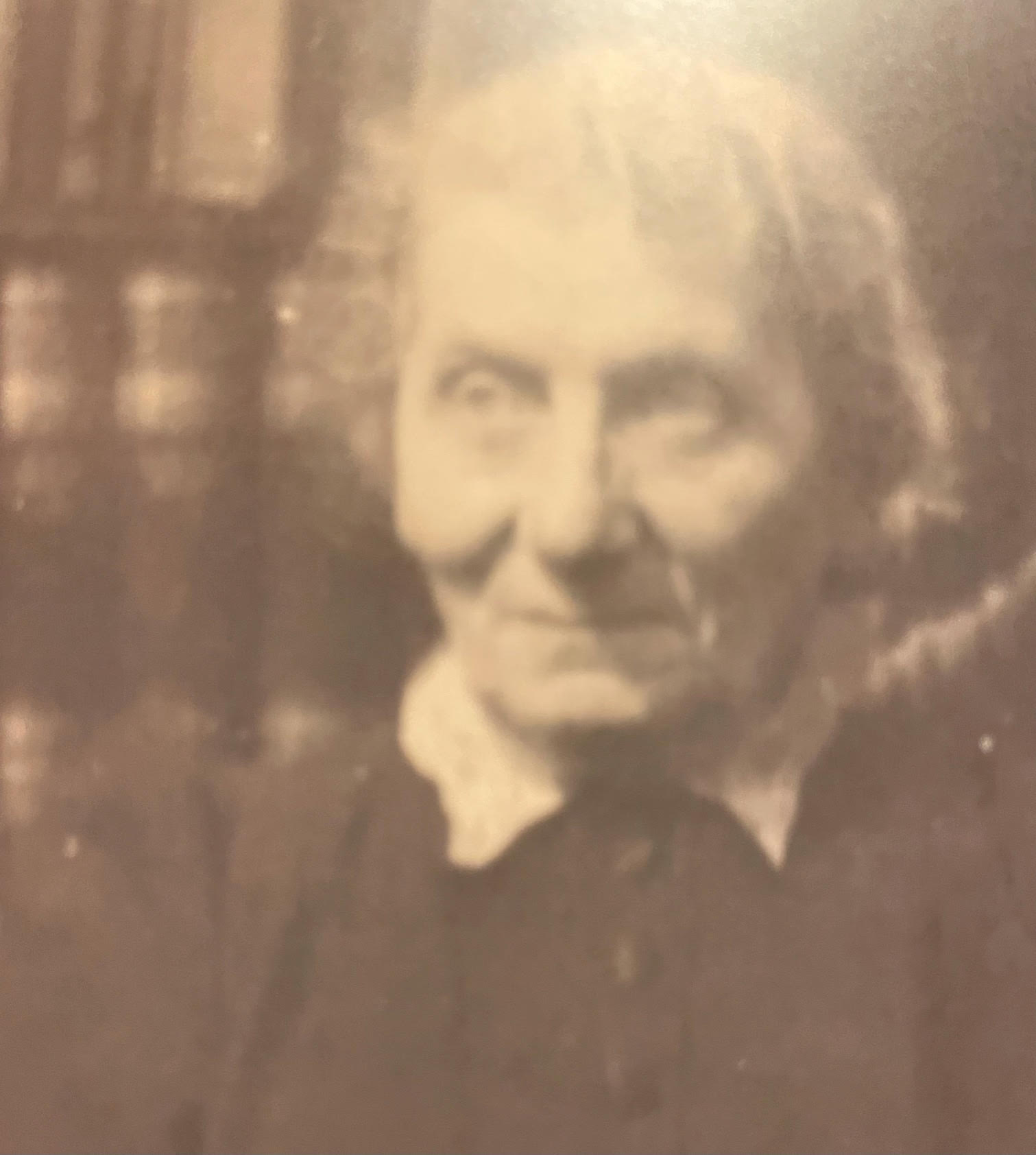
But it was too late to save his mother Nelly, who was killed by the Nazis in 1940. Tragically, both of Dennis Goodman’s parents were also murdered in the Holocaust. Karl and Dennis’s grandmother Hedwig Goldschmidt, however, miraculously survived after hiding in the Netherlands during the war, as described here. Jennifer shared this photograph of Hedwig, taken after she had safely immigrated to the US after the war.

Hedwig Goldschmidt Gutmann  Courtesy of the family

When Karl returned to the US after the war, he married Joan Fenton. What I had not known before Jennifer contacted me was that Joan, her grandmother, was the best friend of Karl’s first cousin Gabrielle Heimerdinger, the daughter of Greta Goldschmidt, Karl’s aunt, his mother Nelly’s sister. Gabrielle introduced Joan to Karl, and together they had three children. Jennifer, Karl and Joan’s granddaughter, has many memories of visiting her relatives in New York, including her grandfather’s first cousin Gabrielle, whose children I wrote about here. Karl went into the television repair business after the war and became quite successful.

While serving overseas as one of the Ritchie Boys, Karl had run into his cousin Dennis, Karl fighting the Nazis for the US, Dennis fighting the Nazis for England. Once the two cousins reconnected, they remained close for the rest of their lives, traveling back and forth between England and the US after the war many times. Thanks to Jennifer, I can share this photograph of Karl and Dennis joyfully reunited after the war. The other man on the left is their paternal cousin John Gutmann, and the woman is Karl’s second wife Gisela.

John Gutmann, Karl Gutmann, Gisela Bartels Gutmann, and Dennis Goodman Courtesy of the family

Jennifer remembered her grandfather Karl as a man with a strong work ethic and one who never wanted to talk about his past. But through her grandmother Joan and other family members, Jennifer was able to learn more about her grandfather’s story and the tragedies that her other relatives suffered during the Holocaust. I am so grateful that she shared their stories and her photographs with me.


The Diaries of a Young Boy: An Update on the Family of Arthur Rapp

Before I move on to the last child of Meyer Goldschmidt, his son Falk, I have two updates that relate to Meyer’s two other sons, Jacob Meier Goldschmidt and Selig Goldschmidt. Today’s involves descendants of Jacob Meier Goldschmidt.

Once again I have had the good fortune of connecting with a Goldschmidt fifth cousin, my cousin Greg. Greg is the great-grandson of Helmina Goldschmidt Rapp, the youngest child of Jacob Meier Goldschmidt. Greg’s grandfather was Helmina’s son Arthur Rapp, and his father was Gordon (born Gunther) Rapp.

Greg shared with me numerous photographs and documents, including his father’s diaries written during World War II when he was a teenager. Greg also put together a timeline of his family’s travels from Germany to Italy to England to Brazil and finally to the US, all between the years of 1934 to 1941 or from when his father was eight years old until he was sixteen. In other words, the Rapp family lived in five countries in the span of seven years.

Although I have already written most of the skeleton of the Rapp family story in my earlier post, after reviewing the materials Greg shared and speaking with him, I want to supplement that post because I can now better describe the family’s life in Frankfurt and the journey that finally brought them to the US in 1941.

Arthur Rapp and his wife Alice Kahn were married in Frankfurt on May 6, 1921. This photograph might be their wedding photograph, but Greg wasn’t certain.

Wedding of Alice Kahn and Arthur Rapp 1921. Courtesy of Greg Rapp

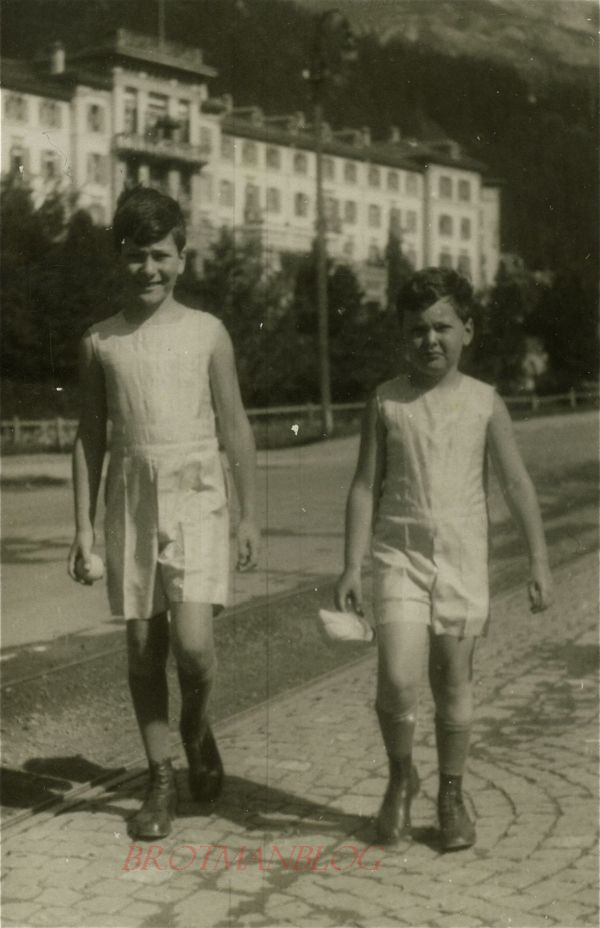
It was Arthur’s second marriage, and he had a daughter Rita from that first marriage who was born in 1908. Then Arthur and Alice had two sons, Helmut, born in 1923, and Gunther, born in 1925. These photographs of the family in the years before they left Germany in March 1934 illustrate their comfortable lifestyle with family vacations to the shore and to the mountains. I don’t have exact dates for these photographs but can only estimate from the presumed ages of Helmut and Gunther.

Helmut and Gunter Rapp c. 1926
Courtesy of Greg Rapp

Helmut Rapp c. 1924 Courtesy of Greg Rapp

The two brothers were very close:1

Helmut and Gunther, c. 1933 Courtesy of Greg Rapp

Helmut and Gunther Rapp, c. 1933 Courtesy of Greg Rapp

Helmut and Gunther Rapp c. 1933 Courtesy of Greg Rapp

They went to the mountains:

Gunther and Helmut Rapp with unknown woman c. 1930 Courtesy of Greg Rapp

The beach:

Rapp family beach c. 1930 Courtesy of Greg Rapp

Rapp family c. 1930

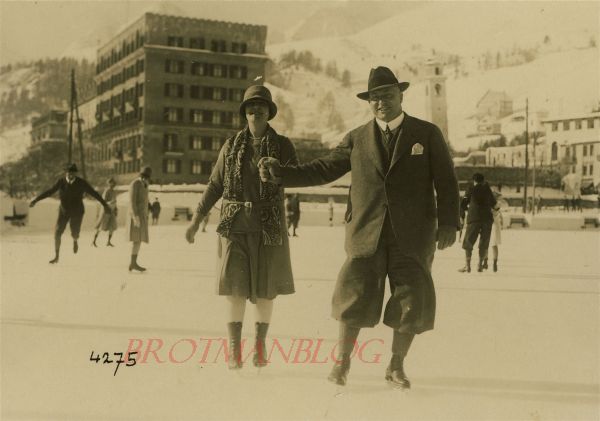
And skiing and ice skating:

Arthur Rapp skiing  Courtesy of Greg Rapp

Alice and Arthur Rapp Courtesy of Greg Rapp

Alice and Arthur Rapp Courtesy of Greg Rapp

Alice and Arthur Rapp Courtesy of Greg Rapp

During these years Arthur was working for the H. Fuld Telephone company as a director and salesman. H. Fuld was started by Arthur’s first cousin Harry Fuld, about whom I wrote in this blog post.

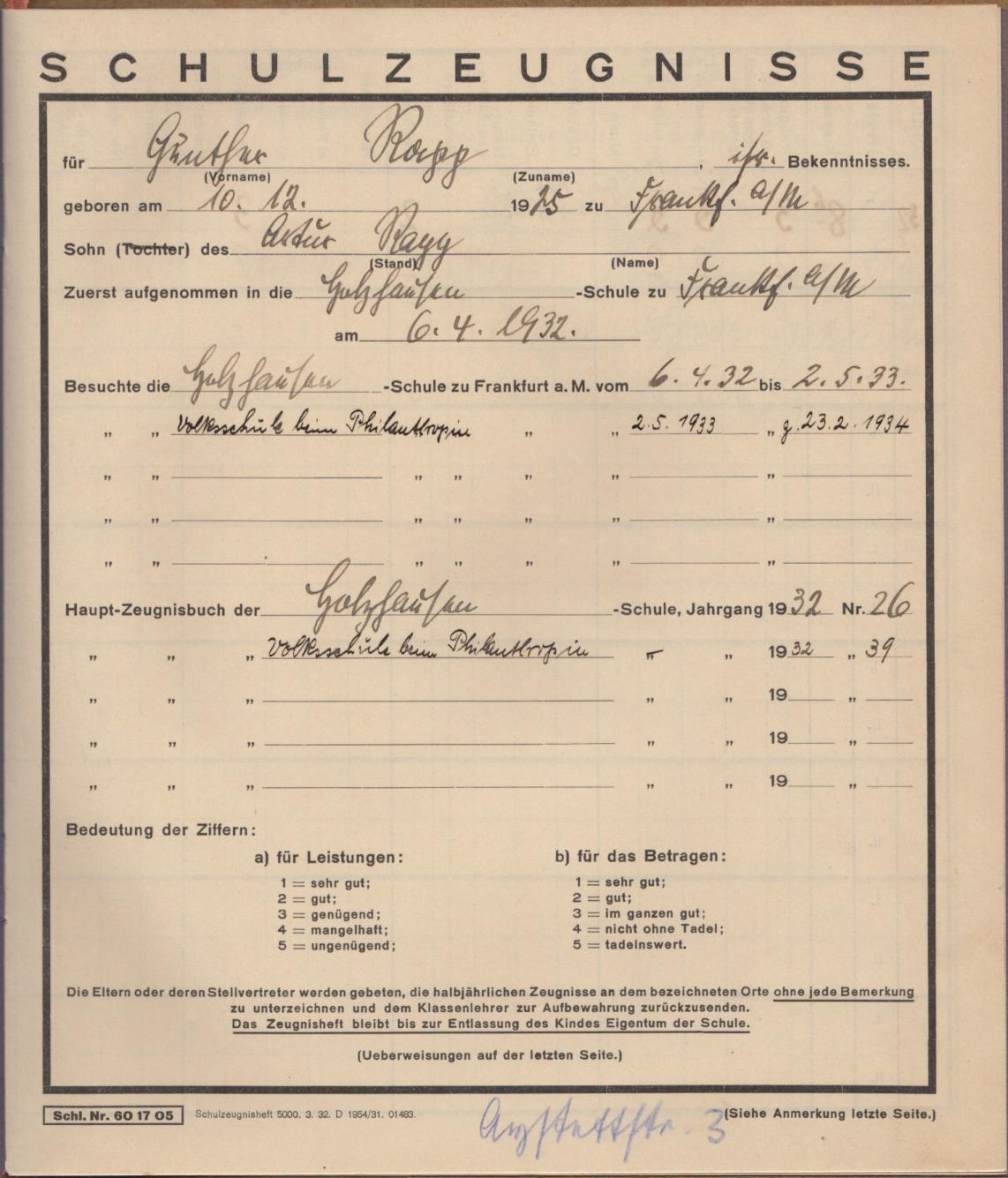
Gunther Rapp started school in Frankfurt on April 6, 1932, when he was six, and spent two years in school in Frankfurt, ending on February 23, 1934, as seen on this report card his son Greg shared with me. His first year was at the Holzhausen School, and his second year was at the Philanthropin School.

Courtesy of Greg Rapp

Then, one year after Hitler had become Chancellor of Germany, the Rapp family left their comfortable life in Frankfurt and moved to Milan, Italy, where on March 2, 1934, Gunther was enrolled in a Swiss school in Milan, as seen in this report card:

Courtesy of Greg Rapp

The family lived in Milan until about December 1937. Greg wasn’t sure what his grandfather was doing at that time but speculated that since the H. Fuld Telephone Company was international, he was continuing to work for that company during this time.

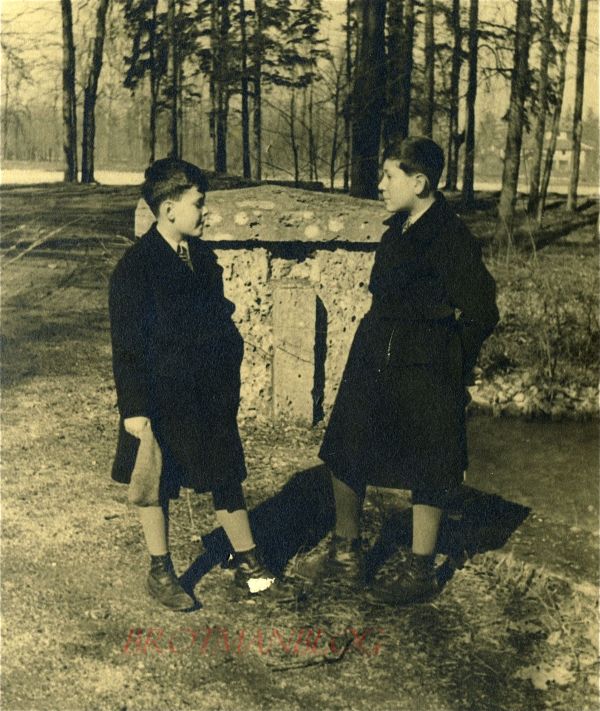
I think these photographs were probably taken during the time they were in Italy from March 1934 until December 1937, or from the time Gunther was eight until he was twelve; on the other hand, they might have been taken in England, their next home:

Gunther and Helmut Rapp c. 1936 Courtesy of Greg Rapp

Gunther and Helmut Rapp c. 1936

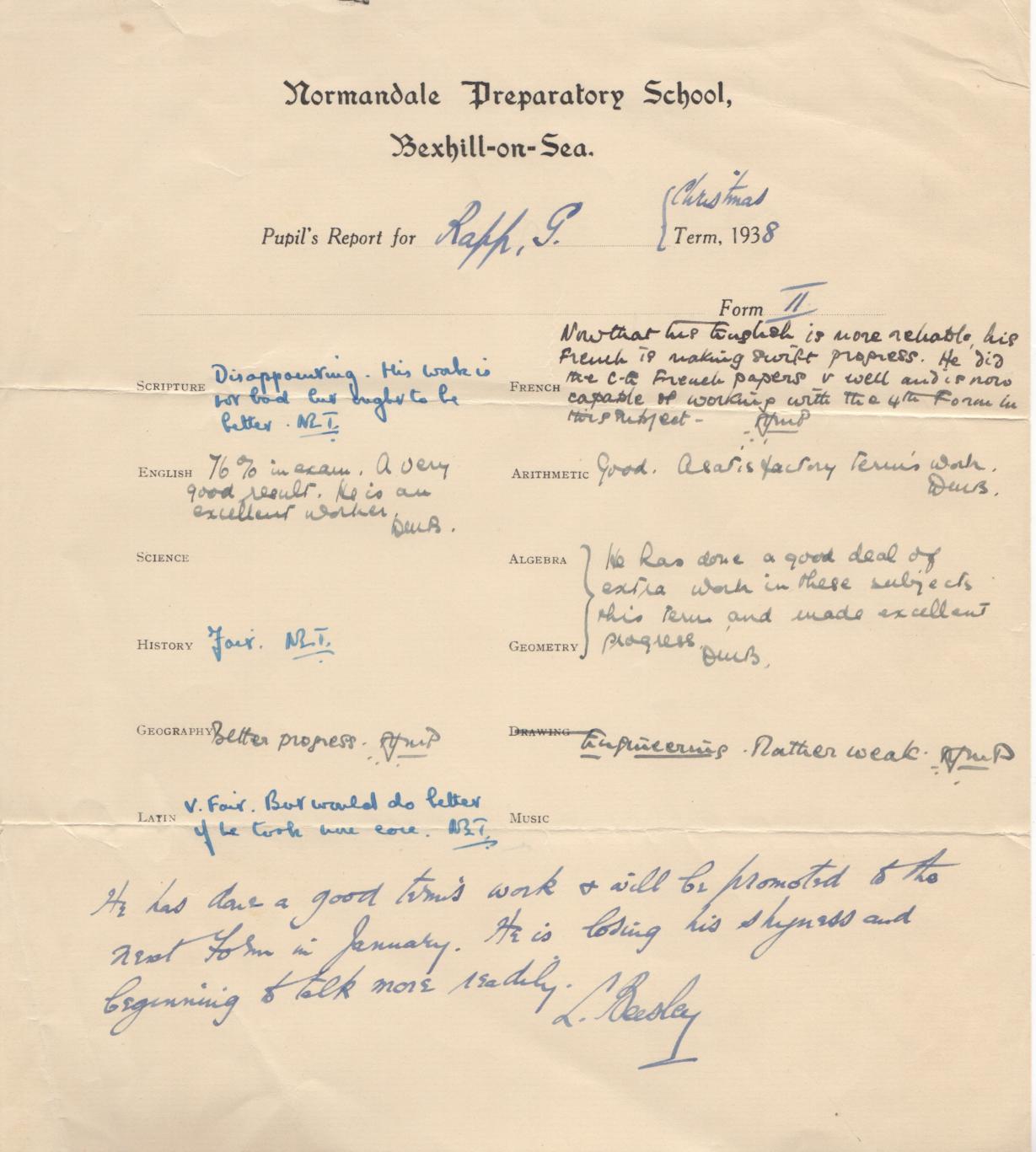
Then the family moved again, this time to London. Gunther was now twelve, his brother Helmut was fourteen. Having learned Italian and studied French while in Milan, the boys now had to learn a fourth language, English. When he started school in England in January 1938 at the Normandie Preparatory School in Bexhill-on-the-Sea, Gunther knew only three words: please, thank you, and yes.2

Gunther’s report card a year later in December 1938 showed just how much progress he had made in English and in school in general (despite the comment about how he was doing in Scripture). Perhaps most telling is the comment at the bottom: “He is losing his shyness and beginning to talk more readily.”

Courtesy of Greg Rapp

Gunther celebrated becoming a bar mitzvah that December as well, delivering his bar mitzvah speech in German, which he later translated to English. His speech was primarily an expression of gratitude to his parents and his grandmother for the way they instilled joy and love into all their lives. A note at the bottom contained Gunther’s admission (possibly added years later) that the rabbi wrote most of his speech (something that may be true for many bar/bat mitzvah students).

And then nine months later on September 1, 1939, World War II started. The headmaster of Gunther’s school wrote to his parents, trying to persuade them to keep Gunther at the school.

Courtesy of Greg Rapp

Two things are of particular interest: first, the fact that the school had built a trench so that the students never had to go outside. And secondly, the letter assured Gunther’s parents that the fact that he was German-born would not be an issue, noting that, “We all know that you have exactly the same feelings as an Englishman about the tyrant in Germany….”

But the Normandale School was on the south coast of England on the English Channel, and the Rapps decided that boys would be safer elsewhere. Gunther and his brother Helmut were sent to High Bullen Farm in Lynton, Ilkerton-Devon, on the west coast of England. The farm had no electricity, only kerosene lamps, and water had to be pumped by hand. The Rapp brothers helped on the farm—milking cows, hunting rabbits, and watched the slaughtering of a pig.3

Starting in January 1940, Gunther began to keep a diary. The three months of the first year of his diaries are, interestingly, written in German, not English; many of the entries simply say he went to school or he was sick in bed or he played football (soccer, I assume) or hockey or golf.  In April 1940, he switched to English, which I found noteworthy. I wonder whether England being at war against Germany had anything to do with that or whether he just finally felt fluent enough in English to use it. There is no mention of the war, however, until May 8, 1940, when he included a small news clipping about the war after entering his activities for that day: “Go to school. Play cricket. Became a prefect.”

Courtesy of Greg Rapp

But his parents were already looking to get out of England:

Courtesy of Greg Rapp

From then on, Gunther made occasional entries about the progress of the war or entered news clippings, but mostly he reported on going to school and engaging in sports. In June 1940, he and Helmut left Devon and returned to the family home in Stanmore where their parents had built a house with a bomb shelter in the backyard to keep them safe.4

On June 26, 1940, Gunther wrote the following brief entry: “Pa is interned at 10 o’clock. Mu [his mother, I assume] is very worried. Read. Mu goes to Consuls and tries to get a visa.” On Friday, August 2, 1940, Gunther wrote, “We get a ‘phone call that we will shortly get the visa.” On August 16, he spoke of men coming to pack and of an air raid warning. There are then several more references to air raid warnings, and on August 29, he noted that his diary had been checked by a censor as the family was preparing to leave England.

Courtesy of Greg Rapp

And then on September 6, 1940, he described their departure from England, commenting in part that “We are all very pleased. Pa came out of the internment camp.” They were headed to Sao Paulo, Brazil, Gunther’s fourth country in six years. He was not yet fifteen years old.

From his description of the trip from England to Brazil, you would think he was on a pleasure cruise with his diary entries repeatedly saying, “Lie on deck. Read and play,” with an occasional reference to learning Portuguese—his fifth language after German, Italian, French, and English.

The Rapp family’s time in Brazil was relatively short, and Gunther’s diary entries mostly refer to learning Portuguese, going to the museum, exploring Sao Paulo, and engaging in some project with marble blocks. He also commented on Helmut’s fascination with watches and clocks and his work at a clock repair store. Then in December he started school and commented, “I hardly understand anything the teachers say.” But that same week in December, 1940, Gunther wrote about going with his parents to the American consul to get a visa to travel to the US.

Courtesy of Greg Rapp

The 1941 diary began by noting that he was going to school each morning to learn Portuguese and taking typing lessons in the afternoon. But meanwhile the family was preparing to sail to the US. Helmut continued to repair watches. On his last day at the school in Brazil, January 31, 1941, Gunther wrote, “I’m glad I don’t have to go there any more because I didn’t like it there.”  Overall, he seemed not to be the least bit sad when they left Brazil on February 5, 1941, and sailed to the United States.

On February 17, 1941, the ship arrived in New York harbor. Gunther wrote on that day:

“We are getting nearer our destination. On our left and our right, we can see strips of land, with a blanket of snow on it. Hardly visible through the fog is the imposing statue of liberty, which guards the entrance of the N. York harbor. … We step ashore at 330 and are welcomed at the quay by aunt Alice [Rapp, his father’s sister] and [her husband] Sally and one or two other friends. It’s snowing and terribly cold. …. We go with Uncle Sally and Mr. Drey to the Whitehall Hotel by U-ground, which isn’t as nice as in London [ed.: that is still true today]. I haven’t seen much of N.Y. yet, but from what I have seen, I think I’m going to like it.”

He in fact lived the rest of his life in the greater New York City area, moving only as far as New Jersey in the mid-1970s.

Gunther (who became Gordon in the US) continued to keep his diaries through 1945, and when I have time I hope to read through more of them. But for now I have told the part of the story I wanted to share—the story of a boy who left his homeland at eight for Italy, then at twelve moved to England, at fourteen left for Brazil, and finally in February 1941 when he was fifteen, moved to the United States, where he spent the rest of his life.

As I wrote in my earlier post about the Rapp family, both Gunther/Gordon and his brother Helmut/Harold lived long and successful and productive lives in the US—Harold rising from doing watch repairs to becoming the president of Bulova International, Gordon obtaining degrees from Cornell University and Purdue University and becoming a product and marketing manager with Corn Products Corporation.

From reading the diaries, looking at the photos, and reading the letters written about him by his teachers, it truly seems that Gunther Rapp’s bar mitzvah speech was truthful—even if the rabbi wrote much of it. Gunther seems to have always felt safe and secure with his parents and brother, well-loved and filled with joy, despite all the turmoil and changes going on in his external circumstances.

Thank you so much to my cousin Greg for sharing this incredible archive of photographs, diaries, and other documents. By doing so, he has brought his father to life for me and, I hope I have been able to honor the memory of this man whose boyhood was interrupted, but who never seemed to lose his joyfulness or his desire to succeed.


  1. Conversation with Greg Rapp, December 17, 2020. 
  2. Email from Greg Rapp, December 17, 2020. 
  3. Email from Greg Rapp, December 17, 2020
  4. Conversation with Greg Rapp, December 17, 2020. 

Children Orphaned by the 1918 Flu Epidemic: The Family of Clementine Goldschmidt Sondheimer, Part II

In the last post we saw that after Clementine Goldschmidt Sondheimer died in 1918 and then her husband Nathan Sondheimer died in 1933, there were three children left orphaned: Manfred, Erich, and Augusta. They were still just teenagers at the time. But fortunately for them their grandmother Selma Cramer Goldschmidt and their extended family in Frankfurt cared for them as did their stepmother Anna.

All three were able to escape from Nazi Germany in time. We saw that  Augusta ended up in the US in early 1939 and lived with her stepmother Anna and her aunt Selma Ettlinger Oppenheimer until she married Walter Levy in 1942.

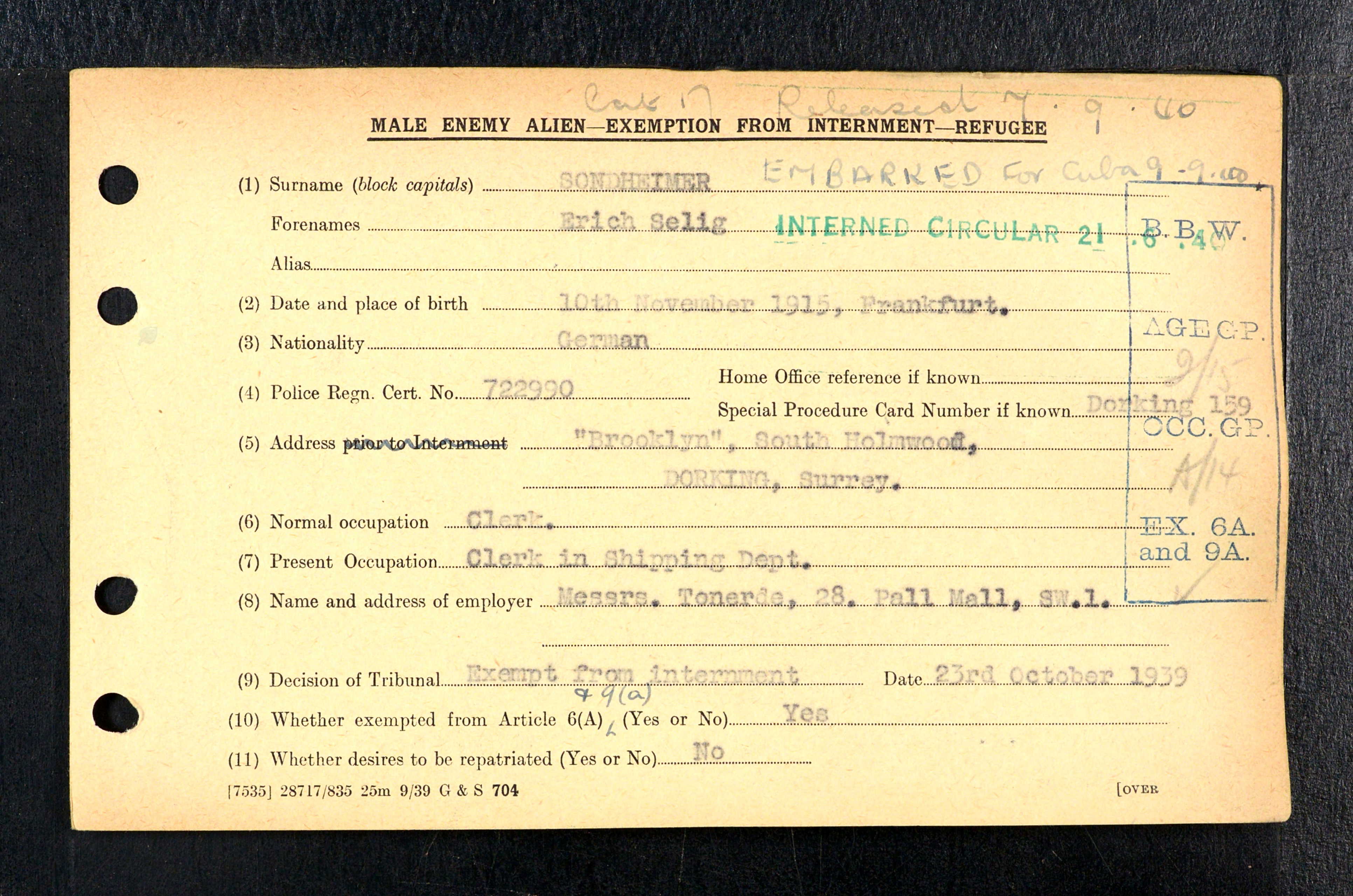
As for Augusta’s older brothers, Manfred and Erich, by 1939, they were living in England, according to the 1939 England and Wales Register. The Sondheimer brothers were living in Surrey with a couple named Friedrich and Ruth Hirsch, who were not much older than they were; Friedrich was a metal broker. Manfred was working as the secretary and Erich as a clerk for a company identified as Messrs. Tonerde on their enemy alien registration cards (see images below). That was the same company where their cousin Ernst Bodenheimer was employed.

Manfred and Erich Sondheimer, The National Archives; Kew, London, England; 1939 Register; Reference: RG 101/1938C, Enumeration District: DNEA, Ancestry.com. 1939 England and Wales Register

Manfred married another Frankfurt native, Ruth Blumenthal, on June 16, 1940, in the Hendon district of London; Ruth was born on June 4, 1920, to Samuel Blumenthal and Gutta Spangenthal. She had come to London after finishing school in Germany.1 Their daughter, my fifth cousin Daniela, kindly shared a scan of their marriage registration:

Marriage certificate of Manfred Sondheimer and Ruth Blumenthal

Both Manfred and Erich were eventually interned as enemy aliens on the Isle of Man. Here is Manfred’s enemy alien registration card showing that he was then living in Surrey and working for Messrs. Tonerde. Although he was originally found to be exempt from internment, he was later interned on the Isle of Man, where he was put in charge of one of the barracks,2 and released on September 8, 1940.

Manfred Sondheimer enemy alien registration, The National Archives; Kew, London, England; HO 396 WW2 Internees (Aliens) Index Cards 1939-1947; Reference Number: HO 396/240
Piece Number Description: 240: Dead Index (Wives of Germans etc) 1941-1947: Siderer-Steppacher, Ancestry.com. UK, World War II Alien Internees, 1939-1945

Manfred’s brother Erich Selig Sondheimer also was interned on the Isle of Man. According to his enemy alien registration card, he was living with his brother Manfred in Surrey at the time of  registration and was also working for Messrs. Tonerde. But he also was later sent to the internment camp where he was the chauffeur to the commander of the camp.3 Eric was  released from the camp on September 7, 1940, the day before his brother Manfred.

Erich S Sondheimer enemy alien registration, The National Archives; Kew, London, England; HO 396 WW2 Internees (Aliens) Index Cards 1939-1947; Reference Number: HO 396/240
Piece Number Description: 240: Dead Index (Wives of Germans etc) 1941-1947: Siderer-Steppacher, Ancestry.com. UK, World War II Alien Internees, 1939-1945

On September 9, 1940, Ruth and Manfred and Erich all left England for Cuba. They had decided they would go wherever they first got a visa, and although Ruth would have preferred to go to Palestine where her parents and sister were living, the visa for Cuba came through first.4

On the same ship were their cousins Ernst and Clementine (Eisemann) Bodenheimer, who had also been interned on the Isle of Man. According to their daughter Daniela, Ruth and Manfred had a religious wedding ceremony aboard the ship to solemnize the civil ceremony they had had in London in June.5

Ernst and Clementine Bodenheimer, Manfred and Ruth Sondheimer, Erich Sondheimer, ship manifest, Ancestry.com. UK and Ireland, Outward Passenger Lists, 1890-1960

On February 17, 1941, Manfred and Ruth arrived in Miami, Florida, from Cuba. Manfred reported that the person they were going to at their destination was Anna Sondheimer in New York City. Manfred stated that he was a merchant who last permanently resided in London. He could speak five languages: German, English, French, Dutch, and Hebrew.

Manfred Sondheimer, Ancestry.com. Miami, Florida, U.S., Index to Alien Arrivals by Airplane, 1930-1942

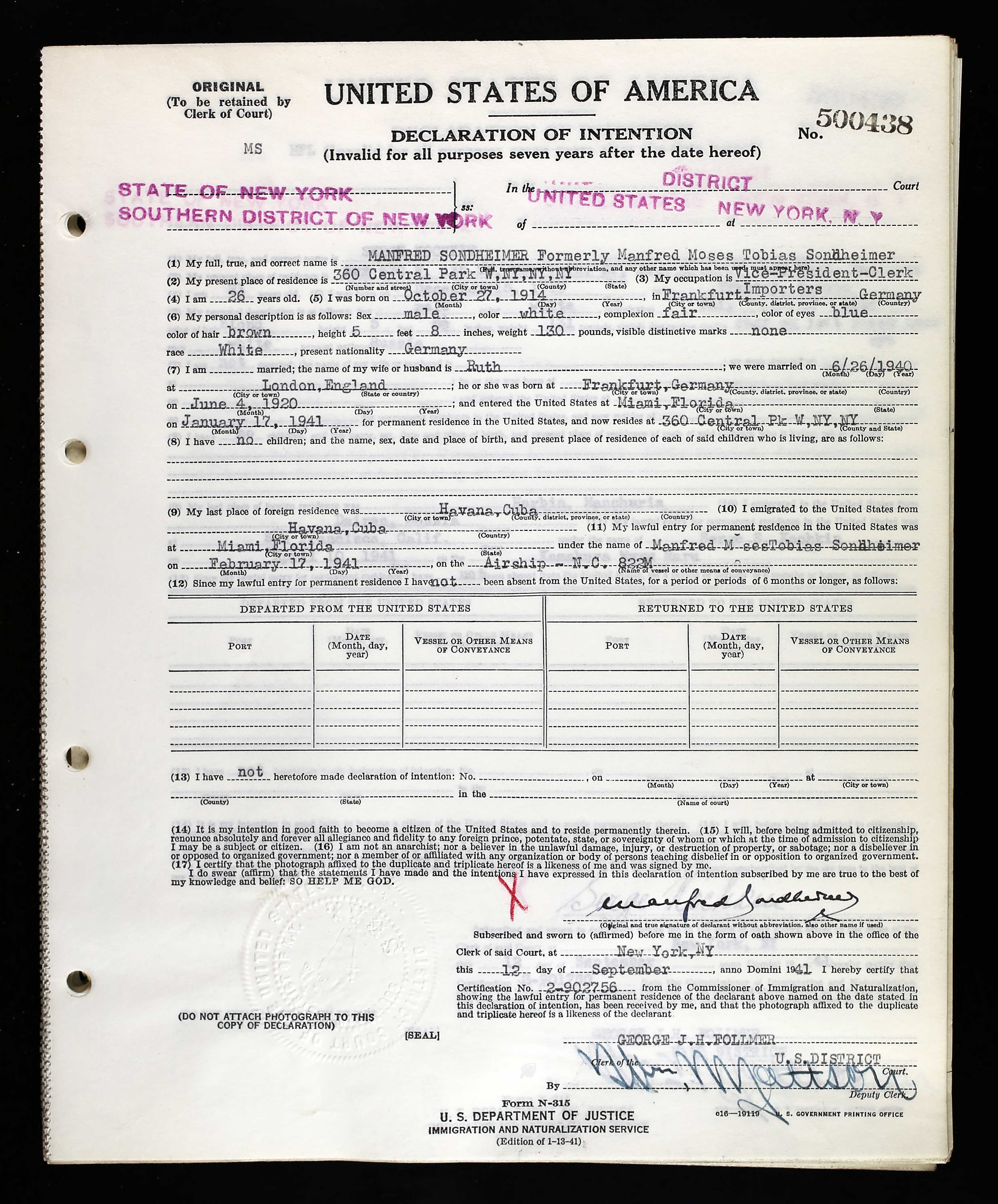
By the time Manfred filed his declaration of intention to become a US citizen on September 12, 1941, he and Ruth were living in New York City. Manfred listed his occupation as the vice-president/secretary of an importing business.

Manfred Sondheimer, Declaration of Intention, The National Archives at Philadelphia; Philadelphia, Pennsylvania; NAI Title: Declarations of Intention for Citizenship, 1/19/1842 – 10/29/1959; NAI Number: 4713410; Record Group Title: Records of District Courts of the United States, 1685-2009; Record Group Number: 21, Description: (Roll 630) Declarations of Intention for Citizenship, 1842-1959 (No 500201-501100), Ancestry.com. New York, U.S., State and Federal Naturalization Records, 1794-1943

On his World War II draft registration, he identified that company as Campro, Inc. Manfred and Ruth had two children born in New York after the war, their son Adrian and their daughter Daniela, who has generously shared so much of her family’s story with me.

Manfred Sondheimer World War 2 draft registration, Ancestry.com. U.S., World War II Draft Cards Young Men, 1940-1947

Manfred’s marriage to Ruth Blumenthal ended in divorce in 1966, and in 1968, he married another Ruth—Ruth Darmstadter Grunebaum.6 He became the vice-president of the Hugo Neu Company, a business that, as described on its website, “is a privately held company with deep experience in investing, building and managing businesses in recycling, real estate and related industries.” Manfred worked there for fifty years. One of his favorite charities was the Bibleland Museum in Jerusalem, and he worked hard to provide support and to obtain support from others for that institution.7

Manfred died on January 8, 2006, at the age of 91. He was survived by his children and grandchildren as well as his brother Erich. Those descendants have carried on the Goldschmidt commitment to Jewish education as both of Manfred’s children and all of his grandchildren have attended or are attending Jewish day school.8

Instead of going directly to the US from Cuba like his brother Manfred, Erich Sondheimer agreed to stay in Cuba so that another relative, one of his Sondheimer cousins, could leave for the US. Because he was unable to get a visa to the US, Erich ended up living for some years in Ecuador,9 where he married his wife Joan Charlotte Salomon on October 26, 1943. She was born in Berlin on March 31, 1912, to Herman and Gertrud Salomon.10

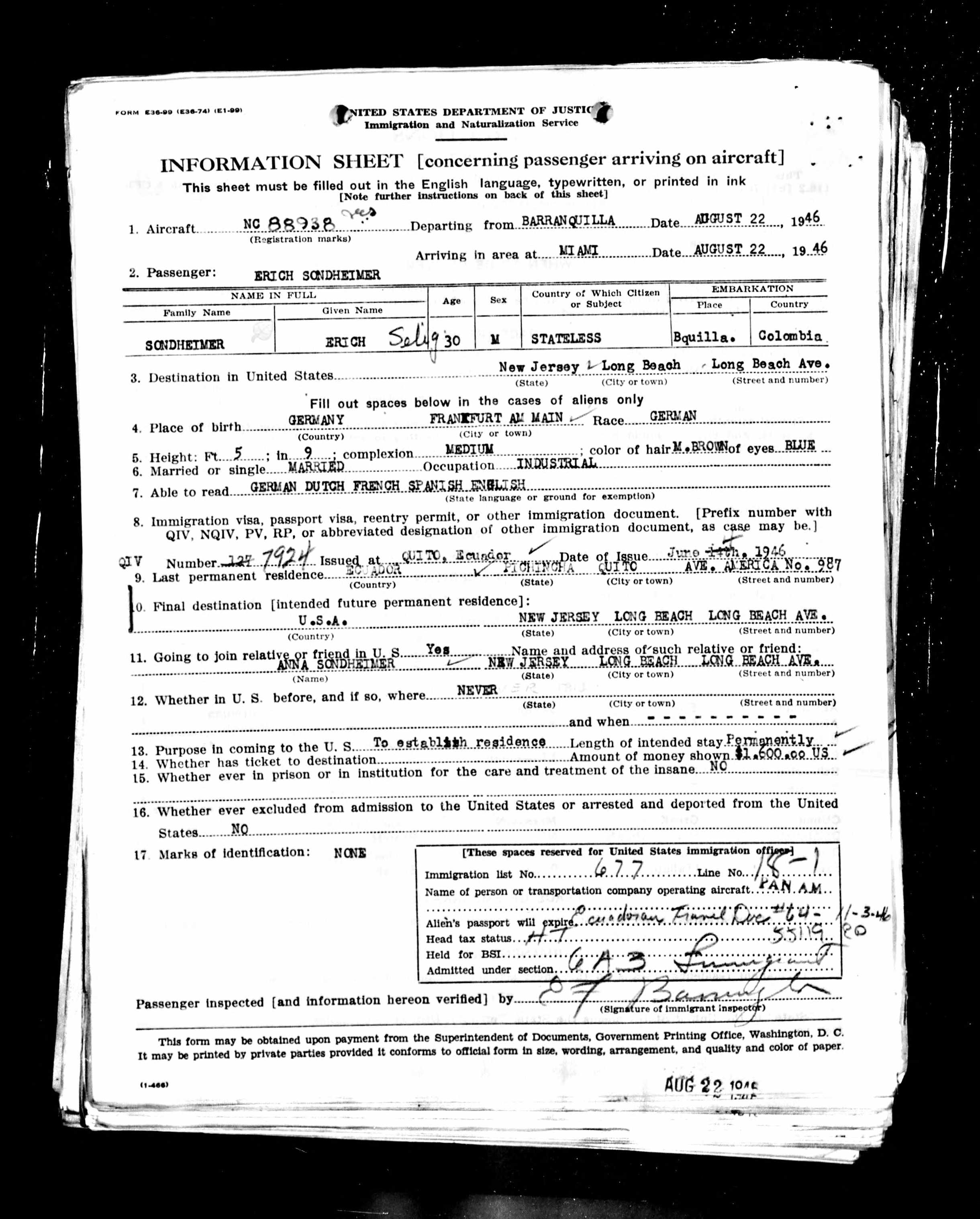
Erich and Joan immigrated to the US on August 22, 1946, arriving in Miami, Florida. On an information sheet filed with INS upon his arrival, Erich indicated that they were heading to Long Beach, New Jersey, where Anna Sondheimer, his stepmother, was living. (This is probably a mistake and should have been Long Beach, New York, according to Erich’s niece Daniela.) Erich described his occupation as “industrial” and noted that he, like his brother Manfred, was able to read five languages: German, Dutch, French, Spanish, and English.

Erich Sondheimer, The National Archives at Washington, D.C.; Washington, D.C.; Series Title: Passenger and Crew Manifests of Airplanes Arriving at Miami, Florida; NAI Number: 2788537; Record Group Title: Records of the Immigration and Naturalization Service, 1787 – 2004; Record Group Number: 85, Roll Number: 133, Ancestry.com. Florida, U.S., Arriving and Departing Passenger and Crew Lists, 1898-1963

Erich (later spelled Eric in the US) and Joan settled in New York and made several trips to South America as well as other destinations over the years. They did not have children. Joan died November 22, 2009; she was 97 years old.11 Eric died March 8, 2010, less than four months after Joan. He was 94.12

Eric worked for many years for the Melanol Corporation, an oil trading business, but his niece Daniela said that his real passion was his volunteer work for an organization called Selfhelp Community Services that Selma Ettlinger Sondheimer was also involved in developing.13 Selfhelp describes itself on its website as follows:

Selfhelp Community Services was founded in 1936 to help those fleeing Nazi Germany maintain their independence and dignity as they struggled to forge new lives in America. Today, Selfhelp is one of the largest and most respected not-for-profit human service agencies in the New York metropolitan area, with 46 programs offering services throughout Manhattan, Brooklyn, Queens, the Bronx, Nassau and Suffolk Counties, and Westchester. Selfhelp provides a broad set of services to more than 20,000 elderly, frail, and vulnerable New Yorkers each year, while remaining the largest provider of comprehensive services to Holocaust survivors in North America.

In a death notice published in The New York Times on March 9, 2010, Selfhelp paid tribute to Eric Sondheimer and his long and dedicated service to their organization:14

Selfhelp Community Services deeply mourns the passing of the esteemed elder statesman of our Board, Eric S. Sondheimer. For over fifty years, Mr. Sondheimer demonstrated an unwavering commitment to Selfhelp’s historic mission of supporting life with dignity to survivors of the Holocaust. His passion for independent living is evidenced by Selfhelp’s six residences, built under his guidance and direction, which house 1,000 seniors. Mr. Sondheimer will be lovingly remembered as a true gentleman whose exceptional kindness and wit was matched only by his insightful wisdom and vision. He left an extraordinary legacy for which he will always be remembered.

Thank you to my fifth cousin Daniela for sharing her family stories and photographs, including these two of her Sondheimer family. First, a photograph of Ruth Blumenthal Sondheimer, Daniela’s mother, Selma Ettlinger Sondheimer, the widow of Nathan Sondheimer’s brother Fritz, and Joan Charlotte Salomon Sondheimer, Erich Sondheimer’s wife:

Ruth Blumenthal Sondheimer, Selma Ettlinger Sondheimer, Joan Charlotte Sondheimer. Courtesy of the family

This last photograph is of four of the Sondheimer siblings and their spouses. It includes Manfred and Eric Sondheimer’s half-siblings, Fred (previously known as Fritz) and Marion. Their sister Augusta had already died when this photo was taken.

Robert Couturier, Joan Charlotte Sondheimer, Fred Sondheimer, Marion Sondheimer Couturier, Ruth Grunenbaum Sondheimer, Manfred Sondheimer, Eric Sondheimer. Courtesy of the family.

Reading about Manfred and Eric and their sister Augusta and how successful and well-loved they all were was reassuring and uplifting. Here were three children who lost their mother as preschoolers and their father as teens and then had to escape from Nazi Germany. Eric and Manfred were both interned as enemy aliens on the Isle of Man. Both brothers then escaped to Cuba because they couldn’t get into the US as quickly due to visa issues and quotas. And then finally they both settled in New York and lived very long and productive lives.

Once again I am inspired by the resilience of the human spirit and the ability of people to survive terrible losses and displacement and yet go on to find joy and meaning in life.


  1. Ruth Blumenthal Sondheimer, Gender: Female, Race: White, Birth Date: 4 Jun 1920, Birth Place: Frankfurt, Federal Republic of Germany, Death Date: 27 Oct 1996
    Father: Samuel Blumenthal, Mother: Gutta Spagenthal, SSN: 060405088, Ancestry.com. U.S., Social Security Applications and Claims Index, 1936-2007. Conversation with Daniela Sondheimer Klein, December 1, 2020. Volume Number: 3a
    Page Number: 2220, General Register Office; United Kingdom; Volume: 3a; Page: 2220, Ancestry.com. England & Wales, Civil Registration Marriage Index, 1916-2005 
  2. Conversation with Daniela Sondheimer Klein, December 1, 2020. 
  3. Ibid. 
  4. Ibid. 
  5. Ibid. 
  6. Divorce documents provided by Daniela Sondheimer Klein. Ruth Grunebaum
    Gender: Female, Marriage License Date: 1968, Marriage License Place: Manhattan, New York City, New York, USA, Spouse: Manfred Sondheimer, License Number: 2434,
    New York City Municipal Archives; New York, New York; Borough: Manhattan, Ancestry.com. New York, New York, U.S., Marriage License Indexes, 1907-2018 
  7. Death notices for Manfred Oppenheimer, The New York Times, Jan. 10, 2006, Section C, Page 17. Conversation with Daniela Sondheimer Klein, December 1, 2020. 
  8. Conversation with Daniela Sondheimer Klein, December 1, 2020. Manfred Sondheimer, Social Security Number: 051-18-3476, Birth Date: 27 Oct 1914, Issue Year: Before 1951, Issue State: New York, Last Residence: 10024, New York, New York, New York, Death Date: 8 Jan 2006, Social Security Administration; Washington D.C., USA; Social Security Death Index, Master File, Ancestry.com. U.S., Social Security Death Index, 1935-2014 
  9. Conversation with Daniela Sondheimer Klein, December 1, 2020. 
  10. David Baron and Roger Cibella, Goldschmidt Family Report. Joan Charlotte Sondheimer, Birth Date: 31 Mar 1912, Age: 39, Naturalization Date: 25 Feb 1952
    Residence: New York, New York, Title and Location of Court: New York Southern District, Ancestry.com. New York, U.S., Index to Petitions for Naturalization filed in New York City, 1792-1989 
  11. Joan Sondheimer, Social Security Number: 094-24-2094, Birth Date: 31 Mar 1912
    Issue Year: Before 1951, Issue State: New York, Last Residence: 10024, New York, New York, New York, Death Date: 22 Nov 2009, Social Security Administration; Washington D.C., USA; Social Security Death Index, Master File, Ancestry.com. U.S., Social Security Death Index, 1935-2014 
  12.  Eric Sondheimer, Social Security Number: 070-24-6828, Birth Date: 10 Nov 1915
    Issue Year: Before 1951, Issue State: New York, Last Residence: 10024, New York, New York, New York, Death Date: 8 Mar 2010, Social Security Administration; Washington D.C., USA; Social Security Death Index, Master File, Ancestry.com. U.S., Social Security Death Index, 1935-2014 
  13. Conversation with Daniela Sondheimer Klein, December 1, 2020. 
  14. Death notice for Eric Sondheimer, The New York Times, March 9, 2010. 

Children Orphaned by the 1918 Flu Epidemic: The Family of Clementine Goldschmidt Sondheimer, Part I

As mentioned in an earlier post, Meyer Selig and Selma (Cramer) Goldschmidt’s daughter Clementine married Nathan Sondheimer in 1913 and had three children: Manfred born in 1914, Erich in 1915, and Auguste in 1918. I was very fortunate to connect with Clementine’s granddaughter Daniela, daughter of Manfred Sondheimer, who generously shared with me family stories and photographs, including this wonderful photograph of the three Sondheimer children with their mother.1

Erich, Manfred, Auguste, and Clementine Goldschmidt Sondheimer, c. 1917. Courtesy of the family

Tragically, Clementine died on October 29, 1918, leaving behind three young children, Manfred, (four years old), Erich (three), and Auguste (one), and her husband Nathan Sondheimer. Clementine was only 25 years old and was a victim of the 1918 flu epidemic like her cousin Rosa Cramer Oppenheimer and millions of others. According to Clementine’s granddaughter Daniela, Clementine was pregnant with her fourth child at the time of her death.

Clementine Goldschmidt Sondheimer death record, Personenstandsregister Sterberegister; Bestand: 903; Signatur: 10793, Ancestry.com. Hesse, Germany, Deaths, 1851-1958

Daniela shared with me that after their mother died, her father Manfred and his siblings were raised in large part by their maternal grandmother, Selma Cramer Goldschmidt, the wife of Meyer Selig Goldschmidt, who himself died in 1922. The entire Goldschmidt extended family was extremely close and lived near each other, so there was a great deal of support for Clementine’s three young children. That was especially important when Auguste came down with tuberculosis and was extremely ill and in and out of sanitoria. Fortunately she eventually recovered and regained her strength.2

Here are three more photographs of the Sondheimer children, two of just the three of them and one with the extended family:

Manfred, Auguste, and Erich Sondheimer, c. 1921 Courtesy of the family

Manfred, Erich, and Auguste Sondheimer, c. 1923 Courtesy of the family

Members of the extended Goldschmidt and Sondheimer families at the North Sea, c. 1927. At far right in the first row is Nathan Sondheimer. To his right is Manfred and then Auguste with Erich behind them. Courtesy of the family

In 1928, ten years after Clementine’s death, her widower Nathan Sondheimer remarried, and he had two more children with his second wife, Anna Ettlinger, a doctor who graduated from the University of Heidelberg, according to my cousin Daniela. Anna was born in Karlsruhe, Germany, on May 28, 1894, to Kaufmann Ettlinger and Dora Frankel.3 She was likely a distant cousin of Nathan through his mother Auguste Ettlinger as both were originally from Karlsruhe, Germany. I traced them both back four generations without finding a direction connection, but I assume there is one there.

Nathan Sondheimer and Anna Ettlinger marriage record, Hessisches Hauptstaatsarchiv; Wiesbaden, Deutschland; Bestand: 903, Ancestry.com. Hesse, Germany, Marriages, 1849-1930

Then just five years after he married Anna, Nathan died on May 13, 1933, in Washington, DC. According to his granddaughter Daniela, Nathan had traveled to Washington to promote his business. While there he secured a life insurance policy. Then, without warning, he died suddenly of a heart attack at the age of 54.4

Nathan and Clementine’s three children were now teenaged orphans. Manfred was eighteen, Erich was seventeen, and Auguste was fifteen. Clementine’s children had lost both of their parents before reaching adulthood just as had happened to the children of her cousin Rosa Cramer Oppenheimer. It also left Nathan’s second wife Anna a widow with their two little children, Fritz and Marion, both under the age of five.

Fortunately, Nathan had successfuly secured that life insurance policy just days before his death, and the proceeds proved to be enough to get his body back to Germany for burial in Frankfurt and to get his widow Anna and his five children out of Germany.

According to the website of the Holocaust Museum of Los Angeles, Anna Ettlinger Sondheimer fled Nazi Germany in 1935 and smuggled eighteen sapphires out of the country by sewing them into the clothing of the family. Some of those sapphires are now in the museum’s collection.

It appears that Anna and her two children Fritz and Marion escaped to Holland. A ship manifest shows her sailing to the US with her sister Kate Ettlinger in June 1938; Anna listed her last permanent residence as The Hague, Holland, and indicated she intended to stay in the US permanently.5 Then in September 1938, she sailed from the US to England, listing her last residence as the US.

Anna Sondheimer, ship manifest, The National Archives of the UK; Kew, Surrey, England; Board of Trade: Commercial and Statistical Department and successors: Inwards Passenger Lists.; Class: BT26; Piece: 1165, Ancestry.com. UK and Ireland, Incoming Passenger Lists, 1878-1960

On February 11, 1939, Anna returned to the US with Fritz and Marion and her mother, who had all been living in Holland. Anna and her children listed as the person they were going to in the US an A. Sondheimer—identified as Anna’s daughter and the sister of her two children, living at 1359 51st Street in Brooklyn, New York. (See the third image below.)

Anna Sondheimer, ship manifest, with children and mother, Year: 1939; Arrival: New York, New York, USA; Microfilm Serial: T715, 1897-1957; Line: 29; Page Number: 33 Source Information Ancestry.com. New York, U.S., Arriving Passenger and Crew Lists (including Castle Garden and Ellis Island),

I first assumed that A. Sondheimer was Auguste Sondheimer, who was Anna’s stepdaughter and her children’s half-sister. But I found two manifests—one an outgoing manifest from England, the other an arrival manifest in New York—showing that Auguste sailed from England to New York in August 1939, six months after Anna’s arrival back to the US in February. Auguste was  accompanied by  Selma Sondheimer, who was the widow of Fritz Sondheimer, Nathan Sondheimer’s brother. Both of those manifests show that Auguste had been living in England, not in Brooklyn. They also reveal that Auguste was a photographer.6

I searched for any other A. Sondheimer who could have been living in Brooklyn at that time. Nathan did have two brothers who came to the US. One, Arthur, had died in New York in 1905;7 the other, Albert, arrived in the US in April 1939, so months after Anna’s arrival.8

And then the lightbulb went on. The “A. Sondheimer” they were going to in Brooklyn was Anna Ettlinger Sondheimer herself. Anna listed her last residence as Brooklyn on that February 1939 manifest. The poor shipping company clerk who entered the data must have been so confused. Look at how he crossed out the relationships in the first column for the person left behind, another A. Sondheimer, this one probably Albert Sondheimer, Nathan’s brother. And he also listed the A. Sondheimer they were going to as the daughter of both Anna’s mother and of Anna herself.

In any event, the 1940 US census shows that Augusta (spelled here with a A at the end, not an E) was then living in New York City with Anna, Fritz, Marion, Anna’s mother Dora Rudlia Frankel Ettlinger, and Anna’s sister-in-law Selma Ettlinger Sondheimer, the widow of Nathan’s brother Fritz and Nathan’s first cousin. Anna was practicing medicine.

Augusta Sondheimer, 1940 US census, Year: 1940; Census Place: New York, New York, New York; Roll: m-t0627-02638; Page: 3B; Enumeration District: 31-626, Ancestry.com. 1940 United States Federal Census

Auguste married Walter James Levy in New York in April, 1942.9 Walter was also a refugee from Germany; he was born in Hamburg on March 21, 1911, to Moses Levy and Bertha Lindenberger.10 Walter arrived in the US on March 19, 1941, and filed his declaration of intention to become a US citizen on August 6, 1941, listing his occupation as statistician and his last residence as England.11 He also by that time had registered for the World War II draft, listing his occupation as writer, statistician, economist. Most interestingly, he listed as his contact person a “friend,” Augusta Sondheimer. They were both living at 41 Central Park West in New York City. Less than a year later, they were married.

Walter Levy, World War II draft registration, Ancestry.com. U.S., World War II Draft Cards Young Men, 1940-1947

During the war, they moved to Washington, DC, where Walter ran the petroleum section of the Office of Strategic Services, the forerunner of the Central Intelligence Agency. According to Walter’s obituary in The New York Times:

After the war, he guided the petroleum sector of the Marshall Plan. In 1948 he became chief of the petroleum, oil and lubricant division of the Economic Cooperation Administration, which administered the plan to mend Europe’s shattered economies and provide the political stability for democratic institutions to thrive. He filled that job until 1949 and continued to advise the E.C.A. until it ended its mission two years later.

During the 1940s, Walter and Augusta (as she later spelled it in the US) had two children, Robert and Susan. They returned to New York where Walter established his own international consulting business, Walter J. Levy Consultants Corporation, where he “helped renegotiate oil leases between states that wanted to tap their own resources effectively and companies that feared outright nationalization.”12

Augusta Sondheimer Levy died on September 19, 1981, in Westport, Connecticut; she was 64 years old.13 Her son Robert died only twelve years later on April 20, 1993; he was only 47.14 Walter Levy died at age 86 on December 10, 1997, in New York; he was described as “the dean of United States oil economists” in his obituaries.15 Sadly, Augusta and Walter’s remaining child also died relatively young; Susan Levy died on November 15, 2003, Altamonte Springs, California; she was 54.16 All four family members are buried at the Riverside Cemetery in Saddle Brook, New Jersey, where many other Sondheimer relatives are also buried. As neither Robert or Susan had children, there are no living descendants of Augusta Sondheimer Levy.

But Augusta survived the loss of her mother, her father, and then her homeland. Her name and her story should not be forgotten.

What about Augusta’s older brothers, Manfred and Erich?

To be continued.


  1. My fifth cousin Daniela Sondheimer Klein and I exchanged numerous emails in November and December and also spoke by Zoom on December 1, 2020. All references to matters in this post that I was told by Daniela came from those emails and that conversation. 
  2. See also Arnold S. Oppenheimer, The Story of My Life (2007, Jerusalem), pp. 15-18. 
  3. Anna Ettinger, Gender: weiblich (Female), Birth Date: 28 Mai 1894 (28 May 1894)
    Birth Place: Karlsruhe, Baden (Baden-Württemberg), Deutschland (Germany), Civil Registration Office: Karlsruhe, Father: Kaufmann Ettinger, Mother: Dora Frünkel, Certificate Number: 968, Signatur: 3_B_A_I_47, Bestand: 3/B, Title: Enthält: Einträge Nr. 938 – 1875, Date: 1894, Lange: 20, Laufende Nummer: A/I/47, Zahlung Gesamter Bestand: 47, Ancestry.com. Karlsruhe, Germany, Births, 1870-1904. Conversation with Daniela Sondheimer Klein, December 1, 2020. 
  4.   Nathan Sondheimer, Gender: männlich (Male), Nationality: Deutsch Juden, Record Type: Inventory, Last Residence: Frankfurt am Main, Residence Place: Frankfurt am Main, Death Date: 13 Mai 1933 (13 May 1933), Notes: Inventories of personal estates of foreigners and especially German Jews, Reference Number: 02010101 oS, Document ID: 70367447, Arolsen Archives, Digital Archive; Bad Arolsen, Germany; Lists of Persecutees 2.1.1.1, Ancestry.com. Free Access: Europe, Registration of Foreigners and German Persecutees, 1939-1947. Conversation with Daniela Sondheimer Klein, December 1, 2020. 
  5. Anna Sondheimer, ship manifest, Year: 1938; Arrival: New York, New York, USA; Microfilm Serial: T715, 1897-1957; Line: 1; Page Number: 2, Ancestry.com. New York, U.S., Arriving Passenger and Crew Lists (including Castle Garden and Ellis Island), 
  6. Auguste and Selma Sondheimer, ship manifests, Ancestry.com. UK and Ireland, Outward Passenger Lists, 1890-1960, and Year: 1939; Arrival: New York, New York, USA; Microfilm Serial: T715, 1897-1957; Line: 5; Page Number: 149, Ship or Roll Number: Champlain, Ancestry.com. New York, U.S., Arriving Passenger and Crew Lists (including Castle Garden and Ellis Island), 1820-1957 
  7. New York, New York City Municipal Deaths, 1795-1949″, database, FamilySearch (https://www.familysearch.org/ark:/61903/1:1:27BT-FK8 : 3 June 2020), Arthur Sondheimer, 1905. 
  8. Albert Sondheimer, ship manifest, Year: 1939; Arrival: New York, New York, USA; Microfilm Serial: T715, 1897-1957; Line: 15; Page Number: 26, Ancestry.com. New York, U.S., Arriving Passenger and Crew Lists (including Castle Garden and Ellis Island), 
  9.  Auguste Sondheimer, Gender: Female, Marriage License Date: 10 Apr 1942, Marriage License Place: Manhattan, New York City, New York, USA, Spouse: Walter Levy, License Number: 7458, New York City Municipal Archives; New York, New York; Borough: Manhattan; Volume Number: 3, Ancestry.com. New York, New York, U.S., Marriage License Indexes, 1907-2018 
  10. Walter James Levy, [Walter J Levy], Gender: Male, Race: White, Birth Date: 21 Mar 1911, Birth Place: Hamburg, Federal Republic of Germany, Death Date: 10 Dec 1997, Claim Date: 17 Dec 1975, Father: Moses Levi, Mother: Bertha Lindenberger
    SSN: 110240194, Ancestry.com. U.S., Social Security Applications and Claims Index, 1936-2007 
  11. Walter J Levy, Declaration Number: 496713, Box Number: 370, The National Archives at Philadelphia; Philadelphia, Pennsylvania; NAI Title: Declarations of Intention for Citizenship, 1/19/1842 – 10/29/1959; NAI Number: 4713410; Record Group Title: Records of District Courts of the United States, 1685-2009; Record Group Number: 21,
    Ancestry.com. New York, U.S., State and Federal Naturalization Records, 1794-1943 
  12. “Walter James Levy, 86, Oil Consultant, Dies,” The New York Times, December 15, 1997, Section B, p. 7. 
  13. State File #: 19446, Connecticut Department of Health. Connecticut Death Index, 1949-2012 
  14. Walter James Levy, [Walter J Levy], Gender: Male, Race: White, Birth Date: 21 Mar 1911, Birth Place: Hamburg, Federal Republic of Germany, Death Date: 10 Dec 1997, Claim Date: 17 Dec 1975, Father: Moses Levi, Mother: Bertha Lindenberger
    SSN: 110240194, Ancestry.com. U.S., Social Security Applications and Claims Index, 1936-2007. “Walter James Levy, 86, Oil Consultant, Dies,” The New York Times, December 15, 1997, Section B, p. 7. 
  15. https://www.findagrave.com/memorial/80079636/robert-levy 
  16. Susan Beatrice Levy, Gender: Female, Birth Date: 23 Sep 1949, Birth Place: New York City, New York, Death Date: 1 Nov 2003, SSN: 065384544, Ancestry.com. U.S., Social Security Applications and Claims Index, 1936-2007