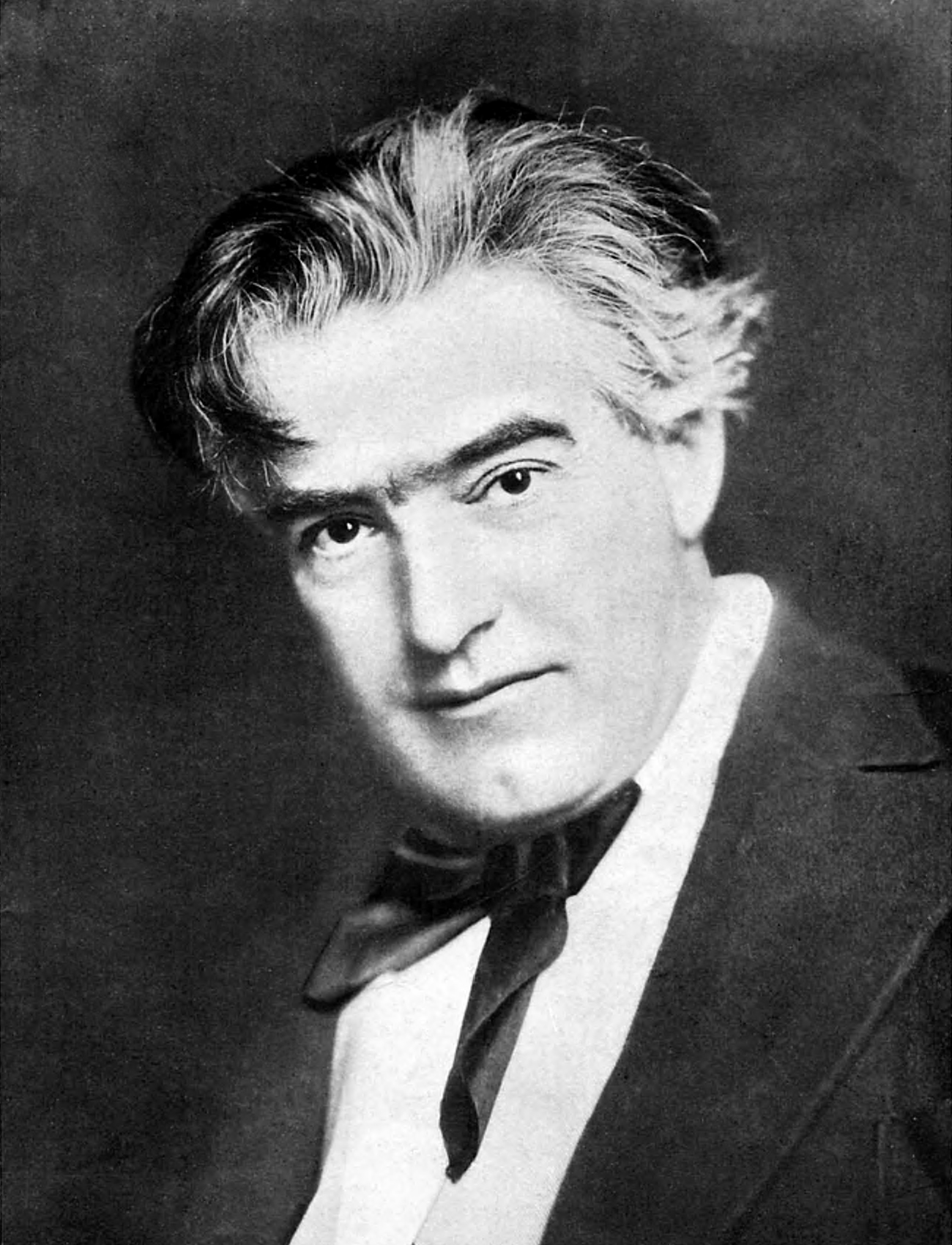
Alfred Goldsmith, Book Lover

As seen in my last post, Alfred Goldsmith’s ill-fated 1905 marriage to Beatrice Miller ended in divorce in 1913, and I was unable to find anything about the eight years in between. But what happened to Alfred after 1913?

The first record I have for Alfred after his 1913 divorce was a record of his second marriage on July 24, 1918, to Ray Solomons in Troy, New York.1 Ray was the daughter of Myer Solomons and Caroline Weinberg. Myer was originally from Warsaw, Poland, and Caroline from Austria. They had both immigrated to England, where Ray was born in 1891. The family immigrated to the US in 1910 when Ray was nineteen. On the 1915 New York State census, her father listed his occupation as a dyer; later records show he was in the fur business. Ray was employed as a bookkeeper in 1915. She was living with her family in the Bronx. 2

Solomons family 1915 NYS census, New York State Archives; Albany, New York; State Population Census Schedules, 1915; Election District: 06; Assembly District: 34; City: New York; County: Bronx; Page: 34
Ancestry.com. New York, State Census, 1915

So why did Ray and Alfred marry in Troy, New York, a city about 150 miles north of New York City? At first I worried that this was another elopement, and perhaps it was. But happily for Ray and Alfred, this marriage lasted. Ray was 27 when they married, Alfred was forty. They stayed together until Alfred’s death. It does not appear that they ever had children.

Like his half-siblings Milton and Emily, Alfred loved books. He had a life-long interest in literature and in particular authors: Lewis Carroll, Edgar Allen Poe, and especially Walt Whitman. According to his obituary in The New York Times, Alfred “was only twelve when he became captivated by Whitman’s poetry and started to collect rare Whitman editions.” 3 That interest in Whitman stayed with him throughout adulthood.

When Alfred registered for the draft on September 12, 1918, six months after their wedding, he and Ray were living at 2593 Eighth Avenue in New York City, and his occupation was “bookseller” at 42 Lexington Avenue. That would remain his place of business for the rest of his life. Alfred’s bookstore, known as At the Sign of the Sparrow, became very well-known, as we will see.

Alfred Goldsmith, World War I draft registration,
Registration State: New York; Registration County: New York; Roll: 1786673; Draft Board: 140
Ancestry.com. U.S., World War I Draft Registration Cards, 1917-1918

In 1920, Alfred and Ray were living at 304 Second Avenue in New York City, and Alfred listed his occupation on the census as “Books” in his own business.4 The 1922 New York directory also has his occupation simply as “books,” and the 1925 New York State census lists his occupation as “bookseller.”5

In 1922, Alfred and Carolyn Wells, the author of over 170 books for adults and children, collaborated on The Concise Bibliography of the Works of Walt Whitman (Houghton Mifflin, Boston, 1922), which was “affectionately dedicated to Ray S. Goldsmith.” The book is, as the title indicates, a bibliography of all the books written by Walt Whitman and all the books written about Walt Whitman. It was for many years considered one of the authoritative works of scholarship about Whitman.6

Alfred Goldsmith and Carolyn Wells also collaborated on another project, editing a collection of Whitman’s essays entitled Rivulets of Prose (Greenberg, Publishers, Inc., 1928). That also was dedicated to Alfred’s wife Ray: “With Affection to Ray S. Goldsmith for Her Sympathetic Assistance.” It is evident from the foreword to this collection that Alfred and his co-editor had quite a scholarly approach to Whitman and his work.

In addition, Alfred organized a major exhibit at the New York Public Library about Walt Whitman in 1925. He collected from many private collectors Whitman’s manuscripts and books and other materials and prepared them for the exhibit. According to the November 8, 1925 Brooklyn Daily Eagle (p. 11), interest in “Whitmanania” was so intense that the price of these materials had risen sharply and were mostly in the hands of private collectors; the purpose of the exhibit was thus to give the public a chance to see these materials.

Alfred was very active in book auctions, buying and selling first and other editions of books on his own behalf and for collectors. The Harrisburg Telegraph reported this amusing story about Alfred’s experiences at one book auction:7

It will cost you money if you arrange signals with a bookseller at an auction and then forget those signals. The idea is Alfred F. Goldsmith’s, a bookseller, and it grew out of this incident.

At one of the numerous book auctions (New York has dozens of them each month) a wealthy collector authorized Goldsmith to purchase a certain volume for him. “I’ll pay as much as $125,” he instructed the seller, who was to do the bidding for him.

“But,” explained Goldsmith, “It would be a crime to let the purchase fall through if it could be effected for a few extra dollars.”

“Then,” said the client, “keep bidding until I stop you.  I’ll be there watching the sale.  When you see me remove my glasses, drop out; that will be the signal.”

Thus agreed, both arrived at the auction. But Goldsmith soon found himself several rows removed from his client and unable to keep in oral connection. It didn’t take the book long to climb. In a trice, it was up to $125, the agreed sum. Goldsmith dropped out, for just at that moment his client casually removed his glasses.

The bidding soared. Soon it had reached $325, and Goldsmith, glancing toward his client, saw that gentleman nod and refit his glasses. Just as he launched a bid, however, off came the glasses. Then the client hastily put them on again.  Reassured, Goldsmith then began to bid in earnest, finally winning for $375.

“Congratulations,” called Goldsmith to his client, “you got it.”

“Got what?” asked the client, not comprehending.

“Why, the book,” said Goldsmith.

“Didn’t I tell you,” gasped the fellow—“to stop at $125?” Goldsmith then reminded him of the signal by glasses.

“You know,” he said sheepishly, “I’d forgotten all about that.” Then he wrote out his check for $375 and went out to his limousine, smiling at himself.

A newspapers.com search turned up numerous articles about Alfred’s success at book auctions. For example, in March 1936, Alfred bid successfully for a rare book written by Lewis Carroll, one of his other favorite authors. The Central New Jersey Home News wrote:8

The magic name of Lewis Carroll, author of “Alice in Wonderland,” made book collectors bid frantically for a little known, privately printed book at a sale here. When the hammer banged, its price was announced at $310. The purchaser was Alfred F. Goldsmith, Carroll expert.

According to one inflation calculator, $310 in 1936 would be worth about $5,500 today.

The Reading (Pennsylvania) Times reported on Alfred’s acquisition and sale of a rare book of Edgar Allen Poe’s poetry, Tamerlane and Other Poems, in April 1938; it described the book as “the scarcest and most valuable book of poetry ever published in America.” Poe, as noted above, was another of Alfred’s favorite authors.

Reading PA Times, April 18, 1938, p. 19

These are just two of the many articles I found reporting on Alfred’s purchases of rare books at auctions.

But Alfred was probably best known for his bookstore, At the Sign of the Sparrow, which was a well-known landmark in New York City. In my search to find a photograph of the store, I landed on the website of The Old Book Table, “a social club composed of antiquarian booksellers and those engaged in professions related to antiquarian bookselling.” According to the website, it is the oldest such club in the world, founded in 1931 in New York City.

Alfred was one of the early members of the club, and the history page on the club’s website had both a photograph of Alfred and one of his drawings. The history page was excerpted from a book by Joseph J. Felcone: The Old Book Table. A Record of its First Seventy-Five Years, 1931–2005 (New York: The Old Book Table, 2006).  Through the magic of the Internet I was able to contact Mr. Felcone and, with his help, learn a great deal more about my cousin Alfred. That merits a whole separate post.


  1. Rensselaer County, New York, Marriage Index, 1908-1935,  Volume 2, Number 9954. 
  2. The National Archives; Kew, Surrey, England; Class: HO 334; Piece: 25; Ancestry.com. UK, Naturalisation Certificates and Declarations, 1870-1916. Passenger manifest, Year: 1910; Arrival: New York, New York; Microfilm Serial: T715, 1897-1957; Microfilm Roll: Roll 1583; Line: 4; Page Number: 60. Ancestry.com. New York, Passenger Lists, 1820-1957. 
  3.  “A.F. Goldsmith, 66, Book Dealer, Dies,” The New York Times, July 30, 1947, p. 17. 
  4. Alfred F. and Ray Goldsmith, 1920 US Census, Census Place: Manhattan Assembly District 12, New York, New York; Roll: T625_1206; Page: 8A; Enumeration District: 854. Ancestry.com. 1920 United States Federal Census 
  5. New York, New York City Directories 1922, 1925, Ancestry.com. U.S. City Directories, 1822-1995. 
  6. Edward J. Naumburg, Jr., “My Favorite Bookseller,” Princeton University Library Chronicle, Volume 48, No. 2, Winter 1987, p. 185. 
  7. George Tucker, ” ‘Round About New York,” Harrisburg Telegraph, April 9, 1935, p. 8. 
  8. “Poem by Carroll Boosts Price of Book to $310,” Central New Jersey Home News, March 27, 1936, p. 27. 

Earliest Memories

Before I return to the other children of my three-times great-uncle Abraham Goldsmith, one more post inspired indirectly by his son Milton.

My final post about Milton referred to the comment in his 1957 obituary in the Philadelphia Jewish Exponent that Milton remembered when Abraham Lincoln was assassinated in 1865. I noted that Milton was only four years old at that time. One of my readers commented that he also could remember a traumatic event from when he was four, and another reader shared her first memory from when she was two and a half. That made me think about the first specific event that I can remember in my own life. I have earlier vague memories, but this is the first clear memory of an event.

I was almost three years old at the time, and my family was spending the summer near Mahopac, New York, on a pond called Long Pond. My aunt and uncle were also there, as were my grandparents. We went to Long Pond for three summers when I was very young. My father and my uncle would return to New York City during the week for work and then come back to Long Pond on weekends. I learned to swim at Long Pond, and I mostly have very vague sense-memories of the place, reinforced by photographs and my uncle’s old home movies.

My mother, me and and my aunt summer 1953 at Long Pond

My cousin Jeff, my father, and me, Long Pond 1954

summer 1955 at Long Pond


But the one specific event that I remember very clearly from that third summer at Long Pond was the evening I followed my cousin Jeffrey into the woods. Jeff, who was nine that summer, was my childhood idol. He was six years older than I was and the oldest of the first cousins, all of whom adored him. I have written about Jeff before, here and here, for example. He was smart and funny and lovable; he could always make us all laugh.  My entire family was heartbroken when Jeff died from cancer fourteen years ago.

Jeff and me, 1955

That summer at Long Pond, Jeff was friendly with another boy his age whose family was also staying at Long Pond. I can’t remember that boy’s name, but for simplicity’s sake, let’s call him Joe. Joe had a younger brother who was about six. Let’s call him Sam. One evening after dinner, Jeff and Joe decided to take a walk in the woods near our cabins. I wanted to go with them. I remember Jeff very pointedly telling me that I was too little and that I could not come with them. I was hurt and sad and probably made a stink, but Jeff and Joe wandered off, leaving me behind with Sam, Joe’s six year old little brother.

Then Sam said that we could follow Jeff and Joe, and so off I went, just three years old, following a six year old after two nine year olds. (This was in the days before helicopter parenting.) Before too long, I tripped over a log and fell on a sharp piece of glass, cutting my wrist very close to the vein.

I have no real memory of what happened next. Did Jeff coming running back and rescue me? Did my parents hear my screams and coming running to see what happened? All I know is that someone took me to a doctor nearby, who put butterfly clamps on my wound. To this day, I still have a very nasty two-inch scar on my right wrist.

I was never really bothered by the scar, In fact, at times when I was growing up, it helped me differentiate right from left. My mother used to tell me that someday my husband would buy me a wide gold bracelet to cover the scar. But I almost never thought about it as a child, and now I rarely notice it; nor does anyone else.

When I do look at it these days, I feel very fortunate that I avoided what could have been a much more serious injury. But mostly I look at it and remember with love my cousin Jeff. He may only have been nine at the time, but he was right. I was too little to go walking in the woods in the dusky light of summer that evening.

Jeff and me


What is your earliest memory? How old were you?


Milton Goldsmith: Final Chapter

In 1940, Milton Goldsmith turned 79 years old. He appears to have retired by then, although a few of his books were re-released in the 1940s. As seen in my last post, his younger daughter Madeleine had married Charles A. Jacobson, Jr., on September 29, 1933, and his older daughter Rosalind married Michael Zale on October 25, 1940.

Rosalind was a commercial artist; and as we saw, illustrated one of her father’s books. I do not know what her husband Michael did for a living. I also could not find any military record for Michael Zale during World War II. Given that Michael would have been 26 when the US entered World War II in December 1941, I find it odd that there is no military record for him. I searched for him as Michael Zale, Michael Zalefsky, Metre Zale, Metre Zalefsky, and other wildcard and Soundex possibilities, but nothing came up.

According to her obituary,1 Milton’s younger daughter Madeleine worked as a dietician. Her husband Charles listed his occupation as a banker on the 1940 census.2 Charles served in the US military during World War II, but I could not find any details about his service. He was 37 when he enlisted in 1942.3

After World War II, Charles and Madeleine moved to Larchmont, New York, a suburb of New York City.  According to several city directories, Charles was at least for some time the treasurer of Voland & Sons, a company that his brother James had purchased in the 1940s that manufactured balance scales.4

A Voland & Sons balance scale

Michael and Rosalind Zale stayed in New York City at least until 1960 according to directory listings, but again, I have no information about Michael’s occupation.5

Milton Goldsmith died on September 21, 1957, at the age of 96. According to his obituary in The New York Times, he had lived in Larchmont with his daughter Madeleine before going to a nursing home in New Rochelle. He was described in the obituary as the author of 24 books and as having been in the advertising business until his retirement 25 years earlier. The only book specifically mentioned in the obituary was Rabbi and Priest and the play that was based upon it, The Little Brother.6 Interestingly, Milton was not buried in New York where he’d lived since 1905, but back in Pennsylvania at Roosevelt Memorial Park in Trevose, Pennsylvania, about twenty miles from Philadelphia where Milton was born.

UPDATE AND CORRECTION:  Thank you to Marla Oxenburg Roth of Huggin’ My Cousins!  for investigating the burial of Milton Goldsmith. I was puzzled that FindAGrave had a listing saying that he was buried near Philadelphia after living in New York for over fifty years, and Marla volunteered to go to Roosevelt Memorial Park to find his grave. Sure enough, there was no marker for Milton Goldsmith there, and when I followed up with a call to the cemetery, they had no record of a Milton Goldsmith buried there. Obviously, the FindAGrave memorial I relied on was incorrect, and I have notified the contributor of the memorial.  I am hoping the contributor will remove the memorial so others are not confused. This is the first time I’ve found such a mistake on FindAGrave. Thank you, Marla!

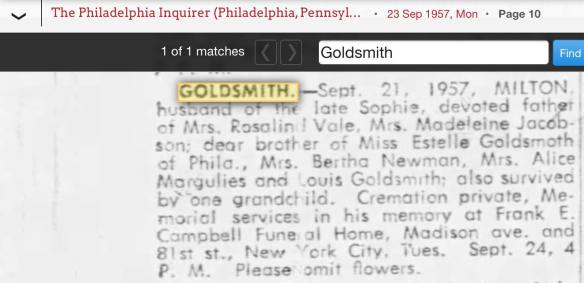
Marla also found a death notice for Milton from the Philadelphia Inquirer that stated that he had been cremated. So perhaps he is not buried anywhere.

Milton Goldsmith death notice Phil Inq

I learned even more about Milton from his obituary in The Philadelphia Jewish Exponent:

The Philadelphia Jewish Exponent, October 4, 1957, p.43.

For example, from this obituary I learned that Milton could remember when Abraham Lincoln was assassinated although he was not even four years old in April 1865 when Lincoln was shot. The obituary also revealed that Milton had entertained the troops during World War I with his skills as an amateur magician. Another hobby was “medieval wood carvings”—did he make them or collect them? I assume the latter. And not surprisingly, he enjoyed math and word puzzles.

Michael Zale died eleven years after his father-in-law in November 1968.7 As the death notice below indicates, Michael was cremated, and the family asked that donations be made to the New York Association for the Blind. I mention this because several of Michael’s siblings made similar requests—that donations be made to some organization for the blind. It makes me wonder whether a member of the family—perhaps Michael himself—was blind. That might explain why I cannot find any records of his military service or his occupation. Michael was 53 when he died.

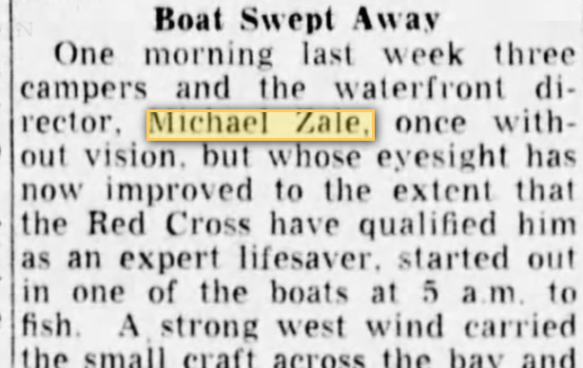
UPDATE: Michael Zale was in fact blind at least as a child.  Heather Paxton once again found the answer! She located a news article about a camp for blind children in New Jersey that included this quote:

Snip from Michael Zale article

“Blind Find Zest in Normal Recreation at Camp Lighthouse on Barnegat Bay,” Asbury Park Press, July 22, 1945, p. 3.

New York Times, November 5, 1968.

Rosalind died eleven years after her husband Michael in May 1979.8 She was 78 years old. According to her death notice,9 her family asked that contributions be made to the Vacation Camp and Community Center for the Blind in New York City, another indication that blindness may have afflicted someone in the family. A listing on FindAGrave indicates that Rosalind donated her body to Columbia University for medical research and was later buried in 1981 at Green-Wood Cemetery in Brooklyn at a site purchased by Columbia to honor those who had dedicated their bodies to science.

Charles Jacobson, Jr. died in November, 1983. I could not find a death notice or obituary for him, only the entry in the Social Security Index. According to that record, his last residence was in Larchmont, New York. He was 78 years old.10

Madeleine Goldsmith Jacobson far outlived her husband, sister, and brother-in-law. Like her father, she lived into her nineties, dying on August 21, 2001, in Chevy Chase, Maryland.  She was 97 years old. According to her obituary, she had worked as a dietician for many years after college and had been active in many charitable and other organizations while living in Larchmont. The obituary reported that “she and her husband always welcomed friends, relatives and sometimes foreign students into their home for as long as they wanted to stay. She will be remembered for her hospitality and as someone who was always helping people and working for organizations that tried to make the community and/or the world a better place.”11

It has been very rewarding and interesting to learn about my cousin Milton Goldsmith and his family; I enjoyed having the opportunity to read some of his books and to understand more about his life and his views through those books. Because of my own interest in and love of reading and writing, those family members who contributed to the world through their published works all hold a special place in my heart.


  1. Deaths, The New York Times, September 30, 2001, found at https://www.nytimes.com/2001/09/30/classified/paid-notice-deaths-jacobson-madeleine-madge-g.html 
  2. Charles and Madeleine Jacobson, 1940 US census, Census Place: New York, New York, New York; Roll: m-t0627-02626; Page: 70A; Enumeration District: 31-51; Ancestry.com. 1940 United States Federal Census 
  3. Ancestry.com. U.S., World War II Army Enlistment Records, 1938-1946. Original data: National Archives and Records Administration. Electronic Army Serial Number Merged File, 1938-1946 [Archival Database]; ARC: 1263923. World War II Army Enlistment Records; Records of the National Archives and Records Administration, Record Group 64; National Archives at College Park. College Park, Maryland, U.S.A 
  4. E.g., 1952 New Rochelle, New York, City Directory, Ancestry.com. U.S. City Directories, 1822-1995. 
  5. Manhattan, New York, City Directory, 1960, Ancestry.com. U.S. City Directories, 1822-1995. 
  6. “Milton Goldsmith,” The New York Times, September 23, 1957, found at https://timesmachine.nytimes.com/timesmachine/1957/09/23/84764059.pdf 
  7.  Number: 114-01-4400; Issue State: New York; Issue Date: Before 1951; Source Information Ancestry.com. U.S., Social Security Death Index, 1935-2014 [database on-line]. Provo, UT, USA: Ancestry.com Operations Inc, 2014. Original data: Social Security Administration. Social Security Death Index, Master File. Social Security Administration. 
  8.  Number: 058-38-2229; Issue State: New York; Issue Date: 1963. Source Information Ancestry.com. U.S., Social Security Death Index, 1935-2014 [database on-line]. Provo, UT, USA: Ancestry.com Operations Inc, 2014. Original data: Social Security Administration. Social Security Death Index, Master File. Social Security Administration. 
  9. Deaths, The New York Times, May 14, 1979, found at https://timesmachine.nytimes.com/timesmachine/1979/05/14/111025254.pdf 
  10.  Number: 063-09-1238; Issue State: New York; Issue Date: Before 1951. Source Information Ancestry.com. U.S., Social Security Death Index, 1935-2014 [database on-line]. Provo, UT, USA: Ancestry.com Operations Inc, 2014. Original data: Social Security Administration. Social Security Death Index, Master File. Social Security Administration. 
  11.   Deaths, The New York Times, September 30, 2001, found at https://www.nytimes.com/2001/09/30/classified/paid-notice-deaths-jacobson-madeleine-madge-g.html 

The Mysterious Son-in-Law

As of 1930, Milton Goldsmith and his wife Sophie and daughters Rosalind and Madeleine were all still living together in New York City.  All that would change in the next decade.

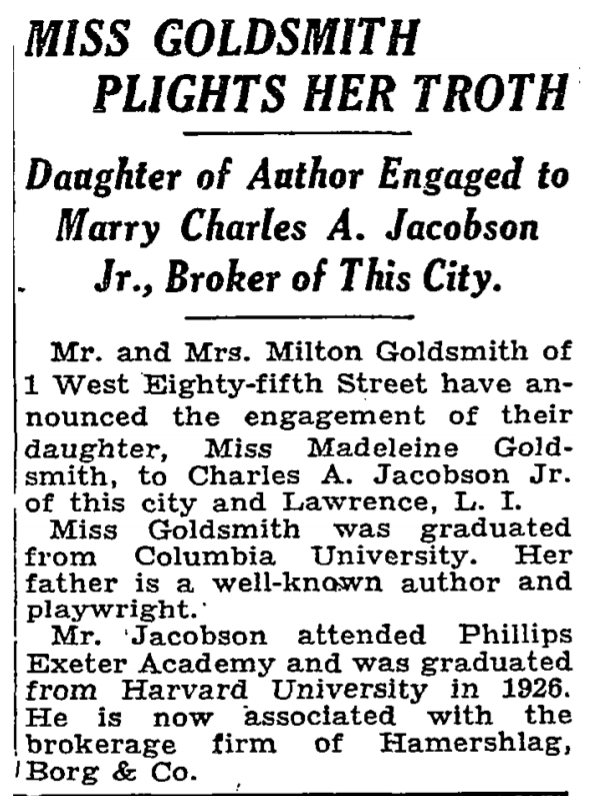
On September 29, 1933, Milton’s younger daughter Madeleine married Charles A. Jacobson, Jr. in New York City.1 Charles was a native New Yorker, born on February 8, 1905 to Charles A. Jacobson, Sr., and Emily Metzger.2 His father was a linen merchant. In 1930 Charles, Jr. was living with his parents and brother James in Lawrence, New York, on Long Island. His father was now retired, and Charles was a stockbroker.  His brother James was a book publisher.3 According to the engagement announcement in The New York Times, Charles was a graduate of Phillips Exeter Academy and Harvard. Madeleine was a graduate of Columbia University.

“Miss Goldsmith Plights Her Troth,” The New York Times, September 5, 1933.

Milton’s wife Sophie Hyman Goldsmith died less than a year after Madeleine’s marriage.  She died on June 18, 1934, in New York City. She was 67 years old.4

In 1940, Milton was living with his daughter Rosalind in New York City at 136 West 75th Street.  He was now 78, and she was 38. Neither listed an occupation on the census. 5 Madeleine and her husband Charles were also living in New York City; Charles was now working as a banker.6 They would have one child in the 1940s.

Later that year, Rosalind married Michael Zale on October 25, 1940, in New York City. 7 From 1942 until 1960, Michael Zale is listed in the New York City telephone directories at 136 West 75th Street, so I assume he moved into the apartment where  Rosalind had been living with her father prior to her marriage.

But I was having no luck learning anything else about Michael Zale.  The only records I could find were the listing in the NYC Marriage License Index cited above and those telephone directory listings. There was a Michael Zale in the Social Security Death Index who died in November 1968,8 but I wasn’t convinced it was the same person since that Michael Zale was born on October 15, 1915, making him fourteen years younger than Rosalind and 25 when he married her in 1940 when she was 39. Rosalind’s obituary9 also mentioned that she was the widow of Michael Zale. But that was it. I couldn’t find one other record or mention of a Michael Zale anywhere.

I searched Ancestry and FamilySearch using all the wildcards and variations I could think of. I searched the various newspaper databases—the New York Times, GenealogyBank.com, newspapers.com, and FultonHistory.com. I tried Google. Nada. Nothing. I was completely stumped.

So I turned to the genealogy village for help. And Heather in the Tracing the Tribe Facebook group came to my rescue. She found a death notice for Michael Zale in the November 5, 1968, New York Times that broke down the brick wall.

The New York Times, November 5, 1968.

I asked her how she’d found it since I had searched the Times database numerous ways numerous times. She said that she had gone through the obituary listings day by day in November 1968, hoping that the Michael Zale in the SSDI was the right person. And he was. Why hadn’t I done that? Now I have learned another important lesson. (Heather said she also had gotten no hits when searching by his name. Very odd.)

Now we knew that Michael’s father was named John, but nothing more. And I couldn’t find a John Zale either. But again Heather found what she hoped was Michael’s family on the 1940 US census: John and Olga Zalefsky in Brooklyn living with two children: Karl, 16, and Dorothy, 4. John and Olga were both born in Russia, John was an alien and Olga was naturalized. John was working as a bottler in a dairy.10  But was this in fact Michael Zale’s family?

From that point, I started searching for John and Olga Zalefsky and found them (as Zalifsky) on the 1930 US census,11 where they were living with four children: a six year old son Karl, a ten year old son Roosevelt, and a fourteen year old son whose name appears to be Metre. Could this be Michael Zale? The age was right (Michael would have been fourteen going on fifteen when the census was taken in 1930), and the name started with M. Perhaps John and Olga had given him a more Russian name that he later Americanized. John and Olga had immigrated in 1914, according to the census, and were still aliens. John was a laborer in a dairy.

Moving backwards, I then found them on the 1925 New York State census as John and Olga Silefsky with three children, Carl (one), Roosevelt (5), and a daughter named Metra, age nine.12 Was this a mistake? Was the oldest child a girl, not a boy as indicated on the 1930 census? Was this not the right family at all?

I wasn’t sure.  And so far I’ve had no luck finding them on the 1920 census or the 1915 census. And although I found birth records for Karl and Dorothy, I have none for Metra/Metre or Roosevelt.

Meanwhile, Heather found a great deal of information about John and Olga’s other children and found some living relatives. I have written to them and hope that they can tell me whether the Michael Zale who married Rosalind Goldsmith was the son of John and Olga Zalefsky.  For now, I can’t be sure, but I am hoping they respond and can help to clarify the conflict between the 1925 and 1930 census and tell me more about Michael Zale. In the meantime, I will continue to search for more information about the Zalefsky family.

Thank you so much, Heather, for all your help!

One final post on Milton and his family to come.


  1. Ancestry.com. New York, New York, Extracted Marriage Index, 1866-1937. Original data: Index to New York City Marriages, 1866-1937. 
  2. Ancestry.com. New York, New York, Extracted Birth Index, 1878-1909 [database on-line]. Provo, UT, USA: Ancestry.com Operations, Inc., 2014. Original data: Index to New York City births, 1878-1909. 
  3. Charles Jacobson and family 1930 Census; Year: 1930; Census Place: Lawrence, Nassau, New York; Page: 12A; Enumeration District: 0053; Ancestry.com. 1930 United States Federal Census  
  4.  Ancestry.com. New York, New York, Extracted Death Index, 1862-1948 [database on-line]. Provo, UT, USA: Ancestry.com Operations, Inc., 2014. Original data: Index to New York City Deaths 1862-1948. 
  5. Milton Goldsmith and daughter, 1940 US Census; Year: 1940; Census Place: New York, New York, New York; Roll: m-t0627-02636; Page: 4A; Enumeration District: 31-572; Ancestry.com. 1940 United States Federal Census 
  6. Charles and Madeleine Jacobson, Jr., 1940 US Census; Year: 1940; Census Place: New York, New York, New York; Roll: m-t0627-02626; Page: 70A; Enumeration District: 31-51; Ancestry.com. 1940 United States Federal Census 
  7.  New York City Municipal Archives; New York, New York; Volume Number: 8; Ancestry.com. New York, New York, Marriage License Indexes, 1907-1995 
  8. Number: 114-01-4400; Issue State: New York; Issue Date: Before 1951; Ancestry.com. U.S., Social Security Death Index, 1935-2014 
  9. New York Times, May 14, 1979. 
  10. John Zalefsky and family, 1940 US Census, Year: 1940; Census Place: New York, Kings, New York; Roll: m-t0627-02551; Page: 2B; Enumeration District: 24-219.  Ancestry.com. 1940 United States Federal Census 
  11. John Zalifsky and family, 1930 US Census, Year: 1930; Census Place: Brooklyn, Kings, New York; Page: 9B; Enumeration District: 1857. Ancestry.com. 1930 United States Federal Census 
  12. John Sliefsky and family, 1925 NYS Census; New York State Archives; Albany, New York; State Population Census Schedules, 1925; Election District: 43; Assembly District: 02; City: Brooklyn; County: Kings; Page: 72. Ancestry.com. New York, State Census, 1925 

Abie’s Irish Rose: One for My Copyright Students

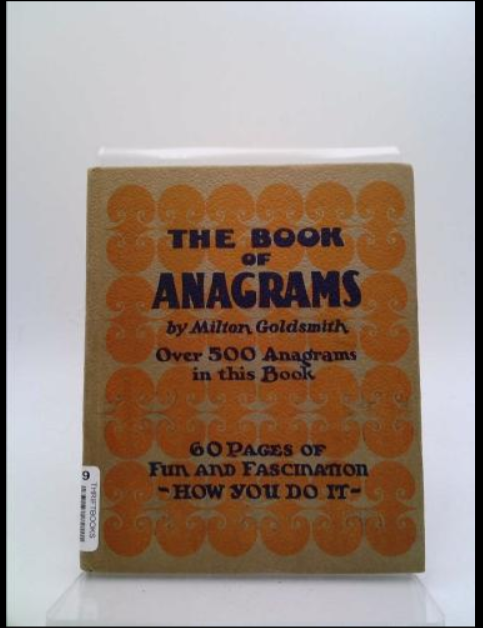
After the very productive first two decades of the 20th century when Milton Goldsmith published at least ten books and had a play produced on Broadway, his output seemed to drop off after 1920. Although he published some puzzle books for children during the 1920s, he did not publish another novel or non-fiction book until 1930.

Milton Goldsmith, The Book of Anagrams, (Whitman Publishing Company, 1930).

The 1925 New York State census record is a bit of a mess so it’s hard to know how reliable it is. I think the enumerator was a bit confused. For example, for Milton he first wrote that he was born in Russia, as was the case for the person in the line above his entry. Then he crossed that out and correctly entered “US.” However, he left the entry that Milton was an alien, not a citizen. So can I trust the listing for Milton’s occupation as a store manager? I don’t think so.

Especially since the line below for Milton’s wife Sophie says she was in advertising and the line below that for Rosalind (spelled “Roseline” here) said “housewife” and was then crossed out and replaced with commercial artist (which she was). So I think that the enumerator had all the occupations off by a line and that Milton was still, as he had been since 1910, in advertising. And I’ve no idea why the enumerator completely crossed out Madeleine (“Madline”) and the servant living in the home.

Milton Goldsmith and family 1925 NYS census
New York State Archives; Albany, New York; State Population Census Schedules, 1925; Election District: 51; Assembly District: 09; City: New York; County: New York; Page: 30
Ancestry.com. New York, State Census, 1925

Despite these confusing entries on the census, I think it’s safe to assume that Milton was still working in advertising and that his wife and daughters were still living with him at 353 West 85th Street in New York City. Both daughters were now in their twenties. I was not able to learn much else about their lives in the 1920s; there were no news articles of interest or directory listings or other records that shed any light on how they spent that decade.

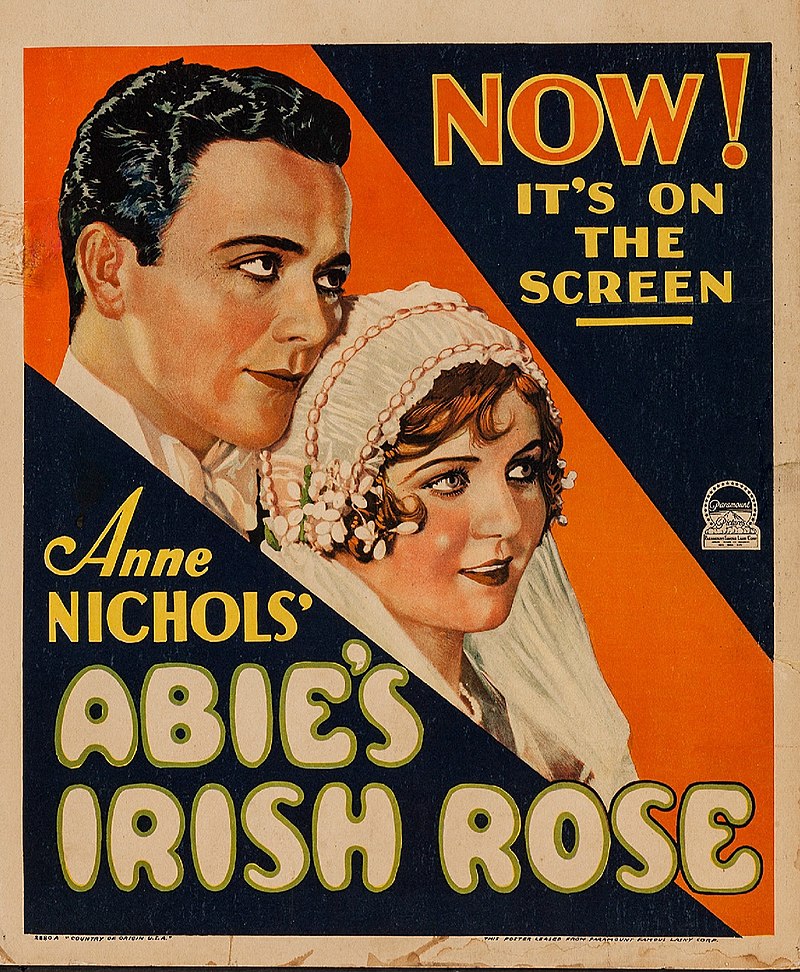
There was, however, one mention of Milton in a news story that was of particular interest to me as a former teacher of copyright law. One of my favorite cases to teach was Nichols v. Universal Pictures,1 an opinion written in 1930 by the renowned jurist, Learned Hand, of the Second Circuit Court of Appeals. The case was brought by Anne Nichols, the author and copyright owner of the play, “Abie’s Irish Rose,” which was a hit on Broadway in the 1920s.  She claimed that Universal Pictures had infringed her copyright with its movie, “The Cohens and the Kellys.”

Both works involved a story of an interfaith marriage between a Jew and a Catholic and the conflict it creates for their parents, who don’t approve of the marriage. There were a number of differences between the stories (which my copyright students better remember in detail, but aren’t relevant here), and both the trial court2 and the appellate court3 ruled in favor of the defendant movie studio, concluding that the theme of star-crossed lovers, one Jewish, one Catholic, was something in the public domain and not protected by copyright law.

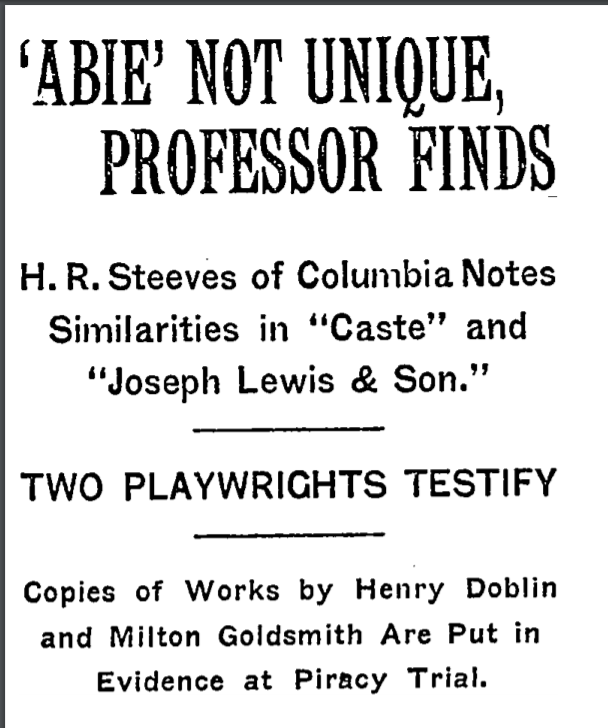
How did Milton Goldsmith become entangled in this dispute? He was a witness for Universal Pictures at the trial in 1929, giving testimony about his own work, Rabbi and Priest and the play based upon it, The Little Brother. Although his testimony was not described in detail in the New York Times article that covered the trial, I imagine it was used to support the defendant’s argument that conflict between Jews and Catholics is a common theme used in many works, including Rabbi and Priest, and not original to Anne Nichols play, Abie’s Irish Rose.

“Abie” Not Unique, Professor Finds,” The New York Times, January 5, 1929.

It would have been fun to mention this family connection to the case when I was teaching, but alas—I knew nothing about my cousin Milton at the time.

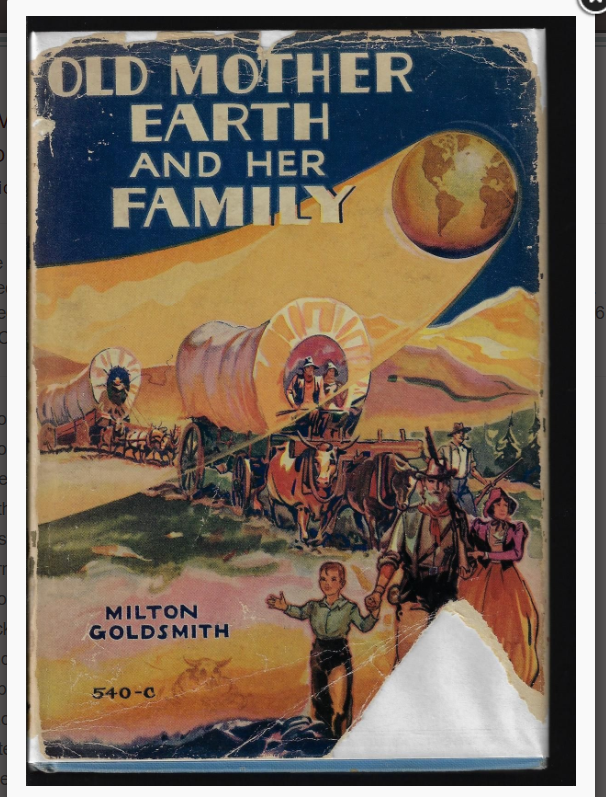
Although Milton released updated versions of some of his earlier books in the 1930s and 1940s, his last new book, first published in 1930, was Old Mother Earth and Her Family, a geography book for young people.4 His daughter Rosalind did the illustrations for this book.

Milton Goldsmith, Old Mother Earth and Her Family (G. Sully & Company, Inc., 1930).

I was unable to find Milton or any of his family on the 1930 census, but I was able to find  Milton, Sophie, Rosalind and Madeleine on several ship manifests in 1930 and 1931 that showed that their home address was still 353 West 85th Street in New York City.5 I used stevemorse.org to search by that address in the 1930 census, but no members of Milton’s family were listed at that address. I wonder whether the whole family was traveling or living abroad when the 1930 census was taken.

The next decade would bring some more changes for Milton and his family.


  1. Nichols v. Universal Pictures, 45 F.2d 119 (2d Cir. 1930). 
  2. Nichols v. Universal Pictures, 34 F.2d 145 (S.D.N.Y. 1929) 
  3. Nichols v. Universal Pictures, 45 F.2d 119 (2d Cir. 1930). 
  4. Milton Goldsmith, Old Mother Earth and Her Family (G. Sully & Company, 1930) 
  5.  Year: 1930; Arrival: New York, New York; Microfilm Serial: T715, 1897-1957; Microfilm Roll: Roll 4663; Line: 1; Page Number: 11; Ancestry.com. New York, Passenger Lists, 1820-1957. Ancestry.com. UK, Outward Passenger Lists, 1890-1960 (Departure from Southampton, England, September 6, 1930, Lancastria).  Also, Year: 1931; Arrival: New York, New York;Microfilm Serial: T715, 1897-1957;Microfilm Roll: Roll 4903; Line: 1; Page Number: 75; Ancestry.com. New York, Passenger Lists, 1820-1957. Year: 1930; Arrival: New York, New York; Microfilm Serial: T715, 1897-1957; Microfilm Roll: Roll 4822; Line: 1; Page Number: 13. Description
    Ship or Roll Number: Roll 4822. Source Information Ancestry.com. New York, Passenger Lists, 1820-1957. 

Milton Goldsmith, Children’s Author and More

My father remembers Milton Goldsmith as an author of children’s books so I was not surprised to learn that Milton had in fact written a number of works for children after moving to New York City in about 1905.

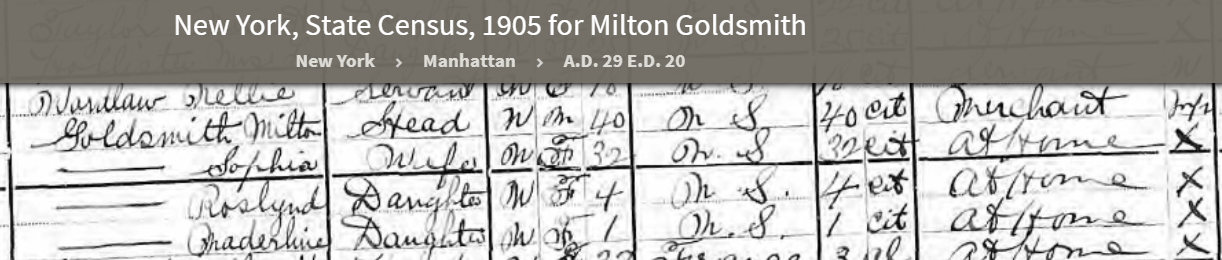
In 1905, Milton, Sophie, and their two young daughters were living at 1125 Madison Avenue in New York City, but Milton was still working as a merchant, according to the 1905 New York State census.

Milton Goldsmith 1905 NYS census
New York State Archives; Albany, New York; State Population Census Schedules, 1905; Election District: A.D. 29 E.D. 20; City: Manhattan; County: New York; Page: 30
Ancestry.com. New York, State Census, 1905

However, by 1906, Milton was listed in Who’s Who in America as an art publisher and author.1 The listing stated that he was the president of Goldsmith-Leving Company, a company engaged in the embossing of art, calendars, pictures, and the like.  It further described him as a contributor of many short stories to magazines and local and Jewish newspapers and of “several hundred poems” to magazines such as Puck, Judge, Life, and Cosmopolitan. In addition, Milton’s musical and dramatic works were mentioned in the listing and, of course, his books.

In 1908 Milton published his first children’s books. So far I have found three of them published in that year alone. The Adventure of Walter and The Rabbits,2 is a story about a boy named Walter who follows a rabbit into a hole in a tree and observes the rabbit family; he learns never to be cruel to animals based on his observations.  It is a sweet story and one with a lesson all children should learn.  Its innocence and simplicity seem quite refreshing in contrast with some of the cloying Berenstain Bear books I’ve lately had to read to my three year old grandson. I assume that Milton wrote this book with his two young daughters in mind.

I was unable to locate online versions of the other two children’s books published by Milton Goldsmith in 1908; I wish that I could spend the money to buy copies of all his works, but alas, that is not feasible. But I was able to find images of the covers of the books online.

One was entitled Dorothy’s Dolls:3

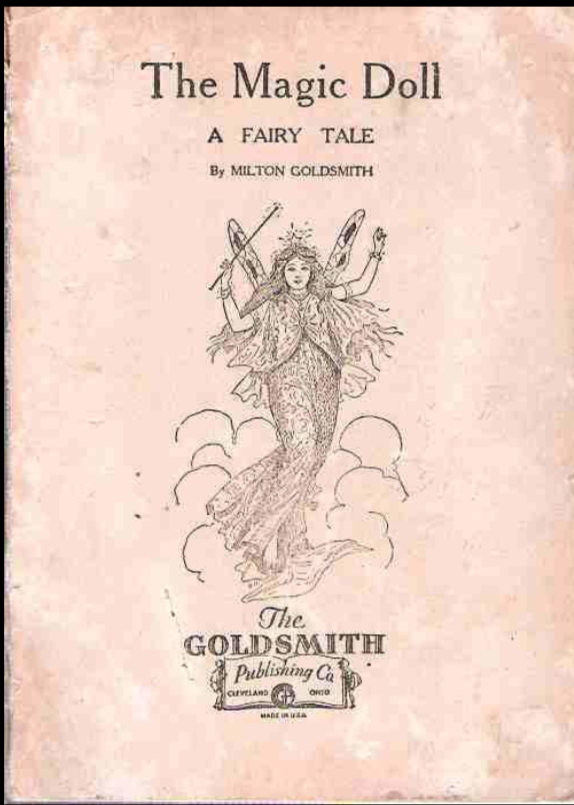
The third book published by Milton Goldsmith in 1908, also a children’s book, was The Magic Doll. 4

I imagine that Milton’s two young daughters Rosalind and Madeleine were the inspiration for all three books. From this point forward in his writing career, almost all his books were written for an audience of children.

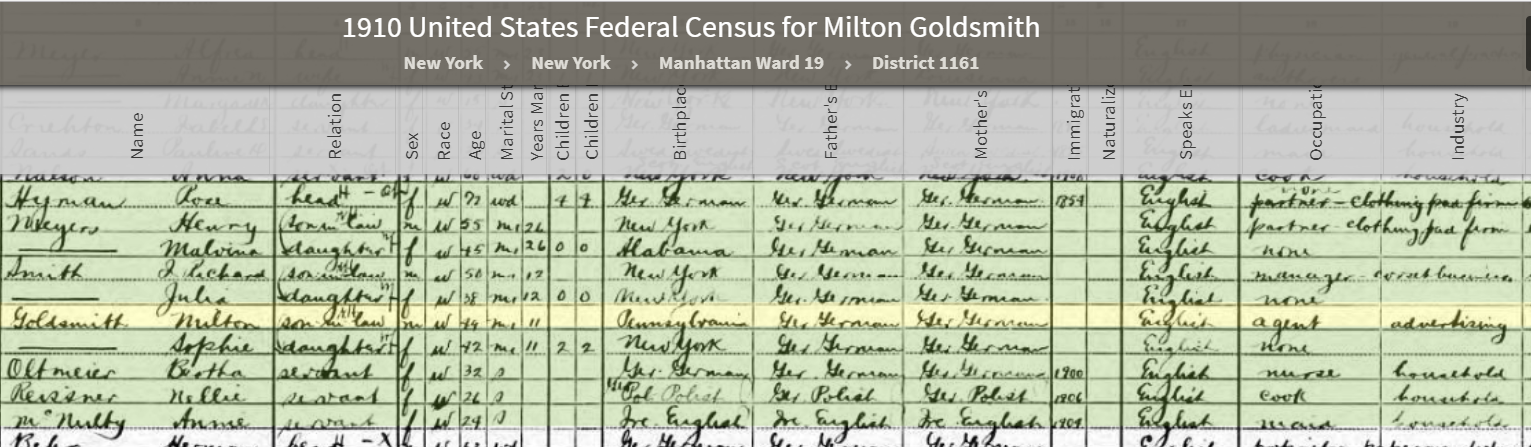
By 1910, Milton seems to have left the art embossing business and gone into advertising, for that is the occupation listed for him on the 1910 census.  At that time he and Sophie were living at 783 Madison Avenue with Sophie’s mother and her two sisters as well as her sisters’ husbands. I was puzzled that neither of Milton and Sophie’s daughters was listed in the household; Rosalind would have been nine, Madeleine six. Where could they have been? Since I could not find them anywhere else on the 1910 census, I believe that this was just an enumeration mistake.

Milton Goldsmith 1910 US Census
Year: 1910; Census Place: Manhattan Ward 19, New York, New York; Roll: T624_1043; Page: 11B; Enumeration District: 1161; FHL microfilm: 1375056
Ancestry.com. 1910 United States Federal Census

According to one source, Milton spent 1910 and 1911 in Berlin and Paris, translating German and French plays into English for the American stage.

By 1915, they were all listed together (though Rosalind was here listed as Ralph and as a son), living at 353 West 85th Street in New York, and Milton continued to work in advertising, now at his own agency.

Milton Goldsmith 1915 NYS census
New York State Archives; Albany, New York; State Population Census Schedules, 1915; Election District: 25; Assembly District: 15; City: New York; County: New York; Page: 18
Ancestry.com. New York, State Census, 1915

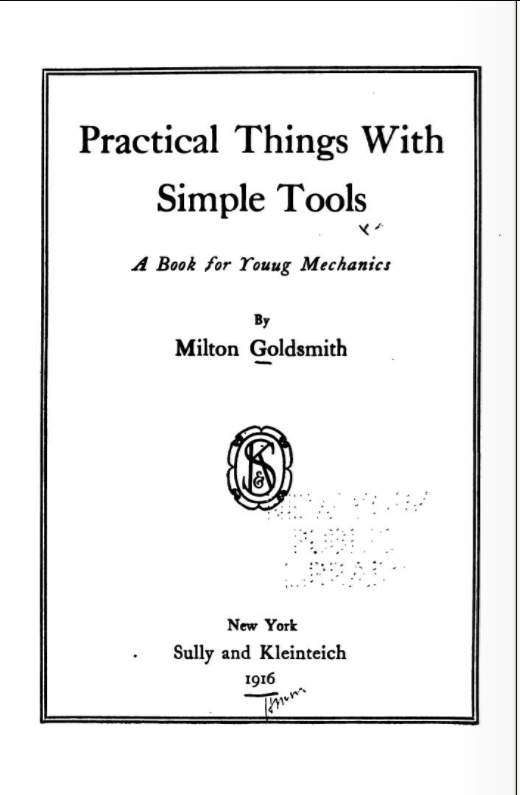
Meanwhile, his writing career continued. As his daughters grew from young children to schoolgirls and teenagers, his works also targeted somewhat older audiences than the fairy tales he’d written in 1908. In 1916, he published Practical Things with Simple Tools: A Book for Young Mechanics.5

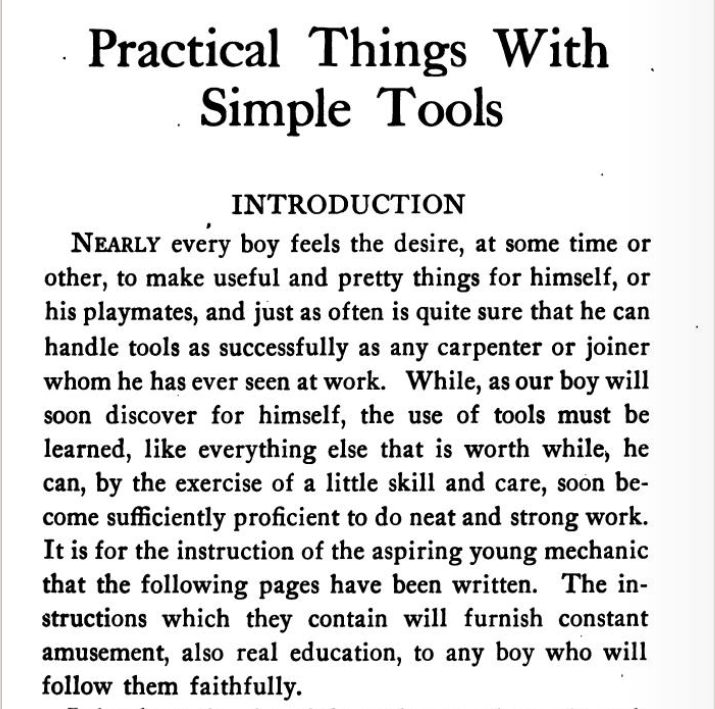
Interestingly, and a sign of its times, this book was specifically targeted for boys. Here is part of the introduction to the book:

The book consists of instructions and illustrations for how to make a long list of things intended for boys:

Milton Goldsmith also wrote two books under the pseudonym Astra Cielo during these years.  The first, published in 1917, Fortunes and Dreams, is a “practical manual of fortune telling, divination, and the interpretation of dreams, signs, and omens.”6 The second Astra Cielo book is similar. Published in 1918, Signs, Omens and Superstitions covers, as you’d expect, signs, omens and superstitions.7

It’s hard to imagine the same author who expressed quite modern views of religion and skepticism about superstition in A Victim of Conscience and Rabbi and Priest endorsing these practices, but perhaps that’s why he wrote under a pseudonym.  Although both books express doubts about believing in or relying on these practices, the books go into great detail about these subjects and thus create a sense that these are legitimate practices and beliefs.

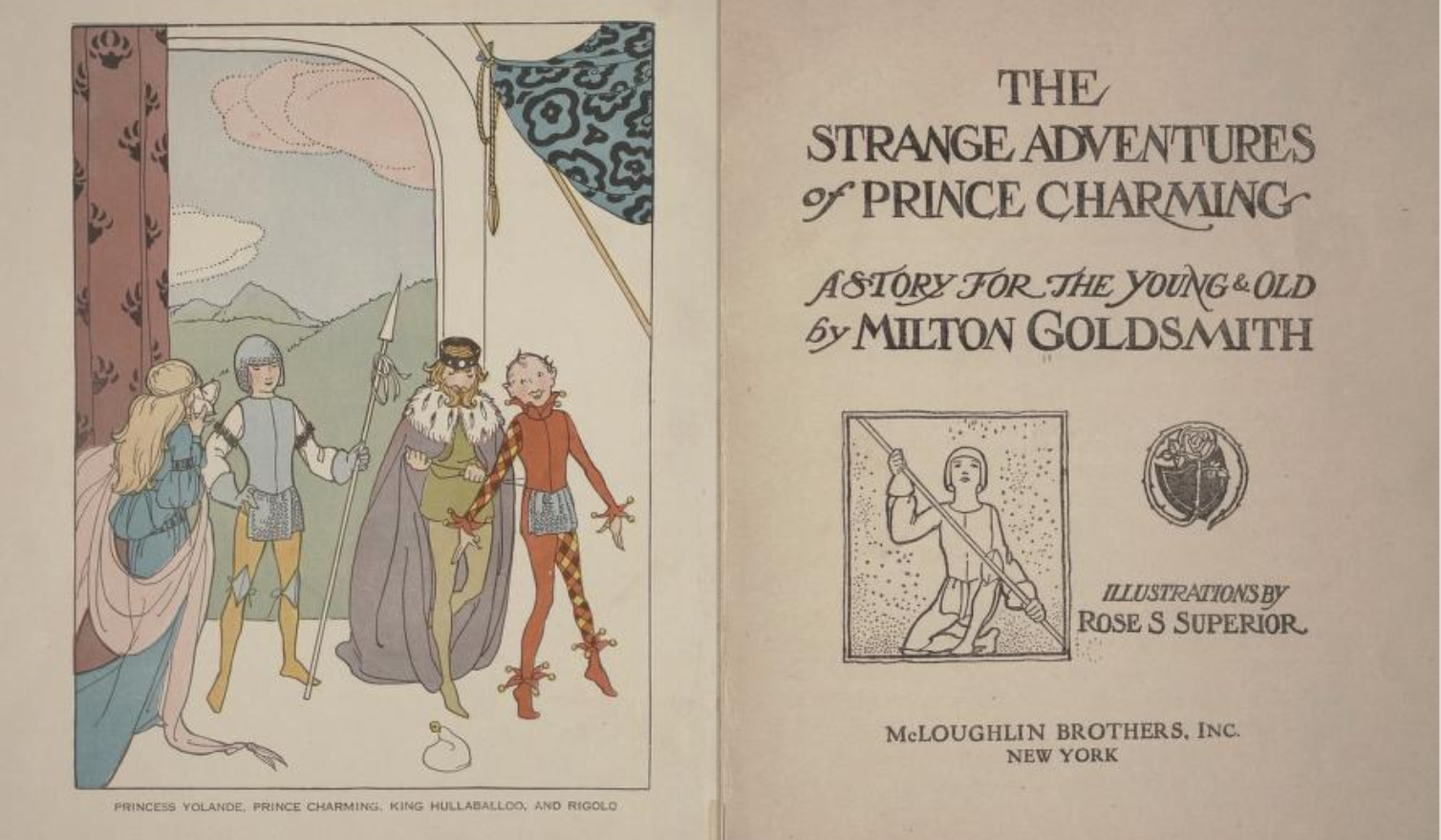
After these works of “non-fiction,” Milton published a novel for older children, The Strange Adventures of Prince Charming: A Story for Young & Old. 8  This work is a full length novel and tells about the adventures of a young prince as he makes his journey in the “real world.” It has elements of satire and more advanced vocabulary than the earlier children’s books. (I confess I did not read the entire book; perhaps my older grandson would appreciate it, however.)

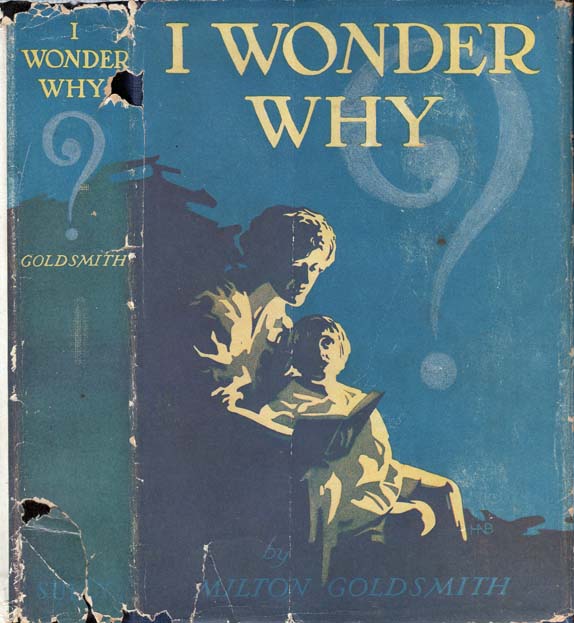
Milton ended the decade with another work of children’s non-fiction, I Wonder Why: The How, When and Wherefore of Many Things.9 I was very happy to see that he dedicated this book to his daughters, “Rosalind and Madeleine, whose many questions inspired the writing of this book.” At least this time he recognized that girls also have curiosity and a need to know about practical matters.

The book is written in narrative form based on a fictional family, the Palmers, with five children, three boys and (yay!) two girls. Their father is an engineer, and the book consists of chapters on different topics where the father (sigh) answers the children’s questions about a wide variety of scientific issues.  Here is just a portion of the table of contents:

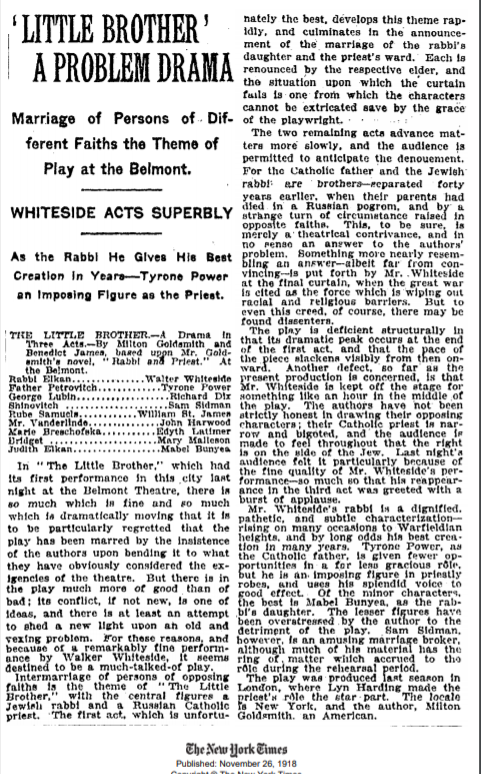
In addition to publishing all these books, Milton, along with Bennett James, adapted his first novel Rabbi and Priest into a play, The Little Brother, which was performed in London and then on Broadway in 1918 with a cast that included Tyrone Power, Sr. Despite positive reviews for its treatment of interfaith conflict and prejudices, it closed after 120 performances in March, 1919.

Thus, by 1920, Milton had published a number of books and had had a play produced in London and on Broadway. However, his principal occupation, as listed on the 1920 census, was  still advertising.  10

What would the next decade and those to follow bring for my cousin Milton and his family?


  1. John William Leonard, ed., Who’s Who in America, Vols. 2-4 (A. N. Marquis & Co., 1906), pp. 694-695. 
  2. Milton Goldsmith, The Adventure of Walter and The Rabbits (The Ullman Mfg. Co., 1903). 
  3. Milton Goldsmith, Dorothy’s Dolls: A Nursery Tale (Cupples & Leon Company, 1908). 
  4. Milton Goldsmith, The Magic Doll: A Fairy Tale (The Goldsmith Publishing Company, 1908). I wonder if for some time Milton had his own publishing company or if this was a family member or just a coincidence. 
  5. Milton Goldsmith, Practical Things with Simple Tools: A Book for Young Mechanics (Sully and Kleinteich, 1916). 
  6. Astra Cielo (pseud. Milton Goldsmith), Fortunes and Dreams (George Sully & Company, 1917). 
  7. Astra Cielo (pseud. Milton Goldsmith), Signs, Omens and Superstitions (George Sully & Company, 1918). 
  8. Milton Goldsmith, The Strange Adventures of Prince Charming: A Story for Young & Old (McCloughlin Bros. Inc,, 1919). 
  9. Milton Goldsmith,  I Wonder Why: The How, When and Wherefore of Many Things (George Sully and Company, 1920). In 1938, Milton published an updated edition of this book entitled I Wonder How: The Why, When and Wherefore of Many Things (Platt & Munk Company, 1938). 
  10. Milton Goldsmith and family, 1920 US Census, Year: 1920; Census Place: Manhattan Assembly District 9, New York, New York; Roll: T625_1202; Page: 13B; Enumeration District: 704, Ancestry.com. 1920 United States Federal Census 

Thank you, Alex from Root to Tip: A Mystery Solved and A Question about Ancestry.com

In my last post, I commented that I had had no luck finding information about the parents of the Adrian Kramer who married my cousin Ruth Sondheim in 1924. I wrote:

Adrian’s background is a mystery.   According to his military record from World War I and his World War II registration card, he was born in New York City on December 14, 1896. But despite searching in numerous places for all Kramers and all Adrians within two years of that date, and all boys born on that date, I have not found his birth record. Perhaps he was born with a different name.

Military record of Adrian Kramer, World War I
Ancestry.com. New York, Abstracts of World War I Military Service, 1917-1919 [database on-line]. Provo, UT, USA: Ancestry.com Operations, Inc., 2013.
Original data: New York State Abstracts of World War I Military Service, 1917–1919. Adjutant General’s Office. Series B0808. New York State Archives, Albany, New York.

Little did I know that that was in fact the case. But it took the help of the wonderful researcher, Alex of the Root to Tip genealogy blog, to find that out.

Alex left a comment on my prior post that said in part, “I noticed there was an obituary for Adrian Kramer in 1950 and it says he was the son of “Della Kramer.” Could this be Sandilla?”

Death notice for Adrian Kramer, The New York Times, July 1, 1950, p. 10

The first record I had found for an Adrian Kramer that fit anywhere close to a birth year of 1896 was the 1905 New York State census. On that document, Adrian Kramer, eight years old, was living on West 88th Street in the household of Maier Kramer. Also living in the household were six of Maier’s siblings: Sandilla, Joseph, Leo, Eva, David, and Minnie. None of them was married, but Sandilla was divorced.  She was listed with the surname Kramer, however, not a married name.

Adrian Kramer 1905 NYS census
New York State Archives; Albany, New York; State Population Census Schedules, 1905; Election District: A.D. 21 E.D. 03; City: Manhattan; County: New York; Page: 12
Description
Election District: A·D· 21 E·D· 03
Source Information
Ancestry.com. New York, State Census, 1905

I had wondered whether Sandilla might have been Adrian’s mother when I saw the 1905 census since she was the only Kramer sibling who had been married, but I was misled by the fact that the 1905 census identified Adrian as the son of the head of household, and the head of household was not Sandilla but Maier.   As I wrote last time, I was able to find the siblings also living together on the 1910 census, where Adrian was this time identified as the brother of the head of household, again being Maier.

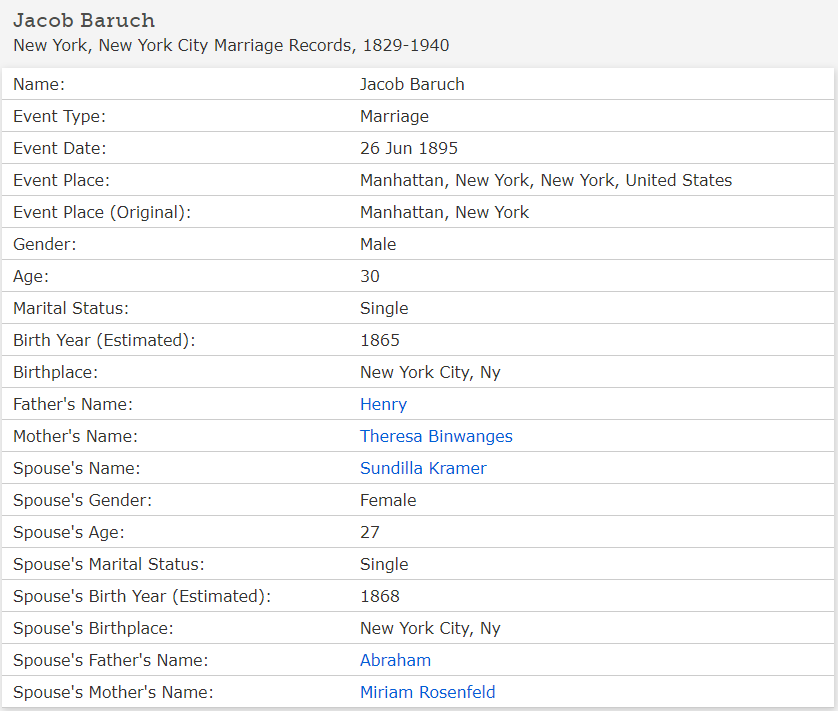
The death notice Alex found seemed to suggest that Sandilla might have been Adrian’s mother, not his aunt or his sister. Alex then went the next step and located a marriage record for a woman she thought might be Sandilla; she was listed as Sundilla Kramer on the FindMyPast index.  That record showed that “Sundilla” had married a man named Jacob Baruch on June 26, 1895, in New York City, and that her parents’ names were Abraham Kramer and Miriam Rosenfeld.  Here is a comparable record from FamilySearch.

Marriage record of Sandilla Kramer and Jacob Baruch
New York, New York City Marriage Records, 1829-1940,” database, FamilySearch (https://familysearch.org/ark:/61903/1:1:24C6-M81 : 10 February 2018), Jacob Baruch and Sundilla Kramer, 26 Jun 1895; citing Marriage, Manhattan, New York, New York, United States, New York City Municipal Archives, New York; FHL microfilm 1,493,183.

I was blown away by Alex’s discoveries and her generous efforts on my behalf. Armed now with these clues, I checked the 18701 and 18802 census records for the Kramer siblings and saw that their parents were in fact named Abraham and Miriam; that confirmed that the “Sundilla Kramer” who had married Jacob Baruch in 1895 was the same woman who was living with Adrian Kramer and the other Kramer siblings in 1905 and 1910.

And Alex hadn’t stopped with the death notice and the marriage record; she also found on Ancestry an index listing for a child born in New York City in December 1896 named Abraham Baruch. Alex said in her comment that she wondered if that was possibly the name given to Adrian Kramer at birth.

So I went to find some evidence confirming that the baby born in December 1896 named Abraham Baruch was the son of Sandilla Kramer and Jacob Baruch. And I found an index listing from the New York, New York City Births, 1846-1909, database on FamilySearch that revealed more than the Ancestry listing located by Alex. It showed that Abraham Baruch, born in December 1896, was the son of Jacob Baruch and “Sandilla Kroper.” That seemed close enough to confirm that Abraham Baruch was Sandilla Kramer’s son with Jacob Baruch.3

But I still wasn’t sure that Abraham Baruch was the boy later known as Adrian Kramer. Fortunately, with the information Alex had provided, I was able to locate the Kramer family on the 1900 census, a census that had eluded me in my prior search:

Sandia and Abraham Baruch, 1900 US census
Year: 1900; Census Place: Manhattan, New York, New York; Page: 7; Enumeration District: 0255
Ancestry.com. 1900 United States Federal Census

Notice that Sandilla’s name is given as “Sandia K. Baruch” and that she is listed as the sister of “Myer Cramer.” Under her listing is Myer’s nephew (and obviously “Sandia’s” son) Abraham Baruch, born December 1887 and two years old.

No wonder I couldn’t find this census initially. Look at all those errors. Sandilla is spelled wrong. Maier and Kramer are spelled wrong. And a boy allegedly born in 1887 was listed as two years old in 1900! Even my math isn’t that bad…..

But reading between the lines and ignoring the mistakes on the census record convinced me that Abraham Baruch was  the son of Jacob Baruch and Sandilla Kramer. By 1900, Sandilla and her son had moved in with her Kramer siblings. By 1905, Abraham Baruch was using the name Adrian Kramer, and his mother was divorced.

Now I knew who were the parents of Adrian Kramer and where he was between 1896 and 1905.

Thank you, Alex! I can’t tell you how much I appreciate your efforts!

And now the Ancestry.com question:

I was puzzled by the fact that I had not found the death notice for Adrian Kramer that Alex found on Ancestry. What had I done differently in my search logic that caused me to miss this critical piece of evidence?

I asked Alex where and how she’d found the death notice for Adrian Kramer, and she told me that she had simply searched for “Adrian Kramer” in “New York, USA,” on Ancestry, and the death notice had popped up as a result in the Historical Newspapers database.

How had I missed that, I wondered?  I duplicated Alex’s search terms, and still I did not get her results.  And I have the All Access subscription from Ancestry—their most expensive level. I get no results at all from the Historical Newspapers database from those search parameters.

But when I went to the Ancestry Card Catalog, pulled up the Historical Newspapers database, and did a search within the database itself, I was able to locate the obituary. So why didn’t it come up on an overall search for me like it had for Alex? I don’t know. But it sure has me doubting the reliability of Ancestry’s search engine.

If anyone has any explanation for why Alex and I would not get the same search results with the same search terms, please let me know.

UPDATE: Thanks to Lisa in the Ancestry Facebook group, I think I have the answer to why Alex got better results than I did.  Get this—searching with a UK subscription brings up BETTER results even in US databases than searching with a US subscription.  HOW CAN THAT BE FAIR? I will be calling Ancestry back next week (no time today) to address this.

Thank you once again to Alex for her extraordinary research and for taking the time to solve this mystery for me. Once again, I am in awe of the generosity of the genealogy village.


  1. Kramer Family, 1870 US Census, Year: 1870; Census Place: New York Ward 20 District 18, New York, New York; Roll: M593_1008; Page: 572B; Family History Library Film: 552507, Ancestry.com. 1870 United States Federal Census 
  2. Kramer Family, 1880 US Census, Year: 1880; Census Place: New York City, New York, New York; Roll: 886; Page: 506C; Enumeration District: 401, Source Information
    Ancestry.com and The Church of Jesus Christ of Latter-day Saints. 1880 United States Federal Census 
  3.  New York, New York City Births, 1846-1909,” database, FamilySearch(https://familysearch.org/ark:/61903/1:1:2WSY-S85 : 11 February 2018), Jacob Baruch in entry for Abraham Baruch, Dec 1896; citing Manhattan, New York, New York, United States, reference cn 54590 New York Municipal Archives, New York; FHL microfilm 1,322,346. I am hoping to obtain a copy of the actual certificate. 

The Great Harry Coopersmith Mystery (Almost) Solved!

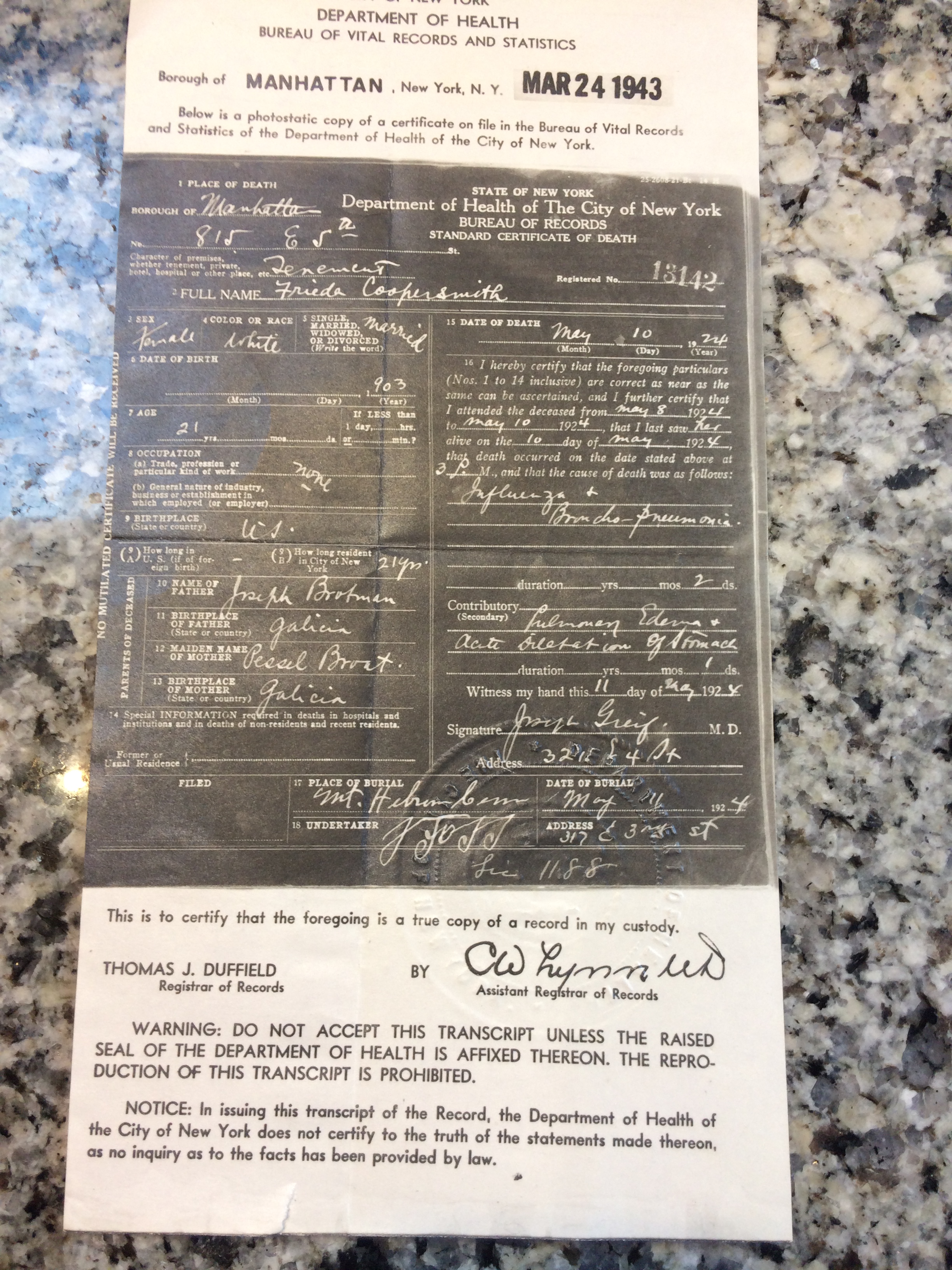
Back on December 5, 2017, I wrote about the documents I’d received from an Ancestry member named Dale: the death certificate of Frieda Brotman Coopersmith, my grandmother’s sister, and the military discharge papers for her husband Harry Coopersmith.

Thanks to my fellow genealogy bloggers, I re-examined these documents more carefully and observed a few things I’d missed before.

One thing I had not noticed before was that the death certificate was ordered from New York City in 1943, almost twenty years after Frieda’s death. Similarly, the military discharge certificate was recorded in the New York County Clerk’s Office in 1947, something that Cathy Meder-Dempsey of Opening Doors in Brick Walls pointed out to me:

What was happening in the 1940s that would have prompted Harry or one of his sons to order these two documents? As Luanne Castle of The Family Kalamazoo pointed out in her comment on my prior post, there must have been some reason that these documents were ordered and why the military papers were recorded with the city clerk. I’ve yet to figure out the reason, however.

There were also two photographs in Dale’s father’s papers, but neither Dale nor I could identify the men in these two photographs:

In that last post, I went through all the possible theories that Dale and I had discussed about how these papers could have ended up in her father’s possession.  Dale had no idea who Harry or Frieda were; she found me through Ancestry because they are both listed in my tree there.  Dale thought at first the source was her great-aunt Anna Yurdin Haas, but my research and analysis led me to conclude that that was not the likely source as there was no apparent connection or overlap between Harry and Anna and Burton.

Instead, I concluded that it was more likely that the connection was between Dale’s father Howard Halpern and one or more of the sons of Harry Coopersmith from his second marriage: David, Lawrence, and Samuel. Howard grew up in Long Beach, Long Island, New York, just a mile away from Island Park, Long Island, New York, where in 1940 the three Coopersmith brothers were living as boarders in the home of Jacob and Pauline Davis.

After that post was published, I received several suggestions and questions from my readers.  Two, Su Leslie of the blogs Shaking the Tree and Zimmerbitch and Charles Moore of Moore Genealogy, pointed out that sometimes things end up in the hands of complete strangers through random events and that there might have been no relationship between the Halperns and the Coopersmiths.  Others suggested more questions to ask Dale and Harry’s grandson Stan.

I contacted Dale and Stan and asked them some more questions. On the “random distribution” theory Dale told me that her father had been an avid stamp and coin collector and met many people while pursuing those hobbies; he also purchased stamp collections from other collectors. She suggested I ask Stan whether anyone in the family collected stamps. And when I asked Stan, he responded that his father Lawrence had in fact been a stamp collector. Perhaps this was how the papers ended up with Howard? Did he purchase a collection from the Coopersmiths in which these papers had been left inadvertently?

Stan told me that his father had gone to a trade school in Manhattan to become a typesetter and had settled in Seaford, New York, on Long Island after he married.  Stan’s uncles David and Sam owned a printshop in Freeport, New York, and lived with their families in Wantagh, New York, towns that are also on Long Island. Stan also said that his grandfather Harry was living in Bohemia, New York, also on Long Island, at the end of his life.

Learning of these details, Dale pointed out that her father was a reporter for the Long Island newspaper, Newsday, and that her family had lived in Levittown, not far from Wantagh and Freeport. It thus was possible that her father knew the Coopersmiths from work or from stamp collecting.

To see if I could get more answers, I decided to try to contact some of Harry’s other grandchildren, whose names I found in the obituary of one of David Coopersmith’s children. I found two of them on Facebook, and one, David’s daughter, Mindy, was able to provide me with some critical information.

First, she shared this photograph of her father, David Coopersmith:

Comparing this photograph to one of the photographs Dale had sent me, I could see that both photographs were of the same man: Harry’s oldest son David.

Mindy believes that the other photograph—of the man standing behind a Coney Island sign—is her uncle, Larry Coopersmith. Now I knew who the men were in those two photographs—two of Harry Coopersmith’s sons.

Then one of those incredible small-world coincidences occurred. The next day I received an email from my friend and fellow genealogy blogger, Sharon Haimovitz-Civitano of the Branches of our Haimowitz Family Tree and Branches on Civitano Tree blogs.  She had been on Facebook and noticed that I had commented on a photograph that Mindy had posted and wanted to know how I knew Mindy because Mindy was her very close childhood friend. My head was spinning! Sharon said that when she’d read my earlier post about Harry Coopersmith and seen the “mystery photos,” she had in fact thought that one of them resembled her friend Mindy’s father, but she had dismissed the idea, thinking it was too far-fetched—-that Coopersmith was probably a common name and that there was likely no connection despite the resemblance and the fact that Sharon and her friend Mindy had both grown up on Long Island.

I asked Sharon to vouch for me—to assure Mindy that I was honorable and only interested in figuring out who was in the photographs and how they’d ended up with Dale’s father. And she did, and just a short while later, Mindy called me, and we had a lovely chat about our overlapping families.

Mindy told me that her father David had been in the Marines during World War II and that the photographs were taken in the 1940s—consistent with the answer I’d received from Ava Cohn, the Photo Genealogist. Mindy had not known about Harry’s first marriage, and she also did not know who Howard Halpern was or how these photographs and other papers could have ended up with Howard.  Mindy suggested that I speak with her mother Vivian for more information.

The next day I spoke to Vivian, and she confirmed what Mindy had told me and also filled in more of the gaps.  After Nettie was hospitalized, Harry could not find anyone to help him care for his sons, who were all under five years old at that time. He eventually decided to place them in the Hebrew Orphanage in New York City, and the orphanage found the Davis family to act as foster parents. David, Lawrence, and Samuel went to live with the Davis family as small boys and lived there until the two older boys were old enough to join the service during World War II.

Vivian also told me that Harry had himself been a stamp collector and that when he died in 1956, his son David had inherited the stamp collection. David, however, was not a collector so he gave the collection to his brother Sam, who was. Perhaps Sam or one of his children sold Harry’s stamp collection without ever knowing that there were papers and photographs inside.

Vivian and Mindy generously shared with me some photographs of Harry and his family, helping me put faces to the names of this family who were not biologically connected to my own, but whose story was nevertheless tied to my own.

This is Harry Coopersmith during his service in the army during World War I; Vivian said he’d served in Siberia and in the Phillipines:

Harry Coopersmith in World War I
Courtesy of the Coopersmith family

This is Nettie Lichtenstein Coopersmith, Harry’s second wife:

Nettie Lichtenstein Coopersmith Courtesy of the Coopersmith family

And here are two photographs of Harry with his sons, taken after they’d been taken into foster care and thus showing that Harry maintained contact with them during their childhood:

Lawrence Coopersmith, unknown man, Samuel Coopersmith, Harry Coopersmith, and David Coopersmith Courtesy of the Coopersmith family

Harry Coopersmith and his family Courtesy of the Coopersmith family

We may never know how Howard Halpern ended up with the photographs of David and Lawrence, Harry’s discharge papers, and Frieda’s death certificate. It might have been a random event—through, for example, a sale of a stamp collection. Or maybe he knew the Coopersmiths from school or from the community or from work. But somehow he came into possession of these items and kept them safe for a long time.

Thus, the mystery is not completely solved, but the most important questions have been answered. We know the identity of the men in the photographs, and now I can return them to their family. I know more about Harry and his life after Frieda died. And best of all, I’ve found some wonderful people who are connected to me through the tragically brief marriage of Harry Coopersmith to my great-aunt Frieda, my grandmother’s little sister who died far too young.

How Did My Great-Aunt Frieda’s Death Certificate End Up There?

This is a mystery without a solution—yet. Perhaps one of you can help me solve it.

Many months ago I received a message on Ancestry from a member named Dale who told me that she had a stamped and certified copy of the death certificate for my great-aunt Frieda Brotman.  Frieda was my grandmother’s younger sister, and she had been married to Harry Coopersmith for about a year when she died shortly after giving birth to their son Max.  Max had died as well.

Frieda Brotman Coopersmith death cert


Dale had been going through her parents’ papers and found not only Frieda’s death certificate, but military records for Frieda’s husband Harry Coopersmith and two photographs that Dale thought might be of Harry. She had seen that I had Frieda and Harry on my Ancestry tree and wondered if I was interested in the papers.

Well, of course, I was more than interested. Dale kindly offered to send me the documents and photographs. And since then we have been trying to figure out why these papers would have been among her parents’ belongings.  Since both of Dale’s parents have passed away, she had no one to ask.

Dale believed that these papers had belonged at one time to her great-aunt Anna Yurdin Haas.  Anna was her father’s mother’s sister. She was born in New York City to Russian immigrant parents in about 1895 and had lived in upper Manhattan as a child; in 1920 when she was 25, she was living with several of her younger siblings in the Bronx, working as a clerk in an office.

Anna Yurdin and family 1920 census
Year: 1920; Census Place: Bronx Assembly District 5, Bronx, New York; Roll: T625_1137; Page: 7B; Enumeration District: 286

On the 1930 census, Anna reported that she was married to Burton Haas, and they were living at 7035 Broadway in Queens.  Burton Haas came from a whole different class—he grew up on Central Park West in Manhattan; his parents were American born from German and Austrian backgrounds. He went to Dartmouth. He served overseas during World War I, enlisting on June 14, 1917 and being honorably discharged on May 6, 1919.

According to the 1930 census, Anna and Burton had been married about eight years in 1930, meaning they had married in about 1922.  There were no children living with them. Burton was a real estate broker, Anna a cashier for a theater. In 1940 they were still living in Queens at 35-30 73rd Street and had been in the same place in 1935. There were still no children. Burton was still a real estate broker, and Anna was the assistant treasurer of a theater.

Anna Yurdin and Burton Haas on the 1930 census
Year: 1930; Census Place: Queens, Queens, New York; Roll: 1590; Page: 3B; Enumeration District: 0197; FHL microfilm: 2341325

Then things get a little odd. On August 9, 1940, Burton Haas and Anna Yurdin were married in Norfolk, Virginia. At that point they had in fact been living together and holding themselves out as husband and wife for almost twenty years. But perhaps they had never really married until 1940.

Anna Yurdin and Burton Haas marriage record
Virginia Department of Health; Richmond, Virginia; Virginia Marriages, 1936-2014; Roll: 101166979

On his World War II draft card in 1942, Burton reported that he had his own business at 62 West 45th Street in Manhattan; they were still living at the same address in Queens. Burton died a year later on July 21, 1943, in Queens.  Anna died in 1983; they are both buried at Linden Hill Jewish cemetery in Ridgewood, Queens. Anna never remarried.

Comparing this to Harry and Frieda’s timeline, I see no overlap. While Anna grew up in upper Manhattan and then lived in the Bronx and finally Queens and Burton also grew up in upper Manhattan and went to college, Harry and Frieda were both born and raised in the Lower East Side.  Harry had served in the US Army from August 31, 1919, until his honorable discharge on September 6, 1922, so he did not overlap in the service at all with Burton Haas.

Harry married Frieda in 1923. Frieda had worked in a sweatshop as a finisher with feathers until she married Harry. They were still living on the Lower East Side in a tenement when she died on May 10, 1924, just days after giving birth to their son Max.

After Frieda died, Harry quickly married again. He married Nettie Lichtenstein sometime in 1924, presumably outside of New York City as no marriage records were located for them. Nettie was a recent immigrant; according to the 1930 census, she had arrived in 1920.  Their first son David was born on June 16, 1925 in Hoboken, New Jersey. Two more sons followed— Lawrence in 1926 and Samuel in 1928, both born in New York. In 1930 Harry and his family were still living in the Lower East Side. Harry was working as a taxi driver.

Harry Coopersmith and family 1930 census
Year: 1930; Census Place: Manhattan, New York, New York; Roll: 1550; Page: 6A; Enumeration District: 0148; FHL microfilm: 2341285

By 1940, Harry’s family was in pieces.  Nettie was institutionalized at Kings Park State Hospital in Smithtown, Long Island, and the three boys were living in Island Park, Hempstead, Long Island, as boarders (I assume as foster children) with the family of Jacob and Pauline Davis and their sons. I have not found any familial connection between the Davis family and Harry or Nettie. Jacob was in the printing business, and he and Pauline had been living in Island Park since at least 1930. Before that, they had lived in the Bronx and upper Manhattan, nowhere near Harry or Nettie. I have no idea how they ended up with the three Coopersmith boys. Neither one ever lived on the Lower East Side.

Coopersmith sons boarding with David family 1940
Year: 1940; Census Place: Hempstead, Nassau, New York; Roll: T627_2685; Page: 8A; Enumeration District: 30-82

Harry does not appear anywhere on the 1940 census and does not resurface on any records until 1945 when military records report that he was still living on the Lower East Side and had enlisted in the New York Guard on April 23, 1945 and had been discharged on June 26, 1946.

Harry Coopersmith New York Guard record
New York State Archives; Albany, New York; Collection: New York, New York Guard Service Cards and Enlistment Records, 1906-1918, 1940-1948; Series: B2000; Film Number: 45

The last records I have for Harry are his veteran’s burial records, showing that he died on January 14, 1956 and was buried at Long Island National Cemetery in Farmingdale, New York. Interestingly, a plot next to Harry was to be reserved for his widow Nettie, who was then residing in Bohemia, New York, also on Long Island. I don’t know if Harry had been living with her at the time of his death.

Given the absence of any overlap in places lived or worked between Harry and Anna Yurdin Haas or Harry and Burton Haas, I have no idea how or why Anna would have come into possession of Harry’s military papers or Frieda’s death certificate.

As for the two photographs, I am not even sure that they are pictures of Harry. I sent them to Harry’s grandson, but he had never met his grandfather and did not have any pictures of him. He sent me a picture of himself, and perhaps there is some slight resemblance, but not enough to determine if the photographs are of Harry Coopersmith.

Harrys grandson

Assuming they are photographs of Harry, they were likely taken in the 1940s, according to Ava Cohn, the expert in photography analysis. That would mean that the person who somehow came to possess these documents knew Harry in the 1940s.  He is in his military uniform in one of the photographs, so that means the photograph was probably taken some time in 1945 to 1946 since that was when Harry was in the New York Guard. At that point Anna Yurdin Haas was a widow, living in Queens, New York. Perhaps she and Harry somehow became friends or lovers.  After all, Harry’s wife Nettie was institutionalized, his sons were in foster care of some kind, and Harry was on his own. That seems like one possible explanation for how these papers ended up in Anna Yurdin’s possession.

The other possibility is that the papers never belonged to Anna Yurdin, but perhaps to Dale’s father Howard Halpern. Dale is not entirely certain that they had belonged to Anna. If they belonged instead to her father, how would he have known Harry?

Howard Halpern was the son of David Halpern and Anna Yurdin’s sister May Yurdin (sometimes identified as Mary). He was born in 1919 in New York and lived in the Bronx in 1920, but by 1925 had moved to Queens, living in the same Jackson Heights neighborhood where his aunt Anna and her husband Burton were living in 1930 and thereafter.  By 1930, however, Howard and his parents and brother had moved to Long Beach, Long Island, and were no longer in Queens. They were still living there in 1940.

Halpern family 1940
Year: 1940; Census Place: Long Beach, Nassau, New York; Roll: T627_2690; Page: 61B; Enumeration District: 30-209

Maybe Howard knew one of Harry’s sons. They were a bit younger than Howard, but Howard lived in Long Beach starting in 1930, and Harry’s sons were in Island Park in Hempstead by 1940. The two towns are about a mile apart, as seen on this map.

Howard had a younger brother Alvin, born in 1925, who would have been the same age as David Coopersmith and only a year older than Lawrence and three years older than Samuel.  According to the current Island Park School District webpage, today students in Island Park have a choice of attending two high schools in the area, one of them being Long Beach High School. That might also have been true in the 1940s when the Coopersmith boys and Howard and Alvin Halpern were in high school.

So my second hunch is that Alvin and his brother Howard knew the Coopersmith sons from Long Beach High School or from Hebrew school or some other community sports or activity.

But that doesn’t solve the mystery of why Howard Halpern had Frieda Brotman Coopersmith’s death certificate or Harry’s discharge papers. That the Coopersmith boys had their father’s military discharge papers is somewhat understandable—but why would they have had the death certificate for their father’s first wife, a woman with whom they had no connection at all? And why would Dale’s father Howard have ended up with those papers?

I don’t know. But David Coopersmith named his son Lee Howard Coopersmith—perhaps for his childhood friend Howard Halpern? If he was such a close friend, wouldn’t Dale have heard of him?

As I mentioned above, I have been in touch with one of Harry’s grandsons, but he had no information that shed light on this mystery. I am now trying to contact Harry’s great-granddaughter, who has a tree on Ancestry. Perhaps she will know. At the very least, she might be able to tell me if the photographs are indeed of Harry Coopersmith. But it’s been almost two months, and she has not responded to me.

Let me know your thoughts.


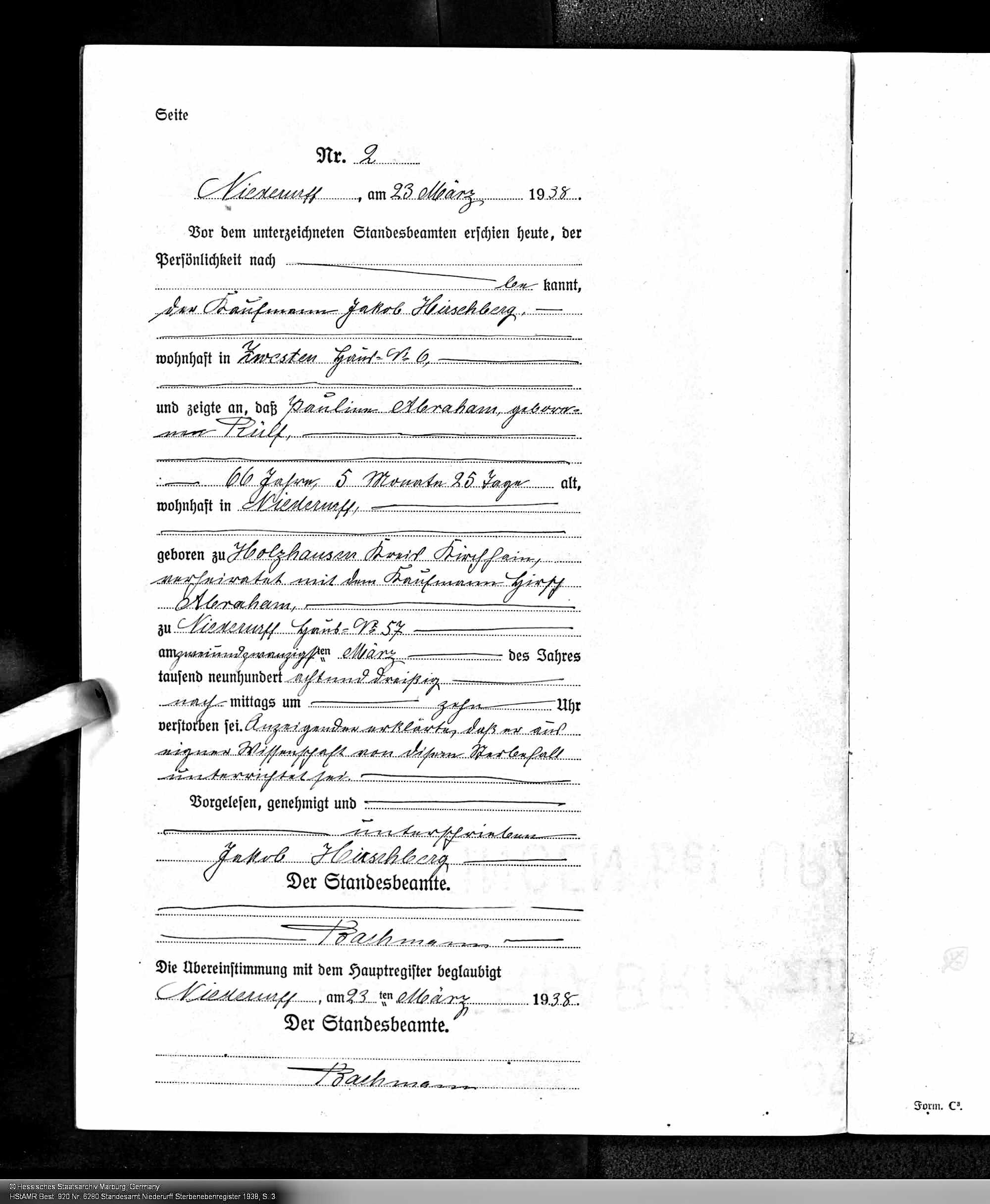
My Double/Triple? Cousins: The Children of Pauline Ruelf and Hirsch Abraham

The youngest child of Gelle Katzenstein and Moses Ruelf to live to adulthood was Pauline Ruelf. Part of Pauline’s story has already been told, as she was the mother of Julius Abraham, who married Senta Katz, the great-granddaughter of Rahel Katzenstein. That is, as I described here, Pauline’s son Julius and his wife Senta Katz were half-third cousins. Julius and Senta were the parents of Fred Abrahams, whose memoirs of his family’s life and departure from Germany were also posted here.

But I am getting a bit ahead of myself, so let me back up and start with Pauline’s birth. She was born on September 25, 1869, in Rauischholzhausen:

Pauline Ruelf birth record,
Geburtsregister der Juden von (Rauisch)Holzhausen (Ebsdorfergrund) 1824-1874 (HHStAW Abt. 365 Nr. 452)AutorHessisches Hauptstaatsarchiv, Wiesbaden, p.15

On December 26, 1891, when she was 22 years old, she married Hirsch Abraham. Hirsch was born on December 4, 1858, in Niederurff, and was the son of Jakob Abraham and Roschen Frank.

Pauline Ruelf marriage to Hirsh Abraham
Hessisches Hauptstaatsarchiv; Wiesbaden, Deutschland; Collection: Personenstandsregister Heiratsregister; Signatur: 915; Laufende Nummer: 7960

Hirsch was a widower when he married Pauline; his first wife was Pauline’s older sister Johanna Ruelf, who had died on August 12, 1890, eleven days after giving birth to a daughter, whose name was originally Rosa but was changed to Johanna (or Hannah) after her mother died.

Birth record of Rosa later Johanna Abraham
Hessisches Hauptstaatsarchiv; Wiesbaden, Deutschland; Collection: Personenstandsregister Geburtsregister; Signatur: 920; Laufende Nummer: 6175

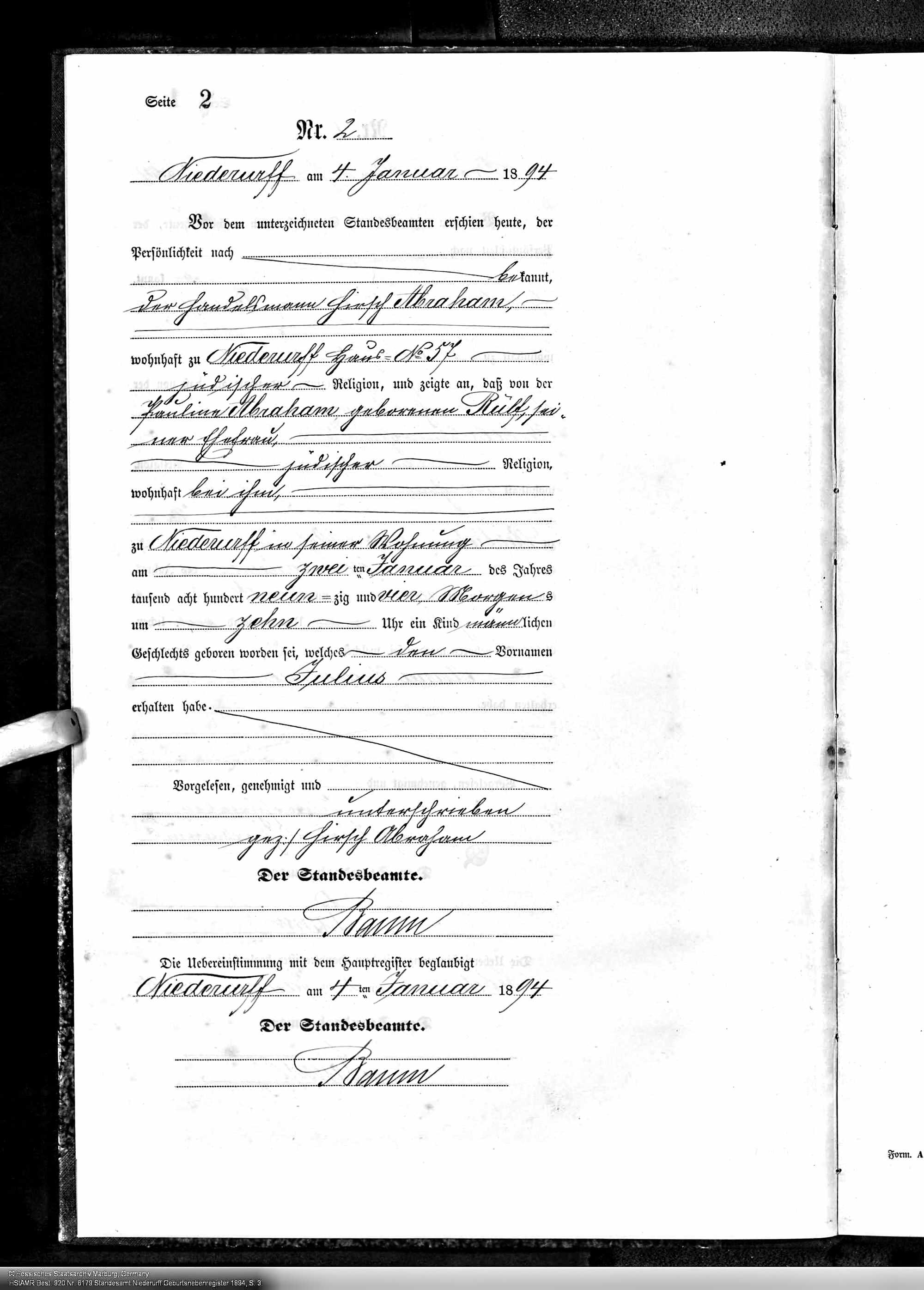
So Pauline took on the responsibility for raising her niece Johanna. She and Hirsch also had six children together: Ricchen Rosa (1892), Julius (1894), Meta (1894), Sarah (1896), Siegfried (1897), and Recha (1900).  Although Julius and Meta were both born in 1894, they were not twins; Julius was born January 2, 1894, and his sister Meta was born almost twelve months later on December 26, 1894, meaning Julius was only three months old when Meta was conceived.

Birth record of Julius Abraham Hessisches Hauptstaatsarchiv; Wiesbaden, Deutschland; Collection: Personenstandsregister Geburtsregister; Signatur: 920; Laufende Nummer: 6179


Birth record of Meta Abraham
Hessisches Hauptstaatsarchiv; Wiesbaden, Deutschland; Collection: Personenstandsregister Geburtsregister; Signatur: 920; Laufende Nummer: 6179

Pauline and Hirsch lost two of their children at young ages. Their daughter Sarah died on June 25, 1910; she was only fourteen.

Death Record for Sarah Abraham
Hessisches Hauptstaatsarchiv; Wiesbaden, Deutschland; Personenstandsregister Sterberegister; Bestand: 920; Laufende Nummer: 6261

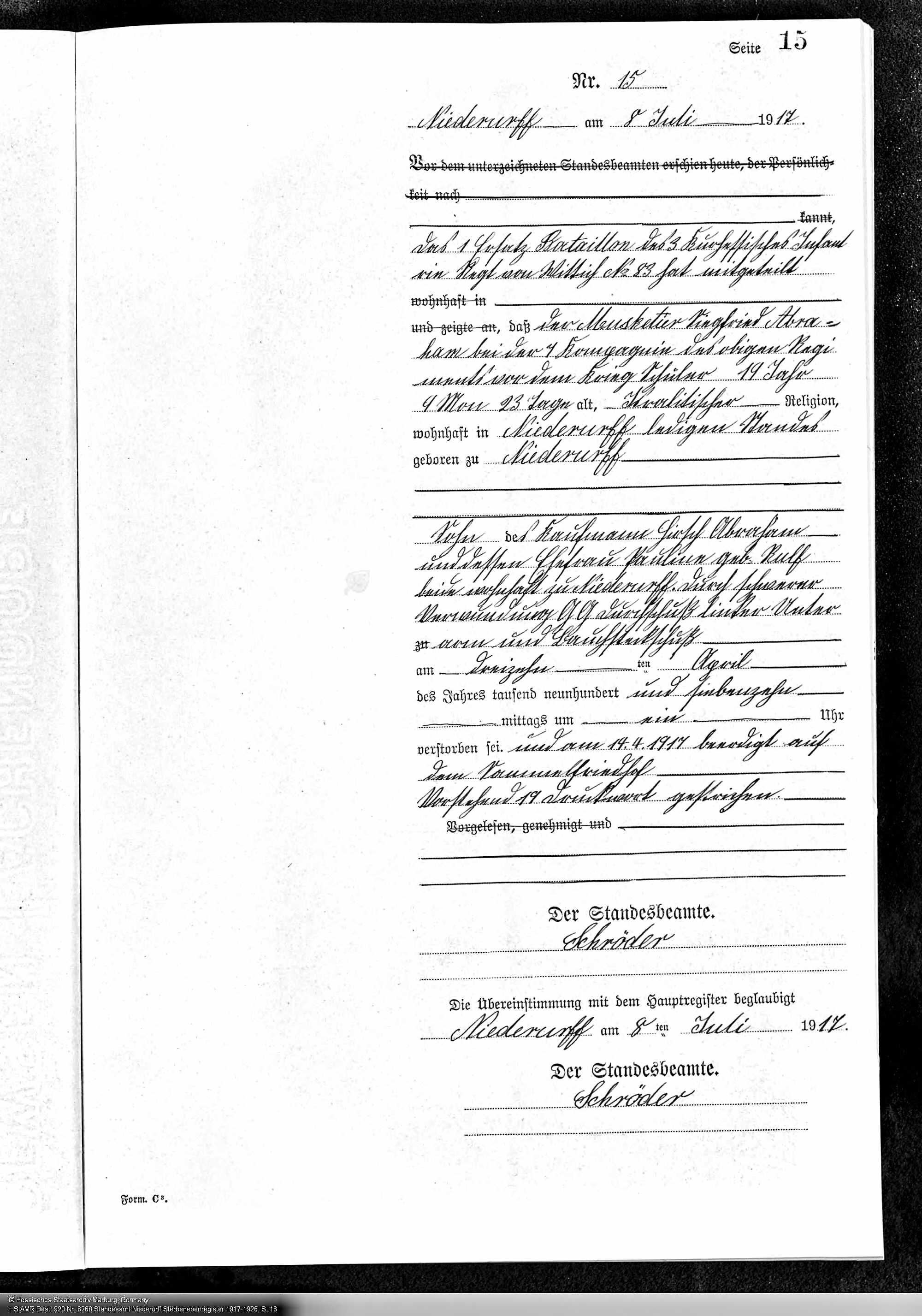
Their son Siegfried was killed fighting for Germany in World War I. He was only nineteen when he was shot in the line of duty on April 13, 1917. According to his death record, he was a musketeer in the Germany infantry and was shot twice, once in the left forearm and once in the chest, and died from his injuries; he was buried in a common grave.

Siegfried Abraham death record
Hessisches Hauptstaatsarchiv; Wiesbaden, Deutschland; Personenstandsregister Sterberegister; Bestand: 920; Laufende Nummer: 6268

The fact that twenty years later Siegfried’s family would be forced to leave Germany to survive makes his death even more tragic. My cousin Fred Abrahams was named for his uncle Siegfried.

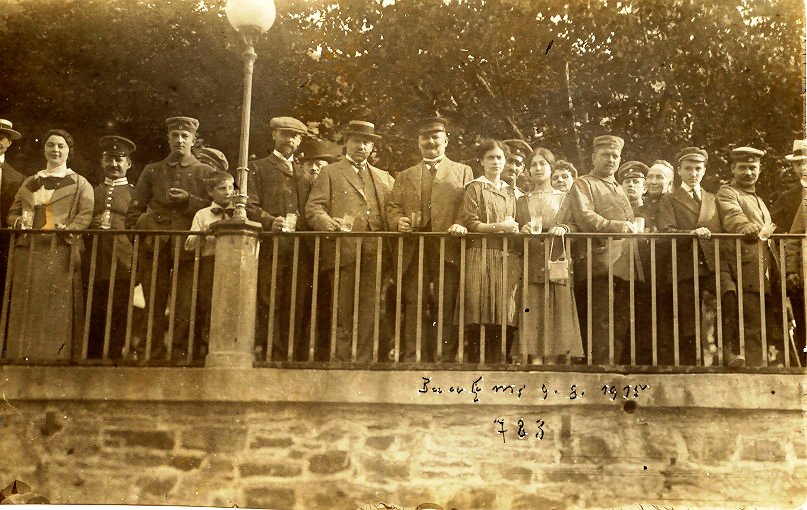
Siegfried’s brother Julius also served in World War I. Here is a photograph of three of Siegfried’s siblings at some gathering in Germany in 1915; first, the overall photograph and then a snip focusing on the three Abraham siblings, Meta, Julius, and Recha. You can see that Julius is in uniform:

Courtesy of Fred and Martin Abrahams

Courtesy of Fred and Martin Abrahams

On September 25, 1921, Johanna Abraham, Pauline’s niece whom she raised after her sister Johanna died, married Jakob Hirschberg of Zwesten, Germany. Jakob was born on April 15, 1893. He and Johanna had one child, a son Martin.

Marriage of Johanna Abraham and Jakob Hirschberg
Hessisches Hauptstaatsarchiv; Wiesbaden, Deutschland; Collection: Personenstandsregister Heiratsregister; Signatur: 920; Laufende Nummer: 6226

Although I have very little information at all about Hirsch and Pauline’s oldest daughter Ricchen Rosa Abraham, one passenger manifest lists her with the married name Zechermann; I don’t know her husband’s first name or when or where she married, nor do I know whether they ever had children.

Ricchen Rosa Abraham passenger card
The National Archives at Washington, D.C.; Washington, D.C.; Series Title: Passenger and Crew Manifests of Airplanes Arriving at Miami, Florida.; NAI Number: 2788541; Record Group Title: Records of the Immigration and Naturalization Service, 1787 – 2004; Record Group Number: 85

The other surviving daughters of Pauline Ruelf and Hirsh Abraham both immigrated to the United States in the 1920s. Recha, the youngest child, was only 25 when she first left Germany on October 6, 1925, to travel to the US. According to the passenger manifest, she had been last living in Frankfurt and working as a housekeeper and was now traveling to her uncle, Max Abraham, who resided in Davenport, Iowa. Recha stated that she expected to stay for nine months.

Recha Abraham 1925 ship manifest
Year: 1925; Arrival: New York, New York; Microfilm Serial: T715, 1897-1957; Microfilm Roll: Roll 3741; Line: 1; Page Number: 135
Ancestry.com. New York, Passenger Lists, 1820-1957

Max Abraham was Hirsch Abraham’s older brother; he had come to the US from Germany in the 1870s when he was just a teenager. In 1880, he was living in Louisville, Kentucky, and working as a dry goods merchant. He remained in Kentucky for a number of years and after marrying in 1988, he moved to Campbellsburg, Indiana, where he became president of the local bank. After 25 years in Indiana, Max and his family moved to Davenport, Iowa in 1916, where he and his sons started what became a very successful clothing business, Abrahams Brothers. “Max Abrahams, Treasurer of Ready to Wear Store in Davenport, Dies at 82,” Quad-City Times (Davenport, Iowa), 24 Apr 1938, p. 1

I don’t know how long Recha ended up staying with her uncle Max in Iowa on this trip, but on October 15, 1926, she again sailed from Hamburg to New York listing her destination as her uncle Max Abraham’s home in Davenport, Iowa. She listed her last address as Frankfurt. She provided no occupation nor did she indicate this time the length of her stay.

Recha Abraham 1926 ship manifest
Year: 1926; Arrival: New York, New York; Microfilm Serial: T715, 1897-1957; Microfilm Roll: Roll 3947; Line: 1; Page Number: 182
Ancestry.com. New York, Passenger Lists, 1820-1957

On September 23, 1927, her older sister Meta also arrived in the US and also indicated that she was going to her uncle Max Abraham of Davenport, Iowa. Meta stated that she planned to stay in the US permanently. She stated that her occupation was a clerk.

Meta Abraham 1927 passenger manifest
Year: 1927; Arrival: New York, New York; Microfilm Serial: T715, 1897-1957; Microfilm Roll: Roll 4135; Line: 1; Page Number: 94
Ancestry.com. New York, Passenger Lists, 1820-1957

In the fall of 1930, both Meta and Recha must have visited their family in Germany because a passenger manifest for a ship sailing from Hamburg and arriving in New York City on October 8, 1930, lists both sisters as residents of New York City where they were both living at 42 West 89th Street. Recha was working as a cashier and Meta as a dressmaker. Neither had yet become a US citizen. Both reported that they had been in the US since 1927, although Recha obviously had arrived earlier than that.

Meta and Recha Abraham 1930 passenger manifest
Year: 1930; Arrival: New York, New York; Microfilm Serial: T715, 1897-1957; Microfilm Roll: Roll 4854; Line: 1; Page Number: 90
Ancestry.com. New York, Passenger Lists, 1820-1957

Meta and Recha did not show up on the 1930 census when I searched for them on Ancestry and FamilySearch, which puzzled me. I turned to stevemorse.org, using his enumeration district finder tool and the address from the 1930 passenger manifest—42 West 89th Street. There they were, clear as could be.

Meta and Recha Abraham 1930 US census
Year: 1930; Census Place: Manhattan, New York, New York; Roll: 1556; Page: 9A; Enumeration District: 0450; FHL microfilm: 2341291

So why hadn’t they shown up when I searched? For one thing, both had reported themselves as much younger than they were; Meta, who apparently gave the information to the enumerator, said that she was 24 and her sister 22 when in fact Meta was 34 and Recha was 30. That obviously threw off my search even though I thought I’d given fairly wide ranges in my search parameters for their ages. Also, Recha was listed as Rebecca. But this household is clearly that of the Abraham sisters. Meta was working as a cashier for a butcher and Recha was a seamstress at Macy’s. Both are listed with the surname Abrahams, a change that had also been made by their uncle Max in Iowa.

Meanwhile, back in Niederurff, Germany, Pauline and Hirsh’s only surviving son, Julius Abraham, had by 1932 married his half-third cousin Senta Katz of Jesberg, and they had two sons in the 1930s, Martin and Siegfried/Fred. (Julius and Senta were married either on January 10, 1931, or January 10, 1932; their sons were not sure of the year, and I’ve not been able to find an official record.)

It was not too much longer before Julius and Senta recognized the need to escape from Nazi Germany. As Fred described in his memoir excerpted here and as I wrote about in that same post, Julius and Senta and their two sons left Germany and arrived in New York City on June 24, 1937 . They were going to Julius’ sisters, Meta and Recha, who were then living at 252 West 85th Street. Julius reported his occupation to be a tailor.

Family of Julius and Senta Katz Abraham, passenger manifest, Year: 1937; Arrival: New York, New York; Microfilm Serial: T715, 1897-1957; Microfilm Roll: Roll 6003; Line: 1; Page Number: 18
Description
Ship or Roll Number : Roll 6003
Source Information
Ancestry.com. New York, Passenger Lists, 1820-1957

The next family member to arrive from Germany was Johanna Abraham Hirschberg, the half-sister of Meta, Julius, and Recha, daughter of Johanna Ruelf and Hirsch Abraham. Johanna came with her husband Jakob and son Martin on May 4, 1938; they also were going to Meta and Recha’s home at 252 West 85th Street in New York City. Jakob was a merchant. They had been living in Zwesten, Germany, before immigrating to the US.

Johanna Abraham Hirschberg and family on 1938 passenger manifest
Year: 1938; Arrival: New York, New York; Microfilm Serial: T715, 1897-1957; Microfilm Roll: Roll 6152; Line: 1; Page Number: 168
Ancestry.com. New York, Passenger Lists, 1820-1957

Sadly, Pauline Ruelf Abraham died on March 22, 1938, in Niederurff, and thus did not get to join her children in the United States. She was 68 years old when she died.

Pauline Ruelf death record
Hessisches Hauptstaatsarchiv; Wiesbaden, Deutschland; Personenstandsregister Sterberegister; Bestand: 920; Laufende Nummer: 6280

Pauline Ruelf Abraham gravestone

Her husband Hirsch Abraham left Germany a year later, arriving in New York on March 25, 1939. He also was joining his daughters at 252 West 85th Street. He was eighty years old when he left Niederurff, Germany and sailed alone to New York City, leaving behind the only home he’d ever known. He lived only a year in the US, dying on March 9, 1940 at age 81. (New York, New York, Death Index, 1862-1948, on Ancestry.com)

Thus, by March 1939, all but one of the children of Pauline Ruelf and Johanna Ruelf and Hirsch Abraham were living safely in New York City.  On the 1940 census, Meta and Recha were still living at 252 West 85th Street; Meta was a bookkeeper for a women’s clothing manufacturing company, and Recha had no occupation listed. Meta died in New York City on May 18, 1977, and her sister Recha died almost a year to the day later on May 24, 1978. Meta was 83 when she died, and Recha was 78. It appears the two sisters had lived together their entire adult lives once coming to the US in the 1920s.

Meta and Recha Abraham on 1940 census
Year: 1940; Census Place: New York, New York, New York; Roll: T627_2643; Page: 1B; Enumeration District: 31-809

Their half-sister/first cousin Johanna and her husband Jakob (listed as Jack) and son were also still living in New York in 1940; Johanna and Jack were both working as cooks, Jack for the city and Johanna in a private home. By 1955, the family had moved to Davenport, Iowa, where Jack and his son Martin were both working in Max Abrahams’ store. Johanna died August 15, 1955, and Jack died in 1960. They are buried in Davenport.

Johanna Abraham Hirschberg and family on 1940 census
Year: 1940; Census Place: New York, New York, New York; Roll: T627_2636; Page: 13A; Enumeration District: 31-547

Julius Abraham and his wife Senta Katz and their sons were also living in New York City in 1940. As I wrote earlier, the family was living at 325 West 93rd Street, and Julius was working in the family business, Abrahams Brothers, the clothing business started by Max Abrahams and his sons in Davenport, Iowa. The business had grown to about a dozen stores throughout the Midwest. In 1940, Julius was working in the fur department of the New York office, where the administration and buying for the many stores was handled. He continued to work for the business for the rest of his life. Julius died on December 22, 1959; his wife Senta lived to 93, dying on October 15, 2000, in Stamford, Connecticut.

Senta Katz Abrahams and family, 1940 census
Year: 1940; Census Place: New York, New York, New York; Roll: T627_2642; Page: 16A; Enumeration District: 31-777

The only child of Pauline Ruelf Abraham who is unaccounted for is Ricchen Rosa Abraham, Pauline’s first child. I have no records for her aside from her birth record and the 1961 passenger list card depicted above.  I am also only inferring that this is in fact Ricchen in the passenger list card based on the birth date and place of birth and the fact that her nephews Martin and Fred knew that she had ended up in Chile. The family story is that she was unable to gain entry to the US and so went to Chile instead.

I have no records for her in Chile so do not know when she got there, whom she married, whether she had children, or when she died. I have tried finding information about her from sources in Chile, but so far have had no luck. If anyone has any suggestions, please let me know.

But what I do know is that all of the children and grandchildren of both Pauline Ruelf and her sister Johanna Ruelf survived the Holocaust. That in and of itself gives me a happy ending to this last chapter in the story of Gelle Katzensten and Moses Ruelf.