More in the DNA Wars

Lately I have been drowning in DNA.  I am trying to figure out how to interpret the DNA results I have and make use of them in searching for my ancestors.  Specifically, my Brotman ancestors.  As I look forward to visiting Poland in May and seeing Tarnobrzeg, I more and more want to be able to find something that actually corroborates my conclusion that that was the general area where my great-grandparents Joseph and Bessie Brotman lived.  I was hoping that perhaps with DNA results, I’d find another clue, another cousin, who knew something I didn’t know.

Animation of the structure of a section of DNA...

Animation of the structure of a section of DNA. The bases lie horizontally between the two spiraling strands. (Photo credit: Wikipedia)

So I dove into the DNA.  When I last wrote about the DNA tests, I talked about the fact that the autosomal DNA results supported the story my aunt had told about Joseph Brotman and his brother who had moved to New Jersey where they named the town for him, i.e., Brotmanville.  Moses Brotman’s granddaughter Elaine tested as a likely second cousin to my mother, just as she would be if Moses and Joseph were brothers.  I am still waiting for results of an autosomal DNA test of Larry, who is a great-grandson of Moses Brotman, for further support (I hope) for that conclusion.  But sadly the Brotmanville Brotmans are also not clear on where Moses lived or was born in Galicia.  Family stories suggest Preszyml, which isn’t too far from Tarnobrzeg (about 90 miles), but there is no paper record to support that story either.  They also do not have any records or stories about the parents or siblings of Moses Brotman.

But the DNA results also produced an unknown likely second cousin for my mother named Frieda.  Frieda’s niece and I have been in touch, and we have narrowed down the possibilities of the connection.  We believe that the connection is through Frieda’s mother whose name was Sabina Brot.  We think that Sabina’s father might have been Bessie Brotman’s brother. Here is a chart that helps to visualize the potential relationships:

second revision family chart for blog


Again, there is no paper trail, but this is how we reached that tentative conclusion:

First, not only did my mother test as a second cousin to Frieda, but my brother tested as a second to fourth cousin to Frieda.  But Elaine, the granddaughter of Moses, tested as a third to fifth cousin to Frieda, meaning that Frieda shared more DNA with my mother and my brother than she did with Elaine. Since Elaine would be more closely related to Joseph than she would be to Bessie,[1] I inferred that Frieda was more likely connected to my mother through Bessie, not Joseph.  (Keep in mind that Joseph and Bessie were supposedly first cousins, so even Elaine could share some DNA with Bessie from Bessie and Joseph’s mutual grandparents, Elaine’s great-great-grandparents.)

At the suggestion of Frieda’s niece, I then ordered an mtDNA test on my mother’s kit to see if she and Frieda were in the same haplogroup.  As defined by the International Society of Genetic Genealogy (ISOGG), “A haplogroup is a genetic population group of people who share a common ancestor on the patrilineal or matrilineal line.”     Mitochondrial DNA (mtDNA) is only passed by mothers to their children.  Although sons inherit mtDNA from their mothers, they do not pass it down to their children.  Thus, mtDNA is a way of testing the maternal line—from mothers to daughters and so on.  If Frieda and my mother were not in the same haplogroup, we would be able to infer that the connection had not come from Frieda’s grandmother as a sister of Bessie, but more likely from Frieda’s grandfather.  As it turned out, my mother was not in the same haplogroup as Frieda, meaning Frieda’s mother (Sabina)’s mother was not the connection to my mother’s mother’s mother.  Thus, we concluded that if my mother and Frieda are second cousins, it was most likely that Bessie, my mother’s grandmother, and Frieda’s grandfather were siblings.

If only Frieda knew the name of her grandfather or the town where he lived, we could make some progress.  But unfortunately, Frieda’s family knows almost nothing about the background of Sabina Brot or her parents, so we are once again at an impasse.  Frieda’s niece believes Sabina lived in Radomysl nad Sanem, a town not far at all from Tarnobrzeg.

I put aside the DNA at that point, figuring I’d done what I could do.  I emailed a few other “matches” on FamilyTreeDNA, and I received a few responses.  But no one had any helpful information or anything that seemed like a possible link to my family.

Then I decided to try and get more out of the results.  I asked a lot of questions in various Facebook genealogy groups, read a lot of blogs and websites, but was still without a clue.  I tried a program called DNAgedcom, which has a tool known as ADSA that allows you to see who else matches your kit on a specific chromosome and who else matches with that person.  It is a great tool, but unfortunately DNAgedcom is not yet equipped to handle the large number of matches that most Ashkenazi Jews will generate through autosomal DNA testing.

As I’ve learned, and as I’ve seen in my own family on several lines, Ashkenazi Jews are an endogamous population, meaning that they tended to marry within their own community and even within their own families.  Thus, a typical Ashkenazi Jew will share some bits of DNA with thousands of other Ashkenazi Jews.  My mother had thousands of matches, but most of them are so distantly related as to be irrelevant.  As was recently stated in one report, some researchers believe that all Ashkenazi Jews are descended from several hundred Jews who lived about 600 years ago.  So we are, in fact, all one big tribe.

That’s all well and good until you want to use DNA to find closer relatives.  For DNAgedcom, it was just too much data.  Their website estimates that a typical download will take about 30 minutes.  My mother’s data was still downloading after SIX hours, and it wasn’t nearly done.  In fact, it crashed and never completely downloaded.

Then people told me to try GEDmatch, another website for interpreting DNA results.  I sent the data to GEDmatch for my mother, brother, Bruce, and Elaine, and Frieda’s niece sent Frieda’s data.  Then I had no clue what to do with GEDmatch.  Like DNAgedcom, it’s a free site run by wonderful people who are interested in genealogical uses of DNA.  But free means you can’t complain when things aren’t clear or you can’t figure something out.  I was totally perplexed by GEDmatch.  Lots of numbers, lots of charts.  But what did they all mean?  And how could I use them to interpret the DNA results or find new matches?

Here’s a portion of one page of many showing (with identifying information deleted) some of my mother’s matches on GEDmatch:

GEDmatch sample for blog

Yeah, right? What does all THAT mean?

Back to the Facebook groups I went, and this time I found three incredible women, Julie, Leah, and Lana, who volunteered to help me figure out how to use the DNA results and the various tools available.  Together they have backgrounds in biology and IT and math.  We created our own space on Facebook to work together.  Well, mostly they worked, and I learned.  Am still learning.  They are amazing.  We have spent hours and hours online together despite the fact that we are spread across two continents and many times zones.

What I have learned?  To begin with, I now understand how DNA is affected during the process of meiosis, that is, the creation of gametes, i.e., sperm and egg.  I won’t show off here, though I do wonder what my high school biology was teaching us since I never learned this.  The bottom line is that DNA changes during meiosis when segments of the chromosomes “cross over” and then randomly sort themselves before the cell splits into ultimately four new cells, each with a unique selection of DNA on the chromosomes contained therein.  As a result, two children with the exact same parents will not have identical DNA since the sperm and egg that created the first sibling will have different DNA than the sperm and egg that created the second sibling.  (This may explain why my brother has the science brain and I, quite obviously, do not. I am sure he and others will gladly point out anything that is not correct about this description.)

Here’s a cute video that I found helpful:

Why is any of that relevant to using DNA for genealogy? Because it means that even siblings will share varying amounts of DNA and different DNA.  It’s not only that every generation has new parents mixing into their offspring’s DNA; it’s also that each parent shares different DNA with each child.  And with each generation there are more crossovers, more sortings, and thus more differences.   So when two people share a fairly large amount of overall DNA and also some large segments of DNA, it is quite reliable as an indication of a familial relationship.  Given all the crossovers and mixing and new DNA with every generation, it’s not likely that two people would share a lot of DNA unless they were related.

I won’t go into all the statistics and terminology.  That’s not my goal here.  I just wanted to explain why I’ve found these three women so helpful. I like to understand things, not just accept numbers without an explanation.  And it didn’t stop with the science.  My mentors then helped me figure out how to use GEDmatch to “triangulate.”  No, not like Bill Clinton.  In using DNA in genealogy, it helps to find out who shares DNA with you on a particular location on a particular chromosome. Then you need to figure out who among those people also share with each other.  Thus, if A, B, and C share with me on Chromosome 12 at a given location for a certain segment, but A and B do not share with C, I know that C shares with me from a different parent than A and B.  But I don’t know whether A and B share with the DNA I got from my mother or the DNA I got from my father.

Another thing I learned: I knew that chromosomes came in pairs, one from each parent for each of the 23 pairs of chromosomes.  But I didn’t know that the testing companies don’t really distinguish one side from the other.  They test two strands from each pair of chromosomes (one from each chromosome in that pair), but the two are jumbled together on the companies’ depictions of what is on that Chromosome 12 I mentioned above.  What that means is that when I look at their depiction of a chromosome and see matches, I’ve no idea which parent’s strand that match pairs up with.

Human metaphase chromosomes were subjected to ...

Human metaphase chromosomes were subjected to fluorescence in situ hybridization with a probe to the Alu Sequence (green signals)and counterstained for DNA (red). (Photo credit: Wikipedia)

For example, if you look at my brother’s chromosomes with my mother’s as a match, it looks like she matches all his DNA. All that orange is where she matches his DNA on his chromosomes.  But in fact, that’s just half of his DNA.  The DNA from my father isn’t reflected.  All we are seeing is that my mother gave my brother half of his DNA.

Mom DNA on Ira's Chromosomes


In this case, we know that this is DNA from his mother because, well, I know she’s his mother.  But when I look at someone else on my brother’s chromosomes, I don’t know if that person is matching the strand from my mother or my father unless I triangulate the three kits.

Here’s a more typical chromosome browser display with various matches:

typical browser results

Each color represents a different person who shares some DNA with my brother, and as you can see, there are some places where two colors overlap, like on the 21st chromosome.  How do I know whether those people share DNA with my brother that comes from my mother or from my father?  How do I know if those two overlapping people are related or just one shares my father’s DNA on the location and the other shares my mother’s DNA at that location?  Triangulation.  We have to figure out if those two people also share DNA with each other at that location and also whether they share with my mother at that particular location.  And that’s what Leah, Lana, and Julie taught me to do.

Where has that gotten me? Well, we found that on Chromosome 21 my mother and Frieda had a large segment overlap with three other people.  I then triangulated and found that all of them also matched Frieda and each other at that location on Chromosome 21.  That means that they are all somehow related: Frieda, my mother, and A, B, and C all share a common ancestor who passed on this rather large segment that they all share.  I don’t know for sure whether my mother got that segment from her mother or father, but since we have reason to believe that my mother and Frieda are connected through my great-grandmother’s Bessie’s family, it would seem that A, B, and C are also somehow related to my mother and Frieda through that family line.

So I emailed A, B, and C.  I’ve heard back from two of them, but with nothing that’s very helpful.  The little information each had showed nothing to explain this DNA connection.  There are no common surnames and no common geographic locations.  These two didn’t even have roots in Galicia that they knew of.  Huh? Now what?

Good question.  We are still tweaking the numbers, scouring other chromosomes, hoping something will provide a breakthrough.  But at the moment I hold out limited hope that we will find someone who can connect all the pieces.  It’s just too far back in a place where very few records survive and where surnames only started 200 years ago.  Maybe A, B, and C had relatives who adopted different surnames, not Brot or Brotman.  Maybe their great-great-grandfather moved to Ukraine or Lithuania or Latvia or mine moved away from there.  We can speculate all we want, and the DNA doesn’t lie.  But we may never, ever find the answer to how we are related.

So I have no better information today about where my great-grandparents lived or the names of their siblings or the names of earlier generations.  But I know a lot more about DNA and about the tools out there for using it, thanks to Lana, Julie, and Leah.

***********************************

I will be taking a short break from the laptop—SPRING BREAK!  (Now that I am retired, it’s not really my spring break, but years and years of celebrating it still has its effects.)  See you soon.

For anyone who wants a broader introduction to DNA and chromosomes, Steve Morse (of stevemorse.org) wrote a very clear laymen’s overview of the topic here.


[1] Although Bruce, another great-grandchild of Joseph and Bessie, also tested as a third to fifth to Frieda, he shared more DNA with her than Elaine did, although he shared less than my brother did.  In theory at least, Bruce and Ira should test as the same distance from Frieda, if she is related to us through Bessie. But DNA does not always pass on in equal segments, or so I’ve learned.   Bruce might have more from Joseph’s side through his parents and grandparents than from Bessie’s side and my mother might have more.

Two Tragedies in 1894 for the Family of Ernst Nusbaum

If the 1880s were years of general growth and prosperity for Ernst Nusbaum and his family, the 1890s were years of loss.  Once again, the Nusbaum/Dreyfuss family lost a young member of the family to suicide.

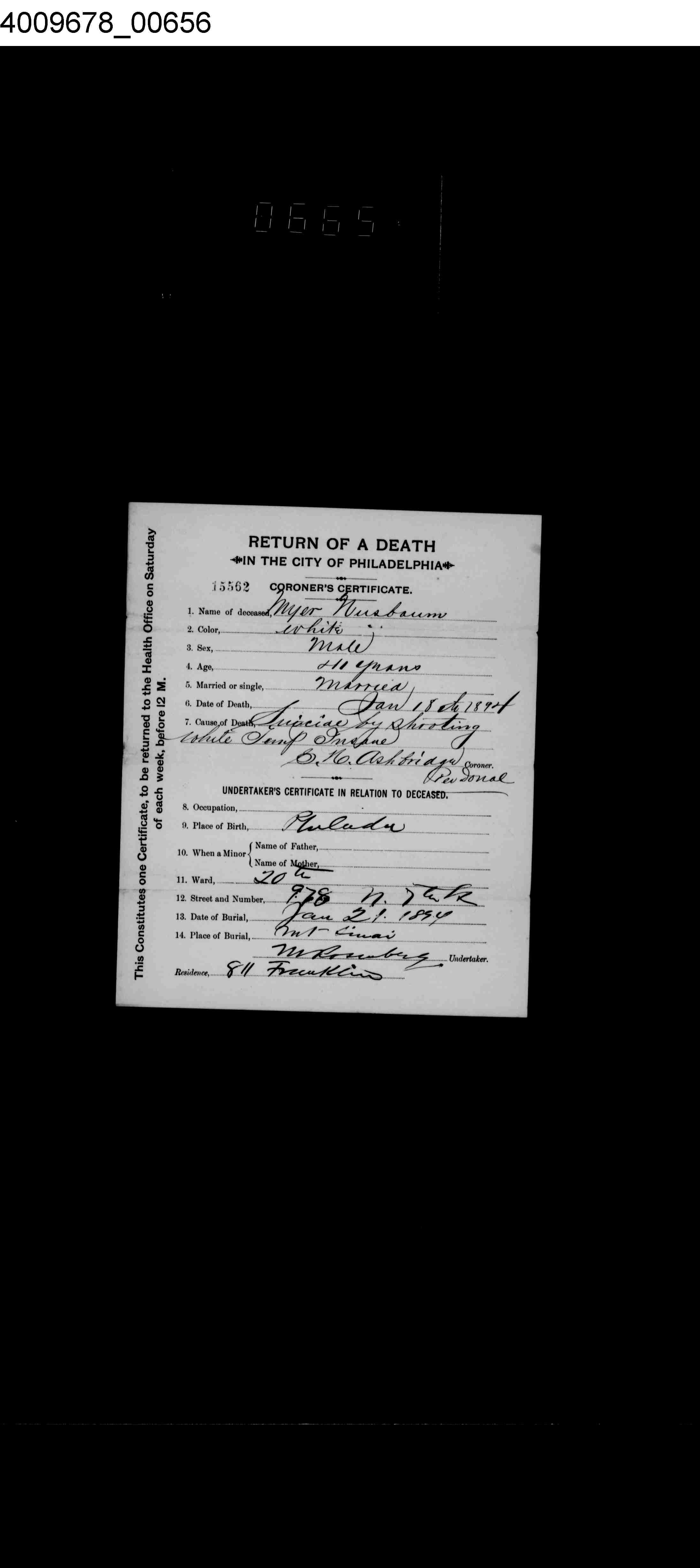
On January 18, 1894, Myer Nusbaum, 41 years old and the father of two young teenagers, took his own life.

myer nusbaum suicide  jan 19 1894 phil inquirer page 1

myer suicide part 2

myer suice part 3

myer suicide part 4

myer suicide part 5

Philadelphia Inquirer, January 19, 1894, p. 1

The Philadelphia Times also reported on this tragic death here: Myer_Nusbaum_Suicide_Philadelphia_Times_p_4_1_19_1894

Here was a man of a steady and upstanding reputation, a bookkeeper for a clothing company who had been employed in one place for over twenty years, a man who was well-liked and active in his community, a man with a wife and two teenaged children.  What was this “grip” that caused him so much pain that he felt he had no alternative but to end his life?

From what I can gather from various sources on line, the grip was a term for what we would today call influenza or the flu.  I’ve had the flu.  Probably all of you have had the flu at some time or another.  It’s awful.  You feel terrible.  Your head hurts, your body aches, you have respiratory symptoms, sometimes stomach symptoms.  It can last for many days.  But most people don’t become suicidal.

Although the headline on the Philadelphia Times story about Myer says, “Another Grip Tragedy,” I would imagine that even back in the 1890s, most people did not intentionally end their lives while suffering from the flu. Somehow I have to believe that Myer’s illness was something more than influenza, but it just was not diagnosed. The Inquirer story says he had been suffering for seven weeks; I have never heard of the flu lasting that long, but maybe it did back then.  He must have been suffering terribly to have been driven to such an extreme.  Imagine his poor fifteen year old son Jacob, watching his father die in his arms, and his wife Rosalie and sixteen year old daughter Corinne having to identify his body at the hospital.

UPDATE:  My cousin Jessica, an expert in disease and disaster control, sent me a link to an article about the flu pandemic of the 1890s, the so-called Russian flu.  It included this quote:  “Influenza was also considered to be a major cause of nervous and psychological disorders by acting as a “devitalizing agent.” Descriptions of influenza sequelae included “depression,” “shattered nerves,” “neurasthenia,” and “despondency.” During 1890, for example, an unprecedented 140 melancholics afflicted with influenza “poison” were admitted to Scotland’s Royal Edinburgh Asylum. Coroners also cited influenza as a reason for “temporary insanity” in cases of suicide. Across Europe, rates of suicide (mostly male) and attempted suicide (mostly female) rose during the 1890s. In England and Wales, there was a 25 percent increase in suicides between 1889 and 1893. Paris witnessed a 23 percent rise during 1889–1890 compared with the average, and there were also increased rates in Germany and Switzerland.”  Thus, Myer Nusbaum was not alone in suffering severe depression as a result of the flu.  You can read more about the Russian flu here.

Myer Nusbaum death cert suicide

“Pennsylvania, Philadelphia City Death Certificates, 1803-1915,” index and images, FamilySearch (https://familysearch.org/pal:/MM9.1.1/JK96-L2H : accessed 11 March 2015), Myer Nusbaum, 18 Jan 1894; citing 15562, Philadelphia City Archives and Historical Society of Pennsylvania, Philadelphia; FHL microfilm 1,871,367.


1894 ended as tragically as it began.  Almost eleven months to the day after Myer died, on December 16, 1894, his father Ernst died from injuries sustained in a fall.  Ernst was 78 years old; the last of the Nusbaum siblings in America was gone.  And not from disease or old age, but from an accidental fall.  Somehow that just seems unfair; he had been able to adjust to life in America, had been a successful businessperson, had bounced back from bankruptcy and the Depression of the 1870s, and had raised six children with his wife Clarissa, and his life had ended because of a fall.

Ernst Nusbaum death cert

Pennsylvania, Philadelphia City Death Certificates, 1803-1915,” index and images, FamilySearch (https://familysearch.org/pal:/MM9.1.1/VKDH-3ZJ : accessed 11 March 2015), Ernst Nusbaum, 16 Dec 1894; citing page 284 certificate # 11892, Philadelphia City Archives and Historical Society of Pennsylvania, Philadelphia; FHL microfilm 1,011,822.


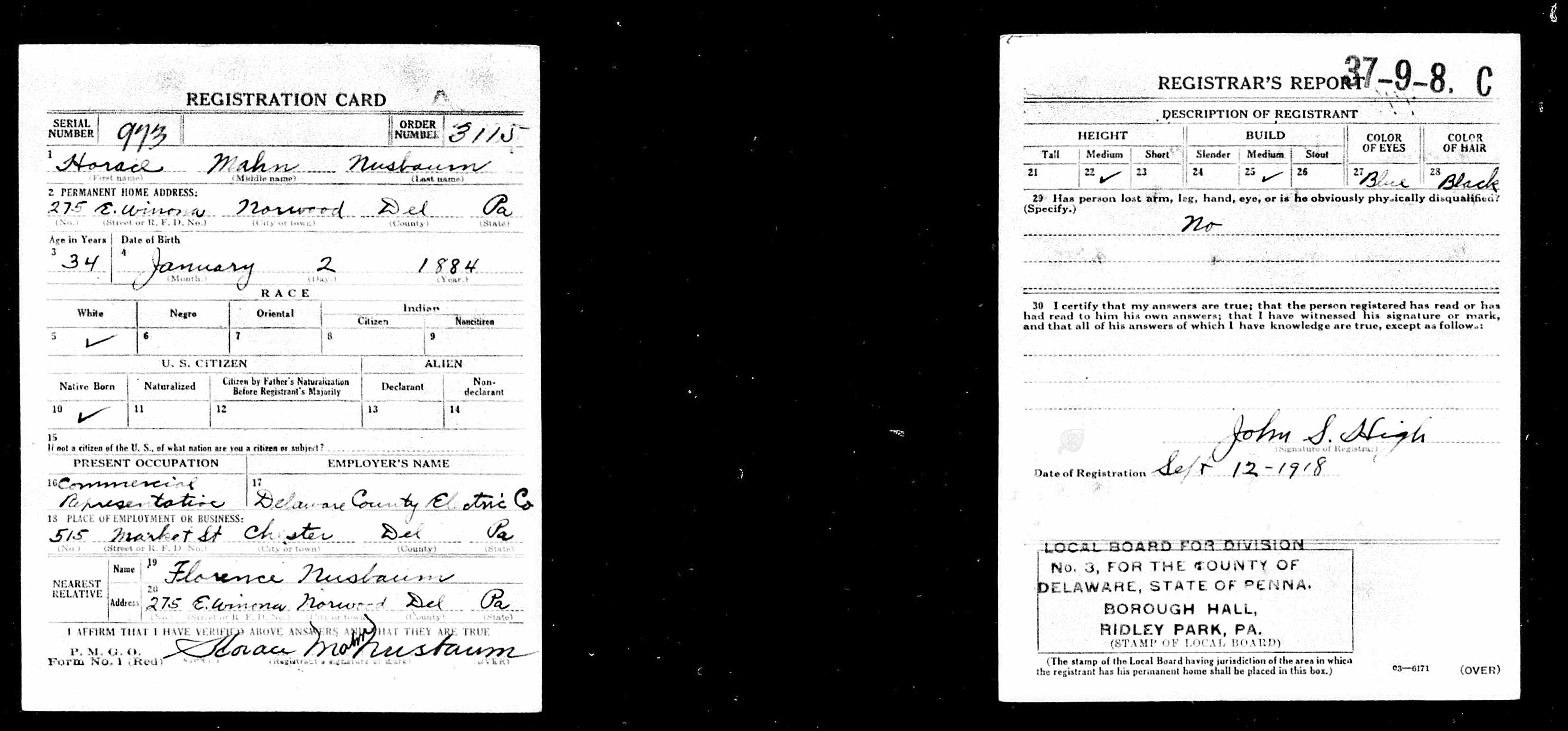
As for the rest of the family, Arthur Nusbaum and his wife Henrietta had two more children in the 1890s: Clare, born in 1894, and Helen, born in 1895.  There were now six children in the family, and they were living at 2559 North 16th Street.  Arthur was involved in clothing sales in the 1890s and as reported on the 1900 census.  Their son Sidney, now 21, was also a clothing salesman, and Horace, who was 15, was working as an upholsterer.

Fanny Nusbaum and her husband Jacob Hano continued to live in New York City in the 1890s.  Fanny and Jacob had five sons (Samuel having died in 1884), all still at home during that decade and in 1900.  In 1891, they were living at 119 East 111th Street in East Harlem, and Jacob was a printer and book manufacturer.  In 1892 they were living at 948 Fleetwood Avenue, which I cannot locate in New York City today, but by 1898 they were living at 803 Edgecombe Avenue, even further uptown, near 171st Street on what is now Amsterdam Avenue.  On the 1900 census, the family is living at 203 West 134th Street, and the oldest son, Louis, now 22, was employed as a salesman.  The other four were still at home.  There was also a servant living in the home.

Edgar Nusbaum and his wife Viola continued to live 2029 North 11th Street in Philadelphia in the early 1890s, and Edgar was working as a clerk.  By 1897, however, the family had moved to 1520 North 12th Street, and Edgar was working as a publisher like his brother-in-law Jacob Hano.  On the 1900 census, however, Edgar listed his occupation as clerk once again.  Their daughter Selena, now 19, was working as a dressmaker.  Viola’s sister and a boarder were also living with them.

Henrietta Nusbaum and her husband Frank Newhouse had been living with Ernst and Clarissa, her parents, in 1890 at 2028 Mt. Vernon Street, and Frank was working as a tailor.  They were still living at that address as of the 1900 census with Clarissa, now a widow, and Frank’s occupation was a traveling salesman.  Neither Clarissa nor Henrietta were working outside the home, and there were two domestic servants living with them.

Frank Nusbaum and his wife Dolly and their daughter Loraine were living at 811 Windsor Square in 1891.  By 1896, Frank was selling insurance, and they were living at 637 North 33rd Street; a year later they were living at 3223 Wallace Street.  In 1900, the family was living at yet another location, 3206 Manton Avenue, and Frank was still an insurance broker.

As for the widow of Myer Nusbaum, Rosalie Aub Nusbaum, she and their children Corinne and Jacob (called Jack on the 1900 census) were living at 5020 Cedar Street in 1900.  Jack was working as a salesman, now almost 21 years old, and his mother and sister were at home.  There was also a boarder living with them as well as one domestic servant.

Thus, somehow the family survived the two tragedies of 1894 and entered the 20th century, all but Fanny still living in Philadelphia, all still working and living their lives.


My Cousin Wolfgang and The Lessons of History: Will We Ever Learn Those Lessons?

When I started this blog back in October, 2013, I never anticipated that it would help family members find me.  But that has proven to be an incredible unexpected benefit of publishing this blog.  This is one of those stories.

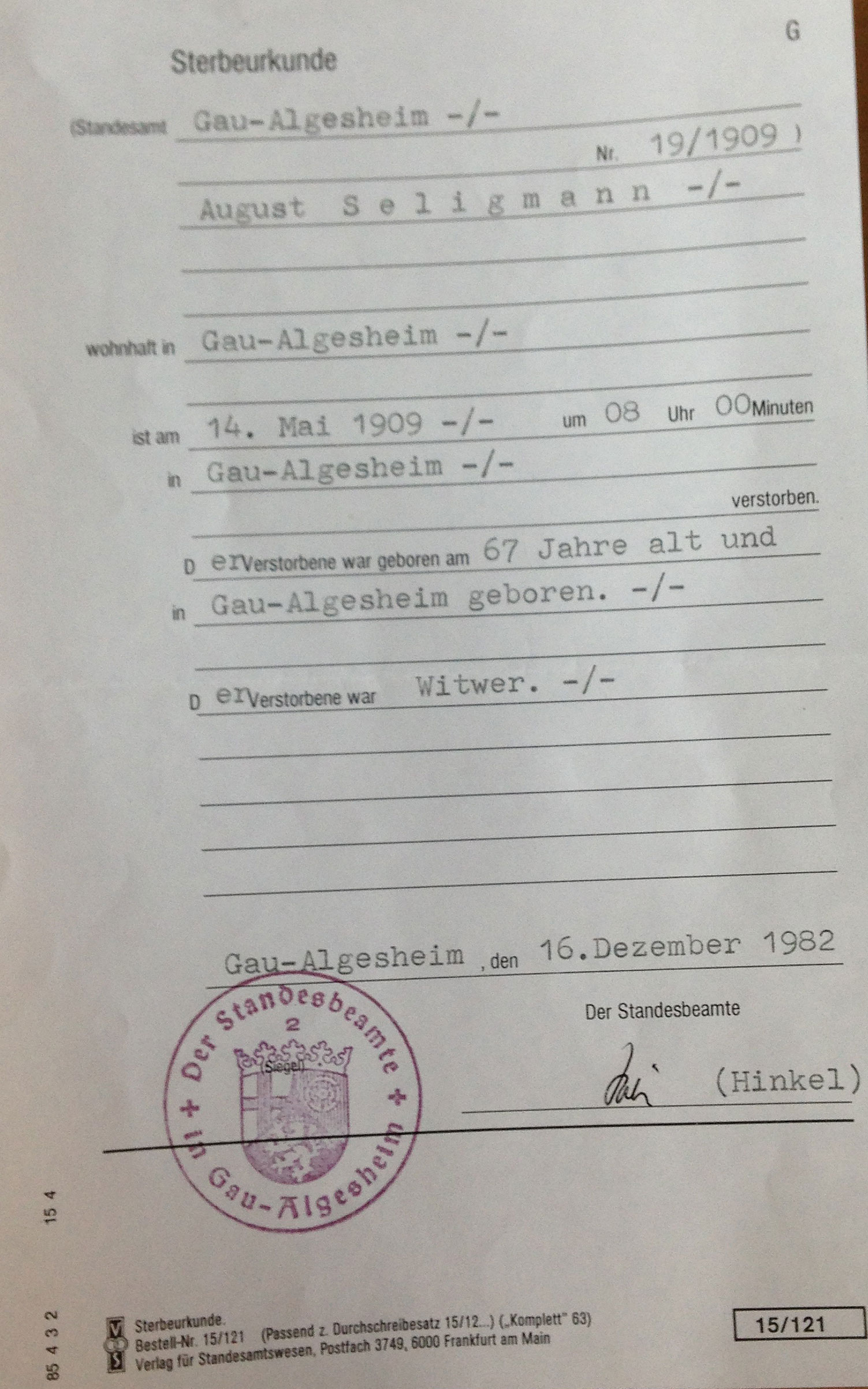
Several weeks ago, I received a comment on the blog from a man named Wolfgang Seligmann, saying he was the son of Walter Seligmann, that he lived near Gau-Algesheim, and that he had found my blog while doing some research on his family.  He asked me to email him, which I did immediately, and we have since exchanged many emails and learned that we are third cousins, once removed:  his great-great-grandparents were Moritz Seligmann and Babetta Schoenfeld, my great-great-great-grandparents.  His great-grandfather August was the brother of Sigmund, Adolph and Bernard Seligman, the three who had settled in Santa Fe in the mid-19th century.   Wolfgang sent me a copy of August’s death certificate.

August Seligmann death certificate

August Seligmann death certificate

(Translations in this post courtesy of Wolfgang Seligmann except where noted: Registry-Office Gau-Algesheim: August Seligmann, living in Gau-Algesheim died the 14th of May 1909 at 8 a.m. in Gau-Algesheim. He was 67 years old and born in Gau-Algesheim. He was a widower.)

Our families had probably not been in touch since Bernard died in 1902 (or perhaps when Adolph died in 1920).  And now through the miracle of the internet and Google, Wolfgang had found my blog with his family’s names in it and had contacted me.  What would our mutual ancestors think of that?  It even seems miraculous to me, and I live in the 21st century.

Fortunately, Wolfgang’s English is excellent (since my knowledge of German is…well, about five words), and so we have been able to exchange some information about our families, and I have learned some answers to questions I had about the Seligmanns who stayed in Germany.  With Wolfgang’s permission, I would like to share some of those stories.

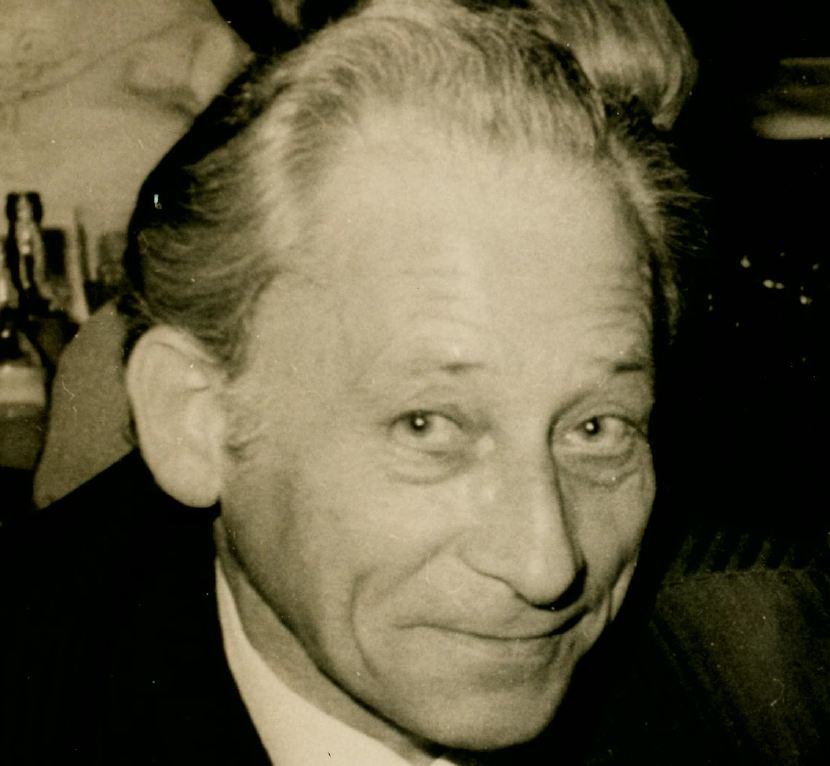
Wolfgang’s grandfather was Julius Seligmann, the second child and oldest son of August Seligmann and his wife Rosa Bergmann.  Julius was born in 1877 in Gau-Algesheim.  As I wrote about here, Julius was one of the Seligmanns written about in Ludwig Hellriegel’s book about the Jews of Gau-Algesheim.  He had been a merchant in the town.  On December 1, 1922, Julius had married a Catholic woman named Magdalena Kleisinger, who was born in Gau-Algesheim on July 9, 1882, and had himself converted to Catholicism.  Julius and Magdalena had two sons, Walter, who was born February 10, 1925, and Herbert, born July 27, 1927.  Julius and his family had left Gau-Algesheim for Bingen in 1939 after closing the store in 1935.

I had wondered why Julius had closed the store and then relocated to Bingen, and I asked Wolfgang what he knew about his grandfather’s life.  According to Wolfgang, his father Walter and uncle Herbert did not like to talk about the past, but Wolfgang knew that when Julius married and converted to Catholicism, his Jewish family was very upset and did not want to associate with him any longer.  In fact, Julius was forced to pay his siblings a substantial amount of money for some reason relating to his store in Gau-Algesheim, and that payment caused him and his family a great deal of financial hardship.  According to Wolfgang, Julius no longer had enough money to pay for his own home, and thus he and his family moved to Bingen in 1939 where they lived with Magdalena’s family or friends for some time.

Julius and Magdalena Seligmann

Julius and Magdalena Seligmann 1960s  Courtesy of Wolfgang Seligmann

The Hellriegel book also made some puzzling (to me) references to the military records of Wolfgang’s father and uncle, saying that they had been “allowed” to enlist in the army, but then were soon after dismissed.  Wolfgang explained that the German authorities did not know how to treat Catholic citizens with Jewish roots.  Wolfgang said that his father Walter had trained to be a pharmacist, but the Nazis would not allow him to work with anything poisonous.  In addition,  his father was not permitted to be in the army; instead  he was ordered by the authorities to work on the Siegfried Line, which was  originally built as a defensive line by the Germans during World War I.  In August 1944, Hitler ordered that it be strengthened and rebuilt, and according to Wikipedia, “20,000 forced labourers and members of the Reichsarbeitsdienst (Reich Labour Service), most of whom were 14–16-year-old boys, attempted to re-equip the line for defence purposes.”  Walter Seligmann was one of those forced laborers.

Map of the Siegfried line.

Map of the Siegfried line. (Photo credit: Wikipedia)

Here is a photograph of Walter Seligmann, Wolfgang’s father:

Walter Seligmann  Photo courtesy of Wolfgang Seligmann

Walter Seligmann Photo courtesy of Wolfgang Seligmann

As for Wolfgang’s uncle Herbert, he was sent by the local police to the army, but the army would not accept him.  He was dismissed and sent back to Bingen, where he was required to work in a warehouse until the war ended.

Herbert Seligmann courtesy of Christoph Seligmann

Herbert Seligmann courtesy of Christoph Seligmann

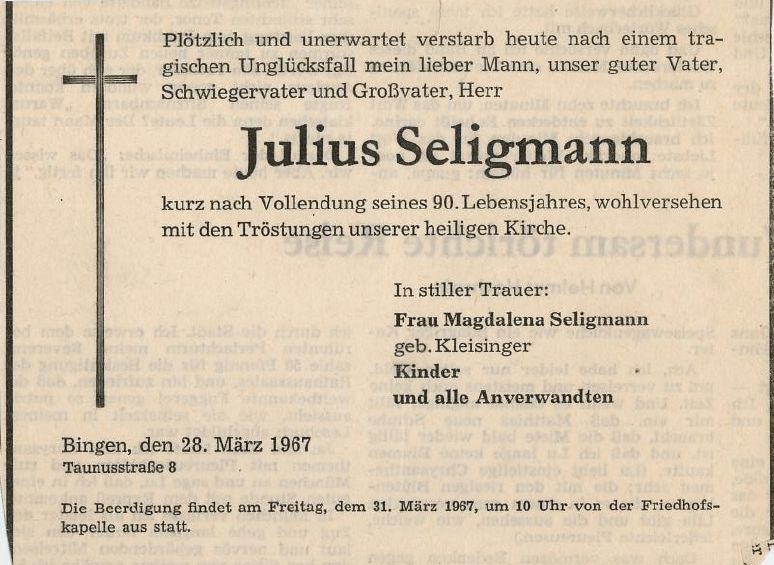
Julius Seligmann died in 1967, and his wife Magdalena died the following year.  Walter Seligmann died in 1993, and his brother Herbert died in 2001.

Julius Seligmann death notice

Julius Seligmann death notice

Magdalena Seligmann death notice

There are some very bitter ironies in these stories.  Julius and his family were not accepted by his Jewish family because they were Catholic, but the Nazis did not accept them either because they had Jewish roots.  As I commented to Wolfgang, prejudice of any sort is so destructive and unacceptable.  His family experienced it from two different directions.

Not that the two examples here can be equated in any way.  Although all prejudice is wrong, prejudice that leads to genocide is utterly reprehensible, an evil beyond comprehension for anyone who has a moral compass.  I have already written about my own personal horror and pain when I realized that I had family who had been murdered by the Nazis.  Wolfgang told me more about some of those who lost their lives to Hitler and his evil forces.

One victim was his great-uncle Moritz Seligmann (the grandson of Moritz Seligmann, my 3x-great-grandfather, and a son of August Seligmann).  My information about his fate comes from two websites that Wolfgang shared with me. According to these two sites, Moritz Seligmann, Julius’ younger brother, was born on June 25, 1881.  He fought in World War I for Germany, spent two years in captivity, and was honored with the Hindenburg Cross or Cross of Honor for his service.  Despite this, in the aftermath of Kristallnacht, on November 11, 1938, Moritz was arrested in Konigstein, where he had been living since 1925.  He was sent to the concentration camp at Buchenwald.

German Cross of Honour 1914-1918

German Cross of Honour 1914-1918 (Photo credit: Wikipedia)

Moritz wrote to the authorities in Konigstein, pointing out that he was the recipient of the Hindenburg Cross.  He was released from Buchenwald in December on the condition that he emigrate by March 31, 1939.  He was required to report to the police in Konigstein twice a week until then, and if he had not emigrated by the deadline, he was to be arrested.  On March 28, 1939, however, the Gestapo lifted the emigration order and the reporting requirement in light of Moritz’s service during World War I.

Here is a copy of the Gestapo letter, lifting the emigration order.  I found this a particularly chilling document to see.

Gestapo letter re Moritz Seligmann

Wolfgang helped me translate this letter as follows: Frankfort, March 20, 1939. Concerning: the “Aktionsjude” Moritz Seligmann born June 25, 1881, Gau-Algesheim, residing in Konigstein.  Seligmann has provided proof that he was a soldier in the World War as a combatant.  Therefore the reporting obligation and emigration order is lifted for him. I would ask the emigration (?) to supervise and notify us here.

As explained to me by Wolfgang and by Wikipedia,  the “Aktionsjude” referred to 26,000 Jews who were deported in the aftermath of Kristallnacht, as was Moritz Seligmann, as part of an effort to frighten other Jews to leave Germany.  Unfortunately, not enough of them did.

Despite the lifting of the order to emigrate, Moritz had hoped to immigrate to the US.  For various bureaucratic reasons described here, he was unable to get clearance to emigrate.  On June 10, 1942, he was picked up by the Nazis and transported somewhere to the east.  Exactly where and when he died is not known.

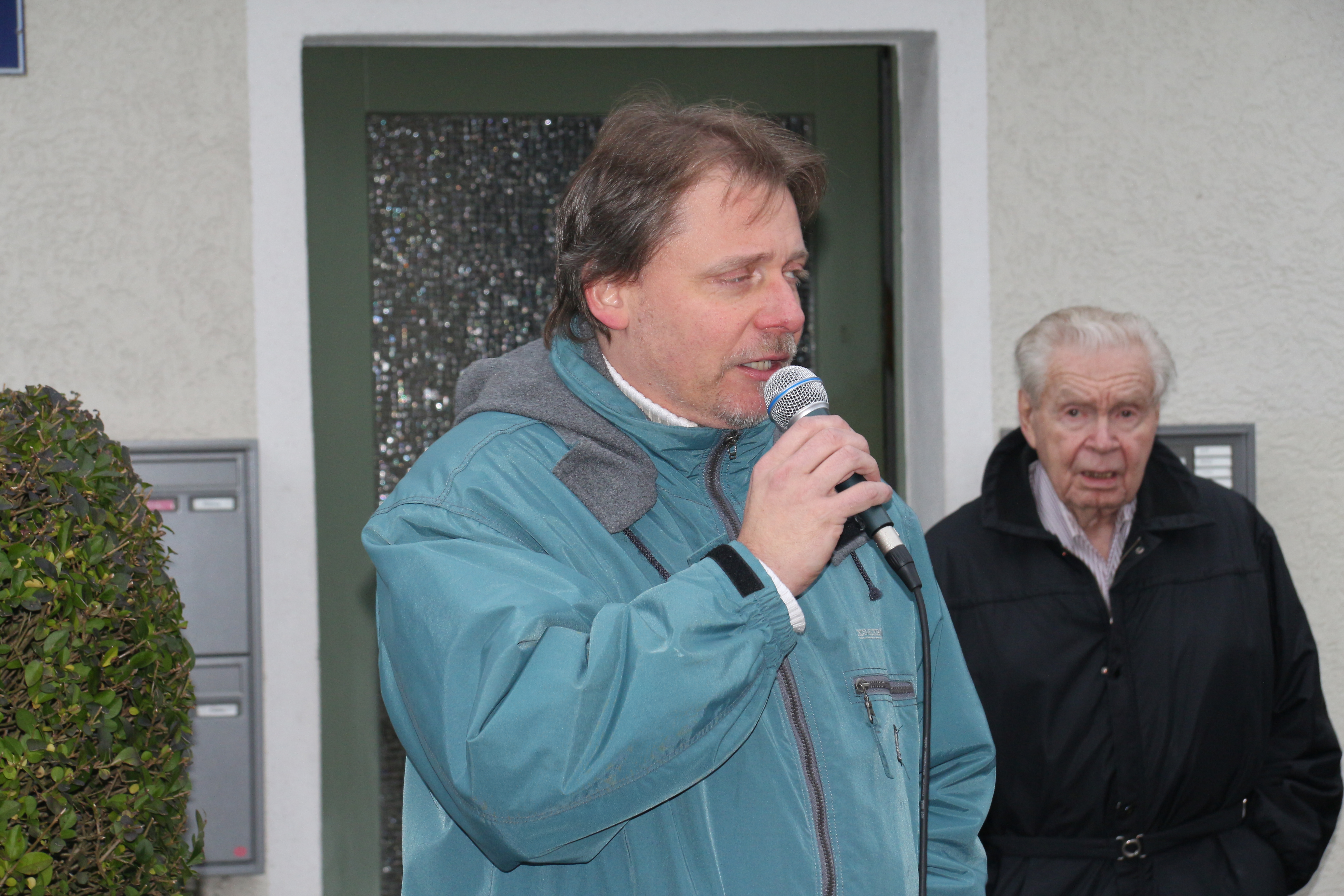
Wolfgang and his family, after researching the fate of Moritz, informed the town of Konigstein of their findings, and the town agreed to place a “stolperstein” in memory of Moritz Seligmann near his home in Konigstein.  A stolperstein (literally, a stumbling blog) is a memorial stone embedded in the ground to memorialize a victim of the Holocaust.  Here is a photograph of Wolfgang at the ceremony when Moritz Seligmann’s stolperstein was installed in Konigstein.

Wolfgang Seligmann

Wolfgang Seligmann  Courtesy of Wolfgang Seligmann

Behind him is a man who knew Moritz and remembered when Moritz was initially arrested in 1938, clinging to his Hindenburg Cross, believing it would save him from the murderous forces of the Nazis.  It may have stalled his murder, but it did not save him.

Wolfgang also told me about the fate of another sibling of his grandfather Julius, his younger sister Anna.  Anna, born in Gau-Algesheim in 1889, had married Hugo Goldmann, and they had a daughter Ruth, born in 1924 in Neunkirchen, a town about 80 miles southwest of Gau-Algesheim, where Anna and Hugo had settled. Between 1939 and 1940, many people from this area near the border with France were evacuated to locations in central Germany, and Anna, Hugo, and Ruth ended up in Halle, Germany, 350 miles to the northeast of Neunkirchen.  On June 1, 1942, they were all deported from Halle to the Sobibor concentration camp where they were all killed.  Click on each name to see the memorial pages established by the town of Halle in memory of Anna, Hugo, and Ruth.

Finally, Wolfgang told me about another member of the family.  Moritz Seligmann (the elder) had had a daughter Caroline with his first wife, Eva Schoenfeld.  Caroline was the half-sister of my great-great-grandfather Bernard. She had married a man named Siegfried Seligmann, perhaps a cousin.  Their son, Emil, died in Wiesbaden on August 9, 1942, when he was 78 years old.

Death record of Emil Seligmann, husband of Carolina Seligmann

Death record of Emil Seligmann, husband of Carolina Seligmann

(Wiesbaden: The Emil Jakob Israel Seligmann, without profession, “israelitisch”  [presumably meaning Jewish], living in Wiesbaden, Gothestraße Nr. 5, died on 9th of August 1942 in his Apartment. He  was born on 23th of December 1863 in Mainz.

Father: Siegfried Seligmann, deceased.  Mother: Karoline Seligmann, nee Seligmann, deceased.  He was widower of Anna Maria Angelika born as Illien. The death was announced by Emil Seligmann, his son, living Goethestraße Nr.5.

The stamp in the left hand margin says:  Wiesbaden, 31th of May 1949.  The “Zwangsvorname”Israel is deleted.  Zwangsvorname translates as “forced first name,” meaning that the name Israel had been required by the Nazis, I assume as a way to identify him as Jewish.

Emil had a son, also named Emil, who died in Buchenwald, as this record attests.

Emil Seligmann-KZ (1)

(To: Miss Christine Seligmann, Wiesbaden, Goethestr. Nr. 5,1

From: Special registry-office in Arolsen-Waldeck, department Buchenwald

Subject: death-certification for Emil-Jakob Seligmann, Your letter from the 1. of March 1950

Based on the documents of the International Tracing Service in Arolsen it is proved, that your brother died on 14th of February 1945 in the Concentration Camp Buchenwald. )

I imagine that this is not the end of the list of the Seligmanns who were murdered during the Holocaust, and I imagine that there are also many other family members I never knew about who were killed by the Nazis, whether they were named Schoenfeld, Nussbaum, Dreyfuss, Goldschlager, Rosenzweig, Cohen, or Brotman or something else.  I just haven’t found them yet.

Wolfgang and I plan to keep on exchanging stories, pictures, documents, and other information.  We have also already talked about meeting someday and walking in the footsteps of our mutual ancestors.  What an honor it will be to be with him as we share our family’s story.

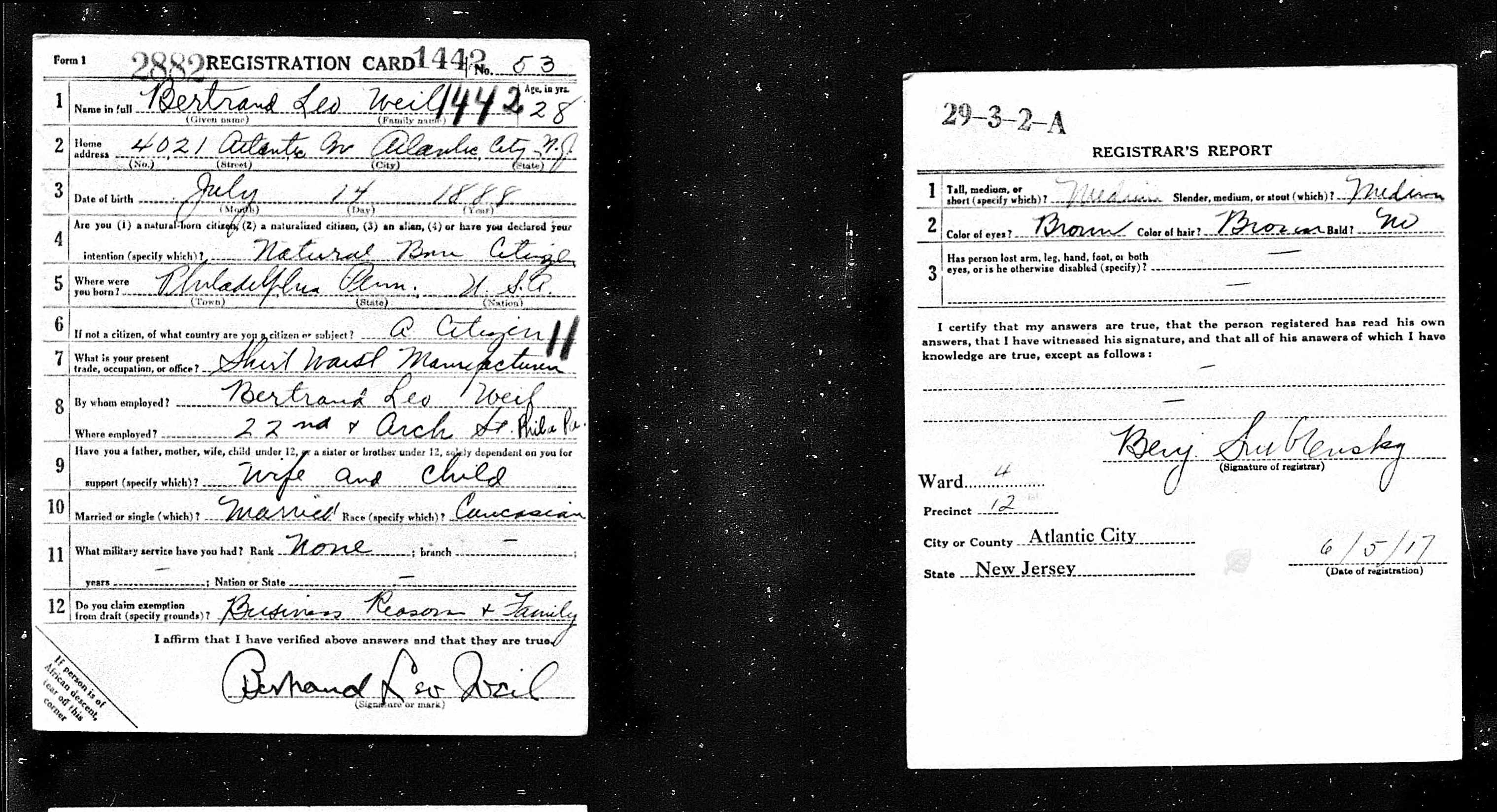
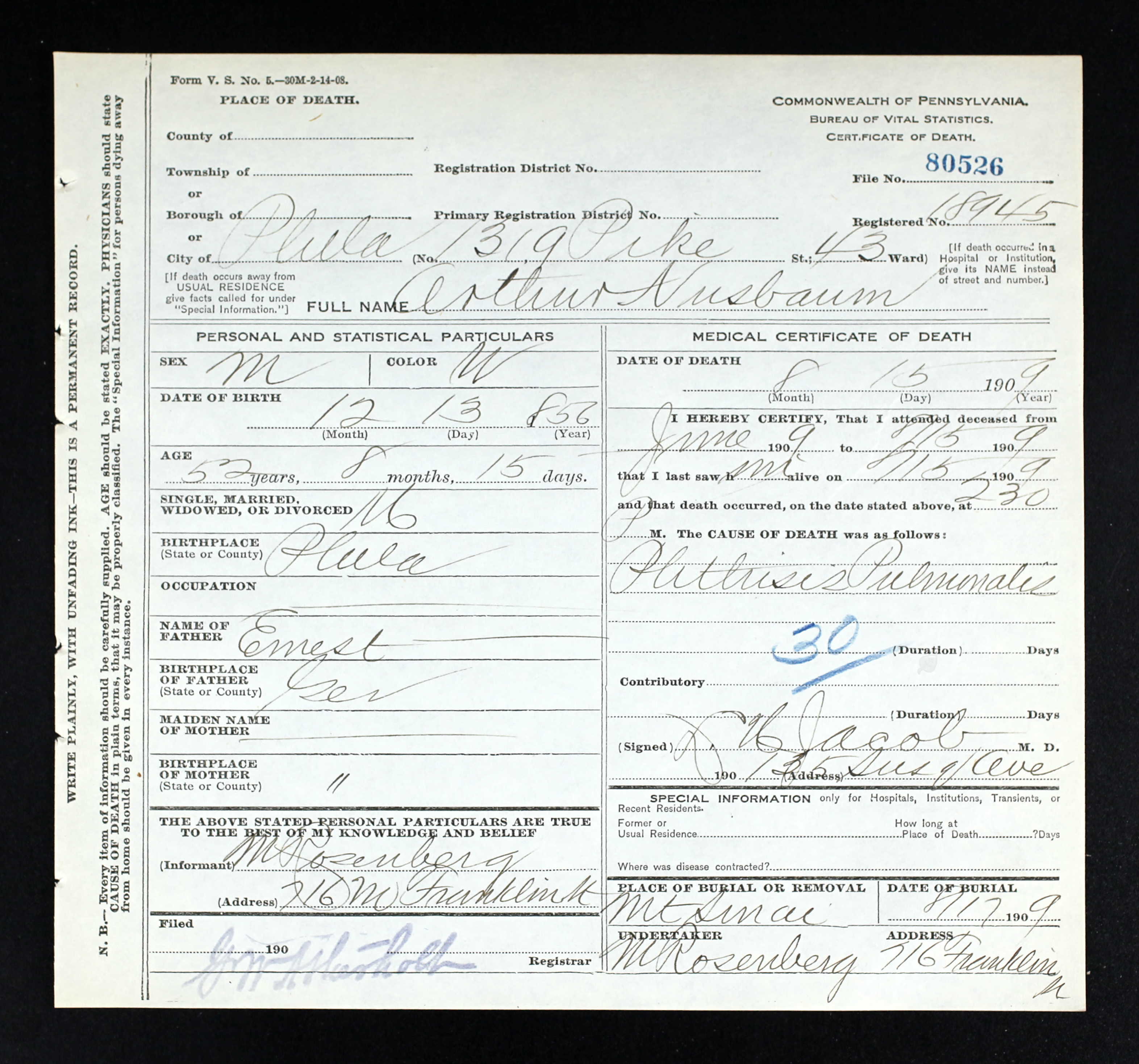
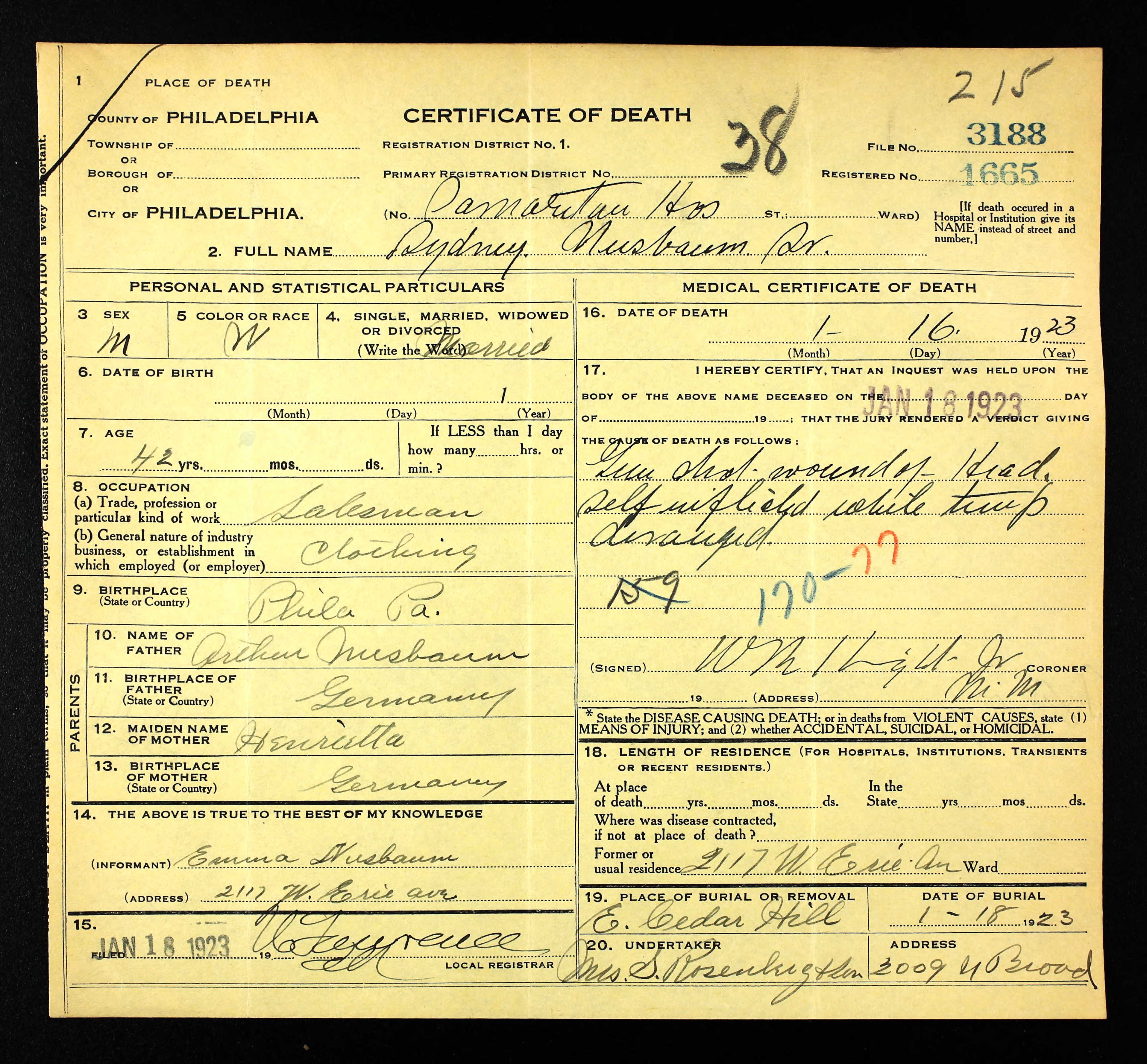
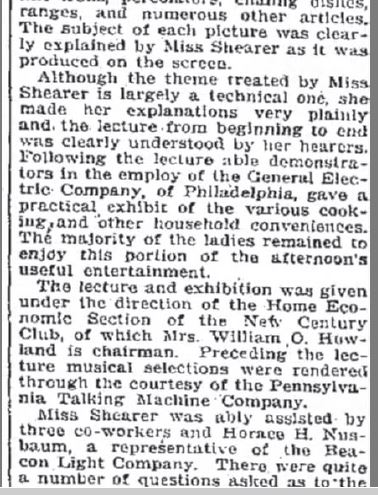
Ernst Nusbaum and Family in the 1880s: Years of Growth and Movement

There is one more line of the Nusbaum clan to complete, that of John’s younger brother Ernst.  Since it’s been two months since I last wrote about Ernst and his family, I thought I would first summarize what he and his family were doing in 1880 and where they had been before then.  Then we can bring Ernst and his family up to the 20th century.  Today I will discuss the 1880s.  I’ve included a series of Google Maps to show how much this family moved around in the 1880s.

Ernst is the Nusbaum sibling who may have lived in Philadelphia first and never lived anywhere else after settling there by 1851 when his first child Arthur was born.  Ernst was married to Clarissa Arnold, and in the 1850s he was a clothing merchant in Philadelphia with his firm,  Nusbaum, Arnold, and Nirdlinger.  Between 1851 and 1861, he and Clarissa had six children: Arthur, Myer, Fanny, Edgar, Henrietta, and Frank.  During the 1860s, Ernst continued to work in the clothing business with Nusbaum, Arnold, and Nirdlinger, and his children continued to grow.

The next decade presented serious financial challenges for Ernst and his family.  His company declared bankruptcy in 1870, and for much of the decade I could not find a listing that showed what Ernst was doing for a living.  Meanwhile, his oldest children were entering the workforce and getting married.  Between 1876 and 1879, Arthur married Henrietta Hilbronner, Fannie married Jacob Hano, Myer married Rosalie Aub, and Edgar married Viola Barritt.  Several grandchildren were born as well.  By 1880, only Henrietta and Frank, the two youngest children, were still living at home.

In 1880, Ernst was 64 and working as a cloak manufacturer, according to the 1880 census.  Until 1884, he and Clarissa continued to live in the same home where they had lived for many years and raised their children at 2105 Green Street.  In 1884 they were now listed as living at 2028 Mt. Vernon Street where they would remain throughout the decade.  Ernst was also continuing to work in the cloaks business throughout these years.

After his brother John died in 1889, Ernst was the only Nusbaum sibling left in the United States.  He and Clarissa continued to live in the same home, and he continued to work in the cloaks business into the 1890s when he was in his seventies.

As for the children of Ernst and Clarissa in the 1880s, their oldest child Arthur and his wife Henrietta had four children between 1877 and 1895: Florence (1877), Sidney (1879), Horace (1885), and Stella (1889).  In 1880 Arthur, Clarissa, and the two oldest children were living with Henrietta’s parents at 938 North 7th Street, and Arthur was working as a clothing cutter, presumably for his father-in-law, who was a clothing manufacturer.  In 1883 and 1884, Arthur is listed as a tailor, still living at his in-laws residence at 938 North 7th Street.  In 1885, he is listed at 1338 Franklin Avenue as he is in 1887, working as a salesman, and in 1888 he is living at 1814 Franklin with no occupation specified.  In 1890 they had moved again, now living at 1732 Gratz Street, and Arthur was working as a cutter.

Myer, the second child of Ernst and Clarissa, and his wife Rosalie Aub had two children, Corinne (1878) and Jacob (1879).  In 1880 Myer was working as a bookkeeper for a clothing company.  The family was living at 979 North 7th Street.  In 1885 his residence as listed as 1825 North 8th Street; Myer continued to work as a bookkeeper.  But in the 1889 and 1890 directories his residence is again 979 North 7th Street, as it was also in 1891.  In each, his occupation is bookkeeping.

Fanny, the third child, and her husband Jacob Hano had six children between 1877 and 1891: Louis (1877), Ernest (1880), Samuel (1883), Myer (1885), Alfred (1890), and Clarence (1891).  Six boys.  Wow.  Although I am no longer surprised to see a Jewish child named for someone living, the fact that Fanny gave a son not only the same name as her father while he was still alive (his middle name was even Nusbaum), but also gave another son the same name as her brother did surprise me.

Fanny and Jacob had been living in Youngstown, Ohio, in 1880, where Jacob had declared bankruptcy in 1878, but Jacob was working once again as a clothier in 1880 in Youngstown.  By 1884, however, Fanny and Jacob and their children had moved back to Philadelphia to 1823 Poplar Street, and Jacob was working as a salesman.  By 1889, however, the Hano family had relocated again, this time to New York City, where Jacob was a book dealer.  The family was living at 967 Park Avenue in Manhattan in 1889.  Fanny and Jacob never again returned to live in the Philadelphia area, but stayed in greater New York.

Although Edgar Nusbaum and his wife Viola Barritt had not been living together according to the 1880 census, they had a daughter named Selena, born in 1881.  On the 1881 Philadelphia directory, Edgar is still listed at his parents’ residence at 2105 Green Street, working as a salesman, but by 1882 he had moved out to 1331 Girard Avenue and was working as a clerk. A year later he is listed as a bookkeeper living at 1922 Van Pelt, in 1884 as a clerk living at 1318 South Broad Street, and he is missing from the 1885 and 1887 directories.  Edgar reappears in 1888, living at yet another address (2029 North 11th Street), where they finally seemed to settle down for a number of years.

(I cannot imagine moving as often as these people seemed to move.  I’ve lived in only two places in the last 30 years and in only five places total my whole adult life (and only three places as a child).  These people seemed to move every year or so.  I guess they had less “stuff” so moving was easier.)

Henrietta, the fifth of the children of Ernst and Clarissa, married Frank Newhouse in 1883 in Philadelphia.  Frank was from Philadelphia, one of eleven children, and in 1860 when he was six years old, his household included a governess and three domestic servants as well as the nine children then alive and two adults.  His father Joseph Newhouse, a German native, gave his occupation as “gentleman” on the 1860 census.  He had real estate worth $40,000 as well as personal property also worth $40,000.

Frank and Henrietta (Nusbaum) Newhouse were living at 2028 Mt. Vernon Street in 1884, the same address where Henrietta’s parents were living at that time.  Frank and Henrietta would live with Ernst and Clarissa at that address for many years.  Although Frank’s occupation was given as salesman in some of the directories and as late as 1889, in 1890 he is listed as part of the firm of Rice and Newhouse, tailors. Since all the other entries said he was a salesman, I thought the 1890 listing seems anomalous and perhaps wrong. But I checked the 1892 directory, and it still has Frank working at Rice and Newhouse and still identifies the business as tailoring.  Frank and Henrietta did not have any children.

Finally, the youngest of Ernst and Clarissa’s children was Frank Nusbaum, born in 1861. He’d been living at home in 1880, working as a clerk, and was still living with his parents in 1884 and 1885.  By 1885 his occupation had changed to bookkeeper. He married Dolly Hills in Philadelphia in 1887 when he was 26.  Unfortunately, I have not been able to find out anything about Dolly’s background.  The closest match was a Dollie Hill living on a farm in Pennsvylania with her family in 1870, but I could not find that Dollie on a later record.  Frank and Dolly had one child, Loraine, born in 1889. Frank and Dolly lived at 2017 Vine Street in 1888 and 1889.  Frank was at first working as a clerk and then as a salesman.

Here is one last map showing where each member of the family was living in the late 1880s (other than Fanny,  who was in New York):

Thus, the 1880s were a fruitful time for the family of Ernst and Clarissa (Arnold) Nusbaum.  Their children were all married, and there were a number of grandchildren born.  All but one of their children were living in Philadelphia, and most of the men were involved in the clothing trade, either as manufacturers, tailors, or salesmen.  After the hardships of the 1870s, life must have seemed pretty good for Ernst, Clarissa, and their children.  Unfortunately, the 1890s would not be as easy a decade.


Rosenzweig Update: Who Signed that Death Certificate?

One of the biggest mysteries I encountered in researching my Rosenzweig cousins was the mystery of Lilly Rosenzweig, the first child of Gustave and Gussie Rosenzweig.  Lilly was my grandfather Isadore Goldschlager’s first cousin.  Lilly had married Toscano Bartolino in 1901 and had had a child William with him, born March 9, 1902.  Then just two years later on April 27, 1904, Toscano had died from kidney disease at age 27, leaving Lilly a twenty year old widow with a two year old child.

Bartolini Rosenzweig marriage certificate

Bartolini Rosenzweig marriage certificate


William Bartolini birth certificate

William Bartolini birth certificate

Toscano Bartolini death certificate

Toscano Bartolini death certificate


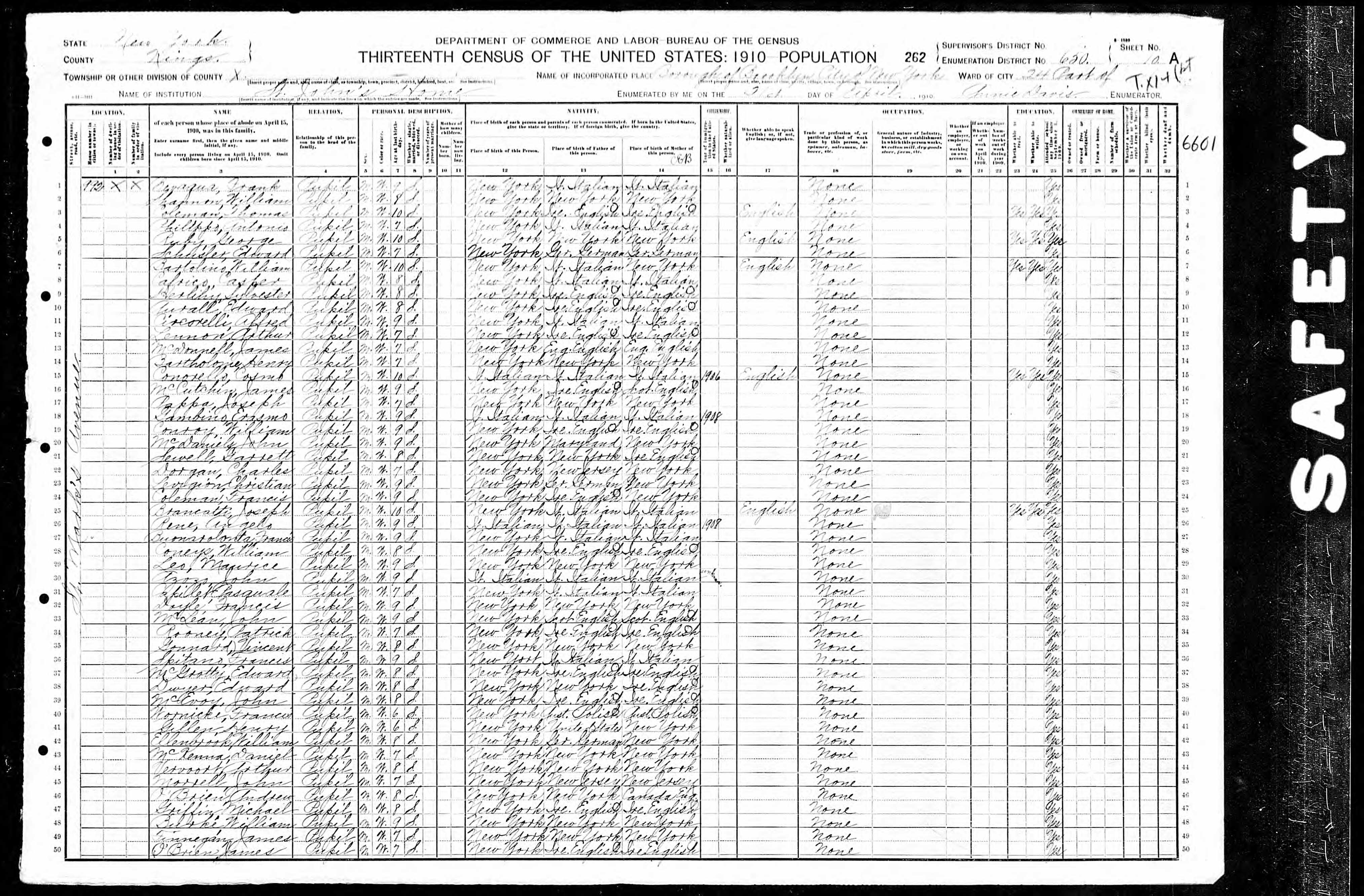
Lilly and her son William were living with Gustave and Gussie in 1905, but by 1910, William was no longer living with his mother and grandparents, but was in St. John’s Home for Boys in Brooklyn.

Gustave Rosenzweig family on the 1905 NYS census

Gustave Rosenzweig family on the 1905 NYS census

William Bartolini 1910 at St John's Home, Brooklyn

William Bartolini 1910 at St John’s Home, Brooklyn


Lilly was still living with her parents in 1910 and working as a nurse.  In 1915, William was at a different residential home, but I could not find Lilly at all on the 1915 NYS census nor could I find her anywhere after that.  None of the great-grandchildren of Gustave and Gussie knew what had happened to her, except that they thought she had remarried and moved to New Jersey at some point.  No one knew her married name or whether she had more children.  I was stuck and could not get any further.

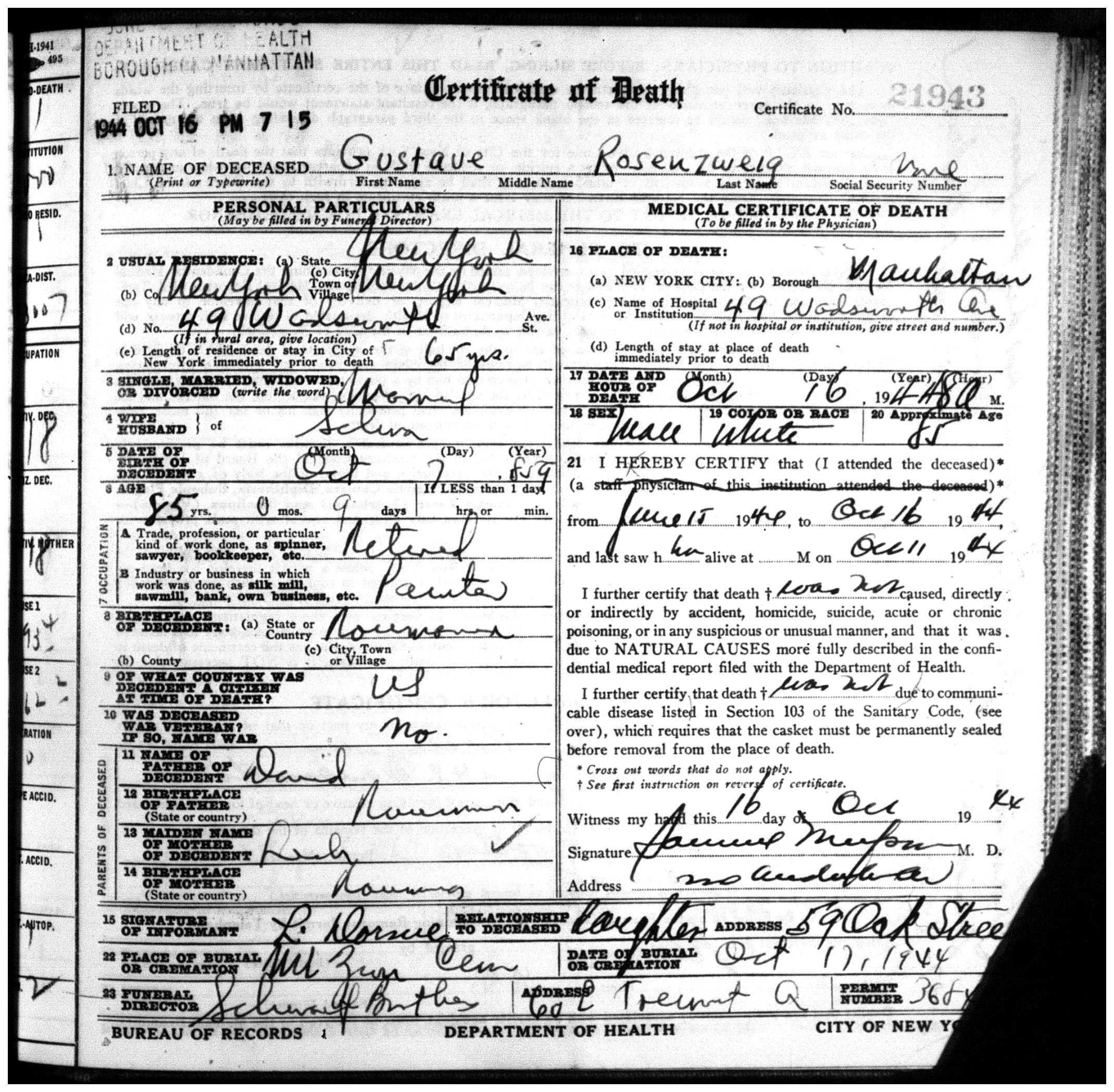
I thought I had a new clue when I obtained Gustave’s 1944 death certificate.  It was signed by an informant I thought might be Lilly.  I posted the signature on the blog, hoping someone would be able to decipher it more clearly than I could, but every possible reading of the signature led me nowhere, even using wildcard searches and as many variations as I could.  I put Lilly aside and figured it was a lost cause.

Gustav Rosenzweig death cert 1

And then? Well, this past weekend I received a call from Harriet, one of Lilly’s nieces.  She not only remembered Lilly well—she remembered the first name of her second husband—Carmen. And she said they had lived in Jersey City. She remembered Lilly fondly and described her as funny and fun-loving, like all the Rosenzweig siblings.

So I now had two more clues.  Lilly had married someone named Carmen, and they had lived in Jersey City, New Jersey.  Armed with just those additional pieces of information, I was able to design a search on FamilySearch using the two first names and the location.  The first result on the results list was a Lilly and Carmen Dorme living in Rutherford, New Jersey in 1940.

Carmen and Lillian Dorme 1940 US census

Carmen and Lillian Dorme 1940 US census


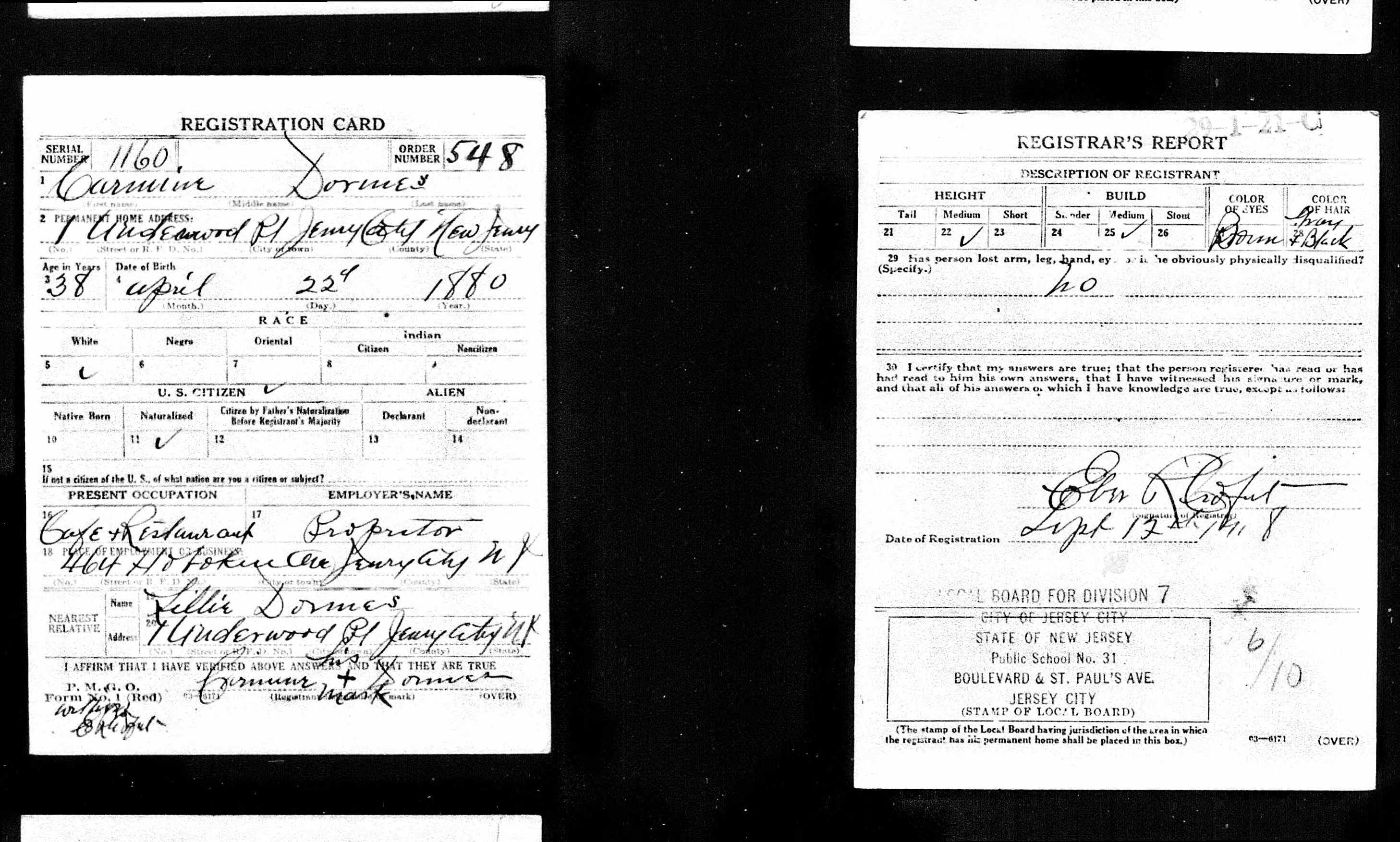
Rutherford was not Jersey City, but it was close by, so I decided to try that surname.  Using Dorme, I was able to search more thoroughly and found that Lilly and Carmen Dorme were already married by 1918 when Carmen  (using Carmine Dormes then) registered for the World War I draft and that they were living in Jersey City.  This had to be my long-missing cousin Lilly.

Carmine Dormes World War I draft registration

Carmine Dormes World War I draft registration


After that, I was also able to find Lilly and Carmen in several Jersey City directories and in the 1930 US census, which revealed that Lilly and Carmen had a child, Louis, who was then sixteen years old.

Dorme family on the 1930 US census

Dorme family on the 1930 US census

Further searching uncovered a Louis Dorme’s entry on the Social Security Death Index, indicating that he was born in New York on May 13, 1913, and had died in 1977.  This was consistent with the age and birthplace for Louis on the 1930 census, so I am reasonably certain that this is the correct person.

I still cannot find the family on the 1920 census, and since they were living in Jersey City both before and after 1920, I assumed that they would have been there then as well.  But although Carmen is listed in both the 1918 and the 1925 Jersey City directories, he is not in the 1922 directory (the intermediate years are not available online).  Harriet thought that Lilly had served as a nurse overseas during World War I, so perhaps that is where the family was located during that period.  I cannot, however, find a military record for Carmen, so I have no way to know for sure where they were during that period.

And although I do know when Louis died (1977) and when Carmen died (1962) from the SSDI, I cannot find Lilly on the SSDI nor can I find any other record of her death.  Harriet does remember Lilly’s death (in fact, Harriet’s mother reported that Lilly’s last words was a request for a corned beef sandwich!), but not the specific year or place.

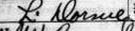
But I do have one clue, and it goes back to Gustave’s death certificate.  As soon as I saw that Lilly’s married name was Dorme, something clicked in my head.  I went back to look at Gustave’s death certificate, and now it seemed strikingly clear that the informant’s name was L. Dorme.

Lilly as informant

How could I not have seen that or found her before?  I just don’t know.  But now I knew that it was in fact Lilly who signed her father’s death certificate.  And so I know that she was still alive as of October 16, 1944, when Gustave died.  I am sure with a few more clues I will be able to narrow down the year and perhaps find her death record as well.

So in the space of one afternoon with the help of a new cousin, I was able to resolve one of the biggest questions I had remaining about my grandfather’s Rosenzweig first cousins.  Thank you, Harriet!


Death Certificates: Answering Some Unanswered Questions

Over the last few weeks I have received a number of death certificates, most for people about whom I have written, so I will also post them as updates to the relevant posts.  But I also wanted to post about them separately for those who might never go back to those original posts.

Three of these were for relatively young men whose deaths puzzled me.  Why had they died so young?  E.g., Simon L.B. Cohen.  He was only 36 when he died on October 24, 1934, after serving valiantly in World War I.  He was my first cousin, twice removed, the first cousin of my grandfather John Nusbaum Cohen.  Simon had faced the horrors of war, been awarded a Distinguished Service Cross by General Pershing for his service, and had been reported killed in action when he was in fact still alive.  He came home and married, but then died only five years after he married.  I had wondered what might have caused such a young man to die after surviving everything he did during the war.

His death certificate reported that his cause of death was glomerulonephritis, chronic myocarditis, and arterial hypertension.  Glomerulonephritis is a form of kidney disease, sometimes triggered by an infection like strep or some other underlying disease.  Overall, it would appear that Simon was just not a healthy 36 year old.  But that’s not the whole story.  The death certificate also described Simon as an “unemployed disabled veteran.”  Although I do not know in what way he was disabled, obviously Simon paid a huge price for what he endured while serving in the military.

Death certificates_0004_NEW

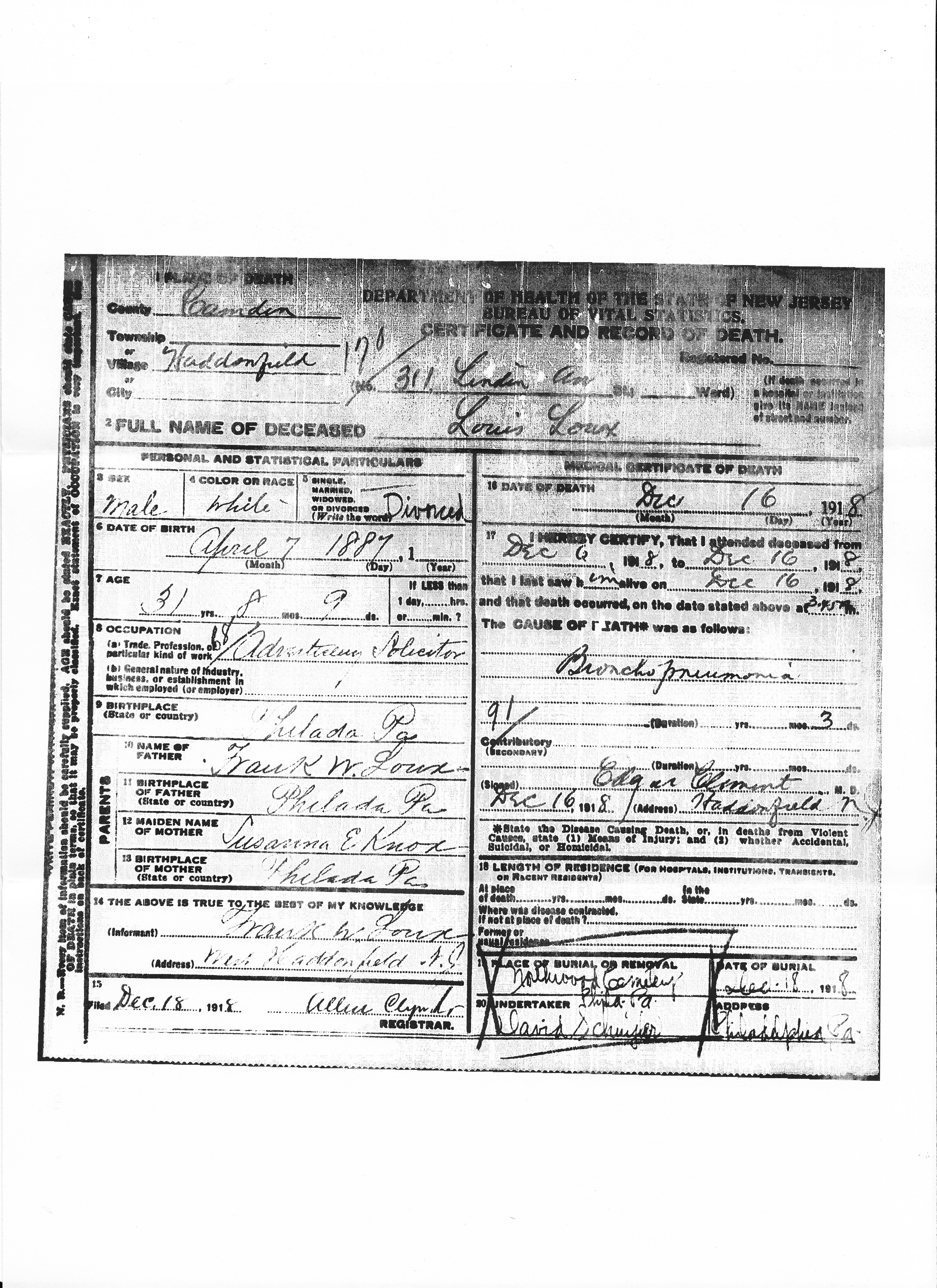
The second young man whose death puzzled me was Louis Loux.  Louis was the husband of Nellie Simon, daughter of Eliza Wiler and Leman Simon.  Louis was thirteen years younger than Nellie.  They had a daughter Florrie, born in 1910, who died from burns caused by matches.  She was only eight years old when she died in September, 1918.  Then her father Louis died just three months later on December 15, 1918.  He was only 36 years old.  I had wondered whether there was some connection between these two terrible deaths.  I knew from the 1920 census that Nellie and Louis had divorced, but I did not and still do not know whether that was before or after their daughter died.  From the death certificate for Louis, I learned that he died from broncho pneumonia. So it would seem that it was perhaps just a terrible sequence of events and that Louis’ death was not in any directly related to the death of his daughter.

Death certificates_0003_NEW

The next death I had wondered about was that of Mervin Simon, the great-grandson of Mathilde Nusbaum and Isaac Dinkelspiel.  He was only 42 years old when he died on August 27, 1942.  He was the son of Leon Simon, who was the son of Moses Simon and Paulina Dinkelspiel.  Mervin died almost a year to do the day after his father Leon.  According to his death certificate, he also died from broncho pneumonia.  Like Simon Cohen, he had no occupation listed on his death certificate.  Even on the 1940 census, neither Mervin nor his brother William had an occupation listed.

Mervyn Simon death certificate

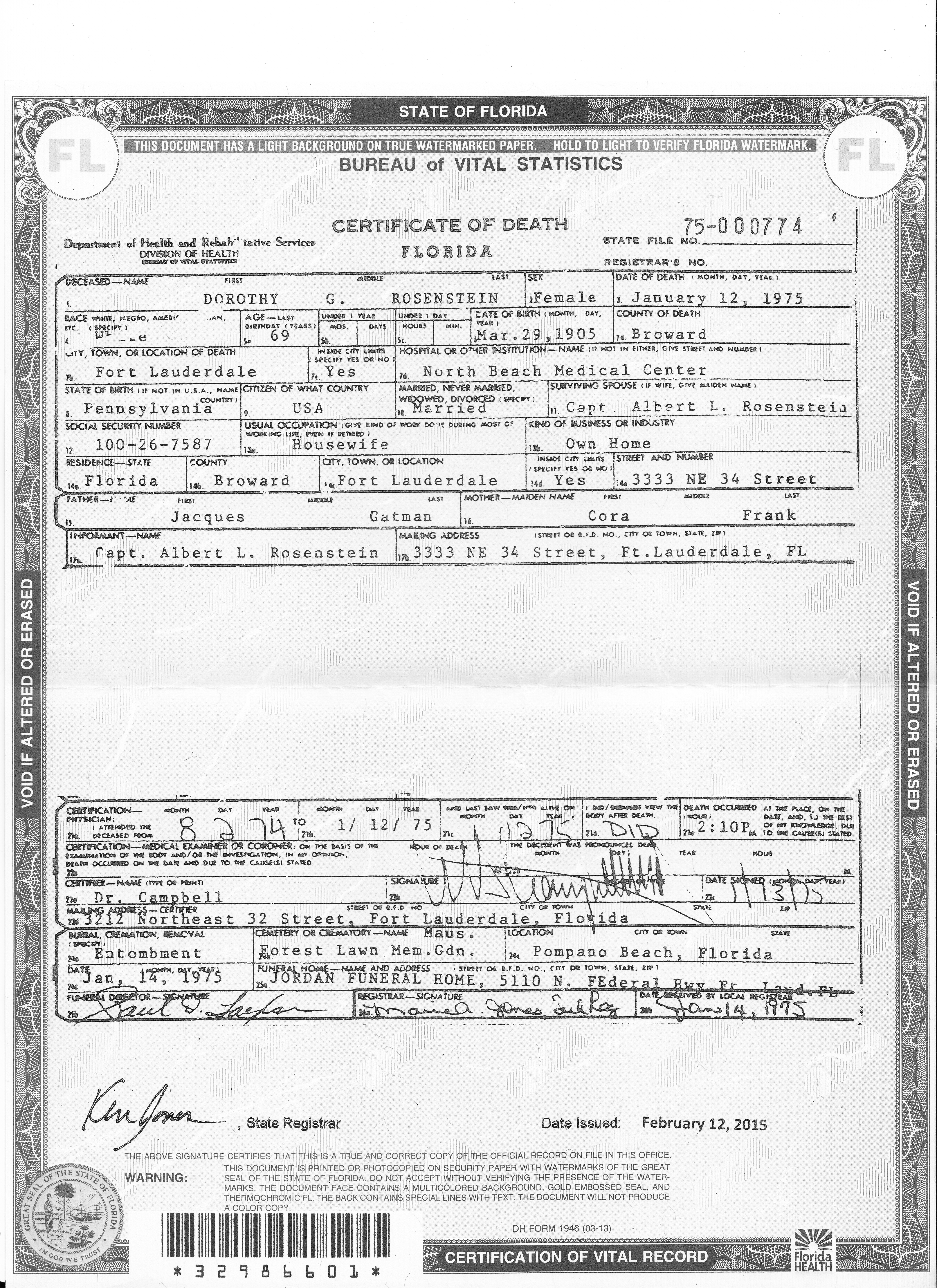
The last death certificate I received in the last few weeks was for Dorothy Gattman Rosenstein.  Dorothy was the daughter of Cora Frank from her first marriage to Jacques Gattman.  Cora was the daughter of Francis Nusbaum and Henry Frank and the granddaughter of Leopold Nusbaum.  Cora’s husband Jacques had died when Dorothy was just a young child, and Cora had remarried and moved to Dayton, Ohio, with her new husband Joseph Lehman and her daughter Dorothy.  I had had a very hard time tracking down what happened to both Cora and Dorothy, and only with the help from a number of kind people had I learned that Dorothy had married Albert Rosenstein from Lancaster, Pennsylvania.  But I wanted the death certificate to corroborate all the other less official evidence I had that this was in fact the same Dorothy Gattman, daughter of Jacques Gattman and Cora Frank.  Her death certificate confirmed that.

Death certificates_0001

Thus, all of these certificates helped put closure on some lingering questions that had bothered me.

And the Tree Keeps Growing: A New Rosenzweig Leaf!

Marvin Shea Sundick photo

I am delighted to announce that we have another new addition to the Rosenzweig family tree.  Marvin Shea Sundick was born at 12:05 pm on February 20, 2015.  He weighed 7 lbs. 5 oz. and was 20 inches long.  He is the son of Lauren and Bradley Sundick and the brother of Madeline Sundick.  He is the grandson of Robin and Ronald Sundick and of Ellyn Wolfenson, Mick Belzer and Bob Stein.   Marvin is also the great-grandson of Sandy Wolfenson.

Marvin is named for two people. Marvin (in Hebrew, Moshe) is for Lauren’s maternal grandfather, Marvin Wolfenson, who passed away just a year ago.   Shea was to honor the Shapiro family name (the birth name of Marvin’s maternal grandmother Robin).  In Hebrew, Marvin’s middle name is Yisroel for Robin’s father, Israel Shapiro, Brad’s maternal grandfather and Marvin’s great-grandfather.

On his paternal grandfather’s side, Marvin is also the great-grandson of Mildred (nee Rosenzweig) and Seymour Sundick, the great-great-grandson of Joseph and Sadie Rosenzweig, the great-great-great-grandson of Gustav and Gussie Rosenzweig, and the great-great-great-great-grandson of David and Esther Rosenzweig. (That makes him my third cousin twice removed as David and Esther Rosenzweig were my great-great-grandparents, the parents of my great-grandmother Ghitla Rosenzweig Goldschlager.)

Mazel tov to all of his family! And welcome to the family, Marvin!

The Schoenfelds and Erbes-Budesheim: Part II

In my last post, I wrote about Erbes-Budesheim, the German town where my Schoenfeld ancestors lived, where my 3x-great-grandmother was born, and where my 4x- and 5x-great-grandparents lived.   From the records I was able to obtain, I know that my 4x-great-grandparents Bernhard Schoenfeld and Rosina Goldmann were married and living in Erbes-Budesheim by 1804 when their first child Benedict Baehr was born.

As explained to me by Gerd Braun, the man in Erbes-Budesheim who sent me the documents,  when the French took over control of the region, one thing that they did in 1808 was order the Jewish residents to adopt surnames akin to those used by the Christian population.  Before that, Jews used patronymics.  Thus, before 1808, Bernhard Schoenfeld was named Baer (ben) Salomon[1] and Rosina was Rosina (bat) Benjamin.  The two children born before 1808 were named Benedict (ben) Baer and Taubchen (bat) Baer.  Taubchen was renamed Eva Schoenfeld after 1808.

Here is the birth record for Benedict.  (All the records before 1816 are in French, and my high school French classes came in handy.)  The translations for all of the documents below are in italics.

Benedict Baer birth record 1804

Benedict Baer birth record 1804

Act of birth of Benedict Baer born the 15th of Frimaire[2] at 10 in the morning, the legitimate son of Baer Salomon, merchant, living in Erbesbudesheim, and of Rosine nee Benjamin of Munchweiler.  The sex of the child has been recognized as masculine.  [Witnesses and signatures]

Benedict died just eight months later.

Benedict Baer death record 1805

Benedict Baer death record 1805

Act of death of Benedict Baer, died the 17th of Messidor[3] at 7 in the evening, eight months old, born in Erbesbudesheim and living in Erbesbudesheim.  Son of Baer Salomon and Roes nee Benjamin.  On the declaration made by Baer Salomon, his father, resident of Erbesbudesheim and a merchant, and Francois Colin, resident of Erbesbudeshem, a barber and a neighbor.

A year later, Taubechen (who became Eva) was born:

Birth record of Taubchen Baer/Eva Schoenfeld 1806

Birth record of Taubchen Baer/Eva Schoenfeld 1806

Act of birth:  In the year 1806 on the 2d of June in the afternoon appeared before the mayor of Erbesbudesheim… Baehr Salomon, a merchant, 34 years old, living in Erbesbudesheim, No. 66, and presented to us a female child of him and his legal wife Rosine nee Benjamin born the 2d of June at 5 in the morning and also stated that he wanted to give the child the name Taubchen.  [Witnesses and signatures.]

The children born after 1808 were given the name Schoenfeld, including my 3-x great-grandmother, Babetta.  You will see that on this record, Bernard and Rosine are referred to with surnames.

Babete Schoenfeld birth record 1806

Babete Schoenfeld birth record 1806

In the year 1810, the 28th of February, at nine in the morning, Bernard Schoenfeld, 37 years old, a merchant, and a resident of Erbesbudesheim,appeared before Andre Cronenberger, Mayor of Erbesbudesheim and presented a female child born the 28th of February in the morning of himself and Rosine nee Goldmann, his wife, and also declared that he wanted to give the child the name of Babet. [Witnesses and signatures]

In addition, I received records for other children of Bernard and Rosina Schoenfeld, ancestors I’d not known about before.  The first two are in French, but the last two are in German because they occurred when the region was back under German control.  The two in French follow the format and content of those above and evidence the births of a daughter Marianne, born June 29, 1812, and a daughter Rebecque, born July 20, 1814.

Birth record of Marianna Schoenfled 1812

Birth record of Marianna Schoenfled 1812

Birth record of Rebecque Schoenfeld 1814

Birth record of Rebecque Schoenfeld 1814

The last two are in German.  Thank you to Matthias Steinke for the translations. The first record is for the birth of another daughter, Zibora, in 1818.


Birtn record of Zibora Schoenfeld 1818

Birtn record of Zibora Schoenfeld 1818

In the year 1818, the 23rd of May came to me, the mayor and official for the civil registration of the comunity of Erbesbuedesheim, county of Alzey, Bernhard Schoenfeld, 45 years old, merchant, residing in Erbesbuedesheim, who reported, that at the 22nd of May at 11 o´clock in the night a child of female sex, which he showed me, was born and whom he intends to give the first name Zibora, and which he declared to have fathered with his wife Rosina Goldmann, 35 old, residing in Erbesbuedesheim.  The child was born in the Hauptstr. nr. 77. This declaration and presentation happened in presence of the witnesses Johannes Knobloch, 55 years old, farmer, in Erbesbuedesheim residing and Jacob Landesberg, 29 years old, farmer, in Erbesbuedesheim  residing, and have the father and the witnesses signed his birth-record and it was read to them. Signatures

The last child of Bernard and Rosine for whom I have a record was their daughter Saara, born in 1820:

Birth Record of Saara Schoenfeld 1820

Birth Record of Saara Schoenfeld 1820

In the year 1820 the fifteenth of October at twelve o´clock midday came to me, mayor and official for the civil registration of the comunity Erbes-Buedesheim Bernhard Schoenfeld, 51 years old, merchant, residing in Erbes-Buedesheim, who reported, that at the fifteenth October at two o´clock in the morning a child of female sex, whom he showed me, was born and whom he intends to give the name Saara, and he also reported, that he fathered the child with Rosina Goldmann, 41 years old, residing in Erbes-Buedesheim, his legal wife. This declaration and showing happened in presence of the witness Johannes Knobloch, 57 years old, farmer, and Jakob Landsberg, 28 years old, merchant, both residing in Erbes-Buedesheim, and have the father and the witnesses with me this present birth-certificate after it was read to them, signed. Signatures

In the midst of all these births, there was also a death.  On February 16, 1813, Salomon Schoenfeld, father of Bernard Schoenfeld, died at age 63 (or is that soixant treize meaning 73?).  His occupation was given as “cultivateur,” or cultivator, which I assume means that he was a farmer.  The witnesses to his death included Benoit Schoenfeld, his son, age 23, a “propietaire”  or owner, but no indication of what he owned.  This must have been a younger brother of Bernard since in 1813 Bernard would have been at least 40 years old.  (His age seems to vary from birth record to birth record.)

Death Record of Salomon Schoenfeld 1813

Death Record of Salomon Schoenfeld 1813


There is also a record for the birth of the child of an Isaac Schoenfeld and a Barbe Goldmann who is probably also a family member, though I am not sure what the exact connection was between these Goldmanns and Schoenfelds and Bernhard and Rosina, my 4x great-grandparents. But the number of marriages between a Schoenfeld man and a Goldmann woman are somewhat revealing.  Here is a third such marriage, this one between Rebeka (Rebecque) Schoenfeld, the daughter of Bernhard and Rosina,  and Salomon Goldmann.  Is it any surprise that Ashkenazi Jews come up with thousands of matches when DNA testing is done?  We are all interrelated at so many different levels.

Marriage Record for Rebecque/Rebkah Schoenfeld and Salomon Goldmann

Marriage Record for Rebecque/Rebkah Schoenfeld and Salomon Goldmann


In the year 1834 on the fifteenth October at ten o´clock pre midday came to me, Andreas Cronenberger mayor and official for the civil registration of the comunity Erbes-Buedesheim, county of Alzey:

Salomon Goldmann, 42 years old, merchant, residing in Kirchheimbolanden, Rhein-county, Bavaria, born in …thal, like it was presented to me by a certificate of the district-court Kirchheimbolanden from the 24th of December 1807, which was certified by the district-court in Mainz, the adult son of 1. Joseph Goldmann, 75 years old, during his lifetime a merchant in Kirchheimbolanden, deceased there the 8th of  November, 1800 (some parts here were cut off) 2. Friederike Goldmann, widow, nee Goldmann, 62 years old, without profession residing in Kirchheimbolanden and here present and giving her confirmation and who declared to be unable to write.

And on the other hand, Rebeka Schoenfeld (Schönfeld), 20 years old, born in Erbebudesheim in 1814, like I have seen in the present birth-register of the year 1814, without profession, in Erbes-Buedsheim residing.

Minor daughter of 1. Bernhard Schoenfeld, 62 years old, merchant and owner of a manor, in Erbes-Buedesheim residing. 2. Rosina Schoenfeld nee Goldmann, 55 years old, without profession, in Erbes-Buedesheim residing, both are present and giving their confirmation.

The appearing people asked me to do the marriage. The proclamation was published at the main-door of the comunity-building the September 24, 1834 at noon and the second the September 26 at noon in Erbes-Buedesheim and in Kirchheimbolanden the 14th of September the first time and the 21st of September of the same year the second time was made.

Due to the case, that no objections against this marriage appeared, and after reading the sixth chapter of the civil-rights-lawbook which is titled „about the marriage“ I asked them whether they want to marry each other. Both confirmed this question and I declared that Salomon Goldmann, widower from Kirchheimbolanden and the maiden Rebeka Schoenfeld of Erbes-Buedesheim are from now on connected by the matrimony.

About this act this certificate was made in presence of the following witnesses:

Georg Peter Erbach, 54 years old, member of the regional council and manor-owner in Erbes-Buedesheim, a neighbour of the bride, not related.  Johannes Klippel, 45 years old, farmer in Erbes-Buedesheim, not related, a neighbour of the bride, Christoph Zopf, 49 years old, farmer in Erbes-Buedesheim, not related, a neighbour of the bride,  Johannes Härter, 82 years old, comunity-servant in Erbes-Buedesheim, not related, a neighbour of the bride. After happened reading have all parts this document with me signed. Signatures

I have a couple of observations about this marriage certificate.  First, the groom was a widower and 24 years older than the bride.  Also, Rebeka was younger than her sister Babete or Babetta, my 3x-great-grandmother, yet married before her, even though this would appear to have been an arranged marriage.  Did Babetta object to marrying Salomon? Or did Salomon choose Rebeka over her older sister?

Also, I was struck by the fact that Bernard was described not just as a merchant, as he had been in the records of his children’s births, but as the owner of a manor.  Perhaps this explains why my Schoenfeld relatives were living in this small village with almost no Jewish residents.  Bernard must have  been quite successful to be a manor owner.

Two years after this wedding, Bernard Schoenfeld died.

Death record of Bernard Schoenfeld 1836

Death record of Bernard Schoenfeld 1836

In the year 1836 November 20th, at eight o´clock pre midday came to me, Andreas Cronenberger, mayor and official for the civil registration of the comunity Erbes-Buedesheim, county of Alzey, 1. the Jakob Landsberg, 46 years old, merchant in Erbes-Buedesheim residing, related as uncle of the below named deceased, and 2. Leopold Schoenfeld, 42 years old, merchant, in Erbes-Buedesheim residing, related as sibling of the below named deceased, and have reported to me that Bernhard Schoenfeld, 67 years old, merchant and manor-owner, born and residing in Erbes-Bueresheim, married to Rosina Schoenfeld, nee Goldmann ,56 years old, without profession, residing in Erbes-Buedesheim. Parents were: Salomon Schoenfeld, during lifetime merchant and manor-owner in  Erbes-Buedesheim, 2. Gertrude Schoenfeld nee Judah, during lifetime also residing in Erbes-Buedesheim.

Died November 1836 at three o´clock past midday in house nr 85 in the Hauptstrasse (Mainstreet) here is deceased and have the here present this certificate after it was read to them with me undersigned.

In this record, Bernard’s father Salomon is described as a merchant and manor owner, not a cultivator.  I am not sure how to reconcile that with the earlier record of Salomon’s death. The above record also reveals two more relatives: Leopold Schoenfeld, another brother of Bernard, and Jakob Landsberg, an uncle.  But Jakob Landsberg was over 20 years younger than Bernard.  Perhaps he was a nephew?  Leopold Schoenfeld’s headstone appeared in the video I posted in the last post.  Here’s a screenshot from that video:

Leopold Schoenfeld headstone

Leopold Schoenfeld headstone

Just a few months after Bernard Schoenfeld died, his daughter Babete, my 3-x great-grandmother, married Moritz Seligmann on February 14, 1837.

Marriage record of Babete Schoenfeld and Moritz Seligmann 1837

Marriage record of Babete Schoenfeld and Moritz Seligmann 1837

In the year 1837 the 14th of the month February, at three o´clock past midday to me, Peter Cronenberger, mayor and official for the civil registration of the comunity Erbes-Buedesheim, county of Alzey came:

Moritz Seligmann, 38 years old, widower of Eva Seligmann, nee Schoenfeld, deceased in Gaulsheim the 12th of May 1835 as it is written in the death-register of the comunity Gaulsheim of the year 1835, merchant, in Gau Algesheim residing, like it is in the birth-records of the community Gau Algesheim to find, adult son of 1. Jacob Seligmann, 63 years old, merchant, in Gaulsheim residing, 2. Martha Seligmann nee Mayer, 63 years old, in Gaulsheim residing, both not present, but giving their permission to this marriage according a notary-certificate of the notary Wieger in Gaulsheim from the 6th of February, 1837,

and on the other hand, Babete Schoenfeld, 26 years old, without profession, in Erbes-Buedesheim residing, born the February 28, 1810, like it is stated in the birth-register of the comunity Erbes-Buedesheim of the year 1810, adult daughter of 1. Bernhard Schoenfeld, during lifetime merchant, in Erbes-Buedesheim residing, deceased 19th of November 1836, as it is stated in the death-register of the comunity Erbes-Buedesheim, 2. Rosina Schoenfeld, nee Goldmann , 56 years old, in Erbes-Buedesheim residing, last named here present and consenting to the marriage. ….

Due to the case, that no objections against this marriage appeared, and after reading the sixth chapter of the civil-rights-lawbook which is titled ‘about the marriage,“ I asked them whether they want to marry each other. Both confirmed this question and I declared that Moritz Seligmann, merchant in Gau Algesheim residing and Babete Schoenfeld, without profession in Erbes-Buedesheim residing, are from now on legally connected by the matrimony.

About this act I made this certificate in the presence of the following witnesses: [Witnesses and signatures]

This marriage record answered a question that I had had about the two sisters both marrying Moritz Seligmann.  According to this record, Eva Schoenfeld had died on May 12, 1835.  Eva died in the aftermath of giving birth to her fourth child, Benjamin, who was born on May 10, 1835.

Her sister Babetta (as it was later spelled) became the instant mother of Eva’s four children, who then ranged in age from Benjamin, not yet two years old, to eight year old Sigmund, who would be the first to come to the US and settle in Santa Fe.  Babetta not only had these four children to care for; she must also have become  pregnant almost immediately after the wedding because my great-great-grandfather Bernard Seligman, obviously named for Babetta’s father Bernard Schoenfeld who had died the year before, was born on November 23, 1837, just nine months and nine days after the marriage.

The last record I received from Erbes-Budesheim was the death record for Rosina Goldmann Schoenfeld, dated July 19, 1862.  She was 84 years old.  She was my 4-x great-grandmother.  All I know about her is where she was born, her father’s name, her husband’s name, and the names of her children and some of her grandchildren.  I know that she lost one child at eight months old, an adult daughter in the aftermath of childbirth, and her husband almost thirty years before she died.  It’s not a lot, but it is remarkable to me that I know even that much about a woman who was born in the 18th century in Germany.

Death record of Rosina Goldmann Schoenfeld 1862

Death record of Rosina Goldmann Schoenfeld 1862

So what have I learned about my Schoenfeld ancestors and their lives in Erbes-Budesheim from all these documents?  First, they must have been one of only a very few Jewish families in Erbes-Budesheim if the total Jewish population was just 23 people.  Second, they must have been fairly comfortable living in that small town, living as merchants and manor owners.   But there was no future for their family in the town.  Bernard Schoenfeld and Rosina Goldmann had only daughters who survived to adulthood.   To find marriage partners for their daughters, Bernard and Rosina had to look outside of Erbes-Budesheim.  Their 20 year old daughter Rebeka Schoenfeld married a 44 year old widower from a town in Bavaria, about ten miles from Erbes-Budesheim.  Their daughter Eva married Moritz Seligmann and moved to Gau-Algesheim.  Then their daughter Babetta,  my 3-x great-grandmother, married Moritz after her sister died.  These young women must have had no choice but to marry and move away from Erbes-Budesheim.  No wonder the town’s Jewish population never grew and eventually declined and disappeared.

But the cemetery still exists, and Erbes-Budesheim is one more town to add to my list of ancestral towns I’d like to visit one day.


[1] Gerd Braun did not use the Hebrew terms “ben” or “bat” for son or daughter of, but simply referred to them as, for example, Baehr Salomon.  I am assuming, however, based on Jewish practice, that the second name would have been the father’s first name.  Thus, Baehr Salomon is really Baehr son of (ben) Salomon.

[2] According to Wikipedia,  Frimaire “was the third month in the French Republican Calendar. The month was named after the French word frimas, which means frost. Frimaire was the third month of the autumn quarter (mois d’automne). It started between November 21 and November 23. It ended between December 20 and December 22. It follows the Brumaire and precedes the Nivôse.”  Benedict was thus born about December 6.

[3] Messidor in the French Republic Calendar was equivalent to June 19 to July 18.  The 17th would be equivalent to July 6.

New Seligmann Discoveries: Erbes-Budesheim and the Schoenfelds, Part I

While you all may have thought that for the last several months I was obsessed with Nusbaums and Dreyfusses (and I guess I was), there were several other things happening in my genealogy life (not to mention my actual life) that I haven’t had a chance to blog about yet.  One of the biggest things was the discovery of documents and information about another line of my family, the Schoenfelds, and another ancestral town, Erbes-Budesheim.

Erbes-Büdesheim in January 2006

Erbes-Büdesheim in January 2006 (Photo credit: Wikipedia)

Who are the Schoenfelds?  Moritz Seligmann, my 3-x great-grandfather from Gau Algesheim, married two Schoenfeld sisters (not at the same time, of course).  First, he married Eva Schoenfeld and had four children with her, and then he married her younger sister, Babetta, my 3-x great-grandmother, the mother of Bernard Seligman, my great-great-grandfather.  Moritz and Babetta had seven children together in addition to the four born to Eva.

Because the birth names of women often disappear, it is all too easy to overlook the family names and lines that end when a woman changes her name to that of her husband.  Although I was always aware of the family names of Goldschlager, Brotman, Cohen, Nusbaum, and Seligman (as well as those from my paternal grandmother’s side, not yet covered on the blog), I had no awareness of a family connection to the names Rosenzweig, Dreyfuss, Jacobs, and Schoenfeld.  Discovering the Schoenfeld name, like discovering those others, was an exciting revelation and addition to my extended family tree.

So how did this happen?  As I wrote back on December 1, Ludwig Hellriegel’s book about the Jews of Gau Algesheim revealed that Moritz Seligmann was born in Gaulsheim and had moved to Gau Algesheim as an adult.  That discovery had led me to the Arbeitskreis Jüdisches Bingen and a woman named Beate Goetz.  Beate sent me the marriage record for Moritz Seligmann and Eva Schoenfeld, which revealed that Eva was the daughter of Bernhard Schoenfeld and Rosina Goldmann from Erbes-Budesheim.  (Now I also know another maternal name—Goldmann.)

Marriage record for Moritz Seligmann and Eva Schoenfeld February 27, 1829 Gaulsheim, Germany

Marriage record for Moritz Seligmann and Eva Schoenfeld February 27, 1829 Gaulsheim, Germany

From there I contacted the registry in Erbes-Budesheim to ask about records for my Schoenfeld ancestors, and within a short period of time, I received several emails from a man named Gerd Braun with an incredible treasure trove of information and records about my Schoenfeld ancestors.

But first, a little about Erbes-Budesheim.  Erbes-Budseheim is a municipality in the Alzey-Worms district of the Rhineland-Palatine state in Germany.  It is located about 25 miles south of Gaulsheim where Moritz Seligmann was born and grew up and about 27 miles south of Gau Algesheim where Moritz and his family eventually settled.  The closest major city is Frankfort, about 46 miles away.

Erbes-Büdesheim in AZ

Erbes-Büdesheim in AZ (Photo credit: Wikipedia)

The town has an ancient history, dating back to the Stone Age, according to Wikipedia.  Like many regions in Germany, it was subject to various wars and conquerors throughout much of its history.  During the Napoleonic era in the late 18th, early 19th century, Erbes-Budesheim and the entire Alzey region were annexed as part of France; after 1815 it was under the control of the Grand Duchy of Hesse.

Although originally a Catholic community, after the Reformation Erbes-Budesheim became a predominantly Protestant community.  Some sources say that there was a small Jewish community in Erbes-Budesheim as early as the 16th century, but as of 1701, there were only 15 Jews (two families) living in the town.  A third family lived there in 1733, but even as late as 1824 and throughout the entire 19th century, the population did not exceed 23 people.  The Jews in Erbes-Budesheim for much of that history joined with Jews from neighboring communities for prayer, education, and burial.

By 1849, however, one Jewish resident named Strauss had dedicated the first floor of his home for prayer services, and it was furnished with the essential elements for a synagogue: Torah scrolls, an ark, a yad, and a shofar, for example.  Perhaps this is where my 4-x great-grandfather Bernhard Schoenfeld went to daven [pray] when he and his family lived in Erbes-Budesheim.

Strauss home where the Erbes-Budesheim Synagogue was located  http://www.alemannia-judaica.de/erbes_buedesheim_synagoge.htm

Strauss home where the Erbes-Budesheim Synagogue was located
http://www.alemannia-judaica.de/erbes_buedesheim_synagoge.htm


There is also a Jewish cemetery in Erbes-Budesheim.

On this video you can some headstones with the name Schoenfeld from the Erbes-Budesheim cemetery.

By 1939, there were only eight Jews left in the town, and it would appear from the allemannia-judaica website that none of these survived the Holocaust.

Thus, Erbes-Budesheim was never a place where a substantial Jewish community existed, and it makes me wonder what would have brought my ancestors there.  Why would anyone want to be one of a handful of Jews in a community?  In my next post, I will consider that question and share the documents I received from Erbes-Budesheim.

Some Stories from Santa Fe

While I have been researching the Dreyfuss clan and all their heartaches, a few other items have come up in my research that are worth blogging about before I move on to the last line of the Nusbaum clan (and more heartache).  I have a number of exciting discoveries relating to my Seligman relatives, some new cousins, some new stories, and some DNA work to write about.  Today I want to share two stories that my cousin Pete, the grandson of Arthur Seligman and great-grandnephew of Simon Nusbaum, shared with me from the website to which he contributes, Voces de Santa Fe.

The first is a story about Simon Nusbaum, the son of John Nusbaum and brother of Frances Nusbaum, our mutual ancestors.  Simon was my great-great-granduncle, the one who settled in Santa Fe after years in Peoria, and who became the postmaster there and the deputy treasurer of the New Mexico territory.  Pete’s story is about Simon and the house that he owned and its history.

Santa Fe New Mexican May 26, 1986

Santa Fe New Mexican May 26, 1986

See also Voces de Santa fe here.

It’s very sad to me that the house no longer exists, but I am happy to report that Nusbaum Street does still exist.  One more thing to add to my travel plans: a walk down Nusbaum Street.

Pete’s second story is about his grandfather Arthur Seligman, my great-granduncle.  When Arthur was the governor of New Mexico, the elevator that goes into the depths of Carlsbad Caverns National Park was completed, and the governor was referred to as the “father of the elevator.”  Arthur’s story tells the story behind this remarkable engineering accomplishment and our ancestor’s role in implementing it.

Here is a photograph from Pete’s personal collection of the day that the elevator was officially opened.  Governor Seligman is in the front row wearing a black coat and a bow tie. To his right is his wife, Mrs. Franc E. Seligman; to his left is his step-daughter, Richie Seligman (Mrs. John March); Harold Albright, Director of the NPS; Wilbur Lyman, Secretary of Interior; and US Senator, Bronson Cutting.

Courtesy of Arthur "Pete" Scott

Courtesy of Arthur “Pete” Scott

The link below will take you to the whole article that Pete wrote about this event and the elevator.

carlsbad_caverns_park_1932

Carlsbad Caverns National Park

Carlsbad Caverns National Park (Photo credit: Wikipedia)

Thank you, Pete, for sharing these pictures and stories with me and with my readers.