Friederike Blumenfeld Schoen, Part IV: Her Children in Shanghai

As we saw, Friederike Blumenfeld Schoen had five children. They all had their lives and destinies changed by the Holocaust. Her oldest child Jakob died in 1937, and his widow and daughter were killed in the Holocaust. Friederike’s second oldest son, Moritz, immigrated with his family to the US in the late 1930s to escape the Nazis.

The other two surviving children of Friederike Blumenfeld Schoen, Auguste and Isaak, ended up in Shanghai, China, during the war. I don’t have any details about how they got to Shanghai or what their lives were like there, but there have been many books1, articles2, and memoirs3 written about the experience of Jewish refugees in Shanghai, and there was even an exhibit about Jewish refugee life in Shanghai in August 2023 in New York City.

I have read some of the articles, but not the books, so I can only briefly touch on the outline of this period in history to give context to what happened to Auguste, her husband Willi, their son Julius, and her brother Isaak, but in the footnotes I have listed sources for those who may want to learn more about the Shanghai Jewish community during the Nazi era.

When I first heard many years ago that Shanghai had been a place that many Jews sought refuge during the Nazi era, I was surprised. I’ve since learned that there was in fact a small Jewish community in Shanghai even before the 1930s, most of whom had fled from Russia after the Russian Revolution in 1917. But it was not until the 1930s that the Jewish population in Shanghai grew to about 20,000 refugees. Why Shanghai? One reason was that unlike most other places in the world including the United States, no visas were required to enter Shanghai until August 1939.4

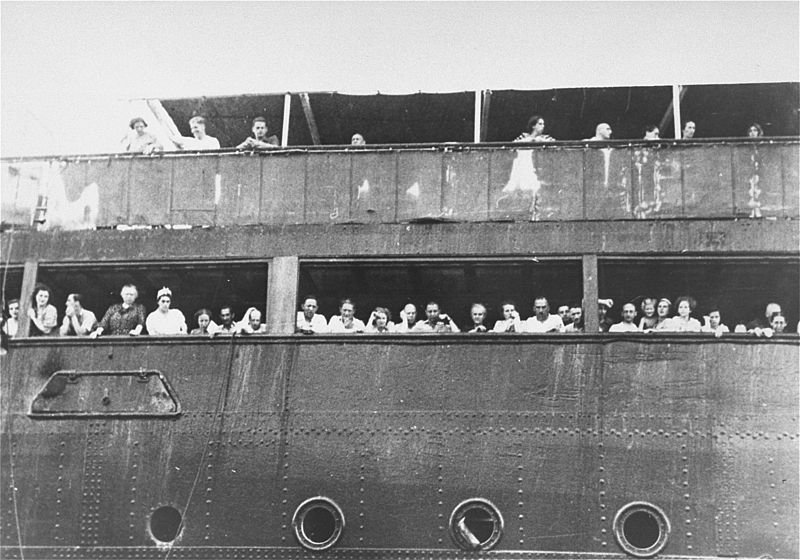
In 1937, after a fierce battle with the Chinese, the Japanese took control of large sections of Shanghai and created a ghetto in a section called Hongkew, where Jewish refugees lived in poverty-stricken conditions. They were not allowed to leave or enter the ghetto without passes and were often mistreated by the Japanese officials who oversaw the ghetto. The Chinese residents of Shanghai also were persecuted and suffered greatly during this occupation, which lasted until the end of World War II when Japan was defeated and required to leave China.5

Jewish Ghetto Memorial in Shanghai, gruntzooki, CC BY-SA 2.0 <https://creativecommons.org/licenses/by-sa/2.0&gt;, via Wikimedia Commons

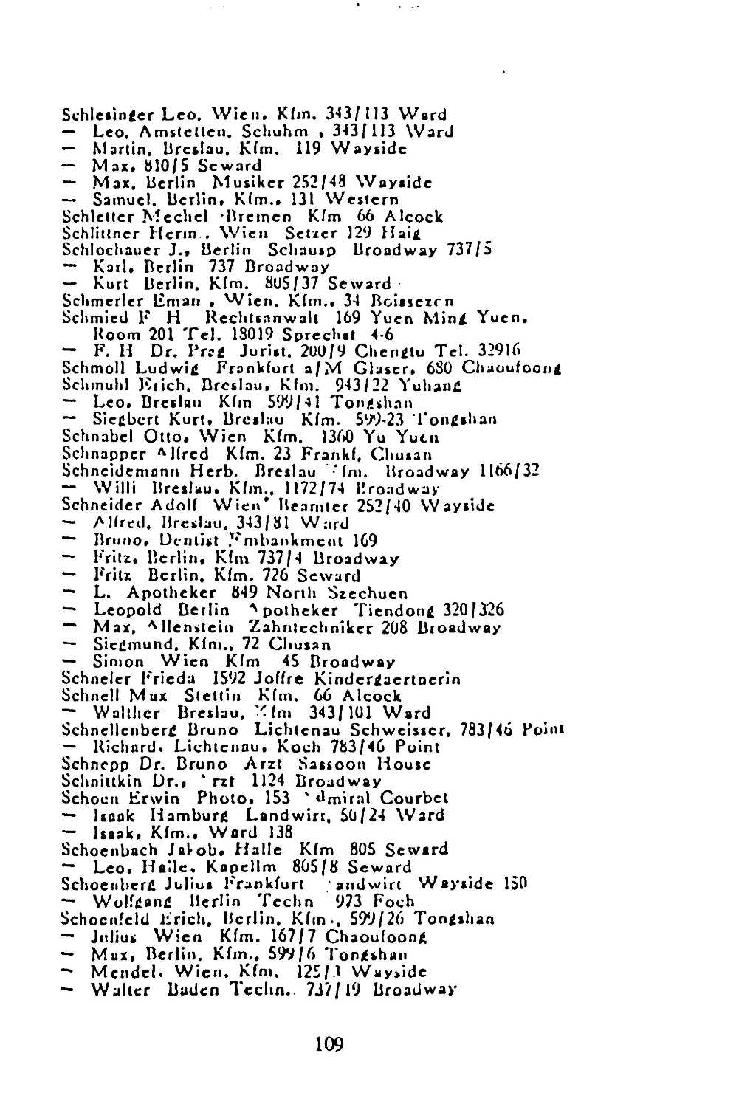
I wish I knew more about the experiences of my relatives Auguste Schoen Speier and her family and her brother Isaak Schoen in Shanghai, but aside from finding their names on various lists and in a 1939 directory for Shanghai located by Richard Bloomfield, I know no details other than that at some point they arrived there from Germany and lived there until after the war.

Auguste, Willi, and Julius Speier and Isaak Schoen are all listed on a 1950 list of Jewish refugees in Shanghai who were helped by the American Jewish Joint Distribution Committee, an organization that continues to exist today for those in need.

I also found them all here in a collection of records of Shanghai refugees made in 1944.

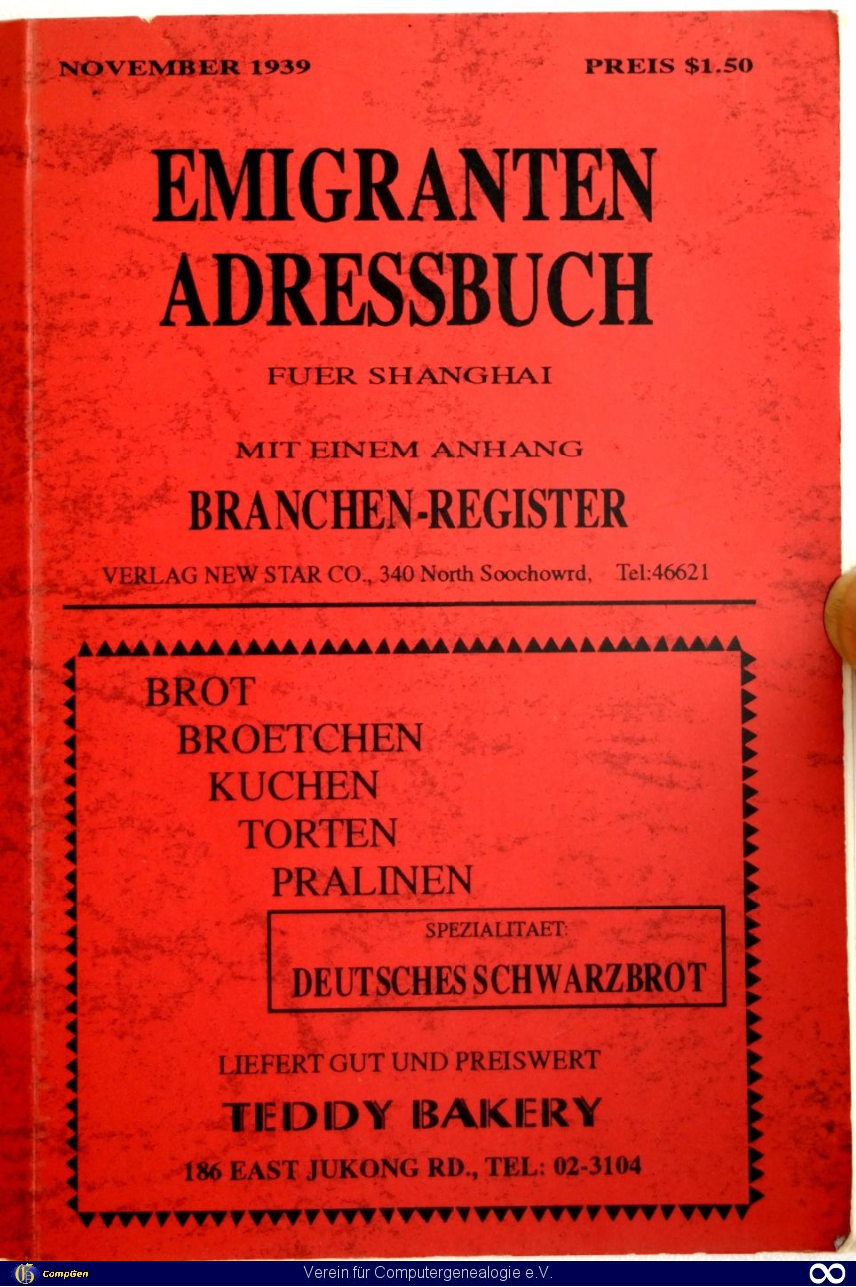
Richard located them in this November 1939 directory of emigrants in Shanghai, so obviously they had immigrated there by November 1939:

But I could not locate them on this list of refugees who had arrived in Shanghai between 1937 and 1944, so perhaps they had arrived before 1937.

In his interview with the US Holocaust Memorial and Museum, Kurt Schoen, Moritz’s son, mentioned that one of his cousins had died from typhoid while living in Shanghai, but I have no record or even a name of that cousin. He or she does not appear on any of the lists cited above. Maybe that cousin had passed away before these lists were compiled. Or maybe Kurt was confused.6

In any event, it is clear that Auguste, Willi, Julius and Isaak all ended up in Shanghai, and then after the war, they all immigrated to the US.

Auguste’s son Julius was the first to make it to the US. He arrived in San Francisco on March 19, 1947, with his wife Hildegarde Gabriel. They had married in Shanghai on December 9, 1945.7 Hildegarde was the daughter of Julius Gabriel and Berta Gross and was born on September 8, 1919, in Bromberg in what was then part of Prussia but is now in Poland.8

On the ship manifest, Julius listed his father Willi as the person he was leaving behind, Hildegarde listed her father Julius. They both listed Moritz Schoen, Auguste’s brother, as the person they were going to in the US and listed their destination as New York City. Julius listed his occupation as a shoemaker, and Hildegarde listed hers as a nurse.

Julius and Hildegarde Speier ship manifest, he National Archives at Washington, D.C.; Washington, D.C.; Passenger Lists of Vessels Arriving At San Francisco, California; NAI Number: 4498993; Record Group Title: Records of the Immigration and Naturalization Service, 1787-2004; Record Group Number: 85, NARA Roll Number: 388, Ancestry.com. California, U.S., Arriving Passenger and Crew Lists, 1882-1959

Julius’ parents Auguste (Schoen) and Willi Speier arrived in San Francisco six months later on September 24, 1947. The ship manifest indicates that they were headed to New York City where their son Julius was residing. Like his son Julius, Willi was a shoemaker or “cobbler,” as listed on the manifest. The person they were leaving behind in Shanghai was Auguste’s brother Isaak.9

Isaak himself arrived just a few months later on December 17, 1947. He also entered the US in San Francisco, indicating that he also was heading to New York City where his brother Moritz was living. He listed his occupation as a salesman.10

Auguste and Willi did end up in New York City, where in 1950 Willi was working as a “platform spotter” in a shoe factory. I don’t know what that means, but I would guess that it means he watched shoes on an assembly line. If anyone has any other ideas, please let me know.11 I’ve been unable to locate their son Julius and his wife Hildegarde on the 1950 census nor can I locate Isaak Schoen on that census.

Thus, three of Friederike Blumenfeld and Mannes Schoen’s children and four of their grandchildren had escaped Nazi Germany and survived World War II. Their lives after 1950 will be discussed in my next post.


  1. See, e.g., Alex Ross, Escape to Shanghai: A Jewish Community in China (1993, Free Press); Gao Bei, Shanghai Sanctuary: Chinese and Japanese Policy Toward European Jewish Refugees During World War II (2016, Oxford University Press); Irene Eber, Wartime Shanghai and the Jewish Refugees From Central Europe: Survival, Co-Existence, and Identity in a Multi-Ethnic City (2012, DeGruyter). ↩
  2. See, e.g., the articles at the following links:  https://www.smithsonianmag.com/smart-news/how-holocaust-survivors-found-refuge-shanghai-told-through-stories-and-photos-180978235/  and https://www.nbcnews.com/news/asian-america/jewish-wwii-refugees-found-safety-shanghai-are-focus-new-exhibit-rcna96478 and https://encyclopedia.ushmm.org/content/en/article/german-and-austrian-jewish-refugees-in-shanghai and https://www.npr.org/2023/08/06/1192118339/jewish-refugees-shanghai-world-war-ii&#160;↩
  3. E.g., Ernest Heppner, Shanghai Refuge: A Memoir of the World War II Jewish Ghetto (1995, University of Nebraska Press); Berl Falbaum, ed., Shanghai Remembered…: Stories Of Jews Who Escaped To Shanghai From Nazi Europe (2005, Momentum Books, LLC.); Sigmund Tobias, Strange Haven: A Jew­ish Child­hood in Wartime Shanghai (2009, University of Illinois Press). ↩
  4. See Note 2, above. ↩
  5. See Note 2, above. ↩
  6. Kurt L. Schoen, July 24, 2004 interview,  Accession Number: 1997.A.0441.512 | RG Number: RG-50.462.0512, United States Holocaust Memorial Museum Collection, Gift of the Gratz College Holocaust Oral History Archive, found at https://collections.ushmm.org/search/catalog/irn566135. There was another puzzling thing about Kurt’s interview. He mentioned that his father had one sister (Auguste) and one unmarried brother (Isaak), but did not mention Jakob, his father’s older brother.  Jakob, as we saw, had died in 1937 when Kurt was ten, and his wife and daughter were killed in the Holocaust. Had Kurt never known his uncle Jakob and his family? Had Moritz never mentioned them? Or was it just too painful for Kurt to talk about what had happened to his uncle, aunt, and cousin? ↩
  7. Marriage notice for Julius Speier and Hildegarde Gabriel, The Jewish Voice in Jüdisches Nachrichtenblatt, 23. November 1945, p. 8 ↩
  8. Hildegard Speier, Gender Female, Race White, Birth Date 8 Sep 1919, Birth Place Bromberg Pos, Federal Republic of Germany, Death Date Aug 1994, Father Julius Gabriel, Mother Berta Gross, SSN 079242443, Ancestry.com. U.S., Social Security Applications and Claims Index, 1936-2007 ↩
  9. Willi and Auguste Speier, ship manifest, The National Archives at Washington, D.C.; Washington, D.C.; Passenger Lists of Vessels Arriving At San Francisco, California; NAI Number: 4498993; Record Group Title: Records of the Immigration and Naturalization Service, 1787-2004; Record Group Number: 85, NARA Roll Number: 392, Ancestry.com. California, U.S., Arriving Passenger and Crew Lists, 1882-1959 ↩
  10. Isaak Schoen ship manifest, The National Archives at Washington, D.C.; Washington, D.C.; Passenger Lists of Vessels Arriving At San Francisco, California; NAI Number: 4498993; Record Group Title: Records of the Immigration and Naturalization Service, 1787-2004; Record Group Number: 85, Ancestry.com. California, U.S., Arriving Passenger and Crew Lists, 1882-1959 ↩
  11.  National Archives at Washington, DC; Washington, D.C.; Seventeenth Census of the United States, 1950; Year: 1950; Census Place: New York, New York, New York; Roll: 4546; Page: 18; Enumeration District: 31-1702, Ancestry.com. 1950 United States Federal Census ↩

Friederike Blumenfeld Schoen, Part III: Her Son Moses Escapes to America

I have been unable to do any new research in these last few weeks since the horrendous massacre in Israel by Hamas on October 7. I just can’t seem to focus on research right now. Fortunately I had several blog posts ready in my queue and will publish those, including this one. Perhaps the best way I can support Israel right now is to educate and remind people about the long history of persecution of Jews and antisemitism so that they best understand why Israel exists and why it must survive.


Although Friederike’s oldest child Jakob died in 1937 and his widow and daughter were killed by the Nazis, her other three surviving children all managed to escape the Nazis.

Friederike’s son Moses, more commonly known as Moritz, wanted to leave Germany quite early. As described by his son Kurt Leopold Schoen in the oral history interview he did with the US Holocaust Memorial and Museum, Moritz had had a successful wholesale and retail shoe business in Kassel, but once the Nazis came to power the business suffered. Non-Jews boycotted the store, and Moritz had to close the business and work as a shoemaker.1

But leaving Germany was difficult. The family needed affidavits from someone in the US to get a visa to enter the country, and the relatives in the US were reluctant to sponsor a family with three young children. Fortunately, Moritz and Else’s fourteen-year-old daughter Alice was given an opportunity to leave when the National Council of the Jewish Women in the US organized a rescue mission that brought many children out of Germany.2 Alice came to the US on May 13, 1938, and was sent to live with a Jewish family in San Antonio, Texas, the Rosenbergs, as seen on the 1940 US census.3

Alice Schoen passenger manifest, The National Archives and Records Administration; Washington, D.C.; Passenger and Crew Lists of Vessels Arriving at and Departing from Ogdensburg, New York, 5/27/1948 – 11/28/1972; Microfilm Serial or NAID: T715, 1897-1957
Ancestry.com. New York, U.S., Arriving Passenger and Crew Lists (including Castle Garden and Ellis Island), 1820-1957

The website for the Holocaust Memorial Museum of San Antonio reported that Abe and Bella Rosenberg “took [Alice] into their lives as if she were a long lost relative. The Rosenberg children, Miriam and Stanley, and a host of aunts, uncles, and cousins who treated her with affection and kindness made her adjustment to a new life easier.” In his oral history interview, Alice’s brother Kurt mentioned that the Rosenbergs were a very nice family, but nevertheless Alice was naturally very homesick.  She did not see her family again until 1940.4

But Alice was able to get help from the Rosenberg family to bring her father Moritz to the US from Germany. As reported on the website for the Holocaust Memorial Museum of San Antonio, they signed affidavits pledging financial support for him.

Once he had an affidavit from the Rosenbergs, Moritz was able to go to the US consulate in Germany and receive a visa. But before he could leave, he was arrested during the Kristallnacht riots in November, 1938. According to his son Kurt, Moritz was not sent to Buchenwald like so many other Jewish men were after Kristallnacht because he already had a visa to leave Germany. He was released within a day or two from police custody in Kassel and prepared to leave for the US.5

Moritz arrived on December 3, 1938, seven months after Alice’s arrival, and settled in New York City. His ship manifest lists his wife Else as the person he was leaving behind in Kassel, Germany, and his sister-in-law Betty Lutz (born Babette Freimark) as the person he was going to in the US. He listed his occupation as a shoemaker.6

Meanwhile, back in Germany, Else and her two young sons Manfred and Kurt moved to Frankfurt; the boys were sent to a Jewish orphanage and Else moved in with one of her sisters. Kurt described the orphanage as a place where he and his brother were well treated. They went to school and learned English. Finally in April 1939, they were released and reunited with their mother and allowed to leave Germany for the US. Kurt, who was eleven at the time, recalled that the Nazis tore through their luggage and stole everything Else had packed except one small teapot.7

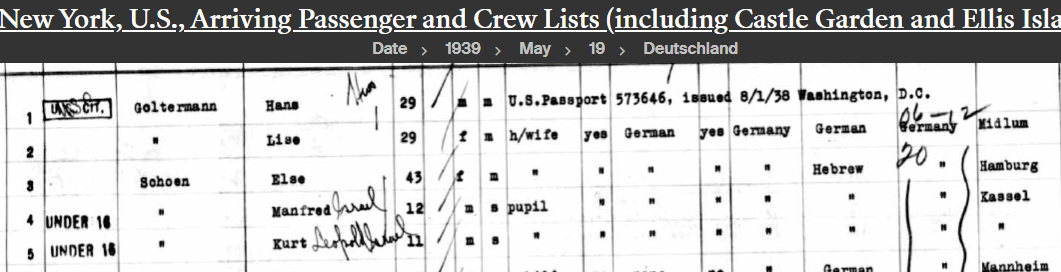
Else arrived in New York with Manfred and Kurt (listed as Kurt Leopold Israel on the manifest) on May 19, 1939.

Else Schoen and children, passenger manifest, The National Archives and Records Administration; Washington, D.C.; Passenger and Crew Lists of Vessels Arriving at and Departing from Ogdensburg, New York, 5/27/1948 – 11/28/1972; Microfilm Serial or NAID: T715, 1897-1957
Ship or Roll Number: Deutschland, Ancestry.com. New York, U.S., Arriving Passenger and Crew Lists (including Castle Garden and Ellis Island), 1820-1957

The family moved into a small apartment riddled with bed bugs; Moritz worked doing shoe repairs and barely made a living. But as Kurt said, they were happy to be out of Germany and safely living in New York. They moved frequently from one apartment to another in order to get the benefit of one or two free months of rent being offered by landlords. Manfred and Kurt started school where they quickly learned English and rose from the lower levels of their grade to the highest within a year.8

Alice was reunited with her parents and brothers sometime in 1940 when the Rosenberg family brought her to New York after taking a trip to Canada to see the Dionne Quintuplets. She married just three years later when she was nineteen, according to her brother Kurt.9 Her husband, Albert Bernhard Schwarz, was born on October 22, 1922, in Busenberg, Germany, to Alfred Lazarus Schwarz and Berta Levy. Like Alice, he was refugee from Germany; he had arrived on August 13, 1938.10 He was the only member of his family to survive. His parents and all his siblings were killed by the Nazis.11

Albert entered the US Army on March 26, 1943, listing his marital status as single.12 He and Alice must have married later that year. According to one biography of Albert, he was assigned to Camp Ritchie in Maryland and trained for military intelligence. As a Ritchie Boy, as they were known, Albert was trained to interrogate German prisoners of war. Starting in October 1944 he was with the 7th Armored Division of the II English Army in France and the northern part of Belgium. On November 5-6, 1944, during the Battle of the Bulge, Albert’s jeep hit a German mine near a bridge over the Meuse River. Albert suffered severe head injuries from which he suffered the rest of his life. He was in a coma for over a month in a English military hospital and remained there until February, 1945. He returned to the US in the spring of 1945, but was hospitalized until July. On Aug. 02, 1945, he was discharged from military service at Camp Edward, Massachusetts.13

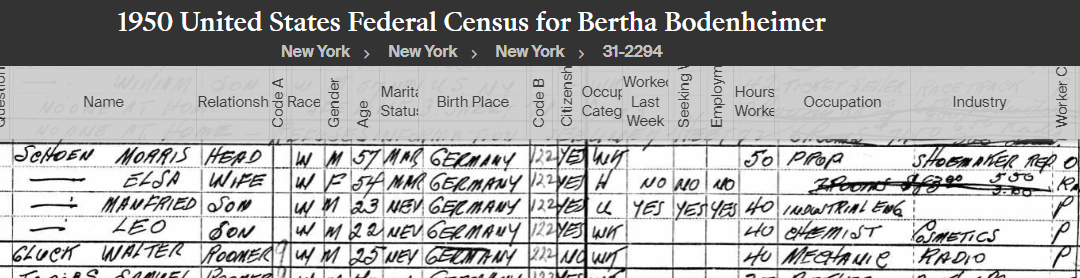
Alice and Albert had three children born after the war. In 1950 they were living in New York City, and Albert was working as a butcher.14 Alice’s parents Moritz and Else Schoen and her brothers Manfred and Kurt (listed as Leo here) were also living in New York City. Moritz now owned his own shoemaking business. Manfred was an industrial engineer, and Leo/Kurt was a chemist in a cosmetics company.

Morris Schoen and family, 1950 US census, National Archives at Washington, DC; Washington, D.C.; Seventeenth Census of the United States, 1950; Year: 1950; Census Place: New York, New York, New York; Roll: 3572; Page: 9; Enumeration District: 31-2294, Ancestry.com. 1950 United States Federal Census

Meanwhile, Moritz’s two remaining siblings had survived the war in Shanghai, China. More on that in my next post.


  1. Many of the personal details in this post came from Kurt Leopold Schoen’s interview with the USHMM. Kurt L. Schoen, July 24, 2004 interview, Accession Number: 1997.A.0441.512 | RG Number: RG-50.462.0512, United States Holocaust Memorial Museum Collection, Gift of the Gratz College Holocaust Oral History Archive, found at https://collections.ushmm.org/search/catalog/irn566135.  Although Kurt is listed as Leopold or Leo on many US records, he used the name Kurt for most of his adult life in the US and will be referred to here as Kurt for that reason. ↩
  2. See Note 1, supra. ↩
  3. Alice Schoen, 1940 US Census, Year: 1940; Census Place: San Antonio, Bexar, Texas; Roll: m-t0627-04201; Page: 61A; Enumeration District: 259-6, Ancestry.com. 1940 United States Federal Census ↩
  4. See Note 1, supra. ↩
  5. See Note 1, supra. ↩
  6. Moses Schoen, passenger manifest, The National Archives and Records Administration; Washington, D.C.; Passenger and Crew Lists of Vessels Arriving at and Departing from Ogdensburg, New York, 5/27/1948 – 11/28/1972; Microfilm Serial or NAID: T715, 1897-1957, Ship or Roll Number: Hamburg, Ancestry.com. New York, U.S., Arriving Passenger and Crew Lists (including Castle Garden and Ellis Island), 1820-1957 ↩
  7. See Note 1, supra. ↩
  8. See Note 1, supra. ↩
  9. See Note 1, supra. ↩
  10. Albert Schwarz, Declaration of Intention, The National Archives at Philadelphia; Philadelphia, PA; NAI Title: Declarations of Intention For Citizenship, 1/19/1842 – 10/29/1959; NAI Number: 4713410; Record Group Title: Records of District Courts of the United States, 1685-2009; Record Group Number: 21, Description
    Description: (Roll 610) Declarations of Intention For Citizenship, 1842-1959 (No 481301-482200), Ancestry.com. New York, U.S., State and Federal Naturalization Records, 1794-1943 ↩
  11. Family history of Schwarz family, Arbeitskreis Judentum im Wasgau, Elisabeth & Otmar Weber, Schillerstraße 10b, 66994, found at /https://judentum-im-wasgau.de/images/geschichte/jugemeinden/jufbusenberg/02_schwarz_jakob_hauptstr_49_bu.pdf ↩
  12. Albert B Schwarz, Race White, Marital Status Single, without dependents (Single)
    Rank Private, Birth Year 1922, Nativity State or Country Danzig or Germany, Citizenship Not Yet a Citizen, Residence New York, New York, Education 2 years of high school
    Civil Occupation Stock clerks, Enlistment Date 26 Mar 1943, Enlistment Place New York City, New York, Service Number 32874464, Branch No branch assignment, Component Selectees (Enlisted Men), National Archives at College Park; College Park, Maryland, USA; Electronic Army Serial Number Merged File, 1938-1946; NAID: 1263923; Record Group Title: Records of the National Archives and Records Administration, 1789-ca. 2007; Record Group: 64; Box Number: 05772; Reel: 241, Ancestry.com. U.S., World War II Army Enlistment Records, 1938-1946 ↩
  13. See Note 11, supra. ↩
  14. Albert Schwarz and family, 1940 US census, National Archives at Washington, DC; Washington, D.C.; Seventeenth Census of the United States, 1950; Year: 1950; Census Place: New York, New York, New York; Roll: 6203; Page: 6; Enumeration District: 31-1913, Ancestry.com. 1950 United States Federal Census ↩

For My Cousins in Israel

For all my cousins in Israel and their children and their families and their friends, my heart is with you. I am so blessed to have found you, and I will continue to stay in touch and hope for your safety and for peace. Please know that you are all in my thoughts—Omri, Ravid, Rafi, Joyce, Ester, Ariela, and Miki. And all your families and friends.

I wrote a short essay about Israel three days ago intending to post it here on my blog. But I was hurting too much, and since the blog is public, not private, I decided not to post. I did not want to invite anti-Israel, antisemitic posts by members of the public. Instead I posted on Facebook, limiting my audience to my Facebook friends. Fortunately, the responses I received were all sensitive and supportive from both my Jewish and non-Jewish friends.

I am still hurting too much. But I’ve decided to share this more publicly now. Because it’s important to speak up. Because now that Israel is fighting back, I know that the tide of public opinion will start to shift for many. I am not indifferent to the suffering of the people in Gaza. I understand that many of them are not terrorists. Many are children. But I also know that Israel has over and over again been convinced to walk away and agree to ceasefires only to once again have Hamas fire rockets and engage in terrorism to kill innocent people in Israel.

There is a lot of history here. It didn’t start in 1948 or 1967 or 1973. And it certainly didn’t start with Israel’s current response to the October 7 massacres. I can’t begin to summarize all the times that Israel has tried to find peace with the Palestinians only to find that violence and hatred are all they get in response. Of course, it’s not all Palestinians. It’s the leadership and the extremists who refuse to accept Israel’s right to exist. But it’s the leadership and the extremists who control whether or not there will be peace, and they refuse to take the steps that will bring peace, thus endangering the lives of not only Israelis but also their own people.

I am not a historian, but in the last week I’ve read many different articles outlining that history. For now I will only recommend two articles, one written in 2021 by Michael Oren that details the long history of Gaza and one published this week by David Brooks about more recent attempts to find peace between Israel and the Palestinians.

In that context, here are the words I posted on Facebook earlier this past week.


I can’t get the beautiful faces of the Israeli teens out of my head. My Facebook newsfeed contains one photo after another—of a teen taken hostage by Hamas or worse killed by Hamas. Or of the mother with her two young children. Or the elderly great-grandmother holding her great-grandchild. I can’t stop thinking about them all. And I can’t help but associate those faces with the names and faces of the many relatives I’ve researched who were killed by the Nazis. It’s all mixed up in my head.

I am not one who has been blind to Israel’s faults. I have often criticized the way Palestinians have been treated by Israel; I do not defend the oppression of others. I have been disappointed and angered by the way Netanyahu and the right-wing coalition he panders to have undermined liberal democracy and liberal Judaism in Israel. But those criticisms of Israel don’t mean that I don’t care about the people in and future of Israel just as it doesn’t mean I don’t care about America’s people and America’s future when I criticize it for its racism, the pandering to the white supremacists and the MAGA cult by Republicans, the failure to address poverty, the corporate greed, the gun violence, and so on. You can criticize without hating or being indifferent. You can love without being blind to the faults of those you love.

So right now my heart is with Israel and with its people. We can wonder later about how security failed or why or how this all happened. But no matter whatever criticisms anyone has of Israel, the terrorism of Hamas cannot be considered acceptable or understandable or justifiable. We need to stand together—and by “we” I don’t mean just Jews. I mean everyone. If you are silent or indifferent, you are part of the problem. If you can just scroll past all those beautiful faces and not feel anything, you are part of the problem.

When hatred starts to spread its poison and people remain silent, then we are all responsible for what happens next. Remember the six million. Please do not let it happen again.


Isaak Rosenberg: A Family With No Survivors

The youngest child of Rebecca Blumenfeld and Mendel Rosenberg was their son Isaak. As we saw, Isaak was born in Rosenthal, Germany, on June 15, 1892, and on December 22, 1922, he married Bella Gans, daughter of Jacob Gans and Esther Ehrenreich, in Niederaula, Germany.

Isaak and Bella had one child, a daughter Rita Rosenberg, born on April 29, 1924 in Frankfurt.

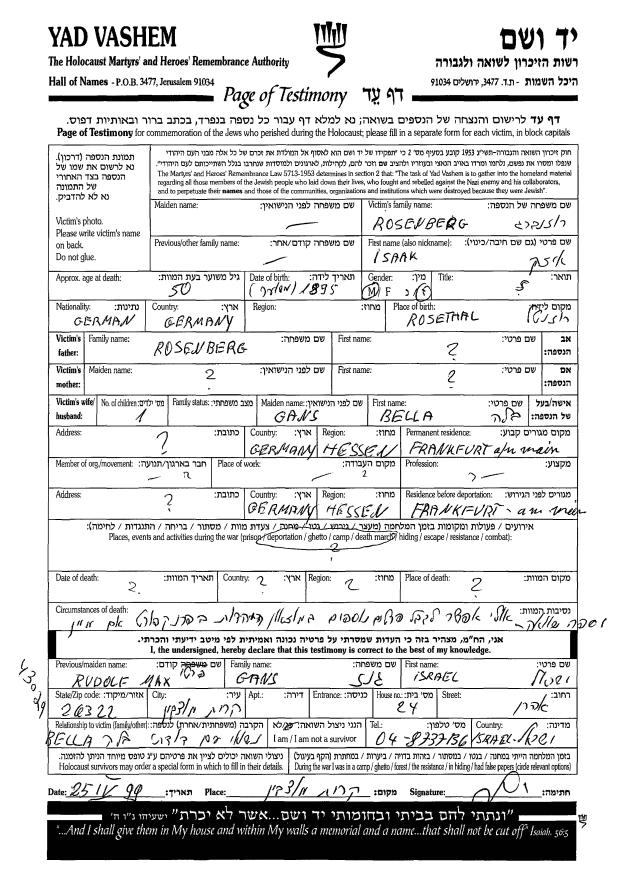
Unfortunately, all of them—Isaak, Bella, and Rita—were murdered by the Nazis. According to Yad Vashem, Isaak was deported from Frankfurt on August 10, 1942, and sent to the concentration camp in Majdanek, Poland, where he was murdered. His wife Bella’s nephew Israel Gans filed this Page of Testimony at Yad Vashem in his memory. The Hebrew written where it says “circumstances of death” merely says “perished in the Holocaust.” (Thank you to Hanna Gafni of Tracing the Tribe on Facebook for translating this line on this Page and the two below.)

The information available regarding the fates of Bella and Rita is far less specific. The Gedenbuch (Memorial Book) only reports that Bella was deported to Poland and killed there; perhaps she was deported on the same date as Isaak and to the same camp, but that isn’t stated. Nor does the Page of Testimony filed at Yad Vashem by Bella’s nephew Israel Gans provide any further details. The line for “Circumstances of Death” translates as “deported to Poland. Her fate is not known. Perished in the Holocaust.”

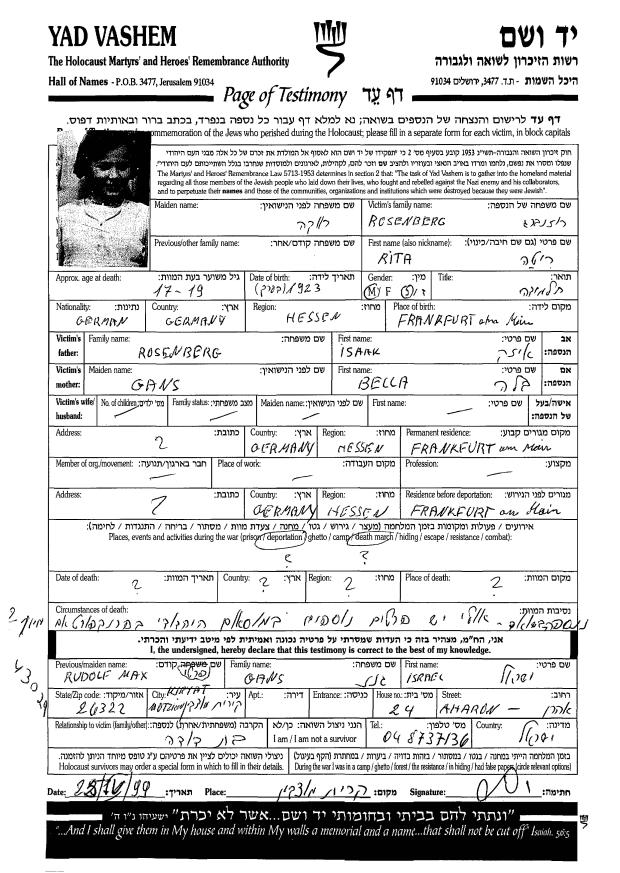
The information about Rita is even more limited. The Gedenbuch doesn’t even have information about where she was deported to or killed nor does her cousin Israel Gans’ Page of Testimony for her. The Hebrew written where it says “circumstances of death” says “perished in the Holocaust.”


This may be the first time that I have learned of family members who were killed in the Holocaust for whom there are no recorded details of their fates. Did Bella and Rita accompany Isaak to Majdanek? Or was the family separated? The lack of information somehow makes their deaths sting even more. The fact that the Nazis didn’t even document their murders makes it more likely that those deaths would have been somehow swept under the rug. So it is my task here to make sure that their lives and their murders are not forgotten.


That brings me to the end of the story of Rebecca Blumenfeld Rosenberg, the seventh child of Isaak Blumenfeld I and Gelle Strauss. Although Rebecca lost one son, Willi, as a young adult, and her son Isaak and his family were all murdered in the Holocaust, she was survived by seven grandchildren and has descendants still living today in Israel and the United States.

Next I turn to Rebecca’s younger sister, Friederike Blumenfeld, the eighth child of Isaak Blumenfeld I and Gelle Strauss and the last of their children to live to adulthood.

Good for A Single Journey by Helen Joyce: A Review of A Wonderful New Book and An Interview with the Author

Today I have the great pleasure of sharing my virtual interview with author Helen Joyce. She has recently published a family history novel titled Good for A Single Journey, a moving and beautifully written telling of her maternal family’s story. Joyce’s great-grandparents were living in a small town in what was then Galicia in Eastern Europe in the early 20th century when oppression and poverty forced them to relocate to Vienna, where they hoped to have greater freedom and economic security. And they did find great success there. But like so many Jewish families, they eventually suffered from the horrors of the Holocaust. Although many, including Joyce’s mother, survived, many others were murdered, and all suffered from persecution and financial loss. And those who survived were once again forced to relocate and start all over in a new country.

Joyce has combined what she learned from her mother and other relatives with historical research to create a fascinating and illuminating look at the history of this era and its effect on one Jewish family. The book is a mix of fact and fiction, some parts totally created from her imagination and other parts entirely based on fact. The book reads like a novel. She has created wonderful three-dimensional characters, each with distinctive and memorable personalities and stories. I highly recommend this book to anyone interested in history and in Jewish history in particular. It is appropriate for young adults as well as adults and available for purchase on Amazon and Barnes & Noble here.

Good for a Single Journey has received a finalist’s award in the 2023 Next Generation Indie Book Awards and has also received a highly favorable review from Neville Teller in the June 12, 2023, issue of The Jerusalem Report. You can also learn more about Helen Joyce and her book at her website found here.  And in the interest of full disclosure, I should reveal that she is my fifth cousin on her paternal side; we are both descended from Jacob Falcke Goldschmidt and Eva Seligmann, our mutual four-times great-grandparents.

And now, let me introduce you to Helen Joyce and her wonderful book, Good for a Single Journey..

Thank you so much for agreeing to do this interview with me and to share more about your book, Good for a Single Journey.  Have you ever written a book or other fiction/non-fiction before?

No! I have written the odd article, contributed a chapter to two each of two academic books, and edited a community magazine which often entailed tightening the contributions of others. Otherwise, no formal writing experience.

So what made you decide to write this book at this time?

Old age! I always wanted to write an account of my mother’s life and never found the right time. Work, kids, and life in general always interfered. That and the self-defeating belief that the project was beyond me; that I was deluding myself if I thought I could write an account/memoir/novel of the type I imagined would do justice to her story. Finally, the reality of the fact that I was not getting any younger and triggered by taking our youngest granddaughter on a trip to Vienna where we visited my mother’s birthplace proved to be the catalyst for getting to work.

The author’s parents Max and Klari. Courtesy of Helen Joyce

I really enjoyed reading the book, and it reads like fiction. But I know that the book is based on the real lives of your parents, grandparents, and great-grandparents as well as many aunts, uncles, and cousins. How much of the book is fictionalized and how much is non-fiction?

It would take a long time to unravel fact from fiction but basically, I knew the ‘bare bones’ of the stories of all the characters. In the case of the two brothers, Chiel and Beresh, I knew very little indeed beyond the fact that they made Aliyah to pre-State Israel long around WWI. Therefore, I invented their adventures. I gave them experiences and put them in situations which were factually correct and allowed some of the history of the early Yishuv to come to light. I knew a little about Peppi, my grandmother’s sister, and of course the story of Suzanne became legendary!

Zissel, my other great-uncle, was a closed book to me until I unlocked the memoir of his son Yitzchak. That gave me the details of not only his travels across Europe and today’s Ukraine before reaching the shores of British mandate Palestine, but also revealed the entire saga of his grandparents’ (my great grandparents’) flight from Rozwadów to Ukraine and onwards to Siberia. I knew a great deal about my grandparents from my mother’s tales and, again through her, background details about day-to-day life in Vienna and the market town of Rozwadów, which she visited frequently on trips to her grandparents. The rags to riches story of my grandfather is true. Accounts of the flight from Vienna, the period in Prague, my mother’s experiences in London are also from my mother’s various shared memories.

My independent sources of research (apart from the internet and the cousin’s memoir which I mentioned) were my mother’s diaries and a stash of family letters collated and self-printed by my late uncle which charted the agony of desperation and fear as various members of the family tried to help and find ways to get those still trapped in Europe out. Obviously the most fictionalized accounts are those of the imagined conversations and emotions displayed by the various characters. The best I could do was to try and imagine I was them and put myself in their place at that time. What would I feel? How would I react?

How did you decide where to create fictional elements versus non-fiction?

Honestly, I don’t know! It just sort of flowed seamlessly. I wove elements of drama and fiction around the basic facts I knew. For example, I needed to get the two brothers from Vienna to Palestine during WWI. How would they have gone? What might they have done? WWI was raging so I thought it would be interesting to place them into an Austro-Hungarian unit which ended up in Palestine. When I started researching that possibility, I learned a great deal about the involvement of Jewish soldiers in the army, the unit I put them in was a real one (as was the officer which commanded it). The facts surrounding Aaron Aaronsohn, NILI, and their role in helping the British defeat the Ottomans in
Palestine and how these contributed to the fact of the Balfour Declaration was too good an opportunity to miss including. So, I did! Throughout the book I also wanted to give the lie to the myth that Jews were passive, never fought in armies and were pale scholars led to slaughter like sheep. Jews fought bravely (on all sides) in every theatre of war.

How did you research the parts of the book that are fact-based?

I read several books on WWI, biographies about Aaron Aaronsohn and NILI as well as books about the history of the Middle East. My mother’s cousin’s memoir was also very helpful. The internet is also a phenomenal resource. What was the weather like in Gallipoli in November 1915 – click. What train routes were available on the Chemins de fer Orientaux during WWI – click! What date was Rosh Hashanah in 1914 – click. All there in your hand-held mobile phone!

Your book begins with your great-grandparents leaving Rozwadów. Why did you decide to begin there?

The book begins with a train journey, the journey of my great grandparents fleeing their hometown in Galicia. I decided to start with that train ride as it gave me the opportunity to introduce all the main characters as well as a major theme of the book. Migration and journeys. The entire book is about the journey of individuals, families, and the Jewish people. Trains feature quite prominently. That opening train ride. Greetings and goodbyes at train stations. The brothers’ train ride to war and onwards to Palestine. The train ride carrying my great grandparents and their youngest son to Siberia. The train ride my mother took to Scotland to meet her brother serving in the Jewish Brigade of the British army and of course the final horrific train rides to the death camps.

You include some living people and some recently deceased people in the book. How did you approach the issues of privacy with respect to those people? Were there things you had to change or avoid to protect the interests of your family?

Yes, absolutely. A lot was excluded! However, in discussion with as many of my cousins as I could track down, I realized they were quite happy for me to give details of their stories. I offered each of them drafts so they could check they were happy with what I had written. However, as nearly all the family descendants live in Israel, many of them do not read in English. That said, they were quite happy to know I had written some account and did not mind if it was fictionalized. The Israeli branch is very easy going! I gave my sister an early draft and she enjoyed the first half but did have some comments and suggestions about the second half of the book. I have tried to accommodate her feelings on this but, ultimately, we agreed that the book was a fictionalized novel.

Your family endured many of the challenges and horrors faced by many Jewish families in the 20th century: immigration to new countries (several times), World War I, and Nazi persecution and the Holocaust. What impact do you think that history has had on you and the other living descendants of your great-grandparents?

It’s hard to speak about this in general. The impact is surely quite different for each family and on each individual. For me, knowing what previous generations lived and died for made me want to cling to a Jewish lifestyle replete with the traditions that Hitler tried so hard to erase. I didn’t want to give Hitler any kind of posthumous victory and so I have tried to raise a Jewishly faithful family. Beyond that? I guess a sense of the importance of justice and the need to respect equality of all people regardless of gender, race, or religion.

You ultimately decided to leave England and make Aliyah to Israel. What in your family history contributed to that decision? Have you made connections to the cousins who were refugees to Israel during the Nazi era?

Many factors contributed to that decision. My husband comes from a very ‘English’ Jewish family but his mother, eldest of ten, was the only child left in the UK after the creation of the State of Israel. The rest were all pioneers in Israel (although two had died before that was possible). So, he already has a huge network of family here. Our son made Aliyah twenty years ago and was raising his children here and of course we wanted to be close to them. We have a daughter with special needs and she made Aliyah with us – we couldn’t contemplate leaving her behind and she is so very happy here with excellent care. Our youngest child followed us five years ago and so, to our delight, all our children and grandchildren are here. Yes, I have contact with some of my many cousins, but they are numerous and spread out so we do not meet that often although I do meet my first cousins more frequently.

Your book has many themes and covers many topics: different ways to practice Judaism, antisemitism, Zionism, mental health, marriage, parental love, and so on. Was there a specific point or theme that mattered most to you?

They all mattered and, in a way, I suppose several of them nestle into each other like a set of Russian matryoshka dolls! Parental love leads to stability and contributes to the type of marriage partnership one is likely to create as does a strong sense of community and belonging. Antisemitism and Zionism also have a kind of Yin and Yang partnership! If I had to choose one (you didn’t ask me that!) maybe I would say resilience and survival!

Who did you see as the audience for your book? Your own family and descendants? Young adults? Jewish readers? The entire universe of adult readers?

The entire universe! My family and their descendants were not really the target audience. Had they been, the book would have been far more factual and memoir-based. I hoped it would appeal to young adults and prove educational and am being told that teenagers are totally gripped by the story – which, given the amount of history in it – is great! However, I would dearly love the non-Jewish world to gain insight about a Jewish way of life, the history of persecution and the holocaust but also the historical underpinnings of the State of Israel under international law which was brought about together with the dismantling of previous empires. If Israel is to be accused of being a ‘colonialist enterprise’ then equally so is Syria, Lebanon, Jordan, Saudi Arabia and Iraq. Not to mention the many ‘new’ European countries created in the wake of WWI. Without understanding the impact of WWI, nothing about the modern world makes sense (including current events in Ukraine!)

This book focused on your maternal family. Do you plan to write a book about your paternal side?

Yes! And your blog will be a fantastic resource for me!!! However, marketing this book is taking up a lot of time at the moment. I have been invited to take part in Jewish Book Week School Events for schools around the UK which is fantastic. Events can be online so I can do them from here. This is really part of my dream – to bring the reality of the Jewish experience to a wider audience.

The author, Helen Joyce. Courtesy of Helen Joyce

Thank you again for taking the time to answer my questions, and I look forward to reading your next book and hope that my research will be helpful to you! Best of luck in your marketing efforts—your book deserves a wide and large audience.


Hilde Blumenfeld Meinrath, Part II: Leaving Germany and Life in Brazil

As we saw in my prior post, I had learned more about Hilde Blumenfeld Meinrath, thanks to connections made through her granddaughter Gabriela. I learned that after spending four years in New York working as a German-English translator, Hilde decided to return to Germany in 1932 for what was initially supposed to be an extended visit with her family. But then she met and married her husband Ludwig Meinrath and decided to stay longer. She found employment as a translator and secretary for the American author, William March.

But everything began to change after Hitler came to power.

As Hilde reported in her Shoah Foundation interview,  her employer William March was attacked by Nazi youths because he was mistakenly identified as Jewish and ended up in the hospital. He decided to leave Germany and urged Hilde to leave before it was too late; he invited her to come and work for him in New York. .1

Meanwhile, a month after Hitler came to power in April 1933, Hilde’s husband Ludwig, who had  been working as a representative for German companies making ribbons and wool products, lost his job as a sales agent because he was Jewish.. So Hilde and Ludwig agreed it was time to leave Germany.2

But Hilde and Ludwig disagreed about where to go, according to their son Roberto. Hilde wanted to return to New York, but Ludwig feared that he would be unable to make a living there with only a high school education. He had a cousin Helmut in Rio de Janeiro who persuaded him that life was wonderful there, so they went to Brazil in 1934, even though neither of them knew any Portuguese.3

HIlde and Ludwig Meinrath ship manifest, Month: Band 424 (Mär 1934)
Staatsarchiv Hamburg. Hamburg Passenger Lists, 1850-1934

Hilde continued to be a true go-getter. Roberto wrote:

Upon arrival in Rio by ship, and literally one block from the harbor, was Rio’s largest high rise of the day (some 20 stories).  On top of the building was a large advertising poster for US Steel.  My mom walked right into the building to find out whether US Steel would be interested in a German/English secretary, not knowing that at that time Brazilian secretaries were mostly male.  Of course, at that time, Rio was Brazil’s capital and … home to the president of US Steel, who immediately hired her at a salary that was higher than what cousin Helmut was then earning, after a year in Rio.  Anyway, due to my mom’s high salary, my father was able to dedicate his time to learn Portuguese and to become a wholesale textile salesman for several companies.

Hilde and Ludwig’s first child (Gabriela’s father) Pedro John Meinrath was born in 1936; according to Roberto, his mother insisted that Pedro have an American/English middle name, presumably because of her fond memories of living in the United States.

Meanwhile, back in Germany, conditions worsened for Hilde’s parents and her sister Gretel and her family. After Kristallnacht in November, 1938, Salomon Blumenfeld and his son-in-law David Katz were arrested and sent to Buchenwald.4 After they were released, Hilde used her connections and borrowed money to bring her parents to Brazil. Hilde stated in her Shoah Foundation interview that when her parents arrived in Brazil, her father looked emaciated  from his time in Buchenwald, despite the fact that his son-in-law had given Salomon half of his own rations so that Salomon would survive.  5

Hilde’s parents lived with her and her family in Rio for a short time, but according to Hilde, the climate there didn’t agree with them, so she and Ludwig purchased a small house in Petropolis, a city in the mountains north of Rio for her parents, and they moved out of their apartment in Rio and moved to a rented room. When the war in Europe started, Ludwig’s import business suffered, so Hilde had to work full-time to help support the family. Pedro, who was just a four year old at the time, stayed with his grandparents in Petropolis, and Hilde and Ludwig would come on the weekends to be with them all. 6

Here are two photographs that Gabriela shared with me of Pedro with his maternal grandparents Salomon and Malchen Blumenfeld:

Malchen Levi, Pedro Meinrath, and Salomon Blumenfeld c. 1939 Courtesy of the family

Pedro Meinrath with his parents and maternal grandparents c. 1940 Courtesy of the family

Ludwig and Hilde’s second child Roberto came along five years later in 1941—he was, as he wrote, “a surprise baby.” Hilde’s job at the US Embassy ended up being important in saving Roberto’s life.  When Roberto contracted diphtheria when he was three years old, his mother Hilde was able through her job at the American Embassy to obtain life-saving penicillin, which was not otherwise readily available in Brazil at that time because of the war.7

Hilde Blumenfeld Meinrath with her sons c. 1941 Courtesy of the family

Pedro Meinrath, Salomon and Malchen Blumenfeld, Hilde Blumenfeld Meinrath, Roberto Meinrath 1944 in Petropolis Courtesy of the family

According to Roberto, after the war ended in 1945, Ludwig was able to restart his import business, and Hilde and Roberto moved to Petropolis. But Hilde’s parents at that point decided to leave Brazil because there was no kosher food or orthodox synagogue in Petropolis; they went to New York where Hilde’s sister Gretel was living. Hilde and her sons stayed in Petropolis until 1950 when Hilde and Roberto moved back to Rio. Pedro stayed in Petropolis where he went to boarding school until he graduated and went to university.

Malchen and Salomon Blumenfeld USA 1953 Courtesy of the family

Roberto described his life in Rio as an idyllic adventure for a young boy; he sadly described the changes that came to Rio in the 1960s:

I basically grew up as a single child in Rio, right in between Copacabana and Ipanema beaches.  Once or twice a week, I helped fishermen bring in their nets with piles of fish and, as compensation, got a free take home fish.  At that time, Rio had trees everywhere, few cars, cobblestone streets and tramways (which I took every day to school).  With the advent of the car industry in Brazil in the sixties, Rio’s streets were asphalted and widened, trees had to be cut down as most of the buildings had been built without garages and cars had to park on streets and sidewalks.  I miss old Rio, new Rio is sort of a tourist mecca only because of the beaches and the largest city park in the world.

Hilde and Ludwig belonged to a liberal Jewish synagogue in Rio, and Hilde insisted that Roberto attend after school classes in Hebrew and Jewish history. Roberto described an experience that ended up being a turning point in his life:

Because our synagogue was not very large, Rosh Hashanah and Yom Kippur services were held in the headquarters of one of Rio’s great soccer teams… and while watching the team practice during the 1959 Yom Kippur service, I was asked whether I would be interested in representing our congregation in the year-long youth leadership training program in Israel.  I jumped at that, as I sought personal freedom from what I felt to be a fairly strong-willed mom.

Roberto’s trip to Israel in 1960 allowed him to meet and get to know Hilde’s sister Jenny and her husband Sigmund Warburg. And thus he was able to give me information about Jenny and Sigmund and answer the questions I’d been hoping to answer when I wrote the blog post about the three sisters back in May, 2022. More on that in my next post.

But first a photograph that Gabriela shared with me of Hilde and her sons taken at her 100th birthday party in 2011. She died six years later in 2017 at the age of 106. She was truly a remarkable woman.

Pedro Meinrath, Hilde Blumenfeld Meinrath, and Roberto Meinrath 2011 Courtesy of the family


  1. The references in this post to the interview of Hilde Meinrath and the information contained therein are from her interview with the Shoah Foundation, March 18, 1998, which is in the archive of the University of Southern California Shoah Foundation Institute for Visual History and Education. For more information: http://dornsife.usc.edu/vhi  Roberto, Hilde’s son, also told me this story in his emails to me. ↩
  2. Ibid. ↩
  3. All the information in this post attributed to Roberto Meinrath as well as the quotations were shared through emails sent between February 11 and February 16, 2023. ↩
  4. Phone conversation with Michael Katz, March 9, 2023. ↩
  5. See Note 1, supra. As we will see in a later post, William March helped get Gretel and David Katz out of Germany and into the US. ↩
  6. See Notes 1 and 3, supra, . ↩
  7. See Note 3, supra. ↩

More Cousins Discovered: The Family of Sigmund Livingston, Founder of the ADL

One of the other cousins whose name always stays with me is my third cousin, twice removed, Sigmund Livingston, the founder of the Anti-Defamation League, as I wrote about here as well as about his earlier years and his family here, here, here, here, and here.

Sigmund was related to me through our mutual ancestors Abraham and Geitel (Katz) Blumenfeld, as shown on this chart. He was my father’s third cousin, once removed:

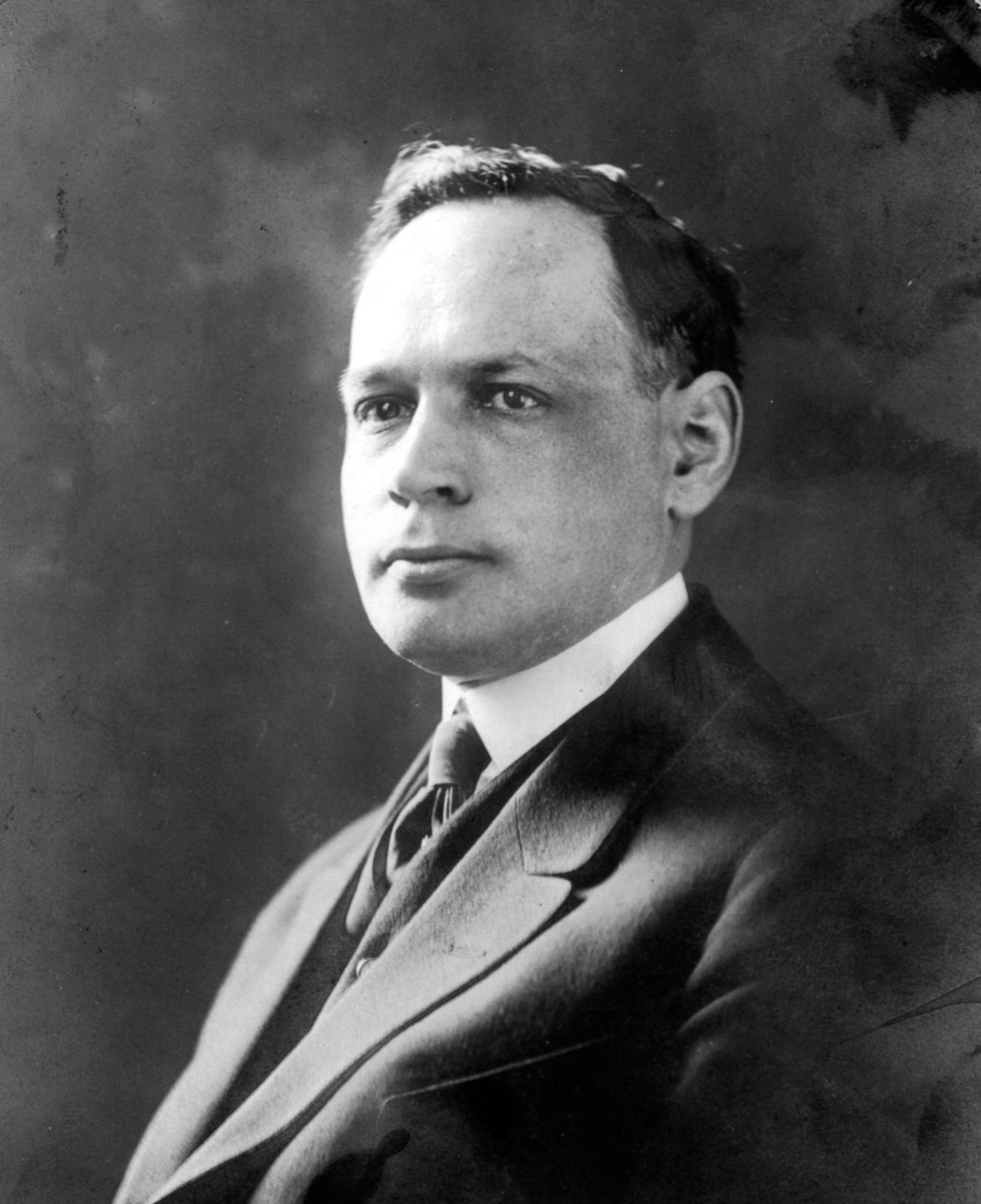
To briefly summarize what I’d learned about Sigmund: he was born in Giessen, Germany, in 1872, to Meyer Loewenstein (later changed to Livingston) and Dora (Dusschen) Blumenfeld. He was only nine years old when his family immigrated to the United States in 1882 and settled in Bloomington, Illinois, where his father’s relatives had already established themselves as successful entrepreneurs. Sigmund ended up going to law school and practicing law in Bloomington. He married Hilda Freiler in 1918, and they had one child, Richard, born in 1920. The family later moved to Chicago where Sigmund continued to practice law.

After experiencing anti-Semitic stereotypes and slurs during a vaudeville show in the early 1900s, Sigmund decided to do something to fight back against anti-Semitism. He founded an organization in Bloomington that eventually grew to become known as the Anti-Defamation League, an international organization that still exists today, fighting against all forms of discrimination, including but not only anti-Semitism. When I learned that I was related, albeit very distantly, to the founder of the ADL, I felt incredibly proud to have that connection. Today the ADL continues to be at the forefront of those fighting against hatred and prejudice.

Recently I was thrilled to hear from two of Sigmund’s grandchildren, Richard and Laurie, who found me through my blog. Richard has done a great deal of genealogical research also and provided me with more information about the Livingston/Loewenstein side of his family tree. Richard and Laurie have also given me some additional new cousins on the Blumenfeld side of our family tree to contact, which I plan to do in the near future. And Richard caught two errors in my tree that I’ve now corrected both on the tree and on my blog; I am so grateful that Richard found those mistakes and told me.

But I was most excited to see additional photographs of Sigmund and his family and to learn a little more about his life and the life of his family. I particularly enjoyed seeing this photograph of Dora Blumenfeld and Meyer Loewenstein/Livingston:

This is the house where Sigmund was born in Giessen, Germany, in December 1872:

Birthplace of Sigmund Livingston in Giessen, Germany Courtesy of the family

Here are several photographs of Sigmund from age 20 up to age 47:

Sigmund Livingston, 1893 Courtesy of the family

Sigmund Livingston, 1903 Courtesy of the family

Sigmund Livingston, 1914 Courtesy of the family

Sigmund Livingston, 1918 Courtesy of the family

Sigmund Livingston, 1920 Courtesy of the family

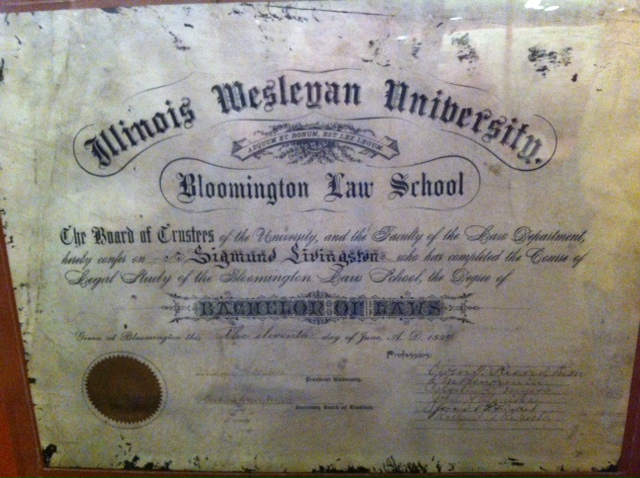
Here is Sigmund’s diploma from law school:

Sigmund Livingston diploma at McClean County Historical Museum Courtesy of the family

Finally, this photograph shows the family in about 1918-1919: Dora (Meyer had passed away in 1915) and her children and their spouses:

Back Row (left to right): Sigmund Livingston, Alfred Livingston, Eva Siegel Livingston (married to Alfred); Irvin Livingston; “Gramma” Dora (Dusschen) Blumenfeld Livingston; Dorothy Ensel Livingston (married to Herman); Herman Livingston, Rosalie Livingston Livingston; Harold Livingston (in back); Albert Livingston (cousin who married Rosalie); Maurice Livingston; Sol Salzenstein (married to Gussie). Front Row (left to right): Helen (Cubby) Baer(?) Livingston (married to Irwin); Hilda Freiler Livingston (married to Sigmund); Bertha August Livingston (married to Maurice); and Gussie (Gutschen) Livingston. Courtesy of the family

Richard shared what he knew about his grandfather Sigmund’s career after leaving Bloomington and moving to Chicago in 1928:1

When Sigmund left Bloomington in 1928, he gave his share in his local law practice to a young cousin, Herb Livingston; and joined a major Chicago law practice with his brother-in-law Charles Lederer. Charles was married to Hilda’s [Sigmund’s wife Hilda Freiler] older sister Florence. The firm was known as Lederer, Livingston, Kahn, and Adler or similar until approx. 1958; at which time its name became Arnstein and Lehr. Lederer & Livingston were Sears Roebuck & Co.’s legal counsel during its heyday.

Richard also filled me in on how his father Richard, who was known as Dick and who was born in Bloomington and then moved with his parents to Chicago when he was a boy, had ended up living in the suburbs of New York City as an adult:

My father Dick attended Duke University and was supposed to be class of ’42; but joined the US Army Air Corp for 5 years of WWII around his junior year. He was an airplane instruments technician or mechanic and trained pilots to read and understand the gauges and dials in a cockpit; but never was a pilot himself and fortunately never was stationed overseas or faced combat during the war. After the army, he returned to Duke University, graduating in Spring, 1947. Following graduation, he returned to Highland Park, IL, living with his mother Hilda (as best we know) and not sure if he was employed or not.

In February 1948, Hilda and Dick were vacationing at the Hollywood Beach Hotel in Hollywood Beach, Florida. Dick met a recent Wellesley graduate from New York City named Mimi Spector. They fell instantly in love and were soon thereafter married on May 30, 1948. Dick and Mimi moved into Mimi’s parent’s Manhattan apartment for a while before getting their own place. Dick initially worked in sales for his father-in-law’s business.

In the 1950s Dick and Mimi and their family moved to Westchester County in the suburbs of New York City, eventually settling in Scarsdale, less than five miles from where I lived and went to high school. Richard and Laurie and I were tickled to learn that we had all grown up not far from each other and went to neighboring high schools and even knew some of the same people. We likely crossed paths many times without knowing we were distant cousins.

It has taken over 50 years since high school before we finally connected. And I am so grateful that Richard and Laurie found my blog and reached out to me and have shared their stories and photographs.


  1. The quotes and other information from Richard Livingston were from emails dated from February 11 to February 21, 2023. ↩

Rudolph Meyer: “A Great Man”

Back in late December, a new reader, Candice, left a comment on my blog saying that her grandparents were Rudolph Meyer and Ruth Cohn and that we were related. I love when a new cousin finds my blog and seeks to connect with me.

Candice and I are fifth cousins, once removed, through my Blumenfeld branch. Her grandfather Rudolph was the son of Rebecca Strauss, the grandson of Dusschen Blumenfeld Strauss, the great-grandson of Isaak Blumenfeld I, the great-great-grandson of Moses Blumenfeld I, and the great-great-great-grandson of Abraham Blumenfeld I, my four times great-grandfather. This chart shows Rudolph’s relationship to my father; they were fourth cousins, so Rudolph was my fourth cousin, once removed:

I wrote about Rudolph and his family here, but Candice and her father Albert were able to give me a more complete portrait of Rudolph and his wife Ruth Cohn. I already knew that Rudolph was born in Bonn, Germany, in 1908, and had arrived in the US from Germany in 1937 and settled first in New York City. By 1940 he was living in Albany, New York, and working for Cotrell & Leonard, a manufacturer of graduation caps and gowns.

Rudolph’s son Albert filled in some of the gaps in the story in the obituary he wrote about his father in 1984. Albert wrote in part:

Rudolf Raphael Meyer was born in Bonn, Germany, on March 17, 1908. He was to experience many of the history shaping events which influenced the course of his life and development. As the child of Albert and Rebecca Meyer with his sister Ilse he at the ages through 6-10 went through the trauma of World War I. The war brought hardship to him as did the period following it. The economic chaos of Weimar Germany with its rampant inflation left its mark on him in that no matter how well might do, he felt he never knew if he and his family would have enough just to provide for the basic necessities of life.

As the economic and political situation remained explosive in Germany and with Anti-semitism on the rise, he, his sister, and mother, his father having died, immigrated to the United States. However, life in the new country soon underwent its earthquake also with the coming of the Great Depression and World War II. The Depression only added to his feelings of anxiety regarding economic matters and [he] became a fervent supporter of the new deal with Franklin Delano Roosevelt and then Harry Truman representing the type of leadership he felt a society needed.

During the later years of the 30s he met Ruth Cohn and after a 3 year courtship they were married on August 10, 1941.

Rudolph enlisted in the US Army on September 6, 1943, and successfully petitioned for naturalization three months later in December 1943 from Spartanburg, South Carolina, where he was then stationed. What I did not know was that Rudolph then served overseas in Europe, fighting against the Nazis and the country where he was born.

Candice shared this photograph of her grandfather Rudy (as he was known) in uniform during World War II.

Rudolph Meyer during World War II. Courtesy of the family

Rudy wrote this poem about his outfit in World War II, the Blue Devils. Obviously, he was a proud American soldier out to defeat his former home country.

“Blue Devils,” by Rudolph Meyer c. 1944 (c) Courtesy of the family

What I also had not realized until Candice shared the family story is that Ruth was pregnant when Rudy left for Europe; their son Albert was born while he was abroad, fighting the Nazis. Rudy did not meet his child until after the war was over when Albert was already sixteen months old. Albert addressed this in his 1984 obituary for his father:

[Albert was born] while [Rudolf] was stationed overseas in Italy. The notice of his birth filled him with special joy as can be told by a reading of his letters from the war. As an additional sacrifice he did not get to see his child for another year.

Although the war was difficult and he was certainly not a young man while fighting in both North Africa and Italy for the Allies, his experience in the army gave him great pride. He felt he contributed to the service of his country and had helped to smash the Fascist Beast that had destroyed so many Europeans who could [not] leave and so many of his religious faith.

In fact among the things that gave him pride were his experience as a soldier, his role as a law abiding citizen, a good family provider. His citizenship was marked by regular voting, paying debts, attention by regular public affairs, and occasionally involvement in Democratic Party politics.

Here is a photograph of Albert as a baby taken while his father was away at war:

Albert Meyer Courtesy of the family

Ruth wrote this wonderful tribute to her husband, Rudy, whom she considered a “great man.”

Essay by Ruth Cohn Meyer (c) Courtesy of the family

A Great Man

My choice for the meaning of the word Great would be important. I write of a great man that I knew many years ago. His name was Rudolph Meyer. Now Rudy had a loving wife, and as is the nature of things, she became pregnant—and Rudy and his wife were very happy.

But then came fears of war from a country across the sea—a country from far away which hundreds of people were fleeing for they were afraid of what might now happen at this time. And Rudy and many of his fellow countrymen had found refuge in this country, the good old USA.

Then came the day when their fears for their country were alas confirmed. Atrocities! Tortures—and then War and Holocausts! Rudy immediately went to enlist. But at the recruitment center, he was told that because of his poor eyesight he would have to be rejected. But Rudy insisted—he must fight against the evil ones were who trying to destroy civilization. So—Rudy went to war!

I was sad. I was pregnant—but I knew in my heart that it was for those qualities in him—great devotion to family and country—that I loved him. And though I was sad—I was proud. My Love was a great man.

I waited—I would go to the grocery store. A pound of butter, if you please. Hey, Lady—don’t you know there’s a war on. Ah,yes—there’s a war on over there!

It is 4 years later—the end of the war. Rudy comes home. He holds in his arms a loving wife and 16 mo. old son. A great man has come home to us.

This was obviously a strong and loving marriage that endured for many years after Rudy returned home. This photograph of Ruth and their son Albert was taken after the war.

Albert Meyer and Ruth Cohn Meyer. 1948. Courtesy of the family

As I wrote in my earlier post, Rudy and Ruth moved to the Bronx after the war, and in 1950 they were living in the Bronx, and Rudy was now an accountant for motion pictures distributors. Ruth was an elementary schoolteacher.  Rudy’s mother Rebecca and Ruth’s father Benjamin were also living with Rudy and Ruth and their child, and Benjamin was working as a tailor.

I want to express my gratitude to Candice and her father Albert for sharing these stories and photographs about my cousin Rudolph Meyer, a man who truly lived up to his wife Ruth’s description, a great man.


Arye Katzenstein

I have researched and written about hundreds of relatives (maybe thousands?) over the almost ten years that I’ve been writing this blog. And aside from my own direct ancestors, of those many, many cousins and great-aunts and great-uncles going back over two hundred years, there are only a small number whose stories are so compelling and unforgettable that when I see their name, I immediately remember the details of their lives.

One of those cousins is my fourth cousin Arye Katzenstein, whose heroic story I wrote about here. During a terrorist attack at the Munich Airport on February 10, 1970, Arye threw himself on a grenade released by the Palestinian terrorists and sacrificed his own life so that he could save the life of his father, Heinz Katzenstein, and the lives of all the other travelers. He was only 32 years old.

So when I received a comment on my blog from a woman named Miki saying her father was Arye Katzenstein, I gasped. I’d had no idea that Arye had had children when he was killed. I immediately wrote to Miki and learned that after more than fifty years, the city of Munich is finally providing a memorial for Arye on the grounds where the attack occurred. The land is now owned by a private company, BrainLab, and together with that company, the city, and the family of Arye Katzenstein, a proper memorial is being established. BrainLab has commissioned an art work by Alicia Kwade, an internationally known artist, and the family is creating a website and informational materials for the site, which will be dedicated sometime in 2024.

From Miki, I learned a great deal more about her father and his family and his life. As I already knew, Arye was born in Haifa (then Palestine, now Israel) on November 23, 1937, after his parents fled from Nazi Germany. But I learned from Miki that he had spent time in Germany as a student. In 1959 he came to Munich to study veterinary medicine, but later returned to study engineering. He had married his wife Bilha on October 22, 1961, and their first child, my cousin Miki, was born in Munich a few years later. The family returned to Israel before the 1967 war and had two more children there, a son and another daughter.

Thus, Arye left behind not only his parents and siblings, but also his wife and three very young children. It’s hard to imagine the pain and suffering that his death must have caused his loved ones. But his legacy is one of heroism and courage.

Miki shared with me several photographs of her family. First is a photograph of her father Arye as a young man traveling in Europe.

Arye Katzenstein Courtesy of his family

This is a photograph taken at Arye and Bilha’s wedding. Bilha is third from our left, then Arye next to her. Next to Arye are his parents Mania (Miriam) Dorf and Heinz Katzenstein.

Wedding of Arye Katzenstein Courtesy of the family

This chilling photograph is of Arye’s notebook taken after the terrorist attack that killed him. It was returned to the family by El Al after Arye’s death.

Arye Katzenstein notebook returned to family by El Al Courtesy of the family

This photograph was taken on the 53rd yahrzeit (anniversary) of Arye’s death in 2023, just a month ago. Arye’s gravestone reads: “Here lies our dear, noble spirited Arye Katzenstein, son of Miriam and Jacob Hacohen, who sacrificed his live during the attack on El Al passengers.”

Gravestone of Arye Katzenstein Courtesy of the family

The stones for Miki’s grandparents appear below:

Gravestones of Heinz and Miriam Katzenstein Courtesy of the family

Finally, Miki shared with me this photograph of her family—her husband, her children, and herself. I don’t usually include photographs of living people, but in this case I do so to honor the memory of Arye Katzenstein and to recognize the resilience of his family and the hope for a better future where all of us can live in peace and without fear of terrorism.

Miki Katzenstein Dror and family Courtesy of the family


Sitta Blumenfeld Spier and Her Daughter Gisela—A Story of Survival and Hope in the Midst of Despair and Death

Although three of the four surviving children of Gerson Blumenfeld II—Friedrich, Katinka, and Mina/Meta—and all their children escaped from Germany to the US and avoided being murdered by the Nazis, the fourth surviving child, Sitta Blumenfeld Spier, and her husband Siegfried Spier and their two children Manfred and Gisela were not as fortunate. As explained by Gisela’s son Simeon Spier in the eulogy he wrote for his mother, “[Siegfried] tried frantically to get the family out of Germany but since he was a wounded veteran from World War I – he had been awarded the Iron Cross for bravery and still had a bullet lodged in his lung – he was considered a health risk and emigration to other countries was not possible.”1

What a cruel irony—because he was wounded fighting for Germany, Siegfried could not escape German persecution twenty years later.

Sitta, Siegfried, Manfred, and Gisela were all deported to the concentration camp at Theriesenstadt on September 7, 1942.2 Manfred was sixteen and Gisela thirteen at that time. Gisela was “allowed” to participate as an athlete in games filmed by the Nazis for propaganda purposes—to show how “humanely” the camp prisoners were being treated.3 You can read more about the propaganda film created by the Nazis and see a clip from it here.

By October, 1944, all four members of Sitta’s family had been transported from Theriesenstadt to Auschwitz where Sitta and Siegfried were immediately sent to the gas chambers. Manfred was transferred several days later to the Dachau concentration where he died from starvation and typhus on April 18, 1945, just a few weeks before Germany surrendered and the war in Europe ended. He was nineteen years old.4

Manfred Spier Page of Testimony at Yad Vashem, found at https://yvng.yadvashem.org/nameDetails.html?language=en&itemId=1879134&ind=1

The only member of Sitta’s family to survive was her daughter Gisela. She was sent from Auschwitz on October 12, 1944,5 to the concentration camp in Flossenburg, Germany, a camp where prisoners worked as slave labor to build fighter planes and other equipment for the German military. The US Holocaust Museum and Memorial  provided this description of conditions at Flossenburg:

The conditions under which the camp authorities forced the prisoners to work and the absence of even rudimentary medical care facilitated the spread of disease, including dysentery and typhus. In addition to the dreadful living conditions, the prisoners suffered beatings and arbitrary punishments.

About 30,000 people died there, but somehow Gisela survived.

On April 29, 1945, as the Allied forces were approaching Flossenburg, the Nazis began to evacuate the camp and transport the prisoners elsewhere. Gisela was transferred from Flossenburg to the Mauthausen concentration camp,6 where she was liberated by the Allies on May 5, 1945. She was sixteen years old and weighed 46 pounds when she was freed.7

In his eulogy for his mother, Gisela’s son Simeon Spier wrote this description of Gisela’s life after she was liberated in May, 1945.8

She travelled with a friend she met in a displaced persons camp to Paris.  They were on one of the first trains to arrive in Paris at Gare de l’Est after the war’s end and were mobbed by frantic people looking for word of loved ones.  It was at that time she realized she had survived an atrocity of epic proportions.

She searched for her brother through refugee organizations.  She found out he had died of hunger and exhaustion at Dachau.  She saw 2 men on the streets of Paris wearing Magen David.  She asked them why they were wearing Stars of David now that the war was over. They told her they were part of a brigade building the Jewish state in Palestine.  They told her if she wanted to go to Palestine there was a boat leaving from the port of Marseille in several days.

With no family left, she set off to Marseille and boarded the ship, the Mataroa, to Palestine.  Since Jewish immigration to Palestine was illegal under the British Mandate, she was detained by the British army upon reaching Palestine.  She was imprisoned in Atlit ….  The Jewish underground broke her free from Atlit.  Her name was changed to escape British authorities.  She became Yael Blumenfeld – Gisela to Gazella to Yaela to Yael.  Blumenfeld for her mother’s maiden name.  She said when she became Yael Blumenfeld, she finally felt free.

She lived in the youth village of Ben Shemen, joined the Palmach army and fought in the Israeli War of Independence.  She was a decorated veteran of the 1948 war.

In 1950, Gisela came to New York with the help of her mother’s siblings and then got a job in Montreal as a secretary for a synagogue. She met her husband Israel Cohen in Canada, where they were married in 1956.9

Gisela and Israel had three children, each named for one of Gisela’s family members who had been killed in the Holocaust— a daughter Sitta, named in memory of Gisela’s mother Sitta Blumenfeld Spier, a son Simeon, named in memory of Gisela’s father Siegfried Spier, and a daughter Michall, named in memory of Gisela’s brother Manfred. The family lived in Montreal and later in Toronto.10

Once her children were grown, Gisela devoted a great deal of her time and energy to Holocaust education, including regularly traveling back to Momberg and other towns in Germany, to educate German children about what had happened to her family and many other Jewish families.11

Here is a very moving video of Gisela produced by the Sarah and Chaim Neuberger Holocaust Education Centre at the UJA Federation of Greater Toronto as part of Gisela’s efforts to provide education about the Holocaust. I highly recommend you watch this eight-minute interview so that you can see and hear this remarkable woman.

Gisela died on February 19, 2016, in Toronto. She was 87 years old and had endured and experienced so much. Simeon ended his eulogy for his mother Gisela in words that bring tears to my eyes each time I re-read them.12

My mother was overwhelmed by the good fortune her life had brought her after suffering such unbearable loss early in life.  As her life neared its end, she became at peace with herself having lived a full life bearing witness to history’s most brutal atrocity.

Death, to her meant two things. She would be re-united with her family and the ability to have a real grave with a tombstone – something her family never had.  She had always mourned that according to Jewish tradition, a son must say Kaddish at the grave of his parents and that no one had been able to say Kaddish for her parents and brother.  Today, we will go to the cemetery and say Kaddish at her grave – for her, her mother, father, and brother.  And for this, we are all very happy.

Gisela Spier Cohen was survived by her three children and her grandchildren. Her life exemplified courage and persistence and hope against all odds. I feel so moved and honored to be able to share her story and that of her family.

Special thanks to my cousin Simeon Spier for allowing me to quote extensively from the beautiful eulogy he wrote for his mother.


  1. “In Loving Memory of Yael Gisela Spier Cohen,” by Simeon Spier, published February 28, 2016, found here. ↩
  2. See the entries at Yad Vashem at the links in the text. ↩
  3. Obituary for Gisela Spier Cohen in Oberhesslische Press, March 23, 2016, found at https://www.op-marburg.de/Landkreis/Ostkreis/Zeitzeugin-verstirbt-fern-ihres-Geburtsortes&#160;↩
  4. Manfred Spier, Nationality: German or Austrian, Birth Date: 29 Nov 1925, Birth Place: Momberg, Prior Residence: Momberg, Street Address: Marburg a. d. L, Arrival Date: 10 Oct 1944, Arrival Country: Germany, Death Date: 18 Apr 1945, Prisoner Number: 115317, Arrival Notes: 10 Oct 1944 from Auschwitz, Disposition Notes: died 18 Apr 1945, Description: prisoner German or Austrian Jew, Page: 5440/Bg.
    Original Notes (desc. / arr. / dis.): Sch. DR. J./ 10 Oct 1944 v. Au./ gest. 18 Apr 1945, JewishGen volunteers, comp. Germany, Dachau Concentration Camp Records, 1945 ↩
  5. Gizela Spier, Nationality: German, Born: 29 Nov 1928, Prisoner Number: 54367
    Classification: Jew, Arrival: 12 Oct 1944, Record Source: Reel 2, Image #: 269, Page #: 1000, JewishGen Volunteers. Germany, Flossenbürg Concentration Camp Records, 1938-1945 ↩
  6. Gisela Spier, Date of Birth: 29 Nov 1928, Nationality: German. Prisoner Number: 54,367, Category: Jew, Town/Camp: Freiberg, Factory: Hildebrandt, Transferred from (camp name): Auschwitz, Date transferred: 12 Oct 1944, Transferred to (camp name): Mauthausen, Date transferred: 29 Apr 1945, Ancestry.com. Germany, Women in Flossenbürg Branch Camps (Hans Brenner Book Lists), 1944-1945 ↩
  7. See Note 1, supra. ↩
  8. See Note 1, supra. ↩
  9. See Note 1, infra. ↩
  10. See Note 1, supra. ↩
  11. See Note 1, supra. See also Note 3, supra. ↩
  12. See Note 1, supra. ↩