What I Learned From My Great-Great-Grandmother’s Will

I am back from a break after a great visit with our kids and then a week to recover! Before I return to the story of the family of Malchen Rothschild (as I am still waiting to speak with her great-grandson Julio), I have an update about how I discovered my great-great-grandmother’s will.

Earlier this summer Teresa of Writing My Past wrote about full-text searching on FamilySearch. I had never known about this tool but was tempted to see what I could find. I followed the link that Teresa provided on her blog and entered “John Nusbaum Cohen” to see what would come up.

Lo and behold, it immediately retrieved what turned out to be the last will and testament of my great-great-grandmother Frances Nusbaum Seligman. Frances was the daughter of John Nusbaum, my three-times great-grandfather, and the wife of Bernard Seligman, my great-great-grandfather—-two of my pioneer ancestors who came to the US as young men from Germany in the mid-19th century. Both John Nusbaum and Bernard Seligman became successful merchants, John in Philadelphia and Bernard in Santa Fe. But neither came here as a wealthy man.

So I was amazed when I read this will to see just how much property—-jewelry, cash, and other property—Frances owned at the time of her death in Philadelphia on July 27, 1905. She was only 59 when she died, and she left behind three surviving children (two had died before adulthood): my great-grandmother Eva Seligman Cohen and her brothers James Seligman and Arthur Seligman. In addition, Frances had siblings and grandchildren, all of whom are named in her will, as well as other family members and friends.

There  were two inventories of Frances’ property. The bulk of her property was inventoried in September 1905 and included stock, cash, jewelry, and other personal items.1

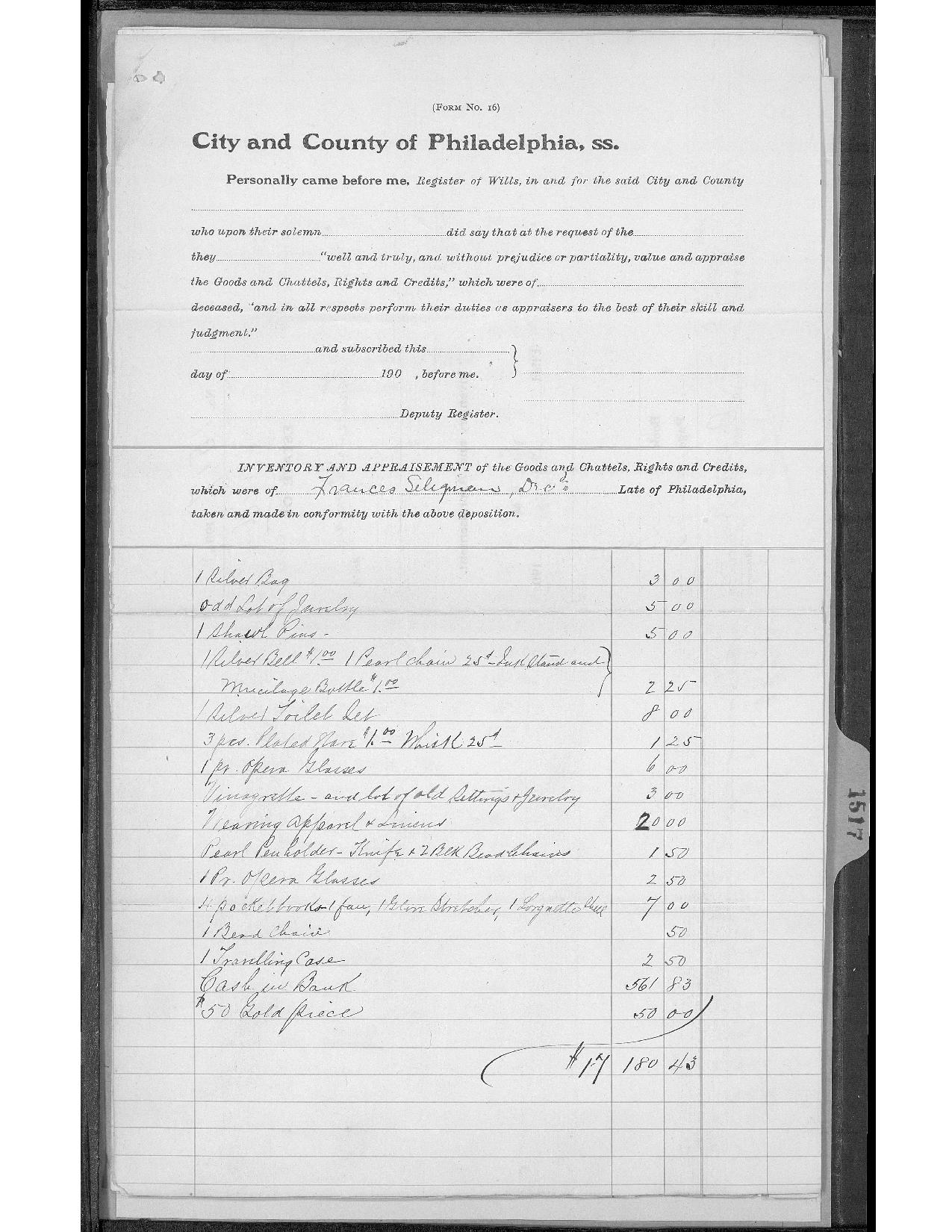
The total value of these properties came to $17,180.43, or approximately $617,000 in today’s dollars. Of course, many of these items, especially the jewelry, may have appreciated far beyond the value they had in 1905 and beyond what the inflation calculators consider.

The second inventory was of Frances’ kitchenware and dishware:
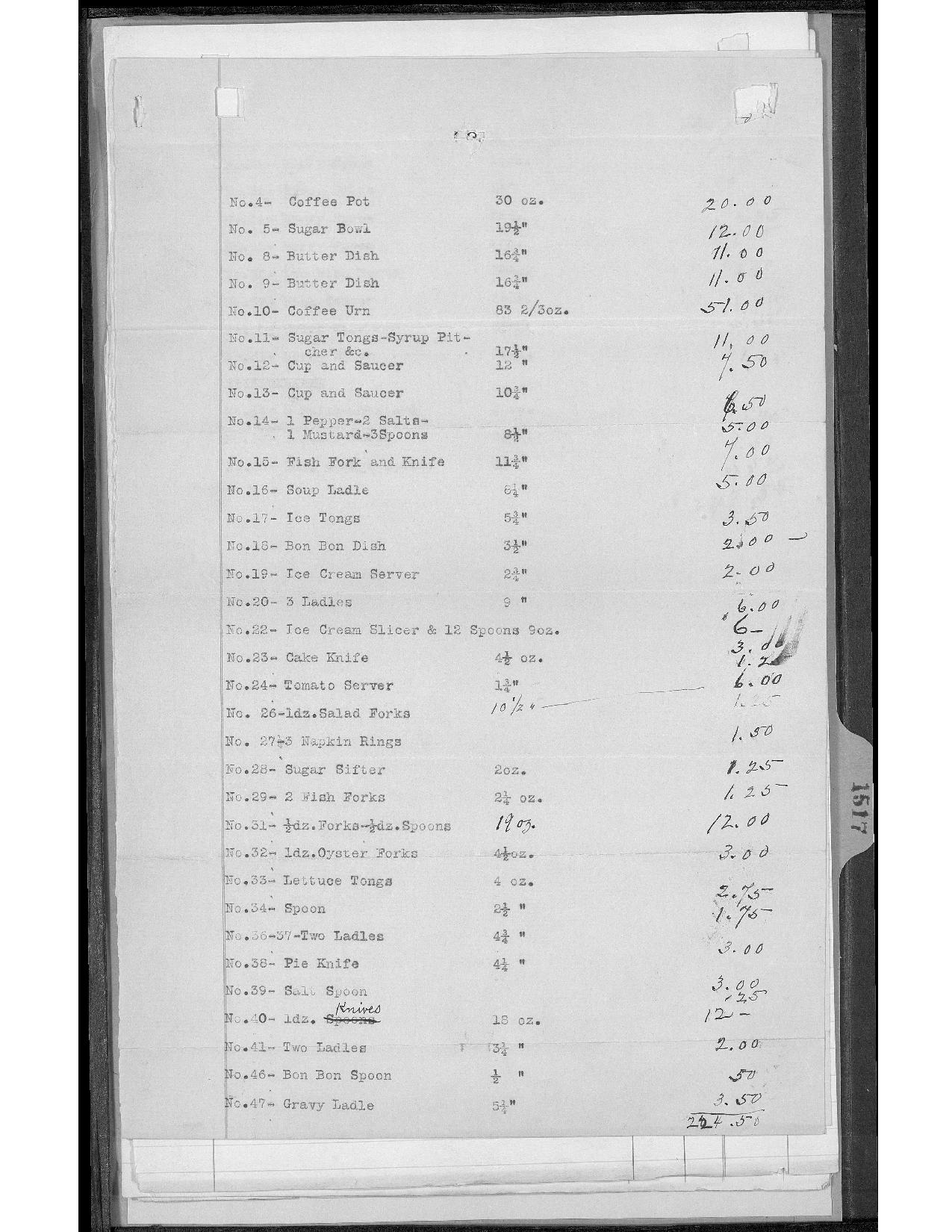
 

The value of these goods was appraised in 1906 as $247.55. In today’s dollars that would be approximately $9000.

The documents do not include any appraisal of any real estate although, as we will see, Frances owned some real estate in Santa Fe.

Frances’ will detailed with great specificity where all this personal and other property was to go. Her original will is eight typed pages plus there is a one page handwritten codicil. I loved reading this will because it names so many of the relatives I’ve written about on my blog. It was fascinating to see how inclusive Frances was in deciding who would get portions of her estate. The following images are the pages from the will with my comments about some or all of the provisions on that page.

In the Third Clause below, Frances divided $1250 among her four siblings. But Simon, Julius, and Miriam each got $250 whereas Lottie received $500. Did she love Lottie more than the others? Or did Lottie have greater need? Lottie never married, so unlike Miriam who had a husband to support her and Simon and Julius who were men, Lottie may in fact have had greater need.

There is a similar seemingly favorable bias in terms of Frances’ distribution to her three living children, Eva, James, and Arthur. Eva was to receive all of her mother’s linen and wearing apparel. Well, I guess the sons couldn’t wear her clothes. But then in the Fifth Clause above, Frances bequeathed a whole lot of jewelry to Eva: “my diamond bracelet, my diamond star with chain attached thereto, my watch studded with diamonds, one of the large diamonds from my thirteen stone diamond ring, my set of silver containing one dozen knives, one dozen large spoons, one dozen small spoons, one large soup ladle and one dozen silver forks.”

What did James get? “One diamond from my thirteen stone diamond ring and a silver coffee pot.” And Arthur: “the other large diamond from my thirteen stone diamond ring, and a silver coffee pot.”

Wow, did they get shafted or what! Even Emanuel Cohen, my great-grandfather and Eva’s husband, got “the centre diamond in my diamond cluster pin.” And he was married to Eva, who was already getting all those diamonds!

Frances then gave other jewelry items to her daughters-in-law and to her grandchildren. My grandfather John Nusbaum Cohen got “four stones from my diamond cluster pin.”

The will goes on to identify specific pieces of jewelry for other family members—aunts, uncles, nephews, nieces, brothers-in-law, and even August Seligman, the younger brother of Bernard Seligman, a brother who never left Germany. Did August get the “silver knife, fork and spoon marked S.S.”? Perhaps his great-grandson Wolfgang knows. I will have to ask him.

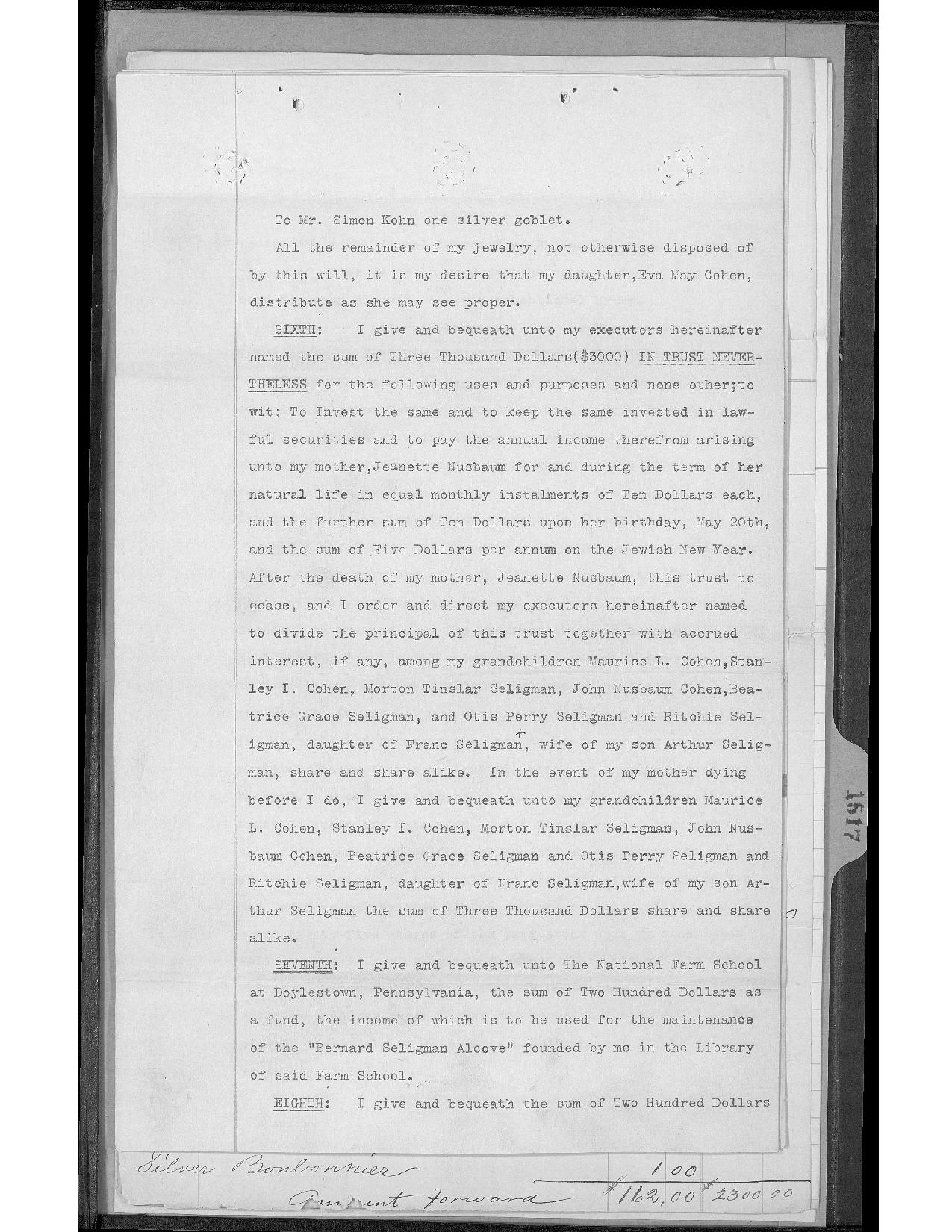
And then at the end of that Fifth Clause below, the will provides, “All the remainder of my jewelry, not otherwise disposed of by this will, it is my desire that my daughter, Eva May Cohen, distribute as she may see proper.”
Before I go on, I need to point out that I do not have one piece of jewelry or anything else that once belonged to Frances Nusbaum Seligman, my great-great-grandmother. Not one thing. Even though all those diamonds were bequeathed to my great-grandmother Eva Seligman Cohen, I have no idea where they went once Eva died. She raised my father and his sister from the time they were quite young when both their parents were hospitalized, yet my father did not have one thing—-not one spoon or even a coffee pot—-that had belonged to his beloved grandmother. I have no idea where it all went. Perhaps it was sold during the Depression. Perhaps the other three grandchildren of Eva Seligman Cohen received it, but that seems unlikely. In any event, it’s gone.

Having cleared the air on that, I am now looking at the Sixth Clause (see above). It provides in part for a $3000 trust for Frances’ mother Jeanette Dreyfus Nusbaum, my three-times great-grandmother, who was still living when Frances drew up this will in 1905. I love that Frances provided for her mother and even specified that she receive ten dollars on her birthday (May 20) and five dollars at the Jewish New Year in addition to the ten dollar regular monthly payments under this provision. It shows me how caring Frances was and also how much being Jewish was still an important part of the family’s life. Jeanette was 87 when the will was executed, and she outlived her daughter Frances, dying on January 12, 1908, at the age of 90.

There are then several bequests to various charitable organizations, and then we come to the Eleventh Clause (below), in which Frances requires that a trust be created from fifty shares of her stock in Seligman Brothers in Santa Fe, the dividends from which were to be paid to “my daughter Eva May Cohen, for and during her natural life, for her sole and separate use, not to be in any way or manner whatever liable to the contracts, debts, or engagements of her husband.” I am so impressed that Frances had the wisdom to set aside money that would be only for her daughter and not under the control of Eva’s husband. How progressive is that!

The provision further provides that Eva’s children would inherit that stock upon her death as well as Eva’s brothers James and Arthur. Sadly, Seligman Brothers itself did not survive long enough to benefit those beneficiaries as it closed for business by 1930.

Nevertheless, once again Frances favored Eva in the will.

The Twelfth Clause refers to a house and lot in Santa Fe to be shared by all three of Frances’ children. (I don’t see that property included in the inventories mentioned above so the estate was worth more than estimated above.) In 1904 when Frances executed this will that was the location of the oldest hotel in Santa Fe, the Exchange Hotel. I have no idea what it was worth at that time, but it certainly added something substantial to the overall value of Frances Nusbaum Seligman’s estate.

Below are the final provisions in the original will.

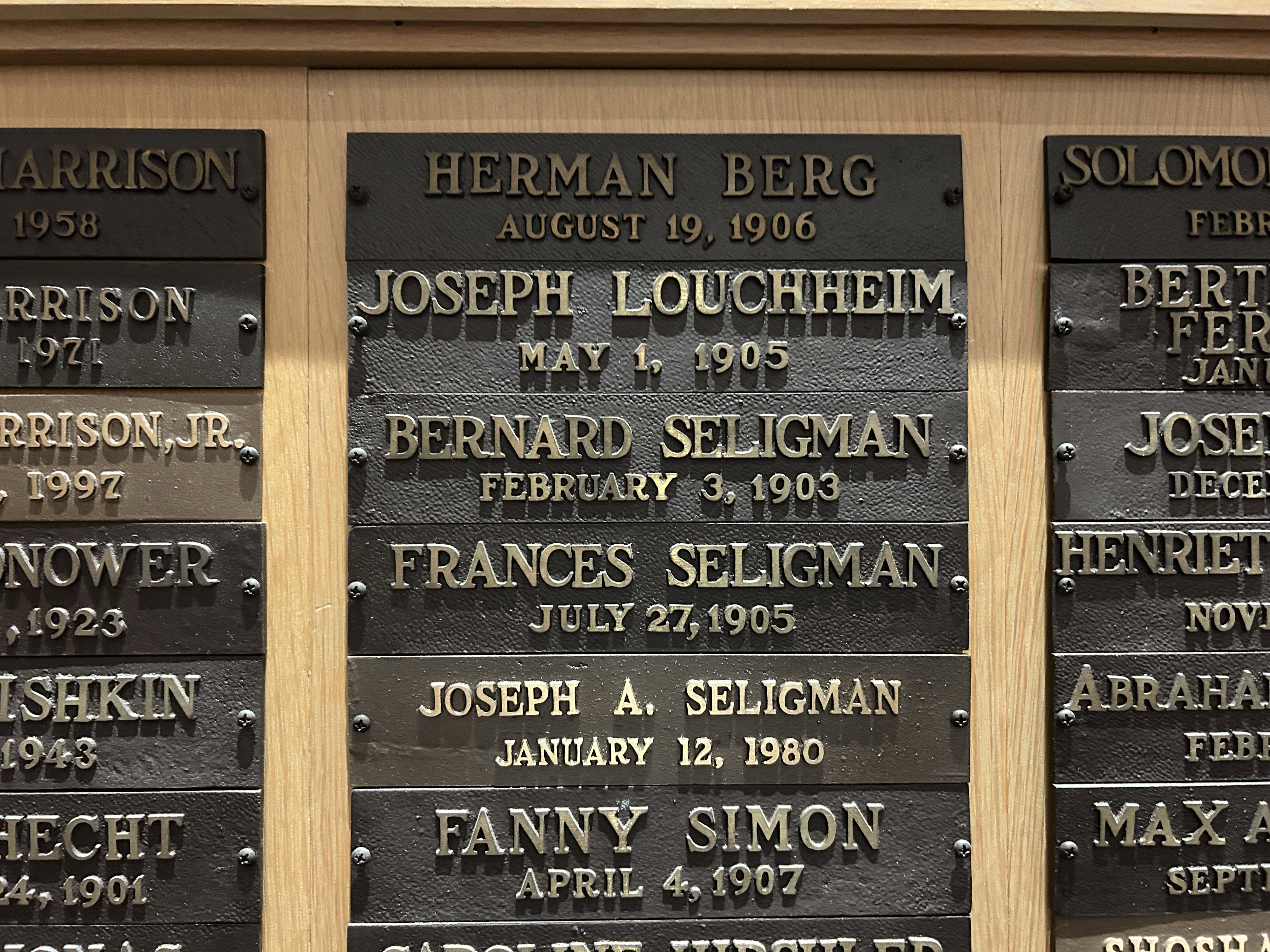
There is also a handwritten codicil to the will dated February 18, 1905. It includes additional specific bequests of various items of personal property and also provides that $200 was to be given to Congregation Keneseth Israel for the purpose of “placing the names of my husband Bernard Seligman and my own, together with the dates of our respective deaths, upon the memorial tablet on the North-East Wall of the Synagogue.” We all want to be remembered, don’t we?

I wrote to Congregation Keneseth Israel, now located in the suburbs of Philadelphia, asking about my great-great-grandparents’ plaque, and I was quite moved and relieved to learn that it still exists on their memorial wall in their suburban location. Their executive director Brian Rissinger kindly sent me this image of the plaques:
Finding this will was such a gift. It gave me insights into my great-great-grandmother Frances Nusbaum and her relationships with her children, grandchildren, siblings, and others. And it reminded me how extraordinary her life was—-growing up as the daughter of a successful merchant in Philadelphia only to fall in love with a young immigrant from Germany who had lived in Santa Fe. After marrying him and having four children in Philadelphia, she moved with him and their children to Santa Fe, living in what was then a small but growing pioneer town with very few Jews and even fewer Jewish women. And her will demonstrated that she cared deeply about her Jewish identity. She must have been so resilient and so devoted to make that adjustment to life in Santa Fe. I wrote about Frances and Bernard in my family history novel, Santa Fe Love Song for anyone who wants to know more about them..

Frances was described in her obituary in these terms:

“She was a beautiful and accomplished woman, as good as she was beautiful and as beautiful as she was good, and of a most lovable and gentle disposition. She was an exemplary wife, a fond and good mother, and a dutiful and loving daughter. Indeed she was all that is implied in the phrase ‘a thoroughly good and moral woman.’ … She will be especially remembered by the poor people of [Santa Fe], to whom she was particularly kind. Many and many truly charitable deeds have been put to her credit.”

Everything in her will reflected those same qualities.

I was deeply touched by the relationship between Frances and her daughter Eva, my great-grandmother. Frances had lost two daughters; her daughter Florence had died when she was just a month old, and her daughter Minnie had died when she was seventeen. Thus, Eva, her first born child, was her only surviving daughter, and that must have made Frances cherish her even more.

That Eva was deeply loved by her mother also sheds light on the woman she became. In learning about Eva from my father and from my research, I grew to appreciate what a strong and compassionate woman she was. Like her mother Frances, she lost one son as a baby and a second son predeceased her by committing suicide. Like her mother, Eva was uprooted from Philadelphia to Santa Fe, but returned to Philadelphia for college and lived the rest of her life there after marrying my great-grandfather Emanuel Cohen. Being so far from her parents and brothers back in Santa Fe must have been as difficult for her as it had been for her mother to leave her family behind in Philadelphia to move to Santa Fe.

Despite all those losses and difficulties, Eva clearly had a big heart. She took a widowed brother-in-law and his son into her home for many years, she took her parents into her home when they returned to Philadelphia to retire, and, most importantly to me, she took my father and aunt into her home and provided them with comfort, love, and security when their parents were unable to care for them.

The love between Frances and Eva, between mother and daughter, shines through in this will. And I am so grateful to Teresa for alerting me to the full-text search on FamilySearch so that I could find it.


  1. All the documents included in this post were located using the full-text search on FamilySearch. They are cited there as follows: Philadelphia, Philadelphia, Pennsylvania, United States records,” images,
    FamilySearch (https://www.familysearch.org/ark:/61903/3:1:S3HT-D4WP-CQ?
    view=fullText : Aug 30, 2025), images 189-206 of 315. 

Nusbaum Album: Santa Fe Photographs

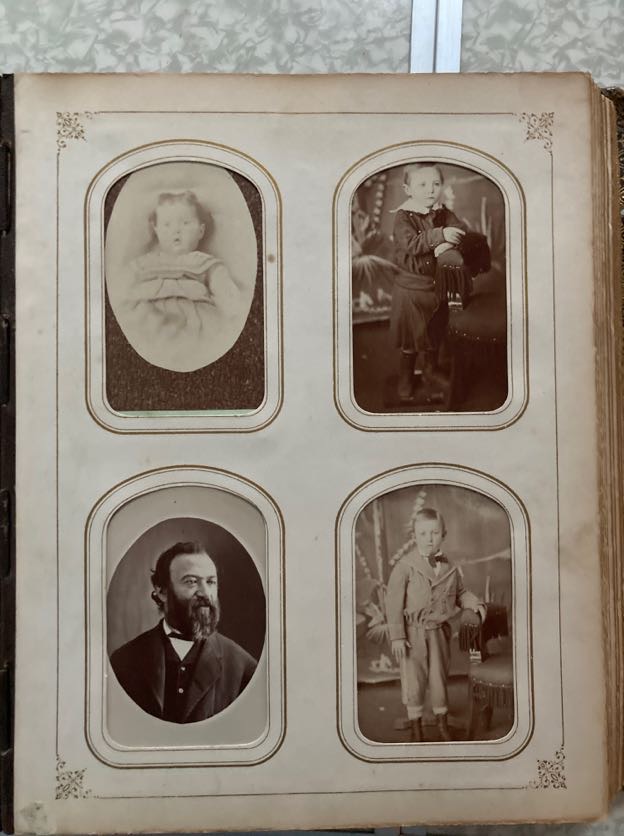
I decided to move on from the Philadelphia photographs in the Nusbaum Album even though there were still many more of them in the album because it seemed to be unlikely that I would ever identify anyone.  I asked Ava to focus next on the six photographs taken in Sante Fe, hoping that they would more clearly be of my Santa Fe relatives.

Of those six, three were of young children, two were of adult men, and one was of a couple. My hope was that the couple would be Frances Nusbaum and Bernard Seligman, my great-great-grandparents, the children would be their children, and the two men would be other Seligmans or Nusbaums.


Once again there were no tax stamps on these photographs, so Ava concluded that they were taken either before August, 1864, or after August, 1866. Since Bernard and Frances didn’t move to Santa Fe until after 1868, I was hoping that the photographs fell into that later period. These photos also appear more than halfway into the album so were perhaps later than those 1863 to 1870 Philadelphia photographs Ava had already analyzed.

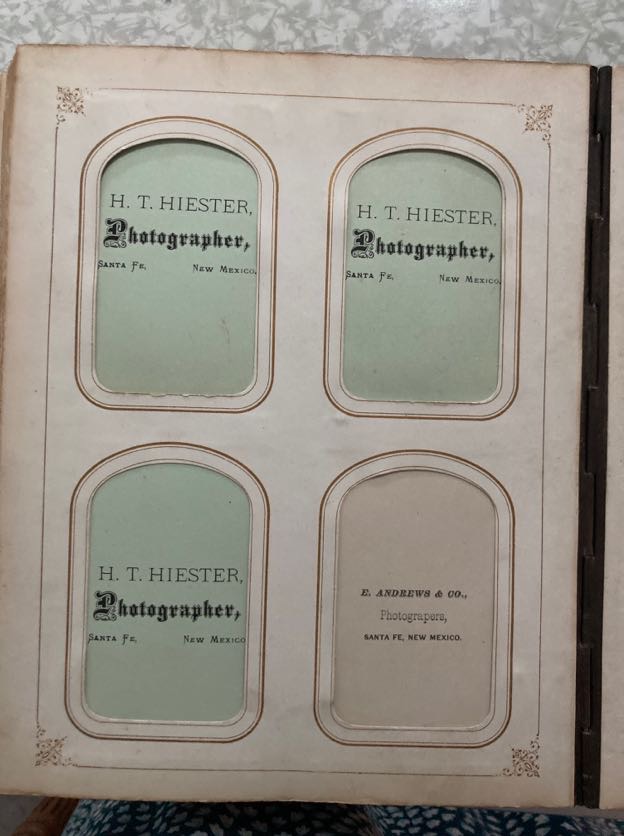
The three photographs of children were all taken by the same photographer, H.T. Hiester. Ava’s research of Hiester revealed that “Henry T. Hiester came to Santa Fe from Texas in the summer of 1871 at the request of Dr. Enos Andrews. Hiester was active in Santa Fe from 1871-1878. He had a studio in West Side Plaza from 1871-1874 and one on Main Street from September, 1874 to March, 1875.”1

Although Ava believed that two of these photographs were taken at the same studio given that they have the same set, back drop, and chair, she concluded that they were not taken at the same time. She opined that they were both of the same child, possibly James Seligman, Bernard and Frances’ older son who was born in 1868 in Philadelphia. She thought the photo on the upper right could be James at three or four and the photo on the lower right James at six or seven.

The baby in the first photograph cannot be James Seligman since he was born in 1868 in Philadelphia before the family moved to Santa Fe. Thus, that baby has to be Arthur Seligman—if it is of one of the children of Bernard and Frances Seligman—as he was the only child of theirs born in Santa Fe, and he was in fact born in 1871, the year that Ava dated the photograph. Perhaps one of the other photographs is of James or perhaps is Arthur as he grew older.

I can see by looking at the coloring on the reverse of these three photos that they might have been taken years apart as they have faded in different ways. (It’s hard to see in the scan below, but they were slightly different shades.) But nevertheless, I can’t imagine why Frances and Bernard would have three photographs of one of their three living children and none of the other two—including my great-grandmother Eva Seligman Cohen, their oldest child. I was so disappointed that there was no photograph of her.

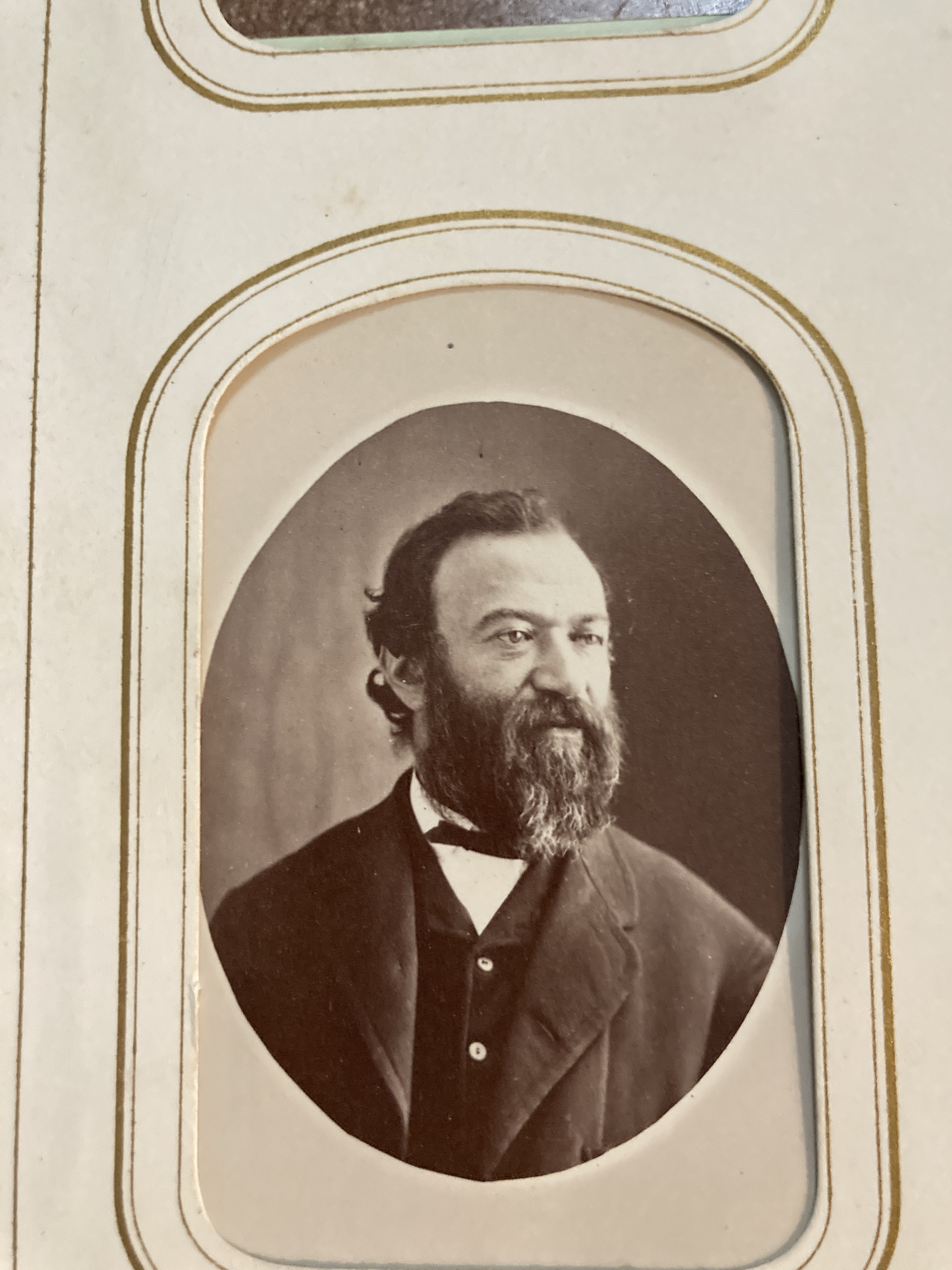
Moving on to the two men photographed in Santa Fe, the one on the same page as the three children (or the three photographs of the one child) was taken by a different Santa Fe photographer, Dr. Enos Andrews (1833-1910). Ava wrote that Andrews had a photography studio in Santa Fe from the end of the 1860s until the early 1870s. Based on her analysis of Santa Fe directory and census listings for Enos Andrews and other factors, Ava concluded this photograph was taken sometime between 1866 and 1871. Since she estimated that the man was about fifty years old, that would mean he was born between 1816 and 1821.2

But who was he? Although the birth year might led me to believe it was John Nusbaum, who was born in 1818, Ava pointed out that in the late 1860s, John (as well as Frances and Bernard until at least 1868) was living in Philadelphia. But it was possible that John went to Santa Fe and had his photograph taken there. After comparing this photograph with the one we thought could be John Nusbaum on the first page, Ava and I both thought it could be the same man and both could be my three-times great-grandfather John Nusbaum.

What about the other photograph of a man taken in Santa Fe on the following page? That photo was taken by Nicholas Brown, who once partnered with Enos Andrews. Ava provided the following background on Nicholas Brown and his son William Henry Brown, who took the photograph of the couple on the same page.

Nicholas Brown (born 1830) was the father of William Henry Brown. Nicholas was active in Santa Fe in 1864-1865. In August of 1866, Nicholas announced the opening of a studio with his son, William. Between 1866 and 1867, William was in partnership with his father in Santa Fe and they advertised the studio as N. Brown & Son and N. Brown E Hijo (1860s in Mexico). At the end of 1870, William was in Mexico. At the beginning of 1871, Nicholas re-opened his studio in Santa Fe but this time it was located on West Side Plaza. Because there is no address on [the reverse of the Nicholas Brown photograph of the bearded man], I am placing this image before 1871.3

Ava dated this photograph as 1866-1867 and estimated the man’s age as 45 to 50, meaning he was born between 1816 and 1822.

I could speculate that maybe this is Bernard’s brother Sigmund Seligman, who lived in Santa Fe from at least 1860 until his death in 1874. Sigmund was born in 1829, so later than the 1816-1821 time frame Ava posited. Could this man be younger than fifty? Could he be in his forties? The beard does make it hard to tell. But it’s possible. So could this be Sigmund? Maybe. Maybe not. I have no idea. Maybe he was a friend of Bernard’s, not his brother. I have no way to know.

Finally, the last photograph from Santa Fe is the one of the couple taken by Nicholas Brown’s son, William Henry Brown. Ava dated this photograph far later than the one taken by Nicholas Brown because William was a partner in his father’s studio in Santa Fe from 1866-1867. By 1870, he was in Mexico. Then he returned to Santa Fe between 1880 and 1884 where he was a partner with George C. Bennett in a photographer studio on West Side Plaza. After 1884 William Henry Brown was no longer living or working in Santa Fe. Based on these facts, Ava dated this photograph at about 1882-1883.4

Ava thought that both the man and the woman were somewhere between 25 and 30 years old, meaning they were born between roughly 1852 and 1858, making them too young to be Bernard and Frances, who were born in 1838 and 1845, respectively. Thus, I have no idea who they are.

The fact that I could not identify the people in these Santa Fe photographs was disappointing. Ava reminded me again about the nature of CDVs—literally, “cartes de visite” or visiting cards. People gave them away, for example, when they came for a visit. And maybe they were taken while visiting and not in their hometown. That meant even those taken in Santa Fe or Philadelphia or elsewhere could be of people who didn’t live in those places. That meant the universe of people who might be in these photographs was anyone who lived during this time period. No wonder we couldn’t identify anyone with any degree of certainty without known photos of them.

The last portion of Ava’s work on this project was devoted to trying to identify the people in some of the photographs taken in Bingen and Mainz, Germany.


  1. Ava Cohn, Analysis of Nusbaum Album #3, January 24, 2024 
  2. See Note 1, supra. 
  3. See Note 1, supra. 
  4. See Note 1, supra. 

The Nusbaum Album: An Introduction

Some of you may recall that last fall I received a call from an antique dealer in Santa Fe who had in her shop a photograph album with the names John Nusbaum and Frances Nusbaum engraved on the front and rear covers, respectively. I immediately knew that this album had belonged to my three-times great-grandfather John Nusbaum and his daughter Frances, my great-great-grandmother. Frances had married my great-great-grandfather Bernard Seligman and moved from Philadelphia to Sante Fe, where they raised their children, as I told in my family history novel, Santa Fe Love Song.

I agreed to purchase the album and when it arrived, I marveled at the collection of almost two hundred photographs of people I hoped were my relatives—or at least I hoped that some of them would be. But except for a handful of those photographs, there were no labels or names to identify the people in them. Almost all, however, had a photographers’ stamp that indicated where they were taken.

The largest group of photographs (43) were taken in Philadelphia, where John Nusbaum had settled after immigrating from Schopfloch, Germany, in about 1840. He had initially been a peddler traveling throughout Pennsylvania, but eventually settled in Philadelphia and established a dry goods store there. He married Jeanette Dreyfuss, another German immigrant, and had six children, my great-grandmother Frances being the third child and oldest daughter. Thus, I assumed many of the Philadelphia photographs were of John and his family as well as of other family members and friends. But who was who? I had no idea.

Not surprisingly, the next largest group of photographs were taken in Germany, including some taken in Mainz and some in Bingen, the two larger cities closest to Gau-Algesheim where Bernard Seligman and his siblings were born and raised. There were also photographs taken in other German cities, such as Stuttgart, Berlin, and Wiesbaden.

There were eight photographs taken in Santa Fe, where Frances Nusbaum had moved with her husband Bernard and their three older children in about 1870. Their youngest child Arthur Seligman was born in Santa Fe, but my great-grandmother Eva Seligman was born in 1866 in Philadelphia.

Three photographs were taken in Harrisburg, Pennsylvania, and several were taken in Lewistown, Pennsylvania, two locations where John and Jeanette’s siblings lived in Pennsylvania, so I assumed that those photographs were likely of those Nusbaum/Dreyfuss cousins. The remaining photographs were taken in other places such as New York City; Montgomery, Alabama; Wheeling, West Virginia; Peoria, Illinois; and St. Louis, Missouri.

Each page in the album has four slots for photographs. On the first four pages of the album, there are two photos, back-to-back, in each slot so that you cannot see the reverse of the photos without pulling them out of the slots. Then starting on the fifth page in the album, there are only four photos on each page, and the reverse of those photos shows through on the back of the slot on the back of the page.

What it took me a long time to realize is that all the photos squeezed into the back of those on the first four pages are photographs from Germany. I think that these photographs from Germany may have been added once all the other slots were filled. They likely belonged to Bernard Seligman and were added after he married Frances. I will get to these photographs in a later post, but my reason for mentioning this here is to indicate that I think that aside from those German photos, the others were probably placed by John, Jeanette, or Frances Nusbaum.

The photographs appear to be somewhat grouped together by the location where the photographs were taken and by photographer. The photographs seem to follow roughly this geographical order: Pennsylvania, including many from Philadelphia, but also Harrisburg and Lewistown; then two pages from Peoria, Illinois; then three pages of Santa Fe photographs; then some from New York City and other places; and then photographs from Germany (plus the ones on the reverse of the first few pages). There are also some that appear in random places within the album, but overall this is how the album is arranged.

Since I only had names on a handful of photographs and since I had no idea when the photographs were taken, I decided to retain the expert services of Ava Cohn, aka Sherlock Cohn, the Photo Genealogist. Long time readers of my blog know that I have had great success hiring Ava in the past to help me identify people in old photographs.

With the financial support of my brother and my cousins Marcia and Terry, I asked Ava to help me with this new project. I also agreed to sell the album after Ava and I were done with it to my cousin Jhette for the price I paid to the antique dealer; that way I had more money to hire Ava. Although I was sad to think that I would not be able to keep the album, I knew that Jhette, another descendant of Bernard Seligman and Frances Nusbaum, would take good care of it.

Because of the large number of photographs and my limited resources, I had to limit the scope of Ava’s work. I asked her only to date the photographs and to estimate the ages of the people in them. I was not asking her to do any identification of the people. I was hoping that with those two bits of dating information, I’d be able to deduce who the people were in the photographs—or at least narrow down the possibilities—by studying my family tree.

I also had to limit her work to about 20-25 of the almost two hundred photographs in the album. I decided to focus on those taken in Philadelphia, Santa Fe, Mainz, and Bingen because I knew that those would most likely be of my direct ancestors. As noted above, I figured that the Harrisburg, Peoria, and Lewistown photographs were of Nusbaum/Dreyfuss cousins. I had no idea who in the family (if anyone) lived in Berlin, Stuttgart, or Wiesbaden, Germany, or for that matter in St. Louis, Wheeling, or Montgomery. I knew of one branch that lived in New York, but not direct ancestors.

But because there were so many photographs taken in Philadelphia, I had to find some way to narrow down Ava’s work so that she could have the best chance of identifying the people in the photographs I chose. Based on her suggestions, we started with the photographs on the first page, figuring that those would most likely be the closest relatives if not the owners of the album; three of those were taken by the same photographer in Philadelphia. The fourth and the very first photograph in the album was taken in Harrisburg. There were two men and two women. In my wildest dreams, I was hoping that they were of John and Jeanette and Frances and Bernard.

Here are those first four photographs:

In my next two posts I will share what I learned from Ava about these four photographs and how I decided to choose the remaining 15-20 photographs for her to analyze. This will be a multipart series of posts devoted to the Nusbaum album.


An Exciting New Project in the Works!

Before I move on to the next child of Moses Blumenfeld I, I have two other matters to write about. In my next post I will share some wonderful photographs that my cousin Robin shared with me. Robin, my fifth cousin, once removed, is descended from Abraham Blumenfeld and Geitel Katz through their son Moses I. More details to follow in the next post.

But today’s post is about some other amazing photographs. A couple of months ago I received an email out of the blue from an antiques dealer in Santa Fe named Peggy Gonzalez. Peggy had found me through my blog while looking for a descendant of John Nusbaum, my three times great-grandfather and my father’s namesake. Over thirty years ago at an estate sale, she had acquired a photograph album engraved with the name John Nusbaum on the front. She wanted to know whether I would be interested in buying the album.

At first I was skeptical. There are so many scams out there today. Anyone could have found my blog and made this up. But Peggy sounded honest, and she sent me these scans of the front and back of the album as well as a few representative photos. The back is engraved with “To F. Nusbaum.” My great-great-grandmother was John Nusbaum’s daughter Frances Nusbaum Seligman, and she had lived much of her adult life in Santa Fe with her husband Bernard, my great-great-grandfather. Peggy’s story seemed to be authentic.


I was extremely excited—as you might imagine. I’ve never seen a photograph of John Nusbaum or Frances, and here was a whole album of photos. Almost 200 photos. Thanks to the generosity of some of my Seligman/Nusbaum/Cohen relatives, I arranged to purchase the album. I also got extraordinary help from Mike Lord, our guide in Santa Fe from 2014 and a close friend of my cousin Pete. He acted as the middleman between Peggy and me, retrieving the album and giving Peggy my check and then sending me the album.

The album is now safely in my house, back in the hands of one of John Nusbaum’s descendants. I have retained the services of Ava Cohn, aka Sherlock Cohn, the Photogenealogist, and am now waiting in her queue for her to have time to devote to this project. I’ve scanned the front and back of all the photos. They are all studio photographs—cabinet photos, I think they are called. Small, but very clear. And they all have the names and addresses of the photographers on the reverse side. But only three have any identification of the people in the photograph.

There are photographs that were taken in several cities in Germany as well as all over the US: Philadelphia, New York, Santa Fe, Peoria, Lewistown (PA), and St. Louis. I am hoping that if Ava can provide dates for when they were taken and perhaps the ages of the people, I can then figure out who these people are.

I will wait to share the photos until after I have had the benefits of Ava’s help, but I wanted to share now my excitement about this. Stay tuned for more!


Abq Jew Blog: A Post about Santa Fe Love Song

Thank you so much to Marc Yellin, the author of the blog Abq Jew, for his delightful blog about my latest novel, Santa Fe Love Song. You can read his blog post here.

Abq Jew ® Blog

Santa Fe Love Song: A Family History Novel

I am delighted to announce that my newest novel, Santa Fe Love Song, has been published and is available in both paperback and e-book format on Amazon here. Like my first novel, Pacific Street, Santa Fe Love Song was inspired by the lives of real people—in this case, my great-great-grandparents Bernard Seligman and Frances Nusbaum—and informed by my family history research. But as with my first book, Santa Fe Love Song is first and foremost a work of fiction.

Bernard Seligman, my great-great-grandfather

Frances Nusbaum Seligman, my great-great-grandmother

It is a double love story—a story of Bernard’s passion for his newly adopted home in New Mexico and of his deep love for a young woman in Philadelphia. How will he resolve the conflict between those two loves? That is the heart of the novel.

But this is also an adventure story because the first part of the book tells of Bernard’s arrival from Gau-Algesheim, Germany, his adjustment to life in Philadelphia, and then his challenging and exciting trip on the Santa Fe Trail when he moves out west to work with his brother Sigmund. On that trip Bernard faces many different obstacles and learns to love the American landscape. He transforms from a German Jewish immigrant into an American pioneer and businessman.

Upper left, Bernard Seligman with other merchants and Indians on the Santa Fe Trail

As with Pacific Street, I wrote Santa Fe Love Song with my children and grandchildren in mind. This time I also decided to get my grandsons involved in the project. Nate, 10, and Remy, 6, became my illustrators. As I told them stories about Bernard and Frances, they created drawings that told those stories visually. I am ever so grateful to my two wonderful grandsons for their work, and I hope that someday their grandchildren will cherish these books and the illustrations and honor the memories of their ancestors Bernard and Frances.

I hope that you also will find Santa Fe Love Song a worthwhile and enjoyable read. If you do, please leave a review on Amazon. Thank you! I appreciate all your support.

Marcel Goldschmidt’s Children: The Two Who Survived

Marcel (born Mayer) Goldschmidt, the fourth child of Jacob Meier Goldschmidt and Jettchen Cahn, died in 1928 and was survived by his wife and first cousin, Hedwig Goldschmidt, and their four children, Jacob, Nelly, Else, and Grete. Hedwig and two of those children, Jacob and Grete, would survive the Holocaust. Nelly and Else were not as fortunate. This post will tell the story of Hedwig and the two children who escaped.

Grete and her husband Berthold Heimerdinger and their daughter Gabrielle were the first to leave Germany. They arrived in New York on June 22, 1934, and were going to Berthold’s brother Leonard Heimerdinger in New York City.

Berthold Heimerdinger and family, ship manifest, Year: 1934; Arrival: New York, New York, USA; Microfilm Serial: T715, 1897-1957; Line: 1; Page Number: 101, Ancestry.com. New York, Passenger and Crew Lists (including Castle Garden and Ellis Island), 1820-1957

Two months later Berthold declared his intention to become a US citizen.  He was working as a securities dealer at that time, and the family was residing at 1212 Fifth Avenue in New York City.

Berthold Heimerdinger, Declaration of Intent, The National Archives at Philadelphia; Philadelphia, Pennsylvania; NAI Title: Declarations of Intention for Citizenship, 1/19/1842 – 10/29/1959; NAI Number: 4713410; Record Group Title: Records of District Courts of the United States, 1685-2009; Record Group Number: 21, (Roll 478) Declarations of Intention for Citizenship, 1842-1959 (No 355901-357000), Ancestry.com. New York, State and Federal Naturalization Records, 1794-1943

Grete’s mother Hedwig came to visit them in New York in April, 1935, for a four month stay, listing her son Jacob as the person to contact back in Frankfurt,1 but Hedwig returned to Germany after her visit. She returned for another visit two years later on October 29, 1937, but this time listed her residence as Zurich, Switzerland, where her contact person was a friend named Julius Wolf.2

Sometime thereafter Hedwig must have left Switzerland because when she arrived in England on March 18, 1938, she listed her last address as Amsterdam.3 I don’t know where she was during World War II. More on that in a later post. By 1952, she was living in the United States.

Ancestry.com. New York, Index to Petitions for Naturalization filed in New York City, 1792-1989 [

In 1940, Grete, Berthold, and Gabrielle Heimerdinger were living in Queens, New York, and Berthold was working as a jewelry dealer.4 According to Berthold’s draft registration for World War II, he was self-employed.

Berthold Heimerdinger, World War II draft registration, The National Archives at St. Louis; St. Louis, Missouri; Record Group Title: Records of the Selective Service System; Record Group Number: 147, Ancestry.com. U.S., World War II Draft Registration Cards, 1942

Grete’s brother Jacob arrived in New York on August 30, 1941, from Lisbon, Portugal, with his last residence being Nice, France. On his declaration of intention to become a US citizen, Jacob listed his occupation as an art dealer, like so many of his extended family members from Frankfurt.

Jacob Goldschmidt, Declaration of Intent, The National Archives at Philadelphia; Philadelphia, Pennsylvania; NAI Title: Declarations of Intention for Citizenship, 1/19/1842 – 10/29/1959; NAI Number: 4713410; Record Group Title: Records of District Courts of the United States, 1685-2009; Record Group Number: 21 Description Description: (Roll 644) Declarations of Intention for Citizenship, 1842-1959 (No 512901-513900) Source Information Ancestry.com. New York, State and Federal Naturalization Records, 1794-1943

According to his World War II draft registration completed the following year, Jacob was living at 26 East 63rd Street in New York and listed Herman Goldschmidt as the person who would always know where he was. Herman was his cousin, the son of Julius Falk Goldschmidt and Helene Goldschmidt II, and was living at the same address, 26 East 63rd Street.

Thus, Jacob was living with his cousins, not his sister Grete. Jacob did not list an occupation on his draft registration, but listed his place of business as the same address as his (and his cousins’) residence, 26 East 63rd Street. (Note also that on the naturalization index card for his mother Hedwig above, she also listed 26 East 63rd Street as her address in 1952.)

Jacob Goldschmidt, World War II draft registration, The National Archives at St. Louis; St. Louis, Missouri; Record Group Title: Records of the Selective Service System; Record Group Number: 147, Ancestry.com. U.S., World War II Draft Registration Cards, 1942

Jacob had reported on his declaration of intent that he was not married and had no children. However, David Baron and Roger Cibella’s research reported that Jacob married in France on June 20, 1940, and thereafter had two children born in France, one in December 1941 and one in 1952. Although I have no documentation of the marriage or the births of the children, I did find airline documents showing that the wife and two children visited Jacob in New York City during the 1950s.[^5] By 1964, Jacob had relocated to France, presumably to be closer to his family.5

Gabrielle Heimerdinger, Grete and Berthold’s daughter, married Erwin Vogel on September 8, 1943, in New York City.6 Erwin was born in Frankfurt, Germany, on June 23, 1921, to Kurt and Edith Vogel, and had immigrated to the US with his family in 1937, coming from Antwerp, Belgium. They settled in Chicago, where they were living in 1940.7

On his 1942 draft registration for World War II, Erwin was living in Hoboken, New Jersey, and working for the Stevens Institute of Technology, from which he received a master’s degree in mechanical engineering in 1944. Gabrielle and Erwin had four children.8

Erwin Vogel, World War II draft registration, The National Archives in St. Louis, Missouri; St. Louis, Missouri; WWII Draft Registration Cards for New Jersey, 10/16/1940-03/31/1947; Record Group: Records of the Selective Service System, 147; Box: 686
Ancestry.com. U.S. WWII Draft Cards Young Men, 1940-1947

Thus, Hedwig and her son Jacob and her daughter Grete and Grete’s family all survived the Holocaust. Grete’s husband Berthold Heimerdinger died in June 1961 at the age of 71.9 Hedwig died on December 9, 1964; she was 87.10 Jacob Goldschmidt died in October 1976 in France. He was eighty years old.11

Grete was the last surviving child of Marcel and Hedwig Goldschmidt. She lived a long life, dying on January 2, 2003, in New York at the age of 98.12 She had outlived her daughter Gabrielle Heimerdinger Vogel, who died January 19, 1990, in Rockville, Maryland, where she and her family had relocated in 1972.13 Gabrielle was 65 and was survived by her husband Erwin and their four children.

Grete and Jacob were fortunate to have left Germany when they did. The other two siblings, Else and Nelly, faced tragic deaths at the hands of the Nazis, as we will see in my next post.


  1. Hedwig Goldschmidt, ship manifest, Year: 1935; Arrival: New York, New York, USA; Microfilm Serial: T715, 1897-1957; Line: 1; Page Number: 80, Ship or Roll Number: Albert Ballin, Ancestry.com. New York, Passenger and Crew Lists (including Castle Garden and Ellis Island), 1820-1957 
  2. Hedwig Goldschmidt, ship manifest, Year: 1937; Arrival: New York, New York, USA; Microfilm Serial: T715, 1897-1957; Line: 1; Page Number: 8, Ship or Roll Number: Manhattan, Ancestry.com. New York, Passenger and Crew Lists (including Castle Garden and Ellis Island), 1820-1957 
  3. Hedwig Goldschmidt, ship manifest 1938, The National Archives of the UK; Kew, Surrey, England; Board of Trade: Commercial and Statistical Department and successors: Inwards Passenger Lists.; Class: BT26; Piece: 1158, Month: Mar, Ancestry.com. UK and Ireland, Incoming Passenger Lists, 1878-1960 
  4. Berthold Heimerdinger and family, 1940 US census, Census Place: New York, Queens, New York; Roll: m-t0627-02732; Page: 5B; Enumeration District: 41-614, Ancestry.com. 1940 United States Federal Census 
  5. This information came from his mother’s death announcement in the December 11, 1964, New York Times, p, 39, found at https://timesmachine.nytimes.com/timesmachine/1964/12/11/97361257.html?pageNumber=39 
  6.  Gabrielle J Heimerdinger, Gender: Female, Marriage License Date: 8 Sep 1943, Marriage License Place: Manhattan, New York City, New York, USA, Spouse: Erwin Vogel, License Number: 21889, New York City Municipal Archives; New York, New York; Borough: Manhattan; Volume Number: 9, Ancestry.com. New York, New York, Marriage License Indexes, 1907-2018 
  7. Kurt Vogel and family, 1940 US census, Year: 1940; Census Place: Chicago, Cook, Illinois; Roll: m-t0627-00934; Page: 1A; Enumeration District: 103-447, Ancestry.com. 1940 United States Federal Census. 
  8. “Unconventional Aeronautics Engineer Erwin Vogel, 88, Dies,” The Washington Post, October 28, 2009, found at https://www.washingtonpost.com/wp-dyn/content/article/2009/10/27/AR2009102703825.html 
  9.  Berthold Heimerdinger, Social Security Number: 085-28-3608, Birth Date: 10 Sep
    Issue Year: 1952-1953, Issue State: New York, Death Date: Jun 1961, Social Security Administration; Washington D.C., USA; Social Security Death Index, Master File, Ancestry.com. U.S., Social Security Death Index, 1935-2014 
  10. December 11, 1964, New York Times, p, 39, found at https://timesmachine.nytimes.com/timesmachine/1964/12/11/97361257.html?pageNumber=39 
  11.  Jacob Goldschmidt, Social Security Number: 085-28-0743, Birth Date: 1 Jul 1896
    Issue Year: 1952-1953, Issue State: New York, Last Residence: 912, (U.S. Consulate) Paris, France, Death Date: Oct 1976, Social Security Administration; Washington D.C., USA; Social Security Death Index, Master File, Ancestry.com. U.S., Social Security Death Index, 1935-2014 
  12. Greta Goldschmidt Heimerdinger, Birth Date: 25 Sep 1904, Birth Place: Frankfurt, Federal Republic of Germany, Death Date: 2 Jan 2003, Father: Marcel Goldschmidt
    Mother: Hedwig Goldschmidt, SSN: 064167857, Ancestry.com. U.S., Social Security Applications and Claims Index, 1936-2007 
  13. Gabrielle Joan Heimerdinger, [Gabrielle Vogel], Birth Date: 16 Dec 1924, Birth Place: Wiesbaden, Federal Republic of Germany, Death Date: 19 Jan 1990, Father: Berthold Heimerdinger, Mother: Grete Goldschmidt, SSN: 102185390
    Ancestry.com. U.S., Social Security Applications and Claims Index, 1936-2007 

Seligman(n)s in the News

One of the great advantages I had when I was researching my Santa Fe Seligman family was the availability of numerous newspaper articles about members of the family. Because my great-great-grandfather Bernard Seligman and his son Arthur Seligman were both important business and political leaders in Santa Fe, there was extensive coverage of their lives—and not just their business and political lives, but also their personal lives. The news articles gave me great insights into their personalities and the way they were perceived in their communities.

Now my cousin Wolfgang Seligmann has uncovered more articles—not only about the Santa Fe Seligmans but also about their relatives abroad.

My favorite article of those uncovered by Wolfgang is this one, an obituary of my three-times great-grandmother Babette Schoenfeld Seligmann from the February 2, 1899 issue of the Santa Fe New Mexican.

Obituary of Babette Schoenfeld Seligmann, Santa Fe New Mexican, February 2, 1899

Death of Mrs. M[oritz] Seligman

Hon. Bernard Seligman received the sad intelligence today, that Mrs. M. Seligman, mother of Bernard and Adolf Seligman, of this city, died at Gau-Algesheim, Germany, January 15, 1899, at the advanced age of 89. She left seven children, two daughters and five sons, all living, in England, Germany and the United States.  Mrs. Seligman was a remarkable women in many ways, she brought up her children to be honorable and valuable citizens, as might be inferred from the honored career of the two sons who have for so long been esteemed members of this community, and who are so widely respected throughout New Mexico.  Mrs. Seligman was a woman of rugged and sterling good sense, and a just, affectionate parent, and the many friends of Messrs. Seligman in this territory will sympathize with them in their loss.

The Sante Fe New Mexican reporter could not have known Babette, so the descriptions must have come from her sons Bernard and Adolf.  They reveal so much about Babette’s personality and how she was perceived and loved by her sons.

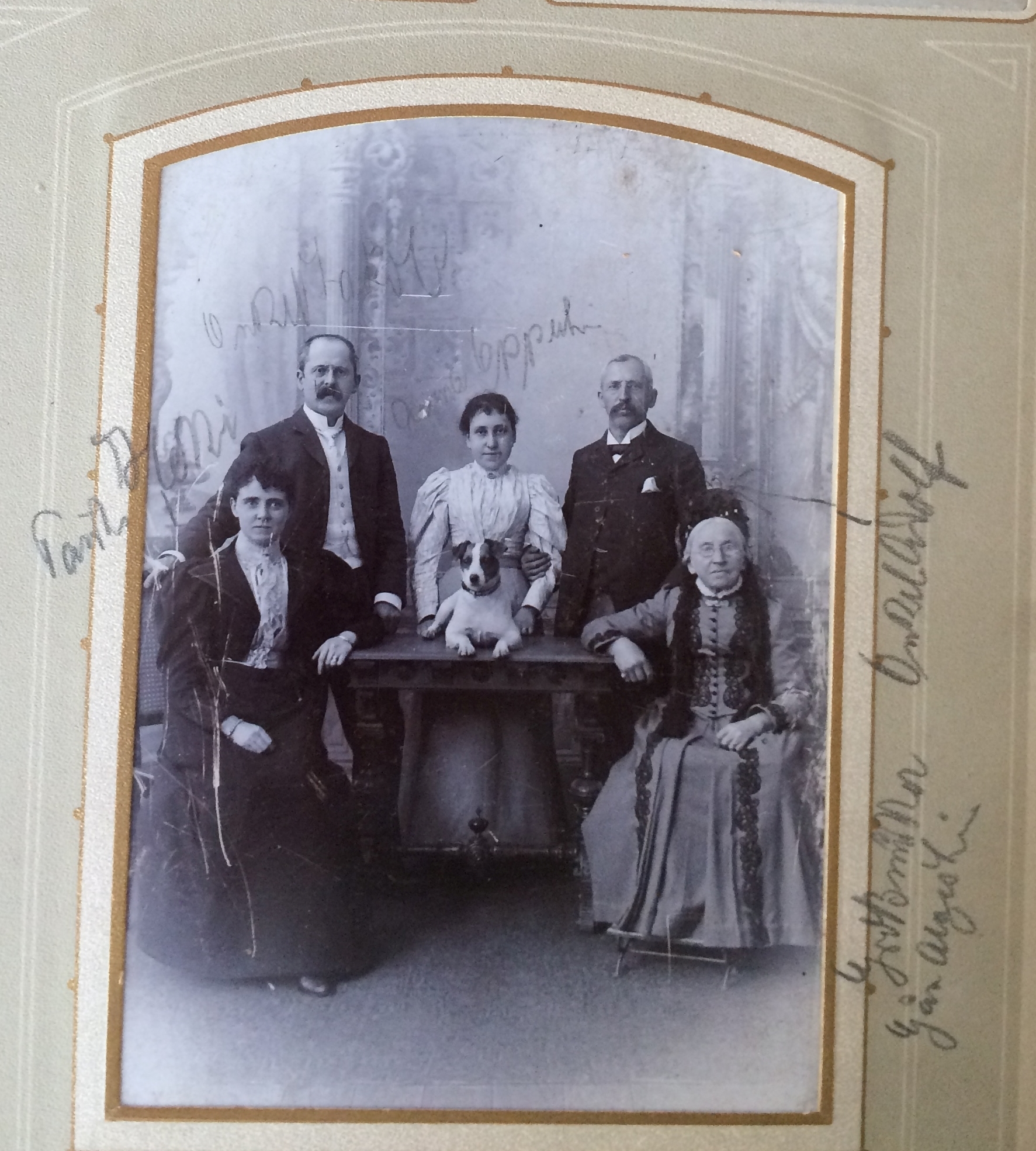
Here she is on the far right with two of her sons, James on the left, Adolf on the right, with her granddaughter Anna Oppenheimer in the center and her daughter-in-law Henrietta on the far left. (Sorry, I don’t know the name of the dog.)

Far right, Babette Schoenfeld Seligmann with two of her sons, Jakob/James and Adolf, James’ wife Henrietta, and in the center, granddaughter Anna Oppenheimer.

I thought this little news item that Wolfgang found was also interesting. It is an announcement of the dissolution of a London wine business owned by three of the Seligmann brothers: Wolfgang’s great-grandfather August Seligmann, his younger brother Hieronymus Seligmann, and the youngest sibling, James Seligman.   James, who was born Jakob, was the brother who left Germany for England and Scotland, unlike my great-great-grandfather Bernard and his brother Adolf, who went to New Mexico, or August and Hieronymus, who stayed in Germany.  The notice announced the takeover of the wine business in England by James alone as of the end of July, 1890.

London Gazette, March 20, 1891

I knew that James had been a wine merchant, but was not aware that his brothers were his partners initially. James was ultimately quite successful and, according to my cousin Lotte, owned hotels in Great Britain.

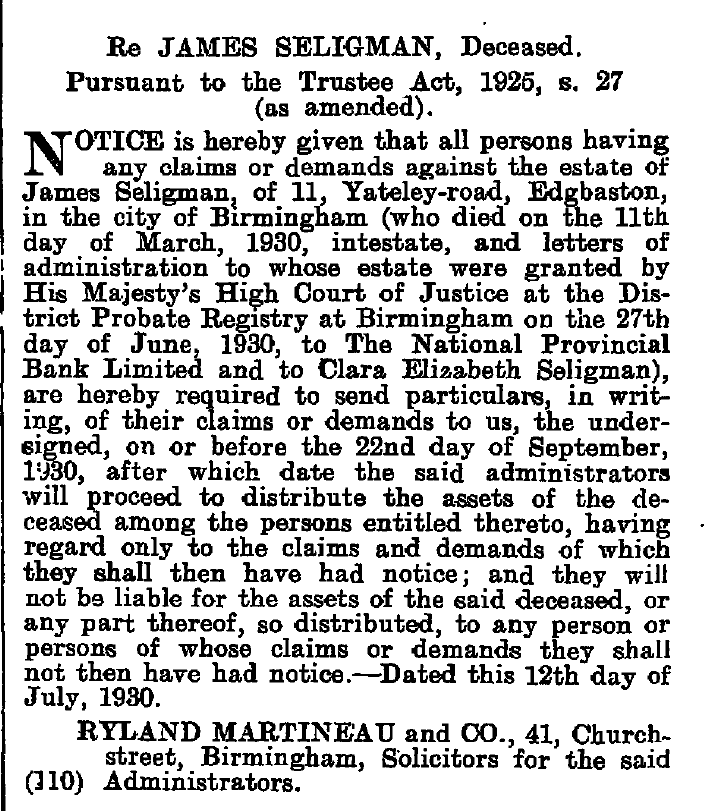
Wolfgang also found a notice in the July 15, 1930 issue of the London Gazette notifying those with possible claims against the estate of James Seligman of his death on March 11, 1930, and outlining what they needed to do to pursue those claims. It’s interesting that a man as successful as James died intestate (i.e., without a will).  The National Provisional Bank Limited and James’ widow Clara had been appointed administrators of his estate.  It was the settlement of James Seligman’s estate and the bank’s search for his heirs that led me to so many other Seligmann relatives.

London Gazette July 15, 1930

Two articles that Wolfgang sent were stories I’d not seen before about my great-uncle Arthur Seligman. The first is a profile of him published in the January 13, 1904, Santa Fe New Mexican (p. 9). The biographical information I have reported elsewhere so I will just quote a few excerpts from this article, written when Arthur was a County Commissioner in Santa Fe.

Describing the current status and success of the Seligman Brother’s mercantile business in Santa Fe, of which Arthur was then a director and secretary-treasurer, the article states, “Model methods, courteous treatment, absolutely fair dealing, and prompt service have characterized the business of the firm since 1856, and are today the mottoes of the two young men [Arthur and his younger brother James L. Seligman] conducting it.”

About Arthur specifically, the article states that he “is very popular in his home city.   [His success in the election as a County Commissioner] is good evidence that he is liked and respected where best known. It is a fact universally acknowledged that he has filled the important position of County Commissioner for the First District, for the past three years with marked ability, constant efficiency, and great benefit to the taxpayers and property owners, and that he has aided greatly in bringing about a very large and gratifying reduction in county expenses since taking office on the first of January, 1901.”

The article then goes on to praise his other roles and accomplishments, concluding by saying, “He is as enterprising, progressive and good a citizen as Santa Fe can boast of.”

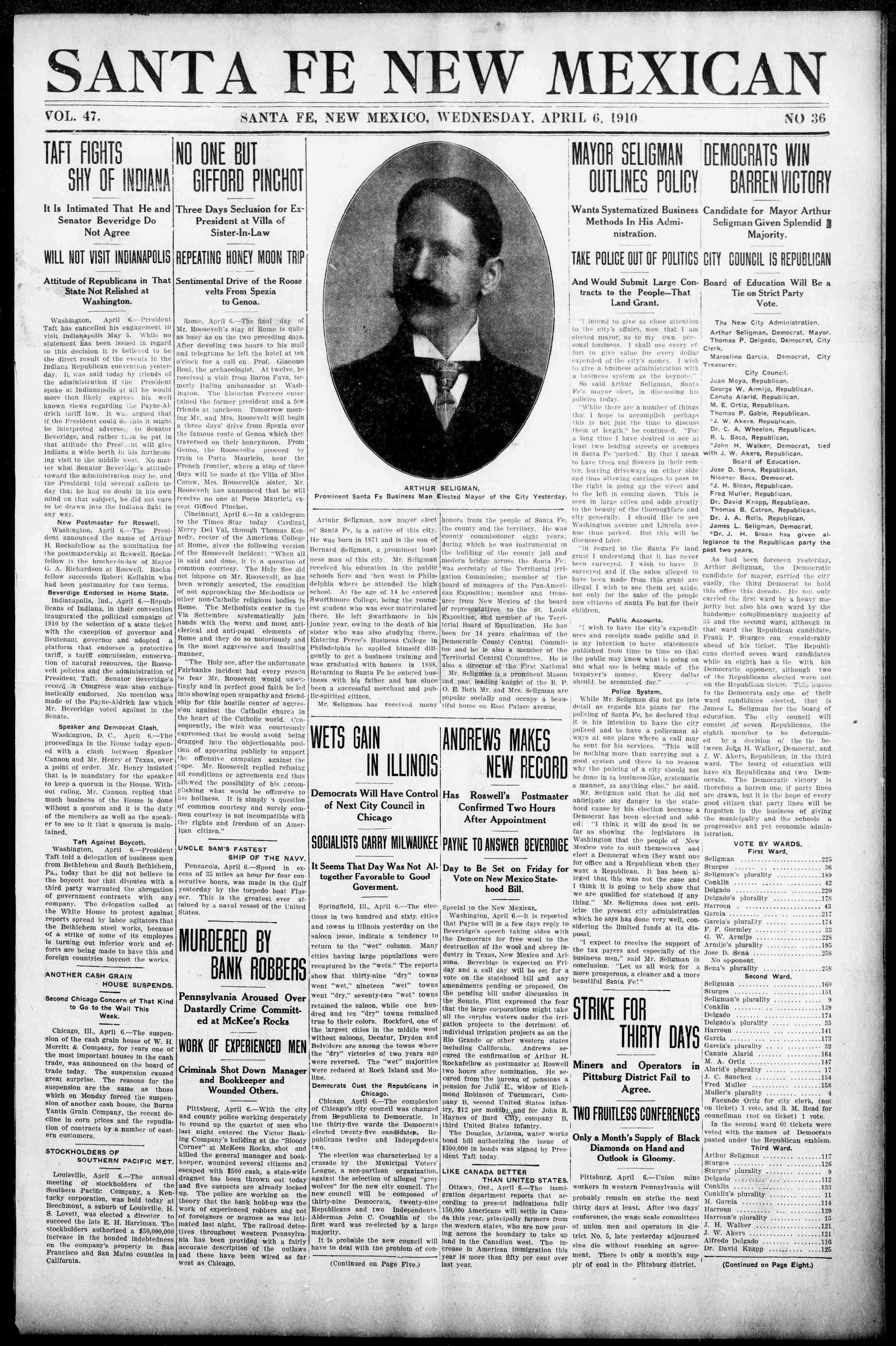
Six years later Arthur was elected mayor of Santa Fe and was featured on the front page of the April 6, 1910, issue of the Santa Fe New Mexican. The articles provide a biography and a description of his plans for Santa Fe during his upcoming term as mayor.

Santa Fe New Mexican, April 6, 1910, p. 1

Twenty years later, Arthur would be elected governor of New Mexico. Here he is attending the 1932 Democratic convention in Atlantic City, accompanied by my cousin Marjorie Cohen and my great-grandmother Eva Seligman Cohen, his sister.

Arthur Seligman, Marjorie, Cohen and Eva May Seligman Cohen, 1932 Atlantic City

Much thanks to my dear cousin Wolfgang for finding and sharing these articles about our relatives.


Arthur “Pete” (Seligman) Scott 1938-2017

I am very sad to report that my cousin Pete passed away on July 11, 2017. Regular readers of this blog may recognize Pete’s name—his full name was Arthur George Scott, but he was born Arthur George Seligman. Pete was my father’s second cousin, and I found him several years back when I was researching my Seligman(n) family line.

My cousin Pete and one of his many much-loved dogs

Connecting with Pete was one of the most rewarding experiences I have had while researching my family history. Pete was fascinated by history and was extremely knowledgeable about the history of his hometown, Santa Fe, and about our family’s contribution to the history of that city.  Because of Pete’s extensive background and incredible generosity, I was able to learn a great deal about our American Seligman history. And I was able to share with him my delight in learning about our German ancestors and relatives. He quickly became a friend as well as a cousin.

Pete was the great-grandson of Bernard Seligman, who, along with his brothers Sigmund and Adolf, traveled the Santa Fe Trail in the 1850s and helped to establish Santa Fe as an important trading post. Their store Seligman Brothers was on the main plaza in Santa Fe for close to eighty years.

Bernard Seligman

Pete’s grandfather was Arthur Seligman, the governor of New Mexico from 1931 until his death in office in 1933. I wrote extensively about Arthur Seligman on the blog, as well as about Pete’s father Otis Seligman; without Pete’s help, I would not have been able to learn and share as much as I did about the contributions the Seligmans made to American history.

Arthur Seligman (second from left) with Franklin Roosevelt and others

Pete and his dear friend Mike Lord along with several others also created and contributed to a historical website called Voces de Santa Fe. If you enter Arthur Scott or Pete Scott into the search box there, you can see some of the incredible work Pete did, researching and writing about not only his family’s history, but also the general history of Santa Fe and the region. I relied on Voces for many of my stories about the Seligmans and early Santa Fe.

Pete was very proud of his family history, as well he should have been. Pete inherited the pioneer spirit of his great-grandfather Bernard and the commitment to public service of both his great-grandfather and his grandfather and namesake Arthur Seligman. Rather than try and write a biography of Pete myself, I am including in this post the beautiful obituary written by Pete’s daughter, Terri. Thank you, Terri, for allowing me to share this.

A Life Well Lived, Loved, and Learned

Arthur George Scott (Seligman), also known as Pete and Art, aged 79, last residing in Bradenton, FL, died on July 11, 2017 at home, in his sleep due to many complications from a lifetime of Type I Diabetes.

He was born on January 27, 1938 to Doris Seligman (Gardiner) and Otis Seligman in Santa Fe, NM. He was given his stepfather’s last name of Scott in 1943 after his father passed away when Pete was just starting public school in Santa Fe.

While obtaining his BS in Civil Engineering from New Mexico State University, he married his first wife Marilyn Bicksler. After participating in ROTC and graduating from NM State University, he provided service to the US Army as a Lieutenant, giving education to many younger recruits during the late 1950’s Cold War. After providing his service to the United States, he grew his hair long and never cut it short again; he added a beard and mustache for good measure.

He acquired Type I Diabetes just out of the US Army, while beginning a lifetime career in the United States Geological Survey. Lucky to survive the diabetic coma that announced a new path in his life, Pete moved forward and never gave up.

He loved his career and work friends at USGS in Santa Fe, NM, surveying rivers and dealing with Diamondback Rattle Snakes in the desert. And at USGS in Reston, VA, he travelled and wrote hydrologic journal papers on rivers and lakes from the Clinch River Valley to Canada/US Great Lakes, and to Brazil educating on water resources. He called it “The best job in the world”. Part of that “best job” involved a lot of travel, which he relished and he learned from the people in every society, city, or country he visited.

Pete inspired all of his creativity, scientific knowledge and self-sufficiency to his children, Terri and Janice. They remember his paintings, remodeling of the house, and collecting NM historical artifacts. Terri and Janice closely followed in his footsteps of science and creativity.

Pete and Bonnie on their wedding day

In 1980, while living in Reston, VA he met and married his current, devoted, and loving wife, Bonnie Sharpless Scott. Their marriage was 37 years strong. They spent many exciting and tumultuous times, helping to raise two teenagers, travelling, working, playing, and loving. Bonnie, a professional hairdresser, always took care of trimming Pete’s hair and beard to ultimate perfection. Now, that’s true love. Their travels were magical from the Galapagos Islands seeing Darwin’s creatures, to Africa viewing Mount Kenya and Mount Kilimanjaro, and hanging in Jamaica getting dreadlocks, and onto Thailand appreciating the majesty of nature, then sailing in the Caribbean, as well as a Brazilian cruise up the Amazon River.

Pete leaves behind many people, including his two daughters, Terri and Janice; Janice and husband Matthew’s children, Alexander and Wesley; Terri and husband Jeffrey’s children, Joshua and Nicholas; his niece, Jhette Diamond; and most significantly, his wife, Bonnie. In addition, Pete leaves behind very favored pets, including dogs: Koda II, Sunny, and Tipper, plus birds: Bubba, Tico, and Cisco. And very importantly, he leaves behind a legacy and brilliant history with many extended family and friends.

Type I Diabetes was a major obstacle in Pete’s life, as well as his family’s lives. He kept all his limbs, but lost most of his eyesight, most of the use of his hands, and his legs were very painful and eventually lost function, at which point he had to accept a wheel chair, all due to Diabetic peripheral neuropathy. However, he never gave up hope and learning. His last days were spent with Bonnie making cigar box guitars, and learning to play slide guitar blues.

If you would like to help his family heal from the loss of Pete, please learn everything you can about Type I Diabetes and feel free to make a donation to the American Diabetes Association (www.diabetes.org) or your local chapter of The Lighthouse for the Blind. We only ask this, in Pete’s name and memory, so that young people who have no choice and acquire this disease can live better and longer lives than Pete was allowed.

I will miss Pete very much; although we had long ago finished our collaboration on the family history, we had stayed in touch. In March, 2016, while in Florida, Harvey and I traveled to Bradenton, Florida, and had a very enjoyable and interesting evening with Pete and his beloved wife Bonnie.  We met their dogs and parrots and shared stories about our lives and our history. I feel so very fortunate that we were able to spend that time together. Here is a photo I took when we were together.

Pete and Bonnie when we visited in March 2016

My heart goes out to Pete’s family—his wife Bonnie, his daughters Terri and Janice, and his grandchildren.  May his memory be a blessing for his family and for all of us who knew him.

Kasha-Katuwe Tent Rocks National Monument

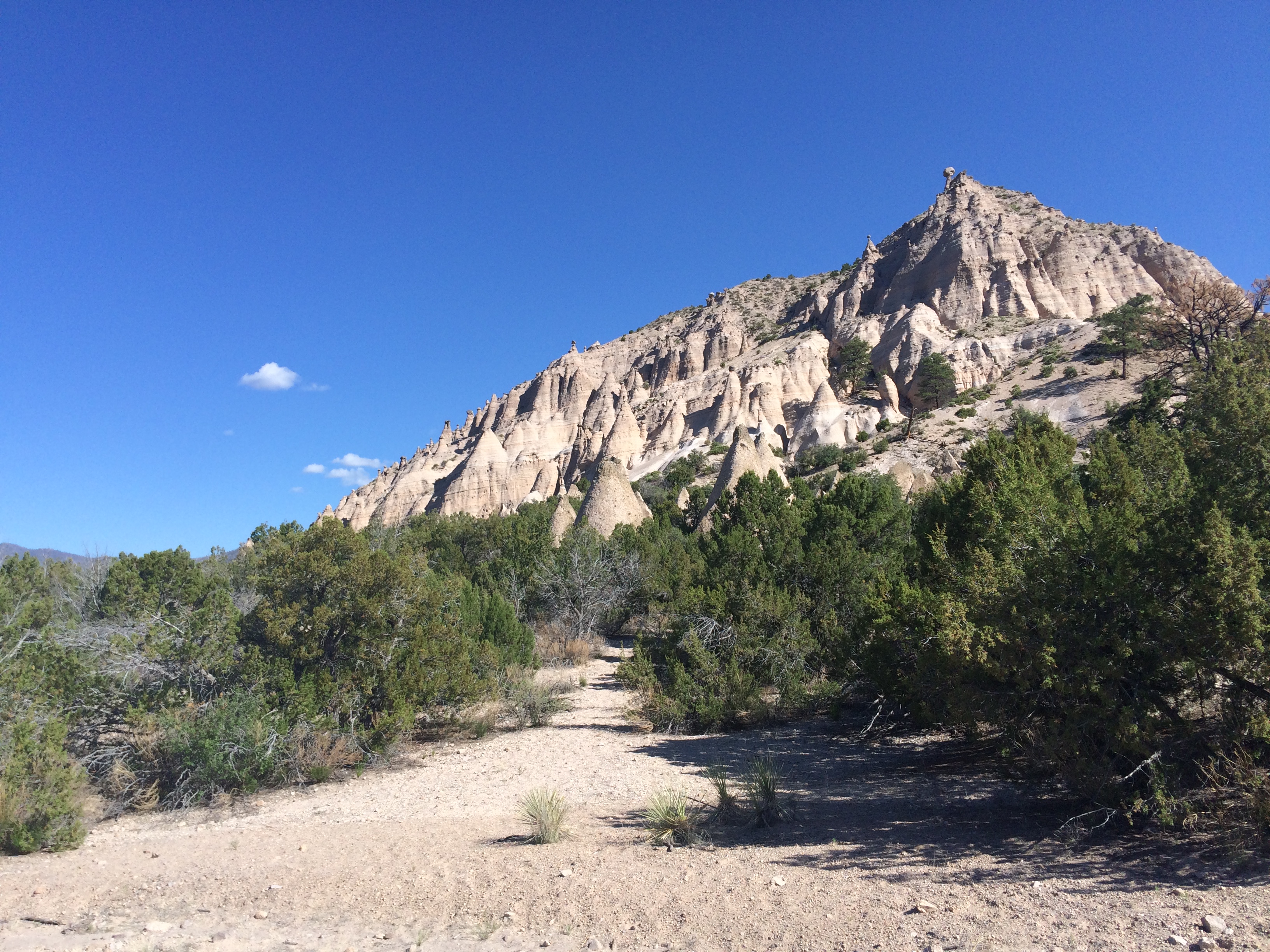
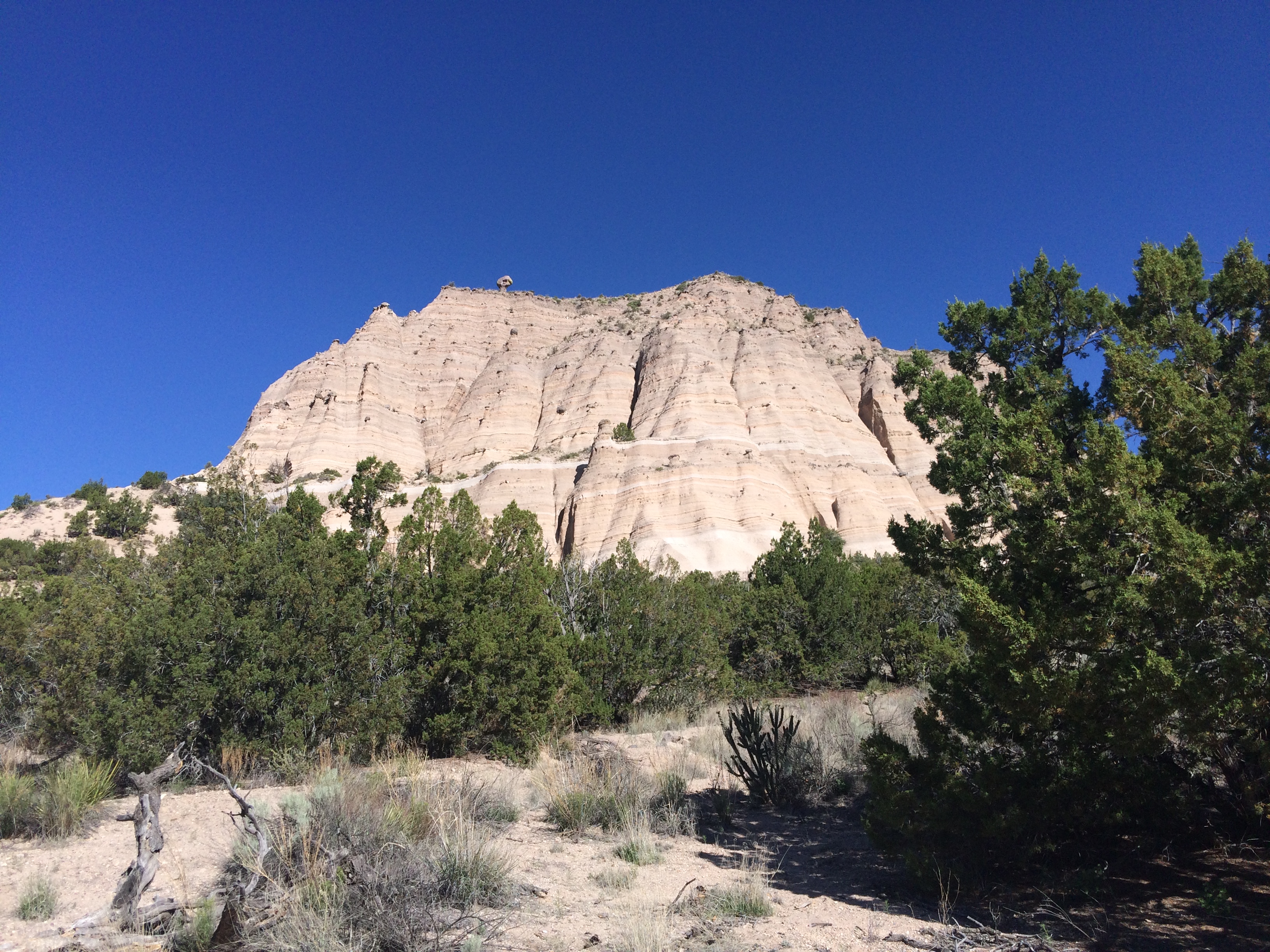
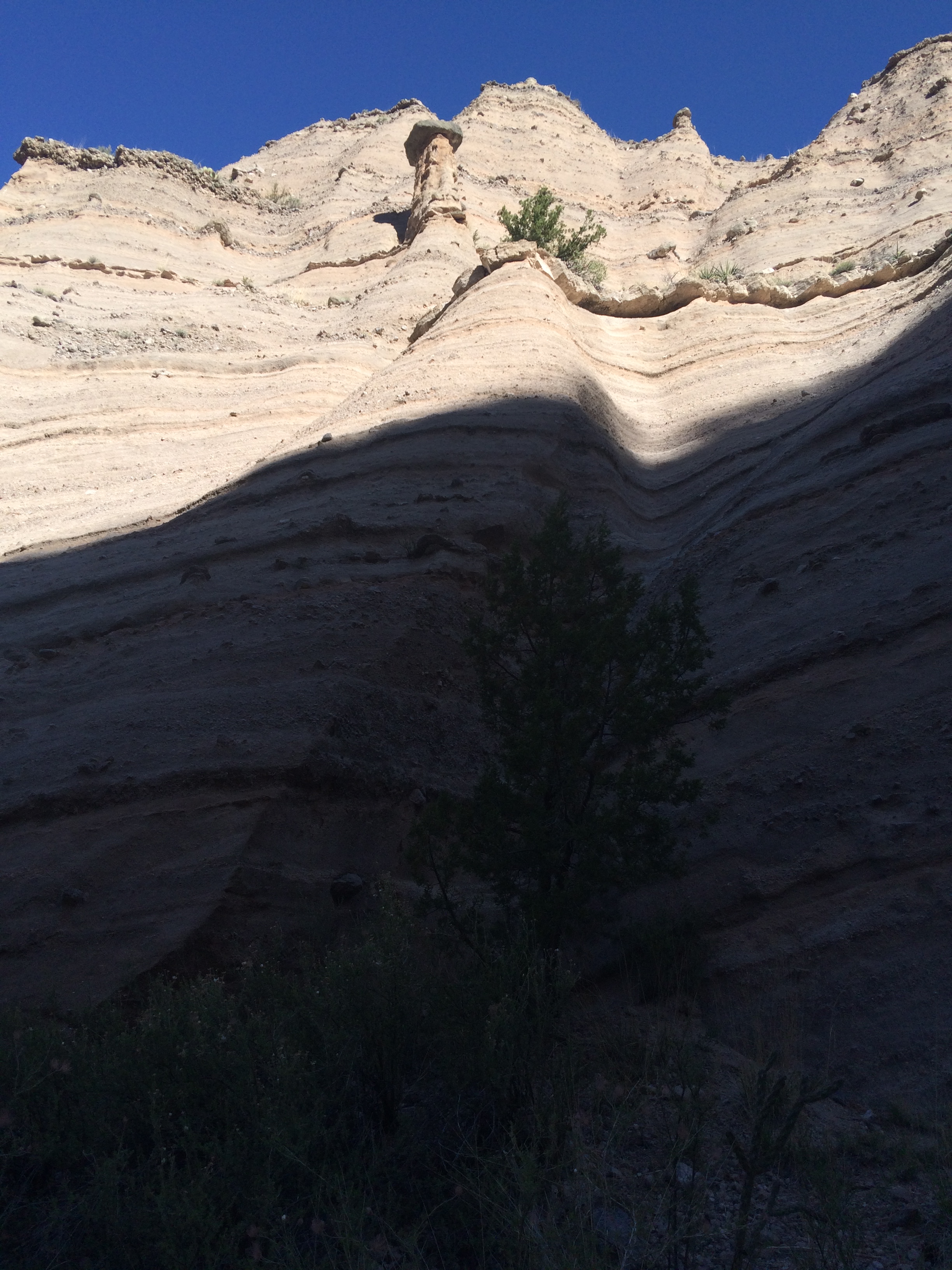
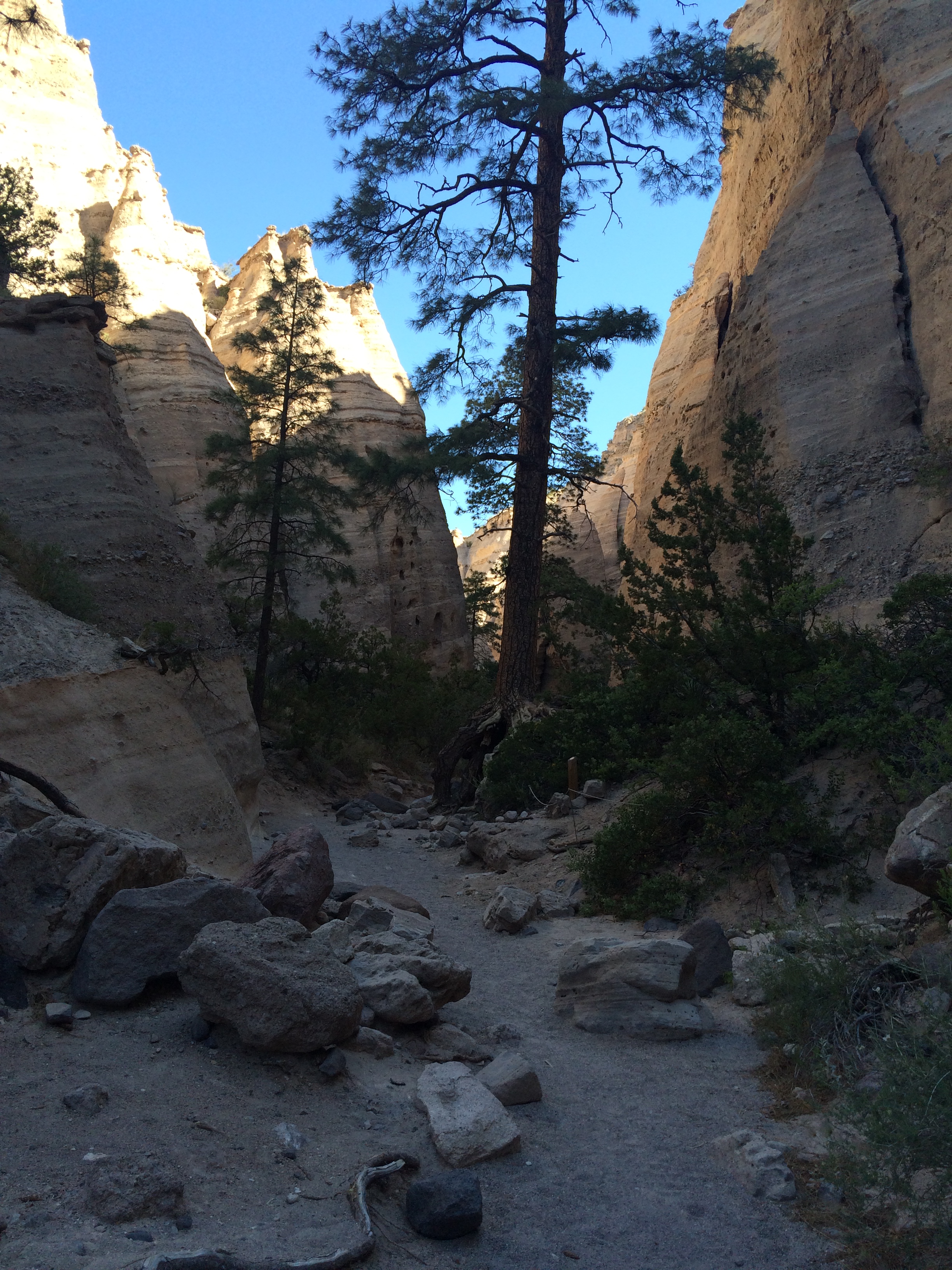
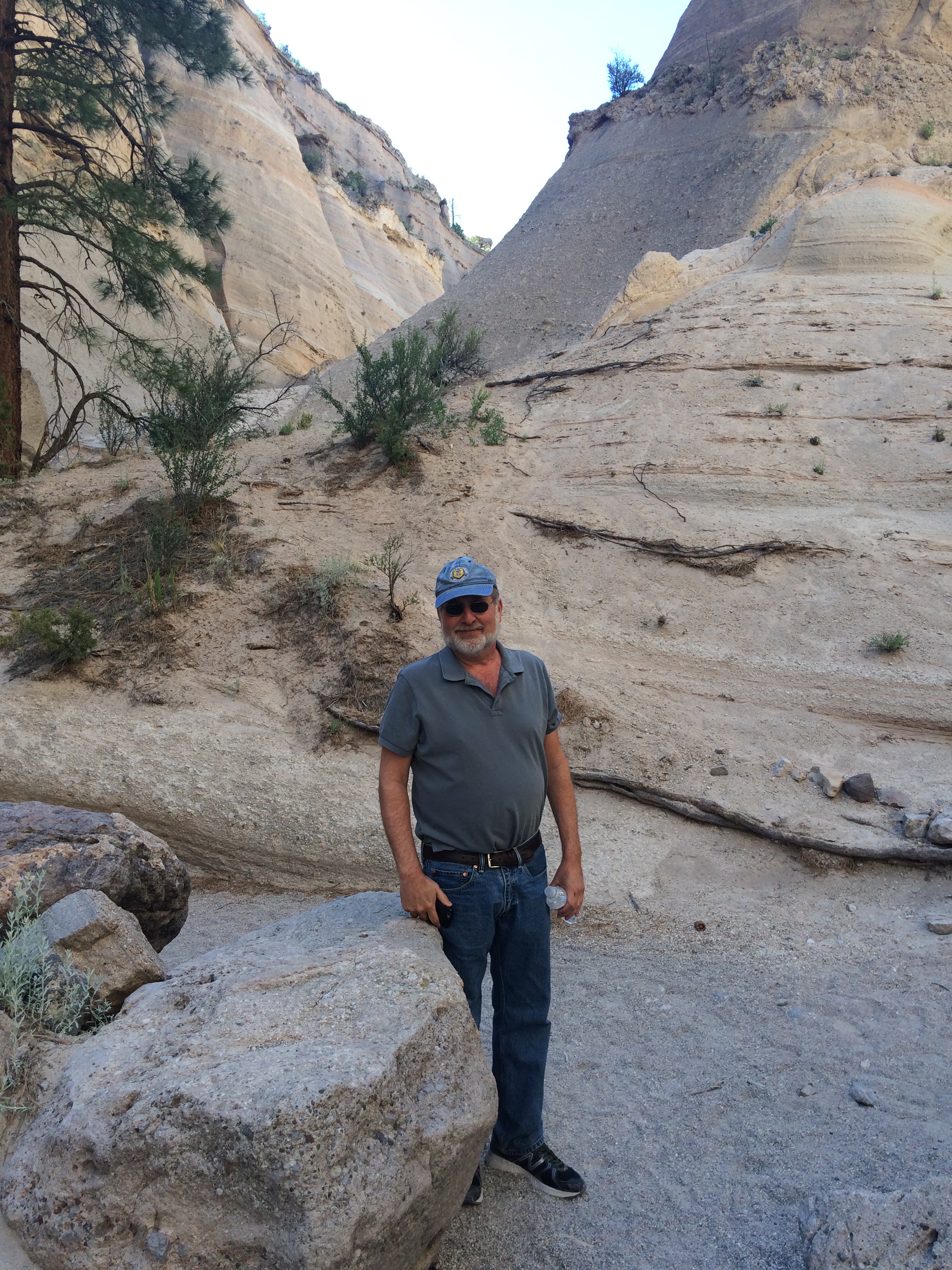
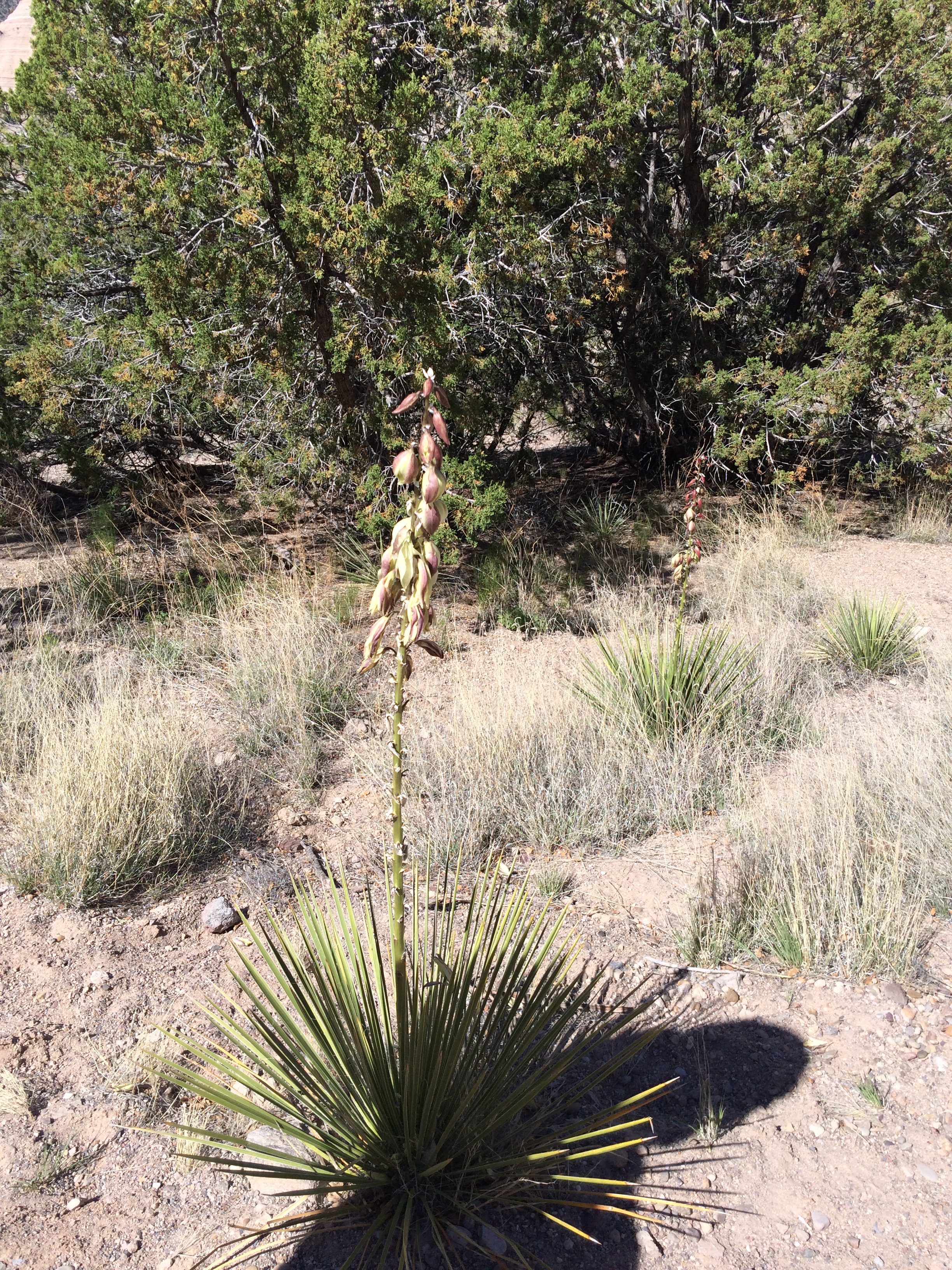
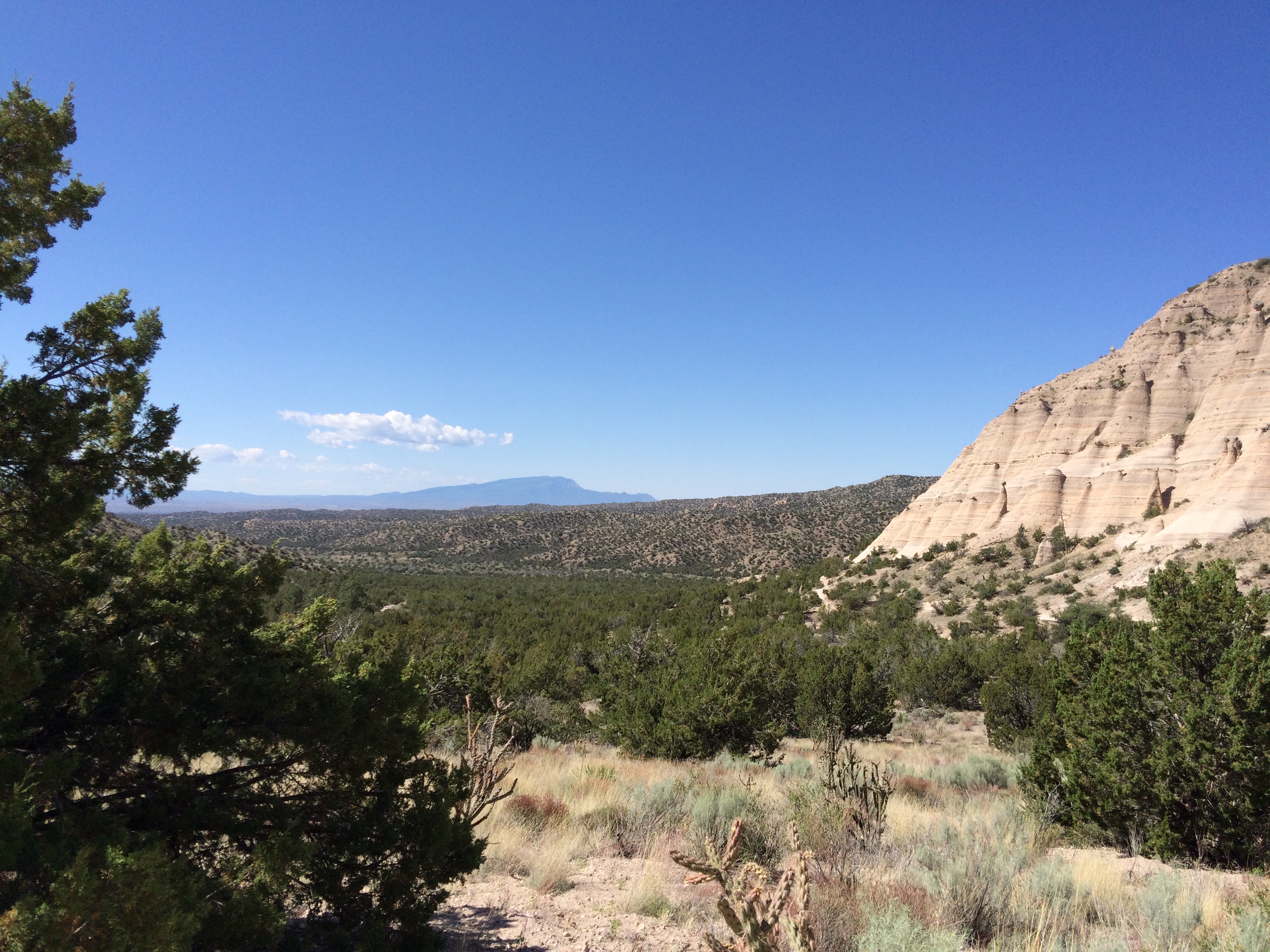
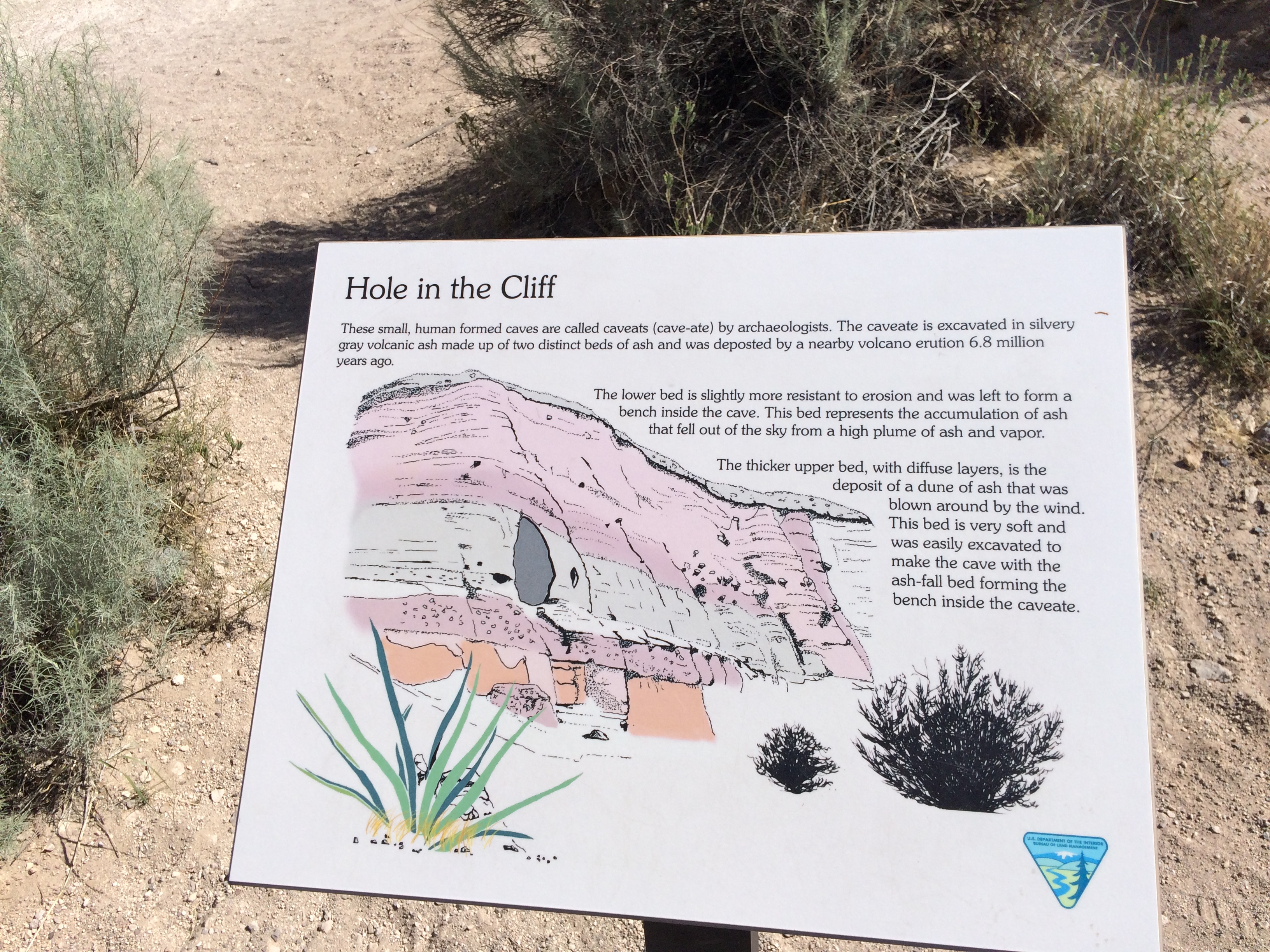
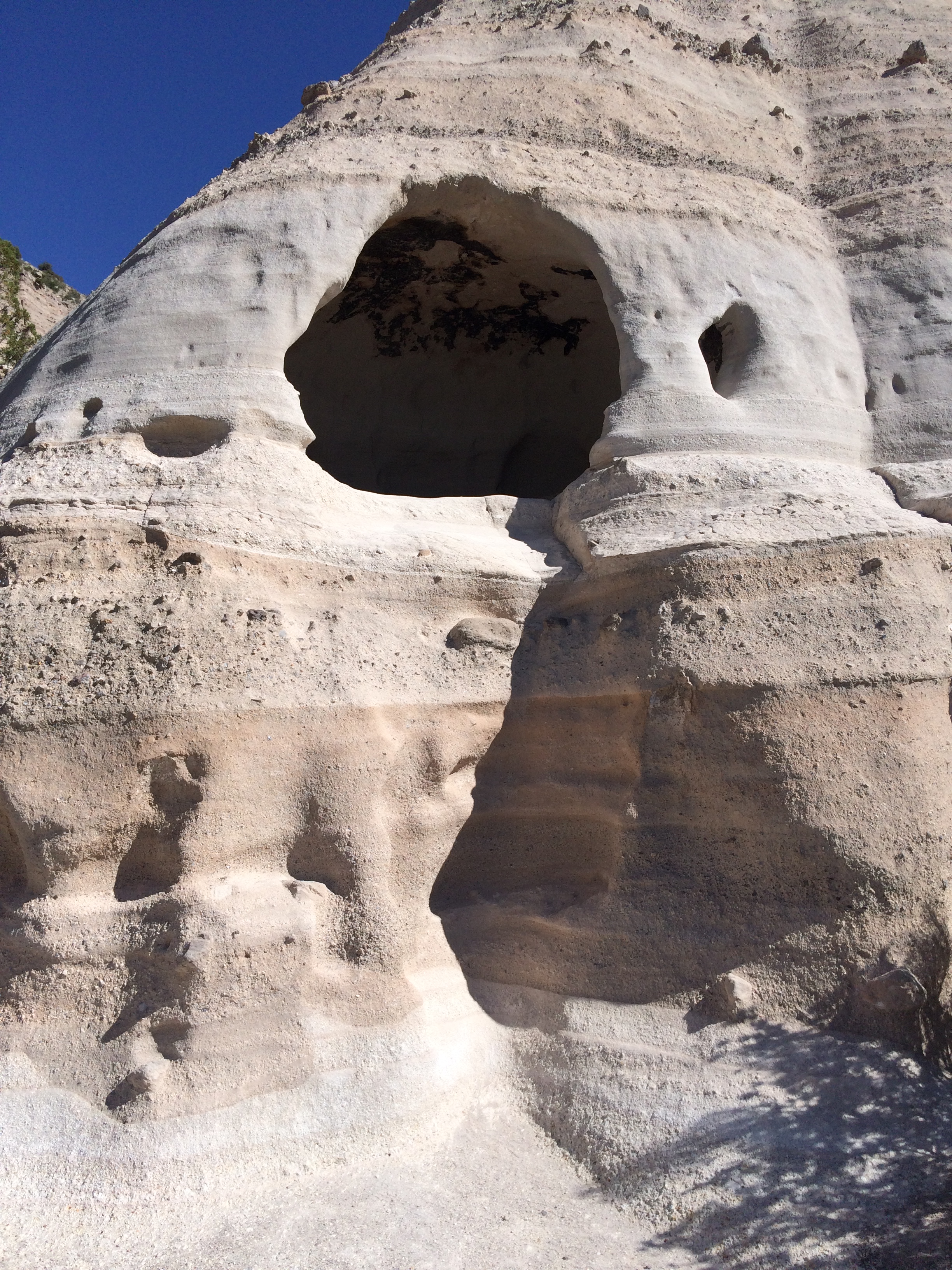
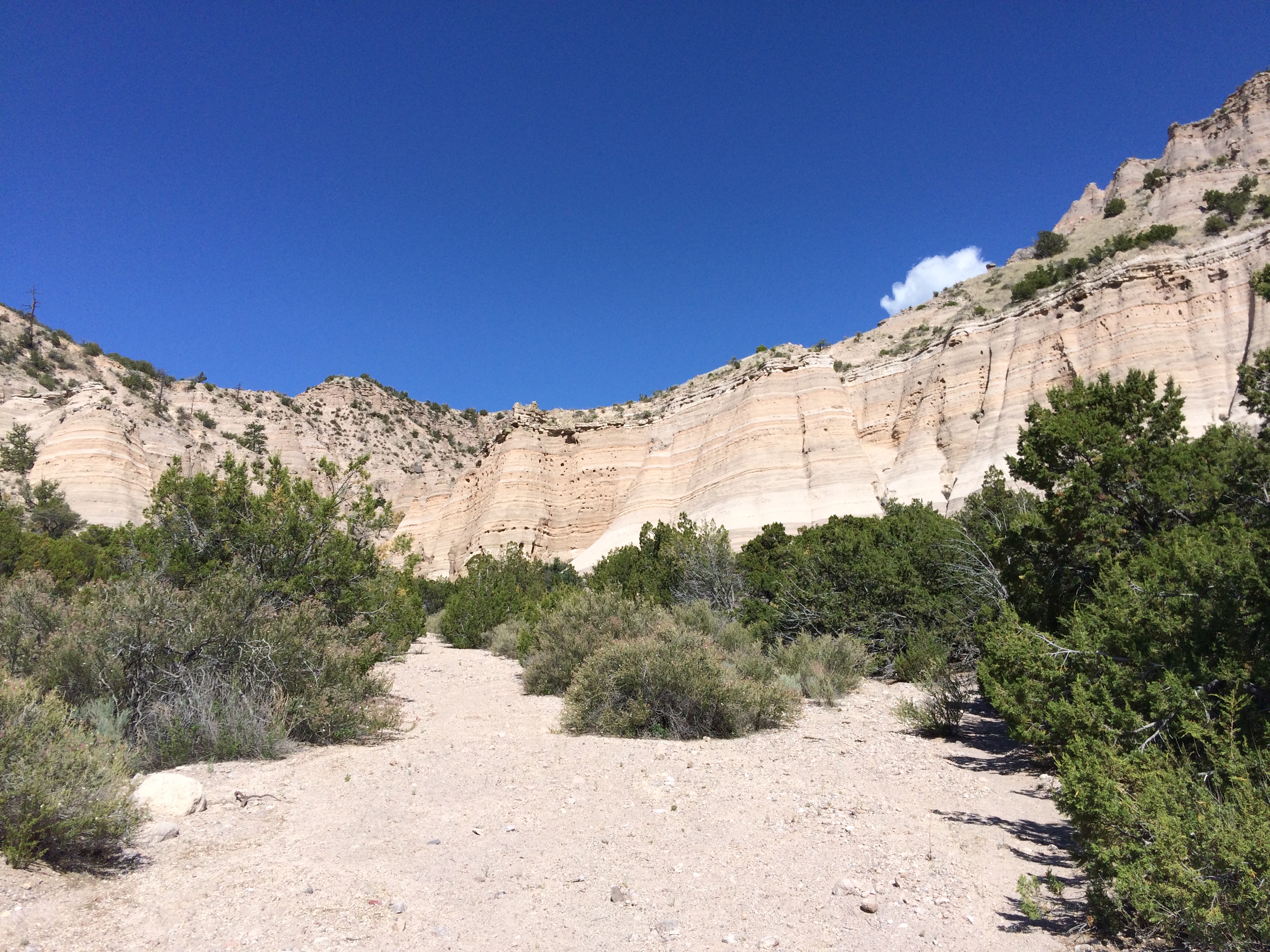
About 45 minutes outside of Santa Fe is a true natural wonder, Kasha-Katuwe Tent Rocks National Monument.  It was not a place that we had on our original itinerary, but while in Boulder with my college friends, one of those friends suggested that we take the side trip to see this place.  She described it in ways that made it seem like something we shouldn’t miss, and she was right.  I am so grateful to her for making this suggestion.  This had to be one of the most awe-inspiring places I’d ever seen.  I will let my photographs speak for themselves, but keep in mind that these were taken with an iPhone 5s camera and that the colors and the textures are even more amazing in real life.

20160528_150702666_iOS

20160528_150707354_iOS 20160528_151001810_iOS 20160528_151010663_iOS 20160528_151501847_iOS 20160528_151505033_iOS 20160528_152236474_iOS 20160528_152253706_iOS 20160528_152322794_iOS 20160528_152513078_iOS 20160528_152856060_iOS 20160528_152858682_iOS 20160528_152908510_iOS 20160528_152924990_iOS 20160528_153549763_iOS 20160528_153552016_iOS 20160528_154340400_iOS 20160528_155202533_iOS 20160528_155206120_iOS 20160528_155805099_iOS 20160528_155915427_iOS 20160528_155919631_iOS 20160528_160028134_iOS 20160528_160043931_iOS 20160528_160131331_iOS 20160528_160457412_iOS 20160528_160529049_iOS 20160528_161248170_iOS 20160528_161422446_iOS 20160528_161732598_iOS