What Did They Know, and When Did They Know It?

As I’ve learned about the numerous members of my Seligmann family who were killed during the Holocaust, one of the questions that has bothered me was whether or not their American relatives were aware of what was going on in Germany.  This, of course, is part of the larger question of what Americans, Jewish or not, knew about Hitler and his plans to murder the world’s entire Jewish population. Certainly people were aware of the anti-Semitic laws and practices, of Kristallnacht, of some violence against Jews, but to what extent were they aware of the seriousness, the severity of the situation, of the plans for genocide?  We all know stories of immigrants who were denied entry, including full ships turned away from American ports.  Historians have written about the failure of the Roosevelt Administration to respond to pleas for help from those who were very much aware of what was happening in Germany and elsewhere in Europe.

But what did my own family know? Did my Seligman relatives here in the US know what was happening to their cousins in Germany?  In 1935 when the Nuremberg Laws were enacted in Germany, depriving Jews of their citizenship and imposing many other restrictions on their lives and livelihoods, both my great-grandmother Eva Seligman Cohen and her younger brother James Seligman, my great-great-uncle, were still alive (their youngest brother Arthur had died in 1933).  Did they even know they had cousins living in Germany? Were they in touch with them? Did they know what was going on there?

To some extent those questions now have some answers, thanks to a series of letters from and to Fred Michel sent to me by his children.  Fred Michel’s grandfather August Seligmann was the younger brother of Bernard Seligman, the father of Eva and James and my great-great-grandfather. Fred was thus the first cousin once removed of my great-grandmother and her brother.  I wrote previously that in Fred Michel’s citizenship application he had identified James Seligman of Santa Fe as his sponsor for immigrating to the United States in 1937.  Fred’s children have some letters written by James Seligman regarding the immigration of his German cousin that shed some light on my questions.

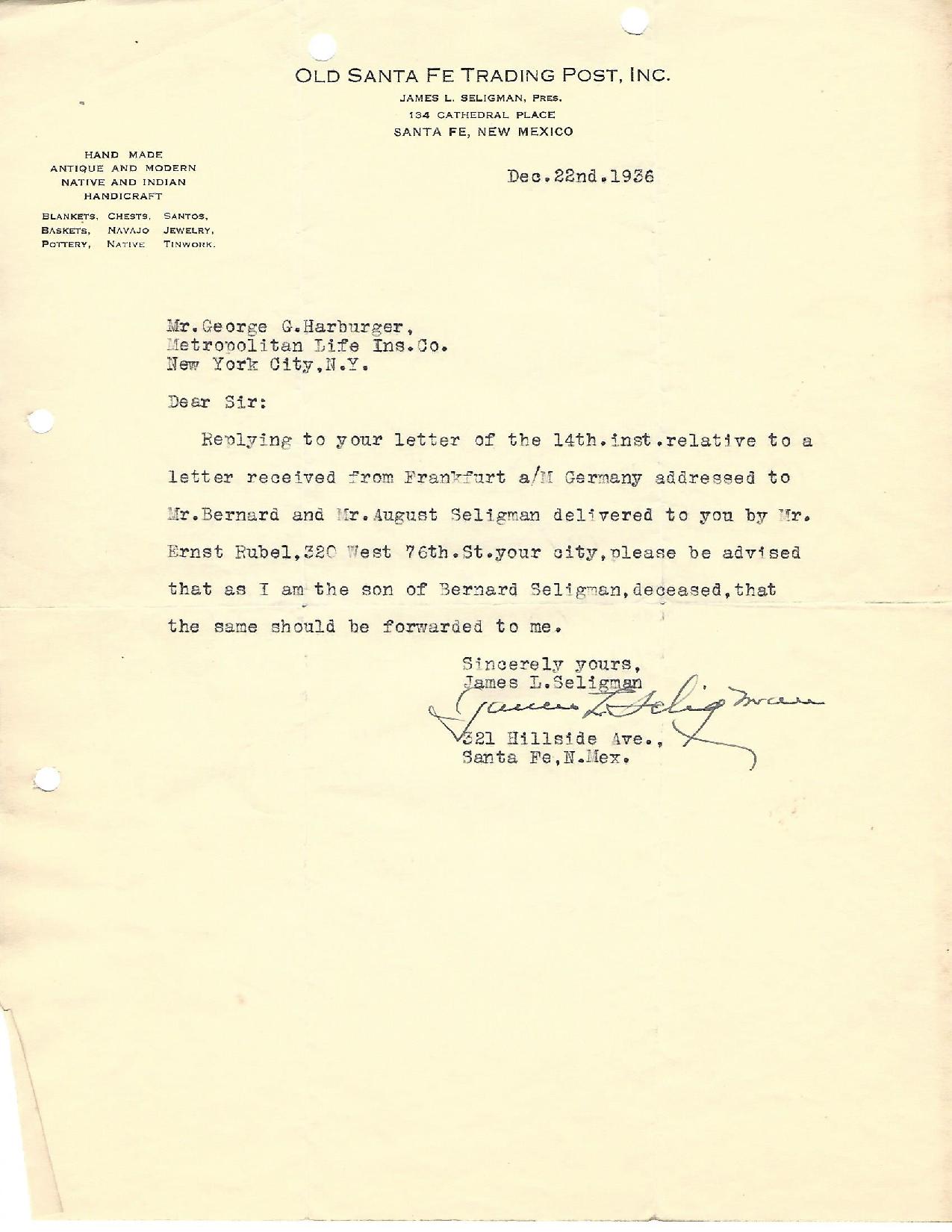
The earliest letter in this particular collection is one from James Seligman to George G. Harburger of Metropolitan Life Insurance in New York City, dated December 22, 1936.  In this letter, James was writing in response to a letter from Mr. Harburger regarding a letter that had been sent from Frankfort, Germany, to Bernard and August Seligman, which an Ernest Rubel had delivered to Harburger.  Ernest Rubel was the person whom Fred Michel later listed on his naturalization application as the person to whom he had been coming when he arrived in the US.

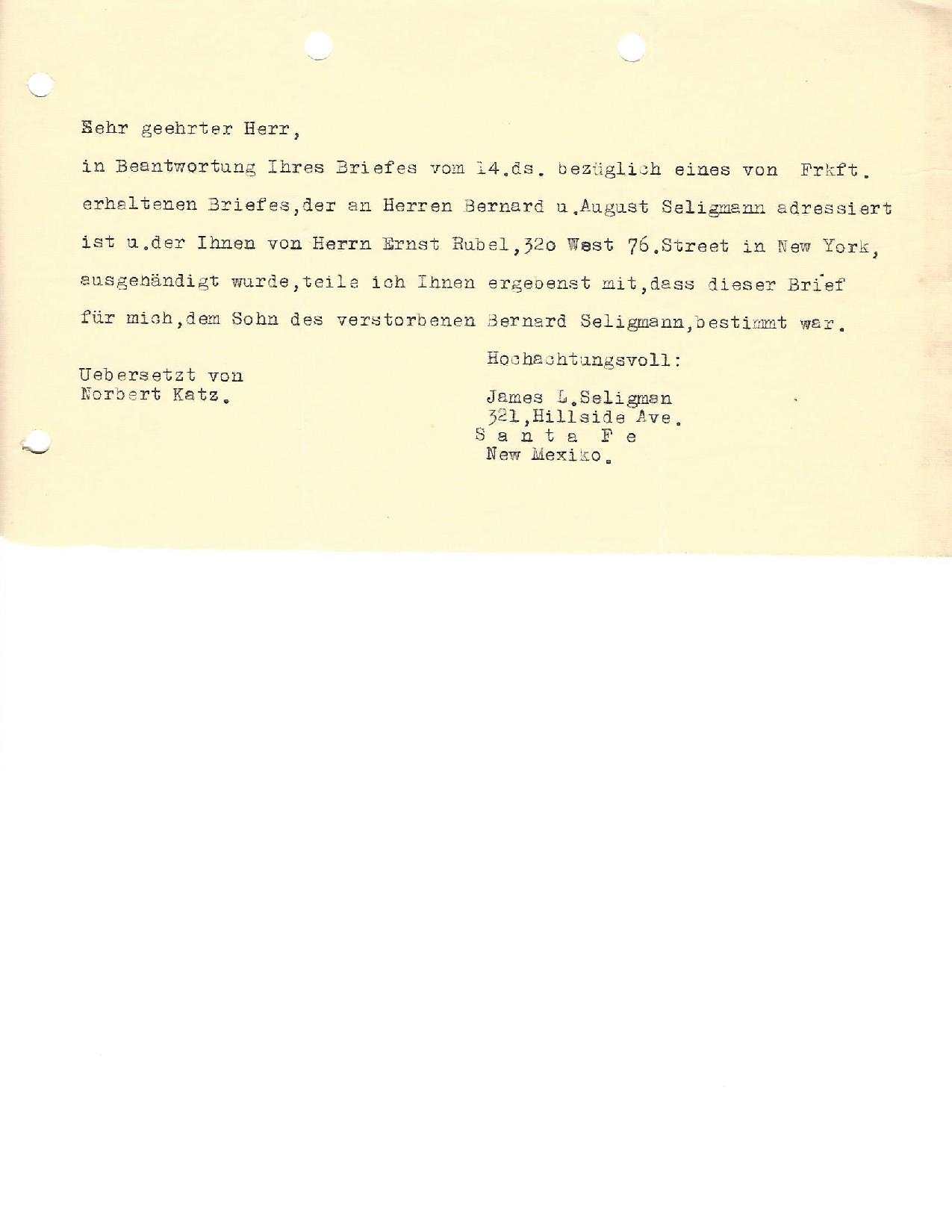
James requested that the letter be sent to him, as he was the son of Bernard Seligman. There follows a German translation of the same letter.  I wonder whether James knew German or whether he had someone else do this translation for him.
Courtesy of the Family of Fred and Ilse Michel
Courtesy of the Family of Fred and Ilse Michel

courtesy of the family of Fred and Ilse Michel

courtesy of the family of Fred and Ilse Michel

The next letter in the file is from James Seligman to Fred Michel.  (Note that James addresses the letter to Fritz, which was Fred’s real name before he changed it after immigrating.)  The letter is dated January 25, 1937, and in it James first described the American Seligmans—his father Bernard, his two uncles, Sigmund and Adolf, and his brother Arthur, all of whom had passed away by 1937, and then mentioned that only he and his sister were still living.  His sister, of course, was my great-grandmother Eva.

Courtesy of the Family of Fred and Ilse Michel

Courtesy of the Family of Fred and Ilse Michel

James then addressed the purpose of Fred’s letter to him: his desire to immigrate to the United States.  James warned Fred about the unemployment situation in the US, although recognized that Fred had a friend in the US who could help him.  Fred must have inquired about a possible job in Santa Fe with James, to which James replied, “As regards a job in this city, this would be out of the question as I only have a very small business myself with only one employee and which is all it will stand.”  By 1930, James Seligman was no longer affiliated with Seligman Brothers and had formed his own business, the Old Santa Fe Trading Post, which must have been the business to which he was referring in his letter to Fred Michel.  Fred might very well have been taken aback by this flat-out refusal to help him find a job in Santa Fe.  But James agreed to help Fred by sending an affidavit in support of his immigration and closed by wishing him the best and expressing hopes to meet him some day.

On February 11, 1937, George Harburger wrote to James Seligman to persuade him to help.  It appears from the letter that Ernest Rubel, Fred’s personal friend, had contacted Harburger to ask him to contact James for help.   I am not sure of the various connections there, but George described Fred as someone who had supported his mother all his life and as an intelligent and self-made man who would “never be a burden” to James and then instructed him how to submit an affidavit in support of Fred’s immigration.

James Seligman to Fred Michel first letter and supporting docs-page-005

Courtesy of the Michel Family

James Seligman to Fred Michel first letter and supporting docs-page-004

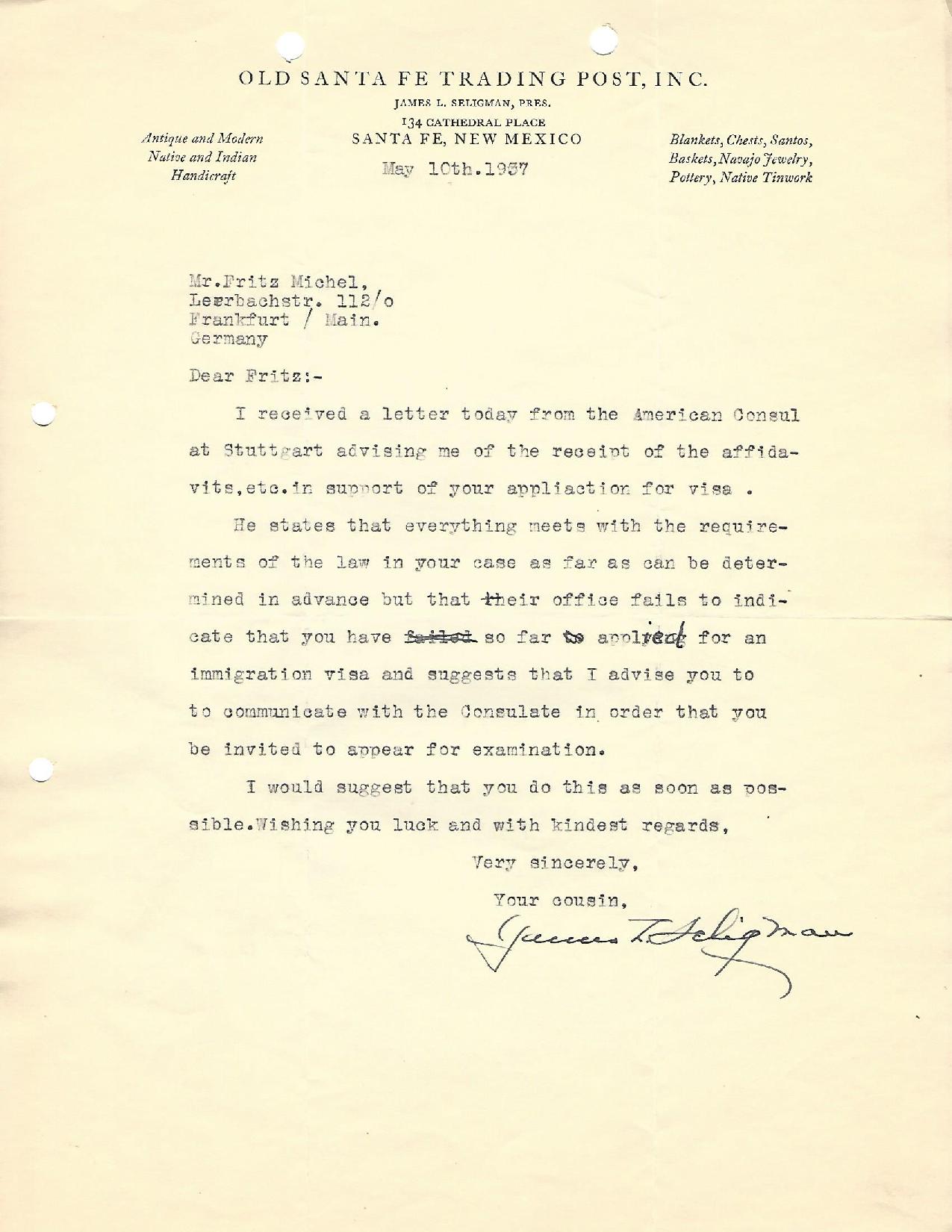
James then wrote to Fred again on May 10, 1937, advising Fred that the American Consulate had received James’ affidavit and that all was in order, but that they had not yet received an application from Fred himself.  James advised him to do so “as soon as possible.”
James Seligman to Fred Michel first letter and supporting docs-page-008

Courtesy of the Michel Family

Then there was a letter in German which I could not translate, but which the kind people in the Germany Genealogy group on Facebook helped me with:

James Seligman to Fred Michel first letter and supporting docs-page-009

Here is the translation of this letter from Fred Michel to the US Consulate on May 1, 1937:

Subject: Pledge from Mr James Seligman,321 Hilside Ave., Santa Fe,

for Fritz Michel, Leerbachstreet 112/o at Moritz (means in the apartment of Moritz), Frankfurt/Main

To the consulate general of the USA

Dear Mr Consul General!

Attached I’m sending you the missing papers for your examination.

Obtaining the papers I had to learn that my landlord didn’t register me for 3 month (from March until May 1933). Please find the reason for that in the authentication attached. Also you can find in attached transcript of my certificate where I was working during that time. If you wish I can bring the original paper with me. The County Department of Bingen /Rh. ( at the Rhine), where I complained about my certificate of good conduct four times, just sent me the information that the required paper was given to post it to Stuttgart on May 3 to your address.

I own a proper passport.

If I won’t hear from you, I’ll assume that my papers are in order.

Yours respectfully 

Attachments:

4 passport pictures, 2 birth certificates

4 certificates of good conduct

1 transcript of certificate

Reading this letter after I’d had it translated made me angry; it so clearly reflects how difficult some in Germany were making it for Fred to be able to leave, but also how difficult the US was making it for him to arrive.

From other documents we know that Fred Michel was finally allowed to immigrate and arrived in the US on September 24, 1937.  On October 10, 1937, his cousin James wrote to him again, welcoming him to the United States.  Fred must have enclosed a photograph in his letter to James telling him of his arrival because James referred to it as indicating the Fred must have encountered bad weather while crossing the ocean to America.  Fred also must have told James that he had landed a job and was living with friends.

I found the next paragraph of this letter very telling.  James warned Fred that it might take some time to adjust to his new country and then said, “How anyone can live in Germany under that man Hitler I cannot understand but suppose they cannot get away from it all.”  What did he know about Hitler as of September 1937? Were his feelings shared by Americans in general? And isn’t it also revealing that James, the son of a man who had left Germany behind about 80 years earlier, could not imagine why others were not also leaving Germany as his father and Fred Michel had done?  Would James have found it so easy to leave his homeland if the shoes were on the other feet?

James then thanked Fred for a gift he had sent him—a writing set—but says Fred should have saved his money until he “could afford it better.”  Was this insulting to Fred as patronizing? Or did he see it as an older cousin’s concern? James closed by saying, “Let me hear from you from time to time and let me know how you are getting along and what kind of work you are doing as I will always want to know.”  Although I read this as genuine interest and concern, it is not at all clear to me that Fred and James maintained much or any future contact.  Fred’s children seemed to believe that they did not.

courtesy of the Michel family

courtesy of the Michel family

In any case, James died on December 15, 1940, just three years after Fred’s arrival in the US.  Among Fred’s papers was an obituary for his cousin James that he must have saved for many years.  I had not seen this obituary before, and I do not know in what paper it was published or the date and page.  I will not transcribe its content here, but will add it to the post I wrote quite a while back about James Seligman.

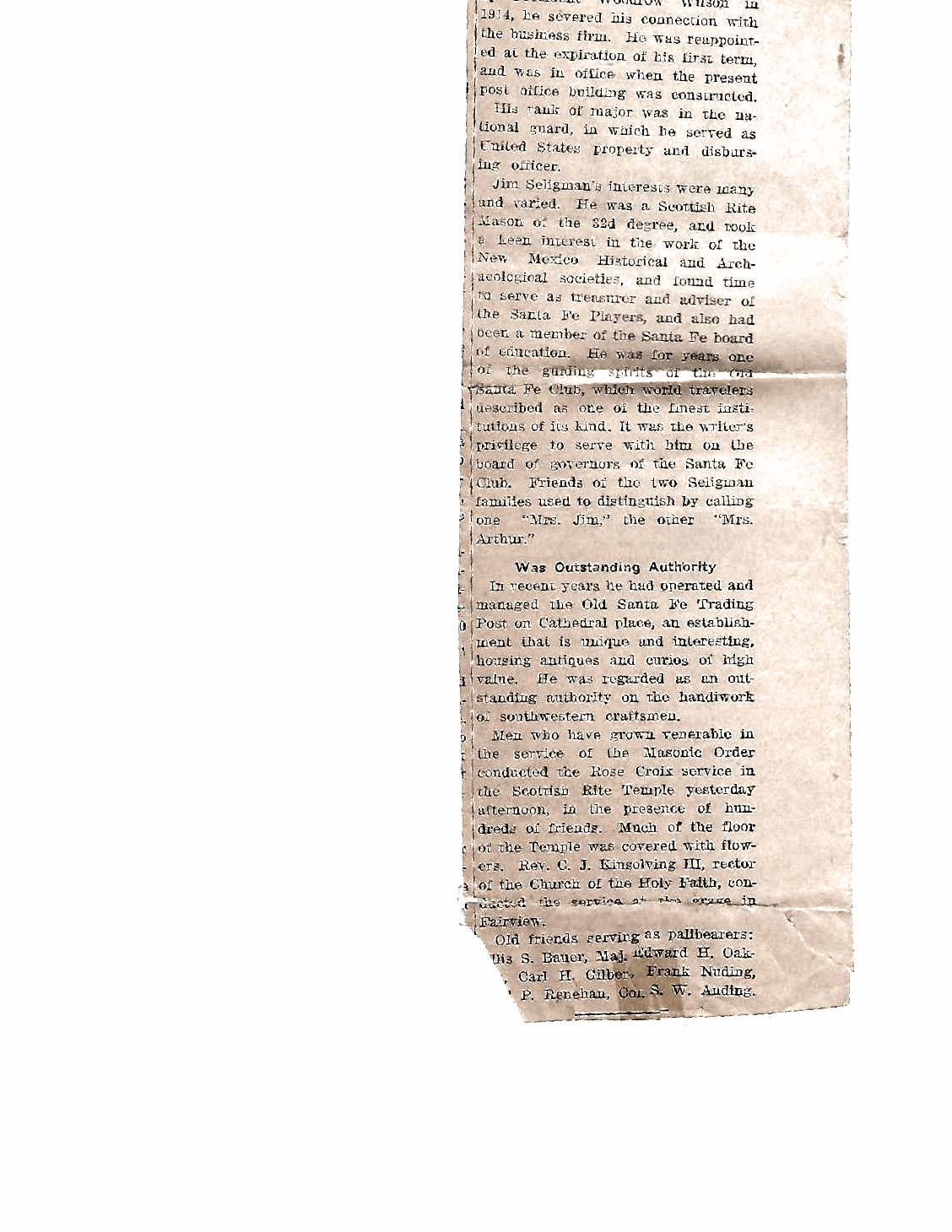
james seligman obit edit

James Seligman obit p 2 edit

The next letter in this file was written many years later.  On October 9, 1975, Fred wrote the following letter to Mrs. Randolph Seligman of Albuquerque, New Mexico, thinking she might perhaps be a relative, and identifying his own background and his connection to James Seligman of Santa Fe.

Courtesy of Michel Family

Courtesy of Michel Family

Of greatest interest to me in this letter is this short reference to my great-grandmother: “Once I met Eva Seligman in Philly.”  My great-grandmother died in October 1939, just two years after Fred arrived.  My father was living with her at the time that she likely met Fred Michel.  He doesn’t remember him, though he said the name was familiar, but probably from reading it on the blog.  From what I have learned about my great-grandmother, she was a warm and welcoming person who had several times taken in relatives in need.  I wish I knew more about her meeting with her German-born cousin Fred Michel.

Mrs. Randolph Seligman responded shortly thereafter that although she was not a relative of the Santa Fe Seligmans, the Santa Fe phone directory listed a William Seligman and a Jake Seligman living in Santa Fe. [These were the sons of Adolph Seligman, about whom I wrote here.]  She said they had once met William, known as Willie, years before in his clothing store in Sante Fe.  In November 1975, she wrote again, commenting that it was strange that the two New Mexico families did not know each other, but attributed that to the fact that “they married non-Jews and became affiliated with the Episcopal Church.”  Near the end of her letters she spoke of plans to visit with Willie Seligman in Santa Fe and identified him as a relative of Arthur and James Seligman.  Fred responded to her on January 5, 1976, expressing his delight that she had written to him again and filling her in on his family.

But within what is otherwise a newsy and cheery letter are two sad passages.  After referring to some relatives he remembered from Germany, Fred wrote, “As I write these notes I am amazed how much I know about my family when one considered I left “home” when I was 18, never to return. Finally, in 1972 while in Europe I contacted some survivors. It was an emotional experience we never forget. Some I haven’t seen since Hitler came to power.”[1]  For me, this is a powerful statement in its own understated way.  Here was a man who had left everything behind yet even he is surprised by how much he still remembered of his family and his past.

The other disturbing passage in this letter is in the following paragraph where Fred wrote about the travel plans he and Ilse had made in 1974, including to Santa Fe, where Fred had relatives, and to Georgia, where Ilse had relatives.  Fred wrote that they had discarded those plans “as Ilse reasoned that in spite of her writing after arriving here, she never received an answer and the same goes for my relatives in S.F. [Santa Fe].”  How sad that so many years later Fred and Ilse both still felt hurt by the fact that their American relatives had not stayed in touch with them.

I don’t know how to reconcile that with the welcoming letters that Fred received from James, but obviously there were some hard feelings there, whether justified or not.  I just find it very sad that two people who had lost so much felt so abandoned by their American relatives.

So what did those American Seligman relatives know by 1937 when Fred was trying to escape from Germany?  They knew that they had German relatives, they knew that things were bad for Jews with Hitler in power, and they knew that there were at least some family members who wanted to leave Germany and come to the United States.  Did they do enough? Of course, in retrospect nothing anyone did was enough, given the outcome of the Holocaust.  And it is hard to know sitting here today what more any one individual could or should have done.  Certainly James did what he was asked to do and helped Fred immigrate.  Could he have given him a job? Could he or any of the Seligmans have reached out to these newly arrived cousins in a more committed way? I don’t know, and I can’t judge.  But I do judge our government which closed its eyes and its ears for political and other reasons while thousands and eventually millions were killed.


[1] I don’t know why Fred wrote that he was 18 when he left home.  The US records all give his birth year as 1906, and he came to the US in 1937 when he was 31, not 18.  Perhaps he is referring to leaving home in a more specific way, not leaving Germany.

Where Am I? Where Am I Going? Tarnobrzeg


Polski: Tarnobrzeg, Panorama nocna osiedla Ser...

Polski: Tarnobrzeg, Panorama nocna osiedla Serbinow (Photo credit: Wikipedia)

It’s time to take stock and figure out where I am and where I have been and, of course, where I am going next.  I have “finished” my research on the Dreyfuss and Nusbaum families, and when I say “finished,” I know that as with all my family lines, I am never finished.  I always have more to do—whether it is trying to go back further in time or trying to connect with descendants.  There are a number of unanswered questions, as there always are and always will be.  I will write up something to bring some closure to what I know about these two family lines within the next several days.  But for today, I just want to think about where I am more generally.

I have now done many of my father’s paternal lines.  Starting with the Cohens, I’ve also covered the Seligmans, the Schoenfelds, the Nusbaums, and the Dreyfusses (Dreyfi?), and, of course, all the other names that came with later generations: Sluizer, Weil, Selinger, Bacharach,  Wiler, Simon, Meyers, Dinkelspiel, Hano, and so on.   I’ve also missed a few lines.  I haven’t yet focused on the line that starts with Hart Levy Cohen’s wife, Rachel Jacobs, or with Jacob Cohen’s wife, Sara Jacobs.  I haven’t looked at all at the line that begins with Voegele Welsch, wife of Amson Nusbaum.  And I am sure there are other maternal lines I need to explore.  Of course, those are often the hardest because the names have disappeared from the family, and each of those ancestors dates back close to 200 years ago.  But eventually I will get there.

And next I will explore my father’s maternal lines, the Schoenthals and Katzensteins: more German Jews who came to Pennsylvania in the 1840s or so.  Who knows what stories, what adventures, what heartbreaks I will discover along the way.

But before I turn to the Schoenthal and Katzenstein families, I have several other questions to research and address.  The Seligmann family tree continues to grow both backwards in time and horizontally, thanks to my cousin Wolfgang and all the research he has done.  Their stories continue to fascinate and also horrify me.  I am also in touch with the daughter of Fred and Ilse Michel, and she has shared stories and photographs with me.

There are also lingering questions regarding the Goldschlagers, now that I’ve found two other families with that name and roots in Romania.  We are hoping to hire a Romanian researcher to help us learn more.

And finally, there are those ever elusive Brotmans.  Although I am not putting any more hope (or much time) into using DNA as a tool to find my Brotman ancestors, I still have hope that something will turn up.  Just this past week someone contacted me, asking about Chaye Fortgang, Joseph Brotman’s first wife and the mother of the first four Brotman children, Abraham, Sophie, David, and Max.  He has Fortgang family from Grebow, a town less than ten miles from Tarnobrzeg and also the town that David and Abraham Brotman gave as their home on the ship manifest when immigrating to the US.  Perhaps by researching the Fortgang family, I will also learn about Joseph Brotman and his family.  In addition, I am focused on the Brotmanville Brotmans, hoping that that line will lead to more answers.

English: Gmina Grębów COA Polski: Herb gminy G...

English: Gmina Grębów COA Polski: Herb gminy Grębów (Photo credit: Wikipedia)

In addition, I will be visiting Tarnobrzeg in person in just about a month.  We will be hiring a guide who also does genealogy research, and we will be joined by my newly-found cousin Phyllis, the niece of Frieda, the woman who matched my mother as a close cousin through DNA testing.  Phyllis and I have chosen to believe that our grandmothers were in fact first cousins, and we are hoping to find some evidence to corroborate it.  So although I am not writing about it on the blog, much of my time right now is spent researching for this trip.  Once I am there, I will share my experiences on the blog, so stay tuned.

Photograph of Tarnobrzeg Main Square.

Photograph of Tarnobrzeg Main Square. (Photo credit: Wikipedia)


Four Degrees of Separation from FDR

That’s my great-granduncle Arthur Seligman, son of my great-great-grandparents Frances Nusbaum and Bernard Seligman, standing with the then governor of New York who would soon be President of the United States, Franklin Delano Roosevelt.  This was taken while FDR was campaigning in New Mexico in September, 1932.

FDR with Arthur Seligman

(Was FDR really that tall, or were all those politicos from the West really that short?)

(I just looked it up.  FDR was 6′ 2″.  Those guys must have been at least 8″ shorter.  I am not surprised my relative was short; we are not a tall family.  But all three of them together?  Didn’t they feed people well out West?)

And I once thought I was the member of my family who’d gotten closest to a future US President when I shook Jimmy Carter‘s hand very early in his run for President.  At the time, I’d never heard anything about him and never thought he’d end up as President.  I was just being polite to a man who’d come to speak at the school I was attending. And no one took our photograph.

Thanks to my cousin Pete for sharing this.  More about the photo can be found here.

The Children of John and Jeanette Nusbaum from 1890 to 1925

John Nusbaum died in 1889, leaving behind his widow Jeanette and their six children: Adolphus in Peoria, Simon and Frances both in Santa Fe, Julius in Iowa, and Miriam and Lottie both in Philadelphia.  By 1925 Jeanette and all six children were gone.  This post will describe their lives in the decades between 1890 and 1925.

Jeanette and Lottie: In 1890, Jeanette Dreyfuss Nusbaum was a widow, living in Philadelphia with her daughter Lottie.   In 1900, Jeanette and Lottie were still living together in Philadelphia.  According to the 1900 census, they were living as boarders in the home of another German-born widow named Jenette Oberdorf and her children. Lottie was working as a stenographer, according to two Philadelphia directories in the 1890s.

Miriam and Gustavus: In 1890, Miriam and her husband Gustavus Josephs had one surviving child, Florence, who was now ten years old. Their son Jean was born in 1893.  After researching more about Gustavus, I learned that he had served in the Civil War as a musician.  According to Wikipedia, “The rank of Musician was a position held by military band members, particularly during the American Civil War. The rank was just below Corporal, and just above Private. In some units it was more or less equal to the rank of Private.  During the American Civil War, military leaders with the Union and Confederate Armies relied on military musicians to entertain troops, position troops in battle, and stir them on to victory — some actually performing concerts in forward positions during the fighting.”

Perhaps Gustavus is one of the musicians depicted in one of these videos:


He did not, however, pursue music as a profession after the war.  On the 1880 census, he listed his occupation as an embroiderer, and on various city directories in the 1880s he had been listed as a salesman.  In 1894 and 1896, he is listed as being in the curtains business, and in 1897 he is listed in business with Laurence Frank in the cotton goods business under the firm name Josephs and Frank Co.  Then in 1898 he is still in the cotton goods business, but with a new partner, Louis Wertheimer.

On the 1900 census, Gustavus and Miriam were living with their two children, Florence, now nineteen, and Jean, just six years old.  The 1900 census asked women how many children they had had and how many were still living.  For Miriam, the census reported that she had only had two children, both of whom were still living.  This was obviously not true, as Miriam and Gustavus had had two other children, Milton and Gertrude, who had died.  Was this just bad information given by someone who did not know the facts?  Or were Miriam and Gustavus just in denial?

Gustavus’ occupation on the 1900 census was listed as manufacturing without specifying the type of goods.  The 1901 directory, however, indicates that he was in the upholstered goods business.  Then in 1905 he listed his occupation on the directory as “silks.”  It appears that he was still in the silk business as of the 1910 census, but I cannot quite make out the word that follows “silk.”  I believe it says “silk winder.”  According to the Hall Genealogy website list of old occupations, a silk winder “Wound the silk from the silkworm cocoons onto bobbins.”

Interestingly, by 1914 Gustavus had returned to the embroidery business, or perhaps that was what he’d been doing even in 1910 as a silk winder.  He is listed as an embroiderer thereafter in subsequent directories as well, although on the 1920 census he is listed as a manufacturer in the mill industry.  I am not quite sure what to make of Gustavus’ career path.  Were these really all related businesses or even the same business? He certainly seemed to be involved with fabrics throughout in one way or another.

English: A man sitting cross-legged on a stoop...

English: A man sitting cross-legged on a stoop and embroidering a piece of silk. (Photo credit: Wikipedia)

Adolphus and Fanny: In 1890, the oldest child of John and Jeanette, Adolphus Nusbaum, was still living in Peoria with his wife Fanny, but he was no longer in business with his brother younger brother Julius. The last Peoria directory to include Julius was the one published in 1887.  Adolphus is listed with only a residential address in the 1890 and 1891 Peoria directories, but beginning with the 1895 directory, he is listed as being in the feed business.  He was still in the feed business as of the 1900 census and the 1900 Peoria directory.

Then on February 8, 1902, Adolphus died “20 miles from Chicago while en route to Chicago,” according to the Nusbaum family bible.  I did not know what this could possibly mean, and I was even more confused when I found a Philadelphia death certificate for Adolphus, given that the last address I had for him was in Peoria.

adolph nusbaum

adolph nusbaum death rec inquest pending

Why did Philadelphia issue a death certificate?  Why was there a Philadelphia address given as the residence?  And why was there an inquest pending? I am still searching for an answer to the last two questions and some answer as to the results of the inquest, but I found some answers in this article from the February 9, 1902, Chicago Daily Tribune:

Chicago Daily Tribune, February 9, 1902, p. 4

Chicago Daily Tribune, February 9, 1902, p. 4

But this article also raised more questions.  As far as I know, in 1902, Adolphus did not have a brother in Philadelphia, unless Julius had relocated there at that time.  Simon was still living in Santa Fe.  And what had Adolphus been doing in Washington?  He must have been traveling by train.  Did he have a heart attack or stroke while traveling? Was his wife Fanny with him?  I don’t know.  It’s also interesting that despite having lived in Peoria since he was barely in his 20s and having married a woman who had been living in Indiana in 1863, Adolphus was buried at Mt. Sinai cemetery in Philadelphia with the other members of the extended family, including his father John.

UPDATE on the coroner’s report can be found here.

Frances and Bernard: In 1890, two of the children of John and Jeanette continued to live in Santa Fe, my great-great-grandmother Frances Nusbaum Seligman and her brother Simon Nusbaum.  Frances was busy with her charitable and social activities in Santa Fe.  Her children Eva, James, Minnie and Arthur all went off to Swarthmore in Philadelphia in the 1880s, where Minnie died at age eighteen in 1887, as I’ve written about previously.  Frances herself died in July, 1905, two years after her husband Bernard.  She was 59 years old.  As I described when writing about Frances and Bernard, both were warmly praised and well-loved by the Santa Fe community.  Both were buried, however, back in Philadelphia at Mt. Sinai cemetery.

It must have been terrible for Jeanette to lose her son Adolphus in 1902 and her daughter Frances 1905, not that many years after losing her husband John as well as so many grandchildren.  Jeanette herself died on January 12, 1908, from edema of her lungs, according to the death certificate.  She was 90 years old.  She was buried along with her husband, her children Frances and Adolphus, and numerous grandchildren and other relatives at Mt. Sinai cemetery in Philadelphia.

Ancestry.com. Pennsylvania, Death Certificates, 1906-1963 [database on-line]. Provo, UT, USA: Ancestry.com Operations, Inc., 2014.

Ancestry.com. Pennsylvania, Death Certificates, 1906-1963 [database on-line]. Provo, UT, USA: Ancestry.com Operations, Inc., 2014.

Julius: As for Julius Nusbaum, who had once been Adolphus’ business partner in Peoria, as noted above he was last listed in the Peoria directory in 1887 and then disappeared from Peoria.  He next surfaced in 1900 in Grinnell, Iowa, living alone as a single man and working as a tobacco merchant. Grinnell is over two hundred miles from Peoria and over a thousand miles from Philadelphia.

Restored Rock Island Line station in Grinnell,...

Restored Rock Island Line station in Grinnell, built in 1892. Now a restaurant. (Photo credit: Wikipedia)

What had taken him to Iowa and when had he gotten there? Had he gone into the tobacco business for the same reasons that his father John had gone into the cigar business in the mid-1880s?  In 1891 Julius is listed in the Waterloo, Iowa directory as a cigar dealer, and on the 1905 Iowa State Census he is living in Grinnell.  It does not thus seem like he was living in Philadelphia in 1902 when Adolphus and Fannie came to visit.  Was the newspaper just wrong about that detail, or was the 1905 directory wrong? Certainly Adolphus had other family members to visit in Philadelphia, including his mother Jeanette, his sister Lottie, and his sister Miriam and her family.

Julius is not listed in either the 1904 or the 1906 Waterloo, Iowa business directory, and  I cannot find him on the 1910 census anywhere, so I do not know whether he was still living in Iowa at that point. But by 1920 he had returned to Philadelphia, listing his occupation on the 1920 census as a retired cigar merchant and living as a boarder.  Living in the same residence with him in 1920 also as a boarder was a 62 year old widow named Fannie Nusbaum who had been born in Germany; this was obviously Adolphus’ widow, Julius’ sister-in-law.

I could create all kind of romantic stories about Julius and Fannie, but they would be speculative for sure.  Julius had lived with Adolphus and Fannie in Peoria and had been in business with his brother.  Suddenly after working together for over twenty years, Julius left Peoria and moved to Iowa, where he presumably knew no one and where he started an entirely new business selling cigars.  Then Adolphus died in 1902, and I can’t find Julius or Fannie anywhere on the 1910 US census or in city directories.  Ten years later, Julius and Fannie ended up living together in Philadelphia.  Where were they both in 1910?  Of course, it could be completely innocent: a devoted brother taking care of the widow of his older brother.  And it probably was.  I’ve likely read too many novels and seen too many movies.  I have no evidence of any such scandalous events.  I am sure the story is far less interesting than all that.

Simon: Meanwhile, back in Santa Fe, the other Nusbaum brother, Simon, had settled in as part of the community by 1890.  The Santa Fe New Mexican reported in September 1889 that he had returned from a month’s vacation and “looked like a new man,” having gained twenty pounds.  There was no further explanation for the comment, but perhaps Simon had had a rough time after losing his father in January of 1889.  After that, his life seems to have taken a positive turn.  Having served first as a clerk and then as assistant postmaster in Santa Fe, Simon was appointed by President McKinley to be the postmaster there in May, 1898.

His appointment was enthusiastically approved by the press and the people of Santa Fe.  On May 5, 1898, the Santa Fe New Mexican opined on page 2, “As good a piece of news as Santa Fe has received for some time was that of the appointment of Simon Nusbaum to be postmaster of this city.  This appointment was one that had been strongly recommended by the best and leading citizens of this city and indeed by all those desiring a competent official and a honest and proper man in that important office.  Mr. Nusbaum’s political support was also very powerful….He is a skilled accountant and book-keeper, in fact one of the best in the southwest.  He … had held several positions of trust and importance in big business establishments, in this territory and in eastern cities.”

The Santa Fe newspaper also quoted from the Peoria Evening Star, which said, “Years ago Nusbaum & Co. were the great dry goods firm of this city.  One of the members was Simon Nusbaum.  He was a smart, active, pushing man….”  Santa Fe New Mexican, May 19, 1898, p. 2.

Simon was still a single man at that point.  In 1899 he reportedly bought a fruit farm near Tesuque, New Mexico, apparently for a very good price.

Santa Fe New Mexican, September 28, 1899, p. 4

Santa Fe New Mexican, September 28, 1899, p. 4

He later began breeding high bred Belgian hares in partnership with one of his clerks at the post office.

Santa Fe New Mexican, December 6, 1900, p.4

Santa Fe New Mexican, December 6, 1900, p.4

Although Simon was still single as of the 1900 census, he married Dora Rutledge in 1903. It was the first marriage for Simon, who was 57 years old.  Dora was only forty.  She had a daughter from an earlier marriage, Nellie Rogers, who was born in 1897.   Simon and Dora’s son John Bernard Nusbaum, was born on May 15, 1904.  On the 1910 census, Simon was now the assistant New Mexico Territorial Treasurer, and he and Dora and the children must have been living in a boarding house because they had seven lodgers living with them.  In fact, the 1920 census reveals that Simon and Dora were the owners of that boarding house, which was being managed by Dora.  Simon was now 76 years old and Dora was 49.

1916-1925: Years of Loss

When Jeanette Nusbaum died in 1908 at age 90, she had outlived two of her children, Adolphus and Frances, and many of her grandchildren, as well as her husband John.  Four of her children had survived her: Simon, Julius, Miriam and Lottie.  By 1925, all of those children would be gone.  On February 13, 1916, Miriam died of heart disease.  She was 57 years old and survived by her husband Gustavus and two children, Florence, who was 36, and Jean, who was 23.  Gustavus died eight year later at age 75 of pectoris angina.

Ancestry.com. Pennsylvania, Death Certificates, 1906-1963 [database on-line]. Provo, UT, USA: Ancestry.com Operations, Inc., 2014.

Ancestry.com. Pennsylvania, Death Certificates, 1906-1963 [database on-line]. Provo, UT, USA: Ancestry.com Operations, Inc., 2014.

Simon Nusbaum died on February 25, 1921.  He was 76.  Unlike his siblings, he was not buried at Mt Sinai in Philadelphia, but in Santa Fe, where he had lived the last forty or so years of his life.  He was survived by his wife Dora, stepdaughter Nellie, and son John, who was only 16 years old.  Thanks to my cousin Pete, I have a copy of Simon’s obituary.  It reports that Simon had had a stroke in September, 1920 and had not been himself since, but that prior to the stroke, he had been “able to walk around as briskly as he had for decades, and he was a familiar figure in the plaza and sitting on the swing in front of his apartment house on Washington Avenue.”  Here is the full obituary:

simon obit santa fe new mexican feb 25 19221

(Santa Fe New Mexican, February 25, 1921)

I winced at the references to “bad Indians” and “red chiefs,” trying to keep in mind that this was 1921.  I was intrigued by the references to Simon’s time living in Missouri and South Dakota, as I have seen no documentation of his time in either place.  He was still in Philadelphia in 1860 when he was 17, and he was in Peoria starting in 1863 until 1877.  By 1880 he was in Santa Fe.  So perhaps he had spent those years in between in Missouri and South Dakota.

The image of Simon as the postmaster sorting the mail in his nightgown at midnight is wonderful.

Just two years later, Simon’s brother Julius Nusbaum died in Philadelphia on January 3, 1923.  He was 74 years old and died from “Dil of heart, superinduced by acute indigestion.”  I googled this phrase and found that it was often used as description of a cause of death in the early 20th century, but I could not find any medical dictionary that explained what this meant.  Dilation of the heart refers to an enlarged heart that cannot adequately pump blood, what we might refer to today as heart failure.  But I have no idea what “superinduced by acute indigestion” means or whether that is today considered even medically accurate.  Perhaps my medical consultant will fill me in.

Update here.

Ancestry.com. Pennsylvania, Death Certificates, 1906-1963 [database on-line]. Provo, UT, USA: Ancestry.com Operations, Inc., 2014.

Ancestry.com. Pennsylvania, Death Certificates, 1906-1963 [database on-line]. Provo, UT, USA: Ancestry.com Operations, Inc., 2014.

 Finally, the last of the children of John and Jeanette Nusbaum, Lottie died on December 23, 1925, of nephritis and diabetes.  She was 64 years old.  Both Julius and Lottie did not have any children.

Lottie Nusbaum death cert

Thus, as of 1925, all six children of John and Jeanette were gone. Three of them had no children to survive them, Adolphus, Julius, and Lottie.  The other three siblings had together six surviving children: the three surviving children of Frances Nusbaum and Bernard Seligman, Eva, James, and Arthur; the two surviving children of Miriam Nusbaum and Gustavus Josephs, Florence and Jean; and the son of Simon Nusbaum and Dora Rutledge, John Bernard Nusbaum.  If I include Simon’s stepdaughter Nellie, who was after all referred to as his daughter in his obituary, that would make seven surviving children.  And there were the four grandchildren who had died as children, Florence and Minnie Seligman and Milton and Gertrude Josephs.

I have already written about the surviving Seligman children, my great-grandmother Eva and her brothers James and Arthur.  In a later post, I will follow up on the other surviving grandchildren of Jeanette Dreyfuss and John Nusbaum, Florence and Jean Josephs and Nellie and John Nusbaum and their families.


John Nusbaum 1814-1889: The Family Patriarch

By 1880, my three-times great-grandparents, Jeanette (Dreyfuss) and John Nusbaum, and their extended families had not only grown in size but spread across a wider swath of the northeastern United States.  Some were still in Harrisburg or Philadelphia, but others were in Peoria, Baltimore, and Pittsburgh.  Although many were still dry goods merchants, the younger generations were also involved in various aspects of the liquor trade.  The family had endured the economic crisis of the 1870s, seeing some bankruptcies and the closings of several stores and businesses.  A number of young children had died, and by 1880, of the siblings of John and Jeanette Dreyfuss, only Ernst and John were still alive on the Nusbaum side, while Jeanette’s two sisters Caroline and Mathilde were both still living.

The next two decades brought with it more changes, more weddings, more new children, and sadly more deaths.  In my next series of Nusbaum/Dreyfuss posts I will try to bring the various branches up to the 20th century, focusing first on my direct ancestors, John and Jeanette and their children and grandchildren.

As I’ve written, in 1880 John and Jeanette were listed on the census in two different locations, living thousands of miles apart.  John was living with their daughter Frances and her husband Bernard Seligman (my great-great-grandparents) in Santa Fe along with his son Simon.  Jeanette, on the other hand, was living in Philadelphia with their daughter Miriam and her husband Gustavus Josephs along with Lottie Nusbaum, the youngest child of John and Jeanette, and Milton Josephs, the young son of Miriam and Gustavus who would die from bronchial pneumonia just a few months after the 1880 census was taken.  These must have been very hard times for my ancestors, and I will never know whether John moved to Santa Fe for financial reasons or because of marital problems.  I will never know whether he was there for a month or a year.

English: A Areal map of Santa Fe, New Mexico d...

English: A Areal map of Santa Fe, New Mexico during the Railroad era in 1882. (Photo credit: Wikipedia)

But I do know that John is listed in the 1881 Philadelphia directory as residing at 1129 Master Street, the same address where the Josephs family and Jeanette and Lottie were living on the 1880 census.  Whether John was actually back or not is hard to say for sure, but he does not appear again on any Philadelphia directory until 1886, when he is listed as being in the “segar” business and living at 524 North 11th Street, the same address given for his daughter Lottie.  Although Gustavus and his family are not listed in the 1881 directory, they show up in the 1884 directory still living on Master Street, so it would seem that sometime between 1881 and 1886, John and Lottie and presumably Jeanette had moved to their own home on North 11th Street.

I found it puzzling that John, after over forty years in the dry goods business, had entered the cigar business.  But his store had gone bankrupt, and perhaps this seemed to be a good way to make a fresh start in the 1880s.  John was already in his 70s by 1886, so it is even more surprising that he was starting in a new trade instead of just retiring.  I did some reading about the tobacco industry and learned that the John Bonsack invented the cigarette rolling machine in 1881, leading to a widespread increase in cigarette smoking (previously, tobacco was either chewed, smoked in a pipe, or hand rolled into a cigar or cigarette).   I don’t know whether this technological development had any effect on John’s decision to sell cigars, and I don’t know whether he sold only cigars or also cigarettes, but the timing does seem to be enough for me to think this was not just coincidental.  In 1887, John again is listed at the same residence and as being in the “segar” business.

English: Trade card of a cigar dealer after a ...

English: Trade card of a cigar dealer after a photograph of Napoleon Sarony, using Oscar Wilde’s popularity during his American trip of 1882 (Photo credit: Wikipedia)

Meanwhile, the children of John and Jeanette were also finding their way in the 1880s.  Adolphus and Julius were still in Peoria, working in the dry goods business, now called Nusbaum Bros.  Since Julius had been one of his father’s creditors in the bankruptcy proceedings, perhaps the business was now owned by the brothers instead of their father.  Julius was living with his brother Adolphus and sister-in-law Fannie, who had no children.

Simon, meanwhile, had remained in Santa Fe and was still unmarried and living with his sister, my great-great-grandmother Frances Nusbaum Seligman, and her family in 1885 according to the New Mexico Territorial Census of that year.   In 1887 Simon was appointed to be a clerk in the US post office in Santa Fe, a position he continued to hold for many years, being promoted to assistant postmaster by 1889 and ultimately to postmaster in 1898.

Miriam and Lottie, the remaining two children of John and Jeanette, were living in Philadelphia.  Miriam and her husband Gustavus had a third child in 1882, Gertrude, after losing Milton in 1880.  Their second child Florence was then two years old.  On November 28, 1888, Gertrude died from diphtheria (croupus form, according to the death certificate). She had just celebrated her sixth birthday less than a month before.  Eight year old Florence was once again an only child.  The family had lost yet another young child.  For Miriam and Gustavus to lose two young children in the space of eight years must have been completely devastating.

gertrude josephs death certificate

As for Lottie, John and Jeanette’s youngest child, she was just seventeen in 1880 and still living at home, as she did throughout the decade.

The decade drew near a close on another sad note for the family when my three-times great-grandfather John Nusbaum died on January 24, 1889.  He was 74 years old.  According to his death certificate, he died from lobular heart disease, chronic cystitis, and diabetes.  Notice also that the residential address on both Gertrude Josephs’ and John Nusbaum’s death certificates is the same: 1617 North 13th Street.

John Nusbaum death certificate

John Nusbaum was born in Schopfloch, Germany, in 1814, the sixth child of Amson Nusbaum and Voegele Welsch.  He had been one of the pioneers in the family, coming to Pennsylvania in the 1840s, probably starting as a peddler and then establishing himself as a merchant first in Harrisburg and then in Philadelphia.  He had seen much success and some failure in his business; he had helped out his siblings and their widows when his brothers Maxwell and Leopold died.  He and Jeanette had been the common link that brought together many connections between the Nusbaum, Dreyfuss, Dinkelspiel, Wiler, and Simon families.  I imagine that it must have been very hard for the family to lose him.  Sadly, I cannot find one obituary or death notice for him.

John Nusbaum’s name lived on in other ways, however. Four years after he died, his daughter Miriam and her husband Gustavus had one last child on July 26, 1893, five years after they had lost Gertrude and eleven years since Miriam had last given birth.  They named their son Jean, I assume in honor of Miriam’s father.

Two years later in 1895, John Nusbaum’s granddaughter Eva Seligman Cohen had a fourth son whom she and her husband Emanuel Cohen named John Nusbaum Cohen.  He was my grandfather, named for his great-grandfather.  Eva must have known her grandfather John Nusbaum very well, not only when she was a young child living in Philadelphia and not only when he had lived with her family for some period of time in Santa Fe, but also because she had moved to Philadelphia for college and then settled there after marrying my great-grandfather in 1886.  She must have seen a great deal of him in those last few years of his life.

John Nusbaum Cohen c. 1894

John Nusbaum Cohen c. 1895

When Simon Nusbaum married at a late age, he and his wife also named a son for Simon’s father.  John Bernard Nusbaum was born on May 15, 1904, in Santa Fe. (I assume that the Bernard was for Simon’s brother-in-law Bernard Seligman, who had died the year before.)

And, of course, John Nusbaum’s name lives on today through my father, John Nusbaum Cohen, Jr.  It’s a legacy that my three-times great-grandfather well deserved.  We may not have a photograph to remember his face, but we will always remember his name.


Who is the little boy?

For my first 2015 post, I have some wonderful new photos from my cousin Lou.  These are photos he scanned from our mutual cousin Marjorie’s photo collection, but we don’t yet know who some of the people are in these photos.  We are hoping Marjorie will be able to tell us.  Some of these are quite intriguing as I am hoping that they will be photographs of family members I’ve never seen before.

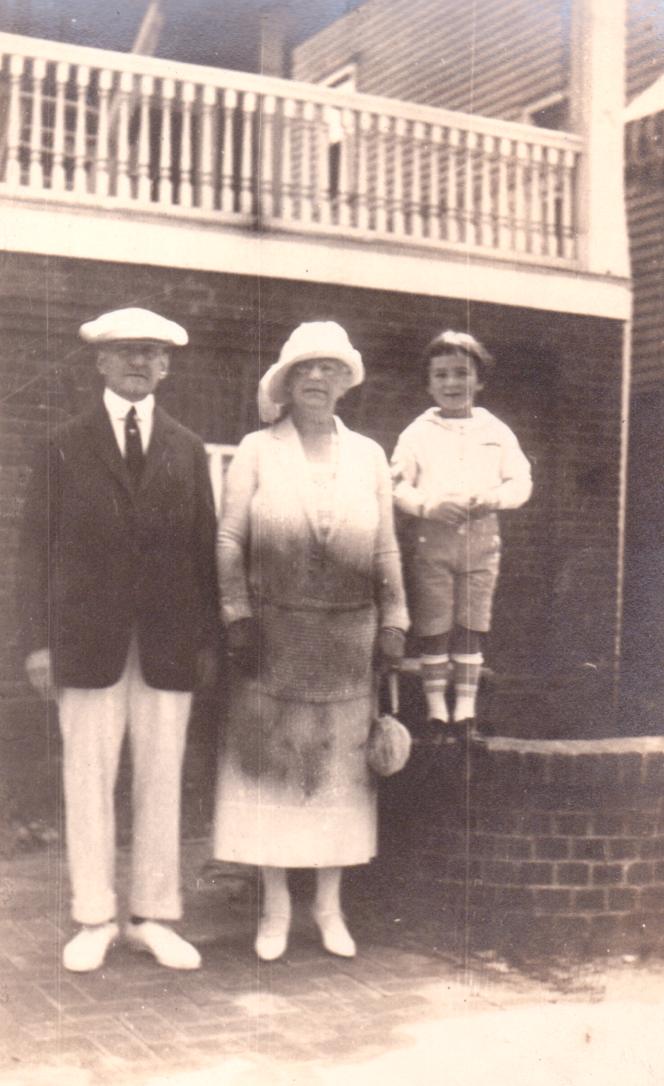
For example, here is a photograph of my great-grandmother, Eva Seligman Cohen, wife of Emanuel Cohen, daughter of Bernard Seligman and Frances Nusbaum.  But who is the man to her right? And who is the little boy to her left? Or is the little boy a little girl? Possibly Marjorie?

I showed my father the photograph, and he could not identify either person.  Could the man be Emanuel Cohen, my great-grandfather?  That would be the first photograph I’ve ever seen of him.  The little boy might be one of my father’s first cousins, Maurice Cohen, Junior, or Emanuel “Buddy” Cohen. If the older man is Emanuel, the photograph had to be taken in 1926 or before, as he died in February, 1927, and this is a photograph taken in the summertime.  Junior was born in 1917, Buddy in 1922, so it is possible that this is my great-grandparents standing with one of their grandsons.  I hope Marjorie can help us.

Eva Seligman Cohen with unknown man and boy

Here is another photograph of that little boy.  The man to his left is Stanley Cohen, my great-uncle, Marjorie’s father.   Marjorie album 58


But who is the man to his right?  Could it be my other great-uncle, Maurice Cohen, Senior?  I’ve never seen a picture of him nor have I seen a picture of either of his two sons, Junior and Buddy.  Maurice died in 1931; if this was taken in 1926 or so, this certainly could be him.  Maurice would have been 38 in 1926, Stanley would have been 37.

Finally, there is this photograph of the little boy.  Marjorie album 19

Who is that man?  It’s not the same man standing with my great-uncle Stanley in the prior photograph.  He seems to be a fair amount younger than both that other man and Stanley.

All those photographs seem to have been taken on the same day in Atlantic City, maybe around the same time as this photograph taken in 1932:

Eva M. Cohen, center, 1932 (Arthur Seligman, right)

Eva M. Cohen, center, 1932 (Arthur Seligman, right)

It looks like my great-grandmother was wearing the same or a similar hat and outfit to those she was wearing in the first photograph.

I am anxious to hear what Lou learns from Marjorie when he sees her.

The Struggles of My Three-times Great-grandparents in the 1870s

The 1870s were not an easy decade for my three-times great-grandparents, John and Jeanette Nusbaum.  Like Jeanette’s sisters Caroline and Mathilde and their families, the Nusbaums confronted some of the effects of the economic depression affecting the country.[1]

By 1870 John and Jeanette only had two children living at home with them, Miriam, now 12, and Lottie, who was seven.  Adolphus, Simon, and Julius, their three sons, were all living in Peoria, and Frances was married and living in Santa Fe with her husband Bernard Seligman and their three children, Eva, my great-grandmother, James, and Minnie.  In 1871, Frances and Bernard’s son Arthur was born, giving John and Jeanette a fourth grandchild.[2]

In 1872, Adolphus married Fannie Fox in Laporte, Indiana, but they settled together in Peoria.  Until at least 1873, Adolphus and his brother Simon remained proprietors of the Union Mill Distillery, and their younger brother Julius continued to work as a clerk in their father’s store in Peoria.

But something changed by 1876, and in the Peoria directory for that year, although Adolphus was still listed as a distiller and Julius is still a clerk at John Nusbaum’s store, Simon was now in a different firm, Kingsland and Nusbaum, a firm engaged in the wholesale and commercial sales of liquor.  Had there been a falling out between Simon and Adolphus, or had Simon just formed a separate business to distribute the liquor distilled by his brother’s company?


http://www.gettyimages.com/detail/121333164

As I started studying the occupations of the younger generation of men in the extended Nusbaum-Dreyfuss-Simon clan, I was struck by the fact that whereas the older generation was involved primarily in the sale of clothing and other “dry goods,” the younger generation was definitely more into “wet goods.”  Albert Nusbaum, Leman Simon, and Adolphus and Simon Nusbaum were all now in the liquor trade.  In addition, Moses Simon ended up in the liquor business as well.  Was this a sign of the times? Were people drinking more because of the economic conditions, thus making this an attractive business for the entrepreneurial cousins?  Or was it more that once one cousin had success, the others figured they’d go into that line of business as well?

Apparently, Peoria was once known as the “Whiskey Capital of the World” and had over 24 breweries and 73 distilleries during the period between 1837 and 1919.  The 1860s and 1870s were the high point of Peoria’s liquor production and distribution, so it is not surprising that Adolphus and Simon became involved in the liquor business.  As for Albert, Leman, and Moses, it would appear that they followed the trend that the Nusbaum brothers had started.  Interestingly, this is also a period when the movement for prohibition of alcohol also started gaining momentum, making the liquor business a risky venture in the long term.  But for the 1870s, it might have been a wise business move.

The three Nusbaum brothers remained in Peoria throughout the 1870s, although by 1880, as we will see, Simon had relocated. Meanwhile, back in Philadelphia, their parents must have been having some problems.  The 1877 census had John listed as living at the same address at 943 North 6th Street in Philadelphia, but without an occupation.  John was now 63 years old, and at first I thought that he had simply retired.  But the 1877 Peoria directory also had a listing for John Nusbaum, and this is the first time that it includes a residential listing.  Was this a mistake? Or was John spending part of his time in Peoria? Had John’s Philadelphia store closed?

Perhaps these two news clippings from 1878 can shed some light on what was going on:

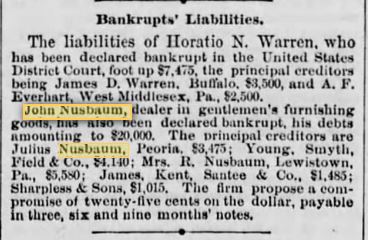
John Nusbaum bankrupt Aug 23 1878 Phil Times p 4

Philadelphia Times, August 23, 1878, p. 4

John N bankruptcy October 1878 p 1

Philadelphia Times October 31, 1878 p. 1

John was bankrupt, in debt for $20,000, and his principal creditors included two of his relatives: his son Julius, who was working at the Peoria store, and his sister-in-law Rose, widow of his brother Leopold, who had moved to Lewistown, Pennsylvania, after living with John and Jeanette during the period after Leopold died in 1866.  The bankruptcy settlement allowed John to pay them a quarter of what he owed them.

I wish I could find out more about this, and perhaps there is some way of finding some documents about the bankruptcy proceedings.  If anyone has any suggestions, let me know.  It just seems odd that Julius, who was working in his father’s store in Peoria, was owed almost $3500.  And how did John become indebted to his widowed sister-in-law for over $3500? But obviously John was having financial problems, another family member feeling the impact from the economic crisis of the 1870s.

John was again listed without an occupation in the 1879 Philadelphia directory, and although he is listed as being in the dry goods business again in the 1880 Philadelphia directory, there also appears to be something else going on.  On the 1880 US census, John Nusbaum is listed as living in Santa Fe, New Mexico with his daughter Frances Nusbaum Seligman and her family.  John’s son and Frances’ brother Simon is also living with the family (as is Bernard’s brother Adolph).  John’s occupation is described as “retired merchant,” and Simon is a bookkeeper.  Why did Simon leave Peoria? What had happened to his liquor business? And what was John doing in Santa Fe…without his wife?

Seligman and Nusbaums on 1880 US census santa fe

John and Simon Nusbaum with Bernard and Frances Seligman in Santa Fe 1880 US census

Jeanette was not with John nor were their two younger daughters. Rather, Jeanette, along with her youngest daughter Lottie, was listed in the 1880 census living at her other daughter Miriam’s house at 1120 Master Street in Philadelphia.  Miriam had married Gustav Josephs on March 20, 1878.  Gustav was listed as being in the handkerchief business in the 1880 Philadelphia directory and in the embroidery business on the 1880 census, so my guess is he either sold or made embroidered handkerchiefs at that time.  Gustav and Miriam had had a son Milton, who was born on December 28, 1878.  Yes, I realize that that means that Milton was born just nine months after his parents were married, but that certainly happens.  These are dates from the family bible, and while perhaps not as official as a government record, for my money and from my experience, the family bible has proven to be at least as reliable if not more reliable than many government records.

So Jeanette was in Philadelphia while John was in Santa Fe.   Since John was retired, it does not appear that this was a business decision.  Did the experience of bankruptcy lead him to leave Philadelphia for some time? Was there tension between Jeanette and John due to financial stress?

Jeanette Nusbaum 1880 US census in Philadelphia

Jeanette Nusbaum 1880 US census in Philadelphia

I do not know, but I do know that by 1881, John was back in Philadelphia where he would live the remainder of his days.  In 1881 he also was living at 1120 Master Street and thus presumably reunited with Jeanette, living in the home of Miriam and her husband Gustav.

Gustav and Miriam had had a second child, Florence, born on July 28, 1880, but just a few months later, the family suffered a sad loss. On November 17, 1880, Gustav and Miriam’s toddler son Milton died from marasmus.  Marasmus is a severe form of malnutrition caused by a lack of protein and calories.  Poor little Milton essentially starved to death.  He was one month short of his second birthday.  Today this is something we think of as a third world problem, but here he was, the grandson of a once-successful merchant, living in one of the biggest cities in the US at the time.  It’s hard to imagine how this could have happened.

IMPORTANT UPDATE: Please see my next post here.  Milton did not die from marasmus, but from pneumonia.

Milton Joseph on the Federal Mortality Schedule 1880

Milton Joseph (third from bottom) on the Federal Mortality Schedule 1880

Thus, the 1870s were a tough decade for my three-times great-grandparents, both personally and professionally. By 1880 John had also lost another sibling in addition to Leopold, who had died in 1866, and Isaac, who had died in 1870.  But that will wait for another post.

But not all the news was bad news.  Two more of their children had married, Adolphus and Miriam, and John and Jeanette had two new grandchildren, Florence Josephs, Miriam’s daughter, and Arthur Seligman, Frances’ son, the grandson who would one day be the governor of New Mexico.  There definitely were better days ahead for the Nusbaum family.

tunnel-336693_1280


[1] My brother told me that titling my posts “The Long Depression” was not a way to entice readers, so I’ve changed it a bit for this one.  I am not sure that does much more to make this into uplifting reading, but these were tough times.

[2] That does not count Florence Seligman, who was born in August, 1867 and died a few weeks later, as I’ve written about previously.

More Blessings and More Insight into My Seligmann Ancestors

This morning I woke up to another email that made me smile to start my day. But to understand why, I need to backtrack a bit.

One of the passages that was translated by Ralph Baer from Ludwig Hellriegel’s book on the history of the Jews of Gau-Algesheim indicated that Moritz Seligmann had originally come from Gaulsheim, a town that is only five miles from Gau-Algesheim.  In this passage, Hellriegel described Moritz Seligmann’s attempt to get permission to move to Gau-Algesheim in 1828.  He was denied permission the first time because the mayor concluded that there were already too many Jews in the town.  He then appealed, and although the mayor still wanted to deny him permission, Seligmann prevailed because he was legally entitled to move to the town.

This passage gave me a clue as to where Moritz, my three-times great-grandfather, might have been born, and Ralph suggested I contact the archives in Gaulsheim for more information.  I found an organization called Arbeitskreis Judische Bingen, or a study group of Jews in Bingen. (Bingen now includes the town of Gaulsheim.)  I wrote to the organization, asking for any information that they might have on Moritz Seligmann or his family.

And that brings me to my happy morning email.  A woman from the Arbeitskreis named Beate Goetz sent me a copy of the marriage record for Moritz Seligmann and Eva Schoenfeld.  Not only did this email confirm that Moritz was born in Gaulsheim (on January 10, 1800) and that he married Eva Schoenfeld (on February 27, 1829), it told me the names of my four-times great-grandparents, Jacob Seligmann and Martha nee Jacob/Mayer (my guess is that Mayer was the surname adopted by her father Jacob when surnames were required in the early 19th century).

In addition, I know now when Eva Schoenfeld was born (June 2, 1806) and where she was born (in Erbes-Budenheim), and I know her parents’ names: Bernhard Schoenfeld and Rosina Goldmann.  Assuming that Eva and Babetta, Moritz’s second wife, were sisters, Bernhard and Rosina were also my four-times great-grandparents.  Now I need to see what records I can find in Erbes-Budenheim to determine if in fact Eva and Babetta were sisters.  Beate said that she would also continue to look for a birth record for Moritz (who was born Moises) and any other relevant records.

Marriage record for Moritz Seligmann and Eva Schoenfeld February 27, 1829 Gaulsheim, Germany

Marriage record for Moritz Seligmann and Eva Schoenfeld February 27, 1829 Gaulsheim, Germany

I also know from Ralph’s additional translation of the marriage record that Jacob Seligmann and Bernhard Schoenfeld were both traders as was Moritz.  The record also indicated that the bride’s parents did not attend the wedding; as Ralph explained, this was probably a second ceremony for purposes of civil law and thus not as important as the religious wedding ceremony, which presumably the couple’s parents did attend.

Thus, thanks to Ralph Baer’s translation of a passage in the Hellriegel book, I now have learned the names of four more of my ancestors.

The Hellriegel book just continues to be a treasure chest of information.  Thanks to Matthias Steinke, I also have a translation of another few passages of Ludwig Hellriegel’s book, which shed some additional light on the character of my ancestor Moritz Seligmann.

In one passage, Hellriegel discussed the education of Jewish children in Gau-Algesheim.  He reported that until 1841, Jewish boys were taught Hebrew and other important subjects by their fathers, but in 1841 they were permitted to attend the Christian school in town.  Apparently, this was difficult for the Jewish children, so Moritz Seligmann applied in 1850 to remove his children from the school.  He then hired a private teacher named Benjamin Mayer from Essenheim to come to Gau-Algesheim to teach the children. (Essenheim is about ten miles from Gau-Algesheim.)

Apparently, however, Mayer ran into trouble in Gau-Algesheim for speaking badly about the Catholic Church, saying in front of the children and two other witnesses that those who believe in the Catholic faith are “downright stupid.”  He reportedly left Gau-Algesheim shortly after this incident.

I found this passage interesting in many ways, but mostly for what it told me about my great-great-great-grandfather Moritz.  He was a man who was determined to see that his children received a good education and in a setting where they were comfortable. That is a value that has certainly been passed down the generations in my family.  Moritz also was apparently a man of some means since he had the money to hire a private teacher.

Coat of arms of Gau-Algesheim

Coat of arms of Gau-Algesheim (Photo credit: Wikipedia)

Matthias also helped me better understand a passage about Moritz and his knowledge of German.  According to Matthias’ reading of this paragraph, Moritz had some role in the synagogue as an educated man.  He was in charge of writing the lists of Hebrew prayers to be assigned to those who made contributions to the synagogue.  (This is somewhat unclear to me.  Perhaps these were prayers for certain members to lead or perhaps these were prayers for the benefit of certain members, or maybe the book is referring to payment in order to receive the honor of reading Torah in synagogue.)

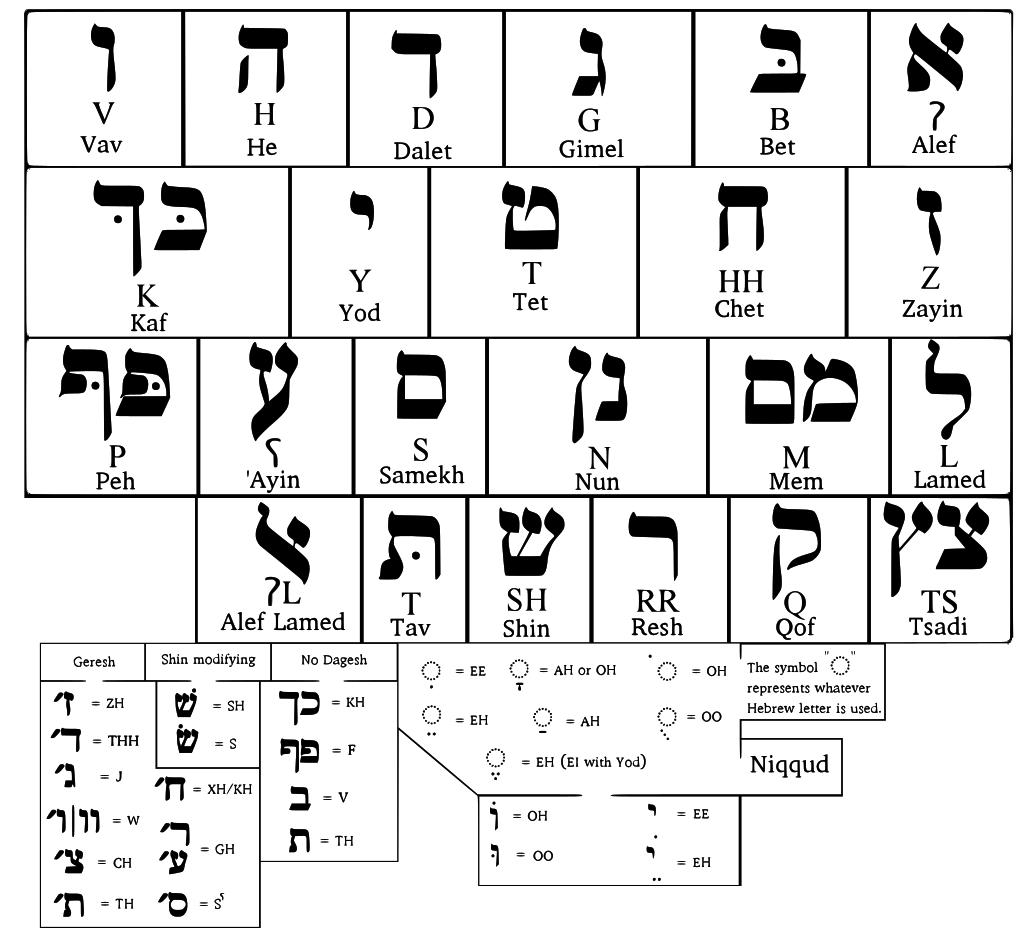
A man from Mainz, Mr. Landauer, commented that Moritz was able to write German very well in compiling these lists, but that he had trouble with “unpunctured” Hebrew.  I asked Ralph Baer what he thought unpunctured would mean in this context, and he explained that the German word could also be translated as undotted and that the reference to undotted Hebrew most likely meant that Moritz had a hard time reading Hebrew without vowel markings.  So Moritz was more fluent in writing and reading in German than he was in Hebrew.

1024px-Hebrew_Alphabet.svg

By Assyrio (Own work) [Public domain], via Wikimedia Commons


The final passage that Matthias helped me understand involved Julius Seligmann, the grandson of Moritz and son of August Seligmann, discussed previously.  He was the Seligmann who converted to Catholicism upon marrying a Catholic woman.  What I had not been able to understand before were references to Julius closing his business in 1935 in Gau-Algesheim and being the last Jew in Gau-Algesheim when he and his family left in 1939.  He and his family moved to Bingen, and the book states that there the police chief did nothing against him and that his two sons Herbert and Walter were even allowed to enlist in the army, although dismissed shortly afterwards.

With a better idea of what the words say, I now think that I understand the significance of this passage.  It seems that Julius, despite converting, was still seen as a Jew when the Nazis came to power and thus was forced to close his business.  However, once he relocated to Bingen, he was not harassed by the police, perhaps because they did not know he was Jewish.  And perhaps the significance of the sons being able to enlist also relates to this ability to deny their Jewish roots, at least for a short time.

I am obviously still reading between the lines, and without being able to read the entire book and read everything in context, I fear that I may be misreading some of these isolated passages.  It’s a long term project to be able to understand the whole book and the whole story of the Jews of Gau-Algesheim.  But already this little book has enabled me to learn so much more about my Seligmann ancestors.

By the way, Seligmann means “blessed man” in German.  The more I learn about the Seligman(n)s, both German and American, the more it seems to be an appropriate surname for the family to have adopted, especially for those Seligmans who were fortunate enough to have left Germany before the Holocaust.


A Package from Germany and More Sobering Revelations: A Seligmann Update

Coat of arms of Gau-Algesheim

Coat of arms of Gau-Algesheim (Photo credit: Wikipedia)

A few days ago I received a package from Gau-Algesheim with photocopies of the birth records of Bernard Seligman and his siblings as well as a book about the Jews of Gau-Algesheim, Die Geschichte der Gau-Algesheimer Juden by Ludwig Hellriegel (1986, revised 2008)[The History of the Jews of Gau-Algesheim].  Of course, the records were in German, as is the book.  And the documents were also in Germanic font and in the old German script.   Completely unintelligible to me.  Here is an example, the birth certificate of my great-great-grandfather, Bernard Seligman or Bernhard Seligmann, as it was originally spelled.

Bernard Seligman's birth record

Bernard Seligman’s birth record

And so I started with the book, which is at least printed in regular font.  I first went through the entire book (about 110 pages), looking for the name Seligmann, not really expecting to find it.  But there on page 52 was the name Moritz Seligmann, and there again a few pages later, and then a list of Seligmanns a few pages after that, and then a few paragraphs here and a few paragraphs there.  But I can’t read German.

I painstakingly entered the passages that mention Seligmann into Google Translate and mostly got gibberish.  Google Translate does not like umlauts or those funny double S symbols used in German, and typing in German is very hard when you do not know the language.  Google Translate can do a word, but putting down a whole sentence leads to verbs and nouns and prepositions in places that just make it almost impossible to know what you are reading.

For example, what does this sentence mean?

Mr. Landauer of the Israelite Religious Community in Mainz has found that Moritz Seligmann who has led this protocol , although writes excellent German , but his burden with the Hebrew has unpunctured .

That is how Google Translate translated this sentence:  Herr Landauer von der israelitischen Religionsgemeinde in Mainz hat festgestellt, dass Moritz seligmann, der dieses protokoll gefuhrt hat, zwar ausgezeichnet deutsch schreibt, aber seine Last mit dem unpunktierten Hebraisch hat.

So if there are any readers out there who can help me with translation, please let me know.  I have no clue what that means except that perhaps my great-great-great-grandfather was very proficient in German.  The sentence that follows discusses the fact that the Jews in Gau-Algesheim did not speak or read Hebrew except for religious purposes.

Now I am working on getting a better translation program or finding someone to translate the book for me.  But here are a few random tidbits of information that I am pretty sure I did understand from my very poor translation of some of the passages.

Perhaps the most informative section revealed the livelihoods of two of my great-great-grandfather’s brothers, August and Hyronimus, and a third Seligmann whose name was Jacob, for whom I have no earlier record.  August opened a business in October, 1891, for iron and also spices and playing cards.  (That’s what Google Translate says anyway.)  August died on May 14, 1909.  Hyronimus also was in the iron and spice business as well in the wine trade; he opened his business on May 22, 1892.  Jacob was also in the iron trade and the wine and spirits trade; his business opened June 5, 1898.

I also know from the book that at one time August and Hyronimus both lived and/or did business on Langgasse or Long Alley.  I had posted this photo before without realizing that this was the street were some of my family lived or worked.

Gau-Algesheim. Langgasse.

Gau-Algesheim. Langgasse. (Photo credit: Wikipedia)

The paragraph that follows the one about the three Seligmanns and their businesses was a bit hard to follow with Google Translate, but from what I can decipher, August had a son named Julius born in 1877.  Julius married a Catholic woman and converted to Catholicism.  He had a hardware store in Gau-Algesheim as well as a spice business.  If I am reading the German correctly, he closed the store on December 9, 1935 and moved with his family to Bingen on September 15, 1939.  He had two sons, Herbert and Walter, who were both apparently still alive when the book was written.  Julius also survived the war, but was killed in a fatal car accident on his way to church on March 28, 1967.

Burg Klopp in Bingen am Rhein, Germany

Burg Klopp in Bingen am Rhein, Germany (Photo credit: Wikipedia)

Julius had an older sister Frances, born on December 26, 1875, who married Max Michel, but divorced him and moved to Bingen.  Frances died on December 19, 1933; her son Fred escaped to the United States in 1937.

The third child of August Seligmann was named Moritz, and he participated in the town’s cycling association. Moritz Seligmann, his grandfather’s namesake, was born in June 25, 1881.  The book seems to be describing the skills of various members and seems to be praising the skills of young Moritz, who was nineteen when he joined the club.  The end of this passage about Moritz says that he was single and had moved to Koenigsberg and that it was believed he was killed in 1941 in Theresienstadt.

The fourth child of August Seligmann was his daughter Anna.  She was born on November 30, 1889, in Gau-Algesheim.  She had moved with her husband Hugo Goldmann to Neunkirchen in Saarland.  They and their three children, Ruth, Heinz, and Gretel, were all killed in the Holocaust.

There is also an entry for Elizabeth nee Seligman Arnfeld, who was born March 17, 1875.  She had moved to Mulheim on the Ruhr in 1938 and wanted to emigrate to the United States.  A woman named Leonara Morreau[1] had vouched for them, but for unknown reasons they were never able to emigrate.  Elizabeth died on January 23, 1943 at Theresienstadt.  Her son Heinz survived the war.  The book did not identify the parents of Elizabeth Seligman Arnfeld, but she could have been the daughter of Salomon or Benjamin, who unfortunately are not mentioned in the book, or of Hyronimus or Jacob.

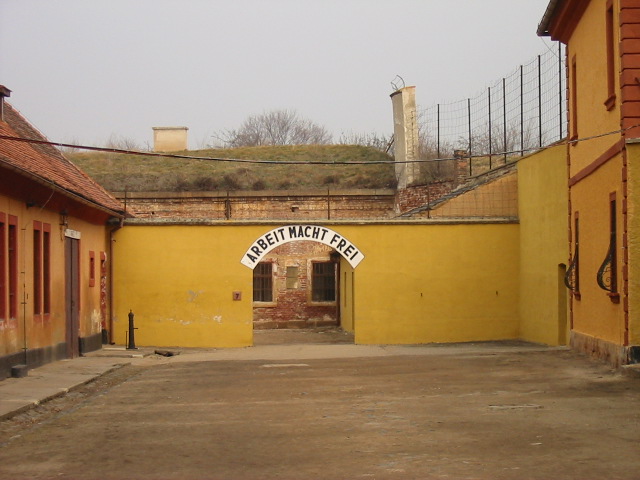
Theresienstadt

Theresienstadt concentration camp

Now that I have more names and more recent relatives, I am hoping that perhaps I can find out more about these people.  I also now know that many of them moved to Bingen, so there may be records from that larger town that will tell me more about the Seligmanns who stayed in Germany. And from several other entries in the book, I know where they lived in Gau-Algesheim.

I would love to be able to read the entire book and learn more about the history and lives of Jews in Gau-Algesheim, but it took me a good part of two days just to translate these few passages, and those translations are not very reliable.  It seems hiring someone to translate the whole book could cost me as much as $1000, and that is not in my genealogy budget by a long shot.  If someone has any brilliant ideas on how to get the book translated for free or for a really reasonable price, please let me know.

What I did learn from the passages I struggled to translate is that my family was not untouched by the Holocaust, as I once believed, but that we lost many people just from Gau-Algesheim alone.   I am hoping that I can find the descendants of the few who seem to have survived—Heinz Arnfeld and Fred Michel and Herbert and Walter Seligmann—and learn more.

In my next post I will discuss the birth records I received for the Seligmanns and how I was able to translate them.  Then I will return to the Nusbaums.

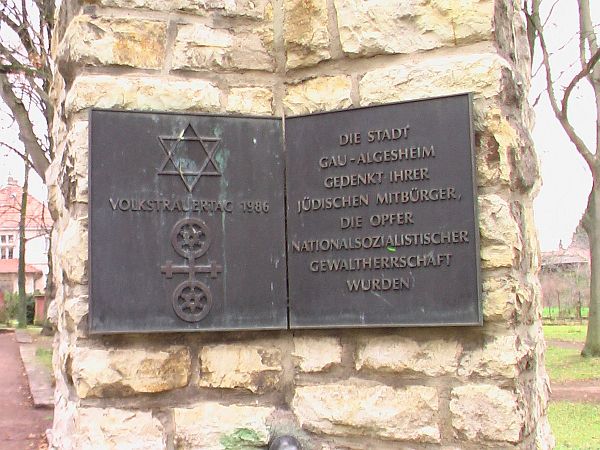
memorial plaque gau aldesheim

Holocaust Memorial plaque in Gau-Algesheim

[1] I found Leonara Morreau’s obituary and researched her a bit, but know of no reason that she would have had a connection to the Seligmanns in Germany.  She was born, married, and lived in Cleveland.  Her husband died in 1933, and she died in 1947.  As far as I can tell, they never traveled to Germany.  Leonara’s brother was Isaac Heller, who was also born in Cleveland, as was their father, Charles Heller.  Although their grandfather was born in Germany, it was not even in the same region as the Seligmanns.  Perhaps Leonara was active in trying to bring German Jews to the United States during Hitler’s reign, but I can find no evidence of that.  Her obituary only states that she was active in charitable and religious causes.

Goodbye for now, Santa Fe

Gau-Algesheim. Langgasse.

Gau-Algesheim. Langgasse. (Photo credit: Wikipedia) Where They Started

I’ve now completed my research of the American Seligmans, or at least those I know to be related to me.  I have added a page with a family tree and descendant chart to the blog that you can find by clicking on the label in the menu box at the top of the page.

For a number of reasons, this has been the easiest branch of the family tree to research.  First, I was fortunate to find my cousin Arthur “Pete” Scott, who is the great-grandson of Bernard Seligman and the grandson of Arthur Seligman.   He had already done a lot of work on the family history in New Mexico and was very generous in sharing his research and photographs with me.  He also had published a great deal of it on the web at vocesdesantafe.com.

Secondly, Bernard and Arthur Seligman were public figures—men who were often written about during their lives in newspapers and after their lives by historians.  Their fame made it much easier for me to find sources and information to learn about their lives and the lives of their families.  (Although it was easier to find information, it also was a lot more work to read it, digest it, and analyze it all.)

Bernard Seligman and other merchants

My great-great-grandfather Bernard on the fronteir

Also, there were not a lot of descendants to trace.  Sigmund Seligman never married, James Seligman in England had no children, and Bernard only had three children who lived to adulthood—my great-grandmother Eva and her two brothers James and Arthur.[1]  Eva’s family I had already researched in doing the Cohen branch, James had only one child who lived to adulthood, and Arthur had one biological child and a stepdaughter.  So compared to the thirteen children of Jacob Cohen, some of whom had over ten children themselves, this was a much smaller family to research.

I still do have work to do, tracing the German Seligmanns and seeing if I can learn what happened to them.  That is a task I will continue to work on, but it will be slowed by the inaccessibility of German records and my inability to read German.  I am ordering copies of the records I posted about here, but I hope to be able to learn more.  Once I know more, I will write about it on the blog.

But for now I will move on from the Seligmans in my writing and begin the next branch of my father’s father’s family, the Nusbaums.  As far as I know, there are no famous people on this branch, but time will tell.  I am hoping that my cousin Pete will be able to help me here as well since he also is a descendant of Frances Nusbaum Seligman.  I have already learned some interesting things about the Nusbaums and am eager to learn more.

Arthur Seligman, Marjorie, and Eva May Cohen, 1932 Atlantic City

Governor Arthur Seligman, Marjorie, and his sister, my great-grandmother Eva May Seligman Cohen, 1932 Atlantic City

Before I move on from the Seligmans, however, I have a few concluding thoughts about this branch of my family tree.  Unlike my Cohen, Goldschlager, Rosenzweig, and Brotman branches, the Seligmans were in the public eye and not able to lead the private lives that my other relatives lived and that most of us live.  They were subject to much scrutiny—Bernard was a wealthy merchant and public servant, Arthur a mayor and governor, and Morton a Navy hero.  Their actions and character were criticized at times, but each in his own way managed to rise above that criticism.   They were loyal, decent and honest men who served their communities with honor.

What the Seligmans share with the rest of my ancestors is the story of Jewish immigrants in general—whether they came in 1850 or 1890 or 1910, whether they came from Germany or England or Romania or Galicia.  All came here for a better life, all were brave enough to leave their homes and their families, all took a risk that living in America would be better for them, their families, and their descendants.  Some may have come with more than others, some succeeded more than others, but all were undoubtedly better off here than they would have been had they stayed in Europe.  With hindsight we know what would have been their fate if they had still been in Europe in the 1930s and 1940s, as was the fate of some of my German Seligmann relatives who did not leave Europe in time.

Once again, I feel grateful for the risks that my ancestors all took and for their courage and hard work, which made it possible for me to be here today, remembering them all.


Bernard Seligman

My great-great-grandfather Bernard Seligman, born in Gau-Algesheim, a pioneering leader in Santa Fe, and father of a US governor


[1] Adolph did have children, and I’ve traced all of his descendants, but out of privacy concerns have not written about them since many of his grandchildren are still living, and I have not been in touch with them.