Nusbaum Album: Frances Nusbaum Seligman Redux

Before I turn to the photographs that I analyzed on my own (with a few tips from Ava along the way), I want to return to my great-great-grandmother Frances Nusbaum Seligman and my attempts to find her in the album–the album that once belonged to her and has her name on it. Some of this is a review of this post, but with some additional thoughts and images added.

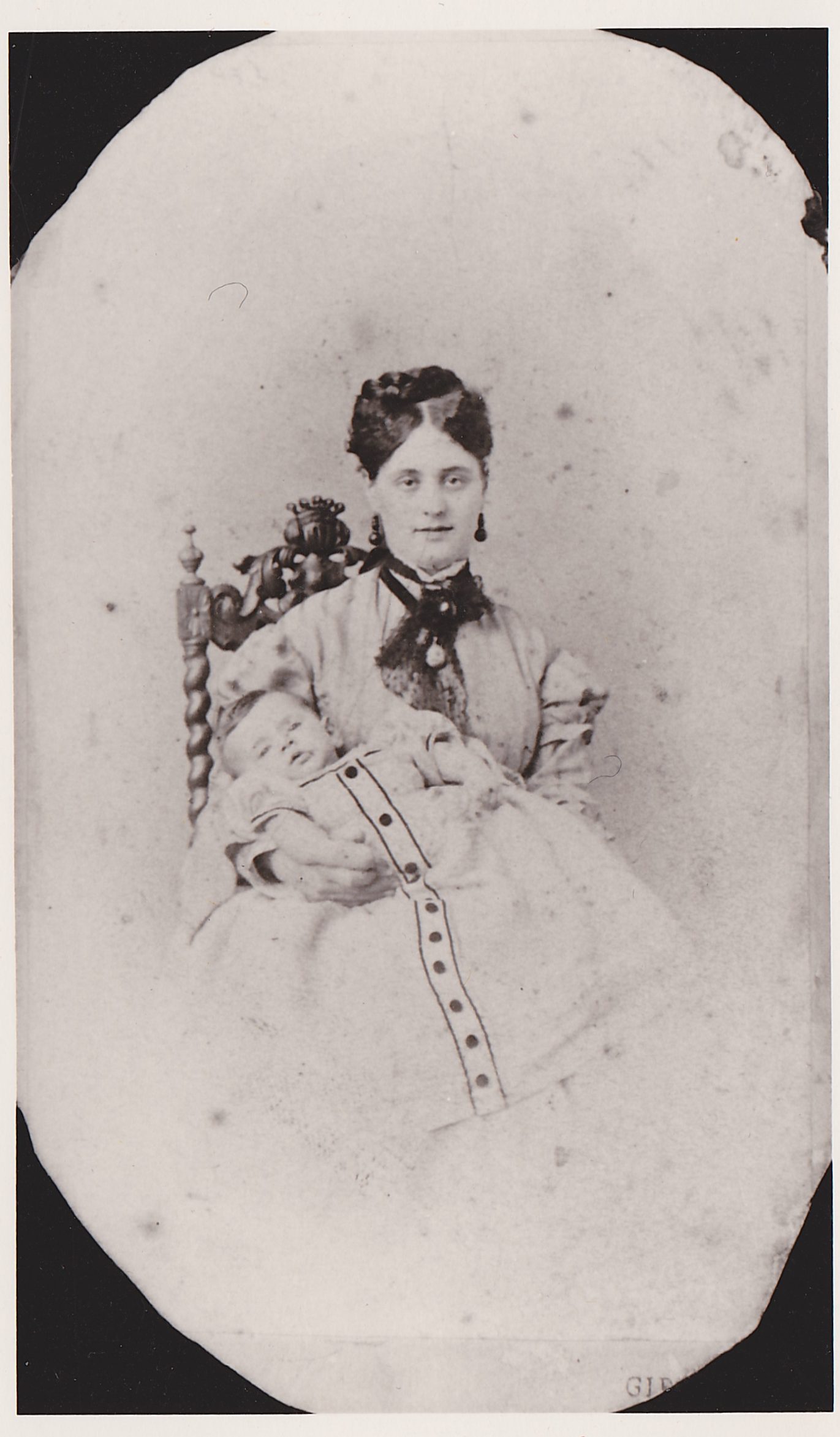
There were several photos in the album that might be Frances based on her birthdate and the date Ava concluded that a photograph might have been taken. For example, on the very first page there is this photograph, which Ava dated as taken in about 1863 when Frances would have been 18; Ava thought the young woman was about 20-22 years old, so just a bit older than Frances would have been. The fact that it appears on the very first page of the album added weight to the possibility that it is Frances.

On the seventh page of the album is this photograph, which Ava also dated as taken in about 1863. Ava thought this woman could be about 25, so slightly older than the one on the first page, but still possibly Frances although Ava ultimately didn’t think so.

Philadelphia c 1863 born abt 1838 maybe Eliza Wiler

Then there is the photograph much later in the album that has an inscription on the back that says it is “Miss Nusbaum” and that it is Joan’s great-grandmother. Ava dated this photograph also in the 1863 time period and thought the woman was a teenager between fifteen and eighteen, placing her birth year very close to Frances’ birth year of 1845. But because this was so late in the album, Ava was skeptical about the inscription.

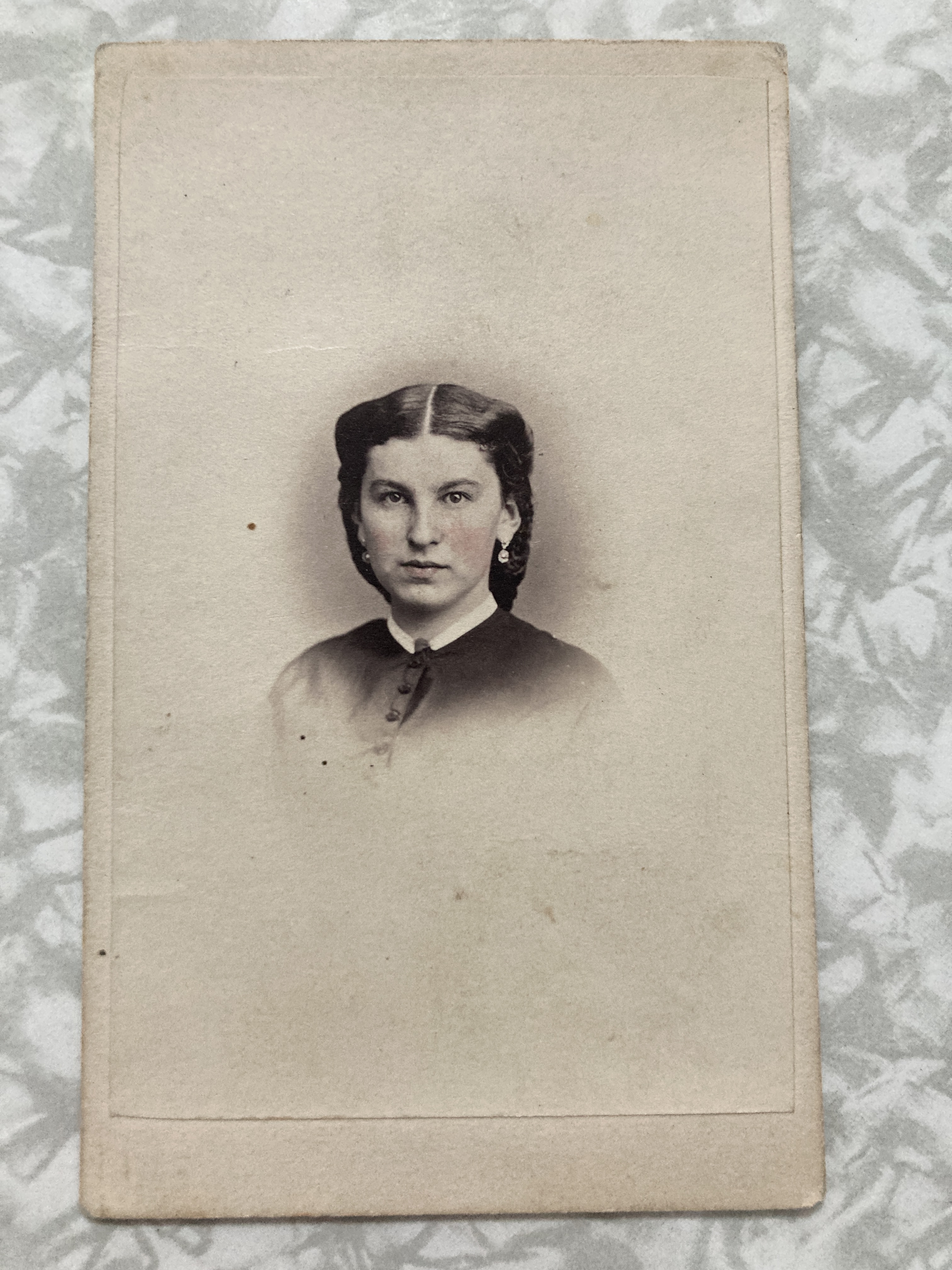
I added another photograph to this mix just recently. This one was taken in about 1870, and Ava thought the woman in this photograph was about twenty years old, so born in about 1850.

Philadelphia 1869 born about 1848

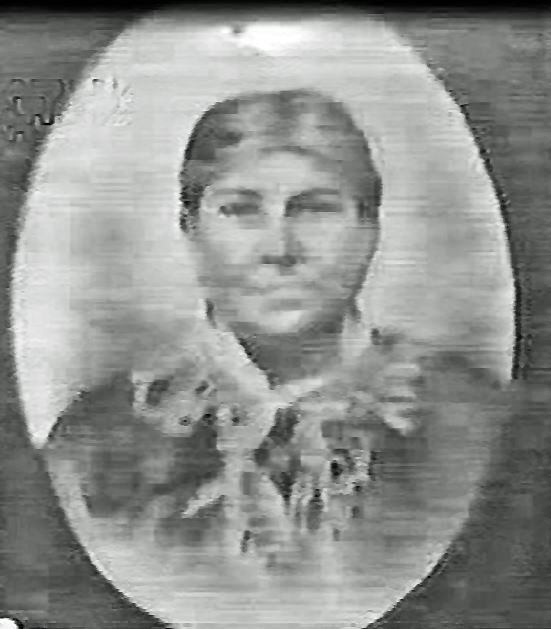
There was also the fuzzy still from a video of a portrait supposedly of Frances Nusbaum Seligman from Arthur Seligman’s house in Santa Fe.

Finally, there is one image I haven’t shared before and that Ava had not previously evaluated. It is not a CDV and it was not inserted into one of the openings in the album, but was just loose inside the album. It is an image of a portrait that sadly was not labeled.

I wondered whether this was a portrait of Frances, but Ava said that this was painted in the late 1840s, early 1850s so could not be Frances. But it possibly could be Frances’ mother, Jeanette Dreyfuss Nusbaum, my three-times great-grandmother.

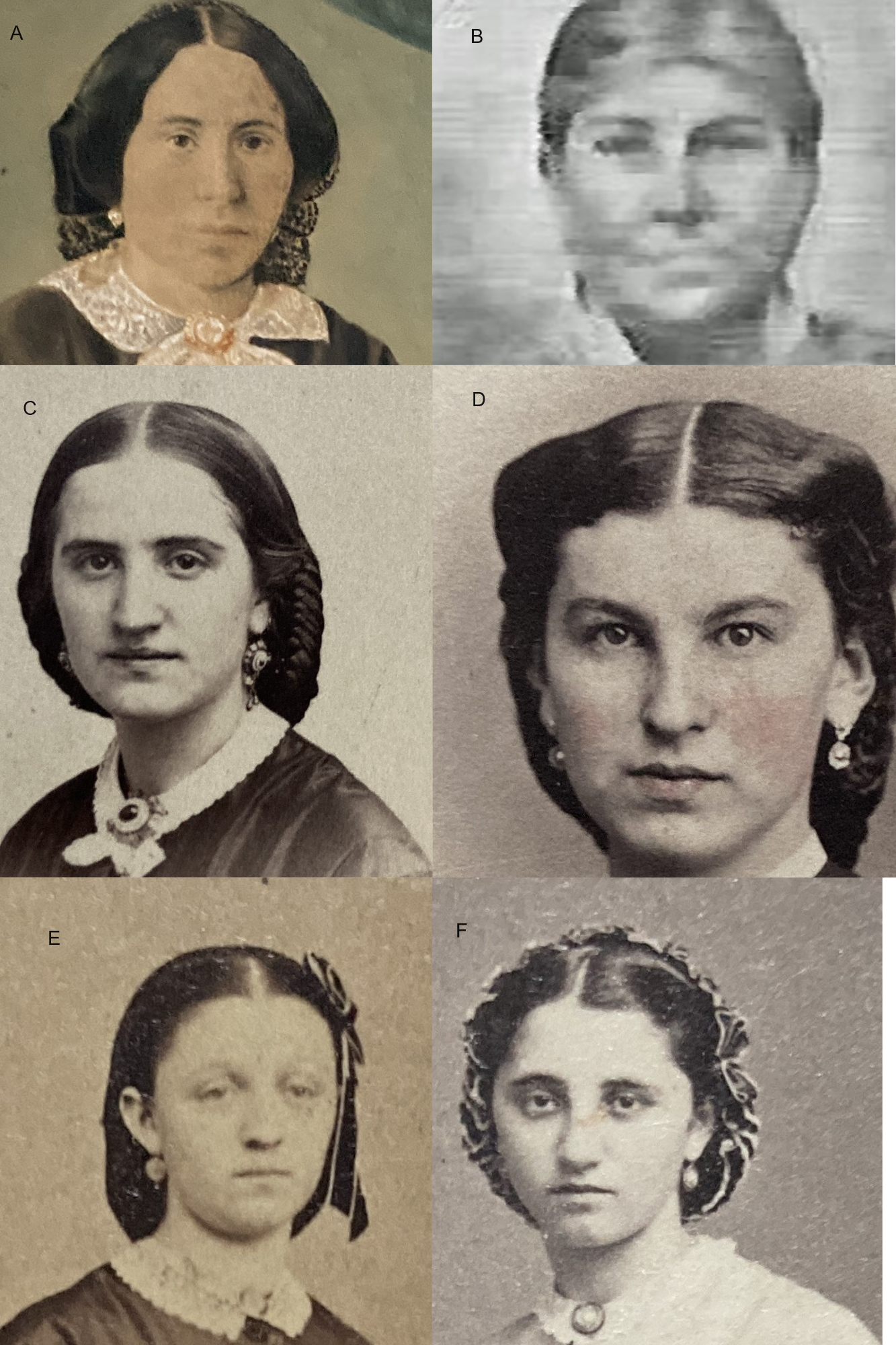
I then put together a collage of all six faces to compare them better:

One thing I noticed right away was that five of the women had similar lips—all but the one labeled D. Her lips were more heart-shaped. The other five had similar mouths. E seemed to have eyes that tilted down whereas all the others had eyes that went straight across. A and B are the portraits, A perhaps of Jeanette, B supposedly Frances. The more I looked at the two remaining images—C and F—the more alike they looked to me.

I ran them through two online face comparison websites, and both said that C and F were the same person. None of the others, however, matched C, F, or any of the others as the same person or even close. I asked Ava if she thought C and F were the same person, and her AI programs also found a match.

But Ava had reasons to doubt whether C and F were the same person. She pointed out that C, taken in 1863 or so, looks older than F, taken in 1870 or so. How could C have gotten younger looking seven years later?

Also, F is in a photograph with a young man who one might assume was her husband. She is wearing a wedding ring, and Frances was married in 1865. But the man in the photograph with F is not Frances Nusbaum’s husband, Bernard. Maybe it’s one of her brothers. But from the photograph one would think the man and woman are a couple.

So…bottom line? I still cannot be sure whether any of these women were Frances.

I have sent scans of the six photographs that were taken in Santa Fe to the New Mexico Jewish Historical Society and to the New Mexico History Museum, both in Santa Fe, hoping that perhaps they have somewhere a photograph of Frances. So far I have not heard back that they do. But I will keep hoping that I can someday figure out which woman in the album is my great-great-grandmother Frances Nusbaum Seligman.

Nusbaum Album: Are These My Seligmann Relatives from Germany?

With more realistic expectations but nevertheless high hopes, I awaited Ava’s final work on the Nusbaum Album, some of the photographs from Germany. Although there were some photographs from Stuttgart, Berlin, and Wiesbaden, since I did not know of any relatives living in those places in the mid to late 19th century, I focused on the photographs taken in Bingen and Mainz. Although my closest Seligmann relatives lived in the small town of Gau-Algesheim, both Bingen and Mainz were relatively close by and the closest cities to Gau-Algesheim, and many relatives eventually moved there. It seemed most likely that that my Seligmann relatives would have gone to one of those two cities to be photographed.

I selected three photographs from Mainz, all taken by the same photographer, Carl Hertel, and two from Bingen, both taken by J.B. Hilsdorf. These were all on the back of the first four pages at the beginning of the album whereas other photographs from Germany including from Mainz and Bingen were much later in the album. I hoped that meant the ones earlier in the album were more likely closer relatives.

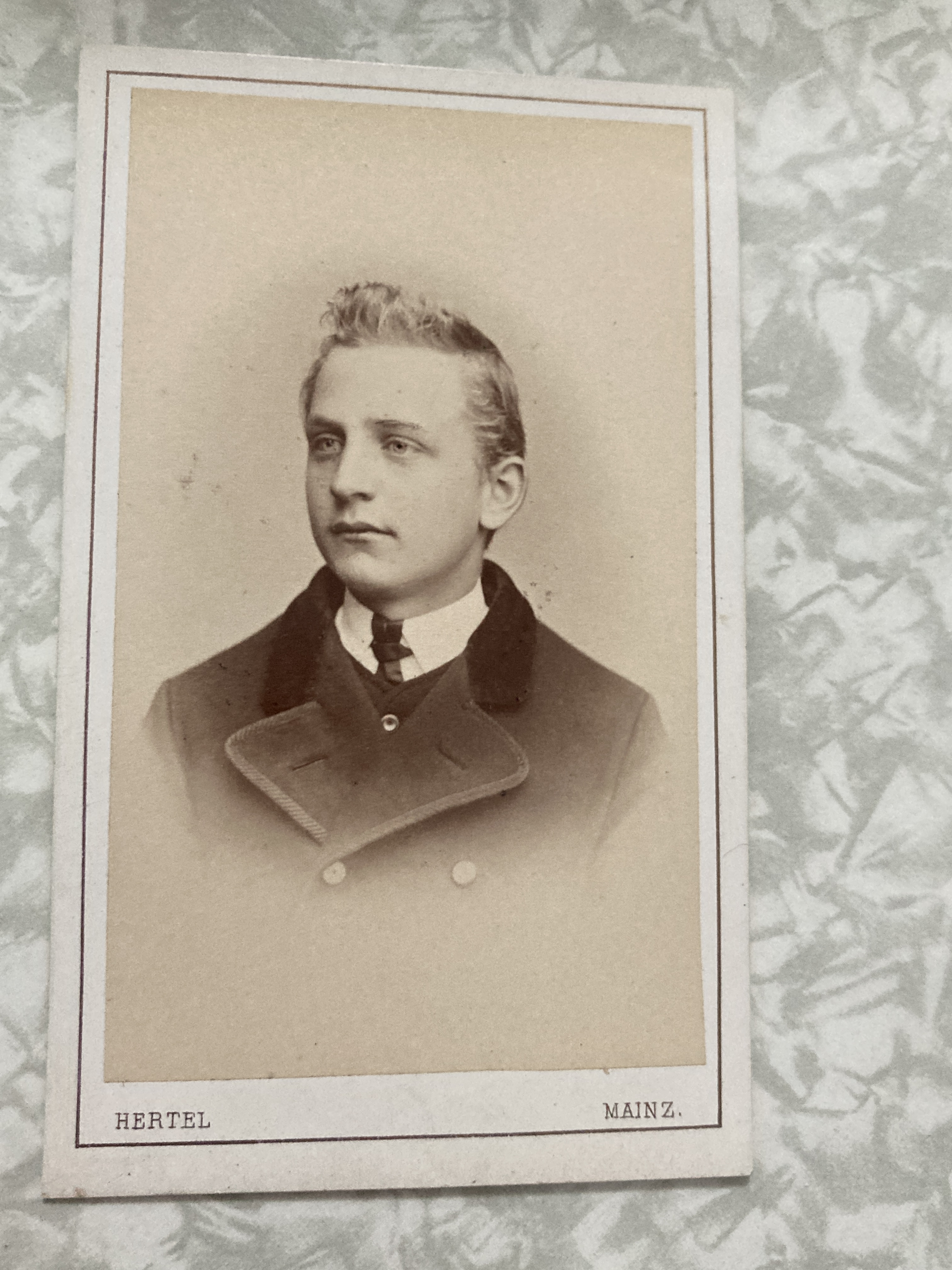
The first Mainz photograph was dated by Ava as taken between 1873 and 1874; she noted that in 1874, Hertel became a court photographer. She wrote, “Generally, when a photographer was appointed as a court photographer that information would appear on the mounting card in the imprint and after the photographer’s name with the letters HOF. Since there is no indication of this appointment, I am placing the date of the photograph before 1874.”1 In addition, another photograph of Hertel’s found elsewhere with the same imprint was dated 1873.

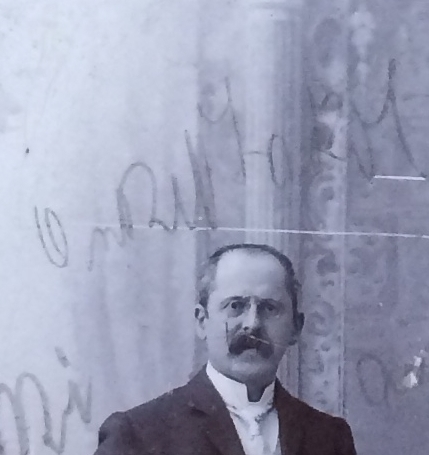
Ava estimated the age of the man as mid to late 70s based on the lines on his face and the style of his tie. That meant the man was born in about 1800-1804. Ava speculated that this could be my three-times great-grandfather Moritz Seligmann, who was born in 1800. And this time I was able to confirm that speculation because I belatedly remembered that I have an actual photograph of Moritz that I had obtained from a cousin years back:

Moritz Seligmann

So bingo! We had a positive identification!

Moving on to the next two Mainz photos, Ava concluded that they also were taken between 1873 and 1874 based on the information she’d already found about Hertel. The first one she believed to be of a man who was in his thirties, perhaps 35, so born in about 1838-1839. The younger man on that same page appeared to her to be eighteen so born in about 1855. Since these photographs were all taken by the same photographer at about the same time, I thought that perhaps these two younger men were sons of Moritz Seligmann, that is, brothers of Bernard, my great-great-grandfather. In addition, they appeared on the second page of Germany photographs right after the photograph of Moritz, who appeared on the first page of the Germany photographs in the album.

Looking at the family tree, I found two possibilities. The older “son” could be Hieronymous Seligmann, born in 1839. The younger “son” could be Moritz’s youngest child, Jakob Seligmann, born in 1853. I was excited at the thought that perhaps I finally had found some relatives I could identify in the album.

I shared my analysis with Ava. She was skeptical that the younger man was Jakob Seligmann because she had identified Jakob in a photograph from a different set of photographs that she had worked on during an earlier project, and she did not see any similarities or enough to believe that the blonde teenager photographed in Mainz was the same person identified as Onkle Jakob in the later photograph.

We went back and forth with me trying my lawyerly best to persuade her that the blonde man could have grown up to be the dark haired Oncle Jakob. But in the end I failed to do so. I have to defer to Ava. She’s the expert, and I am a biased viewer hoping to see what I want to see. But if this was not Jakob Seligmann, who was it? I don’t know. Maybe a nephew or a cousin. Maybe not anyone in the family at all.

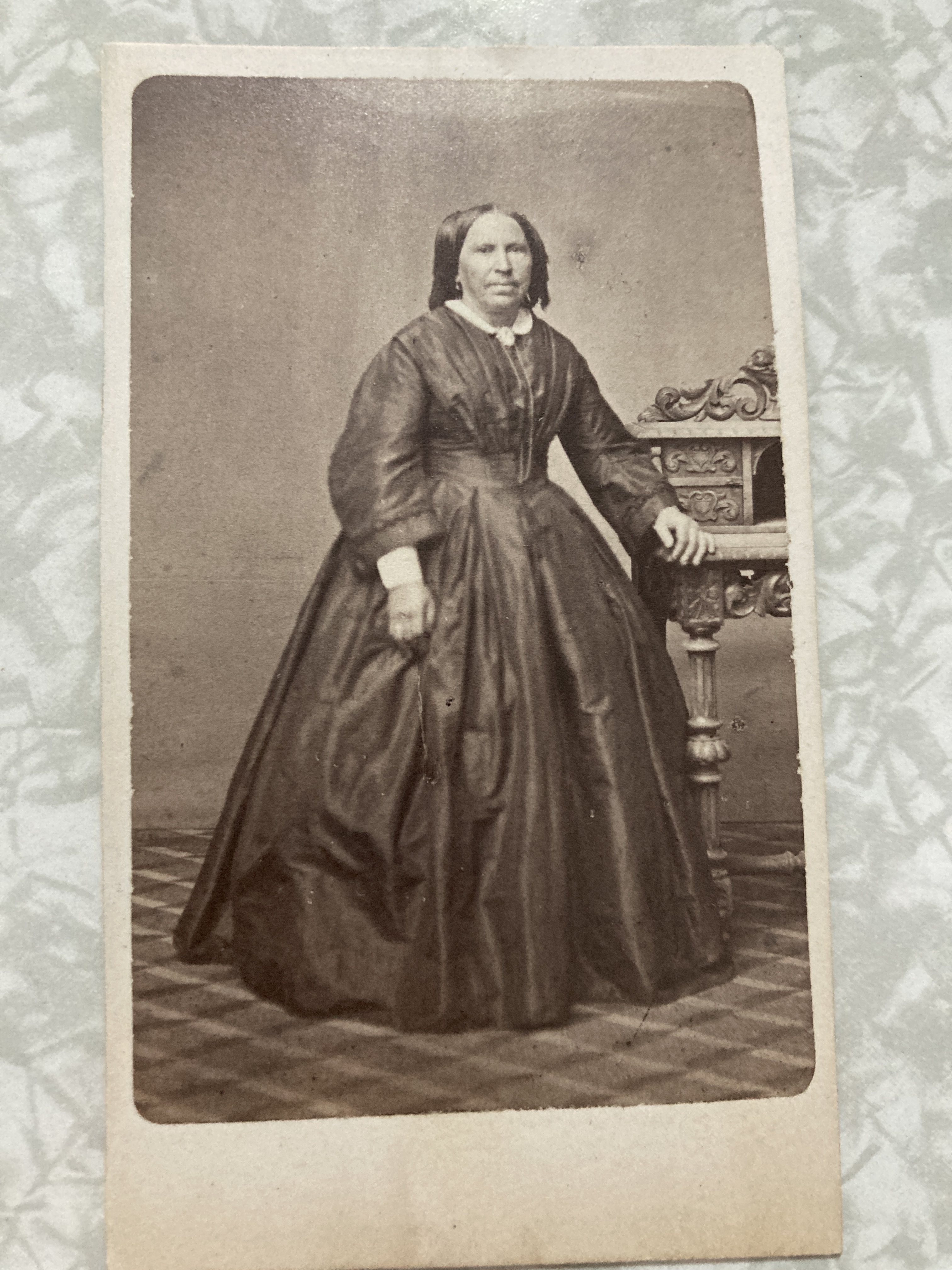
Knowing now that the Hertel photographs were likely taken before 1874 as Ava concluded, I looked on my own at the other three Hertel photographs taken in Mainz that appear later in the album:


Who are these three women? I don’t know since I have no photographs to use for comparison. Two of them look too young to be Bernard Seligman’s sisters Mathilde and Pauline, who were born in 1845 and 1847, respectively, and certainly too young to be his half-sister Caroline born in 1833, if the photographs were taken around 1873 as Ava concluded about the other Hertel photographs. And they are too old looking to be the children of any of Bernard’s siblings. So sadly they also will remain unidentified.

The next photograph I asked Ava to analyze is on the same page as the two blonde men except this photograph was taken in Bingen, not Mainz, by J.B. Hilsdorf, who was in business in Bingen from 1861 to 1891, according to Ava’s research. When I believed that the other two men on that page were Hieronymous and Jakob, I speculated that this third man could be their brother August, the only other son of Moritz Seligmann who survived beyond 1853 and was living in Germany.

Based on the size of this particular photograph, Ava dated it in the mid-1860s. She thought the man was between 30 and 35 so born between 1827 and 1834.2 August Seligmann was born in 1841 so too young to be the man in this photograph. In addition, Ava compared this photograph to one I have of August and found them to be dissimilar. It didn’t take as much to persuade me this time.

August Seligmann

That left one last photograph for Ava to analyze, the second photograph from Bingen that I had selected.

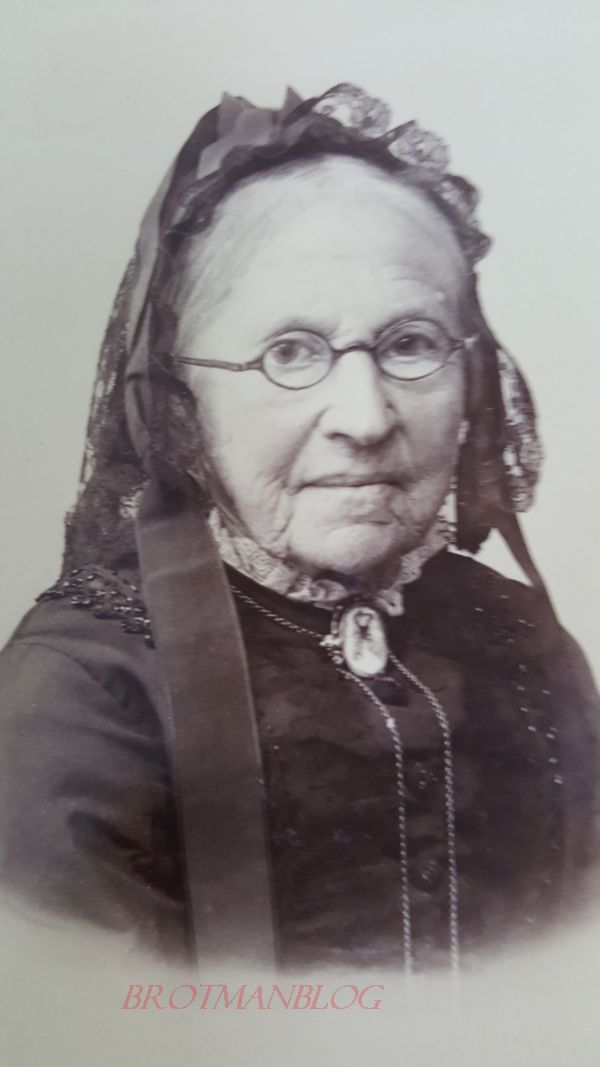
It also was taken by J.B. Hilsdorf, and for the same reasons Ava dated it in the mid-1860s. She estimated the woman’s age to be in her late 40s, early 50s, giving her a birth year range of 1812 to 1817. Based on the age and other photographs I have of my three-times great-grandmother Babette Schoenfeld Seligmann, Ava thought there was a good possibility that this photograph was also Babette. Here are the other photographs of Babette that Ava used for comparison.

Ava did an incredible job of researching the photographers and the photographs they’ve taken to come up with reliable time frames for when the album photographs were likely taken. But it is only possible to go so far with identification without known photographs of the people in your family to use for comparison. You can narrow down the possibilities and eliminate those who clearly do not fit within the parameters of the dates, but you can never be 100% confident of the specific identity of the person in the photograph based just on dates and locations. I wish I had more photographs that Ava could have used to make facial comparisons, but I don’t. I have to accept that I may never know who most of these people were.

Fortunately, there were a handful of photographs in the Nusbaum Album that were labeled and that I could on my own identify and place in my family tree. More on those in my next few posts.


  1. Ava Cohn, Analysis of Nusbaum Album #4, March 17, 2024 
  2. Ava Cohn, Analysis of Nusbaum Album #5, April 3 ,2024

Nusbaum Album: Is this John Nusbaum? Is that Bernard Seligman?

After retaining Ava Cohn’s services to help me with the album of photos (“the Nusbaum album”) I’d obtained from an antique dealer in Santa Fe and selecting, with Ava’s advice, where to begin, I waited anxiously to see what Ava could tell me about the album and the first four photos we’d decided to start with, the ones on the very first page:

First page in the Nusbaum album

I had been staring at these over and over while waiting to hear back from Ava. Could the two on top be my three-times great-grandparents Jeanette Dreyfuss and John Nusbaum? Could the two on the bottom be my great-great-grandparents Bernard Seligman and Frances Nusbaum? I was hoping so. Wouldn’t that be a logical assumption to make?

But alas, I quickly learned that hopes and assumptions are not a reliable method for identifying photographs.

Ava started her analysis by providing some background on the album itself. She wrote, “The album was manufactured and sold by Henry Altemus Company of Philadelphia. Altemus and Company first published photographic albums in 1862 and remained in business until 1936….The album is one of Altemus’ larger albums, holding four cartes de visite (CDV) photographs per page.  The photographs are CDVs measuring 2 3/8” x 4.”1

One thing that Ava explained is that cartes de visite, as their name suggests, were used as calling cards. When someone visited, they would leave their photograph as a memento of that visit. That meant that, unlike a modern photograph album where most of the photographs are likely to be of family members and close friends, this album could include photographs of anyone who stopped in to visit the Nusbaums and the Seligmans.

Ava shared this poem that illustrates how CDVs were used:

Ashford, Brothers & Co, Album Filler Poem, c. 1865

Ava’s report continued with some observations about the photographs and some of the issues involved in analyzing them, including the fact that most of the photographs in the album show only heads or heads and shoulders of their subjects. Because Ava did not have the ability to see other details of what they were wearing, it would be more challenging to provide exact dating of the photographs.

Nevertheless, Ava was able to reach several conclusions about the dates when the photographs on the first page were taken. She concluded that the three from Philadelphia were taken in the Civil War era, but not between August, 1864, and August, 1866. As she explained, “Tax stamps were issued by Union states and were required to be placed on the backs of photographs from August, 1864 to August, 1866 to raise money for the war effort.”2 Since these photographs did not have tax stamps on them, they had to have been taken either before August, 1864, or after August, 1866.

With that time period in mind, Ava then focused on the specific photographers who took these first four photographs. Three of the photographs on the first page of the album were taken by Robert N. Keely; his address, as indicated on the back of these three photographs, was “N.W. cor. Fifth & Coates Sts., Philadelphia.” Ava found Keely listed in Philadelphia directories at that address or at nearby addresses throughout the 1850s and 1860s and into the 1870s.

Knowing that these three photographs were taken during that era, Ava then focused on the three individual photographs on that first page that were taken by Keely. First, she looked at this one:

Based on her estimate of his age (50 years old) and the possible dating of the photograph between 1863 and 1864, Ava concluded that the man in the photograph was likely born around 1813-1814. John Nusbaum, my three-times great-grandfather was born on November 26, 1814, according to the family bible. Ava and I speculated that the man in the photograph could be John Nusbaum, given those dates and given the placement of the photograph on the first page.

I was excited by this analysis, but also realized that nothing could be certain. Without another photograph of John, we had no truly definitive way of being sure this was in fact John Nusbaum. That was an important first lesson I learned from Ava’s work on the album.

Another photo taken by Keely that appears on the first page of the album is this one:

Philadelphia c 1863, born about 25 years, could be Bernard or a Nusbaum son

I had hoped this was Bernard Seligman. But Ava was not convinced. She dated this photograph in that same 1863-1864 time frame and found that the man was 20-25 years old, meaning the man was born roughly between 1838 and 1844; Bernard was born in 1837 so within some reasonable margin of error of that estimate. But Bernard and Frances didn’t marry until 1865. Would they have had their photographs taken before they were married?

Possibly, but there was another obstacle. When I shared the photographs I do have of Bernard as a young man and as an older man as well as the blurry still from a video taken of his supposed portrait, I could see similarities, but Ava was certain that the man in the album was not Bernard.


Bernard Seligman

So who was he? Maybe one of John and Jeanette’s sons? Adolphus was born in 1842, Simon in 1843, and Julius in 1848. It could be any one of them, but I have no photographs of any of them. So who knows… It would make sense that John and Jeanette would have put one of their sons on the first page, but I can’t be certain.

What about the two women on that first page? Were they Jeanette Dreyfuss Nusbaum and Frances Nusbaum Seligman? That will be discussed in the next post.


  1. Ava Cohn, Analysis of Nusbaum Album #1, December 16, 2023 
  2. See note 1, supra. 

A Dating Correction to One of Yesterday’s Photos: Thank you, Sherlock Cohn!

I am deeply grateful to Ava Cohn, aka Sherlock Cohn, the Photo Genealogist, for pointing out a dating error in one of the photographs I posted yesterday. The photo had been labeled in Robin’s collection as Cecilie and Thekla, and I assumed that it was Thekla Blumenfeld Gruenbaum with her infant daughter Cecilie Gruenbaum. Since Cecilie was born in 1895, I labeled the photo with the date 1895.

When was this photograph taken?

But Ava, whose expertise in dating photographs is astounding, noticed that something was off in that date because the clothing worn by the mother in the photo would not have been in fashion in the 1890s. She emailed me and said she thought it was more likely that the photograph was taken in the 1870s.

I went back and looked at the photograph and the information I had on Thekla’s family, and I hypothesized that although the photograph was labeled Thekla and Cecilie, it was of Thekla as an infant with her mother, who was also named Cecilie. That would date the photograph as 1872, not 1895. Ava said that that date made a lot more sense, and when I emailed Robin to ask her for her thoughts, she agreed that it was probably not Thekla as an adult with her daughter, but Thekla as a baby with her mother.

It once again proves that if you want accurate dating and insights into old photographs, don’t rely on the hunches of amateurs. Hire a professional. Ava does amazing work, and I am so grateful that she caught this mistake.

The Cohen Family Photograph: Who Are These People?

Ordinarily finding a large collection of photographs would be cause for much celebration, but when almost none of those photographs is labeled, it can be cause for much frustration.

That is the case with the collection of photographs my cousin Ken inherited from his great-grandparents, Lilian Katz and Isaac S. Cohen. Isaac S. Cohen was my grandfather’s first cousin. Isaac’s father Joseph Cohen was my great-grandfather Emanuel Cohen’s older brother. Thus, Ken and I are third cousins, once removed, both descended from Jacob Cohen and Sarah Jacobs, my great-great-grandparents. (All photos in this post are courtesy of my cousin Ken except where noted.)

Fortunately, some of the photographs in Ken’s collection were labeled. Most important to me was this photograph labeled “Cohen Family.” Ken and I assumed that the couple sitting second and third from the left  in the front row are Joseph Cohen and his wife Caroline Snellenburg Cohen, parents of Isaac S. Cohen, and that Isaac was one of the other men in the photograph.

Joseph Cohen and Family c. 1915-1917

“Cohen Family” Courtesy of Ken Newbury

To help us identify the people in the photograph, I once again retained the services of Ava Cohn a/k/a Sherlock Cohn, the Photogenealogist. She concluded that the Cohen Family photograph was likely taken around 1915-1916 based on the clothing. Joseph Cohen would have been 67 in 1915, and the man who is sitting second from the left in the front row could be in that age range.

The other three men in the Cohen Family photograph all resemble each other, but who are they? Here are closeups of those three. You can see that they all have similar hairlines, long noses, and similar mouths and ears. To me, they look like brothers, although the third looks much younger than the first two, who have graying hair.

My hunch was that these three men were three of Joseph Cohen’s five sons who were still living in 1915. In 1915 the five living sons were Jacob, who would have been 43, Isaac, who would have been 41, Nathan, who would have been 39, and Samuel and Morris (the twins), who would have been 28.

I found a passport photograph of Jacob Cohen taken in 1922 when he was 51, and I do not see a resemblance to the men in the photograph. He has more hair and a different shaped head. Ava agreed that Jacob is not in the Cohen Family photograph.

So that leaves Isaac, Nathan, and the two twins Samuel and Morris. Since the photograph was in Isaac’s possession, Ken and I assumed that Isaac was in the photograph, and we knew what Isaac looked like from other photographs in Ken’s collection.

For example, this photograph is of Isaac S. Cohen and Lilian Katz and their son Jac, Ken’s grandfather, who was born in April 1907. Ava estimated that this photograph was taken in about 1908, when Isaac would have been about 34.

Isaac, Jack, and Lillian Cohen, c. 1908

Isaac, Jac, and Lillian Cohen, c. 1908

Ava opined that Jac was about nine years old in this photograph of Isaac, Lillian and Jac, meaning it was taken in about 1916.

Isaac S., Jac, and Lillian Katz Cohen. c. 1917

Jac is also in this photograph, sitting at the piano, and Ava thought he  was about six or seven when it was taken, meaning it dates to about 1913. A closeup of Isaac from this photograph appears below it.

Isaac S Cohen, c. 1913

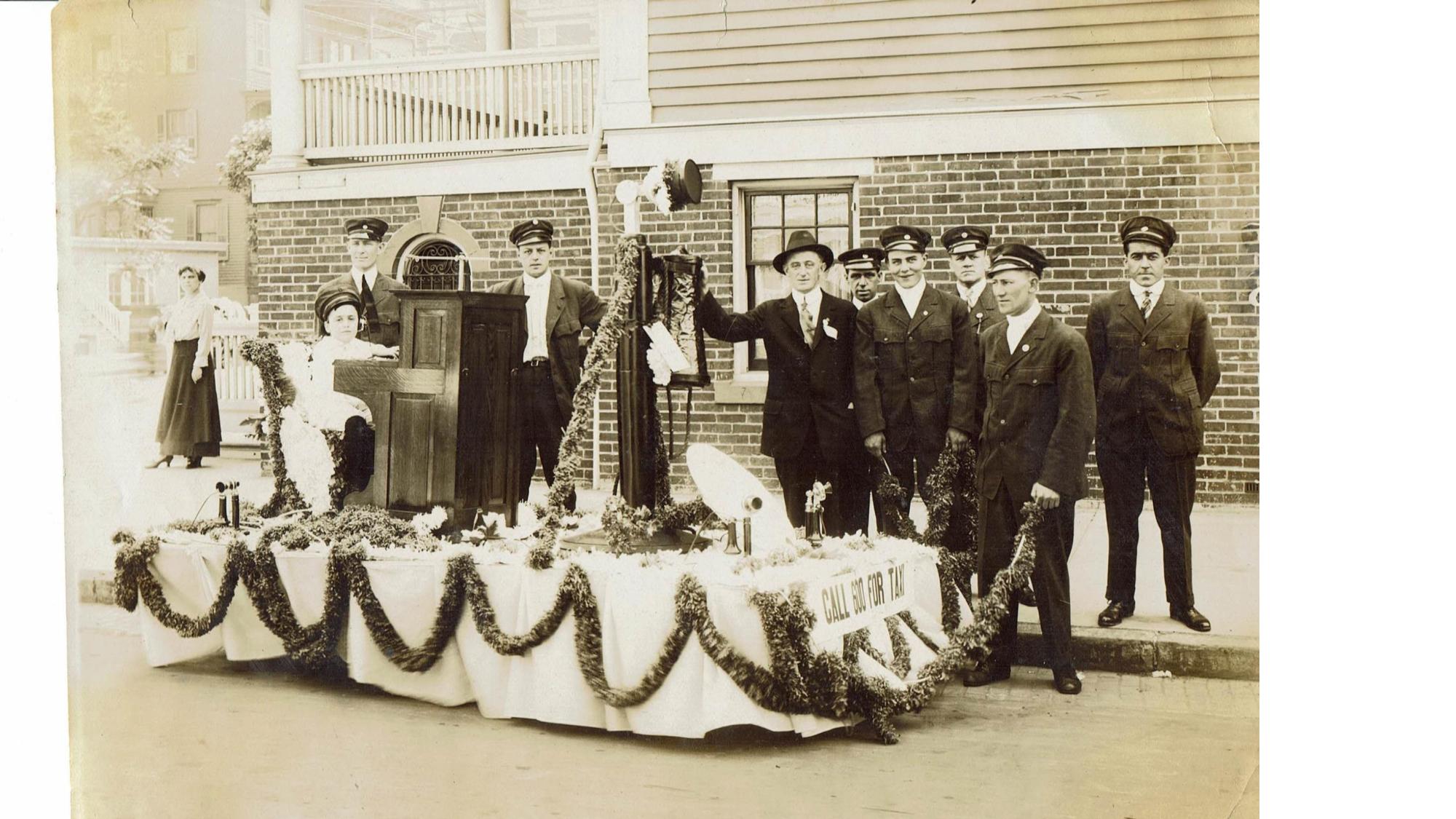
These two profile shots were snipped from two other photographs also taken around the same time. One was from a large photograph of men promoting the sale of war bonds for World War I; the other from a photograph that Ava dated as about 1915  of Isaac with Lillian and Jac and Lillian’s father Leo Katz.

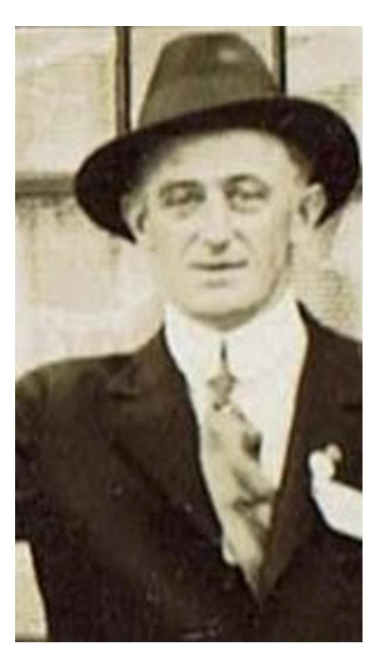
Here’s a lineup of three of the photographs of Isaac and the closeup of the man on the left in the second row in the Cohen Family photograph. Based on all the above photographs, Ava concluded that the man on the left in the second row of the Cohen Family photograph was Isaac S. Cohen, Ken’s great-grandfather.

But who are the other two men in the family photo? Ava did not have enough information to reach a conclusion on that question. I have no photographs of Joseph’s son Nathan, so we have no way to identify him in the photograph. And I have no photographs of Morris, one of the twins, so cannot identify him either.

I was able to obtain two photographs of Samuel Cohen from his grandson Sam, but they were taken when Samuel was older. Even so, Ava and I both concluded that Samuel Cohen had ears that were closer to his head than any of the men in the Cohen Family photograph as well as a different shaped nose and thus was not in this photograph.

So without photographs of Joseph’s other sons, it’s impossible to make any identifcation of the other two men in the Cohen Family photograph.

And what about the women in the photograph? Assuming that Caroline Snellenburg Cohen is sitting next to Joseph, who are the other four women? They certainly appear to be much younger than Caroline. Joseph and Caroline Cohen had four daughters, and Ava thought it was likely that the four women are their daughters. In 1915 Bertha would have been 42, Sallye 38, Fannie 33, and Julia 31. The woman seated on the far right is the spitting image of Caroline. I’d be shocked if she was not her daughter.  So this could be a photograph of Joseph and Caroline, their four daughters, and three of their five sons. But we can’t be certain.

The other mystery is….who was cut out of the photograph?  Ava focused on the sleeves and the size of the hands and concluded that it was a woman. But who could she have been?

One possibility is that it was Lillian Katz, Isaac S. Cohen’s wife. Why, you ask, would she have been cut out of the picture?

Well, it appears that sometime between 1915, when they were living together in Atlantic City, and 1919, Isaac and Lillian separated and then filed for divorce in Allegheny County, Pennsylvania, in April 1919. They were divorced on February 20, 1920, on grounds of desertion. In 1920 Lillian was living with her parents in Pittsburgh with her son Jac (incorrectly listed here as John) and listed as divorced, and Isaac was living in Philadelphia with his sister Julia and her husband.1

Lillian Katz Cohen, 1920 US census, Census Place: Pittsburgh Ward 14, Allegheny, Pennsylvania; Roll: T625_1522; Page: 20B; Enumeration District: 550
Ancestry.com. 1920 United States Federal Census

Isaac Cohen 1920 US census, Census Place: Philadelphia Ward 38, Philadelphia, Pennsylvania; Roll: T625_1635; Page: 7A; Enumeration District: 1328
Ancestry.com. 1920 United States Federal Census

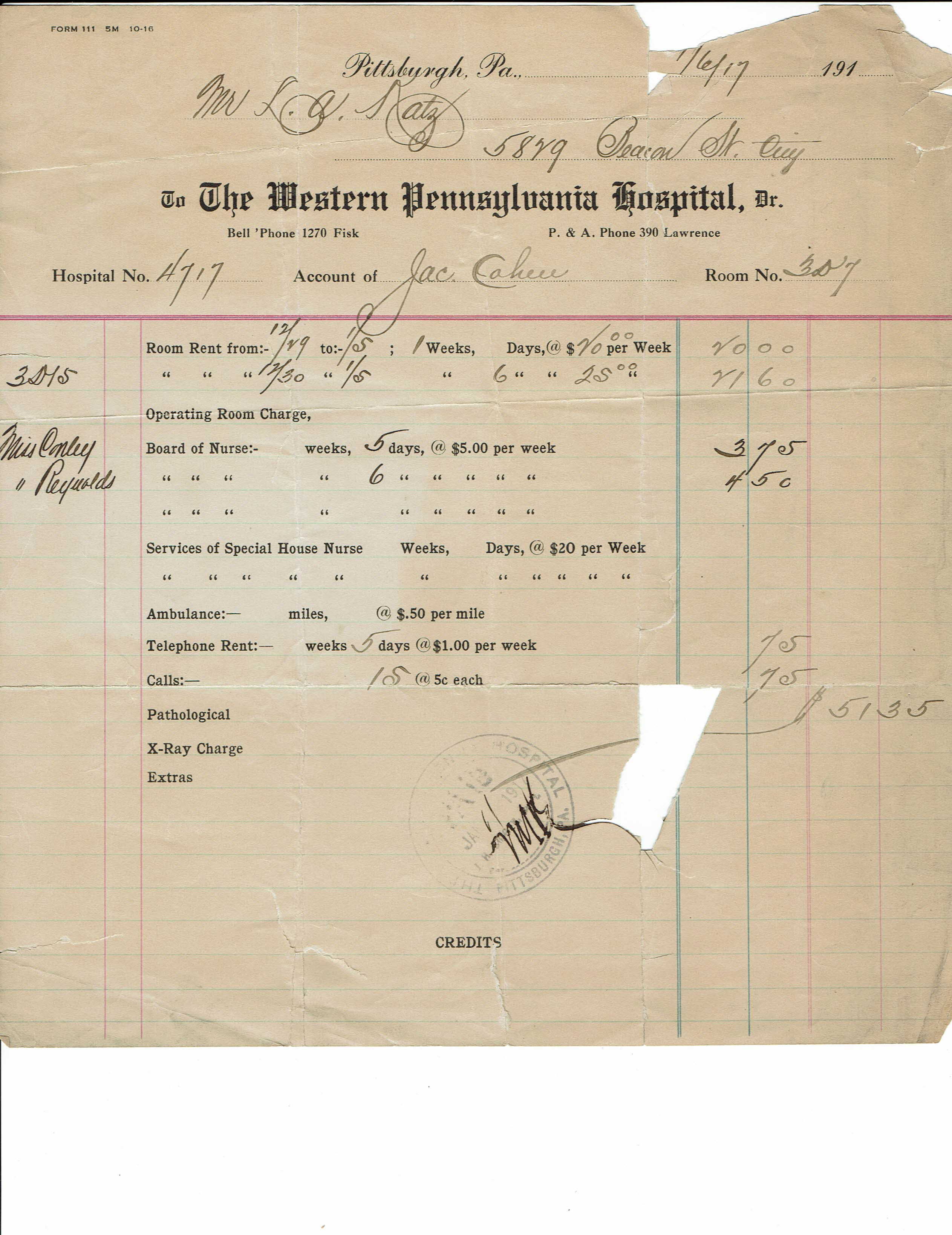
Ken told me that  when his grandfather Jac was a boy, he was run over by a trolley car while sledding; as a result, he lost an arm. We have the hospital record from Jac’s accident, and it’s dated January 6, 1917.  Ken wondered whether the injury to their son caused a rift between Isaac and Lillian, as sadly often happens when a child is seriously sick or injured and upset parents find it difficult to deal with the tragedy.

But the story has a happy ending. On August 12, 1921, Isaac and Lillian applied for a marriage license in Philadelphia and were remarried:

And records suggest that they remained married for the rest of their lives.

But maybe someone cut Lillian out of the family picture during the brief period when she and Isaac were divorced. It would seem odd that Lillian saved a photograph from which she had been removed, but stranger things have happened. But as Ava said, we really have no idea who was cut out or why. It’s just speculation.

In the end, we still have many questions but at least a few answers about the Cohen Family photograph. It’s a good reminder that I really should do my descendants a favor and go label all those photos from my own life.

Thank you to my cousin Ken for sharing the photographs and to Ava Cohn, aka Sherlock Cohn the Photogenealogist for her invaluable insights and her determination to get this right!


  1. Isaac listed his marital status as married; the divorce didn’t take effect until February 20, 1920, and the census was enumerated on January 17, 1920. Obviously Lillian was already considering herself divorced. 

Cohens on the Beach: Another Case for Sherlock Cohn, The Photogenealogist

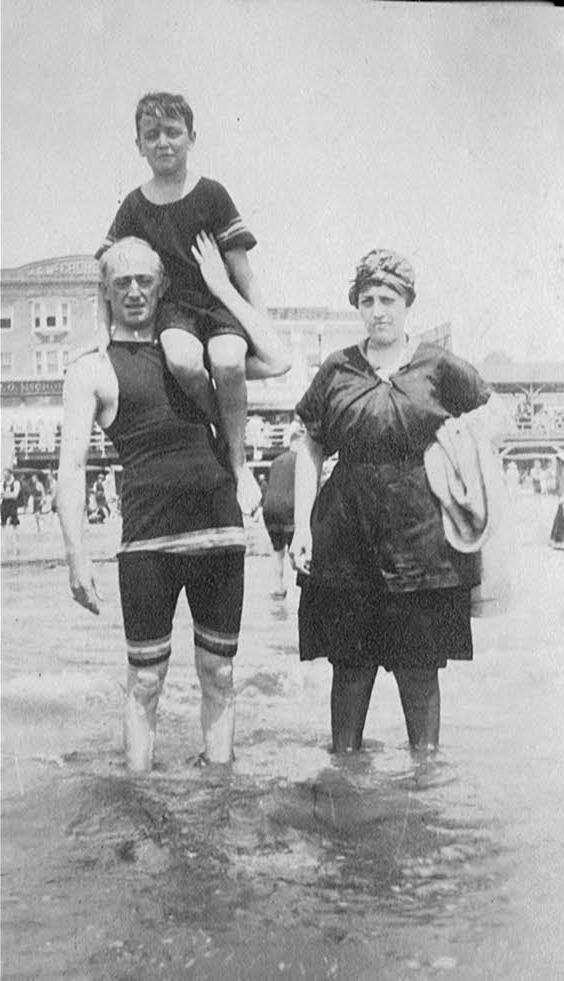
This photograph and the analysis of it will stick with me for a long time, probably forever. Why? Because it’s the last photograph that I asked my father about before he died in February, 2019.

A little background. A scan of that photograph and many others had been sent to me several years ago by a cousin-by-marriage named Lou; he and I were connected through my our mutual cousin, once removed, Marjorie Jane Cohen, the daughter of Bessie Craig, Lou’s great-aunt, and Stanley Cohen, my great-uncle.

In addition, in the summer of 2018 I connected with another Cohen cousin, Marcy, the granddaughter of Maurice Cohen, Sr., who was also my great-uncle, my grandfather John’s other brother. Marcy sent me several photographs including this one of Maurice, Sr., and his sons, Buddy and Junior, my father’s other first cousins.

Emanuel (Buddy), Maurice, Sr., and Maurice, Jr. (Junior) Cohen

Emanuel (Buddy), Maurice Sr., and Maurice Jr. Cohen

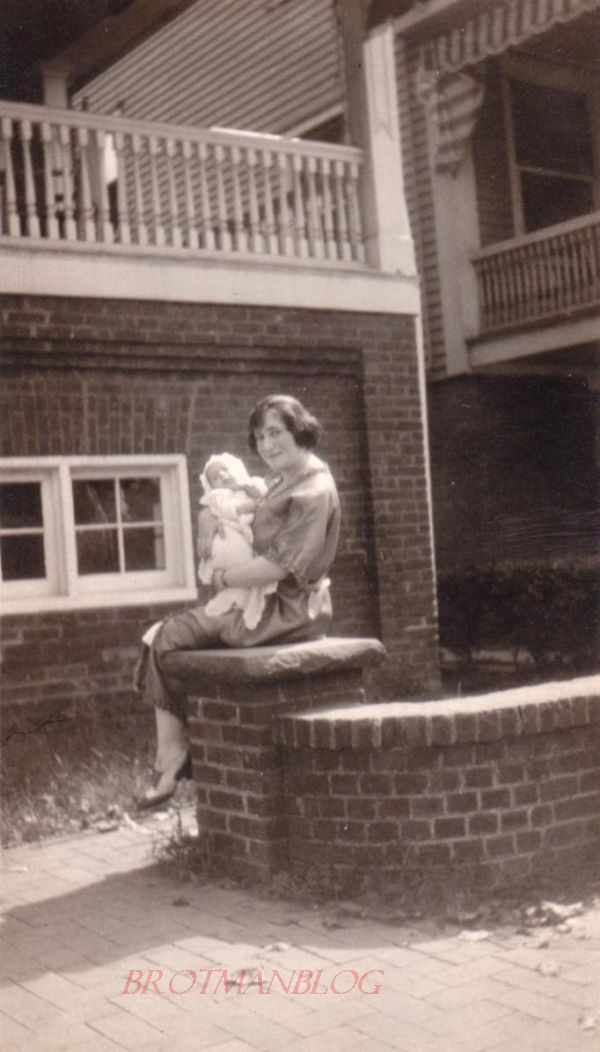
I already had the photographs below from Lou and used this one from Marcy to identify the people in these two. The bottom one was obviously Maurice Cohen, Sr., and looking at these two photographs with my father in the summer of 2018, we identified the woman as Maurice’s wife, Edna Mayer Cohen, the baby as their son Emanuel (Buddy) Cohen, born in 1922, and the little boy as their older son, Maurice Cohen, Jr., born in 1917.

Edna Mayer Cohen holding Buddy Cohen, 1922

Maurice Cohen Jr. and Maurice Cohen Sr., 1922

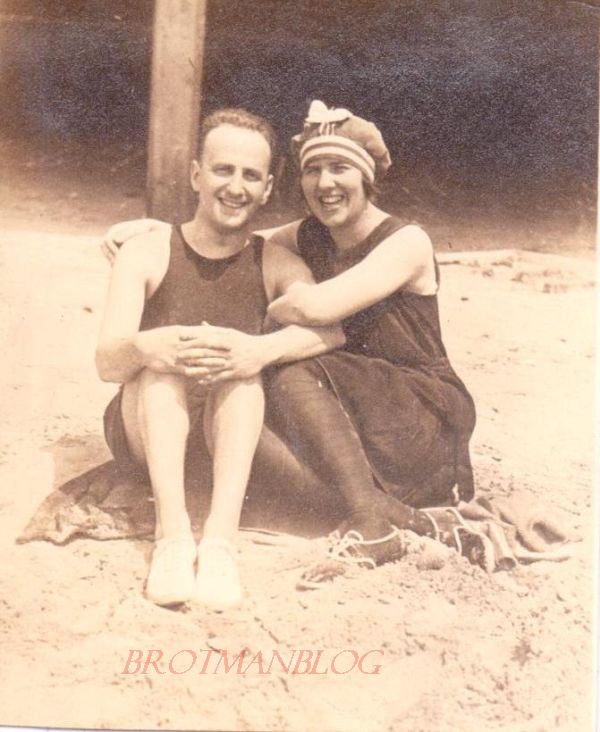
Based on these photographs, I could identify  the man kneeling in the right rear of the beach photograph as Maurice Sr. with his wife Edna sitting in front of him. Here are close-ups of the man and woman on the right side of the beach photograph; you can see they are the same people as the adults depicted in the three photos above:

It was also clear that the woman on the left side of the beach photo was Bessie Craig Cohen, Stanley Cohen’s wife, as you can see from these photos of Bessie that Lou had sent me from  Marjorie’s collection:

Stanley and Bessie (Craig) Cohen

Bessie Craig Cohen

Bessie Craig Cohen

Here is a closeup of the woman I believe is Bessie Craig Cohen in the beach photo:

But who who were the two children and the older woman in the center? And who was the man with the mustache in the rear left side of the photograph?

Although the back of the  beach photograph is dated 1923, I wondered if that was a mistake. I thought that perhaps the photo was really taken in 1933 because the girl in the middle resembled pictures I had of Marjorie when she was a girl:


Marjorie 1933

But Marjorie was born in 1925, meaning the photograph could not have been taken in 1923. I also speculated that the little boy could be my father, who was born in 1926. And perhaps the woman in the middle was Eva Seligman Cohen, my great-grandmother, Marjorie and my father’s paternal grandmother. I speculated that the photograph had been incorrectly dated 1923 when 1933 would have been more accurate.

So I showed the photograph to my father. He agreed with me about my identifications of Maurice, Sr., Edna, and Bessie. But he was adamant that the woman in the middle was not his grandmother Eva Seligman Cohen and that the little girl was not Marjorie. He pointed out that Marjorie did not have the high forehead of the little girl on the beach, as you can see above. He wasn’t as certain about the little boy since his face is partially hidden in the photograph. Nor could he identify the man with the mustache.

I knew this was another case for Ava “Sherlock” Cohn, who has done such outstanding work for me before. I recently received Ava’s report on the beach photograph, and once again she has done an incredibly thorough job of research and analysis and written a persuasive report on her conclusions. I wish my father was still alive because he would be so happy to read Ava’s report. She agreed with him that that is not Marjorie on the beach and that the woman is not my great-grandmother Eva Seligman Cohen, and my father loved to be right.

So who are these people? Thanks to Ava’s expert analysis, I believe I now have some of the answers. In order to explain, I will share, with Ava’s permission, some of her report.

First, Ava concluded that the photograph was correctly labeled as having been taken in 1923, not 1933 as I had hoped:

In order to properly date this photograph, it is important to look at the clothing of the beach-goers.

In general, the beachwear is appropriate for the time period of the early 1920s. The woman on the left side of the photograph (who has been identified as Bessie Craig, wife of Stanley Cohen) is wearing the most recognizable twenties bathing suit and swim cap. Below, left, is an example from around 1920 of a swim cap very similar to Bessie’s cap that covers her forehead to the eyebrows.  On the right is an example of a suit and cap from a 1919 advertisement for Tom Wye of Winchendon, Massachusetts, a knitting plant. Notice the white sash that is similar to the one on Bessie’s suit.

Likewise, the same type of white sash/belt can be seen on the man on the right in the back. Bessie’s dark stockings are a little old-fashioned for 1923 as stockings were generally worn pre-1923 when bare legs were the preference of style setters. The swimwear/streetwear worn by the others in the photograph is less revealing of the date but within the same time period of the early 1920s.

… Given all of the clothing/bathing suit styles being worn in the photograph, the date of the photograph is clearly closer to 1923 than to 1933 as Amy had speculated.

Once the photograph was dated in the early 1920s, it was clear that Marjorie and my father could not be the children in the photograph as they weren’t yet born.

Ava then estimated the ages and birth years of the people in the photograph:

 I am estimating the following age and approximate birth year (based on a 1923 photo date) of those in the photograph as follows:

    1. Woman seated in front—early to late 60s; birth year (approx.1854-1863)
    2. Young boy seated in front on the right—5-6 years old; birth year (1917-1918)
    3. Woman behind young boy—early 30s; birth year (1890-1891)
    4. Man kneeling on the right—early 30s; birth year (1890-1891)
    5. Young girl in middle—5-7 years old; birth year (1916-1918)
    6. Man kneeling on left—28-30; birth year (1893-1895)
    7. Woman seated on left (identified as Bessie Craig)—29 years old; birth year 1894

Based on these ages and birthdates and other photographs that I had shared with Ava as well as her own research, she made several possible identifications of the people in the photograph.

First, she concluded that the young boy was Maurice Cohen, Jr., the son of Maurice Sr. and Edna, who are right behind him in the photograph. Ava wrote;

Maurice’s eldest son, Maurice, Jr., was born in 1917 and would be age 6 in 1923. Though he resembles Amy’s father, John, Jr., (particularly his haircut) he has been identified in the photograph of Eva Seligman Cohen and Emanuel Cohen also taken in Atlantic City in 1922 as Maurice, Jr. (known as “Junior”) and, therefore, I believe the boy on the beach is Maurice, Jr.

Here is that 1922 photograph:

Emanuel Cohen, Eva Seligman Cohen, and Maurice Cohen Jr. 1922

Here is a closeup of the boy on the beach taken a year later:

As for the young girl, Ava’s hypothesis is that she is a niece of Bessie Craig Cohen, one of the two daughters of Bessie’s brother Christopher, Margaret or Mary Rita.  Ava located some photographs online of Christopher Craig’s daughters that show a resemblance. Margaret was born in 1918 and thus would have been about five in 1923 when the photograph was taken.


When I received Ava’s report, I contacted Lou, who is the son of one of those daughters and the nephew of the other.  He sent some additional photographs of his mother and aunt that support Ava’s conclusion that the girl in the photograph is Christopher Craig’s daughter. The girl in this 1934 photograph is Lou’s mother Mary Rita Craig. Note the resemblance to the girl on the beach, who was probably her older sister Margaret:

Mary Rita Craig, 1934

That brings me to the older woman in the center of the photograph. Ava agreed with my father that this woman was not his grandmother Eva Seligman Cohen. Ava based her conclusion on comparisons to other photographs of my great-grandmother Eva and noted the differences in their facial structure and appearance.

Eva Seligman Cohen

Then she considered other women in the extended family who might have been in the photograph. She narrowed the possibilities to Sarah Jane Tadley Craig, Bessie Craig Cohen’s mother, or Edna Mayer Cohen’s mother, Ella Stern Mayer. Ella was born in about 1860 (sources conflict), making her about 63 in 1923; Sarah was born in 1869, so would have been 54 in 1923.

Although Ava thought the woman on the beach appeared to be closer to 63 than 54 in age and also found some resemblances between that woman and Edna Mayer Cohen, she was not willing to rule out the possibility that the woman on the beach was Sarah Jane Tadley Craig.

In fact, when I sent Ava additional photographs of Marjorie, Sarah’s granddaughter, Ava was struck by the resemblance between the shape of Marjorie’s face, her chin in particular, and that of the woman on the beach. We hope to receive a photograph of Sarah Jane Tadley Craig from Lou that may make a final identification easier.

One other hint that that woman may be Sarah Craig came from an additional photograph Lou sent after receiving Ava’s report—a photograph that was obviously taken at the same time as the photograph we are analyzing:

Note that in this photograph Stanley has replaced the man with the mustache and only Stanley, Bessie, the young girl, and the older woman are in the photograph (with Edna in the background). After thinking about this, it occurred to me that this photograph was intended only to show the members of the Craig family: Bessie, her niece, and her mother, plus her husband, Stanley. Look how the older woman has her hand affectionaltely placed on Bessie’s leg, something a mother would do, but probably not the mother of a sister-in-law. That seems to corroborate the theory that the older woman was Sarah Craig, not Ella Mayer.

But who was the man with the mustache? How does he connect to the rest of this group? That is the subject of post to come at a later time. Ava and I were going back and forth, both of us somewhat uncertain about that one, so she suggested we get some distance from it and revisit “in a while.” So I am heeding her advice and will postpone that discussion after a break from staring at that man with the mustache over and over and over.

Photo Analysis: Why You Should Ask an Expert

Sometimes you need to hire an expert to help with hard questions.  With the help of the genealogy village—my fellow bloggers and the members of the various Facebook groups and JewishGen—I have been able to find and learn more than I ever imagined.  But when it came to some of those mystery photos that bewildered and frustrated me, I decided it was time to find an expert, and the expert who came highly recommended—for good reason—is Ava Cohn, a/k/a Sherlock Cohn, the Photo Genealogist.

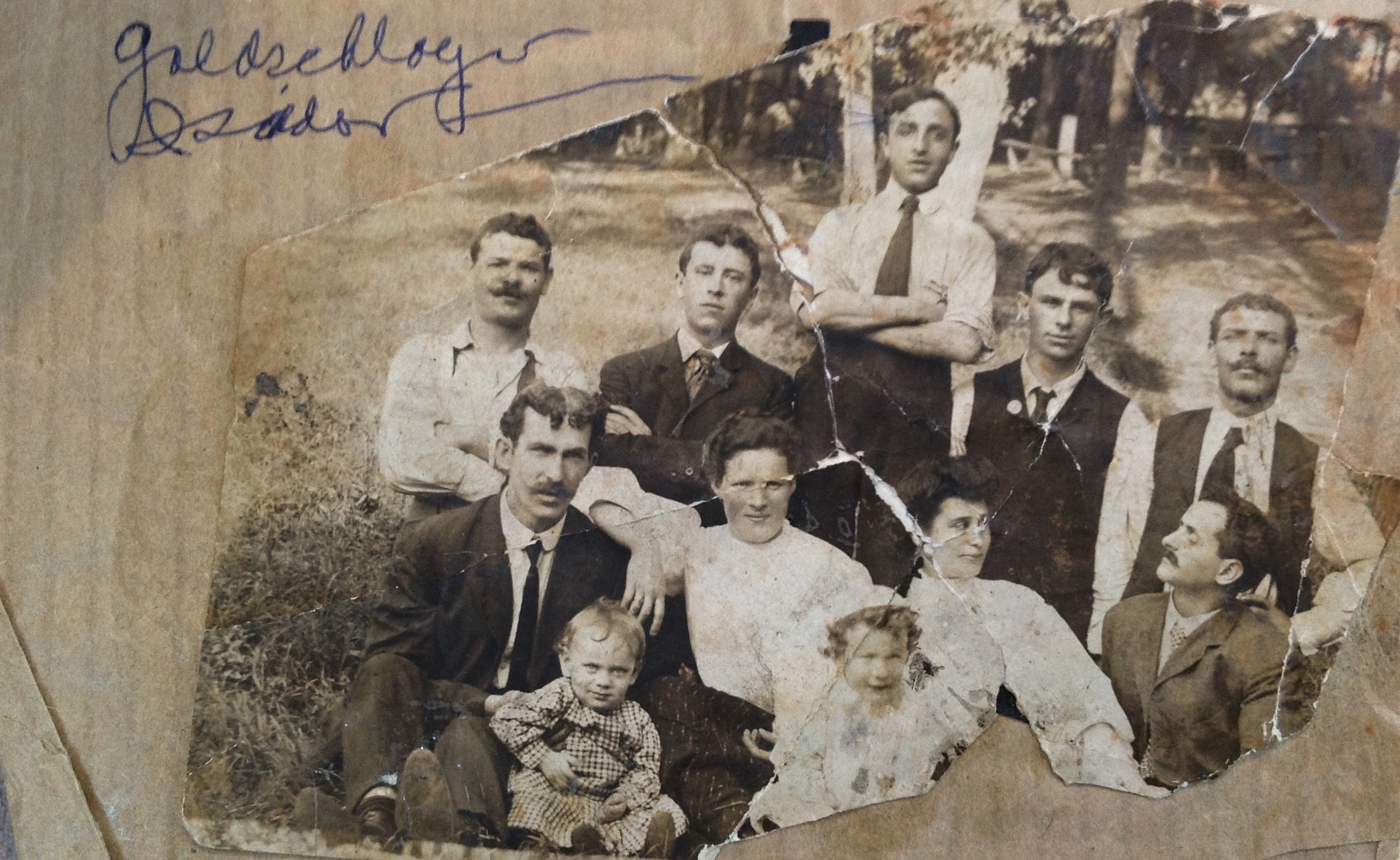
I had originally sent Ava this photo of my grandfather Isadore Goldschlager because I was curious about identifying the other people in the photograph.
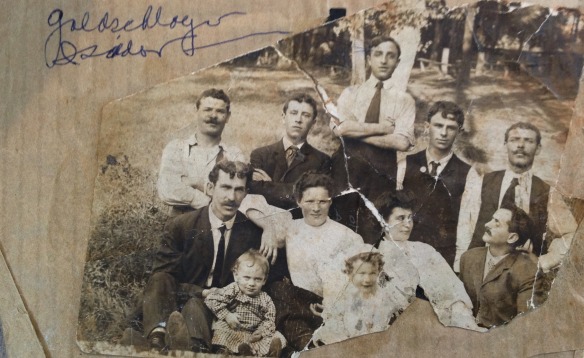
Isadore Goldschlager and unknown others

Isadore Goldschlager and unknown others

But Ava and I discussed it, and she concluded that without more information and more photographs, it would be impossible to make much progress identifying total strangers who lived over a hundred years ago. I really appreciated Ava’s honesty, and when she asked if I had any other photographs that might be more amenable to her analysis, I looked back to consider some other options.

I sent her this photograph from Fred Michel’s album, which I had discussed here and here and here, but about which I remained somewhat mystified.
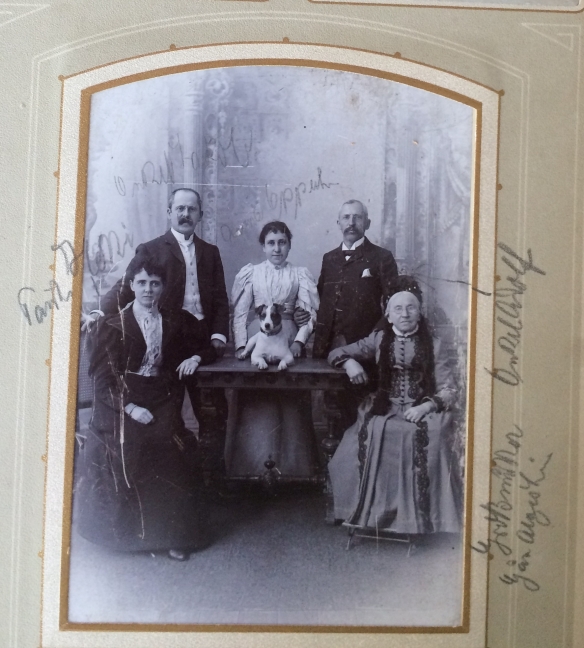
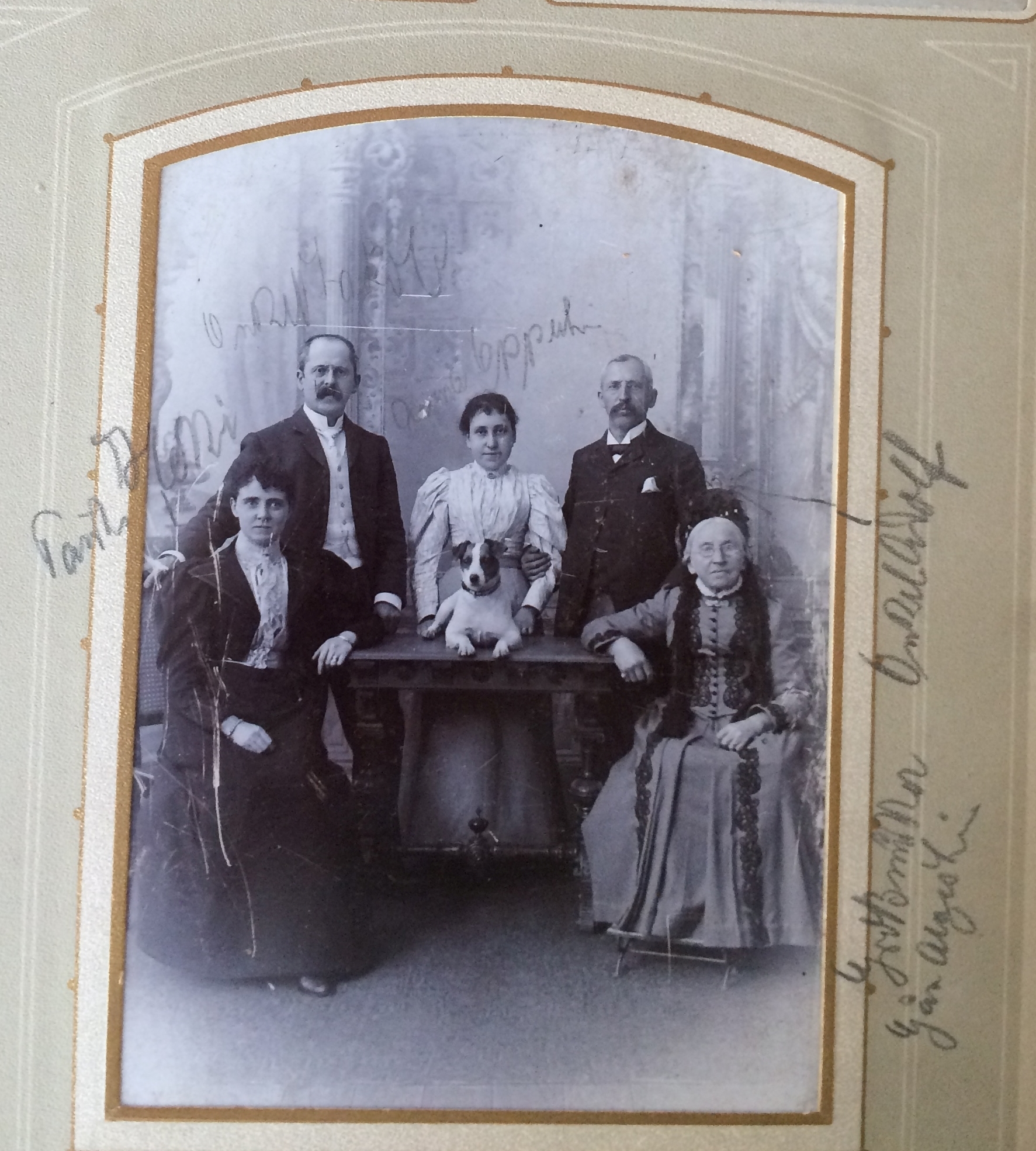
Uncle Adolf and Grandmother Gau Algesheim

I had concluded tentatively from my own analysis and comparison to other photographs and the inscriptions on the photograph that the older woman was probably my three-times great-grandmother Babetta Schoenfeld Seligmann, and the two men labeled Onkel Adolf and Onkel Jakob were probably Babetta’s sons, Adolf and James, brothers of my great-great grandfather Bernard Seligman.  Adolf, like my great-great-grandfather Bernard, had left Germany and settled in Santa Fe, New Mexico, and James had moved to Great Britain.  I had learned that James was not a common name for boys in Germany in the 19th century so it was likely that he was born Jakob and adopted the name James after emigrating.  Also, my cousin Lotte, who had met James Seligman when she was a young girl, thought that “Onkel Jakob” resembled the man she remembered as James Seligman.

But I was not at all sure who the two younger women were, especially the woman to the left in the photograph.  I’d asked on the blog if anyone could read the inscription near her picture, but no one was certain what it said.  The woman in the center appeared to be labeled Anna Oppenheimer, but I couldn’t understand why she would be in the photo.  Anna Oppenheimer was the daughter of Pauline Seligmann and Maier Oppenheimer and the granddaughter of Babetta.  But why of all the grandchildren would only she be in this photograph, especially since her mother was not included, just two of her uncles?

Ava studied the photograph as well as my blog posts, my family tree for the Seligmann family, and other photographs of the Seligmann family, and then sent me a detailed and thorough analysis of her own conclusions, which I found well-founded, fascinating, and persuasive.  With her permission, I am sharing some of her report.

I thought Ava’s analysis of the overall relationships among those in the photograph based on traditional posing in studio photographs of families was quite interesting:

In the mystery photograph, the family is posed in a typical family grouping of five individuals seated and standing around a large library table upon which is a dog, perhaps the family pet. The photo has been taken in a photographer’s studio with an appropriate backdrop for the time period. The two individuals on the left hand side appear to be a married couple while the elderly woman seated on the right could be mother or grandmother to one or more of the individuals in the photo. The man on the right, probably a son and the young woman in the center holding the dog could be related but are not married to each other.

Ava concluded that the photograph was taken in 1896-1897.  Here is part of the reasoning for her conclusion:

To establish a year for the photograph, I looked at the clothing worn. Since what we know of the family’s comfortable economic status, it is logical that they are wearing up-to-date fashions, for the most part. The elderly woman, as is customary for many older women, is not as fashionable as the two younger women. Her dress, with multiple small buttons down the bodice, is a typical style of the 1880s as is her bonnet. The other two women are wearing clothing from the latter half of the1890s, post 1895. By this point in time the enormous leg-o-mutton sleeves of the 1893-1895 time period have become less full with the vestige of fullness above the elbow.  The man on the left is wearing a high Imperial collar, common in the 1890s.

Ava agreed that it was reasonable to conclude that the elderly woman labeled “Grossmutter Gau Algesheim” was Babetta Schoenfeld Seligmann and that the man on the right, labeled Onkel Adolf, was her son Adolf Seligman, brother of Bernard and a resident of Santa Fe in the 1890s.  At that time Adolf was in his fifties (born in 1843) and unmarried.  Ava thought that the man labeled Onkel Adolf in the photo appeared to be in his mid-fifties. Ava did not think the woman in the center was Adolf’s wife, Lucy, since Lucy would have been only about fourteen in the mid-1890s and did not marry Adolf until 1902.
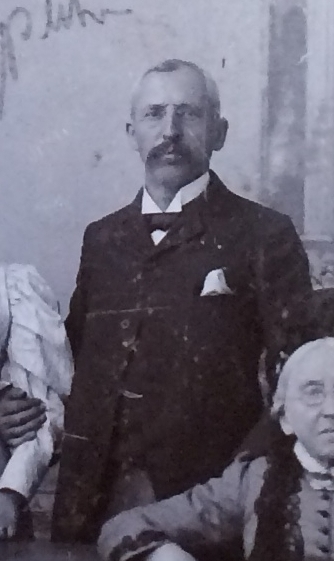
 

Onkle Adolf

Rather, Ava opined that the woman in the center was in fact Anna Oppenheimer as labeled.  She would have been nineteen or twenty in 1896-1897:

It appears that she is wearing a wedding or engagement ring in the photograph. The writer of the inscription has used Anna’s maiden name, Oppenheimer, as opposed to her married name, Anna Kaufman, so, along with the absence of Max Kaufman in the photograph, I believe that this photo was taken before her marriage to Max. Again, having a marriage certificate for Anna and Max could confirm why the writer used Anna’s maiden name here instead of her married name.

Unfortunately, I do not have a marriage record for Anna, and there is no record of any children born to her and her husband Max Kaufman so it is impossible to determine when exactly they married.
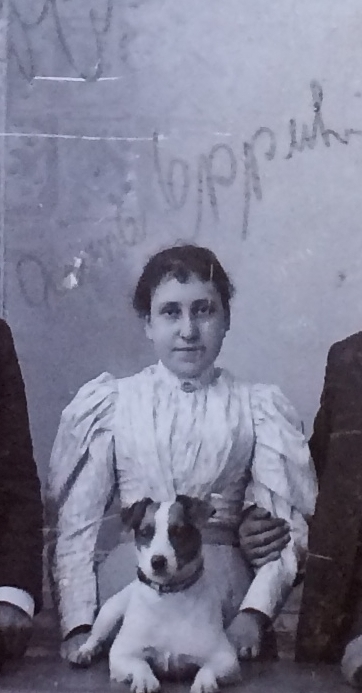
Anna Oppenheimer maybe

That left the two remaining people in the photograph: Onkel Jakob and the woman sitting on the left side of the picture whose name I could not decipher in the inscription.  Ava agreed that “Onkel Jakob” was James Seligman. So who was the other woman?

Ava believes that she was James/Jakob Seligman’s wife, Henrietta Walker Templeton, who was born in England in 1866 and married James Seligman in London in October 1887.  Ava read the inscription next to the woman to be “Tante Heni:”
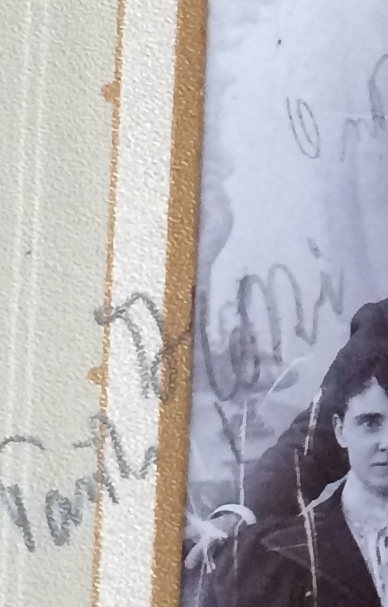
Tante Glori


Heni is a nickname for Henrietta and clearly shows the relationship with the writer of the inscription because of the informal use of a nickname. Tante (Aunt) could be one by marriage not necessarily by blood. In the mystery photo Heni appears to be about age 30-31.

In addition, Ava interpreted the posing as indicative of a marital relationship between Jakob and the woman seated in front of him, saying, “The manner in which he is posed with his arm around the back of Heni’s chair suggests their relationship.”

This made perfect sense to me.  Ava speculated that perhaps James and Henrietta had come to Gau-Algesheim to celebrate their tenth anniversary with the Seligmann family, which would have been in 1897.  I also recalled that Lotte had mentioned in an email dated July 6, 2015, that James and his English wife (whom Lotte referred to as Hedy) had visited “the continent” once.  Lotte was born in 1921, so would not remember a visit in the 1890s, but the fact that James and his wife visited during Lotte’s lifetime in Germany makes it even more likely that they had in fact visited on earlier occasions.  Lotte also said that James returned after Henrietta’s death in 1928.

Ava even analyzed the dog in the photo.

Given that the same dog appears in both the mystery photograph and the one of Bettina Arnfeld nee Seligmann (born 1875), I thought I’d include that here. It is clearly the same dog. I had considered that the dog may have belonged to the photographer but given how calm he/she appears in the photographs, I believe he was a family pet. The photo of Bettina was taken roughly 3 years after this one, circa 1900. The photo of Bettina may have been an engagement picture as she and Adolf Arnfeld married in 1900.

Bettina Arnfeld nee Seligmann

Bettina Arnfeld nee Seligmann

Anna Oppenheimer maybe

Bettina Seligmann Arnfeld was the daughter of Hyronimus Seligmann, Babetta’s son and brother of Bernard, Adolf, and James, among others.  She was Anna Oppenheimer’s first cousin.  So whose dog was it? Certainly not James or Adolf since neither lived in Germany.  Perhaps the dog belonged to Babetta? She is the only common link between the two young women pictured with the dog.  Babetta died 1899; if Ava is correct and the photograph of Bettina was taken in 1900, perhaps Bettina inherited the dog from her grandmother?

I was quite satisfied and persuaded by Ava’s analysis of the family photograph.  But she didn’t stop there.  I had also supplied her with additional photographs to help with her analysis of the family photograph.  For example, I sent her this one, which I believed was a photograph of Babetta as a young woman.
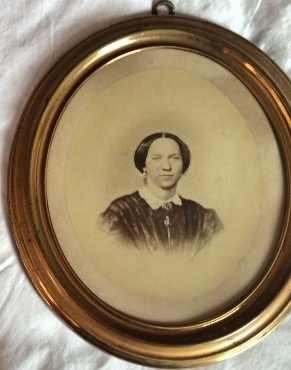
Uncertain see ava report

I had based that conclusion on the fact that another photograph that I paired with the one of the woman was labeled Grossvatter and thus presumably was my three-times great-grandfather Moritz Seligmann.
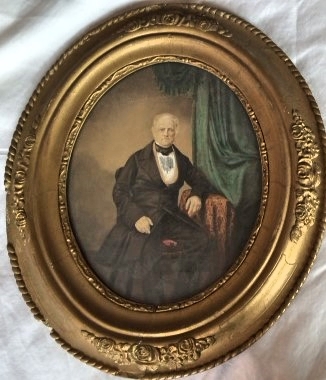
Courtesy of the Family of Fred and Ilse Michel

Courtesy of the Family of Fred and Ilse Michel

But Ava disagreed about the identity of the young woman:

I did a comparison of the older photograph of a young woman that you supplied. This photograph is roughly dated circa 1859-1861 based on clothing and hairstyle as well as the type of image, most probably a daguerreotype popular in the 1850s and very early 1860s. The young woman appears to be in her teens and no more than 20 years of age. This eliminates the possibility that this earlier likeness is Babetta who would have been 49-51 years old. But there is a possibility given the provenance of the photograph and the resemblance to Babetta that this is one of her daughters, Pauline or Mathilde. It is unlikely to be her niece/stepdaughter, Caroline. Given that the photo was obtained from the Michel descendants, Pauline is the most likely candidate. Further research, documentation and comparison photographs would be needed to make a positive identification. 

Although I was quite disappointed to think that this was not Babetta, the more I considered Ava’s analysis and the more I looked at the photograph of the young woman and the one of Moritz, the more I realized my error.  The frames on the two photographs are quite different as is the style and the posing.  I had just jumped to the conclusion that because Suzanne had sent these two photographs in the same email that they were of a couple.  That’s why sometimes you need to hire an expert!

Finally, Ava also did an analysis of the wonderful photograph that my cousin Davita had sent of a man she said was her grandfather, Adolf Seligman, and his favorite sister, Minnie, riding camels in Egypt:
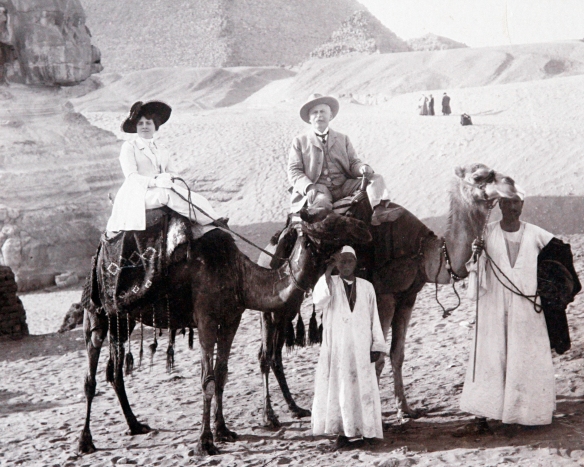
gramdfather Adolph and great aunt Minnie_rev

I was quite surprised but also persuaded by what Ava had to say about the identity of the people in this photograph; she is quite certain that the woman is in fact Henrietta Walker Templeton, and the more I studied the photograph, the more I agreed.

The Egypt photo is roughly dated based on her suit and hat as being taken in 1910. That would make Heni 44 years old. Her face has aged from the earlier photo and she’s put on a bit of weight, not uncommon approaching middle age.  She is very stylish in the 1897 photo and likewise in the 1910 one. In both, she has chosen an up-to-date suit rather than a dress. Her dark hair is the same style. Notice the “dip” in her bangs on the right side of her forehead. It’s the same as the earlier photo.  Her eyebrows, nose and mouth are the same as is the overall attitude captured by the photographer.
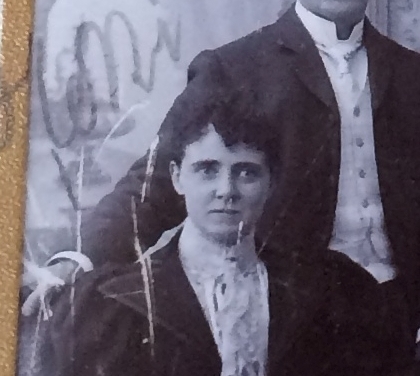
Tante Heni
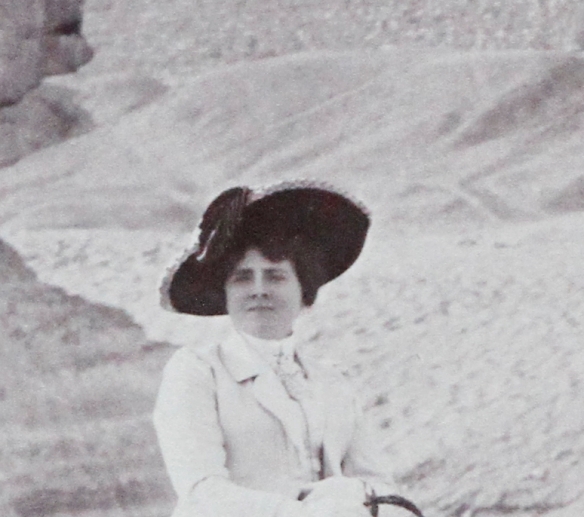
Tante Heni


Minnie Seligmann

After I read Ava’s comment, I checked the emails that Lotte had sent me and saw that she had described James’ wife as “big and pompous.”  The woman Ava concluded was Henrietta certainly does have a certain air of superiority in both of the photographs.

Also, I have absolutely no record of any kind supporting the existence of a Seligmann sister named Minnie, so already had had questions about Davita’s description. Thus, I was open to the idea that it was not Minnie, but someone else.  I hadn’t considered Henrietta since I believed that the man was Adolf, as Davita said.  Why would Henrietta from England be riding a camel in Egypt with her brother-in-law Adolf, who lived in Santa Fe?

But Ava raised a question as to whether this was in fact Adolf. If the photograph was taken in 1910, why would Adolf, who had married in 1902 and had three children by 1910, be traveling to Egypt? The more I looked at the earlier photographs of Adolf and Jakob/James, the more I became convinced that the man on the camel is in fact James, not Adolf.  Ava also agreed that it seems quite likely that it is James, not Adolf, in the photograph, but that without more information, we can’t be entirely sure, especially since Davita, the source of the Egypt photograph, believed that it was her grandfather Adolf. (Adolf died before Davita was born, so she had never met him in person and only had this one photograph that she had been told was of her grandfather.)
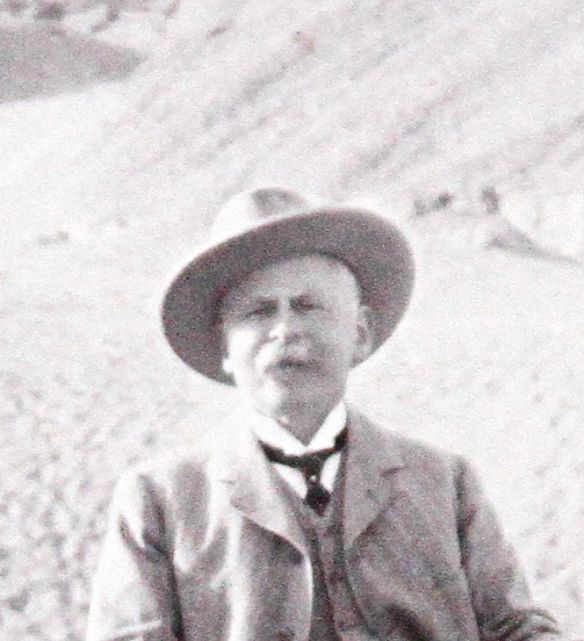
Adolph Seligman in Egypt

James or Adolf?

Onkel Jakob

James Seligman

Onkle Adolf

Adolf Seligman

Thus, although without more photographs and/or records we cannot be 100% certain, I am persuaded that Ava’s conclusions are correct about the likely identities of the people in the group photograph, the portrait of the young woman, and the Egypt photograph.
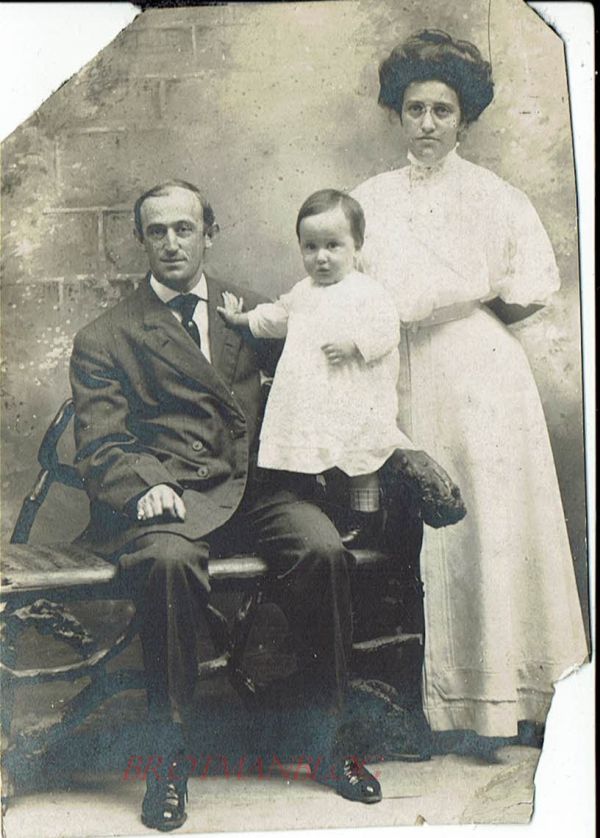
It was well worth the fee I paid to have the benefit of Ava’s expertise.  I highly recommend her to anyone who has questions about an old photograph.  If you are interested, you can email Ava at Sherlock.cohn@comcast.net or check out her website at http://sherlockcohn.com/  You will probably have to wait quite a while because her services are very much in demand and she devotes a great deal of time to each project, but it will be worth the wait.

[I was not paid or required by my contract with Ava to advertise her services; I am writing this blog post as a service to others who might be interested.]


.