Finding Rebekka Ruelf: A Genealogy Adventure

The fourth daughter of Gelle Katzenstein and Moses Ruelf was Rebekka. Finding her story was a bit of a challenge.

She was born on November 7, 1865 in Rauischholzhausen.

Rebekkah Ruelf birth record
Geburtsregister der Juden von (Rauisch)Holzhausen (Ebsdorfergrund) 1824-1874 (HHStAW Abt. 365 Nr. 452)AutorHessisches Hauptstaatsarchiv, Wiesbaden, p. 14

At first, that was the only information I had about Rebekka, and I feared that she might have died as a child like three of her siblings, including Roschen, who was born on April 25, 1864, and died less than eleven months later on March 3, 1865. That meant that Gelle was recently pregnant with Rebekka when Roschen died, and she gave birth to Rebekka just eight months after losing Roschen. I feared that Rebekka also had died, perhaps because her mother was still grieving Roschen.

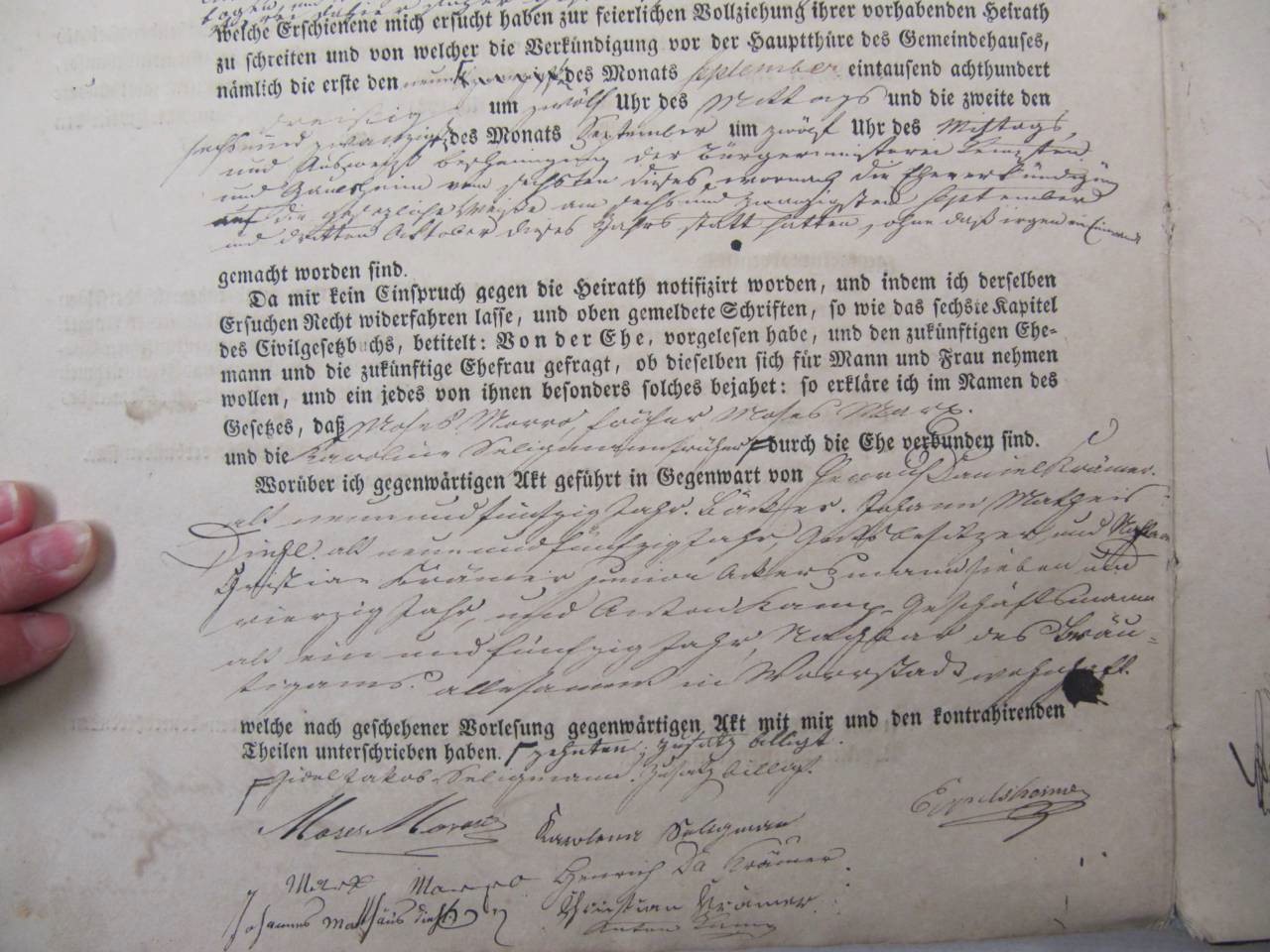
But then a marriage record popped up as a hint on Ancestry, and I sighed with relief that Rebekka had in fact grown to adulthood.  She married Jakob David on November 24, 1896, in Roßdorf, Germany, near Rauischholzhausen.

Marriage record of Rebecca Ruelf and Jakob David
Hessisches Hauptstaatsarchiv; Wiesbaden, Deutschland; Collection: Personenstandsregister Heiratsregister; Signatur: 915; Laufende Nummer: 7965

Jakob was born December 5, 1866, in Röhrenfurth, Germany, son of David David and Bertha Gottschalk. According to the marriage record, Jakob was a merchant in Moringen in the Lower Saxony region of Germany at the time of the marriage.  (Thank you to Doris Strohmenger for translating the marriage record for me.)


And then once again I was stymied. I could not find anything else about Rebekka and Jakob. I could not find anything more on Ancestry, FamilySearch, the LAGIS website, or Arcinsys for the Hesse region, so I turned to JewishGen, and decided to search in all the possibly relevant towns: Rauischholzhausen, Roßdorf, Röhrenfurth, and Moringen.

And JewishGen turned up this result:

Looking at the date of Hugo David’s birth date of September 25, 1897, ten months after Rebekka and Jacob’s wedding, I figured that this was probably their son. Since the record also suggested that Hugo had gone to the US, I searched for Hugo David on Ancestry and FamilySearch and found a lot more information about him.

First, I found his naturalization records. I knew this was the same Hugo David as that identified by JewishGen by his birth date and place.

Hugo David naturalization index card
Ancestry.com. Rhode Island, Indexes to Naturalization Records, 1890-1992 [database on-line]. Provo, UT, USA: Ancestry.com Operations, Inc., 2012.
Original data: Indexes to Naturalization Records for the District Court, 1906-1991, and the U.S. Circuit Court, 1906-1991, Rhode Island.

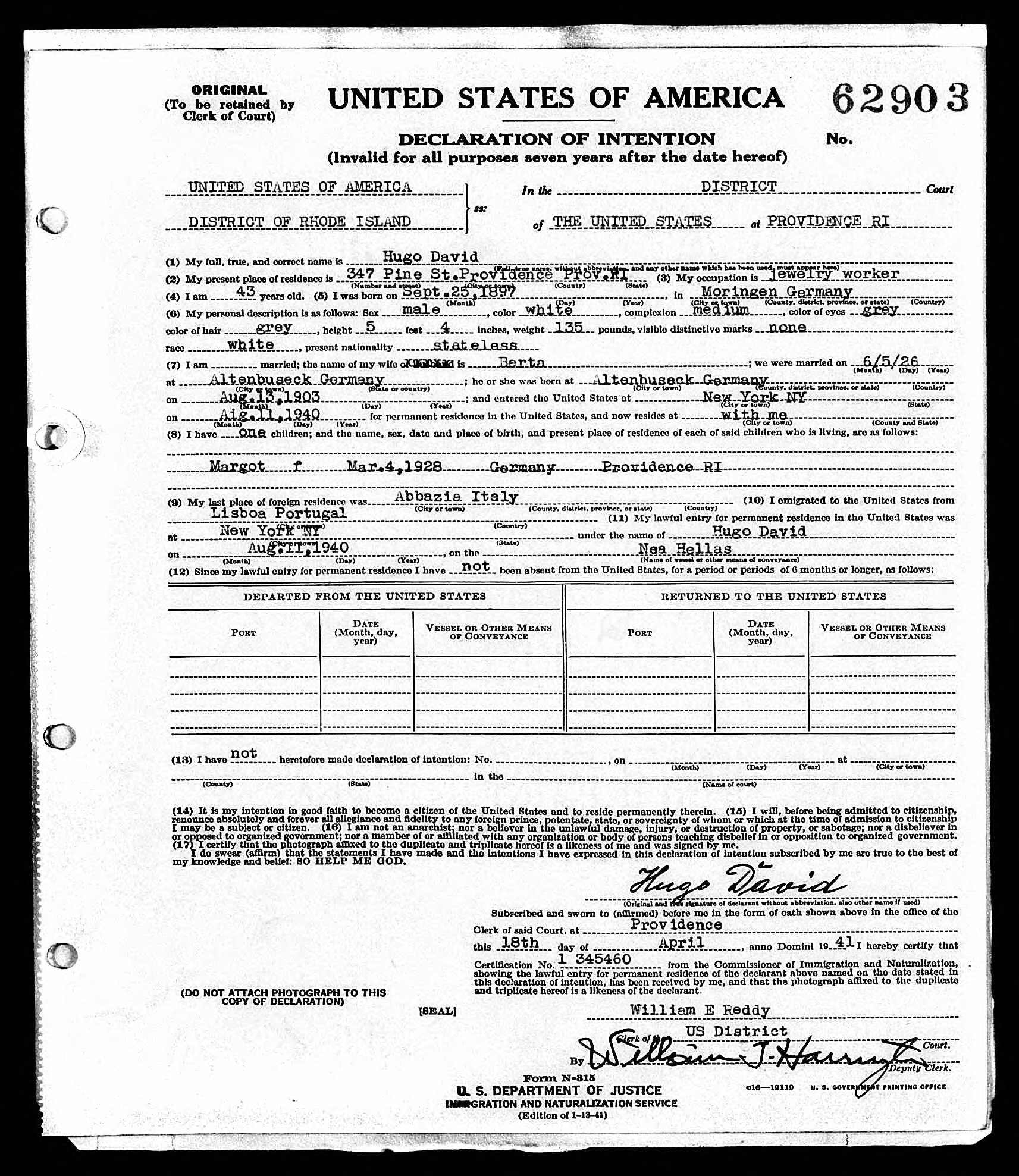
From other naturalization documents I learned that Hugo had lived in Abbazia, Italy, before immigrating to the US, sailing on the Nea Hellas from Portugal to New York in August, 1940.

Hugo David Declaration of Intent
National Archives at Boston; Waltham, Massachusetts; ARC Title: Petitions and Records of Naturalization, 2/1842 – ca. 1991; NAI Number: 3432872; Record Group Title: Records of District Courts of the United States, 1685-2009; Record Group Number: RG 21

With that information, I searched for their passenger manifest.  I still had no proof that Hugo was in fact the son of Rebekka Ruelf and Jakob David, even though the records did support that assumption. I needed to find something that linked him with Rebekka and Jakob. The passenger manifest helped bridge that gap:

Hugo David and family on ship manifest
Year: 1940; Arrival: New York, New York; Microfilm Serial: T715, 1897-1957; Microfilm Roll: Roll 6488; Line: 1; Page Number: 153
Ancestry.com. New York, Passenger Lists, 1820-1957 [database on-line]. Provo, UT, USA: Ancestry.com Operations, Inc., 2010.
Original data: Passenger Lists of Vessels Arriving at New York, New York, 1820-1897.

According to the second page of the manifest, Jakob was going to his cousins Meta and Reka [sic] Abraham. Who were they? They were the daughters of Pauline Ruelf, Rebekka Ruelf’s younger sister.

I now was quite confident that Hugo was in fact the child of Rebekka Ruelf and Jakob David. From the records I’d found, I learned that Hugo had married his wife Berta Loeber on June 5, 1926, in Alten-Buseck, Germany, where she was born. The ship manifest said that Hugo was a merchant.

The naturalization papers revealed that by April 18, 1941, Hugo and his family had settled in Providence, Rhode Island. From a number of Providence city directories from 1943 through 1960, I learned that Hugo had worked as a machine operator in Providence for many years.

But I still did not know what had happened to Hugo’s parents Rebekka Ruelf and Jakob David. Had they been killed in the Holocaust? Escaped from Germany? Died before the Nazi era? That question proved to be much harder to answer.  There were no records for them in the US, they were not listed on the Yad Vashem site or on the US Holocaust Memorial and Museum database of survivors and victims, and there were no death records I could find in Germany.

I searched on the internet for information about the Jewish community of Moringen and for information about death records for that town. Andre Gunther from the German Genealogy group also gave me some good suggestions for learning more.  I wrote emails to the town itself and to a Jewish genealogy society for Lower Saxony. Finally, I was able to connect with a man named Dietrich Feldmann, who contacted the Moringen archives and found three relevant documents.

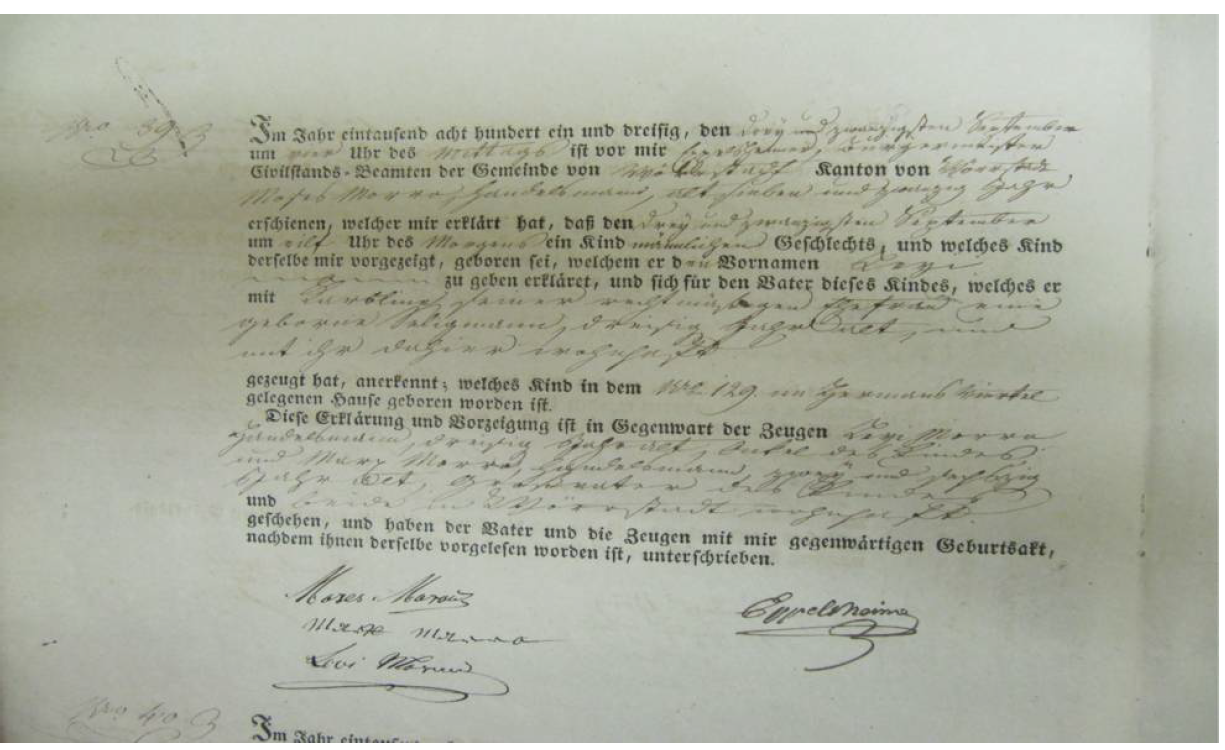
First, he found Hugo’s birth record:

Second, he found a record for a second child born to Rebekka Ruelf and Jakob David, a baby girl who was stillborn on January 4, 1900:

It says in part, “It appears the merchant Jakob David, resident in Moringen, and notified that by Rebecka nee Rülf, his wife, of mosaic religion, was born in his flat … a stillborn girl.”

And third and most importantly, he located Rebekka Ruelf David’s death record. She had died on September 16, 1929. At least I had closure on Rebekka.

But Herr Feldmann had not been able to find a death record for Rebekka’s husband Jakob David.

Doris Strohmenger, who’d helped me translate Rebekka and Jakob’s marriage record, also helped me try and find more about Rebekka and Jakob and their son Hugo. She found a website about Moringen that included a page on the former Jewish community in Moringen. On that page was a bit of information about the David family. It reported that Hugo David had until 1936/1937 been the owner of a textile business in Moringen, a business he had taken over from his father, and that Hugo and his family had emigrated by 1938. There was also a photograph of the David family’s former home.

Although I still don’t have any information about when or where Jakob David died, there is circumstantial evidence that he died before Rebekka, as Hugo was the one who attested to his mother’s death. Also, I think I can infer from the fact that Hugo had been in charge of the family business until 1936/1937 that his father had passed away before that time.

Hugo David died at age 85 on June 25, 1983, in Warwick, Rhode Island, about six weeks after his wife Berta. She was 79.  They are buried at Sinai Memorial Park in Warwick. Hugo’s obituary named his parents as “the late Jacob and Sarah (Rulf) David.” (Providence Journal”, Rhode Island, GenealogyBank.com (http://www.genealogybank.com/doc/obituaries/obit/152E08B736FE81A8-152E08B736FE81A8 : accessed 10 September 2017)

“Sarah” was obviously a mistake. It’s interesting that whoever supplied this information for the obituary knew Rebekka Ruelf’s birth surname, but not her first name. I would assume this was Hugo’s daughter, who was born a year before her grandmother Rebekka died and whom she thus never really knew.

Perhaps if I can locate Rebekka’s descendants I will learn what happened to her husband, Jakob David.


Walking in Their Footsteps by Jennifer Spier-Stern

I am honored today to share with you an essay written by my fourth cousin, once removed, Jennifer Spier-Stern. Jennifer is the great-granddaughter of Minna Ruelf and Isaak Spier, about whom I wrote in my last post. When Jennifer shared this essay with me, I was so moved that I asked her if I could post it on my blog. She graciously agreed to let me do that, and I hope that you also will feel the way I did—that I was with Jennifer in her footsteps as she walked in the footsteps of her family in Rauischholzhausen, Germany.

Walking in Their Footsteps

by Jennifer Spier-Stern

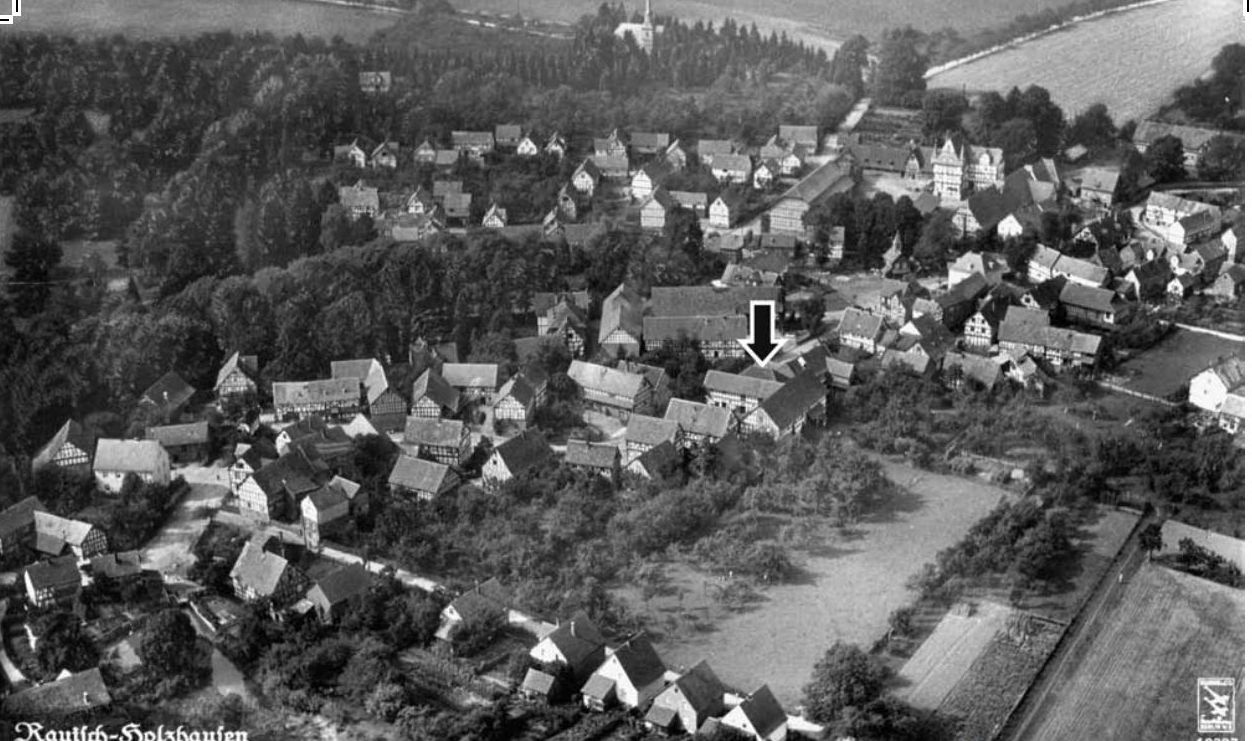
I was transformed back in time as we drove through the narrow streets of the town called Rauischholzhausen.  We passed old homes with beautiful flower baskets hanging from windows and well manicured gardens. The narrow street was paved and there was even a sidewalk. I wanted to absorb every corner, every home into my mind so I could never forget these images.  I know that 70+ years ago it was not as pristine. I have thought of this day for so many months. Each and every time I envisioned this part of my trip I cried.  The tears were for the people that were no longer here to tell me their tales. My father wasn’t with me to show me the way, to tell me about his memories and to stand with me in front of the home where he was born. To walk with me to the Schloss (castle) and show me the places where he ran, where he played, to show me where his family lived and where the synagogue was.

View of Rauischholzhausen with arrow pointing to synagogue
http://www.alemannia-judaica.de/images/Images%20362/Rauischholzhausen%20Ort%200100.jpg

The reason for this trip started many years ago. My father was born in Rauischholzhausen in 1922, a small town a few minutes drive from Marburg.  Growing up we heard all the stories of Holzhausen and of the early childhood of my father and his four siblings. We used to roll our eyes and laugh with yet another story of “home.” As young adolescents we didn’t appreciate all that he told us.  I wish I had documented everything, but like most young adults, I didn’t.   My father always promised my brother and I a trip back to his roots, but that was never going to happen, he passed away in 1998.  Since my father’s passing I had fleeting thoughts of going to Germany but not until recently did this strong urge possess me that I had to go and see for myself.

Without going into full details of the history of our family, my father’s brother returned to Germany with his wife and son and settled in Bielefeld in 1959.

My aunt, uncle, cousin and his wife met us at our beautiful hotel and drove us to the house that was 16 Lerchengasse. 16 Lerchengasse was the house where my father lived. The house that bore the name I Spier (Isaak Spier) above the front door frame. We parked the car and walked that last few steps down a cul de  sac.  I had the vision of the house from few photos that survived the war. 

My uncle stopped in front of the house and said, “This is it. This is the house where we were born.”  I looked up at this large home, the home of my great-grandfather, grandfather and father. My hands were shaking and the tears rolled down my face.  I heard my father’s voice, I heard his stories, I saw him walking up and down the front stairs. I saw him running around the courtyard with his siblings. I haven’t felt my father’s presence as strongly as I did at that moment.  I wish I could have knocked on the door and introduced myself. I so wanted to go inside, but I know it is far different than the house my father left on November 9, 1938.  I looked at the surrounding homes, and they too were lovely with their planters filled with flowers and lace curtains in the window. Later in the week Hajo (My hero guide) posed the question to me, “Can you imagine this town 65 years ago?”

Spier home in Rauischholzhausen
Courtesy of Jennifer Spier-Stern

The next stop was the Jewish cemetery. We picked up the key at the caretaker and then we walked the grass soaked path towards the cemetery. The rain started and the path became very muddy. The land to the right was a beautiful pasture for grazing cows who seemed very curious and walked over to the fence. It seemed surreal.  As we walked my eyes were looking down at the path, knowing that my grandparents and many other ancestors walked here to enter the cemetery. They came here to bury. They came here on the holidays to remember those that passed. They came here to say Kaddish. I was walking in their footsteps.  

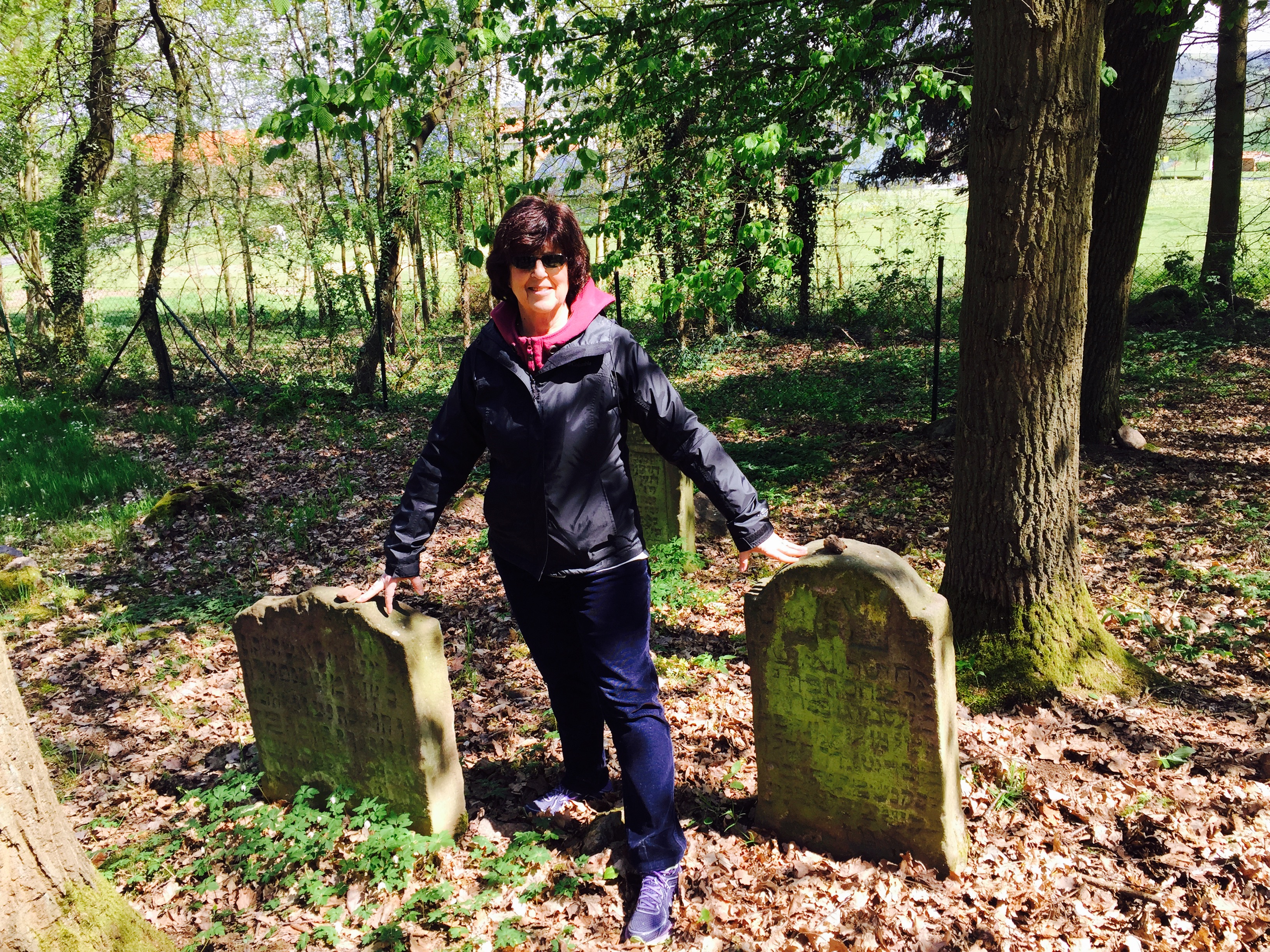
My grandfather Abraham Spier buried his parents, Isaak Spier and Minna Rülf neé Spier. One of the oldest stones in the cemetery is Nathan Spier, my 3rd great grandfather (1792-1866). We stepped into the cemetery where 80% of the graves are family ancestors. I had my dear friend Hajo Bewernick photograph every stone for me. I’ve looked at the photos numerous times and now, I stood before them. I stood there and cried.  Emotions flooded my body that I didn’t know how to react. I wanted to touch every stone and place a rock, I wanted to pray. In years to come how many will walk through the gates to pray for all the souls? However, all I could do was cry. Later on I found out that my husband said the Mourner’s Kaddish, (a Mourner’s Prayer) as he stood over one grave, but he said it for all.

Gravestones of Minna Ruelf Spier and Siegfried Spier in Rauischholzhausen
http://www.alemannia-judaica.de/rauischholzhausen_friedhof.htm

I walked in their footsteps. I was thankful that my family who live in Germany were able to share this experience with me.  Special thanks to Hajo Bewernick who took the time from his busy work and home life to show my husband and I Marburg. I can never thank you enough for explaining the history of your beautiful town as well as showing us the many historical sites and to our many insightfully deep conversations.  You created a three dimensional image for me  of my grandparents, my Oma and Opa, by showing us where they would have been, where they would have walked and the buildings from where they were deported. I do not recall the name of the street corner. Hajo was specific in pointing his finger.

Through my research I have come across generous people who devote their time and efforts to the history of the Jewish people. To everyone we thank you for all your hard work. Special thank you to Barbara Greve for always being there with the answers.

One more person I need to thank with all my heart is my husband, Effy. This trip wouldn’t have happened without him. He knew how important this trip was for me and I am glad he shared it by my side.

I never felt closer to my family and my ancestors as I have during these few days in my family’s home town.   I know I’ll keep these stories alive with my family and I hope they will continue the legacy.

Another Year Gone By, Another Year Ahead

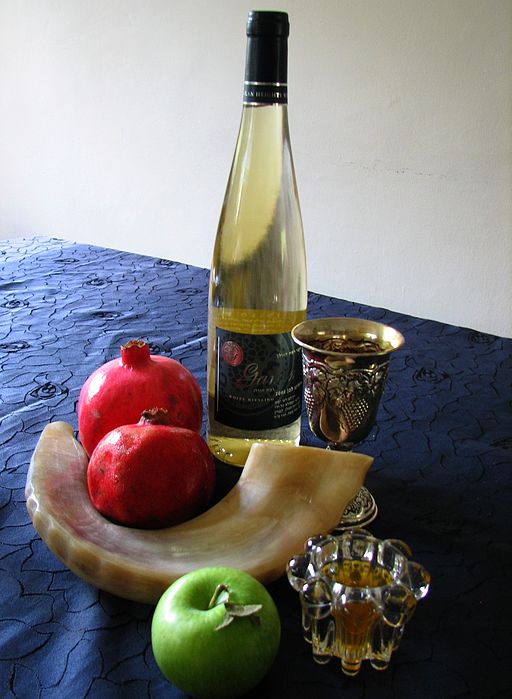
Tonight at sunset Rosh Hashanah begins, bringing hopes for a sweet and happy new year. We will dip apples in honey and taste that sweetness, inviting in good thoughts and wishes for all our family and friends.

By Gilabrand (Own work) [CC BY-SA 3.0 (http://creativecommons.org/licenses/by-sa/3.0)%5D, via Wikimedia Commons

In many ways this has been a wonderful year, but in other ways it has been a troubling year.  The world is filled with so much danger, hatred, and division. Hurricanes and floods have reminded us how fragile the planet is and how much we human beings have used and abused it. We’ve lost trust in so many of our institutions, and the meanings of “truth,” “justice,” and “honor” have become more and more elusive. Even basic principles of civility seem to be disappearing.  Often I can barely read a newspaper or watch the news because of the sadness and anxiety it causes.

Part of that anxiety comes from studying the past. I’ve spent this year focused on my Katzenstein relatives. Their stories have at times left me devastated. Too many suffered because of the Holocaust, too many were killed. I have a better understanding of what hate can do, and so watching politicians play on hate and fear against “the other” has angered and frightened me over and over. Hearing hateful chants and seeing hateful symbols from the marchers in Charlottesville was terrifying.

But studying the Katzenstein family has also given me some of my most uplifting and joyous times this year. Beginning in the 1850s when my great-great-grandfather Gerson arrived in Philadelphia up through the 1930s when many of the Katzenstein cousins arrived from Jesberg, Germany, my Katzenstein relatives have made many contributions to our adopted country: fighting in the Civil War (on both sides), establishing successful businesses in Maryland, Pennsylvania, Virginia, Kentucky, Oklahoma, Nebraska, and many other locations throughout the country, fighting in World War I and World War II for the US, and taking on community and charitable projects wherever they’ve lived.

I’ve talked to many of my Katzenstein cousins on the phone and met (so far) three of them; in addition, I’ve had email contacts with many others. All have been so generous with their time and their stories; all are so proud of the long and interesting history of their family. It has made me so proud to be a part of this large, growing extended family. Today my Katzenstein cousins are doing many interesting things—some are cattle ranchers as their ancestors had been in Jesberg, some are merchants just like their ancestors, and others are in businesses and professions that their ancestors probably never could have imagined.

This was also the year that I finally went to Germany and saw the many towns where my direct paternal ancestors once lived—the Seligmanns from Gau-Algesheim, the Schoenthals from Sielen, the Hambergs from Breuna, the Katzensteins from Jesberg, the Goldschmidts from Oberlistingen, and the Nussbaums from Schopfloch. I didn’t get to every ancestral town; I didn’t get to Erbes-Budesheim where the Schoenfelds lived or to Hechingen where my Dreyfuss ancestors once lived. But I walked in so many of the places where my ancestors once lived and on the sacred ground where so many of them are buried.

Standing at the graves of my 3x-great-grandparents, Scholum Katzenstein and Breine Blumenfeld in Haarhausen cemetery

And I met many, many wonderful people in Germany—including Dorothee, Beate, Hans-Peter, Ernst, Julia, Ulrike—and most especially my cousin Wolfgang Seligmann and his wife Bärbel and daughter Milena.  That was a dream come true.

So despite the ugliness that colored much of this past year, I will look back on 5777 as a very meaningful and enriching year. My hope for 5778 is that it will be a year where people all over will pull together, work together, to prevent war, to stop hatred, and to take care of our planet and all its people who are in need. As it says in Pirke Avot (The Ethics of the Fathers), “”It is not your responsibility to finish the work, but neither are you free to desist from it.”

May you all, whether you celebrate this holiday or not, have a sweet, happy, healthy, productive, and peaceful New Year! Shana tova!


The Indomitable Human Spirit: The Descendants of Minna Ruelf Spier

Although the story of Minna Ruelf Spier is, like that of her sisters Esther and Bette, a story that includes much tragedy and suffering, in its way it is also uplifting for what it reveals about the human spirit and the will to survive. As we move closer to Rosh Hashana and Yom Kippur, I find Minna’s story appropriate for these days and inspiring.

I have been in touch with one of Minna’s direct descendants, my fourth cousin- once removed Jennifer Spier-Stern, and she has shared with me what she knows about the family history as well as some family photographs. I am so very grateful to Jennifer for her help and her generosity.

Minna Ruelf was born on February 16, 1859, in Rauischholzhausen, Germany:

Minna Ruelf birth record
Geburtsregister der Juden von (Rauisch)Holzhausen (Ebsdorfergrund) 1824-1874 (HHStAW Abt. 365 Nr. 452)AutorHessisches Hauptstaatsarchiv, Wiesbaden, p. 10

Three days after her 21st birthday, on February 19, 1880, she married Isaak Spier. Isaak was born June 12, 1850, in Leidenhofen, Germany, another town in the Hesse region, the son of Abraham Spier and Esther Schaumberg. Isaak was a merchant.  Minna and Isaak settled in Ebsdorf, a small village a mile from Leidenhofen, where they had the first of their three sons, Abraham, who was born on January 18, 1881.

Minna Ruelf and Isaak Spier marriage record
Hessisches Hauptstaatsarchiv; Wiesbaden, Deutschland; Collection: Personenstandsregister Heiratsregister; Signatur: 915; Laufende Nummer: 2524

Their two younger sons, Julius (July 26, 1883), and Siegfried (November 29, 1886), were born in Rauischholzhausen.

Isaak Spier died on June 17, 1910, in Rauischholzhausen. He was sixty years old. At that time none of his sons had married.

Isaak Spier
Courtesy of  Jennifer Spier-Stern

Isaak Spier death record
Hessisches Hauptstaatsarchiv; Wiesbaden, Deutschland; Personenstandsregister Sterberegister; Bestand: 915; Laufende Nummer: 8036

Abraham, the oldest son, married nine years later on November 3, 1919; he was 38 years old. He married Jenny Wertheim, who was born on June 4, 1890, in Hatzbach, Germany, to Wolf Wertheim and Sanchen Edelmuth.

Marriage of Abraham Spier and Jenny Wertheim
Hessisches Hauptstaatsarchiv; Wiesbaden, Deutschland; Collection: Personenstandsregister Heiratsregister; Signatur: 915; Laufende Nummer: 5047


Abraham Spier, c. 1914
Courtesy of Jennifer Spier-Stern

Jenny Wertheim  Spier Courtesy of Jennifer Spier-Stern

Abraham and Jenny had five children, one daughter and four sons: Edith (1920), Julius (1922),[1] Alfred (1924), Martin (1925), and Walter (1927); they were all born in Rauischholzhausen.

Edith, Julius, and Alfred Spier , c. 1926 Courtesy of Jennifer Spier-Stern

Family of Abraham and Jenny Spier, Courtesy of Jennifer Spier-Stern

Just three weeks after Walter’s birth, his grandmother Minna Ruelf Spier died at age 68 on November 5, 1927.

Minna Ruelf
Courtesy of her great-granddaughter Jennifer Spier-Stern

Minna Ruelf Spier death record
Hessisches Hauptstaatsarchiv; Wiesbaden, Deutschland; Personenstandsregister Sterberegister; Bestand: 915; Laufende Nummer: 8053

The youngest son of Isaak Spier and Minna Ruelf, Siegfried, died when he was 48 years old in Rauischholzhausen on February 21, 1935, just seven months before the Nuremberg Laws were adopted by the Nazis in Germany. Siegfried was unmarried.

Siegfried Spier death record
Hessisches Hauptstaatsarchiv; Wiesbaden, Deutschland; Personenstandsregister Sterberegister; Bestand: 915; Laufende Nummer: 8061

Not long after Siegfried’s death, Julius Spier (Abraham’s brother, not his son) left Rauischholzhausen. According to Alfred Schneider’s book, Die Juedischen Familien im ehemaligen Kreise Kirchain (p. 350), Julius was still in Rauischholzhausen in 1935, but as of 1936, his location was unknown. One source says that he went to Frankfurt where he had a seat on the stock exchange.  That same source said that he immigrated to England by 1945, perhaps as early as 1938.  (The Church of Jesus Christ of Latter-day Saints, “Pedigree Resource File,” database, FamilySearch(https://familysearch.org/ark:/61903/2:2:SB2K-RMP : accessed 2017-09-06), entry for Julius /Spier).

According to Jennifer, Julius Spier married Lucie Henrietta Cohn. According to this website located by Jennifer, Lucie was the daughter of Hugo Cohn and Selma Marcuse of Halberstadt; she was born on October 28, 1897. The website also states that she’d gone to Frankfurt and married (no date or place was given, nor the name of her husband). If futher states that after getting divorced in 1938, Lucie had immigrated to England and worked in the fashion industry.  Although I have no marriage record or other document showing her marriage or divorce, Lucie appears on many passenger manifests between 1947 and 1960—first residing in London, later in the US, listed at various times as a commercial traveler, a housewife, and a nurse.

Julius died in London on February 25, 1959. (England & Wales, Civil Registration Death Index, 1916-2007, on Ancestry.com)

UPDATE: Thank you to Anne Callanan of the German Genealogy for sending me some records she found on FindMyPast, a genealogy service to which I do not (yet) subscribe. Anne found Enemy Alien registration cards for several family members including Julius Spier and Lucie Henrietta Spier. From those records, I now know that Julius was in England by November 1939, working as an agent. He was at first granted an exemption from being detained as an enemy alien, but that decision was reversed and he was interned on June 21, 1940, but was released two months later on August 23, 1940.

Lucie also had to register as an enemy alien. She registered on December 8, 1939, when she was living in Manchester, England (thus not with Julius) and working as a house servant for a Mr. M. I. Marks in his home. She was granted an exemption and was not interned. The card does not reveal any information about her marital status.

Julius Spier (son of Minna Ruelf and Isaak Spier)
Courtesy of Jennifer Spier-Stern

Abraham and Jenny Spier and their children were still in Germany during the Nazi era, but they were eventually able to get some of their children to England. According to my cousin Jennifer, Edith Spier left Germany on one of the early Kindertransports to England where she worked as au pair; according to the Schneider book (p. 351), Edith left on October 20, 1937, when she was seventeen. She eventually went to New York, where in 1943 she married Alfred Baumann, who was born in Adelsberg, Germany, in 1913, and had immigrated to the US in 1938.

Julius Spier (Abraham and Jenny’s son) was arrested along with ten thousand other Jewish men  in the aftermath of Kristallnacht on November 9, 1938, and sent to Buchenwald. His daughter Jennifer wrote this about his experiences:

My father, John Sanders (nee Julius Spier) was born in Rauischholtzhausen, Germany on June 17, 1922. At the age of 16, on November 9, 1938 he was arrested in his home by the Gestapo. It should have been my grandfather, but he was in a few towns over at his mother’s home. Rumors around the towns were that the Gestapo were going from house to house to arrest the eldest male.

My father was taken to Buchenwald concentration camp where he remained for 10 weeks. During this time, his mother heard about the organized efforts of the Jewish Agency of Bloomsbury, London to get as many Jewish children, between the ages of four to 17, out of Germany, Austria and Czechoslovakia. She went to the Jewish Agency and the police, where she was told to get all the documents ready, as well as a visa to leave Germany.

Upon release from Buchenwald, my father had only two weeks to leave Germany. His father took him to the Frankfurt train station, where he was to meet the Kindertransport train that would take him to England. At the train station there were other families with children. The parents and their young ones had to say their good-byes inside the train station. The children, regardless of age, had to go onto the platform and then onto the train by themselves. Families with infants gave the infants to the older children. It is difficult to comprehend all sides. How does a parent give up a baby and how does a young adult care for one. My father said goodbye to his father, not realizing that this was the last time he would ever see him.  …

After his tenure in Dover Court, my father was taken into the home of an Orthodox family in Westgate, London. He was there until June of 1939 when his brother [Alfred] came over from Germany. Together, they went to a hostel in London. Shortly thereafter they were taken to a farm in Aberdeen, Scotland. An aristocrat owned the farm by the name of Sir Robert Grant. He treated my father and his brother with the utmost of respect and kindness. One memorable time for my father was when the chauffeur-driven Rolls Royce took him and his brother to Harrod’s department store in London and they were able to pick out all that they needed. Sir Robert Grant applied for visas to get my father’s parents and brothers out of Germany. Unfortunately war broke out a few days later and all visas were denied. 

Julius Spier, son of Abraham and Jenny (Wertheim) Spier, c. 1935
Courtesy of Jennifer Spier-Stern

That left Abraham and Jenny and their two youngest children, Martin and Walter, stranded in Germany. On September 7, 1942, all four were deported to Theriesenstadt. Then on May 18, 1944, all four were transported to Auschwitz, where Abraham and Jenny were murdered. Martin and Walter survived. Walter Spier talked movingly about his experience in this video. I implore you all to watch it. It’s less then fifteen minutes long, and when you considered what he suffered for years, you know you can spare fifteen minutes to hear him talk.


When I think of the two young men being reunited in Rauischholzhausen in 1945, it moves me to tears.

Meanwhile, their older siblings were for a time in the United Kingdom. But like many other Jews who were sent to England for safety from the Nazis, Julius and Alfred were sent to the Isle of Man as possible “enemies of the state” after England declared war on Germany in September, 1939.

According to this article from B’nai Brith Magazine, the first inmates arrived on the Isle of Man in May, 1940, and by August, 1940, there were over 14,000 men, women, and children imprisoned on the Isle of Man, some being Nazi sympathizers, many others being Jews who’d been born in Germany and thus were considered enemy aliens, ironically.  Because of overcrowding, in July, 1940, England decided to send some of the inmates to Canada or to Australia. (Cheryl Klemper, “Imprisoned On The Isle Of Man: Jewish Refugees Classified As “Enemy Aliens”, ” B’nai Brith Magazine, September 19, 2016)

Julius and Alfred Spier were among those sent to Australia. According to Jennifer, they both were on the ship known as the HMT (Hired Military Transport) Dunera. According to the Australian website for the Migration Heritage Centre:

On board the HMT Dunera were about 2,000 male German Jewish refugees aged between 16 and 45, who had escaped from Nazi occupied territories. Also on board were 200 Italian POWs and 250 Nazis. The voyage lasted 57 days. The conditions were appalling. Apart from overcrowding on the ship with the attendant problems of hygiene and harsh treatment by crew members, the journey was also made unpleasant by the fear of torpedo attacks, the uncertainty of the destination, and by tensions between Jewish refugees and Nazi passengers.

After arriving in Australia, Julius and Alfred spent two years interned at camps in Hay and Tatura in Australia. The Migration Heritage Centre website reported this about the Hay camp:

The Hay POW camp was constructed in 1940. The first arrivals were 2036 German and Austrian Jewish refugees who fled the Nazis. They were mostly professionals who had simply fled for their lives. They were placed along side 451 German and Italian POWs many of whom were pro Nazi and fascist.

While awaiting release, the Dunera Boys developed a rich cultural and intellectual programme at their camp, giving concerts and establishing an unofficial university. The small group of strictly Orthodox Jews also managed to organise a kosher kitchen. After a period of time the injustice of their situation was realised and they were permitted to return to Britain.

Here is a record identifying Julius Spier as a POW in Australia during the war:

Courtesy of Jennifer Spier-Stern

According to Jennifer, when Julius and Alfred were finally released, they were given a choice  either to return to Germany or join the British Army, so they both joined the British Army, where they served for the duration of the war and then returned to England.

UPDATE: Thanks again to Anne Callanan, I now have enemy alien registration cards for both Edith and Julius Spier.  Edith registered on December 12, 1939, and was granted an exemption; she was working as a domestic. Her brother Julius registered as an enemy alien on November 28, 1939, when he was working on Sir Robert Grant’s farm in Scotland. But as we know he was denied an exemption and interned until June 21, 1942, when he was returned to the UK from Australia.

In the years immediately after the war Edith was in New York City, Julius and Alfred were in England, and Martin and Walter were in Germany. Martin and Walter both stayed in Rauischholzhausen for a year after their liberation from the camps in 1945, and then both immigrated to New York City where both of them later married.

In England, Alfred married Hannelore Reimers, who was from Bielefeld, Germany. Hannelore wanted to return to Bielefeld where her family still lived[2], so Alfred and Hannelore ended up back in Germany.

Julius married Helene Trunec in England in 1952; Julius and Helene stayed in England until 1963 when they immigrated to the United States and were reunited with Edith, Martin, and Walter in New York City. Julius and Helene had two children, Jennifer and Mark.

The five children of Abraham Spier and Jenny Wertheim thus all survived the Holocaust, although their parents did not. The five siblings not only suffered the loss of their parents and of their home; two were tortured and suffered terribly in the Nazi concentration camps, and two were imprisoned like criminals by England, the country where they had sought sanctuary. It’s hard to imagine how any of them coped with what they had endured.

But listening to Walter Spier on that video reveals that somehow the human spirit can endure unimaginable suffering and still have faith, hope, and love. All five of the Spier siblings went on to have children after the war, one sign of the incredible power of faith, hope, and love.


[1] I find it interesting that Abraham named a son Julius since his brother Julius was still alive. I assume the son was named for another family member, not his uncle.

[2] Hannelore was not born Jewish, but converted when she married Alfred.

Sometimes What You Learn Is Unbearable

As I wrote last time, Gelle Katzenstein, the oldest daughter of Jakob Katzenstein and Sarchen Lion, married Moses Ruelf of Rauischholzhausen. They had ten children together, six of whom lived full adult lives: Esther, Minna, Bette, Rebecca, Juda, and Pauline. They were my second cousins, twice removed. This post will tell the story of the families of Esther and Bette.

Esther, born May 26, 1857, in Rauischholzhausen, married Sussman Bachenheimer on June 25, 1874. (Schneider, Die Juedischen Familien im ehemaligen Kreise Kirchain,  p. 345.) He was also born in Rauischholzhausen on December 25, 1850. They settled in Kirchhain, Germany. Together Esther and Sussman had four daughters: Helene (1876), Rosa (1877), Bertha (1879), and Minna (1881).

Helene died the day after she was born:

Helene Bachenheimer birth record June 3 1876
Hessisches Hauptstaatsarchiv; Wiesbaden, Deutschland; Collection: Personenstandsregister Geburtsregister; Signatur: 915; Laufende Nummer: 4977

Helene Bachenheimer death record June 4, 1876
Hessisches Hauptstaatsarchiv; Wiesbaden, Deutschland; Personenstandsregister Sterberegister; Bestand: 915; Laufende Nummer: 5061

The other three daughters lived to adulthood, and their parents lived to see all three married with children.

Rosa was born on August 10, 1877, in Kirchhain:

Rosa Bachenheimer birth record
Hessisches Hauptstaatsarchiv; Wiesbaden, Deutschland; Collection: Personenstandsregister Geburtsregister; Signatur: 915; Laufende Nummer: 4978

According to Matthias Steinke and Doris Strohmenger from the German Genealogy group on Facebook, the language in the left margin indicates that her name, Rosa, was added after the birth record had been recorded. It also indicates that her father’s name was Sussman, not Simon, as indicated on the original record.

Rosa married August Felix Katzenstein on November 20, 1900, in Kirchhain.

Marriage record of Rosa Bachenheimer and August Felix Katzenstein
Hessisches Hauptstaatsarchiv; Wiesbaden, Deutschland; Collection: Personenstandsregister Heiratsregister; Signatur: 915; Laufende Nummer: 5028

August was born April 26, 1849 in Jesberg, the son of Meier Katzenstein and Auguste Wolf.

August Felix Katzenstein birth record
Hessisches Hauptstaatsarchiv; Wiesbaden, Deutschland; Collection: Personenstandsregister Geburtsregister; Signatur: 920; Laufende Nummer: 3807

August was Rosa’s first cousin, once removed. He was the grandson of Jakob Katzenstein and Sarchen Lion through their son Meier, and Rosa was their great-granddaughter through their daughter Gelle and granddaughter Esther.

August and Rosa had two children: Margaretha Grete Katzenstein (1901) and Hans Peter Katzenstein (1905).

Rosa’s younger sister Bertha was born August 5, 1879, in Kirchhain.

Bertha Bachenheimer birth record
Hessisches Hauptstaatsarchiv; Wiesbaden, Deutschland; Collection: Personenstandsregister Geburtsregister; Signatur: 915; Laufende Nummer: 4980

She married Josef Weinberg on November 11, 1903. Josef was born in Lauterbach, Germany, on March 4, 1876, the son of Abraham Weinberg and Fanni Simon.

Marriage record of Bertha Bachenheimer and Josef Weinberg
Hessisches Hauptstaatsarchiv; Wiesbaden, Deutschland; Collection: Personenstandsregister Heiratsregister; Signatur: 915; Laufende Nummer: 5031

Bertha and Josef had one child, a daughter named Ruth born on August 28, 1904.

Minna, the youngest daughter of Esther Ruelf and Sussman Bachenheimer, was born on March 5, 1881, in Kirchhain.

Minna Bachenheimer birth record
Hessisches Hauptstaatsarchiv; Wiesbaden, Deutschland; Collection: Personenstandsregister Geburtsregister; Signatur: 915; Laufende Nummer: 4982

She married Meier Wertheim on March 15, 1906. Meier was born on November 23, 1878, in Hatzbach, Germany, the son of Isaac Wertheim and Bertha Wertheim.

Marriage record of Minna Bachenheimer and Meier Wertheim
Hessisches Hauptstaatsarchiv; Wiesbaden, Deutschland; Collection: Personenstandsregister Heiratsregister; Signatur: 915; Laufende Nummer: 5034

Minna and Meier had five sons born in Hatzbach: Herbert (1906), Kurt (1908), Walter (1915), and Gunther (1924).

Thus, by 1924, Esther Ruelf and Sussman Bachenheimer had six grandchildren, all born and living in the Hesse region of Germany. In the next twenty years their lives were all completely changed.

First, Sussman Bachenheimer died on March 8, 1924, in Kirchhain. He was 73 years old. The marginal comment here reports that his name was legally changed from Simon to Sussman in 1907.

Sussman Bachenheimer death record
Hessisches Hauptstaatsarchiv; Wiesbaden, Deutschland; Personenstandsregister Sterberegister; Bestand: 915; Laufende Nummer: 5109

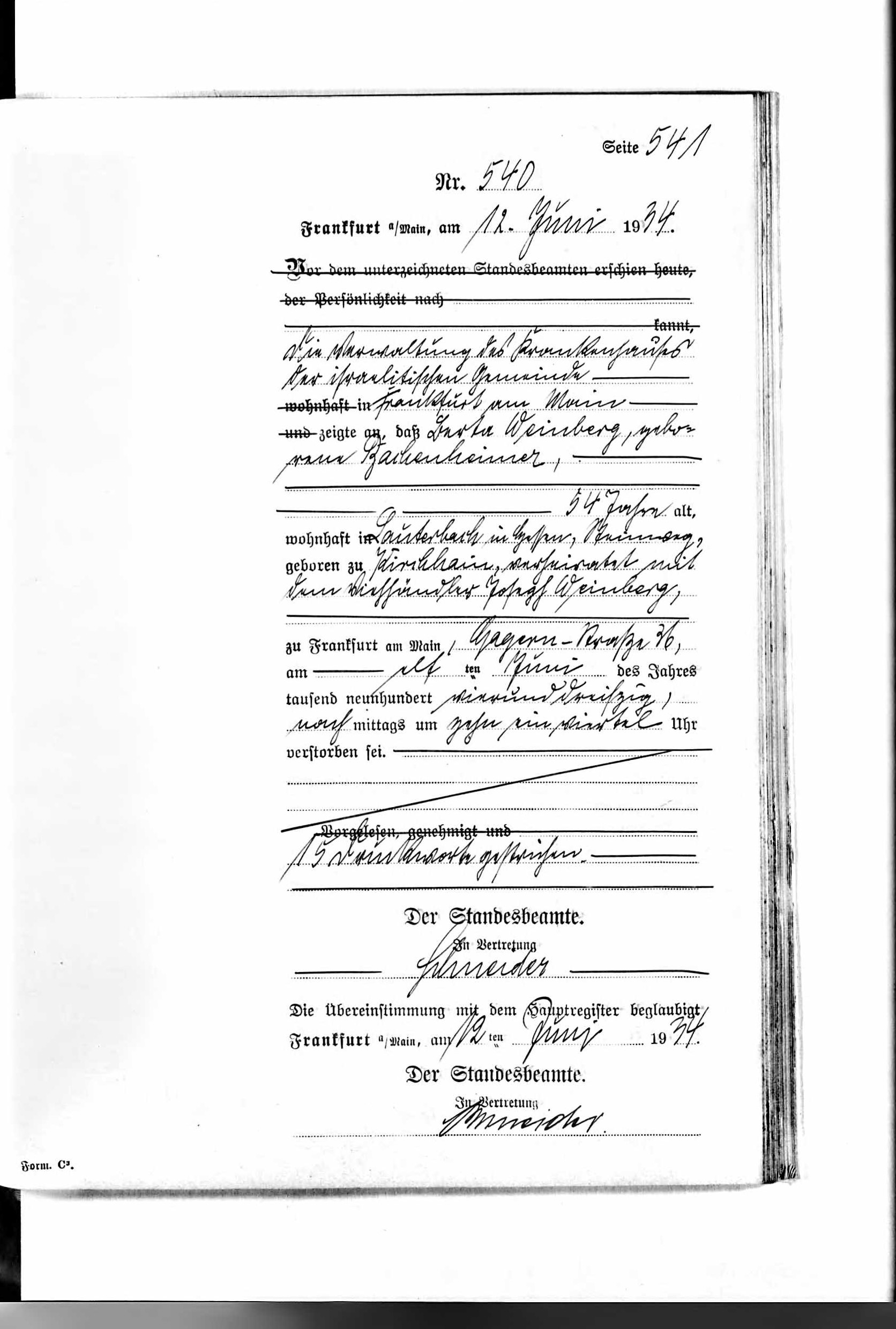
Then on June 11, 1934, Esther Ruelf Bachenheimer’s daughter Bertha Bachenheimer Weinberg died at age 54; Bertha’s husband Josef Weinberg died just three months later on September 9, 1934. He was 58. They were survived by their daughter Ruth, who was thirty years old when her parents died.

Bertha Bachenheimer Weinberg death record
Hessisches Hauptstaatsarchiv; Wiesbaden, Deutschland; Personenstandsregister Sterberegister; Bestand: 903; Signatur: 903_11031

By the time Bertha and Josef died in 1934, the Nazis were in power in Germany, and life had already changed for Jews living there. Some Jews were beginning to leave the country.

On September 23, 1935, Herbert Wertheim, the son of Minna Bachenheimer and Meier Wertheim, left Germany and moved to what was then Palestine, now Israel. Six months later in March, 1936, his younger brother Walter joined him there.

Esther Ruelf Bachenheimer died on August 16, 1936, at age 79. Not long after, her daughter  Minna Bachenheimer Wertheim and her husband Meier left Germany to join their sons in Palestine; they arrived there with their youngest son Gunther on September 10, 1936.

Death of Esther Ruelf Bachenheimer HStAMR Best. 915 Nr. 5121 Standesamt Kirchhain Sterbenebenregister 1936, S. 22

Ruth Weinberg, the daughter of Bertha and Josef Weinberg, also soon left Germany. She and her husband Hugo Schleicher and their daughter arrived in New York City on May 16, 1940. Hugo, who had been a lawyer in Germany, was working in Brooklyn at the Weingarten Agency of Fidelity Mutual Life Insurance Company in 1942 when he registered for the World War II draft; the family was living in Manhattan.

Hugo Schleicher World War II draft registration
The National Archives at St. Louis; St. Louis, Missouri; Record Group Title: Records of the Selective Service System, 1926-1975; Record Group Number: 147

Thus, as of 1942, the only child of Esther Ruelf and Sussman Bachenheimer who was still in Germany was Rosa Bachenheimer along with her husband, August Felix Katzenstein, and their two children Margaretha and Hans-Jacob. Why they did not follow the other family members to either Palestine or the US is a mystery and a tragic one.

All four of them, as well as Margaretha’s husband Rudolf Loewenstein, were deported on April 22, 1942, to a concentration camp in Izbica, Poland, where they were murdered. Rosa, August, Margaretha, and Hans-Jacob were all my cousins, since Rose and August were both descendants of Jakob Katzenstein, my great-great-grandfather’s brother. Four more of my family members whose lives were taken by the Nazis. (The links are to their entries in Yad Vashem’s database.)

And heartbreakingly, the list does not end there. Esther Ruelf’s younger sister Bette also had family who were killed in the Holocaust. In fact, Bette has no living descendants.

Bette was born on December 3, 1860 in Rauischholzhausen. On January 26, 1886, she married Gustav Schaumberg of Schweinsburg. He was born in May 1857 to Isaak and Gutroth Schaumberg.

Marriage record of Bette Ruelf and Gustav Schaumberg
Hessisches Hauptstaatsarchiv; Wiesbaden, Deutschland; Collection: Personenstandsregister Heiratsregister; Signatur: 915; Laufende Nummer: 8456

Bette and Gustav had four children born in Schweinsburg: Siegfried (1886), Rosa (1888), Flora (1891), and Selma (1897).

Sigfried Schaumsberg birth record November 16, 1886
Hessisches Hauptstaatsarchiv; Wiesbaden, Deutschland; Collection: Personenstandsregister Geburtsregister; Signatur: 915; Laufende Nummer: 8429

Rosa Schaumberg birth record October 13, 1888
Hessisches Hauptstaatsarchiv; Wiesbaden, Deutschland; Collection: Personenstandsregister Geburtsregister; Signatur: 915; Laufende Nummer: 8431

Flora Schaumberg birth record July 14, 1891
Hessisches Hauptstaatsarchiv; Wiesbaden, Deutschland; Collection: Personenstandsregister Geburtsregister; Signatur: 915; Laufende Nummer: 8434

Selma Schaumberg birth record
Hessisches Hauptstaatsarchiv; Wiesbaden, Deutschland; Collection: Personenstandsregister Geburtsregister; Signatur: 915; Laufende Nummer: 844

As far as I’ve been able to determine, only Flora ever married. She married David Haas on December 14, 1914.  I cannot find any record indicating that they had had children.

Marriage record of Flora Schaumberg and David Haas
Hessisches Hauptstaatsarchiv; Wiesbaden, Deutschland; Collection: Personenstandsregister Heiratsregister; Signatur: 915; Laufende Nummer: 8484

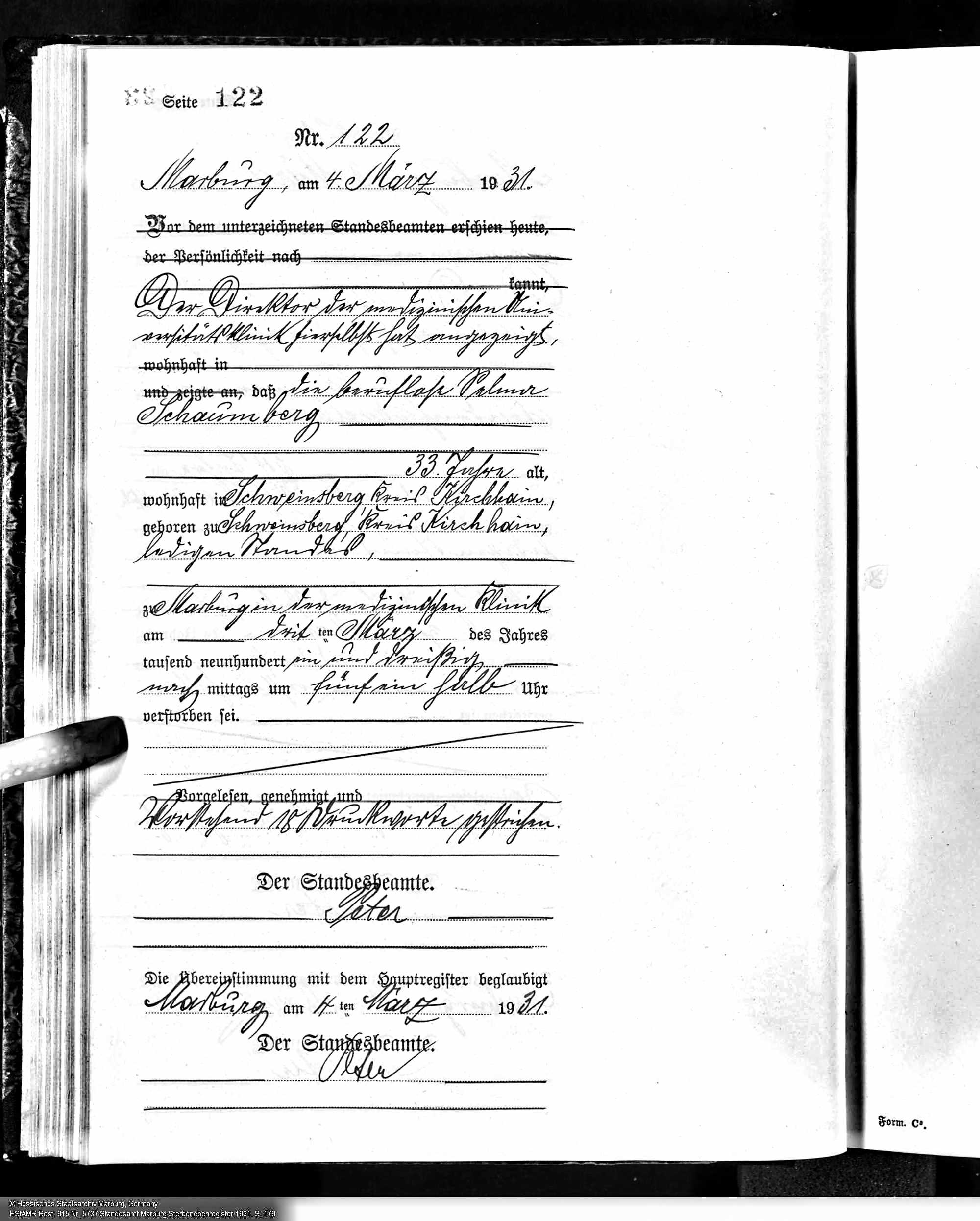
Sadly, the youngest child of Bette Ruelf and Gustav Schaumberg, Selma, died in Marburg, Germany, on March 3, 1931, when she was only 33 years old:

Selma Schaumberg death record’
Hessisches Hauptstaatsarchiv; Wiesbaden, Deutschland; Personenstandsregister Sterberegister; Bestand: 915; Laufende Nummer: 5737

My colleagues Matthias Steinke and Doris Strohmenger at the German Genealogy group helped me translate this record also.  It reads: “The director of the university-hospital here has reported, that the unemployed (without profession being) Selma Schaumberg, 33 years old, residing and born in Schweinsberg, county of Kirchhain, unmarried, in Marburg in the hospital at the 3rd March of the year 1931 past midday at 5:30 is deceased.” There is no cause of death given.

Perhaps Selma was in some ways fortunate. She did not live to suffer under Nazi rule.

Her father Gustav Schaumberg died on July 30, 1938, when he was 81 years old; his wife Bette Ruelf Schaumberg died April 9, 1940; she was 79. They also in some ways may have been fortunate to die when they did, although by the time they did, they must have already experienced much suffering and humiliation by the Nazis.

Bette Ruelf Schaumberg death record
Hessisches Hauptstaatsarchiv; Wiesbaden, Deutschland; Personenstandsregister Sterberegister; Bestand: 915; Laufende Nummer: 8568

But at least they may have died with some hope that their remaining children would survive.

They did not. Siegfried was sent to Dachau Concentration Camp on April 3, 1942; he was then sent to the death camp in Hartheim, Austria on August 12, 1942, where he was killed. (JewishGen volunteers, comp. Germany, Dachau Concentration Camp Records, 1945 [database on-line]. Provo, UT, USA: Ancestry.com Operations Inc, 2008.)

A month later Siegfried’s sisters Rosa and Flora were also deported. They were both sent to Theriesenstadt along with Flora’s husband David Haas. Rosa was then sent to Auschwitz on January 23, 1943, where she was put to death. Flora and her husband David were both sent to Auschwitz on May 16, 1944, where they also were murdered. (The links are to their Yad Vashem entries.)

Thus, not one of the children of Bette Ruelf and Gustav Schaumberg survived the Holocaust.

Can anyone not understand why it is so depressing, frightening, and maddening to see people marching with swastikas in our streets?


Transitioning back to the Katzensteins

I am now returning to the story of my Katzenstein family. I’ve spent the better part of the last year researching and writing about my Katzenstein family: first, the family of my great-great-grandfather Gerson Katzenstein, who came to the US from Jesberg in 1857; then the family of Gerson’s half-sister Hannchen who married Marum Mansbach; their children came to the US around the same time; and then the family of Gerson’s full sister Rahel Katzenstein, who married Jacob Katz and whose children also for the most part came to the US and settled primarily in Oklahoma.

I needed a short break to recover from the overwhelming sadness I felt as I discovered how many members of the family had died or suffered at the hands of the Nazis.  Now I am ready to tell the story of the remaining sibling of my great-great-grandfather Gerson Katzenstein, his half-brother Jakob. Unfortunately much of the story of Jakob’s family also is devastatingly sad. But I need to tell it because these people need to be remembered and their memories need to be honored.

According to Barbara Greve’s research, Jakob was born on August 20, 1802, in Jesberg to Scholum ha Kohen Katzenstein and Gelle Katz (or Katten.  He married Sarchen Lion on February 24, 1829; Sarchen was born on March 5, 1805, in Mardorf, Germany, to Baruch Loew/Lion and Michel Erhlich. [1] Jakob was a merchant in Jesberg.

Barbara Greve concluded that Jakob and Sarchen had nine children, all born in Jesberg: Gelle (1829), Michaela (1832), Schalum Abraham (1834), Rebecca (1836), Johanna (1838), Pauline (1841), Baruch (1844), Meier (1849), and Levi (1851).

Jakob died in 1876, and Sarchen four years later in 1880.

Jakob Katzenstein death record
Standesamt Jesberg Sterbenebenregister 1876 (HStAMR Best. 920 Nr. 3874)AutorHessisches Staatsarchiv MarburgErscheinungsortJesberg, p. 76

Sarchen Lion Katzenstein death record
Hessisches Hauptstaatsarchiv; Wiesbaden, Deutschland; Standesamt Jesberg Sterbenebenregister 1880; Bestand: 920; Laufendenummer: 3878

It will take quite a while to cover all nine of Jakob and Sarchen’s children. In this and the next several posts, I will focus on their oldest child, Gelle, and her family.

Gelle was born December 3, 1829, in Jesberg, according to the research done by Barbara Greve. She married Moses Ruelf on January 21, 1855. Moses was born October 17, 1828, in Rauischholzhausen, Germany, the son of Juda Ruelf and Rachel Schlesinger.

Although I do not have actual records for these facts, I do have another secondary source for them. David Baron kindly sent me a link to a genealogy report compiled in Germany by a man named Alfred Schneider called Die Juedischen Familien im ehemaligen Kreise Kirchain (2006) [The Jewish Families in the Former Districts of Kirchain], which appears to be well-researched and has a bibliography indicating the archives he visited to obtain his information. I will refer to it hereafter as “the Schneider book,” and all the information about Moses and Gelle appears on p. 345. (You can find a link to the Schneider book here.)

Moses Ruelf and Gelle Katzenstein had ten children, all born in Rauischholzhausen. The first child was stillborn on June 1, 1856; many trees on Ancestry have this child with the name Simon, but the record I found has no name given, nor does the Schneider book (p. 345).

Birth record for unnamed child of Moses Ruelf and Gelle Katzenstein, Todt Geboren (born dead)
Geburtsregister der Juden von (Rauisch)Holzhausen (Ebsdorfergrund) 1824-1874 (HHStAW Abt. 365 Nr. 452)AutorHessisches Hauptstaatsarchiv, Wiesbaden, p. 9

The second child was Esther, born May 26, 1857. Her birth entry is on the same page as the stillborn child, above.

Minna, the third child, was born on February 16, 1859:

Minna Ruelf birth record
Geburtsregister der Juden von (Rauisch)Holzhausen (Ebsdorfergrund) 1824-1874 (HHStAW Abt. 365 Nr. 452)AutorHessisches Hauptstaatsarchiv, Wiesbaden, p. 10

Bette was born December 3, 1860:

Bette Ruelf birth record
Geburtsregister der Juden von (Rauisch)Holzhausen (Ebsdorfergrund) 1824-1874 (HHStAW Abt. 365 Nr. 452)AutorHessisches Hauptstaatsarchiv, Wiesbaden, p.12

Gelle then gave birth a fourth daughter, Johanna, on November 21, 1862:

Johanna (Hannah) Ruelf birth record
Geburtsregister der Juden von (Rauisch)Holzhausen (Ebsdorfergrund) 1824-1874 (HHStAW Abt. 365 Nr. 452)AutorHessisches Hauptstaatsarchiv, Wiesbaden, p.13

As I wrote in an earlier post, Johanna was the first wife of Hirsch Abraham. Johanna died on August 12, 1890, eleven days after giving birth to her first child, who was apparently renamed Johanna in her memory.

A fifth daughter, Roschen, was born to Gelle and Moses Ruelf on April 25, 1864:

Roschen Ruelf birth record,
Geburtsregister der Juden von (Rauisch)Holzhausen (Ebsdorfergrund) 1824-1874 (HHStAW Abt. 365 Nr. 452)AutorHessisches Hauptstaatsarchiv, Wiesbaden, p 13

Although I’ve been unable to find a death record for Roschen, the Schneider book (p. 345) reports that Roschen died before her first birthday on March 3, 1865.

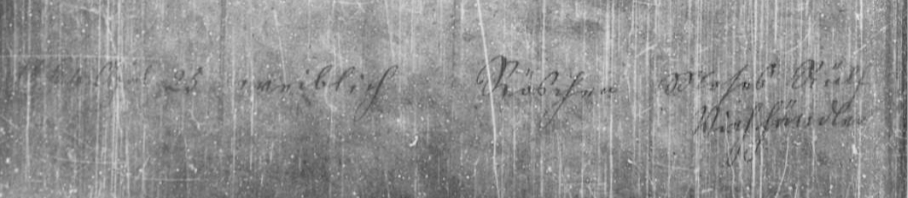
A sixth daughter, Rebekka, was born on November 7, 1865:

Rebekkah Ruelf birth record
Geburtsregister der Juden von (Rauisch)Holzhausen (Ebsdorfergrund) 1824-1874 (HHStAW Abt. 365 Nr. 452)AutorHessisches Hauptstaatsarchiv, Wiesbaden, p. 14

After having six daughters in a row, Moses and Gelle had a son, Juda, born October 30, 1867:

Juda Ruelf birth record,
Geburtsregister der Juden von (Rauisch)Holzhausen (Ebsdorfergrund) 1824-1874 (HHStAW Abt. 365 Nr. 452)AutorHessisches Hauptstaatsarchiv, Wiesbaden, p. 14

Then their ninth child was another girl, Pauline, born September 25, 1869:

Pauline Ruelf birth record,
Geburtsregister der Juden von (Rauisch)Holzhausen (Ebsdorfergrund) 1824-1874 (HHStAW Abt. 365 Nr. 452)AutorHessisches Hauptstaatsarchiv, Wiesbaden, p.15

As I wrote in an earlier post, Pauline married Hirsch Abraham after her sister Johanna died. Pauline was the grandmother of my cousin Fred Abrahams, who wrote the memoir I posted here.

Finally, Gelle gave birth to her tenth and last child, Gutmann, on November 15, 1871, in Rauischholzhausen:

Gutmann Ruelf birth record
Geburtsregister der Juden von (Rauisch)Holzhausen (Ebsdorfergrund) 1824-1874 (HHStAW Abt. 365 Nr. 452)AutorHessisches Hauptstaatsarchiv, Wiesbaden, p. 15

The Schneider book (p. 345) reports that Gutmann died on July 10, 1873, when he was not quite twenty months old. I did not find any other record of Gutmann’s death.

Thus, of the ten children to whom Gelle Katzenstein Ruelf gave birth, one was stillborn and two appear to have died as young children. Of the other seven, one (Johanna) died in the aftermath of childbirth.

As for the other six—Esther, Minna, Bette, Rebecca, Juda, and Pauline—I have learned more about their lives and their descendants and will report on my research in the posts that follow. First, I will discuss Esther and Bette.


[1][1] Although all the family trees I’ve seen refer to Sarchen as Sarchen Lion, it appears that the family name was originally Loew, German for lion. At some point, however, even the German records started using the name “Lion,” not Loew.

Days of Wine and Sichels

You might want to open a bottle of wine as you read this post.

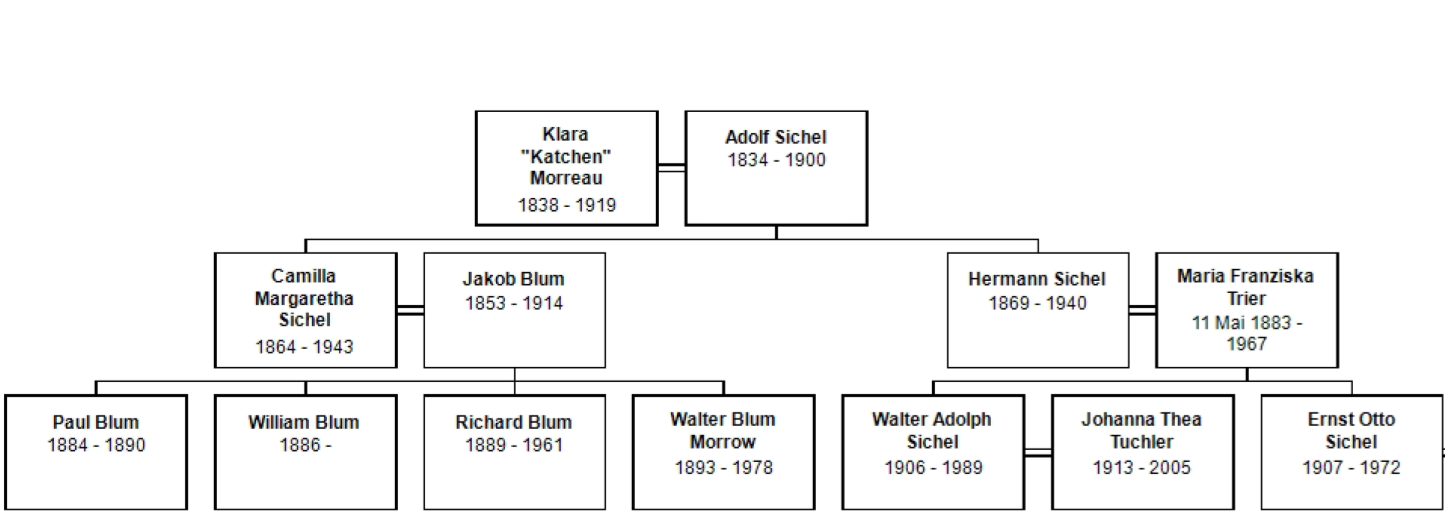
As I wrote last time, Caroline Seligmann (my 4x-great-aunt) and Moses Morreau had two children, Levi and Klara. This post will focus on Klara and her descendants.

Klara was born in Worrstadt on July 9, 1838:

Klara Morreau birth record, July 9 1838
Morreau birth records 1838-29


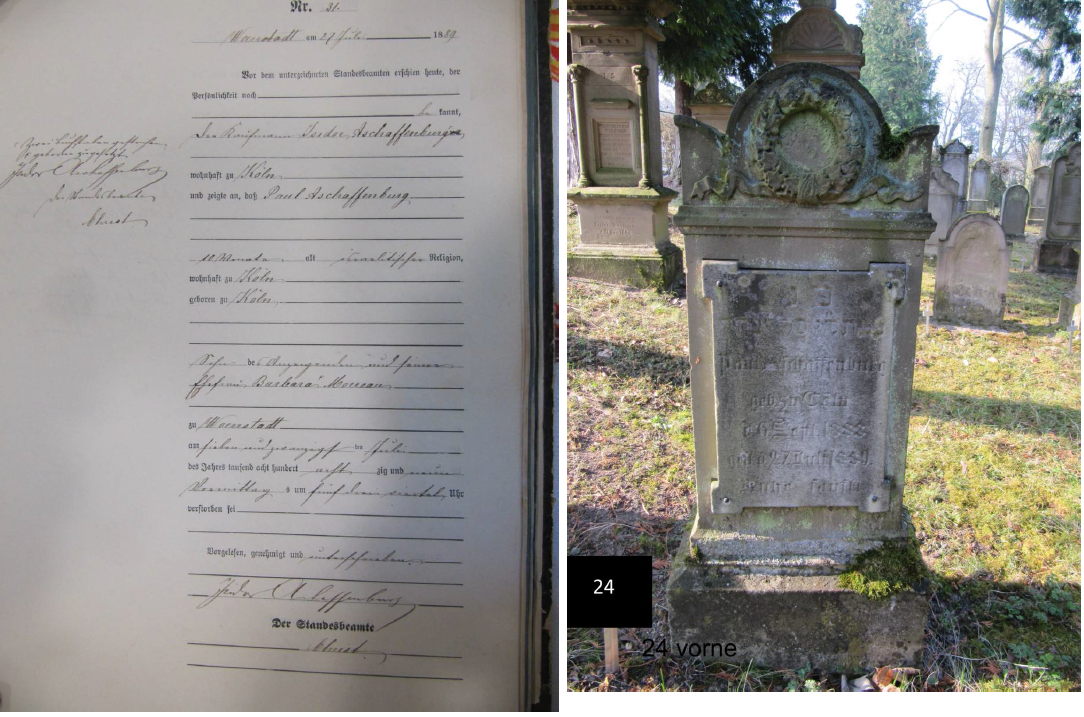
I have not had success in finding a marriage record for Klara, but I know from her death record and her son’s birth record that she married Adolph (sometimes Adolf) Sichel. I have neither a birth nor a death record for Adolph, but I do have a photograph of Adolph’s gravestone in Bingen, which identifies his birth date as April 10, 1834. [1]

Adolph Sichel was the son of Hermann Sichel and Mathilde Neustadt of Sprendlingen, later Mainz. Hermann Sichel was the founder of the renowned wine producing and trading business, H. Sichel Sohne. Although it is beyond the scope of my blog to delve too deeply into the story of the Sichel wine business, a little background helps to shed light on Adolph, Klara, and their descendants. According to several sources, Hermann Sichel started the family wine business with his sons in 1856 in Mainz, Germany.

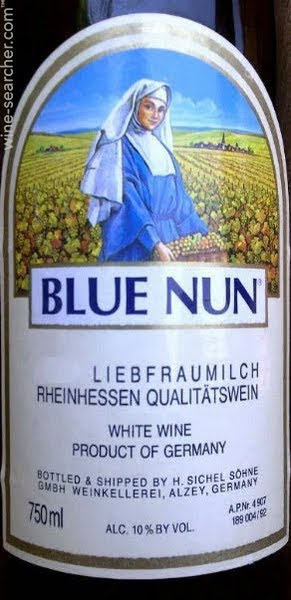
In 1883, the company expanded to Bordeaux, France, where it established an office to procure wines for sales by Sichel in Mainz, London, and New York City. The sons and eventually the grandsons worked in various branches of the business, some working in the French office, some in London, and some in Mainz. The business continued to expand and is still in business today; it is perhaps best known in popular culture as the maker of Blue Nun, a wine that was quite successful in the 1970s and 1980s. One writer described it as “a single, perfectly positioned product, a Liebfraumilch whose blandness seemed just the ticket for the hundreds of thousands of new wine drinkers, not just in the US but also in the UK. “

Adolph was not one of the sons who relocated from Germany. He and Klara had two children born and raised in Germany. Their daughter Camilla Margaretha Sichel was born on February 4, 1864, in Sprendlingen, according to Nazi documentation:

Camilla Sichel Blum info from Nazi files from MP

UPDATE: Aaron Knappstein was able to get a copy of Camilla’s birth record:
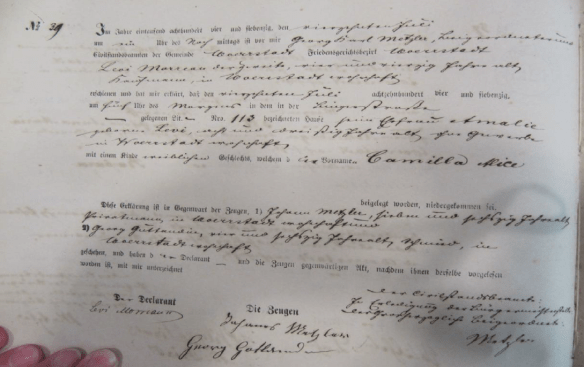
Camilla Alice Morreau birth record

Camilla Sichel married Jakob Blum, who was born April 3, 1853, in Nierstein, Germany. They had four children, all born in Mainz: Paul (1884), Willy (1886), Richard (1889), and Walter (1893):

Paul Blum birth record, September 7, 1884
Ancestry.com. Mainz, Germany, Birth Records, 1872-1900 [database on-line]. Provo, UT, USA: Ancestry.com Operations, Inc., 2014.
Original data: Personenstandsregister Geburtenregister 1876-1900. Digital images. Stadtarchiv Mainz, Mainz, Germany.

Willy Blum birth record
February 21, 1886
Ancestry.com. Mainz, Germany, Birth Records, 1872-1900 [database on-line]. Provo, UT, USA: Ancestry.com Operations, Inc., 2014.
Original data: Personenstandsregister Geburtenregister 1876-1900. Digital images. Stadtarchiv Mainz, Mainz, Germany.

Richard Blum birth record
June 8, 1889
Ancestry.com. Mainz, Germany, Birth Records, 1872-1900 [database on-line]. Provo, UT, USA: Ancestry.com Operations, Inc., 2014.
Original data: Personenstandsregister Geburtenregister 1876-1900. Digital images. Stadtarchiv Mainz, Mainz, Germany.

Walter Blum birth record
August 4, 1893
Ancestry.com. Mainz, Germany, Birth Records, 1872-1900 [database on-line]. Provo, UT, USA: Ancestry.com Operations, Inc., 2014.
Original data: Personenstandsregister Geburtenregister 1876-1900. Digital images. Stadtarchiv Mainz, Mainz, Germany.

Paul died as a young boy in 1890 and is buried in the Jewish cemetery in Mainz.

Paul Blum, Mainz Jewish Cemetery Courtesy of Camicalm Find A Grave Memorial# 176111502

Camilla Sichel Blum’s husband Jakob Blum died August 22, 1914; he was 61 years old:

Jakob Blum death record
Ancestry.com. Mainz, Germany, Deaths, 1876-1950 [database on-line]. Lehi, UT, USA: Ancestry.com Operations, Inc., 2015.
Original data: Personenstandsregister, Sterberegister, 1876-1950. Mainz Stadtarchiv.

He was buried in the Mainz Jewish cemetery where his young son Paul had also been buried:

Jakob Blum gravestone, Mainz Jewish Cemetery
Courtesy of Camicalm
Find A Grave Memorial# 177633476

His wife Camilla would survive him by almost thirrty years.

Adolph Sichel and Klara Morreau also had a son named Hermann. I found Hermann’s birth date and place, June 24, 1869, in Sprendlingen, in the Name Index of Jews Whose German Nationality Was Annulled by the Nazi Regime database on Ancestry, a horrifying but presumably reliable source, given the meticulousness with which the Nazis kept records on Jews:
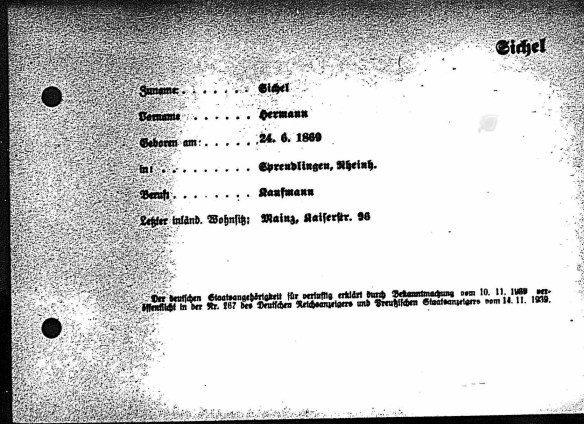
Hermann Sichel in Ancestry.com. Germany, Index of Jews Whose German Nationality was Annulled by Nazi Regime, 1935-1944 [database on-line]. Provo, UT, USA: Ancestry.com Operations, Inc., 2011.

On April 14, 1905, Hermann married Maria Franziska Trier, who was born on May 11, 1883, in Darmstadt, Germany, to Eugen Trier and Mathilde Neustadt. Maria was 21, and Hermann was 35.
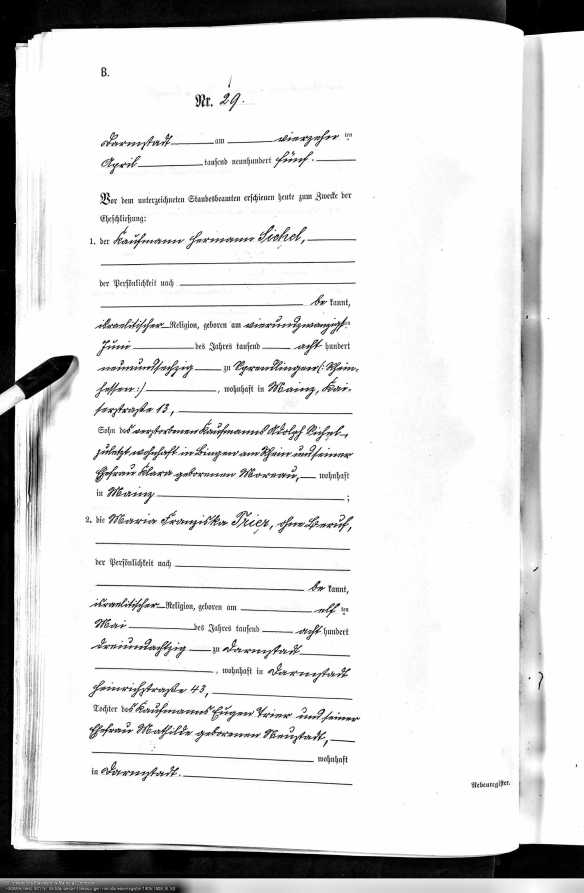
Marriage record of Hermann Sichel and Maria Trier
Hessisches Hauptstaatsarchiv; Wiesbaden, Deutschland; Collection: Personenstandsregister Heiratsregister; Signatur: 901; Laufende Nummer: 98

Hermann and Maria had two sons, Walter Adolph (1906) and Ernst Otto (1907).

Camilla and Hermann’s father Adolph Sichel died on April 30, 1900, as seen above on his gravestone; Hermann’s older son Walter Adolph was obviously named at least in part for Adolph. Klara Morreau Sichel died on April 2, 1919. Adolph and Klara are buried in Bingen.
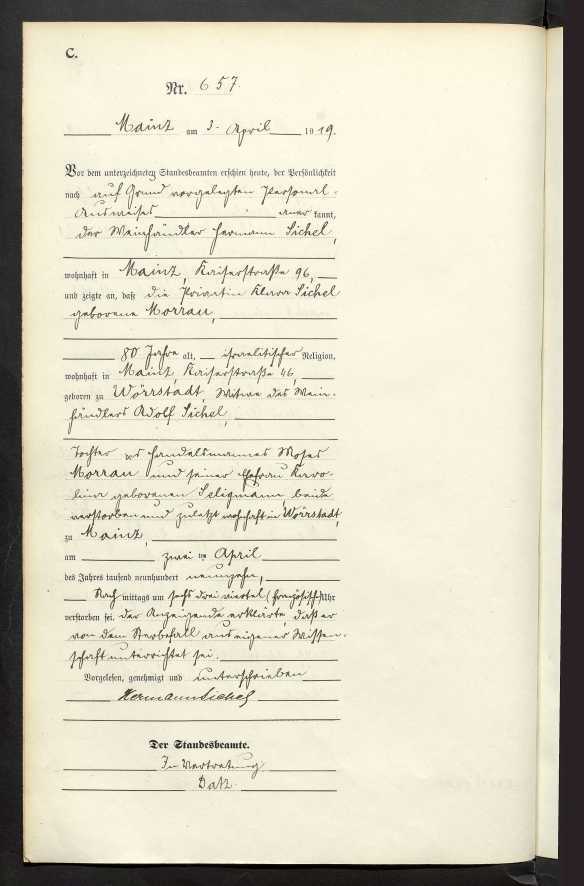
Klara Morreau Sichel death record, Apr 2, 1919
Ancestry.com. Mainz, Germany, Deaths, 1876-1950 [database on-line]. Lehi, UT, USA: Ancestry.com Operations, Inc., 2015.
Original data: Personenstandsregister, Sterberegister, 1876-1950. Mainz Stadtarchiv.

Klara Morreau Sichel gravestone at Bingen Jewish cemetery
http://www.steinheim-institut.de/cgi-bin/epidat?id=bng-818&lang=de

The families of both Camilla Sichel Blum and Hermann Sichel remained in Germany until after Hitler came to power in 1933. Then they all left for either England or the United States.

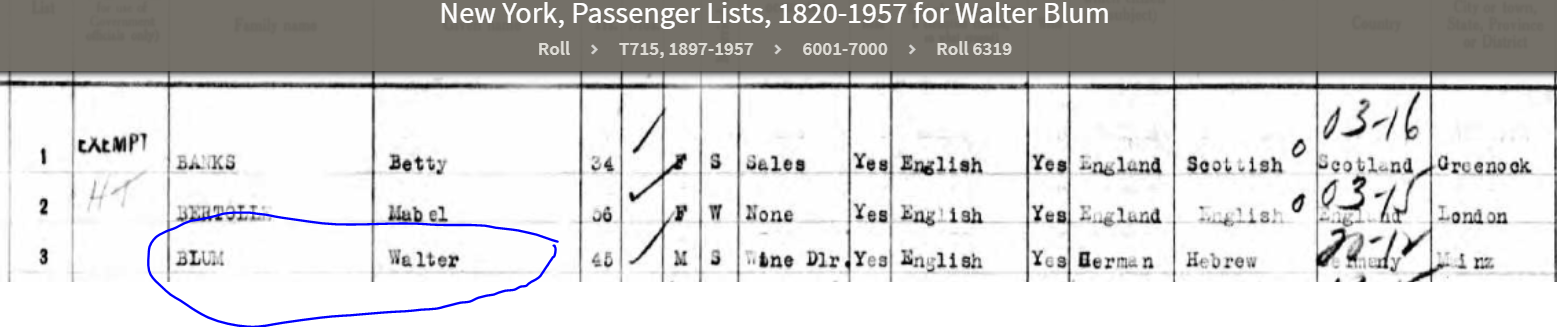
Two of Camilla’s sons, Richard and Walter, ended up in the US. Walter arrived first—on April 27, 1939.

Walter Blum ship manifest 1939
Year: 1939; Arrival: New York, New York; Microfilm Serial: T715, 1897-1957; Microfilm Roll: Roll 6319; Line: 1; Page Number: 42
Description
Ship or Roll Number : Roll 6319
Source Information
Ancestry.com. New York, Passenger Lists, 1820-1957 [database on-line].

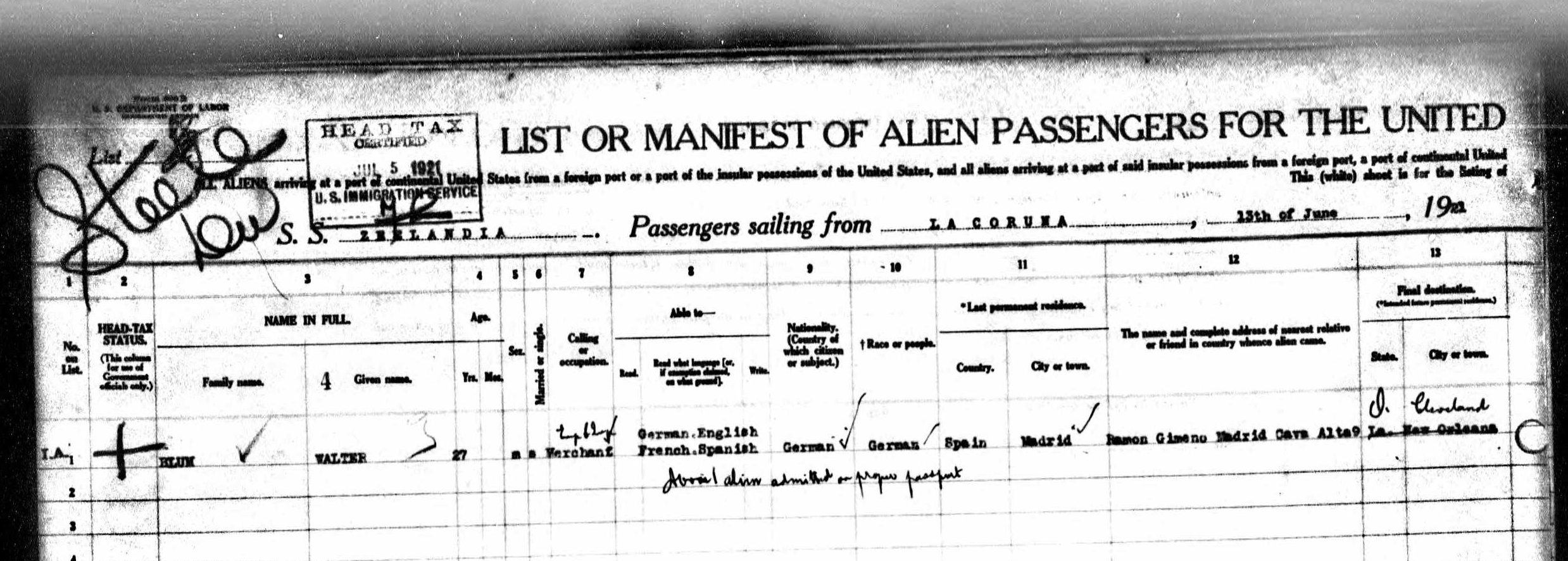
(Walter had actually visited the US many years before in 1921 when he was 27 years old; the ship manifest indicates that he was going to visit his “uncle” Albert Morreau in Cleveland. Albert was in fact his first cousin, once removed, his mother Klara Morreau’s first cousin.)
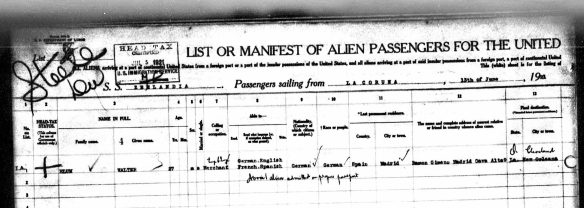
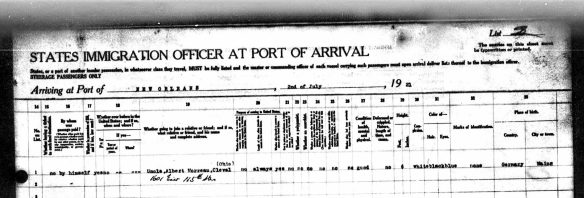
Walter Blum 1921 ship manifest
Ancestry.com. New Orleans, Passenger Lists, 1813-1963 [database on-line]. Provo, UT, USA: Ancestry.com Operations, Inc., 2006.
Original data: Selected Passenger and Crew Lists and Manifests. National Archives, Washington, D.C.View all sources.

Richard arrived a few months after Walter on August 29, 1939, listing his brother Walter as the person he was going to:

Richard Blum 1939 ship manifest
Ancestry.com. New York, Passenger Lists, 1820-1957 [database on-line]. Provo, UT, USA: Ancestry.com Operations, Inc., 2010.
Original data: Passenger Lists of Vessels Arriving at New York, New York, 1820-1897. Microfilm Publication M237, 675 rolls. NAI: 6256867. Records of the U.S. Customs Service, Record Group 36. National Archives at Washington, D.C.

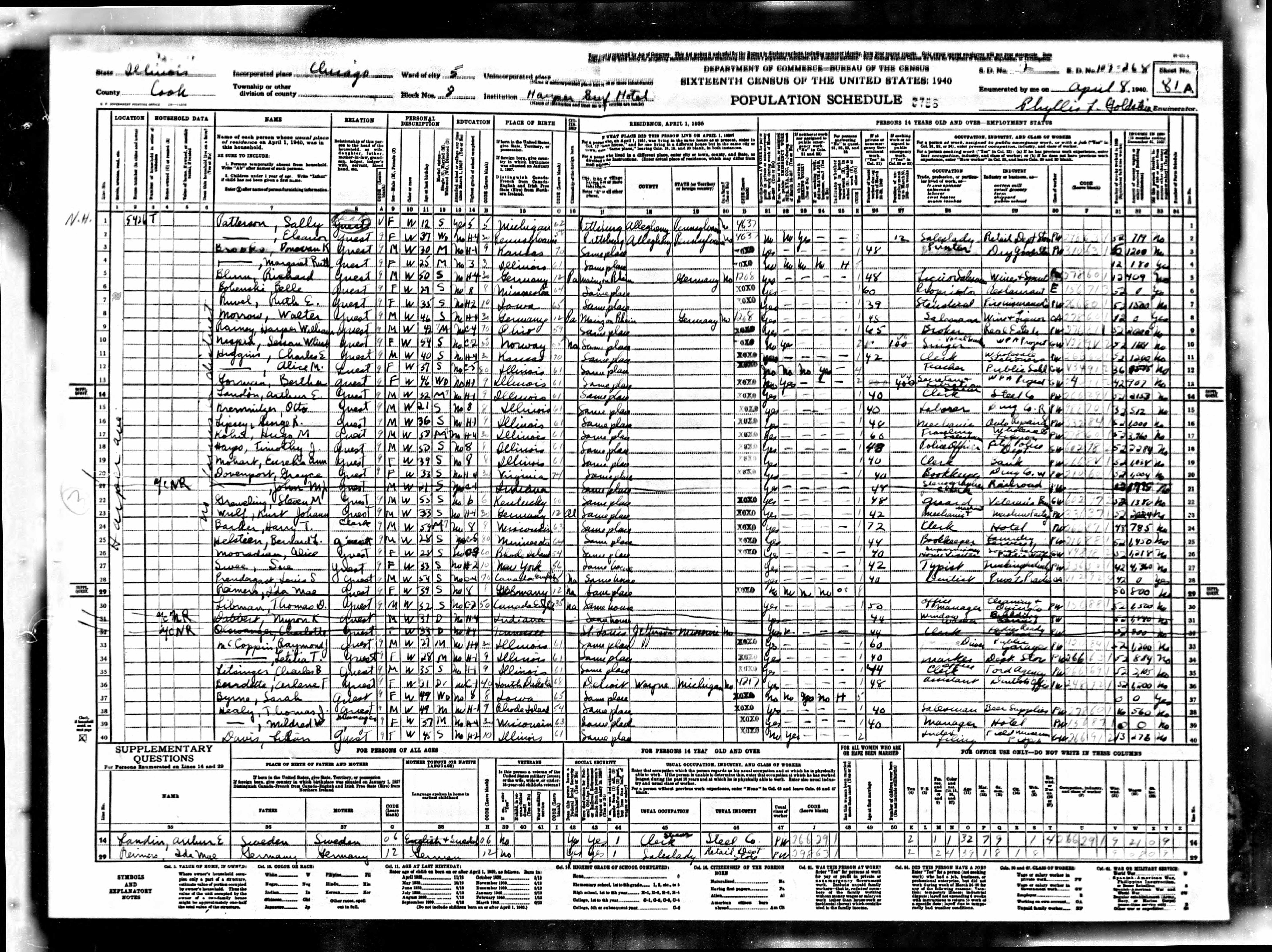
On the 1940 census, both Richard and Walter were living in the Harper-Surf Hotel in Chicago. Richard was fifty, Walter 46. Both were unmarried and listed their occupations as liquor salesmen. Walter had changed his surname to Morrow, I assume to appear less German. It seems he chose a form of his grandmother Klara’s birth name, Morreau:
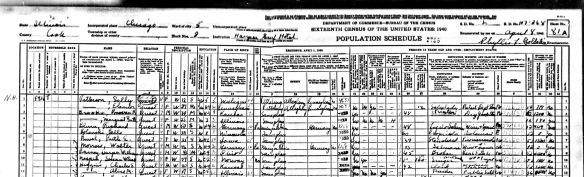
Richard Blum and Walter Morrow on 1940 US census
Year: 1940; Census Place: Chicago, Cook, Illinois; Roll: T627_929; Page: 81A; Enumeration District: 103-268
CHICAGO CITY WARD 5 (TRACT 613 – PART)
Ancestry.com. 1940 United States Federal Census [database on-line]

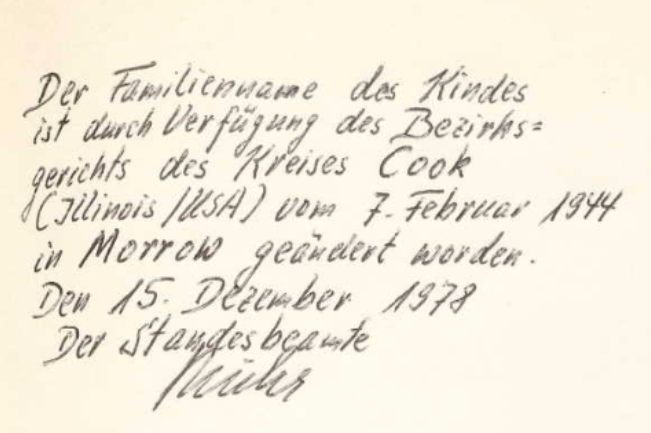
Walter had his name legally changed to Morrow on February 7, 1944, in Chicago, according to this notation on his birth record:

Notation on Walter Blum’s birth record regarding his name change; Walter Blum birth record
August 4, 1893
Ancestry.com. Mainz, Germany, Birth Records, 1872-1900 [database on-line]. Provo, UT, USA: Ancestry.com Operations, Inc., 2014.
Original data: Personenstandsregister Geburtenregister 1876-1900. Digital images. Stadtarchiv Mainz, Mainz, Germany.

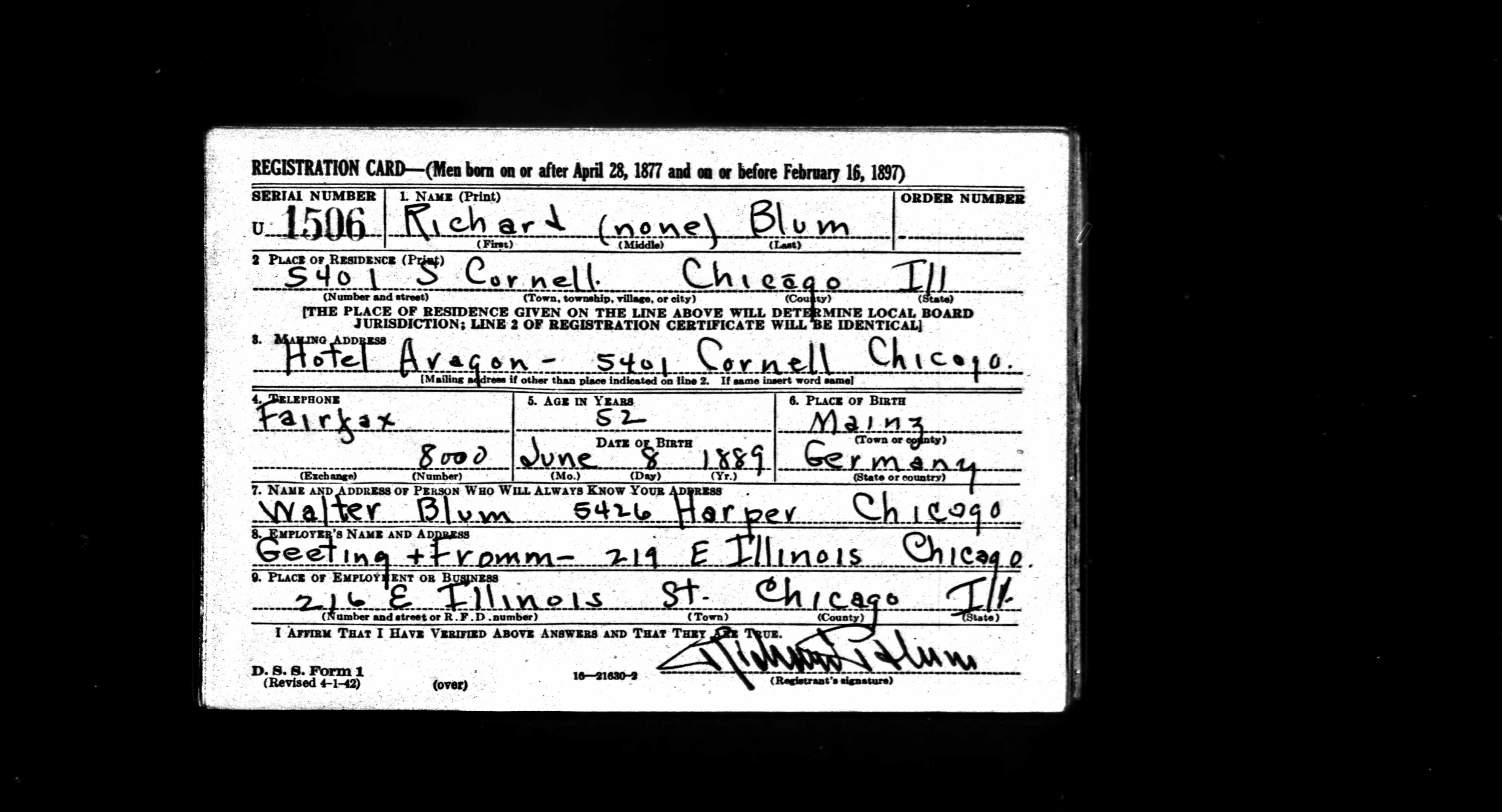
Both brothers registered for the World War II draft in 1942.  Richard was now living at the Hotel Aragon in Chicago and working for Geeting & Fromm, a Chicago wine importing business.
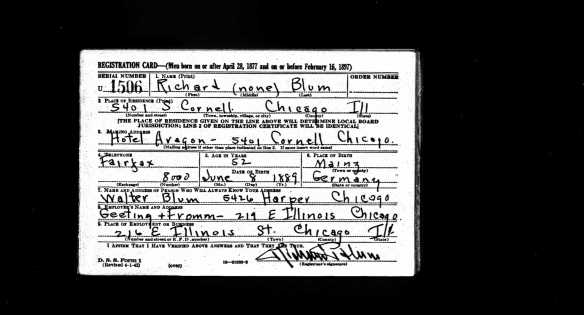
Richard Blum World War II draft registration
The National Archives at St. Louis; St. Louis, Missouri; World War II Draft Cards (Fourth Registration), for The State of Illinois; Record Group Title: Records of the Selective Service System, 1926-1975; Record Group Number: 147; Series Number: M2097

Walter was still living at the Harper-Surf Hotel and working for Schenley Import Corporation, a liquor importing business.

Walter Blum Morrow draft registration World War II
The National Archives at St. Louis; St. Louis, Missouri; World War II Draft Cards (Fourth Registration), for The State of Illinois; Record Group Title: Records of the Selective Service System, 1926-1975; Record Group Number: 147; Series Number: M2097

Both brothers also became naturalized citizens of the United States in 1944.

Richard died in 1961; his death notice reported that he was still a sales representative for Getting & Fromm at the time of his death.

Richard Blum death notice
July 9, 1961 Chicago Tribune, p. 71

Walter died on October 26, 1978, in Wiesbaden, German, according to a notation on his birth record; interestingly, he apparently had returned to live in Germany, as the US Social Security Death Index reported his last residence as Frankfurt, Germany.
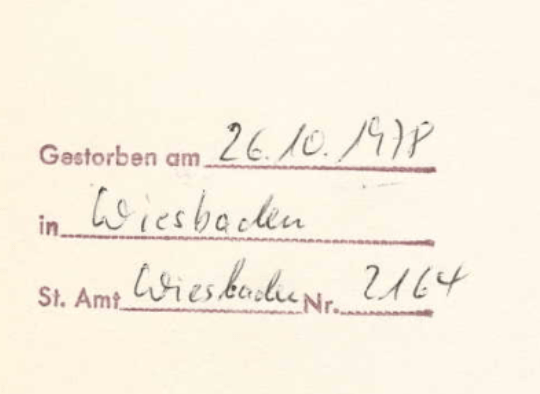
Snip from Walter Blum Morrow’s birth record; Walter Blum birth record
August 4, 1893
Ancestry.com. Mainz, Germany, Birth Records, 1872-1900 [database on-line]. Provo, UT, USA: Ancestry.com Operations, Inc., 2014.
Original data: Personenstandsregister Geburtenregister 1876-1900. Digital images. Stadtarchiv Mainz, Mainz, Germany.

Meanwhile, their older brother Willy, known as Wilhlem and then William, had immigrated to England. Although I don’t have any records showing when William left Germany, I believe that he must have been living in England before 1943, as his mother Camilla Sichel Blum died in York, England, in 1943 (England & Wales, Death Index, 1916-2006).  William is listed as living in York on a 1956 UK passenger ship manifest for a ship departing from New York and sailing to Southampton, England. I assume that Camilla had been living in York with her oldest son, William, at the time of her death in 1943.

Willliam Blum 1956 ship manifest,
The National Archives of the UK; Kew, Surrey, England; Board of Trade: Commercial and Statistical Department and successors: Inwards Passenger Lists.; Class: BT26; Piece: 1364; Item: 65

That 1956 manifest reports that William was married, a wine merchant, living at 13 Maple Grove, Fulford Road, York, England, and a citizen and permanent resident of England. I also found him listed in several phone books at the same address from 1958 until 1964. Aside from that I have no records of his whereabouts or his family or his death. I don’t know whether he was involved in the Sichel wine business or a different wine company. I also don’t know whether he was married or had children. I have contacted the York library and have requested a search of the newspapers and other records there, so hope to have an update soon.

As for the sons of Hermann Sichel and Maria Trier, they appear to have remained more directly connected to the Sichel wine business than their Blum cousins. Walter Adolph Sichel, the older brother, was in charge of the British side of the Sichel import business.  According to an article from the January 31, 1986 edition of The (London) Guardian (p. 10), Walter first came to England in 1928:

Anti-German feeling still lingered when young Sichel came to Britain in 1928 and travelled the country with his case of sample bottles from the family firm, H. Sichel Sohne of Mainz. Youthful persistence apart, he was lucky to have with him some of “the vintage of the century,” 1921. Potential customers found his wines easy to like, but impossible to pronounce.

(“The nun in the blue habit with something to smile about,” The (London) Guardian, January 31, 1986, p. 10)

Walter had moved permanently to England by 1935, as he is listed in the London Electoral Register for that year; also, he gave a London address on a ship manifest dated January 16, 1935.

Walter Sichel, 1935 ship manifest,
Year: 1935; Arrival: New York, New York; Microfilm Serial: T715, 1897-1957; Microfilm Roll: Roll 5597; Line: 1; Page Number: 93
Description
Ship or Roll Number : Roll 5597
Source Information
Ancestry.com. New York, Passenger Lists, 1820-1957

In December 1936, Walter Sichel married Johanna Tuchler in Marylebone, England; Johanna (known as Thea) was born in 1913 in Berlin. (Ancestry.com. England & Wales, Civil Registration Marriage Index, 1916-2005)

Walter Sichel’s younger brother, Ernst Otto Sichel (generally known as Otto), immigrated to the US.. He first arrived for a four month visit in October 1936, entering the country in Buffalo; he listed agents of the Taylor Company as those he was coming to see, so I assume this was a business trip with the Taylor Wine Company in upstate New York.
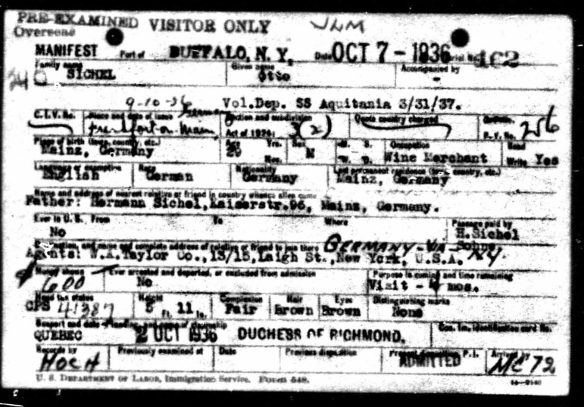
Ernst Otto Sichel 1936 arrival in Buffalo, NY
The National Archives at Washington, D.C.; Washington, D.C.; Manifests of Alien Arrivals at Buffalo, Lewiston, Niagara Falls, and Rochester, New York, 1902-1954; Record Group Title: Records of the Immigration and Naturalization Service, 1787 – 2004; Record Group Number: 85; Series Number: M1480; Roll Number: 127

But Otto returned to settle permanently in the US on September 30, 1937.

Otto Sichel 1937 ship manifest
Year: 1937; Arrival: New York, New York; Microfilm Serial: T715, 1897-1957; Microfilm Roll: Roll 6054; Line: 1; Page Number: 8
Ancestry.com. New York, Passenger Lists, 1820-1957

By May 1938, Hermann Sichel and Maria Trier, Otto and Walter Sichel’s parents, had also left Germany as they listed themselves as residing in London on a ship manifest when they traveled to New York on that date. In August 1939, Otto listed them on a ship manifest as residing in Buckinghamshire, England, when he sailed from New York to England at that time.

Hermann and Maria Sichel on 1938 ship manifest
Ancestry.com. UK, Outward Passenger Lists, 1890-1960 [database on-line]. Provo, UT, USA: Ancestry.com Operations, Inc., 2012.
Original data: Board of Trade: Commercial and Statistical Department and successors: Outwards Passenger Lists. BT27. Records of the Commercial, Companies, Labour, Railways and Statistics Departments. Records of the Board of Trade and of successor and related bodies. The National Archives, Kew, Richmond, Surrey, England.

Otto Sichel 1939 ship manifest—address of parents in England
Ancestry.com. New York, Passenger Lists, 1820-1957 [database on-line]. Provo, UT, USA: Ancestry.com Operations, Inc., 2010.
Original data: Passenger Lists of Vessels Arriving at New York, New York, 1820-1897. Microfilm Publication M237, 675 rolls. NAI: 6256867. Records of the U.S. Customs Service, Record Group 36. National Archives at Washington, D.C.

Hermann Sichel died on August 22, 1940, in Buckinghamshire. He was 71 years old; his wife Maria died in London in June 1967; she was 84. (England & Wales, Death Index, 1916-2006)

In 1940, their son Otto was listed on the US census as a paying guest in a home on East 84th Street in New York City. There was a notation on his entry that I’ve never seen before: “No response to this after many calls.” Was Otto avoiding the enumerator? Or was he just away on business?

Otto Sichel, 1940 US census
Year: 1940; Census Place: New York, New York, New York; Roll: T627_2655; Page: 2A; Enumeration District: 31-1339
Ancestry.com. 1940 United States Federal Census

Perhaps this seeming evasiveness created some suspicion about Otto because in 1943 a request was sent by the US Immigration and Naturalization Service to the FBI to request clearance for Otto because he was “pro-German but anti-Hitler, and may be guilty of subversive activity.” I consider myself pro-American even when I do not like my country’s leaders or actions at certain times; I assume that that was how Otto felt—affection for the country of his birth, but opposed to its actions under the Nazis.
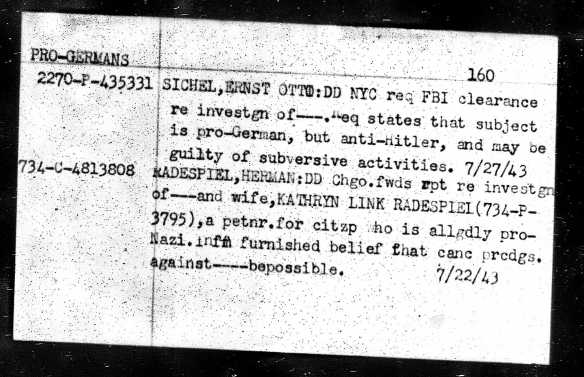
Inquiry into Otto Sichel
Ancestry.com. U.S. Subject Index to Correspondence and Case Files of the Immigration and Naturalization Service, 1903-1959 [database on-line]. Provo, UT, USA: Ancestry.com Operations, Inc., 2010

Otto must have passed the FBI investigation because on August 15, 1944, he became a naturalized citizen of the United States:

Ernst Otto Sichel naturalization papers 1944
Ancestry.com. Selected U.S. Naturalization Records – Original Documents, 1790-1974 [

On January 3, 1942, Otto married Margarete Frances Chalon in Westwood, New Jersey; Margarete was born in New York in 1919; she was 22 when they married, and Otto was 34. The marriage did not last, and they were divorced in Florida in 1949. The following year Otto married again; his second wife was Anne Marie Mayer. She was born in Germany in 1921. Otto and Anne Marie eventually moved to Port Washington, New York.

Otto died on May 10, 1972, in San Francisco. He was 65 years old. According to his obituary, he was the vice-president of Fromm & Sichel, a subsidiary of Jos. E. Seagram & Sons, at the time of his death and had been working for that company for twenty years. “E. Otto Sichel Dies; Wine Expert Was 65,” The New York Times, May 13, 1972 (p. 34).

Without going into the full corporate history, there are obvious links here between the various Sichel/Blum cousins—Richard Blum worked for the Chicago wine distributor Geeting & Fromm, which was founded in part by Paul Fromm, whose brother Alfred Fromm and Franz Sichel, first cousin of Walter Sichel and Richard Blum, founded the company where Walter Sichel worked, the San Francisco wine distributor Fromm & Sichel .

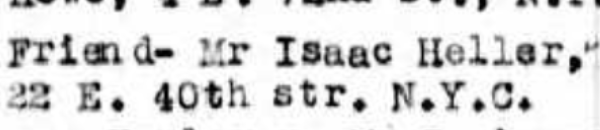
Finally, to bring this story back to its beginning, both Walter Blum and Otto Sichel listed a Mr. I(saac) Heller (“Hella” as spelled on Walter’s manifest) as the person sponsoring them in the US when they immigrated to the US in the 1930s:

Walter Blum 1939 manifest naming I Hella as friend going to in US
Ancestry.com. New York, Passenger Lists, 1820-1957 [database on-line]. Provo, UT, USA: Ancestry.com Operations, Inc., 2010.
Original data: Passenger Lists of Vessels Arriving at New York, New York, 1820-1897. Microfilm Publication M237, 675 rolls. NAI: 6256867
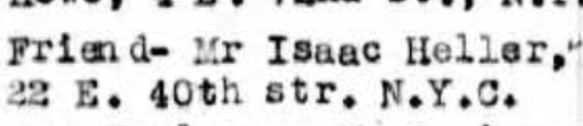
Isaac Heller named as person Otto Sichel was going to on 1937 manifest
Ancestry.com. New York, Passenger Lists, 1820-1957 [database on-line]. Provo, UT, USA: Ancestry.com Operations, Inc., 2010.
Original data: Passenger Lists of Vessels Arriving at New York, New York, 1820-1897. Microfilm Publication M237, 675 rolls. NAI: 6256867. Records of the U.S. Customs Service, Record Group 36. National Archives at Washington, D.C.

Who was this friend Isaac Heller?

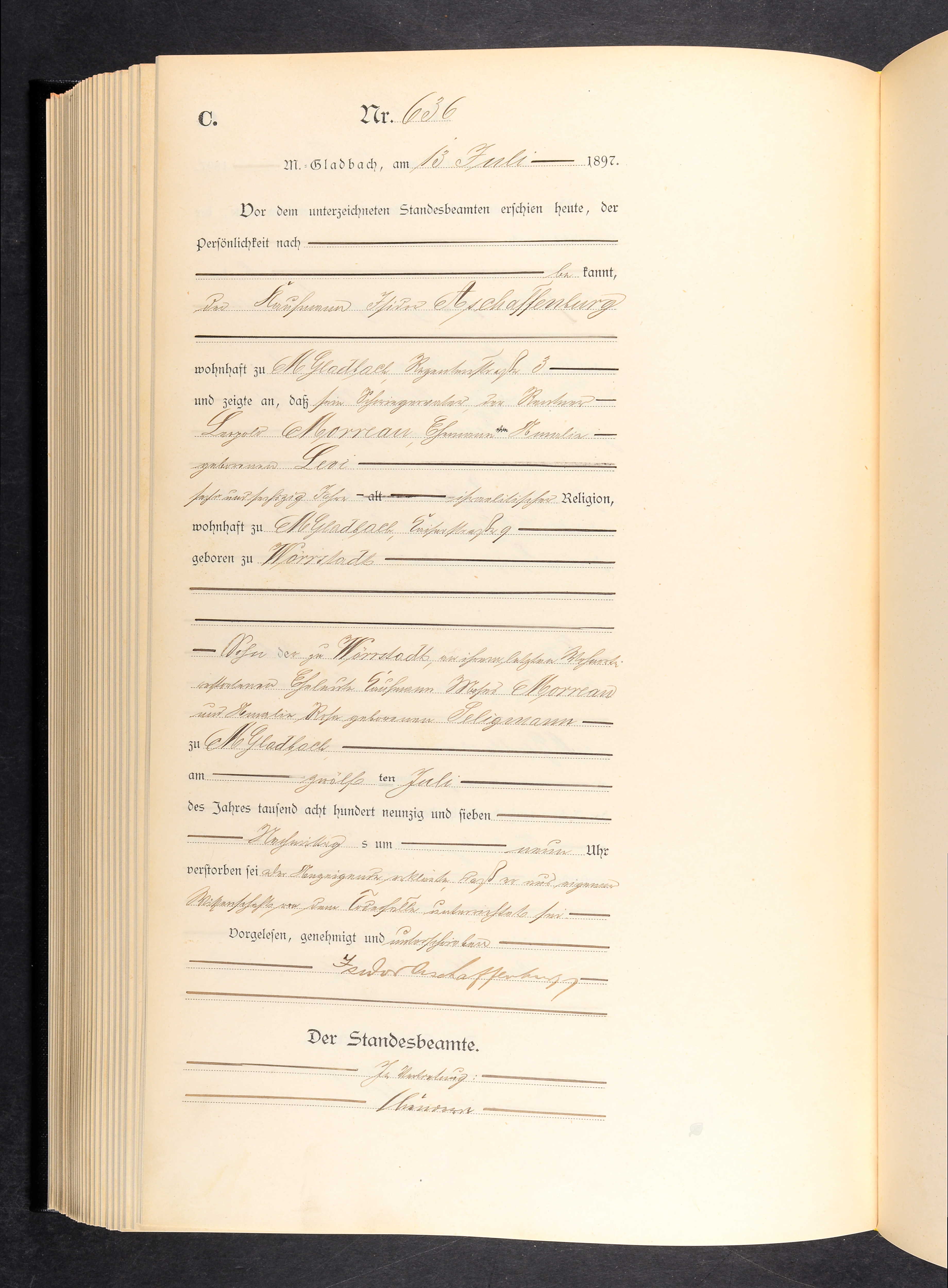
He was the brother of Leanora Heller Morreau. Yes, the Leanora I had researched back in 2014 to try and understand why she had tried to rescue Bettina Seligmann Arnfeld from Nazi Germany.  The same Leanora whose husband Albert was the grandson of Caroline Seligmann Morreau and a first cousin of Camilla Sichel Blum, Walter’s mother, and Hermann Sichel, Otto’s father.

Leanora may not have been able to help her late husband’s cousin Bettina Seligmann Arnfeld, but obviously she and her brother Isaac were able to help Albert’s cousins Walter Blum and Otto Sichel.

And so I lift a glass of wine (not Blue Nun, preferably a prosecco) to toast Leanora Heller Morreau! L’chaim!

by tracy ducasse (Flickr: [1]) [CC BY 2.0 (http://creativecommons.org/licenses/by/2.0)%5D, via Wikimedia Commons


[1] Unfortunately, the online records for Sprendlingen do not cover the years before 1870, and although there are some death records for the 1900s, the year 1900 is not included.

The Morreau Family Discovered, With the Help of Many: Part I

As I wrote in my last post, it took the combined efforts of many people to put together the full picture of my Morreau cousins.  Without Wolfgang and the handwritten trees, Shyanne, Michael Phillips, Paul, Dorothee, and Friedemann Hofmann, I never would have been able to find all the names and dates. Dorothee provided the final and essential link to Friedemann Hofmann, who sent me images of the actual records and of the gravestones of the Morreau family, helping me to corroborate the factual assertions I’d seen on secondary sources. Many of the records and images in this post came from Friedemann. Thank you all again for your help!

The records establish that my four times-great-aunt Caroline Seligmann (1802-1876), sister of Moritz Seligmann and daughter of Jacob Seligmann and Martha Mayer, was married to Moses Morreau, son of Maximilian Morreau and Janette Nathan, on October 8, 1830.

Marriage record of Caroline Seligmann and Moses Morreau October 8, 1930
Wörrstadt Marriage Record, 1830-10

P. 2 of Marriage record of Caroline Seligmann and Moses Morreau

Moses was born in Wörrstadt, Germany, on June 28, 1804.

Moses Morreau birth record, June 28, 1804
Wörrstadt birth records, 1804-34

Moses and Caroline settled in Wörrstadt, which is less than twelve miles from Gau-Algesheim where Caroline’s parents lived.


Moses and Caroline had two children, both of whom were born in Wörrstadt: Levi (Leopold), who was born September 25, 1831, and Klara, who was born July 9, 1838. This post will focus on Levi and his descendants; the one to follow will focus on Klara and her family.

Birth record of Levi Morreau
September 23, 1831
Wörrstadt birth records 1831-39

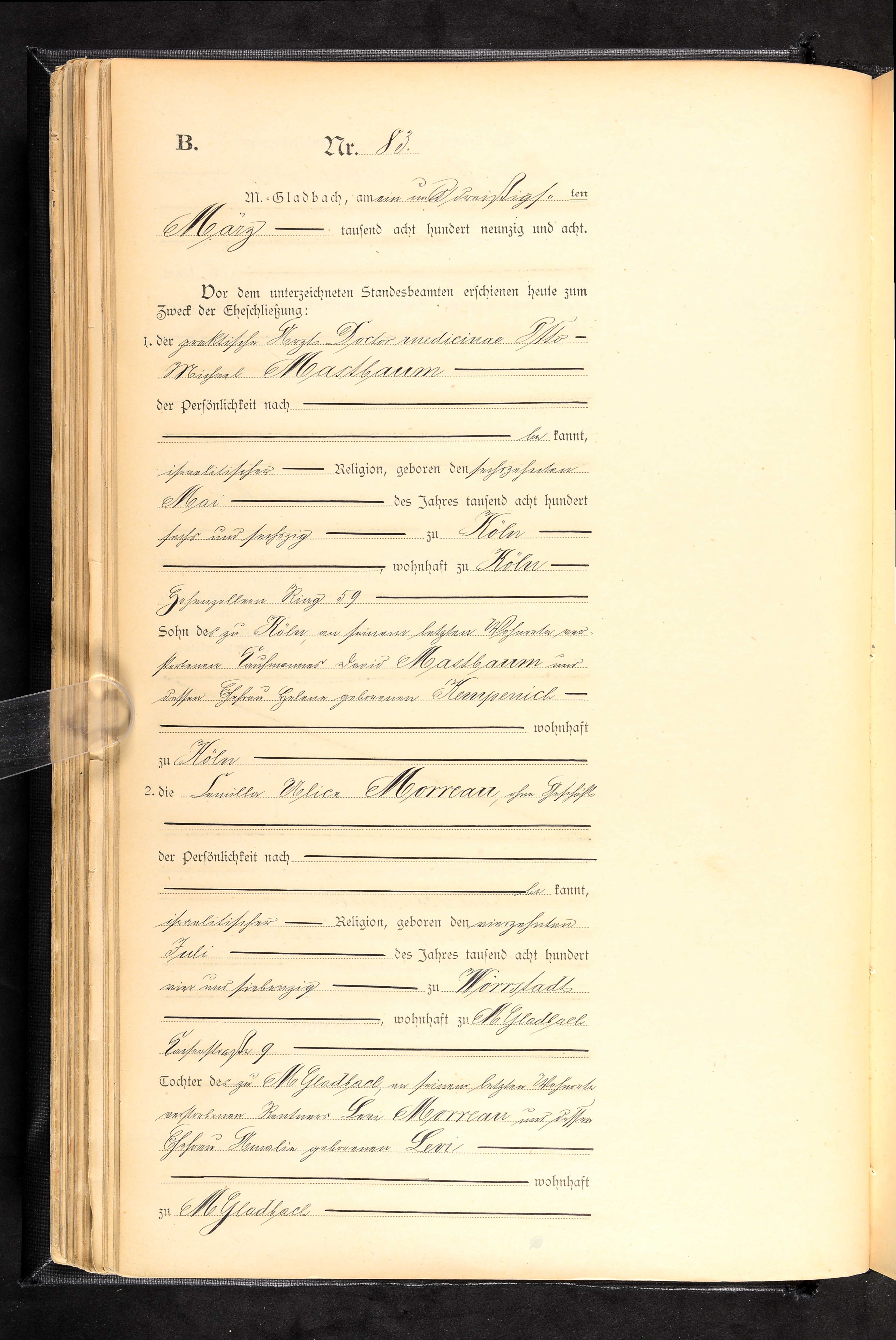
Levi married Emelia Levi. Emelia’s death record reveals that she was born in Alsheim, Germany, in 1836. Levi and Emelia had five children, all born in Wörrstadt where Levi was a merchant: Markus (1859), Albert (1861), Adolf (1863), Barbara (1867), and Camilla Alice (1874).

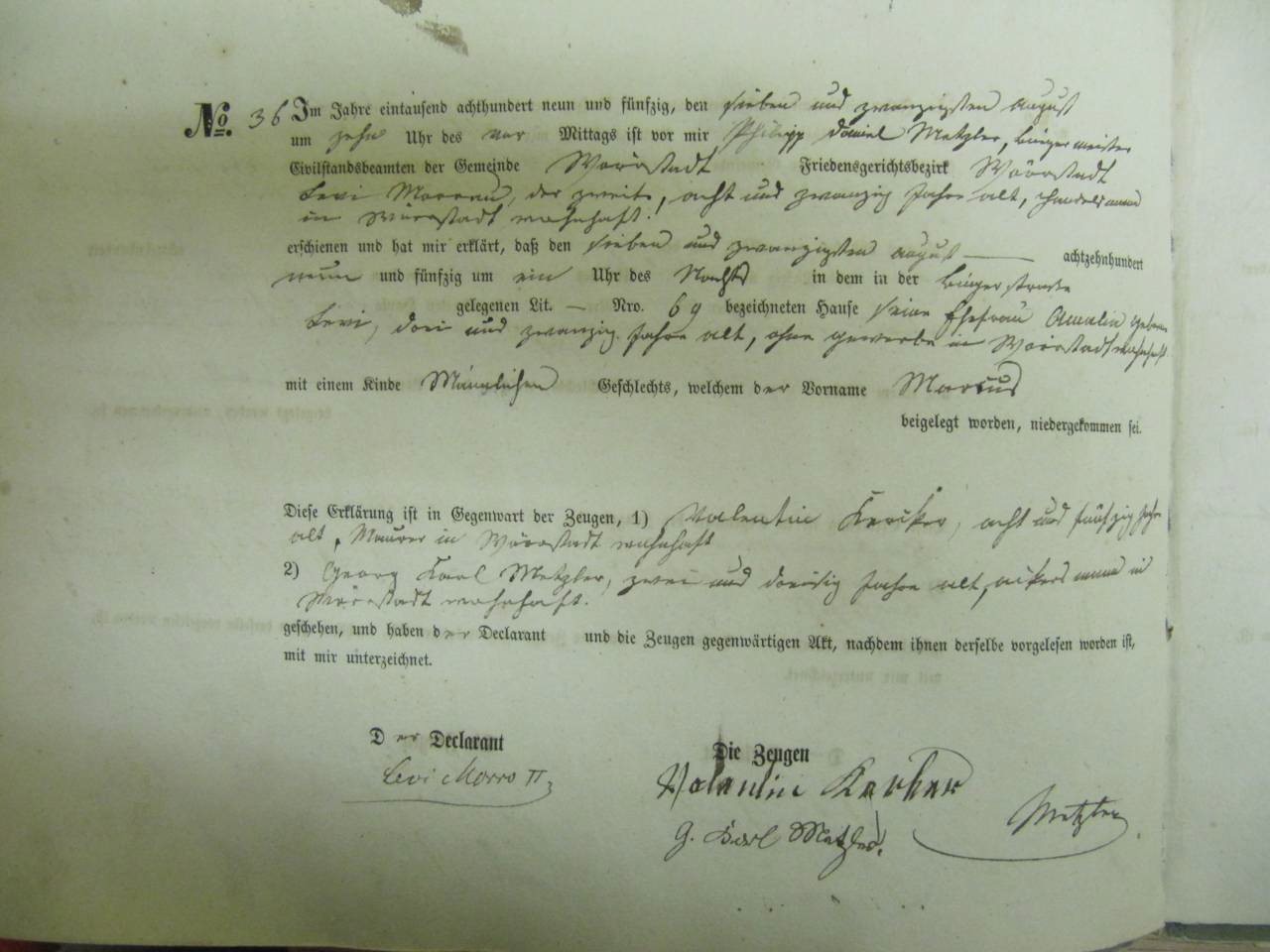
Markus Morreau birth record, August 27, 1859
 Wörrstadt birth records, 1859-36

Albert Morreau birth record, Aug 18, 1861
Wörrstadt birth records 1861-51

Adolf Morreau birth record, May 15 1863
Wörrstadt birth records 1863-21

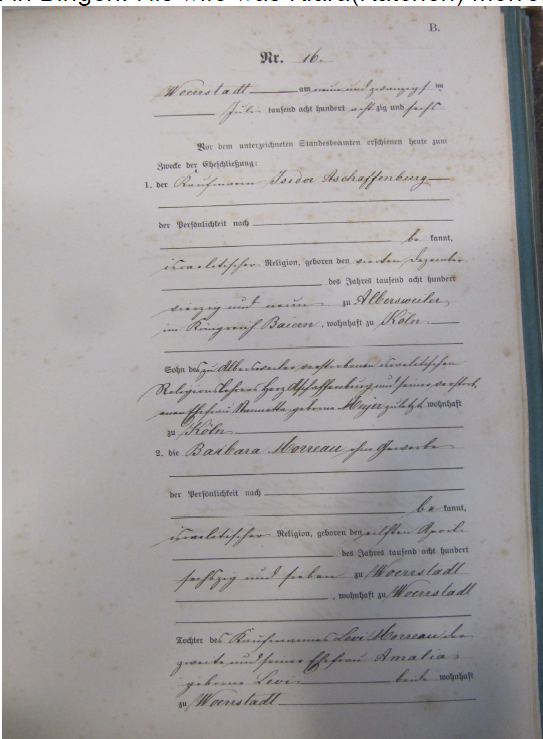
Barbara Morreau birth record, April 11 1867
 Wörrstadt birth records 1867-27

Camilla Alice Morreau birth record, July 14 1874
Wörrstadt birth records 1874-39

Adolf died when he was nine years old in 1872.

Adolf Morreau death record, June 16, 1872
Wörrstadt death records 1872-29

Adolf Morreau gravestone

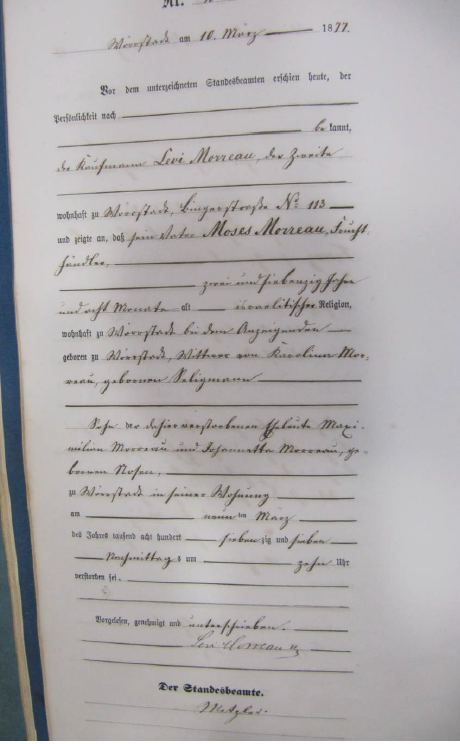
Levi’s mother Caroline Seligmann Morreau died in 1876, and his father Moses Morreau died the following year, both in Wörrstadt. Caroline was 74 when she died, and Moses was 72.

Caroline Seligmann Morreau death record, April 7, 1876
Wörrstadt death records 1876-13

Moses Morreau death record, March 9, 1877
Wörrstadt death records 1877-10

Carolina Seligmann Morreau gravestone

Moses Morreau gravestone

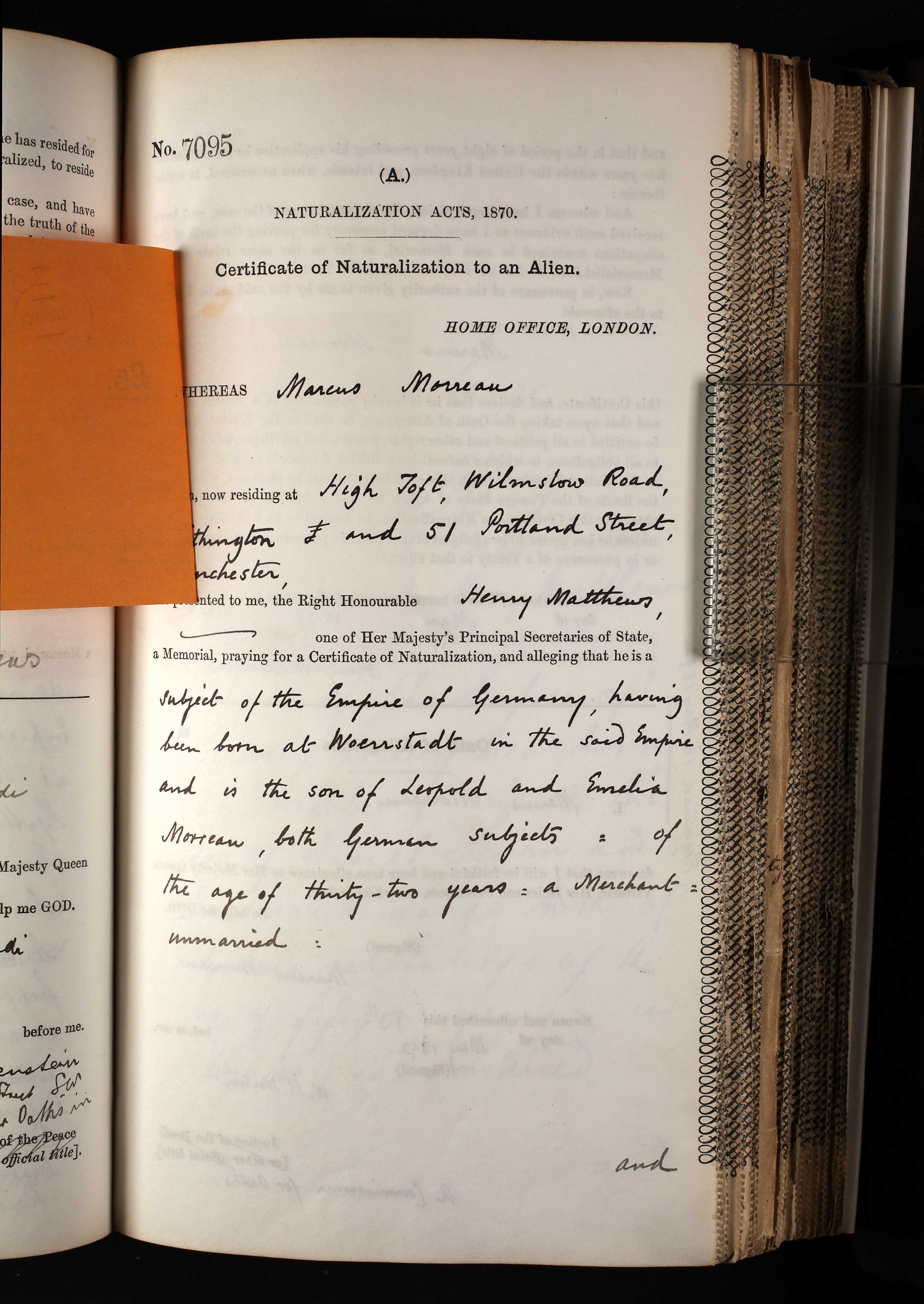
After their grandparents died, both Markus and Albert Morreau left Germany. By 1881, Markus Morreau, the oldest child of Levi and Emelia and oldest grandchild of Caroline and Moses Morreau, had moved to Withington, England, where he was living as a lodger. Markus became a naturalized citizen of England in 1892:

UK Naturalization Certificate for Markus Morreau
The National Archives; Kew, Surrey, England; Duplicate Certificates of Naturalisation, Declarations of British Nationality, and Declarations of Alienage; Class: HO 334; Piece: 19

By 1902, Markus married Alice Frederique Weinmann, who was born in 1880. They had three children: Rene (1902), Cecil (1905), and Madeline (1908). (England & Wales, FreeBMD Birth Index, 1837-1915.)

Markus’ brother Albert also left Germany as a young man.  According to the biography of Albert Morreau in A History of Cleveland, Ohio: Biographical (S.J. Clarke Publishing Company, 1910) by Samuel Peter Orth, after Albert finished school, he went to Frankfurt, where he worked as an apprentice for five years in a dry goods store. He then went to England, where he worked as an assistant correspondent in an export house. After two more years, he left for America and settled in Cleveland, where he worked as stock clerk and salesman for Landesman, Hirschheimer & Company for five years.

After being in the US for five years, Albert started his own business manufacturing gas lighting fixtures in 1887. In 1893, he married Lea Nora Heller in Cleveland, Ohio.

Marriage record of Albert Morreau and Leanora Heller
Cuyahoga County Archive; Cleveland, Ohio; Cuyahoga County, Ohio, Marriage Records, 1810-1973; Volume: Vol 38-39; Page: 352; Year Range: 1892 Feb – 1893 Jul

Leanora, as I’ve written before, was born in Ohio in 1867. Her parents were also American born. Albert and Leanora had two sons, Myron (1895) and Lee (1898).

Meanwhile, Albert’s company, Morreau Gas Fixture Manufacturing, was expanding. It grew from a small three-person operation in 1887 to a company that employed over 150 people by 1910; the company was selling its products throughout the United States and was one of the largest businesses in Cleveland, according to Orth. The company did its own product design and had “a reputation for great excellence.” Orth, p. 844. Thus, Albert Morreau found great success in Cleveland.

Albert Morreau and Leanora Heller Morreau 1915  United States Passport Applications, 1795-1925,” database with images, FamilySearch (https://familysearch.org/ark:/61903/1:1:QVJP-423K : 4 September 2015), Albert Morreau, 1915; citing Passport Application, Ohio, United States, source certificate #49162, Passport Applications, January 2, 1906 – March 31, 1925, 234, NARA microfilm publications M1490 and M1372 (Washington D.C.: National Archives and Records Administration, n.d.); FHL microfilm 1,514,173.

As for Albert’s two sisters back in Germany, Barbara/Bertha (generally known as Bertha) married Isidor Aschaffenburg in Wörrstadt on July 29, 1886.  She was nineteen, and he was 36. Isidor was a merchant and was born in Albersweiler, Germany, the son of Rabbi Hertz Aschaffenburg and Nanette Mayer, on December 4, 1849. Isidor and his parents were living in Cologne at the time of the marriage, and Bertha soon relocated to Cologne with her new husband.

Marriage record of Barbara Morreau and Isidor Aschaffenburg, July 29, 1886
Wörrstadt marriage records, 1886-16

Isidor and Bertha had two sons born in Cologne: Paul, who died before he was a year old while visiting Bertha’s parents in Wörrstadt, and Ernst, who was born July 15, 1890.

Death record and gravestone for Paul Aschaffenburg, July 27, 1889
Wörrstadt death records 1889-31

Sometime before 1897, Levi Morreau and his wife Emilia and their daughter Camilla Alice (generally known later as Alice) moved to Monchengladbach.  Monchengladbach is located north of Cologne and is about 140 miles from Wörrstadt. Since Bertha and Isidor were living in Cologne, I assume that Levi, Emilia, and Alice moved there to be closer to their daughter and surviving grandson sometime after their grandson Paul died in Wörrstadt in 1888.

Levi Morreau died in Mochengladbach on July 12, 1897:

Levi Morreau death record
Ancestry.com. Mönchengladbach, Germany, Death Records, 1798-1950 [database on-line]. Provo, UT, USA: Ancestry.com Operations, Inc., 2016.

On March 31, 1898, eight months after her father’s death, Alice, the youngest child of Levi and Emilia Morreau, married Otto Mastbaum, a doctor, in Monchengladbach.  Alice was 23, and Otto was 31.  Otto was born in Cologne on May 16, 1866, the son of David and Helene Mastbaum. Alice and Otto did not have children.

Marriage record of Alice Morreau and Otto Mastbaum
Ancestry.com. Mönchengladbach, Germany, Marriages, 1798-1933 [database on-line]. Provo, UT, USA: Ancestry.com Operations, Inc., 2016.

Emilia Levi Morreau died on July 5, 1913, in Monchengladbach; she was 77 years old.

Death record for Emilia Levi Morreau
Ancestry.com. Mönchengladbach, Germany, Death Records, 1798-1950 [database on-line]. Provo, UT, USA: Ancestry.com Operations, Inc., 2016.

Sadly, both Bertha and Alice were widowed at relatively young ages. Otto Mastbaum, Alice’s husband, died in 1919, according to sources in Cologne; he was fifty-three, and Alice was only 45. Bertha’s husband Isidor Aschaffenburg died on May 26, 1920; he was seventy, and Bertha was 53.

In addition, Bertha and Alice’s older brother Markus died in England on March 6, 1920, when he was only sixty years old. (England & Wales, Death Index, 1916-2006 on Ancestry.com)

Alice and Bertha remained in Monchengladbach, Germany. They traveled together to the US on the SS Albert Ballen in April, 1924, to visit their brother Albert in Cleveland.

Bertha and Alice listed on ship manifest
Year: 1924; Arrival: New York, New York; Microfilm Serial: T715, 1897-1957; Microfilm Roll: Roll 3482; Line: 1; Page Number: 6

Apparently they also visited in 1925 and toured much of the United States.

Alice visited Albert again in 1932:

Year: 1932; Arrival: New York, New York; Microfilm Serial: T715, 1897-1957; Microfilm Roll: Roll 5213; Line: 1; Page Number: 10

Albert died the following year on June 11, 1933; he was 71.

Albert Morreau obituary

His son Myron died just three years later on April 16, 1936. He was only 41 years old and had not married.

Myron’s first cousin Cecil Morreau, the son of Markus Morreau and Alice Weinmann, also died young; he died in England on March 2, 1939, just a month before his 34th birthday.

Burial record of Cecil Morreau
Ancestry.com. Surrey, England, Church of England Burials, 1813-1987 [database on-line]. Provo, UT, USA: Ancestry.com Operations, Inc., 2013.
Original data: Anglican Parish Registers. Woking, Surrey, England: Surrey History Centre

Sometime after 1935 and before 1939, both Alice and Bertha as well as Bertha’s son Ernst Aschaffenburg escaped from Nazi Germany and moved to England. Bertha died not long after in December 1939; her son Ernst died on May 16, 1943; he was 53 years old. Alice died four years later on September 15, 1947; she was 73. (England & Wales, Death Index, 1916-2006 on Ancestry.com)

Thus, by 1947, all of the children of Levi Morreau and Emilia Levi had died as had four of their seven grandchildren. Only three grandchildren remained: Rene Morreau and Madeline Morreau, the surviving children of Markus Morreau and Alice Weinmann, and Lee Heller Morreau, the surviving son of Albert Morreau and Leanora Heller.

Lee died in 1962 when he was 63.

The only grandchildren of Levi Morreau and Emilia Levi who lived past seventy were Rene, who died in 1982 a few months shy of his 80th birthday, and Madeline, who somehow beat the odds in her family and lived to 88, dying in 1996.

Fortunately, despite the fact that so many of Levi Morreau and Emilia Levi’s grandchildren died at relatively young ages, there are living descendants. One of them is my cousin Shyanne, whose comment and research started me on this journey to learn about my Morreau relatives.

The next post will be about Klara Morreau, the daughter of Caroline Seligmann and Moses Morreau.