Meyer Goldschmidt: A Man with a Pure Soul

After Meyer Goldschmidt’s wife Lea died in 1839 in Grebenstein, Germany, Meyer and his children worked together to support each other. At that time the oldest daughter Ella was about seventeen and the youngest child Falk was only three.  The two sons, Selig and Jacob, were still young boys, but went to work to help the family, and Ella ran a millinery business from their home.1

But Ella eventually decided that she had to leave Grebenstein and seek a better life in the United States. In remembering her decision to leave, her brother Selig wrote that “Ella, who had received many compliments for her beauty while she was learning her trade in Cassel had, perhaps, become a little more selfish.”2

Selig continued:3

After she had run her own little business for about a year, during which time she probably encountered many difficulties, she realized that she would have no future in Grebenstein. Conditions were bad indeed for all of us; so she quickly decided, I believe even against our father’s wishes, to emigrate to America, together with several cousins. For me it was a great shock at that time. I borrowed as much money as I could from school friends in order to help her with her travel expenses. I think it only amounted to two and a half Groschen. After she had been gone for about one hour, I told myself I had to see her just once more. I ran after for two hours, weeping softly, but did not meet her again. 

Selig’s description of his emotions about her leaving moved me and brought home the reality of the impact these departures had on a family.

Ella Goldschmidt was the only one of Meyer Goldschmidt’s six surviving children to leave Germany and settle permanently in the US. According to the 1900 US census, Ella immigrated in 1849, but that cannot be right because she married Albert Sigmund, another German immigrant, on April 26, 1846, in Baltimore, Maryland:

Marriage record of Albert Sigmund and “Helena Goldsmith.” Maryland County Marriages, 1658-1940,” database, FamilySearch (https://familysearch.org/ark:/61903/1:1:F4JC-GYH : 16 March 2018), Albert Sigmond and Helena Goldsmith, 25 Apr 1846; citing Baltimore, , Maryland, United States, clerk of the circuit court from various counties; FHL microfilm 13,694.

I will be devoting many posts to Ella and her life in the US, but for now let’s return to Grebenstein and the rest of Meyer’s children.

Selig wrote that once Ella left, times were challenging for the rest of the family.4

Our dear father was very weak and sickly. His constant prayer was “G-d Almighty do not let me die before I have repaid my debts.” This constant prayer gave us an added incentive to work day and night with all our energy. The just and noble man did not realise how the future prosperity of his children would spring forth from hidden roots. 

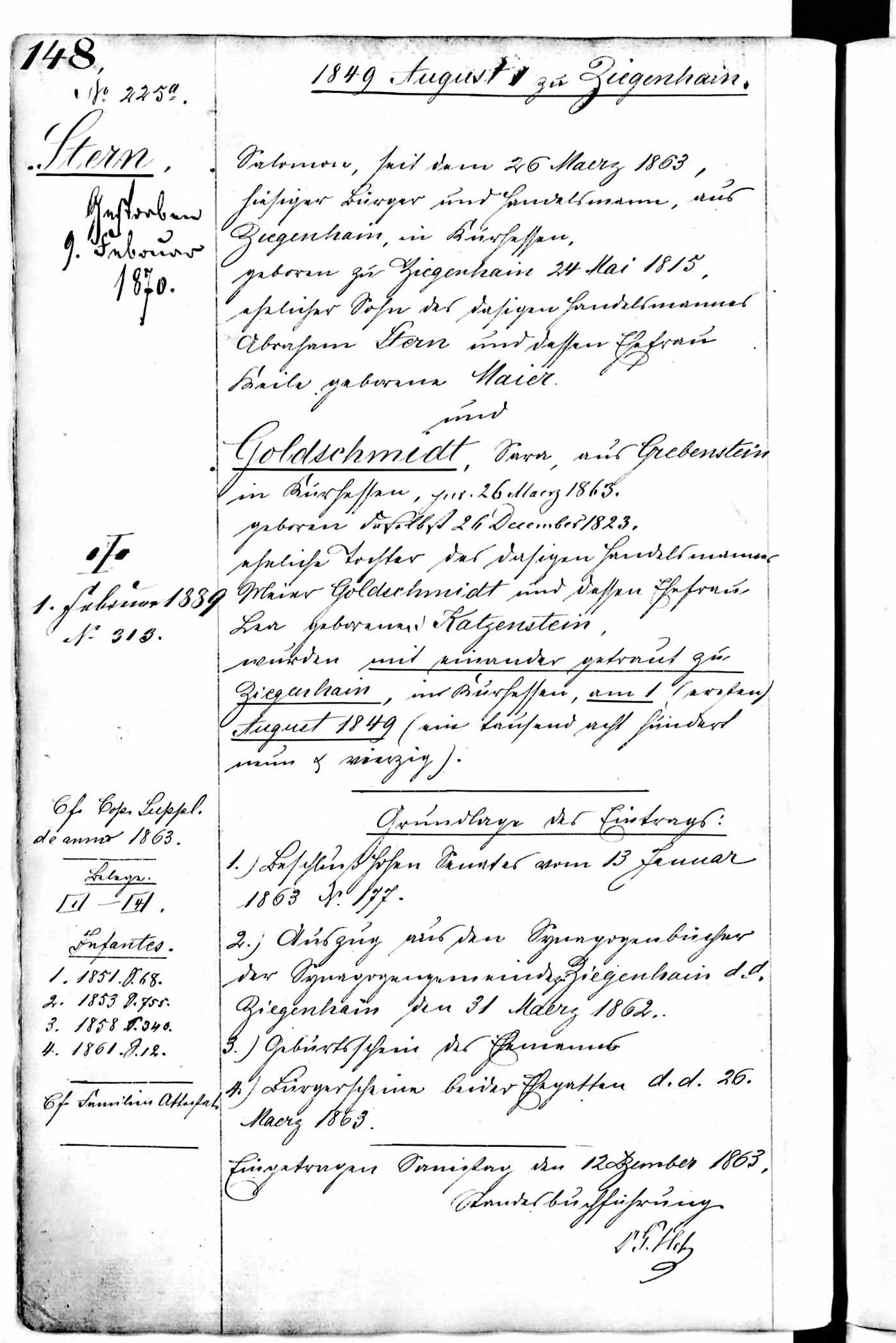
But Meyer’s financial burdens were reduced as the children became adults and married and moved away. Sarah, or Sarchen, whom Selig described as “our angel of a sister,” married Salomon Stern on August 1, 1849. Salomon was born on May 24, 1815, in Ziegenhain, Germany, to Abraham Stern and Keile Maier.

In 1852, Falk Goldschmidt, Meyer’s youngest son, who was only sixteen at the time, traveled to the US5 and in 1860 was living with his older sister Ella and her family.6 Falk did return to Germany, however, by 1870, as we will see in a later post.

Meyer’s youngest daughter Malchen married in June, 1853, according to David Baron’s research. Malchen married Juda Callman Katzenstein of Eschwege, Germany. He was born there in 1824, the son of Callman Katzenstein and Jettchen Katzenstein. As Selig wrote in the Selig Goldschmidt book, after marrying Juda, Malchen moved to live with him in Eschwege.5

Her brother Jacob married Jettchen Cahn one month later in Frankfurt. She was the daughter of Aaron Simon Cahn and Minna Gamburg, and Jettchen was born on April 13, 1830, in Frankfurt.

Marriage record of Jacob Goldschmidt and Jettchen Cahn, Hessisches Hauptstaatsarchiv; Wiesbaden, Deutschland, Ancestry.com. Hesse, Germany, Marriages, 1849-1930

Selig wrote that after Malchen married and moved to Eschwege, the family sold everything they had in Grebenstein, and Meyer moved to Eschwege to live with Malchen and Juda. Selig noted that they did this because Selig and his brother Jacob were traveling often for business and not able to be in Grebenstein to care for their father. Selig described the outpouring of love Meyer received when he moved away from his long-time home in Grebenstein:6

Poor and rich came to the station to see him off, and when the train departed, the sound of sobbing and weeping could be heard. Wealthy neighbours had offered to give him whatever he wanted if he would stay there. However, we did not wish him to stay in Grebenstein all by himself. 

Selig was the next child to marry. On May 27, 1857, he married Clementine Fuld in Frankfurt. She was born in Frankfurt on January 8, 1837, to Herz Fuld and Caroline Schuster.

Marriage record of Selig Goldschmidt and Clementine Fuld, Certificate Number: 30
Hessisches Hauptstaatsarchiv; Wiesbaden, Deutschland, Ancestry.com. Hesse, Germany, Marriages, 1849-1930

After marrying, Selig and Clementine settled in Frankfurt and soon moved Meyer to Frankfurt to live with them. Selig wrote:6

I was determined to let him live with me as soon as I married, in order to brighten the days of his old age and give him joy, with G-d’s help, and in order to compensate him for all the suffering he had endured. I was enabled to do this, thanks to my good and noble wife who loved and admired by dearest father so sincerely. Clementine arranged a beautiful and comfortable room for him.  He moved in with us in Frankfurt and we, as well as he, were extremely happy together. 

Meyer was not destined to stay in Frankfurt for very long. Selig told the heartwarming story of why his father returned to Eschwege. Meyer had befriended and taken care of a blind man while living in that town, and the man wrote to Meyer, asking him to return to Eschwege. The man said that Meyer had given him comfort and restored his spirit and that without him, he was lost. Meyer was determined to move back to Eschwege so that he could help this man who needed him and asked for his help. He felt it was the most important thing he could do at that point in his life.7

But sadly Meyer did not live much longer himself. He died on November 5, 1868, in Eschwege. He was 74 years old, according to his death certificate, and was deeply mourned.

Meyer Goldschmidt death record, HHStAW Fonds 365 No 146, p. 36

His children set up a foundation to honor their parents, Meyer and Lea, and his congregation in Eschwege wrote this about Meyer in their obituary for him:8

The deceased had gained the love, respect and admiration of all members of the congregation through his exemplary way of life, his generosity and his sincere Jewish religious dedication. Hence, all of us endeavored to bring him relief on his sickbed, to cheer him up with friendly advice and, finally, to provide the last rites.

The editors of the Selig Goldschmidt book, Meyer’s descendants, wrote this about their ancestor:9

Pure was the soul of Meyer Goldschmdit when he passed away to follow the soul of his departed wife. In spite of adverse circumstances his mind had managed to attain the tranquil and unshakable repose of genuine Jewish wisdom. He realized that the pursuit of earthly comforts and physical pleasures are not the main content and aim of life. Only the acquisition of the goods which G-d desires, namely the fulfillment of the Mitzvos can bring lasting peace of mind. Thus, the existence of the village dweller had gradually become enriched and ennobled, until his life drew to a worthy end with an almost heroic act of Jewish humane love. 

From Selig Goldschmidt: Picture of A Life, p. 15

UPDATE: One reader asked for a translation of the headstone, and Leah of the Tracing the Tribe group kindly provided this translation:

An upright man who enlightened/educated the poor
“He left behind him a legacy of blessings (?)
“He established a good thing for the poor, H”H (HaRav HaGaon)
“K”H Meir, son of K”H Yaakov
”When his days were full
“He returned to his palace? at a ripe old age
“On the even of Shabbat, the 25th, and he was buried
“In an ‘auspicious hour’/with a good name on Day 1 (Sunday), the 30th
“Of MarChesvan, on the first day of Rosh Chodesh
“[Kislev?] . . .”

Meyer Goldschmidt was clearly a good and well-loved man by his family and his community. His children and descendants carried on this legacy in Germany and in the United States, as we will see as I now examine the lives of each of them, starting with Meyer and Lea’s oldest child, Ella Goldschmidt Sigmund.


  1. “The Story of A Ring,” Selig Goldschmidt: Picture of A Life (1996, Elmar Printers Ltd. and Bezalel Bookbinders, Jerusalem, Israel)(limited edition of 300 copies), p.19-21 
  2. “The Story of A Ring,” Selig Goldschmidt: Picture of A Life (1996, Elmar Printers Ltd. and Bezalel Bookbinders, Jerusalem, Israel)(limited edition of 300 copies), p. 21 
  3. “The Story of A Ring,” Selig Goldschmidt: Picture of A Life (1996, Elmar Printers Ltd. and Bezalel Bookbinders, Jerusalem, Israel)(limited edition of 300 copies), pp.21-22. 
  4. “The Story of A Ring,” Selig Goldschmidt: Picture of A Life (1996, Elmar Printers Ltd. and Bezalel Bookbinders, Jerusalem, Israel)(limited edition of 300 copies), p.22. 
  5. Juda Callman Katzenstein death record, Certificate Number: 175, Personenstandsregister Sterberegister; Bestand: 923; Laufende Nummer: 1941, Ancestry.com. Hesse, Germany, Deaths, 1851-1958. Selig Goldschmidt: Picture of A Life,(1996, Elmar Printers Ltd. and Bezalel Bookbinders, Jerusalem, Israel)(limited edition of 300 copies)  p, 22. 
  6. “The Story of A Ring,” Selig Goldschmidt: Picture of A Life (1996, Elmar Printers Ltd. and Bezalel Bookbinders, Jerusalem, Israel)(limited edition of 300 copies), p.23. 
  7. Ibid. 
  8. “Obituary,” Selig Goldschmidt: Picture of A Life (1996, Elmar Printers Ltd. and Bezalel Bookbinders, Jerusalem, Israel)(limited edition of 300 copies), p.15. The use of the term “last rites” should not be confused with the Catholic tradition of giving last rites; under Jewish law there are certain rules and practices for the treatment of the deceased’s body between the time of death and burial. That must be what the obituary meant by “last rites.” 
  9. “Of Noble Origins,” Selig Goldschmidt: Picture of A Life (1996, Elmar Printers Ltd. and Bezalel Bookbinders, Jerusalem, Israel)(limited edition of 300 copies), p.10. 

Returning to Goldschmidt Research: A Dearth of Records, but A Wealth of Information

After a long break focused on photographs shared by some of my generous cousins, I am now returning to posting about my research of my Goldschmidt/Goldsmith family, the descendants of my four-times great-grandparents Jacob Falcke Goldschmidt and Eva Reuben Seligmann.

They had five children: Seligmann, my three-times great-grandfather; Levi; Meyer; Jette; and Simon. In addition, Jacob had been married twice before marrying Eva and had two children with those wives, Elieser Falcke Goldschmidt and Jude Jacobs, my half-four-times great-uncles. I have already written about Seligmann, Lehman, and Simon and their descendants.1

Now I will turn to the fourth brother, Meyer Goldschmidt. Although I had many secondary sources providing information about Meyer and his family, it was very difficult to find any primary sources, as discussed below. I was very fortunate, however, to connect with a distant cousin in the Netherlands, and he sent me a book published in Israel by Meyer Goldschmidt’s descendants in 1996, Selig Goldschmidt: A Picture of A Life, hereinafter referred to as the Selig Goldschmidt book.2

The book includes remembrances, letters, obituaries, and images that Meyer’s descendants collected and translated to English in order to preserve and honor the memory of Meyer’s son Selig Goldschmidt. It sheds light not only on Selig, but also on his parents, his siblings, and his children.

I also benefited greatly from the research and support of David Baron, husband of my cousin Roger, a descendant of both Meyer and Seligmann Goldschmidt.

There are many trees on Ancestry and other secondary sources that say that Meyer Goldschmidt was born in Oberlistingen on June 10, 1787, but none of them has a primary source for that date. Meyer’s death record says he was 74 when he died on November 5, 1858. That would mean he was born in 1784, not 1787.

Meyer Goldschmidt death record, HHStAW Fonds 365 No 146, p. 36

Unfortunately, I cannot find a birth or marriage record for Meyer, so I do not know whether the trees are accurate or whether the death record is accurate. This photograph from the Selig Goldschmidt book includes the birth date found on those family trees:

Meyer Goldschmidt on p. 7, Selig Goldschmidt: Picture of A Life (1996, Elmar Printers Ltd. and Bezalel Bookbinders, Jerusalem, Israel)(limited edition of 300 copies)

Since I have not located a marriage record for Meyer, I do not know when or where he married, but I do know who he married—Lea Katzenstein. I also have no birth records for Lea, but Ancestry trees and other sources show her birth date as March 20, 1794, in Grebenstein, Germany, and her parents as Jesajas ha Cohen Katzenstein and Edel Ganz.

I presume that Meyer and Lea were married by 1823 because their daughter Sarah was born on December 26, 1823, according to her marriage record.

Marriage record of Sarah Goldschmidt and Solomon Stern, Certificate Number: 225a
Hessisches Hauptstaatsarchiv; Wiesbaden, Deutschland, Ancestry.com. Hesse, Germany, Marriages, 1849-1930

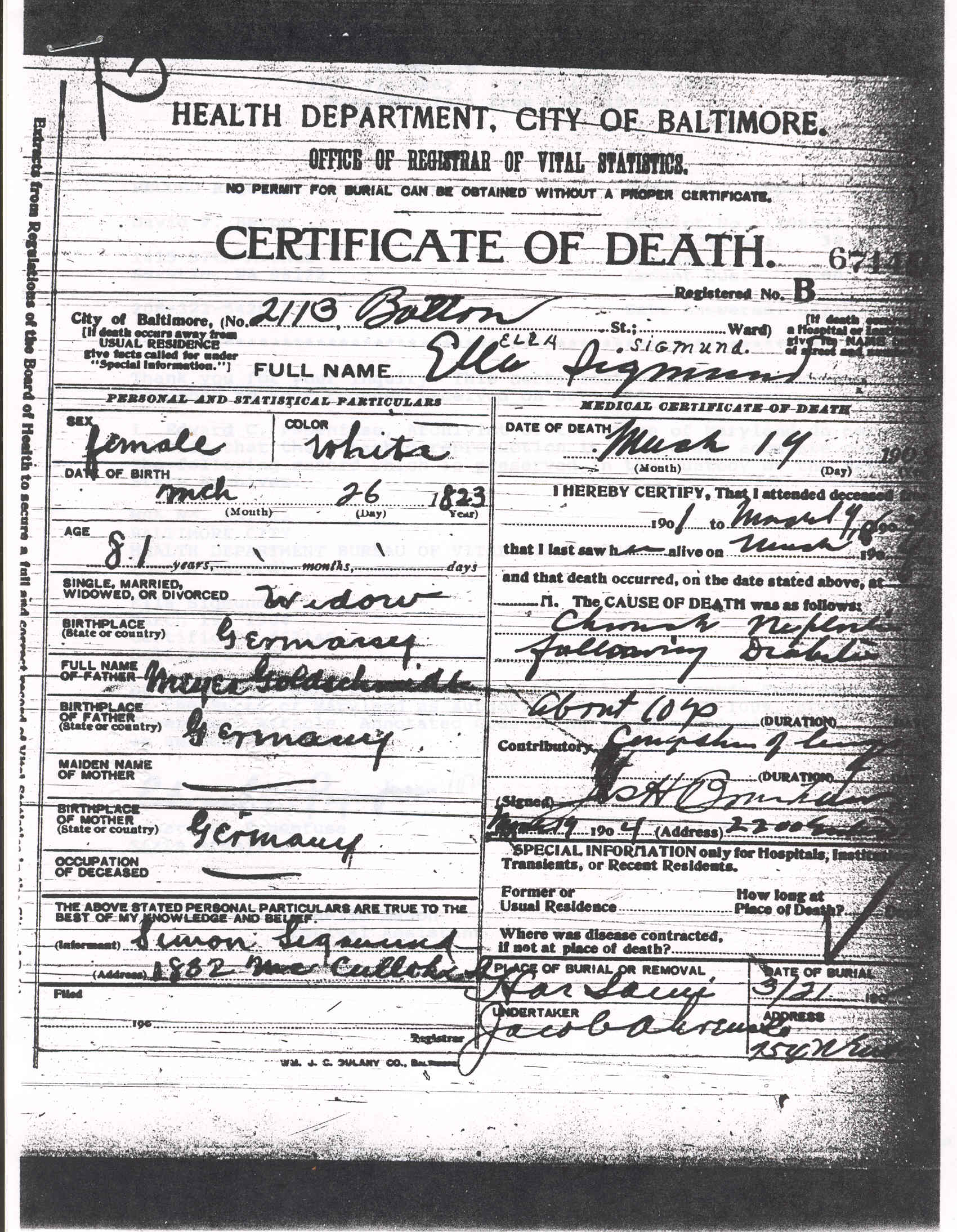
Another daughter, Ella, was possibly born that same year. Ancestry trees and other sources report that Ella was born March 26, 1823. That date apparently came from her death record:

Ella Goldschmidt Sigmund death certificate from David Baron

But unless her sister Sarah was conceived the day after Ella was born and was born several months prematurely, that seems impossible. I think Ella was more likely born in 1822. According to obituaries written about Ella when she died on March 19, 1904, and her death certificate, she was 81 years old when she died. That would mean that she was born between March 20, 1822, and March 19, 1823.3

At any rate, we can assume that Meyer and Ella were married by 1823, if not before.  They had seven children: Ella (1822?), Sarah (1823), Malchen (about 1827), Selig (sometimes spelled Seelig) (1828), Joseph (1830?), and Falk (1836). According to David Baron’s Goldschmidt family tree, Joseph died a month before his sixth birthday on November 27, 1836, five months after Falk was born. I am still working on finding records for some of these children and will report on what I find once I do, if I do. But given the depth of David’s research, I don’t think such records exist. All of us are relying on older family trees that include these dates.

Despite this dearth of records, I can tell quite a bit about the lives of Meyer, Lea, and their children based on the Selig Goldschmidt book and other later sources.

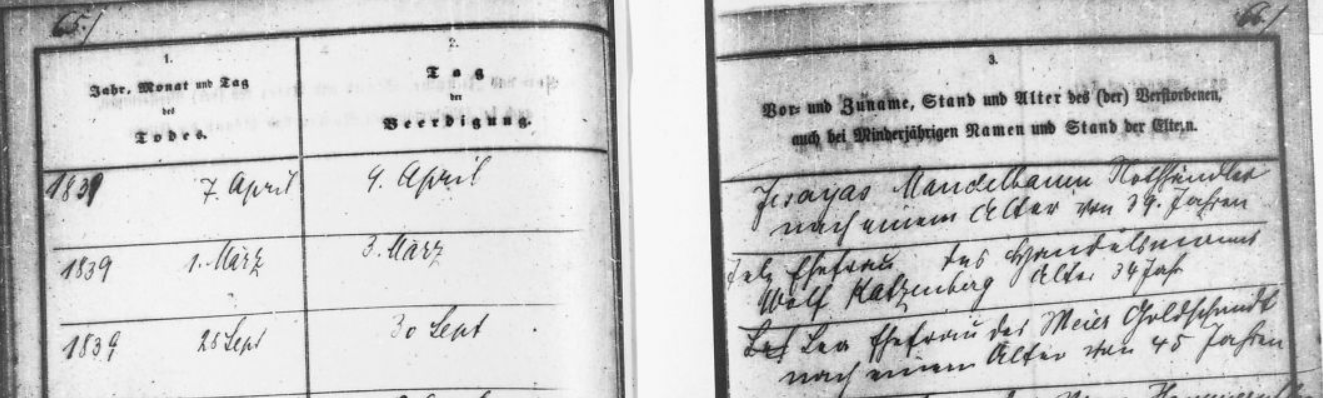
Three years after giving birth to her last child Falk at age 42, Lea Katzenstein Goldschmidt died on September 28, 1839. She was 45 years old and left behind her husband Meyer and six children under the age of eighteen.

Lea Katzenstein Goldschmidt death record, Sterberegister der Juden von Grebenstein 1827-1882 (HHStAW Abt. 365 Nr. 377)AutorHessisches Hauptstaatsarchiv, Wiesbaden, p. 34

In the Selig Goldschmidt book, there are some translated remembrances written by Selig in 1887 about his mother Lea. Apparently the family had run into some hard times after Meyer suffered a prolonged illness and was confined to bed and unable to work for fourteen weeks. This took a toll on Lea. Selig wrote:4

My mother, who now rests with G-d, was an ideal woman, wife, and mother. She was beloved in the whole of our district, the benefactress and the support of many poor families. Everyone received ready comfort from her. Even when we were so poor that she could no longer help, people would still seek her advice and share their burdens with her.

I was only nine years old when she died. When I heard the loud sighs and groans of innumerable mourners who wept and cried out, “What shall we do, how shall we manage now that our benefactress is buried?,” I was roused from my childish grief. I asked myself how had she been able to help the needy? We are so poor ourselves that we have barely enough bread and potatoes to eat. I was a wild and carefree boy, but it was probably at this juncture that a turning point occurred in my life.

After her death, the family worked together  to provide for each other.5

Jakob and I had begun to work properly even though I was just ten years and Jakob twelve. Thus, we managed to add a little oil and fried onions to our boiled potatoes. That was quite amusing. Our good and noble sister Sarah fried small slices of onion in a little oil. This was then mixed with hot water and one had to fish out the onion. A big pot stood in the center of the table and each of us dipped his peeled potato into it. He who caught a slice of onion in this way was indeed the lucky one.

Behind our little house we had a small garden which my sister Ella tended. … My sister Ella learned millinery and ran a small millinery shop in our house. …[A]ll of us were working very diligently in order to support our dear father and little brothers and sisters.

These simple paragraphs describing the life of the family of Meyer and Lea Goldschmidt paint a picture of a tight-knit and loving family that managed to deal together with poverty and the tragic loss of their mother. I may not have all the dates and records, but I do have a sense of the values and life of Meyer Goldschmidt and his family.

More to come…


  1. For Jette, Elieser, and Jude, I have been fortunate to find the research of others, but no primary sources. I have added the names and dates to my Ancestry tree, but I do not have enough reliable information about them or their families yet to write about them on the blog. Maybe someday I will learn more, but for now I have decided that I will wait to see if any more can be learned about these distant relatives and their descendants before trying to write about them. 
  2. Selig Goldschmidt: Picture of A Life (1996, Elmar Printers Ltd. and Bezalel Bookbinders, Jerusalem, Israel)(limited edition of 300 copies) 
  3. US census records are also inconsistent with respect to Ella’s birth year. The 1870 census says she was then 47, giving her a birth year of 1823. But the 1880 census reports her age as 55, meaning she was born in 1825. And the 1900 census records her birth date as 1833. I think Ella’s birth date was not known by her family and perhaps even by Ella herself. 
  4.  “The Story of A Ring,” Selig Goldschmidt: Picture of A Life (1996, Elmar Printers Ltd. and Bezalel Bookbinders, Jerusalem, Israel)(limited edition of 300 copies), p. 19.If  Selig was nine when his mother died in 1839, then he was born in 1830, not 1828. The 1828 birth date came from his marriage record, however, so perhaps he did not remember his age at the time his mother died. 
  5. Ibid., pp. 20-21. 

Helen Goldsmith and Edwin Meyer and Their Family

My last post shared photographs of Helen Goldsmith as a child and as a young woman. In this post I will share photos of Helen and her family from the time of Helen’s marriage to Edwin Meyer in 1914 through her adulthood. Once again, I am grateful to my cousin Marilyn, Helen’s granddaughter, for sharing these wonderful photographs with me. Most of the identifications of the people in these photograph came from Marilyn based on information she had.

To start, here is a photograph of the place cards that were used at Helen and Edwin’s wedding:

Courtesy of the family of Helen Goldsmith

As Helen noted, the wedding was on January 18, 1914 (the date is cut off on the photograph so it may look like it says 1912 or 1917, but it was definitely 1914). Helen was 24, and Edwin was 23. I wrote about Edwin and his background here.

Helen Goldsmith marriage record, Ancestry.com. Pennsylvania, Marriages, 1852-1968 [database on-line]. Lehi, UT, USA: Ancestry.com Operations, Inc., 2016.
Original data: Marriage Records. Pennsylvania Marriages. Various County Register of Wills Offices, Pennsylvania

A little over a year later, Helen gave birth to Edgar on February 27, 1915;1 a second son Malcolm was born three years later on January 17, 1918.2 This photograph of the two little boys must have been taken some time in 1918 as Malcolm looks about six to nine months old:

Edgar and Malcolm Meyer, c. 1918. Courtesy of the family of Helen Goldsmith

“Uncle Art,” to whom this photo must have been sent, was Edwin Meyer’s younger brother.

UPDATE: Peter Klopp kindly edited this photo to fix poor Edgar’s face:

edgar-and-malcolom-meyer-Edited by Peter Klopp

Here is Edwin Meyer with his two young sons about a year later, I’d guess.

Edwin, Malcolm, and Edgar Meyer, c. 1919. Courtesy of the family of Helen Goldsmith

This one skips ahead to about 1923; Edgar looks about eight, Malcolm five.

Malcolm and Edgar Meyer, c. 1924. Courtesy of the family of Helen Goldsmith

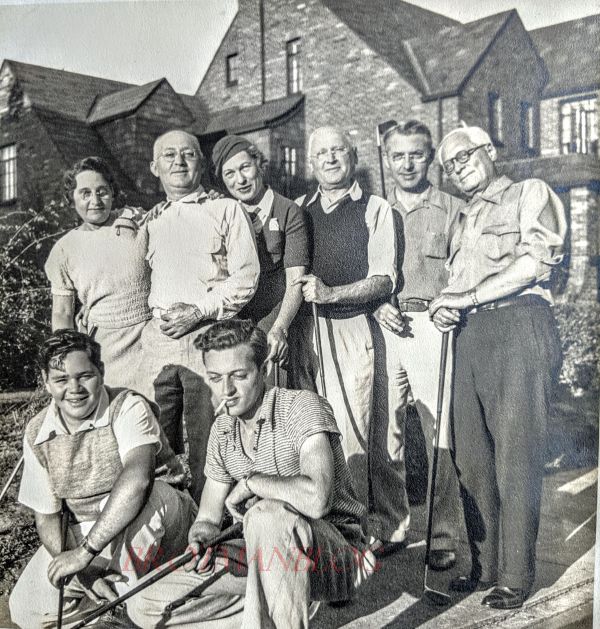
In the next one Malcolm is a teenager so taken perhaps around 1935. This was a family golf outing, but not all the people in the photograph could be identified by Marilyn. Standing in the back from left to right are Helen Goldsmith Meyer, then two unidentified people, then Helen’s brother Walter Goldsmith, Edwin Meyer, and an unknown man on the far right. Kneeling in front are Edison Goldsmith (Walter’s son) and Malcolm Meyer.

Meyer family and others, c. 1935. Courtesy of the family of Helen Goldsmith

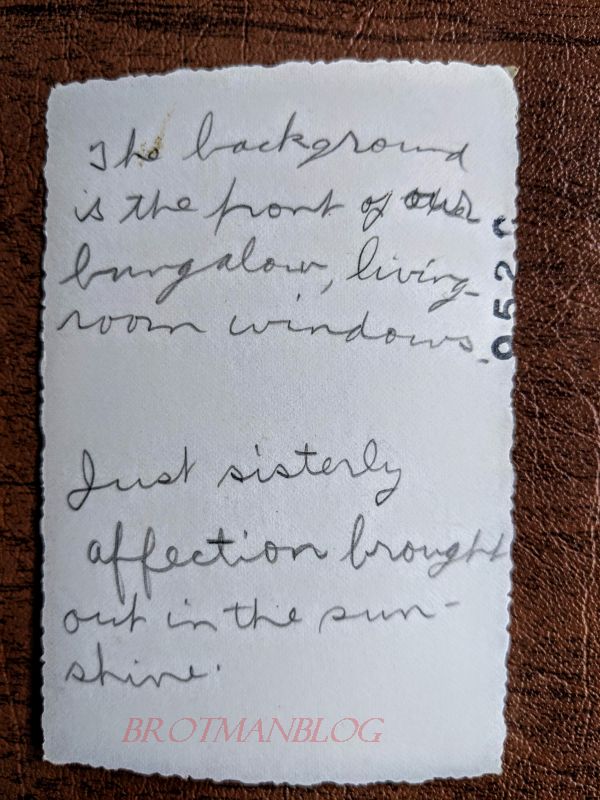
I don’t know when this next photograph was taken, but I’d guess it was taken around the same time as the golf photograph based on a comparison of Helen’s face in the two photographs. This is a photograph of Helen (right) with her sister Florence. I love Helen’s comment: “Just sisterly affection brought out in the sunshine.”

Florence and Helen Goldsmith. Courtesy of the family of Helen Goldsmith

We skip ahead now to the 1940s and this sweet photograph of Helen hugging her son Malcolm, who was in uniform. Malcolm served in the US Army from May 4, 1942 until March 2, 1946, including serving overseas from August 20, 1943 until January 24, 1946.3

Helen Goldsmith Meyer and Malcolm Meyer, c. 1942. Courtesy of the family of Helen Goldsmith

In 1948, Helen and Edwin became grandparents when both of their sons had daughters. Here is a picture of the whole family showing off the two granddaughters. From left to right, standing: Esther Orringer Meyer (Edgar’s wife), Helen Goldsmith Meyer, Carolyn Schnurer Meyer (Malcolm’s wife). Front, Edgar Meyer holding his daughter, Edwin Meyer, and Malcolm Meyer holding his daughter.

Meyer family, 1948. Courtesy of the family of Helen Goldsmith

Finally, Marilyn shared these three photographs from the 1950s. In the first, we once again see the family playing golf. Dated October 19, 1952, from left to right are Milton Goldsmith, Helen Goldsmith’s brother, about whom I wrote here, here, and here; Milton’s second wife and cousin Fanny Goldsmith Goldsmith, about whom I wrote here; Helen Goldsmith Meyer; and Edwin Meyer’s sister Leah:

Milton Goldsmith, Fanny Goldsmith, Helen Goldsmith Meyer, and Leah Meyer. 1952. Courtesy of the family of Helen Goldsmith

I was excited to see a photograph of Milton and Fanny. And here is another one, taken in June 1958:

Fanny and Milton Goldsmith, June 1958. Courtesy of the family of Helen Goldsmith

And finally, this is a photograph of Florence and Oliver, the same two siblings depicted on either side of Helen in the earliest photograph I have of her, so I am posting them together.  Despite the changes that aging carved in their faces, you can still see the same expressions sixty plus years later:


Thank you again to my cousin Marilyn for sharing this wonderful collection of photographs.


To all who celebrate, I wish you an easy and meaningful fast. May you be sealed in the Book of Life for another year. G’mar tov!


  1. Edgar Meyer, World War II draft registration, The National Archives in St. Louis, Missouri; St. Louis, Missouri; Record Group: Records of the Selective Service System, 147; Box: 1695, Ancestry.com. U.S. WWII Draft Cards Young Men, 1940-1947 
  2. Malcolm Meyer, World War II draft registration, The National Archives in St. Louis, Missouri; St. Louis, Missouri; Record Group: Records of the Selective Service System, 147; Box: 1695, Ancestry.com. U.S. WWII Draft Cards Young Men, 1940-1947 
  3. Malcolm Meyer, Ancestry.com. Pennsylvania, Veteran Compensation Application Files, WWII, 1950-1966 

A Jaffa Family Postcard

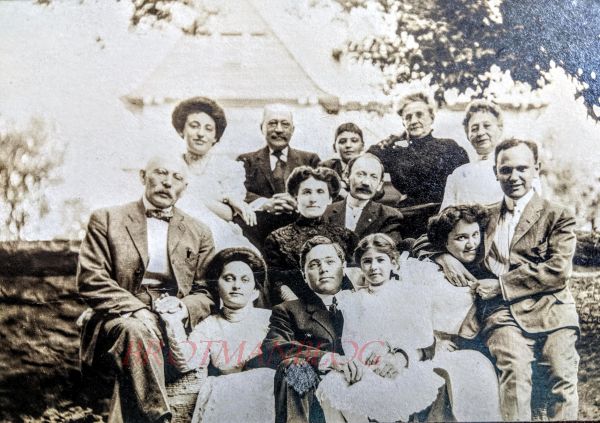
I’ve been posting some of the family photographs that my cousin Marilyn, the granddaughter of Helen Goldsmith and great-granddaughter of Henry Goldsmith and Sarah Jaffa, shared with me. In the last post we saw a number of photographs of Helen as a young woman. She also appears in this photograph, sitting at the bottom left of the photograph. Marilyn could not identify the other people in this picture.

But the inscription on the back of the photograph left plenty of clues as to the identities of the other people in the photograph, and I was able to identify almost all of them after some research and analysis.

Ronie Jaffa, who signed and labeled the photo, was the son of Henry Jaffa, who was Sarah Jaffa Goldsmith’s brother.1 Most of the people in the photo are Jaffas, some of whom are also related to me through their marriages to Goldsmith relatives. Fortunately, that meant that many of the Jaffas were already on my family tree, making the task of identification easier than it otherwise would have been.

Ronie refers to the man second from the left in the top row as “Papa,” so I thought this must be his father, Henry Naphtali Jaffa. Henry died in January 1901,2 so that would have meant that the photo was taken before that time. But as you will see below, I later revised my thinking on the identity of “Papa” and the date of the photograph.

The first person in the top row is labeled Helen J. I assume the J stands for Jaffa, so that must be Solomon Jaffa’s daughter, Helen. Solomon is sitting right in front of her in the photo. He was Henry Jaffa and Sarah Jaffa’s brother. Solomon was also married to a Goldsmith—Leonora.  Leonora was the daughter of Simon Goldsmith’s son Jacob—i.e., Henry Goldsmith’s brother. Leonora lived to 1911, but she does not appear to be in the photo.

Next to Sol in the middle row is Ida Jaffa Mansbach. She was Samuel Jaffa’s daughter. Samuel was also a brother to Henry, Sarah, and Sol.  Ida also married someone from the Goldschmidt/Goldsmith family. Her husband was Meyer Mansbach, son of Abraham Mansbach and Sarah Goldschmidt.  Sarah was my 3x-great-aunt. She was the daughter of Seligmann Goldschmidt, my 3x-great-grandfather.

Two of Ida and Meyer’s children are in the photo. In the top row next to Solomon, Ronie labeled the young boy as “Ida’s boy.”  That must be Arthur Mansbach, who was born in 1896. Skipping to the bottom row, Ronie labeled the little girl on his lap as “Ida’s girl,” so that has to be Edith Mansbach. but she wasn’t born until December 1901. That means the photo must have been taken more like 1908 because Edith looks around six or seven to me and Arthur looks about ten or eleven.  Also, Helen Goldsmith at bottom left looks older than she did in the 1904 photo seen in the last post. So 1908 seems a likely guesstimate for the date of the photograph or perhaps a year or so earlier.

That means that the photo had to have been taken after Henry Jaffa died in 1901 and thus “Papa” could not be Henry. So who was “Papa” to Ronie Jaffa if not his father Henry? My best guess is it’s Samuel Jaffa, who died in 1909.3 Perhaps Ronie was labeling the photograph for Ida and her two children, who may have called their grandfather Samuel “Papa.”

Returning to the top row, Aunt Malchia was probably Samuel Jaffa’s wife Amelia.  Malchia or Malchen was a German name that often was changed to Amalia or Amelia in the US.  She would have been Ronie’s aunt, so that makes sense. That also bolsters the conclusion that “Papa” was Samuel Jaffa since Malchia is sitting right near him with her grandson in between.

The person next to Aunt Malchia is labeled Bertha, and I have no idea who that could be.

Now down to the middle row. Next to Ida is a man Ronie labeled as Hirsch Katz. He’s also labeled “Lena’s brother.”  So I looked for a Lena Katz in my family tree and found a Lena Katz who was the daughter of Juetel Jaffa, the oldest of the Jaffa siblings—sister to Henry, Solomon, Samuel, and Sarah. Juetel never left Germany. She married Mendel Katz. Their daughter Lena came to the US in the 1880s and lived with Henry Goldsmith and Sarah Jaffa and their children. After more research I was able to confirm that Hirsch Katz was also a son of Juetel and Mendel and also therefore a Jaffa cousin.4

That leaves us just the bottom row. We have Helen Goldsmith, then Ronie Jaffa himself, and then Florence Goldsmith. As for the man with his arm around Florence’s neck, I’ve no idea. Florence wasn’t yet married, so perhaps this was some beau. Since Ronie didn’t label him, maybe he wasn’t really a part of the family.

Thus, to recap, here is a key to the people in the photograph based on my analysis:

Top row: Florence Jaffa (daughter of Solomon Jaffa), Samuel Jaffa, Arthur Mansbach (Ida Jaffa Mansbach’s son), Amelia Sommers Jaffa (Samuel’s wife), “Bertha”

Middle row: Solomon Jaffa, Ida Jaffa Mansbach (Samuel’s daughter), Hirsch Katz (son of Jutel Jaffa)

Bottom row: Helen Goldsmith (Sarah Jaffa Goldsmith’s daughter), Ronie Jaffa (Henry Jaffa’s son), Florence Goldsmith (Sarah Jaffa Goldsmith’s daughter), and unknown man

Sadly, Ronie Jaffa, who left behind this wonderful key to the people in this photograph, died as a young man.  He was one of the milions of people who died from the flu epidemic. He died on January 28, 1919, at the age of 34.

Albuquerque Journal, January 30, 1919. p. 2


  1. Henry Jaffa and family, National Archives and Records Administration (NARA); Washington, D.C.; Schedules of the New Mexico Territory Census of 1885; Series: M846; Roll: 1, Ancestry.com. New Mexico, Territorial Census, 1885 
  2. https://www.findagrave.com/memorial/160599822 
  3. https://www.findagrave.com/memorial/79951582 
  4. Hirsch Katz birth record, Hessisches Hauptstaatsarchiv; Wiesbaden, Deutschland; Bestand: 907; Laufende Nummer: 442, Ancestry.com. Hesse, Germany, Births, 1851-1901; Hirsch Jaffa Katz, World War I draft registration, Registration State: Colorado; Registration County: Denver; Roll: 1561842; Draft Board: 6, Description
    Draft Card: K, Ancestry.com. U.S., World War I Draft Registration Cards, 1917-1918. 

Photographs of Helen Goldsmith: From Toddler to Young Woman

In this post I will share some more of the photographs that I received from my cousin Marilyn of Helen Goldsmith and her family. This post will focus on Helen herself—her childhood and early adulthood.

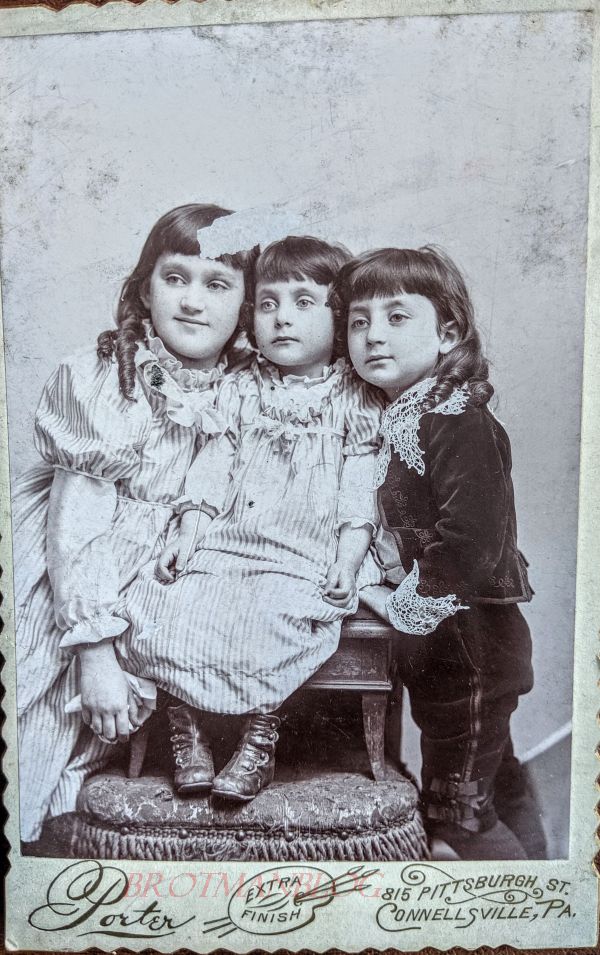
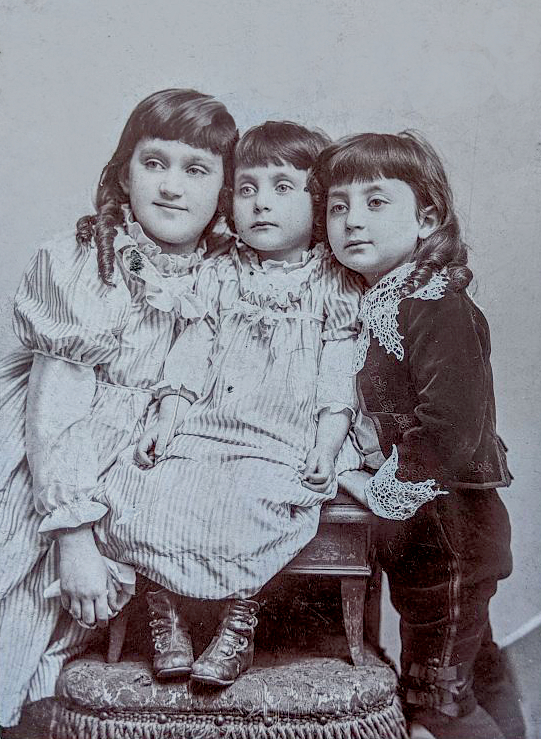
Marilyn believes that the little girl in the center of this photo is Helen. Helen was born in December 1889 and looks about two in this photograph, at most three, so this photo was taken somewhere around 1892. Comparing this photographs to later photographs that we know are of Helen, I agree with Marilyn that this is Helen in the center here.

Florence Goldsmith, Helen Goldsmith, and Oliver Goldsmith, c. 1892. Courtesy of the family of Helen Goldsmith

Thank you to Peter Klopp of The Peter and Gertrud Klopp Family Project for editing this photo to correct the flaw that marred Florence’s hair!

possibly-helen-goldsmith-in-the-middle-Edited

She is surrounded by two children who are most likely her siblings.  I believe that the little boy on the right is her brother Oliver, who was born April 17, 1887, so he would have been about five in 1892. Oliver became a lawyer, as we saw here. On the left would likely be Helen’s sister Florence, born May 19, 1883, and thus about nine when this photograph was taken. Florence became a musician, music teacher, and composer, as we saw here.

One other reason I think this photograph was taken in 1892 is that it does not include Helen’s brother Albert Goldsmith, who died from spinal meningitis on June 4, 1891, at the age of six.

The next photograph chronologically is this one of Helen Goldsmith and her older brother Walter, as labeled by Helen herself as seen on the reverse.

Helen Goldsmith and Walter Goldsmith, c. 1904. Courtesy of the family of Helen Goldsmith

Helen’s note on the reverse was written on October 28, 1972, stating she was at that time 82 years old. But then she wrote she would be 83 on December 17, 1973; in fact, she would have turned 83 on December 17, 1972, just two months after labeling the photograph. Helen believed she was 14 or 15 when the photograph was taken, dating it around 1904. Walter, who was born in December 7, 1881, and thus was eight years older than Helen, would have been about 22 in this photograph. Walter would become a dentist, as we saw here and here.

The next photograph is of Helen alone:

Helen Goldsmith. Courtesy of the family of Helen Goldsmith

It also had a note on the reverse:

There is unfortunately no date nor is there any information revealing the name of the person to whom Helen wrote the note. It appears to be an exchange between two young women discussing some young men they were interested in. Helen asked the recipient for the address of an “Aunt Lena,” so presumably she was writing to a relative, perhaps even her sister Florence or one of her many cousins.

I first assumed that “Aunt Lena” was Lena Katz, Sarah Jaffa’s niece, the daughter of her sister Jutel Jaffa. But by 1900 Lena Katz was living with Henry Goldsmith and Sarah Jaffa, so why would Helen need her address unless Lena had taken a trip somewhere? Another possibility was Lena Goldsmith Basch, Henry’s sister and thus truly Helen’s aunt. She died in 1906 in Columbus, Ohio, so that would mean the photograph was taken before that time. Helen would have been 17 or younger, and that seems possible from this photograph.

The next two photographs of Helen have no note on the back nor are they dated. This one appears to have been taken about the same time as the one above:

Helen Goldsmith and unidentified man. Courtesy of the family of Helen Goldsmith

In this one Helen is posing with an unidentified man, and Marilyn did not know who he might be. Helen appears to be about the same age in this photograph as she was in the one above—same hairstyle, same style of dress.  So who is the man with her? It’s not her husband Edwin, but it could be one of her many older brothers or even her father Henry.

This next photograph of Helen appears to have been taken when she was somewhat older, although Helen’s hair and clothing are still similar to that in the prior two photographs. It’s just something in her expression that makes me think it was a few years later. What do you think?

Helen Goldsmith. Courtesy of the family of Helen Goldsmith

There is one more photograph of Helen taken in the years before she married in 1914. But that one requires some extended discussion so I will save it for the next post.

A Mystery Photo

In August, I received a wonderful collection of photographs from my cousin Marilyn, the great-granddaughter of Henry Goldsmith and the granddaughter of Helen Goldsmith; I’ve written about Henry and about Helen in several places, including here, here, here, and here. Marilyn and I are both the four-times great-granddaughters of Fradchen Schoenthal. We are also both descendants of Jacob Falke Goldschmidt, the father of my three-times great-grandfather, Seligmann Goldschmidt and Marilyn’s great-great-grandfather Simon Goldsmith.

The next set of posts will feature the photographs Marilyn sent, most of which are of her grandmother Helen and some of Helen’s siblings and of Helen’s sons Edgar and Malcolm and their children. Some of these photographs were labeled, some were not. And even where labeled, sometimes those labels left more questions. All of these photographs are posted courtesy of my cousin Marilyn.

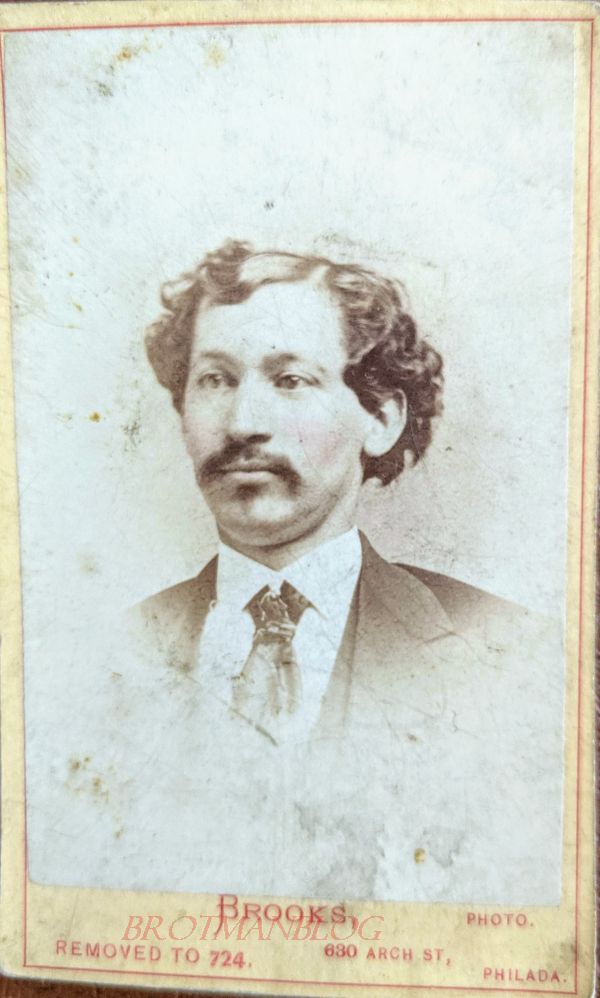
For example, this photograph, which is the oldest photograph in the collection.

On the reverse of this photograph was the following label:

But the more I studied this photograph, the more I became convinced that that label was incorrect. The photograph was taken in Philadelphia by a photographer named Brooks located at 600 or 724 Arch Street. I searched Philadelphia directories on Ancestry and was able to find a photographer named Thomas Brooks located at 630 Arch Street in several directories from the 1870s.1 Portrait photography as an art and business did not really even start until the 1850s.

Simon Goldsmith was born in 1795 and came to the US in 1845 when he was already fifty years old. By the 1870s, he was in his seventies. The man in the photograph does not look like he is in his fifties, let alone his seventies. His skin is smooth with no wrinkles or age lines. He appears to be at most in his forties, but probably even younger.

So who is that man? My first guess, given the source of the photograph and the collection in which it appears, was that it was Henry Goldsmith, Simon’s son. Henry was born in 1847, and in the 1870s when Thomas Brooks was operating a photography business on Arch Street in Philadelphia, Henry would have been somewhere between 23 and 33, and the man in that photograph could be in that age range.

Henry, however, was living in Connellsville, Pennsylvania, in the 1870s, not in Philadelphia. In fact, Henry never lived in Philadelphia. I thought perhaps when he married Sarah Jaffa in 1871, they married in Philadelphia, but the 1870 census shows Sarah living with her brother Samuel Jaffa in Pittsburgh,2 so she wasn’t in Philadelphia either.

Moreover, I am quite certain that it was Henry’s daughter Helen who wrote the words on the back of this photograph. There are several other photographs labeled in the same handwriting in the collection that are quite obviously labeled by Helen. For example, look at these two examples:

If Helen labeled the photograph of the man she assumed was her grandfather Simon, wouldn’t she have known if it were instead a photograph of her father Henry? I’d think so. So the more I study these photographs, the more I doubt this was a photograph of either Simon Goldsmith or his son Henry.

So who was he? I see a slight resemblance to Sol Jaffa, Helen’s uncle, as seen in this photograph to be analyzed in a later post. But wouldn’t Helen have known that it was Sol when she labeled the photograph? He and Helen are holding hands in this photograph, so she obviously knew him well. Did her uncle look so much different as an older man that she couldn’t see the resemblance?


The mystery lingers…

More of the collection from Marilyn to come.


  1. E.g., Gopsill´s Philadelphia Business Directory, 1870, Ancestry.com. U.S. City Directories, 1822-1995; Philadelphia, Pennsylvania, City Directory, 1874, Ancestry.com. U.S. City Directories, 1822-1995 
  2. Sarah Jaffa, 1870 US census, Year: 1870; Census Place: Pittsburgh Ward 2, Allegheny, Pennsylvania; Roll: M593_1295; Page: 441A; Family History Library Film: 552794, Ancestry.com. 1870 United States Federal Census 

Family Portraits: The Artists Behind the Portraits Discovered

I have spent the last six weeks or so posting updates and photographs I’ve received from cousins from my Seligmann, Katzenstein, and Schoenthal families. Today I return to my Goldschmidt/Goldsmith family. But before I begin writing about the next branch of that family, I want to post some updates I’ve received from Goldsmith cousins.

First, I want to share three wonderful portraits shared by my cousin Robin Goldsmith, the grandson of Doctors Milton Goldsmith and Luba Robin Goldsmith, about whom I wrote here and here and here and here. Robin is the son of Milton and Luba’s older son, Norman, who is also discussed in those posts and here.

The first two portraits are of Robin’s grandparents, Milton and Luba:

Milton Goldsmith, son of Henry and Sarah (Jaffa) Goldsmith. Painting by Mildred Silvette, 1938

Luba Robin Goldsmith. Painting by David Silvette, 1930

Robin took photographs of the portraits, and so there is a bit of a glow from the flash and some distortion. Also, the photograph cut off the names and dates, so I asked Robin to check for those. He did and reported back that Luba’s portrait was signed by David Silvette and dated 1930; Milton’s portrait was signed by Mildred Silvette and dated 1938.

David Silvette1, born May 28, 1909, and died August 29, 1992, was a very successful artist. He was described on one website as “one of Virginia’s most sought-after portrait artists in the early 20th century.” His portrait of F. Scott Fitzgerald hangs in the National Gallery in Washington, DC. Mildred Silvette was his younger sister, and she also was an artist; she studied under Hans Hofmann in the 1930s.

David and Mildred were the children of Ellis Meyer Silvette, also a well-known American portrait artist, who was born in Lithuania as Eli Meyer Silverberg. Ellis was living in Pittsburgh in 1910 with his wife Ella and the two children born at that point, including David.2 That time in Pittsburgh may be how the family connected with Milton and Luba Goldsmith.

Both portraits are beautifully done, and I especially love the way the texture of Luba’s dress and fur collar are depicted.

The third portrait that Robin shared with me is one of his father Norman Goldsmith.

Norman Robin Goldsmith, 1929

It is quite different in style—much more expressionist than the realistic portraits of his parents Milton and Luba. I love how Norman’s blue eyes, much like those of his father, stand out in this portrait. It is dated 1929 and has the artist’s initials, D.S. I have to believe that D.S. stands for David Silvette.

Thank you to my cousin Robin for sharing these with me.


  1. Anita Price Davis, New Deal Art in North Carolina: The Murals, Sculptures, Reliefs, Paintings, Oils and Frescoes and Their Creators (McFarland, 2008), pp. 122-125. 
  2. Silverberg family, 1910 US census, Year: 1910; Census Place: Pittsburgh Ward 4, Allegheny, Pennsylvania; Roll: T624_1300; Page: 5A; Enumeration District: 0325; FHL microfilm: 1375313, Ancestry.com. 1910 United States Federal Census 

An Update on My Dannenberg Cousins

I now have blogged about Seligmann Goldschmidt and Hincka Alexander, my three-times great-grandparents, and all their children, grandchildren, and great-grandchildren. I also have blogged about two of Seligmann’s brothers, Lehmann and Simon, and their families. Seligmann had one other full brother, Meyer, a full sister, Jette, and two half-siblings, Elieser and Jude. I will turn to Meyer next. I have not yet found any primary or even secondary sources for Jette, Elieser and Jude and their families—just the family trees of others—so I may not blog about them. Time will tell. Maybe I will find more to add to those trees.

But before I turn to Meyer Goldschmidt and his family, I have some other things to write about. In the many months that I’ve been working on my Goldschmidt/Goldsmith family, I’ve also been in touch with a number of cousins who have provided me with additional photographs of and documents about other relatives. Being the somewhat-compulsive person that I am, I didn’t want to break the chronology of the Goldschmidt story, so I kept folders and notes for all those new items and decided I’d return to them once I found a place to take a break in the Goldschmidt/Goldsmith story. So the next couple of weeks will be devoted to these new materials. Then I will return to Meyer Goldschmidt.

To start, I want to share some photographs I received back in March and April from my fourth cousin Arlene, who is also a great-great-great-granddaughter of Seligmann Goldschmidt and Hincka Alexander. Arlene is descended from their daughter Sarah Goldschmidt Mansbach, sister of my great-great-grandmother Eva Goldschmidt Katzenstein. (For more background on the individuals named in this post, please follow the links from their names.)

Arlene’s great-grandmother was Hannah Mansbach, who was my great-grandmother Hilda Katzenstein’s first cousin. Hannah married Gerson Dannenberg. I wrote about the Dannenberg family here. Arlene is the granddaughter of Hannah’s son Arthur M. Dannenberg, Sr., and she is the daughter of his son, Arthur M. Dannenberg, Jr.

Arlene shared these images of two wonderful photographs of her great-grandparents Hannah Mansbach and Gerson Dannenberg:

Gerson Dannenberg. Courtesy of Arlene Dannenberg Bowes

Hannah Mansbach Dannenberg. Courtesy of Arlene Dannenberg Bowes

Both are signed at the bottom by Elias Goldensky 39 (which I assume is the year the photographs were taken when Hannah would have been 81 and Gerson 77; Hannah died in 1940, Gerson in 1943). Elias Goldensky was a very well-known professional portrait photographer in Philadelphia whose works were exhibited world-wide and who even photographed Franklin Roosevelt in the White House in 1932.1

I think I even see a slight resemblance between Hannah and my great-grandmother Hilda, her first cousin, especially around the mouth and nose.  What do you think?

Hilda Katzenstein Schoenthal

In addition, Arlene sent me this image of a photograph of a Passover gathering of the extended Dannenberg-Loeb family in 1937. Most of those depicted are not my blood relatives, but are the family of Arthur M. Dannenberg, Sr.’s wife, Marion Loeb. But Arthur M. Dannenberg, Sr,, and his two sons, Arthur M. Dannenberg, Jr., and James Dannenberg, are included in this photograph, as labeled at the bottom. James stands to the far left in the top row, Arthur Jr. to the far right in the top row, and their father, the much-beloved pediatrician whom I wrote about here, Dr. Arthur M. Dannenberg, Sr., is the tall gentleman standing third from the left in the top row.

Passover, 1937. The Dannenberg-Loeb family. Courtesy of Arlene Dannenberg Bowes

Arlene commented on my blog back in March 2019 that her father, Arthur, Jr., had also become a physician and that he had devoted his career to researching tuberculosis, a cause that was important to him because his mother Marion’s first husband, Milton Stein, had died from TB while Milton and Marion were on their honeymoon in 1915, as I wrote about here. In fact, Arthur was not a true “junior” as his middle name was Milton (for Milton Stein), not Mansbach, his father’s middle name.

Arthur M. Dannenberg, Jr. 1965. Photograph by Julian Hart Fisher. Courtesy of Arlene Dannenberg Bowes.

Arthur M. Dannenberg, Jr., died on June 15, 2018. The American Association of Immunologists published a lovely tribute written by Ellen J. Mackenzie, Dean of the Bloomberg School of Public Health at Johns Hopkins University, where Arthur has spent much of his career as a professor and researcher. The entire tribute can be found here. I will post just a few excerpts from Dr. Mackenzie’s tribute to Arthur Milton Dannenberg, Jr.:

Art’s research explored cellular pathways to preventing and treating tuberculosis, and he was passionate about finding new vaccines against the disease. He was affiliated with the Johns Hopkins Vaccine Initiative as well as the Johns Hopkins Center for Tuberculosis Research, which established a student achievement award in his honor.

His work made a lasting contribution to our understanding of a disease that still, despite significant progress in saving lives through diagnosis and treatment, remains one of the top 10 leading causes of death worldwide.

A graduate of Swarthmore College, Art obtained his medical degree from Harvard in 1947. He continued his studies at the University of Pennsylvania, where, in 1952, he received a Ph.D. in microbiology and immunology, followed by a postdoctoral fellowship in experimental pathology.

….

All of us who worked with Art over the years were impressed by his tireless pursuit and devotion to unraveling the mysteries of one of the most important infections plaguing humans throughout history – tuberculosis. We will sorely miss his enthusiasm and devotion to medical research and to educating the next generation of scientists.

My deep gratitude to my cousin Arlene for sharing these photographs and stories with me. It is always wonderful to see the faces of my cousins and learn more about them.


  1. “Elias Goldensky, Photographer, Dies,” The Philadelphia Inquirer, March 11, 1943, p. 11. 

Hannah Goldsmith, Final Chapter: My Cousins the Scientists

This final post about the family of Hannah Goldsmith Benedict is about Hannah’s youngest son, C. Harry Benedict, and his two sons, Manson and William, and their lives after 1940. In an earlier post, we saw how both Manson and William went to Cornell and then on to MIT to get a Ph.D. in chemistry.

In the 1940 census, C. Harry Benedict was enumerated not in his longtime home, Lake Linden, Michigan, but in New York City, where he was, at least at the time of the census enumeration, living at the Waldorf Astoria Hotel. Since his occupation was listed as a metallurgist for a copper mining company and since I know he continued to work at Calumet and Hecla Mining Company for many years after 1940, I assume this was just a temporary residence while doing some work for the company in New York.1

Or perhaps he was just there visiting his sons, both of whom were working as research chemists in the New York City area in 1940, Manson for M.W. Kellogg Company2 and William for General Chemical Company.3

Both Manson and William changed jobs during World War II. In 1942 William moved to Washington, DC, to work for the Carnegie Institution as a theoretical spectroscopist. Spectroscopy is “the study of the interaction between matter and electromagnetic radiation.” After the war William worked for the National Bureau of Standards for six years and then joined the faculty of Johns Hopkins University as part of the “infrared group.” (I’ve no idea what that means.) He remained at Johns Hopkins for fifteen years. In 1967 he became a research professor at the Institute for Physical Science and Technology at the University of Maryland where he remained until his retirement in 1979.4

Meanwhile, his brother Manson left M.W. Kellogg in 1943 to work for Hydrocarbon Research, Inc. According to his obituary, “Dr. Benedict was well known for his pioneering role in nuclear engineering. He developed the gaseous diffusion method for separating the isotopes of uranium and supervised the engineering and process development of the K-25 plant in Oak Ridge, TN, where fissionable material for the atomic bomb was produced. He received many awards for his work on the Manhattan Project during WW II and for his later career as a scientist, educator and public servant, which focused on nuclear power and other peaceful uses of atomic energy.”5

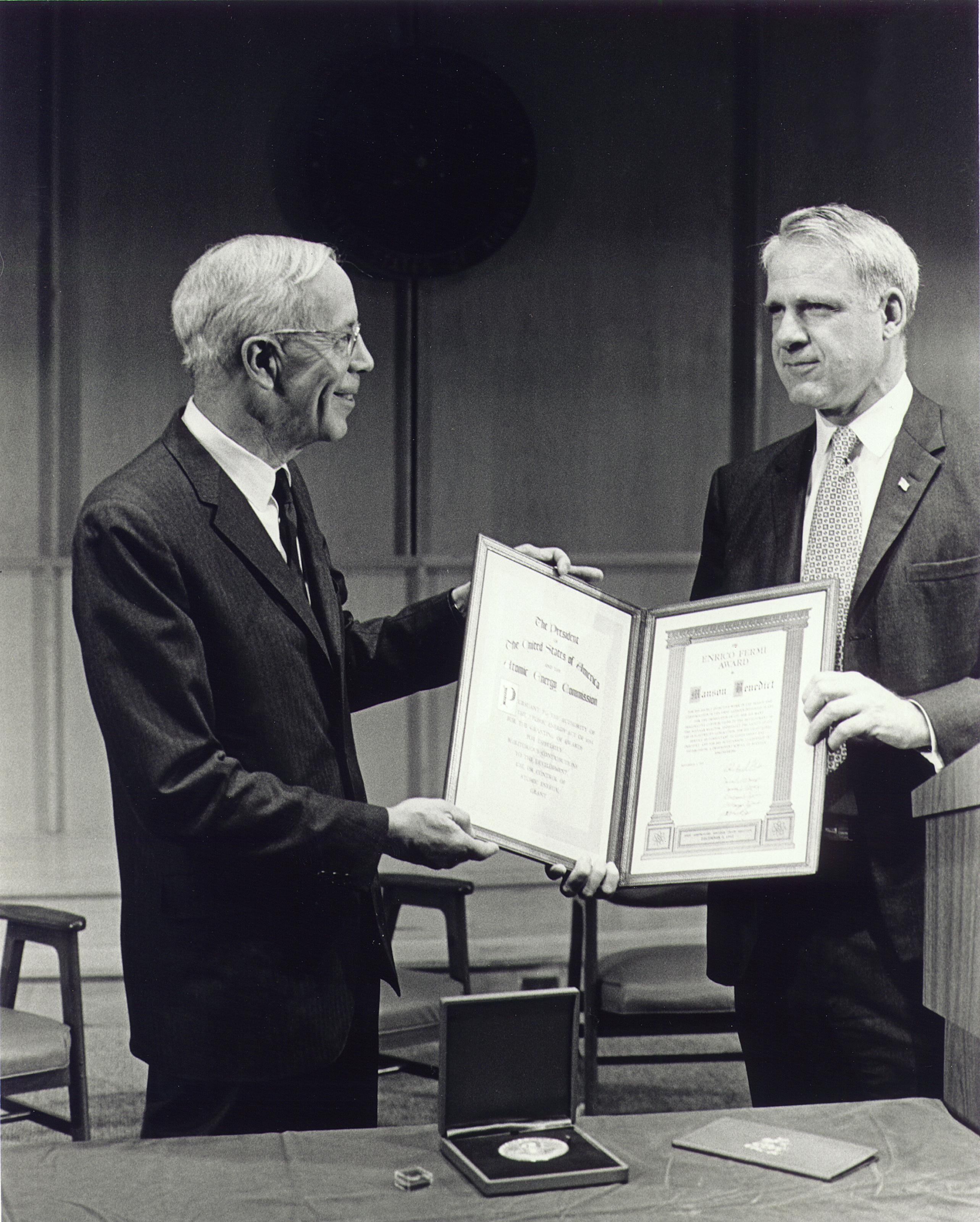
After the war Manson stayed with Hydrocarbon Research until 1951 when he served for a year as the chief of the Operational Analysis Staff at the Atomic Energy Commission. Soon thereafter he returned to Massachusetts and joined the faculty of MIT as a professor of nuclear engineering. In 1972 he received the Enrico Fermi Award, which was described as follows on the Los Alamos website:

The Fermi Award is a Presidential award and is one of the oldest and most prestigious science and technology honors bestowed by the U.S. Government. The Enrico Fermi Award is given to encourage excellence in research in energy science and technology benefiting mankind; to recognize scientists, engineers, and science policymakers who have given unstintingly over their careers to advance energy science and technology; and to inspire people of all ages through the examples of Enrico Fermi, and the Fermi Award laureates who followed in his footsteps, to explore new scientific and technological horizons.

Manson remained at MIT until his retirement in 1973.6

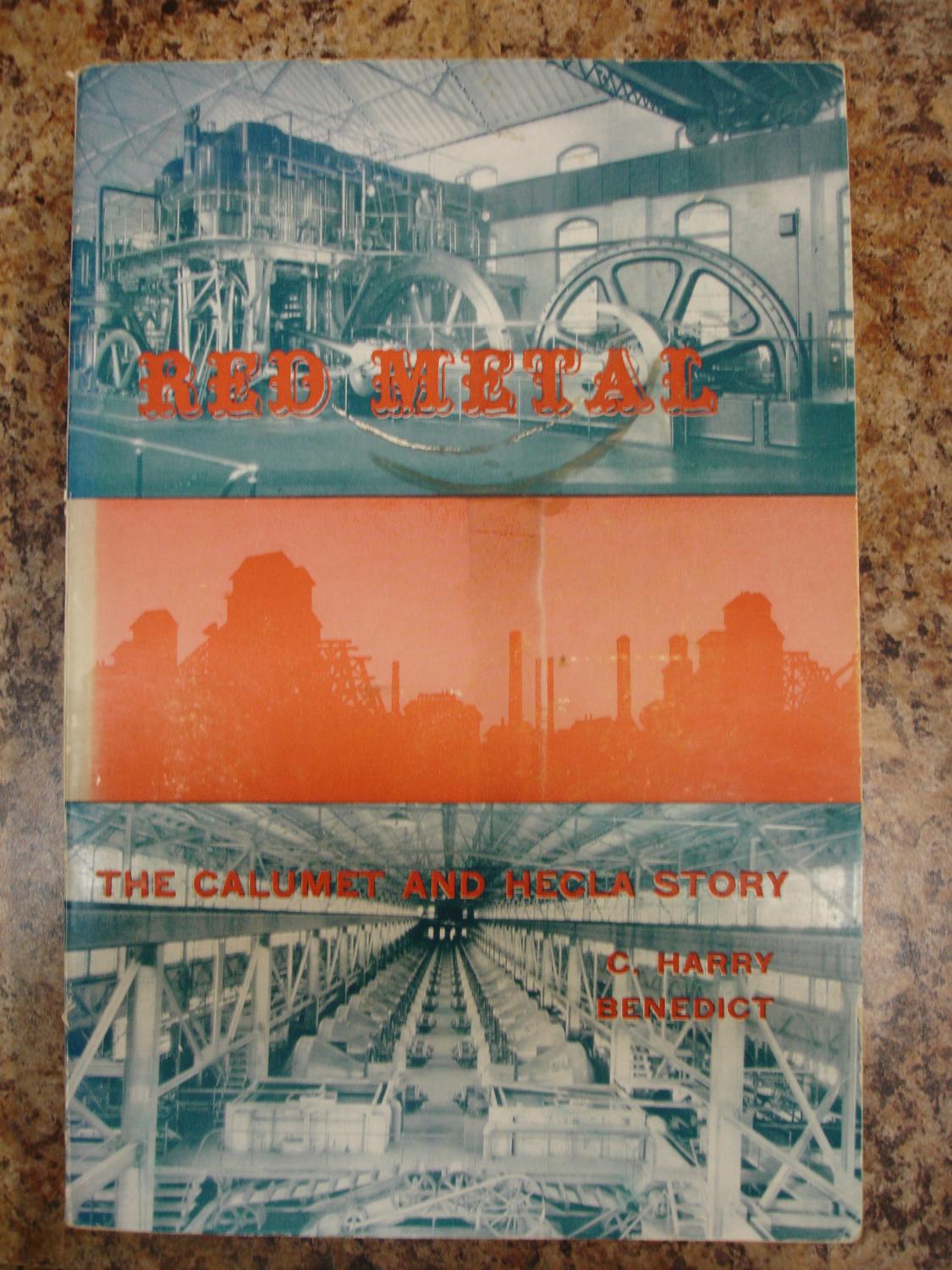
Both Manson and William must have inherited or developed their love for science from their father C. Harry, who, like his sons, had gone to Cornell for his undergraduate training and then had spent his career devoted to science, in his case to metallurgy. Harry even wrote a book about his long-term employer, Calamet and Hecla, entitled Red Metal. It was published in 1952 by the University of Michigan Press.

After fifty years or so in Michigan, Harry and his wife Lena relocated to Brookline, Massachusetts, in 1961, presumably to be closer to their son Manson and his family.7 C. Harry died at the age of 86 in Brookline on April 3, 1963;8 his wife Lena followed just two years later on October 2, 1965.9 She and Harry are buried in Syracuse, New York, where Lena was born and raised and where she and Harry were married in 1902.10 They were survived by their two sons and three grandchildren.

William Benedict died suddenly at the age of seventy on January 10, 1980, in Washington, DC. He had had a serious heart attack a few years earlier.11 His wife Ruth died on October 2, 1993, in Washington. She was eighty years old. They were survived by their son and grandchildren.

Manson Benedict outlived his younger brother and his wife Marjorie. She died in Naples, Florida, on May 17, 1995; she was 85.12 Manson survived her by over ten years. He died on September 18, 2006, at the age of 98.13 Manson and Marjorie were survived by their two daughters and grandchildren and great-grandchildren.

I must admit that I have no real understanding of the work that C. Harry, Manson, and William did in their long and distinguished careers. Science has never been my strong suit, to say the least. But obviously each of these men left their marks on those with and for whom they worked and on the world.

That completes my research and writing about not only the children of Hannah Goldsmith Benedict, but also the entire family of Hannah’s father, Simon Goldschmidt/Goldsmith. Could Simon have ever imagined that after spending time in prison in Oberlistingen, Germany, and immigrating to America to start over in a new country, he would have grandchildren and great-grandchildren who would go to some of the most elite educational institutions in the country and become lawyers, doctors, dentists, teachers, musicians, business leaders, and scientists?  He may have had hopes that his descendants would rise above his own humble beginnings, but I doubt he could ever have imagined just how high above those humble beginnings his American-born descendants would go.

Next—a number of updates on other matters before I turn to Meyer Goldschmidt, another brother of my three-times great-grandfather Seligmann Goldschmidt.


  1. C Harry Benedict, 1940 US census, Census Place: New York, New York, New York; Roll: m-t0627-02657; Page: 84B; Enumeration District: 31-1406,
    Ancestry.com. 1940 United States Federal Census. I don’t know where Harry’s wife Lena was as she was not listed with Harry in New York nor was she enumerated back in Michigan, but I know that she and Harry remained married for the rest of their lives, so perhaps Harry just forgot to tell the enumerator that she was with him in New York. 
  2. Oral History interview of Manson Benedict by James J. Bohning, January 24, 1991, for the Science History Institute, found at https://oh.sciencehistory.org/oral-histories/benedict-manson 
  3. J.-M. Flaud, C. Camy-Peyret, R. A. Toth, Water Vapour Line Parameters from Microwave to Medium Infrared: An Atlas of H216O, H217O and H218O Line Positions and Intensities between 0 and 4350 cm-1, Pergamon, 1981 (dedication). 
  4. J.-M. Flaud, C. Camy-Peyret, R. A. Toth, Water Vapour Line Parameters from Microwave to Medium Infrared: An Atlas of H216O, H217O and H218O Line Positions and Intensities between 0 and 4350 cm-1, Pergamon, 1981 (dedication). 
  5. Naples Daily News, obit for Manson Benedict, GenealogyBank.com (https://www.genealogybank.com/doc/obituaries/obit/1143FE1BF2CFFAF8-1143FE1BF2CFFAF8 : accessed 5 May 2019). For more information about Manson’s work on the Manhattan Project as well as the rest of his life and career, please see the wonderful oral history interview of Manson Benedict by James J. Bohning, January 24, 1991, for the Science History Institute, found at https://oh.sciencehistory.org/oral-histories/benedict-manson 
  6. Oral History interview of Manson Benedict by James J. Bohning, January 24, 1991, for the Science History Institute, found at https://oh.sciencehistory.org/oral-histories/benedict-manson 
  7. “Harry Benedict of C & H Dead,” Ironwood (MI) Daily Globe, 04 Apr 1963, p. 15 
  8. Number: 369-03-5832; Issue State: Michigan; Issue Date: Before 1951, Ancestry.com. U.S., Social Security Death Index, 1935-2014 
  9. Obituary, The (Syracuse, NY) Post-Standard, 04 Oct 1965, p. 23 
  10. https://www.findagrave.com/memorial/107277978 
  11.  Number: 143-01-8383; Issue State: New Jersey; Issue Date: Before 1951, Ancestry.com. U.S., Social Security Death Index, 1935-2014. J.-M. Flaud, C. Camy-Peyret, R. A. Toth, Water Vapour Line Parameters from Microwave to Medium Infrared: An Atlas of H216O, H217O and H218O Line Positions and Intensities between 0 and 4350 cm-1, Pergamon, 1981 (dedication). 
  12. Ancestry.com. Florida Death Index, 1877-1998 
  13. SSN: 122057823, Ancestry.com. U.S., Social Security Applications and Claims Index, 1936-2007. 

Hannah Goldsmith Part IV: Her Granddaughters

We saw in the last post the academic accomplishments of Hannah Goldsmith Benedict’s two grandsons, Manson and William Benedict, the sons of her son C. Harry Benedict. Both had degrees from Cornell and MIT and were working as research chemists for different corporations in the New York City metropolitan area in 1940.

Meanwhile, Hannah’s granddaughters, Helen and Marian Benedict, the daughters of Jacob Benedict, were also growing up between 1920 and 1940. Helen graduated from Schenley High School in 1924 and went on to graduate in 1928 from the Carnegie Institute of Technology (now Carnegie Mellon University) in Pittsburgh, where she studied social work.1 In 1930, she was living in Cleveland, Ohio, working as a “girls’ worker” in a social agency.2

“U.S., School Yearbooks, 1880-2012”; School Name: Schenley High School; Year: 1924
Ancestry.com. U.S., School Yearbooks, 1900-1999

Marian Benedict was a member of the class of 1929 at the University of Pittsburgh, where she was a member of the Women’s Debating Association.3 In 1930 she was living in Pittsburgh with her father Jacob; she was working as a lab technician in a doctor’s office, and Jacob was working as an insurance agent.4

In 1930, Helen Benedict married John Engstrom Booher, the son of Wayne Booher and Dora Engstrom, who was born in Altoona, Pennsylvania on May 28, 1908. Helen and John had two children, one of whom was stillborn,5 before John’s tragic death from carbon monoxide poisoning on August 30, 1936, at the age of 24.6

Helen and her surviving child were living in Pittsburgh with her father Jacob and sister Marian in 1940, and Helen was working as a probation officer in juvenile court. Marian was working at the US Marine Hospital as a lab technician, and Jacob continued to work in the life insurance business.7

As for Hannah Goldsmith Benedict, she continued to live with her youngest son, C. Harry Benedict, in Lake Linden, Michigan. Hannah died there on November 30, 1939, at the age of 91. Every time I look at her death certificate, I am taken aback to see two of my ancestral names—Goldsmith and Schoenthal—and reminded again that Hannah and her brother Henry were my double cousins. Hannah was buried back in Pittsburgh at West View Cemetery with her husband Joseph Benedict.

Hannah Goldsmith Benedict death certificate, Michigan Department of Community Health, Division for Vital Records and Health Statistics; Lansing, Michigan; Death Records
Description: 167: Houghton, 1938-1943, Ancestry.com. Michigan, Death Records, 1867-1952

Herschel Benedict and his wife Mary remained in Pittsburgh between 1920 and 1940. In 1929 Herschel was working as a department manager for Shipley-Massingham Company, a wholesale drug company in Pittsburgh; he continued in that occupation in 1930. Later Pittsburgh directories in the 1930s listed Herschel without any occupation so perhaps he retired shortly after 1930 or lost his job due to the Depression.8

By 1940, Herschel and Mary had moved to Los Angeles, California, where he is listed on the 1940 census again with no occupation.9 But unfortunately, Herschel became embroiled in some controversy in the years after World War II. He was working as the associate deputy administrator of the aircraft and electronics disposal division of the War Assets Administration agency and was forced to resign when he and the deputy administrator of the division admitted that a sales agent of the WAA in Florida had helped them procure new cars for their personal use.10

Herschel Benedict died in Los Angeles on July 31, 1957, at the age of 86.11 His wife Mary had predeceased him. She died in Los Angeles on May 28, 1951, when she was 74.12 Both Herschel and Mary were buried back in Pittsburgh.13 They had no children and thus no descendants.

Jacob Benedict, the oldest son of Hannah and Joseph Benedict, died on January 19, 1953, in Pittsburgh; he was 82 and died from coronary thrombosis and arteriosclerosis. His first cousin Milton Goldsmith, son of Hannah’s brother Henry, was the doctor who signed the death certificate. His daughter Helen was the informant. Jacob was survived by his two daughters and grandchild.

Jacob Benedict death certificate, Pennsylvania Historic and Museum Commission; Harrisburg, Pennsylvania; Pennsylvania (State). Death certificates, 1906–1967; Certificate Number Range: 000001-002250, Ancestry.com. Pennsylvania, Death Certificates, 1906-1967

His daughter Marian only outlived him by twelve years. She was only 56 when she died on March 24, 1965, from bilateral pleural effusion due to reticulum cell sarcoma, a form of cancer. Her death certificate and obituary indicate that Marian was an x-ray technician.14 I wonder whether her illness was due to overexposure to radiation. Marian had never married and has no descendants.

Marian Benedict death certificate, Pennsylvania Historic and Museum Commission; Harrisburg, Pennsylvania; Pennsylvania (State). Death certificates, 1906–1967; Box Number: 2424; Certificate Number Range: 020251-023100, Ancestry.com. Pennsylvania, Death Certificates, 1906-1967

Marian’s sister Helen lived a much longer life.  She was 82 when she died on July 1, 1989, in Pittsburgh. According to one obituary, she died from complications of Crohn’s disease. Helen was survived by her child and grandchildren.15

In my next post, the last one about the family of Hannah Goldsmith Benedict, I will discuss the post-1940 lives of Hannah’s youngest son, C. Harry Benedict, and his two sons, Manson and William.


  1.  “U.S., School Yearbooks, 1880-2012”; School Name: Carnegie Institute of Technology; Year: 1927, Ancestry.com. U.S., School Yearbooks, 1900-1999 
  2. Helen Benedict, 1930 US census, Census Place: Cleveland, Cuyahoga, Ohio; Page: 8B; Enumeration District: 0479; FHL microfilm: 2341512, Ancestry.com. 1930 United States Federal Census 
  3. “U.S., School Yearbooks, 1880-2012”; School Name: University of Pittsburgh; Year: 1928, Ancestry.com. U.S., School Yearbooks, 1900-1999 
  4. Jacob Benedict and daughter, 1930 US census, Census Place: Pittsburgh, Allegheny, Pennsylvania; Page: 8A; Enumeration District: 0233; FHL microfilm: 2341713, Ancestry.com. 1930 United States Federal Census 
  5. The exact date of the marriage is somewhat unclear. A marriage license was taken out in March, 1931. New Castle (PA) News, 16 Mar 1931, p. 7. But Helen’s father Jacob placed an announcement in the The Pittsburgh Sun-Telegraph on April 9, 1931 (p. 26), stating that the marriage had taken place in the fall of 1930. Their first child was born October 1, 1931.  I will leave it to you to make whatever inferences you wish about why Jacob might have wanted to “backdate” the wedding date. The second child was stillborn on June 27, 1934. Certificate Number: 56394, Search for Infant Booher in Pennsylvania Wills & Probates collection, Pennsylvania Historic and Museum Commission; Harrisburg, Pennsylvania; Pennsylvania (State). Death certificates, 1906–1967; Certificate Number Range: 054501-057500, Ancestry.com. Pennsylvania, Death Certificates, 1906-1967 
  6. John E. Booher death certificate, Certificate Number: 74864, Pennsylvania Historic and Museum Commission; Harrisburg, Pennsylvania; Pennsylvania (State). Death certificates, 1906–1967; Certificate Number Range: 072501-075500, Ancestry.com. Pennsylvania, Death Certificates, 1906-1967 
  7. Jacob Benedict and family, 1940 US census, Census Place: Pittsburgh, Allegheny, Pennsylvania; Roll: m-t0627-03663; Page: 2B; Enumeration District: 69-390, Ancestry.com. 1940 United States Federal Census 
  8. Pittsburgh, Pennsylvania, City Directories, 1929-1934, Ancestry.com. U.S. City Directories, 1822-1995. Herschel Benedict, 1930 US census, Census Place: Pittsburgh, Allegheny, Pennsylvania; Page: 12A; Enumeration District: 0231; FHL microfilm: 2341713, Ancestry.com. 1930 United States Federal Census 
  9. Herschel Benedict, 1940 US census, Census Place: Los Angeles, Los Angeles, California; Roll: m-t0627-00401; Page: 15A; Enumeration District: 60-278, Ancestry.com. 1940 United States Federal Census 
  10. “Two WAA Officials Quit after Criticism,” Fresno (CA) Bee Republican, December 17, 1947, p. 15. 
  11. Ancestry.com. California, Death Index, 1940-1997 
  12. Ancestry.com. California, Death Index, 1940-1997 
  13. https://www.findagrave.com/memorial/169508860/herschel-newton-benedict 
  14. Obituary, Pittsburgh Post-Gazette, 26 Mar 1965 – Page Page 19 
  15. SSN: 182329199, Ancestry.com. U.S., Social Security Applications and Claims Index, 1936-2007. Obituaries, Pittsburgh Post-Gazette, 06 Jul 1989, p. 10