Some Broken Brick Walls: Thank you, Cousin Bob!

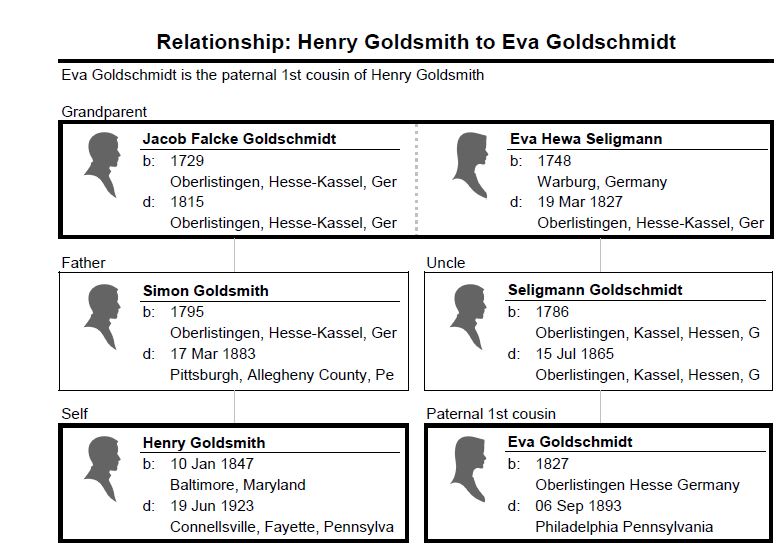
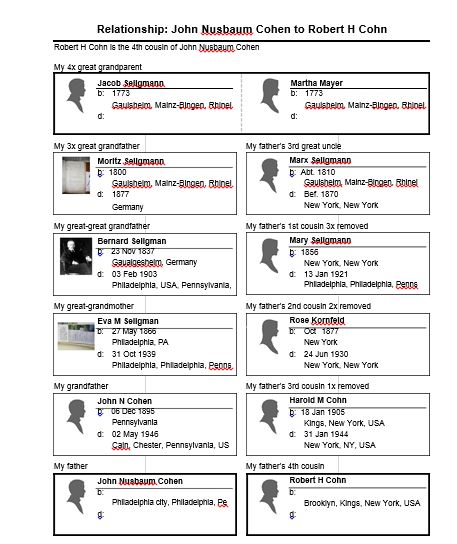
In my post about the descendants of Mary Seligman, the youngest child of Marx Seligman, I wrote that I was hoping to be in touch with one of Mary’s descendants to learn more about what happened to some members of the family.  Specifically, I was trying to connect with Bob Cohn, who is the son of Harold Cohn and Teddi Kremenko (sometimes called Tillie, sometimes Theodora).  Harold Cohn was the son of Joseph Cohn and Rose Kornfeld.  Rose was Mary Seligman’s daughter with her husband Oscar Kornfeld.  Here’s a chart showing how Bob and my father are related as fourth cousins, making him my fourth cousin once removed.

Dad to Bob

After jumping through a number of hoops, I finally reached Bob after emailing someone at the public relations firm he founded in Atlanta forty-five years ago, Cohn & Wolfe.  Although Bob has retired, the man I contacted at the firm immediately emailed Bob, and within minutes Bob and I had exchanged emails.   It’s a long story as to how I figured out that the Bob Cohn at Cohn & Wolfe was the right Bob Cohn.  I won’t describe all my crazy sleuthing on this one!

Bob Cohn with trophy

My cousin, Bob Cohn All photos in this post are courtesy of Bob Cohn

Anyway, Bob is himself a family historian and has generously shared with me a great deal of information and a wonderful collection of photographs.  He, however, did not know very much about his grandmother Rose or her family, so he was delighted to learn what I had discovered about Rose and her Seligman(n) family roots.  By sharing what we each knew, we each were able to fill in some of the gaps that we each had in our research.

For example, I had been unable to find Rose and Joseph on any record after the 1930 US census.  At that time they were living on West 90th Street in New York, and after years in the printing business, Joseph had become an investor in the securities business.  Obviously that was unfortunate timing because, as Bob told me, Joseph lost a great deal of money in the 1929 stock market crash and the ensuing Depression.

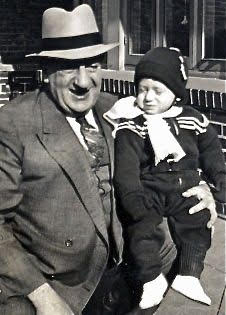
Joseph and Bob Cohn

Joseph Cohn and his grandson Bob.  Note the family resemblance as you can see in the photo of Bob above.

Bob also told me that he had no memory of his grandmother Rose.  Since I knew Bob was born in 1934, I assumed that Rose might have died sometime between 1930 and 1940 if he had no memory of her.  Although a death record had not shown up in my initial search, this time I was able to find it.  Rose had died on June 24, 1930, shortly after the 1930 census.  She was 52 years old and died from a cerebral hemorrhage caused by hypertension.

Rose Cohn death certificate

Rose Cohn death certificate

Since I had not found Joseph on the 1940 census or elsewhere after the 1930 census, I was hoping Bob would know when he died or where he lived.  Bob believes that Joseph died in a nursing home in New Rochelle sometime in the late 1950s.   Those death records are not publicly available, however, except to close family, so I don’t have any record of Joseph’s death.  But knowing that he was a widow after 1930 led me to search again for him on other records.   I still, however, ran into some trouble.  On the 1940 US census, I found a Joseph Cohen (with the E), a widower of the right age, living in Newark, New Jersey, working as a storekeeper in a restaurant. (You will have to click on the images below to see them more clearly.)

Joseph Cohen and lodger 1930 US census

Joseph Cohn and lodger 1940 US census


Full page: Joseph Cohn 1930 census

Full page: Joseph Cohn 1940 census Year: 1940; Census Place: Newark, Essex, New Jersey; Roll: T627_2414; Page: 4B; Enumeration District: 25-132

Bob has no memory of his grandfather living in New Jersey.  The man on this census record was living with a woman, Mary Miller, listed (I think) as “occupant,” working as a laundryman (?) in a hospital.  Although the enumerator wrote that Joseph was living in the same place in 1935, he also wrote that he was living in Matthen (??), New York, in 1935.  Maybe that’s Manhattan?  The same page has lots of other strange entries.  I think perhaps this enumerator was not very careful.

So why would I think that this is Joseph Cohn, Bob’s grandfather? Because I also found a World War II draft registration that shows that Joseph Cohn was living in Newark, New Jersey, in 1942.  This is definitely the right Joseph Cohn; he lists his closest relative as Harold Cohn of East 9th Street in Brooklyn, which is where Bob and his parents and brother Paul were living in 1942.  On the draft registration, Joseph was living on Court Street in Newark. The Joseph Cohen on the 1940 census was living on Bergen Street in Newark, less than two miles away.  Joseph was working for L. Loeb in Newark in 1942 at 317 Mulberry Street in Newark.

Joseoh Cohn World War II draft registration

Joseph Cohn World War II draft registration


I decided to search Newark directories for 317 Mulberry Street to see if I could find out what Joseph was doing in Newark.  I did not find Joseph in the 1942 Newark directory, but at 317 Mulberry Street in 1942 I did find a listing for a butcher named Samuel Cohn.  Bob had told me that his grandfather Joseph had had a brother Samuel, but he had not been able to learn what had happened to his great-uncle.  When I saw the name and the same address that appeared on Joseph’s draft registration, I assumed that this had to be Joseph’s brother Samuel.  I searched further in the Newark directories and found that in 1934 Sam Cohn was located on Bergen Street, where Joseph CohEn was living in 1940, according to the 1940 census.  In 1941, Sam was located at 69 Court Street; Joseph was living at 59 Court Street in 1942.  I was quite certain now that Joseph had moved to Newark after his wife Rose died in order to be closer to his brother Samuel.

That made me curious to know more about Samuel, the great-uncle Bob had not been able to locate.  Knowing now that he was a butcher, I was able to find him living in New York City in 1940 on the US census; he was living with his wife Minerva and adult son Phillip as well as two boarders.  The census indicated that he had been living in Newark in 1935 and that he was a butcher.  Now knowing his wife and son’s names, I found Samuel on the 1910 and 1920 census (but not the 1930), working as a butcher and living with his wife Minerva (or Minnie) and his son Phillip in the Bronx.

Unfortunately, I have not been able to find any records for Joseph or Samuel Cohn after 1942.  All I know is what Bob told me—that Joseph lived until sometime in the 1950s and was living at a nursing home in New Rochelle when he died.


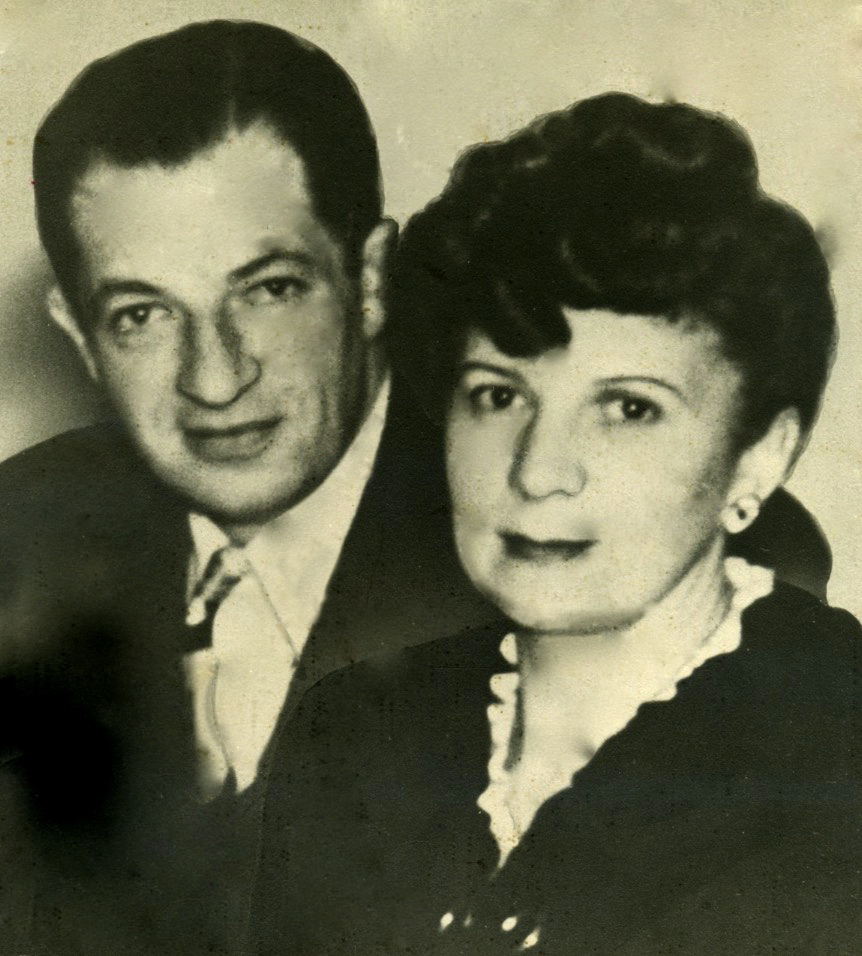
Harold and Teddi

Harold and Teddy 1926

Harold and Teddi 1926

When I first wrote about Bob’s parents, Harold Cohn and Teddi Kremenko, I knew that Harold and Teddi had married in 1928, but then they disappeared for the next sixteen years.  I couldn’t find them on either the 1930 or the 1940 census.  All I knew was that Harold had died of coronary thrombosis at the age of 39 in 1944.  I didn’t know what he had done for a living, I didn’t know what had happened to his wife Teddi, and I didn’t know whether they had had children.  Fortunately, one of Teddi’s relatives, a granddaughter of one of her sisters, has a tree on Ancestry.com, and by connecting with her, I learned more and eventually found our mutual cousin, Bob.

I had been unable to find Harold and Teddi on the 1930 census, but one clue from Bob helped me locate a Harold Cohn who seems likely to be the right one.  I asked Bob what his father had done for a living, and he told me he’d been in the silk importing business.  I’d had no luck looking for a Harold Cohn married to a woman named Teddi, Tillie, or Theodora, but by entering “silk” into the search form, I came up with this Harold Cohn.  (You will need to click and zoom to read it.)

Harold Cohn 1930 census

Harold Cohn 1930 census  See lines 11 and 12.  Year: 1930; Census Place: Manhattan, New York, New York; Roll: 1556; Page: 8A; Enumeration District: 0449; Image: 1030.0; FHL microfilm: 2341291


Yes, it says his father was born in Germany, whereas Harold’s father Joseph Cohn was born in New York. But his grandfather Philip was born in Germany.  Harold’s mother Rose was born in New York, as the census reports.  He was a silk distributor, as the census reports.  His age is not exactly right, but it’s close, or at least within the range of accuracy that census records generally report. They were living on West 86th Street, the same neighborhood where Harold’s parents were living in 1930.  All that certainly supports my assumption that this is the correct Harold Cohn.

But then it says his wife was Fay, not Tillie, Teddi, or Theodora.  It says she was born in New York, but Teddi was born in Russia.  It says her mother was born in England, but Teddi’s mother was born in Russia.  How do I explain these inconsistencies?  I can’t.  Did the census enumerator talk to a neighbor who knew more about Harold than he or she knew about Teddi? I don’t know, but I still think this is the right Harold.  But am I certain? No.  What do you think?

The 1940 census is even more problematic. In 1940, Bob turned six, his brother Paul turned three.  Bob said that they were living in Brooklyn when he started school at PS 99.  But I can’t find them in Brooklyn.  Even looking at the census report for everyone living on East 9th Street between Avenues J and K where Bob recalls the family living, I couldn’t find them on the 1940 census.

I only found one possible entry  for Harold and Teddi on the 1940 census, and it is even more of a stretch; I have serious doubts about whether these are the right people. I found a Philip Kohn married to Lillie with a four year old son named Michael, living in Queens.  Why would I even for a second think this was Harold and Teddi Cohn? Because Philip Kohn was in the silk business.  But it says he was born in Russia, not New York.  But it also says Lillie (could be Tillie?) was born in New York, not Russia.  Had the enumerator switched the birthplaces? And gotten all the names wrong?  And forgotten a child? Probably not.  Especially since Bob says they never lived in Queens. So the Cohn family remains missing from the 1940 census as far as I can tell.

Could this be Harold Cohn? See line 74

Could this be Harold Cohn? See line 74  Year: 1940; Census Place: New York, Queens, New York; Roll: T627_2749; Page: 1B; Enumeration District: 41-1623B


For the rest of the story, I have the great benefit of Bob’s memories, experiences, and research.  I think it best to let him tell his story mostly in his own words.

First, a few pages that Bob wrote about his mother’s family, the Kremenkos.

Bob's book 1 Bob's book 2 Bob's book 3

As for his father’s family, Bob wrote:

The Cohn family history covers three generations.  Bob’s father, Harold, was born in New York City and was the only child of Joseph and Rose Cohn.  Joseph was also born in New York to Adela and Phillip Cohn in 1876. … Phillip and Adela immigrated to New York in 1866 and married four years later.  Adela was from the Alsace Region of France hat sits on the west bank of the Upper Rhine River next to the German border. It is one of France’s principal wine-growing regions.  Phillip was born in Baden in July, 1842 and later worked as a banker there.

From the collection of family photographs Bob shared with me, it looks like Harold Cohn and Teddi Kremenko and their sons were living happily up until 1944:

Harold and Teddi

Harold and Teddi

Mom and Dad at tennis

Harold and Teddi

Mom and Dad with Robert in the grass

Harold, Bob, and Teddi Cohn

Mom and Robert, 1937

Teddi and Bob, 1937

Mom, Paul and I, 1944 at Bungalow Colony

Paul, Teddi, and Bob Cohn 1944

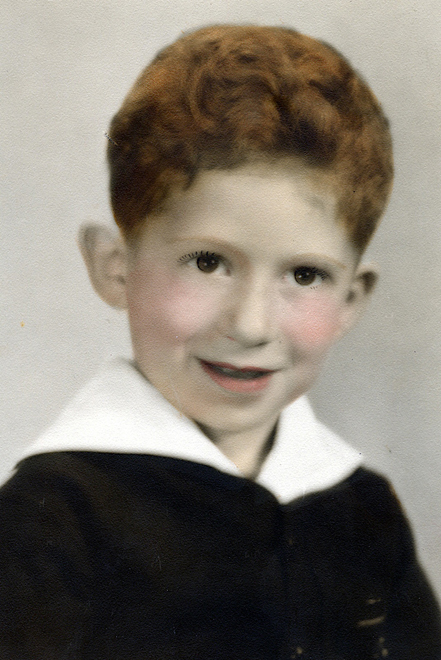
Robert (Red) Cohn

Bob

My Mom and Dad, Uncle Barney

Harold and Teddi Cohn, Barney Kremenko, and others

U 2

Harold and Teddi


And then, as noted earlier, Harold died unexpectedly.  Bob wrote:

When I was 9 years old, I remember my father giving me a nickel on the front porch of our home on East 9th Street between Avenue J and Avenue K.  The money was for a Red Cross Fund Drive.  My Dad died that day, February 1, 1944, at the age of 39 from a heart attack.

As if that wasn’t tragedy enough for two young boys and their mother, less than two years later, Bob and Paul’s mother Teddi died at age 42 from throat cancer.

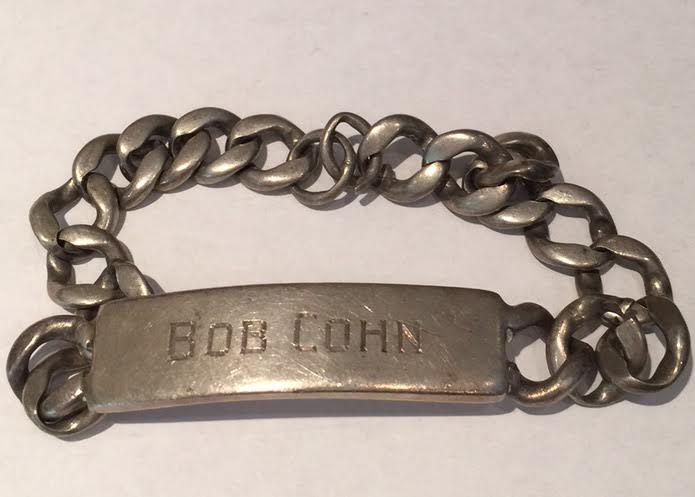
My mother, Theodora (Teddi) Cohn died on Oct. 13, 1945, barely a month after World War II ended. For my Oct. 12th birthday Uncle Barney (Kremenko) took me to Yankee Stadium’s press box to watch undefeated Army play a highly ranked Michigan team. Army had two Heisman trophy winners in the backfield—Doc Blanchard and Glen Davis—and four consensus All-Americans. At halftime the score was 14-0 when Uncle Barney got a call to rush home because my mother was dying. We got there before she passed away and she gave me an ID bracelet that was popular in those days. Everyone in the family called me Robert, including my Mom, but she knew I preferred the name Bob. So it was the first time she acknowledged my preference and gave me the sterling silver bracelet with Bob Cohn inscribed on the top. On the reverse side she had inscribed “From Mother, Oct. 12, 1945.

ID bracelet

As it turned out Army won 28-7 and it was a historic day in college football.  

(According to Wikipedia, “Outmanned by Army, Michigan’s Coach Fritz Crisler unveiled at halftime the first known use of the so-called “two-platoon” system in which separate groups played offense and defense.” Click the link for more on the game.)

Thus, by the time he was eleven, Bob Cohn had lost both his parents; his brother Paul was only eight years old.  Where would they go?

Bob wrote:

There was a family circle meeting to decide who would take my brother Paul and I in. Aunt Diana and Uncle George said they wanted to have us but the others voted against them because they would not be right for young children because they had no experience, having no children of their own. Then Aunt Rose and Uncle Louie put in their bid but they also were turned down. The decision was made by the family for us to live with Aunt Beatrice and Uncle Sol because they had two young children and could best deal with the situation. Aunt Diana understood but over the years spent a lot of her time with the two of us. Ann [a cousin] said she loved us deeply.

Bob pointed out that his Aunt Beatrice and Uncle Sol had two children—Barbara and Morton—who became like siblings to Bob and Paul. Barbara is three years older than Bob, and Morton is seven years younger.

Barbara Paul Morty and Bob

Aunt Rose with Paul Barton Cohn

Rose Kremenko and Paul Barton Cohn

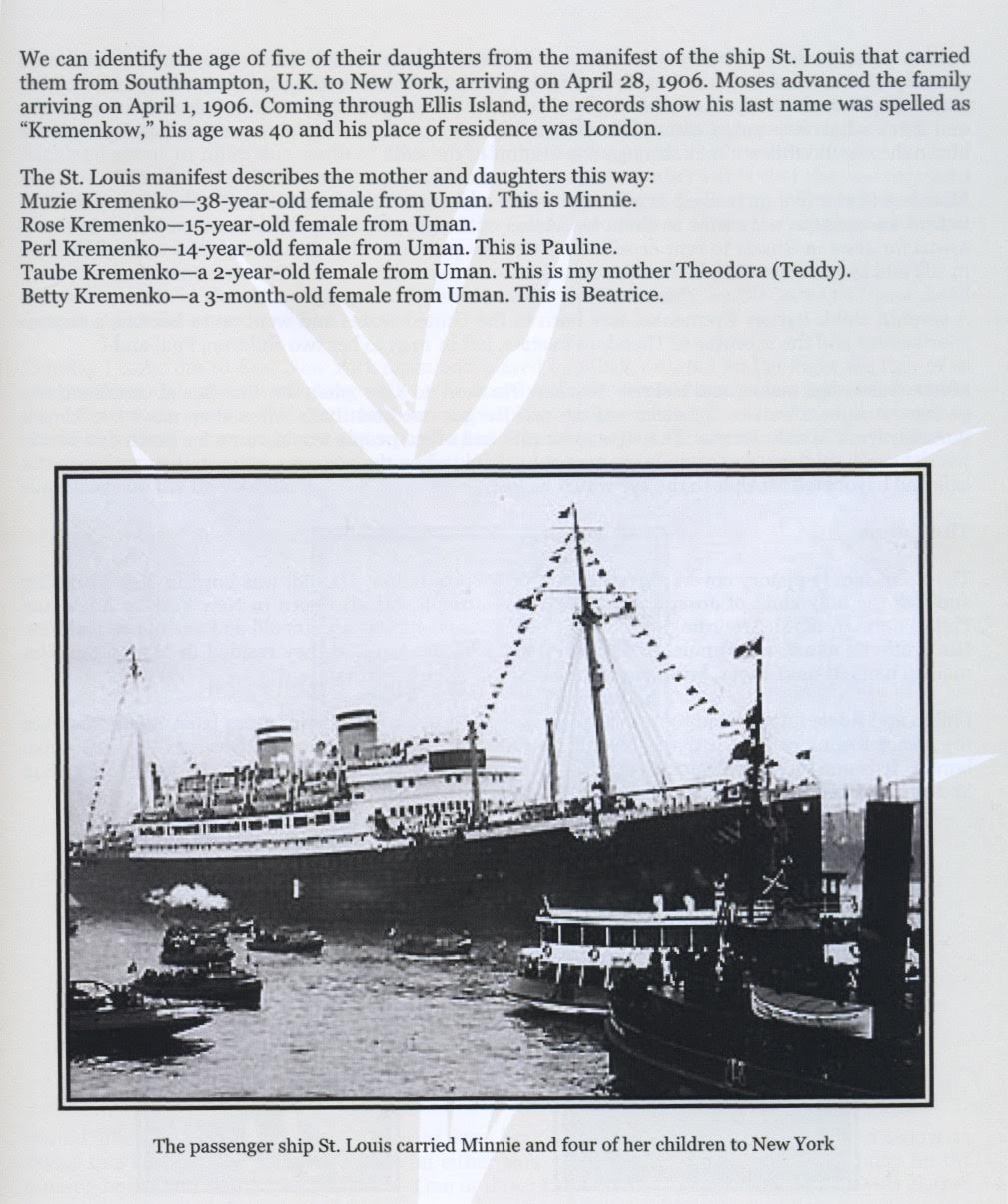
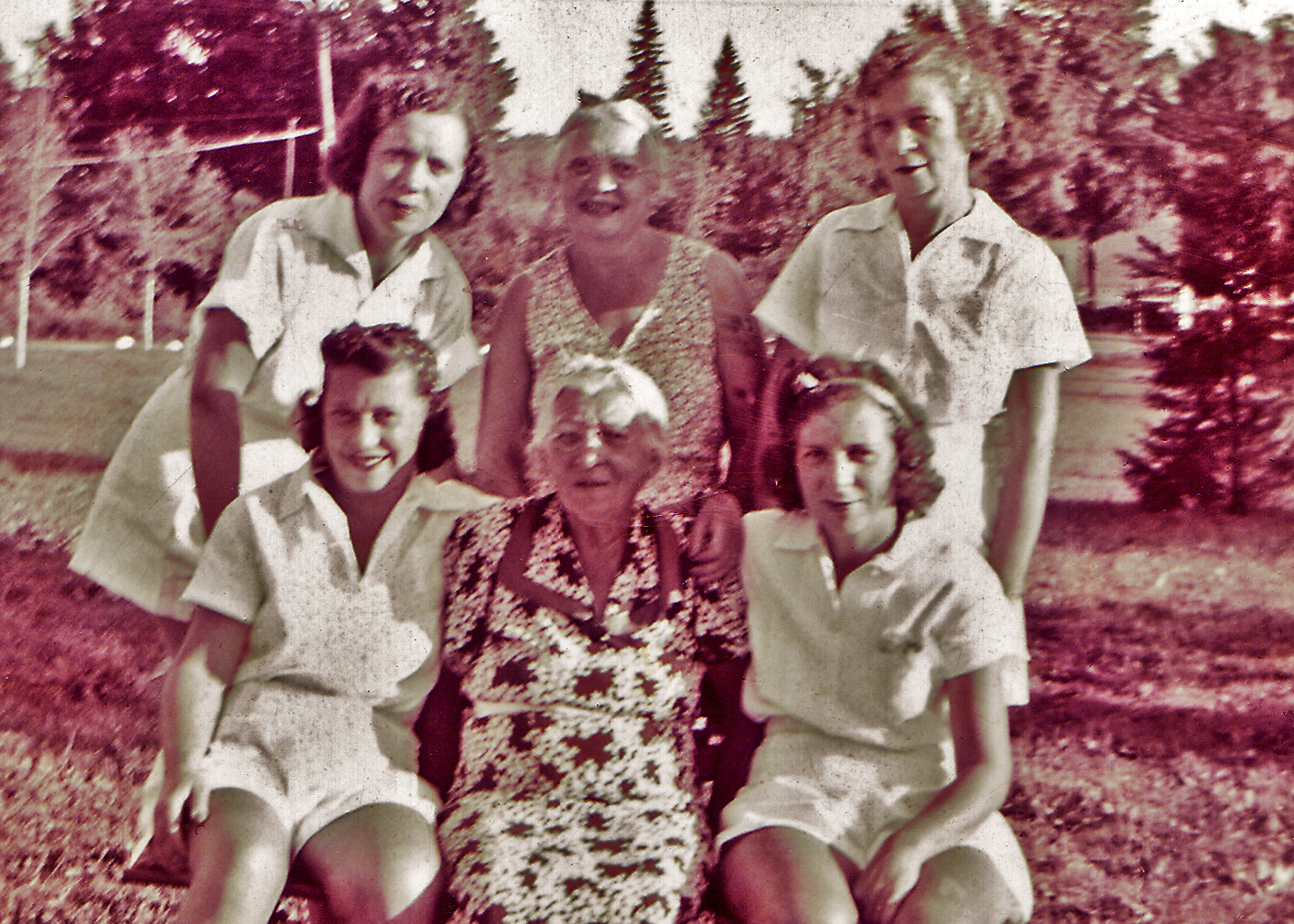
Kremenko sisters

The five Kremenko sisters and their mother Minnie

What would happen to these two little boys who lost both their parents so young? Not only did they survive; they both thrived, as we will see in Part II of Bob’s story.  That they did is a tribute to the love they had received from Harold and Teddi in their early years and the love they received from the family members who raised them and cared for them after they’d lost their parents.


Moritz James Oppenheimer: The (More) Complete Story

Several weeks ago I received a comment on the blog from Angelika Oppenheimer, the granddaughter of Moritz James Oppenheimer, whose life I wrote about here.  He was the successful businessman who owned the horse breeding farm in Germany that was appropriated by the Nazis.  Moritz Oppenheimer died in 1941, an apparent suicide after being “visited” by the Gestapo.

Angelika found the blog because she was interested in knowing more about her grandfather’s family, and I am grateful because I now have learned more about her grandfather’s life and about the lives of his children and grandchildren.

Angelika Oppenheimer

Angelika Oppenheimer photo courtesy of Angelika

Angelika is my third cousin, once removed.  Here is a chart explaining our relationship:

Angelika to me chart


Moritz James Oppenheimer was born in 1879 in Butzbach, Germany, the youngest child of Maier Oppenheimer and Pauline Seligmann.  As seen above, he was the grandchild of Moritz Seligmann and Babetta Schoenfeld, my three-times great-grandparents.  Here is a photo of him as a young man from Fred Michel’s photo album,

Moritz Oppenheimer

Moritz Oppenheimer Photo courtesy of the Michel family

According to a resume provided to me by Angelika, in 1901 he founded the Mitteldeutsche Papierwarenfabrik situated in the Hanauer Landstraße and the Rheinische Sackfabrik.  Moritz was a member of the board of directors of several companies throughout Germany, including the Kostheimer Cellulose und Papierfabrik (Kostheim-Mainz), the Danziger Verpackungsindustrie at Danzig, the Fabbrica Italiana Sacchi Ercole at Villanovetta, the Mechanische Papiersackfabrik A.G. at Saarbrücken, the Sankt Georg Verlag at Berlin and the Bayrische Reitschule at Munich.

Emma Neuhoff and Moritz James Oppenheimer photo courtesy of Angelika Oppenheimer

Emma Neuhoff and Moritz James Oppenheimer
photo courtesy of Angelika Oppenheimer

Sometime before 1902, Moritz married Emma Katherina Neuhoff, who was not Jewish.  According to Angelika, she was a descendant of Theodor Neuhoff, born in Cologne, Germany, who traveled throughout Europe and was at one time the king of Corsica.  According to Wikipedia, “At Genoa, Neuhoff made the acquaintance of some Corsican rebels and exiles, and persuaded them that he could free their country from Genoese tyranny if they made him king of the island. With the help of the Bey of Tunis, he landed in Corsica in March 1736 with military aid. The islanders, whose campaign had not been successful, elected and crowned him king. He assumed the title of King Theodore I, issued edicts, instituted an order of knighthood, and waged war on the Genoese, at first with some success. But in-fighting among the rebels soon led to their defeat.”

Theodore Neuhoff

Theodor Neuhoff

Emma Neuhoff was a gifted musician and an excellent horsewoman, according to her granddaughter Angelika.

Emma Neuhoff Oppenheimer

Emma Neuhoff Oppenheimer  Photo courtesy of Angelika Oppenheimer

Here are two pages from a German magazine discussing M.J Oppenheimer and his wife Emma.  I think it’s a publication about thoroughbred breeding and racing, but I cannot read the pages.  Perhaps some kind German-speaking reader can help?

Familiengeschiche 2 Familiengeschichte3

(Angelika told me that the drawing of Emma illustrating this article was commissioned by the Historical Museum of Frankfort based on Emma’s reputation as an excellent horsewoman.)

Moritz and Emma had two children: Paula (1902) and Walter (1904), Angelika’s father.  Paula married a Catholic man named Rudolf Spiegler, a doctor, and converted to Catholicism; they had two children, Gabriele and Wolfgang. Paula and her family did not face any persecution during the war.

As for Angelika’s father Walter, he married Suzanne Zier on December 23, 1933.  Walter had been raised and baptized as a Christian, and his wife also was not Jewish, yet Walter faced substantial discrimination during the Nazi era.  In April 1945, as the war in Europe was ending, he wrote the following essay, describing both his own life and what happened to his father Moritz after the Nazis came to power:

27 April 1945

Biographical memorandum

I was born on 10 July 1904, son of the industrialist and thoroughbred horse-breeder Consul M.J. Oppenheimer, in Frankfurt am Main. After three years at preparatory school, I attended the Goethe Gymnasium in that city for nine years; I left school, having obtained my school leaving certificate (Abitur), at Easter 1923. After studying for six terms at Frankfurt University (Law and National Economy), I sat the examination for articled clerk at the Frankfurt Higher Regional Court [Oberlandesgericht]. After a period as an articled clerk at the court in Frankfurt, in 1927 I took my doctorate under Professor de Boor. After a lengthy period of practical training as a fitter in an engineering works, and as a paper-maker in paper-mills, I then joined my father’s paper-products company, the Mitteldeutsche mechanische Papierwarenfabrik, in Frankfurt. From 1931 I was Chief Company Secretary of this company belonging to my father as sole owner. At that time it was the largest company of its kind in Germany, and for a period employed together with its subsidiaries more than 1,000 people. In 1932 I built a major subsidiary factory for my father’s company in Berlin.

My father was arrested in the autumn of 1933, at the instigation of two [NSDAP] party members (August Hartmann and Helmut Vögler) working in collaboration with the NSDAP. His entire assets were put in the hands of the lawyer [Rechtsanwalt] Max-Ernst Cuntz as prospective administrator. A bankruptcy was thus brought about, and the assets liquidated at the lowest rate, the said lawyer Cuntz selling each item at a rate far below its value, for the most part at one twentieth of purchase value. The stud farm and stables, for example (probably the biggest and best of their kind in Germany), were disposed of at a price below the level of profits from racing for the following year. The case was similar in respect of the factories, share portfolios, Hippodrome A (whose director I also was, and all shares in which belonged to my father), etc. I myself was immediately removed without compensation from all my posts by the lawyer Cuntz, on the grounds of my non-Arian status. I was also compelled to surrender my own stables, representing an approximate worth of between 70,000 and 100,000 Reichsmark, without receiving any compensation. My father was also quite illegally disqualified from receiving the stud prize. To satisfy the rules in this latter regard, for years my mother and I continued to hold two mares for my father, so that he could legally be assigned 10% of all racing prizes won by horses bred by him, in accordance with stud rules: except with the proviso that no stud prizes could be paid out to a Jew; the authorities retained this annual sum, comprising up to 100,000 Reichsmark, and finally had it credited either to themselves or to the Union Klub. My father, who was perfectly healthy, became ill owing to ill-treatment during his detention. He was declared unfit for detention in 1934/5, and finally took his own life when he was about to be arrested again in 1941 preparatory to being sent to a camp.

I myself with my mother had founded the company Paverk, Gesellschaft für Papierverarbeitung in December 1933. As I could not appear in person as a holder of shares in a limited company, an Arian uncle of my mother acted for me. Then, in 1937, I transferred this share in trust to my father-in-law Otto Zier, now [April 1945] of Friedberg in Hessen, Dieffenbachstrasse 25, together with a further 20,000 Reichsmark of shares created in settlement of my assets, so that, of the total sum of 40,000 Reichsmark in shares of the above company, 10,000 Reichsmark of my mother’s and 30,000 of mine belonged in trust to my father-in-law. By the beginning of the war, however, with a nominal capital of 40,000 Reichsmark the company had an actual value of some 250,000 to 300,000 Reichsmark, as, thanks to the diligent efforts of my employees, the company had been highly successful under my stewardship.

My wife having died suddenly from pneumonia in April 1935, at the beginning of 1941 my father-in-law saw fit to attempt to misappropriate the shares that had been transferred to him in trust. As, owing to my status as a person of mixed blood, I myself could not appear as a plaintiff, I assigned my claim to my mother, who instituted legal proceedings and won her case, at both first and second instance. The papers relating to the case are still available in their entirety: reference 2/5 2/9 0 30/41. These papers clearly demonstrate how Zier attempted to influence the court using the entire gamut of National-Socialist arguments, with reports against me and the company being sent to all sections of the Party, including district and financial counsellors (Kreis- und Wirtschafts-berater – [advisors to the Gauleiter under National Socialism]) Eckhardt, Degenhardt, and Avieny, the DAF [Deutsche ArbeitsFront – national trades union organisation under the National Socialists], the Gestapo, etc. At last instance, the High Court [Reichsgericht] awarded my mother only 10,000 Reichsmark unconditionally, while presuming improper concealment [unsittliche Tarnung] in respect of the remaining 20,000 Reichsmark. This finding is the subject of a new trial before the District Court [Landgericht] in Frankfurt (2/5 0 36/44), over whose outcome in my mother’s favour there may be little reason to doubt. Quite apart from these machinations on Zier’s part, which caused not only the Paverk company but also my mother and myself endless spiritual and material harm, we had also much else to suffer at the hands of the NSDAP.

When the company was heavily bombed in 1943, and totally bombed out in February 1944, Herr Hermann of the Gauwirtschaftskammer [regional economic organization under National Socialism] prevented the rebuilding of the plant and re-acquisition of machines. In addition, I myself was arrested by the Gestapo in the autumn of 1942, the only charge against me being my engagement to an Arian woman in contravention of the rules. I was not released again until 28 May 1943. My entire household effects to the value of about 70,000 Reichsmark (peacetime value), including art collections etc., had meanwhile been taken, and the Gestapo official Wildhirt installed in my flat. In 1943, my fiancée was conscripted to work at the Mayfahrt company under the harshest of conditions at the direct instigation of the Gestapo. The main initiator in these matters was Zier, who did not, however, proceed in his own name, but employed the services of his friends Fabian-Gramlich (insofar as I have been able to determine up to now), while my furniture was removed by a painter by the name of Baumann, who did work for the police.

I married on 11 April 1945, immediately after the liberation by the Americans. I was allocated a flat at Freiherr vom Stein Strasse 56/1, which I immediately had redecorated and furnished with furniture belonging to my wife, only to have the flat abruptly requisitioned by US soldiers on 26 April 1945.

Initialled “W.O.” at Frankfurt am Main on 27 April 1945

I, David M.B. Richardson MCIoL, certify this to be a true and fair translation of a photocopied document in German provided to me by Frau Angelika Oppenheimer, daughter of Walter Oppenheimer.

Westcliff-on-Sea, 11 August 2015.

Walter’s essay reveals so much about the hate-filled and carefully plotted system used by the Nazis to crush, humiliate, and destroy the Jews.  First, they stripped them of their property, then they stripped them of their dignity, and finally they killed them and stripped them of their lives.  Moritz Oppenheimer, a man of great wealth, was brought to his knees by the Nazis and demoralized to the point that he took his own life rather than be subjected to further humiliation and abuse and ultimately murdered. One aspect of that humiliation and abuse not mentioned in Walter’s essay was the forced annulment of his marriage to Emma Neuhoff because of Moritz’s Jewish background.

Moritz and Emma’s son Walter, a highly educated and successful man in his own right and not even raised as a Jew, was denied his property and his rights and had his own father-in-law betray him and his trust after his first wife died in 1935.  According to Angelika, Walter’s brother-in-law was in the SS.  Only because Walter had a non-Jewish mother who bribed the local Nazi official in Frankfort was he allowed to survive.

As he wrote above, Walter married his second wife, Elsa Lina Wiegandt, in 1945, and they had a daughter, my cousin Angelika.   In 1946, Walter sought the return of the property that had been taken from him by the Gestapo, primarily the books he treasured so much.  Here is the letter he wrote and Angelika’s translation of that letter:

Walter Oppenheimer letter

Dr. Walter Oppenheimer                                  Frankfurt a. M., den 25. Oktober 1946          Niedenau 45

An das Archival Depot

Offenbach am Main

Mainstraße 167

Concerning: stolen books

With polite reference to the notice published the 22nd October under the above mentioned headword in the ‘Frankfurter Rundschau’, I take the liberty of presenting you the following:

I was arrested by the Gestapo the 26th October 1942 for purely political and racial reasons. My apartment was handed over to the Gestapo officer Wildhirt while my furniture was first and foremost transferred by a Gestapo agent to the second principal of the Gestapo here, Mister Grosse. The biggest part of my library was taken away with it. A part of the books was rubber-stamped with my name but the bigger part of it was without the name of the legitimate owner.

If there are any books of mine in your office, I ask you nicely to furnish information to me. Especially the following books mean much to me:

A 17-vlume gilt-edged edition of GOETHE in red morocco leather;

A complete half leather edition of HAUFF with gold ornament on the spine;

A half leather edition of KLEIST’s writings with gold ornament on the spine;

MUTHER: 3 volumes of history of painting, green cloth binding;

SPRINGER: 5 volumes on art history, half cloth binding and cloth binding respectively;

20 – 25 volumes of monographs on artists, partly half leather editions, partly with half cloth binding and cloth binding respectively, red with gold ornament, edition of the Stuttgarter Verlagsanstalt;

A five volume edition of HÖLDERLIN, grey pasteboards.

Many thanks indeed for your efforts in anticipation.

With all due respect to you!

I was impressed by the diversity of subjects in his library and by how much he valued his books. I also was struck by how polite and almost deferential he was in asking for the return of what was already rightfully his own.   At least some of the books were returned and remain today with Angelika.  Here is a photo of her father Walter.

Walter Oppenheimer 1972 courtesy of Angelika Oppenheimer

Walter Oppenheimer 
courtesy of Angelika Oppenheimer

Angelika shared this photograph of her family and friends at her Lutheran confirmation celebration taken in about 1961.

Angelika's confirmation Courtesy of Angelika Oppenheimer

Angelika’s confirmation c. 1961
Courtesy of Angelika Oppenheimer

From left to right: Paula Oppenheimer Spiegler (paternal aunt) , Emma Neuhoff Oppenheimer (grandmother), Christiane Wiegandt (Angelika’s maternal cousin), Christiane Bott (classmate), Sylvia Berres (classmate), Elsa (nee Wiegandt) Oppenheimer (Angelika’s mother), Angelika,, Walter Oppenheimer (Angelika’s father), Karl Wiegandt (Angelika’s maternal uncle), Karli (Angelika’s maternal cousin), Annie Wiegandt (wife of Karl), Herta Dorner (friend), Gabriele Spiegler (Paula’s daughter), either Wolfgang Spiegler or Gabriele’s husband.

I feel very fortunate that Angelika was able to find me through this blog.  Her family’s story is yet another lesson in the destructive power of prejudice, on the one hand, and the ultimate power that human beings have to survive and overcome those destructive forces, on the other.

Angelika and I have lived very different lives; we grew up with different religious backgrounds, we live in different countries, we speak different languages.  My immediate family lived through World War II in relative safety; hers was scarred forever.  But despite those differences, we know that we share a common history that ties us together as cousins.  Isn’t that remarkable?


Brick Walls Everywhere


Embed from Getty Images

I’ve run into some tough brick walls in my research, but never as many as I have with the descendants of Charlotte Seligman, the third child of Marx and Sarah Seligman. It’s been one frustration after another, searching for her children and grandchildren.

As noted in my earlier post, Charlotte (or Lottie) married Max Schlesinger in 1874, and they had four children: Harriet (1875), Arthur (1876), Lillie (1877), and Louis (1884).  Max was in the tie manufacturing business. Lillie and Louis were still living at home in 1900.

By 1900, Harriet (or Hattie) had married George Cain and had had one child, originally named Edith, but then renamed Lucie in memory of George’s sister.  The following year Harriet and George had a second daughter named Ethel.

I could not locate Arthur at all on the 1900 census, nor have I found him on any other record aside from the 1880 census and the NYC birth record index.  There is one possible military enlistment record for him dated March 4, 1895, but I can’t even be sure it is the same Arthur Schlesinger from the record.

On December 14, 1904, Max and Charlotte’s third child Lillie married Solomon Sondheim. Solomon, or Sol, was born in New Hampshire in 1867, making him ten years older than Lillie.  His father, a German immigrant, was in the dry goods business.  After living in New Hampshire, Sol had lived in Buffalo, New York, and then Bradford, Pennsylvania.  By 1900 when he was 33, Sol was working as a salesman and living in New York City as a boarder in what appears to be a large boarding house at 589 Second Avenue.  After marrying, Lillie and Sol were living on East 116th Street, and Sol listed his occupation on the 1905 NY census as a merchant.

In searching to learn more about Sol Sondheim, I found numerous articles about the suicide of his brother Philip.   From these articles, I learned that Sol’s father had been a wealthy man, leaving quite a large estate to be divided among his four children (which apparently Philip squandered through gambling).

New_York_Times_December_9_1900_page_1 Philip Sondheim

Sondheim suicide from Herald

Boston Herald December 13, 1900 p. 8

As for the rest of the family of Charlotte and Max Schlesinger, the 1905 NY census just presented me with problems. First, I cannot find Hattie and George Cain at all on the 1905 census (and Arthur still was missing).  What’s even more confusing, Charlotte Schlesinger is listed twice on the 1905 census (both with the date June 1, 1905, preprinted on the page).  On one page, Charlotte and Max were living at 231 West 116th Street, and Max was still working in manufacturing (presumably ties).

Max and Charlotte Schlesinger 1905 NY census New York State Archives; Albany, New York; State Population Census Schedules, 1905; Election District: A.D. 21 E.D. 39; City: Manhattan; County: New York; Page: 24

Max and Charlotte Schlesinger 1905 NY census New York State Archives; Albany, New York; State Population Census Schedules, 1905; Election District: A.D. 21 E.D. 39; City: Manhattan; County: New York; Page: 24

On another page of the 1905 census, Charlotte is listed with her son Louis and his wife Alice, living at 1838 Seventh Avenue.  Louis was only 21, and Alice was only 19.

Louis Schlesinger 1905 census New York State Archives; Albany, New York; State Population Census Schedules, 1905; Election District: A.D. 21 E.D. 35; City: Manhattan; County: New York; Page: 38

Louis Schlesinger 1905 census
New York State Archives; Albany, New York; State Population Census Schedules, 1905; Election District: A.D. 21 E.D. 35; City: Manhattan; County: New York; Page: 38

I assume Max died sometime between the first census listing and the second, but I cannot find any record for Max’s death.  There is no listing in the NYC death index, no obituary, nothing that explains what happened to him. Moreover, the NYC marriage index has Louis marrying Alice Stacke on April 26, 1906, a year after the 1905 census. Is it possible that this second census entry was filled in and filed a year late? Or perhaps it is more likely the marriage certificate was filed a year late.  Or they weren’t legally married until April 1906?

According to the 1910 US census, Louis and Alice were still living with Charlotte, now listed as a widow (the NY 1905 census had not asked about marital status).  They were living at 200 West 136th Street, and Louis was working as a clothing salesman.  Harriet and George Cain and their two daughters were living at 2308 Seventh Avenue, and George was the secretary of a bank.  Lillie and Sol Sondheim were living on West 122nd Street, and Sol was a traveling salesman.  Arthur remained missing.

On June 4, 1914, Harriet’s husband George Cain died.  I could not find a death record for him, but did find this death notice in the June 5, 1914, New York Times.

New York Times, June 4, 1914

New York Times, June 5, 1914

Since there is no listing for George Cain in the NYC death index, I assume George died someplace outside of New York City.  He left behind two young daughters, just 14 and 13, as well as his wife Harriet.  On the 1915 NY census, Harriet was living with her two daughters Lucie and Ethel as well as her mother Charlotte at 2308 Seventh Avenue.  No one in the household was employed outside the home.

Harriet Schlesinger Cain 1915 NY census New York State Archives; Albany, New York; State Population Census Schedules, 1915; Election District: 23; Assembly District: 21; City: New York; County: New York; Page: 11

Harriet Schlesinger Cain 1915 NY census
New York State Archives; Albany, New York; State Population Census Schedules, 1915; Election District: 23; Assembly District: 21; City: New York; County: New York; Page: 11

In 1920, Harriet was living with Lucie and Ethel, now 19 and 18, at 465 Central Park West.  Harriet’s occupation was reported as “renting rooms” at home, and there was one lodger listed in the household, but her name was crossed out.  Lucie was working in the bonding department of a security company, and Ethel was not employed.

I cannot find either Louis Schlesinger or Lillie Schlesinger Sondheim on the 1915 NY census.  (These people are just incredibly elusive, no matter how I search.) But between 1910 and 1920, much had changed for both of them.  First, on July 12, 1917, Louis married a second time, this time to Bertha Stein.

New York, New York City Marriage Records, 1829-1940," database, FamilySearch (https://familysearch.org/ark:/61903/1:1:24HM-6GL : accessed 4 August 2015), Louis Schlesinge and Bertha Stein, 12 Jul 1917; citing Marriage, Manhattan, New York, New York, United States, New York City Municipal Archives, New York; FHL microfilm .

New York, New York City Marriage Records, 1829-1940,” database, FamilySearch (https://familysearch.org/ark:/61903/1:1:24HM-6GL : accessed 4 August 2015), Louis Schlesinge and Bertha Stein, 12 Jul 1917; citing Marriage, Manhattan, New York, New York, United States, New York City Municipal Archives, New York; FHL microfilm .


I would have thought this was a different Louis, except that the marriage record reveals his parents’ names as Charlotte Seligman and Max Schlesinger.  What had happened to Alice, his first wife? I don’t know.  There is no death record for her, but neither was there one for George Cain or for Max Schlesinger.  There are a number of later records for women named Alice Schlesinger, but none is obviously the right one.  If she remarried, I haven’t found her.

At any rate, Louis and Bertha Schlesinger had a child on June 14, 1918, less than a year after marrying.  They named him Arthur, which makes me believe that Louis’ older brother Arthur had died.  According to his draft registration for World War I, Louis was the financial secretary for the Joe Morris Music Publishing Company, and he, Bertha, and their son Arthur were living at 301 St. Nicholas Avenue in New York City.  Their residence remained the same on the 1920 census.

Louis Schlesinger World War I draft registration Registration State: New York; Registration County: New York; Roll: 1786672; Draft Board: 139


As for Lillie, her life also changed dramatically between 1910 and 1920.  Her husband Sol died on March 12, 1919, while he was in Chicago; I assume he was traveling there as part of his job as a salesman as he died at a hotel.  He died from heart and kidney disease.  He was 52 years old.

Sondheim, Sol. death

Six months later Lillie married William Lindsay on September 24, 1919.  William was born in Philadelphia, the son of Joseph Lindsay and Mary Thomson, who were born in Scotland and Ireland, respectively. William grew up in Philadelphia, where his father was a shirt manufacturer.  In 1920, William was working as an advertising solicitor for a trade magazine, and he and Lillie were living on 112th Street.

Thus, between 1910 and 1920, three of the children of Charlotte Seligman and Max Schlesinger had had  major marital status changes in their lives.  Harriet had become a widow; Lillie also had become a widow and then remarried; and Louis had either become a widower or had his marriage end, and he had remarried.  Meanwhile, their mother Charlotte was living on her own at 2040 Seventh Avenue.  Charlotte died three years later on January 19, 1923, when she was 69 years old.

I cannot find Harriet on the 1925 NY census, but according to a directory listing, she was still living at 465 Central Park West in 1925.  Her younger daughter Ethel had married Milton Robitchek on June 29, 1922, when she was 21, and had a daughter Georgia in 1928.  By 1930, however, Ethel was divorced, and she and two year old Georgia were living with Harriet on West End Avenue.  Ethel was a public school teacher. (I can’t seem to find Milton Robitchek at all after the 1922 marriage record. How could someone with such an unusual name just disappear?)

Harriet Schlesinger Cain 1930 US census Year: 1930; Census Place: Manhattan, New York, New York; Roll: 1557; Page: 12B; Enumeration District: 0465; Image: 685.0; FHL microfilm: 2341292

Harriet Schlesinger Cain 1930 US census
Year: 1930; Census Place: Manhattan, New York, New York; Roll: 1557; Page: 12B; Enumeration District: 0465; Image: 685.0; FHL microfilm: 2341292


Harriet’s older daughter Lucie was living on her own on Clinton Street in Brooklyn, according to the 1930 census, which reported that her occupation was “child placing” for an accountant.  I have no clue what that means.

In 1940, Harriet was still living with her daughter Ethel, now on East 68th Street, and with her granddaughter Georgia, now twelve.  Ethel was still working as a teacher.  Lucie was still living on her own in Brooklyn, and her occupation now clearly states that she was a public accountant.   I have not found any later records for Harriet, Lucie, Ethel, or Georgia.  I have searched as many ways as I can, but have found no documents, no news stories, no obituaries.

As for Harriet’s sister Lillie, she became a widow again on November 14, 1924, when her husband William Lindsay died at age 58.  Like Harriet’s first husband Sol, William died of both heart and kidney disease.

Lindsay, William death page 1

I’ve had no luck finding Lillie on either the 1925 NY census or the 1930 US census, but did find her on the 1940 census.  She was 62 years old, living at the Wyndham Hotel, and not employed.  That is the last record I have for Lillie.

Finally, there is Charlotte and Max’s youngest child Louis Schlesinger.  In 1925, he was still married to Bertha, and they were still living on St. Nicholas Avenue with their son Arthur, now six years old.  Louis was still employed in music publishing.  Although the family had moved to West 180th Street by 1930, all else remained the same (though everyone was five years older, of course).

But then the big mystery for me surrounding Louis and his family surfaced in the 1940 census.  Now Louis, Bertha, and Arthur are living on West 164th Street, but there are two more children living with them: Henry, listed as their son, 17 years old, and Matilda, listed as their daughter, 12 years old.  Where did these two children come from? If they were in fact Louis and Bertha’s children, they should have been listed with them on the 1930 census, but they were not.  Had they been adopted after 1930? They both had the surname Schlesinger, at least on the census record.  I don’t know, and what’s even more mystifying, I cannot find either of them on any later record or document.  I would think Henry would have served in World War II, but I cannot find any record that would match him, if his name in fact was Henry Schlesinger.

Louis Schlesinger 1940 US census Year: 1940; Census Place: New York, New York, New York; Roll: T627_2677; Page: 8B; Enumeration District: 31-2144

Louis Schlesinger 1940 US census
Year: 1940; Census Place: New York, New York, New York; Roll: T627_2677; Page: 8B; Enumeration District: 31-2144

At any rate, in 1940 Louis was still in music sales, and his son Arthur, now 21, was a clerk in an advertising firm.  On his draft registration for World War II, Louis reported that he was a music salesman and the president of Lewis Music Company.

Arthur Schlesinger, Louis and Bertha’s son, died on February 20, 1943.  He was 24 years old.  His death certificate does not report the cause of death, but it does indicate that he had been under a doctor’s care since October, 1942.  He had been working as a clerk in federal court.

Schlesinger, Arthur 1943 death page 1


That, unfortunately, is the last record I have for Louis Schlesinger and his family.  As with his siblings Harriet, Arthur, and Lillie, I do not know when he died.  I don’t know when his wife Bertha died, what happened to his first wife Alice, or what happened to the two children who were living with him as his children in 1940, Henry and Matilda.

Since I cannot find out what happened to Ethel Cain Robitchek’s daughter Georgia either, I don’t know whether there are any living descendants of Charlotte Seligman and her husband Max Schlesinger.  Harriet’s other daughter Lucie did not marry.  Lillie had no children.  Louis’s son Arthur died at a young age.  But what I did learn about Charlotte and her family is that this was a family where many marriages ended early either due to divorce or death.  Lillie was widowed twice.  Harriet was left a widow at a young age with her two young daughters.  Her daughter Ethel’s marriage was over by the time Ethel’s daughter Georgia was only two.  And Louis married twice, though I don’t know if the first ended because his first wife died or because they divorced.

So many unanswered questions.  I am hoping that with further digging, some answers will turn up, but for now I must say that searching for the family of Charlotte Seligman has made me feel like a very poor researcher and a very frustrated genealogist!  If any of you out there reading have any suggestions on how I might find more about these people, please let me know.


Embed from Getty Images


I Could Have Been A Contender*


The original CBC Film Sales logo used from 191...

The original CBC Film Sales logo used from 1919 through 1924 (Photo credit: Wikipedia)

As I continued to research the descendants of my four-times-great-uncle Marx Seligman, one thing kept bothering me. I had not yet confirmed one of the facts asserted in the second handwritten tree discovered by my cousin Wolfgang.  That second handwritten tree, which had led me to Marx and his family, claimed (1) that Marx had remarried and moved to New York.  That was true about the Marx I was following—he had married Sara Koppel and moved to New York City.

The creator of that second tree also claimed that (2) Marx and Sara had had a son who (also) married a woman whose surname was Koppel (or Coppel).  That also proved to be true of the Marx I was following: his son Sigmund had married a woman named Charlotte Koppel, born in Germany (and likely related to Sigmund’s mother).

tree 2 page 8

But there was one more specific fact that the tree had mentioned that I had not yet confirmed:  (3) that the son had had a daughter who married a film agent. As I researched up to 1900, I had not yet uncovered anyone involved in the film industry who was related to Marx.  Being a big movie fan, I was disappointed not to find a connection to Hollywood.

But then I entered the 20th century in my research.  While researching the children of Sigmund Seligman as they entered adulthood, I found the answer.  According to another family tree I found on Ancestry owned by Sharon Bolton, Sigmund and Charlotte’s first child, Mary, married a man named Joseph Brandt, who was born on July 20, 1882, in Troy, New York.  I am always very reluctant to rely on anyone else’s tree, having seen so many that are unsourced and clearly carelessly done, but this one seemed very thorough and included many photographs as well as personal stories by Sigmund’s grandson, Steve. (I am now in touch with both Sharon and Steve, and they generously shared wonderful photographs and stories about Sigmund’s family.  I will post more photographs in a subsequent post.)

Sigmund Seligman and family about 1901. Standing rear: Mary, Max.  Sitting middle row: Sigmund, Albert, Leo, and Charlotte.  In front: Theresa Photo courtesy of Steve Seligman

Sigmund Seligman and family about 1901. Standing rear: Mary, Max. Sitting middle row: Sigmund, Albert, Leo, and Charlotte. In front: Theresa
Photo courtesy of Steve Seligman

According to Joseph Brandt’s record on the 1920 census, his father was born in Russia and spoke Yiddish; his mother was born in Germany.

Joseph Brandt and family 1920 census  Source Citation Year: 1920; Census Place: Manhattan Assembly District 23, New York, New York; Roll: T625_1227; Page: 38B; Enumeration District: 1506; Image: 543

Joseph Brandt and family 1920 census
Source Citation
Year: 1920; Census Place: Manhattan Assembly District 23, New York, New York; Roll: T625_1227; Page: 38B; Enumeration District: 1506; Image: 543


I could not find Joseph on any census before or after 1920, and I could not find anything else about his parents or family.  (Sharon also had nothing about his background on her tree.) Based on his birth date and birth place as recorded on Sharon’s family tree, the only other official records I could find for him were his 1913 passport application, his 1918 World War I draft registration card, and several ship manifests for his travels with Mary.

But his draft registration corroborated that third missing fact from the handwritten family tree.  According to his 1918 draft registration card, Joseph was then employed as an attorney and assistant treasurer for Universal Film Manufacturing Company.  Now I had evidence that the Marx Seligman I had been following was the same man discussed in the handwritten family tree: Marx’s son Sigmund had married a woman named Koppel; they had had a daughter (Mary) who married a “film agent.”

Registration State: New York; Registration County: New York; Roll: 1787086; Draft Board: 170

Registration State: New York; Registration County: New York; Roll: 1787086; Draft Board: 170

Of course, Joe Brandt was more than a film agent.  In fact, he was much, much more.  Once I saw that he was in fact involved in the film industry, I googled his name and learned more.  From Wikipedia and his obituary in the New York Times on February 23, 1939, p.28,  I learned that Joe Brandt was one of the founders and the first president of Columbia Pictures.  Joe had graduated from NYU Law School in 1906 and had worked in the advertising industry for several years before being hired in 1912 by Carl Laemmle, the founder of Universal Film Manufacturing, today known as Universal Studios.  In 1919 he and two brothers he had known at Universal,, Harry and Jack Cohn, formed their own film production company, known first as C.B.C. Film Sales (for Cohn Brandt Cohn) and later known as Columbia Pictures.

Christmas ad in The Film Daily December 1920  p 1484

Christmas ad in The Film Daily December 1920 p 1484


Joe sold his interest in Columbia Pictures in 1932 and then became president of two other film companies before retiring due to poor health in 1935.  Joe died at the age of 56 on February 22, 1939. Joe and Mary had had one child, a son named Jerrold Thurston Brandt, who would also enter the movie industry.

Joe Brandt obit NYTimes February 23, 1939

But why couldn’t I find out anything about Joe’s background before entering the film industry other than his birth in Troy, New York, in 1882?  From a link in the Wikipedia entry, I found this little snippet about him from a journal called Moving Picture World dated April 6, 1912:

Joe Brandt goes to Laemmle

Joe had changed his name from Brandenburg to Brandt.  There is also a reference to his name change in this article from the February 1, 1913 edition of Motography:

Motography part 1

Motography part 2

Motography part 3

Once I knew his original name, I had no trouble locating his parents and his siblings. Joseph Brandenburg was the son of Daniel and Rosa Brandenburg.  Daniel was born in 1846 in Russia, and according to the 1900 census, had arrived in the United States in 1870.   His wife Rosa was born in Prussia in 1847 and had immigrated to the US in 1865, according to the 1900 census.  Daniel and Rosa had married in 1871, and by 1880 they were living in Troy, New York, where Daniel was working as a tailor.  They had three children by that time: Albert, Lilly, and Anna.   Joseph was their youngest child, born in 1882. At some point the family must have moved to New York City because the article reprinted above from Motography states that Joe was educated in the NYC public schools.  On the 1900 census, Daniel and Rosa were living in New York City with all of their children, including Joe, who was already a lawyer, according to the census report.  Daniel was still working as a tailor.  Joe was still living with his parents as of the 1905 New York census and was still listed as a lawyer on that census record.

On October 20, 1907, Joseph Brandenburg married Mary Seligman in New York City.

New York, New York City Marriage Records, 1829-1940," database, FamilySearch (https://familysearch.org/ark:/61903/1:1:24HY-X9K : accessed 15 July 2015), Joseph Brandenburg and Mary Seligman, 20 Oct 1907; citing Marriage, Manhattan, New York, New York, United States, New York City Municipal Archives, New York; FHL microfilm .

New York, New York City Marriage Records, 1829-1940,” database, FamilySearch (https://familysearch.org/ark:/61903/1:1:24HY-X9K : accessed 15 July 2015), Joseph Brandenburg and Mary Seligman, 20 Oct 1907; citing Marriage, Manhattan, New York, New York, United States, New York City Municipal Archives, New York; FHL microfilm .

He was still using the Brandenburg surname as of 1910, when according to the census, he was working in advertising for Billboard magazine.   He and Mary were living at 3161 Broadway in NYC.  Sometime between 1910 and 1913 when he applied for a passport, Joe changed his surname to Brandt, as that is how he appears on every document thereafter.

Joseph Brandt passport application 1913 National Archives and Records Administration (NARA); Washington D.C.; NARA Series: Passport Applications, January 2, 1906 - March 31, 1925; Roll #: 194; Volume #: Roll 0194 - Certificates: 14182-15185, 07 Aug 1913-30 Aug 1913

Joe Brandt passport application 1913
National Archives and Records Administration (NARA); Washington D.C.; NARA Series: Passport Applications, January 2, 1906 – March 31, 1925; Roll #: 194; Volume #: Roll 0194 – Certificates: 14182-15185, 07 Aug 1913-30 Aug 1913

Joe Brandt’s story is another one of those remarkable American dreams come true.  The son of a Russian Jewish immigrant who worked as a tailor, Joe not only went to college and law school.  He became a major figure in the burgeoning American film industry of the early 20th century and an extremely wealthy man, according to his nephew Steve. In fact, if I hadn’t found the facts myself, I’d say it was just a Hollywood story made to perpetuate the myth of the American dream.  But it is in fact a real story.

Mary Seligman Brandt Photo courtesy of Steve Seligman

Mary Seligman Brandt, my second cousin, three times removed
Photo courtesy of Steve Seligman

Moving Picture World July-September 1913, p. 728  http://archive.org/stream/movingpicturewor17newy#page/727/mode/1up

Moving Picture World July-September 1913, p. 728 http://archive.org/stream/movingpicturewor17newy#page/727/mode/1up


————-

* From On the Waterfront, a Columbia Pictures film


And The Suitcase Just Keeps on Giving!

As I mentioned briefly in my last post, as I was finishing up my write-up about the handwritten family tree we are calling Emil’s tree, Wolfgang’s mother discovered another handwritten tree. It appears to be written by someone else, but I don’t know who. It covers only the ten children of Jacob Seligmann and Marta/Martha Mayer and their grandchildren so is not as wide or deep in scope as the first one, but it contains some useful extra tidbits that have helped me locate more family members.  (Each page has a letter “b” written in the upper right hand corner.  I have no idea what that means, unless to show these page were about one particular line in the family.)

tree 2 cover and page 1

tree 2 pages 2 and 3

tree 2 page 5


The cover page lists the children of Jacob and Mart(h)a and also the children of Isaac Seeligmann and Felicia Goetzel, that is, the two sets of Emil’s great-grandparents.  Page 1 simply has Simon Seligmann’s name and that he was from Bingen, and Page 2 just has Isaac Seligmann (son of Jacob and Marta) and that he lived in Gensingen, a town near Bingen.  Martha Seligmann and her children with her husband Benjamin Seeligmann are listed on Page 3. Page 4 (to be posted) covers the family of Moritz Seligmann, my three-times great-grandfather, and the family of Leopold Seligmann is on Page 5.   So far all this information is consistent with what was on Emil’s tree and does not add anything very important.

On Page 6, however, there is some new information about the family of Mina Seligmann.  The first tree reported, as in this one, that she married Leopold Mayer of Oberursel and had a son Adolf Eduard.  Here it is clear that there were two sons, Adolf and Eduard, and also two daughters: Helene, who married Jakob or Jak (or maybe Isak?) Wolf, and an unnamed daughter who died and was not married.

tree 2 page 6

Page 7 also contains some new information.  This page is devoted to Caroline Seligmann, who married Moses Moreau from Worrstadt, another town not very far from Bingen.  Underneath are four names that the creator of this tree originally labeled as the children of Caroline and Moses, but then crossed out and wrote “grandchildren.”  The names are the same as those on the earlier tree—Markus, Albert, Bertha, and Alice.  Next to Markus it says “England,” and next to Albert it says “Amerika.”  I searched for both with the surname Moreau, but so far have had no luck.  Perhaps, however, they were the sons of a daughter of Caroline and Moses Moreau and had their father’s surname and not Moreau.  For Bertha, the notation says that she was the wife of Aschaffenburg (which Wolfgang told me is also a town in Bavaria), and for Alice it says that she was the wife of D. Mastbaum.  But why are the grandchildren listed and not the children? And what are the two names at the very bottom?

tree 2 page 7

The page that has provided me with the most new information is Page 8.  In my last post I talked about the confusing passage at the end of the tree’s notes on Marx Seligmann.  Someone had gone to America later—but who? Was it the children, the ex-wife, or Marx himself?  Well, this new tree provides more clues and led me to more answers.

tree 2 page 8

The first part of Page 8 repeats the information about Marx’s marriage and divorce from Rosina Loeser, and then on the bottom of the page, according to my wonderful helpers in the German Genealogy group on Facebook, it says that Marx (or Max) remarried in New York and that his son married someone named Coppel, and that they had a daughter who married a film agent, but when I went to search for Marx Seligmann in New York, I found this marriage record:

Charlotte Seligmann marriage record

“New York, New York City Marriage Records, 1829-1940,” database, FamilySearch (https://familysearch.org/ark:/61903/1:1:2492-DVZ : accessed 8 July 2015), Max Schlesinger and Charlotte Seligmann, 17 Jun 1874; citing Marriage, Manhattan, New York, New York, United States, New York City Municipal Archives, New York; FHL microfilm .


Although this record indicates that Marx Seligmann himself was married Sara Koppel, not a son of Marx, it can’t be just coincidence that someone named Marx Seligmann had a wife named Koppel.  Also, Marx and Sara did have a daughter, Charlotte, and she married someone named Max Schlesinger.  I don’t think, however, that he was a film agent.

If this second family tree is accurate and I am making correct assumptions that this is in fact the same Marx Seligmann who was a son of Jacob Seligmann and Marta Mayer and thus my four-times great-uncle, then this new tree just opened up a huge door to learn about more Seligmann cousins living in the United States.  In my next post, I will write about what I’ve learned about Marx and his descendants.

For now, to finish the second family tree, Pages 9 and 10 add no information about Salomon Seligmann and Babette Seligmann that was not already included on Emil’s tree.  The only thing I can’t decipher here are the faintly written words at the bottom of page 9.

tree 2 pages 9 and 10


Thus, once again I have been blessed with a treasure from that suitcase in Germany.  What if Wolfgang had not found my blog and contacted me? I would know nothing about all these people.  Sometimes you just have to be thankful for good luck.


One for the Road: How I Found Another Brotman

This will be my last post before we leave on our trip.  I wanted to leave on a high note with a new discovery—a Brotman line I’d not discovered until the last week or so.  Perhaps this is a good omen for what I might find when in Poland.  I might post a bit while away—depends on internet access, time, and energy.  But I will report on the trip either as it unfolds or after I return, so stay tuned.

*********

In my last post I reported on the conflicting results of my search through the records of the families of Moses and Abraham Brotman of Brotmanville, New Jersey.  I was looking for any shred of evidence that might reveal where they, and thus perhaps my great-grandparents, had lived in Europe.  What I found was that some records said Moses was born in Austria, some said Russia.  Same for Abraham.  And not one record named a town or city.  Thus, I had not gotten any closer to any answers.

But while reviewing the documents I had and checking and double-checking my tree, I did find something somewhat anomalous.  In doing my initial research of Moses’ family, I had not been able to find them on the 1920 census, as I mentioned in my last post.  In trying to find the family, I had searched for each of the children separately, and I had found a Joseph Brotman living in Davenport, Iowa, according to the 1915 Iowa state census.  I admit that I had not looked very carefully (BIG mistake) and had jumped to the conclusion that Moses’ son Joseph had been shipped out to Iowa to live with another family since I couldn’t find Moses or Ida or any of the siblings listed on that census.  (This is one reason I keep my tree private on Ancestry—I’d hate to mislead someone else while I am doing preliminary research.)

But in now reviewing my original preliminary research, this just struck me as strange.  So I went back to look more carefully.  First, I pulled up the census record for Joseph.  Instead of being a list or register as with other census reports, Iowa had separate cards for each resident.  Here is the one for Joseph Brotman:

Joseph Brotman 1915 Iowa census  Ancestry.com. Iowa, State Census Collection, 1836-1925 [database on-line]. Provo, UT, USA: Ancestry.com Operations Inc, 2007. Original data: Microfilm of Iowa State Censuses, 1856, 1885, 1895, 1905, 1915, 1925 as well various special censuses from 1836-1897 obtained from the State Historical Society of Iowa via Heritage Quest

Joseph Brotman 1915 Iowa census
Ancestry.com. Iowa, State Census Collection, 1836-1925 [database on-line]. Provo, UT, USA: Ancestry.com Operations Inc, 2007.
Original data: Microfilm of Iowa State Censuses, 1856, 1885, 1895, 1905, 1915, 1925 as well various special censuses from 1836-1897 obtained from the State Historical Society of Iowa via Heritage Quest

You can see why I made that initial mistake.  He was born the right year (1902) and the right place (New Jersey).  He was Jewish, his father was born in Austria, mother in Russia.  All those facts certainly seemed to suggest that he was the son of Moses and Ida Brotman.  So I had entered this record for Joseph on to my tree in Ancestry.

But this time I took the next step—were there other Brotmans in Davenport on that census? First I saw a Lillian Brotman.  I thought, “Hmmm, maybe two siblings were sent to Iowa?” Remember—Moses had a daughter named Lillian, as did Abraham.  So I looked at Lillian’s entry in the 1915 census.

Lillian Brotman 1915 Iowa census  Ancestry.com. Iowa, State Census Collection, 1836-1925 [database on-line]. Provo, UT, USA: Ancestry.com Operations Inc, 2007. Original data: Microfilm of Iowa State Censuses, 1856, 1885, 1895, 1905, 1915, 1925 as well various special censuses from 1836-1897 obtained from the State Historical Society of Iowa via Heritage Quest.

Lillian Brotman 1915 Iowa census
Ancestry.com. Iowa, State Census Collection, 1836-1925 [database on-line]. Provo, UT, USA: Ancestry.com Operations Inc, 2007.
Original data: Microfilm of Iowa State Censuses, 1856, 1885, 1895, 1905, 1915, 1925 as well various special censuses from 1836-1897 obtained from the State Historical Society of Iowa via Heritage Quest.

She was living at the same address as Joseph, was also born in New Jersey, and had a father born in Austria, a mother in Russia.  Like Joseph, she had been in Iowa for three years.  So I thought that this had to be Joseph’s sister.  But this Lillian was 16 years old, and Moses’ daughter Lillian was born in 1892, so she would have been 23 in 1915. Could it be Abraham’s daughter Lillian? She was the right age, but somehow that just didn’t make much sense.

I decided to go through the cards in the census by flipping backwards from Joseph’s card and then found several other Brotmans at the same address: Albert (2), Eva (37), and May (10).  May also had been born in New Jersey, Albert in Iowa, and Eva in Russia. Who were these people? Were they related to MY Brotmans in some way? I assumed Eva was the mother of these four children, but who was the father? And where was he?

So I searched for the family by using Eva’s names and the names of the children, and I found them on the 1910 census living in Philadelphia.  The husband’s name was Bennie, wife Eva (32), and four children: Lily (11), Florence (10), Joe (8), and May (6).  These ages lined up with the ages of the children on the Iowa census five years later, but the census record said these children were born in Pennsylvania, not New Jersey. The father, Bennie, was 33, born in Austria with parents born in Russia, and had immigrated in 1894, according to the census.  He was a cutter in a clothing business.  He and his wife had been married for 12 years or since 1898.

Bennie Brotman 1910 census

Bennie Brotman 1910 census Source Citation Year: 1910; Census Place: Philadelphia Ward 1, Philadelphia, Pennsylvania; Roll: T624_1386; Page: 11B; Enumeration District: 0019; FHL microfilm: 1375399

Bennie Brotman 1910 census
Source Citation
Year: 1910; Census Place: Philadelphia Ward 1, Philadelphia, Pennsylvania; Roll: T624_1386; Page: 11B; Enumeration District: 0019; FHL microfilm: 1375399

What had happened to their daughter Florence? And where had they been in 1900? Were they related to my Brotmans? I first searched for their missing daughter, and I found an entry in the Iowa, Select Deaths and Burials 1850-1990 database:

Name: Flora Brotman
Gender: Female
Marital Status: Single
Age: 13
Birth Date: 1900
Birth Place: Philadelphia
Death Date: 23 Aug 1913
Death Place: Davenport, Iowa
Burial Date: 24 Aug 1913
Father: Ben Brotman
Mother: Eva Siegel
FHL Film Number: 1480948
Reference ID: p186 r59


This document provided me with Eva’s birth name and Flora’s birthplace.  I thought that the family must have been living in Philadelphia in 1900 if that is where Flora was born, but I could not find them on the 1900 census living in Philadelphia.  I searched again for Flora, and this time found a birth record—not in Philadelphia or even in Pennsylvania, as the death record and 1910 census had reported.  Rather, she was born in, of all places, Pittsgrove, Salem County, New Jersey, on July 19, 1900, to Benj. Brotman (born in Austria) and Eva Sigel (born in Russia).  Once I saw Pittsgrove, my heart beat a little faster.  This more and more seemed like a member of the Brotmanville Brotman family—someone I had not ever located or researched before.  Who was he? How was he related, if at all, to Moses and Abraham?

Name: Flora Brotman
Gender: Female
Birth Date: 19 Jul 1900
Birth Place: PIT, Salem County, New Jersey
Father’s name: Benj Brotman
Father’s Age: 24
Father’s Birth Place: Aug.
Mother’s name: Eve Sigel
Mother’s Age: 22
Mother’s Birth Place: Russia
FHL Film Number: 494247


I searched for them on the 1900 census again, but this time in Pittsgrove, New Jersey.  It took some doing, but finally found Benjamin listed as Bengeman Brotman, listed at the very bottom of the same page as Moses Brotman, just a few households away.  The census reported that he was 24, a cutter, and married for one year.  It stated that he and his parents were born in Austria, that he had immigrated in 1888, and that he was a naturalized citizen.  At the top of the next page were the listings for his wife Eva and daughter Lilly, just a year old.  The other children had not yet been born.

Bengeman Brotman 1900 US census

Bengeman Brotman 1900 US census

Ben Brotman's family 1900 census Year: 1900; Census Place: Pittsgrove, Salem, New Jersey; Roll: 993; Page: 18B; Enumeration District: 0179; FHL microfilm: 1240993

Ben Brotman’s family 1900 census
Year: 1900; Census Place: Pittsgrove, Salem, New Jersey; Roll: 993; Page: 18B; Enumeration District: 0179; FHL microfilm: 1240993


From this census, I knew that Benjamin Brotman had lived in Pittsgrove right near Moses Brotman, had married Eva Siegel and had had at least two children in Pittsgrove before moving to Philadelphia, where they were living in 1910.  By 1913, the family was living in Davenport, Iowa, where their daughter Flora died.  But where was Benjamin in 1915 when the Iowa census was taken? And was he related to Moses Brotman?

Looking one more time, I found him listed in the 1914 Davenport, Iowa, directory as a peddler, living with his wife Eva at the same address where she and the children were listed in the 1915 Iowa census. I also found him in the 1915 directory at that address, but with no occupation listed, and in the 1918 directory at a new address, 1323 Ripley, the same address given for his son Joseph, listed as a chauffeur, and his daughter Lillian, listed as a bookkeeper. A very similar series of entries appears in the 1919 directory. In both Benjamin still had no occupation listed.  If he was living in Davenport in 1914, 1915, 1918 and 1919, why wasn’t he in the Iowa census?

One more search of the I0wa 1915 census produced this result:

Benjamin Brotman 1915 Iowa census Ancestry.com. Iowa, State Census Collection, 1836-1925 [database on-line]. Provo, UT, USA: Ancestry.com Operations Inc, 2007. Original data: Microfilm of Iowa State Censuses, 1856, 1885, 1895, 1905, 1915, 1925 as well various special censuses from 1836-1897 obtained from the State Historical Society of Iowa via Heritage Quest.

Benjamin Brotman 1915 Iowa census
Ancestry.com. Iowa, State Census Collection, 1836-1925 [database on-line]. Provo, UT, USA: Ancestry.com Operations Inc, 2007.
Original data: Microfilm of Iowa State Censuses, 1856, 1885, 1895, 1905, 1915, 1925 as well various special censuses from 1836-1897 obtained from the State Historical Society of Iowa via Heritage Quest.

At first, I didn’t know why this card was separated from the family’s cards.  Looking at this card, however, revealed the reason: Benjamin is described as an invalid, and under “Remarks” it says, “Tuberculosis Hospital.”  He was not living with his family. Benjamin was sick with the dreadful disease that caused suffering for so many and their families.  Perhaps that is also what killed his daughter Flora.  Of note on this card is that his birthplace was Austria and that he had been in the US for 27 years, that is, since 1888, consistent with the 1900 census though not the 1910 census.  Also, as with the other members of the family, Ben had been in Iowa for three years or since about 1912.

But what happened to Ben after 1915? Did he recover? Is that why he appears in the 1918 and 1919 directories? On the 1920 census Ben is listed with Eva and three of their surviving children, Lillian, Joseph, and Albert, and a new son Merle, only four years old.  It would seem that Ben had not only recovered, but had returned home and fathered another child.

Benjamin Brotman 1920 census Year: 1920; Census Place: Rock Island Precinct 4, Rock Island, Illinois; Roll: T625_402; Page: 16A; Enumeration District: 128; Image: 1078

Benjamin Brotman 1920 census
Year: 1920; Census Place: Rock Island Precinct 4, Rock Island, Illinois; Roll: T625_402; Page: 16A; Enumeration District: 128; Image: 1078

The family was living in Rock Island, Illinois, right across the Mississippi River from Davenport, Iowa.  Ben was not employed, but Lillian was a bookkeeper and Joseph a salesman at a general store.  Their daughter May was listed on the 1920 census as an inmate at the Institution for Feeble-Minded Children in Glenwood, Iowa, over 300 miles away from Rock Island.  She was still there ten years later according to the 1930 census.

English: Downtown Davenport, Iowa looking acro...

English: Downtown Davenport, Iowa looking across the Mississippi River from Rock Island, Illinois (Photo credit: Wikipedia)

As I followed the family forward into the 1920s, Benjamin seemed to have died or disappeared.  In the 1921 Rock Island directory, Eva Brotman is listed as a widow. And in the Illinois, County Marriages 1810-1934 database on FamilySearch, I found a marriage listing for Eva Brotman and Abe Abramovitz on July 26, 1923, in Rock Island.  In 1930, Eva was living with her second husband Abe and her two youngest sons, Albert (listed incorrectly as Abe) and Merle (listed incorrectly as Muriel), who were then 18 and 15, respectively.  They were all still living together ten years later, according to the 1940 census.

Eva Siegel Brotman Abromovitz and sons 1930 census Year: 1930; Census Place: Rock Island, Rock Island, Illinois; Roll: 553; Page: 5B; Enumeration District: 0084; Image: 716.0; FHL microfilm: 2340288

Eva Siegel Brotman Abromovitz and sons 1930 census
Year: 1930; Census Place: Rock Island, Rock Island, Illinois; Roll: 553; Page: 5B; Enumeration District: 0084; Image: 716.0; FHL microfilm: 2340288

It seemed I had reached the end of the line for Benjamin Brotman, but I had no death record, and I still had no idea whether he was related to me or to the Brotmanville Brotmans.  I kept searching for a death record, and instead I found this:

Ben Brotman World War I draft registration Registration State: Colorado; Registration County: Denver; Roll: 1544482; Draft Board: 1

Ben Brotman World War I draft registration
Registration State: Colorado; Registration County: Denver; Roll: 1544482; Draft Board: 1

A World War I registration for a Ben Brotman born in 1876, no birthplace listed, living in Denver, Colorado.  I might not have given it much thought but for the name given as his nearest relative: Moses Brotman of Alliance, New Jersey, his father.  Moses Brotman of Alliance is the Brotmanville Moses Brotman (Alliance was the name of the community where the Brotmans settled, part of Pittsgrove, now called Brotmanville.).  This Ben Brotman was his son. The age fit exactly—the Ben Brotman living in Pittsgrove in 1900 was 24, thus born in 1876, just like the Ben Brotman living in Colorado in 1918, son of Moses. I had no child listed for Moses named Benjamin, and if this was in fact his son, he was born before Moses married Chaya/Ida/Clara Rice.  That is, this could be Abraham’s full brother from Moses’ first wife, whose name I did not know.

But could I be sure that this was the Ben Brotman who had lived in Pittsgrove, then Philadelphia, then Davenport, Iowa? And if so, what was he doing in Colorado in 1918 when this draft registration was filed? After all, Ben Brotman, Eva’s husband, had been listed in the 1918 and 1919 Davenport directories.

The draft registration listed the Colorado Ben Brotman as a porter at Oakes Home in Denver.  I googled that name and found that Oakes Home in Denver was an institution for patients suffering from tuberculosis.   Was Ben really an employee there or was he a patient?  There is no indication on his draft registration that he was in poor health and not able to serve in the military.  Had he gone there as a patient and recovered sufficiently to be employed but not yet enough to return to Iowa?

As you might imagine, I was now more than a bit confused.  If this was the same Ben, had he then returned to Iowa at some point in 1918, been there in 1919 and 1920, and then died by 1921, as Eva’s listing in the 1921 Rock Island directory suggested? I needed to find his death certificate, and I had no luck searching online in Iowa, Illinois, or Colorado.  As I’ve done before, I turned to the genealogy village for assistance.

I went to the Tracing the Tribe group on Facebook and found a number of people who volunteered to help me.  One person found an entry on Ancestry from the JewishGen Online World Burial Registry for a Bera Brotman who died on January 4, 1922, who was born about 1877, and who was buried at the Golden Hills Cemetery in Lakewood, Colorado.  It seemed like a long shot.  Was Bera even a man? The birth year was close enough, but if Eva was a widow in 1921, the death date was too late.  There was a phone number for a contact person at the cemetery listed on the entry, so I called him.

Name: Bera Brotman
Birth Date: abt 1877
Death Date: 4 Jan 1922
Age at Death: 45
Burial Plot: 10-097
Burial Place: Lakewood, Colorado, United States
Comments: No gravestone
Cemetery: Golden Hill Cemetery
Cemetery Address: 12000 W. Colfax
Cemetery Burials: 3839
Cemetery Comments: Contact: Neal Price (303) 836-2312

The contact person checked the cemetery records and confirmed the information listed on JOWBR, but gave me one more bit of critical information: Bera’s last residence was the Jewish Consumptive Relief Society in Denver.  By googling the JCRS, I found that JewishGen had a database of records from there, and when I searched for Ben Brotman on the JCRS database, I found this record:

JCRS record for Ben Brotman from JewiishGen

JCRS record for Ben Brotman from JewiishGen

This Ben Brotman had to be the one who had been at one time living in Pittsgrove, New Jersey, and then had moved to Davenport, Iowa.  This was the Ben who had married Eva and had six children.  He had twice been a patient at the JCRS.  First, he’d been admitted when he was 41 or in 1917, when he listed his status as married, and then he’d been admitted again when he was 45 or in 1921, when he listed his status as divorced.  The pieces were starting to come together.  Perhaps Ben had in fact been in Denver in 1917, recovered enough to register for the draft there in 1918, then returned to his family in Davenport sometime in 1918 through 1920.  He then had to return to the JCRS in Denver in 1921, where he died in January, 1922.  By 1921 he and Eva had divorced, and Eva had listed herself as a widow in the directory, as many divorced women did in those days when divorce was stigmatizing.

I emailed the cemetery contact person and explained that I thought Bera was really Ben, and he agreed to change the records.  But I still had some nagging doubts.  Was the Ben Brotman who had died in Colorado in January, 1922, and who had lived in Davenport also the one who was the son of Moses Brotman, as indicated on the draft registration?  I needed the death certificate to be sure, and perhaps it would also tell me where Ben was born, helping to answer the question that had started me down this path in the first place.

I ordered the death certificate, and it finally arrived just the other day.

Benjamin Brotman death certificate

Benjamin Brotman death certificate

Ben Brotman died on January 4, 1922, of pulmonary tuberculosis at the J.C.R.S Sanitorium.  He was 45 years old and born in 1876, and he had been a tailor.  He had contracted TB in Davenport, Iowa, and had had it for ten years, or since 1912, which would mean around the time the family had moved to Iowa.  (That makes me wonder even more whether his daughter Flora had also died of TB, since she died in 1913.)  The doctor at JCRS who signed the death certificate said that he had attended Ben since September 7, 1921, which must have been when he was admitted the second time.  The certificate stated that Ben had been a Denver resident for three months and 28 days, indicating that he had been elsewhere before returning in September.  It also reported his marital status as divorced.  Finally, his place of birth was given as Austria, and his parents were also reported to have been born in Austria.

And then the answer I’d been seeking: his father’s name was Moses.  This was then most definitely the same Benjamin Brotman I had traced from Pittsgrove to Philadelphia to Davenport to Denver to Rock Island and back to Denver.  This was the son of Moses Brotman, my great-grandfather’s brother.

And then the (hopefully accurate) big revelation:  his mother’s name was Lena.  For the first time I had a record of the name of Moses’ wife prior to Ida/Chaya/Clara Rice.  Lena.  She very well might have been the mother of Abraham Brotman.  I don’t know.  There is a big gap between Abraham’s presumed birth year of 1863 and Benjamin’s birth year of 1876.  There must have been other children in between, I’d think.  Or perhaps Lena was Benjamin’s mother, and Abraham’s mother was an even earlier wife of Moses. But since both Abraham and Benjamin named their first daughters Lillian and at around the same time, I think that both of these girls were named for their grandmother Lena, who must have died before 1884 when Moses married his second wife Chaya.

I made one more look back at the records I had for Moses and for Abraham and realized that I had not re-checked the 1895 New Jersey census.  Since it only listed names, not ages or birthplaces, I had not thought it important in my search for where they’d lived in Europe.  Moses and his family are listed on the page before Abraham and his family on that census.   Abraham is listed with Minnie and their first three children, Joseph, Samuel, and Kittella (presumably Gilbert).

Abraham Brotman 1895 NJ census Ancestry.com. New Jersey, State Census, 1895 [database on-line]. Provo, UT, USA: Ancestry.com Operations Inc, 2007. Original data: New Jersey Department of State. 1895 State Census of New Jersey. Trenton, NJ, USA: New Jersey State Archives. 54 reels.

Abraham Brotman 1895 NJ census
Ancestry.com. New Jersey, State Census, 1895 [database on-line]. Provo, UT, USA: Ancestry.com Operations Inc, 2007.
Original data: New Jersey Department of State. 1895 State Census of New Jersey. Trenton, NJ, USA: New Jersey State Archives. 54 reels.

Moses is listed with Clara and the five children they had had by 1895: Sadie, Katie, Lillie, Samuel, and “Abraham.”[1] But also listed with Moses is a name I had overlooked during my preliminary research: Bennie.  He was listed in the 5-20 year old category, and if this was the Ben Brotman of Iowa and Denver, he would have been 19 years old in 1895.  There he was—Benjamin Brotman, the son I had overlooked and who very well could have been the full brother of Abraham Brotman.

Moses Brotman 1895 NJ census Ancestry.com. New Jersey, State Census, 1895 [database on-line]. Provo, UT, USA: Ancestry.com Operations Inc, 2007. Original data: New Jersey Department of State. 1895 State Census of New Jersey. Trenton, NJ, USA: New Jersey State Archives. 54 reels.

Moses Brotman 1895 NJ census
Ancestry.com. New Jersey, State Census, 1895 [database on-line]. Provo, UT, USA: Ancestry.com Operations Inc, 2007.
Original data: New Jersey Department of State. 1895 State Census of New Jersey. Trenton, NJ, USA: New Jersey State Archives. 54 reels.

What I don’t know and will likely never know is why Ben and Eva left New Jersey. Why did he go to Davenport, Iowa?[2]  The whole story is rather sad. He doesn’t even have a headstone at the Golden Hills cemetery.  I have identified some of his descendants, and perhaps when I return, I will try and contact them.

Although I was very excited to find this lost Brotman, unfortunately I still don’t have any record identifying a specific town or city where the Brotmanville Brotmans lived in Europe.  But soon I will head off to Tarnobrzeg, Poland, the town I still think is the most likely ancestral home of my great-grandparents Joseph and Bessie Brotman.


[1] I found this very strange—did Moses really have another son named Abraham? The Abraham listed on the 1895 New Jersey census was five years old or younger, meaning he was born in 1890 or later.  Samuel was born in 1889, but must not yet have turned five; Lily was born in 1892.  The only other child born between 1890 and 1894 was Isaac (who became Irving), not Abraham, so I assume this entry on the 1895 census was a mistake and that “Abraham” was really Isaac.

[2] In doing this research I kept tripping over another Brotman family—a family living in Rock Island that owned the theaters in town.  However, they do not appear to be related.  The patriarch of that family, Jacob Brotman, was born in 1848 in Minsk, Russia, and had lived in London before emigrating to the US sometime after 1901.   Since Joseph and Moses were born around the same time but somewhere in Galicia, it seems unlikely that Jacob was a close relative.  But anything is possible.

My Brotmanville Cousins: Searching for Answers

One thing I have been trying to do as part of my preparations for our visit to Tarnobrzeg and the surrounding towns is a last ditch effort to find some other clues as to where my Brotman ancestors lived.  I have gone back through the research I’ve done on my great-grandparents and their Galician born children, Abraham, Max, David, Hyman, and Tillie, and have found no new clues.  Then I realized that now that I have some DNA confirmation that my great-grandfather Joseph was the brother of Moses Brotman of Brotmanville, I needed to go through their records as well to see if I could find some new clues.  I had done an initial search a few years ago, but had not yet gone back and checked it more thoroughly.

Moses Brotman

Moses Brotman courtesy of his granddaughter Elaine

What I already knew was that Moses Brotman had had many children, some born in Europe, some born in the US.  His oldest (known) child was his son Abraham, who was born in Europe.  Abraham Brotman had originally settled in New York City and established a cloak factory there, but was invited by those who created the Alliance Colony in Pittsgrove Township, New Jersey, to start a factory there to employ the residents when the farming season ended.  Eventually, a section of Pittsgrove was named Brotmanville in his honor.[1]

At this point I will not tell the full story of the Brotmanville family in America; that will have to wait. My immediate objective in reviewing my research of the Brotmanville Brotmans was to see if I could find any records that revealed where Moses and his family had lived before arriving in the US.  So I had to focus first on those who had been born in Europe, not those who were born in the US, although that meant also looking for records for the children born here to see if those records revealed the birthplaces of their European born parents

What I knew from the descendants and from my earlier research was that Moses had been married twice and Abraham had been the child of his first marriage.  Although the census records for Abraham are in conflict about his birthdate, the earliest to include his age, the 1900 census, reported his birthdate to be November 1863, long before Moses married Ida, the woman with whom he immigrated to America.

1900 US Census for Abraham Brotman

1900 US Census for Abraham Brotman Year: 1900; Census Place: Pittsgrove, Salem, New Jersey; Roll: 993; Page: 17A; Enumeration District: 0179; FHL microfilm: 1240993

Looking at the 1900 census report for Abraham, by 1900 he and his wife, Minnie Hollender, had been married for 13 years and had had six children, five of whom were still alive.  All six children were born in the US.  Abraham reported that he had arrived in the US in 1884, three years before marrying Minnie.  Their children as of 1900 were Joseph (10), Samuel (7), Gilbert (6), Nephtaly (later Herman) (4), and Leah (2).  They were living in Pittsgrove, New Jersey, and Abraham was working as a manufacturer.[2]

The 1910 census for Abraham and his family is only somewhat consistent with that of the 1900:  his age is 47, still giving him a birth year of 1863, but now his birthplace is reported as Russia. He and Minnie now reported that they had had eleven children, nine of whom were still alive.  In addition to the five listed above, there were three more daughters and one more son.

Abraham Brotman 1910 US census

Abraham Brotman 1910 US census Year: 1910; Census Place: Pittsgrove, Salem, New Jersey; Roll: T624_908; Page: 15B; Enumeration District: 0154; FHL microfilm: 1374921

The 1920 census reported one more child and once again had Abraham’s birthplace as Austria.  However, he now claimed to be 48, thus born in 1872, not 1863 as previously reported.  Later records also made him ten years younger than had been reported on the 1900 and 1910 census reports.  Genealogists generally assume that the records closest in time are more likely to be accurate than those later in time (and people are more likely to make themselves younger as they get older), so I am inclined to assume that Abraham was born in 1863.  It also makes more sense that he was 21 when he immigrated, not 11.  But where was he born? Austria? Russia? And in what city or town?

Since both the 1930 and the 1940 census reported his birthplace as Austria, I am inclined to discount the 1910 and assume that the 1900, 1920, 1930 and 1940 census reports indicating his birthplace as Austria are more accurate.  And, of course, “Austria” meant within the Austria-Hungary Empire, just as it did for my great-grandparents and many other immigrants from that region, including Galicia.

But then where more specifically was he born? Unfortunately, I’ve not been able to find a death record for Abraham, and the death records I have for his children are no more specific.  For example, the death certificate for his oldest child, Joseph, only reports that his father’s birthplace was Austria.

Joseph Brotman death certificate Ancestry.com. Pennsylvania, Death Certificates, 1906-1963 [database on-line]. Provo, UT, USA: Ancestry.com Operations, Inc., 2014. Original data: Pennsylvania (State). Death certificates, 1906–1963. Series 11.90 (1,905 cartons). Records of the Pennsylvania Department of Health, Record Group 11. Pennsylvania Historical and Museum Commission, Harrisburg, Pennsylvania.

Joseph Brotman death certificate
Ancestry.com. Pennsylvania, Death Certificates, 1906-1963 [database on-line]. Provo, UT, USA: Ancestry.com Operations, Inc., 2014.
Original data: Pennsylvania (State). Death certificates, 1906–1963. Series 11.90 (1,905 cartons). Records of the Pennsylvania Department of Health, Record Group 11. Pennsylvania Historical and Museum Commission, Harrisburg, Pennsylvania.

Samuel’s death certificate says that his father’s birthplace was Russia.

Samuel Brotman death certificate Ancestry.com. Pennsylvania, Death Certificates, 1906-1963 [database on-line]. Provo, UT, USA: Ancestry.com Operations, Inc., 2014. Original data: Pennsylvania (State). Death certificates, 1906–1963. Series 11.90 (1,905 cartons). Records of the Pennsylvania Department of Health, Record Group 11. Pennsylvania Historical and Museum Commission, Harrisburg, Pennsylvania.

Samuel Brotman death certificate
Ancestry.com. Pennsylvania, Death Certificates, 1906-1963 [database on-line]. Provo, UT, USA: Ancestry.com Operations, Inc., 2014.
Original data: Pennsylvania (State). Death certificates, 1906–1963. Series 11.90 (1,905 cartons). Records of the Pennsylvania Department of Health, Record Group 11. Pennsylvania Historical and Museum Commission, Harrisburg, Pennsylvania.

Abraham’s youngest child, Aaron, who was born in 1911, died as a young man in 1939 from heart disease.  His death certificate indicates that his father was born in Austria.

Aaron Brotman death certificate Ancestry.com. Pennsylvania, Death Certificates, 1906-1963 [database on-line]. Provo, UT, USA: Ancestry.com Operations, Inc., 2014. Original data: Pennsylvania (State). Death certificates, 1906–1963. Series 11.90 (1,905 cartons). Records of the Pennsylvania Department of Health, Record Group 11. Pennsylvania Historical and Museum Commission, Harrisburg, Pennsylvania.

Aaron Brotman death certificate
Ancestry.com. Pennsylvania, Death Certificates, 1906-1963 [database on-line]. Provo, UT, USA: Ancestry.com Operations, Inc., 2014.
Original data: Pennsylvania (State). Death certificates, 1906–1963. Series 11.90 (1,905 cartons). Records of the Pennsylvania Department of Health, Record Group 11. Pennsylvania Historical and Museum Commission, Harrisburg, Pennsylvania.

Those were the only sources I have located so far that reflect anything about where Abraham was born.  I also had no records of what his mother’s name was nor did I have any indication of full siblings for Abraham, only the half-siblings born through his father’s second marriage.  So I then turned to Abraham’s father Moses and his children to see if there was more to learn through their records.

The earliest record I had found for Moses was his petition for naturalization, filed in 1894.  It had his birthplace as Russia.  It also said that he had arrived in the US in 1885.

Moses Brotman petition for Naturalization

Moses Brotman Petition for Naturalization “New Jersey, County Naturalization Records, 1749-1986,” images, FamilySearch (https://familysearch.org/pal:/MM9.3.1/TH-1971-29863-26750-98?cc=2057433&wc=M73R-4NL:351145001,351187001 : accessed 14 May 2015), Salem > Petitions for naturalization 1888-1895 > image 95 of 96; county courthouses, New Jersey.

The 1900 US census reported his birthplace and date as Austria in November 1844.  It also reported that he had immigrated in 1886 and that he was a farmer.  Like his son Abraham, he was living in Pittsgrove, New Jersey with his wife “Chay”  (probably Chaya), to whom he’d been married for sixteen years.  (Abraham was already 37 in 1900, indicating that Abraham was not Chaya’s son.) Moses and Chaya had had eight children, seven of whom were alive, according to the 1900 census.  The seven were Sadie (16), Katie (13), Samuel (10), Lilly (7), Isaac (5), Bessy (2), and Lewis (three months)[It is spelled “Lewis” on the census, but according to his grandson, his name was actually spelled “Louis.”]  The youngest four were born in New Jersey, Katie in New York, and Sadie and Samuel reportedly in Austria.  Of course, that made no sense to me—if Katie was older than Samuel, how could he have been born in Austria if she was born in New York? Had Moses and Chaya returned to Europe at the time Katie was born? Or was the census just in error?  If they really had immigrated in 1886 and if Samuel was 10 in 1900, he must have been born in the US.

Moses Brotman 1900 census

Moses Brotman 1900 census Year: 1900; Census Place: Pittsgrove, Salem, New Jersey; Roll: 993; Page: 18A; Enumeration District: 0179; FHL microfilm: 1240993

The other thing that struck me as very strange about this report was the fact that Moses had a son named Samuel as did his son Abraham.  In 1900 Moses’ Samuel was ten; Abraham’s was seven.  So Abraham’s son Samuel had an uncle three years older with the same name.  When I turned to the 1910 census report for Moses and his family, that became even stranger, as now Moses had had another child, a son named Joseph, who was seven as of 1910.  Abraham also had a son named Joseph, who was seventeen in 1910. So Abraham’s son Joseph had an uncle Joseph who was ten years younger than he was.  In addition, both Moses and Abraham had daughters named Lilly or Lillian; Moses’ daughter was born in February 1892; Abraham’s daughter was born September 5, 1898. Why would Moses and Abraham have given their children the same names? Perhaps they were named for the same ancestors, but it must have been awfully confusing in Pittsgrove to have two Samuel Brotmans., two Joseph Brotmans, and two Lilly Brotmans running around that small community.  It sure doesn’t help genealogists either.

The 1910 census report for Moses now had his wife’s name as Ida, which was a common Americanization of Chaya.  Moses was now working as a presser in a clothing factory, presumably the one owned by his son Abraham.  As with the 1900 census for Abraham, Moses’ birthplace is now given as Russia, not Austria.  He and Ida had six of their children living with them: Samuel (20), Lilly (15), Isaac (14), Bessie (12), Lewis/Louis (10), and the above-mentioned Joseph (7).  The birthplace for all the children was New Jersey, except for Samuel, whose birthplace was reported as Russia, same as his parents. Sadie and Katie were no longer living with their parents. Unfortunately, I have not yet found any records for what happened to Sadie or Katie, although their father’s obituary revealed their married names and their residence as of 1935 in Philadelphia.

Moses Brotman 1910 census

Moses Brotman 1910 census Year: 1910; Census Place: Pittsgrove, Salem, New Jersey; Roll: T624_908; Page: 15A; Enumeration District: 0154; FHL microfilm: 1374921

It took me forever to track down Moses Brotman and his family on the 1920 census, and although I am not 100% certain this is the right family, I am fairly certain that it is.  The head of household is Morris Brotman, wife Clara—another common Americanization of Chaya.  Morris was reported to be 70 years old, so born around 1850, not far off from his birthdate on the 1900 census.  Birthplace is given as Russia for Morris, Austria for Clara, and it reported that immigrated in 1887, close to the 1886 reported in 1900.  The most convincing support for this being the right family are the names and ages of the children: Lillian (21), Louis (20), Bessie (19), and Joseph (17).  Although Lilly would have been 25 and Bessie 22, the sons’ ages are accurate; maybe they lied about the daughters’ ages to make them appear more “marriageable.”  The family was now living in Philadelphia, not New Jersey, which at first I found odd.

Moses Brotman 1920 US census Year: 1920; Census Place: Philadelphia Ward 32, Philadelphia, Pennsylvania; Roll: T625_1634; Page: 12B; Enumeration District: 1095; Image: 530

Moses Brotman 1920 US census
Year: 1920; Census Place: Philadelphia Ward 32, Philadelphia, Pennsylvania; Roll: T625_1634; Page: 12B; Enumeration District: 1095; Image: 530

But then I checked for the older sons, Samuel and Isaac (now Irving) and found that both had married between 1910 and 1920 and were living in Philadelphia.  Although I still have not located the two older daughters Sadie and Katie, perhaps they also had married by then and moved to Philadelphia.  Maybe Moses and Ida/Clara/Chaya also moved there to be closer to all their children.
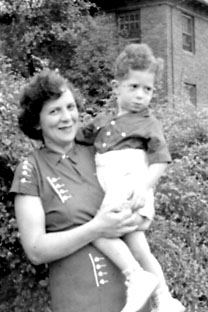
Thus, I now had conflicting birthplaces for Moses—one census said Austria, two said Russia.  I looked at the 1930 census, and once again there was a conflict.  Now Moses’ birthplace was reported as Austria-Hungary, then crossed out with “Europe” written above it. His parents’ birthplace, however, was given as Austria-Hungary.  Moses was now 80 years old, and he and his wife (now Ida again) and their youngest son Joseph (28) were living in Vineland, New Jersey, near Pittsgrove. So as with Abraham, the birthplace for Moses fluctuated back and forth between Russia and Austria with no specific town or city mentioned. Perhaps Moses really did not know where in Europe he was actually born.

Moses Brotman 1930 US census

Moses Brotman 1930 US census Year: 1930; Census Place: Vineland, Cumberland, New Jersey; Roll: 1327; Page: 13A; Enumeration District: 0060; Image: 434.0; FHL microfilm: 2341062

Moses died on September 23, 1935.  His death certificate said he was born in Austria in 1847 and that his parents were named Abraham Brotman and Sadie Berstein, also born in Austria.  His grandson Aaron Brotman was the informant, Abraham’s youngest son who would die himself just a few years later.  Moses’ wife’s name was given as Rachel Rice.  This has caused considerable confusion for the family.  Was this a third wife? A mistake?

Moses Brotman death certificate_0001_NEW

In the obituary for Moses, it says he was survived by his widow, but did not name her.  It did, however, name all his children (including the married names for Sadie and Katie, as indicated above) and their residences.

Moses Brotman obituary

Moses Brotman obituary Courtesy of his granddaughter Elaine, source unknown

I found the death certificate for his youngest child, Joseph, who died less than a year after his father on July 26, 1936, from bacterial endocarditis.  He was only 34 years old.  On his death certificate, Moses’ birthplace is once again given as Russia, and Joseph’s mother’s name is reported to be Rachael Rice. The informant was Joseph’s half-brother, Abraham Brotman.

Joseph Brotman (Moses' son) death certificate Ancestry.com. Pennsylvania, Death Certificates, 1906-1963 [database on-line]. Provo, UT, USA: Ancestry.com Operations, Inc., 2014. Original data: Pennsylvania (State). Death certificates, 1906–1963. Series 11.90 (1,905 cartons). Records of the Pennsylvania Department of Health, Record Group 11. Pennsylvania Historical and Museum Commission, Harrisburg, Pennsylvania.

Joseph Brotman (Moses’ son) death certificate
Ancestry.com. Pennsylvania, Death Certificates, 1906-1963 [database on-line]. Provo, UT, USA: Ancestry.com Operations, Inc., 2014.
Original data: Pennsylvania (State). Death certificates, 1906–1963. Series 11.90 (1,905 cartons). Records of the Pennsylvania Department of Health, Record Group 11. Pennsylvania Historical and Museum Commission, Harrisburg, Pennsylvania.

Since Moses’ wife on the 1910 census was Ida and since Joseph was born in 1902, it would seem likely that Ida was Joseph’s mother.  Or could Chaya have been Rachel Rice and then died after Joseph was born? Was Ida a third wife? And was she the same woman as Clara, the wife listed on the 1920 census, or was that a fourth wife? My own personal hunch was that Rachel, Chaya, Ida and Clara are all one and the same person.

Although I was able to find the death certificate for Irving Brotman, it had no information for the name of his mother, had his father’s name as Morris, and had no information for their birthplaces.  I was, however, able to find the following entries in the New Jersey, Births and Christening Index on Ancestry.com for two of Moses’ children:

Name: Liza Brotman
Gender: Female
Birth Date: 2 Feb 1892
Birth Place: Pit, Salem, New Jersey
Father’s name: Moritz Brotman
Mother’s name: Chai Reis
FHL Film Number: 494224
Name: Brotman
Gender: Female
Birth Date: 12 May 1897
Birth Place: Pit , Salem, New Jersey
Father’s name: Moses Brotman
Father’s Age: 45
Father’s Birth Place: Austria
Mother’s name: Clara Rice
Mother’s Age: 30
Mother’s Birth Place: Austria
FHL Film Number: 494236

Notice that the mother’s name was Chai Reis on the first, then the more Americanized Clara Rice on the later one.  These were both created before the 1900 census listing of Moses’ wife as Chaya, the 1910 listing as Ida, the 1920 listing as Clara, or the 1930 listing again as Ida.  Notice that the surname is Reis/Rice, the same surname given for Moses’ wife on his death certificate in 1935 and that of his son Joseph in 1936.  I find this last bit of evidence enough to conclude that Rachel Rice was the same woman who married Moses in 1884 or so, immigrated with him and their first two children, and gave birth to and raised nine children from Sadie, born in 1884, through Joseph, born in 1902.  In 1940 after Moses had died, Ida (aka Chaya-Clara-Rachel) was living with her son Lewis/Louis and his wife Jean and their daughter Elaine in Vineland, New Jersey.  According to Elaine, Ida died about three years later.  Unfortunately I have not yet located a death record or obituary for Ida.

Lewis Brotman 1940 US census Year: 1940; Census Place: Vineland, Cumberland, New Jersey; Roll: T627_2327; Page: 10B; Enumeration District: 6-76

Lewis/Louis Brotman 1940 US census
Year: 1940; Census Place: Vineland, Cumberland, New Jersey; Roll: T627_2327; Page: 10B; Enumeration District: 6-76

Thus, reviewing all the records I had found had not brought me any closer to learning exactly where Moses Brotman or Abraham Brotman had been born or where they had lived in Europe.  But while searching, I stumbled upon something else.  I will report on that as my last post before I leave for my trip.

[1] Relatives of the Brotmanville Brotmans say family lore is that the family was from Preszyml, a town about 90 miles from Tarnobrzeg, Grebow, and Radomysl nad Sanem, the other ancestral towns where possible family members lived. But I have not found any record supporting that family lore.

[2] A few geographical facts are necessary to understand the locations discussed in this post.  Brotmanville is an unincorporated community within the township of Pittsgrove so Pittsgrove is listed on the census records, not Brotmanville.  The colony where Baron de Hirsch and others created the farming settlement for poor Jewish immigrants was called the Alliance Colony. Vineland is a neighboring community where many of the Brotmans lived over the years.

Too Many Missing Pieces: Part II

In my last post, I wrote about the list of English James Seligmann’s heirs that my cousin Wolfgang found in his family’s papers.  There were 21 principals named as heirs on that document, and I had discussed all the easily identified ones and some of those that were more difficult to figure out.  I had discussed Numbers 1, 2, 6-13, 15, 16, 19-21.  That left Numbers 3-5,  14, 17, and 18.  Here again is the list of heirs:

heirs list p 1

Heirs List p 2

So let’s start with Number 3, Johanna Bielefeld, the one whom Elsa Oppenheimer had claimed was not a daughter of Hieronymus Seligmann in her July, 1984 letter.

Elsa Oppenheimer 1984 letter-page-001

Elsa Oppenheimer 1984 letter-page-002

Perhaps Elsa was wrong; after all, she was wrong about Adolph Seligman not being the child of Moritz and Babetta, as discussed last time.  Or maybe Johanna was the daughter of Benjamin Seligmann.  I am not sure yet, but I do know that she was born in Gau-Algesheim.  Wolfgang found this registration card for her, dated January 12, 1939, issued by the police in Mainz.  It gives her birth name as Seligmann, her birth date as March 15, 1881, and her birthplace as Gau-Algesheim.  I have written to my contact in Gau-Algesheim, asking him to see if he can find a birth record for Johanna so I can determine who her parents were.  Notice also the large J on her card, indicating that she was Jewish.

Here is the companion card for her husband Alfred Bielefeld:

The list of heirs provided the names of Johanna and Alfred’s children, Hans and Lili (or Lily).  It indicated that Johanna had died as had Hans, he in 1948.  Then it provided a married name for Lili, Mrs. Fred Hecht, and an address on West 97th Street in New York City.  Searching for Hans Bielefeld brought me to someone with that name on the 1940 census, living in Cleveland, Ohio. He was working as an insurance agent, was 37 years old, and had been residing in Mainz, Germany, in 1935.

Year: 1940; Census Place: Cleveland, Cuyahoga, Ohio; Roll: T627_3221; Page: 5A; Enumeration District: 92-451

Year: 1940; Census Place: Cleveland, Cuyahoga, Ohio; Roll: T627_3221; Page: 5A; Enumeration District: 92-451

Further searching found an index listing in the Ohio Deaths database on Ancestry for Hans Bielefeld, indicating he had died on September 13, 1948, the same year of death given on the list of heirs document.  On Fold3.com, I then found naturalization papers for Hans Ludwig Bielefeld, indicating that he was divorced, that he was born on July 1, 1902 in Maine (sic), Germany, and that he had arrived in the US on the SS Gerolstein on July 14, 1938.

Publication Number: M1995 Publication Title: Naturalization Petition and Record Books for the US District Court for the Northern District of Ohio, Eastern Division, Cleveland, 1907-1946 Content Source: NARA National Archives Catalog ID: 1127790 National Archives Catalog Title: Naturalization Petitions, compiled 1867 - 1967 Record Group: 21 Partner: NARA State: Ohio Court: Northern District, Eastern Division Catalog Keywords: Petitions Naturalization Immigration Citizenship Fold3 Publication Year: 2008

Publication Number: M1995
Publication Title: Naturalization Petition and Record Books for the US District Court for the Northern District of Ohio, Eastern Division, Cleveland, 1907-1946
Content Source: NARA
National Archives Catalog ID: 1127790
National Archives Catalog Title: Naturalization Petitions, compiled 1867 – 1967
Record Group: 21
Partner: NARA
State: Ohio
Court: Northern District, Eastern Division
Catalog Keywords: Petitions Naturalization Immigration Citizenship
Fold3 Publication Year: 2008


That led me to a passenger manifest for the SS Gerolstein, where I found Hans listed as a divorced merchant from Mainz.  It seemed like this could be the son of Johanna Seligmann Bielefeld, but I couldn’t be sure.

So I searched for his sister Lili.  I first searched for her as Lili Hecht, but had no luck, so I searched for Lili Bielefeld and found her first on an English ship manifest dated September 18, 1940, from Liverpool bound for Montreal, Quebec.  Lili was listed as 36, having last resided in London, but born in Germany.  Her occupation was given as a domestic.  The age, birthplace and name seemed correct, so I considered it likely that this was the right person.

Ancestry.com. UK, Outward Passenger Lists, 1890-1960 [database on-line]. Provo, UT, USA: Ancestry.com Operations, Inc., 2012.

Ancestry.com. UK, Outward Passenger Lists, 1890-1960 [database on-line]. Provo, UT, USA: Ancestry.com Operations, Inc., 2012.

Then I found her listed with the same information on a US manifest for passengers entering the United States from Canada.  But since Lili did not arrive until September, 1940, she is not listed on the 1940 census, making it extremely difficult to find her in the online databases on Ancestry.  There were a number of Fred Hechts, but how would I know if any of them were married to Lili?

So I turned to Google and entered “Lili Bielenfeld Fred Hecht,” and once again I hit the jackpot.  Like Fred and Ilse Michel, Fred Hecht and Lili Bielenfeld have papers in the collection at the Leo Baeck Institute entitled “Hecht and Gottschalk Family Collection; AR 5605.”  In the biographical note included with this collection, I learned that Fred Hecht came from a German Jewish family with a long history.  I will quote here only the sections relevant to Fred, Lili and Hans:

Jakob and Therese Hecht had a son, Siegfried Max Hecht (alternatively Fritz, later Fred, 1892-1970). Siegfried Hecht became a merchant and served in the German military during World War I. Siegfried and his wife Emma née Cahn divorced in 1939, and he immigrated to the United States in 1940, where he took on the name Fred. He settled in New York City and became a jewelry salesman. In December of 1944, he and Lili née Bielefeld (1904-1977) were married.

The Bielefeld family can be traced back to the late 18th century. The family lived in Karlsruhe, Mainz, and Mannheim until the 1930s, when some members immigrated to the United States. Lili Hecht née Bielefeld was the daughter of Alfred Bielefeld, a wine merchant, and Johanna Bielefeld née Seligmann. Despite efforts to procure passage to the U.S., both Alfred and Johanna perished in the Holocaust. Alfred died in Theresienstadt, and Johanna was deported from Theresienstadt to Auschwitz, where she perished.

Lili Hecht née Bielefeld’s brother Hans Ludwig Bielefeld (1902-1948) was a merchant. He married Lilli née Kiritz in 1933, and the couple divorced in 1936. Hans Ludwig immigrated to the United States under the sponsorship of his cousin, Irma Rosenfeld, and settled in Cleveland, Ohio, where he worked in insurance. After his death, his sister Lili Hecht née Bielefeld was the sole heir to the Bielefeld family property, which she claimed in the 1960s alongside restitution for her parents’ deaths.

Thus, from these papers and this biographical note, I was able to find out a great deal about what had happened to Johanna Seligmann Bielefeld, her husband, and her two children, Hans and Lili.  I will write more about them in a separate post once I have a chance to examine the LBI collection more carefully and obtain translations where necessary.

Number 4 on the list, Bettina Arnfeld, was more difficult to locate, but I found a Bettina Elizabeth Arnfeld listed on FindAGrave  with the notation, “Body Lost or Destroyed.” Her birthdate was given as March 17, 1875.  This may have been the “Elizabeth” whom Elsa claimed was not a child of Hieronymus Seligmann.  I then looked for and found Bettina Elizabeth Arnfeld in the Yad Vashem Database.  The entries there confirmed that her birth name was Seligmann, that she was born on March 17, 1875, and that she had resided in Muelheim Ruhr in Germany at the time she was deported.  She was exterminated at Thieresenstadt on January 23, 1943.

The list of heirs indicated that Bettina had a son, Heinz Arnfeld, living on 22 Gloucester Square in London, and he was not difficult to locate.  I found several entries for Heinz and Liselotte Arnfeld at that address in London, England, Electoral Registers on Ancestry.  I also found Heinz and Liselotte listed in the England & Wales Marriage Index on Ancestry.  They were married in Doncaster, Yorkshire West Riding in 1945. Heinz is also listed as a survivor of the Holocaust in the Shārit ha-plātah database on JewishGen.

Heinz died in 1961 and left his estate to Liselotte; she died in 1988. I do not know whether they had any children.  Since they were married in 1945 when Liselotte was 37, it does not seem likely.

That brings me to Numbers 17 and 18 on the list, putting Numbers 5 and 14 aside for now.  Who were Eva Hansu and Rosa Reisz?  If these were nieces of English James Seligmann, then they had married and changed their surnames, so how could I find them?  Since they were listed right after Emil and Eugen, sons of Carolina Seligmann and Siegfried Seligmann, I went back to the list of Carolina’s children and realized that she had daughters named Eva and Rosa.  Thus, I assumed that Eva became Eva Hansu and Rosa became Rosa Reisz.

I had good luck searching for Rosa Seligmann Reisz.  I knew her daughter’s name was Hedwig Neter from the list of heirs, and that seemed unusual enough that I decided to search for it first.  Sure enough the name came up on a passenger’s manifest dated August 31, 1940, for the ship Cameronia departing from Glasgow, Scotland, for New York.  Sailing with Hedwig was her husband Emil Neter and her mother Rosa Reis.  Emil was a 61 year old manufacturer, Hedwig a 48 year old housewife, and Rosa was 73 without occupation.  They all had last been residing in London and said the US was their intended permanent residence.

Ancestry.com. UK, Outward Passenger Lists, 1890-1960 [database on-line]. Provo, UT, USA: Ancestry.com Operations, Inc., 2012.

Ancestry.com. UK, Outward Passenger Lists, 1890-1960 [database on-line]. Provo, UT, USA: Ancestry.com Operations, Inc., 2012.

According to FindAGrave, Rosa Seligmann Reis died on January 29, 1958, and is buried at Hauptfriedhof in Mannheim, Germany.  Her son-in-law Emil Neter died on July 8, 1971, in Washington, DC, and is also buried at Hauptfriedhof in Mannheim, as is her daughter Hedwig Reis Neter, who died on May 28, 1979, in Washington.  I found it very interesting that after living in the United States all those years, Rosa, Emil, and Hedwig chose as their burial place the country they had escaped so many years before.  A little more searching turned up Hedwig’s birth certificate and a family record from 1891, both of which revealed that Rosa’s husband’s name was Ludwig Reis, son of Callman Reis, a merchant.

Ancestry.com. Mannheim, Germany, Births, 1870-1900 [database on-line]. Provo, UT, USA: Ancestry.com Operations, Inc., 2014. Original data: Personenstandsregister: Geburtsregister Standesamt Mannheim und Vororte 1876-1900, Stadtarchiv Mannheim, Mannheim. Deutschland.

Hedwig Reis Birth Certificiate Ancestry.com. Mannheim, Germany, Births, 1870-1900 [database on-line]. Provo, UT, USA: Ancestry.com Operations, Inc., 2014.
Original data: Personenstandsregister: Geburtsregister Standesamt Mannheim und Vororte 1876-1900, Stadtarchiv Mannheim, Mannheim. Deutschland.

Ancestry.com. Mannheim, Germany, Family Registers, 1760-1900 [database on-line]. Provo, UT, USA: Ancestry.com Operations, Inc., 2014. Original data: Polizeipräsidium Mannheim Familienbögen, 1800-1900. Digital images. Stadtarchiv Mannheim — Institut für Stadtgeschichte, Mannheim, Germany

Ancestry.com. Mannheim, Germany, Family Registers, 1760-1900 [database on-line]. Provo, UT, USA: Ancestry.com Operations, Inc., 2014.
Original data: Polizeipräsidium Mannheim Familienbögen, 1800-1900. Digital images. Stadtarchiv Mannheim — Institut für Stadtgeschichte, Mannheim, Germany

Searching at Hauptfriedhof on FindAGrave, I found that Ludwig had died in 1928 and had been buried at Hauptfriedhof.  It seems that Rosa and her daughter Hedwig wanted to be buried where Ludwig had been buried years before.  With the help of Matthias Steinke in the German Genealogy group on Facebook, I was able to locate the headstone for all four of them at the  Stadtarchiv Mannheim website.


At first I couldn’t find anything about Eva Hansu, Number 17.  I couldn’t find her husband’s first name, and although the heirs’ list gives her daughter’s married name as Alice Kauffman of France, I had not been able to find her either.  Then after Matthias introduced me to the Stadtarchiv Mannheim website where he had found the headstones for Rosa and her family, I decided to search for all people with the birth name Seligmann and found Eva as Eva Seligmann Hanau, not Eva Hansu as I had mistakenly read it on the list of heirs.  It provided the same birth date I’d already found for Eva, March 18, 1861, and it reported her date of death as March 18, 1939.  Her husband was Lion Hanau, born May 24, 1854, in Altforweiler, Germany, and he died February 7, 1921.  The archive also included photographs of their headstone.

As for their daughter, now that I had the correct spelling of her birth name Hanau, I was able to find her marriage certificate for her marriage to Ernst Kaufmann on August 10, 1911.

Marriage cert of Alice Hanau and Ernst Kaufmann

Marriage cert of Hanau Kaufmann p 2

Ancestry.com. Mannheim, Germany, Marriages, 1870-1920 [database on-line]. Provo, UT, USA: Ancestry.com Operations, Inc., 2014. Original data: Personenstandsregister: Heiratsregister Standesamt Mannheim und Vororte, Stadtarchiv Mannheim, Mannheim. Deutschland.

I do not know what happened to either Alice or Ernst during or after the war.

So that leaves me with only two names on the list of heirs for whom I as yet have no answers: Anna Wolf, Number 5, and Bettina Ochs, Number 14.  Anna Wolf is listed as a fraulein, so that is her birth name, not a married name.  It says that Johanna Bielfeld was her aunt, so presumably Anna’s mother was a sister of Johanna.  If, in fact, Johanna was a child of Hieronymus Seligmann, she had two sisters, Mathilde and  Auguste and perhaps Bettina.  I don’t have any information about them aside from what was listed in Elsa’s letter, posted above.  More work to be done.

And Number 14, Bettina Ochs, is even more of a puzzle.  I’d have assumed that Ochs was her married name, Seligmann her birth name.  But the note on the document mentions a brother as her next of kin, and his name was Arthur Erlanger.  That would suggest that Bettina Ochs was born Bettina Erlanger, not Seligmann.  So how is she related? Who was her husband? Which one is the blood relative of English James Seligmann?  I found one listing on JewishGen.org for Bettina Ochs-Erlanger with a secondary name as Bettina Oberdorfer.  She was born May 7, 1870, and her nationality was Italian, consistent with the Milan address provided on the heirs list.  She was listed in the Switzerland, Jewish Arrivals, 1938-1945 database; I can’t see the original document, but the index indicates that she arrived in Switzerland on August 5, 1944.

It’s amazing how much information I could mine from this one little document.  Unfortunately, although I should have gotten great satisfaction from finding so many people and so much information, I ended up feeling very sad and very drained as I added all these names of my cousins to the list of those killed in the Holocaust.  It is beginning to overwhelm me.  So much loss, so much evil.  Incomprehensible.

Putting The Puzzle Together:  Too Many Missing Pieces

Sometimes it is amazing to me how much information you can get from one document—an obituary, a death certificate, a news article.  This time it was a document my cousin Wolfgang Seligmann found in a suitcase.  In fact, I learned so much from this document that I have to divide this post into two separate posts to make each a reasonable length.

What Wolfgang found was a list of names of the heirs to the estate of James Seligman, the son of Moritz and Babetta who had moved to England. (I will refer to him as English James Seligman to distinguish him from the US James Seligman, my great-grandmother’s brother.)   The document is entitled: “J. Seligman Deceased: Statement as of 1st January 1950 of Nephews and Nieces and their Issue, who may take an interest under the Intestacy in the above Estate.”  There are 21 principals named on the document as well as the names of several of the children or relatives of those 21 who might inherit in their place, if the principals were deceased.

heirs list p 1

Heirs List p 2

I have spent a lot of time trying to figure out who these 21 people were and how they were related to English James and also thus to me.  Some of them were very easy to identify.  Number 21 was the easiest:  Mrs. Eva Cohen of Philadelphia was my great-grandmother.  She was deceased by 1950, and unfortunately there was no listing on the document of her heirs, which would have included my father, my aunt, my great-uncle Stanley, and the sons of Maurice Cohen, Buddy and Junior.

Numbers 19 and 20 were also easily identified: Arthur and US James Seligman, my great-grandmother’s brothers and the two other surviving children of Bernard Seligman, English James Seligman’s older brother.  For US James Seligman, Morton is listed as his surviving son.  For Arthur, there is mention of his “oldest son” (he had only one, Otis), and a note that he had been “Governor of Santa Fe” and might be able to find other relatives.  By 1950, however, Arthur and his son Otis were both deceased.  (These careless errors made me a bit skeptical of the Bank’s attention to detail.)

I also knew who Numbers 15 and 16 were: Emil and Eugen Seligmann were the sons of Carolina Seligmann, the half-sister of James, Bernard, and the others, and they were the grandsons of Moritz Seligmann and Eva Schoenfeld.  Emil had died from heart disease in 1942, and Eugen had died at Thierenstadt concentration camp in 1942.  Emil’s son also died during the Holocaust at Buchenwald in 1945.   His daughter Christine was still alive in 1950 when this document was created.

Number 6 is Wolfgang’s grandfather Julius, a son of August Seligmann and grandson of Moritz and Babetta.  He was still alive in 1950.  Number 7 is Moritz Seligmann, the brother of Julius about whom I wrote here.  He had served in World War I for Germany and been awarded the Cross of Honor, but was nevertheless killed during the Holocaust.  Number 8 is Franziska or Frances Seligmann Michel, the mother of Fred Michel, about whom I wrote here.  She was also the child of August Seligmann and the granddaughter of Moritz and Babetta, and had died in 1933.  Her son Fritz (Fred) is also mentioned on the heirs list.

Number 9 is Anna Seligmann Goldmann, the sister of Julius, Moritz, and Franziska and husband of Hugo Goldmann.  Anna, Hugo, and their three young children, Ruth, Grete, and Heinz, were all killed in the Holocaust.

The next four people, Numbers 10 through 13, are all from the Oppenheimer family, written about here.  Joseph, Martha, and Ella were the children of Paulina Seligmann and Meier Oppenheimer.  Paulina was the sister of Bernard, August, and James, and the daughter of Moritz and Babetta Seligmann.  Joseph and Ella both died during the Holocaust.  Martha survived, but her two children Gertrud and Paul did not.  With this document, I now learned that Martha’s married name was Floersheimer, and was able to find Gertrud and Paul in the Yad Vashem database.  Gertrud died at an unknown camp in 1942 after being deported on June 10 of that year from Wiesbaden, and her brother Paul died at a camp in Majdanek, Poland, on August 16, 1942.

Emma Oppenheimer, Number 13, I assume was Emma Neuhoff, the widow of Moritz James Oppenheimer, son of Paulina and a brother of Joseph, Martha, and Ella.  Moritz Oppenheimer, discussed here, had been a successful business person and horse breeder; he was reported to have committed suicide after being visited by the Gestapo in 1942.

That left me with eight unknowns: Numbers 1 through 5 and Numbers 14, 17 and 18.  Some of these I believe I have figured out; others I am not as certain about.  For example, Jack Seligmann, Number 1, has to be the son of a brother of James to have the Seligmann surname.  I knew he was not the son of Sigmund (never married, lived in the US), Bernard (lived in the US), or Adolph (lived in the US).  I assumed I had all the sons of August Seligmann from the records I found and records Wolfgang shared with me.  Salomon Seligmann died when he was 21, so I eliminated him.  That left only two of James’ brothers: Benjamin, a half-brother, and Hyronimus, a full-brother.  I had no records other than birth records for either Benjamin or Hyronimus, and thus, I had no way to determine whether Jack was a son of Benjamin or Hyronimus, but assumed he was the son of one or the other.

Then, while I was trying to puzzle this out, Wolfgang found another document.  It was a letter written in 1984 by Elsa Oppenheimer to the National Westminster Bank regarding the estate of English James Seligman.   (I think Elsa Oppenheimer was the daughter of Jur Oppenheimer, son of Moritz James Oppenheimer, based on the family tree I received from Wolfgang a few weeks ago.)  In her letter to the bank on July 9, 1984, Elsa attempted to correct some errors she felt the bank had made in identifying heirs of English James.    She claimed, for example, that the Bank had incorrectly listed Adolph as a son of Moritz and Babetta because she could not locate a birth record for him; she was wrong about that, however, as here is a copy of his birth record, naming Moritz and Babetta as his parents.

adolph seligman birth record


Elsa also claimed that she knew of all of the children of Hieronymous Seligmann based on birth records, and that they were Jacob and Auguste, twins born on April 8, 1869; Mathilde, born October 4, 1872; and Rosina Laura, born June 9, 1878.  Elsa asserted that Hieronymous did not have daughters named Elizabeth or Johanna.

Elsa Oppenheimer 1984 letter-page-001

Elsa Oppenheimer 1984 letter-page-002

From this letter, I am assuming that Jack Seligmann, Number 1 on the heirs’ list, was Jacob Seligmann, son of Hieronymous Seligmann and thus a grandson of Moritz and Babetta and a nephew of English James Seligman.  His wife Anna is named here as living in Luxembourg as of 1950, so I looked on Yad Vashem and found an entry for a Jacob Seligmann, born on April 8, 1869, married to Anna, a clear match to my Jacob Seligmann.  He was killed in Luxembourg in 1941, according to the Yad Vashem site.    I don’t know whether Jacob and Anna had had any children.

That brings me to Number 2, Laura Winter.  I am assuming that Laura Winter was born Rosina Laura, a daughter of Hieronymous, and married a man named Winter.  The document names a Frau Aennie Wiener as her next of kin and states that Laura and her husband also died in Luxembourg, reinforcing my assumption that she and Jacob were siblings.  Aennie Wiener is listed as residing at 8409 Talbot Street, Kew Gardens, Long Island.

For a while I didn’t know what had happened to Laura Seligmann Winter or her husband, although they were deceased by 1950 according to the list of heirs.  Included, however, in the Ilse and Fritz Michel Collection at the Leo Baeck Institute is one handwritten note that provided some clues.  The note has no title, but is just a list of names: Anna Goldmann, Hugo Goldmann, Grete Goldmann, Heinz Goldmann, Ruth Goldmann, Helene Hess [mother of Ilse Hess Michel], Max Michel, Sophie Michel, Moritz Seligmann, Jacob Seligmann, S Winter, Laura Winter, Martha Florsheimer, Paul Florsheimer, Trude Florsheimer.

Handwritten list of names Fred Michel

What can I infer from this list? I know that Ilse and Fred Michel were actively involved in trying to find family members who were missing after the war.  I know that the Goldmann family, Helene Hess, Moritz Seligmann, Jacob Seligmann, and Paul and Trude Florsheimer were all killed in the Holocaust.  Martha was not, but nevertheless my guess is that these were all people whom Fred and Ilse could not locate after the war.  My hunch was that since the Winters were listed as deceased on the list of heirs document that they also were killed in the Holocaust.

I then searched Yad Vashem’s database again, this time for anyone named Winter living in Luxembourg, and found just one listing—for a Samuel Winter.  It said he was born on October 27, 1863, in Dusseldorf, Germany, and that he was married to Martha Seligmann.  Could Martha Seligmann really be Laura Seligmann? Could there really be two German men with the surname Winter and first initial S living in Luxembourg and married to a woman whose birth name was Seligmann?  I thought the odds were slim, so I used the Related Search function on the Yad Vashem database, searching for anyone with the same surname and from the same residence.

This time I got a list of other Winters from Luxembourg, including a Laura Winter.  The entry did not have a birth date or birth place for Laura, but it said she was the widow of Samuel and that she had been murdered on August 28, 1940. But the entry for Samuel said he was not deported until April, 1943, and died on April 21, 1943, at Thieresenstadt.  So how could Laura have been a widow in 1940?  Was this a different Samuel Winter who was really married to a Martha Seligmann?  I don’t know.


Embed from Getty Images

Fortunately, it was not very difficult to find their daughter, Aennie Wiener since I had her address at 8409 Talbot Avenue in Kew Gardens, a section of Queens in New York City, was listed on the heirs’ document.  Searching for her on Ancestry quickly uncovered Anna and Joseph Wiener living at 8409 Talbot Avenue in Queens.  Their residence in 1935 had been Mannheim, Germany, and they were now 46 and 58 years old, respectively.  Living with them were their daughter Doris Grunewald, her husband Ernst Grunewald, also both German immigrants, and their one year old daughter, Hannah Grunewald, born in New York.

Year: 1940; Census Place: New York, Queens, New York; Roll: T627_2746; Page: 1B; Enumeration District: 41-1373

Year: 1940; Census Place: New York, Queens, New York; Roll: T627_2746; Page: 1B; Enumeration District: 41-1373

I also was able to find ship manifests for Anna, Doris, and Ernst, all of whom came between 1937 and 1938.  Four more who escaped from Nazi Germany. I’ve not yet found any records for any of them after the 1940 census, but I am still looking.  I am particularly interested in finding Hannah.


To be continued…


More in the DNA Wars

Lately I have been drowning in DNA.  I am trying to figure out how to interpret the DNA results I have and make use of them in searching for my ancestors.  Specifically, my Brotman ancestors.  As I look forward to visiting Poland in May and seeing Tarnobrzeg, I more and more want to be able to find something that actually corroborates my conclusion that that was the general area where my great-grandparents Joseph and Bessie Brotman lived.  I was hoping that perhaps with DNA results, I’d find another clue, another cousin, who knew something I didn’t know.

Animation of the structure of a section of DNA...

Animation of the structure of a section of DNA. The bases lie horizontally between the two spiraling strands. (Photo credit: Wikipedia)

So I dove into the DNA.  When I last wrote about the DNA tests, I talked about the fact that the autosomal DNA results supported the story my aunt had told about Joseph Brotman and his brother who had moved to New Jersey where they named the town for him, i.e., Brotmanville.  Moses Brotman’s granddaughter Elaine tested as a likely second cousin to my mother, just as she would be if Moses and Joseph were brothers.  I am still waiting for results of an autosomal DNA test of Larry, who is a great-grandson of Moses Brotman, for further support (I hope) for that conclusion.  But sadly the Brotmanville Brotmans are also not clear on where Moses lived or was born in Galicia.  Family stories suggest Preszyml, which isn’t too far from Tarnobrzeg (about 90 miles), but there is no paper record to support that story either.  They also do not have any records or stories about the parents or siblings of Moses Brotman.

But the DNA results also produced an unknown likely second cousin for my mother named Frieda.  Frieda’s niece and I have been in touch, and we have narrowed down the possibilities of the connection.  We believe that the connection is through Frieda’s mother whose name was Sabina Brot.  We think that Sabina’s father might have been Bessie Brotman’s brother. Here is a chart that helps to visualize the potential relationships:

second revision family chart for blog


Again, there is no paper trail, but this is how we reached that tentative conclusion:

First, not only did my mother test as a second cousin to Frieda, but my brother tested as a second to fourth cousin to Frieda.  But Elaine, the granddaughter of Moses, tested as a third to fifth cousin to Frieda, meaning that Frieda shared more DNA with my mother and my brother than she did with Elaine. Since Elaine would be more closely related to Joseph than she would be to Bessie,[1] I inferred that Frieda was more likely connected to my mother through Bessie, not Joseph.  (Keep in mind that Joseph and Bessie were supposedly first cousins, so even Elaine could share some DNA with Bessie from Bessie and Joseph’s mutual grandparents, Elaine’s great-great-grandparents.)

At the suggestion of Frieda’s niece, I then ordered an mtDNA test on my mother’s kit to see if she and Frieda were in the same haplogroup.  As defined by the International Society of Genetic Genealogy (ISOGG), “A haplogroup is a genetic population group of people who share a common ancestor on the patrilineal or matrilineal line.”     Mitochondrial DNA (mtDNA) is only passed by mothers to their children.  Although sons inherit mtDNA from their mothers, they do not pass it down to their children.  Thus, mtDNA is a way of testing the maternal line—from mothers to daughters and so on.  If Frieda and my mother were not in the same haplogroup, we would be able to infer that the connection had not come from Frieda’s grandmother as a sister of Bessie, but more likely from Frieda’s grandfather.  As it turned out, my mother was not in the same haplogroup as Frieda, meaning Frieda’s mother (Sabina)’s mother was not the connection to my mother’s mother’s mother.  Thus, we concluded that if my mother and Frieda are second cousins, it was most likely that Bessie, my mother’s grandmother, and Frieda’s grandfather were siblings.

If only Frieda knew the name of her grandfather or the town where he lived, we could make some progress.  But unfortunately, Frieda’s family knows almost nothing about the background of Sabina Brot or her parents, so we are once again at an impasse.  Frieda’s niece believes Sabina lived in Radomysl nad Sanem, a town not far at all from Tarnobrzeg.

I put aside the DNA at that point, figuring I’d done what I could do.  I emailed a few other “matches” on FamilyTreeDNA, and I received a few responses.  But no one had any helpful information or anything that seemed like a possible link to my family.

Then I decided to try and get more out of the results.  I asked a lot of questions in various Facebook genealogy groups, read a lot of blogs and websites, but was still without a clue.  I tried a program called DNAgedcom, which has a tool known as ADSA that allows you to see who else matches your kit on a specific chromosome and who else matches with that person.  It is a great tool, but unfortunately DNAgedcom is not yet equipped to handle the large number of matches that most Ashkenazi Jews will generate through autosomal DNA testing.

As I’ve learned, and as I’ve seen in my own family on several lines, Ashkenazi Jews are an endogamous population, meaning that they tended to marry within their own community and even within their own families.  Thus, a typical Ashkenazi Jew will share some bits of DNA with thousands of other Ashkenazi Jews.  My mother had thousands of matches, but most of them are so distantly related as to be irrelevant.  As was recently stated in one report, some researchers believe that all Ashkenazi Jews are descended from several hundred Jews who lived about 600 years ago.  So we are, in fact, all one big tribe.

That’s all well and good until you want to use DNA to find closer relatives.  For DNAgedcom, it was just too much data.  Their website estimates that a typical download will take about 30 minutes.  My mother’s data was still downloading after SIX hours, and it wasn’t nearly done.  In fact, it crashed and never completely downloaded.

Then people told me to try GEDmatch, another website for interpreting DNA results.  I sent the data to GEDmatch for my mother, brother, Bruce, and Elaine, and Frieda’s niece sent Frieda’s data.  Then I had no clue what to do with GEDmatch.  Like DNAgedcom, it’s a free site run by wonderful people who are interested in genealogical uses of DNA.  But free means you can’t complain when things aren’t clear or you can’t figure something out.  I was totally perplexed by GEDmatch.  Lots of numbers, lots of charts.  But what did they all mean?  And how could I use them to interpret the DNA results or find new matches?

Here’s a portion of one page of many showing (with identifying information deleted) some of my mother’s matches on GEDmatch:

GEDmatch sample for blog

Yeah, right? What does all THAT mean?

Back to the Facebook groups I went, and this time I found three incredible women, Julie, Leah, and Lana, who volunteered to help me figure out how to use the DNA results and the various tools available.  Together they have backgrounds in biology and IT and math.  We created our own space on Facebook to work together.  Well, mostly they worked, and I learned.  Am still learning.  They are amazing.  We have spent hours and hours online together despite the fact that we are spread across two continents and many times zones.

What I have learned?  To begin with, I now understand how DNA is affected during the process of meiosis, that is, the creation of gametes, i.e., sperm and egg.  I won’t show off here, though I do wonder what my high school biology was teaching us since I never learned this.  The bottom line is that DNA changes during meiosis when segments of the chromosomes “cross over” and then randomly sort themselves before the cell splits into ultimately four new cells, each with a unique selection of DNA on the chromosomes contained therein.  As a result, two children with the exact same parents will not have identical DNA since the sperm and egg that created the first sibling will have different DNA than the sperm and egg that created the second sibling.  (This may explain why my brother has the science brain and I, quite obviously, do not. I am sure he and others will gladly point out anything that is not correct about this description.)

Here’s a cute video that I found helpful:

Why is any of that relevant to using DNA for genealogy? Because it means that even siblings will share varying amounts of DNA and different DNA.  It’s not only that every generation has new parents mixing into their offspring’s DNA; it’s also that each parent shares different DNA with each child.  And with each generation there are more crossovers, more sortings, and thus more differences.   So when two people share a fairly large amount of overall DNA and also some large segments of DNA, it is quite reliable as an indication of a familial relationship.  Given all the crossovers and mixing and new DNA with every generation, it’s not likely that two people would share a lot of DNA unless they were related.

I won’t go into all the statistics and terminology.  That’s not my goal here.  I just wanted to explain why I’ve found these three women so helpful. I like to understand things, not just accept numbers without an explanation.  And it didn’t stop with the science.  My mentors then helped me figure out how to use GEDmatch to “triangulate.”  No, not like Bill Clinton.  In using DNA in genealogy, it helps to find out who shares DNA with you on a particular location on a particular chromosome. Then you need to figure out who among those people also share with each other.  Thus, if A, B, and C share with me on Chromosome 12 at a given location for a certain segment, but A and B do not share with C, I know that C shares with me from a different parent than A and B.  But I don’t know whether A and B share with the DNA I got from my mother or the DNA I got from my father.

Another thing I learned: I knew that chromosomes came in pairs, one from each parent for each of the 23 pairs of chromosomes.  But I didn’t know that the testing companies don’t really distinguish one side from the other.  They test two strands from each pair of chromosomes (one from each chromosome in that pair), but the two are jumbled together on the companies’ depictions of what is on that Chromosome 12 I mentioned above.  What that means is that when I look at their depiction of a chromosome and see matches, I’ve no idea which parent’s strand that match pairs up with.

Human metaphase chromosomes were subjected to ...

Human metaphase chromosomes were subjected to fluorescence in situ hybridization with a probe to the Alu Sequence (green signals)and counterstained for DNA (red). (Photo credit: Wikipedia)

For example, if you look at my brother’s chromosomes with my mother’s as a match, it looks like she matches all his DNA. All that orange is where she matches his DNA on his chromosomes.  But in fact, that’s just half of his DNA.  The DNA from my father isn’t reflected.  All we are seeing is that my mother gave my brother half of his DNA.

Mom DNA on Ira's Chromosomes


In this case, we know that this is DNA from his mother because, well, I know she’s his mother.  But when I look at someone else on my brother’s chromosomes, I don’t know if that person is matching the strand from my mother or my father unless I triangulate the three kits.

Here’s a more typical chromosome browser display with various matches:

typical browser results

Each color represents a different person who shares some DNA with my brother, and as you can see, there are some places where two colors overlap, like on the 21st chromosome.  How do I know whether those people share DNA with my brother that comes from my mother or from my father?  How do I know if those two overlapping people are related or just one shares my father’s DNA on the location and the other shares my mother’s DNA at that location?  Triangulation.  We have to figure out if those two people also share DNA with each other at that location and also whether they share with my mother at that particular location.  And that’s what Leah, Lana, and Julie taught me to do.

Where has that gotten me? Well, we found that on Chromosome 21 my mother and Frieda had a large segment overlap with three other people.  I then triangulated and found that all of them also matched Frieda and each other at that location on Chromosome 21.  That means that they are all somehow related: Frieda, my mother, and A, B, and C all share a common ancestor who passed on this rather large segment that they all share.  I don’t know for sure whether my mother got that segment from her mother or father, but since we have reason to believe that my mother and Frieda are connected through my great-grandmother’s Bessie’s family, it would seem that A, B, and C are also somehow related to my mother and Frieda through that family line.

So I emailed A, B, and C.  I’ve heard back from two of them, but with nothing that’s very helpful.  The little information each had showed nothing to explain this DNA connection.  There are no common surnames and no common geographic locations.  These two didn’t even have roots in Galicia that they knew of.  Huh? Now what?

Good question.  We are still tweaking the numbers, scouring other chromosomes, hoping something will provide a breakthrough.  But at the moment I hold out limited hope that we will find someone who can connect all the pieces.  It’s just too far back in a place where very few records survive and where surnames only started 200 years ago.  Maybe A, B, and C had relatives who adopted different surnames, not Brot or Brotman.  Maybe their great-great-grandfather moved to Ukraine or Lithuania or Latvia or mine moved away from there.  We can speculate all we want, and the DNA doesn’t lie.  But we may never, ever find the answer to how we are related.

So I have no better information today about where my great-grandparents lived or the names of their siblings or the names of earlier generations.  But I know a lot more about DNA and about the tools out there for using it, thanks to Lana, Julie, and Leah.

***********************************

I will be taking a short break from the laptop—SPRING BREAK!  (Now that I am retired, it’s not really my spring break, but years and years of celebrating it still has its effects.)  See you soon.

For anyone who wants a broader introduction to DNA and chromosomes, Steve Morse (of stevemorse.org) wrote a very clear laymen’s overview of the topic here.


[1] Although Bruce, another great-grandchild of Joseph and Bessie, also tested as a third to fifth to Frieda, he shared more DNA with her than Elaine did, although he shared less than my brother did.  In theory at least, Bruce and Ira should test as the same distance from Frieda, if she is related to us through Bessie. But DNA does not always pass on in equal segments, or so I’ve learned.   Bruce might have more from Joseph’s side through his parents and grandparents than from Bessie’s side and my mother might have more.