
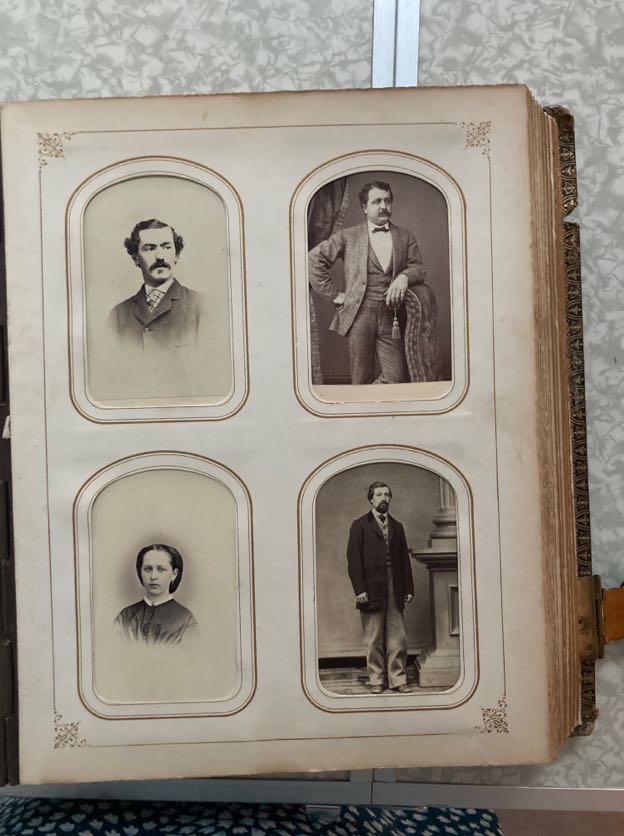
So what is left to talk about regarding the Nusbaum album, you may wonder? Well, Ava Cohn aka Sherlock Cohn analyzed about a quarter of the photographs taken in Philadelphia, all of the Santa Fe photographs, and about a third of the photographs from Germany. Add to that the handful I discussed that had names on them plus the photographs from Peoria, and that means many but not all of the photographs in the album have been discussed or analyzed. What can I say about those others?
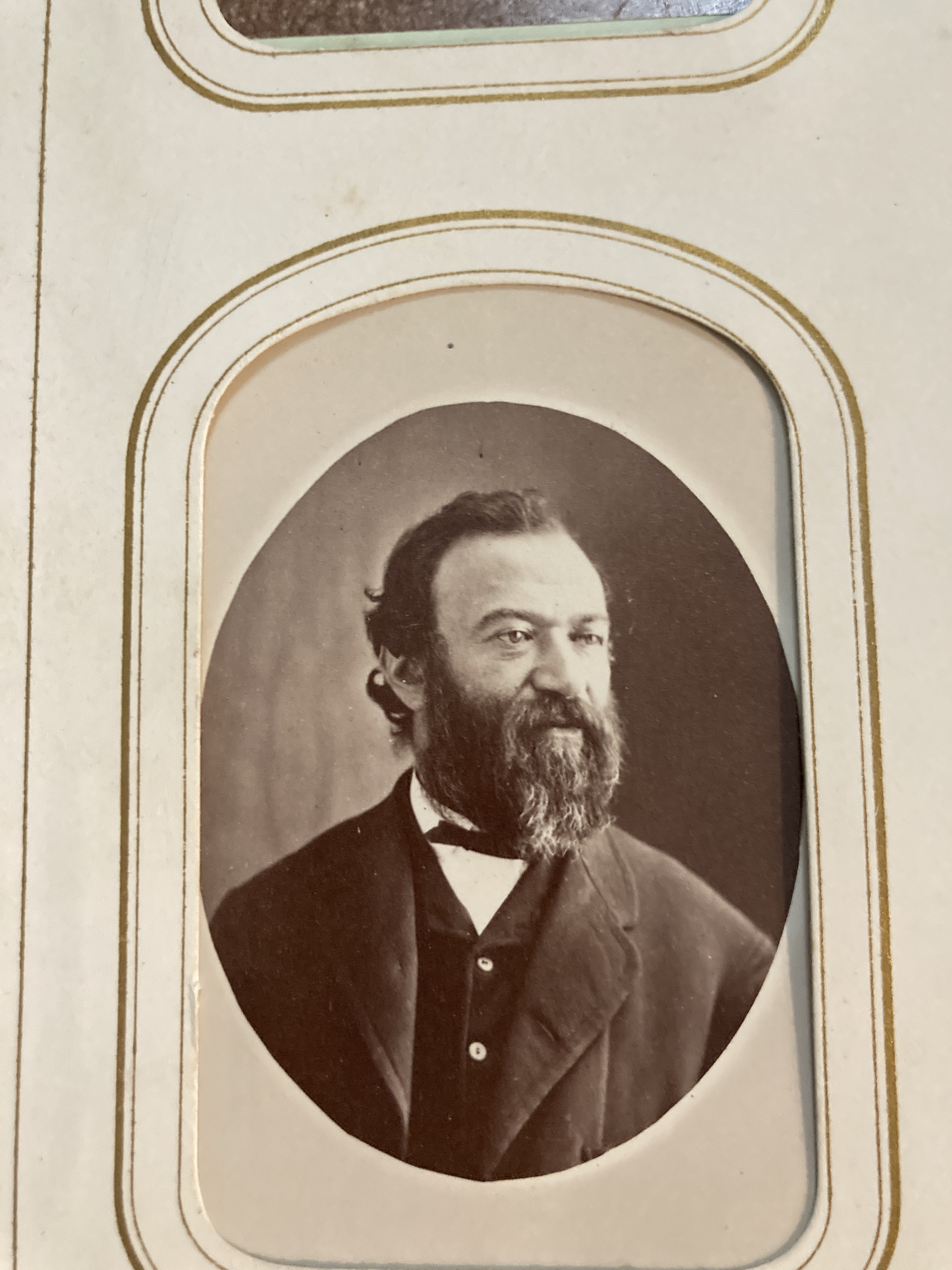
There are some that are more like postcards of famous places or people, e.g., a photograph of a painting of Goethe and one of “Baby Benson,” a child performer popular in the 1870s. But otherwise all the other photographs—at least another forty—are of people who have not been identified.
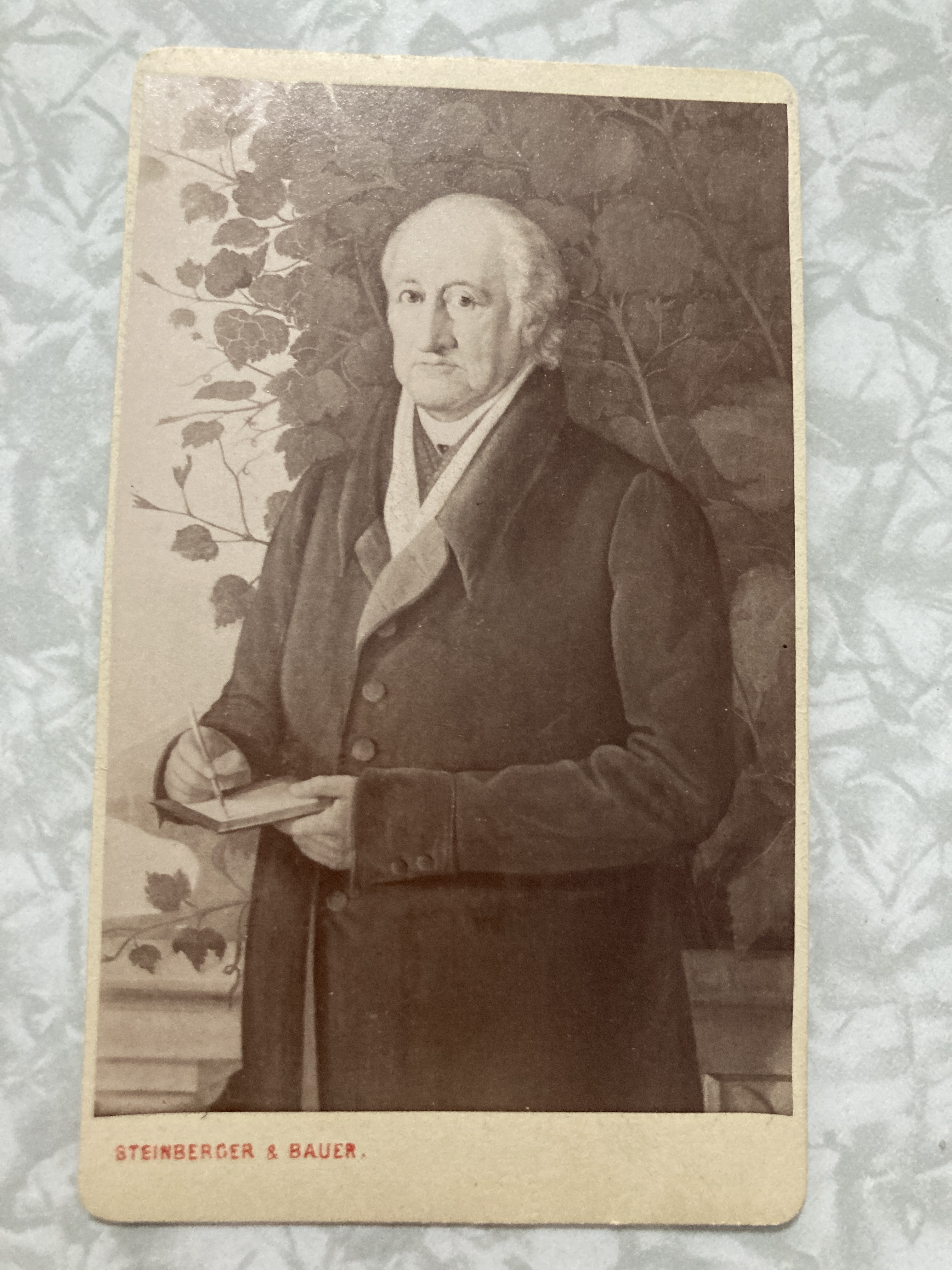
Goethe

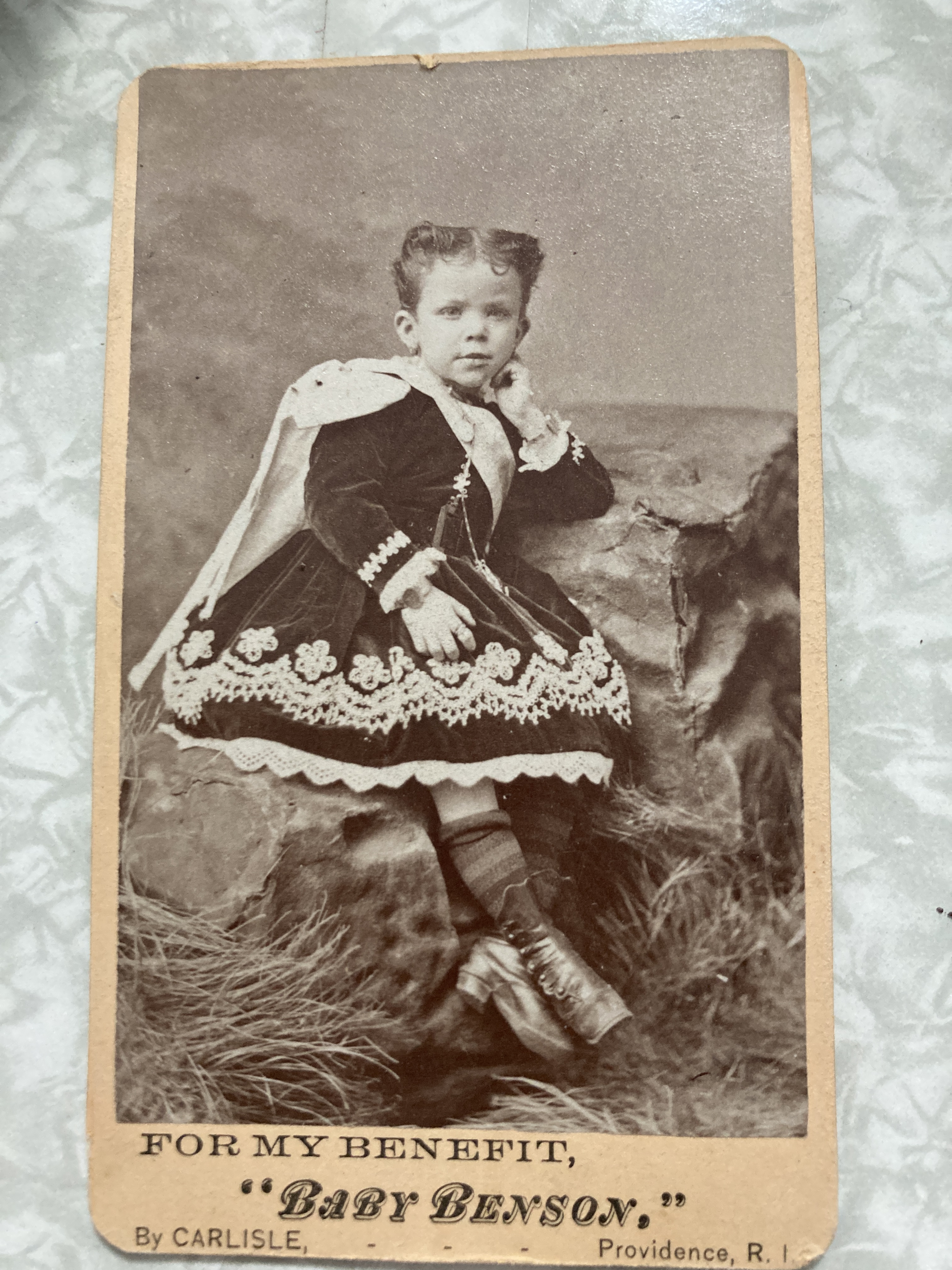
I gave up on the ones from Philadelphia—too many possibilities! An infinite number now that I know that these CDVs could have been given to the Nusbaums by friends, acquaintances, even visitors from other states, as we saw with S.B. Axtell’s CDV left as a calling card. I posted on a Philadelphia genealogy group on Facebook, inviting people to send me photos of their ancestors that I would use to compare with mine, but I had no luck.
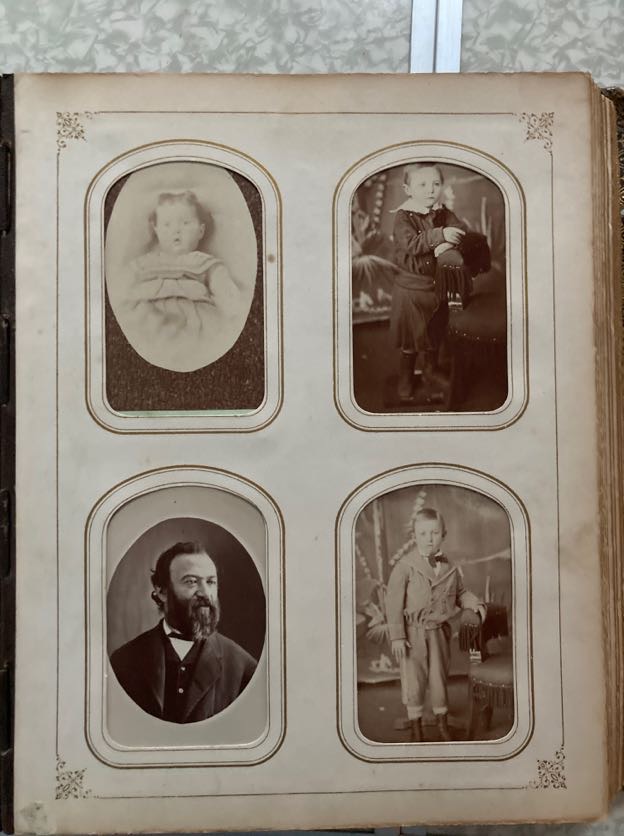
But I thought I could at least make an educated guess about the four photographs of children that were taken in Lewistown, Pennsylvania, all taken by a photographer named J.M. Wimer.
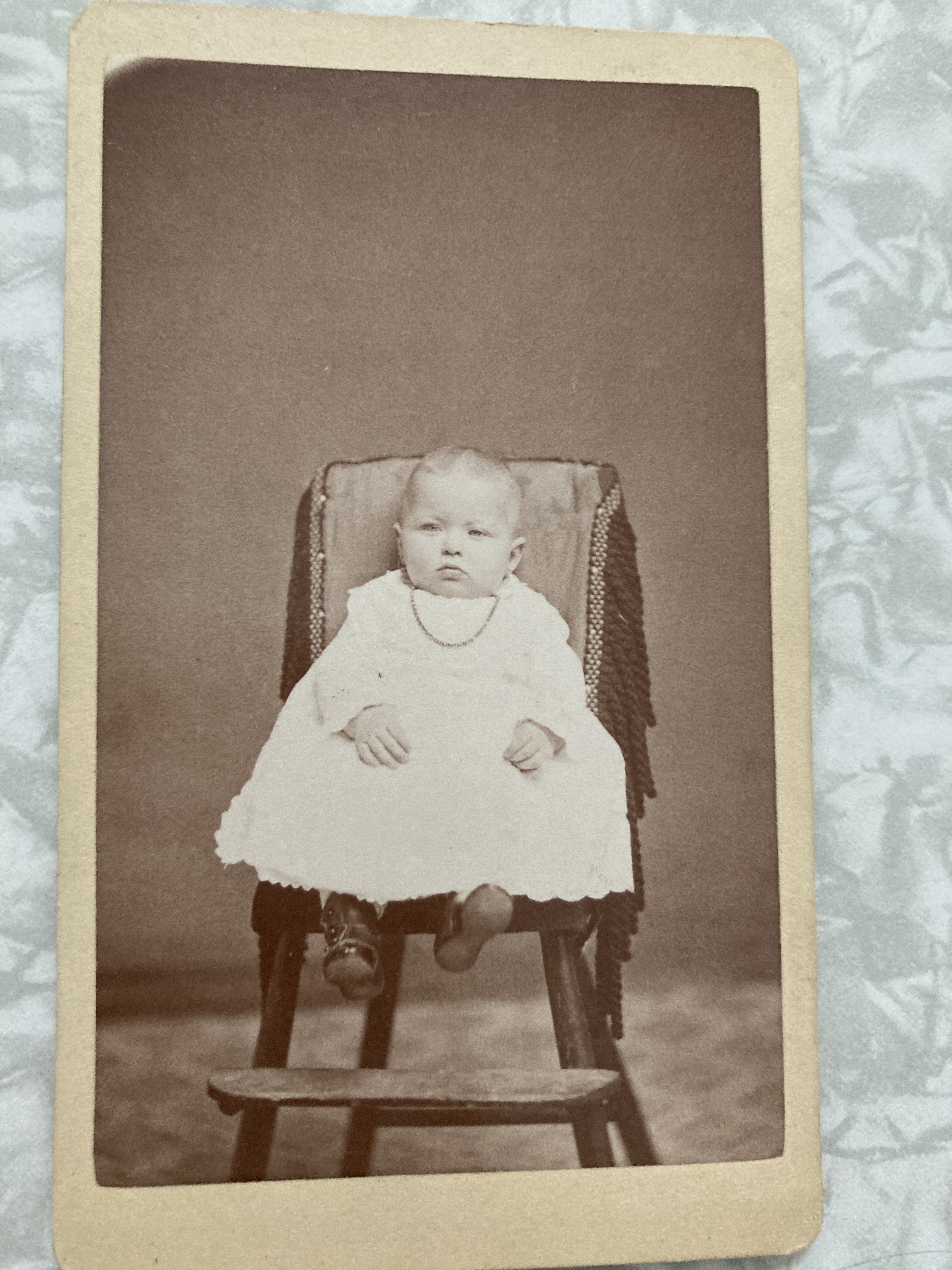
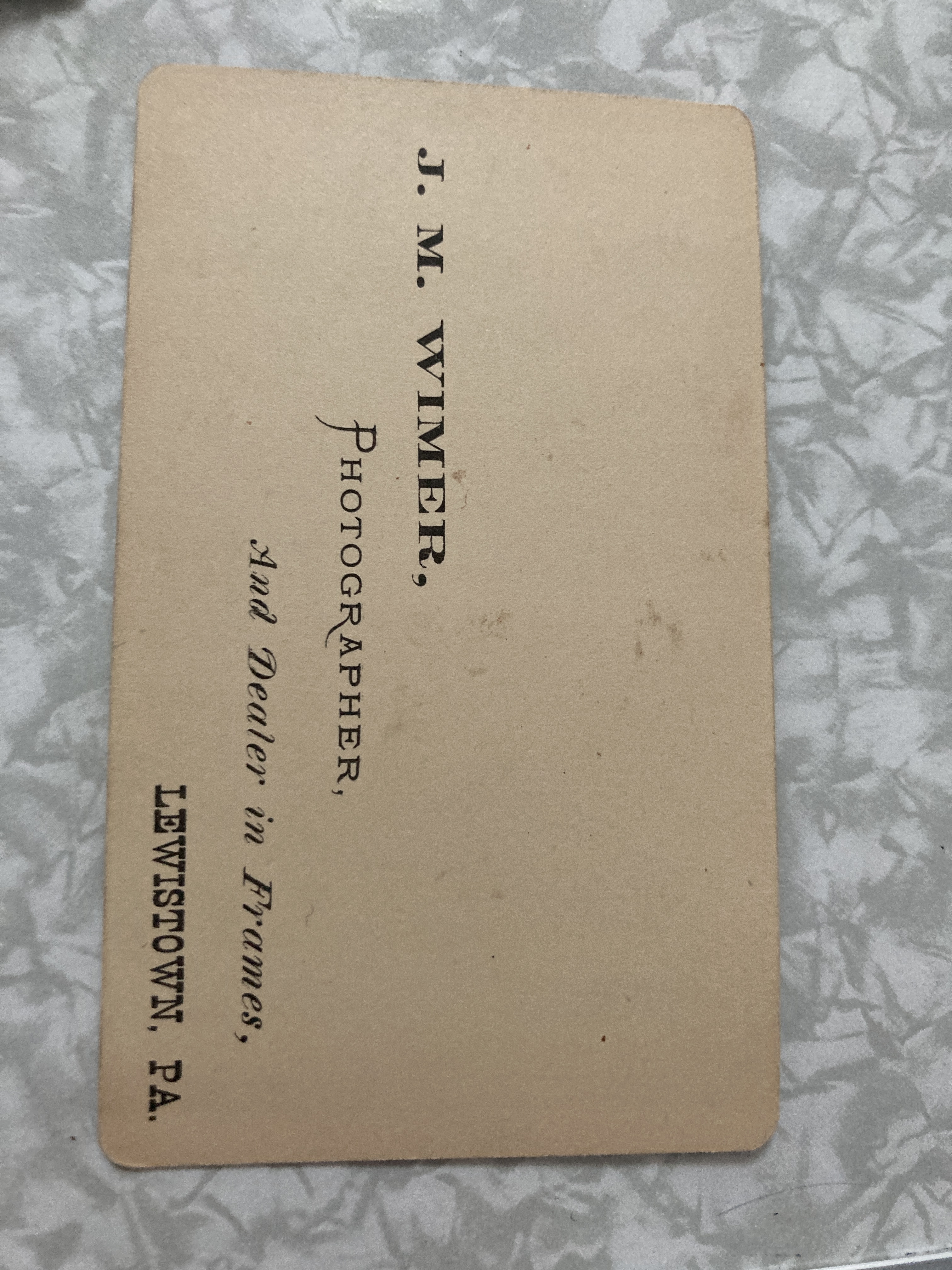


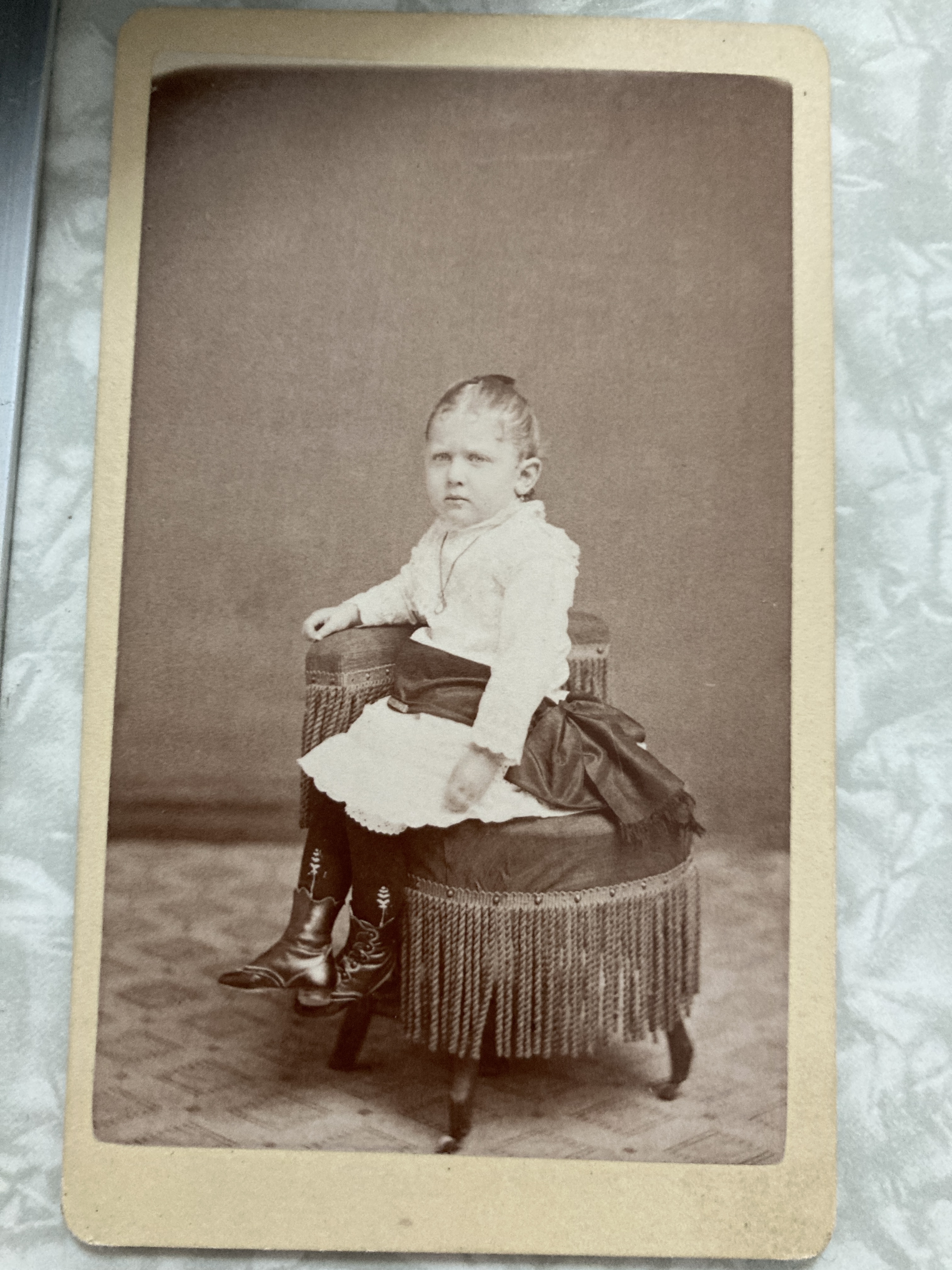
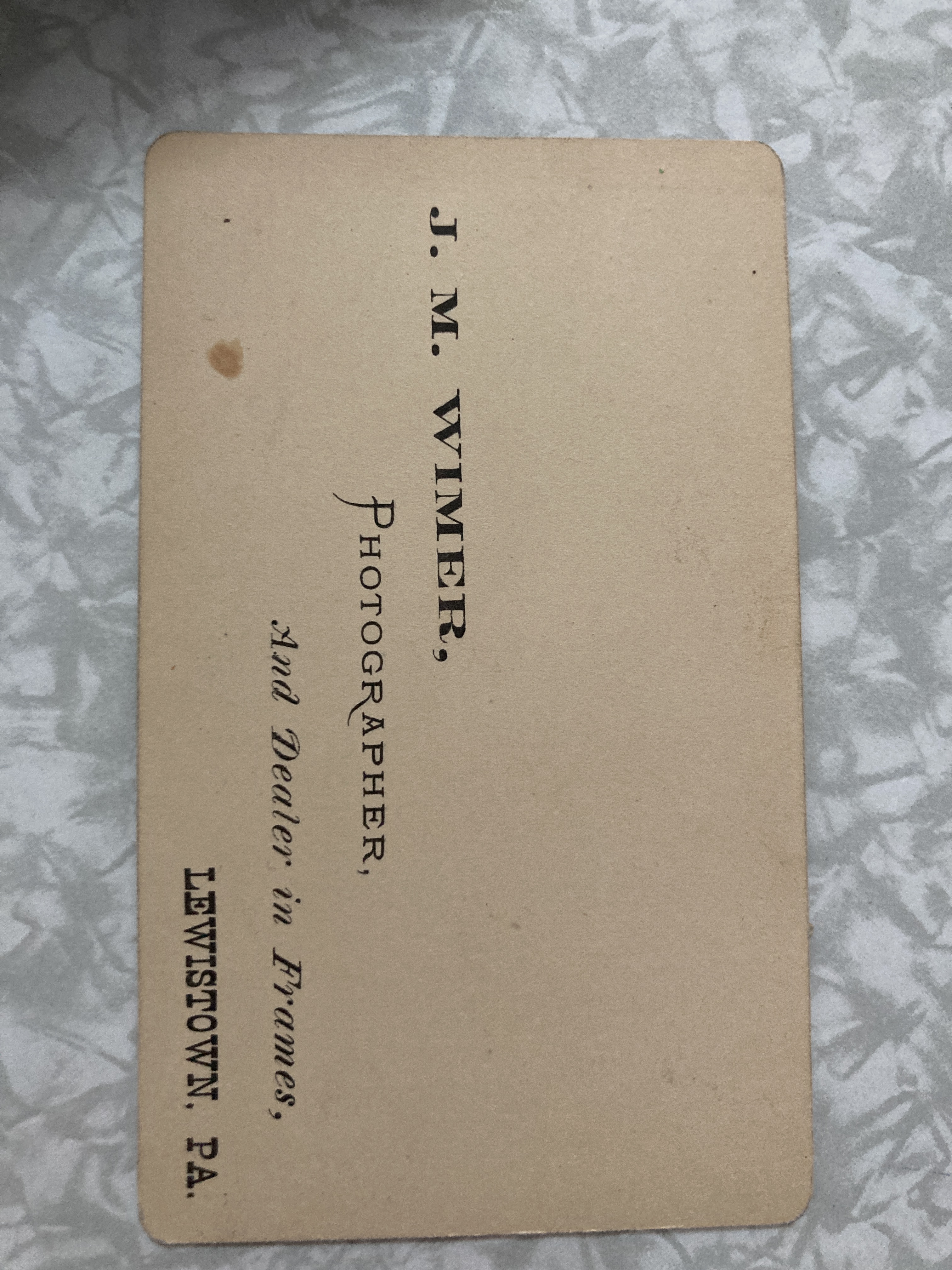


I have only one family on my family tree that lived in Lewistown in the mid-1800s—the family of Mathilde Dreyfuss Nusbaum Pollock. Mathilde Dreyfuss was the sister of my three-times great-grandmother Jeanette Dreyfuss Nusbaum. I at first thought it would be obvious who was who in these photos. As if…
Mathilde was married first to John Nusbaum’s younger brother Meier or Maxwell. They had two children together, Flora in 1848 and Albert in 1851. Tragically, Maxwell was killed in the San Francisco fire of 1851 while traveling there for business. Mathilde married Moses Pollock a few years later and had three children with him: Emanuel (1856), Miriam (1858), and Rosia (1870).
By 1860 Mathilde and her family were living in Harrisburg, Pennsylvania, and by 1870 they were living in Philadelphia. CDVs were first seen in the US in about 1859-1860. Assuming the photographs were taken before Mathilde moved to Harrisburg and thus before 1860, that would mean these photos were taken no earlier than 1859 and no later than 1860, if they are of Mathilde’s children while living in Lewistown. In 1859 Albert Nusbaum would have been eight, Emanuel Pollock would have been three, and Miriam Pollock would have been a year old. Rosia wasn’t yet born, and Flora would have been eleven, but I don’t see an eleven year old girl here. So I thought maybe the older boy was Albert, the baby was Miriam, and one of the others was Emanuel.
But then I remembered that Ava had said that the fringed chairs were not introduced until 1864.
Also, it appears that in the 1850s until sometime after 1870, J.M. Wimer (sometimes spelled Weimer) was living in Mifflintown, Pennsylvania, which is about thirteen miles from Lewistown. He doesn’t show up in Lewistown until the 1880 US census. Newspaper articles from 1871 show him as a resident of Mifflintown. Now thirteen miles doesn’t sound that far in today’s world, but in the horse and buggy era that might take three hours, not exactly a convenient commute.
So perhaps these photos were taken in the 1870s or 1880s. If so, I had no relatives living in Lewistown at that time. And thus, once again, I can’t be certain who these children are.
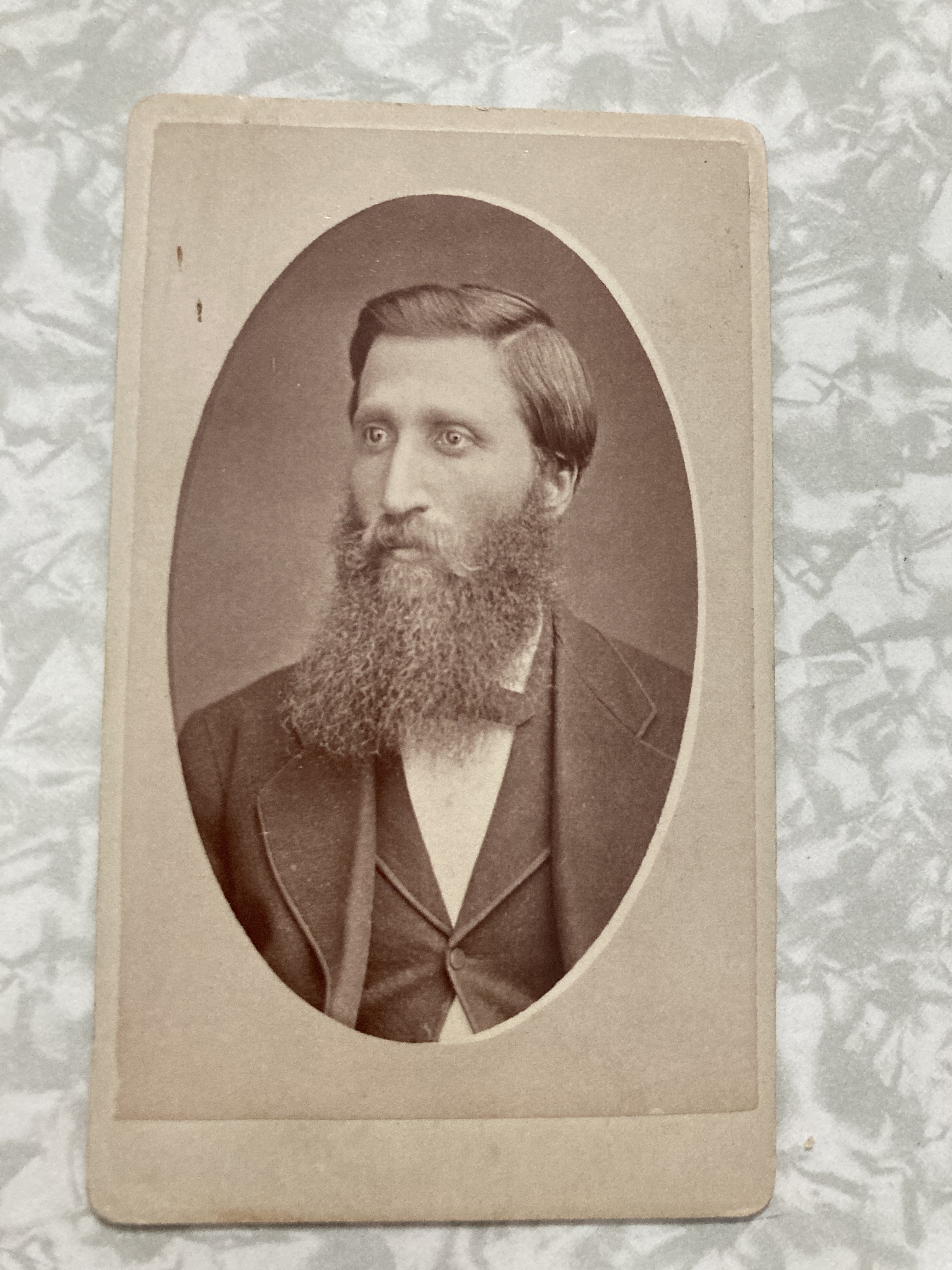
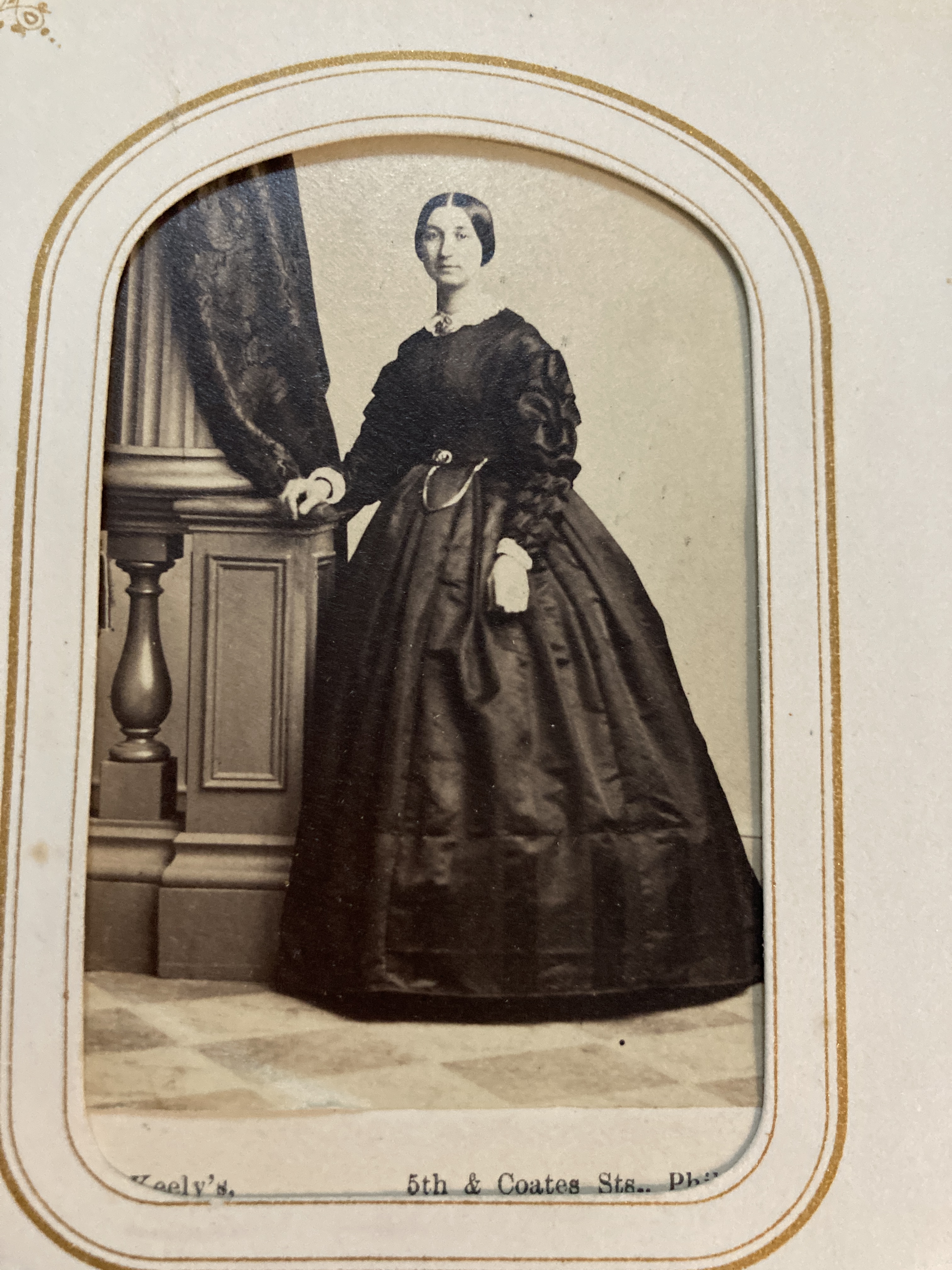
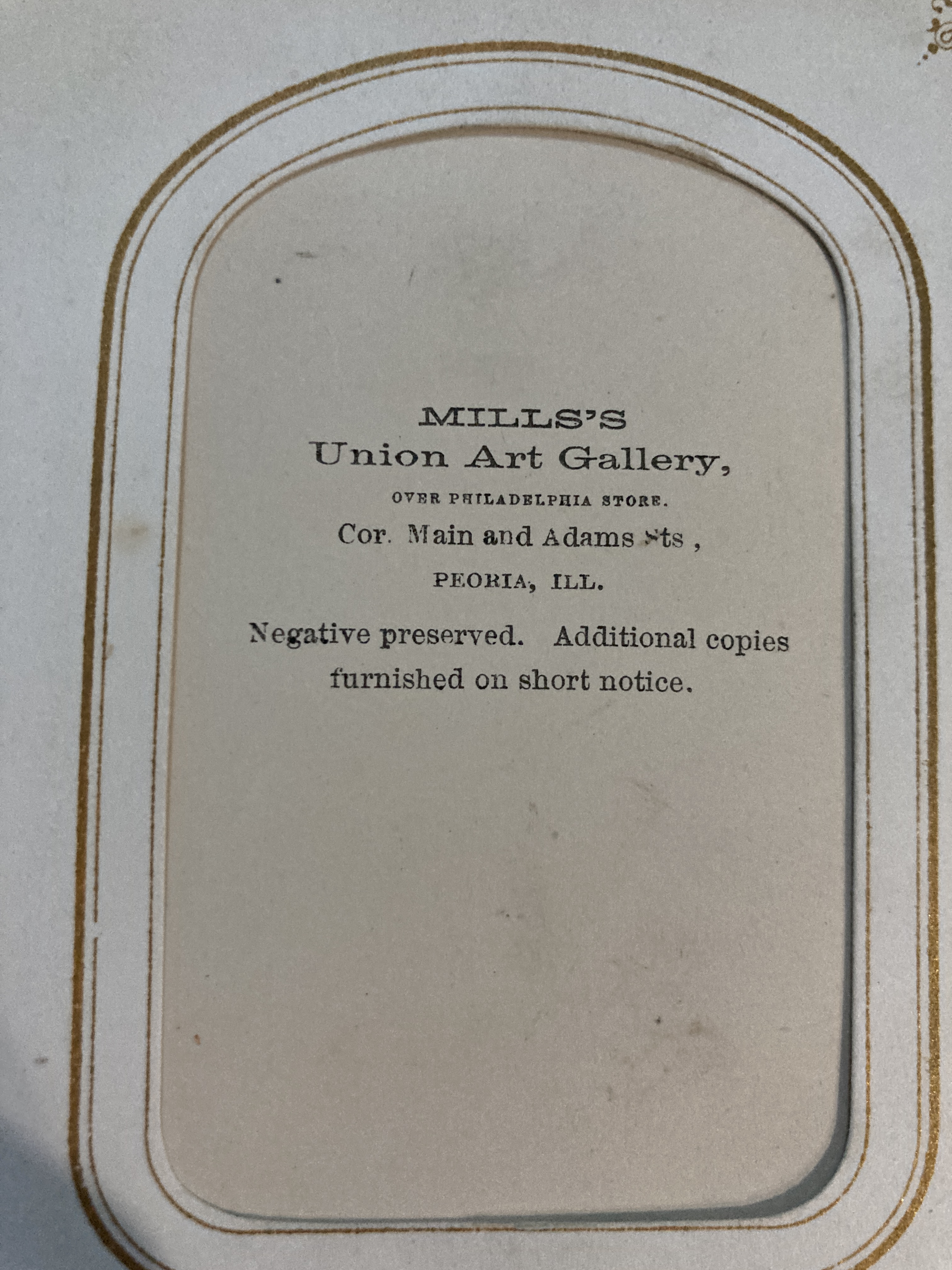
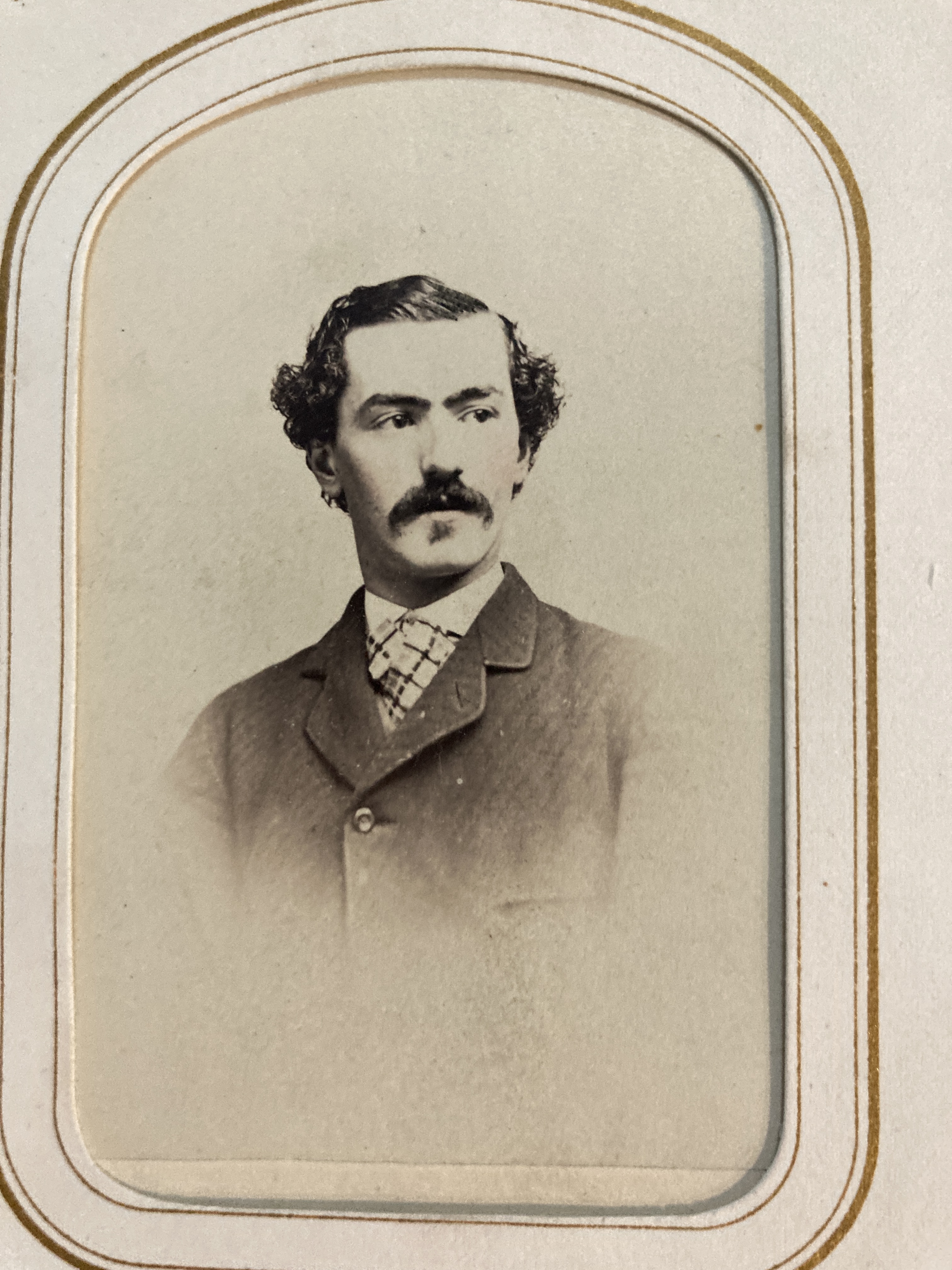
As for the remaining photographs in the album not taken in Pennsylvania, Santa Fe, or Germany, there are about twelve photographs in the album that were taken in New York City. I have no idea who could be in these photographs. As far as I can tell, assuming that these photographs were also taken some time between 1860 and 1890 like all the others in the album, there were no Nusbaum or Seligman relatives living in New York City during those years. Could they have visited and had photographs taken? Of course. Could these be friends of the family? Certainly. But unless someone comes up with a photograph to match these people, it’s like looking for a needle in a haystack to try and identify them. Or even more impossible.
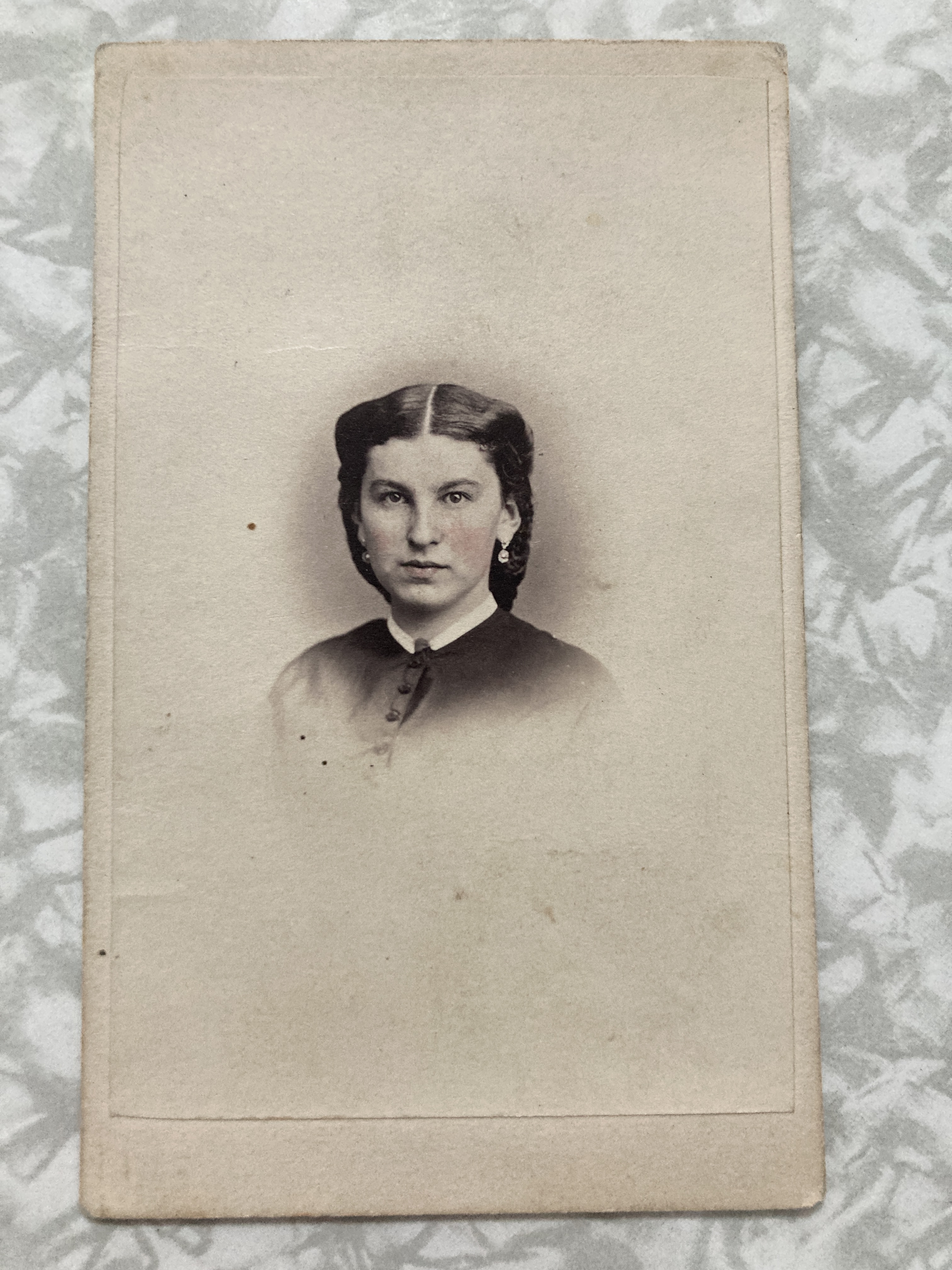
Then there are the CDVs from places where I cannot find any likely family connections, like Montgomery, Alabama, St. Louis, Missouri, and Wheeling, West Virginia. Sadly, I have no way of knowing who these people could be. They, like so many of the others in the album, will remain a mystery.
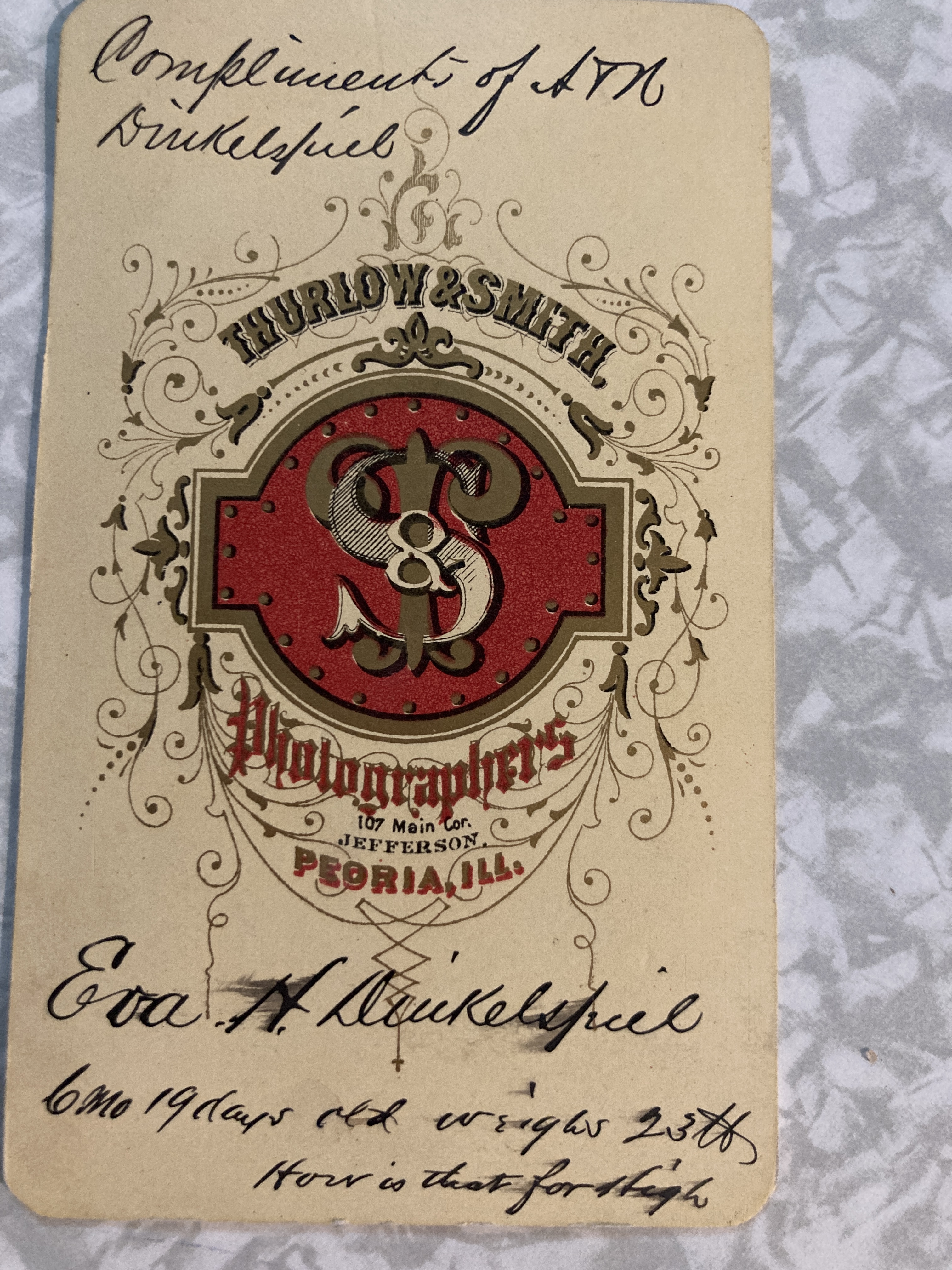
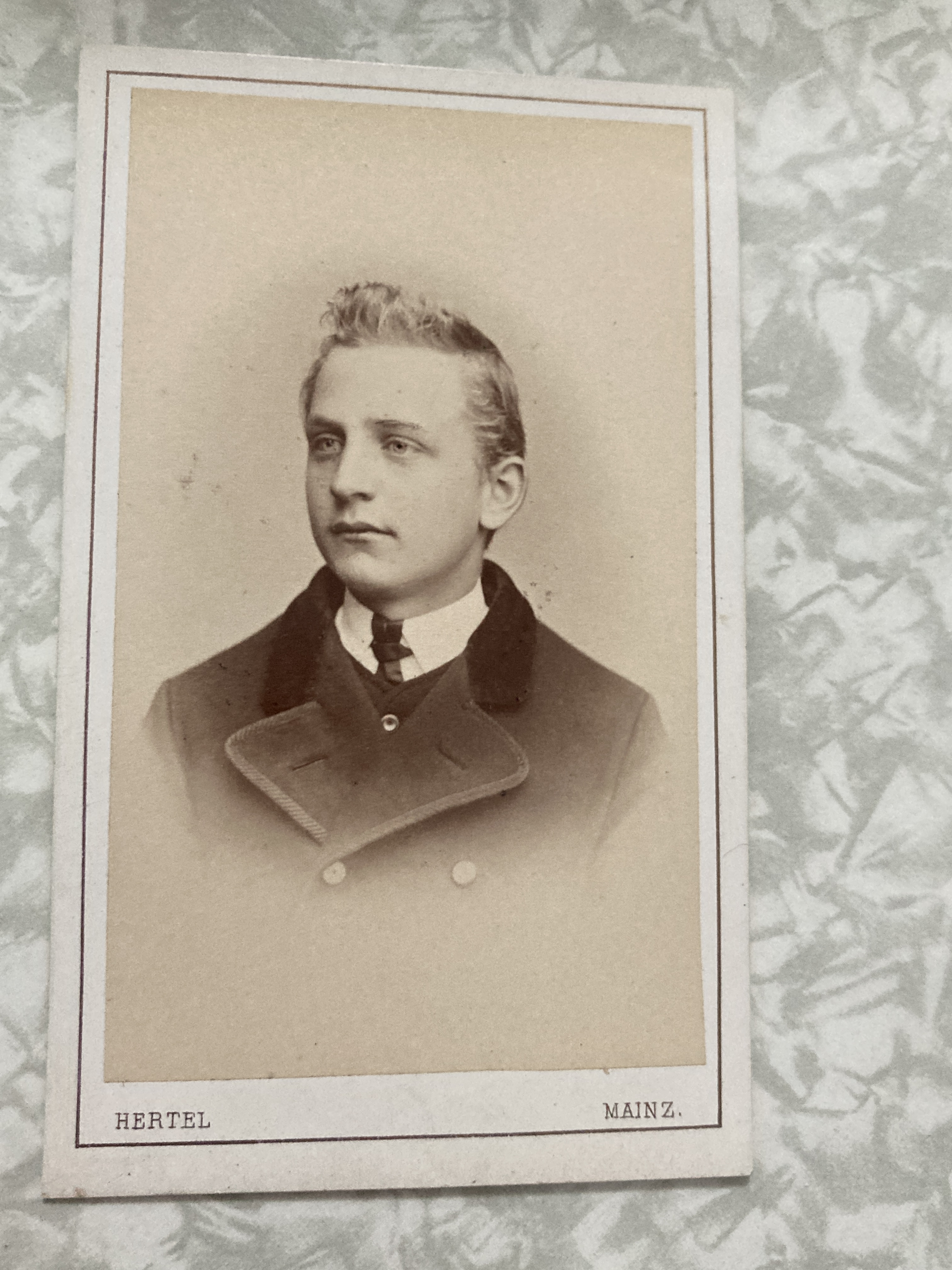
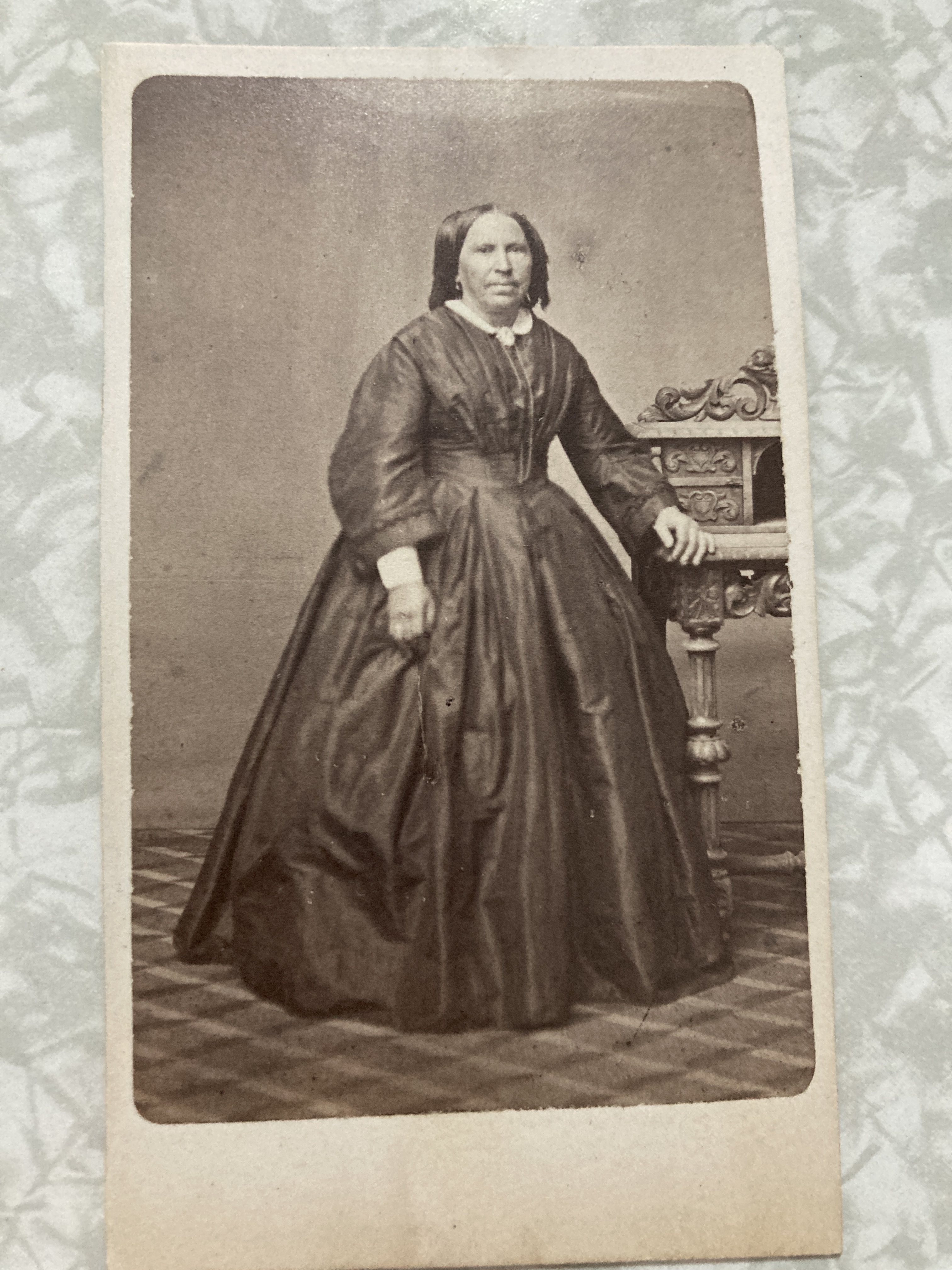
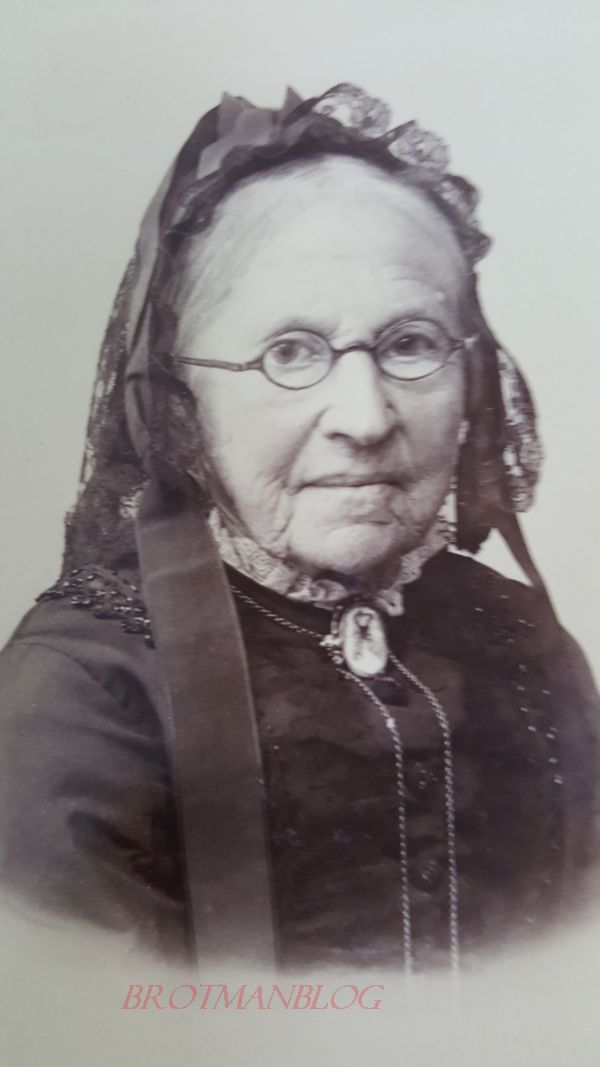
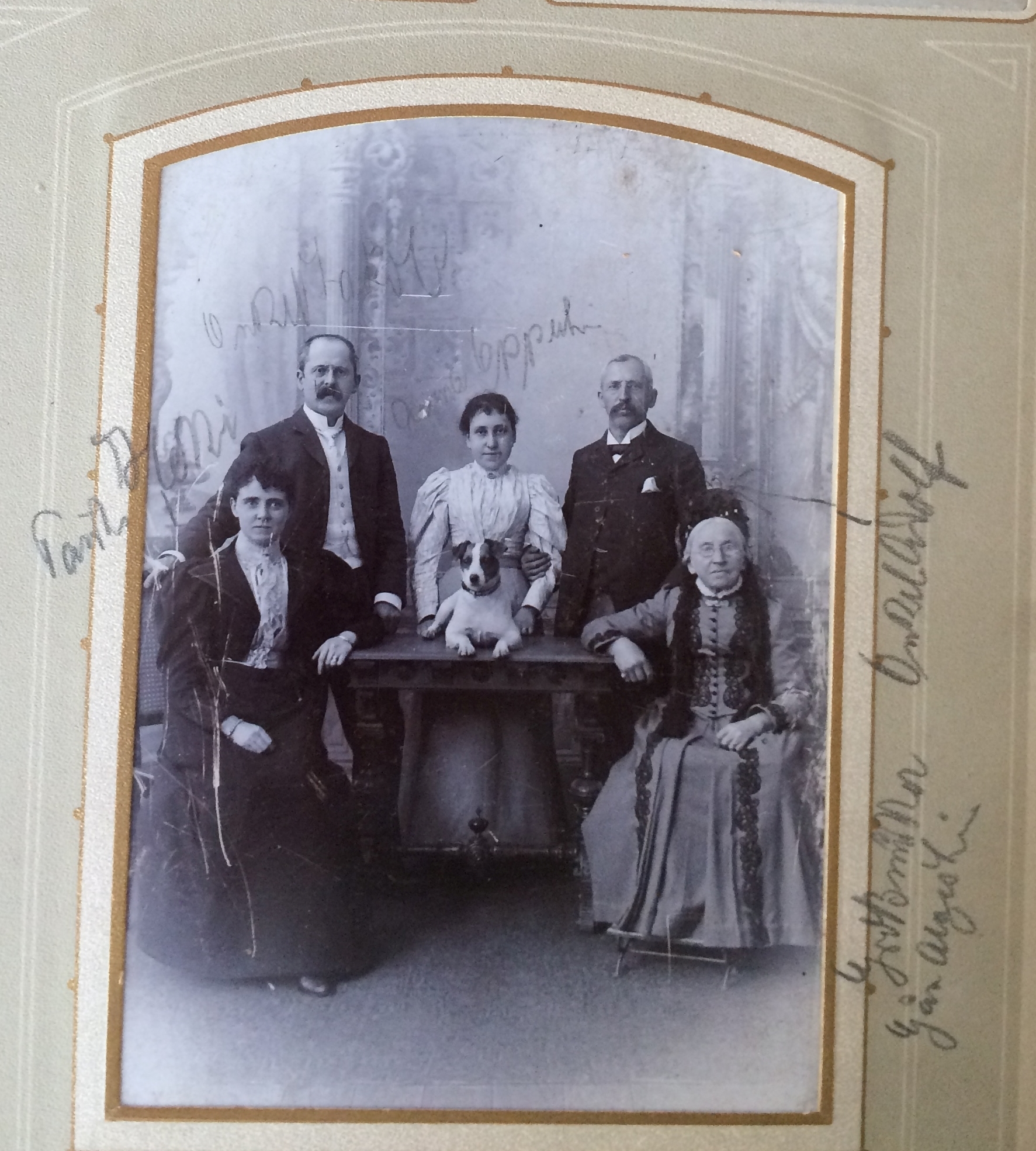
And thus, I come to the end of this chapter in my genealogy journey. Out of over one hundred photographs, I have a positive identification of Moritz Seligmann, my three-times great-grandfather, and a probable identification of Babette Schoenfeld Seligmann, his wife, my three-times great-grandmother, based on earlier photographs. I have positive identification of two babies who died as children (Milton Josephs and Eva Dinkelspiel) because their names are on the photographs. Same for two people who were distantly related to me by marriage, the Gardiners, the parents of Doris Gardiner who married Otis Seligman. And also I can identify some people who were not related to me at all—Louis Sulzbacher, Goethe, Baby Benson, and some mysterious visitor named S.B. Axtell.
Beyond that, I have some possible identifications—maybe there’s a photograph or two of John Nusbaum, maybe some of his sons in Peoria, maybe a photograph of Frances Nusbaum, maybe one or two of her sister Miriam—but nothing nearly definite enough to label them as such.
Nevertheless, this has been an exciting and worthwhile adventure. I’ve learned a great deal about CDVs, the dating of photographs, and the names of some Philadelphia, Santa Fe, and German photographers and when and where they worked. I’ve had the great pleasure of collaborating with Ava Cohn in trying to identify the people in the photographs.
I’ve also gained some insights into the lives of my Nusbaum-Seligman relatives from the overall collection of CDVs. They knew many people from many different places, and the photographs appear to be of people who were if not wealthy, certainly not poor. They are well dressed and distinguished looking. Someone was a fan of Goethe, someone was a fan of Baby Benson. And reviewing the album reminded me of one of the tragic realities of life in those times—many children did not live to adulthood, like Milton Josephs and Eva Dinkelspiel. Even if I can’t put names to most of the faces, I have had a glimpse into the lives of my ancestors.
And I have had my hands on a physical object that I know for certain was handled by my three-times great-grandparents John Nusbaum and Jeanette Dreyfuss, by their daughter Frances, my great-great-grandmother, and by her husband Bernard Seligman, and most likely also by my great-grandmother Eva Seligman Cohen and her siblings. Before it ended up in the hands of an antique dealer in Santa Fe, it was in the possession of Eva’s niece and Arthur Seligman’s daughter Joan, Joan’s daughter Adrienne, and Joan’s granddaughter Jhette. It is now back safely in Jhette’s hands. And I instead have the scans of all the photos and that sweet memory of holding the album lovingly in my own hands for several months.
May it stay safe and protected for at least another 160 years.





























 Brotmanblog: A Family Journey